EP3371940B1 - System und verfahren zur handhabung von verbindungsverlust in einem netzwerk - Google Patents
System und verfahren zur handhabung von verbindungsverlust in einem netzwerk Download PDFInfo
- Publication number
- EP3371940B1 EP3371940B1 EP16862700.8A EP16862700A EP3371940B1 EP 3371940 B1 EP3371940 B1 EP 3371940B1 EP 16862700 A EP16862700 A EP 16862700A EP 3371940 B1 EP3371940 B1 EP 3371940B1
- Authority
- EP
- European Patent Office
- Prior art keywords
- wireless network
- controller
- link loss
- network node
- event
- Prior art date
- Legal status (The legal status is an assumption and is not a legal conclusion. Google has not performed a legal analysis and makes no representation as to the accuracy of the status listed.)
- Active
Links
Images


Classifications
-
- H—ELECTRICITY
- H04—ELECTRIC COMMUNICATION TECHNIQUE
- H04L—TRANSMISSION OF DIGITAL INFORMATION, e.g. TELEGRAPHIC COMMUNICATION
- H04L45/00—Routing or path finding of packets in data switching networks
- H04L45/14—Routing performance; Theoretical aspects
-
- H—ELECTRICITY
- H04—ELECTRIC COMMUNICATION TECHNIQUE
- H04L—TRANSMISSION OF DIGITAL INFORMATION, e.g. TELEGRAPHIC COMMUNICATION
- H04L43/00—Arrangements for monitoring or testing data switching networks
- H04L43/08—Monitoring or testing based on specific metrics, e.g. QoS, energy consumption or environmental parameters
- H04L43/0805—Monitoring or testing based on specific metrics, e.g. QoS, energy consumption or environmental parameters by checking availability
- H04L43/0811—Monitoring or testing based on specific metrics, e.g. QoS, energy consumption or environmental parameters by checking availability by checking connectivity
-
- H—ELECTRICITY
- H04—ELECTRIC COMMUNICATION TECHNIQUE
- H04L—TRANSMISSION OF DIGITAL INFORMATION, e.g. TELEGRAPHIC COMMUNICATION
- H04L45/00—Routing or path finding of packets in data switching networks
- H04L45/02—Topology update or discovery
-
- H—ELECTRICITY
- H04—ELECTRIC COMMUNICATION TECHNIQUE
- H04L—TRANSMISSION OF DIGITAL INFORMATION, e.g. TELEGRAPHIC COMMUNICATION
- H04L41/00—Arrangements for maintenance, administration or management of data switching networks, e.g. of packet switching networks
- H04L41/06—Management of faults, events, alarms or notifications
- H04L41/0654—Management of faults, events, alarms or notifications using network fault recovery
- H04L41/0668—Management of faults, events, alarms or notifications using network fault recovery by dynamic selection of recovery network elements, e.g. replacement by the most appropriate element after failure
-
- H—ELECTRICITY
- H04—ELECTRIC COMMUNICATION TECHNIQUE
- H04L—TRANSMISSION OF DIGITAL INFORMATION, e.g. TELEGRAPHIC COMMUNICATION
- H04L41/00—Arrangements for maintenance, administration or management of data switching networks, e.g. of packet switching networks
- H04L41/12—Discovery or management of network topologies
-
- H—ELECTRICITY
- H04—ELECTRIC COMMUNICATION TECHNIQUE
- H04L—TRANSMISSION OF DIGITAL INFORMATION, e.g. TELEGRAPHIC COMMUNICATION
- H04L43/00—Arrangements for monitoring or testing data switching networks
- H04L43/08—Monitoring or testing based on specific metrics, e.g. QoS, energy consumption or environmental parameters
- H04L43/0823—Errors, e.g. transmission errors
- H04L43/0829—Packet loss
-
- H—ELECTRICITY
- H04—ELECTRIC COMMUNICATION TECHNIQUE
- H04L—TRANSMISSION OF DIGITAL INFORMATION, e.g. TELEGRAPHIC COMMUNICATION
- H04L45/00—Routing or path finding of packets in data switching networks
- H04L45/24—Multipath
- H04L45/247—Multipath using M:N active or standby paths
-
- H—ELECTRICITY
- H04—ELECTRIC COMMUNICATION TECHNIQUE
- H04L—TRANSMISSION OF DIGITAL INFORMATION, e.g. TELEGRAPHIC COMMUNICATION
- H04L45/00—Routing or path finding of packets in data switching networks
- H04L45/28—Routing or path finding of packets in data switching networks using route fault recovery
-
- H—ELECTRICITY
- H04—ELECTRIC COMMUNICATION TECHNIQUE
- H04L—TRANSMISSION OF DIGITAL INFORMATION, e.g. TELEGRAPHIC COMMUNICATION
- H04L45/00—Routing or path finding of packets in data switching networks
- H04L45/64—Routing or path finding of packets in data switching networks using an overlay routing layer
-
- H—ELECTRICITY
- H04—ELECTRIC COMMUNICATION TECHNIQUE
- H04L—TRANSMISSION OF DIGITAL INFORMATION, e.g. TELEGRAPHIC COMMUNICATION
- H04L43/00—Arrangements for monitoring or testing data switching networks
- H04L43/06—Generation of reports
- H04L43/062—Generation of reports related to network traffic
Definitions
- a cloud managed mmWave based point-to-multipoint mesh backhaul requires a centralized scheduling of the mmWave transmissions and reception to be fully coordinated by a central cloud SDWN (Software Defined Wireless Network) controller. Further, network level routing decisions across nodes in the network are also coordinated by the controller. This assumes reliable connectivity between the managed mmWave nodes and SDWN cloud controller.
- mmWave link technologies operate at very high radio frequencies, which typically require line-of-sight (LOS) radio paths. These LOS radio paths may be inherently less reliable than conventional radio communications systems in lower frequencies, which may be able to operate in more robust non-line-of-sight (NLOS) radio paths.
- LOS line-of-sight
- Data path routing between nodes in the backhaul utilizes the same link paths as control path communication from the nodes to the controller, with the key assumption that no out-of-band mechanism exists for the communication to the controller. Simultaneously using the links that are managed by the controller for communication to the controller itself and for managing routing and channel scheduling updates creates a problem during the loss of an active link. During a link loss, the node loses the current established network path to the controller. Reverting back to either local or distributed routing will either run the risk of creating loops or broadcast storms in the network or is likely to require complex local distributed algorithms which create network management overhead.
- Some networks leverage out-of-band connectivity with a controller for similar use cases, so that the actively managed link is not used for connectivity with the controller. This provides a communication path with the controller whose reliability is independent of the links being managed. However, this also requires additional connectivity technology to be implemented on the nodes being managed, possibly adding hardware, software and management cost and complexity overhead to the product.
- EP 2 811 702 A1 describes, in an open flow network, a load of a switch on a secure channel network when a controller maintains and updates a physical topology of the switch in the situation that a network among the switches is in a high delay state. More specifically, the controller sets a flow entry having a rule and an action defined to uniformly control a packet as a flow to each of a plurality of switches. The controller sets to each switch, a circulation flow entry to be deleted when a circulation packet which is mutually transmitted and received among the switches gets not to arrive. Then, when receiving a notice that the circulation flow entry has been deleted, from each switch, the controller detects a failure among the switches.
- US 2002/150043 A1 discloses a system that facilitates instant failover during packet routing by employing a flooding protocol to send packets between a source and a destination.
- the system determines whether the packet has been seen before at the intermediate node. If not, the system forwards the packet to neighboring nodes of the intermediate node.
- forwarding the packet to neighboring needs involves forwarding the packet to all neighboring nodes except the node from which the packet was received.
- determining whether the packet has been seen before involves examining a sequence number, SR, contained within the packet to determine whether the sequence number has been seen before.
- the present disclosure highlights mechanisms applicable to cloud managed point-to-multipoint mmWave mesh backhaul enabling the controller to continue to centrally handle routing and scheduling changes to the topology during link loss.
- an active link used for data path routing as well as for control path communications to the controller is disconnected, available alternate links are used.
- These mechanisms accommodate the highly directional nature of mmWave physical layer communications, which include, for example, high gain, narrow beam antennas, dynamic beamforming technologies such as phased arrays, etc.
- One aspect of the disclosure provides a system for managing a network as claimed in independent claim 1.
- Another aspect of the disclosure provides a method for a wireless network node as claimed in independent claim 4.
- Yet another aspect of the disclosure provides a wireless network node as claimed in claim 7.
- the present disclosure generally relates to managing scheduling and routing decisions in a network, such as a cloud managed mmWave based point-to-multipoint mesh backhaul.
- a central cloud Software Defined Wireless Network (SDWN) controller centrally manages routing and scheduling changes to the network.
- SDWN Software Defined Wireless Network
- Each node in the network is provided with an event profile, which identifies new routes to be implemented in case of link loss, for example due to link failure or other circumstances. If a particular link or combination of links fails, applications running on the nodes connected to the failed links broadcasts the link down state. Additionally, the nodes in the network will update their routing tables to implement a new routing scheme provided in the event profile.
- the nodes implementing the new routing scheme may include additional nodes in the network affected by the change, despite that those additional nodes are not directly connected to the failed link.
- the network nodes may include multi-gigabit speed wireless communications devices set up by the controller to communicate with neighboring nodes.
- the controller pushes a centralized scheduling to all the connected nodes to establish possible links.
- the links are highly directional.
- Phased arrays are one example of highly directional link technology.
- Primary links include paths chosen by the controller that route controller traffic and normal user data.
- Link level radio resource scheduling is coordinated with network level routing decisions, so that a given node is beamformed with a desired peer.
- the backhaul topology is expected to have alternate (redundant) links.
- the nodes are expected to spend only a fraction of time in these links so that they maintain the beamformed link, with a primary goal exchanging very low bandwidth control traffic.
- These alternate links provide a possible path to the controller during primary link loss. However, there should be at least one alternate link active at the time of primary link failure. Also, latency should be kept as minimal as possible to avoid delays in restoring traffic at link loss.
- the network includes many nodes, such as over one hundred nodes. Accordingly, the computation complexity of determining scheduling and routes for all permutations of link failure may be extremely challenging within the time constraints.
- the event profile has the routing and scheduling instructions for normal operation and for when one or more links fail. In the topology, all scheduling and routing decisions need to be well synchronized. To accommodate, the profile indicating how nodes should respond to link loss carries all permutable possibilities of link loss.
- the event profile may be, for example, a lookup table or other data structure which correlates a potential link loss event with a proposed node response.
- the controller also updates the profile periodically.
- the updates may account for any link change events.
- the profile is chosen to be adaptive and based on real-time feedback, taking advantage of the fact that the mmWave nodes are fixed nodes with channel conditions that are not very dynamic.
- the controller learns through periodic link updates about the links that have high probability of link breaks, and provides profile updates only for those permutations, thereby reducing the computational complexity that can be managed by most of the cloud implementations.
- the nodes stop any further forwarding of data frames, and enter a buffering mode.
- the link loss broadcast eventually reaches the controller via the hub node that has wired connectivity to the controller network, and the controller responds by pushing a new route update.
- the hub node is expected to broadcast the new route update by controller, given that the network route will be in an unstable state until the new route is established.
- the nodes may enter a temporary buffering state for link loss events that matches a profile, to ensure route updates for all neighbors before moving to a forwarding state.
- both the nodes broadcast the link loss on all the available links, optionally with the same cookie, populated in the profile table. If the newly selected primary link also fails before a new profile is pushed by the controller, the node might choose to treat that event as a link loss without a matching profile, and send a link loss event to the controller for a new route update, again as broadcast, possibly over all available links.
- the broadcast mechanism and inter-node communication mechanism used by the node with the failed link does not rely on controller set up SDN routing, as this happens when the primary link required for routing has failed.
- the node with the failed link broadcasts a notification.
- the notification may be broadcast using any of a variety of propagation methods.
- a routing mechanism may use raw sockets and special ether types, optionally using one or more nodes as a controller proxy. For example, the node with the failed link broadcasts a frame with a special ether type. All the nodes are set up with a switching entry that detects the ether type, and forwards it to the application running on the node.
- the application receives it over raw sockets, and the underlying network does not redistribute the broadcast frame.
- the receiving node chooses to re-transmit the link failure on all the available interfaces, if it has not already done a broadcast for the matching cookie within the configured duration in the past.
- the application looks at a specific cookie in the broadcast frame to identify if it has previously forwarded the frame, before attempting to forward it again, ensuring that there are no loops in the topology.
- a 'hub node' that is connected to the controller over a wired network will additionally send the broadcast frame to the controller as well, so that the controller can make future decisions.
- L2/L3 routing mechanisms can be used.
- control traffic may be L2 isolated, such as in a virtual local area network (VLAN).
- VLAN virtual local area network
- L2/L3 routing algorithms optimized for latency and mmWave characteristics.
- OLSR Optimized Link State Routing
- broadcast latencies may also be modified for controlled, directional mmWave networks.
- the controller and inter-node messaging mechanism may be predetermined based on, for example, system deployment scenarios and routing characteristics of the particular network.
- each node Upon receiving the broadcast frame, and determining whether or not to forward it, each node updates its routing table based on the event profile. For example, a given node receives multiple broadcast frames, the frames indicating that a particular combination of links has failed. The given node consults the event profile, and identifies a predetermined recommended response corresponding to that particular combination of failed links. The given node then updates its routing table based on the predetermined recommended response. Each other node in the network also performs the same procedure.
- the techniques described above are advantageous in that they require a lower product cost and power as the product does not need an additional, robust wireless technology for out-of-band access to the controller, and possibly better performance as the local inter-node communication required to re-establish the routes are expected to have better latency than a controller response.
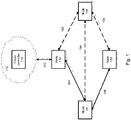
- Fig. 1 illustrates an example system 100, including a cloud controller 110 and an interconnected plurality of nodes 152-158. While only several nodes are shown, it should be understood that numerous nodes may be included.
- the nodes are interconnected with the cloud controller 110 via a link 182 and are interconnected with each other via a plurality of primary links 184-186 and alternative links 192-196.
- Network 112 may be SDWN, or any other type of network such as a datacenter, a load-balanced server farm, a backplane of interconnected peripherals, a system of components on a motherboard, etc.
- the network 112, and intervening nodes may comprise various configurations and protocols including the Internet, World Wide Web, intranets, virtual private networks, wide area networks, local networks, private networks using communication protocols proprietary to one or more companies, Ethernet, WiFi (such as 802.11, 802.11b, g, n, or other such standards), and HTTP, and various combinations of the foregoing.
- the controller may be, for example, a central cloud SDWN controller, which centrally manages routing and scheduling changes to the network.
- the controller pushes a centralized scheduling to all the connected nodes to establish possible links.
- the controller also provides each node in the network with an event profile, which identifies new routes to be implemented in case of link loss.
- the controller also updates the profile periodically. The updates may account for any link change events, such as down links, repaired links, and links having a high probability of failing.
- the profile is chosen to be adaptive and based on real-time feedback.
- the nodes 152-158 may be, for example, multi-gigabit speed wireless communications devices set up by the controller to communicate with neighboring nodes.
- Each of the nodes 152-158 runs an application, which may be used for communicating with the other nodes. For example, if node 154 identifies a failure of a particular link or combination of links, it broadcasts the failure to the other nodes in the network through the application. Assuming links 184, 186 are still active, applications running on nodes 152 and 158 will receive the broadcast "link down" information over raw sockets. The receiving nodes 152, 158 determine if they have previously broadcast the same "link down" information, and if not, the nodes 152, 158 broadcast that "link down" information to other connected nodes.
- the node 152 which is connected to the controller 110, serves as a hub node. Continuing the example above, when the node 152 receives the "link down" information, it also forwards the information to the controller 110, thereby enabling the control 110 to make future routing decisions.
- the nodes in the network will update their routing tables to implement a new routing scheme provided in the event profile. For example, upon identifying a link down event, such as by detecting that one or more links connected thereto are down or by receiving "link down" information broadcast by a connected node, the node refers to the event profile for instructions on how to handle the identified link down event.
- the event profile may indicate that the node should replace one or more paths with one or more new paths identified in the event profile.
- the nodes implementing the new routing scheme may include additional nodes in the network affected by the change, despite that those additional nodes are not directly connected to the failed link. For example, if the node 156 receives "link down" information indicating that link 184 has failed, the node 156 consults the event profile and updates its routing table accordingly.
- the primary links 184-186 may be highly directional links for mmWave physical layer communications, such as phased arrays.
- the primary links 184-186 include paths chosen by the controller 110 that route controller traffic and normal user data.
- Link level radio resource scheduling is coordinated with network level routing decisions, so that a given node is beamformed with a desired peer.
- the backhaul topology is expected to have alternate (redundant) links.
- the nodes are expected to spend only a fraction of time in these links so that they maintain the beamformed link, with a primary goal exchanging very low bandwidth control traffic.
- the alternate links 192-196 provide a possible path to the controller during primary link loss. Whether a link is considered a primary link or an alternate link may be relevant to a particular node or path. For example, a primary path from the node 152 to the node 154 may include primary link 184, while an alternate path may include alternate links 192, 194.There should be at least one alternate link active at the time of a primary link failure. Also, latency should be kept as minimal as possible to avoid delays in restoring traffic at link loss.
- the node 154 detects a failure of the primary link 186.
- An inter-node communication mechanism used by the node 154 does not rely on any specific routing. Rather, the node 154 with the failed link broadcasts a frame with a special ether type. All the nodes 152-158 are set up with a switching entry that detects the ether type, and forwards it to an application running on the node. Accordingly, applications running on the nodes 152, 156, 158 receive the broadcast frame over raw sockets, and the underlying network does not redistribute the broadcast frame. The applications running on each of the nodes 152, 156, 158 look at a specific cookie in the broadcast frame to identify if it has previously forwarded the frame. If any of the applications on the receiving nodes 152, 156, 158 has not previously forwarded the frame, that application will retransmit the frame on all available interfaces.
- the node 152 As the failed primary link 186 is also coupled to the node 152, the node 152 also detects and broadcast the link loss on all the available links contemporaneously with the node 154. In some examples, the broadcast by the node 152 includes the same cookie as the broadcast by the node 154.
- each receiving node 152, 156, 158 updates its routing table based on the event profile. For example, the node 156 receives multiple broadcast frames, each frame identifying a different failed link. Taken together, the multiple broadcast frames indicate a particular combination of failed links. In some examples, the node 156 collects one or more frames and consults the event profile for a routing update corresponding to the combination of failed links. In other examples, the node 156 consults the event profile for each individual notification received. In either case, the node 156 then updates its routing table based on a predetermined recommended response in the event profile. The other nodes 152, 158 in the network also perform the same procedure. In some examples, the nodes 152, 156, 158 may enter a temporary buffering state before moving to a forwarding state while retransmitting the broadcast frame.
- a link loss combination may not match a profile entry.
- the nodes 152-158 may stop any further forwarding of data frames, and enter a buffering mode.
- the link loss broadcast eventually reaches the controller 110 via the hub node 120 that has wired connectivity, for example via link 182, to the controller network.
- the controller 110 pushes a new route update.
- the hub node 152 broadcasts the new route update.
- the node might choose to treat that event as a link loss without a matching profile. Accordingly, the node may send a link loss event to the controller for a new route update, for example, as broadcast over all available links.
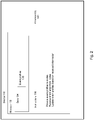
- Fig. 2 provides a more detailed depiction of the controller 110.
- the controller 110 may be any type of virtualized or non-virtualized computing device or system of computing devices capable of communicating over a network.
- Controller 110 contains one or more processors 140, memory 130 and other components typically present in general purpose computing devices.
- the memory 130 stores information accessible by the one or more processors 140, including instructions 138 that can be executed by the one or more processors 140.
- Memory 130 can also include data 134 that can be retrieved, manipulated or stored by the processor 140.
- the memory can be of any non-transitory type capable of storing information accessible by the processor, such as a hard-drive, memory card, RAM, DVD, write-capable, etc.
- the instructions 138 can be any set of instructions to be executed directly, such as machine code, or indirectly, such as scripts, by the one or more processors.
- the terms "instructions,” “applications,” “steps” and “programs” can be used interchangeably herein.
- the instructions can be stored in object code format for direct processing by a processor, or in any other computing device language including scripts or collections of independent source code modules that are interpreted on demand or compiled in advance. Functions, methods and routines of the instructions are explained in more detail below.
- Data 134 can be retrieved, stored or modified by the one or more processors 140 in accordance with the instructions 138.
- the data 134 includes one or more event profiles 136 provided to the nodes 152-158.
- the event profile 136 may be a master event profile which provides routing instructions for every node in the event of link failure.
- the event profile 136 may include a number of event profiles, such as one profile specific to each node in the network.
- the controller 110 provides the event profile 136 to the nodes in the network.
- the controller 110 further receives information from the nodes, such as information identifying links that are down or links that are likely to break.
- the controller 110 uses this information to update the event profiles.
- the updated event profiles are again provided to the nodes.
- the data 134 can be stored in internal or external memory, computer registers, in a relational database as a table having many different fields and records, or XML documents.
- the data 134 can also be formatted in any computing device-readable format such as, but not limited to, binary values, ASCII or Unicode.
- the data can comprise any information sufficient to identify the relevant information, such as numbers, descriptive text, proprietary codes, pointers, references to data stored in other memories such as at other network locations, or information that is used by a function to calculate the relevant data.
- the one or more processors 140 can be any conventional processors, such as commercially available CPUs. Alternatively, the processors can be dedicated components such as an application specific integrated circuit ("ASIC") or other hardware-based processor. Although not necessary, the server 130 may include specialized hardware components to perform specific computing processes.
- ASIC application specific integrated circuit
- Fig. 2 functionally illustrates the processor, memory, and other elements of computing device 110 as being within the same block
- the processor, computer, computing device, or memory can actually comprise multiple processors, computers, computing devices, or memories that may or may not be stored within the same physical housing.
- the memory can be a hard drive or other storage media located in housings different from that of the computing devices 110.
- references to a processor, computer, computing device, or memory will be understood to include references to a collection of processors, computers, computing devices, or memories that may or may not operate in parallel.
- the computing devices 110 may include server computing devices operating as a load-balanced server farm, distributed system, etc.
- some functions described below are indicated as taking place on a single computing device having a single processor, various aspects of the subject matter described herein can be implemented by a plurality of computing devices, for example, communicating information over a network.
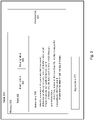
- Fig. 3 provides a more detailed depiction of an example node 350.
- the node 350 is structured similarly to the controller 110, with one or more processors 380 and memory 360, including data 362 and instructions 368 as described above.
- the node 350 may be a network device, such as a server, a router, or any other type of computing device.
- the node 350 may be a personal computing device having all of the components normally used in connection with a personal computing device, such as a central processing unit (CPU), memory (e.g., RAM and internal hard drives) storing data and instructions, a display (e.g., a monitor having a screen, a touch-screen, a projector, a television, or other device that is operable to display information), user input device (e.g., a mouse, keyboard, touch-screen or microphone), and all of the components used for connecting these elements to one another.
- CPU central processing unit
- memory e.g., RAM and internal hard drives
- a display e.g., a monitor having a screen, a touch-screen, a projector, a television, or other device that is operable to display information
- user input device e.g., a mouse, keyboard, touch-screen or microphone
- the node 350 also includes one or more applications 370 executed on the node 350.
- the applications 370 are configured to perform a variety of functions, including facilitating communication among various nodes.
- the application may include a socket listening over all interfaces.
- the applications 370 makes decisions regarding whether or not to send notifications, such as broadcast frames. While the applications 370 are shown as being separate from memory 360, it should be understood that the applications may be integrated with the memory 360.
- the node 350 may include other features for inter-node communication.
- the node 350 may be equipped with ports or interfaces for L2/L3 routing.
- the node 350 stores data 362, such as an event profile 364 and a routing table 366.
- the event profile 364 may be a table or other data structure pushed by the controller 110 ( Fig. 2 ) that provides information to the node 350 in the event of link failure.
- the event profile 364 stored on the node 350 may be the same as the event profile 136 of Fig. 2 . In other examples, it may be specific to the node 350.
- the routing table 366 may be any type of routing table capable of being updated by at least one of the node 350 and the controller 110.
- the instructions 368 programmed on the node 350 enable the node 350 to identify the occurrence of a particular link down event.
- the identifying includes detection, receipt of a notification from a neighboring node, or any other technique.
- the node 350 determines whether it previously handled the link down event, and if not, communicates the event to other nodes in the network. As mentioned above, this determination and the subsequent communication may be performed by the applications 370.
- the node 350 further determines, based on the event profile 364, routing changes corresponding to the particular link loss event.
- the node 350 accordingly updates the routing table 366 based on the predetermined routing changes.
- Fig. 4 illustrates an example event profile 400.
- the event profile 400 is a table, including a plurality of columns 410 and rows 430.
- a first column 412 in each row 430 may indicate a particular link loss event.
- each cell may indicate one of many possible combinations of down links, such as a "link 1" being down, "link 1" and a "link 3" being down, etc. While only a few combinations are shown, many permutations may be included.
- the event profile 400 may include thousands of possible link loss events or more.
- each entry in the first link loss event column 412 is an entry in a column designated for a specific node.
- column 414 may identify actions to be taken by node A
- column 416 may identify actions to be taken by node B
- column 418 may indicate actions to be taken by node n, etc.
- the actions may include instructions for updating the routing table of the specific node. For example, for a link loss event in cell 435 corresponding to links 1, 5, and 7 being down, the node B may be instructed to modify one or more entries in one or more of its routing tables.
- Fig. 4 While the example event profile is shown in Fig. 4 as a table, other data structures may be used.
- Fig. 5 illustrates an example method 500 of controlling routing and updating in a network.
- the controller provides event profiles to nodes in the network.
- the controller may provide to each node in the network a master event profile indicating actions to be taken by various nodes in the event of a number of possible link failure combinations.
- the controller receives information from one or more of the nodes. For example, information from various nodes may be passed to the controller through a hub node.
- the information may indicate the status of one or more links. For example, the status may identify a link as being down or likely to fail.
- a link may be determined to be likely to fail based on, for example, current metrics such as higher error rate or decreasing signal strength. In other examples, the determination could be based on statistical analysis by the controller. For example, the controller may look at the link history to determine susceptible links and adaptively modify failure thresholds for such links to be more aggressive.
- the controller updates the event profiles based on the received information. For example, the received information may be aggregated, and collectively it may identify a combination of links likely to fail. If that combination is not already listed in the event profile, the controller may add routing changes for the nodes for that possible link loss event. The controller may further push the updated event profile to the nodes.
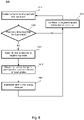
- Fig. 6 illustrates an example method 600 of updating routing topology. The method is described below from a perspective of a given node in the network. However, each node in the network may be programmed to perform the method 600.
- the node identifies the occurrence of a link loss event.
- the identifying may include detecting that one or more connected links are down, or receiving a notification from at least one of the controller and another node.
- the node receives the notification, through an application running thereon, from a neighboring node still connected through an active link.
- the link loss event may include failure or deactivation of one or a plurality of links in the network. In complex networks, a combination of links across different nodes of the network may be down at a given time.
- the node determines whether it previously communicated the link loss event to other nodes in the network. For example, the application on the given node looks at a specific cookie in a frame received from another node, the specific cookie indicating whether the given node has previously forwarded the frame. In other examples, the node may consult a log of previous transmission events.
- the node continues routing and sending information to the controller in block 625. Such information is used by the controller to update the event profile, as discussed above in connection with Fig. 5 .
- the node sends a notification to one or more neighboring nodes. For example, an application running on the node broadcasts the received frame on all interfaces.
- the node determines a routing change for the particular link loss event. Determining the routing change includes consulting the event profile to identify a predetermined action corresponding to the link loss event. In some examples, the node receives multiple notifications of link loss events. Accordingly, the node determines an appropriate update for the combination of failed links.
- the node implements the determined routing changes. For example, the node modifies one or more entries in a routing/forwarding table. The method 600 then returns to block 625 where the node continues routing, and monitoring for new link loss events.
- the systems and methods described above may operate without an additional, robust wireless technology for out-of-band access to the controller. As a result, significant cost savings and power conservation can be realized. Moreover, performance is enhanced, as local inter-node communication required to re-establish routes is expected to have better latency than a controller response.
Landscapes
- Engineering & Computer Science (AREA)
- Computer Networks & Wireless Communication (AREA)
- Signal Processing (AREA)
- Environmental & Geological Engineering (AREA)
- Data Exchanges In Wide-Area Networks (AREA)
- Mobile Radio Communication Systems (AREA)
Claims (7)
- Ein System (100) zur Verwaltung eines Netzwerks (112), das Folgendes umfasst::eine Vielzahl von drahtlosen Netzwerkknoten (152 bis 158, 350), die über eine Vielzahl von primären Verbindungen (184 bis 186) und alternativen Verbindungen (192 bis 196) miteinander verbunden sind, wobei eine primäre Verbindung einen Pfad enthält, der von einem Controller ausgewählt wird, der den Controller-Verkehr und normale Benutzerdaten leitet, und wobei mindestens eine alternative Verbindung zum Zeitpunkt eines Verbindungsausfalls aktiv ist und einen möglichen Pfad zu dem Controller bereitstellt;der Controller (110) in Kommunikation mit der Vielzahl von drahtlosen Netzwerkknoten, wobei der Controller einen oder mehrere Prozessoren (140) enthält, die konfiguriert sind, zum:Bereitstellen eines Ereignisprofils (136, 364) für die mehreren drahtlosen Netzwerkknoten, wobei das Ereignisprofil Routingänderungen anzeigt, die von den mehreren drahtlosen Netzwerkknoten in einer Vielzahl von Verbindungsverlustszenarien zu implementieren sind; undwobei jeder der Vielzahl von drahtlosen Netzwerkknoten konfiguriert ist zum Identifizieren, dass ein bestimmtes Verbindungsverlust-Ereignis aufgetreten ist, wobei das Identifizieren das Bestimmen, durch eine Anwendung, die auf einem drahtlosen Netzwerkknoten läuft, dass das bestimmte Verbindungsverlust-Ereignis an dem drahtlosen Netzwerkknoten selbst aufgetreten ist, oder das Bestimmen des bestimmten Verbindungsverlust-Ereignisses basierend auf dem Empfangen einer Broadcast-Nachricht von irgendeinem benachbarten drahtlosen Netzwerkknoten umfasst, die darüber informiert, dass das bestimmte Verbindungsverlust-Ereignis an dem benachbarten drahtlosen Netzwerkknoten aufgetreten ist;als Reaktion auf den Empfang der Broadcast-Nachricht, die darüber informiert, dass das bestimmte Verbindungsverlust-Ereignis aufgetreten ist, jeder der Mehrzahl von drahtlosen Netzwerkknoten Netzwerkknoten konfiguriert ist, um:durch die Anwendung, die auf dem drahtlosen Netzwerkknoten läuft, zu bestimmen, ob die Broadcast-Nachricht mit einem speziellen Ether-Typ zuvor von dem drahtlosen Netzwerkknoten selbst an andere drahtlose Netzwerkknoten gesendet wurde, basierend auf einem übereinstimmenden Cookie; undwenn die Broadcast-Nachricht nicht zuvor von dem drahtlosen Netzwerkknoten selbst gesendet wurde, das bestimmte Verbindungsverlust-Ereignis an die anderen drahtlosen Netzwerkknoten der Vielzahl von drahtlosen Netzwerkknoten zu senden, basierend auf dem Ereignisprofil Routing-Änderungen für das bestimmte Verbindungsverlust-Ereignis zu bestimmen, die bestimmten Routing-Änderungen zu implementieren und das Routing fortzusetzen und Aktualisierungsinformationen an den Controller zu senden.
- System nach Anspruch 1, wobei der Controller ferner konfiguriert ist, um:Informationen von der Vielzahl von drahtlosen Netzwerkknoten zu empfangen; undzum Aktualisieren der Ereignisprofile auf der Grundlage der empfangenen Informationen.
- Das System nach Anspruch 2, wobei:die empfangene Information Verbindungen identifiziert, die eine hohe Wahrscheinlichkeit von Verbindungsunterbrechungen aufweisen; unddas Aktualisieren der Profile Szenarien berücksichtigt, in denen die identifizierten Verbindungen verloren gehen.
- Verfahren für einen drahtlosen Netzwerkknoten (152 bis 158, 350), das Folgendes umfasst:Empfangen eines Ereignisprofils (136, 364) von einem Controller (110), der mit einer Vielzahl von drahtlosen Netzwerkknoten (152 bis 158, 350) kommuniziert,wobei das Ereignisprofil Routingänderungen anzeigt, die von der Vielzahl von drahtlosen Netzwerkknoten in einer Vielzahl von Verbindungsverlustszenarien zu implementieren sind, wobei die Vielzahl von drahtlosen Netzwerkknoten über eine Vielzahl von primären Verbindungen (184 bis 186) und alternativen Verbindungen (192 bis 196) miteinander verbunden sind, wobei eine primäre Verbindung einen Pfad enthält, der von dem Controller ausgewählt wird, der den Controller-Verkehr und normale Benutzerdaten leitet, und wobei mindestens eine alternative Verbindung zum Zeitpunkt des Verbindungsausfalls aktiv ist und einen möglichen Pfad zu dem Controller bereitstellt; undIdentifizieren, mit einem oder mehreren Prozessoren, dass ein bestimmtes Verbindungsverlustereignis aufgetreten ist, wobei das Identifizieren das Bestimmen, durch eine Anwendung, die auf dem drahtlosen Netzwerkknoten läuft, dass das bestimmte Verbindungsverlustereignis an dem drahtlosen Netzwerkknoten selbst aufgetreten ist, oder das Bestimmen des bestimmten Verbindungsverlustereignisses basierend auf dem Empfangen einer Broadcast-Nachricht von irgendeinem benachbarten drahtlosen Netzwerkknoten umfasst, die informiert, dass das bestimmte Verbindungsverlustereignis an dem drahtlosen Netzwerkknoten aufgetreten ist;als Reaktion auf den Empfang der Broadcast-Nachricht, die darüber informiert, dass das bestimmte Verbindungsverlust-Ereignis aufgetreten ist, Ausführen mit dem einen oder den mehreren Prozessoren des Folgenden:Bestimmen, durch die Anwendung, die auf dem drahtlosen Netzwerkknoten läuft, ob die Broadcast-Nachricht mit einem speziellen Ether-Typ zuvor von dem drahtlosen Netzwerkknoten selbst an andere drahtlose Netzwerkknoten gesendet wurde, basierend auf einem übereinstimmenden Cookie; undwenn die Broadcast-Nachricht nicht zuvor von dem drahtlosen Netzwerkknoten selbst gesendet wurde, Rundsenden des bestimmten Verbindungsverlust-Ereignisses an die anderen drahtlosen Netzwerkknoten der Vielzahl von drahtlosen Netzwerkknoten, Bestimmen von Routing-Änderungen für das bestimmte Verbindungsverlust-Ereignis auf der Grundlage des Ereignisprofils, Implementieren der bestimmten Routing-Änderungen und Fortsetzen des Routings und Senden von Aktualisierungsinformationen an den Controller.
- Verfahren nach Anspruch 4, ferner umfassend:
Bereitstellen von Informationen an den Controller, wobei die Informationen einen Status von einer oder mehreren Verbindungen im Netzwerk anzeigen. - Verfahren nach Anspruch 5, wobei die Information Verbindungen identifiziert, die eine hohe Wahrscheinlichkeit von Verbindungsunterbrechungen aufweisen; und optional das Verfahren weiterhin umfasst:
Empfangen eines aktualisierten Ereignisprofils von dem Steuergerät in Reaktion auf die Bereitstellung der Informationen. - Drahtloser Netzwerkknoten (152 bis 158, 350), umfassend:einen Speicher (360), der eine oder mehrere Routing-Tabellen speichert; undeinen oder mehrere Prozessoren (380) in Kommunikation mit dem Speicher, wobei der eine oder die mehreren Prozessoren programmiert sind, zum:Empfangen eines Ereignisprofils (136, 364) von einem Controller (110), der mit einer Vielzahl von Netzwerkknoten kommuniziert, wobei das Ereignisprofil Routingänderungen anzeigt, die von der Vielzahl von Netzwerkknoten in einer Vielzahl von Verbindungsverlustszenarien zu implementieren sind, wobei die Vielzahl von drahtlosen Netzwerkknoten über eine Vielzahl von primären Verbindungen (184 bis 186) und alternativen Verbindungen (192 bis 196) miteinander verbunden sind, und wobei eine primäre Verbindung einen Pfad enthält, der von dem Controller ausgewählt wird, der den Controller-Verkehr und normale Benutzerdaten leitet, und wobei mindestens eine alternative Verbindung zum Zeitpunkt des Verbindungsausfalls aktiv ist und einen möglichen Pfad zu dem Controller bereitstellt; undIdentifizieren, dass ein bestimmtes Verbindungsverlustereignis aufgetreten ist, wobei das Identifizieren das Bestimmen, durch eine Anwendung, die auf dem drahtlosen Netzwerkknoten läuft, dass das bestimmte Verbindungsverlustereignis an dem drahtlosen Netzwerkknoten selbst aufgetreten ist, oder das Bestimmen des bestimmten Verbindungsverlustereignisses basierend auf dem Empfangen einer Broadcast-Nachricht von irgendeinem benachbarten drahtlosen Netzwerkknoten umfasst, die informiert, dass das bestimmte Verbindungsverlustereignis an dem benachbarten drahtlosen Netzwerkknoten aufgetreten ist;als Reaktion auf den Empfang der Broadcast-Nachricht, die darüber informiert, dass das bestimmte Verbindungsverlustereignis aufgetreten ist, Ausführen des Folgenden:Bestimmen, durch die Anwendung, die auf dem drahtlosen Netzwerkknoten läuft, ob die Broadcast-Nachricht mit einem speziellen Ether-Typ zuvor von dem drahtlosen Netzwerkknoten selbst an andere drahtlose Netzwerkknoten gesendet wurde, basierend auf einem übereinstimmenden Cookie; undwenn die Broadcast-Nachricht nicht zuvor von dem drahtlosen Netzwerkknoten selbst gesendet wurde, Rundsenden des bestimmten Verbindungsverlust-Ereignisses an die anderen drahtlosen Netzwerkknoten der Vielzahl von drahtlosen Netzwerkknoten, Bestimmen von Routing-Änderungen für das bestimmte Verbindungsverlust-Ereignis auf der Grundlage des Ereignisprofils, Implementieren der bestimmten Routing-Änderungen und Fortsetzen des Routings und Senden von Aktualisierungsinformationen an den Controller.
Applications Claiming Priority (2)
| Application Number | Priority Date | Filing Date | Title |
|---|---|---|---|
| US14/929,991 US10868708B2 (en) | 2015-11-02 | 2015-11-02 | System and method for handling link loss in a network |
| PCT/US2016/058211 WO2017078948A1 (en) | 2015-11-02 | 2016-10-21 | System and method for handling link loss in a network |
Publications (3)
| Publication Number | Publication Date |
|---|---|
| EP3371940A1 EP3371940A1 (de) | 2018-09-12 |
| EP3371940A4 EP3371940A4 (de) | 2019-05-08 |
| EP3371940B1 true EP3371940B1 (de) | 2022-06-15 |
Family
ID=58635034
Family Applications (1)
| Application Number | Title | Priority Date | Filing Date |
|---|---|---|---|
| EP16862700.8A Active EP3371940B1 (de) | 2015-11-02 | 2016-10-21 | System und verfahren zur handhabung von verbindungsverlust in einem netzwerk |
Country Status (9)
| Country | Link |
|---|---|
| US (1) | US10868708B2 (de) |
| EP (1) | EP3371940B1 (de) |
| JP (1) | JP6596575B2 (de) |
| KR (1) | KR102072148B1 (de) |
| CN (1) | CN107925619B (de) |
| AU (1) | AU2016348234B2 (de) |
| DE (1) | DE112016003242T5 (de) |
| GB (1) | GB2557089B (de) |
| WO (1) | WO2017078948A1 (de) |
Families Citing this family (11)
| Publication number | Priority date | Publication date | Assignee | Title |
|---|---|---|---|---|
| US9385917B1 (en) * | 2011-03-31 | 2016-07-05 | Amazon Technologies, Inc. | Monitoring and detecting causes of failures of network paths |
| US10057787B2 (en) | 2016-04-06 | 2018-08-21 | Futurewei Technologies, Inc. | System and method for millimeter wave communications |
| US10135512B2 (en) * | 2016-04-06 | 2018-11-20 | Futurewei Technologies, Inc. | System and method for millimeter wave communications |
| JP6784160B2 (ja) * | 2016-12-08 | 2020-11-11 | 富士通株式会社 | 並列処理装置及びノード間通信プログラム |
| US10367682B2 (en) * | 2017-06-30 | 2019-07-30 | Bank Of American Corporation | Node failure recovery tool |
| US10411990B2 (en) * | 2017-12-18 | 2019-09-10 | At&T Intellectual Property I, L.P. | Routing stability in hybrid software-defined networking networks |
| CN109302359A (zh) * | 2018-11-27 | 2019-02-01 | 迈普通信技术股份有限公司 | 一种网络设备、链路转换方法及装置 |
| US10958567B1 (en) * | 2019-03-29 | 2021-03-23 | Juniper Networks, Inc. | Controlling paths in a network via a centralized controller or network devices |
| US11463187B2 (en) | 2020-04-14 | 2022-10-04 | Google Llc | Fault tolerant design for clock-synchronization systems |
| US12126526B2 (en) * | 2021-01-08 | 2024-10-22 | Hewlett Packard Enterprise Development Lp | Preventing generation of duplicate network routes in a software defined wide area network |
| JP7642380B2 (ja) * | 2021-01-19 | 2025-03-10 | キヤノン株式会社 | ジョブ処理装置、ジョブ処理装置の制御方法、及びプログラム |
Citations (2)
| Publication number | Priority date | Publication date | Assignee | Title |
|---|---|---|---|---|
| US20020150043A1 (en) * | 2001-04-13 | 2002-10-17 | Perlman Radia J. | Method and apparatus for facilitating instant failover during packet routing |
| EP2811702A1 (de) * | 2012-01-30 | 2014-12-10 | NEC Corporation | Netzwerksystem und topologieverwaltungsverfahren |
Family Cites Families (24)
| Publication number | Priority date | Publication date | Assignee | Title |
|---|---|---|---|---|
| US5398236A (en) | 1993-05-26 | 1995-03-14 | Nec America, Inc. | Asynchronous transfer mode link recovery mechanism |
| JP2933021B2 (ja) | 1996-08-20 | 1999-08-09 | 日本電気株式会社 | 通信網障害回復方式 |
| US6745350B1 (en) | 1997-01-03 | 2004-06-01 | Ncr Corporation | Automated failure recovery service |
| US6392989B1 (en) * | 2000-06-15 | 2002-05-21 | Cplane Inc. | High speed protection switching in label switched networks through pre-computation of alternate routes |
| KR100813788B1 (ko) | 2000-12-11 | 2008-03-13 | 주식회사 케이티 | 무선통신 시스템에서 이용되는 응용소프트웨어의 배포방법 |
| US7184401B2 (en) | 2001-02-05 | 2007-02-27 | Interdigital Technology Corporation | Link-aware transmission control protocol |
| US20020116669A1 (en) | 2001-02-12 | 2002-08-22 | Maple Optical Systems, Inc. | System and method for fault notification in a data communication network |
| US20020171886A1 (en) | 2001-03-07 | 2002-11-21 | Quansheng Wu | Automatic control plane recovery for agile optical networks |
| US20030001079A1 (en) | 2001-04-02 | 2003-01-02 | Christian Boemler | Current mode pixel amplifier |
| JP2003018828A (ja) | 2001-06-28 | 2003-01-17 | Sanken Electric Co Ltd | Dc−dcコンバータ |
| EP1286551A1 (de) | 2001-07-17 | 2003-02-26 | Telefonaktiebolaget L M Ericsson (Publ) | Fehlerverschleierung für Bildinformation |
| RU2201833C1 (ru) | 2001-10-31 | 2003-04-10 | Муравьев Владимир Михайлович | Способ изготовления решетчатых столбов |
| JP3594140B2 (ja) | 2002-06-26 | 2004-11-24 | 沖電気工業株式会社 | 半導体装置の製造方法 |
| US20060005602A1 (en) | 2004-07-06 | 2006-01-12 | Zyvex Corporation | Calibration for automated microassembly |
| US8406121B2 (en) | 2004-10-20 | 2013-03-26 | Nokia Siemens Networks Gmbh & Co. Kg | Method for error detection in a packet-based message distribution system |
| US7966514B2 (en) * | 2005-09-19 | 2011-06-21 | Millennium It (Usa), Inc. | Scalable fault tolerant system |
| DE602006004157D1 (de) * | 2006-02-17 | 2009-01-22 | Mitel Networks Corp | Verfahren, Netzwerk und IP Gerät zur beschleunigten Bekanntgabe eines defekten Servers |
| US7729278B2 (en) | 2007-02-14 | 2010-06-01 | Tropos Networks, Inc. | Wireless routing based on data packet classifications |
| US7894450B2 (en) | 2007-12-31 | 2011-02-22 | Nortel Network, Ltd. | Implementation of VPNs over a link state protocol controlled ethernet network |
| WO2010018755A1 (ja) * | 2008-08-11 | 2010-02-18 | 株式会社日立製作所 | トランスポート制御サーバ、ネットワークシステム及びトランスポート制御方法 |
| GB0905559D0 (en) | 2009-03-31 | 2009-05-13 | British Telecomm | Addressing scheme |
| JP2012049674A (ja) | 2010-08-25 | 2012-03-08 | Nec Corp | 通信装置、通信システム、通信方法、および通信プログラム |
| EP2681879A1 (de) * | 2011-02-28 | 2014-01-08 | Telefonaktiebolaget LM Ericsson (PUBL) | Wegberechnung zur bearbeitung und wiederherstellung von wegen |
| US8811212B2 (en) | 2012-02-22 | 2014-08-19 | Telefonaktiebolaget L M Ericsson (Publ) | Controller placement for fast failover in the split architecture |
-
2015
- 2015-11-02 US US14/929,991 patent/US10868708B2/en active Active
-
2016
- 2016-10-21 DE DE112016003242.0T patent/DE112016003242T5/de active Pending
- 2016-10-21 AU AU2016348234A patent/AU2016348234B2/en not_active Ceased
- 2016-10-21 KR KR1020187004590A patent/KR102072148B1/ko not_active Expired - Fee Related
- 2016-10-21 EP EP16862700.8A patent/EP3371940B1/de active Active
- 2016-10-21 WO PCT/US2016/058211 patent/WO2017078948A1/en not_active Ceased
- 2016-10-21 CN CN201680046715.8A patent/CN107925619B/zh active Active
- 2016-10-21 JP JP2018507538A patent/JP6596575B2/ja active Active
- 2016-10-21 GB GB1802087.5A patent/GB2557089B/en active Active
Patent Citations (2)
| Publication number | Priority date | Publication date | Assignee | Title |
|---|---|---|---|---|
| US20020150043A1 (en) * | 2001-04-13 | 2002-10-17 | Perlman Radia J. | Method and apparatus for facilitating instant failover during packet routing |
| EP2811702A1 (de) * | 2012-01-30 | 2014-12-10 | NEC Corporation | Netzwerksystem und topologieverwaltungsverfahren |
Also Published As
| Publication number | Publication date |
|---|---|
| GB2557089B (en) | 2021-11-03 |
| CN107925619B (zh) | 2021-03-16 |
| GB201802087D0 (en) | 2018-03-28 |
| JP6596575B2 (ja) | 2019-10-23 |
| US10868708B2 (en) | 2020-12-15 |
| KR102072148B1 (ko) | 2020-01-31 |
| DE112016003242T5 (de) | 2018-04-12 |
| EP3371940A4 (de) | 2019-05-08 |
| WO2017078948A1 (en) | 2017-05-11 |
| AU2016348234A1 (en) | 2018-03-08 |
| EP3371940A1 (de) | 2018-09-12 |
| KR20180023009A (ko) | 2018-03-06 |
| JP2018531535A (ja) | 2018-10-25 |
| US20170126482A1 (en) | 2017-05-04 |
| CN107925619A (zh) | 2018-04-17 |
| AU2016348234B2 (en) | 2018-10-18 |
| GB2557089A (en) | 2018-06-13 |
Similar Documents
| Publication | Publication Date | Title |
|---|---|---|
| EP3371940B1 (de) | System und verfahren zur handhabung von verbindungsverlust in einem netzwerk | |
| CN106375231B (zh) | 一种流量切换方法、设备及系统 | |
| JP2018531535A6 (ja) | ネットワークにおけるリンクロスの処理のためのシステムおよび方法 | |
| KR101099822B1 (ko) | 액티브 라우팅 컴포넌트 장애 처리 방법 및 장치 | |
| US9154382B2 (en) | Information processing system | |
| EP3474502B1 (de) | Reduzierte konfiguration für mehrstufige netzwerkstrukturen | |
| EP1697843B1 (de) | System und verfahren zur verwaltung von protokollnetzwerkausfällen in einem cluster-system | |
| Song et al. | Control path management framework for enhancing software-defined network (SDN) reliability | |
| US9755952B2 (en) | System and methods for load placement in data centers | |
| Kobo et al. | Efficient controller placement and reelection mechanism in distributed control system for software defined wireless sensor networks | |
| EP1593240B1 (de) | Verfahren und gerät zur schnellen rekonfiguration einer netzwerktopologie | |
| CN105340230A (zh) | 虚拟机架拓扑管理 | |
| US9876739B2 (en) | System and method for failure detection in rings | |
| CN109218126B (zh) | 监测节点存活状态的方法、装置及系统 | |
| EP3029883B1 (de) | Netzwerkschutzverfahren und vorrichtung, next-ring-knoten und system | |
| WO2015040625A1 (en) | Troubleshooting openflow networks | |
| CN105939254B (zh) | Vrrp备份组状态切换的方法及装置 | |
| US20150372895A1 (en) | Proactive Change of Communication Models | |
| US9154457B1 (en) | Inband management in a multi-stage CLOS network | |
| EP3738042B1 (de) | Cloudifizierter n-facher routingschutz im hypermassstab | |
| US11212204B2 (en) | Method, device and system for monitoring node survival state | |
| US10277700B2 (en) | Control plane redundancy system | |
| US10855520B1 (en) | Utilizing upstream routing of multicast traffic from redundant multicast sources to increase multicast resiliency and availability | |
| US7480256B2 (en) | Scalable and fault-tolerant link state routing protocol for packet-switched networks | |
| US9590893B2 (en) | System and method for management of network links by traffic type |
Legal Events
| Date | Code | Title | Description |
|---|---|---|---|
| STAA | Information on the status of an ep patent application or granted ep patent |
Free format text: STATUS: THE INTERNATIONAL PUBLICATION HAS BEEN MADE |
|
| PUAI | Public reference made under article 153(3) epc to a published international application that has entered the european phase |
Free format text: ORIGINAL CODE: 0009012 |
|
| STAA | Information on the status of an ep patent application or granted ep patent |
Free format text: STATUS: REQUEST FOR EXAMINATION WAS MADE |
|
| 17P | Request for examination filed |
Effective date: 20180208 |
|
| AK | Designated contracting states |
Kind code of ref document: A1 Designated state(s): AL AT BE BG CH CY CZ DE DK EE ES FI FR GB GR HR HU IE IS IT LI LT LU LV MC MK MT NL NO PL PT RO RS SE SI SK SM TR |
|
| AX | Request for extension of the european patent |
Extension state: BA ME |
|
| DAV | Request for validation of the european patent (deleted) | ||
| DAX | Request for extension of the european patent (deleted) | ||
| A4 | Supplementary search report drawn up and despatched |
Effective date: 20190404 |
|
| RIC1 | Information provided on ipc code assigned before grant |
Ipc: H04L 12/715 20130101ALI20190329BHEP Ipc: H04L 12/751 20130101ALI20190329BHEP Ipc: H04L 12/707 20130101ALI20190329BHEP Ipc: H04L 12/721 20130101AFI20190329BHEP Ipc: H04L 12/703 20130101ALI20190329BHEP Ipc: H04L 12/26 20060101ALI20190329BHEP |
|
| STAA | Information on the status of an ep patent application or granted ep patent |
Free format text: STATUS: EXAMINATION IS IN PROGRESS |
|
| 17Q | First examination report despatched |
Effective date: 20201019 |
|
| GRAP | Despatch of communication of intention to grant a patent |
Free format text: ORIGINAL CODE: EPIDOSNIGR1 |
|
| STAA | Information on the status of an ep patent application or granted ep patent |
Free format text: STATUS: GRANT OF PATENT IS INTENDED |
|
| INTG | Intention to grant announced |
Effective date: 20220104 |
|
| GRAS | Grant fee paid |
Free format text: ORIGINAL CODE: EPIDOSNIGR3 |
|
| GRAA | (expected) grant |
Free format text: ORIGINAL CODE: 0009210 |
|
| STAA | Information on the status of an ep patent application or granted ep patent |
Free format text: STATUS: THE PATENT HAS BEEN GRANTED |
|
| AK | Designated contracting states |
Kind code of ref document: B1 Designated state(s): AL AT BE BG CH CY CZ DE DK EE ES FI FR GB GR HR HU IE IS IT LI LT LU LV MC MK MT NL NO PL PT RO RS SE SI SK SM TR |
|
| REG | Reference to a national code |
Ref country code: CH Ref legal event code: EP Ref country code: GB Ref legal event code: FG4D |
|
| REG | Reference to a national code |
Ref country code: IE Ref legal event code: FG4D |
|
| REG | Reference to a national code |
Ref country code: DE Ref legal event code: R096 Ref document number: 602016072904 Country of ref document: DE |
|
| REG | Reference to a national code |
Ref country code: AT Ref legal event code: REF Ref document number: 1499065 Country of ref document: AT Kind code of ref document: T Effective date: 20220715 |
|
| REG | Reference to a national code |
Ref country code: NL Ref legal event code: FP |
|
| REG | Reference to a national code |
Ref country code: LT Ref legal event code: MG9D |
|
| PG25 | Lapsed in a contracting state [announced via postgrant information from national office to epo] |
Ref country code: SE Free format text: LAPSE BECAUSE OF FAILURE TO SUBMIT A TRANSLATION OF THE DESCRIPTION OR TO PAY THE FEE WITHIN THE PRESCRIBED TIME-LIMIT Effective date: 20220615 Ref country code: NO Free format text: LAPSE BECAUSE OF FAILURE TO SUBMIT A TRANSLATION OF THE DESCRIPTION OR TO PAY THE FEE WITHIN THE PRESCRIBED TIME-LIMIT Effective date: 20220915 Ref country code: LT Free format text: LAPSE BECAUSE OF FAILURE TO SUBMIT A TRANSLATION OF THE DESCRIPTION OR TO PAY THE FEE WITHIN THE PRESCRIBED TIME-LIMIT Effective date: 20220615 Ref country code: HR Free format text: LAPSE BECAUSE OF FAILURE TO SUBMIT A TRANSLATION OF THE DESCRIPTION OR TO PAY THE FEE WITHIN THE PRESCRIBED TIME-LIMIT Effective date: 20220615 Ref country code: GR Free format text: LAPSE BECAUSE OF FAILURE TO SUBMIT A TRANSLATION OF THE DESCRIPTION OR TO PAY THE FEE WITHIN THE PRESCRIBED TIME-LIMIT Effective date: 20220916 Ref country code: FI Free format text: LAPSE BECAUSE OF FAILURE TO SUBMIT A TRANSLATION OF THE DESCRIPTION OR TO PAY THE FEE WITHIN THE PRESCRIBED TIME-LIMIT Effective date: 20220615 Ref country code: BG Free format text: LAPSE BECAUSE OF FAILURE TO SUBMIT A TRANSLATION OF THE DESCRIPTION OR TO PAY THE FEE WITHIN THE PRESCRIBED TIME-LIMIT Effective date: 20220915 |
|
| REG | Reference to a national code |
Ref country code: AT Ref legal event code: MK05 Ref document number: 1499065 Country of ref document: AT Kind code of ref document: T Effective date: 20220615 |
|
| PG25 | Lapsed in a contracting state [announced via postgrant information from national office to epo] |
Ref country code: RS Free format text: LAPSE BECAUSE OF FAILURE TO SUBMIT A TRANSLATION OF THE DESCRIPTION OR TO PAY THE FEE WITHIN THE PRESCRIBED TIME-LIMIT Effective date: 20220615 Ref country code: LV Free format text: LAPSE BECAUSE OF FAILURE TO SUBMIT A TRANSLATION OF THE DESCRIPTION OR TO PAY THE FEE WITHIN THE PRESCRIBED TIME-LIMIT Effective date: 20220615 |
|
| PG25 | Lapsed in a contracting state [announced via postgrant information from national office to epo] |
Ref country code: SM Free format text: LAPSE BECAUSE OF FAILURE TO SUBMIT A TRANSLATION OF THE DESCRIPTION OR TO PAY THE FEE WITHIN THE PRESCRIBED TIME-LIMIT Effective date: 20220615 Ref country code: SK Free format text: LAPSE BECAUSE OF FAILURE TO SUBMIT A TRANSLATION OF THE DESCRIPTION OR TO PAY THE FEE WITHIN THE PRESCRIBED TIME-LIMIT Effective date: 20220615 Ref country code: RO Free format text: LAPSE BECAUSE OF FAILURE TO SUBMIT A TRANSLATION OF THE DESCRIPTION OR TO PAY THE FEE WITHIN THE PRESCRIBED TIME-LIMIT Effective date: 20220615 Ref country code: PT Free format text: LAPSE BECAUSE OF FAILURE TO SUBMIT A TRANSLATION OF THE DESCRIPTION OR TO PAY THE FEE WITHIN THE PRESCRIBED TIME-LIMIT Effective date: 20221017 Ref country code: ES Free format text: LAPSE BECAUSE OF FAILURE TO SUBMIT A TRANSLATION OF THE DESCRIPTION OR TO PAY THE FEE WITHIN THE PRESCRIBED TIME-LIMIT Effective date: 20220615 Ref country code: EE Free format text: LAPSE BECAUSE OF FAILURE TO SUBMIT A TRANSLATION OF THE DESCRIPTION OR TO PAY THE FEE WITHIN THE PRESCRIBED TIME-LIMIT Effective date: 20220615 Ref country code: CZ Free format text: LAPSE BECAUSE OF FAILURE TO SUBMIT A TRANSLATION OF THE DESCRIPTION OR TO PAY THE FEE WITHIN THE PRESCRIBED TIME-LIMIT Effective date: 20220615 Ref country code: AT Free format text: LAPSE BECAUSE OF FAILURE TO SUBMIT A TRANSLATION OF THE DESCRIPTION OR TO PAY THE FEE WITHIN THE PRESCRIBED TIME-LIMIT Effective date: 20220615 |
|
| PG25 | Lapsed in a contracting state [announced via postgrant information from national office to epo] |
Ref country code: PL Free format text: LAPSE BECAUSE OF FAILURE TO SUBMIT A TRANSLATION OF THE DESCRIPTION OR TO PAY THE FEE WITHIN THE PRESCRIBED TIME-LIMIT Effective date: 20220615 Ref country code: IS Free format text: LAPSE BECAUSE OF FAILURE TO SUBMIT A TRANSLATION OF THE DESCRIPTION OR TO PAY THE FEE WITHIN THE PRESCRIBED TIME-LIMIT Effective date: 20221015 |
|
| REG | Reference to a national code |
Ref country code: DE Ref legal event code: R097 Ref document number: 602016072904 Country of ref document: DE |
|
| PG25 | Lapsed in a contracting state [announced via postgrant information from national office to epo] |
Ref country code: AL Free format text: LAPSE BECAUSE OF FAILURE TO SUBMIT A TRANSLATION OF THE DESCRIPTION OR TO PAY THE FEE WITHIN THE PRESCRIBED TIME-LIMIT Effective date: 20220615 |
|
| PLBE | No opposition filed within time limit |
Free format text: ORIGINAL CODE: 0009261 |
|
| STAA | Information on the status of an ep patent application or granted ep patent |
Free format text: STATUS: NO OPPOSITION FILED WITHIN TIME LIMIT |
|
| PG25 | Lapsed in a contracting state [announced via postgrant information from national office to epo] |
Ref country code: DK Free format text: LAPSE BECAUSE OF FAILURE TO SUBMIT A TRANSLATION OF THE DESCRIPTION OR TO PAY THE FEE WITHIN THE PRESCRIBED TIME-LIMIT Effective date: 20220615 |
|
| 26N | No opposition filed |
Effective date: 20230316 |
|
| PG25 | Lapsed in a contracting state [announced via postgrant information from national office to epo] |
Ref country code: SI Free format text: LAPSE BECAUSE OF FAILURE TO SUBMIT A TRANSLATION OF THE DESCRIPTION OR TO PAY THE FEE WITHIN THE PRESCRIBED TIME-LIMIT Effective date: 20220615 Ref country code: MC Free format text: LAPSE BECAUSE OF FAILURE TO SUBMIT A TRANSLATION OF THE DESCRIPTION OR TO PAY THE FEE WITHIN THE PRESCRIBED TIME-LIMIT Effective date: 20220615 |
|
| REG | Reference to a national code |
Ref country code: CH Ref legal event code: PL |
|
| P01 | Opt-out of the competence of the unified patent court (upc) registered |
Effective date: 20230505 |
|
| REG | Reference to a national code |
Ref country code: BE Ref legal event code: MM Effective date: 20221031 |
|
| GBPC | Gb: european patent ceased through non-payment of renewal fee |
Effective date: 20221021 |
|
| PG25 | Lapsed in a contracting state [announced via postgrant information from national office to epo] |
Ref country code: LU Free format text: LAPSE BECAUSE OF NON-PAYMENT OF DUE FEES Effective date: 20221021 |
|
| PG25 | Lapsed in a contracting state [announced via postgrant information from national office to epo] |
Ref country code: LI Free format text: LAPSE BECAUSE OF NON-PAYMENT OF DUE FEES Effective date: 20221031 Ref country code: FR Free format text: LAPSE BECAUSE OF NON-PAYMENT OF DUE FEES Effective date: 20221031 Ref country code: CH Free format text: LAPSE BECAUSE OF NON-PAYMENT OF DUE FEES Effective date: 20221031 |
|
| PG25 | Lapsed in a contracting state [announced via postgrant information from national office to epo] |
Ref country code: BE Free format text: LAPSE BECAUSE OF NON-PAYMENT OF DUE FEES Effective date: 20221031 |
|
| PG25 | Lapsed in a contracting state [announced via postgrant information from national office to epo] |
Ref country code: IE Free format text: LAPSE BECAUSE OF NON-PAYMENT OF DUE FEES Effective date: 20221021 Ref country code: GB Free format text: LAPSE BECAUSE OF NON-PAYMENT OF DUE FEES Effective date: 20221021 |
|
| PG25 | Lapsed in a contracting state [announced via postgrant information from national office to epo] |
Ref country code: IT Free format text: LAPSE BECAUSE OF FAILURE TO SUBMIT A TRANSLATION OF THE DESCRIPTION OR TO PAY THE FEE WITHIN THE PRESCRIBED TIME-LIMIT Effective date: 20220615 |
|
| PG25 | Lapsed in a contracting state [announced via postgrant information from national office to epo] |
Ref country code: HU Free format text: LAPSE BECAUSE OF FAILURE TO SUBMIT A TRANSLATION OF THE DESCRIPTION OR TO PAY THE FEE WITHIN THE PRESCRIBED TIME-LIMIT; INVALID AB INITIO Effective date: 20161021 |
|
| PG25 | Lapsed in a contracting state [announced via postgrant information from national office to epo] |
Ref country code: CY Free format text: LAPSE BECAUSE OF FAILURE TO SUBMIT A TRANSLATION OF THE DESCRIPTION OR TO PAY THE FEE WITHIN THE PRESCRIBED TIME-LIMIT Effective date: 20220615 |
|
| PG25 | Lapsed in a contracting state [announced via postgrant information from national office to epo] |
Ref country code: MK Free format text: LAPSE BECAUSE OF FAILURE TO SUBMIT A TRANSLATION OF THE DESCRIPTION OR TO PAY THE FEE WITHIN THE PRESCRIBED TIME-LIMIT Effective date: 20220615 |
|
| PG25 | Lapsed in a contracting state [announced via postgrant information from national office to epo] |
Ref country code: MT Free format text: LAPSE BECAUSE OF FAILURE TO SUBMIT A TRANSLATION OF THE DESCRIPTION OR TO PAY THE FEE WITHIN THE PRESCRIBED TIME-LIMIT Effective date: 20220615 |
|
| PG25 | Lapsed in a contracting state [announced via postgrant information from national office to epo] |
Ref country code: BG Free format text: LAPSE BECAUSE OF FAILURE TO SUBMIT A TRANSLATION OF THE DESCRIPTION OR TO PAY THE FEE WITHIN THE PRESCRIBED TIME-LIMIT Effective date: 20220615 |
|
| PG25 | Lapsed in a contracting state [announced via postgrant information from national office to epo] |
Ref country code: BG Free format text: LAPSE BECAUSE OF FAILURE TO SUBMIT A TRANSLATION OF THE DESCRIPTION OR TO PAY THE FEE WITHIN THE PRESCRIBED TIME-LIMIT Effective date: 20220615 |
|
| PGFP | Annual fee paid to national office [announced via postgrant information from national office to epo] |
Ref country code: NL Payment date: 20251026 Year of fee payment: 10 |
|
| PG25 | Lapsed in a contracting state [announced via postgrant information from national office to epo] |
Ref country code: TR Free format text: LAPSE BECAUSE OF FAILURE TO SUBMIT A TRANSLATION OF THE DESCRIPTION OR TO PAY THE FEE WITHIN THE PRESCRIBED TIME-LIMIT Effective date: 20220615 |
|
| PGFP | Annual fee paid to national office [announced via postgrant information from national office to epo] |
Ref country code: DE Payment date: 20251029 Year of fee payment: 10 |