EP3367178B1 - Image forming apparatus - Google Patents
Image forming apparatus Download PDFInfo
- Publication number
- EP3367178B1 EP3367178B1 EP18157549.9A EP18157549A EP3367178B1 EP 3367178 B1 EP3367178 B1 EP 3367178B1 EP 18157549 A EP18157549 A EP 18157549A EP 3367178 B1 EP3367178 B1 EP 3367178B1
- Authority
- EP
- European Patent Office
- Prior art keywords
- toner
- developing
- cartridge
- amount
- developing agent
- Prior art date
- Legal status (The legal status is an assumption and is not a legal conclusion. Google has not performed a legal analysis and makes no representation as to the accuracy of the status listed.)
- Active
Links
Images




Classifications
-
- G—PHYSICS
- G03—PHOTOGRAPHY; CINEMATOGRAPHY; ANALOGOUS TECHNIQUES USING WAVES OTHER THAN OPTICAL WAVES; ELECTROGRAPHY; HOLOGRAPHY
- G03G—ELECTROGRAPHY; ELECTROPHOTOGRAPHY; MAGNETOGRAPHY
- G03G15/00—Apparatus for electrographic processes using a charge pattern
- G03G15/06—Apparatus for electrographic processes using a charge pattern for developing
- G03G15/08—Apparatus for electrographic processes using a charge pattern for developing using a solid developer, e.g. powder developer
- G03G15/0822—Arrangements for preparing, mixing, supplying or dispensing developer
- G03G15/0844—Arrangements for purging used developer from the developing unit
-
- G—PHYSICS
- G03—PHOTOGRAPHY; CINEMATOGRAPHY; ANALOGOUS TECHNIQUES USING WAVES OTHER THAN OPTICAL WAVES; ELECTROGRAPHY; HOLOGRAPHY
- G03G—ELECTROGRAPHY; ELECTROPHOTOGRAPHY; MAGNETOGRAPHY
- G03G15/00—Apparatus for electrographic processes using a charge pattern
- G03G15/55—Self-diagnostics; Malfunction or lifetime display
- G03G15/553—Monitoring or warning means for exhaustion or lifetime end of consumables, e.g. indication of insufficient copy sheet quantity for a job
- G03G15/556—Monitoring or warning means for exhaustion or lifetime end of consumables, e.g. indication of insufficient copy sheet quantity for a job for toner consumption, e.g. pixel counting, toner coverage detection or toner density measurement
-
- G—PHYSICS
- G03—PHOTOGRAPHY; CINEMATOGRAPHY; ANALOGOUS TECHNIQUES USING WAVES OTHER THAN OPTICAL WAVES; ELECTROGRAPHY; HOLOGRAPHY
- G03G—ELECTROGRAPHY; ELECTROPHOTOGRAPHY; MAGNETOGRAPHY
- G03G15/00—Apparatus for electrographic processes using a charge pattern
- G03G15/06—Apparatus for electrographic processes using a charge pattern for developing
- G03G15/08—Apparatus for electrographic processes using a charge pattern for developing using a solid developer, e.g. powder developer
- G03G15/0822—Arrangements for preparing, mixing, supplying or dispensing developer
- G03G15/0865—Arrangements for supplying new developer
-
- G—PHYSICS
- G03—PHOTOGRAPHY; CINEMATOGRAPHY; ANALOGOUS TECHNIQUES USING WAVES OTHER THAN OPTICAL WAVES; ELECTROGRAPHY; HOLOGRAPHY
- G03G—ELECTROGRAPHY; ELECTROPHOTOGRAPHY; MAGNETOGRAPHY
- G03G15/00—Apparatus for electrographic processes using a charge pattern
- G03G15/50—Machine control of apparatus for electrographic processes using a charge pattern, e.g. regulating differents parts of the machine, multimode copiers, microprocessor control
- G03G15/5062—Machine control of apparatus for electrographic processes using a charge pattern, e.g. regulating differents parts of the machine, multimode copiers, microprocessor control by measuring the characteristics of an image on the copy material
-
- G—PHYSICS
- G03—PHOTOGRAPHY; CINEMATOGRAPHY; ANALOGOUS TECHNIQUES USING WAVES OTHER THAN OPTICAL WAVES; ELECTROGRAPHY; HOLOGRAPHY
- G03G—ELECTROGRAPHY; ELECTROPHOTOGRAPHY; MAGNETOGRAPHY
- G03G21/00—Arrangements not provided for by groups G03G13/00 - G03G19/00, e.g. cleaning, elimination of residual charge
- G03G21/0005—Arrangements not provided for by groups G03G13/00 - G03G19/00, e.g. cleaning, elimination of residual charge for removing solid developer or debris from the electrographic recording medium
- G03G21/0011—Arrangements not provided for by groups G03G13/00 - G03G19/00, e.g. cleaning, elimination of residual charge for removing solid developer or debris from the electrographic recording medium using a blade; Details of cleaning blades, e.g. blade shape, layer forming
-
- G—PHYSICS
- G03—PHOTOGRAPHY; CINEMATOGRAPHY; ANALOGOUS TECHNIQUES USING WAVES OTHER THAN OPTICAL WAVES; ELECTROGRAPHY; HOLOGRAPHY
- G03G—ELECTROGRAPHY; ELECTROPHOTOGRAPHY; MAGNETOGRAPHY
- G03G21/00—Arrangements not provided for by groups G03G13/00 - G03G19/00, e.g. cleaning, elimination of residual charge
- G03G21/0094—Arrangements not provided for by groups G03G13/00 - G03G19/00, e.g. cleaning, elimination of residual charge fatigue treatment of the photoconductor
-
- G—PHYSICS
- G03—PHOTOGRAPHY; CINEMATOGRAPHY; ANALOGOUS TECHNIQUES USING WAVES OTHER THAN OPTICAL WAVES; ELECTROGRAPHY; HOLOGRAPHY
- G03G—ELECTROGRAPHY; ELECTROPHOTOGRAPHY; MAGNETOGRAPHY
- G03G21/00—Arrangements not provided for by groups G03G13/00 - G03G19/00, e.g. cleaning, elimination of residual charge
- G03G21/10—Collecting or recycling waste developer
- G03G21/12—Toner waste containers
-
- G—PHYSICS
- G03—PHOTOGRAPHY; CINEMATOGRAPHY; ANALOGOUS TECHNIQUES USING WAVES OTHER THAN OPTICAL WAVES; ELECTROGRAPHY; HOLOGRAPHY
- G03G—ELECTROGRAPHY; ELECTROPHOTOGRAPHY; MAGNETOGRAPHY
- G03G21/00—Arrangements not provided for by groups G03G13/00 - G03G19/00, e.g. cleaning, elimination of residual charge
- G03G21/16—Mechanical means for facilitating the maintenance of the apparatus, e.g. modular arrangements
- G03G21/18—Mechanical means for facilitating the maintenance of the apparatus, e.g. modular arrangements using a processing cartridge, whereby the process cartridge comprises at least two image processing means in a single unit
- G03G21/1803—Arrangements or disposition of the complete process cartridge or parts thereof
- G03G21/1814—Details of parts of process cartridge, e.g. for charging, transfer, cleaning, developing
-
- G—PHYSICS
- G03—PHOTOGRAPHY; CINEMATOGRAPHY; ANALOGOUS TECHNIQUES USING WAVES OTHER THAN OPTICAL WAVES; ELECTROGRAPHY; HOLOGRAPHY
- G03G—ELECTROGRAPHY; ELECTROPHOTOGRAPHY; MAGNETOGRAPHY
- G03G15/00—Apparatus for electrographic processes using a charge pattern
- G03G15/50—Machine control of apparatus for electrographic processes using a charge pattern, e.g. regulating differents parts of the machine, multimode copiers, microprocessor control
-
- G—PHYSICS
- G03—PHOTOGRAPHY; CINEMATOGRAPHY; ANALOGOUS TECHNIQUES USING WAVES OTHER THAN OPTICAL WAVES; ELECTROGRAPHY; HOLOGRAPHY
- G03G—ELECTROGRAPHY; ELECTROPHOTOGRAPHY; MAGNETOGRAPHY
- G03G2215/00—Apparatus for electrophotographic processes
- G03G2215/06—Developing structures, details
- G03G2215/066—Toner cartridge or other attachable and detachable container for supplying developer material to replace the used material
-
- G—PHYSICS
- G03—PHOTOGRAPHY; CINEMATOGRAPHY; ANALOGOUS TECHNIQUES USING WAVES OTHER THAN OPTICAL WAVES; ELECTROGRAPHY; HOLOGRAPHY
- G03G—ELECTROGRAPHY; ELECTROPHOTOGRAPHY; MAGNETOGRAPHY
- G03G2221/00—Processes not provided for by group G03G2215/00, e.g. cleaning or residual charge elimination
- G03G2221/16—Mechanical means for facilitating the maintenance of the apparatus, e.g. modular arrangements and complete machine concepts
- G03G2221/18—Cartridge systems
- G03G2221/183—Process cartridge
- G03G2221/1838—Autosetting of process parameters
Definitions
- the present invention relates to an image forming apparatus that forms images on a recording material.
- the present invention relates to an image forming apparatus such as copiers, printers, facsimile devices, and so forth using electrophotography or electrostatic recording.
- Image forming apparatuses are configured having a developing portion formed as a detachably mountable developing cartridge in some cases, and are configured having an image bearing member and processes thereof integrated as a process cartridge in some cases, to facilitate maintenance.
- Document JP2011150304 proposes a method where developing agent is supplied from a developing device side to the cleaning member via the image bearing member, thereby reducing friction force between the two and maintaining lubricity, as a way to counter this problem.
- the method described in JP2011150304 is effective in addressing the above-described problem, the developing agent fed to the cleaning member side is recovered into a cleaner case, and accordingly cannot be used for image formation. If the amount of developing agent fed to the cleaning member becomes great, the number of prints that the user can make thus decreases in proportion. Accordingly, there is demand for an image forming apparatus where the amount of developing agent fed to the cleaning member can be reduced.
- US 2011/150547 discusses an image forming apparatus includes a first drum for bearing an electrostatic latent image; a first developing device for developing the latent image with toner into a toner image on the first drum; a first cleaning device having a cleaning blade for cleaning the first drum; a second drum; a second developing device for developing the latent image with toner into a toner image on the second drum; a second cleaning device having a cleaning blade for cleaning the second drum; a rotatable member contactable to the first drum and the second drum; wherein the rotatable member is an intermediary transfer member for receiving the toner images from the drums and for transferring it onto a sheet, or a feeding member for feeding a sheet for receiving the toner images; and a control device for controlling a toner supply process for supplying toner into between the first drum and the blade of the first cleaning device when formation of the toner image to be transferred onto the sheet is not carried out, wherein the control device selects between the toner supply process using the toner accommodated in the first developing
- EP 2 293 148 discusses an image processing apparatus having a collected toner container in which residual toner is accumulated is controlled by: obtaining a supplied toner amount, obtaining a total number of printed sheets, calculating an average number of printed sheets per image forming job, calculating an average printing ratio based on the supplied toner amount, the total number of printed sheets, and the average number of printed sheets per image forming job, calculating a collected toner amount based on the average number of printed sheets per image forming job and the average printing ratio, and comparing the collected toner amount with a threshold value to generate a comparison result.
- US 2014/169821 describes an image forming apparatus includes a control unit, which is configured to, if a developing material image transferred to another member is formed on an image carrier, obtain a print ratio that is a ratio of the area of the formed developing material image with respect to the area of a developing material image capable of being formed on a recording material that is to be printed on, and a threshold value corresponding to a consumption amount of the developing material in an image forming unit and a number of sheets printed, and control an amount of developing material that is to be supplied to a cleaning unit in accordance with the print ratio and the threshold value.
- US 2016/231665 describes an image forming apparatus includes image forming portions each including an image bearing member, a charging portion, an exposure portion, a developing portion including a developing member, and a cleaning member; a contact-and-separation portion; a voltage source; and a control means.
- An operation is executed in a contact state of the developing member with the image bearing member at the image forming portion where the image is formed, in a separated state of the developing member from the image bearing member at the image forming portion where the image is not formed and in a state in which the image bearing members of the image forming portions where the image is formed and is not formed are driven.
- the control means executes a contacting operation at the image forming portion where the image is not formed.
- US 2011/150512 A1 discusses an image forming apparatus to which a cleaning unit is detachably mountable to a main assembly of the apparatus includes a rotatable image bearing drum on which an electrostatic latent image is formed; a developing unit for developing the latent image into a toner image by supplying toner onto a surface of the drum; a cleaning unit including a cleaning blade for cleaning the drum by contacting to the surface of the image bearing member when the drum is rotating; a storing portion for storing information relates to a use amount of the developing unit; and a control device capable of executing toner supply into between the surface of the drum and the cleaning blade by supplying the toner to the surface of the drum from the developing unit in a period in which image formation on a sheet material is not executed.
- the control device increases the amount of the toner to the surface of the drum from the developing unit with increase of the use amount of the developing unit on the basis of the information stored in the storing portion.
- the present invention in its first aspect provides an image forming apparatus as specified in claims 1 to 5.
- the present invention in its second aspect provides an image forming apparatus as specified in claims 6 to 10.
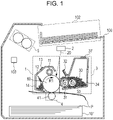
- the configuration of an image forming apparatus according to a first embodiment with reference to Fig. 1 includes an apparatus main body 100 that has at least a cleaning cartridge (photosensitive member unit) 1, an exposing device 2, a developing cartridge (developing unit) 3, a transfer device 4, and a fixing device 5, therein.
- the cleaning cartridge (photosensitive member unit) 1 and developing cartridge (developing unit) 3 are independently detachably mounted to the apparatus main body 100.
- the cleaning cartridge 1 includes a photosensitive drum 10 that is an image bearing member, a charging roller 11 that is a charging member, a cleaning blade 12 that is a cleaning member, and a storage element 13.
- a storage element 13 that the cleaning cartridge 1 has will be referred to as a first storage element
- a later-described storage element 37 that the developing cartridge 3 has will be referred to as a second storage element.
- the developing cartridge 3 contains a negatively-charging single-component developing agent (hereinafter referred to as "toner") 30.
- the developing cartridge 3 includes a developing roller 31 that is a developing agent bearing member, a developing blade 32 that is a developing agent regulating member, a supply roller 33 that supplies toner to the developing agent bearing member, and the storage element 37 that is non-volatile memory or the like.
- a control unit 103 is configured including a central processing unit (CPU) to centrally perform computation processing, and is configured including read only memory (ROM), random access memory (RAM), and so forth, which are storage elements.
- the RAM stores detection results of sensors, computation results, and so forth
- the ROM stores control programs, data tables obtained beforehand, and so forth.
- the control unit 103 is control means that centrally control operations of the apparatus main body 100.
- the control unit 103 controls exchange of various types of electric information signals, timings of driving, and so forth, and governs later-described sequences.
- the objects of control in the apparatus main body 100 are connected to the control unit 103.
- the control unit 103 is electrically connected to driving means, power source units, and so forth, that operate the cleaning cartridge 1, developing cartridge 3, exposing device 2, transfer device 4, and fixing device 5, and various types of sensor output lines, the storage elements 13 and 37, and so forth.
- the cleaning cartridge 1 and developing cartridge 3 are independently detachably mounted in the present embodiment, so when the user is notified of "toner level low", just the developing cartridge 3 is replaced. In the same way, when notified of "drum lifetime” (or any suitable message), just the cleaning cartridge 1 is replaced. According to this configuration, each of the cartridges can be efficiently used until the lifespan has been expended, which is advantageous. The lifespan of the image bearing member has become longer, so around two to five developing cartridges 3 can be used for each cleaning cartridge 1.
- the charging roller 11 uniformly charges the surface of the photosensitive drum 10, as preparation to form an electrostatic image (or electrostatic latent image) on the surface of the rotatable cylindrical photosensitive drum 10.
- the charging roller 11 that is a charging member is rotatable on a rotation axis, is in contact with the photosensitive drum 10 and rotates being driven by rotation of the photosensitive drum 10.
- Charging voltage is applied to the charging roller 11 from charging voltage applying means within the apparatus main body 100, whereby the surface of the photosensitive drum 10 is uniformly charged.
- the exposing device 2 forms an electrostatic latent image on the uniformly-charged photosensitive drum 10.
- a laser beam scanner including a laser diode, polygonal mirror, and so forth, is used as an exposing member.
- the laser beam scanner outputs a laser beam 21 that is intensity-modulated in accordance with image signals of target image information, and the charged surface of the photosensitive drum 10 is exposed by being scanned thereby, thus forming an electrostatic latent image.
- the developing cartridge 3 that is a developing device contains toner 30 within a developing frame 34. Developing operations are performed by conveying toner 30 on the developing roller 31 that is rotatable on a rotation axis to the electrostatic latent image formed on the surface of the photosensitive drum 10. Developing voltage is applied to the developing roller 31 from a developing bias power source serving as developing voltage applying means, thereby manifesting the electrostatic latent image to which the developing agent was conveyed as a visible image.
- the transfer device 4 is a device for transferring a toner image on the surface of the photosensitive drum 10 to a recording medium P.
- the recording medium P is conveyed from a sheet supply cassette 101 in synch with formation of the toner image, and voltage is applied from a transfer bias power source to a transfer roller 41 serving as transfer means.
- the toner image on the surface of the photosensitive drum 10 is transferred to the recording medium P by the voltage applied to the transfer roller 41. At this time, the greater part of the toner image is transferred onto the recording medium P, but some is not completely transferred onto the recording medium P and remains on the photosensitive drum 10.
- the fixing device 5 fixes the toner image onto the recording medium P to which it has been transferred, using heat and pressure, so as to be fixed onto the recording medium P as a fixed image.
- the recording medium P is then discharged to and stacked on a sheet discharge tray 102 outside of the apparatus main body 100.
- the cleaning blade 12 serving as a cleaning member comes into contact with the photosensitive drum 10 at a predetermined pressure, and scrapes off toner that remains on the photosensitive drum 10 due to not being completely transferred to the recording medium P.
- This toner is accumulated within a cleaning frame 14. Accordingly, the surface of the photosensitive drum 10 is refreshed.
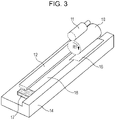
- Fig. 2 is a cross-sectional view of the cleaning cartridge 1.
- a negatively-charging photosensitive member, 24 mm in diameter, is used for the photosensitive drum 10.
- the photosensitive drum 10 is rotatable in the direction of the arrow R1, and is rotationally driven at a surface speed of 100 mm/sec by a driving motor inside the apparatus main body 100.
- the charging roller 11 is configured by a core portion 11a that is 6 mm in diameter being covered by a rubber layer 11b that is 1 mmm thick.
- the charging roller 11 is rotatable centered on the core portion 11a, and is in contact with the photosensitive drum 10 under pressure, by 200 to 600 gf/cm of force applied at both ends.
- the cleaning blade 12 is formed by urethane rubber 12a, which is 2 mm thick and has a hardness of 60 to 80 points when measured by a rubber durometer MD-1 at a temperature of 23°C, being integrally supported by a cleaning support metal plate 12b.
- the cleaning blade 12 is fixed to the cleaning frame 14, such that the tip of the urethane rubber 12a is in contact with the photosensitive drum 10 at a pressure around 70 gf/cm.
- the free end of the urethane rubber 12a of the cleaning blade 12 scrapes residual toner that was not transferred and remains on the surface photosensitive drum 10.
- the toner 15 that has been scraped off by the cleaning blade 12 (hereinafter referred to as "waste toner”) is accommodated in the cleaning frame 14. Part of the waste toner is retained at the tip of the free end of the urethane rubber 12a, providing lubricity between the photosensitive drum 10 and the urethane rubber 12a, and stabilizing cleaning performance.
- the amount of waste toner accommodated in the cleaning frame 14 is calculated by predicting transfer efficiency and the amount of fogging on solid while portions, from the total number of pixels to be printed and the usage environment.
- the results are stored in the storage element 13.
- the storage element 13 also stores information such as the number of rotations of the photosensitive drum 10, manufacturing No., and so forth, which can be used to comprehend the usage state of the cleaning cartridge 1.
- the lifespan of the cleaning cartridge 1 is determined to have ended, the user is notified to this effect, and the cleaning cartridge 1 is replaced with a new cleaning cartridge 1.
- the lifespan of the cleaning cartridge 1 may be calculated based on the amount of use of the photosensitive drum 10 serving as an image bearing member. For example, threshold values corresponding to the lifespan of the photosensitive drum 10 may be set based on the driving time and number of rotations of the photosensitive drum 10, and notification may be made that the lifespan of the cleaning cartridge 1 has ended in a case where the driving time and number of rotations exceed the threshold value. In such a case, a configuration is conceivable where the cleaning cartridge 1 itself does not accommodate the waste toner, and a waste toner container is separately provided to the apparatus main body 100.
- the cleaning blade 12 scrapes the residual toner off of the surface of the photosensitive drum 10.
- the toner that has been scraped off is accumulated in the cleaning frame 14 through a cleaning opening 18 that is defined by the cleaning frame 14, a scooping sheet 16, and a cleaning end seal 17.
- the scooping sheet 16 is a flexible sheet member that prevents toner leakage from the cleaning frame 14 by being in close contact with the photosensitive drum 10 and the cleaning end seal 17.
- the cleaning end seal 17 is an elastic member where a surface thereof that comes into contact with the photosensitive drum 10 has been subjected to flocking with minute flock, and comes into close contact with the photosensitive drum 10, cleaning blade 12, scooping sheet 16, and cleaning frame 14. This close contact prevents toner leakage from the end portion of the cleaning frame 14.
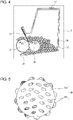
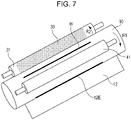
- FIG. 6 The configuration of the developing cartridge 3 according to the first embodiment will be described with reference to Figs. 4 through 6 . Some of the members situated toward the front have been drawn partially cut away in Fig. 6 , for description of the layout of the members.
- Negatively-charging non-magnetic single-component toner is used for the toner 30.
- Toner particles have a configuration where external additives 30b that is inorganic particles such as lubricants, charge-controlling agents, and so forth, have been added to resin particles 30a including charge-controlling agents, pigments, and so forth, serving as a base. These are contained (accommodated) in a developing frame 34, as illustrated in Fig. 4 .
- the developing roller 31 is a roller member that can rotate in the direction of the arrow R2. The developing roller 31 serves to bear toner 30 and convey the toner 30 to the electrostatic latent image on the photosensitive drum 10.
- the developing blade 32 is a stainless-steel plate that comes into contact with the developing roller 31 under a predetermined pressure, and regulates the amount of toner (or thickness of the toner layer) on the developing roller 31 to a generally constant amount (or thickness).
- the toner 30 is negatively charged by friction at the time of the toner amount being regulated.
- the supply roller 33 is a roller member formed of a sponge material that absorbs the toner 30, and rotates in the direction of the arrow R3 while in contact with the developing roller 31. This rotation supplies the toner 30 to the surface of the developing roller 31.
- a blowout prevention sheet 38 is a flexible sheet member that prevents toner leakage from the developing frame 34 by being in close contact with the developing roller 31 and a developing end seal 35.
- the developing end seal 35 is an elastic member where a surface thereof that comes into contact with the developing roller 31 has been subject to flocking with minute flock.
- the developing end seal 35 comes into close contact with the developing roller 31, developing blade 32, blowout prevention sheet 38, and developing frame 34, thereby preventing toner leakage from the end portion of the developing frame 34.
- the toner amount which is the amount of developing agent in the developing frame 34
- means are used in which the number of pixels regarding which the exposing device 2 emits light can be counted in the present embodiment (hereinafter referred to as "pixel count").
- the amount of toner necessary to develop an image of a certain number of pixels can be calculated by the number of pixels regarding which light is emitted. Accordingly, using this pixel count method enables the amount of toner that has been consumed to be calculated, and subtracting this value from the initial toner filling amount gives the amount of toner remaining in the developing frame 34. This value is stored in the storage element 37.
- the storage element 37 stores the number of rotations of the developing roller 31 and so forth in addition to the remaining amount of toner, so the usage state of the developing cartridge 3 can be comprehended from the information in the storage element 37.
- the number of rotations of the developing roller 31 or the amount of waste toner exceeds a threshold value, the lifespan of the developing cartridge 3 is determined to have ended, which is notified to the user, and is replaced with a new developing cartridge 3.
- a method of counting the number of pixels is used in the present embodiment to calculate the amount of developing agent remaining accommodated in the developing frame 34, this method is not restrictive.
- there is an optical remaining amount detecting method where light is passed through the developing frame 34, and the remaining amount of developing agent is judged by the light being shielded by the presence of developing agent.
- an electrostatic capacitance detection method may be used, where a pair of electrodes are installed, and the amount of developing agent is judged based on change in electrostatic capacitance between the electrodes.
- toner supply (purge) process a non-image-forming period
- the apparatus main body 100 inputs image information in the form of documents or shapes that the user has optionally created, from an external device (computer or storage media) that is omitted from illustration.
- the control unit 103 controls each object of control to execute image formation by the apparatus main body 100 based on the input image information. This execution period is referred to as "image-forming period”.
- image-forming period On the other hand, after image formation has ended, such as when performing post-rotation operations or the like, initial operations before forming images based on image information, and maintenance operation execution periods unrelated to input of image information, are the "non-image-forming period".
- the toner supply (purge) process is executed in the non-image-forming period when the photosensitive drum 10, developing roller 31, and so forth are being driven based on signals from the control unit 103. Accordingly, the toner supply (purge) process is controlled by the control unit 103.
- the toner supply (purge) process is executed during post-rotation operations, which is during non-image-forming that is not during image forming (developing), in order to maintain the lubricity between the cleaning blade 12 and the photosensitive drum 10.
- Post-rotation operations are operations performed after image formation, to execute post-image-forming operations where driving of the main motor is continued for a certain amount of time after printing of the last sheet of recording material has ended and the photosensitive drum 10 is driven.
- a solid black toner band W is formed on the entire region on the photosensitive drum 10 in the longitudinal direction by the same processes of charging, exposing, and developing as the above-described image forming process of the photosensitive drum 10. Thereafter, the toner band W is made to pass by the transfer roller 41 to which transfer voltage of opposite polarity from that when forming images is applied, thereby supplying the greater part of the toner band W to the cleaning blade 12.
- the toner 30 fed to the cleaning blade 12 in the form of the toner band W has a configuration where the external additive 30b of inorganic particles such as lubricants, charge-controlling agents, and so forth, have been added to resin particles 30a serving as a base, as described with reference to Fig. 5 .
- the present inventors have found through study that even better lubrication effects can be obtained when the external additive 30b is present at the contact portion between the cleaning blade 12 and photosensitive drum 10. Accordingly, a state in which a predetermined amount of the external additive 30b is present at an edge portion 12E of the cleaning blade 12 needs to be maintained.
- toner supply (purge) process where the amount of toner used in the toner supply (purge) process is maximally suppressed, and more toner is set aside for image formation, will be described below. This differs depending on the usage state of the developing cartridge 3 and cleaning cartridge 1.
- Figs. 8A and 8B are diagrams schematically illustrating around the edge portion 12E (contact region) of the cleaning blade 12.
- the external additive 30b adhering to the toner 30. Accordingly, a sufficient amount of external additive 30b can be supplied to the edge portion 12E even if the amount of toner 30 being fed to the edge portion 12E of the cleaning blade 12 is small.
- the toner 30 "deteriorates” due to repeated rubbing against the developing blade 32, supply roller 33, and so forth.
- the term “deterioration” as used here means that the external additive 30b comes loose from the resin particles 30a, or becomes embedded in the resin particles 30a.
- the amount of external additive 30b moving to the cleaning blade 12 decreases and the lubricity thereof decreases, so the effects of reduced friction between the two is less readily maintained.
- the number of rotations of the developing roller 31 is used as an index indicating the degree of advance of toner deterioration.
- the reason is that deterioration of the toner 30 advances primarily due to rubbing between the developing roller 31 and developing blade 32.
- the rotation speed of the developing roller 31 is constant, so the number of rotations of the developing roller 31 can be detected by adding up the drive time of the developing drive motor.
- the number of rotations of the developing roller 31 is calculated by detecting drive operations of the developing roller 31 and adding up from the time of starting usage without being reset.
- the amount of use of the developing roller 31 is calculated by the control unit 103 using the following Expression (1), where the amount of use when starting usage in 0%, and the number of rotations of a developing roller 31 that may exhibit defective images such as fogging, vertical streaks, and so forth, is 100%.
- Current usage amount of developing roller % accumulated number of rotations of developing roller/total number of rotations of developing roller at which defective images may occur ⁇ 100
- the calculated usage amount of the developing roller 31 is written to the storage element 37 by the control unit 103.
- the apparatus main body 100 (control unit 103) of the image forming apparatus can reference the amount of use of the developing roller 31 from the storage element 37 as necessary.
- Current usage amount of developing roller % drive time of developing roller so far/total drive time of developing roller at which defective images may occur ⁇ 100
- the cleaning cartridge 1 When starting using the cleaning cartridge 1, there is absolutely no toner 30 on the edge portion 12E of the cleaning blade 12 and the surface of the photosensitive drum 10. Accordingly, the lubricity is low and the friction force between the cleaning blade 12 and photosensitive drum 10 is great. Accordingly, a predetermined amount of the external additive 30b is made to transition by the toner supply (purge) process, thereby securing lubricity.
- the amount of toner 30 supplied to be transitioned at this time is decided by the degree of deterioration of the toner 30, as described above.
- the amount of external additive 30b adhering to the toner is great. Accordingly, external additive 30b is fed to the edge portion 12E of the cleaning blade 12 by feeding just a small amount of toner 30 as illustrated in Fig. 8A , and lubricity is ensured.
- the cleaning cartridge 1 and developing cartridge 3 are independently detachably mountable in the present embodiment. Accordingly, there is a possibility that a developing cartridge 3 in the latter half of the usage lifespan where toner deterioration has advanced (great number of rotations of the developing roller 31) will be combined with a cleaning cartridge 1 in the initial stage of use.
- the use of the developing cartridge 3 advances and the lifespan of the first developing cartridge 3 used with the cleaning cartridge 1 approaches its end, it may be replaced with a second developing cartridge 3.
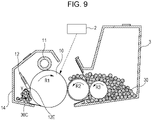
- the state is such as that illustrated in Fig. 9 . That is to say, the toner 30 supplied in the toner supply (purge) process while the first developing cartridge 3 was still in use is retained around the edge portion 12E of the cleaning blade 12. Additionally, waste toner 30c from untransferred toner, fogging, and the like, is retained at the edge portion 12E of the cleaning blade 12 and circulates in the direction of the arrow Y. In this case, these serve to maintain lubricity, so a cleaning cartridge 1 where waste toner 30c has accumulated will have no problems due to reduced lubricity even if the amount of toner used in the toner supply (purge) process is reduced.
- measurement means where the number of pixels of light emission of the exposing device 2 can be counted (pixel count) are used for calculation of the amount of waste toner 30c.
- the means may be made up of the control unit 103, or may be provided separately from the control unit 103.
- a pixel count is counting individual image signals making up image dots of the formed image.
- the toner amount needed to develop a certain image is estimated by the control unit 103 from the number of pixels where the exposing device 2 emits light.
- the amount of waste toner 30c that passes around the cleaning blade 12 is a value obtained by multiplying the amount of actually-used toner by a certain percentage.
- Waste toner 30c occurring in print errors such as jamming, and the toner supply (purge) process and so forth, is not externally output on recording sheets as images. That is to say, all pixels in the pixel count are waste toner, so the control unit 103 adds the pixel count where dots are actually counted as the amount of waste toner 30c.
- the control unit 103 records the total waste toner amount over the multiple developing cartridges 3, as a value relating to developing agent recovered by the cleaning member. That is to say, the control unit 103 stores the value relating to developing agent recovered by the cleaning member over multiple developing cartridges 3 in the storage element 13, and uses this for calculation.
- the amount of developing agent recovered by the cleaning member in the present specification is not only the amount of developing agent directly detected, but also includes the above-described waste toner accommodation percentage and waste toner amount as well.
- the amount of toner initially supplied from the second and subsequent developing cartridges 3 can be reduced.
- the amount of toner initially supplied means the amount of toner supplied from the developing cartridge 3 via the photosensitive drum 10 to the cleaning member when performing the toner supply (purge) process from an unused developing cartridge 3. That is to say, the amount of toner used in the first toner supply (purge) process performed with the second and subsequent developing cartridges 3 can be less than the amount of toner used in the first toner supply (purge) process performed with the first unused developing cartridge 3.
- the amount of toner initially supplied can be reduced for the second and subsequent developing cartridges 3.
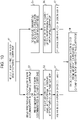
- FIG. 10 is a flowchart of when performing the toner supply (purge) processing.
- the cleaning cartridge 1 and developing cartridge 3 are mounted to the image forming apparatus, and the power of the image forming apparatus is turned on.
- the control unit 103 of the image forming apparatus detects that the cleaning cartridge 1 and developing cartridge 3 are mounted to the apparatus main body 100.
- the control unit 103 in the present embodiment also serves as a detecting unit that detects whether or not these are mounted (S1).
- the waste toner accommodation percentage (%) of waste toner within the cleaning frame 14 is read by the control unit 103 through communication between the storage element 13 provided to the cleaning cartridge 1 and communication means within the apparatus main body 100 (S2) .
- control unit 103 estimates around how much toner is present at the edge portion 12E of the cleaning blade 12. Estimation may be made of the amount of external additive instated (S3).
- the control unit 103 enters the estimated value (information) to a toner purge conditions decision table (S4).
- control unit 103 reads the developing roller usage amount through communication between the storage element 37 provided to the developing cartridge 3 and the communication means within the apparatus main body 100 (S5). Thereafter, the control unit 103 estimates the degree of advance of toner deterioration within the developing cartridge 3 (S6). The control unit 103 then enters information to the toner purge conditions decision table (S7).
- the control unit 103 decides toner supply (purge) conditions (toner supply amount), based on the information entered from the cleaning cartridge 1 side and the developing cartridge 3 side in S4 and S7 (S8).
- toner supply (purge) conditions toner supply amount
- the term "enter” as used here means processing using the information read from the storage elements 13 and 37 as parameters for identifying particular toner supply (purge) conditions from the toner purge conditions decision table.
- the present inventors performed the following experiment to compile the toner purge conditions decision table.
- the present inventors used the apparatus main body 100 where the cleaning cartridge 1 and developing cartridge 3 are independently detachably mounted to perform endurance testing of the developing cartridge 3 with different waste toner amounts in the cleaning cartridge 1.
- the Table illustrates the amount of toner (mg) consumed in one toner supply (purge) processing under the above-described conditions. Under these conditions, no abnormal noise occurs. Accordingly, what is shown in the Table can be used as the toner purge conditions decision table without change. That is to say, the Table is an example of the toner purge conditions decision table.
- the toner supply amount decreases.
- the toner supply amount increases.
- the control unit 103 compares signals corresponding to the amount of developing agent recovered by the cleaning member and signals corresponding to the amount of use of the developing cartridge 3, with a reference table stored within the image forming apparatus, and decides the toner supply amount.
- the above-described toner purge conditions decision table is an example of the reference table.
- the toner usage amount of the developing roller 31 defined by Expressions (1) and (2) is used for the vertical axis in the toner purge conditions decision table in the Table, the present embodiment is not restricted to this. Any value can be used as appropriate if relating to the amount of usage of the developing roller 31 (developing cartridge 3).
- the usage amount may be the number of rotations of the developing roller 31, or time itself.
- the toner purge conditions decision table may use the remaining drive amount of the developing roller 31 for the vertical axis instead of the usage amount of the developing roller 31.
- the remaining drive amount (remaining life) of the developing roller 31 can be said to be a value relating to the usage amount of the developing roller 31 (developing cartridge 3).
- a value obtained by subtracting the accumulated number of rotations of the developing roller 31 from the total number of rotations of a developing roller 31 where defective images may occur, and a percentage value obtained by multiplying the ratio by 100, are equivalent to the remaining drive amount of the developing roller 31 (developing cartridge 3) .
- the horizontal axis in the toner purge conditions decision table is not restricted to the waste toner accommodation percentage, either. Any value can be used as appropriate, as long as a value relating to the amount of developing agent recovered as waste toner. For example, this may be the waste toner amount, remaining waste toner accommodation capacity, or remaining waste toner accommodation percentage. Either of the remaining waste toner accommodation capacity and remaining waste toner accommodation percentage can be equivalent to a value relating to the amount of developing agent recovered by the cleaning member as waste toner.
- the waste toner amount is an amount based on the pixel count, this is not restrictive.
- the waste toner amount may be detected by known mechanical or optical sensors, and the output value thereof may be read by the control unit 103 to perform estimation. That is to say, the sensor value detected in this way can be equivalent to a value relating to the amount of developing agent recovered by the cleaning member.
- the toner purge conditions decision table in the Table has the waste toner accommodation percentage as the horizontal axis, but this is not restrictive. Another amount may be employed as long as a value relating to the waste toner amount. For example, if there is a certain macroscopic correlation between the amount of waste toner passing around the cleaning blade 12 and the amount of toner actually used, the total usage amount of multiple developing cartridges 3 mounted and operated with regard to one cleaning cartridge 1 may be employed. Such a value can also be equivalent to a value relating to the amount of developing agent recovered by the cleaning member.
- the above modifications are also equally applicable to the following embodiments.
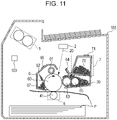
- a second embodiment of the present invention will be described with reference to Fig. 11 . Note that components that are different from those in the first embodiment will be described in the present embodiment, and description of components that are the same as in the first embodiment will be omitted.
- a feature of the present embodiment is that a process cartridge including a photosensitive drum, charging device, developing device, and cleaning device, and a toner cartridge containing toner, are each independently detachably mounted.
- the present invention is applicable to such a form as well.
- the image forming apparatus has at least a process cartridge 6, an exposing device 2, a toner cartridge 7, a transfer device 4, and a fixing device 5, within the apparatus main body 100.
- the process cartridge 6 and toner cartridge 7 are independently detachably mounted to the apparatus main body 100 in the present embodiment.
- the process cartridge 6 includes a photosensitive drum 60 serving as an image bearing member, a charging roller 61 serving as a charging member, and a cleaning blade 62 serving as a cleaning member.
- the process cartridge 6 further includes a developing roller 63, a developing blade 64, a supply roller 65, and a storage element 66 that is communicable with the image forming apparatus, within a process cartridge frame 67.
- the toner cartridge 7 has at least toner 70 and a storage element 71 that is communicable with the image forming apparatus within a toner cartridge frame 72.
- process cartridge 6 and toner cartridge 7 are each independently detachably mounted in this way is in order to efficiently use both cartridges until the end of their lifespans. Accordingly, a configuration where around three to seven toner cartridges 7 are used for one process cartridge 6 is common.
- the timing to perform the toner supply (purge) processing can be decided in accordance with the usage state of the toner cartridge 7 and process cartridge 6.
- the toner supply amount necessary in the toner supply (purge) processing can be found if the degree of advance of toner deterioration can be found. While the degree of advance of toner deterioration has been detected by the number of rotations of the developing roller 31 in the first embodiment, the degree of advance of toner deterioration can be also detected by the remaining amount of toner 70 within the developing device, besides this method. In a case where the remaining amount of toner 70 is great in Fig. 11 , a great amount a fresh toner 70 that has not deteriorated is supplied from the supply roller 65 to the developing roller 63.
- the probability that there will be toner 70 that has been rubbed by the developing blade 64 in the past upon the developing roller 63 increases.
- the frequency of rubbing by the developing blade 64 and so forth of the toner 70 correlates with the degree of advance of toner deterioration. Accordingly, detecting the remaining amount of toner 70 enables the degree of advance of toner deterioration to be detected as well.
- the remaining amount of toner is stored in the storage element 71 attached to the toner cartridge 7, and the degree of advance of deterioration is determined by the remaining amount of toner.
- the initial value of the remaining amount of toner is the toner filling amount (toner amount) within the toner cartridge 7 at the initial point (unused state).
- a method is used where the initial value is stored in the storage element 71, a toner amount corresponding to the pixel count based on image signals is calculated therefrom, and subtracted from the initial value.
- the remaining toner amount of the toner cartridge 7 and the usage amount of the toner cartridge 7 are the same in the present embodiment. Usage State of Cleaning Cartridge and Toner Supply Conditions
- the waste toner amount within the process cartridge 6 can be found, the amount of toner 70 that should be fed to the cleaning blade 12 in the toner supply (purge) processing can be judged.
- the method where the waste toner amount is calculated from the pixel count is used in the present embodiment as well.
- FIG. 12 is a flowchart of when performing the toner supply (purge) processing.
- the process cartridge 6 and toner cartridge 7 are mounted to the image forming apparatus, the control unit 103 detects that these are mounted, and if mounting has been confirmed by the control unit 103, the flow advances (S11).
- the waste toner accommodation percentage (%) within the process cartridge frame 67 is read by the control unit 103 through communication between the storage element 66 provided to the process cartridge 6 and the communication means within the apparatus main body 100 (S12) .
- control unit 103 records the total waste toner amount over the multiple toner cartridges 7 as a value relating to the developing agent recovered by the cleaning member. That is to say, the control unit 103 stores a value relating to the developing agent recovered by the cleaning member over multiple toner cartridges 7 in the storage element 66, and uses this for computation.
- control unit 103 estimates around how much toner is present at the edge portion 12E of the cleaning blade 12 (S13). The control unit 103 enters the estimated value (information) to the toner purge conditions decision table (S14).
- the control unit 103 reads the toner remaining amount or usage amount through communication between the storage element 71 provided to the toner cartridge 7 and the communication means within the apparatus main body 100 (S15).
- the way of obtaining the waste toner accommodation percentage is the same as described in the first embodiment, but the usage amount (%) in the toner cartridge 7 may be calculated by the control unit 103 based on the pixel count value, or an output value from a known optical sensor may be obtained.
- the control unit 103 estimates the degree of advance of toner deterioration within the toner cartridge 7 (S16).
- the control unit 103 enters information to the toner purge conditions decision table (S17).
- the toner supply conditions are decided based on the information entered from the process cartridge 6 side and the toner cartridge 7 side in S14 and S17 (S18).
- the amount of toner consumed in the toner supply (purge) processing is decided by the above-described flowchart in the second embodiment as well, so advantages the same as those of the first embodiment can be anticipated.
- toner carriages that accommodate developing agent, developing cartridges that include at least a developing agent bearing member, and further cleaning cartridges that include at least a cleaning member.
- process cartridges that have at least an image bearing member and process means that act thereupon, and so forth.
- a developing cartridge may have a configuration where a toner cartridge that accommodates developing agent is detachably mounted separately from the developing cartridge.
- the developing cartridge has a configuration where developing agent can be supplied from the toner cartridge to a space in a frame supporting the developing agent bearing member where developing agent can be accommodated.
- a cleaning cartridge has an image bearing member and a cleaning member that cleans the image bearing member.
- the cleaning cartridge when the cleaning cartridge is mounted to the apparatus main body, the developing cartridge also needs to be mounted to the apparatus main body. This is the arrangement in the first embodiment.
- a process cartridge it is sufficient for a process cartridge to have at least an image bearing member.
- a process cartridge refers to a configuration having charging means that charge the image bearing member, and developing means that develop an electrostatic image on the image bearing member.
- a toner cartridge for supplying toner to the process cartridge may further have a detachably mounted configuration. This is the arrangement in the second embodiment.
- the apparatus main body of the image forming apparatus may have a configuration where a process cartridge is detachably mounted, or may have a configuration where a developing cartridge and cleaning cartridge are detachably mounted. Further, in the case of two cartridges, a configuration may be made where the developing cartridge is attached to the cleaning cartridge and then mounted to the apparatus main body of the image forming apparatus, or where the cartridges can be mounted to the apparatus main body regardless of the mounting state of other cartridges.
- an image forming apparatus can be provided where the amount of developing agent fed to the cleaning member is reduced.
Landscapes
- Physics & Mathematics (AREA)
- General Physics & Mathematics (AREA)
- Engineering & Computer Science (AREA)
- Computer Vision & Pattern Recognition (AREA)
- Microelectronics & Electronic Packaging (AREA)
- Life Sciences & Earth Sciences (AREA)
- Environmental & Geological Engineering (AREA)
- Sustainable Development (AREA)
- Cleaning In Electrography (AREA)
- Electrophotography Configuration And Component (AREA)
- Control Or Security For Electrophotography (AREA)
- Dry Development In Electrophotography (AREA)
Applications Claiming Priority (1)
| Application Number | Priority Date | Filing Date | Title |
|---|---|---|---|
| JP2017031353 | 2017-02-22 |
Publications (2)
| Publication Number | Publication Date |
|---|---|
| EP3367178A1 EP3367178A1 (en) | 2018-08-29 |
| EP3367178B1 true EP3367178B1 (en) | 2022-06-29 |
Family
ID=61249542
Family Applications (1)
| Application Number | Title | Priority Date | Filing Date |
|---|---|---|---|
| EP18157549.9A Active EP3367178B1 (en) | 2017-02-22 | 2018-02-20 | Image forming apparatus |
Country Status (3)
| Country | Link |
|---|---|
| US (1) | US10338495B2 (enExample) |
| EP (1) | EP3367178B1 (enExample) |
| JP (1) | JP2018136533A (enExample) |
Families Citing this family (5)
| Publication number | Priority date | Publication date | Assignee | Title |
|---|---|---|---|---|
| JP7098339B2 (ja) * | 2018-01-24 | 2022-07-11 | キヤノン株式会社 | 画像形成装置 |
| JP7205331B2 (ja) * | 2019-03-20 | 2023-01-17 | 株式会社リコー | 画像形成装置、画像形成方法、及びプログラム |
| JP7446787B2 (ja) * | 2019-11-19 | 2024-03-11 | キヤノン株式会社 | 画像形成装置 |
| US11675558B1 (en) * | 2022-03-18 | 2023-06-13 | Toshiba Tec Kabushiki Kaisha | Image forming apparatus and method which performs printing according to an electrophotographic scheme |
| JP7707258B2 (ja) * | 2023-10-17 | 2025-07-14 | キヤノン株式会社 | 画像形成装置 |
Citations (1)
| Publication number | Priority date | Publication date | Assignee | Title |
|---|---|---|---|---|
| US20110150512A1 (en) * | 2009-12-21 | 2011-06-23 | Canon Kabushiki Kaisha | Image forming apparatus |
Family Cites Families (13)
| Publication number | Priority date | Publication date | Assignee | Title |
|---|---|---|---|---|
| JP3313978B2 (ja) | 1996-07-26 | 2002-08-12 | キヤノン株式会社 | プロセスカートリッジ及び電子写真画像形成装置 |
| JP3890266B2 (ja) * | 2002-07-03 | 2007-03-07 | キヤノン株式会社 | ブロックポリマー化合物、インク組成物、分散性組成物及び画像形成方法並びに画像形成装置 |
| JP2004354933A (ja) * | 2003-05-30 | 2004-12-16 | Oki Data Corp | 画像形成装置 |
| US7819790B2 (en) * | 2004-02-20 | 2010-10-26 | Dixie Consumer Products Llc | Apparatus for making paperboard pressware with controlled blank feed |
| JP4785417B2 (ja) * | 2004-05-25 | 2011-10-05 | キヤノン株式会社 | 画像形成装置 |
| US7415229B2 (en) * | 2005-06-30 | 2008-08-19 | Xerox Corporation | Method and system for improved implementation of maintenance routines in a productive system |
| US20070201897A1 (en) * | 2005-07-15 | 2007-08-30 | Seiko Epson Corporation | Image forming apparatus and image forming method |
| JP5335384B2 (ja) * | 2008-11-19 | 2013-11-06 | キヤノン株式会社 | 画像形成装置 |
| US7877054B1 (en) * | 2009-07-14 | 2011-01-25 | Xerox Corporation | Process for development of cleaning blade lubrication stripes |
| JP5316289B2 (ja) | 2009-07-30 | 2013-10-16 | 株式会社リコー | 画像処理装置、その制御方法及びプログラム |
| JP5822460B2 (ja) | 2009-12-21 | 2015-11-24 | キヤノン株式会社 | 画像形成装置 |
| JP6067363B2 (ja) * | 2012-12-18 | 2017-01-25 | キヤノン株式会社 | 画像形成装置 |
| US9703232B2 (en) | 2015-02-10 | 2017-07-11 | Canon Kabushiki Kaisha | Image forming apparatus that performs a contacting operation for contacting a developing member with an image bearing member |
-
2018
- 2018-02-06 JP JP2018019619A patent/JP2018136533A/ja active Pending
- 2018-02-15 US US15/897,932 patent/US10338495B2/en active Active
- 2018-02-20 EP EP18157549.9A patent/EP3367178B1/en active Active
Patent Citations (1)
| Publication number | Priority date | Publication date | Assignee | Title |
|---|---|---|---|---|
| US20110150512A1 (en) * | 2009-12-21 | 2011-06-23 | Canon Kabushiki Kaisha | Image forming apparatus |
Also Published As
| Publication number | Publication date |
|---|---|
| EP3367178A1 (en) | 2018-08-29 |
| US10338495B2 (en) | 2019-07-02 |
| US20180239274A1 (en) | 2018-08-23 |
| JP2018136533A (ja) | 2018-08-30 |
Similar Documents
| Publication | Publication Date | Title |
|---|---|---|
| US10338495B2 (en) | Image forming apparatus | |
| US6961527B2 (en) | Method of detecting life of image bearing member, image forming apparatus and cartridge | |
| JP2003330320A (ja) | 画像形成装置 | |
| CN106257340B (zh) | 图像形成装置 | |
| US20180341192A1 (en) | Image forming apparatus | |
| US12140885B2 (en) | Image forming apparatus including brush for surface of developer supplying member | |
| JP2004139046A (ja) | 画像形成装置及び現像ユニット、記憶媒体 | |
| US7343109B2 (en) | Electrophotographic printer having developer and transfer bias control | |
| JP2004334063A (ja) | 画像形成装置 | |
| US8861990B2 (en) | Image forming apparatus | |
| US11079712B2 (en) | Image forming apparatus for an intermediate transfer of a toner image and for reversely transferring collected developer to an image bearing member | |
| JP6214166B2 (ja) | 現像装置、プロセスカートリッジ及び画像形成装置 | |
| EP3518046B1 (en) | IMAGE FORMING APPARATUS | |
| US12461465B2 (en) | Image-forming apparatus having charging potential control during non-image forming operation | |
| CN110412848B (zh) | 图像形成装置 | |
| US8948629B2 (en) | Image forming apparatus and image forming method | |
| EP4050421B1 (en) | Image forming apparatus | |
| JP2005189452A (ja) | 画像形成装置及びカートリッジ、記憶媒体 | |
| US10394187B2 (en) | Exposure devices, static eliminator, and image forming apparatus comprising the same | |
| US11579556B2 (en) | Image forming apparatus for prolonging life of replaceable image forming unit | |
| JP2025172271A (ja) | 画像形成装置 | |
| JP2025140292A (ja) | 画像形成装置 | |
| EP1154338B1 (en) | Cleaning system and image forming method | |
| JP2025031353A (ja) | 画像形成装置 | |
| JP2023075865A (ja) | 画像形成装置 |
Legal Events
| Date | Code | Title | Description |
|---|---|---|---|
| PUAI | Public reference made under article 153(3) epc to a published international application that has entered the european phase |
Free format text: ORIGINAL CODE: 0009012 |
|
| STAA | Information on the status of an ep patent application or granted ep patent |
Free format text: STATUS: THE APPLICATION HAS BEEN PUBLISHED |
|
| AK | Designated contracting states |
Kind code of ref document: A1 Designated state(s): AL AT BE BG CH CY CZ DE DK EE ES FI FR GB GR HR HU IE IS IT LI LT LU LV MC MK MT NL NO PL PT RO RS SE SI SK SM TR |
|
| AX | Request for extension of the european patent |
Extension state: BA ME |
|
| STAA | Information on the status of an ep patent application or granted ep patent |
Free format text: STATUS: REQUEST FOR EXAMINATION WAS MADE |
|
| 17P | Request for examination filed |
Effective date: 20190228 |
|
| RBV | Designated contracting states (corrected) |
Designated state(s): AL AT BE BG CH CY CZ DE DK EE ES FI FR GB GR HR HU IE IS IT LI LT LU LV MC MK MT NL NO PL PT RO RS SE SI SK SM TR |
|
| STAA | Information on the status of an ep patent application or granted ep patent |
Free format text: STATUS: EXAMINATION IS IN PROGRESS |
|
| 17Q | First examination report despatched |
Effective date: 20190812 |
|
| GRAP | Despatch of communication of intention to grant a patent |
Free format text: ORIGINAL CODE: EPIDOSNIGR1 |
|
| RIC1 | Information provided on ipc code assigned before grant |
Ipc: G03G 15/00 20060101ALN20211215BHEP Ipc: G03G 21/18 20060101ALI20211215BHEP Ipc: G03G 21/00 20060101AFI20211215BHEP |
|
| STAA | Information on the status of an ep patent application or granted ep patent |
Free format text: STATUS: GRANT OF PATENT IS INTENDED |
|
| RIC1 | Information provided on ipc code assigned before grant |
Ipc: G03G 15/00 20060101ALN20211220BHEP Ipc: G03G 21/18 20060101ALI20211220BHEP Ipc: G03G 21/00 20060101AFI20211220BHEP |
|
| INTG | Intention to grant announced |
Effective date: 20220120 |
|
| GRAS | Grant fee paid |
Free format text: ORIGINAL CODE: EPIDOSNIGR3 |
|
| GRAA | (expected) grant |
Free format text: ORIGINAL CODE: 0009210 |
|
| STAA | Information on the status of an ep patent application or granted ep patent |
Free format text: STATUS: THE PATENT HAS BEEN GRANTED |
|
| AK | Designated contracting states |
Kind code of ref document: B1 Designated state(s): AL AT BE BG CH CY CZ DE DK EE ES FI FR GB GR HR HU IE IS IT LI LT LU LV MC MK MT NL NO PL PT RO RS SE SI SK SM TR |
|
| REG | Reference to a national code |
Ref country code: CH Ref legal event code: EP |
|
| REG | Reference to a national code |
Ref country code: AT Ref legal event code: REF Ref document number: 1501741 Country of ref document: AT Kind code of ref document: T Effective date: 20220715 |
|
| REG | Reference to a national code |
Ref country code: IE Ref legal event code: FG4D |
|
| REG | Reference to a national code |
Ref country code: DE Ref legal event code: R096 Ref document number: 602018037203 Country of ref document: DE |
|
| REG | Reference to a national code |
Ref country code: LT Ref legal event code: MG9D |
|
| PG25 | Lapsed in a contracting state [announced via postgrant information from national office to epo] |
Ref country code: SE Free format text: LAPSE BECAUSE OF FAILURE TO SUBMIT A TRANSLATION OF THE DESCRIPTION OR TO PAY THE FEE WITHIN THE PRESCRIBED TIME-LIMIT Effective date: 20220629 Ref country code: NO Free format text: LAPSE BECAUSE OF FAILURE TO SUBMIT A TRANSLATION OF THE DESCRIPTION OR TO PAY THE FEE WITHIN THE PRESCRIBED TIME-LIMIT Effective date: 20220929 Ref country code: LT Free format text: LAPSE BECAUSE OF FAILURE TO SUBMIT A TRANSLATION OF THE DESCRIPTION OR TO PAY THE FEE WITHIN THE PRESCRIBED TIME-LIMIT Effective date: 20220629 Ref country code: HR Free format text: LAPSE BECAUSE OF FAILURE TO SUBMIT A TRANSLATION OF THE DESCRIPTION OR TO PAY THE FEE WITHIN THE PRESCRIBED TIME-LIMIT Effective date: 20220629 Ref country code: GR Free format text: LAPSE BECAUSE OF FAILURE TO SUBMIT A TRANSLATION OF THE DESCRIPTION OR TO PAY THE FEE WITHIN THE PRESCRIBED TIME-LIMIT Effective date: 20220930 Ref country code: FI Free format text: LAPSE BECAUSE OF FAILURE TO SUBMIT A TRANSLATION OF THE DESCRIPTION OR TO PAY THE FEE WITHIN THE PRESCRIBED TIME-LIMIT Effective date: 20220629 Ref country code: BG Free format text: LAPSE BECAUSE OF FAILURE TO SUBMIT A TRANSLATION OF THE DESCRIPTION OR TO PAY THE FEE WITHIN THE PRESCRIBED TIME-LIMIT Effective date: 20220929 |
|
| REG | Reference to a national code |
Ref country code: NL Ref legal event code: MP Effective date: 20220629 |
|
| REG | Reference to a national code |
Ref country code: AT Ref legal event code: MK05 Ref document number: 1501741 Country of ref document: AT Kind code of ref document: T Effective date: 20220629 |
|
| PG25 | Lapsed in a contracting state [announced via postgrant information from national office to epo] |
Ref country code: RS Free format text: LAPSE BECAUSE OF FAILURE TO SUBMIT A TRANSLATION OF THE DESCRIPTION OR TO PAY THE FEE WITHIN THE PRESCRIBED TIME-LIMIT Effective date: 20220629 Ref country code: LV Free format text: LAPSE BECAUSE OF FAILURE TO SUBMIT A TRANSLATION OF THE DESCRIPTION OR TO PAY THE FEE WITHIN THE PRESCRIBED TIME-LIMIT Effective date: 20220629 |
|
| PG25 | Lapsed in a contracting state [announced via postgrant information from national office to epo] |
Ref country code: NL Free format text: LAPSE BECAUSE OF FAILURE TO SUBMIT A TRANSLATION OF THE DESCRIPTION OR TO PAY THE FEE WITHIN THE PRESCRIBED TIME-LIMIT Effective date: 20220629 |
|
| PG25 | Lapsed in a contracting state [announced via postgrant information from national office to epo] |
Ref country code: SM Free format text: LAPSE BECAUSE OF FAILURE TO SUBMIT A TRANSLATION OF THE DESCRIPTION OR TO PAY THE FEE WITHIN THE PRESCRIBED TIME-LIMIT Effective date: 20220629 Ref country code: SK Free format text: LAPSE BECAUSE OF FAILURE TO SUBMIT A TRANSLATION OF THE DESCRIPTION OR TO PAY THE FEE WITHIN THE PRESCRIBED TIME-LIMIT Effective date: 20220629 Ref country code: RO Free format text: LAPSE BECAUSE OF FAILURE TO SUBMIT A TRANSLATION OF THE DESCRIPTION OR TO PAY THE FEE WITHIN THE PRESCRIBED TIME-LIMIT Effective date: 20220629 Ref country code: PT Free format text: LAPSE BECAUSE OF FAILURE TO SUBMIT A TRANSLATION OF THE DESCRIPTION OR TO PAY THE FEE WITHIN THE PRESCRIBED TIME-LIMIT Effective date: 20221031 Ref country code: ES Free format text: LAPSE BECAUSE OF FAILURE TO SUBMIT A TRANSLATION OF THE DESCRIPTION OR TO PAY THE FEE WITHIN THE PRESCRIBED TIME-LIMIT Effective date: 20220629 Ref country code: EE Free format text: LAPSE BECAUSE OF FAILURE TO SUBMIT A TRANSLATION OF THE DESCRIPTION OR TO PAY THE FEE WITHIN THE PRESCRIBED TIME-LIMIT Effective date: 20220629 Ref country code: AT Free format text: LAPSE BECAUSE OF FAILURE TO SUBMIT A TRANSLATION OF THE DESCRIPTION OR TO PAY THE FEE WITHIN THE PRESCRIBED TIME-LIMIT Effective date: 20220629 |
|
| PG25 | Lapsed in a contracting state [announced via postgrant information from national office to epo] |
Ref country code: PL Free format text: LAPSE BECAUSE OF FAILURE TO SUBMIT A TRANSLATION OF THE DESCRIPTION OR TO PAY THE FEE WITHIN THE PRESCRIBED TIME-LIMIT Effective date: 20220629 Ref country code: IS Free format text: LAPSE BECAUSE OF FAILURE TO SUBMIT A TRANSLATION OF THE DESCRIPTION OR TO PAY THE FEE WITHIN THE PRESCRIBED TIME-LIMIT Effective date: 20221029 |
|
| REG | Reference to a national code |
Ref country code: DE Ref legal event code: R097 Ref document number: 602018037203 Country of ref document: DE |
|
| PG25 | Lapsed in a contracting state [announced via postgrant information from national office to epo] |
Ref country code: AL Free format text: LAPSE BECAUSE OF FAILURE TO SUBMIT A TRANSLATION OF THE DESCRIPTION OR TO PAY THE FEE WITHIN THE PRESCRIBED TIME-LIMIT Effective date: 20220629 |
|
| PG25 | Lapsed in a contracting state [announced via postgrant information from national office to epo] |
Ref country code: DK Free format text: LAPSE BECAUSE OF FAILURE TO SUBMIT A TRANSLATION OF THE DESCRIPTION OR TO PAY THE FEE WITHIN THE PRESCRIBED TIME-LIMIT Effective date: 20220629 Ref country code: CZ Free format text: LAPSE BECAUSE OF FAILURE TO SUBMIT A TRANSLATION OF THE DESCRIPTION OR TO PAY THE FEE WITHIN THE PRESCRIBED TIME-LIMIT Effective date: 20220629 |
|
| PLBE | No opposition filed within time limit |
Free format text: ORIGINAL CODE: 0009261 |
|
| STAA | Information on the status of an ep patent application or granted ep patent |
Free format text: STATUS: NO OPPOSITION FILED WITHIN TIME LIMIT |
|
| 26N | No opposition filed |
Effective date: 20230330 |
|
| PG25 | Lapsed in a contracting state [announced via postgrant information from national office to epo] |
Ref country code: SI Free format text: LAPSE BECAUSE OF FAILURE TO SUBMIT A TRANSLATION OF THE DESCRIPTION OR TO PAY THE FEE WITHIN THE PRESCRIBED TIME-LIMIT Effective date: 20220629 |
|
| PG25 | Lapsed in a contracting state [announced via postgrant information from national office to epo] |
Ref country code: MC Free format text: LAPSE BECAUSE OF FAILURE TO SUBMIT A TRANSLATION OF THE DESCRIPTION OR TO PAY THE FEE WITHIN THE PRESCRIBED TIME-LIMIT Effective date: 20220629 |
|
| REG | Reference to a national code |
Ref country code: CH Ref legal event code: PL |
|
| REG | Reference to a national code |
Ref country code: BE Ref legal event code: MM Effective date: 20230228 |
|
| PG25 | Lapsed in a contracting state [announced via postgrant information from national office to epo] |
Ref country code: LU Free format text: LAPSE BECAUSE OF NON-PAYMENT OF DUE FEES Effective date: 20230220 Ref country code: LI Free format text: LAPSE BECAUSE OF NON-PAYMENT OF DUE FEES Effective date: 20230228 Ref country code: CH Free format text: LAPSE BECAUSE OF NON-PAYMENT OF DUE FEES Effective date: 20230228 |
|
| REG | Reference to a national code |
Ref country code: IE Ref legal event code: MM4A |
|
| PG25 | Lapsed in a contracting state [announced via postgrant information from national office to epo] |
Ref country code: IT Free format text: LAPSE BECAUSE OF FAILURE TO SUBMIT A TRANSLATION OF THE DESCRIPTION OR TO PAY THE FEE WITHIN THE PRESCRIBED TIME-LIMIT Effective date: 20220629 Ref country code: IE Free format text: LAPSE BECAUSE OF NON-PAYMENT OF DUE FEES Effective date: 20230220 Ref country code: FR Free format text: LAPSE BECAUSE OF NON-PAYMENT OF DUE FEES Effective date: 20230228 |
|
| PG25 | Lapsed in a contracting state [announced via postgrant information from national office to epo] |
Ref country code: BE Free format text: LAPSE BECAUSE OF NON-PAYMENT OF DUE FEES Effective date: 20230228 |
|
| PGFP | Annual fee paid to national office [announced via postgrant information from national office to epo] |
Ref country code: DE Payment date: 20240123 Year of fee payment: 7 Ref country code: GB Payment date: 20240123 Year of fee payment: 7 |
|
| PG25 | Lapsed in a contracting state [announced via postgrant information from national office to epo] |
Ref country code: BG Free format text: LAPSE BECAUSE OF FAILURE TO SUBMIT A TRANSLATION OF THE DESCRIPTION OR TO PAY THE FEE WITHIN THE PRESCRIBED TIME-LIMIT Effective date: 20220629 |
|
| PG25 | Lapsed in a contracting state [announced via postgrant information from national office to epo] |
Ref country code: BG Free format text: LAPSE BECAUSE OF FAILURE TO SUBMIT A TRANSLATION OF THE DESCRIPTION OR TO PAY THE FEE WITHIN THE PRESCRIBED TIME-LIMIT Effective date: 20220629 |
|
| PG25 | Lapsed in a contracting state [announced via postgrant information from national office to epo] |
Ref country code: CY Free format text: LAPSE BECAUSE OF FAILURE TO SUBMIT A TRANSLATION OF THE DESCRIPTION OR TO PAY THE FEE WITHIN THE PRESCRIBED TIME-LIMIT; INVALID AB INITIO Effective date: 20180220 |
|
| PG25 | Lapsed in a contracting state [announced via postgrant information from national office to epo] |
Ref country code: HU Free format text: LAPSE BECAUSE OF FAILURE TO SUBMIT A TRANSLATION OF THE DESCRIPTION OR TO PAY THE FEE WITHIN THE PRESCRIBED TIME-LIMIT; INVALID AB INITIO Effective date: 20180220 |
|
| REG | Reference to a national code |
Ref country code: DE Ref legal event code: R119 Ref document number: 602018037203 Country of ref document: DE |
|
| GBPC | Gb: european patent ceased through non-payment of renewal fee |
Effective date: 20250220 |
|
| PG25 | Lapsed in a contracting state [announced via postgrant information from national office to epo] |
Ref country code: TR Free format text: LAPSE BECAUSE OF FAILURE TO SUBMIT A TRANSLATION OF THE DESCRIPTION OR TO PAY THE FEE WITHIN THE PRESCRIBED TIME-LIMIT Effective date: 20220629 |
|
| PG25 | Lapsed in a contracting state [announced via postgrant information from national office to epo] |
Ref country code: DE Free format text: LAPSE BECAUSE OF NON-PAYMENT OF DUE FEES Effective date: 20250902 |
|
| PG25 | Lapsed in a contracting state [announced via postgrant information from national office to epo] |
Ref country code: GB Free format text: LAPSE BECAUSE OF NON-PAYMENT OF DUE FEES Effective date: 20250220 |