EP3359145B1 - Rekombinante prothrombinanaloga und verwendungen davon - Google Patents
Rekombinante prothrombinanaloga und verwendungen davon Download PDFInfo
- Publication number
- EP3359145B1 EP3359145B1 EP16854445.0A EP16854445A EP3359145B1 EP 3359145 B1 EP3359145 B1 EP 3359145B1 EP 16854445 A EP16854445 A EP 16854445A EP 3359145 B1 EP3359145 B1 EP 3359145B1
- Authority
- EP
- European Patent Office
- Prior art keywords
- rpro
- pro
- leu
- gln
- prothrombinase
- Prior art date
- Legal status (The legal status is an assumption and is not a legal conclusion. Google has not performed a legal analysis and makes no representation as to the accuracy of the status listed.)
- Active
Links
Images





Classifications
-
- C—CHEMISTRY; METALLURGY
- C12—BIOCHEMISTRY; BEER; SPIRITS; WINE; VINEGAR; MICROBIOLOGY; ENZYMOLOGY; MUTATION OR GENETIC ENGINEERING
- C12N—MICROORGANISMS OR ENZYMES; COMPOSITIONS THEREOF; PROPAGATING, PRESERVING, OR MAINTAINING MICROORGANISMS; MUTATION OR GENETIC ENGINEERING; CULTURE MEDIA
- C12N9/00—Enzymes; Proenzymes; Compositions thereof; Processes for preparing, activating, inhibiting, separating or purifying enzymes
- C12N9/14—Hydrolases (3)
- C12N9/48—Hydrolases (3) acting on peptide bonds (3.4)
- C12N9/50—Proteinases, e.g. Endopeptidases (3.4.21-3.4.25)
- C12N9/64—Proteinases, e.g. Endopeptidases (3.4.21-3.4.25) derived from animal tissue
- C12N9/6421—Proteinases, e.g. Endopeptidases (3.4.21-3.4.25) derived from animal tissue from mammals
- C12N9/6424—Serine endopeptidases (3.4.21)
- C12N9/6429—Thrombin (3.4.21.5)
-
- A—HUMAN NECESSITIES
- A61—MEDICAL OR VETERINARY SCIENCE; HYGIENE
- A61K—PREPARATIONS FOR MEDICAL, DENTAL OR TOILETRY PURPOSES
- A61K38/00—Medicinal preparations containing peptides
- A61K38/16—Peptides having more than 20 amino acids; Gastrins; Somatostatins; Melanotropins; Derivatives thereof
- A61K38/43—Enzymes; Proenzymes; Derivatives thereof
- A61K38/46—Hydrolases (3)
- A61K38/48—Hydrolases (3) acting on peptide bonds (3.4)
- A61K38/482—Serine endopeptidases (3.4.21)
- A61K38/4833—Thrombin (3.4.21.5)
-
- A—HUMAN NECESSITIES
- A61—MEDICAL OR VETERINARY SCIENCE; HYGIENE
- A61P—SPECIFIC THERAPEUTIC ACTIVITY OF CHEMICAL COMPOUNDS OR MEDICINAL PREPARATIONS
- A61P7/00—Drugs for disorders of the blood or the extracellular fluid
- A61P7/02—Antithrombotic agents; Anticoagulants; Platelet aggregation inhibitors
-
- C—CHEMISTRY; METALLURGY
- C12—BIOCHEMISTRY; BEER; SPIRITS; WINE; VINEGAR; MICROBIOLOGY; ENZYMOLOGY; MUTATION OR GENETIC ENGINEERING
- C12N—MICROORGANISMS OR ENZYMES; COMPOSITIONS THEREOF; PROPAGATING, PRESERVING, OR MAINTAINING MICROORGANISMS; MUTATION OR GENETIC ENGINEERING; CULTURE MEDIA
- C12N15/00—Mutation or genetic engineering; DNA or RNA concerning genetic engineering, vectors, e.g. plasmids, or their isolation, preparation or purification; Use of hosts therefor
- C12N15/09—Recombinant DNA-technology
- C12N15/63—Introduction of foreign genetic material using vectors; Vectors; Use of hosts therefor; Regulation of expression
- C12N15/79—Vectors or expression systems specially adapted for eukaryotic hosts
-
- C—CHEMISTRY; METALLURGY
- C12—BIOCHEMISTRY; BEER; SPIRITS; WINE; VINEGAR; MICROBIOLOGY; ENZYMOLOGY; MUTATION OR GENETIC ENGINEERING
- C12Y—ENZYMES
- C12Y304/00—Hydrolases acting on peptide bonds, i.e. peptidases (3.4)
- C12Y304/21—Serine endopeptidases (3.4.21)
- C12Y304/21005—Thrombin (3.4.21.5)
-
- A—HUMAN NECESSITIES
- A61—MEDICAL OR VETERINARY SCIENCE; HYGIENE
- A61K—PREPARATIONS FOR MEDICAL, DENTAL OR TOILETRY PURPOSES
- A61K38/00—Medicinal preparations containing peptides
Definitions
- the present disclosure relates generally to the field of blood coagulation. More particularly, the present disclosure relates to modified recombinant prothrombin analogues and uses thereof.
- prothrombin During the final stages of blood coagulation, prothrombin (Pro) is converted to the serine protease thrombin, an enzyme which plays a central role in clot formation. Activation of prothrombin to thrombin results from the proteolytic cleavage by factor Xa and factor Va.
- thrombosis is the formation of a blood clot inside a blood vessel, obstructing the flow of blood through the circulatory system.
- hypoxia can occur and metabolic products such as lactic acid can accumulate.
- a larger thrombus can cause a much greater obstruction to blood flow and may result in anoxia and, in certain circumstances, tissue death.
- tissue death There are also a number of other conditions that can arise according to the location of the thrombus and the organs affected.
- Conditions that put an individual at risk for thrombosis include, but are not limited to, pulmonary embolism, thrombophlebitis, deep vein thrombosis, arterial occlusion from thrombosis or embolism, arterial reocclusion during or after angioplasty or thrombolysis, restenosis following arterial injury or invasive cardiological procedures, postoperative venous thrombosis or embolism, acute or chronic atherosclerosis, stroke, myocardial infarction, cancer and metastasis, and neurodegenerative diseases.
- US 5 510 248 A describes recombinant human prothrombin polypeptides having amino acid substitutions at positions 155, 271 and 284. Wiencek et al.
- the present invention provides a recombinant human prothrombin polypeptide according to claim 1, a polynucleotide according to claim 3 and a host cell and recombinant compression vector comprising the same according to claims 4 and 5, respectively, and an in vitro method for producing a polynucleotide according to claim 7.
- the invention also provides the modified forms of prothrombin (Pro) polypeptides for use in a method of modulating the blood coagulation process, which may include administration of and their use as anti-coagulants.
- Pro prothrombin
- the resulting modified-prothrombin molecule is highly stable. This stability is achieved by amino acid modifications that disrupt necessary cleavage sites so that they are no longer recognized by the specific proteases that initiate clot formation.
- the present invention also provides the use of the modified recombinant prothrombin (rPro) polypeptides in a method of inhibiting coagulation in a subject who has or is at risk of having thrombosis.
- the method may comprise administering the polypeptide(s) of the general inventive concepts to a subject who has or is at risk of having arterial thrombosis.
- the invention also provides an isolated polynucleotide which encodes a polypeptide characterized by having anti-coagulant activity and having the amino acid sequence of prothrombin with amino acid modification at residues Ser 478 , Leu 480 , and Gln 481 .
- Preferred polypeptides according to the general inventive concepts are therapeutic compounds that demonstrate anti-coagulant activity and may be used as antithrombotic agents.
- therapeutic compound as used herein means any compound which can be used in therapy, which implies the curing of a disease or malfunction of the body and which covers prophylactic treatment.
- a novel recombinant prothrombin (Pro) polypeptide is provided which is characterized by having anti-coagulant activity and having the amino acid sequence of Pro with amino acid modifications at residues Ser 478 , Leu 480 , and Gln 481 .
- the recombinant human prothrombin polypeptides are also provided for use in a method of modulating, e.g. inhibiting, coagulation in a subject who has or is at risk of having thrombosis.
- the method may comprise administering the polypeptide(s) of the general inventive concepts to a subject who has or is at risk of having arterial thrombosis.
- the invention also provides an isolated polynucleotide which encodes a polypeptide characterized by having anti-coagulant activity and having the amino acid sequence of prothrombin with amino acid modification at residues Ser 478 , Leu 480 , and Gln 481 .
- the resulting modified-prothrombin molecule is highly stable. This stability is achieved by amino acid modifications that disrupt necessary cleavage sites so that they are no longer recognized by the specific proteases that otherwise initiate clot formation.
- inventive polypeptides can be useful in a method for ameliorating thrombosis in a subject having, or at risk of having, thrombosis comprising administering a therapeutically effective amount of the polypeptide(s) described herein.
- ameliorate denotes a lessening of the detrimental effects of thrombosis in the subject receiving therapy.
- therapeutically effective means that the amount of polypeptide used is of sufficient quantity to ameliorate or modulate the effects of the thrombosis.
- anti-coagulant activity refers to reduced coagulant or procoagulant activity relative to a wild-type or native polypeptide.
- inventive polypeptides may demonstrate anti-coagulant activity that is reduced by at least 10% relative to the native polypeptide (i.e., the activity is reduced by 10% to 100%), i.e. by at least 20%, 40%, 60%, 80%, 90% or 95% relative to the native polypeptide.
- Anti-coagulant activity may be determined by methods such as those described in the Examples section, including but not limited to in vitro determination.
- susceptible and at risk mean having resistance to a certain condition or disease that is reduced relative to the population as a whole, including being genetically predisposed, having a family history of, and/or having symptoms of the condition or disease.
- modulating or “modulation” or “modulate” as used herein, unless otherwise specified, refer to the targeted movement of a selected characteristic.
- modification when referring to an amino acid sequence, unless otherwise specified, refers to a substitution of one amino acid for another, including deletion of the original amino acid.
- the polypeptides of the present disclosure are a derivative of a naturally occurring physiologic human protein. Due to their specificity of action and dosage requirements, the polypeptides of the present disclosure may prove superior to other available antithrombotic agents in terms of at least one of bleeding tendency, toxicity, antigenicity, clearance rate, general side effects, and allergic reactions. Therefore, administration of the polypeptides of the present disclosure, alone or in combination with other thrombolytic or fibrinolytic agents, may prove useful in various clinical situations.
- conservative variations in the remaining amino acid sequence of the polypeptide of this disclosure may also be present.
- the term "conservative variation” as used herein denotes the replacement of an amino acid residue by another, biologically similar residue. Examples of conservative variations include the substitution of one hydrophobic residue such as isoleucine, valine, leucine or methionine for another, or the substitution of one polar residue for another, such as the substitution of arginine for lysine, glutamic for aspartic acids, or glutamine for asparagine, and the like. The term does not refer to the specific cleavage sites indicated herein.
- polynucleotide refers to a polymer of deoxyribonucleotides or ribonucleotides, in the form of a separate fragment or as a component of a larger construct.
- DNA encoding a peptide of the general inventive concepts can be assembled from cDNA fragments or from oligonucleotides which provide a synthetic gene which is capable of being expressed in a recombinant transcriptional unit.
- Polynucleotide sequences of the general inventive concepts include DNA, RNA, and cDNA sequences.
- polynucleotide sequence can be deduced from the genetic code, however, the degeneracy of the code must be taken into account.
- Polynucleotides of the general inventive concepts include sequences which are degenerate as a result of the genetic code.
- the relevant polynucleotide sequences may be inserted into a recombinant expression vector.
- recombinant expression vector refers to a plasmid, virus, or other vehicle known in the art that has been manipulated by insertion or incorporation of the genetic sequences.
- Such expression vectors contain a promoter sequence which facilitates the efficient transcription of the inserted genetic sequence of the host.
- the expression vector typically contains an origin of replication, a promoter, as well as specific genes which allow phenotypic selection of the transformed cells.
- the exemplary embodiments also provide an in vitro method for producing a polypeptide having an amino acid sequence of human prothrombin with an amino acid modification consisting of modification at amino acid residues Ser 478 , Leu 480 , and Gln 481 as described herein and which acts as a prothrombin molecule which has anti-coagulant activity and may be activated at a reduced rate, including polypeptides which cannot be activated.
- the method includes the steps of introducing into a host cell an expression vector which contains a nucleotide sequence having an amino acid sequence of human prothrombin having the above-mentioned amino acid modifications ; culturing the host cell in an appropriate medium; and isolating the polypeptide product encoded by the expression vector.
- Mature Pro protein is composed of a region containing several post-translationally modified ⁇ -carboxyglutamic acid residues (described as the Gla domain, residues 1-46), followed by two kringle domains (residues 65-143 and 170-248, respectively) and a serine protease domain (residues 272-579, Fig.1 ).
- Pro contains three linkers: linker 1 (residues 47-64) connects the Gla domain to kringle-1, linker 2 (residues 144-169) connects the two kringles, and linker 3 (residues 249-284) connects kringle-2 to the A-chain portion of IIa (7,38).
- prothrombinase using as a template the crystal structure of prothrombinase from the snake venom of Pseudonaja textilis, verified and established the critical role of the acidic COOH-terminal region of fVa heavy chain for timely Pro cleavage and activation at two spatially distinct sites by prothrombinase (27,55).
- Phenylmethylsulfonylfluoride (PMSF), O-phenylenediamine (OPD) dihydrochloride, N- [2-Hydroxyethyl] piperazine-N'-2-ethanesufonic acid (Hepes), Trizma (Tris base), and Coomasie Blue R-250 were purchased from Sigma (St. Louis, MO).
- fV-deficient plasma was purchased from Research Protein Inc. (Essex Junction, VT). Secondary anti-mouse, anti-sheep, and anti-equine IgG coupled to peroxidase were from Southern Biotechnology Associates Inc. (Birmingham, AL).
- L- ⁇ -phosphatidylserine (PS) and L- ⁇ -phosphatidylcholine (PC) were from Avanti Polar Lipids (Alabaster, AL).
- Chemiluminescent reagent ECL Plus, Heparin-Sepharose, MonoQ 5/50 columns were from GE Healthcare Life Sciences (Pittsburgh, PA).
- Normal reference plasma and chromogenic substrate Spectrozyme-TH were from American Diagnostica Inc. (Greenwich, CT).
- S-2238 was from AnaSpec (Fremont, CA) and recombiPlasTin used in the clotting assays was purchased from Instrumentation Laboratory Co (Lexington, MA).
- the reversible fluorescent IIa inhibitor dansylarginine-N-(3-ethyl-1, 5-pentanediyl) amide (DAPA), human plasma-derived PC human-plasma-derived IIa, human plasma-derived Pro, and Pro-deficient plasma were purchased from Haematologic Technologies Inc. (Essex Junction, VT).
- Human fXa was purchased from Enzyme Research Laboratories (South Bend, IN).
- the plasmid pZEM229R-lite encoding human recombinant prothrombin (rPro) was a generous gift from Dr. Kathleen Berkner (Cleveland Clinic Foundation, Cleveland, OH).
- QuikChange ® II XL Site Directed Mutagenesis Kit was obtained from Agilent Technologies Genomics (Santa Clara, CA). All molecular biology and tissue culture reagents, specific primers, and medium were obtained from Gibco, Invitrogen Corp. (Grand Island, NY) or as indicated.
- Monoclonal antibodies to fV ( ⁇ HFV HC 17 and ⁇ HFV LC 9), monoclonal antibody ⁇ HFV1 coupled to Sepharose used to purify plasma and recombinant fV molecules, and a polyclonal antibody to Pro used for immunoblotting experiments during rPro production were provided by Dr. Kenneth G. Mann (Department of Biochemistry, University of Vermont, Burlington, VT).
- Plasma factor V (fV PLASMA ) and plasma fVa (fVa PLASMA ) were purified as previously described (60-62).
- rPro molecules Construction of rPro molecules. To investigate the importance of amino acid region 473-487 of the serine protease domain of Pro, we first constructed a recombinant mutant Pro molecule with this region deleted (rPro ⁇ 473-487 ) using Stratagene's QuikChange ® site-directed mutagenesis kit and the pZEM229R-lite plasmid.
- rPro ⁇ 473-487 was constructed using the mutagenic primers 5'-GAG ACG TGG ACA GCC AAC GTT GTG GAG CGG CCG GTC TGC AAG -3' (sense) and 5'-CTT GCA GAC CGG CCG CTC CAC AAC GTT GGC TGT CCA CGT CTC-3' (antisense) (corresponding to the 473 GKGQPSVLQVVNLPI 487 deletion).
- the mutation was confirmed by DNA sequencing (DNA Analysis Facility, Department of Molecular Cardiology at The Learner Research Institute, Cleveland Clinic, Cleveland OH).
- rPro molecules with the mutations denoted as rPro ⁇ N10 , rPro ⁇ C10 , rPro ⁇ S5V , rPro S478A , rPro L480A , rPro SL ⁇ AA , rPro SQ ⁇ AA and rPro SLQ ⁇ AAA ( Fig. 1 ) were constructed using Stratagene's QuikChange ® Site-Directed Mutagenesis Kit and the pZEM229R-lite plasmid.
- overlapping deletions in the region 473-487 were constructed using the mutagenic primers for rPro ⁇ N10 5'-G ACG TGG ACA GCC AAC GTT GTG AAC CTG CCC ATT GTG GAG -3' (sense) and 5'-CTC CAC AAT GGG CAG GTT CAC AAC GTT GGC TGT CCA CGT C - 3' (antisense) (corresponding to the 473 GKGQPSVLQV 482 deletion), while mutagenic primers used for rPro ⁇ C10 were 5'-GTT GGT AAG GGG CAG CCC GTG GAG CGG CCG GTC TGC -3' (sense) and 5'-GCA GAC CGG CCG CTC CAC GGG CTG CCC CTT ACC AAC - 3' (antisense) (corresponding to the 478 SVLQVVNLPI 487 deletion).
- the middle deletion of the overlapping mutations rPro ⁇ S5V was constructed using the mutagenic primers 5'-GTT GGT AAG GGG CAG CCC GTG AAC CTG CCC ATT GTG-3' (sense) and 5'-CAC AAT GGG CAG GTT CAC GGG CTG CCC CTT ACC AAC -3' (antisense) (corresponding to the 478 SVLQV 482 middle deletion).
- 5'-GTT GGT AAG GGG CAG CCC GTG AAC CTG CCC ATT GTG-3' (sense) and 5'-CAC AAT GGG CAG GTT CAC GGG CTG CCC CTT ACC AAC -3' (antisense) corresponding to the 478 SVLQV 482 middle deletion.
- the first rPro point alanine mutation rPro S478A was constructed using the mutagenic primers 5'-GGT AAG GGG CAG CCC GCA GTC CTG CAG GTG -3' (sense) and 5'-CAC CTG CAG GAC TGC GGG CTG CCC CTT ACC -3' (antisense) (corresponding to the Ser 478 ⁇ Ala mutation).
- the next single point mutation rPro L480A was constructed using the mutagenic primers 5'-GGG CAG CCC AGT GTC GCG CAG GTG GTG AAC CTG CCC -3' (sense) and 5'-GGG CAG GTT CAC CAC CTG CGC GAC ACT GGG CTG CCC -3' (antisense) (corresponding to the L 480 ⁇ A mutation).
- rPro SL ⁇ AA and rPro SQ ⁇ AA within the stretch 478-482 of Pro.
- rPro SL ⁇ AA we used the mutagenic primers 5'-GGT AAG GGG CAG CCC GCA GTC GCG CAG GTG GTG AAC CTG-3' (sense) and 5'-CAG GTT CAC CAC CTG CGC CAC TGC GGG CTG CCC CTT ACC-3' (antisense) (corresponding to the Ser 478 /Leu 480 ⁇ AA mutation).
- rPro SQ ⁇ AA we used the mutagenic primers 5'-GGT AAG GGG CAG CCC GCA GTC CTG GCG GTG GTG AAC CTG-3' (sense) and 5'-CAG GTT CAC CAC CGC CAG GAC TGC GGG CTG CCC CTT ACC-3' (antisense) (corresponding to the Ser 478 /Gln 481 ⁇ AA mutation).
- BHK-21 baby hamster kidney cells
- DMEM Dulbecco's modified Eagle's medium
- fetal bovine serum 10%
- streptomycin/penicillin 1%) mixture.
- Isolated plasmids (4-6 ⁇ g) for wild-type and mutant rPro molecules were transfected into the BHK-21 cells using a lipid based transfection reagent, lipofectamine (Invitrogen Corp), according to the manufacturer's instructions.
- the material was treated with barium citrate, and the isolated pellet was dissolved in a minimum volume of EDTA (0.5 M, pH 7.4).
- the dissolved pellet was dialyzed twice in fresh TBS (2 x 4L) and filtered (0.45 ⁇ m) prior to being loaded onto an General Electric (GE) Fast Performance Liquid Chromatography (FPLC) instrument, equipped with a strong anionic exchanger MonoQ 5/50 column.
- the column was equilibrated in TBS, and a step-wise gradient of calcium (0-50mM) in TBS was used to isolate fully gamma-carboxylated rPro.
- rPro molecules were converted to rIIa by 1nM prothrombinase.
- the chromogenic substrate S-2238 was used to assess rIIa activity by employing serial dilutions in Tris-NaCl buffer in the presence of 0.1% PEG 8000.
- the final concentrations of S-2238 used in the reactions were 0.94 ⁇ M, 1.87 ⁇ M, 3.75 ⁇ M, 7.50 ⁇ M, 15 ⁇ M, and 60 ⁇ M.
- the reaction was started by the addition of 4nM rIIa.
- the data was obtained at 1min using a SpectraMax M2 Platereader (Molecular Devices).
- the optical density was automatically adjusted for a 1cm pathlength, and the V max was calculated from the optical density using the established extinction coefficient of S-2238 at room temperature (77) following plotting of the data to the Michaelis-Menten equation using the software Prizm.
- rIIa Activation of fV and fVIII by rIIa .
- rPro molecules were converted to rIIa by 1nM prothrombinase.
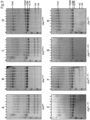
- the resulting wild-type and mutant II ⁇ were assessed in their ability to cleave and activate the cofactors over time by SDS-PAGE.
- Reaction mixtures containing either 500nM plasma derived human fV or recombinant human fVIII were diluted in Tris-NaCl buffer in the presence of Ca 2+ . The final concentration of rIIa in the mixtures was 4nM.
- rPro molecules described herein were converted to IIa by 1nM prothrombinase.
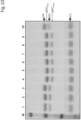
- the resulting IIa molecules were assessed for their ability to cleave and activate PC in the presence of thrombomodulin and PCPS vesicles according to a procedure previously described (78) in Tris-buffered saline with Ca 2+ .
- PC activation was verified by SDS-PAGE under reducing conditions. The final concentration of IIa in all mixtures was 8 nM. Gels were stained with Coomassie Brilliant Blue.
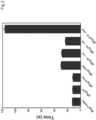
- Pro Clotting Assay To assess the function of all Pro molecules in whole plasma, a clotting assay using Pro-deficient plasma was employed. The clotting assay was performed as previously described (79), and the time needed for formation of a fibrin clot was monitored at 37°C using a Diagnostica Stago STart ® 4 Hemostasis Analyzer as previously described (79).
- rPro WT and mutant rPro molecules as follows: rPro ⁇ 473-487 (missing residues 473 GKGQPSVLQVVNLPI 487 ), rPro ⁇ N10 (missing amino acid residues 473 GKGQPSVLQV 482 ), and rPro ⁇ C10 (missing amino acid residues 478 SVLQVVNLPI 487 ) ( Fig. 1 ).
- rPro S478A (Ser 478 ⁇ Ala), rPro L480A (Leu 48 ⁇ Ala), rPro SL ⁇ AA (Ser 478 /Leu 480 ⁇ Ala), rPro SQ ⁇ AA (Ser 478 /Gln 481 ⁇ Ala) and rPro SLQ ⁇ AAA (Ser 478 /Leu 480 /Gln 481 ⁇ Ala).
- rIIa S478A was previously tested and found to behave as rIIa WT (5,6). We have thus used this mutation as an internal control for all double and triple alanine substitutions of rPro.
- rPro SL ⁇ AA and rPro SQ ⁇ AA had slow but comparable PTs of ⁇ 30s
- the triple mutant rPro SLQ ⁇ AAA was severely ineffective in fibrin clot formation (PT ⁇ 116s) while rPro ⁇ SLQ had a PT around 140s (not shown).
- rPro ⁇ 473-487 , rPro ⁇ N10 , rPro ⁇ C10 , and rPro ⁇ S5V are unable to induce clotting under the conditions described.
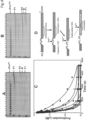
- Panel 4A shows a control experiment and demonstrates that rPro WT activation by membrane-bound fXa proceeds typically following initial cleavage at Arg 271 , as its plasma counterpart through the intermediate prethrombin-2 with very slow and minimal appearance of the B chain of IIa because of unproductive rate of cleavage at Arg 320 .
- d k cat V max /[enzyme]; the enzyme concentrations of prothrombinase (fXa-fVa complex on the membrane surface in the presence of Ca 2+ ) under the conditions employed herein was 10 pM.
- e R 2 is the goodness of fit of the data points to the Michaelis-Menten equation using the software Prizm. Points and titrations studied represent 10 measurements/graph for all experiments (up to 4 ⁇ M plasma-derived Pro or rPro molecules) except experiments with rPro SLQ ⁇ AAA (9 measurements/graph, up to 2 ⁇ M prothrombin) and with rPro ⁇ SLQ (9 measurements/graph, up to 4 ⁇ M prothrombin).
- the -fold decrease is the ratio of the second order rate constant (k cat /K m ) of prothrombinase catalyzing rPro WT activation compared to the second order rate constant of prothrombinase catalyzing activation of all other rPro molecules.
- rIIa SLQ ⁇ AAA may also be deficient in its own catalytic activity as observed with rIIa ⁇ SLQ , and the effect seen with rPro SLQ ⁇ AAA activation may be likewise due to the deficiency of rIIa in cleaving the chromogenic substrate.
- FIG. 10 shows the results of such of an experiment and demonstrates that while rIIa ⁇ S5V cannot cleave and activate PC, rIIa SLQ ⁇ AAA has small but significant activity generating minute amounts of APC ( Fig. 10 , lanes 8 and 9) which in turn can cleave fV at Arg 506 /Arg 306 and produce the characteristic M r 30,000 fragment (data not shown) (90,91). All other rIIa mutant molecules tested, for APC generation, have similar activities as rIIa WT or plasma-derived IIa under the condition described ( Fig. 10 ).
- Membrane-bound fXa cleaves Pro sequentially at Arg 271 followed by Arg 320 , forming small amounts of IIa.
- the autolysis loop of APC bears strong homology with the Pro sequence 473-487 (chymotrypsin numbering 149D-163) (92).
- Yegneswaran et al. using synthetic peptides provided initial evidence that sequence 473-487 of Pro is able to disrupt prothrombinase assembly only in a fVa-dependent manner (56).
- Direct binding studies with fluorescence labeled fVa demonstrated a direct interaction of the cofactor with the peptide.
- the two-subunit enzyme is one of the most proficient catalysts known in the human body similar to several other enzymes required for survival such as superoxide dismutase, catalase, and carbonic anhydrase.
- This significant increase in affinity of prothrombinase for its substrate is attributed to tighter binding of the enzymatic complex to Pro because its localization on the membrane surface by fVa.
- fVa enhances the reaction of Pro activation during initiation of clotting, but at the late stages of coagulation, during the propagation phase, once all 20 nM of fV physiologically available is activated, it also promotes the meizothrombin pathway of IIa generation (initial cleavage to Arg 320 on Pro) resulting in the formation of the major enzymatic intermediate meizothrombin with demonstrated anti-coagulant activity (94).
- fVa "localizes and positions" Pro in an optimum position for efficient catalysis by fXa consistent with the classical role of a cofactor for catalysis, was recently confirmed by computational studies with prothrombinase by Shim et al. (27).
- prothrombinase loses the ability to efficiently form IIa because of impaired fVa-dependent cleavage of Pro by fXa at Arg 320 .
- One easy explanation of these results was that elimination of such a huge portion of the molecule results in significant structural changes of the molecule that in turn have deleterious effects on Pro molecular conformation resulting in deficient prothrombinase activity.
- rPro SLQ ⁇ AAA was also impaired in cleaving fV, fVIII and PC. These data dovetail nicely with results obtained with rIIa ⁇ S5V and rIIa ⁇ 473-487 .
- rIIa ⁇ S5V
- rIIa ⁇ 473-487 .
- these amino acids are required by prothrombinase to efficiently promote cleavage of Pro at Arg 320 and are also required by IIa for optimum esterase activity as well as to proficiently cleave and activate fV, fVIII, and PC.
- prothrombinase prothrombinase to efficiently promote cleavage of Pro at Arg 320 and are also required by IIa for optimum esterase activity as well as to proficiently cleave and activate fV, fVIII, and PC.
- Residue Ile 487 is significantly more exposed in prothrombin (accessible surface area of >30 ⁇ 2 compared to ⁇ 10 ⁇ 2 in meizothrombin and thrombin), as well as the adjacent Pro 486 (accessible surface area of ⁇ 15-30 ⁇ 2 reducing to ⁇ 10 ⁇ 2 in meizothrombin and thrombin).
- the amount of solvent exposure of Ile 487 and Pro 486 appears to be heavily influenced by the flanking loops encompassing residues Ala 446 -Tyr 454 and Lys 511 -Ser 525 which adopt different conformations upon Pro activation ( Fig. 11 ).
Landscapes
- Health & Medical Sciences (AREA)
- Life Sciences & Earth Sciences (AREA)
- Chemical & Material Sciences (AREA)
- Engineering & Computer Science (AREA)
- Bioinformatics & Cheminformatics (AREA)
- Organic Chemistry (AREA)
- Genetics & Genomics (AREA)
- General Health & Medical Sciences (AREA)
- Zoology (AREA)
- Wood Science & Technology (AREA)
- Biomedical Technology (AREA)
- General Engineering & Computer Science (AREA)
- Medicinal Chemistry (AREA)
- Biochemistry (AREA)
- Biotechnology (AREA)
- Pharmacology & Pharmacy (AREA)
- Veterinary Medicine (AREA)
- Public Health (AREA)
- Animal Behavior & Ethology (AREA)
- Molecular Biology (AREA)
- Microbiology (AREA)
- Epidemiology (AREA)
- Diabetes (AREA)
- Nuclear Medicine, Radiotherapy & Molecular Imaging (AREA)
- General Chemical & Material Sciences (AREA)
- Proteomics, Peptides & Aminoacids (AREA)
- Immunology (AREA)
- Gastroenterology & Hepatology (AREA)
- Chemical Kinetics & Catalysis (AREA)
- Hematology (AREA)
- Plant Pathology (AREA)
- Physics & Mathematics (AREA)
- Biophysics (AREA)
- Enzymes And Modification Thereof (AREA)
- Medicines That Contain Protein Lipid Enzymes And Other Medicines (AREA)
Claims (7)
- Rekombinantes humanes Prothrombin-Polypeptid mit einer Aminosäuremodifikation, bestehend aus einer Modifikation an den Resten Ser478, Leu480 und Gln481, wobei die Modifikation eine Deletion von Ser478, Leu480 und Gln481 oder eine Substitution von Ala für jedes von Ser478, Leu480 und Gln481 ist.
- Polypeptid nach Anspruch 1 zur Verwendung in einem Verfahren zum Hemmen der Gerinnung bei einem Patienten, der an Thrombose leidet oder ein Thromboserisiko aufweist.
- Isoliertes Polynukleotid, das ein Polypeptid kodiert, gekennzeichnet durch:(a) das Aufweisen einer gerinnungshemmenden Wirkung; und(b) das Aufweisen der Aminosäuresequenz von humanen Prothrombin mit einer Aminosäuremodifikation, bestehend aus einer Modifikation an den Resten Ser478, Leu480 und Gln481, wobei die Modifikation eine Deletion von Ser478, Leu480 und Gln481 oder eine Substitution von Ala für jedes von Ser478, Leu480 und Gln481 ist.
- Wirtszelle, die das Polynukleotid nach Anspruch 3 enthält.
- Rekombinanter Expressionsvektor, der das Polynukleotid nach Anspruch 3 enthält.
- Vektor nach Anspruch 5, wobei der Vektor ein Plasmid oder ein Virus ist.
- In-vitro-Verfahren zum Herstellen eines Polypeptids, aufweisend eine Aminosäuresequenz von humanem Prothrombin mit einer Aminosäuremodifikation, die aus einer Modifikation an den Aminosäureresten Ser478, Leu480 und Gln481 besteht, wobei das Polypeptid als Prothrombimolekül mit gerinnungshemmender Aktivität wirkt, umfassend:(a) Einführen eines Expressionsvektors, der eine Nukleotidsequenz enthält, die ein Polypeptid mit einer Aminosäuresequenz von Prothrombin mit einer Aminosäuremodifikation kodiert, die aus einer Modifikation an den Resten Ser478, Leu480 und Gln481 besteht, wobei die Modifikation eine Deletion von Ser478, Leu480 und Gln481 oder eine Substitution von Ala für jedes von Ser478, Leu480 und Gln481 ist;(b) Züchten der Wirtszelle in einem geeigneten Medium; und(c) Isolieren des durch den Expressionsvektor kodierten Polypeptidprodukts.
Applications Claiming Priority (2)
| Application Number | Priority Date | Filing Date | Title |
|---|---|---|---|
| US201562239535P | 2015-10-09 | 2015-10-09 | |
| PCT/US2016/056049 WO2017062802A1 (en) | 2015-10-09 | 2016-10-07 | Recombinant prothrombin analogues and uses thereof |
Publications (3)
| Publication Number | Publication Date |
|---|---|
| EP3359145A1 EP3359145A1 (de) | 2018-08-15 |
| EP3359145A4 EP3359145A4 (de) | 2019-03-20 |
| EP3359145B1 true EP3359145B1 (de) | 2025-06-25 |
Family
ID=58488609
Family Applications (1)
| Application Number | Title | Priority Date | Filing Date |
|---|---|---|---|
| EP16854445.0A Active EP3359145B1 (de) | 2015-10-09 | 2016-10-07 | Rekombinante prothrombinanaloga und verwendungen davon |
Country Status (3)
| Country | Link |
|---|---|
| US (2) | US10900027B2 (de) |
| EP (1) | EP3359145B1 (de) |
| WO (1) | WO2017062802A1 (de) |
Families Citing this family (1)
| Publication number | Priority date | Publication date | Assignee | Title |
|---|---|---|---|---|
| EP3359145B1 (de) * | 2015-10-09 | 2025-06-25 | Cleveland State University | Rekombinante prothrombinanaloga und verwendungen davon |
Family Cites Families (5)
| Publication number | Priority date | Publication date | Assignee | Title |
|---|---|---|---|---|
| US5510248A (en) | 1993-06-22 | 1996-04-23 | The University Of British Columbia | Stable recombinant meizothrombin-like polypeptides |
| JP5409658B2 (ja) * | 2008-03-13 | 2014-02-05 | セレラ コーポレーション | 静脈血栓症に関連した遺伝子多型、その検出方法および使用 |
| WO2014115087A2 (en) * | 2013-01-22 | 2014-07-31 | Cencor Biotech Ltd. | A method for the preparation of recombinant human prothrombin and fibrinogen |
| JP6216647B2 (ja) * | 2013-03-15 | 2017-10-18 | シスメックス株式会社 | 組換え型プロトロンビンの製造方法およびその利用 |
| EP3359145B1 (de) * | 2015-10-09 | 2025-06-25 | Cleveland State University | Rekombinante prothrombinanaloga und verwendungen davon |
-
2016
- 2016-10-07 EP EP16854445.0A patent/EP3359145B1/de active Active
- 2016-10-07 WO PCT/US2016/056049 patent/WO2017062802A1/en not_active Ceased
- 2016-10-07 US US15/766,901 patent/US10900027B2/en active Active
-
2021
- 2021-01-25 US US17/157,130 patent/US11959110B2/en active Active
Also Published As
| Publication number | Publication date |
|---|---|
| US20180305677A1 (en) | 2018-10-25 |
| WO2017062802A1 (en) | 2017-04-13 |
| EP3359145A4 (de) | 2019-03-20 |
| US10900027B2 (en) | 2021-01-26 |
| US11959110B2 (en) | 2024-04-16 |
| US20210155918A1 (en) | 2021-05-27 |
| EP3359145A1 (de) | 2018-08-15 |
Similar Documents
| Publication | Publication Date | Title |
|---|---|---|
| US5580560A (en) | Modified factor VII/VIIa | |
| EP0370036B1 (de) | Modifizierter faktor vii/viia | |
| AU749279C (en) | Modified vitamin K-dependent polypeptides | |
| CA2096604C (en) | Protein c derivatives | |
| JP5642581B2 (ja) | 改変型ビタミンk依存性ポリペプチド | |
| WO2001059084A1 (en) | Protein c derivatives | |
| EP1651252B1 (de) | Aktivierte protein c varianten mit normaler zytoprotektiver aktivität aber verringerter gerinnungshemmender aktivität | |
| AU645776B2 (en) | Vectors and compounds for expression of glycosylation mutants of human protein C | |
| Chang et al. | Identification of functionally important residues of the epidermal growth factor-2 domain of factor IX by alanine-scanning mutagenesis: residues Asn89–Gly93 are critical for binding factor VIIIa | |
| CA2452768C (en) | Process for preparing human thrombin by genetic engineering technique | |
| Ivanciu et al. | Blood coagulation factor IX: structure, function, and regulation | |
| AU6280700A (en) | Factor x analog with an improved ability to be activated | |
| EP0323149B1 (de) | Vektoren und Verbindungen zur Expression von Zymogen-Formen von menschlichem Protein C | |
| US11959110B2 (en) | Recombinant prothrombin analogues and uses thereof | |
| US5510248A (en) | Stable recombinant meizothrombin-like polypeptides | |
| Bukys et al. | The interaction of fragment 1 of prothrombin with the membrane surface is a prerequisite for optimum expression of factor Va cofactor activity within prothrombinase | |
| HK1259735A1 (en) | Recombinant prothrombin analogues and uses thereof | |
| HK1259735B (en) | Recombinant prothrombin analogues and uses thereof | |
| Wiencek et al. | The Dual Regulatory Role of Amino Acids Leu480 and Gln481 of Prothrombin | |
| EP1660652B1 (de) | Aminosäuresubstituierter gerinnungsfaktor v | |
| Mayhew et al. | The binding of natural variants of human factor IX to endothelial cells | |
| Berridge | Elucidating the interaction between the Fragment 2 domain of Prothrombin and Factor Va | |
| Hirbawi | Cofactor Control of a Vital Enzymatic Reaction: The Effect of Factor Va on Thrombin Formation During Blood Coagulation | |
| Joesph | Regulating Hemostasis: The Factor Va Cofactor Effect | |
| JP2005278550A (ja) | 2本鎖組織プラスミノーゲンアクチベーターの製造法 |
Legal Events
| Date | Code | Title | Description |
|---|---|---|---|
| STAA | Information on the status of an ep patent application or granted ep patent |
Free format text: STATUS: THE INTERNATIONAL PUBLICATION HAS BEEN MADE |
|
| PUAI | Public reference made under article 153(3) epc to a published international application that has entered the european phase |
Free format text: ORIGINAL CODE: 0009012 |
|
| STAA | Information on the status of an ep patent application or granted ep patent |
Free format text: STATUS: REQUEST FOR EXAMINATION WAS MADE |
|
| 17P | Request for examination filed |
Effective date: 20180502 |
|
| AK | Designated contracting states |
Kind code of ref document: A1 Designated state(s): AL AT BE BG CH CY CZ DE DK EE ES FI FR GB GR HR HU IE IS IT LI LT LU LV MC MK MT NL NO PL PT RO RS SE SI SK SM TR |
|
| AX | Request for extension of the european patent |
Extension state: BA ME |
|
| DAV | Request for validation of the european patent (deleted) | ||
| DAX | Request for extension of the european patent (deleted) | ||
| A4 | Supplementary search report drawn up and despatched |
Effective date: 20190215 |
|
| RIC1 | Information provided on ipc code assigned before grant |
Ipc: A61K 31/37 20060101ALI20190211BHEP Ipc: A61K 31/122 20060101AFI20190211BHEP Ipc: A61K 31/352 20060101ALI20190211BHEP |
|
| RIN1 | Information on inventor provided before grant (corrected) |
Inventor name: WIENCEK, JOESPH Inventor name: KALAFATIS, MICHAEL |
|
| REG | Reference to a national code |
Ref country code: HK Ref legal event code: DE Ref document number: 1259735 Country of ref document: HK |
|
| STAA | Information on the status of an ep patent application or granted ep patent |
Free format text: STATUS: EXAMINATION IS IN PROGRESS |
|
| 17Q | First examination report despatched |
Effective date: 20200525 |
|
| GRAP | Despatch of communication of intention to grant a patent |
Free format text: ORIGINAL CODE: EPIDOSNIGR1 |
|
| STAA | Information on the status of an ep patent application or granted ep patent |
Free format text: STATUS: GRANT OF PATENT IS INTENDED |
|
| INTG | Intention to grant announced |
Effective date: 20250220 |
|
| GRAS | Grant fee paid |
Free format text: ORIGINAL CODE: EPIDOSNIGR3 |
|
| GRAA | (expected) grant |
Free format text: ORIGINAL CODE: 0009210 |
|
| STAA | Information on the status of an ep patent application or granted ep patent |
Free format text: STATUS: THE PATENT HAS BEEN GRANTED |
|
| AK | Designated contracting states |
Kind code of ref document: B1 Designated state(s): AL AT BE BG CH CY CZ DE DK EE ES FI FR GB GR HR HU IE IS IT LI LT LU LV MC MK MT NL NO PL PT RO RS SE SI SK SM TR |
|
| P01 | Opt-out of the competence of the unified patent court (upc) registered |
Free format text: CASE NUMBER: APP_23702/2025 Effective date: 20250519 |
|
| REG | Reference to a national code |
Ref country code: GB Ref legal event code: FG4D |
|
| REG | Reference to a national code |
Ref country code: CH Ref legal event code: EP |
|
| REG | Reference to a national code |
Ref country code: DE Ref legal event code: R096 Ref document number: 602016092686 Country of ref document: DE |
|
| REG | Reference to a national code |
Ref country code: CH Ref legal event code: EP |
|
| REG | Reference to a national code |
Ref country code: IE Ref legal event code: FG4D |
|
| PG25 | Lapsed in a contracting state [announced via postgrant information from national office to epo] |
Ref country code: FI Free format text: LAPSE BECAUSE OF FAILURE TO SUBMIT A TRANSLATION OF THE DESCRIPTION OR TO PAY THE FEE WITHIN THE PRESCRIBED TIME-LIMIT Effective date: 20250625 |
|
| REG | Reference to a national code |
Ref country code: LT Ref legal event code: MG9D |
|
| PG25 | Lapsed in a contracting state [announced via postgrant information from national office to epo] |
Ref country code: NO Free format text: LAPSE BECAUSE OF FAILURE TO SUBMIT A TRANSLATION OF THE DESCRIPTION OR TO PAY THE FEE WITHIN THE PRESCRIBED TIME-LIMIT Effective date: 20250925 Ref country code: GR Free format text: LAPSE BECAUSE OF FAILURE TO SUBMIT A TRANSLATION OF THE DESCRIPTION OR TO PAY THE FEE WITHIN THE PRESCRIBED TIME-LIMIT Effective date: 20250926 |
|
| PG25 | Lapsed in a contracting state [announced via postgrant information from national office to epo] |
Ref country code: BG Free format text: LAPSE BECAUSE OF FAILURE TO SUBMIT A TRANSLATION OF THE DESCRIPTION OR TO PAY THE FEE WITHIN THE PRESCRIBED TIME-LIMIT Effective date: 20250625 |
|
| PG25 | Lapsed in a contracting state [announced via postgrant information from national office to epo] |
Ref country code: HR Free format text: LAPSE BECAUSE OF FAILURE TO SUBMIT A TRANSLATION OF THE DESCRIPTION OR TO PAY THE FEE WITHIN THE PRESCRIBED TIME-LIMIT Effective date: 20250625 |
|
| PG25 | Lapsed in a contracting state [announced via postgrant information from national office to epo] |
Ref country code: RS Free format text: LAPSE BECAUSE OF FAILURE TO SUBMIT A TRANSLATION OF THE DESCRIPTION OR TO PAY THE FEE WITHIN THE PRESCRIBED TIME-LIMIT Effective date: 20250925 |
|
| PG25 | Lapsed in a contracting state [announced via postgrant information from national office to epo] |
Ref country code: LV Free format text: LAPSE BECAUSE OF FAILURE TO SUBMIT A TRANSLATION OF THE DESCRIPTION OR TO PAY THE FEE WITHIN THE PRESCRIBED TIME-LIMIT Effective date: 20250625 |
|
| REG | Reference to a national code |
Ref country code: NL Ref legal event code: MP Effective date: 20250625 |
|
| PG25 | Lapsed in a contracting state [announced via postgrant information from national office to epo] |
Ref country code: NL Free format text: LAPSE BECAUSE OF FAILURE TO SUBMIT A TRANSLATION OF THE DESCRIPTION OR TO PAY THE FEE WITHIN THE PRESCRIBED TIME-LIMIT Effective date: 20250625 |
|
| PG25 | Lapsed in a contracting state [announced via postgrant information from national office to epo] |
Ref country code: PT Free format text: LAPSE BECAUSE OF FAILURE TO SUBMIT A TRANSLATION OF THE DESCRIPTION OR TO PAY THE FEE WITHIN THE PRESCRIBED TIME-LIMIT Effective date: 20251027 |
|
| REG | Reference to a national code |
Ref country code: AT Ref legal event code: MK05 Ref document number: 1805745 Country of ref document: AT Kind code of ref document: T Effective date: 20250625 |
|
| PG25 | Lapsed in a contracting state [announced via postgrant information from national office to epo] |
Ref country code: IS Free format text: LAPSE BECAUSE OF FAILURE TO SUBMIT A TRANSLATION OF THE DESCRIPTION OR TO PAY THE FEE WITHIN THE PRESCRIBED TIME-LIMIT Effective date: 20251025 |
|
| PGFP | Annual fee paid to national office [announced via postgrant information from national office to epo] |
Ref country code: DE Payment date: 20251029 Year of fee payment: 10 |
|
| PG25 | Lapsed in a contracting state [announced via postgrant information from national office to epo] |
Ref country code: AT Free format text: LAPSE BECAUSE OF FAILURE TO SUBMIT A TRANSLATION OF THE DESCRIPTION OR TO PAY THE FEE WITHIN THE PRESCRIBED TIME-LIMIT Effective date: 20250625 Ref country code: SM Free format text: LAPSE BECAUSE OF FAILURE TO SUBMIT A TRANSLATION OF THE DESCRIPTION OR TO PAY THE FEE WITHIN THE PRESCRIBED TIME-LIMIT Effective date: 20250625 |
|
| PGFP | Annual fee paid to national office [announced via postgrant information from national office to epo] |
Ref country code: FR Payment date: 20251027 Year of fee payment: 10 |
|
| PG25 | Lapsed in a contracting state [announced via postgrant information from national office to epo] |
Ref country code: CZ Free format text: LAPSE BECAUSE OF FAILURE TO SUBMIT A TRANSLATION OF THE DESCRIPTION OR TO PAY THE FEE WITHIN THE PRESCRIBED TIME-LIMIT Effective date: 20250625 |
|
| PG25 | Lapsed in a contracting state [announced via postgrant information from national office to epo] |
Ref country code: PL Free format text: LAPSE BECAUSE OF FAILURE TO SUBMIT A TRANSLATION OF THE DESCRIPTION OR TO PAY THE FEE WITHIN THE PRESCRIBED TIME-LIMIT Effective date: 20250625 |
|
| PG25 | Lapsed in a contracting state [announced via postgrant information from national office to epo] |
Ref country code: EE Free format text: LAPSE BECAUSE OF FAILURE TO SUBMIT A TRANSLATION OF THE DESCRIPTION OR TO PAY THE FEE WITHIN THE PRESCRIBED TIME-LIMIT Effective date: 20250625 |
|
| PG25 | Lapsed in a contracting state [announced via postgrant information from national office to epo] |
Ref country code: SK Free format text: LAPSE BECAUSE OF FAILURE TO SUBMIT A TRANSLATION OF THE DESCRIPTION OR TO PAY THE FEE WITHIN THE PRESCRIBED TIME-LIMIT Effective date: 20250625 Ref country code: RO Free format text: LAPSE BECAUSE OF FAILURE TO SUBMIT A TRANSLATION OF THE DESCRIPTION OR TO PAY THE FEE WITHIN THE PRESCRIBED TIME-LIMIT Effective date: 20250625 |
|
| PG25 | Lapsed in a contracting state [announced via postgrant information from national office to epo] |
Ref country code: ES Free format text: LAPSE BECAUSE OF FAILURE TO SUBMIT A TRANSLATION OF THE DESCRIPTION OR TO PAY THE FEE WITHIN THE PRESCRIBED TIME-LIMIT Effective date: 20250625 |
|
| REG | Reference to a national code |
Ref country code: DE Ref legal event code: R097 Ref document number: 602016092686 Country of ref document: DE |
|
| PG25 | Lapsed in a contracting state [announced via postgrant information from national office to epo] |
Ref country code: DK Free format text: LAPSE BECAUSE OF FAILURE TO SUBMIT A TRANSLATION OF THE DESCRIPTION OR TO PAY THE FEE WITHIN THE PRESCRIBED TIME-LIMIT Effective date: 20250625 |
|
| PG25 | Lapsed in a contracting state [announced via postgrant information from national office to epo] |
Ref country code: IT Free format text: LAPSE BECAUSE OF FAILURE TO SUBMIT A TRANSLATION OF THE DESCRIPTION OR TO PAY THE FEE WITHIN THE PRESCRIBED TIME-LIMIT Effective date: 20250625 |
|
| PLBE | No opposition filed within time limit |
Free format text: ORIGINAL CODE: 0009261 |
|
| STAA | Information on the status of an ep patent application or granted ep patent |
Free format text: STATUS: NO OPPOSITION FILED WITHIN TIME LIMIT |
|
| REG | Reference to a national code |
Ref country code: CH Ref legal event code: L10 Free format text: ST27 STATUS EVENT CODE: U-0-0-L10-L00 (AS PROVIDED BY THE NATIONAL OFFICE) Effective date: 20260507 |
|
| REG | Reference to a national code |
Ref country code: CH Ref legal event code: H13 Free format text: ST27 STATUS EVENT CODE: U-0-0-H10-H13 (AS PROVIDED BY THE NATIONAL OFFICE) Effective date: 20260527 |
|
| 26N | No opposition filed |
Effective date: 20260326 |
|
| PG25 | Lapsed in a contracting state [announced via postgrant information from national office to epo] |
Ref country code: LU Free format text: LAPSE BECAUSE OF NON-PAYMENT OF DUE FEES Effective date: 20251007 |
|
| REG | Reference to a national code |
Ref country code: BE Ref legal event code: MM Effective date: 20251031 |
|
| GBPC | Gb: european patent ceased through non-payment of renewal fee |
Effective date: 20251007 |
|
| PG25 | Lapsed in a contracting state [announced via postgrant information from national office to epo] |
Ref country code: LT Free format text: LAPSE BECAUSE OF FAILURE TO SUBMIT A TRANSLATION OF THE DESCRIPTION OR TO PAY THE FEE WITHIN THE PRESCRIBED TIME-LIMIT Effective date: 20250625 |
|
| PG25 | Lapsed in a contracting state [announced via postgrant information from national office to epo] |
Ref country code: MC Free format text: LAPSE BECAUSE OF FAILURE TO SUBMIT A TRANSLATION OF THE DESCRIPTION OR TO PAY THE FEE WITHIN THE PRESCRIBED TIME-LIMIT Effective date: 20250625 |
|
| PG25 | Lapsed in a contracting state [announced via postgrant information from national office to epo] |
Ref country code: GB Free format text: LAPSE BECAUSE OF NON-PAYMENT OF DUE FEES Effective date: 20251007 |
|
| PG25 | Lapsed in a contracting state [announced via postgrant information from national office to epo] |
Ref country code: BE Free format text: LAPSE BECAUSE OF NON-PAYMENT OF DUE FEES Effective date: 20251031 Ref country code: CH Free format text: LAPSE BECAUSE OF NON-PAYMENT OF DUE FEES Effective date: 20251031 |
|
| PG25 | Lapsed in a contracting state [announced via postgrant information from national office to epo] |
Ref country code: SE Free format text: LAPSE BECAUSE OF FAILURE TO SUBMIT A TRANSLATION OF THE DESCRIPTION OR TO PAY THE FEE WITHIN THE PRESCRIBED TIME-LIMIT Effective date: 20250625 |