EP3346541B1 - Zellagnostisches batteriepack - Google Patents
Zellagnostisches batteriepack Download PDFInfo
- Publication number
- EP3346541B1 EP3346541B1 EP18150847.4A EP18150847A EP3346541B1 EP 3346541 B1 EP3346541 B1 EP 3346541B1 EP 18150847 A EP18150847 A EP 18150847A EP 3346541 B1 EP3346541 B1 EP 3346541B1
- Authority
- EP
- European Patent Office
- Prior art keywords
- sub
- modules
- battery pack
- type
- module
- Prior art date
- Legal status (The legal status is an assumption and is not a legal conclusion. Google has not performed a legal analysis and makes no representation as to the accuracy of the status listed.)
- Active
Links
Images



Classifications
-
- H—ELECTRICITY
- H01—ELECTRIC ELEMENTS
- H01M—PROCESSES OR MEANS, e.g. BATTERIES, FOR THE DIRECT CONVERSION OF CHEMICAL ENERGY INTO ELECTRICAL ENERGY
- H01M10/00—Secondary cells; Manufacture thereof
- H01M10/42—Methods or arrangements for servicing or maintenance of secondary cells or secondary half-cells
- H01M10/425—Structural combination with electronic components, e.g. electronic circuits integrated to the outside of the casing
-
- G—PHYSICS
- G01—MEASURING; TESTING
- G01R—MEASURING ELECTRIC VARIABLES; MEASURING MAGNETIC VARIABLES
- G01R31/00—Arrangements for testing electric properties; Arrangements for locating electric faults; Arrangements for electrical testing characterised by what is being tested not provided for elsewhere
- G01R31/36—Arrangements for testing, measuring or monitoring the electrical condition of accumulators or electric batteries, e.g. capacity or state of charge [SoC]
- G01R31/382—Arrangements for monitoring battery or accumulator variables, e.g. SoC
-
- H—ELECTRICITY
- H01—ELECTRIC ELEMENTS
- H01M—PROCESSES OR MEANS, e.g. BATTERIES, FOR THE DIRECT CONVERSION OF CHEMICAL ENERGY INTO ELECTRICAL ENERGY
- H01M10/00—Secondary cells; Manufacture thereof
- H01M10/05—Accumulators with non-aqueous electrolyte
- H01M10/052—Li-accumulators
- H01M10/0525—Rocking-chair batteries, i.e. batteries with lithium insertion or intercalation in both electrodes; Lithium-ion batteries
-
- H—ELECTRICITY
- H01—ELECTRIC ELEMENTS
- H01M—PROCESSES OR MEANS, e.g. BATTERIES, FOR THE DIRECT CONVERSION OF CHEMICAL ENERGY INTO ELECTRICAL ENERGY
- H01M10/00—Secondary cells; Manufacture thereof
- H01M10/42—Methods or arrangements for servicing or maintenance of secondary cells or secondary half-cells
- H01M10/48—Accumulators combined with arrangements for measuring, testing or indicating the condition of cells, e.g. the level or density of the electrolyte
-
- H—ELECTRICITY
- H01—ELECTRIC ELEMENTS
- H01M—PROCESSES OR MEANS, e.g. BATTERIES, FOR THE DIRECT CONVERSION OF CHEMICAL ENERGY INTO ELECTRICAL ENERGY
- H01M10/00—Secondary cells; Manufacture thereof
- H01M10/42—Methods or arrangements for servicing or maintenance of secondary cells or secondary half-cells
- H01M10/48—Accumulators combined with arrangements for measuring, testing or indicating the condition of cells, e.g. the level or density of the electrolyte
- H01M10/482—Accumulators combined with arrangements for measuring, testing or indicating the condition of cells, e.g. the level or density of the electrolyte for several batteries or cells simultaneously or sequentially
-
- G—PHYSICS
- G01—MEASURING; TESTING
- G01R—MEASURING ELECTRIC VARIABLES; MEASURING MAGNETIC VARIABLES
- G01R31/00—Arrangements for testing electric properties; Arrangements for locating electric faults; Arrangements for electrical testing characterised by what is being tested not provided for elsewhere
- G01R31/36—Arrangements for testing, measuring or monitoring the electrical condition of accumulators or electric batteries, e.g. capacity or state of charge [SoC]
- G01R31/396—Acquisition or processing of data for testing or for monitoring individual cells or groups of cells within a battery
-
- H—ELECTRICITY
- H01—ELECTRIC ELEMENTS
- H01M—PROCESSES OR MEANS, e.g. BATTERIES, FOR THE DIRECT CONVERSION OF CHEMICAL ENERGY INTO ELECTRICAL ENERGY
- H01M10/00—Secondary cells; Manufacture thereof
- H01M10/05—Accumulators with non-aqueous electrolyte
- H01M10/052—Li-accumulators
-
- H—ELECTRICITY
- H01—ELECTRIC ELEMENTS
- H01M—PROCESSES OR MEANS, e.g. BATTERIES, FOR THE DIRECT CONVERSION OF CHEMICAL ENERGY INTO ELECTRICAL ENERGY
- H01M10/00—Secondary cells; Manufacture thereof
- H01M10/60—Heating or cooling; Temperature control
- H01M10/65—Means for temperature control structurally associated with the cells
- H01M10/656—Means for temperature control structurally associated with the cells characterised by the type of heat-exchange fluid
- H01M10/6561—Gases
- H01M10/6563—Gases with forced flow, e.g. by blowers
-
- H—ELECTRICITY
- H01—ELECTRIC ELEMENTS
- H01M—PROCESSES OR MEANS, e.g. BATTERIES, FOR THE DIRECT CONVERSION OF CHEMICAL ENERGY INTO ELECTRICAL ENERGY
- H01M10/00—Secondary cells; Manufacture thereof
- H01M10/42—Methods or arrangements for servicing or maintenance of secondary cells or secondary half-cells
- H01M10/425—Structural combination with electronic components, e.g. electronic circuits integrated to the outside of the casing
- H01M2010/4271—Battery management systems including electronic circuits, e.g. control of current or voltage to keep battery in healthy state, cell balancing
-
- H—ELECTRICITY
- H01—ELECTRIC ELEMENTS
- H01M—PROCESSES OR MEANS, e.g. BATTERIES, FOR THE DIRECT CONVERSION OF CHEMICAL ENERGY INTO ELECTRICAL ENERGY
- H01M10/00—Secondary cells; Manufacture thereof
- H01M10/42—Methods or arrangements for servicing or maintenance of secondary cells or secondary half-cells
- H01M10/425—Structural combination with electronic components, e.g. electronic circuits integrated to the outside of the casing
- H01M2010/4278—Systems for data transfer from batteries, e.g. transfer of battery parameters to a controller, data transferred between battery controller and main controller
-
- Y—GENERAL TAGGING OF NEW TECHNOLOGICAL DEVELOPMENTS; GENERAL TAGGING OF CROSS-SECTIONAL TECHNOLOGIES SPANNING OVER SEVERAL SECTIONS OF THE IPC; TECHNICAL SUBJECTS COVERED BY FORMER USPC CROSS-REFERENCE ART COLLECTIONS [XRACs] AND DIGESTS
- Y02—TECHNOLOGIES OR APPLICATIONS FOR MITIGATION OR ADAPTATION AGAINST CLIMATE CHANGE
- Y02E—REDUCTION OF GREENHOUSE GAS [GHG] EMISSIONS, RELATED TO ENERGY GENERATION, TRANSMISSION OR DISTRIBUTION
- Y02E60/00—Enabling technologies; Technologies with a potential or indirect contribution to GHG emissions mitigation
- Y02E60/10—Energy storage using batteries
Definitions
- An electric battery is a device including one or more electrochemical cells that convert stored chemical energy into electrical energy.
- Lithium-ion is an example of an emerging battery cell technology that is popular in mobile devices, power tools, electric vehicles and energy storage applications.
- Common lithium-ion batteries use a lithium compound as one electrode material and carbon as another electrode material.
- lithium ions move from a negative electrode to a positive electrode, through an electrolyte, generating a voltage.
- Lithium-ion battery technology has a number of advantages including long battery life, improved energy density and wide operating temperature range.
- Cell suppliers typically offer batteries based on different lithium-ion cell technologies and having different form factors (i.e., shape and size).
- Patent publications US 2016/093848 A1 and WO 2012/125616 A1 discuss information that is useful for understanding the background of the invention.
- the present invention discloses a cell agnostic battery module according to the appended claims.
- the cell agnostic battery module comprises a chassis having compartments for receiving sub-modules of a first type and a second type.
- the sub-modules include lithium-ion cells and can be connected in series, parallel or series and parallel.
- the battery module further comprises a battery pack controller, and internal interconnects adapted for coupling the sub-modules received in the compartments to the battery pack controller.
- the internal interconnects includes a sub-module power bus adapted for coupling a power connector on the battery pack controller with complementary power connectors on the sub-modules and a sub-module communication bus adapted for coupling at least one communication connector on the battery pack controller with complementary communication connectors on the sub-modules.
- the internal interconnects comprise low voltage power adapted for coupling with a power and ground connector on the battery pack controller with complementary power and ground connectors on the sub-modules to supply low voltage power to the sub-modules.
- the internal interconnects further comprise a digital I/O adapted for coupling a digital I/O connector on the battery pack controller with complementary digital I/O connectors on the sub-modules to receive/send a digital I/O signal.
- the battery pack controller further comprises external interconnects adapted for coupling with signal and power connectors on the battery pack controller.
- the sub-modules of the first type and the second type comprise lithium-ion battery cells of different form factor type.
- the form factor type is one of cylindrical type, pouch type or prismatic type.
- the sub-modules of the first type and the second type include sub-modules from different suppliers.
- the sub-modules of the first type and the second type include sub-modules using different cell technologies.
- the chassis further comprises one or more fans to provide airflow through an interior of the chassis.
- the chassis can comprise a metal bezel attached to a front end. The metal bezel may have a ventilation pattern to provide airflow through the interior of the chassis.
- a battery module comprises a chassis having at least two compartments configured to receive at least two sub-modules.
- Each sub-module may comprise lithium-ion cells of cylindrical type, pouch type or prismatic type.
- the at least two sub-modules may be connected in series or parallel to provide a target pack voltage and a target energy density.
- the battery module includes a battery module controller disposed in the chassis.
- the battery module controller may be electrically coupled with the at least two sub-modules via internal interconnects comprising a bi-directional power bus, a bi-directional communication bus, a sub-module power and ground line and a digital input/output line.
- the battery module may comprise a backplane connector for signal and power connections.
- the chassis of the battery module may also comprise one or more fans to provide airflow through an interior of the chassis.
- a metal bezel may be attached to a front end of the chassis.
- the metal bezel may comprise a ventilation pattern to provide airflow through an interior of the chassis.
- Contactors adapted to control connection of a DC voltage output to a DC high voltage power bus of an energy storage system may be disposed in the chassis in some aspects.
- a plurality of sub-modules of a first or second type may be interconnected to a battery pack controller in a battery pack by connecting a plurality of sub-modules of a first type in series, parallel or both to create a high voltage power bus.
- the plurality of sub-modules of the first type may be replaceable with a plurality of sub-modules of a second type to create the power bus.
- the example method may further comprise electrically coupling the plurality of sub-modules of the first or second type to a battery pack controller via a bi-directional high voltage power bus and a power supply bus.
- the example method may further comprise communicatively coupling the plurality of sub-modules to the battery pack controller via a sub-module communication bus and one or more digital I/O connections.
- the plurality of sub-modules of the first type comprises lithium-ion cells of cylindrical form factor and the plurality of sub-modules of the second type comprises lithium-ion cells of prismatic or pouch form factor.
- voltage on the high voltage power bus is 300V or at least 48V.
- the voltage on the high voltage power bus may be electrically coupling to a load.
- the battery pack controller may be coupled to an external communication bus separate from the sub-module or internal communication bus.
- a sub-module configured to be connected with one or more other sub-modules to create a battery pack with a targeted pack voltage and energy density may comprise lithium ion cell sub-modules comprising lithium ion cells of the same type, components for executing cell monitoring and balancing functions, a sub-module interface adapted for interconnecting with a battery pack controller including a power terminal for coupling with a bi-directional DC power bus, a power terminal for coupling with a power supply bus, one or more digital I/O terminals for coupling one or more digital I/O links and a communication terminal for coupling with a communication bus.
- Lithium-ion battery packs or modules can be made using any of a number of cell technologies such as, but not limited to: lithium-ion Iron Phosphate (LFP), lithium-ion Nickel Manganese Cobalt Oxide (NMC) and lithium-ion Nickel Cobalt Oxide (NCA).
- LFP lithium-ion Iron Phosphate
- NMC lithium-ion Nickel Manganese Cobalt Oxide
- NCA lithium-ion Nickel Cobalt Oxide
- the lithium-ion cells are available in different form factors (e.g., cylindrical, prismatic, pouch).
- One of the disadvantages of existing lithium-ion battery packs is that they are designed for a specific cell technology and form factor offered by a cell manufacturer (e.g., Sony). This level of customization means that it is not possible to switch from cells made by one cell manufacturer to another without changing the battery pack design.
- the battery pack would need to be redesigned to accommodate the new cells without affecting the output voltage, energy density, and/or other characteristics such as performance and reliability.
- UL Underwriters Laboratories
- Certification for lithium-ion battery packs having voltages greater than 60V is already a challenging process, but with the certification standards generally varying from country to country, re-certification can require significant time and effort.
- changing the cell technology/form factor/supplier for a battery pack can involve not just a redesign of the battery pack but also recertification, all of which can be time consuming and costly. Because of these inefficiencies, battery pack manufacturers are often stuck with the same cell supplier which can impact their ability to produce battery packs at a competitive cost or resolve cell quality issues.
- the battery pack described in the present disclosure has a sub-module based architecture, which helps make the battery pack effectively "cell agnostic," thereby addressing the challenges of existing battery packs.
- the cell agnostic battery pack comprises sub-modules connected to a battery pack controller via an internal interconnect interface.
- the sub-modules comprise lithium-ion cells of any cell technology and type (e.g., cylindrical, pouch, prismatic), and as such can be supplied by any cell supplier.
- the sub-modules can be interconnected in series, parallel or both series and parallel to create a power bus (e.g., 150V, 300V).
- the sub-modules can be individually certified (e.g., by cell suppliers that manufacture the sub-modules), which reduces the burden on the battery pack manufacturer to recertify the battery pack when switching from a sub-module made by one cell supplier to another cell supplier.
- FIG. 1 is a block diagram illustrating example components of a cell agnostic battery pack 100.
- the battery pack 100 comprises multiple sub-modules 102 connected in series, parallel or series and parallel to provide a target pack voltage and energy density.
- a target pack voltage and energy density of an example battery pack having multiple modules can be 300V and 7kWh.
- the sub-module 102 comprises cells and cell assembles. As depicted in FIG. 1 , the sub-module 102 comprises one or more lithium-ion cell sub-modules 104.
- the lithium-ion cell sub-modules 104 in turn comprise lithium-ion cells of a specific form factor (e.g., cylindrical, pouch, prismatic) and cell technology.
- FIG. 3A depicts an example arrangement of 8 cylindrical cell sub-modules 104A disposed in a sub-module 102.
- FIG. 3B depicts an example arrangement of 4 pouch cell sub-modules 104B disposed in a sub-module 102.
- the sub-module 102 further comprises control and monitoring electronics for safety and/or operational efficiency.
- the sub-module 102 can include a cell voltage monitoring and balancing circuit 106 and cell temperature monitoring circuit 108 including temperature and/or other sensors.
- the cell voltage monitoring and balancing circuit 106 can monitor cell voltage and temperature (via cell temperature monitoring circuit 108) as these are generally indicative of impending faults or failure, and balance cell and string voltage based on external command (e.g., from battery pack controller 114).
- the sub-module 102 also comprises a power supply module 110 and a communication module 112.
- the power supply module 110 supplies power and ground 140 to the control and monitoring electronics.
- the communication module 112 supports receiving and sending of data over a communication bus 144.
- the communication bus 144 can be a Controller Area Network (CAN) bus.
- the sub-module 102 includes one or more digital I/O pins through which digital I/O link 142 can be communicated.
- emergency fault e.g., cell over voltage
- the battery pack 100 also comprises a battery pack controller 114.
- Embodiments of the battery pack controller 114 can include various modules for controlling and managing the battery pack 100.
- the battery pack controller 114 can include modules for power supply 116, a pack disconnect contactor control 118, monitoring 120, fault and protection 122, state machine and algorithms 124, data storage 126, light emitting diode control 128 and communication 130.
- the monitoring module 120 can monitor pack voltage, current, temperature, and/or other operating characteristics of the sub-modules 102.
- the fault and protection module 122 can protect the battery pack 100 against over voltage, under voltage, over temperature, ground fault, and/or other fault conditions using redundant analog measurement (e.g., from the monitoring module 120).
- the pack disconnect contactor control 118 can control the contactors to connect or disconnect the battery pack 100 from a load (e.g., high voltage power bus).
- the state machine and algorithms 124 can include logic for battery pack state machine, auto addressing, firmware upgrade, warranty model, SOC, SOH and EOL, and the like.
- the data storage module 126 can include non-volatile (NV) storage for data logging, firmware upgrade, factory data, and the like.
- the light emitting diode control 128 can include logic for controlling an LED light pipe.
- the LED light pipe can provide an indication of the health of the sub-modules. For example, the LED light pipe can turn red from green to indicate failure of one or more sub-modules.
- the communication module 130 can support communication with the sub-modules 102 over an internal communication bus 144.
- the communication module 130 can also support communication with external modules (e.g., other battery packs, a battery management system) over a separate and independent external communication bus.
- external modules e.g., other battery packs, a battery management system
- the battery pack controller 114 and the sub-modules 102 are electrically and communicatively connected or coupled via internal interconnects.
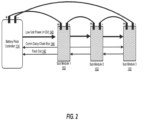
- the internal interconnects coupling the battery pack controller 114 and the sub-modules 102 include a power bus 138, sub-module power and ground line 140, one or more digital I/O line(s)142 and a communication bus 144.
- the power bus 138 interconnects a power connector on the battery pack controller 114 with complementary power connectors on the sub-modules 102.
- the power bus 138 is created by combining the sub-modules output voltages in series, parallel or series and parallel.
- FIG. 2 depicts sub-modules 1-3 connected in series to create a power bus 138 that is coupled to the battery pack controller 114.
- the sub-module power and ground line 140 interconnects a power connector on the battery pack controller 114 to complementary power connectors on the sub-modules 102 to supply low voltage power (e.g., +12V) to the sub-modules (e.g., for operating the monitoring and balancing electronics).
- the one or more digital I/O lines 142 interconnect one or more digital I/O pins/connectors on the battery pack controller 114 to complementary digital I/O pins/connectors on the sub-modules 102.
- the digital I/O line 142 may be utilized by the sub-modules 102 for reporting emergency fault (e.g., cell over voltage, cell temperature exceeding a threshold, etc.) to the battery pack controller 114 in some aspects.
- the pack controller 114 can utilize the digital I/O lines 142 to send the sub-modules requests and/or responses.
- the pack controller 114 can send charge voltage threshold, commands (e.g., go into sleep state), or the like to the sub-modules via the digital I/O lines 142.
- the internal communication bus 144 interconnects a communication connector on the battery pack controller 114 to complementary communication connectors on the sub-modules to communicate data. Examples of such data can include temperate, voltage, current, cell health/status, other operating characteristics and/or data from the monitoring and balancing of the sub-modules 102.
- the battery pack controller 114 can, in some aspects, send commands or requests to the sub-modules 102 in response to reported faults or other conditions (e.g., command to balance cell and string voltage) over the internal communication bus.
- the communication bus 144 as depicted can be a bi-directional daisy chain bus.
- the battery pack controller 114 comprises external interconnects including a power bus 138, a chassis ground 146 and signal in and signal out lines which are coupled to power connector 132, signal connector 134 and signal connector 136 respectively. Via the power bus and signal in/out lines, the battery pack 100 may be coupled with one or more other battery packs, external modules and/or load.
- FIG. 4 depicts a cell agnostic battery pack 100 in accordance with some embodiments.
- the battery pack 100 comprises a chassis 422 having compartments for receiving sub-modules 102. For clarity, the sub-modules 102 are not shown.
- the chassis 422 has a number of compartments to receive a number of sub-modules 102.
- the sub-modules can be secured inside the chassis via sub-module brackets 424A, 424B, 424C. Bus bars, wires or other suitable electrical coupling means can be used for connecting the sub-module power bus in series, parallel or a combination thereof to create a desired battery pack voltage (e.g., battery voltage of 300V) and energy density.
- a desired battery pack voltage e.g., battery voltage of 300V
- Each of the connectors (e.g., power connector 132, IN signal connector 134 and OUT signal connector 136) on the battery pack controller 114 can be metal connectors disposed on the outside edge of the battery pack 100.
- the battery pack 100 includes one or more contactors 426 for selectively electrically coupling the battery pack output to that of other battery packs or to an electrical load external to the battery pack.
- the one or more contactors 426 can be actuated in response to signal from the pack disconnect contactor control module 118.
- the chassis 422 includes a number of printed circuit board assemblies for the battery pack controller 114, fuse circuit 434, light pipe and LED circuit 432.
- a fan assembly 436 may also be disposed in the chassis 422 to induce air flow through the interior of the chassis 422.
- a front bezel 438 can be secured on to the front face of the chassis 422. In some embodiments, the front bezel 438 can have a ventilation pattern to promote air flow through an interior of the chassis 422.
- a removable top cover 440 affixes to the chassis 422 to form the battery pack 100 as depicted.
- An example of a battery pack 100 including nine sub-modules 102 inserted into compartments in the chassis is depicted in FIG. 5 .
- the nine sub-modules 102 are connected via bus bars in series and parallel configuration to create a target pack voltage and energy density.
- the sub-modules 102 are coupled with the battery pack controller 114 the PCB via the internal interconnects described in reference to FIGs. 1 and 2 .
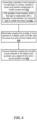
- FIG. 6 is a diagram illustrating an example method of interconnecting a plurality of sub-modules of a first or second type to a battery pack controller in a battery pack.
- the example method comprises connecting a plurality of sub-modules of a first type in series, parallel or both to create a high voltage power bus at block 602.
- the plurality of sub-modules of the first type can be replaced with a plurality of sub-modules of a second type to create the power bus.
- the plurality of sub-modules of the first type comprises cylindrical lithium-ion cells and the plurality of sub-modules of the second type comprises prismatic or pouch lithium-ion cells.
- the example method further comprises electrically coupling the plurality of sub-modules of the first or second type to a battery pack controller via a bi-directional high voltage power bus and a power supply at block 606.
- the example method comprises communicatively coupling the plurality of sub-modules to the battery pack controller via a sub-module communication bus and one or more digital I/Os.
Landscapes
- Engineering & Computer Science (AREA)
- Chemical & Material Sciences (AREA)
- Manufacturing & Machinery (AREA)
- Chemical Kinetics & Catalysis (AREA)
- Electrochemistry (AREA)
- General Chemical & Material Sciences (AREA)
- Microelectronics & Electronic Packaging (AREA)
- Materials Engineering (AREA)
- Physics & Mathematics (AREA)
- General Physics & Mathematics (AREA)
- Charge And Discharge Circuits For Batteries Or The Like (AREA)
- Battery Mounting, Suspending (AREA)
- Secondary Cells (AREA)
Claims (12)
- Ein zellunabhängiges Batteriepaket (100), das Folgendes beinhaltet:
ein Gehäuse (422), das Folgendes beinhaltet:Kammern zum Aufnehmen von Untermodulen (102) eines ersten Typs und eines zweiten Typs, wobei die Untermodule Lithium-Ionen-Zellen umfassen und in Reihe, parallel oder in Reihe und parallel geschaltet werden können; undeine Steuereinheit (114) für das Batteriepaket;gekennzeichnet durch Folgendes: interne Zwischenverbindungen (138, 140, 142, 144), die zum Koppeln der in den Kammern aufgenommenen Untermodule mit der Steuereinheit des Batteriepakets angepasst sind, wobei die internen Zwischenverbindungen Folgendes beinhalten:einen Untermodul-Leistungsbus (140), der zum Koppeln eines Leistungsanschlusses an der Steuereinheit des Batteriepakets mit komplementären Leistungsanschlüssen an den Untermodulen angepasst ist; undeinen Untermodul-Kommunikationsbus (144), der zum Koppeln mindestens eines Kommunikationsanschlusses an der Steuereinheit des Batteriepakets mit komplementären Kommunikationsanschlüssen an den Untermodulen angepasst ist;wobei die Steuereinheit des Batteriepakets so konfiguriert ist, dass sie jedem der Untermodule über den Untermodul-Leistungsbus (140) eine Niederspannungsleistung bereitstellt. - Zellunabhängiges Batteriepaket gemäß Anspruch 1, wobei die Steuereinheit (114) des Batteriepakets ferner externe Zwischenverbindungen beinhaltet, die zum Koppeln mit Signal- und Leistungsanschlüssen an der Steuereinheit des Batteriepakets angepasst sind.
- Zellunabhängiges Batteriepaket gemäß Anspruch 1, wobei die internen Zwischenverbindungen ferner eine digitale E/A (142) beinhalten, die zum Koppeln eines digitalen E/A-Anschlusses an der Steuereinheit des Batteriepakets mit komplementären digitalen E/A-Anschlüssen an den Untermodulen angepasst ist, um ein digitales E/A-Signal zu empfangen/senden.
- Zellunabhängiges Batteriepaket gemäß Anspruch 1, das ferner ein Untermodul des ersten Typs und ein Untermodul des zweiten Typs beinhaltet, wobei das Untermodul des ersten Typs einen ersten Formfaktor aufweist und das Untermodul des zweiten Typs einen zweiten Formfaktor aufweist, der sich von dem ersten Formfaktor unterscheidet.
- Zellunabhängiges Batteriepaket gemäß Anspruch 4, wobei der erste Formfaktor zylindrisch ist und der zweite Formfaktor vom Beuteltyp und vom prismatischen Typ ist.
- Zellunabhängiges Batteriepaket gemäß Anspruch 4, wobei die Untermodule des ersten Typs und des zweiten Typs Untermodule umfassen, die unterschiedliche Zelltechnologien verwenden.
- Zellunabhängiges Batteriepaket gemäß Anspruch 1, wobei das Gehäuse ferner einen oder mehrere Lüfter (436), um Luftstrom durch ein Inneres des Gehäuses bereitzustellen, und eine Metallblende, die an einem vorderen Ende des Gehäuses angebracht ist, beinhaltet, wobei die Metallblende ein Lüftungsmuster beinhaltet, um Luftstrom durch das Innere des Gehäuses bereitzustellen.
- Ein Verfahren zum Zwischenverbinden einer Vielzahl von Untermodulen eines ersten oder eines zweiten Typs mit einer Steuereinheit eines Batteriepakets in einem Batteriepaket, das Folgendes beinhaltet:Verbinden einer Vielzahl von Untermodulen eines ersten Typs in Reihe, parallel oder beides, um einen Hochspannungsleistungsbus zu erzeugen, wobei die Vielzahl von Untermodulen des ersten Typs durch eine Vielzahl von Untermodulen eines zweiten Typs ersetzt werden kann, um den Leistungsbus zu erzeugen;elektrisches Koppeln der Vielzahl von Untermodulen des ersten oder des zweiten Typs mit einer Steuereinheit des Batteriepakets über Folgendes:einen bidirektionalen Hochspannungsleistungsbus; undeinen Untermodul-Leistungsbus;Zuführen von Niederspannungsleistung von der Steuereinheit des Batteriepakets zu der Vielzahl von Untermodulen über den Untermodul-Leistungsbus;kommunikatives Koppeln der Vielzahl von Untermodulen mit der Steuereinheit des Batteriepakets über Folgendes:einen Untermodul-Kommunikationsbus; undeinen oder mehrere digitale E/A-Anschlüsse.
- Verfahren gemäß Anspruch 8, wobei die Vielzahl von Untermodulen des ersten Typs Lithium-Ionen-Zellen mit zylindrischem Formfaktor beinhaltet und die Vielzahl von Untermodulen des zweiten Typs Lithium-Ionen-Zellen mit prismatischem oder Beutel-Formfaktor beinhaltet und wobei das Verfahren ferner das Ersetzen von Untermodulen des ersten Typs durch Untermodule des zweiten Typs umfasst.
- Verfahren gemäß Anspruch 8, wobei die Spannung auf dem Hochspannungsleistungsbus 300 V beträgt.
- Verfahren gemäß Anspruch 8, das ferner das elektrische Koppeln der Spannung auf dem Hochspannungsleistungsbus mit einer Last beinhaltet.
- Verfahren gemäß Anspruch 8, das ferner das Koppeln der Steuereinheit des Batteriepakets an einen externen Kommunikationsbus beinhaltet, der von dem Kommunikationsbus der Untermodule getrennt ist.
Applications Claiming Priority (1)
| Application Number | Priority Date | Filing Date | Title |
|---|---|---|---|
| US201762444649P | 2017-01-10 | 2017-01-10 |
Publications (3)
| Publication Number | Publication Date |
|---|---|
| EP3346541A1 EP3346541A1 (de) | 2018-07-11 |
| EP3346541B1 true EP3346541B1 (de) | 2025-03-05 |
| EP3346541C0 EP3346541C0 (de) | 2025-03-05 |
Family
ID=60953728
Family Applications (1)
| Application Number | Title | Priority Date | Filing Date |
|---|---|---|---|
| EP18150847.4A Active EP3346541B1 (de) | 2017-01-10 | 2018-01-09 | Zellagnostisches batteriepack |
Country Status (2)
| Country | Link |
|---|---|
| US (1) | US10964979B2 (de) |
| EP (1) | EP3346541B1 (de) |
Families Citing this family (5)
| Publication number | Priority date | Publication date | Assignee | Title |
|---|---|---|---|---|
| CN109004300A (zh) * | 2018-08-09 | 2018-12-14 | 肇庆市高新区甜慕新能源技术有限公司 | 一种具备通信总线的电池模块 |
| CN114374006A (zh) * | 2021-12-31 | 2022-04-19 | 欣旺达电动汽车电池有限公司 | 电池管理系统及电动汽车 |
| US12542438B2 (en) * | 2022-04-08 | 2026-02-03 | Enphase Energy, Inc. | Integrated PCBA design with fast connection-disconnection capabilities for cell to system design |
| US12362963B2 (en) * | 2022-08-02 | 2025-07-15 | Stmicroelectronics Application Gmbh | Electronic device, corresponding bus communication system and method of configuring a bus communication system |
| EP4581701A1 (de) * | 2022-09-02 | 2025-07-09 | Enphase Energy, Inc. | Schnell ein- und ausrastende verbinder für batteriedesign von zelle zu system |
Family Cites Families (5)
| Publication number | Priority date | Publication date | Assignee | Title |
|---|---|---|---|---|
| KR101094002B1 (ko) | 2009-12-16 | 2011-12-15 | 삼성에스디아이 주식회사 | 전원 변환 장치 |
| US8727561B2 (en) * | 2011-03-17 | 2014-05-20 | Streamlight, Inc. | Light and/or device having a compartment accommodating batteries of different types, sizes and/or shapes |
| US9444275B2 (en) | 2011-08-31 | 2016-09-13 | North Carolina State University | Intelligent integrated battery module |
| US20160093848A1 (en) | 2014-09-30 | 2016-03-31 | Johnson Controls Technology Company | Modular approach for advanced battery modules having different electrical characteristics |
| US9780591B2 (en) | 2015-04-03 | 2017-10-03 | Schneider Electric It Corporation | Adaptive battery pack |
-
2018
- 2018-01-09 EP EP18150847.4A patent/EP3346541B1/de active Active
- 2018-01-09 US US15/865,572 patent/US10964979B2/en active Active
Also Published As
| Publication number | Publication date |
|---|---|
| EP3346541A1 (de) | 2018-07-11 |
| EP3346541C0 (de) | 2025-03-05 |
| US10964979B2 (en) | 2021-03-30 |
| US20180198178A1 (en) | 2018-07-12 |
Similar Documents
| Publication | Publication Date | Title |
|---|---|---|
| EP3346541B1 (de) | Zellagnostisches batteriepack | |
| CN102754301B (zh) | 电源装置 | |
| US9837811B2 (en) | Power source apparatus formed by combining a plurality of modules | |
| CN103580107B (zh) | 蓄电池管理系统、蓄电池模块、蓄电池系统和机动车 | |
| JP4929389B2 (ja) | 電池システム | |
| JP5801176B2 (ja) | 蓄電装置及びその保守方法 | |
| JP2023516735A (ja) | バッテリのための装置、システム、及び方法 | |
| EP2819212A1 (de) | Großflächige Batteriesysteme und Verfahren zu ihrer Zusammensetzung | |
| KR102051176B1 (ko) | 전압 분배를 이용한 퓨즈 진단 장치 및 방법 | |
| JP2013097926A (ja) | 蓄電池ユニット | |
| US11469470B2 (en) | Battery module with series connected cells, internal relays and internal battery management system | |
| US11575270B2 (en) | Battery module with series connected cells, internal relays and internal battery management system | |
| JP2010537362A (ja) | 二次電池パックまたは一次電池パック | |
| CN110832334B (zh) | 故障诊断装置 | |
| CN107546794B (zh) | 用于运行电存储电池单元的模块的控制器、配置装置、方法、组件和前行器件 | |
| EP3014726B1 (de) | Elektrisches energiespeichersystem | |
| US11380942B2 (en) | High voltage battery module with series connected cells and internal relays | |
| CN217009386U (zh) | 储能电池簇 | |
| KR20160128758A (ko) | 무선 통신 기능을 구비하는 독립전원 장치 | |
| KR102818350B1 (ko) | 배터리 모듈, 배터리 관리 시스템 및 방법 | |
| KR20250052891A (ko) | 진단 장치 및 이를 포함하는 배터리 팩 |
Legal Events
| Date | Code | Title | Description |
|---|---|---|---|
| PUAI | Public reference made under article 153(3) epc to a published international application that has entered the european phase |
Free format text: ORIGINAL CODE: 0009012 |
|
| STAA | Information on the status of an ep patent application or granted ep patent |
Free format text: STATUS: REQUEST FOR EXAMINATION WAS MADE |
|
| 17P | Request for examination filed |
Effective date: 20180109 |
|
| AK | Designated contracting states |
Kind code of ref document: A1 Designated state(s): AL AT BE BG CH CY CZ DE DK EE ES FI FR GB GR HR HU IE IS IT LI LT LU LV MC MK MT NL NO PL PT RO RS SE SI SK SM TR |
|
| AX | Request for extension of the european patent |
Extension state: BA ME |
|
| RBV | Designated contracting states (corrected) |
Designated state(s): AL AT BE BG CH CY CZ DE DK EE ES FI FR GB GR HR HU IE IS IT LI LT LU LV MC MK MT NL NO PL PT RO RS SE SI SK SM TR |
|
| GRAP | Despatch of communication of intention to grant a patent |
Free format text: ORIGINAL CODE: EPIDOSNIGR1 |
|
| STAA | Information on the status of an ep patent application or granted ep patent |
Free format text: STATUS: GRANT OF PATENT IS INTENDED |
|
| INTG | Intention to grant announced |
Effective date: 20240925 |
|
| GRAS | Grant fee paid |
Free format text: ORIGINAL CODE: EPIDOSNIGR3 |
|
| GRAA | (expected) grant |
Free format text: ORIGINAL CODE: 0009210 |
|
| STAA | Information on the status of an ep patent application or granted ep patent |
Free format text: STATUS: THE PATENT HAS BEEN GRANTED |
|
| RAP3 | Party data changed (applicant data changed or rights of an application transferred) |
Owner name: SCHNEIDER ELECTRIC IT CORPORATION |
|
| AK | Designated contracting states |
Kind code of ref document: B1 Designated state(s): AL AT BE BG CH CY CZ DE DK EE ES FI FR GB GR HR HU IE IS IT LI LT LU LV MC MK MT NL NO PL PT RO RS SE SI SK SM TR |
|
| REG | Reference to a national code |
Ref country code: GB Ref legal event code: FG4D |
|
| REG | Reference to a national code |
Ref country code: CH Ref legal event code: EP |
|
| REG | Reference to a national code |
Ref country code: DE Ref legal event code: R096 Ref document number: 602018079754 Country of ref document: DE |
|
| REG | Reference to a national code |
Ref country code: IE Ref legal event code: FG4D |
|
| U01 | Request for unitary effect filed |
Effective date: 20250324 |
|
| U07 | Unitary effect registered |
Designated state(s): AT BE BG DE DK EE FI FR IT LT LU LV MT NL PT RO SE SI Effective date: 20250328 |
|
| PG25 | Lapsed in a contracting state [announced via postgrant information from national office to epo] |
Ref country code: RS Free format text: LAPSE BECAUSE OF FAILURE TO SUBMIT A TRANSLATION OF THE DESCRIPTION OR TO PAY THE FEE WITHIN THE PRESCRIBED TIME-LIMIT Effective date: 20250605 |
|
| PG25 | Lapsed in a contracting state [announced via postgrant information from national office to epo] |
Ref country code: ES Free format text: LAPSE BECAUSE OF FAILURE TO SUBMIT A TRANSLATION OF THE DESCRIPTION OR TO PAY THE FEE WITHIN THE PRESCRIBED TIME-LIMIT Effective date: 20250305 |
|
| PG25 | Lapsed in a contracting state [announced via postgrant information from national office to epo] |
Ref country code: NO Free format text: LAPSE BECAUSE OF FAILURE TO SUBMIT A TRANSLATION OF THE DESCRIPTION OR TO PAY THE FEE WITHIN THE PRESCRIBED TIME-LIMIT Effective date: 20250605 |
|
| PG25 | Lapsed in a contracting state [announced via postgrant information from national office to epo] |
Ref country code: HR Free format text: LAPSE BECAUSE OF FAILURE TO SUBMIT A TRANSLATION OF THE DESCRIPTION OR TO PAY THE FEE WITHIN THE PRESCRIBED TIME-LIMIT Effective date: 20250305 |
|
| PG25 | Lapsed in a contracting state [announced via postgrant information from national office to epo] |
Ref country code: GR Free format text: LAPSE BECAUSE OF FAILURE TO SUBMIT A TRANSLATION OF THE DESCRIPTION OR TO PAY THE FEE WITHIN THE PRESCRIBED TIME-LIMIT Effective date: 20250606 |
|
| PG25 | Lapsed in a contracting state [announced via postgrant information from national office to epo] |
Ref country code: SM Free format text: LAPSE BECAUSE OF FAILURE TO SUBMIT A TRANSLATION OF THE DESCRIPTION OR TO PAY THE FEE WITHIN THE PRESCRIBED TIME-LIMIT Effective date: 20250305 |
|
| PG25 | Lapsed in a contracting state [announced via postgrant information from national office to epo] |
Ref country code: PL Free format text: LAPSE BECAUSE OF FAILURE TO SUBMIT A TRANSLATION OF THE DESCRIPTION OR TO PAY THE FEE WITHIN THE PRESCRIBED TIME-LIMIT Effective date: 20250305 |
|
| PG25 | Lapsed in a contracting state [announced via postgrant information from national office to epo] |
Ref country code: CZ Free format text: LAPSE BECAUSE OF FAILURE TO SUBMIT A TRANSLATION OF THE DESCRIPTION OR TO PAY THE FEE WITHIN THE PRESCRIBED TIME-LIMIT Effective date: 20250305 |
|
| PG25 | Lapsed in a contracting state [announced via postgrant information from national office to epo] |
Ref country code: SK Free format text: LAPSE BECAUSE OF FAILURE TO SUBMIT A TRANSLATION OF THE DESCRIPTION OR TO PAY THE FEE WITHIN THE PRESCRIBED TIME-LIMIT Effective date: 20250305 |
|
| PG25 | Lapsed in a contracting state [announced via postgrant information from national office to epo] |
Ref country code: IS Free format text: LAPSE BECAUSE OF FAILURE TO SUBMIT A TRANSLATION OF THE DESCRIPTION OR TO PAY THE FEE WITHIN THE PRESCRIBED TIME-LIMIT Effective date: 20250705 |
|
| PLBE | No opposition filed within time limit |
Free format text: ORIGINAL CODE: 0009261 |
|
| STAA | Information on the status of an ep patent application or granted ep patent |
Free format text: STATUS: NO OPPOSITION FILED WITHIN TIME LIMIT |
|
| REG | Reference to a national code |
Ref country code: CH Ref legal event code: L10 Free format text: ST27 STATUS EVENT CODE: U-0-0-L10-L00 (AS PROVIDED BY THE NATIONAL OFFICE) Effective date: 20260114 |
|
| 26N | No opposition filed |
Effective date: 20251208 |
|
| U20 | Renewal fee for the european patent with unitary effect paid |
Year of fee payment: 9 Effective date: 20260126 |
|
| PGFP | Annual fee paid to national office [announced via postgrant information from national office to epo] |
Ref country code: GB Payment date: 20260126 Year of fee payment: 9 |