EP3343422B1 - Systeme und verfahren zur detektion von ressourcen, die für ereignisse verantwortlich sind - Google Patents
Systeme und verfahren zur detektion von ressourcen, die für ereignisse verantwortlich sind Download PDFInfo
- Publication number
- EP3343422B1 EP3343422B1 EP17208869.2A EP17208869A EP3343422B1 EP 3343422 B1 EP3343422 B1 EP 3343422B1 EP 17208869 A EP17208869 A EP 17208869A EP 3343422 B1 EP3343422 B1 EP 3343422B1
- Authority
- EP
- European Patent Office
- Prior art keywords
- resource
- actors
- event
- affected
- responsible
- Prior art date
- Legal status (The legal status is an assumption and is not a legal conclusion. Google has not performed a legal analysis and makes no representation as to the accuracy of the status listed.)
- Active
Links
Images




Classifications
-
- G—PHYSICS
- G06—COMPUTING OR CALCULATING; COUNTING
- G06F—ELECTRIC DIGITAL DATA PROCESSING
- G06F21/00—Security arrangements for protecting computers, components thereof, programs or data against unauthorised activity
- G06F21/50—Monitoring users, programs or devices to maintain the integrity of platforms, e.g. of processors, firmware or operating systems
- G06F21/55—Detecting local intrusion or implementing counter-measures
- G06F21/552—Detecting local intrusion or implementing counter-measures involving long-term monitoring or reporting
-
- G—PHYSICS
- G06—COMPUTING OR CALCULATING; COUNTING
- G06F—ELECTRIC DIGITAL DATA PROCESSING
- G06F16/00—Information retrieval; Database structures therefor; File system structures therefor
- G06F16/20—Information retrieval; Database structures therefor; File system structures therefor of structured data, e.g. relational data
- G06F16/24—Querying
- G06F16/245—Query processing
- G06F16/2457—Query processing with adaptation to user needs
- G06F16/24578—Query processing with adaptation to user needs using ranking
-
- G—PHYSICS
- G06—COMPUTING OR CALCULATING; COUNTING
- G06F—ELECTRIC DIGITAL DATA PROCESSING
- G06F16/00—Information retrieval; Database structures therefor; File system structures therefor
- G06F16/90—Details of database functions independent of the retrieved data types
- G06F16/903—Querying
- G06F16/9038—Presentation of query results
-
- G—PHYSICS
- G06—COMPUTING OR CALCULATING; COUNTING
- G06F—ELECTRIC DIGITAL DATA PROCESSING
- G06F21/00—Security arrangements for protecting computers, components thereof, programs or data against unauthorised activity
- G06F21/60—Protecting data
-
- G—PHYSICS
- G06—COMPUTING OR CALCULATING; COUNTING
- G06N—COMPUTING ARRANGEMENTS BASED ON SPECIFIC COMPUTATIONAL MODELS
- G06N7/00—Computing arrangements based on specific mathematical models
- G06N7/01—Probabilistic graphical models, e.g. probabilistic networks
-
- G—PHYSICS
- G06—COMPUTING OR CALCULATING; COUNTING
- G06Q—INFORMATION AND COMMUNICATION TECHNOLOGY [ICT] SPECIALLY ADAPTED FOR ADMINISTRATIVE, COMMERCIAL, FINANCIAL, MANAGERIAL OR SUPERVISORY PURPOSES; SYSTEMS OR METHODS SPECIALLY ADAPTED FOR ADMINISTRATIVE, COMMERCIAL, FINANCIAL, MANAGERIAL OR SUPERVISORY PURPOSES, NOT OTHERWISE PROVIDED FOR
- G06Q10/00—Administration; Management
- G06Q10/06—Resources, workflows, human or project management; Enterprise or organisation planning; Enterprise or organisation modelling
- G06Q10/063—Operations research, analysis or management
- G06Q10/0635—Risk analysis of enterprise or organisation activities
-
- G—PHYSICS
- G06—COMPUTING OR CALCULATING; COUNTING
- G06Q—INFORMATION AND COMMUNICATION TECHNOLOGY [ICT] SPECIALLY ADAPTED FOR ADMINISTRATIVE, COMMERCIAL, FINANCIAL, MANAGERIAL OR SUPERVISORY PURPOSES; SYSTEMS OR METHODS SPECIALLY ADAPTED FOR ADMINISTRATIVE, COMMERCIAL, FINANCIAL, MANAGERIAL OR SUPERVISORY PURPOSES, NOT OTHERWISE PROVIDED FOR
- G06Q20/00—Payment architectures, schemes or protocols
- G06Q20/38—Payment protocols; Details thereof
- G06Q20/40—Authorisation, e.g. identification of payer or payee, verification of customer or shop credentials; Review and approval of payers, e.g. check credit lines or negative lists
- G06Q20/401—Transaction verification
- G06Q20/4016—Transaction verification involving fraud or risk level assessment in transaction processing
-
- H—ELECTRICITY
- H04—ELECTRIC COMMUNICATION TECHNIQUE
- H04L—TRANSMISSION OF DIGITAL INFORMATION, e.g. TELEGRAPHIC COMMUNICATION
- H04L63/00—Network architectures or network communication protocols for network security
- H04L63/14—Network architectures or network communication protocols for network security for detecting or protecting against malicious traffic
- H04L63/1408—Network architectures or network communication protocols for network security for detecting or protecting against malicious traffic by monitoring network traffic
-
- H—ELECTRICITY
- H04—ELECTRIC COMMUNICATION TECHNIQUE
- H04L—TRANSMISSION OF DIGITAL INFORMATION, e.g. TELEGRAPHIC COMMUNICATION
- H04L63/00—Network architectures or network communication protocols for network security
- H04L63/14—Network architectures or network communication protocols for network security for detecting or protecting against malicious traffic
- H04L63/1408—Network architectures or network communication protocols for network security for detecting or protecting against malicious traffic by monitoring network traffic
- H04L63/1416—Event detection, e.g. attack signature detection
-
- H—ELECTRICITY
- H04—ELECTRIC COMMUNICATION TECHNIQUE
- H04L—TRANSMISSION OF DIGITAL INFORMATION, e.g. TELEGRAPHIC COMMUNICATION
- H04L63/00—Network architectures or network communication protocols for network security
- H04L63/14—Network architectures or network communication protocols for network security for detecting or protecting against malicious traffic
- H04L63/1441—Countermeasures against malicious traffic
- H04L63/1475—Passive attacks, e.g. eavesdropping or listening without modification of the traffic monitored
-
- H—ELECTRICITY
- H04—ELECTRIC COMMUNICATION TECHNIQUE
- H04W—WIRELESS COMMUNICATION NETWORKS
- H04W12/00—Security arrangements; Authentication; Protecting privacy or anonymity
- H04W12/12—Detection or prevention of fraud
-
- H—ELECTRICITY
- H04—ELECTRIC COMMUNICATION TECHNIQUE
- H04W—WIRELESS COMMUNICATION NETWORKS
- H04W12/00—Security arrangements; Authentication; Protecting privacy or anonymity
- H04W12/12—Detection or prevention of fraud
- H04W12/121—Wireless intrusion detection systems [WIDS]; Wireless intrusion prevention systems [WIPS]
- H04W12/122—Counter-measures against attacks; Protection against rogue devices
-
- H—ELECTRICITY
- H04—ELECTRIC COMMUNICATION TECHNIQUE
- H04W—WIRELESS COMMUNICATION NETWORKS
- H04W12/00—Security arrangements; Authentication; Protecting privacy or anonymity
- H04W12/12—Detection or prevention of fraud
- H04W12/126—Anti-theft arrangements, e.g. protection against subscriber identity module [SIM] cloning
Definitions
- the discovery that a computer system has been compromised can occur well after the occurrence of the compromising event.
- the delay between the event and the discovery of compromise can make identifying the compromising event difficult, as many other innocuous events may have occurred since the compromising event.
- systems may have experienced a compromising event but may appear unaffected. For example, attackers may not exploit every occurrence of a compromising event, or may not yet have exploited an occurrence of a compromising event. So many computer systems may have been exposed to a comprising event, but only some may show signs of having been compromised.
- a webserver may have been hijacked to inject malicious code into the web browsers of users visiting a webpage hosted by the webserver. But by the time the malicious code is detected, the user may have visited web pages hosted by many other webservers, making identification of the hijacked webserver difficult. Even a security service having access records for numerous users may have difficulty identifying the hijacked webserver, because the webserver may be programmed to attempt the attack randomly, or the attack may depend on a user behavior or equipment configuration that is only intermittently present. Thus the webserver may not inject the malicious code into the web browser of every user that visits the webpage. Similarly, the malicious code may not be triggered immediately. So a security service may not know which web browsers are uninfected and which are infected, but yet to be triggered.
- an ATM skimmer may be configured to store the account information of users that perform transactions at the ATM account.
- a criminal may later use this stored account information to perform unauthorized transactions. But during the time between the skimming of the account information and the unauthorized access, a user may visit several ATMs. Likewise the criminal may only perform unauthorized transactions in some of the accounts for which the ATM skimmer stored account information. As in the prior example, these factors may make it difficult to determine which ATM is compromised by a skimmer.
- an unscrupulous merchant or employees of the merchant may acquire credit card information from customers during transactions that occur with the merchant.
- the acquired credit card information may later be used for unauthorized purchases. Given the delay between the unauthorized acquisition of credit card information and subsequent unauthorized purchases, it can be difficult to determine when the theft occurred and by whom. Many transactions with other merchants may precede the unauthorized use. Moreover, only a subset of the stolen credit card accounts may be subject to unauthorized purchases.
- a method for detecting events that compromise resources is provided.
- ATM automated teller machine
- US 2008/0172316 A1 discloses various bank card fraud detection and prevention methods, including attempting to locate a point of compromise.
- US 8,600,872 B1 describes a system and method for detecting account compromises, comprising identifying common points of transaction of at-risk accounts.
- JP2009-301207 generally provides a disclosure of the use of a bloom filter in access requests.
- US 7,523,016 B1 discloses a method for detecting anomalies in the field of online advertising fraud.
- the disclosed embodiments may include systems and methods for detecting resources responsible for events. According to aspects of the present disclosure, there are provided a computer-implemented method for determining resources responsible for events as set out by claims 1 and 7, a computer-readable storage medium as set out by claim 14, and a system as set out by claim 15.
- a system may include a memory storing instructions and a processor configured to execute the instructions to perform operations.
- the operations may include receiving data associated with a resource and, based on the data associated with the resource, identifying a plurality of actors that have been used to access the resource; based on the plurality of actors, determining a number of unique actors that have accessed the resource; identifying from the plurality of actors a set of affected actors, where each affected actor has been affected by an event; identifying from the set of affected actors a subset of resource-affected actors, the subset including each affected actor that accessed the resource prior to the event; determining a number of resource-affected actors in the subset of resource-affected actors; based on the number of unique actors and the number of resource-affected actors, determining an event score for the resource; and based on the event score, determining whether the resource is responsible for the event.
- the event score may be a lower bound of a confidence interval of a binomial proportion of the number of resource-a
- a method may include identifying a plurality of actors that have accessed a resource; based on the plurality of actors, determining a number of unique actors that have accessed the resource; identifying from the plurality of actors a set of affected actors, where each affected actor has been affected by an event; identifying from the set of affected actors a subset of resource-affected actors, the subset including each affected actor that accessed the resource prior to the event; determining a number of resource-affected actors in the subset of resource-affected actors; based on the number of unique actors and the number of resource-affected actors, determining an event score for the resource.
- the event score may be a lower bound of a confidence interval of a binomial proportion of the number of resource-affected actors to the number of unique actors.
- a non-transitory computer-readable medium may store instructions that, when executed by a processor, cause the processor to perform operations.
- the operations may include identifying a plurality of actors that have accessed a resource; based on the plurality of actors, determining a number of unique actors that have accessed the resource; identifying from the plurality of actors a set of affected actors, where each affected actor has been affected by an event; identifying from the set of affected actors a subset of resource-affected actors, the subset including each affected actor that accessed the resource prior to the event; determining a number of resource-affected actors in the subset of resource-affected actors; based on the number of unique actors and the number of resource-affected actors, determining an event score for the resource.
- the event score may be a lower bound of a confidence interval of a binomial proportion of the number of resource-affected actors to the number of unique actors.
- aspects of the disclosed embodiments may include tangible computer-readable media that store software instructions that, when executed by one or more processors, are configured for and capable of performing and executing one or more of the methods, operations, and the like consistent with the disclosed embodiments. Also, aspects of the disclosed embodiments may be performed by one or more processors that are configured as special-purpose processor(s) based on software instructions that are programmed with logic and instructions that perform, when executed, one or more operations consistent with the disclosed embodiments.
- the disclosed systems, methods, and media may be configured to detect resources that are responsible for events.
- a resource may be responsible for an event, for example, when the event occurred at the resource, when the resource caused the event, and/or when the resource was used to cause the event.
- Resources may include any physical or electronic resource, such as a database, a server, a computing device, an entity, a network, a location or branch, an automated teller machine (ATM), a website, a mobile application, a merchant, or a financial service provider. Other resources are possible as well.
- Events may include any occurrence, such as a security breach, unauthorized data access, an instance of fraud, or a change in customer behavior (e.g., an increase in customer purchases, a decrease in customers opening accounts, a change in customer traffic to a website, etc.). Alternatively or additionally, events may include events indicative of any of the foregoing.
- an event may be an event indicative of a database or system breach, such as misuse of login credentials or data retrieved from the breached database or system.
- a database or system breach such as misuse of login credentials or data retrieved from the breached database or system.
- use of financial card data that was stored at a database may be indicative of a breach at the database
- a hacked email address or account that was stored at a system e.g., at a website at which the email address or account was registered
- a security breach at the system e.g., at the website.
- Other events are possible as well.
- the disclosed systems, methods, and media may detect a resource that is responsible for an event based on electronic data associated with actors.
- Actors may include people, such as users or customers, and/or physical or electronic objects, such as financial cards or accounts. Other actors are possible as well.
- the disclosed systems, methods, and media may, based on the electronic data associated with the actors, identify a resource responsible for an event, model a potential for an event at a resource, and/or provide a graphical user interface illustrating a potential for an event at a resource.
- the disclosed embodiments can effectively isolate and identify events, reducing fraud and improving security of electronic transactions.
- FIG. 1 is a block diagram of an example system 100, consistent with disclosed embodiments.
- System 100 may be used to detect resources that are responsible for events, consistent with disclosed embodiments.
- System 100 may include a resource detection system 102, database(s) 104, resource(s) 106, an event detection system 108, and actor(s) 110, all of which may be communicatively coupled by a network 112.
- system 100 may include any number of either of these components.
- system 100 may include any number of either of these devices or entities as well.
- the components and arrangements of the components included in system 100 may vary.
- system 100 may include other components that perform or assist in the performance of one or more processes consistent with disclosed embodiments.
- Resource detection system 102 may include one or more computing systems configured to perform one or more operations consistent with detecting that any of resource(s) 106 are responsible for an event. Events may include any occurrence, such as a security breach, an instance of fraud, or a change in behavior. Other events are possible as well, as described above.
- the resource(s) 106 may include merchants, ATMs, and/or other physical or electronic resources.
- the resource(s) 106 may include databases or other physical or electronic resources.
- Actor(s) 110 may include any device or entity configured to access resource(s) 106, either directly or via network 112.
- Actor(s) 110 may include, for example, people, such as users or customers, and/or physical or electronic objects, such as financial cards or accounts.
- Other actor(s) 110 are possible as well.
- the actor(s) 110 may include financial cards and/or accounts or users associated with financial cards.
- the actor(s) 110 may include accounts and/or computing devices or users associated with accounts.
- resource detection system 102 may be configured to receive data associated with resource(s) 106.
- resource detection system 102 may receive data associated with resource(s) 106 from database(s) 104 and/or from another source, such as local or remote data storage, flat text files, cloud storage, volatile storage, and/or non-volatile storage.
- the resource detection system 102 may be configured to determine an event score for each resource 106. The event score may indicate a likelihood that a resource 106 is responsible for an event. Resource detection system 102 is further described below in connection with Figure 2 .
- resource detection system 102 may include a modeling system 114.
- Modeling system 114 may be may be one or more computing devices configured to perform operations consistent with generating models illustrating events traceable to resource(s) 106.
- the models may illustrate, for example, the event scores at resource(s) 106, such as variations in the event scores over time.
- the models may take the form of a graphical user interface.
- Example modeling system 114 graphical user interfaces are further described below in connection with Figures 5A-5B .
- modeling system 114 is shown included in resource detection system 102, in some embodiments modeling system 114 may be a stand-alone system and/or may be integrated with and/or connected to one or more of database(s) 104, resource(s) 106, and event detection system 108
- Database(s) 104 may be one or more computing devices configured to perform operations consistent with storing data associated with resource(s) 112, events, and/or actor(s) 110.
- Database(s) 104 may include, for example, OracleTM databases, SybaseTM databases, or other relational databases or non-relational databases, such as HadoopTM sequence files, HBaseTM, or CassandraTM.
- Database(s) 104 may include computing components (e.g., database management system, database server, etc.) configured to receive and process requests for data stored in memory devices of the database(s) and to provide data from the database(s).
- Data associated with resource(s) 106 and/or actor(s) 110 may include, for example, historical data identifying access by actor(s) 110 to resource(s) 106.
- Data identifying access by actor(s) 110 to resource(s) 106 may include, for example, an identification of the actor 110, a description of the access, and/or a date and/or time of access.
- the data may include data describing financial cards and/or accounts or users associated with financial cards, transactions conducted using the financial cards, financial fraud affecting the financial cards, and/or merchants or ATMs at which the financial cards were used.
- the data may include data describing accounts and/or computing devices or users associated with accounts, access by the accounts to databases, unauthorized use of or access to the accounts, and/or databases accessed by the accounts
- data may include authorizations on financial cards used to make purchases at resource(s) 106, which may include systems associated with merchants.
- a financial card may be, for example, associated with a financial service account, such as a bank card, key fob, or smartcard.
- a financial card may comprise a credit card, debit card, loyalty card, or any other financial services product.
- a financial card may comprise a digital wallet or payment application.
- a financial card is not limited to a card configuration and may be provided in any form capable of being configured to perform the functionality of the disclosed embodiments.
- a financial card may include or be included in a mobile device, any wearable item, including jewelry, a smart watch, or any other device suitable for carrying or wearing on a customer's person. Other financial cards are possible as well.
- Data identifying financial cards used to make purchases at merchant(s) may include, for example, dates on which the purchases were made at merchant(s) and customers associated with the financial cards.
- data associated with resource(s) 106 may further include data describing resource(s) 106.
- Data describing resource(s) 106 may include, for example, data identifying a brand or operator of resource(s) 106, data identifying a resource type of resource(s) 106 (e.g., server, database, merchant, service provider, etc.), data identifying a geographic location of resource(s) 106, data describing any point-of-sale terminals associated with resource(s) 106 (e.g., geographic location of terminal, terminal manufacturer, terminal hardware, terminal software, etc.), data describing security used by resource(s) 106, and/or data describing a processor 108 used by resource(s) 106 (e.g., processor operator, processor hardware, processor software, etc.).
- Other data describing resource(s) 106 is possible as well.
- database(s) 104 are shown separately, in some embodiments database(s) 104 may be included in or otherwise related to one or more of resource detection system 102, event detection system 108, and resource(s) 106.
- Database(s) 104 may be configured to collect and/or maintain the data associated with resource(s) 106, actor(s) 110, and/or events and provide it to the resource detection system 102.
- Database(s) 104 may collect the data from any number of sources, including, for instance, resource(s) 106, event detection system 108, and/or third-party systems (not shown). Other sources of data are possible as well.
- Database(s) 104 are further described below in connection with Figures 3A-3C .
- system 100 may include other storage, whether volatile or non-volatile, at which data is stored and from which data can be accessed by resource detection system 102.
- Such storage may be included in, accessible by, and/or associated with one or more of resource detection system 102, resource(s) 106, event detection system 108, and/or one or more third-party systems (not shown).
- the resource 106 and/or another entity may collect and/or maintain data identifying the actor 110 that has accessed the resource 106. Additionally, the resource 106 and/or another entity may collect and/or maintain data describing the access and/or data identifying a date on which the access was made. The resource 106 may collect and/or maintain other data as well. Data collected and/or maintained by resource(s) 106 may be provided to database(s) 104, other storage, resource detection system 102, and/or event detection system 108.
- the merchant, ATM, and/or another entity may collect and/or maintain data describing the financial card, the ATM or merchant, and the transaction, such as a date on which the financial card was used to make the transaction.
- the database and/or another entity may collect and/or maintain data describing the account, the database, and the access, such as a date on which the access occurred.
- Event detection system 108 may be one or more computing devices configured to perform operations consistent with detecting events at resource(s) 106 and/or among actor(s) 110.
- event detection system 108 may be configured to receive data associated with resource(s) 106 and/or actor(s) 110 from resource(s) 106, database(s) 104, and/or other storage. Based on the data associated with the resource(s) 106 and/or actor(s) 110, event detection system 108 may be configured to detect events.
- event detection system 108 may be configured to generate data associated with resource(s) 106 and/or actor(s) 110 that identifies affected actor(s) 110, each of which has been affected by an event. Data may further identify a date on which the event affecting the actor 110 occurred.
- Data generated by event detection system 108 may be provided to database(s) 104, other storage, resource(s) 106, and/or resource detection system 102.
- database(s) 104 other storage, resource(s) 106, and/or resource detection system 102.
- data may be generated that describes the financial card and the fraud, such as a date on which the fraud occurred.
- data may be generated that describes the account and the breach, such as a date on which the breach occurred.
- event detection system 108 is shown separately, in some embodiments event detection system 108 may be included in or otherwise related to one or more of resource detection system 102, database(s) 104, and resource(s) 106.
- Network 112 may include any type of network configured to provide communications between components of system 100.
- network 112 may include any type of network (including infrastructure) that provides communications, exchanges information, and/or facilitates the exchange of information, such as the Internet, a Local Area Network, near field communication (NFC), optical code scanner, or other suitable connection(s) that enables the sending and receiving of information between the components of system 100.
- network 112 may include any type of network (including infrastructure) that provides communications, exchanges information, and/or facilitates the exchange of information, such as the Internet, a Local Area Network, near field communication (NFC), optical code scanner, or other suitable connection(s) that enables the sending and receiving of information between the components of system 100.
- NFC near field communication
- optical code scanner or other suitable connection(s) that enables the sending and receiving of information between the components of system 100.
- one or more components of system 100 may communicate directly through a dedicated communication link(s).
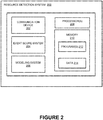
- FIG. 2 is a block diagram of an example resource detection system 200, consistent with disclosed embodiments.
- resource detection system 200 may include a communication device 202, an event score system 204, a modeling system 206, one or more processor(s) 208, and memory 210 including one or more program(s) 212 and data 214.
- resource detection system 102 can include or be implemented using a resource detection system such as resource detection system 200.
- resource detection system 200 may take the form of a server, general purpose computer, mainframe computer, or any combination of these components. Other implementations consistent with disclosed embodiments are possible as well.
- Communication device 202 may be configured to communicate with one or more database(s) or other storage, such as database(s) 104 described above. In some embodiments, communication device 202 may be configured to receive from the database(s) and/or other storage data associated with resources, actors, and/or events.
- Communication device 202 may be configured to communicate with other components as well, including, for example, one or more event detection systems, such as event detection system 108 described above.
- communication device 202 may be configured to receive from an event detection system data associated with resources, actors, and/or events.
- Communication device 202 may include, for example, one or more digital and/or analog devices that allow communication device 202 to communicate with and/or detect other components of resource detection system 102, such as a network controller and/or wireless adaptor for communicating over the Internet. Other implementations consistent with disclosed embodiments are possible as well.
- Event score system 204 may be configured to determine event scores for resources based on the data associated with the resources, events, and/or actors received by the resource detection system 200. Event scores are further described below in connection with Figure 4 .
- resource detection system 200 may include a modeling system 206.
- Modeling system 206 may include one or more computing devices configured to perform operations consistent with generating models illustrating a likelihood that resources are responsible for events. While this is discussed in terms of a resource being responsible for an event, the system may equally be used to provide a figure of merit for a resource being responsible for an actor, an actor being responsible for an event or a resource, or an event being responsible for an actor or a resource. As such, the likelihoods of responsibility, quantified as figures of merits, can be compared between events, between actors, or between resources, as relevant to the then ongoing analysis, to identify a most likely source of/for an outcome and/or to establish a threshold to evaluate whether an outcome has occurred.
- Modeling system 206 may be configured to generate, based on the data associated with the resources, events, and/or actors received by the resource detection system 200 and the event scores determined by event score system 204, models illustrating a likelihood that resources are responsible for events.
- the models may illustrate, for example, the event scores of the resources, such as variation in the event scores over time.
- the models may take the form of graphical user interfaces configured to receive input from users and generate displays. Example graphical user interfaces are further described below in connection with Figures 5A-5B .
- Processor(s) 208 may include one or more known processing devices, such as a microprocessor from the CoreTM, PentiumTM or XeonTM family manufactured by IntelTM, the TurionTM family manufactured by AMDTM, the "Ax” or “Sx” family manufactured by AppleTM, or any of various processors manufactured by Sun Microsystems, for example.
- the disclosed embodiments are not limited to any type of processor(s) otherwise configured to meet the computing demands of different components of resource detection system 200.
- Memory 210 may include one or more storage devices configured to store instructions used by processor(s) 208 to perform functions related to disclosed embodiments.
- memory 210 may be configured with one or more software instructions, such as program(s) 212, that may perform one or more operations when executed by processor(s) 208.
- the disclosed embodiments are not limited to separate programs or computers configured to perform dedicated tasks.
- memory 210 may include a single program 212 that performs the functions of resource detection system 200, or program(s) 212 may comprise multiple programs.
- Memory 210 may also store data 214 that is used by program(s) 212.
- memory 210 may store sets of instructions for carrying out the processes described below in connection with Figure 4 . In certain embodiments, memory 210 may store sets of instructions for generating the graphical user interfaces described below in connection with Figures 5A-5B . Other instructions are possible as well. In general, instructions may be executed by processor(s) 208 to perform one or more processes consistent with disclosed embodiments.
- resource detection system 200 may be implemented in hardware, software, or a combination of both hardware and software, as will be apparent to those skilled in the art.
- one or more components of resource detection system 200 may be implemented as computer processing instructions, all or a portion of the functionality of resource detection system 200 may be implemented instead in dedicated electronics hardware.
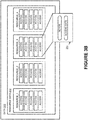
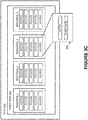
- FIGS 3A-3C are example block diagrams illustrating an example database 300 and data 310, consistent with disclosed embodiments.
- database 300 may include a communication device 302, one or more processor(s) 304, and memory 306 including one or more program(s) 308 and data 310.
- Database 300 in some embodiments, may be implemented identically to one or more of database(s) 104, described above in connection with Figure 1 .
- database 300 may take the form of a server, general purpose computer, mainframe computer, or any combination of these components. Other implementations consistent with disclosed embodiments are possible as well.
- Communication device 302 may be configured to communicate with one or more resource detection systems, such as resource detection systems 102 and 200 described above.
- communication device 302 may be configured to provide to the resource detection system(s) data associated with a number of resources, actors, and/or events.
- the resource detection system(s) may store data locally and/or receive data from one or more other entities.
- Communication device 302 may be configured to communicate with other components as well, including, for example, one or more event detection systems, such as event detection system 108 described above. Communication device 302 may take any of the forms described above for communication device 202.
- Processor(s) 304, memory 306, program(s) 308, and data 310 may take any of the forms described above for processor(s) 208, memory 210, program(s) 212, and data 214, respectively.
- the components of database 300 may be implemented in hardware, software, or a combination of both hardware and software, as will be apparent to those skilled in the art.
- one or more components of database 300 may be implemented as computer processing instructions, all or a portion of the functionality of database 300 may be implemented instead in dedicated electronics hardware.
- Data 310 may be data associated with a number of resources, such as resource(s) 106 described above, actors, and/or events.
- Data 310 may include, for example, resource data 312, as shown in Figure 3B .
- Resource data 312 may describe access to resources by actors.
- resource data 312 may include data corresponding to access by actors made at resources, such as "Resource_1," "Resource_2,” etc.
- resource data 312 may identify an actor that accesses the resource and an access date indicating a date on which the actor accessed the resource.
- resource data 312 for the merchant may identify the financial card and/or a user or account associated with the financial card used to make a purchase at the merchant and a date on which the financial card was used to make a purchase at the merchant.
- resource data 312 for the database may identify the account (and/or a user associated with the account) that accessed the database and when this account (and/or associated user) accessed the database.
- account and/or a user associated with the account
- resource data 312 for the database may identify the account (and/or a user associated with the account) that accessed the database and when this account (and/or associated user) accessed the database.
- Data 310 may further include, for example, event data 316, as shown in Figure 3C .
- Event data 316 may describe events affecting actors accessing the resource.
- event data 316 may include data corresponding to events affecting actors accessing resources, such as "Resource_1," "Resource_2,” etc. For each access corresponding to an event, event data 316 may identify an affected actor and an event date indicating a date on which the actor was affected by the event. For example, in a system designed to detect an automated teller machine (ATM) responsible for the skimming of financial card data, event data 316 for the ATM may identify the financial card and/or a user or account associated with the financial card used at the ATM and a date on which the financial card was used at the ATM.
- ATM automated teller machine
- resource data 312 and/or event data 316 may be stored together, separately, in another database, elsewhere in the same database 300, and/or in another storage medium.
- resource data 312 and/or event data 316 may describe other aspects of actors, events, and/or resources.
- FIG. 4 is an example flow chart illustrating a resource detection process 400, consistent with disclosed embodiments.
- Resource detection process 400 may be carried out, for example, by a resource detection system, such as resource detections systems 102 and 200 described above.
- resource detection process 400 begins at step 402.
- a resource detection system can identify a plurality of actors that have accessed a resource.
- the plurality of actors may be identified based on, for example, data associated with the resource received by the resource detection system.
- the data associated with the resource may be received by the resource detection system from a database, such as database(s) 104 and 300 described above.
- the data associated with the resource may be received from elsewhere as well.
- At least one aspect of the actors identifies the actors as a group for which it is desired to determine whether some event or resource biased an outcome. For example, where a group of individual actors is known to have been victimized by credit card fraud, that group of actors may form the seed group for evaluating events or resources to determine the likelihood of an event or resource being the source of the credit card fraud. Alternatively, analysis can be undertaken on hypothetical groups as seeds, to evaluate whether credit card fraud is on-going whether detected or not, by comparison of the quantitative likelihoods of events or resources being the source of the credit card fraud, i.e., by the quantitative measure for that entity exceeding a threshold.
- Figure 4 is discussed with respect to testing an outcome wherein the process is seeded by a group of actors, the process can be equally seeded using a group of events, or a group of resources. Furthermore, and similar to seeding via actors, analysis can be seeded based on a hypothetical group, to determine if an outcome is occurring, rather than based on knowledge of the outcome actually occurring, as a result of consideration of quantitative scoring.
- resources can also be used as process seeds.
- initial consideration may be based on a group of resources, either resources for which an outcome has already happened or for which it is desired to hypothetically test the group to determine if an outcome is happening.
- the data associated with the resource received by the resource detection system may include resource data, such as resource data 312 described above.
- the resource detection system may identify the plurality of actors by, for example, identifying the actors that have accessed the resource, such as with access 314.
- the resource detection system may identify the plurality of actors that have been used to access the resource in other manners as well.
- the plurality of actors may include financial cards and/or users or accounts associated with the financial card used to make a purchase at the merchant, as indicated by, for example, resource data, such as resource data 312.
- the resource data may, for example, identify the financial card, user, and/or account and a date on which the financial card was used to make a purchase at the merchant.
- the plurality of actors may include accounts and/or users associated with accounts used to access the database as indicated by, for example, resource data, such as resource data 312.
- the resource data may, for example, identify the accounts and/or users used to access the database and a date on which the account was used to access the database
- the resource detection process 400 continues at step 404 where, based on the plurality of actors, the resource detection system may determine a number of "unique actors" that have accessed the resource.
- the number of unique actors may be equal to a number of actors accessing the resource (as well as the number of accesses to the resource). For example, if x different accounts accessed a database at y different times, the number of unique accounts may be equal to the number of accounts x (as well as the number of accesses y ).
- a number of unique actors may be smaller than a number of accesses to the resource.
- x different computing devices may have accessed an ATM y different times, where y is greater than x due to multiple accesses by the same computing device(s).
- a number of unique actors may be smaller than a number of actors accessing the resource. For example, if x different financial cards belonging to y different people have accessed an ATM, the number of unique actors may be the number of different people y , rather than the number of financial cards x , since multiple financial cards x may be traceable to the same user y .
- the number of unique actors may be determined based on, for example, data associated with the resource received by the resource detection system. Alternatively or additionally, the number of unique actors may be estimated based on, for example, historical numbers.
- the data associated with the resource received by the resource detection system may include resource data, such as resource data 312 described above.
- the number of unique actors may, for example, be less than a number of actors that have accessed the resource, as some actors may have accessed the resource more than one time.
- an actor may access a resource in two or more ways. For example, in a system for detecting financial card fraud at a merchant, a user may use two or more financial cards to make purchases at a single merchant. In these cases, the number of unique actors may be less than a number of actors that have accessed the merchant because some actors may have accessed the resource in more than one way.
- the resource detection system may determine the number of unique actors that have accessed the resource in other manners as well.
- the resource detection system may identify from the plurality of actors identified in step 402 a set of affected actors.
- the affected actors may include, for example, actors that have been affected by an event.
- the affected actors may be identified based on, for example, data associated with the resource received by the resource detection system.
- the data associated with the resource received by the resource detection system may include event data, such as event data 316 described above.
- the resource detection system may identify a plurality of affected actors by, for example, identifying all affected actors in the event data, such as event 318.
- the resource detection system may identify financial cards and/or users or accounts associated with the financial card affected by financial card fraud based on event data, such as event data 318.
- the event data may indicate, for example, which financial cards experienced fraud.
- the resource detection system may identify accounts and/or users associated with accounts that have experienced unauthorized access or use.
- the plurality of affected actors in the event data and the plurality of actors identified in step 402 may then be compared to identify the set of affected actors.
- actors appearing in both in the plurality of affected actors in the event data and the plurality of actors identified in step 402 may make up the set of affected actors.
- the resource detection system may identify the set of affected actors in other manners as well.
- the affected actors may include financial cards that both were used to make a purchase at a merchant and experienced financial card fraud.
- the affected actors may include accounts and/or users associated with accounts that both were used to access the database and experienced unauthorized access or use.
- the resource detection process 400 continues at step 408 where the resource detection system may identify from the set of affected actors identified in step 406 a subset of resource-affected actors.
- the subset of resource-affected actors may include actors affected by an event that can possibly be traced back to the resource.
- the resource detection system may compare, for each affected actor in the set of affected actors, a first date of access with an event date.
- the first date of access may be the earliest date on which the actor accessed the resource.
- the resource detection system may determine the first date of access for each actor by, for example, identifying the access date for each access, such as access 314, made by the actor at the resource.
- the first date of access may be the first date on which the financial card was used to make a purchase at the merchant.
- the first date of access may be the first date on which the account was used to access the database.
- the resource detection system may determine the first date of access for each actor in other manners as well.
- the event date may be the earliest date on which the actor was affected by the event.
- the resource detection system may determine the event date for each affected actor by, for example, identifying the event date for each access associated with an event, such as access 318, made by the actor at the resource.
- the event date may indicate the first date on which a financial card experienced fraud.
- the event date may indicate the first date on which an account experienced unauthorized access or use.
- the subset of resource-affected actors may include affected actors that accessed the resource prior to the event.
- actors affected by the event before accessing the resource may be excluded from the subset of resource-affected actors, as an event cannot be traced back to the resource for affected actors affected by the event prior to accessing the resource.
- the resource-affected actors may include financial cards and/or users or accounts associated with the financial card that were used to make a purchase at the merchant before being affected by financial card fraud.
- the resource-affected actors may include accounts and/or users associated with accounts that accessed the database before experiencing unauthorized access or use.
- the subset of resource-affected actors may be determined in other manners as well.
- the resource detection system may determine a number of resource-affected actors in the subset of resource-affected actors at step 410.
- resource detection process 400 may be carried out in real-time.
- resource detection process 400 may be carried out in real-time using an estimated number of unique actors and/or resource-affected actors.
- resource detection process 400 may be carried out in real-time using a calculated number of unique actors and/or resource-affected actors.
- Real-time calculation of a number of unique actors and/or resource-affected actors may vary by application, a number of resources being monitored, and/or a number of actors being monitored.
- a database may be used to store data indicating which resources an actor has accessed, as well as any events affecting the actor.
- the database may take the form of, for example, an event-based database (e.g., a RethinkDB database) or another database.
- an in-memory database e.g., a Redis database
- a probabilistic data structure e.g., a bloom filter
- Such a probabilistic data structure may be configured to operate more efficiently than data structures that operate using "yes/no" determinations of whether an actor accessed a particular resource, instead using "maybe/no” determinations.
- Bloom filters can be more space-efficient than standard hash table structures, facilitating faster inserts and look-ups and thus supporting real-time monitoring of data. While a Bloom filter may return false positives (e.g., over-counting affected actors), its efficiency can facilitate real-time monitoring of events. Moreover, the disclosed embodiments can be configured to reduce the chance of false positives to a small probability such that the benefits of the efficiency of the Bloom filter outweigh the drawbacks of any errors. Event scores may then be calculated in real-time each time data describing an event is received, as described above.
- multiple systems may be used to monitor each resource and/or a subset of resources, either in series (e.g., each system monitoring a unique subset of all resources) or in parallel (e.g., systems monitoring overlapping subsets of all resources). For example, only a subset of total resources may be monitored in order to conserve processing power and/or for efficiency.
- the resource detection system may determine, based on the number of unique actors and the number of resource-affected actors, an event score for the resource.
- the event score may be calculated as a real-time metric that may indicate a potential that the resource is responsible for the event. For example, in a system for detecting financial card fraud at a merchant, the event score may indicate a potential that the merchant is responsible for the financial card fraud. As another example, in a system designed to detect a database responsible for account breach, the event score may indicate a potential that database is responsible for the unauthorized access or use.
- the event score may be a quantitative score, such as a numeric value or rating. Alternatively or additionally, the event score may be a qualitative score, such as an alphabetic grade or rating. For example, the event score may indicate a potential that the resource is responsible for the event along on a numeric scale, a high-medium-low rating, or an A-F grading system. Other event scores are possible as well.
- the resource detection system may determine the event score using, for example, a binomial confidence interval.
- the event score may be determined based on a lower bound of a binomial confidence interval.
- a binomial confidence interval can establish a margin of error around the observed proportion p that theoretically includes the actual proportion of the sample n.
- An error level ⁇ of the binomial confidence interval reflects how certain it is that the actual proportion falls within the binomial confidence interval.
- the binomial confidence interval may be given by, for example, the Wald Interval: p ⁇ z ⁇ 2 ⁇ ⁇ , p + z ⁇ 2 ⁇ ⁇
- z ⁇ /2 is the critical value of the normal distribution for the error level ⁇
- ⁇ is the standard deviation of the sample n, given by: p 1 ⁇ p / n .
- the binomial confidence interval establishes a margin of error around the observed proportion p of resource-affected actors that includes the actual proportion of resource-affected actors in the number of unique actors n.
- An error level ⁇ of the binomial confidence interval reflects how certain it is that the actual proportion falls within the binomial confidence interval. For example, for an error level ⁇ of 0.05, the binomial confidence interval reflects a theoretical 95% certainty that the actual proportion of resource-affected actors falls within the binomial confidence interval.
- a binomial confidence interval may be determined using the lower bound of a Wilson Score.
- the Wilson Score for a proportion p of resource-affected actors in a number of unique actors n is given by: p + z ⁇ / 2 2 n ⁇ z ⁇ 2 p 1 ⁇ p n + z ⁇ 2 2 4 n 2 / 1 + z ⁇ 2 2 n .
- a binomial confidence interval may be determined using the lower bound of a Clopper-Pearson interval.
- the Clopper-Pearson interval considers a number of instances x observed in a sample n.
- a Clopper-Pearson interval may consider a number of resource-affected actors x observed in the number of unique actors n.
- the lower bound of the Clopper-Pearson interval is given by: x x + n ⁇ x + 1 F
- the event score can depend on the fraction of actors accessing a resource thathave been affected by an event, rather than the number of actors. In this manner, the binomial confidence interval better accounts for variations in actor volume among resources.
- a binomial confidence interval can produce reliable event scores for resources with small actor volumes, because the event score can reflect evidence of downstream events when such evidence rises to the level of statistical significance. Other benefits exist as well.
- the number of resource-affected actors may be a simple count or sum of the plurality of resource-affected actors.
- the number of resource-affected actors may be a weighted sum of the plurality of resource-affected actors, with actors being weighted according to the proportion of accesses by the actor that were made at the resource (as compared to other resources). For example, an actor for which a low proportion of accesses were made at the resource may be weighted less than an actor for which a high proportion of accesses were made at the resource, in order to account for the increased likelihood for the latter actor that the event is traceable to the resource.
- the number of resource-affected actors may be determined in other manners as well.
- the event score may be given by the lower bound of a binomial confidence interval.
- the event score may take a numeric value given by the lower bound of the binomial confidence interval.
- the event score may take a quantitative or qualitative value that corresponds to the lower bound of the binomial confidence interval.
- the event score may take a value along a numeric range, such as a range from 0-1 or 1-100.
- the event score may take a qualitative value indicating a rating, such as "high,” “medium,” or “low.”
- the event score may take a qualitative value indicating a grade, such as an "A-" or "C+.” Other event scores are possible as well.
- resource detection process 400 can be carried out for a plurality of resources in order to determine an event score for each resource.
- the event scores for the resources may reflect, for example, a ranking of the resources.
- resource detection process 400 may be carried out for a predetermined period, such that the first date of access is the earliest date on which an actor accessed the resource within the predetermined period and/or the event date is the earliest date on which an actor was affected by the event within the predetermined period.
- the resource detection process 400 may be carried out for a plurality of predetermined periods. The predetermined periods may be sequential and/or overlapping. In this manner, event scores for a plurality of resources over a plurality of predetermined periods may be determined.
- the resource detection system may take action to limit and/or promote future events based on the event scores. For example, in some embodiments the resource detection system may identify at least one resource in the plurality of merchants as responsible for the event based on the at least one resource's event score. For instance, the resource detection system may identify as responsible and/or further investigate any resource having an event score that exceeds a predetermined threshold. Alternatively or additionally, the resource detection system may identify as responsible and/or further investigate any resource having an event score that has increased by more than a predetermined amount, for example, within a predetermined period. The resource detection system may identify resources as responsible in other manners as well.
- the resource detection system may, for any resource identified as responsible, flag each actor in the plurality of actors.
- the resource detection system may employ the event scores to determine whether actors are affected by events in the future. For example, if an actor has accessed a resource identified as responsible for an event, a subsequent access by the actor may be flagged. For instance, in a system designed to detect a merchant responsible for financial card fraud, if a financial card has been used to make a purchase at a merchant determined to be responsible for the fraud, the financial card may be flagged. Subsequent purchases made using the financial card may, for example, be screened and/or declined.
- the resource detection system may aggregate event scores for an actor by, for example, summing or otherwise combining event scores for each resource accessed by the actor within a predetermined period.
- the actor may be flagged based on the aggregated event scores. For instance, in a system designed to detect a merchant responsible for financial card fraud, the resource detection system may, for example, flag, reissue, and/or decline incoming authorizations for purchases on the financial card when the aggregated event scores exceed a predetermined threshold and/or increases by more than a predetermined amount, for example, within a predetermined period.
- the resource detection system may take other actions as well.
- resource detection process 400 may further include, for example, estimating gains and/or losses from events, estimating dates on which events may have occurred at resources, identifying additional actors that may be affected by an event in the future, and/or predicting future activity by affected actors and/or future events. These estimates may, in some embodiments, be used in connection with the predetermined thresholds and/or rankings described above. For instance, the resource detection system may identify as responsible and/or further investigate any resource having an event score that exceeds a predetermined threshold based on gains and/or losses or any resource having the highest ranking and/or a ranking above a certain cutoff.
- the event scores for the plurality of resources during the plurality of predetermined periods may be provided to a modeling system.
- the modeling system may be configured to generate, based on data associated with the resources received by the resource detection system and the events scores models illustrating a potential for events at the resources.
- the models may illustrate, for example, the event scores at the plurality of resources, such as variation in the event scores over predetermined periods.
- the models may take the form of graphical user interfaces configured to receive input from users and generate displays. Example graphical user interfaces are further described in connection with Figures 5A-5B .
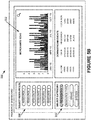
- FIGS 5A-5B illustrate example modeling system graphical user interfaces, consistent with disclosed embodiments.
- an example graphical user interface 500 may identify resources 502, event scores 504, and downstream events 506.
- the resources 502 may be, for example, the plurality of resources for which event scores are determined using resource detection process 400 described above.
- the plurality of resources may include six resources ("RESOURCE_1," "RESOURCE_2,” etc.). Any number of resources, including a single resource, is possible.
- the resources and events depicted in graphical user interface 500 may vary by application of resource detection process 400.
- the resources may include ATMs and the events may include fraudulent use of skimmed financial data.
- the resources may include merchants (e.g., locations, branches, servers, websites, and/or mobile applications associated with merchants) and the events may include instances of financial card fraud.
- the resources may include databases (and/or entities responsible for the databases) and the events may include unauthorized access to or use of the accounts. Other examples are possible as well.
- a user of graphical user interface 500 may select a resource from the resources 502 to view the resource's event scores. For example, as shown, "RESOURCE_2" is selected.
- the event scores 504 for the resource may be displayed for one or more predetermined periods. In some embodiments, an event score 504 may be determined every one or more days, weeks, years, or other predetermined periods. Each determined event score 504 may be displayed on graphical user interface 500, or event scores 504 may be aggregated for display on graphical user interface 500. The event scores 504 and/or aggregated event scores may be shown, for example, over the course of a few days, weeks, years, or other predetermined periods. Other examples are possible as well. In this manner, the graphical user interface 500 may illustrate variation in the event scores 504 for the resource over time.
- event scores 504 are shown to take values between 0 and .5, in some embodiments the event scores 504 may take other values as well, and any units are possible for event scores 504.
- the event score may be given by the lower bound of a binomial confidence interval or may take a quantitative or qualitative value that corresponds to the lower bound of the binomial confidence interval.
- the event score may take a value along a numeric range, a qualitative value indicating a rating, or a qualitative value indicating a grade, such as an "A-" or "C+.”
- Other event scores are possible as well.
- higher event scores may indicate a higher potential that a resource is responsible for an event.
- lower event scores may indicate a higher potential that a resource is responsible for an event.
- graphical user interface 500 may automatically flag event scores that, for example, exceed a predetermined threshold and/or increase by more than a predetermined amount, for example, within a predetermined period.
- downstream events 506 may identify actors affected by an event after accessing the resource (e.g., the subset of resource-affected actors, as described above in connection with Figure 4 ).
- graphical user interface 500 may use the event scores to identify additional actors that may be affected by the event in the future and/or predict future events. For example, in a system for detecting financial card fraud originating at a merchant, graphical user interface 500 may, for example, automatically flag or decline and/or invite a user to decline authorization for future purchases made using a merchant-defrauded financial card on the grounds that such purchase are likely fraudulent purchases. Other examples are possible as well.
- a user of graphical user interface 500 may vary the predetermined periods shown using a zoom tool 508 or other input. In this manner, the user may view, for example, the resource's event score over a longer or shorter predetermined period or periods.
- a user of graphical user interface 500 may wish to view event scores for more than one resource.
- the user may, for example, select one or more additional resources 502.
- the user may select, in addition to "RESOURCE_2," as shown, "RESOURCE_3" or another resource or resources 502.
- the user may, for example, select a category 510 of resources for which to view event scores, as shown in Figure 5B .
- Categories 510 may be generated based on, for example, data describing resource(s) 502.
- the data may include, for example, data identifying a brand or operator of each resource 502, data identifying a resource type of each resource 502 (e.g., server, database, merchant, service provider, etc.), data identifying a geographic location of each resource 502, data describing any point-of-sale terminals associated with each resource 502 (e.g., geographic location of terminal, terminal manufacturer, terminal hardware, terminal software, etc.), data describing security used by resource(s) 106, and/or data describing a processor used by each resource 502 (e.g., processor operator, processor hardware, processor software, etc.).
- Other data describing resources 502 is possible as well. Other data are possible as well.
- the user may select a category 510 to view event scores for resources 502 within the category 510. For example, the user may select to view event scores for all resources 502 in a particular zip code. As another example, the user may select to view an aggregate event score for all resources 502 of a particular resource type. Other examples are possible as well.
- graphical user interface 500 is shown to include inputs for resources 502 and categories 510, it will be understood that other inputs, permitting the user to view event scores for the plurality of resources in other manners, are possible as well.
- graphical user interface 500 may permit a user to interactively view illustrations of event scores at resources over predetermined periods.
- Graphical user interface 500 may permit the user to, for example, estimate gains and/or losses from events, estimate dates on which events may have occurred at resources, identify additional actors that may be affected by an event in the future, and/or predict future activity by affected actors and/or future events. Other examples are possible as well.
- some or all of the logic for the above-described techniques may be implemented as a computer program or application or as a plug-in module or subcomponent of another application.
- the described techniques may be varied and are not limited to the examples or descriptions provided.
Landscapes
- Engineering & Computer Science (AREA)
- Computer Security & Cryptography (AREA)
- Theoretical Computer Science (AREA)
- Business, Economics & Management (AREA)
- Physics & Mathematics (AREA)
- General Physics & Mathematics (AREA)
- General Engineering & Computer Science (AREA)
- Signal Processing (AREA)
- Computer Networks & Wireless Communication (AREA)
- Human Resources & Organizations (AREA)
- Computer Hardware Design (AREA)
- Software Systems (AREA)
- Strategic Management (AREA)
- Databases & Information Systems (AREA)
- Computing Systems (AREA)
- Data Mining & Analysis (AREA)
- Accounting & Taxation (AREA)
- General Business, Economics & Management (AREA)
- Entrepreneurship & Innovation (AREA)
- Economics (AREA)
- Computational Linguistics (AREA)
- Finance (AREA)
- Tourism & Hospitality (AREA)
- Operations Research (AREA)
- Quality & Reliability (AREA)
- Educational Administration (AREA)
- Marketing (AREA)
- Development Economics (AREA)
- Game Theory and Decision Science (AREA)
- General Health & Medical Sciences (AREA)
- Bioethics (AREA)
- Health & Medical Sciences (AREA)
- Algebra (AREA)
- Probability & Statistics with Applications (AREA)
- Artificial Intelligence (AREA)
- Computational Mathematics (AREA)
- Evolutionary Computation (AREA)
- Mathematical Analysis (AREA)
- Mathematical Optimization (AREA)
- Pure & Applied Mathematics (AREA)
Claims (15)
- Computerimplementiertes Verfahren zum Bestimmen von Ressourcen, die für Ereignisse verantwortlich sind, wobei das Verfahren Folgendes umfasst:Empfangen von Daten, die einer Ressource (106) zugeordnet sind, wobei die Ressource eine Datenbank umfasst;Identifizieren (402), basierend auf den Daten, die der Ressource zugeordnet sind, von ersten Aktoren (110), die auf die Ressource (106) zugegriffen haben, wobei die ersten Aktoren eine Vielzahl von Konten umfassen;Bestimmen (404), basierend auf den ersten Aktoren (110), einer Anzahl eindeutiger Aktoren, die auf die Ressource (106) zugegriffen haben, wobei die Anzahl eindeutiger Aktoren eine Anzahl eindeutiger Benutzer der Vielzahl von Konten ist;Identifizieren, aus den ersten Aktoren (110), einen Satzbetroffener Aktoren, die von einem Ereignis betroffen waren, wobei ein Ereignis einen Datenbankverstoß umfasst;Identifizieren (408), aus dem Satz betroffener Aktoren, eines Teilsatzes aus von Ressourcen betroffenen Aktoren, der die betroffenen Aktoren umfasst, die auf die Ressource zugegriffen haben, bevor sie von dem Ereignis betroffen waren;Bestimmen (410) einer Anzahl an von Ressourcen betroffenen Aktoren in dem Teilsatz aus von Ressourcen betroffenen Aktoren;Bestimmen (412) einer Ereignisbewertung für die Ressource basierend auf der Anzahl eindeutiger Aktoren und der Anzahl an von Ressourcen betroffenen Aktoren, wobei die Ereignisbewertung eine Untergrenze eines Konfidenzintervalls eines Binomialanteils der Anzahl an von Ressourcen betroffenen Aktoren zu der Anzahl an eindeutigen Aktoren umfasst; undBestimmen (414), ob die Ressource für das Ereignis verantwortlich ist, basierend auf der Ereignisbewertung für die Ressource (106).
- Verfahren nach Anspruch 1, wobei das Bestimmen, ob die Ressource (106) für das Ereignis verantwortlich ist, das Bestimmen umfasst, ob die Ereignisbewertung einen vorbestimmten Schwellenwert überschreitet.
- Verfahren nach Anspruch 1 oder 2, ferner umfassend das Markieren jedes Aktors in den ersten Aktoren (110) als betroffen, wenn bestimmt wird, dass die Ressource (106) für das Ereignis verantwortlich ist.
- Verfahren nach einem der vorhergehenden Ansprüche, wobei das Identifizieren der ersten Aktoren (110), die auf die Ressource (106) zugegriffen haben, Folgendes umfasst:Anwenden eines Bloom-Filters auf die Daten, die der Ressource zugeordnet sind; oderIdentifizieren der ersten Aktoren, die auf die Ressource zugegriffen haben, in Echtzeit, während die Daten, die der Ressource zugeordnet sind, empfangen werden.
- Verfahren nach einem der vorhergehenden Ansprüche, wobei das Bestimmen einer Anzahl an von Ressourcen betroffenen Aktoren in dem Teilsatz aus von Ressourcen betroffenen Aktoren das Berechnen einer gewichteten Summe des Teilsatzes aus von Ressourcen betroffenen Aktoren umfasst, gewichtet gemäß einem Anteil einer Anzahl an Zugriffen für jeden aus dem Teilsatz aus von Ressourcen betroffenen Aktoren, die Zugriffe auf die Ressource (106) waren.
- Verfahren nach einem der vorhergehenden Ansprüche, ferner umfassend:
Bereitstellen von Einladungen, um Autorisierung für zukünftige Transaktionen für Kunden, die den ersten Aktoren (110) zugeordnet sind, zu verweigern, wobei die ersten Aktoren Finanzkonten der Kunden sind. - Computerimplementiertes Verfahren zum Bestimmen von Ressourcen, die für Ereignisse verantwortlich sind, wobei das Verfahren Folgendes umfasst:Empfangen von Daten, die einer Ressource (106) zugeordnet sind, wobei die Ressource ein System umfasst, das einem Händler zugeordnet ist;Identifizieren (402), basierend auf den Daten, die der Ressource zugeordnet sind, von ersten Aktoren (110), die auf die Ressource (106) zugegriffen haben, wobei die ersten Aktoren Finanzkarten umfassen;Bestimmen (404), basierend auf den ersten Aktoren (110), einer Anzahl an eindeutigen Aktoren, die auf die Ressource (106) zugegriffen haben, wobei die Anzahl an eindeutigen Aktoren eine Anzahl an eindeutigen Benutzern der Finanzkarten ist;Identifizieren, aus den ersten Aktoren (110), eines Satzes aus betroffenen Aktoren, die von einem Ereignis betroffen waren, wobei ein Ereignis eine betrügerische Transaktion umfasst;Identifizieren (408), aus dem Satz betroffener Aktoren, eines Teilsatzes aus von Ressourcen betroffenen Aktoren, der die betroffenen Aktoren umfasst, die auf die Ressource zugegriffen haben, bevor sie von dem Ereignis betroffen waren;Bestimmen (410) einer Anzahl an von Ressourcen betroffenen Aktoren in dem Teilsatz aus von Ressourcen betroffenen Aktoren;Bestimmen (412) einer Ereignisbewertung für die Ressource basierend auf der Anzahl eindeutiger Aktoren und der Anzahl an von Ressourcen betroffenen Aktoren, wobei die Ereignisbewertung eine Untergrenze eines Konfidenzintervalls eines Binomialanteils der Anzahl an von Ressourcen betroffenen Aktoren zu der Anzahl an eindeutigen Aktoren umfasst; undBestimmen (414), ob die Ressource für das Ereignis verantwortlich ist, basierend auf der Ereignisbewertung für die Ressource (106).
- Verfahren nach Anspruch 7, wobei das Bestimmen, ob die Ressource (106) für das Ereignis verantwortlich ist, das Bestimmen umfasst, ob die Ereignisbewertung einen vorbestimmten Schwellenwert überschreitet.
- Verfahren nach Anspruch 7 oder Anspruch 8, ferner umfassend das Markieren jedes Aktors in den ersten Aktoren (110) als betroffen, wenn bestimmt wird, dass die Ressource (106) für das Ereignis verantwortlich ist.
- Verfahren nach einem der Ansprüche 7 bis 9, wobei das Identifizieren der ersten Aktoren (110), die auf die Ressource (106) zugegriffen haben, Folgendes umfasst:Anwenden eines Bloom-Filters auf die Daten, die der Ressource zugeordnet sind; oderIdentifizieren der ersten Aktoren, die auf die Ressource zugegriffen haben, in Echtzeit, während die Daten, die der Ressource zugeordnet sind, empfangen werden.
- Verfahren nach einem der Ansprüche 7 bis 10, wobei das Bestimmen einer Anzahl an von Ressourcen betroffenen Aktoren in dem Teilsatz aus von Ressourcen betroffenen Aktoren das Berechnen einer gewichteten Summe des Teilsatzes aus von Ressourcen betroffenen Aktoren umfasst, gewichtet gemäß einem Anteil einer Anzahl an Zugriffen für jeden aus dem Teilsatz aus von Ressourcen betroffenen Aktoren, die Zugriffe auf die Ressource (106) waren.
- Verfahren nach einem der Ansprüche 7 bis 11, ferner umfassend:
Bereitstellen von Einladungen, um Autorisierung für zukünftige Transaktionen für Kunden, die den ersten Aktoren (110) zugeordnet sind, zu verweigern, wobei die ersten Aktoren Finanzkonten der Kunden sind. - Verfahren nach einem der vorhergehenden Ansprüche, wobei das Konfidenzintervall ein Clopper-Pearson-Intervall oder ein Wald-Intervall umfasst.
- Computerlesbares Speichermedium, das Anweisungen speichert, die, wenn sie durch einen Prozessor (212) ausgeführt werden, den Prozessor dazu veranlassen, das Verfahren nach einem der vorhergehenden Ansprüche durchzuführen.
- System (200), umfassend:einen Speicher (210), der Anweisungen speichert; undeinen Prozessor (208), der konfiguriert ist, um die Anweisungen auszuführen, um das Verfahren nach einem der Ansprüche 1 bis 13 durchzuführen.
Applications Claiming Priority (1)
| Application Number | Priority Date | Filing Date | Title |
|---|---|---|---|
| US201662440949P | 2016-12-30 | 2016-12-30 |
Publications (2)
| Publication Number | Publication Date |
|---|---|
| EP3343422A1 EP3343422A1 (de) | 2018-07-04 |
| EP3343422B1 true EP3343422B1 (de) | 2021-04-28 |
Family
ID=60781786
Family Applications (1)
| Application Number | Title | Priority Date | Filing Date |
|---|---|---|---|
| EP17208869.2A Active EP3343422B1 (de) | 2016-12-30 | 2017-12-20 | Systeme und verfahren zur detektion von ressourcen, die für ereignisse verantwortlich sind |
Country Status (3)
| Country | Link |
|---|---|
| US (5) | US10356110B2 (de) |
| EP (1) | EP3343422B1 (de) |
| CA (1) | CA2990101A1 (de) |
Families Citing this family (38)
| Publication number | Priority date | Publication date | Assignee | Title |
|---|---|---|---|---|
| WO2014134630A1 (en) | 2013-03-01 | 2014-09-04 | RedOwl Analytics, Inc. | Modeling social behavior |
| US20140250049A1 (en) | 2013-03-01 | 2014-09-04 | RedOwl Analytics, Inc. | Visualizing social behavior |
| US9641592B2 (en) * | 2013-11-11 | 2017-05-02 | Amazon Technologies, Inc. | Location of actor resources |
| EP3343422B1 (de) * | 2016-12-30 | 2021-04-28 | Capital One Services, LLC | Systeme und verfahren zur detektion von ressourcen, die für ereignisse verantwortlich sind |
| FR3065558B1 (fr) * | 2017-04-21 | 2022-12-30 | Worldline | Systeme et procede pour gerer la detection de fraudes dans un systeme de transactions financieres |
| US11888859B2 (en) | 2017-05-15 | 2024-01-30 | Forcepoint Llc | Associating a security risk persona with a phase of a cyber kill chain |
| US10999296B2 (en) | 2017-05-15 | 2021-05-04 | Forcepoint, LLC | Generating adaptive trust profiles using information derived from similarly situated organizations |
| US20180336539A1 (en) * | 2017-05-22 | 2018-11-22 | Entit Software Llc | Processing event data provided by components of payment networks to determine issues |
| US10318729B2 (en) | 2017-07-26 | 2019-06-11 | Forcepoint, LLC | Privacy protection during insider threat monitoring |
| US10803178B2 (en) | 2017-10-31 | 2020-10-13 | Forcepoint Llc | Genericized data model to perform a security analytics operation |
| US11314787B2 (en) | 2018-04-18 | 2022-04-26 | Forcepoint, LLC | Temporal resolution of an entity |
| US11755584B2 (en) | 2018-07-12 | 2023-09-12 | Forcepoint Llc | Constructing distributions of interrelated event features |
| US11436512B2 (en) | 2018-07-12 | 2022-09-06 | Forcepoint, LLC | Generating extracted features from an event |
| US10949428B2 (en) | 2018-07-12 | 2021-03-16 | Forcepoint, LLC | Constructing event distributions via a streaming scoring operation |
| US11810012B2 (en) | 2018-07-12 | 2023-11-07 | Forcepoint Llc | Identifying event distributions using interrelated events |
| US11811799B2 (en) | 2018-08-31 | 2023-11-07 | Forcepoint Llc | Identifying security risks using distributions of characteristic features extracted from a plurality of events |
| US11025659B2 (en) | 2018-10-23 | 2021-06-01 | Forcepoint, LLC | Security system using pseudonyms to anonymously identify entities and corresponding security risk related behaviors |
| US11171980B2 (en) | 2018-11-02 | 2021-11-09 | Forcepoint Llc | Contagion risk detection, analysis and protection |
| WO2020176978A1 (en) * | 2019-03-01 | 2020-09-10 | Mastercard Technologies Canada ULC | Feature drift hardened online application origination (oao) service for fraud prevention systems |
| EP4038527A4 (de) | 2019-10-01 | 2023-10-18 | Mastercard Technologies Canada ULC | Merkmalskodierung in einem online-anwendungsoriginierungs (oao)-dienst für ein betrugsverhinderungssystem |
| US11489862B2 (en) | 2020-01-22 | 2022-11-01 | Forcepoint Llc | Anticipating future behavior using kill chains |
| US11630901B2 (en) | 2020-02-03 | 2023-04-18 | Forcepoint Llc | External trigger induced behavioral analyses |
| US11080109B1 (en) | 2020-02-27 | 2021-08-03 | Forcepoint Llc | Dynamically reweighting distributions of event observations |
| US11836265B2 (en) | 2020-03-02 | 2023-12-05 | Forcepoint Llc | Type-dependent event deduplication |
| US11429697B2 (en) | 2020-03-02 | 2022-08-30 | Forcepoint, LLC | Eventually consistent entity resolution |
| US11080032B1 (en) | 2020-03-31 | 2021-08-03 | Forcepoint Llc | Containerized infrastructure for deployment of microservices |
| US11568136B2 (en) | 2020-04-15 | 2023-01-31 | Forcepoint Llc | Automatically constructing lexicons from unlabeled datasets |
| US11516206B2 (en) | 2020-05-01 | 2022-11-29 | Forcepoint Llc | Cybersecurity system having digital certificate reputation system |
| US12130908B2 (en) | 2020-05-01 | 2024-10-29 | Forcepoint Llc | Progressive trigger data and detection model |
| US11544390B2 (en) | 2020-05-05 | 2023-01-03 | Forcepoint Llc | Method, system, and apparatus for probabilistic identification of encrypted files |
| US11895158B2 (en) | 2020-05-19 | 2024-02-06 | Forcepoint Llc | Cybersecurity system having security policy visualization |
| US11580561B1 (en) * | 2020-07-02 | 2023-02-14 | American Express Travel Related Services Company, Inc. | Detecting security breaches with watchdog transaction accounts |
| US11704387B2 (en) | 2020-08-28 | 2023-07-18 | Forcepoint Llc | Method and system for fuzzy matching and alias matching for streaming data sets |
| CN112035479A (zh) * | 2020-08-31 | 2020-12-04 | 平安医疗健康管理股份有限公司 | 医药类数据库的访问方法、装置和计算机设备 |
| US11190589B1 (en) | 2020-10-27 | 2021-11-30 | Forcepoint, LLC | System and method for efficient fingerprinting in cloud multitenant data loss prevention |
| US11481490B1 (en) * | 2021-04-02 | 2022-10-25 | Sift Science, Inc. | Systems and methods for automated labeling of subscriber digital event data in a machine learning-based digital threat mitigation platform |
| US12236422B2 (en) * | 2022-01-05 | 2025-02-25 | Mastercard International Incorporated | Computer-implemented methods and systems for authentic user-merchant association and services |
| US12217580B1 (en) | 2023-09-07 | 2025-02-04 | Bank Of America Corporation | Detection of unauthorized objects on ATM |
Family Cites Families (27)
| Publication number | Priority date | Publication date | Assignee | Title |
|---|---|---|---|---|
| US5684951A (en) * | 1996-03-20 | 1997-11-04 | Synopsys, Inc. | Method and system for user authorization over a multi-user computer system |
| US20100057622A1 (en) * | 2001-02-27 | 2010-03-04 | Faith Patrick L | Distributed Quantum Encrypted Pattern Generation And Scoring |
| JP4345358B2 (ja) * | 2003-05-28 | 2009-10-14 | 株式会社日立製作所 | 病院リスクマネジメント支援システム |
| US20050055373A1 (en) * | 2003-09-04 | 2005-03-10 | Forman George H. | Determining point-of-compromise |
| US20150381801A1 (en) * | 2005-04-21 | 2015-12-31 | Verint Americas Inc. | Systems, methods, and media for disambiguating call data to determine fraud |
| US20070055708A1 (en) * | 2005-09-07 | 2007-03-08 | Ncr Corporation | Processing formulae in rules for profitability calculations for financial processing in a relational database management system |
| US7860783B2 (en) * | 2005-11-07 | 2010-12-28 | Fair Isaac Corporation | Account-level fraud detector and associated methods |
| WO2007115884A2 (de) * | 2006-04-10 | 2007-10-18 | Swiss Reinsurance | Trigger- und aktivierungsvorrichtung für zwei gekoppelte, wechselseitig aktivierbare kontrollsysteme, sowie entsprechendes verfahren |
| US7523016B1 (en) * | 2006-12-29 | 2009-04-21 | Google Inc. | Detecting anomalies |
| US8036967B2 (en) * | 2007-01-12 | 2011-10-11 | Allegacy Federal Credit Union | Bank card fraud detection and/or prevention methods |
| US8600872B1 (en) * | 2007-07-27 | 2013-12-03 | Wells Fargo Bank, N.A. | System and method for detecting account compromises |
| JP2009301207A (ja) * | 2008-06-11 | 2009-12-24 | Fuji Xerox Co Ltd | 情報処理装置及びプログラム |
| US8300634B2 (en) * | 2008-11-24 | 2012-10-30 | 8X8, Inc. | Mobile device communications routing |
| US20120121618A1 (en) * | 2009-02-12 | 2012-05-17 | Dana-Farber Cancer Institute, Inc. | Predicting And Treating Prostate Cancer |
| US20110131130A1 (en) * | 2009-12-01 | 2011-06-02 | Bank Of America Corporation | Integrated risk assessment and management system |
| US8458069B2 (en) | 2011-03-04 | 2013-06-04 | Brighterion, Inc. | Systems and methods for adaptive identification of sources of fraud |
| WO2013126713A1 (en) * | 2012-02-22 | 2013-08-29 | Pave, Inc. | Apparatuses, methods and systems for facilitating communities of social based investment |
| US20140279331A1 (en) * | 2013-03-15 | 2014-09-18 | Capital One Financial Corporation | System and method for pro-actively responding to mass compromise situations |
| US20140279391A1 (en) * | 2013-03-15 | 2014-09-18 | Discover Financial Services Llc | Account manager user interface and guidance model |
| US9847951B2 (en) * | 2013-11-04 | 2017-12-19 | Ciena Corporation | Dynamic bandwidth allocation systems and methods using content identification in a software-defined networking controlled multi-layer network |
| US9753796B2 (en) | 2013-12-06 | 2017-09-05 | Lookout, Inc. | Distributed monitoring, evaluation, and response for multiple devices |
| US20150161611A1 (en) * | 2013-12-10 | 2015-06-11 | Sas Institute Inc. | Systems and Methods for Self-Similarity Measure |
| US20160104071A1 (en) * | 2014-10-08 | 2016-04-14 | AxonAl, Inc. | Spatio-temporal forecasting of future risk from past events |
| US20160381560A1 (en) * | 2015-06-27 | 2016-12-29 | Offla Selfsafe Ltd. | Systems and methods for derivative fraud detection challenges in mobile device transactions |
| US9392008B1 (en) * | 2015-07-23 | 2016-07-12 | Palantir Technologies Inc. | Systems and methods for identifying information related to payment card breaches |
| US9699205B2 (en) | 2015-08-31 | 2017-07-04 | Splunk Inc. | Network security system |
| EP3343422B1 (de) * | 2016-12-30 | 2021-04-28 | Capital One Services, LLC | Systeme und verfahren zur detektion von ressourcen, die für ereignisse verantwortlich sind |
-
2017
- 2017-12-20 EP EP17208869.2A patent/EP3343422B1/de active Active
- 2017-12-22 CA CA2990101A patent/CA2990101A1/en active Pending
- 2017-12-26 US US15/854,030 patent/US10356110B2/en active Active
- 2017-12-28 US US15/856,614 patent/US10284581B2/en active Active
-
2019
- 2019-02-08 US US16/271,619 patent/US10742671B2/en active Active
-
2020
- 2020-07-08 US US16/924,004 patent/US11783028B2/en active Active
-
2023
- 2023-10-09 US US18/483,233 patent/US12204641B2/en active Active
Non-Patent Citations (1)
| Title |
|---|
| None * |
Also Published As
| Publication number | Publication date |
|---|---|
| US20200342097A1 (en) | 2020-10-29 |
| US20240037225A1 (en) | 2024-02-01 |
| US20190173896A1 (en) | 2019-06-06 |
| US12204641B2 (en) | 2025-01-21 |
| US10356110B2 (en) | 2019-07-16 |
| CA2990101A1 (en) | 2018-06-30 |
| US20180191745A1 (en) | 2018-07-05 |
| US10742671B2 (en) | 2020-08-11 |
| US10284581B2 (en) | 2019-05-07 |
| US20180191750A1 (en) | 2018-07-05 |
| EP3343422A1 (de) | 2018-07-04 |
| US11783028B2 (en) | 2023-10-10 |
Similar Documents
| Publication | Publication Date | Title |
|---|---|---|
| US12204641B2 (en) | Systems and methods for detecting resources responsible for events | |
| US10102530B2 (en) | Card fraud detection utilizing real-time identification of merchant test sites | |
| US9231979B2 (en) | Rule optimization for classification and detection | |
| US11030622B2 (en) | Card systems and methods | |
| US8661538B2 (en) | System and method for determining a risk root cause | |
| US20140316960A1 (en) | Merchant bank tool | |
| US12368727B2 (en) | Systems and methods for improved detection of network attacks | |
| US20240311839A1 (en) | Fraud detection and prevention system | |
| HaratiNik et al. | FUZZGY: A hybrid model for credit card fraud detection | |
| US20210035235A1 (en) | System and method for detecting fraud among tax experts | |
| EP4256451A1 (de) | Erzeugung eines betrugsrisikowerts für eine drittanbietertransaktion | |
| US9998486B2 (en) | System for utilizing one or more databases to identify a point of compromise | |
| US20210201330A1 (en) | System for detecting target merchants and compromised users corresponding to fraudulent transactions | |
| CN114445217A (zh) | 信贷风险防控方法、装置、系统与计算机可读存储介质 | |
| CN109919767B (zh) | 交易风险管理方法、装置及设备 | |
| CN116934446A (zh) | 一种基于时序模型的交易监控方法及相关装置 | |
| CN115270984A (zh) | 一种反欺诈模型构建方法、装置、电子设备及存储介质 | |
| CN115392926A (zh) | 一种开户监测方法和装置 | |
| CN114553569B (zh) | 基于用户信息建立家庭网络的方法、装置、设备及介质 | |
| WO2025160733A1 (en) | Group based anomaly detection | |
| CN117114681A (zh) | 盗刷风险分析方法、装置、电子设备和介质 | |
| CN119887206A (zh) | 异常业务的识别方法、装置及电子设备 | |
| CN116975160A (zh) | 交易数据处理方法、装置、设备、介质和产品 |
Legal Events
| Date | Code | Title | Description |
|---|---|---|---|
| PUAI | Public reference made under article 153(3) epc to a published international application that has entered the european phase |
Free format text: ORIGINAL CODE: 0009012 |
|
| STAA | Information on the status of an ep patent application or granted ep patent |
Free format text: STATUS: THE APPLICATION HAS BEEN PUBLISHED |
|
| AK | Designated contracting states |
Kind code of ref document: A1 Designated state(s): AL AT BE BG CH CY CZ DE DK EE ES FI FR GB GR HR HU IE IS IT LI LT LU LV MC MK MT NL NO PL PT RO RS SE SI SK SM TR |
|
| AX | Request for extension of the european patent |
Extension state: BA ME |
|
| STAA | Information on the status of an ep patent application or granted ep patent |
Free format text: STATUS: REQUEST FOR EXAMINATION WAS MADE |
|
| 17P | Request for examination filed |
Effective date: 20181228 |
|
| RBV | Designated contracting states (corrected) |
Designated state(s): AL AT BE BG CH CY CZ DE DK EE ES FI FR GB GR HR HU IE IS IT LI LT LU LV MC MK MT NL NO PL PT RO RS SE SI SK SM TR |
|
| STAA | Information on the status of an ep patent application or granted ep patent |
Free format text: STATUS: EXAMINATION IS IN PROGRESS |
|
| 17Q | First examination report despatched |
Effective date: 20200330 |
|
| RIC1 | Information provided on ipc code assigned before grant |
Ipc: G06F 16/9038 20190101ALI20201221BHEP Ipc: G06Q 10/06 20120101ALI20201221BHEP Ipc: H04W 12/12 20090101ALI20201221BHEP Ipc: G06Q 20/40 20120101ALI20201221BHEP Ipc: G06F 16/2457 20190101ALI20201221BHEP Ipc: G06F 21/55 20130101AFI20201221BHEP |
|
| GRAP | Despatch of communication of intention to grant a patent |
Free format text: ORIGINAL CODE: EPIDOSNIGR1 |
|
| STAA | Information on the status of an ep patent application or granted ep patent |
Free format text: STATUS: GRANT OF PATENT IS INTENDED |
|
| INTG | Intention to grant announced |
Effective date: 20210202 |
|
| GRAS | Grant fee paid |
Free format text: ORIGINAL CODE: EPIDOSNIGR3 |
|
| GRAA | (expected) grant |
Free format text: ORIGINAL CODE: 0009210 |
|
| STAA | Information on the status of an ep patent application or granted ep patent |
Free format text: STATUS: THE PATENT HAS BEEN GRANTED |
|
| AK | Designated contracting states |
Kind code of ref document: B1 Designated state(s): AL AT BE BG CH CY CZ DE DK EE ES FI FR GB GR HR HU IE IS IT LI LT LU LV MC MK MT NL NO PL PT RO RS SE SI SK SM TR |
|
| REG | Reference to a national code |
Ref country code: GB Ref legal event code: FG4D |
|
| REG | Reference to a national code |
Ref country code: CH Ref legal event code: EP |
|
| REG | Reference to a national code |
Ref country code: AT Ref legal event code: REF Ref document number: 1387899 Country of ref document: AT Kind code of ref document: T Effective date: 20210515 |
|
| REG | Reference to a national code |
Ref country code: DE Ref legal event code: R096 Ref document number: 602017037512 Country of ref document: DE |
|
| REG | Reference to a national code |
Ref country code: IE Ref legal event code: FG4D |
|
| REG | Reference to a national code |
Ref country code: LT Ref legal event code: MG9D |
|
| REG | Reference to a national code |
Ref country code: AT Ref legal event code: MK05 Ref document number: 1387899 Country of ref document: AT Kind code of ref document: T Effective date: 20210428 |
|
| PG25 | Lapsed in a contracting state [announced via postgrant information from national office to epo] |
Ref country code: FI Free format text: LAPSE BECAUSE OF FAILURE TO SUBMIT A TRANSLATION OF THE DESCRIPTION OR TO PAY THE FEE WITHIN THE PRESCRIBED TIME-LIMIT Effective date: 20210428 Ref country code: LT Free format text: LAPSE BECAUSE OF FAILURE TO SUBMIT A TRANSLATION OF THE DESCRIPTION OR TO PAY THE FEE WITHIN THE PRESCRIBED TIME-LIMIT Effective date: 20210428 Ref country code: NL Free format text: LAPSE BECAUSE OF FAILURE TO SUBMIT A TRANSLATION OF THE DESCRIPTION OR TO PAY THE FEE WITHIN THE PRESCRIBED TIME-LIMIT Effective date: 20210428 Ref country code: AT Free format text: LAPSE BECAUSE OF FAILURE TO SUBMIT A TRANSLATION OF THE DESCRIPTION OR TO PAY THE FEE WITHIN THE PRESCRIBED TIME-LIMIT Effective date: 20210428 Ref country code: BG Free format text: LAPSE BECAUSE OF FAILURE TO SUBMIT A TRANSLATION OF THE DESCRIPTION OR TO PAY THE FEE WITHIN THE PRESCRIBED TIME-LIMIT Effective date: 20210728 Ref country code: HR Free format text: LAPSE BECAUSE OF FAILURE TO SUBMIT A TRANSLATION OF THE DESCRIPTION OR TO PAY THE FEE WITHIN THE PRESCRIBED TIME-LIMIT Effective date: 20210428 |
|
| PG25 | Lapsed in a contracting state [announced via postgrant information from national office to epo] |
Ref country code: GR Free format text: LAPSE BECAUSE OF FAILURE TO SUBMIT A TRANSLATION OF THE DESCRIPTION OR TO PAY THE FEE WITHIN THE PRESCRIBED TIME-LIMIT Effective date: 20210729 Ref country code: IS Free format text: LAPSE BECAUSE OF FAILURE TO SUBMIT A TRANSLATION OF THE DESCRIPTION OR TO PAY THE FEE WITHIN THE PRESCRIBED TIME-LIMIT Effective date: 20210828 Ref country code: LV Free format text: LAPSE BECAUSE OF FAILURE TO SUBMIT A TRANSLATION OF THE DESCRIPTION OR TO PAY THE FEE WITHIN THE PRESCRIBED TIME-LIMIT Effective date: 20210428 Ref country code: RS Free format text: LAPSE BECAUSE OF FAILURE TO SUBMIT A TRANSLATION OF THE DESCRIPTION OR TO PAY THE FEE WITHIN THE PRESCRIBED TIME-LIMIT Effective date: 20210428 Ref country code: SE Free format text: LAPSE BECAUSE OF FAILURE TO SUBMIT A TRANSLATION OF THE DESCRIPTION OR TO PAY THE FEE WITHIN THE PRESCRIBED TIME-LIMIT Effective date: 20210428 Ref country code: NO Free format text: LAPSE BECAUSE OF FAILURE TO SUBMIT A TRANSLATION OF THE DESCRIPTION OR TO PAY THE FEE WITHIN THE PRESCRIBED TIME-LIMIT Effective date: 20210728 Ref country code: PL Free format text: LAPSE BECAUSE OF FAILURE TO SUBMIT A TRANSLATION OF THE DESCRIPTION OR TO PAY THE FEE WITHIN THE PRESCRIBED TIME-LIMIT Effective date: 20210428 Ref country code: PT Free format text: LAPSE BECAUSE OF FAILURE TO SUBMIT A TRANSLATION OF THE DESCRIPTION OR TO PAY THE FEE WITHIN THE PRESCRIBED TIME-LIMIT Effective date: 20210830 |
|
| REG | Reference to a national code |
Ref country code: NL Ref legal event code: MP Effective date: 20210428 |
|
| PG25 | Lapsed in a contracting state [announced via postgrant information from national office to epo] |
Ref country code: SK Free format text: LAPSE BECAUSE OF FAILURE TO SUBMIT A TRANSLATION OF THE DESCRIPTION OR TO PAY THE FEE WITHIN THE PRESCRIBED TIME-LIMIT Effective date: 20210428 Ref country code: SM Free format text: LAPSE BECAUSE OF FAILURE TO SUBMIT A TRANSLATION OF THE DESCRIPTION OR TO PAY THE FEE WITHIN THE PRESCRIBED TIME-LIMIT Effective date: 20210428 Ref country code: ES Free format text: LAPSE BECAUSE OF FAILURE TO SUBMIT A TRANSLATION OF THE DESCRIPTION OR TO PAY THE FEE WITHIN THE PRESCRIBED TIME-LIMIT Effective date: 20210428 Ref country code: RO Free format text: LAPSE BECAUSE OF FAILURE TO SUBMIT A TRANSLATION OF THE DESCRIPTION OR TO PAY THE FEE WITHIN THE PRESCRIBED TIME-LIMIT Effective date: 20210428 Ref country code: DK Free format text: LAPSE BECAUSE OF FAILURE TO SUBMIT A TRANSLATION OF THE DESCRIPTION OR TO PAY THE FEE WITHIN THE PRESCRIBED TIME-LIMIT Effective date: 20210428 Ref country code: EE Free format text: LAPSE BECAUSE OF FAILURE TO SUBMIT A TRANSLATION OF THE DESCRIPTION OR TO PAY THE FEE WITHIN THE PRESCRIBED TIME-LIMIT Effective date: 20210428 Ref country code: CZ Free format text: LAPSE BECAUSE OF FAILURE TO SUBMIT A TRANSLATION OF THE DESCRIPTION OR TO PAY THE FEE WITHIN THE PRESCRIBED TIME-LIMIT Effective date: 20210428 |
|
| REG | Reference to a national code |
Ref country code: DE Ref legal event code: R097 Ref document number: 602017037512 Country of ref document: DE |
|
| PLBE | No opposition filed within time limit |
Free format text: ORIGINAL CODE: 0009261 |
|
| STAA | Information on the status of an ep patent application or granted ep patent |
Free format text: STATUS: NO OPPOSITION FILED WITHIN TIME LIMIT |
|
| 26N | No opposition filed |
Effective date: 20220131 |
|
| PG25 | Lapsed in a contracting state [announced via postgrant information from national office to epo] |
Ref country code: IS Free format text: LAPSE BECAUSE OF FAILURE TO SUBMIT A TRANSLATION OF THE DESCRIPTION OR TO PAY THE FEE WITHIN THE PRESCRIBED TIME-LIMIT Effective date: 20210828 Ref country code: AL Free format text: LAPSE BECAUSE OF FAILURE TO SUBMIT A TRANSLATION OF THE DESCRIPTION OR TO PAY THE FEE WITHIN THE PRESCRIBED TIME-LIMIT Effective date: 20210428 |
|
| PG25 | Lapsed in a contracting state [announced via postgrant information from national office to epo] |
Ref country code: MC Free format text: LAPSE BECAUSE OF FAILURE TO SUBMIT A TRANSLATION OF THE DESCRIPTION OR TO PAY THE FEE WITHIN THE PRESCRIBED TIME-LIMIT Effective date: 20210428 Ref country code: IT Free format text: LAPSE BECAUSE OF FAILURE TO SUBMIT A TRANSLATION OF THE DESCRIPTION OR TO PAY THE FEE WITHIN THE PRESCRIBED TIME-LIMIT Effective date: 20210428 |
|
| REG | Reference to a national code |
Ref country code: CH Ref legal event code: PL |
|
| REG | Reference to a national code |
Ref country code: BE Ref legal event code: MM Effective date: 20211231 |
|
| PG25 | Lapsed in a contracting state [announced via postgrant information from national office to epo] |
Ref country code: LU Free format text: LAPSE BECAUSE OF NON-PAYMENT OF DUE FEES Effective date: 20211220 Ref country code: IE Free format text: LAPSE BECAUSE OF NON-PAYMENT OF DUE FEES Effective date: 20211220 |
|
| PG25 | Lapsed in a contracting state [announced via postgrant information from national office to epo] |
Ref country code: BE Free format text: LAPSE BECAUSE OF NON-PAYMENT OF DUE FEES Effective date: 20211231 |
|
| PG25 | Lapsed in a contracting state [announced via postgrant information from national office to epo] |
Ref country code: LI Free format text: LAPSE BECAUSE OF NON-PAYMENT OF DUE FEES Effective date: 20211231 Ref country code: CH Free format text: LAPSE BECAUSE OF NON-PAYMENT OF DUE FEES Effective date: 20211231 |
|
| PG25 | Lapsed in a contracting state [announced via postgrant information from national office to epo] |
Ref country code: HU Free format text: LAPSE BECAUSE OF FAILURE TO SUBMIT A TRANSLATION OF THE DESCRIPTION OR TO PAY THE FEE WITHIN THE PRESCRIBED TIME-LIMIT; INVALID AB INITIO Effective date: 20171220 |
|
| PG25 | Lapsed in a contracting state [announced via postgrant information from national office to epo] |
Ref country code: CY Free format text: LAPSE BECAUSE OF FAILURE TO SUBMIT A TRANSLATION OF THE DESCRIPTION OR TO PAY THE FEE WITHIN THE PRESCRIBED TIME-LIMIT Effective date: 20210428 |
|
| PG25 | Lapsed in a contracting state [announced via postgrant information from national office to epo] |
Ref country code: MK Free format text: LAPSE BECAUSE OF FAILURE TO SUBMIT A TRANSLATION OF THE DESCRIPTION OR TO PAY THE FEE WITHIN THE PRESCRIBED TIME-LIMIT Effective date: 20210428 |
|
| PG25 | Lapsed in a contracting state [announced via postgrant information from national office to epo] |
Ref country code: TR Free format text: LAPSE BECAUSE OF FAILURE TO SUBMIT A TRANSLATION OF THE DESCRIPTION OR TO PAY THE FEE WITHIN THE PRESCRIBED TIME-LIMIT Effective date: 20210428 |
|
| PG25 | Lapsed in a contracting state [announced via postgrant information from national office to epo] |
Ref country code: MT Free format text: LAPSE BECAUSE OF FAILURE TO SUBMIT A TRANSLATION OF THE DESCRIPTION OR TO PAY THE FEE WITHIN THE PRESCRIBED TIME-LIMIT Effective date: 20210428 |
|
| PGFP | Annual fee paid to national office [announced via postgrant information from national office to epo] |
Ref country code: DE Payment date: 20241121 Year of fee payment: 8 |
|
| PGFP | Annual fee paid to national office [announced via postgrant information from national office to epo] |
Ref country code: GB Payment date: 20241122 Year of fee payment: 8 |
|
| PGFP | Annual fee paid to national office [announced via postgrant information from national office to epo] |
Ref country code: FR Payment date: 20241121 Year of fee payment: 8 |
|
| REG | Reference to a national code |
Ref country code: DE Ref legal event code: R082 Ref document number: 602017037512 Country of ref document: DE Representative=s name: BOULT WADE TENNANT LLP, DE |