EP3337873B1 - Mittels reaktiver doppelschneckenextrusion hergestellte hydrothermisch karbonisierte biomasse - Google Patents
Mittels reaktiver doppelschneckenextrusion hergestellte hydrothermisch karbonisierte biomasse Download PDFInfo
- Publication number
- EP3337873B1 EP3337873B1 EP16758018.2A EP16758018A EP3337873B1 EP 3337873 B1 EP3337873 B1 EP 3337873B1 EP 16758018 A EP16758018 A EP 16758018A EP 3337873 B1 EP3337873 B1 EP 3337873B1
- Authority
- EP
- European Patent Office
- Prior art keywords
- biomass
- screw extruder
- thermosetting polymer
- polymer material
- pressure
- Prior art date
- Legal status (The legal status is an assumption and is not a legal conclusion. Google has not performed a legal analysis and makes no representation as to the accuracy of the status listed.)
- Not-in-force
Links
Images






Classifications
-
- C—CHEMISTRY; METALLURGY
- C10—PETROLEUM, GAS OR COKE INDUSTRIES; TECHNICAL GASES CONTAINING CARBON MONOXIDE; FUELS; LUBRICANTS; PEAT
- C10L—FUELS NOT OTHERWISE PROVIDED FOR; NATURAL GAS; SYNTHETIC NATURAL GAS OBTAINED BY PROCESSES NOT COVERED BY SUBCLASSES C10G OR C10K; LIQUIFIED PETROLEUM GAS; USE OF ADDITIVES TO FUELS OR FIRES; FIRE-LIGHTERS
- C10L5/00—Solid fuels
- C10L5/40—Solid fuels essentially based on materials of non-mineral origin
- C10L5/44—Solid fuels essentially based on materials of non-mineral origin on vegetable substances
- C10L5/442—Wood or forestry waste
-
- C—CHEMISTRY; METALLURGY
- C10—PETROLEUM, GAS OR COKE INDUSTRIES; TECHNICAL GASES CONTAINING CARBON MONOXIDE; FUELS; LUBRICANTS; PEAT
- C10B—DESTRUCTIVE DISTILLATION OF CARBONACEOUS MATERIALS FOR PRODUCTION OF GAS, COKE, TAR, OR SIMILAR MATERIALS
- C10B7/00—Coke ovens with mechanical conveying means for the raw material inside the oven
- C10B7/10—Coke ovens with mechanical conveying means for the raw material inside the oven with conveyor-screws
-
- C—CHEMISTRY; METALLURGY
- C10—PETROLEUM, GAS OR COKE INDUSTRIES; TECHNICAL GASES CONTAINING CARBON MONOXIDE; FUELS; LUBRICANTS; PEAT
- C10L—FUELS NOT OTHERWISE PROVIDED FOR; NATURAL GAS; SYNTHETIC NATURAL GAS OBTAINED BY PROCESSES NOT COVERED BY SUBCLASSES C10G OR C10K; LIQUIFIED PETROLEUM GAS; USE OF ADDITIVES TO FUELS OR FIRES; FIRE-LIGHTERS
- C10L5/00—Solid fuels
- C10L5/40—Solid fuels essentially based on materials of non-mineral origin
- C10L5/44—Solid fuels essentially based on materials of non-mineral origin on vegetable substances
- C10L5/447—Carbonized vegetable substances, e.g. charcoal, or produced by hydrothermal carbonization of biomass
-
- C—CHEMISTRY; METALLURGY
- C10—PETROLEUM, GAS OR COKE INDUSTRIES; TECHNICAL GASES CONTAINING CARBON MONOXIDE; FUELS; LUBRICANTS; PEAT
- C10L—FUELS NOT OTHERWISE PROVIDED FOR; NATURAL GAS; SYNTHETIC NATURAL GAS OBTAINED BY PROCESSES NOT COVERED BY SUBCLASSES C10G OR C10K; LIQUIFIED PETROLEUM GAS; USE OF ADDITIVES TO FUELS OR FIRES; FIRE-LIGHTERS
- C10L9/00—Treating solid fuels to improve their combustion
- C10L9/08—Treating solid fuels to improve their combustion by heat treatments, e.g. calcining
- C10L9/086—Hydrothermal carbonization
-
- Y—GENERAL TAGGING OF NEW TECHNOLOGICAL DEVELOPMENTS; GENERAL TAGGING OF CROSS-SECTIONAL TECHNOLOGIES SPANNING OVER SEVERAL SECTIONS OF THE IPC; TECHNICAL SUBJECTS COVERED BY FORMER USPC CROSS-REFERENCE ART COLLECTIONS [XRACs] AND DIGESTS
- Y02—TECHNOLOGIES OR APPLICATIONS FOR MITIGATION OR ADAPTATION AGAINST CLIMATE CHANGE
- Y02E—REDUCTION OF GREENHOUSE GAS [GHG] EMISSIONS, RELATED TO ENERGY GENERATION, TRANSMISSION OR DISTRIBUTION
- Y02E50/00—Technologies for the production of fuel of non-fossil origin
- Y02E50/10—Biofuels, e.g. bio-diesel
-
- Y—GENERAL TAGGING OF NEW TECHNOLOGICAL DEVELOPMENTS; GENERAL TAGGING OF CROSS-SECTIONAL TECHNOLOGIES SPANNING OVER SEVERAL SECTIONS OF THE IPC; TECHNICAL SUBJECTS COVERED BY FORMER USPC CROSS-REFERENCE ART COLLECTIONS [XRACs] AND DIGESTS
- Y02—TECHNOLOGIES OR APPLICATIONS FOR MITIGATION OR ADAPTATION AGAINST CLIMATE CHANGE
- Y02E—REDUCTION OF GREENHOUSE GAS [GHG] EMISSIONS, RELATED TO ENERGY GENERATION, TRANSMISSION OR DISTRIBUTION
- Y02E50/00—Technologies for the production of fuel of non-fossil origin
- Y02E50/30—Fuel from waste, e.g. synthetic alcohol or diesel
-
- Y—GENERAL TAGGING OF NEW TECHNOLOGICAL DEVELOPMENTS; GENERAL TAGGING OF CROSS-SECTIONAL TECHNOLOGIES SPANNING OVER SEVERAL SECTIONS OF THE IPC; TECHNICAL SUBJECTS COVERED BY FORMER USPC CROSS-REFERENCE ART COLLECTIONS [XRACs] AND DIGESTS
- Y02—TECHNOLOGIES OR APPLICATIONS FOR MITIGATION OR ADAPTATION AGAINST CLIMATE CHANGE
- Y02P—CLIMATE CHANGE MITIGATION TECHNOLOGIES IN THE PRODUCTION OR PROCESSING OF GOODS
- Y02P20/00—Technologies relating to chemical industry
- Y02P20/141—Feedstock
- Y02P20/145—Feedstock the feedstock being materials of biological origin
Definitions
- One aspect of this invention relates to system and method for producing carbonized biomass using a twin-screw extruder.
- Another aspect of this invention relates generally to hydrothermally carbonized biomass and, more particularly, to hydrothermally carbonized biomass material formed via reactive twin-screw extrusion.
- HTC Hydrothermal Carbonization
- biomass primarily lignocellulosic biomass
- biochar densified carbon product
- a sealed batch reactor typically a Parr Reactor, maintained at 200 - 300°C for 0.1 to 1 hour
- Dr. Bergius was awarded a Nobel Prize for his work in high-pressure chemistry in 1931.
- HTC biomass resembles coal
- one early use of HTC technology was to produce a coal-like material from the different constituents of lignocellulosic biomass and then attempt to relate the chemical and mineral characteristics of the HTC biomass product to the components of coal as known through petrographic analysis.
- the HTC process tends to remove oxygen and some hydrogen from biomass and produce a material that is similar to a low-rank coal.
- Fig. 1 shows a diagram first developed by Van Krevelen which reveals the difference between Loblolly pine biomass and typical US coals as a function of the ratio of atomic hydrogen to carbon when graphed as a function of the atomic ratio of oxygen to carbon. This figure suggests that HTC pine biomass is chemically similar to low-rank coal.
- Fig. 2 shows a similar diagram that includes a number of measurements for raw lignocellulosic biomass and similar biomass that has been mixed with water and subjected to HTC in batch Parr reactors to produce a biochar.
- US 2014 262 727 A1 describes a system for the production of carbonized biomass that includes an infeed for accepting biomass feed material and an associated twin screw extruder.
- a water heater is connected with respect to at least one inlet along a length of the twin screw extruder and a pressure sustaining valve is connected at an outlet of the twin screw extruder.
- Energy densification by the HTC process involves preferential loss of oxygen. With increasing process temperature, the atomic O/C ratio was reduced from 0.6-0.7 in raw feedstocks to approximately 0.2 for all hydrochars produced at ⁇ 275°C. Yields of gaseous products (consisting predominantly of CO 2 ) increased with increasing HTC temperature, reaching 10-12% at temperatures ⁇ 275°C. The sum of sugar and organic acid yields in the aqueous product fraction was typically 8-12%, at process temperatures ⁇ 215°C, although the detailed composition of these products varied considerably with temperature. Water is also produced by the HTC of biomass. One researcher has reported water production yields ranging from 4-20%, as a percentage of starting dry mass, for a variety of biomasses subjected to HTC at a processing temperature of 255°C.
- One aspect of the disclosure relates to a method and system for the production of hydrothermally carbonized biomass that includes an infeed for accepting biomass feed material and an associated twin-screw extruder.
- a water heater which is connected with respect to at least one inlet along a length of the twin-screw extruder and a pressure-sustaining valve which is connected at an outlet of the twin-screw extruder.
- the resulting system is capable of fast start up times to full production capacity and efficient energy consumption resulting in a carbonized biomass with various applications.
- this invention provides a new thermoset polymer material according to the independent claim.
- such a biomass-derived thermosetting polymer material is or includes a product of processing a biomass feed material via a twin screw extruder having a length extending between an inlet and an outlet and wherein: hot water from a water heater is injected into at least one inlet along the length of the twin screw extruder, the at least one inlet generally corresponds with a pressure boundary within the twin screw extruder; and a pressure-sustaining valve connected between the length of the twin screw extruder and the outlet is adjusted to produce the biomass-derived thermosetting polymer material characterized in that the biomass-derived thermosetting polymer material has a molded flexural modulus of about 48 262 bar (700 000 psi) and a post-cured flexural modulus of greater than 62 053 bar (900 000 psi).
- thermoset materials such as wherein the biomass-derived thermosetting polymer material is cured at selected cure conditions are provided.
- corresponding or associated composites such as wherein the biomass-derived thermosetting polymer material is composited with at least one second component selected from the group consisting of ceramics, metallic powders and fibers are provided.
- a method for producing a biomass-derived thermosetting polymer material may desirably involve: feeding a biomass feed material to an infeed of a twin screw extruder; operating mixing elements and reversing elements within the twin screw extruder, wherein the twin screw extruder having a length between the infeed and an outlet; injecting hot water from a water heater into at least one inlet along the length of the twin screw extruder, wherein the at least one inlet generally corresponds with a pressure boundary within the twin screw extruder; and adjusting a pressure sustaining valve connected between the length of the twin screw extruder and the outlet to produce the biomass-derived thermosetting polymer material, wherein the pressure in the twin screw extruder exceeds 2500 psi (172 bar).
- biomass-derived thermosetting polymer materials such as produced or resulting from such processing are provided, wherein the biomass-derived thermosetting polymer material has a molded flexural modulus of about 48 262 bar (700 000 psi) and a post-cured flexural modulus of greater than 62 053 bar (900 000 psi).
- HTC biomass differs from coal in important ways.
- the biochar from the hydrothermal carbonization (HTC) of biomass contains decomposition products of hemicellulose (including 5-hydroxy methyl furfural or 5-HMF) and cellulose (furfural derivatives, phenols and other organic compounds) that serve as excellent binders for pelletizing HTC biochar.
- HTC biochar can be pelletized or briquetted at relatively low temperatures and pressures ( ⁇ 100° C, 27 MPa, for several seconds), to form strong pellets, only moderate temperatures are required (for 13 mm pellets, a die temperature of 140°C and 440 MPa for 30 seconds in a laboratory pellet press).
- HTC process has been found to create binders that allow HTC biochar to be pelletized into robust, weather-resistant pellets that are unaffected by submersion in water for over six months. Also, depending on the temperature at which HTC is carried out, HTC biochar can contain up to 25 wt.% acetone-extractable compounds that function as a robust binder for pelletizing coal, other biomass, and torrefied biomass at relatively low levels of addition (2-5%). Interestingly, acetone-extracted HTC biochar has been found to retain the capacity to form durable, waterproof pellets.
- the subject invention results in an easily pelletized biochar (incorporating acetone extractables that are themselves durable pelletizing agents) along with the same liquids that are created when HTC is carried out in batch reactors: liquids that contain a variety of decomposition products of hemicellulose and pentose sugars that predominate in hemicellulose as well as a variety of decomposition products of cellulose and hexose sugars that predominate in the cellulose polymer.
- HTC biochar produced by our novel approach is hydrophobic. If a sample of this wet HTC biochar ( ⁇ 75 wt. % water) is exposed to room air, within one day it has been found to dry to ⁇ 15 wt.% water. After a second day of exposure to room air, it has been found to stabilize at ⁇ 2 wt. % water.
- the novel fast technology that permits the continuous production of an HTC biochar and associated liquids preferably includes a specially equipped twin-screw extruder ("TSE") 80, such as shown schematically in Figs. 3-5 .
- TSE twin-screw extruder
- the TSE as described is preferably capable of sustaining continuous internal processing temperatures up to 300°C and internal material pressures of up to 350 bar.
- the subject invention preferably further includes a specialized on-demand source of hot water (generally, up to 370°C and up to 210 bar).
- the subject invention preferably further includes a specialized dual-function variable restriction at the discharge end of the extruder that permits HTC product and liquids to be exhausted from the extruder while maintaining a relatively constant process pressure within the extruder to permit the continuous production of an HTC product.
- the novel fast HTC technology preferably includes a twin-screw extruder (TSE) 80 to rapidly transform lignocellulosic biomass into a wet HTC solid.
- TSE twin-screw extruder
- Fig. 3A and 3B show one preferred embodiment of this invention.
- the TSE comprises a Clextral 25 mm BC-21 TSE with selectable co-rotating or counter rotating screws with an integrated hydraulic ram for screw extraction.
- the TSE 80 is configured with 9 barrel sections 85.
- Barrel 1 may comprise a feed inlet port and barrels 2-9 are preferably rated for 250 bar (3,625 psi) at temperatures up to 300°C (572°F) continuous operation and 400°C (752°F) excursion.
- All 9 barrel sections preferably include thermocouples that measure barrel temperature via integrated thermo wells and barrels 2-9 each include pressure transducers, injection ports, internal cooling channels and 1250W band heaters to maintain a particular barrel section at temperatures and pressures required to produce HTC biochar in a continuous manner.
- Biomass is preferably fed into the BC-21 TSE via an integrated K-Tron KS-60 volumetric feeder configured for small wood chips.
- the BC-21 TSE is equipped with a dedicated datalogger that records selected process parameters at one-second intervals. This TSE is housed in a laboratory specially configured to safely capture and process the solids, vapors, gases and liquids created during the production of HTC biochar.
- a cross-sectional schematic of a preferred embodiment of the production device is shown in Fig. 3B and further shows an infeed, a motor and gearbox and an associated pump.
- the TSE 80 is preferably configured with individual temperature-controlled heated and cooled barrels 85 so that each barrel section of the extruder functions as a localized transport reactor.
- individual short screw sections deployed on twin splined shafts that extend through the extruder configured to convey properly sized biomass from the point where it enters the extruder at the infeed 40 through a series of internal reactor sections to a point where the HTC product and associated liquids are delivered across the dual-function, variable-restriction pressure-sustaining valve (the point marked "EXHAUST").
- Each small screw section can be of a different pitch so that when "stacked" on a splined or threaded shaft, the rate at which material is conveyed through the TSE can vary while the rotational speed of the shafts upon which the screw sections are deployed is maintained constant.
- robust pressure boundaries can be maintained that create separate sections at much higher or lower internal pressures than preceding or succeeding sections.
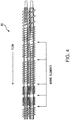
- Fig. 4 shows one embodiment of how twin shafts of screw segments intermesh within the barrels of a TSE. However, Fig. 4 shows only mixing elements 90, and not reversing elements 95 (both shown in Fig. 5B ), making this screw configuration unsuitable for use for producing HTC.
- Methods other than reversing elements 95 exist for creating pressure boundaries with a TSE, for example, devices that create variable apertures to reduce the cross-sectional area of a TSE to restrict flow and thereby define a zone of increased pressure upstream of the obstruction.
- This approach may be useful for creating pressure boundaries with uniform, nonfibrous materials, however for compressed biomass such an approach may necessitate higher power consumption than that required by recirculating screw sections.
- recirculating screw sections also serve to thoroughly masticate fibrous biomass.
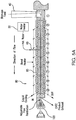
- Figs. 5A and 5B show more detailed cross-sectional views of the system and barrel sections of the BC-21 TSE, according to one preferred embodiment of this invention, along with a typical arrangement of screw sections on one of the two splined shafts within the TSE.
- the arrangement of forward and reversing screw sections is important as when properly configured, a TSE can become a series of chemical reactors separated by robust pressure boundaries created at each reversing screw element.
- Figs. 5A and 5B show a TSE with screw sections arranged to create a first recirculating pressure boundary after biomass has been fed into the TSE and has been masticated and compressed in the compression section 95 of the TSE shown above.
- Biomass is defibered as it passes through and is recirculated in the first pressure boundary that is maintained at a moderate temperature, approximately 110-130°C, to facilitate the decomposition of hemicellulose and improve flowability of the biomass.
- This dynamic seal has been found to be unexpectedly robust, and capable of withstanding downstream pressures greater than 200 bar.
- the defibered biomass then passes into the HTC reactor, shown as a section of constant pitch screw feed elements in Fig. 5B , although screw sections of various pitches can be utilized.
- the pressure boundary has been found to be quite robust, maintaining continuous material pressures at a pressure boundary of 40-60 bar with typical downstream internal reactor pressures of 55 to 85 bar at approximately 230-290°C.
- the injection of high temperature water typically at 230°C or above so that hot liquid water enters the reaction section to mix with the defibered and decomposing biomass is located to provide a surfeit of water required for the HTC reactions to proceed in a rapid manner.
- Screw speeds of 150 to 400 revolutions per minute are preferably employed to transport biomass rapidly through the reactor section, presently 30 - 45 cm of length which could be longer or shorter, depending on the TSE used to carry out the process and the severity or degree of the HTC reaction desired for the final product. Indeed, a TSE that incorporates more barrels in the reactor section inherently provides for increasing residence time and degree of the HTC reaction.
- cellulose in biomass tends to decompose and along with the previously decomposed hemicellulose create a mixture of water, HTC biochar, acids (e.g., acetic, formic, lactic, levulinic), furan resins from the condensation and polymerization of furfural (from decomposed hemicellulose), and 5-hydroxymethylfurfural (from decomposed cellulose), phenolic polymers from lignin (including phenol-aldehyde resins), and gases, primarily CO 2 .
- acids e.g., acetic, formic, lactic, levulinic
- furan resins from the condensation and polymerization of furfural
- 5-hydroxymethylfurfural from decomposed cellulose
- phenolic polymers from lignin including phenol-aldehyde resins
- gases primarily CO 2 .
- the solids, liquids, and gases pass from the reactor through multiple recirculating flow restrictions that tend to increase residence time and provide a final opportunity for mixing to take place.
- the total transit time for biomass through the reaction section is typically on the order of 15 to 30 seconds. This may seem unusually quick, however, in laboratory tests carried out in a small, Parr reactor, modified to accommodate a pressurized chamber above the reactor where biomass could be isolated before being dropped into the reactor, a researcher showed that at 260° C, the HTC reaction could be completed in under one minute. Thus, it is reasonable, though not obvious, that HTC biomass can be processed to levels of severity found in Parr reactors in commercial TSEs.
- residence time within the reactor can be varied by, for example, varying the rotational rate of the screws, total mass flow rate and water/biomass ratio, different degrees of reaction can be achieved and HTC biomass processed at lower reaction severity (e.g., shorter reaction time, lower temperature, etc.) can retain a fibrous appearance and texture while HTC biomass processed at a higher reaction severity (e.g., longer reaction time, higher temperature, etc.) will have a smooth, paste-like appearance and texture.
- reaction severity e.g., shorter reaction time, lower temperature, etc.
- HTC biomass processed at a higher reaction severity e.g., longer reaction time, higher temperature, etc.
- the loss of solid mass in the reactor due to the HTC reaction and production of a relatively low viscosity, flowable, fibrous or smooth paste preclude creating a pressure boundary based on product recirculation via reversing screw sections in the downstream section of the reactor.
- the pressure boundaries will be oversized and will not be able to withstand the pressures generated within the reactor section.
- incompressible hot water injected in the front of the reactor section could infiltrate and dilute the remaining solids and further destabilize the two downstream pressure boundaries.
- two or more (as required) flow restrictions are preferably positioned at the end of the reactor section to improve mixing and a special dual-function, variable-restriction pressure-sustaining valve is located at the discharge of the process so that the low-viscosity HTC product can be delivered to a product container maintained at or above ambient pressure.
- a special dual-function, variable-restriction pressure-sustaining valve is located at the discharge of the process so that the low-viscosity HTC product can be delivered to a product container maintained at or above ambient pressure.
- SME specific mechanical energy
- SME quantifies the cumulative effect of energy input along the entire screw axis within a TSE and is a single parameter that represents the energy transfer from the main drive motor for transporting masticated biomass to and through the first dynamic seal, mixing and transport through the reactor section where HTC reactions occur, energy required to recirculate the flowing HTC product in downstream flow restrictions as well as the mechanical energy required to transport the HTC product across the downstream pressure boundary provided by the dual-function variable restriction pressure-sustaining valve whose function is detailed below.
- the calculation of SME is performed using the extruder motor load (e.g. shaft torque determined by using percent torque instrumentation or through direct measurement of power from the main drive), screw speed and total throughput to provide energy input on a unit mass basis.
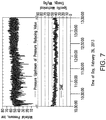
- Figs. 6 and 7 show SME and pressure at the HTC product exhaust as a function of time directly after start-up.
- behavior at startup of HTC production shows SME spiking as biomass reaches the set of reversing screws that create the dynamic pressure seal.
- a unique on-demand hot water heating system 50 is preferably employed in connection with this invention.
- HTC must be carried out in a sufficiency of liquid water to insure that acid hydrolysis and other HTC reactions are carried out (in proof of concept experiments, ⁇ 6.5 kg/h of 20% moisture biomass was fed to the TSE along with from 6.5 to 15.5 kg/h of water).
- This system preferably employs a high-pressure pump coupled with novel, precision back-pressure regulation and water recirculation system to continuously deliver water to an on-demand water heater that is capable of rapidly heating liquid water to temperatures as high as 370°C at up to 210 bar and delivering it to an injection point just beyond the first pressure boundary in the reaction section of the extruder, although for proof-of-concept testing water was injected into the reactor section at from approximately 230-270°C.
- hot water injected at this location serves a dual purpose: first, to sweep biomass away from the downstream side of the first pressure boundary into the reaction section, and second, to lubricate the back side of the first pressure boundary and add lubrication that reduces the energy required to convey biomass across this dynamic seal.
- a dual-function variable restriction valve 100 in association with the TSE enables proper process functionality as it permits a quasi-steady-state process to be carried out within the extruder while providing a continuous, controlled delivery of an HTC product to a much lower pressure (atmospheric pressure and ambient temperature) or a pressure and temperature between that of the extruder outlet and ambient.
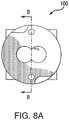
- Figs. 8A and 8B show one embodiment of a valve 100 according to a preferred embodiment that was employed in proof-of-concept testing.
- FIG. 8 An early version of the dual-function variable restriction pressure-sustaining valve 100 is shown in Fig. 8 and preferably incorporates a spring-loaded valve plunger 120 that can be preloaded by tightening a calibrated handwheel 130 to a predetermined setting (first function).
- the valve 100 is preferably attached to the TSE central feed dieplate 105 which is located at the end of the extruder, such as the extruder 60 shown in Figs. 5A and 5B .
- Shaft seals 110, Belleville springs 125, a sleeve bearing 135 and a valve seal follower 140 complete the particular embodiment shown in Fig. 8B .
- the valve 100 is first set to provide a low level of resistance.
- tension (resistance, the first function) on the valve plunger 120 is increased until HTC product and liquids are released every 2-5 seconds, preferably in a regular, controlled manner (second function).
- This controlled release of HTC solids, liquids, and vaporized liquids has been observed to continue every 2-5 seconds for as long as the TSE is operated at a constant input feed rate of biomass and level of hot water injection (constant, uneventful operation for up to four hours has been documented).
- other valve configurations and designs that will perform the important functions of a dual-function variable restriction pressure-sustaining valve can be imagined.
- the plunger can be connected to a linear motor stem controller and/or a load cell which monitors instantaneous resistance and a properly configured process feedback control system that balances that resistance against process pressure and other pertinent parameters upstream of the central feed dieplate to maintain a more or less constant product discharge to ambient.
- Fig. 9 shows a perspective side view of such a system according to one preferred embodiment of this invention using an automated valve 200 with a linear motor drive 220.
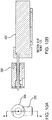
- Fig. 10A shows an end view of an automated pressure-sustaining valve 200.
- Fig. 10B shows a cross-sectional view of the automated pressure-sustaining valve 200 and the linear motor drive 220 shown in Fig. 10A , taken along Section B-B, according to one preferred embodiment.
- HTC product and liquids may be reduced in pressure and delivered to a dewatering section which is followed by a pelletizing station so that pellets can be produced as a direct product.
- a pelletizing station so that pellets can be produced as a direct product.
- value-added organic liquids and acids produced by the process can be recovered and the remaining liquid can be recycled or disposed of as required.
- the dual-function variable restriction pressure-sustaining valve allows for the reaction zone pressure to be created and stabilized while not requiring the screw RPM, material and water feed rate and product material characteristics (e.g., viscosity, fiber length, fiber strength, moisture content, etc.) to be separately controlled to maintain HTC product quality at the end of the reaction section.
- product material characteristics e.g., viscosity, fiber length, fiber strength, moisture content, etc.
- HTC biomass or an HTC biomass-like material is usually produced by employing means not taught by the novel technology described above.
- acids, polymerization agents, or co-polymerizing agents are not required by the process disclosed here.
- TSE three essential process elements taught in this application
- pelletization can be incorporated within the HTC process with minimal difficulty and value-added liquid chemicals produced can be recovered, fractionated, and conveyed to the marketplace by the use of conventional chemical processing technology.
- a mixing section 150 may be incorporated with the system as described herein.
- hydrothermally carbonized biomass exiting the system is directed to the mixing section 150 where biomass prepared for forming is mixed with hydrothermally carbonized biomass and a resulting mixture is dried to moisture levels appropriate for pelletizing or briquetting.
- hydrothermally carbonized biomass exiting the system may be directed to the mixing section 150 where torrefied biomass is mixed with hydrothermally carbonized biomass and the resulting mixture is subsequently pelletized or briquetted.
- the subject system may be used in connection with a recovery program whereby exiting liquids and gases are fractionated to recover organic liquid byproducts created during the hydrothermal carbonization of biomass that would otherwise exit the process. Further, exiting carbon dioxide gas may be separated, cooled, and compressed to recover carbon dioxide gas created during hydrothermal carbonization of biomass that would otherwise exit the process.
- the biomass conversion process such as described above and employing reactive twin-screw extrusion may hereafter be referred to as R apid H ot H ydrolysis and H ydrodeoxygenation (RH 3 ) and the biomass product resulting from such processing referred to as RH 3 wood or biomass.
- a product of processing of a biomass feed material via a twin screw extruder having a length extending between an inlet and an outlet and wherein: hot water from a water heater is injected into at least one inlet along the length of the twin screw extruder, the at least one inlet generally corresponds with a pressure boundary within the twin screw extruder; and an appropriately adjusted pressure-sustaining valve connected between the length of the twin screw extruder and the outlet, forms or includes a biomass-derived thermosetting polymer material or a precursor thereof.
- RH 3 processing can, for example, be applied to convert lignocellulosic biomass such as Loblolly pine (other possible suitable lignocellulosic biomass materials can include: wood, wood waste, agricultural residue, forest residue, etc., for example) into a light brown material with the look of peanut butter but of a consistency more like yogurt. Typical moisture content is 75%.
- RH 3 -processed wood is hydrophobic and readily dries to a moisture content of ⁇ 5% if allowed to dry in room air for 24-48 hr.
- the hot water is desirably injected at a temperature of 230-300 °C.
- the pressure-sustaining valve is regulated by a servo-actuated feedback-control system that uses pressure and temperature measurements within a reaction section of the twin-screw extruder to stabilize a pressure within the reaction section to within 5% to 10% of a process average value ranging between 25 and 175 bar.
- the pressure-sustaining valve is regulated by a servo-actuated feedback-control system that uses pressure and temperature measurements within a reaction section of the twin-screw extruder to maintain an average Specific Mechanical Energy of the twin-screw extruder to a desired value.
- the desired value is within 5% of a process average value ranging between 20 and 80 Watt-hours/kilogram.
- biomass-derived thermosetting polymer material produced or resulting from processing as herein described can suitably be or have the form of a slurry, powder, pellet, wafer, extrusion or other base material such as may suitably in turn be used to form structural materials.
- RH 3 -processed wood or other biomass material being in or having a paste-like nature, it can be easily dried to a powder and molded as a neat product or composite.
- RH 3 -processed wood or other biomass material is produced within a TSE at pressures that can exceed 2500 psi ( ⁇ 172 bar), dewatering this material and delivering a pressurized RH 3 -processed wood or other biomass product to a heatable mold is a simple, straightforward process.
- RH 3 -processed wood or biomass is hydrophobic, it can be dried to a durable, shelf-stable powder that can be subsequently processed or molded into a variety of final configurations as a neat product or composite material.
- composites including RH 3 -processed wood or other biomass material with at least one second component such as a high-strength biomass, organic, mineral, ceramic, or metal fiber can be straightforward to prepare (within or after a twin-screw extruder), dried, and injected into prepared molds to provide specifically desired shapes or configurations.
- a RH 3 -processed wood or other biomass material is prepared as a stabilized foam
- thermoset material comprising the biomass-derived thermosetting polymer material such as herein provided can be suitably be cured at selected cure conditions.
- suitable curing conditions can include a cure temperature of about 60 °C to about 250 °C and a cure time of about 5 minutes to 2 hours.
- a biomass-derived thermosetting polymer material when compression molded at a temperature of about 60 °C and cured at a temperature up to about 200 °C can experience an increase in operating range up to about 190 °C.
- desirable composite materials incorporating biomass-derived thermosetting polymer materials such as herein described, are formed or provided.
- such composites can include a biomass-derived thermosetting polymer material such as herein described in combination with at least one second component selected from the group consisting of biomass, organic, mineral, ceramic, and metal.
- Second components can be of various forms including powder, chip, flake, sliver, and fiber.
- fiber materials such as graphite, KEVLAR® para-aramid synthetic fiber, E-glass, S-glass and RYTON® para-aramid synthetic fiber can, for example, be suitably composited with such a biomass-derived thermosetting polymer material.
- RH 3 processing rapidly converts wood chips into a material that when it is exhausted from the twin screw extruder (TSE) is a mixture of RH 3 wood and water containing dissolved acids (e.g., one or more of acetic, formic, levulinic, etc.), sugars, furfural derivatives, and other organics (e.g., furaldehydes, 5HMF, levoglucosan, etc.), observed to be 75 to 85 weight % water by weight. In experiments, approximately 70 to 80 weight % of the dry wood that entered the TSE was recovered at the exit of the TSE.
- dissolved acids e.g., one or more of acetic, formic, levulinic, etc.
- sugars e.g., furaldehydes, 5HMF, levoglucosan, etc.
- RH 3 wood product of such processing
- TSE product of such processing
- pellets of dried RH 3 wood made in a TSE will form energy-dense, waterproof, hard, attrition-resistant pellets.
- RH 3 wood requires no binders or pre-wetting to aid pelletization as is necessary for wood and torrefied wood.
- liquids produced by or resulting from the RH 3 processing can represent a stream of potentially value-added chemicals.
- RH 3 wood produced by the TSE in the subject processing significantly differs from product produced in a Parr reactor or by any batch process such as requiring extended heat-up and cool-down. This is at least in part attributable to a batch reactor being essentially an "end-point" device whereas a TSE because of its continuous nature can produce RH 3 wood product that appears partially reacted when compared with wood material processed in a Parr reactor. More particularly, as a TSE finely grinds and recirculates the material processed therethrough, the resulting TSE-derived RH 3 wood product appears to be more of a consistency of a clay or mud than the typically granular material produced in a Parr reactor, where the wood material is minimally agitated as it is processed.
- Table 1 compares analysis, at a similar temperature, of Loblolly pine processed in a TSE (Examples 1 and 2) in accordance with one embodiment of the subject development and Loblolly pine processed in a Parr reactor (Comparative Examples (CE) 1 and 2). TABLE 1 Sample Prep. (Rinsed) Temp.
- RH 3 processing converts a material such as granulated or chipped Loblolly pine into a paste-like material. When a sample of this material was heated to dryness at 105°C, it dried into a very hard, brown-black solid. This material is believed well suited for thermal conversion into solids, such as to form a binder for structural materials.
- Loblolly pine processed as herein described resulted in a material having a molded flexural modulus (psi) of about 700,000 (i.e., 701,000) and a post-cured flexural modulus (psi) of greater than 900,000 (i.e., 917,167).
- Loblolly pine processed as herein described resulted in a material having a molded flexural strength (psi) of about 2,000 (i.e., 1,970) and a post-cured flexural strength (psi) of about double that of the molded material (i.e., about 4000 or 4,030).
- suitable biomass feed materials or feedstocks for particular applications can or may include hardwoods, conifers, softwoods, beetle-killed wood, switchgrass, wheat straw, corn cobs, water plants, sugar beet pulp, cranberry and/or grape pomace, algaes, etc., for example.
Landscapes
- Chemical & Material Sciences (AREA)
- Oil, Petroleum & Natural Gas (AREA)
- Organic Chemistry (AREA)
- Engineering & Computer Science (AREA)
- Life Sciences & Earth Sciences (AREA)
- Sustainable Development (AREA)
- Materials Engineering (AREA)
- Biodiversity & Conservation Biology (AREA)
- Ecology (AREA)
- Forests & Forestry (AREA)
- Wood Science & Technology (AREA)
- Physics & Mathematics (AREA)
- Thermal Sciences (AREA)
- Combustion & Propulsion (AREA)
- Processing Of Solid Wastes (AREA)
Claims (14)
- Verfahren zur Herstellung eines aus Biomasse gewonnenen duroplastischen Polymermaterials, wobei man bei dem Verfahren:ein Biomasse-Einsatzmaterial einer Einspeisung eines Doppelschneckenextruders zuführt;innerhalb des Doppelschneckenextruders Mischelemente und Reversierelemente betreibt, wobei der Doppelschneckenextruder eine Länge zwischen der Einspeisung und einem Auslass aufweist;Wasser mit einer Temperatur von 230 °C oder mehr aus einem Wassererhitzer in mindestens einen Einlass entlang der Länge des Doppelschneckenextruders einspritzt, wobei der mindestens eine Einlass im Allgemeinen einer Druckgrenze innerhalb des Doppelschneckenextruders entspricht, undein zwischen der Länge des Doppelschneckenextruders und dem Auslass angeschlossenes Druckhalteventil zur Herstellung des aus Biomasse gewonnenen duroplastischen Polymermaterials einstellt undwobei der Druck im Doppelschneckenextruder 172 bar (2500 psi) übersteigt.
- Verfahren zur Herstellung eines aus Biomasse gewonnenen duroplastischen Polymermaterials nach Anspruch 1, wobei man das aus Biomasse gewonnene duroplastische Polymermaterial bei einer Härtungstemperatur von 60 °C bis 250 °C und einer Härtungszeit von 5 Minuten bis 2 Stunden härtet.
- Aus Biomasse gewonnenes duroplastisches Polymermaterial, das Folgendes umfasst:
ein Produkt aus der Verarbeitung eines Biomasse-Einsatzmaterials mittels eines Doppelschneckenextruders, der eine sich zwischen einem Einlass und einem Auslass erstreckende Länge aufweist und wobei der Druck im Doppelschneckenextruder 172 bar (2500 psi) übersteigt und wobei:Wasser mit einer Temperatur von 230 °C oder mehr aus einem Wassererhitzer in mindestens einen Einlass entlang der Länge des Doppelschneckenextruders eingespritzt wird,wobei der mindestens eine Einlass im Allgemeinen einer Druckgrenze innerhalb des Doppelschneckenextruders entspricht, undein zwischen der Länge des Doppelschneckenextruders und dem Auslass angeschlossenes Druckhalteventil zur Herstellung des aus Biomasse gewonnenen duroplastischen Polymermaterials eingestellt wird, dadurch gekennzeichnet, dass das aus Biomasse gewonnene duroplastische Polymermaterial ungehärtet einen Biegemodul von etwa 48.262 bar (700.000 psi) und nach der Härtung einen Biegemodul von mehr als 62.053 bar (900.000 psi) aufweist. - Aus Biomasse gewonnenes duroplastisches Polymermaterial nach Anspruch 3, wobei das Biomasse-Einsatzmaterial ein lignocellulosehaltiges Biomasse-Material umfasst, wobei das lignocellulosehaltige Biomasse-Material vorzugsweise aus der Gruppe bestehend aus Holz, Holzabfällen, landwirtschaftlichen Rückständen und forstwirtschaftlichen Rückständen ausgewählt ist.
- Aus Biomasse gewonnenes duroplastisches Polymermaterial nach Anspruch 3, das bei 24- bis 48-stündiger Trocknung an Raumluft einen Feuchtigkeitsgehalt von < 5 % aufweist.
- Aus Biomasse gewonnenes duroplastisches Polymermaterial nach Anspruch 3, das ungehärtet eine Biegefestigkeit von etwa 138 bar (2.000 psi) und nach der Härtung eine Biegefestigkeit von etwa 276 bar (4.000 psi) aufweist.
- Aus Biomasse gewonnenes duroplastisches Polymermaterial nach Anspruch 3, wobei das Heißwasser bei einer Temperatur von 230-300 °C eingespritzt wird.
- Aus Biomasse gewonnenes duroplastisches Polymermaterial nach Anspruch 3, wobei das Druckhalteventil über ein servogesteuertes Rückkopplungskontrollsystem reguliert wird, bei dem Druck- und Temperaturmessungen innerhalb eines Reaktionsteils des Doppelschneckenextruders zur Stabilisierung eines Druck innerhalb des Reaktionsteils innerhalb von 5 % bis 10 % eines Prozessmittelwerts, der zwischen 25 und 125 bar beträgt, verwendet werden.
- Aus Biomasse gewonnenes duroplastisches Polymermaterial nach Anspruch 3, wobei das Druckhalteventil über ein servogesteuertes Rückkopplungskontrollsystem reguliert wird, bei dem Druck- und Temperaturmessungen innerhalb eines Reaktionsteils des Doppelschneckenextruders zur Aufrechterhaltung einer durchschnittlichen spezifischen mechanischen Energie des Doppelschneckenextruders auf einen gewünschten Wert verwendet werden, wobei der gewünschte Wert vorzugsweise innerhalb von 5 % eines Prozessmittelwerts liegt, der zwischen 20 und 80 Wattstunden/Kilogramm beträgt.
- Aus Biomasse gewonnenes duroplastisches Polymermaterial nach Anspruch 3, das eine Form aufweist, die aus der Gruppe bestehend aus Aufschlämmung, Pulver, Pellet, Wafer, Extrusion und anderem Ausgangsmaterial, das wiederum zur Bildung von Konstruktionswerkstoffen verwendet werden kann, ausgewählt ist.
- Duroplastisches Material, umfassend das aus Biomasse gewonnene duroplastische Polymermaterial nach Anspruch 3, das bei ausgewählten Härtungsbedingungen, vorzugsweise bei einer Härtungstemperatur von 60 °C bis 250 °C und einer Härtungszeit von 5 Minuten bis 2 Stunden, gehärtet wurde.
- Duroplastisches Material, umfassend das aus Biomasse gewonnene duroplastische Polymermaterial nach Anspruch 3, entwässert oder getrocknet.
- Verbund, umfassend das aus Biomasse gewonnene duroplastische Polymermaterial nach Anspruch 3 und mindestens eine zweite Komponente, die aus der Gruppe bestehend aus Biomasse, organisch, mineralisch, keramisch und metallisch ausgewählt ist.
- Verbund, umfassend das aus Biomasse gewonnene duroplastische Polymermaterial nach Anspruch 3 und mindestens eine zweite Komponente, die eine Form aufweist, die aus der Gruppe bestehend aus Pulver, Chip, Flocke, Splitter und Faser ausgewählt ist, wobei die mindestens eine zweite Komponente mindestens eine hochfeste Faser umfasst, die aus der Gruppe bestehend aus Holz, Graphit, KEVLAR®-para-Aramid-Kunstfaser, E-Glas, S-Glas und RYTON®-para-Aramid-Kunstfaser ausgewählt ist.
Applications Claiming Priority (3)
| Application Number | Priority Date | Filing Date | Title |
|---|---|---|---|
| US201562206082P | 2015-08-17 | 2015-08-17 | |
| US201562210260P | 2015-08-26 | 2015-08-26 | |
| PCT/US2016/047239 WO2017031141A1 (en) | 2015-08-17 | 2016-08-17 | Hydrothermally carbonized biomass formed via reactive twin-screw extrusion |
Publications (2)
| Publication Number | Publication Date |
|---|---|
| EP3337873A1 EP3337873A1 (de) | 2018-06-27 |
| EP3337873B1 true EP3337873B1 (de) | 2020-10-28 |
Family
ID=56843025
Family Applications (1)
| Application Number | Title | Priority Date | Filing Date |
|---|---|---|---|
| EP16758018.2A Not-in-force EP3337873B1 (de) | 2015-08-17 | 2016-08-17 | Mittels reaktiver doppelschneckenextrusion hergestellte hydrothermisch karbonisierte biomasse |
Country Status (3)
| Country | Link |
|---|---|
| EP (1) | EP3337873B1 (de) |
| CA (1) | CA2996042A1 (de) |
| WO (1) | WO2017031141A1 (de) |
Cited By (1)
| Publication number | Priority date | Publication date | Assignee | Title |
|---|---|---|---|---|
| WO2024211096A3 (en) * | 2023-03-21 | 2025-01-09 | University Of Hawaii | Process for biocarbon production with high compressive strength for use in metallurgic applications |
Families Citing this family (2)
| Publication number | Priority date | Publication date | Assignee | Title |
|---|---|---|---|---|
| JP7842089B2 (ja) | 2020-10-02 | 2026-04-07 | アパルタ・パテンツ・オーウー | 圧力弁アセンブリ |
| CN116603548B (zh) * | 2023-05-10 | 2024-02-27 | 福建省福能龙安热电有限公司 | 一种脱硝催化剂及其制备方法 |
Citations (1)
| Publication number | Priority date | Publication date | Assignee | Title |
|---|---|---|---|---|
| US20010030031A1 (en) * | 2000-03-03 | 2001-10-18 | Trespa International B.V. | Process for the continuous production of a preform mat, and a preform and its use |
Family Cites Families (4)
| Publication number | Priority date | Publication date | Assignee | Title |
|---|---|---|---|---|
| US7600707B2 (en) * | 2005-06-21 | 2009-10-13 | Purevision Technology, Inc. | Apparatus for the separation and treatment of solid biomass |
| US20100062093A1 (en) * | 2008-09-11 | 2010-03-11 | Wenger Manufacturing, Inc. | Method and apparatus for producing fully cooked extrudates with significantly reduced specific mechanical energy inputs |
| PT2449057T (pt) * | 2009-07-01 | 2021-09-10 | Circa Group Pty Ltd | Método para converter materiais lignocelulósicos em químicos úteis |
| US10442995B2 (en) * | 2013-03-15 | 2019-10-15 | Gas Technology Institute | Rapid production of hydrothermally carbonized biomass via reactive twin-screw extrusion |
-
2016
- 2016-08-17 EP EP16758018.2A patent/EP3337873B1/de not_active Not-in-force
- 2016-08-17 WO PCT/US2016/047239 patent/WO2017031141A1/en not_active Ceased
- 2016-08-17 CA CA2996042A patent/CA2996042A1/en not_active Abandoned
Patent Citations (1)
| Publication number | Priority date | Publication date | Assignee | Title |
|---|---|---|---|---|
| US20010030031A1 (en) * | 2000-03-03 | 2001-10-18 | Trespa International B.V. | Process for the continuous production of a preform mat, and a preform and its use |
Cited By (1)
| Publication number | Priority date | Publication date | Assignee | Title |
|---|---|---|---|---|
| WO2024211096A3 (en) * | 2023-03-21 | 2025-01-09 | University Of Hawaii | Process for biocarbon production with high compressive strength for use in metallurgic applications |
Also Published As
| Publication number | Publication date |
|---|---|
| EP3337873A1 (de) | 2018-06-27 |
| WO2017031141A1 (en) | 2017-02-23 |
| CA2996042A1 (en) | 2017-02-23 |
Similar Documents
| Publication | Publication Date | Title |
|---|---|---|
| US10590359B2 (en) | Hydrothermally carbonized biomass formed via reactive twin-screw extrusion | |
| US10442995B2 (en) | Rapid production of hydrothermally carbonized biomass via reactive twin-screw extrusion | |
| Tumuluru | Specific energy consumption and quality of wood pellets produced using high-moisture lodgepole pine grind in a flat die pellet mill | |
| Tumuluru | Effect of pellet die diameter on density and durability of pellets made from high moisture woody and herbaceous biomass | |
| Tumuluru et al. | A technical review on biomass processing: densification, preprocessing, modeling and optimization | |
| Duque et al. | Extrusion as a pretreatment for lignocellulosic biomass: Fundamentals and applications | |
| Tumuluru et al. | A review on biomass densification technologie for energy application | |
| EP2580307B1 (de) | Verfahren zur herstellung von brennstoffpellets und anderen produkten aus lignozellulose-biomasse | |
| US6063204A (en) | Concentrated sulfuric acid hydrolysis of lignocellulosics | |
| US8136747B2 (en) | Apparatus for separation and treatment of solid biomass | |
| Karunanithy et al. | Effect of extruder parameters and moisture content of switchgrass, prairie cord grass on sugar recovery from enzymatic hydrolysis | |
| Lam | Steam explosion of biomass to produce durable wood pellets | |
| Li et al. | Hydrothermal carbonization of bamboo in an oxalic acid solution: effects of acid concentration and retention time on the characteristics of products | |
| KR20200135307A (ko) | 셀룰로오스 물질을 당으로 전환시키는 시스템 및 그를 이용한 방법 | |
| EP3337873A1 (de) | Mittels reaktiver doppelschneckenextrusion hergestellte hydrothermisch karbonisierte biomasse | |
| Bello et al. | Effects of critical extrusion factors on quality of high-density briquettes produced from sawdust admixture | |
| Cavailles et al. | Impact of thermomechanical pretreatment by twin-screw extrusion on the properties of bio-based materials from sugarcane bagasse obtained by thermocompression | |
| Sundquist et al. | Dried distillers grains with solubles as a multifunctional filler in low density wood particleboards | |
| Sui Lam et al. | Pretreatment and pelletization of woody biomass | |
| US20130031830A1 (en) | Methods for producing binders and combustible composite materials and compositions produced therefrom | |
| RU2369633C2 (ru) | Способ получения брикетов | |
| RU2413755C1 (ru) | Топливный элемент - брикет, гранула | |
| JP3219241U (ja) | 竹活性炭製造装置 | |
| Kolapkar et al. | Integration of thermal treatment and extrusion by compounding for processing various wastes for energy applications | |
| Tumuluru | Binding mechanism, densification systems, process variables, and quality attributes |
Legal Events
| Date | Code | Title | Description |
|---|---|---|---|
| STAA | Information on the status of an ep patent application or granted ep patent |
Free format text: STATUS: THE INTERNATIONAL PUBLICATION HAS BEEN MADE |
|
| PUAI | Public reference made under article 153(3) epc to a published international application that has entered the european phase |
Free format text: ORIGINAL CODE: 0009012 |
|
| STAA | Information on the status of an ep patent application or granted ep patent |
Free format text: STATUS: REQUEST FOR EXAMINATION WAS MADE |
|
| 17P | Request for examination filed |
Effective date: 20180316 |
|
| AK | Designated contracting states |
Kind code of ref document: A1 Designated state(s): AL AT BE BG CH CY CZ DE DK EE ES FI FR GB GR HR HU IE IS IT LI LT LU LV MC MK MT NL NO PL PT RO RS SE SI SK SM TR |
|
| AX | Request for extension of the european patent |
Extension state: BA ME |
|
| DAV | Request for validation of the european patent (deleted) | ||
| DAX | Request for extension of the european patent (deleted) | ||
| STAA | Information on the status of an ep patent application or granted ep patent |
Free format text: STATUS: EXAMINATION IS IN PROGRESS |
|
| 17Q | First examination report despatched |
Effective date: 20190403 |
|
| GRAP | Despatch of communication of intention to grant a patent |
Free format text: ORIGINAL CODE: EPIDOSNIGR1 |
|
| STAA | Information on the status of an ep patent application or granted ep patent |
Free format text: STATUS: GRANT OF PATENT IS INTENDED |
|
| INTG | Intention to grant announced |
Effective date: 20200518 |
|
| GRAS | Grant fee paid |
Free format text: ORIGINAL CODE: EPIDOSNIGR3 |
|
| GRAA | (expected) grant |
Free format text: ORIGINAL CODE: 0009210 |
|
| STAA | Information on the status of an ep patent application or granted ep patent |
Free format text: STATUS: THE PATENT HAS BEEN GRANTED |
|
| AK | Designated contracting states |
Kind code of ref document: B1 Designated state(s): AL AT BE BG CH CY CZ DE DK EE ES FI FR GB GR HR HU IE IS IT LI LT LU LV MC MK MT NL NO PL PT RO RS SE SI SK SM TR |
|
| REG | Reference to a national code |
Ref country code: GB Ref legal event code: FG4D |
|
| REG | Reference to a national code |
Ref country code: CH Ref legal event code: EP |
|
| REG | Reference to a national code |
Ref country code: AT Ref legal event code: REF Ref document number: 1328225 Country of ref document: AT Kind code of ref document: T Effective date: 20201115 |
|
| REG | Reference to a national code |
Ref country code: DE Ref legal event code: R096 Ref document number: 602016046728 Country of ref document: DE |
|
| REG | Reference to a national code |
Ref country code: IE Ref legal event code: FG4D |
|
| REG | Reference to a national code |
Ref country code: AT Ref legal event code: MK05 Ref document number: 1328225 Country of ref document: AT Kind code of ref document: T Effective date: 20201028 |
|
| REG | Reference to a national code |
Ref country code: NL Ref legal event code: MP Effective date: 20201028 |
|
| PG25 | Lapsed in a contracting state [announced via postgrant information from national office to epo] |
Ref country code: NO Free format text: LAPSE BECAUSE OF FAILURE TO SUBMIT A TRANSLATION OF THE DESCRIPTION OR TO PAY THE FEE WITHIN THE PRESCRIBED TIME-LIMIT Effective date: 20210128 Ref country code: PT Free format text: LAPSE BECAUSE OF FAILURE TO SUBMIT A TRANSLATION OF THE DESCRIPTION OR TO PAY THE FEE WITHIN THE PRESCRIBED TIME-LIMIT Effective date: 20210301 Ref country code: RS Free format text: LAPSE BECAUSE OF FAILURE TO SUBMIT A TRANSLATION OF THE DESCRIPTION OR TO PAY THE FEE WITHIN THE PRESCRIBED TIME-LIMIT Effective date: 20201028 Ref country code: GR Free format text: LAPSE BECAUSE OF FAILURE TO SUBMIT A TRANSLATION OF THE DESCRIPTION OR TO PAY THE FEE WITHIN THE PRESCRIBED TIME-LIMIT Effective date: 20210129 Ref country code: FI Free format text: LAPSE BECAUSE OF FAILURE TO SUBMIT A TRANSLATION OF THE DESCRIPTION OR TO PAY THE FEE WITHIN THE PRESCRIBED TIME-LIMIT Effective date: 20201028 |
|
| REG | Reference to a national code |
Ref country code: LT Ref legal event code: MG4D |
|
| PG25 | Lapsed in a contracting state [announced via postgrant information from national office to epo] |
Ref country code: ES Free format text: LAPSE BECAUSE OF FAILURE TO SUBMIT A TRANSLATION OF THE DESCRIPTION OR TO PAY THE FEE WITHIN THE PRESCRIBED TIME-LIMIT Effective date: 20201028 Ref country code: AT Free format text: LAPSE BECAUSE OF FAILURE TO SUBMIT A TRANSLATION OF THE DESCRIPTION OR TO PAY THE FEE WITHIN THE PRESCRIBED TIME-LIMIT Effective date: 20201028 Ref country code: IS Free format text: LAPSE BECAUSE OF FAILURE TO SUBMIT A TRANSLATION OF THE DESCRIPTION OR TO PAY THE FEE WITHIN THE PRESCRIBED TIME-LIMIT Effective date: 20210228 Ref country code: LV Free format text: LAPSE BECAUSE OF FAILURE TO SUBMIT A TRANSLATION OF THE DESCRIPTION OR TO PAY THE FEE WITHIN THE PRESCRIBED TIME-LIMIT Effective date: 20201028 Ref country code: PL Free format text: LAPSE BECAUSE OF FAILURE TO SUBMIT A TRANSLATION OF THE DESCRIPTION OR TO PAY THE FEE WITHIN THE PRESCRIBED TIME-LIMIT Effective date: 20201028 Ref country code: BG Free format text: LAPSE BECAUSE OF FAILURE TO SUBMIT A TRANSLATION OF THE DESCRIPTION OR TO PAY THE FEE WITHIN THE PRESCRIBED TIME-LIMIT Effective date: 20210128 Ref country code: SE Free format text: LAPSE BECAUSE OF FAILURE TO SUBMIT A TRANSLATION OF THE DESCRIPTION OR TO PAY THE FEE WITHIN THE PRESCRIBED TIME-LIMIT Effective date: 20201028 |
|
| PG25 | Lapsed in a contracting state [announced via postgrant information from national office to epo] |
Ref country code: HR Free format text: LAPSE BECAUSE OF FAILURE TO SUBMIT A TRANSLATION OF THE DESCRIPTION OR TO PAY THE FEE WITHIN THE PRESCRIBED TIME-LIMIT Effective date: 20201028 Ref country code: NL Free format text: LAPSE BECAUSE OF FAILURE TO SUBMIT A TRANSLATION OF THE DESCRIPTION OR TO PAY THE FEE WITHIN THE PRESCRIBED TIME-LIMIT Effective date: 20201028 |
|
| REG | Reference to a national code |
Ref country code: DE Ref legal event code: R097 Ref document number: 602016046728 Country of ref document: DE |
|
| PG25 | Lapsed in a contracting state [announced via postgrant information from national office to epo] |
Ref country code: SK Free format text: LAPSE BECAUSE OF FAILURE TO SUBMIT A TRANSLATION OF THE DESCRIPTION OR TO PAY THE FEE WITHIN THE PRESCRIBED TIME-LIMIT Effective date: 20201028 Ref country code: RO Free format text: LAPSE BECAUSE OF FAILURE TO SUBMIT A TRANSLATION OF THE DESCRIPTION OR TO PAY THE FEE WITHIN THE PRESCRIBED TIME-LIMIT Effective date: 20201028 Ref country code: EE Free format text: LAPSE BECAUSE OF FAILURE TO SUBMIT A TRANSLATION OF THE DESCRIPTION OR TO PAY THE FEE WITHIN THE PRESCRIBED TIME-LIMIT Effective date: 20201028 Ref country code: CZ Free format text: LAPSE BECAUSE OF FAILURE TO SUBMIT A TRANSLATION OF THE DESCRIPTION OR TO PAY THE FEE WITHIN THE PRESCRIBED TIME-LIMIT Effective date: 20201028 Ref country code: LT Free format text: LAPSE BECAUSE OF FAILURE TO SUBMIT A TRANSLATION OF THE DESCRIPTION OR TO PAY THE FEE WITHIN THE PRESCRIBED TIME-LIMIT Effective date: 20201028 Ref country code: SM Free format text: LAPSE BECAUSE OF FAILURE TO SUBMIT A TRANSLATION OF THE DESCRIPTION OR TO PAY THE FEE WITHIN THE PRESCRIBED TIME-LIMIT Effective date: 20201028 |
|
| PG25 | Lapsed in a contracting state [announced via postgrant information from national office to epo] |
Ref country code: DK Free format text: LAPSE BECAUSE OF FAILURE TO SUBMIT A TRANSLATION OF THE DESCRIPTION OR TO PAY THE FEE WITHIN THE PRESCRIBED TIME-LIMIT Effective date: 20201028 |
|
| PLBE | No opposition filed within time limit |
Free format text: ORIGINAL CODE: 0009261 |
|
| STAA | Information on the status of an ep patent application or granted ep patent |
Free format text: STATUS: NO OPPOSITION FILED WITHIN TIME LIMIT |
|
| 26N | No opposition filed |
Effective date: 20210729 |
|
| PG25 | Lapsed in a contracting state [announced via postgrant information from national office to epo] |
Ref country code: IT Free format text: LAPSE BECAUSE OF FAILURE TO SUBMIT A TRANSLATION OF THE DESCRIPTION OR TO PAY THE FEE WITHIN THE PRESCRIBED TIME-LIMIT Effective date: 20201028 Ref country code: AL Free format text: LAPSE BECAUSE OF FAILURE TO SUBMIT A TRANSLATION OF THE DESCRIPTION OR TO PAY THE FEE WITHIN THE PRESCRIBED TIME-LIMIT Effective date: 20201028 |
|
| PG25 | Lapsed in a contracting state [announced via postgrant information from national office to epo] |
Ref country code: SI Free format text: LAPSE BECAUSE OF FAILURE TO SUBMIT A TRANSLATION OF THE DESCRIPTION OR TO PAY THE FEE WITHIN THE PRESCRIBED TIME-LIMIT Effective date: 20201028 |
|
| REG | Reference to a national code |
Ref country code: DE Ref legal event code: R119 Ref document number: 602016046728 Country of ref document: DE |
|
| REG | Reference to a national code |
Ref country code: CH Ref legal event code: PL |
|
| PG25 | Lapsed in a contracting state [announced via postgrant information from national office to epo] |
Ref country code: MC Free format text: LAPSE BECAUSE OF FAILURE TO SUBMIT A TRANSLATION OF THE DESCRIPTION OR TO PAY THE FEE WITHIN THE PRESCRIBED TIME-LIMIT Effective date: 20201028 |
|
| REG | Reference to a national code |
Ref country code: BE Ref legal event code: MM Effective date: 20210831 |
|
| GBPC | Gb: european patent ceased through non-payment of renewal fee |
Effective date: 20210817 |
|
| PG25 | Lapsed in a contracting state [announced via postgrant information from national office to epo] |
Ref country code: LI Free format text: LAPSE BECAUSE OF NON-PAYMENT OF DUE FEES Effective date: 20210831 Ref country code: CH Free format text: LAPSE BECAUSE OF NON-PAYMENT OF DUE FEES Effective date: 20210831 |
|
| PG25 | Lapsed in a contracting state [announced via postgrant information from national office to epo] |
Ref country code: IS Free format text: LAPSE BECAUSE OF FAILURE TO SUBMIT A TRANSLATION OF THE DESCRIPTION OR TO PAY THE FEE WITHIN THE PRESCRIBED TIME-LIMIT Effective date: 20210228 Ref country code: LU Free format text: LAPSE BECAUSE OF NON-PAYMENT OF DUE FEES Effective date: 20210817 |
|
| PG25 | Lapsed in a contracting state [announced via postgrant information from national office to epo] |
Ref country code: IE Free format text: LAPSE BECAUSE OF NON-PAYMENT OF DUE FEES Effective date: 20210817 Ref country code: GB Free format text: LAPSE BECAUSE OF NON-PAYMENT OF DUE FEES Effective date: 20210817 Ref country code: FR Free format text: LAPSE BECAUSE OF NON-PAYMENT OF DUE FEES Effective date: 20210831 Ref country code: DE Free format text: LAPSE BECAUSE OF NON-PAYMENT OF DUE FEES Effective date: 20220301 Ref country code: BE Free format text: LAPSE BECAUSE OF NON-PAYMENT OF DUE FEES Effective date: 20210831 |
|
| PG25 | Lapsed in a contracting state [announced via postgrant information from national office to epo] |
Ref country code: HU Free format text: LAPSE BECAUSE OF FAILURE TO SUBMIT A TRANSLATION OF THE DESCRIPTION OR TO PAY THE FEE WITHIN THE PRESCRIBED TIME-LIMIT; INVALID AB INITIO Effective date: 20160817 |
|
| PG25 | Lapsed in a contracting state [announced via postgrant information from national office to epo] |
Ref country code: CY Free format text: LAPSE BECAUSE OF FAILURE TO SUBMIT A TRANSLATION OF THE DESCRIPTION OR TO PAY THE FEE WITHIN THE PRESCRIBED TIME-LIMIT Effective date: 20201028 |
|
| PG25 | Lapsed in a contracting state [announced via postgrant information from national office to epo] |
Ref country code: MK Free format text: LAPSE BECAUSE OF FAILURE TO SUBMIT A TRANSLATION OF THE DESCRIPTION OR TO PAY THE FEE WITHIN THE PRESCRIBED TIME-LIMIT Effective date: 20201028 |
|
| PG25 | Lapsed in a contracting state [announced via postgrant information from national office to epo] |
Ref country code: TR Free format text: LAPSE BECAUSE OF FAILURE TO SUBMIT A TRANSLATION OF THE DESCRIPTION OR TO PAY THE FEE WITHIN THE PRESCRIBED TIME-LIMIT Effective date: 20201028 |
|
| PG25 | Lapsed in a contracting state [announced via postgrant information from national office to epo] |
Ref country code: MT Free format text: LAPSE BECAUSE OF FAILURE TO SUBMIT A TRANSLATION OF THE DESCRIPTION OR TO PAY THE FEE WITHIN THE PRESCRIBED TIME-LIMIT Effective date: 20201028 |