EP3337475B1 - Nitroxide containing amyloid binding agents for imaging and therapeutic uses - Google Patents
Nitroxide containing amyloid binding agents for imaging and therapeutic uses Download PDFInfo
- Publication number
- EP3337475B1 EP3337475B1 EP16837776.0A EP16837776A EP3337475B1 EP 3337475 B1 EP3337475 B1 EP 3337475B1 EP 16837776 A EP16837776 A EP 16837776A EP 3337475 B1 EP3337475 B1 EP 3337475B1
- Authority
- EP
- European Patent Office
- Prior art keywords
- compound
- amyloid
- och
- nitroxide
- pharmaceutically acceptable
- Prior art date
- Legal status (The legal status is an assumption and is not a legal conclusion. Google has not performed a legal analysis and makes no representation as to the accuracy of the status listed.)
- Active
Links
Images





Classifications
-
- A—HUMAN NECESSITIES
- A61—MEDICAL OR VETERINARY SCIENCE; HYGIENE
- A61K—PREPARATIONS FOR MEDICAL, DENTAL OR TOILETRY PURPOSES
- A61K49/00—Preparations for testing in vivo
- A61K49/06—Nuclear magnetic resonance [NMR] contrast preparations; Magnetic resonance imaging [MRI] contrast preparations
- A61K49/20—Nuclear magnetic resonance [NMR] contrast preparations; Magnetic resonance imaging [MRI] contrast preparations containing free radicals, e.g. trityl radical for overhauser
-
- A—HUMAN NECESSITIES
- A61—MEDICAL OR VETERINARY SCIENCE; HYGIENE
- A61K—PREPARATIONS FOR MEDICAL, DENTAL OR TOILETRY PURPOSES
- A61K31/00—Medicinal preparations containing organic active ingredients
- A61K31/01—Hydrocarbons
- A61K31/015—Hydrocarbons carbocyclic
-
- A—HUMAN NECESSITIES
- A61—MEDICAL OR VETERINARY SCIENCE; HYGIENE
- A61K—PREPARATIONS FOR MEDICAL, DENTAL OR TOILETRY PURPOSES
- A61K31/00—Medicinal preparations containing organic active ingredients
- A61K31/045—Hydroxy compounds, e.g. alcohols; Salts thereof, e.g. alcoholates
- A61K31/05—Phenols
-
- A—HUMAN NECESSITIES
- A61—MEDICAL OR VETERINARY SCIENCE; HYGIENE
- A61K—PREPARATIONS FOR MEDICAL, DENTAL OR TOILETRY PURPOSES
- A61K31/00—Medicinal preparations containing organic active ingredients
- A61K31/33—Heterocyclic compounds
- A61K31/335—Heterocyclic compounds having oxygen as the only ring hetero atom, e.g. fungichromin
- A61K31/35—Heterocyclic compounds having oxygen as the only ring hetero atom, e.g. fungichromin having six-membered rings with one oxygen as the only ring hetero atom
- A61K31/352—Heterocyclic compounds having oxygen as the only ring hetero atom, e.g. fungichromin having six-membered rings with one oxygen as the only ring hetero atom condensed with carbocyclic rings, e.g. methantheline
- A61K31/353—3,4-Dihydrobenzopyrans, e.g. chroman, catechin
-
- A—HUMAN NECESSITIES
- A61—MEDICAL OR VETERINARY SCIENCE; HYGIENE
- A61K—PREPARATIONS FOR MEDICAL, DENTAL OR TOILETRY PURPOSES
- A61K31/00—Medicinal preparations containing organic active ingredients
- A61K31/33—Heterocyclic compounds
- A61K31/395—Heterocyclic compounds having nitrogen as a ring hetero atom, e.g. guanethidine or rifamycins
- A61K31/40—Heterocyclic compounds having nitrogen as a ring hetero atom, e.g. guanethidine or rifamycins having five-membered rings with one nitrogen as the only ring hetero atom, e.g. sulpiride, succinimide, tolmetin, buflomedil
- A61K31/4015—Heterocyclic compounds having nitrogen as a ring hetero atom, e.g. guanethidine or rifamycins having five-membered rings with one nitrogen as the only ring hetero atom, e.g. sulpiride, succinimide, tolmetin, buflomedil having oxo groups directly attached to the heterocyclic ring, e.g. piracetam, ethosuximide
-
- A—HUMAN NECESSITIES
- A61—MEDICAL OR VETERINARY SCIENCE; HYGIENE
- A61K—PREPARATIONS FOR MEDICAL, DENTAL OR TOILETRY PURPOSES
- A61K31/00—Medicinal preparations containing organic active ingredients
- A61K31/33—Heterocyclic compounds
- A61K31/395—Heterocyclic compounds having nitrogen as a ring hetero atom, e.g. guanethidine or rifamycins
- A61K31/41—Heterocyclic compounds having nitrogen as a ring hetero atom, e.g. guanethidine or rifamycins having five-membered rings with two or more ring hetero atoms, at least one of which being nitrogen, e.g. tetrazole
- A61K31/4164—1,3-Diazoles
- A61K31/4178—1,3-Diazoles not condensed 1,3-diazoles and containing further heterocyclic rings, e.g. pilocarpine, nitrofurantoin
-
- A—HUMAN NECESSITIES
- A61—MEDICAL OR VETERINARY SCIENCE; HYGIENE
- A61K—PREPARATIONS FOR MEDICAL, DENTAL OR TOILETRY PURPOSES
- A61K31/00—Medicinal preparations containing organic active ingredients
- A61K31/33—Heterocyclic compounds
- A61K31/395—Heterocyclic compounds having nitrogen as a ring hetero atom, e.g. guanethidine or rifamycins
- A61K31/41—Heterocyclic compounds having nitrogen as a ring hetero atom, e.g. guanethidine or rifamycins having five-membered rings with two or more ring hetero atoms, at least one of which being nitrogen, e.g. tetrazole
- A61K31/4164—1,3-Diazoles
- A61K31/4184—1,3-Diazoles condensed with carbocyclic rings, e.g. benzimidazoles
-
- A—HUMAN NECESSITIES
- A61—MEDICAL OR VETERINARY SCIENCE; HYGIENE
- A61K—PREPARATIONS FOR MEDICAL, DENTAL OR TOILETRY PURPOSES
- A61K31/00—Medicinal preparations containing organic active ingredients
- A61K31/33—Heterocyclic compounds
- A61K31/395—Heterocyclic compounds having nitrogen as a ring hetero atom, e.g. guanethidine or rifamycins
- A61K31/41—Heterocyclic compounds having nitrogen as a ring hetero atom, e.g. guanethidine or rifamycins having five-membered rings with two or more ring hetero atoms, at least one of which being nitrogen, e.g. tetrazole
- A61K31/42—Oxazoles
- A61K31/423—Oxazoles condensed with carbocyclic rings
-
- A—HUMAN NECESSITIES
- A61—MEDICAL OR VETERINARY SCIENCE; HYGIENE
- A61K—PREPARATIONS FOR MEDICAL, DENTAL OR TOILETRY PURPOSES
- A61K31/00—Medicinal preparations containing organic active ingredients
- A61K31/33—Heterocyclic compounds
- A61K31/395—Heterocyclic compounds having nitrogen as a ring hetero atom, e.g. guanethidine or rifamycins
- A61K31/41—Heterocyclic compounds having nitrogen as a ring hetero atom, e.g. guanethidine or rifamycins having five-membered rings with two or more ring hetero atoms, at least one of which being nitrogen, e.g. tetrazole
- A61K31/425—Thiazoles
- A61K31/428—Thiazoles condensed with carbocyclic rings
-
- A—HUMAN NECESSITIES
- A61—MEDICAL OR VETERINARY SCIENCE; HYGIENE
- A61K—PREPARATIONS FOR MEDICAL, DENTAL OR TOILETRY PURPOSES
- A61K31/00—Medicinal preparations containing organic active ingredients
- A61K31/33—Heterocyclic compounds
- A61K31/395—Heterocyclic compounds having nitrogen as a ring hetero atom, e.g. guanethidine or rifamycins
- A61K31/435—Heterocyclic compounds having nitrogen as a ring hetero atom, e.g. guanethidine or rifamycins having six-membered rings with one nitrogen as the only ring hetero atom
- A61K31/44—Non condensed pyridines; Hydrogenated derivatives thereof
- A61K31/4427—Non condensed pyridines; Hydrogenated derivatives thereof containing further heterocyclic ring systems
- A61K31/4439—Non condensed pyridines; Hydrogenated derivatives thereof containing further heterocyclic ring systems containing a five-membered ring with nitrogen as a ring hetero atom, e.g. omeprazole
-
- A—HUMAN NECESSITIES
- A61—MEDICAL OR VETERINARY SCIENCE; HYGIENE
- A61K—PREPARATIONS FOR MEDICAL, DENTAL OR TOILETRY PURPOSES
- A61K31/00—Medicinal preparations containing organic active ingredients
- A61K31/33—Heterocyclic compounds
- A61K31/395—Heterocyclic compounds having nitrogen as a ring hetero atom, e.g. guanethidine or rifamycins
- A61K31/435—Heterocyclic compounds having nitrogen as a ring hetero atom, e.g. guanethidine or rifamycins having six-membered rings with one nitrogen as the only ring hetero atom
- A61K31/47—Quinolines; Isoquinolines
- A61K31/4709—Non-condensed quinolines and containing further heterocyclic rings
-
- A—HUMAN NECESSITIES
- A61—MEDICAL OR VETERINARY SCIENCE; HYGIENE
- A61K—PREPARATIONS FOR MEDICAL, DENTAL OR TOILETRY PURPOSES
- A61K31/00—Medicinal preparations containing organic active ingredients
- A61K31/33—Heterocyclic compounds
- A61K31/395—Heterocyclic compounds having nitrogen as a ring hetero atom, e.g. guanethidine or rifamycins
- A61K31/53—Heterocyclic compounds having nitrogen as a ring hetero atom, e.g. guanethidine or rifamycins having six-membered rings with three nitrogens as the only ring hetero atoms, e.g. chlorazanil, melamine
-
- A—HUMAN NECESSITIES
- A61—MEDICAL OR VETERINARY SCIENCE; HYGIENE
- A61P—SPECIFIC THERAPEUTIC ACTIVITY OF CHEMICAL COMPOUNDS OR MEDICINAL PREPARATIONS
- A61P25/00—Drugs for disorders of the nervous system
- A61P25/28—Drugs for disorders of the nervous system for treating neurodegenerative disorders of the central nervous system, e.g. nootropic agents, cognition enhancers, drugs for treating Alzheimer's disease or other forms of dementia
-
- C—CHEMISTRY; METALLURGY
- C07—ORGANIC CHEMISTRY
- C07D—HETEROCYCLIC COMPOUNDS
- C07D207/00—Heterocyclic compounds containing five-membered rings not condensed with other rings, with one nitrogen atom as the only ring hetero atom
- C07D207/02—Heterocyclic compounds containing five-membered rings not condensed with other rings, with one nitrogen atom as the only ring hetero atom with only hydrogen or carbon atoms directly attached to the ring nitrogen atom
- C07D207/04—Heterocyclic compounds containing five-membered rings not condensed with other rings, with one nitrogen atom as the only ring hetero atom with only hydrogen or carbon atoms directly attached to the ring nitrogen atom having no double bonds between ring members or between ring members and non-ring members
- C07D207/10—Heterocyclic compounds containing five-membered rings not condensed with other rings, with one nitrogen atom as the only ring hetero atom with only hydrogen or carbon atoms directly attached to the ring nitrogen atom having no double bonds between ring members or between ring members and non-ring members with hetero atoms or with carbon atoms having three bonds to hetero atoms with at the most one bond to halogen, e.g. ester or nitrile radicals, directly attached to ring carbon atoms
- C07D207/14—Nitrogen atoms not forming part of a nitro radical
-
- C—CHEMISTRY; METALLURGY
- C07—ORGANIC CHEMISTRY
- C07D—HETEROCYCLIC COMPOUNDS
- C07D207/00—Heterocyclic compounds containing five-membered rings not condensed with other rings, with one nitrogen atom as the only ring hetero atom
- C07D207/02—Heterocyclic compounds containing five-membered rings not condensed with other rings, with one nitrogen atom as the only ring hetero atom with only hydrogen or carbon atoms directly attached to the ring nitrogen atom
- C07D207/18—Heterocyclic compounds containing five-membered rings not condensed with other rings, with one nitrogen atom as the only ring hetero atom with only hydrogen or carbon atoms directly attached to the ring nitrogen atom having one double bond between ring members or between a ring member and a non-ring member
- C07D207/20—Heterocyclic compounds containing five-membered rings not condensed with other rings, with one nitrogen atom as the only ring hetero atom with only hydrogen or carbon atoms directly attached to the ring nitrogen atom having one double bond between ring members or between a ring member and a non-ring member with only hydrogen atoms, hydrocarbon or substituted hydrocarbon radicals, directly attached to ring carbon atoms
-
- C—CHEMISTRY; METALLURGY
- C07—ORGANIC CHEMISTRY
- C07D—HETEROCYCLIC COMPOUNDS
- C07D207/00—Heterocyclic compounds containing five-membered rings not condensed with other rings, with one nitrogen atom as the only ring hetero atom
- C07D207/02—Heterocyclic compounds containing five-membered rings not condensed with other rings, with one nitrogen atom as the only ring hetero atom with only hydrogen or carbon atoms directly attached to the ring nitrogen atom
- C07D207/18—Heterocyclic compounds containing five-membered rings not condensed with other rings, with one nitrogen atom as the only ring hetero atom with only hydrogen or carbon atoms directly attached to the ring nitrogen atom having one double bond between ring members or between a ring member and a non-ring member
- C07D207/22—Heterocyclic compounds containing five-membered rings not condensed with other rings, with one nitrogen atom as the only ring hetero atom with only hydrogen or carbon atoms directly attached to the ring nitrogen atom having one double bond between ring members or between a ring member and a non-ring member with hetero atoms or with carbon atoms having three bonds to hetero atoms with at the most one bond to halogen, e.g. ester or nitrile radicals, directly attached to ring carbon atoms
- C07D207/24—Oxygen or sulfur atoms
- C07D207/26—2-Pyrrolidones
- C07D207/273—2-Pyrrolidones with hetero atoms or with carbon atoms having three bonds to hetero atoms with at the most one bond to halogen, e.g. ester or nitrile radicals, directly attached to other ring carbon atoms
-
- C—CHEMISTRY; METALLURGY
- C07—ORGANIC CHEMISTRY
- C07D—HETEROCYCLIC COMPOUNDS
- C07D491/00—Heterocyclic compounds containing in the condensed ring system both one or more rings having oxygen atoms as the only ring hetero atoms and one or more rings having nitrogen atoms as the only ring hetero atoms, not provided for by groups C07D451/00 - C07D459/00, C07D463/00, C07D477/00 or C07D489/00
- C07D491/02—Heterocyclic compounds containing in the condensed ring system both one or more rings having oxygen atoms as the only ring hetero atoms and one or more rings having nitrogen atoms as the only ring hetero atoms, not provided for by groups C07D451/00 - C07D459/00, C07D463/00, C07D477/00 or C07D489/00 in which the condensed system contains two hetero rings
- C07D491/04—Ortho-condensed systems
- C07D491/044—Ortho-condensed systems with only one oxygen atom as ring hetero atom in the oxygen-containing ring
- C07D491/052—Ortho-condensed systems with only one oxygen atom as ring hetero atom in the oxygen-containing ring the oxygen-containing ring being six-membered
Definitions
- AD Alzheimer's disease
- AD Alzheimer's disease
- AB extracellular amyloid beta
- AB plaques are generated from the aggregation of soluble AB peptides formed when ⁇ and ⁇ secretases (proteases) cleave the amyloid precursor protein (APP), a protein constitutively expressed on the plasma membrane of neurons ( Zhang et al. (2011) Mol. Brain 4:3 ). Because considerable brain damage due to amyloid plaque deposition typically occurs 10-20 years before a definitive diagnosis of dementia can be made ( Sperling et al.
- AD Alzheimer's disease process
- An alternative accessible and non-invasive method capable of the early detection of AB levels in the brain could be useful in identifying disease risk, facilitating clinical trials, tracking disease progression, and guiding therapies.
- Imaging techniques utilizing radiolabeled positron emission tomography (PET) or single photon emission computed tomography (SPECT) that bind to AB peptides in amyloid plaques have the potential to directly assess amyloid burden ( Klunk et al. (2004) Ann. Neurol. 55:306 ), but suffer from limited availability, high cost, and a reliance on short-lived radioisotopes.
- a detection method based on Magnetic Resonance Imaging (MRI) for AD risk is highly desirable.
- MRI Magnetic Resonance Imaging
- MRI can detect deposits of amyloid plaques when a sufficient amount of endogenous iron is associated with the plaques ( Vanhoutte et al. (2005) Magn. Reson. Med. 53:607 ).
- the presence of metals, in particular the iron in the plaques generates an accelerated T2* relaxation rate and negative contrast at regions high in iron-rich AB (Vanhoette et al. (2005) and Jack et al. (2007) Neuroscientist 13:38 ).
- T2* contrast might originate from different sources, such as heme iron present in red blood cells or non-heme iron present in cerebral tissue (Jack et al. (2007) and Gelman et al. (2001) J.
- a spin label such as nitroxide.
- Spin labeled compounds have been shown to interact with AB peptide oligomers and to demonstrate potential therapeutic value ( Altman et al. (2015) Biochim. Biophys. Acta 2854:1860 ; Petrlova et al. (2012) PLoS One 7:e35443 ; and Hong et al. (2010) Neurobiol. Aging 31:1690 ).
- Other work has demonstrated the use of labeled thioflavin compounds to study fibril redox state changes with fluorescence and electron spin resonance ( Mito et al.(2011) Chem. Commun. 47:5070 ).
- the present invention provides a compound for use in a method of imaging amyloid, comprising: administering to a subject an effective amount of a compound wherein:
- a diagnostic composition for imaging amyloid comprising a compound, wherein the compound is as defined in paragraph [0008].
- a compound of any of paragraphs [0009] to [0011], or a pharmaceutically acceptable salt thereof, for use in a method of treating a disorder for example a disorder selected from Alzheimer's disease, diabetes, Parkinson's disease, spongiform encephalopathy, Huntington's disease, thyroid carcinoma, atrial amyloidosis, atherosclerosis, arthritis, prolactinomas, polyneuropathy, corneal dystrophy, or cerebral amyloid angiopathy,; preferably wherein disorder is Alzheimer's disease.
- composition for use in an in vivo method of diagnosis of a disease associated with the presence of amyloid, the composition comprising a compound according to paragraph [0008], or a pharmaceutically acceptable salt thereof.
- a compound for use in a method of imaging amyloid including administering to a subject an effective amount of a compound having the structure of formula I: X-(Y) n (I) such that the compound binds to the amyloid.
- X of formula I is an amyloid beta binding compound.
- Y of formula I is a nitroxide.
- Subscript n can be an integer from 1 to 3.
- the method further includes detecting the compound bound to the amyloid, thereby imaging the amyloid.
- R 1 can be R 2 can be OH, OCH 3 , OCH 2 CH 3 , OCH 2 CH 2 F, CH 3 , or (OCH 2 CH 2 ) 3 F.
- R 1 can be R 2 can be OH, OCH 3 , OCH 2 CH 3 , OCH 2 CH 2 F, CH 3 , or (OCH 2 CH 2 ) 3 F.
- a diagnostic composition for imaging amyloid comprising a compound of formula I: X-(Y) n (I) wherein X of formula I is an amyloid beta binding compound, Y of formula I is a nitroxide, and subscript n can be an integer from 1 to 3.
- a compound for use in a method of treating a disorder including administering to a subject in need of such a treatment, a therapeutically effective amount of a compound of any of formulas (II)-(VI).
- the present invention provides compounds for use in methods of imaging amyloid by administering a nitroxide spin-labeled amyloid beta binding compound to a subject and detecting the compound bound to amyloid.
- the present invention also provides nitroxide spin-labeled compounds capable of binding amyloid.
- Imaging refers to using a device outside of the subject to determine the location of an imaging agent, such as a compound of the present invention.
- imaging tools include, but are not limited to, positron emission tomography (PET), magnetic resonance imaging (MRI), electron paramagnetic resonance (EPR), electron spin resonance microscopy (ESRM), ultrasound, single photon emission computed tomography (SPECT) and x-ray computed tomography (CT).
- Amyloid refers to an aggregate of proteins.
- the proteins of an amyloid can be misfolded such that their misfolded shapes promote aggregation.
- the amyloids can comprise, for example, proteins such as amyloid beta (AB), amylin, alpha-synuclein, huntingtin, calcitonin, atrial natriuretic peptide, apolipoprotein A1, serum amyloid A, medin, prolactin, transthyretin, lysozyme, beta-2-microglobulin, gelsolin, keratoepithelin, cystatin, or immunoglobulin light chain AL.
- Amyloid within a subject can be present in the form of oligomers, plaques, or fibrils.
- the presence of amyloid in a subject can disrupt healthy physiological function of tissues and organs within the subject.
- the presence of amyloid in a subject can be associated with an increased risk or occurrence of a disease.
- the disease associated with the presence of amyloid can be, for example, Alzheimer's disease, diabetes, Parkinson's disease, spongiform encephalopathy, Huntington's disease, thyroid carcinoma, atrial amyloidosis, atherosclerosis, arthritis, prolactinomas, polyneuropathy, corneal dystrophy, or cerebral amyloid angiopathy.
- the presence of amyloid in a subject can be associated with an increased risk or occurrence of Alzheimer's disease.
- administering refers to oral administration, administration as a suppository, topical contact, parenteral, intravenous, intraperitoneal, intramuscular, intralesional, intranasal or subcutaneous administration, intrathecal administration, or the implantation of a slow-release device e.g., a mini-osmotic pump, to the subject.
- a slow-release device e.g., a mini-osmotic pump
- Subject refers to animals such as mammals, including, but not limited to, primates (e.g., humans), cows, sheep, goats, horses, dogs, cats, rabbits, rats, mice and the like. In certain embodiments, the subject is a human.
- Neitroxide refers to a stable aminoxyl radical compound or group having the structure R 2 N-O• in which a nitrogen atom is single bonded to an oxygen atom.
- the R groups of the nitroxide can be the same or different.
- the R groups can form a fused ring.
- Alkyl refers to a straight or branched, saturated, aliphatic radical having the number of carbon atoms indicated. Alkyl can include any number of carbons, such as C 1-2 , C 1-3 , C 1-4 , C 1-5 , C 1-6 , C 1-7 , C 1-8 , C 1-9 , C 1-10 , C 2-3 , C 2-4 , C 2-5 , C 2-6 , C 3-4 , C 3-5 , C 3-6 , C 4-5 , C 4-6 and C 5-6 .
- C 1-6 alkyl includes, but is not limited to, methyl, ethyl, propyl, isopropyl, butyl, isobutyl, sec-butyl, tert-butyl, pentyl, isopentyl, hexyl, etc.
- Alkyl can also refer to alkyl groups having up to 20 carbons atoms, such as, but not limited to heptyl, octyl, nonyl, decyl, etc. Alkyl groups can be substituted or unsubstituted.
- Alkoxy refers to an alkyl group having an oxygen atom that connects the alkyl group to the point of attachment: alkyl-O-.
- alkyl group alkoxy groups can have any suitable number of carbon atoms, such as C 1-6 .
- Alkoxy groups include, for example, methoxy, ethoxy, propoxy, iso-propoxy, butoxy, 2-butoxy, iso-butoxy, sec-butoxy, tert-butoxy, pentoxy, hexoxy, etc.
- the alkoxy groups can be further substituted with a variety of substituents described within. Alkoxy groups can be substituted or unsubstituted.
- Haloalkoxy refers to an alkoxy group where some or all of the hydrogen atoms are substituted with halogen atoms.
- haloalkoxy groups can have any suitable number of carbon atoms, such as C 1-6 .
- the alkoxy groups can be substituted with 1, 2, 3, or more halogens. When all the hydrogens are replaced with a halogen, for example by fluorine, the compounds are per-substituted, for example, perfluorinated.
- Haloalkoxy includes, but is not limited to, trifluoromethoxy, 2,2,2,-trifluoroethoxy, perfluoroethoxy, etc.
- Salt refers to acid or base salts of the compounds used in the methods of the present invention.
- Illustrative examples of pharmaceutically acceptable salts are mineral acid (hydrochloric acid, hydrobromic acid, phosphoric acid, and the like) salts, organic acid (acetic acid, propionic acid, glutamic acid, citric acid and the like) salts, quaternary ammonium (methyl iodide, ethyl iodide, and the like) salts. It is understood that the pharmaceutically acceptable salts are non-toxic. Additional information on suitable pharmaceutically acceptable salts can be found in Remington's Pharmaceutical Sciences, 17th ed., Mack Publishing Company, Easton, Pa., 1985 .
- salts of the acidic compounds of the present invention are salts formed with bases, namely cationic salts such as alkali and alkaline earth metal salts, such as sodium, lithium, potassium, calcium, magnesium, as well as ammonium salts, such as ammonium, trimethyl-ammonium, diethylammonium, and tris-(hydroxymethyl)-methyl-ammonium salts.
- bases namely cationic salts such as alkali and alkaline earth metal salts, such as sodium, lithium, potassium, calcium, magnesium, as well as ammonium salts, such as ammonium, trimethyl-ammonium, diethylammonium, and tris-(hydroxymethyl)-methyl-ammonium salts.
- acid addition salts such as of mineral acids, organic carboxylic and organic sulfonic acids, e.g., hydrochloric acid, methanesulfonic acid, maleic acid, are also possible provided a basic group, such as pyridyl, constitutes part of the structure.
- the neutral forms of the compounds may be regenerated by contacting the salt with a base or acid and isolating the parent compound in the conventional manner.
- the parent form of the compound differs from the various salt forms in certain physical properties, such as solubility in polar solvents, but otherwise the salts are equivalent to the parent form of the compound for the purposes of the present invention.
- Certain compounds of the present invention possess asymmetric carbon atoms (optical centers) or double bonds; the racemates, diastereomers, geometric isomers and individual isomers are all intended to be encompassed within the scope of the present invention.
- Hydrate refers to a compound that is complexed to at least one water molecule.
- the compounds of the present invention can be complexed with from 1 to 10 water molecules.
- Nanoparticle refers to a defined particle of typically 5 to 500 atoms. Typical dimensions of the nanoparticles of the present invention are on the scale of a few nanometers, and can be tens of nanometers. The nanoparticles of the present invention typically have dimensions of less than 100 nanometers.
- composition as used herein is intended to encompass a product comprising the specified ingredients in the specified amounts, as well as any product, which results, directly or indirectly, from combination of the specified ingredients in the specified amounts.
- pharmaceutically acceptable it is meant the carrier, diluent or excipient must be compatible with the other ingredients of the formulation and deleterious to the recipient thereof.
- “Pharmaceutically acceptable excipient” refers to a substance that aids the administration of an active agent to and absorption by a subject.
- Pharmaceutical excipients useful in the present invention include, but are not limited to, binders, fillers, disintegrants, lubricants, coatings, sweeteners, flavors and colors.
- binders include, but are not limited to, binders, fillers, disintegrants, lubricants, coatings, sweeteners, flavors and colors.
- “Therapeutically effective amount or dose” or “therapeutically sufficient amount or dose” or “effective or sufficient amount or dose” refer to a dose that produces therapeutic effects for which it is administered. The exact dose will depend on the purpose of the treatment, and will be ascertainable by one skilled in the art using known techniques (see, e.g., Lieberman, Pharmaceutical Dosage Forms (vols. 1-3, 1992 ); Lloyd, The Art, Science and Technology of Pharmaceutical Compounding (1999 ); Pickar, Dosage Calculations (1999 ); and Remington: The Science and Practice of Pharmacy, 20th Edition, 2003, Gennaro, Ed., Lippincott, Williams & Wilkins ). In sensitized cells, the therapeutically effective dose can often be lower than the conventional therapeutically effective dose for non-sensitized cells.
- Treating refers to any indicia of success in the treatment or amelioration of an injury, pathology, condition, or symptom (e.g., pain), including any objective or subjective parameter such as abatement; remission; diminishing of symptoms or making the symptom, injury, pathology or condition more tolerable to the patient; decreasing the frequency or duration of the symptom or condition; or, in some situations, preventing the onset of the symptom.
- the treatment or amelioration of symptoms can be based on any objective or subjective parameter; including, e.g., the result of a physical examination.
- the present invention provides compounds for use in several methods of imaging amyloid.
- methods which include administering to a subject an effective amount of a compound having the structure: X-(Y) n (I) wherein X of formula I is an amyloid beta binding protein, Y is a nitroxide, and n is an integer from 1 to 3.
- the administering is such that the compound binds to the amyloid.
- the method further includes detecting the compound bound to the amyloid, thereby imaging the amyloid.
- n of formula I is 1.
- n is 2.
- n is 3.
- the detecting of the amyloid-bound compound can occur at least 10 minutes, at least 20 minutes, at least 30 minutes, at least 40 minutes, at least 50 minutes, at least 60 minutes, at least 70 minutes, at least 80 minutes, at least 90 minutes, at least 2 hours, at least 3 hours, at least 4 hours, at least 5 hours, at least 6 hours, at least 7 hours, at least 8 hours, at least 9 hours, or at least 10 hours subsequent to the administering of the compound to the subject. In some embodiments, the detecting occurs at least 60 minutes subsequent to the administering.
- the detecting can include the use of one or more medical imaging technologies.
- the detecting comprises magnetic resonance imaging (MRI), imaging or spectroscopic modalities of electron paramagnetic resonance (EPR, also known as electron spin resonance (ESR)), positron emission tomography (PET), or electron spin resonance microscopy (ESRM).
- EPR electron paramagnetic resonance
- PET positron emission tomography
- ESRM electron spin resonance microscopy
- the detecting comprises MRI.
- the detecting comprises both MRI and PET.
- EPR is a magnetic resonance technique that is based on the spin acquired by unpaired electrons when placed within an external magnetic field. This spin can be oriented such that it is either opposed to or aligned with the external magnetic field. Unpaired electrons will transition between energy levels in response to a photon having an energy amount equal to the difference in unpaired electron energy levels. By quantifying the energies absorbed in this way by a material with unpaired electrons, an EPR spectra for the material can be obtained. Because few naturally occurring materials have unpaired electrons, EPR is most commonly used to study the interactions of stable radicals, such as nitroxides, with these naturally occurring materials, and not to image the naturally occurring material itself.
- MRI is an alternative magnetic resonance technique that is based on the spin acquired by nuclear protons when placed in an external magnetic field.
- the magnetic field used for MRI is typically in the form of a field gradient. This magnetic gradient results in a resonance frequency gradient, as the resonance frequency is directly proportional to the magnetic field.
- mapping energy absorption intensities at different resonance frequencies the numbers and positions of protons in a material can then both be determined.
- Many naturally-occurring materials can be imaged in this way. For example, the amount and location of water present in soft tissue can be detected by probing the magnetic resonance associated with protons of the water.
- MRI can be used to not only image a compound, such as a nitroxide spin-labeled compound, administered to a subject, but also the anatomical features of the subject in proximity to the probe.
- PET is a radiation detection technique used to observe metabolic processes in a subject.
- positrons emitted from an administered radioactive tracer compound interact with electrons, producing gamma ray pairs traveling in approximately opposite directions. These gamma rays are detected by scintillators of a scanning device situated about the subject. Data associated with these detection events are then used to construct a map or image of the locations of tissues in which the tracer compound is concentrated.
- the detecting and imaging is done with T1-weighted MRI. In some embodiments, the detecting and imaging is done with T2*-weighted MRI.
- the T2*-weighted MRI can provide a greater imaging contrast for nitroxide spin-labeled compounds in some circumstances.
- the amyloid comprises amyloid aggregates. In some embodiments, the amyloid comprises amyloid beta.
- the amyloid can be in the form of soluble amyloid or amyloid beta oligomers, or insoluble plaques or fibers.
- the amyloid can be in the brain of a subject. In some embodiments, the subject is at risk of or currently diagnosed with Alzheimer's disease. In some embodiments, the subject is not receiving the compound for therapeutic purposes. In some embodiments, the compound penetrates the intact blood-brain barrier to bind to cerebral amyloid beta aggregates.
- the compound of formula I can be: wherein R 1 and R 2 can each independently be H or a nitroxide.
- the nitroxide can be: or At least one of R 1 and R 2 is a nitroxide.
- the compound of formula I is wherein R 1 and R 2 can each independently be H or a nitroxide.
- the nitroxide can be: At least one of R 1 and R 2 is a nitroxide.
- the compound of formula I can be: wherein R 1 is H and R 2 is a nitroxide.
- the R 2 nitroxide can be:
- R 1 and R 2 of formula II can each independently be H or a nitroxide.
- the nitroxide can be
- the compound of formula II can be:
- the compound of formula II can be:
- R 1 and R 2 of formulas III and IV can each independently be H, or a nitroxide.
- the nitroxide can be At least one of R 1 and R 2 is a nitroxide.
- R 1 and R 2 of formula III and IV are each independently a nitroxide.
- R 1 is H
- R 2 is a nitroxide.
- R 1 is a nitroxide and R 2 is H,
- R 1 and R 2 of formulas III and IV can each independently be H, or a nitroxide.
- the nitroxide can be At least one of R 1 and R 2 is a nitroxide.
- the compound of formula IV can be: or
- the compound of formula IV can be:
- the compound of formula IV can be:
- R 1 can be R 2 can be OH, OCH 3 , OCH 2 CH 3 , OCH 2 CH 2 F, CH 3 , or (OCH 2 CH 2 ) 3 F.
- R 2 can be OH, Me, OCH 3 , OCH 2 CH 3 , OCH 2 CH 2 F, CH 3 , or (OCH 2 CH 2 ) 3 F.
- the present invention provides compounds having the structure wherein R 1 can be R 2 can be OH, OCH 3 , OCH 2 CH 3 , OCH 2 CH 2 F, CH 3 , or (OCH 2 CH 2 ) 3 F.
- R 2 can be OH, Me, OCH 3 , OCH 2 CH 3 , OCH 2 CH 2 F, CH 3 , or (OCH 2 CH 2 ) 3 F.
- R 1 can be R a and R b can each independently be Hand C 1-4 alkyl.
- R 1 can be R 2 can be OH, OCH 3 , OCH 2 CH 3 , OCH 2 CH 2 F, CH 3 , or (OCH 2 CH 2 ) 3 F.
- R 2 can be OH, Me, OCH 3 , OCH 2 CH 3 , OCH 2 CH 2 F, CH 3 , or (OCH 2 CH 2 ) 3 F.
- the compound can be or
- the compound can be or
- the compounds of the present invention can also be the salts and isomers thereof.
- the compounds of the present invention include the salt forms thereof.
- Examples of applicable salt forms include hydrochlorides, hydrobromides, sulfates, methanesulfonates, nitrates, maleates, acetates, citrates, fumarates, tartrates (e.g. (+)-tartrates, (-)-tartrates or mixtures thereof including racemic mixtures), succinates, benzoates and salts with amino acids such as glutamic acid.
- These salts may be prepared by methods known to those skilled in art.
- acid addition salts can be obtained by contacting the neutral form of such compounds with a sufficient amount of the desired acid, either neat or in a suitable inert solvent.
- acceptable acid addition salts include those derived from inorganic acids like hydrochloric, hydrobromic, nitric, carbonic, monohydrogencarbonic, phosphoric, monohydrogenphosphoric, dihydrogenphosphoric, sulfuric, monohydrogensulfuric, hydriodic, or phosphorous acids and the like, as well as the salts derived from organic acids like acetic, propionic, isobutyric, maleic, malonic, benzoic, succinic, suberic, fumaric, lactic, mandelic, phthalic, benzenesulfonic, p-tolylsulfonic, citric, tartaric, methanesulfonic, and the like.
- salts of amino acids such as arginate and the like, and salts of organic acids like glucuronic or galactunoric acids and the like (see, for example, Berge et al., "Pharmaceutical Salts", Journal of Pharmaceutical Science, 1977, 66, 1-19 ).
- Certain specific compounds of the present invention contain basic acidic functionalities that allow the compounds to be converted into base addition salts. Additional information on suitable pharmaceutically acceptable salts can be found in Remington's Pharmaceutical Sciences, 17th ed., Mack Publishing Company, Easton, Pa., 1985 .
- the neutral forms of the compounds are preferably regenerated by contacting the salt with a base or acid and isolating the parent compound in the conventional manner.
- the parent form of the compound differs from the various salt forms in certain physical properties, such as solubility in polar solvents.
- Certain compounds of the present invention can exist in unsolvated forms as well as solvated forms, including hydrated forms. In general, the solvated forms are equivalent to unsolvated forms and are encompassed within the scope of the present invention. Certain compounds of the present invention may exist in multiple crystalline or amorphous forms. In general, all physical forms are equivalent for the uses contemplated by the present invention and are intended to be within the scope of the present invention.
- Certain compounds of the present invention possess asymmetric carbon atoms (optical centers) or double bonds; the enantiomers, racemates, diastereomers, tautomers, geometric isomers, stereoisometric forms that may be defined, in terms of absolute stereochemistry, as (R)-or (S)- or, as (D)- or (L)- for amino acids, and individual isomers are encompassed within the scope of the present invention.
- the compounds of the present invention do not include those which are known in art to be too unstable to synthesize and/or isolate.
- the present invention is meant to include compounds in racemic and optically pure forms.
- Optically active (R)- and (S)-, or (D)- and (L)-isomers may be prepared using chiral synthons or chiral reagents, or resolved using conventional techniques.
- Isomers include compounds having the same number and kind of atoms, and hence the same molecular weight, but differing in respect to the structural arrangement or configuration of the atoms.
- Tautomer refers to one of two or more structural isomers which exist in equilibrium and which are readily converted from one isomeric form to another.
- structures depicted herein are also meant to include all stereochemical forms of the structure; i.e., the R and S configurations for each asymmetric center. Therefore, single stereochemical isomers as well as enantiomeric and diastereomeric mixtures of the present compounds are within the scope of the invention.
- the compounds of the present invention may also contain unnatural proportions of atomic isotopes at one or more of the atoms that constitute such compounds.
- the compounds of the present invention may be radiolabeled with radioactive isotopes, such as for example deuterium ( 2 H), tritium ( 3 H), iodine-125 ( 125 I), carbon-13 ( 13 C), or carbon-14 ( 14 C). All isotopic variations of the compounds of the present invention, whether radioactive or not, are encompassed within the scope of the present invention.
- the present invention provides compounds, which are in a prodrug form.
- Prodrugs of the compounds described herein are those compounds that readily undergo chemical changes under physiological conditions to provide the compounds of the present invention.
- prodrugs can be converted to the compounds of the present invention by chemical or biochemical methods in an ex vivo environment. For example, prodrugs can be slowly converted to the compounds of the present invention when placed in a transdermal patch reservoir with a suitable enzyme or chemical reagent.
- the compounds of the invention can be synthesized by a variety of methods known to one of skill in the art (see Comprehensive Organic Transformations Richard C. Larock, 1989 ) or by an appropriate combination of generally well known synthetic methods. Techniques useful in synthesizing the compounds of the invention are both readily apparent and accessible to those of skill in the relevant art.
- the discussion below is offered to illustrate certain of the diverse methods available for use in assembling the compounds of the invention. However, the discussion is not intended to define the scope of reactions or reaction sequences that are useful in preparing the compounds of the present invention.
- One of skill in the art will appreciate that other methods of making the compounds are useful in the present invention. Although some compounds described may indicate relative stereochemistry, the compounds may exist as a racemic mixture or as either enantiomer.
- some compounds of this invention can be synthesized by alkylation of amyloid beta-binding compounds with a spin-labeled nitroxide compound.
- the alkylation can be, for example, with commercially available 3-bromomethyl-2,5-dihdrydro-2,2,5,5-tetramethyl-1H-pyrrol-1-yloxy (RBr).
- the alkylation can be an N-alkylation in the presence of a base.
- the base is triethylamine (TEA).
- TAA triethylamine
- the alkylation can be a reductive alkylation in the presence of a reducing agent.
- the reducing agent is sodium triacetoborohydride.
- compositions which include a compound having the structure: X-(Y) n (I) wherein X of formula I is an amyloid beta binding protein, Y is a nitroxide, and n is an integer from 1 to 3.
- the compounds and compositions of the present invention can be delivered by any suitable means, including oral, parenteral and topical methods.
- Transdermal administration methods by a topical route, can be formulated as applicator sticks, solutions, suspensions, emulsions, gels, creams, ointments, pastes, jellies, paints, powders, and aerosols.
- the pharmaceutical preparation is preferably in unit dosage form.
- the preparation is subdivided into unit doses containing appropriate quantities of the compounds and compositions of the present invention.
- the unit dosage form can be a packaged preparation, the package containing discrete quantities of preparation, such as packeted tablets, capsules, and powders in vials or ampoules.
- the unit dosage form can be a capsule, tablet, cachet, or lozenge itself, or it can be the appropriate number of any of these in packaged form.
- the compounds and compositions of the present invention can be co-administered with other agents.
- Co-administration includes administering the compound or composition of the present invention within 0.5, 1, 2, 4, 6, 8, 10, 12, 16, 20, or 24 hours of the other agent.
- Co-administration also includes administering simultaneously, approximately simultaneously (e.g., within about 1, 5, 10, 15, 20, or 30 minutes of each other), or sequentially in any order.
- the compounds and compositions of the present invention can each be administered once a day, or two, three, or more times per day so as to provide the preferred dosage level per day.
- co-administration can be accomplished by co-formulation, i.e., preparing a single pharmaceutical composition including the compounds and compositions of the present invention and any other agent.
- co-formulation i.e., preparing a single pharmaceutical composition including the compounds and compositions of the present invention and any other agent.
- the various components can be formulated separately.
- Suitable dosage ranges include from about 0.1 mg to about 10,000 mg, or about 1 mg to about 1000 mg, or about 10 mg to about 750 mg, or about 25 mg to about 500 mg, or about 50 mg to about 250 mg. Suitable dosages also include about 1 mg, 5, 10, 20, 30, 40, 50, 60, 70, 80, 90, 100, 200, 300, 400, 500, 600, 700, 800, 900 or 1000 mg.
- the compounds of the present invention can be administered at any suitable frequency, interval and duration.
- the compound of the present invention can be administered once an hour, or two, three or more times an hour, once a day, or two, three, or more times per day, or once every 2, 3, 4, 5, 6, or 7 days, so as to provide the preferred dosage level.
- representative intervals include 5, 10, 15, 20, 30, 45 and 60 minutes, as well as 1, 2, 4, 6, 8, 10, 12, 16, 20, and 24 hours.
- the compound of the present invention can be administered once, twice, or three or more times, for an hour, for 1 to 6 hours, for 1 to 12 hours, for 1 to 24 hours, for 6 to 12 hours, for 12 to 24 hours, for a single day, for 1 to 7 days, for a single week, for 1 to 4 weeks, for a month, for 1 to 12 months, for a year or more, or even indefinitely.
- the compounds of the present invention can be prepared in a wide variety of oral, parenteral and topical dosage formulations.
- Oral preparations include tablets, pills, powder, dragees, capsules, liquids, lozenges, cachets, gels, syrups, slurries, suspensions, etc., suitable for ingestion by the patient.
- the compositions of the present invention can also be administered by injection, that is, intravenously, intramuscularly, intracutaneously, subcutaneously, intraduodenally, intraperitoneally, intracerebrally, intrathecally, intraspinally, or intra-arterially.
- the compositions described herein can be administered by inhalation, for example, intranasally.
- compositions of the present invention can be administered transdermally.
- the compositions of this invention can also be administered by intraocular, intravaginal, and intrarectal routes including suppositories, insufflation, powders and aerosol formulations (for examples of steroid inhalants, see Rohatagi 1995 J. Clin. Pharmacol. 35:1187 and Tjwa 1995 Ann. Allergy Asthma Immunol. 75:107 ).
- the present invention also provides pharmaceutical compositions including a pharmaceutically acceptable carrier or excipient and a compound of the present invention.
- pharmaceutically acceptable carriers can be either solid or liquid.
- Solid form preparations include powders, tablets, pills, capsules, cachets, suppositories, and dispersible granules.
- a solid carrier can be one or more substances, which may also act as diluents, flavoring agents, binders, preservatives, tablet disintegrating agents, or an encapsulating material. Details on techniques for formulation and administration are well described in the scientific and patent literature, see, e.g., the latest edition of Remington's Pharmaceutical Sciences, Maack Publishing Co, Easton PA ("Remington's ").
- the carrier is a finely divided solid, which is in a mixture with the finely divided active component.
- the active component is mixed with the carrier having the necessary binding properties in suitable proportions and compacted in the shape and size desired.
- the powders and tablets preferably contain from 5% or 10% to 70% of the compounds of the present invention.
- Suitable solid excipients include, but are not limited to, magnesium carbonate; magnesium stearate; talc; pectin; dextrin; starch; tragacanth; a low melting wax; cocoa butter; carbohydrates; sugars including, but not limited to, lactose, sucrose, mannitol, or sorbitol, starch from corn, wheat, rice, potato, or other plants; cellulose such as methyl cellulose, hydroxypropylmethyl-cellulose, or sodium carboxymethylcellulose; and gums including arabic and tragacanth; as well as proteins including, but not limited to, gelatin and collagen.
- disintegrating or solubilizing agents may be added, such as the cross-linked polyvinyl pyrrolidone, agar, alginic acid, or a salt thereof, such as sodium alginate.
- Dragee cores are provided with suitable coatings such as concentrated sugar solutions, which may also contain gum arabic, talc, polyvinylpyrrolidone, carbopol gel, polyethylene glycol, and/or titanium dioxide, lacquer solutions, and suitable organic solvents or solvent mixtures.
- Dyestuffs or pigments may be added to the tablets or dragee coatings for product identification or to characterize the quantity of active compound (i.e., dosage).
- Pharmaceutical preparations of the invention can also be used orally using, for example, push-fit capsules made of gelatin, as well as soft, sealed capsules made of gelatin and a coating such as glycerol or sorbitol.
- Push-fit capsules can contain the compounds of the present invention mixed with a filler or binders such as lactose or starches, lubricants such as talc or magnesium stearate, and, optionally, stabilizers.
- a filler or binders such as lactose or starches
- lubricants such as talc or magnesium stearate
- stabilizers optionally, stabilizers.
- the compounds of the present invention may be dissolved or suspended in suitable liquids, such as fatty oils, liquid paraffin, or liquid polyethylene glycol with or without stabilizers.
- a low melting wax such as a mixture of fatty acid glycerides or cocoa butter
- the compounds of the present invention are dispersed homogeneously therein, as by stirring.
- the molten homogeneous mixture is then poured into convenient sized molds, allowed to cool, and thereby to solidify.
- Liquid form preparations include solutions, suspensions, and emulsions, for example, water or water/propylene glycol solutions.
- liquid preparations can be formulated in solution in aqueous polyethylene glycol solution.
- Aqueous solutions suitable for oral use can be prepared by dissolving the compounds of the present invention in water and adding suitable colorants, flavors, stabilizers, and thickening agents as desired.
- Aqueous suspensions suitable for oral use can be made by dispersing the finely divided active component in water with viscous material, such as natural or synthetic gums, resins, methylcellulose, sodium carboxymethylcellulose, hydroxypropylmethylcellulose, sodium alginate, polyvinylpyrrolidone, gum tragacanth and gum acacia, and dispersing or wetting agents such as a naturally occurring phosphatide (e.g., lecithin), a condensation product of an alkylene oxide with a fatty acid (e.g., polyoxyethylene stearate), a condensation product of ethylene oxide with a long chain aliphatic alcohol (e.g., heptadecaethylene oxycetanol), a condensation product of ethylene oxide with a partial ester derived from a fatty acid and a
- the aqueous suspension can also contain one or more preservatives such as ethyl or n-propyl p-hydroxybenzoate, one or more coloring agents, one or more flavoring agents and one or more sweetening agents, such as sucrose, aspartame or saccharin.
- preservatives such as ethyl or n-propyl p-hydroxybenzoate
- coloring agents such as a coloring agent
- flavoring agents such as aqueous suspension
- sweetening agents such as sucrose, aspartame or saccharin.
- Formulations can be adjusted for osmolarity.
- solid form preparations which are intended to be converted, shortly before use, to liquid form preparations for oral administration.
- liquid forms include solutions, suspensions, and emulsions.
- These preparations may contain, in addition to the active component, colorants, flavors, stabilizers, buffers, artificial and natural sweeteners, dispersants, thickeners, solubilizing agents, and the like.
- Oil suspensions can be formulated by suspending the compounds of the present invention in a vegetable oil, such as arachis oil, olive oil, sesame oil or coconut oil, or in a mineral oil such as liquid paraffin; or a mixture of these.
- the oil suspensions can contain a thickening agent, such as beeswax, hard paraffin or cetyl alcohol.
- Sweetening agents can be added to provide a palatable oral preparation, such as glycerol, sorbitol or sucrose.
- These formulations can be preserved by the addition of an antioxidant such as ascorbic acid.
- an injectable oil vehicle see Minto 1997 J. Pharmacol. Exp. Ther. 281:93 .
- the pharmaceutical formulations of the invention can also be in the form of oil-in-water emulsions.
- the oily phase can be a vegetable oil or a mineral oil, described above, or a mixture of these.
- Suitable emulsifying agents include naturally-occurring gums, such as gum acacia and gum tragacanth, naturally occurring phosphatides, such as soybean lecithin, esters or partial esters derived from fatty acids and hexitol anhydrides, such as sorbitan mono-oleate, and condensation products of these partial esters with ethylene oxide, such as polyoxyethylene sorbitan mono-oleate.
- the emulsion can also contain sweetening agents and flavoring agents, as in the formulation of syrups and elixirs. Such formulations can also contain a demulcent, a preservative, or a coloring agent.
- compositions of the present invention can also be delivered as microspheres for slow release in the body.
- microspheres can be formulated for administration via intradermal injection of drug-containing microspheres, which slowly release subcutaneously (see Rao 1995 J. Biomater Sci. Polym. Ed. 7:623 ); as biodegradable and injectable gel formulations (see, e.g., Gao 1995 Pharm. Res. 12:857 ); or, as microspheres for oral administration (see, e.g., Eyles 1997 J. Pharm. Pharmacol. 49:669 ). Both transdermal and intradermal routes afford constant delivery for weeks or months.
- compositions of the present invention can be formulated for parenteral administration, such as intravenous (IV) administration or administration into a body cavity or lumen of an organ.
- parenteral administration such as intravenous (IV) administration or administration into a body cavity or lumen of an organ.
- the formulations for administration will commonly comprise a solution of the compositions of the present invention dissolved in a pharmaceutically acceptable carrier.
- acceptable vehicles and solvents that can be employed are water and Ringer's solution, an isotonic sodium chloride.
- sterile fixed oils can conventionally be employed as a solvent or suspending medium.
- any bland fixed oil can be employed including synthetic mono- or diglycerides.
- fatty acids such as oleic acid can likewise be used in the preparation of injectables. These solutions are sterile and generally free of undesirable matter.
- formulations may be sterilized by conventional, well known sterilization techniques.
- the formulations may contain pharmaceutically acceptable auxiliary substances as required to approximate physiological conditions such as pH adjusting and buffering agents, toxicity adjusting agents, e.g., sodium acetate, sodium chloride, potassium chloride, calcium chloride, sodium lactate and the like.
- concentration of the compositions of the present invention in these formulations can vary widely, and will be selected primarily based on fluid volumes, viscosities, body weight, and the like, in accordance with the particular mode of administration selected and the patient's needs.
- the formulation can be a sterile injectable preparation, such as a sterile injectable aqueous or oleaginous suspension.
- This suspension can be formulated according to the known art using those suitable dispersing or wetting agents and suspending agents.
- the sterile injectable preparation can also be a sterile injectable solution or suspension in a nontoxic parenterally-acceptable diluent or solvent, such as a solution of 1,3-butanediol.
- the formulations of the compositions of the present invention can be delivered by the use of liposomes which fuse with the cellular membrane or are endocytosed, i.e., by employing ligands attached to the liposome, or attached directly to the oligonucleotide, that bind to surface membrane protein receptors of the cell resulting in endocytosis.
- liposomes particularly where the liposome surface carries ligands specific for target cells, or are otherwise preferentially directed to a specific organ, one can focus the delivery of the compositions of the present invention into the target cells in vivo. (See, e.g., Al-Muhammed 1996 J. Microencapsul. 13:293 ; Chonn 1995 Curr. Opin. Biotechnol. 6:698 ; and Ostro 1989 Am. J. Hosp. Pharm. 46:1576 ).
- Lipid-based drug delivery systems include lipid solutions, lipid emulsions, lipid dispersions, self-emulsifying drug delivery systems (SEDDS) and self-microemulsifying drug delivery systems (SMEDDS).
- SEDDS and SMEDDS are isotropic mixtures of lipids, surfactants and co-surfactants that can disperse spontaneously in aqueous media and form fine emulsions (SEDDS) or microemulsions (SMEDDS).
- Lipids useful in the formulations of the present invention include any natural or synthetic lipids including, but not limited to, sesame seed oil, olive oil, castor oil, peanut oil, fatty acid esters, glycerol esters, Labrafil ® , Labrasol ® , Cremophor ® , Solutol ® , Tween ® , Capryol ® , Capmul ® , Captex ® , and Peceol ® .
- the formulations of the compositions of the present invention can be delivered by the use of nanoparticles.
- nanoparticles For example, the use of spin-labeled fluorophores is discussed in Li et al. (2012) ACS Nano. 6:9485 . Nanoparticles have emerged as a major class of vehicles to deliver conventional anticancer drugs. Nanoparticle drug delivery systems offer several distinct advantages, such as controlled release and prolonged circulation time, as well as passive and active tumor targeting ( Cabral et al. (2011) Nat. Nanotechnol. 6:815 ; Gref et al. (1994) Science 263:1600 ; Liu and Allen (2006) Curr. Pharm. 12:4685 ; and Li et al. (2009) Nanotechnology 20:065104 ).
- the nitroxide spin-labeled compound is hydrophobic and can be easily loaded inside a nanomicelle.
- the nanomicelle can comprise non-crosslinked micellar nanoparticles (NCMN).
- the nanomicelle can comprise disulfide-crosslinked micellar nanoparticles (DCMN).
- the surface of a nanoparticle is decorated with one or more copies of a brain-targeting molecule.
- the brain-targeting molecule can be, for example, apolipoprotein E (apoE).
- the formulations of the compositions of the present invention comprise solubility aids.
- the solubility aid can be, for example, a cyclodextrin.
- the use of cyclodextrins as solubility aids for highly water-insoluble steroids is discussed in U.S. Patent Application Publication Nos. US 2015/0018327 and US 2015/0313915 .
- the cyclodextrin can be, for example, a ⁇ -cyclodextrin.
- the cyclodextrin is a sulfo butyl ether ⁇ -cyclodextrin.
- the present invention provides a compound for use in a method of treating a disorder, the method including administering to a subject in need of such treatment, a therapeutically effective amount of a compound of the present invention, thereby treating the disorder.
- a compound of the present invention is a nitroxide spin-labeled amyloid beta-binding compound useful for treating or ameliorating Alzheimer's disease.
- the agent can be given with an aim to prolong life or for the purpose of reducing symptoms.
- treatment with an effective amount of a nitroxide spin-labeled amyloid beta-binding compound disrupts the aggregation of proteins to form amyloid.
- the disruption prevents the formation of new oligomers, plaques, or fibrils.
- the disruption alters the structure of existing oligomers plaques, or fibrils.
- disorders or conditions suitable for use with the present invention include, but are not limited to, Alzheimer's disease, diabetes, Parkinson's disease, spongiform encephalopathy, Huntington's disease, thyroid carcinoma, atrial amyloidosis, atherosclerosis, arthritis, prolactinomas, polyneuropathy, corneal dystrophy, or cerebral amyloid angiopathy.
- Example structures below are named according to standard IUPAC nomenclature using the CambridgeSoft ChemDraw naming package.
- HPLC HPLC was performed on a System Gold 126NMP solvent module (Beckman) with a C18 column (Vydac, 10 ⁇ m, 2.2 cm i.d. ⁇ 25 cm). A gradient elution of 25-100% B over 46 min was used at a flow rate of 5 mL/min (solvent A, H 2 O/0.1% TFA; B, acetonitrile/0.1% TFA). The chemical identity was confirmed with Orbitrap ESI-MS, with a calculated mass for C 23 H 26 NO 4 of 380.19, and observed mass of 381. 20 and 382.20.
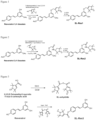
- Synthesis was as shown in Figure 4 .
- Synthesis of SL-LRL1 and SL-LRL2 were achieved by cyclization of coumarin diamine with spin label isothiocyanates.
- the coumarin diamine TFA salt was synthesized on Rink amide MBHA resin (0.503 mmol/g loading) and cleaved off with TFA. Briefly, Fmoc was removed from 0.2 g of Rink resin with 20% 4-methylpiperidine in DMF (5 min, then 15 min).
- SL-Sb2 was synthesized from ( E )-4-(4-aminostyryl)phenol. Its HCl salt (200 mg) was suspended in ethanol (25 mL) and then K 2 CO 3 aqueous solution was added until pH 9. Water (25 mL) was added to the suspension and mixed. After centrifuge, the solid was collected by filtration and washed with water, 70% ethanol in water and dried over vacuum to give ( E )-4-(4-aminostyryl)phenol as brownish solid.
- p-Toluenesulfonyl chloride (7.50 g, 40.0 mmol) was added to a solution of triethylene glycol (60.0 g, 40.0 mmol) in pyridine (6.5 mL) and dichloromethane (DCM, 400 mL) and under nitrogen. After stirring at room temperature for 18 h, the solvent was removed via rotovap. The residue was dissolved in ethyl acetate (200 mL) and washed with brine (3x100 mL). The ethyl acetate solution was dried over anhydrous Na 2 SO 4 .
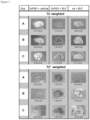
- MR images of coronal brain slices were obtained from a transgenic AD mouse model (5xFAD) with and without exposure to HO-4160 nitroxide spin-labeled fluorine (SLF), where the SLF-negative sample was treated with DMSO vehicle equal to the SLF-exposed sample. Following the labeling period with either SLF or the DMSO vehicle control, the brain slices were imbedded into agarose and imaged by MRI. Measurements were made in three separate experiments, using slices from unique AD and wild type (WT) mice in each experiment. SLF does not provide observable contrast in the T1-weighted image intensities. However, both T2 and T2*-weighted imaging show negative contrast in the SLF-treated specimen ( Figure 5 ).
- 5xFAD brain slices treated with SLF decrease in intensity to a mean value of 1.6 ⁇ 0.1 ⁇ 10 5 , compared to the T2-weighted images of the untreated samples, with a mean value of 2.6 ⁇ 0.1 ⁇ 10 5 .
- Evaluation of the two sets by the unpaired t-test supports a significant difference among these groups (p ⁇ 0.01).
- p ⁇ 0.02 intensity difference between the two groups of 5xFAD specimens, with a mean intensity of 1.4 ⁇ 0.2 ⁇ 10 5 for the SLF-treated samples, and a mean intensity of 2.3 ⁇ 0.1 ⁇ 10 5 for the untreated samples.
- T2 and T2*-weighted imaging of corresponding slices from WT mice show no difference between the SLF-treated and SLF-negative (not shown) specimens.
- SLF-induced negative contrast is specific to the AD model mouse specimens that contain a high AB load.
- T2 and T2*-weighted imaging of corresponding slices from WT mice show no difference between the SLF-treated and SLF-negative specimens ( Figure 6 ).
- SLF-induced negative contrast is particular to specimens that contain a high AB load.
- a similar qualitative result is obtained when using brain specimens from the PS/APP mouse model, where SLF-treatment of the sample results in a substantial negative contrast in the T2*-weighted MRI image ( Figure 6 ).
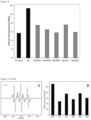
- T2 and T2* signal suppression was calculated in each of the three experiments.
- SS % SI ref ⁇ SI / SI ref * 100 where SI is the average signal intensity of the 5xFAD SLF+ section and SI ref is the average signal intensity of the 5xFAD SLF- or WT SLF+ section.
- Calculation results are plotted in Figure 7 , where both the gray and white bars represent the suppression of MRI intensity found in the 5xFAD specimen following SLF treatment.
- the gray bars show signal suppression relative to the untreated 5xFAD brain, while the white bars compare the suppression relative to the SLF-treated specimens from WT mice.
- Example 13 Anti AB immunohistochemistry correlates distribution of amyloid plaques detected by MRI
- Brain slices from 5xFAD transgenic mice that were administered SLF were immunostained with the Anti-beta-Amyloid, 17-24 (4G8) monoclonal antibody. Results shown in Figure 9 indicate the presence of amyloid plaque through antibody fluorescence appearing as dark region with a pattern of white dots. This antibody fluorescence correlates with the diffuse dark pattern (loss of intensity) seen throughout the 5xFAD+SLF mouse brain slice in T2*- weighted MRI images.
- Table 1 below reports the plasma and brain levels of the SLF compound following intraperitoneal injection of three mice at a dose of 10 mg/kg.
- Total SLF plasma concentrations were measured from each mouse at 20, 40 and 60 minutes after administration. The mice were euthanized 60 min after injection, and their brains were removed and stored at -80 °C.
- UPLC-MS/MS analysis of the SLF in the samples found brain concentrations at roughly 50% of plasma concentrations corresponding to a brain/plasma ratio of 0.5. Taken together, these data demonstrate that SLF is sufficiently brain penetrant to be useful as an imaging probe.
- Table 1 Post-injection levels of SLF in mouse brain and plasma. Uncertainty of mean is given as Standard Error.
- SLF was injected (i.v., ⁇ 3 mg/kg) via tail vein into one 5xFAD mouse and one WT mouse for ex vivo analysis of SLF in brain tissue. After 24 hrs, the mice were euthanized and their brains were removed and fixed in 4% paraformaldehyde overnight at 4-8°C. From these brain samples, 400 ⁇ m coronal slices were prepared and imbedded in agarose.
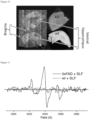
- Figure 10 provides MR images of hemicoronal slices (at bregma -2.12) of both 5xFAD and WT mice.
- the T 2 *-weighted images of the 5xFAD brain tissue show a slight negative contrast for the 5xFAD mouse coronal slice at the area corresponding to the ventral hippocampus and thalamus. This negative contrast was absent in the specimens from the WT mouse.
- the brain specimens collected from SLF-injected mice and described in the above Example were removed from the agarose slab and analyzed for their nitroxide EPR signal ( Figure 11 ). Consistent with our results from in vitro SLF labeling of brain slices, the WT mouse brain specimen shows no EPR signal, eliminating the non-specific binding of SLF in the tissue samples examined, while the brain slice isolated from the SLF-injected 5xFAD mouse produced a clear EPR signal. Compared to the signal obtained by in vitro SLF labeling ( Figure 8 ), the 5xFAD+SLF sample in Figure 11 generates a weaker EPR signal. However, the sample in Figure 8 was fully bathed in SLF, whereas the SLF labeling of the tissue in Figure 11 is dependent on accessibility to cerebrospinal fluid (CSF).
- CSF cerebrospinal fluid
- LRL1 The nitroxide spin-labeled compound, LRL1 was synthesized and incubated with the 5xFAD mouse brain specimens
- LRL1 generates a strong negative contrast in the T2*-weighted MRI image for 5xFAD specimen.
- the right panel of Figure 12 shows the EPR spectrum of the sample after MRI analysis, confirming the binding of the LRL1 compound to the brain tissue.
- Example 18 Confirmation of SL-LRL2, SL-Res1, SL-Res2, and SL-Res3 binding to brain tissue
- nitroxide spin-labeled compounds LRL2, SL-Res1, SL-Res2, and SL-Res3 were synthesized and incubated with the 5xFAD mouse brain specimens
- Figure 13 shows that each of these four compounds has the ability to generate negative contrast in T2*-weighted MRI images of brain specimens isolated from 5xFAD mice (left panel), but not WT (normal) mice (right panel).
- the cell culture model used for these studies was the human neuroblastoma cell line (MC65) equipped with conditional expression of the carboxyl-terminal 99 residues of the amyloid-beta precursor protein (APP-C99).
- AB is generated from APP-C99 after proteolysis by cellular ⁇ -secretase.
- the transgene suppressor, tetracycline (TC) was removed from the media, as described previously (Maezawa et al. (2008)).
- Intracellular ABO starts to accumulate as early as 4 hours after TC removal.
- the compounds were added immediately after TC removal, and the cells were maintained for 3 days without media change before measuring cell viability.
- the cytotoxicity was determined on day 3 using a colorimetric MTT [3-(4,5-dimethylthiazol-2yl)-2,5-diphenyltetrazolium bromide] cell viability assay.
- the pathogenicity of AB can be related to a toxic conformation particular to the soluble, oligomeric state of the peptide.
- LRL1-2 and RES 1-3 the effect of LRL1-2 and RES 1-3 on the binding of amyloid dye Thioflavin-T (ThT) to oligomeric AB, which serves as a general indicator of AB aggregation and fibril formation, providing a simple method to identify agents that remodel AB into non-toxic comformers. Since the fluorescence of ThT at 478 nm increases as AB forms toxic aggregates, we tested the effect of RES 1-3 and LRL1-2 on the ThT fluorescence in the presence of oligomeric AB.
Landscapes
- Health & Medical Sciences (AREA)
- Chemical & Material Sciences (AREA)
- Organic Chemistry (AREA)
- Life Sciences & Earth Sciences (AREA)
- Animal Behavior & Ethology (AREA)
- General Health & Medical Sciences (AREA)
- Public Health (AREA)
- Veterinary Medicine (AREA)
- Epidemiology (AREA)
- Medicinal Chemistry (AREA)
- Pharmacology & Pharmacy (AREA)
- Nuclear Medicine, Radiotherapy & Molecular Imaging (AREA)
- Bioinformatics & Cheminformatics (AREA)
- Neurosurgery (AREA)
- Biomedical Technology (AREA)
- Engineering & Computer Science (AREA)
- Neurology (AREA)
- Radiology & Medical Imaging (AREA)
- Psychiatry (AREA)
- Hospice & Palliative Care (AREA)
- Chemical Kinetics & Catalysis (AREA)
- General Chemical & Material Sciences (AREA)
- Medicines Containing Antibodies Or Antigens For Use As Internal Diagnostic Agents (AREA)
- Plural Heterocyclic Compounds (AREA)
- Pyrrole Compounds (AREA)
- Medicinal Preparation (AREA)
- Pharmaceuticals Containing Other Organic And Inorganic Compounds (AREA)
- Nitrogen Condensed Heterocyclic Rings (AREA)
Applications Claiming Priority (2)
| Application Number | Priority Date | Filing Date | Title |
|---|---|---|---|
| US201562206706P | 2015-08-18 | 2015-08-18 | |
| PCT/US2016/047414 WO2017031239A1 (en) | 2015-08-18 | 2016-08-17 | Nitroxide containing amyloid binding agents for imaging and therapeutic uses |
Publications (3)
| Publication Number | Publication Date |
|---|---|
| EP3337475A1 EP3337475A1 (en) | 2018-06-27 |
| EP3337475A4 EP3337475A4 (en) | 2019-04-10 |
| EP3337475B1 true EP3337475B1 (en) | 2024-10-02 |
Family
ID=58051663
Family Applications (1)
| Application Number | Title | Priority Date | Filing Date |
|---|---|---|---|
| EP16837776.0A Active EP3337475B1 (en) | 2015-08-18 | 2016-08-17 | Nitroxide containing amyloid binding agents for imaging and therapeutic uses |
Country Status (8)
| Country | Link |
|---|---|
| US (3) | US10478513B2 (enExample) |
| EP (1) | EP3337475B1 (enExample) |
| JP (1) | JP7114074B2 (enExample) |
| KR (1) | KR20180052611A (enExample) |
| CN (1) | CN107949383B (enExample) |
| AU (2) | AU2016308189B2 (enExample) |
| CA (1) | CA2994178C (enExample) |
| WO (1) | WO2017031239A1 (enExample) |
Families Citing this family (5)
| Publication number | Priority date | Publication date | Assignee | Title |
|---|---|---|---|---|
| JP7114074B2 (ja) * | 2015-08-18 | 2022-08-08 | ザ リージェンツ オブ ザ ユニバーシティ オブ カリフォルニア | 画像化のためのニトロキシドを含むアミロイド結合剤およびその治療的使用 |
| CN108600272B (zh) | 2018-05-10 | 2020-08-04 | 阿里巴巴集团控股有限公司 | 一种区块链数据处理方法、装置、处理设备及系统 |
| CN110152009A (zh) * | 2019-05-09 | 2019-08-23 | 中国科学院兰州化学物理研究所 | 一种多取代白藜芦醇自旋标记衍生物及其制备方法和应用 |
| KR102344676B1 (ko) | 2020-02-12 | 2021-12-30 | 한국과학기술연구원 | 타우 응집체에 선택적으로 결합하는 근적외선 형광 탐침자로서 유효한 신규 화합물 및 이의 제조방법 |
| PL441664A1 (pl) * | 2022-07-07 | 2024-01-08 | Uniwersytet Warszawski | Nitroksylowa pochodna polifenolu, sposoby jej wytwarzania oraz jej zastosowanie |
Family Cites Families (14)
| Publication number | Priority date | Publication date | Assignee | Title |
|---|---|---|---|---|
| AU1208697A (en) * | 1995-12-28 | 1997-07-28 | Daiichi Radioisotope Laboratories, Ltd. | Diagnostic drugs |
| WO2001083425A1 (en) | 2000-05-04 | 2001-11-08 | Warner-Lambert Company | Method of inhibiting amyloid protein aggregation and imaging amyloid deposits using aminoindane derivatives |
| JP2004067659A (ja) | 2002-06-12 | 2004-03-04 | Bf Kenkyusho:Kk | タウ蛋白蓄積性疾患の診断プローブとしてのベンゾイミダゾール環含有化合物 |
| DK1771208T3 (da) | 2004-07-02 | 2013-09-02 | Univ Pittsburgh | Anvendelse af thioflavin radiomarkerede derivater i amyloid billeddannelse til vurdering af anti-amyloide terapier |
| US8138360B2 (en) | 2005-10-11 | 2012-03-20 | University of Pittsburgh—of the Commonwealth System of Higher Education | Isotopically-labeled benzofuran compounds as imaging agents for amyloidogenic proteins |
| US8022075B2 (en) * | 2005-11-30 | 2011-09-20 | Fujifilm Ri Pharma Co., Ltd. | Diagnostic and remedy for disease caused by amyloid aggregation and/or deposition |
| PL1999109T3 (pl) | 2006-03-30 | 2012-05-31 | Univ Pennsylvania | Pochodne styrylopirydyny i ich zastosowanie do wiązania i obrazowania blaszek amyloidowych |
| TW200813035A (en) | 2006-06-19 | 2008-03-16 | Astrazeneca Ab | Novel heteroaryl substituted benzoxazoles |
| US8168800B2 (en) | 2007-11-02 | 2012-05-01 | The Regents Of The University Of California | Aβ-binding small molecules |
| MX2011002647A (es) | 2008-09-23 | 2011-04-07 | Wista Lab Ltd | Ligandos para moleculas tau agregadas. |
| JP5825608B2 (ja) * | 2010-08-06 | 2015-12-02 | 国立大学法人京都大学 | ピリジルベンゾフラン誘導体 |
| SG10201606063RA (en) | 2012-01-23 | 2016-09-29 | Sage Therapeutics Inc | Neuroactive steroid formulations and methods of treating cns disorders |
| US20150313915A1 (en) | 2012-11-30 | 2015-11-05 | The Regents Of The University Of California | Anticonvulsant activity of steroids |
| JP7114074B2 (ja) | 2015-08-18 | 2022-08-08 | ザ リージェンツ オブ ザ ユニバーシティ オブ カリフォルニア | 画像化のためのニトロキシドを含むアミロイド結合剤およびその治療的使用 |
-
2016
- 2016-08-17 JP JP2018504871A patent/JP7114074B2/ja active Active
- 2016-08-17 CA CA2994178A patent/CA2994178C/en active Active
- 2016-08-17 KR KR1020187004878A patent/KR20180052611A/ko not_active Ceased
- 2016-08-17 WO PCT/US2016/047414 patent/WO2017031239A1/en not_active Ceased
- 2016-08-17 EP EP16837776.0A patent/EP3337475B1/en active Active
- 2016-08-17 CN CN201680048440.1A patent/CN107949383B/zh active Active
- 2016-08-17 AU AU2016308189A patent/AU2016308189B2/en active Active
- 2016-08-17 US US15/748,556 patent/US10478513B2/en active Active
-
2019
- 2019-10-07 US US16/595,178 patent/US10881748B2/en active Active
-
2021
- 2021-06-09 AU AU2021203794A patent/AU2021203794A1/en not_active Abandoned
- 2021-07-30 US US17/389,674 patent/US12064488B2/en active Active
Also Published As
| Publication number | Publication date |
|---|---|
| KR20180052611A (ko) | 2018-05-18 |
| CN107949383A (zh) | 2018-04-20 |
| AU2021203794A1 (en) | 2021-07-08 |
| CA2994178C (en) | 2024-03-19 |
| WO2017031239A1 (en) | 2017-02-23 |
| CA2994178A1 (en) | 2017-02-23 |
| US10881748B2 (en) | 2021-01-05 |
| EP3337475A1 (en) | 2018-06-27 |
| US20220202962A1 (en) | 2022-06-30 |
| JP2018523657A (ja) | 2018-08-23 |
| US20180221514A1 (en) | 2018-08-09 |
| US10478513B2 (en) | 2019-11-19 |
| JP7114074B2 (ja) | 2022-08-08 |
| AU2016308189A1 (en) | 2018-02-22 |
| HK1257493A1 (en) | 2019-10-25 |
| US20200246492A1 (en) | 2020-08-06 |
| EP3337475A4 (en) | 2019-04-10 |
| US12064488B2 (en) | 2024-08-20 |
| CN107949383B (zh) | 2022-08-23 |
| AU2016308189B2 (en) | 2021-03-11 |
Similar Documents
| Publication | Publication Date | Title |
|---|---|---|
| US12064488B2 (en) | Nitroxide containing amyloid binding agents for imaging and therapeutic uses | |
| EP3119761B1 (en) | Amyloid targeting agents and methods of using the same | |
| US10149644B2 (en) | Curcumin derivatives for amyloid-β plaque imaging | |
| US8986657B2 (en) | Methods and system for detecting soluble amyloid-β | |
| WO2017153601A1 (en) | Bicyclic compounds for diagnosis and therapy | |
| Martins et al. | Gd3+ complexes conjugated to Pittsburgh compound B: potential MRI markers of β-amyloid plaques | |
| EP2218464A1 (en) | Compounds for non-invasive measurement of aggregates of amyloid peptides | |
| JP2017532378A (ja) | リポソームを用いるアミロイド斑のmriイメージング | |
| WO2009108376A2 (en) | Contrast agents for applications including perfusion imaging | |
| EP1956013A1 (en) | Diagnostic and remedy for disease caused by amyloid aggregation and/or deposition | |
| US9422286B2 (en) | Metal-binding bifunctional compounds as diagnostic agents for Alzheimer's disease | |
| WO2005016888A1 (ja) | アミロイド蓄積性疾患のプローブ、アミロイド染色剤、アミロイド蓄積性疾患の治療および予防薬、ならびに神経原線維変化の診断プローブおよび染色剤 | |
| CN116251199A (zh) | 结合α-突触核蛋白聚集体的小分子探针及其用途 | |
| JP2025540931A (ja) | タウ凝集体に対する選択的リガンド | |
| JP5579618B2 (ja) | 治療および診断用化合物 | |
| Hostetler et al. | [18F] Fluoroazabenzoxazoles as potential amyloid plaque PET tracers: synthesis and in vivo evaluation in rhesus monkey | |
| US8617515B2 (en) | Imaging of myelin basic protein | |
| HK1257493B (en) | Nitroxide containing amyloid binding agents for imaging and therapeutic uses | |
| CA3220010A1 (en) | Molecular probes for in vivo detection of aldehydes | |
| EP4368622A1 (en) | Method of purifying a compound | |
| Qi et al. | Synthesis and Evaluation of Novel 18F-labeled Oxadiazole-based Positron Emission Tomography Tracers for β-Amyloid | |
| EP4733299A1 (en) | Sulfur-containing fused ring compound, pharmaceutical composition containing same, and preparation method therefor and use thereof |
Legal Events
| Date | Code | Title | Description |
|---|---|---|---|
| STAA | Information on the status of an ep patent application or granted ep patent |
Free format text: STATUS: THE INTERNATIONAL PUBLICATION HAS BEEN MADE |
|
| PUAI | Public reference made under article 153(3) epc to a published international application that has entered the european phase |
Free format text: ORIGINAL CODE: 0009012 |
|
| STAA | Information on the status of an ep patent application or granted ep patent |
Free format text: STATUS: REQUEST FOR EXAMINATION WAS MADE |
|
| 17P | Request for examination filed |
Effective date: 20180129 |
|
| AK | Designated contracting states |
Kind code of ref document: A1 Designated state(s): AL AT BE BG CH CY CZ DE DK EE ES FI FR GB GR HR HU IE IS IT LI LT LU LV MC MK MT NL NO PL PT RO RS SE SI SK SM TR |
|
| AX | Request for extension of the european patent |
Extension state: BA ME |
|
| DAV | Request for validation of the european patent (deleted) | ||
| DAX | Request for extension of the european patent (deleted) | ||
| A4 | Supplementary search report drawn up and despatched |
Effective date: 20190313 |
|
| RIC1 | Information provided on ipc code assigned before grant |
Ipc: C07D 413/02 20060101ALI20190306BHEP Ipc: C07D 413/10 20060101ALI20190306BHEP Ipc: A61K 31/423 20060101ALI20190306BHEP Ipc: C07D 413/12 20060101ALI20190306BHEP Ipc: A61K 49/00 20060101AFI20190306BHEP Ipc: A61K 31/40 20060101ALI20190306BHEP |
|
| REG | Reference to a national code |
Ref country code: HK Ref legal event code: DE Ref document number: 1257493 Country of ref document: HK |
|
| STAA | Information on the status of an ep patent application or granted ep patent |
Free format text: STATUS: EXAMINATION IS IN PROGRESS |
|
| 17Q | First examination report despatched |
Effective date: 20200902 |
|
| REG | Reference to a national code |
Ref country code: DE Ref legal event code: R079 Free format text: PREVIOUS MAIN CLASS: A61K0031400000 Ipc: A61K0049000000 Ref country code: DE Ref legal event code: R079 Ref document number: 602016089681 Country of ref document: DE Free format text: PREVIOUS MAIN CLASS: A61K0031400000 Ipc: A61K0049000000 |
|
| RIC1 | Information provided on ipc code assigned before grant |
Ipc: A61P 25/28 20060101ALI20230901BHEP Ipc: C07D 207/273 20060101ALI20230901BHEP Ipc: C07D 207/20 20060101ALI20230901BHEP Ipc: C07D 207/14 20060101ALI20230901BHEP Ipc: C07D 413/12 20060101ALI20230901BHEP Ipc: C07D 413/10 20060101ALI20230901BHEP Ipc: C07D 413/02 20060101ALI20230901BHEP Ipc: A61K 31/53 20060101ALI20230901BHEP Ipc: A61K 31/4709 20060101ALI20230901BHEP Ipc: A61K 31/4439 20060101ALI20230901BHEP Ipc: A61K 31/428 20060101ALI20230901BHEP Ipc: A61K 31/423 20060101ALI20230901BHEP Ipc: A61K 31/353 20060101ALI20230901BHEP Ipc: A61K 31/4015 20060101ALI20230901BHEP Ipc: A61K 31/05 20060101ALI20230901BHEP Ipc: A61K 31/015 20060101ALI20230901BHEP Ipc: A61K 49/20 20060101ALI20230901BHEP Ipc: A61K 49/06 20060101ALI20230901BHEP Ipc: A61K 49/00 20060101AFI20230901BHEP |
|
| GRAP | Despatch of communication of intention to grant a patent |
Free format text: ORIGINAL CODE: EPIDOSNIGR1 |
|
| STAA | Information on the status of an ep patent application or granted ep patent |
Free format text: STATUS: GRANT OF PATENT IS INTENDED |
|
| INTG | Intention to grant announced |
Effective date: 20231115 |
|
| GRAJ | Information related to disapproval of communication of intention to grant by the applicant or resumption of examination proceedings by the epo deleted |
Free format text: ORIGINAL CODE: EPIDOSDIGR1 |
|
| STAA | Information on the status of an ep patent application or granted ep patent |
Free format text: STATUS: EXAMINATION IS IN PROGRESS |
|
| INTC | Intention to grant announced (deleted) | ||
| GRAP | Despatch of communication of intention to grant a patent |
Free format text: ORIGINAL CODE: EPIDOSNIGR1 |
|
| STAA | Information on the status of an ep patent application or granted ep patent |
Free format text: STATUS: GRANT OF PATENT IS INTENDED |
|
| INTG | Intention to grant announced |
Effective date: 20240409 |
|
| GRAS | Grant fee paid |
Free format text: ORIGINAL CODE: EPIDOSNIGR3 |
|
| GRAA | (expected) grant |
Free format text: ORIGINAL CODE: 0009210 |
|
| STAA | Information on the status of an ep patent application or granted ep patent |
Free format text: STATUS: THE PATENT HAS BEEN GRANTED |
|
| AK | Designated contracting states |
Kind code of ref document: B1 Designated state(s): AL AT BE BG CH CY CZ DE DK EE ES FI FR GB GR HR HU IE IS IT LI LT LU LV MC MK MT NL NO PL PT RO RS SE SI SK SM TR |
|
| REG | Reference to a national code |
Ref country code: GB Ref legal event code: FG4D |
|
| REG | Reference to a national code |
Ref country code: CH Ref legal event code: EP |
|
| REG | Reference to a national code |
Ref country code: DE Ref legal event code: R096 Ref document number: 602016089681 Country of ref document: DE |
|
| REG | Reference to a national code |
Ref country code: IE Ref legal event code: FG4D |
|
| REG | Reference to a national code |
Ref country code: LT Ref legal event code: MG9D |
|
| REG | Reference to a national code |
Ref country code: NL Ref legal event code: MP Effective date: 20241002 |
|
| REG | Reference to a national code |
Ref country code: AT Ref legal event code: MK05 Ref document number: 1727993 Country of ref document: AT Kind code of ref document: T Effective date: 20241002 |
|
| PG25 | Lapsed in a contracting state [announced via postgrant information from national office to epo] |
Ref country code: NL Free format text: LAPSE BECAUSE OF FAILURE TO SUBMIT A TRANSLATION OF THE DESCRIPTION OR TO PAY THE FEE WITHIN THE PRESCRIBED TIME-LIMIT Effective date: 20241002 |
|
| PG25 | Lapsed in a contracting state [announced via postgrant information from national office to epo] |
Ref country code: NL Free format text: LAPSE BECAUSE OF FAILURE TO SUBMIT A TRANSLATION OF THE DESCRIPTION OR TO PAY THE FEE WITHIN THE PRESCRIBED TIME-LIMIT Effective date: 20241002 |
|
| PG25 | Lapsed in a contracting state [announced via postgrant information from national office to epo] |
Ref country code: IS Free format text: LAPSE BECAUSE OF FAILURE TO SUBMIT A TRANSLATION OF THE DESCRIPTION OR TO PAY THE FEE WITHIN THE PRESCRIBED TIME-LIMIT Effective date: 20250202 Ref country code: PT Free format text: LAPSE BECAUSE OF FAILURE TO SUBMIT A TRANSLATION OF THE DESCRIPTION OR TO PAY THE FEE WITHIN THE PRESCRIBED TIME-LIMIT Effective date: 20250203 Ref country code: HR Free format text: LAPSE BECAUSE OF FAILURE TO SUBMIT A TRANSLATION OF THE DESCRIPTION OR TO PAY THE FEE WITHIN THE PRESCRIBED TIME-LIMIT Effective date: 20241002 |
|
| PG25 | Lapsed in a contracting state [announced via postgrant information from national office to epo] |
Ref country code: FI Free format text: LAPSE BECAUSE OF FAILURE TO SUBMIT A TRANSLATION OF THE DESCRIPTION OR TO PAY THE FEE WITHIN THE PRESCRIBED TIME-LIMIT Effective date: 20241002 |
|
| PG25 | Lapsed in a contracting state [announced via postgrant information from national office to epo] |
Ref country code: BG Free format text: LAPSE BECAUSE OF FAILURE TO SUBMIT A TRANSLATION OF THE DESCRIPTION OR TO PAY THE FEE WITHIN THE PRESCRIBED TIME-LIMIT Effective date: 20241002 |
|
| PG25 | Lapsed in a contracting state [announced via postgrant information from national office to epo] |
Ref country code: ES Free format text: LAPSE BECAUSE OF FAILURE TO SUBMIT A TRANSLATION OF THE DESCRIPTION OR TO PAY THE FEE WITHIN THE PRESCRIBED TIME-LIMIT Effective date: 20241002 |
|
| PG25 | Lapsed in a contracting state [announced via postgrant information from national office to epo] |
Ref country code: NO Free format text: LAPSE BECAUSE OF FAILURE TO SUBMIT A TRANSLATION OF THE DESCRIPTION OR TO PAY THE FEE WITHIN THE PRESCRIBED TIME-LIMIT Effective date: 20250102 |
|
| PG25 | Lapsed in a contracting state [announced via postgrant information from national office to epo] |
Ref country code: LV Free format text: LAPSE BECAUSE OF FAILURE TO SUBMIT A TRANSLATION OF THE DESCRIPTION OR TO PAY THE FEE WITHIN THE PRESCRIBED TIME-LIMIT Effective date: 20241002 Ref country code: AT Free format text: LAPSE BECAUSE OF FAILURE TO SUBMIT A TRANSLATION OF THE DESCRIPTION OR TO PAY THE FEE WITHIN THE PRESCRIBED TIME-LIMIT Effective date: 20241002 Ref country code: GR Free format text: LAPSE BECAUSE OF FAILURE TO SUBMIT A TRANSLATION OF THE DESCRIPTION OR TO PAY THE FEE WITHIN THE PRESCRIBED TIME-LIMIT Effective date: 20250103 |
|
| PG25 | Lapsed in a contracting state [announced via postgrant information from national office to epo] |
Ref country code: CZ Free format text: LAPSE BECAUSE OF FAILURE TO SUBMIT A TRANSLATION OF THE DESCRIPTION OR TO PAY THE FEE WITHIN THE PRESCRIBED TIME-LIMIT Effective date: 20241002 Ref country code: PL Free format text: LAPSE BECAUSE OF FAILURE TO SUBMIT A TRANSLATION OF THE DESCRIPTION OR TO PAY THE FEE WITHIN THE PRESCRIBED TIME-LIMIT Effective date: 20241002 |
|
| PG25 | Lapsed in a contracting state [announced via postgrant information from national office to epo] |
Ref country code: RS Free format text: LAPSE BECAUSE OF FAILURE TO SUBMIT A TRANSLATION OF THE DESCRIPTION OR TO PAY THE FEE WITHIN THE PRESCRIBED TIME-LIMIT Effective date: 20250102 |
|
| PG25 | Lapsed in a contracting state [announced via postgrant information from national office to epo] |
Ref country code: SM Free format text: LAPSE BECAUSE OF FAILURE TO SUBMIT A TRANSLATION OF THE DESCRIPTION OR TO PAY THE FEE WITHIN THE PRESCRIBED TIME-LIMIT Effective date: 20241002 |
|
| REG | Reference to a national code |
Ref country code: DE Ref legal event code: R097 Ref document number: 602016089681 Country of ref document: DE |
|
| PG25 | Lapsed in a contracting state [announced via postgrant information from national office to epo] |
Ref country code: DK Free format text: LAPSE BECAUSE OF FAILURE TO SUBMIT A TRANSLATION OF THE DESCRIPTION OR TO PAY THE FEE WITHIN THE PRESCRIBED TIME-LIMIT Effective date: 20241002 |
|
| PG25 | Lapsed in a contracting state [announced via postgrant information from national office to epo] |
Ref country code: EE Free format text: LAPSE BECAUSE OF FAILURE TO SUBMIT A TRANSLATION OF THE DESCRIPTION OR TO PAY THE FEE WITHIN THE PRESCRIBED TIME-LIMIT Effective date: 20241002 |
|
| PG25 | Lapsed in a contracting state [announced via postgrant information from national office to epo] |
Ref country code: RO Free format text: LAPSE BECAUSE OF FAILURE TO SUBMIT A TRANSLATION OF THE DESCRIPTION OR TO PAY THE FEE WITHIN THE PRESCRIBED TIME-LIMIT Effective date: 20241002 |
|
| PG25 | Lapsed in a contracting state [announced via postgrant information from national office to epo] |
Ref country code: SK Free format text: LAPSE BECAUSE OF FAILURE TO SUBMIT A TRANSLATION OF THE DESCRIPTION OR TO PAY THE FEE WITHIN THE PRESCRIBED TIME-LIMIT Effective date: 20241002 |
|
| PLBE | No opposition filed within time limit |
Free format text: ORIGINAL CODE: 0009261 |
|
| STAA | Information on the status of an ep patent application or granted ep patent |
Free format text: STATUS: NO OPPOSITION FILED WITHIN TIME LIMIT |
|
| PG25 | Lapsed in a contracting state [announced via postgrant information from national office to epo] |
Ref country code: SE Free format text: LAPSE BECAUSE OF FAILURE TO SUBMIT A TRANSLATION OF THE DESCRIPTION OR TO PAY THE FEE WITHIN THE PRESCRIBED TIME-LIMIT Effective date: 20241002 |
|
| 26N | No opposition filed |
Effective date: 20250703 |
|
| PGFP | Annual fee paid to national office [announced via postgrant information from national office to epo] |
Ref country code: DE Payment date: 20250827 Year of fee payment: 10 |
|
| PGFP | Annual fee paid to national office [announced via postgrant information from national office to epo] |
Ref country code: IT Payment date: 20250820 Year of fee payment: 10 |
|
| PGFP | Annual fee paid to national office [announced via postgrant information from national office to epo] |
Ref country code: GB Payment date: 20250827 Year of fee payment: 10 |
|
| PGFP | Annual fee paid to national office [announced via postgrant information from national office to epo] |
Ref country code: FR Payment date: 20250825 Year of fee payment: 10 |
|
| REG | Reference to a national code |
Ref country code: CH Ref legal event code: H13 Free format text: ST27 STATUS EVENT CODE: U-0-0-H10-H13 (AS PROVIDED BY THE NATIONAL OFFICE) Effective date: 20260324 |
|
| PG25 | Lapsed in a contracting state [announced via postgrant information from national office to epo] |
Ref country code: MC Free format text: LAPSE BECAUSE OF FAILURE TO SUBMIT A TRANSLATION OF THE DESCRIPTION OR TO PAY THE FEE WITHIN THE PRESCRIBED TIME-LIMIT Effective date: 20241002 |
|
| PG25 | Lapsed in a contracting state [announced via postgrant information from national office to epo] |
Ref country code: LU Free format text: LAPSE BECAUSE OF NON-PAYMENT OF DUE FEES Effective date: 20250817 |
|
| PG25 | Lapsed in a contracting state [announced via postgrant information from national office to epo] |
Ref country code: CH Free format text: LAPSE BECAUSE OF NON-PAYMENT OF DUE FEES Effective date: 20250831 |
|
| REG | Reference to a national code |
Ref country code: BE Ref legal event code: MM Effective date: 20250831 |
|
| PG25 | Lapsed in a contracting state [announced via postgrant information from national office to epo] |
Ref country code: LT Free format text: LAPSE BECAUSE OF FAILURE TO SUBMIT A TRANSLATION OF THE DESCRIPTION OR TO PAY THE FEE WITHIN THE PRESCRIBED TIME-LIMIT Effective date: 20241002 |
|
| PG25 | Lapsed in a contracting state [announced via postgrant information from national office to epo] |
Ref country code: IE Free format text: LAPSE BECAUSE OF NON-PAYMENT OF DUE FEES Effective date: 20250817 Ref country code: BE Free format text: LAPSE BECAUSE OF NON-PAYMENT OF DUE FEES Effective date: 20250831 |