EP3333847A1 - Computerlesbares programm, wiedergabelistenerstellungsvorrichtung und drahtloses audiosystem - Google Patents
Computerlesbares programm, wiedergabelistenerstellungsvorrichtung und drahtloses audiosystem Download PDFInfo
- Publication number
- EP3333847A1 EP3333847A1 EP16832551.2A EP16832551A EP3333847A1 EP 3333847 A1 EP3333847 A1 EP 3333847A1 EP 16832551 A EP16832551 A EP 16832551A EP 3333847 A1 EP3333847 A1 EP 3333847A1
- Authority
- EP
- European Patent Office
- Prior art keywords
- playlist
- music
- listener
- picked
- image data
- Prior art date
- Legal status (The legal status is an assumption and is not a legal conclusion. Google has not performed a legal analysis and makes no representation as to the accuracy of the status listed.)
- Withdrawn
Links
Images




Classifications
-
- G—PHYSICS
- G06—COMPUTING OR CALCULATING; COUNTING
- G06F—ELECTRIC DIGITAL DATA PROCESSING
- G06F16/00—Information retrieval; Database structures therefor; File system structures therefor
- G06F16/60—Information retrieval; Database structures therefor; File system structures therefor of audio data
- G06F16/63—Querying
- G06F16/638—Presentation of query results
- G06F16/639—Presentation of query results using playlists
-
- G—PHYSICS
- G06—COMPUTING OR CALCULATING; COUNTING
- G06F—ELECTRIC DIGITAL DATA PROCESSING
- G06F13/00—Interconnection of, or transfer of information or other signals between, memories, input/output devices or central processing units
-
- G—PHYSICS
- G06—COMPUTING OR CALCULATING; COUNTING
- G06F—ELECTRIC DIGITAL DATA PROCESSING
- G06F16/00—Information retrieval; Database structures therefor; File system structures therefor
-
- G—PHYSICS
- G06—COMPUTING OR CALCULATING; COUNTING
- G06F—ELECTRIC DIGITAL DATA PROCESSING
- G06F16/00—Information retrieval; Database structures therefor; File system structures therefor
- G06F16/60—Information retrieval; Database structures therefor; File system structures therefor of audio data
- G06F16/63—Querying
- G06F16/635—Filtering based on additional data, e.g. user or group profiles
- G06F16/636—Filtering based on additional data, e.g. user or group profiles by using biological or physiological data
-
- G—PHYSICS
- G06—COMPUTING OR CALCULATING; COUNTING
- G06V—IMAGE OR VIDEO RECOGNITION OR UNDERSTANDING
- G06V40/00—Recognition of biometric, human-related or animal-related patterns in image or video data
- G06V40/10—Human or animal bodies, e.g. vehicle occupants or pedestrians; Body parts, e.g. hands
- G06V40/16—Human faces, e.g. facial parts, sketches or expressions
- G06V40/174—Facial expression recognition
-
- G—PHYSICS
- G10—MUSICAL INSTRUMENTS; ACOUSTICS
- G10K—SOUND-PRODUCING DEVICES; METHODS OR DEVICES FOR PROTECTING AGAINST, OR FOR DAMPING, NOISE OR OTHER ACOUSTIC WAVES IN GENERAL; ACOUSTICS NOT OTHERWISE PROVIDED FOR
- G10K15/00—Acoustics not otherwise provided for
- G10K15/02—Synthesis of acoustic waves
-
- G—PHYSICS
- G10—MUSICAL INSTRUMENTS; ACOUSTICS
- G10K—SOUND-PRODUCING DEVICES; METHODS OR DEVICES FOR PROTECTING AGAINST, OR FOR DAMPING, NOISE OR OTHER ACOUSTIC WAVES IN GENERAL; ACOUSTICS NOT OTHERWISE PROVIDED FOR
- G10K15/00—Acoustics not otherwise provided for
- G10K15/04—Sound-producing devices
-
- G—PHYSICS
- G10—MUSICAL INSTRUMENTS; ACOUSTICS
- G10L—SPEECH ANALYSIS TECHNIQUES OR SPEECH SYNTHESIS; SPEECH RECOGNITION; SPEECH OR VOICE PROCESSING TECHNIQUES; SPEECH OR AUDIO CODING OR DECODING
- G10L19/00—Speech or audio signals analysis-synthesis techniques for redundancy reduction, e.g. in vocoders; Coding or decoding of speech or audio signals, using source filter models or psychoacoustic analysis
-
- G—PHYSICS
- G11—INFORMATION STORAGE
- G11B—INFORMATION STORAGE BASED ON RELATIVE MOVEMENT BETWEEN RECORD CARRIER AND TRANSDUCER
- G11B27/00—Editing; Indexing; Addressing; Timing or synchronising; Monitoring; Measuring tape travel
- G11B27/02—Editing, e.g. varying the order of information signals recorded on, or reproduced from, record carriers
-
- H—ELECTRICITY
- H04—ELECTRIC COMMUNICATION TECHNIQUE
- H04R—LOUDSPEAKERS, MICROPHONES, GRAMOPHONE PICK-UPS OR LIKE ACOUSTIC ELECTROMECHANICAL TRANSDUCERS; ELECTRIC HEARING AIDS; PUBLIC ADDRESS SYSTEMS
- H04R5/00—Stereophonic arrangements
- H04R5/02—Spatial or constructional arrangements of loudspeakers
-
- G—PHYSICS
- G10—MUSICAL INSTRUMENTS; ACOUSTICS
- G10H—ELECTROPHONIC MUSICAL INSTRUMENTS; INSTRUMENTS IN WHICH THE TONES ARE GENERATED BY ELECTROMECHANICAL MEANS OR ELECTRONIC GENERATORS, OR IN WHICH THE TONES ARE SYNTHESISED FROM A DATA STORE
- G10H2220/00—Input/output interfacing specifically adapted for electrophonic musical tools or instruments
- G10H2220/155—User input interfaces for electrophonic musical instruments
- G10H2220/441—Image sensing, i.e. capturing images or optical patterns for musical purposes or musical control purposes
- G10H2220/455—Camera input, e.g. analyzing pictures from a video camera and using the analysis results as control data
-
- G—PHYSICS
- G10—MUSICAL INSTRUMENTS; ACOUSTICS
- G10H—ELECTROPHONIC MUSICAL INSTRUMENTS; INSTRUMENTS IN WHICH THE TONES ARE GENERATED BY ELECTROMECHANICAL MEANS OR ELECTRONIC GENERATORS, OR IN WHICH THE TONES ARE SYNTHESISED FROM A DATA STORE
- G10H2240/00—Data organisation or data communication aspects, specifically adapted for electrophonic musical tools or instruments
- G10H2240/075—Musical metadata derived from musical analysis or for use in electrophonic musical instruments
- G10H2240/085—Mood, i.e. generation, detection or selection of a particular emotional content or atmosphere in a musical piece
-
- H—ELECTRICITY
- H04—ELECTRIC COMMUNICATION TECHNIQUE
- H04R—LOUDSPEAKERS, MICROPHONES, GRAMOPHONE PICK-UPS OR LIKE ACOUSTIC ELECTROMECHANICAL TRANSDUCERS; ELECTRIC HEARING AIDS; PUBLIC ADDRESS SYSTEMS
- H04R2420/00—Details of connection covered by H04R, not provided for in its groups
- H04R2420/07—Applications of wireless loudspeakers or wireless microphones
Definitions
- the present invention relates to a technology for creating a playlist of music to be played back by an audio device.
- Patent Literature 1 there is disclosed a wireless audio system, which includes a plurality of wireless speakers grouped into a plurality of groups, and is capable of playing back music data that is different for each group.
- the wireless audio system for each group, the plurality of wireless speakers belonging to the group perform arbitration to select one wireless speaker from among those wireless speakers. Then, the selected wireless speaker serves as a group leader to receive from a user an operation for the plurality of wireless speakers belonging to the same group and transmit a control signal to those wireless speakers.
- Patent Literature 1 there is no consideration of what type of music data is to be played back in each room. Work of creating a playlist by selecting music data that can satisfy all listeners in the same room from among an enormous amount of music data stored in a media server or the like is greatly troublesome. A load on a user in charge of such work is heavy.
- the present invention has been made in view of the above-mentioned circumstances, and it is an object of the present invention to alleviate a user's workload in creating a playlist.
- image recognition processing is performed on picked-up image data on a listener to generate listener information including at least one of a facial expression, an age group, or a gender of the listener contained in the picked-up image data, and a playlist is created based on music belonging to a genre associated in advance with the listener information.
- one embodiment of the present invention relates to a program readable by a computer, for causing the computer to function as a playlist creation device including:
- the picked-up image data acquisition means may be configured to pick up an image of the listener through use of a camera function of the computer to acquire the picked-up image data on the listener.
- the playlist creation device may further include playlist transmission means for transmitting the playlist created by the playlist creation means to a predetermined audio device, for example, a wireless speaker having an audio playback function.
- a predetermined audio device for example, a wireless speaker having an audio playback function.
- the predetermined audio device downloads music data on music described in the playlist from a server storing music data to play back the music.
- listener information including at least one of the facial expression, the age group, or the gender of a listener is generated from the picked-up image data on the listener, and a piece of music is selected from among pieces of music belonging to the genre associated in advance with the listener information to create the playlist.
- a playlist can be generated automatically just by picking up an image of a listener by a user. Therefore, according to the present invention, it is possible to alleviate a user's workload in creating a playlist.
- FIG. 1 is a schematic configuration diagram of a wireless audio system according to this embodiment.
- the wireless audio system includes a plurality of wireless speakers 1-1 to 1-3 (hereinafter sometimes referred to simply as "wireless speaker(s) 1") each having an ID assigned thereto, a playlist creation terminal 2, which is a portable terminal having a camera function, and a media server 3 and an access point 4, which are connected to a network 5. It is assumed that the wireless speakers 1-1 to 1-3 are installed in rooms A to C, respectively.
- Each of the wireless speakers 1 is connected to the playlist creation terminal 2 and the media server 3 via the access point 4, and acquires music data from the media server 3 and plays back the music data for output in accordance with a playlist received from the playlist creation terminal 2.
- the playlist creation terminal 2 is also connected to the wireless speaker 1 and the media server 3 via the access point 4, and creates, in cooperation with the media server 3, a playlist of music to be played to a listener based on picked-up image data on the listener acquired by picking up an image of the listener through use of the camera function. Then, the playlist creation terminal 2 transmits the created playlist to one of the wireless speakers 1 from which music data is to be played back for output.
- FIG. 2 is a sequence diagram for illustrating an operation of the wireless audio system illustrated in FIG. 1 .
- a description is given of, as an example, an operation performed when a user of the playlist creation terminal 2 causes the playlist creation terminal 2 to create a playlist of music to be played to listeners in the room A, and causes the wireless speaker 1-1 installed in the room A to play back for output the music data in accordance with the playlist.
- the user of the playlist creation terminal 2 confirms the ID assigned to the wireless speaker 1-1 installed in the room A, and inputs the ID to the playlist creation terminal 2 (Step S100).
- the playlist creation terminal 2 sets the ID of the wireless speaker 1-1 as a playlist transmission destination ID (Step S101).
- the playlist creation terminal 2 uses the camera function to photograph the listeners in the room A (Step S103). Then, the playlist creation terminal 2 performs face recognition processing on photographing data on the listeners in the room A to generate listener information including an atmosphere, an age group, and a gender ratio of a listener group of the listeners in the room A (Step S104).
- a facial expression, an age group, and a gender of each of the listeners in the room A are identified.
- the facial expression of each listener can be classified into various expressions such as happy, angry, sad, joyful, bright, dark, relaxed, and nervous, but in this case, a case in which the facial expression of each listener is classified into any one of four expressions of happy, angry, sad, and joyful is taken as an example.
- a predetermined ratio e.g., 2/3 or more of the listeners have the same facial expression (one of happy, angry, sad, and joyful)
- the facial expression is determined as the atmosphere of the listener group, and otherwise, it is determined that the atmosphere of the listener group cannot be identified.
- a predetermined ratio e.g., 2/3 or more of the listeners have the same age group
- the age group is determined as the age group of the listener group, and otherwise, it is determined that the age group of the listener group cannot be identified.
- the gender ratio of the listener group is determined as "mainly men”
- a predetermined ratio e.g., 2/3 or more of the listeners have a male gender
- the gender ratio of the listener group is determined as "mainly women”. Otherwise, the gender ratio of the listener group is determined as "mixed”.
- the playlist creation terminal 2 determines genre information registered in advance in association with the listener information created as described above, as genre information to be described in a playlist (Step S105).
- genre information associated with the listener information includes a genre corresponding to a gender ratio included in the listener information (a genre of "rock” when the gender ratio is “mainly men”, a genre of "pop” when the gender ratio is “mainly women”, and a genre of "mood music” when the gender ratio is "mixed”).
- genre information associated with the listener information includes a genre of "classical” irrespective of the gender ratio included in the listener information.
- genre information including the genre of any one of "pop” and “rock” includes a period when a listener of an age group included in the corresponding listener information was in his or her teens (e.g., 1970s, 1980s, 1990s, or 2000s), and the genre information including the genre of any one of "classical” and “mood music” includes a period of "not specified” irrespective of the age group included in the corresponding listener information.
- the playlist creation terminal 2 transmits a music list request involving designation of the genre information (genre and period) determined as described above to the media server 3 via the access point 4 and the network 5 (Step S106).
- the media server 3 When receiving the music list request from the playlist creation terminal 2, the media server 3 retrieves, from among pieces of music data stored in advance in the media server 3 in association with the genre information, pieces of music data associated with the genre information designated in the music list request to create a music list of the retrieved pieces of music data (Step S107). Then, the media server 3 transmits the created music list to the playlist creation terminal 2 (Step S108).
- the playlist creation terminal 2 When receiving the music list from the media server 3, the playlist creation terminal 2 creates a playlist based on the received music list (Step S109). For example, when the number of pieces of music described in the music list is smaller than a predetermined value, the playlist creation terminal 2 sets this music list as the playlist. Meanwhile, when the number of pieces of music described in the music list is equal to or larger than the predetermined value, the playlist creation terminal 2 randomly selects a predetermined number of pieces of music from the music list to create the playlist. Next, the playlist creation terminal 2 assigns to the created playlist the ID of the wireless speaker 1-1 of the room A, which is set as the playlist transmission destination ID, and multicasts the resultant playlist to each of the wireless speakers 1-1 to 1-3 via the access point 4 (Step S110) .
- each of the wireless speakers other than the wireless speaker 1-1 of the room A namely, the wireless speakers 1-2 and 1-3, discards the playlist multicast from the playlist creation terminal 2 because the ID is not an ID of the each of the wireless speakers 1-2 and 1-3 (Step S111 and Step S112) .
- the wireless speaker 1-1 of the room A accepts the playlist multicast from the playlist creation terminal 2 because the ID is the ID of the wireless speaker 1-1 (Step S113).
- the wireless speaker 1-1 of the room A transmits a music data request including the playlist received from the playlist creation terminal 2 to the media server 3 via the access point 4 and the network 5 (Step S114).
- the media server 3 identifies, from among the pieces of music data stored in the media server 3, pieces of music data that are described in the playlist designated in the music data request received from the wireless speaker 1-1 of the room A, and transmits those pieces of music data to the wireless speaker 1-1 of the room A (Step S115).
- the wireless speaker 1-1 of the room A plays back for output the pieces of music data received from the media server 3 in an order described in the playlist (Step S116) .
- FIG. 3 is a schematic functional configuration diagram of the wireless speaker 1.
- a functional configuration of the wireless speaker 1 illustrated in FIG. 3 is, for example, implemented in the following manner: in a computer including a CPU, a memory, an auxiliary storage device, for example, a flash memory, a wireless communication device, for example, a wireless LAN adapter, and a speaker, the CPU loads a predetermined program onto the memory from the auxiliary storage device to execute the program.
- the wireless speaker 1 includes a wireless network interface unit 10, a playlist reception unit 11, a playlist storage unit 12, a music data acquisition unit 13, a music data storage unit 14, a music data playback unit 15, and a speaker unit 16.
- the wireless network interface unit 10 is an interface for, for example, communicating to/from the playlist creation terminal 2 and communicating to/from the media server 3 connected to the network 5 via the access point 4.
- the playlist reception unit 11 accepts a playlist assigned with the ID of the own wireless speaker 1 from the playlist creation terminal 2 via the wireless network interface unit 10.
- the playlist storage unit 12 stores the playlist received by the playlist reception unit 11 from the playlist creation terminal 2.
- the music data acquisition unit 13 transmits, to the media server 3 via the wireless network interface unit 10, a music data request including the playlist stored in the playlist storage unit 12, to thereby acquire from the media server 3 music data on music described in the playlist.
- the music data storage unit 14 stores the music data acquired by the music data acquisition unit 13 from the media server 3.
- the music data playback unit 15 plays back the music data stored in the music data storage unit 14 in accordance with the playlist stored in the playlist storage unit 12 to output the music data from the speaker unit 16.
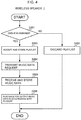
- FIG. 4 is a flowchart for illustrating an operation of the wireless speaker 1. This flow is started when the wireless network interface unit 10 receives a playlist multicast from the playlist creation terminal 2.
- the wireless network interface unit 10 passes the received playlist to the playlist reception unit 11.
- the playlist reception unit 11 determines whether or not a playlist transmission destination ID assigned to the playlist received from the wireless network interface unit 10 is an ID of the own wireless speaker 1 (Step S201). Then, when the playlist transmission destination ID is not the ID of the own wireless speaker 1 (NO in Step S201), the playlist reception unit 11 discards this playlist (Step S202), and ends the processing.
- the playlist reception unit 11 accepts this playlist and stores the playlist in the playlist storage unit 12 (Step S203).
- the music data acquisition unit 13 transmits a music data request including this playlist to the media server 3 via the wireless network interface unit 10 (Step S204). Then, when receiving music data from the media server 3, the music data acquisition unit 13 stores the received music data into the music data storage unit 14 (Step S205).
- the music data playback unit 15 plays back the music data stored in the music data storage unit 14 in accordance with the playlist stored in the playlist storage unit 12 to output the music data from the speaker unit 16 (Step S206).
- FIG. 5 is a schematic functional configuration diagram of the playlist creation terminal 2.
- the functional configuration of the playlist creation terminal 2 illustrated in FIG. 5 is, for example, implemented in the following manner: in a portable computer, for example, a smartphone or a tablet PC, which includes a CPU, a memory, an auxiliary storage device, for example, a flash memory, a touch panel, a display, an input/output device, for example, a pointing device, a wireless communication device, for example, a wireless LAN adapter, and a camera, the CPU loads a predetermined program onto the memory from the auxiliary storage device to execute the program.
- a portable computer for example, a smartphone or a tablet PC
- the CPU loads a predetermined program onto the memory from the auxiliary storage device to execute the program.
- the playlist creation terminal 2 includes a wireless network interface unit 20, a graphical user interface unit 21, a playlist transmission destination setting unit 22, apicked-up image data acquisition unit 23, a listener information generation unit 24, a genre information storage unit 25, a music list acquisition unit 26, a playlist creation unit 27, and a playlist transmission unit 28.
- the wireless network interface unit 20 is an interface for, for example, communicating to/from the wireless speaker 1 via the access point 4 and communicating to/from the media server 3 connected to the network 5.
- the graphical user interface unit 21 is an interface for, for example, displaying information and receiving various operations from the user.
- the playlist transmission destination setting unit 22 sets, for the playlist transmission unit 28, the ID of the wireless speaker 1 received as the playlist transmission destination ID from the user via the graphical user interface unit 21.
- the picked-up image data acquisition unit 23 uses the camera function of the playlist creation terminal 2 in accordance with a photographing operation received from the user via the graphical user interface unit 21 to photograph a listener, to thereby acquire photographing data on the listener.
- the listener information generation unit 24 performs face recognition processing on picked-up image data on listeners acquired by the picked-up image data acquisition unit 23, to thereby generate listener information including an atmosphere (one of happy, angry, sad, and joyful), an age group, and a gender ratio of a listener group of the listeners contained in the picked-up image data. Specifically, a facial expression (one of happy, angry, sad, and joyful), an age group, and a gender of each of the listeners contained in the picked-up image data are identified based on the face recognition processing performed on the picked-up image data.
- the facial expression is determined as the atmosphere of the listener group, and otherwise, it is determined that the atmosphere of the listener group cannot be identified.
- a predetermined ratio e.g., 2/3 or more of the listeners have the same facial expression
- the age group is determined as the age group of the listener group, and otherwise, it is determined that the age group of the listener group cannot be identified.
- the gender ratio of the listener group is determined as "mainly men”
- a predetermined ratio e.g., 2/3 or more of the listeners have a male gender
- the gender ratio of the listener group is determined as "mainly women”. Otherwise, the gender ratio of the listener group is determined as "mixed”.
- JP 2005-148880 A and JP 2013-242719 A can be used for the face recognition processing.
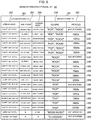
- FIG. 6 is a table for schematically showing an example of content registered in the genre information storage unit 25.
- records 250 of the genre information of music are stored.
- Each of the records 250 includes a field 251 in which listener information is registered and a field 252 in which genre information of music is registered.
- the field 251 includes a subfield 253 in which an atmosphere (one of happy, angry, sad, and joyful) is registered, a subfield 254 in which an age group is registered, and a subfield 255 in which a gender ratio is registered.
- the field 252 includes a subfield 256 in which a genre of music is registered and a subfield 257 in which a period of music is registered.
- the symbol "*" indicates a wildcard corresponding to any information.
- the genre of "rock” and a period of "1970s" are registered in the subfields 256 and 257 of the field 252 of the record 250 in which the atmosphere of "happy” or “joyful", an age group of "middle age”, and a gender ratio of "mainly men” are registered in the subfields 253 to 255 of the field 251, respectively.
- the genre of "pop” and a period of "1990s" are registered in the subfields 256 and 257 of the field 252 of the record 250 in which the atmosphere of "happy” or “joyful", an age group of "young age”, and a gender ratio of "mainly women” are registered in the subfields 253 to 255 of the field 251, respectively.
- the genre of "mood music” and the period of "not specified” are registered in the subfields 256 and 257 of the field 252 of the record 250 in which the atmosphere of "happy” or “joyful", an age group of "*", and a gender ratio of "mixed” are registered in the subfields 253 to 255 of the field 251, respectively.
- the genre of "mood music” and the period of "not specified” are registered in the subfields 256 and 257 of the field 252 of the record 250 in which an atmosphere of "angry” or “sad”, the age group of "*”, and a gender ratio of "*" are registered in the subfields 253 to 255 of the field 251, respectively.
- the music list acquisition unit 26 uses the listener information (atmosphere, age group, and gender ratio) generated by the listener information generation unit 24 as a search key to retrieve from the genre information storage unit 25 one of the records 250 having genre information of music. Then, the music list acquisition unit 26 generates a music list request involving designation of the genre information (genre and period) registered in the field 252 of the retrieved record 250, and transmits the music list request to the media server 3 via the wireless network interface unit 20 to acquire a music list from the media server 3.
- the listener information atmosphere, age group, and gender ratio
- the playlist creation unit 27 creates a playlist based on the music list acquired by the music list acquisition unit 26 from the media server 3. For example, when the number of pieces of music described in the music list is smaller than a predetermined value, the playlist creation terminal 2 sets this music list as theplaylist. Meanwhile, when the number of pieces of music described in the music list is equal to or larger than the predetermined value, the playlist creation terminal 2 randomly selects a predetermined number of pieces of music from the music list to create the playlist.
- the playlist transmission unit 28 assigns to the playlist created by the playlist creation unit 27 the playlist transmission destination ID set by the playlist transmission destination setting unit 22, and multicasts the resultant playlist from the wireless network interface unit 20.
- FIG. 7 is a flowchart for illustrating an operation of the playlist creation terminal 2. This flow is started when the graphical user interface unit 21 receives an instruction to create a playlist from the user.
- the playlist transmission destination setting unit 22 waits until the ID of any one of the wireless speakers 1 as the playlist transmission destination ID is received from the user via the graphical user interface unit 21 (Step S301). Then, when the playlist transmission destination ID is received (YES in Step S301), the playlist transmission destination setting unit 22 sets this playlist transmission destination ID for the playlist transmission unit 28 (Step S302).
- the picked-up image data acquisition unit 23 waits until a photographing operation is received from the user via the graphical user interface unit 21 (Step S303). Then, when the photographing operation is received (YES in Step S303), the picked-up image data acquisition unit 23 uses the camera function of the playlist creation terminal 2 to photograph listeners, to thereby acquire photographing data on the listeners (Step S304).
- the listener information generation unit 24 performs face recognition processing on the picked-up image data on the listeners acquired by the picked-up image data acquisition unit 23, to thereby generate listener information including an atmosphere, an age group, and a gender ratio of a listener group of the listeners contained in the picked-up image data (Step S305) .
- the music list acquisition unit 26 uses the listener information (atmosphere, age group, and gender ratio) generated by the listener information generation unit 24 as a search key to retrieve one of the records 250 from the genre information storage unit 25. Then, the music list acquisition unit 26 determines genre information (genre and period) registered in the field 252 of the retrieved record 250 as the genre information of music to be described in the playlist (Step S306). Then, the music list acquisition unit 26 generates a music list request involving designation of the determined genre information, and transmits this music list request to the media server 3 via the wireless network interface unit 20 to acquire a music list from the media server 3 (Step S307).
- the listener information atmosphere, age group, and gender ratio
- the playlist creation unit 27 creates the playlist based on the music list acquired by the music list acquisition unit 26 (Step S308). For example, when the number of pieces of music described the music list is smaller than a predetermined value, the playlist creation terminal 2 sets this music list as the playlist. Meanwhile, when the number of pieces of music described in the music list is equal to or larger than the predetermined value, the playlist creation terminal 2 randomly selects a predetermined number of pieces of music from the music list to create the playlist.
- the playlist transmission unit 28 assigns to the playlist created by the playlist creation unit 27 the playlist transmission destination ID set by the playlist transmission destination setting unit 22, and multicasts the resultant playlist from the wireless network interface unit 20 (Step S309).
- the playlist creation terminal 2 creates the listener information based on the picked-up image data on a listener, and selects pieces of music data from among pieces of music data belonging to the genre information associated in advance with this listener information to create a playlist.
- the playlist can be created automatically just by picking up the image of the listener by the user. Therefore, according to this embodiment, it is possible to alleviate a user's workload in creating a playlist.
- the playlist creation terminal 2 performs face recognition processing on the picked-up image data to generate the listener information including the atmosphere, the age group, and the gender ratio of a listener group of listeners contained in the picked-up image data.
- the playlist creation terminal 2 performs face recognition processing on the picked-up image data to generate the listener information including the atmosphere, the age group, and the gender ratio of a listener group of listeners contained in the picked-up image data.
- the present invention is not limited to the above-mentioned embodiment, and various changes may be made thereto within the scope of the gist of the invention.
- the listener information includes the atmosphere, the age group, and the gender ratio, but the listener information is only required to include at least one of the atmosphere, the age group, or the gender ratio.
- the playlist creation terminal 2 multicasts the playlist to each of the wireless speakers 1-1 to 1-3, but may be configured to unicast the playlist to each wireless speaker, for example, instead of multicasting the playlist.
- theplaylist creation terminal 2 creates the playlist based on the picked-up image data on a listener, but may be configured to create the playlist in consideration of, in addition to the picked-up image data, for example, a temporal factor such as daytime or nighttime, and/or a seasonal factor such as spring, summer, autumn, winter, Christmas, or New Year's holiday.
- a temporal factor such as daytime or nighttime
- a seasonal factor such as spring, summer, autumn, winter, Christmas, or New Year's holiday.
- theplaylist creation terminal 2 receives the ID of the wireless speaker 1 to which the playlist is to be transmitted from the user via the graphical user interface unit 21, but the present invention is not limited thereto.
- the ID of the wireless speaker 1 may be acquired by, for example, attaching a QR code (trademark) representing the ID of the own wireless speaker 1 to the wireless speaker 1, and photographing the QR code with the camera of the playlist creation terminal 2.
- the playlist creation terminal 2 and the wireless speaker 1 may be provided with a short-range wireless communication function, for example, RFID, so as to allow the wireless speaker 1 to use the short-range wireless communication to transmit the ID of the own wireless speaker 1 to the playlist creation terminal 2.
- the listener information is generated by performing face recognition processing on the picked-up image data on a listener, but the listener information may be generated by performing image recognition processing other than face recognition processing.
- the atmosphere of a listener group may be identified by performing appearance recognition processing on the picked-up image data on listeners to extract a feature (e.g., casual, formal, or color) of clothes of each listener, and determining which of classifications defined in advance the extracted feature belongs to.
- a feature e.g., casual, formal, or color
- the atmosphere of the listener group may be identified based on the feature of clothes of the listeners in place of the facial expressions of the listeners.
- theplaylist creation terminal 2 generates listener information and creates a playlist
- the media server 3 may generate listener information and create a playlist.
- the listener information generation unit 24, the genre information storage unit 25, the music list acquisition unit 26, and the playlist creation unit 27 are removed from the playlist creation terminal 2, and those processing units are added to the media server 3. Further, the playlist creation terminal 2 transmits the picked-up image data on a listener acquired by the picked-up image data acquisition unit 23 from the wireless network interface unit 20 to the media server 3.
- the listener information generation unit 24 performs face recognition processing on the picked-up image data received from the playlist creation terminal 2 to generate listener information
- the music list acquisition unit 26 creates a music list of music data belonging to genre information that is stored in the genre information storage unit 25 in association with the listener information generated by the listener information generation unit 24.
- the playlist creation unit 27 creates a playlist from the music list created by the music list acquisition unit 26, and the playlist is transmitted to the playlist creation terminal 2.
- the playlist transmission unit 28 assigns a playlist transmission destination ID to the playlist, and the playlist is multicast from the wireless network interface unit 20.
- the playlist creation terminal 2 is connected to the network 5 via a wireless network is taken as an example for description, but the playlist creation terminal 2 may be directly connected to the network 5 without the intermediation of a wireless network.
- the media server 3 is connected to the network 5, but the media server 3 may be connected to a wireless network. Further, the media server 3 may be built into the playlist creation terminal 2, or may be built into any one of the wireless speakers 1.
- theplaylist creation terminal 2 transmits the playlist to the wireless speaker 1, but the present invention is not limited thereto.
- the playlist is only required to be transmitted to a predetermined audio device having a function of playing back music data in accordance with the playlist.
Landscapes
- Engineering & Computer Science (AREA)
- Physics & Mathematics (AREA)
- Theoretical Computer Science (AREA)
- Multimedia (AREA)
- General Physics & Mathematics (AREA)
- Acoustics & Sound (AREA)
- General Engineering & Computer Science (AREA)
- Health & Medical Sciences (AREA)
- Data Mining & Analysis (AREA)
- Databases & Information Systems (AREA)
- General Health & Medical Sciences (AREA)
- Audiology, Speech & Language Pathology (AREA)
- Signal Processing (AREA)
- Human Computer Interaction (AREA)
- Life Sciences & Earth Sciences (AREA)
- Biomedical Technology (AREA)
- Computational Linguistics (AREA)
- Biophysics (AREA)
- Molecular Biology (AREA)
- Physiology (AREA)
- Oral & Maxillofacial Surgery (AREA)
- Information Transfer Between Computers (AREA)
- Information Retrieval, Db Structures And Fs Structures Therefor (AREA)
- Management Or Editing Of Information On Record Carriers (AREA)
- Reverberation, Karaoke And Other Acoustics (AREA)
Applications Claiming Priority (2)
| Application Number | Priority Date | Filing Date | Title |
|---|---|---|---|
| JP2015154584A JP6625365B2 (ja) | 2015-08-04 | 2015-08-04 | コンピュータで読み取り可能なプログラム、プレイリスト作成装置、およびワイヤレスオーディオシステム |
| PCT/JP2016/058068 WO2017022271A1 (ja) | 2015-08-04 | 2016-03-15 | コンピュータで読み取り可能なプログラム、プレイリスト作成装置、およびワイヤレスオーディオシステム |
Publications (2)
| Publication Number | Publication Date |
|---|---|
| EP3333847A1 true EP3333847A1 (de) | 2018-06-13 |
| EP3333847A4 EP3333847A4 (de) | 2019-03-13 |
Family
ID=57942817
Family Applications (1)
| Application Number | Title | Priority Date | Filing Date |
|---|---|---|---|
| EP16832551.2A Withdrawn EP3333847A4 (de) | 2015-08-04 | 2016-03-15 | Computerlesbares programm, wiedergabelistenerstellungsvorrichtung und drahtloses audiosystem |
Country Status (4)
| Country | Link |
|---|---|
| US (1) | US10268648B2 (de) |
| EP (1) | EP3333847A4 (de) |
| JP (1) | JP6625365B2 (de) |
| WO (1) | WO2017022271A1 (de) |
Families Citing this family (2)
| Publication number | Priority date | Publication date | Assignee | Title |
|---|---|---|---|---|
| JP7056003B2 (ja) * | 2017-03-16 | 2022-04-19 | 大日本印刷株式会社 | 画像処理装置、画像処理方法及びプログラム |
| KR102787264B1 (ko) * | 2019-08-08 | 2025-03-31 | 엘지전자 주식회사 | 로봇 및 그를 이용한 무드 인식 방법 |
Family Cites Families (11)
| Publication number | Priority date | Publication date | Assignee | Title |
|---|---|---|---|---|
| WO2005113099A2 (en) * | 2003-05-30 | 2005-12-01 | America Online, Inc. | Personalizing content |
| JP4221308B2 (ja) * | 2004-01-15 | 2009-02-12 | パナソニック株式会社 | 静止画再生装置、静止画再生方法及びプログラム |
| US10013381B2 (en) * | 2006-08-31 | 2018-07-03 | Bose Corporation | Media playing from a docked handheld media device |
| AU2007312942A1 (en) * | 2006-10-17 | 2008-04-24 | Altec Lansing Australia Pty Ltd | Unification of multimedia devices |
| US20110190913A1 (en) | 2008-01-16 | 2011-08-04 | Koninklijke Philips Electronics N.V. | System and method for automatically creating an atmosphere suited to social setting and mood in an environment |
| JP2009266005A (ja) * | 2008-04-25 | 2009-11-12 | Clarion Co Ltd | 画像検索方法、画像検索プログラム、楽曲再生装置、および楽曲検索用物品 |
| JP2010226484A (ja) * | 2009-03-24 | 2010-10-07 | Nikon Corp | 画像表示装置およびデジタルカメラ |
| JP5520585B2 (ja) * | 2009-12-04 | 2014-06-11 | 株式会社ソニー・コンピュータエンタテインメント | 情報処理装置 |
| JP2013200696A (ja) * | 2012-03-23 | 2013-10-03 | Nec Corp | 情報処理システム、情報処理方法、通信端末、通信端末の制御方法および制御プログラム、サーバ、サーバの制御方法および制御プログラム |
| JP2014130467A (ja) * | 2012-12-28 | 2014-07-10 | Sony Corp | 情報処理装置、情報処理方法及びコンピュータプログラム |
| US20140233916A1 (en) * | 2013-02-19 | 2014-08-21 | Tangome, Inc. | Integrating selected video frames into a social feed |
-
2015
- 2015-08-04 JP JP2015154584A patent/JP6625365B2/ja active Active
-
2016
- 2016-03-15 US US15/747,986 patent/US10268648B2/en active Active
- 2016-03-15 WO PCT/JP2016/058068 patent/WO2017022271A1/ja not_active Ceased
- 2016-03-15 EP EP16832551.2A patent/EP3333847A4/de not_active Withdrawn
Also Published As
| Publication number | Publication date |
|---|---|
| JP2017032876A (ja) | 2017-02-09 |
| US20180225376A1 (en) | 2018-08-09 |
| US10268648B2 (en) | 2019-04-23 |
| EP3333847A4 (de) | 2019-03-13 |
| JP6625365B2 (ja) | 2019-12-25 |
| WO2017022271A1 (ja) | 2017-02-09 |
Similar Documents
| Publication | Publication Date | Title |
|---|---|---|
| CN108470566B (zh) | 一种应用操作方法以及装置 | |
| CN103106065A (zh) | 用于管理车辆上的个人设置的方法和系统 | |
| KR102087010B1 (ko) | 무선 통신에 기반한 데이터 송수신 방법 및 장치 | |
| CN108809800B (zh) | 一种多媒体数据处理方法及其设备、系统 | |
| CN104536647B (zh) | 应用图标的位置调整方法及装置 | |
| CN105260487A (zh) | 图片的管理方法及图片的管理装置 | |
| CN104850848A (zh) | 照片分类方法及装置 | |
| CN104394431A (zh) | 一种酒店用户的个性化设置方法和系统 | |
| US20140133694A1 (en) | Method and electronic device for controlling display device using watermark | |
| CN106020751B (zh) | 利用移动设备的显示屏驱动系统及方法 | |
| CN111158924B (zh) | 内容分享方法、装置、电子设备及可读存储介质 | |
| US8958634B2 (en) | Image processing device that displays retrieved image similar to target image | |
| CN109190101A (zh) | 阅读笔记生成方法、装置和电子设备 | |
| CN103914767A (zh) | 一种会议调度的方法、设备及系统 | |
| CN106572131B (zh) | 物联网中媒体数据分享的方法及系统 | |
| US10268648B2 (en) | Computer readable program, playlist preparation device, and wireless audio system | |
| JP2013062669A (ja) | ネットワークデータプロジェクタシステム、プロジェクタ、コンテンツ投影方法 | |
| WO2015057185A2 (en) | Method and apparatus for identifying media files based upon contextual relationships | |
| US20170134449A1 (en) | Shared experience information construction system | |
| CN109102556A (zh) | 编辑工具的配置方法和配置参数的生成方法 | |
| US20160132837A1 (en) | Action encouragement method, apparatus, and program for encouraging user to move to facility suitable for schedule or task | |
| CN112801136A (zh) | 带有特征标识的物联网网关数据处理方法及装置 | |
| US20230410800A1 (en) | Controlling a user interface using natural language processing and computer vision | |
| US20260032408A1 (en) | Wireless audio broadcast discovery, selection and subscription | |
| CN105185398B (zh) | 一种播放场景启动方法及装置 |
Legal Events
| Date | Code | Title | Description |
|---|---|---|---|
| PUAI | Public reference made under article 153(3) epc to a published international application that has entered the european phase |
Free format text: ORIGINAL CODE: 0009012 |
|
| 17P | Request for examination filed |
Effective date: 20180206 |
|
| AK | Designated contracting states |
Kind code of ref document: A1 Designated state(s): AL AT BE BG CH CY CZ DE DK EE ES FI FR GB GR HR HU IE IS IT LI LT LU LV MC MK MT NL NO PL PT RO RS SE SI SK SM TR |
|
| AX | Request for extension of the european patent |
Extension state: BA ME |
|
| DAV | Request for validation of the european patent (deleted) | ||
| DAX | Request for extension of the european patent (deleted) | ||
| A4 | Supplementary search report drawn up and despatched |
Effective date: 20190212 |
|
| RIC1 | Information provided on ipc code assigned before grant |
Ipc: G10K 15/04 20060101ALI20190206BHEP Ipc: G10L 19/00 20130101ALI20190206BHEP Ipc: G06F 13/00 20060101ALI20190206BHEP Ipc: G10K 15/02 20060101ALI20190206BHEP Ipc: G11B 27/02 20060101ALI20190206BHEP Ipc: G06F 16/635 20190101AFI20190206BHEP |
|
| 17Q | First examination report despatched |
Effective date: 20200115 |
|
| STAA | Information on the status of an ep patent application or granted ep patent |
Free format text: STATUS: THE APPLICATION HAS BEEN WITHDRAWN |
|
| 18W | Application withdrawn |
Effective date: 20200226 |