EP3333596A1 - Röntgenbildgebungssystem mit mehreren energiespektren und verfahren zur substanzidentifizierung eines zu inspizierenden artikels unter verwendung davon - Google Patents
Röntgenbildgebungssystem mit mehreren energiespektren und verfahren zur substanzidentifizierung eines zu inspizierenden artikels unter verwendung davon Download PDFInfo
- Publication number
- EP3333596A1 EP3333596A1 EP17199159.9A EP17199159A EP3333596A1 EP 3333596 A1 EP3333596 A1 EP 3333596A1 EP 17199159 A EP17199159 A EP 17199159A EP 3333596 A1 EP3333596 A1 EP 3333596A1
- Authority
- EP
- European Patent Office
- Prior art keywords
- item
- transparency
- inspected
- energy
- determining
- Prior art date
- Legal status (The legal status is an assumption and is not a legal conclusion. Google has not performed a legal analysis and makes no representation as to the accuracy of the status listed.)
- Granted
Links
Images




Classifications
-
- G—PHYSICS
- G01—MEASURING; TESTING
- G01V—GEOPHYSICS; GRAVITATIONAL MEASUREMENTS; DETECTING MASSES OR OBJECTS; TAGS
- G01V5/00—Prospecting or detecting by the use of ionising radiation, e.g. of natural or induced radioactivity
- G01V5/20—Detecting prohibited goods, e.g. weapons, explosives, hazardous substances, contraband or smuggled objects
- G01V5/22—Active interrogation, i.e. by irradiating objects or goods using external radiation sources, e.g. using gamma rays or cosmic rays
- G01V5/224—Multiple energy techniques using one type of radiation, e.g. X-rays of different energies
-
- G—PHYSICS
- G01—MEASURING; TESTING
- G01N—INVESTIGATING OR ANALYSING MATERIALS BY DETERMINING THEIR CHEMICAL OR PHYSICAL PROPERTIES
- G01N23/00—Investigating or analysing materials by the use of wave or particle radiation, e.g. X-rays or neutrons, not covered by groups G01N3/00 – G01N17/00, G01N21/00 or G01N22/00
- G01N23/02—Investigating or analysing materials by the use of wave or particle radiation, e.g. X-rays or neutrons, not covered by groups G01N3/00 – G01N17/00, G01N21/00 or G01N22/00 by transmitting the radiation through the material
- G01N23/06—Investigating or analysing materials by the use of wave or particle radiation, e.g. X-rays or neutrons, not covered by groups G01N3/00 – G01N17/00, G01N21/00 or G01N22/00 by transmitting the radiation through the material and measuring the absorption
- G01N23/083—Investigating or analysing materials by the use of wave or particle radiation, e.g. X-rays or neutrons, not covered by groups G01N3/00 – G01N17/00, G01N21/00 or G01N22/00 by transmitting the radiation through the material and measuring the absorption the radiation being X-rays
- G01N23/087—Investigating or analysing materials by the use of wave or particle radiation, e.g. X-rays or neutrons, not covered by groups G01N3/00 – G01N17/00, G01N21/00 or G01N22/00 by transmitting the radiation through the material and measuring the absorption the radiation being X-rays using polyenergetic X-rays
Definitions
- the present disclosure generally relates to the field of radiation imaging, and in particular, to a multi-energy-spectrum X-ray imaging system and a method of substance identification of an item to be inspected by using the same.
- the X-ray transmission imaging technology is widely used in the fields of security, medical, etc.
- the substance identification ability of an imaging system is an important criterion for measuring performance of such a system.
- the dual energy imaging equipment widely used in the security field adopts two X-rays with different energy spectrums which penetrate items to be inspected.
- equivalent atomic number information of material of the item to be inspected can be obtained to a certain extent.
- due to a large overlap between the two energy spectrums of the dual-energy X-ray the ability of substance identification of the dual-energy system is limited objectively.
- the multi-energy-spectrum imaging may divide the X-ray with a broad energy spectrum distribution into several different energy regions E i min E i max , and then count the photons and perform imaging in each energy region, respectively.
- the multi-energy-spectrum imaging technology is also becoming more mature. Because the multi-energy-spectrum X-ray imaging technology has significant advantages in reducing the radiation dose and improving the ability of substance identification, it has a broader application prospect in the field of security and medical.
- the multi-energy-spectrum imaging substantially eliminates the overlap between the energy spectrums and achieve better energy discrimination between different energy spectrums while an energy spectrum can be divided into more energy regions as required (as shown in Fig. 1 ), thereby providing the preconditions for introducing more energy information.
- the distribution of the attenuation coefficients ⁇ i is calculated based on the projection data of the different energy regions of the X-ray energy spectrum, and in turn an atomic number Z which is closest to that for the distribution is found by the method of curve approximation to realize the substance classification.
- the solution firstly obtains the eigen mean vector and the covariance matrix by scanning the calibration materials with different thicknesses, then the Gaussian probability density expression is used to calculate the probability that the material to be inspected belongs to each category, and the material classification is realized according to the maximum probability principle.
- the Gaussian probability density expression is used to calculate the probability that the material to be inspected belongs to each category, and the material classification is realized according to the maximum probability principle.
- MultiX proposes to construct a likelihood function based on Poisson statistics of photon counting and realizes the method of substance identification by comparing the likelihood value of the item to be inspected and the likelihood values of the calibration materials one by one.
- CEA-Leti finds, in its another article for the multi-energy-spectrum backscatter imaging problem, that the slope value D ⁇ ' of the mass attenuation coefficient curve of several common organic materials in the low energy regions and their atomic numbers Z have a substantially linear relationship, and therefore it is proposed that the substance can be identified by calculating the D ⁇ ' of the item to be inspected.
- a mass attenuation coefficient ⁇ (Z, E) is a function of an atomic number Z and energy E. According to the data published by the National Institute of Standards and Technology (NIST), ⁇ (Z, E) can be obtained by looking it up in a table.
- each energy region Under an extreme condition where the energy spectrum is divided into very narrow energy regions, the hardening effect of each energy region is negligible, and ⁇ (Z, E) is independent of the thickness of the material. In practice, there is still a certain energy spectrum distribution in each discrete energy region, especially if the divided energy regions are wide, in which case the hardening effect of the ray cannot be neglected.
- the mean energy E of the energy region is related to the mass thickness t of the material, and ⁇ (Z, E) is also changed with t.
- the continuous Z and mass thickness t make ⁇ (Z, E) continuous, and then the eigen mean value T i or ⁇ i of the different mass thickness t and equivalent atomic numbers Z form a two-dimensional surface f ( Z,t ) in the corresponding multidimensional eigenspace.
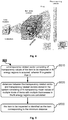
- Another way is to collect data for calibration material step blocks with a variety of different thickness and atomic numbers through an actual scanning process, and to acquire f ( Z,t ) by fitting or interpolation, as shown in Fig. 2 .
- T 1 , T 2 , and T 3 represent distributions of the transparency values of the corresponding calibration materials in three energy regions, respectively.
- the key for the multi-energy-spectrum substance identification is to calculate the projection position of the eigenvalue of the item to be inspected on the surface f ( Z,t ) in the multidimensional eigenspace.
- the present disclosure proposes a multi-energy-spectrum X-ray imaging system and a method of substance identification of an item to be inspected by using the same.
- a method of substance identification of an item to be inspected using a multi-energy-spectrum X-ray imaging system comprising:
- the determining the item to be inspected based on the transparency related vector comprises:
- the calculating distances between the transparency related vector and transparency related vectors stored in the system consisting of N transparency mean values of multiple kinds of items with multiple thicknesses in the N energy regions comprises:
- the determining the item to be inspected based on the transparency related vector comprises:
- the linear interpolation algorithm is a one-dimensional linear interpolation algorithm when the first atomic number is same as the second atomic number and the first thickness is different from the second thickness.
- the linear interpolation algorithm is a two-dimensional linear interpolation algorithm when the first atomic number is different from the second atomic number and the first thickness is different from the second thickness.
- the linear interpolation algorithm is a one-dimensional linear interpolation algorithm when the first atomic number is different from the second atomic number and the first thickness is same as the second thickness.
- the determining the item to be inspected based on the transparency related vector comprises:
- the non-linear dimension reduction algorithm comprises the isometric mapping (Isomap) algorithm, the local linear embedded (LLE) algorithm, and the multi-dimensional scaling (MDS) algorithm.
- Isomap isometric mapping
- LLE local linear embedded
- MDS multi-dimensional scaling
- the determining one of the set of mapping points which is closest to the mapping point comprises:
- the multiple kinds of items comprise explosives.
- the determining the item to be inspected based on the transparency related vector comprises:
- the selecting one or more of the N energy regions as reference energy regions comprises:
- the selecting one or more of the N energy regions as reference energy regions comprises:
- the determining one of the multiple kinds of items having a relative mass attenuation coefficient value closest to the relative mass attenuation coefficient value, and identifying the item to be inspected as the determined item comprises:
- the determining one of the multiple kinds of items having a relative mass attenuation coefficient value closest to the relative mass attenuation coefficient value, and identifying the item to be inspected as the determined item comprises:
- R i m is the relative mass attenuation coefficient value of the item to be inspected m in the i th energy region
- R ⁇ i is the relative mass attenuation coefficient value of one of the multiple kinds of items ⁇ i in the i th energy region.
- a multi-energy-spectrum X-ray imaging system comprising:
- the processor is further configured to determine the item to be inspected based on the transparency related vector by:
- the processor is further configured to:
- the processor is further configured to determine the item to be inspected based on the transparency related vector by:
- the linear interpolation algorithm is a one-dimensional linear interpolation algorithm when the first atomic number is same as the second atomic number and the first thickness is different from the second thickness.
- the linear interpolation algorithm is a two-dimensional linear interpolation algorithm when the first atomic number is different from the second atomic number and the first thickness is different from the second thickness.
- the linear interpolation algorithm is a one-dimensional linear interpolation algorithm when the first atomic number is different from the second atomic number and the first thickness is same as the second thickness.
- the processor is further configured to determine the item to be inspected based on the transparency related vector by:
- the non-linear dimension reduction algorithm comprises the isometric mapping (Isomap) algorithm, the local linear embedded (LLE) algorithm, and the multi-dimensional scaling (MDS) algorithm.
- Isomap isometric mapping
- LLE local linear embedded
- MDS multi-dimensional scaling
- the processor is further configured to determine a point of the set of mapping points which is closest to the mapping point by using the Mahalanobis distance algorithm, the Euclidean distance algorithm, or the Cosine distance algorithm.
- the multiple kinds of items comprise explosives.
- the processor is further configured to determine the item to be inspected based on the transparency related vector by:
- the processor is further configured to select one or more of the N energy regions as reference energy regions by:
- the processor is further configured to select one or more of the N energy regions as reference energy regions by:
- the processor is further configured to:
- the processor is further configured to:
- R i m is the relative mass attenuation coefficient value of the item to be inspected m in the i th energy region
- R ⁇ i is the relative mass attenuation coefficient value of one of the multiple kinds of items ⁇ i in the i th energy region.
- a computer readable medium comprising instructions which, when executed by a processor, performs the method according to the first aspect.
- the multi-energy-spectrum imaging may divide the received X-ray spectrum into multiple energy regions, and perform counting and imaging, respectively.
- the multi-energy-spectrum imaging may significantly improve the ability of substance identification of the system by using more energy information, and has a broader application prospect, especially for identifying contraband which is difficult to be identified, such as drugs, explosives, in the field of security.
- the present disclosure adopts solutions such as the non-linear dimension reduction, the minimum Mahalanobis distance calculation, and the hypothesis test, to avoid complex calculation for projection in a multi-dimensional eigenspace and propose a method of substance identification based on the multi-energy-spectrum X-ray imaging.
- a multi-energy-spectrum X-ray imaging system 300 may consist of, among others, an X-ray source 310, a detector 320, a scan controller 330, a processor 340, a memory 350 etc., as shown in Fig. 3 .
- the X-ray source 310 may be any device which can acquire an X-ray, such as an isotope radioactive source, an X-ray machine, an accelerator, etc., and a collimated X-ray may be a fan beam, a pencil beam, or a beam having another shape.
- a photon counting type detector is selected as the detector 320 (as shown in Fig. 4 ), such as a CZT, a CdTe detector, etc., and an arrangement of the detectors 320 may be a linear array or a multilayer linear array, or may be an area array or a multilayer area array.
- the detector 320 is configured to receive the X-ray which is emitted from the X-ray source 310 and is transmitted through or scattered by an item to be inspected and convert the received X-ray into an output signal.
- the scan controller 330 is responsible for controlling the overall scan process comprising the beam out of the X-ray and the control of the belt, the track, or other means for causing relative movement of the X-ray scanning plane with respect to the item to be scanned.
- the processor 340 may execute program instructions to be operable to: acquire photon counting data for multiple preset different energy spectrum regions and store the data; processing the multi-energy-spectrum data, using the method of multi-energy-spectrum substance identification to identify substance of the item to be scanned, and outputting the identification result and displaying an image.
- the memory 350 may store the program instructions.
- the calibration process comprises air background correction, dead time correction, pile-up correction, crosstalk correction, or the like.
- the classification features may also be ⁇ values, R values, or the like.
- Other image features extracted by image preprocessing, such as HOG, SIFT, etc. may also be used as auxiliary features to assist in identifying specific contraband such as explosives, drugs, guns, etc.
- Image features may also be acquired from the autonomous learning such as deep learning.
- the multi-energy-spectrum substance identification comprises a calibration process and a classification process, in which a calibration sample may be designed as several typical materials with different atomic numbers and densities, for example, organic polymer materials such as PE, PMMA, POM, PVDF, and PTFE, and graphite, aluminum, iron, copper, lead, or the like, each of which comprises several steps from thin to thick in terms of thickness or mass thickness, such as 1mm, 2mm ... or 1g/cm 2 , 2g/cm 2 ...
- the calibration data is acquired by collecting the scan data for each of the above-described calibration samples in respective energy regions for one or more times.
- the accuracy of material identification can be further improved by an appropriate increase in the number of kinds of the calibration samples and the number of the thickness steps.
- the training data for various categories of drugs, explosives, or mimetic materials such as black powder, TNT, C4, RDX (cyclotrimethylene trinitramine), ecstasy, heroin and so on are added in the calibration database, which can make the system's identification of contraband, such as drugs and explosives, more targeted to improve the identification rate of such contraband.
- contraband such as drugs and explosives
- the classification process is used for items to be inspected which have unknown types and provides a judgment in the classification property.
- the main purpose is to acquire the atomic number, mass thickness value, density, and other information of the item to be inspected.
- a distance d i between a transparency value of an item to be inspected and a calibration classification curve f ( Z i ,t) is calculated.
- the projection distances from d j and d k to a line segment between the two calibration materials are calculated as the weights for the linear interpolation.
- calibration data is firstly acquired by a calibration process, and it is assumed that the Z values of adjacent calibration materials are close to each other and that the linear distance between the materials is approximately the geodesic distance. Therefore, the difference may be ignored as a system error.
- the specific process of the minimum distance classification method is as follows.
- the covariance matrix S may be typically reduced to a diagonal matrix as shown by the equation (2), in which the diagonal elements represent the variance values of the corresponding energy regions, respectively.
- ⁇ 1 2 represents a variance value of a certain material with a certain thickness in a first energy region.
- S N ⁇ N ⁇ 1 2 0 ... 0 0 ⁇ 2 2 ... 0 ⁇ ⁇ ⁇ ⁇ 0 0 ... ⁇ N 2
- the same calculation method is used to form and store a contraband database.
- the multi-energy-spectrum image of the item to be inspected is scanned, and according to a transparency value acquired in a certain energy region (which may be one or more energy regions), a thickness range of the calibration materials in this energy region which meets this transparency value is found.
- the kind of the corresponding calibration material with a minimum Mahalanobis distance d(m, ⁇ i ) is found, and the kind of this calibration material is determined as the substance kind of the item to be inspected.
- the substance kind of the item to be inspected can be determined more accurately. Firstly, an atomic number and a thickness of a calibration material A with the minimum Mahalanobis distance d(m, ⁇ i ) and an atomic number and a thickness of a calibration material B with a next minimum Mahalanobis distance d(m, ⁇ i ) are determined.
- the thickness of the calibration material A and the thickness of the calibration material B are the same, it can be considered that the item to be inspected is located between two calibration materials A and B with a same thickness; when the atomic number of the calibration material A and the atomic number of the calibration material B are the same, it can be considered that the item to be inspected is located between the same calibration materials with two mass thicknesses; and when the thickness of the calibration material A is different from the thickness of the calibration material B and the atomic number of the calibration material A is different from the atomic number of the calibration material B, it can be considered that the item to be inspected is located between two calibration materials with two mass thicknesses.
- the atomic number Z of the item to be inspected m is calculated, as shown by the equation (4).
- Z Z A ⁇ d m B ⁇ cos ⁇ m BA + Z B ⁇ d m A ⁇ cos ⁇ m AB d m B ⁇ cos ⁇ m BA + d m A ⁇ cos ⁇ m AB
- Z A and Z B are atomic number values of the calibration materials A and B, respectively
- ⁇ mBA and ⁇ mAB are the angle between X m - X B direction and X B - X A direction and the angle between X m - X A direction and X A - X B direction, respectively.
- the mass thickness t of the item to be inspected is calculated by a linear interpolation method similar to the above method.
- the atomic number Z and the mass thickness value t of the material are calculated by the bilinear interpolation method.
- the same algorithm process is used to calculate the Mahalanobis distances between the item to be inspected and the drug/explosives in the contraband database one by one, and the contraband kind with the highest probability is determined based on the minimum distance principle.
- Fig. 5 is a flow chart showing a first method 500 of substance identification of an item to be inspected by using a multi-energy-spectrum X-ray imaging system according to a first embodiment of the present disclosure.
- the method 500 comprises: at step S510, a transparency related vector consisting of transparency values of the item to be inspected in N energy regions is acquired, wherein N is greater than 2; at step S520, distances between the transparency related vector and transparency related vectors stored in the system consisting of N transparency mean values of multiple kinds of items with multiple thicknesses in the N energy regions are calculated; and at step S530, the item to be inspected is identified as the item corresponding to the minimum distance.
- the transparency mean value is a mean value of multiple transparency values acquired by multiple measurements in a certain energy region.
- the calculation of distances between the transparency related vector and transparency related vectors stored in the system consisting of N transparency mean values of multiple kinds of items with multiple thicknesses in the N energy regions may comprise that the Mahalanobis distance algorithm, the Euclidean distance algorithm, or the Cosine distance algorithm is used for calculating the distances.
- the method 500 may be performed by the multi-energy-spectrum X-ray imaging system 300.
- the processor 340 may be configured to execute program instructions to be operable to acquire a transparency related vector consisting of transparency values of the item to be inspected in N energy regions, wherein N is greater than 2; calculate distances between the transparency related vector and transparency related vectors stored in the system consisting of N transparency mean values of multiple kinds of items with multiple thicknesses in the N energy regions; and identify the item to be inspected as the item corresponding to the minimum distance.
- Fig. 6 is a flow chart showing a second method 600 of substance identification of an item to be inspected by using a multi-energy-spectrum X-ray imaging system according to a first embodiment of the present disclosure.
- the method 600 comprises: at step S610, a transparency related vector consisting of transparency values of the item to be inspected in N energy regions is acquired, wherein N is greater than 2; at step S620, distances between the transparency related vector and transparency related vectors stored in the system consisting of N transparency mean values of multiple kinds of items with multiple thicknesses in the N energy regions are calculated; and at step S630, a first atomic number and a first thickness of the item corresponding to the minimum distance and a second atomic number and a second thickness of an item corresponding to the next minimum distance are determined; at step S640, an atomic number and a thickness of the item to be inspected are determined by using a linear interpolation algorithm based on the first and second atomic numbers and the first and second thicknesses; and at step S650, a kind of the
- the calculation of distances between the transparency related vector and transparency related vectors stored in the system consisting of N transparency mean values of multiple kinds of items with multiple thicknesses in the N energy regions may comprise that the Mahalanobis distance algorithm, the Euclidean distance algorithm, or the Cosine distance algorithm is used for calculating the distances.
- the linear interpolation algorithm is a one-dimensional linear interpolation algorithm when the first atomic number is same as the second atomic number and the first thickness is different from the second thickness.
- the linear interpolation algorithm is a two-dimensional linear interpolation algorithm when the first atomic number is different from the second atomic number and the first thickness is different from the second thickness.
- the linear interpolation algorithm is a one-dimensional linear interpolation algorithm when the first atomic number is different from the second atomic number and the first thickness is same as the second thickness.
- the method 600 may be performed by the multi-energy-spectrum X-ray imaging system 300.
- the processor 340 may be configured to execute program instructions to be operable to acquire a transparency related vector consisting of transparency values of the item to be inspected in N energy regions, wherein N is greater than 2; calculate distances between the transparency related vector and transparency related vectors stored in the system consisting of N transparency mean values of multiple kinds of items with multiple thicknesses in the N energy regions; determine a first atomic number and a first thickness of the item corresponding to the minimum distance and a second atomic number and a second thickness of an item corresponding to the next minimum distance; determine an atomic number and a thickness of the item to be inspected by using a linear interpolation algorithm based on the first and second atomic numbers and the first and second thicknesses; and determine a kind of the item to be inspected based on the atomic number and the thickness of the item to be inspected.
- the processor 340 is further configured to calculate distances between the transparency related vector and transparency related vectors stored in the system consisting of N transparency mean values of multiple kinds of items with multiple thicknesses in the N energy regions by using the Mahalanobis distance algorithm, the Euclidean distance algorithm, or the Cosine distance algorithm.
- the transparency related vector may be a vector consisting of the transparency values or transparency mean values directly, or a vector consisting of logarithms of the transparency values or transparency mean values.
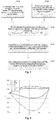
- FIG. 7 A specific example of the first embodiment is given below as shown in Fig. 7 .
- An X-ray machine with an energy value of 160keV is used to generate X-rays, forming a fan beam through a collimated slit.
- the scanned transmission images are captured by using a CZT single photon counting linear array detector.
- the processor may simultaneously acquire photon counting data for three or more different preset energy spectrum regions. For example, the energy spectrum is divided into three energy regions: 25keV ⁇ 45keV, 50keV ⁇ 70keV, and 80keV ⁇ 160keV.
- Each material comprises several steps from thin to thick.
- the multi-energy-spectrum image of the item to be inspected is scanned, the transparency value T 0 is calculated based on all the energy spectrums, and a thickness range of each calibration material corresponding to this transparency value is found.
- the Mahalanobis distances d(m, ⁇ i ) from the vector related to transparency values of the item to be inspected to the vector related to the transparency mean values X ⁇ ⁇ of various kinds of materials ⁇ i in the thickness range are calculated according to the equation (3);
- the atomic number of the kind of the corresponding calibration material with a minimum Mahalanobis distance is found as the atomic number of the item to be inspected.
- step S740 in a case where the item to be inspected is located between two calibration materials A and B, for example, an unknown material located between PE and POM, by calculating the projection distance of d( m , A ) and d(m, B) in the direction of X A - X B as the weight factor for the linear interpolation, the atomic number value Z of this material is calculated based on the equation (4).
- the mass thickness t of the item to be inspected is calculated by a method similar to the above linear interpolation method.
- the atomic number Z and the mass thickness value t of the item to be inspected are calculated by the bilinear interpolation method.
- the same algorithm process is used to further calculate the Mahalanobis distances between the item to be inspected and the drug/explosives in the contraband database one by one, and the contraband kind of the item to be inspected with the highest probability is determined based on the minimum distance principle.
- a color image for display is generated by a colorization process. For the case where contraband is identified during the scanning, an alarm is automatically raised and the suspect area is identified.
- the data for the item to be inspected and the calibration data are mapped into a two-dimensional plane together.
- the multi-dimensional classification problem is converted to a two-dimensional classification problem, while the projection of the item to be inspected on f ( Z,t ) after the mapping is acquired directly.
- the non-linear dimension reduction method mainly comprises the multi-dimensional scaling (MDS), the local linear embedded (LLE) algorithm, and the isometric mapping (Isomap) algorithm, or the like.
- MDS multi-dimensional scaling
- LLE local linear embedded
- Isomap isometric mapping
- the main objective of the isometric mapping (Isomap) algorithm is to find the corresponding low-dimensional embedding for a given high-dimensional manifold, so that the neighborhood structure between the data points on the high-dimensional manifold can be maintained in the low-dimensional embedding.
- Isomap uses MDS as a calculation tool, which is characterized by calculating the distance between the data points on the high-dimensional manifold, using the geodesic distance in the differential geometry, and finding an algorithm to estimate the geodesic distance from the actual input data, which is very suitable for solving multi-energy-spectrum substance identification problems.
- MDS MDS as a calculation tool, which is characterized by calculating the distance between the data points on the high-dimensional manifold, using the geodesic distance in the differential geometry, and finding an algorithm to estimate the geodesic distance from the actual input data, which is very suitable for solving multi-energy-spectrum substance identification problems.
- transparency mean values of multiple calibration materials with multiple thicknesses in N energy regions after multiple measurements are calculated, which form transparency related vectors corresponding to the calibration materials as the calibration data and are stored in the multi-energy-spectrum X-ray imaging system.
- the item material to be inspected is scanned to acquire a transparency related vector consisting of transparency values of the item material to be inspected in N energy regions as data of the item to be inspected, wherein N is greater than 2.
- the transparency related vector may be a vector consisting of the transparency values or transparency mean values directly, or a vector consisting of logarithms of the transparency values or transparency mean values.
- the transparency related vector for the item material to be inspected and transparency related vectors stored in the system consisting of N transparency mean values of multiple kinds of items with multiple thicknesses in the N energy regions are mapped into a two-dimensional plane by using a non-linear dimension reduction algorithm, for example, the Isomap algorithm or the LLE algorithm, so as to acquire a mapping point of the transparency related vector of the item material to be inspected in the two-dimensional plane and a set of mapping points of the transparency related vectors of the multiple kinds of calibration materials in the two-dimensional plane, respectively.
- Some parameters of the non-linear dimension reduction algorithm, for example, the neighbor parameter k may be optimized based on the practical needs, to ensure that the result of the dimension reduction mapping is stable and reliable.
- the mapped data still maintains the classification characteristics in the eigenspace, and the calibration data contains the corresponding category information.
- the atomic number Z and the mass thickness t of the item to be inspected can be directly determined based on the positional relationship of the mapped data for the item to be inspected on the two-dimensional eigen plane (as shown in Fig. 8 ). For example, a point of the set of mapping points which is closest to the mapping point can be determined by using the minimum distance principle, and the item to be inspected is identified as the one of the multiple calibration materials corresponding to the closest point.
- calibration data for various common drugs and explosives can be added to the above calibration data, and the above process is repeated to determine or distinguish between the kinds of drugs or explosives based on the positional relationship between various data points after the mapping and the minimum distance principle.
- Fig. 9 is a flow chart showing a method 900 of substance identification of an item to be inspected by using a multi-energy-spectrum X-ray imaging system according to a second embodiment of the present disclosure.
- the method 900 comprises: at step S910, a transparency related vector consisting of transparency values of the item to be inspected in N energy regions is acquired, wherein N is greater than 2; at step S920, the transparency related vector and transparency related vectors stored in the system consisting of N transparency mean values of multiple kinds of items with multiple thicknesses in the N energy regions are mapped into a two-dimensional plane by using a non-linear dimension reduction algorithm, so as to acquire a mapping point of the transparency related vector of the item to be inspected in the two-dimensional plane and a set of mapping points of the transparency related vectors of the multiple kinds of items in the two-dimensional plane, respectively; at step S930, one of the set of mapping points which is closest to the mapping point is determined; and at step S940, the item to be inspected is identified as the
- the non-linear dimension reduction algorithm comprises the isometric mapping (Isomap) algorithm, the local linear embedded (LLE) algorithm, and the multi-dimensional scaling (MDS) algorithm.
- the determination of a point of the set of mapping points which is closest to the mapping point may comprise that the Mahalanobis distance algorithm, the Euclidean distance algorithm, or the Cosine distance algorithm is used to determine the point which is closest to the mapping point.
- the multiple kinds of items comprise explosives.
- the method 900 may be performed by the multi-energy-spectrum X-ray imaging system 300.
- the processor 340 may be configured to execute program instructions to be operable to acquire a transparency related vector consisting of transparency values of the item to be inspected in N energy regions, wherein N is greater than 2; map the transparency related vector and transparency related vectors stored in the system consisting of N transparency mean values of multiple kinds of items with multiple thicknesses in the N energy regions into a two-dimensional plane by using a non-linear dimension reduction algorithm, so as to acquire a mapping point of the transparency related vector of the item to be inspected in the two-dimensional plane and a set of mapping points of the transparency related vectors of the multiple kinds of items in the two-dimensional plane, respectively; determine one of the set of mapping points which is closest to the mapping point; and identify the item to be inspected as the one of the multiple kinds of items corresponding to the closest point.
- the image of the item to be inspected is scanned and a relative mass attenuation coefficient R i of the item to be inspected (for example, the TNT material in Fig. 10 ) in the i th energy region of the N energy regions is calculated.
- R i lnT i / lnT 0
- T 0 can be a transparency value calculated from all the energy spectrums, or a transparency value calculated from any one or more specific energy regions
- ⁇ 2 between the item to be inspected m and the various calibration materials ⁇ i for example, PE, PMMA, POM and Al materials in Fig.
- R i m is the relative mass attenuation coefficient value of the item to be inspected m in the i th energy region
- R ⁇ i is the relative mass attenuation coefficient value of the calibration material ⁇ i in the i th energy region.
- the atomic number Z of the corresponding calibration material when ⁇ 2 is minimized is determined, and the atomic number of the item to be inspected is determined as the atomic number of the calibration material.
- the scheme is suitable for the case where the number of energy regions is large and the energy regions are narrow.
- ⁇ 2 of the suspected contrabands with respect to the relative attenuation coefficient curves of known contraband such as drugs, explosives, and so on are calculated respectively, and based on the minimum ⁇ 2 criteria, the item to be inspected is determined to belong to which kind of specific contraband with a highest probability.
- the solution also comprises using other hypothesis test methods or similarity calculation methods.
- the mass attenuation coefficient curve for the calibration materials can also be acquired by actually scanning the calibration material step data via fitting or interpolation.
- Fig. 11 is a flow chart showing a method 1100 of substance identification of an item to be inspected by using a multi-energy-spectrum X-ray imaging system according to a third embodiment of the present disclosure.
- the method 1100 may comprise: at step S1110, one or more of the N energy regions are selected as reference energy regions; respective N transparency values of the item to be inspected in the N energy regions are acquired; at step S1120, a reference transparency value is calculated based on the transparency values of the item to be inspected in the one or more energy regions which are selected as the reference regions; at step S1130, a relative mass attenuation coefficient value of the item to be inspected in the N energy regions is calculated based on the reference transparency value and the N transparency values; at step S1140, one of the multiple kinds of items having a relative mass attenuation coefficient value closest to the relative mass attenuation coefficient value is determined, and the item to be inspected is identified as the determined item.
- the selection of one or more of the N energy regions as reference energy regions may comprise: selecting all the N energy regions as the reference energy regions.
- the selection of one or more of the N energy regions as reference energy regions may comprise: selecting any one of the N energy regions as the reference energy region.
- the determination of one of the multiple kinds of items having a relative mass attenuation coefficient value closest to the relative mass attenuation coefficient value and the identification of the determined item as the item to be inspected may comprise: determining one of the multiple kinds of items having a relative mass attenuation coefficient value closest to the relative mass attenuation coefficient value by using the minimum mean square error method.
- the determination of one of the multiple kinds of items having a relative mass attenuation coefficient value closest to the relative mass attenuation coefficient value and the identification of the item to be inspected as the determined item comprises: determining one of the multiple kinds of items having a relative mass attenuation coefficient value closest to the relative mass attenuation coefficient value by minimizing ⁇ 2 determined according to the equation (6).
- the method 1100 may be performed by the multi-energy-spectrum X-ray imaging system 300.
- the processor 340 is further configured to execute program instructions to be operable to select one or more of the N energy regions as reference energy regions; acquire respective N transparency values of the item to be inspected in the N energy regions; calculate a reference transparency value based on the transparency values of the item to be inspected in the one or more energy regions which are selected as the reference regions; calculate a relative mass attenuation coefficient value of the item to be inspected in the N energy regions based on the reference transparency value and the N transparency values; determine one of the multiple kinds of items having a relative mass attenuation coefficient value closest to the relative mass attenuation coefficient value, and identify the item to be inspected as the determined item.
- the technical solution proposed by the present disclosure may be applied to (but not limited to) different energy spectrum imaging devices such as X-ray single viewing angle, double viewing angle, multi viewing angle transmission imaging and CT imaging.
- the multi-energy-spectrum imaging can significantly improve the system's ability to identify the substance.
- the object of the present invention is to realize a novel substance identification method for a multi-energy-spectrum X-ray imaging system, so as to effectively utilize the substance identification ability of a multi-energy-spectrum imaging system. It can be applied in the field of security and other fields, particularly for identification of drug/explosives.
- the present disclosure adopts solutions such as the non-linear dimension reduction, the minimum Mahalanobis distance calculation, and the hypothesis test, to avoid complex calculation for projection in a multi-dimensional eigenspace and propose a method of substance identification based on the multi-energy-spectrum X-ray imaging.
- Fig. 12 is a schematic diagram showing a system 1200 of identifying an item by using a multi-energy-spectrum X-ray imaging system according to a third embodiment of the present disclosure.
- the system 1200 comprises a processor 1210, for example, a digital signal processor (DSP).
- the processor 1210 may be a single device or a plurality of devices configured to perform different actions of the processes described herein.
- the system 1200 may further comprise an input/output (I/O) device 1230 configured to receive signals from other entities or transmit signals to other entities.
- I/O input/output
- the system 1200 comprises a memory 1220 which may have a form of: nonvolatile or volatile memory, such as electrically erasable programmable read-only memory (EEPROM), flash memory, and the like.
- the memory 1220 stores computer-readable instructions which cause the processor to perform the actions described herein when the processor 1210 executes the computer-readable instructions.
- the transparency mean values used herein in the present disclosure are the result obtained by acquiring multiple transparency values with multiple measurements in a specific energy region and acquiring mean values of the multiple transparency values.
- the techniques of the present disclosure may be implemented in the form of hardware and/or software (comprising firmware, microcode, etc.).
- the techniques of the present disclosure may take the form of a computer program product on a computer readable medium storing instructions, which computer program product may be used by an instruction execution system (e.g., one or more processors) or in conjunction with an instruction execution system.
- a computer-readable medium may be any medium capable of containing, storing, transmitting, propagating, or transmitting instructions.
- a computer-readable medium may comprise, but not limited to, electrical, magnetic, optical, electromagnetic, infrared medium, or a semiconductor system, a device, an apparatus, or a propagation medium.
- a computer-readable medium comprises a magnetic storage device, such as a magnetic tape or hard disk (HDD), an optical storage device such as an optical disk (CD-ROM); a memory, such as a random access memory (RAM) or flash memory; and/or a wired/wireless communication link.
- a magnetic storage device such as a magnetic tape or hard disk (HDD)
- an optical storage device such as an optical disk (CD-ROM)
- a memory such as a random access memory (RAM) or flash memory
- RAM random access memory
- ASIC Application Specific Integrated Circuit
- FPGA Field Programmable Gate Array
- DSP Digital Signal Processor
- ASIC Application Specific Integrated Circuit
- FPGA Field Programmable Gate Array
- DSP Digital Signal Processor
- the mechanism of the subject matter of the present disclosure may be distributed in various forms of program products, and the exemplary embodiments of the subject matter of the present disclosure may be applicable irrespective of the specific types of signal carrier media for distribution.
- the signal carrier media comprise but not limited to: a recordable medium such as floppy disk, hard drive, compact disk (CD), digital versatile disk (DVD), digital tape, computer memory, etc.; and a transmission medium, such as digital and/or analog communication medium (for example, optical fiber, waveguide, wired communication link, wireless communication link, etc.)
Landscapes
- Physics & Mathematics (AREA)
- Health & Medical Sciences (AREA)
- General Physics & Mathematics (AREA)
- Life Sciences & Earth Sciences (AREA)
- Biochemistry (AREA)
- Analytical Chemistry (AREA)
- Chemical & Material Sciences (AREA)
- General Health & Medical Sciences (AREA)
- Toxicology (AREA)
- Immunology (AREA)
- Pathology (AREA)
- High Energy & Nuclear Physics (AREA)
- General Life Sciences & Earth Sciences (AREA)
- Geophysics (AREA)
- Analysing Materials By The Use Of Radiation (AREA)
Priority Applications (1)
| Application Number | Priority Date | Filing Date | Title |
|---|---|---|---|
| PL17199159T PL3333596T3 (pl) | 2016-12-07 | 2017-10-30 | System wieloenergetycznego i wielowidmowego obrazowania rentgenowskiego i sposób identyfikacji substancji elementu poddawanego kontroli przy jego użyciu |
Applications Claiming Priority (3)
| Application Number | Priority Date | Filing Date | Title |
|---|---|---|---|
| CN201611120598.3A CN108169255B (zh) | 2016-12-07 | 2016-12-07 | 多能谱x射线成像系统和用于利用多能谱x射线成像系统对待测物品进行物质识别的方法 |
| CN201611159090.4A CN108181326B (zh) | 2016-12-07 | 2016-12-07 | 多能谱x射线成像系统和用于利用多能谱x射线成像系统对待测物品进行物质识别的方法 |
| CN201611159161.0A CN108181327B (zh) | 2016-12-07 | 2016-12-07 | 多能谱x射线成像系统和用于利用多能谱x射线成像系统对待测物品进行物质识别的方法 |
Publications (2)
| Publication Number | Publication Date |
|---|---|
| EP3333596A1 true EP3333596A1 (de) | 2018-06-13 |
| EP3333596B1 EP3333596B1 (de) | 2021-04-21 |
Family
ID=60268217
Family Applications (1)
| Application Number | Title | Priority Date | Filing Date |
|---|---|---|---|
| EP17199159.9A Active EP3333596B1 (de) | 2016-12-07 | 2017-10-30 | Röntgenbildgebungssystem mit mehreren energiespektren und verfahren zur substanzidentifizierung eines zu inspizierenden artikels unter verwendung davon |
Country Status (3)
| Country | Link |
|---|---|
| EP (1) | EP3333596B1 (de) |
| PL (1) | PL3333596T3 (de) |
| WO (1) | WO2018103398A1 (de) |
Cited By (2)
| Publication number | Priority date | Publication date | Assignee | Title |
|---|---|---|---|---|
| CN108921192A (zh) * | 2018-05-25 | 2018-11-30 | 成都信息工程大学 | 一种基于测地线距离的异常点检测方法 |
| CN113255603A (zh) * | 2021-06-29 | 2021-08-13 | 中国人民解放军国防科技大学 | 基于黎曼流形监督降维的增强矩阵恒虚警率检测方法 |
Families Citing this family (1)
| Publication number | Priority date | Publication date | Assignee | Title |
|---|---|---|---|---|
| CN117631082A (zh) * | 2023-12-25 | 2024-03-01 | 同方威视技术股份有限公司 | 物品检测方法、装置、电子设备、介质和程序产品 |
Citations (2)
| Publication number | Priority date | Publication date | Assignee | Title |
|---|---|---|---|---|
| WO2008142446A2 (en) * | 2007-05-17 | 2008-11-27 | Durham Scientific Crystals Ltd | Energy dispersive x-ray absorption spectroscopy in scanning transmission mode involving the calculation of the intensity ratios between successive frequency bands |
| US20130110438A1 (en) * | 2010-06-29 | 2013-05-02 | Commissariat A L'energie Atomique Et Aux Ene Alt | Method of identifying materials from multi-energy x-rays |
Family Cites Families (5)
| Publication number | Priority date | Publication date | Assignee | Title |
|---|---|---|---|---|
| US7929742B2 (en) * | 2007-09-28 | 2011-04-19 | Siemens Medical Solutions Usa, Inc. | Method and system for computed tomographic imaging |
| FR2953603A1 (fr) * | 2009-12-09 | 2011-06-10 | Commissariat Energie Atomique | Procede et dispositif de reconnaissance d'un materiau a l'aide de sa fonction de transmission |
| FR2977321B1 (fr) * | 2011-06-30 | 2015-01-23 | Commissariat Energie Atomique | Procede et dispositif d'identification d'un materiau par analyse spectrale de rayonnements electromagnetiques traversant ce materiau |
| FR3015681B1 (fr) * | 2013-12-20 | 2016-04-22 | Commissariat Energie Atomique | Methode de mesure du numero atomique effectif d'un materiau |
| CN105628718A (zh) * | 2014-11-04 | 2016-06-01 | 同方威视技术股份有限公司 | 多能谱x射线光栅成像系统与成像方法 |
-
2017
- 2017-09-12 WO PCT/CN2017/101363 patent/WO2018103398A1/zh not_active Ceased
- 2017-10-30 PL PL17199159T patent/PL3333596T3/pl unknown
- 2017-10-30 EP EP17199159.9A patent/EP3333596B1/de active Active
Patent Citations (2)
| Publication number | Priority date | Publication date | Assignee | Title |
|---|---|---|---|---|
| WO2008142446A2 (en) * | 2007-05-17 | 2008-11-27 | Durham Scientific Crystals Ltd | Energy dispersive x-ray absorption spectroscopy in scanning transmission mode involving the calculation of the intensity ratios between successive frequency bands |
| US20130110438A1 (en) * | 2010-06-29 | 2013-05-02 | Commissariat A L'energie Atomique Et Aux Ene Alt | Method of identifying materials from multi-energy x-rays |
Non-Patent Citations (2)
| Title |
|---|
| KARTHIKEYAN GANESAN ET AL: "Computer-Aided Breast Cancer Detection Using Mammograms: A Review", IEEE REVIEWS IN BIOMEDICAL ENGINEERING, IEEE, USA, vol. 6, 1 January 2013 (2013-01-01), pages 77 - 98, XP011498656, ISSN: 1937-3333, DOI: 10.1109/RBME.2012.2232289 * |
| V?RONIQUE REBUFFEL ET AL: "New Perspectives of X-ray Techniques for Explosive Detection Based on CdTe/CdZnTe Spectrometric Detectors", INTERNATIONAL SYMPOSIUM ON DIGITAL INDUSTRIAL RADIOLOGY AND COMPUTED TOMOGRAPHY, vol. 8, 22 June 2011 (2011-06-22), Berlin, Germany, pages 1, XP055025669 * |
Cited By (3)
| Publication number | Priority date | Publication date | Assignee | Title |
|---|---|---|---|---|
| CN108921192A (zh) * | 2018-05-25 | 2018-11-30 | 成都信息工程大学 | 一种基于测地线距离的异常点检测方法 |
| CN113255603A (zh) * | 2021-06-29 | 2021-08-13 | 中国人民解放军国防科技大学 | 基于黎曼流形监督降维的增强矩阵恒虚警率检测方法 |
| CN113255603B (zh) * | 2021-06-29 | 2021-09-24 | 中国人民解放军国防科技大学 | 基于黎曼流形监督降维的增强矩阵恒虚警率检测方法 |
Also Published As
| Publication number | Publication date |
|---|---|
| WO2018103398A1 (zh) | 2018-06-14 |
| EP3333596B1 (de) | 2021-04-21 |
| PL3333596T3 (pl) | 2021-11-08 |
Similar Documents
| Publication | Publication Date | Title |
|---|---|---|
| US11112528B2 (en) | Multi-energy-spectrum X-ray imaging system and method of substance identification of item to be inspected by using the same | |
| EP2430396B1 (de) | Systeme und verfahren zur automatisierten schnellen erkennung von materialien mit hoher ordnungszahl | |
| US10605749B2 (en) | Method of analyzing an object in two stages using a transmission spectrum then a scattering spectrum | |
| WO2008140560A2 (en) | Statistical tomographic reconstruction based on measurements of charged particles | |
| US8135205B2 (en) | Rapid matching of noisy spectra or other signal patterns | |
| US9970890B2 (en) | Method and apparatus pertaining to non-invasive identification of materials | |
| WO2018103396A1 (zh) | 多能谱x射线成像系统和用于利用多能谱x射线成像系统识别物品的方法 | |
| US10371651B2 (en) | Method for analyzing an object by X-ray diffraction | |
| EP3333596B1 (de) | Röntgenbildgebungssystem mit mehreren energiespektren und verfahren zur substanzidentifizierung eines zu inspizierenden artikels unter verwendung davon | |
| US20180059259A1 (en) | Method and device for detecting radioelements | |
| Kaplan et al. | A neutron-gamma pulse shape discrimination method based on pure and mixed sources | |
| US10386508B2 (en) | Method of calibrating an X ray diffraction analysis system | |
| EP2677304B1 (de) | Verfahren und Vorrichtung zur Identifizierung von unbekannten Substanzen in einem Objekt | |
| US9188551B2 (en) | Angle-dependent X-ray diffraction imaging system and method of operating the same | |
| Ghaebi et al. | Investigating four algorithms for material discrimination in a simulated dual-energy radiography system | |
| Morris et al. | A new method for imaging nuclear threats using cosmic ray muons | |
| Wang et al. | Unsupervised cell identification on multidimensional X-ray fluorescence datasets | |
| Spinks et al. | Pulse Shape Discrimination of low-energy nuclear and electron recoils for improved particle identification in NaI: Tl | |
| US10564113B2 (en) | Material identification method | |
| Jumanazarov et al. | The significance of the spectral correction of photon counting detector response in material classification from spectral x-ray CT | |
| US10352882B2 (en) | Method and system for analyzing an object by diffractometry using a scattering spectrum and a transmission spectrum | |
| Skatter et al. | Detecting liquid threats with x-ray diffraction imaging (XDi) using a hybrid approach to navigate trade-offs between photon count statistics and spatial resolution | |
| US20140126693A1 (en) | Method and device for identifying a material by the spectral analysis of electromagnetic radiation passing through said material | |
| Kheirabadi et al. | Multispectral x-ray CT: multivariate statistical analysis for efficient reconstruction | |
| Chan et al. | A new physics-based method for detecting weak nuclear signals via spectral decomposition |
Legal Events
| Date | Code | Title | Description |
|---|---|---|---|
| PUAI | Public reference made under article 153(3) epc to a published international application that has entered the european phase |
Free format text: ORIGINAL CODE: 0009012 |
|
| STAA | Information on the status of an ep patent application or granted ep patent |
Free format text: STATUS: THE APPLICATION HAS BEEN PUBLISHED |
|
| AK | Designated contracting states |
Kind code of ref document: A1 Designated state(s): AL AT BE BG CH CY CZ DE DK EE ES FI FR GB GR HR HU IE IS IT LI LT LU LV MC MK MT NL NO PL PT RO RS SE SI SK SM TR |
|
| AX | Request for extension of the european patent |
Extension state: BA ME |
|
| STAA | Information on the status of an ep patent application or granted ep patent |
Free format text: STATUS: REQUEST FOR EXAMINATION WAS MADE |
|
| 17P | Request for examination filed |
Effective date: 20181213 |
|
| RBV | Designated contracting states (corrected) |
Designated state(s): AL AT BE BG CH CY CZ DE DK EE ES FI FR GB GR HR HU IE IS IT LI LT LU LV MC MK MT NL NO PL PT RO RS SE SI SK SM TR |
|
| STAA | Information on the status of an ep patent application or granted ep patent |
Free format text: STATUS: EXAMINATION IS IN PROGRESS |
|
| 17Q | First examination report despatched |
Effective date: 20200102 |
|
| GRAP | Despatch of communication of intention to grant a patent |
Free format text: ORIGINAL CODE: EPIDOSNIGR1 |
|
| STAA | Information on the status of an ep patent application or granted ep patent |
Free format text: STATUS: GRANT OF PATENT IS INTENDED |
|
| INTG | Intention to grant announced |
Effective date: 20201102 |
|
| RAP1 | Party data changed (applicant data changed or rights of an application transferred) |
Owner name: NUCTECH COMPANY LIMITED |
|
| RIN1 | Information on inventor provided before grant (corrected) |
Inventor name: GU, JIANPING Inventor name: LIU, BICHENG Inventor name: LI, QIANG Inventor name: ZHANG, LAN Inventor name: XU, GUANGMING Inventor name: ZHAO, ZIRAN |
|
| GRAS | Grant fee paid |
Free format text: ORIGINAL CODE: EPIDOSNIGR3 |
|
| GRAA | (expected) grant |
Free format text: ORIGINAL CODE: 0009210 |
|
| STAA | Information on the status of an ep patent application or granted ep patent |
Free format text: STATUS: THE PATENT HAS BEEN GRANTED |
|
| AK | Designated contracting states |
Kind code of ref document: B1 Designated state(s): AL AT BE BG CH CY CZ DE DK EE ES FI FR GB GR HR HU IE IS IT LI LT LU LV MC MK MT NL NO PL PT RO RS SE SI SK SM TR |
|
| REG | Reference to a national code |
Ref country code: GB Ref legal event code: FG4D |
|
| REG | Reference to a national code |
Ref country code: CH Ref legal event code: EP |
|
| REG | Reference to a national code |
Ref country code: DE Ref legal event code: R096 Ref document number: 602017037006 Country of ref document: DE |
|
| REG | Reference to a national code |
Ref country code: IE Ref legal event code: FG4D |
|
| REG | Reference to a national code |
Ref country code: AT Ref legal event code: REF Ref document number: 1385224 Country of ref document: AT Kind code of ref document: T Effective date: 20210515 |
|
| REG | Reference to a national code |
Ref country code: LT Ref legal event code: MG9D |
|
| REG | Reference to a national code |
Ref country code: AT Ref legal event code: MK05 Ref document number: 1385224 Country of ref document: AT Kind code of ref document: T Effective date: 20210421 |
|
| REG | Reference to a national code |
Ref country code: NL Ref legal event code: MP Effective date: 20210421 |
|
| PG25 | Lapsed in a contracting state [announced via postgrant information from national office to epo] |
Ref country code: FI Free format text: LAPSE BECAUSE OF FAILURE TO SUBMIT A TRANSLATION OF THE DESCRIPTION OR TO PAY THE FEE WITHIN THE PRESCRIBED TIME-LIMIT Effective date: 20210421 Ref country code: LT Free format text: LAPSE BECAUSE OF FAILURE TO SUBMIT A TRANSLATION OF THE DESCRIPTION OR TO PAY THE FEE WITHIN THE PRESCRIBED TIME-LIMIT Effective date: 20210421 Ref country code: NL Free format text: LAPSE BECAUSE OF FAILURE TO SUBMIT A TRANSLATION OF THE DESCRIPTION OR TO PAY THE FEE WITHIN THE PRESCRIBED TIME-LIMIT Effective date: 20210421 Ref country code: AT Free format text: LAPSE BECAUSE OF FAILURE TO SUBMIT A TRANSLATION OF THE DESCRIPTION OR TO PAY THE FEE WITHIN THE PRESCRIBED TIME-LIMIT Effective date: 20210421 Ref country code: BG Free format text: LAPSE BECAUSE OF FAILURE TO SUBMIT A TRANSLATION OF THE DESCRIPTION OR TO PAY THE FEE WITHIN THE PRESCRIBED TIME-LIMIT Effective date: 20210721 Ref country code: HR Free format text: LAPSE BECAUSE OF FAILURE TO SUBMIT A TRANSLATION OF THE DESCRIPTION OR TO PAY THE FEE WITHIN THE PRESCRIBED TIME-LIMIT Effective date: 20210421 |
|
| PG25 | Lapsed in a contracting state [announced via postgrant information from national office to epo] |
Ref country code: IS Free format text: LAPSE BECAUSE OF FAILURE TO SUBMIT A TRANSLATION OF THE DESCRIPTION OR TO PAY THE FEE WITHIN THE PRESCRIBED TIME-LIMIT Effective date: 20210821 Ref country code: GR Free format text: LAPSE BECAUSE OF FAILURE TO SUBMIT A TRANSLATION OF THE DESCRIPTION OR TO PAY THE FEE WITHIN THE PRESCRIBED TIME-LIMIT Effective date: 20210722 Ref country code: LV Free format text: LAPSE BECAUSE OF FAILURE TO SUBMIT A TRANSLATION OF THE DESCRIPTION OR TO PAY THE FEE WITHIN THE PRESCRIBED TIME-LIMIT Effective date: 20210421 Ref country code: NO Free format text: LAPSE BECAUSE OF FAILURE TO SUBMIT A TRANSLATION OF THE DESCRIPTION OR TO PAY THE FEE WITHIN THE PRESCRIBED TIME-LIMIT Effective date: 20210721 Ref country code: PT Free format text: LAPSE BECAUSE OF FAILURE TO SUBMIT A TRANSLATION OF THE DESCRIPTION OR TO PAY THE FEE WITHIN THE PRESCRIBED TIME-LIMIT Effective date: 20210823 Ref country code: SE Free format text: LAPSE BECAUSE OF FAILURE TO SUBMIT A TRANSLATION OF THE DESCRIPTION OR TO PAY THE FEE WITHIN THE PRESCRIBED TIME-LIMIT Effective date: 20210421 Ref country code: RS Free format text: LAPSE BECAUSE OF FAILURE TO SUBMIT A TRANSLATION OF THE DESCRIPTION OR TO PAY THE FEE WITHIN THE PRESCRIBED TIME-LIMIT Effective date: 20210421 |
|
| REG | Reference to a national code |
Ref country code: DE Ref legal event code: R097 Ref document number: 602017037006 Country of ref document: DE |
|
| PG25 | Lapsed in a contracting state [announced via postgrant information from national office to epo] |
Ref country code: SK Free format text: LAPSE BECAUSE OF FAILURE TO SUBMIT A TRANSLATION OF THE DESCRIPTION OR TO PAY THE FEE WITHIN THE PRESCRIBED TIME-LIMIT Effective date: 20210421 Ref country code: SM Free format text: LAPSE BECAUSE OF FAILURE TO SUBMIT A TRANSLATION OF THE DESCRIPTION OR TO PAY THE FEE WITHIN THE PRESCRIBED TIME-LIMIT Effective date: 20210421 Ref country code: DK Free format text: LAPSE BECAUSE OF FAILURE TO SUBMIT A TRANSLATION OF THE DESCRIPTION OR TO PAY THE FEE WITHIN THE PRESCRIBED TIME-LIMIT Effective date: 20210421 Ref country code: CZ Free format text: LAPSE BECAUSE OF FAILURE TO SUBMIT A TRANSLATION OF THE DESCRIPTION OR TO PAY THE FEE WITHIN THE PRESCRIBED TIME-LIMIT Effective date: 20210421 Ref country code: EE Free format text: LAPSE BECAUSE OF FAILURE TO SUBMIT A TRANSLATION OF THE DESCRIPTION OR TO PAY THE FEE WITHIN THE PRESCRIBED TIME-LIMIT Effective date: 20210421 Ref country code: RO Free format text: LAPSE BECAUSE OF FAILURE TO SUBMIT A TRANSLATION OF THE DESCRIPTION OR TO PAY THE FEE WITHIN THE PRESCRIBED TIME-LIMIT Effective date: 20210421 Ref country code: ES Free format text: LAPSE BECAUSE OF FAILURE TO SUBMIT A TRANSLATION OF THE DESCRIPTION OR TO PAY THE FEE WITHIN THE PRESCRIBED TIME-LIMIT Effective date: 20210421 |
|
| PLBE | No opposition filed within time limit |
Free format text: ORIGINAL CODE: 0009261 |
|
| STAA | Information on the status of an ep patent application or granted ep patent |
Free format text: STATUS: NO OPPOSITION FILED WITHIN TIME LIMIT |
|
| 26N | No opposition filed |
Effective date: 20220124 |
|
| REG | Reference to a national code |
Ref country code: DE Ref legal event code: R119 Ref document number: 602017037006 Country of ref document: DE |
|
| PG25 | Lapsed in a contracting state [announced via postgrant information from national office to epo] |
Ref country code: IS Free format text: LAPSE BECAUSE OF FAILURE TO SUBMIT A TRANSLATION OF THE DESCRIPTION OR TO PAY THE FEE WITHIN THE PRESCRIBED TIME-LIMIT Effective date: 20210821 Ref country code: AL Free format text: LAPSE BECAUSE OF FAILURE TO SUBMIT A TRANSLATION OF THE DESCRIPTION OR TO PAY THE FEE WITHIN THE PRESCRIBED TIME-LIMIT Effective date: 20210421 |
|
| REG | Reference to a national code |
Ref country code: CH Ref legal event code: PL |
|
| REG | Reference to a national code |
Ref country code: BE Ref legal event code: MM Effective date: 20211031 |
|
| GBPC | Gb: european patent ceased through non-payment of renewal fee |
Effective date: 20211030 |
|
| PG25 | Lapsed in a contracting state [announced via postgrant information from national office to epo] |
Ref country code: MC Free format text: LAPSE BECAUSE OF FAILURE TO SUBMIT A TRANSLATION OF THE DESCRIPTION OR TO PAY THE FEE WITHIN THE PRESCRIBED TIME-LIMIT Effective date: 20210421 |
|
| PG25 | Lapsed in a contracting state [announced via postgrant information from national office to epo] |
Ref country code: LU Free format text: LAPSE BECAUSE OF NON-PAYMENT OF DUE FEES Effective date: 20211030 Ref country code: IT Free format text: LAPSE BECAUSE OF FAILURE TO SUBMIT A TRANSLATION OF THE DESCRIPTION OR TO PAY THE FEE WITHIN THE PRESCRIBED TIME-LIMIT Effective date: 20210421 Ref country code: GB Free format text: LAPSE BECAUSE OF NON-PAYMENT OF DUE FEES Effective date: 20211030 Ref country code: DE Free format text: LAPSE BECAUSE OF NON-PAYMENT OF DUE FEES Effective date: 20220503 Ref country code: BE Free format text: LAPSE BECAUSE OF NON-PAYMENT OF DUE FEES Effective date: 20211031 |
|
| PG25 | Lapsed in a contracting state [announced via postgrant information from national office to epo] |
Ref country code: LI Free format text: LAPSE BECAUSE OF NON-PAYMENT OF DUE FEES Effective date: 20211031 Ref country code: CH Free format text: LAPSE BECAUSE OF NON-PAYMENT OF DUE FEES Effective date: 20211031 |
|
| PG25 | Lapsed in a contracting state [announced via postgrant information from national office to epo] |
Ref country code: FR Free format text: LAPSE BECAUSE OF NON-PAYMENT OF DUE FEES Effective date: 20211031 |
|
| PG25 | Lapsed in a contracting state [announced via postgrant information from national office to epo] |
Ref country code: IE Free format text: LAPSE BECAUSE OF NON-PAYMENT OF DUE FEES Effective date: 20211030 |
|
| PG25 | Lapsed in a contracting state [announced via postgrant information from national office to epo] |
Ref country code: HU Free format text: LAPSE BECAUSE OF FAILURE TO SUBMIT A TRANSLATION OF THE DESCRIPTION OR TO PAY THE FEE WITHIN THE PRESCRIBED TIME-LIMIT; INVALID AB INITIO Effective date: 20171030 |
|
| PG25 | Lapsed in a contracting state [announced via postgrant information from national office to epo] |
Ref country code: CY Free format text: LAPSE BECAUSE OF FAILURE TO SUBMIT A TRANSLATION OF THE DESCRIPTION OR TO PAY THE FEE WITHIN THE PRESCRIBED TIME-LIMIT Effective date: 20210421 |
|
| P01 | Opt-out of the competence of the unified patent court (upc) registered |
Effective date: 20230528 |
|
| PG25 | Lapsed in a contracting state [announced via postgrant information from national office to epo] |
Ref country code: MK Free format text: LAPSE BECAUSE OF FAILURE TO SUBMIT A TRANSLATION OF THE DESCRIPTION OR TO PAY THE FEE WITHIN THE PRESCRIBED TIME-LIMIT Effective date: 20210421 |
|
| PG25 | Lapsed in a contracting state [announced via postgrant information from national office to epo] |
Ref country code: MT Free format text: LAPSE BECAUSE OF FAILURE TO SUBMIT A TRANSLATION OF THE DESCRIPTION OR TO PAY THE FEE WITHIN THE PRESCRIBED TIME-LIMIT Effective date: 20210421 |
|
| PG25 | Lapsed in a contracting state [announced via postgrant information from national office to epo] |
Ref country code: TR Free format text: LAPSE BECAUSE OF FAILURE TO SUBMIT A TRANSLATION OF THE DESCRIPTION OR TO PAY THE FEE WITHIN THE PRESCRIBED TIME-LIMIT Effective date: 20210421 |
|
| PGFP | Annual fee paid to national office [announced via postgrant information from national office to epo] |
Ref country code: PL Payment date: 20251021 Year of fee payment: 9 |