EP3330960A1 - Vorrichtung zur extrakorporalen blutbehandlung mit einer rundum-anzeige - Google Patents
Vorrichtung zur extrakorporalen blutbehandlung mit einer rundum-anzeige Download PDFInfo
- Publication number
- EP3330960A1 EP3330960A1 EP17204402.6A EP17204402A EP3330960A1 EP 3330960 A1 EP3330960 A1 EP 3330960A1 EP 17204402 A EP17204402 A EP 17204402A EP 3330960 A1 EP3330960 A1 EP 3330960A1
- Authority
- EP
- European Patent Office
- Prior art keywords
- blood treatment
- extracorporeal blood
- display
- person
- information
- Prior art date
- Legal status (The legal status is an assumption and is not a legal conclusion. Google has not performed a legal analysis and makes no representation as to the accuracy of the status listed.)
- Granted
Links
Images

Classifications
-
- A—HUMAN NECESSITIES
- A61—MEDICAL OR VETERINARY SCIENCE; HYGIENE
- A61M—DEVICES FOR INTRODUCING MEDIA INTO, OR ONTO, THE BODY; DEVICES FOR TRANSDUCING BODY MEDIA OR FOR TAKING MEDIA FROM THE BODY; DEVICES FOR PRODUCING OR ENDING SLEEP OR STUPOR
- A61M1/00—Suction or pumping devices for medical purposes; Devices for carrying-off, for treatment of, or for carrying-over, body-liquids; Drainage systems
- A61M1/14—Dialysis systems; Artificial kidneys; Blood oxygenators ; Reciprocating systems for treatment of body fluids, e.g. single needle systems for hemofiltration or pheresis
-
- A—HUMAN NECESSITIES
- A61—MEDICAL OR VETERINARY SCIENCE; HYGIENE
- A61B—DIAGNOSIS; SURGERY; IDENTIFICATION
- A61B5/00—Measuring for diagnostic purposes; Identification of persons
- A61B5/103—Measuring devices for testing the shape, pattern, colour, size or movement of the body or parts thereof, for diagnostic purposes
- A61B5/11—Measuring movement of the entire body or parts thereof, e.g. head or hand tremor or mobility of a limb
- A61B5/1113—Local tracking of patients, e.g. in a hospital or private home
-
- A—HUMAN NECESSITIES
- A61—MEDICAL OR VETERINARY SCIENCE; HYGIENE
- A61B—DIAGNOSIS; SURGERY; IDENTIFICATION
- A61B5/00—Measuring for diagnostic purposes; Identification of persons
- A61B5/117—Identification of persons
- A61B5/1171—Identification of persons based on the shapes or appearances of their bodies or parts thereof
- A61B5/1176—Recognition of faces
-
- A—HUMAN NECESSITIES
- A61—MEDICAL OR VETERINARY SCIENCE; HYGIENE
- A61M—DEVICES FOR INTRODUCING MEDIA INTO, OR ONTO, THE BODY; DEVICES FOR TRANSDUCING BODY MEDIA OR FOR TAKING MEDIA FROM THE BODY; DEVICES FOR PRODUCING OR ENDING SLEEP OR STUPOR
- A61M1/00—Suction or pumping devices for medical purposes; Devices for carrying-off, for treatment of, or for carrying-over, body-liquids; Drainage systems
- A61M1/36—Other treatment of blood in a by-pass of the natural circulatory system, e.g. temperature adaptation, irradiation ; Extra-corporeal blood circuits
-
- F—MECHANICAL ENGINEERING; LIGHTING; HEATING; WEAPONS; BLASTING
- F16—ENGINEERING ELEMENTS AND UNITS; GENERAL MEASURES FOR PRODUCING AND MAINTAINING EFFECTIVE FUNCTIONING OF MACHINES OR INSTALLATIONS; THERMAL INSULATION IN GENERAL
- F16M—FRAMES, CASINGS OR BEDS OF ENGINES, MACHINES OR APPARATUS, NOT SPECIFIC TO ENGINES, MACHINES OR APPARATUS PROVIDED FOR ELSEWHERE; STANDS; SUPPORTS
- F16M11/00—Stands or trestles as supports for apparatus or articles placed thereon ; Stands for scientific apparatus such as gravitational force meters
- F16M11/02—Heads
- F16M11/04—Means for attachment of apparatus; Means allowing adjustment of the apparatus relatively to the stand
- F16M11/06—Means for attachment of apparatus; Means allowing adjustment of the apparatus relatively to the stand allowing pivoting
- F16M11/12—Means for attachment of apparatus; Means allowing adjustment of the apparatus relatively to the stand allowing pivoting in more than one direction
- F16M11/128—Means for attachment of apparatus; Means allowing adjustment of the apparatus relatively to the stand allowing pivoting in more than one direction for panning and rolling
-
- G—PHYSICS
- G06—COMPUTING OR CALCULATING; COUNTING
- G06F—ELECTRIC DIGITAL DATA PROCESSING
- G06F3/00—Input arrangements for transferring data to be processed into a form capable of being handled by the computer; Output arrangements for transferring data from processing unit to output unit, e.g. interface arrangements
- G06F3/01—Input arrangements or combined input and output arrangements for interaction between user and computer
- G06F3/011—Arrangements for interaction with the human body, e.g. for user immersion in virtual reality
-
- G—PHYSICS
- G06—COMPUTING OR CALCULATING; COUNTING
- G06F—ELECTRIC DIGITAL DATA PROCESSING
- G06F3/00—Input arrangements for transferring data to be processed into a form capable of being handled by the computer; Output arrangements for transferring data from processing unit to output unit, e.g. interface arrangements
- G06F3/01—Input arrangements or combined input and output arrangements for interaction between user and computer
- G06F3/017—Gesture based interaction, e.g. based on a set of recognized hand gestures
-
- G—PHYSICS
- G06—COMPUTING OR CALCULATING; COUNTING
- G06F—ELECTRIC DIGITAL DATA PROCESSING
- G06F3/00—Input arrangements for transferring data to be processed into a form capable of being handled by the computer; Output arrangements for transferring data from processing unit to output unit, e.g. interface arrangements
- G06F3/01—Input arrangements or combined input and output arrangements for interaction between user and computer
- G06F3/048—Interaction techniques based on graphical user interfaces [GUI]
-
- G—PHYSICS
- G06—COMPUTING OR CALCULATING; COUNTING
- G06F—ELECTRIC DIGITAL DATA PROCESSING
- G06F3/00—Input arrangements for transferring data to be processed into a form capable of being handled by the computer; Output arrangements for transferring data from processing unit to output unit, e.g. interface arrangements
- G06F3/14—Digital output to display device ; Cooperation and interconnection of the display device with other functional units
- G06F3/1423—Digital output to display device ; Cooperation and interconnection of the display device with other functional units controlling a plurality of local displays, e.g. CRT and flat panel display
-
- G—PHYSICS
- G06—COMPUTING OR CALCULATING; COUNTING
- G06F—ELECTRIC DIGITAL DATA PROCESSING
- G06F3/00—Input arrangements for transferring data to be processed into a form capable of being handled by the computer; Output arrangements for transferring data from processing unit to output unit, e.g. interface arrangements
- G06F3/14—Digital output to display device ; Cooperation and interconnection of the display device with other functional units
- G06F3/1423—Digital output to display device ; Cooperation and interconnection of the display device with other functional units controlling a plurality of local displays, e.g. CRT and flat panel display
- G06F3/1431—Digital output to display device ; Cooperation and interconnection of the display device with other functional units controlling a plurality of local displays, e.g. CRT and flat panel display using a single graphics controller
-
- G—PHYSICS
- G06—COMPUTING OR CALCULATING; COUNTING
- G06F—ELECTRIC DIGITAL DATA PROCESSING
- G06F9/00—Arrangements for program control, e.g. control units
- G06F9/06—Arrangements for program control, e.g. control units using stored programs, i.e. using an internal store of processing equipment to receive or retain programs
- G06F9/44—Arrangements for executing specific programs
- G06F9/445—Program loading or initiating
- G06F9/44505—Configuring for program initiating, e.g. using registry, configuration files
- G06F9/4451—User profiles; Roaming
-
- G—PHYSICS
- G06—COMPUTING OR CALCULATING; COUNTING
- G06V—IMAGE OR VIDEO RECOGNITION OR UNDERSTANDING
- G06V40/00—Recognition of biometric, human-related or animal-related patterns in image or video data
- G06V40/10—Human or animal bodies, e.g. vehicle occupants or pedestrians; Body parts, e.g. hands
- G06V40/16—Human faces, e.g. facial parts, sketches or expressions
- G06V40/161—Detection; Localisation; Normalisation
- G06V40/166—Detection; Localisation; Normalisation using acquisition arrangements
-
- G—PHYSICS
- G06—COMPUTING OR CALCULATING; COUNTING
- G06V—IMAGE OR VIDEO RECOGNITION OR UNDERSTANDING
- G06V40/00—Recognition of biometric, human-related or animal-related patterns in image or video data
- G06V40/20—Movements or behaviour, e.g. gesture recognition
-
- G—PHYSICS
- G08—SIGNALLING
- G08B—SIGNALLING SYSTEMS, e.g. PERSONAL CALLING SYSTEMS; ORDER TELEGRAPHS; ALARM SYSTEMS
- G08B3/00—Audible signalling systems, e.g. audible personal calling systems
- G08B3/10—Audible signalling systems, e.g. audible personal calling systems using electric transmission; using electromagnetic transmission
-
- G—PHYSICS
- G09—EDUCATION; CRYPTOGRAPHY; DISPLAY; ADVERTISING; SEALS
- G09G—ARRANGEMENTS OR CIRCUITS FOR CONTROL OF INDICATING DEVICES USING STATIC MEANS TO PRESENT VARIABLE INFORMATION
- G09G3/00—Control arrangements or circuits, of interest only in connection with visual indicators other than cathode-ray tubes
- G09G3/001—Control arrangements or circuits, of interest only in connection with visual indicators other than cathode-ray tubes using specific devices not provided for in groups G09G3/02 - G09G3/36, e.g. using an intermediate record carrier such as a film slide; Projection systems; Display of non-alphanumerical information, solely or in combination with alphanumerical information, e.g. digital display on projected diapositive as background
- G09G3/003—Control arrangements or circuits, of interest only in connection with visual indicators other than cathode-ray tubes using specific devices not provided for in groups G09G3/02 - G09G3/36, e.g. using an intermediate record carrier such as a film slide; Projection systems; Display of non-alphanumerical information, solely or in combination with alphanumerical information, e.g. digital display on projected diapositive as background to produce spatial visual effects
-
- G—PHYSICS
- G09—EDUCATION; CRYPTOGRAPHY; DISPLAY; ADVERTISING; SEALS
- G09G—ARRANGEMENTS OR CIRCUITS FOR CONTROL OF INDICATING DEVICES USING STATIC MEANS TO PRESENT VARIABLE INFORMATION
- G09G5/00—Control arrangements or circuits for visual indicators common to cathode-ray tube indicators and other visual indicators
-
- G—PHYSICS
- G16—INFORMATION AND COMMUNICATION TECHNOLOGY [ICT] SPECIALLY ADAPTED FOR SPECIFIC APPLICATION FIELDS
- G16H—HEALTHCARE INFORMATICS, i.e. INFORMATION AND COMMUNICATION TECHNOLOGY [ICT] SPECIALLY ADAPTED FOR THE HANDLING OR PROCESSING OF MEDICAL OR HEALTHCARE DATA
- G16H10/00—ICT specially adapted for the handling or processing of patient-related medical or healthcare data
- G16H10/60—ICT specially adapted for the handling or processing of patient-related medical or healthcare data for patient-specific data, e.g. for electronic patient records
- G16H10/65—ICT specially adapted for the handling or processing of patient-related medical or healthcare data for patient-specific data, e.g. for electronic patient records stored on portable record carriers, e.g. on smartcards, RFID tags or CD
-
- G—PHYSICS
- G16—INFORMATION AND COMMUNICATION TECHNOLOGY [ICT] SPECIALLY ADAPTED FOR SPECIFIC APPLICATION FIELDS
- G16H—HEALTHCARE INFORMATICS, i.e. INFORMATION AND COMMUNICATION TECHNOLOGY [ICT] SPECIALLY ADAPTED FOR THE HANDLING OR PROCESSING OF MEDICAL OR HEALTHCARE DATA
- G16H20/00—ICT specially adapted for therapies or health-improving plans, e.g. for handling prescriptions, for steering therapy or for monitoring patient compliance
- G16H20/10—ICT specially adapted for therapies or health-improving plans, e.g. for handling prescriptions, for steering therapy or for monitoring patient compliance relating to drugs or medications, e.g. for ensuring correct administration to patients
- G16H20/17—ICT specially adapted for therapies or health-improving plans, e.g. for handling prescriptions, for steering therapy or for monitoring patient compliance relating to drugs or medications, e.g. for ensuring correct administration to patients delivered via infusion or injection
-
- G—PHYSICS
- G16—INFORMATION AND COMMUNICATION TECHNOLOGY [ICT] SPECIALLY ADAPTED FOR SPECIFIC APPLICATION FIELDS
- G16H—HEALTHCARE INFORMATICS, i.e. INFORMATION AND COMMUNICATION TECHNOLOGY [ICT] SPECIALLY ADAPTED FOR THE HANDLING OR PROCESSING OF MEDICAL OR HEALTHCARE DATA
- G16H40/00—ICT specially adapted for the management or administration of healthcare resources or facilities; ICT specially adapted for the management or operation of medical equipment or devices
- G16H40/60—ICT specially adapted for the management or administration of healthcare resources or facilities; ICT specially adapted for the management or operation of medical equipment or devices for the operation of medical equipment or devices
- G16H40/63—ICT specially adapted for the management or administration of healthcare resources or facilities; ICT specially adapted for the management or operation of medical equipment or devices for the operation of medical equipment or devices for local operation
-
- A—HUMAN NECESSITIES
- A61—MEDICAL OR VETERINARY SCIENCE; HYGIENE
- A61M—DEVICES FOR INTRODUCING MEDIA INTO, OR ONTO, THE BODY; DEVICES FOR TRANSDUCING BODY MEDIA OR FOR TAKING MEDIA FROM THE BODY; DEVICES FOR PRODUCING OR ENDING SLEEP OR STUPOR
- A61M2205/00—General characteristics of the apparatus
- A61M2205/18—General characteristics of the apparatus with alarm
-
- A—HUMAN NECESSITIES
- A61—MEDICAL OR VETERINARY SCIENCE; HYGIENE
- A61M—DEVICES FOR INTRODUCING MEDIA INTO, OR ONTO, THE BODY; DEVICES FOR TRANSDUCING BODY MEDIA OR FOR TAKING MEDIA FROM THE BODY; DEVICES FOR PRODUCING OR ENDING SLEEP OR STUPOR
- A61M2205/00—General characteristics of the apparatus
- A61M2205/33—Controlling, regulating or measuring
- A61M2205/3306—Optical measuring means
-
- A—HUMAN NECESSITIES
- A61—MEDICAL OR VETERINARY SCIENCE; HYGIENE
- A61M—DEVICES FOR INTRODUCING MEDIA INTO, OR ONTO, THE BODY; DEVICES FOR TRANSDUCING BODY MEDIA OR FOR TAKING MEDIA FROM THE BODY; DEVICES FOR PRODUCING OR ENDING SLEEP OR STUPOR
- A61M2205/00—General characteristics of the apparatus
- A61M2205/50—General characteristics of the apparatus with microprocessors or computers
- A61M2205/502—User interfaces, e.g. screens or keyboards
-
- A—HUMAN NECESSITIES
- A61—MEDICAL OR VETERINARY SCIENCE; HYGIENE
- A61M—DEVICES FOR INTRODUCING MEDIA INTO, OR ONTO, THE BODY; DEVICES FOR TRANSDUCING BODY MEDIA OR FOR TAKING MEDIA FROM THE BODY; DEVICES FOR PRODUCING OR ENDING SLEEP OR STUPOR
- A61M2205/00—General characteristics of the apparatus
- A61M2205/58—Means for facilitating use, e.g. by people with impaired vision
- A61M2205/581—Means for facilitating use, e.g. by people with impaired vision by audible feedback
-
- G—PHYSICS
- G09—EDUCATION; CRYPTOGRAPHY; DISPLAY; ADVERTISING; SEALS
- G09G—ARRANGEMENTS OR CIRCUITS FOR CONTROL OF INDICATING DEVICES USING STATIC MEANS TO PRESENT VARIABLE INFORMATION
- G09G2340/00—Aspects of display data processing
- G09G2340/04—Changes in size, position or resolution of an image
- G09G2340/0407—Resolution change, inclusive of the use of different resolutions for different screen areas
-
- G—PHYSICS
- G09—EDUCATION; CRYPTOGRAPHY; DISPLAY; ADVERTISING; SEALS
- G09G—ARRANGEMENTS OR CIRCUITS FOR CONTROL OF INDICATING DEVICES USING STATIC MEANS TO PRESENT VARIABLE INFORMATION
- G09G2340/00—Aspects of display data processing
- G09G2340/04—Changes in size, position or resolution of an image
- G09G2340/0464—Positioning
-
- G—PHYSICS
- G09—EDUCATION; CRYPTOGRAPHY; DISPLAY; ADVERTISING; SEALS
- G09G—ARRANGEMENTS OR CIRCUITS FOR CONTROL OF INDICATING DEVICES USING STATIC MEANS TO PRESENT VARIABLE INFORMATION
- G09G2340/00—Aspects of display data processing
- G09G2340/14—Solving problems related to the presentation of information to be displayed
-
- G—PHYSICS
- G09—EDUCATION; CRYPTOGRAPHY; DISPLAY; ADVERTISING; SEALS
- G09G—ARRANGEMENTS OR CIRCUITS FOR CONTROL OF INDICATING DEVICES USING STATIC MEANS TO PRESENT VARIABLE INFORMATION
- G09G2354/00—Aspects of interface with display user
-
- G—PHYSICS
- G09—EDUCATION; CRYPTOGRAPHY; DISPLAY; ADVERTISING; SEALS
- G09G—ARRANGEMENTS OR CIRCUITS FOR CONTROL OF INDICATING DEVICES USING STATIC MEANS TO PRESENT VARIABLE INFORMATION
- G09G2380/00—Specific applications
- G09G2380/08—Biomedical applications
Definitions
- the invention relates to a device for extracorporeal blood treatment, such as a dialysis machine, with an integrated or external display device that displays information from the machine to the user, for example, feedback on the status of the therapy, maintenance or machine condition and in particular a device for extracorporeal blood treatment according to the Preamble of claim 1.
- extracorporeal blood treatment devices have display devices that are statically or pivotally mounted thereto, and have been adapted by the user, e.g. medical professionals, technicians or patients with home dialysis, manually operated mechanically with controls such as buttons or via a touch screen.
- the orientation of the display is independent of the spatial position of the user.
- Devices for extracorporeal blood treatment with a rotatable and pivotable display device improve the handling of one or more machine operations in so far as the display orientation can be manually aligned to the position of the user.
- an action within the manual interaction area is required and the information can only be read in front of the display device.
- a dynamic adjustment of the orientation of the display device to the position of the user and a machine-user interaction outside the manual interaction area is not possible.
- An object of the present invention is therefore to solve the aforementioned problems of the known display devices on an apparatus for extracorporeal blood treatment, for example a dialysis machine, and construct a display device which ensures an improved readability and in particular the user, regardless of its relative spatial location to the machine, visibility of the displayed information from the machine, and machine-user interaction outside the manual interaction area, the area where the user can make direct manual contact to operate the machine.
- a basic idea of the invention therefore consists in equipping an apparatus for extracorporeal blood treatment with at least one display device and at least one personal location / recognition device or function such that the at least one display device displays the information to be displayed dynamically to the position of the user / person, i. tracking the movements of the user / person in the room or within a defined environment around the device for extracorporeal blood treatment, so that they (the information) can be viewed on the display device from the position or the point of view of the user / person.
- the display direction for the information to be displayed is oriented around the apparatus for extracorporeal blood treatment (position change) at the current position and movement of the user in space or within a defined environment, and is directed and guided toward the user.
- the extracorporeal blood treatment device can optionally be equipped with a further sensor system which acquires and processes information about the gestures of the user (movements of the user at the current position in space or within a defined environment around the device for extracorporeal blood treatment) thus enabling machine-user interaction outside of the user's manual interaction area (arm reach) through its control gestures in a sensory interaction area.
- a further sensor system which acquires and processes information about the gestures of the user (movements of the user at the current position in space or within a defined environment around the device for extracorporeal blood treatment) thus enabling machine-user interaction outside of the user's manual interaction area (arm reach) through its control gestures in a sensory interaction area.
- the extracorporeal blood treatment device has the above-mentioned display device, the person location / recognition device, and a controller (computer) which receives signals from the personal location / recognition device and calculates the user's current relative position to the extracorporeal blood treatment device. This calculation may involve determining the current angle (sky orientation) to the extracorporeal blood treatment device and / or the distance to the extracorporeal blood treatment device. Depending on the calculation results, the controller controls the display device to align its display direction to the user's position / viewpoint.
- the display device may, for example, have an electrically driven rotor which, for example, rotates a monitor correspondingly at least about a vertical axis or the Display device can be configured as an all-round display, wherein the information direction is aligned electronically on the all-around display on the user position.
- the information can be displayed in large or small format (s).
- individual / selected functions of the extracorporeal blood treatment device can be activated / deactivated / set control-supported depending on detected / detected movements of the user at the already detected user's point of view.
- a device for extracorporeal blood treatment with such a display device and personal location / recognition are the immediate, position-independent viewing information displayed and the option optionally for immediate (quasi remote) position-independent operation of the device for extracorporeal blood treatment (dialysis machine hereinafter) by the user so that in a case where multiple machines simultaneously issue an alarm, rapid prioritization of actions can occur.
- the present invention allows both increased patient safety in case of alarm, as well as an uncomplicated care of the treatment procedures on several machines simultaneously.
- the object is furthermore achieved by a device for extracorporeal blood treatment with a control unit (control) and a display device, wherein the device for extracorporeal blood treatment is equipped / embodied with a personal location / recognition device and the person location / recognition device and the display device via the control unit are in communication with each other, and the personal location / recognition apparatus is adapted to obtain and process information about the current position of a person located in the vicinity of the extracorporeal blood treatment apparatus, and the display apparatus is adapted to display it preferably from all positions within the range detectable by the personal location / recognition device from the point of view of depicting information depending on the current position of the person, in particular relative to the device for extracorporeal blood treatment, preferably automatically to represent the point of view of the person that they are visible from the person's point of view.
- the device for extracorporeal blood treatment is equipped / embodied with a personal location / recognition device and the person location / recognition device and the display device via the control unit are in communication with each other,
- the person location / recognition device associated with an extracorporeal blood treatment device detects a person in a defined environment of that device (corresponding to the detection performance of a sensor used) for extracorporeal blood treatment and the control unit, which is preferably part of the extracorporeal device Blood treatment is, controls the display device whose display is visible from all positions within the defined environment, so that the display of the information to be displayed automatically takes place to the point of view of the person in a defined environment.
- the control unit which is preferably part of the extracorporeal device Blood treatment is, controls the display device whose display is visible from all positions within the defined environment, so that the display of the information to be displayed automatically takes place to the point of view of the person in a defined environment.
- Under the defined environment around the device for extracorporeal blood treatment around the whole area is to be understood, which is detected by the sensor of the person recognition device.
- the user of the device for extracorporeal blood treatment including doctors, nursing staff, technicians or patients to be recognized in such an embodiment of the device for extracorporeal blood treatment as a person from the laundryortungs- / recognition and recognized on the display of the display device information to be automatically displayed in the direction of the person's point of view and carried as a function of their movement, so that the user can move in the therapy room regardless of the arrangement of the display on the machine, without the visual contact with the displayed information about the course of therapy and / or the machine state to lose.
- a display device may, for example, cylinder-like or polyhedral, be equipped with an external peripheral display, it is also an arrangement of multiple display surfaces to a display surface possible.
- Buttons for manual operation of the display device can also be attached to the display device; it is also possible to integrate a touchscreen to operate the display.
- a plurality of displays are arranged at different locations in the room in such a way that from each viewpoint in the room at least one display is visible.
- the personal location / recognition device is provided and adapted to solicit and process information about gestures of the person, and the display device is adapted to be operable by the information about the gestures of the person.
- the personal location / recognition device has separate sensors designed and adapted to collect and process information about gestures of the person, and the display device is adapted to be operable by the information about the person's gestures.
- the operation of the display device by gestures allows the user to operate the display outside the manual interaction area.
- he can provide a quick adjustment of the presentation, such as font size or switching the information menu, without having to change his position in the room.
- An operation of the dialysis machine by gestures outside the manual interaction area means a considerable relief for the user, since he can also respond from a distance in which an immediate manual intervention is not possible.
- an immediate reaction possibility of the safety of the patient serves.
- a sensory interaction area that extends beyond the manual interaction area allows the user to handle several therapeutic processes in parallel.
- the extracorporeal blood treatment device is operable with user profiles each associated with a user identity
- the person recognition device is adapted to obtain and process information about a user identity of the person
- the display device is provided and adapted to display information on a display Dependent on the user identity of the person according to the associated user profile
- the display device and / or dialysis machine is / are intended and adapted to be operable depending on the user identity of the person according to the associated user profile.
- the device for extracorporeal blood treatment it is possible in the operation of the device for extracorporeal blood treatment, individual users settings, eg size, brightness, optical sorting of information groups, etc., and assign user-dependent permissions for operating the machine automatically.
- the authorizations for making certain changes and determinations eg, creating a therapy procedure, changing a therapy session, or intervening in an ongoing therapy procedure, will differ between user groups such as doctors, nursing staff, and technicians.
- the user-dependent adoption of display settings increases the ease of use of the user.
- a person recognition device capable of performing an identity determination of the person in the sensory interaction area of the machine, it can be ensured that only operating functions for which the user is authorized can be performed.
- a situation in which a first user is logged in to the machine and a second user from within the machine makes an operation with the privileges of the first user is prevented with such user identity detection.
- a simple way to identify the identity offers the reading of a chip, which is integrated eg in accompanying staff ID cards of the hospital staff or in the guest card or in the patient chip card of the patient and can be read by the person recognition device.
- the person recognition device has at least one camera.
- a camera offers a well-known, cost-effective sensors, with which a person recognition can be easily made possible.
- the person recognition device has a face recognition device. Face recognition provides another means of identifying a user within the device for extracorporeal blood treatment and replaces the carrying of a service card to operate the machine.
- facial recognition of a carried smart card is superior in that swapping of badges may result in a user holding a foreign smart card with permissions on the machine for which it is unauthorized. Also, the risk that a badge is lost unnoticed and an operation of the machine is blocked, is eliminated with a face recognition.
- the device for extracorporeal blood treatment is equipped with an audible alarm device, for example a siren, and the personal recognition device and the audible alarm device are in information exchange contact with each other via the control unit and the audible alarm device is provided and adapted. be operable by signals of the person recognition device.
- an audible alarm device for example a siren
- the personal recognition device and the audible alarm device are in information exchange contact with each other via the control unit and the audible alarm device is provided and adapted. be operable by signals of the person recognition device.
- An audible alarm on the device for extracorporeal blood treatment ensures that even a user outside the field of vision or a user facing away from the display can be alerted. This is particularly advantageous for highly critical errors to promote a rapid response by the clinician.
- the alarm can be automatically inactivated when the authorized user intervenes by gesturing in the therapy process.
- the display device has a display with a convex curved, the center of curvature facing away from the display surface.
- a display of such a form can be viewed by the user from several stand positions in the room, depending on the radius of curvature and the extent of a display of such form from all points of view in the room is visible.
- a Information displayed on the curved display is always displayed automatically to the user's point of view, so that the information is always visible to the user without his active intervention is required.
- the curvature of the display surface does not necessarily enclose 360 °, an opening to the rear side of the machine is also advantageous because a machine with such a display device can be wall-well integrated in a small space.
- the display device is adapted to indicate a criticality score in the event of an alarm. This allows the user an immediate decision on the action urgency, especially in the case of alarms on several machines simultaneously.
- a network of a plurality of extracorporeal blood treatment devices having the described features, characterized in that the display devices of the extracorporeal blood treatment devices are adapted, in the case of parallel alarms on a plurality of machines, to display the information to be displayed on the display surfaces of the display devices according to the priority to represent the alarms.
- Automated prioritization of parallel alerts makes the user actionable for immediate troubleshooting because the previous necessary urgency analysis of the parallel reported errors in such a network is eliminated. Thus, it can be ensured that a critical error is remedied in a minimum time and patient safety is further increased.
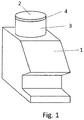
- Fig. 1 2 shows a simplified illustration of an extracorporeal blood treatment device 1 with a display device 2, which in the present case has an outwardly convex curved display 3, and a person location / recognition device 4.
- the display device 2 is preferably located in the upper region of the extracorporeal blood treatment device 1 (FIG. Dialysis machine) arranged so that it is within the field of view of the user.
- the surface of the curved display 3 on the display device 2 is curved convexly and facing away from the center of curvature, so that it faces the user in the vicinity (preferably 360 °) of the device for extracorporeal blood treatment 1, if necessary from all points of view in the room.
- the sensor detects the (complete) perimeter of the device for extracorporeal blood treatment 1.
- the position of a person in the vicinity of the device for extracorporeal blood treatment 1 is detected by the Motherortungs- / recognition device 4 and the detection signals of a controller / control unit / computer preferably the device for extracorporeal blood treatment 1 supplied. Since devices for extracorporeal blood treatment 1 already belong to the prior art and these known dimensions are always equipped with a control unit for controlling / regulating the device-internal functions, can at this point be dispensed with a more detailed description of such a device and its control, instead the relevant prior art, for example, the applicant of this application yourself be referred.
- the controller then controls the display device 2 in such a way that the information to be displayed can always be displayed in the direction of the user via its curved display.
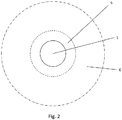
- Fig. 2 shows a schematic representation of the interaction areas around the device for extracorporeal blood treatment 1 around.
- the manual interaction area 5 (average arm length) is the area indicated by the broken line around the extracorporeal blood treatment apparatus 1, in which the user can make direct contact with the extracorporeal blood treatment apparatus 1, for example, actuators such as buttons and switches on the machine or the display device 2 or a touch screen on the display device 2 to operate manually.
- the sensory interaction area 6 which is indicated by a dashed line.
- the user of the person recognition device 4 in Fig. 2 not shown
- the information displayed on the display device 2 is displayed in the direction of the user.
- gestures and / or the user identity of the user can be detected by the personal location / recognition device 4, so that the user can contact the device for extracorporeal blood treatment 1 and / or display device 2 within the sensory interaction area 6 without contact in preferably selected / individual to serve the user in a reduced manner.
- Fig. 3 shows a simplified plan view of a display device 2 with a polyhedral display 7 and a plurality of display part surfaces 8, each having a viewing angle ⁇ .
- the polyhedron-like shape is realized by flat, contiguous display faces 8, which face away from the center of the polyhedron and are aligned in different directions of the space.
- the viewing angle ⁇ is selected so that at least one display sub-area 8 can be viewed by the user from any point of view within the circumference around the device for extracorporeal blood treatment 1.
- the viewing angle ⁇ was indicated only on a display part surface 8.
- Fig. 4 shows a schematic representation of the device for extracorporeal blood treatment with machine components according to the invention.
- the device for extracorporeal blood treatment 1 is equipped with a control unit 9 which is connected to the display device 2 and the person location / recognition device 4.
- the person location / recognition device 4 is preferably equipped with a face recognition 10. Signals that are detected / generated by the sensor system of the personal location / recognition device 4, for example the location of a person in the environment of the device for extracorporeal blood treatment 1, possibly their gestures and / or user identity and possibly signals of the connected face recognition 10, become the control unit 9 forwarded.
- the control unit 9 regulates the display of the information on the display device 2, for example, depending on the detected by the Merchantortungs- / recognition device 4 current position of the person within the device for extracorporeal blood treatment 1, the display direction the information to be displayed on the display of the display device 2 regulated.
- signals from the device for extracorporeal blood treatment 1 are forwarded to the control unit 9, which regulates the information to be displayed by the display device 2 as a function of the transmitted information from the device for extracorporeal blood treatment 1.
- the user-dependent authorizations for the operation of the device for extracorporeal blood treatment 1 and the display device 2 are also controlled by the control unit 9.
- the user identity is detected by the person recognition device 4, for example by reading a personal chip, or by face recognition of the face recognition device 10 and forwarded to the control unit 9, which permits or blocks the operator inputs of the user in dependence on the associated stored on the control unit 9 user profile ,
Landscapes
- Engineering & Computer Science (AREA)
- Health & Medical Sciences (AREA)
- Theoretical Computer Science (AREA)
- Physics & Mathematics (AREA)
- General Physics & Mathematics (AREA)
- General Engineering & Computer Science (AREA)
- General Health & Medical Sciences (AREA)
- Public Health (AREA)
- Life Sciences & Earth Sciences (AREA)
- Heart & Thoracic Surgery (AREA)
- Biomedical Technology (AREA)
- Human Computer Interaction (AREA)
- Medical Informatics (AREA)
- Veterinary Medicine (AREA)
- Animal Behavior & Ethology (AREA)
- Primary Health Care (AREA)
- Vascular Medicine (AREA)
- Epidemiology (AREA)
- Hematology (AREA)
- Computer Hardware Design (AREA)
- Anesthesiology (AREA)
- Software Systems (AREA)
- Pathology (AREA)
- Surgery (AREA)
- Molecular Biology (AREA)
- Biophysics (AREA)
- Oral & Maxillofacial Surgery (AREA)
- General Business, Economics & Management (AREA)
- Chemical & Material Sciences (AREA)
- Urology & Nephrology (AREA)
- Business, Economics & Management (AREA)
- Emergency Medicine (AREA)
- Medicinal Chemistry (AREA)
- Cardiology (AREA)
- Bioinformatics & Cheminformatics (AREA)
- Multimedia (AREA)
- Dentistry (AREA)
- Electromagnetism (AREA)
- Computer Graphics (AREA)
- Physiology (AREA)
Abstract
Description
- Die Erfindung betrifft eine Vorrichtung zur extrakorporalen Blutbehandlung, beispielsweise eine Dialysemaschine, mit einer integrierten oder externen Anzeigevorrichtung, die dem Anwender Informationen von der Maschine anzeigt, beispielsweise Rückmeldungen zum Status des Therapieablaufs, der Wartung oder des Maschinenzustands und insbesondere eine Vorrichtung zur extrakorporalen Blutbehandlung gemäß dem Oberbegriff des Patentanspruchs 1.
- Derzeit weisen Vorrichtungen zur extrakorporalen Blutbehandlung Anzeigevorrichtungen auf, die statisch oder dreh- und schwenkbar an dieser montiert sind und vom Anwender, wie z.B. medizinisches Fachpersonal, Techniker oder Patienten mit Heimdialyse, manuell mechanisch mit Bedienelementen wie Knöpfen oder über einen Touchscreen bedienbar sind. Dabei ist die Ausrichtung der Anzeige unabhängig von der räumlichen Position des Anwenders.
- Bei einer festen, statischen Anordnung des Anzeigebereichs gemäß einem bekannten Stand der Technik wird die Sichtbarkeit der angezeigten Informationen für den Anwender und dessen manueller Interaktionsbereich während des gewöhnlichen Betriebs stark eingeschränkt, da er sich zum Ablesen der Informationen und/oder zur Bedienung der Vorrichtung zur extrakorporalen Blutbehandlung direkt vor der fest installierten Anzeigevorrichtung befinden muss. Daher stellt die Einschränkung der Anzeigensichtbarkeit und des manuellen Interaktionsbereichs insbesondere für das Klinikpersonal, wie Ärzten und Pflegekräften, die im gewöhnlichen Klinikbetrieb mehrere Blutbehandlungsprozesse gleichzeitig betreuen, einen erheblichen Nachteil dar. Auch die Sichtbarkeit der angezeigten Information für den Patienten ist dadurch häufig nicht möglich. Auch für einen Servicetechniker, der die Vorrichtungen zur extrakorporalen Blutbehandlung wartet, ist der invariante manuelle Interaktionsbereich zur Bedienung der Vorrichtung zur extrakorporalen Blutbehandlung von Nachteil, da er das Bedienen mehrerer Maschinen gleichzeitig erschwert.
- Vorrichtungen zur extrakorporalen Blutbehandlung mit einer dreh- und schwenkbaren Anzeigevorrichtung gemäß einem weiteren bekannten Stand der Technik verbessern die Handhabung eines bzw. mehrerer Maschinenabläufe insoweit, als dass die Anzeigenausrichtung manuell auf die Position des Anwenders ausgerichtet werden kann. Allerdings ist auch bei den Maschinen mit einer drehbaren/schwenkbaren Anzeigenvorrichtung ein Einwirken innerhalb des manuellen Interaktionsbereichs erforderlich und die Information können nur frontal vor der Anzeigenvorrichtung abgelesen werden. Eine dynamische Anpassung der Ausrichtung der Anzeigenvorrichtung auf die Position des Anwenders und eine Maschinen-Anwender-Interaktion außerhalb des manuellen Interaktionsbereichs ist nicht möglich.
- Dies ist insbesondere in einem Fall problematisch, in dem mehrere Maschinen zur extrakorporalen Blutbehandlung gleichzeitig eine kritische Situation signalisieren, da der Anwender erst den jeweiligen Anzeigensichtbarkeitsbereich aller alarmierenden Maschinen betreten muss, um zu entscheiden, an welcher Maschine zuerst eingegriffen werden muss.
- Eine Aufgabe der vorliegenden Erfindung ist es daher, die vorgenannten Probleme der bekannten Anzeigenvorrichtungen an einer Vorrichtung zur extrakorporalen Blutbehandlung, zum Beispiel einer Dialysemaschine, zu lösen und eine Anzeigenvorrichtung zu konstruieren, die eine verbesserte Ablesbarkeit gewährleistet und die insbesondere dem Anwender, unabhängig von seiner relativen räumlichen Position zur Maschine, die Sichtbarkeit der angezeigten Informationen von der Maschine und eine Maschinen-Anwender-Interaktion außerhalb des manuellen Interaktionsbereichs, also des Bereichs, in dem der Anwender direkten manuellen Kontakt zur Bedienung der Maschine herstellen kann, ermöglicht.
- Diese Aufgabe wird erfindungsgemäß durch die Merkmalskombination des Anspruchs 1 gelöst. Vorteilhafte Weiterbildungen der Erfindung sind Gegenstand der beigefügten Unteransprüche.
- Ein Grundgedanke der Erfindung besteht also darin, eine Vorrichtung zur extrakorporalen Blutbehandlung mit mindestens einer Anzeigevorrichtung und mindestens einer Personenortungs-/erkennungsvorrichtung bzw. -funktion derart auszustatten, dass die mindestens eine Anzeigevorrichtung die anzuzeigenden Informationen dynamisch zur Position des Anwenders/Person hin anzeigt, d.h. den Bewegungen des Anwenders/Person im Raum bzw. innerhalb eines definierten Umfelds um die Vorrichtung zur extrakorporalen Blutbehandlung herum nachführt, so dass sie (die Informationen) von der Position bzw. dem Standpunkt des Anwenders/Person aus auf der Anzeigevorrichtung einsehbar sind. Anders ausgedrückt orientiert sich die Anzeigerichtung für die anzuzeigenden Informationen am aktuellen Standpunkt und an der Bewegung des Anwenders im Raum bzw. innerhalb eines definierten Umfelds um die Vorrichtung zur extrakorporalen Blutbehandlung herum (Standpunktwechsel) und wird auf diesen (den Anwender) hin ausgerichtet und geführt. Darüber hinaus kann die Vorrichtung zur extrakorporalen Blutbehandlung optional mit einer weiteren Sensorik ausgestattet sein, die Informationen über die Gestik des Anwenders (Bewegungen des Anwenders am aktuellen Standpunkt im Raum bzw. innerhalb eines definierten Umfelds um die Vorrichtung zur extrakorporalen Blutbehandlung herum) einholt und verarbeitet und somit außerhalb des manuellen Interaktionsbereichs des Anwenders (Arm-Reichweite) durch dessen Steuerungsgesten in einem sensorischen Interaktionsbereich eine Maschinen-Anwender-Interaktion ermöglicht.
- Konkreter ausgedrückt hat die Vorrichtung zur extrakorporalen Blutbehandlung die vorstehend genannte Anzeigevorrichtung, die Personenortungs-/erkennungsvorrichtung sowie eine Steuerung (Rechner), welche Signale der Personenortungs-/erkennungsvorrichtung empfängt und daraus der aktuellen Relativposition des Anwenders zur Vorrichtung zur extrakorporalen Blutbehandlung berechnet. Diese Berechnung kann zur Ermittlung des aktuellen Winkels (Himmelsausrichtung) zur Vorrichtung zur extrakorporalen Blutbehandlung und/oder der Distanz zur Vorrichtung zur extrakorporalen Blutbehandlung beinhalten. In Abhängigkeit der Berechnungsergebnisse steuert die Steuerung die Anzeigevorrichtung an, um deren Anzeigerichtung auf Position/Standpunkt des Anwenders hin auszurichten. Hierfür kann die Anzeigevorrichtung z.B. einen elektrisch angetriebenen Rotor aufweisen, der z.B. einen Monitor zumindest um eine Vertikalachse entsprechend dreht oder die Anzeigevorrichtung kann als Rundumanzeige ausgebildet sein, wobei die Informationsrichtung elektronisch auf der Rundumanzeige auf die Anwenderposition hin ausgerichtet wird.
- Im Fall einer optionalen/zusätzlichen Distanzmessung kann in Abhängigkeit des Berechnungsergebnisses die Information groß- oder kleinformatig(er) dargestellt werden. Im Fall einer optionalen/zusätzlichen Gestik-Erkennungsfunktion können in Abhängigkeit erfasster/erkannter Bewegungen des Anwenders am bereits erfassten Standpunkt des Anwenders einzelne/ausgewählte Funktionen der Vorrichtung zur extrakorporalen Blutbehandlung aktiviert/deaktiviert/eingestellt steuerungsgestützt werden.
- Vorteile einer Vorrichtung zur extrakorporalen Blutbehandlung mit einer solchen Anzeigevorrichtung und Personenortung/-erkennung liegen in der sofortigen, positionsunabhängigen Sichtung von angezeigten Informationen und der Möglichkeit optional zur sofortigen, (quasi ferngesteuerten) positionsunabhängigen Bedienung der Vorrichtung zur extrakorporalen Blutbehandlung (nachfolgend Dialysemaschine) durch den Anwender, sodass in einem Fall, in dem mehrere Maschinen gleichzeitig ein Alarmsignal abgeben, eine schnelle Priorisierung der Handlungen erfolgen kann. Somit ermöglicht die vorliegende Erfindung sowohl eine erhöhte Patientensicherheit im Alarmfall, als auch eine unkomplizierte Betreuung der Therapieabläufe an mehreren Maschinen gleichzeitig.
- Die Aufgabe wird des Weiteren gelöst durch eine Vorrichtung zur extrakorporalen Blutbehandlung mit einer Steuereinheit (Steuerung) und einer Anzeigevorrichtung, wobei die Vorrichtung zur extrakorporalen Blutbehandlung mit einer Personenortungs/- erkennungsvorrichtung ausgestattet/ausgebildet ist und die Personenortung/- erkennungsvorrichtung und die Anzeigevorrichtung über die Steuereinheit in Informationsaustauschkontakt zueinander stehen und die Personenortungs/- erkennungsvorrichtung dazu angepasst ist, Informationen über den aktuellen Standpunkt einer Person, die sich im Umfeld der Vorrichtung zur extrakorporalen Blutbehandlung befindet, einzuholen und zu verarbeiten, und die Anzeigevorrichtung dazu angepasst ist, auf einem Display, das bevorzugt von sämtlichen Positionen innerhalb des von der Personenortungs/erkennungsvorrichtung erfassbaren Bereichs aus einsehbar ist, Informationen in Abhängigkeit vom aktuellen Standpunkt der Person, insbesondere relativ zur Vorrichtung zur extrakorporalen Blutbehandlung, so darzustellen, bevorzugt automatisch zum Standpunkt der Person hin dazustellen, dass sie vom Standpunkt der Person aus einsehbar sind.
- In anderen Worten ausgedrückt erfasst die Personenortungs/-erkennungseinrichtung, die einer Vorrichtung zur extrakorporalen Blutbehandlung zugeordnet ist, eine Person in einem definierten Umfeld dieser Vorrichtung (entsprechend der Erfassungsleistung eines verwendeten Sensors) zur extrakorporalen Blutbehandlung und die Steuereinheit, die vorzugsweise Bestandteil der Vorrichtung zur extrakorporalen Blutbehandlung ist, steuert die Anzeigevorrichtung, deren Display von sämtlichen Positionen innerhalb des definierten Umfeld aus einsehbar ist, so dass die Anzeige der darzustellenden Information automatisch zum Standpunkt der Person im definierten Umfeld hin erfolgt. Unter dem definierten Umfeld um die Vorrichtung zur extrakorporalen Blutbehandlung herum ist der ganze Bereich zu verstehen, der von der Sensorik der Personenerkennungsvorrichtung erfasst wird.
- Vorteilhafterweise wird der Benutzer der Vorrichtung zur extrakorporalen Blutbehandlung, darunter sind Ärzte, Pflegepersonal, Techniker oder Patienten zu verstehen, bei einer solchen Ausgestaltung der Vorrichtung zur extrakorporalen Blutbehandlung als Person von der Personenortungs-/erkennungsvorrichtung erkannt und die auf dem Display der Anzeigevorrichtung dazustellenden Informationen werden automatisch in Richtung des Standpunkts der Person anzeigt und abhängig von ihrer Bewegung mitgeführt, sodass der Anwender sich unabhängig von der Anordnung des Displays an der Maschine im Therapieraum bewegen kann, ohne dabei den Sichtkontakt zu den dargestellten Informationen über den Therapieverlauf und/oder den Maschinenzustand zu verlieren. Eine solche Anzeigevorrichtung kann, beispielsweise zylinderartig oder polyedrisch, mit einem außenliegenden, umlaufenden Display ausgestattet sein, dabei ist auch eine Anordnung mehrerer Displayflächen zu einer Displaygesamtfläche möglich. An der Anzeigevorrichtung können auch Knöpfe zur manuellen Bedienung der Anzeigevorrichtung angebracht sein, auch die Integration eines Touchscreens zur Bedienung der Anzeige ist möglich. In einer weiteren Gestaltungsform der erfindungsgemäßen Anzeigevorrichtung sind mehrere Displays an verschiedenen Stellen des Raums so angebracht, dass von jedem Standpunkt im Raum mindestens ein Display einsehbar ist. Durch die dynamische Anpassung der Anzeigerichtung in Abhängigkeit des Standpunkts des Benutzers ist ein manuelles Eingreifen zur Justierung der Anzeigerichtung nicht nötig, wodurch auch eine Entfernung des Benutzers aus dem manuellen Interaktionsbereich keine Einschränkung für die sofortige Sichtung von dargestellten Informationen bedeutet. Der Benutzer ist damit in der Lage, im Umfeld der Vorrichtung zur extrakorporalen Blutbehandlung weitere Arbeiten, z.B. die Bedienung einer weiteren Maschine, auszuführen, ohne dabei die Kontrolle über eine sichere Durchführung des Therapieablaufs an der Vorrichtung zur extrakorporalen Blutbehandlung einzuschränken.
- Bevorzugt ist die Personenortungs-/erkennungsvorrichtung dazu vorgesehen und angepasst, Informationen über Gesten der Person einzuholen und zu verarbeiten, und die Anzeigevorrichtung ist dazu angepasst, durch die Informationen über die Gesten der Person bedienbar zu sein.
- Alternativ dazu hat die Personenortungs-/erkennungsvorrichtung eine gesonderte Sensorik, die dazu vorgesehen und angepasst ist, Informationen über Gesten der Person einzuholen und zu verarbeiten, und die Anzeigevorrichtung ist dazu angepasst, durch die Informationen über die Gesten der Person bedienbar zu sein.
- Die Bedienung der Anzeigevorrichtung durch Gesten ermöglicht dem Benutzer die Bedienung des Displays außerhalb des manuellen Interaktionsbereichs. Somit kann er für eine schnelle Anpassung der Darstellung sorgen, z.B. Schriftgröße oder Umschalten des Informationsmenüs, ohne seinen Standpunkt im Raum ändern zu müssen. Eine Bedienungsmöglichkeit der Dialysemaschine durch Gestik außerhalb des manuellen Interaktionsbereich bedeutet für den Benutzer eine erhebliche Erleichterung, da er auch aus einer Entfernung, in der ein sofortiger manueller Eingriff nicht möglich ist, reagieren kann. Insbesondere in Situationen, in denen ein kritischer Alarm an einer Maschine gemeldet wird, dient eine sofortige Reaktionsmöglichkeit der Sicherheit des Patienten. Darüber hinaus ermöglicht ein sensorischer Interaktionsbereich, der über den manuellen Interaktionsbereich hinausreicht, dem Benutzer eine übersichtlichere Handhabung mehrerer Therapieprozesse parallel.
- Weiter bevorzugt ist die Vorrichtung zur extrakorporalen Blutbehandlung mit Benutzerprofilen betreibbar, die jeweils einer Benutzeridentität zugeordnet sind, und die Personenerkennungsvorrichtung ist angepasst, Informationen über eine Benutzeridentität der Person einzuholen und zu verarbeiten, und die Anzeigevorrichtung ist dazu vorgesehen und angepasst, auf einem Display Informationen in Abhängigkeit von der Benutzeridentität der Person gemäß dem zugehörigen Benutzerprofil darzustellen, und die Anzeigevorrichtung und/oder Dialysemaschine ist/sind dazu vorgesehen und angepasst, in Abhängigkeit von der Benutzeridentität der Person gemäß dem zugehörigen Benutzerprofil bedienbar zu sein.
- Bei einer solchen Ausgestaltung ist es im Betrieb der Vorrichtung zur extrakorporalen Blutbehandlung möglich, einzelnen Benutzern persönliche Anzeigeeinstellungen, z.B. Größe, Helligkeit, optische Sortierung von Informationsgruppen u.a., und benutzerabhängige Berechtigungen zur Bedienung der Maschine automatisch zuzuweisen. Im Regelfall werden sich die Berechtigungen zur Vornahme bestimmter Änderungen und Festlegungen, z.B. Erstellen eines Therapieablaufs, Ändern eines Therapielaufs, oder Eingreifen in einen laufenden Therapieablauf, zwischen Benutzergruppen wie Ärzten, Pflegepersonal und Technikern unterscheiden. Durch die benutzerabhängige Übernahme von Darstellungseinstellungen wird der Bedienkomfort des Benutzers erhöht. Mit einer Personenerkennungsvorrichtung, die in der Lage ist, eine Identitätsfeststellung der Person im sensorischen Interaktionsbereich der Maschine durchzuführen, kann außerdem sichergestellt werden, dass ausschließlich Bedienfunktionen ausgeführt werden können, für die der Benutzer autorisiert ist. Eine Situation, in der ein erster Benutzer an der Maschine angemeldet ist und ein zweiter Benutzer aus dem Umkreis der Maschine eine Bedienung mit den Berechtigungen des ersten Benutzers vornimmt, wird mit einer solchen Benutzeridentitätserkennung verhindert. Dies sichert den Zugriff auf den Therapieablauf gegen Unbefugte ab und stellt eine weitere Maßnahme zur Erhöhung der Patientensicherheit dar. Eine einfache Möglichkeit zur Identitätsfeststellung bietet das Auslesen eines Chips, der z.B. in mitgeführten Dienstausweisen des Klinikpersonals oder im Gastausweis oder in der Patientenchipkarte des Patienten integriert ist und von der Personenerkennungsvorrichtung ausgelesen werden kann.
- Außerdem bevorzugt ist, dass die Personenerkennungsvorrichtung wenigstens eine Kamera aufweist. Eine Kamera bietet eine gut bekannte, kostengünstige Sensorik, mit der eine Personenerkennung einfach möglich gemacht werden kann. Besonders bevorzugt ist, dass die Personenerkennungsvorrichtung eine Gesichtserkennungsvorrichtung aufweist. Eine Gesichtserkennung bietet eine weitere Möglichkeit zur Identitätsfeststellung eines Benutzers im Umkreis der Vorrichtung zur extrakorporalen Blutbehandlung und ersetzt das Mitführen eines Dienstausweises zur Bedienung der Maschine. Darüber hinaus ist die Gesichtserkennung einer mitgeführten Chipkarte insofern überlegen, als ein Vertauschen von Dienstausweisen dazu führen kann, dass ein Benutzer im Besitz einer fremden Chipkarte mit Berechtigungen an der Maschine agiert, für die er nicht autorisiert ist. Auch die Gefahr, dass ein Dienstausweis unbemerkt verloren geht und eine Bedienung der Maschine dadurch blockiert wird, wird mit einer Gesichtserkennung ausgeräumt.
- Bevorzugt ist die Vorrichtung zur extrakorporalen Blutbehandlung mit einer Vorrichtung für einen akustischen Alarm, zum Beispiel eine Sirene, ausgestattet und die Personenerkennungsvorrichtung und die Vorrichtung für einen akustischen Alarm stehen über die Steuereinheit in Informationsaustauschkontakt zueinander und die Vorrichtung für einen akustischen Alarm ist vorgesehen und angepasst, durch Signale der Personenerkennungsvorrichtung bedienbar zu sein.
- Durch einen akustischen Alarm an der Vorrichtung zur extrakorporalen Blutbehandlung wird sichergestellt, dass auch ein Benutzer außerhalb des Sichtbereichs oder ein der Anzeige abgewandter Benutzer alarmiert werden kann. Dies ist insbesondere bei hochkritischen Fehlern vorteilhaft, um eine schnelle Reaktion durch das Klinikpersonal zu befördern. Durch die Verbindung von der Vorrichtung für den akustischen Alarm und der Personenerkennungsvorrichtung kann der Alarm automatisch inaktiviert werden, wenn der autorisierte Benutzer durch Gestik in den Therapieprozess eingreift.
- Außerdem bevorzugt ist, dass die Anzeigevorrichtung ein Display mit einer konvex gebogenen, dem Krümmungsmittelpunkt abgewandten Displayfläche aufweist. Ein Display solcher Form kann vom Benutzer von mehreren Standpositionen im Raum aus eingesehen werden, abhängig vom Krümmungsradius und Umfang ist ein Display solcher Form von allen Standpunkten im Raum aus einsehbar. Somit kann eine Informationsdarstellung auf dem gewölbten Display stets zum Standpunkt des Anwenders hin automatisch angezeigt werden, sodass die Informationen stets vom Anwender einsehbar sind, ohne dass sein aktives Eingreifen erforderlich ist. Die Krümmung der Displayfläche muss dabei nicht unbedingt 360° umschließen, auch eine Öffnung zur hinteren Seite der Maschine hin ist vorteilhaft, da sich eine Maschine mit einer solchen Anzeigevorrichtung in einen kleinen Raum wandständig gut integrieren lässt.
- Bevorzugt ist die Anzeigevorrichtung dazu angepasst, im Falle eines Alarms eine Kritikalitätsbewertung anzuzeigen. Dies erlaubt dem Benutzer eine sofortige Entscheidung über die Handlungsdringlichkeit, insbesondere im Fall von Alarmen an mehreren Maschinen gleichzeitig.
- Weiter bevorzugt ist ein Netzwerk aus mehreren Vorrichtungen zur extrakorporalen Blutbehandlung mit den beschriebenen Merkmalen, dadurch gekennzeichnet, dass die Anzeigevorrichtungen der Vorrichtungen zur extrakorporalen Blutbehandlung dazu angepasst sind, im Fall von parallelen Alarmen an mehreren Maschinen die auf den Displayflächen der Anzeigevorrichtungen darzustellenden Informationen gemäß der Priorität der Alarme darzustellen.
- Eine automatisierte Priorisierung von parallelen Alarmen macht den Benutzer zur sofortigen Fehlerbehebung handlungsbereit, da die vorangehende notwendige Dringlichkeitsanalyse der parallel gemeldeten Fehler in einem solchen Netzwerk entfällt. Somit kann gewährleistet werden, dass ein kritischer Fehler in minimaler Zeit behoben und die Patientensicherheit weiter erhöht wird.
- Nachfolgend werden bevorzugte Ausführungsbeispiele der Erfindung anhand der beigefügten Zeichnungen näher beschrieben.
-
Fig. 1 zeigt eine vereinfachte Darstellung einer erfindungsgemäßen Vorrichtung zur extrakorporalen Blutbehandlung mit einer Anzeigevorrichtung, die ein außenliegendes konvex gewölbtes Display ausweist, und einer Personenerkennungsvorrichtung. -
Fig. 2 zeigt eine schematische Darstellung der Interaktionsbereiche um die Vorrichtung zur extrakorporalen Blutbehandlung herum. -
Fig. 3 zeigt eine vereinfachte Draufsicht einer Anzeigevorrichtung mit polyedrischen Display und mehreren Displayteilflächen mit jeweils einem Sichtwinkel α. -
Fig. 4 zeigt eine schematische Darstellung der Vorrichtung zur extrakorporalen Blutbehandlung mit erfindungsgemäßen Maschinenkomponenten. - Detaillierte Beschreibung bevorzugter Ausführungsbeispiele
-
Fig. 1 zeigt eine vereinfachte Darstellung einer Vorrichtung zur extrakorporalen Blutbehandlung 1 mit einer Anzeigevorrichtung 2, die im vorliegenden Fall ein außenliegendes konvex gewölbtes Display 3 ausweist, und einer Personenortungs-/erkennungsvorrichtung 4. Die Anzeigevorrichtung 2 ist bevorzugt im oberen Bereich der Vorrichtung zur extrakorporalen Blutbehandlung 1 (Dialysemaschine) so angeordnet, dass sie sich im Sichtbereich des Anwenders befindet. Die Fläche des gewölbten Displays 3 an der Anzeigevorrichtung 2 ist konvex gewölbt und dem Krümmungsmittelpunkt abgewandt, sodass sie dem Anwender im Umkreis (vorzugsweise 360°) der Vorrichtung zur extrakorporalen Blutbehandlung 1 ggf. von allen Standpunkten im Raum aus zugewandt ist. Im bevorzugt oberen Bereich der Anzeigevorrichtung 2 befindet sich die Personenortungs-/erkennungsvorrichtung 4, deren Sensorik den (kompletten) Umkreis der Vorrichtung zur extrakorporalen Blutbehandlung 1 erfasst. Der Standpunkt einer Person im Umkreis der Vorrichtung zur extrakorporalen Blutbehandlung 1 wird über die Personenortungs-/erkennungsvorrichtung 4 erfasst und die Erfassungssignale einer Steuerung/Steuereinheit/Rechner vorzugsweise der Vorrichtung zur extrakorporalen Blutbehandlung 1 zugeführt. Da Vorrichtungen zur extrakorporalen Blutbehandlung 1 bereits zum Stand der Technik zählen und diese bekannter Maßen immer mit einer Steuerungseinheit zur Steuerung/Regelung der vorrichtungsinternen Funktionen ausgerüstet sind, kann an dieser Stelle auf eine genauere Beschreibung eines solchen Vorrichtung sowie deren Steuerung verzichtet werden, stattdessen kann auf den einschlägigen Stand der Technik beispielsweise der Anmelderin dieser Anmeldung selbst verwiesen werden. Die Steuerung steuert hierauf die Anzeigevorrichtung 2 derart an, dass über deren gewölbtes Display die darzustellenden Informationen stets in Richtung des Anwenders angezeigt werden können. -
Fig. 2 zeigt eine schematische Darstellung der Interaktionsbereiche um die Vorrichtung zur extrakorporalen Blutbehandlung 1 herum. Der manuelle Interaktionsbereich 5 (durchschnittliche Armlänge) ist der durch die unterbrochene Linie angedeutete Bereich um die Vorrichtung zur extrakorporalen Blutbehandlung 1 herum, in dem der Anwender direkten Kontakt zur Vorrichtung zur extrakorporalen Blutbehandlung 1 herstellen kann, um beispielweise Betätigungselemente wie Knöpfe und Schalter an der Maschine oder der Anzeigevorrichtung 2 oder einen Touchscreen an der Anzeigevorrichtung 2 manuell zu bedienen. Von der Vorrichtung zur extrakorporalen Blutbehandlung 1 aus über den manuellen Interaktionsbereich hinaus erstreckt sich der sensorische Interaktionsbereich 6, der mit einer Strichpunktlinie angedeutet ist. Innerhalb des sensorischen Interaktionsbereichs 6 wird der Anwender von der Personenerkennungsvorrichtung 4 (inFig. 2 nicht gezeigt) erkannt und die über die Anzeigevorrichtung 2 dargestellten Informationen werden in Richtung des Anwenders angezeigt. Innerhalb des sensorischen Interaktionsbereichs 6 können durch die Personenortungs-/erkennungsvorrichtung 4 z.B. Gesten und/oder die Benutzeridentität des Anwenders erfasst werden, sodass der Anwender die Vorrichtung zur extrakorporalen Blutbehandlung 1 und/oder Anzeigevorrichtung 2 innerhalb des sensorischen Interaktionsbereichs 6 berührungslos in bevorzugt ausgewählter/individuell auf den Anwender reduzierter Weise bedienen kann. -
Fig. 3 zeigt eine vereinfachte Draufsicht einer Anzeigevorrichtung 2 mit einem polyedrischen Display 7 und mehreren Displayteilflächen 8 mit jeweils einem Sichtwinkel α. Die polyederartige Form wird durch ebene, aneinandergrenzende Displayteilflächen 8 realisiert, die dem Mittelpunkt des Polyeders abgewandt sind und in unterschiedliche Richtungen des Raums ausgerichtet sind. Der Sichtwinkel α ist so gewählt, dass von jedem Standpunkt aus innerhalb des Umkreises um die Vorrichtung zur extrakorporalen Blutbehandlung 1 herum mindestens eine Displayteilfläche 8 vom Anwender einsehbar ist. Zur einfacheren Ansicht wurde der Sichtwinkel α nur an einer Displayteilfläche 8 angedeutet. -
Fig. 4 zeigt eine schematische Darstellung der Vorrichtung zur extrakorporalen Blutbehandlung mit erfindungsgemäßen Maschinenkomponenten. Die Vorrichtung zur extrakorporalen Blutbehandlung 1 ist mit einer Steuereinheit 9 ausgestattet, die mit der Anzeigevorrichtung 2 und der Personenortungs-/erkennungsvorrichtung 4 verbunden ist. Die Personenortungs-/erkennungsvorrichtung 4 ist bevorzugt mit einer Gesichtserkennung 10 ausgestattet. Signale, die von der Sensorik der Personenortungs-/erkennungsvorrichtung 4 erfasst/erzeugt werden, beispielsweise der Standort einer Person im Umfeld der Vorrichtung zur extrakorporalen Blutbehandlung 1, ggf. deren Gesten und/oder Benutzeridentität sowie ggf. Signale der verbundenen Gesichtserkennung 10, werden an die Steuereinheit 9 weitergeleitet. In Abhängigkeit von den Signalen der Personenortungs-/erkennungsvorrichtung 4 regelt die Steuereinheit 9 die Darstellung der Informationen auf Anzeigevorrichtung 2, beispielsweise wird in Abhängigkeit des von der Personenortungs-/erkennungsvorrichtung 4 erfassten aktuellen Standpunkts der Person im Umkreis der Vorrichtung zur extrakorporalen Blutbehandlung 1 die Anzeigerichtung der darzustellenden Informationen auf dem Display der Anzeigevorrichtung 2 geregelt. Ebenso werden Signale von der Vorrichtung zur extrakorporalen Blutbehandlung 1 an die Steuereinheit 9 weitergeleitet, die in Abhängigkeit von den übermittelten Informationen aus der Vorrichtung zur extrakorporalen Blutbehandlung 1 die von der Anzeigevorrichtung 2 darzustellenden Informationen regelt. Auch die benutzerabhängigen Berechtigungen für die Bedienung der Vorrichtung zur extrakorporalen Blutbehandlung 1 und der Anzeigevorrichtung 2 werden über die Steuereinheit 9 geregelt. Dazu wird die Benutzeridentität von der Personenerkennungsvorrichtung 4, beispielsweise durch Auslesen eines personenbezogenen Chips, bzw. durch Gesichtserkennung von der Gesichtserkennungsvorrichtung 10 erfasst und an die Steuereinheit 9 weitergeleitet, die in Abhängigkeit vom zugehörigen auf der Steuereinheit 9 eingespeicherten Benutzerprofil die Bedieneingaben des Anwenders zulässt oder blockiert. -
- 1
- Vorrichtung zur extrakorporalen Blutbehandlung
- 2
- Anzeigevorrichtung
- 3
- Gewölbtes Display
- 4
- Personenortungs-/erkennungsvorrichtung
- 5
- Manueller Interaktionsbereich
- 6
- Sensorischer Interaktionsbereich
- 7
- Polyedrisches Display
- 8
- Displayteilfläche
- 9
- Steuereinheit
- 10
- Gesichtserkennungsvorrichtung
Claims (11)
- Vorrichtung (1) zur extrakorporalen Blutbehandlung mit einer Steuereinheit (9) und einer Anzeigevorrichtung (2), dadurch gekennzeichnet, dassdie Vorrichtung (1) zur extrakorporalen Blutbehandlung mit einer Personenortungs-/erkennungsvorrichtung (4) ausgestattet ist unddie Personenortungs-/erkennungsvorrichtung (4) und die Anzeigevorrichtung (2) über die Steuereinheit (9) in Informationsaustauschkontakt zueinander stehen unddie Personenortungs-/erkennungsvorrichtung (4) dazu vorgesehen und angepasst ist, Informationen zumindest über den Standpunkt einer Person, die sich in einem Bereich befindet, der von der Personenortungs-/erkennungsvorrichtung (4) erfassbar ist, einzuholen und zu verarbeiten, unddie Anzeigevorrichtung (2) dazu vorgesehen und angepasst ist, auf einem Display (3; 7), das von sämtlichen Positionen innerhalb des von der Personenortungs-/erkennungsvorrichtung (4) erfassbaren Bereichs aus einsehbar ist, Informationen in Abhängigkeit zumindest vom Standpunkt der Person relativ zur Vorrichtung (1) zur extrakorporalen Blutbehandlung automatisch zum Standpunkt der Person hin darzustellen, sodass die Informationen vom Standpunkt der Person aus einsehbar sind.
- Vorrichtung (1) zur extrakorporalen Blutbehandlung nach Anspruch 1, dadurch gekennzeichnet, dassdie Personenortungs-/erkennungsvorrichtung (4) dazu vorgesehen und angepasst ist, Informationen über Gesten der Person einzuholen und zu verarbeiten, unddie Anzeigevorrichtung (2) dazu angepasst ist, durch die Informationen über die Gesten der Person bedienbar zu sein.
- Vorrichtung (1) zur extrakorporalen Blutbehandlung nach Anspruch 1 oder 2, dadurch gekennzeichnet, dassdie Personenortungs-/erkennungsvorrichtung Personenerkennungsvorrichtung (4) dazu angepasst ist, Informationen über Gesten der Person einzuholen und zu verarbeiten, unddie Vorrichtung (1) zur extrakorporalen Blutbehandlung dazu angepasst ist, durch die Informationen über die Gesten der Person bedienbar zu sein.
- Vorrichtung (1) zur extrakorporalen Blutbehandlung nach Anspruch 1 bis 3, dadurch gekennzeichnet, dassdie Vorrichtung (1) zur extrakorporalen Blutbehandlung mit Benutzerprofilen, die jeweils einer Benutzeridentität zugeordnet sind, betreibbar ist unddie Personenortungs-/erkennungsvorrichtung (4) angepasst ist, Informationen über eine Benutzeridentität der Person einzuholen und zu verarbeiten, unddie Anzeigevorrichtung (2) dazu angepasst ist, auf einem Display (3; 7) Informationen in Abhängigkeit von der Benutzeridentität der Person gemäß dem zugehörigen Benutzerprofil darzustellen.
- Vorrichtung (1) zur extrakorporalen Blutbehandlung nach Anspruch 1 bis 4, dadurch gekennzeichnet, dassdie Vorrichtung (1) zur extrakorporalen Blutbehandlung mit Benutzerprofilen, die jeweils einer Benutzeridentität zugeordnet sind, betreibbar ist unddie Personenortungs-/erkennungsvorrichtung (4) angepasst ist, Informationen über eine Benutzeridentität der Person einzuholen und zu verarbeiten, unddie Anzeigevorrichtung (2) und/oder Vorrichtung (1) zur extrakorporalen Blutbehandlung dazu angepasst ist/sind, in Abhängigkeit von der Benutzeridentität der Person gemäß dem zugehörigen Benutzerprofil bedienbar zu sein.
- Vorrichtung (1) zur extrakorporalen Blutbehandlung nach Anspruch 1 bis 5, dadurch gekennzeichnet, dass die Personenortungs-/erkennungsvorrichtung (4) eine Kamera aufweist.
- Vorrichtung (1) zur extrakorporalen Blutbehandlung nach Anspruch 1 bis 6, dadurch gekennzeichnet, dass die Personenortungs-/erkennungsvorrichtung (4) eine Gesichtserkennungsvorrichtung (10) aufweist.
- Vorrichtung (1) zur extrakorporalen Blutbehandlung nach Anspruch 1 bis 7, dadurch gekennzeichnet, dass die Vorrichtung (1) zur extrakorporalen Blutbehandlung mit einer Vorrichtung für einen akustischen Alarm ausgestattet ist, und
die Personenortungs-/erkennungsvorrichtung (4) und die Vorrichtung für einen akustischen Alarm über die Steuereinheit (9) in Informationsaustauschkontakt zueinander stehen und
die Vorrichtung für einen akustischen Alarm angepasst ist, durch Signale der Personenortungs-/erkennungsvorrichtung (4) bedienbar zu sein. - Vorrichtung (1) zur extrakorporalen Blutbehandlung nach Anspruch 1 bis 8, dadurch gekennzeichnet, dass die Anzeigevorrichtung ein Display (3) mit einer konvex gebogenen, dem Krümmungsmittelpunkt abgewandten Displayfläche aufweist.
- Vorrichtung (1) zur extrakorporalen Blutbehandlung nach Anspruch 1 bis 9, dadurch gekennzeichnet, dass die Anzeigevorrichtung (2) dazu angepasst ist, im Falle eines Alarms eine Kritikalitätsbewertung anzuzeigen.
- Netzwerk aus mehreren Vorrichtungen zur extrakorporalen Blutbehandlung nach Anspruch 1 bis 9, dadurch gekennzeichnet, dass die Anzeigevorrichtungen der Vorrichtungen zur extrakorporalen Blutbehandlung dazu angepasst sind, im Fall von Alarmen an mehreren Geräten die auf den Displayflächen der Anzeigevorrichtungen darzustellenden Informationen gemäß der Priorität der Alarme darstellen.
Applications Claiming Priority (1)
| Application Number | Priority Date | Filing Date | Title |
|---|---|---|---|
| DE102016123371.4A DE102016123371A1 (de) | 2016-12-02 | 2016-12-02 | Vorrichtung zur extrakorporalen Blutbehandlung mit einer Rundum-Anzeige |
Publications (2)
| Publication Number | Publication Date |
|---|---|
| EP3330960A1 true EP3330960A1 (de) | 2018-06-06 |
| EP3330960B1 EP3330960B1 (de) | 2021-11-17 |
Family
ID=60515209
Family Applications (1)
| Application Number | Title | Priority Date | Filing Date |
|---|---|---|---|
| EP17204402.6A Active EP3330960B1 (de) | 2016-12-02 | 2017-11-29 | Vorrichtung zur extrakorporalen blutbehandlung mit einer rundum-anzeige |
Country Status (5)
| Country | Link |
|---|---|
| US (1) | US10656723B2 (de) |
| EP (1) | EP3330960B1 (de) |
| JP (1) | JP7046577B2 (de) |
| CN (1) | CN108154921B (de) |
| DE (1) | DE102016123371A1 (de) |
Citations (5)
| Publication number | Priority date | Publication date | Assignee | Title |
|---|---|---|---|---|
| JPH09107514A (ja) * | 1995-10-09 | 1997-04-22 | Sony Corp | 投写形表示装置 |
| US20070180129A1 (en) * | 2005-12-09 | 2007-08-02 | Tolmie Craig R | System and method for automatically adjusting medical displays |
| US20150002490A1 (en) * | 2013-06-28 | 2015-01-01 | Samsung Electronics Co., Ltd. | Method of moving the displays of an ultrasound diagnostic device and ultrasound diagnostic device |
| EP2857053A1 (de) * | 2013-10-07 | 2015-04-08 | B. Braun Avitum AG | Dialysevorrichtung mit Bewegungserfassungseinrichtung und Gestensteuerung |
| US20160152370A1 (en) * | 2013-07-17 | 2016-06-02 | Krones Ag | Container Handling Machine with Display |
Family Cites Families (8)
| Publication number | Priority date | Publication date | Assignee | Title |
|---|---|---|---|---|
| US8392212B2 (en) * | 2005-07-28 | 2013-03-05 | Roberto Beraja | Medical claims fraud prevention system including patient identification interface feature and associated methods |
| US8587516B2 (en) * | 2009-04-24 | 2013-11-19 | Baxter International Inc. | User interface powered via an inductive coupling |
| US11881307B2 (en) * | 2012-05-24 | 2024-01-23 | Deka Products Limited Partnership | System, method, and apparatus for electronic patient care |
| JP2012123252A (ja) * | 2010-12-09 | 2012-06-28 | Nikon Corp | 画像表示装置 |
| US9165112B2 (en) * | 2012-02-03 | 2015-10-20 | Fresenius Medical Care Holdings, Inc. | Systems and methods for displaying objects at a medical treatment apparatus display screen |
| DE102012109861A1 (de) * | 2012-10-16 | 2014-04-17 | B. Braun Avitum Ag | Patientenwaage mit Kameraüberwachung und Dialysetherapiesystem mit kameraüberwachtem Wiegeablauf |
| US20170168688A1 (en) * | 2015-12-09 | 2017-06-15 | Fresenius Medical Care Holdings, Inc. | Configuring a User Interface of a Dialysis Machine |
| KR102498451B1 (ko) * | 2016-03-24 | 2023-02-13 | 삼성전자주식회사 | 전자 장치 및 전자 장치에서의 정보 제공 방법 |
-
2016
- 2016-12-02 DE DE102016123371.4A patent/DE102016123371A1/de not_active Withdrawn
-
2017
- 2017-11-29 EP EP17204402.6A patent/EP3330960B1/de active Active
- 2017-12-01 US US15/829,158 patent/US10656723B2/en active Active
- 2017-12-01 JP JP2017231410A patent/JP7046577B2/ja active Active
- 2017-12-01 CN CN201711249873.6A patent/CN108154921B/zh active Active
Patent Citations (5)
| Publication number | Priority date | Publication date | Assignee | Title |
|---|---|---|---|---|
| JPH09107514A (ja) * | 1995-10-09 | 1997-04-22 | Sony Corp | 投写形表示装置 |
| US20070180129A1 (en) * | 2005-12-09 | 2007-08-02 | Tolmie Craig R | System and method for automatically adjusting medical displays |
| US20150002490A1 (en) * | 2013-06-28 | 2015-01-01 | Samsung Electronics Co., Ltd. | Method of moving the displays of an ultrasound diagnostic device and ultrasound diagnostic device |
| US20160152370A1 (en) * | 2013-07-17 | 2016-06-02 | Krones Ag | Container Handling Machine with Display |
| EP2857053A1 (de) * | 2013-10-07 | 2015-04-08 | B. Braun Avitum AG | Dialysevorrichtung mit Bewegungserfassungseinrichtung und Gestensteuerung |
Also Published As
| Publication number | Publication date |
|---|---|
| CN108154921A (zh) | 2018-06-12 |
| EP3330960B1 (de) | 2021-11-17 |
| JP2018102914A (ja) | 2018-07-05 |
| DE102016123371A1 (de) | 2018-06-07 |
| US10656723B2 (en) | 2020-05-19 |
| US20180157335A1 (en) | 2018-06-07 |
| CN108154921B (zh) | 2024-12-27 |
| JP7046577B2 (ja) | 2022-04-04 |
Similar Documents
| Publication | Publication Date | Title |
|---|---|---|
| EP2054106B1 (de) | Medizinisches gerät zur extrakorporalen blutbehandlung | |
| EP3134846B1 (de) | Anordnung und verfahren zur identifikation von fingerabdrücken | |
| EP2857053B1 (de) | Dialysevorrichtung mit Bewegungserfassungseinrichtung und Gestensteuerung | |
| DE102018210957B4 (de) | Maschinelle Lernvorrichtung und Benutzeridentifikationsvorrichtung | |
| DE102014014498B4 (de) | Mit einem Touchscreen ausgestattetes Gerät sowie Verfahren zur Steuerung eines derartigen Geräts | |
| EP3646127B1 (de) | Rollstuhl-sondersteuerung | |
| EP2953793B1 (de) | System zur druckmaschinenbedienung | |
| EP3992925A1 (de) | Vorrichtung und verfahren zur berührungslosen optischen abbildung eines ausgewählten oberflächenbereiches einer hand | |
| WO2021028535A1 (de) | Interface für ein medizinisches gerät mit einem adaptiven betätigungssensor | |
| WO2008145309A1 (de) | Vorrichtung und verfahren zur zentralen überwachung und/oder steuerung wenigstens eines geräts | |
| EP2503354A1 (de) | Selbstbedienungs-Terminal und Verfahren zur Überwachung eines Benutzer-Aufenthaltsbereichs | |
| EP3433776B1 (de) | Entferntes steuern von meldungen für ein dialysegerät | |
| EP3330960B1 (de) | Vorrichtung zur extrakorporalen blutbehandlung mit einer rundum-anzeige | |
| EP4104189A1 (de) | Verfahren, vorrichtung und system zur fernüberwachung eines medizintechnischen geräts | |
| DE112020006348T5 (de) | Taktile Präsentationseinrichtung und taktiles Präsentationsverfahren | |
| CN113348419A (zh) | 用于促进操作者专注于多个操作者工作站屏幕之一的方法和系统 | |
| CN113123267B (zh) | 一种闸机 | |
| DE102017208342A1 (de) | Spiegeleinstellvorrichtung | |
| WO2021209534A1 (de) | Medizinisches gerät mit einem display und mit einer verarbeitungseinheit und verfahren hierfür | |
| WO2014040802A1 (de) | Anzeigevorrichtung mit einem richtungsabhängigen sensor | |
| DE102013019785B4 (de) | Vorrichtung und Verfahren zur Eingabesteuerung | |
| DE10236470A1 (de) | Integriertes klinisches Informations- und Kommunikationssystem | |
| DE102024130708A1 (de) | Verfahren zum Betreiben eines Fahrzeugs, computerlesbares Medium, System, und Fahrzeug | |
| DE202013010697U1 (de) | Vorrichtung zur Eingabesteuerung | |
| Gowda | Improvising Reliability of Autonomous Car using Risk detection |
Legal Events
| Date | Code | Title | Description |
|---|---|---|---|
| PUAI | Public reference made under article 153(3) epc to a published international application that has entered the european phase |
Free format text: ORIGINAL CODE: 0009012 |
|
| STAA | Information on the status of an ep patent application or granted ep patent |
Free format text: STATUS: THE APPLICATION HAS BEEN PUBLISHED |
|
| AK | Designated contracting states |
Kind code of ref document: A1 Designated state(s): AL AT BE BG CH CY CZ DE DK EE ES FI FR GB GR HR HU IE IS IT LI LT LU LV MC MK MT NL NO PL PT RO RS SE SI SK SM TR |
|
| AX | Request for extension of the european patent |
Extension state: BA ME |
|
| STAA | Information on the status of an ep patent application or granted ep patent |
Free format text: STATUS: REQUEST FOR EXAMINATION WAS MADE |
|
| 17P | Request for examination filed |
Effective date: 20181206 |
|
| STAA | Information on the status of an ep patent application or granted ep patent |
Free format text: STATUS: EXAMINATION IS IN PROGRESS |
|
| 17Q | First examination report despatched |
Effective date: 20201125 |
|
| GRAP | Despatch of communication of intention to grant a patent |
Free format text: ORIGINAL CODE: EPIDOSNIGR1 |
|
| STAA | Information on the status of an ep patent application or granted ep patent |
Free format text: STATUS: GRANT OF PATENT IS INTENDED |
|
| INTG | Intention to grant announced |
Effective date: 20210607 |
|
| GRAS | Grant fee paid |
Free format text: ORIGINAL CODE: EPIDOSNIGR3 |
|
| GRAA | (expected) grant |
Free format text: ORIGINAL CODE: 0009210 |
|
| STAA | Information on the status of an ep patent application or granted ep patent |
Free format text: STATUS: THE PATENT HAS BEEN GRANTED |
|
| AK | Designated contracting states |
Kind code of ref document: B1 Designated state(s): AL AT BE BG CH CY CZ DE DK EE ES FI FR GB GR HR HU IE IS IT LI LT LU LV MC MK MT NL NO PL PT RO RS SE SI SK SM TR |
|
| REG | Reference to a national code |
Ref country code: GB Ref legal event code: FG4D Free format text: NOT ENGLISH |
|
| REG | Reference to a national code |
Ref country code: DE Ref legal event code: R096 Ref document number: 502017012033 Country of ref document: DE |
|
| REG | Reference to a national code |
Ref country code: IE Ref legal event code: FG4D Free format text: LANGUAGE OF EP DOCUMENT: GERMAN |
|
| REG | Reference to a national code |
Ref country code: AT Ref legal event code: REF Ref document number: 1448734 Country of ref document: AT Kind code of ref document: T Effective date: 20211215 |
|
| REG | Reference to a national code |
Ref country code: SE Ref legal event code: TRGR |
|
| REG | Reference to a national code |
Ref country code: LT Ref legal event code: MG9D |
|
| REG | Reference to a national code |
Ref country code: NL Ref legal event code: MP Effective date: 20211117 |
|
| PG25 | Lapsed in a contracting state [announced via postgrant information from national office to epo] |
Ref country code: RS Free format text: LAPSE BECAUSE OF FAILURE TO SUBMIT A TRANSLATION OF THE DESCRIPTION OR TO PAY THE FEE WITHIN THE PRESCRIBED TIME-LIMIT Effective date: 20211117 Ref country code: LT Free format text: LAPSE BECAUSE OF FAILURE TO SUBMIT A TRANSLATION OF THE DESCRIPTION OR TO PAY THE FEE WITHIN THE PRESCRIBED TIME-LIMIT Effective date: 20211117 Ref country code: FI Free format text: LAPSE BECAUSE OF FAILURE TO SUBMIT A TRANSLATION OF THE DESCRIPTION OR TO PAY THE FEE WITHIN THE PRESCRIBED TIME-LIMIT Effective date: 20211117 Ref country code: BG Free format text: LAPSE BECAUSE OF FAILURE TO SUBMIT A TRANSLATION OF THE DESCRIPTION OR TO PAY THE FEE WITHIN THE PRESCRIBED TIME-LIMIT Effective date: 20220217 |
|
| PG25 | Lapsed in a contracting state [announced via postgrant information from national office to epo] |
Ref country code: IS Free format text: LAPSE BECAUSE OF FAILURE TO SUBMIT A TRANSLATION OF THE DESCRIPTION OR TO PAY THE FEE WITHIN THE PRESCRIBED TIME-LIMIT Effective date: 20220317 Ref country code: PT Free format text: LAPSE BECAUSE OF FAILURE TO SUBMIT A TRANSLATION OF THE DESCRIPTION OR TO PAY THE FEE WITHIN THE PRESCRIBED TIME-LIMIT Effective date: 20220317 Ref country code: PL Free format text: LAPSE BECAUSE OF FAILURE TO SUBMIT A TRANSLATION OF THE DESCRIPTION OR TO PAY THE FEE WITHIN THE PRESCRIBED TIME-LIMIT Effective date: 20211117 Ref country code: NO Free format text: LAPSE BECAUSE OF FAILURE TO SUBMIT A TRANSLATION OF THE DESCRIPTION OR TO PAY THE FEE WITHIN THE PRESCRIBED TIME-LIMIT Effective date: 20220217 Ref country code: NL Free format text: LAPSE BECAUSE OF FAILURE TO SUBMIT A TRANSLATION OF THE DESCRIPTION OR TO PAY THE FEE WITHIN THE PRESCRIBED TIME-LIMIT Effective date: 20211117 Ref country code: LV Free format text: LAPSE BECAUSE OF FAILURE TO SUBMIT A TRANSLATION OF THE DESCRIPTION OR TO PAY THE FEE WITHIN THE PRESCRIBED TIME-LIMIT Effective date: 20211117 Ref country code: HR Free format text: LAPSE BECAUSE OF FAILURE TO SUBMIT A TRANSLATION OF THE DESCRIPTION OR TO PAY THE FEE WITHIN THE PRESCRIBED TIME-LIMIT Effective date: 20211117 Ref country code: GR Free format text: LAPSE BECAUSE OF FAILURE TO SUBMIT A TRANSLATION OF THE DESCRIPTION OR TO PAY THE FEE WITHIN THE PRESCRIBED TIME-LIMIT Effective date: 20220218 Ref country code: ES Free format text: LAPSE BECAUSE OF FAILURE TO SUBMIT A TRANSLATION OF THE DESCRIPTION OR TO PAY THE FEE WITHIN THE PRESCRIBED TIME-LIMIT Effective date: 20211117 |
|
| REG | Reference to a national code |
Ref country code: CH Ref legal event code: PL |
|
| PG25 | Lapsed in a contracting state [announced via postgrant information from national office to epo] |
Ref country code: CZ Free format text: LAPSE BECAUSE OF FAILURE TO SUBMIT A TRANSLATION OF THE DESCRIPTION OR TO PAY THE FEE WITHIN THE PRESCRIBED TIME-LIMIT Effective date: 20211117 Ref country code: BE Free format text: LAPSE BECAUSE OF NON-PAYMENT OF DUE FEES Effective date: 20211130 Ref country code: SM Free format text: LAPSE BECAUSE OF FAILURE TO SUBMIT A TRANSLATION OF THE DESCRIPTION OR TO PAY THE FEE WITHIN THE PRESCRIBED TIME-LIMIT Effective date: 20211117 Ref country code: SK Free format text: LAPSE BECAUSE OF FAILURE TO SUBMIT A TRANSLATION OF THE DESCRIPTION OR TO PAY THE FEE WITHIN THE PRESCRIBED TIME-LIMIT Effective date: 20211117 Ref country code: RO Free format text: LAPSE BECAUSE OF FAILURE TO SUBMIT A TRANSLATION OF THE DESCRIPTION OR TO PAY THE FEE WITHIN THE PRESCRIBED TIME-LIMIT Effective date: 20211117 Ref country code: LU Free format text: LAPSE BECAUSE OF NON-PAYMENT OF DUE FEES Effective date: 20211129 Ref country code: EE Free format text: LAPSE BECAUSE OF FAILURE TO SUBMIT A TRANSLATION OF THE DESCRIPTION OR TO PAY THE FEE WITHIN THE PRESCRIBED TIME-LIMIT Effective date: 20211117 Ref country code: DK Free format text: LAPSE BECAUSE OF FAILURE TO SUBMIT A TRANSLATION OF THE DESCRIPTION OR TO PAY THE FEE WITHIN THE PRESCRIBED TIME-LIMIT Effective date: 20211117 |
|
| REG | Reference to a national code |
Ref country code: BE Ref legal event code: MM Effective date: 20211130 |
|
| REG | Reference to a national code |
Ref country code: DE Ref legal event code: R097 Ref document number: 502017012033 Country of ref document: DE |
|
| PG25 | Lapsed in a contracting state [announced via postgrant information from national office to epo] |
Ref country code: MC Free format text: LAPSE BECAUSE OF FAILURE TO SUBMIT A TRANSLATION OF THE DESCRIPTION OR TO PAY THE FEE WITHIN THE PRESCRIBED TIME-LIMIT Effective date: 20211117 |
|
| PLBE | No opposition filed within time limit |
Free format text: ORIGINAL CODE: 0009261 |
|
| STAA | Information on the status of an ep patent application or granted ep patent |
Free format text: STATUS: NO OPPOSITION FILED WITHIN TIME LIMIT |
|
| 26N | No opposition filed |
Effective date: 20220818 |
|
| GBPC | Gb: european patent ceased through non-payment of renewal fee |
Effective date: 20220217 |
|
| PG25 | Lapsed in a contracting state [announced via postgrant information from national office to epo] |
Ref country code: IE Free format text: LAPSE BECAUSE OF NON-PAYMENT OF DUE FEES Effective date: 20211129 Ref country code: AL Free format text: LAPSE BECAUSE OF FAILURE TO SUBMIT A TRANSLATION OF THE DESCRIPTION OR TO PAY THE FEE WITHIN THE PRESCRIBED TIME-LIMIT Effective date: 20211117 |
|
| PG25 | Lapsed in a contracting state [announced via postgrant information from national office to epo] |
Ref country code: SI Free format text: LAPSE BECAUSE OF FAILURE TO SUBMIT A TRANSLATION OF THE DESCRIPTION OR TO PAY THE FEE WITHIN THE PRESCRIBED TIME-LIMIT Effective date: 20211117 Ref country code: FR Free format text: LAPSE BECAUSE OF NON-PAYMENT OF DUE FEES Effective date: 20220117 |
|
| PG25 | Lapsed in a contracting state [announced via postgrant information from national office to epo] |
Ref country code: GB Free format text: LAPSE BECAUSE OF NON-PAYMENT OF DUE FEES Effective date: 20220217 |
|
| PG25 | Lapsed in a contracting state [announced via postgrant information from national office to epo] |
Ref country code: HU Free format text: LAPSE BECAUSE OF FAILURE TO SUBMIT A TRANSLATION OF THE DESCRIPTION OR TO PAY THE FEE WITHIN THE PRESCRIBED TIME-LIMIT; INVALID AB INITIO Effective date: 20171129 |
|
| PG25 | Lapsed in a contracting state [announced via postgrant information from national office to epo] |
Ref country code: CY Free format text: LAPSE BECAUSE OF FAILURE TO SUBMIT A TRANSLATION OF THE DESCRIPTION OR TO PAY THE FEE WITHIN THE PRESCRIBED TIME-LIMIT Effective date: 20211117 |
|
| PG25 | Lapsed in a contracting state [announced via postgrant information from national office to epo] |
Ref country code: LI Free format text: LAPSE BECAUSE OF NON-PAYMENT OF DUE FEES Effective date: 20220630 Ref country code: CH Free format text: LAPSE BECAUSE OF NON-PAYMENT OF DUE FEES Effective date: 20220630 |
|
| P01 | Opt-out of the competence of the unified patent court (upc) registered |
Effective date: 20231010 |
|
| REG | Reference to a national code |
Ref country code: AT Ref legal event code: MM01 Ref document number: 1448734 Country of ref document: AT Kind code of ref document: T Effective date: 20221129 |
|
| PG25 | Lapsed in a contracting state [announced via postgrant information from national office to epo] |
Ref country code: AT Free format text: LAPSE BECAUSE OF NON-PAYMENT OF DUE FEES Effective date: 20221129 |
|
| PG25 | Lapsed in a contracting state [announced via postgrant information from national office to epo] |
Ref country code: MK Free format text: LAPSE BECAUSE OF FAILURE TO SUBMIT A TRANSLATION OF THE DESCRIPTION OR TO PAY THE FEE WITHIN THE PRESCRIBED TIME-LIMIT Effective date: 20211117 |
|
| PG25 | Lapsed in a contracting state [announced via postgrant information from national office to epo] |
Ref country code: MT Free format text: LAPSE BECAUSE OF FAILURE TO SUBMIT A TRANSLATION OF THE DESCRIPTION OR TO PAY THE FEE WITHIN THE PRESCRIBED TIME-LIMIT Effective date: 20211117 |
|
| PG25 | Lapsed in a contracting state [announced via postgrant information from national office to epo] |
Ref country code: TR Free format text: LAPSE BECAUSE OF FAILURE TO SUBMIT A TRANSLATION OF THE DESCRIPTION OR TO PAY THE FEE WITHIN THE PRESCRIBED TIME-LIMIT Effective date: 20211117 |
|
| PGFP | Annual fee paid to national office [announced via postgrant information from national office to epo] |
Ref country code: DE Payment date: 20251118 Year of fee payment: 9 |
|
| PGFP | Annual fee paid to national office [announced via postgrant information from national office to epo] |
Ref country code: IT Payment date: 20251128 Year of fee payment: 9 |
|
| PGFP | Annual fee paid to national office [announced via postgrant information from national office to epo] |
Ref country code: SE Payment date: 20251119 Year of fee payment: 9 |