EP3328045B1 - Synchronisierung von kontakten - Google Patents
Synchronisierung von kontakten Download PDFInfo
- Publication number
- EP3328045B1 EP3328045B1 EP18151285.6A EP18151285A EP3328045B1 EP 3328045 B1 EP3328045 B1 EP 3328045B1 EP 18151285 A EP18151285 A EP 18151285A EP 3328045 B1 EP3328045 B1 EP 3328045B1
- Authority
- EP
- European Patent Office
- Prior art keywords
- group
- users
- user
- client
- message
- Prior art date
- Legal status (The legal status is an assumption and is not a legal conclusion. Google has not performed a legal analysis and makes no representation as to the accuracy of the status listed.)
- Not-in-force
Links
Images









Classifications
-
- H—ELECTRICITY
- H04—ELECTRIC COMMUNICATION TECHNIQUE
- H04L—TRANSMISSION OF DIGITAL INFORMATION, e.g. TELEGRAPHIC COMMUNICATION
- H04L65/00—Network arrangements, protocols or services for supporting real-time applications in data packet communication
- H04L65/1066—Session management
- H04L65/1101—Session protocols
-
- H—ELECTRICITY
- H04—ELECTRIC COMMUNICATION TECHNIQUE
- H04M—TELEPHONIC COMMUNICATION
- H04M3/00—Automatic or semi-automatic exchanges
- H04M3/42—Systems providing special services or facilities to subscribers
- H04M3/487—Arrangements for providing information services, e.g. recorded voice services or time announcements
- H04M3/493—Interactive information services, e.g. directory enquiries ; Arrangements therefor, e.g. interactive voice response [IVR] systems or voice portals
- H04M3/4931—Directory assistance systems
-
- G—PHYSICS
- G06—COMPUTING OR CALCULATING; COUNTING
- G06Q—INFORMATION AND COMMUNICATION TECHNOLOGY [ICT] SPECIALLY ADAPTED FOR ADMINISTRATIVE, COMMERCIAL, FINANCIAL, MANAGERIAL OR SUPERVISORY PURPOSES; SYSTEMS OR METHODS SPECIALLY ADAPTED FOR ADMINISTRATIVE, COMMERCIAL, FINANCIAL, MANAGERIAL OR SUPERVISORY PURPOSES, NOT OTHERWISE PROVIDED FOR
- G06Q10/00—Administration; Management
-
- H—ELECTRICITY
- H04—ELECTRIC COMMUNICATION TECHNIQUE
- H04M—TELEPHONIC COMMUNICATION
- H04M1/00—Substation equipment, e.g. for use by subscribers
- H04M1/26—Devices for calling a subscriber
- H04M1/27—Devices whereby a plurality of signals may be stored simultaneously
- H04M1/274—Devices whereby a plurality of signals may be stored simultaneously with provision for storing more than one subscriber number at a time, e.g. using toothed disc
- H04M1/2745—Devices whereby a plurality of signals may be stored simultaneously with provision for storing more than one subscriber number at a time, e.g. using toothed disc using static electronic memories, e.g. chips
- H04M1/2753—Devices whereby a plurality of signals may be stored simultaneously with provision for storing more than one subscriber number at a time, e.g. using toothed disc using static electronic memories, e.g. chips providing data content
- H04M1/2757—Devices whereby a plurality of signals may be stored simultaneously with provision for storing more than one subscriber number at a time, e.g. using toothed disc using static electronic memories, e.g. chips providing data content by data transmission, e.g. downloading
-
- H—ELECTRICITY
- H04—ELECTRIC COMMUNICATION TECHNIQUE
- H04M—TELEPHONIC COMMUNICATION
- H04M7/00—Arrangements for interconnection between switching centres
- H04M7/006—Networks other than PSTN/ISDN providing telephone service, e.g. Voice over Internet Protocol (VoIP), including next generation networks with a packet-switched transport layer
- H04M7/0063—Networks other than PSTN/ISDN providing telephone service, e.g. Voice over Internet Protocol (VoIP), including next generation networks with a packet-switched transport layer where the network is a peer-to-peer network
-
- H—ELECTRICITY
- H04—ELECTRIC COMMUNICATION TECHNIQUE
- H04L—TRANSMISSION OF DIGITAL INFORMATION, e.g. TELEGRAPHIC COMMUNICATION
- H04L61/00—Network arrangements, protocols or services for addressing or naming
- H04L61/45—Network directories; Name-to-address mapping
- H04L61/4552—Lookup mechanisms between a plurality of directories; Synchronisation of directories, e.g. metadirectories
-
- H—ELECTRICITY
- H04—ELECTRIC COMMUNICATION TECHNIQUE
- H04M—TELEPHONIC COMMUNICATION
- H04M2203/00—Aspects of automatic or semi-automatic exchanges
- H04M2203/20—Aspects of automatic or semi-automatic exchanges related to features of supplementary services
- H04M2203/2011—Service processing based on information specified by a party before or during a call, e.g. information, tone or routing selection
-
- H—ELECTRICITY
- H04—ELECTRIC COMMUNICATION TECHNIQUE
- H04M—TELEPHONIC COMMUNICATION
- H04M2203/00—Aspects of automatic or semi-automatic exchanges
- H04M2203/20—Aspects of automatic or semi-automatic exchanges related to features of supplementary services
- H04M2203/2044—Group features, e.g. closed user group
-
- H—ELECTRICITY
- H04—ELECTRIC COMMUNICATION TECHNIQUE
- H04M—TELEPHONIC COMMUNICATION
- H04M2203/00—Aspects of automatic or semi-automatic exchanges
- H04M2203/45—Aspects of automatic or semi-automatic exchanges related to voicemail messaging
- H04M2203/4536—Voicemail combined with text-based messaging
-
- H—ELECTRICITY
- H04—ELECTRIC COMMUNICATION TECHNIQUE
- H04M—TELEPHONIC COMMUNICATION
- H04M2203/00—Aspects of automatic or semi-automatic exchanges
- H04M2203/55—Aspects of automatic or semi-automatic exchanges related to network data storage and management
- H04M2203/554—Data synchronization
-
- H—ELECTRICITY
- H04—ELECTRIC COMMUNICATION TECHNIQUE
- H04M—TELEPHONIC COMMUNICATION
- H04M3/00—Automatic or semi-automatic exchanges
- H04M3/42—Systems providing special services or facilities to subscribers
- H04M3/42382—Text-based messaging services in telephone networks such as PSTN/ISDN, e.g. User-to-User Signalling or Short Message Service for fixed networks
-
- H—ELECTRICITY
- H04—ELECTRIC COMMUNICATION TECHNIQUE
- H04M—TELEPHONIC COMMUNICATION
- H04M3/00—Automatic or semi-automatic exchanges
- H04M3/42—Systems providing special services or facilities to subscribers
- H04M3/436—Arrangements for screening incoming calls, i.e. evaluating the characteristics of a call before deciding whether to answer it
Definitions
- This invention relates to the synchronisation of contacts, particularly but not exclusively for use in a peer-to-peer telecommunications system.
- Peer-to-peer telecommunications systems allow the user of a device, such as a personal computer, to make telephone calls across a computer network such as the Internet. These systems are beneficial to the user as they are often of significantly lower cost than traditional telephony networks, such as fixed line or mobile networks. This may particularly be the case for long distance calls. These systems may utilise voice over internet protocol (“VoIP”) over an existing network (e.g. the Internet) to provide these services, although alternative protocols can also be used.
- VoIP voice over internet protocol
- an existing network e.g. the Internet
- client software provides the VoIP connections as well as other functions such as registration and authentication.
- the client software executed on the device of the user displays a list a contacts that the user has stored. These contacts may be called using the peer-to-peer telecommunications system by selecting the contact and clicking on a "call" button using a pointing device.
- the client may also provide other means of communicating with the contact in the contact list, such as through chat messages or video calling.
- To enter a contact in the contact list the user (referred to as user A in this example) must either know the username of the contact they wish to add (called user B in this example), or search for the contact using the full name (or other details such as email address). After finding the contact, user A can choose to add the contact of user B to their contact list.
- An invitation message is then transmitted to the user terminal of user B, stating that user A has added them to their contacts, thereby authorising the user B to contact user A.
- User B can give user A authorisation to contact them by accepting the invitation, or can prevent user A from contacting them by rejecting the invitation.
- the contact for user B is activated in user A's contact list, and user A will be able to view the status of user B (known as the contact's presence information). For example, user A will be able to see if user B's status is set to online, offline, do not disturb, or another status set by the contact.
- WO 200225403 discloses an automated information exchange system for establishing efficient information maintenance and extraction.
- the system generally comprises a database server with a database hosted on the server.
- the database includes personalized contact records with each record contributed by a contact record provider.
- Each record provider and thus each record is identified by a unique identification index.
- An information requester is identified to a source locus and queries the database for a contact record by providing the unique identification index as the query.
- a matching engine matches the unique identification index to a corresponding particular contact record and a transmission engine forwards the particular contact record matched to the unique identification index to the source locus and thereby to the requester.
- a new user of the peer-to-peer telecommunications system may be unaware of the contact details of many people that he/she knows, and consequently these people are not added to the new user's contact list. It has been observed that a high proportion of users that start using a peer-to-peer telecommunications system, but then subsequently stop using it, only have a small number of contacts in their contact list. There is therefore a need to make it easier for users to obtain contacts of people they know, in order to enhance the user experience and to increase the level of usage of the peer-to-peer telecommunications system.
- the step of transmitting the invitation message comprises: sending the invitation message to the client of each user in the group that is online; storing the invitation message at the client of each user that is online and has accepted the invitation; and forwarding the invitation message to the client of any user in the group that subsequently comes online from at least one of the clients storing the invitation or the first user.
- the step of receiving further comprises the step of displaying the invitee list to each of the other users in the group.
- said invitation message further includes text information entered by the first user and said step of displaying further comprising displaying the text information to each of the other users in the group.
- the step of displaying further comprises the step of offering each of the other users in the group the choice to accept or refuse the invitation message.
- the method further comprises at least one user refusing the invitation message, said step of refusing comprising generating a refusal message and broadcasting the refusal message to the group of users.
- the step of broadcasting the acceptance message comprises: sending the acceptance message to the client of each user in the group that is online; storing the acceptance message at the client of each user that is online and has accepted the invitation; and forwarding the acceptance message to the client of any user in the group that subsequently comes online from at least one of the clients storing the invitation or the at least one user.
- the method further comprises the step of adding at least one new user to the group of users, said step of adding comprising: selecting at least one new user from the contact information list to add to the group of users; transmitting an invitation message to the at least one new user, said invitation message including a list of the users in the group of users; receiving the invitation message at the at least one new user, the at least one new user choosing to accept or refuse the invitation message, if the at least one user chooses to accept the invitation, broadcasting an acceptance message to the clients of the users of the group of users, wherein, upon receiving the acceptance message, the users of the group of users can choose to remain in the group of users with the at least one new user or leave the group of users; and if the at least one user chooses to refuse the invitation, broadcasting a refusal message to the users of the group of users.
- the method further comprises the step of renaming the group of users, said step of renaming comprising entering a new name for the group of users in the client, broadcasting the new name to the client of each user of the group of users; and updating the name stored for the group in the contact information list.
- the method further comprises the step of a user leaving the group of users comprising the leaving user selecting to remove the group from the contact information list; choosing whether to keep contacts of the users in the group of users in the contact information list or to remove the contacts of the users in the group of users; and broadcasting a leaving message to the client of each of the users of the group of users.
- a user terminal connected to a communications network and executing a client for synchronising the contact information of a group of users of an instant messaging system between the group of users over a communications network, said client comprising a contact information list, means for selecting the contact information of other users in the group from the contact information list, means for choosing to synchronise the contact information, and means for transmitting an invitation message from the client to a client executed on the user terminal of each of the other users in the group, said invitation message including an invitee list of users belonging to the group.
- a user terminal connected to a communications network and executing a client for synchronising the contact information of a group of users of a telephony system between the group of users over a communications network, said client comprising a contact information list, means for selecting the contact information of other users in the group from the contact information list, means for choosing to synchronise the contact information, and means for transmitting an invitation message from the client to a client executed on the user terminal of each of the other users in the group, said invitation message including an invitee list of users belonging to the group.
- a user terminal connected to a communications network and executing a client for synchronising the contact information of a group of users of an instant messaging system between the group of users over a communications network, said client comprising a contact information list, means for receiving an invitation message including an invitee list of users belonging to the group, and means for accepting the invitation message, wherein the means for accepting comprises means for generating an acceptance message, said acceptance message giving authorisation to the group of users to contact the user of the user terminal, means for broadcasting said acceptance message to the group of users, and means for adding the invitee list to the contact information list.
- a user terminal connected to a communications network and executing a client for synchronising the contact information of a group of users of a telephony system between the group of users over a communications network, said client comprising a contact information list, means for receiving an invitation message including an invitee list of users belonging to the group, and means for accepting the invitation message, wherein the means for accepting comprises means for generating an acceptance message, said acceptance message giving authorisation to the group of users to contact the user of the user terminal, means for broadcasting said acceptance message to the group of users, and means for adding the invitee list to the contact information list.
- the means for transmitting the invitation message comprises: means for sending the invitation message to the client of each user in the group that is online; means for storing the invitation message at the client of each user that is online and has accepted the invitation; and means for forwarding the invitation message to the client of any user in the group that subsequently comes online from at least one of the clients storing the invitation or the first user.
- the means for receiving further comprises means for displaying the invitee list on the user terminal of the at least one other user in the group.
- said invitation message further includes text information entered by the first user and said means for displaying further comprising displaying the text information on the user terminal of the at least one other user in the group.
- the means for displaying further comprises means for offering the at least one other user in the group the choice to accept or refuse the invitation message.
- the user terminal of the at least one of the other users in the group further comprises means for refusing the invitation message, said means for refusing comprising means for generating a refusal message and means for broadcasting the refusal message to the group of users.
- the means for broadcasting the acceptance message comprises: means for sending the acceptance message to the client of each user in the group that is online; means for storing the acceptance message at the client of each user that is online and has accepted the invitation; and means for forwarding the acceptance message to the client of any user in the group that subsequently comes online from at least one of the clients storing the invitation or the at least one user.
- the client of each user of the group of users further comprises means for adding at least one new user to the group of users, said means for adding comprising: means for selecting at least one new user from the contact information list to add to the group of users; and means for transmitting an invitation message to the at least one new user, said invitation message including a list of the users in the group of users.
- the client of the at least one new user comprises: means for receiving the invitation message at the at least one new user, the at least one new user choosing to accept or refuse the invitation message, if the at least one new user chooses to accept the invitation, means for broadcasting an acceptance message to the clients of the users of the group of users, wherein, upon receiving the acceptance message, the users of the group of users can choose to remain in the group of users with the at least one new user or leave the group of users; and if the at least one new user chooses to refuse the invitation, means for broadcasting a refusal message to the users of the group of users.
- the client of each user of the group of users further comprises means for renaming the group of users, said means for renaming comprising means for entering a new name for the group of users in the client, means for broadcasting the new name to the client of each user of the group of users; and means for updating the name stored for the group in the contact information list.
- the client of each user of the group of users further comprises means for leaving the group of users comprising means for selecting to remove the group from the contact information list; means for choosing whether to keep contacts of the users in the group of users in the contact information list or to remove the contacts of the users in the group of users; and means for broadcasting a leaving message to the client of each of the users of the group of users.
- FIG. 1 is shown an illustrative example of several users connected to a peer-to-peer telecommunications system 100.
- a first user 102 is operating a user terminal 104 on which is executed client software 106.
- the client software 106 enables the user 102 to make telephone calls across a communications network 108, which may be the Internet, to which the user terminal 104 is connected.
- the telephone calls may be made using VoIP, although alternative packet-based communication protocols may also be used.
- a second user 110 is also shown operating a user terminal 104 that is executing client software 106.
- the user terminal and client software of the second user 110 may be similar to that of the first user 102.
- Also shown in Figure 1 are third, fourth, fifth and sixth users (112-118), that are also operating user terminals 104 executing client software 106.
- each of the users 2-6 (110-118) are known to the first user 102, for example that they all belong to a common interest group, or all know each other through a shared experience.
- the first user 102 and each of the users 2-6 (110-118) may have attended the same university.
- the first user 102 may remain in contact with all the users 2-6 (110-118), and the contact details for each of users 2-6 (110-118) are added in the contact list in the client software 106 of the first user 102.
- the first user 110 is aware of the contact details for the users 2-6 (110-118), has been authorised by them and can readily contact them, and similarly, each of users 2-6 (110-118) are aware of the contact details of the first user 102, and can readily contact the first user 102.
- the users 2-6 (110-118) are not necessarily aware of the contact details for each other, even though they have a shared common contact.
- the second user 110 may not know the contact details of the fifth user 116, and vice versa.
- the contacts for a particular group of people it is therefore desirable for the contacts for a particular group of people to be able to be shared with all the members of the group. This permits the contact details of members of the group to be easily propagated to the whole group. This also helps new users obtain contacts for people that they know, by obtaining the contacts through common acquaintances, which increases the number of contacts in their contact list and may prevent the new users from stopping using the peer-to-peer telephony service.
- a peer-to-peer technique is presented herein which enables the sharing of groups of contacts between members of a group. This avoids the disadvantages of a centralised server architecture, whilst keeping the details of the shared groups synchronised between all the members of the group in near real-time.
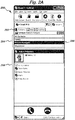
- Figure 2A shows the user interface of the client 106, as presented to the user who is setting up the shared group.
- the name of the user setting up and sharing the group of contacts is "Brad Pitt", who, in relation to the example given above in Figure 1 corresponds to the first user 102.
- the client user interface 202 comprises a tab labelled "contacts", and when this tab is selected the contacts in the contact list of the user are displayed.
- the user has grouped his contacts according to a common feature, such as "family”, and the groups are shown in the list of groups 204.
- the user has created a group made up of his close friends, which has been given the name "Masked Avengers" 206.
- this group is selected by the user, the contacts contained within this group are shown in the contact list 208. The user wishes to share the contacts contained within this group with all the members of the group.
- FIG. 2B illustrates how the user can choose to share the group with the contacts within the group.
- the user can use his pointing device to "right click" (or similarly select) the chosen group 206, at which point a pop-up menu 210 appears in the user interface 200.
- One of the options within this menu is "Share Group” 212, which the user can select.
- a dialogue window 214 is shown to the user, as illustrated in Figure 2C .
- the dialogue window 214 is used to create an invitation for all the group members to include this group in their own contact list.
- the user may enter an invitation message in the field 216, and can review the contacts that are in the group and will be invited to join the shared group in the list 218.
- the user can click the "OK" button 220.
- the invitation is then transmitted to all the members of the group.
- the client 106 executed at the user terminal 104 of the user creates an invitation message that is transmitted over the communication network 108 to the client 106 of each of the members of the group.
- the invitation message is propagated to the members of the group by utilising the peer-to-peer structure of the system. For example, when a group is first set up, there is only one user that has joined the group (the initiating user) and the invitation message must be sent from the client of this user. Therefore, the client of the initiating user will keep trying to deliver the invitation to any group members that are online. However, once other members accept the invitation and join the group, then the user terminals of the members begin to relay messages as well.
- the initiator of the group is sending invitations, but as group members join, they also begin sending invitations to any group members that they can see.
- a result of this is that although the invitation message is created initially by the initiator of the group, a member of the group may actually receive the invitation message from one of the other members due to it being relayed.
- This invitation message informs the clients of the group members that a user wishes to share a contact group of which they are a member, as will be described presently.
- the user interface 200 of the user has changed as shown in Figure 2D , such that the user can see the group "Masked Avengers" 206 is marked with a shared group icon 222.
- FIG. 2E shows a flowchart summarising the process of creating a shared group of users.
- the user creating the group selects a set of contacts to be grouped, and in step S2, user chooses to share this group with all the members of the group.
- an invitation message is created, which includes a list of all the group members, and the invitation message is propagated to the group members in step S4.
- the group is displayed as shared in the client of the user.
- Figure 2F illustrates a pictorial representation of the processes performed in the client 106 executed on a user terminal 104 when a shared group is created.
- the client 106 comprises a contact list 226 in which the contacts to be grouped are stored.
- the contact list 226 is available to a process 228 for selecting the contacts to be grouped, and the information on the grouped contacts can be returned and stored in the contact list 226.
- the groups in the contact list 226 can be accessed by a process 230 for enabling the group to be shared.
- the sharing of a group leads to another process 232 for creating the invitation messages to the group of users and propagating the message outside the client 106, indicated by arrow 234.
- FIGS 3A-D show the process for a member of the group to accept the invitation to join the shared group.
- "Adam Peterson” is one of the contacts in "Brad Pitt's" "Masked Avengers” group.
- Adam Peterson receives the shared group invitation over the communication network 108 at the client, and the invitation window 300 is displayed.
- Adam Peterson can view the message 302 from the user sending the invitation (as entered in the dialogue window shown in Figure 2C ) and a list of the other group members 304. If Adam Peterson is content to join the shared group with the list of group members 304, then he can click "OK" 306.
- Adam Peterson By clicking "OK" Adam Peterson is adding the group (and all of its contacts) to his contacts list, and, in doing so, he is authorising all the other group members to be able to contact him. However, Adam Peterson will not be able to contact the other members of the group until they have also accepted the invitation (and hence authorised the group members to contact them).
- a message confirming that the user Adam Peterson has accepted the invitation is broadcast to all the members of the group.
- the broadcast acceptance message is propagated to the members using a peer-to-peer relaying method, such that the message may be relayed from one member to another, in order to distribute the message to all the group members. This is achieved by the creator of the message sending the message to the members that he can see online, and the recipients of the message then relaying the message on to any members that they can see online, and so on until the message has been broadcast to all members of the group.
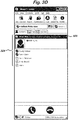
- Figure 3B shows the client user interface 308 for the user Adam Peterson after he has accepted the invitation to join the group.
- Adam Peterson now sees the new shared group 310 listed, and an icon 312 next to the group which indicates that the group is shared.
- the contacts in the group are displayed in the list 314.
- Figure 3C shows the case where the users "Candy Palmer” and “Claire Gains” have accepted the invitation, and their indications 320, 322 have changed such that Adam Peterson can see their online status.
- Figure 3D shows an alternative view that can be presented to Adam Peterson, if he does not wish to view his contacts by groups. In this case all his contacts are simply shown in a list 324, but if a contact is selected that belong to a group, then this indicated to the user with the message 326.
- Figure 3E shows a flowchart summarising the process for a member of the group to accept the invitation to join the shared group.
- the client of the user receives the invitation message inviting the user to join the shared group, and the invitation message is displayed to the user in step S7.
- the user has the option of accepting or rejecting the invitation. If the user rejects the invitation, then in step S9 a refusal message is broadcast to the group of users (as discussed in more detail below).
- the client creates an acceptance message to authorise the members of the group to contact the user.
- the acceptance message is broadcast to all the members of the group.
- the group is added to the contacts list of the user. As other members of the group accept the invitation message, the user receives other acceptance messages from other group members, and updates their status in the contact list.
- Figure 3F illustrates a pictorial representation of the processes performed in the client 106 executed on a user terminal 104 when an invitation to join a shared group is accepted.
- the client 106 has a process 328 for receiving invitations from outside the client 106, as indicated by arrow 330, and a process 332 for displaying the invitation message to the user.
- the client 106 generates the acceptance message and broadcasts it with a process 334 to external group members, indicated by arrow 336.
- the client 106 comprises a contact list 340 which is updated to store the accepted group with process 338.
- FIG. 4A-C illustrates the process when a user declines the invitation to join a group.
- Group members are displayed in the contact list of a group shown in the client as "pending" (see for example 316 in Figure 3B ) until they either accept the invitation (in which case their online status is then displayed) or they decline the invitation (in which case they are removed from the group).
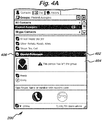
- Figures 4A-C show the case where a user "David Peterson" has declined the invitation to join the shared group.
- a user declines the invitation to join the group their contact is displayed to all other group members as “struck-through” so other members can see that they have left the group.
- the decision of the user to decline the invitation is communicated to the other members of the group by the transmission of a refusal message.
- the refusal message is first transmitted from the declining user (e.g. David Peterson) to the user from which he received the invitation, and following that a refusal message is then broadcast to all members of the group using the peer-to-peer relaying technique..
- a struck-through contact remains in the group contact list view until the user has viewed that group and selected at least one of the struck through contacts (in order that they have read the text "This person has left the group”). The struck-through contact is then removed from the group contact list view after, for example, 2 minutes.
- Figure 4A shows the user interface of the client 200 for the user "Brad Pitt” who sent the invitation to join the group.
- the contact for David Peterson 402 is shown struck-through, and when selected the contact displays the message "This person has left the group” 404.
- "Brad Pitt” can still see the online status of David Peterson, as indicated by the icon 406, as David Peterson remains in the contact list of Brad Pitt (David Peterson must have already been in the contact list of Brad Pitt to be invited to join the shared group initially). Therefore, although David Peterson has left the group, he may still be contacted by Brad Pitt.
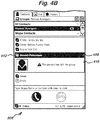
- Figure 4B shows the user interface of the client 308 for the user "Adam Peterson", who is a member of the group, but does not have the contract details for "David Peterson".
- the contact for David Peterson 408 is shown struck-through, and when selected the contact displays the message "This person has left the group” 410.
- “Adam Peterson” did not have the contact details for David Peterson and has therefore never been authorised by David Peterson, his status is shown as pending, as indicated by the question mark icon 412.
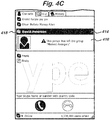
- Figure 4C shows a similar user interface to that shown in Figure 4B , but in this case Adam Peterson has chosen not to view his contacts by groups (similar to that shown in Figure 3D above).
- the contact for David Peterson 414 is again shown struck-through, and when selected the contact displays the message "This person has left the group Masked Avengers" 416.
- "Adam Peterson” did not have the contact details for David Peterson and has therefore never been authorised by David Peterson, his status is shown as pending, as indicated by the question mark icon 418.
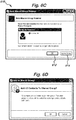
- a group member can add a contact to the group by selecting a contact and dragging it into the group displayed in the client. When a group member drags another contact into the group, they will be prompted that this is a shared group and that the contact will appear in all member's contact lists, as is shown illustrated in Figure 6A . In the example shown in Figure 6A the new user "Sarah Peterson" has been added to the shared group.
- the new member (“Sarah Peterson”) receives an invitation to join the shared group, as illustrated in Figure 6B .
- the invitation comprises a message 602 from the person adding the new user to the group and is shown a list of members 604 of the group.
- the invitation is the same as that discussed previously for initiating a new group.
- the invitation is also propagated in the same way as the invitation message for a new group, in that it is broadcast to all members and relayed between the members of the group in a peer-to-peer manner until it reaches the new user. Therefore, the new user Sarah Peterson may actually receive the invitation from one of the other members of the group, due to the relaying of the invitation, and not from the person adding the new member.
- the new user can accept the invitation by clicking the "OK” button 606 or declining the invitation by clicking the "Ignore” button 608.
- accepting the invitation the new user is authorising all the other group members to contact her.
- An acceptance message is broadcast from the new user in the same manner as outlined previously for the case of creating a new group.
- the addition of the new user happens in near real-time, such that the new user becomes part of the group as soon as the invitation has been accepted.
- All the existing group members will receive the acceptance message from the new user, and upon receiving the acceptance message a notification dialogue window 610 will be displayed to the group members.
- the group members have the option of accepting the new user into the group by clicking the "OK" button 602, or they have the option to leave the group if they are not happy with sharing their contact details with that person by clicking the "leave group” button 604.
- the group members are authorising the new user to contact them.
- Any group member can do this by selecting multiple contacts and dragging them into the group displayed on the client of the group member.
- the group member adding the multiple contacts will be presented with a message such as that shown in Figure 6D .
- a single invitation message is created by the user adding the new users, which lists all the new users added. This is similar to the message created when a group is initially set up and is propagated in the same way.
- a user can also be added to the group who is not a user of the peer-to-peer telephony system, but is instead a user of another telecommunications system, such as the public switched telephone network ("PSTN") or a mobile communications network.
- PSTN public switched telephone network
- This type of contact is known as a "SkypeOut” contact.
- the group member adding the "SkypeOut” contact is displayed a message such as that shown in Figure 6E .
- a user may also be automatically prompted to share a group under certain circumstances. If a user is organising their contacts by placing them into particular groups, the user can be notified of the possibility of sharing the group once a predetermined number of users have been added to the group. For example, if the user has added four contacts to a group, then the user may be prompted with the message "Shared groups are a simple new way to share contacts with your friends, family or co-workers. Learn more ". This can educate users as to the shared groups feature and encourage its uptake.
- the name of the group is determined by the user creating the shared group, however the name of the group may be changed by any member of the group once it has been established. If a member of the group attempts to change the name of the group they will be presented with a dialogue box 700 such as that shown in Figure 7 . In this example a group member is changing the name of the group to "My less gifted friends". By clicking on the "OK" button 702 in the dialogue box 700, the name is changed, and the change of name is propagated to all the members of the group. This is achieved by the client executed on the user terminal of user that is changing the name broadcasting a message to the client of each of the other members of the group.
- the broadcasting of the message is performed using the peer-to-peer relaying technique discussed hereinbefore.
- Each of the members of the group store the most recent name used and distribute it to everyone else in the group (and any new members).
- the clients at each of the other group members then update the name stored for the shared group in order to remain synchronised with each other. Consequently, the changed name will be shown in the clients of all the members of the group, and the change of name happens in near real-time.
- Any member of the group can choose to remove the group from their contact list, and hence leave the shared group. If a member of the group attempts to do this they are displayed a dialogue box 800 show in Figure 8A .
- the dialogue box 800 gives the user two options 802. The user can either keep the contacts that were members of the group in their contact list (although these will no longer be affiliated with the group), or the user can choose to remove all the contacts from the group from their contact list.
- a user leaves the group he sends out one last broadcast message to the group notifying the group that he is leaving. This message is propagated amongst the group members using the peer-to-peer technique outlined previously.
- Figure 8B shows the contact list of another member of the group after the contact David Peterson has removed the group from his contact list.
- the contact for David Peterson 804 is therefore shown struck out and is displayed along with the message 806 "This person has left the group".
- the removal of a user from a shared group happens in near real-time, such that the user is removed from the shared group shown in the client of each of the group members as soon as the user removing himself selects one of the options 802 from Figure 8A , and confirms the removal of the group from their contact list.
- the shared group of contacts may be used to establish an instant messaging chat between all the members of the group (known as a "multichat").
- the group members can then communicate with each other using the multichat, and the messages exchanged are visible to all the members of the group.
- the multichat When the multichat is initially started the name of the shared group is used as the "topic" shown in the multichat display. If any new users are added to the group, then they are automatically added to the multichat. Similarly, any users that leave the group automatically leave the multichat. Users are not able to leave the chat without leaving the group, but the users are able to "silence" the messages from the multichat, so that they are not disturbed by the messages.
Landscapes
- Engineering & Computer Science (AREA)
- Signal Processing (AREA)
- Business, Economics & Management (AREA)
- Computer Networks & Wireless Communication (AREA)
- General Business, Economics & Management (AREA)
- Operations Research (AREA)
- Physics & Mathematics (AREA)
- Marketing (AREA)
- Entrepreneurship & Innovation (AREA)
- Quality & Reliability (AREA)
- Strategic Management (AREA)
- Tourism & Hospitality (AREA)
- Human Resources & Organizations (AREA)
- Economics (AREA)
- General Physics & Mathematics (AREA)
- Theoretical Computer Science (AREA)
- Multimedia (AREA)
- Information Transfer Between Computers (AREA)
- Telephonic Communication Services (AREA)
Claims (15)
- Verfahren zur Synchronisierung der Kontaktinformationen einer Gruppe von Benutzern eines Sofortnachrichtendienstsystems zwischen der Gruppe von Benutzern über ein Kommunikationsnetzwerk (108), wobei jeder Benutzer der Gruppe von Benutzern ein Benutzerendgerät (104) aufweist, das mit dem Kommunikationsnetzwerk (108) verbunden ist und einen Clienten (106) ausführt, wobei der Client eine Kontaktinformationsliste (226) umfasst, wobei das Verfahren Folgendes umfasst:Auswählen der Kontaktinformationen von anderen Benutzern in der Gruppe aus der Kontaktinformationsliste durch einen ersten Benutzer (102), der zu der Gruppe von Benutzern gehört, und Wählen, die Kontaktinformationen zu synchronisieren;Übertragen einer Einladungsnachricht von dem Clienten, der auf dem Benutzerendgerät des ersten Benutzers (102) ausgeführt wird, an den Clienten, der auf dem Benutzerendgerät von jedem der anderen Benutzer in der Gruppe ausgeführt wird, wobei die Einladungsnachricht eine Eingeladenenliste von Benutzern, die zu der Gruppe gehören, (218) beinhaltet;Empfangen der Einladungsnachricht an dem Clienten von jedem der anderen Benutzer in der Gruppe undAkzeptieren der Einladungsnachricht durch mindestens einen der anderen Benutzer in der Gruppe, wobei der Schritt des Akzeptierens ein Erzeugen einer Akzeptanznachricht, wobei die Akzeptanznachricht der Gruppe von Benutzern eine Autorisierung gibt, den mindestens einen anderen Benutzer zu kontaktieren, ein Rundsenden der Akzeptanznachricht an die Gruppe von Benutzern und ein Hinzufügen der Eingeladenenliste (218) zu der Kontaktinformationsliste des mindestens einen Benutzers umfasst.
- Verfahren nach Anspruch 1, wobei der Schritt des Übertragens der Einladungsnachricht Folgendes umfasst: Senden der Einladungsnachricht an den Clienten von jedem Benutzer in der Gruppe, der online ist; Speichern der Einladungsnachricht an dem Clienten von jedem Benutzer, der online ist und die Einladung akzeptiert hat; und Weiterleiten der Einladungsnachricht an den Clienten von einem beliebigen Benutzer in der Gruppe, der anschließend online geht, von mindestens einem der Clienten, der die Einladung speichert, oder dem ersten Benutzer (102).
- Verfahren nach Anspruch 1 oder 2, wobei der Schritt des Empfangens weiterhin den Schritt eines Anzeigens der Eingeladenenliste für jeden der anderen Benutzer in der Gruppe umfasst.
- Verfahren nach Anspruch 3, wobei die Einladungsnachricht weiterhin Textinformationen umfasst, die von dem ersten Benutzer (102) eingegeben wurden, und der Schritt des Anzeigens weiterhin ein Anzeigen der Textinformationen für jeden der anderen Benutzer in der Gruppe umfasst.
- Verfahren nach Anspruch 3 oder 4, wobei der Schritt des Anzeigens weiterhin den Schritt eines Anbietens der Wahl, die Einladungsnachricht zu akzeptieren oder abzulehnen, an jeden der anderen Benutzer in der Gruppe umfasst.
- Verfahren nach Anspruch 5, das weiterhin ein Ablehnen der Einladungsnachricht durch mindestens einen Benutzer umfasst, wobei der Schritt des Ablehnens ein Erzeugen einer Ablehnungsnachricht und ein Rundsenden der Ablehnungsnachricht an die Gruppe von Benutzern umfasst.
- Verfahren nach einem vorhergehenden Anspruch, wobei der Schritt des Rundsendens der Akzeptanznachricht Folgendes umfasst: Senden der Akzeptanznachricht an den Clienten von jedem Benutzer in der Gruppe, der online ist; Speichern der Akzeptanznachricht an dem Clienten von jedem Benutzer, der online ist und die Einladung akzeptiert hat; und Weiterleiten der Akzeptanznachricht an den Clienten von einem beliebigen Benutzer in der Gruppe, der anschließend online geht, von mindestens einem der Clienten, der die Einladung speichert, oder dem mindestens einen Benutzer.
- Verfahren nach einem vorhergehenden Anspruch, das weiterhin den Schritt eines Hinzufügens von mindestens einem neuen Benutzer zu der Gruppe von Benutzern umfasst, wobei der Schritt des Hinzufügens Folgendes umfasst:Auswählen von mindestens einem neuen Benutzer aus der Kontaktinformationsliste (226) zum Hinzufügen zu der Gruppe von Benutzern;Übertragen einer Einladungsnachricht an den mindestens einen neuen Benutzer, wobei die Einladungsnachricht eine Liste der Benutzer in der Gruppe von Benutzern beinhaltet;Empfangen der Einladungsnachricht an dem mindestens einen neuen Benutzer, wobei der mindestens eine neue Benutzer wählt, die Einladungsnachricht zu akzeptieren oder abzulehnen,wenn der mindestens eine Benutzer wählt, die Einladung zu akzeptieren, Rundsenden einer Akzeptanznachricht an die Clienten der Benutzer der Gruppe von Benutzern, wobei die Benutzer der Gruppe von Benutzern nach Empfangen der Akzeptanznachricht wählen können, in der Gruppe von Benutzern mit dem mindestens einen neuen Benutzer zu bleiben oder die Gruppe von Benutzern zu verlassen; undwenn der mindestens eine Benutzer wählt, die Einladung abzulehnen, Rundsenden einer Ablehnungsnachricht an die Benutzer der Gruppe von Benutzern.
- Verfahren nach einem vorhergehenden Anspruch, das weiterhin den Schritt eines Umbenennens der Gruppe von Benutzern umfasst, wobei der Schritt des Umbenennens ein Eingeben eines neuen Namens für die Gruppe von Benutzern in dem Clienten, ein Rundsenden des neuen Namen an den Clienten von jedem Benutzer der Gruppe von Benutzern und ein Aktualisieren des Namens, der für die Gruppe in der Kontaktinformationsliste (226) gespeichert ist, umfasst.
- Verfahren nach einem vorhergehenden Anspruch, das weiterhin den Schritt eines Verlassens der Gruppe von Benutzern durch einen Benutzer umfasst, der ein Auswählen, die Gruppe aus der Kontaktinformationsliste (226) zu löschen, durch den verlassenden Benutzer; ein Wählen, ob Kontakte der Benutzer in der Gruppe von Benutzern in der Kontaktinformationsliste (226) behalten werden sollen oder die Kontakte der Benutzer in der Gruppe von Benutzern gelöscht werden sollen; und ein Rundsenden der Verlassensnachricht (806) an den Clienten von jedem der Benutzer der Gruppe von Benutzern umfasst.
- Benutzerendgerät (104), das mit einem Kommunikationsnetzwerk (108) verbunden ist und einen Clienten (106) ausführt, zur Synchronisierung der Kontaktinformationen einer Gruppe von Benutzern eines Sofortnachrichtendienstsystems zwischen der Gruppe von Benutzern über ein Kommunikationsnetzwerk (108), wobei der Client eine Kontaktinformationsliste (226), ein Mittel (228) zum Auswählen der Kontaktinformationen von anderen Benutzern in der Gruppe aus der Kontaktinformationsliste, ein Mittel (230) zum Wählen, die Kontaktinformationen zu synchronisieren, und ein Mittel (232) zum Übertragen einer Einladungsnachricht von dem Clienten an einen Clienten, der auf dem Benutzerendgerät von jedem der anderen Benutzer in der Gruppe ausgeführt wird, wobei die Einladungsnachricht eine Eingeladenenliste von Benutzern, die zu der Gruppe gehören, (218) beinhaltet, und ein Mittel zum Empfangen einer Akzeptanznachricht von dem Clienten des Benutzerendgeräts von einem der anderen Benutzer in der Gruppe umfasst, wobei die Akzeptanznachricht der Gruppe von Benutzern eine Autorisierung gibt, den Benutzer des Benutzerendgeräts zu kontaktieren.
- Benutzerendgerät, das mit einem Kommunikationsnetzwerk (108) verbunden ist und einen Clienten (106) ausführt, zur Synchronisierung der Kontaktinformationen einer Gruppe von Benutzern eines Sofortnachrichtendienstsystems zwischen der Gruppe von Benutzern über ein Kommunikationsnetzwerk (108), wobei der Client eine Kontaktinformationsliste (340), ein Mittel (328) zum Empfangen einer Einladungsnachricht, die eine Eingeladenenliste von Benutzern, die zu der Gruppe gehören, (218) beinhaltet, und ein Mittel zum Akzeptieren der Einladungsnachricht umfasst, wobei das Mittel zum Akzeptieren ein Mittel zum Erzeugen einer Akzeptanznachricht (336), wobei die Akzeptanznachricht der Gruppe von Benutzern eine Autorisierung gibt, den Benutzer des Benutzerendgeräts zu kontaktieren, ein Mittel (334) zum Rundsenden der Akzeptanznachricht (336) an die Gruppe von Benutzern und ein Mittel (338) zum Hinzufügen der Eingeladenenliste zu der Kontaktinformationsliste (340) umfasst.
- System zur Synchronisierung der Kontaktinformationen einer Gruppe von Benutzern eines Sofortnachrichtendienstsystems zwischen der Gruppe von Benutzern über ein Kommunikationsnetzwerk (108), wobei jeder Benutzer der Gruppe von Benutzern ein Benutzerendgerät aufweist, das mit dem Kommunikationsnetzwerk (108) verbunden ist und einen Clienten (106) ausführt, wobei der Client eine Kontaktinformationsliste umfasst, wobei das System Folgendes umfasst:ein Benutzerendgerät eines ersten Benutzers (102), der zu der Gruppe von Benutzern gehört, wobei der Client (106), der an dem Benutzerendgerät des ersten Benutzers (102) ausgeführt wird, ein Mittel (228) zum Auswählen der Kontaktinformationen von anderen Benutzern in der Gruppe aus der Kontaktinformationsliste, ein Mittel (230) zum Wählen, die Kontaktinformationen zu synchronisieren, und ein Mittel (232) zum Übertragen einer Einladungsnachricht von dem Clienten (106), der auf dem Benutzerendgerät des ersten Benutzers (102) ausgeführt wird, an den Clienten, der auf dem Benutzerendgerät von jedem der anderen Benutzer in der Gruppe ausgeführt wird, umfasst, wobei die Einladungsnachricht eine Eingeladenenliste von Benutzern, die zu der Gruppe gehören, (218) beinhaltet; undein Benutzerendgerät von mindestens einem der anderen Benutzer in der Gruppe, wobei der Client, der an dem Benutzerendgerät von dem mindestens einen der anderen Benutzer ausgeführt wird, ein Mittel (328) zum Empfangen der Einladungsnachricht und ein Mittel zum Akzeptieren der Einladungsnachricht umfasst, wobei das Mittel zum Akzeptieren ein Mittel zum Erzeugen einer Akzeptanznachricht (316), wobei die Akzeptanznachricht der Gruppe von Benutzern eine Autorisierung gibt, den mindestens einen anderen Benutzer zu kontaktieren, ein Mittel (334) zum Rundsenden der Akzeptanznachricht an die Gruppe von Benutzern und ein Mittel (338) zum Hinzufügen der Eingeladenenliste (218) zu der Kontaktinformationsliste des mindestens einen Benutzers umfasst.
- System nach Anspruch 13, wobei der Client von jedem Benutzer der Gruppe von Benutzern weiterhin ein Mittel zum Hinzufügen von mindestens einem neuen Benutzer zu der Gruppe von Benutzern umfasst, wobei das Mittel zum Hinzufügen Folgendes umfasst:ein Mittel (228) zum Auswählen von mindestens einem neuen Benutzer aus der Kontaktinformationsliste zum Hinzufügen zu der Gruppe von Benutzern undein Mittel (232) zum Übertragen einer Einladungsnachricht an den mindestens einen neuen Benutzer, wobei die Einladungsnachricht eine Liste der Benutzer in der Gruppe von Benutzern (218) beinhaltet.
- System nach Anspruch 14, wobei der Client (106) des mindestens einen neuen Benutzers Folgendes umfasst:ein Mittel (328) zum Empfangen der Einladungsnachricht an dem mindestens einen neuen Benutzer, wobei der mindestens eine neue Benutzer wählt, die Einladungsnachricht zu akzeptieren oder abzulehnen,wenn der mindestens eine Benutzer wählt, die Einladung zu akzeptieren, ein Mittel (334) zum Rundsenden einer Akzeptanznachricht (336) an die Clienten der Benutzer der Gruppe von Benutzern, wobei die Benutzer der Gruppe von Benutzern nach Empfangen der Akzeptanznachricht wählen können, in der Gruppe von Benutzern mit dem mindestens einen neuen Benutzer zu bleiben oder die Gruppe von Benutzern zu verlassen; undwenn der mindestens eine Benutzer wählt, die Einladung abzulehnen, ein Mittel zum Rundsenden einer Ablehnungsnachricht an die Benutzer der Gruppe von Benutzern.
Applications Claiming Priority (4)
| Application Number | Priority Date | Filing Date | Title |
|---|---|---|---|
| GB0608594A GB2440592A (en) | 2006-05-02 | 2006-05-02 | Synchronising contacts |
| EP07789640.5A EP2014073B1 (de) | 2006-05-02 | 2007-04-27 | Synchronisierung von kontakten |
| EP17190956.7A EP3291522A1 (de) | 2006-05-02 | 2007-04-27 | Synchronisierung von kontakten |
| PCT/IB2007/002354 WO2007125427A2 (en) | 2006-05-02 | 2007-04-27 | Synchronising contacts |
Related Parent Applications (3)
| Application Number | Title | Priority Date | Filing Date |
|---|---|---|---|
| EP17190956.7A Division EP3291522A1 (de) | 2006-05-02 | 2007-04-27 | Synchronisierung von kontakten |
| EP17190956.7A Division-Into EP3291522A1 (de) | 2006-05-02 | 2007-04-27 | Synchronisierung von kontakten |
| EP07789640.5A Division EP2014073B1 (de) | 2006-05-02 | 2007-04-27 | Synchronisierung von kontakten |
Publications (2)
| Publication Number | Publication Date |
|---|---|
| EP3328045A1 EP3328045A1 (de) | 2018-05-30 |
| EP3328045B1 true EP3328045B1 (de) | 2019-04-03 |
Family
ID=36603728
Family Applications (3)
| Application Number | Title | Priority Date | Filing Date |
|---|---|---|---|
| EP17190956.7A Withdrawn EP3291522A1 (de) | 2006-05-02 | 2007-04-27 | Synchronisierung von kontakten |
| EP18151285.6A Not-in-force EP3328045B1 (de) | 2006-05-02 | 2007-04-27 | Synchronisierung von kontakten |
| EP07789640.5A Not-in-force EP2014073B1 (de) | 2006-05-02 | 2007-04-27 | Synchronisierung von kontakten |
Family Applications Before (1)
| Application Number | Title | Priority Date | Filing Date |
|---|---|---|---|
| EP17190956.7A Withdrawn EP3291522A1 (de) | 2006-05-02 | 2007-04-27 | Synchronisierung von kontakten |
Family Applications After (1)
| Application Number | Title | Priority Date | Filing Date |
|---|---|---|---|
| EP07789640.5A Not-in-force EP2014073B1 (de) | 2006-05-02 | 2007-04-27 | Synchronisierung von kontakten |
Country Status (4)
| Country | Link |
|---|---|
| US (1) | US7743024B2 (de) |
| EP (3) | EP3291522A1 (de) |
| GB (1) | GB2440592A (de) |
| WO (1) | WO2007125427A2 (de) |
Families Citing this family (27)
| Publication number | Priority date | Publication date | Assignee | Title |
|---|---|---|---|---|
| US7822932B2 (en) * | 2006-08-18 | 2010-10-26 | Isilon Systems, Inc. | Systems and methods for providing nonlinear journaling |
| US8001080B2 (en) * | 2006-09-12 | 2011-08-16 | Infosys Technologies Ltd. | Managing real-time execution of transactions in a network |
| USD598930S1 (en) * | 2007-09-05 | 2009-08-25 | Mars, Incorporated | Portion of a display panel with a computer-generated icon |
| US20090119378A1 (en) * | 2007-11-07 | 2009-05-07 | Liang Holdings Llc | Controlling access to an r-smart network |
| US20090119327A1 (en) * | 2007-11-07 | 2009-05-07 | Liang Holdings Llc | R-smart person-centric networking |
| US7478135B1 (en) | 2008-03-28 | 2009-01-13 | International Business Machines Corporation | One-responder email feature |
| USD627791S1 (en) * | 2008-07-08 | 2010-11-23 | Skype Limited | User interface icon for a portion of a display screen |
| USD631060S1 (en) * | 2008-12-01 | 2011-01-18 | Deutsche Telekom Ag | Transitional user interface for a portion of a display screen |
| US9313309B2 (en) * | 2008-12-11 | 2016-04-12 | Nokia Technologies Oy | Access to contacts |
| US20100153528A1 (en) * | 2008-12-16 | 2010-06-17 | At&T Intellectual Property I, L.P. | Devices, Systems and Methods for Controlling Network Services Via Address Book |
| USD646695S1 (en) * | 2009-03-18 | 2011-10-11 | Gn Netcom A/S | Computer display with a set of icons |
| US8660247B1 (en) | 2009-04-06 | 2014-02-25 | Wendell Brown | Method and apparatus for content presentation in association with a telephone call |
| KR101711972B1 (ko) * | 2010-08-26 | 2017-03-06 | 삼성전자주식회사 | 휴대 단말기의 연락처 관리 방법 및 장치 |
| US20110282680A1 (en) * | 2010-11-16 | 2011-11-17 | Charter Solutions International | Communication management systems and methods |
| US9477961B2 (en) | 2010-11-16 | 2016-10-25 | Charter Solutions International | Communication management systems and methods |
| US20120173636A1 (en) * | 2010-12-30 | 2012-07-05 | International Business Machines Corporation | Creating implicit instant messaging contact list groups |
| US9367224B2 (en) * | 2011-04-29 | 2016-06-14 | Avaya Inc. | Method and apparatus for allowing drag-and-drop operations across the shared borders of adjacent touch screen-equipped devices |
| KR101471703B1 (ko) * | 2011-06-03 | 2014-12-11 | 라인 가부시키가이샤 | 멤버 추가 확대를 위한 메시징 서비스 시스템 및 그 방법 |
| EP2560134A1 (de) * | 2011-08-19 | 2013-02-20 | Agor Services BVBA | Plattform und Verfahren zur Ermöglichung der Zusammenarbeit zwischen Wertschöpfungskettenpartnern |
| US20130332526A1 (en) * | 2012-06-10 | 2013-12-12 | Apple Inc. | Creating and sharing image streams |
| US20140173528A1 (en) * | 2012-12-13 | 2014-06-19 | Microsoft Corporation | Contact environments with dynamically created option groups and associated command options |
| US9537986B2 (en) | 2013-02-26 | 2017-01-03 | Terranet Ab | Dynamic contact sharing in a mesh network |
| US10082934B2 (en) * | 2013-03-15 | 2018-09-25 | Sorenson Ip Holdings Llc | Systems, methods, and devices for replacing a contact entry corresponding to a communication device with a contact entry corresponding to a user group |
| US10237276B2 (en) * | 2014-03-09 | 2019-03-19 | Diro, Inc. | Managing access rights to a group directory |
| USD761835S1 (en) * | 2014-08-28 | 2016-07-19 | Samsung Electronics Co., Ltd. | Display screen or portion thereof with transitional graphical user interface |
| US10484321B2 (en) * | 2016-03-21 | 2019-11-19 | Lenovo (Singapore) Pte. Ltd. | Apparatus, method, and program product for blocking group message replies |
| CN108989062B (zh) * | 2018-07-25 | 2020-05-01 | 北京达佳互联信息技术有限公司 | 更新群成员数据的方法、装置、终端、系统及存储介质 |
Family Cites Families (7)
| Publication number | Priority date | Publication date | Assignee | Title |
|---|---|---|---|---|
| US56093A (en) * | 1866-07-03 | Improvement in mowing-machines | ||
| US6564261B1 (en) * | 1999-05-10 | 2003-05-13 | Telefonaktiebolaget Lm Ericsson (Publ) | Distributed system to intelligently establish sessions between anonymous users over various networks |
| WO2002025403A2 (en) * | 2000-09-20 | 2002-03-28 | Ants.Com., Inc. | Automated system and method for downloading, updating and synchronizing contact information |
| US7068789B2 (en) * | 2001-09-19 | 2006-06-27 | Microsoft Corporation | Peer-to-peer name resolution protocol (PNRP) group security infrastructure and method |
| US8010460B2 (en) * | 2004-09-02 | 2011-08-30 | Linkedin Corporation | Method and system for reputation evaluation of online users in a social networking scheme |
| US20060067300A1 (en) * | 2004-09-30 | 2006-03-30 | Behrouz Poustchi | System and method for bridge call appearance in distributed peer-to-peer network |
| EP1653697B1 (de) * | 2004-10-29 | 2016-08-17 | BlackBerry Limited | Architektur zur Einladung zum Sicheren P2P- Nachrichtenaustausch |
-
2006
- 2006-05-02 GB GB0608594A patent/GB2440592A/en not_active Withdrawn
-
2007
- 2007-04-27 WO PCT/IB2007/002354 patent/WO2007125427A2/en not_active Ceased
- 2007-04-27 EP EP17190956.7A patent/EP3291522A1/de not_active Withdrawn
- 2007-04-27 EP EP18151285.6A patent/EP3328045B1/de not_active Not-in-force
- 2007-04-27 EP EP07789640.5A patent/EP2014073B1/de not_active Not-in-force
- 2007-05-01 US US11/799,317 patent/US7743024B2/en active Active
Non-Patent Citations (1)
| Title |
|---|
| None * |
Also Published As
| Publication number | Publication date |
|---|---|
| GB0608594D0 (en) | 2006-06-14 |
| WO2007125427A2 (en) | 2007-11-08 |
| US20080046478A1 (en) | 2008-02-21 |
| EP3291522A1 (de) | 2018-03-07 |
| EP2014073B1 (de) | 2017-09-20 |
| EP2014073A2 (de) | 2009-01-14 |
| GB2440592A (en) | 2008-02-06 |
| EP3328045A1 (de) | 2018-05-30 |
| WO2007125427A3 (en) | 2008-01-24 |
| US7743024B2 (en) | 2010-06-22 |
Similar Documents
| Publication | Publication Date | Title |
|---|---|---|
| EP3328045B1 (de) | Synchronisierung von kontakten | |
| US8819549B2 (en) | Method and system for mutidimensional virtual online support center | |
| US7231206B2 (en) | Group application for group formation and management | |
| JP5175402B1 (ja) | 通信方法、通信装置、および、プログラム | |
| US8930488B2 (en) | Method and system for the multi-criteria management of presence notifications | |
| US9098832B1 (en) | System and method for recording a photo chat session | |
| US20090094048A1 (en) | System and Method For Facilitating The Introduction of Compatible Individuals Using Third Party Collaborative Tools | |
| CN1949809B (zh) | 使用分组网电话机安排电话会议的方法和系统 | |
| US9552558B2 (en) | Communication system facilitating a contextual environment for a user filling various role agents | |
| CN104603769A (zh) | 基于用户中心网络的会议系统 | |
| TW201238320A (en) | System and method for initiating a conference call | |
| WO2002029513A2 (en) | A method and system for internet-based video chat | |
| JP5175403B1 (ja) | サーバ装置 | |
| JP2014063526A (ja) | サーバ装置、方法、および、プログラム | |
| KR20140054487A (ko) | 그룹 대화 방법 및 그룹 대화 프로그램을 기록한 컴퓨터 판독 가능한 기록매체 | |
| US20070011230A1 (en) | Method for managing selective presence for an instantaneous messaging service in a telecommunication network such as an internet network | |
| KR20050007058A (ko) | 메신저 로봇을 이용한 온라인 마케팅 서비스 제공 방법 | |
| JP2014006924A (ja) | 通信方法、通信装置、および、プログラム | |
| CN112040169A (zh) | 一种im和音视频网络会议结合的方法 | |
| JP5373175B1 (ja) | 通信方法、通信装置、および、プログラム | |
| JP5449513B2 (ja) | サーバ装置 | |
| KR20130018084A (ko) | 커뮤니케이션을 위한 메신저 서비스에서의 그룹 주소록 동기화 방법 및 장치 |
Legal Events
| Date | Code | Title | Description |
|---|---|---|---|
| PUAI | Public reference made under article 153(3) epc to a published international application that has entered the european phase |
Free format text: ORIGINAL CODE: 0009012 |
|
| STAA | Information on the status of an ep patent application or granted ep patent |
Free format text: STATUS: THE APPLICATION HAS BEEN PUBLISHED |
|
| AC | Divisional application: reference to earlier application |
Ref document number: 3291522 Country of ref document: EP Kind code of ref document: P Ref document number: 2014073 Country of ref document: EP Kind code of ref document: P |
|
| AK | Designated contracting states |
Kind code of ref document: A1 Designated state(s): AT BE BG CH CY CZ DE DK EE ES FI FR GB GR HU IE IS IT LI LT LU LV MC MT NL PL PT RO SE SI SK TR |
|
| STAA | Information on the status of an ep patent application or granted ep patent |
Free format text: STATUS: REQUEST FOR EXAMINATION WAS MADE |
|
| 17P | Request for examination filed |
Effective date: 20180622 |
|
| RBV | Designated contracting states (corrected) |
Designated state(s): AT BE BG CH CY CZ DE DK EE ES FI FR GB GR HU IE IS IT LI LT LU LV MC MT NL PL PT RO SE SI SK TR |
|
| GRAP | Despatch of communication of intention to grant a patent |
Free format text: ORIGINAL CODE: EPIDOSNIGR1 |
|
| STAA | Information on the status of an ep patent application or granted ep patent |
Free format text: STATUS: GRANT OF PATENT IS INTENDED |
|
| RIC1 | Information provided on ipc code assigned before grant |
Ipc: H04M 3/42 20060101AFI20181003BHEP Ipc: G06Q 10/00 20120101ALI20181003BHEP Ipc: H04M 7/00 20060101ALI20181003BHEP |
|
| INTG | Intention to grant announced |
Effective date: 20181029 |
|
| GRAS | Grant fee paid |
Free format text: ORIGINAL CODE: EPIDOSNIGR3 |
|
| GRAA | (expected) grant |
Free format text: ORIGINAL CODE: 0009210 |
|
| STAA | Information on the status of an ep patent application or granted ep patent |
Free format text: STATUS: THE PATENT HAS BEEN GRANTED |
|
| AC | Divisional application: reference to earlier application |
Ref document number: 2014073 Country of ref document: EP Kind code of ref document: P Ref document number: 3291522 Country of ref document: EP Kind code of ref document: P |
|
| AK | Designated contracting states |
Kind code of ref document: B1 Designated state(s): AT BE BG CH CY CZ DE DK EE ES FI FR GB GR HU IE IS IT LI LT LU LV MC MT NL PL PT RO SE SI SK TR |
|
| REG | Reference to a national code |
Ref country code: GB Ref legal event code: FG4D |
|
| REG | Reference to a national code |
Ref country code: CH Ref legal event code: EP Ref country code: AT Ref legal event code: REF Ref document number: 1117202 Country of ref document: AT Kind code of ref document: T Effective date: 20190415 |
|
| REG | Reference to a national code |
Ref country code: DE Ref legal event code: R096 Ref document number: 602007058054 Country of ref document: DE |
|
| REG | Reference to a national code |
Ref country code: IE Ref legal event code: FG4D |
|
| REG | Reference to a national code |
Ref country code: NL Ref legal event code: FP |
|
| REG | Reference to a national code |
Ref country code: LT Ref legal event code: MG4D |
|
| REG | Reference to a national code |
Ref country code: AT Ref legal event code: MK05 Ref document number: 1117202 Country of ref document: AT Kind code of ref document: T Effective date: 20190403 |
|
| PG25 | Lapsed in a contracting state [announced via postgrant information from national office to epo] |
Ref country code: ES Free format text: LAPSE BECAUSE OF FAILURE TO SUBMIT A TRANSLATION OF THE DESCRIPTION OR TO PAY THE FEE WITHIN THE PRESCRIBED TIME-LIMIT Effective date: 20190403 Ref country code: SE Free format text: LAPSE BECAUSE OF FAILURE TO SUBMIT A TRANSLATION OF THE DESCRIPTION OR TO PAY THE FEE WITHIN THE PRESCRIBED TIME-LIMIT Effective date: 20190403 Ref country code: PT Free format text: LAPSE BECAUSE OF FAILURE TO SUBMIT A TRANSLATION OF THE DESCRIPTION OR TO PAY THE FEE WITHIN THE PRESCRIBED TIME-LIMIT Effective date: 20190803 Ref country code: FI Free format text: LAPSE BECAUSE OF FAILURE TO SUBMIT A TRANSLATION OF THE DESCRIPTION OR TO PAY THE FEE WITHIN THE PRESCRIBED TIME-LIMIT Effective date: 20190403 Ref country code: LT Free format text: LAPSE BECAUSE OF FAILURE TO SUBMIT A TRANSLATION OF THE DESCRIPTION OR TO PAY THE FEE WITHIN THE PRESCRIBED TIME-LIMIT Effective date: 20190403 Ref country code: CZ Free format text: LAPSE BECAUSE OF FAILURE TO SUBMIT A TRANSLATION OF THE DESCRIPTION OR TO PAY THE FEE WITHIN THE PRESCRIBED TIME-LIMIT Effective date: 20190403 |
|
| PG25 | Lapsed in a contracting state [announced via postgrant information from national office to epo] |
Ref country code: PL Free format text: LAPSE BECAUSE OF FAILURE TO SUBMIT A TRANSLATION OF THE DESCRIPTION OR TO PAY THE FEE WITHIN THE PRESCRIBED TIME-LIMIT Effective date: 20190403 Ref country code: GR Free format text: LAPSE BECAUSE OF FAILURE TO SUBMIT A TRANSLATION OF THE DESCRIPTION OR TO PAY THE FEE WITHIN THE PRESCRIBED TIME-LIMIT Effective date: 20190704 Ref country code: LV Free format text: LAPSE BECAUSE OF FAILURE TO SUBMIT A TRANSLATION OF THE DESCRIPTION OR TO PAY THE FEE WITHIN THE PRESCRIBED TIME-LIMIT Effective date: 20190403 Ref country code: BG Free format text: LAPSE BECAUSE OF FAILURE TO SUBMIT A TRANSLATION OF THE DESCRIPTION OR TO PAY THE FEE WITHIN THE PRESCRIBED TIME-LIMIT Effective date: 20190703 |
|
| REG | Reference to a national code |
Ref country code: CH Ref legal event code: PL |
|
| REG | Reference to a national code |
Ref country code: BE Ref legal event code: MM Effective date: 20190430 |
|
| PG25 | Lapsed in a contracting state [announced via postgrant information from national office to epo] |
Ref country code: IS Free format text: LAPSE BECAUSE OF FAILURE TO SUBMIT A TRANSLATION OF THE DESCRIPTION OR TO PAY THE FEE WITHIN THE PRESCRIBED TIME-LIMIT Effective date: 20190803 Ref country code: AT Free format text: LAPSE BECAUSE OF FAILURE TO SUBMIT A TRANSLATION OF THE DESCRIPTION OR TO PAY THE FEE WITHIN THE PRESCRIBED TIME-LIMIT Effective date: 20190403 Ref country code: LU Free format text: LAPSE BECAUSE OF NON-PAYMENT OF DUE FEES Effective date: 20190427 |
|
| REG | Reference to a national code |
Ref country code: DE Ref legal event code: R097 Ref document number: 602007058054 Country of ref document: DE |
|
| PG25 | Lapsed in a contracting state [announced via postgrant information from national office to epo] |
Ref country code: DK Free format text: LAPSE BECAUSE OF FAILURE TO SUBMIT A TRANSLATION OF THE DESCRIPTION OR TO PAY THE FEE WITHIN THE PRESCRIBED TIME-LIMIT Effective date: 20190403 Ref country code: EE Free format text: LAPSE BECAUSE OF FAILURE TO SUBMIT A TRANSLATION OF THE DESCRIPTION OR TO PAY THE FEE WITHIN THE PRESCRIBED TIME-LIMIT Effective date: 20190403 Ref country code: MC Free format text: LAPSE BECAUSE OF FAILURE TO SUBMIT A TRANSLATION OF THE DESCRIPTION OR TO PAY THE FEE WITHIN THE PRESCRIBED TIME-LIMIT Effective date: 20190403 Ref country code: LI Free format text: LAPSE BECAUSE OF NON-PAYMENT OF DUE FEES Effective date: 20190430 Ref country code: CH Free format text: LAPSE BECAUSE OF NON-PAYMENT OF DUE FEES Effective date: 20190430 Ref country code: RO Free format text: LAPSE BECAUSE OF FAILURE TO SUBMIT A TRANSLATION OF THE DESCRIPTION OR TO PAY THE FEE WITHIN THE PRESCRIBED TIME-LIMIT Effective date: 20190403 Ref country code: SK Free format text: LAPSE BECAUSE OF FAILURE TO SUBMIT A TRANSLATION OF THE DESCRIPTION OR TO PAY THE FEE WITHIN THE PRESCRIBED TIME-LIMIT Effective date: 20190403 |
|
| PLBE | No opposition filed within time limit |
Free format text: ORIGINAL CODE: 0009261 |
|
| STAA | Information on the status of an ep patent application or granted ep patent |
Free format text: STATUS: NO OPPOSITION FILED WITHIN TIME LIMIT |
|
| PG25 | Lapsed in a contracting state [announced via postgrant information from national office to epo] |
Ref country code: BE Free format text: LAPSE BECAUSE OF NON-PAYMENT OF DUE FEES Effective date: 20190430 Ref country code: IT Free format text: LAPSE BECAUSE OF FAILURE TO SUBMIT A TRANSLATION OF THE DESCRIPTION OR TO PAY THE FEE WITHIN THE PRESCRIBED TIME-LIMIT Effective date: 20190403 |
|
| 26N | No opposition filed |
Effective date: 20200106 |
|
| PG25 | Lapsed in a contracting state [announced via postgrant information from national office to epo] |
Ref country code: TR Free format text: LAPSE BECAUSE OF FAILURE TO SUBMIT A TRANSLATION OF THE DESCRIPTION OR TO PAY THE FEE WITHIN THE PRESCRIBED TIME-LIMIT Effective date: 20190403 |
|
| PG25 | Lapsed in a contracting state [announced via postgrant information from national office to epo] |
Ref country code: IE Free format text: LAPSE BECAUSE OF NON-PAYMENT OF DUE FEES Effective date: 20190427 |
|
| PG25 | Lapsed in a contracting state [announced via postgrant information from national office to epo] |
Ref country code: SI Free format text: LAPSE BECAUSE OF FAILURE TO SUBMIT A TRANSLATION OF THE DESCRIPTION OR TO PAY THE FEE WITHIN THE PRESCRIBED TIME-LIMIT Effective date: 20190403 |
|
| REG | Reference to a national code |
Ref country code: NL Ref legal event code: PD Owner name: MICROSOFT TECHNOLOGY LICENSING, LLC; US Free format text: DETAILS ASSIGNMENT: CHANGE OF OWNER(S), ASSIGNMENT; FORMER OWNER NAME: SKYPE Effective date: 20200417 |
|
| REG | Reference to a national code |
Ref country code: DE Ref legal event code: R081 Ref document number: 602007058054 Country of ref document: DE Owner name: MICROSOFT TECHNOLOGY LICENSING LLC, REDMOND, US Free format text: FORMER OWNER: SKYPE, DUBLIN, IE Ref country code: DE Ref legal event code: R082 Ref document number: 602007058054 Country of ref document: DE Representative=s name: PAGE, WHITE & FARRER GERMANY LLP, DE |
|
| REG | Reference to a national code |
Ref country code: GB Ref legal event code: 732E Free format text: REGISTERED BETWEEN 20200820 AND 20200826 |
|
| PG25 | Lapsed in a contracting state [announced via postgrant information from national office to epo] |
Ref country code: CY Free format text: LAPSE BECAUSE OF FAILURE TO SUBMIT A TRANSLATION OF THE DESCRIPTION OR TO PAY THE FEE WITHIN THE PRESCRIBED TIME-LIMIT Effective date: 20190403 |
|
| PG25 | Lapsed in a contracting state [announced via postgrant information from national office to epo] |
Ref country code: MT Free format text: LAPSE BECAUSE OF FAILURE TO SUBMIT A TRANSLATION OF THE DESCRIPTION OR TO PAY THE FEE WITHIN THE PRESCRIBED TIME-LIMIT Effective date: 20190403 Ref country code: HU Free format text: LAPSE BECAUSE OF FAILURE TO SUBMIT A TRANSLATION OF THE DESCRIPTION OR TO PAY THE FEE WITHIN THE PRESCRIBED TIME-LIMIT; INVALID AB INITIO Effective date: 20070427 |
|
| PGFP | Annual fee paid to national office [announced via postgrant information from national office to epo] |
Ref country code: FR Payment date: 20230309 Year of fee payment: 17 |
|
| PGFP | Annual fee paid to national office [announced via postgrant information from national office to epo] |
Ref country code: GB Payment date: 20230309 Year of fee payment: 17 |
|
| P01 | Opt-out of the competence of the unified patent court (upc) registered |
Effective date: 20230520 |
|
| PGFP | Annual fee paid to national office [announced via postgrant information from national office to epo] |
Ref country code: NL Payment date: 20230314 Year of fee payment: 17 |
|
| PGFP | Annual fee paid to national office [announced via postgrant information from national office to epo] |
Ref country code: DE Payment date: 20230307 Year of fee payment: 17 |
|
| REG | Reference to a national code |
Ref country code: DE Ref legal event code: R119 Ref document number: 602007058054 Country of ref document: DE |
|
| REG | Reference to a national code |
Ref country code: NL Ref legal event code: MM Effective date: 20240501 |
|
| GBPC | Gb: european patent ceased through non-payment of renewal fee |
Effective date: 20240427 |
|
| PG25 | Lapsed in a contracting state [announced via postgrant information from national office to epo] |
Ref country code: DE Free format text: LAPSE BECAUSE OF NON-PAYMENT OF DUE FEES Effective date: 20241105 |
|
| PG25 | Lapsed in a contracting state [announced via postgrant information from national office to epo] |
Ref country code: NL Free format text: LAPSE BECAUSE OF NON-PAYMENT OF DUE FEES Effective date: 20240501 |
|
| PG25 | Lapsed in a contracting state [announced via postgrant information from national office to epo] |
Ref country code: GB Free format text: LAPSE BECAUSE OF NON-PAYMENT OF DUE FEES Effective date: 20240427 |
|
| PG25 | Lapsed in a contracting state [announced via postgrant information from national office to epo] |
Ref country code: FR Free format text: LAPSE BECAUSE OF NON-PAYMENT OF DUE FEES Effective date: 20240430 |
|
| PG25 | Lapsed in a contracting state [announced via postgrant information from national office to epo] |
Ref country code: NL Free format text: LAPSE BECAUSE OF NON-PAYMENT OF DUE FEES Effective date: 20240501 Ref country code: GB Free format text: LAPSE BECAUSE OF NON-PAYMENT OF DUE FEES Effective date: 20240427 Ref country code: FR Free format text: LAPSE BECAUSE OF NON-PAYMENT OF DUE FEES Effective date: 20240430 Ref country code: DE Free format text: LAPSE BECAUSE OF NON-PAYMENT OF DUE FEES Effective date: 20241105 |