EP3326418B1 - Hierarchisches spektren-offload - Google Patents
Hierarchisches spektren-offload Download PDFInfo
- Publication number
- EP3326418B1 EP3326418B1 EP16745238.2A EP16745238A EP3326418B1 EP 3326418 B1 EP3326418 B1 EP 3326418B1 EP 16745238 A EP16745238 A EP 16745238A EP 3326418 B1 EP3326418 B1 EP 3326418B1
- Authority
- EP
- European Patent Office
- Prior art keywords
- application
- channel
- modality
- channels
- data traffic
- Prior art date
- Legal status (The legal status is an assumption and is not a legal conclusion. Google has not performed a legal analysis and makes no representation as to the accuracy of the status listed.)
- Active
Links
Images



Classifications
-
- H—ELECTRICITY
- H04—ELECTRIC COMMUNICATION TECHNIQUE
- H04W—WIRELESS COMMUNICATION NETWORKS
- H04W28/00—Network traffic management; Network resource management
- H04W28/02—Traffic management, e.g. flow control or congestion control
- H04W28/08—Load balancing or load distribution
- H04W28/082—Load balancing or load distribution among bearers or channels
-
- H—ELECTRICITY
- H04—ELECTRIC COMMUNICATION TECHNIQUE
- H04W—WIRELESS COMMUNICATION NETWORKS
- H04W72/00—Local resource management
- H04W72/50—Allocation or scheduling criteria for wireless resources
- H04W72/56—Allocation or scheduling criteria for wireless resources based on priority criteria
- H04W72/563—Allocation or scheduling criteria for wireless resources based on priority criteria of the wireless resources
-
- H—ELECTRICITY
- H04—ELECTRIC COMMUNICATION TECHNIQUE
- H04W—WIRELESS COMMUNICATION NETWORKS
- H04W72/00—Local resource management
- H04W72/04—Wireless resource allocation
- H04W72/044—Wireless resource allocation based on the type of the allocated resource
- H04W72/0453—Resources in frequency domain, e.g. a carrier in FDMA
-
- H—ELECTRICITY
- H04—ELECTRIC COMMUNICATION TECHNIQUE
- H04W—WIRELESS COMMUNICATION NETWORKS
- H04W72/00—Local resource management
- H04W72/50—Allocation or scheduling criteria for wireless resources
- H04W72/54—Allocation or scheduling criteria for wireless resources based on quality criteria
-
- H—ELECTRICITY
- H04—ELECTRIC COMMUNICATION TECHNIQUE
- H04W—WIRELESS COMMUNICATION NETWORKS
- H04W72/00—Local resource management
- H04W72/50—Allocation or scheduling criteria for wireless resources
- H04W72/54—Allocation or scheduling criteria for wireless resources based on quality criteria
- H04W72/541—Allocation or scheduling criteria for wireless resources based on quality criteria using the level of interference
Definitions
- WLANs Wireless Local Area Networks
- WLAN environments may include, for example, business environments in which a large number of employees using many different types of devices are supported, commercial establishments having Wi-Fi hotspots supporting customer devices, or home WLAN environments in which multiple computing devices, gaming devices, and smart televisions may be supported.
- WLANs Wireless Local Area Networks
- a mobile device and access point may potentially be required to transmit and receive data traffic in a WLAN for a number of device applications that may be running concurrently on the mobile device.
- the numbers, and the types, of these mobile devices and the sophistication of the device applications are constantly increasing. This increase in the number and in the types of mobile devices that support increasingly sophisticated device applications requires that WLANs will need to support higher performance traffic, at higher traffic volumes, while providing a level of service that is satisfactory for all users on a network.
- US2007/0008978 describes prioritizing network communication traffic between different network interfaces based upon the type of traffic that is being handled.
- US2012/0057536 describes supporting a multi-band WiFi by assigning a category and a frequency band for traffic, based on one or more characteristics of the traffic; packetizing the traffic in a media access control unit corresponding to the assigned frequency band; and transmitting the packetized traffic.
- the invention provides a device as defined in claim 1 and an apparatus in a wireless network as defined in the second independent claim.
- a device comprising a transceiver portion operable to communicate on a plurality of channels over a plurality of frequency bands, each frequency band including at least one channel; and,at least one processor and memory, including code, the code when executed by a computer causes the at least one processor to:assign a data traffic stream generated from an application having at least one modality to a selected channel of the plurality of channels by associating the at least one modality of the application to a frequency band including the selected channel, based at least on a prioritization of the plurality of frequency bands within the at least one modality,wherein the prioritization of the plurality of frequency bands for the at least one modality indicates a relative preference for use of each of the plurality of frequency bands, with respect to one another, by the at least one modality,wherein the modality of the application has a priority relative to other modalities for the assignment of the data traffic stream to the channel, as indicated by a relative position of the modality in a database as compared to the other modalities,wherein the
- applications operating on a mobile device may be associated with a traffic type of the application and the channels of a wireless local area network (WLAN) network may each be associated with one or more channel characteristics.
- An application may be assigned a channel for transmission of data based on the application's traffic type and characteristics of available channels.
- the traffic types of an application may be defined based on a modality classification of the applications such as voice, video, instant messaging, emergency calling, application sharing, push notifications, etc.
- Each modality or application traffic type may be associated with one or more channel characteristics that may be mapped to the channel characteristics of the available channels.
- An application may be assigned traffic channels based on its modality.
- the channel characteristic may include a frequency band value.
- the characteristics may include channel metrics such as, for example, a reliability index or other metrics related to channel performance or quality of service (QoS).
- QoS quality of service
- the different possible traffic types or modalities of applications may each be associated with a hierarchical priority for available channels relative to one another. For example, voice traffic may be prioritized over data traffic such as instant messaging traffic for assignment of higher performance channels.
- Each traffic type or modality may also be associated with one or more prioritizations that indicate a prioritization of characteristics of channels for assignment to that traffic type.
- the traffic type or modality of an application may have a frequency band prioritization hierarchy that indicates an order of preference for possible values of the frequency band of available channels that may be assigned to the application.
- Each traffic type or modality may also be associated with one or more prioritizations that indicate an order of preference for other channel characteristics such as, for example, a reliability index or other metrics related to channel performance or quality of service (QoS).
- QoS quality of service
- a channel may be assigned to the application data traffic by utilizing the frequency band prioritization and metric hierarchies and a comparison of the frequency bands and metrics of available channels.
- An apparatus in a wireless network in communication with at least one device of any preceding claims comprising at least one processing unit and memory, including code, the code when executed by a computer causes the at least one processing unit to determine a plurality of channels for use by a plurality of application modality types configured on the at least one device in the wireless network, each channel of the plurality of channels having at least one metric and within one of a plurality of frequency bands;map each of a plurality of application modality types to a corresponding frequency band of the plurality of frequency bands based on a first prioritization, wherein the first prioritization indicates a relative preference for use of each of the plurality of frequency bands by each of the plurality of application modality types; map a selected one of the plurality of application modality types to at least one channel of the plurality of channels in its corresponding frequency band based on a second prioritization and the at least one metric of each of the plurality of channels, wherein the second prioritization indicates a relative preference for a plurality of metric
- the database may be utilized, for example, by a mobile device for choosing channels when an application on the mobile device needs to transmit or receive data traffic in the network or upon offloading of data traffic of the mobile device from a cellular system to a WLAN network.
- the database mapping may be configured within the network infrastructure entities, for example, in an access node or at a server.
- the database may be accessed from the infrastructure as necessary by the mobile device, or retrieved and stored on the mobile device and accessed as necessary.
- the mobile device may configure the database or a combination of entities in the network may configure the database. Changing conditions in the network may be accounted for by updating the database as necessary.
- the technologies and techniques that are described herein provide embodiments of systems, methods and apparatus that provide hierarchical spectrum offload in a wireless network.
- the embodiments may be utilized, for example, when offloading mobile device data traffic from a cellular system to a wireless local area network (WLAN) when a mobile device has come into the coverage area of the WLAN.
- WLAN wireless local area network
- the embodiments may also be utilized for channel assignment in stand- alone WLAN networks such as, for example, enterprise networks, or any other type of WLAN network.
- Applications operating on mobile devices may be assigned to channels of a network in a hierarchical manner that provides the best available channels for a particular application by taking application traffic type into account in the context of other possible traffic types and based on network channel characteristics.
- Frequency bands and channels may be assigned so that application traffic having higher reliability or quality of service requirements is assigned to higher performance channels.
- Applications with traffic having lesser reliability or quality of service requirements may be assigned to lower performance channels keeping the higher performance channels free for other more demanding applications.
- An application having more than one traffic type may be assigned a separate channel for each traffic type based on different requirements of the traffic types. This provides an improvement over spectrum offloading that is done irrespective of the differences in the types of applications that are operating on a mobile device.
- the embodiments allow a network to be configured to provide more efficient use of spectrum available for offloading by allowing the offloading of different types of data traffic in a hierarchical manner to preferred frequency bands for each type of data traffic, depending on application importance.
- the preferred frequency bands may be associated with a particular type of traffic based on application traffic requirements.
- Network considerations may also be taken into account when associating preferred frequency bands with traffic. For example, interference may be minimized for an application on a mobile device by assigning frequency bands or channels that exhibit less interference from neighboring networks or systems, depending on the application's requirements.
- use of the embodiments allows more efficient determinations to be made when offload is available to a device having applications operating on a data channel of a cellular system. For example, embodiments may be used to determine that available channels of a WLAN cannot meet the channel requirements for data traffic of a particular application and the particular data traffic will not be offloaded.
- a database that includes information that maps application traffic types or modalities to channels in a network may be dynamically updated by using current system data on channel performance or availability.
- the database may be dynamically updated by taking into account changing channel characteristics or the latest information on available channels such as, for example channels in the television white space spectrum (TVWS). This avoids problems that may be caused by assignment of channels that may have degraded and increases network efficiency by allowing all potentially available channels to be used in offloading.
- TVWS television white space spectrum
- System 101 includes wireless network 100, which may be, for example, a local area network (WLAN), and, a cellular system, represented by base station 105 and cellular mobile device 103.
- Network 100 includes router 102, access point/gateway 106, server 104, switch 108, and access points 110, 112, and 114.
- Router 102, access point/gateway 106, server 104, and switch 108 may be configured to provide traffic routing and switching functions for traffic to and from the access points 110, 112, and 114 over the infrastructure.
- Mobile devices 116a - 116h are shown operating within the coverage area of network 100 and communicating with a nearby access point of access points 110, 112 or 114 over the communication links a- h.
- one or more of mobile devices 116a - 116h may be dual mode and operable to communicate with both base station 105 and with network 100.
- network 100 may be used for hierarchical spectrum offload for data traffic of the dual mode devices from the cellular system when the dual mode devices are operating within the coverage area of network 100.
- network 100 may also support devices of mobile devices 116a - 116h that operate only in network 100 or network 100 may be a private business network, a commercial/retail establishment network, or any other type of wireless network.
- Server 104 is illustrated as single server but may be representative of server functions or server systems provided by one or more servers or computing devices that may be co-located or geographically dispersed. Server 104 may also be located remotely from network 100.Also, while devices 116a - 116h are each shown as implemented as one of an example smart phone, a tablet computer, a desktop computer, or laptop computer device, each of the example devices 116a - 116h may be alternatively implemented as any other type of device, or number of devices, that may be configured with functionality supporting the embodiments disclosed herein.
- These other types of devices may include, for example, gaming devices, media devices, smart televisions, home theater systems, smart automobile systems, smart house systems, multimedia cable/television boxes, smart phone accessory devices, tablet accessory devices, personal digital assistants (PDAs), portable media players, smart watches, or industrial control systems.
- gaming devices media devices
- smart televisions home theater systems
- smart automobile systems smart house systems
- multimedia cable/television boxes smart phone accessory devices
- tablet accessory devices personal digital assistants (PDAs)
- PDAs personal digital assistants
- portable media players smart watches, or industrial control systems.
- network 100 may operate over a range of frequencies on communication links a-h according to IEEE 802.11 standards specifications.
- the frequency range may include frequency bands in the range of 300 MHz to 90 GHz, each according to the 802.11 specification for the particular frequency band.
- network 100 may include access points 110 - 114 that each include transceivers operable according to one or more of the 802.11a (5 GHz), 802.11b (2.4 GHz), 802.11g (2.4 GHz), 802.1In (2.4/5 GHz), 802.11ac (5GHz), 802.11ad (60GHz), or 802.11af (54-698 MHz (TVWS)) standards.
- 802.11a 5 GHz
- 802.11b 2.4 GHz
- 802.11g 2.4 GHz
- 802.1In 2.4/5 GHz
- 802.11ac 5GHz
- 802.11ad 60GHz
- 802.11af 54-698 MHz (TVWS)
- the 802.11ac standard may include the capability to allocate designated dynamic frequency selection (DFS) channels in the 5 GHz band when DFS channels are available for use.
- the access points 110 - 114 may be capable of communicating on channels of various band widths within the frequency ranges according to the standard being used for the communications.
- the access points 110 - 114 may also include transceivers operating in the 300 MHz range.
- network 100 may also operate over any other electromagnetic frequencies, including optical wavelengths, or communication medium, and may include transceivers according to any other standards specifications, including any non-802.11 packet/framing protocols.
- Wireless devices 116a - 116h may each also be operable to communicate with the network access points 110 - 114 according to one or more of the IEEE 802.11standards specifications on which the access point operates.
- Wireless devices 116a - 116h may each include one or more applications that communicate data traffic with one of access points 110 - 114 when in the coverage area of network 100. These applications may include any type of application communicating over network 100, such as client applications communicating with a client application on another device in network 100, or in another network, applications included in the device operating system, applications installed or downloaded to the wireless device 116 by a user, or any other type of function that communicates through network 100.
- Wireless devices 116a - 116h may also include devices communicating directly over a wireless interface with one or more other devices without using access points 110-114. These devices may include one or more applications communicating over a wireless interface directly with applications in other devices such as, for example, peer to peer or device to device applications. These applications communicating directly with other devices could include, for example, devices using the 802.11 2.4 GHz Wi-Fi direct standard for a direct device to device connection.
- modality means, generally, a data traffic type. Modality may be used to mean the data traffic type of a data stream from an application that has specific criteria associated with that data traffic. Modality may also be used to mean a classification of data traffic from a plurality of applications such as, for example, voice, app sharing, video, instant messaging (IM), emergency call, push notification, or other types. Generally, modality may be used to mean or define a single traffic stream from an application, a single traffic type, or a group of traffic types, for classification of data traffic from applications for use in hierarchical spectrum offload.
- IM instant messaging
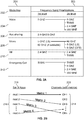
- FIGURE 2A therein is a diagram of example frequency band prioritizations that may be associated with application modalities.
- the information included in FIGURE 2A may be stored in an appropriate database for access and used in network 100 when channels are to be assigned to application data traffic.
- FIGURE 2A includes modality column 201 that includes a list of modalities 202 for voice 204, App sharing 206, Video 208, IM 210, and Emergency Call 212.
- Each modality of FIGURE 2A is associated with a row of Frequency Band Prioritizations in column 203.
- Each modality may also be associated with a priority for frequency band allocation relative to each of the other modalities.
- the priority of each modality may be indicated by its relative position from top to bottom in column 201 as compared to the other modalities.
- Voice modality 204 may have a higher priority for frequency assignment of its first level priority frequency of 5GHz than the other modalities.
- the Frequency Band Prioritization for each modality may include a first level and second level frequency prioritization.
- Voice modality 204 is associated with a first level choice of the 5GHz band.
- the second level choices of frequency bands for Voice modality 204 are TVWS, 2.4 GHz and 300MHz in order of priority.
- the Video modality 208 has a first level prioritization of 60 GHz (if available) or 5GHz (LB) (in the lower 5GHz band) if 60 GHz is not available.
- the second level choices of frequency bands for Video modality 208 are 5GHz (LB), and 5GHz (DFS).
- Emergency Call modality 212 is associated with a first level choice of the TVWS band.
- the second level choices of frequency bands for Emergency Call modality 212 are 5GHz, 2.4 GHz and 300MHz in order of priority.
- App Sharing modality 206 has a frequency prioritization set for either 2.4 GHz or 5 GHz.
- an authorization element associated with one or more of the modalities may be considered.
- a modality of an emergency services first provider's functions or applications may be assigned authorization for a restricted frequency band (such as 4.9 GHz), as well as other available frequency bands in a prioritization.
- the authorization may be based on the criticality of the function or application, or on governmental regulation, and other applications would not be authorized to use the restricted frequency bands.
- a user may be assigned an otherwise restricted frequency.
- an authorization element may be implemented to indicate a priority to limit access to a frequency.
- a priority to limit access to a restricted frequency band may be assigned to one or more modalities and cause the restricted frequency band to be placed at a low level priority for those modalities. This may be used to limit overall use of the restricted frequency band for those modalities to only when other frequencies are not available.
- the network may limit access or minimize access to the TVWS and DFS frequency bands to certain modalities using authorization elements.
- the information in FIGURE 2A may be used to assign channels for data traffic of applications on any of devices 116a -116h operating within network 100.
- each channel of the network 100 may be associated with a characteristic that indicates the frequency band of the channel.
- the data traffic of an application on a device 116 may be assigned to a channel by mapping an available channel having the appropriate frequency band indication characteristic according to the frequency priorities of the modality, or modalities, of the application that is transmitting the data traffic.
- frequency band prioritization information such as that shown in FIGURE 2A , may be considered and weighted along with other application preferences for other channel characteristics, such as band width, delay, jitter, reliability, etc., when mapping a channel to data traffic of a modality.
- each of the modalities may also be associated with a metric that includes an acceptable range for one or more channel characteristics for the modality.
- the modalities may be assigned to a channel by mapping a channel having a frequency that is the highest priority preferred frequency for each modality that also meets the acceptable metrics for the modality.
- Channel characteristic or characteristic as used in this disclosure means any characteristic or property of a wireless channel and may include frequency band, band width, reliability metrics, QoS metrics, a received signal strength indicator (RSSI), a packet error rate (PER), performance metrics, or any other characteristic that may define or describe the channel relative to another channel.
- RSSI received signal strength indicator
- PER packet error rate
- the information included in FIGURE 2A may be stored in an appropriate database for access and used in network 100 when channels are to be assigned or mapped to application data traffic.
- the assignment or mapping of modalities to frequency channels may be done when a channel is needed or done at predetermined times to provide available channels at the time of the mapping and account for changes to the network wireless environment. For example, a mapping may be performed each time the available channels in the network change, such as when the TVWS channel allocation for the geographic region in which network 100 operates has been updated.
- FIGURE 2B therein is a diagram of example mappings of modalities to wireless network channels based on channel characteristics according to another embodiment.
- FIGURE 2B shows column 218, that includes a set of applications 216 listed by modality types (mod.1 - mod. m) and column 220, that includes channels 214 listed by network channel number (CH1-CHn).
- each modality mod. 1 - mod. M may be associated with a metric of metric 1 - metric m.
- each Channel of CHI - CHn may be associated with at least one characteristic that includes a metric or set of metrics.
- the information included in FIGURE 2B may be stored in an appropriate database for access and used in network 100 when channels are to be assigned or mapped to application data traffic.
- the assignment or mapping of modalities to channels may be done when a channel is needed or done at predetermined times to provide a listing of channels available at the time of the mapping and account for changes to the network wireless environment.
- the information on the assignment or mapping may be updated each time the available channels in the network change, for example, when the TVWS channel allocation has been updated.
- the information on assignment or mapping in FIGURE 2B may be updated dynamically using updated channel metrics to account for changes in the network 100, or changes in the wireless environment of network 100.
- each channel may be associated with a characteristic that includes a set of metrics, such as a delay, a bandwidth metric indicating delay and bandwidth of the channel, a RSSI of the interference environment of the channel or a PER.
- a channel metric may also include a metric associated with the channel that can be used as part of a channel assignment to a particular modality.
- a channel metric may include an RSSI computed and stored for a modality based on prior use of the channel for that modality. The metric may be computed, for example, by a device that was operating within a predetermined distance, or in a similar area, of a device that is currently being assigned channels for that modality.
- the metrics may be defined in any way that allows comparison of the channel metrics with modality requirements for mapping the channel assignments.
- Each modality may also be associated with a modality metric or modality requirement that is in a form that allows comparison with the channel metrics to determine which channels may be mapped to the modality.
- each modality may be associated with a metric that includes delay requirements and bandwidth requirements for the modality.
- the channel metric for delay may be given, for example, as an average value, or, as values including upper and lower bounds. If the channel metric for delay is given as an average value, the modality metric may include an indication of a range of acceptable average delays and a channel may be acceptable if the average delay is in that range for the modality. If the channel metric for delay is given as upper and lower bounds, the modality metric may include a desired delay and a channel may be acceptable for the modality if the desired delay falls within the upper and lower bounds.
- a channel that meets the bandwidth requirements and the delay requirements of a modality may be mapped to the modality.
- the metrics that are compared to match a channel with a modality may include any appropriate metric or parameter and may be defined and compared in any appropriate way. This may include prioritizing one metric over another when only one metric of a set can be satisfied, or using metrics of a second priority when a first metric that cannot be satisfied.
- the mapping of modalities to channels may be done based only on the quality metrics without considering frequency band, or frequency band priorities or information such as that shown in FIGURE 2A . In this implementation, the channels may fall within any frequency band and mapping would be based on the channel quality metrics.
- frequency band prioritization information such as that shown in FIGURE 2A
- frequency band prioritization information may be considered and weighted along with other application preferences for channel quality characteristics, such as bandwidth, delay, jitter, reliability, etc., when mapping a channel to a modality. This may include, for example, attempting to find a channel for a modality in a preferred frequency band having acceptable metrics, and then attempting the find a channel in a next preferred frequency band for the modality if a channel with acceptable metrics was not found in the preferred frequency band. Implementations may include using the aspects of FIGURES 2A and 2B in various combinations.
- FIGURE 3A therein is a flow diagram illustrating operations performed in a device in which an example embodiment of the disclosure is implemented.
- the process of FIGURE 3A may be performed, for example, on any one of mobile devices 116a - 116h in network 100.
- the process begins at 302, where it is determined if a device application requires a channel for data traffic. If no channel is required the process loops back to 302 and continues monitoring to determine if a channel is required.
- the process moves to 304.
- the modality of the application is determined. Determining modality may include determining or defining the type of traffic stream required for the application (such as a single traffic type or a group of traffic types).
- the determination at 304 may be based on information stored in the device that is associated with the particular application or provided by the application. In one embodiment the determination may provide a modality category such as one or more of the modalities shown in column 201 of FIGURE 2A for the data traffic of the application that requires a channel. Depending on the application, more than one modality may be determined at 304. For example, if the application uses both voice and video traffic, a voice and a video modality may be determined.
- a channel or channels are assigned to the application based on the determination of modality. This may be done by assigning a data traffic stream (or each data traffic stream if more than one) of the application to a channel or channels based on the determined modality or modalities of the application. In the embodiment of FIGURE 3A , the channel assignment may be performed by accessing a database that includes information mapping application modality types to channels and assigning channels according to the mapping. Assigning a channel during operation 306 is discussed in further detail below in relation to FIGURE 3B .
- the process initiates communications for the application on each of the assigned channels. This may be done by generating information that is used in the device 116 to control an appropriate transceiver of the device 116 to transmit on the assigned channel or channels.
- a database is accessed.
- the database may be based, for example, on channel mappings configured as shown in and described in relation to FIGURE 2A or FIGURE 2B .
- the database may be stored on the device implementing the process of FIGURE 3A , for example, one of devices 116a - 116h. Alternately, the database may be stored on another device or entity in the network such as, for example, on an access point of access points 110 - 114, or on a remote device, for example, server 104.
- the database may be created on one or more of the other devices or entities in the network or on a remote device, and sent to a device 116 for storage and use in implementing the process of FIGURE 3A .
- the database is used to determine a channel and, at 316, assign a data traffic stream (or each data traffic stream, if more than one) of the application to a channel or channels based on the determined modality or modalities of the application to complete the operation of 306 of FIGURE 3A .
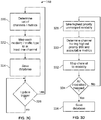
- FIGURE 3C therein is a flow diagram that illustrates operations for configuring a database of application modalities mapped to channels of a network according to an example embodiment.
- the process of FIGURE 3C may be performed on different system or network entities, for example, on server 104 of FIGURE 1 , or in any one of access points 110 - 114 in network 100 of FIGURE 2 , or at one of the mobile devices 116a - 116h.
- the operations of FIGURE 3C may be performed by a combination of those entities.
- the process of FIGURE 3C begins at 320 where a set of channels and channel characteristics are determined.
- the channels may be determined by generating a list of channels currently allowed for use by network 100 and for which access points 110 - 114 are operable to communicate on.
- the list of channels may include channels allocated for the frequency bands and 802.11standards according to which network 100 may operate and/or channels that are allocated on a changing basis.
- the geo-location spectrum database (GSDB) for the geographical region in which network 100 is located may be queried for current information to determine channels in the TVWS band that are allowed to be used and which may be put on the list.
- Each channel on the list may then be associated with one or more channel characteristics.
- a list of application modalities may then be mapped to one or more of the channels on the channel list based on the channel characteristics and requirements of each modality.
- the mapping may be performed according to the mappings shown in and described in relation to FIGUREs 2A and 2B .
- FIGURE 3D therein is a flow diagram that illustrates an example of a mapping of modality traffic types to channels that may be performed as operation 322 of FIGURE 3C .
- an unmapped modality having the highest priority for channels relative to the other unmapped modalities is selected for mapping.
- a channel in the frequency band that is the highest available frequency band in the frequency band prioritization hierarchy of the selected modality is selected.
- metrics associated with the selected channel are also checked to determine if they satisfy requirements of the selected modality for channel metrics. If channel metrics are not satisfied the process will begin again at 328 by selecting a different channel.
- the determination at 330 may be performed by only considering the frequency band of the channel and the modality's frequency band prioritization or, by only considering channel metrics and requirements of a modality on channel metrics when determining a channel for mapping to a modality.
- each channel determined in 330 is mapped to the selected modality. The process continues until it is determined at 334 that all modalities have been mapped to one or more channels.
- the process returns to 324 of FIGURE 3C and the database of modalities mapped to channels is saved.
- the channels used in the mapping in the database may be determined based on information on the transceiver capabilities of the mobile devices for which the database is being prepared. For example, at 320 of FIGURE 3C , transceiver capability information on a group of one or more mobiles may be used to determine a set of channels that match the device transceiver capabilities of that group to create the database for that group.
- the database may be saved on the network entity that created the database for use at that network entity, or sent to another entity for use. For example, if the database is created on server 104 or at one of the access points, the saved database may be sent to one or more of mobile devices 166a - 116h and stored in the device for use by the device in assigning channels to its applications. In another implementation, for example, the database maybe stored on a network entity and queried by the mobile device when a device application requires a channel. In other example alternatives the database may be stored in the cloud, for example, on a database accessible on the internet, or on the premises of a corporate network.
- the database When the database has been created it may be updated as necessary to ensure that the information on the channels that are mapped in the database is current. For example appropriate timers may be set or other criteria may be used to trigger an update at 326 to cause the set of channels and channel characteristics to be re-determined. This may be done to account for changing conditions in the wireless environment of network 100 such as, for example, interference from neighboring wireless networks, and the effects those changing conditions may have on channel characteristics.
- the update may also use information to account for changing channel availability of channels for network 100, for example, the changing of channels permitted for use by regulatory authorities in the TVWS band.
- the database When an update is triggered at 326 of FIGURE 3C the database will be remapped and saved again as previously described for FIGURE 3D .
- the database may be updated each time a new mobile device enters the coverage area of network 100 and requires a channel for offloading.
- Device 400 represents a possible implementation any of devices 116a - 116h or any other device that may operate in network 100, according to the embodiments of the disclosure.
- Device 400 may include a touch screen/keypad 420, microphone 422, speaker 424 and camera 426 which receive inputs and provide outputs to and from device 400.
- Device 400 may also include "Other" input/outputs (I/O) 430 for any other type of I/O device.
- I/O 430 may include, for example, health monitor devices, weather monitors, industrial supervisory control and data acquisition (SCADA) equipment, or, generally, any function that may transmit and receive data in network 100. These inputs and outputs may be used to generate and receive data traffic over traffic channels in network 100 that are assigned to applications according to the disclosed embodiments.
- Device 400 includes processing unit 418 and memory 412 which is shown as including program code or instructions for hierarchical spectrum offload (HSO) applications 414 that perform functions according to the embodiments.
- Memory 412 may also include other device applications 416.
- Memory 412 may be implemented as any type of computer readable storage media in device 400, including non-volatile and volatile memory. Memory 412 also includes instructions in the form of code for running the operating system to control the operations of device 400.
- Memory 412 also may include data such as media data, camera photos and videos, contact data, calendar data, and other files used in the operation of applications on device 400 that may utilize data channels assigned according to the disclosed embodiments.
- Processing unit 418 may comprise one or more processors, or other control circuitry or any combination of processors and control circuitry. Processing unit 418 provides overall control of device 400 and the other functional blocks shown in FIGURE 4A by implementing instructions and code in memory 412 to provide functions for operation in network 100.
- Device 400 includes transceivers (TRXs) operating in different frequency bands as shown by 60 GHz Band TRX 402, 2.4 GHz TRX 404, 5GHx Band TRX 406, 300 MHz Band TRX 408, TVWS Band TRX 410, and cellular band TRX 428. Device 400 may also include other TRX 432. Other TRX may include, for example, public safety (4.9 GHz) TRX, LIAS TRX, or any other TRX in any band having appropriate data type and authorization. In the embodiments device 400 and its transceivers may be operable to use one or more spectrum allocations that are allowed in each of the designated frequency bands according to the relevant IEEE 802.11 or any other standard specifications supported by network 100.
- TRXs transceivers
- TRX 406 may be operable on dynamic frequency switching (DFS) channels as well as on the non-DFS channels within the 802.11ac 5 MHz spectrum.
- TRX 410 may use currently available TVWS channels according to requirements and regulations of the geographic area in which network 100 operates.
- Cellular band TRX 428 may allow device 400 to operate in a cellular system such as that represented by base station 105 of FIGURE 1 .
- data traffic maybe offloaded from cellular band TRX 428 to one or more of the other transceivers when device 400 is within the coverage area of network 100.
- HSO application 414 causes processing unit 418 to control device 400 device to perform operations as shown in FIGURES 3A and 3B to assign channels to transceivers 402 - 410 and transceiver 432 for applications operating on device 400.
- the HSO application 414 may also cause processing unit to perform other operations such as, for example, operations related to creating and updating the database in FIGURES 3C and 3D .
- Access point 450 includes processing unit 454, transceivers 466, and memory/storage 456 that includes code and instructions for hierarchical spectrum (HSO) offload programs 458.
- Memory 456 may be implemented as any type of as any type of computer readable storage media, including non-volatile and volatile memory.
- Memory/storage 456 may also include HSO database 460.
- Access point 450 connects to a backend network over interface 464.
- Processing unit 454 may comprise one or more processors, or other control circuitry or any combination of processors and control circuitry that provide overall control of the access point according to the disclosed embodiments.
- Transceivers 464 provide the capability for network 100 to communicate with devices, such as devices 116a - 116h, over channels that may be assigned to device applications.
- HSO program 414 when executed, causes processing unit 454 to control access point 450 to perform operations as shown in FIGUREs 3C and 3D for creating and updating a database that includes a mapping of application modalities to channels of network 100.
- the database may be saved in memory/storage 456 and utilized according to the embodiments of the disclosure.
- FIGURE 4C therein is a simplified block diagram of an example network database server of an alternative embodiment for performing the operations of FIGURES 3C and 3D .
- Server 104 of FIGURE 1 may be implemented according to database server 450 of FIGURE 4C .
- Database server 470 includes controller 474 having processing unit 476, memory 480, network interfaces 478, and geo-location spectrum database (GSDB) interface 472.
- Memory 480 may be implemented as any type of computer readable storage media, including non-volatile and volatile memory. Memory 480 is shown as including HSO programs and HSO database 482.
- Controller 474 and processing unit 476 may comprise one or more processors, or other control circuitry, or any combination of processors and control circuitry that provide overall control of database server 470 according to the disclosed embodiments
- HSO programs 482 when executed, causes processing unit 476 to control database server 470 to perform operations as shown in FIGURES 3C and 3D for creating and updating a database that includes a mapping of application modalities to channels of network 100.
- the data base may be saved in memory/storage 480 and utilized according to the embodiments of the disclosure.
- GSDB interface 472 may be controlled by processing unit 476 to access the appropriate GSDB database for the geographical location of network 100 for information used to update the channels in the HSO database 482
- Server 104 is illustrated as a single server but may be representative of server functions or server systems provided by one or more servers or computing devices that may be co-located or geographically dispersed.
- the term server as used in this disclosure is used generally to include any computing devices or communications equipment that maybe implemented to perform the HSO functions and processes.
- processor-executable code or instructions stored on memory may comprise one or more computer readable storage media (e.g., tangible non-transitory computer-readable storage media such as memory 412, 456 or 480).
- computer readable storage media e.g., tangible non-transitory computer-readable storage media such as memory 412, 456 or 480.
- computer-readable storage media or “non-transitory computer-readable media” include the media for storing of data, code and program instructions, such as memory 412, 456 or 480, and do not include portions of the media for storing transitory propagated or modulated data communication signals
- the embodiments of the disclosure include a device comprising a transceiver portion operable to communicate on a plurality of channels over a plurality of frequency bands, each frequency band including at least one channel.
- the device further comprises at least one processor and memory, including code, the code executable to cause the at least one processor to assign a data traffic stream generated from an application having a modality to a selected channel of the plurality of channels by associating the modality of the application with the selected channel.
- the processor further controls the transceiver portion to transmit the at least one data traffic stream on its assigned selected channel.
- the selected channel may be associated with a characteristic that comprises a frequency band and the processor may assign the data traffic stream by associating the modality of the application to the frequency band associated with the selected channel.
- the modality may be associated with a prioritization of a plurality of frequency bands indicating relative preference for use of each of the frequency bands and the processor may assign the data traffic stream by associating the modality of the application to the frequency band of the selected channel based on the prioritization.
- Embodiments of the device further include embodiments in which the modality of the application has a priority relative to other modalities for channel assignments and the at least one processor associates the modality of the application with a characteristic of the selected channel by taking into account the priority of the modality, and embodiments in which the selected channel is associated with a characteristic that comprises a metric and the processor assigns the data traffic stream by associating the modality of the application to the frequency band associated with the selected channel.
- the at least one channel metric of the selected channel may include a quality of service value, and, the at least one processor may assign the data traffic stream to a selected channel by processing information from a database that includes a list of application modalities mapped to the plurality of channels based on characteristics of each of the plurality of channels.
- the at least one channel metric may include a received signal strength indicator of the interference environment of the selected channel, a packet error rate, or the at least one channel metric may include a received signal strength indicator for the modality of the application computed and stored by an prior user of another device operating within a predetermined distance of the location of the device.
- the modality may be a classifier for a data traffic type generated by the application
- Further embodiments include the device where the application has a plurality of modalities, and wherein the at least one processor further divides the data traffic generated at the application into a plurality of traffic streams, each classified in one of the plurality of modalities, assigns each of the plurality of data traffic streams from the application to a channel of the plurality of channels by associating each of the plurality of the modalities with a separate channel of the plurality of channels, and controls the transceiver to transmit each of the plurality of traffic streams generated at the application on its associated separate channel.
- the application having a plurality of modalities may comprise a first application that communicates with a second application on another device, wherein the selected channel comprises a transmission channel, and wherein the at least one processor further controls the transceiver portion to receive each of a plurality of traffic streams generated at the second application on an associated reception channel and combine the received data traffic streams data generated at the second application into data traffic for processing by the first application.
- inventions of the disclosure include an apparatus in a wireless network, the apparatus comprising at least one processing unit and memory, including code, the code executable to cause the at least one processing unit to determine a set of channels, each channel of the set of channels having a characteristic, map each of a plurality of application modality types to at least one channel of the set of channels based at least in part on modality type and the characteristic of each channel, and, configure a database for channel assignment in the wireless network.
- the memory may further include code that is further executable to cause the at least one processing unit to communicate information in the database to a processor controlling at least one transceiver in the network, wherein the processor utilizes the information in assigning channels to the at least one transceiver for data traffic.
- the at least one processing unit may determine updated data including a plurality of updated channel characteristic associated with the set of wireless channels and map at least one channel of the set of wireless channels to at least one of a plurality of modality types based on each modality type and the plurality of updated channel characteristic to update the database.
- the characteristic of each channel may include a frequency band
- each modality type may have a preferred frequency band
- the apparatus may map each of the plurality of modality types by mapping each modality type to at least one channel having its preferred frequency band.
- the database may be stored on the cloud, stored on the premises of a corporate network, or stored in a device operable in the wireless network.
- inventions include an apparatus in a wireless network, the apparatus comprising at least one processor and memory including code, the code executable to cause the at least one processor to control the apparatus to assign a channel of a plurality of channels to application data traffic of an application operable in the wireless network based on a traffic type of the application and a characteristic of the channel, and generate control data to configure communication of the application data traffic on the assigned channel in the wireless network.
- the characteristic of each of the plurality of wireless channels may comprise a reliability index
- the traffic type of the application may be associated with a reliability index prioritization and
- the apparatus may assign the channel based on the reliability index prioritization and a reliability index of the assigned channel.
- the characteristic of each of the plurality of wireless channels may also comprises a frequency band
- the traffic type of the application may be associated with a frequency band prioritization and, the apparatus may assign the channel based on the frequency band prioritization and a frequency band of the assigned channel.
- the apparatus may further comprise a controller implemented in infrastructure of a system including the wireless network, and the apparatus may communicate the generated control data to a mobile device on which the application is implemented.
- the apparatus may be implemented on a mobile device on which the application is implemented and the apparatus may communicate the generated control data to at least one transceiver of the mobile device.
- the apparatus may further assign a channel of the plurality of channels to the application data channel by accessing a database that includes a list of traffic types mapped to channels having frequency bands best suited for each listed traffic type.
- While embodiments have been disclosed as having functions implemented on access points, servers and/or devices operating in a network, one or more of the functions may be implemented on different types of equipment.
- one or more of the functions in the system shown as implemented on a server located in network infrastructure may be implemented on a device, such as mobile device, laptop computer or any other suitable device operating in a network.
- processors or processing units controllers, and memory including instructions and code
- the functions and processes of the embodiments may be implemented and performed using any type of processor, circuitry or combinations of processors and/or circuitry and code.
- This may include, at least in part, one or more hardware logic components.
- illustrative types of hardware logic components include field programmable gate arrays (FPGAs), application specific integrated circuits (ASICs), application specific standard products (ASSPs), system-on-a-chip systems (SOCs), complex programmable logic devices (CPLDs), etc.
- FPGAs field programmable gate arrays
- ASICs application specific integrated circuits
- ASSPs application specific standard products
- SOCs system-on-a-chip systems
- CPLDs complex programmable logic devices
Landscapes
- Engineering & Computer Science (AREA)
- Computer Networks & Wireless Communication (AREA)
- Signal Processing (AREA)
- Mobile Radio Communication Systems (AREA)
Claims (12)
- Vorrichtung (400), umfassend:einen Sendeempfängerabschnitt (466), der betriebsfähig ist, auf einer Vielzahl von Kanälen (462) über eine Vielzahl von Frequenzbändern zu kommunizieren, wobei jedes Frequenzband mindestens einen Kanal enthält; undmindestens einen Prozessor (454) und Speicher (456), der Code (458) enthält, wobei der Code, wenn er von einem Computer ausgeführt wird, den mindestens einen Prozessor (454) zu dem Folgenden veranlasst:Zuweisen (306) eines Datenverkehrstroms, der von einer Anwendung mit mindestens einer Modalität erzeugt wurde, an einen ausgewählten Kanal der Vielzahl von Kanälen durch Zuordnen (314) der mindestens einen Modalität der Anwendung zu einem Frequenzband, das den gewählten Kanal enthält, zumindest basierend auf einer Priorisierung der Vielzahl von Frequenzbändern in der mindestens einen Modalität,wobei die Priorisierung der Vielzahl von Frequenzbändern für die mindestens eine Modalität eine relative Präferenz zur Verwendung jedes der Vielzahl von Frequenzbändern relativ zueinander durch die mindestens eine Modalität angibt,wobei die Modalität der Anwendung eine Priorität relativ zu anderen Modalitäten für die Zuweisung des Datenverkehrstroms zu dem Kanal aufweist, wie durch eine relative Position der Modalität in einer Datenbank im Vergleich zu den anderen Modalitäten angegeben,wobei der ausgewählte Kanal einer Eigenschaft zugeordnet ist, die ein Frequenzband umfasst, und der Datenverkehrsstrom durch Zuordnen der Modalität der Anwendung zu dem Frequenzband, das dem ausgewählten Kanal zugeordnet ist, zugewiesen wird; undSteuern (308) des Sendeempfängerabschnitts (466), den Datenverkehrsstrom auf seinem zugewiesenen ausgewählten Kanal zu übertragen;wobei die Anwendung eine Vielzahl von Modalitäten aufweist und eine erste Anwendung umfasst, die mit einer zweiten Anwendung auf einer anderen Vorrichtung kommuniziert,wobei der ausgewählte Kanal einen Übertragungs- oder Empfangskanal umfasst, und wobei der mindestens eine Prozessor und Speicher Code enthalten, wobei der Code, wenn er von einem Computer ausgeführt wird, den mindestens einen Prozessor veranlasst, den Sendeempfängerabschnitt weiter zu steuern, jeden einer Vielzahl von Verkehrsströmen, die an der zweiten Anwendung auf einem zugeordnetem Empfangskanal erzeugt wurden, zu empfangen;und Kombinieren der empfangenen Datenverkehrsströme, die an der zweiten Anwendung erzeugt wurden, in Datenverkehr zum Verarbeiten durch die erste Anwendung.
- Vorrichtung nach Anspruch 1, wobei der mindestens eine Prozessor und Speicher Code enthalten, wobei der Code, wenn er von einem Computer ausgeführt wird, den mindestens einen Prozessor veranlasst, die Modalität der Anwendung mit einer Eigenschaft des ausgewählten Kanals durch Berücksichtigung der Priorität der Modalität zuzuordnen.
- Vorrichtung nach Anspruch 1, wobei der ausgewählte Kanal einer Eigenschaft zugeordnet wird, die mindestens eine Kanalmetrik und den Prozessor und Speicher, die Code enthalten, umfasst, wobei der Code, wenn er von einem Computer ausgeführt wird, den mindestens einen Prozessor veranlasst, den Datenverkehrsstrom durch Zuordnen der Modalität der Anwendung zu der mindestens einen Kanalmetrik, die dem ausgewähltem Kanal zugeordnet ist, zuzuweisen.
- Vorrichtung nach Anspruch 3, wobei die mindestens eine Kanalmetrik des ausgewählten Kanals einen Servicequalitätswert enthält.
- Vorrichtung nach Anspruch 3, wobei die mindestens eine Kanalmetrik einen Indikator für die empfangene Signalstärke der Interferenzumgebung des ausgewählten Kanals enthält.
- Vorrichtung nach Anspruch 3, wobei die mindestens eine Kanalmetrik eine Paketfehlerrate enthält.
- Vorrichtung nach Anspruch 3, wobei die Vorrichtung an einem Standort arbeitet und die mindestens eine Kanalmetrik einen Indikator für die empfangene Signalstärke für die Modalität der Anwendung enthält, der durch einen vorherigen Benutzer einer anderen Vorrichtung, die in einer vorbestimmten Entfernung von dem Standort der Vorrichtung betrieben wurde, berechnet und gespeichert wurde.
- Vorrichtung nach Anspruch 1, wobei der mindestens eine Prozessor und Speicher Code enthalten, wobei der Code, wenn er von einem Computer ausgeführt wird, den mindestens einen Prozessor veranlasst, den Datenverkehrsstrom einem ausgewähltem Kanal durch Verarbeiten von Informationen aus einer Datenbank zuzuweisen, die eine Liste von Anwendungsmodalitäten enthält, die zu der Vielzahl von Kanälen basierend auf Eigenschaften jedes der Vielzahl von Kanälen abgebildet werden.
- Vorrichtung nach Anspruch 1, wobei die Modalität ein Klassifikator für einen Datenverkehrstyp ist, der von der Anwendung erzeugt wird.
- Vorrichtung nach Anspruch 1, wobei der mindestens eine Prozessor und Speicher Code enthalten, wobei der Code, wenn er von einem Computer ausgeführt wird, den mindestens einen Prozessor weiter zu dem Folgenden veranlasst:Aufteilen des Datenverkehrs, der an der Anwendung erzeugt wurde, in eine Vielzahl von Verkehrsströmen, die jeweils in eine der Vielzahl von Modalitäten klassifiziert sind;Zuweisen jedes der Vielzahl von Datenverkehrsströmen aus der Anwendung zu einem Kanal der Vielzahl von Kanälen durch Zuordnen jeder der Vielzahl von Modalitäten zu einem separaten Kanal der Vielzahl von Kanälen; undSteuern des Sendeempfängers, jeden der Vielzahl von Verkehrsströmen, die an der Anwendung erzeugt wurden, auf seinem zugeordneten separaten Kanal zu übertragen.
- Vorrichtung (470, 450) in einem drahtlosen Netzwerk in Kommunikation mit mindestens einer Vorrichtung nach einem der vorstehenden Ansprüche, wobei die Vorrichtung umfasst:mindestens eine Verarbeitungseinheit (476, 454) und Speicher (480, 456), der Code (482, 458) enthält, wobei der Code, wenn er von einem Computer ausgeführt wird, die mindestens eine Verarbeitungseinheit (476, 454) zu dem Folgenden veranlasst:Bestimmen (320) einer Vielzahl von Kanälen zur Verwendung durch eine Vielzahl von Anwendungsmodalitätstypen, die an der mindestens einen Vorrichtung in dem drahtlosen Netzwerk konfiguriert sind, wobei jeder Kanal der Vielzahl von Kanälen mindestens eine Metrik und innerhalb eines einer Vielzahl von Frequenzbändern aufweist;Abbilden jedes einer Vielzahl von Anwendungsmodalitätstypen zu einem entsprechendem Frequenzband der Vielzahl von Frequenzbändern basierend auf einer ersten Priorisierung, wobei die erste Priorisierung eine relative Präferenz für Verwendung jedes der Vielzahl von Frequenzbändern durch jeden der Vielzahl von Anwendungsmodalitätstypen angibt;Abbilden (322) eines ausgewählten einen der Vielzahl von Anwendungsmodalitätstypen zu mindestens einem Kanal der Vielzahl von Kanälen in seinem entsprechendem Frequenzband basierend auf einer zweiten Priorisierung und der mindestens einen Metrik jedes der Vielzahl von Kanälen, wobei die zweite Priorisierung eine relative Präferenz für eine Vielzahl von Metrikanforderungen angibt, die für den ausgewählten einen der Vielzahl von Anwendungsmodalitätstypen erfüllt werden,Konfigurieren (324) einer Datenbank für Kanalzuweisung in dem drahtlosen Netzwerk basierend auf dem Abbilden jedes der Vielzahl von Anwendungsmodalitätstypen zu seinem entsprechendem Frequenzband und dem Abbilden des ausgewählten einen der Vielzahl von Anwendungsmodalitätstypen zu dem mindestens einen Kanal; undBereitstellen von Informationen, die der Datenbank zugeordnet sind, zur Verwendung durch die mindestens eine Vorrichtung;die Anwendung umfasst eine erste Anwendung, die über die Vorrichtung mit einer zweiten Anwendung auf einer anderen Vorrichtung kommuniziert, wobei der ausgewählte Kanal einen Übertragungs- oder Empfangskanal umfasst, und wobei die mindestens eine Verarbeitungseinheit und Speicher Code enthalten, wobei der Code, wenn er von einem Computer ausgeführt wird, die mindestens eine Verarbeitungseinheit weiter zu dem Folgenden veranlasst:Steuern des Sendeempfängerabschnitts zum Empfangen jedes einer Vielzahl von Verkehrsströmen, die an der zweiten Anwendung auf einem zugeordnetem Empfangskanal erzeugt wurden; undKombinieren der empfangenen Datenverkehrsströme, die an der zweiten Anwendung erzeugt wurden, in Datenverkehr zum Verarbeiten durch die erste Anwendung.
- Vorrichtung nach Anspruch 11, ferner Veranlassen der mindestens einen Verarbeitungseinheit, Informationen in der Datenbank zu einem Prozessor zu kommunizieren, der mindestens einen Sendeempfänger in dem Netzwerk steuert, umfassend, wobei der Prozessor dafür ausgelegt ist, die Informationen beim Zuweisen von Kanälen zu dem mindestens einen Sendeempfänger für Datenverkehr zu nutzen.
Applications Claiming Priority (2)
| Application Number | Priority Date | Filing Date | Title |
|---|---|---|---|
| US14/805,683 US10057811B2 (en) | 2015-07-22 | 2015-07-22 | Hierarchical spectrum offload |
| PCT/US2016/039528 WO2017014920A1 (en) | 2015-07-22 | 2016-06-27 | Hierarchical spectrum offload |
Publications (2)
| Publication Number | Publication Date |
|---|---|
| EP3326418A1 EP3326418A1 (de) | 2018-05-30 |
| EP3326418B1 true EP3326418B1 (de) | 2021-03-31 |
Family
ID=56555729
Family Applications (1)
| Application Number | Title | Priority Date | Filing Date |
|---|---|---|---|
| EP16745238.2A Active EP3326418B1 (de) | 2015-07-22 | 2016-06-27 | Hierarchisches spektren-offload |
Country Status (4)
| Country | Link |
|---|---|
| US (1) | US10057811B2 (de) |
| EP (1) | EP3326418B1 (de) |
| CN (1) | CN107852729B (de) |
| WO (1) | WO2017014920A1 (de) |
Families Citing this family (10)
| Publication number | Priority date | Publication date | Assignee | Title |
|---|---|---|---|---|
| US10609616B2 (en) | 2015-12-22 | 2020-03-31 | Alfred Consulting LLC | System and method for using mobility information in heterogeneous networks |
| US10820361B2 (en) * | 2017-05-02 | 2020-10-27 | Samsung Electronics Co., Ltd. | Method and system for application-controlled multiple Wi-Fi connections |
| US10432355B2 (en) | 2017-06-09 | 2019-10-01 | Microsoft Technology Licensing, Llc | Enhanced error protection for high priority communication sessions |
| US10959103B2 (en) * | 2018-05-15 | 2021-03-23 | Apple Inc. | Neighbor awareness networking preferred channel learning |
| US12058723B2 (en) * | 2020-03-13 | 2024-08-06 | Meta Platforms Technologies, Llc | Systems and methods for prioritized EDCA channel access |
| WO2022027484A1 (zh) * | 2020-08-06 | 2022-02-10 | 北京小米移动软件有限公司 | 随机接入的方法、装置、通信设备及存储介质 |
| US11711862B1 (en) | 2021-07-15 | 2023-07-25 | T-Mobile Usa, Inc. | Dual connectivity and carrier aggregation band selection |
| EP4445631A4 (de) * | 2021-12-07 | 2026-02-25 | 3M Innovative Properties Company | Artikel einer persönlichen schutzausrüstung, kommunikationssystem und computerimplementiertes kommunikationsverfahren |
| CN116673969A (zh) * | 2023-05-11 | 2023-09-01 | 国网河北省电力有限公司新乐市供电分公司 | 遥控电缆穿管机器人装置 |
| CN119865916B (zh) * | 2024-12-27 | 2025-11-04 | 中国电子科技集团公司第十研究所 | 一种多信道无线网络的自适应调度方法及装置 |
Citations (1)
| Publication number | Priority date | Publication date | Assignee | Title |
|---|---|---|---|---|
| US20060160551A1 (en) * | 2004-09-22 | 2006-07-20 | Ntt Docomo, Inc. | Frequency band allocation device and method |
Family Cites Families (15)
| Publication number | Priority date | Publication date | Assignee | Title |
|---|---|---|---|---|
| US7366202B2 (en) | 2003-12-08 | 2008-04-29 | Colubris Networks, Inc. | System and method for interference mitigation for wireless communication |
| KR20070009548A (ko) * | 2004-01-23 | 2007-01-18 | 코닌클리케 필립스 일렉트로닉스 엔.브이. | 디지털 네트워크들에서 용량 병목의 처리 |
| US7474615B2 (en) * | 2005-07-11 | 2009-01-06 | Dell Products L.P. | Network optimization based on traffic prioritization |
| US20070026868A1 (en) | 2005-07-26 | 2007-02-01 | Schulz Gary D | Licensed/unlicensed frequency management in a wireless wide-area network |
| CN1859306A (zh) | 2006-02-21 | 2006-11-08 | 华为技术有限公司 | 一种提供QoS服务的方法和系统 |
| CN1968198A (zh) * | 2006-06-16 | 2007-05-23 | 华为技术有限公司 | 一种无线接入承载分组数据业务的QoS管理方法 |
| US7912002B2 (en) * | 2007-05-07 | 2011-03-22 | Hitachi, Ltd. | System and method of QOS-based channel selection for WLAN access points or stations |
| US8442440B2 (en) | 2009-07-29 | 2013-05-14 | Empire Technology Development Llc | Hierarchical spectrum sensing for cognitive radios |
| US8711721B2 (en) | 2010-07-15 | 2014-04-29 | Rivada Networks Llc | Methods and systems for dynamic spectrum arbitrage |
| US20120149352A1 (en) | 2010-07-26 | 2012-06-14 | Ari Backholm | Context aware traffic management for resource conservation in a wireless network |
| US20120057536A1 (en) * | 2010-09-02 | 2012-03-08 | Samsung Electronics Co., Ltd. | Method and apparatus for supporting multi-band wifi |
| CN102883345A (zh) | 2012-07-02 | 2013-01-16 | 厦门大学 | 长期演进网络中基于多网切换的覆盖空洞的检测方法 |
| US8830862B2 (en) * | 2012-08-24 | 2014-09-09 | International Business Machines Corporation | Data channel adaptation for mobile applications |
| CN105340359B (zh) | 2013-03-15 | 2019-03-15 | 英特尔公司 | 针对小小区基站的未授权的频谱卸载架构 |
| US9332547B1 (en) * | 2014-03-07 | 2016-05-03 | Sprint Spectrum L.P. | Frequency band selection for wireless device communication |
-
2015
- 2015-07-22 US US14/805,683 patent/US10057811B2/en active Active
-
2016
- 2016-06-27 EP EP16745238.2A patent/EP3326418B1/de active Active
- 2016-06-27 WO PCT/US2016/039528 patent/WO2017014920A1/en not_active Ceased
- 2016-06-27 CN CN201680042868.5A patent/CN107852729B/zh active Active
Patent Citations (1)
| Publication number | Priority date | Publication date | Assignee | Title |
|---|---|---|---|---|
| US20060160551A1 (en) * | 2004-09-22 | 2006-07-20 | Ntt Docomo, Inc. | Frequency band allocation device and method |
Also Published As
| Publication number | Publication date |
|---|---|
| US10057811B2 (en) | 2018-08-21 |
| US20170026874A1 (en) | 2017-01-26 |
| CN107852729B (zh) | 2022-07-08 |
| CN107852729A (zh) | 2018-03-27 |
| WO2017014920A1 (en) | 2017-01-26 |
| EP3326418A1 (de) | 2018-05-30 |
Similar Documents
| Publication | Publication Date | Title |
|---|---|---|
| EP3326418B1 (de) | Hierarchisches spektren-offload | |
| US10939310B2 (en) | Adaptive profiles with SDR | |
| US11729794B2 (en) | Methods and apparatus for managing uplink resource grants in wireless networks | |
| US7599686B2 (en) | Systems and methods for RF spectrum management | |
| CN100558194C (zh) | 移动通信系统以及频带分配装置和频带分配方法 | |
| EP3840445B1 (de) | Optimierung der zuweisung von lizenziertem und unlizenziertem spektrum | |
| EP3599780B1 (de) | Gruppierung von client-vorrichtungen zur uplink-übertragung in einem wlan | |
| US12052580B2 (en) | Access point centric connectivity map service | |
| US9560528B2 (en) | Assigning frequency bands from a group of frequency bands to a wireless network system | |
| US9497637B2 (en) | Method, apparatus, and computer program product for link specific parameters based on emission characteristics of device | |
| CN106465136A (zh) | 用于分布式层级数据库的基于云的系统 | |
| Kassem et al. | Future wireless spectrum below 6 GHz: A UK perspective | |
| WO2014071731A1 (zh) | 动态频谱管理的方法、装置及系统 | |
| US10757704B2 (en) | Frequency band selection | |
| JP2019519955A (ja) | 通信方法、ネットワーク設備及び端末設備 | |
| US20260101195A1 (en) | Power-based channel assignments for overlapping access points | |
| US10462752B2 (en) | Transmitting content using guard band frequencies at reduced power | |
| US20250150849A1 (en) | Systems and methods for dynamic network slicing | |
| JP2015122808A (ja) | チャネル情報を報告するための方法及び装置 | |
| HK1189724A (en) | Method and apparatus for reporting channel information |
Legal Events
| Date | Code | Title | Description |
|---|---|---|---|
| STAA | Information on the status of an ep patent application or granted ep patent |
Free format text: STATUS: THE INTERNATIONAL PUBLICATION HAS BEEN MADE |
|
| PUAI | Public reference made under article 153(3) epc to a published international application that has entered the european phase |
Free format text: ORIGINAL CODE: 0009012 |
|
| STAA | Information on the status of an ep patent application or granted ep patent |
Free format text: STATUS: REQUEST FOR EXAMINATION WAS MADE |
|
| 17P | Request for examination filed |
Effective date: 20171208 |
|
| AK | Designated contracting states |
Kind code of ref document: A1 Designated state(s): AL AT BE BG CH CY CZ DE DK EE ES FI FR GB GR HR HU IE IS IT LI LT LU LV MC MK MT NL NO PL PT RO RS SE SI SK SM TR |
|
| AX | Request for extension of the european patent |
Extension state: BA ME |
|
| DAV | Request for validation of the european patent (deleted) | ||
| DAX | Request for extension of the european patent (deleted) | ||
| STAA | Information on the status of an ep patent application or granted ep patent |
Free format text: STATUS: EXAMINATION IS IN PROGRESS |
|
| 17Q | First examination report despatched |
Effective date: 20191016 |
|
| GRAP | Despatch of communication of intention to grant a patent |
Free format text: ORIGINAL CODE: EPIDOSNIGR1 |
|
| STAA | Information on the status of an ep patent application or granted ep patent |
Free format text: STATUS: GRANT OF PATENT IS INTENDED |
|
| RIC1 | Information provided on ipc code assigned before grant |
Ipc: H04W 72/04 20090101ALN20201119BHEP Ipc: H04W 72/08 20090101ALN20201119BHEP Ipc: H04W 72/06 20090101AFI20201119BHEP |
|
| RIC1 | Information provided on ipc code assigned before grant |
Ipc: H04W 72/06 20090101AFI20201203BHEP Ipc: H04W 72/08 20090101ALN20201203BHEP Ipc: H04W 72/04 20090101ALN20201203BHEP |
|
| RIC1 | Information provided on ipc code assigned before grant |
Ipc: H04W 72/04 20090101ALN20201204BHEP Ipc: H04W 72/06 20090101AFI20201204BHEP Ipc: H04W 72/08 20090101ALN20201204BHEP |
|
| INTG | Intention to grant announced |
Effective date: 20201223 |
|
| RIC1 | Information provided on ipc code assigned before grant |
Ipc: H04W 72/06 20090101AFI20201211BHEP Ipc: H04W 72/08 20090101ALN20201211BHEP Ipc: H04W 72/04 20090101ALN20201211BHEP |
|
| GRAS | Grant fee paid |
Free format text: ORIGINAL CODE: EPIDOSNIGR3 |
|
| GRAA | (expected) grant |
Free format text: ORIGINAL CODE: 0009210 |
|
| STAA | Information on the status of an ep patent application or granted ep patent |
Free format text: STATUS: THE PATENT HAS BEEN GRANTED |
|
| RAP1 | Party data changed (applicant data changed or rights of an application transferred) |
Owner name: MICROSOFT TECHNOLOGY LICENSING, LLC |
|
| AK | Designated contracting states |
Kind code of ref document: B1 Designated state(s): AL AT BE BG CH CY CZ DE DK EE ES FI FR GB GR HR HU IE IS IT LI LT LU LV MC MK MT NL NO PL PT RO RS SE SI SK SM TR |
|
| REG | Reference to a national code |
Ref country code: GB Ref legal event code: FG4D Ref country code: CH Ref legal event code: EP |
|
| REG | Reference to a national code |
Ref country code: AT Ref legal event code: REF Ref document number: 1378412 Country of ref document: AT Kind code of ref document: T Effective date: 20210415 |
|
| REG | Reference to a national code |
Ref country code: DE Ref legal event code: R096 Ref document number: 602016055239 Country of ref document: DE |
|
| REG | Reference to a national code |
Ref country code: IE Ref legal event code: FG4D |
|
| REG | Reference to a national code |
Ref country code: LT Ref legal event code: MG9D |
|
| PG25 | Lapsed in a contracting state [announced via postgrant information from national office to epo] |
Ref country code: BG Free format text: LAPSE BECAUSE OF FAILURE TO SUBMIT A TRANSLATION OF THE DESCRIPTION OR TO PAY THE FEE WITHIN THE PRESCRIBED TIME-LIMIT Effective date: 20210630 Ref country code: NO Free format text: LAPSE BECAUSE OF FAILURE TO SUBMIT A TRANSLATION OF THE DESCRIPTION OR TO PAY THE FEE WITHIN THE PRESCRIBED TIME-LIMIT Effective date: 20210630 Ref country code: HR Free format text: LAPSE BECAUSE OF FAILURE TO SUBMIT A TRANSLATION OF THE DESCRIPTION OR TO PAY THE FEE WITHIN THE PRESCRIBED TIME-LIMIT Effective date: 20210331 Ref country code: FI Free format text: LAPSE BECAUSE OF FAILURE TO SUBMIT A TRANSLATION OF THE DESCRIPTION OR TO PAY THE FEE WITHIN THE PRESCRIBED TIME-LIMIT Effective date: 20210331 |
|
| PG25 | Lapsed in a contracting state [announced via postgrant information from national office to epo] |
Ref country code: SE Free format text: LAPSE BECAUSE OF FAILURE TO SUBMIT A TRANSLATION OF THE DESCRIPTION OR TO PAY THE FEE WITHIN THE PRESCRIBED TIME-LIMIT Effective date: 20210331 Ref country code: LV Free format text: LAPSE BECAUSE OF FAILURE TO SUBMIT A TRANSLATION OF THE DESCRIPTION OR TO PAY THE FEE WITHIN THE PRESCRIBED TIME-LIMIT Effective date: 20210331 Ref country code: RS Free format text: LAPSE BECAUSE OF FAILURE TO SUBMIT A TRANSLATION OF THE DESCRIPTION OR TO PAY THE FEE WITHIN THE PRESCRIBED TIME-LIMIT Effective date: 20210331 |
|
| REG | Reference to a national code |
Ref country code: NL Ref legal event code: MP Effective date: 20210331 |
|
| REG | Reference to a national code |
Ref country code: AT Ref legal event code: MK05 Ref document number: 1378412 Country of ref document: AT Kind code of ref document: T Effective date: 20210331 |
|
| PG25 | Lapsed in a contracting state [announced via postgrant information from national office to epo] |
Ref country code: NL Free format text: LAPSE BECAUSE OF FAILURE TO SUBMIT A TRANSLATION OF THE DESCRIPTION OR TO PAY THE FEE WITHIN THE PRESCRIBED TIME-LIMIT Effective date: 20210331 Ref country code: LT Free format text: LAPSE BECAUSE OF FAILURE TO SUBMIT A TRANSLATION OF THE DESCRIPTION OR TO PAY THE FEE WITHIN THE PRESCRIBED TIME-LIMIT Effective date: 20210331 Ref country code: CZ Free format text: LAPSE BECAUSE OF FAILURE TO SUBMIT A TRANSLATION OF THE DESCRIPTION OR TO PAY THE FEE WITHIN THE PRESCRIBED TIME-LIMIT Effective date: 20210331 Ref country code: EE Free format text: LAPSE BECAUSE OF FAILURE TO SUBMIT A TRANSLATION OF THE DESCRIPTION OR TO PAY THE FEE WITHIN THE PRESCRIBED TIME-LIMIT Effective date: 20210331 Ref country code: SM Free format text: LAPSE BECAUSE OF FAILURE TO SUBMIT A TRANSLATION OF THE DESCRIPTION OR TO PAY THE FEE WITHIN THE PRESCRIBED TIME-LIMIT Effective date: 20210331 Ref country code: AT Free format text: LAPSE BECAUSE OF FAILURE TO SUBMIT A TRANSLATION OF THE DESCRIPTION OR TO PAY THE FEE WITHIN THE PRESCRIBED TIME-LIMIT Effective date: 20210331 |
|
| RAP4 | Party data changed (patent owner data changed or rights of a patent transferred) |
Owner name: MICROSOFT TECHNOLOGY LICENSING, LLC |
|
| PG25 | Lapsed in a contracting state [announced via postgrant information from national office to epo] |
Ref country code: SK Free format text: LAPSE BECAUSE OF FAILURE TO SUBMIT A TRANSLATION OF THE DESCRIPTION OR TO PAY THE FEE WITHIN THE PRESCRIBED TIME-LIMIT Effective date: 20210331 Ref country code: RO Free format text: LAPSE BECAUSE OF FAILURE TO SUBMIT A TRANSLATION OF THE DESCRIPTION OR TO PAY THE FEE WITHIN THE PRESCRIBED TIME-LIMIT Effective date: 20210331 Ref country code: PL Free format text: LAPSE BECAUSE OF FAILURE TO SUBMIT A TRANSLATION OF THE DESCRIPTION OR TO PAY THE FEE WITHIN THE PRESCRIBED TIME-LIMIT Effective date: 20210331 Ref country code: PT Free format text: LAPSE BECAUSE OF FAILURE TO SUBMIT A TRANSLATION OF THE DESCRIPTION OR TO PAY THE FEE WITHIN THE PRESCRIBED TIME-LIMIT Effective date: 20210802 Ref country code: IS Free format text: LAPSE BECAUSE OF FAILURE TO SUBMIT A TRANSLATION OF THE DESCRIPTION OR TO PAY THE FEE WITHIN THE PRESCRIBED TIME-LIMIT Effective date: 20210731 |
|
| REG | Reference to a national code |
Ref country code: DE Ref legal event code: R097 Ref document number: 602016055239 Country of ref document: DE |
|
| PG25 | Lapsed in a contracting state [announced via postgrant information from national office to epo] |
Ref country code: DK Free format text: LAPSE BECAUSE OF FAILURE TO SUBMIT A TRANSLATION OF THE DESCRIPTION OR TO PAY THE FEE WITHIN THE PRESCRIBED TIME-LIMIT Effective date: 20210331 Ref country code: AL Free format text: LAPSE BECAUSE OF FAILURE TO SUBMIT A TRANSLATION OF THE DESCRIPTION OR TO PAY THE FEE WITHIN THE PRESCRIBED TIME-LIMIT Effective date: 20210331 Ref country code: MC Free format text: LAPSE BECAUSE OF FAILURE TO SUBMIT A TRANSLATION OF THE DESCRIPTION OR TO PAY THE FEE WITHIN THE PRESCRIBED TIME-LIMIT Effective date: 20210331 Ref country code: ES Free format text: LAPSE BECAUSE OF FAILURE TO SUBMIT A TRANSLATION OF THE DESCRIPTION OR TO PAY THE FEE WITHIN THE PRESCRIBED TIME-LIMIT Effective date: 20210331 |
|
| REG | Reference to a national code |
Ref country code: CH Ref legal event code: PL |
|
| PLBE | No opposition filed within time limit |
Free format text: ORIGINAL CODE: 0009261 |
|
| STAA | Information on the status of an ep patent application or granted ep patent |
Free format text: STATUS: NO OPPOSITION FILED WITHIN TIME LIMIT |
|
| 26N | No opposition filed |
Effective date: 20220104 |
|
| REG | Reference to a national code |
Ref country code: BE Ref legal event code: MM Effective date: 20210630 |
|
| PG25 | Lapsed in a contracting state [announced via postgrant information from national office to epo] |
Ref country code: LU Free format text: LAPSE BECAUSE OF NON-PAYMENT OF DUE FEES Effective date: 20210627 |
|
| PG25 | Lapsed in a contracting state [announced via postgrant information from national office to epo] |
Ref country code: LI Free format text: LAPSE BECAUSE OF NON-PAYMENT OF DUE FEES Effective date: 20210630 Ref country code: IE Free format text: LAPSE BECAUSE OF NON-PAYMENT OF DUE FEES Effective date: 20210627 Ref country code: CH Free format text: LAPSE BECAUSE OF NON-PAYMENT OF DUE FEES Effective date: 20210630 |
|
| PG25 | Lapsed in a contracting state [announced via postgrant information from national office to epo] |
Ref country code: IS Free format text: LAPSE BECAUSE OF FAILURE TO SUBMIT A TRANSLATION OF THE DESCRIPTION OR TO PAY THE FEE WITHIN THE PRESCRIBED TIME-LIMIT Effective date: 20210731 |
|
| PG25 | Lapsed in a contracting state [announced via postgrant information from national office to epo] |
Ref country code: IT Free format text: LAPSE BECAUSE OF FAILURE TO SUBMIT A TRANSLATION OF THE DESCRIPTION OR TO PAY THE FEE WITHIN THE PRESCRIBED TIME-LIMIT Effective date: 20210331 Ref country code: BE Free format text: LAPSE BECAUSE OF NON-PAYMENT OF DUE FEES Effective date: 20210630 |
|
| REG | Reference to a national code |
Ref country code: DE Ref legal event code: R079 Ref document number: 602016055239 Country of ref document: DE Free format text: PREVIOUS MAIN CLASS: H04W0072060000 Ipc: H04W0072040000 |
|
| P01 | Opt-out of the competence of the unified patent court (upc) registered |
Effective date: 20230429 |
|
| PG25 | Lapsed in a contracting state [announced via postgrant information from national office to epo] |
Ref country code: CY Free format text: LAPSE BECAUSE OF FAILURE TO SUBMIT A TRANSLATION OF THE DESCRIPTION OR TO PAY THE FEE WITHIN THE PRESCRIBED TIME-LIMIT Effective date: 20210331 |
|
| PG25 | Lapsed in a contracting state [announced via postgrant information from national office to epo] |
Ref country code: HU Free format text: LAPSE BECAUSE OF FAILURE TO SUBMIT A TRANSLATION OF THE DESCRIPTION OR TO PAY THE FEE WITHIN THE PRESCRIBED TIME-LIMIT; INVALID AB INITIO Effective date: 20160627 Ref country code: GR Free format text: LAPSE BECAUSE OF FAILURE TO SUBMIT A TRANSLATION OF THE DESCRIPTION OR TO PAY THE FEE WITHIN THE PRESCRIBED TIME-LIMIT Effective date: 20210331 |
|
| PG25 | Lapsed in a contracting state [announced via postgrant information from national office to epo] |
Ref country code: MK Free format text: LAPSE BECAUSE OF FAILURE TO SUBMIT A TRANSLATION OF THE DESCRIPTION OR TO PAY THE FEE WITHIN THE PRESCRIBED TIME-LIMIT Effective date: 20210331 |
|
| PG25 | Lapsed in a contracting state [announced via postgrant information from national office to epo] |
Ref country code: MT Free format text: LAPSE BECAUSE OF FAILURE TO SUBMIT A TRANSLATION OF THE DESCRIPTION OR TO PAY THE FEE WITHIN THE PRESCRIBED TIME-LIMIT Effective date: 20210331 |
|
| PGFP | Annual fee paid to national office [announced via postgrant information from national office to epo] |
Ref country code: DE Payment date: 20250520 Year of fee payment: 10 |
|
| PGFP | Annual fee paid to national office [announced via postgrant information from national office to epo] |
Ref country code: GB Payment date: 20250520 Year of fee payment: 10 |
|
| PGFP | Annual fee paid to national office [announced via postgrant information from national office to epo] |
Ref country code: FR Payment date: 20250520 Year of fee payment: 10 |
|
| PG25 | Lapsed in a contracting state [announced via postgrant information from national office to epo] |
Ref country code: TR Free format text: LAPSE BECAUSE OF FAILURE TO SUBMIT A TRANSLATION OF THE DESCRIPTION OR TO PAY THE FEE WITHIN THE PRESCRIBED TIME-LIMIT Effective date: 20210331 |