EP3325622B1 - A system, device and a method for providing a therapy or a cure for cancer and other pathological states - Google Patents
A system, device and a method for providing a therapy or a cure for cancer and other pathological states Download PDFInfo
- Publication number
- EP3325622B1 EP3325622B1 EP16742294.8A EP16742294A EP3325622B1 EP 3325622 B1 EP3325622 B1 EP 3325622B1 EP 16742294 A EP16742294 A EP 16742294A EP 3325622 B1 EP3325622 B1 EP 3325622B1
- Authority
- EP
- European Patent Office
- Prior art keywords
- dna
- molecule
- cells
- dna sequence
- cancer
- Prior art date
- Legal status (The legal status is an assumption and is not a legal conclusion. Google has not performed a legal analysis and makes no representation as to the accuracy of the status listed.)
- Active
Links
Images
Classifications
-
- A—HUMAN NECESSITIES
- A61—MEDICAL OR VETERINARY SCIENCE; HYGIENE
- A61K—PREPARATIONS FOR MEDICAL, DENTAL OR TOILETRY PURPOSES
- A61K48/00—Medicinal preparations containing genetic material which is inserted into cells of the living body to treat genetic diseases; Gene therapy
- A61K48/005—Medicinal preparations containing genetic material which is inserted into cells of the living body to treat genetic diseases; Gene therapy characterised by an aspect of the 'active' part of the composition delivered, i.e. the nucleic acid delivered
- A61K48/0066—Manipulation of the nucleic acid to modify its expression pattern, e.g. enhance its duration of expression, achieved by the presence of particular introns in the delivered nucleic acid
-
- A—HUMAN NECESSITIES
- A61—MEDICAL OR VETERINARY SCIENCE; HYGIENE
- A61K—PREPARATIONS FOR MEDICAL, DENTAL OR TOILETRY PURPOSES
- A61K48/00—Medicinal preparations containing genetic material which is inserted into cells of the living body to treat genetic diseases; Gene therapy
- A61K48/005—Medicinal preparations containing genetic material which is inserted into cells of the living body to treat genetic diseases; Gene therapy characterised by an aspect of the 'active' part of the composition delivered, i.e. the nucleic acid delivered
-
- A—HUMAN NECESSITIES
- A61—MEDICAL OR VETERINARY SCIENCE; HYGIENE
- A61P—SPECIFIC THERAPEUTIC ACTIVITY OF CHEMICAL COMPOUNDS OR MEDICINAL PREPARATIONS
- A61P31/00—Antiinfectives, i.e. antibiotics, antiseptics, chemotherapeutics
- A61P31/04—Antibacterial agents
-
- A—HUMAN NECESSITIES
- A61—MEDICAL OR VETERINARY SCIENCE; HYGIENE
- A61P—SPECIFIC THERAPEUTIC ACTIVITY OF CHEMICAL COMPOUNDS OR MEDICINAL PREPARATIONS
- A61P31/00—Antiinfectives, i.e. antibiotics, antiseptics, chemotherapeutics
- A61P31/10—Antimycotics
-
- A—HUMAN NECESSITIES
- A61—MEDICAL OR VETERINARY SCIENCE; HYGIENE
- A61P—SPECIFIC THERAPEUTIC ACTIVITY OF CHEMICAL COMPOUNDS OR MEDICINAL PREPARATIONS
- A61P33/00—Antiparasitic agents
-
- A—HUMAN NECESSITIES
- A61—MEDICAL OR VETERINARY SCIENCE; HYGIENE
- A61P—SPECIFIC THERAPEUTIC ACTIVITY OF CHEMICAL COMPOUNDS OR MEDICINAL PREPARATIONS
- A61P35/00—Antineoplastic agents
-
- C—CHEMISTRY; METALLURGY
- C12—BIOCHEMISTRY; BEER; SPIRITS; WINE; VINEGAR; MICROBIOLOGY; ENZYMOLOGY; MUTATION OR GENETIC ENGINEERING
- C12N—MICROORGANISMS OR ENZYMES; COMPOSITIONS THEREOF; PROPAGATING, PRESERVING, OR MAINTAINING MICROORGANISMS; MUTATION OR GENETIC ENGINEERING; CULTURE MEDIA
- C12N15/00—Mutation or genetic engineering; DNA or RNA concerning genetic engineering, vectors, e.g. plasmids, or their isolation, preparation or purification; Use of hosts therefor
- C12N15/09—Recombinant DNA-technology
- C12N15/10—Processes for the isolation, preparation or purification of DNA or RNA
- C12N15/102—Mutagenizing nucleic acids
-
- C—CHEMISTRY; METALLURGY
- C12—BIOCHEMISTRY; BEER; SPIRITS; WINE; VINEGAR; MICROBIOLOGY; ENZYMOLOGY; MUTATION OR GENETIC ENGINEERING
- C12N—MICROORGANISMS OR ENZYMES; COMPOSITIONS THEREOF; PROPAGATING, PRESERVING, OR MAINTAINING MICROORGANISMS; MUTATION OR GENETIC ENGINEERING; CULTURE MEDIA
- C12N15/00—Mutation or genetic engineering; DNA or RNA concerning genetic engineering, vectors, e.g. plasmids, or their isolation, preparation or purification; Use of hosts therefor
- C12N15/09—Recombinant DNA-technology
- C12N15/63—Introduction of foreign genetic material using vectors; Vectors; Use of hosts therefor; Regulation of expression
- C12N15/64—General methods for preparing the vector, for introducing it into the cell or for selecting the vector-containing host
-
- C—CHEMISTRY; METALLURGY
- C12—BIOCHEMISTRY; BEER; SPIRITS; WINE; VINEGAR; MICROBIOLOGY; ENZYMOLOGY; MUTATION OR GENETIC ENGINEERING
- C12N—MICROORGANISMS OR ENZYMES; COMPOSITIONS THEREOF; PROPAGATING, PRESERVING, OR MAINTAINING MICROORGANISMS; MUTATION OR GENETIC ENGINEERING; CULTURE MEDIA
- C12N15/00—Mutation or genetic engineering; DNA or RNA concerning genetic engineering, vectors, e.g. plasmids, or their isolation, preparation or purification; Use of hosts therefor
- C12N15/09—Recombinant DNA-technology
- C12N15/63—Introduction of foreign genetic material using vectors; Vectors; Use of hosts therefor; Regulation of expression
- C12N15/67—General methods for enhancing the expression
-
- C—CHEMISTRY; METALLURGY
- C12—BIOCHEMISTRY; BEER; SPIRITS; WINE; VINEGAR; MICROBIOLOGY; ENZYMOLOGY; MUTATION OR GENETIC ENGINEERING
- C12N—MICROORGANISMS OR ENZYMES; COMPOSITIONS THEREOF; PROPAGATING, PRESERVING, OR MAINTAINING MICROORGANISMS; MUTATION OR GENETIC ENGINEERING; CULTURE MEDIA
- C12N9/00—Enzymes; Proenzymes; Compositions thereof; Processes for preparing, activating, inhibiting, separating or purifying enzymes
- C12N9/14—Hydrolases (3)
- C12N9/16—Hydrolases (3) acting on ester bonds (3.1)
- C12N9/22—Ribonucleases [RNase]; Deoxyribonucleases [DNase]
- C12N9/222—Clustered regularly interspaced short palindromic repeats [CRISPR]-associated [CAS] enzymes
- C12N9/226—Class 2 CAS enzyme complex, e.g. single CAS protein
-
- G—PHYSICS
- G16—INFORMATION AND COMMUNICATION TECHNOLOGY [ICT] SPECIALLY ADAPTED FOR SPECIFIC APPLICATION FIELDS
- G16B—BIOINFORMATICS, i.e. INFORMATION AND COMMUNICATION TECHNOLOGY [ICT] SPECIALLY ADAPTED FOR GENETIC OR PROTEIN-RELATED DATA PROCESSING IN COMPUTATIONAL MOLECULAR BIOLOGY
- G16B20/00—ICT specially adapted for functional genomics or proteomics, e.g. genotype-phenotype associations
- G16B20/20—Allele or variant detection, e.g. single nucleotide polymorphism [SNP] detection
-
- G—PHYSICS
- G16—INFORMATION AND COMMUNICATION TECHNOLOGY [ICT] SPECIALLY ADAPTED FOR SPECIFIC APPLICATION FIELDS
- G16B—BIOINFORMATICS, i.e. INFORMATION AND COMMUNICATION TECHNOLOGY [ICT] SPECIALLY ADAPTED FOR GENETIC OR PROTEIN-RELATED DATA PROCESSING IN COMPUTATIONAL MOLECULAR BIOLOGY
- G16B20/00—ICT specially adapted for functional genomics or proteomics, e.g. genotype-phenotype associations
- G16B20/50—Mutagenesis
-
- G—PHYSICS
- G16—INFORMATION AND COMMUNICATION TECHNOLOGY [ICT] SPECIALLY ADAPTED FOR SPECIFIC APPLICATION FIELDS
- G16B—BIOINFORMATICS, i.e. INFORMATION AND COMMUNICATION TECHNOLOGY [ICT] SPECIALLY ADAPTED FOR GENETIC OR PROTEIN-RELATED DATA PROCESSING IN COMPUTATIONAL MOLECULAR BIOLOGY
- G16B30/00—ICT specially adapted for sequence analysis involving nucleotides or amino acids
Definitions
- the invention relates to a composition that enables therapeutic intervention against cancer, where the therapy involves killing of certain specifically defined cells.
- the present composition i.e. provides therapy of cancers.
- gene therapy for a treatment of a cancer is used for in situ gene therapy protocols, in which viral vectors are used to transduce specific genes that generate increase in the systemic immunity to the cancer, e.g. in immune-modulatory in situ gene therapy of prostate cancer ( The et al., Clin Med Res. 2006 Sep; 4(3): 218-227 ).
- CAR-T cell immunotherapy is wrought with risks associated with immunotherapy and still poses risks and uncertainty for the patient, e.g. autoimmune disorders, side effects of immunomodulation and death.
- the present invention is based on the inventor's initial realization that state-of-the-art fast and reliable genome sequences and consequently identification of nucleic acid sequences that are unique to cells (such as cancer cells, virally infected cells, and cells of pathogenic organisms) when compared to healthy cells in an individual can be utilized to design expression vectors that encode recognition and effector molecules to enable selective destruction or neutralization of said cells.
- a recognition molecule with very high reliability/fidelity is able to distinguish a nucleic acid sequence from a cancer cell in an individual from any nucleic acid sequence of a normal cell in the same individual, and if such specific recognition can be utilized to trigger the destruction or neutralization of the "cancer nucleic acid", then the steps of providing an effector cancer treatment in an individual can be broken down into the following simple steps:
- pathogen - be it a virally infected cell, a bacterium, or a parasite - is the causative agent for the disease and comprises nucleic acid sequence(s) that are distinct from any nucleic acid sequence in the infected individual.
- a pathogen NA sequence Such a distinct sequence is termed a pathogen NA sequence herein. Construction and administration to the individual of appropriate expression vectors that encode a recognition sequence complementary to pathogen NA sequence and encode an effector molecule capable of destroying or neutralizing nucleic acids that comprise the cancer NA sequence will be able to eradicate cells that comprise the target nucleic acids.
- the invention thus provides personalized genetic engineering based treatments that are able to treat a cancer as well as genetic engineering treatments that target virally infected cells or pathogenic infectious agents.
- a first aspect relates to a method, which is not part of the invention, for treatment of a disease in an animal, such as a human being, the method comprising induction of preferential killing of cells that comprise at least one DNA sequence, which is not present in or is not present in significant amounts in healthy cells of said animal, by administering
- a second aspect relates to a method, which is not part of the invention, for designing and optionally preparing a therapeutic means for treatment of a disease in an animal such as a human being, comprising
- a third aspect relates to a computer or computer system, which is not part of the invention, for designing and optionally preparing a therapeutic means as described herein, comprising
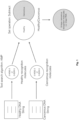
- Fig. 1 is a flow-chart illustrating the search and design algorithm disclosed in detail in Example 1.
- the present invention is primarily based on the finding that current genome editing technologies such as the CRISPR-Cas-9 system provides for the possibility of specifically targeting and editing any nucleic acid sequence of choice. See for instance WO 2015/089465 , which relates to treatment of HBV infection by editing the genome of HBV infected cells and Hsin-Kai Liao et al, Nature Communications 6, Article no. 6413 , which relates to a gene edited defense against HIV infection.
- the method of the first aspect results in killing and neutralization of malignant cells in a cancer patient, and it is also preferred that the recognition molecule used in the method does not recognized the animal's autologous DNA in healthy (normal) cells.
- CRISPR systems have an unsurpassed ease in directing the CRISPR-associated (Cas) proteins (such as Cas9 and any of the other effector molecules discussed in the context of CRISPR herein) to multiple gene targets by providing guide RNA sequences complementary to the target sites.
- Target sites for CRISPR/Cas9 systems can be found near most genomic loci; the only requirement is that the target sequence, matching the guide strand RNA, is followed by a protospacer adjacent motif (PAM) sequence.
- PAM protospacer adjacent motif
- NVG protospacer adjacent motif
- Francisella novicida Cas9 has been engineered to recognize the PAM YG (any pyrimidine followed by guanine), and Cpf1 of Francisella novicida recognizes the PAM TTN or YTN.
- the recognition molecule is a nucleic acid, which recognizes said at least one DNA sequence, which is targeted, via base-pairing.
- the recognition molecule is a crRNA and the molecule that selectively disrupts said at least one DNA sequence when being bound to said recognition molecule is a CRISPR-associated protein (Cas), i.e. a nuclease.
- This Cas can be any suitable Cas, but may e.g. be Cas9, eSpCas9, SpCas9-HF, and Cpf1.
- the selection of the target sites and choice of CRISPR System for the therapy may be further optimized by prioritizing the targets via a CRISPR system target site and off-target site(s) predictive activity scorer, such as e.g. the SgRNA Scorer 1.0 made available by Harvard University.
- a CRISPR system target site and off-target site(s) predictive activity scorer such as e.g. the SgRNA Scorer 1.0 made available by Harvard University.
- the therapy will be effective even in the event that the targeted cells are merely "neutralized".
- the fidelity of the recognition can be increased by employing recognition sequences that include modification in the backbone of the recognition sequence.
- stability of the duplex between a recognition sequence and its target DNA may be improved by using recognition sequences that include modified nucleotides.
- An example is locked nucleic acids (LNA); oligonucleotides modified with LNA (a ribose modification) can form stable duplexes between relatively short complimentary nucleic sequences and in this manner it can be ensured that the risk of off-target effects is minimized.
- LNA locked nucleic acids
- phosphate backbone variants such as phosphodiester and phosphorothioate internucleotide linkage modifications
- ribose variants such as LNA, 2'OMe, 2'-fluoro RNA (2'F) and 2'MOE
- non-ribose backbones variants such as PMO and PNA.
- the design(s) and/or sequence(s) of CRISPR system(s) are including, but not limited to, CRISPR-Cas9 system(s), CRISPR-eSpCas9 system(s), and SpCas9-HF system(s) and CRISPR-Cpf1 system(s), alternatively homologous recombination, RNA interference (RNAi), zinc-finger nucleases (ZFNs), transcription-activator like effector nucleases (TALENs) and other future ways to make precise, targeted changes to the genome.
- RNA interference RNA interference
- ZFNs zinc-finger nucleases
- TALENs transcription-activator like effector nucleases
- the effector molecule for instance can be selected between Cas9, eSpCas9, SpCas9-HF, and Cpf1. Since a number of these exert minimal off-target effects, the safety profile of the present invention predominantly relies on correct identification of unique DNA sequences not found in the normal cells.
- An attractive feature of the present invention is that it may be tested in vitro prior to subjecting the patient to the treatment thereby further increasing safety.
- recognition sequences When a selection of recognition sequences have been designed, they can be administered to isolated cancer cells from the patient and to isolated normal cells from the patient - only in the event that the DNA disrupting effect is substantially confined to the cancer cells should the therapy be invoked in the patient.
- This approach is in particular relevant in those embodiments disclosed herein where the DNA of the cancer cells are compared to a standard healthy genome - as a safety measure it is by this approach ensured that the patients normal cells will not by chance include one or more of the DNA targets that are believed to be specific for the cancer.
- the therapy is tested, optimized and validated in vitro on healthy cells and diseased cells.
- the expected outcome is measured by a nucleotide-resolution DNA double-strand breaks mapping, such as e.g. the direct in situ breaks labeling, enrichment on streptavidin, and next-generation sequencing (BLESS).
- BLESS next-generation sequencing
- simple cell-survival may be determined in vitro.
- Bioinformatics search algorithms exist in the known art that when supplied with a gene or whole genome can find all the possible 20-base segments located near a PAM, rank them based on their uniqueness in the genome and other parameters, and generates a list of guide RNAs that gets you there, such as e.g. Harvard University's CHOPCHOP or Yale University's CRISPRscan.
- the discussion of DNA derived from malignant cells in a patient can hence equally well be applied to DNA derived from any pathogen or cell involved in a pathology, as long as said DNA is not identical to DNA found in the healthy cells of the individual to be treated. In essence, only the choice of recognition molecule (e.g.
- the provided design(s) and/or sequence(s) is used in the synthesis of CRISPR system(s), alternatively homologous recombination, RNA interference (RNAi), zinc-finger nucleases (ZFNs), transcription-activator like effector nucleases (TALENs) and other future ways to make precise, targeted changes to the genome.
- RNAi RNA interference
- ZFNs zinc-finger nucleases
- TALENs transcription-activator like effector nucleases
- the currently preferred system is a CRISPR-Cas9 system, which has today been developed into a versatile system for gene editing of eukaryotic (including human) genomes.
- the only other prerequisite is that the sequence that is to be cleaved according to the invention is followed downstream, or upstream by a proto-spacer adjacent motif (PAM) sequence (such as 5'-NGG-3').
- PAM proto-spacer adjacent motif
- the treatment of the invention can take many practical forms and merely has to ensure that the target cell at the same time 1) harbors a recognition molecule (such as at least one CRISPR having a DNA sequence which is complementary to a cancer NA sequence or a pathogen NA sequence) and an effector molecule (such as a Cas9).
- a recognition molecule such as at least one CRISPR having a DNA sequence which is complementary to a cancer NA sequence or a pathogen NA sequence
- an effector molecule such as a Cas9
- Preferred expression vectors are adenovirus, adeno-associated virus, or lentivirus but any vector format that can provide cellular presence of the recognition and effector molecules can be utilized.
- methods generally applied in gene therapy to effect transfection into target cells are practical according to the present invention.
- nucleic acids that are not introduced in a viral vector but instead as plasmids, it is according to the invention attractive to formulate these so that they will be taken up by target cells - liposome formulations constitute one possibility, but the nucleic acids may also be modified directly by e.g. linking to lipids such as cholesterol.
- the preferred CRISPR-Cas9 systems are normally used as gene editing tools rather than merely introducing breaks in target DNA.
- both the gene editing as well as the gene break approaches are useful when killing cells according to the present invention.
- neutralization is meant that a cell is inactivated due to damage of its DNA, at least to the extent that it cannot proliferate (in cancers this will mean that the cancer's growth is interrupted) and/or that it cannot replicate its genome.
- the cells become more immunogenic due to the appearance of immunogenic expression products and therefore become inactive/killed as a consequence of an immune reaction.
- the DNA damage induces at least partial reversion to a benign phenotype, meaning that the cells loose their ability to metastasize or their ability to invade tissue.
- the cells may also become generally more sensitive to other anticancer therapies with which the principles of the present invention can be combined. It is, however, preferred that targeted cells are killed as a consequence of the DNA disruption induced.
- the method of therapy which is not part of the invention utilizes one or more recognition molecules (such as CRISPRs) that have been designed to target as many important chromosomes in the target cell as possible.
- CRISPRs CRISPRs
- Introduction of a sufficient number of breaks in the chromosomal DNA will have the effect that the cell subsequently is not viable; as detailed above, the effect on the targeted cells is equivalent to the effect of radiation therapy.
- frameshift mutations may be introduced site-specifically e.g. using a properly designed CRISPR-Cas9 or similar system.
- a frameshift is a genetic mutation caused by indels (insertions or deletions) of a number of nucleotides in a DNA sequence that is not divisible by three. Due to the triplet nature of gene expression by codons, the insertion or deletion can change the reading frame (the grouping of the codons), resulting in a completely different protein expression product compared to that of the non-mutated gene. The earlier in the sequence the deletion or insertion occurs, the more altered the protein will be.
- the frameshift is incompatible with continued life for the cell.
- a frameshift mutation is not the same as a single-nucleotide polymorphism in which a nucleotide is replaced, rather than inserted or deleted.
- a cell may be killed is by introducing one or several mutations that introduce stops stop codons ("UAA”, "UGA” or “UAG”) into the sequence.
- UAA stops stop codons
- UAA stops stop codons
- a more simple approach relies on the introduction of one or multiple disruptions of the genome of the target cells, so as to generally interfere with the metabolism of the cell.
- the Crispr-Cas9 or similar systems used deletes one or multiple base pairs of the target cell genome, so as to disturb the metabolism of the cell.
- the Crispr-Cas9 or similar systems modify or insert one or multiple genes into the target cell genome, so as to be able to visually or electromagnetically detect the cancer cells from the perspective of a surgical procedure, e.g. through fluorescent dye.
- the Crispr-Cas9 system(s) is configured to produce a single-nucleotide polymorphism in which a nucleotide is replaced, rather than inserted or deleted.
- several sites are targeted at the same time, e.g. for cutting out a larger piece of the genome organism, as is the case when doing recombinant DNA engineering that is deleterious, a larger impact through above-mentioned damage could be induced.
- the crispr-Cas9 system(s) is configured to introduce one or several mutations that introduce stops stop codon ("UAA", "UGA” or "UAG") into the sequence of the cancerous cells.
- the method of therapy which is not part of the invention finds broad use as long as genetic material which is not present in the treated individual's own healthy cells is indeed present in pathology-related cells.
- "difficult" bacterial and other infections such as e.g. tuberculosis or specific targeting of bacteria or other pathogenic organisms that have either developed drug resistance or are notoriously difficult to control/eradicate can be targeted.
- Certain infections do not have a current effective cure: malaria and a number of other parasitic diseases (schistosomiasis and infections with Echinococcus multilocularis are examples), and also a number of viral diseases.
- the identification of target DNA is more or less trivial due to the large differences between human DNA sequences and the sequences found in bacteria, fungi and parasites.
- the main task is to select an optimized means for effecting introduction of the recognition and effector molecules into the target cells - in the case of bacteria, phage may be used as a vector, whereas other means, e.g. a mycovirus or a nematode virus, may be useful to introduce expression vectors into fungi and parasites.
- a separate embodiment of the first aspect of the invention integrates the active principle(s) into a preventive or therapeutic depot, i.e. "a vaccine", in the form of an injection, patch, pellet or implant that disposes a continued dose of the active principle(s) into a tissue, fluid compartment or blood vessel of the animal treated, either preventively before a disease has been acquired or after diagnosis.
- a preventive or therapeutic depot i.e. "a vaccine”
- This embodiment entails use of state-of-the-art technology for depositing a drug and ensure sustained release.
- both cancerous or pathogen genomes are compared with healthy genomes to find areas in the sequences that differ in such a way that the differences can direct the design of the RNA part of a Crispr-Cas9, so that it selectively attacks the cancer or pathology related cells and not the healthy cells.
- This designing of the sequence of said RNA can be achieved by aggregating one or multiple samples from one or multiple healthy cells and from one or multiple cancer cells, to ensure that the genome is highly representative of the healthy genome, and to ensure that the difference(s) is highly representative of the genome of the cancer. Potentially also that the difference(s) are present in multiple generations of the cancer, so as to appear in a majority of the cancer cells. This is due to rapid mutations potentially occurring.
- the method of the second aspect and the computer means is thus set up to use the provided design(s) and/or sequence(s) in the synthesis of CRISPR-Cas9 system(s) (such as those detailed herein), alternatively homologous recombination, RNA interference (RNAi), zinc-finger nucleases (ZFNs), and transcription-activator like effector nucleases (TALENs) to make precise, targeted changes to the genome.
- RNAi RNA interference
- ZFNs zinc-finger nucleases
- TALENs transcription-activator like effector nucleases
- sequences When sequencing of the disease-related cell DNA starts, it may take more or less time before the entire genome is sequenced, but during the process useful target sequences may be continuously identified - perhaps even at a very early time. Each time a sequence is identified, it is added to a list of potential target sequences which may be ranked and re-ranked with reference to already included sequences and sequences that are continuously included - the criteria used to rank the sequences include an evaluation of presence of PAMs, presence of the sequence in vital chromosomes, etc., see below.
- the output of the system is integrated into an adenovirus (i.e. adeno-associated virus) or lentivirus as the treatment vector.
- adenovirus i.e. adeno-associated virus
- lentivirus as the treatment vector.
- the computer means are configured to search and detect sequences in the cancer genome that differ from the healthy genome with 1-20 nucleotides at the same location in between the genomes, and configured to find such sites that are followed downstream, or upstream, by the proto-spacer adjacent motif (PAM) sequence (5'-NGG-3').
- PAM proto-spacer adjacent motif
- the system is configured to - in case of finding multiple of such sites - to rank the finds based on the ones with the most differences, and alternatively based on a database of knowledge of the importance of the genes in question.
- the system is configured to at least one of the following: 1) Rank the findings highest with the biggest difference between the healthy and the cancerous/pathogen-related 2) Rank the highest finding(s) whose use is known to have the highest impact based on the predefined database of knowledge. 3) Be able to present the location of these findings. 4) Generate design for and/or synthesize a treatment based on these findings by mirroring the finding into a sequence of RNA, that when synthesized is the recipe for a unit that can be included in a Crispr-Cas9 system, that will specifically be targeting the cancer cells, and will not be targeting the healthy cells. 5) Produce several outputs, such as several Crispr-Cas9 systems, that attack several different points within the targeted cancerous material, e.g. multiple points of the genome of the cancer, with the intent of disrupting a larger part of the cancerous material. In the case of attacking several points at once in a cancer cell, the intention is to cut out a larger piece of the genome to cause more damage.
- the genetic input is configured to use a Liquid Biopsy technique to extract the genetic material of the cancer from a blood sample of the patient.
- the computer means takes this database of differences between the genomes, and identifies differences that include a PAM site, are adjacent to or in proximity to a PAM site, e.g. differences between two genomes that are 1-20 nucleotides away from a PAM site.
- differences that include a PAM site are adjacent to or in proximity to a PAM site, e.g. differences between two genomes that are 1-20 nucleotides away from a PAM site.
- differences between the genomes e.g. differences between two genomes that are 1-20 nucleotides away from a PAM site.
- multiple, partially overlapping recognition sequences can be designed so as to enable a multitude of possible breaks in a cancer cell's DNA.
- the machine can receive one or more samples of healthy and one or more samples of diseased cells to ensure identification of a site that has high probability of representing a segment of diseased DNA that is representative of different generations of diseased cells.
- a system which is not part of the invention that can aggregate several data samples regarding the cancerous and non-cancerous material, so as to increase the safety level and specificity regarding the probability of what the data represents for the respective material types.
- the system allows for a highly specific cancer treatment, that take the specifications of the patients healthy cells and the configuration of the patient's cancer cells into account.
- the computer means is configured to read digital documents containing at least genomic data and generate digital documents containing at least genomic data.
- the device can enable a cancer treatment that takes the genome of the individual's actual cancer specifications into account, in the design of the targeted genetically engineered treatment.
- the computer system which is not part of the invention is configured in a way to itself generate the information defining the treatment vector and its design based on the individual patient's genome - this merely requires that the computer is pre-programmed with the sequence information for one or more expression vectors into which the sequences encoding recognition molecules and effector molecules can be inserted.
- the computer system can be linked or deliver synthesis input to a nucleic acid synthesizer, which can produce the expression vectors useful in the invention.
- the device facilitates a safe procedure in which a computer interacts with not only the patient based data, but also a database of knowledge regarding optimal strategies in which to harm the cancer cells.
- the database includes the information below and information about genetic sites known to be universal in humans, and their genetic products.
- the presently described computer system and the related method is useful in method(s) for providing a therapy or a cure for cancer, said method(s) comprising to interact with patient material, or data from said material, in a predefined reaction pattern:
- Fig. 1 illustrates a stepwise schematic of the computation.
- Fig. 1 illustrates a stepwise schematic of the computation provided below in detail.
- the input parameters for the computer system are DNA sequences from a group of cells, where said cells represent healthy tissue, and DNA sequences from a group of cells, where said cells represent malignant tissue in this experiment.
- the following algorithm could be supplied with input parameters from virus-infected cells and cells of a pathogenic organism.
- the sequencing data could be whole genome, partial and/or deep DNA or RNA sequencing.
- the PAM sequences of the healthy, or targeted cells are identified using KMP (Knuth-Morris-Pratt) text search.
- the PAM sequence in this experiment represented the prospective use of Crispr-Cas9 and was thus 5'-NGG-3'.
- the PAM sequences, including the following or preceding DNA nucleotides with a length of the desired complementary recognition molecule, e.g. Crispr RNA, are stored in list form for later comparison.
- a trial run was executed using a custom algorithm made with the BioPython open source project and a chromosome 2 sample from a healthy and cancerous genome from the same individual found in AWS 1000 genomes project's database (ref
- the Set allows for duplicate values, such that more occurring sequences are not ignored, and can take part in a partial match analysis.
- a Set data structure is used for its constant O(1) runtime, essential for larger DNA sequences.
- the two respective sets are computed into a third result set with a subtract (or difference) operation.
- the difference operation results in a set of complementary recognition molecules, unique to the cancer cell to be targeted, and not existing in the healthy cell.
- 8 million potential targets were identified with the PAM occurring at variable positions within the target sequence.
- Further analysis can then be performed on the resulting set of sequences, unique to the cancer cell, or healthy cell, if desired, such as ranking of their uniqueness, ranking of target sequences that correlate with targets within sequences known to correspond with parts of the exome, ranking of the targets based on their predictive activity scorer, such as via the SgRNA Scorer 1.0; the ranking of the targets further optimized based on their usability for e.g. designing LNA, ranking based on their viability to be expressed in an specific vector, e.g. an adeno-associated virus or another vector format that can provide cellular presence of the recognition and effector molecules.
- an adeno-associated virus e.g. an adeno-associated virus or another vector format that can provide cellular presence of the recognition and effector molecules.
Landscapes
- Health & Medical Sciences (AREA)
- Life Sciences & Earth Sciences (AREA)
- Chemical & Material Sciences (AREA)
- Engineering & Computer Science (AREA)
- Genetics & Genomics (AREA)
- Bioinformatics & Cheminformatics (AREA)
- Biotechnology (AREA)
- Organic Chemistry (AREA)
- General Health & Medical Sciences (AREA)
- Molecular Biology (AREA)
- Physics & Mathematics (AREA)
- Zoology (AREA)
- Wood Science & Technology (AREA)
- Biomedical Technology (AREA)
- General Engineering & Computer Science (AREA)
- Biophysics (AREA)
- Medicinal Chemistry (AREA)
- Biochemistry (AREA)
- Veterinary Medicine (AREA)
- Microbiology (AREA)
- Public Health (AREA)
- Animal Behavior & Ethology (AREA)
- Pharmacology & Pharmacy (AREA)
- Proteomics, Peptides & Aminoacids (AREA)
- Bioinformatics & Computational Biology (AREA)
- Spectroscopy & Molecular Physics (AREA)
- Theoretical Computer Science (AREA)
- Analytical Chemistry (AREA)
- Evolutionary Biology (AREA)
- Medical Informatics (AREA)
- Plant Pathology (AREA)
- General Chemical & Material Sciences (AREA)
- Nuclear Medicine, Radiotherapy & Molecular Imaging (AREA)
- Chemical Kinetics & Catalysis (AREA)
- Crystallography & Structural Chemistry (AREA)
- Cell Biology (AREA)
- Epidemiology (AREA)
- Oncology (AREA)
- Communicable Diseases (AREA)
- Tropical Medicine & Parasitology (AREA)
Priority Applications (1)
| Application Number | Priority Date | Filing Date | Title |
|---|---|---|---|
| EP23176938.1A EP4273782A3 (en) | 2015-07-25 | 2016-07-22 | A system, device and a method for providing a therapy or a cure for cancer and other pathological states |
Applications Claiming Priority (3)
| Application Number | Priority Date | Filing Date | Title |
|---|---|---|---|
| US201562196939P | 2015-07-25 | 2015-07-25 | |
| US201562198587P | 2015-07-29 | 2015-07-29 | |
| PCT/EP2016/067539 WO2017017016A1 (en) | 2015-07-25 | 2016-07-22 | A system, device and a method for providing a therapy or a cure for cancer and other pathological states |
Related Child Applications (1)
| Application Number | Title | Priority Date | Filing Date |
|---|---|---|---|
| EP23176938.1A Division EP4273782A3 (en) | 2015-07-25 | 2016-07-22 | A system, device and a method for providing a therapy or a cure for cancer and other pathological states |
Publications (3)
| Publication Number | Publication Date |
|---|---|
| EP3325622A1 EP3325622A1 (en) | 2018-05-30 |
| EP3325622C0 EP3325622C0 (en) | 2023-06-07 |
| EP3325622B1 true EP3325622B1 (en) | 2023-06-07 |
Family
ID=56550229
Family Applications (2)
| Application Number | Title | Priority Date | Filing Date |
|---|---|---|---|
| EP16742294.8A Active EP3325622B1 (en) | 2015-07-25 | 2016-07-22 | A system, device and a method for providing a therapy or a cure for cancer and other pathological states |
| EP23176938.1A Pending EP4273782A3 (en) | 2015-07-25 | 2016-07-22 | A system, device and a method for providing a therapy or a cure for cancer and other pathological states |
Family Applications After (1)
| Application Number | Title | Priority Date | Filing Date |
|---|---|---|---|
| EP23176938.1A Pending EP4273782A3 (en) | 2015-07-25 | 2016-07-22 | A system, device and a method for providing a therapy or a cure for cancer and other pathological states |
Country Status (8)
| Country | Link |
|---|---|
| US (1) | US20180360994A1 (enExample) |
| EP (2) | EP3325622B1 (enExample) |
| JP (2) | JP7602862B2 (enExample) |
| CN (2) | CN116212052A (enExample) |
| AU (1) | AU2016299271B2 (enExample) |
| CA (1) | CA2993474A1 (enExample) |
| ES (1) | ES2948559T3 (enExample) |
| WO (1) | WO2017017016A1 (enExample) |
Families Citing this family (35)
| Publication number | Priority date | Publication date | Assignee | Title |
|---|---|---|---|---|
| EP2734621B1 (en) | 2011-07-22 | 2019-09-04 | President and Fellows of Harvard College | Evaluation and improvement of nuclease cleavage specificity |
| US9163284B2 (en) | 2013-08-09 | 2015-10-20 | President And Fellows Of Harvard College | Methods for identifying a target site of a Cas9 nuclease |
| US9359599B2 (en) | 2013-08-22 | 2016-06-07 | President And Fellows Of Harvard College | Engineered transcription activator-like effector (TALE) domains and uses thereof |
| US9388430B2 (en) | 2013-09-06 | 2016-07-12 | President And Fellows Of Harvard College | Cas9-recombinase fusion proteins and uses thereof |
| US9340799B2 (en) | 2013-09-06 | 2016-05-17 | President And Fellows Of Harvard College | MRNA-sensing switchable gRNAs |
| US9526784B2 (en) | 2013-09-06 | 2016-12-27 | President And Fellows Of Harvard College | Delivery system for functional nucleases |
| US9068179B1 (en) | 2013-12-12 | 2015-06-30 | President And Fellows Of Harvard College | Methods for correcting presenilin point mutations |
| CA2956224A1 (en) | 2014-07-30 | 2016-02-11 | President And Fellows Of Harvard College | Cas9 proteins including ligand-dependent inteins |
| SG11201803173VA (en) | 2015-10-23 | 2018-05-30 | Harvard College | Nucleobase editors and uses thereof |
| CA3032699A1 (en) | 2016-08-03 | 2018-02-08 | President And Fellows Of Harvard College | Adenosine nucleobase editors and uses thereof |
| EP3497214B1 (en) | 2016-08-09 | 2023-06-28 | President and Fellows of Harvard College | Programmable cas9-recombinase fusion proteins and uses thereof |
| WO2018039438A1 (en) | 2016-08-24 | 2018-03-01 | President And Fellows Of Harvard College | Incorporation of unnatural amino acids into proteins using base editing |
| EP3526320A1 (en) | 2016-10-14 | 2019-08-21 | President and Fellows of Harvard College | Aav delivery of nucleobase editors |
| WO2018119359A1 (en) | 2016-12-23 | 2018-06-28 | President And Fellows Of Harvard College | Editing of ccr5 receptor gene to protect against hiv infection |
| KR20190123328A (ko) | 2017-03-09 | 2019-10-31 | 프레지던트 앤드 펠로우즈 오브 하바드 칼리지 | 암 백신 |
| US11898179B2 (en) | 2017-03-09 | 2024-02-13 | President And Fellows Of Harvard College | Suppression of pain by gene editing |
| KR102964348B1 (ko) | 2017-03-10 | 2026-05-14 | 프레지던트 앤드 펠로우즈 오브 하바드 칼리지 | 시토신에서 구아닌으로의 염기 편집제 |
| SG11201908658TA (en) | 2017-03-23 | 2019-10-30 | Harvard College | Nucleobase editors comprising nucleic acid programmable dna binding proteins |
| WO2018209320A1 (en) | 2017-05-12 | 2018-11-15 | President And Fellows Of Harvard College | Aptazyme-embedded guide rnas for use with crispr-cas9 in genome editing and transcriptional activation |
| WO2019023680A1 (en) | 2017-07-28 | 2019-01-31 | President And Fellows Of Harvard College | METHODS AND COMPOSITIONS FOR EVOLUTION OF BASIC EDITORS USING PHAGE-ASSISTED CONTINUOUS EVOLUTION (PACE) |
| WO2019139645A2 (en) | 2017-08-30 | 2019-07-18 | President And Fellows Of Harvard College | High efficiency base editors comprising gam |
| KR20200121782A (ko) | 2017-10-16 | 2020-10-26 | 더 브로드 인스티튜트, 인코퍼레이티드 | 아데노신 염기 편집제의 용도 |
| WO2019118949A1 (en) | 2017-12-15 | 2019-06-20 | The Broad Institute, Inc. | Systems and methods for predicting repair outcomes in genetic engineering |
| US12157760B2 (en) | 2018-05-23 | 2024-12-03 | The Broad Institute, Inc. | Base editors and uses thereof |
| US12522807B2 (en) | 2018-07-09 | 2026-01-13 | The Broad Institute, Inc. | RNA programmable epigenetic RNA modifiers and uses thereof |
| EP3833751A4 (en) | 2018-08-09 | 2022-04-27 | G+Flas Life Sciences | COMPOSITIONS AND METHODS FOR GENOME ENGINEERING WITH CAS12A PROTEINS |
| EA202190454A1 (ru) * | 2018-08-09 | 2021-04-22 | Джи+ФЛАС ЛАЙФ САЙЕНСИЗ | Новый crispr-ассоциированный белок и его применение |
| WO2020055187A1 (ko) | 2018-09-12 | 2020-03-19 | 기초과학연구원 | 유전자가 변이된 세포의 사멸 유도 조성물 및 상기 조성물을 이용한 유전자가 변형된 세포 사멸 유도 방법 |
| WO2020092453A1 (en) | 2018-10-29 | 2020-05-07 | The Broad Institute, Inc. | Nucleobase editors comprising geocas9 and uses thereof |
| US12351837B2 (en) | 2019-01-23 | 2025-07-08 | The Broad Institute, Inc. | Supernegatively charged proteins and uses thereof |
| WO2020191171A1 (en) | 2019-03-19 | 2020-09-24 | The Broad Institute, Inc. | Methods and compositions for editing nucleotide sequences |
| WO2020214842A1 (en) | 2019-04-17 | 2020-10-22 | The Broad Institute, Inc. | Adenine base editors with reduced off-target effects |
| WO2021072328A1 (en) | 2019-10-10 | 2021-04-15 | The Broad Institute, Inc. | Methods and compositions for prime editing rna |
| GB2614813B (en) | 2020-05-08 | 2025-05-07 | Harvard College | Methods and compositions for simultaneous editing of both strands of a target double-stranded nucleotide sequence |
| CN115227834B (zh) * | 2022-06-02 | 2025-11-11 | 中国人民解放军海军军医大学 | 通过基因编辑技术联合dna损伤修复抑制剂特异杀伤癌细胞的方法 |
Citations (1)
| Publication number | Priority date | Publication date | Assignee | Title |
|---|---|---|---|---|
| WO2015103057A1 (en) * | 2013-12-30 | 2015-07-09 | University Of Pittsburgh - Of The Commonwealth System Of Higher Education | Fusion genes associated with progressive prostate cancer |
Family Cites Families (21)
| Publication number | Priority date | Publication date | Assignee | Title |
|---|---|---|---|---|
| DE19711933C2 (de) * | 1997-03-21 | 1999-05-12 | Gsf Forschungszentrum Umwelt | Pharmazeutische Zusammensetzung, enthaltend eine die Aktivität des endogenen T1-M-Proteins direkt oder indirekt modifizierende Verbindung |
| DE10057014B8 (de) * | 2000-11-17 | 2008-04-30 | Steven Dooley | Verfahren zur Herstellung von zielzellspezifischen Arzneimitteln |
| JP2006271385A (ja) * | 2001-03-14 | 2006-10-12 | Dna Chip Research Inc | 大腸癌の予測方法 |
| CA2466483A1 (en) * | 2001-11-07 | 2003-07-03 | John D. Shaughnessy | Diagnosis prognosis and identification of potential therapeutic targets of multiple myeloma based on gene expression profiling |
| AU2002364077A1 (en) * | 2001-12-21 | 2003-07-30 | Gene Logic, Inc. | Gene expression profiles in stomach cancer |
| JP2005261367A (ja) * | 2004-03-19 | 2005-09-29 | Propgene:Kk | 表現型予測方法及び自動診断装置 |
| JP2009502115A (ja) * | 2005-07-27 | 2009-01-29 | オンコセラピー・サイエンス株式会社 | 小細胞肺癌の診断方法 |
| US8138160B2 (en) * | 2006-08-03 | 2012-03-20 | Warsaw Orthopedic, Inc. | Reagents, methods and systems to suppress pro-inflammatory cytokines |
| US9637739B2 (en) * | 2012-03-20 | 2017-05-02 | Vilnius University | RNA-directed DNA cleavage by the Cas9-crRNA complex |
| EP2669381A1 (en) * | 2012-05-30 | 2013-12-04 | AmVac AG | Method for expression of heterologous proteins using a recombinant negative-strand RNA virus vector comprising a mutated P protein |
| KR102121086B1 (ko) * | 2012-11-01 | 2020-06-09 | 팩터 바이오사이언스 인크. | 세포에서 단백질을 발현시키는 방법들과 생성물들 |
| EP3031921B1 (en) * | 2012-12-12 | 2025-03-12 | The Broad Institute, Inc. | Delivery, engineering and optimization of systems, methods and compositions for sequence manipulation and therapeutic applications |
| EP2848690B1 (en) * | 2012-12-12 | 2020-08-19 | The Broad Institute, Inc. | Crispr-cas component systems, methods and compositions for sequence manipulation |
| HK1218232A1 (zh) * | 2013-03-21 | 2017-02-10 | 桑格摩生物科学股份有限公司 | 使用工程化鋅指蛋白核酸酶靶向斷裂t細胞受體基因 |
| EP3019595A4 (en) * | 2013-07-09 | 2016-11-30 | THERAPEUTIC USES OF A GENERIC CHANGE WITH CRISPR / CAS SYSTEMS | |
| US20150044772A1 (en) * | 2013-08-09 | 2015-02-12 | Sage Labs, Inc. | Crispr/cas system-based novel fusion protein and its applications in genome editing |
| US10584358B2 (en) * | 2013-10-30 | 2020-03-10 | North Carolina State University | Compositions and methods related to a type-II CRISPR-Cas system in Lactobacillus buchneri |
| JP2015089364A (ja) * | 2013-11-07 | 2015-05-11 | 有限会社ジェノテックス | 体細胞多重変異によるがん診断方法、がん医薬開発方法及びがん診断装置 |
| MX433679B (es) * | 2013-12-12 | 2026-05-19 | Broad Inst Inc | Suministro, uso y aplicaciones terapeuticas de sistemas y composiciones crispr-cas para edicion del genoma |
| EP4183876A1 (en) | 2013-12-12 | 2023-05-24 | The Broad Institute, Inc. | Delivery, use and therapeutic applications of the crispr-cas systems and compositions for hbv and viral diseases and disorders |
| WO2016075662A2 (en) * | 2014-11-15 | 2016-05-19 | Zumutor Biologics, Inc. | Dna-binding domain, non-fucosylated and partially fucosylated proteins, and methods thereof |
-
2016
- 2016-07-22 CN CN202310216261.6A patent/CN116212052A/zh active Pending
- 2016-07-22 WO PCT/EP2016/067539 patent/WO2017017016A1/en not_active Ceased
- 2016-07-22 US US15/747,370 patent/US20180360994A1/en active Pending
- 2016-07-22 CN CN201680051463.8A patent/CN108025074A/zh active Pending
- 2016-07-22 JP JP2018522871A patent/JP7602862B2/ja active Active
- 2016-07-22 CA CA2993474A patent/CA2993474A1/en active Pending
- 2016-07-22 EP EP16742294.8A patent/EP3325622B1/en active Active
- 2016-07-22 AU AU2016299271A patent/AU2016299271B2/en active Active
- 2016-07-22 ES ES16742294T patent/ES2948559T3/es active Active
- 2016-07-22 EP EP23176938.1A patent/EP4273782A3/en active Pending
-
2024
- 2024-09-20 JP JP2024163648A patent/JP2025004027A/ja not_active Withdrawn
Patent Citations (1)
| Publication number | Priority date | Publication date | Assignee | Title |
|---|---|---|---|---|
| WO2015103057A1 (en) * | 2013-12-30 | 2015-07-09 | University Of Pittsburgh - Of The Commonwealth System Of Higher Education | Fusion genes associated with progressive prostate cancer |
Non-Patent Citations (2)
| Title |
|---|
| E. R. MARDIS ET AL: "Cancer genome sequencing: a review", HUMAN MOLECULAR GENETICS, vol. 18, no. R2, 6 October 2009 (2009-10-06), pages R163 - R168, XP055322574, ISSN: 0964-6906, DOI: 10.1093/hmg/ddp396 * |
| JILL C. MWENIFUMBO ET AL: "Cancer genome-sequencing study design", NATURE REVIEWS GENETICS, vol. 14, no. 5, 18 April 2013 (2013-04-18), GB, pages 321 - 332, XP055743014, ISSN: 1471-0056, DOI: 10.1038/nrg3445 * |
Also Published As
| Publication number | Publication date |
|---|---|
| WO2017017016A1 (en) | 2017-02-02 |
| EP4273782A3 (en) | 2023-12-27 |
| EP3325622C0 (en) | 2023-06-07 |
| CA2993474A1 (en) | 2017-02-02 |
| US20180360994A1 (en) | 2018-12-20 |
| CN108025074A (zh) | 2018-05-11 |
| JP2018525437A (ja) | 2018-09-06 |
| JP2025004027A (ja) | 2025-01-14 |
| CN116212052A (zh) | 2023-06-06 |
| AU2016299271A1 (en) | 2018-03-15 |
| EP4273782A2 (en) | 2023-11-08 |
| JP7602862B2 (ja) | 2024-12-19 |
| ES2948559T3 (es) | 2023-09-14 |
| EP3325622A1 (en) | 2018-05-30 |
| AU2016299271B2 (en) | 2022-09-22 |
Similar Documents
| Publication | Publication Date | Title |
|---|---|---|
| AU2016299271B2 (en) | A system, device and a method for providing a therapy or a cure for cancer and other pathological states | |
| Rasul et al. | Strategies to overcome the main challenges of the use of CRISPR/Cas9 as a replacement for cancer therapy | |
| US20230304000A1 (en) | Compositions and methods of improving specificity in genomic engineering using rna-guided endonucleases | |
| Turchiano et al. | Quantitative evaluation of chromosomal rearrangements in gene-edited human stem cells by CAST-Seq | |
| Bernal et al. | Telomeres: implications for cancer development | |
| JP2018525437A5 (enExample) | ||
| CN112533627A (zh) | 序列特异性体内细胞靶向 | |
| Khurana et al. | A comprehensive overview of CRISPR/Cas 9 technology and application thereof in drug discovery | |
| Patil et al. | Review article on gene therapy | |
| Severi et al. | CRISPR‐Cas9 delivery strategies and applications: Review and update | |
| Roche et al. | Double-stranded biotinylated donor enhances homology-directed repair in combination with Cas9 monoavidin in mammalian cells | |
| Eslahi et al. | New advancements in CRISPR based gene therapy of Duchenne muscular dystrophy | |
| CN115227834B (zh) | 通过基因编辑技术联合dna损伤修复抑制剂特异杀伤癌细胞的方法 | |
| KR20240087635A (ko) | B형 간염 바이러스(hbv) 녹아웃 | |
| Emmer et al. | Genome editing and hematologic malignancy | |
| Akter et al. | CRISPR-Cas9: A Cutting-edge Genome-editing Technology with Many Potential Applications | |
| Masood et al. | Applications and Challenges of CRISPER/Cas-9 System in Cancer Therapy | |
| US20260085331A1 (en) | Biallelic Knockout of PDCD1 | |
| Kishton et al. | CRISPR Technology and Its Application in Therapeutics | |
| Shaikat | Prevalence and application of an evolving genome editing tool “CRISPR/Cas System” in cancer research and treatment | |
| WO2025235552A1 (en) | Systems and methods for treatment of hepatitis b virus (hbv) infection | |
| Hoban et al. | 338. Evaluation of TALENs and the CRISPR/Cas9 Nuclease System To Correct the Sickle Cell Disease Mutation | |
| Piper | Current prospects and outlook of CRISPR/Cas technology in clinical therapy | |
| WO2020127990A1 (en) | System for production of crispr-based pharmaceutical compositions | |
| Begum et al. | 337. CRISPR/Cas9 Mediated Highly Efficient Genome Engineering in Mouse Embryos |
Legal Events
| Date | Code | Title | Description |
|---|---|---|---|
| STAA | Information on the status of an ep patent application or granted ep patent |
Free format text: STATUS: THE INTERNATIONAL PUBLICATION HAS BEEN MADE |
|
| PUAI | Public reference made under article 153(3) epc to a published international application that has entered the european phase |
Free format text: ORIGINAL CODE: 0009012 |
|
| STAA | Information on the status of an ep patent application or granted ep patent |
Free format text: STATUS: REQUEST FOR EXAMINATION WAS MADE |
|
| 17P | Request for examination filed |
Effective date: 20180226 |
|
| AK | Designated contracting states |
Kind code of ref document: A1 Designated state(s): AL AT BE BG CH CY CZ DE DK EE ES FI FR GB GR HR HU IE IS IT LI LT LU LV MC MK MT NL NO PL PT RO RS SE SI SK SM TR |
|
| AX | Request for extension of the european patent |
Extension state: BA ME |
|
| DAV | Request for validation of the european patent (deleted) | ||
| DAX | Request for extension of the european patent (deleted) | ||
| STAA | Information on the status of an ep patent application or granted ep patent |
Free format text: STATUS: EXAMINATION IS IN PROGRESS |
|
| 17Q | First examination report despatched |
Effective date: 20190522 |
|
| GRAP | Despatch of communication of intention to grant a patent |
Free format text: ORIGINAL CODE: EPIDOSNIGR1 |
|
| STAA | Information on the status of an ep patent application or granted ep patent |
Free format text: STATUS: GRANT OF PATENT IS INTENDED |
|
| INTG | Intention to grant announced |
Effective date: 20220721 |
|
| GRAS | Grant fee paid |
Free format text: ORIGINAL CODE: EPIDOSNIGR3 |
|
| RAP3 | Party data changed (applicant data changed or rights of an application transferred) |
Owner name: FROST, HABIB |
|
| RIN1 | Information on inventor provided before grant (corrected) |
Inventor name: FROST, HABIB |
|
| GRAA | (expected) grant |
Free format text: ORIGINAL CODE: 0009210 |
|
| STAA | Information on the status of an ep patent application or granted ep patent |
Free format text: STATUS: THE PATENT HAS BEEN GRANTED |
|
| AK | Designated contracting states |
Kind code of ref document: B1 Designated state(s): AL AT BE BG CH CY CZ DE DK EE ES FI FR GB GR HR HU IE IS IT LI LT LU LV MC MK MT NL NO PL PT RO RS SE SI SK SM TR |
|
| REG | Reference to a national code |
Ref country code: GB Ref legal event code: FG4D |
|
| REG | Reference to a national code |
Ref country code: CH Ref legal event code: EP Ref country code: AT Ref legal event code: REF Ref document number: 1575099 Country of ref document: AT Kind code of ref document: T Effective date: 20230615 |
|
| REG | Reference to a national code |
Ref country code: DE Ref legal event code: R096 Ref document number: 602016079924 Country of ref document: DE |
|
| U01 | Request for unitary effect filed |
Effective date: 20230623 |
|
| U07 | Unitary effect registered |
Designated state(s): AT BE BG DE DK EE FI FR IT LT LU LV MT NL PT SE SI Effective date: 20230630 |
|
| REG | Reference to a national code |
Ref country code: ES Ref legal event code: FG2A Ref document number: 2948559 Country of ref document: ES Kind code of ref document: T3 Effective date: 20230914 |
|
| REG | Reference to a national code |
Ref country code: LT Ref legal event code: MG9D |
|
| PG25 | Lapsed in a contracting state [announced via postgrant information from national office to epo] |
Ref country code: NO Free format text: LAPSE BECAUSE OF FAILURE TO SUBMIT A TRANSLATION OF THE DESCRIPTION OR TO PAY THE FEE WITHIN THE PRESCRIBED TIME-LIMIT Effective date: 20230907 |
|
| U20 | Renewal fee for the european patent with unitary effect paid |
Year of fee payment: 8 Effective date: 20231010 |
|
| PG25 | Lapsed in a contracting state [announced via postgrant information from national office to epo] |
Ref country code: RS Free format text: LAPSE BECAUSE OF FAILURE TO SUBMIT A TRANSLATION OF THE DESCRIPTION OR TO PAY THE FEE WITHIN THE PRESCRIBED TIME-LIMIT Effective date: 20230607 Ref country code: HR Free format text: LAPSE BECAUSE OF FAILURE TO SUBMIT A TRANSLATION OF THE DESCRIPTION OR TO PAY THE FEE WITHIN THE PRESCRIBED TIME-LIMIT Effective date: 20230607 Ref country code: GR Free format text: LAPSE BECAUSE OF FAILURE TO SUBMIT A TRANSLATION OF THE DESCRIPTION OR TO PAY THE FEE WITHIN THE PRESCRIBED TIME-LIMIT Effective date: 20230908 |
|
| PG25 | Lapsed in a contracting state [announced via postgrant information from national office to epo] |
Ref country code: SK Free format text: LAPSE BECAUSE OF FAILURE TO SUBMIT A TRANSLATION OF THE DESCRIPTION OR TO PAY THE FEE WITHIN THE PRESCRIBED TIME-LIMIT Effective date: 20230607 |
|
| PG25 | Lapsed in a contracting state [announced via postgrant information from national office to epo] |
Ref country code: IS Free format text: LAPSE BECAUSE OF FAILURE TO SUBMIT A TRANSLATION OF THE DESCRIPTION OR TO PAY THE FEE WITHIN THE PRESCRIBED TIME-LIMIT Effective date: 20231007 |
|
| PG25 | Lapsed in a contracting state [announced via postgrant information from national office to epo] |
Ref country code: SM Free format text: LAPSE BECAUSE OF FAILURE TO SUBMIT A TRANSLATION OF THE DESCRIPTION OR TO PAY THE FEE WITHIN THE PRESCRIBED TIME-LIMIT Effective date: 20230607 Ref country code: SK Free format text: LAPSE BECAUSE OF FAILURE TO SUBMIT A TRANSLATION OF THE DESCRIPTION OR TO PAY THE FEE WITHIN THE PRESCRIBED TIME-LIMIT Effective date: 20230607 Ref country code: RO Free format text: LAPSE BECAUSE OF FAILURE TO SUBMIT A TRANSLATION OF THE DESCRIPTION OR TO PAY THE FEE WITHIN THE PRESCRIBED TIME-LIMIT Effective date: 20230607 Ref country code: IS Free format text: LAPSE BECAUSE OF FAILURE TO SUBMIT A TRANSLATION OF THE DESCRIPTION OR TO PAY THE FEE WITHIN THE PRESCRIBED TIME-LIMIT Effective date: 20231007 Ref country code: CZ Free format text: LAPSE BECAUSE OF FAILURE TO SUBMIT A TRANSLATION OF THE DESCRIPTION OR TO PAY THE FEE WITHIN THE PRESCRIBED TIME-LIMIT Effective date: 20230607 |
|
| PG25 | Lapsed in a contracting state [announced via postgrant information from national office to epo] |
Ref country code: PL Free format text: LAPSE BECAUSE OF FAILURE TO SUBMIT A TRANSLATION OF THE DESCRIPTION OR TO PAY THE FEE WITHIN THE PRESCRIBED TIME-LIMIT Effective date: 20230607 |
|
| REG | Reference to a national code |
Ref country code: CH Ref legal event code: PL |
|
| REG | Reference to a national code |
Ref country code: DE Ref legal event code: R097 Ref document number: 602016079924 Country of ref document: DE |
|
| PG25 | Lapsed in a contracting state [announced via postgrant information from national office to epo] |
Ref country code: MC Free format text: LAPSE BECAUSE OF FAILURE TO SUBMIT A TRANSLATION OF THE DESCRIPTION OR TO PAY THE FEE WITHIN THE PRESCRIBED TIME-LIMIT Effective date: 20230607 |
|
| PG25 | Lapsed in a contracting state [announced via postgrant information from national office to epo] |
Ref country code: MC Free format text: LAPSE BECAUSE OF FAILURE TO SUBMIT A TRANSLATION OF THE DESCRIPTION OR TO PAY THE FEE WITHIN THE PRESCRIBED TIME-LIMIT Effective date: 20230607 |
|
| PLBE | No opposition filed within time limit |
Free format text: ORIGINAL CODE: 0009261 |
|
| STAA | Information on the status of an ep patent application or granted ep patent |
Free format text: STATUS: NO OPPOSITION FILED WITHIN TIME LIMIT |
|
| REG | Reference to a national code |
Ref country code: IE Ref legal event code: MM4A |
|
| PG25 | Lapsed in a contracting state [announced via postgrant information from national office to epo] |
Ref country code: CH Free format text: LAPSE BECAUSE OF NON-PAYMENT OF DUE FEES Effective date: 20230731 |
|
| 26N | No opposition filed |
Effective date: 20240308 |
|
| PG25 | Lapsed in a contracting state [announced via postgrant information from national office to epo] |
Ref country code: IE Free format text: LAPSE BECAUSE OF NON-PAYMENT OF DUE FEES Effective date: 20230722 |
|
| PG25 | Lapsed in a contracting state [announced via postgrant information from national office to epo] |
Ref country code: IE Free format text: LAPSE BECAUSE OF NON-PAYMENT OF DUE FEES Effective date: 20230722 |
|
| U20 | Renewal fee for the european patent with unitary effect paid |
Year of fee payment: 9 Effective date: 20240731 |
|
| PG25 | Lapsed in a contracting state [announced via postgrant information from national office to epo] |
Ref country code: CY Free format text: LAPSE BECAUSE OF FAILURE TO SUBMIT A TRANSLATION OF THE DESCRIPTION OR TO PAY THE FEE WITHIN THE PRESCRIBED TIME-LIMIT; INVALID AB INITIO Effective date: 20160722 |
|
| PG25 | Lapsed in a contracting state [announced via postgrant information from national office to epo] |
Ref country code: HU Free format text: LAPSE BECAUSE OF FAILURE TO SUBMIT A TRANSLATION OF THE DESCRIPTION OR TO PAY THE FEE WITHIN THE PRESCRIBED TIME-LIMIT; INVALID AB INITIO Effective date: 20160722 |
|
| U20 | Renewal fee for the european patent with unitary effect paid |
Year of fee payment: 10 Effective date: 20250731 |
|
| PGFP | Annual fee paid to national office [announced via postgrant information from national office to epo] |
Ref country code: ES Payment date: 20250812 Year of fee payment: 10 |
|
| PGFP | Annual fee paid to national office [announced via postgrant information from national office to epo] |
Ref country code: GB Payment date: 20250721 Year of fee payment: 10 |
|
| PGFP | Annual fee paid to national office [announced via postgrant information from national office to epo] |
Ref country code: CH Payment date: 20250801 Year of fee payment: 10 |
|
| PG25 | Lapsed in a contracting state [announced via postgrant information from national office to epo] |
Ref country code: TR Free format text: LAPSE BECAUSE OF FAILURE TO SUBMIT A TRANSLATION OF THE DESCRIPTION OR TO PAY THE FEE WITHIN THE PRESCRIBED TIME-LIMIT Effective date: 20230607 |
|
| U1K | Transfer of rights of the unitary patent after the registration of the unitary effect |
Owner name: VALINOR APS; DK |
|
| REG | Reference to a national code |
Ref country code: CH Ref legal event code: U11 Free format text: ST27 STATUS EVENT CODE: U-0-0-U10-U11 (AS PROVIDED BY THE NATIONAL OFFICE) Effective date: 20260801 |
|
| U20 | Renewal fee for the european patent with unitary effect paid |
Year of fee payment: 11 Effective date: 20260731 |