EP3323643A1 - Pneumatic tire - Google Patents
Pneumatic tire Download PDFInfo
- Publication number
- EP3323643A1 EP3323643A1 EP17201624.8A EP17201624A EP3323643A1 EP 3323643 A1 EP3323643 A1 EP 3323643A1 EP 17201624 A EP17201624 A EP 17201624A EP 3323643 A1 EP3323643 A1 EP 3323643A1
- Authority
- EP
- European Patent Office
- Prior art keywords
- bead
- wire
- ring
- pneumatic tire
- cord
- Prior art date
- Legal status (The legal status is an assumption and is not a legal conclusion. Google has not performed a legal analysis and makes no representation as to the accuracy of the status listed.)
- Granted
Links
- 239000011324 bead Substances 0.000 claims abstract description 118
- 238000005452 bending Methods 0.000 claims description 27
- 238000012360 testing method Methods 0.000 description 8
- 230000003247 decreasing effect Effects 0.000 description 5
- 229910000831 Steel Inorganic materials 0.000 description 4
- 230000002411 adverse Effects 0.000 description 4
- 239000010959 steel Substances 0.000 description 4
- 238000004519 manufacturing process Methods 0.000 description 3
- 230000000694 effects Effects 0.000 description 2
- 238000004804 winding Methods 0.000 description 2
- 239000004677 Nylon Substances 0.000 description 1
- 229920000297 Rayon Polymers 0.000 description 1
- 239000004760 aramid Substances 0.000 description 1
- 229920003235 aromatic polyamide Polymers 0.000 description 1
- 239000010426 asphalt Substances 0.000 description 1
- 238000010586 diagram Methods 0.000 description 1
- 239000000835 fiber Substances 0.000 description 1
- 229920001778 nylon Polymers 0.000 description 1
- 230000008520 organization Effects 0.000 description 1
- 238000011056 performance test Methods 0.000 description 1
- 239000002964 rayon Substances 0.000 description 1
- 230000004043 responsiveness Effects 0.000 description 1
- 238000013112 stability test Methods 0.000 description 1
- 238000010998 test method Methods 0.000 description 1
- 230000001052 transient effect Effects 0.000 description 1
Images



Classifications
-
- B—PERFORMING OPERATIONS; TRANSPORTING
- B60—VEHICLES IN GENERAL
- B60C—VEHICLE TYRES; TYRE INFLATION; TYRE CHANGING; CONNECTING VALVES TO INFLATABLE ELASTIC BODIES IN GENERAL; DEVICES OR ARRANGEMENTS RELATED TO TYRES
- B60C15/00—Tyre beads, e.g. ply turn-up or overlap
- B60C15/04—Bead cores
- B60C15/05—Bead cores multiple, i.e. with two or more cores in each bead
-
- B—PERFORMING OPERATIONS; TRANSPORTING
- B29—WORKING OF PLASTICS; WORKING OF SUBSTANCES IN A PLASTIC STATE IN GENERAL
- B29D—PRODUCING PARTICULAR ARTICLES FROM PLASTICS OR FROM SUBSTANCES IN A PLASTIC STATE
- B29D30/00—Producing pneumatic or solid tyres or parts thereof
- B29D30/06—Pneumatic tyres or parts thereof (e.g. produced by casting, moulding, compression moulding, injection moulding, centrifugal casting)
- B29D30/48—Bead-rings or bead-cores; Treatment thereof prior to building the tyre
-
- B—PERFORMING OPERATIONS; TRANSPORTING
- B60—VEHICLES IN GENERAL
- B60C—VEHICLE TYRES; TYRE INFLATION; TYRE CHANGING; CONNECTING VALVES TO INFLATABLE ELASTIC BODIES IN GENERAL; DEVICES OR ARRANGEMENTS RELATED TO TYRES
- B60C15/00—Tyre beads, e.g. ply turn-up or overlap
- B60C15/0009—Tyre beads, e.g. ply turn-up or overlap features of the carcass terminal portion
- B60C15/0027—Tyre beads, e.g. ply turn-up or overlap features of the carcass terminal portion with low ply turn-up, i.e. folded around the bead core and terminating at the bead core
-
- B—PERFORMING OPERATIONS; TRANSPORTING
- B60—VEHICLES IN GENERAL
- B60C—VEHICLE TYRES; TYRE INFLATION; TYRE CHANGING; CONNECTING VALVES TO INFLATABLE ELASTIC BODIES IN GENERAL; DEVICES OR ARRANGEMENTS RELATED TO TYRES
- B60C15/00—Tyre beads, e.g. ply turn-up or overlap
- B60C15/04—Bead cores
-
- B—PERFORMING OPERATIONS; TRANSPORTING
- B60—VEHICLES IN GENERAL
- B60C—VEHICLE TYRES; TYRE INFLATION; TYRE CHANGING; CONNECTING VALVES TO INFLATABLE ELASTIC BODIES IN GENERAL; DEVICES OR ARRANGEMENTS RELATED TO TYRES
- B60C15/00—Tyre beads, e.g. ply turn-up or overlap
- B60C15/04—Bead cores
- B60C2015/046—Cable cores, i.e. cores made-up of twisted wires
-
- B—PERFORMING OPERATIONS; TRANSPORTING
- B60—VEHICLES IN GENERAL
- B60C—VEHICLE TYRES; TYRE INFLATION; TYRE CHANGING; CONNECTING VALVES TO INFLATABLE ELASTIC BODIES IN GENERAL; DEVICES OR ARRANGEMENTS RELATED TO TYRES
- B60C2200/00—Tyres specially adapted for particular applications
- B60C2200/04—Tyres specially adapted for particular applications for road vehicles, e.g. passenger cars
-
- B—PERFORMING OPERATIONS; TRANSPORTING
- B60—VEHICLES IN GENERAL
- B60C—VEHICLE TYRES; TYRE INFLATION; TYRE CHANGING; CONNECTING VALVES TO INFLATABLE ELASTIC BODIES IN GENERAL; DEVICES OR ARRANGEMENTS RELATED TO TYRES
- B60C2200/00—Tyres specially adapted for particular applications
- B60C2200/10—Tyres specially adapted for particular applications for motorcycles, scooters or the like
Definitions
- the present invention relates to a pneumatic tire, more particularly to a bead core disposed in a bead portion of the tire.
- a bead core disposed in a bead portion of a pneumatic tire is formed by winding a bead wire in a plurality of layers.
- a bead wire As such a bead wire, a twisted cord formed by twisting a plurality of filaments together has been known.
- the bead portion is provided with flexibility, and the ride comfort performance of the tire may be improved.
- the binding force provided by the bead core between the bead portion and the wheel rim is relatively reduced, and there is a possibility that the steering/handling stability and the uniformity of the tire are deteriorated.
- a monofilament cord made up a single filament has been also known.
- Such monofilament cord for example, steel monofilament cord has a relatively high tensile modulus, and the binding force provided by the bead core between the bead portion and the wheel rim is increased. Therefore, the steering/handling stability and the uniformity of the tire can be improved.
- the flexibility of the bead portion is decreased, there is a possibility that the ride comfort performance is deteriorated.
- an object of the present invention to provide a pneumatic tire in which, by improving the bead core, the ride comfort performance, steering the stability and uniformity can be improved in good balance.
- a pneumatic tire comprises: an annular bead core embedded in a bead portion of the tire, wherein the bead core is composed of a plurality of wire rings each of which is made of a spirally overlap-wound bead wire and which are arranged in the tire axial direction, and the wire rings include a first ring whose bead wire is a twisted cord made of a plurality of filaments twisted together, and a second ring whose bead wire is a monofilament cord made of a single filament.
- a bending rigidity of the twisted cord is lower than a bending rigidity of the monofilament cord.
- the bending rigidity of the twisted cord is 0.10 to 0.29 times the bending rigidity of the monofilament cord.
- the bending rigidity of the twisted cord is 100 N to 260 N.
- an elongation of the twisted cord is not less than 0.03 % when a tension of the twisted cord is increased from 2.5 N to 49.0 N.
- the axially outermost wire ring in the bead core is the first ring.
- the number of the first ring(s) is not less than the number of the second ring or ring(s).
- the number of spiral turns of the bead wire of each wire ring is not less than 1.5 times the number of the wire rings arranged in the tire axial direction.
- the radially outer end of the bead core is positioned radially inside the radially outer end of a rim flange when the pneumatic tire is mounted on a standard wheel rim having the rim flange and inflated to a standard pressure and loaded with no tire load.
- the twisted cord has a layer twist structure comprising a core filament, and sheath filaments surrounding the core filament.
- the twisted cord has a bunch twisted structure in which all the filaments as a bunch are twisted in one direction.
- the first ring made of the twisted cord provides flexibility for the bead portion of the pneumatic tire to improve the ride comfort performance.
- the second ring made of the monofilament cord provides rigidity for the bead portion of the pneumatic tire to prevent a decrease in the binding force of the bead core to the wheel rim to improve the steering/handling stability and the uniformity.
- the pneumatic tire according to the present invention is improved in the ride comfort performance, steering/handling stability and uniformity in good balance.
- the present invention is suitably applied to a motorcycle tire as well as a passenger car tire.
- a pneumatic tire 1 as an embodiment of the present invention is mounted on a standard wheel rim RM and inflated to a standard pressure, and no tire load is applied thereto.
- the standard wheel rim RM is a wheel rim officially approved or recommended for the tire by standards organizations, i.e. JATMA (Japan and Asia), T&RA (North America), ETRTO (Europe), TRAA (Australia), STRO (Scandinavia), ALAPA (Latin America), ITTAC (India) and the like which are effective in the area where the tire is manufactured, sold or used.
- the standard pressure is the maximum air pressure for the tire specified by the same organization in the Air-pressure/Maximum-load Table or similar list.
- the standard wheel rim is the "standard rim” specified in JATMA, the “Measuring Rim” in ETRTO, the “Design Rim” in TRA or the like.
- the standard pressure is the "maximum air pressure” in JATMA, the “Inflation Pressure” in ETRTO, the maximum pressure given in the "Tire Load Limits at various Cold Inflation Pressures" table in TRA or the like. In case of passenger car tires, however, the standard pressure is uniformly defined by 180 kPa.
- the pneumatic tire 1 comprises a tread portion 2 whose outer surface defines the tread, a pair of axially spaced bead portions 4 mounted on rim seats of the wheel rim RM, a pair of sidewall portions 3 extending between the tread edges and the bead portions, a carcass 6 extending between the bead portions 4 through the tread portion 2 and the sidewall portions 3, a belt 7 disposed radially outside the carcass 6 in the tread portion 2, and a bead core 5 disposed in each of the bead portions 4.
- the carcass 6 is composed of at least one carcass ply 6A, in the present embodiment only one carcass ply 6A.
- the carcass ply 6A is made of carcass cords arranged radially at an angle of from 75 to 90 degrees with respect to the tire equator C, and extending between the bead portions 4 through the tread portion 2 and the sidewall portions 3, and turned up around the bead core 5 in each of the bead portions from the axial inside to the axially outside of the tire, so as to form a pair of turned up portions 6b and a main portion 6a therebetween.
- the carcass cords for example, organic fiber cords and/or steel cords can be used.
- the belt 7 in the present embodiment is composed of two radially inner and outer belt plies 7A and 7B each made of belt cords laid at an angle of from 15 to 45 degrees with respect to the tire equator C.
- the belt cords for example, steel cords, aramid cords, rayon cords and the like can be suitably used.
- the bead cores 5 are each composed of wire rings 10 arranged in the tire axial direction.
- the bead core 5 is composed of two wire rings 10.
- each of the wire rings 10 includes two ends of the bead wire 11: a winding-starting end 11a and a winding-ending end 11b. From a point of view of uniformity, it is preferable that the two ends 11a and 11b are positioned at substantially same circumferential positions.
- the wire rings 10 constituting the bead core include a first ring 13 and a second ring 14.
- the first ring 13 is such that its bead wire 11 is a twisted cord 13a (shown in Fig. 4 ) made up of a plurality of filaments 15 twisted together.
- the second ring 14 is such that its bead wire 11 is a monofilament cord 14a made up of a single filament.
- the first ring 13 made of the twisted cord 13a increases the flexibility of the bead portion 4 of the tire 1 to improve the ride comfort performance of the tire.
- the second ring 14 made of the monofilament cord 14a prevents a decrease in the binding force of the bead core 5 to the wheel rim RM to improve the steering/handling stability.
- the tire 1 can be improved in the ride comfort performance, steering the stability and uniformity in good balance.
- the bending rigidity of the twisted cord 13a is lower than the bending rigidity of the monofilament cord 14a. If the bending rigidity of the twisted cord 13a is higher than the bending rigidity of the monofilament cord 14a, there is a possibility that the diameter d1 of the twisted cord 13a is excessively increased, increasing the tire weight, and the ride comfort performance is deteriorated. If the bending rigidity of the twisted cord 13a is excessively lower than the bending rigidity of the monofilament cord 14a, there is a possibility that the rigidity of the first ring 13 is decreased and the steering/handling stability is deteriorated.
- the bending rigidity of the twisted cord 13a is 0.10 to 0.29 times the bending rigidity of the monofilament cord 14a.
- the bending rigidity is measured as follow, using a specimen 100 of 150 mm length prepared by melt-cutting the bead wire 11 not to be untwisted. As shown in Fig. 7 , a 20 mm long end portion of the specimen 100 is fixedly supported by a jig 201. A force in the normal direction to the longitudinal direction of the specimen 100 is applied to the other free end 102 of the specimen 100 at 130 mm from the fixed end 101, and is gradually increased. The force when the angle of a straight line drawn between the ends 101 and 102 with respect to the longitudinal direction becomes 40 degrees (resisting force N), is obtained as the bending rigidity. For example, in order to measure the bending rigidity, a Stiffness Tester 150-D manufactured by Taber Industries can be used.
- the bending rigidity of the twisted cord 13a is set in a range from 100 N to 260 N. If the bending rigidity of the twisted cord 13a is lower than 100 N, there is a possibility that the binding force of the bead core 5 to the wheel rim RM is decreased, affecting the steering/handling stability. If the bending rigidity is higher than 260 N, there is a possibility that the flexibility of the bead portion 4 becomes less, affecting the ride comfort performance. Further, there is a possibility that the twisted cord 13a becomes thick, increasing the tire weight, and the ride comfort performance is deteriorated.
- the elongation of the twisted cord 13a when the tension is increased from 2.5 N to 49.0 N is in a range from 0.03 % to 0.75 %. If the elongation of the twisted cord 13a is less than 0.03 %, there is a possibility that the flexibility of the bead wire 11 becomes insufficient, and the ride comfort performance is adversely affected. If the elongation of the twisted cord 13a is more than 0.75 %, there is a possibility that the binding force of the bead core 5 to the wheel rim RM is decreased, and the steering/handling stability is adversely affected.
- the elongation of the monofilament cord 14a when the tension is increased from 2.5 N to 49.0 N is in a range from 0.03 % to 0.07 %.
- the twisted cord 13a as the bead wire 11 is composed of a plurality of core filaments 15a, and a plurality of sheath filaments 15b which are twisted together. More specifically, the twisted cord 13a has a layer twist structure in which an outer layer 19 made up of the sheath filaments 15b are twisted around a core 18 made up of the core filaments 15a.
- the bead wire 11 having such layer twist structure exerts excellent bendability to increase the flexibility of the bead portion 4.
- the filaments 15 of the twisted cord 13a have a diameter d1 of from 0.15 to 0.45 mm. If the diameter d1 is less than 0.15 mm, there is a possibility that the binding force of the bead core 5 is decreased, and the steering/handling stability is adversely affected. If the diameter d1 is not less than 0.45 mm, there is a possibility that the flexibility of the bead portion 4 becomes insufficient, and the ride comfort performance is adversely affected.
- a contour 1a of the tire 1 in the ground contacting patch when the tire is normally loaded is indicated by an alternate long and two short dashes line.
- the bead portion 4 is bent toward the axially outside along the flange F of the wheel rim RM.
- the load acting on the bead seat B of the wheel rim RM becomes higher in the axially outer portion than in the axially inner portion.
- the first ring 13 is disposed as the axially outermost wire ring 10 in the bead core 5.
- the first ring 13 is axially outermost
- the second ring 14 is disposed axially inside the first ring 13.
- the first ring 13 having higher flexibility absorbs a large bending force, and the stress on the bead seat B is evened in the tire axial direction.
- the engaging force between bead portion of the tire 1 and the wheel rim RM becomes evened in the tire axial direction, and the steering/handling stability is improved.
- the number of the spiral turns of the bead wire 11 is not less than 1.5 times the number of the wire rings 10 in the bead core.
- the spiral turns of the bead wire 11 is counted from the radially innermost turn 11A toward the radially outermost turn 11C, some of the spiral turns more than 1.0 times the number of the wire rings 10 can generate a larger tension upon the inflation of the tire 1 and the application of a tire load, and the binding force of the bead core 5 is increased to improve the steering/handling stability.
- the number of the spiral turns is 8, and the number of the wire rings is 2.
- the radially outer end 5o of the bead core 5 is positioned radially inside the radially outer end Fo of the flange F, that is, the diameter R1 of the radially outer end 5o of the bead core 5 is less than the diameter R2 of the radially outer end Fo of the flange F.
- the tire is provided with moderate flexibility from the bead portion 4 to a lower sidewall portion, and the bead portion 4 becomes easy to bend along the rim flange F.
- the ride comfort performance is improved.
- Fig. 5 shows another example of the bead core 5 embedded in the bead portion 4 as another embodiment of the present invention, wherein the bead core 5 is composed of three wire rings 10 arranged in the tire axial direction.
- the three wire rings 10 are an axially outermost wire ring 10a, an axially innermost wire ring 10b, and a middle wire ring 10c therebetween.
- the outermost wire ring 10a is the above-mentioned first ring 13.
- the innermost wire ring 10b is the above-mentioned second ring 14.
- the middle wire ring 10c is the first ring 13 As explained above, as the first ring 13 is axially outermost in the bead core 5, the steering/handling stability is improved.
- the first ring 13 is disposed in a middle region of the bead seat B in which the middle wire ring 10c is disposed (the middle region is acted by a larger force than an inner region of the bead seat B in which the innermost wire ring 10b is disposed), the load acting on the middle wire ring 10c is absorbed by the first ring 13. Therefore, the variation of the stress on the bead seat B becomes small, and the engaging force between the bead portion of the tire 1 and the wheel rim RM becomes evened. As a result, the steering/handling stability is improved.
- the middle wire ring 10c is the second ring 14 and the innermost wire ring 10b is the first ring 13.
- the ride comfort performance during straight running becomes high in comparison with the example shown in Fig. 5 .
- the number of the first rings 13 is equal to or more than the number of the second ring(s) 14.
- the flexibility of the bead core 5 and the rigidity of the bead portion 4 are secured in good balance, and the steering/handling stability, ride comfort performance and uniformity is effectively improved.
- the number of the spiral turns of the bead wire 11 is not less than 1.5 times the number of the wire rings 10 in the bead core. In the example shown in Fig. 5 , the number of the spiral turns is 6, and the number of the wire rings 10 is 3. It is preferable that the radially outer end 5o of the bead core 5 is positioned radially inside the radially outer end Fo of the flange F.
- Fig. 6 shows a cord having a bunch twisted structure in which a plurality of filaments 15c constituting the cord are twisted all together in one direction.
- the cord having such a bunch twisted structure can be used as the low-cost twisted cord 13a.
- the bead core 5 can be manufactured, for example, by firstly manufacturing the wire rings 10 separately from each other by spirally winding the rubberized bead wire 11, and then closely arranging the wire rings 10 to be combined into the bead core 5.
- a tape of the bead wires 13a and 14a arranged side by side in the widthwise direction of the tape and rubberized is firstly manufactured, and then the tape is overlap wound into the bead core 5.
- the rubberized bead wire 11 or the tape of the bead wires is wound within an annular guide groove formed around an annular jig.
- the bead wires 13a and 14a arranged side by side without being united are wound within an annular guide groove into the bead core 5.
- motorcycle tires of size 180/55ZR17 were experimentally manufactured and tested for the ride comfort performance, handling stability and uniformity. Aside from the bead cores, all the test tires had the same structure. Specifications of the bead cores are shown in Table 1.
- the filaments constituting all the bead wires were steel filaments.
- the bending rigidity of the monofilament cord was 900 N.
- the elongation of the monofilament cord was 0.032 %.
- the carcass was composed of a single ply of nylon cords (2/1400 dtex, cord count 51/50 mm).
Landscapes
- Engineering & Computer Science (AREA)
- Mechanical Engineering (AREA)
- Tires In General (AREA)
- Ropes Or Cables (AREA)
Abstract
Description
- The present invention relates to a pneumatic tire, more particularly to a bead core disposed in a bead portion of the tire.
- Conventionally, a bead core disposed in a bead portion of a pneumatic tire is formed by winding a bead wire in a plurality of layers.
- As such a bead wire, a twisted cord formed by twisting a plurality of filaments together has been known. By using a twisted cord as the bead wire, the bead portion is provided with flexibility, and the ride comfort performance of the tire may be improved. On the negative side, the binding force provided by the bead core between the bead portion and the wheel rim is relatively reduced, and there is a possibility that the steering/handling stability and the uniformity of the tire are deteriorated.
- Further, as a bead wire, a monofilament cord made up a single filament has been also known. Such monofilament cord, for example, steel monofilament cord has a relatively high tensile modulus, and the binding force provided by the bead core between the bead portion and the wheel rim is increased. Therefore, the steering/handling stability and the uniformity of the tire can be improved. However, as the flexibility of the bead portion is decreased, there is a possibility that the ride comfort performance is deteriorated.
- It is therefore, an object of the present invention to provide a pneumatic tire in which, by improving the bead core, the ride comfort performance, steering the stability and uniformity can be improved in good balance.
- According to the present invention, a pneumatic tire comprises: an annular bead core embedded in a bead portion of the tire, wherein
the bead core is composed of a plurality of wire rings each of which is made of a spirally overlap-wound bead wire and which are arranged in the tire axial direction, and
the wire rings include a first ring whose bead wire is a twisted cord made of a plurality of filaments twisted together, and a second ring whose bead wire is a monofilament cord made of a single filament. - Preferably, a bending rigidity of the twisted cord is lower than a bending rigidity of the monofilament cord.
- Preferably, the bending rigidity of the twisted cord is 0.10 to 0.29 times the bending rigidity of the monofilament cord.
- Preferably, the bending rigidity of the twisted cord is 100 N to 260 N.
- Preferably, an elongation of the twisted cord is not less than 0.03 % when a tension of the twisted cord is increased from 2.5 N to 49.0 N.
- Preferably, the axially outermost wire ring in the bead core is the first ring.
- Preferably, the number of the first ring(s) is not less than the number of the second ring or ring(s).
- Preferably, the number of spiral turns of the bead wire of each wire ring is not less than 1.5 times the number of the wire rings arranged in the tire axial direction.
- Preferably, the radially outer end of the bead core is positioned radially inside the radially outer end of a rim flange when the pneumatic tire is mounted on a standard wheel rim having the rim flange and inflated to a standard pressure and loaded with no tire load.
- Preferably, the twisted cord has a layer twist structure comprising a core filament, and sheath filaments surrounding the core filament.
- Preferably, the twisted cord has a bunch twisted structure in which all the filaments as a bunch are twisted in one direction.
- Therefore, in the pneumatic tire according to the present invention, the first ring made of the twisted cord provides flexibility for the bead portion of the pneumatic tire to improve the ride comfort performance. The second ring made of the monofilament cord provides rigidity for the bead portion of the pneumatic tire to prevent a decrease in the binding force of the bead core to the wheel rim to improve the steering/handling stability and the uniformity.
As a result, the pneumatic tire according to the present invention is improved in the ride comfort performance, steering/handling stability and uniformity in good balance. -
-
Fig. 1 is a cross sectional half view of a pneumatic tire as an embodiment of the present invention. -
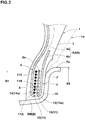
Fig. 2 is a cross sectional view of the bead portion thereof. -
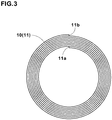
Fig. 3 is a schematic side view of a wire ring. -
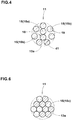
Fig. 4 is a schematic cross sectional view of a twisted cord. -
Fig. 5 is a cross sectional view of another example of the bead portion. -
Fig. 6 is a schematic cross sectional view of another example of the twisted cord. -
Fig. 7 is a diagram for explaining how to measure the bending rigidity of a bead wire. - The present invention is suitably applied to a motorcycle tire as well as a passenger car tire.
- Taking a motorcycle tire as example, embodiments of the present invention will now be described in detail in conjunction with the accompanying drawings.
- In
Fig. 1 , apneumatic tire 1 as an embodiment of the present invention is mounted on a standard wheel rim RM and inflated to a standard pressure, and no tire load is applied thereto. Hereinafter, such condition is called "normally inflated unloaded condition".
The standard wheel rim RM is a wheel rim officially approved or recommended for the tire by standards organizations, i.e. JATMA (Japan and Asia), T&RA (North America), ETRTO (Europe), TRAA (Australia), STRO (Scandinavia), ALAPA (Latin America), ITTAC (India) and the like which are effective in the area where the tire is manufactured, sold or used. The standard pressure is the maximum air pressure for the tire specified by the same organization in the Air-pressure/Maximum-load Table or similar list. For example, the standard wheel rim is the "standard rim" specified in JATMA, the "Measuring Rim" in ETRTO, the "Design Rim" in TRA or the like. The standard pressure is the "maximum air pressure" in JATMA, the "Inflation Pressure" in ETRTO, the maximum pressure given in the "Tire Load Limits at various Cold Inflation Pressures" table in TRA or the like. In case of passenger car tires, however, the standard pressure is uniformly defined by 180 kPa. - In this application including specification and claims, various dimensions, positions and the like of the tire refer to those under the normally inflated unloaded condition of the tire unless otherwise noted.
- As shown in
Fig. 1 , thepneumatic tire 1 comprises atread portion 2 whose outer surface defines the tread, a pair of axially spacedbead portions 4 mounted on rim seats of the wheel rim RM, a pair ofsidewall portions 3 extending between the tread edges and the bead portions, acarcass 6 extending between thebead portions 4 through thetread portion 2 and thesidewall portions 3, abelt 7 disposed radially outside thecarcass 6 in thetread portion 2, and abead core 5 disposed in each of thebead portions 4. - The
carcass 6 is composed of at least onecarcass ply 6A, in the present embodiment only onecarcass ply 6A.
Thecarcass ply 6A is made of carcass cords arranged radially at an angle of from 75 to 90 degrees with respect to the tire equator C, and extending between thebead portions 4 through thetread portion 2 and thesidewall portions 3, and turned up around thebead core 5 in each of the bead portions from the axial inside to the axially outside of the tire, so as to form a pair of turned upportions 6b and amain portion 6a therebetween. As the carcass cords, for example, organic fiber cords and/or steel cords can be used. - The
belt 7 in the present embodiment is composed of two radially inner and outer belt plies 7A and 7B each made of belt cords laid at an angle of from 15 to 45 degrees with respect to the tire equator C.
As the belt cords, for example, steel cords, aramid cords, rayon cords and the like can be suitably used. - The
bead cores 5 are each composed of wire rings 10 arranged in the tire axial direction.
In the present embodiment, as shown inFig. 2 , thebead core 5 is composed of two wire rings 10. - As shown in
Fig. 3 which is a side view of awire ring 10, thewire ring 10 is made of abead wire 11 spirally overlap-wound in a ring shape. Thus, each of the wire rings 10 includes two ends of the bead wire 11: a winding-startingend 11a and a winding-endingend 11b. From a point of view of uniformity, it is preferable that the twoends - The wire rings 10 constituting the bead core include a
first ring 13 and asecond ring 14.
Thefirst ring 13 is such that itsbead wire 11 is atwisted cord 13a (shown inFig. 4 ) made up of a plurality offilaments 15 twisted together.
Thesecond ring 14 is such that itsbead wire 11 is amonofilament cord 14a made up of a single filament.
Thefirst ring 13 made of thetwisted cord 13a increases the flexibility of thebead portion 4 of thetire 1 to improve the ride comfort performance of the tire.
As the rigidity of themonofilament cord 14a is high, thesecond ring 14 made of themonofilament cord 14a prevents a decrease in the binding force of thebead core 5 to the wheel rim RM to improve the steering/handling stability.
In the present invention, accordingly, thetire 1 can be improved in the ride comfort performance, steering the stability and uniformity in good balance. - It is preferable that the bending rigidity of the
twisted cord 13a is lower than the bending rigidity of themonofilament cord 14a.
If the bending rigidity of thetwisted cord 13a is higher than the bending rigidity of themonofilament cord 14a, there is a possibility that the diameter d1 of thetwisted cord 13a is excessively increased, increasing the tire weight, and the ride comfort performance is deteriorated. If the bending rigidity of thetwisted cord 13a is excessively lower than the bending rigidity of themonofilament cord 14a, there is a possibility that the rigidity of thefirst ring 13 is decreased and the steering/handling stability is deteriorated. - In order to more effectively derive the above-mentioned advantageous effects, it is preferred that the bending rigidity of the
twisted cord 13a is 0.10 to 0.29 times the bending rigidity of themonofilament cord 14a. - In this specification, the bending rigidity is measured as follow, using a
specimen 100 of 150 mm length prepared by melt-cutting thebead wire 11 not to be untwisted.
As shown inFig. 7 , a 20 mm long end portion of thespecimen 100 is fixedly supported by ajig 201.
A force in the normal direction to the longitudinal direction of thespecimen 100 is applied to the otherfree end 102 of thespecimen 100 at 130 mm from thefixed end 101, and is gradually increased.
The force when the angle of a straight line drawn between theends
For example, in order to measure the bending rigidity, a Stiffness Tester 150-D manufactured by Taber Industries can be used. - It is preferable that the bending rigidity of the
twisted cord 13a is set in a range from 100 N to 260 N.
If the bending rigidity of thetwisted cord 13a is lower than 100 N, there is a possibility that the binding force of thebead core 5 to the wheel rim RM is decreased, affecting the steering/handling stability. If the bending rigidity is higher than 260 N, there is a possibility that the flexibility of thebead portion 4 becomes less, affecting the ride comfort performance. Further, there is a possibility that thetwisted cord 13a becomes thick, increasing the tire weight, and the ride comfort performance is deteriorated. - It is preferable that the elongation of the
twisted cord 13a when the tension is increased from 2.5 N to 49.0 N, is in a range from 0.03 % to 0.75 %.
If the elongation of thetwisted cord 13a is less than 0.03 %, there is a possibility that the flexibility of thebead wire 11 becomes insufficient, and the ride comfort performance is adversely affected. If the elongation of thetwisted cord 13a is more than 0.75 %, there is a possibility that the binding force of thebead core 5 to the wheel rim RM is decreased, and the steering/handling stability is adversely affected. - In order to effectively derive the above-mentioned advantageous effects, it is preferred that the elongation of the
monofilament cord 14a when the tension is increased from 2.5 N to 49.0 N, is in a range from 0.03 % to 0.07 %. - In the present embodiment, as shown in
Fig. 4 , thetwisted cord 13a as thebead wire 11 is composed of a plurality ofcore filaments 15a, and a plurality ofsheath filaments 15b which are twisted together. More specifically, thetwisted cord 13a has a layer twist structure in which anouter layer 19 made up of thesheath filaments 15b are twisted around acore 18 made up of thecore filaments 15a.
Thebead wire 11 having such layer twist structure exerts excellent bendability to increase the flexibility of thebead portion 4. - It is preferable that the
filaments 15 of thetwisted cord 13a have a diameter d1 of from 0.15 to 0.45 mm. If the diameter d1 is less than 0.15 mm, there is a possibility that the binding force of thebead core 5 is decreased, and the steering/handling stability is adversely affected. If the diameter d1 is not less than 0.45 mm, there is a possibility that the flexibility of thebead portion 4 becomes insufficient, and the ride comfort performance is adversely affected. - In
Fig. 2 , indicated by an alternate long and two short dashes line is acontour 1a of thetire 1 in the ground contacting patch when the tire is normally loaded. As shown, thebead portion 4 is bent toward the axially outside along the flange F of the wheel rim RM. As a result, the load acting on the bead seat B of the wheel rim RM becomes higher in the axially outer portion than in the axially inner portion.
It is therefore, preferable that thefirst ring 13 is disposed as the axiallyoutermost wire ring 10 in thebead core 5.
In the present embodiment, thefirst ring 13 is axially outermost, and thesecond ring 14 is disposed axially inside thefirst ring 13.
Thereby, thefirst ring 13 having higher flexibility absorbs a large bending force, and the stress on the bead seat B is evened in the tire axial direction. As a result, the engaging force between bead portion of thetire 1 and the wheel rim RM becomes evened in the tire axial direction, and the steering/handling stability is improved. - It is preferable that the number of the spiral turns of the
bead wire 11 is not less than 1.5 times the number of the wire rings 10 in the bead core.
when the spiral turns of thebead wire 11 is counted from the radiallyinnermost turn 11A toward the radiallyoutermost turn 11C, some of the spiral turns more than 1.0 times the number of the wire rings 10 can generate a larger tension upon the inflation of thetire 1 and the application of a tire load, and the binding force of thebead core 5 is increased to improve the steering/handling stability.
In the example of thewire ring 10 shown inFig. 2 , the number of the spiral turns is 8, and the number of the wire rings is 2. Therefore, some of the spiral turns from the3rd turn 11B to the 8thoutermost turn 11C when counted from the 1stinnermost turn 11A can generate a larger tension to increase the binding force of thebead core 5.
If the number of the spiral turns of thebead wire 11 is excessively increased, there is a possibility that the tire weight is increased, and the ride comfort performance is deteriorated. - It is preferable that the radially outer end 5o of the
bead core 5 is positioned radially inside the radially outer end Fo of the flange F, that is, the diameter R1 of the radially outer end 5o of thebead core 5 is less than the diameter R2 of the radially outer end Fo of the flange F.
As a result, the tire is provided with moderate flexibility from thebead portion 4 to a lower sidewall portion, and thebead portion 4 becomes easy to bend along the rim flange F. Thus, the ride comfort performance is improved. -
Fig. 5 shows another example of thebead core 5 embedded in thebead portion 4 as another embodiment of the present invention, wherein thebead core 5 is composed of three wire rings 10 arranged in the tire axial direction. The three wire rings 10 are an axiallyoutermost wire ring 10a, an axiallyinnermost wire ring 10b, and amiddle wire ring 10c therebetween. Theoutermost wire ring 10a is the above-mentionedfirst ring 13. Theinnermost wire ring 10b is the above-mentionedsecond ring 14. Themiddle wire ring 10c is thefirst ring 13
As explained above, as thefirst ring 13 is axially outermost in thebead core 5, the steering/handling stability is improved. Further, as thefirst ring 13 is disposed in a middle region of the bead seat B in which themiddle wire ring 10c is disposed (the middle region is acted by a larger force than an inner region of the bead seat B in which theinnermost wire ring 10b is disposed), the load acting on themiddle wire ring 10c is absorbed by thefirst ring 13. Therefore, the variation of the stress on the bead seat B becomes small, and the engaging force between the bead portion of thetire 1 and the wheel rim RM becomes evened. As a result, the steering/handling stability is improved. - In the
bead core 5 composed of three wire rings 10, it is also possible that themiddle wire ring 10c is thesecond ring 14 and theinnermost wire ring 10b is thefirst ring 13. In this case, as the rigidity of thebead core 5 is increased on both sides of thesecond ring 14 in the tire axial direction, the ride comfort performance during straight running becomes high in comparison with the example shown inFig. 5 . - when the
bead core 5 is made up of three or more wire rings 10, it is preferred that the number of the first rings 13 is equal to or more than the number of the second ring(s) 14. Thereby, the flexibility of thebead core 5 and the rigidity of thebead portion 4 are secured in good balance, and the steering/handling stability, ride comfort performance and uniformity is effectively improved.
In this case too, it is preferable that the number of the spiral turns of thebead wire 11 is not less than 1.5 times the number of the wire rings 10 in the bead core. In the example shown inFig. 5 , the number of the spiral turns is 6, and the number of the wire rings 10 is 3. It is preferable that the radially outer end 5o of thebead core 5 is positioned radially inside the radially outer end Fo of the flange F. -
Fig. 6 shows a cord having a bunch twisted structure in which a plurality offilaments 15c constituting the cord are twisted all together in one direction. The cord having such a bunch twisted structure can be used as the low-cost twistedcord 13a. - The
bead core 5 can be manufactured, for example, by firstly manufacturing the wire rings 10 separately from each other by spirally winding therubberized bead wire 11, and then closely arranging the wire rings 10 to be combined into thebead core 5. - As another example of the manufacturing method, a tape of the
bead wires bead core 5. - In either case, it is preferable that the
rubberized bead wire 11 or the tape of the bead wires is wound within an annular guide groove formed around an annular jig. - As still another example of the manufacturing method, the
bead wires bead core 5.
while detailed description has been made of preferable embodiments of the present invention, the present invention can be embodied in various forms without being limited to the illustrated embodiment. - Based on the structure shown in
Fig. 1 , motorcycle tires of size 180/55ZR17 were experimentally manufactured and tested for the ride comfort performance, handling stability and uniformity. Aside from the bead cores, all the test tires had the same structure. Specifications of the bead cores are shown in Table 1. The filaments constituting all the bead wires were steel filaments. The bending rigidity of the monofilament cord was 900 N. The elongation of the monofilament cord was 0.032 %. The carcass was composed of a single ply of nylon cords (2/1400 dtex, cord count 51/50 mm). - Each test tire was ran over a protrusion having a height of 5 mm and a length of 5 mm in the traveling direction, and a reaction force when running over the protrusion and its convergence time were measured under the following condition: a
speed 15 km/h, a tire pressure 290 kPa, a tire load 1.3 kN, and a wheel rim size MT5.50X17. The results are indicated in Table 1 by an index based on Ex1 being 100, wherein the larger the value, the better the performance. - Using a 1300cc motorcycle with the test tire mounted on the rear wheel under the above-mentioned condition, the handling stability during running on a dry asphalt road surface of a circuit test course was evaluated by the test rider based on the responsiveness, rigid feeling, grip, stability on a bumpy road surface and transient behavior. The results are indicated in Table 1 by an index based on Ex1 being 100, wherein the larger the value, the better the performance.
- The radial runout (RRO) of each test tire was measured according to JASO C607:2000 "Test Procedures for Automobile Tire uniformity". The results are indicated in Table 1 by an index based on Ex1 being 100, wherein the smaller the value, the better the uniformity.


- From the test results, it was confirmed that, according to the present invention, the ride comfort performance, handling stability and uniformity can be improved in good balance.
-
- 1
- pneumatic tire
- 4
- bead portion
- 5
- bead core
- 10
- wire ring
- 11
- bead wire
- 13
- first ring
- 13a
- twisted cord
- 14
- second ring
- 14a
- monofilament cord
- 15
- filament
Claims (11)
- A pneumatic tire comprising an annular bead core embedded in a bead portion of the tire, wherein
the bead core is composed of a plurality of wire rings each of which is made of a spirally overlap-wound bead wire and which are arranged in the tire axial direction, and
the wire rings include
a first ring whose bead wire is a twisted cord made of a plurality of filaments twisted together, and
a second ring whose bead wire is a monofilament cord made of a single filament. - The pneumatic tire according to claim 1, wherein
a bending rigidity of the twisted cord is lower than a bending rigidity of the monofilament cord. - The pneumatic tire according to claim 2, wherein
the bending rigidity of the twisted cord is 0.10 to 0.29 times the bending rigidity of the monofilament cord. - The pneumatic tire according to any one of claims 1-3, wherein
the bending rigidity of the twisted cord is 100 N to 260 N. - The pneumatic tire according to any one of claims 1-4, wherein
an elongation of the twisted cord is not less than 0.03 % when the tension of the twisted cord is increased from 2.5N to 49.0N. - The pneumatic tire according to any one of claims 1-5, wherein
the axially outermost wire ring in the bead core is the first ring. - The pneumatic tire according to any one of claims 1-6, wherein
the number of the first ring or rings is not less than the number of the second ring or rings. - The pneumatic tire according to any one of claims 1-7, wherein
the number of spiral turns of the bead wire of each wire ring is not less than 1.5 times the number of the wire rings arranged in the tire axial direction. - The pneumatic tire according to any one of claims 1-8, wherein
the radially outer end of the bead core is positioned radially inside the radially outer end of a rim flange when the pneumatic tire is mounted on a standard wheel rim having the rim flange and inflated to a standard pressure and loaded with no tire load. - The pneumatic tire according to any one of claims 1-9, wherein
the twisted cord has a layer twist structure comprising at least one core filament, and sheath filaments surrounding said at least one core filament. - The pneumatic tire according to any one of claims 1-9, wherein
the twisted cord has a bunch twisted structure in which all the filaments as a bunch are twisted in one direction.
Applications Claiming Priority (1)
| Application Number | Priority Date | Filing Date | Title |
|---|---|---|---|
| JP2016223472A JP6828390B2 (en) | 2016-11-16 | 2016-11-16 | Pneumatic tires |
Publications (2)
| Publication Number | Publication Date |
|---|---|
| EP3323643A1 true EP3323643A1 (en) | 2018-05-23 |
| EP3323643B1 EP3323643B1 (en) | 2019-02-27 |
Family
ID=60327145
Family Applications (1)
| Application Number | Title | Priority Date | Filing Date |
|---|---|---|---|
| EP17201624.8A Active EP3323643B1 (en) | 2016-11-16 | 2017-11-14 | Pneumatic tire |
Country Status (3)
| Country | Link |
|---|---|
| US (1) | US11077723B2 (en) |
| EP (1) | EP3323643B1 (en) |
| JP (1) | JP6828390B2 (en) |
Citations (3)
| Publication number | Priority date | Publication date | Assignee | Title |
|---|---|---|---|---|
| US3942574A (en) * | 1974-12-16 | 1976-03-09 | The Goodyear Tire & Rubber Company | Tire bead |
| DE4137726A1 (en) * | 1990-11-16 | 1992-05-21 | Sumitomo Rubber Ind | Lighter weight bead cores of tyres - consists of steel wire cords assembled inside outer set of aromatic polyamide cords |
| WO2008061544A1 (en) * | 2006-11-22 | 2008-05-29 | Pirelli Tyre S.P.A. | Tire with light weight bead core |
Family Cites Families (17)
| Publication number | Priority date | Publication date | Assignee | Title |
|---|---|---|---|---|
| BE565709A (en) * | 1957-03-14 | Michelin & Cie | ||
| US4823857A (en) * | 1988-03-16 | 1989-04-25 | The Goodyear Tire & Rubber Company | Tire beads |
| US5099902A (en) * | 1989-05-30 | 1992-03-31 | Bridgestone/Firestone, Inc. | Offset wound helical bead for pneumatic tires |
| JP3343293B2 (en) * | 1994-08-08 | 2002-11-11 | 住友ゴム工業株式会社 | Steel cord for tire |
| JP2001097010A (en) * | 1999-09-30 | 2001-04-10 | Bridgestone Corp | Pneumatic tire |
| EP1126074B1 (en) * | 2000-02-17 | 2007-04-11 | Sumitomo Rubber Industries Limited | Pneumatic tyre |
| JP4105397B2 (en) * | 2000-03-02 | 2008-06-25 | 住友ゴム工業株式会社 | Metal cord and pneumatic tire using the same |
| DE60141986D1 (en) | 2001-10-30 | 2010-06-10 | Pirelli | TIRES WITH A WOLF CORE WITH PRE-FORMED WIRES |
| WO2006128494A1 (en) * | 2005-05-30 | 2006-12-07 | Pirelli Tyre S.P.A. | Pneumatic tire with composite bead core |
| FR2956836B1 (en) * | 2010-02-26 | 2015-03-27 | Michelin Soc Tech | PNEUMATIC HAVING GREATER RESISTANCE TO DECOINCEMENT. |
| JP5144783B2 (en) * | 2011-04-08 | 2013-02-13 | 住友ゴム工業株式会社 | Pneumatic tire and manufacturing method thereof |
| JP2013056566A (en) * | 2011-09-07 | 2013-03-28 | Yokohama Rubber Co Ltd:The | Pneumatic tire |
| JP5416792B2 (en) * | 2012-01-24 | 2014-02-12 | 住友ゴム工業株式会社 | Pneumatic tire |
| JP2013199236A (en) * | 2012-03-26 | 2013-10-03 | Yokohama Rubber Co Ltd:The | Pneumatic tire |
| JP2015160599A (en) * | 2014-02-28 | 2015-09-07 | 横浜ゴム株式会社 | pneumatic tire |
| JP5946490B2 (en) * | 2014-05-19 | 2016-07-06 | 住友ゴム工業株式会社 | Pneumatic tire |
| FR3030348B1 (en) * | 2014-12-23 | 2017-06-23 | Michelin & Cie | METHOD FOR ASSEMBLING PNEUMATIC BRAKE |
-
2016
- 2016-11-16 JP JP2016223472A patent/JP6828390B2/en active Active
-
2017
- 2017-11-14 EP EP17201624.8A patent/EP3323643B1/en active Active
- 2017-11-15 US US15/813,587 patent/US11077723B2/en active Active
Patent Citations (3)
| Publication number | Priority date | Publication date | Assignee | Title |
|---|---|---|---|---|
| US3942574A (en) * | 1974-12-16 | 1976-03-09 | The Goodyear Tire & Rubber Company | Tire bead |
| DE4137726A1 (en) * | 1990-11-16 | 1992-05-21 | Sumitomo Rubber Ind | Lighter weight bead cores of tyres - consists of steel wire cords assembled inside outer set of aromatic polyamide cords |
| WO2008061544A1 (en) * | 2006-11-22 | 2008-05-29 | Pirelli Tyre S.P.A. | Tire with light weight bead core |
Also Published As
| Publication number | Publication date |
|---|---|
| JP2018079801A (en) | 2018-05-24 |
| JP6828390B2 (en) | 2021-02-10 |
| EP3323643B1 (en) | 2019-02-27 |
| US20180134099A1 (en) | 2018-05-17 |
| US11077723B2 (en) | 2021-08-03 |
Similar Documents
| Publication | Publication Date | Title |
|---|---|---|
| US6609552B2 (en) | Pneumatic tire with single-twist organic filter band cords | |
| US10589577B2 (en) | Heavy-duty pneumatic tire | |
| EP2607104B1 (en) | Pneumatic tire | |
| EP2246201B1 (en) | Pneumatic radial tire | |
| KR20130086306A (en) | Pneumatic tire | |
| US12030351B2 (en) | Pneumatic tire | |
| EP3059100B1 (en) | Pneumatic tire | |
| JP2017121868A (en) | Pneumatic tire | |
| EP4257371B1 (en) | Pneumatic tire | |
| JP2019142395A (en) | Pneumatic tire | |
| CN113727866A (en) | Tyre for vehicle wheels | |
| US20230241922A1 (en) | Pneumatic tire | |
| JP7842521B2 (en) | tire | |
| EP3323643B1 (en) | Pneumatic tire | |
| JP2008179325A (en) | Pneumatic radial tire | |
| EP3287302B1 (en) | Pneumatic tire | |
| US12539717B2 (en) | Pneumatic tire | |
| JP7572167B2 (en) | Pneumatic tires | |
| CN111070970B (en) | Tire with a tire body | |
| JP2010012828A (en) | Pneumatic tire | |
| US20220305850A1 (en) | Pneumatic tire | |
| US20220016933A1 (en) | Tire | |
| JP7572605B2 (en) | Pneumatic tires | |
| JP2008290503A (en) | Pneumatic radial tire | |
| JP2019142352A (en) | Pneumatic tire |
Legal Events
| Date | Code | Title | Description |
|---|---|---|---|
| PUAI | Public reference made under article 153(3) epc to a published international application that has entered the european phase |
Free format text: ORIGINAL CODE: 0009012 |
|
| STAA | Information on the status of an ep patent application or granted ep patent |
Free format text: STATUS: THE APPLICATION HAS BEEN PUBLISHED |
|
| AK | Designated contracting states |
Kind code of ref document: A1 Designated state(s): AL AT BE BG CH CY CZ DE DK EE ES FI FR GB GR HR HU IE IS IT LI LT LU LV MC MK MT NL NO PL PT RO RS SE SI SK SM TR |
|
| AX | Request for extension of the european patent |
Extension state: BA ME |
|
| STAA | Information on the status of an ep patent application or granted ep patent |
Free format text: STATUS: REQUEST FOR EXAMINATION WAS MADE |
|
| 17P | Request for examination filed |
Effective date: 20180731 |
|
| RBV | Designated contracting states (corrected) |
Designated state(s): AL AT BE BG CH CY CZ DE DK EE ES FI FR GB GR HR HU IE IS IT LI LT LU LV MC MK MT NL NO PL PT RO RS SE SI SK SM TR |
|
| REG | Reference to a national code |
Ref country code: DE Ref legal event code: R079 Ref document number: 602017002378 Country of ref document: DE Free format text: PREVIOUS MAIN CLASS: B60C0015040000 Ipc: B60C0015000000 |
|
| RIC1 | Information provided on ipc code assigned before grant |
Ipc: B60C 15/04 20060101ALI20180905BHEP Ipc: B60C 15/00 20060101AFI20180905BHEP Ipc: B60C 15/05 20060101ALI20180905BHEP Ipc: B29D 30/48 20060101ALI20180905BHEP |
|
| GRAP | Despatch of communication of intention to grant a patent |
Free format text: ORIGINAL CODE: EPIDOSNIGR1 |
|
| STAA | Information on the status of an ep patent application or granted ep patent |
Free format text: STATUS: GRANT OF PATENT IS INTENDED |
|
| INTG | Intention to grant announced |
Effective date: 20181030 |
|
| GRAS | Grant fee paid |
Free format text: ORIGINAL CODE: EPIDOSNIGR3 |
|
| GRAA | (expected) grant |
Free format text: ORIGINAL CODE: 0009210 |
|
| STAA | Information on the status of an ep patent application or granted ep patent |
Free format text: STATUS: THE PATENT HAS BEEN GRANTED |
|
| AK | Designated contracting states |
Kind code of ref document: B1 Designated state(s): AL AT BE BG CH CY CZ DE DK EE ES FI FR GB GR HR HU IE IS IT LI LT LU LV MC MK MT NL NO PL PT RO RS SE SI SK SM TR |
|
| REG | Reference to a national code |
Ref country code: GB Ref legal event code: FG4D |
|
| REG | Reference to a national code |
Ref country code: CH Ref legal event code: EP |
|
| REG | Reference to a national code |
Ref country code: AT Ref legal event code: REF Ref document number: 1100786 Country of ref document: AT Kind code of ref document: T Effective date: 20190315 |
|
| REG | Reference to a national code |
Ref country code: IE Ref legal event code: FG4D |
|
| REG | Reference to a national code |
Ref country code: DE Ref legal event code: R096 Ref document number: 602017002378 Country of ref document: DE |
|
| REG | Reference to a national code |
Ref country code: NL Ref legal event code: MP Effective date: 20190227 |
|
| REG | Reference to a national code |
Ref country code: LT Ref legal event code: MG4D |
|
| PG25 | Lapsed in a contracting state [announced via postgrant information from national office to epo] |
Ref country code: NO Free format text: LAPSE BECAUSE OF FAILURE TO SUBMIT A TRANSLATION OF THE DESCRIPTION OR TO PAY THE FEE WITHIN THE PRESCRIBED TIME-LIMIT Effective date: 20190527 Ref country code: PT Free format text: LAPSE BECAUSE OF FAILURE TO SUBMIT A TRANSLATION OF THE DESCRIPTION OR TO PAY THE FEE WITHIN THE PRESCRIBED TIME-LIMIT Effective date: 20190627 Ref country code: FI Free format text: LAPSE BECAUSE OF FAILURE TO SUBMIT A TRANSLATION OF THE DESCRIPTION OR TO PAY THE FEE WITHIN THE PRESCRIBED TIME-LIMIT Effective date: 20190227 Ref country code: NL Free format text: LAPSE BECAUSE OF FAILURE TO SUBMIT A TRANSLATION OF THE DESCRIPTION OR TO PAY THE FEE WITHIN THE PRESCRIBED TIME-LIMIT Effective date: 20190227 Ref country code: SE Free format text: LAPSE BECAUSE OF FAILURE TO SUBMIT A TRANSLATION OF THE DESCRIPTION OR TO PAY THE FEE WITHIN THE PRESCRIBED TIME-LIMIT Effective date: 20190227 Ref country code: LT Free format text: LAPSE BECAUSE OF FAILURE TO SUBMIT A TRANSLATION OF THE DESCRIPTION OR TO PAY THE FEE WITHIN THE PRESCRIBED TIME-LIMIT Effective date: 20190227 |
|
| PG25 | Lapsed in a contracting state [announced via postgrant information from national office to epo] |
Ref country code: BG Free format text: LAPSE BECAUSE OF FAILURE TO SUBMIT A TRANSLATION OF THE DESCRIPTION OR TO PAY THE FEE WITHIN THE PRESCRIBED TIME-LIMIT Effective date: 20190527 Ref country code: LV Free format text: LAPSE BECAUSE OF FAILURE TO SUBMIT A TRANSLATION OF THE DESCRIPTION OR TO PAY THE FEE WITHIN THE PRESCRIBED TIME-LIMIT Effective date: 20190227 Ref country code: RS Free format text: LAPSE BECAUSE OF FAILURE TO SUBMIT A TRANSLATION OF THE DESCRIPTION OR TO PAY THE FEE WITHIN THE PRESCRIBED TIME-LIMIT Effective date: 20190227 Ref country code: IS Free format text: LAPSE BECAUSE OF FAILURE TO SUBMIT A TRANSLATION OF THE DESCRIPTION OR TO PAY THE FEE WITHIN THE PRESCRIBED TIME-LIMIT Effective date: 20190627 Ref country code: GR Free format text: LAPSE BECAUSE OF FAILURE TO SUBMIT A TRANSLATION OF THE DESCRIPTION OR TO PAY THE FEE WITHIN THE PRESCRIBED TIME-LIMIT Effective date: 20190528 Ref country code: HR Free format text: LAPSE BECAUSE OF FAILURE TO SUBMIT A TRANSLATION OF THE DESCRIPTION OR TO PAY THE FEE WITHIN THE PRESCRIBED TIME-LIMIT Effective date: 20190227 |
|
| REG | Reference to a national code |
Ref country code: AT Ref legal event code: MK05 Ref document number: 1100786 Country of ref document: AT Kind code of ref document: T Effective date: 20190227 |
|
| PG25 | Lapsed in a contracting state [announced via postgrant information from national office to epo] |
Ref country code: DK Free format text: LAPSE BECAUSE OF FAILURE TO SUBMIT A TRANSLATION OF THE DESCRIPTION OR TO PAY THE FEE WITHIN THE PRESCRIBED TIME-LIMIT Effective date: 20190227 Ref country code: EE Free format text: LAPSE BECAUSE OF FAILURE TO SUBMIT A TRANSLATION OF THE DESCRIPTION OR TO PAY THE FEE WITHIN THE PRESCRIBED TIME-LIMIT Effective date: 20190227 Ref country code: ES Free format text: LAPSE BECAUSE OF FAILURE TO SUBMIT A TRANSLATION OF THE DESCRIPTION OR TO PAY THE FEE WITHIN THE PRESCRIBED TIME-LIMIT Effective date: 20190227 Ref country code: CZ Free format text: LAPSE BECAUSE OF FAILURE TO SUBMIT A TRANSLATION OF THE DESCRIPTION OR TO PAY THE FEE WITHIN THE PRESCRIBED TIME-LIMIT Effective date: 20190227 Ref country code: RO Free format text: LAPSE BECAUSE OF FAILURE TO SUBMIT A TRANSLATION OF THE DESCRIPTION OR TO PAY THE FEE WITHIN THE PRESCRIBED TIME-LIMIT Effective date: 20190227 Ref country code: IT Free format text: LAPSE BECAUSE OF FAILURE TO SUBMIT A TRANSLATION OF THE DESCRIPTION OR TO PAY THE FEE WITHIN THE PRESCRIBED TIME-LIMIT Effective date: 20190227 Ref country code: SK Free format text: LAPSE BECAUSE OF FAILURE TO SUBMIT A TRANSLATION OF THE DESCRIPTION OR TO PAY THE FEE WITHIN THE PRESCRIBED TIME-LIMIT Effective date: 20190227 Ref country code: AL Free format text: LAPSE BECAUSE OF FAILURE TO SUBMIT A TRANSLATION OF THE DESCRIPTION OR TO PAY THE FEE WITHIN THE PRESCRIBED TIME-LIMIT Effective date: 20190227 |
|
| REG | Reference to a national code |
Ref country code: DE Ref legal event code: R097 Ref document number: 602017002378 Country of ref document: DE |
|
| PG25 | Lapsed in a contracting state [announced via postgrant information from national office to epo] |
Ref country code: PL Free format text: LAPSE BECAUSE OF FAILURE TO SUBMIT A TRANSLATION OF THE DESCRIPTION OR TO PAY THE FEE WITHIN THE PRESCRIBED TIME-LIMIT Effective date: 20190227 Ref country code: SM Free format text: LAPSE BECAUSE OF FAILURE TO SUBMIT A TRANSLATION OF THE DESCRIPTION OR TO PAY THE FEE WITHIN THE PRESCRIBED TIME-LIMIT Effective date: 20190227 |
|
| PG25 | Lapsed in a contracting state [announced via postgrant information from national office to epo] |
Ref country code: AT Free format text: LAPSE BECAUSE OF FAILURE TO SUBMIT A TRANSLATION OF THE DESCRIPTION OR TO PAY THE FEE WITHIN THE PRESCRIBED TIME-LIMIT Effective date: 20190227 |
|
| PLBE | No opposition filed within time limit |
Free format text: ORIGINAL CODE: 0009261 |
|
| STAA | Information on the status of an ep patent application or granted ep patent |
Free format text: STATUS: NO OPPOSITION FILED WITHIN TIME LIMIT |
|
| 26N | No opposition filed |
Effective date: 20191128 |
|
| PG25 | Lapsed in a contracting state [announced via postgrant information from national office to epo] |
Ref country code: TR Free format text: LAPSE BECAUSE OF FAILURE TO SUBMIT A TRANSLATION OF THE DESCRIPTION OR TO PAY THE FEE WITHIN THE PRESCRIBED TIME-LIMIT Effective date: 20190227 |
|
| PG25 | Lapsed in a contracting state [announced via postgrant information from national office to epo] |
Ref country code: MC Free format text: LAPSE BECAUSE OF FAILURE TO SUBMIT A TRANSLATION OF THE DESCRIPTION OR TO PAY THE FEE WITHIN THE PRESCRIBED TIME-LIMIT Effective date: 20190227 Ref country code: LU Free format text: LAPSE BECAUSE OF NON-PAYMENT OF DUE FEES Effective date: 20191114 |
|
| REG | Reference to a national code |
Ref country code: BE Ref legal event code: MM Effective date: 20191130 |
|
| PG25 | Lapsed in a contracting state [announced via postgrant information from national office to epo] |
Ref country code: IE Free format text: LAPSE BECAUSE OF NON-PAYMENT OF DUE FEES Effective date: 20191114 |
|
| PG25 | Lapsed in a contracting state [announced via postgrant information from national office to epo] |
Ref country code: BE Free format text: LAPSE BECAUSE OF NON-PAYMENT OF DUE FEES Effective date: 20191130 |
|
| PG25 | Lapsed in a contracting state [announced via postgrant information from national office to epo] |
Ref country code: CY Free format text: LAPSE BECAUSE OF FAILURE TO SUBMIT A TRANSLATION OF THE DESCRIPTION OR TO PAY THE FEE WITHIN THE PRESCRIBED TIME-LIMIT Effective date: 20190227 |
|
| REG | Reference to a national code |
Ref country code: CH Ref legal event code: PL |
|
| PG25 | Lapsed in a contracting state [announced via postgrant information from national office to epo] |
Ref country code: HU Free format text: LAPSE BECAUSE OF FAILURE TO SUBMIT A TRANSLATION OF THE DESCRIPTION OR TO PAY THE FEE WITHIN THE PRESCRIBED TIME-LIMIT; INVALID AB INITIO Effective date: 20171114 Ref country code: MT Free format text: LAPSE BECAUSE OF FAILURE TO SUBMIT A TRANSLATION OF THE DESCRIPTION OR TO PAY THE FEE WITHIN THE PRESCRIBED TIME-LIMIT Effective date: 20190227 |
|
| PG25 | Lapsed in a contracting state [announced via postgrant information from national office to epo] |
Ref country code: LI Free format text: LAPSE BECAUSE OF NON-PAYMENT OF DUE FEES Effective date: 20201130 Ref country code: CH Free format text: LAPSE BECAUSE OF NON-PAYMENT OF DUE FEES Effective date: 20201130 |
|
| PG25 | Lapsed in a contracting state [announced via postgrant information from national office to epo] |
Ref country code: SI Free format text: LAPSE BECAUSE OF FAILURE TO SUBMIT A TRANSLATION OF THE DESCRIPTION OR TO PAY THE FEE WITHIN THE PRESCRIBED TIME-LIMIT Effective date: 20190227 |
|
| PG25 | Lapsed in a contracting state [announced via postgrant information from national office to epo] |
Ref country code: MK Free format text: LAPSE BECAUSE OF FAILURE TO SUBMIT A TRANSLATION OF THE DESCRIPTION OR TO PAY THE FEE WITHIN THE PRESCRIBED TIME-LIMIT Effective date: 20190227 |
|
| GBPC | Gb: european patent ceased through non-payment of renewal fee |
Effective date: 20211114 |
|
| PG25 | Lapsed in a contracting state [announced via postgrant information from national office to epo] |
Ref country code: GB Free format text: LAPSE BECAUSE OF NON-PAYMENT OF DUE FEES Effective date: 20211114 |
|
| P01 | Opt-out of the competence of the unified patent court (upc) registered |
Effective date: 20230510 |
|
| PGFP | Annual fee paid to national office [announced via postgrant information from national office to epo] |
Ref country code: DE Payment date: 20241001 Year of fee payment: 8 |
|
| PGFP | Annual fee paid to national office [announced via postgrant information from national office to epo] |
Ref country code: FR Payment date: 20241001 Year of fee payment: 8 |