EP3317403B1 - Optimally activated dendritic cells that induce an improved or increased anti-tumor immune response - Google Patents
Optimally activated dendritic cells that induce an improved or increased anti-tumor immune response Download PDFInfo
- Publication number
- EP3317403B1 EP3317403B1 EP16818706.0A EP16818706A EP3317403B1 EP 3317403 B1 EP3317403 B1 EP 3317403B1 EP 16818706 A EP16818706 A EP 16818706A EP 3317403 B1 EP3317403 B1 EP 3317403B1
- Authority
- EP
- European Patent Office
- Prior art keywords
- cells
- dendritic cell
- dendritic cells
- tumor
- dendritic
- Prior art date
- Legal status (The legal status is an assumption and is not a legal conclusion. Google has not performed a legal analysis and makes no representation as to the accuracy of the status listed.)
- Active
Links
Images
Classifications
-
- A—HUMAN NECESSITIES
- A61—MEDICAL OR VETERINARY SCIENCE; HYGIENE
- A61K—PREPARATIONS FOR MEDICAL, DENTAL OR TOILETRY PURPOSES
- A61K35/00—Medicinal preparations containing materials or reaction products thereof with undetermined constitution
- A61K35/12—Materials from mammals; Compositions comprising non-specified tissues or cells; Compositions comprising non-embryonic stem cells; Genetically modified cells
- A61K35/14—Blood; Artificial blood
- A61K35/15—Cells of the myeloid line, e.g. granulocytes, basophils, eosinophils, neutrophils, leucocytes, monocytes, macrophages or mast cells; Myeloid precursor cells; Antigen-presenting cells, e.g. dendritic cells
-
- A—HUMAN NECESSITIES
- A61—MEDICAL OR VETERINARY SCIENCE; HYGIENE
- A61K—PREPARATIONS FOR MEDICAL, DENTAL OR TOILETRY PURPOSES
- A61K39/00—Medicinal preparations containing antigens or antibodies
-
- A—HUMAN NECESSITIES
- A61—MEDICAL OR VETERINARY SCIENCE; HYGIENE
- A61K—PREPARATIONS FOR MEDICAL, DENTAL OR TOILETRY PURPOSES
- A61K40/00—Cellular immunotherapy
- A61K40/10—Cellular immunotherapy characterised by the cell type used
- A61K40/19—Dendritic cells
-
- A—HUMAN NECESSITIES
- A61—MEDICAL OR VETERINARY SCIENCE; HYGIENE
- A61K—PREPARATIONS FOR MEDICAL, DENTAL OR TOILETRY PURPOSES
- A61K40/00—Cellular immunotherapy
- A61K40/20—Cellular immunotherapy characterised by the effect or the function of the cells
- A61K40/24—Antigen-presenting cells [APC]
-
- A—HUMAN NECESSITIES
- A61—MEDICAL OR VETERINARY SCIENCE; HYGIENE
- A61K—PREPARATIONS FOR MEDICAL, DENTAL OR TOILETRY PURPOSES
- A61K40/00—Cellular immunotherapy
- A61K40/30—Cellular immunotherapy characterised by the recombinant expression of specific molecules in the cells of the immune system
- A61K40/35—Cytokines
-
- A—HUMAN NECESSITIES
- A61—MEDICAL OR VETERINARY SCIENCE; HYGIENE
- A61K—PREPARATIONS FOR MEDICAL, DENTAL OR TOILETRY PURPOSES
- A61K40/00—Cellular immunotherapy
- A61K40/40—Cellular immunotherapy characterised by antigens that are targeted or presented by cells of the immune system
- A61K40/41—Vertebrate antigens
- A61K40/42—Cancer antigens
-
- A—HUMAN NECESSITIES
- A61—MEDICAL OR VETERINARY SCIENCE; HYGIENE
- A61P—SPECIFIC THERAPEUTIC ACTIVITY OF CHEMICAL COMPOUNDS OR MEDICINAL PREPARATIONS
- A61P35/00—Antineoplastic agents
-
- C—CHEMISTRY; METALLURGY
- C12—BIOCHEMISTRY; BEER; SPIRITS; WINE; VINEGAR; MICROBIOLOGY; ENZYMOLOGY; MUTATION OR GENETIC ENGINEERING
- C12N—MICROORGANISMS OR ENZYMES; COMPOSITIONS THEREOF; PROPAGATING, PRESERVING, OR MAINTAINING MICROORGANISMS; MUTATION OR GENETIC ENGINEERING; CULTURE MEDIA
- C12N5/00—Undifferentiated human, animal or plant cells, e.g. cell lines; Tissues; Cultivation or maintenance thereof; Culture media therefor
- C12N5/06—Animal cells or tissues; Human cells or tissues
- C12N5/0602—Vertebrate cells
- C12N5/0634—Cells from the blood or the immune system
- C12N5/0639—Dendritic cells, e.g. Langherhans cells in the epidermis
-
- C—CHEMISTRY; METALLURGY
- C12—BIOCHEMISTRY; BEER; SPIRITS; WINE; VINEGAR; MICROBIOLOGY; ENZYMOLOGY; MUTATION OR GENETIC ENGINEERING
- C12N—MICROORGANISMS OR ENZYMES; COMPOSITIONS THEREOF; PROPAGATING, PRESERVING, OR MAINTAINING MICROORGANISMS; MUTATION OR GENETIC ENGINEERING; CULTURE MEDIA
- C12N5/00—Undifferentiated human, animal or plant cells, e.g. cell lines; Tissues; Cultivation or maintenance thereof; Culture media therefor
- C12N5/06—Animal cells or tissues; Human cells or tissues
- C12N5/0602—Vertebrate cells
- C12N5/0634—Cells from the blood or the immune system
- C12N5/0639—Dendritic cells, e.g. Langherhans cells in the epidermis
- C12N5/064—Immunosuppressive dendritic cells
-
- A—HUMAN NECESSITIES
- A61—MEDICAL OR VETERINARY SCIENCE; HYGIENE
- A61K—PREPARATIONS FOR MEDICAL, DENTAL OR TOILETRY PURPOSES
- A61K39/00—Medicinal preparations containing antigens or antibodies
- A61K2039/51—Medicinal preparations containing antigens or antibodies comprising whole cells, viruses or DNA/RNA
- A61K2039/515—Animal cells
- A61K2039/5154—Antigen presenting cells [APCs], e.g. dendritic cells or macrophages
-
- A—HUMAN NECESSITIES
- A61—MEDICAL OR VETERINARY SCIENCE; HYGIENE
- A61K—PREPARATIONS FOR MEDICAL, DENTAL OR TOILETRY PURPOSES
- A61K2239/00—Indexing codes associated with cellular immunotherapy of group A61K40/00
- A61K2239/38—Indexing codes associated with cellular immunotherapy of group A61K40/00 characterised by the dose, timing or administration schedule
-
- C—CHEMISTRY; METALLURGY
- C12—BIOCHEMISTRY; BEER; SPIRITS; WINE; VINEGAR; MICROBIOLOGY; ENZYMOLOGY; MUTATION OR GENETIC ENGINEERING
- C12N—MICROORGANISMS OR ENZYMES; COMPOSITIONS THEREOF; PROPAGATING, PRESERVING, OR MAINTAINING MICROORGANISMS; MUTATION OR GENETIC ENGINEERING; CULTURE MEDIA
- C12N2500/00—Specific components of cell culture medium
- C12N2500/70—Undefined extracts
- C12N2500/72—Undefined extracts from bacteria
-
- C—CHEMISTRY; METALLURGY
- C12—BIOCHEMISTRY; BEER; SPIRITS; WINE; VINEGAR; MICROBIOLOGY; ENZYMOLOGY; MUTATION OR GENETIC ENGINEERING
- C12N—MICROORGANISMS OR ENZYMES; COMPOSITIONS THEREOF; PROPAGATING, PRESERVING, OR MAINTAINING MICROORGANISMS; MUTATION OR GENETIC ENGINEERING; CULTURE MEDIA
- C12N2501/00—Active agents used in cell culture processes, e.g. differentation
- C12N2501/05—Adjuvants
- C12N2501/052—Lipopolysaccharides [LPS]
-
- C—CHEMISTRY; METALLURGY
- C12—BIOCHEMISTRY; BEER; SPIRITS; WINE; VINEGAR; MICROBIOLOGY; ENZYMOLOGY; MUTATION OR GENETIC ENGINEERING
- C12N—MICROORGANISMS OR ENZYMES; COMPOSITIONS THEREOF; PROPAGATING, PRESERVING, OR MAINTAINING MICROORGANISMS; MUTATION OR GENETIC ENGINEERING; CULTURE MEDIA
- C12N2501/00—Active agents used in cell culture processes, e.g. differentation
- C12N2501/20—Cytokines; Chemokines
- C12N2501/22—Colony stimulating factors (G-CSF, GM-CSF)
-
- C—CHEMISTRY; METALLURGY
- C12—BIOCHEMISTRY; BEER; SPIRITS; WINE; VINEGAR; MICROBIOLOGY; ENZYMOLOGY; MUTATION OR GENETIC ENGINEERING
- C12N—MICROORGANISMS OR ENZYMES; COMPOSITIONS THEREOF; PROPAGATING, PRESERVING, OR MAINTAINING MICROORGANISMS; MUTATION OR GENETIC ENGINEERING; CULTURE MEDIA
- C12N2501/00—Active agents used in cell culture processes, e.g. differentation
- C12N2501/20—Cytokines; Chemokines
- C12N2501/23—Interleukins [IL]
- C12N2501/2304—Interleukin-4 (IL-4)
-
- C—CHEMISTRY; METALLURGY
- C12—BIOCHEMISTRY; BEER; SPIRITS; WINE; VINEGAR; MICROBIOLOGY; ENZYMOLOGY; MUTATION OR GENETIC ENGINEERING
- C12N—MICROORGANISMS OR ENZYMES; COMPOSITIONS THEREOF; PROPAGATING, PRESERVING, OR MAINTAINING MICROORGANISMS; MUTATION OR GENETIC ENGINEERING; CULTURE MEDIA
- C12N2501/00—Active agents used in cell culture processes, e.g. differentation
- C12N2501/20—Cytokines; Chemokines
- C12N2501/23—Interleukins [IL]
- C12N2501/2307—Interleukin-7 (IL-7)
-
- C—CHEMISTRY; METALLURGY
- C12—BIOCHEMISTRY; BEER; SPIRITS; WINE; VINEGAR; MICROBIOLOGY; ENZYMOLOGY; MUTATION OR GENETIC ENGINEERING
- C12N—MICROORGANISMS OR ENZYMES; COMPOSITIONS THEREOF; PROPAGATING, PRESERVING, OR MAINTAINING MICROORGANISMS; MUTATION OR GENETIC ENGINEERING; CULTURE MEDIA
- C12N2501/00—Active agents used in cell culture processes, e.g. differentation
- C12N2501/20—Cytokines; Chemokines
- C12N2501/23—Interleukins [IL]
- C12N2501/2313—Interleukin-13 (IL-13)
-
- C—CHEMISTRY; METALLURGY
- C12—BIOCHEMISTRY; BEER; SPIRITS; WINE; VINEGAR; MICROBIOLOGY; ENZYMOLOGY; MUTATION OR GENETIC ENGINEERING
- C12N—MICROORGANISMS OR ENZYMES; COMPOSITIONS THEREOF; PROPAGATING, PRESERVING, OR MAINTAINING MICROORGANISMS; MUTATION OR GENETIC ENGINEERING; CULTURE MEDIA
- C12N2501/00—Active agents used in cell culture processes, e.g. differentation
- C12N2501/20—Cytokines; Chemokines
- C12N2501/23—Interleukins [IL]
- C12N2501/2315—Interleukin-15 (IL-15)
-
- C—CHEMISTRY; METALLURGY
- C12—BIOCHEMISTRY; BEER; SPIRITS; WINE; VINEGAR; MICROBIOLOGY; ENZYMOLOGY; MUTATION OR GENETIC ENGINEERING
- C12N—MICROORGANISMS OR ENZYMES; COMPOSITIONS THEREOF; PROPAGATING, PRESERVING, OR MAINTAINING MICROORGANISMS; MUTATION OR GENETIC ENGINEERING; CULTURE MEDIA
- C12N2501/00—Active agents used in cell culture processes, e.g. differentation
- C12N2501/20—Cytokines; Chemokines
- C12N2501/24—Interferons [IFN]
-
- C—CHEMISTRY; METALLURGY
- C12—BIOCHEMISTRY; BEER; SPIRITS; WINE; VINEGAR; MICROBIOLOGY; ENZYMOLOGY; MUTATION OR GENETIC ENGINEERING
- C12N—MICROORGANISMS OR ENZYMES; COMPOSITIONS THEREOF; PROPAGATING, PRESERVING, OR MAINTAINING MICROORGANISMS; MUTATION OR GENETIC ENGINEERING; CULTURE MEDIA
- C12N2501/00—Active agents used in cell culture processes, e.g. differentation
- C12N2501/20—Cytokines; Chemokines
- C12N2501/25—Tumour necrosing factors [TNF]
-
- C—CHEMISTRY; METALLURGY
- C12—BIOCHEMISTRY; BEER; SPIRITS; WINE; VINEGAR; MICROBIOLOGY; ENZYMOLOGY; MUTATION OR GENETIC ENGINEERING
- C12N—MICROORGANISMS OR ENZYMES; COMPOSITIONS THEREOF; PROPAGATING, PRESERVING, OR MAINTAINING MICROORGANISMS; MUTATION OR GENETIC ENGINEERING; CULTURE MEDIA
- C12N2506/00—Differentiation of animal cells from one lineage to another; Differentiation of pluripotent cells
- C12N2506/11—Differentiation of animal cells from one lineage to another; Differentiation of pluripotent cells from blood or immune system cells
Definitions
- Antigen presenting cells are important in eliciting an effective immune response. They not only present antigens to T cells with antigen-specific T cell receptors, but also provide the signals necessary for T cell activation. The ability of APCs to both present antigens and deliver signals for T cell activation is commonly referred to as an accessory cell function.
- monocytes and B cells have been shown to be competent APCs, their antigen presenting capacities in vitro appear to be limited to the re-activation of previously sensitized T cells. Hence, monocytes and B cells are not capable of directly activating functionally naive or unprimed T cell populations. They are also not capable of delivering signals that can polarize an induced immune response, or an immune response as it is induced.
- Dendritic cells are the professional antigen presenting cells of the immune system that are believed to be capable of activating both naive and memory T cells. Dendritic cells are increasingly prepared ex vivo for use in immunotherapy, particularly the immunotherapy of cancer. The preparation of dendritic cells with optimal immunostimulatory properties requires an understanding and exploitation of the biology of these cells for ex vivo culture. Various protocols for the culture of these cells have been described, with various advantages ascribed to each protocol.
- dendritic cells Activation of dendritic cells initiates the process that converts immature DCs, which are phenotypically similar to skin Langerhans cells, to mature, antigen presenting cells that can migrate to the lymph nodes. This process results in the gradual and progressive loss of the powerful antigen uptake capacity that characterizes the immature dendritic cell, and in the up-regulation of expression of co-stimulatory cell surface molecules and various cytokines.
- Various stimuli can initiate the maturation of DCs. This process is complex and at least in vitro full maturation of monocytic dendritic cells, depending on the dendritic cell maturation agent used, can take up to 48 hours to complete.
- maturation is a change in the in vivo migratory properties of the cells.
- immature dendritic cell maturation induces several chemokine receptors, including CCR7, which direct the cells to the T cell regions of draining lymph nodes, where the mature DCs activate T cells against the antigens presented on the DC surface in the context of class I and class II MHC molecules.
- CCR7 chemokine receptors
- activation and “maturation”, and “activated” and “mature” describe the process of inducing and completing the transition from an immature DC (partially characterized by the ability to take up antigen) to a mature DC (partially characterized by the ability to effectively stimulate de novo T cell responses).
- the terms typically are used interchangeably in the art.
- MCM monocyte conditioned media
- Maturation of DCs therefore can be triggered or initiated by a multitude of different factors that act via a host of signal transduction pathways. Consequently, there is no single maturation pathway or outcome, but there exists in fact a universe of mature DC stages, each with their own distinct functional characteristics.
- this makes sense because the various threats to the body that the immune system must respond to are manifold, requiring different attack strategies.
- bacterial infection is best cleared by activated macrophages supplemented with specific antibodies
- a viral infection is best attacked through cytotoxic T cells that effectively kill virus-infected cells.
- the killing of cancer cells typically involves a combination of cytotoxic T cells, natural killer cells and antibodies.
- DCs In vitro maturation of DCs can therefore be designed to induce the immune system to favor one type of immune response over another, i.e. , to polarize the immune response.
- Directional maturation of DCs describes the notion that the outcome of the maturation process dictates the type of ensuing immune response that results from treatment with the matured DCs.
- directional maturation results in a DC population that produces cytokines that direct a T cell response polarized to either a Thl-type or Th2-type immune response.
- DCs express up to nine different Toll-like receptors (TLR1 through TLR9), each of which can be used to trigger maturation.
- TLR1 through TLR9 Toll-like receptors
- Fully mature dendritic cells differ qualitatively and quantitatively from immature DCs. Once fully mature, DCs express higher levels of MHC class I and class II antigens, and higher levels of T cell co-stimulatory molecules, such as CD80 and CD86. These changes increase the capacity of the dendritic cells to activate T cells because they increase antigen density on the cell surface, as well as the magnitude of the T cell activation signal through the counterparts of the co-stimulatory molecules on the T cells, e.g., CD28 and the like. In addition, mature DCs produce large amounts of cytokines, which stimulate and polarize the T cell response. These cytokines include interleukin 12 associated with a Th1-type immune response and interleukin-10 and interleukin-4 associated with a Th2-type immune response.
- Generally methods for ex vivo DC generation comprise obtaining a cell population enriched for DC precursor cells from a subject and then differentiating the DC precursor cells in vitro into fully mature DCs prior to introduction back into the subject. Typically during this process the maturing DCs are contacted with antigen for uptake and processing as the DCs become mature. Some believe that the DCs must be terminally differentiated, or they will de-differentiate back into monocytes/macrophages and lose much of their immune-potentiating ability. Ex vivo maturation of DCs generated from monocytes has been successfully accomplished with methods and agents well known in the art.
- DCs Dendritic cells
- Animal experiments have demonstrated the potential of DC based immunotherapy in both protecting mice from tumor formation and eliminating established tumors. These successes have been at least partially duplicated in humans in small clinical trials.
- the transition from small safety- or proof-of-concept trials to larger trials in which activity or efficacy can be demonstrated has been hindered by the laborious and cumbersome nature of DC preparation as described above.
- few companies have been interested in developing DC-based cancer vaccines despite the large potential therapeutic value of such products.
- Intratumoral (IT) injection of DCs is a special form of DC-based immunotherapy.
- the DCs take up antigen in vivo from, for example, apoptotic or dying tumor cells, and present the antigen(s) to T cells after migration to the lymph nodes.
- the efficacy of such treatments in animal models correlates with the degree of apoptosis in the tumor ( Candido et al., Cancer Res. 61:228-236, 2001 ), which suggests that this approach is fully compatible with treating tumors with chemotherapeutic agents or radiation prior to the injection of DCs.
- combination therapy is particularly effective against established tumors ( Nikitina et al., Int. J. Cancer 94:825-833,2001 ; Tanaka et al., Int. J. Cancer 101:265-269, 2002 ; Tong et al., Cancer Res. 61:7530-7535, 2001 ).
- Triozzi et al. (Cancer 89:2647-2654, 2000 ) describe IT injection of DCs in patients with metastatic melanoma or breast cancer. They obtained tumor regression in 4 patients with melanoma and in two patients with breast carcinoma. Biopsies of the regressing lesions demonstrated infiltrating T cells, suggesting that the DC had indeed activated an immune response against the tumor cells. Overall these data demonstrated that IT injection of DCs was feasible in humans, and could provide significant clinical benefit. However, significant down regulation of MHC class II antigens and of the B7-2 co-stimulatory molecule on injected DCs has been observed. Down regulation of these critical molecules would be expected to reduce the immunostimulatory potential of the DCs.
- dendritic cell precursors bone marrow cells following red cell lysis or monocytic dendritic cell precursors
- a dendritic cell maturation agent such as BCG and IFN ⁇ , lipopolysaccharide (LPS), tumor necrosis factor ⁇ (TNF ⁇ ), an imidazoquinoline compound, a synthetic double stranded polyribonucleotide, a agonist of a Toll-like receptor (TLR), a sequence of nucleic acids containing unmethylated CpG motifs known to induce the maturation of DC, or any combination thereof.
- the immature dendritic cells were allowed to continue maturation for a time period less than what had previously been determined for the immature dendritic cells to fully mature. If the dendritic cells were allowed to fully mature in vitro the cells would be unable to uptake and process antigen subsequent to administration to the patient.
- immature dendritic cells contacted with a dendritic cell maturation agent for example, BCG and IFN ⁇
- a dendritic cell maturation agent for example, BCG and IFN ⁇
- WO 2014/149871 A1 describes an autologous tumor lysate-loaded dendritic cell vaccine for treatment of liver cancer.
- WO 2004/076651 A2 describes the generation of dendritic cells from monocytic dendritic precursor cells with GM-CSF in the absence of additional cytokines.
- US 2012/251561 A1 describes the administration of dendritic cells partially matured in vitro for the treatment of tumors.
- US 2010/278873 A1 describes the stimulation of anti-tumor immunity using dendritic cell/tumor cell fusions and anti-CD3/CD28.
- the present disclosure provides a method for producing isolated partially mature and activated human dendritic cells, comprising
- the methods can use monocytic dendritic cell precursors that are obtained from skin, spleen, bone marrow, thymus, lymph nodes, umbilical cord blood, or peripheral blood.
- the monocytic dendritic cell precursors are obtained from the individual subject to be treated or from a healthy individual subject HLA-matched to the individual subject to be treated.
- tissue culture medium is also supplemented with at least 1% human or animal protein to prevent adhesion of the non-activated monocytic dendritic cell precursors to the tissue culture substrate.
- human or animal protein can be an albumin, serum, plasma, gelatin, a poly-amino acid, and the like.
- a composition comprising the partially mature and optimally activated dendritic cells can be administered directly into the tumor; into a tumor bed subsequent to surgical removal or resection of the tumor; into a tissue area surrounding the tumor; into a lymph node directly draining a tumor area; directly to a circulatory vessel or duct that delivers blood or lymph to the tumor or a tumor afflicted organ; or into the circulatory system such that the cells are delivered to the tumor or tumor afflicted organ.
- the partially matured and optimally active dendritic cells produced by any one of the above methods can be administered as an adjuvant to radiation therapy, chemotherapy, or a combination thereof.
- the partially matured optimally activated dendritic cells can be administered prior to, simultaneous with, or subsequent to radiation therapy, chemotherapy, or a combination thereof.
- An anti-tumor immune response and/or clinical response can be provided by administrating a composition comprising a cell population enriched for human dendritic cells that have been partially matured and activated in vitro as claimed and a pharmaceutically acceptable carrier; wherein the composition is administered into a tumor, a tumor bed or a tissue area surrounding a tumor in an individual in need of such treatment.
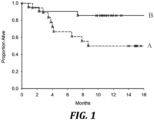
- Figure 1 depicts survival plots for each treatment method. Data points represent the proportion of individuals that remain alive at various time periods measured in months.
- Dendritic cells are a diverse population of antigen presenting cells found in a variety of lymphoid and non-lymphoid tissues. ( See Liu, Cell 106:259-262 (2001 ); Steinman, Ann. Rev. Immunol. 9:271-296 (1991 )). Dendritic cells include lymphoid dendritic cells of the spleen, Langerhans cells of the epidermis, and veiled cells in the blood circulation. Collectively, dendritic cells are classified as a group based on their morphology, high levels of surface MHC-class II expression, and absence of certain other surface markers expressed on T cells, B cells, monocytes, and natural killer cells. In particular, monocyte-derived dendritic cells (also referred to as monocytic dendritic cells) usually express CD11c, CD80, CD86, and are HLA-DR + , but are CD14 - .
- monocytic dendritic cell precursors typically monocytes
- CD14 + monocytic dendritic cell precursors
- Monocytic dendritic cell precursors can be obtained from any tissue where they reside, particularly lymphoid tissues such as the spleen, bone marrow, lymph nodes and thymus. Monocytic dendritic cell precursors also can be isolated from the circulatory system.
- Peripheral blood is a readily accessible source of monocytic dendritic cell precursors.
- Umbilical cord blood is another source of monocytic dendritic cell precursors.
- Monocytic dendritic cell precursors can be isolated from a variety of organisms in which an immune response can be elicited. Such organisms include animals, for example, including humans, and non-human animals, such as, primates, mammals (including dogs, cats, mice, and rats), birds (including chickens), as well as transgenic species thereof.
- the monocytic dendritic cell precursors and/or immature dendritic cells can be isolated from a healthy subject or from a subject in need of immunostimulation, such as, for example, a cancer patient or other subject for whom cellular immunostimulation can be beneficial or desired ( i.e. , a subject having a bacterial or viral infection, or a hyperplastic condition, and the like).
- Dendritic cell precursors and/or immature dendritic cells also can be obtained from an HLA-matched healthy individual for partial activation and administration to an HLA-matched subject in need of immunostimulation.
- dendritic cell precursors such as non-activated dendritic cell precursors, and immature dendritic cells from various sources, including blood and bone marrow
- dendritic cell precursors and immature dendritic cells can be isolated by collecting heparinized blood, by apheresis or leukapheresis, by preparation of buffy coats, rosetting, centrifugation, density gradient centrifugation (e.g ., using Ficoll ® (such as FICOLL-PAQUE ® ), PERCOLL ® (colloidal silica particles (15-30 nm diameter) coated with non-dialyzable polyvinylpyrrolidone (PVP)), sucrose, and the like), differential lysis of cells, filtration, and the like.
- Ficoll ® such as FICOLL-PAQUE ®
- PERCOLL ® colloidal silica particles (15-30 nm diameter) coated with non-dialyzable polyvinylpyrrolidon
- a leukocyte population can be prepared, such as, for example, by collecting blood from a subject, de-fibrinating to remove the platelets and lysing the red blood cells.
- Dendritic cell precursors and immature dendritic cells can optionally be enriched for monocytic dendritic cell precursors by, for example, centrifugation through a PERCOLL ® gradient, antibody panning, and the like.
- enriched means that the monocytic dendritic cell precursors, immature dendritic cells, or partially mature dendritic cells in the cell population comprise at least 25% of the total number of cells in the population, at least 30%, at least 50%, at least 60%, at least 70%, at least 80% or at least even 90% of the total number of cells in the cell population.
- the enriched cells will comprise at least about 50% of the total number of cells in the population.
- the enriched cells will comprise at least about 90% and up to about 100% of the total number of cells in the cell population.
- Another reported method for isolating dendritic cell precursors is to use a commercially treated plastic substrate (e.g., beads or magnetic beads) to selectively remove adherent monocytes and other "non-dendritic cell precursors."
- a commercially treated plastic substrate e.g., beads or magnetic beads
- the adherent monocytes and non-dendritic cell precursors are discarded while the non-adherent cells are retained for ex vivo culture and maturation.
- apheresis cells were cultured in plastic culture bags to which plastic, i.e., polystyrene or styrene, microcarrier beads were added to increase the surface area of the bag.
- a population of leukocytes can be contacted with a monocytic dendritic cell precursor adhering substrate.
- the monocytic dendritic cell precursors in the leukocyte population preferentially adhere to the substrate but are not activated to differentiate or mature.
- Other leukocytes include other potential dendritic cell precursors
- exhibit reduced binding affinity to the substrate thereby allowing the monocytic dendritic cell precursors to be preferentially enriched on the surface of the substrate.
- Suitable substrates include, for example, those having a large surface area to volume ratio.
- the substrate can be, for example, a particulate or fibrous substrate.
- Suitable particulate substrates include, for example, glass particles, plastic particles, glass-coated plastic particles, glass-coated polystyrene particles, and other beads suitable for protein absorption.
- Fibrous substrates suitable for use in the present methods include microcapillary tubes and microvillous membranes, and the like.
- the particulate or fibrous substrate typically allows the adhered monocytic dendritic cell precursors to be eluted without substantially reducing the viability of the adhered cells.
- Adherence of the monocytic dendritic cell precursors to the substrate can optionally be enhanced by the addition of a binding media.
- Suitable binding media include, for example, monocytic dendritic cell precursor culture media (e.g. , AIM-V ® , RPMI 1640, DMEM, XVIVO 15 ® , and the like) supplemented, individually or in any combination, with for example, cytokines (e.g., Granulocyte/Macrophage Colony Stimulating Factor (GM-CSF), or GM-CSF in combination with Interleukin 4 (IL-4), Interleukin 15 (IL-15), or Interleukin 13 (IL-13)), blood plasma, serum (e.g., human serum, such as autologous or allogeneic sera), purified proteins, such as serum albumin, divalent cations (e.g., calcium and/or magnesium ions) and other molecules that aid in the specific adherence of monocytic dendritic cell precursor
- the non-adhering leukocytes are separated from the monocytic dendritic cell precursor/substrate complexes.
- Any suitable means can be used to separate the non-adhering cells from the complexes.
- the mixture of the non-adhering leukocytes and the complexes can be allowed to settle, and the non-adhering leukocytes and media decanted or drained.
- the mixture can be centrifuged, and the supernatant containing the non-adhering leukocytes decanted or drained from the pelleted complexes.
- adherence of the monocytic dendritic cell precursors to the substrate does not induce the monocytic dendritic cell precursors to activate and differentiate or mature into immature dendritic cells, mature dendritic cells or macrophage without additional stimulation.
- non-activated monocytic dendritic cell precursors can be isolated from a cell population enriched in leukocytes prepared by the use of a tangential flow filtration device as described in International Patent Application Publication No., WO 2004/000444, filed June 19, 2003 , now US Patent No. 7,695,627 .
- a tangential flow filtration device useful for the isolation of a cell population enriched in monocytic dendritic cell precursors can comprise a remover unit having a cross-flow chamber, a filtrate chamber and a filter disposed therebetween.
- the filter is in fluid communication on one side, the retentate surface, with the cross-flow chamber, and on the other side, the filtrate surface, with the filtrate chamber.
- the cross-flow chamber has an inlet adapted to introduce a sample of blood constituents comprising leukocytes into the cross-flow chamber and parallel to the retentate surface of the filter.
- An outlet is also provided in the cross-flow chamber centrally disposed in a portion of the chamber opposite the retentate surface of the filter.
- the filter suitable for use in the tangential flow filtration device typically has an average pore size ranging from about 1 to about 10 microns.
- the filter can have an average pore size of about 3 to about 7 microns.
- a means for providing a predetermined input rate of the sample into the inlet of the cross-flow chamber and a means for controlling a filtration rate of filtrate through the filter and into the filtrate chamber can also be included.
- the filtration rate controlling means limits the rate of filtration to less than the unopposed filtration rate for the filter.
- the sample comprising blood constituents can be provided by a source device such as a leukopheresis device or a container comprising a sample collected from a leukopheresis device.
- Monocytic dendritic cell precursors and cell populations enriched for the precursors can be cultured ex vivo or in vitro for differentiation, and partial maturation and/or expansion.
- isolated immature dendritic cells “dendritic cell precursors”, and other “cells” refers to cells that, by human hand, exist apart from their native environment, and are therefore not a product of nature. Isolated cells can exist in purified form, in semipurified form, and/or in a non-native environment.
- in vitro and/or ex vivo dendritic cell differentiation typically involves culturing monocytic dendritic cell precursors, or populations of cells having dendritic cell precursors, in the presence of one or more dendritic cell differentiation agents.
- Suitable differentiating agents include GM-CSF.
- the monocytic dendritic cells precursors are differentiated to form monocyte-derived immature dendritic cells.
- the dendritic cell precursors can be cultured and differentiated in suitable in vitro culture conditions.
- Suitable dendritic cell tissue culture media include, but are not limited to, AIM-V ® , RPMI 1640, DMEM, X-VIVO 15 ® , and the like.
- the tissue culture media can be supplemented with serum, plasma, amino acids, vitamins, cytokines, such as GM-CSF , divalent cations, and the like, to promote differentiation of the cells.
- the dendritic cell precursors can be cultured in serum-free media.
- the culture conditions can optionally exclude any animal-derived products.
- a typical cytokine combination used with dendritic cell culture medium comprises about 500 units/ml of GM-CSF .
- a typical dendritic cell tissue culture medium can be supplemented with GM-CSF without any other cytokine under certain conditions.
- tissue culture medium is also typically supplemented with a high concentration of human or animal protein to prevent adhesion of the non-activated monocytic dendritic cell precursor to the tissue culture substrate thereby activating maturation of the dendritic cell precursor.
- human or animal protein is added at a concentration of greater than 1% and typically is used at a concentration of 10% or less.
- the human or animal protein can be an albumin, such as human serum albumin, serum, plasma, gelatin, a poly-amino acid, and the like.
- Dendritic cell maturation agents include heat-killed BCG and IFN ⁇ .
- the immature DCs are contacted with effective amounts of the dendritic cell maturation agent as claimed for 16 hours.
- the immature dendritic cells can be cultured and, partially matured and optimally activated in suitable maturation culture conditions.
- suitable tissue culture media include, but are not limited to, AIM-V ® , RPMI 1640, DMEM, X-VIVO 15 ® , and the like.
- the tissue culture media can be supplemented with amino acids; vitamins; cytokines, such as GM-CSF alone (See for example, US Patent No. 8,389,278 , or GM-CSF in combination with IL-4, IL-7, IL-13, or IL-15; divalent cations; and the like, to promote the induction of maturation of the cells.
- a typical cytokine can be GM-CSF alone with a high concentration of human or animal protein or GM-CSF when used in combination is used at a concentration of about 500 units/ml to about 1000 units/ml of GM-CSF and 100 ng/ml of IL-4, IL-13, or IL-15 is used.
- Partial maturation and optimal activation of immature dendritic cells can be monitored by methods known in the art for dendritic cells.
- Cell surface markers can be detected in assays familiar to the art, such as flow cytometry, immunohistochemistry, and the like.
- the cells can also be monitored for cytokine production (e.g., by ELISA, another immune assay, or by use of an oligonucleotide array).
- an increased level of phosphorylated JAK2 Rosen activated kinase 2 (janus activated kinase 2) as compared to immature dendritic cells can be measured to indicate the initiation of maturation by methods well known in the art.
- JAK2 janus activated kinase 2
- the induction of the expression of cell surface markers and cytokines, as well as the phosphorylation of signaling molecules, e.g., jak2 is also known as an indicator that dendritic cells are conditioned for the uptake of antigen in vivo and the induction of an immune response once the dendritic cells have been administered to an individual.
- the present method comprises subjecting immature dendritic cells to maturation conditions only for a time period necessary to initiate maturation of the immature dendritic cells and to partially mature and optimally activate the dendritic cells.
- a time period of 16 hours incubation with an effective amount of BCG and an effective amount of IFN ⁇ has been found to partially mature and optimally activate the dendritic cells for use as a composition when combined with a pharmaceutically acceptable carrier for administration to a subject.
- Fully mature DCs lose the ability to take up antigen and display up-regulated expression of co-stimulatory cell surface molecules and various cytokines.
- mature DCs express higher levels of MHC class I and II antigens than immature dendritic cells, and mature dendritic cells are generally identified as being CD80 + , CD83 + , CD86 + , and CD14 - .
- Greater MHC expression leads to an increase in antigen density on the DC surface, while up regulation of co-stimulatory molecules CD80 and CD86 strengthens the T cell activation signal through the counterparts of the co-stimulatory molecules, such as CD28 on the T cells.
- Partially mature and optimally activated dendritic cells as used in the present disclosure typically comprise those dendritic cells that once exposed to a dendritic cell maturation agent demonstrate an up-regulation in the expression of a co-stimulating molecule on the cell surface as compared with immature dendritic cells.
- co-stimulating molecules include, but not limited to, CD80, CD86 and/or CD54.
- the cells can or may not express CD83, but the cells do maintain the ability to uptake and process antigen for presentation on the surface of the dendritic cell.
- partially mature dendritic cells are exposed to antigen subsequent to administration.
- the partially mature and optimally activated dendritic cells can produce one or more of TNF- ⁇ , IL-6, IL-8, IL-10 and/or IL-12 which are not typically produced in significant amounts by immature dendritic cells.
- partially mature and optimally activated dendritic cells contacted for about 16 hours with an effective concentration of both BCG and IFN ⁇ produced 149 ng/1 million dendritic cells in a 24 hour period.
- Immature dendritic cells contacted with the same concentrations of BCG and IFN ⁇ produced only 50 ng/1 million cells in 24 hours.
- Fully mature dendritic cells are not preferred for the present methods and compositions because once they are fully mature the cells no longer efficiently process antigen. Further, immature dendritic cells as used in prior methods which have not been induced to begin maturation are not desired because the immunosuppressive environment typically found within a tumor, or in the tissue surrounding a tumor, include substantial concentrations of cytokines known to prevent the processing of antigen by immature dendritic cells.
- partial maturation and optimal activation of the immature dendritic cells down regulates cytokine receptors on the surface of the cell rendering them less sensitive or responsive to any immunosuppressive effects of cytokines present in the intratumoral space, or surrounding tissue, and provides for cells that can efficiently uptake and process antigens present within the intratumoral space or surrounding tissue.
- the dendritic cells take up and process substantial amounts of tumor antigen from apoptotic and dying tumor cells found within the intratumoral space or in the surrounding tissue.
- the dendritic cells migrate to the lymph nodes where the dendritic cells now presenting antigen will contact T cells, particularly naive T cells, to up regulate the immune response to any tumor antigens presented by the dendritic cells.
- the various DCs of the disclosure can be preserved, e.g ., by cryopreservation as monocytic dendritic cell precursors, immature dendritic cells before maturation, or following partial maturation either in combination with or without a pharmaceutically acceptable carrier.
- Cryopreservation agents which can be used include but are not limited to dimethyl sulfoxide (DMSO), glycerol, polyvinylpyrrolidone, polyethylene glycol, albumin, dextran, sucrose, ethylene glycol, i-erythritol, D-ribitol, D-mannitol, D-sorbitol, inositol, D-lactose, choline chloride, amino acids, methanol, acetamide, glycerol monoacetate, and inorganic salts.
- a controlled slow cooling rate can be critical. Different cryoprotective agents and different cell types typically have different optimal cooling rates.
- the heat of fusion phase where water turns to ice typically should be minimal.
- the cooling procedure can be carried out by use of, e.g., a programmable freezing device or a methanol bath procedure.
- Programmable freezing apparatuses allow determination of optimal cooling rates and facilitate standard reproducible cooling.
- Programmable controlled-rate freezers such as Cryomed ® or Planar ® permit tuning of the freezing regimen to the desired cooling rate curve.
- monocytic precursor cells, immature DCs or partially mature DCs either with or without a pharmaceutically acceptable carrier can be rapidly transferred to a long-term cryogenic storage vessel.
- samples can be cryogenically stored in liquid nitrogen (-196 °C) or its vapor (-165° C).
- Frozen cells are preferably thawed quickly (e.g. , in a water bath maintained at 37 °C -41 °C) and chilled immediately upon thawing. It may be desirable to treat the cells in order to prevent cellular clumping upon thawing. To prevent clumping, various procedures can be used, including but not limited to the addition before and/or after freezing of DNase ( Spitzer et al., Cancer 45: 3075-85 (1980 )), low molecular weight dextran and citrate, hydroxyethyl starch ( Stiff et al., Cryobiology 20: 17-24 (1983 )), and the like.
- DNase Spitzer et al., Cancer 45: 3075-85 (1980 )
- low molecular weight dextran and citrate hydroxyethyl starch
- hydroxyethyl starch Stiff et al., Cryobiology 20: 17-24 (1983 )
- cryoprotective agent if toxic in humans, should be removed prior to therapeutic use of the thawed partially matured DCs.
- One way in which to remove the cryoprotective agent is by dilution to an insignificant concentration.
- frozen monocytic dendritic cell precursors, immature dendritic cells, or partially matured DCs have been thawed and recovered, they can then be used in further methods to produce a formulated pharmaceutical product.
- the formulated partially matured and optimally activated dendritic cells can be administered as described herein with respect to nonfrozen partially matured and optimally activated DCs.
- the partially mature and optimally activated dendritic cells may be administered to a subject having for example, a cancer or a tumor.
- the partially mature and optimally activated dendritic cells can be formulated with physiologically acceptable carriers, excipients, buffers and/or diluents using methods and compositions well known to the skilled artisan.
- the partially mature and optimally activated dendritic cells can be administered directly to a subject in need of immunostimulation. Typically, about 10 2 to about 10 10 cells are suspended in a pharmaceutically acceptable carrier. The cells are injected either into the tumor directly or into a region near to, adjacent to, or in circulatory or lymphatic contact with the tumor or tumor bed to ensure that the cells have access to the cancer or tumor antigen.
- the cells can be administered directly into a tumor, into the tumor bed subsequent to surgical removal or resection of the tumor, into a peritumoral space, into a draining lymph node in direct contact with the tumor, into a blood vessel or lymph duct leading into, or feeding a tumor or organ afflicted by the tumor, e.g., the portal vein or a pulmonary vein or artery, and the like.
- the administration of the partially mature and optimally activated dendritic cells of the disclosure can be either simultaneous with or subsequent to other treatments for the tumor, such as chemotherapy or radiation therapy.
- the partially mature dendritic cells of the disclosure can be co-administered with another agent, which agent acts as an adjuvant to the maturation of the dendritic cell and/or the processing of antigen within the tumor or region near or adjacent to the tumor.
- the dendritic cells can also be formulated or compounded into a slow release matrix for implantation into a region in or around the tumor or tumor bed such that cells are slowly released into the tumor, or tumor bed, for contact with the tumor antigens.
- a tumor as used in the present disclosure includes solid tumors, such as, for example and not limitation, a sarcoma; a pancreatic tumor; a colorectal tumor; a melanoma; a lung tumor; a breast tumor; an ovarian tumor; a head or neck tumor; a stomach tumor; a prostate tumor; an esophageal tumor; a cervical or vaginal tumor; a brain tumor, such as, for example, a glioblastoma, an astrocytoma, a meningioma, or a medulloblastoma; and the like. Additional solid tumors are also subject to treatment using a composition or method disclosed herein.
- Partially mature and optimally activated dendritic cells of the present disclosure can be administered by any means appropriate for the formulation and mode of administration.
- the cells can be combined with a pharmaceutically acceptable carrier and administered with a syringe, a catheter, a cannula, and the like.
- the cells can be formulated in a slow release matrix.
- the formulation can be administered by a means appropriate for the matrix used.
- Other methods and modes of administration applicable to the present description are well known to the skilled artisan.
- compositions of the present description can be used by themselves in the treatment of an individual.
- the compositions can be used in combination with any other method to treat a cancer or a tumor.
- the methods of the present description can be used in combination with surgical resection of a tumor, chemotherapy (cytotoxic drugs, apoptotic agents, antibodies, and the like), radiation therapy, cryotherapy, brachytherapy, immune therapy (administration of antigen specific mature activated dendritic cells, NK cells, antibodies specific for a cancer cell or a tumor antigen, etc.) , and the like. Any and all of these methods can also be used in any combination.
- Combination treatments can be concurrent or sequential and can be administered in any order as determined by the treating physician.
- the dendritic cells and the recipient subject have the same MHC (HLA) haplotype.
- HLA MHC
- Methods of determining the HLA haplotype of a subject are known in the art.
- the partially mature dendritic cells are allogeneic to the recipient subject.
- the allogeneic cells are typically matched for at least one MHC allele (e.g., sharing at least one but not all MHC alleles).
- the dendritic cells and the recipient subject are all allogeneic with respect to each other, but all have at least one MHC allele in common.
- An anti-tumor immune response can be measured by any one or more well-known method.
- an anti-tumor response can be measured by a reduction in the size of a tumor, the induction of tumor cell death or tumor cell necrosis, a reduction in tumor cell proliferation, or by the infiltration of tumor antigen specific T cells (TILs), and the like.
- TILs tumor antigen specific T cells
- immature dendritic cells obtained from a blood sample isolated from a patient with cancer, for example, and not limitation, a tumor that is a solid tissue tumor, such as a sarcoma, a pancreatic tumor, a colorectal tumor, a melanoma, a breast tumor; a lung tumor; and an ovarian tumor, and the like, and immature dendritic cells were cultured in dendritic cell culture media supplemented with GM-CSF alone were induced to mature with inactivated BCG and IFN ⁇ for either 16 or 20 hours prior to being collected and prepared for administration to a patient. It was found that dendritic cells that were partially matured and activated for about 16 hours induced a substantially better clinical response in a patient than the dendritic cells contacted with BCG and IFN ⁇ for about 20 hours.
- a tumor that is a solid tissue tumor such as a sarcoma, a pancreatic tumor, a colorectal tumor, a mela
- the leukopheresis product was processed for the isolation and purification of monocytes by Tangential Flow Filtration (TFF).
- TFF Tangential Flow Filtration
- the leukopheresis sample typically a blood bag, was connected to the TFF apparatus and the sample was processed and an enriched monocytic dendritic cell precursor product suspended in culture medium (Phenol red free RPMI-1640) was obtained in a tissue culture bag.
- the tissue culture bag was agitated and the contents were drained into 250 ml conical centrifuge tubes. Cold dPBS was added to the bag and any remaining adherent cells were dislodged by manual massaging of the bag. This wash was pooled with the initial cell suspension and the cells were pelleted by centrifugation at 550 ⁇ g.
- the activated dendritic cells were resuspended in a small volume of RPMI-1640, 40% human serum albumin and 10% DMSO.
- the activated dendritic cells were frozen in aliquots of 3 ⁇ 10 6 , 8 ⁇ 10 6 , 17 ⁇ 10 6 viable dendritic cells/vial in 1.0 ml/vial.
- Injection volume per batch was adjusted to, if necessary to deliver a total of 2, 6 or 15 million viable dendritic cells per injection.
- a vial was removed from vapor phase liquid nitrogen storage and placed at 20 °C to 25 °C for 5 to 10 minutes. This is sufficient time for complete thawing of the contents.
- the vial was opened and 1 ml of product was aseptically removed using a syringe. Air was drawn into the syringe to ensure that the needle was empty and then the needle removed. The appropriate injecting needle was then attached to the syringe. The product was pushed back into the injection needle.
- the tumor was then accessed under real time ultrasound or intermittent guidance (MRI or CT, or using a multimodal combination.
- the first injection of the predetermined volume e.g., 0.2 ml each injection was injected within the tumor if four injections were used.
- the first immunization was given approximately 3 to 4 weeks after leukopheresis.
- the first three injections were given 1 week apart (i.e., Day 0, Week 1, Week 2), then at weeks 8, 16 and 32, or as long as product was available and for as long as an injectable tumor mass was present at the same site. If there was insufficient tumor mass at the original injection site, a tumor mass at a different location was used.
- Patients were either provided dendritic cells that had been activated for 16 hours (Method B) or for 20 hours (Method A).
- a single tumor was injected at each visit and patients were monitored for tumor growth, survival, tumor cell death (necrosis) and infiltration of immune cells. The proportion of individuals alive at each time point is provided in the figure.
- Tumor growth was measured using standard imaging techniques (either CT or MRI). Table 1. Measure of Tumor Growth Overall Method A Method B SD 1 Week 8 20 4 16 1) SD: Stable Disease Numbers of patients do not add up to 40 because of missing data. Disease stabilization is a good outcome in this population. Table 2. Measure of Survival Overall Method A Method B Alive 24 5 19 Stage 4 cancer is a life threatening condition, and survival is an important endpoint. Table 3. Number of Patients demonstrating tumor necrosis Overall Method A Method B 16 patients 4 patients 12 patients Tumor necrosis was assessed on tumor biopsies, using standard hematoxylin/eosin staining.
- Method B a 16 hour treatment is optimal for the activation of partially mature DCs for intratumoral injection in cancer immunotherapy.
Landscapes
- Health & Medical Sciences (AREA)
- Life Sciences & Earth Sciences (AREA)
- Engineering & Computer Science (AREA)
- General Health & Medical Sciences (AREA)
- Immunology (AREA)
- Biomedical Technology (AREA)
- Chemical & Material Sciences (AREA)
- Organic Chemistry (AREA)
- Veterinary Medicine (AREA)
- Animal Behavior & Ethology (AREA)
- Public Health (AREA)
- Zoology (AREA)
- Biotechnology (AREA)
- Bioinformatics & Cheminformatics (AREA)
- Genetics & Genomics (AREA)
- Wood Science & Technology (AREA)
- Epidemiology (AREA)
- Hematology (AREA)
- Cell Biology (AREA)
- Microbiology (AREA)
- Biochemistry (AREA)
- General Engineering & Computer Science (AREA)
- Pharmacology & Pharmacy (AREA)
- Medicinal Chemistry (AREA)
- Nuclear Medicine, Radiotherapy & Molecular Imaging (AREA)
- General Chemical & Material Sciences (AREA)
- Chemical Kinetics & Catalysis (AREA)
- Virology (AREA)
- Developmental Biology & Embryology (AREA)
- Mycology (AREA)
- Micro-Organisms Or Cultivation Processes Thereof (AREA)
- Medicines Containing Material From Animals Or Micro-Organisms (AREA)
- Oncology (AREA)
- Medicines That Contain Protein Lipid Enzymes And Other Medicines (AREA)
- Preparation Of Compounds By Using Micro-Organisms (AREA)
- Peptides Or Proteins (AREA)
Priority Applications (1)
| Application Number | Priority Date | Filing Date | Title |
|---|---|---|---|
| EP25161616.5A EP4574159A3 (en) | 2015-06-30 | 2016-06-29 | Optimally activated dendritic cells that induce an improved or increased anti-tumor immune response |
Applications Claiming Priority (2)
| Application Number | Priority Date | Filing Date | Title |
|---|---|---|---|
| US201562187086P | 2015-06-30 | 2015-06-30 | |
| PCT/US2016/040134 WO2017004230A1 (en) | 2015-06-30 | 2016-06-29 | Optimally activated dendritic cells that induce an improved or increased anti-tumor immune response |
Related Child Applications (1)
| Application Number | Title | Priority Date | Filing Date |
|---|---|---|---|
| EP25161616.5A Division EP4574159A3 (en) | 2015-06-30 | 2016-06-29 | Optimally activated dendritic cells that induce an improved or increased anti-tumor immune response |
Publications (3)
| Publication Number | Publication Date |
|---|---|
| EP3317403A1 EP3317403A1 (en) | 2018-05-09 |
| EP3317403A4 EP3317403A4 (en) | 2019-07-03 |
| EP3317403B1 true EP3317403B1 (en) | 2025-03-05 |
Family
ID=57609106
Family Applications (2)
| Application Number | Title | Priority Date | Filing Date |
|---|---|---|---|
| EP16818706.0A Active EP3317403B1 (en) | 2015-06-30 | 2016-06-29 | Optimally activated dendritic cells that induce an improved or increased anti-tumor immune response |
| EP25161616.5A Pending EP4574159A3 (en) | 2015-06-30 | 2016-06-29 | Optimally activated dendritic cells that induce an improved or increased anti-tumor immune response |
Family Applications After (1)
| Application Number | Title | Priority Date | Filing Date |
|---|---|---|---|
| EP25161616.5A Pending EP4574159A3 (en) | 2015-06-30 | 2016-06-29 | Optimally activated dendritic cells that induce an improved or increased anti-tumor immune response |
Country Status (14)
| Country | Link |
|---|---|
| US (2) | US11124768B2 (enExample) |
| EP (2) | EP3317403B1 (enExample) |
| JP (3) | JP6985939B2 (enExample) |
| KR (1) | KR102763373B1 (enExample) |
| CN (2) | CN114774356A (enExample) |
| AR (1) | AR106496A1 (enExample) |
| AU (2) | AU2016286112B2 (enExample) |
| CA (1) | CA2990640A1 (enExample) |
| ES (1) | ES3032055T3 (enExample) |
| IL (2) | IL312668A (enExample) |
| MX (2) | MX2018000056A (enExample) |
| PL (1) | PL424035A1 (enExample) |
| RU (1) | RU2018103235A (enExample) |
| WO (1) | WO2017004230A1 (enExample) |
Families Citing this family (4)
| Publication number | Priority date | Publication date | Assignee | Title |
|---|---|---|---|---|
| WO2018160666A1 (en) * | 2017-02-28 | 2018-09-07 | University Of Pittsburgh-Of The Commonwealth System Of Higher Education | Short-term activated dc1s and methods for their production and use |
| CA3157004A1 (en) * | 2019-10-07 | 2021-04-15 | Northwest Biotherapeutics, Inc. | In vitro methods and compositions for enhancing the activation of dendritic cells and t cells, and for inducing a th-1 immune response |
| CN117417886B (zh) * | 2023-10-20 | 2024-05-14 | 广东壹加再生医学研究院有限公司 | 一种负载肿瘤抗原的树突状细胞激活的t淋巴细胞的培养方法 |
| CN119286782B (zh) * | 2024-12-11 | 2025-04-04 | 上海赛笠百傲生物医药有限公司 | 一种高效诱导外周血来源单核细胞至不成熟树突状细胞的方法 |
Family Cites Families (15)
| Publication number | Priority date | Publication date | Assignee | Title |
|---|---|---|---|---|
| DK0633929T3 (da) | 1992-04-01 | 2004-06-28 | Univ Rockefeller | Fremgangsmåde til in vitro proliferation af dendritcelleforstadier og deres anvendelse til at producere immunogener |
| US6080409A (en) * | 1995-12-28 | 2000-06-27 | Dendreon Corporation | Immunostimulatory method |
| US7659119B2 (en) | 1996-02-12 | 2010-02-09 | Argos Therapeutics, Inc. | Method and compositions for obtaining mature dendritic cells |
| US6558951B1 (en) | 1999-02-11 | 2003-05-06 | 3M Innovative Properties Company | Maturation of dendritic cells with immune response modifying compounds |
| US20020094545A1 (en) | 2000-11-30 | 2002-07-18 | Harris Paul E. | Growth of human dendritic cells for cancer immunotherapy in closed system using microcarrier beads |
| WO2003010292A2 (en) | 2001-07-25 | 2003-02-06 | Northwest Biotherapeutics, Inc. | Methods and apparatus for enrichment and culture of monocytic dendritic cell precursors |
| EP2322603B1 (en) * | 2001-09-06 | 2019-10-16 | NorthWest Biotherapeutics, Inc. | Compositions and methods for priming monocytic dendritic cells and T cells for Th1 response |
| HUE031517T2 (en) | 2002-06-19 | 2017-07-28 | Northwest Biotherapeutics Inc | Cross-flow filtration equipment and procedures for leukocyte enrichment |
| WO2004053072A2 (en) * | 2002-12-06 | 2004-06-24 | Northwest Biotherapeutics, Inc. | Administration of dendritic cells partially matured in vitro for the treatment of tumors |
| DK1604016T3 (da) * | 2003-02-27 | 2009-05-18 | Northwest Biotherapeutics Inc | In vitro-fremgangsmåde til differentiering af monocytiske dendritiske precursorceller i umodne dendritiske celler |
| KR100887560B1 (ko) | 2007-04-24 | 2009-03-09 | 크레아젠 주식회사 | 준성숙 수지상 세포를 포함하는 류마티스 관절염 치료용약제학적 조성물 |
| EP3375868A1 (en) * | 2007-11-08 | 2018-09-19 | Dana Farber Cancer Institute, Inc. | Stimulation of anti-tumor immunity using dendritic cell/tumor cell fusions and anti-cd3/cd28 |
| EP2072617A1 (en) | 2007-12-12 | 2009-06-24 | Trimed Biotech GmbH | Method for producing dendritic cells |
| ES2686708T3 (es) | 2008-04-18 | 2018-10-19 | Baxter International Inc. | Composición basada en microesferas para prevenir y/o revertir la diabetes autoinmune de nueva aparición |
| US10238723B2 (en) * | 2013-03-14 | 2019-03-26 | Icahn School Of Medicine At Mount Sinai | Autologous tumor lysate-loaded dendritic cell vaccine for treatment of liver cancer |
-
2016
- 2016-06-29 CN CN202210272735.4A patent/CN114774356A/zh active Pending
- 2016-06-29 KR KR1020187002974A patent/KR102763373B1/ko active Active
- 2016-06-29 WO PCT/US2016/040134 patent/WO2017004230A1/en not_active Ceased
- 2016-06-29 EP EP16818706.0A patent/EP3317403B1/en active Active
- 2016-06-29 US US15/740,094 patent/US11124768B2/en active Active
- 2016-06-29 AU AU2016286112A patent/AU2016286112B2/en active Active
- 2016-06-29 JP JP2017567686A patent/JP6985939B2/ja active Active
- 2016-06-29 CA CA2990640A patent/CA2990640A1/en active Pending
- 2016-06-29 IL IL312668A patent/IL312668A/en unknown
- 2016-06-29 MX MX2018000056A patent/MX2018000056A/es unknown
- 2016-06-29 IL IL256522A patent/IL256522B2/en unknown
- 2016-06-29 PL PL424035A patent/PL424035A1/pl unknown
- 2016-06-29 CN CN201680038886.6A patent/CN107849537A/zh active Pending
- 2016-06-29 EP EP25161616.5A patent/EP4574159A3/en active Pending
- 2016-06-29 RU RU2018103235A patent/RU2018103235A/ru not_active Application Discontinuation
- 2016-06-29 ES ES16818706T patent/ES3032055T3/es active Active
- 2016-06-30 AR ARP160101986A patent/AR106496A1/es unknown
-
2018
- 2018-01-08 MX MX2023001622A patent/MX2023001622A/es unknown
-
2021
- 2021-09-17 US US17/477,949 patent/US20220145246A1/en active Pending
- 2021-11-26 JP JP2021191885A patent/JP2022023248A/ja not_active Withdrawn
-
2023
- 2023-05-12 AU AU2023202977A patent/AU2023202977A1/en active Pending
-
2024
- 2024-06-03 JP JP2024089927A patent/JP2024101059A/ja active Pending
Also Published As
Similar Documents
| Publication | Publication Date | Title |
|---|---|---|
| EP1567155B1 (en) | Administration of dendritic cells partially matured in vitro for the treatment of tumors | |
| US20220145246A1 (en) | Optimally activated dendritic cells that induce an improved or increased anti-tumor immune response | |
| JP2006510667A5 (enExample) | ||
| US20190046568A1 (en) | Methods relating to activated dendritic cell compositions and immunotherapeutic treatments for subjects with advanced cancers | |
| HK40077476A (en) | Optimally activated dendritic cells that induce an improved or increased anti-tumor immune response | |
| AU2018260971B2 (en) | Administration of dendritic cells partially matured in vitro for the treatment of tumors | |
| HK1255084B (en) | Optimally activated dendritic cells that induce an improved or increased anti-tumor immune response | |
| HK40072988A (en) | Activated dendritic cell compositions and immunotherapeutic treatments for subjects with advanced cancers | |
| AU2013234394B2 (en) | Administration of dendritic cells partially matured in vitro for the treatment of tumors | |
| BR112017028602B1 (pt) | Método para produzir células dendríticas humanas isoladas parcialmente maduras e ativadas, e uso de uma composição farmacêutica compreendendo células dendríticas humanas parcialmente maduras e ativadas | |
| HK1082180B (en) | Administration of dendritic cells partially matured in vitro for the treatment of tumors | |
| HK1151249A (en) | Administration of dendritic cells partially matured in vitro for the treatment of tumors |
Legal Events
| Date | Code | Title | Description |
|---|---|---|---|
| STAA | Information on the status of an ep patent application or granted ep patent |
Free format text: STATUS: THE INTERNATIONAL PUBLICATION HAS BEEN MADE |
|
| PUAI | Public reference made under article 153(3) epc to a published international application that has entered the european phase |
Free format text: ORIGINAL CODE: 0009012 |
|
| STAA | Information on the status of an ep patent application or granted ep patent |
Free format text: STATUS: REQUEST FOR EXAMINATION WAS MADE |
|
| 17P | Request for examination filed |
Effective date: 20180130 |
|
| AK | Designated contracting states |
Kind code of ref document: A1 Designated state(s): AL AT BE BG CH CY CZ DE DK EE ES FI FR GB GR HR HU IE IS IT LI LT LU LV MC MK MT NL NO PL PT RO RS SE SI SK SM TR |
|
| AX | Request for extension of the european patent |
Extension state: BA ME |
|
| DAV | Request for validation of the european patent (deleted) | ||
| DAX | Request for extension of the european patent (deleted) | ||
| A4 | Supplementary search report drawn up and despatched |
Effective date: 20190603 |
|
| RIC1 | Information provided on ipc code assigned before grant |
Ipc: A61K 35/14 20150101ALI20190527BHEP Ipc: C12N 5/24 20060101ALI20190527BHEP Ipc: C12N 5/0784 20100101AFI20190527BHEP Ipc: A61P 35/00 20060101ALI20190527BHEP Ipc: A61K 39/00 20060101ALI20190527BHEP |
|
| REG | Reference to a national code |
Ref country code: HK Ref legal event code: DE Ref document number: 1255084 Country of ref document: HK |
|
| STAA | Information on the status of an ep patent application or granted ep patent |
Free format text: STATUS: EXAMINATION IS IN PROGRESS |
|
| 17Q | First examination report despatched |
Effective date: 20200416 |
|
| GRAP | Despatch of communication of intention to grant a patent |
Free format text: ORIGINAL CODE: EPIDOSNIGR1 |
|
| STAA | Information on the status of an ep patent application or granted ep patent |
Free format text: STATUS: GRANT OF PATENT IS INTENDED |
|
| INTG | Intention to grant announced |
Effective date: 20240926 |
|
| GRAS | Grant fee paid |
Free format text: ORIGINAL CODE: EPIDOSNIGR3 |
|
| GRAA | (expected) grant |
Free format text: ORIGINAL CODE: 0009210 |
|
| STAA | Information on the status of an ep patent application or granted ep patent |
Free format text: STATUS: THE PATENT HAS BEEN GRANTED |
|
| AK | Designated contracting states |
Kind code of ref document: B1 Designated state(s): AL AT BE BG CH CY CZ DE DK EE ES FI FR GB GR HR HU IE IS IT LI LT LU LV MC MK MT NL NO PL PT RO RS SE SI SK SM TR |
|
| REG | Reference to a national code |
Ref country code: GB Ref legal event code: FG4D |
|
| REG | Reference to a national code |
Ref country code: CH Ref legal event code: EP |
|
| REG | Reference to a national code |
Ref country code: DE Ref legal event code: R096 Ref document number: 602016091461 Country of ref document: DE |
|
| REG | Reference to a national code |
Ref country code: IE Ref legal event code: FG4D |
|
| P01 | Opt-out of the competence of the unified patent court (upc) registered |
Free format text: CASE NUMBER: APP_16631/2025 Effective date: 20250405 |
|
| PG25 | Lapsed in a contracting state [announced via postgrant information from national office to epo] |
Ref country code: RS Free format text: LAPSE BECAUSE OF FAILURE TO SUBMIT A TRANSLATION OF THE DESCRIPTION OR TO PAY THE FEE WITHIN THE PRESCRIBED TIME-LIMIT Effective date: 20250605 |
|
| PG25 | Lapsed in a contracting state [announced via postgrant information from national office to epo] |
Ref country code: FI Free format text: LAPSE BECAUSE OF FAILURE TO SUBMIT A TRANSLATION OF THE DESCRIPTION OR TO PAY THE FEE WITHIN THE PRESCRIBED TIME-LIMIT Effective date: 20250305 |
|
| REG | Reference to a national code |
Ref country code: NL Ref legal event code: MP Effective date: 20250305 |
|
| REG | Reference to a national code |
Ref country code: LT Ref legal event code: MG9D |
|
| PG25 | Lapsed in a contracting state [announced via postgrant information from national office to epo] |
Ref country code: NO Free format text: LAPSE BECAUSE OF FAILURE TO SUBMIT A TRANSLATION OF THE DESCRIPTION OR TO PAY THE FEE WITHIN THE PRESCRIBED TIME-LIMIT Effective date: 20250605 |
|
| REG | Reference to a national code |
Ref country code: ES Ref legal event code: FG2A Ref document number: 3032055 Country of ref document: ES Kind code of ref document: T3 Effective date: 20250715 |
|
| PG25 | Lapsed in a contracting state [announced via postgrant information from national office to epo] |
Ref country code: HR Free format text: LAPSE BECAUSE OF FAILURE TO SUBMIT A TRANSLATION OF THE DESCRIPTION OR TO PAY THE FEE WITHIN THE PRESCRIBED TIME-LIMIT Effective date: 20250305 |
|
| PG25 | Lapsed in a contracting state [announced via postgrant information from national office to epo] |
Ref country code: LV Free format text: LAPSE BECAUSE OF FAILURE TO SUBMIT A TRANSLATION OF THE DESCRIPTION OR TO PAY THE FEE WITHIN THE PRESCRIBED TIME-LIMIT Effective date: 20250305 |
|
| PG25 | Lapsed in a contracting state [announced via postgrant information from national office to epo] |
Ref country code: GR Free format text: LAPSE BECAUSE OF FAILURE TO SUBMIT A TRANSLATION OF THE DESCRIPTION OR TO PAY THE FEE WITHIN THE PRESCRIBED TIME-LIMIT Effective date: 20250606 Ref country code: BG Free format text: LAPSE BECAUSE OF FAILURE TO SUBMIT A TRANSLATION OF THE DESCRIPTION OR TO PAY THE FEE WITHIN THE PRESCRIBED TIME-LIMIT Effective date: 20250305 |
|
| REG | Reference to a national code |
Ref country code: AT Ref legal event code: MK05 Ref document number: 1772972 Country of ref document: AT Kind code of ref document: T Effective date: 20250305 |
|
| PG25 | Lapsed in a contracting state [announced via postgrant information from national office to epo] |
Ref country code: NL Free format text: LAPSE BECAUSE OF FAILURE TO SUBMIT A TRANSLATION OF THE DESCRIPTION OR TO PAY THE FEE WITHIN THE PRESCRIBED TIME-LIMIT Effective date: 20250305 |
|
| PG25 | Lapsed in a contracting state [announced via postgrant information from national office to epo] |
Ref country code: SE Free format text: LAPSE BECAUSE OF FAILURE TO SUBMIT A TRANSLATION OF THE DESCRIPTION OR TO PAY THE FEE WITHIN THE PRESCRIBED TIME-LIMIT Effective date: 20250305 |
|
| PG25 | Lapsed in a contracting state [announced via postgrant information from national office to epo] |
Ref country code: SM Free format text: LAPSE BECAUSE OF FAILURE TO SUBMIT A TRANSLATION OF THE DESCRIPTION OR TO PAY THE FEE WITHIN THE PRESCRIBED TIME-LIMIT Effective date: 20250305 |
|
| PG25 | Lapsed in a contracting state [announced via postgrant information from national office to epo] |
Ref country code: PT Free format text: LAPSE BECAUSE OF FAILURE TO SUBMIT A TRANSLATION OF THE DESCRIPTION OR TO PAY THE FEE WITHIN THE PRESCRIBED TIME-LIMIT Effective date: 20250707 |
|
| PG25 | Lapsed in a contracting state [announced via postgrant information from national office to epo] |
Ref country code: PL Free format text: LAPSE BECAUSE OF FAILURE TO SUBMIT A TRANSLATION OF THE DESCRIPTION OR TO PAY THE FEE WITHIN THE PRESCRIBED TIME-LIMIT Effective date: 20250305 |
|
| PG25 | Lapsed in a contracting state [announced via postgrant information from national office to epo] |
Ref country code: AT Free format text: LAPSE BECAUSE OF FAILURE TO SUBMIT A TRANSLATION OF THE DESCRIPTION OR TO PAY THE FEE WITHIN THE PRESCRIBED TIME-LIMIT Effective date: 20250305 |
|
| PG25 | Lapsed in a contracting state [announced via postgrant information from national office to epo] |
Ref country code: EE Free format text: LAPSE BECAUSE OF FAILURE TO SUBMIT A TRANSLATION OF THE DESCRIPTION OR TO PAY THE FEE WITHIN THE PRESCRIBED TIME-LIMIT Effective date: 20250305 Ref country code: CZ Free format text: LAPSE BECAUSE OF FAILURE TO SUBMIT A TRANSLATION OF THE DESCRIPTION OR TO PAY THE FEE WITHIN THE PRESCRIBED TIME-LIMIT Effective date: 20250305 |
|
| PG25 | Lapsed in a contracting state [announced via postgrant information from national office to epo] |
Ref country code: RO Free format text: LAPSE BECAUSE OF FAILURE TO SUBMIT A TRANSLATION OF THE DESCRIPTION OR TO PAY THE FEE WITHIN THE PRESCRIBED TIME-LIMIT Effective date: 20250305 |
|
| PG25 | Lapsed in a contracting state [announced via postgrant information from national office to epo] |
Ref country code: SK Free format text: LAPSE BECAUSE OF FAILURE TO SUBMIT A TRANSLATION OF THE DESCRIPTION OR TO PAY THE FEE WITHIN THE PRESCRIBED TIME-LIMIT Effective date: 20250305 |
|
| PG25 | Lapsed in a contracting state [announced via postgrant information from national office to epo] |
Ref country code: IS Free format text: LAPSE BECAUSE OF FAILURE TO SUBMIT A TRANSLATION OF THE DESCRIPTION OR TO PAY THE FEE WITHIN THE PRESCRIBED TIME-LIMIT Effective date: 20250705 |