EP3316331B1 - Display substrate, method for manufacturing the same and electronic apparatus - Google Patents
Display substrate, method for manufacturing the same and electronic apparatus Download PDFInfo
- Publication number
- EP3316331B1 EP3316331B1 EP17198792.8A EP17198792A EP3316331B1 EP 3316331 B1 EP3316331 B1 EP 3316331B1 EP 17198792 A EP17198792 A EP 17198792A EP 3316331 B1 EP3316331 B1 EP 3316331B1
- Authority
- EP
- European Patent Office
- Prior art keywords
- layer
- light emitting
- organic light
- away
- touch electrode
- Prior art date
- Legal status (The legal status is an assumption and is not a legal conclusion. Google has not performed a legal analysis and makes no representation as to the accuracy of the status listed.)
- Active
Links
Images

Classifications
-
- H—ELECTRICITY
- H10—SEMICONDUCTOR DEVICES; ELECTRIC SOLID-STATE DEVICES NOT OTHERWISE PROVIDED FOR
- H10K—ORGANIC ELECTRIC SOLID-STATE DEVICES
- H10K59/00—Integrated devices, or assemblies of multiple devices, comprising at least one organic light-emitting element covered by group H10K50/00
-
- G—PHYSICS
- G06—COMPUTING OR CALCULATING; COUNTING
- G06F—ELECTRIC DIGITAL DATA PROCESSING
- G06F3/00—Input arrangements for transferring data to be processed into a form capable of being handled by the computer; Output arrangements for transferring data from processing unit to output unit, e.g. interface arrangements
- G06F3/01—Input arrangements or combined input and output arrangements for interaction between user and computer
- G06F3/03—Arrangements for converting the position or the displacement of a member into a coded form
- G06F3/041—Digitisers, e.g. for touch screens or touch pads, characterised by the transducing means
- G06F3/044—Digitisers, e.g. for touch screens or touch pads, characterised by the transducing means by capacitive means
- G06F3/0443—Digitisers, e.g. for touch screens or touch pads, characterised by the transducing means by capacitive means using a single layer of sensing electrodes
-
- G—PHYSICS
- G06—COMPUTING OR CALCULATING; COUNTING
- G06F—ELECTRIC DIGITAL DATA PROCESSING
- G06F3/00—Input arrangements for transferring data to be processed into a form capable of being handled by the computer; Output arrangements for transferring data from processing unit to output unit, e.g. interface arrangements
- G06F3/01—Input arrangements or combined input and output arrangements for interaction between user and computer
- G06F3/03—Arrangements for converting the position or the displacement of a member into a coded form
- G06F3/041—Digitisers, e.g. for touch screens or touch pads, characterised by the transducing means
- G06F3/0412—Digitisers structurally integrated in a display
-
- G—PHYSICS
- G06—COMPUTING OR CALCULATING; COUNTING
- G06F—ELECTRIC DIGITAL DATA PROCESSING
- G06F3/00—Input arrangements for transferring data to be processed into a form capable of being handled by the computer; Output arrangements for transferring data from processing unit to output unit, e.g. interface arrangements
- G06F3/01—Input arrangements or combined input and output arrangements for interaction between user and computer
- G06F3/03—Arrangements for converting the position or the displacement of a member into a coded form
- G06F3/041—Digitisers, e.g. for touch screens or touch pads, characterised by the transducing means
- G06F3/044—Digitisers, e.g. for touch screens or touch pads, characterised by the transducing means by capacitive means
-
- G—PHYSICS
- G06—COMPUTING OR CALCULATING; COUNTING
- G06F—ELECTRIC DIGITAL DATA PROCESSING
- G06F3/00—Input arrangements for transferring data to be processed into a form capable of being handled by the computer; Output arrangements for transferring data from processing unit to output unit, e.g. interface arrangements
- G06F3/01—Input arrangements or combined input and output arrangements for interaction between user and computer
- G06F3/03—Arrangements for converting the position or the displacement of a member into a coded form
- G06F3/041—Digitisers, e.g. for touch screens or touch pads, characterised by the transducing means
- G06F3/044—Digitisers, e.g. for touch screens or touch pads, characterised by the transducing means by capacitive means
- G06F3/0445—Digitisers, e.g. for touch screens or touch pads, characterised by the transducing means by capacitive means using two or more layers of sensing electrodes, e.g. using two layers of electrodes separated by a dielectric layer
-
- H—ELECTRICITY
- H10—SEMICONDUCTOR DEVICES; ELECTRIC SOLID-STATE DEVICES NOT OTHERWISE PROVIDED FOR
- H10D—INORGANIC ELECTRIC SEMICONDUCTOR DEVICES
- H10D30/00—Field-effect transistors [FET]
- H10D30/60—Insulated-gate field-effect transistors [IGFET]
- H10D30/67—Thin-film transistors [TFT]
-
- H—ELECTRICITY
- H10—SEMICONDUCTOR DEVICES; ELECTRIC SOLID-STATE DEVICES NOT OTHERWISE PROVIDED FOR
- H10K—ORGANIC ELECTRIC SOLID-STATE DEVICES
- H10K39/00—Integrated devices, or assemblies of multiple devices, comprising at least one organic radiation-sensitive element covered by group H10K30/00
- H10K39/30—Devices controlled by radiation
- H10K39/32—Organic image sensors
-
- H—ELECTRICITY
- H10—SEMICONDUCTOR DEVICES; ELECTRIC SOLID-STATE DEVICES NOT OTHERWISE PROVIDED FOR
- H10K—ORGANIC ELECTRIC SOLID-STATE DEVICES
- H10K50/00—Organic light-emitting devices
- H10K50/10—OLEDs or polymer light-emitting diodes [PLED]
- H10K50/14—Carrier transporting layers
- H10K50/15—Hole transporting layers
- H10K50/157—Hole transporting layers between the light-emitting layer and the cathode
-
- H—ELECTRICITY
- H10—SEMICONDUCTOR DEVICES; ELECTRIC SOLID-STATE DEVICES NOT OTHERWISE PROVIDED FOR
- H10K—ORGANIC ELECTRIC SOLID-STATE DEVICES
- H10K50/00—Organic light-emitting devices
- H10K50/10—OLEDs or polymer light-emitting diodes [PLED]
- H10K50/14—Carrier transporting layers
- H10K50/16—Electron transporting layers
- H10K50/166—Electron transporting layers comprising a multilayered structure
-
- H—ELECTRICITY
- H10—SEMICONDUCTOR DEVICES; ELECTRIC SOLID-STATE DEVICES NOT OTHERWISE PROVIDED FOR
- H10K—ORGANIC ELECTRIC SOLID-STATE DEVICES
- H10K50/00—Organic light-emitting devices
- H10K50/10—OLEDs or polymer light-emitting diodes [PLED]
- H10K50/14—Carrier transporting layers
- H10K50/16—Electron transporting layers
- H10K50/167—Electron transporting layers between the light-emitting layer and the anode
-
- H—ELECTRICITY
- H10—SEMICONDUCTOR DEVICES; ELECTRIC SOLID-STATE DEVICES NOT OTHERWISE PROVIDED FOR
- H10K—ORGANIC ELECTRIC SOLID-STATE DEVICES
- H10K50/00—Organic light-emitting devices
- H10K50/80—Constructional details
- H10K50/805—Electrodes
-
- H—ELECTRICITY
- H10—SEMICONDUCTOR DEVICES; ELECTRIC SOLID-STATE DEVICES NOT OTHERWISE PROVIDED FOR
- H10K—ORGANIC ELECTRIC SOLID-STATE DEVICES
- H10K50/00—Organic light-emitting devices
- H10K50/80—Constructional details
- H10K50/805—Electrodes
- H10K50/82—Cathodes
-
- H—ELECTRICITY
- H10—SEMICONDUCTOR DEVICES; ELECTRIC SOLID-STATE DEVICES NOT OTHERWISE PROVIDED FOR
- H10K—ORGANIC ELECTRIC SOLID-STATE DEVICES
- H10K59/00—Integrated devices, or assemblies of multiple devices, comprising at least one organic light-emitting element covered by group H10K50/00
- H10K59/10—OLED displays
- H10K59/12—Active-matrix OLED [AMOLED] displays
- H10K59/131—Interconnections, e.g. wiring lines or terminals
-
- H—ELECTRICITY
- H10—SEMICONDUCTOR DEVICES; ELECTRIC SOLID-STATE DEVICES NOT OTHERWISE PROVIDED FOR
- H10K—ORGANIC ELECTRIC SOLID-STATE DEVICES
- H10K59/00—Integrated devices, or assemblies of multiple devices, comprising at least one organic light-emitting element covered by group H10K50/00
- H10K59/40—OLEDs integrated with touch screens
-
- H—ELECTRICITY
- H10—SEMICONDUCTOR DEVICES; ELECTRIC SOLID-STATE DEVICES NOT OTHERWISE PROVIDED FOR
- H10K—ORGANIC ELECTRIC SOLID-STATE DEVICES
- H10K59/00—Integrated devices, or assemblies of multiple devices, comprising at least one organic light-emitting element covered by group H10K50/00
- H10K59/80—Constructional details
- H10K59/805—Electrodes
-
- H—ELECTRICITY
- H10—SEMICONDUCTOR DEVICES; ELECTRIC SOLID-STATE DEVICES NOT OTHERWISE PROVIDED FOR
- H10K—ORGANIC ELECTRIC SOLID-STATE DEVICES
- H10K71/00—Manufacture or treatment specially adapted for the organic devices covered by this subclass
-
- G—PHYSICS
- G06—COMPUTING OR CALCULATING; COUNTING
- G06F—ELECTRIC DIGITAL DATA PROCESSING
- G06F2203/00—Indexing scheme relating to G06F3/00 - G06F3/048
- G06F2203/041—Indexing scheme relating to G06F3/041 - G06F3/045
- G06F2203/04103—Manufacturing, i.e. details related to manufacturing processes specially suited for touch sensitive devices
-
- H—ELECTRICITY
- H10—SEMICONDUCTOR DEVICES; ELECTRIC SOLID-STATE DEVICES NOT OTHERWISE PROVIDED FOR
- H10K—ORGANIC ELECTRIC SOLID-STATE DEVICES
- H10K59/00—Integrated devices, or assemblies of multiple devices, comprising at least one organic light-emitting element covered by group H10K50/00
- H10K59/10—OLED displays
- H10K59/12—Active-matrix OLED [AMOLED] displays
Definitions
- the present disclosure generally relates to the field of terminal technology, and more particularly, to a display substrate, a method for manufacturing the same and an electronic apparatus.
- touch electrodes for recognizing the touch operation are also becoming more and more diversified, so as to be provided at different positions of a display device.
- a majority of the touch electrodes are still manufactured independently of the display device, and the level of the touch electrodes integrating with the display device is low, which results in a cumbersome technological process and large product volume.
- CN 105 518 863 A , CN 104 881 179 A , WO 2015/186266 A1 , EP 1 986 324 A1 and JP H09 251820 A disclose OLED displays integrated with a touch display.
- the present disclosure provides a display substrate, a method for manufacturing the same and an electronic apparatus, to overcome shortcomings in the related art.
- a display substrate in accordance with claim 1.
- the display substrate further includes: an insulating layer, disposed between the touch electrode layer and a layer structure adjacent to the touch electrode layer.
- the touch electrode layer is a self-induction capacitor.
- the above manufacturing method further includes:
- the touch electrode layer is a self-induction capacitor.
- a touch electrode layer is formed in the organic light emitting layer, which may increase the integration level of the display substrate.
- an area of the organic light emitting layer may be set larger, or even the organic light emitting layer may be disposed directly over the thin film transistor and thus a touch electrode layer is formed in the organic light emitting layer, which facilitates setting the touch electrode layer to be larger, and further senses touch signals in a larger range.
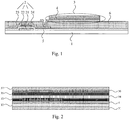
- Fig. 1 is a schematic diagram showing a display substrate according to an exemplary embodiment. As shown in Fig. 1 , the display substrate includes: a base 1, a thin film transistor 2, an organic light emitting layer 3 and a touch electrode layer 4.
- the material of the base may be glass.
- the material of the base may be flexible resin.
- the thin film transistor 2 is formed on a side of the base 1.
- the thin film transistor 2 may include structures such as a gate electrode 21, an active layer 22, a source electrode 23 and a drain electrode 24.
- a gate insulating layer 5 may also be provided between the gate electrode 21 and the active layer 22.
- the organic light emitting layer 3 is formed on a side of the thin film transistor 2 away from the base 1.
- the organic light emitting layer being formed on a side of the thin film transistor away from the base means that the organic light emitting layer is formed after the thin film transistor is formed.
- a passivation layer 6 may be provided between the organic light emitting layer 3 and the thin film transistor 2.
- the organic light emitting layer 3 is electrically connected to the thin film transistor through a via hole in the passivation layer 6.
- the thin film transistor may be formed by a patterning process, and the organic light emitting layer may be formed by a vapor deposition process.
- the relationship between sizes and positions of the organic light emitting layer and the thin film transistor is only an example, which may be adjusted as needed. For example, an area of the organic light emitting layer is increased, so that the organic light emitting layer also lies above the thin film transistor.
- a pixel defining layer may also be provided between the sub-pixels constituted by the organic light emitting layer, which will not be repeated in the present disclosure.
- the touch electrode layer 4 is formed in the organic light emitting layer 3.
- the organic light emitting layer may include a multi-layer structure, and the touching electrode layer may be formed between two adjacent layers among the multi-layer structure.
- the touch electrode layer may be formed by a patterning process, and a wiring electrically connected to the touch electrode layer may be formed in the display substrate, which will not be repeated herein.
- a touch electrode layer is formed in the organic light emitting layer, which may increase the integration level of the display substrate.
- an area of the organic light emitting layer may be set to be larger, or even the organic light emitting layer may be disposed directly over the thin film transistor and thus a touch electrode layer is formed in the organic light emitting layer, which facilitates setting a the touch electrode layer with a larger size, and further senses touch signals in a larger range.
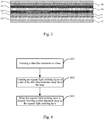
- Fig. 2 is a schematic diagram showing an organic light emitting layer according to an exemplary embodiment.
- the organic light emitting layer includes:
- the touch electrode layer is formed between the hole injection layer and the hole transport layer, or between the hole transport layer and the organic material layer, or between the organic material layer and the electron transport layer, or between the electron transport layer and the electron injection layer.
- the touch electrode layer 4 may be disposed between the hole injection layer 32 and the hole transport layer 33.
- a positive voltage may be applied to the anode layer
- a negative voltage may be applied to the cathode layer, thus forming a current flowing from the anode layer to the cathode layer. Electrons from the cathode layer sequentially pass through the electron injection layer, the electron transport layer, the organic material layer, the hole transport layer, the hole injection layer, reach the anode layer, and excite the organic material in the organic material layer to emit light when electrons pass through the organic material layer.
- the organic material layers in all of the sub-pixels emit white light when being excited.
- a color filter such as a red filter, a green filter and a blue filter, is required to be provided in a substrate arranged corresponding to the display substrate, so that the lights emitted from the sub-pixels corresponding to the filters with different colors are different in color, and thus the light emission color of the corresponding pixel may be changed by adjusting the light emission intensity of the sub-pixel.
- the organic material layers in different sub-pixels emit lights with different colors when being excited, for example, they may emit red light, green light and blue light respectively, so that the lights emitted from different sub-pixels are different in color, and thus the light emission color of the corresponding pixel may be changed by adjusting the light emission intensity of the sub-pixel.
- an anode may be formed by transparent conductive material and a cathode may be formed by conductive material with a high reflectivity, so that the light may be emitted from the bottom.
- a cathode may be formed by transparent conductive material and an anode may be formed by conductive material with a high reflectivity, so that the light may be emitted from the top.
- the transparent conductive material may be ITO (indium tin oxide), and the conductive material with a higher reflectivity may be a metal, such as aluminum or silver.
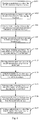
- Fig. 3 is a schematic diagram showing an organic light emitting layer according to another exemplary embodiment.
- An insulating layer 7 is disposed between the touch electrode layer 4 and a layer structure adjacent to the touch electrode layer 4.
- an insulating layer may be provided between the touch electrode layer 4 and the hole injection layer 32, and between the touch electrode layer 4 and the hole transport layer 33. Since there are electrons flowing from the cathode layer to the anode layer in respective layer structures in the organic light emitting layer, and electrons may stay in the layer structure adjacent to the touch electrode layer, thereby touch signals generated by the touch electrode layer may be affected.
- An insulating layer is provided between the touch electrode layer and a layer structure adjacent thereto, so that the touch electrode layer may be less influenced by other layer structures, thereby the accuracy of sensing touch operation of the touch electrode may be improved.
- the touch electrode layer is a self-induction capacitor.
- the cathode layer when a user touches the display device where the above display substrate is applied in, the cathode layer will be located between a finger and the touch electrode layer, thereby generating a shielding effect on the touch signal generated by sensing of the touch electrode layer.
- the intensity of touch signals generated by the self-induction capacitor sensing the touch operation is large, which is more conducive to obtain accurate touch results.
- the present disclosure further provides embodiments of a method for manufacturing a display substrate.
- Fig. 4 is a flow chart showing a method for manufacturing a display substrate according to an exemplary embodiment. As shown in Fig. 4 , the method includes following steps.
- a thin film transistor is formed on a base.
- an organic light emitting layer is formed on a side of the thin film transistor away from the base.
- a touch electrode layer is formed in the organic light emitting layer.
- Fig. 5 is a flow chart showing a method for manufacturing a display substrate according to another exemplary embodiment.
- the forming an organic light emitting layer on a side of the thin film transistor away from the base includes following steps.
- an anode layer is formed on a side of the thin film transistor away from the base.
- a hole injection layer is formed on a side of the anode layer away from the thin film transistor.
- a hole transport layer is formed on a side of the hole injection layer away from the anode layer.
- an organic material layer is formed on a side of the hole transport layer away from the hole injection layer.
- an electron transport layer is formed on a side of the organic material layer away from the hole transport layer.
- an electron injection layer is formed on a side of the electron transport layer away from the organic material layer.
- a cathode layer is formed on a side of the electron injection layer away from the electron transport layer.
- Forming the touch electrode layer in the organic light emitting layer includes:
- Fig. 6 is a flow chart showing a method for manufacturing a display substrate according to yet another exemplary embodiment.
- the above manufacturing method further includes: at step S44, forming an insulating layer between the touch electrode layer and a layer structure adjacent to the touch electrode layer.
- step S43 may be performed between step S422 and step S423
- step S44 may be performed between step S422 and step S44, and step S423 and step S44.
- the touch electrode layer is a self-induction capacitor.
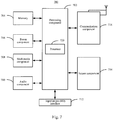
- Fig. 7 is a schematic diagram showing a display device 700 according to an exemplary embodiment.
- the device 700 may be a mobile phone, a computer, a digital broadcast terminal, a messaging device, a gaming console, a tablet, a medical device, exercise equipment, a personal digital assistant, and the like.
- the device 700 may include one or more of the following components: a processing component 702, a memory 704, a power component 706, a multimedia component 708, an audio component 710, an input/output (I/O) interface 712, a sensor component 714, and a communication component 716.
- a processing component 702 a memory 704
- a power component 706 a multimedia component 708, an audio component 710, an input/output (I/O) interface 712, a sensor component 714, and a communication component 716.
- I/O input/output
- the processing component 702 typically controls overall operations of the device 700, such as the operations associated with display, telephone calls, data communications, camera operations, and recording operations.
- the processing component 702 may include one or more processors 720 to execute instructions.
- the processing component 702 may include one or more modules which facilitate the interaction between the processing component 702 and other components.
- the processing component 702 may include a multimedia module to facilitate the interaction between the multimedia component 708 and the processing component 702.
- the memory 704 is configured to store various types of data to support the operation of the device 700. Examples of such data include instructions for any applications or methods operated on the device 700, contact data, phonebook data, messages, pictures, video, etc.
- the memory 704 may be implemented using any type of volatile or non-volatile memory devices, or a combination thereof, such as a static random access memory (SRAM), an electrically erasable programmable read-only memory (EEPROM), an erasable programmable read-only memory (EPROM), a programmable read-only memory (PROM), a read-only memory (ROM), a magnetic memory, a flash memory, a magnetic or optical disk.
- SRAM static random access memory
- EEPROM electrically erasable programmable read-only memory
- EPROM erasable programmable read-only memory
- PROM programmable read-only memory
- ROM read-only memory
- magnetic memory a magnetic memory
- flash memory a flash memory
- magnetic or optical disk a magnetic or optical
- the power component 706 provides power to various components of the device 700.
- the power component 706 may include a power management system, one or more power sources, and any other components associated with the generation, management, and distribution of power in the device 700.
- the multimedia component 708 includes a screen providing an output interface between the device 700 and the user.
- the screen may include a liquid crystal display (LCD) and a touch panel (TP). If the screen includes the touch panel, the screen may be implemented as a touch screen to receive input signals from the user.
- the touch panel includes one or more touch sensors to sense touches, swipes, and gestures on the touch panel. The touch sensors may not only sense a boundary of a touch or swipe action, but also sense a period of time and a pressure associated with the touch or swipe action.
- the multimedia component 708 includes a front camera and/or a rear camera.
- the front camera and/or the rear camera may receive an external multimedia datum while the device 700 is in an operation mode, such as a photographing mode or a video mode.
- an operation mode such as a photographing mode or a video mode.
- Each of the front camera and the rear camera may be a fixed optical lens system or have focus and optical zoom capability.
- the audio component 710 is configured to output and/or input audio signals.
- the audio component 710 includes a microphone ("MIC") configured to receive an external audio signal when the device 700 is in an operation mode, such as a call mode, a recording mode, and a voice recognition mode.
- the received audio signal may be further stored in the memory 704 or transmitted via the communication component 716.
- the audio component 710 further includes a speaker to output audio signals.
- the I/O interface 712 provides an interface between the processing component 702 and peripheral interface modules, such as a keyboard, a click wheel, buttons, and the like.
- the buttons may include, but are not limited to, a home button, a volume button, a starting button, and a locking button.
- the sensor component 714 includes one or more sensors to provide status assessments of various aspects of the device 700. For instance, the sensor component 714 may detect an open/closed status of the device 700, relative positioning of components, e.g., the display and the keypad, of the device 700, a change in position of the device 700 or a component of the device 700, a presence or absence of user contact with the device 700, an orientation or an acceleration/deceleration of the device 700, and a change in temperature of the device 700.
- the sensor component 714 may include a proximity sensor configured to detect the presence of nearby objects without any physical contact.
- the sensor component 714 may further include a light sensor, such as a CMOS or CCD image sensor, for use in imaging applications.
- the sensor component 714 may further include an accelerometer sensor, a gyroscope sensor, a magnetic sensor, a pressure sensor or a temperature sensor.
- the communication component 716 is configured to facilitate communication, wired or wirelessly, between the device 700 and other devices.
- the device 700 may access a wireless network based on a communication standard, such as WiFi, 2G, or 3G, or a combination thereof.
- the communication component 716 receives a broadcast signal or broadcast associated information from an external broadcast management system via a broadcast channel.
- the communication component 716 further includes a near field communication (NFC) module to facilitate short-range communications.
- the NFC module may be implemented based on a radio frequency identification (RFID) technology, an infrared data association (IrDA) technology, an ultra-wideband (UWB) technology, a Bluetooth (BT) technology, and other technologies.
- RFID radio frequency identification
- IrDA infrared data association
- UWB ultra-wideband
- BT Bluetooth
- the device 700 may be implemented with one or more application specific integrated circuits (ASICs), digital signal processors (DSPs), digital signal processing devices (DSPDs), programmable logic devices (PLDs), field programmable gate arrays (FPGAs), controllers, micro-controllers, microprocessors, or other electronic components.
- ASICs application specific integrated circuits
- DSPs digital signal processors
- DSPDs digital signal processing devices
- PLDs programmable logic devices
- FPGAs field programmable gate arrays
- controllers micro-controllers, microprocessors, or other electronic components.
- non-transitory computer-readable storage medium including instructions, such as included in the memory 704, executable by the processor 720 in the device 700.
- the non-transitory computer-readable storage medium may be a ROM, a RAM, a CD-ROM, a magnetic tape, a floppy disc, an optical data storage device, and the like.
Landscapes
- Engineering & Computer Science (AREA)
- General Engineering & Computer Science (AREA)
- Theoretical Computer Science (AREA)
- Physics & Mathematics (AREA)
- Human Computer Interaction (AREA)
- General Physics & Mathematics (AREA)
- Optics & Photonics (AREA)
- Manufacturing & Machinery (AREA)
- Devices For Indicating Variable Information By Combining Individual Elements (AREA)
- Microelectronics & Electronic Packaging (AREA)
- Electroluminescent Light Sources (AREA)
Description
- The present disclosure generally relates to the field of terminal technology, and more particularly, to a display substrate, a method for manufacturing the same and an electronic apparatus.
- As touch functions are applied more and more widely, structures of touch electrodes for recognizing the touch operation are also becoming more and more diversified, so as to be provided at different positions of a display device. However, currently, a majority of the touch electrodes are still manufactured independently of the display device, and the level of the touch electrodes integrating with the display device is low, which results in a cumbersome technological process and large product volume.
-
CN 105 518 863 A ,CN 104 881 179 A ,WO 2015/186266 A1 ,EP 1 986 324 A1 andJP H09 251820 A - The present disclosure provides a display substrate, a method for manufacturing the same and an electronic apparatus, to overcome shortcomings in the related art.
- According to a first aspect of embodiments of the present disclosure, there is provided a display substrate in accordance with claim 1.
- Optionally, the display substrate further includes:
an insulating layer, disposed between the touch electrode layer and a layer structure adjacent to the touch electrode layer. - Optionally, the touch electrode layer is a self-induction capacitor.
- According to a second aspect of embodiments of the present disclosure, there is provided a method for manufacturing a display substrate in accordance with
claim 4. - Optionally, the above manufacturing method further includes:
- forming an insulating layer between the touch electrode layer and a layer structure adjacent to the touch electrode layer.
- Optionally, the touch electrode layer is a self-induction capacitor.
- According to a third aspect of embodiments of the present disclosure, there is provided an electronic apparatus in accordance with
claim 7. - The technical scheme according to embodiments of the present disclosure may have the following beneficial effects.
- Through the above embodiments of the present disclosure, a touch electrode layer is formed in the organic light emitting layer, which may increase the integration level of the display substrate. In addition, since an area of the organic light emitting layer may be set larger, or even the organic light emitting layer may be disposed directly over the thin film transistor and thus a touch electrode layer is formed in the organic light emitting layer, which facilitates setting the touch electrode layer to be larger, and further senses touch signals in a larger range.
- It is to be understood that both the foregoing general description and the following detailed description are exemplary and explanatory only and are not restrictive of the present disclosure.
- The accompanying drawings, which are incorporated in and constitute a part of this specification, illustrate embodiments consistent with the present disclosure and, together with the description, serve to explain the principles of the present disclosure.
-
Fig. 1 is a schematic diagram showing a display substrate according to an exemplary embodiment. -
Fig. 2 is a schematic diagram showing an organic light emitting layer according to an exemplary embodiment. -
Fig. 3 is a schematic diagram showing an organic light emitting layer according to another exemplary embodiment. -
Fig. 4 is a flow chart showing a method for manufacturing a display substrate according to an exemplary embodiment. -
Fig. 5 is a flow chart showing a method for manufacturing a display substrate according to another exemplary embodiment. -
Fig. 6 is a flow chart showing a method for manufacturing a display substrate according to yet another exemplary embodiment. -
Fig. 7 is a schematic diagram showing a display device according to an exemplary embodiment. - Reference will now be made in detail to exemplary embodiments, examples of which are illustrated in the accompanying drawings. The following description refers to the accompanying drawings in which the same numbers in different drawings represent the same or similar elements unless otherwise represented. The implementations set forth in the following description of exemplary embodiments do not represent all implementations consistent with the present disclosure. Instead, they are merely examples of devices and methods consistent with aspects related to the present disclosure as recited in the appended claims.
-
Fig. 1 is a schematic diagram showing a display substrate according to an exemplary embodiment. As shown inFig. 1 , the display substrate includes: a base 1, athin film transistor 2, an organiclight emitting layer 3 and atouch electrode layer 4. - In an embodiment, the material of the base may be glass. When the display substrate is applied to a flexible display device, the material of the base may be flexible resin.
- The
thin film transistor 2 is formed on a side of the base 1. - In an embodiment, as shown in
Fig. 2 , thethin film transistor 2 may include structures such as agate electrode 21, anactive layer 22, asource electrode 23 and adrain electrode 24. Agate insulating layer 5 may also be provided between thegate electrode 21 and theactive layer 22. - The organic
light emitting layer 3 is formed on a side of thethin film transistor 2 away from the base 1. - In an embodiment, the organic light emitting layer being formed on a side of the thin film transistor away from the base means that the organic light emitting layer is formed after the thin film transistor is formed. A
passivation layer 6 may be provided between the organiclight emitting layer 3 and thethin film transistor 2. The organiclight emitting layer 3 is electrically connected to the thin film transistor through a via hole in thepassivation layer 6. In the embodiment, the thin film transistor may be formed by a patterning process, and the organic light emitting layer may be formed by a vapor deposition process. - It should be noted that, in
Fig. 1 , the relationship between sizes and positions of the organic light emitting layer and the thin film transistor is only an example, which may be adjusted as needed. For example, an area of the organic light emitting layer is increased, so that the organic light emitting layer also lies above the thin film transistor. In addition, a pixel defining layer may also be provided between the sub-pixels constituted by the organic light emitting layer, which will not be repeated in the present disclosure. - The
touch electrode layer 4 is formed in the organiclight emitting layer 3. - In an embodiment, the organic light emitting layer may include a multi-layer structure, and the touching electrode layer may be formed between two adjacent layers among the multi-layer structure. In the embodiment, the touch electrode layer may be formed by a patterning process, and a wiring electrically connected to the touch electrode layer may be formed in the display substrate, which will not be repeated herein.
- In an embodiment, a touch electrode layer is formed in the organic light emitting layer, which may increase the integration level of the display substrate. In addition, since an area of the organic light emitting layer may be set to be larger, or even the organic light emitting layer may be disposed directly over the thin film transistor and thus a touch electrode layer is formed in the organic light emitting layer, which facilitates setting a the touch electrode layer with a larger size, and further senses touch signals in a larger range.
-
Fig. 2 is a schematic diagram showing an organic light emitting layer according to an exemplary embodiment. The organic light emitting layer includes: - an
anode layer 31, formed on a side of thethin film transistor 2 away from the base 1; - a
hole injection layer 32, formed on a side of theanode layer 31 away from thethin film transistor 2; - a
hole transport layer 33, formed on a side of thehole injection layer 32 away from theanode layer 31; - an
organic material layer 34, formed on a side of thehole transport layer 33 away from thehole injection layer 32; - an
electron transport layer 35, formed on a side of theorganic material layer 34 away from thehole transport layer 33; - an
electron injection layer 36, formed on a side of theelectron transport layer 35 away from theorganic material layer 34; and - a
cathode layer 37, formed on a side of theelectron injection layer 36 away from theelectron transport layer 35. - The touch electrode layer is formed between the hole injection layer and the hole transport layer, or between the hole transport layer and the organic material layer, or between the organic material layer and the electron transport layer, or between the electron transport layer and the electron injection layer.
- In an embodiment, as shown in
Fig. 2 , thetouch electrode layer 4 may be disposed between thehole injection layer 32 and thehole transport layer 33. In the embodiment, a positive voltage may be applied to the anode layer, and a negative voltage may be applied to the cathode layer, thus forming a current flowing from the anode layer to the cathode layer. Electrons from the cathode layer sequentially pass through the electron injection layer, the electron transport layer, the organic material layer, the hole transport layer, the hole injection layer, reach the anode layer, and excite the organic material in the organic material layer to emit light when electrons pass through the organic material layer. - In an embodiment, the organic material layers in all of the sub-pixels emit white light when being excited. A color filter, such as a red filter, a green filter and a blue filter, is required to be provided in a substrate arranged corresponding to the display substrate, so that the lights emitted from the sub-pixels corresponding to the filters with different colors are different in color, and thus the light emission color of the corresponding pixel may be changed by adjusting the light emission intensity of the sub-pixel.
- In an embodiment, the organic material layers in different sub-pixels emit lights with different colors when being excited, for example, they may emit red light, green light and blue light respectively, so that the lights emitted from different sub-pixels are different in color, and thus the light emission color of the corresponding pixel may be changed by adjusting the light emission intensity of the sub-pixel.
- In an embodiment, if a display substrate is applied to a display device of a bottom emission structure, an anode may be formed by transparent conductive material and a cathode may be formed by conductive material with a high reflectivity, so that the light may be emitted from the bottom. If the display substrate is applied to a display device of a top emission structure, a cathode may be formed by transparent conductive material and an anode may be formed by conductive material with a high reflectivity, so that the light may be emitted from the top. In the embodiment, the transparent conductive material may be ITO (indium tin oxide), and the conductive material with a higher reflectivity may be a metal, such as aluminum or silver.
-
Fig. 3 is a schematic diagram showing an organic light emitting layer according to another exemplary embodiment. - An insulating
layer 7 is disposed between thetouch electrode layer 4 and a layer structure adjacent to thetouch electrode layer 4. - In an embodiment, for example, on the basis of
Fig.2 , an insulating layer may be provided between thetouch electrode layer 4 and thehole injection layer 32, and between thetouch electrode layer 4 and thehole transport layer 33. Since there are electrons flowing from the cathode layer to the anode layer in respective layer structures in the organic light emitting layer, and electrons may stay in the layer structure adjacent to the touch electrode layer, thereby touch signals generated by the touch electrode layer may be affected. An insulating layer is provided between the touch electrode layer and a layer structure adjacent thereto, so that the touch electrode layer may be less influenced by other layer structures, thereby the accuracy of sensing touch operation of the touch electrode may be improved. - Optionally, the touch electrode layer is a self-induction capacitor.
- In an embodiment, when a user touches the display device where the above display substrate is applied in, the cathode layer will be located between a finger and the touch electrode layer, thereby generating a shielding effect on the touch signal generated by sensing of the touch electrode layer. The intensity of touch signals generated by the self-induction capacitor sensing the touch operation is large, which is more conducive to obtain accurate touch results.
- Corresponding to the above embodiments of the display substrate, the present disclosure further provides embodiments of a method for manufacturing a display substrate.
-
Fig. 4 is a flow chart showing a method for manufacturing a display substrate according to an exemplary embodiment. As shown inFig. 4 , the method includes following steps. - At step S41, a thin film transistor is formed on a base.
- At step S42, an organic light emitting layer is formed on a side of the thin film transistor away from the base.
- At step S43, when the organic light emitting layer is formed, a touch electrode layer is formed in the organic light emitting layer.
-
Fig. 5 is a flow chart showing a method for manufacturing a display substrate according to another exemplary embodiment. On the basis of the embodiment as shown inFig. 4 , the forming an organic light emitting layer on a side of the thin film transistor away from the base includes following steps. - At step S421, an anode layer is formed on a side of the thin film transistor away from the base.
- At step S422, a hole injection layer is formed on a side of the anode layer away from the thin film transistor.
- At step S423, a hole transport layer is formed on a side of the hole injection layer away from the anode layer.
- At step S424, an organic material layer is formed on a side of the hole transport layer away from the hole injection layer.
- At step S425, an electron transport layer is formed on a side of the organic material layer away from the hole transport layer.
- At step S426, an electron injection layer is formed on a side of the electron transport layer away from the organic material layer.
- At step S427, a cathode layer is formed on a side of the electron injection layer away from the electron transport layer.
- Forming the touch electrode layer in the organic light emitting layer includes:
- forming the touch electrode layer between the hole injection layer and the hole transport layer; or
- forming the touch electrode layer between the hole transport layer and the organic material layer; or
- forming the touch electrode layer between the organic material layer and the electron transport layer; or
- forming the touch electrode layer between the electron transport layer and the electron injection layer.
-
Fig. 6 is a flow chart showing a method for manufacturing a display substrate according to yet another exemplary embodiment. On the basis of the embodiment as shown inFig. 5 , the above manufacturing method further includes:
at step S44, forming an insulating layer between the touch electrode layer and a layer structure adjacent to the touch electrode layer. - It should be noted that, the execution order of the steps in the above-described manufacturing method may be adjusted as needed. For example, step S43 may be performed between step S422 and step S423, and step S44 may be performed between step S422 and step S44, and step S423 and step S44.
- Optionally, the touch electrode layer is a self-induction capacitor.
-
Fig. 7 is a schematic diagram showing adisplay device 700 according to an exemplary embodiment. For example, thedevice 700 may be a mobile phone, a computer, a digital broadcast terminal, a messaging device, a gaming console, a tablet, a medical device, exercise equipment, a personal digital assistant, and the like. - Referring to
Fig. 7 , thedevice 700 may include one or more of the following components: aprocessing component 702, amemory 704, apower component 706, amultimedia component 708, anaudio component 710, an input/output (I/O)interface 712, asensor component 714, and acommunication component 716. - The
processing component 702 typically controls overall operations of thedevice 700, such as the operations associated with display, telephone calls, data communications, camera operations, and recording operations. Theprocessing component 702 may include one ormore processors 720 to execute instructions. Moreover, theprocessing component 702 may include one or more modules which facilitate the interaction between theprocessing component 702 and other components. For instance, theprocessing component 702 may include a multimedia module to facilitate the interaction between themultimedia component 708 and theprocessing component 702. - The
memory 704 is configured to store various types of data to support the operation of thedevice 700. Examples of such data include instructions for any applications or methods operated on thedevice 700, contact data, phonebook data, messages, pictures, video, etc. Thememory 704 may be implemented using any type of volatile or non-volatile memory devices, or a combination thereof, such as a static random access memory (SRAM), an electrically erasable programmable read-only memory (EEPROM), an erasable programmable read-only memory (EPROM), a programmable read-only memory (PROM), a read-only memory (ROM), a magnetic memory, a flash memory, a magnetic or optical disk. - The
power component 706 provides power to various components of thedevice 700. Thepower component 706 may include a power management system, one or more power sources, and any other components associated with the generation, management, and distribution of power in thedevice 700. - The
multimedia component 708 includes a screen providing an output interface between thedevice 700 and the user. In some embodiments, the screen may include a liquid crystal display (LCD) and a touch panel (TP). If the screen includes the touch panel, the screen may be implemented as a touch screen to receive input signals from the user. The touch panel includes one or more touch sensors to sense touches, swipes, and gestures on the touch panel. The touch sensors may not only sense a boundary of a touch or swipe action, but also sense a period of time and a pressure associated with the touch or swipe action. In some embodiments, themultimedia component 708 includes a front camera and/or a rear camera. The front camera and/or the rear camera may receive an external multimedia datum while thedevice 700 is in an operation mode, such as a photographing mode or a video mode. Each of the front camera and the rear camera may be a fixed optical lens system or have focus and optical zoom capability. - The
audio component 710 is configured to output and/or input audio signals. For example, theaudio component 710 includes a microphone ("MIC") configured to receive an external audio signal when thedevice 700 is in an operation mode, such as a call mode, a recording mode, and a voice recognition mode. The received audio signal may be further stored in thememory 704 or transmitted via thecommunication component 716. In some embodiments, theaudio component 710 further includes a speaker to output audio signals. - The I/
O interface 712 provides an interface between theprocessing component 702 and peripheral interface modules, such as a keyboard, a click wheel, buttons, and the like. The buttons may include, but are not limited to, a home button, a volume button, a starting button, and a locking button. - The
sensor component 714 includes one or more sensors to provide status assessments of various aspects of thedevice 700. For instance, thesensor component 714 may detect an open/closed status of thedevice 700, relative positioning of components, e.g., the display and the keypad, of thedevice 700, a change in position of thedevice 700 or a component of thedevice 700, a presence or absence of user contact with thedevice 700, an orientation or an acceleration/deceleration of thedevice 700, and a change in temperature of thedevice 700. Thesensor component 714 may include a proximity sensor configured to detect the presence of nearby objects without any physical contact. Thesensor component 714 may further include a light sensor, such as a CMOS or CCD image sensor, for use in imaging applications. In some embodiments, thesensor component 714 may further include an accelerometer sensor, a gyroscope sensor, a magnetic sensor, a pressure sensor or a temperature sensor. - The
communication component 716 is configured to facilitate communication, wired or wirelessly, between thedevice 700 and other devices. Thedevice 700 may access a wireless network based on a communication standard, such as WiFi, 2G, or 3G, or a combination thereof. In one exemplary embodiment, thecommunication component 716 receives a broadcast signal or broadcast associated information from an external broadcast management system via a broadcast channel. In one exemplary embodiment, thecommunication component 716 further includes a near field communication (NFC) module to facilitate short-range communications. For example, the NFC module may be implemented based on a radio frequency identification (RFID) technology, an infrared data association (IrDA) technology, an ultra-wideband (UWB) technology, a Bluetooth (BT) technology, and other technologies. - In exemplary embodiments, the
device 700 may be implemented with one or more application specific integrated circuits (ASICs), digital signal processors (DSPs), digital signal processing devices (DSPDs), programmable logic devices (PLDs), field programmable gate arrays (FPGAs), controllers, micro-controllers, microprocessors, or other electronic components. - In exemplary embodiments, there is further provided a non-transitory computer-readable storage medium including instructions, such as included in the
memory 704, executable by theprocessor 720 in thedevice 700. For example, the non-transitory computer-readable storage medium may be a ROM, a RAM, a CD-ROM, a magnetic tape, a floppy disc, an optical data storage device, and the like.
Claims (7)
- A display substrate, comprising:a base (1);a thin film transistor (2), formed on a side of the base (1);an organic light emitting layer (3), formed on a side of the thin film transistor (2) away from the base (1); anda touch electrode layer (4), formed in the organic light emitting layer (3)wherein the organic light emitting layer (3) comprises:an anode layer (31), formed on a side of the thin film transistor (2) away from the base (1);a hole injection layer (32), formed on a side of the anode layer (31) away from the thin film transistor (2);a hole transport layer (33), formed on a side of the hole injection layer (32) away from the anode layer (31);an organic light emitting material layer (34), formed on a side of the hole transport layer (33) away from the hole injection layer (32);an electron transport layer (35), formed on a side of the organic light emitting material layer (34) away from the hole transport layer (33);an electron injection layer (36), formed on a side of the electron transport layer (35) away from the organic light emitting material layer (34); anda cathode layer (37), formed on a side of the electron injection layer (36) away from the electron transport layer (35) andcharacterized in that the touch electrode layer (4) is formed between the hole injection layer (32) and the hole transport layer (33), or between the hole transport layer (33) and the organic light emitting material layer (34), or between the organic light emitting material layer (34) and the electron transport layer (35), or between the electron transport layer (35) and the electron injection layer (36).
- The display substrate of claim 1, further comprising:
an insulating layer (7), disposed between the touch electrode layer (4) and the adjoining hole injection layer or hole transport layer or organic light emitting material layer or electron transport layer or electron injection layer. - The display substrate of any one of claims 1 or 2, wherein the touch electrode layer (4) is a self-induction capacitor.
- A method for manufacturing a display substrate, comprising:forming (S41) a thin film transistor (2) on a base (1);forming (S42) an organic light emitting layer (3) on a side of the thin film transistor (2) away from the base (1); andwherein when the organic light emitting layer (3) is formed, forming (S43) a touch electrode layer (4) in the organic light emitting layer (3)wherein the forming (S42) an organic light emitting layer (3) on a side of the thin film transistor (2) away from the base (1) comprises:forming (S421) an anode layer (31) on a side of the thin film transistor (2) away from the base (1);forming (S422) a hole injection layer (32) on a side of the anode layer (31) away from the thin film transistor (2);forming (S423) a hole transport layer (33) on a side of the hole injection layer (32) away from the anode layer (31);forming (S424) an organic light emitting material layer (34) on a side of the hole transport layer (33) away from the hole injection layer (32);forming (S425) an electron transport layer (35) on a side of the organic light emitting material layer (34) away from the hole transport layer (33);forming (S426) an electron injection layer (36) on a side of the electron transport layer (35) away from the organic light emitting material layer (34); andforming (S427) a cathode layer (37) on a side of the electron injection layer (36) away from the electron transport layer (35) andcharacterized in that forming (S43) the touch electrode layer (4) in the organic light emitting layer (3) comprises:forming the touch electrode layer (4) between the hole injection layer (32) and the hole transport layer (33); orforming the touch electrode layer (4) between the hole transport layer (33) and the organic light emitting material layer (34); orforming the touch electrode layer (4) between the organic light emitting material layer (34) and the electron transport layer (35); orforming the touch electrode layer (4) between the electron transport layer (35) and the electron injection layer (36).
- The method of claim 4, further comprising:
forming (S44) an insulating layer (7) between the touch electrode layer (4) and the adjoining hole injection layer or hole transport layer or organic light emitting material layer or electron transport layer or electron injection layer. - The method of any one of claims 4 or 5, wherein the touch electrode layer (4) is a self-induction capacitor.
- An electronic apparatus, comprising:a processor (720); anda memory (704) for storing instructions executable by the processor (720),wherein the electronic apparatus further comprises a display substrate according to any of claims 1 to 3.
Applications Claiming Priority (1)
| Application Number | Priority Date | Filing Date | Title |
|---|---|---|---|
| CN201610957966.3A CN106356394B (en) | 2016-10-27 | 2016-10-27 | Display base plate and preparation method thereof and electronic equipment |
Publications (2)
| Publication Number | Publication Date |
|---|---|
| EP3316331A1 EP3316331A1 (en) | 2018-05-02 |
| EP3316331B1 true EP3316331B1 (en) | 2020-12-02 |
Family
ID=57865150
Family Applications (1)
| Application Number | Title | Priority Date | Filing Date |
|---|---|---|---|
| EP17198792.8A Active EP3316331B1 (en) | 2016-10-27 | 2017-10-27 | Display substrate, method for manufacturing the same and electronic apparatus |
Country Status (7)
| Country | Link |
|---|---|
| US (2) | US10516005B2 (en) |
| EP (1) | EP3316331B1 (en) |
| JP (1) | JP6976845B2 (en) |
| KR (1) | KR102118467B1 (en) |
| CN (1) | CN106356394B (en) |
| RU (1) | RU2665816C1 (en) |
| WO (1) | WO2018076505A1 (en) |
Families Citing this family (8)
| Publication number | Priority date | Publication date | Assignee | Title |
|---|---|---|---|---|
| CN106876604A (en) | 2017-02-14 | 2017-06-20 | 鄂尔多斯市源盛光电有限责任公司 | Organic light emitting diode device and its manufacture method |
| CN106851942B (en) * | 2017-03-02 | 2019-08-23 | 武汉金石微电子技术有限公司 | A kind of self-induction energy conservation Intelligent luminous wallpaper and its application method |
| CN107561721A (en) * | 2017-08-30 | 2018-01-09 | 京东方科技集团股份有限公司 | Transparent true 3D display device |
| CN108183121A (en) * | 2017-12-15 | 2018-06-19 | 武汉华星光电半导体显示技术有限公司 | Flexible display panels and preparation method thereof |
| CN110518146B (en) | 2019-08-30 | 2022-02-25 | 京东方科技集团股份有限公司 | Thin film packaging structure and display panel |
| CN112286398A (en) * | 2020-11-18 | 2021-01-29 | 武汉华星光电半导体显示技术有限公司 | Touch panel and display device |
| CN112785927B (en) * | 2021-01-28 | 2024-01-19 | 维沃移动通信有限公司 | Electronic equipment and display modules |
| KR20250122246A (en) * | 2024-02-06 | 2025-08-13 | 엘지디스플레이 주식회사 | In-cell touch display apparatus |
Family Cites Families (32)
| Publication number | Priority date | Publication date | Assignee | Title |
|---|---|---|---|---|
| JP3284259B2 (en) | 1996-03-14 | 2002-05-20 | 松下電工株式会社 | EL illuminated touch switch |
| KR100573154B1 (en) * | 2004-06-26 | 2006-04-24 | 삼성에스디아이 주식회사 | Electroluminescent display device and manufacturing method thereof |
| CN100379056C (en) | 2005-03-01 | 2008-04-02 | 友达光电股份有限公司 | Flat panel display with touch control function and forming method thereof |
| CN1652651A (en) | 2005-03-23 | 2005-08-10 | 友达光电股份有限公司 | Touch Organic Light Emitting Display |
| FR2913146B1 (en) * | 2007-02-23 | 2009-05-01 | Saint Gobain | DISCONTINUOUS ELECTRODE, ORGANIC ELECTROLUMINESCENCE DEVICE INCORPORATING THE SAME, AND THEIR MANUFACTURING |
| JP4464985B2 (en) | 2007-04-27 | 2010-05-19 | ビステオン・ジャパン株式会社 | EL light-emitting touch switch |
| KR101045264B1 (en) | 2008-09-09 | 2011-06-29 | 네오뷰코오롱 주식회사 | Display device, mobile device having same and display control method |
| JP5157825B2 (en) * | 2008-10-29 | 2013-03-06 | ソニー株式会社 | Manufacturing method of organic EL display |
| CN101894856B (en) | 2009-05-22 | 2013-11-06 | 上海天马微电子有限公司 | Organic light emitting diode display screen and touch detection unit |
| KR101633104B1 (en) * | 2009-08-27 | 2016-06-24 | 엘지디스플레이 주식회사 | Organic Light Emitting Display Device |
| KR101588450B1 (en) * | 2009-10-23 | 2016-01-25 | 엘지디스플레이 주식회사 | Touch Sensor Insel Type Organic Light Emitting Diode |
| KR101696483B1 (en) * | 2010-12-06 | 2017-01-13 | 엘지디스플레이 주식회사 | Organic light emitting diodde desplay device |
| TWI534664B (en) | 2011-07-28 | 2016-05-21 | 宸鴻光電科技股份有限公司 | Touch sensitive display |
| JP5726804B2 (en) * | 2012-04-19 | 2015-06-03 | 株式会社東芝 | Display panel and display device |
| KR101967290B1 (en) * | 2012-11-14 | 2019-04-09 | 엘지디스플레이 주식회사 | In cell-touch type touch organic light-emitting diode display device |
| CN103050506A (en) | 2012-12-28 | 2013-04-17 | 南京中电熊猫液晶显示科技有限公司 | OLED (organic light-emitting diode) display |
| KR102096622B1 (en) * | 2013-08-19 | 2020-04-03 | 삼성디스플레이 주식회사 | Organic light emitting display device |
| KR102124906B1 (en) * | 2013-12-26 | 2020-07-07 | 엘지디스플레이 주식회사 | Organic electro luminescent device having touch screen and method of fabricationg the same |
| CN104752466B (en) | 2013-12-30 | 2019-06-04 | 昆山国显光电有限公司 | A kind of organic light-emitting display device that integrating touch screen functionality and its manufacturing method |
| CN105446554A (en) * | 2014-05-27 | 2016-03-30 | 上海和辉光电有限公司 | Organic electrization lighting device |
| EP3154315B1 (en) | 2014-06-06 | 2020-08-26 | Konica Minolta, Inc. | Organic electroluminescence module, smart device, and illumination device |
| CN104409467B (en) * | 2014-10-13 | 2018-04-24 | 上海天马有机发光显示技术有限公司 | A kind of contact panel and preparation method thereof and display device |
| CN105590951B (en) * | 2014-11-10 | 2019-04-09 | 乐金显示有限公司 | Organic Light Emitting Diode Display with Multimode Cavity Structure |
| KR102269919B1 (en) | 2014-12-12 | 2021-06-28 | 삼성디스플레이 주식회사 | Display device comprising touch sensor |
| CN106033765B (en) * | 2015-03-17 | 2019-06-11 | 上海和辉光电有限公司 | Organic Light Emitting Diode touch-control display panel |
| CN104795425A (en) | 2015-03-30 | 2015-07-22 | 京东方科技集团股份有限公司 | Organic light emitting diode touch display screen and manufacturing method thereof |
| KR102341352B1 (en) * | 2015-04-08 | 2021-12-20 | 삼성디스플레이 주식회사 | Display device with touch sensor |
| CN104850268B (en) | 2015-06-10 | 2018-02-06 | 京东方科技集团股份有限公司 | A kind of touch-control display panel, touch control display apparatus and preparation method |
| CN104881179B (en) | 2015-06-23 | 2017-07-28 | 京东方科技集团股份有限公司 | A kind of built-in type touch display screen, its driving method and display device |
| CN104898887B (en) * | 2015-06-23 | 2017-10-17 | 京东方科技集团股份有限公司 | A kind of built-in type touch display screen, its driving method and display device |
| WO2017045133A1 (en) | 2015-09-15 | 2017-03-23 | Boe Technology Group Co., Ltd. | Array substrate, related display panels, and related display apparatus |
| CN105243993B (en) | 2015-09-22 | 2018-01-26 | 京东方科技集团股份有限公司 | Oled display substrate and its driving method and OLED display |
-
2016
- 2016-10-27 CN CN201610957966.3A patent/CN106356394B/en active Active
- 2016-12-20 JP JP2017510653A patent/JP6976845B2/en active Active
- 2016-12-20 RU RU2017134748A patent/RU2665816C1/en active
- 2016-12-20 KR KR1020187032410A patent/KR102118467B1/en active Active
- 2016-12-20 WO PCT/CN2016/110999 patent/WO2018076505A1/en not_active Ceased
-
2017
- 2017-10-25 US US15/792,926 patent/US10516005B2/en active Active
- 2017-10-27 EP EP17198792.8A patent/EP3316331B1/en active Active
-
2019
- 2019-10-15 US US16/653,074 patent/US10818736B2/en active Active
Non-Patent Citations (1)
| Title |
|---|
| None * |
Also Published As
| Publication number | Publication date |
|---|---|
| US20200043985A1 (en) | 2020-02-06 |
| CN106356394B (en) | 2018-09-04 |
| KR20180135919A (en) | 2018-12-21 |
| JP2018538553A (en) | 2018-12-27 |
| US10818736B2 (en) | 2020-10-27 |
| KR102118467B1 (en) | 2020-06-10 |
| EP3316331A1 (en) | 2018-05-02 |
| JP6976845B2 (en) | 2021-12-08 |
| US10516005B2 (en) | 2019-12-24 |
| WO2018076505A1 (en) | 2018-05-03 |
| CN106356394A (en) | 2017-01-25 |
| RU2665816C1 (en) | 2018-09-04 |
| US20180122865A1 (en) | 2018-05-03 |
Similar Documents
| Publication | Publication Date | Title |
|---|---|---|
| EP3316331B1 (en) | Display substrate, method for manufacturing the same and electronic apparatus | |
| US11538872B2 (en) | Display structure, display panel using the same and display device using the same | |
| CN106372625B (en) | Display base plate and preparation method thereof and electronic equipment | |
| US11417270B2 (en) | Organic light-emitting diode display, display control method and electronic device | |
| CN106970495A (en) | Array base palte and preparation method thereof, display panel, display device and electronic equipment | |
| CN110944069B (en) | Terminal screen and control method, device and terminal thereof | |
| CN107886038A (en) | Display device and electronic equipment | |
| US20200105187A1 (en) | Display structure, display panel and display device | |
| EP3477704B1 (en) | Camera photosensitive component, camera, and camera shooting terminal | |
| CN107885002A (en) | Display panel, display device, the preparation method of array base palte and electronic equipment | |
| CN107884968A (en) | Array base palte and preparation method thereof, display panel, display device and electronic equipment | |
| CN106919914B (en) | Display modules and electronic equipment | |
| CN112185302A (en) | Display and display device | |
| CN108847199A (en) | Brightness determines method and device | |
| CN111384092B (en) | Terminal and manufacturing method of organic light-emitting diode display panel | |
| CN111384095B (en) | A terminal | |
| CN107153301A (en) | Backlight module, display module and electronic equipment | |
| CN106782119A (en) | Display module and electronic equipment | |
| CN219019447U (en) | Display screen and terminal | |
| CN111381795B (en) | Display control method, display control device, electronic device and computer readable storage medium | |
| CN106597729A (en) | Colorful film substrate, manufacturing method thereof, display panel and electronic device thereof | |
| CN111384089A (en) | Display panels and terminals | |
| CN111443758A (en) | Display control method, apparatus, electronic device, and computer-readable storage medium |
Legal Events
| Date | Code | Title | Description |
|---|---|---|---|
| PUAI | Public reference made under article 153(3) epc to a published international application that has entered the european phase |
Free format text: ORIGINAL CODE: 0009012 |
|
| STAA | Information on the status of an ep patent application or granted ep patent |
Free format text: STATUS: THE APPLICATION HAS BEEN PUBLISHED |
|
| AK | Designated contracting states |
Kind code of ref document: A1 Designated state(s): AL AT BE BG CH CY CZ DE DK EE ES FI FR GB GR HR HU IE IS IT LI LT LU LV MC MK MT NL NO PL PT RO RS SE SI SK SM TR |
|
| AX | Request for extension of the european patent |
Extension state: BA ME |
|
| STAA | Information on the status of an ep patent application or granted ep patent |
Free format text: STATUS: REQUEST FOR EXAMINATION WAS MADE |
|
| 17P | Request for examination filed |
Effective date: 20181030 |
|
| RBV | Designated contracting states (corrected) |
Designated state(s): AL AT BE BG CH CY CZ DE DK EE ES FI FR GB GR HR HU IE IS IT LI LT LU LV MC MK MT NL NO PL PT RO RS SE SI SK SM TR |
|
| GRAP | Despatch of communication of intention to grant a patent |
Free format text: ORIGINAL CODE: EPIDOSNIGR1 |
|
| STAA | Information on the status of an ep patent application or granted ep patent |
Free format text: STATUS: GRANT OF PATENT IS INTENDED |
|
| RIC1 | Information provided on ipc code assigned before grant |
Ipc: H01L 27/32 20060101ALI20200603BHEP Ipc: H01L 51/52 20060101AFI20200603BHEP |
|
| INTG | Intention to grant announced |
Effective date: 20200626 |
|
| GRAS | Grant fee paid |
Free format text: ORIGINAL CODE: EPIDOSNIGR3 |
|
| GRAA | (expected) grant |
Free format text: ORIGINAL CODE: 0009210 |
|
| STAA | Information on the status of an ep patent application or granted ep patent |
Free format text: STATUS: THE PATENT HAS BEEN GRANTED |
|
| AK | Designated contracting states |
Kind code of ref document: B1 Designated state(s): AL AT BE BG CH CY CZ DE DK EE ES FI FR GB GR HR HU IE IS IT LI LT LU LV MC MK MT NL NO PL PT RO RS SE SI SK SM TR |
|
| REG | Reference to a national code |
Ref country code: GB Ref legal event code: FG4D |
|
| REG | Reference to a national code |
Ref country code: AT Ref legal event code: REF Ref document number: 1341895 Country of ref document: AT Kind code of ref document: T Effective date: 20201215 Ref country code: CH Ref legal event code: EP |
|
| REG | Reference to a national code |
Ref country code: DE Ref legal event code: R096 Ref document number: 602017028692 Country of ref document: DE |
|
| REG | Reference to a national code |
Ref country code: IE Ref legal event code: FG4D |
|
| PG25 | Lapsed in a contracting state [announced via postgrant information from national office to epo] |
Ref country code: GR Free format text: LAPSE BECAUSE OF FAILURE TO SUBMIT A TRANSLATION OF THE DESCRIPTION OR TO PAY THE FEE WITHIN THE PRESCRIBED TIME-LIMIT Effective date: 20210303 Ref country code: FI Free format text: LAPSE BECAUSE OF FAILURE TO SUBMIT A TRANSLATION OF THE DESCRIPTION OR TO PAY THE FEE WITHIN THE PRESCRIBED TIME-LIMIT Effective date: 20201202 Ref country code: NO Free format text: LAPSE BECAUSE OF FAILURE TO SUBMIT A TRANSLATION OF THE DESCRIPTION OR TO PAY THE FEE WITHIN THE PRESCRIBED TIME-LIMIT Effective date: 20210302 Ref country code: RS Free format text: LAPSE BECAUSE OF FAILURE TO SUBMIT A TRANSLATION OF THE DESCRIPTION OR TO PAY THE FEE WITHIN THE PRESCRIBED TIME-LIMIT Effective date: 20201202 |
|
| REG | Reference to a national code |
Ref country code: NL Ref legal event code: MP Effective date: 20201202 |
|
| REG | Reference to a national code |
Ref country code: AT Ref legal event code: MK05 Ref document number: 1341895 Country of ref document: AT Kind code of ref document: T Effective date: 20201202 |
|
| PG25 | Lapsed in a contracting state [announced via postgrant information from national office to epo] |
Ref country code: SE Free format text: LAPSE BECAUSE OF FAILURE TO SUBMIT A TRANSLATION OF THE DESCRIPTION OR TO PAY THE FEE WITHIN THE PRESCRIBED TIME-LIMIT Effective date: 20201202 Ref country code: BG Free format text: LAPSE BECAUSE OF FAILURE TO SUBMIT A TRANSLATION OF THE DESCRIPTION OR TO PAY THE FEE WITHIN THE PRESCRIBED TIME-LIMIT Effective date: 20210302 Ref country code: LV Free format text: LAPSE BECAUSE OF FAILURE TO SUBMIT A TRANSLATION OF THE DESCRIPTION OR TO PAY THE FEE WITHIN THE PRESCRIBED TIME-LIMIT Effective date: 20201202 Ref country code: PL Free format text: LAPSE BECAUSE OF FAILURE TO SUBMIT A TRANSLATION OF THE DESCRIPTION OR TO PAY THE FEE WITHIN THE PRESCRIBED TIME-LIMIT Effective date: 20201202 |
|
| PG25 | Lapsed in a contracting state [announced via postgrant information from national office to epo] |
Ref country code: HR Free format text: LAPSE BECAUSE OF FAILURE TO SUBMIT A TRANSLATION OF THE DESCRIPTION OR TO PAY THE FEE WITHIN THE PRESCRIBED TIME-LIMIT Effective date: 20201202 Ref country code: NL Free format text: LAPSE BECAUSE OF FAILURE TO SUBMIT A TRANSLATION OF THE DESCRIPTION OR TO PAY THE FEE WITHIN THE PRESCRIBED TIME-LIMIT Effective date: 20201202 |
|
| REG | Reference to a national code |
Ref country code: LT Ref legal event code: MG9D |
|
| PG25 | Lapsed in a contracting state [announced via postgrant information from national office to epo] |
Ref country code: SM Free format text: LAPSE BECAUSE OF FAILURE TO SUBMIT A TRANSLATION OF THE DESCRIPTION OR TO PAY THE FEE WITHIN THE PRESCRIBED TIME-LIMIT Effective date: 20201202 Ref country code: LT Free format text: LAPSE BECAUSE OF FAILURE TO SUBMIT A TRANSLATION OF THE DESCRIPTION OR TO PAY THE FEE WITHIN THE PRESCRIBED TIME-LIMIT Effective date: 20201202 Ref country code: CZ Free format text: LAPSE BECAUSE OF FAILURE TO SUBMIT A TRANSLATION OF THE DESCRIPTION OR TO PAY THE FEE WITHIN THE PRESCRIBED TIME-LIMIT Effective date: 20201202 Ref country code: EE Free format text: LAPSE BECAUSE OF FAILURE TO SUBMIT A TRANSLATION OF THE DESCRIPTION OR TO PAY THE FEE WITHIN THE PRESCRIBED TIME-LIMIT Effective date: 20201202 Ref country code: RO Free format text: LAPSE BECAUSE OF FAILURE TO SUBMIT A TRANSLATION OF THE DESCRIPTION OR TO PAY THE FEE WITHIN THE PRESCRIBED TIME-LIMIT Effective date: 20201202 Ref country code: PT Free format text: LAPSE BECAUSE OF FAILURE TO SUBMIT A TRANSLATION OF THE DESCRIPTION OR TO PAY THE FEE WITHIN THE PRESCRIBED TIME-LIMIT Effective date: 20210405 Ref country code: SK Free format text: LAPSE BECAUSE OF FAILURE TO SUBMIT A TRANSLATION OF THE DESCRIPTION OR TO PAY THE FEE WITHIN THE PRESCRIBED TIME-LIMIT Effective date: 20201202 |
|
| PG25 | Lapsed in a contracting state [announced via postgrant information from national office to epo] |
Ref country code: AT Free format text: LAPSE BECAUSE OF FAILURE TO SUBMIT A TRANSLATION OF THE DESCRIPTION OR TO PAY THE FEE WITHIN THE PRESCRIBED TIME-LIMIT Effective date: 20201202 |
|
| REG | Reference to a national code |
Ref country code: DE Ref legal event code: R097 Ref document number: 602017028692 Country of ref document: DE |
|
| PG25 | Lapsed in a contracting state [announced via postgrant information from national office to epo] |
Ref country code: IS Free format text: LAPSE BECAUSE OF FAILURE TO SUBMIT A TRANSLATION OF THE DESCRIPTION OR TO PAY THE FEE WITHIN THE PRESCRIBED TIME-LIMIT Effective date: 20210402 |
|
| PLBE | No opposition filed within time limit |
Free format text: ORIGINAL CODE: 0009261 |
|
| STAA | Information on the status of an ep patent application or granted ep patent |
Free format text: STATUS: NO OPPOSITION FILED WITHIN TIME LIMIT |
|
| PG25 | Lapsed in a contracting state [announced via postgrant information from national office to epo] |
Ref country code: IT Free format text: LAPSE BECAUSE OF FAILURE TO SUBMIT A TRANSLATION OF THE DESCRIPTION OR TO PAY THE FEE WITHIN THE PRESCRIBED TIME-LIMIT Effective date: 20201202 Ref country code: AL Free format text: LAPSE BECAUSE OF FAILURE TO SUBMIT A TRANSLATION OF THE DESCRIPTION OR TO PAY THE FEE WITHIN THE PRESCRIBED TIME-LIMIT Effective date: 20201202 |
|
| 26N | No opposition filed |
Effective date: 20210903 |
|
| PG25 | Lapsed in a contracting state [announced via postgrant information from national office to epo] |
Ref country code: DK Free format text: LAPSE BECAUSE OF FAILURE TO SUBMIT A TRANSLATION OF THE DESCRIPTION OR TO PAY THE FEE WITHIN THE PRESCRIBED TIME-LIMIT Effective date: 20201202 Ref country code: SI Free format text: LAPSE BECAUSE OF FAILURE TO SUBMIT A TRANSLATION OF THE DESCRIPTION OR TO PAY THE FEE WITHIN THE PRESCRIBED TIME-LIMIT Effective date: 20201202 |
|
| PG25 | Lapsed in a contracting state [announced via postgrant information from national office to epo] |
Ref country code: ES Free format text: LAPSE BECAUSE OF FAILURE TO SUBMIT A TRANSLATION OF THE DESCRIPTION OR TO PAY THE FEE WITHIN THE PRESCRIBED TIME-LIMIT Effective date: 20201202 |
|
| REG | Reference to a national code |
Ref country code: CH Ref legal event code: PL |
|
| PG25 | Lapsed in a contracting state [announced via postgrant information from national office to epo] |
Ref country code: IS Free format text: LAPSE BECAUSE OF FAILURE TO SUBMIT A TRANSLATION OF THE DESCRIPTION OR TO PAY THE FEE WITHIN THE PRESCRIBED TIME-LIMIT Effective date: 20210402 |
|
| REG | Reference to a national code |
Ref country code: BE Ref legal event code: MM Effective date: 20211031 |
|
| PG25 | Lapsed in a contracting state [announced via postgrant information from national office to epo] |
Ref country code: MC Free format text: LAPSE BECAUSE OF FAILURE TO SUBMIT A TRANSLATION OF THE DESCRIPTION OR TO PAY THE FEE WITHIN THE PRESCRIBED TIME-LIMIT Effective date: 20201202 |
|
| PG25 | Lapsed in a contracting state [announced via postgrant information from national office to epo] |
Ref country code: LU Free format text: LAPSE BECAUSE OF NON-PAYMENT OF DUE FEES Effective date: 20211027 Ref country code: BE Free format text: LAPSE BECAUSE OF NON-PAYMENT OF DUE FEES Effective date: 20211031 |
|
| PG25 | Lapsed in a contracting state [announced via postgrant information from national office to epo] |
Ref country code: LI Free format text: LAPSE BECAUSE OF NON-PAYMENT OF DUE FEES Effective date: 20211031 Ref country code: CH Free format text: LAPSE BECAUSE OF NON-PAYMENT OF DUE FEES Effective date: 20211031 |
|
| PG25 | Lapsed in a contracting state [announced via postgrant information from national office to epo] |
Ref country code: IE Free format text: LAPSE BECAUSE OF NON-PAYMENT OF DUE FEES Effective date: 20211027 |
|
| REG | Reference to a national code |
Ref country code: DE Ref legal event code: R079 Ref document number: 602017028692 Country of ref document: DE Free format text: PREVIOUS MAIN CLASS: H01L0051520000 Ipc: H10K0050800000 |
|
| PG25 | Lapsed in a contracting state [announced via postgrant information from national office to epo] |
Ref country code: HU Free format text: LAPSE BECAUSE OF FAILURE TO SUBMIT A TRANSLATION OF THE DESCRIPTION OR TO PAY THE FEE WITHIN THE PRESCRIBED TIME-LIMIT; INVALID AB INITIO Effective date: 20171027 |
|
| P01 | Opt-out of the competence of the unified patent court (upc) registered |
Effective date: 20230523 |
|
| PG25 | Lapsed in a contracting state [announced via postgrant information from national office to epo] |
Ref country code: CY Free format text: LAPSE BECAUSE OF FAILURE TO SUBMIT A TRANSLATION OF THE DESCRIPTION OR TO PAY THE FEE WITHIN THE PRESCRIBED TIME-LIMIT Effective date: 20201202 |
|
| PG25 | Lapsed in a contracting state [announced via postgrant information from national office to epo] |
Ref country code: MK Free format text: LAPSE BECAUSE OF FAILURE TO SUBMIT A TRANSLATION OF THE DESCRIPTION OR TO PAY THE FEE WITHIN THE PRESCRIBED TIME-LIMIT Effective date: 20201202 |
|
| PG25 | Lapsed in a contracting state [announced via postgrant information from national office to epo] |
Ref country code: TR Free format text: LAPSE BECAUSE OF FAILURE TO SUBMIT A TRANSLATION OF THE DESCRIPTION OR TO PAY THE FEE WITHIN THE PRESCRIBED TIME-LIMIT Effective date: 20201202 |
|
| PG25 | Lapsed in a contracting state [announced via postgrant information from national office to epo] |
Ref country code: MT Free format text: LAPSE BECAUSE OF FAILURE TO SUBMIT A TRANSLATION OF THE DESCRIPTION OR TO PAY THE FEE WITHIN THE PRESCRIBED TIME-LIMIT Effective date: 20201202 |
|
| PGFP | Annual fee paid to national office [announced via postgrant information from national office to epo] |
Ref country code: DE Payment date: 20251021 Year of fee payment: 9 |
|
| PGFP | Annual fee paid to national office [announced via postgrant information from national office to epo] |
Ref country code: GB Payment date: 20251022 Year of fee payment: 9 |
|
| PGFP | Annual fee paid to national office [announced via postgrant information from national office to epo] |
Ref country code: FR Payment date: 20251030 Year of fee payment: 9 |