EP3310168B1 - Combinations of a nucleoside analog and an inducing agent for use in treating herpesvirus-induced conditions - Google Patents
Combinations of a nucleoside analog and an inducing agent for use in treating herpesvirus-induced conditions Download PDFInfo
- Publication number
- EP3310168B1 EP3310168B1 EP16812548.2A EP16812548A EP3310168B1 EP 3310168 B1 EP3310168 B1 EP 3310168B1 EP 16812548 A EP16812548 A EP 16812548A EP 3310168 B1 EP3310168 B1 EP 3310168B1
- Authority
- EP
- European Patent Office
- Prior art keywords
- day
- virus
- less
- agent
- antiviral agent
- Prior art date
- Legal status (The legal status is an assumption and is not a legal conclusion. Google has not performed a legal analysis and makes no representation as to the accuracy of the status listed.)
- Active
Links
Images
Classifications
-
- A—HUMAN NECESSITIES
- A61—MEDICAL OR VETERINARY SCIENCE; HYGIENE
- A61K—PREPARATIONS FOR MEDICAL, DENTAL OR TOILETRY PURPOSES
- A61K31/00—Medicinal preparations containing organic active ingredients
- A61K31/33—Heterocyclic compounds
- A61K31/395—Heterocyclic compounds having nitrogen as a ring hetero atom, e.g. guanethidine or rifamycins
- A61K31/435—Heterocyclic compounds having nitrogen as a ring hetero atom, e.g. guanethidine or rifamycins having six-membered rings with one nitrogen as the only ring hetero atom
- A61K31/44—Non condensed pyridines; Hydrogenated derivatives thereof
- A61K31/4406—Non condensed pyridines; Hydrogenated derivatives thereof only substituted in position 3, e.g. zimeldine
-
- A—HUMAN NECESSITIES
- A61—MEDICAL OR VETERINARY SCIENCE; HYGIENE
- A61K—PREPARATIONS FOR MEDICAL, DENTAL OR TOILETRY PURPOSES
- A61K31/00—Medicinal preparations containing organic active ingredients
- A61K31/33—Heterocyclic compounds
- A61K31/395—Heterocyclic compounds having nitrogen as a ring hetero atom, e.g. guanethidine or rifamycins
- A61K31/41—Heterocyclic compounds having nitrogen as a ring hetero atom, e.g. guanethidine or rifamycins having five-membered rings with two or more ring hetero atoms, at least one of which being nitrogen, e.g. tetrazole
- A61K31/415—1,2-Diazoles
- A61K31/4155—1,2-Diazoles non condensed and containing further heterocyclic rings
-
- A—HUMAN NECESSITIES
- A61—MEDICAL OR VETERINARY SCIENCE; HYGIENE
- A61K—PREPARATIONS FOR MEDICAL, DENTAL OR TOILETRY PURPOSES
- A61K31/00—Medicinal preparations containing organic active ingredients
- A61K31/33—Heterocyclic compounds
- A61K31/395—Heterocyclic compounds having nitrogen as a ring hetero atom, e.g. guanethidine or rifamycins
- A61K31/495—Heterocyclic compounds having nitrogen as a ring hetero atom, e.g. guanethidine or rifamycins having six-membered rings with two or more nitrogen atoms as the only ring heteroatoms, e.g. piperazine or tetrazines
- A61K31/505—Pyrimidines; Hydrogenated pyrimidines, e.g. trimethoprim
- A61K31/519—Pyrimidines; Hydrogenated pyrimidines, e.g. trimethoprim ortho- or peri-condensed with heterocyclic rings
- A61K31/52—Purines, e.g. adenine
- A61K31/522—Purines, e.g. adenine having oxo groups directly attached to the heterocyclic ring, e.g. hypoxanthine, guanine, acyclovir
-
- A—HUMAN NECESSITIES
- A61—MEDICAL OR VETERINARY SCIENCE; HYGIENE
- A61K—PREPARATIONS FOR MEDICAL, DENTAL OR TOILETRY PURPOSES
- A61K45/00—Medicinal preparations containing active ingredients not provided for in groups A61K31/00 - A61K41/00
- A61K45/06—Mixtures of active ingredients without chemical characterisation, e.g. antiphlogistics and cardiaca
-
- A—HUMAN NECESSITIES
- A61—MEDICAL OR VETERINARY SCIENCE; HYGIENE
- A61P—SPECIFIC THERAPEUTIC ACTIVITY OF CHEMICAL COMPOUNDS OR MEDICINAL PREPARATIONS
- A61P29/00—Non-central analgesic, antipyretic or antiinflammatory agents, e.g. antirheumatic agents; Non-steroidal antiinflammatory drugs [NSAID]
-
- A—HUMAN NECESSITIES
- A61—MEDICAL OR VETERINARY SCIENCE; HYGIENE
- A61P—SPECIFIC THERAPEUTIC ACTIVITY OF CHEMICAL COMPOUNDS OR MEDICINAL PREPARATIONS
- A61P31/00—Antiinfectives, i.e. antibiotics, antiseptics, chemotherapeutics
- A61P31/12—Antivirals
- A61P31/20—Antivirals for DNA viruses
- A61P31/22—Antivirals for DNA viruses for herpes viruses
-
- A—HUMAN NECESSITIES
- A61—MEDICAL OR VETERINARY SCIENCE; HYGIENE
- A61P—SPECIFIC THERAPEUTIC ACTIVITY OF CHEMICAL COMPOUNDS OR MEDICINAL PREPARATIONS
- A61P35/00—Antineoplastic agents
-
- A—HUMAN NECESSITIES
- A61—MEDICAL OR VETERINARY SCIENCE; HYGIENE
- A61P—SPECIFIC THERAPEUTIC ACTIVITY OF CHEMICAL COMPOUNDS OR MEDICINAL PREPARATIONS
- A61P37/00—Drugs for immunological or allergic disorders
- A61P37/02—Immunomodulators
-
- A—HUMAN NECESSITIES
- A61—MEDICAL OR VETERINARY SCIENCE; HYGIENE
- A61K—PREPARATIONS FOR MEDICAL, DENTAL OR TOILETRY PURPOSES
- A61K2300/00—Mixtures or combinations of active ingredients, wherein at least one active ingredient is fully defined in groups A61K31/00 - A61K41/00
Definitions
- the present invention relates to an inducing agent in combination with an antiviral agent, for use in a method for treating or preventing a cancer, autoimmune, or inflammatory condition caused by herpesvirus infection in a subject having a latent herpesvirus infection, as defined in the claims.
- Herpesvirus can induce autoimmune or inflammatory conditions through a number of potential mechanisms, e.g.; 1) activating B cells to produce auto-antibodies, 2) activating T cells that attack host tissue, 3) molecular mimicry in which herpesvirus antigens cross react with host antigens, such that an autoimmune condition results when T cells or antibodies that are reactive with these antigens cross react with host antigens causing damage to host tissues, 4) herpesvirus infected cells produce cytokines which turn on other elements of the immune system and increase inflammation which can also exacerbate autoimmune conditions.
- potential mechanisms e.g.; 1) activating B cells to produce auto-antibodies, 2) activating T cells that attack host tissue, 3) molecular mimicry in which herpesvirus antigens cross react with host antigens, such that an autoimmune condition results when T cells or antibodies that are reactive with these antigens cross react with host antigens causing damage to host tissues, 4) herpesvirus infected cells produce cytokines which turn on other elements
- Autoimmune or inflammatory conditions with evidence of a herpesvirus relationship include multiple sclerosis, systemic lupus erythematosus, rheumatoid arthritis and Sjögren's syndrome, hepatitis, colitis, retinitis, pneumonitis, esophagitis, transverse myelitis, encephalitis or polyradiculopathy. Cytomegalovirus and herpes simplex virus have also been associated with coronary artery disease.
- a number of cancers and neoplasias have been associated with various herpesviruses including but not limited to mucoepidermoid carcinoma, lymphomas, Burkitt's lymphoma, Hodgkin's lymphoma, nasopharyngeal carcinoma and lymphomatoid granulomatosis, and cervical cancer.
- US 2013331313 discloses methods and compositions for treating viral or virally-induced conditions.
- histone deacetylase inhibitors are potent inducers of gene expression in latent EBV and sensitize lymphoma cells to nucleoside antiviral agents ( Blood, 2012 Jan 26;119(4):1008-17 ).
- US 2014045774 discloses methods for treating viral disorders.
- references to methods of treatment in this description are to be interpreted as references to the compounds, pharmaceutical compositions and medicaments of the present invention for use in a method for treatment of the human (or animal) body by therapy (or for diagnosis).
- the invention provides an inducing agent in combination with an antiviral agent, for use in a method for treating or preventing a cancer, autoimmune, or inflammatory condition caused by herpesvirus infection in a subject, wherein said antiviral agent is a nucleoside analog and said inducing agent is chidamide in accordance with the claims.
- the invention provides a method for treating or preventing a condition caused by herpesvirus infection in a subject, comprising administering to the subject an inducing agent to induce expression of a viral gene product in a virus-infected cell of the subject, wherein the antiviral agent is a nucleoside analog, and an anti-viral agent whose anti-viral activity is directed to the viral gene product expressed, wherein said inducing agent is an HDAC inhibitor, wherein the HDAC inhibitor is Chidamide.
- the condition is a cancer ⁇ caused by Epstein-Barr virus infection.
- the cancer is lymphoma, Burkitt's Lymphoma, Hodgkin's disease, nasopharyngeal carcinoma, hairy leukoplakia, NK/T cell lymphoma or a lymphoma of the central nervous system.
- the condition is an autoimmune or inflammatory condition caused by Epstein-Barr Virus infection: dermatomyositis, Sjögren's syndrome, or multiple sclerosis.
- the condition is a cancer caused by herpes simplex virus infection. In certain embodiments, the condition is a cancer caused by -human herpes virus 8 infection.
- the condition is a cancer caused by cytomegalovirus infection.
- the cancer is mucoepidermoid carcinoma.
- the condition is an inflammatory disease caused by cytomegalovirus infection; hepatitis, colitis, retinitis, pneumonitis, esophagitis, transverse myelitis, encephalitis or polyradiculopathy.
- the condition is a lymphoma.
- the inducing agent induces expression of a viral gene product in a virus-infected cell of the subject, wherein the viral gene product is a viral enzyme, an oncogene or proto-oncogene, a transcription factor, a protease, a polymerase, a reverse transcriptase, a cell surface receptor, a structural protein, a major histocompatibility antigen, a growth factor, or a combination thereof.
- the gene product is thymidine kinase or protein kinase.
- the inducing agent induces viral TK expression.
- the inducing agent is administered at a dose of about 1.0 to about 1000 mg/day. In certain embodiments, the inducing agent is administered twice daily (bid).
- the anti-viral agent is a nucleoside analog.
- the nucleoside analog is selected from the group consisting of acyclovir (ACV), ganciclovir (GCV), valganciclovir, famcyclovir, penciclovir (PCV), ribavirin, zalcitabine (ddC), zidovudine (AZT), stavudine (D4T), lamivudine (3TC), didanosine (ddl), cytarabine, dideoxyadenosine, edoxudine, floxuridine, idoxuridine, inosine pranobex, 2'-deoxy-5-(methylamino)uridine, trifluridine or vidarabine.
- the antiviral is ganciclovir.
- the inducing agent is an HDAC inhibitor having inhibitory activity at a concentration less than or equal to 500 nanomolar. In certain non-claimed aspects, the inducing agent is an HDAC inhibitor capable of inducing thymidine kinase expression at a concentration less than or equal to 500 nanomolar. In certain other embodiments, the plasma level of the inducing agent in said subject is less than 5 ⁇ M. In certain embodiments, the inducing agent is administered orally. According to the invention, the inducing agent is chidamide.
- the inducing agent and anti-viral agent are administered for at least one cycle of therapy, said cycle comprising: (i) administering the inducing agent and the anti-viral agent to the subject over a first period of time; and (ii) continuing the administration of the anti-viral agent without administering the inducing agent to the subject for a second period; wherein said second period represents the remainder of the cycle.
- the first period anti-viral agent and inducing agent are administered in the same composition.
- the first period of time is less than or equal to one-half of the length of the cycle.
- the first period of time is less than or equal to about 5 days, and wherein said cycle is less than or equal to about 21 days.
- the inducing agent is administered for a period of 14 days, followed by a period of 7 days wherein the agent is not administered.
- the virally associated condition is not sepsis or viremia.
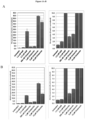
- Figure 1 illustrates results from tests for the efficacy of chidamide in inducing expression of viral kinase transcripts in the EBV+ cell line P3HR1 for TK ( Figure 1A ) and BGLF4 ( Figure 1B ).
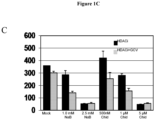
- Figure 1C illustrates the synergistic effect that chidamide has on killing of the EBV+ cell line P3HR1 when combined with ganciclovir.
- HDAC inhibitor - HDACi histone deacetylase inhibitor
- the condition is caused by herpesvirus infection in a subject having latent viral infection in accordance with the claims.
- the method can comprise the steps of administering a viral inducing agent and an antiviral agent to the subject.
- the method can comprise steps of administering a viral inducing agent, an antiviral agent, and one or more additional agents to a subject.
- the methods may include the co-administration of an oral HDAC inhibitor and an antiviral agent, either in the same or separate formulations.
- the methods and compositions provided can be used to treat and/or prevent infection by any of the viruses described herein.
- the methods and compositions can be used to treat and/or prevent any of the cancers described herein.
- the methods and compositions can be used to treat and/or prevent any of the inflammatory conditions described herein.
- Any of the viral inducing agents and/or antiviral agents described herein can be used in the methods and compositions disclosed but not claimed herein.
- the viral inducing agent can be an HDAC inhibitor.
- the HDAC inhibited can be any of a class I HDAC, for instance, HDAC1, HDAC2, and HDAC3.
- the HDAC inhibited can be a class IIb HDAC, for instance, HDAC10.
- the HDAC inhibitor can be a benzamide.
- the benzamide can be 4SC-202. According to the invention, the benzamide is chidamide (also known as CS055 or HBI-8000).
- One or more additional agents described herein can be administered to a subject.
- An additional agent can be selected for administration based on the type of condition the subject has or is suspected of having.
- compositions comprising an agent or combination of agents, e.g., viral inducing agents, antiviral agents, or one or more additional agents.
- agents e.g., viral inducing agents, antiviral agents, or one or more additional agents.
- a viral inducing agent, antiviral agent, or one or more additional agents can be administered to a subject in separate pharmaceutical compositions or can be co-formulated in a single pharmaceutical composition.
- One or more pharmaceutical compositions can be administered to a subject by "pulsed administration" over a period of time.
- obtaining as in “obtaining the composition” is intended to include purchasing, synthesizing, or otherwise acquiring the composition (or agent(s) of the composition).
- subject refers to mammals and non-mammals, e.g., suffering from a disorder described herein.
- mammals include, but are not limited to, any member of the Mammalian class: humans, non-human primates such as chimpanzees, and other apes and monkey species; farm animals such as cattle, horses, sheep, goats, swine; domestic animals such as rabbits, dogs, and cats; laboratory animals including rodents, such as rats, mice and guinea pigs, and the like.
- non-mammals include, but are not limited to, birds, fish and the like.
- the mammal is a human.
- treat include alleviating, inhibiting or reducing symptoms, reducing or inhibiting severity of, reducing incidence of, prophylactic treatment of, reducing or inhibiting recurrence of, delaying onset of, delaying recurrence of, abating or ameliorating a disease or condition symptoms, ameliorating the underlying metabolic causes of symptoms, inhibiting the disease or condition, e.g., arresting the development of the disease or condition, relieving the disease or condition, causing regression of the disease or condition, relieving a condition caused by the disease or condition, or stopping the symptoms of the disease or condition.
- therapeutic benefit is meant eradication or amelioration of the underlying disorder being treated, and/or the eradication or amelioration of one or more of the physiological symptoms associated with the underlying disorder such that an improvement is observed in the patient.
- prevent include preventing additional symptoms, preventing the underlying metabolic causes of symptoms, inhibiting the disease or condition, e.g., arresting the development of the disease or condition and are intended to include prophylaxis.
- the terms further include achieving a prophylactic benefit.
- the compositions are optionally administered to a patient at risk of developing a particular disease, to a patient reporting one or more of the physiological symptoms of a disease, or to a patient at risk of reoccurrence of the disease.
- an “effective amount” or “therapeutically effective amount” as used herein refer to a sufficient amount of at least one agent being administered which achieve a desired result, e.g., to relieve to some extent one or more symptoms of a disease or condition being treated. In certain instances, the result is a reduction and/or alleviation of the signs, symptoms, or causes of a disease, or any other desired alteration of a biological system. In certain instances, an “effective amount” for therapeutic uses is the amount of the composition comprising an agent as set forth herein required to provide a clinically significant decrease in a disease. An appropriate "effective" amount in any individual case is determined using any suitable technique, such as a dose escalation study.
- administer refers to the methods that are used to enable delivery of agents or compositions to the desired site of biological action. These methods include, but are not limited to oral routes, intraduodenal routes, parenteral injection (including intravenous, subcutaneous, intraperitoneal, intramuscular, intravascular or infusion), topical and rectal administration. Administration techniques that in some instances are employed with the agents and methods described herein include, e.g., as discussed in Goodman and Gilman, The Pharmacological Basis of Therapeutics (current edition), Pergamon ; and Remington's, Pharmaceutical Sciences (current edition), Mack Publishing Co., Easton, Pa . In certain embodiments, the agents and compositions described herein are administered orally. In some embodiments, the compositions described herein are administered parenterally.
- pharmaceutically acceptable refers to a material that does not abrogate the biological activity or properties of the agents described herein, and is relatively nontoxic (i.e., the toxicity of the material significantly outweighs the benefit of the material). In some instances, a pharmaceutically acceptable material is administered to an individual without causing significant undesirable biological effects or significantly interacting in a deleterious manner with any of the components of the composition in which it is contained.
- pharmaceutically acceptable excipient refers to carriers and vehicles that are compatible with the active ingredient (for example, a compound disclosed herein) of a pharmaceutical composition disclosed herein (and preferably capable of stabilizing it) and not deleterious to the subject to be treated.
- solubilizing agents that form specific, more soluble complexes with the compounds of the invention can be utilized as pharmaceutical excipients for delivery of the compounds.
- Suitable carriers and vehicles are known to those of extraordinary skill in the art.
- excipient as used herein will encompass all such carriers, adjuvants, diluents, solvents, or other inactive additives.
- Suitable pharmaceutically acceptable excipients include, but are not limited to, water, salt solutions, alcohol, vegetable oils, polyethylene glycols, gelatin, lactose, amylose, magnesium stearate, talc, silicic acid, viscous paraffin, perfume oil, fatty acid monoglycerides and diglycerides, petroethral fatty acid esters, hydroxymethyl-cellulose, polyvinylpyrrolidone, etc.
- compositions disclosed herein can also be sterilized and, if desired, mixed with auxiliary agents, e.g., lubricants, preservatives, stabilizers, wetting agents, emulsifiers, salts for influencing osmotic pressure, buffers, colorings, flavorings and/or aromatic substances and the like, which do not deleteriously react with the active compounds disclosed herein.
- auxiliary agents e.g., lubricants, preservatives, stabilizers, wetting agents, emulsifiers, salts for influencing osmotic pressure, buffers, colorings, flavorings and/or aromatic substances and the like, which do not deleteriously react with the active compounds disclosed herein.
- Herpesviruses are a large family of DNA viruses that include Herpes simplex viruses (HSVs) 1 and 2, Varicella zoster virus, Epstein-Barr virus (EBV), cytomegalovirus (CMV) and human herpesviruses (HHVs) 6A, 6B, 7 and 8, which can cause various diseases in humans.
- Herpesviruses have two stages of replication, the lytic and the latent. Soon after primary infection, immunological surveillance by the host force herpesviruses to enter the latent state of infection, where only a few selected genes are expressed.
- TK thymidine kinase
- PK protein kinase
- EBV maintains a latent state of infection in these lymphomas
- typical anti-herpesviral drugs such as the nucleoside analogs ganciclovir (GCV) or acyclovir
- GCV nucleoside analogs ganciclovir
- acyclovir ganciclovir
- TK thymidine kinase
- EBV-PK protein kinase
- HDAC inhibitors may induce both EBV-TK and EBV-PK in EBV infected tumors.
- HDAC inhibitors may increase the activity of the CMV promoter in tumor cells.
- HDAC inhibitors may increase transcription of latent Herpes simplex virus genes in cell culture and tumors.
- several potent HDAC inhibitors HDACi have been tested in the clinic as anti-cancer agents.
- HDAC inhibitors induce lytic phase gene expression in viruses and kill virus-infected cells in combination with antiviral drugs.
- HDAC inhibitors including some new, highly-potent compounds, induce EBV lytic phase gene expression and kill EBV-infected cells in combination with antiviral drugs.
- HDAC inhibitors induce lytic phase gene expression in herpesviruses and kill virus-infected cells in combination with antiviral drugs.
- the condition is caused by a latent viral infection.
- the condition is cancer, autoimmune or inflammatory condition.
- the cancer, autoimmune or inflammatory condition is caused by infection by Epstein-Barr Virus.
- the cancer, autoimmune or inflammatory condition is caused by infection by a Herpes simplex virus.
- the cancer, autoimmune or inflammatory condition is caused by infection by a cytomegalovirus.
- the methods comprise administering said viral inducing agent (an HDAC inhibitor which is chidamide according to the invention) and said antiviral agent. In some embodiments, the methods comprise administering said HDAC inhibitor and said antiviral agent. In certain embodiments, said HDAC inhibitor and said antiviral agent are co-formulated. In some embodiments, the methods comprise further administering an additional viral inducing agent. In other embodiments, the methods comprise further administering an additional antiviral agent. In some embodiments, the methods comprise administering additional individual doses of the viral inducing agent and/or the antiviral agent.
- the HDAC inhibitor may be a benzamide.
- the benzamide is chidamide.
- the benzamide may be 4SC-202.
- the methods disclosed herein may further comprise administering an antiviral agent.
- the HDAC inhibitor and the antiviral agent may be co-formulated.
- the methods comprise administering an HDAC inhibitor and an antiviral wherein the HDAC inhibitor is a benzamide and wherein the benzamide is chidamide.
- the antiviral is acyclovir and/or ganciclovir and/or valganciclovir.
- compositions comprising an HDAC inhibitor and an antiviral agent.
- the HDAC inhibitor may be a benzamide.
- the benzamide HDAC inhibitor may be 4SC-202 or chidamide.
- the antiviral agent may be acyclovir, ganciclovir, or valganciclovir.
- the composition may comprise an additional agent.
- the additional agent may be an antiviral agent, an HDAC inhibitor, or a chemotherapeutic agent.
- the compositions may be formulated as a capsule, gel, tablet, solution, or suspension.
- the compositions may be formulated for oral administration.
- the compositions may be formulated for parenteral administration.
- the compositions may be formulated for intravenous, intraperitoneal, oral, subcutaneous, intrathecal, or intratumor administration.
- compositions may be formulated for administration at the site of a viral infection.
- the compositions may be formulated for modified release of the HDAC inhibitor and the antiviral agent.
- the HDAC inhibitor may be dissolved before the antiviral agent is dissolved.
- the HDAC inhibitor may be dissolved after the antiviral agent is dissolved.
- the compositions may be formulated for once daily administration.
- the compositions may be formulated for twice daily, thrice daily, four times daily, once every other day, once weekly, once bi-weekly, or monthly.
- compositions may be administered in a cyclic or pulsatile manner. This may allow for a "drug holiday" or a "structured treatment interruption," which allows for the management of negative side-effects.
- the inducing agent and anti-viral agent may be administered for at least one cycle of therapy, said cycle comprising: (i) administering the inducing agent and the anti-viral agent to the subject over a first period of time; and (ii) continuing the administration of the anti-viral agent to the subject for a second period; wherein said second period represents the remainder of the cycle.
- the first period anti-viral agent and inducing agent may be administered in the same composition.
- the first period of time may be less than or equal to one-half of the length of the cycle.
- the first period of time may be less than or equal to about 5 days, and wherein said cycle is less than or equal to about 21 days.
- the methods of the provided invention comprise use of one or more pharmaceutical compositions provided herein comprising an inducing agent as defined in the claims to induce expression of a gene product in a virus-infected cell.
- the gene product expressed can be a viral enzyme or a cellular enzyme or activity that is largely expressed in virus-infected cells.
- Expression products that can be targeted include enzymes involved with DNA replication, for example, for repair or replication of the genome, assembly of complete virus particles, generation of viral membrane or walls, RNA transcription or protein translation or combinations of these activities. Interference with these processes can be performed by inducing and then acting on an enzyme and, preferably, a critical enzyme in the process.
- the viral inducing agent is chidamide.
- the HDAC inhibitor is a benzamide, which is chidamide.
- the molecular weight of the HDAC inhibitor is greater than 275 g/mol.
- the HDAC inhibitor has a molecular weight of greater than 200 g/mol, greater than 225 g/mol, greater than 250 g/mol, greater than 275 g/mol, greater than 300 g/mol, greater than 325 g/mol, greater than 350 g/mol, greater than 375 g/mol, greater than 400 g/mol, greater than 425 g/mol, greater than 450 g/mol, greater than 475 g/mol, greater than 500 g/mol, greater than 525 g/mol, greater than 550 g/mol, greater than 575 g/mol, greater than 600 g/mol, greater than 625 g/mol, greater than 650 g/mol, greater than 675 g/mol, greater than 700 g/mol, greater than 725 g/mol, greater than 750 g/mol, greater than 775 g/mol, greater than 800
- the HDAC inhibitor has a molecular weight of less than 200 g/mol, less than 225 g/mol, less than 250 g/mol, less than 275 g/mol, less than 300 g/mol, less than 325 g/mol, less than 350 g/mol, less than 375 g/mol, less than 400 g/mol, less than 425 g/mol, less than 450 g/mol, less than 475 g/mol, less than 500 g/mol, less than 525 g/mol, less than 550 g/mol, less than 575 g/mol, less than 600 g/mol, less than 625 g/mol, less than 650 g/mol, less than 675 g/mol, less than 700 g/mol, less than 725 g/mol, less than 750 g/mol, less than 775 g/mol, less than 800 g/mol, less than 850 g/mol, less than 900 g/mol, less than 950
- the HDAC inhibitor has a molecular weight of less than 500 g/mol and more than 250 g/mol. In other embodiments, the HDAC inhibitor has a molecular weight of less than 400 g/mol and more than 300 g/mol.
- the HDAC inhibitor is not m-carboxycinnamic acid, bishydroxamic acid, suberic bishydroxamic acid, Trichostatin A (7-[4-(dimethylamino)phenyl]-N-hydroxy-4,6-dimethyl-7-oxohepta-2,4-dienamide), SAHA (suberoyl anilide hydroxamic acid)/Vorinostat, oxamflatin, ABHA, SB-55629, SB939, pyroxamide, propenamides, aroyl pyrrolyl hydroxamides, Belinostat/PXD101, Papobinostat, LAQ824 (((E)-N-hydroxy-3-[4-[[2-hydroxyethyl-[2-(1H-indol-3-yl)ethyl]amino]methyl]phenyl]prop-2-enamide), LBH589, CI-994, Entino
- a viral inducing agent for example an HDAC inhibitor, penetrates the blood brain barrier.
- a viral inducing agent that penetrates the blood brain barrier is a benzamide HDAC inhibitor.
- the viral inducing agent that penetrates the blood brain barrier comprises chidamide .
- the HDAC inhibitor is chidamide.
- chidamide is administered at a dose of 40 mg/day.
- chidamide is administered at a dose of about 1 mg/day, about 2 mg/day, about 5 mg/day, about 10 mg/day, about 15 mg/day, about 20 mg/day, about 25 mg/day, about 30 mg/day, about 35 mg/day, about 40 mg/day, about 45 mg/day, about 50 mg/day, about 60 mg/day, about 70 mg/day, about 80 mg/day, about 90 mg/day, about 100 mg/day, about 150 mg/day, about 200 mg/day, about 250 mg/day, about 300 mg/day, about 350 mg/day, and about 400 mg/day.
- chidamide is administered at a dose of less than 1 mg/day, less than 2 mg/day, less than 5 mg/day, less than 10 mg/day, less than 15 mg/day, less than 20 mg/day, less than 25 mg/day, less than 30 mg/day, less than 35 mg/day, less than 40 mg/day, less than 45 mg/day, less than 50 mg/day, less than 60 mg/day, less than 70 mg/day, less than 80 mg/day, less than 90 mg/day, less than 100 mg/day, less than 150 mg/day, less than 200 mg/day, less than 250 mg/day, less than 300 mg/day, less than 350 mg/day, less than 400 mg/day.
- chidamide is administered at a dose of more than 1 mg/day, more than 2 mg/day, more than 5 mg/day, more than 10 mg/day, more than 15 mg/day, more than 20 mg/day, more than 25 mg/day, more than 30 mg/day, more than 35 mg/day, more than 40 mg/day, more than 45 mg/day, more than 50 mg/day, more than 60 mg/day, more than 70 mg/day, more than 80 mg/day, more than 90 mg/day, more than 100 mg/day, more than 150 mg/day, more than 200 mg/day, more than 250 mg/day, more than 300 mg/day, more than 350 mg/day, or more than 400 mg/day.
- chidamide is administered at a dose of about 1 mg/day to about 100 mg/day. In certain embodiments, chidamide is administered at a dose of about 5 mg/day to about 80 mg/day. In some embodiments, chidamide is administered at a dose of 5 mg twice weekly to 80 mg twice weekly. In some embodiments, chidamide is administered at a dose of 5 mg thrice weekly to 80 mg thrice weekly. In some embodiments, chidamide is administered at a dose of about 10 mg/day to about 60 mg/day. In some embodiments, chidamide is administered at a dose of 10 mg twice weekly to 60 mg twice weekly.
- chidamide is administered at a dose of 10 mg thrice weekly to 60 mg thrice weekly. In some embodiments, chidamide is administered at a dose of 20 mg/day to 50 mg/day. In some embodiments, chidamide is administered at a dose of 20 mg twice weekly to 50 mg twice weekly. In some embodiments, chidamide is administered at a dose of 20 mg thrice weekly to 50 mg thrice weekly. In some embodiments, chidamide is administered at a dose of 30 mg/day to 40 mg/day. In some embodiments, chidamide is administered at a dose of 30 mg twice weekly to 40 mg twice weekly.
- chidamide is administered at a dose of 30 mg thrice weekly to 40 mg thrice weekly. In certain embodiments, chidamide is administered once a day (q.d.), twice a day (b.id.), or thrice a day (t.i.d.). In some embodiments, chidamide is administered daily, once a week, twice a week, three times a week, four times a week, or five times a week. In some embodiments, chidamide is administered once a month, twice a month, thrice a month or 4 times a month. In certain embodiments, chidamide is in a delayed, slow or timed release form.
- a unit dose of a co-formulated HDAC inhibitor chidamide and antiviral agent comprises less than 400 mg of the HDAC inhibitor and less than 1000 mg of the antiviral agent. In some embodiments, a unit dose of a co-formulated HDAC inhibitor chidamide and antiviral agent comprises less than 200 mg of the HDAC inhibitor and less than 1000 mg of the antiviral agent. In some embodiments, a unit dose of a co-formulated HDAC inhibitor chidamide and antiviral agent comprises less than 100 mg of the HDAC inhibitor and less than 1000 mg of the antiviral agent. In certain embodiments, the unit dose comprises less than 50 mg of the HDAC inhibitor chidamide and less than 500 mg of the antiviral agent.
- the unit dose comprises less than 80 mg of the HDAC inhibitor chidamide and less than 1500 mg of the antiviral agent. In some embodiments, the unit dose comprises less than 50 mg of the HDAC inhibitor chidamide and less than 1000 mg of the antiviral agent. In some embodiments, the unit dose comprises about 20 mg of the HDAC inhibitor chidamide and about 450 mg of the antiviral agent. In certain embodiments, the unit dose comprises about 40 mg of the HDAC inhibitor chidamide and about 900 mg of the antiviral agent. In some embodiments, the antiviral agent is formulated as controlled release.
- the HDAC inhibitor disclosed but not claimed herein may be 4SC-202.
- 4SC-202 may be administered at a dose of 200 mg/day.
- 4SC-202 may be administered at a dose of about 1 mg/day, about 2 mg/day, about 5 mg/day, about 10 mg/day, about 15 mg/day, about 20 mg/day, about 25 mg/day, about 30 mg/day, about 35 mg/day, about 40 mg/day, about 45 mg/day, about 50 mg/day, about 60 mg/day, about 70 mg/day, about 80 mg/day, about 90 mg/day, about 100 mg/day, about 150 mg/day, about 200 mg/day, about 250 mg/day, about 300 mg/day, about 350 mg/day about 400 mg/day, about 450 mg/day or about 500 mg/day.
- 4SC-202 may be administered at a dose of less than 1 mg/day, less than 2 mg/day, less than 5 mg/day, less than 10 mg/day, less than 15 mg/day, less than 20 mg/day, less than 25 mg/day, less than 30 mg/day, less than 35 mg/day, less than 40 mg/day, less than 45 mg/day, less than 50 mg/day, less than 60 mg/day, less than 70 mg/day, less than 80 mg/day, less than 90 mg/day, or less than 100 mg/day, less than 150 mg/day, less than 200 mg/day, less than 250 mg/day, less than 300 mg/day, less than 350 mg/day less than 400 mg/day, less than 450 mg/day or less than 500 mg/day.
- 4SC-202 may be administered at a dose of more than 1 mg/day, more than 2 mg/day, more than 5 mg/day, more than 10 mg/day, more than 15 mg/day, more than 20 mg/day, more than 25 mg/day, more than 30 mg/day, more than 35 mg/day, more than 40 mg/day, more than 45 mg/day, more than 50 mg/day, more than 60 mg/day, more than 70 mg/day, more than 80 mg/day, more than 90 mg/day, more than 100 mg/day, more than 150 mg/day, more than 200 mg/day, more than 250 mg/day, more than 300 mg/day, more than 350 mg/day more than 400 mg/day, more than 450 mg/day or more than 500 mg/day.
- 4SC-202 may be administered at a dose of about 10 mg/day to about 1000 mg/day. 4SC-202 may be administered at a dose of about 20 mg/day to about 800 mg/day. 4SC-202 may be administered at a dose of about 25 mg/day to about 600 mg/day. 4SC-202 may be administered once a day (q.d.), twice a day (b.id.), or thrice a day (t.i.d.). The dose may be about 50 mg twice daily. The dose may be about 100 mg twice daily. The dose may be about 150 mg twice daily. The dose may be about 200 mg twice daily. The dose may be about 250 mg twice daily. The dose may be about 300 mg twice daily.
- 4SC-202 may be administered daily, once a week, twice a week, three times a week, four times a week, or five times a week. 4SC-202 may be administered once a month, twice a month, thrice a month or 4 times a month. 4SC-202 may be in a delayed, slow or timed release form.
- a unit dose of a co-formulated HDAC inhibitor 4SC-202 and antiviral agent may comprise less than 400 mg of the HDAC inhibitor 4SC-202 and less than 1000 mg of the antiviral agent.
- a unit dose of a co-formulated HDAC inhibitor 4SC-202 and antiviral agent may comprise less than 200 mg of the HDAC inhibitor 4SC-202 and less than 1000 mg of the antiviral agent.
- the unit dose may comprise less than 50 mg of the HDAC inhibitor 4SC-202 and less than 500 mg of the antiviral agent.
- the unit dose may comprise less than 80 mg of the HDAC inhibitor 4SC-202 and less than 1500 mg of the antiviral agent.
- the unit dose may comprise less than 50 mg of the HDAC inhibitor 4SC-202 and less than 1000 mg of antiviral agent.
- the unit dose may comprise about 20 mg of the HDAC inhibitor 4SC-202 and about 450 mg of antiviral agent.
- the unit dose may comprise about 40 mg of the HDAC inhibitor 4SC-202 and about 900 mg of antiviral agent.
- the antiviral agent may be formulated as controlled release, delayed release or slow release.
- the HDAC inhibitor disclosed but not claimed herein may be ACY-957
- ACY-957 may be administered at a dose of 200 mg/day.
- ACY-957 may be administered at a dose of about 1 mg/day, about 2 mg/day, about 5 mg/day, about 10 mg/day, about 15 mg/day, about 20 mg/day, about 25 mg/day, about 30 mg/day, about 35 mg/day, about 40 mg/day, about 45 mg/day, about 50 mg/day, about 60 mg/day, about 70 mg/day, about 80 mg/day, about 90 mg/day, about 100 mg/day, about 150 mg/day, about 200 mg/day, about 250 mg/day, about 300 mg/day, about 350 mg/day about 400 mg/day, about 450 mg/day or about 500 mg/day.
- 4SC-202 may be administered at a dose of less than 1 mg/day, less than 2 mg/day, less than 5 mg/day, less than 10 mg/day, less than 15 mg/day, less than 20 mg/day, less than 25 mg/day, less than 30 mg/day, less than 35 mg/day, less than 40 mg/day, less than 45 mg/day, less than 50 mg/day, less than 60 mg/day, less than 70 mg/day, less than 80 mg/day, less than 90 mg/day, or less than 100 mg/day, less than 150 mg/day, less than 200 mg/day, less than 250 mg/day, less than 300 mg/day, less than 350 mg/day less than 400 mg/day, less than 450 mg/day or less than 500 mg/day.
- ACY-957 may be administered at a dose of more than 1 mg/day, more than 2 mg/day, more than 5 mg/day, more than 10 mg/day, more than 15 mg/day, more than 20 mg/day, more than 25 mg/day, more than 30 mg/day, more than 35 mg/day, more than 40 mg/day, more than 45 mg/day, more than 50 mg/day, more than 60 mg/day, more than 70 mg/day, more than 80 mg/day, more than 90 mg/day, more than 100 mg/day, more than 150 mg/day, more than 200 mg/day, more than 250 mg/day, more than 300 mg/day, more than 350 mg/day more than 400 mg/day, more than 450 mg/day or more than 500 mg/day.
- ACY-957 may be administered at a dose of about 10 mg/day to about 1000 mg/dayACY-957 may be administered at a dose of about 20 mg/day to about 800 mg/day.
- ACY-957 may be administered at a dose of about 25 mg/day to about 600 mg/day.
- ACY-957 may be administered once a day (q.d.), twice a day (b.id.), or thrice a day (t.i.d.). the dose may be about 50 mg twice daily.
- the dose may be about 100 mg twice daily.
- the dose may be about 150 mg twice daily.
- the dose may be about 200 mg twice daily.
- the dose may be about 250 mg twice daily.
- the dose may be about 300 mg twice daily.
- ACY-957 may be administered daily, once a week, twice a week, three times a week, four times a week, or five times a week.
- ACY-957 may be administered once a month, twice a month, thrice a month or 4 times a month.
- ACY-957 may be in a delayed, slow or timed release form.
- a unit dose of a co-formulated HDAC inhibitor ACY-957 and antiviral agent may comprise less than 400 mg of the HDAC inhibitor ACY-957 and less than 1000 mg of the antiviral agent.
- a unit dose of a co-formulated HDAC inhibitor ACY-957and antiviral agent may comprise less than 200 mg of the HDAC inhibitor ACY-957 and less than 1000 mg of the antiviral agent.
- the unit dose may comprise less than 50 mg of the HDAC inhibitor ACY-957 and less than 500 mg of the antiviral agent.
- the unit dose may comprise less than 80 mg of the HDAC inhibitor ACY-957 and less than 1500 mg of the antiviral agent.
- the unit dose may comprise less than 50 mg of the HDAC inhibitor ACY-957 and less than 1000 mg of antiviral agent.
- the unit dose may comprise about 20 mg of the HDAC inhibitor ACY-957 and about 450 mg of antiviral agent.
- the unit dose may comprise about 40 mg of the HDAC inhibitor ACY-957 and about 900 mg of antiviral agent.
- the antiviral agent may be formulated as controlled release, delayed release or slow release.
- the HDAC inhibitor disclosed but not claimed herein may be ACY-1215.
- ACY-1215 may be administered at a dose of 200 mg/day.
- ACY-1215 may be administered at a dose of about 1 mg/day, about 2 mg/day, about 5 mg/day, about 10 mg/day, about 15 mg/day, about 20 mg/day, about 25 mg/day, about 30 mg/day, about 35 mg/day, about 40 mg/day, about 45 mg/day, about 50 mg/day, about 60 mg/day, about 70 mg/day, about 80 mg/day, about 90 mg/day, about 100 mg/day, about 150 mg/day, about 160 mg/day, about 170 mg/day, about 200 mg/day, about 250 mg/day, about 300 mg/day, about 350 mg/day about 400 mg/day, about 450 mg/day or about 500 mg/day.
- 4SC-202 may be administered at a dose of less than 1 mg/day, less than 2 mg/day, less than 5 mg/day, less than 10 mg/day, less than 15 mg/day, less than 20 mg/day, less than 25 mg/day, less than 30 mg/day, less than 35 mg/day, less than 40 mg/day, less than 45 mg/day, less than 50 mg/day, less than 60 mg/day, less than 70 mg/day, less than 80 mg/day, less than 90 mg/day, or less than 100 mg/day, less than 150 mg/day, less than 200 mg/day, less than 250 mg/day, less than 300 mg/day, less than 350 mg/day less than 400 mg/day, less than 450 mg/day or less than 500 mg/day.
- ACY-1215 may be administered at a dose of more than 1 mg/day, more than 2 mg/day, more than 5 mg/day, more than 10 mg/day, more than 15 mg/day, more than 20 mg/day, more than 25 mg/day, more than 30 mg/day, more than 35 mg/day, more than 40 mg/day, more than 45 mg/day, more than 50 mg/day, more than 60 mg/day, more than 70 mg/day, more than 80 mg/day, more than 90 mg/day, more than 100 mg/day, more than 150 mg/day, more than 200 mg/day, more than 250 mg/day, more than 300 mg/day, more than 350 mg/day more than 400 mg/day, more than 450 mg/day or more than 500 mg/day.
- ACY-1215 may be administered at a dose of about 10 mg/day to about 1000 mg/day.
- ACY-1215 may be administered at a dose of about 20 mg/day to about 800 mg/day.
- ACY-1215 may be administered at a dose of about 25 mg/day to about 600 mg/day.
- ACY-1215 may be administered at a dose of about 50 mg/day to about 400 mg/day.
- ACY-1215 may be administered at a dose of about 100 mg/day to about 300 mg/day.
- ACY-1215 may be administered at a dose of about 100 mg/day to about 200 mg/day.
- ACY-1215 may be administered once a day (q.d.), twice a day (b.id.), or thrice a day (t.i.d.).
- the dose may be about 50 mg twice daily.
- the dose may be about 100 mg twice daily.
- the dose may be about 150 mg twice daily.
- the dose may be about 200 mg twice daily.
- the dose may be about 250 mg twice daily.
- the dose may be about 300 mg twice daily.
- ACY-1215 may be administered daily, once a week, twice a week, three times a week, four times a week, or five times a week.
- ACY-1215 may be administered once a month, twice a month, thrice a month or 4 times a month.
- ACY-1215 may be in a delayed, slow or timed release form.
- a unit dose of a co-formulated HDAC inhibitor ACY-1215 and antiviral agent may comprise less than 400 mg of the HDAC inhibitor ACY-1215 and less than 1000 mg of the antiviral agent.
- a unit dose of a co-formulated HDAC inhibitor ACY-1215 and antiviral agent may comprise less than 200 mg of the HDAC inhibitor ACY-1215 and less than 1000 mg of the antiviral agent.
- the unit dose may comprise less than 50 mg of the HDAC inhibitor ACY-1215 and less than 500 mg of the antiviral agent.
- the unit dose may comprise less than 80 mg of the HDAC inhibitor ACY-1215 and less than 1500 mg of the antiviral agent.
- the unit dose may comprise less than 50 mg of the HDAC inhibitor ACY-1215 and less than 1000 mg of antiviral agent.
- the unit dose may comprise about 20 mg of the HDAC inhibitor ACY-1215 and about 450 mg of antiviral agent.
- the unit dose may comprise about 40 mg of the HDAC inhibitor ACY-1215 and about 900 mg of antiviral agent.
- the antiviral agent may be formulated as controlled release, delayed release or slow release.
- an HDAC inhibitor induces transcription of viral genes. In certain embodiments, the HDAC inhibitor induces transcription of EBV genes in EBV-positive lymphoma cells. In certain embodiments, the HDAC inhibitor induces transcription of CMV genes in CMV-positive cells. In certain embodiments, the HDAC induces transcription of herpesvirus genes in Herpes simplex virus infected cells.
- the HDAC inhibitor induces transcription of viral genes at a concentration of about 100 ⁇ M, about 90 ⁇ M, about 80 ⁇ M, about 75 ⁇ M, about 70 ⁇ M, about 60 ⁇ M, about 50 ⁇ M, about 40 ⁇ M, about 30 ⁇ M, about 25 ⁇ M, about 20 ⁇ M, about 10 ⁇ M, about 5 ⁇ M, about 2 ⁇ M, about 1 ⁇ M, about 900 nM, about 800 nM, about 700 nM, about 600 nM, about 500 nM, about 400 nM, about 300 nM, about 200 nM, about 100 nM, about 75 nM, about 50 nM, about 20 nM, or about 10 nM.
- the HDAC inhibitor induces transcription of viral genes at a concentration of less than 100 ⁇ M, less than 90 ⁇ M, less than 80 ⁇ M, less than 75 ⁇ M, less than 70 ⁇ M, less than 60 ⁇ M, less than 50 ⁇ M, less than 40 ⁇ M, less than 30 ⁇ M, less than 25 ⁇ M, less than 20 ⁇ M, less than 10 ⁇ M, less than 5 ⁇ M, less than 2 ⁇ M, less than 1 ⁇ M, less than 900 nM, less than 800 nM, less than 700 nM, less than 600 nM, less than 500 nM, less than 400 nM, less than 300 nM, less than 200 nM, less than 100 nM, less than 75 nM, less than 50 nM, less than 20 nM, or less than 10 nM.
- the HDAC inhibitor induces transcription of viral genes at a concentration of more than 100 ⁇ M, more than 90 ⁇ M, more than 80 ⁇ M, more than 75 ⁇ M, more than 70 ⁇ M, more than 60 ⁇ M, more than 50 ⁇ M, more than 40 ⁇ M, more than 30 ⁇ M, more than 25 ⁇ M, more than 20 ⁇ M, more than 10 ⁇ M, more than 5 ⁇ M, more than 2 ⁇ M, more than 1 ⁇ M, more than 900 nM, more than 800 nM, more than 700 nM, more than 600 nM, more than 500 nM, more than 400 nM, more than 300 nM, more than 200 nM, more than 100 nM, more than 75 nM, more than 50 nM, more than 20 nM, or more than 10 nM.
- the HDAC inhibitor induces transcription of viral genes at more than 50 nM and less than 100 nM. In some embodiments, the HDAC inhibitor has induces transcription of viral genes at more than 200 nM and less than 500 nM. In certain embodiments, the HDAC inhibitor induces transcription of viral genes at more than 100 nM and less than 200 nM.
- Inducing agents may act directly on the viral genome or indirectly through a cellular factor required for viral expression.
- viral gene expression can be regulated through the regulation of the expression of viral transcription factors such as ZTA, RTA, tat, and tax, cellular transcription factors such as AP-1, AP-2, Sp1, NF- ⁇ B, and other transcriptional activators and/or repressors (factors), co-activators and co- repressors, histone acetylators and deacetylators, DNA methylases and demethylases, oncogenes or proto-oncogenes, or protein kinase C.
- viral transcription factors such as ZTA, RTA, tat, and tax
- cellular transcription factors such as AP-1, AP-2, Sp1, NF- ⁇ B, and other transcriptional activators and/or repressors (factors), co-activators and co- repressors, histone acetylators and deacetylators, DNA methyl
- control over their expression can lead to control over the infection.
- Other gene products both viral and cellular in origin, whose expression can be regulated with inducing agents include proteases, polymerases, reverse transcriptases, cell-surface receptors, major histocompatibility antigens, growth factors, and combination of these products.
- Anti-proliferative activity also includes the ability to repress tumor angiogenesis through the blockade of angiogenesis factor activity, production or release, transcriptional regulation, or the ability to modulate transcription of genes under angiogenesis or growth factor or hormonal control. Either would be an effective therapy, particularly against both prostatic neoplasia and breast carcinomas.
- Further activities that effect transcription and/or cellular differentiation include increased intracellular cAMP levels, inhibition of histone acetylation, and inhibition of genomic methylation. Each of these activities is directly related to gene expression, and increased expression can sensitize infected cells to a specific anti-viral agent.
- inducing agents include HDAC inhibitors that induce EBV-PK activity (also known BGLF4) in EBV infected tumors. Expression of EBV-PK/BGLF4 sensitizes a cell to an antiviral agent.
- HDAC inhibitors induce EBV-PK.
- HDAC inhibitors induce EBV-TK and/or EBV-PK.
- HDAC inhibitors induce HSV-TK and/or HSV-PK.
- HDAC inhibitors induce CMV-TK and/or CMV-PK.
- EBV-TK activity in EBV-immortalized B-cells and patient-derived tumor cells using these drugs is possible, and that these previously resistant cells are rendered susceptible to ganciclovir therapy.
- This therapeutic regimen does not depend on the associated viral genome being the cause of the tumor. Without wishing to be bound by theory, it is believed that just the presence of the EBV genome in latent form would make the tumor susceptible to this combination protocol.
- an inducing agent induces viral gene expression by more than 4 fold after 24h of treatment.
- an HDAC inhibitor induces TK or EBV-PK expression by more than 4 fold after 24h of treatment.
- an HDAC inhibitor induces viral gene expression after about 48h, about 36h, about 24h, about 18h, about 12h, about 8h, about 6h, about 4h, about 3h, about 2h, about 1h, or about 30 minutes.
- an HDAC inhibitor induces viral gene expression in less than 48h, less than 36h, less than 24h, less than 18h, less than 12h, less than 8h, less than 6h, less than 4h, less than 3h, less than 2h, less than 1h, or less than 30 minutes. In some embodiments, an HDAC inhibitor induces viral gene expression in more than 48h, more than 36h, more than 24h, more than 18h, more than 12h, more than 8h, more than 6h, more than 4h, more than 3h, more than 2h, more than 1h, or more than 30 minutes. In certain embodiments, an HDAC inhibitor induces viral gene expression after more than 30 minutes and less than 24h.
- an inducing agent is capable of inducing gene expression at a concentration of less than 500 nM.
- the inducing agent is an HDAC inhibitor According to the invention, the inducing agent is chidamide.
- the inducing agent is capable of inducing EBV-TK or EBV-PK expression.
- the inducing agent is capable of inducing HSV-TK or HSV-PK expression.
- the inducing agent is capable of inducing CMV-TK or CMV-PK expression.
- an inducing agent is capable of inducing gene expression at a concentration of about 100 ⁇ M, about 90 ⁇ M, about 80 ⁇ M, about 75 ⁇ M, about 70 ⁇ M, about 60 ⁇ M, about 50 ⁇ M, about 40 ⁇ M, about 30 ⁇ M, about 25 ⁇ M, about 20 ⁇ M, about 10 ⁇ M, about 5 ⁇ M, about 2 ⁇ M, about 1 ⁇ M, about 900 nM, about 800 nM, about 700 nM, about 600 nM, about 500 nM, about 400 nM, about 300 nM, about 200 nM, about 100 nM, about 75 nM, about 50 nM, about 20 nM, or about 10 nM.
- an inducing agent is capable of inducing gene expression at a concentration of less than 100 ⁇ M, less than 90 ⁇ M, less than 80 ⁇ M, less than 75 ⁇ M, less than 70 ⁇ M, less than 60 ⁇ M, less than 50 ⁇ M, less than 40 ⁇ M, less than 30 ⁇ M, less than 25 ⁇ M, less than 20 ⁇ M, less than 10 ⁇ M, less than 5 ⁇ M, less than 2 ⁇ M, less than 1 ⁇ M, less than 900 nM, less than 800 nM, less than 700 nM, less than 600 nM, less than 500 nM, less than 400 nM, less than 300 nM, less than 200 nM, less than 100 nM, less than 75 nM, less than 50 nM, less than 20 nM, or less than 10 nM.
- an inducing agent is capable of inducing gene expression at a concentration of more than 100 ⁇ M, more than 90 ⁇ M, more than 80 ⁇ M, more than 75 ⁇ M, more than 70 ⁇ M, more than 60 ⁇ M, more than 50 ⁇ M, more than 40 ⁇ M, more than 30 ⁇ M, more than 25 ⁇ M, more than 20 ⁇ M, more than 10 ⁇ M, more than 5 ⁇ M, more than 2 ⁇ M, more than 1 ⁇ M, more than 900 nM, more than 800 nM, more than 700 nM, more than 600 nM, more than 500 nM, more than 400 nM, more than 300 nM, more than 200 nM, more than 100 nM, more than 75 nM, more than 50 nM, more than 20 nM, or more than 10 nM.
- an inducing agent is capable of inducing gene expression at a concentration more than 50 nM and less than 100 nM. In certain embodiments, an inducing agent is capable of inducing gene expression at a concentration of more than 200 nM and less than 500 nM. In some embodiments, an inducing agent is capable of inducing gene expression at more than 100 nM and less than 200 nM
- an HDAC inhibitor induces viral gene expression after more than 1h and less than 6h. In certain embodiments, an HDAC inhibitor induces viral gene expression about 2 fold, about 3 fold, about 4 fold, about 5 fold, about 6 fold, about 7 fold, about 8 fold, about 9 fold, about 10 fold, about 12 fold, about 15 fold, about 20 fold, about 25 fold, about 30 fold, about 35 fold, about 40 fold, about 45 fold, or about 50 fold.
- an HDAC inhibitor induces viral gene expression less than 2 fold, less than 3 fold, less than 4 fold, less than 5 fold, less than 6 fold, less than 7 fold, less than 8 fold, less than 9 fold, less than 10 fold, less than 12 fold, less than 15 fold, less than 20 fold, less than 25 fold, less than 30 fold, less than 35 fold, less than 40 fold, less than 45 fold, or less than 50 fold.
- an HDAC inhibitor induces viral gene expression more than 2 fold, more than 3 fold, more than 4 fold, more than 5 fold, more than 6 fold, more than 7 fold, more than 8 fold, more than 9 fold, more than 10 fold, more than 12 fold, more than 15 fold, more than 20 fold, more than 25 fold, more than 30 fold, more than 35 fold, more than 40 fold, more than 45 fold, or more than 50 fold.
- an HDAC inhibitor induces viral gene expression more than 2 fold and less than 50 fold.
- an HDAC inhibitor induces viral gene expression more than 5 fold and less than 40 fold.
- Anti-viral agents that can be used in the compositions disclosed but not claimed herein can include, for example, substrates and substrate analogs, inhibitors and other agents that severely impair, debilitate or otherwise destroy virus-infected cells.
- Substrate analogs include amino acid and nucleoside analogs.
- Substrates can be conjugated with toxins or other viricidal substances.
- Inhibitors include integrase inhibitors, protease inhibitors, polymerase inhibitors and transcriptase inhibitors such as reverse transcriptase inhibitors.
- Antiviral agents that can be used in the compositions disclosed but not claimed herein can include, for example, ganciclovir, valganciclovir, oseltamivir (Tamiflu TM ), zanamivir (Relenza TM ), abacavir, aciclovir, acyclovir, adefovir, amantadine, amprenavir, ampligen, arbidol, atazanavir, atripla, boceprevir, cidofovir, combivir, darunavir, delavirdine, didanosine, docosanol, edoxudine, efavirenz, emtricitabine, enfuvirtide, entecavir, famciclovir, fomivirsen, fosamprenavir, foscarnet, fosfonet, fusion inhibitors (e.g., enfuvirtide), ibacitabine, imunovir,
- the antiviral agent is acyclovir, ganciclovir, or valganciclovir.
- the antiviral agent is a nucleoside analog.
- nucleoside analogs include acyclovir (ACV), ganciclovir (GCV), valganciclovir, famciclovir, ribavirin, zalcitabine (ddC), zidovudine (AZT), stavudine (D4T), lamivudine (3TC), didanosine (ddI), cytarabine, dideoxyadenosine, edoxudine, floxuridine, idoxuridine, inosine pranobex, 2'-deoxy-5-(methylamino)uridine, trifluridine and vidarabine.
- ACCV acyclovir
- GCV ganciclovir
- valganciclovir valganciclovir
- famciclovir ribavirin
- zalcitabine ddC
- ZT zidovudine
- D4T stavudi
- protease inhibitors examples include saquinivir, ritonavir and indinavir.
- Other anti-viral agents include interferons (e.g. ⁇ -, ⁇ -, ⁇ -interferon), cytokines such as tumor necrosis factor (TNF) or interleukins, cell receptors and growth factor antagonists, which can be purified or recombinantly produced.
- interferons e.g. ⁇ -, ⁇ -, ⁇ -interferon
- cytokines such as tumor necrosis factor (TNF) or interleukins
- cell receptors and growth factor antagonists which can be purified or recombinantly produced.
- the antiviral agent is administered at a dose of less than 3000 mg/day. In some embodiments, the antiviral agent is administered at a dose of about 10 mg/day, about 20 mg/day, about 50 mg/day, about 100 mg/day, about 150 mg/day, about 200 mg/day, about 250 mg/day, about 300 mg/day, about 350 mg/day, about 400 mg/day, about 450 mg/day, about 500 mg/day, about 600 mg/day, about 700 mg/day, about 800 mg/day, about 900 mg/day, about 1000 mg/day, about 1200 mg/day, about 1250 mg/day, about 1400 mg/day, about 1500 mg/day, about 1600 mg/day, about 1750 mg/day, about 1800 mg/day, about 1900 mg/day, about 2000 mg/day, about 2250 mg/day, about 2500 mg/day, about 2750 mg/day, about 3000 mg/day, about 3250 mg/day, about 350 0mg/day, about 3750 mg/day,
- the antiviral agent is administered at a dose of less than 10 mg/day, less than 20 mg/day, less than 50 mg/day, less than 100 mg/day, less than 150 mg/day, less than 200 mg/day, less than 250 mg/day, less than 300 mg/day, less than 350 mg/day, less than 400 mg/day, less than 450 mg/day, less than 500 mg/day, less than 600 mg/day, less than 700 mg/day, less than 800 mg/day, less than 900 mg/day, less than 1000 mg/day, less than 1200 mg/day, less than 1250 mg/day, less than 1400 mg/day, less than 1500 mg/day, less than 1600 mg/day, less than 1750 mg/day, less than 1800 mg/day, less than 1900 mg/day, less than 2000 mg/day, less than 2250 mg/day, less than 2500 mg/day, less than 2750 mg/day, less than 3000 mg/day, less than 3250 mg/day, less than 3500 mg/day, less than
- the antiviral agent is administered at a dose of more than 10 mg/day, more than 20 mg/day, more than 50 mg/day, more than 100 mg/day, more than 150 mg/day, more than 200 mg/day, more than 250 mg/day, more than 300 mg/day, more than 350 mg/day, more than 400 mg/day, more than 450 mg/day, more than 500 mg/day, more than 600 mg/day, more than 700 mg/day, more than 800 mg/day, more than 900 mg/day, more than 1000 mg/day, more than 1200 mg/day, more than 1250 mg/day, more than 1400 mg/day, more than 1500 mg/day, more than 1600 mg/day, more than 1750 mg/day, more than 1800 mg/day, more than 1900 mg/day, more than 2000 mg/day, more than 2250 mg/day, more than 2500 mg/day, more than 2750 mg/day, more than 3000 mg/day, more than 3250 mg/day, more than 3500 mg/day, more than
- the antiviral agent is administered at a dose of more than 10 mg/day and less than 5000 mg/day. In some embodiments, the antiviral agent is administered at a dose of more than 200 mg/day and less than 1000 mg/day. In certain embodiments, the antiviral agent is administered once a day (q.d.), twice a day (b.id.), or thrice a day (t.i.d.). In some embodiments, the antiviral agent is administered daily, once a week, twice a week, three times a week, four times a week, or five times a week.
- the antiviral agent is ganciclovir.
- ganciclovir is administered at a total daily dose of 3000 mg/day.
- ganciclovir is administered at a dose of 1000 mg three times a day.
- ganciclovir is administered at a dose of about 100 mg/day, about 250 mg/day, about 500 mg/day, about 750 mg/day, about 1000 mg/day, about 1500 mg/day, about 2000 mg/day, about 2500 mg/day, about 3000 mg/day, about 3500 mg/day, or about 4000 mg/day.
- ganciclovir is administered at a dose of less than 100 mg/day, less than 250 mg/day, less than 500 mg/day, less than 750 mg/day, less than 1000 mg/day, less than 1500 mg/day, less than 2000 mg/day, less than 2500 mg/day, less than 3000 mg/day, less than 3500 mg/day, or less than 4000 mg/day.
- ganciclovir is administered at a dose of more than 100 mg/day, more than 250 mg/day, more than 500 mg/day, more than 750 mg/day, more than 1000 mg/day, more than 1500 mg/day, more than 2000 mg/day, more than 2500 mg/day, more than 3000 mg/day, more than 3500 mg/day, or more than 4000 mg/day. In certain embodiments, ganciclovir is administered at a dose of more than 500 mg/day and less 4000 mg/day. In some embodiments, ganciclovir is administered at a dose of more than 1000 mg/day and less than 3000 mg/day. In some embodiments, ganciclovir is administered once a day, twice a day, or three times a day. In certain embodiments, ganciclovir is administered once a week, twice a week, three times a week, four times a week, five times a week, or daily.
- the antiviral agent is valganciclovir.
- valganciclovir is administered at a total daily dose of 900 mg/day. In some embodiments, valganciclovir is administered at a dose of 900 mg once a day. In certain embodiments, valganciclovir is administered at a total daily dose of 1800 mg/day. In some embodiments, valganciclovir is administered at a dose of 900 mg twice a day.
- valganciclovir is administered at a dose of about 100 mg/day, about 200 mg/day, about 300 mg/day, about 400 mg/day, about 500 mg/day, about 600 mg/day, about 700 mg/day, about 800 mg/day, about 900 mg/day, about 1000 mg/day, about 1100 mg/day, about 1200 mg/day, about 1300 mg/day, about 1400 mg/day, about 1500 mg/day, about 1600 mg/day, about 1700 mg/day, about 1800 mg/day, about 1900 mg/day, or about 2000 mg/day.
- valganciclovir is administered at a dose of less than 100 mg/day, less than 200 mg/day, less than 300 mg/day, less than 400 mg/day, less than 500 mg/day, less than 600 mg/day, less than 700 mg/day, less than 800 mg/day, less than 900 mg/day, less than 1000 mg/day, less than 1100 mg/day, less than 1200 mg/day, less than 1300 mg/day, less than 1400 mg/day, less than 1500 mg/day, less than 1600 mg/day, less than 1700 mg/day, less than 1800 mg/day, less than 1900 mg/day, or less than 2000 mg/day.
- valganciclovir is administered at a dose of more than 100 mg/day, more than 200 mg/day, more than 300 mg/day, more than 400 mg/day, more than 500 mg/day, more than 600 mg/day, more than 700 mg/day, more than 800 mg/day, more than 900 mg/day, more than 1000 mg/day, more than 1100 mg/day, more than 1200 mg/day, more than 1300 mg/day, more than 1400 mg/day, more than 1500 mg/day, more than 1600 mg/day, more than 1700 mg/day, more than 1800 mg/day, more than 1900 mg/day, or more than 2000 mg/day.
- valganciclovir is administered at a dose of more than 100 mg/day and less 2000 mg/day. In some embodiments, valganciclovir is administered at a dose of more than 500 mg/day and less than 1500 mg/day. In some embodiments, valganciclovir is administered once a day, twice a day, or three times a day. In certain embodiments, valganciclovir is administered once a week, twice a week, three time a week, four times a week, five times a week, or daily.
- the antiviral agent is not a heat shock protein inhibitor, an immunosuppressant, an antibiotic, a glucocorticoid, a non-steroidal anti-inflammatory drug, a Cox-2-specific inhibitor or a TNF- ⁇ binding protein.
- the antiviral agent is not a Hsp90 inhibitor, tacrolimus, cyclosporin, rapamycin (sirolimus), methotrexate, cyclophosphamide, azathioprine, mercaptopurine, mycophenolate, FTY720, levofloxacin, amoxycillin, prednisone, cortisone acetate, prednisolone, methylprednisolone, dexamethasone, betamethasone, triamcinolone, beclometasone, fludrocortisone acetate, deoxycorticosterone acetate, aldosterone, salicylates, arylalkanoic acids, a 2-arylpropionic acid, a N-arylanthranilic acid, an oxicam, a coxib, a sulphonanilide, valdecoxib, celecoxib, rofecoxib,
- the methods of the provided invention can comprise administering to a subject a viral inducing agent, and antiviral agent, as defined in the claims, and one or more additional active agents.
- the additional agent can be selected based on the type of viral, virally-induced, or inflammatory condition the subject has or is suspected of having.
- the additional agent can comprise, for example, another antiviral agent, another viral inducing agent, a vaccine, or an anticancer agent.
- a subject with multiple sclerosis can be administered a viral inducing agent, an antiviral agent, and a vaccine, for example, a vaccine comprising myelin basic protein.
- a subject with diabetes can be administered a viral inducing agent, an antiviral agent, and a vaccine, for example, a vaccine comprising an antigen.
- a vaccine for example, a vaccine comprising an antigen.
- An additional agent disclosed herein may be an anticancer agent.
- the anticancer agent may be a chemotherapeutic anticancer agent.
- chemotherapeutic anticancer agents include, but are not limited to, nitrogen mustards; alkyl sulfonates; ethylene imines; nitrosoureas; epoxides; other alkylating agents; folic acid analogues; purine analogs; pyrimidine analogs; vinca alkaloids; podophyllotoxin derivatives; colchicine derivatives; taxanes; other plant alkaloids and natural products; actinomycines; antracyclines; other cytotoxic antibiotics; platinum compounds; methylhydrazines; sensitizers; protein kinase inhibitors; other antineoplastic agents; estrogens; progestogens; gonadotropin releasing hormone analogs; anti-estrogens; anti-androgens; enzyme inhibitors; other hormone antagonists; immunostimulants; immunosuppressants; calcineurin inhibitors; and radiopharmaceuticals.
- the anticancer agent may be a toxin, e.g. diphtheria toxin.
- the anticancer agent may be an antibody.
- the antibody may be monoclonal, polyclonal, chimeric, or humanized or conjugated to a radioisotope, toxin, or cytotoxic chemical.
- the anticancer antibody may be directed to CD20, CD22, CD30, CD40, CD52.
- the anticancer antibody may be rituximab, veltuzumab, ofatumumab, ocrelizumab, GA-101, epratuzumab, 90Y-epratuzumab, tetraxetan, inotuzumab ozogamicin, BL22, HA22, dacetuzumab, lucatumumab, SGN-30, brentuximab vedotin, blinatumomab, ibritunib, lenalidomide, pertuzumab, trastuzumab, mapatumumab, gemtuzumab ozogamicin, tositumomab, ibritumomab tiuxetan, bevacizumab, volociximab, etaracizumab, cetuximab, panitumumab, nimotuzumab, denosum
- An additional agent may be a non-steroidal anti-inflammatory agent (NSAID).
- NSAID include, for example, Aspirin (Anacin TM , Ascriptin TM , Bayer TM , Bufferin TM , Ecotrin TM , Excedrin TM ), Choline and magnesium salicylates (CMT TM , Tricosal TM , Trilisate TM ), choline salicylate (Arthropan TM ), celecoxib (Celebrex TM ), diclofenac potassium (Cataflam TM ), diclofenac sodium (Voltaren TM , Voltaren XR TM ), diclofenac sodium with misoprostol (Arthrotec TM ), diflunisal (Dolobid TM ), etodolac (Lodine TM , Lodine XL TM ), fenoprofen calcium (Nalfon TM ), flurbipro
- An additional agent may be a lipid lowering agent.
- the lipid lowering agent may be a statin.
- statins include, but are not limited to, Advicor ® (niacin extended-release/lovastatin), Altoprev ® (lovastatin extended-release), Caduet ® (amlodipine and atorvastatin), Crestor ® (rosuvastatin), Lescol ® (fluvastatin), Lescol XL (fluvastatin extended-release), Lipitor ® (atorvastatin), Mevacor ® (lovastatin), Pravachol ® (pravastatin), Simcor ® (niacin extended-release/simvastatin), Vytorin ® (ezetimibe/simvastatin), and Zocor ® (simvastatin).
- a lipid lowering agent can be administered to a subject that has or is suspected of having atherosclerosis.
- a subject with cytomegalovirus induced atherosclerosis can be administered an additional agent that can comprise atorvastatin, rosuvastatin, lovastatin, simvastatin, or pravastatin.
- An additional agent disclosed herein may be an immunosuppressive drug.
- Immunosuppressive drug for example, include glucocorticoids, antibodies, cytostatic agents, and drugs that act on immunophilins.
- Glucocorticoids can include, for example, prednisolone, prednisone, or methylprednisolone.
- a cytostatic agent can include, for example, an agent that interferes with nucleic acid synthesis, for example, folic acid, pyrimidine analogs, and purine analogs.
- a folic acid analog that can be used as an immunosuppressive drug is methotrexate, which can bind dihydrofolate reductase and prevent the synthesis of tetrahydrofolate.
- cytostatic agent is azathioprine, which can be cleaved non enzymatically to form mercaptopurine, which can act as a purine analogue.
- a cytostatic agent can include, for example, an alkylating agent, including, for example, cyclophosphamide, and a nitrosourea.
- a cytostatic agent can be a platinum compound.
- Other cytostatic agents include, for example, cytotoxic antibiotics, including dactinomycin, anthracylcines, mitomycin C, bleomycin, and mithramycin.
- antibodies that can be immunosuppressive agents include, for example, heterologous polyclonal antibodies, for example, from rabbit or horse.
- T-cell receptor directed antibodies e.g., OKT3, muromonab, which targets CD3
- IL-2 receptor directed antibodies e.g., targeting CD25
- Drugs that can act on immunophilins include, for example, cyclosporin, tacrolimus (Prograf), Sirolimus (rapamycin, Rapamune).
- Other drugs that can act as immunosuppressive drugs include, for example, mycophenolate (mycophenolic acid), interferons, opioids, TNF binding proteins, Fingolimod, myriocin, and ciclosporin.
- the additional agent can be, for example, FK506, a monoclonal antibody, an anti-T cell monoclonal antibody, an anti-B cell monoclonal antibody, or a TNF inhibitor.
- the monoclonal antibody can be an anti-B cell antibody.
- the anti-B cell antibody can be anti-CD20.
- the TNF inhibitor can be infliximab (Remicade TM ), etanercept (Enbrel TM ), adalimumab (Humira TM ), or an anti-IL-6 antibody.
- a subject with an autoimmune condition can be administered a viral inducing agent, an antiviral agent, and an additional agent, where the additional agent comprises cyclosporine, azathiorprine, methotrexate, cyclophosphamide, FK506, tacrolimus, a monoclonal antibody, an anti-T cell monoclonal antibody, an anti-B cell monoclonal antibody, an IL-2 receptor antibody, or a TNF inhibitor.
- the additional agent comprises cyclosporine, azathiorprine, methotrexate, cyclophosphamide, FK506, tacrolimus, a monoclonal antibody, an anti-T cell monoclonal antibody, an anti-B cell monoclonal antibody, an IL-2 receptor antibody, or a TNF inhibitor.
- the additional agent can be glatiramer (Copaxone TM ), Natalizumab (Tysabri TM ), mitoxantrone (Novantrone TM ), cladribine, or Campath antibody.
- a subject with multiple sclerosis can be administered an additional agent that can comprise glatiramer, mitoxantrone, natalizumab, cladribine, or Campath antibody.
- the methods and compositions provided but not claimed herein can be used to treat and/or prevent viral infections.
- the virus causing the infection can be a member of the herpesvirus family, a human immunodeficiency virus, parvovirus, or coxsackie virus.
- the virus is a herpesvirus.
- a member of the herpesvirus family can be herpes simplex virus, herpes genitalis virus, varicella zoster virus, Epstein-Barr virus, human herpesvirus 6, human herpesvirus 8, or cytomegalovirus.
- the subject can have coronary artery condition associated with a cytomegalovirus or herpes simplex virus infection.
- the subject can have an autoimmune condition associated with Epstein-Barr virus infection.
- the subject can have a lymphoma or other cancer associated with Epstein-Barr virus infection.
- the subject can have a lymphoma or other cancer associated with human herpesvirus 8 infection.
- the subject can have an autoimmune condition associated with Herpes simplex virus infection.
- the subject can have a cancer associate with herpes simplex virus.
- the subject can have an autoimmune condition associated with cytomegalovirus infection.
- the subject can have a lymphoma or other cancer associated with cytomegalovirus infection.
- the viral or virally-induced condition may be caused by a retrovirus, such as HIV, HTLV1 and 2.
- the viral or virally-induced condition may be caused by a DNA virus, such as a herpesvirus (according to the invention).
- the herpesvirus may be an Epstein-Barr virus, cytomegalovirus, Herpes simplex type 1, herpes simplex type 2, Kaposi's sarcoma virus (human herpesvirus 8), BK viruses, or hepatitis virus.
- the virally-induced or virus-associated disease may be a cancer.
- the virally-induced or virus-associated cancer may be a lymphoma, chronic lymphocytic leukemia, NK/T cell lymphoma, primary effusion lymphoma, nasopharyngeal carcinoma, gastric cancer, or Kaposi's sarcoma.
- the virally-induced or virus-associated disease may be an autoimmune disease.
- the autoimmune disease may be rheumatoid arthritis, systemic lupus erythematosus, or multiple sclerosis.
- the methods and compositions described but not claimed herein can be used to treat and/or prevent infections caused by any virus, including, for example, Abelson leukemia virus, Abelson murine leukemia virus, Abelson's virus, Acute laryngotracheobronchitis virus, Sydney River virus, Adeno associated virus group, Adenovirus, African horse sickness virus, African swine fever virus, AIDS virus, Aleutian mink condition parvovirus, Alpharetrovirus, Alphavirus, ALV related virus, Amapari virus, Aphthovirus, Aquareovirus, Arbovirus, Arbovirus C, arbovirus group A, arbovirus group B, Arenavirus group, Argentine hemorrhagic fever virus, Argentine haemorrhagic fever virus, Arterivirus, Astrovirus, Ateline herpesvirus group, Aujezky's condition virus, Aura virus, Ausduk condition virus, Australian bat lyssavirus, Aviadenovirus, avian erythro
- Inflammatory conditions that can be treated and/or prevented using the methods and compositions disclosed herein include, for example, autoimmune condition.
- Autoimmune conditions include, for example, multiple sclerosis, Sjogren's syndrome, autoimmune hepatitis, autoimmune thyroiditis, hemophagocytic syndrome (hemophagocytic lymphohistiocytosis), diabetes mellitus type 1, Crohn's condition, ulcerative colitis, psoriasis, psoriatic arthritis, idiopathic thrombocytonpenic pupura, polymyositis, dermatomyositis, myasthenia gravis, autoimmune, thryroiditis, Evan's syndrome, autoimmune hemolytic anemia, aplastic anemia, autoimmune neutropenia, scleroderma, Reiter's syndrome, ankylosing spondylitis, pemphnigus, pemphigoid or autoimmune hepatitis, Behcet's condition, Celiac
- inflammatory conditions that can be treated and/or prevented using the methods and compositions disclosed herein include, for example, an allergic condition (e.g., allergic rhinitis, asthma, atopic eczema), a skin condition, coronary artery condition, peripheral artery condition, atherosclerosis, retinitis, pancreatitis, cardiomyopathy, pericarditis, colitis, glomerulonephritis, lung inflammation, esophagitis, gastritis, duodenitis, ileitis, meningitis, encephalitis, encephalomyelitis, transverse myelitis, cystitis, urethritis, mucositis, lymphadenitis, dermatitis, hepatitis, osteomyelitis, or herpes zoster. Only the treatment or prevention of inflammatory conditions which are caused by herpesvirus infection in a subject having a latent herpesvirus infection with the claimed combination is part of the claimed invention.
- an allergic condition
- a pharmaceutical composition can comprise a viral inducing agent.
- a pharmaceutical composition can comprise a viral inducing agent and one or more additional agents.
- a pharmaceutical composition can comprise an antiviral agent.
- a pharmaceutical composition can comprise an antiviral agent and one or more additional agents.
- a pharmaceutical composition can comprise a viral inducing agent and an antiviral agent.
- a pharmaceutical composition can comprise a viral inducing agent, an antiviral agent, and one or more additional agents.
- the agents or their pharmaceutically acceptable salts can be provided alone or in combination with one or more other agents or with one or more other forms.
- a formulation can comprise one or more agents in particular proportions, depending on the relative potencies of each agent and the intended indication. For example, in compositions for targeting two different targets and where potencies are similar, about a 1:1 ratio of agents can be used.
- the two forms can be formulated together, in the same dosage unit e.g.
- each form may be formulated in a separate unit, e.g., two creams, two suppositories, two tablets, two capsules, a tablet and a liquid for dissolving the tablet, two aerosol sprays, or a packet of powder and a liquid for dissolving the powder, etc.
- a “pharmaceutically acceptable salt” can be a salt that retains the biological effectiveness and properties of one or more agents, and which are not biologically or otherwise undesirable.
- a pharmaceutically acceptable salt does not interfere with the beneficial effect of a viral inducing agent or an antiviral agent.
- Salts can include those of the inorganic ions, for example, sodium, potassium, calcium, magnesium ions, and the like.
- Salts can include salts with inorganic or organic acids, for example, hydrochloric acid, hydrobromic acid, phosphoric acid, nitric acid, sulfuric acid, methanesulfonic acid, p-toluenesulfonic acid, acetic acid, fumaric acid, succinic acid, lactic acid, mandelic acid, malic acid, citric acid, tartaric acid or maleic acid.
- suitable bases include sodium hydroxide, potassium hydroxide, ammonia, cyclohexylamine, dicyclohexyl-amine, ethanolamine, diethanolamine, triethanolamine, and the like.
- a pharmaceutically acceptable ester or amide can be an ester or amide that retains biological effectiveness and properties of one or more agents, and which are not biologically or otherwise undesirable.
- the ester or amide does not interfere with the beneficial effect of a viral inducing agent, an antiviral agent, or an additional agent.
- Esters can include, for example, ethyl, methyl, isobutyl, ethylene glycol, and the like.
- Amides include can include, for example, unsubstituted amides, alkyl amides, dialkyl amides, and the like.
- a viral inducing agent for example a HDAC inhibitor
- a combination of a viral inducing agent and an antiviral agent can be formulated to comprise certain molar ratios.
- molar ratios of about 99:1 to about 1:99 of a viral inducing agent to the antiviral agent can be used.
- the range of molar ratios of viral inducing agent: the antiviral agent can be selected from about 80:20 to about 20:80; about 75:25 to about 25:75, about 70:30 to about 30:70, about 66:33 to about 33:66, about 60:40 to about 40:60; about 50:50; and about 90:10 to about 10:90.
- the viral inducing agent and the antiviral agent can be co-formulated, in the same dosage unit, e.g., in one cream, suppository, tablet, capsule, enteric coated capsule or tablet, or packet of powder to be dissolved in a beverage; or each agent, form, and/or compound can be formulated in separate units, e.g., two creams, suppositories, tablets, two capsules, enteric coated capsules or tablets, a tablet and a liquid for dissolving the tablet, an aerosol spray a packet of powder and a liquid for dissolving the powder, etc.
- An agent can be administered in combination with one or more other compounds, forms, and/or agents, e.g., as described above.
- Pharmaceutical compositions comprising combinations of a viral inducing agent and/or antiviral agent with one or more other active agents can be formulated to comprise certain molar ratios. For example, molar ratios of about 99:1 to about 1:99 of a viral inducing agent to the other active agent can be used; molar ratios of about 99:1 to about 1:99 of an antiviral agent to the other active agent can be used; molar ratios of about 99:1 to about 1:99 of a viral inducing agent and antiviral agent can be used.
- the range of molar ratios of viral inducing agent: other active agent can be selected from about 80:20 to about 20:80; about 75:25 to about 25:75, about 70:30 to about 30:70, about 66:33 to about 33:66, about 60:40 to about 40:60; about 50:50; and about 90:10 to about 10:90.
- the range of molar ratios of an antiviral agent: other active agent can be selected from about 80:20 to about 20:80; about 75:25 to about 25:75, about 70:30 to about 30:70, about 66:33 to about 33:66, about 60:40 to about 40:60; about 50:50; and about 90:10 to about 10:90.
- the molar ratio may of a viral inducing agent: other active agent can be about 1:9 or about 1:1.
- the molar ratio may of an antiviral agent: other active agent can be about 1:9 or about 1:1.
- Two or more agents, forms and/or compounds can be formulated together, in the same dosage unit, e.g., in one cream, suppository, tablet, capsule, enteric coated capsule or tablet, or packet of powder to be dissolved in a beverage; or each agent, form, and/or compound can be formulated in separate units, e.g., two creams, suppositories, tablets, two capsules, enteric coated capsules or tablets, a tablet and a liquid for dissolving the tablet, an aerosol spray a packet of powder and a liquid for dissolving the powder, etc.
- a viral inducing agent for example a HDAC inhibitor
- a viral inducing agent can be administered in combination with an antiviral agent.
- Pharmaceutical compositions comprising a combination of a viral inducing agent and an antiviral agent can be formulated to comprise certain mg per dose.
- a viral inducing agent can be administered at 0.01, 0.05, 0.1, 0.5, 1, 2, 5, 10, 20, 25, 50, 100, 250, 500, 1000 mg/kg per dose.
- a HDAC inhibitor can be administered at 0.01-0.1, 0.05-0.5, 1- 2, 1-5, 5-10, 10-20, 10-25, 10-50, 100-500, or 500-1000 mg/kg per dose.
- a single dose of an oral formulation of a viral inducing agent can contain 0.01, 0.05, 0.1, 0.5, 1, 2, 5, 10, 20, 25, 50, 100, 250, 500, 1000 mg.
- the HDAC inhibitor is administered at 0.01, 0.05, 0.1, 0.5, 1, 2, 5, 10, 20, 25, 50, 100, 250, 500, 1000 mg/kg per dose.
- the HDAC inhibitor is administered orally.
- the total daily oral dose of a HDAC inhibitor is no more than 1, 2, 5, 10, 20, 25, 40, 50, 100, 250, or 500 mg.
- the HDAC inhibitor is administered 1, 2, 3, 4, or 5 times a day orally.
- a single daily dose of a HDAC inhibitor is provided whereas oral valganciclovir is provided at 900 mgs/dose, two times a day.
- An oral formulation of an HDAC inhibitor can be co-formulated with an antiviral agent.
- the antiviral agent can be valganciclovir, ganciclovir, acyclovir.
- the HDAC inhibitor can be in a slow release or timed release form.
- the antiviral can be in a slow release or timed release form.
- the valganciclovir is present in a slow release or timed release form.
- the HDAC inhibitor and valganciclovir or other antiviral agent are co-formulated such that the HDAC inhibitor is present at no more than 100 mg per dose, and the antiviral agent is present at no more than 1000 mg per dose. In some embodiments, the HDAC inhibitor and valganciclovir or other antiviral agent are co-formulated such that the HDAC inhibitor is present at no more than 80 mg per dose, and the antiviral agent is present at no more than 500 mg per dose. In certain embodiments, the HDAC inhibitor and valganciclovir or other antiviral agent are co-formulated such that the HDAC inhibitor is present at not greater than 80 mg per dose, and the antiviral agent is present at not greater than 1500 mg per dose.
- a co-formulation comprising an HDAC inhibitor and an antiviral agent comprises less than 500 mg, less than 400 mg, less than 300 mg, less than 200 mg, less than 100 mg, less than 90 mg, less than 80 mg, less than 70 mg, less than 60 mg, less than 50 mg, less than 40 mg, less than 30 mg, less than 20 mg, less than 10 mg, less than 5 mg, less than 2 mg, or less than 1 mg of the HDAC inhibitor.
- a co-formulation comprising an HDAC inhibitor and an antiviral agent comprises less than 1500 mg, less than 1400 mg, less than 1300 mg, less than 1200 mg, less than 1100 mg, less than 1000 mg, less than 900 mg, less than 800 mg, less than 700 mg, less than 600 mg, less than 500 mg, less than 400 mg, less than 300 mg, less than 200 mg, less than 100 mg, less than 90 mg, less than 80 mg, less than 70 mg, less than 60 mg, less than 50 mg, less than 40 mg, less than 30 mg, less than 20 mg, less than 10 mg, less than 5 mg, less than 2 mg, or less than 1 mg of the antiviral agent.
- a unit dose of a co-formulated HDAC inhibitor and antiviral agent comprises between about 1 mg and about 500 mg of the HDAC inhibitor and between 1 mg and 1500 mg of the antiviral agent.
- the unit dose comprises about 500 mg, about 400 mg, about 300 mg, about 200 mg, about 100 mg, about 90 mg, about 80 mg, about 70 mg, about 60 mg, about 50 mg, about 40 mg, about 30 mg, about 20 mg, about 10 mg, about 5 mg, about 2 mg, or about 1 mg of the HDAC inhibitor.
- the unit dose comprises less than 500 mg, less than 400 mg, less than 300 mg, less than 200 mg, less than 100 mg, less than 90 mg, less than 80 mg, less than 70 mg, less than 60 mg, less than 50 mg, less than 40 mg, less than 30 mg, less than 20 mg, less than 10 mg, less than 5 mg, less than 2 mg, or less than 1 mg of an HDAC inhibitor.
- the unit dose comprises more than 500 mg, more than 400 mg, more than 300 mg, more than 200 mg, more than 100 mg, more than 90 mg, more than 80 mg, more than 70 mg, more than 60 mg, more than 50 mg, more than 40 mg, more than 30 mg, more than 20 mg, more than 10 mg, more than 5 mg, more than 2 mg, or more than 1 mg of an HDAC inhibitor. In certain embodiments, the unit dose comprises more than 2 mg and less than 500 mg of an HDAC inhibitor. In some embodiments, the unit dose comprises more than 10 mg and less than 50 mg of an HDAC inhibitor.
- the unit dose comprises about 2000 mg, about 1900 mg, about 1800 mg, about 1700 mg, about 1600 mg, comprises about 1500 mg, about 1400 mg, about 1300 mg, about 1200 mg, about 1100 mg, about 1000 mg, about 900 mg, about 800 mg, about 750 mg, about 700 mg, about 650 mg, about 600 mg, about 550 mg, about 500 mg, about 450 mg, about 400 mg, about 350 mg, about 300 mg, about 250 mg, about 200 mg, about 150 mg, about 140 mg, about 130 mg, about 120 mg, about 110 mg, about 100 mg, about 90 mg, about 80 mg, about 70 mg, about 60 mg, about 50 mg, about 40 mg, about 30 mg, about 20 mg, about 10 mg, about 5 mg, about 2 mg, or about 1 mg of the antiviral agent.
- the unit dose comprises less than 2000 mg, less than 1900 mg, less than 1800 mg, less than 1700 mg, less than 1600 mg, comprises less than 1500 mg, less than 1400 mg, less than 1300 mg, less than 1200 mg, less than 1100 mg, less than 1000 mg, less than 900 mg, less than 800 mg, less than 750 mg, less than 700 mg, less than 650 mg, less than 600 mg, less than 550 mg, less than 500 mg, less than 450 mg, less than 400 mg, less than 350 mg, less than 300 mg, less than 250 mg, less than 200 mg, less than 150 mg, less than 140 mg, less than 130 mg, less than 120 mg, less than 110 mg, less than 100 mg, less than 90 mg, less than 80 mg, less than 70 mg, less than 60 mg, less than 50 mg, less than 40 mg, less than 30 mg, less than 20 mg, less than 10 mg, less than 5 mg, less than 2 mg, or less than 1 mg of the antiviral agent.
- the unit dose comprises more than 2000 mg, more than 1900 mg, more than 1800 mg, more than 1700 mg, more than 1600 mg, comprises more than 1500 mg, more than 1400 mg, more than 1300 mg, more than 1200 mg, more than 1100 mg, more than 1000 mg, more than 900 mg, more than 800 mg, more than 750 mg, more than 700 mg, more than 650 mg, more than 600 mg, more than 550 mg, more than 500 mg, more than 450 mg, more than 400 mg, more than 350 mg, more than 300 mg, more than 250 mg, more than 200 mg, more than 150 mg, more than 140 mg, more than 130 mg, more than 120 mg, more than 110 mg, more than 100 mg, more than 90 mg, more than 80 mg, more than 70 mg, more than 60 mg, more than 50 mg, more than 40 mg, more than 30 mg, more than 20 mg, more than 10 mg, more than 5 mg, more than 2 mg, or more than 1 mg of the antiviral agent.
- the unit dose comprises more than 50 mg and less than 1500 mg of the antiviral agent. In some embodiments, the unit dose comprises more than 100 mg and less than 500 mg of the antiviral agent. In certain embodiments, the antiviral agent is formulated as slow release.
- the co-formulated HDAC inhibitor and antiviral agent are administered once a day. In certain embodiments, the co-formulated HDAC inhibitor and antiviral agent are administered twice a day. In other embodiments, the co-formulated HDAC inhibitor and antiviral agent are administered thrice a day. In some embodiments, the co-formulated HDAC inhibitor and antiviral agent are administered once a day, twice a day, or thrice a day, and a further dose of the HDAC inhibitor is administered once, twice, or thrice a day. In certain embodiments, the co-formulated HDAC inhibitor and antiviral agent are administered once a day, twice a day, or thrice a day, and a further dose of the antiviral agent is administered once, twice, or thrice a day.
- one unit dose of the co-formulated HDAC inhibitor and antiviral agent are administered per day.
- two unit doses of the co-formulated HDAC inhibitor and antiviral agent are administered per day.
- three unit doses of the co-formulated HDAC inhibitor and antiviral agent are administered per day.
- four unit doses of the co-formulated HDAC inhibitor and antiviral agent are administered per day.
- the one, two, three, or four unit doses are administered daily, once a week, twice a week, three times a week, four times a week, or five times a week.
- one or more unit doses of the co-formulated HDAC inhibitor and antiviral agent are administered in combination with other treatments, such as antibodies, chemotherapy drugs, and radiation therapy.
- agents and/or combinations of agents can be administered with still other agents.
- the choice of agents that can be co-administered with the agents and/or combinations of agents can depend, at least in part, on the condition being treated.
- Agents of particular use in the formulations disclosed but not claimed herein include, for example, any agent having a therapeutic effect for a virus-induced inflammatory condition, including, e.g., drugs used to treat inflammatory conditions.
- formulations disclosed herein can additionally contain one or more conventional anti-inflammatory drugs, such as an NSAID, e.g. ibuprofen, naproxen, acetominophen, ketoprofen, or aspirin.
- an NSAID e.g. ibuprofen, naproxen, acetominophen, ketoprofen, or aspirin.
- formulations disclosed herein may additionally contain one or more conventional antiviral drug, such as protease inhibitors (lopinavir/ritonavir ⁇ Kaletra TM ⁇ , indinavir ⁇ Crixivan TM ⁇ , ritonavir ⁇ Norvir TM ⁇ , nelfinavir ⁇ Viracept TM ⁇ , saquinavir hard gel capsules ⁇ Invirase TM ⁇ , atazanavir ⁇ Reyataz TM ⁇ , amprenavir ⁇ Agenerase TM ⁇ , fosamprenavir ⁇ Telzir TM ⁇ , tipranavir ⁇ Aptivus TM ⁇ ), reverse transcriptase inhibitors,
- protease inhibitors lopinavir/ritonavir ⁇ Kaletra TM ⁇ , indinavir ⁇ Crixivan TM ⁇ , ritonavir ⁇ Norvir TM ⁇ , nelfin
- One or more agents can be administered per se or in the form of a pharmaceutical composition wherein the one or more active agent(s) is in an admixture or mixture with one or more pharmaceutically acceptable carriers.
- a pharmaceutical composition can be any composition prepared for administration to a subject.
- Pharmaceutical compositions can be formulated in conventional manner using one or more physiologically acceptable carriers, comprising excipients, diluents, and/or auxiliaries, e.g., that facilitate processing of the active agents into preparations that can be administered. Proper formulation can depend at least in part upon the route of administration chosen.
- One or more agents, or pharmaceutically acceptable salts, esters, or amides thereof, can be delivered to a patient using a number of routes or modes of administration, including oral, buccal, topical, rectal, transdermal, transmucosal, subcutaneous, intravenous, and intramuscular applications, as well as by inhalation.
- one or more agents can be formulated readily by combining the one or more active agents with pharmaceutically acceptable carriers well known in the art.
- Such carriers can enable the one or more agents to be formulated as tablets, including chewable tablets, pills, dragees, capsules, lozenges, hard candy, liquids, gels, syrups, slurries, powders, suspensions, elixirs, wafers, and the like, for oral ingestion by a patient to be treated.
- Such formulations can comprise pharmaceutically acceptable carriers including solid diluents or fillers, sterile aqueous media and various non-toxic organic solvents.
- the agents disclosed herein can be included at concentration levels ranging from about 0.5%, about 5%, about 10%, about 20%, or about 30% to about 50%, about 60%, about 70%, about 80% or about 90% by weight of the total composition of oral dosage forms, in an amount sufficient to provide a desired unit of dosage.
- Aqueous suspensions for oral use can contain one or more agents with pharmaceutically acceptable excipients, such as a suspending agent (e.g., methyl cellulose), a wetting agent (e.g., lecithin, lysolecithin and/or a long-chain fatty alcohol), as well as coloring agents, preservatives, flavoring agents, and the like.
- a suspending agent e.g., methyl cellulose
- a wetting agent e.g., lecithin, lysolecithin and/or a long-chain fatty alcohol
- Oils or non-aqueous solvents can be required to bring one or more agents into solution, due to, for example, the presence of large lipophilic moieties.
- emulsions, suspensions, or other preparations for example, liposomal preparations
- liposomal preparations any known methods for preparing liposomes for treatment of a condition can be used. See, for example, Bangham et al., J. Mol. Biol. 23: 238-252 (1965 ) and Szoka et al., Proc. Natl Acad. Sci. USA 75: 4194-4198 (1978 ).
- Ligands can also be attached to the liposomes to direct these compositions to particular sites of action.
- One or more agents can also be integrated into foodstuffs, e.g, cream cheese, butter, salad dressing, or ice cream to facilitate solubilization, administration, and/or compliance in certain patient populations.
- compositions for oral use can be obtained as a solid excipient, optionally grinding a resulting mixture, and processing the mixture of granules, after adding suitable auxiliaries, if desired, to obtain tablets or dragee cores.
- suitable excipients are, in particular, fillers such as sugars, including lactose, sucrose, mannitol, or sorbitol; flavoring elements, cellulose preparations such as, for example, maize starch, wheat starch, rice starch, potato starch, gelatin, gum tragacanth, methyl cellulose, hydroxypropylmethyl-cellulose, sodium carboxymethylcellulose, and/or polyvinyl pyrrolidone (PVP).
- Disintegrating agents can be added, for example, the cross-linked polyvinyl pyrrolidone, agar, or alginic acid or a salt thereof such as sodium alginate.
- One or more agents can also be formulated as a sustained release preparation.
- Dragee cores can be provided with suitable coatings.
- suitable coatings For this purpose, concentrated sugar solutions may be used, which may optionally contain gum arabic, talc, polyvinyl pyrrolidone, carbopol gel, polyethylene glycol, and/or titanium dioxide, lacquer solutions, and suitable organic solvents or solvent mixtures.
- Dyestuffs or pigments can be added to the tablets or dragee coatings for identification or to characterize different combinations of one or more active agents.
- compositions that can be used orally include push-fit capsules made of gelatin, as well as soft, sealed capsules made of gelatin and a plasticizer, such as glycerol or sorbitol.
- the push-fit capsules can contain the active ingredients in admixture with filler such as lactose, binders such as starches, and/or lubricants such as talc or magnesium stearate and, optionally, stabilizers.
- the active agents can be dissolved or suspended in suitable liquids, such as fatty oils, liquid paraffin, or liquid polyethylene glycols.
- stabilizers can be added. All formulations for oral administration can be in dosages suitable for administration.
- one or more agents can be formulated in aqueous solutions, including but not limited to physiologically compatible buffers such as Hank's solution, Ringer's solution, or physiological saline buffer.
- physiologically compatible buffers such as Hank's solution, Ringer's solution, or physiological saline buffer.
- Such compositions can also include one or more excipients, for example, preservatives, solubilizers, fillers, lubricants, stabilizers, albumin, and the like.
- excipients for example, preservatives, solubilizers, fillers, lubricants, stabilizers, albumin, and the like.
- One or more agents can also be formulated as a depot preparation. Such long acting formulations can be administered by implantation or transcutaneous delivery (for example subcutaneously or intramuscularly), intramuscular injection or use of a transdermal patch.
- one or more agents can be formulated with suitable polymeric or hydrophobic materials (for example as an emulsion in an acceptable oil) or ion exchange resins, or as sparingly soluble derivatives, for example, as a sparingly soluble salt.
- compositions comprising one or more agents can exert local and regional effects when administered topically or injected at or near particular sites of infection.
- Direct topical application e.g., of a viscous liquid, gel, jelly, cream, lotion, ointment, suppository, foam, or aerosol spray, can be used for local administration, to produce, for example local and/or regional effects.
- Pharmaceutically appropriate vehicles for such formulation include, for example, lower aliphatic alcohols, polyglycols (e.g., glycerol or polyethylene glycol), esters of fatty acids, oils, fats, silicones, and the like.
- Such preparations may also include preservatives (e.g., p-hydroxybenzoic acid esters) and/or antioxidants (e.g., ascorbic acid and tocopherol). See also Dermatological Formulations: Percutaneous absorption, Barry (Ed.), Marcel Dekker Incl, 1983 . Local/topical formulations comprising a viral inducing agent and or antiviral agent may be used to treat epidermal or mucosal viral-induced inflammatory condition.
- preservatives e.g., p-hydroxybenzoic acid esters
- antioxidants e.g., ascorbic acid and tocopherol
- compositions can contain a cosmetically or dermatologically acceptable carrier.
- Such carriers can be compatible with skin, nails, mucous membranes, tissues and/or hair, and can include any conventionally used cosmetic or dermatological carrier meeting these requirements.
- Such carriers can be readily selected by one of ordinary skill in the art.
- an agent or combination of agents can be formulated in an oleaginous hydrocarbon base, an anhydrous absorption base, a water-in-oil absorption base, an oil-in-water water-removable base and/or a water-soluble base.
- compositions disclosed herein can be in any form suitable for topical application, including aqueous, aqueous-alcoholic or oily solutions, lotion or serum dispersions, aqueous, anhydrous or oily gels, emulsions obtained by dispersion of a fatty phase in an aqueous phase (O/W or oil in water) or, conversely, (W/O or water in oil), microemulsions or alternatively microcapsules, microparticles or lipid vesicle dispersions of ionic and/or nonionic type.
- These compositions can be prepared according to conventional methods.
- the amounts of the various constituents of the compositions disclosed herein can be those conventionally used in the art.
- compositions constitute protection, treatment or care creams, milks, lotions, gels or foams for the face, for the hands, for the body and/or for the mucous membranes, or for cleansing the skin.
- compositions can also consist of solid preparations constituting soaps or cleansing bars.
- a pharmaceutical composition can also contain adjuvants common to the cosmetic and dermatological fields, for example, hydrophilic or lipophilic gelling agents, hydrophilic or lipophilic active agents, preserving agents, antioxidants, solvents, fragrances, fillers, sunscreens, odor-absorbers and dyestuffs.
- the amounts of these various adjuvants can be those conventionally used in the fields considered and, for example, are from about 0.01% to about 20% of the total weight of the composition. Depending on their nature, these adjuvants can be introduced into the fatty phase, into the aqueous phase and/or into the lipid vesicles.
- Ocular viral infections can be effectively treated with ophthalmic solutions, suspensions, ointments or inserts comprising an agent or combination of agents of the present disclosed herein.
- Viral infections of the ear can be effectively treated with otic solutions, suspensions, ointments or inserts comprising an agent or combination of agents of the disclosed herein.
- One or more agents can be delivered in soluble rather than suspension form, which can allow for more rapid and quantitative absorption to the sites of action.
- formulations such as jellies, creams, lotions, suppositories and ointments can provide an area with more extended exposure to the agents disclosed herein, while formulations in solution, e.g., sprays, provide more immediate, short-term exposure.
- a pharmaceutical composition can include one or more penetration enhancers.
- the formulations can comprise suitable solid or gel phase carriers or excipients that increase penetration or help delivery of agents or combinations of agents disclosed herein across a permeability barrier, e.g., the skin.
- penetration-enhancing compounds include, e.g., water, alcohols (e.g., terpenes like methanol, ethanol, 2-propanol), sulfoxides (e.g., dimethyl sulfoxide, decylmethyl sulfoxide, tetradecylmethyl sulfoxide), pyrrolidones (e.g., 2-pyrrolidone, N-methyl-2-pyrrolidone, N-(2-hydroxyethyl)pyrrolidone), laurocapram, acetone, dimethylacetamide, dimethylformamide, tetrahydrofurfuryl alcohol, L- ⁇ -amino acids, anionic, cationic, amphoteric or nonionic surfactants (e.g., isopropyl myristate and sodium lauryl sulfate), fatty acids, fatty alcohols (e.g., oleic acid), amines
- sulfoxides e.g.,
- humectants e.g., urea
- glycols e.g., propylene glycol and polyethylene glycol
- glycerol monolaurate alkanes, alkanols
- ORGELASE calcium carbonate, calcium phosphate, various sugars, starches, cellulose derivatives, gelatin, and/or other polymers.
- a pharmaceutical composition can include one or more such penetration enhancers.
- a pharmaceutical composition for local/topical application can include one or more antimicrobial preservatives, for example, quaternary ammonium compounds, organic mercurials, p-hydroxy benzoates, aromatic alcohols, chlorobutanol, and the like.
- antimicrobial preservatives for example, quaternary ammonium compounds, organic mercurials, p-hydroxy benzoates, aromatic alcohols, chlorobutanol, and the like.
- Gastrointestinal viral infections can be effectively treated with orally- or rectally delivered solutions, suspensions, ointments, enemas and/or suppositories comprising an agent or combination of agents disclosed herein.
- Respiratory viral infections can be effectively treated with aerosol solutions, suspensions or dry powders comprising an agent or combination of agents of the present disclosed hereein.
- Administration by inhalation is particularly useful in treating viral infections of the lung, such as influenza.
- the aerosol can be administered through the respiratory system or nasal passages.
- a composition disclosed herein can be suspended or dissolved in an appropriate carrier, e.g., a pharmaceutically acceptable propellant, and administered directly into the lungs using a nasal spray or inhalant.
- an aerosol formulation comprising a viral inducing agent and/or antiviral agent can be dissolved, suspended or emulsified in a propellant or a mixture of solvent and propellant, e.g., for administration as a nasal spray or inhalant.
- Aerosol formulations may contain any acceptable propellant under pressure, such as a cosmetically or dermatologically or pharmaceutically acceptable propellant, as conventionally used in the art.
- An aerosol formulation for nasal administration is generally an aqueous solution designed to be administered to the nasal passages in drops or sprays.
- Nasal solutions can be similar to nasal secretions in that they are generally isotonic and slightly buffered to maintain a pH of about 5.5 to about 6.5, although pH values outside of this range can additionally be used.
- Antimicrobial agents or preservatives can also be included in the formulation.
- An aerosol formulation for inhalations and inhalants can be designed so that an agent or combination of agents can be carried into the respiratory tree of the subject when administered by the nasal or oral respiratory route.
- Inhalation solutions can be administered, for example, by a nebulizer.
- Inhalations or insufflations, comprising finely powdered or liquid drugs, can be delivered to the respiratory system as a pharmaceutical aerosol of a solution or suspension of the agent or combination of agents in a propellant, e.g., to aid in disbursement.
- Propellants can be liquefied gases, including halocarbons, for example, fluorocarbons such as fluorinated chlorinated hydrocarbons, hydrochlorofluorocarbons, and hydrochlorocarbons, as well as hydrocarbons and hydrocarbon ethers.
- fluorocarbons such as fluorinated chlorinated hydrocarbons, hydrochlorofluorocarbons, and hydrochlorocarbons, as well as hydrocarbons and hydrocarbon ethers.
- Halocarbon propellants can include fluorocarbon propellants in which all hydrogens are replaced with fluorine, chlorofluorocarbon propellants in which all hydrogens are replaced with chlorine and at least one fluorine, hydrogen-containing fluorocarbon propellants, and hydrogen-containing chlorofluorocarbon propellants.
- Halocarbon propellants are described in Johnson, U.S. Pat. No. 5,376,359, issued Dec. 27, 1994 ; Byron et al., U.S. Pat. No. 5,190,029, issued Mar. 2, 1993 ; and Purewal et al., U.S. Pat. No. 5,776,434, issued Jul. 7, 1998 .
- Hydrocarbon propellants useful in the invention include, for example, propane, isobutane, n-butane, pentane, isopentane and neopentane.
- a blend of hydrocarbons can also be used as a propellant.
- Ether propellants include, for example, dimethyl ether as well as the ethers.
- An aerosol formulation disclosed herein can also comprise more than one propellant.
- an aerosol formulation can comprise more than one propellant from the same class, such as two or more fluorocarbons; or more than one, more than two, more than three propellants from different classes, such as a fluorohydrocarbon and a hydrocarbon.
- Pharmaceutical compositions of disclosed herein can also be dispensed with a compressed gas, e.g., an inert gas such as carbon dioxide, nitrous oxide or nitrogen.
- Aerosol formulations can also include other components, for example, ethanol, isopropanol, propylene glycol, as well as surfactants or other components such as oils and detergents. These components can serve to stabilize the formulation and/or lubricate valve components.
- the aerosol formulation can be packaged under pressure and can be formulated as an aerosol using solutions, suspensions, emulsions, powders and semisolid preparations.
- a solution aerosol formulation can comprise a solution of an agent, such as a viral inducing agent and/or antiviral agent in (substantially) pure propellant or as a mixture of propellant and solvent.
- the solvent can be used to dissolve the agent and/or retard the evaporation of the propellant.
- Solvents useful in the invention include, for example, water, ethanol and glycols. Any combination of suitable solvents can be used, optionally combined with preservatives, antioxidants, and/or other aerosol components.
- An aerosol formulation can also be a dispersion or suspension.
- a suspension aerosol formulation may comprise a suspension of an agent or combination of agents disclosed herein, e.g., a viral inducing agent and/or antiviral agent, and a dispersing agent. Dispersing agents useful in the disclosure include, for example, sorbitan trioleate, oleyl alcohol, oleic acid, lecithin and corn oil.
- a suspension aerosol formulation can also include lubricants, preservatives, antioxidant, and/or other aerosol components.
- An aerosol formulation can be formulated as an emulsion.
- An emulsion aerosol formulation can include, for example, an alcohol such as ethanol, a surfactant, water and a propellant, as well as an agent or combination of agents, e.g., a viral inducing agent and/or an antiviral agent.
- the surfactant used can be nonionic, anionic or cationic.
- One example of an emulsion aerosol formulation comprises, for example, ethanol, surfactant, water and propellant.
- Another example of an emulsion aerosol formulation comprises, for example, vegetable oil, glyceryl monostearate and propane.
- compositions suitable for use in the present invention can include compositions wherein the active ingredients are present in an effective amount, i.e., in an amount effective to achieve therapeutic and/or prophylactic benefit in a host with at least one virus-induced inflammatory condition.
- an effective amount i.e., in an amount effective to achieve therapeutic and/or prophylactic benefit in a host with at least one virus-induced inflammatory condition.
- the actual amount effective for a particular application will depend on the condition or conditions being treated, the condition of the subject, the formulation, and the route of administration, as well as other factors known to those of skill in the art. Determination of an effective amount of a viral inducing agent and/or antiviral agent is well within the capabilities of those skilled in the art, in light of the disclosure herein, and can be determined using routine optimization techniques.
- An effective amount for use in humans can be determined from animal models. For example, a dose for humans can be formulated to achieve circulating, liver, topical and/or gastrointestinal concentrations that have been found to be effective in animals.
- a dose for humans can be formulated to achieve circulating, liver, topical and/or gastrointestinal concentrations that have been found to be effective in animals.
- One skilled in the art can determine the effective amount for human use, especially in light of the animal model experimental data described herein. Based on animal data, and other types of similar data, those skilled in the art can determine an effective amount of a composition appropriate for humans.
- An effective amount when referring to an agent or combination of agents of the invention can generally mean the dose ranges, modes of administration, formulations, etc., that have been recommended or approved by any of the various regulatory or advisory organizations in the medical or pharmaceutical arts (e.g., FDA, AMA) or by the manufacturer or supplier.
- a viral inducing agent and/or antiviral agent can be determined based on in vitro experimental results.
- HIV or EBV viral load levels can be determined by techniques standard in the art, such as measuring CD4 cell counts, and/or viral levels as detected by PCR. Other techniques would be apparent to one of skill in the art.
- kits can comprise one or more containers, the kit can comprise any combination of HDAC inhibitors, antivirals or additional agents mentioned in this disclosure in suitable packaging.
- the kit may contain instructions for use.
- the HDAC inhibitor or antiviral can be present in any concentration disclosed herein, can be packaged for administration by any route disclosed herein, or in any formulation disclosed herein.
- the HDAC and antiviral agent may be packaged together, in a suitable package or container, in a kit.
- the kit may be for convenient administration or dosing, and management thereof.
- the HDAC inhibitor and antiviral may be formulated together as a pharmaceutical composition in a single dose.
- the HDAC inhibitor and antiviral may be formulated as separate pharmaceutical compositions.
- the pharmaceutical composition of the HDAC inhibitor may be packaged for once a week, twice a week, thrice a week, four times a week or more, once a month, twice a month, thrice a month, four times a month or more dosing; and the pharmaceutical composition of the antiviral is packaged for daily, twice daily, thrice daily, four times a day or more dosing.
- the antiviral is administered or taken without the HDAC inhibitor.
- the treatment course of the HDAC inhibitor and antiviral can be as follows: the HDAC inhibitor and the antiviral are taken or administered together in the same pharmaceutical composition on any of the first, second, third, fourth, fifth or more days of treatment; and the antiviral is taken or administered by itself on any of days 2, 3, 4, 5, 6, 7, 8, 9, 10, 11, 12, 13 or more.
- the treatment course can be as follows: the HDAC inhibitor and antiviral are taken or administered separately in different pharmaceutical composition on any of the first, second, third, fourth, fifth or more days of treatment, either at the same time or temporally separated by 1, 2, 3, 4, 5, 6, 7, 8, 9, 10, 11, 12, or more hours; and the antiviral is taken or administered by itself on any of days 2, 3, 4, 5, 6, 7, 8, 9, 10, 11, 12, 13 or more.
- the HDAC inhibitor packaged in the kit is chidamide; in other non-claimed aspects, it may be 4SC-202.
- the antiviral may be ganciclovir, in other embodiments, it may be valganciclovir.
- the treatment course may be repeated for 1, 2, 3, 4, 5, 6, 7, 8, 9, 10, 11, 12, 13, 14 or more iterations.
- kits disclosed herein may be in suitable packaging.
- suitable packaging includes, but is not limited to, vials, bottles, jars, flexible packaging (e.g., sealed Mylar, blister packs, plastic bags), and the like.
- packages for use in combination with a specific device such as an inhaler, nasal administration device (e.g., an atomizer) or an infusion device such as a minipump.
- a kit may have a sterile access port (for example the container may be an intravenous solution bag or a vial having a stopper pierceable by a hypodermic injection needle).
- the container may also have a sterile access port (for example the container may be an intravenous solution bag or a vial having a stopper pierceable by a hypodermic injection needle).
- At least one active agent in the composition is an HDAC inhibitor.
- the HDAC inhibitor can be 4SC-202 (not claimed) or chidamide.
- the container may further comprise a second pharmaceutically active agent.
- This second pharmaceutically active agent can be an antiviral.
- the antiviral can be ganciclovir or valganciclovir.
- Administration of one or more agents can be intermittent; for example, administration can be once every two days, every three days, every five days, once a week, once or twice a month, and the like.
- administration can be once every two days, every three days, every five days, once a week, once or twice a month, and the like.
- the amount, forms, and/or amounts of the different forms can be varied at different times of administration.
- Pulsed administration of one or more pharmaceutical compositions can be used for the treatment or prevention of a viral-induced inflammatory condition. Pulsed administration can be more effective than continuous treatment as pulsed doses can be lower than would be expected from continuous administration of the same composition. Each pulse dose can be reduced and the total amount of drug administered over the course of treatment to the patient can be minimized.
- Pulsed administration can reduce the amount of the composition administered to the patient per dose or per total treatment regimen with an increased effectiveness. Pulsed administration can provide a saving in time, effort and expense and a lower effective dose can lessen the number and severity of complications that can be experienced by a subject. As such, pulsing can be more effective than continuous administration of the same composition.
- Individual pulses can be delivered to a subject continuously over a period of several hours, such as about 2, 4, 6, 8, 10, 12, 14 or 16 hours, or several days, such as 2, 3, 4, 5, 6, or 7 days, or from about 1 hour to about 24 hours or from about 3 hours to about 9 hours.
- periodic doses can be administered in a single bolus or a small number of injections of the composition over a short period of time, for example, less than 1 or 2 hours.
- the HDAC inhibitor can be administered over a period of 14 days, followed by a period of 7 days of no treatment.
- 4SC-202 can be administered over a period of 14 days, followed by a period of 7 days of no treatment.
- chidamide can be administered over a period of 14 days, followed by a period of 7 days of no treatment.
- the interval between pulses or the interval of no delivery can be greater than 24 hours or can be greater than 48 hours, and can be for even longer such as for 3, 4, 5, 6, 7, 8, 9 or 10 days, two, three or four weeks or even longer.
- the interval between pulses can be determined by one of ordinary skill in the art.
- the interval between pulses can be calculated by administering another dose of the composition when the composition or the active component of the composition is no longer detectable in the patient prior to delivery of the next pulse.
- Intervals can also be calculated from the in vivo half-life of the composition. Intervals can be calculated as greater than the in vivo half-life, or 2, 3, 4, 5 and even 10 times greater than the composition half-life. Intervals can be 25, 50, 100, 150, 200, 250 300 and even 500 times the half-life of the chemical composition.
- the number of pulses in a single therapeutic regimen can be as little as two, but can be from about 5 to 10, 10 to 20, 15 to 30 or more.
- Subjects e.g., patients
- Compositions can be administered by most any means, and can be delivered to the patient as an injection (e.g. intravenous, subcutaneous, intra-arterial), infusion or instillation, and more preferably by oral ingestion.
- Various methods and apparatus for pulsing compositions by infusion or other forms of delivery to the patient are disclosed in U.S. Pat. Nos. 4,747,825 ; 4,723,958 ; 4,948,592 ; 4,965,251 and 5,403,590 .
- the co-formulated unit dose comprising an HDAC inhibitor and an antiviral agent is administered daily. In further embodiments, administration is continuous. In some embodiments, the administration of the co-formulated unit dose is by pulsed administration. In certain embodiments, pulsed administration comprises administering pulses of the co-formulated unit dose for about 1 day, about 2 days, about 3 days, about 4 days, about 5 days, about 6 days, about 7 days, about 10 days, about 2 weeks, about 3 weeks, about 4 weeks, about 5 weeks, about 6 weeks, about 7 weeks, about 8 weeks, about 2 months, about 3 months, about 4 months, about 5 months, about 6 months, about 9 months, about 12 months.
- pulsed administration comprises intervals of not administering the co-formulated unit dose of about 1 day, about 2 days, about 3 days, about 4 days, about 5 days, about 6 days, about 7 days, about 10 days, about 2 weeks, about 3 weeks, about 4 weeks, about 5 weeks, about 6 weeks, about 7 weeks, about 8 weeks, about 2 months, about 3 months, about 4 months, about 5 months, about 6 months, about 9 months, about 12 months.
- the administration of the co-formulated unit dose is by pulsed administration.
- the pulsed administration comprises administering the co-formulated unit dose for about 8 weeks, followed by not administering the co-formulated unit dose for about 4 weeks.
- the pulsed administration comprises administering the co-formulated unit dose for about 6 weeks, followed by not administering the co-formulated unit dose for about 2 weeks.
- the pulsed administration comprises administering the co-formulated unit dose for about 4 weeks, followed by not administering the co-formulated unit dose for about 2 weeks.
- the pulsed administration comprises administering the co-formulated unit dose for about 2 weeks, followed by not administering the co-formulated unit dose for about 2 weeks.
- pulsed administration comprises pulses of administering the co-formulated unit dose for about 1 day, about 2 days, about 3 days, about 4 days, about 5 days, about 6 days, about 7 days, about 10 days, about 2 weeks, about 3 weeks, about 4 weeks, about 5 weeks, about 6 weeks, about 7 weeks, about 8 weeks, about 2 months, about 3 months, about 4 months, about 5 months, about 6 months, about 9 months, about 12 months.
- pulsed administration comprises intervals of not administering the co-formulated unit dose of about 1 day, about 2 days, about 3 days, about 4 days, about 5 days, about 6 days, about 7 days, about 10 days, about 2 weeks, about 3 weeks, about 4 weeks, about 5 weeks, about 6 weeks, about 7 weeks, about 8 weeks, about 2 months, about 3 months, about 4 months, about 5 months, about 6 months, about 9 months, about 12 months.
- administration is continuous. In certain embodiments, administration is for the lifetime of the subject.
- administration is for about 1 week, about 2 weeks, about 3 weeks, about 4 weeks, about 5 weeks, about 6 weeks, about 7 weeks, about 8 weeks, about 2 months, about 3 months, about 4 months, about 5 months, about 6 months, about 9 months, or about 12 months.
- an antiviral agent is administered during intervals of not administering the co-formulated unit dose.
- an antiviral agent is administered in addition to the co-formulated unit dose.
- an antiviral agent is administered simultaneously with the co-formulated unit dose.
- an antiviral agent is administered separate from the co-formulated unit dose.
- a pharmaceutical composition comprising a viral inducing agent can be administered to a subject before a pharmaceutical composition comprising an antiviral agent is administered to the subject.
- a pharmaceutical composition comprising a viral inducing agent can be co-administered to a subject with a pharmaceutical composition comprising an antiviral agent.
- a pharmaceutical composition comprising a viral inducing agent can be co-administered with a pharmaceutical composition comprising an antiviral agent and a pharmaceutical composition comprising one or more addition agents.
- the pharmaceutical compositions can be provided by pulsed administration.
- a pharmaceutical composition comprising a viral inducing agent can be administered to a subject, followed by administration of a pharmaceutical composition comprising an antiviral agent to the subject after an interval of time has passed, and this order of administration the same or similar time interval can be repeated, for example, at least 1, 2, 3, 4, 5, 6, 7, 8, 9, or 10 or more times.
- EBV+ lymphoma cells were exposed to a range of concentrations of sodium butyrate or chidamide (GCV) for 3 days and then to GCV alone for another 3 days ( Figure 1C ). Efficacy of either sodium butyrate or chidamide in the combination treatment approach was then determined by enumerating living cells. A general experimental protocol is described below.
- the EBV-positive B lymphoma cell line P3HR1 was used in the study.
- the P3HR1 cell line was originally derived from Burkitt's lymphoma patient. EBV maintains a latent state of replication in this cell line. These cells were maintained in RPMI 1640 with 10% fetal bovine serum containing 100 U penicillin per ml and 100 ⁇ g streptomycin per ml.
- the HDAC inhibitor chidamide was used in this study.
- As a positive control the Short Chain Fatty Acid butyrate, an established inducer of EBV-TK, was used.
- Ganciclovir (GCV) was used as the anti-viral drug.
- P3HR1 cells were treated with chidamide in the presence of one anti-viral drug.
- the efficacy of chidamide was assessed by measuring the inhibition of cell growth compared to untreated cells.
- Healthy, actively-growing P3HR1 cells were harvested and resuspended in fresh growth media. Cells were seeded in wells. Appropriate dilutions of chidamide were added to certain wells, some of which received an anti-viral drug (such as GCV at 50 ⁇ M concentration). At 72 hrs., 800 ⁇ l of culture fluid was removed from each well. Wells were then refed with 1.0 ml fresh growth media without HDAC inhibitors. Fresh GCV solution was added to the wells that originally received GCV at the same initial concentration. On day 6, cell morphology was observed under a microscope and viable cell counts in each individual well was determined by the trypan blue dye exclusion method using an automated cell counter (Countess, Invitrogen).
- TK Thymidine Kinase
- P3HR1 cells were seeded in 60 mm plates containing 3 X 10⁶ cells in 3 ml of fresh growth media. Appropriate concentrations of HDAC inhibitors were added to the plate and cells were incubated in the presence of HDAC inhibitors for 6h, 24h, 48h, or as needed. Cells were harvested by centrifugation and washed once in cold PBS. Total cellular RNA was then extracted. To measure the relative level of TK mRNA in various total RNA preparations, reverse transcription and quantitative PCR using real time PCR analysis were used.
- the HDAC inhibitor chidamide had synergistic activity with the anti-viral agent ganciclovir in killing EBV+ lymphoma cells.
- Chidamide induced expression of viral TK and BGLF4 beginning at a concentration of 500 nM and was clearly superior to 1. 0 mM sodium butyrate at all concentrations tested ( Figure 1A and 1B .
- 1 ⁇ M of chidamide was as good as 1.0 mM sodium butyrate, when combined with ganciclovir.
- Example 2 Analysis of Efficacy of an Inducing Agent on EBV, CMV and HHV-6 Viral Levels (Reference example)
- EBV positive lymphoma A female patient being treated for post-transplant EBV positive lymphoma with arginine butyrate (not claimed) and daily ganciclovir exhibited a significant decrease in levels of EBV, CMV and HHV-6 levels. Levels were determined before treatment (week1) and after 3 weeks of treatment (week 3). Results are shown below in Table 1. Table 1: Decline in viral load of multiple viruses in patient with EBV lymphoma and concurrent symptomatic viremia with CMV and HHV-6. Copies per mL Virus Week 1 Week 3 EBV 27,782 1,486 CMV 12,300 1,600 HHV-6 658,882 805
- EBV-associated lymphoid malignancies who have histologically confirmed lymphoid neoplasms that are EBV+, are treated with chidamide and valganciclovir.
- Valganciclovir administration is continued throughout the cycle.
- Chidamide is administered once a week.
- a dose escalation is conducted until a maximum tolerated dose is established:
- a complete response is defined as disappearance of detectable malignant disease on imaging or physical examination (e.g., for skin lesions or tonsillar masses).
- a partial response is defined as a 50% decrease in tumor size (the sum of the product of the largest perpendicular diameters) or measurable lesions chosen for analysis prior to beginning of treatment. For lesions which can only be measured in 1 dimension, such as skin (cutaneous T cell lymphoma), a greater than 50% decrease in the largest dimension qualifies as a PR.
- a clinical trial is instituted for patients with EBV-associated lymphoid malignancies, who have histologically confirmed lymphoid neoplasms that are EBV+, utilizing a once-a-week administration of chidamide or 4SC-202 (not claimed) and 21 days continuous administration of valganciclovir.
- Patients are monitored for response by FDG-PET and classified as a complete response (CR), partial response (PR), stable disease (SD), or progressive disease (PD).
Landscapes
- Health & Medical Sciences (AREA)
- Life Sciences & Earth Sciences (AREA)
- Veterinary Medicine (AREA)
- Chemical & Material Sciences (AREA)
- Medicinal Chemistry (AREA)
- Pharmacology & Pharmacy (AREA)
- Animal Behavior & Ethology (AREA)
- General Health & Medical Sciences (AREA)
- Public Health (AREA)
- Nuclear Medicine, Radiotherapy & Molecular Imaging (AREA)
- Chemical Kinetics & Catalysis (AREA)
- General Chemical & Material Sciences (AREA)
- Epidemiology (AREA)
- Organic Chemistry (AREA)
- Virology (AREA)
- Immunology (AREA)
- Engineering & Computer Science (AREA)
- Rheumatology (AREA)
- Pain & Pain Management (AREA)
- Bioinformatics & Cheminformatics (AREA)
- Biotechnology (AREA)
- Molecular Biology (AREA)
- Communicable Diseases (AREA)
- Oncology (AREA)
- Pharmaceuticals Containing Other Organic And Inorganic Compounds (AREA)
- Medicines That Contain Protein Lipid Enzymes And Other Medicines (AREA)
Applications Claiming Priority (2)
| Application Number | Priority Date | Filing Date | Title |
|---|---|---|---|
| US201562182071P | 2015-06-19 | 2015-06-19 | |
| PCT/US2016/038148 WO2016205695A1 (en) | 2015-06-19 | 2016-06-17 | Methods and compositions for treating herpesvirus induced conditions |
Publications (3)
| Publication Number | Publication Date |
|---|---|
| EP3310168A1 EP3310168A1 (en) | 2018-04-25 |
| EP3310168A4 EP3310168A4 (en) | 2019-03-06 |
| EP3310168B1 true EP3310168B1 (en) | 2024-08-21 |
Family
ID=57546411
Family Applications (1)
| Application Number | Title | Priority Date | Filing Date |
|---|---|---|---|
| EP16812548.2A Active EP3310168B1 (en) | 2015-06-19 | 2016-06-17 | Combinations of a nucleoside analog and an inducing agent for use in treating herpesvirus-induced conditions |
Country Status (5)
| Country | Link |
|---|---|
| US (3) | US20180185345A1 (enExample) |
| EP (1) | EP3310168B1 (enExample) |
| JP (2) | JP7366385B2 (enExample) |
| CN (2) | CN116712552A (enExample) |
| WO (1) | WO2016205695A1 (enExample) |
Families Citing this family (20)
| Publication number | Priority date | Publication date | Assignee | Title |
|---|---|---|---|---|
| TWI808055B (zh) | 2016-05-11 | 2023-07-11 | 美商滬亞生物國際有限公司 | Hdac 抑制劑與 pd-1 抑制劑之組合治療 |
| TWI794171B (zh) | 2016-05-11 | 2023-03-01 | 美商滬亞生物國際有限公司 | Hdac抑制劑與pd-l1抑制劑之組合治療 |
| GB2567093A (en) | 2016-07-15 | 2019-04-03 | Viracta Therapeutics Inc | Histone deacetylase inhibitors for use in immunotherapy |
| EA202090764A1 (ru) * | 2017-12-08 | 2020-08-03 | Борис Славинович ФАРБЕР | Фармацевтическая композиция для элиминации возбудителей герпесвирусных инфекций из тканей макроорганизма |
| US12013365B2 (en) | 2018-07-19 | 2024-06-18 | Osaka University | Virus measuring method, virus measuring device, virus determining program,stress determining method, and stress determining device |
| UY38720A (es) * | 2019-05-31 | 2020-12-31 | Viracta Therapeutics Inc | Métodos para tratar cánceres asociados con virus con inhibidores de la histona deacetilasa |
| EP3976198A4 (en) * | 2019-05-31 | 2023-07-19 | Viracta Subsidiary, Inc. | METHODS OF TREATING VIRUS-ASSOCIATED CANCERS WITH HISTONE DEACETYLASE INHIBITORS |
| CN114306313B (zh) * | 2019-07-18 | 2023-06-16 | 北京市农林科学院 | 克拉屈滨在抑制犬细小病毒中的应用 |
| CN112294810B (zh) * | 2019-07-29 | 2024-03-01 | 深圳微芯生物科技股份有限公司 | 含有西达本胺和表面活性剂的药物组合物 |
| AU2020336765A1 (en) * | 2019-08-28 | 2022-03-24 | Shenzhen Chipscreen Biosciences Co., Ltd. | Chidamide pharmaceutical composition, preparation method therefor and application thereof |
| CN112569243A (zh) * | 2019-09-30 | 2021-03-30 | 神农医药科技有限公司 | 制备治疗阿尔茨海默病的药物 |
| TW202128169A (zh) * | 2019-10-07 | 2021-08-01 | 美商維拉克塔治療公司 | 具有降低副作用之hdac治療劑量 |
| CN111187751A (zh) * | 2020-01-19 | 2020-05-22 | 中国农业科学院兰州兽医研究所 | 一种用于构建幼畜心肌炎细胞模型的细胞系及构建方法 |
| CN112111006B (zh) * | 2020-08-27 | 2022-06-07 | 北京弘进久安生物科技有限公司 | 抗牛结节性皮肤病病毒的抗体、检测试纸及试剂盒 |
| EP4232076A1 (en) * | 2020-10-20 | 2023-08-30 | The Chancellor, Masters and Scholars of The University of Oxford | Methods and compositions for treating epstein barr virus-associated cancer |
| CN112980878B (zh) * | 2021-02-04 | 2023-03-31 | 中国农业科学院兰州兽医研究所 | Hdac8基因敲除的bhk-21细胞系及其构建方法和应用 |
| CN112877275B (zh) * | 2021-02-04 | 2023-03-31 | 中国农业科学院兰州兽医研究所 | Hdac2基因敲除的bhk-21细胞系及其构建方法和应用 |
| JPWO2023190843A1 (enExample) | 2022-03-31 | 2023-10-05 | ||
| WO2023244968A1 (en) * | 2022-06-13 | 2023-12-21 | Viracta Subsidiary, Inc. | Methods of treating autoimmune disorders with histone deacetylase inhibitors |
| WO2024112712A1 (en) * | 2022-11-21 | 2024-05-30 | Henderson Theodore | Treatment using an antiviral compound and spironolactone |
Citations (1)
| Publication number | Priority date | Publication date | Assignee | Title |
|---|---|---|---|---|
| US20140045774A1 (en) * | 2009-09-24 | 2014-02-13 | Trustees Of Boston University | Methods for treating viral disorders |
Family Cites Families (12)
| Publication number | Priority date | Publication date | Assignee | Title |
|---|---|---|---|---|
| US4747825A (en) | 1984-06-29 | 1988-05-31 | Ferring Laboratories, Inc. | Apparatus and methodology for pulsed administration of growth promoting agents |
| US4948592A (en) | 1986-05-09 | 1990-08-14 | Alza Corporation | Pulsed drug delivery |
| US4723958A (en) | 1986-05-23 | 1988-02-09 | Merck & Co., Inc. | Pulsatile drug delivery system |
| US4965251A (en) | 1987-04-03 | 1990-10-23 | The Board Of Regents Of The University Of Washington | Pulse treatment of hemoglobinopathies with erythropoietin |
| US5766573A (en) | 1988-12-06 | 1998-06-16 | Riker Laboratories, Inc. | Medicinal aerosol formulations |
| US5190029A (en) | 1991-02-14 | 1993-03-02 | Virginia Commonwealth University | Formulation for delivery of drugs by metered dose inhalers with reduced or no chlorofluorocarbon content |
| US5376359A (en) | 1992-07-07 | 1994-12-27 | Glaxo, Inc. | Method of stabilizing aerosol formulations |
| US5403590A (en) | 1992-12-21 | 1995-04-04 | New England Deaconess Hospital Corporation | Method of pulsatile drug infusion |
| US20110245154A1 (en) * | 2010-03-11 | 2011-10-06 | Hemaquest Pharmaceuticals, Inc. | Methods and Compositions for Treating Viral or Virally-Induced Conditions |
| KR101892788B1 (ko) * | 2011-09-13 | 2018-08-28 | 파마싸이클릭스 엘엘씨 | 벤다무스틴과 조합된 히스톤 디아세틸라제 억제제의 제제 및 그의 용도 |
| WO2014074952A1 (en) * | 2012-11-09 | 2014-05-15 | Massachusetts Institute Of Technology | Methods and compositions for localized delivery of agents to hiv-infected cells and tissues |
| CN104083763A (zh) * | 2014-07-16 | 2014-10-08 | 中国人民解放军军事医学科学院野战输血研究所 | 组蛋白去乙酰化酶抑制剂在制备潜伏病毒激活剂中的应用 |
-
2016
- 2016-06-17 WO PCT/US2016/038148 patent/WO2016205695A1/en not_active Ceased
- 2016-06-17 CN CN202310699709.4A patent/CN116712552A/zh active Pending
- 2016-06-17 US US15/737,701 patent/US20180185345A1/en not_active Abandoned
- 2016-06-17 JP JP2017565967A patent/JP7366385B2/ja active Active
- 2016-06-17 EP EP16812548.2A patent/EP3310168B1/en active Active
- 2016-06-17 CN CN201680046420.0A patent/CN108347929A/zh active Pending
-
2020
- 2020-03-30 US US16/835,122 patent/US20210046061A1/en not_active Abandoned
-
2021
- 2021-12-24 JP JP2021211486A patent/JP2022058416A/ja active Pending
-
2023
- 2023-06-07 US US18/206,947 patent/US20240041848A1/en active Pending
Patent Citations (1)
| Publication number | Priority date | Publication date | Assignee | Title |
|---|---|---|---|---|
| US20140045774A1 (en) * | 2009-09-24 | 2014-02-13 | Trustees Of Boston University | Methods for treating viral disorders |
Non-Patent Citations (1)
| Title |
|---|
| GHOSH ET AL: "Short, discontinuous exposure to butyrate effectively sensitizes latently EBV-infected lymphoma cells to nucleoside analogue antiviral agents", BLOOD CELLS, MOLECULES & DISEASES, LAJOLLA, US, vol. 38, no. 1, 23 December 2006 (2006-12-23), pages 57 - 65, XP005733333, ISSN: 1079-9796, DOI: 10.1016/J.BCMD.2006.10.008 * |
Also Published As
| Publication number | Publication date |
|---|---|
| US20240041848A1 (en) | 2024-02-08 |
| US20180185345A1 (en) | 2018-07-05 |
| EP3310168A1 (en) | 2018-04-25 |
| US20210046061A1 (en) | 2021-02-18 |
| JP2018517757A (ja) | 2018-07-05 |
| EP3310168A4 (en) | 2019-03-06 |
| JP2022058416A (ja) | 2022-04-12 |
| HK1254168A1 (en) | 2019-07-12 |
| JP7366385B2 (ja) | 2023-10-23 |
| CN108347929A (zh) | 2018-07-31 |
| CN116712552A (zh) | 2023-09-08 |
| WO2016205695A1 (en) | 2016-12-22 |
Similar Documents
| Publication | Publication Date | Title |
|---|---|---|
| US20240041848A1 (en) | Methods and compositions for treating herpesvirus induced conditions | |
| US12083119B2 (en) | Methods and compositions for treating viral or virally-induced conditions | |
| US20230346788A1 (en) | Methods for treating viral disorders | |
| US20240058347A1 (en) | Dosages for hdac treatment with reduced side effects | |
| US10953011B2 (en) | Methods of treating virally associated cancers with histone deacetylase inhibitors | |
| WO2020243326A1 (en) | Methods of treating virally associated cancers with histone deacetylase inhibitors | |
| HK1254168B (en) | Combinations of a nucleoside analog and an inducing agent for use in treating herpesvirus-induced conditions | |
| WO2023244968A1 (en) | Methods of treating autoimmune disorders with histone deacetylase inhibitors | |
| RU2819782C2 (ru) | Способы лечения ассоциированных с вирусом форм рака с помощью ингибиторов гистондеацетилазы |
Legal Events
| Date | Code | Title | Description |
|---|---|---|---|
| STAA | Information on the status of an ep patent application or granted ep patent |
Free format text: STATUS: THE INTERNATIONAL PUBLICATION HAS BEEN MADE |
|
| PUAI | Public reference made under article 153(3) epc to a published international application that has entered the european phase |
Free format text: ORIGINAL CODE: 0009012 |
|
| STAA | Information on the status of an ep patent application or granted ep patent |
Free format text: STATUS: REQUEST FOR EXAMINATION WAS MADE |
|
| 17P | Request for examination filed |
Effective date: 20180109 |
|
| AK | Designated contracting states |
Kind code of ref document: A1 Designated state(s): AL AT BE BG CH CY CZ DE DK EE ES FI FR GB GR HR HU IE IS IT LI LT LU LV MC MK MT NL NO PL PT RO RS SE SI SK SM TR |
|
| AX | Request for extension of the european patent |
Extension state: BA ME |
|
| DAV | Request for validation of the european patent (deleted) | ||
| DAX | Request for extension of the european patent (deleted) | ||
| REG | Reference to a national code |
Ref country code: DE Ref legal event code: R079 Free format text: PREVIOUS MAIN CLASS: A01N0037180000 Ipc: A61K0031440600 |
|
| A4 | Supplementary search report drawn up and despatched |
Effective date: 20190205 |
|
| RIC1 | Information provided on ipc code assigned before grant |
Ipc: A61P 35/00 20060101ALI20190130BHEP Ipc: A61K 45/06 20060101ALI20190130BHEP Ipc: A61P 29/00 20060101ALI20190130BHEP Ipc: A61K 31/4155 20060101ALI20190130BHEP Ipc: A61K 31/522 20060101ALI20190130BHEP Ipc: A61K 31/4406 20060101AFI20190130BHEP Ipc: A61P 31/22 20060101ALI20190130BHEP Ipc: A61P 37/02 20060101ALI20190130BHEP |
|
| REG | Reference to a national code |
Ref country code: HK Ref legal event code: DE Ref document number: 1254168 Country of ref document: HK |
|
| STAA | Information on the status of an ep patent application or granted ep patent |
Free format text: STATUS: EXAMINATION IS IN PROGRESS |
|
| 17Q | First examination report despatched |
Effective date: 20210409 |
|
| GRAP | Despatch of communication of intention to grant a patent |
Free format text: ORIGINAL CODE: EPIDOSNIGR1 |
|
| STAA | Information on the status of an ep patent application or granted ep patent |
Free format text: STATUS: GRANT OF PATENT IS INTENDED |
|
| INTG | Intention to grant announced |
Effective date: 20230403 |
|
| P01 | Opt-out of the competence of the unified patent court (upc) registered |
Effective date: 20230419 |
|
| GRAJ | Information related to disapproval of communication of intention to grant by the applicant or resumption of examination proceedings by the epo deleted |
Free format text: ORIGINAL CODE: EPIDOSDIGR1 |
|
| STAA | Information on the status of an ep patent application or granted ep patent |
Free format text: STATUS: EXAMINATION IS IN PROGRESS |
|
| INTC | Intention to grant announced (deleted) | ||
| GRAP | Despatch of communication of intention to grant a patent |
Free format text: ORIGINAL CODE: EPIDOSNIGR1 |
|
| STAA | Information on the status of an ep patent application or granted ep patent |
Free format text: STATUS: GRANT OF PATENT IS INTENDED |
|
| INTG | Intention to grant announced |
Effective date: 20240312 |
|
| GRAS | Grant fee paid |
Free format text: ORIGINAL CODE: EPIDOSNIGR3 |
|
| GRAA | (expected) grant |
Free format text: ORIGINAL CODE: 0009210 |
|
| STAA | Information on the status of an ep patent application or granted ep patent |
Free format text: STATUS: THE PATENT HAS BEEN GRANTED |
|
| AK | Designated contracting states |
Kind code of ref document: B1 Designated state(s): AL AT BE BG CH CY CZ DE DK EE ES FI FR GB GR HR HU IE IS IT LI LT LU LV MC MK MT NL NO PL PT RO RS SE SI SK SM TR |
|
| REG | Reference to a national code |
Ref country code: GB Ref legal event code: FG4D |
|
| REG | Reference to a national code |
Ref country code: CH Ref legal event code: EP |
|
| REG | Reference to a national code |
Ref country code: IE Ref legal event code: FG4D |
|
| REG | Reference to a national code |
Ref country code: DE Ref legal event code: R096 Ref document number: 602016089026 Country of ref document: DE |
|
| REG | Reference to a national code |
Ref country code: LT Ref legal event code: MG9D |
|
| REG | Reference to a national code |
Ref country code: NL Ref legal event code: MP Effective date: 20240821 |
|
| PG25 | Lapsed in a contracting state [announced via postgrant information from national office to epo] |
Ref country code: NO Free format text: LAPSE BECAUSE OF FAILURE TO SUBMIT A TRANSLATION OF THE DESCRIPTION OR TO PAY THE FEE WITHIN THE PRESCRIBED TIME-LIMIT Effective date: 20241121 |
|
| REG | Reference to a national code |
Ref country code: AT Ref legal event code: MK05 Ref document number: 1714862 Country of ref document: AT Kind code of ref document: T Effective date: 20240821 |
|
| PG25 | Lapsed in a contracting state [announced via postgrant information from national office to epo] |
Ref country code: GR Free format text: LAPSE BECAUSE OF FAILURE TO SUBMIT A TRANSLATION OF THE DESCRIPTION OR TO PAY THE FEE WITHIN THE PRESCRIBED TIME-LIMIT Effective date: 20241122 Ref country code: PL Free format text: LAPSE BECAUSE OF FAILURE TO SUBMIT A TRANSLATION OF THE DESCRIPTION OR TO PAY THE FEE WITHIN THE PRESCRIBED TIME-LIMIT Effective date: 20240821 Ref country code: FI Free format text: LAPSE BECAUSE OF FAILURE TO SUBMIT A TRANSLATION OF THE DESCRIPTION OR TO PAY THE FEE WITHIN THE PRESCRIBED TIME-LIMIT Effective date: 20240821 Ref country code: PT Free format text: LAPSE BECAUSE OF FAILURE TO SUBMIT A TRANSLATION OF THE DESCRIPTION OR TO PAY THE FEE WITHIN THE PRESCRIBED TIME-LIMIT Effective date: 20241223 Ref country code: NL Free format text: LAPSE BECAUSE OF FAILURE TO SUBMIT A TRANSLATION OF THE DESCRIPTION OR TO PAY THE FEE WITHIN THE PRESCRIBED TIME-LIMIT Effective date: 20240821 |
|
| PG25 | Lapsed in a contracting state [announced via postgrant information from national office to epo] |
Ref country code: BG Free format text: LAPSE BECAUSE OF FAILURE TO SUBMIT A TRANSLATION OF THE DESCRIPTION OR TO PAY THE FEE WITHIN THE PRESCRIBED TIME-LIMIT Effective date: 20240821 |
|
| PG25 | Lapsed in a contracting state [announced via postgrant information from national office to epo] |
Ref country code: LV Free format text: LAPSE BECAUSE OF FAILURE TO SUBMIT A TRANSLATION OF THE DESCRIPTION OR TO PAY THE FEE WITHIN THE PRESCRIBED TIME-LIMIT Effective date: 20240821 |
|
| PG25 | Lapsed in a contracting state [announced via postgrant information from national office to epo] |
Ref country code: AT Free format text: LAPSE BECAUSE OF FAILURE TO SUBMIT A TRANSLATION OF THE DESCRIPTION OR TO PAY THE FEE WITHIN THE PRESCRIBED TIME-LIMIT Effective date: 20240821 Ref country code: IS Free format text: LAPSE BECAUSE OF FAILURE TO SUBMIT A TRANSLATION OF THE DESCRIPTION OR TO PAY THE FEE WITHIN THE PRESCRIBED TIME-LIMIT Effective date: 20241221 |
|
| PG25 | Lapsed in a contracting state [announced via postgrant information from national office to epo] |
Ref country code: HR Free format text: LAPSE BECAUSE OF FAILURE TO SUBMIT A TRANSLATION OF THE DESCRIPTION OR TO PAY THE FEE WITHIN THE PRESCRIBED TIME-LIMIT Effective date: 20240821 |
|
| PG25 | Lapsed in a contracting state [announced via postgrant information from national office to epo] |
Ref country code: RS Free format text: LAPSE BECAUSE OF FAILURE TO SUBMIT A TRANSLATION OF THE DESCRIPTION OR TO PAY THE FEE WITHIN THE PRESCRIBED TIME-LIMIT Effective date: 20241121 Ref country code: ES Free format text: LAPSE BECAUSE OF FAILURE TO SUBMIT A TRANSLATION OF THE DESCRIPTION OR TO PAY THE FEE WITHIN THE PRESCRIBED TIME-LIMIT Effective date: 20240821 |
|
| PG25 | Lapsed in a contracting state [announced via postgrant information from national office to epo] |
Ref country code: RS Free format text: LAPSE BECAUSE OF FAILURE TO SUBMIT A TRANSLATION OF THE DESCRIPTION OR TO PAY THE FEE WITHIN THE PRESCRIBED TIME-LIMIT Effective date: 20241121 Ref country code: PT Free format text: LAPSE BECAUSE OF FAILURE TO SUBMIT A TRANSLATION OF THE DESCRIPTION OR TO PAY THE FEE WITHIN THE PRESCRIBED TIME-LIMIT Effective date: 20241223 Ref country code: PL Free format text: LAPSE BECAUSE OF FAILURE TO SUBMIT A TRANSLATION OF THE DESCRIPTION OR TO PAY THE FEE WITHIN THE PRESCRIBED TIME-LIMIT Effective date: 20240821 Ref country code: NO Free format text: LAPSE BECAUSE OF FAILURE TO SUBMIT A TRANSLATION OF THE DESCRIPTION OR TO PAY THE FEE WITHIN THE PRESCRIBED TIME-LIMIT Effective date: 20241121 Ref country code: NL Free format text: LAPSE BECAUSE OF FAILURE TO SUBMIT A TRANSLATION OF THE DESCRIPTION OR TO PAY THE FEE WITHIN THE PRESCRIBED TIME-LIMIT Effective date: 20240821 Ref country code: LV Free format text: LAPSE BECAUSE OF FAILURE TO SUBMIT A TRANSLATION OF THE DESCRIPTION OR TO PAY THE FEE WITHIN THE PRESCRIBED TIME-LIMIT Effective date: 20240821 Ref country code: IS Free format text: LAPSE BECAUSE OF FAILURE TO SUBMIT A TRANSLATION OF THE DESCRIPTION OR TO PAY THE FEE WITHIN THE PRESCRIBED TIME-LIMIT Effective date: 20241221 Ref country code: HR Free format text: LAPSE BECAUSE OF FAILURE TO SUBMIT A TRANSLATION OF THE DESCRIPTION OR TO PAY THE FEE WITHIN THE PRESCRIBED TIME-LIMIT Effective date: 20240821 Ref country code: GR Free format text: LAPSE BECAUSE OF FAILURE TO SUBMIT A TRANSLATION OF THE DESCRIPTION OR TO PAY THE FEE WITHIN THE PRESCRIBED TIME-LIMIT Effective date: 20241122 Ref country code: FI Free format text: LAPSE BECAUSE OF FAILURE TO SUBMIT A TRANSLATION OF THE DESCRIPTION OR TO PAY THE FEE WITHIN THE PRESCRIBED TIME-LIMIT Effective date: 20240821 Ref country code: ES Free format text: LAPSE BECAUSE OF FAILURE TO SUBMIT A TRANSLATION OF THE DESCRIPTION OR TO PAY THE FEE WITHIN THE PRESCRIBED TIME-LIMIT Effective date: 20240821 Ref country code: BG Free format text: LAPSE BECAUSE OF FAILURE TO SUBMIT A TRANSLATION OF THE DESCRIPTION OR TO PAY THE FEE WITHIN THE PRESCRIBED TIME-LIMIT Effective date: 20240821 Ref country code: AT Free format text: LAPSE BECAUSE OF FAILURE TO SUBMIT A TRANSLATION OF THE DESCRIPTION OR TO PAY THE FEE WITHIN THE PRESCRIBED TIME-LIMIT Effective date: 20240821 |
|
| PG25 | Lapsed in a contracting state [announced via postgrant information from national office to epo] |
Ref country code: SM Free format text: LAPSE BECAUSE OF FAILURE TO SUBMIT A TRANSLATION OF THE DESCRIPTION OR TO PAY THE FEE WITHIN THE PRESCRIBED TIME-LIMIT Effective date: 20240821 Ref country code: RO Free format text: LAPSE BECAUSE OF FAILURE TO SUBMIT A TRANSLATION OF THE DESCRIPTION OR TO PAY THE FEE WITHIN THE PRESCRIBED TIME-LIMIT Effective date: 20240821 Ref country code: DK Free format text: LAPSE BECAUSE OF FAILURE TO SUBMIT A TRANSLATION OF THE DESCRIPTION OR TO PAY THE FEE WITHIN THE PRESCRIBED TIME-LIMIT Effective date: 20240821 |
|
| PG25 | Lapsed in a contracting state [announced via postgrant information from national office to epo] |
Ref country code: EE Free format text: LAPSE BECAUSE OF FAILURE TO SUBMIT A TRANSLATION OF THE DESCRIPTION OR TO PAY THE FEE WITHIN THE PRESCRIBED TIME-LIMIT Effective date: 20240821 |
|
| PG25 | Lapsed in a contracting state [announced via postgrant information from national office to epo] |
Ref country code: CZ Free format text: LAPSE BECAUSE OF FAILURE TO SUBMIT A TRANSLATION OF THE DESCRIPTION OR TO PAY THE FEE WITHIN THE PRESCRIBED TIME-LIMIT Effective date: 20240821 |
|
| PG25 | Lapsed in a contracting state [announced via postgrant information from national office to epo] |
Ref country code: SK Free format text: LAPSE BECAUSE OF FAILURE TO SUBMIT A TRANSLATION OF THE DESCRIPTION OR TO PAY THE FEE WITHIN THE PRESCRIBED TIME-LIMIT Effective date: 20240821 Ref country code: IT Free format text: LAPSE BECAUSE OF FAILURE TO SUBMIT A TRANSLATION OF THE DESCRIPTION OR TO PAY THE FEE WITHIN THE PRESCRIBED TIME-LIMIT Effective date: 20240821 |
|
| REG | Reference to a national code |
Ref country code: DE Ref legal event code: R097 Ref document number: 602016089026 Country of ref document: DE |
|
| PLBE | No opposition filed within time limit |
Free format text: ORIGINAL CODE: 0009261 |
|
| STAA | Information on the status of an ep patent application or granted ep patent |
Free format text: STATUS: NO OPPOSITION FILED WITHIN TIME LIMIT |
|
| 26N | No opposition filed |
Effective date: 20250522 |
|
| PG25 | Lapsed in a contracting state [announced via postgrant information from national office to epo] |
Ref country code: SE Free format text: LAPSE BECAUSE OF FAILURE TO SUBMIT A TRANSLATION OF THE DESCRIPTION OR TO PAY THE FEE WITHIN THE PRESCRIBED TIME-LIMIT Effective date: 20240821 |