EP3309878A1 - Carbon-carbon composite particles, their preparation and use therefor as negative electrode for li-ion batteries - Google Patents
Carbon-carbon composite particles, their preparation and use therefor as negative electrode for li-ion batteries Download PDFInfo
- Publication number
- EP3309878A1 EP3309878A1 EP17203050.4A EP17203050A EP3309878A1 EP 3309878 A1 EP3309878 A1 EP 3309878A1 EP 17203050 A EP17203050 A EP 17203050A EP 3309878 A1 EP3309878 A1 EP 3309878A1
- Authority
- EP
- European Patent Office
- Prior art keywords
- carbon
- particles
- crystallinity carbon
- negative electrode
- composite
- Prior art date
- Legal status (The legal status is an assumption and is not a legal conclusion. Google has not performed a legal analysis and makes no representation as to the accuracy of the status listed.)
- Granted
Links
Images




Classifications
-
- C—CHEMISTRY; METALLURGY
- C04—CEMENTS; CONCRETE; ARTIFICIAL STONE; CERAMICS; REFRACTORIES
- C04B—LIME, MAGNESIA; SLAG; CEMENTS; COMPOSITIONS THEREOF, e.g. MORTARS, CONCRETE OR LIKE BUILDING MATERIALS; ARTIFICIAL STONE; CERAMICS; REFRACTORIES; TREATMENT OF NATURAL STONE
- C04B35/00—Shaped ceramic products characterised by their composition; Ceramics compositions; Processing powders of inorganic compounds preparatory to the manufacturing of ceramic products
- C04B35/515—Shaped ceramic products characterised by their composition; Ceramics compositions; Processing powders of inorganic compounds preparatory to the manufacturing of ceramic products based on non-oxide ceramics
- C04B35/52—Shaped ceramic products characterised by their composition; Ceramics compositions; Processing powders of inorganic compounds preparatory to the manufacturing of ceramic products based on non-oxide ceramics based on carbon, e.g. graphite
- C04B35/524—Shaped ceramic products characterised by their composition; Ceramics compositions; Processing powders of inorganic compounds preparatory to the manufacturing of ceramic products based on non-oxide ceramics based on carbon, e.g. graphite obtained from polymer precursors, e.g. glass-like carbon material
-
- C—CHEMISTRY; METALLURGY
- C04—CEMENTS; CONCRETE; ARTIFICIAL STONE; CERAMICS; REFRACTORIES
- C04B—LIME, MAGNESIA; SLAG; CEMENTS; COMPOSITIONS THEREOF, e.g. MORTARS, CONCRETE OR LIKE BUILDING MATERIALS; ARTIFICIAL STONE; CERAMICS; REFRACTORIES; TREATMENT OF NATURAL STONE
- C04B35/00—Shaped ceramic products characterised by their composition; Ceramics compositions; Processing powders of inorganic compounds preparatory to the manufacturing of ceramic products
- C04B35/515—Shaped ceramic products characterised by their composition; Ceramics compositions; Processing powders of inorganic compounds preparatory to the manufacturing of ceramic products based on non-oxide ceramics
- C04B35/52—Shaped ceramic products characterised by their composition; Ceramics compositions; Processing powders of inorganic compounds preparatory to the manufacturing of ceramic products based on non-oxide ceramics based on carbon, e.g. graphite
- C04B35/522—Graphite
-
- H—ELECTRICITY
- H01—ELECTRIC ELEMENTS
- H01M—PROCESSES OR MEANS, e.g. BATTERIES, FOR THE DIRECT CONVERSION OF CHEMICAL ENERGY INTO ELECTRICAL ENERGY
- H01M10/00—Secondary cells; Manufacture thereof
- H01M10/05—Accumulators with non-aqueous electrolyte
- H01M10/052—Li-accumulators
- H01M10/0525—Rocking-chair batteries, i.e. batteries with lithium insertion or intercalation in both electrodes; Lithium-ion batteries
-
- H—ELECTRICITY
- H01—ELECTRIC ELEMENTS
- H01M—PROCESSES OR MEANS, e.g. BATTERIES, FOR THE DIRECT CONVERSION OF CHEMICAL ENERGY INTO ELECTRICAL ENERGY
- H01M4/00—Electrodes
- H01M4/02—Electrodes composed of, or comprising, active material
- H01M4/13—Electrodes for accumulators with non-aqueous electrolyte, e.g. for lithium-accumulators; Processes of manufacture thereof
- H01M4/133—Electrodes based on carbonaceous material, e.g. graphite-intercalation compounds or CFx
-
- H—ELECTRICITY
- H01—ELECTRIC ELEMENTS
- H01M—PROCESSES OR MEANS, e.g. BATTERIES, FOR THE DIRECT CONVERSION OF CHEMICAL ENERGY INTO ELECTRICAL ENERGY
- H01M4/00—Electrodes
- H01M4/02—Electrodes composed of, or comprising, active material
- H01M4/36—Selection of substances as active materials, active masses, active liquids
- H01M4/58—Selection of substances as active materials, active masses, active liquids of inorganic compounds other than oxides or hydroxides, e.g. sulfides, selenides, tellurides, halogenides or LiCoFy; of polyanionic structures, e.g. phosphates, silicates or borates
- H01M4/583—Carbonaceous material, e.g. graphite-intercalation compounds or CFx
- H01M4/587—Carbonaceous material, e.g. graphite-intercalation compounds or CFx for inserting or intercalating light metals
-
- C—CHEMISTRY; METALLURGY
- C04—CEMENTS; CONCRETE; ARTIFICIAL STONE; CERAMICS; REFRACTORIES
- C04B—LIME, MAGNESIA; SLAG; CEMENTS; COMPOSITIONS THEREOF, e.g. MORTARS, CONCRETE OR LIKE BUILDING MATERIALS; ARTIFICIAL STONE; CERAMICS; REFRACTORIES; TREATMENT OF NATURAL STONE
- C04B2235/00—Aspects relating to ceramic starting mixtures or sintered ceramic products
- C04B2235/02—Composition of constituents of the starting material or of secondary phases of the final product
- C04B2235/30—Constituents and secondary phases not being of a fibrous nature
- C04B2235/32—Metal oxides, mixed metal oxides, or oxide-forming salts thereof, e.g. carbonates, nitrates, (oxy)hydroxides, chlorides
- C04B2235/3201—Alkali metal oxides or oxide-forming salts thereof
- C04B2235/3203—Lithium oxide or oxide-forming salts thereof
-
- C—CHEMISTRY; METALLURGY
- C04—CEMENTS; CONCRETE; ARTIFICIAL STONE; CERAMICS; REFRACTORIES
- C04B—LIME, MAGNESIA; SLAG; CEMENTS; COMPOSITIONS THEREOF, e.g. MORTARS, CONCRETE OR LIKE BUILDING MATERIALS; ARTIFICIAL STONE; CERAMICS; REFRACTORIES; TREATMENT OF NATURAL STONE
- C04B2235/00—Aspects relating to ceramic starting mixtures or sintered ceramic products
- C04B2235/02—Composition of constituents of the starting material or of secondary phases of the final product
- C04B2235/30—Constituents and secondary phases not being of a fibrous nature
- C04B2235/42—Non metallic elements added as constituents or additives, e.g. sulfur, phosphor, selenium or tellurium
- C04B2235/422—Carbon
-
- C—CHEMISTRY; METALLURGY
- C04—CEMENTS; CONCRETE; ARTIFICIAL STONE; CERAMICS; REFRACTORIES
- C04B—LIME, MAGNESIA; SLAG; CEMENTS; COMPOSITIONS THEREOF, e.g. MORTARS, CONCRETE OR LIKE BUILDING MATERIALS; ARTIFICIAL STONE; CERAMICS; REFRACTORIES; TREATMENT OF NATURAL STONE
- C04B2235/00—Aspects relating to ceramic starting mixtures or sintered ceramic products
- C04B2235/02—Composition of constituents of the starting material or of secondary phases of the final product
- C04B2235/30—Constituents and secondary phases not being of a fibrous nature
- C04B2235/42—Non metallic elements added as constituents or additives, e.g. sulfur, phosphor, selenium or tellurium
- C04B2235/422—Carbon
- C04B2235/425—Graphite
-
- C—CHEMISTRY; METALLURGY
- C04—CEMENTS; CONCRETE; ARTIFICIAL STONE; CERAMICS; REFRACTORIES
- C04B—LIME, MAGNESIA; SLAG; CEMENTS; COMPOSITIONS THEREOF, e.g. MORTARS, CONCRETE OR LIKE BUILDING MATERIALS; ARTIFICIAL STONE; CERAMICS; REFRACTORIES; TREATMENT OF NATURAL STONE
- C04B2235/00—Aspects relating to ceramic starting mixtures or sintered ceramic products
- C04B2235/02—Composition of constituents of the starting material or of secondary phases of the final product
- C04B2235/30—Constituents and secondary phases not being of a fibrous nature
- C04B2235/48—Organic compounds becoming part of a ceramic after heat treatment, e.g. carbonising phenol resins
-
- C—CHEMISTRY; METALLURGY
- C04—CEMENTS; CONCRETE; ARTIFICIAL STONE; CERAMICS; REFRACTORIES
- C04B—LIME, MAGNESIA; SLAG; CEMENTS; COMPOSITIONS THEREOF, e.g. MORTARS, CONCRETE OR LIKE BUILDING MATERIALS; ARTIFICIAL STONE; CERAMICS; REFRACTORIES; TREATMENT OF NATURAL STONE
- C04B2235/00—Aspects relating to ceramic starting mixtures or sintered ceramic products
- C04B2235/70—Aspects relating to sintered or melt-casted ceramic products
- C04B2235/74—Physical characteristics
- C04B2235/76—Crystal structural characteristics, e.g. symmetry
- C04B2235/761—Unit-cell parameters, e.g. lattice constants
-
- C—CHEMISTRY; METALLURGY
- C04—CEMENTS; CONCRETE; ARTIFICIAL STONE; CERAMICS; REFRACTORIES
- C04B—LIME, MAGNESIA; SLAG; CEMENTS; COMPOSITIONS THEREOF, e.g. MORTARS, CONCRETE OR LIKE BUILDING MATERIALS; ARTIFICIAL STONE; CERAMICS; REFRACTORIES; TREATMENT OF NATURAL STONE
- C04B2235/00—Aspects relating to ceramic starting mixtures or sintered ceramic products
- C04B2235/70—Aspects relating to sintered or melt-casted ceramic products
- C04B2235/74—Physical characteristics
- C04B2235/77—Density
-
- H—ELECTRICITY
- H01—ELECTRIC ELEMENTS
- H01M—PROCESSES OR MEANS, e.g. BATTERIES, FOR THE DIRECT CONVERSION OF CHEMICAL ENERGY INTO ELECTRICAL ENERGY
- H01M4/00—Electrodes
- H01M4/02—Electrodes composed of, or comprising, active material
- H01M4/62—Selection of inactive substances as ingredients for active masses, e.g. binders, fillers
- H01M4/624—Electric conductive fillers
- H01M4/625—Carbon or graphite
-
- Y—GENERAL TAGGING OF NEW TECHNOLOGICAL DEVELOPMENTS; GENERAL TAGGING OF CROSS-SECTIONAL TECHNOLOGIES SPANNING OVER SEVERAL SECTIONS OF THE IPC; TECHNICAL SUBJECTS COVERED BY FORMER USPC CROSS-REFERENCE ART COLLECTIONS [XRACs] AND DIGESTS
- Y02—TECHNOLOGIES OR APPLICATIONS FOR MITIGATION OR ADAPTATION AGAINST CLIMATE CHANGE
- Y02E—REDUCTION OF GREENHOUSE GAS [GHG] EMISSIONS, RELATED TO ENERGY GENERATION, TRANSMISSION OR DISTRIBUTION
- Y02E60/00—Enabling technologies; Technologies with a potential or indirect contribution to GHG emissions mitigation
- Y02E60/10—Energy storage using batteries
Definitions
- the present invention relates to composite carbone-carbone particles obtained from a low cristallinity carbon and of a high cristallinity carbon.
- the present invention also relates to a process for preparing the composite carbon-carbon particles of the invention by dispersing and mixing together low cristallinity carbon particles with high cristallinity carbon particles.
- the present invention also relates to a process for preparing the composite carbone-carbone particles of the invention by mixing carbon particles with a polymeric substance and by heating the mixture thereby obtained until carbonization of the polymeric substance on the surface of the carbon particles.
- a further aspect of the present invention is the use of the composite particles inter alia in foundry industry, in sports equipment, in the automobile and in aeronautic industries and the use of those particles as constituents of electrode material in electrochemical systems.
- Li-ion batteries are now considered one of the best existing power sources for portable electronics such as cell-phones, camcorders, laptop computer and power tools.
- the evolving products require a Li-ion cell with a longer cycle-life, higher energy and charge/discharge rate capabilities.
- Long cycle-life e.g. is critical for the Li-ion battery to last the lifetime of the host device (such as: embedded electronics and medical prosthesis); and high capacity and rate capability are needed for the EV, aerospace and military applications.
- Electrodes are made by casting slurries of active materials, polymer-based binder (i.e. polyvinylidene difluoride, PVDF) and small amounts of high surface area carbon onto metal foil current collectors. Mixtures of Li-salts and organic solvents provide an electrolyte medium for Li-ions to shuttle between the PE and NE. During charge, Li-ions deintercalate from the PE and intercalate into the NE, while the reverse takes place during discharge.
- polymer-based binder i.e. polyvinylidene difluoride, PVDF
- Li-salts and organic solvents provide an electrolyte medium for Li-ions to shuttle between the PE and NE. During charge, Li-ions deintercalate from the PE and intercalate into the NE, while the reverse takes place during discharge.
- PE and NE materials including the utilization of In/Si-based intermetallic alloys, metal-carbon and carbon-carbon composites as NE-materials, and mixed metal-oxides as PE-material.
- a first object of the present invention is constituted by composite particles of carbon, thereafter named Carbon#1-Carbon#2 composite particles, wherein Carbon#1 means a low cristallinity carbon and Carbon#2 means a high cristallinity carbon.
- Such low cristallinity carbon is more extensively described in Carbon electrochemical and physicochemical properties, John Wiley, New York, 1988 .
- low cristallinity carbons are selected in the group constituted by hard carbon, glassy carbons, polymer derived carbons and petroleum cokes.
- Such high cristallinity carbon is more extensively defined in Carbon electrochemical and physicochemical properties, John Wiley, New York, 1988 .
- such high cristallinity carbon is selected in the group constituted by graphite, preferably natural graphites, kish graphite, pyrolytic graphite, gas-growth graphite or any artificial graphite.
- a preferred family of Carbon#1-Carbon#2 composite particles of the invention is constituted by those composite particles having at least one of the following physical properties:
- the composite particles of the invention may be described as low cristallinity particles of Carbon#1 embedded or surrounded by a matrix (or by a network) of graphite Carbon#2.
- the composite particles of the invention may be described as particles of Carbon#2 embedded or surrounded by a matrix (or a network) of Carbon#1.
- particles of a high cristallinity carbon are embedded within or surrounded by the matrix of a second carbon that has lower degree of cristallinity (graphitization), also known as hard carbon.
- a second object of the present invention is constituted by the use of the composite particles according to the first object of the present invention as a constituent of an electrode material, preferably as a constituent of a N-E (negative electrode) material in electrochemical systems, in the foundry industry, in the car and in aeronautic industries, in sports equipment.
- an electrode material preferably as a constituent of a N-E (negative electrode) material in electrochemical systems, in the foundry industry, in the car and in aeronautic industries, in sports equipment.
- a third object of the present invention is constituted by negative electrodes comprising between 2 to 98 % and preferably by those comprising at least 90 weight per cent of a composite particles of the invention, the remaining being preferably constituted by at least one binder.
- the binder is preferably of the PVDF type.
- a fourth object of the present invention is constituted by a battery system comprising at least one electrode containing carbon-carbon composite particles according the invention.
- the electrode containing composite particles is a negative electrode.
- the battery system is of the N-E/electrolyte/PE type.
- the battery system consists of wined/stacked layers or of winded/stacked layers of electrodes of electrodes, at least one of said electrodes comprising carbon-carbon composite particles according to the invention.
- a preferred embodiment is constituted by Li-ion battery comprising a negative electrode, a positive electrode and a porous polymer membrane separator for example of the Celguard type, wherein at least one of said electrodes is a negative electrode according to the invention.
- a fifth object of the present invention is constituted by a process for preparing the composite material particles according to the first object of the invention.
- This process preferably comprises the steps of dispersing and mixing, preferably by using ball milling, at least one Carbon#1 powder, preferably in the form of a slurry of a polymeric substance that results in carbon particles by heat treatment.
- the polymeric substance preferably a polymer with a high carbon content, is preferably dispersed in an organic solvent in a slurry that can easily stick on the surface of the carbon particles to be covered.
- the polymeric material is preferably dispersed in a liquid Phenolic Resin (PF). Appropriate phenolic resins are for example those commonly used in the foundry industry.
- Phenolic resins are the most widely used resin binders in the foundry industry. They are produced by polycondensation of phenols with formaldehyde. The three types of resins presented in the following Table differ in catalyst and mole ratio of reactants used in their preparation. Furthermore, they have different molecular structures and reactivities and require different curing agents. Table - Some examples of Phenolic Resins Novolacs Resoles Polybenzylic ethers ratio of phenol to >1 ⁇ 1 ⁇ 1 formaldehyde acidic basic neutral, metal salts, pH conditions thermoplastic thermosetting anhydrous thermal behavior shell process hot-box process thermosetting foundry process no-bake process cold-box process no-bake process
- the glycidyl epoxy There are two further categories of epoxy resins that may be successfully used, namely the glycidyl epoxy, and non-glycidyl epoxy resins.
- the glycidyl epoxies are further classified as glycidyl-ether, glycidyl-ester and glycidyl-amine.
- the diglycidyl ether of bisphenol-A (DGEBA) is a typical commercial epoxy resin and is synthesised by reacting bisphenol-A with epichlorohydrin in presence of a basic catalyst.
- the Novolac Epoxy Resins are glycidyl ethers of phenolic novolac resins.
- the mixing process is advantageously continued until complete dispersion of Carbon#1 in the PF and preferably until vaporization of 40 to 60 wt % of the containing solvent (preferably water, or organic solvent such as an alcohol) from PF.
- the containing solvent preferably water, or organic solvent such as an alcohol
- preferred solvent for preparing the PF dispersions are water and organic solvents such as alcohols.
- the heat treatment is preferably carried out at a temperature ranging from 400 to 2.800° Celsius, and more preferably at a temperature ranging from 1.000 to 2.500°C.
- a sixth object of the present invention is constituted by a process for preparing a negative electrode. This process comprises the steps of:
- Any polymeric material particularly any polymeric material with a high carbon content and more preferably any PF transforms to graphite up to heating through the following process:
- the PF material used was supplied in the year 2001 by Georgia Pacific Co., Lawrenceville, GA, in the United States of America under the reference Products # PF211.
- a highly graphitic carbon e.g. graphite
- hard carbons e.g. graphite
- the low cristallinity carbon constituting of Carbon#1 has a sloppy voltage and a high medium voltage about 500 mV vs Li + /Li. This high sloppy voltage will be affected on the decreasing of the energy density of the batteries. However this is compatible with PC based electrolyte. This type of electrolyte is suitable for low temperature applications.
- the high cristallinity carbon constituting of Carbon#2 has a flat voltage and low medium voltage about 100 mV vs Li+/Li. This low flat voltage will be affected on the increasing of the energy density of the batteries. However it is not compatible with PC based electrolyte.
- the PF matrix polymerizes and pre-carbonizes up to 450-475°C. During this step, PF generates water, which vaporizes while heating. This leads to increasing density and decreasing volume. Between 500-600 PF begins the early stages of carbonization steps, where the carbon graphite-sheets start buckling-up and building three-dimensional matrixes of randomly oriented short carbon layers with porous structure. PF porosity could depend on heat rate and thermal-soaking time in this temperature range. For longer heating time between 475-600°C, the PF pores size to become smaller. Above 600°C, the graphitization step starts and the graphite layer cross-link further. This process tends to squeeze the carbon#1 particles closer together and provides carbon-carbon composites with the low graphitized carbon matrix pressing over the highly graphitized carbon particles.
- Figure 3 shows Transmission Electron Micrograph of the carbon-carbon composite heat treated to 2.500°C and as prepared according to samples 3 and 4.
- Carbon#1 is a carbon derived by heat treatment from 1.000 to 2.500 Celcius (preferably at 1.000 degrees Celcius) from phenolic resin.
- Carbon#2 is an artificial graphite - commercialized under the name SFG 44 (particles having a size of 44 micrometers) and under the name SFG 15 (particles having a size of 15 micrometers by the Company Timcal ( anciently Lonza in Swiss).
- the carbon-carbon composite was made by mixing 100g PF with 50g of SFG-44 (artificial graphite) commercialized by Timcal (Swiss) and heated at 1.000°C for 2 hours in argon atmosphere.
- the SEM image of the carbon-carbon material of the sample 1 is shown in Figure 1 .
- the carbon#2 is derived from carbonization of PF, which cover partially the surface of carbon#1 (graphite).
- the electrochemical performance was obtained by using 1M LiClO 4 in EC-DMC as electrolyte. Three electrodes cell was used with lithium metal as counter electrode and reference.
- the reversible capacity of sample #1 is 218mAh/g at C/12 rate (charge and discharge in 12hours).
- the coulombic efficiency of the first cycle was 85%.
- the carbon-carbon composite was made by mixing 100g PF with 40g-SFG-44/5%LiNO3 and heated at 1000°C for 2 hours in argon atmosphere.
- the SEM image of the carbon-carbon material of the sample 2 is shown in Figure 2 .
- the carbon#2 is derived from carbonization of PF, which cover almost totally of the surface of carbon#1 (graphite).
- the particle size of carbon#2 is from 39 nm to 500nm.
- the electrochemical performance was obtained by using 1M LiClO 4 in EC-DMC as electrolyte. Three electrodes cell was used with lithium metal as counter electrode and reference.
- the reversible capacity of sample #2 is 259 mAh/g at C/12 rate (charge and discharge in 12h).
- the coulombic efficiency of the first cycle was 82%.
- the carbon-carbon composite was made by mixing 100g PF with 70g-SFG-15 and heated at 2500°C for 1 minute in argon atmosphere.
- the SEM image of the carbon-carbon material of the sample 3 is shown in figure 3 .
- the carbon#2 is derived from carbonization of PF, which cover partially the surface of carbon#1 (graphite), but still some graphite particle not covered at all.
- the particle size of carbon#2 is from 20nm to 500nm.
- the electrochemical performance was obtained by using 1M LiClO 4 in EC-DMC as electrolyte. Three electrodes cell was used with lithium metal as counter electrode and reference.
- the reversible capacity of sample #3 is 235mAh/g at C/12 rate (charge and discharge in 12h).
- the coulombic efficiency of the first cycle was 45%.
- the carbon-carbon composite was made by mixing 100g PF with 70g-SFG-15 and heated at 2500°C for 2 hours in argon atmosphere.
- the SEM image of the carbon-carbon material of the sample 3 is shown in Figure 4 .
- the carbon#2 is derived from carbonization of PF, which covers almost totally the surface of carbon#1 (graphite).
- the carbon#2 is more compact, it's particle size is from 20nm to 500nm.
- the electrochemical performance was obtained by using 1M LiClO 4 in EC-DMC as electrolyte. A three electrodes cell was used with lithium metal as counter electrode and reference. The reversible capacity of sample #4 is 280mAh/g at C/12 rate (charge and discharge in 12h). The coulombic efficiency of the first cycle was 56%.
Landscapes
- Chemical & Material Sciences (AREA)
- Engineering & Computer Science (AREA)
- Materials Engineering (AREA)
- Ceramic Engineering (AREA)
- General Chemical & Material Sciences (AREA)
- Electrochemistry (AREA)
- Chemical Kinetics & Catalysis (AREA)
- Manufacturing & Machinery (AREA)
- Structural Engineering (AREA)
- Organic Chemistry (AREA)
- Inorganic Chemistry (AREA)
- Battery Electrode And Active Subsutance (AREA)
- Carbon And Carbon Compounds (AREA)
- Secondary Cells (AREA)
Abstract
Description
- The present invention relates to composite carbone-carbone particles obtained from a low cristallinity carbon and of a high cristallinity carbon.
- The present invention also relates to a process for preparing the composite carbon-carbon particles of the invention by dispersing and mixing together low cristallinity carbon particles with high cristallinity carbon particles.
- The present invention also relates to a process for preparing the composite carbone-carbone particles of the invention by mixing carbon particles with a polymeric substance and by heating the mixture thereby obtained until carbonization of the polymeric substance on the surface of the carbon particles.
- A further aspect of the present invention is the use of the composite particles inter alia in foundry industry, in sports equipment, in the automobile and in aeronautic industries and the use of those particles as constituents of electrode material in electrochemical systems.
- Li-ion batteries are now considered one of the best existing power sources for portable electronics such as cell-phones, camcorders, laptop computer and power tools. A Li-ion cell typically consists of a carbon-based negative electrode (NE), porous polymer membrane separator (polypropylene and/or polyethylene) and a lithium transition metal oxide (LiMO2, M=Co, Ni, or Mn) based positive electrode (PE), as described in Nishi in Advances in Lithium -ion batteries, edited by W.Schalkwijik Cluwer Academic/plenum publishers, 2002, page 233, electrodes are made by casting slurries of active materials, polymer-based binder (i.e. polyvinylidene difluoride, PVDF) and small amounts of high surface area carbon onto metal foil current collectors. Mixtures of Li-salts and organic solvents provide an electrolyte medium for Li-ions to shuttle between the PE and NE. During charge, Li-ions deintercalate from the PE and intercalate into the NE, while the reverse takes place during discharge as mentioned in A. Webber and G. Blomgren in Adavances in Lithium -ion batteries, edited by W.Schalkwijik Cluwer Academic/plenum publishers, 2002, on page 185.
- The evolving products require a Li-ion cell with a longer cycle-life, higher energy and charge/discharge rate capabilities. Long cycle-life e.g. is critical for the Li-ion battery to last the lifetime of the host device (such as: embedded electronics and medical prosthesis); and high capacity and rate capability are needed for the EV, aerospace and military applications.
- For the development of Li-ions of such unique properties, battery manufacturers and research groups have been investigating possible applications of new and/or modified PE and NE materials.
- These included utilization of In/Si-based intermetallic alloys, metal-carbon and carbon-carbon composites as NE-materials, and mixed metal-oxides as PE-material, as disclosed in R. Huggins in Handbook of battery materials edited by J. Besenhard Wiley-vch, 1999, page 359.
- However, despite their high capacity, available NE-materials containing carbon-carbon composite, present the drawback of limited cyclic life, when available NE-materials containing In/Si-based intermetallic alloys despite their capacity present the drawback to be used commercial lithium-ion batteries.
- Electrodes are made by casting slurries of active materials, polymer-based binder (i.e. polyvinylidene difluoride, PVDF) and small amounts of high surface area carbon onto metal foil current collectors. Mixtures of Li-salts and organic solvents provide an electrolyte medium for Li-ions to shuttle between the PE and NE. During charge, Li-ions deintercalate from the PE and intercalate into the NE, while the reverse takes place during discharge.
- The evolving products are demanding for Li-ion cells with longer cycle-life, higher energy and charge/discharge rate capabilities. Long cycle-life e.g. is critical if the Li-ion battery should last the lifetime of the host device (such as: embedded electronics and medical prosthesis); and high capacity and rate capability are needed for the EV, aerospace and military applications.
- For the development of Li-ions of such unique properties, battery manufactures and research groups have investigating possible application of new and/or modified PE and NE materials, including the utilization of In/Si-based intermetallic alloys, metal-carbon and carbon-carbon composites as NE-materials, and mixed metal-oxides as PE-material.
- However, despite their high capacity, available NE-materials containing carbon-carbon composite present the drawback of cyclic life, when available NE-materials containing In/Si-based intermetallic alloys despite their capacity present the drawback to be used commercial lithium-ion batteries.
- There was therefore a need for a positive electrode and/or negative electrode material free of the drawbacks usually associated with the corresponding prior art known materials and presenting inter alia at least one of the following properties: a long cycle life, a high capacity, a low self discharge, a good compatibility with a low volume expansion and with a low reactivity required for the safety of batteries.
-
-
Figure 1 is a graph that represents the thermal profile of the heat treatment of a (Carbon#1: polymerized PF-matrix) prepared according to a process of the invention as described thereafter under "sample preparation". -
Figures 2a to 2d are schematic pictorial model representations of the steps occurring during processing of the proposed carbon-carbon composite material for NE in Li-ion cells, in the case whereincarbon# 2 progressively covers carbon#1 particles with a network ofcarbon# 2. -
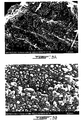
Figure 3A is an SEM image of the carbon-carbon material according to sample 1 hereinafter defined in Table I, thecarbon# 2 is derived from carbonization of PF, which cover partially the surface of carbon#1 (graphite). -
Figure 3B is the same SEM image as inFigure 3A , but at a larger scale. -
Figure 4A is an SEM image of the carbon-carbon material according tosample 2 defined hereinafter in Table I, thecarbon# 2 is derived from carbonization of PF and covers almost totally the surface of carbon#1 (graphite); the measured particle size ofcarbon# 2 is from 39nm to 500nm. -
Figure 4B is the same SEM image as inFigure 4A , at a larger scale. -
Figure 5A is an SEM image of the carbon-carbon material according to sample 3 as defined hereinafter in Table I. Thecarbon# 2 is derived from carbonization of PF, which covers partially the surface of carbon#1 (graphite), but still some graphite particles are not covered at all. The particle size ofcarbon# 2 is from 20nm to 500nm. -
Figure 5B is the same image as inFigure 5A but at a larger scale. -
Figure 6A is an SEM image of the carbon-carbon material according to sample 4 as defined hereinafter in Table I. Thecarbon# 2 is derived from carbonization of PF, which covers almost totally the surface of carbon#1 (graphite). Thecarbon# 2 is more compact and it's particle size is from 20nm to 500nm. -
Figure 6B is the same image as inFigure 6A but at a larger scale. -
Figure 7 shows Transmission Electron Micrograph a carbon-carbon composite according to the invention, that has been prepared according to samples 3 and 4 and heat treated to 2.500 °C. - A first object of the present invention is constituted by composite particles of carbon, thereafter named Carbon#1-
Carbon# 2 composite particles, wherein Carbon#1 means a low cristallinity carbon andCarbon# 2 means a high cristallinity carbon. - In the framework of the present invention, the expression Carbon#1 means carbon particles, having a low cristallinity characterized by wide-angle X ray diffraction measurements, i.e by an average lattice constant d=(002) of 0.350 nm or more and a crystallite size L=(002) in the direction of C axis of 25 nm or less. Such low cristallinity carbon is more extensively described in Carbon electrochemical and physicochemical properties, John Wiley, New York, 1988.
- According to a preferred embodiment of the invention low cristallinity carbons are selected in the group constituted by hard carbon, glassy carbons, polymer derived carbons and petroleum cokes.
- In the framework of the present invention, the
expression Carbon# 2 means a high cristallinity carbon characterized by wide-angle X ray diffraction measurements, i.e by an average lattice constant d=(002) of 0.338 nm or less and a crystallinity size L=(002) in the direction of C axis of 40 nm or more. Such high cristallinity carbon is more extensively defined in Carbon electrochemical and physicochemical properties, John Wiley, New York, 1988. According to a preferred embodiment of the invention such high cristallinity carbon is selected in the group constituted by graphite, preferably natural graphites, kish graphite, pyrolytic graphite, gas-growth graphite or any artificial graphite. - A preferred family of Carbon#1-
Carbon# 2 composite particles of the invention is constituted by those composite particles having at least one of the following physical properties: - a package density, according to the tap density method associated to the apparatus commercialized under the name Logan Instrument Corp. Model Tap-2, that is > 0,5 g/cc.
- a particle size, measured according to the SEM method associated with apparatus Microtac model X100 Particle Analyser, ranges from 0.5 to 100 micrometers; and
- a specific surface area, measured according to the BET method, ranging from 1 to 50 m2/g.
- As shown inter alia in
Figures 2 , the composite particles of the invention may be described as low cristallinity particles of Carbon#1 embedded or surrounded by a matrix (or by a network) ofgraphite Carbon# 2. - According to an another aspect of the invention, the composite particles of the invention may be described as particles of
Carbon# 2 embedded or surrounded by a matrix (or a network) of Carbon#1. - Therefore, particles of a high cristallinity carbon (preferably a graphitic carbon) are embedded within or surrounded by the matrix of a second carbon that has lower degree of cristallinity (graphitization), also known as hard carbon.
- A second object of the present invention is constituted by the use of the composite particles according to the first object of the present invention as a constituent of an electrode material, preferably as a constituent of a N-E (negative electrode) material in electrochemical systems, in the foundry industry, in the car and in aeronautic industries, in sports equipment.
- A third object of the present invention is constituted by negative electrodes comprising between 2 to 98 % and preferably by those comprising at least 90 weight per cent of a composite particles of the invention, the remaining being preferably constituted by at least one binder. The binder is preferably of the PVDF type.
- A fourth object of the present invention is constituted by a battery system comprising at least one electrode containing carbon-carbon composite particles according the invention. Preferably, in the battery system of the invention, the electrode containing composite particles is a negative electrode.
- According to an another embodiment, the battery system is of the N-E/electrolyte/PE type.
According to a further preferred embodiment of the invention the battery system consists of wined/stacked layers or of winded/stacked layers of electrodes of electrodes, at least one of said electrodes comprising carbon-carbon composite particles according to the invention. - A preferred embodiment is constituted by Li-ion battery comprising a negative electrode, a positive electrode and a porous polymer membrane separator for example of the Celguard type, wherein at least one of said electrodes is a negative electrode according to the invention.
- A fifth object of the present invention is constituted by a process for preparing the composite material particles according to the first object of the invention. This process preferably comprises the steps of dispersing and mixing, preferably by using ball milling, at least one Carbon#1 powder, preferably in the form of a slurry of a polymeric substance that results in carbon particles by heat treatment. The polymeric substance, preferably a polymer with a high carbon content, is preferably dispersed in an organic solvent in a slurry that can easily stick on the surface of the carbon particles to be covered. The polymeric material is preferably dispersed in a liquid Phenolic Resin (PF). Appropriate phenolic resins are for example those commonly used in the foundry industry. Phenolic resins are the most widely used resin binders in the foundry industry. They are produced by polycondensation of phenols with formaldehyde. The three types of resins presented in the following Table differ in catalyst and mole ratio of reactants used in their preparation. Furthermore, they have different molecular structures and reactivities and require different curing agents.
Table - Some examples of Phenolic Resins Novolacs Resoles Polybenzylic ethers ratio of phenol to >1 <1 <1 formaldehyde acidic basic neutral, metal salts, pH conditions thermoplastic thermosetting anhydrous thermal behavior shell process hot-box process thermosetting foundry process no-bake process cold-box process no-bake process - There are two further categories of epoxy resins that may be successfully used, namely the glycidyl epoxy, and non-glycidyl epoxy resins. The glycidyl epoxies are further classified as glycidyl-ether, glycidyl-ester and glycidyl-amine.
- The diglycidyl ether of bisphenol-A (DGEBA) is a typical commercial epoxy resin and is synthesised by reacting bisphenol-A with epichlorohydrin in presence of a basic catalyst.
- The Novolac Epoxy Resins are glycidyl ethers of phenolic novolac resins.
- The mixing process is advantageously continued until complete dispersion of Carbon#1 in the PF and preferably until vaporization of 40 to 60 wt % of the containing solvent (preferably water, or organic solvent such as an alcohol) from PF. Among preferred solvent for preparing the PF dispersions are water and organic solvents such as alcohols.
- The heat treatment is preferably carried out at a temperature ranging from 400 to 2.800° Celsius, and more preferably at a temperature ranging from 1.000 to 2.500°C.
- A sixth object of the present invention is constituted by a process for preparing a negative electrode. This process comprises the steps of:
- a) dispersing and mixing, preferably by using ball milling, at least one Carbon#1 powder, in preferably a liquid Phenolic Resin (PF), the mixing process being preferably continued until complete dispersion of carbon#1 in the PF and preferably until vaporization of 40 to 60 wt % of the containing solvant (preferably water, or organic solvant such as an alcohol) from the PF;
- b) poring the mixture obtained in the preceding step on a support, preferably on a flat Al-plate, on a Cu-plate, on an alu-Exmet or on a cupfer Exmet, then heated preferably to 150-175 °C, more preferably to 160-170 °C and thermally soaked, for 1 to 5. hours, preferably for about 2.0 hours, the heating rate varying preferably from 3-8° C/min depending on the thickness of the sample;
- c) after the preceding heating step, preferably converting the sample into solid sheets from which the support (AL-plate was separated); and
- d) treating the Carbon#1: polymerized PF-matrix obtained in the preceding step at a temperature ranging from 600 to 2.500 °C, preferably at a temperature ranging from 600 to 1.000°C using 30-50° C/min heating rate following thermal profile shown in
Figure 1 . Then thecarbon# 2 is produced by carbonization of PF-matrix. - Any polymeric material, particularly any polymeric material with a high carbon content and more preferably any PF transforms to graphite up to heating through the following process:
- 1. PF Polymerizes to a rubbery gel on heating to 85°C (gelling process);
- 2. on heating to 120°C, the rubbery gel cures to form a hard cross-linked polymer by condensation reaction which produces water;
- 3. on heating to 225°C, the hard cross-linked polymer obtained in
step 2 forms yellowish transparent material with lower density that its previous stages, this coincides with loss of more water and material having high porosity, at this stage neighboring carbon chains merge and start forming 3D-carbon matrixes; - 4. on heating to from 225°C to 500°C, the material obtained in the preceding step becomes free of water and yet contains appreciable amounts of hydrogen, this step is know as pre-carbonization carbonization step which was critical in controlling the porosity of the host material. Slower heating leads to smaller pore sizes;
- 5. on heating to 1000-1250°C, material volume shrinks, its electrical conductivity increases by many orders of magnitudes;
- 6. at temperatures above 1200°C, the material being depleted of hydrogen; and
- 7. further cross-linking and carbon chains start growing in 2D & 3D directions, this means that
carbon# 2 sticks on the surface of the carbon#1 particles andcarbon # 2 squeezes into itself when the temperature is increased to 2500°C. - In the following examples, the PF material used was supplied in the year 2001 by Georgia Pacific Co., Lawrenceville, GA, in the United States of America under the reference Products # PF211.
- Here, we are proposing the application of a new Carbon#1-
Carbon# 2 composite as N-E material for battery systems consisted of winded/stacked layers of electrodes with potential differences between them being dependant on their electrochemical properties. The other disclosing element of this proposal is the processing of the carbon-carbon composites noted above. The proposed material consists of carbon-carbon composite of 10-100 µm particles. - This consisted of a highly graphitic carbon (e.g. graphite) embedded within or surrounded by the matrix of a second carbon that has a low degree of graphitization (known as hard carbons).
- The low cristallinity carbon constituting of Carbon#1 has a sloppy voltage and a high medium voltage about 500 mV vs Li+/Li. This high sloppy voltage will be affected on the decreasing of the energy density of the batteries. However this is compatible with PC based electrolyte. This type of electrolyte is suitable for low temperature applications.
- The high cristallinity carbon constituting of
Carbon# 2 has a flat voltage and low medium voltage about 100 mV vs Li+/Li. This low flat voltage will be affected on the increasing of the energy density of the batteries. However it is not compatible with PC based electrolyte. - The following examples are given for illustritative purpose only and may not be construted as constituing a limitation of the present invention.
- The following steps were used to prepare the proposed material:
- 1- a Carbon#1 powder was dispersed in Liquid Phenolic Resin (PF) and the mixed using mixture ball milling. The mixing process was continued until complete dispersion of Carbon#1 in the PF and vaporization of 40 - 60 wt% of the containing alcohol from PF, both were assured.
- 2- the item-1 mixture was pored on flat Al-plate, then heated to 150-175°C and thermally soaked for 2.0 hours. The heating rate could vary from 3-8°C/min depending on the thickness of the sample, in our case heating of 5°C/min was used. After this heating process, the sample converts into solid sheets from which the AL-plate was separated.
- 3- item-3 (Carbon#1: polymerized PF-matrix) heat treated to 600 °C and then to 1000 or 2500°C using 30-50°C/min heating rate following thermal profile shown in
Figure 1 . - The PF matrix polymerizes and pre-carbonizes up to 450-475°C. During this step, PF generates water, which vaporizes while heating. This leads to increasing density and decreasing volume. Between 500-600 PF begins the early stages of carbonization steps, where the carbon graphite-sheets start buckling-up and building three-dimensional matrixes of randomly oriented short carbon layers with porous structure. PF porosity could depend on heat rate and thermal-soaking time in this temperature range. For longer heating time between 475-600°C, the PF pores size to become smaller. Above 600°C, the graphitization step starts and the graphite layer cross-link further. This process tends to squeeze the carbon#1 particles closer together and provides carbon-carbon composites with the low graphitized carbon matrix pressing over the highly graphitized carbon particles.
-
Figure 3 shows Transmission Electron Micrograph of the carbon-carbon composite heat treated to 2.500°C and as prepared according to samples 3 and 4. - The following Table 1 lists the data of carbon-carbon composite samples prepared for proof of the concept.
TABLE I No. Sample Description Pore Area (m2/g) Ave. Dia. (µ) Bulk Density (g/cm3) Skeletal Density 1 100g PF 9.184±0.02 0.482 0.584 1.267 50g-SFG-44 1000° C 2 100g PF 13.198±1 0.243 0.605 1.162 40g-SFG-44/5%LiNO3 1000°C. 3 100g PF 3.198±0.05 0.123 0.988 1.095 70g-SFG-44 2500°C 4 100g PF 6.550±0.12 0.437 0.532 1.413 70g-SFG-15 2500°C - Carbon#1 is a carbon derived by heat treatment from 1.000 to 2.500 Celcius (preferably at 1.000 degrees Celcius) from phenolic resin.
-
Carbon# 2 is an artificial graphite - commercialized under the name SFG 44 (particles having a size of 44 micrometers) and under the name SFG 15 (particles having a size of 15 micrometers by the Company Timcal (anciently Lonza in Swiss). - In this example the carbon-carbon composite was made by mixing 100g PF with 50g of SFG-44 (artificial graphite) commercialized by Timcal (Swiss) and heated at 1.000°C for 2 hours in argon atmosphere. The SEM image of the carbon-carbon material of the sample 1 is shown in
Figure 1 . Thecarbon# 2 is derived from carbonization of PF, which cover partially the surface of carbon#1 (graphite). The electrochemical performance was obtained by using 1M LiClO4 in EC-DMC as electrolyte. Three electrodes cell was used with lithium metal as counter electrode and reference. The reversible capacity of sample #1 is 218mAh/g at C/12 rate (charge and discharge in 12hours). The coulombic efficiency of the first cycle was 85%. - In this example the carbon-carbon composite was made by mixing 100g PF with 40g-SFG-44/5%LiNO3 and heated at 1000°C for 2 hours in argon atmosphere. The SEM image of the carbon-carbon material of the
sample 2 is shown inFigure 2 . Thecarbon# 2 is derived from carbonization of PF, which cover almost totally of the surface of carbon#1 (graphite). The particle size ofcarbon# 2 is from 39 nm to 500nm. The electrochemical performance was obtained by using 1M LiClO4 in EC-DMC as electrolyte. Three electrodes cell was used with lithium metal as counter electrode and reference. The reversible capacity ofsample # 2 is 259 mAh/g at C/12 rate (charge and discharge in 12h). The coulombic efficiency of the first cycle was 82%. - In this example the carbon-carbon composite was made by mixing 100g PF with 70g-SFG-15 and heated at 2500°C for 1 minute in argon atmosphere. The SEM image of the carbon-carbon material of the sample 3 is shown in
figure 3 . Thecarbon# 2 is derived from carbonization of PF, which cover partially the surface of carbon#1 (graphite), but still some graphite particle not covered at all. The particle size ofcarbon# 2 is from 20nm to 500nm.
The electrochemical performance was obtained by using 1M LiClO4 in EC-DMC as electrolyte. Three electrodes cell was used with lithium metal as counter electrode and reference. The reversible capacity of sample #3 is 235mAh/g at C/12 rate (charge and discharge in 12h). The coulombic efficiency of the first cycle was 45%. - In this example the carbon-carbon composite was made by mixing 100g PF with 70g-SFG-15 and heated at 2500°C for 2 hours in argon atmosphere. The SEM image of the carbon-carbon material of the sample 3 is shown in
Figure 4 . Thecarbon# 2 is derived from carbonization of PF, which covers almost totally the surface of carbon#1 (graphite). Thecarbon# 2 is more compact, it's particle size is from 20nm to 500nm. - The electrochemical performance was obtained by using 1M LiClO4 in EC-DMC as electrolyte. A three electrodes cell was used with lithium metal as counter electrode and reference. The reversible capacity of sample #4 is 280mAh/g at C/12 rate (charge and discharge in 12h). The coulombic efficiency of the first cycle was 56%.
- Among the improved properties of the new carbon-carbon material of the present invention over the known materials and particularly over the known NE materials are inter alia:
- the compatibility with propylene carbonate (PC);
- the low volume expansion;
- the high electrode density; and
- the low reactivity (safety).
- It is to be understood that, while the foregoing invention has been described in detail by way of illustration and example, numerous modifications, substitutions, and alterations are possible without departing from the spirit and scope of the invention as described in the following claims.
Claims (15)
- A composite of particles of a high crystallinity carbon and a low crystallinity carbon, wherein:- the low crystallinity carbon is characterized by wide-angle X ray diffraction measurements, i.e. by an average lattice constant d=(002) of 0.350 nm or more and a crystallite size L=(002) in the direction of C axis of 25 nm or less;- the high crystallinity carbon is characterized by wide-angle X ray diffraction measurements, i.e. by an average lattice constant d=(002) of 0.338 nm or less and a crystallinity size L=(002) in the direction of C axis of 40 nm or more;- the high crystallinity carbon is at least for 50% of its external surface embedded within or surrounded by matrix of the low crystallinity carbon; and- the high crystallinity carbon forms particles having a particle size ranging from 1 to 50 micrometers, said high crystallinity carbon particles being at least partially covered by particles of the low crystallinity carbon having a particle size ranging from 10 to 500 nm, said low crystallinity carbon particles being attached to the surface of said high crystallinity carbon particle.
- A composite according to claim 1, wherein the high crystallinity carbon is selected from the group consisting of natural graphite, kish graphite, pyrolytic graphite, gasgrowth graphite and any artificial graphite.
- A composite according to claim 1 or 2, wherein the low crystallinity carbon is selected from the group consisting of glassy carbon, polymer derived carbons and petroleum coke.
- A composite according to any one of claims 1 to 3, wherein the package density of said particles, measured according to the tap density method associated to the apparatus commercialized under the name Logan Instrument Corp. Model Tap-2, is superior or equal to 0.5 g/cc.
- A composite according to any one of claims 1 to 4, wherein the particle size of said particles, measured according to the SEM (Scanning Electron Microscopy) method, associated to the apparatus Microtrac model X100 Particle Analyser, ranges from 0.5 to 100 micrometers.
- A composite according to any one of claims 1 to 5, having according to the BET method, a specific surface area ranging from 1 to 50 m2/g.
- A composite according to any one of claims 1 to 6, wherein the high crystallinity carbon is at least for 70% of its external surface embedded within or surrounded by matrix of the low crystallinity carbon.
- A composite according to any one of claims 1 to 7, having a particles size measured according to the Scanning Electron Microscopy (SEM) method ranging from 1 to 50 micrometers, preferably from 12 to 20 micrometers.
- A composite according to any one of claims 1 to 8, wherein the size of the high crystallinity carbon particles is from 5 µm to 20 µm.
- A negative electrode comprising a composite according to any one of claims 1 to 9.
- A negative electrode according to claim 10, wherein said negative electrode further comprises a support on which the composite is deposited, said support being a Al-plate, a Cu-place, a Al-Exmet plate or a Cu-Exmet plate.
- A negative electrode material comprising the composite according to any one of claims 1 to 9, in an amount between 2 to 98% by weight, preferably at least 90% by weight, the remaining being preferably constituted by at least one binder, said binder being preferably of the PVDF type.
- A battery system comprising a negative electrode according to claim 10 or 11.
- A battery system according to claim 13 of the N-E/electrolyte/PE type.
- A lithium-ion battery comprising a negative electrode, a positive electrode and a porous polymer membrane separator, wherein at least one of said electrodes is a negative electrode according to anyone of claims 10 to 12.
Applications Claiming Priority (3)
| Application Number | Priority Date | Filing Date | Title |
|---|---|---|---|
| CA002364651A CA2364651A1 (en) | 2001-12-07 | 2001-12-07 | Carbon-carbon composite as negative electrode for li-ion batteries |
| PCT/CA2002/001888 WO2003049215A2 (en) | 2001-12-07 | 2002-12-06 | Carbon-carbon composite particles, their preparation and use therefore as negative electrode for li-ion batteries |
| EP02782580.1A EP1516379B1 (en) | 2001-12-07 | 2002-12-06 | Carbon-carbon composite particles, their preparation and use thereof as negative electrode for li-ion batteries |
Related Parent Applications (2)
| Application Number | Title | Priority Date | Filing Date |
|---|---|---|---|
| EP02782580.1A Division EP1516379B1 (en) | 2001-12-07 | 2002-12-06 | Carbon-carbon composite particles, their preparation and use thereof as negative electrode for li-ion batteries |
| EP02782580.1A Division-Into EP1516379B1 (en) | 2001-12-07 | 2002-12-06 | Carbon-carbon composite particles, their preparation and use thereof as negative electrode for li-ion batteries |
Publications (2)
| Publication Number | Publication Date |
|---|---|
| EP3309878A1 true EP3309878A1 (en) | 2018-04-18 |
| EP3309878B1 EP3309878B1 (en) | 2021-05-12 |
Family
ID=4170782
Family Applications (2)
| Application Number | Title | Priority Date | Filing Date |
|---|---|---|---|
| EP17203050.4A Expired - Lifetime EP3309878B1 (en) | 2001-12-07 | 2002-12-06 | Carbon-carbon composite particles, their preparation and use therefor as negative electrode for li-ion batteries |
| EP02782580.1A Expired - Lifetime EP1516379B1 (en) | 2001-12-07 | 2002-12-06 | Carbon-carbon composite particles, their preparation and use thereof as negative electrode for li-ion batteries |
Family Applications After (1)
| Application Number | Title | Priority Date | Filing Date |
|---|---|---|---|
| EP02782580.1A Expired - Lifetime EP1516379B1 (en) | 2001-12-07 | 2002-12-06 | Carbon-carbon composite particles, their preparation and use thereof as negative electrode for li-ion batteries |
Country Status (7)
| Country | Link |
|---|---|
| US (1) | US8318355B2 (en) |
| EP (2) | EP3309878B1 (en) |
| JP (1) | JP4288170B2 (en) |
| AU (1) | AU2002347162A1 (en) |
| CA (1) | CA2364651A1 (en) |
| ES (2) | ES2666587T3 (en) |
| WO (1) | WO2003049215A2 (en) |
Families Citing this family (5)
| Publication number | Priority date | Publication date | Assignee | Title |
|---|---|---|---|---|
| US7410718B2 (en) * | 2003-09-30 | 2008-08-12 | Lawrence Livermore National Security, Llc | Aerogel and xerogel composites for use as carbon anodes |
| JP4994677B2 (en) * | 2006-02-28 | 2012-08-08 | パナソニック株式会社 | Non-aqueous electrolyte secondary battery |
| JP5125050B2 (en) * | 2006-10-10 | 2013-01-23 | 株式会社Gsユアサ | Nonaqueous electrolyte secondary battery |
| JP5367521B2 (en) * | 2009-09-18 | 2013-12-11 | Jx日鉱日石エネルギー株式会社 | Carbon material for negative electrode of lithium secondary battery and method for producing the same |
| CN118495505A (en) * | 2024-05-11 | 2024-08-16 | 广州鹏辉能源科技股份有限公司 | Preparation method of coated hard carbon material and sodium ion battery negative electrode |
Citations (6)
| Publication number | Priority date | Publication date | Assignee | Title |
|---|---|---|---|---|
| EP0782207A1 (en) * | 1995-12-25 | 1997-07-02 | SHARP Corporation | Nonaqueous type secondary battery |
| EP0917228A1 (en) * | 1997-05-30 | 1999-05-19 | Matsushita Electric Industrial Co., Ltd. | Nonaqueous electrolyte secondary battery |
| US5908715A (en) * | 1997-05-30 | 1999-06-01 | Hughes Electronics Corporation | Composite carbon materials for lithium ion batteries, and method of producing same |
| EP0977292A2 (en) * | 1998-07-31 | 2000-02-02 | Mitsui Mining Co., Ltd. | Anode material for lithium secondary battery, process for production thereof, and lithium secondary battery |
| US6027833A (en) * | 1996-11-27 | 2000-02-22 | Denso Corporation | Nonaqueous electrolyte secondary cell |
| US6139989A (en) * | 1995-02-21 | 2000-10-31 | Mitsubishi Pencil Co., Ltd. | Cathode formed of graphite/carbon composite for lithium ion secondary battery |
Family Cites Families (8)
| Publication number | Priority date | Publication date | Assignee | Title |
|---|---|---|---|---|
| JP2643035B2 (en) | 1991-06-17 | 1997-08-20 | シャープ株式会社 | Carbon negative electrode for non-aqueous secondary battery and method for producing the same |
| JPH10149830A (en) | 1996-11-18 | 1998-06-02 | Mitsubishi Gas Chem Co Inc | Carbon material for negative electrode of non-aqueous solvent secondary battery |
| JP2000123826A (en) | 1998-10-19 | 2000-04-28 | Osaka Gas Co Ltd | Negative electrode for nonaqueous electrolyte secondary battery and secondary battery using the same |
| JP3352413B2 (en) * | 1998-12-17 | 2002-12-03 | キヤノン株式会社 | Image forming device |
| JP3532115B2 (en) | 1999-04-23 | 2004-05-31 | シャープ株式会社 | Non-aqueous secondary battery |
| JP2001185147A (en) | 1999-12-27 | 2001-07-06 | Asahi Kasei Corp | Non-aqueous electrolyte secondary battery |
| JP2001202961A (en) | 2000-01-21 | 2001-07-27 | Mitsui Mining Co Ltd | Anode material for lithium secondary battery, its manufacturing method and lithium secondary battery |
| JP4666876B2 (en) | 2001-09-26 | 2011-04-06 | Jfeケミカル株式会社 | Composite graphite material and method for producing the same, negative electrode material for lithium ion secondary battery, and lithium ion secondary battery |
-
2001
- 2001-12-07 CA CA002364651A patent/CA2364651A1/en not_active Abandoned
-
2002
- 2002-12-06 WO PCT/CA2002/001888 patent/WO2003049215A2/en not_active Ceased
- 2002-12-06 EP EP17203050.4A patent/EP3309878B1/en not_active Expired - Lifetime
- 2002-12-06 US US10/497,859 patent/US8318355B2/en not_active Expired - Fee Related
- 2002-12-06 ES ES02782580.1T patent/ES2666587T3/en not_active Expired - Lifetime
- 2002-12-06 AU AU2002347162A patent/AU2002347162A1/en not_active Abandoned
- 2002-12-06 ES ES17203050T patent/ES2881489T3/en not_active Expired - Lifetime
- 2002-12-06 JP JP2003550303A patent/JP4288170B2/en not_active Expired - Lifetime
- 2002-12-06 EP EP02782580.1A patent/EP1516379B1/en not_active Expired - Lifetime
Patent Citations (6)
| Publication number | Priority date | Publication date | Assignee | Title |
|---|---|---|---|---|
| US6139989A (en) * | 1995-02-21 | 2000-10-31 | Mitsubishi Pencil Co., Ltd. | Cathode formed of graphite/carbon composite for lithium ion secondary battery |
| EP0782207A1 (en) * | 1995-12-25 | 1997-07-02 | SHARP Corporation | Nonaqueous type secondary battery |
| US6027833A (en) * | 1996-11-27 | 2000-02-22 | Denso Corporation | Nonaqueous electrolyte secondary cell |
| EP0917228A1 (en) * | 1997-05-30 | 1999-05-19 | Matsushita Electric Industrial Co., Ltd. | Nonaqueous electrolyte secondary battery |
| US5908715A (en) * | 1997-05-30 | 1999-06-01 | Hughes Electronics Corporation | Composite carbon materials for lithium ion batteries, and method of producing same |
| EP0977292A2 (en) * | 1998-07-31 | 2000-02-02 | Mitsui Mining Co., Ltd. | Anode material for lithium secondary battery, process for production thereof, and lithium secondary battery |
Non-Patent Citations (4)
| Title |
|---|
| "Carbon electrochemical and physicochemical properties", 1988, JOHN WILEY |
| A. WEBBER; G. BLOMGREN: "Adavances in Lithium -ion batteries", 2002, ACADEMIC/PLENUM PUBLISHERS, pages: 185 |
| NISHI; ADVANCES: "Lithium -ion batteries", 2002, ACADEMIC/PLENUM PUBLISHERS, pages: 233 |
| R. HUGGINS: "Handbook of battery materials", 1999, WILEY-VCH, pages: 359 |
Also Published As
| Publication number | Publication date |
|---|---|
| EP3309878B1 (en) | 2021-05-12 |
| AU2002347162A8 (en) | 2003-06-17 |
| JP2005536419A (en) | 2005-12-02 |
| US8318355B2 (en) | 2012-11-27 |
| ES2881489T3 (en) | 2021-11-29 |
| US20050203240A1 (en) | 2005-09-15 |
| JP4288170B2 (en) | 2009-07-01 |
| AU2002347162A1 (en) | 2003-06-17 |
| WO2003049215A2 (en) | 2003-06-12 |
| ES2666587T3 (en) | 2018-05-07 |
| EP1516379B1 (en) | 2018-02-07 |
| EP1516379A2 (en) | 2005-03-23 |
| WO2003049215A3 (en) | 2005-01-06 |
| CA2364651A1 (en) | 2003-06-07 |
Similar Documents
| Publication | Publication Date | Title |
|---|---|---|
| KR102855942B1 (en) | Composite comprising silicon carbide and carbon particles | |
| CN100464446C (en) | Negative electrode material for lithium secondary battery, method for producing same, negative electrode for lithium secondary battery using same, and lithium secondary battery | |
| KR101126425B1 (en) | Negative electrode material for lithium ion secondary battery, method for production thereof, negative electrode for lithium ion secondary battery, and lithium ion secondary battery | |
| EP0896374B1 (en) | Nonaqueous electrolyte secondary battery | |
| CN1316650C (en) | Carbon material, its preparation method and use | |
| CN100422077C (en) | Composite graphite particles, method for producing same, negative electrode material for lithium ion secondary battery using same, and lithium ion secondary battery | |
| EP3902036B1 (en) | Silicon nanoparticles, non-aqueous secondary battery negative electrode active material using said silicon nanoparticles, and secondary battery | |
| US20240120482A1 (en) | Negative electrode material for lithium-ion secondary battery, method of evaluating same, and method of producing same, negative electrode for lithium-ion secondary battery, and lithium-ion secondary battery | |
| KR20230117194A (en) | Negative electrode material for lithium ion secondary battery and its manufacturing method, negative electrode for lithium ion secondary battery, and lithium ion secondary battery | |
| JP2004210634A (en) | Composite graphite particles, method for producing the same, negative electrode material for lithium ion secondary battery, negative electrode for lithium ion secondary battery, and lithium ion secondary battery | |
| WO2007072858A1 (en) | Composite graphite particles and lithium rechargeable battery using the same | |
| JP7226431B2 (en) | Negative electrode material for lithium ion secondary battery, method for producing negative electrode material for lithium ion secondary battery, negative electrode material slurry for lithium ion secondary battery, negative electrode for lithium ion secondary battery, and lithium ion secondary battery | |
| JP3361510B2 (en) | Negative electrode for lithium secondary battery, method for producing the same, and lithium secondary battery | |
| KR100575971B1 (en) | Graphite of mesophase globules, negative electrode material, negative electrode and lithium ion secondary battery using same | |
| WO2020247527A1 (en) | Modified silicon particles for silicon-carbon composite electrodes | |
| JPWO2017110796A1 (en) | Carbon material for secondary battery negative electrode, active material for secondary battery negative electrode, secondary battery negative electrode and secondary battery | |
| EP3309878B1 (en) | Carbon-carbon composite particles, their preparation and use therefor as negative electrode for li-ion batteries | |
| JP3321782B2 (en) | Graphite particles for lithium secondary battery negative electrode | |
| CA2469407C (en) | Carbon-carbon composite particles, their preparation and use therefore as negative electrode for li-ion batteries | |
| Prosini et al. | A high-voltage lithium-ion battery prepared using a Sn-decorated reduced graphene oxide anode and a LiNi0. 5Mn1. 5O4 cathode | |
| JP2017183233A (en) | Carbon material for secondary battery negative electrode, active material for secondary battery negative electrode, secondary battery negative electrode, and secondary battery | |
| JP2019036378A (en) | Carbon material for secondary battery negative electrode, active material for secondary battery negative electrode, secondary battery negative electrode, and secondary battery | |
| JP4811699B2 (en) | Negative electrode for lithium secondary battery | |
| JP4828118B2 (en) | Negative electrode for lithium secondary battery | |
| JP5853293B2 (en) | Negative electrode for lithium secondary battery |
Legal Events
| Date | Code | Title | Description |
|---|---|---|---|
| PUAI | Public reference made under article 153(3) epc to a published international application that has entered the european phase |
Free format text: ORIGINAL CODE: 0009012 |
|
| STAA | Information on the status of an ep patent application or granted ep patent |
Free format text: STATUS: THE APPLICATION HAS BEEN PUBLISHED |
|
| AC | Divisional application: reference to earlier application |
Ref document number: 1516379 Country of ref document: EP Kind code of ref document: P |
|
| AK | Designated contracting states |
Kind code of ref document: A1 Designated state(s): AT BE BG CH CY CZ DE DK EE ES FI FR GB GR IE IT LI LU MC NL PT SE SI SK TR |
|
| STAA | Information on the status of an ep patent application or granted ep patent |
Free format text: STATUS: REQUEST FOR EXAMINATION WAS MADE |
|
| 17P | Request for examination filed |
Effective date: 20181018 |
|
| RBV | Designated contracting states (corrected) |
Designated state(s): AT BE BG CH CY CZ DE DK EE ES FI FR GB GR IE IT LI LU MC NL PT SE SI SK TR |
|
| STAA | Information on the status of an ep patent application or granted ep patent |
Free format text: STATUS: EXAMINATION IS IN PROGRESS |
|
| RIC1 | Information provided on ipc code assigned before grant |
Ipc: H01M 10/0525 20100101ALI20190430BHEP Ipc: H01M 4/133 20100101ALI20190430BHEP Ipc: C04B 35/524 20060101ALI20190430BHEP Ipc: H01M 4/62 20060101ALI20190430BHEP Ipc: H01M 4/587 20100101AFI20190430BHEP Ipc: C04B 35/52 20060101ALI20190430BHEP |
|
| 17Q | First examination report despatched |
Effective date: 20190508 |
|
| GRAP | Despatch of communication of intention to grant a patent |
Free format text: ORIGINAL CODE: EPIDOSNIGR1 |
|
| STAA | Information on the status of an ep patent application or granted ep patent |
Free format text: STATUS: GRANT OF PATENT IS INTENDED |
|
| INTG | Intention to grant announced |
Effective date: 20210114 |
|
| GRAS | Grant fee paid |
Free format text: ORIGINAL CODE: EPIDOSNIGR3 |
|
| GRAA | (expected) grant |
Free format text: ORIGINAL CODE: 0009210 |
|
| STAA | Information on the status of an ep patent application or granted ep patent |
Free format text: STATUS: THE PATENT HAS BEEN GRANTED |
|
| AC | Divisional application: reference to earlier application |
Ref document number: 1516379 Country of ref document: EP Kind code of ref document: P |
|
| AK | Designated contracting states |
Kind code of ref document: B1 Designated state(s): AT BE BG CH CY CZ DE DK EE ES FI FR GB GR IE IT LI LU MC NL PT SE SI SK TR |
|
| REG | Reference to a national code |
Ref country code: GB Ref legal event code: FG4D |
|
| REG | Reference to a national code |
Ref country code: CH Ref legal event code: EP |
|
| REG | Reference to a national code |
Ref country code: DE Ref legal event code: R096 Ref document number: 60250231 Country of ref document: DE |
|
| REG | Reference to a national code |
Ref country code: IE Ref legal event code: FG4D |
|
| REG | Reference to a national code |
Ref country code: AT Ref legal event code: REF Ref document number: 1392780 Country of ref document: AT Kind code of ref document: T Effective date: 20210615 |
|
| REG | Reference to a national code |
Ref country code: SE Ref legal event code: TRGR |
|
| REG | Reference to a national code |
Ref country code: NL Ref legal event code: MP Effective date: 20210512 |
|
| PG25 | Lapsed in a contracting state [announced via postgrant information from national office to epo] |
Ref country code: BG Free format text: LAPSE BECAUSE OF FAILURE TO SUBMIT A TRANSLATION OF THE DESCRIPTION OR TO PAY THE FEE WITHIN THE PRESCRIBED TIME-LIMIT Effective date: 20210812 Ref country code: FI Free format text: LAPSE BECAUSE OF FAILURE TO SUBMIT A TRANSLATION OF THE DESCRIPTION OR TO PAY THE FEE WITHIN THE PRESCRIBED TIME-LIMIT Effective date: 20210512 |
|
| REG | Reference to a national code |
Ref country code: ES Ref legal event code: FG2A Ref document number: 2881489 Country of ref document: ES Kind code of ref document: T3 Effective date: 20211129 |
|
| PG25 | Lapsed in a contracting state [announced via postgrant information from national office to epo] |
Ref country code: PT Free format text: LAPSE BECAUSE OF FAILURE TO SUBMIT A TRANSLATION OF THE DESCRIPTION OR TO PAY THE FEE WITHIN THE PRESCRIBED TIME-LIMIT Effective date: 20210913 Ref country code: GR Free format text: LAPSE BECAUSE OF FAILURE TO SUBMIT A TRANSLATION OF THE DESCRIPTION OR TO PAY THE FEE WITHIN THE PRESCRIBED TIME-LIMIT Effective date: 20210813 |
|
| REG | Reference to a national code |
Ref country code: AT Ref legal event code: UEP Ref document number: 1392780 Country of ref document: AT Kind code of ref document: T Effective date: 20210512 |
|
| PG25 | Lapsed in a contracting state [announced via postgrant information from national office to epo] |
Ref country code: NL Free format text: LAPSE BECAUSE OF FAILURE TO SUBMIT A TRANSLATION OF THE DESCRIPTION OR TO PAY THE FEE WITHIN THE PRESCRIBED TIME-LIMIT Effective date: 20210512 |
|
| PGFP | Annual fee paid to national office [announced via postgrant information from national office to epo] |
Ref country code: LU Payment date: 20211118 Year of fee payment: 20 |
|
| PG25 | Lapsed in a contracting state [announced via postgrant information from national office to epo] |
Ref country code: DK Free format text: LAPSE BECAUSE OF FAILURE TO SUBMIT A TRANSLATION OF THE DESCRIPTION OR TO PAY THE FEE WITHIN THE PRESCRIBED TIME-LIMIT Effective date: 20210512 Ref country code: EE Free format text: LAPSE BECAUSE OF FAILURE TO SUBMIT A TRANSLATION OF THE DESCRIPTION OR TO PAY THE FEE WITHIN THE PRESCRIBED TIME-LIMIT Effective date: 20210512 Ref country code: CZ Free format text: LAPSE BECAUSE OF FAILURE TO SUBMIT A TRANSLATION OF THE DESCRIPTION OR TO PAY THE FEE WITHIN THE PRESCRIBED TIME-LIMIT Effective date: 20210512 Ref country code: SK Free format text: LAPSE BECAUSE OF FAILURE TO SUBMIT A TRANSLATION OF THE DESCRIPTION OR TO PAY THE FEE WITHIN THE PRESCRIBED TIME-LIMIT Effective date: 20210512 |
|
| PGFP | Annual fee paid to national office [announced via postgrant information from national office to epo] |
Ref country code: AT Payment date: 20211118 Year of fee payment: 20 Ref country code: IE Payment date: 20211118 Year of fee payment: 20 Ref country code: GB Payment date: 20211118 Year of fee payment: 20 Ref country code: SE Payment date: 20211119 Year of fee payment: 20 Ref country code: DE Payment date: 20211117 Year of fee payment: 20 Ref country code: FR Payment date: 20211118 Year of fee payment: 20 |
|
| REG | Reference to a national code |
Ref country code: DE Ref legal event code: R097 Ref document number: 60250231 Country of ref document: DE |
|
| PGFP | Annual fee paid to national office [announced via postgrant information from national office to epo] |
Ref country code: IT Payment date: 20211117 Year of fee payment: 20 Ref country code: CH Payment date: 20211119 Year of fee payment: 20 Ref country code: BE Payment date: 20211122 Year of fee payment: 20 |
|
| PLBE | No opposition filed within time limit |
Free format text: ORIGINAL CODE: 0009261 |
|
| STAA | Information on the status of an ep patent application or granted ep patent |
Free format text: STATUS: NO OPPOSITION FILED WITHIN TIME LIMIT |
|
| 26N | No opposition filed |
Effective date: 20220215 |
|
| PGFP | Annual fee paid to national office [announced via postgrant information from national office to epo] |
Ref country code: ES Payment date: 20220103 Year of fee payment: 20 |
|
| PG25 | Lapsed in a contracting state [announced via postgrant information from national office to epo] |
Ref country code: MC Free format text: LAPSE BECAUSE OF FAILURE TO SUBMIT A TRANSLATION OF THE DESCRIPTION OR TO PAY THE FEE WITHIN THE PRESCRIBED TIME-LIMIT Effective date: 20210512 |
|
| REG | Reference to a national code |
Ref country code: DE Ref legal event code: R071 Ref document number: 60250231 Country of ref document: DE |
|
| REG | Reference to a national code |
Ref country code: CH Ref legal event code: PL |
|
| REG | Reference to a national code |
Ref country code: GB Ref legal event code: PE20 Expiry date: 20221205 |
|
| REG | Reference to a national code |
Ref country code: BE Ref legal event code: MK Effective date: 20221206 |
|
| REG | Reference to a national code |
Ref country code: AT Ref legal event code: MK07 Ref document number: 1392780 Country of ref document: AT Kind code of ref document: T Effective date: 20221206 |
|
| PG25 | Lapsed in a contracting state [announced via postgrant information from national office to epo] |
Ref country code: GB Free format text: LAPSE BECAUSE OF EXPIRATION OF PROTECTION Effective date: 20221205 |
|
| REG | Reference to a national code |
Ref country code: SE Ref legal event code: EUG |
|
| REG | Reference to a national code |
Ref country code: IE Ref legal event code: MK9A |
|
| PG25 | Lapsed in a contracting state [announced via postgrant information from national office to epo] |
Ref country code: IE Free format text: LAPSE BECAUSE OF EXPIRATION OF PROTECTION Effective date: 20221206 |
|
| PG25 | Lapsed in a contracting state [announced via postgrant information from national office to epo] |
Ref country code: CY Free format text: LAPSE BECAUSE OF FAILURE TO SUBMIT A TRANSLATION OF THE DESCRIPTION OR TO PAY THE FEE WITHIN THE PRESCRIBED TIME-LIMIT Effective date: 20210512 |
|
| REG | Reference to a national code |
Ref country code: ES Ref legal event code: FD2A Effective date: 20230630 |
|
| PG25 | Lapsed in a contracting state [announced via postgrant information from national office to epo] |
Ref country code: ES Free format text: LAPSE BECAUSE OF EXPIRATION OF PROTECTION Effective date: 20221207 |
|
| PG25 | Lapsed in a contracting state [announced via postgrant information from national office to epo] |
Ref country code: TR Free format text: LAPSE BECAUSE OF FAILURE TO SUBMIT A TRANSLATION OF THE DESCRIPTION OR TO PAY THE FEE WITHIN THE PRESCRIBED TIME-LIMIT Effective date: 20210512 |