EP3305877A1 - Verfahren zur reinigung von biodiesel - Google Patents
Verfahren zur reinigung von biodiesel Download PDFInfo
- Publication number
- EP3305877A1 EP3305877A1 EP17194813.6A EP17194813A EP3305877A1 EP 3305877 A1 EP3305877 A1 EP 3305877A1 EP 17194813 A EP17194813 A EP 17194813A EP 3305877 A1 EP3305877 A1 EP 3305877A1
- Authority
- EP
- European Patent Office
- Prior art keywords
- washing
- biodiesel
- stream
- decanting
- filtration
- Prior art date
- Legal status (The legal status is an assumption and is not a legal conclusion. Google has not performed a legal analysis and makes no representation as to the accuracy of the status listed.)
- Granted
Links
Images

Classifications
-
- B—PERFORMING OPERATIONS; TRANSPORTING
- B01—PHYSICAL OR CHEMICAL PROCESSES OR APPARATUS IN GENERAL
- B01D—SEPARATION
- B01D11/00—Solvent extraction
- B01D11/04—Solvent extraction of solutions which are liquid
- B01D11/0446—Juxtaposition of mixers-settlers
-
- C—CHEMISTRY; METALLURGY
- C10—PETROLEUM, GAS OR COKE INDUSTRIES; TECHNICAL GASES CONTAINING CARBON MONOXIDE; FUELS; LUBRICANTS; PEAT
- C10L—FUELS NOT OTHERWISE PROVIDED FOR; NATURAL GAS; SYNTHETIC NATURAL GAS OBTAINED BY PROCESSES NOT COVERED BY SUBCLASSES C10G OR C10K; LIQUIFIED PETROLEUM GAS; USE OF ADDITIVES TO FUELS OR FIRES; FIRE-LIGHTERS
- C10L1/00—Liquid carbonaceous fuels
- C10L1/02—Liquid carbonaceous fuels essentially based on components consisting of carbon, hydrogen, and oxygen only
- C10L1/026—Liquid carbonaceous fuels essentially based on components consisting of carbon, hydrogen, and oxygen only for compression ignition
-
- C—CHEMISTRY; METALLURGY
- C10—PETROLEUM, GAS OR COKE INDUSTRIES; TECHNICAL GASES CONTAINING CARBON MONOXIDE; FUELS; LUBRICANTS; PEAT
- C10L—FUELS NOT OTHERWISE PROVIDED FOR; NATURAL GAS; SYNTHETIC NATURAL GAS OBTAINED BY PROCESSES NOT COVERED BY SUBCLASSES C10G OR C10K; LIQUIFIED PETROLEUM GAS; USE OF ADDITIVES TO FUELS OR FIRES; FIRE-LIGHTERS
- C10L1/00—Liquid carbonaceous fuels
- C10L1/10—Liquid carbonaceous fuels containing additives
- C10L1/14—Organic compounds
- C10L1/18—Organic compounds containing oxygen
- C10L1/182—Organic compounds containing oxygen containing hydroxy groups; Salts thereof
- C10L1/1822—Organic compounds containing oxygen containing hydroxy groups; Salts thereof hydroxy group directly attached to (cyclo)aliphatic carbon atoms
- C10L1/1826—Organic compounds containing oxygen containing hydroxy groups; Salts thereof hydroxy group directly attached to (cyclo)aliphatic carbon atoms poly-hydroxy
-
- B—PERFORMING OPERATIONS; TRANSPORTING
- B01—PHYSICAL OR CHEMICAL PROCESSES OR APPARATUS IN GENERAL
- B01D—SEPARATION
- B01D12/00—Displacing liquid, e.g. from wet solids or from dispersions of liquids or from solids in liquids, by means of another liquid
-
- B—PERFORMING OPERATIONS; TRANSPORTING
- B01—PHYSICAL OR CHEMICAL PROCESSES OR APPARATUS IN GENERAL
- B01D—SEPARATION
- B01D17/00—Separation of liquids, not provided for elsewhere, e.g. by thermal diffusion
- B01D17/02—Separation of non-miscible liquids
- B01D17/0208—Separation of non-miscible liquids by sedimentation
-
- C—CHEMISTRY; METALLURGY
- C07—ORGANIC CHEMISTRY
- C07B—GENERAL METHODS OF ORGANIC CHEMISTRY; APPARATUS THEREFOR
- C07B63/00—Purification; Separation; Stabilisation; Use of additives
- C07B63/04—Use of additives
-
- C—CHEMISTRY; METALLURGY
- C11—ANIMAL OR VEGETABLE OILS, FATS, FATTY SUBSTANCES OR WAXES; FATTY ACIDS THEREFROM; DETERGENTS; CANDLES
- C11B—PRODUCING, e.g. BY PRESSING RAW MATERIALS OR BY EXTRACTION FROM WASTE MATERIALS, REFINING OR PRESERVING FATS, FATTY SUBSTANCES, e.g. LANOLIN, FATTY OILS OR WAXES; ESSENTIAL OILS; PERFUMES
- C11B3/00—Refining fats or fatty oils
- C11B3/008—Refining fats or fatty oils by filtration, e.g. including ultra filtration, dialysis
-
- B—PERFORMING OPERATIONS; TRANSPORTING
- B01—PHYSICAL OR CHEMICAL PROCESSES OR APPARATUS IN GENERAL
- B01D—SEPARATION
- B01D11/00—Solvent extraction
- B01D11/04—Solvent extraction of solutions which are liquid
- B01D11/0488—Flow sheets
-
- C—CHEMISTRY; METALLURGY
- C10—PETROLEUM, GAS OR COKE INDUSTRIES; TECHNICAL GASES CONTAINING CARBON MONOXIDE; FUELS; LUBRICANTS; PEAT
- C10L—FUELS NOT OTHERWISE PROVIDED FOR; NATURAL GAS; SYNTHETIC NATURAL GAS OBTAINED BY PROCESSES NOT COVERED BY SUBCLASSES C10G OR C10K; LIQUIFIED PETROLEUM GAS; USE OF ADDITIVES TO FUELS OR FIRES; FIRE-LIGHTERS
- C10L2200/00—Components of fuel compositions
- C10L2200/04—Organic compounds
- C10L2200/0461—Fractions defined by their origin
- C10L2200/0469—Renewables or materials of biological origin
- C10L2200/0476—Biodiesel, i.e. defined lower alkyl esters of fatty acids first generation biodiesel
-
- C—CHEMISTRY; METALLURGY
- C10—PETROLEUM, GAS OR COKE INDUSTRIES; TECHNICAL GASES CONTAINING CARBON MONOXIDE; FUELS; LUBRICANTS; PEAT
- C10L—FUELS NOT OTHERWISE PROVIDED FOR; NATURAL GAS; SYNTHETIC NATURAL GAS OBTAINED BY PROCESSES NOT COVERED BY SUBCLASSES C10G OR C10K; LIQUIFIED PETROLEUM GAS; USE OF ADDITIVES TO FUELS OR FIRES; FIRE-LIGHTERS
- C10L2230/00—Function and purpose of a components of a fuel or the composition as a whole
- C10L2230/22—Function and purpose of a components of a fuel or the composition as a whole for improving fuel economy or fuel efficiency
-
- C—CHEMISTRY; METALLURGY
- C10—PETROLEUM, GAS OR COKE INDUSTRIES; TECHNICAL GASES CONTAINING CARBON MONOXIDE; FUELS; LUBRICANTS; PEAT
- C10L—FUELS NOT OTHERWISE PROVIDED FOR; NATURAL GAS; SYNTHETIC NATURAL GAS OBTAINED BY PROCESSES NOT COVERED BY SUBCLASSES C10G OR C10K; LIQUIFIED PETROLEUM GAS; USE OF ADDITIVES TO FUELS OR FIRES; FIRE-LIGHTERS
- C10L2290/00—Fuel preparation or upgrading, processes or apparatus therefore, comprising specific process steps or apparatus units
- C10L2290/08—Drying or removing water
-
- C—CHEMISTRY; METALLURGY
- C10—PETROLEUM, GAS OR COKE INDUSTRIES; TECHNICAL GASES CONTAINING CARBON MONOXIDE; FUELS; LUBRICANTS; PEAT
- C10L—FUELS NOT OTHERWISE PROVIDED FOR; NATURAL GAS; SYNTHETIC NATURAL GAS OBTAINED BY PROCESSES NOT COVERED BY SUBCLASSES C10G OR C10K; LIQUIFIED PETROLEUM GAS; USE OF ADDITIVES TO FUELS OR FIRES; FIRE-LIGHTERS
- C10L2290/00—Fuel preparation or upgrading, processes or apparatus therefore, comprising specific process steps or apparatus units
- C10L2290/10—Recycling of a stream within the process or apparatus to reuse elsewhere therein
-
- C—CHEMISTRY; METALLURGY
- C10—PETROLEUM, GAS OR COKE INDUSTRIES; TECHNICAL GASES CONTAINING CARBON MONOXIDE; FUELS; LUBRICANTS; PEAT
- C10L—FUELS NOT OTHERWISE PROVIDED FOR; NATURAL GAS; SYNTHETIC NATURAL GAS OBTAINED BY PROCESSES NOT COVERED BY SUBCLASSES C10G OR C10K; LIQUIFIED PETROLEUM GAS; USE OF ADDITIVES TO FUELS OR FIRES; FIRE-LIGHTERS
- C10L2290/00—Fuel preparation or upgrading, processes or apparatus therefore, comprising specific process steps or apparatus units
- C10L2290/14—Injection, e.g. in a reactor or a fuel stream during fuel production
- C10L2290/141—Injection, e.g. in a reactor or a fuel stream during fuel production of additive or catalyst
-
- C—CHEMISTRY; METALLURGY
- C10—PETROLEUM, GAS OR COKE INDUSTRIES; TECHNICAL GASES CONTAINING CARBON MONOXIDE; FUELS; LUBRICANTS; PEAT
- C10L—FUELS NOT OTHERWISE PROVIDED FOR; NATURAL GAS; SYNTHETIC NATURAL GAS OBTAINED BY PROCESSES NOT COVERED BY SUBCLASSES C10G OR C10K; LIQUIFIED PETROLEUM GAS; USE OF ADDITIVES TO FUELS OR FIRES; FIRE-LIGHTERS
- C10L2290/00—Fuel preparation or upgrading, processes or apparatus therefore, comprising specific process steps or apparatus units
- C10L2290/14—Injection, e.g. in a reactor or a fuel stream during fuel production
- C10L2290/146—Injection, e.g. in a reactor or a fuel stream during fuel production of water
-
- C—CHEMISTRY; METALLURGY
- C10—PETROLEUM, GAS OR COKE INDUSTRIES; TECHNICAL GASES CONTAINING CARBON MONOXIDE; FUELS; LUBRICANTS; PEAT
- C10L—FUELS NOT OTHERWISE PROVIDED FOR; NATURAL GAS; SYNTHETIC NATURAL GAS OBTAINED BY PROCESSES NOT COVERED BY SUBCLASSES C10G OR C10K; LIQUIFIED PETROLEUM GAS; USE OF ADDITIVES TO FUELS OR FIRES; FIRE-LIGHTERS
- C10L2290/00—Fuel preparation or upgrading, processes or apparatus therefore, comprising specific process steps or apparatus units
- C10L2290/24—Mixing, stirring of fuel components
-
- C—CHEMISTRY; METALLURGY
- C10—PETROLEUM, GAS OR COKE INDUSTRIES; TECHNICAL GASES CONTAINING CARBON MONOXIDE; FUELS; LUBRICANTS; PEAT
- C10L—FUELS NOT OTHERWISE PROVIDED FOR; NATURAL GAS; SYNTHETIC NATURAL GAS OBTAINED BY PROCESSES NOT COVERED BY SUBCLASSES C10G OR C10K; LIQUIFIED PETROLEUM GAS; USE OF ADDITIVES TO FUELS OR FIRES; FIRE-LIGHTERS
- C10L2290/00—Fuel preparation or upgrading, processes or apparatus therefore, comprising specific process steps or apparatus units
- C10L2290/54—Specific separation steps for separating fractions, components or impurities during preparation or upgrading of a fuel
- C10L2290/545—Washing, scrubbing, stripping, scavenging for separating fractions, components or impurities during preparation or upgrading of a fuel
-
- C—CHEMISTRY; METALLURGY
- C10—PETROLEUM, GAS OR COKE INDUSTRIES; TECHNICAL GASES CONTAINING CARBON MONOXIDE; FUELS; LUBRICANTS; PEAT
- C10L—FUELS NOT OTHERWISE PROVIDED FOR; NATURAL GAS; SYNTHETIC NATURAL GAS OBTAINED BY PROCESSES NOT COVERED BY SUBCLASSES C10G OR C10K; LIQUIFIED PETROLEUM GAS; USE OF ADDITIVES TO FUELS OR FIRES; FIRE-LIGHTERS
- C10L2290/00—Fuel preparation or upgrading, processes or apparatus therefore, comprising specific process steps or apparatus units
- C10L2290/54—Specific separation steps for separating fractions, components or impurities during preparation or upgrading of a fuel
- C10L2290/547—Filtration for separating fractions, components or impurities during preparation or upgrading of a fuel
-
- C—CHEMISTRY; METALLURGY
- C11—ANIMAL OR VEGETABLE OILS, FATS, FATTY SUBSTANCES OR WAXES; FATTY ACIDS THEREFROM; DETERGENTS; CANDLES
- C11C—FATTY ACIDS FROM FATS, OILS OR WAXES; CANDLES; FATS, OILS OR FATTY ACIDS BY CHEMICAL MODIFICATION OF FATS, OILS, OR FATTY ACIDS OBTAINED THEREFROM
- C11C3/00—Fats, oils, or fatty acids by chemical modification of fats, oils, or fatty acids obtained therefrom
- C11C3/003—Fats, oils, or fatty acids by chemical modification of fats, oils, or fatty acids obtained therefrom by esterification of fatty acids with alcohols
-
- Y—GENERAL TAGGING OF NEW TECHNOLOGICAL DEVELOPMENTS; GENERAL TAGGING OF CROSS-SECTIONAL TECHNOLOGIES SPANNING OVER SEVERAL SECTIONS OF THE IPC; TECHNICAL SUBJECTS COVERED BY FORMER USPC CROSS-REFERENCE ART COLLECTIONS [XRACs] AND DIGESTS
- Y02—TECHNOLOGIES OR APPLICATIONS FOR MITIGATION OR ADAPTATION AGAINST CLIMATE CHANGE
- Y02E—REDUCTION OF GREENHOUSE GAS [GHG] EMISSIONS, RELATED TO ENERGY GENERATION, TRANSMISSION OR DISTRIBUTION
- Y02E50/00—Technologies for the production of fuel of non-fossil origin
- Y02E50/10—Biofuels, e.g. bio-diesel
Definitions
- the present invention relates to a process for purifying biodiesel in the absence of a filter aid. More specifically, the present invention suggests the purification of biodiesel using a sequence of washing operations after the reaction section, with stirring that is sufficiently vigorous to assist in the transformation of the molecules of esterified steryl glycosides, in order to convert them to a chemical form that can be removed by the process now claimed.
- Biodiesel obtained from oils of vegetable origin has solid particles that arose from the metabolism of the plants from which it originated. These particles are observed even up to temperatures above the cloud point of biodiesel obtained from soya oil and palm oil, a phenomenon that is characterized by the appearance of tiny solid particles in suspension, leading to the formation of a cloud and a consequent increase in the turbidity of the biodiesel generated. With the passage of time, and when at rest, sedimentation of these particles promotes the formation of a layer of insoluble material at the bottom of the tank or where the biodiesel is stored.
- oils of vegetable origin for example soya oil and palm oil
- the solid material observed in biodiesel consists of a mixture of compounds identified as comprising monoglycerides and steryl glycosides, which are primarily in the form of esterified steryl glycosides.
- the steryl glycosides are in the form of a white powder, with a melting point between 240°C and 290°C and having reduced solubility in the majority of organic solvents, with the exception of pyridine and chloroform/methanol mixture (2:1).
- the set of equipment used in the steps associated with the purification of the product, to define it as biodiesel, is called the purification section.
- the light stream, rich in methyl and/or ethyl esters, received from a transesterification section may be purified by techniques that can be divided into two main groups, known as wet washing and dry washing.
- the techniques belonging to the two groups have advantages and disadvantages and therefore selection of the most suitable method must basically comply with the criteria of product quality and process economy.
- Some techniques also possess the particular feature of having a hybrid character, i.e. they use both liquid fluids and adsorbent solid materials, combining them in different steps in order to meet the predetermined criteria.
- the light phase, received from the reaction section only passes through columns with adsorbents, or through beds of ion-exchange resin, which provide removal of residual glycerol, traces of methanol and water present in the biodiesel, as well as soap, catalyst and salts. It is necessary to regenerate the adsorbents/resins and dispose of them when it is no longer possible to regenerate them.
- adsorbents/resins There are various suppliers of products for refining biodiesel by adsorption, each with their own technology and recommendations, such as LanXess, Rohm & Haas and Purolite.
- the main technologies for purification of biodiesel in use in industrial units involve treatments with adsorbent materials, and may still require washing operations with water upstream of the step in which adsorption takes place.
- a filter aid for example diatomaceous earth
- filtration systems consisting of self-cleaning filters and/or cartridge filters (high-flow cartridges and cartridges with adsorbent material). That is, in the purification of biodiesel the removal of water soluble contaminants is traditionally accomplished by water-washing the biodiesel.
- Another process of biodiesel purification involves the use of an "adsorbent filter-aid” such as magnesium silicate, and in the case of polar impurities it is usual to use a diatomaceous filter.
- an "adsorbent filter-aid” such as magnesium silicate
- polar impurities it is usual to use a diatomaceous filter.
- the technology from Crown Technologies, for example has two washing steps with water, followed by filtration on a plate filter, already containing a precoat, using diatomaceous earth as filter aid.
- this technology increases the cost of production and brings operational difficulties relating to the handling of solids, sometimes containing flammable substances, in the production unit.
- document US2011/0252397 relates to a process for obtaining biodiesel from fats, oils or fatty acids containing steryl glycosides.
- raw material is reacted by transesterification or esterification with short-chain alkanols in the presence of a catalyst, generating a fatty acid alkyl ester in a first product stream.
- Said first product stream is washed with water in a washing device, so as to form a layer of suspension at a phase boundary layer between a water-rich heavy phase and a first light phase rich in fatty acid alkyl ester.
- the layer of suspension is treated by stirring.
- a second product stream is withdrawn from the first light phase and mixed intensively with water to obtain a third product stream.
- Centrifugation is carried out on the third product stream to supply a fourth product stream and a fifth product stream.
- the fifth product stream is withdrawn as a heavy phase that is enriched with steryl glycosides.
- Product conditioning is carried out on the fourth product stream to obtain biodiesel that meets the specifications.
- washing with water is carried out in countercurrent in a washing column.
- Product conditioning preferably comprises drying or filtration or both.
- document US2013/0012732 describes a method for reprocessing a phase consisting substantially of steryl glycerides / fatty acid alkyl ester / water agglomerates, said phase being formed when fatty acid alkyl ester generated by the transesterification of vegetable oils or animal fats was washed with water, wherein the water content is evaporated by heating the phase and, subsequently, the steryl glycosides are split into their sterol and sugar fractions in the presence of an acid catalyst, both by adding a strong anhydrous acid and by contact with an acidic solid ion exchanger.
- document WO2007/076163 relates to processes for producing and treating biodiesel. This document proposes addition of an adsorbent or filter aid for separating steryl glycosides from the biodiesel and subsequent removal thereof by filtration, centrifugation or a combination thereof.
- the present disclosure relates to a process for purifying biodiesel, in conditions in which the molecules of esterified steryl glycosides are transformed, in order to convert them to a chemical form that can be removed by the process now described.
- a first aim is to improve the quality of the biodiesel generated from oils of vegetable origin (for example, soya oil and palm oil), which has solid particles arising from the metabolism of the plants from which it originates.
- oils of vegetable origin for example, soya oil and palm oil
- a second aim is to reduce the costs relating to the purification of crude biodiesel by eliminating the process of acquisition and disposal of filter aids, thus eliminating the risks associated with the handling of solids containing flammable material and reducing the generation of solid residues.
- the present disclosure proposes a process for purifying biodiesel, comprising some or all of the following steps: a) operations of washing of a stream of biodiesel followed by decanting; and b) filtration of a light phase resulting from a decanting operation, wherein the filtration is carried out in the absence of filter aids.
- the filtration can be carried out after the decanting operation and before any further additives are added to the light phase resulting from the decanting operation.
- an apparatus for purifying biodiesel comprising some or all of: at least one washing vessel, for washing an incoming stream; at least one decanter, configured to split a stream into a heavy phase and a light phase; a filtration device for filtering a light phase produced by a final one of the at least one decanters, wherein the filtration device is configured to perform the filtration in the absence of filter aids.
- the apparatus can have no inlets, upstream of the filtration device, for adding additives to the light phase produced by the final one of the at least one decanters
- the present disclosure also proposes carrying out a process of wet washing of biodiesel without using a filter aid.
- an ester-rich stream goes through washing steps with stirring that is sufficiently intensive to remove the impurities, alternating with decanting steps for removing the dense phase from the stream.
- the resultant stream is submitted to a process of drying and then cooling, followed by filtration without the use of a filter aid.
- the biodiesel thus generated (so-called specified biodiesel) is suitable for the specifications required by the current regulations after using additives.
- the disclosure can be applied according to two aspects: using an amount of water similar to that employed in the technology of Crown Technologies in a third washing of the product in specific conditions, or using an amount of water less than that employed in the technology of Crown Technologies, but adding a certain amount of a stream with dilute glycerol, which may be produced in the plant.
- the two directions are innovative in that they contain steps such as cold washing, cold decanting, intensive stirring, ideal residence time, and a more suitable process configuration for removal of impurities, which were not used in the prior art, bringing a saving in the amount of water used and minimizing the number of process steps.
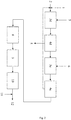
- the disclosure provides a process for purifying biodiesel, characterized in that it comprises some or all of the following steps: a) addition of a stream of dilute acid (1) to a stream of biodiesel (2); b) operations of washing (3a) and (3b) and (3c), or (3d) and (3e) of the stream of biodiesel (2) followed by decanting (4a) and (4b) and (4c) or (4d) and (4e); c) separation of the dense phase (5) resulting from decanting (4a, 4b, 4c, 4d, 4e); d) drying (8) of the light phase resulting from decanting (4c) or (4e); e) cooling (9) of the light phase resulting from drying (8); f) filtration (10) of the light phase resulting from cooling (9); g) optional incorporation of additives (11) to the stream generated in the filtration (10), wherein the dense phase (5) generated after decanting (4b, 4c) or (4e) is recycled to the washing step (3a, 3b) or
- a further aspect of the disclosure provides that dilute hydrochloric acid is used in the stream of acid (1).
- washing operations (3a, 3b, 3c, 3d, 3e) are carried out with stirring above 700 rpm and at a temperature in the range from 50°C to 60°C.
- a further aspect of the disclosure provides that the washing operations (3a, 3b, 3c, 3d, 3e) are carried out with stirring above 800 rpm.
- a further aspect of the disclosure provides that step (a) of addition of acid is carried out before the washing operations (3a) or (3d) only.
- washing (3d) uses dilute glycerol (7), and has a residence time from 2 to 5 minutes.
- a further aspect of the disclosure provides that the dilute glycerol (7) is produced in the actual plant of the biodiesel production process.
- a further aspect of the disclosure provides that the light phase resulting from decanting (4b) is cooled to a temperature in the range between 20°C and 40°C before it enters the washing vessel (3c).
- a further aspect of the disclosure provides that the light stream in washing (3c, 3e) is mixed with an amount of fresh water (6) in an amount in the range between 2% and 6% of the weight of the light stream, and remains in this vessel for a residence time in the range between 15 and 25 minutes.
- a further aspect of the disclosure provides that the light phase resulting from decanting (4c, 4e) undergoes a process of drying (8) and subsequent cooling (9) to a temperature in the range from 15°C to 25°C, and remains in this condition for a residence time between 3 and 14 hours.
- the present disclosure relates to a process for purifying biodiesel. It can use a sequence of washing operations after the reaction section, including cold washing operations and, in one of the embodiments, it also uses washing with a stream of glycerol, which may be formed during the process. The washed product formed is then decanted. Stirring is preferably sufficiently intensive (above 700 rpm, preferably above 800 rpm) to assist in the transformation of the molecules of esterified steryl glycosides, in order to convert them to a chemical form that can be removed by the process.
- feed means the stream produced in a reaction section of the overall plant.
- the feed (so-called unspecified biodiesel) consists of a mixture of compounds rich in esters, preferably methyl esters, obtained from oils of vegetable origin (preferably soya oil and palm oil), and also contains various other substances in small amounts.
- the process for purifying biodiesel described by the present disclosure comprises the following steps:
- a stream of (unspecified) biodiesel 2 to be purified is received from the reaction section of a plant and enters a washing vessel 3a.
- washing vessel 3a is able to receive the dense phase 5 generated after decanting 4b downstream of a further washing vessel 3b.
- a stream containing dilute acid 1, preferably hydrochloric acid is added to neutralize any residual catalyst arising from the upstream biodiesel production process, and to assist in the purification of the biodiesel produced.
- the residence time in this washing vessel 3a can be from 5 to 15 minutes.
- a temperature from 50°C to 60°C can be desirable.
- stirring above 700 rpm can be desirable, more preferably above 800 rpm.
- the mixture proceeds to a (first) decanter 4a, where two new phases are separated from the incoming mixture.
- the light (i.e. less denser) phase of the two phases produced by the first decanter 4a proceeds to a (second) washing vessel 3b.
- the heavy (i.e. denser) phase produced by the first decanter 4a forms a stream 5 that leaves the process.
- the second washing vessel 3b also receives the heavy (i.e. denser) phase generated after a third decanting step performed in third decanting vessel 4c downstream of a third washing vessel 3c, as discussed below.
- a second washing step is performed in the second washing vessel 3b.
- the mixture proceeds to a new, i.e. second, decanting vessel 4b.
- the second decanting vessel 4b splits the mixture into new light (i.e. less dense) and heavy (i.e. more dense) phases.
- the new light phase leaves from the second decanting vessel 4b, and proceeds to third washing vessel 3c.
- this stream it is desirable for this stream to be cooled to a temperature in the range between 20°C and 40°C before it enters the third washing vessel 3c.
- the heavy phase from the second decanting vessel 4b is recycled upstream, and provided as an input to the first washing vessel 3a.
- the in coming light stream is mixed with an amount of fresh water 6.
- the amount of water is in the range between 2% and 6% of the weight of the light stream.
- intensive stirring above 700 rpm, more preferably above 800 rpm
- residence time in the vessel is in range between 15 and 25 minutes.
- the mixture proceeds to a third decanting step in a third decanter 4c.
- the decanter 4c produces two phases, a light (i.e. less dense) phase and a heavy (i.e. more dense) phase.
- receives the heavy phase generated by the third decanting step in third decanter 4c is recycled upstream to be an input to the second washing vessel 3b.
- the light phase undergoes a process of drying in a dryer 8 and then a step of cooling in a cooler 9.
- the cooling is to a temperature in the range from 15°C to 25°C, and the contents of the cooler 9 may remain in the vessel in this condition for a residence time between 3 and 14 hours, preferably between 3 and 6 hours.
- the stream proceeds to a filtration step performed in a filtration device 10, which is implement without the use of a filter aid (e.g. such as diatomaceous earth).
- a filter aid e.g. such as diatomaceous earth.
- Another process of biodiesel purification traditionally involves the use of an "adsorbent filter-air" such as magnesium silicate, and in the case of polar impurities it is usual to use a diatomaceous filter, but such filter aids are not used in the process of the present disclosure.
- the output of the filtration step is a product that meets the specifications for biodiesel (so-called specified biodiesel) 12 usually after incorporation of additives 11, according to the Brazilian regulatory authority (Agência Nacional de Petróleo, Gás Natural e Biocombust ⁇ veis - National Agency for Petroleum, Natural Gas and Biofuels - ANP).
- a stream 7 containing glycerol and water is also supplied for the first washing step performed in a first washing vessel 3d. Also supplied is a heavy (i.e. denser) phase generated after a second decanting step in a second decanter 4e downstream of second washing step performed in a second washing vessel 3e, which is discussed further below.
- the stream of glycerol 7 may be obtained by the union of the heavy (i.e.
- denser phase obtained in the reaction section of the overall plant with the dense phase generated at the first washing step performed in first washing vessel 4d (discussed in more detail below), which can be rectified to remove the alcohol used in the production of biodiesel, and can be recycled to transesterification reactors, for example.
- the light phase 2 received from the reaction section enters the first washing vessel 3d, where it will be able to receive the heavy (i.e. denser) phase generated after the second decanting step performed the second decanting vessel 4e downstream of the second washing step performed in the second washing vessel 3e, and receive the glycerol stream 7.
- the glycerol stream 7 is preferably in the form of 50 wt% of a bottom stream of a methanol rectification tower, of a conventional biodiesel production.
- the methanol rectification tower is used in conventional biodiesel production to recover the glycerine and the excess of methanol used in the transesterification reaction.
- a stream containing dilute acid 1, preferably hydrochloric acid is added to neutralize the residual catalyst arising from the biodiesel production process and to assist in purification of the resultant biodiesel.
- the residence time in the first washing vessel 3d is preferably from 2 to 5 minutes.
- a temperature in the range between 50°C and 60°C is desirable.
- stirring above 700 rpm is desirable, more preferably above 800 rpm.
- the first decanting vessel 4d produces two phases as output streams, a light (i.e. less dense) phase and heavy (i.e. more dense) phase.
- the heavy phase forms a stream 5 that leaves the process.
- the light phase produced in the first decanting step leaves the first decanting vessel 4d and proceeds to a second washing vessel 3e.
- a second washing step performed in second washing vessel 3e it is desirable for the conditions to be identical to those applied in the first washing vessel 3d, only differing by the absence of addition of acid.
- the light phase stream received from the first decanting vessel 4d is mixed with an amount of fresh water 6.
- the amount of water is in the range between 2% and 6% of the weight of the light phase stream.
- the residence time in the second washing vessel 3e to be in the range from 2 to 5 minutes.
- the mixture proceeds to a second decanting step in in second decanting vessel 4e.
- separation of the mixture into two phases is performed.
- the heavy (i.e. denser) phase is recycled upstream and used as an input to the first washing vessel 3d.
- the light (i.e. less dense) phase obtained from the second decanting vessel 4e undergoes a process of drying in a dryer 8 and cooling in a cooler 9.
- the cooling is to a temperature in the range from 15°C to 25°C.
- the mixture remains in the cooling vessel 9 for a residence time between 3 and 14 hours, preferably between 3 and 6 hours.
- the mixture proceeds to a filtration step at a filter 10.
- the filtration step is preferably performed without the use of filter aid.
- the resulting product, output from the filter 10 meets the specifications for biodiesel 12, usually after incorporation of additives 11, according to the Brazilian regulatory authority (ANP).
- an amount of water is used that is less than that used in the technology from Crown Technologies. Also, the stream 7 with dilute glycerol, when produced in the plant itself and added to the process, brings economies in the amount of water used and minimizes the number of process steps.
- the stream of dry biodiesel can be cooled to a temperature in the range from 15°C to 25°C, as discussed above.
- the stream can remain in a vessel in this condition for a residence time between 3 and 14 hours, preferably between 3 and 6 hours. From there it can proceed to a pre-filtration step, preferably in bag filters. After this pre-filtration, the stream of biodiesel may be cooled again to a temperature in the range from 15°C to 25°C. The stream can remain in a vessel in this condition for a residence time between 4 and 14 hours.
- the stream of dry biodiesel may only be cooled to a temperature in the range between 25°C and 50°C, and then proceed to a step of pre-filtration in bag filters and to a filtration step in a filter of the high-flow pleated polypropylene cartridge type, followed by filtration in a high-efficiency cartridge filter consisting of cellulose and inorganic filter aids.
- the process configuration assessed consists of a purification section for biodiesel derived from soya oil, containing three steps of water washing in countercurrent.
- the oil used for producing the biodiesel was supplied by the Usina de Biodiesel de Montes Claros [Montes Claros Biodiesel Plant], after undergoing the industrial-scale pretreatment steps.
- the dense phase resulting from second decanting vessel 4b is used in the first washing step performed in vessel 3a and the dense phase resulting from the third decanting vessel 4c is used in the second washing step performed in washing vessel 3b, whereas only pure water 6 is employed in the third washing step performed in vessel 3c.
- the temperature is in the range from 50°C to 60°C, with continuous, intensive stirring (above 800 rpm) throughout this step, with a residence time between 5 and 15 minutes.
- the conditions of the first washing vessel are repeated, apart from absence of the acid.
- the third washing vessel 3c uses 4% of water relative to the weight of light phase resulting from second decanting vessel 4b, and intensive stirring (above 800 rpm) continues for a residence time between 15 and 25 minutes, at a temperature in the range from 20°C to 40°C.
- the light stream generated in the third decanting vessel 4c proceeds to a step of drying 8 and cooling 9, remaining at a temperature in the range between 15°C and 25°C for 5 hours before undergoing the filtration step 10 in the absence of a filter aid.
- the process configuration assessed consists of a purification section for biodiesel derived from food-grade soya oil, containing two steps of water washing in countercurrent.
- dilute glycerol 7 received from the bottom of a methanol tower used in the production of the biodiesel, is mixed with the aqueous phase resulting from second decanting vessel 4e, and the mixture is used in the first washing step performed in washing vessel 3d, whereas only pure water 6 is used in the second washing step performed in washing vessel 3e.
- the temperature is in the range from 50°C to 60°C, with continuous, intensive stirring (above 800 rpm) throughout this step, which takes between 2 and 5 min.
- the second washing step performed in the second washing vessel 3e uses 3% of water relative to the weight of light phase resulting from washing 3d, and intensive stirring (above 800 rpm) continues for a time of between 2 and 5 minutes, and with a temperature in the range from 50°C to 60°C.
- the light stream generated in the second decanting vessel 4e proceeds to a step of drying 8 and cooling 9, remaining at a temperature between 15°C and 25°C for 5 hours before being filtered without using a filter aid.
Landscapes
- Chemical & Material Sciences (AREA)
- Chemical Kinetics & Catalysis (AREA)
- Organic Chemistry (AREA)
- Oil, Petroleum & Natural Gas (AREA)
- Engineering & Computer Science (AREA)
- Life Sciences & Earth Sciences (AREA)
- General Chemical & Material Sciences (AREA)
- Dispersion Chemistry (AREA)
- Thermal Sciences (AREA)
- Physics & Mathematics (AREA)
- Microbiology (AREA)
- Wood Science & Technology (AREA)
- Health & Medical Sciences (AREA)
- Emergency Medicine (AREA)
- Liquid Carbonaceous Fuels (AREA)
- Fats And Perfumes (AREA)
Applications Claiming Priority (1)
| Application Number | Priority Date | Filing Date | Title |
|---|---|---|---|
| BR102016023104-3A BR102016023104B1 (pt) | 2016-10-04 | 2016-10-04 | Processo de purificação de biodiesel |
Publications (2)
| Publication Number | Publication Date |
|---|---|
| EP3305877A1 true EP3305877A1 (de) | 2018-04-11 |
| EP3305877B1 EP3305877B1 (de) | 2022-01-05 |
Family
ID=60164589
Family Applications (1)
| Application Number | Title | Priority Date | Filing Date |
|---|---|---|---|
| EP17194813.6A Active EP3305877B1 (de) | 2016-10-04 | 2017-10-04 | Verfahren zur reinigung von biodiesel |
Country Status (4)
| Country | Link |
|---|---|
| US (1) | US10266781B2 (de) |
| EP (1) | EP3305877B1 (de) |
| BR (1) | BR102016023104B1 (de) |
| ES (1) | ES2911413T3 (de) |
Citations (6)
| Publication number | Priority date | Publication date | Assignee | Title |
|---|---|---|---|---|
| WO2007076163A2 (en) | 2005-12-29 | 2007-07-05 | Archer-Daniels-Midland Company | Biodiesel production processes and biodiesel produced therefrom |
| US7452515B1 (en) * | 2007-11-06 | 2008-11-18 | Biofuels Allied, Inc. | System for creating a biofuel |
| US20110252397A1 (en) | 2010-04-09 | 2011-10-13 | Postech Academy - Industry Foundation | Method of providing autonomic management of software system, recording medium storing program for performing the same, and system having function of autonomic software management |
| US20110252697A1 (en) * | 2008-10-10 | 2011-10-20 | Lurgi Gmbh | Method and system for producing biodiesel |
| US20130012732A1 (en) | 2010-03-16 | 2013-01-10 | Lurgi Gmbh | Method for reprocessing biodiesel sludge |
| WO2016098025A1 (es) * | 2014-12-17 | 2016-06-23 | Inis Biotech Llc | Proceso de purificación de biodiesel |
Family Cites Families (3)
| Publication number | Priority date | Publication date | Assignee | Title |
|---|---|---|---|---|
| US20090293346A1 (en) * | 2008-05-28 | 2009-12-03 | Birdwell Jr Joseph F | Integrated reactor and centrifugal separator and uses thereof |
| EP2417246A4 (de) * | 2009-04-10 | 2015-11-04 | Reg Life Sciences Llc | Herstellung von fettsäurederivaten |
| CN103773416A (zh) * | 2012-10-28 | 2014-05-07 | 青岛嘉能节能环保技术有限公司 | 油菜籽制备生物柴油的方法 |
-
2016
- 2016-10-04 BR BR102016023104-3A patent/BR102016023104B1/pt active IP Right Grant
-
2017
- 2017-10-03 US US15/723,361 patent/US10266781B2/en active Active
- 2017-10-04 EP EP17194813.6A patent/EP3305877B1/de active Active
- 2017-10-04 ES ES17194813T patent/ES2911413T3/es active Active
Patent Citations (6)
| Publication number | Priority date | Publication date | Assignee | Title |
|---|---|---|---|---|
| WO2007076163A2 (en) | 2005-12-29 | 2007-07-05 | Archer-Daniels-Midland Company | Biodiesel production processes and biodiesel produced therefrom |
| US7452515B1 (en) * | 2007-11-06 | 2008-11-18 | Biofuels Allied, Inc. | System for creating a biofuel |
| US20110252697A1 (en) * | 2008-10-10 | 2011-10-20 | Lurgi Gmbh | Method and system for producing biodiesel |
| US20130012732A1 (en) | 2010-03-16 | 2013-01-10 | Lurgi Gmbh | Method for reprocessing biodiesel sludge |
| US20110252397A1 (en) | 2010-04-09 | 2011-10-13 | Postech Academy - Industry Foundation | Method of providing autonomic management of software system, recording medium storing program for performing the same, and system having function of autonomic software management |
| WO2016098025A1 (es) * | 2014-12-17 | 2016-06-23 | Inis Biotech Llc | Proceso de purificación de biodiesel |
Non-Patent Citations (1)
| Title |
|---|
| ANONYMOUS: "Biodiesel Crown Iron Works Company", 1 April 2006 (2006-04-01), XP055450774, Retrieved from the Internet <URL:https://www.crowniron.com/assets/library/brochures/USA/biodiesel/BiodieselMain.pdf> [retrieved on 20180213] * |
Also Published As
| Publication number | Publication date |
|---|---|
| BR102016023104B1 (pt) | 2021-08-31 |
| ES2911413T3 (es) | 2022-05-19 |
| US10266781B2 (en) | 2019-04-23 |
| US20180094201A1 (en) | 2018-04-05 |
| EP3305877B1 (de) | 2022-01-05 |
| BR102016023104A2 (pt) | 2018-05-02 |
Similar Documents
| Publication | Publication Date | Title |
|---|---|---|
| EP3494201B1 (de) | Reinigung von rohstoffen durch wärmebehandlung | |
| EP1889899B1 (de) | Herstellung von Biodiesel und Glyzerin aus Rohmaterialien mit hohem Gehalt an freier Fettsäure | |
| CA3035639C (en) | Method for purification of animal or vegetable fats | |
| CN101939068B (zh) | 通过连续的再生吸附方法纯化生物柴油 | |
| CA2914932C (en) | Production of biodiesel and products obtained therefrom | |
| WO2018060302A1 (en) | Oil purification process | |
| AU2017336246B2 (en) | Water treatment of lipid material | |
| EP4547361A1 (de) | Neuartiges verfahren zur raffination eines rohstoffs | |
| AU2014287307B2 (en) | Production of products from feedstocks containing free fatty acids | |
| EP3305877B1 (de) | Verfahren zur reinigung von biodiesel | |
| US9725397B2 (en) | Production of biodiesel and glycerin from high free fatty acid feedstocks | |
| AU2003267398A1 (en) | Method for improving the long term stability of biodiesel | |
| WO2007146971A1 (en) | Method of refining oil recovered from ethanol processing byproducts | |
| US20230287294A1 (en) | Process and apparatus for producing pretreated oil or fat product from crude oil or fat feedstock comprising a polymer | |
| US5457246A (en) | Process and arrangement for recovery of polyol production wastes | |
| CA2998289A1 (en) | Glycerol ester production from wastes containing organic oils and/or fats | |
| WO2026028177A1 (en) | Improved process for pretreating raw renewable feedstocks intended for transformation processes into biofuels | |
| NZ750898B2 (en) | Oil purification process | |
| NZ752151B2 (en) | Water treatment of lipid material |
Legal Events
| Date | Code | Title | Description |
|---|---|---|---|
| PUAI | Public reference made under article 153(3) epc to a published international application that has entered the european phase |
Free format text: ORIGINAL CODE: 0009012 |
|
| STAA | Information on the status of an ep patent application or granted ep patent |
Free format text: STATUS: THE APPLICATION HAS BEEN PUBLISHED |
|
| AK | Designated contracting states |
Kind code of ref document: A1 Designated state(s): AL AT BE BG CH CY CZ DE DK EE ES FI FR GB GR HR HU IE IS IT LI LT LU LV MC MK MT NL NO PL PT RO RS SE SI SK SM TR |
|
| AX | Request for extension of the european patent |
Extension state: BA ME |
|
| STAA | Information on the status of an ep patent application or granted ep patent |
Free format text: STATUS: REQUEST FOR EXAMINATION WAS MADE |
|
| 17P | Request for examination filed |
Effective date: 20181010 |
|
| RBV | Designated contracting states (corrected) |
Designated state(s): AL AT BE BG CH CY CZ DE DK EE ES FI FR GB GR HR HU IE IS IT LI LT LU LV MC MK MT NL NO PL PT RO RS SE SI SK SM TR |
|
| R17P | Request for examination filed (corrected) |
Effective date: 20181010 |
|
| GRAP | Despatch of communication of intention to grant a patent |
Free format text: ORIGINAL CODE: EPIDOSNIGR1 |
|
| STAA | Information on the status of an ep patent application or granted ep patent |
Free format text: STATUS: GRANT OF PATENT IS INTENDED |
|
| RIC1 | Information provided on ipc code assigned before grant |
Ipc: C10L 1/06 20060101AFI20210709BHEP Ipc: C07C 69/24 20060101ALI20210709BHEP Ipc: C07C 69/52 20060101ALI20210709BHEP Ipc: C11C 3/00 20060101ALI20210709BHEP Ipc: B01D 11/04 20060101ALI20210709BHEP |
|
| INTG | Intention to grant announced |
Effective date: 20210803 |
|
| GRAS | Grant fee paid |
Free format text: ORIGINAL CODE: EPIDOSNIGR3 |
|
| GRAA | (expected) grant |
Free format text: ORIGINAL CODE: 0009210 |
|
| STAA | Information on the status of an ep patent application or granted ep patent |
Free format text: STATUS: THE PATENT HAS BEEN GRANTED |
|
| RIN1 | Information on inventor provided before grant (corrected) |
Inventor name: RICARDO RANGEL, ROBERTO Inventor name: DE FIGUEIREDO PORTILHO, MARCIO Inventor name: LUDWIG QUINTANI, CAROLINA Inventor name: LOUREIRO XIMENES, VITOR Inventor name: ANTONIO VIDAL VIEIRA, JOSE |
|
| AK | Designated contracting states |
Kind code of ref document: B1 Designated state(s): AL AT BE BG CH CY CZ DE DK EE ES FI FR GB GR HR HU IE IS IT LI LT LU LV MC MK MT NL NO PL PT RO RS SE SI SK SM TR |
|
| REG | Reference to a national code |
Ref country code: GB Ref legal event code: FG4D |
|
| REG | Reference to a national code |
Ref country code: CH Ref legal event code: EP |
|
| REG | Reference to a national code |
Ref country code: AT Ref legal event code: REF Ref document number: 1460597 Country of ref document: AT Kind code of ref document: T Effective date: 20220115 |
|
| REG | Reference to a national code |
Ref country code: DE Ref legal event code: R096 Ref document number: 602017051802 Country of ref document: DE |
|
| REG | Reference to a national code |
Ref country code: IE Ref legal event code: FG4D |
|
| REG | Reference to a national code |
Ref country code: NL Ref legal event code: FP |
|
| REG | Reference to a national code |
Ref country code: LT Ref legal event code: MG9D |
|
| REG | Reference to a national code |
Ref country code: ES Ref legal event code: FG2A Ref document number: 2911413 Country of ref document: ES Kind code of ref document: T3 Effective date: 20220519 |
|
| REG | Reference to a national code |
Ref country code: AT Ref legal event code: MK05 Ref document number: 1460597 Country of ref document: AT Kind code of ref document: T Effective date: 20220105 |
|
| PG25 | Lapsed in a contracting state [announced via postgrant information from national office to epo] |
Ref country code: SE Free format text: LAPSE BECAUSE OF FAILURE TO SUBMIT A TRANSLATION OF THE DESCRIPTION OR TO PAY THE FEE WITHIN THE PRESCRIBED TIME-LIMIT Effective date: 20220105 Ref country code: RS Free format text: LAPSE BECAUSE OF FAILURE TO SUBMIT A TRANSLATION OF THE DESCRIPTION OR TO PAY THE FEE WITHIN THE PRESCRIBED TIME-LIMIT Effective date: 20220105 Ref country code: PT Free format text: LAPSE BECAUSE OF FAILURE TO SUBMIT A TRANSLATION OF THE DESCRIPTION OR TO PAY THE FEE WITHIN THE PRESCRIBED TIME-LIMIT Effective date: 20220505 Ref country code: NO Free format text: LAPSE BECAUSE OF FAILURE TO SUBMIT A TRANSLATION OF THE DESCRIPTION OR TO PAY THE FEE WITHIN THE PRESCRIBED TIME-LIMIT Effective date: 20220405 Ref country code: LT Free format text: LAPSE BECAUSE OF FAILURE TO SUBMIT A TRANSLATION OF THE DESCRIPTION OR TO PAY THE FEE WITHIN THE PRESCRIBED TIME-LIMIT Effective date: 20220105 Ref country code: HR Free format text: LAPSE BECAUSE OF FAILURE TO SUBMIT A TRANSLATION OF THE DESCRIPTION OR TO PAY THE FEE WITHIN THE PRESCRIBED TIME-LIMIT Effective date: 20220105 Ref country code: BG Free format text: LAPSE BECAUSE OF FAILURE TO SUBMIT A TRANSLATION OF THE DESCRIPTION OR TO PAY THE FEE WITHIN THE PRESCRIBED TIME-LIMIT Effective date: 20220405 |
|
| PG25 | Lapsed in a contracting state [announced via postgrant information from national office to epo] |
Ref country code: PL Free format text: LAPSE BECAUSE OF FAILURE TO SUBMIT A TRANSLATION OF THE DESCRIPTION OR TO PAY THE FEE WITHIN THE PRESCRIBED TIME-LIMIT Effective date: 20220105 Ref country code: LV Free format text: LAPSE BECAUSE OF FAILURE TO SUBMIT A TRANSLATION OF THE DESCRIPTION OR TO PAY THE FEE WITHIN THE PRESCRIBED TIME-LIMIT Effective date: 20220105 Ref country code: GR Free format text: LAPSE BECAUSE OF FAILURE TO SUBMIT A TRANSLATION OF THE DESCRIPTION OR TO PAY THE FEE WITHIN THE PRESCRIBED TIME-LIMIT Effective date: 20220406 Ref country code: FI Free format text: LAPSE BECAUSE OF FAILURE TO SUBMIT A TRANSLATION OF THE DESCRIPTION OR TO PAY THE FEE WITHIN THE PRESCRIBED TIME-LIMIT Effective date: 20220105 Ref country code: AT Free format text: LAPSE BECAUSE OF FAILURE TO SUBMIT A TRANSLATION OF THE DESCRIPTION OR TO PAY THE FEE WITHIN THE PRESCRIBED TIME-LIMIT Effective date: 20220105 |
|
| PG25 | Lapsed in a contracting state [announced via postgrant information from national office to epo] |
Ref country code: IS Free format text: LAPSE BECAUSE OF FAILURE TO SUBMIT A TRANSLATION OF THE DESCRIPTION OR TO PAY THE FEE WITHIN THE PRESCRIBED TIME-LIMIT Effective date: 20220505 |
|
| REG | Reference to a national code |
Ref country code: DE Ref legal event code: R097 Ref document number: 602017051802 Country of ref document: DE |
|
| PG25 | Lapsed in a contracting state [announced via postgrant information from national office to epo] |
Ref country code: SM Free format text: LAPSE BECAUSE OF FAILURE TO SUBMIT A TRANSLATION OF THE DESCRIPTION OR TO PAY THE FEE WITHIN THE PRESCRIBED TIME-LIMIT Effective date: 20220105 Ref country code: SK Free format text: LAPSE BECAUSE OF FAILURE TO SUBMIT A TRANSLATION OF THE DESCRIPTION OR TO PAY THE FEE WITHIN THE PRESCRIBED TIME-LIMIT Effective date: 20220105 Ref country code: RO Free format text: LAPSE BECAUSE OF FAILURE TO SUBMIT A TRANSLATION OF THE DESCRIPTION OR TO PAY THE FEE WITHIN THE PRESCRIBED TIME-LIMIT Effective date: 20220105 Ref country code: EE Free format text: LAPSE BECAUSE OF FAILURE TO SUBMIT A TRANSLATION OF THE DESCRIPTION OR TO PAY THE FEE WITHIN THE PRESCRIBED TIME-LIMIT Effective date: 20220105 Ref country code: DK Free format text: LAPSE BECAUSE OF FAILURE TO SUBMIT A TRANSLATION OF THE DESCRIPTION OR TO PAY THE FEE WITHIN THE PRESCRIBED TIME-LIMIT Effective date: 20220105 Ref country code: CZ Free format text: LAPSE BECAUSE OF FAILURE TO SUBMIT A TRANSLATION OF THE DESCRIPTION OR TO PAY THE FEE WITHIN THE PRESCRIBED TIME-LIMIT Effective date: 20220105 |
|
| PLBE | No opposition filed within time limit |
Free format text: ORIGINAL CODE: 0009261 |
|
| STAA | Information on the status of an ep patent application or granted ep patent |
Free format text: STATUS: NO OPPOSITION FILED WITHIN TIME LIMIT |
|
| PG25 | Lapsed in a contracting state [announced via postgrant information from national office to epo] |
Ref country code: AL Free format text: LAPSE BECAUSE OF FAILURE TO SUBMIT A TRANSLATION OF THE DESCRIPTION OR TO PAY THE FEE WITHIN THE PRESCRIBED TIME-LIMIT Effective date: 20220105 |
|
| 26N | No opposition filed |
Effective date: 20221006 |
|
| PG25 | Lapsed in a contracting state [announced via postgrant information from national office to epo] |
Ref country code: SI Free format text: LAPSE BECAUSE OF FAILURE TO SUBMIT A TRANSLATION OF THE DESCRIPTION OR TO PAY THE FEE WITHIN THE PRESCRIBED TIME-LIMIT Effective date: 20220105 |
|
| PG25 | Lapsed in a contracting state [announced via postgrant information from national office to epo] |
Ref country code: MC Free format text: LAPSE BECAUSE OF FAILURE TO SUBMIT A TRANSLATION OF THE DESCRIPTION OR TO PAY THE FEE WITHIN THE PRESCRIBED TIME-LIMIT Effective date: 20220105 |
|
| REG | Reference to a national code |
Ref country code: CH Ref legal event code: PL |
|
| REG | Reference to a national code |
Ref country code: BE Ref legal event code: MM Effective date: 20221031 |
|
| GBPC | Gb: european patent ceased through non-payment of renewal fee |
Effective date: 20221004 |
|
| PG25 | Lapsed in a contracting state [announced via postgrant information from national office to epo] |
Ref country code: LU Free format text: LAPSE BECAUSE OF NON-PAYMENT OF DUE FEES Effective date: 20221004 |
|
| PG25 | Lapsed in a contracting state [announced via postgrant information from national office to epo] |
Ref country code: LI Free format text: LAPSE BECAUSE OF NON-PAYMENT OF DUE FEES Effective date: 20221031 Ref country code: IT Free format text: LAPSE BECAUSE OF FAILURE TO SUBMIT A TRANSLATION OF THE DESCRIPTION OR TO PAY THE FEE WITHIN THE PRESCRIBED TIME-LIMIT Effective date: 20220105 Ref country code: CH Free format text: LAPSE BECAUSE OF NON-PAYMENT OF DUE FEES Effective date: 20221031 |
|
| P01 | Opt-out of the competence of the unified patent court (upc) registered |
Effective date: 20230622 |
|
| PG25 | Lapsed in a contracting state [announced via postgrant information from national office to epo] |
Ref country code: BE Free format text: LAPSE BECAUSE OF NON-PAYMENT OF DUE FEES Effective date: 20221031 |
|
| PG25 | Lapsed in a contracting state [announced via postgrant information from national office to epo] |
Ref country code: IE Free format text: LAPSE BECAUSE OF NON-PAYMENT OF DUE FEES Effective date: 20221004 Ref country code: GB Free format text: LAPSE BECAUSE OF NON-PAYMENT OF DUE FEES Effective date: 20221004 |
|
| PG25 | Lapsed in a contracting state [announced via postgrant information from national office to epo] |
Ref country code: HU Free format text: LAPSE BECAUSE OF FAILURE TO SUBMIT A TRANSLATION OF THE DESCRIPTION OR TO PAY THE FEE WITHIN THE PRESCRIBED TIME-LIMIT; INVALID AB INITIO Effective date: 20171004 |
|
| PG25 | Lapsed in a contracting state [announced via postgrant information from national office to epo] |
Ref country code: CY Free format text: LAPSE BECAUSE OF FAILURE TO SUBMIT A TRANSLATION OF THE DESCRIPTION OR TO PAY THE FEE WITHIN THE PRESCRIBED TIME-LIMIT Effective date: 20220105 |
|
| PG25 | Lapsed in a contracting state [announced via postgrant information from national office to epo] |
Ref country code: MK Free format text: LAPSE BECAUSE OF FAILURE TO SUBMIT A TRANSLATION OF THE DESCRIPTION OR TO PAY THE FEE WITHIN THE PRESCRIBED TIME-LIMIT Effective date: 20220105 |
|
| PG25 | Lapsed in a contracting state [announced via postgrant information from national office to epo] |
Ref country code: MT Free format text: LAPSE BECAUSE OF FAILURE TO SUBMIT A TRANSLATION OF THE DESCRIPTION OR TO PAY THE FEE WITHIN THE PRESCRIBED TIME-LIMIT Effective date: 20220105 |
|
| PGFP | Annual fee paid to national office [announced via postgrant information from national office to epo] |
Ref country code: NL Payment date: 20250826 Year of fee payment: 9 |
|
| PGFP | Annual fee paid to national office [announced via postgrant information from national office to epo] |
Ref country code: FR Payment date: 20250911 Year of fee payment: 9 |
|
| PG25 | Lapsed in a contracting state [announced via postgrant information from national office to epo] |
Ref country code: TR Free format text: LAPSE BECAUSE OF FAILURE TO SUBMIT A TRANSLATION OF THE DESCRIPTION OR TO PAY THE FEE WITHIN THE PRESCRIBED TIME-LIMIT Effective date: 20220105 |
|
| PGFP | Annual fee paid to national office [announced via postgrant information from national office to epo] |
Ref country code: DE Payment date: 20250813 Year of fee payment: 9 |
|
| PGFP | Annual fee paid to national office [announced via postgrant information from national office to epo] |
Ref country code: ES Payment date: 20251105 Year of fee payment: 9 |