EP3305859A1 - Anti-corrosion and/or passivation compositions for metal-containing substrates and methods for making, enhancing, and applying the same - Google Patents
Anti-corrosion and/or passivation compositions for metal-containing substrates and methods for making, enhancing, and applying the same Download PDFInfo
- Publication number
- EP3305859A1 EP3305859A1 EP17195259.1A EP17195259A EP3305859A1 EP 3305859 A1 EP3305859 A1 EP 3305859A1 EP 17195259 A EP17195259 A EP 17195259A EP 3305859 A1 EP3305859 A1 EP 3305859A1
- Authority
- EP
- European Patent Office
- Prior art keywords
- zinc
- silicate
- corrosion
- calcium
- phosphate
- Prior art date
- Legal status (The legal status is an assumption and is not a legal conclusion. Google has not performed a legal analysis and makes no representation as to the accuracy of the status listed.)
- Granted
Links
Images


Classifications
-
- C—CHEMISTRY; METALLURGY
- C23—COATING METALLIC MATERIAL; COATING MATERIAL WITH METALLIC MATERIAL; CHEMICAL SURFACE TREATMENT; DIFFUSION TREATMENT OF METALLIC MATERIAL; COATING BY VACUUM EVAPORATION, BY SPUTTERING, BY ION IMPLANTATION OR BY CHEMICAL VAPOUR DEPOSITION, IN GENERAL; INHIBITING CORROSION OF METALLIC MATERIAL OR INCRUSTATION IN GENERAL
- C23C—COATING METALLIC MATERIAL; COATING MATERIAL WITH METALLIC MATERIAL; SURFACE TREATMENT OF METALLIC MATERIAL BY DIFFUSION INTO THE SURFACE, BY CHEMICAL CONVERSION OR SUBSTITUTION; COATING BY VACUUM EVAPORATION, BY SPUTTERING, BY ION IMPLANTATION OR BY CHEMICAL VAPOUR DEPOSITION, IN GENERAL
- C23C28/00—Coating for obtaining at least two superposed coatings either by methods not provided for in a single one of groups C23C2/00 - C23C26/00 or by combinations of methods provided for in subclasses C23C and C25C or C25D
- C23C28/30—Coatings combining at least one metallic layer and at least one inorganic non-metallic layer
- C23C28/34—Coatings combining at least one metallic layer and at least one inorganic non-metallic layer including at least one inorganic non-metallic material layer, e.g. metal carbide, nitride, boride, silicide layer and their mixtures, enamels, phosphates and sulphates
-
- C—CHEMISTRY; METALLURGY
- C23—COATING METALLIC MATERIAL; COATING MATERIAL WITH METALLIC MATERIAL; CHEMICAL SURFACE TREATMENT; DIFFUSION TREATMENT OF METALLIC MATERIAL; COATING BY VACUUM EVAPORATION, BY SPUTTERING, BY ION IMPLANTATION OR BY CHEMICAL VAPOUR DEPOSITION, IN GENERAL; INHIBITING CORROSION OF METALLIC MATERIAL OR INCRUSTATION IN GENERAL
- C23F—NON-MECHANICAL REMOVAL OF METALLIC MATERIAL FROM SURFACE; INHIBITING CORROSION OF METALLIC MATERIAL OR INCRUSTATION IN GENERAL; MULTI-STEP PROCESSES FOR SURFACE TREATMENT OF METALLIC MATERIAL INVOLVING AT LEAST ONE PROCESS PROVIDED FOR IN CLASS C23 AND AT LEAST ONE PROCESS COVERED BY SUBCLASS C21D OR C22F OR CLASS C25
- C23F11/00—Inhibiting corrosion of metallic material by applying inhibitors to the surface in danger of corrosion or adding them to the corrosive agent
- C23F11/08—Inhibiting corrosion of metallic material by applying inhibitors to the surface in danger of corrosion or adding them to the corrosive agent in other liquids
-
- C—CHEMISTRY; METALLURGY
- C09—DYES; PAINTS; POLISHES; NATURAL RESINS; ADHESIVES; COMPOSITIONS NOT OTHERWISE PROVIDED FOR; APPLICATIONS OF MATERIALS NOT OTHERWISE PROVIDED FOR
- C09D—COATING COMPOSITIONS, e.g. PAINTS, VARNISHES OR LACQUERS; FILLING PASTES; CHEMICAL PAINT OR INK REMOVERS; INKS; CORRECTING FLUIDS; WOODSTAINS; PASTES OR SOLIDS FOR COLOURING OR PRINTING; USE OF MATERIALS THEREFOR
- C09D5/00—Coating compositions, e.g. paints, varnishes or lacquers, characterised by their physical nature or the effects produced; Filling pastes
- C09D5/08—Anti-corrosive paints
- C09D5/082—Anti-corrosive paints characterised by the anti-corrosive pigment
- C09D5/084—Inorganic compounds
-
- C—CHEMISTRY; METALLURGY
- C23—COATING METALLIC MATERIAL; COATING MATERIAL WITH METALLIC MATERIAL; CHEMICAL SURFACE TREATMENT; DIFFUSION TREATMENT OF METALLIC MATERIAL; COATING BY VACUUM EVAPORATION, BY SPUTTERING, BY ION IMPLANTATION OR BY CHEMICAL VAPOUR DEPOSITION, IN GENERAL; INHIBITING CORROSION OF METALLIC MATERIAL OR INCRUSTATION IN GENERAL
- C23C—COATING METALLIC MATERIAL; COATING MATERIAL WITH METALLIC MATERIAL; SURFACE TREATMENT OF METALLIC MATERIAL BY DIFFUSION INTO THE SURFACE, BY CHEMICAL CONVERSION OR SUBSTITUTION; COATING BY VACUUM EVAPORATION, BY SPUTTERING, BY ION IMPLANTATION OR BY CHEMICAL VAPOUR DEPOSITION, IN GENERAL
- C23C22/00—Chemical surface treatment of metallic material by reaction of the surface with a reactive liquid, leaving reaction products of surface material in the coating, e.g. conversion coatings, passivation of metals
- C23C22/05—Chemical surface treatment of metallic material by reaction of the surface with a reactive liquid, leaving reaction products of surface material in the coating, e.g. conversion coatings, passivation of metals using aqueous solutions
-
- C—CHEMISTRY; METALLURGY
- C23—COATING METALLIC MATERIAL; COATING MATERIAL WITH METALLIC MATERIAL; CHEMICAL SURFACE TREATMENT; DIFFUSION TREATMENT OF METALLIC MATERIAL; COATING BY VACUUM EVAPORATION, BY SPUTTERING, BY ION IMPLANTATION OR BY CHEMICAL VAPOUR DEPOSITION, IN GENERAL; INHIBITING CORROSION OF METALLIC MATERIAL OR INCRUSTATION IN GENERAL
- C23C—COATING METALLIC MATERIAL; COATING MATERIAL WITH METALLIC MATERIAL; SURFACE TREATMENT OF METALLIC MATERIAL BY DIFFUSION INTO THE SURFACE, BY CHEMICAL CONVERSION OR SUBSTITUTION; COATING BY VACUUM EVAPORATION, BY SPUTTERING, BY ION IMPLANTATION OR BY CHEMICAL VAPOUR DEPOSITION, IN GENERAL
- C23C22/00—Chemical surface treatment of metallic material by reaction of the surface with a reactive liquid, leaving reaction products of surface material in the coating, e.g. conversion coatings, passivation of metals
- C23C22/73—Chemical surface treatment of metallic material by reaction of the surface with a reactive liquid, leaving reaction products of surface material in the coating, e.g. conversion coatings, passivation of metals characterised by the process
-
- C—CHEMISTRY; METALLURGY
- C23—COATING METALLIC MATERIAL; COATING MATERIAL WITH METALLIC MATERIAL; CHEMICAL SURFACE TREATMENT; DIFFUSION TREATMENT OF METALLIC MATERIAL; COATING BY VACUUM EVAPORATION, BY SPUTTERING, BY ION IMPLANTATION OR BY CHEMICAL VAPOUR DEPOSITION, IN GENERAL; INHIBITING CORROSION OF METALLIC MATERIAL OR INCRUSTATION IN GENERAL
- C23C—COATING METALLIC MATERIAL; COATING MATERIAL WITH METALLIC MATERIAL; SURFACE TREATMENT OF METALLIC MATERIAL BY DIFFUSION INTO THE SURFACE, BY CHEMICAL CONVERSION OR SUBSTITUTION; COATING BY VACUUM EVAPORATION, BY SPUTTERING, BY ION IMPLANTATION OR BY CHEMICAL VAPOUR DEPOSITION, IN GENERAL
- C23C22/00—Chemical surface treatment of metallic material by reaction of the surface with a reactive liquid, leaving reaction products of surface material in the coating, e.g. conversion coatings, passivation of metals
- C23C22/78—Pretreatment of the material to be coated
-
- C—CHEMISTRY; METALLURGY
- C23—COATING METALLIC MATERIAL; COATING MATERIAL WITH METALLIC MATERIAL; CHEMICAL SURFACE TREATMENT; DIFFUSION TREATMENT OF METALLIC MATERIAL; COATING BY VACUUM EVAPORATION, BY SPUTTERING, BY ION IMPLANTATION OR BY CHEMICAL VAPOUR DEPOSITION, IN GENERAL; INHIBITING CORROSION OF METALLIC MATERIAL OR INCRUSTATION IN GENERAL
- C23C—COATING METALLIC MATERIAL; COATING MATERIAL WITH METALLIC MATERIAL; SURFACE TREATMENT OF METALLIC MATERIAL BY DIFFUSION INTO THE SURFACE, BY CHEMICAL CONVERSION OR SUBSTITUTION; COATING BY VACUUM EVAPORATION, BY SPUTTERING, BY ION IMPLANTATION OR BY CHEMICAL VAPOUR DEPOSITION, IN GENERAL
- C23C24/00—Coating starting from inorganic powder
- C23C24/02—Coating starting from inorganic powder by application of pressure only
- C23C24/04—Impact or kinetic deposition of particles
-
- C—CHEMISTRY; METALLURGY
- C23—COATING METALLIC MATERIAL; COATING MATERIAL WITH METALLIC MATERIAL; CHEMICAL SURFACE TREATMENT; DIFFUSION TREATMENT OF METALLIC MATERIAL; COATING BY VACUUM EVAPORATION, BY SPUTTERING, BY ION IMPLANTATION OR BY CHEMICAL VAPOUR DEPOSITION, IN GENERAL; INHIBITING CORROSION OF METALLIC MATERIAL OR INCRUSTATION IN GENERAL
- C23C—COATING METALLIC MATERIAL; COATING MATERIAL WITH METALLIC MATERIAL; SURFACE TREATMENT OF METALLIC MATERIAL BY DIFFUSION INTO THE SURFACE, BY CHEMICAL CONVERSION OR SUBSTITUTION; COATING BY VACUUM EVAPORATION, BY SPUTTERING, BY ION IMPLANTATION OR BY CHEMICAL VAPOUR DEPOSITION, IN GENERAL
- C23C28/00—Coating for obtaining at least two superposed coatings either by methods not provided for in a single one of groups C23C2/00 - C23C26/00 or by combinations of methods provided for in subclasses C23C and C25C or C25D
- C23C28/30—Coatings combining at least one metallic layer and at least one inorganic non-metallic layer
- C23C28/32—Coatings combining at least one metallic layer and at least one inorganic non-metallic layer including at least one pure metallic layer
- C23C28/321—Coatings combining at least one metallic layer and at least one inorganic non-metallic layer including at least one pure metallic layer with at least one metal alloy layer
-
- C—CHEMISTRY; METALLURGY
- C23—COATING METALLIC MATERIAL; COATING MATERIAL WITH METALLIC MATERIAL; CHEMICAL SURFACE TREATMENT; DIFFUSION TREATMENT OF METALLIC MATERIAL; COATING BY VACUUM EVAPORATION, BY SPUTTERING, BY ION IMPLANTATION OR BY CHEMICAL VAPOUR DEPOSITION, IN GENERAL; INHIBITING CORROSION OF METALLIC MATERIAL OR INCRUSTATION IN GENERAL
- C23F—NON-MECHANICAL REMOVAL OF METALLIC MATERIAL FROM SURFACE; INHIBITING CORROSION OF METALLIC MATERIAL OR INCRUSTATION IN GENERAL; MULTI-STEP PROCESSES FOR SURFACE TREATMENT OF METALLIC MATERIAL INVOLVING AT LEAST ONE PROCESS PROVIDED FOR IN CLASS C23 AND AT LEAST ONE PROCESS COVERED BY SUBCLASS C21D OR C22F OR CLASS C25
- C23F11/00—Inhibiting corrosion of metallic material by applying inhibitors to the surface in danger of corrosion or adding them to the corrosive agent
- C23F11/08—Inhibiting corrosion of metallic material by applying inhibitors to the surface in danger of corrosion or adding them to the corrosive agent in other liquids
- C23F11/18—Inhibiting corrosion of metallic material by applying inhibitors to the surface in danger of corrosion or adding them to the corrosive agent in other liquids using inorganic inhibitors
-
- C—CHEMISTRY; METALLURGY
- C23—COATING METALLIC MATERIAL; COATING MATERIAL WITH METALLIC MATERIAL; CHEMICAL SURFACE TREATMENT; DIFFUSION TREATMENT OF METALLIC MATERIAL; COATING BY VACUUM EVAPORATION, BY SPUTTERING, BY ION IMPLANTATION OR BY CHEMICAL VAPOUR DEPOSITION, IN GENERAL; INHIBITING CORROSION OF METALLIC MATERIAL OR INCRUSTATION IN GENERAL
- C23F—NON-MECHANICAL REMOVAL OF METALLIC MATERIAL FROM SURFACE; INHIBITING CORROSION OF METALLIC MATERIAL OR INCRUSTATION IN GENERAL; MULTI-STEP PROCESSES FOR SURFACE TREATMENT OF METALLIC MATERIAL INVOLVING AT LEAST ONE PROCESS PROVIDED FOR IN CLASS C23 AND AT LEAST ONE PROCESS COVERED BY SUBCLASS C21D OR C22F OR CLASS C25
- C23F11/00—Inhibiting corrosion of metallic material by applying inhibitors to the surface in danger of corrosion or adding them to the corrosive agent
- C23F11/08—Inhibiting corrosion of metallic material by applying inhibitors to the surface in danger of corrosion or adding them to the corrosive agent in other liquids
- C23F11/18—Inhibiting corrosion of metallic material by applying inhibitors to the surface in danger of corrosion or adding them to the corrosive agent in other liquids using inorganic inhibitors
- C23F11/187—Mixtures of inorganic inhibitors
-
- C—CHEMISTRY; METALLURGY
- C25—ELECTROLYTIC OR ELECTROPHORETIC PROCESSES; APPARATUS THEREFOR
- C25D—PROCESSES FOR THE ELECTROLYTIC OR ELECTROPHORETIC PRODUCTION OF COATINGS; ELECTROFORMING; APPARATUS THEREFOR
- C25D3/00—Electroplating: Baths therefor
- C25D3/02—Electroplating: Baths therefor from solutions
- C25D3/22—Electroplating: Baths therefor from solutions of zinc
-
- C—CHEMISTRY; METALLURGY
- C25—ELECTROLYTIC OR ELECTROPHORETIC PROCESSES; APPARATUS THEREFOR
- C25D—PROCESSES FOR THE ELECTROLYTIC OR ELECTROPHORETIC PRODUCTION OF COATINGS; ELECTROFORMING; APPARATUS THEREFOR
- C25D3/00—Electroplating: Baths therefor
- C25D3/02—Electroplating: Baths therefor from solutions
- C25D3/26—Electroplating: Baths therefor from solutions of cadmium
-
- C—CHEMISTRY; METALLURGY
- C25—ELECTROLYTIC OR ELECTROPHORETIC PROCESSES; APPARATUS THEREFOR
- C25D—PROCESSES FOR THE ELECTROLYTIC OR ELECTROPHORETIC PRODUCTION OF COATINGS; ELECTROFORMING; APPARATUS THEREFOR
- C25D3/00—Electroplating: Baths therefor
- C25D3/02—Electroplating: Baths therefor from solutions
- C25D3/56—Electroplating: Baths therefor from solutions of alloys
-
- C—CHEMISTRY; METALLURGY
- C25—ELECTROLYTIC OR ELECTROPHORETIC PROCESSES; APPARATUS THEREFOR
- C25D—PROCESSES FOR THE ELECTROLYTIC OR ELECTROPHORETIC PRODUCTION OF COATINGS; ELECTROFORMING; APPARATUS THEREFOR
- C25D5/00—Electroplating characterised by the process; Pretreatment or after-treatment of workpieces
- C25D5/48—After-treatment of electroplated surfaces
-
- C—CHEMISTRY; METALLURGY
- C23—COATING METALLIC MATERIAL; COATING MATERIAL WITH METALLIC MATERIAL; CHEMICAL SURFACE TREATMENT; DIFFUSION TREATMENT OF METALLIC MATERIAL; COATING BY VACUUM EVAPORATION, BY SPUTTERING, BY ION IMPLANTATION OR BY CHEMICAL VAPOUR DEPOSITION, IN GENERAL; INHIBITING CORROSION OF METALLIC MATERIAL OR INCRUSTATION IN GENERAL
- C23F—NON-MECHANICAL REMOVAL OF METALLIC MATERIAL FROM SURFACE; INHIBITING CORROSION OF METALLIC MATERIAL OR INCRUSTATION IN GENERAL; MULTI-STEP PROCESSES FOR SURFACE TREATMENT OF METALLIC MATERIAL INVOLVING AT LEAST ONE PROCESS PROVIDED FOR IN CLASS C23 AND AT LEAST ONE PROCESS COVERED BY SUBCLASS C21D OR C22F OR CLASS C25
- C23F11/00—Inhibiting corrosion of metallic material by applying inhibitors to the surface in danger of corrosion or adding them to the corrosive agent
- C23F11/08—Inhibiting corrosion of metallic material by applying inhibitors to the surface in danger of corrosion or adding them to the corrosive agent in other liquids
- C23F11/10—Inhibiting corrosion of metallic material by applying inhibitors to the surface in danger of corrosion or adding them to the corrosive agent in other liquids using organic inhibitors
- C23F11/173—Macromolecular compounds
Definitions
- Metal coated substrates may include, for example, zinc-nickel electroplated coatings on high strength low alloy steel.
- Hexavalent chromium is highly toxic and a known carcinogen.
- a method of disposing a corrosion resistant system to a substrate may comprise applying a plating material to the substrate; forming a chemical conversion coating solution (e.g. a chemical conversion coating solution as herein described) by combining a solvent, at least one corrosion inhibitive cation comprising at least one of zinc, calcium, strontium, magnesium, or aluminum, at least one corrosion inhibitive anion comprising at least one of phosphate, molybdate, or silicate, and a complexing agent; and applying the chemical conversion coating solution to the plating material on the substrate.
- a chemical conversion coating solution e.g. a chemical conversion coating solution as herein described
- a chemical conversion coating solution may comprise a solvent; at least one corrosion inhibitive cation comprising at least one of zinc, calcium, strontium, magnesium, or aluminum; at least one corrosion inhibitive anion comprising at least one of phosphate, molybdate, or silicate; and a complexing agent.
- a corrosion inhibition system disposed on a substrate e.g.
- a corrosion inhibitive cation comprising at least one of zinc, calcium, strontium, magnesium, or aluminum, a corrosion inhibitive anion comprising at least one of phosphate, molybdate, or silicate, and a complexing agent.
- each of the at least one corrosion inhibitive cation may have a concentration in a range of 0.5 x 10 -3 moles per liter (molar) to 0.5 molar in the chemical conversion coating solution.
- each of the at least one corrosion inhibitive anion may have a concentration in a range of 0.5 x 10 -3 molar to 0.5 molar in the chemical conversion coating solution.
- the molybdate may have a concentration in a range of 0.5 x 10 -3 molar to 0.02 molar in the chemical conversion coating solution.
- the silicate may have a concentration in a range of 0.005 molar to 0.02 molar in the chemical conversion coating solution.
- the complexing agent may have a concentration in a range of 0.5 x 10 -3 molar to 0.5 molar in the chemical conversion coating solution.
- forming the chemical conversion coating may further comprise adding an organic binder into the chemical conversion coating solution.
- the corrosion inhibitive cation may be provided by at least one of zinc chloride, zinc sulfate, zinc nitrate, zinc molybdate, calcium molybdate, magnesium molybdate, zinc silicate, magnesium silicate, calcium silicate, zinc oxide, zinc phosphate, aluminum phosphate, magnesium phosphate, calcium phosphate, zinc calcium strontium aluminum orthophosphate silicate, calcium chloride, calcium sulfate, calcium nitrate, strontium chloride, strontium sulfate, strontium nitrate, aluminum chloride, aluminum sulfate, or aluminum nitrate.
- the corrosion inhibitive anion may be provided by at least one of sodium phosphate, sodium silicate, sodium vanadate, zinc molybdate, calcium molybdate, sodium molybdate, magnesium molybdate, zinc silicate, magnesium silicate, calcium silicate, sodium silicate, zinc phosphate, aluminum phosphate, magnesium phosphate, calcium phosphate, zinc calcium strontium aluminum orthophosphate silicate, sodium nitrite, phosphoric acid, silicic acid, vanadic acid, and/or molybdic acid.
- the complexing agent may comprise at least one of ethylenediaminetetraacetic acid (EDTA), nitrilotracetic acid (NTA), oxalic acid, formic acid, acetic acid, tartaric acid, nicotinic acid, citric acid, or malonic acid.
- the organic binder may comprise at least one of polyvinyl alcohol, polyvinylpyrrolidone, polyvinyl acetate, or an acrylic.
- the method may further comprise forming a corrosion resistant coating by combining a corrosion inhibition composition and an application vehicle, and applying the corrosion resistant coating to the substrate, wherein the corrosion inhibition composition may comprise a zinc oxide, a zinc phosphate, a calcium silicate, an aluminum phosphate, a zinc calcium strontium aluminum orthophosphate silicate hydrate, a molybdate compound, and/or a silicate compound.
- the molybdate compound may comprise between 10% and 90% by weight of the corrosion inhibition composition.
- the silicate compound may comprise between 10% and 90% by weight of the corrosion inhibition composition.
- the zinc oxide, the zinc phosphate, the calcium silicate, the aluminum phosphate, and the zinc calcium strontium aluminum orthophosphate silicate hydrate, collectively, may comprise between 10% and 90% by weight of the corrosion inhibition composition.
- a corrosion inhibition system disposed on a substrate may comprise a plating material; and a chemical conversion coating comprising a corrosion inhibitive cation comprising at least one of zinc, calcium, strontium, magnesium, or aluminum, a corrosion inhibitive anion comprising at least one of phosphate, molybdate, or silicate, and a complexing agent.
- the corrosion inhibitive cation may be provided by at least one of zinc chloride, zinc sulfate, zinc nitrate, zinc molybdate, calcium molybdate, magnesium molybdate, zinc silicate, magnesium silicate, calcium silicate, zinc oxide, zinc phosphate, aluminum phosphate, magnesium phosphate, calcium phosphate, zinc calcium strontium aluminum orthophosphate silicate, calcium chloride, calcium sulfate, calcium nitrate, strontium chloride, strontium sulfate, strontium nitrate, aluminum chloride, aluminum sulfate, or aluminum nitrate.
- the corrosion inhibitive anion may be provided by at least one of sodium phosphate, sodium silicate, sodium vanadate, zinc molybdate, calcium molybdate, sodium molybdate, magnesium molybdate, zinc silicate, magnesium silicate, calcium silicate, sodium silicate, zinc phosphate, aluminum phosphate, magnesium phosphate, calcium phosphate, zinc calcium strontium aluminum orthophosphate silicate, sodium nitrite, phosphoric acid, silicic acid, vanadic acid, and/or molybdic acid.
- the corrosion inhibition system may further comprise a corrosion inhibition composition disposed adjacent to the chemical conversion coating comprising a zinc oxide, a zinc phosphate, a calcium silicate, an aluminum phosphate, a zinc calcium strontium aluminum orthophosphate silicate hydrate, a molybdate compound, and/or a silicate compound.
- a corrosion inhibition composition disposed adjacent to the chemical conversion coating comprising a zinc oxide, a zinc phosphate, a calcium silicate, an aluminum phosphate, a zinc calcium strontium aluminum orthophosphate silicate hydrate, a molybdate compound, and/or a silicate compound.
- a chemical conversion coating solution may comprise a solvent; at least one corrosion inhibitive cation comprising at least one of zinc, calcium, strontium, magnesium, or aluminum; at least one corrosion inhibitive anion comprising at least one of phosphate, molybdate, or silicate; and a complexing agent.
- each of the at least one corrosion inhibitive cation may have a concentration in a range of 0.5 x 10 -3 molar to 0.5 molar in the chemical conversion coating.
- each of the at least one corrosion inhibitive anion may have a concentration in a range of 0.5 x 10 -3 molar to 0.5 molar in the chemical conversion coating.
- any reference to singular includes plural embodiments, and any reference to more than one component or step may include a singular embodiment or step.
- any reference to attached, fixed, connected or the like may include permanent, removable, temporary, partial, full and/or any other possible attachment option.
- any reference to without contact (or similar phrases) may also include reduced contact or minimal contact.
- Corrosion inhibition systems used on metal and metal coated substrates are used in many industries. For example, aircraft landing gear often contains metal-coated substrates in landing gear components, which may be overcoated with a corrosion inhibition system. Metal and/or metal-coated substrates are also used in other contexts, such as in other vehicles such as automobiles, trains, and heavy equipment. In addition, metal coated substrates are found in construction contexts, such as used on building infrastructures.
- a corrosion inhibition system may comprise a plating material, a chemical conversion coating, and/or a corrosion inhibition composition, as described herein.
- a “substrate” may include any metal and/or metal coated material.
- a substrate may comprise iron, coated iron, steel, coated steel, stainless steel, coated stainless steel, nickel, coated nickel, aluminum, coated aluminum, bronze, coated bronze, copper beryllium, coated copper beryllium, zinc, and/or coated zinc.
- stainless steel may comprise a high strength stainless steel and may comprise a martensitic precipitation-hardening stainless steel such as 15-5PH® manufactured by AK Steel 9227 Centre Pointe Drive, West Chester, OH 45069 which may comprise 14 to 15.5% by weight chromium, 3.5 to 5.5% by weight nickel, 2.5 to 4.5% by weight copper, 0.15 to 0.45% by weight columbium plus tantalum, and a maximum of 0.07% by weight carbon, 1.0% by weight manganese, 0.04% by weight phosphorus, 0.03% by weight sulfur, and 1.0% by weight silicon.
- a substrate may comprise a chromium-nickel-tungsten martensitic alloy (also known as Greek Ascoloy).
- steel may comprise a high strength, low-alloy steel such as 4340 or 300M.
- a substrate may comprise a metal that is coated with a plating material.
- a plating material may be applied by electroplating, cold spraying or other suitable methods.
- Plating materials may comprise one or more metals, such as nickel (Ni), zinc (Zn), cadmium (Cd), titanium (Ti) and combinations thereof.
- a substrate may comprise a coated steel or low alloy steel (e.g., 300M steel) comprising a Zn-Ni plating material.
- a substrate may comprise a coated steel or low alloy steel comprising a cadmium (Cd) and/or a titanium-cadmium (TiCd) plating material.
- a substrate may comprise a zinc alloy or zinc-nickel alloy.
- a substrate may comprise a coated steel comprising a zinc plating material, and/or galvanized steel.
- a substrate may comprise bare steel, and/or bare stainless steel.
- a substrate may comprise aluminum-nickel-bronze alloys and/or copper alloys.
- a substrate may comprise aluminum and aluminum alloys.
- a chemical conversion coating solution may be applied to the plating material on the substrate.
- the chemical conversion coating which is the chemical conversion coating solution less the solvent (i.e., after drying), in conjunction with the plating material, may be configured to inhibit the corrosion of and protect the underlying substrate.
- the chemical conversion coating solution may be a solution comprising a solvent (i.e., water), and a mixture of chemical conversion constituents.
- the chemical conversion constituents may comprise a corrosion inhibitive cation species, and corrosion inhibitive anion species, and a complexing agent, where the corrosion inhibitive cation species and the corrosion inhibitive anion species are ions that exist in solution.
- the inhibitive cation species may be any one or combination of a zinc species (Zn2 + ), a calcium species (Ca2 + ), a strontium species (Sr2 + ), an aluminum species (Al 3+ ), a cerium species (Ce 3+ ), a magnesium species (Mg 2+ ), and/or a chromium species (Cr 3+ ) in solution.
- the corrosion inhibitive anion species may be any one or combination of a molybdate species, a silicate species, a phosphate species, a vanadate species, a peroxide species, and/or a nitrate species in solution.
- the corrosion inhibitive cation species and the corrosion inhibitive anion species may be provided by any soluble compound(s) to create a chemical conversion coating solution.
- any of the corrosion inhibitive cation species may be provided by any soluble ionic compound, for example, comprising chloride, nitrate, sulfate, silicate, molybdate, phosphate, orthophosphate or any other suitable anion.
- any of the corrosion inhibitive anion species may be provided by any soluble ionic compound, for example, comprising a zinc cation, magnesium cation, calcium cation, aluminum cation, strontium cation, and/or any other suitable species.
- any of corrosion inhibitive anion species may be provided by the anion species in its acid form, such as phosphoric acid providing phosphate, silicic acid providing silicate, and/or vanadic acid providing vanadate.
- the addition of the complexing agent to the chemical conversion coating solution allows the corrosion inhibitive cations and anions to exist in solution without reacting with one another to prevent, among other things, precipitation of some species.
- the complexing agent may be ethylenediaminetetraacetic acid (EDTA), nitrilotracetic acid (NTA), oxalic acid, formic acid, acetic acid, tartaric acid, nicotinic acid, citric acid, malonic acid, or any other suitable compound.
- the chemical conversion coating solution may comprise an application vehicle to aid the application of the chemical conversion coating to the plating material on a substrate.
- the application vehicle may be an organic binder such as polyvinyl alcohol (PVA), polyvinylpyrrolidone (PVP), polyvinyl acetate, an acrylic, and/or any other suitable compound.
- the application vehicle may be a heat transfer fluid, machining coolant, lubricant, or any other suitable substance.
- the machining coolant may be, for example, a semi-synthetic water-based machining coolant.
- the corrosion inhibitive cation species and/or the corrosion inhibitive anion species may have a concentration in a range of 0.5 x 10 -3 molar to 0.5 molar in the chemical conversion coating solution. In various embodiments, the corrosion inhibitive cation species and/or the corrosion inhibitive anion species may have a concentration in a range of 0.5 x 10 -3 molar to 0.05 molar in the chemical conversion coating solution. In various embodiments, the corrosion inhibitive cation species and/or the corrosion inhibitive anion species may have a concentration in a range of 0.001 molar to 0.01 molar in the chemical conversion coating solution. That is, any or all corrosion inhibitive cation species, and/or any or all corrosion inhibitive anion species, individually or in combination, may have the concentrations discussed above in the chemical conversion coating solution.
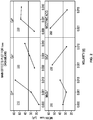
- FIG. 2 the charts depicted therein have the mean corrosion current (Icorr) measured in microamperes ( ⁇ A) on the y-axis, and the molarity on the x-axis.
- Icorr mean corrosion current measured in microamperes
- ⁇ A microamperes
- a lower corrosion current reflects less current passing between the protective coating and the solution applied to the substrate (3500 ppm NaCl), which means less corrosion of the underlying substrate.
- Each chart, 210-260 shows corrosion inhibition systems varying the respective corrosion inhibitive cation or anion, wherein the corrosion inhibition system comprises each of the six species in the charts 210-260.
- chart 210 shows a varying molarity of the chromium (Cr 3+ ) cation in a corrosion inhibition system.
- the chromium, cerium, and calcium cations increase the corrosion current in response to their increased molarities in a corrosion inhibition system. Therefore, relatively greater concentrations may allow more corrosion of the underlying substrate.
- the molybdate corrosion inhibitive anion may have a concentration in a range of 0.5 x 10 -3 molar to 0.5 molar.
- the molybdate compound may have a concentration in a range of 0.5 x 10 -3 molar to 0.02 molar in the chemical conversion coating solution.
- the molybdate compound may have a concentration in a range of 0.5 x 10 -3 molar to 0.002 molar in the chemical conversion coating solution.
- the molybdate compound may have a concentration in a range of 0.0008 molar to 0.0015 molar in the chemical conversion coating solution. In various embodiments, the molybdate compound may have a concentration of about 0.001 molar in the chemical conversion coating solution. The term "about” as used in this context only means plus or minus 0.0005 molar.
- the silicate corrosion inhibitive anion and/or the complexing agent may have a concentration in a range of 0.5 x 10 -3 molar to 0.5 molar. In various embodiments, the silicate corrosion inhibitive anion may have a concentration in a range of 0.005 molar to 0.02 molar in the chemical conversion coating solution.
- the silicate compound anion may have a concentration in a range of 0.008 molar to 0.015 molar in the chemical conversion coating solution. In various embodiments, the silicate compound anion may have a concentration of about 0.010 molar in the chemical conversion coating solution.
- the term "about” as used in this context only means plus or minus 0.002 molar.
- the complexing agent may have a concentration that matches the concentration of the corrosion inhibitive cation species and/or the corrosion inhibitive anion species. Accordingly, the complexing agent may have a concentration in a range of 0.0005 molar to 0.020 molar in the chemical conversion coating solution. In various embodiments, the complexing agent may have a concentration in a range of 0.001 to 0.01 molar in the chemical conversion coating solution. In various embodiments, the complexing agent may have a concentration in a range of 0.005 to 0.02 molar in the chemical conversion coating solution. In various embodiments, the organic binder may have a mass concentration of 0.05 to 0.7 x 10 -3 molar in the chemical conversion coating solution. In various embodiments, the organic binder may have a mass concentration of 0.1 to 0.5 x 10 -3 molar in the chemical conversion coating solution.
- the chemical conversion coating solution may comprise sulfuric acid, nitric acid, ammonium hydroxide, or any other suitable acid or base to regulate the pH of the chemical conversion coating solution.
- the chemical conversion coating solution may have a pH between 3 and 5.
- the chemical conversion coating solution may have a pH between 3 and 4.5.
- the chemical conversion coating solution may have a pH between 3.6 and 4.
- the chemical conversion coating solution may comprise hydrogen peroxide and/or a permanganate compound, such as potassium permanganate, to increase the oxidizing strength (i.e., the bonding of the chemical conversion coating solution with the plating material) of the chemical conversion coating solution.
- the corrosion inhibitive cation species and corrosion inhibitive anion species surprisingly show a synergistic effect at inhibiting corrosion on a substrate in response to coexisting within a solution.
- potentiodynamic scans are shown.
- corrosion inhibitive anion species such as zinc (Zn 2+ ), calcium (Ca 2+ ), strontium (Sr 2+ ), and/or aluminum (Al 3+ ).
- the chemical conversion coating solution may be sprayed, brushed, or otherwise distributed or applied on the material coating of a substrate and allowed to dry to form the chemical conversion coating.
- a chemical conversion coating solution may be applied by immersion of the substrate into the chemical conversion coating solution, or by using a brush and/or roller.
- a chemical conversion solution coating may also be applied by dipping or by spraying.
- Spraying may involve a pump style paint application system, with or without the use of air, to spray the chemical conversion coating solution onto the substrate.
- spraying may involve the use of a propellant, such as a volatile hydrocarbon, to pressurize chemical conversion coating and propel the chemical conversion coating solution onto the substrate.
- the substrate may be activated by exposure to an acid, such as nitric acid or phosphoric acid, prior to the application of the chemical conversion coating solution.
- the chemical conversion coating solution may be applied to the plating material on the substrate and allowed to air dry at about 25°C (77°F).
- the term "about” means plus or minus 5°C (9°F).
- the chemical conversion coating solution may be rinsed with water prior to air drying.
- the chemical conversion coating solution may be dried at elevated temperatures above 25°C (77°F) to form the chemical conversion coating.
- White rust is a form of corrosion product that may affect substrates comprising zinc.
- white rust may affect bare zinc and/or metals coated with zinc containing materials, such as Zn-Ni coated or plated steel, since the former functions as a sacrificial coating that protects a steel substrate from corroding.
- Exposure to water and carbon dioxide may cause zinc oxide and/or zinc hydroxide to form, which may be referred to as white rust, eventually leaving the steel substrate unprotected against corrosion.
- it may be beneficial to coat a substrate with a corrosion inhibition composition applied onto the chemical conversion coating as part of the corrosion inhibition system, as described herein. This corrosion inhibiting composition may also protect the substrate at scratched or damaged areas, and/or areas where the sacrificial coating has failed.
- a corrosion inhibition composition may comprise one or more materials that inhibit at least one form of corrosion of a substrate and/or promote surface passivation of a substrate.
- a corrosion inhibition composition may comprise one or more constituent species that may be referred to as pigments or corrosion inhibition constituents.
- the corrosion inhibition constituents may combine in a synergistic manner to help prevent corrosion of a substrate and/or promote surface passivation of a substrate.
- a corrosion inhibition composition may be mixed with an application vehicle to aid the application of the corrosion inhibition composition to a substrate.
- An application vehicle may comprise one or more materials and/or a solvent that aid in the dispersing and/or application of a corrosion inhibition composition to a substrate.
- the material(s) in an application vehicle may be referred to as an application vehicle solid(s).
- an application vehicle solid comprised in an application vehicle may include an organic resin matrix.
- organic resin matrices used in application vehicles may include, without limitation, one or more of an epoxy, a polyurethane, an alkyd, a polysulfide, a silicone, an acrylic, or butadiene.
- Solvents comprised in an application vehicle may be organic or inorganic.
- the corrosion inhibition composition with an application vehicle, and with or without a smart release adjunct, as described herein may be referred to as a corrosion resistant coating.
- the application vehicle may be a heat transfer fluid, machining coolant, lubricant, or any other suitable substance.
- the machining coolant may be, for example, a semi-synthetic water-based machining coolant.
- a smart release adjunct may be used to enhance the solubility of a corrosion inhibition constituent, such as the molybdate compound, in corrosion inhibition compositions.
- a smart release adjunct may be any material that regulates the solubility of a corrosion inhibition constituent.
- a corrosion inhibition composition may regulate the corrosion current of a substrate in water and/or in sodium chloride water solution to values at or below those achieved with a saturated strontium chromate solution, with or without the presence of dissolved oxygen.
- a corrosion inhibition composition may maintain an open circuit potential (OCP) relationship of steel more cathodic than Cd, TiCd, and plated Zn alloys and/or maintain a corrosion current of Cd, TiCd and Zn alloy plating greater than steel.
- OCP open circuit potential
- Substances such as silicate, molybdate and tungstate compounds tend to inhibit corrosion while elevating the open circuit potential of metals to differing degrees.
- corrosion inhibition compositions and corrosion inhibition organic coatings tend to preserve the galvanic relationship between zinc nickel and steel, where zinc nickel is sacrificial to steel, where the substrate is steel coated with (e.g., plated with) zinc nickel.
- a corrosion inhibition composition may, in various embodiments, comprise a zinc oxide, a zinc phosphate, a calcium silicate, an aluminum phosphate, a zinc calcium strontium aluminum orthophosphate silicate hydrate, a molybdate compound, and/or a silicate compound.
- the molybdate compound may be ZnMoO 4 , CaMoO 4 , and/or MgMoO 4 .
- the silicate compound may be MgSiO 3 , ZnSiO 3 , and/or CaSiO 3 .
- a silicate compound comprising MgSiO 3 may be activated by heat treatment at a relatively lower temperature (i.e., activated at 260°C (500°F)), and/or may be activated by heat treatment at a relatively higher temperature (i.e., activated at 650°C (1202°F).
- the zinc oxide, the zinc phosphate, the calcium silicate, the aluminum phosphate, the zinc calcium strontium aluminum orthophosphate silicate hydrate, collectively, may comprise between 10% and 90% by weight of the corrosion inhibition composition.
- the molybdate compound may comprise between 10% and 90% by weight of the corrosion inhibition composition.
- the silicate compound may comprise between 10% and 90% by weight of the corrosion inhibition composition.
- the zinc oxide, the zinc phosphate, the calcium silicate, the aluminum phosphate, the zinc calcium strontium aluminum orthophosphate silicate hydrate, collectively, may comprise about 33% by weight of the corrosion inhibition composition
- the molybdate compound may comprise about 33% by weight of the corrosion inhibition composition
- the silicate compound may comprise about 33% by weight of the corrosion inhibition composition.
- the term "about” means plus or minus 5 weight %.
- one or more smart release adjuncts may be used in a corrosion resistant coating.
- the smart release adjunct aids in the solubility of the corrosion inhibition composition.
- a complexing agent e.g., nicotinic acid or a salt of nicotinic acid, ethylenediaminetetraacetic acid (EDTA), nitrilotracetic acid (NTA), oxalic acid, formic acid, acetic acid, tartaric acid, nicotinic acid, citric acid, or malonic acid
- a complexing agent e.g., nicotinic acid or a salt of nicotinic acid, ethylenediaminetetraacetic acid (EDTA), nitrilotracetic acid (NTA), oxalic acid, formic acid, acetic acid, tartaric acid, nicotinic acid, citric acid, or malonic acid
- an anion e.g., the oxalate anion C 2 O 4 2- of MgC 2 O 4 2-
- a smart release adjunct to react with a targeted cation (e.g., Zn 2+ ), forming the less soluble ZnC 2 O 4 thus increasing the solubility of ZnMoO 4 /ZnSiO 3 pigments.
- MgSiO 3 combined with ZnMoO 4 is used as smart release adjunct with a corrosion inhibition composition.
- substrate 102 is shown coated with plating material 104, which may comprise Zn and/or Ni, and/or Cd or TiCd.
- substrate 102 is shown coated in chemical conversion coating 106 disposed adjacent to plating material 104.
- Chemical conversion coating 106 may comprise a corrosion inhibitive cation, a corrosion inhibitive anion, and a complexing agent, as described herein.
- substrate 102 is shown being additionally coated with a corrosion inhibition composition 108 disposed adjacent to chemical conversion coating 106, as described herein.
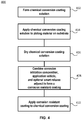
- a chemical conversion coating solution may be formed (step 402) by combining a solvent (i.e., water), a corrosion inhibitive cation such as those discussed herein, a corrosion inhibitive anion such as those discussed herein, and a complexing agent.
- a solvent i.e., water
- a corrosion inhibitive cation such as those discussed herein
- a corrosion inhibitive anion such as those discussed herein
- a complexing agent i.e., water
- the chemical conversion coating solution may be maintained at a temperature between 5°C (41°F) and 90°C (194°F), 15°C (59°F) and 50°C (122°F), or 25°C (77°F) and 30°C (86°F).
- the chemical conversion coating solution may additionally comprise an application vehicle.
- Chemical conversion coating solution may be applied to plating material 104 on substrate 102 (step 404) by any of the methods described herein. In embodiments in which substrate 102 is immersed in the chemical conversion coating solution, substrate 102 may be immersed for 0.05 to 20 minutes, 0.5 to 10 minutes, or 1 to 5 minutes. Chemical conversion coating solution may subsequently be dried (step 406) to form a chemical conversion coating 106 adjacent to plating material 104.
- a corrosion inhibition composition and an application vehicle may be combined to form a corrosion resistant coating (step 408).
- a smart release adjunct may be combined with the corrosion inhibition composition and the application vehicle to form the corrosion resistant coating.
- the corrosion inhibition composition may comprise a zinc oxide, a zinc phosphate, a calcium silicate, an aluminum phosphate, a zinc calcium strontium aluminum orthophosphate silicate hydrate, a molybdate compound, and/or a silicate compound.
- the corrosion resistant coating may be applied to the chemical conversion coating (step 410), by being painted or otherwise distributed or applied and allowed to dry.
- a corrosion resistant coating may be applied using a brush and/or roller.
- a corrosion resistant coating may also be applied by dipping or by spraying. Spraying may involve a pump style paint application system, with or without the use of air, to spray the corrosion resistant coating onto the substrate.
- spraying may involve the use of a propellant, such as a volatile hydrocarbon, to pressurize the corrosion resistant coating and propel the corrosion resistant coating onto the substrate.
- Step 410 may be repeated one or more times to build one or more layers onto the substrate.
- the chemical conversion coating solution comprises a solvent, a corrosion inhibitive cation(s), a corrosion inhibitive anion(s), and a complexing agent.
- the chemical conversion coating resulting from the drying of the chemical conversion coating solution, may comprise a corrosion inhibitive cation (such as zinc (Zn 2+ ), calcium (Ca 2+ ), strontium (Sr 2+ ), magnesium (Mg 2+ ), and/or aluminum (Al 3+ ), a corrosion inhibitive anion (such as molybdate, silicate, and/or phosphate), and a complexing agent so the cation and anions do not react with one another in solution, and the corrosion inhibition composition may comprise similar species (a molybdate compound, a silicate compound, and compounds comprising zinc, phosphate, calcium, aluminum, magnesium, and strontium ions), which may or may not be disassociated in solution.
- the chemical conversion coating and the corrosion inhibition composition having similar chemical species may serve to stabilize the interface between chemical conversion coating and the corrosion inhibition composition on the substrate. Such stabilization may minimize or eliminate migration and displacement reactions between the coatings, causing the corrosion inhibition system comprising the plating material, chemical conversion coating, and corrosion inhibition composition to better inhibit corrosion of the underlying substrate.
- references to "one embodiment”, “an embodiment”, “various embodiments”, etc. indicate that the embodiment described may include a particular feature, structure, or characteristic, but every embodiment may not necessarily include the particular feature, structure, or characteristic. Moreover, such phrases are not necessarily referring to the same embodiment. Further, when a particular feature, structure, or characteristic is described in connection with an embodiment, it is submitted that it is within the knowledge of one skilled in the art to affect such feature, structure, or characteristic in connection with other embodiments whether or not explicitly described. After reading the description, it will be apparent to one skilled in the relevant art(s) how to implement the disclosure in alternative embodiments.
Landscapes
- Chemical & Material Sciences (AREA)
- Engineering & Computer Science (AREA)
- Materials Engineering (AREA)
- Organic Chemistry (AREA)
- Metallurgy (AREA)
- Chemical Kinetics & Catalysis (AREA)
- Mechanical Engineering (AREA)
- Inorganic Chemistry (AREA)
- General Chemical & Material Sciences (AREA)
- Electrochemistry (AREA)
- Wood Science & Technology (AREA)
- Life Sciences & Earth Sciences (AREA)
- Chemical Treatment Of Metals (AREA)
- Other Surface Treatments For Metallic Materials (AREA)
- Preventing Corrosion Or Incrustation Of Metals (AREA)
- Paints Or Removers (AREA)
- Application Of Or Painting With Fluid Materials (AREA)
Abstract
Description
- Conventionally, high-performance post-treatments for metal and metal coated or plated substrates are based on hexavalent chromate chemistry. Metal coated substrates may include, for example, zinc-nickel electroplated coatings on high strength low alloy steel. Hexavalent chromium is highly toxic and a known carcinogen.
- Various compositions, systems, and methods are disclosed herein. In various embodiments, a method of disposing a corrosion resistant system to a substrate (e.g. a method for forming a corrosion inhibition system disposed on a substrate as herein described) may comprise applying a plating material to the substrate; forming a chemical conversion coating solution (e.g. a chemical conversion coating solution as herein described) by combining a solvent, at least one corrosion inhibitive cation comprising at least one of zinc, calcium, strontium, magnesium, or aluminum, at least one corrosion inhibitive anion comprising at least one of phosphate, molybdate, or silicate, and a complexing agent; and applying the chemical conversion coating solution to the plating material on the substrate. In various embodiments, a chemical conversion coating solution (e.g. for use in the methods herein described) may comprise a solvent; at least one corrosion inhibitive cation comprising at least one of zinc, calcium, strontium, magnesium, or aluminum; at least one corrosion inhibitive anion comprising at least one of phosphate, molybdate, or silicate; and a complexing agent. In various embodiments, a corrosion inhibition system disposed on a substrate (e.g. produced according to the methods described herein) may comprise a plating material; and a chemical conversion coating comprising a corrosion inhibitive cation comprising at least one of zinc, calcium, strontium, magnesium, or aluminum, a corrosion inhibitive anion comprising at least one of phosphate, molybdate, or silicate, and a complexing agent.
- In various embodiments, each of the at least one corrosion inhibitive cation may have a concentration in a range of 0.5 x 10⁻³ moles per liter (molar) to 0.5 molar in the chemical conversion coating solution. In various embodiments, each of the at least one corrosion inhibitive anion may have a concentration in a range of 0.5 x 10⁻³ molar to 0.5 molar in the chemical conversion coating solution. In various embodiments, the molybdate may have a concentration in a range of 0.5 x 10⁻³ molar to 0.02 molar in the chemical conversion coating solution. In various embodiments, the silicate may have a concentration in a range of 0.005 molar to 0.02 molar in the chemical conversion coating solution. In various embodiments, the complexing agent may have a concentration in a range of 0.5 x 10⁻³ molar to 0.5 molar in the chemical conversion coating solution.
- In various embodiments, forming the chemical conversion coating may further comprise adding an organic binder into the chemical conversion coating solution. In various embodiments, the corrosion inhibitive cation may be provided by at least one of zinc chloride, zinc sulfate, zinc nitrate, zinc molybdate, calcium molybdate, magnesium molybdate, zinc silicate, magnesium silicate, calcium silicate, zinc oxide, zinc phosphate, aluminum phosphate, magnesium phosphate, calcium phosphate, zinc calcium strontium aluminum orthophosphate silicate, calcium chloride, calcium sulfate, calcium nitrate, strontium chloride, strontium sulfate, strontium nitrate, aluminum chloride, aluminum sulfate, or aluminum nitrate. In various embodiments, the corrosion inhibitive anion may be provided by at least one of sodium phosphate, sodium silicate, sodium vanadate, zinc molybdate, calcium molybdate, sodium molybdate, magnesium molybdate, zinc silicate, magnesium silicate, calcium silicate, sodium silicate, zinc phosphate, aluminum phosphate, magnesium phosphate, calcium phosphate, zinc calcium strontium aluminum orthophosphate silicate, sodium nitrite, phosphoric acid, silicic acid, vanadic acid, and/or molybdic acid. In various embodiments, the complexing agent may comprise at least one of ethylenediaminetetraacetic acid (EDTA), nitrilotracetic acid (NTA), oxalic acid, formic acid, acetic acid, tartaric acid, nicotinic acid, citric acid, or malonic acid. In various embodiments, the organic binder may comprise at least one of polyvinyl alcohol, polyvinylpyrrolidone, polyvinyl acetate, or an acrylic.
- In various embodiments, the method may further comprise forming a corrosion resistant coating by combining a corrosion inhibition composition and an application vehicle, and applying the corrosion resistant coating to the substrate, wherein the corrosion inhibition composition may comprise a zinc oxide, a zinc phosphate, a calcium silicate, an aluminum phosphate, a zinc calcium strontium aluminum orthophosphate silicate hydrate, a molybdate compound, and/or a silicate compound. In various embodiments, the molybdate compound may comprise between 10% and 90% by weight of the corrosion inhibition composition. In various embodiments, the silicate compound may comprise between 10% and 90% by weight of the corrosion inhibition composition. In various embodiments, the zinc oxide, the zinc phosphate, the calcium silicate, the aluminum phosphate, and the zinc calcium strontium aluminum orthophosphate silicate hydrate, collectively, may comprise between 10% and 90% by weight of the corrosion inhibition composition.
- In various embodiments, a corrosion inhibition system disposed on a substrate (e.g. produced according to the methods described herein) may comprise a plating material; and a chemical conversion coating comprising a corrosion inhibitive cation comprising at least one of zinc, calcium, strontium, magnesium, or aluminum, a corrosion inhibitive anion comprising at least one of phosphate, molybdate, or silicate, and a complexing agent. In various embodiments, the corrosion inhibitive cation may be provided by at least one of zinc chloride, zinc sulfate, zinc nitrate, zinc molybdate, calcium molybdate, magnesium molybdate, zinc silicate, magnesium silicate, calcium silicate, zinc oxide, zinc phosphate, aluminum phosphate, magnesium phosphate, calcium phosphate, zinc calcium strontium aluminum orthophosphate silicate, calcium chloride, calcium sulfate, calcium nitrate, strontium chloride, strontium sulfate, strontium nitrate, aluminum chloride, aluminum sulfate, or aluminum nitrate. In various embodiments, the corrosion inhibitive anion may be provided by at least one of sodium phosphate, sodium silicate, sodium vanadate, zinc molybdate, calcium molybdate, sodium molybdate, magnesium molybdate, zinc silicate, magnesium silicate, calcium silicate, sodium silicate, zinc phosphate, aluminum phosphate, magnesium phosphate, calcium phosphate, zinc calcium strontium aluminum orthophosphate silicate, sodium nitrite, phosphoric acid, silicic acid, vanadic acid, and/or molybdic acid. In various embodiments, the corrosion inhibition system may further comprise a corrosion inhibition composition disposed adjacent to the chemical conversion coating comprising a zinc oxide, a zinc phosphate, a calcium silicate, an aluminum phosphate, a zinc calcium strontium aluminum orthophosphate silicate hydrate, a molybdate compound, and/or a silicate compound.
- In various embodiments, a chemical conversion coating solution (e.g. for use in the methods herein described) may comprise a solvent; at least one corrosion inhibitive cation comprising at least one of zinc, calcium, strontium, magnesium, or aluminum; at least one corrosion inhibitive anion comprising at least one of phosphate, molybdate, or silicate; and a complexing agent. In various embodiments, each of the at least one corrosion inhibitive cation may have a concentration in a range of 0.5 x 10⁻³ molar to 0.5 molar in the chemical conversion coating. In various embodiments, each of the at least one corrosion inhibitive anion may have a concentration in a range of 0.5 x 10⁻³ molar to 0.5 molar in the chemical conversion coating.
-
-
FIGS. 1A and 1B illustrate corrosion inhibition systems coated on substrates, in accordance with various embodiments; -
FIG. 2 illustrates a chart depicting the effect on corrosion current by varying one species in solution, in accordance with various embodiments; -
FIG. 3 illustrates potentiodynamic scans of various materials, including those of corrosion inhibition systems in accordance with various embodiments; and -
FIG. 4 illustrates a method of applying a corrosion inhibition system, in accordance with various embodiments. - All ranges and ratio limits disclosed herein may be combined and include their upper and lower limits. It is to be understood that unless specifically stated otherwise, references to "a," "an," and/or "the" may include one or more than one and that reference to an item in the singular may also include the item in the plural.
- The detailed description of exemplary embodiments herein makes reference to the accompanying drawings, which show exemplary embodiments by way of illustration. While these exemplary embodiments are described in sufficient detail to enable those skilled in the art to practice the disclosure, it should be understood that other embodiments may be realized and that logical, chemical, and/or mechanical changes may be made without departing from the spirit and scope of the disclosure. Thus, the detailed description herein is presented for purposes of illustration only and not of limitation. For example, the steps recited in any of the method or process descriptions may be executed in any order and are not necessarily limited to the order presented. Moreover, many of the functions or steps may be outsourced to or performed by one or more third parties. Furthermore, any reference to singular includes plural embodiments, and any reference to more than one component or step may include a singular embodiment or step. Also, any reference to attached, fixed, connected or the like may include permanent, removable, temporary, partial, full and/or any other possible attachment option. Additionally, any reference to without contact (or similar phrases) may also include reduced contact or minimal contact.
- Corrosion inhibition systems used on metal and metal coated substrates are used in many industries. For example, aircraft landing gear often contains metal-coated substrates in landing gear components, which may be overcoated with a corrosion inhibition system. Metal and/or metal-coated substrates are also used in other contexts, such as in other vehicles such as automobiles, trains, and heavy equipment. In addition, metal coated substrates are found in construction contexts, such as used on building infrastructures.
- In various embodiments, a corrosion inhibition system may comprise a plating material, a chemical conversion coating, and/or a corrosion inhibition composition, as described herein. As used herein, a "substrate" may include any metal and/or metal coated material. For example, a substrate may comprise iron, coated iron, steel, coated steel, stainless steel, coated stainless steel, nickel, coated nickel, aluminum, coated aluminum, bronze, coated bronze, copper beryllium, coated copper beryllium, zinc, and/or coated zinc. In various embodiments, stainless steel may comprise a high strength stainless steel and may comprise a martensitic precipitation-hardening stainless steel such as 15-5PH® manufactured by AK Steel 9227 Centre Pointe Drive, West Chester, OH 45069 which may comprise 14 to 15.5% by weight chromium, 3.5 to 5.5% by weight nickel, 2.5 to 4.5% by weight copper, 0.15 to 0.45% by weight columbium plus tantalum, and a maximum of 0.07% by weight carbon, 1.0% by weight manganese, 0.04% by weight phosphorus, 0.03% by weight sulfur, and 1.0% by weight silicon. In various embodiments, a substrate may comprise a chromium-nickel-tungsten martensitic alloy (also known as Greek Ascoloy). In various embodiments, steel may comprise a high strength, low-alloy steel such as 4340 or 300M.
- In various embodiments, a substrate may comprise a metal that is coated with a plating material. A plating material may be applied by electroplating, cold spraying or other suitable methods. Plating materials may comprise one or more metals, such as nickel (Ni), zinc (Zn), cadmium (Cd), titanium (Ti) and combinations thereof. For example, in various embodiments, a substrate may comprise a coated steel or low alloy steel (e.g., 300M steel) comprising a Zn-Ni plating material. In various embodiments, a substrate may comprise a coated steel or low alloy steel comprising a cadmium (Cd) and/or a titanium-cadmium (TiCd) plating material. In various embodiments, a substrate may comprise a zinc alloy or zinc-nickel alloy. In various embodiments, a substrate may comprise a coated steel comprising a zinc plating material, and/or galvanized steel. In various embodiments, a substrate may comprise bare steel, and/or bare stainless steel. In various embodiments, a substrate may comprise aluminum-nickel-bronze alloys and/or copper alloys. In various embodiments, a substrate may comprise aluminum and aluminum alloys.
- In various embodiments, a chemical conversion coating solution may be applied to the plating material on the substrate. The chemical conversion coating, which is the chemical conversion coating solution less the solvent (i.e., after drying), in conjunction with the plating material, may be configured to inhibit the corrosion of and protect the underlying substrate. In various embodiments, the chemical conversion coating solution may be a solution comprising a solvent (i.e., water), and a mixture of chemical conversion constituents. In various embodiments, the chemical conversion constituents may comprise a corrosion inhibitive cation species, and corrosion inhibitive anion species, and a complexing agent, where the corrosion inhibitive cation species and the corrosion inhibitive anion species are ions that exist in solution. In various embodiments, the inhibitive cation species may be any one or combination of a zinc species (Zn2+), a calcium species (Ca2+), a strontium species (Sr2+), an aluminum species (Al3+), a cerium species (Ce3+), a magnesium species (Mg2+), and/or a chromium species (Cr3+) in solution. In various embodiments, the corrosion inhibitive anion species may be any one or combination of a molybdate species, a silicate species, a phosphate species, a vanadate species, a peroxide species, and/or a nitrate species in solution.
- The corrosion inhibitive cation species and the corrosion inhibitive anion species may be provided by any soluble compound(s) to create a chemical conversion coating solution. In various embodiments, any of the corrosion inhibitive cation species may be provided by any soluble ionic compound, for example, comprising chloride, nitrate, sulfate, silicate, molybdate, phosphate, orthophosphate or any other suitable anion. In various embodiments, any of the corrosion inhibitive anion species may be provided by any soluble ionic compound, for example, comprising a zinc cation, magnesium cation, calcium cation, aluminum cation, strontium cation, and/or any other suitable species. In various embodiments, any of corrosion inhibitive anion species may be provided by the anion species in its acid form, such as phosphoric acid providing phosphate, silicic acid providing silicate, and/or vanadic acid providing vanadate. The addition of the complexing agent to the chemical conversion coating solution allows the corrosion inhibitive cations and anions to exist in solution without reacting with one another to prevent, among other things, precipitation of some species.
- In various embodiments, the complexing agent may be ethylenediaminetetraacetic acid (EDTA), nitrilotracetic acid (NTA), oxalic acid, formic acid, acetic acid, tartaric acid, nicotinic acid, citric acid, malonic acid, or any other suitable compound. In various embodiments, the chemical conversion coating solution may comprise an application vehicle to aid the application of the chemical conversion coating to the plating material on a substrate. In various embodiments, the application vehicle may be an organic binder such as polyvinyl alcohol (PVA), polyvinylpyrrolidone (PVP), polyvinyl acetate, an acrylic, and/or any other suitable compound. In various embodiments, the application vehicle may be a heat transfer fluid, machining coolant, lubricant, or any other suitable substance. The machining coolant may be, for example, a semi-synthetic water-based machining coolant.
- In various embodiments, the corrosion inhibitive cation species and/or the corrosion inhibitive anion species may have a concentration in a range of 0.5 x 10⁻³ molar to 0.5 molar in the chemical conversion coating solution. In various embodiments, the corrosion inhibitive cation species and/or the corrosion inhibitive anion species may have a concentration in a range of 0.5 x 10⁻³ molar to 0.05 molar in the chemical conversion coating solution. In various embodiments, the corrosion inhibitive cation species and/or the corrosion inhibitive anion species may have a concentration in a range of 0.001 molar to 0.01 molar in the chemical conversion coating solution. That is, any or all corrosion inhibitive cation species, and/or any or all corrosion inhibitive anion species, individually or in combination, may have the concentrations discussed above in the chemical conversion coating solution.
- Various corrosion inhibitive cation species and corrosion inhibitive anion species have shown more of a potential to aid in corrosion protection of a substrate when existing in a solution and applied to the substrate. With reference to
FIG. 2 , the charts depicted therein have the mean corrosion current (Icorr) measured in microamperes (µA) on the y-axis, and the molarity on the x-axis. The lower the corrosion current, the more effective a species is at preventing corrosion. A lower corrosion current reflects less current passing between the protective coating and the solution applied to the substrate (3500 ppm NaCl), which means less corrosion of the underlying substrate. Each chart, 210-260 shows corrosion inhibition systems varying the respective corrosion inhibitive cation or anion, wherein the corrosion inhibition system comprises each of the six species in the charts 210-260. For example, chart 210 shows a varying molarity of the chromium (Cr3+) cation in a corrosion inhibition system. As can be seen incharts - Accordingly, in addition to the various concentration ranges for constituents of the chemical conversion coating solution discussed herein, in various embodiments, the molybdate corrosion inhibitive anion may have a concentration in a range of 0.5 x 10⁻³ molar to 0.5 molar. In various embodiments, the molybdate compound may have a concentration in a range of 0.5 x 10⁻³ molar to 0.02 molar in the chemical conversion coating solution. In various embodiments, the molybdate compound may have a concentration in a range of 0.5 x 10⁻³ molar to 0.002 molar in the chemical conversion coating solution. In various embodiments, the molybdate compound may have a concentration in a range of 0.0008 molar to 0.0015 molar in the chemical conversion coating solution. In various embodiments, the molybdate compound may have a concentration of about 0.001 molar in the chemical conversion coating solution. The term "about" as used in this context only means plus or minus 0.0005 molar. In various embodiments, the silicate corrosion inhibitive anion and/or the complexing agent may have a concentration in a range of 0.5 x 10⁻³ molar to 0.5 molar. In various embodiments, the silicate corrosion inhibitive anion may have a concentration in a range of 0.005 molar to 0.02 molar in the chemical conversion coating solution. In various embodiments, the silicate compound anion may have a concentration in a range of 0.008 molar to 0.015 molar in the chemical conversion coating solution. In various embodiments, the silicate compound anion may have a concentration of about 0.010 molar in the chemical conversion coating solution. The term "about" as used in this context only means plus or minus 0.002 molar.
- In various embodiments, the complexing agent may have a concentration that matches the concentration of the corrosion inhibitive cation species and/or the corrosion inhibitive anion species. Accordingly, the complexing agent may have a concentration in a range of 0.0005 molar to 0.020 molar in the chemical conversion coating solution. In various embodiments, the complexing agent may have a concentration in a range of 0.001 to 0.01 molar in the chemical conversion coating solution. In various embodiments, the complexing agent may have a concentration in a range of 0.005 to 0.02 molar in the chemical conversion coating solution. In various embodiments, the organic binder may have a mass concentration of 0.05 to 0.7 x 10⁻³ molar in the chemical conversion coating solution. In various embodiments, the organic binder may have a mass concentration of 0.1 to 0.5 x 10⁻³ molar in the chemical conversion coating solution.
- In various embodiments, the chemical conversion coating solution may comprise sulfuric acid, nitric acid, ammonium hydroxide, or any other suitable acid or base to regulate the pH of the chemical conversion coating solution. In various embodiments, the chemical conversion coating solution may have a pH between 3 and 5. In various embodiments, the chemical conversion coating solution may have a pH between 3 and 4.5. In various embodiments, the chemical conversion coating solution may have a pH between 3.6 and 4. Additionally, in various embodiments, the chemical conversion coating solution may comprise hydrogen peroxide and/or a permanganate compound, such as potassium permanganate, to increase the oxidizing strength (i.e., the bonding of the chemical conversion coating solution with the plating material) of the chemical conversion coating solution.
- The corrosion inhibitive cation species and corrosion inhibitive anion species surprisingly show a synergistic effect at inhibiting corrosion on a substrate in response to coexisting within a solution. For example, with reference to
FIG. 3 , potentiodynamic scans are shown. As shown, there is a synergistic effect in preventing corrosion by combining the molybdate, silicate, and phosphate (corrosion inhibitive anion species), the mixture of which may include corrosion inhibitive cation species such as zinc (Zn2+), calcium (Ca2+), strontium (Sr2+), and/or aluminum (Al3+). - In various embodiments, the chemical conversion coating solution may be sprayed, brushed, or otherwise distributed or applied on the material coating of a substrate and allowed to dry to form the chemical conversion coating. For example, a chemical conversion coating solution may be applied by immersion of the substrate into the chemical conversion coating solution, or by using a brush and/or roller. A chemical conversion solution coating may also be applied by dipping or by spraying. Spraying may involve a pump style paint application system, with or without the use of air, to spray the chemical conversion coating solution onto the substrate. In various embodiments, spraying may involve the use of a propellant, such as a volatile hydrocarbon, to pressurize chemical conversion coating and propel the chemical conversion coating solution onto the substrate. In various embodiments, the substrate may be activated by exposure to an acid, such as nitric acid or phosphoric acid, prior to the application of the chemical conversion coating solution. In various embodiments, the chemical conversion coating solution may be applied to the plating material on the substrate and allowed to air dry at about 25°C (77°F). When used in this context only, the term "about" means plus or minus 5°C (9°F). In various embodiments, the chemical conversion coating solution may be rinsed with water prior to air drying. In various embodiments, the chemical conversion coating solution may be dried at elevated temperatures above 25°C (77°F) to form the chemical conversion coating.
- White rust is a form of corrosion product that may affect substrates comprising zinc. For example, white rust may affect bare zinc and/or metals coated with zinc containing materials, such as Zn-Ni coated or plated steel, since the former functions as a sacrificial coating that protects a steel substrate from corroding. Exposure to water and carbon dioxide may cause zinc oxide and/or zinc hydroxide to form, which may be referred to as white rust, eventually leaving the steel substrate unprotected against corrosion. To aid in preventing this form of corrosion and/or to promote surface passivation, among other things, in accordance with various embodiments, it may be beneficial to coat a substrate with a corrosion inhibition composition applied onto the chemical conversion coating as part of the corrosion inhibition system, as described herein. This corrosion inhibiting composition may also protect the substrate at scratched or damaged areas, and/or areas where the sacrificial coating has failed.
- A corrosion inhibition composition may comprise one or more materials that inhibit at least one form of corrosion of a substrate and/or promote surface passivation of a substrate. In various embodiments, a corrosion inhibition composition may comprise one or more constituent species that may be referred to as pigments or corrosion inhibition constituents. In various embodiments, the corrosion inhibition constituents may combine in a synergistic manner to help prevent corrosion of a substrate and/or promote surface passivation of a substrate.
- A corrosion inhibition composition may be mixed with an application vehicle to aid the application of the corrosion inhibition composition to a substrate. An application vehicle may comprise one or more materials and/or a solvent that aid in the dispersing and/or application of a corrosion inhibition composition to a substrate. The material(s) in an application vehicle may be referred to as an application vehicle solid(s). For example, an application vehicle solid comprised in an application vehicle may include an organic resin matrix. In various embodiments, organic resin matrices used in application vehicles may include, without limitation, one or more of an epoxy, a polyurethane, an alkyd, a polysulfide, a silicone, an acrylic, or butadiene. Solvents comprised in an application vehicle may be organic or inorganic. In that regard, the corrosion inhibition composition with an application vehicle, and with or without a smart release adjunct, as described herein, may be referred to as a corrosion resistant coating. In various embodiments, the application vehicle may be a heat transfer fluid, machining coolant, lubricant, or any other suitable substance. The machining coolant may be, for example, a semi-synthetic water-based machining coolant.
- As further described herein, the efficacy of the corrosion inhibition constituents is related to their solubilities. The higher solubility, the better inhibition the corrosion inhibition constituents tend to offer. However, using a high solubility corrosion inhibition constituent in corrosion resistant coatings may produce other issues in corrosion resistant coating application, such as formation of blistering, or a lack of long-term corrosion protection performance. Thus, a sparingly soluble corrosion inhibition composition may be beneficial. For example, in accordance with various embodiments, a corrosion inhibition composition may have a solubility of between 0.1 and 20 millimolar (mM) (where 1 mM = 10-3 mol/L), between 0.5 mM and 15 mM, and/or between 1 mM and 10 mM.
- In that regard, a smart release adjunct may be used to enhance the solubility of a corrosion inhibition constituent, such as the molybdate compound, in corrosion inhibition compositions. A smart release adjunct may be any material that regulates the solubility of a corrosion inhibition constituent.
- In various embodiments, a corrosion inhibition composition may regulate the corrosion current of a substrate in water and/or in sodium chloride water solution to values at or below those achieved with a saturated strontium chromate solution, with or without the presence of dissolved oxygen. In addition, a corrosion inhibition composition may maintain an open circuit potential (OCP) relationship of steel more cathodic than Cd, TiCd, and plated Zn alloys and/or maintain a corrosion current of Cd, TiCd and Zn alloy plating greater than steel. Substances such as silicate, molybdate and tungstate compounds tend to inhibit corrosion while elevating the open circuit potential of metals to differing degrees. Compounds such as rare earth metal cations, phosphates (such as zinc phosphate), benzoate, orthophosphates, phthalates, and/or salts of phthalic acid compounds inhibit corrosion while depressing the open circuit potential. In addition, corrosion inhibition compositions and corrosion inhibition organic coatings, in accordance with various embodiments, tend to preserve the galvanic relationship between zinc nickel and steel, where zinc nickel is sacrificial to steel, where the substrate is steel coated with (e.g., plated with) zinc nickel.
- A corrosion inhibition composition may, in various embodiments, comprise a zinc oxide, a zinc phosphate, a calcium silicate, an aluminum phosphate, a zinc calcium strontium aluminum orthophosphate silicate hydrate, a molybdate compound, and/or a silicate compound. In various embodiments, the molybdate compound may be ZnMoO4, CaMoO4, and/or MgMoO4. In various embodiments, the silicate compound may be MgSiO3, ZnSiO3, and/or CaSiO3. A silicate compound comprising MgSiO3 may be activated by heat treatment at a relatively lower temperature (i.e., activated at 260°C (500°F)), and/or may be activated by heat treatment at a relatively higher temperature (i.e., activated at 650°C (1202°F). In various embodiments, the zinc oxide, the zinc phosphate, the calcium silicate, the aluminum phosphate, the zinc calcium strontium aluminum orthophosphate silicate hydrate, collectively, may comprise between 10% and 90% by weight of the corrosion inhibition composition. In various embodiments, the molybdate compound may comprise between 10% and 90% by weight of the corrosion inhibition composition. In various embodiments, the silicate compound may comprise between 10% and 90% by weight of the corrosion inhibition composition. In various embodiments, the zinc oxide, the zinc phosphate, the calcium silicate, the aluminum phosphate, the zinc calcium strontium aluminum orthophosphate silicate hydrate, collectively, may comprise about 33% by weight of the corrosion inhibition composition, the molybdate compound may comprise about 33% by weight of the corrosion inhibition composition, and/or the silicate compound may comprise about 33% by weight of the corrosion inhibition composition. As used in this context only, the term "about" means plus or minus 5 weight %.
- As described above, one or more smart release adjuncts may be used in a corrosion resistant coating. The smart release adjunct aids in the solubility of the corrosion inhibition composition. In various embodiments, a complexing agent (e.g., nicotinic acid or a salt of nicotinic acid, ethylenediaminetetraacetic acid (EDTA), nitrilotracetic acid (NTA), oxalic acid, formic acid, acetic acid, tartaric acid, nicotinic acid, citric acid, or malonic acid) is used as a smart release adjunct to increase the solubility of the pigments. In various embodiments, an anion (e.g., the oxalate anion C2O4 2- of MgC2O4 2-) is used as a smart release adjunct to react with a targeted cation (e.g., Zn2+), forming the less soluble ZnC2O4 thus increasing the solubility of ZnMoO4/ZnSiO3 pigments. In various embodiments, MgSiO3 combined with ZnMoO4 is used as smart release adjunct with a corrosion inhibition composition.
- With reference to
FIG. 1A ,substrate 102 is shown coated with platingmaterial 104, which may comprise Zn and/or Ni, and/or Cd or TiCd. In addition,substrate 102 is shown coated inchemical conversion coating 106 disposed adjacent to platingmaterial 104.Chemical conversion coating 106 may comprise a corrosion inhibitive cation, a corrosion inhibitive anion, and a complexing agent, as described herein. With reference toFIG. 1B ,substrate 102 is shown being additionally coated with acorrosion inhibition composition 108 disposed adjacent tochemical conversion coating 106, as described herein. - With reference to
FIG. 4 ,method 400 for applying a corrosion inhibition system to a substrate is illustrated. With combined reference toFIGS. 1B and4 , a chemical conversion coating solution may be formed (step 402) by combining a solvent (i.e., water), a corrosion inhibitive cation such as those discussed herein, a corrosion inhibitive anion such as those discussed herein, and a complexing agent. During the forming of the chemical conversion coating solution, the chemical conversion coating solution may be maintained at a temperature between 5°C (41°F) and 90°C (194°F), 15°C (59°F) and 50°C (122°F), or 25°C (77°F) and 30°C (86°F). In various embodiments, the chemical conversion coating solution may additionally comprise an application vehicle. Chemical conversion coating solution may be applied to platingmaterial 104 on substrate 102 (step 404) by any of the methods described herein. In embodiments in whichsubstrate 102 is immersed in the chemical conversion coating solution,substrate 102 may be immersed for 0.05 to 20 minutes, 0.5 to 10 minutes, or 1 to 5 minutes. Chemical conversion coating solution may subsequently be dried (step 406) to form achemical conversion coating 106 adjacent to platingmaterial 104. In various embodiments, a corrosion inhibition composition and an application vehicle may be combined to form a corrosion resistant coating (step 408). In various embodiments, a smart release adjunct may be combined with the corrosion inhibition composition and the application vehicle to form the corrosion resistant coating. The corrosion inhibition composition may comprise a zinc oxide, a zinc phosphate, a calcium silicate, an aluminum phosphate, a zinc calcium strontium aluminum orthophosphate silicate hydrate, a molybdate compound, and/or a silicate compound. The corrosion resistant coating may be applied to the chemical conversion coating (step 410), by being painted or otherwise distributed or applied and allowed to dry. For example, a corrosion resistant coating may be applied using a brush and/or roller. A corrosion resistant coating may also be applied by dipping or by spraying. Spraying may involve a pump style paint application system, with or without the use of air, to spray the corrosion resistant coating onto the substrate. In various embodiments, spraying may involve the use of a propellant, such as a volatile hydrocarbon, to pressurize the corrosion resistant coating and propel the corrosion resistant coating onto the substrate. Step 410 may be repeated one or more times to build one or more layers onto the substrate. - In various embodiments described herein, the chemical conversion coating solution comprises a solvent, a corrosion inhibitive cation(s), a corrosion inhibitive anion(s), and a complexing agent. The chemical conversion coating, resulting from the drying of the chemical conversion coating solution, may comprise a corrosion inhibitive cation (such as zinc (Zn2+), calcium (Ca2+), strontium (Sr2+), magnesium (Mg2+), and/or aluminum (Al3+), a corrosion inhibitive anion (such as molybdate, silicate, and/or phosphate), and a complexing agent so the cation and anions do not react with one another in solution, and the corrosion inhibition composition may comprise similar species (a molybdate compound, a silicate compound, and compounds comprising zinc, phosphate, calcium, aluminum, magnesium, and strontium ions), which may or may not be disassociated in solution. The chemical conversion coating and the corrosion inhibition composition having similar chemical species may serve to stabilize the interface between chemical conversion coating and the corrosion inhibition composition on the substrate. Such stabilization may minimize or eliminate migration and displacement reactions between the coatings, causing the corrosion inhibition system comprising the plating material, chemical conversion coating, and corrosion inhibition composition to better inhibit corrosion of the underlying substrate.
- Benefits, other advantages, and solutions to problems have been described herein with regard to specific embodiments. Furthermore, the connecting lines shown in the various figures contained herein are intended to represent exemplary functional relationships and/or physical couplings between the various elements. It should be noted that many alternative or additional functional relationships or physical connections may be present in a practical system. However, the benefits, advantages, solutions to problems, and any elements that may cause any benefit, advantage, or solution to occur or become more pronounced are not to be construed as critical, required, or essential features or elements of the disclosure. The scope of the disclosure is accordingly to be limited by nothing other than the appended claims, in which reference to an element in the singular is not intended to mean "one and only one" unless explicitly so stated, but rather "one or more." Moreover, where a phrase similar to "at least one of A, B, or C" is used in the claims, it is intended that the phrase be interpreted to mean that A alone may be present in an embodiment, B alone may be present in an embodiment, C alone may be present in an embodiment, or that any combination of the elements A, B and C may be present in a single embodiment; for example, A and B, A and C, B and C, or A and B and C. Different cross-hatching is used throughout the figures to denote different parts but not necessarily to denote the same or different materials.
- Systems, methods and apparatus are provided herein. In the detailed description herein, references to "one embodiment", "an embodiment", "various embodiments", etc., indicate that the embodiment described may include a particular feature, structure, or characteristic, but every embodiment may not necessarily include the particular feature, structure, or characteristic. Moreover, such phrases are not necessarily referring to the same embodiment. Further, when a particular feature, structure, or characteristic is described in connection with an embodiment, it is submitted that it is within the knowledge of one skilled in the art to affect such feature, structure, or characteristic in connection with other embodiments whether or not explicitly described. After reading the description, it will be apparent to one skilled in the relevant art(s) how to implement the disclosure in alternative embodiments.
- Furthermore, no element, component, or method step in the present disclosure is intended to be dedicated to the public regardless of whether the element, component, or method step is explicitly recited in the claims. No claim element herein is to be construed under the provisions of 35 U.S.C. 112(f) unless the element is expressly recited using the phrase "means for." As used herein, the terms "comprises", "comprising", or any other variation thereof, are intended to cover a non-exclusive inclusion, such that a process, method, article, or apparatus that comprises a list of elements does not include only those elements but may include other elements not expressly listed or inherent to such process, method, article, or apparatus.
- Preferred embodiments of the present disclosure are as follows:
- 1. A method of disposing a corrosion resistant system to a substrate, comprising:
- applying a plating material to the substrate;
- forming a chemical conversion coating solution by combining a solvent, at least one corrosion inhibitive cation comprising at least one of zinc, calcium, strontium, magnesium or aluminum, at least one corrosion inhibitive anion comprising at least one of phosphate, molybdate, or silicate, and a complexing agent; and
- applying the chemical conversion coating solution to the plating material on the substrate.
- 2. The method of embodiment 1, wherein each of the at least one corrosion inhibitive cation has a concentration in a range of 0.5 x 10⁻³ molar to 0.5 molar in the chemical conversion coating solution.
- 3. The method of embodiment 1, wherein each of the at least one corrosion inhibitive anion has a concentration in a range of 0.5 x 10⁻³ molar to 0.5 molar in the chemical conversion coating solution.
- 4. The method of embodiment 3, wherein the molybdate has a concentration in a range of 0.5 x 10⁻³ molar to 0.02 molar in the chemical conversion coating solution.
- 5. The method of embodiment 3, wherein the silicate has a concentration in a range of 0.005 molar to 0.02 molar in the chemical conversion coating solution.
- 6. The method of embodiment 1, wherein the complexing agent has a concentration in a range of 0.5 x 10⁻³ molar to 0.5 molar in the chemical conversion coating solution.
- 7. The method of embodiment 5, wherein the forming the chemical conversion coating further comprises adding an organic binder into the chemical conversion coating solution.
- 8. The method of embodiment 1, wherein the corrosion inhibitive cation is provided by at least one of zinc chloride, zinc sulfate, zinc nitrate, zinc molybdate, calcium molybdate, magnesium molybdate, zinc silicate, magnesium silicate, calcium silicate, zinc oxide, zinc phosphate, aluminum phosphate, magnesium phosphate, calcium phosphate, zinc calcium strontium aluminum orthophosphate silicate, calcium chloride, calcium sulfate, calcium nitrate, strontium chloride, strontium sulfate, strontium nitrate, aluminum chloride, aluminum sulfate, or aluminum nitrate.
- 9. The method of embodiment 1, wherein the corrosion inhibitive anion is provided by at least one of sodium phosphate, sodium silicate, sodium vanadate, zinc molybdate, calcium molybdate, sodium molybdate, magnesium molybdate, zinc silicate, magnesium silicate, calcium silicate, sodium silicate, zinc phosphate, aluminum phosphate, magnesium phosphate, calcium phosphate, zinc calcium strontium aluminum orthophosphate silicate, sodium nitrite, phosphoric acid, silicic acid, vanadic acid, and/or molybdic acid.
- 10. The method of embodiment 1, wherein the complexing agent comprises at least one of ethylenediaminetetraacetic acid (EDTA), nitrilotracetic acid (NTA), oxalic acid, formic acid, acetic acid, tartaric acid, nicotinic acid, citric acid, or malonic acid.
- 11. The method of embodiment 7, wherein the organic binder comprises at least one of polyvinyl alcohol, polyvinylpyrrolidone, polyvinyl acetate, or an acrylic.
- 12. The method of embodiment 1, further comprising:
- forming a corrosion resistant coating by combining a corrosion inhibition composition and an application vehicle; and
- applying the corrosion resistant coating to the substrate,
- wherein the corrosion inhibition composition comprises a zinc oxide, a zinc phosphate, a calcium silicate, an aluminum phosphate, a zinc calcium strontium aluminum orthophosphate silicate hydrate, a molybdate compound, and a silicate compound.
- 13. The method of embodiment 12, wherein the molybdate compound comprises between 10% and 90% by weight of the corrosion inhibition composition.
- 14. The method of embodiment 12, wherein the silicate compound comprises between 10% and 90% by weight of the corrosion inhibition composition.
- 15. The method of embodiment 12, wherein the zinc oxide, the zinc phosphate, the calcium silicate, the aluminum phosphate, and the zinc calcium strontium aluminum orthophosphate silicate hydrate, collectively, comprise between 10% and 90% by weight of the corrosion inhibition composition.
- 16. A corrosion inhibition system disposed on a substrate, comprising:
- a plating material; and
- a chemical conversion coating comprising a corrosion inhibitive cation comprising at least one of zinc, calcium, strontium or aluminum, a corrosion inhibitive anion comprising at least one of phosphate, molybdate, or silicate, and a complexing agent.
- 17. The corrosion inhibition system of embodiment 16, wherein:
- the corrosion inhibitive cation is provided by at least one of zinc chloride, zinc sulfate, zinc nitrate, zinc molybdate, calcium molybdate, magnesium molybdate, zinc silicate, magnesium silicate, calcium silicate, zinc oxide, zinc phosphate, aluminum phosphate, magnesium phosphate, calcium phosphate, zinc calcium strontium aluminum orthophosphate silicate, calcium chloride, calcium sulfate, calcium nitrate, strontium chloride, strontium sulfate, strontium nitrate, aluminum chloride, aluminum sulfate, or aluminum nitrate; and
- the corrosion inhibitive anion is provided by at least one of sodium phosphate, sodium silicate, sodium vanadate, zinc molybdate, calcium molybdate, sodium molybdate, magnesium molybdate, zinc silicate, magnesium silicate, calcium silicate, sodium silicate, zinc phosphate, magnesium phosphate, calcium phosphate, aluminum phosphate, zinc calcium strontium aluminum orthophosphate silicate, sodium nitrite, phosphoric acid, silicic acid, vanadic acid, and/or molybdic acid.
- 18. The corrosion inhibition system of embodiment 16, further comprising a corrosion inhibition composition disposed adjacent to the chemical conversion coating comprising a zinc oxide, a zinc phosphate, a calcium silicate, an aluminum phosphate, a zinc calcium strontium aluminum orthophosphate silicate hydrate, a molybdate compound, and a silicate compound.
- 19. A chemical conversion coating solution, comprising:
- a solvent;
- at least one corrosion inhibitive cation comprising at least one of zinc, calcium, strontium, magnesium, or aluminum;
- at least one corrosion inhibitive anion comprising at least one of phosphate, molybdate, or silicate; and
- a complexing agent.
- 20. The chemical conversion coating of embodiment 19, wherein:
- each of the at least one corrosion inhibitive cation has a concentration in a range of 0.5 x 10⁻³ molar to 0.5 molar in the chemical conversion coating; and
- each of the at least one corrosion inhibitive anion has a concentration in a range of 0.5 x 10⁻³ molar to 0.5 molar in the chemical conversion coating.
Claims (15)
- A method of disposing a corrosion resistant system to a substrate, comprising:applying a plating material to the substrate;forming a chemical conversion coating solution by combining a solvent, at least one corrosion inhibitive cation comprising at least one of zinc, calcium, strontium, magnesium or aluminum, at least one corrosion inhibitive anion comprising at least one of phosphate, molybdate, or silicate, and a complexing agent; andapplying the chemical conversion coating solution to the plating material on the substrate.
- The method of claim 1, wherein each of the at least one corrosion inhibitive cation has a concentration in a range of 0.5 x 10⁻³ molar to 0.5 molar in the chemical conversion coating solution.
- The method of claim 1 or claim 2, wherein each of the at least one corrosion inhibitive anion has a concentration in a range of 0.5 x 10⁻³ molar to 0.5 molar in the chemical conversion coating solution.
- The method of any preceding claim, wherein the molybdate has a concentration in a range of 0.5 x 10⁻³ molar to 0.02 molar in the chemical conversion coating solution.
- The method of any preceding claim, wherein the silicate has a concentration in a range of 0.005 molar to 0.02 molar in the chemical conversion coating solution.
- The method of any preceding claim, wherein the complexing agent has a concentration in a range of 0.5 x 10⁻³ molar to 0.5 molar in the chemical conversion coating solution.
- The method of any preceding claim, wherein the forming the chemical conversion coating further comprises adding an organic binder into the chemical conversion coating solution, preferably wherein the organic binder comprises at least one of polyvinyl alcohol, polyvinylpyrrolidone, polyvinyl acetate, or an acrylic.
- The method of any preceding claim, wherein the corrosion inhibitive cation is provided by at least one of zinc chloride, zinc sulfate, zinc nitrate, zinc molybdate, calcium molybdate, magnesium molybdate, zinc silicate, magnesium silicate, calcium silicate, zinc oxide, zinc phosphate, aluminum phosphate, magnesium phosphate, calcium phosphate, zinc calcium strontium aluminum orthophosphate silicate, calcium chloride, calcium sulfate, calcium nitrate, strontium chloride, strontium sulfate, strontium nitrate, aluminum chloride, aluminum sulfate, or aluminum nitrate, and/or
wherein the corrosion inhibitive anion is provided by at least one of sodium phosphate, sodium silicate, sodium vanadate, zinc molybdate, calcium molybdate, sodium molybdate, magnesium molybdate, zinc silicate, magnesium silicate, calcium silicate, sodium silicate, zinc phosphate, aluminum phosphate, magnesium phosphate, calcium phosphate, zinc calcium strontium aluminum orthophosphate silicate, sodium nitrite, phosphoric acid, silicic acid, vanadic acid, and/or molybdic acid. - The method of any preceding claim, wherein the complexing agent comprises at least one of ethylenediaminetetraacetic acid (EDTA), nitrilotracetic acid (NTA), oxalic acid, formic acid, acetic acid, tartaric acid, nicotinic acid, citric acid, or malonic acid, and/or wherein the organic binder comprises at least one of polyvinyl alcohol, polyvinylpyrrolidone, polyvinyl acetate, or an acrylic.
- The method of any preceding claim, further comprising:forming a corrosion resistant coating by combining a corrosion inhibition composition and an application vehicle; andapplying the corrosion resistant coating to the substrate,wherein the corrosion inhibition composition comprises a zinc oxide, a zinc phosphate, a calcium silicate, an aluminum phosphate, a zinc calcium strontium aluminum orthophosphate silicate hydrate, a molybdate compound, and/or a silicate compound.
- The method of any preceding claim, wherein the molybdate compound comprises between 10% and 90% by weight of the corrosion inhibition composition, and/or wherein the silicate compound comprises between 10% and 90% by weight of the corrosion inhibition composition.
- The method of any preceding claim, wherein the zinc oxide, the zinc phosphate, the calcium silicate, the aluminum phosphate, and the zinc calcium strontium aluminum orthophosphate silicate hydrate, collectively, comprise between 10% and 90% by weight of the corrosion inhibition composition.
- A corrosion inhibition system disposed on a substrate, (e.g. produced according to any one of the preceding claims) comprising:a plating material; anda chemical conversion coating as described in any one of the preceding claims comprising a corrosion inhibitive cation comprising at least one of zinc, calcium, strontium, magnesium or aluminum, a corrosion inhibitive anion comprising at least one of phosphate, molybdate, or silicate, and a complexing agent.
- The corrosion inhibition system of claim 13, further comprising a corrosion inhibition composition disposed adjacent to the chemical conversion coating comprising a zinc oxide, a zinc phosphate, a calcium silicate, an aluminum phosphate, a zinc calcium strontium aluminum orthophosphate silicate hydrate, a molybdate compound, and/or a silicate compound.
- A chemical conversion coating solution, as described in any one of claims 1 to 12 comprising:a solvent;at least one corrosion inhibitive cation comprising at least one of zinc, calcium, strontium, magnesium, or aluminum;at least one corrosion inhibitive anion comprising at least one of phosphate, molybdate, or silicate; anda complexing agent.
Applications Claiming Priority (1)
| Application Number | Priority Date | Filing Date | Title |
|---|---|---|---|
| US15/288,972 US10465292B2 (en) | 2016-10-07 | 2016-10-07 | Anti-corrosion and/or passivation composition for metal-containing substrates and methods for making, enhancing, and applying the same |
Publications (2)
| Publication Number | Publication Date |
|---|---|
| EP3305859A1 true EP3305859A1 (en) | 2018-04-11 |
| EP3305859B1 EP3305859B1 (en) | 2020-07-01 |
Family
ID=60185994
Family Applications (1)
| Application Number | Title | Priority Date | Filing Date |
|---|---|---|---|
| EP17195259.1A Active EP3305859B1 (en) | 2016-10-07 | 2017-10-06 | Anti-corrosion and/or passivation compositions for metal-containing substrates and methods for making, enhancing, and applying the same |
Country Status (5)
| Country | Link |
|---|---|
| US (2) | US10465292B2 (en) |
| EP (1) | EP3305859B1 (en) |
| JP (1) | JP7064844B2 (en) |
| BR (1) | BR102017019549B1 (en) |
| CA (1) | CA2975460A1 (en) |
Cited By (1)
| Publication number | Priority date | Publication date | Assignee | Title |
|---|---|---|---|---|
| CN109628919A (en) * | 2019-01-30 | 2019-04-16 | 浙江华达新型材料股份有限公司 | The preparation of surface of steel plate passivating film and drying process |
Families Citing this family (12)
| Publication number | Priority date | Publication date | Assignee | Title |
|---|---|---|---|---|
| US10465292B2 (en) * | 2016-10-07 | 2019-11-05 | Goodrich Corporation | Anti-corrosion and/or passivation composition for metal-containing substrates and methods for making, enhancing, and applying the same |
| CN109097764A (en) * | 2018-07-18 | 2018-12-28 | 苏州瑞沁精密机械有限公司 | A kind of bolt treatment process |
| WO2020251772A1 (en) | 2019-06-11 | 2020-12-17 | Ecolab Usa Inc. | Corrosion inhibitor formulation for geothermal reinjection well |
| CN110317480A (en) * | 2019-06-27 | 2019-10-11 | 安徽鼎旺环保材料科技有限公司 | A kind of waterborne anti-rust sealer and preparation method thereof |
| CN110359052A (en) * | 2019-07-05 | 2019-10-22 | 武汉金坡环保科技有限公司 | Water-base metal antirusting agent |
| CN110359036B (en) * | 2019-08-28 | 2021-07-30 | 浙江丰业集团有限公司 | Phosphating process for steel pipe |
| CN110760916B (en) * | 2019-11-18 | 2022-04-05 | 和县科嘉阀门铸造有限公司 | Method for improving corrosion resistance of magnesium alloy valve |
| KR102861309B1 (en) * | 2020-09-16 | 2025-09-19 | 닛폰세이테츠 가부시키가이샤 | Titanium materials and methods for manufacturing titanium materials |
| US12365989B2 (en) | 2020-12-23 | 2025-07-22 | Hamilton Sundstrand Corporation | Phosphate coating which can be substantially free of hexavalent chromium and methods of making the same |
| CN115896776A (en) * | 2022-12-22 | 2023-04-04 | 西安交通大学 | A kind of preparation method of anti-corrosion metal-ceramic composite coating on the surface of zirconium alloy |
| CN116463692A (en) * | 2023-04-27 | 2023-07-21 | 湖州金业表面科技有限公司 | A kind of alkaline cyanide-free cadmium plating electroplating solution with active sulfur resistance and preparation method |
| KR102953367B1 (en) * | 2023-12-07 | 2026-04-16 | 한국세라믹기술원 | Corrosion resistant magnetic refrigerant materials and manufacturing method of the same |
Citations (1)
| Publication number | Priority date | Publication date | Assignee | Title |
|---|---|---|---|---|
| EP2924079A1 (en) * | 2014-03-28 | 2015-09-30 | Goodrich Corporation | Anti-corrosion and/or passivation compositions for metal containing substrates and methods for making, enhancing, and applying the same |
Family Cites Families (12)
| Publication number | Priority date | Publication date | Assignee | Title |
|---|---|---|---|---|
| DE4326388A1 (en) | 1993-08-06 | 1995-02-09 | Metallgesellschaft Ag | Process for the phosphating treatment of one-sided galvanized steel strip |
| DE4433946A1 (en) | 1994-09-23 | 1996-03-28 | Henkel Kgaa | Phosphating process without rinsing |
| JPH11323569A (en) * | 1998-03-13 | 1999-11-26 | Nippon Steel Corp | Phosphate treatment solution for zinc-based plated steel sheet, phosphate-treated zinc-based plated steel sheet, and method for producing the same |
| JP3542789B2 (en) * | 2000-09-08 | 2004-07-14 | 朝日化学工業株式会社 | Surface treatment agent for galvanized steel sheet excellent in corrosion resistance, treated steel sheet and method of treating the same |
| JP2002294467A (en) * | 2001-03-29 | 2002-10-09 | Kawasaki Steel Corp | Surface treated galvanized steel sheet |
| US8088204B2 (en) | 2005-03-01 | 2012-01-03 | Taylor S Ray | Synergistic combinations of chromate-free corrosion inhibitors |
| KR101439693B1 (en) | 2012-12-26 | 2014-09-24 | 주식회사 포스코 | Surface treatment composition for galvanized steel, surface treatment method for galvanized steel and galcanized steel sheet |
| CN104342662A (en) * | 2013-07-23 | 2015-02-11 | 无锡市石塘湾工业园区开发建设有限公司 | Zinc-coated plate surface black passivation technology |
| JP6216208B2 (en) | 2013-10-22 | 2017-10-18 | 日本パーカライジング株式会社 | Non-phosphating agent for plastic working, treatment liquid, chemical film and metal material having chemical film |
| US9267041B2 (en) | 2014-03-28 | 2016-02-23 | Goodrich Corporation | Anti-corrosion and/or passivation compositions for metal containing substrates and methods for making, enhancing, and applying the same |
| EP2966195B1 (en) | 2014-07-07 | 2024-04-17 | RTX Corporation | Method for single-bath post treatment of substrate |
| US10465292B2 (en) * | 2016-10-07 | 2019-11-05 | Goodrich Corporation | Anti-corrosion and/or passivation composition for metal-containing substrates and methods for making, enhancing, and applying the same |
-
2016
- 2016-10-07 US US15/288,972 patent/US10465292B2/en active Active
-
2017
- 2017-08-02 CA CA2975460A patent/CA2975460A1/en active Pending
- 2017-09-13 BR BR102017019549-0A patent/BR102017019549B1/en active IP Right Grant
- 2017-10-04 JP JP2017193939A patent/JP7064844B2/en active Active
- 2017-10-06 EP EP17195259.1A patent/EP3305859B1/en active Active
-
2019
- 2019-09-25 US US16/582,058 patent/US11149353B2/en active Active
Patent Citations (1)
| Publication number | Priority date | Publication date | Assignee | Title |
|---|---|---|---|---|
| EP2924079A1 (en) * | 2014-03-28 | 2015-09-30 | Goodrich Corporation | Anti-corrosion and/or passivation compositions for metal containing substrates and methods for making, enhancing, and applying the same |
Cited By (1)
| Publication number | Priority date | Publication date | Assignee | Title |
|---|---|---|---|---|
| CN109628919A (en) * | 2019-01-30 | 2019-04-16 | 浙江华达新型材料股份有限公司 | The preparation of surface of steel plate passivating film and drying process |
Also Published As
| Publication number | Publication date |
|---|---|
| US20180100238A1 (en) | 2018-04-12 |
| US11149353B2 (en) | 2021-10-19 |
| CA2975460A1 (en) | 2018-04-07 |
| JP2018059204A (en) | 2018-04-12 |
| BR102017019549A2 (en) | 2018-05-02 |
| BR102017019549B1 (en) | 2023-01-31 |
| EP3305859B1 (en) | 2020-07-01 |
| US20200017975A1 (en) | 2020-01-16 |
| US10465292B2 (en) | 2019-11-05 |
| JP7064844B2 (en) | 2022-05-11 |
Similar Documents
| Publication | Publication Date | Title |
|---|---|---|
| US11149353B2 (en) | Anti-corrosion and/or passivation compositions for metal-containing substrates and methods for making, enhancing, and applying the same | |
| Becker | Chromate-free chemical conversion coatings for aluminum alloys | |
| US20220025521A1 (en) | Indicator coatings for metal surfaces | |
| EP2924079B1 (en) | Anti-corrosion and/or passivation compositions for metal containing substrates | |
| CA2883544C (en) | Anti-corrosion and/or passivation compositions for metal containing substrates and methods for making, enhancing, and applying the same | |
| EP3263742B1 (en) | Hot-dip zinc-based plated steel sheet | |
| ES2354691T3 (en) | FINAL CLEARING WITHOUT CHROME FOR PHOSPHATED METAL SURFACES. | |
| US10479896B2 (en) | Anti-corrosion and/or passivation compositions for metal-containing substrates and methods for making, enhancing, and applying the same | |
| JP2007023309A (en) | Hot-dip zinc alloy plated steel sheet having excellent corrosion resistance | |
| AU2021432360A1 (en) | Coated and plated steel sheet or coated and plated steel strip | |
| US20260015740A1 (en) | Preparation of a molybdenum-silicon- phosphorus-transitional metal composite coating bath and process for zinc-nickel plating | |
| AU2012201976A1 (en) | Treatment of metals |
Legal Events
| Date | Code | Title | Description |
|---|---|---|---|
| PUAI | Public reference made under article 153(3) epc to a published international application that has entered the european phase |
Free format text: ORIGINAL CODE: 0009012 |
|
| STAA | Information on the status of an ep patent application or granted ep patent |
Free format text: STATUS: THE APPLICATION HAS BEEN PUBLISHED |
|
| AK | Designated contracting states |
Kind code of ref document: A1 Designated state(s): AL AT BE BG CH CY CZ DE DK EE ES FI FR GB GR HR HU IE IS IT LI LT LU LV MC MK MT NL NO PL PT RO RS SE SI SK SM TR |
|
| AX | Request for extension of the european patent |
Extension state: BA ME |
|
| STAA | Information on the status of an ep patent application or granted ep patent |
Free format text: STATUS: REQUEST FOR EXAMINATION WAS MADE |
|
| 17P | Request for examination filed |
Effective date: 20181011 |
|
| RBV | Designated contracting states (corrected) |
Designated state(s): AL AT BE BG CH CY CZ DE DK EE ES FI FR GB GR HR HU IE IS IT LI LT LU LV MC MK MT NL NO PL PT RO RS SE SI SK SM TR |
|
| STAA | Information on the status of an ep patent application or granted ep patent |
Free format text: STATUS: EXAMINATION IS IN PROGRESS |
|
| 17Q | First examination report despatched |
Effective date: 20190604 |
|
| REG | Reference to a national code |
Ref country code: DE Ref legal event code: R079 Ref document number: 602017018932 Country of ref document: DE Free format text: PREVIOUS MAIN CLASS: C09D0005080000 Ipc: C23C0022050000 |
|
| GRAP | Despatch of communication of intention to grant a patent |
Free format text: ORIGINAL CODE: EPIDOSNIGR1 |
|
| STAA | Information on the status of an ep patent application or granted ep patent |
Free format text: STATUS: GRANT OF PATENT IS INTENDED |
|
| RIC1 | Information provided on ipc code assigned before grant |
Ipc: C23C 22/73 20060101ALI20191220BHEP Ipc: C09D 5/08 20060101ALI20191220BHEP Ipc: C23C 22/05 20060101AFI20191220BHEP |
|
| INTG | Intention to grant announced |
Effective date: 20200123 |
|
| GRAS | Grant fee paid |
Free format text: ORIGINAL CODE: EPIDOSNIGR3 |
|
| GRAA | (expected) grant |
Free format text: ORIGINAL CODE: 0009210 |
|
| STAA | Information on the status of an ep patent application or granted ep patent |
Free format text: STATUS: THE PATENT HAS BEEN GRANTED |
|
| AK | Designated contracting states |
Kind code of ref document: B1 Designated state(s): AL AT BE BG CH CY CZ DE DK EE ES FI FR GB GR HR HU IE IS IT LI LT LU LV MC MK MT NL NO PL PT RO RS SE SI SK SM TR |
|
| REG | Reference to a national code |
Ref country code: CH Ref legal event code: EP Ref country code: AT Ref legal event code: REF Ref document number: 1286258 Country of ref document: AT Kind code of ref document: T Effective date: 20200715 |
|
| REG | Reference to a national code |
Ref country code: IE Ref legal event code: FG4D |
|
| REG | Reference to a national code |
Ref country code: DE Ref legal event code: R096 Ref document number: 602017018932 Country of ref document: DE |
|
| REG | Reference to a national code |
Ref country code: LT Ref legal event code: MG4D |
|
| PG25 | Lapsed in a contracting state [announced via postgrant information from national office to epo] |
Ref country code: BG Free format text: LAPSE BECAUSE OF FAILURE TO SUBMIT A TRANSLATION OF THE DESCRIPTION OR TO PAY THE FEE WITHIN THE PRESCRIBED TIME-LIMIT Effective date: 20201001 |
|
| REG | Reference to a national code |
Ref country code: NL Ref legal event code: MP Effective date: 20200701 |
|
| REG | Reference to a national code |
Ref country code: AT Ref legal event code: MK05 Ref document number: 1286258 Country of ref document: AT Kind code of ref document: T Effective date: 20200701 |
|
| PG25 | Lapsed in a contracting state [announced via postgrant information from national office to epo] |
Ref country code: CZ Free format text: LAPSE BECAUSE OF FAILURE TO SUBMIT A TRANSLATION OF THE DESCRIPTION OR TO PAY THE FEE WITHIN THE PRESCRIBED TIME-LIMIT Effective date: 20200701 Ref country code: FI Free format text: LAPSE BECAUSE OF FAILURE TO SUBMIT A TRANSLATION OF THE DESCRIPTION OR TO PAY THE FEE WITHIN THE PRESCRIBED TIME-LIMIT Effective date: 20200701 Ref country code: HR Free format text: LAPSE BECAUSE OF FAILURE TO SUBMIT A TRANSLATION OF THE DESCRIPTION OR TO PAY THE FEE WITHIN THE PRESCRIBED TIME-LIMIT Effective date: 20200701 Ref country code: AT Free format text: LAPSE BECAUSE OF FAILURE TO SUBMIT A TRANSLATION OF THE DESCRIPTION OR TO PAY THE FEE WITHIN THE PRESCRIBED TIME-LIMIT Effective date: 20200701 Ref country code: PT Free format text: LAPSE BECAUSE OF FAILURE TO SUBMIT A TRANSLATION OF THE DESCRIPTION OR TO PAY THE FEE WITHIN THE PRESCRIBED TIME-LIMIT Effective date: 20201102 Ref country code: SE Free format text: LAPSE BECAUSE OF FAILURE TO SUBMIT A TRANSLATION OF THE DESCRIPTION OR TO PAY THE FEE WITHIN THE PRESCRIBED TIME-LIMIT Effective date: 20200701 Ref country code: GR Free format text: LAPSE BECAUSE OF FAILURE TO SUBMIT A TRANSLATION OF THE DESCRIPTION OR TO PAY THE FEE WITHIN THE PRESCRIBED TIME-LIMIT Effective date: 20201002 Ref country code: ES Free format text: LAPSE BECAUSE OF FAILURE TO SUBMIT A TRANSLATION OF THE DESCRIPTION OR TO PAY THE FEE WITHIN THE PRESCRIBED TIME-LIMIT Effective date: 20200701 Ref country code: LT Free format text: LAPSE BECAUSE OF FAILURE TO SUBMIT A TRANSLATION OF THE DESCRIPTION OR TO PAY THE FEE WITHIN THE PRESCRIBED TIME-LIMIT Effective date: 20200701 Ref country code: NO Free format text: LAPSE BECAUSE OF FAILURE TO SUBMIT A TRANSLATION OF THE DESCRIPTION OR TO PAY THE FEE WITHIN THE PRESCRIBED TIME-LIMIT Effective date: 20201001 |
|
| PG25 | Lapsed in a contracting state [announced via postgrant information from national office to epo] |
Ref country code: LV Free format text: LAPSE BECAUSE OF FAILURE TO SUBMIT A TRANSLATION OF THE DESCRIPTION OR TO PAY THE FEE WITHIN THE PRESCRIBED TIME-LIMIT Effective date: 20200701 Ref country code: RS Free format text: LAPSE BECAUSE OF FAILURE TO SUBMIT A TRANSLATION OF THE DESCRIPTION OR TO PAY THE FEE WITHIN THE PRESCRIBED TIME-LIMIT Effective date: 20200701 Ref country code: PL Free format text: LAPSE BECAUSE OF FAILURE TO SUBMIT A TRANSLATION OF THE DESCRIPTION OR TO PAY THE FEE WITHIN THE PRESCRIBED TIME-LIMIT Effective date: 20200701 Ref country code: IS Free format text: LAPSE BECAUSE OF FAILURE TO SUBMIT A TRANSLATION OF THE DESCRIPTION OR TO PAY THE FEE WITHIN THE PRESCRIBED TIME-LIMIT Effective date: 20201101 |
|
| PG25 | Lapsed in a contracting state [announced via postgrant information from national office to epo] |
Ref country code: NL Free format text: LAPSE BECAUSE OF FAILURE TO SUBMIT A TRANSLATION OF THE DESCRIPTION OR TO PAY THE FEE WITHIN THE PRESCRIBED TIME-LIMIT Effective date: 20200701 |
|
| REG | Reference to a national code |
Ref country code: DE Ref legal event code: R097 Ref document number: 602017018932 Country of ref document: DE |
|
| PG25 | Lapsed in a contracting state [announced via postgrant information from national office to epo] |
Ref country code: SM Free format text: LAPSE BECAUSE OF FAILURE TO SUBMIT A TRANSLATION OF THE DESCRIPTION OR TO PAY THE FEE WITHIN THE PRESCRIBED TIME-LIMIT Effective date: 20200701 Ref country code: EE Free format text: LAPSE BECAUSE OF FAILURE TO SUBMIT A TRANSLATION OF THE DESCRIPTION OR TO PAY THE FEE WITHIN THE PRESCRIBED TIME-LIMIT Effective date: 20200701 Ref country code: RO Free format text: LAPSE BECAUSE OF FAILURE TO SUBMIT A TRANSLATION OF THE DESCRIPTION OR TO PAY THE FEE WITHIN THE PRESCRIBED TIME-LIMIT Effective date: 20200701 Ref country code: DK Free format text: LAPSE BECAUSE OF FAILURE TO SUBMIT A TRANSLATION OF THE DESCRIPTION OR TO PAY THE FEE WITHIN THE PRESCRIBED TIME-LIMIT Effective date: 20200701 |
|
| PLBE | No opposition filed within time limit |
Free format text: ORIGINAL CODE: 0009261 |
|
| STAA | Information on the status of an ep patent application or granted ep patent |
Free format text: STATUS: NO OPPOSITION FILED WITHIN TIME LIMIT |
|
| PG25 | Lapsed in a contracting state [announced via postgrant information from national office to epo] |
Ref country code: AL Free format text: LAPSE BECAUSE OF FAILURE TO SUBMIT A TRANSLATION OF THE DESCRIPTION OR TO PAY THE FEE WITHIN THE PRESCRIBED TIME-LIMIT Effective date: 20200701 |
|
| REG | Reference to a national code |
Ref country code: CH Ref legal event code: PL |
|
| 26N | No opposition filed |
Effective date: 20210406 |
|
| PG25 | Lapsed in a contracting state [announced via postgrant information from national office to epo] |
Ref country code: LU Free format text: LAPSE BECAUSE OF NON-PAYMENT OF DUE FEES Effective date: 20201006 Ref country code: MC Free format text: LAPSE BECAUSE OF FAILURE TO SUBMIT A TRANSLATION OF THE DESCRIPTION OR TO PAY THE FEE WITHIN THE PRESCRIBED TIME-LIMIT Effective date: 20200701 Ref country code: SK Free format text: LAPSE BECAUSE OF FAILURE TO SUBMIT A TRANSLATION OF THE DESCRIPTION OR TO PAY THE FEE WITHIN THE PRESCRIBED TIME-LIMIT Effective date: 20200701 |
|
| REG | Reference to a national code |
Ref country code: BE Ref legal event code: MM Effective date: 20201031 |
|
| PG25 | Lapsed in a contracting state [announced via postgrant information from national office to epo] |
Ref country code: SI Free format text: LAPSE BECAUSE OF FAILURE TO SUBMIT A TRANSLATION OF THE DESCRIPTION OR TO PAY THE FEE WITHIN THE PRESCRIBED TIME-LIMIT Effective date: 20200701 Ref country code: LI Free format text: LAPSE BECAUSE OF NON-PAYMENT OF DUE FEES Effective date: 20201031 Ref country code: BE Free format text: LAPSE BECAUSE OF NON-PAYMENT OF DUE FEES Effective date: 20201031 Ref country code: CH Free format text: LAPSE BECAUSE OF NON-PAYMENT OF DUE FEES Effective date: 20201031 |
|
| PG25 | Lapsed in a contracting state [announced via postgrant information from national office to epo] |
Ref country code: IE Free format text: LAPSE BECAUSE OF NON-PAYMENT OF DUE FEES Effective date: 20201006 |
|
| PG25 | Lapsed in a contracting state [announced via postgrant information from national office to epo] |
Ref country code: TR Free format text: LAPSE BECAUSE OF FAILURE TO SUBMIT A TRANSLATION OF THE DESCRIPTION OR TO PAY THE FEE WITHIN THE PRESCRIBED TIME-LIMIT Effective date: 20200701 Ref country code: MT Free format text: LAPSE BECAUSE OF FAILURE TO SUBMIT A TRANSLATION OF THE DESCRIPTION OR TO PAY THE FEE WITHIN THE PRESCRIBED TIME-LIMIT Effective date: 20200701 Ref country code: CY Free format text: LAPSE BECAUSE OF FAILURE TO SUBMIT A TRANSLATION OF THE DESCRIPTION OR TO PAY THE FEE WITHIN THE PRESCRIBED TIME-LIMIT Effective date: 20200701 |
|
| PG25 | Lapsed in a contracting state [announced via postgrant information from national office to epo] |
Ref country code: MK Free format text: LAPSE BECAUSE OF FAILURE TO SUBMIT A TRANSLATION OF THE DESCRIPTION OR TO PAY THE FEE WITHIN THE PRESCRIBED TIME-LIMIT Effective date: 20200701 |
|
| P01 | Opt-out of the competence of the unified patent court (upc) registered |
Effective date: 20230522 |
|
| PGFP | Annual fee paid to national office [announced via postgrant information from national office to epo] |
Ref country code: IT Payment date: 20250923 Year of fee payment: 9 |
|
| PGFP | Annual fee paid to national office [announced via postgrant information from national office to epo] |
Ref country code: GB Payment date: 20250923 Year of fee payment: 9 |
|
| PGFP | Annual fee paid to national office [announced via postgrant information from national office to epo] |
Ref country code: FR Payment date: 20250923 Year of fee payment: 9 |
|
| PGFP | Annual fee paid to national office [announced via postgrant information from national office to epo] |
Ref country code: DE Payment date: 20250923 Year of fee payment: 9 |