EP3304952B1 - Vorrichtung zur d2d-kommunikation - Google Patents
Vorrichtung zur d2d-kommunikation Download PDFInfo
- Publication number
- EP3304952B1 EP3304952B1 EP15734181.9A EP15734181A EP3304952B1 EP 3304952 B1 EP3304952 B1 EP 3304952B1 EP 15734181 A EP15734181 A EP 15734181A EP 3304952 B1 EP3304952 B1 EP 3304952B1
- Authority
- EP
- European Patent Office
- Prior art keywords
- communication
- network
- communication device
- frequency band
- cellular
- Prior art date
- Legal status (The legal status is an assumption and is not a legal conclusion. Google has not performed a legal analysis and makes no representation as to the accuracy of the status listed.)
- Active
Links
Images





Classifications
-
- H—ELECTRICITY
- H04—ELECTRIC COMMUNICATION TECHNIQUE
- H04W—WIRELESS COMMUNICATION NETWORKS
- H04W76/00—Connection management
- H04W76/10—Connection setup
- H04W76/14—Direct-mode setup
-
- H—ELECTRICITY
- H04—ELECTRIC COMMUNICATION TECHNIQUE
- H04W—WIRELESS COMMUNICATION NETWORKS
- H04W76/00—Connection management
- H04W76/10—Connection setup
- H04W76/15—Setup of multiple wireless link connections
-
- H—ELECTRICITY
- H04—ELECTRIC COMMUNICATION TECHNIQUE
- H04W—WIRELESS COMMUNICATION NETWORKS
- H04W76/00—Connection management
- H04W76/20—Manipulation of established connections
- H04W76/23—Manipulation of direct-mode connections
-
- H—ELECTRICITY
- H04—ELECTRIC COMMUNICATION TECHNIQUE
- H04W—WIRELESS COMMUNICATION NETWORKS
- H04W8/00—Network data management
- H04W8/005—Discovery of network devices, e.g. terminals
-
- H—ELECTRICITY
- H04—ELECTRIC COMMUNICATION TECHNIQUE
- H04W—WIRELESS COMMUNICATION NETWORKS
- H04W88/00—Devices specially adapted for wireless communication networks, e.g. terminals, base stations or access point devices
- H04W88/02—Terminal devices
- H04W88/04—Terminal devices adapted for relaying to or from another terminal or user
-
- H—ELECTRICITY
- H04—ELECTRIC COMMUNICATION TECHNIQUE
- H04W—WIRELESS COMMUNICATION NETWORKS
- H04W92/00—Interfaces specially adapted for wireless communication networks
- H04W92/16—Interfaces between hierarchically similar devices
- H04W92/18—Interfaces between hierarchically similar devices between terminal devices
-
- H—ELECTRICITY
- H04—ELECTRIC COMMUNICATION TECHNIQUE
- H04W—WIRELESS COMMUNICATION NETWORKS
- H04W72/00—Local resource management
- H04W72/20—Control channels or signalling for resource management
-
- H—ELECTRICITY
- H04—ELECTRIC COMMUNICATION TECHNIQUE
- H04W—WIRELESS COMMUNICATION NETWORKS
- H04W84/00—Network topologies
- H04W84/18—Self-organising networks, e.g. ad-hoc networks or sensor networks
Definitions
- the present invention relates to devices and methods for device to device (D2D) communication. More specifically, the present invention relates to a device for D2D communication assisted by a cellular communication network.
- D2D device to device
- MAC medium access control
- Common mechanisms for medium access control (MAC) are, for instance, carrier sense multiple access with collision avoidance (CSMA/CA) or carrier sense multiple access with collision detection (CSMA/CD).
- CSMA/CA carrier sense multiple access with collision avoidance
- CSMA/CD carrier sense multiple access with collision detection
- Data to be communicated can be embedded in a frame structure adapted to the chosen medium access control (MAC) mechanism.
- CSMA/CA a carrier sensing scheme is used, wherein the plurality of communication devices can attempt to avoid collisions by transmitting only when the communication resource is sensed to be idle.
- CSMA/CD a carrier sensing scheme is used, wherein a device can detect collisions while transmitting data, can stop transmitting the data, and can wait for a time interval before resending the data.
- V2X vehicle-to-X
- D2D device-to-device
- MAC medium access control
- ERICSSON "On Metric and Procedures for In/Out of NW coverage detection for D2D", vol. RAN WG1, no. Shenzhen, China; 20140331 - 20140404, (20140321), 3GPP DRAFT; R1-141389 OUT OF COVERAGE PROCEDURES, 3RD GENERATION PARTNERSHIP PROJECT (3GPP), MOBILE COMPETENCE CENTRE ; 650, ROUTE DES LUCIOLES ; F-06921 SOPHIA-ANTIPOLIS CEDEX ; FRANCE , discloses coverage detection metrics and procedures for D2D.
- OoC out of coverage
- US 2014/0133332 A1 discloses a method and apparatus for supporting UE relay functions.
- a device in non-network assisted D2D radio communication with a second device, over a first frequency and with a first communication protocol receives from the second device a coverage message indicating that the second device is within coverage of the cellular network.
- the first device can prepare and initiate handover to a second frequency resource and communication protocol for the D2D communication.
- the invention relates to a communication device outside the coverage area of a cellular communication network (102), configured to perform a device to device communication with a plurality of further communication devices using a second (carrier) frequency band.
- the communication device is configured to receive using the second frequency band a control message from a further communication device of the plurality of communication devices, the control message indicating that the further communication device is within a coverage area of the cellular communication network (or in short cellular network).
- the communication device is further configured to, upon reception of said control message, start listening for messages from further communication devices of the plurality of communication devices using a first (carrier) frequency band, in particular by turning on a second receiver which is configured to receive in the first frequency band, wherein the communication device is configured to, as long as it does not receive said control message, communicate with the further communication devices using a communication frame having a first control channel format, the first control channel format offering only communication resources for an ad hoc communication mode, wherein the communication device is further configured to, upon reception of said control message, communicate with the further communication devices using a communication frame having a second control channel format, the second control channel format offering communication resources for an ad hoc communication mode and a network assisted communication mode.
- a communication device moving into the coverage area of a cellular network can obtain information about communication resources used by other communication devices within the coverage area of the cellular network by monitoring messages within a further frequency band. Doing so allows to efficiently share communication resources leading to fewer collisions of communication devices selecting interfering communication resources. Hence, the effectiveness and the efficiency of a communication network comprising such a communication device are improved.
- the communication frame allows supporting both the network assisted communication mode and the ad hoc communication mode of a plurality of communication devices within a communication network at the same time.
- a communication device By means of such a communication frame it is possible for a communication device to seamlessly switch from the network assisted communication mode to the ad hoc communication mode in case cellular network assistance is no longer available.
- the communication frame can provide dedicated communication resources to be used by the devices depending on in what mode the devices currently are (network assisted mode or ad hoc mode).
- network assisted mode or ad hoc mode the effectiveness and efficiency of a communication network employing such a communication device are improved.
- the communication frame can be embedded within a frequency division duplexing (FDD) uplink frequency band or a time division duplexing (TDD) uplink time frame of a LTE communication frame.
- the communication frame can be embedded within a physical uplink shared channel (PUSCH) and/or a physical uplink control channel (PUCCH).
- PUSCH physical uplink shared channel
- PUCCH physical uplink control channel
- the communication device is configured to stop listening for messages using the first frequency band upon not receiving said control message from any of the plurality of communication devices for a predetermined amount of time, in particular by switching of the second receiver.
- the communication device is configured to keep listening for messages using the first frequency band as long as it periodically receives the control message from at least one further communication device within the coverage area of the cellular communication network. It should be made clear that such control message does not need to be received periodically from one the same communication device. The control message could also be received from different communication devices. Doing so makes sure that, as long as the communication device is within the coverage area of the cellular network, the communication device is aware of the presence of the cellular network and the communication device can select communication resources on the basis of information received from the other communication devices over the further frequency band leading to fewer collisions of communication devices selecting interfering communication resources. Hence, the effectiveness and the efficiency of a communication network comprising such a communication device are improved.
- the communication device comprises a first receiver for the second frequency band and a second receiver for the first frequency band, wherein the communication device is configured to switch on the second receiver, upon reception of the control message, to start listening for messages from further communication devices of the plurality of communication devices using the first frequency band.
- the communication device is configured to, when it is within the coverage area of the cellular communication network, use the first frequency band for cellular communication and device to device communication and, when it is within an edge region of the coverage area, further use the second frequency band for device to device communication only.
- the communication device can be arranged within a vehicle or car, or can be carried by a pedestrian. Furthermore, the communication device can be arranged within a traffic infrastructure device.
- the communication device can be configured to operate within a vehicle-to-X (V2X) communication network or a device-to-device (D2D) communication network.
- V2X vehicle-to-X
- D2D device-to-device
- the vehicle-to-X (V2X) communication network or the device-to-device (D2D) communication network can be an IEEE 802.11p based communication network or a long term evolution (LTE) based communication network.
- the invention can be implemented in hardware and/or software.
- Figure 1 shows a schematic diagram of a communication scenario including a plurality of communication devices operating in an ad-hoc communication mode and a network-assisted communication mode according to an embodiment.
- the upper half of figure 1 shows three exemplary communication devices 100a, 100b and 100c according to an embodiment operating in a network-assisted communication mode and configured to communicate with an exemplary base station 102 of a cellular network.
- the lower half of figure 1 shows four exemplary communication devices 101a, 101b, 101c and 101d according to an embodiment operating in the ad-hoc communication mode.
- the communication devices 100a-c and 101a-d can be configured to operate within a vehicle-to-X (V2X) communication network or a device-to-device (D2D) communication network.
- vehicle-to-X (V2X) communications is used to cover vehicle-to-vehicle (V2V), vehicle-to-infrastructure (V2I) and vehicle-to-X (V2X) communications.
- the vehicle-to-X (V2X) communication network or the device-to-device (D2D) communication network can be an IEEE 802.11p based communication network or a long term evolution (LTE) based communication network.
- the D2D control plane and data plane can be separated in that exchange of control data between the communication devices 100a-c can be done via the cellular network represented by the base station.
- the D2D control plane and data plane can be the same.
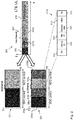
- FIG. 2 shows a schematic diagram of an embodiment of a communication frame 200 for network communication, in particular for device-to-device (D2D) network communication that can be used by the communication devices 100a-c or 101a-c.
- the communication frame 200 comprises a control channel 201 and a data channel 207.
- the communication frame 200 can be a unified medium access control (MAC) frame.
- the communication frame 200 can be embedded within a frequency division duplexing (FDD) uplink frequency band or a time division duplexing (TDD) uplink time frame of a LTE communication frame.
- the communication frame 200 can be embedded within a physical uplink shared channel (PUSCH) and/or a physical uplink control channel (PUCCH) of a LTE communication frame.
- PUSCH physical uplink shared channel
- PUCCH physical uplink control channel
- control data provided by a communication resource within the control channel 201 of the communication frame 200 defines communication resources within the data channel 207 communicating specific payload data.
- control data within the control channel 201 of the communication frame provides a mapping to the payload data within the data channel 207 of the communication frame 200.
- the control channel 201 can enable a fine-tuned synchronization, a direct neighboring device discovery, a paging, a communication resource reservation for data and can be used for exchanging communication device context information, e.g. a geographic position of a communication device.
- the control channel 201 can have a permanent set of communication resources, e.g. used for a L1/L2 control among communication devices.
- the control channel 201 length or size can be configurable, e.g. based on a communication device density.
- a multi-user control channel access protocol can be used.
- the data channel 207 can comprise a high priority portion 207a (referred to in figure 2 as “Safety Data Channel” or short “SDC”) and a low priority portion 207b (referred to in figure 2 as “Non-Safety Data Channel” or short “NDC”).
- SDC Safety Data Channel
- NDC Non-Safety Data Channel
- the high priority portion 207a of the data channel 207 i.e. the SDC portion, can be reserved for high priority data, e.g. hard quality of service (QoS) safety vehicle-to-X (V2X) traffic data, with high priority. It can support mixed data or traffic types, e.g. semi-persistent communication resource patterns for cooperative awareness message (CAM) periodical messages, and/or an on-demand communication resource reservation for context-rich mission-critical data (CMD).
- QoS hard quality of service
- V2X safety vehicle-to-X
- V2X safety vehicle-to-X
- V2X safety vehicle-to-X
- a multi-user high priority data channel communication resource reservation protocol can be used.
- the low priority portion 207b of the data channel 207 can serve low priority data, e.g. soft quality of service (QoS) vehicle-to-X (V2X) traffic data, with low priority, e.g. traffic efficiency application data. It can give up priority for high priority data, e.g. hard quality of service (QoS) safety traffic data.
- QoS quality of service
- a multi-user communication resource coordination in the low priority portion 207b, i.e. the NDC portion can be based on an on-demand reservation scheme or a carrier sense multiple access (CSMA) type reservation scheme.
- CSMA carrier sense multiple access
- the communication resources of the high priority portion 207a of the data channel 207, i.e. the SDC portion, and the low priority portion 207b of the data channel 207, i.e. the NDC portion, can be multiplexed, for instance, in the frequency domain and/or the time domain.
- the communication frame 200 is embedded within an uplink LTE communication frame that can further comprise an uplink LTE communication frame portion 209.
- LTE long term evolution
- a downlink communication portion communication resources may not be allocated connectedly since control frames may appear every 1 ms.
- a concurrent downlink (DL) receive can be achieved.
- LTE long term evolution
- FDD frequency division duplexing
- PUSCH physical uplink shared channel
- the control channel 201 of the communication frame 200 comprises in an embodiment a high priority control channel part ("SDC control") and a low priority control channel part ("NDC control").
- SDC control high priority control channel part
- NDC control low priority control channel part
- the high priority part of the control channel 201 is divided into an ad-hoc communication mode control channel portion 203a and a network assisted communication mode control channel portion 203b.
- the low priority part of the control channel 201 is divided into an ad-hoc communication mode control channel portion 205a and a network assisted communication mode control channel portion 205b.
- Figure 2 shows two exemplary communication resources, in particular resource blocks, 201a and 201b within the ad-hoc communication mode control channel portion 203a of the high priority part of the control channel 201.
- the exemplary communication resource, in particular resource block, 201a comprises a plurality of data fields, such as a synchronization sequence or signal (SS) 211, a device ID 213, a resource block ID 215, context data 217, such as information about the location of a device, a field for other data 219 and a guard interval (GI) 221.
- SS synchronization sequence or signal
- GI guard interval
- the synchronization sequence or signal (SS) 211 allows synchronizing communication devices operating in the ad-hoc communication mode, such as the communication devices 101a-d shown in figure 1 .
- the top left hand side of figure 2 shows an embodiment of a control channel 201', which can be used when no network assistance is available.
- the control channel 201' can comprise only a high priority part (referred to as “SDC control” in figure 2 ) and a low priority part (referred to as “NDC control” in figure 2 ).
- the communication frame 200 can be structured depending on a mode from a set of modes, wherein the set of modes comprises the ad-hoc communication mode and the network-assisted communication mode.
- the communication frame 200 can be switched between the ad-hoc communication mode and the network-assisted communication mode and vice versa, for instance, according to cellular network coverage and/or whether a communication device is in an idle mode or a connected mode with respect to a cellular network.
- a decision criterion for automatic mode switching can be provided.
- FIG. 3 shows a schematic diagram of a communication scenario including a plurality of communication devices inside and outside of a coverage area 301 of the cellular communication network 102 according to an embodiment.
- the cellular communication network is provided by means of base stations 102a. Although in the example in Fig. 3 only one base station 102a is shown, it is clear for a person skilled in the art that a cellular communication network is typically spanned by a plurality of base stations 102a.
- the coverage area 301 of the cellular communication network 102 is divided into a center region 301a in the vicinity of the base station 102a establishing the cellular communication network 102 and an edge region 301b outside of the center region 301a of the cellular communication network 102, i.e.
- the communication device 101a is within the center region 301a of the coverage area 301 of the cellular communication network 102
- the communication devices 101b and 101c are within the edge region 301b of the coverage area 301 of the cellular communication network 102
- the communication devices 103a-c are outside of the coverage area 301 of the cellular communication network 102.
- the communication devices 103a-c cannot communicate directly with the base station 102a (or any other base station) of the cellular communication network 102.
- the center region 301a and the edge 301b of the coverage area 301 of the cellular communication network 102 can be defined by using a signal strength threshold for the signal strength of the cellular communication network 102.
- the communication devices within the coverage area 301 of the cellular communication network 102 i.e. the exemplary communication devices 101a-c shown in figure 3
- the communication devices outside of the coverage area 301 of the cellular communication network 102 i.e. the exemplary communication devices 103a-c shown in figure 3
- the communication devices within the coverage area 301 of the cellular communication network 102 i.e. the exemplary communication devices 101a-c shown in figure 3
- the communication frame can be embedded in the legacy LTE PUSCH communication frame, including a control channel 201 and a data channel 207 with a high priority portion 207a and a low priority portion 207b, as already described above in the context of figure 2 .
- both the communication devices within the coverage area 301 of the cellular communication network 102, i.e. the exemplary communication devices 101a-c shown in figure 3 , and the communication devices outside of the coverage area 301 of the cellular communication network 102, i.e. the exemplary communication devices 103a-c shown in figure 3 can operate using the same frequency band for D2D communication.
- the D2D communication can take place in a dedicated band using a dedicated D2D communication frame, as shown also in figure 4 .
- the cellular communication network 102 which can only be utilized by the communication devices within the coverage area 301 of the cellular communication network 102, i.e. the exemplary communication devices 101a-c shown in figure 3 , can be deployed on Band 1, as schematically illustrated in figure 4 .
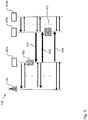
- Figure 5 shows a schematic diagram illustrating the communication flow 500 between a communication device within the coverage area 301 of the cellular communication network 102, e.g. the communication device 101b shown in figure 3 , and a communication device approaching the coverage area 301 of the cellular communication network 102, e.g. the communication device 103a shown in figure 3 , for the case described above that the communication devices within the coverage area 301 of the cellular communication network 102 and the communication devices outside of the coverage area 301 of the cellular communication network 102 perform D2D communications using different frequency bands e.g. Band 1 (first frequency band) and Band 2 (second frequency band) from the upper half of Fig. 4 .
- Band 1 first frequency band
- Band 2 second frequency band
- the communication device 101b determines itself to be within the edge region 301b of the coverage area 301 of the cellular communication network 102.
- the communication device 101b is configured to make this determination on the basis of a (e.g. legacy LTE) signal strength provided by the cellular communication network 102 or on the basis of interacting with the network.
- a e.g. legacy LTE
- a step 503 the communication device 101b activates a second receiver in order to start listening for communication messages over a second frequency band, while continuing to listen for communication messages from other communication devices within the coverage area 301 of the cellular communication network 102 over a first frequency band using a first receiver.
- the communication device 101b periodically broadcasts a control message to communication devices outside of the coverage area 301 of the cellular communication network 102 using the second frequency band, in particular using the control channel of a communication frame operating in the second frequency band.
- the control message broadcasted by the communication device 101b can comprise at least one of the following data elements: an identifier of the communication device 101b, an indicator indicating that the communication device 101b is within the coverage area 301 of the cellular communication network 102, a communication resource identifier identifying the communication resource(s) selected by the communication device 101b, a synchronization signal from the communication device 101b, and/or location information about the communication device 101b.
- step 505 the communication device 103a outside of the coverage area 301 of the cellular communication network 102, but within the broadcasting region of the communication device 101b receives such a control message from the communication device 101b the communications device 103a determines itself to be in the vicinity of the outer edge of the coverage area 301 of the cellular communication network 102.
- the communication device 103a starts listening for communication messages within the first frequency band (schematically indicated as step 509 in figure 5 ), in particular by activating its second receiver, while continuing to listen for communication messages over the second frequency band.
- the communication device 103a is now also aware about D2D communications performed on the first frequency band (e.g. by communications devices within in the coverage range of the cellular communication network 102).
- Figure 6 shows a schematic diagram illustrating the communication flow 600 between a communication device within the coverage area 301 of the cellular communication network 102, e.g. the communication device 101b shown in figure 3 , and a communication device approaching the coverage area 301 of the cellular communication network 102, e.g. the communication device 103a shown in figure 3 , for the case described above that the communication devices within the coverage area 301 of the cellular communication network 102 and the communication devices outside of the coverage area 301 of the cellular communication network 102 perform D2D communications using the same frequency band e.g. Band 2 (the second frequency band) from the lower half of Fig. 4 .
- Band 2 the second frequency band
- the communication device 101b determines itself to be within the edge region 301b of the coverage area 301 of the cellular communication network 102.
- the communication device 101b is configured to make this determination on the basis of a (e.g. legacy LTE) signal strength provided by the cellular communication network 102 or on the basis of interacting with the network.
- a e.g. legacy LTE
- the communication device 101b periodically broadcasts a control message to communication devices outside of the coverage area 301 of the cellular communication network 102 using the second frequency band, in particular using the control channel of a communication frame operating in the second frequency band.
- the control message broadcasted by the communication device 101b can comprise at least one of the following data elements: an identifier of the communication device 101b, an indicator indicating that the communication device 101b is within the coverage area 301 of the cellular communication network 102, a communication resource identifier identifying the communication resource(s) selected by the communication device 101b, a synchronization signal from the communication device 101b, and/or location information about the communication device 101b.
- step 603 the communication device 103a outside of the coverage area 301 of the cellular communication network 102, but within the broadcasting region of the communication device 101b receives such a control message from the communication device 101b and, the communication device 103a determines itself to be in the vicinity of the outer edge of the coverage area 301 of the cellular communication network 102.
- the communication device 103a only uses the ad-hoc communication mode control channel portion of the control channel of the communication frame, such as the ad-hoc communication mode control channel portion 205a of the control channel 201 of the communication frame 200 shown in figure 2 , defined by the control message received from the communication device 101b within the edge region 301b of the coverage area 301 of the cellular communication network 102.
- the communication device 103a continues to receive over the entire control channel of the communication frame, including the ad-hoc communication mode control channel portion 205a and the network assisted communication mode control channel portion 205b.
- the communication device 103a is now aware of D2D communications of devices in the ad-hoc communication mode and the network-assisted communication mode. Hence, resource collision between communication devices in different communications modes can be avoided.
- Figure 7 shows a flow diagram illustrating a method 700 of operating a communication device, such as one of the communication devices 103a-c, configured to perform a D2D communication with a plurality of further communication devices, such as the communication devices 101a-c, 103a-c, using a second frequency band.
- the method 700 comprises the following steps.
- Figure 8 shows a flow diagram illustrating a method 800 of operating a communication device, such as one of the communication devices 101a-c, configured to perform a D2D communication with a plurality of further communication devices.
- the method 800 comprises the following steps.
- Embodiments of the invention may be implemented in a computer program for running on a computer system, at least including code portions for performing steps of a method according to the invention when run on a programmable apparatus, such as a computer system or enabling a programmable apparatus to perform functions of a device or system according to the invention.
- a computer program is a list of instructions such as a particular application program and/or an operating system.
- the computer program may for instance include one or more of: a subroutine, a function, a procedure, an object method, an object implementation, an executable application, an applet, a servlet, a source code, an object code, a shared library/dynamic load library and/or other sequence of instructions designed for execution on a computer system.
Landscapes
- Engineering & Computer Science (AREA)
- Computer Networks & Wireless Communication (AREA)
- Signal Processing (AREA)
- Databases & Information Systems (AREA)
- Mobile Radio Communication Systems (AREA)
Claims (5)
- Kommunikationsvorrichtung (103a-c) außerhalb des Abdeckungsbereichs eines zellulären Kommunikationsnetzwerks (102), ausgelegt zum Durchführen einer Vorrichtung-zu-Vorrichtung-Kommunikation mit mehreren weiteren Kommunikationsvorrichtungen (101a-c, 103a-c) unter Verwendung eines zweiten Frequenzbands,
wobei die Kommunikationsvorrichtung (103a-c) ausgelegt ist zum Empfangen, unter Verwendung des zweiten Frequenzbands, einer Steuernachricht von einer weiteren Kommunikationsvorrichtung (101a-c) der mehreren Kommunikationsvorrichtungen (101a-c, 103a-c), wobei die Steuernachricht anzeigt, dass sich die weitere Kommunikationsvorrichtung (101a-c) innerhalb eines Abdeckungsbereichs (301) des zellulären Kommunikationsnetzwerks (102) befindet;
wobei die Kommunikationsvorrichtung (103a-c) ferner dazu ausgelegt ist, bei Empfang der Steuernachricht mit dem Lauschen nach Nachrichten von weiteren Kommunikationsvorrichtungen der mehreren Kommunikationsvorrichtungen (101a-c, 103a-c) unter Verwendung eines ersten Frequenzbands zu beginnen;
wobei die Kommunikationsvorrichtung (103a-c) dazu ausgelegt ist, solange sie die Steuernachricht nicht empfängt, mit den weiteren Kommunikationsvorrichtungen unter Verwendung eines Kommunikationsrahmens (200), ein erstes Steuerkanalformat (201') aufweisend, zu kommunizieren, wobei das erste Steuerkanalformat (201') nur Kommunikationsressourcen für einen Ad-hoc-Kommunikationsmodus bietet; und wobei die Kommunikationsvorrichtung (103a-c) ferner dazu ausgelegt ist, bei Empfang der Steuernachricht, mit den weiteren Kommunikationsvorrichtungen unter Verwendung eines Kommunikationsrahmens (200), ein zweites Steuerkanalformat (201) aufweisend, zu kommunizieren, wobei das zweite Steuerkanalformat (201) Kommunikationsressourcen für einen Ad-hoc-Kommunikationsmodus und einen netzwerkgestützten Kommunikationsmodus bietet. - Kommunikationsvorrichtung (103a-c) nach Anspruch 1, wobei die Kommunikationsvorrichtung (103a-c) dazu ausgelegt ist, bei Nicht-Empfangen der Steuernachricht von einer beliebigen der Kommunikationsvorrichtungen (101a-c, 103a-c) für einen bestimmten Zeitraum das Lauschen nach Nachrichten unter Verwendung des ersten Frequenzbands zu stoppen.
- Kommunikationsvorrichtung (103a-c) nach Anspruch 1 oder 2, wobei die Kommunikationsvorrichtung (103a-c) dazu ausgelegt ist, weiter nach Nachrichten unter Verwendung des ersten Frequenzbands zu lauschen, solange sie regelmäßig die Steuernachricht von zumindest einer weiteren Kommunikationsvorrichtung (101a-c, 103a-c) innerhalb des Abdeckungsbereichs (301) des zellulären Kommunikationsnetzwerks (102) empfängt.
- Kommunikationsvorrichtung (103a-c) nach einem der Ansprüche 1-3, wobei die Kommunikationsvorrichtung (103a-c) einen ersten Empfänger für das zweite Frequenzband und einen zweiten Empfänger für das erste Frequenzband umfasst und wobei die Kommunikationsvorrichtung (103a-c) dazu ausgelegt ist, bei Empfang der Steuernachricht den zweiten Empfänger einzuschalten, um mit dem Lauschen nach Nachrichten von weiteren Kommunikationsvorrichtungen der mehreren Kommunikationsvorrichtungen (101a-c, 103a-c) unter Verwendung des ersten Frequenzbands zu beginnen.
- Kommunikationsvorrichtung (103a-c) nach einem der Ansprüche 1-4, wobei die Kommunikationsvorrichtung (103a-c) dazu ausgelegt ist, wenn sie sich innerhalb des Abdeckungsbereichs (301) des zellulären Kommunikationsnetzwerks (102) befindet, das erste Frequenzband für zelluläre Kommunikation und Vorrichtung-zu-Vorrichtung-Kommunikation zu verwenden, und wenn sie sich innerhalb einer Randregion (301b) des Abdeckungsbereichs (301) befindet, ferner das zweite Frequenzband nur für Vorrichtung-zu-Vorrichtung-Kommunikation zu verwenden.
Priority Applications (1)
| Application Number | Priority Date | Filing Date | Title |
|---|---|---|---|
| EP19163033.4A EP3515097B1 (de) | 2015-07-06 | 2015-07-06 | D2d kommunikationsverfahren |
Applications Claiming Priority (1)
| Application Number | Priority Date | Filing Date | Title |
|---|---|---|---|
| PCT/EP2015/065374 WO2017005294A1 (en) | 2015-07-06 | 2015-07-06 | Devices and methods for d2d communication |
Related Child Applications (1)
| Application Number | Title | Priority Date | Filing Date |
|---|---|---|---|
| EP19163033.4A Division EP3515097B1 (de) | 2015-07-06 | 2015-07-06 | D2d kommunikationsverfahren |
Publications (2)
| Publication Number | Publication Date |
|---|---|
| EP3304952A1 EP3304952A1 (de) | 2018-04-11 |
| EP3304952B1 true EP3304952B1 (de) | 2019-04-17 |
Family
ID=53510891
Family Applications (2)
| Application Number | Title | Priority Date | Filing Date |
|---|---|---|---|
| EP15734181.9A Active EP3304952B1 (de) | 2015-07-06 | 2015-07-06 | Vorrichtung zur d2d-kommunikation |
| EP19163033.4A Active EP3515097B1 (de) | 2015-07-06 | 2015-07-06 | D2d kommunikationsverfahren |
Family Applications After (1)
| Application Number | Title | Priority Date | Filing Date |
|---|---|---|---|
| EP19163033.4A Active EP3515097B1 (de) | 2015-07-06 | 2015-07-06 | D2d kommunikationsverfahren |
Country Status (4)
| Country | Link |
|---|---|
| US (1) | US10485039B2 (de) |
| EP (2) | EP3304952B1 (de) |
| CN (1) | CN107980228B (de) |
| WO (1) | WO2017005294A1 (de) |
Families Citing this family (5)
| Publication number | Priority date | Publication date | Assignee | Title |
|---|---|---|---|---|
| WO2020022526A1 (ko) * | 2018-07-23 | 2020-01-30 | 엘지전자 주식회사 | V2x 통신 장치 및 지오네트워킹 전송 방법 |
| CN117042180A (zh) * | 2018-09-28 | 2023-11-10 | 联发科技股份有限公司 | 新的无线电移动通信中车联网的通信方法 |
| CN110769401B (zh) * | 2019-10-30 | 2021-06-01 | 云南宾飞科技有限公司 | 一种短距离高精度定位方法及定位系统 |
| US11829748B1 (en) | 2021-09-29 | 2023-11-28 | Geotab Inc. | Systems and methods for safe over-the-air update of electronic control units in vehicles |
| US11681518B2 (en) * | 2021-09-29 | 2023-06-20 | Geotab Inc. | Systems and methods for safe over-the-air update of electronic control units in vehicles |
Family Cites Families (9)
| Publication number | Priority date | Publication date | Assignee | Title |
|---|---|---|---|---|
| US20140199969A1 (en) | 2011-08-05 | 2014-07-17 | Kerstin Johnsson | Mobile device and method for cellular assisted device-to-device communication |
| DK2665325T3 (da) | 2012-05-15 | 2014-10-27 | Ericsson Telefon Ab L M | Radioforbindelsesstyring til netværksunderstøttet indretning-til-indretning-kommunikation |
| US10004002B2 (en) * | 2012-09-28 | 2018-06-19 | Telefonaktiebolaget Lm Ericsson (Publ) | Method for D2D radiocommunication |
| WO2014054990A1 (en) | 2012-10-05 | 2014-04-10 | Telefonaktiebolaget L M Ericsson (Publ) | Methods and arrangements for network assisted device-to-device communication |
| US11496948B2 (en) | 2012-10-19 | 2022-11-08 | Samsung Electronics Co., Ltd. | System and method for ad-hoc/network assisted device discovery protocol for device to device communications |
| US9307575B2 (en) * | 2012-11-13 | 2016-04-05 | Lg Electronics Inc. | Method and apparatus of supporting UE relay functions |
| US20140204847A1 (en) | 2013-01-18 | 2014-07-24 | Telefonaktiebolaget L M Ericsson (Publ) | Network-assisted d2d communication using d2d capability information |
| EP3020245A4 (de) * | 2013-07-11 | 2016-11-23 | Nokia Technologies Oy | Synchronisationsverfahren zwischen zwei vorrichtungen und vorrichtung zur teilweisen abdeckung |
| EP3207752B1 (de) | 2014-11-17 | 2020-04-29 | Huawei Technologies Co., Ltd. | Einer vorrichtung zum empfang eines kommunikationssignals, vorrichtung zum senden eines kommunikationssignals und verfahren |
-
2015
- 2015-07-06 EP EP15734181.9A patent/EP3304952B1/de active Active
- 2015-07-06 CN CN201580081114.6A patent/CN107980228B/zh active Active
- 2015-07-06 WO PCT/EP2015/065374 patent/WO2017005294A1/en not_active Ceased
- 2015-07-06 EP EP19163033.4A patent/EP3515097B1/de active Active
-
2018
- 2018-01-05 US US15/862,920 patent/US10485039B2/en active Active
Non-Patent Citations (1)
| Title |
|---|
| None * |
Also Published As
| Publication number | Publication date |
|---|---|
| CN107980228B (zh) | 2020-04-28 |
| EP3515097B1 (de) | 2021-10-06 |
| CN107980228A (zh) | 2018-05-01 |
| WO2017005294A1 (en) | 2017-01-12 |
| US10485039B2 (en) | 2019-11-19 |
| US20180192462A1 (en) | 2018-07-05 |
| EP3515097A1 (de) | 2019-07-24 |
| EP3304952A1 (de) | 2018-04-11 |
Similar Documents
| Publication | Publication Date | Title |
|---|---|---|
| EP4122265B1 (de) | Nr-sidelink-hilfsinformationsnachrichten | |
| EP3304988B1 (de) | Vorrichtungen und verfahren für netzwerkgestützte d2d-kommunikation | |
| EP3691362B1 (de) | Zuweisung von d2d-ressourcen zwischen trägern | |
| JP6328132B2 (ja) | 移動通信システム及びユーザ端末 | |
| JP5977397B2 (ja) | 通信制御方法、ユーザ端末及び基地局 | |
| EP3668268A1 (de) | Mobilkommunikationssystem, benutzerendgerät und basisstation | |
| JP2022084771A (ja) | 同期送信キャリア選択 | |
| JP2019507979A (ja) | サイドリンク通信を含むセルラハンドオーバのための方法および装置 | |
| JPWO2018030306A1 (ja) | 通信装置及びプロセッサ | |
| US10485039B2 (en) | Devices and methods for D2D communication | |
| US20190059091A1 (en) | Device and method | |
| US12464515B2 (en) | Method and apparatus of group-based resource allocation | |
| US20240276595A1 (en) | Support for transmitter (tx) profile based device-to-device (d2d) communication | |
| JP6140180B2 (ja) | 移動通信システム、ユーザ端末、基地局、プロセッサ及び通信制御方法 | |
| WO2015170730A1 (ja) | ユーザ端末及び基地局 | |
| CN116671178A (zh) | 在sl中继情况下的失败监视和恢复机制 | |
| US9668202B2 (en) | Communication control method, user terminal, and processor | |
| US10856287B2 (en) | Frame structure, communication devices and methods for communication |
Legal Events
| Date | Code | Title | Description |
|---|---|---|---|
| STAA | Information on the status of an ep patent application or granted ep patent |
Free format text: STATUS: THE INTERNATIONAL PUBLICATION HAS BEEN MADE |
|
| PUAI | Public reference made under article 153(3) epc to a published international application that has entered the european phase |
Free format text: ORIGINAL CODE: 0009012 |
|
| STAA | Information on the status of an ep patent application or granted ep patent |
Free format text: STATUS: REQUEST FOR EXAMINATION WAS MADE |
|
| 17P | Request for examination filed |
Effective date: 20180108 |
|
| AK | Designated contracting states |
Kind code of ref document: A1 Designated state(s): AL AT BE BG CH CY CZ DE DK EE ES FI FR GB GR HR HU IE IS IT LI LT LU LV MC MK MT NL NO PL PT RO RS SE SI SK SM TR |
|
| AX | Request for extension of the european patent |
Extension state: BA ME |
|
| DAV | Request for validation of the european patent (deleted) | ||
| DAX | Request for extension of the european patent (deleted) | ||
| REG | Reference to a national code |
Ref country code: DE Ref legal event code: R079 Ref document number: 602015028465 Country of ref document: DE Free format text: PREVIOUS MAIN CLASS: H04W0008000000 Ipc: H04W0076140000 |
|
| GRAP | Despatch of communication of intention to grant a patent |
Free format text: ORIGINAL CODE: EPIDOSNIGR1 |
|
| STAA | Information on the status of an ep patent application or granted ep patent |
Free format text: STATUS: GRANT OF PATENT IS INTENDED |
|
| RIC1 | Information provided on ipc code assigned before grant |
Ipc: H04W 92/18 20090101ALI20181009BHEP Ipc: H04W 84/18 20090101ALN20181009BHEP Ipc: H04W 76/23 20180101ALI20181009BHEP Ipc: H04W 8/00 20090101ALI20181009BHEP Ipc: H04W 76/14 20180101AFI20181009BHEP Ipc: H04W 88/04 20090101ALI20181009BHEP Ipc: H04W 72/04 20090101ALN20181009BHEP |
|
| INTG | Intention to grant announced |
Effective date: 20181107 |
|
| RIC1 | Information provided on ipc code assigned before grant |
Ipc: H04W 92/18 20090101ALI20181026BHEP Ipc: H04W 72/04 20090101ALN20181026BHEP Ipc: H04W 76/23 20180101ALI20181026BHEP Ipc: H04W 8/00 20090101ALI20181026BHEP Ipc: H04W 88/04 20090101ALI20181026BHEP Ipc: H04W 76/14 20180101AFI20181026BHEP Ipc: H04W 84/18 20090101ALN20181026BHEP |
|
| GRAS | Grant fee paid |
Free format text: ORIGINAL CODE: EPIDOSNIGR3 |
|
| GRAA | (expected) grant |
Free format text: ORIGINAL CODE: 0009210 |
|
| STAA | Information on the status of an ep patent application or granted ep patent |
Free format text: STATUS: THE PATENT HAS BEEN GRANTED |
|
| AK | Designated contracting states |
Kind code of ref document: B1 Designated state(s): AL AT BE BG CH CY CZ DE DK EE ES FI FR GB GR HR HU IE IS IT LI LT LU LV MC MK MT NL NO PL PT RO RS SE SI SK SM TR |
|
| REG | Reference to a national code |
Ref country code: GB Ref legal event code: FG4D |
|
| REG | Reference to a national code |
Ref country code: CH Ref legal event code: EP |
|
| REG | Reference to a national code |
Ref country code: DE Ref legal event code: R096 Ref document number: 602015028465 Country of ref document: DE |
|
| REG | Reference to a national code |
Ref country code: AT Ref legal event code: REF Ref document number: 1122952 Country of ref document: AT Kind code of ref document: T Effective date: 20190515 Ref country code: IE Ref legal event code: FG4D |
|
| REG | Reference to a national code |
Ref country code: NL Ref legal event code: MP Effective date: 20190417 |
|
| REG | Reference to a national code |
Ref country code: LT Ref legal event code: MG4D |
|
| PG25 | Lapsed in a contracting state [announced via postgrant information from national office to epo] |
Ref country code: NL Free format text: LAPSE BECAUSE OF FAILURE TO SUBMIT A TRANSLATION OF THE DESCRIPTION OR TO PAY THE FEE WITHIN THE PRESCRIBED TIME-LIMIT Effective date: 20190417 |
|
| PG25 | Lapsed in a contracting state [announced via postgrant information from national office to epo] |
Ref country code: FI Free format text: LAPSE BECAUSE OF FAILURE TO SUBMIT A TRANSLATION OF THE DESCRIPTION OR TO PAY THE FEE WITHIN THE PRESCRIBED TIME-LIMIT Effective date: 20190417 Ref country code: NO Free format text: LAPSE BECAUSE OF FAILURE TO SUBMIT A TRANSLATION OF THE DESCRIPTION OR TO PAY THE FEE WITHIN THE PRESCRIBED TIME-LIMIT Effective date: 20190717 Ref country code: AL Free format text: LAPSE BECAUSE OF FAILURE TO SUBMIT A TRANSLATION OF THE DESCRIPTION OR TO PAY THE FEE WITHIN THE PRESCRIBED TIME-LIMIT Effective date: 20190417 Ref country code: ES Free format text: LAPSE BECAUSE OF FAILURE TO SUBMIT A TRANSLATION OF THE DESCRIPTION OR TO PAY THE FEE WITHIN THE PRESCRIBED TIME-LIMIT Effective date: 20190417 Ref country code: PT Free format text: LAPSE BECAUSE OF FAILURE TO SUBMIT A TRANSLATION OF THE DESCRIPTION OR TO PAY THE FEE WITHIN THE PRESCRIBED TIME-LIMIT Effective date: 20190817 Ref country code: SE Free format text: LAPSE BECAUSE OF FAILURE TO SUBMIT A TRANSLATION OF THE DESCRIPTION OR TO PAY THE FEE WITHIN THE PRESCRIBED TIME-LIMIT Effective date: 20190417 Ref country code: HR Free format text: LAPSE BECAUSE OF FAILURE TO SUBMIT A TRANSLATION OF THE DESCRIPTION OR TO PAY THE FEE WITHIN THE PRESCRIBED TIME-LIMIT Effective date: 20190417 Ref country code: LT Free format text: LAPSE BECAUSE OF FAILURE TO SUBMIT A TRANSLATION OF THE DESCRIPTION OR TO PAY THE FEE WITHIN THE PRESCRIBED TIME-LIMIT Effective date: 20190417 |
|
| PG25 | Lapsed in a contracting state [announced via postgrant information from national office to epo] |
Ref country code: BG Free format text: LAPSE BECAUSE OF FAILURE TO SUBMIT A TRANSLATION OF THE DESCRIPTION OR TO PAY THE FEE WITHIN THE PRESCRIBED TIME-LIMIT Effective date: 20190717 Ref country code: RS Free format text: LAPSE BECAUSE OF FAILURE TO SUBMIT A TRANSLATION OF THE DESCRIPTION OR TO PAY THE FEE WITHIN THE PRESCRIBED TIME-LIMIT Effective date: 20190417 Ref country code: PL Free format text: LAPSE BECAUSE OF FAILURE TO SUBMIT A TRANSLATION OF THE DESCRIPTION OR TO PAY THE FEE WITHIN THE PRESCRIBED TIME-LIMIT Effective date: 20190417 Ref country code: GR Free format text: LAPSE BECAUSE OF FAILURE TO SUBMIT A TRANSLATION OF THE DESCRIPTION OR TO PAY THE FEE WITHIN THE PRESCRIBED TIME-LIMIT Effective date: 20190718 Ref country code: LV Free format text: LAPSE BECAUSE OF FAILURE TO SUBMIT A TRANSLATION OF THE DESCRIPTION OR TO PAY THE FEE WITHIN THE PRESCRIBED TIME-LIMIT Effective date: 20190417 |
|
| REG | Reference to a national code |
Ref country code: AT Ref legal event code: MK05 Ref document number: 1122952 Country of ref document: AT Kind code of ref document: T Effective date: 20190417 |
|
| PG25 | Lapsed in a contracting state [announced via postgrant information from national office to epo] |
Ref country code: IS Free format text: LAPSE BECAUSE OF FAILURE TO SUBMIT A TRANSLATION OF THE DESCRIPTION OR TO PAY THE FEE WITHIN THE PRESCRIBED TIME-LIMIT Effective date: 20190817 |
|
| REG | Reference to a national code |
Ref country code: DE Ref legal event code: R097 Ref document number: 602015028465 Country of ref document: DE |
|
| PG25 | Lapsed in a contracting state [announced via postgrant information from national office to epo] |
Ref country code: SK Free format text: LAPSE BECAUSE OF FAILURE TO SUBMIT A TRANSLATION OF THE DESCRIPTION OR TO PAY THE FEE WITHIN THE PRESCRIBED TIME-LIMIT Effective date: 20190417 Ref country code: RO Free format text: LAPSE BECAUSE OF FAILURE TO SUBMIT A TRANSLATION OF THE DESCRIPTION OR TO PAY THE FEE WITHIN THE PRESCRIBED TIME-LIMIT Effective date: 20190417 Ref country code: EE Free format text: LAPSE BECAUSE OF FAILURE TO SUBMIT A TRANSLATION OF THE DESCRIPTION OR TO PAY THE FEE WITHIN THE PRESCRIBED TIME-LIMIT Effective date: 20190417 Ref country code: CZ Free format text: LAPSE BECAUSE OF FAILURE TO SUBMIT A TRANSLATION OF THE DESCRIPTION OR TO PAY THE FEE WITHIN THE PRESCRIBED TIME-LIMIT Effective date: 20190417 Ref country code: AT Free format text: LAPSE BECAUSE OF FAILURE TO SUBMIT A TRANSLATION OF THE DESCRIPTION OR TO PAY THE FEE WITHIN THE PRESCRIBED TIME-LIMIT Effective date: 20190417 Ref country code: DK Free format text: LAPSE BECAUSE OF FAILURE TO SUBMIT A TRANSLATION OF THE DESCRIPTION OR TO PAY THE FEE WITHIN THE PRESCRIBED TIME-LIMIT Effective date: 20190417 |
|
| PLBE | No opposition filed within time limit |
Free format text: ORIGINAL CODE: 0009261 |
|
| STAA | Information on the status of an ep patent application or granted ep patent |
Free format text: STATUS: NO OPPOSITION FILED WITHIN TIME LIMIT |
|
| PG25 | Lapsed in a contracting state [announced via postgrant information from national office to epo] |
Ref country code: SM Free format text: LAPSE BECAUSE OF FAILURE TO SUBMIT A TRANSLATION OF THE DESCRIPTION OR TO PAY THE FEE WITHIN THE PRESCRIBED TIME-LIMIT Effective date: 20190417 Ref country code: MC Free format text: LAPSE BECAUSE OF FAILURE TO SUBMIT A TRANSLATION OF THE DESCRIPTION OR TO PAY THE FEE WITHIN THE PRESCRIBED TIME-LIMIT Effective date: 20190417 |
|
| REG | Reference to a national code |
Ref country code: CH Ref legal event code: PL |
|
| 26N | No opposition filed |
Effective date: 20200120 |
|
| GBPC | Gb: european patent ceased through non-payment of renewal fee |
Effective date: 20190717 |
|
| PG25 | Lapsed in a contracting state [announced via postgrant information from national office to epo] |
Ref country code: TR Free format text: LAPSE BECAUSE OF FAILURE TO SUBMIT A TRANSLATION OF THE DESCRIPTION OR TO PAY THE FEE WITHIN THE PRESCRIBED TIME-LIMIT Effective date: 20190417 |
|
| REG | Reference to a national code |
Ref country code: BE Ref legal event code: MM Effective date: 20190731 |
|
| PG25 | Lapsed in a contracting state [announced via postgrant information from national office to epo] |
Ref country code: GB Free format text: LAPSE BECAUSE OF NON-PAYMENT OF DUE FEES Effective date: 20190717 |
|
| PG25 | Lapsed in a contracting state [announced via postgrant information from national office to epo] |
Ref country code: BE Free format text: LAPSE BECAUSE OF NON-PAYMENT OF DUE FEES Effective date: 20190731 Ref country code: SI Free format text: LAPSE BECAUSE OF FAILURE TO SUBMIT A TRANSLATION OF THE DESCRIPTION OR TO PAY THE FEE WITHIN THE PRESCRIBED TIME-LIMIT Effective date: 20190417 Ref country code: CH Free format text: LAPSE BECAUSE OF NON-PAYMENT OF DUE FEES Effective date: 20190731 Ref country code: LI Free format text: LAPSE BECAUSE OF NON-PAYMENT OF DUE FEES Effective date: 20190731 Ref country code: LU Free format text: LAPSE BECAUSE OF NON-PAYMENT OF DUE FEES Effective date: 20190706 |
|
| PG25 | Lapsed in a contracting state [announced via postgrant information from national office to epo] |
Ref country code: FR Free format text: LAPSE BECAUSE OF NON-PAYMENT OF DUE FEES Effective date: 20190731 |
|
| PG25 | Lapsed in a contracting state [announced via postgrant information from national office to epo] |
Ref country code: IE Free format text: LAPSE BECAUSE OF NON-PAYMENT OF DUE FEES Effective date: 20190706 |
|
| PG25 | Lapsed in a contracting state [announced via postgrant information from national office to epo] |
Ref country code: CY Free format text: LAPSE BECAUSE OF FAILURE TO SUBMIT A TRANSLATION OF THE DESCRIPTION OR TO PAY THE FEE WITHIN THE PRESCRIBED TIME-LIMIT Effective date: 20190417 |
|
| PG25 | Lapsed in a contracting state [announced via postgrant information from national office to epo] |
Ref country code: MT Free format text: LAPSE BECAUSE OF FAILURE TO SUBMIT A TRANSLATION OF THE DESCRIPTION OR TO PAY THE FEE WITHIN THE PRESCRIBED TIME-LIMIT Effective date: 20190417 Ref country code: HU Free format text: LAPSE BECAUSE OF FAILURE TO SUBMIT A TRANSLATION OF THE DESCRIPTION OR TO PAY THE FEE WITHIN THE PRESCRIBED TIME-LIMIT; INVALID AB INITIO Effective date: 20150706 |
|
| PG25 | Lapsed in a contracting state [announced via postgrant information from national office to epo] |
Ref country code: MK Free format text: LAPSE BECAUSE OF FAILURE TO SUBMIT A TRANSLATION OF THE DESCRIPTION OR TO PAY THE FEE WITHIN THE PRESCRIBED TIME-LIMIT Effective date: 20190417 |
|
| PGFP | Annual fee paid to national office [announced via postgrant information from national office to epo] |
Ref country code: DE Payment date: 20250604 Year of fee payment: 11 |
|
| PGFP | Annual fee paid to national office [announced via postgrant information from national office to epo] |
Ref country code: IT Payment date: 20250623 Year of fee payment: 11 |