EP3302404B1 - Microcapsules with high deposition on surfaces - Google Patents
Microcapsules with high deposition on surfaces Download PDFInfo
- Publication number
- EP3302404B1 EP3302404B1 EP16730719.8A EP16730719A EP3302404B1 EP 3302404 B1 EP3302404 B1 EP 3302404B1 EP 16730719 A EP16730719 A EP 16730719A EP 3302404 B1 EP3302404 B1 EP 3302404B1
- Authority
- EP
- European Patent Office
- Prior art keywords
- slurry
- capsules
- biopolymer
- oil
- cationic polymer
- Prior art date
- Legal status (The legal status is an assumption and is not a legal conclusion. Google has not performed a legal analysis and makes no representation as to the accuracy of the status listed.)
- Active
Links
Images


Classifications
-
- C—CHEMISTRY; METALLURGY
- C11—ANIMAL OR VEGETABLE OILS, FATS, FATTY SUBSTANCES OR WAXES; FATTY ACIDS THEREFROM; DETERGENTS; CANDLES
- C11D—DETERGENT COMPOSITIONS; USE OF SINGLE SUBSTANCES AS DETERGENTS; SOAP OR SOAP-MAKING; RESIN SOAPS; RECOVERY OF GLYCEROL
- C11D9/00—Compositions of detergents based essentially on soap
-
- A—HUMAN NECESSITIES
- A61—MEDICAL OR VETERINARY SCIENCE; HYGIENE
- A61K—PREPARATIONS FOR MEDICAL, DENTAL OR TOILETRY PURPOSES
- A61K8/00—Cosmetics or similar toiletry preparations
- A61K8/18—Cosmetics or similar toiletry preparations characterised by the composition
- A61K8/72—Cosmetics or similar toiletry preparations characterised by the composition containing organic macromolecular compounds
- A61K8/84—Cosmetics or similar toiletry preparations characterised by the composition containing organic macromolecular compounds obtained by reactions otherwise than those involving only carbon-carbon unsaturated bonds
-
- A—HUMAN NECESSITIES
- A61—MEDICAL OR VETERINARY SCIENCE; HYGIENE
- A61K—PREPARATIONS FOR MEDICAL, DENTAL OR TOILETRY PURPOSES
- A61K8/00—Cosmetics or similar toiletry preparations
- A61K8/02—Cosmetics or similar toiletry preparations characterised by special physical form
- A61K8/11—Encapsulated compositions
-
- A—HUMAN NECESSITIES
- A61—MEDICAL OR VETERINARY SCIENCE; HYGIENE
- A61K—PREPARATIONS FOR MEDICAL, DENTAL OR TOILETRY PURPOSES
- A61K8/00—Cosmetics or similar toiletry preparations
- A61K8/18—Cosmetics or similar toiletry preparations characterised by the composition
- A61K8/30—Cosmetics or similar toiletry preparations characterised by the composition containing organic compounds
- A61K8/64—Proteins; Peptides; Derivatives or degradation products thereof
- A61K8/65—Collagen; Gelatin; Keratin; Derivatives or degradation products thereof
-
- A—HUMAN NECESSITIES
- A61—MEDICAL OR VETERINARY SCIENCE; HYGIENE
- A61K—PREPARATIONS FOR MEDICAL, DENTAL OR TOILETRY PURPOSES
- A61K8/00—Cosmetics or similar toiletry preparations
- A61K8/18—Cosmetics or similar toiletry preparations characterised by the composition
- A61K8/72—Cosmetics or similar toiletry preparations characterised by the composition containing organic macromolecular compounds
- A61K8/73—Polysaccharides
-
- A—HUMAN NECESSITIES
- A61—MEDICAL OR VETERINARY SCIENCE; HYGIENE
- A61K—PREPARATIONS FOR MEDICAL, DENTAL OR TOILETRY PURPOSES
- A61K8/00—Cosmetics or similar toiletry preparations
- A61K8/18—Cosmetics or similar toiletry preparations characterised by the composition
- A61K8/72—Cosmetics or similar toiletry preparations characterised by the composition containing organic macromolecular compounds
- A61K8/81—Cosmetics or similar toiletry preparations characterised by the composition containing organic macromolecular compounds obtained by reactions involving only carbon-to-carbon unsaturated bonds
- A61K8/8141—Compositions of homopolymers or copolymers of compounds having one or more unsaturated aliphatic radicals, each having only one carbon-to-carbon double bond, and at least one being terminated by only one carboxyl radical, or of salts, anhydrides, esters, amides, imides or nitriles thereof; Compositions of derivatives of such polymers
- A61K8/8158—Homopolymers or copolymers of amides or imides, e.g. (meth) acrylamide; Compositions of derivatives of such polymers
-
- A—HUMAN NECESSITIES
- A61—MEDICAL OR VETERINARY SCIENCE; HYGIENE
- A61K—PREPARATIONS FOR MEDICAL, DENTAL OR TOILETRY PURPOSES
- A61K8/00—Cosmetics or similar toiletry preparations
- A61K8/18—Cosmetics or similar toiletry preparations characterised by the composition
- A61K8/72—Cosmetics or similar toiletry preparations characterised by the composition containing organic macromolecular compounds
- A61K8/84—Cosmetics or similar toiletry preparations characterised by the composition containing organic macromolecular compounds obtained by reactions otherwise than those involving only carbon-carbon unsaturated bonds
- A61K8/87—Polyurethanes
-
- A—HUMAN NECESSITIES
- A61—MEDICAL OR VETERINARY SCIENCE; HYGIENE
- A61Q—SPECIFIC USE OF COSMETICS OR SIMILAR TOILETRY PREPARATIONS
- A61Q1/00—Make-up preparations; Body powders; Preparations for removing make-up
-
- A—HUMAN NECESSITIES
- A61—MEDICAL OR VETERINARY SCIENCE; HYGIENE
- A61Q—SPECIFIC USE OF COSMETICS OR SIMILAR TOILETRY PREPARATIONS
- A61Q13/00—Formulations or additives for perfume preparations
-
- A—HUMAN NECESSITIES
- A61—MEDICAL OR VETERINARY SCIENCE; HYGIENE
- A61K—PREPARATIONS FOR MEDICAL, DENTAL OR TOILETRY PURPOSES
- A61K2800/00—Properties of cosmetic compositions or active ingredients thereof or formulation aids used therein and process related aspects
- A61K2800/40—Chemical, physico-chemical or functional or structural properties of particular ingredients
- A61K2800/54—Polymers characterized by specific structures/properties
- A61K2800/542—Polymers characterized by specific structures/properties characterized by the charge
- A61K2800/5424—Polymers characterized by specific structures/properties characterized by the charge anionic
-
- A—HUMAN NECESSITIES
- A61—MEDICAL OR VETERINARY SCIENCE; HYGIENE
- A61K—PREPARATIONS FOR MEDICAL, DENTAL OR TOILETRY PURPOSES
- A61K2800/00—Properties of cosmetic compositions or active ingredients thereof or formulation aids used therein and process related aspects
- A61K2800/40—Chemical, physico-chemical or functional or structural properties of particular ingredients
- A61K2800/54—Polymers characterized by specific structures/properties
- A61K2800/542—Polymers characterized by specific structures/properties characterized by the charge
- A61K2800/5426—Polymers characterized by specific structures/properties characterized by the charge cationic
-
- A—HUMAN NECESSITIES
- A61—MEDICAL OR VETERINARY SCIENCE; HYGIENE
- A61K—PREPARATIONS FOR MEDICAL, DENTAL OR TOILETRY PURPOSES
- A61K2800/00—Properties of cosmetic compositions or active ingredients thereof or formulation aids used therein and process related aspects
- A61K2800/40—Chemical, physico-chemical or functional or structural properties of particular ingredients
- A61K2800/54—Polymers characterized by specific structures/properties
- A61K2800/542—Polymers characterized by specific structures/properties characterized by the charge
- A61K2800/5428—Polymers characterized by specific structures/properties characterized by the charge amphoteric or zwitterionic
-
- A—HUMAN NECESSITIES
- A61—MEDICAL OR VETERINARY SCIENCE; HYGIENE
- A61K—PREPARATIONS FOR MEDICAL, DENTAL OR TOILETRY PURPOSES
- A61K2800/00—Properties of cosmetic compositions or active ingredients thereof or formulation aids used therein and process related aspects
- A61K2800/40—Chemical, physico-chemical or functional or structural properties of particular ingredients
- A61K2800/56—Compounds, absorbed onto or entrapped into a solid carrier, e.g. encapsulated perfumes, inclusion compounds, sustained release forms
-
- A—HUMAN NECESSITIES
- A61—MEDICAL OR VETERINARY SCIENCE; HYGIENE
- A61K—PREPARATIONS FOR MEDICAL, DENTAL OR TOILETRY PURPOSES
- A61K2800/00—Properties of cosmetic compositions or active ingredients thereof or formulation aids used therein and process related aspects
- A61K2800/40—Chemical, physico-chemical or functional or structural properties of particular ingredients
- A61K2800/60—Particulates further characterized by their structure or composition
- A61K2800/61—Surface treated
- A61K2800/62—Coated
- A61K2800/624—Coated by macromolecular compounds
-
- A—HUMAN NECESSITIES
- A61—MEDICAL OR VETERINARY SCIENCE; HYGIENE
- A61K—PREPARATIONS FOR MEDICAL, DENTAL OR TOILETRY PURPOSES
- A61K2800/00—Properties of cosmetic compositions or active ingredients thereof or formulation aids used therein and process related aspects
- A61K2800/40—Chemical, physico-chemical or functional or structural properties of particular ingredients
- A61K2800/60—Particulates further characterized by their structure or composition
- A61K2800/65—Characterized by the composition of the particulate/core
- A61K2800/652—The particulate/core comprising organic material
Definitions
- the present invention relates to the field of delivery systems. More specifically, the invention concerns microcapsules formed by interfacial polymerization, which have a particularly high rate of deposition when applied on a substrate and which can be advantageously used in several industries, in particular in the perfumery industry . Perfuming compositions and perfumed consumer products comprising these microcapsules are also objects of the invention.
- microcapsules comprise an anionic or amphiphilic biopolymer and a cationic polymer in specific relative proportions.
- perfume delivery systems In order to be successfully used in consumer products, perfume delivery systems must meet a certain number of criteria.
- the first requirement concerns stability in aggressive medium. In fact delivery systems may suffer from stability problems, in particular when incorporated into surfactant-based products such as detergents, wherein said systems tend to degrade and lose efficiency in the perfume-retention ability. It is also difficult to have a good stability and a good dispersion of the capsules altogether. The dispersion factor is very important because the aggregation of capsules increases the tendency of the capsule-containing product to phase separate, which represents an real disadvantage.
- perfume delivery systems must also perform during the actual use of the end-product by the consumer, in particular in terms of odor performance, as the perfume needs to be released when required.
- WO 01/41915 discloses a process for the preparation of capsules carrying cationic charges. Such a process is allegedly applicable to a large variety of microcapsules, in particular polyurethane-polyurea microcapsules are mentioned.
- the capsules are placed in a medium which is favourable for the treatment with cationic polymers.
- the treatment with cationic polymers is carried out after purification of the basic capsule slurry, in order to eliminate anionic or neutral polymers which were not incorporated in the capsule wall during formation thereof, and other free electrically charged compounds involved in the encapsulation process.
- the capsules are diluted, isolated and then re-suspended in water, or even washed to further eliminate anionic compounds.
- the capsules are agitated vigorously and the cationic polymers are added.
- Partially quaternized copolymers of polyvinylpyrrolidones are cited to this purpose, among many other suitable polymers.
- the described process comprises several steps following the capsule formation, said process being therefore time consuming and not economically profitable.
- US 2006/0216509 also discloses a process to render polyurea capsules positively-charged. This process involves the addition, during the wall formation, of polyamines, the capsules thus bearing latent charges, depending on the pH of the medium. Once formed, the capsules are subsequently cationized by acid action or alkylation to bear permanent positive charges. The cationic compounds therefore react with the capsule wall, chemically changing the latter.
- WO2009/153695 from the applicant discloses a simplified process for the preparation of polyurea microcapsules bearing permanent positive charges based on the use of a specific stabilizer and which present good deposition on a substrate.
- WO 2015/023961 discloses the preparation of polyurea microcapsules by using carboxymethyl cellulose as a capsule formation aid followed by the addition of a cationic coating.
- microcapsules of the invention solve this problem as they proved to show huge improvement in terms of deposition properties compared to what was known heretofore such as cationic delivery systems.
- the present invention provides new microcapsules for delivering an encapsulated perfume and/or other hydrophobic materials, which combine the presence of a biopolymer and a cationic polymer in specific ratios. None of the above-cited prior art documents teaches such a combination.
- the present invention solves the above-mentioned problems by providing microcapsules with boosted deposition properties.
- association of cationic deposition-promoting aids with an emulsifier consisting of an anionic or amphiphilic biopolymer in particular ratios is unexpectedly tremendously improving the percentage of deposition of microcapsules on a substrate.
- a first object of the invention is therefore a core-shell microcapsule slurry comprising at least one microcapsule having
- a second object of the invention is a microcapsule powder obtained by drying the slurry as defined in the present invention.
- a third object of the invention is a process for the preparation of microcapsules slurry as defined above or microcapsule powder, comprising the following steps:
- a fourth object of the invention is a perfuming composition
- a perfuming composition comprising the microcapsule slurry or the microcapsule powder as defined above, wherein the core comprises a perfume.
- a fifth object of the invention is a consumer product comprising the microcapsule slurry or the microcapsule powder or a perfuming composition as defined above.
- a sixth object of the invention is a method for improving deposition of microcapsules on a surface, which comprises treating said surface with a perfuming composition or a consumer product as defined above.
- biopolymers it is meant biomacromolecules produced by living organisms. Biopolymers are characterized by molecular weight distributions ranging from 1,000 (1 thousand) to 1,000,000,000 (1 billion) Daltons. These macromolecules may be carbohydrates (sugar based) or proteins (amino-acid based) or a combination of both (gums) and can be linear or branched.
- the biopolymers have not been modified by means of chemical derivatization to chemically graft on different functional groups with different properties.
- carboxymethylcellulose CMC is not a biopolymer according to the invention.
- biomacromolecules or biopolymers are preferentially surface active materials and should be amphiphilic or anionic namely negatively charged in water at a pH greater than 9.
- quaternized polymer it is meant here that the cationic polymer is positively charged.
- the quaternized polymer or polyquaternium designation indicates the presence of quaternary ammonium cation functionalities in the polymer which render the polymer positively charged.
- polyurea-based wall or shell it is meant that the polymer comprises urea linkages produced by either an amino-functional crosslinker or hydrolysis of isocyanate groups to produce amino groups capable of further reacting with isocyanate groups during interfacial polymerization.
- polyurethane-based wall or shell it is meant that the polymer contains urethane linkages produced by reaction with polyols.
- oil it is meant an organic phase that is liquid at about 20°C which forms the core of the core-shell capsules.
- said oil comprises an ingredient or composition selected amongst a perfume, flavour, cosmetic ingredient, insecticide, malodour counteracting substance, bactericide, fungicide, insect repellent or attractant, drug, agrochemical ingredient and mixtures thereof.
- perfume or flavour oil also referred to as “perfume or flavour”
- perfume or flavour it is meant a single perfuming or flavouring compound or a mixture of several perfuming or flavouring compounds.
- dispersion in the present invention it is meant a system in which particles are dispersed in a continuous phase of a different composition and it specifically includes a suspension or an emulsion.
- a first object of the present invention therefore consists of a core-shell microcapsule slurry comprising at least one microcapsule having
- the weight ratio between the biopolymer and the cationic polymer in the slurry is comprised between 0.25 and 5, more preferably between 0.5 and 2.0.
- the coating consists of a cationic polymer.
- the anionic or amphiphilic biopolymer is chosen from the group consisting of gum Arabic, soy protein, gelatin (type A and type B), sodium caseinate, bovine serum albumin, sugar beet pectin, hydrolyzed soy protein, hydrolyzed sericin, Pseudocollagen, Biopolymer SA-N, Pentacare-NA PF, a mixture of gum Arabic and Revitalin and mixtures thereof.
- Suitable gum Arabic includes in particular Acacia Senegal, Acacia Seyal and mixtures thereof.
- the biopolymer comprises sodium caseinate.
- the biopolymer comprises gum Arabic.
- the biopolymer comprises gelatin.
- the biopolymer comprises soy protein.
- the biopolymer comprises bovine serum albumin.
- the biopolymer comprises sugar beet pectin.
- the biopolymer comprises hydrolyzed soy protein.
- the biopolymer comprises Purolan Sericin (INCI Name: hydrolyzed sericin; origin Lanxess).
- the biopolymer comprises Pseudocollagen (INCI Name: Yeast Extract; origin Lonza).
- the biopolymer comprises Biopolymer SA-N (INCI Name: Hyaluronic Acid (and) Albumen (and) Dextran Sulfate; origin Lipo Chemicals).
- the biopolymer comprises Pentacare-NA PF PF (INCI Name: Hydrolyzed Wheat Gluten (and) Ceratonia Siliqua (Carob) Gum (and) Aqua (and) Sodium Dextran Sulfate (and) Bis-Hydroxyethyl Tromethamine (and) Phenoxyethanol (and) Ethylhexylglycerin; origin DSM Nutritional Products, LLC).
- Pentacare-NA PF PF INCI Name: Hydrolyzed Wheat Gluten (and) Ceratonia Siliqua (Carob) Gum (and) Aqua (and) Sodium Dextran Sulfate (and) Bis-Hydroxyethyl Tromethamine (and) Phenoxyethanol (and) Ethylhexylglycerin; origin DSM Nutritional Products, LLC).
- the biopolymer is a mixture comprising gum Arabic and Revitalin (INCI Name: Glycoproteins (and) Glutamic Acid (and) Valine (and) Threonine (and) Aqua (and) Phenoxyethanol (and) Ethylhexylglycerin (and) Sodium Metabisulfite; origin DSM Nutritional Products, LLC).
- Revitalin ICI Name: Glycoproteins (and) Glutamic Acid (and) Valine (and) Threonine (and) Aqua (and) Phenoxyethanol (and) Ethylhexylglycerin (and) Sodium Metabisulfite; origin DSM Nutritional Products, LLC).
- the cationic polymer is selected from the group consisting of dimethyl diallyl ammonium chloride homopolymer, copolymer of dimethyl diallyl ammonium chloride with acrylamide, hydroxypropyl trimethyl ammonium chloride ether of hydroxyethyl cellulose, quaternized copolymer of polyvinyl pyrrolidone and dimethylaminoethyl methacrylate, guar hydroxypropyl trimethyl ammonium chloride functionalized polysaccharide, quaternized chitosan, quaternized proteins, collagens and keratins, aminosilicones and mixtures or is selected from the group consisting of a cationic acrylic copolymer (INCI Name: acrylamidopropyltrimonium chloride/acrylamide copolymer), a cationic homopolymer of diallyl dimethyl ammonium chloride (INCI Name: Polyquaternium PQ 6), a cationic co-polymer of dially
- the cationic polymer consists of a cationic acrylic copolymer (INCI Name: acrylamidopropyltrimonium chloride/acrylamide copolymer).
- the oil-based core comprises a perfume or flavour. According to a preferred embodiment, the oil-based core comprises a perfume.
- the perfume or flavour can be a perfuming or flavouring ingredient alone or a mixture of ingredients, in the form of a perfuming or flavouring composition.
- perfuming and flavouring ingredients may be found in the current literature, for example in Perfume and Flavour Chemicals, 1969 (and later editions), by S. Arctander, Montclair N.J. (USA ), as well as in the vast patent and other literature related to the perfume and flavour industry. They are well known to the skilled person in the art of perfuming or flavouring consumer products, that is, of imparting or modulating odour or taste to a consumer product.
- the perfuming ingredients may be dissolved in a solvent of current use in the perfume industry.
- the solvent is preferably not an alcohol.
- solvents are diethyl phthalate, isopropyl myristate, Abalyn ® , benzyl benzoate, ethyl citrate, limonene or other terpenes, or isoparaffins.
- the solvent is very hydrophobic and highly sterically hindered, like for example Abalyn ® .
- the perfume comprises less than 30% of solvent. More preferably the perfume comprises less than 20% and even more preferably less than 10% of solvent, all these percentages being defined by weight relative to the total weight of the perfume. Most preferably, the perfume is essentially free of solvent.
- Preferred perfuming ingredients are those having a high steric hindrance and in particular those from one of the following groups:
- the perfume comprises at least 30%, preferably at least 50%, more preferably at least 60% of ingredients selected from Groups 1 to 7, as defined above. More preferably said perfume comprises at least 30%, preferably at least 50% of ingredients from Groups 3 to 7, as defined above. Most preferably said perfume comprises at least 30%, preferably at least 50% of ingredients from Groups 3, 4, 6 or 7, as defined above.
- the perfume comprises at least 30%, preferably at least 50%, more preferably at least 60% of ingredients having a logP above 3, preferably above 3.5 and even more preferably above 3.75.
- the perfume used in the invention contains less than 10% of its own weight of primary alcohols, less than 15% of its own weight of secondary alcohols and less than 20% of its own weight of tertiary alcohols.
- the perfume used in the invention does not contain any primary alcohols and contains less than 15% of secondary and tertiary alcohols.
- the polymeric shell of the microcapsule according to the present invention is formed by interfacial polymerization in the presence of the anionic or amphiphilic biopolymer.
- said shell is polyurea-based. According to another embodiment, the shell is polyurethane-based.
- Another object of the invention is a microcapsule powder obtained by drying the slurry as defined above.
- Another object of the present invention is a process for the preparation of microcapsule slurry or microcapsule powder as defined above, comprising the following steps:
- biopolymer and cationic polymer in claimed proportions in capsules according to the invention significantly improves the deposition promotion compared to what was known in the art.
- biopolymer used as emulsifier is also providing functional anchoring sites with favorable surface conformations and a high local density of anionic charge groups onto the surface of the microcapsules resulting in improved conjugation of cationic deposition-promoting materials compared to traditionally employed modified or unmodified polyvinyl alcohol colloidal stabilizers.
- the process according to the present invention is therefore characterized by the use of an anionic or amphiphilic biopolymer in the preparation of the aqueous phase and acting as an emulsifier, which is used in combination with deposition-promoting material, in particular a cationic polymer in a weight ratio comprised between 0.2 and 20.
- the process according to the invention comprises the preparation of an oil phase by dissolving a polyisocyanate having at least two isocyanate groups in an oil.
- the oil contains a hydrophobic material selected from the group consisting of a perfume, flavour, cosmetic ingredient, insecticide, malodour counteracting substance, bactericide, fungicide, insect repellent or attractant, drug, agrochemical ingredient and mixtures thereof.
- the oil contains a perfume or flavour as defined above.
- Suitable polyisocyanates used according to the invention include aromatic polyisocyanate, aliphatic polyisocyanate and mixtures thereof. Said polyisocyanate comprises at least 2, preferably at least 3 but may comprise up to 6, or even only 4, isocyanate functional groups. According to a particular embodiment, a triisocyanate (3 isocyanate functional group) is used.
- said polyisocyanate is an aromatic polyisocyanate.
- aromatic polyisocyanate is meant here as encompassing any polyisocyanate comprising an aromatic moiety. Preferably, it comprises a phenyl, a toluyl, a xylyl, a naphthyl or a diphenyl moiety, more preferably a toluyl or a xylyl moiety.
- Preferred aromatic polyisocyanates are biurets, polyisocyanurates and trimethylol propane adducts of diisocyanates, more preferably comprising one of the above-cited specific aromatic moieties.
- the aromatic polyisocyanate is a polyisocyanurate of toluene diisocyanate (commercially available from Bayer under the tradename Desmodur ® RC), a trimethylol propane-adduct of toluene diisocyanate (commercially available from Bayer under the tradename Desmodur ® L75), a trimethylol propane-adduct of xylylene diisocyanate (commercially available from Mitsui Chemicals under the tradename Takenate ® D-110N).
- the aromatic polyisocyanate is a trimethylol propane-adduct of xylylene diisocyanate.
- said polyisocyanate is an aliphatic polyisocyanate.
- aliphatic polyisocyanate is defined as a polyisocyanate which does not comprise any aromatic moiety.
- Preferred aliphatic polyisocyanates are a trimer of hexamethylene diisocyanate, a trimer of isophorone diisocyanate, a trimethylol propane-adduct of hexamethylene diisocyanate (available from Mitsui Chemicals) or a biuret of hexamethylene diisocyanate (commercially available from Bayer under the tradename Desmodur ® N 100), among which a biuret of hexamethylene diisocyanate is even more preferred.
- the at least one polyisocyanate is in the form of a mixture of at least one aliphatic polyisocyanate and of at least one aromatic polyisocyanate, both comprising at least two or three isocyanate functional groups, such as a mixture of a biuret of hexamethylene diisocyanate with a trimethylol propane-adduct of xylylene diisocyanate, a mixture of a biuret of hexamethylene diisocyanate with a polyisocyanurate of toluene diisocyanate and a mixture of a biuret of hexamethylene diisocyanate with a trimethylol propane-adduct of toluene diisocyanate.
- the molar ratio between the aliphatic polyisocyanate and the aromatic polyisocyanate is ranging from 80:20 to 10:90.
- the at least one polyisocyanate used in the process according to the invention is present in amounts representing from 1 to 15%, preferably from 2 to 8% and more preferably from 2 to 6% by weight of the microcapsule slurry.
- the at least one polyisocyanate is dissolved in an oil, which in a particular embodiment contains a perfume or flavour.
- the oil can contain a further oil-soluble benefit agent to be co-encapsulated with the perfume and flavour with the purpose of delivering additional benefit on top of perfuming or taste-related.
- ingredients such as cosmetic, skin caring, malodor counteracting, bactericide, fungicide, pharmaceutical or agrochemical ingredient, a diagnostic agent and/or an insect repellent or attractant and mixtures thereof can be used.
- the oil phase further comprises a silane or a combination of silanes to form a hybridized inorganic/organic membrane at the interface based on sol-gel polymerization and interfacial polymerization.
- a silane or a combination of silanes to form a hybridized inorganic/organic membrane at the interface based on sol-gel polymerization and interfacial polymerization.
- TEOS tetraethoxysilane
- the process according to the present invention includes the use an anionic of amphiphilic biopolymer in the preparation of the aqueous phase.
- materials defined above include in particular proteins and polysaccharides.
- the biopolymer is preferably comprised in an amount ranging from 0.1 to 5.0% by weight of the microcapsule slurry, preferably between 1 and 2 wt% of the microcapsule slurry.
- the capsules according to the present invention have a wall that is formed by interfacial polymerization.
- a skilled person in the art is well aware of various ways to induce interfacial polymerization.
- capsules according to the present invention are polyurea-based capsules.
- interfacial polymerization is induced by addition of a polyamine reactant.
- the reactant is selected from the group consisting of water soluble guanidine salts and guanazole to form a polyurea wall with the polyisocyanate.
- polyurea-based capsules are formed in absence of added polyamine reactant, and result only from the autopolymerization of the at least one polyisocyanate, preferably in the presence of a catalyst.
- capsules according to the present invention are polyurethane-based capsules.
- interfacial polymerization is induced by addition of a polyol reactant.
- the reactant is selected from the group consisting of monomeric and polymeric polyols with multiple hydroxyl groups available for reaction and mixtures thereof.
- capsules according to the present invention are polyurea/polyurethane based.
- interfacial polymerization is induced by addition of a mixture of the reactant mentioned under precedent first and second embodiments.
- crosslinkers with both amino groups and hydroxyl groups can be used to generate polyurea/polyurethane materials.
- polyisocyanates with both urea and urethane functionalities can be used to generate polyurea/polyurethane materials.
- capsules according to the present invention are organic-inorganic hybrid capsules.
- an orthosilicate, a silane or a combination of silanes can be added from the oil phase or the water phase to form a hybridized inorganic/organic membrane or surface coating.
- Silanes can be suspended in the oil phase to silicify the inner membrane, or can be added post-emulsification to form a silicified shell around the burgeoning polymeric capsule membrane.
- Inside-out and outside-in sol gel polymerization can occur by forming and hardening 3D siloxane bonds inside or outside the polymer membrane via condensation of alkoxide in or on the emulsion droplets.
- the process according to the invention comprises the addition of a cationic polymer.
- Said polymer can be added any time after forming the dispersion. It can for example be added to the capsule slurry before or after crosslinking, when the capsule slurry is heated, or after it has cooled.
- the slurry conditions and pH can be optimized according to standard practice by a skilled person in the art. Suitable cationic polymers are mentioned above.
- the cationic polymer is preferably present in an amount comprised between 0.1 to 5% by weight of the microcapsule slurry, more preferably between 0.5 and 2 % by weight of the microcapsule slurry.
- the microcapsule slurry can be submitted to a drying, like spray-drying, to provide the microcapsules as such, i.e. in a powder form.
- a drying like spray-drying
- the slurry may be spray-dried preferably in the presence of a polymeric carrier material such as polyvinyl acetate, polyvinyl alcohol, dextrins, natural or modified starch, vegetable gums such as gum arabic, pectins, xanthans, alginates, carrageenans or cellulose derivatives to provide microcapsules in a powder form.
- a polymeric carrier material such as polyvinyl acetate, polyvinyl alcohol, dextrins, natural or modified starch, vegetable gums such as gum arabic, pectins, xanthans, alginates, carrageenans or cellulose derivatives
- the carrier is a gum Arabic.
- the biopolymer used as emulsified is also used as carrier material for further drying and the emulsifier or carrier also has the capacity to further encapsulate free perfume oil in addition to the microcapsules.
- the carrier material contains free perfume oil which can be same or different from the perfume from the core of the microcapsules.
- the biopolymer used as an emulsifier during the interfacial polymerisation and formation of the microcapsules is surprisingly significantly boosting the effect of the deposition promoting polymer. Therefore when microcapsules are applied on a substrate, the percentage of deposition is much higher than that of known systems as shown in the examples below. Consequently, the olfactive performance measured through fragrance intensity during use in application, is tremendously improved.
- a method for improving deposition of microcapsules on a surface including but not limited to fabric, skin and hair, comprising treating said surface with a perfuming composition or a perfumed article comprising microcapsules as defined above is therefore also an object of the invention.
- the treated surface is hair or skin.
- a further object of the present invention is a perfuming composition
- a perfuming composition comprising
- liquid perfumery carrier one may cite, as non-limiting examples, an emulsifying system, i.e. a solvent and a surfactant system, or a solvent commonly used in perfumery.
- a solvent and a surfactant system i.e. a solvent and a surfactant system
- a detailed description of the nature and type of solvents commonly used in perfumery cannot be exhaustive.
- solvents such as dipropyleneglycol, diethyl phthalate, isopropyl myristate, benzyl benzoate, 2-(2-ethoxyethoxy)-1-ethanol or ethyl citrate, which are the most commonly used.
- compositions which comprise both a perfumery carrier and a perfumery co-ingredient can be also ethanol, water/ethanol mixtures, limonene or other terpenes, isoparaffins such as those known under the trademark Isopar ® (origin: Exxon Chemical) or glycol ethers and glycol ether esters such as those known under the trademark Dowanol ® (origin: Dow Chemical Company).
- perfumery co-ingredient it is meant here a compound, which is used in a perfuming preparation or a composition to impart a hedonic effect or modulate the overall odour and which is not a microcapsule as defined above.
- perfuming co-ingredients present in the perfuming composition do not warrant a more detailed description here, which in any case would not be exhaustive, the skilled person being able to select them on the basis of his general knowledge and according to the intended use or application and the desired organoleptic effect.
- these perfuming co-ingredients belong to chemical classes as varied as alcohols, lactones, aldehydes, ketones, esters, ethers, acetates, nitriles, terpenoids, nitrogenous or sulphurous heterocyclic compounds and essential oils, and said perfuming co-ingredients can be of natural or synthetic origin.
- co-ingredients are in any case listed in reference texts such as the book by S. Arctander, Perfume and Flavor Chemicals, 1969, Montclair, New Jersey, USA , or its more recent versions, or in other works of a similar nature, as well as in the abundant patent literature in the field of perfumery. It is also understood that said co-ingredients may also be compounds known to release in a controlled manner various types of perfuming compounds.
- perfumery adjuvant we mean here an ingredient capable of imparting additional added benefit such as a color, a particular light resistance, chemical stability, etc.
- additional added benefit such as a color, a particular light resistance, chemical stability, etc.
- the perfuming composition according to the invention comprises between 0.1 and 30 % by weight of microcapsule slurry or microcapsule powder as defined above.
- microcapsules can advantageously be used in all the fields of modern perfumery, i.e. fine or functional perfumery. Consequently, another object of the present invention is represented by a perfuming consumer product comprising as a perfuming ingredient, the microcapsules defined above or a perfuming composition as defined above.
- inventions microcapsules can therefore be added as such or as part of an invention's perfuming composition in a perfuming consumer product.
- perfuming consumer product it is meant a consumer product which is expected to deliver at least a pleasant perfuming effect to the surface to which it is applied (e.g. skin, hair, textile, or home surface).
- a perfuming consumer product according to the invention is a perfumed consumer product which comprises a functional formulation, as well as optionally additional benefit agents, corresponding to the desired consumer product, e.g. a detergent or an air freshener, and an olfactive effective amount of at least one invention's compound.
- Non-limiting examples of suitable perfumery consumer product include a perfume, such as a fine perfume, a cologne or an after-shave lotion; a fabric care product, such as a liquid or solid detergent, tablets and pods, a fabric softener, a dryer sheet, a fabric refresher, an ironing water, or a bleach; a body-care product, such as a hair care product (e.g. a shampoo, leave-on or rinse-off hair conditioner, styling product, dry shampoo, a colouring preparation or a hair spray), a cosmetic preparation (e.g. a vanishing cream, body lotion or a deodorant or antiperspirant), or a skin-care product (e.g.
- a hair care product e.g. a shampoo, leave-on or rinse-off hair conditioner, styling product, dry shampoo, a colouring preparation or a hair spray
- a cosmetic preparation e.g. a vanishing cream, body lotion or a deodorant or antiperspirant
- the consumer product is a shampoo or a rinse-off conditioner.
- the product is a perfumed soap.
- the product is a body wash.
- the consumer product comprises from 0.1 to 15wt%, more preferably between 0.2 and 5wt% of the microcapsule slurry or microcapsule powder of the present invention, these percentages being defined by weight relative to the total weight of the consumer product.
- concentrations may be adapted according to the olfactive effect desired in each product.
- the capsules of the invention have proven to be particularly useful in rinse-off application as their deposition is much superior to delivery systems known heretofore.
- Table 1 Composition of capsules A according to the invention Ingredient Percentage Perfume Oil 1) 27.9 Uvinul A Plus 2) 1.5 Takenate ® D-110N 3) 3.7 Guanazole 1.1 Water 38.4 Gum Arabic 0.7 3 wt% Cationic Polymer Solution 4) 26.7 1) Perfuming composition described in Table 2.
- At least one polyisocyanate (e.g. Takenate ® D-110N) was dissolved in a perfume oil (with Uvinul A Plus). The oil phase was then added to a biopolymer aqueous solution (e.g. 2% gum Arabic aqueous solution) and homogenized for 4 min using an Ultra-Turrax T25 disperser at 24000 rpm to form an O/W emulsion. The emulsion was pH adjusted to 10 using NaOH solution (counted as the aqueous phase). This emulsion was then stirred at 500 rpm using a mechanical overhead stirrer and optionally a reactant (e.g. a guanazole solution) was slowly added over 1 hour. Once the addition was complete, the reaction temperature was gradually elevated to 70 °C over 1 h and was maintained at 70 °C for 2 h before being allowed to cool to room temperature.
- a biopolymer aqueous solution e.g. 2% gum Arabic aqueous solution
- Example 2 Similar protocol as described in Example 1 was applied to prepare microcapsules with a composition as reported in Table 6 below. No reactant, crosslinker or catalyst was added from the aqueous phase. A cationic quaternized polymer solution was added to the slurry following the synthesis.
- Table 6 Composition of capsules E Ingredient Percentage Perfume Oil 1) 27.9 Uvinul A Plus 2) 1.5 Takenate ® D-110N 3) 3.7 Water 39.5 Gum Arabic 0.7 3 wt% Polymer Solution 4) 26.7 1) Perfuming composition from Table 2 2) tracer for the quantification of oil deposition 3) trimethylol propane adduct of xylylene diisocyanate; origin: Mitsui Chemicals, 75% polyisocyanate /25% ethyl acetate 4) Salcare ® SC60 (acrylamidopropyltrimonium chloride / acrylamide copolymer; origin BASF)
- Example 10 Similar protocol as described in Example 1 was applied to prepare microcapsules with a composition as reported in Table 10 below.
- the polyisocyanate concentration was systematically decreased and replaced with increasing amounts of tetraethoxysilane in the oil phase to form Capsules I, J and K.
- Guanidine carbonate was used as reactant for Capsule I, Capsule J and Capsule K to form a hybrid silicified polyurea-urethane.
- Gum Arabic was used as the biopolymer for the series. 1 wt% of cationic polymer (Salcare ® SC 60) was added to the silicified capsule slurry.
- hybrid inorganic-organic Capsules L were made by introducing silanes from the aqueous phase to apply silane precipitates to the outer surface of the polyurea shell.
- the oil phase was prepared by mixing 5.1 g of Takenate into 40.0 g of fragrance oil (with 5wt% Uvinul A+ tracer) and the water phase was prepared by mixing 1.0 g of Gum Arabic emulsifier into 44.9 g of 18.2MQ-cm DI water, and adjusting the pH to 2.0.
- the oil phase was added to the water phase by pipette while being homogenized at 18000 rpm with a homogenizer wand.
- the emulsion was transferred to a jacketed reactor and set to stir at 400 rpm by overhead stirrer.
- a combination of silanes (including methyltriethoxysilane, tetraethoxysilane and dimethyldiethoxysilane) was then sequentially added to the reactor slowly by micropipette over the course of 15 minutes, and the reaction was allowed to stir for 1 hour before slowly ramping up the pH to 6.0 with 1400 ⁇ L of 50wt% NaOH solution.
- the temperature of the jacketed reactor was increased to 70°C for 4 hours.
- the slurry was then allowed to return to room temperature and stirred for another 24 hours before being drained from the reactor.
- Capsules X with PVOH polyvinyl alcohol as emulsifier (instead of a biopolymer) and no cationic polymer
- Table 11 Composition of capsules X (control X) Ingredient Percentage Perfume Oil 1) 38.0 Uvinul A Plus 2) 2.0 Takenate ® D-110N 3) 5.1 Guanidine Carbonate 0.7 Water 5.0 2 wt% PVOH Aqueous Solution 49.2 Cationic Polymer 0.0 1) Perfuming composition from Table 2 2) tracer for the quantification of oil deposition 3) trimethylol propane adduct of xylylene diisocyanate; origin: Mitsui Chemicals, 75% polyisocyanate /25% ethyl acetate
- Table 12 Composition of capsules Y (control Y) Ingredient Percentage Perfume Oil 1) 27
- a 500 mg mini brown Caucasian hair swatch was wet with 40 mL of tap water (39°C) aimed at the mount with a 140 mL syringe. The excess water was gently squeezed out once and 0.1 mL of a model surfactant mixture containing microcapsules loaded with a UV tracer (Uvinul A Plus) was applied with a 100 ⁇ L positive displacement pipet. The surfactant mixture was distributed with 10 horizontal and 10 vertical passes. The swatch was then rinsed with 100 mL of tap water (39°C) with 50 mL applied to each side of the swatch aimed at the mount.
- the samples were filtered through a 0.45 ⁇ m PTFE filter and analysed with a HPLC using a UV detector. To determine the percentage of deposition of microcapsules from a model surfactant mixture, the amount of Uvinul extracted from the hair samples was compared to the amount of Uvinul extracted from the control samples.
- Table 14 Model Surfactant Mixture Ingredient Actives Percentage Sodium Laurel Ether Sulfate (SLES) 12 Cocamidopropyl Betaine (CAPB) 3 Salcare ® SC 60 1) Polymer 0.5 Water 84 Microcapsule Slurry (Equivalent Oil) 0.5 pH Adjustment (Citric Acid to pH 5.5) *** 1) acrylamidopropyltrimonium chloride / acrylamide copolymer; origin BASF
- a substantial and surprising boost in deposition is attributed to the specific combination of the biopolymer emulsifier and cationic polymer in specific ratios.
- Capsules B according to the invention described in Example 2 were tested in different formulation bases along with Capsules A and Capsules Y (control). The capsules were suspended in the different bases 24 hours prior to deposition testing performed as described in Example 11. Capsules were loaded into the formulations at either 0.2 wt% or 0.5 wt% equivalent free oil depending on the formulation.
- Capsules according to the invention deposit very well onto hair swatches after rinsing off complex formulations such as hair shampoo and rinse-off conditioner.
- Table 16 Quantitative deposition results on hair swatches for Capsules A, B and Control Capsules Y from different rinse-off formulations such as the model surfactant mixture, hair shampoo and rinse-off conditioner after rinsing.
- Rinse off conditioner base formulation Ingredient Percentage Water 92.5 Cetyl Alcohol 3.0 Amodimethicone and Trideceth-6 1.2 Hydroxyethylcellulose 1.0 Behentrimonium Chloride 1.0 Cetyl Esters 0.5 Methylparaben 0.3 Cetearyl Alcohol 0.2 Myristyl Alcohol 0.2 Chlorhexidine Dihydrochloride 0.05 Citric Acid (20% aqueous solution) q.s.
- Table 18 Hair shampoo base formulation Ingredient Percentage Water 45 Sodium Laureth Sulfate 32 Sodium Chloride (10% aqueous solution) 15 Cocamidopropyl Betaine 3.2 Disodium Cocoamphodiacetate 2 Glycerin 85% 1 Polyquaternium 10 0.3 Glyceryl Laurate 0.3 DMDM Hydantoin 0.2 Sodium Methylparaben 0.1 Citric Acid (10% aqueous solution) q.s.
- Capsules B according to the invention described in Example 2 were evaluated for deposition onto hair from a model surfactant mixture (Table 14) varying the cationic polymer selection.
- 1.0 wt% polymer actives from the materials listed in Table 19 were added to the Capsule B-type slurries for each respective quaternized polymer.
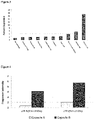
- the cationic polymer-coated capsule slurries were suspended into the model surfactant mixture 24 hours prior to deposition testing performed as described in Example 11. The results are presented in Table 19, and in Figure 3 .
- the strongest deposition enhancers were the cationic acrylamidopropyltrimonium chloride/acrylamide copolymer, PQ6 and PQ10 as well as the cationic guars.
- the control Capsule Z without any added cationic polymer serves as the benchmark for an unmodified capsule made with a biopolymer emulsifier.
- the underlying biopolymer-functionalized capsule foundation interacts well with different cationic or quaternized polymers with different molecular weights and degrees of charge substitution (cationic functionality) to enhance deposition.
- Table 19 Sampling of cationic polymers used at 1 wt% of the capsule slurry to impact deposition performance of Capsule B type microcapsules onto hair from a model surfactant mixture.
- the polymer-free benchmark is Capsule Z.
- Capsules are incorporated at the required dosage in the rinse-off base with ample stirring, and are left in the formulation at room temperature for at least 24 hours before testing. Clean, dry, 10 g hair swatches are wetted with 37°C warm tap water for 30 seconds. 1 g of rinse-off product is applied per hair swatch, and is gently rubbed and distributed into the hair swatch evenly with gloved hands.
- the hair swatches are not squeezed dry.
- the sample application, distribution and rinsing are repeated a second time before placing the hair swatches on a drying rack to air dry.
- the hair swatches are evaluated after 24 hours by expert panelists using an intensity scale of 1-7 as follows: 1)Imperceptible; 2) Slightly Perceptible; 3) Weak; 4) Medium; 5) Sustained; 6) Intense; 7) Very Intense. Standard error bars on the figures typically denote the standard deviation of the average fragrance intensity perceived by the panelists.
- Capsules B provided a significant boost in fragrance intensity before and after combing compared to the control Capsules X made with polyvinyl alcohol emulsifier.
- the combination of biopolymer and quaternized polymer yields tenacious, highly performing delivery systems.
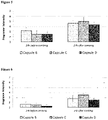
- Olfactive evaluation of capsules B (capsules B above-described wherein the deposition promoting aid is Salcare ® SC 60 0.8%) was then compared to the performance of uncrosslinked polyurea-urethane Capsules C and polyurethane Capsules D in a shampoo base of composition reported in Table 18 and a rinse-off conditioner base of composition reported in Table 17.
- the olfactive evaluation of capsules loaded into the rinse-off formulations at 0.2 % equivalent oil loading was performed by trained panelists after the samples had incubated at 45°C for one month. This olfactive evaluation gives an indication of stability, deposition and capsule performance.
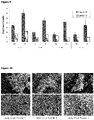
- Olfactive evaluation of the inorganic/organic hybrid capsules was performed as a function of increasing silane concentration and the results are charted in Figure 7 .
- the deposition and olfactive performance of Capsules I, J and K following the addition of 1 wt% Salcare ® SC 60 into the slurries was compared to that of Capsules Y made using polyvinyl alcohol as the emulsifier. All capsules were dosed into the shampoo with composition reported in Table 18 at 0.2 % equivalent oil and were tested on 10 g hair swatches.
- Capsules I, J, K, and Y were tested with 1 wt% Salcare ® SC 60 polymer added to the synthesized capsule slurries and the fragrance intensities before and after combing are plotted as a function of increasing silane concentration. Silicified inorganic/organic hybrid capsules deposit and rupture significantly better than the polyvinyl alcohol-stabilized capsule benchmark.
- the standard transparent hair shampoo formulation from Table 18 was parametrically modified to show that the strong deposition and activation performance of Capsules B is maintained even when the grades and loadings of the surfactants, conditioning agents and film-forming or palliative agents are varied to generate a wide range of personal cleansing formulations.
- the formulations are detailed in Table 20. Capsules B were loaded into the formulations at 0.2 % equivalent free oil, and the 10 g hair swatches were washed, rinsed and dried for 24 hours.
- the capsules offer a statistically significant boost in olfactive intensity on hair swatches from all formulation variants after combing due to the high deposition and compatibility with diverse formulation ingredients, compared to hair swatches treated with free oil from the transparent hair shampoo formulation.
- Table 20 Parametric modification of a rinse-off cleanser base formulation comprising different types and loadings of surfactants, conditioners, film-formers, palliative and structuring agents.
- the formulations are extensions of the standard transparent hair shampoo formulation from Table 18.
- Capsules B according to the invention described in Example 2 were incorporated at 3% slurry into a vegetal/palm based soap base and tested on forearms fresh after washing, and as a function of time.
- the sensory analysis as a function of time is given in Table 21 using the 1-7 Fragrance Intensity Scale, compared to the performance of the benchmark Capsule Z without quaternized deposition-promoting polymer.
- the soap base which is typically a very challenging base for fragrance delivery systems is given in Table 22.
- Capsule B provides a strong delta value (after rubbing signal minus the before rubbing signal) indicating the presence of a stable, highly-depositing fragrance microcapsules which offer long-lasting linear fragrance bursts.
- Capsules B according to the invention described in Example 2 were incorporated at 0.325% equivalent oil into the shower gel formulation given in Table 23 and tested on forearms after washing a designated area of skin and evaluating the fragrance intensity using the 1-7 fragrance intensity scale as a function of time, before and after rubbing the site of product application.
- the performance of Capsules B was benchmarked against a Capsule X made using polyvinyl alcohol.
- Capsule B which combines a biopolymer and quaternized deposition-enhancing polymer, is significantly stronger at all time points up to 8 hours after rubbing of the forearm compared to the benchmark polyvinyl alcohol (PVOH)-stabilized microcapsules.
- PVOH polyvinyl alcohol
- Table 23 shower gel formulation Ingredient Percentage Water 49.4 Sodium Pareth Sulfate 35.0 Cocamidopropyl Betaine 8.0 Carbopol Aqua SF-1 Polymer 6.0 Sodium Hydroxide (20% aqueous solution) 1.0 Citric Acid (40% aqueous solution) 0.5 Methylchloroisothiazolinone 0.1 Tetrasodium EDTA 0.1
- Capsules E from Example 5 were synthesized and dried to produce varied powder formulations and dual-delivery systems (encapsulated oil + free oil) using a Büchi 190 Mini Spray Dryer.
- the capsule slurries containing 25 % oil were dried using Gum Arabic as the carrier, with and without the addition of more deposition-enhancing polymer, and finally with additional free oil which was easily stabilized by the Gum Arabic carrier.
- the formulations used to generate three different types of powders suitable for incorporation into various products including anhydrous bases are given in Table 24 and images of the dried powders are given in Figure 10 .
- Spray dried powder 1 contains the Capsule E slurry and uses Gum Arabic as the carrier.
- Spray dried powder 2 additionally comprises a deposition-promoting polymer solution, and spray dried powder 3 exploits the Gum Arabic carrier to stabilize and encapsulate fragrance oil in conjunction with the pre-made capsules in order to devise a dual-release powder delivery system.
- Table 24 Formulations for spray drying capsules in a Gum Arabic carrier. Excess deposition-promoting polymer may be added, and free oil can be easily stabilized by the Gum Arabic carrier to generate dual-release powdered delivery systems.
- Example 5 Similar protocol as described in Example 5 was applied to prepare microcapsules with a composition as reported in Table 29 below. No reactant, crosslinker or catalyst was added from the aqueous phase. Pseudocollagen was used as the biopolymer emulsifier.
- Table 29 Composition of Capsules (Q) According to the Invention Ingredient Percentage Perfume Oil 1) 25.3 Uvinul A Plus 2) 1.3 Takenate ® D-110N 3) 3.4 Water 36.0 Pseudocollagen 4) 0.7 3 wt% Polymer Solution 5) 33.3 1) Perfuming composition from Table 2 2) tracer for the quantification of oil deposition 3) trimethylol propane adduct of xylylene diisocyanate; origin: Mitsui Chemicals, 75% polyisocyanate /25% ethyl acetate 4) Pseudocollagen (INCI Name: Yeast Extract; origin Lonza) 5) Salcare ® SC60 (acrylamidopropyltrimonium chloride / acrylamide copolymer; origin BASF)
- Example 5 Similar protocol as described in Example 5 was applied to prepare microcapsules with a composition as reported in Table 30 below. No reactant, crosslinker or catalyst was added from the aqueous phase. Biopolymer SA-N was used as the biopolymer emulsifier.
- Table 30 Composition of Capsules (R) According to the Invention Ingredient Percentage Perfume Oil 1) 25.3 Uvinul A Plus 2) 1.3 Takenate ® D-110N 3) 3.4 Water 36.0 Biopolymer SA-N 4) 0.7 3 wt% Polymer Solution 5) 33.3 1) Perfuming composition from Table 2 2) tracer for the quantification of oil deposition 3) trimethylol propane adduct of xylylene diisocyanate; origin: Mitsui Chemicals, 75% polyisocyanate /25% ethyl acetate 4) Biopolymer SA-N (INCI Name: Hyaluronic Acid (and) Albumen (and) Dextran Sulfate; origin Lipo Chemicals) 5) Salcare ® SC60 (acrylamidopropyltrimonium chloride / acrylamide copolymer; origin BASF)
- Example 5 Similar protocol as described in Example 5 was applied to prepare microcapsules with a composition as reported in Table 31 below. No reactant, crosslinker or catalyst was added from the aqueous phase. Pentacare-NA PF was used as the biopolymer emulsifier.
- Table 31 Composition of Capsules (S) According to the Invention Ingredient Percentage Perfume Oil 1) 25.3 Uvinul A Plus 2) 1.3 Takenate ® D-110N 3) 3.4 Water 36.0 Pentacare-NA PF 4) 0.7 3 wt% Polymer Solution 5) 33.3 1) Perfuming composition from Table 2 2) tracer for the quantification of oil deposition 3) trimethylol propane adduct of xylylene diisocyanate; origin: Mitsui Chemicals, 75% polyisocyanate /25% ethyl acetate 4) Pentacare-NA PF (INCI Name: Hydrolyzed Wheat Gluten (and) Ceratonia Siliqua (Carob) Gum (and) Aqua (and) Sodium Dextran Sulfate (and) Bis-Hydroxyethyl Tromethamine (and) Phenoxyethanol (and) Ethylhexylglycerin; origin DSM Nutritional Products, LLC) 5) Sal
- Example 5 Similar protocol as described in Example 5 was applied to prepare microcapsules with a composition as reported in Table 32 below. No reactant, crosslinker or catalyst was added from the aqueous phase. Hydrolyzed Soy Protein was used as the biopolymer emulsifier.
- Table 32 Composition of Capsules (T) According to the Invention Ingredient Percentage Perfume Oil 1) 25.3 Uvinul A Plus 2) 1.3 Takenate ® D-110N 3) 3.4 Water 36.0 Hydrolyzed Soy Protein 4) 0.7 3 wt% Polymer Solution 5) 33.3 1) Perfuming composition from Table 2 2) tracer for the quantification of oil deposition 3) trimethylol propane adduct of xylylene diisocyanate; origin: Mitsui Chemicals, 75% polyisocyanate /25% ethyl acetate 4) Hydrolyzed Soy Protein (INCI Name: Hydrolyzed Soy Protein; origin Vege Tech Company) 5) Salcare ® SC60 (acrylamidopropyltrimonium chloride / acrylamide copolymer; origin BASF)
- Example 5 Similar protocol as described in Example 5 was applied to prepare microcapsules with a composition as reported in Table 33 below. No reactant, crosslinker or catalyst was added from the aqueous phase. Revitalin PF was mixed 1:1 with Gum Arabic and the mixture was used as the biopolymer emulsifier.
- Table 33 Composition of Capsules (U) According to the Invention Ingredient Percentage Perfume Oil 1) 25.3 Uvinul A Plus 2) 1.3 Takenate ® D-110N 3) 3.4 Water 36.0 Revitalin PF 4) /Gum Arabic 0.7 3 wt% Polymer Solution 5) 33.3 1) Perfuming composition from Table 2 2) tracer for the quantification of oil deposition 3) trimethylol propane adduct of xylylene diisocyanate; origin: Mitsui Chemicals, 75% polyisocyanate /25% ethyl acetate 4) Revitalin ® PF (INCI Name: Glycoproteins (and) Glutamic Acid (and) Valine (and) Threonine (and) Aqua (and) Phenoxyethanol (and) Ethylhexylglycerin (and) Sodium Metabisulfite; origin DSM Nutritional Products, LLC) 5) Salcare ® SC60 (acrylamidopropyltrimonium chlor
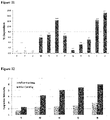
- microcapsules according to the invention (M-U) onto hair swatches was measured from rinse-off shampoo (Table 18) using the protocol described in Example 11 and compared to control microcapsules X, Y, Z. Capsules were loaded into the formulation at 0.5 wt% equivalent free oil. The quantitative deposition values are given in Table 34. The combination of biopolymer emulsifier with cationic polymer yields significant improvement in deposition compared to the control microcapsules.
- Table 18 The deposition results from the rinse-off shampoo (Table 18) are shown in Figure 11 .
- Table 34 Deposition of Control Capsules (X,Y,Z) and Capsules (M-U) onto Hair from a Model Surfactant System Microcapsules Sample Percent Deposition X 0.12 Y 0.20 Z 0.22 M 5.95 N 6.89 O 12.47 P 6.60 Q 1.12 R 3.42 S 5.19 T 12.36 U 15.14
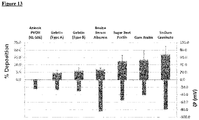
- Deposition and zeta potentials of microcapsules according to the invention were measured and compared to control microcapsules X.
- Zeta potentials were determined and reported for native capsules (prior to cationic polymer addition) in 1mM KCL, pH 5.5 using a Malvern ZetaSizer Nano ZS-90. All capsules were determined to have nearly identical zeta potentials of + 40 mV following the addition of cationic polymer Salcare SC 60 and this is not shown on the plot.
- Deposition was measured onto hair swatches from rinse-off shampoo (using the protocol described in Example 11) with capsules following cationic polymer addition.
- Capsules were loaded into the formulation at 0.5 wt% equivalent free oil. Both values of zeta potentials (mV, secondary y-axis) and percentage of capsules deposited onto hair after washing (% deposition, primary y-axis) are provided in a same graph in Figure 13 . These data underline that there is no correlation between the magnitude of zeta potential and percentage of deposition, and that judicious selection of anionic or amphoteric biopolymers with different structures and conformations in combination with cationic polymer is necessary for enhanced performance. In other words, the magnitude of zeta potential is surprisingly not the sole driver of deposition.
Landscapes
- Life Sciences & Earth Sciences (AREA)
- Health & Medical Sciences (AREA)
- Animal Behavior & Ethology (AREA)
- General Health & Medical Sciences (AREA)
- Public Health (AREA)
- Veterinary Medicine (AREA)
- Birds (AREA)
- Epidemiology (AREA)
- Chemical & Material Sciences (AREA)
- Organic Chemistry (AREA)
- Chemical Kinetics & Catalysis (AREA)
- Oil, Petroleum & Natural Gas (AREA)
- Wood Science & Technology (AREA)
- Engineering & Computer Science (AREA)
- Fats And Perfumes (AREA)
- Manufacturing Of Micro-Capsules (AREA)
- Detergent Compositions (AREA)
- Cosmetics (AREA)
- Organic Low-Molecular-Weight Compounds And Preparation Thereof (AREA)
- Dispersion Chemistry (AREA)
- Compositions Of Macromolecular Compounds (AREA)
Applications Claiming Priority (3)
| Application Number | Priority Date | Filing Date | Title |
|---|---|---|---|
| US201562171723P | 2015-06-05 | 2015-06-05 | |
| EP15173503 | 2015-06-24 | ||
| PCT/EP2016/062660 WO2016193435A1 (en) | 2015-06-05 | 2016-06-03 | Microcapsules with high deposition on surfaces |
Publications (2)
| Publication Number | Publication Date |
|---|---|
| EP3302404A1 EP3302404A1 (en) | 2018-04-11 |
| EP3302404B1 true EP3302404B1 (en) | 2022-09-28 |
Family
ID=53513967
Family Applications (1)
| Application Number | Title | Priority Date | Filing Date |
|---|---|---|---|
| EP16730719.8A Active EP3302404B1 (en) | 2015-06-05 | 2016-06-03 | Microcapsules with high deposition on surfaces |
Country Status (7)
| Country | Link |
|---|---|
| US (1) | US10900002B2 (https=) |
| EP (1) | EP3302404B1 (https=) |
| JP (1) | JP6797139B2 (https=) |
| CN (1) | CN107666897B (https=) |
| BR (1) | BR112017026245A2 (https=) |
| MX (1) | MX377490B (https=) |
| WO (1) | WO2016193435A1 (https=) |
Families Citing this family (52)
| Publication number | Priority date | Publication date | Assignee | Title |
|---|---|---|---|---|
| CN108350181A (zh) * | 2015-09-28 | 2018-07-31 | 国际香料和香精公司 | 混合型胶囊 |
| US9974720B2 (en) | 2015-12-30 | 2018-05-22 | International Flavors & Fragrances Inc. | Compositions containing microcapsules coated with deposition proteins |
| CN121046162A (zh) * | 2016-07-27 | 2025-12-02 | 弗门尼舍有限公司 | 制备微胶囊的方法 |
| WO2018115330A1 (en) * | 2016-12-22 | 2018-06-28 | Firmenich Sa | Microcapsules having a mineral layer |
| CN110099743B (zh) * | 2016-12-22 | 2022-06-14 | 弗门尼舍有限公司 | 具有矿物层的微胶囊 |
| SG11201906415QA (en) | 2017-03-24 | 2019-10-30 | Firmenich & Cie | Solid scent booster composition |
| JP7660341B2 (ja) * | 2017-04-04 | 2025-04-11 | エスダブリューアイエムシー・エルエルシー | 金属に直接塗布されるコーティング組成物 |
| WO2018229175A1 (en) * | 2017-06-15 | 2018-12-20 | Firmenich Sa | Rinse-off conditioner compositions comprising microcapsules |
| CN111225718B (zh) * | 2017-10-19 | 2023-06-16 | 弗门尼舍有限公司 | 水凝胶珠粒 |
| MX2020007319A (es) * | 2017-11-15 | 2020-08-24 | Firmenich & Cie | Microcapsulas con deposicion mejorada. |
| CN107982239B (zh) * | 2017-12-08 | 2020-02-21 | 中国医学科学院生物医学工程研究所 | 疏水性药物晶体为模板的蛋白基非球形微囊及制备方法 |
| SG11202002392YA (en) * | 2017-12-14 | 2020-04-29 | Firmenich & Cie | Process for preparing a powdered composition |
| US11759759B2 (en) | 2018-03-30 | 2023-09-19 | Firmenich Sa | Process for preparing microcapsules with improved deposition |
| US20190320698A1 (en) * | 2018-04-20 | 2019-10-24 | International Flavors & Fragrances Inc. | Hydrolyzed pectin and useof the same |
| CN111801155B (zh) * | 2018-06-21 | 2023-05-02 | 弗门尼舍有限公司 | 制备微胶囊的方法 |
| MX2020009424A (es) * | 2018-06-21 | 2020-10-16 | Firmenich & Cie | Proceso de preparacion de microcapsulas mineralizadas. |
| SG11202008552WA (en) | 2018-06-21 | 2020-10-29 | Firmenich & Cie | Process for preparing microcapsules |
| US12303856B2 (en) | 2018-12-18 | 2025-05-20 | International Flavors & Fragrances Inc. | Hydroxyethyl cellulose microcapsules |
| BR112021011936A2 (pt) * | 2018-12-18 | 2021-09-08 | International Flavors & Fragrances Inc. | Processo para preparar uma composição de microcápsula, composição de microcápsula, e, produto de consumo |
| EP3897956A1 (en) * | 2018-12-19 | 2021-10-27 | Firmenich SA | Polyamide microcapsules |
| CN113194918B (zh) * | 2018-12-19 | 2024-02-02 | 联合利华知识产权控股有限公司 | 用于毛发的沉积体系 |
| WO2020194910A1 (ja) * | 2019-03-28 | 2020-10-01 | 富士フイルム株式会社 | マイクロカプセル、マイクロカプセル組成物、柔軟剤及び洗剤 |
| GB201904918D0 (en) * | 2019-04-08 | 2019-05-22 | Givaudan Sa | Improvements in or relating to organic compounds |
| BR112021020485A2 (pt) | 2019-04-12 | 2021-12-14 | Int Flavors & Fragrances Inc | Produto destinado ao consumidor com liberação controlada, composições de microcápsula de núcleo-invólucro biodegradável |
| US12390783B2 (en) | 2019-04-15 | 2025-08-19 | International Flavors & Fragrances Inc. | Protein microcapsules and method of preparing the same |
| JP2022532256A (ja) | 2019-05-16 | 2022-07-13 | ジェム イノヴ | 生分解性マイクロカプセルの調製方法及びこの方法で得たマイクロカプセル |
| GB201907053D0 (en) * | 2019-05-20 | 2019-07-03 | Givaudan Sa | Improvements in or relating to organic compounds |
| JP7535522B2 (ja) * | 2019-05-21 | 2024-08-16 | フイルメニツヒ ソシエテ アノニム | ポリ(エステル尿素)マイクロカプセル |
| US12123814B1 (en) * | 2019-06-14 | 2024-10-22 | Pierce Biotechnology, Inc. | G- protein coupled receptor extraction formulations |
| US12365853B2 (en) | 2019-08-05 | 2025-07-22 | Firmenich Sa | Cleavable multi-alcohol-based microcapsules |
| FR3099711B1 (fr) * | 2019-08-06 | 2021-07-16 | Microcapsules Tech | Procédé de fabrication de microcapsules renfermant un actif lipophile, microcapsules préparées par ce procédé et leur utilisation |
| GB201912382D0 (en) * | 2019-08-29 | 2019-10-16 | Givaudan Sa | Improvements in or relating to organic compounds |
| WO2021122630A1 (en) * | 2019-12-19 | 2021-06-24 | Firmenich Sa | Perfume formulation for delivery system |
| EP4082656B1 (en) * | 2019-12-27 | 2025-02-19 | Kao Corporation | Method for producing microcapsule |
| WO2021191290A1 (en) * | 2020-03-27 | 2021-09-30 | Firmenich Sa | Coacervate core-shell microcapsules |
| JP7683257B2 (ja) * | 2020-05-08 | 2025-05-27 | Toppanホールディングス株式会社 | マイクロカプセル |
| CN116367720B (zh) * | 2020-08-06 | 2025-06-06 | 西姆莱斯股份公司 | 可生物降解的聚脲/聚氨酯微胶囊 |
| EP3969165B1 (de) * | 2020-08-06 | 2024-05-15 | Symrise AG | Bioabbaubare polyharnstoff/polyurethan-mikrokapseln |
| EP4378575A1 (de) * | 2020-08-06 | 2024-06-05 | Symrise AG | Polyharnstoff/polyurethan-mikrokapseln |
| WO2022028705A1 (de) * | 2020-08-06 | 2022-02-10 | Symrise Ag | Verfahren zur herstellung von mikrokapseln |
| FR3116212B1 (fr) | 2020-11-18 | 2022-12-30 | Gem Innov | Procede de preparation de microcapsules biodegradables et microcapsules ainsi obtenues |
| MX2023002952A (es) * | 2020-12-23 | 2023-04-11 | Firmenich & Cie | Proceso de preparacion de microcapsulas. |
| CN117083121A (zh) * | 2021-03-31 | 2023-11-17 | 弗门尼舍有限公司 | 官能化壳聚糖的制备 |
| MX2024001830A (es) * | 2021-08-13 | 2024-02-28 | Encapsys Llc | Particulas de liberacion degradables con base en materiales naturales que contienen amina. |
| CN113604283B (zh) * | 2021-08-27 | 2023-11-21 | 珠海市广龙香料发展有限公司 | 一种可降低烟气刺激性的烟用香精及其制备方法 |
| EP4441185A1 (en) | 2021-12-03 | 2024-10-09 | International Flavors & Fragrances Inc. | Aqueous fabric conditioner compositions with high performance fragrances |
| WO2023148253A1 (de) * | 2022-02-02 | 2023-08-10 | Symrise Ag | Verfahren zur herstellung von mikrokapseln |
| AU2023227819A1 (en) | 2022-03-04 | 2024-09-19 | International Flavors & Fragrances Inc. | Fragrance compositions for sleep improvement |
| CN118829713A (zh) | 2022-03-07 | 2024-10-22 | 国际香料和香精公司 | 含香料的颗粒 |
| EP4309499A1 (en) | 2022-07-22 | 2024-01-24 | Givaudan SA | Composition comprising biodegradable microcapsules |
| JP2025528790A (ja) | 2022-08-09 | 2025-09-02 | インターナショナル・フレーバー・アンド・フレグランス・インコーポレイテッド | 動物の排泄物処理材用の香料含有顆粒 |
| WO2025207732A1 (en) * | 2024-03-28 | 2025-10-02 | Encapsys, Llc | Biodegradable, controlled release microcapsules |
Citations (11)
| Publication number | Priority date | Publication date | Assignee | Title |
|---|---|---|---|---|
| US5538751A (en) * | 1992-05-08 | 1996-07-23 | Unilever Patent Holdings B.V. | Thickened foodstuff having improved storage stability and process of making |
| WO2001097851A2 (en) * | 2000-06-21 | 2001-12-27 | Cubist Pharmaceuticals, Inc. | Compositions and methods to improve the oral absorption of antimicrobial agents |
| WO2009153695A1 (en) | 2008-06-16 | 2009-12-23 | Firmenich Sa | Process for preparing polyurea microcapsules |
| WO2011056904A1 (en) | 2009-11-06 | 2011-05-12 | The Procter & Gamble Company | High efficiency particle comprising benefit agent |
| US20120148644A1 (en) | 2009-09-18 | 2012-06-14 | Lewis Michael Popplewell | Encapsulated Active Materials |
| WO2012107323A1 (en) | 2011-02-07 | 2012-08-16 | Firmenich Sa | Polyurea microcapsules |
| US20130337023A1 (en) | 2009-09-18 | 2013-12-19 | International Flavors & Fragrances Inc. | Polyurea capsules prepared with aliphatic isocyanates and amines |
| US20140017287A1 (en) | 2009-09-18 | 2014-01-16 | International Flavors & Fragrances Inc. | Purified polyurea capsules, methods of preparation, and products containing the same |
| WO2014044840A1 (en) | 2012-09-24 | 2014-03-27 | Firmenich Sa | Multilayered core/shell microcapsules |
| WO2015023961A1 (en) | 2013-08-15 | 2015-02-19 | International Flavors & Fragrances Inc. | Polyurea or polyurethane capsules |
| US20150105307A1 (en) | 2013-10-11 | 2015-04-16 | International Flavors & Fragrances Inc. | Terpolymer-coated polymer encapsulated active material |
Family Cites Families (10)
| Publication number | Priority date | Publication date | Assignee | Title |
|---|---|---|---|---|
| FR2801811B1 (fr) | 1999-12-06 | 2002-05-03 | Gerard Habar | Procede de fabrication de microcapsules portant des charges cationiques |
| US6749865B2 (en) | 2000-02-15 | 2004-06-15 | Genzyme Corporation | Modification of biopolymers for improved drug delivery |
| WO2002028889A2 (en) | 2000-10-02 | 2002-04-11 | Shire Biochem Inc. | Haemophilus influenzae antigens and corresponding dna fragments |
| DE10117671A1 (de) | 2001-04-09 | 2002-10-10 | Bayer Ag | Mit duftstoffhaltigen Mikrokapseln ausgerüstetes Leder |
| US20050112152A1 (en) * | 2003-11-20 | 2005-05-26 | Popplewell Lewis M. | Encapsulated materials |
| BRPI0922486B1 (pt) * | 2008-12-18 | 2017-03-14 | Firmenich & Cie | microcápsulas e suas respectivas utilizações |
| EP2405938A2 (en) | 2009-02-13 | 2012-01-18 | Intercell AG | Nontypable haemophilus influenzae antigens |
| ES2683315T3 (es) * | 2011-11-10 | 2018-09-26 | Firmenich Sa | Microcápsulas estables libres de formaldehído |
| CN104011193B (zh) * | 2011-12-22 | 2017-04-12 | 弗门尼舍有限公司 | 制备聚脲微胶囊的方法 |
| CN103169625B (zh) * | 2013-03-25 | 2016-04-13 | 长兴(中国)投资有限公司 | 包裹固体防晒剂的微胶囊、制备方法及其应用 |
-
2016
- 2016-06-03 BR BR112017026245A patent/BR112017026245A2/pt not_active Application Discontinuation
- 2016-06-03 WO PCT/EP2016/062660 patent/WO2016193435A1/en not_active Ceased
- 2016-06-03 US US15/574,265 patent/US10900002B2/en active Active
- 2016-06-03 CN CN201680032456.3A patent/CN107666897B/zh active Active
- 2016-06-03 JP JP2017563030A patent/JP6797139B2/ja active Active
- 2016-06-03 EP EP16730719.8A patent/EP3302404B1/en active Active
- 2016-06-03 MX MX2017015110A patent/MX377490B/es active IP Right Grant
Patent Citations (11)
| Publication number | Priority date | Publication date | Assignee | Title |
|---|---|---|---|---|
| US5538751A (en) * | 1992-05-08 | 1996-07-23 | Unilever Patent Holdings B.V. | Thickened foodstuff having improved storage stability and process of making |
| WO2001097851A2 (en) * | 2000-06-21 | 2001-12-27 | Cubist Pharmaceuticals, Inc. | Compositions and methods to improve the oral absorption of antimicrobial agents |
| WO2009153695A1 (en) | 2008-06-16 | 2009-12-23 | Firmenich Sa | Process for preparing polyurea microcapsules |
| US20120148644A1 (en) | 2009-09-18 | 2012-06-14 | Lewis Michael Popplewell | Encapsulated Active Materials |
| US20130337023A1 (en) | 2009-09-18 | 2013-12-19 | International Flavors & Fragrances Inc. | Polyurea capsules prepared with aliphatic isocyanates and amines |
| US20140017287A1 (en) | 2009-09-18 | 2014-01-16 | International Flavors & Fragrances Inc. | Purified polyurea capsules, methods of preparation, and products containing the same |
| WO2011056904A1 (en) | 2009-11-06 | 2011-05-12 | The Procter & Gamble Company | High efficiency particle comprising benefit agent |
| WO2012107323A1 (en) | 2011-02-07 | 2012-08-16 | Firmenich Sa | Polyurea microcapsules |
| WO2014044840A1 (en) | 2012-09-24 | 2014-03-27 | Firmenich Sa | Multilayered core/shell microcapsules |
| WO2015023961A1 (en) | 2013-08-15 | 2015-02-19 | International Flavors & Fragrances Inc. | Polyurea or polyurethane capsules |
| US20150105307A1 (en) | 2013-10-11 | 2015-04-16 | International Flavors & Fragrances Inc. | Terpolymer-coated polymer encapsulated active material |
Non-Patent Citations (2)
| Title |
|---|
| ANONYMOUS: "Luviquat® PQ 11 AT 1", PRODUCT SPECIFICATION, BASF, 3 February 2016 (2016-02-03), pages 1 - 2, XP093120239, Retrieved from the Internet <URL:https://rossorg.com/product/luviquat-pq-11-at-1/#:~:text=Luviquat%20PQ%2011%20AT%201%20is%20a%20quaternized%20copolymer%20that,water)%20of%205.0%2D7.0.> [retrieved on 20240116] |
| ANONYMOUS: "Polyquaternium", WIKIPEDIA, 29 January 2023 (2023-01-29), pages 1 - 4, XP093120229, Retrieved from the Internet <URL:https://en.wikipedia.org/w/index.php?title=Polyquaternium&oldid=1136317366> [retrieved on 20240116] |
Also Published As
| Publication number | Publication date |
|---|---|
| MX377490B (es) | 2025-03-10 |
| EP3302404A1 (en) | 2018-04-11 |
| US20180078468A1 (en) | 2018-03-22 |
| BR112017026245A2 (pt) | 2018-09-11 |
| JP6797139B2 (ja) | 2020-12-09 |
| CN107666897A (zh) | 2018-02-06 |
| US10900002B2 (en) | 2021-01-26 |
| CN107666897B (zh) | 2021-12-28 |
| WO2016193435A1 (en) | 2016-12-08 |
| MX2017015110A (es) | 2018-05-07 |
| JP2018518479A (ja) | 2018-07-12 |
Similar Documents
| Publication | Publication Date | Title |
|---|---|---|
| EP3302404B1 (en) | Microcapsules with high deposition on surfaces | |
| EP4090453B1 (en) | Microcapsules coated with a polysuccinimide derivative | |
| EP3389845B1 (en) | Process for preparing polyurea microcapsules with improved deposition | |
| JP7504798B2 (ja) | マイクロカプセルの製造方法 | |
| JP7523443B2 (ja) | ポリアミドマイクロカプセルの製造方法 | |
| EP3154507B1 (en) | Process for preparing polyurea microcapsules with improved deposition | |
| EP2579976B1 (en) | Process for preparing polyurea microcapsules | |
| JP7504800B2 (ja) | マイクロカプセルの製造方法 | |
| JP2022542633A (ja) | 複合マイクロカプセル | |
| JP7538043B2 (ja) | 鉱質化マイクロカプセルの製造方法 | |
| JP7535522B2 (ja) | ポリ(エステル尿素)マイクロカプセル | |
| JP2024178333A (ja) | ポリアミドマイクロカプセル | |
| JP2023506573A (ja) | 香料送達システム | |
| WO2021122630A1 (en) | Perfume formulation for delivery system | |
| EP3774017B1 (en) | Process for preparing polysuccinimide derivatives-based microcapsules | |
| BR112021011448B1 (pt) | Microcápsulas de poliamida |
Legal Events
| Date | Code | Title | Description |
|---|---|---|---|
| STAA | Information on the status of an ep patent application or granted ep patent |
Free format text: STATUS: THE INTERNATIONAL PUBLICATION HAS BEEN MADE |
|
| PUAI | Public reference made under article 153(3) epc to a published international application that has entered the european phase |
Free format text: ORIGINAL CODE: 0009012 |
|
| STAA | Information on the status of an ep patent application or granted ep patent |
Free format text: STATUS: REQUEST FOR EXAMINATION WAS MADE |
|
| 17P | Request for examination filed |
Effective date: 20180105 |
|
| AK | Designated contracting states |
Kind code of ref document: A1 Designated state(s): AL AT BE BG CH CY CZ DE DK EE ES FI FR GB GR HR HU IE IS IT LI LT LU LV MC MK MT NL NO PL PT RO RS SE SI SK SM TR |
|
| AX | Request for extension of the european patent |
Extension state: BA ME |
|
| DAV | Request for validation of the european patent (deleted) | ||
| DAX | Request for extension of the european patent (deleted) | ||
| STAA | Information on the status of an ep patent application or granted ep patent |
Free format text: STATUS: EXAMINATION IS IN PROGRESS |
|
| 17Q | First examination report despatched |
Effective date: 20190524 |
|
| RAP1 | Party data changed (applicant data changed or rights of an application transferred) |
Owner name: FIRMENICH SA |
|
| GRAP | Despatch of communication of intention to grant a patent |
Free format text: ORIGINAL CODE: EPIDOSNIGR1 |
|
| STAA | Information on the status of an ep patent application or granted ep patent |
Free format text: STATUS: GRANT OF PATENT IS INTENDED |
|
| INTG | Intention to grant announced |
Effective date: 20211012 |
|
| GRAS | Grant fee paid |
Free format text: ORIGINAL CODE: EPIDOSNIGR3 |
|
| INTG | Intention to grant announced |
Effective date: 20220329 |
|
| GRAJ | Information related to disapproval of communication of intention to grant by the applicant or resumption of examination proceedings by the epo deleted |
Free format text: ORIGINAL CODE: EPIDOSDIGR1 |
|
| STAA | Information on the status of an ep patent application or granted ep patent |
Free format text: STATUS: EXAMINATION IS IN PROGRESS |
|
| INTC | Intention to grant announced (deleted) | ||
| GRAP | Despatch of communication of intention to grant a patent |
Free format text: ORIGINAL CODE: EPIDOSNIGR1 |
|
| STAA | Information on the status of an ep patent application or granted ep patent |
Free format text: STATUS: GRANT OF PATENT IS INTENDED |
|
| INTG | Intention to grant announced |
Effective date: 20220719 |
|
| GRAS | Grant fee paid |
Free format text: ORIGINAL CODE: EPIDOSNIGR3 |
|
| GRAA | (expected) grant |
Free format text: ORIGINAL CODE: 0009210 |
|
| STAA | Information on the status of an ep patent application or granted ep patent |
Free format text: STATUS: THE PATENT HAS BEEN GRANTED |
|
| AK | Designated contracting states |
Kind code of ref document: B1 Designated state(s): AL AT BE BG CH CY CZ DE DK EE ES FI FR GB GR HR HU IE IS IT LI LT LU LV MC MK MT NL NO PL PT RO RS SE SI SK SM TR |
|
| REG | Reference to a national code |
Ref country code: GB Ref legal event code: FG4D |
|
| REG | Reference to a national code |
Ref country code: CH Ref legal event code: EP |
|
| REG | Reference to a national code |
Ref country code: DE Ref legal event code: R096 Ref document number: 602016075264 Country of ref document: DE |
|
| REG | Reference to a national code |
Ref country code: AT Ref legal event code: REF Ref document number: 1520783 Country of ref document: AT Kind code of ref document: T Effective date: 20221015 |
|
| REG | Reference to a national code |
Ref country code: IE Ref legal event code: FG4D |
|
| REG | Reference to a national code |
Ref country code: NL Ref legal event code: FP |
|
| REG | Reference to a national code |
Ref country code: LT Ref legal event code: MG9D |
|
| PG25 | Lapsed in a contracting state [announced via postgrant information from national office to epo] |
Ref country code: SE Free format text: LAPSE BECAUSE OF FAILURE TO SUBMIT A TRANSLATION OF THE DESCRIPTION OR TO PAY THE FEE WITHIN THE PRESCRIBED TIME-LIMIT Effective date: 20220928 Ref country code: RS Free format text: LAPSE BECAUSE OF FAILURE TO SUBMIT A TRANSLATION OF THE DESCRIPTION OR TO PAY THE FEE WITHIN THE PRESCRIBED TIME-LIMIT Effective date: 20220928 Ref country code: NO Free format text: LAPSE BECAUSE OF FAILURE TO SUBMIT A TRANSLATION OF THE DESCRIPTION OR TO PAY THE FEE WITHIN THE PRESCRIBED TIME-LIMIT Effective date: 20221228 Ref country code: LV Free format text: LAPSE BECAUSE OF FAILURE TO SUBMIT A TRANSLATION OF THE DESCRIPTION OR TO PAY THE FEE WITHIN THE PRESCRIBED TIME-LIMIT Effective date: 20220928 Ref country code: LT Free format text: LAPSE BECAUSE OF FAILURE TO SUBMIT A TRANSLATION OF THE DESCRIPTION OR TO PAY THE FEE WITHIN THE PRESCRIBED TIME-LIMIT Effective date: 20220928 Ref country code: FI Free format text: LAPSE BECAUSE OF FAILURE TO SUBMIT A TRANSLATION OF THE DESCRIPTION OR TO PAY THE FEE WITHIN THE PRESCRIBED TIME-LIMIT Effective date: 20220928 |
|
| REG | Reference to a national code |
Ref country code: AT Ref legal event code: MK05 Ref document number: 1520783 Country of ref document: AT Kind code of ref document: T Effective date: 20220928 |
|
| PG25 | Lapsed in a contracting state [announced via postgrant information from national office to epo] |
Ref country code: HR Free format text: LAPSE BECAUSE OF FAILURE TO SUBMIT A TRANSLATION OF THE DESCRIPTION OR TO PAY THE FEE WITHIN THE PRESCRIBED TIME-LIMIT Effective date: 20220928 Ref country code: GR Free format text: LAPSE BECAUSE OF FAILURE TO SUBMIT A TRANSLATION OF THE DESCRIPTION OR TO PAY THE FEE WITHIN THE PRESCRIBED TIME-LIMIT Effective date: 20221229 |
|
| PG25 | Lapsed in a contracting state [announced via postgrant information from national office to epo] |
Ref country code: SM Free format text: LAPSE BECAUSE OF FAILURE TO SUBMIT A TRANSLATION OF THE DESCRIPTION OR TO PAY THE FEE WITHIN THE PRESCRIBED TIME-LIMIT Effective date: 20220928 Ref country code: RO Free format text: LAPSE BECAUSE OF FAILURE TO SUBMIT A TRANSLATION OF THE DESCRIPTION OR TO PAY THE FEE WITHIN THE PRESCRIBED TIME-LIMIT Effective date: 20220928 Ref country code: PT Free format text: LAPSE BECAUSE OF FAILURE TO SUBMIT A TRANSLATION OF THE DESCRIPTION OR TO PAY THE FEE WITHIN THE PRESCRIBED TIME-LIMIT Effective date: 20230130 Ref country code: ES Free format text: LAPSE BECAUSE OF FAILURE TO SUBMIT A TRANSLATION OF THE DESCRIPTION OR TO PAY THE FEE WITHIN THE PRESCRIBED TIME-LIMIT Effective date: 20220928 Ref country code: CZ Free format text: LAPSE BECAUSE OF FAILURE TO SUBMIT A TRANSLATION OF THE DESCRIPTION OR TO PAY THE FEE WITHIN THE PRESCRIBED TIME-LIMIT Effective date: 20220928 Ref country code: AT Free format text: LAPSE BECAUSE OF FAILURE TO SUBMIT A TRANSLATION OF THE DESCRIPTION OR TO PAY THE FEE WITHIN THE PRESCRIBED TIME-LIMIT Effective date: 20220928 |
|
| PG25 | Lapsed in a contracting state [announced via postgrant information from national office to epo] |
Ref country code: SK Free format text: LAPSE BECAUSE OF FAILURE TO SUBMIT A TRANSLATION OF THE DESCRIPTION OR TO PAY THE FEE WITHIN THE PRESCRIBED TIME-LIMIT Effective date: 20220928 Ref country code: PL Free format text: LAPSE BECAUSE OF FAILURE TO SUBMIT A TRANSLATION OF THE DESCRIPTION OR TO PAY THE FEE WITHIN THE PRESCRIBED TIME-LIMIT Effective date: 20220928 Ref country code: IS Free format text: LAPSE BECAUSE OF FAILURE TO SUBMIT A TRANSLATION OF THE DESCRIPTION OR TO PAY THE FEE WITHIN THE PRESCRIBED TIME-LIMIT Effective date: 20230128 Ref country code: EE Free format text: LAPSE BECAUSE OF FAILURE TO SUBMIT A TRANSLATION OF THE DESCRIPTION OR TO PAY THE FEE WITHIN THE PRESCRIBED TIME-LIMIT Effective date: 20220928 |
|
| P01 | Opt-out of the competence of the unified patent court (upc) registered |
Effective date: 20230518 |
|
| REG | Reference to a national code |
Ref country code: DE Ref legal event code: R026 Ref document number: 602016075264 Country of ref document: DE |
|
| PG25 | Lapsed in a contracting state [announced via postgrant information from national office to epo] |
Ref country code: AL Free format text: LAPSE BECAUSE OF FAILURE TO SUBMIT A TRANSLATION OF THE DESCRIPTION OR TO PAY THE FEE WITHIN THE PRESCRIBED TIME-LIMIT Effective date: 20220928 |
|
| PLBI | Opposition filed |
Free format text: ORIGINAL CODE: 0009260 |
|
| PLAX | Notice of opposition and request to file observation + time limit sent |
Free format text: ORIGINAL CODE: EPIDOSNOBS2 |
|
| PG25 | Lapsed in a contracting state [announced via postgrant information from national office to epo] |
Ref country code: DK Free format text: LAPSE BECAUSE OF FAILURE TO SUBMIT A TRANSLATION OF THE DESCRIPTION OR TO PAY THE FEE WITHIN THE PRESCRIBED TIME-LIMIT Effective date: 20220928 |
|
| 26 | Opposition filed |
Opponent name: GIVAUDAN SA Effective date: 20230628 |
|
| PLBB | Reply of patent proprietor to notice(s) of opposition received |
Free format text: ORIGINAL CODE: EPIDOSNOBS3 |
|
| PG25 | Lapsed in a contracting state [announced via postgrant information from national office to epo] |
Ref country code: SI Free format text: LAPSE BECAUSE OF FAILURE TO SUBMIT A TRANSLATION OF THE DESCRIPTION OR TO PAY THE FEE WITHIN THE PRESCRIBED TIME-LIMIT Effective date: 20220928 |
|
| PG25 | Lapsed in a contracting state [announced via postgrant information from national office to epo] |
Ref country code: MC Free format text: LAPSE BECAUSE OF FAILURE TO SUBMIT A TRANSLATION OF THE DESCRIPTION OR TO PAY THE FEE WITHIN THE PRESCRIBED TIME-LIMIT Effective date: 20220928 |
|
| PG25 | Lapsed in a contracting state [announced via postgrant information from national office to epo] |
Ref country code: MC Free format text: LAPSE BECAUSE OF FAILURE TO SUBMIT A TRANSLATION OF THE DESCRIPTION OR TO PAY THE FEE WITHIN THE PRESCRIBED TIME-LIMIT Effective date: 20220928 |
|
| REG | Reference to a national code |
Ref country code: BE Ref legal event code: MM Effective date: 20230630 |
|
| PG25 | Lapsed in a contracting state [announced via postgrant information from national office to epo] |
Ref country code: LU Free format text: LAPSE BECAUSE OF NON-PAYMENT OF DUE FEES Effective date: 20230603 |
|
| PLAB | Opposition data, opponent's data or that of the opponent's representative modified |
Free format text: ORIGINAL CODE: 0009299OPPO |
|
| REG | Reference to a national code |
Ref country code: IE Ref legal event code: MM4A |
|
| PG25 | Lapsed in a contracting state [announced via postgrant information from national office to epo] |
Ref country code: LU Free format text: LAPSE BECAUSE OF NON-PAYMENT OF DUE FEES Effective date: 20230603 |
|
| PG25 | Lapsed in a contracting state [announced via postgrant information from national office to epo] |
Ref country code: IE Free format text: LAPSE BECAUSE OF NON-PAYMENT OF DUE FEES Effective date: 20230603 |
|
| R26 | Opposition filed (corrected) |
Opponent name: GIVAUDAN SA Effective date: 20230628 |
|
| PG25 | Lapsed in a contracting state [announced via postgrant information from national office to epo] |
Ref country code: IE Free format text: LAPSE BECAUSE OF NON-PAYMENT OF DUE FEES Effective date: 20230603 |
|
| REG | Reference to a national code |
Ref country code: CH Ref legal event code: PK Free format text: DIE PUBLIKATION VOM 27.03.2024 WURDE AM 24.04.2024 IRRTUEMLICHERWEISE ERNEUT PUBLIZIERT. LA PUBLICATION DU 27.03.2024 A ETE REPUBLIEE PAR ERREUR LE 24.04.2024. LA PUBBLICAZIONE DEL 27.03.2024 E STATA ERRONEAMENTE RIPUBBLICATA IL 24.04.2024. |
|
| PG25 | Lapsed in a contracting state [announced via postgrant information from national office to epo] |
Ref country code: IT Free format text: LAPSE BECAUSE OF FAILURE TO SUBMIT A TRANSLATION OF THE DESCRIPTION OR TO PAY THE FEE WITHIN THE PRESCRIBED TIME-LIMIT Effective date: 20220928 Ref country code: BE Free format text: LAPSE BECAUSE OF NON-PAYMENT OF DUE FEES Effective date: 20230630 |
|
| PG25 | Lapsed in a contracting state [announced via postgrant information from national office to epo] |
Ref country code: BG Free format text: LAPSE BECAUSE OF FAILURE TO SUBMIT A TRANSLATION OF THE DESCRIPTION OR TO PAY THE FEE WITHIN THE PRESCRIBED TIME-LIMIT Effective date: 20220928 |
|
| PG25 | Lapsed in a contracting state [announced via postgrant information from national office to epo] |
Ref country code: BG Free format text: LAPSE BECAUSE OF FAILURE TO SUBMIT A TRANSLATION OF THE DESCRIPTION OR TO PAY THE FEE WITHIN THE PRESCRIBED TIME-LIMIT Effective date: 20220928 |
|
| PGFP | Annual fee paid to national office [announced via postgrant information from national office to epo] |
Ref country code: NL Payment date: 20250516 Year of fee payment: 10 |
|
| PGFP | Annual fee paid to national office [announced via postgrant information from national office to epo] |
Ref country code: DE Payment date: 20250507 Year of fee payment: 10 |
|
| PGFP | Annual fee paid to national office [announced via postgrant information from national office to epo] |
Ref country code: GB Payment date: 20250501 Year of fee payment: 10 |
|
| PGFP | Annual fee paid to national office [announced via postgrant information from national office to epo] |
Ref country code: FR Payment date: 20250508 Year of fee payment: 10 |
|
| PLCK | Communication despatched that opposition was rejected |
Free format text: ORIGINAL CODE: EPIDOSNREJ1 |
|
| PG25 | Lapsed in a contracting state [announced via postgrant information from national office to epo] |
Ref country code: CY Free format text: LAPSE BECAUSE OF FAILURE TO SUBMIT A TRANSLATION OF THE DESCRIPTION OR TO PAY THE FEE WITHIN THE PRESCRIBED TIME-LIMIT; INVALID AB INITIO Effective date: 20160603 |
|
| PG25 | Lapsed in a contracting state [announced via postgrant information from national office to epo] |
Ref country code: HU Free format text: LAPSE BECAUSE OF FAILURE TO SUBMIT A TRANSLATION OF THE DESCRIPTION OR TO PAY THE FEE WITHIN THE PRESCRIBED TIME-LIMIT; INVALID AB INITIO Effective date: 20160603 |
|
| APBP | Date of receipt of notice of appeal recorded |
Free format text: ORIGINAL CODE: EPIDOSNNOA2O |
|
| APAH | Appeal reference modified |
Free format text: ORIGINAL CODE: EPIDOSCREFNO |
|
| APAW | Appeal reference deleted |
Free format text: ORIGINAL CODE: EPIDOSDREFNO |
|
| PGFP | Annual fee paid to national office [announced via postgrant information from national office to epo] |
Ref country code: CH Payment date: 20250701 Year of fee payment: 10 |
|
| APBQ | Date of receipt of statement of grounds of appeal recorded |
Free format text: ORIGINAL CODE: EPIDOSNNOA3O |
|
| PG25 | Lapsed in a contracting state [announced via postgrant information from national office to epo] |
Ref country code: TR Free format text: LAPSE BECAUSE OF FAILURE TO SUBMIT A TRANSLATION OF THE DESCRIPTION OR TO PAY THE FEE WITHIN THE PRESCRIBED TIME-LIMIT Effective date: 20220928 |