EP3294875B1 - Verbessertes expressionssystem mittels icp0 - Google Patents
Verbessertes expressionssystem mittels icp0 Download PDFInfo
- Publication number
- EP3294875B1 EP3294875B1 EP16724820.2A EP16724820A EP3294875B1 EP 3294875 B1 EP3294875 B1 EP 3294875B1 EP 16724820 A EP16724820 A EP 16724820A EP 3294875 B1 EP3294875 B1 EP 3294875B1
- Authority
- EP
- European Patent Office
- Prior art keywords
- icpo
- cell
- cells
- expression
- replication
- Prior art date
- Legal status (The legal status is an assumption and is not a legal conclusion. Google has not performed a legal analysis and makes no representation as to the accuracy of the status listed.)
- Active
Links
Images







Classifications
-
- C—CHEMISTRY; METALLURGY
- C12—BIOCHEMISTRY; BEER; SPIRITS; WINE; VINEGAR; MICROBIOLOGY; ENZYMOLOGY; MUTATION OR GENETIC ENGINEERING
- C12N—MICROORGANISMS OR ENZYMES; COMPOSITIONS THEREOF; PROPAGATING, PRESERVING, OR MAINTAINING MICROORGANISMS; MUTATION OR GENETIC ENGINEERING; CULTURE MEDIA
- C12N7/00—Viruses; Bacteriophages; Compositions thereof; Preparation or purification thereof
-
- C—CHEMISTRY; METALLURGY
- C12—BIOCHEMISTRY; BEER; SPIRITS; WINE; VINEGAR; MICROBIOLOGY; ENZYMOLOGY; MUTATION OR GENETIC ENGINEERING
- C12N—MICROORGANISMS OR ENZYMES; COMPOSITIONS THEREOF; PROPAGATING, PRESERVING, OR MAINTAINING MICROORGANISMS; MUTATION OR GENETIC ENGINEERING; CULTURE MEDIA
- C12N2710/00—MICROORGANISMS OR ENZYMES; COMPOSITIONS THEREOF; PROPAGATING, PRESERVING, OR MAINTAINING MICROORGANISMS; MUTATION OR GENETIC ENGINEERING; CULTURE MEDIA dsDNA viruses
- C12N2710/00011—Details
- C12N2710/16011—Herpesviridae
- C12N2710/16611—Simplexvirus, e.g. human herpesvirus 1, 2
- C12N2710/16622—New viral proteins or individual genes, new structural or functional aspects of known viral proteins or genes
-
- C—CHEMISTRY; METALLURGY
- C12—BIOCHEMISTRY; BEER; SPIRITS; WINE; VINEGAR; MICROBIOLOGY; ENZYMOLOGY; MUTATION OR GENETIC ENGINEERING
- C12N—MICROORGANISMS OR ENZYMES; COMPOSITIONS THEREOF; PROPAGATING, PRESERVING, OR MAINTAINING MICROORGANISMS; MUTATION OR GENETIC ENGINEERING; CULTURE MEDIA
- C12N2710/00—MICROORGANISMS OR ENZYMES; COMPOSITIONS THEREOF; PROPAGATING, PRESERVING, OR MAINTAINING MICROORGANISMS; MUTATION OR GENETIC ENGINEERING; CULTURE MEDIA dsDNA viruses
- C12N2710/00011—Details
- C12N2710/16011—Herpesviridae
- C12N2710/16611—Simplexvirus, e.g. human herpesvirus 1, 2
- C12N2710/16634—Use of virus or viral component as vaccine, e.g. live-attenuated or inactivated virus, VLP, viral protein
-
- C—CHEMISTRY; METALLURGY
- C12—BIOCHEMISTRY; BEER; SPIRITS; WINE; VINEGAR; MICROBIOLOGY; ENZYMOLOGY; MUTATION OR GENETIC ENGINEERING
- C12N—MICROORGANISMS OR ENZYMES; COMPOSITIONS THEREOF; PROPAGATING, PRESERVING, OR MAINTAINING MICROORGANISMS; MUTATION OR GENETIC ENGINEERING; CULTURE MEDIA
- C12N2710/00—MICROORGANISMS OR ENZYMES; COMPOSITIONS THEREOF; PROPAGATING, PRESERVING, OR MAINTAINING MICROORGANISMS; MUTATION OR GENETIC ENGINEERING; CULTURE MEDIA dsDNA viruses
- C12N2710/00011—Details
- C12N2710/16011—Herpesviridae
- C12N2710/16611—Simplexvirus, e.g. human herpesvirus 1, 2
- C12N2710/16651—Methods of production or purification of viral material
Definitions
- the efficient expression of recombinant proteins is essential for production of therapeutic proteins, particularly when the protein is partially toxic to the host cell producing it. Efficient expression is also vital when producing replication defective virus for use in vaccines. In this scenario, certain essential genes are removed from the viral genome to prevent viral replication in the vaccine. However, in order to grow the vaccine virus in cell culture, the proteins required for replication of the virus may be provided in trans to complement the replication defective virus, and suboptimal expression of these complementary proteins may limit viral yield.
- Genital herpes is a sexually transmitted disease usually caused by infection with herpes simplex virus type 2 (HSV-2). After infection, HSV-2 can persist with latent virus in the neural ganglia, allowing episodic outbreaks of painful genital lesions in up to 25% of patients who are infected. Transmission of HSV from an infected woman with active disease to her newborn can also lead to severe neurologic complications or death in the baby.
- HSV-2 herpes simplex virus type 2
- HSV-2 can persist with latent virus in the neural ganglia, allowing episodic outbreaks of painful genital lesions in up to 25% of patients who are infected. Transmission of HSV from an infected woman with active disease to her newborn can also lead to severe neurologic complications or death in the baby.
- HSV The life cycle of HSV can be divided into lytic infection of keratinocytes and fibroblasts and latent infection of sensory neurons. During HSV's latent stage, its genome remains quiescent with few or no genes expressed. External stressors may activate HSV's lytic phase, where a full program of gene expression and genome replication is activated yielding new virions.
- HSV genes can be divided into three broad categories, called immediate early (IE), early (E), and late (L), depending on the timing of their expression after infection.
- Herpes simplex virus infected cell polypeptide zero (“ICPO") is an IE protein found in HSV and related alphaherpesviruses. ICPO was discovered in the late 1980s and early 1990s, but its function is still largely unknown. It has been reported that ICPO may activate gene transcription, and deletion of ICPO reduces HSV replication in vitro and attenuates the virus in vivo by inactivating its ability to transition to lytic replication. See, e.g., Boutell and Everett, J. Gen. Virol (2013) 94:465-481 , and Lanfranca et al., Cells (2014) 3:438-454 .
- ICPO has a highly complex phenotype. At least four mechanisms have been proposed to explain how ICPO modulates gene transcription. These generally involve the modification of chromatin in order to de-repress the HSV genome after replication in neuronal cells. ICPO has also been proposed to interact with transcription factor E2FBP1. In addition, a fundamental feature of ICPO is its E3 ubiquitin ligase activity mediated by its RING domain. ICPO causes ubiquitination of proteins, which leads to their degradation or changes in their function. A number of proteins targeted for ubiquitination by ICPO participate in mechanisms through which cells resist viral infections.
- PML a component of the ND10 nuclear bodies, which interfere with HSV genome replication, is degraded by ICPO-mediated ubiquitination, as are other proteins such as IFI16 and IkBa involved in innate immunity to infections.
- ICPO ubiquitination protein
- HSV-2 vaccine may be able to prevent herpes disease and block spread of the virus.
- Previous clinical studies of an HSV-2 subunit vaccine containing glycoprotein D failed to show efficacy at preventing HSV-2 infection, see R.B. Belshe et al., NEJM 366:34-43 (2012 ). It has been proposed that a vaccine capable of mimicking natural viral infection and inducing a broad immune response may be an attractive vaccine candidate, as noted in M.C. Bernard et al., PLOS One 10(4):e0121518 (2015 ).
- HSV529 is a replication defective HSV-2 variant, also known as ACAM529, as described in Delagrave et al., PLOS One 7(10):e46714 (2012 ), and M.C. Bernard et al., PLOS One 10(4):e0121518 (2015 ).
- the HSV529 virus which is a plaque-purified clone of the re-derived strain dl5-29 lacks two viral DNA replication genes (U L 5 and U L 29) and cannot replicate in the absence of these gene products. Da Costa et al. J. Virol. 7963-7971 (2000 ); S.T. Mundle, PLOS One 8(2):e57224 (2013 ).
- the HSV529 virus is grown using the complementary helper cell line, AV529-19, which is a Vero cell line that was stably transfected to supply UL5 and UL29 HSV-2 proteins in trans in infected cells.
- AV529-19 a Vero cell line that was stably transfected to supply UL5 and UL29 HSV-2 proteins in trans in infected cells.
- HSV529 induces immune responses and blocks HSV-2 infection, see M.C. Bernard et al., PLOS One 10(4):e0121518 (2015 ) and references therein.
- Samaniego LA et al. (J Virol. 1997;71(6):4614-4625 ) describes how the herpes simplex virus immediate-early protein ICPO affects transcription from the viral genome and infected-cell survival in the absence of ICP4 and ICP27.
- the present invention provides a method for producing a replication defective virus in culture comprising:
- Also provided is a method for producing a replication defective virus in culture comprising the following separate steps:
- Also provided is a method for producing replication-defective HSV-2 vaccine HSV529 or for increasing the yield of replication defective HSV-2 vaccine HSV529 comprising the following steps, in order:
- ICPO immediate early HSV protein
- the inventors have achieved increased expression of proteins through co-expression of ICPO.
- a method for increasing the yield of recombinant protein expression in vitro is disclosed, wherein ICPO is introduced to a cell expressing a recombinant protein, thereby increasing the yield of the recombinant protein.
- the cell is AV529-19, and the recombinant protein is ICP8 or pUL5.
- the invention comprises a method for producing replication defective virus or viral vaccine in culture.
- the method comprises providing a cell comprising at least one recombinant protein, wherein this recombinant protein is required for the replication of an otherwise replication defective virus.
- Introduction of ICPO to the cell is done to increase expression of the recombinant protein, the replication defective virus is introduced to the cell, and the replication defective virus or viral vaccine is isolated. The introduction of ICPO increases the yield of the replication defective virus.
- the cell is AV529-19, and the recombinant protein is ICP8 or pUL5.
- the recombinant protein complements a replication defective virus in trans.
- the replication defective HSV-2 vaccine HSV529 is produced in AV529-19 cells after introduction of ICPO.
- ICPO is introduced to AV529-19 cells, wherein ICPO increases the expression of at least one of ICP8 or pUL5 complementing proteins.
- AV529-19 cells are infected with the HSV529 virus, and the HSV529 vaccine is isolated. The introduction of ICPO increases the yield of the replication defective HSV-2 vaccine HSV529.
- the nucleic acid encoding the recombinant protein is episomal or integrated into the host cell genome.
- This nucleic acid may be DNA or RNA.
- ICPO may be introduced to the cell by transfection or transduction.
- ICPO may be introduced by transduction with HSV-2, replication defective HSV-2, HSV529, or HSV-1.
- ICPO may also be introduced by transduction with an adenovirus expressing ICPO.
- ICPO may be introduced by transfection with a plasmid encoding ICPO; this plasmid may have an inducible or non-inducible promoter that drives expression of ICPO.
- the inducible promoter may be selected from chemically- or physically-regulated promoters. Expression of ICPO by this inducible promoter may be regulated by a small molecule, such as doxycycline.
- the non-inducible promoter may be selected from the group consisting of CMV and SV40 promoters, as well as those containing known promoter elements such as TATA box, GC-box, CCAAT box, B recognition element, and initiator element.
- the quantity of recombinant protein produced or isolated is greater than the quantity of recombinant protein produced or isolated in control cells that do not comprise ICPO.
- Table 1 provides a listing of certain sequences referenced herein. Table 1: Description of the Sequences Description Sequences SEQ ID NO Forward primer of 3'UTR sequence of pcDNA3.1 used to transfect AV529-19 GCCAGCCATCTGTTGTTTGC 1 Reverse primer of 3'UTR sequence of pcDNA3.1 used to transfect AV529-19 GGGAGTGGCACCTTCCA 2 Probe of 3'UTR sequence of pcDNA3.1 used to transfect AV529-19 CCCCGTGCCTTCCTT 3 HSV-1 ICP0 strain 17 4 HSV-2 ICP0 strain HG52 5 BICP0 Bovine herpes virus 1.1 strain Jura 6
- ICPO stimulates recombinant protein expression in a manner that is independent of the promoter used to drive the expression of the recombinant protein.
- ICPO may be introduced to a cell comprising a nucleic acid encoding a recombinant protein to increase the expression of the recombinant protein.
- the nucleic acid may be episomal (encoded on a plasmid) or integrated in the host cell genome.
- ICPO may be introduced via transfection or transduction, and may be associated with a constitutive or inducible promoter.
- Replication defective viruses are known to those skilled in the art to be a means of developing vaccines, such as those for diseases not amenable to use of inactivated virus or live-attenuated virus vaccines ( See T. Dudek and D.M. Knipe Virology 344(1):230-9 (2006 )).
- Replication defective viruses lack one or more functions essential for replication of the viral genome or synthesis and assembly of viral particles. Due to the fact that replication defective viruses do not propagate in normal cells, they can be used as vaccines to present viral antigens and stimulate an immune response. Thus, there is a need to produce high yields of replication defective virus for use in immunizing against certain pathogens.
- the replication defective virus is the clinical candidate HSV529.
- HSV529 is a replication defective virus for prevention of HSV-2 infection.
- the replication defective virus includes those known in the art. Non-limiting examples include members of the herpes family of viruses including, alpha herpes viruses, herpes simplex virus types 1 and 2, and varicella-zoster viruses. This invention is not limited to specific viruses, as the methods for generating a replication defective virus for any particular virus would be understood to those skilled in the art.
- the methods of producing replication defective virus comprise providing a cell capable of producing a recombinant protein with ICPO, infecting the cell with the replicating defective virus (either after or at the same time as the ICPO), and isolating the replication defective virus.
- the method may also comprise the further step of purifying the isolated virus.
- methods for increasing the yield of replication defective viruses comprising providing a cell capable of producing a recombinant protein with ICPO, infecting the cell with the replicating defective virus (either after or at the same time as the ICPO), and isolating the replication defective virus, wherein the amount of virus isolated is greater than the amount of virus isolated from a control cell system that did not receive ICPO.
- the method may also comprise the further step of purifying the isolated virus.
- Complementary cell lines for production of replication defective viral vaccines express the missing viral gene product(s) and allow replication of the defective virus ( See T. Dudek and D.M. Knipe Virology Jan 5;344(1):230-9 (2006 )). Replication defective viruses are unable to replicate in normal cells, as one or more steps in viral replication are blocked.
- the complementary cell line can provide the defective viral proteins for propagation to the replication defective virus in trans, such that the specific viral proteins expressed by the complementary cell line can be used by the virus in its replication process to allow propagation of the virus.
- AV529-19 is a Vero cell line (ATCC, CCL-81.2), which has been stably transfected to supply the UL5 and ICP8 HSV-2 proteins in trans that are needed for propagation of the HSV529 virus for generation of this vaccine against HSV-2 infection.
- AV529-19 cells are encompassed in the methods of the invention for use in complementing the replication defective virus HSV529.
- Recombinant proteins are proteins made from DNA sequences that would not otherwise be found in biological organisms.
- the recombinant protein is generated from recombinant DNA, wherein the DNA comprises genetic material that is supplied from different sources (e.g., species) or from sequences that have been created that would not otherwise be found in biological organisms.
- Recombinant proteins may be modified from the natural sequence or may have differences in post-translational modifications.
- Recombinant proteins may also allow production of protein in cells that would not normally express it or allow production of large quantities of proteins.
- Recombinant proteins can be viral or non-viral. Non-viral recombinant proteins can be derived from mammalian, plant, insect, or other non-viral protein sources.
- ICP8 or pUL5 may be the recombinant protein that is expressed. In one embodiment, the ICP8 and pUL5 expressed are those of HSV-2. In certain embodiments, the ICP8 and pUL5 are those of HSV-1 or other viruses.
- Cells that can express recombinant proteins include mammalian cells, plant cells, insect cells, yeast cells, bacterial cells, avian cells, and others.
- the cell may be Vero, BHK, CHO, HKB, HEK, NSO, U-2 OS, WI-38, MRC-5, MDCK, FRhL-2, PERC6, and others.
- Cells capable of expressing recombinant proteins are known to those skilled in the art.
- the cell is AV529-19 and the recombinant protein is ICP8 and pUL5.
- ICPO can be introduced to a cell comprising a nucleic acid encoding a recombinant protein via any method known to those of skill in the art, such as, for example, by transfection or transduction.
- the ICPO nucleic acid may be DNA or RNA.
- Transfection is a process known to those of skill in the art for introducing nucleic acids into cells. Transfection, as used herein, includes, but is not limited to, lipid transfection, chemical transfection, and physical methods of transfection such as electroporation.
- ICPO is introduced to a cell via transfection.
- the transfection is lipid transfection.
- the transfection is chemical transfection.
- the transfection is physical transfection, such as, for example, electroporation.
- the ICPO nucleic acid sequence may be transfected into a eukaryotic or prokaryotic cell.
- the ICPO nucleic acid sequence is introduced into the cell comprising DNA capable of expressing a recombinant protein via transduction.
- Transduction is used herein to comprise introducing DNA into a cell via a viral vector.
- viral vector denotes any form of nucleic acid that is derived from a virus and that is used for the transfer of genetic material into a cell via transduction.
- the term encompasses viral vector nucleic acids, such as DNA and RNA, encapsidated forms of these nucleic acids, and viral particles in which the viral vector nucleic acids have been packaged.
- the practice of the invention is not constrained by the choice of viral vector, as many forms of viral vectors are known to those skilled in the art.
- the viral vector used for transduction may be retrovirus, lentivirus, adenovirus, adeno-associated virus, or herpesvirus.
- Transduction using non-viral vectors is also disclosed.
- Ormosil organic modified silica or silicate
- the expression vector/construct used in the transduction and transfection methods typically contains a transcription unit or expression cassette with all the elements required for expression of the ICPO sequence.
- the particular expression vector that is used to transport the genetic information into the cell may be any conventional vector used by those of skill in the art.
- Various means may be used to introduce ICPO nucleic acid sequence into host cells, including the use of calcium phosphate transfection, polybrene, protoplast fusion, electroporation, biolistics, liposomes, microinjection, plasma vectors, viral vectors and any of the other well-known methods for introducing cloned genomic DNA, cDNA, synthetic DNA or other foreign genetic material into a host cell.
- Plasmids may drive expression of ICPO using inducible or non-inducible promoters.
- Inducible promoters may include those controlled by tetracycline, doxycycline, IPTG, or other systems.
- Non-inducible promoters may include CMV, SV40, CAG, or others.
- the ICPO nucleic acid sequence may be incorporated into the genome of the cell (e.g., chromosome, plasmid, plastid, or mitochondrial DNA), converted into an autonomous replicon, or transiently expressed (e.g., transfected mRNA).
- the ICPO is introduced to a cell capable of expressing a recombinant protein by introducing a virus that naturally expresses ICPO.
- ICPO is introduced by introducing HSV-1, HSV-2, or BHV-1 viruses.
- HSV-1, HSV-2, and BHV-1 viruses express the ICPO protein as shown in Sequence IDs 4-6, respectively.
- infection of cells capable of expressing a recombinant protein with a virus that encodes ICPO would lead to increased ICPO levels.
- the HSV-1, HSV-2, or BHV-1 viruses may be used to introduce ICPO.
- replication defective viruses such as HSV529 or other replication defective HSV-2 viruses, may be used to express ICPO.
- ICPO may already be expressed in the cell at the time that a recombinant protein is introduced. In other embodiments, ICPO is introduced into a cell that does not normally express it.
- methods for producing, and methods for increasing the yield, of a replication defective virus in vitro are encompassed.
- ICPO is provided to a cell comprising at least one recombinant protein, wherein the recombinant protein is a protein that is defective in the replication defective virus.
- a replication defective virus is provided to the cell at the same time as, or after, ICPO.
- ICPO increases the expression of the recombinant protein, thereby providing the recombinant protein in trans to the replication defective virus.
- the replication defective virus is thus capable of replicating, and the in vitro cell system produces and increases the yield of the replication defective virus.
- the replication defective virus is HSV529.
- HSV529 lacks two viral DNA replication genes (UL5 and UL29) and is generated using the complementary helper cell line, AV529-19.
- AV529-19 is a Vero cell line (ATCC, CCL-81.2), which has been stably transfected to supply the UL5 and ICP8 HSV-2 proteins in trans. Infection of AV529-19 cells by HSV529 can be performed following published protocols ( See, S. T. Mundle et al., PLoS One 8, e57224 (2013 ).
- AV529-19 cells are grown to confluence, and then inoculated with HSV529 at a multiplicity of infection (MOI) of 0.01 in infection medium (40% OptiPro in DPBS with 0.5Xcholesterol, 50 mM sucrose, for example). Infection can proceed over time, such as being allowed to proceed at 34°C for approximately 72 hr.
- MOI multiplicity of infection
- ICPO is introduced to AV529-19 cells prior to infection with HSV529 in order to increase expression of proteins such as ICP8 and pUL5.
- ICP8 and pUL5 may be those of HSV-2. In other embodiments, ICP8 and pUL5 may come from different sources such as HSV-1 or BHV-1.
- ICPO can be introduced by transfection. In certain embodiments, ICPO can be introduced via transduction. In certain embodiments, AV529-19 cells expressing ICPO can then be infected with HSV529, leading to an increased yield of the viral vaccine. In one embodiment, an increased yield is a yield that quantitatively is an amount of virus obtained following use of AV529-19 cells expressing ICPO that is greater than the yield following use of control AV529-19 cells that do not express ICPO.
- ICPO is introduced at different time points prior to HSV529 infection. In one embodiment ICPO is introduced 10, 9, 8, 7, 6, 5, 4, 3, 2, 1, 0.5, 0.4, 0.3, 0.2 or 0.1 hours prior to introducing the replication defective virus.
- the MOI of infection and time to harvest are optimized with the protocol including ICPO introduction to ensure maximal production of HSV529.
- the levels of ICP8 and/or pUL5 are monitored following expression of ICPO to aid in optimizing the timing of ICPO introduction.
- HSV529 Various means of viral purification of HSV529 have been described, including ultracentrifugation and sucrose cushion-based purification, as well as chromatography-based purification ( See, S. T. Mundle et al., PLoS One 8, e57224 (2013 ).
- the replication defective virus produced after ICPO is introduced is purified, such as by ultracentrifugation or cesium chloride purification.
- mechanical cell disruption or chemical elution of HSV529 from the surface of the infected AV529-19 cells can first be performed, with evidence that chemical elution may allow higher purity viral purification.
- purification of the virus may be performed by a combination of dextran sulfate elution followed by Benzonase treatment, depth filtration, anion exchange chromatography, and ultrafiltration/diafiltration.
- the virus isolation process follows GMP protocols and produces vaccine preparation to be used for clinical investigation, such as HSV529.
- the virus purification process follows GMP protocols and is a prophylactic therapy for infection with HSV-2.
- the recombinant protein is an antibody or a vaccine antigen.
- the recombinant protein is a hormone, enzyme, or other mammalian protein.
- the recombinant protein is a peptide used for imaging, diagnostic, or therapeutic purposes.
- the recombinant protein is an antibody.
- Methods for increasing the expression of recombinant proteins in vitro comprise introducing ICPO to a cell capable of expressing a recombinant protein and isolating the recombinant protein, wherein the recombinant protein is increased in cells introduced with ICPO as compared to cells that have not been introduced to ICPO.
- ICPO Herpes simplex virus infected cell polypeptide zero
- the ICPO of the invention may be any ICPO from a herpes simplex virus (HSV), including, but not limited to, ICPO from HSV-1, HSV-2, or BHV-1.
- HSV-1 ICPO is encompassed.
- HSV-2 ICPO is encompassed.
- bovine BHV-1 ICPO is encompassed.
- the ICPO envisioned is any protein having a RING finger domain, and having ubiquitin ligase activity.
- the RING finger domain is known to those of skill in the art and is as described in Barlow, J. Mol. Biol. (1994) 237, 201-211 and Boutell and Everett, J. Gen. Virol (2013) 94:465-481 at Figure 1 . The skilled artisan can determine by sequence analysis whether any candidate ICPO has a RING finger domain.
- any candidate ICPO has ubiquitin ligase activity, by, for example, conducting a "Ubiquitin Ligase Activity Assay" (see, e.g. Boutell et al (Jan 2002) J Virology. 76(2):841-50 ). If a candidate ICPO exhibits E3 ubiquitin ligase activity in vitro, as evidenced by ubiquitin chain formation, the ICPO candidate satisfies the "Ubiquitin Ligase Activity Test.” Similarly, if a candidate ICPO lacks ubiquitin ligase activity in vitro, said ICPO fails to satisfy the "Ubiquitin Ligase Activity Test.”
- Ubiquitin Ligase Activity Assay As an E3 ubiquitin ligase, interacts with both E1 and E2 ubiquitination conjugating enzymes to catalyze the formation of poly-ubiquitination chains on substrate proteins.
- a Ubiquitin Ligase Activity Assay determines whether a candidate protein can catalyze the formation of poly-ubiquitination chains on substrate proteins in the presence of E1 and E2.
- a sample activity assay is described below. See, also, detailed methods in Boutell and Davido, Methods (2015) S1046-2023(15):00150-4 , and Everett et al. (Apr 2010) J Virol 84(7):3476-87 .
- Exemplary Ubiquitin Ligase Activity Test An example ubiquitination assay is a final reaction volume of 10 ⁇ l in 50 mM Tris (pH 7.5), 50 mM NaCl, 1 mM MgCl2, and 5 mM ATP (Sigma-Aldrich; A7699) supplemented with 10 ng E1 and 40 ng of E2 (UBE2D1). To this mixture, 90 ng of candidate purified ICPO protein is added (Boutell 2015; with a similar reaction described in Everett 2010 ) .
- the reaction is activated by addition of 1 ⁇ g of wild-type (Sigma-Aldrich; U6253) or methylated (BostonBiochem; U-501) ubiquitin per reaction and incubated at 37° C for a time range, for example over 0-90 min.
- Assays can be terminated by addition of 3X SDS-PAGE loading buffer supplemented with 8M urea and 100mM dithiothreitol (DTT), followed by heat denaturation at 95°C for 10 min, and then SDS-PAGE (12% Bis-Tris NuPAGE; Life Technologies). Following transfer to nitrocellulose membranes, membranes can be blocked in PBS with 10% fetal calf serum for 1h at room temperature.
- Blots can then be incubated with anti-ubiquitin antibody (e.g., P4D1 [1/1000]), followed by incubation with appropriate secondary antibodies, based on the preferred quantification analysis system.
- Quantification of ubiquitination can be performed using these membranes, such as by near-IR imaging using an Odyssey CLx infrared imaging system (LI-COR Biosciences, Boutell 2015) at a resolution of 84mm or by enhanced chemiluminescence reagent (NEN, Boutell 2002) and exposure to film.
- Production of polyubiquitin chains can be measured using quantification of the labeled ubiquitin. For example, ubiquitin levels after a 1h reaction can be measured ( Everett 2010 ) or a time-course of ubiquitin levels over a 90-minute period can be measured ( Boutell 2015 ).
- the ICPO is identical to the amino acids of SEQ ID NO: 4, SEQ ID NO: 5, or SEQ ID NO: 6.
- the ICPO may be 99, 98, 97, 96, 95, 94, 93, 92, 91, 90, 85, 84, 83, 82, 81, 80, 79, 78, 77, 76, 75, 74, 73, 72, 71, or 70% identical to any of SEQ ID NO: 4, SEQ ID NO:5, or SEQ ID NO:6, so long as the ICPO maintains ICPO activity in the Ubiquitin Ligase Activity Assay.
- a plasmid containing ICPO is transfected into a cell line, such as HEK, CHO, HeLa or others, and a stable cell line expressing ICPO is generated using an appropriate selection method, such as, for example, antibiotic resistance. Clones of the ICPO stably-transfected line are frozen and then the line is maintained under selection for stable ICPO expression.
- a method for increasing the production of a recombinant protein in the stably-transfected cell comprising maintaining the stably-transfected cell line in culture, and introducing a nucleic acid comprising a recombinant protein, wherein the recombinant protein is expressed at higher levels than in cells that do not comprise ICPO.
- a cell line stably-expressing ICPO line is used to screen for recombinant proteins whose production can be increased by co-expression with ICPO.
- Methods for generating a complementary cell line stably transfected with ICPO for production of a replication defective viral vaccine are disclosed.
- the complementary cell line stably transfected with ICPO is the AV529-19 cell line
- the replication defective viral vaccine is HSV529.
- stable transfection of ICPO in the complementary cell system increases the yield of the replication defective virus after infection of the cells compared with the control cell system that does not express ICPO.
- Example 1 HSV529 infection of the cell line AV529-19 induces transcription and expression of ICP8.
- the vaccine HSV529 is a replication defective vaccine strain of herpes simplex virus 2 (HSV-2) missing two genes, UL5 and UL29.
- HSV529 and its complementing cell line AV529-19 have been described previously. See, S. T. Mundle et al., PLoS One 8, e57224 (2013 ); S. Delagrave et al., PLoS One 7, e46714 (2012 ).
- HSV5 and UL29 genes are necessary for replication of HSV529, and their deletion results in a virus that can deliver viral genomic DNA into human cells and elicit an immune response against the viral proteins, but cannot replicate. The inability to replicate results in a vaccine that is safe to the vaccine recipient.
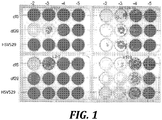
- HSV529 can not replicate in partially complementing cells, i.e., HSV529 does not grow if only one of UL5 and UL29 genes are expressed ( Fig. 1 ). HSV529 was not able to grow in either V827 cells (expressing only UL29 and not UL5) or L2-5 cells (expressing only UL5 and not UL29); however, growth was seen in AV529-19 cells which express both complementing genes.
- the complementing cell line AV529-19 is a Vero cell line into which HSV-1 orthologs of the two deleted genes, UL5 and UL29, were stably integrated.
- AV529-19 cells provide HSV529 with the missing proteins pUL5 (helicase encoded by UL5, where 'p' denotes the polypeptide product of the gene UL5) and ICP8, respectively, in trans. See, A. Azizi et al., J Biotechnol 168, 382 (Dec, 2013 ).
- Immunodetection with a mouse anti-HSV-1-ICP8 antibody indicated that HSV529 infection in AV529-19 cells leads to readily detectable ICP8 expression at 41 hours post-infection (top panel of Fig. 3 ). No expression of ICP8 was observed in mock-infected (NC) cells. The housekeeping gene product GAPDH was not affected by HSV529 infection (mouse anti-GAPDH; Santa Cruz, sc32233) as shown in middle panel of Figure 3 . Viral protein expression was only seen in infected HSV529 cells using immunodetection with rabbit anti-HSV-2 antibody (Abcam, ab9534) as shown in the bottom blot of Figure 3 .
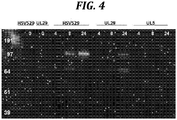
- ICP8 could be detected only after cells were infected with HSV529, but not before ( Fig. 3 & Fig. 4 ).
- Example 2 HSV529 infection of the cell line AV529-19 increases expression of ICP8 encoded by a replicon system.
- VEE Venezuelan equine encephalitis
- VEE replicons which is an RNA episome
- expression of UL29 or UL5 is driven by the subgenomic VEE promoter encoded by the plasmid p5'VEErep/GFP/Pac Replicon RNA was produced by in vitro transcription of the plasmid driven by an SP6 promoter.
- the resulting UL29 replicon RNA was transfected into the Vero cells by electroporation using a BioRad Gene Pulser II (320V, 950 ⁇ F), and the transfected cells were placed under selection using puromycin (10 ⁇ g/mL) to ensure retention of the replicon.
- a similar replicon encoding UL5 was done in parallel as a control.
- ICP8 was not detected at the earliest time points ( Fig. 4 : 0h and 4h time points). Bands of the expected molecular weight (> 100 kD) were observed at 24h for the UL29 replicon cell line, and at both 8h and 24h in the AV529-19 cells. As expected, UL5 cells do not produce ICP8 at any time point even with HSV529 infection. Unexpectedly, ICP8 expression was induced when expressed from a replicon. The increased expression of ICP8 appears to be mediated by HSV529 even when ICP8 is expressed from an RNA molecule (the replicon). Therefore, the ability of HSV529 to increase expression of a gene of interest, in this case ICP8, is not dependent on the gene being encoded by DNA.
- Example 3 HSV529 infection of the cell line AV529-19 increases the amount of UL29 transcript in cells.
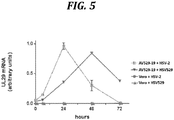
- AV529-19 or unmodified Vero cells were infected with either HSV-2 (strain 186 syn+1) or HSV529 ( Fig. 5 ).
- HSV-2 strain 186 syn+1
- HSV529 Fig. 5
- unmodified Vero cells had undetectable amounts of recombinant UL29 mRNA at all time points, while AV529-19 had detectable but very low amounts of the recombinant UL29 mRNA at 0 and 6h post-infection.
- the mRNA concentration increased by 22- and 26-fold following infection for the HSV529 and HSV-2-infected cells, respectively.
- UL29 mRNA induction peaked at 24h post-infection in HSV-2-infected cells and at 48h post-infection in HSV529-infected cells.
- Example 4 increases the expression of ICP8 in the complementing cell line AV529-19.
- IE immediate early protein of HSV-2
- a panel of adenovirus vectors expressing the 5 HSV-2 IE proteins: ICPO, ICP4, ICP22 (C-terminal fragment), ICP27 (combination of N-terminal and C-terminal fragments), and ICP47 were tested.
- AV529-19 cells were transduced at an MOI of 20 with these various vectors and harvested 24h later for western blotting using an anti-ICP8 antibody ( Fig. 6 ).
- a single band showing expression of ICP8 was seen only in the cells transduced with the ICPO-expressing vector.
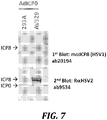
- transduction of the ICPO-expressing adenovirus resulted in expression of ICP8 in AV529-19 cells, but not in HEK293A cells ( Fig. 7 ).
- HEK293A cells, a complementing cell line used to produce adenovirus vectors, and the AV529-19 cell line were infected with an adenovirus vector expressing ICPO.
- Western blot analysis at 24h after infection indicated that ICPO is not detectable in AV529-19 cells, presumably because its expression level was below the detection limit of the polyclonal antibody.
- Example 5 ICPO increases the expression of episomally-encoded recombinant proteins, as well as of proteins of non-viral origin.
- ICPO could enhance the expression of recombinant proteins other than ICP8 was tested, as was whether this enhancement could be observed using recombinant genes carried on episomal DNA molecules rather than on the host chromosomal DNA.
- Cells were co-transduced with adenovirus vectors (MOI of 20) expressing various proteins and, 24 hours later, with either an empty adenovirus vector or an adenovirus vector expressing ICPO (MOI of 20).
- the recombinant proteins of interest were HSV-2 proteins gD313, VP16, and firefly luciferase.
- AV529-19 cells were used, other cell lines may be used instead (as will be shown in later Examples).
- infected cells were analyzed on western blots using commercially available antibodies ( FIG. 8A and Fig. 8B ).
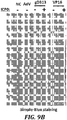
- expression of co-transduced proteins was increased by ICPO but not by the empty adenovirus vector (results for gD shown in Figure 8A and results for VP16 and firefly luciferase shown in Figure 8B ).
- HSV-2 proteins ICP8, gD, and VP16
- a eukaryotic enzyme firefly luciferase
- ICPO increases expression of episomally-encoded proteins, in addition to the increases of chromosomally-encoded ICP8 shown in earlier Examples.
- Negative control (NC) un-transduced cells, empty vector (AdV) cells, and cells co-transduced with gD or VP16 show a similar pattern of bands. Therefore, the effect of ICPO on protein expression appears to be specific to the recombinant proteins or to a small subset of cellular proteins that includes the recombinant proteins.
- Example 6 ICPO increases the expression of recombinant proteins encoded by different plasmids and using different promoters.
- the recombinant proteins were encoded by a stably integrated CMV promoter-driven transgene (ICP8) or by an adenovirus vector that also drives expression using the CMV promoter.
- ICP8 stably integrated CMV promoter-driven transgene
- ICPO transduction increased expression of firefly luciferase by 2.8-fold and 5.1-fold for plasmids with the SV40 and CMV promoters, respectively, compared with control vector transduction ( Fig. 10 ). Therefore, ICPO-mediated enhancement of recombinant, plasmid-borne gene expression is independent of the promoter used.
- Fig.10 The data shown in Fig.10 were obtained using AV529-19 cells. As stated above, these are Vero cells engineered with chromosomally integrated copies of the genes UL29 and UL5. To show that UL29 and UL5 are not necessary for the observed effect of ICPO, we reproduced part of the experiment using Vero cells ( Fig. 11 ). As seen in Fig. 11 , ICPO transduction produced a 9-fold increase in luciferase expression in Vero cells, confirming that the enhancing effect of ICPO can be achieved without expression of UL29 or UL5. The difference between control adenovirus vector and vector expressing ICPO was extremely statistically significant by ANOVA analysis (P ⁇ 0.0001).
- ICPO polypeptide is responsible for the enhanced expression effect.
- Wild-type and mutant ICPO were delivered to AV529-19 cells via an adenovirus vector.
- Western blotting with a rabbit polyclonal anti-HSV-2 antibody that cross-reacts with HSV-1 ICP8 clearly shows the expression of ICP8 in wild-type ICPO-treated cells, but not in cells treated with a version of ICPO in which the N-terminal 1/3 was deleted (2/3 ICPO C-H construct), or another version in which about 5% of amino acids in the protein are substituted (ICPO 5% mut-H) ( Fig. 12 ). Therefore, the ICPO polypeptide sequence must be mostly preserved to increase expression of ICP8 in AV529-18 cells.
- Example 7 ICP0 increases recombinant protein expression when it is provided to cells via a plasmid.
- ICPO was expressed using either HSV-2, HSV529, or an adenovirus vector.
- HSV-2 HSV-2
- HSV529 or an adenovirus vector.
- AV529-19 cells were transiently transfected with an empty plasmid or with ICPO expressed from a CMV promoter in two different plasmids (pcDNA3.1 and pJ603), and then levels of expression of ICP8 were measured by western blot. Expression of ICP8 was clearly induced by ICPO transfection by either plasmid in cells harvested 42h post-transfection ( Fig. 13 ).
- FIG. 13 The top blot of Figure 13 was probed with the rabbit anti-HSV-2 polyclonal antibody which cross-reacts with HSV-1 ICP8 (red arrow). Induction of ICP8 was clearly detected in the AdICP0 lane as well as in cells transfected with ICPO expressed from a plasmid. To confirm the identity of ICP8 in the cells, another western blot was carried out with the same samples and probed with a mouse anti-HSV-1 ICP8 monoclonal antibody and showed similar results (lower blot of Fig. 13 ). The ICPO expressed from pcDNA3.1 bears a C-terminal poly-histidine tag, and this tag did not hinder ICP8 induction. Control samples, either with no transfection (NC) or in which an empty vector (pcDNA) was transfected, showed no ICP8 expression.
- NC no transfection
- pcDNA empty vector
- Example 8 increases the yield of HSV529.
- HSV-2 replicated more efficiently in AV529-19 cells than does HSV529 ( Fig. 2 ).
- the data also indicated that HSV529 infection causes a slower and slightly lower increase in the expression of the recombinant UL29 transcript compared to HSV-2 ( Fig.5 ).
- Transduction of AV529-19 with adenovirus vector expressing ICPO before infection with HSV529 showed a clear increase in HSV529 yields compared to transduction with an empty adenovirus vector ( Fig. 15 ).
- Transduction with ICPO was carried out at 1h, 4h, or 22h prior to HSV529 infection and, compared to the yields obtained with empty vector, resulted in increases of 2.8-, 4.3-, and 2.2-fold, respectively.
- the greatest enhancement in yield was achieved by infection of HSV529 atlh following transduction of adenovirus expressing ICPO.
- appropriately timed expression of recombinant ICPO can trigger increased production of the vaccine HSV529 in AV529-19 cells.
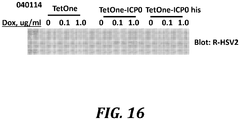
- TetOne vector was used to construct a plasmid that expresses ICPO under the control of a doxycycline-sensitive promoter (TetOne-ICP0). This plasmid was transfected into the AV529 cell line. Increasing the concentration of doxycycline in the culture medium of transfected cells induced the expression of the protein ICP8, which is encoded by the stably inserted UL29 gene in this line ( Fig. 16 ).
- the term about refers to a numeric value, including, for example, whole numbers, fractions, and percentages, whether or not explicitly indicated.
- the term about generally refers to a range of numerical values (e.g., +/-5-10% of the recited range) that one of ordinary skill in the art would consider equivalent to the recited value (e.g., having the same function or result).
- the terms modify all of the values or ranges provided in the list.
- the term about may include numerical values that are rounded to the nearest significant figure.
Landscapes
- Life Sciences & Earth Sciences (AREA)
- Chemical & Material Sciences (AREA)
- Health & Medical Sciences (AREA)
- Genetics & Genomics (AREA)
- Organic Chemistry (AREA)
- Zoology (AREA)
- Engineering & Computer Science (AREA)
- Bioinformatics & Cheminformatics (AREA)
- Wood Science & Technology (AREA)
- Virology (AREA)
- Biotechnology (AREA)
- Microbiology (AREA)
- Biomedical Technology (AREA)
- Medicinal Chemistry (AREA)
- Biochemistry (AREA)
- General Engineering & Computer Science (AREA)
- General Health & Medical Sciences (AREA)
- Immunology (AREA)
- Micro-Organisms Or Cultivation Processes Thereof (AREA)
- Medicines Containing Antibodies Or Antigens For Use As Internal Diagnostic Agents (AREA)
Claims (16)
- Verfahren zur Herstellung eines replikationsdefekten Virus in Kultur, umfassend:a. Bereitstellen einer Zelle, die eine Nukleinsäure umfasst, die mindestens ein rekombinantes Protein kodiert, wobei das rekombinante Protein für die Replikation eines replikationsdefekten Virus erforderlich ist und wobei die Zelle eine Säugetier- oder Vogelzelle ist;b. Einführen eines mit dem Herpes Simplex Virus infizierten Zellpolypeptids 0 ("ICP0") in die Zelle, wodurch die Expression des rekombinanten Proteins erhöht wird;c. Einführen eines replikationsdefekten Virus in die Zelle, wobei das rekombinante Protein das replikationsdefekte Virus in trans komplementiert; undd. Isolieren des replikationsdefekten Virus;wobei das ICPO durch Transduktion mit einem viralen Vektor, ausgewählt aus Retrovirus-, Lentivirus-, Adenovirus- und Adeno-assoziierten Virusvektoren, eingeführt wird.
- Verfahren zur Herstellung eines replikationsdefekten Virus in Kultur, umfassend die folgenden separaten Schritte:a. Bereitstellen einer Zelle, die eine Nukleinsäure umfasst, die mindestens ein rekombinantes Protein kodiert, wobei das rekombinante Protein für die Replikation eines replikationsdefekten Virus erforderlich ist und wobei die Zelle eine Säugetier- oder Vogelzelle ist;b. Einführen eines mit dem Herpes Simplex Virus infizierten Zellpolypeptids 0 ("ICP0") in die Zelle, wodurch die Expression des rekombinanten Proteins erhöht wird;c. Einführen eines replikationsdefekten Virus in die Zelle, wobei das rekombinante Protein das replikationsdefekte Virus in trans komplementiert; undd. Isolieren des replikationsdefekten Virus;wobei das replikationsdefekte Virus ein Mitglied der Herpes-Familie von Viren ist, und:i. das rekombinante Protein ICP8 und/oder pUL5 ist und das replikationsdefekte Virus nach dem ICPO in die Zelle eingeführt wird; oderii. das rekombinante Protein ICP8 und/oder pUL5 ist und ICPO mit einem Expressionsvektor oder Konstrukt, das ICPO kodiert, eingeführt wird.
- Verfahren zur Herstellung des replikationsdefekten HSV-2-Impfstoffs HSV529 oder zur Erhöhung der Ausbeute des replikationsdefekten HSV-2-Impfstoffs HSV529, umfassend die folgenden Schritte in der nachfolgenden Reihenfolge:a. Einführen von ICPO in AV529-19-Zellen, wobei das ICPO die Expression von mindestens einem von ICP8 oder pUL5 erhöht;b. Infizieren der AV529-19-Zellen mit HSV529; undc. Isolieren von HSV529.
- Verfahren nach Anspruch 1 oder 2, wobei die Zelle AV529-19 ist.
- Verfahren nach Anspruch 1, wobei das rekombinante Protein ICP8 ist und das replikationsdefekte Virus ein Mitglied der Herpes-Familie von Viren ist.
- Verfahren nach Anspruch 1, wobei das rekombinante Protein pUL5 ist und das replikationsdefekte Virus ein Mitglied der Herpes-Familie von Viren ist.
- Verfahren nach Anspruch 1 oder 2, wobei die Zelle eine Säugetierzelle ist.
- Verfahren nach Anspruch 1 oder 2, wobei die Zelle ausgewählt ist aus Vero, BHK, CHO, HKB, HEK, NSO und U-2 OS, WI-38, MRC-5, MDCK, FRhL-2 oder PERC6.
- Verfahren nach Anspruch 1 oder 2, wobei ICPO durch eine Nukleinsäure eingeführt wird, die episomal oder in das Genom der Wirtszelle integriert ist.
- Verfahren nach einem der Ansprüche 1 bis 3, wobei die Nukleinsäure, die das rekombinante Protein kodiert, episomal oder in das Genom der Wirtszelle integriert ist.
- Verfahren nach einem der Ansprüche 1 bis 3, wobei das ICPO durch Transduktion eingeführt wird.
- Verfahren nach einem der Ansprüche 1 bis 3, wobei das ICPO durch Transfektion eingeführt wird, wobei das ICPO optional durch Transfektion mit einem Plasmid eingeführt wird, das ICPO kodiert.
- Verfahren nach Anspruch 12, wobei das Plasmid einen induzierbaren Promotor umfasst, der die Expression von ICPO antreibt und der aus der Gruppe ausgewählt ist, die aus chemisch oder physikalisch regulierten Promotoren besteht.
- Verfahren nach Anspruch 12, wobei das Plasmid einen nicht-induzierbaren Promotor umfasst, der die Expression von ICPO antreibt und der aus der Gruppe ausgewählt ist, die aus CMV-Promotoren, SV40-Promotoren und Promotoren, die eine TATA-Box, GC-Box, CCAAT-Box, ein B-Erkennungselement und ein Initiatorelement enthalten, besteht.
- Verfahren nach Anspruch 1, wobei das replikationsdefekte Virus ein Mitglied der Herpes-Familie von Viren ist.
- Verfahren nach Anspruch 1 oder 2, wobei es sich bei dem replikationsdefekten Virus um ein HSV-2 Virus handelt.
Applications Claiming Priority (2)
| Application Number | Priority Date | Filing Date | Title |
|---|---|---|---|
| US201562161194P | 2015-05-13 | 2015-05-13 | |
| PCT/US2016/032082 WO2016183312A1 (en) | 2015-05-13 | 2016-05-12 | Icp0-mediated enhanced expression system |
Publications (3)
| Publication Number | Publication Date |
|---|---|
| EP3294875A1 EP3294875A1 (de) | 2018-03-21 |
| EP3294875B1 true EP3294875B1 (de) | 2021-09-15 |
| EP3294875B8 EP3294875B8 (de) | 2021-10-20 |
Family
ID=56072466
Family Applications (1)
| Application Number | Title | Priority Date | Filing Date |
|---|---|---|---|
| EP16724820.2A Active EP3294875B8 (de) | 2015-05-13 | 2016-05-12 | Verbessertes expressionssystem mittels icp0 |
Country Status (5)
| Country | Link |
|---|---|
| US (2) | US10208292B2 (de) |
| EP (1) | EP3294875B8 (de) |
| CA (1) | CA2985649A1 (de) |
| ES (1) | ES2899978T3 (de) |
| WO (1) | WO2016183312A1 (de) |
Families Citing this family (3)
| Publication number | Priority date | Publication date | Assignee | Title |
|---|---|---|---|---|
| US10208292B2 (en) | 2015-05-13 | 2019-02-19 | Sanofi Pasteur Biologics, Llc | ICP0-mediated enhanced expression system |
| US12098380B2 (en) * | 2017-06-05 | 2024-09-24 | The Brigham And Women's Hospital, Inc. | Vero cell lines stably expressing HSV ICP0 protein |
| US20210261649A1 (en) * | 2018-06-29 | 2021-08-26 | Krystal Biotech, Inc, | Compositions and methods for antibody delivery |
Family Cites Families (7)
| Publication number | Priority date | Publication date | Assignee | Title |
|---|---|---|---|---|
| WO1993001301A1 (en) * | 1991-07-05 | 1993-01-21 | The Penn State Research Foundation | Mutant antiviral regulatory proteins |
| US5804413A (en) * | 1992-07-31 | 1998-09-08 | University Of Pittsburgh Of The Commonwealth System Of Higher Education | Herpes simplex virus strains for gene transfer |
| US6261552B1 (en) * | 1997-05-22 | 2001-07-17 | University Of Pittsburgh Of The Commonwealth System Of Higher Education | Herpes simplex virus vectors |
| ES2765880T3 (es) * | 2012-01-09 | 2020-06-11 | Sanofi Pasteur Biologics Llc | Purificación del virus del herpes |
| RU2020105656A (ru) * | 2013-07-17 | 2021-01-27 | Юниверсити Оф Питтсбург- Оф Дзе Коммонвелт Систем Оф Хайер Эдьюкейшн | Нетоксичные векторы на основе впг для применений в эффективной доставке генов и комплементирующие клетки для их продуцирования |
| US10208292B2 (en) | 2015-05-13 | 2019-02-19 | Sanofi Pasteur Biologics, Llc | ICP0-mediated enhanced expression system |
| US12098380B2 (en) * | 2017-06-05 | 2024-09-24 | The Brigham And Women's Hospital, Inc. | Vero cell lines stably expressing HSV ICP0 protein |
-
2016
- 2016-05-12 US US15/572,890 patent/US10208292B2/en active Active
- 2016-05-12 EP EP16724820.2A patent/EP3294875B8/de active Active
- 2016-05-12 ES ES16724820T patent/ES2899978T3/es active Active
- 2016-05-12 CA CA2985649A patent/CA2985649A1/en active Pending
- 2016-05-12 WO PCT/US2016/032082 patent/WO2016183312A1/en not_active Ceased
-
2018
- 2018-12-21 US US16/230,990 patent/US11286465B2/en active Active
Non-Patent Citations (1)
| Title |
|---|
| None * |
Also Published As
| Publication number | Publication date |
|---|---|
| US20190194626A1 (en) | 2019-06-27 |
| EP3294875A1 (de) | 2018-03-21 |
| US20180119111A1 (en) | 2018-05-03 |
| US11286465B2 (en) | 2022-03-29 |
| CA2985649A1 (en) | 2016-11-17 |
| EP3294875B8 (de) | 2021-10-20 |
| ES2899978T3 (es) | 2022-03-15 |
| WO2016183312A1 (en) | 2016-11-17 |
| US10208292B2 (en) | 2019-02-19 |
Similar Documents
| Publication | Publication Date | Title |
|---|---|---|
| Zhu et al. | Induction of SARS-nucleoprotein-specific immune response by use of DNA vaccine | |
| Fraser et al. | Herpes simplex virus immediate-early protein ICP22 triggers loss of serine 2-phosphorylated RNA polymerase II | |
| US11286465B2 (en) | ICP0-mediated enhanced expression system | |
| Zhang et al. | Capsid protein from red-spotted grouper nervous necrosis virus induces incomplete autophagy by inactivating the HSP90ab1-AKT-MTOR pathway | |
| CN111450244B (zh) | 一种防治冠状病毒感染的细胞组合及其应用 | |
| Goodrich et al. | Localization of the herpes simplex virus type 1 65-kilodalton DNA-binding protein and DNA polymerase in the presence and absence of viral DNA synthesis | |
| US12098380B2 (en) | Vero cell lines stably expressing HSV ICP0 protein | |
| Watanabe et al. | Roles of Epstein-Barr virus BGLF3. 5 gene and two upstream open reading frames in lytic viral replication in HEK293 cells | |
| Sarma et al. | Small interfering RNAs that deplete the cellular translation factor eIF4H impede mRNA degradation by the virion host shutoff protein of herpes simplex virus | |
| He et al. | Duck plague virus UL41 protein inhibits RIG-I/MDA5-mediated duck IFN-β production via mRNA degradation activity | |
| Xu et al. | Attenuated phenotypes and analysis of a herpes simplex virus 1 strain with partial deletion of the UL7, UL41 and LAT genes | |
| HU216622B (hu) | Vizsgálati eljárás Herpes simplex proteázt gátló anyagok meghatározására | |
| Bolstad et al. | Autocatalytic activity of the ubiquitin-specific protease domain of herpes simplex virus 1 VP1-2 | |
| Meier et al. | Homotypic and heterotypic exclusion of vesicular stomatitis virus replication by high levels of recombinant polymerase protein L | |
| EP2884998B1 (de) | Attenuierter lebendimpfstoff gegen das krim-kongo-hämorrhagische fieber und das erve-virus | |
| Bowman et al. | Transient expression of herpes simplex virus type 1 ICP22 represses viral promoter activity and complements the replication of an ICP22 null virus | |
| WO2013138670A1 (en) | Yellow fever virus ns5 mutants as flavivirus vaccine candidates | |
| Isegawa et al. | Characterization of the human herpesvirus 6 U69 gene product and identification of its nuclear localization signal | |
| CN115666633A (zh) | CpG-佐剂的SARS-CoV-2病毒疫苗 | |
| Preston | Herpes simplex virus activates expression of a cellular gene by specific binding to the cell surface | |
| Bahnamiri et al. | Distinct roles of viral US3 and UL13 protein kinases in herpes virus simplex type 1 (HSV-1) nuclear egress | |
| Ren et al. | Binding chicken Anx2 is beneficial for infection with infectious bursal disease virus | |
| Kim et al. | Requirement of the N-terminal residues of human cytomegalovirus UL112-113 proteins for viral growth and ori Lyt-dependent DNA replication | |
| Ko et al. | Analysis of IE62 mutations found in Varicella-Zoster virus vaccine strains for transactivation activity | |
| Yan et al. | Proteomics analysis of suckling mouse brain infected with attenuated rabies virus strain SRV9. |
Legal Events
| Date | Code | Title | Description |
|---|---|---|---|
| STAA | Information on the status of an ep patent application or granted ep patent |
Free format text: STATUS: THE INTERNATIONAL PUBLICATION HAS BEEN MADE |
|
| PUAI | Public reference made under article 153(3) epc to a published international application that has entered the european phase |
Free format text: ORIGINAL CODE: 0009012 |
|
| STAA | Information on the status of an ep patent application or granted ep patent |
Free format text: STATUS: REQUEST FOR EXAMINATION WAS MADE |
|
| 17P | Request for examination filed |
Effective date: 20171130 |
|
| AK | Designated contracting states |
Kind code of ref document: A1 Designated state(s): AL AT BE BG CH CY CZ DE DK EE ES FI FR GB GR HR HU IE IS IT LI LT LU LV MC MK MT NL NO PL PT RO RS SE SI SK SM TR |
|
| AX | Request for extension of the european patent |
Extension state: BA ME |
|
| DAV | Request for validation of the european patent (deleted) | ||
| DAX | Request for extension of the european patent (deleted) | ||
| STAA | Information on the status of an ep patent application or granted ep patent |
Free format text: STATUS: EXAMINATION IS IN PROGRESS |
|
| 17Q | First examination report despatched |
Effective date: 20190306 |
|
| GRAP | Despatch of communication of intention to grant a patent |
Free format text: ORIGINAL CODE: EPIDOSNIGR1 |
|
| STAA | Information on the status of an ep patent application or granted ep patent |
Free format text: STATUS: GRANT OF PATENT IS INTENDED |
|
| INTG | Intention to grant announced |
Effective date: 20210409 |
|
| GRAS | Grant fee paid |
Free format text: ORIGINAL CODE: EPIDOSNIGR3 |
|
| GRAA | (expected) grant |
Free format text: ORIGINAL CODE: 0009210 |
|
| STAA | Information on the status of an ep patent application or granted ep patent |
Free format text: STATUS: THE PATENT HAS BEEN GRANTED |
|
| AK | Designated contracting states |
Kind code of ref document: B1 Designated state(s): AL AT BE BG CH CY CZ DE DK EE ES FI FR GB GR HR HU IE IS IT LI LT LU LV MC MK MT NL NO PL PT RO RS SE SI SK SM TR |
|
| REG | Reference to a national code |
Ref country code: CH Ref legal event code: EP |
|
| REG | Reference to a national code |
Ref country code: DE Ref legal event code: R081 Ref document number: 602016063706 Country of ref document: DE Owner name: SANOFI PASTEUR INC., SWIFTWATER, US Free format text: FORMER OWNER: SANOFI PASTEUR BIOLOGICS, LLC, CAMBRIDGE, MASS., US |
|
| REG | Reference to a national code |
Ref country code: DE Ref legal event code: R096 Ref document number: 602016063706 Country of ref document: DE |
|
| RAP2 | Party data changed (patent owner data changed or rights of a patent transferred) |
Owner name: SANOFI PASTEUR INC. |
|
| REG | Reference to a national code |
Ref country code: IE Ref legal event code: FG4D |
|
| REG | Reference to a national code |
Ref country code: CH Ref legal event code: PK Free format text: BERICHTIGUNG B8 Ref country code: AT Ref legal event code: REF Ref document number: 1430552 Country of ref document: AT Kind code of ref document: T Effective date: 20211015 |
|
| REG | Reference to a national code |
Ref country code: LT Ref legal event code: MG9D |
|
| REG | Reference to a national code |
Ref country code: NL Ref legal event code: MP Effective date: 20210915 |
|
| PG25 | Lapsed in a contracting state [announced via postgrant information from national office to epo] |
Ref country code: LT Free format text: LAPSE BECAUSE OF FAILURE TO SUBMIT A TRANSLATION OF THE DESCRIPTION OR TO PAY THE FEE WITHIN THE PRESCRIBED TIME-LIMIT Effective date: 20210915 Ref country code: BG Free format text: LAPSE BECAUSE OF FAILURE TO SUBMIT A TRANSLATION OF THE DESCRIPTION OR TO PAY THE FEE WITHIN THE PRESCRIBED TIME-LIMIT Effective date: 20211215 Ref country code: FI Free format text: LAPSE BECAUSE OF FAILURE TO SUBMIT A TRANSLATION OF THE DESCRIPTION OR TO PAY THE FEE WITHIN THE PRESCRIBED TIME-LIMIT Effective date: 20210915 Ref country code: HR Free format text: LAPSE BECAUSE OF FAILURE TO SUBMIT A TRANSLATION OF THE DESCRIPTION OR TO PAY THE FEE WITHIN THE PRESCRIBED TIME-LIMIT Effective date: 20210915 Ref country code: NO Free format text: LAPSE BECAUSE OF FAILURE TO SUBMIT A TRANSLATION OF THE DESCRIPTION OR TO PAY THE FEE WITHIN THE PRESCRIBED TIME-LIMIT Effective date: 20211215 Ref country code: RS Free format text: LAPSE BECAUSE OF FAILURE TO SUBMIT A TRANSLATION OF THE DESCRIPTION OR TO PAY THE FEE WITHIN THE PRESCRIBED TIME-LIMIT Effective date: 20210915 Ref country code: SE Free format text: LAPSE BECAUSE OF FAILURE TO SUBMIT A TRANSLATION OF THE DESCRIPTION OR TO PAY THE FEE WITHIN THE PRESCRIBED TIME-LIMIT Effective date: 20210915 |
|
| REG | Reference to a national code |
Ref country code: AT Ref legal event code: MK05 Ref document number: 1430552 Country of ref document: AT Kind code of ref document: T Effective date: 20210915 |
|
| PG25 | Lapsed in a contracting state [announced via postgrant information from national office to epo] |
Ref country code: LV Free format text: LAPSE BECAUSE OF FAILURE TO SUBMIT A TRANSLATION OF THE DESCRIPTION OR TO PAY THE FEE WITHIN THE PRESCRIBED TIME-LIMIT Effective date: 20210915 Ref country code: GR Free format text: LAPSE BECAUSE OF FAILURE TO SUBMIT A TRANSLATION OF THE DESCRIPTION OR TO PAY THE FEE WITHIN THE PRESCRIBED TIME-LIMIT Effective date: 20211216 |
|
| REG | Reference to a national code |
Ref country code: ES Ref legal event code: FG2A Ref document number: 2899978 Country of ref document: ES Kind code of ref document: T3 Effective date: 20220315 |
|
| PG25 | Lapsed in a contracting state [announced via postgrant information from national office to epo] |
Ref country code: AT Free format text: LAPSE BECAUSE OF FAILURE TO SUBMIT A TRANSLATION OF THE DESCRIPTION OR TO PAY THE FEE WITHIN THE PRESCRIBED TIME-LIMIT Effective date: 20210915 |
|
| PG25 | Lapsed in a contracting state [announced via postgrant information from national office to epo] |
Ref country code: IS Free format text: LAPSE BECAUSE OF FAILURE TO SUBMIT A TRANSLATION OF THE DESCRIPTION OR TO PAY THE FEE WITHIN THE PRESCRIBED TIME-LIMIT Effective date: 20220115 Ref country code: SM Free format text: LAPSE BECAUSE OF FAILURE TO SUBMIT A TRANSLATION OF THE DESCRIPTION OR TO PAY THE FEE WITHIN THE PRESCRIBED TIME-LIMIT Effective date: 20210915 Ref country code: SK Free format text: LAPSE BECAUSE OF FAILURE TO SUBMIT A TRANSLATION OF THE DESCRIPTION OR TO PAY THE FEE WITHIN THE PRESCRIBED TIME-LIMIT Effective date: 20210915 Ref country code: RO Free format text: LAPSE BECAUSE OF FAILURE TO SUBMIT A TRANSLATION OF THE DESCRIPTION OR TO PAY THE FEE WITHIN THE PRESCRIBED TIME-LIMIT Effective date: 20210915 Ref country code: PT Free format text: LAPSE BECAUSE OF FAILURE TO SUBMIT A TRANSLATION OF THE DESCRIPTION OR TO PAY THE FEE WITHIN THE PRESCRIBED TIME-LIMIT Effective date: 20220117 Ref country code: PL Free format text: LAPSE BECAUSE OF FAILURE TO SUBMIT A TRANSLATION OF THE DESCRIPTION OR TO PAY THE FEE WITHIN THE PRESCRIBED TIME-LIMIT Effective date: 20210915 Ref country code: NL Free format text: LAPSE BECAUSE OF FAILURE TO SUBMIT A TRANSLATION OF THE DESCRIPTION OR TO PAY THE FEE WITHIN THE PRESCRIBED TIME-LIMIT Effective date: 20210915 Ref country code: EE Free format text: LAPSE BECAUSE OF FAILURE TO SUBMIT A TRANSLATION OF THE DESCRIPTION OR TO PAY THE FEE WITHIN THE PRESCRIBED TIME-LIMIT Effective date: 20210915 Ref country code: CZ Free format text: LAPSE BECAUSE OF FAILURE TO SUBMIT A TRANSLATION OF THE DESCRIPTION OR TO PAY THE FEE WITHIN THE PRESCRIBED TIME-LIMIT Effective date: 20210915 Ref country code: AL Free format text: LAPSE BECAUSE OF FAILURE TO SUBMIT A TRANSLATION OF THE DESCRIPTION OR TO PAY THE FEE WITHIN THE PRESCRIBED TIME-LIMIT Effective date: 20210915 |
|
| REG | Reference to a national code |
Ref country code: DE Ref legal event code: R097 Ref document number: 602016063706 Country of ref document: DE |
|
| PLBE | No opposition filed within time limit |
Free format text: ORIGINAL CODE: 0009261 |
|
| STAA | Information on the status of an ep patent application or granted ep patent |
Free format text: STATUS: NO OPPOSITION FILED WITHIN TIME LIMIT |
|
| PG25 | Lapsed in a contracting state [announced via postgrant information from national office to epo] |
Ref country code: DK Free format text: LAPSE BECAUSE OF FAILURE TO SUBMIT A TRANSLATION OF THE DESCRIPTION OR TO PAY THE FEE WITHIN THE PRESCRIBED TIME-LIMIT Effective date: 20210915 |
|
| 26N | No opposition filed |
Effective date: 20220616 |
|
| PG25 | Lapsed in a contracting state [announced via postgrant information from national office to epo] |
Ref country code: SI Free format text: LAPSE BECAUSE OF FAILURE TO SUBMIT A TRANSLATION OF THE DESCRIPTION OR TO PAY THE FEE WITHIN THE PRESCRIBED TIME-LIMIT Effective date: 20210915 |
|
| REG | Reference to a national code |
Ref country code: CH Ref legal event code: PL |
|
| REG | Reference to a national code |
Ref country code: BE Ref legal event code: MM Effective date: 20220531 |
|
| PG25 | Lapsed in a contracting state [announced via postgrant information from national office to epo] |
Ref country code: MC Free format text: LAPSE BECAUSE OF FAILURE TO SUBMIT A TRANSLATION OF THE DESCRIPTION OR TO PAY THE FEE WITHIN THE PRESCRIBED TIME-LIMIT Effective date: 20210915 Ref country code: LU Free format text: LAPSE BECAUSE OF NON-PAYMENT OF DUE FEES Effective date: 20220512 Ref country code: LI Free format text: LAPSE BECAUSE OF NON-PAYMENT OF DUE FEES Effective date: 20220531 Ref country code: CH Free format text: LAPSE BECAUSE OF NON-PAYMENT OF DUE FEES Effective date: 20220531 |
|
| PG25 | Lapsed in a contracting state [announced via postgrant information from national office to epo] |
Ref country code: IE Free format text: LAPSE BECAUSE OF NON-PAYMENT OF DUE FEES Effective date: 20220512 |
|
| PG25 | Lapsed in a contracting state [announced via postgrant information from national office to epo] |
Ref country code: BE Free format text: LAPSE BECAUSE OF NON-PAYMENT OF DUE FEES Effective date: 20220531 |
|
| PG25 | Lapsed in a contracting state [announced via postgrant information from national office to epo] |
Ref country code: HU Free format text: LAPSE BECAUSE OF FAILURE TO SUBMIT A TRANSLATION OF THE DESCRIPTION OR TO PAY THE FEE WITHIN THE PRESCRIBED TIME-LIMIT; INVALID AB INITIO Effective date: 20160512 |
|
| PG25 | Lapsed in a contracting state [announced via postgrant information from national office to epo] |
Ref country code: MK Free format text: LAPSE BECAUSE OF FAILURE TO SUBMIT A TRANSLATION OF THE DESCRIPTION OR TO PAY THE FEE WITHIN THE PRESCRIBED TIME-LIMIT Effective date: 20210915 Ref country code: CY Free format text: LAPSE BECAUSE OF FAILURE TO SUBMIT A TRANSLATION OF THE DESCRIPTION OR TO PAY THE FEE WITHIN THE PRESCRIBED TIME-LIMIT Effective date: 20210915 |
|
| PG25 | Lapsed in a contracting state [announced via postgrant information from national office to epo] |
Ref country code: MT Free format text: LAPSE BECAUSE OF FAILURE TO SUBMIT A TRANSLATION OF THE DESCRIPTION OR TO PAY THE FEE WITHIN THE PRESCRIBED TIME-LIMIT Effective date: 20210915 |
|
| PGFP | Annual fee paid to national office [announced via postgrant information from national office to epo] |
Ref country code: FR Payment date: 20250310 Year of fee payment: 10 |
|
| PGFP | Annual fee paid to national office [announced via postgrant information from national office to epo] |
Ref country code: GB Payment date: 20250320 Year of fee payment: 10 |
|
| PGFP | Annual fee paid to national office [announced via postgrant information from national office to epo] |
Ref country code: DE Payment date: 20250319 Year of fee payment: 10 |
|
| PGFP | Annual fee paid to national office [announced via postgrant information from national office to epo] |
Ref country code: ES Payment date: 20250606 Year of fee payment: 10 |
|
| PGFP | Annual fee paid to national office [announced via postgrant information from national office to epo] |
Ref country code: IT Payment date: 20250422 Year of fee payment: 10 |
|
| PG25 | Lapsed in a contracting state [announced via postgrant information from national office to epo] |
Ref country code: TR Free format text: LAPSE BECAUSE OF FAILURE TO SUBMIT A TRANSLATION OF THE DESCRIPTION OR TO PAY THE FEE WITHIN THE PRESCRIBED TIME-LIMIT Effective date: 20210915 |