EP3293151B1 - Vorrichtung und verfahren zur analyse des verschmutzungsgrads der membran eines meerwasserentsalzungssystems - Google Patents
Vorrichtung und verfahren zur analyse des verschmutzungsgrads der membran eines meerwasserentsalzungssystems Download PDFInfo
- Publication number
- EP3293151B1 EP3293151B1 EP17190430.3A EP17190430A EP3293151B1 EP 3293151 B1 EP3293151 B1 EP 3293151B1 EP 17190430 A EP17190430 A EP 17190430A EP 3293151 B1 EP3293151 B1 EP 3293151B1
- Authority
- EP
- European Patent Office
- Prior art keywords
- variable
- membrane
- variables
- membrane fouling
- dominant
- Prior art date
- Legal status (The legal status is an assumption and is not a legal conclusion. Google has not performed a legal analysis and makes no representation as to the accuracy of the status listed.)
- Active
Links
Images

Classifications
-
- B—PERFORMING OPERATIONS; TRANSPORTING
- B01—PHYSICAL OR CHEMICAL PROCESSES OR APPARATUS IN GENERAL
- B01D—SEPARATION
- B01D65/00—Accessories or auxiliary operations, in general, for separation processes or apparatus using semi-permeable membranes
- B01D65/02—Membrane cleaning or sterilisation ; Membrane regeneration
-
- C—CHEMISTRY; METALLURGY
- C02—TREATMENT OF WATER, WASTE WATER, SEWAGE, OR SLUDGE
- C02F—TREATMENT OF WATER, WASTE WATER, SEWAGE, OR SLUDGE
- C02F1/00—Treatment of water, waste water, or sewage
- C02F1/008—Control or steering systems not provided for elsewhere in subclass C02F
-
- B—PERFORMING OPERATIONS; TRANSPORTING
- B01—PHYSICAL OR CHEMICAL PROCESSES OR APPARATUS IN GENERAL
- B01D—SEPARATION
- B01D21/00—Separation of suspended solid particles from liquids by sedimentation
- B01D21/0084—Enhancing liquid-particle separation using the flotation principle
-
- B—PERFORMING OPERATIONS; TRANSPORTING
- B01—PHYSICAL OR CHEMICAL PROCESSES OR APPARATUS IN GENERAL
- B01D—SEPARATION
- B01D61/00—Processes of separation using semi-permeable membranes, e.g. dialysis, osmosis or ultrafiltration; Apparatus, accessories or auxiliary operations specially adapted therefor
- B01D61/02—Reverse osmosis; Hyperfiltration ; Nanofiltration
- B01D61/025—Reverse osmosis; Hyperfiltration
-
- B—PERFORMING OPERATIONS; TRANSPORTING
- B01—PHYSICAL OR CHEMICAL PROCESSES OR APPARATUS IN GENERAL
- B01D—SEPARATION
- B01D61/00—Processes of separation using semi-permeable membranes, e.g. dialysis, osmosis or ultrafiltration; Apparatus, accessories or auxiliary operations specially adapted therefor
- B01D61/02—Reverse osmosis; Hyperfiltration ; Nanofiltration
- B01D61/04—Feed pretreatment
-
- B—PERFORMING OPERATIONS; TRANSPORTING
- B01—PHYSICAL OR CHEMICAL PROCESSES OR APPARATUS IN GENERAL
- B01D—SEPARATION
- B01D61/00—Processes of separation using semi-permeable membranes, e.g. dialysis, osmosis or ultrafiltration; Apparatus, accessories or auxiliary operations specially adapted therefor
- B01D61/02—Reverse osmosis; Hyperfiltration ; Nanofiltration
- B01D61/12—Controlling or regulating
-
- B—PERFORMING OPERATIONS; TRANSPORTING
- B01—PHYSICAL OR CHEMICAL PROCESSES OR APPARATUS IN GENERAL
- B01D—SEPARATION
- B01D61/00—Processes of separation using semi-permeable membranes, e.g. dialysis, osmosis or ultrafiltration; Apparatus, accessories or auxiliary operations specially adapted therefor
- B01D61/14—Ultrafiltration; Microfiltration
- B01D61/145—Ultrafiltration
-
- B—PERFORMING OPERATIONS; TRANSPORTING
- B01—PHYSICAL OR CHEMICAL PROCESSES OR APPARATUS IN GENERAL
- B01D—SEPARATION
- B01D61/00—Processes of separation using semi-permeable membranes, e.g. dialysis, osmosis or ultrafiltration; Apparatus, accessories or auxiliary operations specially adapted therefor
- B01D61/14—Ultrafiltration; Microfiltration
- B01D61/22—Controlling or regulating
-
- B—PERFORMING OPERATIONS; TRANSPORTING
- B01—PHYSICAL OR CHEMICAL PROCESSES OR APPARATUS IN GENERAL
- B01D—SEPARATION
- B01D61/00—Processes of separation using semi-permeable membranes, e.g. dialysis, osmosis or ultrafiltration; Apparatus, accessories or auxiliary operations specially adapted therefor
- B01D61/58—Multistep processes
-
- B—PERFORMING OPERATIONS; TRANSPORTING
- B01—PHYSICAL OR CHEMICAL PROCESSES OR APPARATUS IN GENERAL
- B01D—SEPARATION
- B01D65/00—Accessories or auxiliary operations, in general, for separation processes or apparatus using semi-permeable membranes
- B01D65/08—Prevention of membrane fouling or of concentration polarisation
-
- B—PERFORMING OPERATIONS; TRANSPORTING
- B01—PHYSICAL OR CHEMICAL PROCESSES OR APPARATUS IN GENERAL
- B01D—SEPARATION
- B01D65/00—Accessories or auxiliary operations, in general, for separation processes or apparatus using semi-permeable membranes
- B01D65/10—Testing of membranes or membrane apparatus; Detecting or repairing leaks
- B01D65/109—Testing of membrane fouling or clogging, e.g. amount or affinity
-
- C—CHEMISTRY; METALLURGY
- C02—TREATMENT OF WATER, WASTE WATER, SEWAGE, OR SLUDGE
- C02F—TREATMENT OF WATER, WASTE WATER, SEWAGE, OR SLUDGE
- C02F9/00—Multistage treatment of water, waste water or sewage
-
- G—PHYSICS
- G05—CONTROLLING; REGULATING
- G05B—CONTROL OR REGULATING SYSTEMS IN GENERAL; FUNCTIONAL ELEMENTS OF SUCH SYSTEMS; MONITORING OR TESTING ARRANGEMENTS FOR SUCH SYSTEMS OR ELEMENTS
- G05B19/00—Programme-control systems
- G05B19/02—Programme-control systems electric
- G05B19/04—Programme control other than numerical control, i.e. in sequence controllers or logic controllers
- G05B19/042—Programme control other than numerical control, i.e. in sequence controllers or logic controllers using digital processors
- G05B19/0426—Programming the control sequence
-
- G—PHYSICS
- G05—CONTROLLING; REGULATING
- G05B—CONTROL OR REGULATING SYSTEMS IN GENERAL; FUNCTIONAL ELEMENTS OF SUCH SYSTEMS; MONITORING OR TESTING ARRANGEMENTS FOR SUCH SYSTEMS OR ELEMENTS
- G05B23/00—Testing or monitoring of control systems or parts thereof
- G05B23/02—Electric testing or monitoring
- G05B23/0205—Electric testing or monitoring by means of a monitoring system capable of detecting and responding to faults
- G05B23/0218—Electric testing or monitoring by means of a monitoring system capable of detecting and responding to faults characterised by the fault detection method dealing with either existing or incipient faults
- G05B23/0224—Process history based detection method, e.g. whereby history implies the availability of large amounts of data
- G05B23/0227—Qualitative history assessment, whereby the type of data acted upon, e.g. waveforms, images or patterns, is not relevant, e.g. rule based assessment; if-then decisions
- G05B23/0229—Qualitative history assessment, whereby the type of data acted upon, e.g. waveforms, images or patterns, is not relevant, e.g. rule based assessment; if-then decisions knowledge based, e.g. expert systems; genetic algorithms
-
- G—PHYSICS
- G06—COMPUTING OR CALCULATING; COUNTING
- G06F—ELECTRIC DIGITAL DATA PROCESSING
- G06F17/00—Digital computing or data processing equipment or methods, specially adapted for specific functions
- G06F17/10—Complex mathematical operations
- G06F17/11—Complex mathematical operations for solving equations, e.g. nonlinear equations, general mathematical optimization problems
- G06F17/12—Simultaneous equations, e.g. systems of linear equations
-
- G—PHYSICS
- G06—COMPUTING OR CALCULATING; COUNTING
- G06F—ELECTRIC DIGITAL DATA PROCESSING
- G06F17/00—Digital computing or data processing equipment or methods, specially adapted for specific functions
- G06F17/10—Complex mathematical operations
- G06F17/16—Matrix or vector computation, e.g. matrix-matrix or matrix-vector multiplication, matrix factorization
-
- G—PHYSICS
- G06—COMPUTING OR CALCULATING; COUNTING
- G06F—ELECTRIC DIGITAL DATA PROCESSING
- G06F17/00—Digital computing or data processing equipment or methods, specially adapted for specific functions
- G06F17/10—Complex mathematical operations
- G06F17/18—Complex mathematical operations for evaluating statistical data, e.g. average values, frequency distributions, probability functions, regression analysis
-
- B—PERFORMING OPERATIONS; TRANSPORTING
- B01—PHYSICAL OR CHEMICAL PROCESSES OR APPARATUS IN GENERAL
- B01D—SEPARATION
- B01D2311/00—Details relating to membrane separation process operations and control
- B01D2311/04—Specific process operations in the feed stream; Feed pretreatment
-
- B—PERFORMING OPERATIONS; TRANSPORTING
- B01—PHYSICAL OR CHEMICAL PROCESSES OR APPARATUS IN GENERAL
- B01D—SEPARATION
- B01D2311/00—Details relating to membrane separation process operations and control
- B01D2311/26—Further operations combined with membrane separation processes
- B01D2311/2661—Addition of gas
- B01D2311/2665—Aeration other than for cleaning purposes
-
- B—PERFORMING OPERATIONS; TRANSPORTING
- B01—PHYSICAL OR CHEMICAL PROCESSES OR APPARATUS IN GENERAL
- B01D—SEPARATION
- B01D2313/00—Details relating to membrane modules or apparatus
- B01D2313/70—Control means using a programmable logic controller [PLC] or a computer
- B01D2313/701—Control means using a programmable logic controller [PLC] or a computer comprising a software program or a logic diagram
-
- B—PERFORMING OPERATIONS; TRANSPORTING
- B01—PHYSICAL OR CHEMICAL PROCESSES OR APPARATUS IN GENERAL
- B01D—SEPARATION
- B01D2321/00—Details relating to membrane cleaning, regeneration, sterilization or to the prevention of fouling
- B01D2321/40—Automatic control of cleaning processes
-
- C—CHEMISTRY; METALLURGY
- C02—TREATMENT OF WATER, WASTE WATER, SEWAGE, OR SLUDGE
- C02F—TREATMENT OF WATER, WASTE WATER, SEWAGE, OR SLUDGE
- C02F1/00—Treatment of water, waste water, or sewage
- C02F1/24—Treatment of water, waste water, or sewage by flotation
-
- C—CHEMISTRY; METALLURGY
- C02—TREATMENT OF WATER, WASTE WATER, SEWAGE, OR SLUDGE
- C02F—TREATMENT OF WATER, WASTE WATER, SEWAGE, OR SLUDGE
- C02F1/00—Treatment of water, waste water, or sewage
- C02F1/44—Treatment of water, waste water, or sewage by dialysis, osmosis or reverse osmosis
- C02F1/441—Treatment of water, waste water, or sewage by dialysis, osmosis or reverse osmosis by reverse osmosis
-
- C—CHEMISTRY; METALLURGY
- C02—TREATMENT OF WATER, WASTE WATER, SEWAGE, OR SLUDGE
- C02F—TREATMENT OF WATER, WASTE WATER, SEWAGE, OR SLUDGE
- C02F1/00—Treatment of water, waste water, or sewage
- C02F1/44—Treatment of water, waste water, or sewage by dialysis, osmosis or reverse osmosis
- C02F1/444—Treatment of water, waste water, or sewage by dialysis, osmosis or reverse osmosis by ultrafiltration or microfiltration
-
- C—CHEMISTRY; METALLURGY
- C02—TREATMENT OF WATER, WASTE WATER, SEWAGE, OR SLUDGE
- C02F—TREATMENT OF WATER, WASTE WATER, SEWAGE, OR SLUDGE
- C02F2103/00—Nature of the water, waste water, sewage or sludge to be treated
- C02F2103/08—Seawater, e.g. for desalination
-
- C—CHEMISTRY; METALLURGY
- C02—TREATMENT OF WATER, WASTE WATER, SEWAGE, OR SLUDGE
- C02F—TREATMENT OF WATER, WASTE WATER, SEWAGE, OR SLUDGE
- C02F2209/00—Controlling or monitoring parameters in water treatment
- C02F2209/001—Upstream control, i.e. monitoring for predictive control
-
- C—CHEMISTRY; METALLURGY
- C02—TREATMENT OF WATER, WASTE WATER, SEWAGE, OR SLUDGE
- C02F—TREATMENT OF WATER, WASTE WATER, SEWAGE, OR SLUDGE
- C02F2209/00—Controlling or monitoring parameters in water treatment
- C02F2209/005—Processes using a programmable logic controller [PLC]
- C02F2209/006—Processes using a programmable logic controller [PLC] comprising a software program or a logic diagram
-
- C—CHEMISTRY; METALLURGY
- C02—TREATMENT OF WATER, WASTE WATER, SEWAGE, OR SLUDGE
- C02F—TREATMENT OF WATER, WASTE WATER, SEWAGE, OR SLUDGE
- C02F2209/00—Controlling or monitoring parameters in water treatment
- C02F2209/02—Temperature
-
- C—CHEMISTRY; METALLURGY
- C02—TREATMENT OF WATER, WASTE WATER, SEWAGE, OR SLUDGE
- C02F—TREATMENT OF WATER, WASTE WATER, SEWAGE, OR SLUDGE
- C02F2209/00—Controlling or monitoring parameters in water treatment
- C02F2209/03—Pressure
-
- C—CHEMISTRY; METALLURGY
- C02—TREATMENT OF WATER, WASTE WATER, SEWAGE, OR SLUDGE
- C02F—TREATMENT OF WATER, WASTE WATER, SEWAGE, OR SLUDGE
- C02F2209/00—Controlling or monitoring parameters in water treatment
- C02F2209/05—Conductivity or salinity
-
- C—CHEMISTRY; METALLURGY
- C02—TREATMENT OF WATER, WASTE WATER, SEWAGE, OR SLUDGE
- C02F—TREATMENT OF WATER, WASTE WATER, SEWAGE, OR SLUDGE
- C02F2209/00—Controlling or monitoring parameters in water treatment
- C02F2209/06—Controlling or monitoring parameters in water treatment pH
-
- C—CHEMISTRY; METALLURGY
- C02—TREATMENT OF WATER, WASTE WATER, SEWAGE, OR SLUDGE
- C02F—TREATMENT OF WATER, WASTE WATER, SEWAGE, OR SLUDGE
- C02F2209/00—Controlling or monitoring parameters in water treatment
- C02F2209/10—Solids, e.g. total solids [TS], total suspended solids [TSS] or volatile solids [VS]
-
- C—CHEMISTRY; METALLURGY
- C02—TREATMENT OF WATER, WASTE WATER, SEWAGE, OR SLUDGE
- C02F—TREATMENT OF WATER, WASTE WATER, SEWAGE, OR SLUDGE
- C02F2209/00—Controlling or monitoring parameters in water treatment
- C02F2209/11—Turbidity
-
- C—CHEMISTRY; METALLURGY
- C02—TREATMENT OF WATER, WASTE WATER, SEWAGE, OR SLUDGE
- C02F—TREATMENT OF WATER, WASTE WATER, SEWAGE, OR SLUDGE
- C02F2209/00—Controlling or monitoring parameters in water treatment
- C02F2209/20—Total organic carbon [TOC]
-
- C—CHEMISTRY; METALLURGY
- C02—TREATMENT OF WATER, WASTE WATER, SEWAGE, OR SLUDGE
- C02F—TREATMENT OF WATER, WASTE WATER, SEWAGE, OR SLUDGE
- C02F2303/00—Specific treatment goals
- C02F2303/20—Prevention of biofouling
-
- C—CHEMISTRY; METALLURGY
- C02—TREATMENT OF WATER, WASTE WATER, SEWAGE, OR SLUDGE
- C02F—TREATMENT OF WATER, WASTE WATER, SEWAGE, OR SLUDGE
- C02F2303/00—Specific treatment goals
- C02F2303/22—Eliminating or preventing deposits, scale removal, scale prevention
-
- G—PHYSICS
- G05—CONTROLLING; REGULATING
- G05B—CONTROL OR REGULATING SYSTEMS IN GENERAL; FUNCTIONAL ELEMENTS OF SUCH SYSTEMS; MONITORING OR TESTING ARRANGEMENTS FOR SUCH SYSTEMS OR ELEMENTS
- G05B2219/00—Program-control systems
- G05B2219/20—Pc systems
- G05B2219/23—Pc programming
- G05B2219/23371—Fixed and variable memory for parameters or user program
-
- Y—GENERAL TAGGING OF NEW TECHNOLOGICAL DEVELOPMENTS; GENERAL TAGGING OF CROSS-SECTIONAL TECHNOLOGIES SPANNING OVER SEVERAL SECTIONS OF THE IPC; TECHNICAL SUBJECTS COVERED BY FORMER USPC CROSS-REFERENCE ART COLLECTIONS [XRACs] AND DIGESTS
- Y02—TECHNOLOGIES OR APPLICATIONS FOR MITIGATION OR ADAPTATION AGAINST CLIMATE CHANGE
- Y02A—TECHNOLOGIES FOR ADAPTATION TO CLIMATE CHANGE
- Y02A20/00—Water conservation; Efficient water supply; Efficient water use
- Y02A20/124—Water desalination
- Y02A20/131—Reverse-osmosis
Definitions
- WO 2010/109265 A1 describes a method and a system for online optimization of a membrane filtration process.
- the method includes receiving fouling parameters of a membrane by a mathematical model and providing an objective function from the mathematical model to an optimizer. Further, the method includes optimizing the objective function by manipulating decision variables by the optimizer. The method includes estimating optimal parameters by the optimizer. Further, the method includes rendering the optimal parameters as set points for one or more control variables by the optimizer. The method also includes controlling the membrane filtration process based on the set points with conditions of the membrane as constraints.
- the system includes a membrane, a transceiver module, and an optimizer. The optimizer further includes an estimating module and a rendering module.
- the article "The Prediction and Identification of Membrane Fouling Mechanism in a Membrane Bioreactor Using a Combined Mechanistic Model” describes a combined mechanistic fouling model combining four constant-flow rate blocking mechanisms.
- the values of root-mean-square errors are used to compare the prediction accuracies of the combined and single mechanistic fouling models for two data sets taken from a pilot-scale MBR plant.
- US 2008/0082181 describes methods and systems to detect steady-state operations in a process of a process plant including collecting process data.
- the collected process data is generated from a plurality of process variables of the process.
- a multivariate statistical model of the operation of the process is generated using the process data.
- the multivariate statistical model may be generated from a principal component analysis.
- the model is executed to generate outputs corresponding to the most significant variations in the process. Statistical measures of the outputs are generated and used to determine whether a steady-state or unsteady-state is related to the process.
- An exemplary objective of the present disclosure is to provide an apparatus and method for analyzing an influence variable on membrane fouling of a seawater desalination system, in which influence variables other than variables having a low degree of influence, among variables affecting the membrane, are selected, and the influence thereof on membrane fouling is used to derive an equation.
- an apparatus for analyzing membrane fouling of a seawater desalination system is provided according to claim 1.
- the variables may include at least one selected from among a variable measured during an intake process, a variable measured after a UF (Ultra Filtration) process, a variable measured during a DAF (Dissolved Air Flotation) process, a variable measured before an RO (Reverse Osmosis) process, and a variable measured after an RO process.
- UF Ultra Filtration
- DAF Dissolved Air Flotation
- RO Reverse Osmosis
- the algorithm may include at least one selected from among SPI (Single-Predictor Identification), PME (Progressive Model Enhancement), BMA (Bayesian Model Averaging), and GA (Genetic Algorithm).
- SPI Single-Predictor Identification
- PME Processive Model Enhancement
- BMA Binary Model Averaging
- GA Genetic Algorithm
- the dominant variable selection unit may be configured such that a variable chosen in common by at least two algorithms among SPI (Single-Predictor Identification), PME (Progressive Model Enhancement), BMA (Bayesian Model Averaging) and GA (Genetic Algorithm) is selected as a dominant variable.
- SPI Single-Predictor Identification
- PME Progressive Model Enhancement
- BMA Binary Model Averaging
- GA Genetic Algorithm
- the equation derivation unit may be configured such that the specific equation is derived based on the correlation for the selected dominant variable and the membrane fouling through the PME algorithm.
- the dominant variable selection unit may be configured such that a simple regression model, which describes each dependent variable y for a single feature variable x j belonging to a feature matrix X for the variables affecting the membrane fouling, is derived through the SPI algorithm, and when a p-value is lower than a preset significance level ⁇ , the feature variable is selected as an influence variable candidate.
- the dominant variable selection unit may be configured such that a multiple linear regression model, which describes each dependent variable y for a single feature variable x j belonging to a feature matrix X for the variables affecting the membrane fouling, is derived through the PME algorithm, and a process of sequentially including or excluding the variables affecting the membrane fouling in or from the multiple linear regression model is repeated until an additional improvement in the multiple linear regression model is not obtained, the improvement being determined based on a change in the likelihood of the multiple linear regression model.
- a multiple linear regression model which describes each dependent variable y for a single feature variable x j belonging to a feature matrix X for the variables affecting the membrane fouling
- the dominant variable selection unit may be configured such that a multiple linear regression model, which describes each dependent variable y for a single feature variable x j belonging to a feature matrix X for the variables affecting the membrane fouling, is described through the BMA algorithm, and a posterior probability of a model produced by M k , which is any subset of feature variables (x 1 , ..., x (p+q) ), is derived.
- influence variables other than variables having a low degree of influence, among variables affecting the membrane are selected, and the influence thereof on membrane fouling can be used to derive an equation.
- a “signal” includes a quantity of electricity, such as a voltage or a current.
- unit includes a "block configured to change or add a plug-in to a hardware system or a software system", that is, a single component or block that performs a specific function in hardware or software.
- the present disclosure relates to an apparatus and method for analyzing an influence variable on membrane fouling of a seawater desalination system, in which influence variables other than variables having a low degree of influence, among variables affecting the membrane, are selected, and the influence thereof on membrane fouling is used to derive an equation.
- the influence variable the value of which may be increased or decreased, and the extent of such increase or decrease may be accurately calculated.
- FIG. 2 shows a configuration of an apparatus for analyzing membrane fouling of a seawater desalination system according to an embodiment of the present disclosure.
- the apparatus 100 for analyzing the membrane fouling of a seawater desalination system includes a variable reception unit 105 configured to receives variable s affecting membrane fouling of a seawater desalination system collected by a sensor included in the seawater desalination system; a variable storage unit 110 configured to store variables affecting the membrane fouling of a seawater desalination system, a dominant variable selection unit 120 configured to select at least one dominant variable among the variables through at least one algorithm, an equation derivation unit 130 configured to derive a specific equation based on a correlation between the selected dominant variable and the membrane fouling and a variable control unit 140 configured to control the seawater desalination system to control dominant variable.
- the variable reception unit 105 receives a variable that affects membrane fouling of the seawater desalination system collected from the seawater desalination system shown in FIG 1 .
- the seawater desalination system includes a sensor, which collects variables that affect the membrane fouling of the seawater desalination system.
- the seawater desalination system communicates wired and / or wireless with the apparatus for analyzing membrane fouling of the seawater desalination apparatus according to the present invention.
- the seawater desalination system transmits the variables affecting the membrane contamination of the seawater desalination device to the apparatus for analyzing membrane fouling of a seawater desalination system.
- variable storage unit 110 is configured to store variables affecting the membrane fouling of the seawater desalination system.
- the membrane is at least one of an RO (Reverse Osmosis) membrane and a UF (Ultra Filtration) membrane.
- the membrane fouling includes at least one of a water permeability change of the membrane and a differential pressure change of the membrane.
- the dominant variable selection unit 120 is configured to select at least one dominant variable, among the variables, through at least one algorithm. A detailed description of the algorithms will be given later.
- the equation derivation unit 130 is configured such that the correlation between the selected dominant variable and the membrane fouling is used to derive a specific equation.
- the equation derivation unit 130 is able to derive the specific equation based on the correlation between the dominant variable and the membrane fouling through at least one algorithm selected from among SPI (Single-Predictor Identification), PME (Progressive Model Enhancement), BMA (Bayesian Model Averaging) and GA (Genetic Algorithm).
- the variables affecting the membrane fouling may include at least one selected from among a variable measured during an intake process, a variable measured after a UF (Ultra Filtration) process, a variable measured during a DAF (Dissolved Air Flotation) process, a variable measured before an RO (Reverse Osmosis) process, and a variable measured after an RO (Reverse Osmosis) process.
- the variables affecting the membrane fouling are not limited thereto, and may include a variable describing the interaction of variables affecting the membrane fouling. Also, a variable of a transformed value in the form of an algebraic square of the variable affecting the membrane fouling may be included.
- the variable control unit 140 controls the seawater desalination system to adjust the dominant variable.
- the variable control unit 140 controls the seawater desalination system to reduce or increase the amount of the dominant variable.
- the variable control unit 140 transmits a variable adjustment command to the seawater desalination system to reduce or increase the amount of the influential variable.
- the seawater desalination system Upon receipt of the variable adjustment command, the seawater desalination system increases or decreases the variable corresponding to the variable adjustment command according to the variable control command.
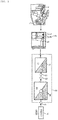
- FIG. 1 illustrates an embodiment of the seawater desalination system as described in the disclosure.
- the seawater desalination system includes an intake facility 10 that performs an intake process.
- the intake process is a process of bringing seawater to a seawater desalination plant, and functions to remove suspended materials from the seawater.
- the seawater from which suspended materials are removed is transferred to a DAF facility 20 that is responsible for performing a DAF (Dissolved Air Flotation) process using a pump.
- the DAF process functions such that a colloidal material is separated from the seawater through a bubbling effect using a chemical, and the colloidal material is then transferred to a subsequent processing unit.
- the colloidal material may be composed of particles having a size of 0.001 to 0.1 ⁇ m.
- the colloidal material refers to various impurities contained in the seawater, and examples thereof may include microorganisms, ammonia, oil, etc.
- Examples of the chemical used for separating the colloidal material include iron chloride (FeCl 3 ), sodium hypochlorite and sulfuric acid (H 2 SO 4 ).
- iron chloride is a coagulant for coagulating particles of the colloidal material to form large lumps, and sulfuric acid plays a role in maintaining the seawater at a pH of 6.4 to 7 in order to strengthen the coagulation
- the seawater subjected to the DAF (Dissolved Air Flotation) process is transferred to a device 40 that includes the UF (Ultra Filtration) device 30.
- the UF process is a desalination pretreatment process for re-treating the seawater subjected to the DAF process so as to remove suspended materials.
- the seawater subjected to the UF (Ultra Filtration) process is transferred to an RO device 44 that performs the RO (Reverse Osmosis) process.
- the RO process functions to convert the seawater having no fouling sources into fresh water 50 through RO.
- the environmental information, the chemical information, and the water-quality information of water present in a specific area are measured or calculated by a sensor and a computing device provided to the seawater desalination plant.
- the apparatus for analyzing the membrane fouling of the seawater desalination system receives the measured or calculated environmental information, chemical information, and water-quality information.
- the variable(s) measured by a sensor 12 during the intake process may include at least one selected from among variables measured in seawater during the intake process, such as seawater pH, conductivity, temperature, turbidity, an amount of chlorophyll-a, total organic carbon (TOC), and total suspended solids (TSS).
- variables measured in seawater during the intake process such as seawater pH, conductivity, temperature, turbidity, an amount of chlorophyll-a, total organic carbon (TOC), and total suspended solids (TSS).
- the variable(s) measured by a sensor 32 after the UF (Ultra Filtration) process may include at least one selected from among variables measured in seawater immediately after the UF process, such as a membrane fouling index (SDI: Silt Density Index), conductivity, temperature, turbidity, an amount of chlorophyll-a, and total organic carbon (TOC).
- SDI Silt Density Index
- TOC total organic carbon
- variable(s) measured by a sensor 22 during the DAF (Dissolved Air Flotation) process may include at least one selected from among variables measured in seawater during the DAF process, such as the amount of iron chloride and the amount of sulfuric acid.
- variable(s) measured by a sensor 38 before the RO (Reverse Osmosis) process may include at least one selected from among variables measured in seawater immediately before the RO process, such as total dissolved solids (TDS), conductivity, temperature, and feed pressure.
- TDS total dissolved solids
- variable(s) measured by a sensor 42 after the RO (Reverse Osmosis) process may include at least one selected from among variables measured in seawater immediately after the RO process, such as total dissolved solids (TDS), conductivity, and salt rejection.
- TDS total dissolved solids
- the membrane may be contaminated by at least one of the variable(s) in the intake process, the variable(s) after the UF (Ultra Filtration) process, the variable(s) in the DAF (Dissolved Air Floatation) process, the variable(s) before the RO (Reverse Osmosis) process, and the variable after the RO (Reverse Osmosis).
- Membrane fouling is a phenomenon that various foreign substances present in the influent water are deposited or adsorbed on the surface of the reverse osmosis membrane, resulting in clogging of the membrane. As a result, the water permeability of the membrane decreases.
- Causes of membrane contamination include suspended particles, colloids, organic matters, inorganic salts such as microorganisms and calcium salts, sediment, scale, and oxidation.
- variable(s) in the intake process may be just the causes of membrane contamination.
- variable(s) in the intake process may be variables related to the occurrence of causes of membrane contamination.
- the influencing variables selected by the apparatus 100 for analyzing the membrane fouling of a seawater desalination system can be output to the display unit 150 included in the apparatus 100 for analyzing the membrane fouling of a seawater desalination system.
- the selected influence variables may be transmitted to the terminal device of the administrator through the communication unit included in the apparatus 100 for analyzing the membrane fouling of a seawater desalination system.
- the terminal of the administrator can receive the selected influencing variables to identify what variables affect the membrane contamination.
- the intake facility 10 can control the PH, conductivity, temperature, turbidity, chlorophyll-a of the seawater variable in the intake process, organic carbon content (TOC), and suspended solids (TSS).
- TOC organic carbon content
- TSS suspended solids
- the method for controlling PH, conductivity, temperature, turbidity, chlorophyll-a, total organic carbon (TOC) and suspended substance (TSS) may be a method combining one or more known methods.
- the DAF facility 20 can control the amount of iron chloride and the amount of sulfuric acid in the DAF (Dissolved Air Floatation) process.
- the method for controlling amount of iron chloride and sulfuric acid may be a method combining one or more known methods.
- the UF (Ultra Filtration) device 30 can control the film contamination index (SDI), a conductivity, a temperature, a turbidity, a quantity of chlorophyll-a and total organic carbon (TOC).
- SDI film contamination index
- TOC total organic carbon
- the method for controlling the film contamination index (SDI), a conductivity, a temperature, a turbidity, a quantity of chlorophyll-a and total organic carbon (TOC) may be a method combining one or more known methods.
- the UF (Ultra Filtration) device 30 or the RO device 44 can control the amount of total dissolved solids (TDS) and the conductivity, temperature, and feed pressure.
- the method for controlling amount of total dissolved solids (TDS) and the conductivity, temperature, and feed pressure may be a method combining one or more known methods.
- the RO device 44 can control the amount of total dissolved solids (TDS), conductivity, and salt rejection.
- the method for controlling amount of total dissolved solids (TDS), conductivity, and salt rejection may be a method combining one or more known methods.
- the algorithm includes at least one selected from among SPI (Single-Predictor Identification), PME (Progressive Model Enhancement), BMA (Bayesian Model Averaging), and GA (Genetic Algorithm).
- SPI Single-Predictor Identification
- PME Processive Model Enhancement
- BMA Binary Model Averaging
- GA Genetic Algorithm
- N is the number of variables. During the seawater desalination, increasing the differential pressure value of the membrane from an arbitrary starting point and then increasing the differential pressure value of the membrane from another arbitrary starting point are repeated.
- the period in which the differential pressure value of the membrane increases from an arbitrary starting point until just before it decreases to another arbitrary value may be defined as one cycle, where N is the number of cycles.
- p is the variable affecting the membrane fouling, and specific examples thereof are as described above, and q includes a variable corresponding to the interaction of variables affecting the membrane fouling and a variable corresponding to the transformed value in the form of an algebraic square of the variable affecting the membrane fouling.
- y is a membrane-fouling vector (response vector), which is any one of a water permeability gradient of the membrane and a differential pressure gradient of the membrane.
- selecting variables depending on an SPI (Single-Predictor Identification) algorithm is performed as follows.
- the dominant variable selection unit 120 is configured to derive the following simple regression model, which describes each dependent variable y for a single feature variable x j belonging to the feature matrix X through the SPI algorithm.
- y ⁇ 0 + ⁇ 1 x j + ⁇ where ⁇ ⁇ N 0 ⁇ 2
- the significance level is a value less than 1 but exceeding 0.
- selecting variables depending on a PME (Progressive Model Enhancement) algorithm is performed as follows.
- the dominant variable selection unit 120 is configured to derive the following multiple linear regression model including the feature matrix X as an independent variable and the membrane fouling response vector y as a dependent variable through the PME algorithm.
- n( ⁇ ) is the number of elements contained in the set
- M k is any subset of the feature variables (x 1 , ..., x (p+q) ).
- the process of sequentially including or excluding the variables affecting the membrane fouling in or from the model is repeated until an additional improvement in the model is not obtained, and the feature variable x j contained in M k is selected.
- the improvement in the model is determined based on a change in the likelihood of the above multiple linear regression model.
- the likelihood-based AIC (Akaike Information Criterion), which applies a penalty to the number of variables contained in the model, may be used.
- selecting variables depending on a BMA (Bayesian Model Averaging) algorithm is performed as follows.
- the dominant variable selection unit 120 is configured to derive the following multiple linear regression model including the feature matrix X as an independent variable and the membrane fouling response vector y as a dependent variable through the BMA algorithm.
- M k is any subset of the feature variables (x 1 , ..., x (p+q) ).
- M k is any subset of the feature variables (x 1 , ..., x (p+q) ).
- M k Pr X
- M k Pr M k ⁇ r 1 K Pr X
- M r ⁇ Pr X
- ⁇ r is the regression coefficient vector corresponding to the feature variable subset M r .
- the significance of individual feature variables may be evaluated based on the above equation.
- the dominant variable selection unit 120 when the probability that the ⁇ j credible interval does not include 0 is less than the preset significance level ⁇ , the corresponding variable is selected as an influence variable candidate.
- the significance level is a value less than 1 but exceeding 0.
- selecting variables depending on a GA (Genetic Algorithm) algorithm is performed as follows.
- the dominant variable selection unit 120 is configured to derive the following multiple linear regression model including the feature matrix X as an independent variable and the membrane fouling response vector y as a dependent variable through the GA (Genetic Algorithm) algorithm.
- M k is any subset of the feature variables (x 1 , ..., x (p+q) ).
- M P ⁇ M 1 , ..., M g ⁇ .
- g is the number of populations.
- the dominant variable selection unit 120 By the dominant variable selection unit 120, the above procedure is repeated until the predetermined termination standard is satisfied, whereby the variable belonging to ⁇ M best
- M k ⁇ M p , f (M best ) >f (M k ) ⁇ having the highest fitness in the final population MP is determined as a set of influence variable candidates S GA M k .
- the dominant variable selection unit 120 is configured such that a variable chosen in common by at least two algorithms among SPI (Single-Predictor Identification), PME (Progressive Model Enhancement), BMA (Bayesian Model Averaging) and GA (Genetic Algorithm) is selected as a dominant variable.
- SPI Single-Predictor Identification
- PME Progressive Model Enhancement
- BMA Binary Model Averaging
- GA Genetic Algorithm
- the variable chosen in common by at least two algorithms is determined to be a variable having high reliability, and may thus be selected as the dominant variable.
- the equation derivation unit 130 is configured such that the correlation between the selected dominant variable and the membrane fouling is used to derive a specific equation through a PME algorithm.
- a detailed description of the PME algorithm is as above.
- the equation derivation unit 130 is able to derive the following equation based on the correlation between the dominant variable and the membrane fouling.
- FIG. 3 is a flowchart showing the process of analyzing the membrane fouling of the seawater desalination system according to an embodiment of the disclosure.
- the method of analyzing the membrane fouling of the seawater desalination system is defined in claim 10.
- the variable reception step (s605) receives a variable that affects membrane fouling of the seawater desalination system collected from the seawater desalination system shown in FIG 1 .
- the seawater desalination system includes a sensor, which collects variables that affect the membrane fouling of the seawater desalination system.
- the seawater desalination system communicates wired and / or wireless with the apparatus for analyzing membrane fouling of the seawater desalination apparatus according to the present invention.
- the seawater desalination system transmits the variables affecting the membrane contamination of the seawater desalination device to the apparatus for analyzing membrane fouling of a seawater desalination system.
- the variable storage step (S610) includes storing variables affecting the membrane fouling of a seawater desalination system.
- the membrane is at least one of an RO (Reverse Osmosis) membrane and a UF (Ultra Filtration) membrane.
- the membrane fouling includes at least one of a water permeability change of the membrane and a differential pressure change of the membrane.
- the dominant variable selection step (S620) includes selecting at least one dominant variable among the variables through at least one algorithm. A detailed description of the algorithms is given later.
- the equation derivation step (S630) includes deriving the specific equation using the correlation between the selected dominant variable and the membrane fouling.
- the equation derivation step (S630) is able to derive the specific equation based on the correlation between the dominant variable and the membrane fouling through a PME (Progressive Model Enhancement) algorithm.
- PME Progressive Model Enhancement
- the variables affecting the membrane fouling may include at least one selected from among a variable measured during an intake process, a variable measured after a UF (Ultra Filtration) process, a variable measured during a DAF (Dissolved Air Flotation) process, a variable measured before an RO (Reverse Osmosis) process, and a variable measured after an RO (Reverse Osmosis) process.
- the variables affecting the membrane fouling are not limited thereto, and may include a variable describing the interaction of variables affecting the membrane fouling. Also, a variable of a transformed value in the form of an algebraic square of the variable affecting the membrane fouling may be included.
- variable control step (s640) controls the seawater desalination system to adjust the dominant variable.
- variable control step (s640) controls the seawater desalination system to reduce or increase the amount of the dominant variable.
- variable control step (s640) transmits a variable adjustment command to the seawater desalination system to reduce or increase the amount of the influential variable.
- the seawater desalination system Upon receipt of the variable adjustment command, the seawater desalination system increases or decreases the variable corresponding to the variable adjustment command according to the variable control command.
- the seawater desalination system includes the intake facility 10 that performs an intake process.
- the intake process is a process of bringing seawater to a seawater desalination plant, and functions to remove suspended materials from the seawater.
- the seawater from which suspended materials are removed is transferred to the DAF facility 20 that is responsible for DAF (Dissolved Air Flotation) using a pump.
- the DAF process functions such that a colloidal material is separated from the seawater through a bubbling effect using a chemical and is then transferred to the subsequent processing unit.
- the colloidal material is composed of particles having a size of 0.001 to 0.1 ⁇ m.
- the colloidal material refers to various impurities contained in the seawater, and examples thereof may include microorganisms, ammonia, oil, etc.
- Examples of the chemical for separating the colloidal material include iron chloride (FeCl 3 ), sodium hypochlorite and sulfuric acid (H 2 SO 4 ).
- iron chloride is a coagulant for coagulating particles of the colloidal material to form large lumps
- sulfuric acid plays a role in maintaining the seawater at a pH of 6.4 to 7 in order to strengthen the coagulation effect.
- the seawater subjected to the DAF process is transferred to the device 30 that performs the UF (Ultra Filtration) process.
- the UF process is a desalination pretreatment process for re-treating the seawater subjected to the DAF process so as to remove suspended materials.
- the seawater subjected to the UF process is transferred to the device 44 that performs the RO (Reverse Osmosis) process.
- the RO process functions to convert seawater having no fouling sources into fresh water 50 through RO.
- the environmental information, the chemical information, and the water-quality information of water present in a specific area are measured or calculated by means of a sensor and a computing device provided to the seawater desalination plant.
- the apparatus for analyzing the membrane fouling of the seawater desalination system receives the measured or calculated environmental information, chemical information, and water-quality information.
- the variable(s) measured by sensor 12 during the intake process may include at least one selected from among variables measured in seawater during the intake process, such as seawater pH, conductivity, temperature, turbidity, an amount of chlorophyll-a, total organic carbon (TOC), and total suspended solids (TSS).
- variables measured in seawater during the intake process such as seawater pH, conductivity, temperature, turbidity, an amount of chlorophyll-a, total organic carbon (TOC), and total suspended solids (TSS).
- the variable(s) measured by sensor 32 after the UF process may include at least one selected from among variables measured in seawater immediately after the UF process, such as membrane fouling index (SDI: Silt Density Index), conductivity, temperature, turbidity, an amount of chlorophyll-a, and total organic carbon (TOC).
- SDI Silt Density Index
- TOC total organic carbon
- the variable(s) measured by sensor 22 during the DAF process may include at least one selected from among variables measured in seawater during the DAF process, such as the amount of iron chloride and the amount of sulfuric acid.
- the variable(s) measured by sensor 38 before the RO process may include at least one selected from among variables measured in seawater immediately before the RO process, such as total dissolved solids (TDS), conductivity, temperature, and feed pressure.
- TDS total dissolved solids
- the variable(s) measured by sensor 42 after the RO process may include at least one selected from among variables measured in seawater immediately after the RO process, such as total dissolved solids (TDS), conductivity, and salt rejection.
- TDS total dissolved solids
- conductivity conductivity
- salt rejection salt rejection
- the membrane may be contaminated by at least one of the variable(s) in the intake process, the variable after the UF (Ultra Filtration) process, the variable in the DAF (Dissolved Air Floatation) process, the variable before the RO (Reverse Osmosis) process, and the variable after the RO (Reverse Osmosis).
- Membrane fouling is a phenomenon that various foreign substances present in the influent water are deposited or adsorbed on the surface of the reverse osmosis membrane, resulting in clogging of the membrane. As a result, the water permeability of the membrane decreases.
- Causes of membrane contamination include suspended particles, colloids, organic matters, inorganic salts such as microorganisms and calcium salts, sediment, scale, and oxidation.
- variable(s) in the intake process may be just the causes of membrane contamination.
- variable(s) in the intake process may be variables related to the occurrence of causes of membrane contamination.
- the influencing variables selected by the apparatus 100 for analyzing the membrane fouling of a seawater desalination system can be output to the display unit included in the apparatus 100 for analyzing the membrane fouling of a seawater desalination system.
- the method of analyzing membrane fouling of a seawater desalination system can further comprise a display step.
- the display step (s650) outputs the influencing variables.
- the selected influence variables may be transmitted to the terminal device of the administrator through the communication unit included in the apparatus 100 for analyzing the membrane fouling of a seawater desalination system.
- the terminal of the administrator can receive the selected influencing variables to identify what variables affect the membrane contamination.
- the intake facility 10 can control PH, conductivity, temperature, turbidity, chlorophyll-a of the seawater variable in the intake process, organic carbon content (TOC), and suspended solids (TSS).
- TOC organic carbon content
- TSS suspended solids
- the method for controlling PH, conductivity, temperature, turbidity, chlorophyll-a, total organic carbon (TOC) and suspended substance (TSS) may be a method combining one or more known methods.
- the DAF facility 20 can control the amount of iron chloride and the amount of sulfuric acid in the DAF (Dissolved Air Floatation) process.
- the method for controlling amount of iron chloride and sulfuric acid may be a method combining one or more known methods.
- the UF (Ultra Filtration) device 30 can control the film contamination index (SDI), a conductivity, a temperature, a turbidity, a quantity of chlorophyll-a and total organic carbon (TOC).
- SDI film contamination index
- TOC total organic carbon
- the method for controlling film contamination index (SDI), a conductivity, a temperature, a turbidity, a quantity of chlorophyll-a and total organic carbon (TOC) may be a method combining one or more known methods.
- the UF (Ultra Filtration) device 30 or the RO device 44 can control the amount of total dissolved solids (TDS) and the conductivity, temperature, and feed pressure.
- the method for controlling amount of total dissolved solids (TDS) and the conductivity, temperature, and feed pressure may be a method combining one or more known methods.
- the RO device 44 can control the amount of total dissolved solids (TDS), conductivity, and salt rejection.
- the method for controlling amount of total dissolved solids (TDS), conductivity, and salt rejection may be a method combining one or more known methods.
- the algorithm includes at least one selected from among SPI (Single-Predictor Identification), PME (Progressive Model Enhancement), BMA (Bayesian Model Averaging), and GA (Genetic Algorithm).
- SPI Single-Predictor Identification
- PME Processive Model Enhancement
- BMA Binary Model Averaging
- GA Genetic Algorithm
- N is the number of variables. During the seawater desalination, increasing the differential pressure value of the membrane from an arbitrary starting point and then increasing the differential pressure value of the membrane from another arbitrary starting point are repeated.
- the period in which the differential pressure value of the membrane increases from an arbitrary starting point until just before it decreases to another arbitrary value may be defined as one cycle, where N is the number of cycles.
- p is the variable affecting the membrane fouling, and specific examples thereof are as described above, and q includes a variable corresponding to the interaction of variables affecting the membrane fouling and a variable corresponding to the transformed value in the form of an algebraic square of the variable affecting the membrane fouling.
- y is a membrane-fouling vector (response vector), which is any one of a water permeability gradient of the membrane and a differential pressure gradient of the membrane.
- selecting variables depending on an SPI (Single-Predictor Identification) algorithm is performed as follows.
- the dominant variable selection step derives the following simple regression model, which describes each dependent variable y for a single feature variable x j belonging to the feature matrix X through the SPI algorithm.
- y ⁇ 0 + ⁇ 1 x j + ⁇ where ⁇ ⁇ N 0 ⁇ 2
- the significance level is a value less than 1 but exceeding 0.
- selecting variables depending on a PME (Progressive Model Enhancement) algorithm is performed as follows.
- the dominant variable selection step derives the following multiple linear regression model including the feature matrix X as an independent variable and the membrane fouling response vector y as a dependent variable through the PME algorithm.
- n( ⁇ ) is the number of elements contained in the set
- M k is any subset of the feature variables (x 1 , ..., x (p+q) )1.
- the improvement in the model is determined based on a change in the likelihood of the above multiple linear regression model.
- the likelihood-based AIC Alkaike Information Criterion
- selecting variables depending on a BMA (Bayesian Model Averaging) algorithm is performed as follows.
- the dominant variable selection step derives the following multiple linear regression model including the feature matrix X as an independent variable and the membrane fouling response vector y as a dependent variable through the BMA algorithm.
- M k is any subset of the feature variables (x 1 , ..., x (p+q) ).
- M k is any subset of the feature variables (x 1 , ..., x (p+q) ).
- the posterior probability of the model produced by any M k is as follows. Pr M k
- X Pr X
- M k Pr M k ⁇ r 1 K Pr X
- M r ⁇ Pr X
- ⁇ r is the regression coefficient vector corresponding to the feature variable subset M r .
- the significance of individual feature variables may be evaluated based on the above equation.
- the dominant variable selection step (S620) when the probability that the ⁇ j credible interval does not include 0 is less than the preset significance level ⁇ , the corresponding variable is selected as an influence variable candidate.
- the significance level is a value less than 1 but exceeding 0.
- selecting variables depending on a GA (Genetic Algorithm) algorithm is performed as follows.
- the dominant variable selection step (S620) derives the following multiple linear regression model including the feature matrix X as an independent variable and the membrane fouling response vector y as a dependent variable through the GA algorithm.
- M k is any subset of the feature variables (x 1 , ..., x (p+q) ).
- M p ⁇ M 1 , ..., M g ⁇ .
- g is the number of populations.
- the dominant variable selection step (S620) the above procedure is repeated until the predetermined termination standard is satisfied, whereby the variable belonging to ⁇ M best
- M k ⁇ M p , f(M best )>f(M k ) ⁇ having the highest fitness in the final population M p is determined as a set of influence variable candidates S GA M k .
- the dominant variable selection step (S620) is performed in a manner in which a variable chosen in common by at least two algorithms among SPI (Single-Predictor Identification), PME (Progressive Model Enhancement), BMA (Bayesian Model Averaging) and GA (Genetic Algorithm) is selected as a dominant variable.
- SPI Single-Predictor Identification
- PME Progressive Model Enhancement
- BMA Binary Model Averaging
- GA Genetic Algorithm
- a set of feature variables included at least H times is represented as S min and a set of feature variables included at least one time is represented as S max , where H may be 2.
- the variable chosen in common by at least two algorithms is assumed to be a variable having high reliability, and may thus be selected as the dominant variable.
- the equation derivation step (S630) is performed in a manner in which the correlation between the selected dominant variable and the membrane fouling is used to derive a specific equation through the PME algorithm.
- a detailed description of the PME algorithm is as above.
- the equation derivation step (S630) is able to derive the following equation based on the correlation between the dominant variable and the membrane fouling.
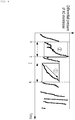
- FIG. 4 is a graph showing changes in the differential pressure of the RO (Reverse Osmosis) membrane.
- the longitudinal axis is the differential pressure value of the RO (Reverse Osmosis) membrane and the transverse axis is the time.
- increasing the differential pressure value of the membrane from an arbitrary starting point and then increasing the differential pressure value of the membrane from another arbitrary starting point may be repeated.
- the period in which the differential pressure of the RO membrane increases until just before it decreases may be set to one cycle.
- the s-to-t zone is one cycle
- the j-to-k zone is one cycle.
- "1" illustrates the zone in which the differential pressure is increased
- "2" indicates the zone in which the differential pressure is maximally increased and then decreased to some arbitrary value.
- inventions described herein may be implemented in digital electronic circuitry, or may be implemented in computer software, firmware, or hardware, including structures and structural equivalents thereof, as described herein, or combinations thereof. Also, embodiments for realizing the technical features described herein may be implemented as computer program products, that is, modules relating to computer program instructions encoded on a program storage medium of a type for execution by, or for controlling the operation of, a processing system.
- computer-readable media suitable for storing computer program instructions and data include, for example, semiconductor memory devices such as EPROM, EEPROM and flash memory devices, for example, all types of non-volatile memory, media and memory devices, including magnetic disks such as internal hard disks or external disks, magneto-optical disks and CDs and DVD disks.
- semiconductor memory devices such as EPROM, EEPROM and flash memory devices
- non-volatile memory media and memory devices, including magnetic disks such as internal hard disks or external disks, magneto-optical disks and CDs and DVD disks.
- the processor and memory may be supplemented by, or integrated with, logic circuits for use for special purposes.
- Embodiments that implement the technical features described herein may be executed in an operating system, including, for example, back-end components such as a data server, middleware components such as an application server, front-end components such as a web browser or a client computer with a graphical user interface that allows a user to interact with an embodiment of the subject matter described herein, or combinations of such back-end, middleware or front-end components.
- the components of the system may also be interconnected by any form or medium of digital data communication, for example, a communication network.
- the system and method described herein may be implemented in hardware or a combination of software and hardware suitable for specific applications.
- the hardware may include a general-purpose computer device such as a personal computer, a mobile communication terminal, etc., and a specific computer device suitable for an enterprise, and the computer device may be implemented by devices including memory, a microprocessor, a microcontroller, a digital signal processor, an application-specific integrated circuit, a programmable gate array, a programmable array structure, or combinations thereof.
- the computer software, instruction, code, etc., as described above may be stored or accessed by a readable device, and the readable device may include computer components having digital data used for computing for a predetermined period of time, semiconductor storage such as RAM or ROM, permanent storage such as an optical disk, mass storage such as a hard disk, tape, or drum, optical storage such as a CD or DVD, flash memory, floppy disks, magnetic tape, paper tape, independent RAM disks, mass storage removable from a computer, and network-attached storage such as dynamic memory, static memory, variable storage and the cloud.
- semiconductor storage such as RAM or ROM
- permanent storage such as an optical disk
- mass storage such as a hard disk, tape, or drum
- optical storage such as a CD or DVD
- flash memory floppy disks
- magnetic tape paper tape
- independent RAM disks independent RAM disks
- mass storage removable from a computer
- network-attached storage such as dynamic memory, static memory, variable storage and the cloud.
- the instructions and code may include all of data-oriented languages such as SQL and dBase, system languages such as C, Objective C, C++, and assembly, architectural languages such as Java and NET, and application languages such as PHP, Ruby, Perl, and Python, but the present disclosure is not limited thereto.
- depicted arrangements and their functions may be implemented in the form of a stand-alone software module, a monolithic software structure, code, a service, and a combination thereof, and are stored in a medium executable on a computer having a processor capable of executing storage program code, instructions and the like to thus realize the functions thereof.
Landscapes
- Engineering & Computer Science (AREA)
- Chemical & Material Sciences (AREA)
- Water Supply & Treatment (AREA)
- Chemical Kinetics & Catalysis (AREA)
- Physics & Mathematics (AREA)
- General Physics & Mathematics (AREA)
- Life Sciences & Earth Sciences (AREA)
- Mathematical Physics (AREA)
- Pure & Applied Mathematics (AREA)
- Data Mining & Analysis (AREA)
- Mathematical Analysis (AREA)
- Mathematical Optimization (AREA)
- Computational Mathematics (AREA)
- Organic Chemistry (AREA)
- Environmental & Geological Engineering (AREA)
- Hydrology & Water Resources (AREA)
- Nanotechnology (AREA)
- Theoretical Computer Science (AREA)
- Automation & Control Theory (AREA)
- Evolutionary Biology (AREA)
- Bioinformatics & Cheminformatics (AREA)
- Bioinformatics & Computational Biology (AREA)
- Algebra (AREA)
- Databases & Information Systems (AREA)
- Software Systems (AREA)
- General Engineering & Computer Science (AREA)
- Operations Research (AREA)
- Probability & Statistics with Applications (AREA)
- Computing Systems (AREA)
- Separation Using Semi-Permeable Membranes (AREA)
Claims (13)
- Vorrichtung zum Analysieren einer Membranverschmutzung eines Meerwasserentsalzungssystems, wobei die Vorrichtung Folgendes umfasst:eine Variablen-Aufnahmeeinheit (105), die so konfiguriert ist, Variablen aufzunehmen, die eine Membranverschmutzung eines Meerwasserentsalzungssystems beeinflussen, wobei die Variablen durch einen Sensor gesammelt werden, der in dem Meerwasserentsalzungssystem enthalten ist;einen Speicher, der eine Variablen-Speichereinheit (110) umfasst, die konfiguriert ist, Variablen zu speichern, die eine Membranverschmutzung eines Meerwasserentsalzungssystems beeinflussen;wobei die Membranverschmutzung eine Änderung einer Wasserdurchlässigkeit der Membran und/oder eine Differentialdruckänderung der Membran umfasst;einen Prozessor, der eine Einheit (120) zum Auswählen einer dominanten Variablen umfasst, der konfiguriert ist, wenigstens eine dominante Variable aus den Variablen mittels wenigstens eines Algorithmus auszuwählen;wobei eine dominante Variable eine Variable ist, die sich von Variablen unterscheidet, die einen geringen Beeinflussungsgrad auf eine Membranverschmutzung haben;eine Einheit (130) zum Ableiten einer Gleichung, die konfiguriert ist, eine Korrelation zwischen der ausgewählten dominanten Variablen und der Membranverschmutzung auf der Basis eines PME-Algorithmus (einer progressiven Modellverbesserung) zu ermitteln, wobei eine derartige Korrelation verwendet wird, um eine bestimmte Gleichung abzuleiten; undeine Variablensteuereinheit (140), die konfiguriert ist, das Meerwasserentsalzungssystem so zu steuern, dass es die dominante Variable steuert.
- Vorrichtung nach Anspruch 1, wobei die Variablen eine Variable, die während eines Aufnahmeverfahrens gemessen wird, wobei dies ein Verfahren ist, Meerwasser zu einer Meerwasserentsalzungsanlage zu bringen, und das dazu dient, Schwebstoffe aus dem Meerwasser zu entfernen, eine Variable, die nach einem UF-Verfahren (Ultrafiltrationsverfahren) gemessen wird, eine Variable, die während eines DAF-Verfahrens (Entspannungsflotationsverfahrens) gemessen wird, eine Variable, die vor einem RO-Verfahren (Umkehrosmoseverfahren) gemessen wird, und/oder eine Variable, die nach einem RO-Verfahren gemessen wird, umfassen.
- Vorrichtung nach Anspruch 1 oder 2, wobei der Prozessor (120) so konfiguriert ist, dass er die wenigstens eine dominante Variable unter Verwendung wenigstens eines der folgenden Algorithmen auswählt: SPI (Einzelvorhersage-Identifikation), PME (progressive Modellverbesserung), BMA (Bayes-Modell-Mittelung) und GA (genetischer Algorithmus).
- Vorrichtung nach Anspruch 1, 2 oder 3, wobei der Prozessor (120) konfiguriert ist, eine Variable auszuwählen, die gemeinsam von wenigstens zwei der Algorithmen SPI (Einzelvorhersage-Identifikation), PME (progressive Modellverbesserung), BMA (Bayes-Modell-Mittelung) und GA (genetischer Algorithmus) als die dominante Variable ausgewählt wird.
- Vorrichtung nach einem der vorhergehenden Ansprüche, wobei die Einheit (120) zum Auswählen der dominanten Variablen konfiguriert ist, als Kandidat für die dominante Variable eine Merkmalsvariable auszuwählen, die einen p-Wert aufweist, der niedriger als ein voreingestelltes Signifikanzniveau (a) in einer einfachen Regression ist, die beschreibt, dass jede abhängige Variable (y) einer Einzelmerkmalsvariablen (xj) zu einer Merkmalsmatrix (X) der Variablen gehört, die die Membranverschmutzung beeinflussen, wobei die abhängige Variable (y) ein Membranverschmutzungsvektor ist, der ein Wasserdurchlässigkeitsgradient der Membran oder ein Differenzialdruckgradient der Membran ist.
- Vorrichtung nach einem der vorhergehenden Ansprüche, wobei die Einheit (120) zum Auswählen der dominanten Variablen konfiguriert ist, unter Verwendung eines PME-Algorithmus eine mehrfache lineare Regression durchzuführen, bei der jede abhängige Variable (y) einer Einzelmerkmalsvariablen (xj), die zu einer Merkmalsmatrix (X) der Variablen gehört, die die Membranverschmutzung beeinflussen, wobei die abhängige Variable (y) ein Membranverschmutzungsvektor ist, der ein Wasserdurchlässigkeitsgradient der Membran oder ein Differenzialdruckgradient der Membran ist, und
ein Verfahren zum fortlaufenden Einschließen oder Ausschließen der Variablen, die die Membranverschmutzung beeinflussen, in die oder aus der mehrfachen linearen Regression wiederholt wird, bis eine zusätzliche Verbesserung der mehrfachen linearen Regression nicht weiter erreicht wird, wobei die Verbesserung auf der Basis einer Änderung einer Wahrscheinlichkeit der mehrfachen linearen Regression ermittelt wird. - Vorrichtung nach einem der vorhergehenden Ansprüche, wobei die Einheit (120) zum Auswählen der dominanten Variablen konfiguriert ist, eine mehrfache lineare Regression durchzuführen, bei der jede abhängige Variable (y) einer Einzelmerkmalsvariablen (xj), die zu einer Merkmalsmatrix (X) der Variablen gehört, die die Membranverschmutzung beeinflussen, unter Verwendung eines BMA-Algorithmus bestimmt wird, wobei die abhängige Variable (y) ein Membranverschmutzungsvektor ist, der ein Wasserdurchlässigkeitsgradient der Membran oder ein Differenzialdruckgradient der Membran ist, und
eine spätere Wahrscheinlichkeit eines Modells, das durch Mk erzeugt wird, die eine beliebige Teilgruppe von Merkmalsvariablen (x1, ..., x(p+q)) ist, ermittelt wird. - Vorrichtung nach einem der vorhergehenden Ansprüche, wobei die Einheit (120) zum Auswählen der dominanten Variablen konfiguriert ist, eine mehrfache lineare Regression durchzuführen, bei der jede abhängige Variable (y) einer Einzelmerkmalsvariablen (xj), die zu einer Merkmalsmatrix (X) der Variablen gehört, die die Membranverschmutzung beeinflussen, unter Verwendung eines GA-Algorithmus bestimmt wird, wobei ein MSE (mittleres Fehlerquadrat) einer Verbleibenden einer mehrfachen linearen Regression in eine Fitnessfunktion f(·) eingegeben wird und wobei ein genetisches Betriebsverfahren, das eine Auswahl, ein Überkreuzen und ein Vertauschen umfasst, in einer Anfangspopulation MP = {M1, ..., Mg} wiederholt wird, wobei die abhängige Variable (y) ein Membranverschmutzungsvektor ist, der ein Wasserdurchlässigkeitsgradient der Membran oder ein Differenzialdruckgradient der Membran ist.
- Vorrichtung nach einem der vorhergehenden Ansprüche, wobei die Einheit (120) zum Auswählen der dominanten Variablen konfiguriert ist, unter Verwendung von vier Algorithmen aus einem Satz von Kandidaten S = (SSPI, SPME, SBMA, SGA) für die dominante Variable einen Satz Merkmalsvariablen, die wenigstens H mal enthalten sind, die als Smin definiert sind, und einen Satz von Merkmalsvariablen, die wenigstens einmal enthalten sind, die als Smax definiert sind, auszuwählen.
- Verfahren zum Analysieren einer Membranverschmutzung eines Meerwasserentsalzungssystems, wobei das Verfahren die folgenden Schritte umfasst:einen Schritt (S605) zum Aufnehmen von Variablen, um Variablen, die eine Membranverschmutzung eines Meerwasserentsalzungssystems beeinflussen, aufzunehmen, die durch einen Sensor gesammelt werden, der in dem Meerwasserentsalzungssystem enthalten ist;einen Schritt (S610) zum Speichern von Variablen, die eine Membranverschmutzung eines Meerwasserentsalzungssystems beeinflussen, in einem Speicher, wobei die Membranverschmutzung eine Wasserdurchlässigkeitsänderung der Membran und/oder eine Differenzialdruckänderung der Membran umfasst;einen Schritt (S620) zum Auswahlen einer dominanten Variablen, um unter Verwendung eines Prozessors und durch wenigstens einen Algorithmus wenigstens eine dominante Variable aus den Variablen auszuwählen; wobei eine dominante Variable eine Variable ist, die sich von Variablen unterscheidet, die einen geringen Einflussgrad auf eine Membranverschmutzung haben;Ermitteln (S630) einer Korrelation zwischen der gewählten dominanten Variablen und der Membranverschmutzung auf der Basis eines PME-Algorithmus und unter Verwendung einer derartigen Korrelation, um eine bestimmte Gleichung abzuleiten; undeinen Schritt (S640) zum Steuern der Variablen, um das Meerwasserentsalzungssystem so zu steuern, dass es die dominante Variable steuert.
- Verfahren nach Anspruch 10, wobei die Variablen eine Variable, die während eines Aufnahmeverfahrens gemessen wird, eine Variable, die nach einem UF-Verfahren gemessen wird, eine Variable, die während eines DAF-Verfahrens gemessen wird, eine Variable, die vor einem RO-Verfahren gemessen wird, und/oder eine Variable, die nach einem RO-Verfahren gemessen wird, umfassen.
- Verfahren nach Anspruch 10 oder 11, wobei der Schritt zum Ermitteln das Ermitteln der Korrelation unter Verwendung von SPI (Einzelvorhersage-Identifikation), PME (progressive Modellverbesserung), BMA (Bayes-Modell-Mittelung) und/oder GA (genetischer Algorithmus) umfasst.
- Verfahren nach Anspruch 10, 11 oder 12, wobei der Schritt (S620) zum Auswählen der dominanten Variablen das Auswählen einer identifizierten dominanten Variablen umfasst, die durch SPI (Einzelvorhersage-Identifikation), PME (progressive Modellverbesserung), BMA (Bayes-Modell-Mittelung) und/oder GA (genetischer Algorithmus) gemeinsam gewählt wird.
Applications Claiming Priority (1)
| Application Number | Priority Date | Filing Date | Title |
|---|---|---|---|
| KR1020160117376A KR101954820B1 (ko) | 2016-09-12 | 2016-09-12 | 해수 담수화 장치의 막오염 영향 변수 분석 장치 |
Publications (2)
| Publication Number | Publication Date |
|---|---|
| EP3293151A1 EP3293151A1 (de) | 2018-03-14 |
| EP3293151B1 true EP3293151B1 (de) | 2019-12-04 |
Family
ID=59982241
Family Applications (1)
| Application Number | Title | Priority Date | Filing Date |
|---|---|---|---|
| EP17190430.3A Active EP3293151B1 (de) | 2016-09-12 | 2017-09-11 | Vorrichtung und verfahren zur analyse des verschmutzungsgrads der membran eines meerwasserentsalzungssystems |
Country Status (3)
| Country | Link |
|---|---|
| US (1) | US10472254B2 (de) |
| EP (1) | EP3293151B1 (de) |
| KR (1) | KR101954820B1 (de) |
Families Citing this family (15)
| Publication number | Priority date | Publication date | Assignee | Title |
|---|---|---|---|---|
| KR102097552B1 (ko) * | 2018-03-28 | 2020-04-07 | 광주과학기술원 | 역삼투막 오염 예측 모델의 표본 입력 데이터 양 결정 방법 및 이를 이용한 장치 |
| CN108519770B (zh) * | 2018-04-27 | 2020-10-27 | 东北大学 | 一种浮选过程运行控制的实验平台 |
| CN109446476B (zh) * | 2018-09-27 | 2020-07-14 | 清华大学 | 一种多模式传感器信息解耦方法 |
| WO2020219626A1 (en) * | 2019-04-24 | 2020-10-29 | Schlumberger Technology Corporation | Digital seawater processing |
| CN110240310A (zh) * | 2019-06-14 | 2019-09-17 | 吉林建筑大学 | 一种基于区块链技术的城镇污水处理系统 |
| CN111559767B (zh) * | 2020-05-19 | 2022-02-08 | 扬州大学 | 一种制定多因素影响下湖泊黑色水体有效管理目标的方法 |
| EP4157495A4 (de) | 2020-06-02 | 2024-09-18 | Synauta Inc. | Vorrichtung und verfahren zur reinigung von umkehrosmosesystemen |
| CN112685947B (zh) * | 2021-01-19 | 2022-12-16 | 广州科技贸易职业学院 | 一种板料回弹模型参数优化方法、装置、终端及存储介质 |
| EP4329926A1 (de) * | 2021-04-29 | 2024-03-06 | Suez International | Verfahren und system zur präventiven steuerung zur verhinderung der verschmutzung einer membrantrenneinheit |
| FR3122341A1 (fr) * | 2021-04-29 | 2022-11-04 | Suez Groupe | Procédé et système de contrôle préventif d’une unité de séparation membranaire apte à empêcher le colmatage |
| KR102545236B1 (ko) * | 2021-10-21 | 2023-06-19 | 두산에너빌리티 주식회사 | 역삼투막 해수담수화 플랜트를 제어하기 위한 장치 및 이를 위한 방법 |
| KR20240094764A (ko) * | 2022-12-16 | 2024-06-25 | 두산에너빌리티 주식회사 | 센서 유효성 검증 장치 및 센서 유효성 검증 방법 |
| JP7563512B2 (ja) * | 2023-03-01 | 2024-10-08 | 栗田工業株式会社 | 水処理設備の状況診断支援システム |
| CN116059833B (zh) * | 2023-03-07 | 2023-08-18 | 海澜智云科技有限公司 | 煤化工循环水污堵状态人工智能判断系统 |
| CN119442753B (zh) * | 2024-10-23 | 2025-06-13 | 中国热带农业科学院南亚热带作物研究所 | 基于回归模型的丘陵山地机械通用作业动力平台多目标优化方法 |
Family Cites Families (8)
| Publication number | Priority date | Publication date | Assignee | Title |
|---|---|---|---|---|
| GB2146263B (en) * | 1983-04-11 | 1987-07-01 | Ebara Corp | Control apparatus for reverse osmosis process system |
| US8014880B2 (en) * | 2006-09-29 | 2011-09-06 | Fisher-Rosemount Systems, Inc. | On-line multivariate analysis in a distributed process control system |
| KR100811199B1 (ko) | 2006-11-13 | 2008-03-07 | 광주과학기술원 | 흐름장 흐름 분획 기법을 이용한 막 오염 예측/평가 방법 |
| WO2010109265A1 (en) * | 2009-03-27 | 2010-09-30 | Abb Research Ltd | Method and system for online optimization of a membrane filtration process |
| KR101133664B1 (ko) * | 2009-12-16 | 2012-04-12 | 한국건설기술연구원 | 분리막을 이용한 수처리 시스템에서 유전자 알고리즘/프로그래밍을 이용한 막오염지수 예측모델 기반 완화 세정 방법 및 시스템 |
| KR101294599B1 (ko) | 2011-08-25 | 2013-08-09 | 고려대학교 산학협력단 | 분산분석 공정을 이용한 해수담수화용 역삼투막의 성능분석 방법 및 이를 수행하는 분석장치 |
| KR101542617B1 (ko) | 2012-12-03 | 2015-08-06 | 삼성에스디아이 주식회사 | 분리막 세정 시스템 및 이를 이용한 분리막 세정 방법 |
| KR20160117376A (ko) | 2016-06-09 | 2016-10-10 | (주)누리 | 입출구파이프를 포함한 열교환기 제조방법 |
-
2016
- 2016-09-12 KR KR1020160117376A patent/KR101954820B1/ko active Active
-
2017
- 2017-09-11 EP EP17190430.3A patent/EP3293151B1/de active Active
- 2017-09-12 US US15/702,669 patent/US10472254B2/en active Active
Non-Patent Citations (1)
| Title |
|---|
| None * |
Also Published As
| Publication number | Publication date |
|---|---|
| EP3293151A1 (de) | 2018-03-14 |
| KR20180029453A (ko) | 2018-03-21 |
| US10472254B2 (en) | 2019-11-12 |
| US20180072588A1 (en) | 2018-03-15 |
| KR101954820B1 (ko) | 2019-03-06 |
Similar Documents
| Publication | Publication Date | Title |
|---|---|---|
| EP3293151B1 (de) | Vorrichtung und verfahren zur analyse des verschmutzungsgrads der membran eines meerwasserentsalzungssystems | |
| US11484843B2 (en) | Method of predicting membrane fouling in reverse osmosis process | |
| Kovacs et al. | Membrane fouling prediction and uncertainty analysis using machine learning: A wastewater treatment plant case study | |
| Chew et al. | A practical hybrid modelling approach for the prediction of potential fouling parameters in ultrafiltration membrane water treatment plant | |
| CN111427265B (zh) | 基于迁移学习的重金属废水处理过程异常工况智能化监测方法、装置及存储介质 | |
| Pascual et al. | Data-driven models of steady state and transient operations of spiral-wound RO plant | |
| CN104933310A (zh) | 基于ga-lssvm模型预测膜蒸馏水处理系统中膜污染趋势的方法 | |
| Teng et al. | Prediction of reverse osmosis membrane fouling in water reuse by integrated adsorption and data-driven models | |
| KR20190136681A (ko) | 분류 알고리즘을 이용한 역삼투 공정에서의 분리막 유지관리 의사결정 지원 방법 | |
| Gao et al. | Use of support vector machine model to predict membrane permeate flux | |
| CN117138589B (zh) | 反渗透膜的污染监测系统及其方法 | |
| Anupam et al. | Optimizing the cross‐flow nanofiltration process for chromium (VI) removal from simulated wastewater through response surface methodology | |
| Ludwig et al. | An advanced simulation model for membrane bioreactors: development, calibration and validation | |
| JP2014004550A (ja) | 水処理設備の制御方法及び制御プログラム並びに水処理システム | |
| Altunkaynak et al. | Prediction of specific permeate flux during crossflow microfiltration of polydispersed colloidal suspensions by fuzzy logic models | |
| Esfahani et al. | Proposed new fouling monitoring indices for seawater reverse osmosis to determine the membrane cleaning interval | |
| KR101915378B1 (ko) | 해수담수화 플랜트의 에너지 관리 방법 및 시스템 | |
| CN119514787A (zh) | 基于全连接神经网络模型的出水水质参数预测方法及装置 | |
| EP4173697A1 (de) | Verfahren und system zur überwachung und steuerung kontinuierlicher ultrafiltrationsprozesseinheiten | |
| WO2014198475A1 (en) | A method for forecasting instant of membrane cleaning and a system therefor | |
| US20230398498A1 (en) | Systems, methods, and devices for optimization of ultra filtration membrane performance for water treatment using artificial intelligence and optimization algorithms | |
| Lai et al. | Applications of the Taguchi method for key parameter screening in electrodialysis reversal used for high salinity wastewater | |
| WO2024180515A1 (en) | Neural network-based optimization for coagulant dosing in desalination plants | |
| Kaneko et al. | Model for predicting transmembrane pressure jump for various membrane bioreactors | |
| EP3293150B1 (de) | Vorrichtung und verfahren zur steuerung der einsatzmenge von chemikalien |
Legal Events
| Date | Code | Title | Description |
|---|---|---|---|
| PUAI | Public reference made under article 153(3) epc to a published international application that has entered the european phase |
Free format text: ORIGINAL CODE: 0009012 |
|
| STAA | Information on the status of an ep patent application or granted ep patent |
Free format text: STATUS: REQUEST FOR EXAMINATION WAS MADE |
|
| 17P | Request for examination filed |
Effective date: 20170911 |
|
| AK | Designated contracting states |
Kind code of ref document: A1 Designated state(s): AL AT BE BG CH CY CZ DE DK EE ES FI FR GB GR HR HU IE IS IT LI LT LU LV MC MK MT NL NO PL PT RO RS SE SI SK SM TR |
|
| AX | Request for extension of the european patent |
Extension state: BA ME |
|
| RBV | Designated contracting states (corrected) |
Designated state(s): AL AT BE BG CH CY CZ DE DK EE ES FI FR GB GR HR HU IE IS IT LI LT LU LV MC MK MT NL NO PL PT RO RS SE SI SK SM TR |
|
| STAA | Information on the status of an ep patent application or granted ep patent |
Free format text: STATUS: EXAMINATION IS IN PROGRESS |
|
| 17Q | First examination report despatched |
Effective date: 20190401 |
|
| RAP1 | Party data changed (applicant data changed or rights of an application transferred) |
Owner name: DOOSAN HEAVY INDUSTRIES & CONSTRUCTION CO., LTD. |
|
| GRAJ | Information related to disapproval of communication of intention to grant by the applicant or resumption of examination proceedings by the epo deleted |
Free format text: ORIGINAL CODE: EPIDOSDIGR1 |
|
| GRAP | Despatch of communication of intention to grant a patent |
Free format text: ORIGINAL CODE: EPIDOSNIGR1 |
|
| RIC1 | Information provided on ipc code assigned before grant |
Ipc: B01D 61/02 20060101ALN20190607BHEP Ipc: C02F 1/44 20060101ALI20190607BHEP Ipc: B01D 61/04 20060101ALN20190607BHEP Ipc: C02F 1/00 20060101AFI20190607BHEP Ipc: B01D 65/08 20060101ALI20190607BHEP Ipc: C02F 1/24 20060101ALN20190607BHEP Ipc: G05B 23/02 20060101ALI20190607BHEP Ipc: B01D 61/22 20060101ALN20190607BHEP Ipc: C02F 9/02 20060101ALN20190607BHEP Ipc: B01D 61/12 20060101ALN20190607BHEP Ipc: C02F 103/08 20060101ALN20190607BHEP |
|
| GRAP | Despatch of communication of intention to grant a patent |
Free format text: ORIGINAL CODE: EPIDOSNIGR1 |
|
| STAA | Information on the status of an ep patent application or granted ep patent |
Free format text: STATUS: GRANT OF PATENT IS INTENDED |
|
| INTC | Intention to grant announced (deleted) | ||
| RIC1 | Information provided on ipc code assigned before grant |
Ipc: B01D 61/04 20060101ALN20190702BHEP Ipc: C02F 103/08 20060101ALN20190702BHEP Ipc: C02F 9/02 20060101ALN20190702BHEP Ipc: B01D 61/12 20060101ALN20190702BHEP Ipc: C02F 1/44 20060101ALI20190702BHEP Ipc: B01D 61/22 20060101ALN20190702BHEP Ipc: G05B 23/02 20060101ALI20190702BHEP Ipc: C02F 1/24 20060101ALN20190702BHEP Ipc: B01D 61/02 20060101ALN20190702BHEP Ipc: C02F 1/00 20060101AFI20190702BHEP Ipc: B01D 65/08 20060101ALI20190702BHEP |
|
| RIN1 | Information on inventor provided before grant (corrected) |
Inventor name: KIM, SEONGJOON Inventor name: HWANG, JUWON Inventor name: PARK, SUNGJU Inventor name: MOON, JONGHYUK |
|
| RIC1 | Information provided on ipc code assigned before grant |
Ipc: B01D 61/02 20060101ALN20190717BHEP Ipc: C02F 1/44 20060101ALI20190717BHEP Ipc: B01D 61/04 20060101ALN20190717BHEP Ipc: C02F 103/08 20060101ALN20190717BHEP Ipc: C02F 9/02 20060101ALN20190717BHEP Ipc: B01D 61/12 20060101ALN20190717BHEP Ipc: G05B 23/02 20060101ALI20190717BHEP Ipc: B01D 61/22 20060101ALN20190717BHEP Ipc: C02F 1/24 20060101ALN20190717BHEP Ipc: B01D 65/08 20060101ALI20190717BHEP Ipc: C02F 1/00 20060101AFI20190717BHEP |
|
| INTG | Intention to grant announced |
Effective date: 20190730 |
|
| GRAS | Grant fee paid |
Free format text: ORIGINAL CODE: EPIDOSNIGR3 |
|
| GRAA | (expected) grant |
Free format text: ORIGINAL CODE: 0009210 |
|
| STAA | Information on the status of an ep patent application or granted ep patent |
Free format text: STATUS: THE PATENT HAS BEEN GRANTED |
|
| AK | Designated contracting states |
Kind code of ref document: B1 Designated state(s): AL AT BE BG CH CY CZ DE DK EE ES FI FR GB GR HR HU IE IS IT LI LT LU LV MC MK MT NL NO PL PT RO RS SE SI SK SM TR |
|
| REG | Reference to a national code |
Ref country code: GB Ref legal event code: FG4D |
|
| REG | Reference to a national code |
Ref country code: CH Ref legal event code: EP |
|
| REG | Reference to a national code |
Ref country code: AT Ref legal event code: REF Ref document number: 1209173 Country of ref document: AT Kind code of ref document: T Effective date: 20191215 |
|
| REG | Reference to a national code |
Ref country code: DE Ref legal event code: R096 Ref document number: 602017009276 Country of ref document: DE |
|
| REG | Reference to a national code |
Ref country code: IE Ref legal event code: FG4D |
|
| REG | Reference to a national code |
Ref country code: NL Ref legal event code: MP Effective date: 20191204 |
|
| REG | Reference to a national code |
Ref country code: LT Ref legal event code: MG4D |
|
| PG25 | Lapsed in a contracting state [announced via postgrant information from national office to epo] |
Ref country code: NO Free format text: LAPSE BECAUSE OF FAILURE TO SUBMIT A TRANSLATION OF THE DESCRIPTION OR TO PAY THE FEE WITHIN THE PRESCRIBED TIME-LIMIT Effective date: 20200304 Ref country code: GR Free format text: LAPSE BECAUSE OF FAILURE TO SUBMIT A TRANSLATION OF THE DESCRIPTION OR TO PAY THE FEE WITHIN THE PRESCRIBED TIME-LIMIT Effective date: 20200305 Ref country code: LT Free format text: LAPSE BECAUSE OF FAILURE TO SUBMIT A TRANSLATION OF THE DESCRIPTION OR TO PAY THE FEE WITHIN THE PRESCRIBED TIME-LIMIT Effective date: 20191204 Ref country code: LV Free format text: LAPSE BECAUSE OF FAILURE TO SUBMIT A TRANSLATION OF THE DESCRIPTION OR TO PAY THE FEE WITHIN THE PRESCRIBED TIME-LIMIT Effective date: 20191204 Ref country code: SE Free format text: LAPSE BECAUSE OF FAILURE TO SUBMIT A TRANSLATION OF THE DESCRIPTION OR TO PAY THE FEE WITHIN THE PRESCRIBED TIME-LIMIT Effective date: 20191204 Ref country code: BG Free format text: LAPSE BECAUSE OF FAILURE TO SUBMIT A TRANSLATION OF THE DESCRIPTION OR TO PAY THE FEE WITHIN THE PRESCRIBED TIME-LIMIT Effective date: 20200304 Ref country code: FI Free format text: LAPSE BECAUSE OF FAILURE TO SUBMIT A TRANSLATION OF THE DESCRIPTION OR TO PAY THE FEE WITHIN THE PRESCRIBED TIME-LIMIT Effective date: 20191204 |
|
| PG25 | Lapsed in a contracting state [announced via postgrant information from national office to epo] |
Ref country code: RS Free format text: LAPSE BECAUSE OF FAILURE TO SUBMIT A TRANSLATION OF THE DESCRIPTION OR TO PAY THE FEE WITHIN THE PRESCRIBED TIME-LIMIT Effective date: 20191204 Ref country code: HR Free format text: LAPSE BECAUSE OF FAILURE TO SUBMIT A TRANSLATION OF THE DESCRIPTION OR TO PAY THE FEE WITHIN THE PRESCRIBED TIME-LIMIT Effective date: 20191204 |
|
| PG25 | Lapsed in a contracting state [announced via postgrant information from national office to epo] |
Ref country code: AL Free format text: LAPSE BECAUSE OF FAILURE TO SUBMIT A TRANSLATION OF THE DESCRIPTION OR TO PAY THE FEE WITHIN THE PRESCRIBED TIME-LIMIT Effective date: 20191204 |
|
| PG25 | Lapsed in a contracting state [announced via postgrant information from national office to epo] |
Ref country code: NL Free format text: LAPSE BECAUSE OF FAILURE TO SUBMIT A TRANSLATION OF THE DESCRIPTION OR TO PAY THE FEE WITHIN THE PRESCRIBED TIME-LIMIT Effective date: 20191204 Ref country code: EE Free format text: LAPSE BECAUSE OF FAILURE TO SUBMIT A TRANSLATION OF THE DESCRIPTION OR TO PAY THE FEE WITHIN THE PRESCRIBED TIME-LIMIT Effective date: 20191204 Ref country code: PT Free format text: LAPSE BECAUSE OF FAILURE TO SUBMIT A TRANSLATION OF THE DESCRIPTION OR TO PAY THE FEE WITHIN THE PRESCRIBED TIME-LIMIT Effective date: 20200429 Ref country code: ES Free format text: LAPSE BECAUSE OF FAILURE TO SUBMIT A TRANSLATION OF THE DESCRIPTION OR TO PAY THE FEE WITHIN THE PRESCRIBED TIME-LIMIT Effective date: 20191204 Ref country code: CZ Free format text: LAPSE BECAUSE OF FAILURE TO SUBMIT A TRANSLATION OF THE DESCRIPTION OR TO PAY THE FEE WITHIN THE PRESCRIBED TIME-LIMIT Effective date: 20191204 Ref country code: RO Free format text: LAPSE BECAUSE OF FAILURE TO SUBMIT A TRANSLATION OF THE DESCRIPTION OR TO PAY THE FEE WITHIN THE PRESCRIBED TIME-LIMIT Effective date: 20191204 |
|
| PG25 | Lapsed in a contracting state [announced via postgrant information from national office to epo] |
Ref country code: SK Free format text: LAPSE BECAUSE OF FAILURE TO SUBMIT A TRANSLATION OF THE DESCRIPTION OR TO PAY THE FEE WITHIN THE PRESCRIBED TIME-LIMIT Effective date: 20191204 Ref country code: IS Free format text: LAPSE BECAUSE OF FAILURE TO SUBMIT A TRANSLATION OF THE DESCRIPTION OR TO PAY THE FEE WITHIN THE PRESCRIBED TIME-LIMIT Effective date: 20200404 Ref country code: SM Free format text: LAPSE BECAUSE OF FAILURE TO SUBMIT A TRANSLATION OF THE DESCRIPTION OR TO PAY THE FEE WITHIN THE PRESCRIBED TIME-LIMIT Effective date: 20191204 |
|
| REG | Reference to a national code |
Ref country code: DE Ref legal event code: R097 Ref document number: 602017009276 Country of ref document: DE |
|
| REG | Reference to a national code |
Ref country code: AT Ref legal event code: MK05 Ref document number: 1209173 Country of ref document: AT Kind code of ref document: T Effective date: 20191204 |
|
| PLBE | No opposition filed within time limit |
Free format text: ORIGINAL CODE: 0009261 |
|
| STAA | Information on the status of an ep patent application or granted ep patent |
Free format text: STATUS: NO OPPOSITION FILED WITHIN TIME LIMIT |
|
| PG25 | Lapsed in a contracting state [announced via postgrant information from national office to epo] |
Ref country code: DK Free format text: LAPSE BECAUSE OF FAILURE TO SUBMIT A TRANSLATION OF THE DESCRIPTION OR TO PAY THE FEE WITHIN THE PRESCRIBED TIME-LIMIT Effective date: 20191204 |
|
| 26N | No opposition filed |
Effective date: 20200907 |
|
| PG25 | Lapsed in a contracting state [announced via postgrant information from national office to epo] |
Ref country code: PL Free format text: LAPSE BECAUSE OF FAILURE TO SUBMIT A TRANSLATION OF THE DESCRIPTION OR TO PAY THE FEE WITHIN THE PRESCRIBED TIME-LIMIT Effective date: 20191204 Ref country code: SI Free format text: LAPSE BECAUSE OF FAILURE TO SUBMIT A TRANSLATION OF THE DESCRIPTION OR TO PAY THE FEE WITHIN THE PRESCRIBED TIME-LIMIT Effective date: 20191204 Ref country code: AT Free format text: LAPSE BECAUSE OF FAILURE TO SUBMIT A TRANSLATION OF THE DESCRIPTION OR TO PAY THE FEE WITHIN THE PRESCRIBED TIME-LIMIT Effective date: 20191204 |
|
| PG25 | Lapsed in a contracting state [announced via postgrant information from national office to epo] |
Ref country code: IT Free format text: LAPSE BECAUSE OF FAILURE TO SUBMIT A TRANSLATION OF THE DESCRIPTION OR TO PAY THE FEE WITHIN THE PRESCRIBED TIME-LIMIT Effective date: 20191204 |
|
| REG | Reference to a national code |
Ref country code: CH Ref legal event code: PL |
|
| REG | Reference to a national code |
Ref country code: BE Ref legal event code: MM Effective date: 20200930 |
|
| PG25 | Lapsed in a contracting state [announced via postgrant information from national office to epo] |
Ref country code: LU Free format text: LAPSE BECAUSE OF NON-PAYMENT OF DUE FEES Effective date: 20200911 |
|
| PG25 | Lapsed in a contracting state [announced via postgrant information from national office to epo] |
Ref country code: FR Free format text: LAPSE BECAUSE OF NON-PAYMENT OF DUE FEES Effective date: 20200930 |
|
| PG25 | Lapsed in a contracting state [announced via postgrant information from national office to epo] |
Ref country code: BE Free format text: LAPSE BECAUSE OF NON-PAYMENT OF DUE FEES Effective date: 20200930 Ref country code: CH Free format text: LAPSE BECAUSE OF NON-PAYMENT OF DUE FEES Effective date: 20200930 Ref country code: IE Free format text: LAPSE BECAUSE OF NON-PAYMENT OF DUE FEES Effective date: 20200911 Ref country code: LI Free format text: LAPSE BECAUSE OF NON-PAYMENT OF DUE FEES Effective date: 20200930 |
|
| PG25 | Lapsed in a contracting state [announced via postgrant information from national office to epo] |
Ref country code: TR Free format text: LAPSE BECAUSE OF FAILURE TO SUBMIT A TRANSLATION OF THE DESCRIPTION OR TO PAY THE FEE WITHIN THE PRESCRIBED TIME-LIMIT Effective date: 20191204 Ref country code: MT Free format text: LAPSE BECAUSE OF FAILURE TO SUBMIT A TRANSLATION OF THE DESCRIPTION OR TO PAY THE FEE WITHIN THE PRESCRIBED TIME-LIMIT Effective date: 20191204 Ref country code: CY Free format text: LAPSE BECAUSE OF FAILURE TO SUBMIT A TRANSLATION OF THE DESCRIPTION OR TO PAY THE FEE WITHIN THE PRESCRIBED TIME-LIMIT Effective date: 20191204 |
|
| PG25 | Lapsed in a contracting state [announced via postgrant information from national office to epo] |
Ref country code: MK Free format text: LAPSE BECAUSE OF FAILURE TO SUBMIT A TRANSLATION OF THE DESCRIPTION OR TO PAY THE FEE WITHIN THE PRESCRIBED TIME-LIMIT Effective date: 20191204 Ref country code: MC Free format text: LAPSE BECAUSE OF FAILURE TO SUBMIT A TRANSLATION OF THE DESCRIPTION OR TO PAY THE FEE WITHIN THE PRESCRIBED TIME-LIMIT Effective date: 20191204 |
|
| PGFP | Annual fee paid to national office [announced via postgrant information from national office to epo] |
Ref country code: DE Payment date: 20250702 Year of fee payment: 9 |
|
| PGFP | Annual fee paid to national office [announced via postgrant information from national office to epo] |
Ref country code: GB Payment date: 20250703 Year of fee payment: 9 |