EP3278561B1 - Techniques for optimizing bitrates and resolutions during encoding - Google Patents
Techniques for optimizing bitrates and resolutions during encoding Download PDFInfo
- Publication number
- EP3278561B1 EP3278561B1 EP16713189.5A EP16713189A EP3278561B1 EP 3278561 B1 EP3278561 B1 EP 3278561B1 EP 16713189 A EP16713189 A EP 16713189A EP 3278561 B1 EP3278561 B1 EP 3278561B1
- Authority
- EP
- European Patent Office
- Prior art keywords
- bitrate
- complexity
- computer
- source data
- encoding
- Prior art date
- Legal status (The legal status is an assumption and is not a legal conclusion. Google has not performed a legal analysis and makes no representation as to the accuracy of the status listed.)
- Active
Links
Images
Classifications
-
- H—ELECTRICITY
- H04—ELECTRIC COMMUNICATION TECHNIQUE
- H04N—PICTORIAL COMMUNICATION, e.g. TELEVISION
- H04N19/00—Methods or arrangements for coding, decoding, compressing or decompressing digital video signals
- H04N19/10—Methods or arrangements for coding, decoding, compressing or decompressing digital video signals using adaptive coding
- H04N19/134—Methods or arrangements for coding, decoding, compressing or decompressing digital video signals using adaptive coding characterised by the element, parameter or criterion affecting or controlling the adaptive coding
- H04N19/146—Data rate or code amount at the encoder output
-
- H—ELECTRICITY
- H04—ELECTRIC COMMUNICATION TECHNIQUE
- H04N—PICTORIAL COMMUNICATION, e.g. TELEVISION
- H04N21/00—Selective content distribution, e.g. interactive television or video on demand [VOD]
- H04N21/20—Servers specifically adapted for the distribution of content, e.g. VOD servers; Operations thereof
- H04N21/23—Processing of content or additional data; Elementary server operations; Server middleware
- H04N21/234—Processing of video elementary streams, e.g. splicing of video streams or manipulating encoded video stream scene graphs
- H04N21/23418—Processing of video elementary streams, e.g. splicing of video streams or manipulating encoded video stream scene graphs involving operations for analysing video streams, e.g. detecting features or characteristics
-
- H—ELECTRICITY
- H04—ELECTRIC COMMUNICATION TECHNIQUE
- H04N—PICTORIAL COMMUNICATION, e.g. TELEVISION
- H04N19/00—Methods or arrangements for coding, decoding, compressing or decompressing digital video signals
- H04N19/10—Methods or arrangements for coding, decoding, compressing or decompressing digital video signals using adaptive coding
- H04N19/102—Methods or arrangements for coding, decoding, compressing or decompressing digital video signals using adaptive coding characterised by the element, parameter or selection affected or controlled by the adaptive coding
- H04N19/124—Quantisation
-
- H—ELECTRICITY
- H04—ELECTRIC COMMUNICATION TECHNIQUE
- H04N—PICTORIAL COMMUNICATION, e.g. TELEVISION
- H04N19/00—Methods or arrangements for coding, decoding, compressing or decompressing digital video signals
- H04N19/10—Methods or arrangements for coding, decoding, compressing or decompressing digital video signals using adaptive coding
- H04N19/134—Methods or arrangements for coding, decoding, compressing or decompressing digital video signals using adaptive coding characterised by the element, parameter or criterion affecting or controlling the adaptive coding
- H04N19/154—Measured or subjectively estimated visual quality after decoding, e.g. measurement of distortion
-
- H—ELECTRICITY
- H04—ELECTRIC COMMUNICATION TECHNIQUE
- H04N—PICTORIAL COMMUNICATION, e.g. TELEVISION
- H04N21/00—Selective content distribution, e.g. interactive television or video on demand [VOD]
- H04N21/20—Servers specifically adapted for the distribution of content, e.g. VOD servers; Operations thereof
- H04N21/23—Processing of content or additional data; Elementary server operations; Server middleware
- H04N21/234—Processing of video elementary streams, e.g. splicing of video streams or manipulating encoded video stream scene graphs
- H04N21/2343—Processing of video elementary streams, e.g. splicing of video streams or manipulating encoded video stream scene graphs involving reformatting operations of video signals for distribution or compliance with end-user requests or end-user device requirements
- H04N21/23439—Processing of video elementary streams, e.g. splicing of video streams or manipulating encoded video stream scene graphs involving reformatting operations of video signals for distribution or compliance with end-user requests or end-user device requirements for generating different versions
Definitions
- Embodiments of the present invention relate generally to computer science and, more specifically, to techniques for optimizing bitrates and resolutions during encoding.
- Efficiently and accurately encoding source data is essential for real-time delivery of video content.
- the encoded data is decoded and viewed or otherwise further processed.
- many encoding processes leverage lossy data compression techniques that eliminate selected information, typically enabling only approximate reconstruction of the source data.
- the encoder eliminates information, the resolution of the encoded data decreases and, consequently, the likelihood that the approximate reconstruction has the visual quality viewers expect and desire also decreases.
- encoders are often configured to implement a fixed bitrate ladder that makes tradeoffs between resources consumed during the encoding/decoding process (e.g., processing time, bandwidth, storage, etc.) and visual quality.
- Each "rung" in the bitrate ladder represents a different bitrate and resolution.
- the encoder selects the encoding bitrate and resolution based on the bitrate ladder, and then generates encoding data at the determined bitrate and resolution.
- bitrate ladder is tuned to generate encoded data having the requisite level of quality for "typical" source data.
- the tradeoffs represented by the bitrate ladder may not be appropriate.
- the bitrate ladder is designed to optimize tradeoffs for simple cartoons, and the source data is a detailed action movie, then the tradeoffs that the bitrate ladder imposes during encoding may result in unacceptably poor visual quality.
- the bitrate ladder is designed to optimize tradeoffs for detailed action movies, and the source data is a simple cartoon, then the tradeoffs that the bitrate ladder imposes during encoding may dramatically increase resource burdens, such as storage and bandwidth usage, without noticeably increasing visual quality.
- Document WO2012/078965 details a method for generating complexity data related to a video content. Bandwidth is then allocated to different portions of the video content based on the complexity data generated.
- One embodiment of the present invention sets forth a computer-implemented method for selecting a bitrate ladder for encoding source data.
- the method includes selecting a set of parameter values for a quantization parameter; for each parameter value, performing an encoding process using an encoder configured to encode source data to generate a set of encoded data while maintaining the quantization parameter at the parameter value; for each set of encoded data, determining a value of a video quality metric and a corresponding bitrate; deriving a relationship between the video quality metrics and the corresponding bitrates; determining a bucketing bit rate at which the video quality metric is equal to a predetermined threshold; determining that the bucketing bitrate is within a bitrate range associated with a first bitrate ladder included in a plurality of bitrate ladders, wherein each bitrate ladder included in the plurality of bitrate ladders is associated with a different bitrate range and includes a different plurality of bitrate-resolution pairs; and selecting the first bitrate ladder for encoding the source data.
- bitrate ladder selection techniques enable the selection of complexity-tuned bitrates and resolutions when encoding source data.
- the disclosed techniques tailor the bitrate ladder to reflect the complexity of the source data, tradeoffs between encoding quality and encoding resources are optimized compared to conventional techniques that implement a constant bitrate ladder irrespective of the complexity of the source data.
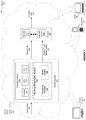
- FIG. 1 is a conceptual illustration of a system 100 configured to implement one or more aspects of the present invention.
- the system 100 includes a virtual private cloud (i.e., encapsulated shared resources, software, data, etc.) 102 connected to a variety of devices capable of transmitting input data and/or displaying video.
- a virtual private cloud i.e., encapsulated shared resources, software, data, etc.
- Such devices include, without limitation, a desktop computer 102, a smartphone 104, and a laptop 106.
- the system 100 may include any number and/or type of input, output, and/or input/output devices in any combination.
- the virtual private cloud (VPC) 102 includes, without limitation, any number and type of compute instances 110.
- the VPC 102 receives input user information from an input device (e.g., the laptop 106), one or more computer instances 110 operate on the user information, and the VPC 102 transmits processed information to the user.
- the VPC 102 conveys output information to the user via display capabilities of any number of devices, such as a conventional cathode ray tube, liquid crystal display, light-emitting diode, or the like.
- the VPC 102 may be replaced with any type of cloud computing environment, such as a public or a hybird cloud.
- the system 100 may include any distributed computer system instead of the VPC 102.
- the system 100 does not include the VPC 102 and, instead, the system 100 includes a single processing or multi-processing unit.
- each compute instance 110 includes a central processing unit (CPU) 112, a graphics processing unit (GPU) 114, and a memory 116.
- the CPU 112 is the master processor of the compute instance 110, controlling and coordinating operations of other components included in the compute instance 110.
- the CPU 112 issues commands that control the operation of the GPU 114.
- the GPU 114 incorporates circuitry optimized for graphics and video processing, including, for example, video output circuitry.
- GPU 114 may be integrated with one or more of other elements of the compute instance 110.
- the memory 116 stores content, such as software applications and data, for use by the CPU 112 and the GPU 114 of the compute instance 110.
- the compute instances 110 included in the VPC 102 are configured to implement one or more applications. More specifically, the compute instances 110 included in the VPC 102 are configured to encode source data 105, such as a video file. As shown, compute instance 110 0 is configured as a source inspector 110, and compute instances 110 1 -110 N are configured as an encoder 140. In alternate embodiments, source inspector 110 may include more compute instances 110, and encoder 140 may include only a single compute instance 110.
- the source inspector 110 receives the source data 105 and performs any number of pre-encoding operations, including configuring the encoder 140.
- the encoder 140 is a parallel chunk encoder.
- the source inspector 110 breaks the source into multiple source chunks prior to routing the source chunks to compute instances 140 included in the parallel chunk encoder.
- the encoder 140 includes multiple modes and settings that enable customization of the encoding operations (e.g., compression algorithms).
- the encoder 140 implements, without limitation, both a constant bitrate mode and a constant quality encoding mode.
- the encoder 140 attempts to maintain a target bitrate throughout the encoding process. If the encoder 140 detects that the encoded bitrate is greater than the target bitrate, then the encoder 140 reduces the quality of encoded data 145. If the encoder 140 detects that the encoded bitrate is less than the target bitrate, then the encoder 140 increases the quality of the encoded data 145.
- the constant quality encoding mode the encoder 140 attempts to maintain a constant quality throughout the encoding process.
- the encoder 140 measures the quality of the encoded data 145 and varies a quantization parameter (QP) that defines the amount of signal detail to include in the encoded data 145 to maintain the encoded quality at the target quality.
- QP quantization parameter
- the encoder 140 sets the QP to a constant value throughout the encoding process.
- the configuration of the encoder 140 dramatically impacts the required resources, such as bandwidth and storage, and the quality of the encoded data 145.
- Configuring the encoder 140 to optimize the encoded data 145 to satisfy an acceptable perceived visual quality without wasting required resource across different types of the source data 105 is difficult.
- the source inspector 110 includes an encoding bitrate ladder selector 130.
- the encoding bitrate ladder selector 130 leverages the encoder 140 to estimate the complexity of the source data 105 and then assigns the source data 105 to a complexity bucket 132. Subsequently, the encoding bitrate ladder selector 130 identifies a bitrate ladder 134 that is associated with the selected complexity bucket 132 as a source-tune bitrate ladder 135. In this fashion, the encoding bitrate ladder selector 130 enables the quality/resource tradeoff to be optimized to reflect the complexity of the source data 105.
- the encoding bitrate ladder selector 130 may include any number of complexity buckets 132, where each of the complexity buckets 132 represents a different range of complexities for the source data 105
- the "simple" complexity bucket 132 represents the lowest range of complexities, such as source data 105 for a basic cartoon.
- Each of the complexity buckets 132 is associated a particular one of the bitrate ladders 134 that is tailored to optimize the encoding tradeoffs for source data 105 of the complexities represented by the complexity bucket 132.
- the encoding bitrate ladder selector 130 may implement the complexity buckets 132 and the bitrate ladders 134 in any technically feasible fashion.
- the encoding bitrate ladder selector 130 includes an initialization unit that establishes the complexity buckets 132 and the bitrate ladders 134 prior to processing any source data, including the source data 105.
- the initialization unit is not included in the encoding bitrate ladder selector 130, but is a unit included in the system 100. In yet other embodiments, the initialization unit is not included in system 100.
- the initialization unit provides encoding quality feedback information that is manually evaluated to generate the optimized complexity buckets 132 and the bitrate ladders 134
- the initialization unit receives a "typical" bitrate ladder.
- the initialization unit analyzes a variety of test data (spanning the expected complexity range of the source data 105) across the bitrates included in the typical bitrate ladder.
- the resulting encoded test data spans both the rungs of the ladder and the test data.
- the initialization unit evaluates quality of each of the encoded test data. More specifically, the initialization unit applies the Tektronix® Picture Quality Analyzer (PQA) tool to the encoded test data.
- PQA Picture Quality Analyzer
- the PQA tool assigns a Picture Quality Rating (PQR) score to the encoded test data that "closely correspond with subjective human visual assessment.”
- PQR Picture Quality Rating
- the initialization unit then graphs bitrate versus the PQR score quality, where quality is the PQR score.
- the optimized complexity buckets 132 and the bit rate ladders 134 are selected to produce acceptable tradeoffs between resource and quality across the expected complexity of the source data 105.
- the optimized complexity buckets 132 and the bitrate ladders 134 may be created to satisfy the following objectives:
- the complexity buckets 132 and the bitrate ladders 134 may be generated based on the PQR graphs in any technically feasible fashion-such as manual evaluation. In alternate embodiments, the PQR score may be replaced with any quality measurement. In general, the complexity buckets 132 and the bitrate ladders 134 may be generated in any technically feasible fashion that evaluates test data across a variety of complexities and bitrates.
- the resulting complexity buckets 132 and the bitrate ladders 134 are incorporated into or communicated to the encoding bitrate ladder selector 130.
- the complexity buckets 132 and the bitrate ladders 134 may be transferred into the system 100 via any communication method as known in the art.
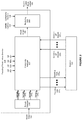
- FIG 2 is a block diagram illustrating the encoding bitrate ladder selector 130 of Figure 1 , according to one embodiment of the present invention.
- the encoding bitrate ladder selector 130 receives the source data 105, estimates the complexity of the source data 105, and selects a corresponding source-tuned bitrate ladder 135 from the bitrate ladders 134. As part of identifying the bitrate ladder 134 that represents the optimal resource/quality tradeoff for the source data 105, the encoding bitrate ladder selector 130 leverages the encoder 140 and the complexity buckets 132.
- the encoding bitrate ladder selector 130 includes, without limitation, a sample extractor 210, a complexity analyzer 220, and a bucketing unit 260.
- the sample extractor 210 partitions the source data 105 into four equal-length segments. For each segment, the sample extractor 210 selects a one minute sample 215 that is centered at the midpoint of the segment. In this fashion, the sample encoder identifies four, one minute samples 215 that are evenly distributed throughout the source data 105. Together, the samples 215 serve as a proxy for the source data 105. Because the samples 215 include less information than the source data 105, the time required to evaluate the complexity of the samples 215 is less than the time required to evaluate the complexity of the source data 105.
- the sample extractor 210 may partition the source data 105 into any number of segments and extract samples from the segments in any manner that generates a representative proxy for the source data 105. Further, the sample extractor 210 may be configured to generate any number and length of the samples 215 in any manner (e.g., meeting a constraint for maximum processing time). In yet other embodiments, the sample extractor 210 is omitted and the source data 105 is processed as a single, full-length sample 215.
- the complexity analyzer 220 receives the four samples 215 and configures the encoder 140 to perform fixed QP encodes of the four samples 215 at a resolution of 1080p across four different QPs 225. In operation, the complexity analyzer 220 configures the encoder 140 to execute sixteen encoding tasks 233, thereby generating sixteen constant QP encodes 235.
- the values of the QPs 225 are experimentally and/or heuristically determined and vetted to provide good coverage across a range of QPs 225 that are anticipated to effectively reduce resource usage without unacceptable degrading quality for any number of complexities.
- the complexity analyzer 220 may customize the encoder 140 to perform any number of the encoding tasks 233 across any number of QPs 225 and any number of samples 215, in any combination. Further, the complexity analyzer 220 may perform fixed QP encodes for any number and values of resolutions.
- the complexity analyzer 220 leverages the encoder 140 that is included as part of the encoding process for the source data 105.
- the complexity analyzer 220 may configure any available number and type of encoder to generate the constant QP encodes 235.
- the complexity analyzer 220 determines the peak signal-to-noise ratio (PSNR)-an objective quality metric based on mean-squared-error-value and calculates the bitrate.
- the complexity analyzer 220 configures the encoder 140 to measure the PSNR values of the constant QP encodes 235.
- the complexity analyzer 220 uses a PSNR measurement tool that may or may not be part of the complexity analyzer 220 to measure the PSNR value of each of the constant QP encodes 235.
- the complexity analyzer 220 determines the bitrate of each of the constant QP encodes 235 in any technically feasible fashion. In some embodiments, the complexity analyzer 220 performs read operations on log files (generated by the encoder 140 during the encoding process) to identify the bitrate. In other embodiments, the complexity analyzer 220 calculates the bitrate by dividing the size of the constant QP encode 235 (i.e., the file size) by the duration of the constant QP encode 235 (i.e., number of frames divided by the frames per second).
- the complexity analyzer 220 correlates the PSNR values and the corresponding bitrates. In some embodiments, prior to performing correlation operations, the complexity analyzer 220 averages the PSNR values and/or the corresponding bitrates for each of the QPs 255. More specifically, for QP 255 0 , the complexity analyzer 220 averages across the four PSNR values and across the four bitrates obtained for the four samples 115 during the encoding of the constant QP encodes 235 at the QP 255 0 ,
- the complexity analyzer 220 generates a PSNR graph 255 that reflects the determined correlation.
- the complexity analyzer 220 plots the PSNR values versus the bitrates for the constant QP encodes 235 and then performs curve fitting operations to generate a curve equation.
- the complexity analyzer 220 instead of the PSNR graph 255, the complexity analyzer 220 generates an equation that includes a PSNR variable and a bitrate variable based on statistics associated with the constant QP encodes 235.
- embodiments of the present invention may employ any technically feasible technique and/or any quality measurement instead of PSNR to determine an estimated relationship between the quality and bitrates of the constant QP encodes 255.
- the bucketing unit 260 evaluates the PSNR graph 255 in conjunction with the complexity buckets 132 and the bitrate ladders 134 to generate the source-tuned bitrate ladder 135. More specifically, the bucketing unit 260 determines a complexity bucketing bitrate based on the PSNR graph 255.
- the complexity bucketing bitrate is the bitrate at which the PSNR value of the PSNR graph 255 equals a predetermined low distortion threshold. Consequently, the complexity bucketing bitrate is the estimated bitrate at which the distortion of the encoded data 145 relative to the source data 105 matches the predetermined low distortion threshold.
- the predetermined low distortion threshold may be assigned using any of a variety of heuristics and experimental techniques that are consistent with the complexity buckets 132 and the bitrate ladders 134.
- the bucketing unit 260 may determine the complexity bucketing bitrate in any technically feasible fashion. For example, the bucketing unit 260 may identify the intersection between the curve of the PSNR graph 255 and the line corresponding to a constant PSNR value of the predetermined low distortion threshold. In alternate embodiments the bucketing unit 260 may set the PSNR variable of a PSNR/bitrate equation to the predetermined low distortion threshold and then solve the PSNR/bitrate equation for the value of the bitrate variable.
- the bucketing unit 260 compares the complexity bucketing bitrate to the bitrate ranges of the complexity buckets 132 and selects the encompassing complexity bucket 132. The bucketing unit 260 then sets the source-tuned bitrate ladder 135 to the bitrate ladder 134 that corresponds to the selected complexity bucket 132. In this fashion, the source-tuned bitrate ladder 135 varies based on the estimated complexity of the source 105.
- this categorization process optimizes resource/quality tradeoffs across different complexities of the source 105.
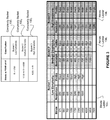
- FIG 3 is a conceptual illustration of the complexity buckets 132 and the bitrate ladders 134 implemented by the encoding bitrate ladder selector 130 of Figure 2 , according to one embodiment of the present invention.
- the complexity buckets 132 include three different classifications based on the bitrate at a low correlation threshold of PSNR value equal to 41 decibels (dB).
- PSNR value is greater than 40 dB
- the encoded data 145 is generally considered very low distortion compared to the source data 105.
- Alternate embodiments may include any number of classifications and any low correlation threshold.
- the bucketing unit 260 determines the complexity bucketing bitrate (R)-the bitrate value of the curve corresponding to a PSNR value of 41 dB.
- the complexity buckets 132 include the low complexity bucket 132 1 , the medium complexity bucket 132 2 , and the high complexity bucket 132 3 . If the complexity bucketing bitrate is less than 1750 kilobits per second (kbps) then the bucketing unit 260 assigns the source data 135 to the low complexity bucket 132 1 . If the complexity bucketing bitrate lies between 1750 kbps and 4300 kbps, then the bucketing unit 260 assigns the source data 135 to the medium complexity bucket 132 2 . If the complexity bucketing bitrate is at least 4300 kbps, then the bucketing unit 260 assigns the source data 135 to the high complexity bucket 132 3 .
- each of the complexity buckets 132 is associated with a different one of the bitrate ladders 134.
- the bitrate / resolution pairs define the rungs of each of the bitrate ladders 134.
- each rung includes a profile that specifies the complexity of the algorithm that the encoder 140 employs during the encoding process.
- the values of each rung and the number of rungs are tailored for each of the complexity buckets 132.
- the complexity buckets 132 and the bitrate ladders 134 are designed to optimize tradeoffs between resources and quality improvements. For example, for low complexity sources, maximum perceptible visual quality is achieved at a bitrate of around 3000 kbps.
- the encoder 140 Because encoding at higher bitrates wastes resources without noticeably increasing visual quality, the highest rung of the low complexity bitrate ladder 134 1 is at 3000 kbps and, consequently, the encoder 140 generates the encoded data 145 with a maximum bitrate of 3000 kbps.
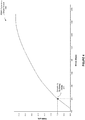
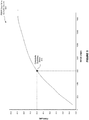
- FIG 4 is a conceptual illustration of a peak signal-to-noise ratio (PSNR) curve for a simple source 400 constructed by the complexity analyzer 220 of Figure 2 , according to one embodiment of the present invention.
- the complexity bucketing bitrate 410 i.e., the bitrate of the curve at the low correlation threshold of PSNR value equal to 41 dB
- the horizontal dotted line depicts the constant line with PSNR value equal to 41 dB.
- the horizontal dotted line intersects the PSNR curve for a simple source 400 at the complexity bucketing bitrate 410, shown as an "x.” Tracing vertically downwards from the complexity bucketing bitrate 410 (following the vertical dotted line), shows that the complexity bucketing bitrate 410 intersects the bitrate axis at 600 kbps.
- the bucketing unit 260 assigns the source data 105 to the low complexity bucket 132 1 and sets the source-tuned bitrate ladder 135 to the corresponding low complexity bitrate ladder 134 1 Notably, implementing the bitrate ladder 134 1 ensures that the highest encoding resolution and bitrate are, respectively, 1080p and 3000 kbps (the highest rung of the low complexity bitrate ladder 134 1 ).
- FIG 5 is a conceptual illustration of a peak signal-to-noise ratio (PSNR) curve for a complex source constructed by the complexity analyzer of Figure 2 , according to one embodiment of the present invention.
- the complexity bucketing bitrate 410 i.e., the bitrate of the curve at the low correlation threshold of PSNR value equal to 41 dB
- the horizontal dotted line depicts the constant line with PSNR value equal to 41 dB.
- the horizontal dotted line intersects the PSNR curve for a complex source 500 at the complexity bucketing bitrate 410, shown as an "x.” Tracing vertically downwards from the complexity bucketing bitrate 410 (following the vertical dotted line), shows that the complexity bucketing bitrate 410 intersects the bitrate axis at 6000 kbps.
- the bucketing unit 260 assigns the source data 105 to the high complexity bucket 132 3 and sets the source-tuned bitrate ladder 135 to the corresponding high complexity bitrate ladder 134 3 .
- implementing the bitrate ladder 134 3 configures the encoder 140 to encode the source data 105 at a maximum resolution of 1080p and a maximum bitrate of 7500 mbps. Because the source data 105 is relatively complex, such a tradeoff enables noticeable quality improvement using available resources.
- the source-tuned bitrate ladder 135 were to be the medium complexity bitrate ladder 134 2 , then the encoding bitrate would be unnecessarily limited to 5800 mbps.
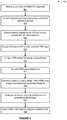
- Figure 6 is a flow diagram of method steps for selecting and implementing a bitrate ladder while encoding video source data, according to one embodiment of the present invention.
- the method steps are described with reference to the systems of Figures 1-5 , persons skilled in the art will understand that any system configured to implement the method steps, in any order, falls within the scope of the present invention.
- a low distortion threshold, QPs 225, the bitrate ladders 134, and the complexity buckets 132 are predetermined in any technically feasible fashion.
- a method 600 begins at step 604, where the encoding bitrate ladder selector 130 receives the source data 105, and the sample extractor 210 partitions the source data 105 into N segments, where N is any positive integer.
- the sample extractor 210 selects a fixed-length sample 215 centered at the midpoint of the segment.
- the resulting N samples 215 serve as a proxy for the source data 105, reducing analysis time by limiting the total amount of data that is evaluated to classify the complexity of the source data 105.
- the complexity analyzer 220 receives the samples 215 and then configures the encoder 140 to perform fixed QP encodes of the samples 215 at a fixed resolution across M predetermined, constant QPs 225. At step 608, the complexity analyzer 220 determines a PSNR value for each of the (N ⁇ M) constant QP encodes 235. In some embodiments, the complexity analyzer 220 configures the encoder 140 to measure the PSNR values of the constant QP encodes 235. In general, embodiments of the present invention may replace PSNR with any quality metric, and the subsequently measurements and calculations are modified accordingly.
- the complexity analyzer 220 determines a corresponding bitrate value for each of the constant QP encodes 235.
- the complexity analyzer 220 determines the bitrate of each of the constant QP encodes 235 in any technically feasible fashion. In some embodiments, the complexity analyzer 220 calculates the bitrate by dividing the size of the constant QP encode 235 (i.e., the file size) by the duration of the constant QP encode 235 (i.e., number of frames divided by the frames per second).
- the complexity analyzer 220 generates the PSNR graph 255 that includes a best-fit curve relating the PSNR values and the corresponding bitrates.
- the complexity analyzer 220 instead of the PSNR graph 255, the complexity analyzer 220 generates an equation that includes a PSNR variable and a bitrate variable based on statistics associated with the constant QP encodes 235.
- embodiments of the present invention may employ any technically feasible technique to determine an estimated relationship between the quality and bitrates of the constant QP encodes 255.
- the bucketing unit 260 evaluates the PSNR graph 255 and determines the complexity bucketing bitrate 410. Notably, the bucketing unit 260 sets the complexity bucketing bitrate 410 to the value of the bitrate in the PSNR graph 255 where the PSNR value is equal to a predetermined low distortion threshold. Subsequently, the bucketing unit 260 selects the complexity bucket 132 that corresponds to a range of bitrates that includes the complexity bucketing bitrate 410. At step 618, the bucketing unit 260 selects the bitrate ladder 134 that corresponds to the selected complexity bucket 132. At step 620, the bucketing unit 260 sets the source-tuned bitrate ladder 135 to the selected bitrate ladder 134, and the method 600 terminates.
- the source-tuned bitrate ladder 135 is tuned to optimize the encoding bitrates and resolution for source data of comparable complexity to the source data 105.
- the source-tuned bitrate ladder 135 does not include bitrate rungs higher than 3000 kbps that provide no noticeably quality improvement.
- the source-tuned bitrate ladder 135 includes a bitrate rung of 7500 kbps that provides increased quality at the expense of resources, such as memory and bandwidth.
- the disclosed techniques may be used to efficiently select an optimized bitrate ladder (i.e., pairs of bitrates and resolutions) for encoding source data.
- a source inspector extracts "N" distributed sample segments from the source data.
- a complexity analyzer configures an encoder to perform fixed quantization parameter encodes across "M” different values for the quantization parameter.
- the complexity analyzer then generates an equation for a peak signal-to-noise ratio (PSNR) curve that reflects the relationship between the PSNR and the bitrate for the (N ⁇ M) encoded data segments.
- PSNR peak signal-to-noise ratio
- a bucketing unit sets the PSNR variable of this equation to a predetermined value that represents an acceptable level of distortion, and solves the equation to obtain a bucketing bitrate. Based on the bucketing bitrate the bucketing unit assigns the source data to one of multiple complexity buckets, where each complexity bucket spans a bitrate range that achieves the acceptable level of distortion for source data of a particular complexity. For instance, one bucket may represent simple source data such as cartoons, while another bucket may represent complex source data such as detailed action movies. Notably, each complexity bucket is associated with a bitrate ladder that is empirically determined to optimize encoding source data of the corresponding complexity..
- sagaciously creating complexity buckets and encoding each source data using the bitrate ladder of the appropriate complexity bucket optimizes encoding for source data of different complexities. More specifically, because the disclosed techniques tune the bitrate ladder to the complexity of the source, bucketing enables prudent tradeoffs between encoding quality and encoding resources, such as bandwidth and storage. By contrast, conventional encoding processes that rely on a single bitrate ladder often result in encoding that is of an unacceptable low quality or does not effectively exploit opportunities to increase or decrease the use of encoding resources based on judiciously estimated perceptible quality differences.
- aspects of the present embodiments may be embodied as a system, method or computer program product. Accordingly, aspects of the present disclosure may take the form of an entirely hardware embodiment, an entirely software embodiment (including firmware, resident software, micro-code, etc.) or an embodiment combining software and hardware aspects that may all generally be referred to herein as a "circuit,” “module” or “system.” Furthermore, aspects of the present disclosure may take the form of a computer program product embodied in one or more computer readable medium(s) having computer readable program code embodied thereon.
- the computer readable medium may be a computer readable signal medium or a computer readable storage medium.
- a computer readable storage medium may be, for example, but not limited to, an electronic, magnetic, optical, electromagnetic, infrared, or semiconductor system, apparatus, or device, or any suitable combination of the foregoing.
- a computer readable storage medium may be any tangible medium that can contain, or store a program for use by or in connection with an instruction execution system, apparatus, or device.
- each block in the flowchart or block diagrams may represent a module, segment, or portion of code, which comprises one or more executable instructions for implementing the specified logical function(s).
- the functions noted in the block may occur out of the order noted in the figures. For example, two blocks shown in succession may, in fact, be executed substantially concurrently, or the blocks may sometimes be executed in the reverse order, depending upon the functionality involved.
Landscapes
- Engineering & Computer Science (AREA)
- Multimedia (AREA)
- Signal Processing (AREA)
- Compression Or Coding Systems Of Tv Signals (AREA)
- Image Processing (AREA)
Applications Claiming Priority (2)
| Application Number | Priority Date | Filing Date | Title |
|---|---|---|---|
| US14/673,621 US10404986B2 (en) | 2015-03-30 | 2015-03-30 | Techniques for optimizing bitrates and resolutions during encoding |
| PCT/US2016/021649 WO2016160295A1 (en) | 2015-03-30 | 2016-03-10 | Techniques for optimizing bitrates and resolutions during encoding |
Publications (2)
| Publication Number | Publication Date |
|---|---|
| EP3278561A1 EP3278561A1 (en) | 2018-02-07 |
| EP3278561B1 true EP3278561B1 (en) | 2020-07-22 |
Family
ID=55642860
Family Applications (1)
| Application Number | Title | Priority Date | Filing Date |
|---|---|---|---|
| EP16713189.5A Active EP3278561B1 (en) | 2015-03-30 | 2016-03-10 | Techniques for optimizing bitrates and resolutions during encoding |
Country Status (9)
| Country | Link |
|---|---|
| US (1) | US10404986B2 (enExample) |
| EP (1) | EP3278561B1 (enExample) |
| JP (1) | JP6706269B2 (enExample) |
| KR (1) | KR102183513B1 (enExample) |
| CN (1) | CN107439016B (enExample) |
| AU (2) | AU2016243988B2 (enExample) |
| CA (1) | CA2979680C (enExample) |
| MX (1) | MX367388B (enExample) |
| WO (1) | WO2016160295A1 (enExample) |
Families Citing this family (42)
| Publication number | Priority date | Publication date | Assignee | Title |
|---|---|---|---|---|
| US10142386B2 (en) | 2014-10-29 | 2018-11-27 | DLVR, Inc. | Determining manifest file data used in adaptive streaming video delivery |
| US10084838B2 (en) | 2014-10-29 | 2018-09-25 | DLVR, Inc. | Generating and using manifest files including content delivery network authentication data |
| US10349104B2 (en) * | 2015-08-19 | 2019-07-09 | Ericsson Ab | System and method for managing segment delivery and bandwidth responsive to encoding complexity metrics |
| US10547856B2 (en) * | 2016-10-18 | 2020-01-28 | Netflix, Inc. | Constant-slope bitrate allocation for distributed encoding |
| US11363322B2 (en) * | 2016-12-01 | 2022-06-14 | Brightcove, Inc. | Optimization of encoding profiles for media streaming |
| JP6922341B2 (ja) * | 2017-03-31 | 2021-08-18 | 日本電気株式会社 | 画像符号化装置、画像符号化方法及びプログラム |
| RU2720067C1 (ru) | 2017-04-21 | 2020-04-23 | Зенимакс Медиа Инк. | Системы и способы для рендеринга и выдачи подсказок кодеру на основании оценки предварительно кодированной нагрузки |
| WO2019105535A1 (en) | 2017-11-28 | 2019-06-06 | Opticom Dipl.-Ing. Michael Keyhl Gmbh | Device and method for providing an encoded version of a media signal |
| US10887609B2 (en) * | 2017-12-13 | 2021-01-05 | Netflix, Inc. | Techniques for optimizing encoding tasks |
| US10735739B2 (en) | 2017-12-28 | 2020-08-04 | Comcast Cable Communications, Llc | Content-aware predictive bitrate ladder |
| FR3078798B1 (fr) * | 2018-03-12 | 2021-04-30 | Ateme | Procede de selection de profils d'encodage d'un contenu multimedia pour une diffusion a la demande |
| US10616590B1 (en) * | 2018-05-16 | 2020-04-07 | Amazon Technologies, Inc. | Optimizing streaming video encoding profiles |
| US11695978B2 (en) | 2018-07-05 | 2023-07-04 | Mux, Inc. | Methods for generating video-and audience-specific encoding ladders with audio and video just-in-time transcoding |
| US11343492B2 (en) * | 2019-03-15 | 2022-05-24 | Mux, Inc. | Method for generating video- and audience-specific encoding ladders |
| US11128869B1 (en) * | 2018-10-22 | 2021-09-21 | Bitmovin, Inc. | Video encoding based on customized bitrate table |
| BR112021008089A2 (pt) * | 2018-11-02 | 2021-08-03 | Dolby International Ab | codificador de áudio e decodificador de áudio |
| JP7549581B2 (ja) * | 2019-01-17 | 2024-09-11 | ブライトコーブ インコーポレイテッド | 最適なマルチコーデックabrラダー設計 |
| CN110536168B (zh) * | 2019-09-11 | 2021-09-17 | 北京达佳互联信息技术有限公司 | 视频上传方法、装置、电子设备及存储介质 |
| US10897654B1 (en) | 2019-09-30 | 2021-01-19 | Amazon Technologies, Inc. | Content delivery of live streams with event-adaptive encoding |
| BR112022007211A2 (pt) * | 2019-11-14 | 2022-07-05 | Intel Corp | Aparelho, método e sistema para codificação adaptativa de quadros de vídeo com o uso de análise de conteúdo e rede |
| US11962781B2 (en) * | 2020-02-13 | 2024-04-16 | Ssimwave Inc. | Video encoding complexity measure system |
| US10958947B1 (en) | 2020-03-12 | 2021-03-23 | Amazon Technologies, Inc. | Content delivery of live streams with playback-conditions-adaptive encoding |
| US11503302B2 (en) * | 2020-05-19 | 2022-11-15 | Home Box Office, Inc. | Content adaptive encoding |
| US11190826B1 (en) | 2020-06-25 | 2021-11-30 | Disney Enterprises, Inc. | Segment quality-guided adaptive stream creation |
| CN113938682B (zh) * | 2020-06-29 | 2025-06-03 | 北京金山云网络技术有限公司 | 视频编码方法、装置和电子设备 |
| US11277620B1 (en) | 2020-10-30 | 2022-03-15 | Hulu, LLC | Adaptive transcoding of profile ladder for videos |
| US11902599B2 (en) | 2020-12-09 | 2024-02-13 | Hulu, LLC | Multiple protocol prediction and in-session adaptation in video streaming |
| US11729438B1 (en) * | 2021-01-28 | 2023-08-15 | Amazon Technologies, Inc. | Optimizing streaming video encoding profiles |
| JP7525045B2 (ja) * | 2021-03-05 | 2024-07-30 | 日本電信電話株式会社 | 符号化パラメータ導出装置、符号化パラメータ導出方法及びプログラム |
| WO2023275247A1 (en) * | 2021-06-30 | 2023-01-05 | Telefonaktiebolaget Lm Ericsson (Publ) | Encoding resolution control |
| JP2023034245A (ja) * | 2021-08-30 | 2023-03-13 | 日本放送協会 | 映像符号化装置及び映像符号化方法 |
| US11743313B2 (en) | 2021-09-17 | 2023-08-29 | Comcast Cable Communications, Llc | Methods, systems, and apparatuses for adaptive bitrate ladder construction based on dynamically adjustable neural networks |
| US11700376B1 (en) | 2021-09-28 | 2023-07-11 | Amazon Technologies, Inc. | Optimizing and assigning video encoding ladders |
| US12212810B2 (en) | 2022-04-07 | 2025-01-28 | Mux, Inc. | Method for audio and video just-in-time transcoding with command frames |
| CN115209151B (zh) * | 2022-07-18 | 2025-07-04 | 北京达佳互联信息技术有限公司 | 视频编码方法、装置、服务器及计算机可读存储介质 |
| US12267376B2 (en) | 2022-09-01 | 2025-04-01 | Mux, Inc. | Methods for identifier-based video streaming and sessionization |
| US12598307B2 (en) | 2023-01-13 | 2026-04-07 | Netflix, Inc. | Constrained optimization techniques for generating encoding ladders for video streaming |
| US12464175B2 (en) * | 2023-01-13 | 2025-11-04 | Netflix, Inc. | Simulation-based techniques for evaluating encoding ladders for video streaming |
| US12225252B2 (en) * | 2023-03-06 | 2025-02-11 | Disney Enterprises, Inc. | Dynamic selection of candidate bitrates for video encoding |
| US12531997B2 (en) | 2023-03-06 | 2026-01-20 | Beijing Yojaja Software Technology Development Co., Ltd. | Prediction of rate distortion curves for video encoding |
| US20250113041A1 (en) * | 2023-09-29 | 2025-04-03 | Apple Inc. | Object-Specific Copresence Quality Tiers |
| FR3170983A1 (fr) * | 2024-12-30 | 2026-07-03 | Vidmizer | Méthode et système pour générer une pluralité de vidéos cibles à partir d’une vidéo d’entrée |
Family Cites Families (9)
| Publication number | Priority date | Publication date | Assignee | Title |
|---|---|---|---|---|
| US5612900A (en) | 1995-05-08 | 1997-03-18 | Kabushiki Kaisha Toshiba | Video encoding method and system which encodes using a rate-quantizer model |
| US7646816B2 (en) * | 2001-09-19 | 2010-01-12 | Microsoft Corporation | Generalized reference decoder for image or video processing |
| US8743954B1 (en) | 2008-02-01 | 2014-06-03 | Zenverge, Inc. | Architecture for adjusting bit rate based on measured quality |
| KR101033442B1 (ko) | 2008-06-12 | 2011-05-09 | 주식회사 몬도시스템즈 | 영상 처리 시스템에서 비트 레이트를 제어하는 장치 및방법 |
| US9001889B2 (en) | 2009-05-16 | 2015-04-07 | Thomson Licensing | Methods and apparatus for improved quantization rounding offset adjustment for video encoding and decoding |
| US8767825B1 (en) | 2009-11-30 | 2014-07-01 | Google Inc. | Content-based adaptive video transcoding framework |
| US8837601B2 (en) | 2010-12-10 | 2014-09-16 | Netflix, Inc. | Parallel video encoding based on complexity analysis |
| CN105187835B (zh) | 2014-05-30 | 2019-02-15 | 阿里巴巴集团控股有限公司 | 基于内容的自适应视频转码方法及装置 |
| US20160234496A1 (en) | 2015-02-09 | 2016-08-11 | Qualcomm Incorporated | Near visually lossless video recompression |
-
2015
- 2015-03-30 US US14/673,621 patent/US10404986B2/en active Active
-
2016
- 2016-03-10 CN CN201680020242.4A patent/CN107439016B/zh active Active
- 2016-03-10 JP JP2017549016A patent/JP6706269B2/ja active Active
- 2016-03-10 EP EP16713189.5A patent/EP3278561B1/en active Active
- 2016-03-10 MX MX2017012446A patent/MX367388B/es active IP Right Grant
- 2016-03-10 AU AU2016243988A patent/AU2016243988B2/en active Active
- 2016-03-10 KR KR1020177030760A patent/KR102183513B1/ko active Active
- 2016-03-10 CA CA2979680A patent/CA2979680C/en active Active
- 2016-03-10 WO PCT/US2016/021649 patent/WO2016160295A1/en not_active Ceased
-
2019
- 2019-05-07 AU AU2019203178A patent/AU2019203178A1/en not_active Abandoned
Non-Patent Citations (1)
| Title |
|---|
| ANONYMOUS: "MeGUI/x264 Settings/x264 Stats Output", 19 February 2015 (2015-02-19), XP055535518, Retrieved from the Internet <URL:https://en.wikibooks.org/w/index.php?title=MeGUI/x264_Settings/x264_Stats_Output&oldid=2767805> [retrieved on 20181217] * |
Also Published As
| Publication number | Publication date |
|---|---|
| JP2018513604A (ja) | 2018-05-24 |
| US20160295216A1 (en) | 2016-10-06 |
| EP3278561A1 (en) | 2018-02-07 |
| KR20170131605A (ko) | 2017-11-29 |
| MX2017012446A (es) | 2018-01-26 |
| AU2016243988B2 (en) | 2019-02-07 |
| CA2979680A1 (en) | 2016-10-06 |
| CA2979680C (en) | 2020-10-27 |
| KR102183513B1 (ko) | 2020-11-26 |
| CN107439016B (zh) | 2020-03-20 |
| AU2019203178A1 (en) | 2019-05-30 |
| AU2016243988A1 (en) | 2017-10-05 |
| CN107439016A (zh) | 2017-12-05 |
| JP6706269B2 (ja) | 2020-06-03 |
| MX367388B (es) | 2019-08-19 |
| WO2016160295A1 (en) | 2016-10-06 |
| US10404986B2 (en) | 2019-09-03 |
Similar Documents
| Publication | Publication Date | Title |
|---|---|---|
| CA2979680C (en) | Techniques for optimizing bitrates and resolutions during encoding | |
| EP3529989B1 (en) | Constant-slope bitrate allocation for distributed video encoding | |
| EP2256723B1 (en) | Encoding method and apparatus | |
| EP3257243B1 (en) | Techniques for identifying errors introduced during encoding | |
| JP2021153305A (ja) | 符号化及び復号化のための符号化装置、復号化装置、システム及び方法 | |
| US11955994B2 (en) | Data processing apparatuses, methods, computer programs and computer-readable media | |
| TWI761336B (zh) | 視訊編解碼器之複雜度控制 | |
| CN101395671A (zh) | 用于提供内容自适应码率控制的视频编码系统和方法 | |
| US9094685B2 (en) | Efficient coding complexity estimation for video transcoding systems | |
| CN110545418A (zh) | 一种基于场景的自适应视频编码方法 | |
| CN109219960B (zh) | 视频编码质量平滑度的优化方法、装置、设备及存储介质 | |
| CN113132757A (zh) | 数据处理方法和装置 | |
| US8295343B2 (en) | Video bit rate control method | |
| Xiong et al. | Avoiding Quality Saturation in UGC Compression Using Denoised References | |
| US8953672B2 (en) | Method and device for compressing a video sequence |
Legal Events
| Date | Code | Title | Description |
|---|---|---|---|
| STAA | Information on the status of an ep patent application or granted ep patent |
Free format text: STATUS: THE INTERNATIONAL PUBLICATION HAS BEEN MADE |
|
| PUAI | Public reference made under article 153(3) epc to a published international application that has entered the european phase |
Free format text: ORIGINAL CODE: 0009012 |
|
| STAA | Information on the status of an ep patent application or granted ep patent |
Free format text: STATUS: REQUEST FOR EXAMINATION WAS MADE |
|
| 17P | Request for examination filed |
Effective date: 20171027 |
|
| AK | Designated contracting states |
Kind code of ref document: A1 Designated state(s): AL AT BE BG CH CY CZ DE DK EE ES FI FR GB GR HR HU IE IS IT LI LT LU LV MC MK MT NL NO PL PT RO RS SE SI SK SM TR |
|
| AX | Request for extension of the european patent |
Extension state: BA ME |
|
| DAV | Request for validation of the european patent (deleted) | ||
| DAX | Request for extension of the european patent (deleted) | ||
| STAA | Information on the status of an ep patent application or granted ep patent |
Free format text: STATUS: EXAMINATION IS IN PROGRESS |
|
| 17Q | First examination report despatched |
Effective date: 20190102 |
|
| GRAP | Despatch of communication of intention to grant a patent |
Free format text: ORIGINAL CODE: EPIDOSNIGR1 |
|
| STAA | Information on the status of an ep patent application or granted ep patent |
Free format text: STATUS: GRANT OF PATENT IS INTENDED |
|
| INTG | Intention to grant announced |
Effective date: 20200225 |
|
| GRAS | Grant fee paid |
Free format text: ORIGINAL CODE: EPIDOSNIGR3 |
|
| GRAA | (expected) grant |
Free format text: ORIGINAL CODE: 0009210 |
|
| STAA | Information on the status of an ep patent application or granted ep patent |
Free format text: STATUS: THE PATENT HAS BEEN GRANTED |
|
| AK | Designated contracting states |
Kind code of ref document: B1 Designated state(s): AL AT BE BG CH CY CZ DE DK EE ES FI FR GB GR HR HU IE IS IT LI LT LU LV MC MK MT NL NO PL PT RO RS SE SI SK SM TR |
|
| REG | Reference to a national code |
Ref country code: GB Ref legal event code: FG4D |
|
| REG | Reference to a national code |
Ref country code: CH Ref legal event code: EP |
|
| REG | Reference to a national code |
Ref country code: DE Ref legal event code: R096 Ref document number: 602016040357 Country of ref document: DE |
|
| REG | Reference to a national code |
Ref country code: AT Ref legal event code: REF Ref document number: 1294538 Country of ref document: AT Kind code of ref document: T Effective date: 20200815 |
|
| REG | Reference to a national code |
Ref country code: IE Ref legal event code: FG4D |
|
| REG | Reference to a national code |
Ref country code: DK Ref legal event code: T3 Effective date: 20200929 |
|
| REG | Reference to a national code |
Ref country code: SE Ref legal event code: TRGR |
|
| REG | Reference to a national code |
Ref country code: NL Ref legal event code: FP |
|
| REG | Reference to a national code |
Ref country code: NO Ref legal event code: T2 Effective date: 20200722 |
|
| REG | Reference to a national code |
Ref country code: LT Ref legal event code: MG4D |
|
| REG | Reference to a national code |
Ref country code: AT Ref legal event code: MK05 Ref document number: 1294538 Country of ref document: AT Kind code of ref document: T Effective date: 20200722 |
|
| PG25 | Lapsed in a contracting state [announced via postgrant information from national office to epo] |
Ref country code: LT Free format text: LAPSE BECAUSE OF FAILURE TO SUBMIT A TRANSLATION OF THE DESCRIPTION OR TO PAY THE FEE WITHIN THE PRESCRIBED TIME-LIMIT Effective date: 20200722 Ref country code: FI Free format text: LAPSE BECAUSE OF FAILURE TO SUBMIT A TRANSLATION OF THE DESCRIPTION OR TO PAY THE FEE WITHIN THE PRESCRIBED TIME-LIMIT Effective date: 20200722 Ref country code: PT Free format text: LAPSE BECAUSE OF FAILURE TO SUBMIT A TRANSLATION OF THE DESCRIPTION OR TO PAY THE FEE WITHIN THE PRESCRIBED TIME-LIMIT Effective date: 20201123 Ref country code: AT Free format text: LAPSE BECAUSE OF FAILURE TO SUBMIT A TRANSLATION OF THE DESCRIPTION OR TO PAY THE FEE WITHIN THE PRESCRIBED TIME-LIMIT Effective date: 20200722 Ref country code: GR Free format text: LAPSE BECAUSE OF FAILURE TO SUBMIT A TRANSLATION OF THE DESCRIPTION OR TO PAY THE FEE WITHIN THE PRESCRIBED TIME-LIMIT Effective date: 20201023 Ref country code: ES Free format text: LAPSE BECAUSE OF FAILURE TO SUBMIT A TRANSLATION OF THE DESCRIPTION OR TO PAY THE FEE WITHIN THE PRESCRIBED TIME-LIMIT Effective date: 20200722 Ref country code: BG Free format text: LAPSE BECAUSE OF FAILURE TO SUBMIT A TRANSLATION OF THE DESCRIPTION OR TO PAY THE FEE WITHIN THE PRESCRIBED TIME-LIMIT Effective date: 20201022 Ref country code: HR Free format text: LAPSE BECAUSE OF FAILURE TO SUBMIT A TRANSLATION OF THE DESCRIPTION OR TO PAY THE FEE WITHIN THE PRESCRIBED TIME-LIMIT Effective date: 20200722 |
|
| PG25 | Lapsed in a contracting state [announced via postgrant information from national office to epo] |
Ref country code: PL Free format text: LAPSE BECAUSE OF FAILURE TO SUBMIT A TRANSLATION OF THE DESCRIPTION OR TO PAY THE FEE WITHIN THE PRESCRIBED TIME-LIMIT Effective date: 20200722 Ref country code: RS Free format text: LAPSE BECAUSE OF FAILURE TO SUBMIT A TRANSLATION OF THE DESCRIPTION OR TO PAY THE FEE WITHIN THE PRESCRIBED TIME-LIMIT Effective date: 20200722 Ref country code: LV Free format text: LAPSE BECAUSE OF FAILURE TO SUBMIT A TRANSLATION OF THE DESCRIPTION OR TO PAY THE FEE WITHIN THE PRESCRIBED TIME-LIMIT Effective date: 20200722 Ref country code: IS Free format text: LAPSE BECAUSE OF FAILURE TO SUBMIT A TRANSLATION OF THE DESCRIPTION OR TO PAY THE FEE WITHIN THE PRESCRIBED TIME-LIMIT Effective date: 20201122 |
|
| REG | Reference to a national code |
Ref country code: DE Ref legal event code: R097 Ref document number: 602016040357 Country of ref document: DE |
|
| PG25 | Lapsed in a contracting state [announced via postgrant information from national office to epo] |
Ref country code: CZ Free format text: LAPSE BECAUSE OF FAILURE TO SUBMIT A TRANSLATION OF THE DESCRIPTION OR TO PAY THE FEE WITHIN THE PRESCRIBED TIME-LIMIT Effective date: 20200722 Ref country code: SM Free format text: LAPSE BECAUSE OF FAILURE TO SUBMIT A TRANSLATION OF THE DESCRIPTION OR TO PAY THE FEE WITHIN THE PRESCRIBED TIME-LIMIT Effective date: 20200722 Ref country code: RO Free format text: LAPSE BECAUSE OF FAILURE TO SUBMIT A TRANSLATION OF THE DESCRIPTION OR TO PAY THE FEE WITHIN THE PRESCRIBED TIME-LIMIT Effective date: 20200722 Ref country code: EE Free format text: LAPSE BECAUSE OF FAILURE TO SUBMIT A TRANSLATION OF THE DESCRIPTION OR TO PAY THE FEE WITHIN THE PRESCRIBED TIME-LIMIT Effective date: 20200722 Ref country code: IT Free format text: LAPSE BECAUSE OF FAILURE TO SUBMIT A TRANSLATION OF THE DESCRIPTION OR TO PAY THE FEE WITHIN THE PRESCRIBED TIME-LIMIT Effective date: 20200722 |
|
| PLBE | No opposition filed within time limit |
Free format text: ORIGINAL CODE: 0009261 |
|
| STAA | Information on the status of an ep patent application or granted ep patent |
Free format text: STATUS: NO OPPOSITION FILED WITHIN TIME LIMIT |
|
| PG25 | Lapsed in a contracting state [announced via postgrant information from national office to epo] |
Ref country code: AL Free format text: LAPSE BECAUSE OF FAILURE TO SUBMIT A TRANSLATION OF THE DESCRIPTION OR TO PAY THE FEE WITHIN THE PRESCRIBED TIME-LIMIT Effective date: 20200722 |
|
| 26N | No opposition filed |
Effective date: 20210423 |
|
| PG25 | Lapsed in a contracting state [announced via postgrant information from national office to epo] |
Ref country code: SK Free format text: LAPSE BECAUSE OF FAILURE TO SUBMIT A TRANSLATION OF THE DESCRIPTION OR TO PAY THE FEE WITHIN THE PRESCRIBED TIME-LIMIT Effective date: 20200722 |
|
| PG25 | Lapsed in a contracting state [announced via postgrant information from national office to epo] |
Ref country code: SI Free format text: LAPSE BECAUSE OF FAILURE TO SUBMIT A TRANSLATION OF THE DESCRIPTION OR TO PAY THE FEE WITHIN THE PRESCRIBED TIME-LIMIT Effective date: 20200722 |
|
| PG25 | Lapsed in a contracting state [announced via postgrant information from national office to epo] |
Ref country code: MC Free format text: LAPSE BECAUSE OF FAILURE TO SUBMIT A TRANSLATION OF THE DESCRIPTION OR TO PAY THE FEE WITHIN THE PRESCRIBED TIME-LIMIT Effective date: 20200722 |
|
| REG | Reference to a national code |
Ref country code: BE Ref legal event code: MM Effective date: 20210331 |
|
| PG25 | Lapsed in a contracting state [announced via postgrant information from national office to epo] |
Ref country code: LU Free format text: LAPSE BECAUSE OF NON-PAYMENT OF DUE FEES Effective date: 20210310 |
|
| PG25 | Lapsed in a contracting state [announced via postgrant information from national office to epo] |
Ref country code: BE Free format text: LAPSE BECAUSE OF NON-PAYMENT OF DUE FEES Effective date: 20210331 |
|
| P01 | Opt-out of the competence of the unified patent court (upc) registered |
Effective date: 20230519 |
|
| PG25 | Lapsed in a contracting state [announced via postgrant information from national office to epo] |
Ref country code: CY Free format text: LAPSE BECAUSE OF FAILURE TO SUBMIT A TRANSLATION OF THE DESCRIPTION OR TO PAY THE FEE WITHIN THE PRESCRIBED TIME-LIMIT Effective date: 20200722 |
|
| PG25 | Lapsed in a contracting state [announced via postgrant information from national office to epo] |
Ref country code: HU Free format text: LAPSE BECAUSE OF FAILURE TO SUBMIT A TRANSLATION OF THE DESCRIPTION OR TO PAY THE FEE WITHIN THE PRESCRIBED TIME-LIMIT; INVALID AB INITIO Effective date: 20160310 |
|
| PG25 | Lapsed in a contracting state [announced via postgrant information from national office to epo] |
Ref country code: MK Free format text: LAPSE BECAUSE OF FAILURE TO SUBMIT A TRANSLATION OF THE DESCRIPTION OR TO PAY THE FEE WITHIN THE PRESCRIBED TIME-LIMIT Effective date: 20200722 |
|
| PG25 | Lapsed in a contracting state [announced via postgrant information from national office to epo] |
Ref country code: MT Free format text: LAPSE BECAUSE OF FAILURE TO SUBMIT A TRANSLATION OF THE DESCRIPTION OR TO PAY THE FEE WITHIN THE PRESCRIBED TIME-LIMIT Effective date: 20200722 |
|
| REG | Reference to a national code |
Ref country code: CH Ref legal event code: U11 Free format text: ST27 STATUS EVENT CODE: U-0-0-U10-U11 (AS PROVIDED BY THE NATIONAL OFFICE) Effective date: 20260401 |
|
| PGFP | Annual fee paid to national office [announced via postgrant information from national office to epo] |
Ref country code: SE Payment date: 20260323 Year of fee payment: 11 |
|
| PGFP | Annual fee paid to national office [announced via postgrant information from national office to epo] |
Ref country code: GB Payment date: 20260319 Year of fee payment: 11 |
|
| PGFP | Annual fee paid to national office [announced via postgrant information from national office to epo] |
Ref country code: DE Payment date: 20260320 Year of fee payment: 11 Ref country code: NO Payment date: 20260318 Year of fee payment: 11 Ref country code: DK Payment date: 20260323 Year of fee payment: 11 Ref country code: IE Payment date: 20260318 Year of fee payment: 11 |
|
| PGFP | Annual fee paid to national office [announced via postgrant information from national office to epo] |
Ref country code: NL Payment date: 20260323 Year of fee payment: 11 |
|
| PGFP | Annual fee paid to national office [announced via postgrant information from national office to epo] |
Ref country code: FR Payment date: 20260323 Year of fee payment: 11 |
|
| PGFP | Annual fee paid to national office [announced via postgrant information from national office to epo] |
Ref country code: TR Payment date: 20260226 Year of fee payment: 11 |
|
| PGFP | Annual fee paid to national office [announced via postgrant information from national office to epo] |
Ref country code: CH Payment date: 20260401 Year of fee payment: 11 |