EP3273334A1 - Information processing method, terminal and computer storage medium - Google Patents
Information processing method, terminal and computer storage medium Download PDFInfo
- Publication number
- EP3273334A1 EP3273334A1 EP16850075.9A EP16850075A EP3273334A1 EP 3273334 A1 EP3273334 A1 EP 3273334A1 EP 16850075 A EP16850075 A EP 16850075A EP 3273334 A1 EP3273334 A1 EP 3273334A1
- Authority
- EP
- European Patent Office
- Prior art keywords
- character
- rendering
- gui
- character object
- terminal
- Prior art date
- Legal status (The legal status is an assumption and is not a legal conclusion. Google has not performed a legal analysis and makes no representation as to the accuracy of the status listed.)
- Granted
Links
Images




Classifications
-
- A—HUMAN NECESSITIES
- A63—SPORTS; GAMES; AMUSEMENTS
- A63F—CARD, BOARD, OR ROULETTE GAMES; INDOOR GAMES USING SMALL MOVING PLAYING BODIES; VIDEO GAMES; GAMES NOT OTHERWISE PROVIDED FOR
- A63F13/00—Video games, i.e. games using an electronically generated display having two or more dimensions
- A63F13/55—Controlling game characters or game objects based on the game progress
-
- A—HUMAN NECESSITIES
- A63—SPORTS; GAMES; AMUSEMENTS
- A63F—CARD, BOARD, OR ROULETTE GAMES; INDOOR GAMES USING SMALL MOVING PLAYING BODIES; VIDEO GAMES; GAMES NOT OTHERWISE PROVIDED FOR
- A63F13/00—Video games, i.e. games using an electronically generated display having two or more dimensions
- A63F13/55—Controlling game characters or game objects based on the game progress
- A63F13/58—Controlling game characters or game objects based on the game progress by computing conditions of game characters, e.g. stamina, strength, motivation or energy level
-
- A—HUMAN NECESSITIES
- A63—SPORTS; GAMES; AMUSEMENTS
- A63F—CARD, BOARD, OR ROULETTE GAMES; INDOOR GAMES USING SMALL MOVING PLAYING BODIES; VIDEO GAMES; GAMES NOT OTHERWISE PROVIDED FOR
- A63F13/00—Video games, i.e. games using an electronically generated display having two or more dimensions
- A63F13/20—Input arrangements for video game devices
- A63F13/21—Input arrangements for video game devices characterised by their sensors, purposes or types
- A63F13/214—Input arrangements for video game devices characterised by their sensors, purposes or types for locating contacts on a surface, e.g. floor mats or touch pads
- A63F13/2145—Input arrangements for video game devices characterised by their sensors, purposes or types for locating contacts on a surface, e.g. floor mats or touch pads the surface being also a display device, e.g. touch screens
-
- A—HUMAN NECESSITIES
- A63—SPORTS; GAMES; AMUSEMENTS
- A63F—CARD, BOARD, OR ROULETTE GAMES; INDOOR GAMES USING SMALL MOVING PLAYING BODIES; VIDEO GAMES; GAMES NOT OTHERWISE PROVIDED FOR
- A63F13/00—Video games, i.e. games using an electronically generated display having two or more dimensions
- A63F13/50—Controlling the output signals based on the game progress
- A63F13/53—Controlling the output signals based on the game progress involving additional visual information provided to the game scene, e.g. by overlay to simulate a head-up display [HUD] or displaying a laser sight in a shooting game
- A63F13/533—Controlling the output signals based on the game progress involving additional visual information provided to the game scene, e.g. by overlay to simulate a head-up display [HUD] or displaying a laser sight in a shooting game for prompting the player, e.g. by displaying a game menu
-
- A—HUMAN NECESSITIES
- A63—SPORTS; GAMES; AMUSEMENTS
- A63F—CARD, BOARD, OR ROULETTE GAMES; INDOOR GAMES USING SMALL MOVING PLAYING BODIES; VIDEO GAMES; GAMES NOT OTHERWISE PROVIDED FOR
- A63F13/00—Video games, i.e. games using an electronically generated display having two or more dimensions
- A63F13/50—Controlling the output signals based on the game progress
- A63F13/53—Controlling the output signals based on the game progress involving additional visual information provided to the game scene, e.g. by overlay to simulate a head-up display [HUD] or displaying a laser sight in a shooting game
- A63F13/537—Controlling the output signals based on the game progress involving additional visual information provided to the game scene, e.g. by overlay to simulate a head-up display [HUD] or displaying a laser sight in a shooting game using indicators, e.g. showing the condition of a game character on screen
- A63F13/5378—Controlling the output signals based on the game progress involving additional visual information provided to the game scene, e.g. by overlay to simulate a head-up display [HUD] or displaying a laser sight in a shooting game using indicators, e.g. showing the condition of a game character on screen for displaying an additional top view, e.g. radar screens or maps
-
- G—PHYSICS
- G06—COMPUTING OR CALCULATING; COUNTING
- G06F—ELECTRIC DIGITAL DATA PROCESSING
- G06F3/00—Input arrangements for transferring data to be processed into a form capable of being handled by the computer; Output arrangements for transferring data from processing unit to output unit, e.g. interface arrangements
- G06F3/01—Input arrangements or combined input and output arrangements for interaction between user and computer
- G06F3/017—Gesture based interaction, e.g. based on a set of recognized hand gestures
-
- G—PHYSICS
- G06—COMPUTING OR CALCULATING; COUNTING
- G06F—ELECTRIC DIGITAL DATA PROCESSING
- G06F3/00—Input arrangements for transferring data to be processed into a form capable of being handled by the computer; Output arrangements for transferring data from processing unit to output unit, e.g. interface arrangements
- G06F3/01—Input arrangements or combined input and output arrangements for interaction between user and computer
- G06F3/048—Interaction techniques based on graphical user interfaces [GUI]
- G06F3/0481—Interaction techniques based on graphical user interfaces [GUI] based on specific properties of the displayed interaction object or a metaphor-based environment, e.g. interaction with desktop elements like windows or icons, or assisted by a cursor's changing behaviour or appearance
- G06F3/0482—Interaction with lists of selectable items, e.g. menus
-
- G—PHYSICS
- G06—COMPUTING OR CALCULATING; COUNTING
- G06F—ELECTRIC DIGITAL DATA PROCESSING
- G06F3/00—Input arrangements for transferring data to be processed into a form capable of being handled by the computer; Output arrangements for transferring data from processing unit to output unit, e.g. interface arrangements
- G06F3/01—Input arrangements or combined input and output arrangements for interaction between user and computer
- G06F3/048—Interaction techniques based on graphical user interfaces [GUI]
- G06F3/0484—Interaction techniques based on graphical user interfaces [GUI] for the control of specific functions or operations, e.g. selecting or manipulating an object, an image or a displayed text element, setting a parameter value or selecting a range
-
- G—PHYSICS
- G06—COMPUTING OR CALCULATING; COUNTING
- G06F—ELECTRIC DIGITAL DATA PROCESSING
- G06F3/00—Input arrangements for transferring data to be processed into a form capable of being handled by the computer; Output arrangements for transferring data from processing unit to output unit, e.g. interface arrangements
- G06F3/01—Input arrangements or combined input and output arrangements for interaction between user and computer
- G06F3/048—Interaction techniques based on graphical user interfaces [GUI]
- G06F3/0484—Interaction techniques based on graphical user interfaces [GUI] for the control of specific functions or operations, e.g. selecting or manipulating an object, an image or a displayed text element, setting a parameter value or selecting a range
- G06F3/04842—Selection of displayed objects or displayed text elements
-
- G—PHYSICS
- G06—COMPUTING OR CALCULATING; COUNTING
- G06F—ELECTRIC DIGITAL DATA PROCESSING
- G06F3/00—Input arrangements for transferring data to be processed into a form capable of being handled by the computer; Output arrangements for transferring data from processing unit to output unit, e.g. interface arrangements
- G06F3/01—Input arrangements or combined input and output arrangements for interaction between user and computer
- G06F3/048—Interaction techniques based on graphical user interfaces [GUI]
- G06F3/0487—Interaction techniques based on graphical user interfaces [GUI] using specific features provided by the input device, e.g. functions controlled by the rotation of a mouse with dual sensing arrangements, or of the nature of the input device, e.g. tap gestures based on pressure sensed by a digitiser
- G06F3/0488—Interaction techniques based on graphical user interfaces [GUI] using specific features provided by the input device, e.g. functions controlled by the rotation of a mouse with dual sensing arrangements, or of the nature of the input device, e.g. tap gestures based on pressure sensed by a digitiser using a touch-screen or digitiser, e.g. input of commands through traced gestures
- G06F3/04883—Interaction techniques based on graphical user interfaces [GUI] using specific features provided by the input device, e.g. functions controlled by the rotation of a mouse with dual sensing arrangements, or of the nature of the input device, e.g. tap gestures based on pressure sensed by a digitiser using a touch-screen or digitiser, e.g. input of commands through traced gestures for inputting data by handwriting, e.g. gesture or text
-
- G—PHYSICS
- G06—COMPUTING OR CALCULATING; COUNTING
- G06T—IMAGE DATA PROCESSING OR GENERATION, IN GENERAL
- G06T15/00—Three-dimensional [3D] image rendering
- G06T15/10—Geometric effects
- G06T15/20—Perspective computation
- G06T15/205—Image-based rendering
-
- A—HUMAN NECESSITIES
- A63—SPORTS; GAMES; AMUSEMENTS
- A63F—CARD, BOARD, OR ROULETTE GAMES; INDOOR GAMES USING SMALL MOVING PLAYING BODIES; VIDEO GAMES; GAMES NOT OTHERWISE PROVIDED FOR
- A63F2300/00—Features of games using an electronically generated display having two or more dimensions, e.g. on a television screen, showing representations related to the game
- A63F2300/30—Features of games using an electronically generated display having two or more dimensions, e.g. on a television screen, showing representations related to the game characterized by output arrangements for receiving control signals generated by the game device
- A63F2300/308—Details of the user interface
-
- A—HUMAN NECESSITIES
- A63—SPORTS; GAMES; AMUSEMENTS
- A63F—CARD, BOARD, OR ROULETTE GAMES; INDOOR GAMES USING SMALL MOVING PLAYING BODIES; VIDEO GAMES; GAMES NOT OTHERWISE PROVIDED FOR
- A63F2300/00—Features of games using an electronically generated display having two or more dimensions, e.g. on a television screen, showing representations related to the game
- A63F2300/60—Methods for processing data by generating or executing the game program
- A63F2300/64—Methods for processing data by generating or executing the game program for computing dynamical parameters of game objects, e.g. motion determination or computation of frictional forces for a virtual car
-
- A—HUMAN NECESSITIES
- A63—SPORTS; GAMES; AMUSEMENTS
- A63F—CARD, BOARD, OR ROULETTE GAMES; INDOOR GAMES USING SMALL MOVING PLAYING BODIES; VIDEO GAMES; GAMES NOT OTHERWISE PROVIDED FOR
- A63F2300/00—Features of games using an electronically generated display having two or more dimensions, e.g. on a television screen, showing representations related to the game
- A63F2300/60—Methods for processing data by generating or executing the game program
- A63F2300/65—Methods for processing data by generating or executing the game program for computing the condition of a game character
Definitions
- the present disclosure relates to information processing technologies, and in particular, to an information processing method, a terminal, and a computer storage medium.
- a processor of an intelligent terminal has an increasingly high processing capability, so that many applications that implement control based on man-machine interaction appear on a large screen or a super screen.
- multiple users may run different interaction modes by creating groups in one-to-one, one-to-many, and many-to-many forms, to obtain different interaction results.
- GUI graphical user interface
- information exchange may be performed between the different groups, and different interaction results are obtained according to a response to information exchange; and by means of control processing in man-machine interaction, information exchange may further be performed between group members in a same group, and different interaction results are obtained according to a response to information exchange.
- Embodiments of the present invention expect to provide an information processing method, a terminal, and a computer storage medium, so as to rapidly and accurately select a target object in an information exchange process, thereby improving user experience.
- An embodiment of the present invention provides an information processing method, a software application being executed on a processor of a terminal and rendering being performed on a display of the terminal, to obtain a GUI, the processor, the GUI, and the software application being implemented in a game system, and the method including:
- An embodiment of the present invention further provides a terminal, the terminal including: a rendering processing unit, a deployment unit, a detection unit, and an operation execution unit, the rendering processing unit being configured to: execute a software application and perform rendering, to obtain a GUI; and perform rendering in the GUI, to obtain at least one virtual resource object, at least one of the virtual resource object being configured as a first character object that performs a first virtual operation according to an input first user command; and being further configured to perform, according to a first display parameter, rendering on a character operation object detected by the detection unit and associated with the second character object in the at least one window location; the deployment unit being configured to: deploy in such a manner that at least one character container object in at least one character selection area in the GUI includes at least one window location; the detection unit being configured to detect a second character object that is in the GUI and whose distance to the first character object meets a first preset condition; and the operation execution unit being configured to: perform, by the first character object, at least one of the first virtual operation on a corresponding second character
- An embodiment of the present invention further provides a terminal, the terminal including: a processor and a display; the processor being configured to: execute a software application and perform rendering on the display, to obtain a GUI; and the processor, the GUI, and the software application being implemented on a game system; and the processor being further configured to perform rendering in the GUI, to obtain at least one virtual resource object, at least one of the virtual resource object being configured as a first character object that performs a first virtual operation according to an input first user command; deploy in such a manner that at least one character container object in at least one character selection area in the GUI includes at least one window location; detect a second character object that is in the GUI and whose distance to the first character object meets a first preset condition, and perform, according to a first display parameter, rendering on a detected character operation object associated with the second character object in the at least one window location; and perform, by the first character object, at least one of the first virtual operation on a corresponding second character object when detecting a selection operation gesture on at least one character operation object on which
- An embodiment of the present invention further provides a computer storage medium, a computer executable instruction being stored in the computer storage medium, and the computer executable instruction being configured to perform the information processing method in the embodiments of the present invention.
- the terminal, and the computer storage medium in the embodiments of the present invention by means of a window location in a character container object deployed in a character selection area in a GUI, rendering is performed, in a corresponding window location, on a character operation object associated with a second character object that performs information exchange with a first character object, and rendering is performed, according to a first display parameter, on a character operation object associated with a second character object whose distance to the first character object meets a first preset condition, that is, rendering is performed, according to the first display parameter, on a UI avatar associated with the second character object whose distance to the first character object meets a first preset condition, so that the UI avatar has a display effect that is different from that of another UI avatar, and when a user selects a target character operation object, it is convenient for the user to rapidly and accurately select a target character object based on the different display effect by means of a selection operation gesture on the character operation object, thereby greatly improving operation experience of the user in an interaction
- FIG. 1 is a schematic diagram of an application architecture of information exchange in an information processing method according to an embodiment of the present invention.
- the application architecture includes: a server 101 and at least one terminal.
- the terminal includes: a terminal 102, a terminal 103, a terminal 104, a terminal 105, and a terminal 106.
- the at least one terminal may establish a connection to the server 101 by using a network 100 (such as a wired network or a wireless network).
- the terminal includes a mobile phone, a desktop computer, a PC, an all-in-one PC, and other types.
- a processor of the terminal can execute a software application and perform rendering on a display of the terminal, to obtain a GUI.
- the processor, the GUI, and the software application are implemented on a game system.
- the at least one terminal may perform information exchange with the server 101 by using a wired network or a wireless network, to implement a one-to-one or many-to-many (such as three-to-three or five-to-five) application mode scenario in the game system.
- a virtual resource object in a graphical user object obtained through rendering by a terminal may perform information exchange with a virtual resource object preset in the game system (which may be understood as man vs machine), that is, the terminal performs information exchange with the server.
- a virtual resource object in a graphical user object obtained through rendering by a terminal may perform information exchange with a virtual resource object in a graphical user object obtained through rendering by another terminal, for example, a virtual resource object in a graphical user object obtained through rendering by the terminal 102 performs information exchange with a virtual resource object in a graphical user object obtained through rendering by the terminal 103.
- virtual resource objects in graphical user objects that are obtained through rendering respectively performed by a terminal 1 are grouped into a first group
- virtual resource objects in graphical user objects that are obtained through rendering respectively performed by a terminal 4 are grouped into a second group
- a group member in the first group performs information exchange with a group member in the second group.
- FIG. 1 is only an example of an application architecture for implementing the embodiments of the present invention, and the embodiments of the present invention are not limited to the application architecture in FIG. 1 . Based on the application architecture, various embodiments of the present invention are provided.
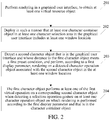
- FIG. 2 is a schematic flowchart of the information processing method according to Embodiment 1 of the present invention.
- the information processing method is applied to a terminal.
- a software application is executed on a processor of the terminal and rendering is performed on a display of the terminal, to obtain a GUI.
- the processor, the GUI, and the software application are implemented in a game system. As shown in FIG. 2 , the method includes the following steps:
- the GUI includes the at least one character selection area, the character selection area includes the at least one character container object, and the character container object includes the at least one window location.
- Corresponding character operation objects are carried in at least some window locations.
- the character operation object may be represented by using an identifier (the identifier may be an avatar) of a character object associated with the character operation object in the GUI.
- the second character object associated with the character operation object and the first character object belong to different groups.
- a manner of rendering on the character container object in the character selection area includes, but is not limited to: a bar shape or an annular shape, that is, the character container object may be represented by using a character selection bar object or a character selection wheel object.
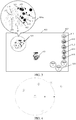
- FIG. 3 is a first schematic diagram of the GUI in the information processing method according to this embodiment of the present invention.
- the GUI obtained through rendering on the display of the terminal includes the at least one virtual resource object.
- the virtual resource object includes at least one first character object a10.
- a user of the terminal may perform information exchange by using the GUI, that is, input a user command.
- the first character object a10 can perform a first virtual operation based on a first user command detected by the terminal, where the first virtual operation includes, but is not limited to: a moving operation, a physical attack operation, a skill attack operation, and the like. It may be understood that, the first character object a10 is a character object controlled by the user of the terminal.
- the first character object a10 can perform a corresponding action in the GUI based on an operation of the user.
- the GUI further includes a mini map 801 of a virtual area in which the user character object is located.
- a schematic detailed drawing of the mini map 801 is shown by 801a.
- the GUI further includes at least one skill object 803, and the user may control, by means of a skill release operation, the user character object to perform a corresponding skill release operation.
- the GUI includes a character selection area 802, and a character container object is deployed in the character selection area 802.
- the character container object is represented by using a character selection bar object (that is, the character container object presents a display effect of a bar shape).
- the character container object includes at least one window location, and rendering is performed, in a corresponding window location, on a character operation object associated with a second character object that interacts with the first character object.
- An example in which the character operation object is represented by using an avatar that is, the character selection area 802 includes at least one avatar.
- the at least one avatar is respectively in a one-to-one correspondence with at least one second character object that interacts with the first character object. As shown in FIG.
- a five-to-five application scenario is used in this example.
- the five character operation objects in the character selection area 802 are in a one-to-one correspondence with the five second character objects that belong to groups different from that of the first character object.
- a location of the first character object changes in real time, and correspondingly, a location of the second character object in the GUI changes in real time. Therefore, in a process in which the first character object performs a virtual operation on the second character object, it is not easy for the user of the terminal to select a character object on which a virtual operation is to be performed.
- the second character object that is in the GUI and whose distance to the first character object meets the first preset condition is detected.
- the detecting a second character object that is in the GUI and whose distance to the first character object meets a first preset condition includes: detecting a second character object that is in the GUI and whose distance to the first character object is less than a first preset threshold.
- FIG. 4 is a schematic diagram of a principle of detecting the second character object whose distance to the first character object meets the first preset condition in the information processing method according to this embodiment of the present invention.
- a circular area using the first character object 1 as a circle center and using the first preset threshold (R) as a radius is detected, to obtain an area range of the circular area, where the area range may be represented by using a coordinate range. That is, an XY coordinate system is established in virtual space in which the first character object and the second character object are located, and a coordinate range of the circular area in the XY coordinate system is obtained.
- a coordinate of a second character object in the GUI is detected in real time, it is determined whether the detected coordinate is within the coordinate range representing the circular area, and when it is determined that there is a coordinate within the coordinate range representing the circular area (for example, a second character object 2, a second character object 3, and a second character object 4 shown in FIG. 4 are all in the circular area), a second character object that is in the GUI and whose distance to the first character object is less than the first preset threshold is detected.
- the first preset threshold meets an attack distance or a skill release distance of the first character object, so that in a subsequent operation process, it is convenient to rapidly select the second character object and it is convenient for the first character object to perform a virtual operation on the second character object.
- FIG. 5 is a second schematic diagram of the GUI in the information processing method according to this embodiment of the present invention. As shown in FIG. 5 , rendering is performed, according to the first display parameter, on the character operation object associated with the second character object that meets the first preset condition (referring to the character operation object b12 shown in FIG.
- an edge of an outer circle of the character operation object b12 has a rendering effect different from that of another character operation object, so that the character operation object b12 has a highlighted display effect).
- the character operation object (such as the character operation object b12) on which rendering is performed by using the first display parameter has an obvious distinguishing feature, so that the user of terminal can immediately identify the character operation object, and the user of the terminal can rapidly select the character operation object having an obvious distinguishing feature in a subsequent operation.
- the first virtual operation may be a physical attack operation or may be a skill release operation.
- the first virtual operation is a physical attack operation, after the character operation object associated with the second character object is selected, the first character object directly performs the physical attack operation on the second character object.
- a skill object When a skill release operation is to performed, a skill object first needs to be selected by means of a skill selection operation gesture, and after the character operation object associated with the second character object is selected, the first character object performs, the skill release operation on the skill object, on the second character object.
- rendering is performed, in a corresponding window location, on a character operation object associated with a second character object that performs information exchange with a first character object, and rendering is performed, according to a first display parameter, on a character operation object associated with a second character object whose distance to the first character object meets a first preset condition, that is, rendering is performed, according to the first display parameter, on a UI avatar associated with the second character object whose distance to the first character object meets a first preset condition, so that the UI avatar has a display effect that is different from that of another UI avatar, and when a user selects a target character operation object, it is convenient for the user to rapidly and accurately select a target character object based on the different display effect by means of a selection operation gesture on the character operation object, thereby greatly improving operation experience of the user in an interaction process.
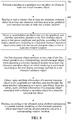
- FIG. 6 is a schematic flowchart of the information processing method according to Embodiment 2 of the present invention.
- the information processing method is applied to a terminal.
- a software application is executed on a processor of the terminal and rendering is performed on a display of the terminal, to obtain a GUI.
- the processor, the GUI, and the software application are implemented in a game system. As shown in FIG. 6 , the method includes the following steps:
- the GUI includes the at least one character selection area, the character selection area includes the at least one character container object, and the character container object includes the at least one window location.
- Corresponding character operation objects are carried in at least some window locations.
- the character operation object may be represented by using an identifier (the identifier may be an avatar) of a character object associated with the character operation object in the GUI.
- the second character object associated with the character operation object and the first character object belong to different groups.
- a manner of rendering on the character container object in the character selection area includes, but is not limited to: a bar shape or an annular shape, that is, the character container object may be represented by using a character selection bar object or a character selection wheel object.
- the GUI obtained through rendering on the display of the terminal includes the at least one virtual resource object.
- the virtual resource object includes at least one first character object a10.
- a user of the terminal may perform information exchange by using the GUI, that is, input a user command.
- the first character object a10 can perform a first virtual operation based on a first user command detected by the terminal, where the first virtual operation includes, but is not limited to: a moving operation, a physical attack operation, a skill attack operation, and the like. It may be understood that, the first character object a10 is a character object controlled by the user of the terminal. In the game system, the first character object a10 can perform a corresponding action in the GUI based on an operation of the user.
- the GUI further includes a mini map 801 of a virtual area in which the user character object is located.
- a schematic detailed method drawing of the mini map 801 is shown by 801a.
- a location of each character object (including a friend that belongs to a first group with the first character object a10 and enemy that belongs to a second group) in the virtual area is identified in the mini map 801.
- the GUI further includes at least one skill object 803, and the user may control, by means of a skill release operation, the user character object to perform a corresponding skill release operation.
- the GUI includes a character selection area 802, and a character container object is deployed in the character selection area 802.
- the character container object is represented by using a character selection bar object (that is, the character container object presents a display effect of a bar shape).
- the character container object includes at least one window location, and rendering is performed, in a corresponding window location, on a character operation object associated with a second character object that interacts with the first character object.
- An example in which the character operation object is represented by using an avatar that is, the character selection area 802 includes at least one avatar.
- the at least one avatar is respectively in a one-to-one correspondence with at least one second character object that interacts with the first character object. As shown in FIG.
- a five-to-five application scenario is used in this example.
- the five character operation objects in the character selection area 802 are in a one-to-one correspondence with the five second character objects that belong to groups different from that of the first character object.
- a location of the first character object changes in real time
- a location of the second character object in the GUI changes in real time.
- the first character object performs a virtual operation on the second character object
- the second character object that is in the GUI and whose distance to the first character object meets the first preset condition is detected.
- Step 303 Detect a second character object that is in the GUI and whose distance to the first character object meets a first preset condition, and perform, according to a first display parameter, rendering on a detected character operation object associated with the second character object in the at least one window location.
- the detecting a second character object that is in the GUI and whose distance to the first character object meets a first preset condition includes: detecting a second character object that is in the GUI and whose distance to the first character object is less than a first preset threshold.
- a circular area using the first character object 1 as a circle center and using the first preset threshold (R) as a radius is detected, to obtain an area range of the circular area, where the area range may be represented by using a coordinate range. That is, an XY coordinate system is established in virtual space in which the first character object and the second character object are located, and a coordinate range of the circular area in the XY coordinate system is obtained.
- a coordinate of a second character object in the GUI is detected in real time, it is determined whether the detected coordinate is within the coordinate range representing the circular area, and when it is determined that there is a coordinate within the coordinate range representing the circular area (for example, a second character object 2, a second character object 3, and a second character object 4 shown in FIG. 4 are all in the circular area), a second character object that is in the GUI and whose distance to the first character object is less than the first preset threshold is detected.
- the first preset threshold meets an attack distance or a skill release distance of the first character object, so that in a subsequent operation process, it is convenient to rapidly select the second character object and it is convenient for the first character object to perform a virtual operation on the second character object.
- Step 304 Detect, in second character objects whose distances to the first character object meet the first preset condition, at least some second character objects whose distances to the first character object meet a second preset condition, and perform, according to a second display parameter, rendering on character operation objects associated with the detected at least some second character objects in the at least one window location.
- the detecting, in second character objects whose distances to the first character object meet the first preset condition, at least some second character objects whose distances to the first character object meet a second preset condition includes:
- FIG. 7 is a schematic diagram of a principle of detecting the second character object whose distance to the first character object meets the second preset condition in the information processing method according to this embodiment of the present invention.
- the first preset condition for example, the second character object 2, the second character object 3, and the second character object 4 shown in FIG.
- step 305 that is, before a selection operation gesture on at least one character operation object on which rendering is performed according to the first display parameter and that is in the character container object is detected, the coordinate value of the second character object whose previous coordinate value is in the circular area using the first preset threshold (R) as a radius is detected in real time, and it is determined whether the coordinate value is in a circular area using the second preset threshold (r shown in FIG. 7 ) as a radius and using the first character object as a circle center.
- the second preset threshold r shown in FIG. 7
- the second preset threshold (r) is greater than the first preset threshold (R), that is, in the second character objects whose previous coordinate values are in the circular area using the first preset threshold as a radius, as the first character object and the second character objects move in real time, at least some second character objects move to make distances between at least some second character objects and the first character object be greater than the first preset threshold (R) and reach the second preset threshold (r), for example, the second character object 4 shown in FIG. 7 .
- an operation state in which character operation objects associated with the at least some second character objects can be selected is deactivated, and rendering is performed on the character operation object in the corresponding window location according to the second display parameter.
- the second display parameter may be a conventional display parameter, that is, in the GUI, rendering is performed, according to the second display parameter, on all other virtual resource objects than the character operation object that is displayed according to the first display parameter.
- Step 305 The first character object performs at least one of the first virtual operation on a corresponding second character object when detecting a selection operation gesture on at least one character operation object on which rendering is performed according to the first display parameter and that is in the character container object.
- a corresponding character operation object in the character container object associated with the second character object is determined, and rendering is performed on the character operation object in a corresponding window location according to the first display parameter.
- rendering is performed, according to the first display parameter, on the character operation object associated with the second character object that meets the first preset condition (referring to the character operation object b12 shown in FIG. 5 , an edge of an outer circle of the character operation object b12 has a rendering effect different from that of another character operation object, so that the character operation object b12 has a highlighted display effect).
- the character operation object (such as the character operation object b12) on which rendering is performed by using the first display parameter has an obvious distinguishing feature, so that the user of terminal can immediately identify the character operation object, and the user of the terminal can rapidly select the character operation object having an obvious distinguishing feature in a subsequent operation.
- the first virtual operation may be a physical attack operation or may be a skill release operation.
- the first virtual operation is a physical attack operation, after the character operation object associated with the second character object is selected, the first character object directly performs the physical attack operation on the second character object.
- a skill object When a skill release operation is to performed, a skill object first needs to be selected by means of a skill selection operation gesture, and after the character operation object associated with the second character object is selected, the first character object performs, the skill release operation on the skill object, on the second character object.
- rendering is performed, in a corresponding window location, on a character operation object associated with a second character object that performs information exchange with a first character object, and rendering is performed, according to a first display parameter, on a character operation object associated with a second character object whose distance to the first character object meets a first preset condition, that is, rendering is performed, according to the first display parameter, on a UI avatar associated with the second character object whose distance to the first character object meets a first preset condition, so that the UI avatar has a display effect that is different from that of another UI avatar, and when a user selects a target character operation object, it is convenient for the user to rapidly and accurately select a target character object based on the different display effect by means of a selection operation gesture on the character operation object, thereby greatly improving operation experience of the user in an interaction process.
- FIG. 8 is a schematic flowchart of the information processing method according to Embodiment 3 of the present invention.
- the information processing method is applied to a terminal.
- a software application is executed on a processor of the terminal and rendering is performed on a display of the terminal, to obtain a GUI.
- the processor, the GUI, and the software application are implemented in a game system. As shown in FIG. 8 , the method includes the following steps:
- the GUI includes the at least one character selection area, the character selection area includes the at least one character container object, and the character container object includes the at least one window location.
- Corresponding character operation objects are carried in at least some window locations.
- the character operation object may be represented by using an identifier (the identifier may be an avatar) of a character object associated with the character operation object in the GUI.
- the second character object associated with the character operation object and the first character object belong to different groups.
- a manner of rendering on the character container object in the character selection area includes, but is not limited to: a bar shape or an annular shape, that is, the character container object may be represented by using a character selection bar object or a character selection wheel object.
- the GUI obtained through rendering on the display of the terminal includes the at least one virtual resource object.
- the virtual resource object includes at least one first character object a10.
- a user of the terminal may perform information exchange by using the GUI, that is, input a user command.
- the first character object a10 can perform a first virtual operation based on a first user command detected by the terminal, where the first virtual operation includes, but is not limited to: a moving operation, a physical attack operation, a skill attack operation, and the like. It may be understood that, the first character object a10 is a character object controlled by the user of the terminal. In the game system, the first character object a10 can perform a corresponding action in the GUI based on an operation of the user.
- the GUI further includes a mini map 801 of a virtual area in which the user character object is located.
- a schematic detailed method drawing of the mini map 801 is shown by 801a.
- a location of each character object (including a friend that belongs to a first group with the first character object a10 and enemy that belongs to a second group) in the virtual area is identified in the mini map 801.
- the GUI further includes at least one skill object 803, and the user may control, by means of a skill release operation, the user character object to perform a corresponding skill release operation.
- the GUI includes a character selection area 802, and a character container object is deployed in the character selection area 802.
- the character container object is represented by using a character selection bar object (that is, the character container object presents a display effect of a bar shape).
- the character container object includes at least one window location, and rendering is performed, in a corresponding window location, on a character operation object associated with a second character object that interacts with the first character object.
- An example in which the character operation object is represented by using an avatar that is, the character selection area 802 includes at least one avatar.
- the at least one avatar is respectively in a one-to-one correspondence with at least one second character object that interacts with the first character object. As shown in FIG.
- a five-to-five application scenario is used in this example.
- the five character operation objects in the character selection area 802 are in a one-to-one correspondence with the second character objects that belong to groups different from that of the first character object.
- a location of the first character object changes in real time
- a location of the second character object in the GUI changes in real time.
- the first character object performs a virtual operation on the second character object
- the second character object that is in the GUI and whose distance to the first character object meets the first preset condition is detected.
- Step 403 Detect a second character object that is in the GUI and whose distance to the first character object meets a first preset condition, and perform, according to a first display parameter, rendering on a detected character operation object associated with the second character object in the at least one window location.
- the detecting a second character object that is in the GUI and whose distance to the first character object meets a first preset condition includes: detecting a second character object that is in the GUI and whose distance to the first character object is less than a first preset threshold.
- a circular area using the first character object 1 as a circle center and using the first preset threshold (R) as a radius is detected, to obtain an area range of the circular area, where the area range may be represented by using a coordinate range. That is, an XY coordinate system is established in virtual space in which the first character object and the second character object are located, and a coordinate range of the circular area in the XY coordinate system is obtained.
- a coordinate of a second character object in the GUI is detected in real time, it is determined whether the detected coordinate is within the coordinate range representing the circular area, and when it is determined that there is a coordinate within the coordinate range representing the circular area (for example, a second character object 2, a second character object 3, and a second character object 4 shown in FIG. 4 are all in the circular area), a second character object that is in the GUI and whose distance to the first character object is less than the first preset threshold is detected.
- the first preset threshold meets an attack distance or a skill release distance of the first character object, so that in a subsequent operation process, it is convenient to rapidly select the second character object and it is convenient for the first character object to perform a virtual operation on the second character object.
- Step 404 The first character object performs at least one of the first virtual operation on a corresponding second character object when a selection operation gesture on at least one character operation object on which rendering is performed according to the first display parameter and that is in the character container object is detected.
- a corresponding character operation object in the character container object associated with the second character object is determined, and rendering is performed on the character operation object in a corresponding window location according to the first display parameter.
- rendering is performed, according to the first display parameter, on the character operation object associated with the second character object that meets the first preset condition (referring to the character operation object b12 shown in FIG. 5 , an edge of an outer circle of the character operation object b12 has a rendering effect different from that of another character operation object, so that the character operation object b12 has a highlighted display effect).
- the character operation object (such as the character operation object b12) on which rendering is performed by using the first display parameter has an obvious distinguishing feature, so that the user of terminal can immediately identify the character operation object, and the user of the terminal can rapidly select the character operation object having an obvious distinguishing feature in a subsequent operation.
- the first virtual operation may be a physical attack operation or may be a skill release operation.
- the first virtual operation is a physical attack operation, after the character operation object associated with the second character object is selected, the first character object directly performs the physical attack operation on the second character object.
- a skill object When a skill release operation is to performed, a skill object first needs to be selected by means of a skill selection operation gesture, and after the character operation object associated with the second character object is selected, the first character object performs, the skill release operation on the skill object, on the second character object.
- Step 405 Obtain status attribute information of a second character object in the GUI, and synchronize the status attribute information to a server, and obtain, from the server, status attribute information of a character object associated with a character operation object in the character container object.
- the terminal obtains the status attribute information of the second character object in the GUI. Because the virtual space in which the first character object and the second character object are located may be relatively large based on a setting of the software application, the vision image in the GUI obtained through rendering by the terminal includes the first character object, and may include the second character object; and certainly, may not include the second character object. In this embodiment, the terminal obtains the status attribute information of the second character object included in the GUI, and synchronizes the corresponding second character object associated with the status attribute information to the server.
- the status attribute information includes, but is not limited to: a blood value, a hit point, or the skill attribute information of the second character object.
- the terminal obtains, from the server according to a preset rule, the status attribute information of the character object associated with the character operation object in the character container object, so that when the GUI of the terminal does not include at least some second character objects and status attribute information of the at least some second character objects cannot be obtained, status attribute information of second character objects associated with all character operation objects included in the character container object may be obtained by using a second character object and associated status attribute information that are synchronized by another terminal to the server.
- the terminal and the another terminal belong to a same group, and it may be understood that, the first character object controlled by the terminal and a first character object controlled by the another terminal belong to a same group in the game system, and a virtual operation is performed on second character objects that belong to another group.
- a GUI of the another terminal may include at least some second character objects, so that based on obtained status attribute information of a second character object included in a GUI of at least one terminal that belongs to the same group, status attribute information of the second character objects is mutually synchronized.
- Step 406 Perform, according to the obtained status attribute information in a preset manner, rendering on the character operation object associated with the second character object in a corresponding window location.
- FIG. 9 is a third schematic diagram of the GUI in the information processing method according to this embodiment of the present invention.
- the status attribute information is a blood value is used.
- An area at an outer circle of a character operation object (referring to the character operation object b22 in FIG.
- a manner of performing rendering on the status attribute information in a window location corresponding to the character operation object associated with the second character object is not limited to what is shown in FIG. 9 .
- Second character objects included in the GUIs of the terminal and the another terminal may not include all second character objects that interact with the second character objects and that belong to another group.
- group members that belong to a first group include: a group member 1, a group member 2, a group member 3, a group member 4, and a group member 5, and group members that belong to a second group include: a group member 6, a group member 7, a group member 8, a group member 9, and a group member 10.
- the vision image in the GUI of the terminal includes only the group member 6, a vision image in a GUI of another terminal of the group member that belongs to the first group includes the group member 7, the group member 8, and the group member 9, and the group member 10 does not exist in a vision image in a GUI of any terminal controlled by the group member that belongs to the first group.
- the group member 10 does not exist in a vision image in a GUI of any terminal controlled by the group member that belongs to the first group.
- the character operation object b21 presents a display effect that is different from that of another operation object, which is specifically displayed with a gray effect, and it indicates that a second character object corresponding to the character operation object b21 does not exist in a vision image of the first character object a10, and does not exist in a vision image of another character object that belongs to a same group as the first character object a10.
- status attribute information of a second character object associated with the character operation object b21 is not displayed in an area at an outer circle of the character operation object b21.
- status attribute information of the second character object associated with the character operation object in the character container object is obtained by synchronizing status attribute information of the character object (that is, a teammate) that is in a vision image and that belongs to the same group, and rendering is performed on the status attribute information in a corresponding window location in a particular manner, that is, the status attribute information of the second character object (that is, enemy) is reflected on a corresponding character operation object (a UI avatar), so that the user can rapidly learn the status attribute information of the second character object (that is, the enemy), thereby improving operation experience of the user in an information exchange process.
- the character object that is, a teammate
- rendering is performed on the status attribute information in a corresponding window location in a particular manner, that is, the status attribute information of the second character object (that is, enemy) is reflected on a corresponding character operation object (a UI avatar), so that the user can rapidly learn the status attribute information of the second character object (that is, the enemy), thereby improving operation experience of the user in an information
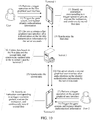
- FIG. 10 is a schematic application diagram of interaction in the information processing method according to this embodiment of the present invention.
- the terminal 1, the terminal 2, and a server are included.
- a user 1 performs triggering and control by using the terminal 1, and a user 2 performs triggering and control by using the terminal 2; and the method includes the following steps:
- Step 11 The user 1 triggers a game system and registers identity authentication information, where the identity authentication information may be a user name and a password.
- Step 12 The terminal 1 transmits the obtained identity authentication information to the server 3, and the server 3 performs identity authentication, and returns a first GUI to the terminal 1 after the identity authentication succeeds, where the first GUI includes a first character object, the first character object can perform a virtual operation based on a trigger operation of the user 1, and the virtual operation includes a moving operation of the first character object, an attack operation or a skill release operation of the first character object for another character object, and the like.
- Step 21 The user 2 triggers the game system and registers identity authentication information, where the identity authentication information may be a user name and a password.
- Step 22 The terminal 2 transmits the obtained identity authentication information to the server 3, and the server 3 performs identity authentication, and returns a second GUI to the terminal 2 after the identity authentication succeeds, where the second GUI includes a second character object, the second character object can perform a virtual operation based on a trigger operation of the user 2, and the virtual operation includes a moving operation of the second character object, an attack operation or a skill release operation of the second character object for another character object, and the like.
- the user 1 and the user 2 make, based on the trigger operation, the first character object and the second character object be information exchange objects, that is, the first character object uses the second character object as a target interaction object, and correspondingly, the second character object uses the first character object as a target interaction object.
- the user 1 and the user 2 serve as controlling parties in a game battle, rendering is performed on a character operation object associated with the second character object in a window location of a character container object in a character selection area in the first GUI; and correspondingly, rendering is performed on a character operation object associated with the first character object in a window location of a character container object in a character selection area in the second GUI.
- the terminal 1 detects a distance between the second character object and the first character object in real time, and when the distance is within a range of a first preset threshold, performs rendering, according to a first display parameter, on the character operation object associated with the second character object in the window location, that is, highlights the character operation object.
- the terminal 2 detects the distance between the first character object and the second character object in real time, and when the distance is within the range of the first preset threshold, performs rendering, according to the first display parameter, the character operation object associated with the first character object in the window location, that is, highlights the character operation object.
- Step 13 The user performs a trigger operation on the first GUI presented by the terminal 1, where the trigger operation may be performed on any virtual resource object in the first GUI, including a skill release operation on any skill object, an information exchange operation (which may be understood as a physical attack operation) on any character object, a moving operation of the first character object, and the like.
- the trigger operation is selection gesture operation on a character operation object that is in the character container object in the first GUI and on which rendering is performed according to the first display parameter.
- Step 14 The terminal 1 identifies, when obtaining a trigger operation, an instruction corresponding to the trigger operation gesture; executes the instruction, for example, executes a skill release instruction for a corresponding operation object, executes an information exchange instruction (such as a physical attack instruction) for a corresponding character object, or executes a moving instruction; and in a process of executing the instruction, records a change of corresponding data.
- the terminal 1 when obtaining the selection gesture operation on the character operation object on which rendering is performed according to the first display parameter, the terminal 1 generates a corresponding first instruction, and executes the first instruction to control the first character object to perform a virtual operation (such as a physical attack operation or a skill release operation) on the corresponding second character object.
- Step 15 Use changed data as first data corresponding to the terminal 1 and synchronize the first data to the server 3.
- Step 23 The user performs a trigger operation on the second GUI presented by the terminal 2, where the trigger operation may be performed on any virtual resource object in the second GUI, including a skill release operation on any skill object, an information exchange operation (which may be understood as a physical attack operation) on any character object, a moving operation of the second character object, and the like.
- the trigger operation is a selection gesture operation on a character operation object that is in the character container object in the second GUI and on which rendering is performed according to the first display parameter.
- Step 24 The terminal 2 identifies, when obtaining a trigger operation, an instruction corresponding to the trigger operation gesture; executes the instruction, for example, executes a skill release instruction for a corresponding operation object, executes an information exchange instruction (such as a physical attack instruction) for a corresponding character object, or executes a moving instruction; and in a process of executing the instruction, records a change of corresponding data.
- the terminal 2 when obtaining the selection gesture operation on the character operation object on which rendering is performed according to the first display parameter, the terminal 2 generates a corresponding second instruction, and executes the second instruction to control the second character object to perform a virtual operation (such as a physical attack operation or a skill release operation) on the corresponding first character object.
- Step 25 Use changed data as second data corresponding to the terminal 2 and synchronize the second data to the server 3.
- Step 30 Update data based on the first data synchronized by the terminal 1 and the second data synchronized by the terminal 2, and synchronize updated data respectively to the terminal 1 and the terminal 2.
- This application scenario is related to Multiplayer Online Battle Arena Games (MOBA).
- MOBA Multiplayer Online Battle Arena Games
- UI layer that is, an icon in a GUI
- skill indicator a special effect, a halo, or an operation used to supplement skill release
- virtual lens which may be understood as a camera in the game
- mini map a scaled-down version of a large map, which may be understood as a radar map, where information and locations of two parties are displayed in the map.
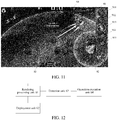
- FIG. 11 is a fourth schematic diagram of the GUI in the information processing method according to this embodiment of the present invention. This example is based on an application scenario used in an actual interaction process.
- a first character object 93 and at least one skill object 92 are obtained through rendering; and the first character object 93 can perform a corresponding virtual operation based on a trigger operation of a user.
- the GUI 90 further includes a character selection area 91, and the character selection area 91 includes a character container object.
- the character container object includes five window locations.
- One character operation object is obtained through rendering in each window location, including a character operation object 911, a character operation object 912, a character operation object 913, a character operation object 914, and a character operation object 915.
- Each character operation object is associated with one character object.
- the five character objects are all character objects that belong to a group that is different from the first character object 93, that is, the five character objects serve as enemy of the first character object 93 for interaction.
- the first character object 93 detects, in real time, a second character object that is in the GUI 90 and whose distance to the first character object 93 meets the first preset threshold, and performs, according to the first display parameter, rendering on a character operation object associated with a corresponding second character object, where the first preset threshold may be set to a skill release distance of a skill object according to an actual requirement, and certainly is not limited to the foregoing setting manner.
- the character operation object 913 shown in FIG. 10 has a highlighted display effect.
- the user can rapidly and accurately select a target character object based on the different display effect by means of a selection operation gesture on the character operation object, to perform a virtual operation on the target character object, thereby greatly improving operation experience of the user in an interaction process.
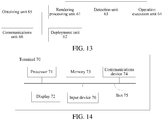
- FIG. 12 is a schematic structural diagram of the terminal according to Embodiment 4 of the present invention. As shown in FIG. 12 , the terminal includes: a rendering processing unit 61, a deployment unit 62, a detection unit 63, and an operation execution unit 64.
- the rendering processing unit 61 is configured to: execute a software application and perform rendering, to obtain a GUI; and perform rendering in the GUI, to obtain at least one virtual resource object, at least one of the virtual resource object being configured as a first character object that performs a first virtual operation according to an input first user command; and being further configured to perform, according to a first display parameter, rendering on a character operation object detected by the detection unit 63 and associated with the second character object in the at least one window location.
- the deployment unit 62 is configured to: deploy in such a manner that at least one character container object in at least one character selection area in the GUI includes at least one window location.
- the detection unit 63 is configured to detect a second character object that is in the GUI and whose distance to the first character object meets a first preset condition.
- the operation execution unit 64 is configured to: perform, by the first character object, at least one of the first virtual operation on a corresponding second character object when a selection operation gesture on at least one character operation object on which rendering is performed according to the first display parameter and that is in the character container object is detected.
- the GUI includes the at least one character selection area, the character selection area includes the at least one character container object, and the character container object includes the at least one window location.
- Corresponding character operation objects are carried in at least some window locations.
- the character operation object may be represented by using an identifier (the identifier may be an avatar) of a character object associated with the character operation object in the GUI.
- the second character object associated with the character operation object and the first character object belong to different groups.
- a manner of rendering on the character container object in the character selection area includes, but is not limited to: a bar shape or an annular shape, that is, the character container object may be represented by using a character selection bar object or a character selection wheel object.
- the GUI obtained through rendering by the rendering processing unit 61 includes the at least one virtual resource object.
- the virtual resource object includes at least one first character object a10.
- a user of the terminal may perform information exchange by using the GUI, that is, input a user command.
- the first character object a10 can perform a first virtual operation based on a first user command detected by the terminal, where the first virtual operation includes, but is not limited to: a moving operation, a physical attack operation, a skill attack operation, and the like. It may be understood that, the first character object a10 is a character object controlled by the user of the terminal. In the game system, the first character object a10 can perform a corresponding action in the GUI based on an operation of the user.
- the GUI further includes a mini map 801 of a virtual area in which the user character object is located.
- a schematic detailed method drawing of the mini map 801 is shown by 801a.
- a location of each character object (including a friend that belongs to a first group with the first character object a10 and enemy that belongs to a second group) in the virtual area is identified in the mini map 801.
- the GUI further includes at least one skill object 803, and the user may control, by means of a skill release operation, the user character object to perform a corresponding skill release operation.
- the deployment unit 62 deploys a character selection area 802 in the GUI, and deploys a character container object in the character selection area 802.
- the character container object is represented by using a character selection bar object (that is, the character container object presents a display effect of a bar shape).
- the character container object includes at least one window location, and rendering is performed, in a corresponding window location, on a character operation object associated with a second character object that interacts with the first character object.
- An example in which the character operation object is represented by using an avatar that is, the character selection area 802 includes at least one avatar.
- the at least one avatar is respectively in a one-to-one correspondence with at least one second character object that interacts with the first character object.
- a five-to-five application scenario is used in this example.
- the five character operation objects in the character selection area 802 are in a one-to-one correspondence with the second character objects that belong to groups different from that of the first character object.
- a location of the first character object changes in real time, and correspondingly, a location of the second character object in the GUI changes in real time.
- the detection unit 63 detects the second character object that is in the GUI and whose distance to the first character object meets the first preset condition.
- the detection unit 63 is configured to detect a second character object that is in the GUI and whose distance to the first character object is less than a first preset threshold.
- the detection unit 63 detects a circular area using the first character object 1 as a circle center and using the first preset threshold (R) as a radius, to obtain an area range of the circular area, where the area range may be represented by using a coordinate range. That is, an XY coordinate system is established in virtual space in which the first character object and the second character object are located, and a coordinate range of the circular area in the XY coordinate system is obtained.
- the detection unit 63 detects a coordinate of a second character object in the GUI in real time, determines whether the detected coordinate is within the coordinate range representing the circular area, and when determining that there is a coordinate within the coordinate range representing the circular area (for example, a second character object 2, a second character object 3, and a second character object 4 shown in FIG. 4 are all in the circular area), detects a second character object that is in the GUI and whose distance to the first character object is less than the first preset threshold.
- the first preset threshold meets an attack distance or a skill release distance of the first character object, so that in a subsequent operation process, it is convenient to rapidly select the second character object and it is convenient for the first character object to perform a virtual operation on the second character object.
- the detection unit 63 is further configured to detect, in second character objects whose distances to the first character object meet the first preset condition, at least some second character objects whose distances to the first character object meet a second preset condition; and correspondingly, the rendering processing unit 61 is configured to: perform, according to a second display parameter, rendering on character operation objects associated with the at least some second character objects detected by the detection unit 63 in the at least one window location, where a display effect obtained by performing rendering according to the second display parameter is different from a display effect obtained by performing rendering according to the first display parameter.
- the detection unit 63 is configured to detect, in the second character objects whose distances to the first character object meet the first preset condition, a second character object whose distance to the first character object reaches a second preset threshold, where the second preset threshold is greater than or equal to the first preset threshold.
- the detection unit 63 detects a selection operation gesture on at least one character operation object on which rendering is performed according to the first display parameter and that is in the character container object, the detection unit 63 detects, in real time, the coordinate value of the second character object whose previous coordinate value is in the circular area using the first preset threshold (R) as a radius, and determines whether the coordinate value is in a circular area using the second preset threshold (r shown in FIG.
- the second preset threshold (r) is greater than the first preset threshold (R), that is, in the second character objects whose previous coordinate values are in the circular area using the first preset threshold as a radius, as the first character object and the second character objects move in real time, at least some second character objects move to make distances between at least some second character objects and the first character object be greater than the first preset threshold (R) and reach the second preset threshold (r), for example, the second character object 4 shown in FIG. 7 .
- an operation state in which character operation objects associated with the at least some second character objects can be selected is deactivated, and rendering is performed on the character operation object in the corresponding window location according to the second display parameter.
- the second display parameter may be a conventional display parameter, that is, in the GUI, rendering is performed, according to the second display parameter, on all other virtual resource objects than the character operation object that is displayed according to the first display parameter.
- the rendering processing unit 61 performs rendering, in a corresponding window location according to the first display parameter, on the character operation object associated with the second character object that meets the first preset condition.
- rendering is performed, according to the first display parameter, on the character operation object associated with the second character object that meets the first preset condition (referring to the character operation object b12 shown in FIG. 5 , an edge of an outer circle of the character operation object b12 has a rendering effect different from that of another character operation object, so that the character operation object b12 has a highlighted display effect).
- the character operation object (such as the character operation object b12) on which rendering is performed by using the first display parameter has an obvious distinguishing feature, so that the user of terminal can immediately identify the character operation object, and the user of the terminal can rapidly select the character operation object having an obvious distinguishing feature in a subsequent operation.
- processing units in the terminal in this embodiment of the present invention may be understood by referring to related descriptions of the information processing method.
- the processing units in the information processing terminal in this embodiment of the present invention may be implemented by implementing an analog circuit having the function in this embodiment of the present invention or may be implemented by running software having the function in this embodiment of the present invention on an intelligent terminal.
- FIG. 13 is a schematic structural diagram of the terminal according to Embodiment 5 of the present invention.
- the terminal includes: a rendering processing unit 61, a deployment unit 62, a detection unit 63, an operation execution unit 64, an obtaining unit 65, and a communications unit 66.
- the rendering processing unit 61 is configured to: execute a software application and perform rendering, to obtain a GUI; and perform rendering in the GUI, to obtain at least one virtual resource object, at least one of the virtual resource object being configured as a first character object that performs a first virtual operation according to an input first user command; and being further configured to perform, according to a first display parameter, rendering on a character operation object detected by the detection unit 63 and associated with the second character object in the at least one window location.
- the deployment unit 62 is configured to: deploy in such a manner that at least one character container object in at least one character selection area in the GUI includes at least one window location.
- the detection unit 63 is configured to detect a second character object that is in the GUI and whose distance to the first character object meets a first preset condition.
- the operation execution unit 64 is configured to: perform, by the first character object, at least one of the first virtual operation on a corresponding second character object when a selection operation gesture on at least one character operation object on which rendering is performed according to the first display parameter and that is in the character container object is detected.
- the obtaining unit 65 is configured to obtain status attribute information of a second character object in the GUI.
- the communications unit 66 is configured to: synchronize the status attribute information obtained by the obtaining unit 65 to a server, and obtain, from the server, status attribute information of a character object associated with a character operation object in the character container object.
- the rendering processing unit 61 is configured to perform, according to the obtained status attribute information in a preset manner, rendering on the character operation object associated with the second character object in a corresponding window location.
- the obtaining unit 65 obtains the status attribute information of the second character object in the GUI. Because the virtual space in which the first character object and the second character object are located may be relatively large based on a setting of the software application, the vision image in the GUI obtained through rendering by the terminal includes the first character object, and may include the second character object; and certainly, may not include the second character object. In this embodiment, the terminal obtains the status attribute information of the second character object included in the GUI, and synchronizes the corresponding second character object associated with the status attribute information to the server.
- the status attribute information includes, but is not limited to: a blood value, a hit point, or the skill attribute information of the second character object.
- the communications unit 66 obtains, from the server according to a preset rule, the status attribute information of the character object associated with the character operation object in the character container object, so that when the GUI of the terminal does not include at least some second character objects and status attribute information of the at least some second character objects cannot be obtained, status attribute information of second character objects associated with all character operation objects included in the character container object may be obtained by using a second character object and associated status attribute information that are synchronized by another terminal to the server.
- the terminal and the another terminal belong to a same group, and it may be understood that, the first character object controlled by the terminal and a first character object controlled by the another terminal belong to a same group in the game system, and a virtual operation is performed on second character objects that belong to another group.
- a GUI of the another terminal may include at least some second character objects, so that based on obtained status attribute information of a second character object included in a GUI of at least one terminal that belongs to the same group, status attribute information of the second character objects is mutually synchronized.
- the status attribute information of the second character object is obtained by the terminal and synchronized by the server
- rendering is performed, in a preset manner in the character container object, on the character operation object associated with the second character object in the corresponding window location.
- the status attribute information is a blood value
- An area at an outer circle of a character operation object (referring to the character operation object b22 in FIG. 9 ) associated with the second character object is used as a blood groove display area b221, and a current blood value of a corresponding second character object is represented by using a proportion of a blood value in the blood groove display area b221 to the blood groove display area.
- a manner of performing rendering on the status attribute information in a window location corresponding to the character operation object associated with the second character object is not limited to what is shown in FIG. 9 .
- processing units in the terminal in this embodiment of the present invention may be understood by referring to related descriptions of the information processing method.
- the processing units in the information processing terminal in this embodiment of the present invention may be implemented by implementing an analog circuit having the function in this embodiment of the present invention or may be implemented by running software having the function in this embodiment of the present invention on an intelligent terminal.
- the rendering processing unit 61, the deployment unit 62, the detection unit 63, the operation execution unit 64, and the obtaining unit 65 in the terminal may all be implemented by a central processing unit (CPU), a digital signal processor (DSP) or a field programmable gate array (FPGA) in the terminal; and in an actual application, the communications unit 66 in the terminal may be implemented by a transceiver antenna or a communications interface in the terminal.
- CPU central processing unit
- DSP digital signal processor
- FPGA field programmable gate array
- the terminal may be an electronic device such as a PC or may be a portable electronic device such as a tablet computer, a laptop computer, or a smartphone.
- a game system is executed in the terminal by installing a software application (such as a game application), and the terminal includes at least a memory for storing data and a processor for data processing.
- a software application such as a game application
- the terminal includes at least a memory for storing data and a processor for data processing.
- a microprocessor, a CPU, a DSP, or an FPGA may be used for implementation.
- the memory includes an operation instruction, the operation instruction may be computer executable code, and steps in the procedure of the information processing method in the embodiments of the present invention are implemented by using the operation instruction.
- FIG. 14 is a schematic structural diagram of a terminal according to Embodiment 6 of the present invention.
- the terminal includes: a processor 71 and a display 72.
- the processor 71 is configured to: execute a software application and perform rendering on the display 72, to obtain a GUI.
- the processor, the GUI, and the software application are implemented on a game system.
- the processor 71 is further configured to perform rendering in the GUI, to obtain at least one virtual resource object, at least one of the virtual resource object being configured as a first character object that performs a first virtual operation according to an input first user command; deploy in such a manner that at least one character container object in at least one character selection area in the GUI includes at least one window location; detect a second character object that is in the GUI and whose distance to the first character object meets a first preset condition, and perform, according to a first display parameter, rendering on a detected character operation object associated with the second character object in the at least one window location; and perform, by the first character object, at least one of the first virtual operation on a corresponding second character object when detecting a selection operation gesture on at least one character operation object on which rendering is performed according to the first display parameter and that is in the character container object.
- the detecting, by the processor 71, a second character object that is in the GUI and whose distance to the first character object meets a first preset condition includes:
- the processor 71 is further configured to: before detecting the selection operation gesture on the at least one character operation object on which rendering is performed according to the first display parameter and that is in the character container object, detect, in second character objects whose distances to the first character object meet the first preset condition, at least some second character objects whose distances to the first character object meet a second preset condition, and perform, according to a second display parameter, rendering on character operation objects associated with the detected at least some second character objects in the at least one window location, where a display effect obtained by performing rendering according to the second display parameter is different from a display effect obtained by performing rendering according to the first display parameter.
- the detecting, by the processor 71 in second character objects whose distances to the first character object meet the first preset condition, at least some second character objects whose distances to the first character object meet a second preset condition includes:
- the terminal further includes a communications device 74.
- the processor 71 is further configured to: obtain status attribute information of a second character object in the GUI, and synchronize the status attribute information to a server by using the communications device 74; and obtain, from the server by using the communications interface, status attribute information of a character object associated with a character operation object in the character container object.
- the processor 71 is further configured to perform, according to the obtained status attribute information in a preset manner, rendering on the character operation object associated with the second character object in a corresponding window location.
- the terminal includes: the processor 71, the display 72, a memory 73, an input device 76, a bus 75, and the communications device 74.
- the processor 71, the memory 73, the input device 76, the display 72, and the communications device 74 are all connected by using the bus 75, and the bus 75 is configured to transmit data between the processor 71, the memory 73, the display 72, and the communications device 74.
- the input device 76 is mainly configured to obtain an input operation of a user, and the input device 76 may vary with the terminal.
- the input device 76 may be an input device 76 such as a mouse or a keyboard;
- the terminal is portable device such as a smartphone or a tablet computer, the input device 76 may be a touchscreen.
- a computer storage medium is stored in the memory 73
- a computer executable instruction is stored in the computer storage medium
- the computer executable instruction is configured to perform the information processing method in the embodiments of the present invention.
- the disclosed device and method may be implemented in other manners.
- the described device embodiments are merely examples.
- the unit division is merely logical function division and may be other division during actual implementation.
- multiple units or components may be combined or integrated into another system, or some features may be ignored or not performed.
- the displayed or discussed mutual couplings or direct couplings or communication connections between constituent parts may be implemented through some interfaces.
- the indirect couplings or communication connections between the devices or units may be implemented in electronic, mechanic, or other forms.
- the units described as separate parts may or may not be physically separate, and parts displayed as units may or may not be physical units, may be located in one location, or may be distributed on multiple network units. Some or all of the units may be selected according to actual needs to achieve the objectives of the solutions of the embodiments.
- the functional units in the embodiments of the present invention may all be integrated into one processing unit, or each of the units may exist separately, or two or more units are integrated into one unit, and the integrated unit may be implemented in a form of hardware, or may be implemented in a form of hardware in addition to a software functional unit.
- the program may be stored in a computer-readable storage medium. When the program runs, the steps of the method embodiments are performed.
- the foregoing storage medium includes: any medium that can store program code, such as a portable storage device, a read-only memory (ROM), a random access memory (RAM), a magnetic disk, or an optical disc.
- the integrated unit when the integrated unit is implemented in a form of a software functional module and sold or used as an independent product, the integrated unit may be stored in a computer-readable storage medium.
- the computer software product is stored in a storage medium, and includes several instructions for instructing a computer device (which may be a personal computer, a server, or a network device) to perform all or some of the steps of the methods described in the embodiments of the present invention.
- the foregoing storage medium includes: any medium that can store program code, such as a portable storage device, a ROM, a RAM, a magnetic disk, or an optical disc.
- rendering is performed, in a corresponding window location, on a character operation object associated with a second character object that performs information exchange with a first character object, and rendering is performed, according to a first display parameter, on a character operation object associated with a second character object whose distance to the first character object meets a first preset condition, that is, rendering is performed, according to the first display parameter, on a UI avatar associated with the second character object whose distance to the first character object meets a first preset condition, so that the UI avatar has a display effect that is different from that of another UI avatar, and when a user selects a target character operation object, it is convenient for the user to rapidly and accurately select a target character object based on the different display effect by means of a selection operation gesture on the character operation object, thereby greatly improving operation experience of the user in an interaction process.
Landscapes
- Engineering & Computer Science (AREA)
- Multimedia (AREA)
- Theoretical Computer Science (AREA)
- General Engineering & Computer Science (AREA)
- Human Computer Interaction (AREA)
- Physics & Mathematics (AREA)
- General Physics & Mathematics (AREA)
- Optics & Photonics (AREA)
- Radar, Positioning & Navigation (AREA)
- Computing Systems (AREA)
- Geometry (AREA)
- Computer Graphics (AREA)
- User Interface Of Digital Computer (AREA)
Abstract
Description
- The present disclosure relates to information processing technologies, and in particular, to an information processing method, a terminal, and a computer storage medium.
- With rapid development of Internet technologies and gradual popularization of large-screen and super-screen intelligent terminals, a processor of an intelligent terminal has an increasingly high processing capability, so that many applications that implement control based on man-machine interaction appear on a large screen or a super screen. In a process of implementing control based on man-machine interaction, multiple users may run different interaction modes by creating groups in one-to-one, one-to-many, and many-to-many forms, to obtain different interaction results. For example, in a graphical user interface (GUI) obtained through rendering on a large screen or a super screen, after multiple users are grouped into two different groups, by means of control processing in man-machine interaction, information exchange may be performed between the different groups, and different interaction results are obtained according to a response to information exchange; and by means of control processing in man-machine interaction, information exchange may further be performed between group members in a same group, and different interaction results are obtained according to a response to information exchange.
- In the existing technology, in an information exchange process, because a target group member frequently moves, or because there are a large number of target group members and the target group members frequently move, when a target group member is selected, multiple times of trigger operations are required. A trigger operation process has a relatively long time and has low accuracy, and requirements for rapidness and accuracy cannot be met in the information exchange process. In related technologies, there is still no effective solution to the problem currently.
- Embodiments of the present invention expect to provide an information processing method, a terminal, and a computer storage medium, so as to rapidly and accurately select a target object in an information exchange process, thereby improving user experience.
- To achieve the foregoing objective, the technical solutions in the embodiments of the present invention are implemented as follows:
- An embodiment of the present invention provides an information processing method, a software application being executed on a processor of a terminal and rendering being performed on a display of the terminal, to obtain a GUI, the processor, the GUI, and the software application being implemented in a game system, and the method including:
- performing rendering in the GUI, to obtain at least one virtual resource object, at least one of the virtual resource object being configured as a first character object that performs a first virtual operation according to an input first user command;
- deploying in such a manner that at least one character container object in at least one character selection area in the GUI includes at least one window location; and
- detecting a second character object that is in the GUI and whose distance to the first character object meets a first preset condition, and performing, according to a first display parameter, rendering on a detected character operation object associated with the second character object in the at least one window location; and
- performing, by the first character object, at least one of the first virtual operation on a corresponding second character object when a selection operation gesture on at least one character operation object on which rendering is performed according to the first display parameter and that is in the character container object is detected.
- An embodiment of the present invention further provides a terminal, the terminal including: a rendering processing unit, a deployment unit, a detection unit, and an operation execution unit,
the rendering processing unit being configured to: execute a software application and perform rendering, to obtain a GUI; and perform rendering in the GUI, to obtain at least one virtual resource object, at least one of the virtual resource object being configured as a first character object that performs a first virtual operation according to an input first user command; and being further configured to perform, according to a first display parameter, rendering on a character operation object detected by the detection unit and associated with the second character object in the at least one window location;
the deployment unit being configured to: deploy in such a manner that at least one character container object in at least one character selection area in the GUI includes at least one window location;
the detection unit being configured to detect a second character object that is in the GUI and whose distance to the first character object meets a first preset condition; and
the operation execution unit being configured to: perform, by the first character object, at least one of the first virtual operation on a corresponding second character object when a selection operation gesture on at least one character operation object on which rendering is performed according to the first display parameter and that is in the character container object is detected. - An embodiment of the present invention further provides a terminal, the terminal including: a processor and a display; the processor being configured to: execute a software application and perform rendering on the display, to obtain a GUI; and the processor, the GUI, and the software application being implemented on a game system; and
the processor being further configured to perform rendering in the GUI, to obtain at least one virtual resource object, at least one of the virtual resource object being configured as a first character object that performs a first virtual operation according to an input first user command;
deploy in such a manner that at least one character container object in at least one character selection area in the GUI includes at least one window location;
detect a second character object that is in the GUI and whose distance to the first character object meets a first preset condition, and perform, according to a first display parameter, rendering on a detected character operation object associated with the second character object in the at least one window location; and
perform, by the first character object, at least one of the first virtual operation on a corresponding second character object when detecting a selection operation gesture on at least one character operation object on which rendering is performed according to the first display parameter and that is in the character container object. - An embodiment of the present invention further provides a computer storage medium, a computer executable instruction being stored in the computer storage medium, and the computer executable instruction being configured to perform the information processing method in the embodiments of the present invention.
- According to the information processing method, the terminal, and the computer storage medium in the embodiments of the present invention, by means of a window location in a character container object deployed in a character selection area in a GUI, rendering is performed, in a corresponding window location, on a character operation object associated with a second character object that performs information exchange with a first character object, and rendering is performed, according to a first display parameter, on a character operation object associated with a second character object whose distance to the first character object meets a first preset condition, that is, rendering is performed, according to the first display parameter, on a UI avatar associated with the second character object whose distance to the first character object meets a first preset condition, so that the UI avatar has a display effect that is different from that of another UI avatar, and when a user selects a target character operation object, it is convenient for the user to rapidly and accurately select a target character object based on the different display effect by means of a selection operation gesture on the character operation object, thereby greatly improving operation experience of the user in an interaction process.
-
-
FIG. 1 is a schematic diagram of an application architecture of information exchange in an information processing method according to an embodiment of the present invention; -
FIG. 2 is a schematic flowchart of an information processing method according toEmbodiment 1 of the present invention; -
FIG. 3 is a first schematic diagram of a GUI in an information processing method according to an embodiment of the present invention; -
FIG. 4 is a schematic diagram of a principle of detecting a second character object whose distance to a first character object meets a first preset condition in an information processing method according to an embodiment of the present invention; -
FIG. 5 is a second schematic diagram of a GUI in an information processing method according to an embodiment of the present invention; -
FIG. 6 is a schematic flowchart of an information processing method according toEmbodiment 2 of the present invention; -
FIG. 7 is a schematic diagram of a principle of detecting a second character object whose distance to a first character object meets a second preset condition in an information processing method according to an embodiment of the present invention; -
FIG. 8 is a schematic flowchart of an information processing method according toEmbodiment 3 of the present invention; -
FIG. 9 is a third schematic diagram of a GUI in an information processing method according to an embodiment of the present invention; -
FIG. 10 is a schematic application diagram of interaction in an information processing method according to an embodiment of the present invention; -
FIG. 11 is a fourth schematic diagram of a GUI in an information processing method according to an embodiment of the present invention; -
FIG. 12 is a schematic structural diagram of a terminal according toEmbodiment 4 of the present invention; and -
FIG. 13 is a schematic structural diagram of a terminal according toEmbodiment 5 of the present invention; and -
FIG. 14 is a schematic structural diagram of a terminal according toEmbodiment 6 of the present invention. - The present disclosure is further described in detail below with reference to the accompanying drawings and specific embodiments.
-
FIG. 1 is a schematic diagram of an application architecture of information exchange in an information processing method according to an embodiment of the present invention. As shown inFIG. 1 , the application architecture includes: aserver 101 and at least one terminal. As shown in the application architecture, the terminal includes: aterminal 102, aterminal 103, aterminal 104, aterminal 105, and aterminal 106. The at least one terminal may establish a connection to theserver 101 by using a network 100 (such as a wired network or a wireless network). Specifically, the terminal includes a mobile phone, a desktop computer, a PC, an all-in-one PC, and other types. - In this embodiment, a processor of the terminal can execute a software application and perform rendering on a display of the terminal, to obtain a GUI. The processor, the GUI, and the software application are implemented on a game system. In this embodiment, in a process of implementing the processor, the GUI, and the software application in the game system, the at least one terminal may perform information exchange with the
server 101 by using a wired network or a wireless network, to implement a one-to-one or many-to-many (such as three-to-three or five-to-five) application mode scenario in the game system. In the one-to-one application scenario, a virtual resource object in a graphical user object obtained through rendering by a terminal may perform information exchange with a virtual resource object preset in the game system (which may be understood as man vs machine), that is, the terminal performs information exchange with the server. Alternatively, in the one-to-one application scenario, a virtual resource object in a graphical user object obtained through rendering by a terminal may perform information exchange with a virtual resource object in a graphical user object obtained through rendering by another terminal, for example, a virtual resource object in a graphical user object obtained through rendering by theterminal 102 performs information exchange with a virtual resource object in a graphical user object obtained through rendering by theterminal 103. In the many-to-many application mode scenario, using the three-to-three application mode scenario as an example, virtual resource objects in graphical user objects that are obtained through rendering respectively performed by aterminal 1, aterminal 2, and aterminal 3 are grouped into a first group, virtual resource objects in graphical user objects that are obtained through rendering respectively performed by aterminal 4, aterminal 5, and aterminal 6 are grouped into a second group, and a group member in the first group performs information exchange with a group member in the second group. - The example in
FIG. 1 is only an example of an application architecture for implementing the embodiments of the present invention, and the embodiments of the present invention are not limited to the application architecture inFIG. 1 . Based on the application architecture, various embodiments of the present invention are provided. - This embodiment of the present invention provides an information processing method.
FIG. 2 is a schematic flowchart of the information processing method according toEmbodiment 1 of the present invention. The information processing method is applied to a terminal. A software application is executed on a processor of the terminal and rendering is performed on a display of the terminal, to obtain a GUI. The processor, the GUI, and the software application are implemented in a game system. As shown inFIG. 2 , the method includes the following steps: - Step 201: Perform rendering in the GUI, to obtain at least one virtual resource object, at least one of the virtual resource object being configured as a first character object that performs a first virtual operation according to an input first user command.
- Step 202: Deploy in such a manner that at least one character container object in at least one character selection area in the GUI includes at least one window location.
- Step 203: Detect a second character object that is in the GUI and whose distance to the first character object meets a first preset condition, and perform, according to a first display parameter, rendering on a detected character operation object associated with the second character object in the at least one window location.
- Step 204: The first character object performs at least one of the first virtual operation on a corresponding second character object when detecting a selection operation gesture on at least one character operation object on which rendering is performed according to the first display parameter and that is in the character container object.
- In this embodiment, the GUI includes the at least one character selection area, the character selection area includes the at least one character container object, and the character container object includes the at least one window location. Corresponding character operation objects are carried in at least some window locations. The character operation object may be represented by using an identifier (the identifier may be an avatar) of a character object associated with the character operation object in the GUI. Herein, the second character object associated with the character operation object and the first character object belong to different groups. A manner of rendering on the character container object in the character selection area includes, but is not limited to: a bar shape or an annular shape, that is, the character container object may be represented by using a character selection bar object or a character selection wheel object.
-
FIG. 3 is a first schematic diagram of the GUI in the information processing method according to this embodiment of the present invention. As shown inFIG. 3 , the GUI obtained through rendering on the display of the terminal includes the at least one virtual resource object. The virtual resource object includes at least one first character object a10. A user of the terminal may perform information exchange by using the GUI, that is, input a user command. The first character object a10 can perform a first virtual operation based on a first user command detected by the terminal, where the first virtual operation includes, but is not limited to: a moving operation, a physical attack operation, a skill attack operation, and the like. It may be understood that, the first character object a10 is a character object controlled by the user of the terminal. In the game system, the first character object a10 can perform a corresponding action in the GUI based on an operation of the user. In an implementation, the GUI further includes amini map 801 of a virtual area in which the user character object is located. A schematic detailed drawing of themini map 801 is shown by 801a. As can be learned, a location of each character object (including a friend that belongs to a first group with the first character object a10 and enemy that belongs to a second group) in the virtual area is identified in themini map 801. The GUI further includes at least oneskill object 803, and the user may control, by means of a skill release operation, the user character object to perform a corresponding skill release operation. - In the example shown in
FIG. 3 , the GUI includes acharacter selection area 802, and a character container object is deployed in thecharacter selection area 802. In this example, the character container object is represented by using a character selection bar object (that is, the character container object presents a display effect of a bar shape). The character container object includes at least one window location, and rendering is performed, in a corresponding window location, on a character operation object associated with a second character object that interacts with the first character object. An example in which the character operation object is represented by using an avatar is used, that is, thecharacter selection area 802 includes at least one avatar. The at least one avatar is respectively in a one-to-one correspondence with at least one second character object that interacts with the first character object. As shown inFIG. 3 , a five-to-five application scenario is used in this example. There are five second character objects that belong to a group different from that of the first character object a10, and correspondingly, there are five character operation objects in thecharacter selection area 802, for example, a character operation object b11, a character operation object b12, a character operation object b13, a character operation object b14, and a character operation object b15 shown inFIG. 3 . It may be understood that, the five character operation objects in thecharacter selection area 802 are in a one-to-one correspondence with the five second character objects that belong to groups different from that of the first character object. - Based on the example of the GUI shown in
FIG. 3 , during control by the user of the terminal, a location of the first character object changes in real time, and correspondingly, a location of the second character object in the GUI changes in real time. Therefore, in a process in which the first character object performs a virtual operation on the second character object, it is not easy for the user of the terminal to select a character object on which a virtual operation is to be performed. On this basis, in this embodiment, the second character object that is in the GUI and whose distance to the first character object meets the first preset condition is detected. - Specifically, the detecting a second character object that is in the GUI and whose distance to the first character object meets a first preset condition includes: detecting a second character object that is in the GUI and whose distance to the first character object is less than a first preset threshold.
-
FIG. 4 is a schematic diagram of a principle of detecting the second character object whose distance to the first character object meets the first preset condition in the information processing method according to this embodiment of the present invention. As shown inFIG. 4 , a circular area using thefirst character object 1 as a circle center and using the first preset threshold (R) as a radius is detected, to obtain an area range of the circular area, where the area range may be represented by using a coordinate range. That is, an XY coordinate system is established in virtual space in which the first character object and the second character object are located, and a coordinate range of the circular area in the XY coordinate system is obtained. Further, a coordinate of a second character object in the GUI is detected in real time, it is determined whether the detected coordinate is within the coordinate range representing the circular area, and when it is determined that there is a coordinate within the coordinate range representing the circular area (for example, asecond character object 2, asecond character object 3, and asecond character object 4 shown inFIG. 4 are all in the circular area), a second character object that is in the GUI and whose distance to the first character object is less than the first preset threshold is detected. The first preset threshold meets an attack distance or a skill release distance of the first character object, so that in a subsequent operation process, it is convenient to rapidly select the second character object and it is convenient for the first character object to perform a virtual operation on the second character object. - After the second character object that is in the GUI and whose distance to the first character object meets the first preset condition is detected, a corresponding character operation object in the character container object associated with the second character object is determined, and rendering is performed on the character operation object in a corresponding window location according to the first display parameter.
FIG. 5 is a second schematic diagram of the GUI in the information processing method according to this embodiment of the present invention. As shown inFIG. 5 , rendering is performed, according to the first display parameter, on the character operation object associated with the second character object that meets the first preset condition (referring to the character operation object b12 shown inFIG. 5 , an edge of an outer circle of the character operation object b12 has a rendering effect different from that of another character operation object, so that the character operation object b12 has a highlighted display effect). Compared with another character operation object, the character operation object (such as the character operation object b12) on which rendering is performed by using the first display parameter has an obvious distinguishing feature, so that the user of terminal can immediately identify the character operation object, and the user of the terminal can rapidly select the character operation object having an obvious distinguishing feature in a subsequent operation. - In this embodiment, for at least one character operation object that is in a character bar selection object in the GUI and on which rendering is performed according to the first display parameter, when the user of the terminal performs a trigger operation on the at least one character operation object, that is, when the terminal detects a selection operation gesture on the at least one character operation object, it indicates that a second character object associated with the character operation object is selected, and further, the first character object performs the first virtual operation on the second character object. Specifically, in the game system, the first virtual operation may be a physical attack operation or may be a skill release operation. When the first virtual operation is a physical attack operation, after the character operation object associated with the second character object is selected, the first character object directly performs the physical attack operation on the second character object. When a skill release operation is to performed, a skill object first needs to be selected by means of a skill selection operation gesture, and after the character operation object associated with the second character object is selected, the first character object performs, the skill release operation on the skill object, on the second character object.
- By means of the technical solution in this embodiment of the present invention, by means of a window location in a character container object deployed in a character selection area in a GUI, rendering is performed, in a corresponding window location, on a character operation object associated with a second character object that performs information exchange with a first character object, and rendering is performed, according to a first display parameter, on a character operation object associated with a second character object whose distance to the first character object meets a first preset condition, that is, rendering is performed, according to the first display parameter, on a UI avatar associated with the second character object whose distance to the first character object meets a first preset condition, so that the UI avatar has a display effect that is different from that of another UI avatar, and when a user selects a target character operation object, it is convenient for the user to rapidly and accurately select a target character object based on the different display effect by means of a selection operation gesture on the character operation object, thereby greatly improving operation experience of the user in an interaction process.
- Based on
Embodiment 1, this embodiment of the present invention further provides an information processing method.FIG. 6 is a schematic flowchart of the information processing method according toEmbodiment 2 of the present invention. The information processing method is applied to a terminal. A software application is executed on a processor of the terminal and rendering is performed on a display of the terminal, to obtain a GUI. The processor, the GUI, and the software application are implemented in a game system. As shown inFIG. 6 , the method includes the following steps: - Step 301: Perform rendering in the GUI, to obtain at least one virtual resource object, at least one of the virtual resource object being configured as a first character object that performs a first virtual operation according to an input first user command.
- Step 302: Deploy in such a manner that at least one character container object in at least one character selection area in the GUI includes at least one window location.
- In this embodiment, the GUI includes the at least one character selection area, the character selection area includes the at least one character container object, and the character container object includes the at least one window location. Corresponding character operation objects are carried in at least some window locations. The character operation object may be represented by using an identifier (the identifier may be an avatar) of a character object associated with the character operation object in the GUI. Herein, the second character object associated with the character operation object and the first character object belong to different groups. A manner of rendering on the character container object in the character selection area includes, but is not limited to: a bar shape or an annular shape, that is, the character container object may be represented by using a character selection bar object or a character selection wheel object.
- Specifically, referring to
FIG. 3 , the GUI obtained through rendering on the display of the terminal includes the at least one virtual resource object. The virtual resource object includes at least one first character object a10. A user of the terminal may perform information exchange by using the GUI, that is, input a user command. The first character object a10 can perform a first virtual operation based on a first user command detected by the terminal, where the first virtual operation includes, but is not limited to: a moving operation, a physical attack operation, a skill attack operation, and the like. It may be understood that, the first character object a10 is a character object controlled by the user of the terminal. In the game system, the first character object a10 can perform a corresponding action in the GUI based on an operation of the user. In an implementation, the GUI further includes amini map 801 of a virtual area in which the user character object is located. A schematic detailed method drawing of themini map 801 is shown by 801a. As can be learned, a location of each character object (including a friend that belongs to a first group with the first character object a10 and enemy that belongs to a second group) in the virtual area is identified in themini map 801. The GUI further includes at least oneskill object 803, and the user may control, by means of a skill release operation, the user character object to perform a corresponding skill release operation. - In the example shown in
FIG. 3 , the GUI includes acharacter selection area 802, and a character container object is deployed in thecharacter selection area 802. In this example, the character container object is represented by using a character selection bar object (that is, the character container object presents a display effect of a bar shape). The character container object includes at least one window location, and rendering is performed, in a corresponding window location, on a character operation object associated with a second character object that interacts with the first character object. An example in which the character operation object is represented by using an avatar is used, that is, thecharacter selection area 802 includes at least one avatar. The at least one avatar is respectively in a one-to-one correspondence with at least one second character object that interacts with the first character object. As shown inFIG. 3 , a five-to-five application scenario is used in this example. There are five second character objects that belong to a group different from that of the first character object a10, and correspondingly, there are five character operation objects in thecharacter selection area 802, for example, a character operation object b11, a character operation object b12, a character operation object b13, a character operation object b14, and a character operation object b15 shown inFIG. 3 . It may be understood that, the five character operation objects in thecharacter selection area 802 are in a one-to-one correspondence with the five second character objects that belong to groups different from that of the first character object. - Based on the example of the GUI shown in
FIG. 3 , during control by the user of the terminal, a location of the first character object changes in real time, and correspondingly, a location of the second character object in the GUI changes in real time. On this basis, in a process in which the first character object performs a virtual operation on the second character object, it is not easy for the user of the terminal to select a character object on which a virtual operation is to be performed. On this basis, in this embodiment, the second character object that is in the GUI and whose distance to the first character object meets the first preset condition is detected. - Step 303: Detect a second character object that is in the GUI and whose distance to the first character object meets a first preset condition, and perform, according to a first display parameter, rendering on a detected character operation object associated with the second character object in the at least one window location.
- Herein, the detecting a second character object that is in the GUI and whose distance to the first character object meets a first preset condition includes: detecting a second character object that is in the GUI and whose distance to the first character object is less than a first preset threshold. Referring to
FIG. 4 , a circular area using thefirst character object 1 as a circle center and using the first preset threshold (R) as a radius is detected, to obtain an area range of the circular area, where the area range may be represented by using a coordinate range. That is, an XY coordinate system is established in virtual space in which the first character object and the second character object are located, and a coordinate range of the circular area in the XY coordinate system is obtained. Further, a coordinate of a second character object in the GUI is detected in real time, it is determined whether the detected coordinate is within the coordinate range representing the circular area, and when it is determined that there is a coordinate within the coordinate range representing the circular area (for example, asecond character object 2, asecond character object 3, and asecond character object 4 shown inFIG. 4 are all in the circular area), a second character object that is in the GUI and whose distance to the first character object is less than the first preset threshold is detected. The first preset threshold meets an attack distance or a skill release distance of the first character object, so that in a subsequent operation process, it is convenient to rapidly select the second character object and it is convenient for the first character object to perform a virtual operation on the second character object. - Step 304: Detect, in second character objects whose distances to the first character object meet the first preset condition, at least some second character objects whose distances to the first character object meet a second preset condition, and perform, according to a second display parameter, rendering on character operation objects associated with the detected at least some second character objects in the at least one window location.
- Herein, the detecting, in second character objects whose distances to the first character object meet the first preset condition, at least some second character objects whose distances to the first character object meet a second preset condition includes:
- detecting, in the second character objects whose distances to the first character object meet the first preset condition, a second character object whose distance to the first character object reaches a second preset threshold, where the second preset threshold is greater than or equal to the first preset threshold.
-
FIG. 7 is a schematic diagram of a principle of detecting the second character object whose distance to the first character object meets the second preset condition in the information processing method according to this embodiment of the present invention. Referring toFIG. 4 andFIG. 7 , for the second character objects whose distances to the first character object meet the first preset condition (for example, thesecond character object 2, thesecond character object 3, and thesecond character object 4 shown inFIG. 4 all meet the first preset condition), that is, second character objects whose previous coordinate values are in the circular area using the first preset threshold (R) as a radius, because a location of the second character object in the GUI changes in real time, on this basis, beforestep 305, that is, before a selection operation gesture on at least one character operation object on which rendering is performed according to the first display parameter and that is in the character container object is detected, the coordinate value of the second character object whose previous coordinate value is in the circular area using the first preset threshold (R) as a radius is detected in real time, and it is determined whether the coordinate value is in a circular area using the second preset threshold (r shown inFIG. 7 ) as a radius and using the first character object as a circle center. In the example shown inFIG. 7 , the second preset threshold (r) is greater than the first preset threshold (R), that is, in the second character objects whose previous coordinate values are in the circular area using the first preset threshold as a radius, as the first character object and the second character objects move in real time, at least some second character objects move to make distances between at least some second character objects and the first character object be greater than the first preset threshold (R) and reach the second preset threshold (r), for example, thesecond character object 4 shown inFIG. 7 . Further, an operation state in which character operation objects associated with the at least some second character objects can be selected is deactivated, and rendering is performed on the character operation object in the corresponding window location according to the second display parameter. In an implementation, the second display parameter may be a conventional display parameter, that is, in the GUI, rendering is performed, according to the second display parameter, on all other virtual resource objects than the character operation object that is displayed according to the first display parameter. - Step 305: The first character object performs at least one of the first virtual operation on a corresponding second character object when detecting a selection operation gesture on at least one character operation object on which rendering is performed according to the first display parameter and that is in the character container object.
- Herein, after the second character object that is in the GUI and whose distance to the first character object meets the first preset condition is detected, a corresponding character operation object in the character container object associated with the second character object is determined, and rendering is performed on the character operation object in a corresponding window location according to the first display parameter. Referring to
FIG. 5 , rendering is performed, according to the first display parameter, on the character operation object associated with the second character object that meets the first preset condition (referring to the character operation object b12 shown inFIG. 5 , an edge of an outer circle of the character operation object b12 has a rendering effect different from that of another character operation object, so that the character operation object b12 has a highlighted display effect). Compared with another character operation object, the character operation object (such as the character operation object b12) on which rendering is performed by using the first display parameter has an obvious distinguishing feature, so that the user of terminal can immediately identify the character operation object, and the user of the terminal can rapidly select the character operation object having an obvious distinguishing feature in a subsequent operation. - In this embodiment, for at least one character operation object that is in a character bar selection object in the GUI and on which rendering is performed according to the first display parameter, when the user of the terminal performs a trigger operation on the at least one character operation object, that is, when the terminal detects a selection operation gesture on the at least one character operation object, it indicates that a second character object associated with the character operation object is selected, and further, the first character object performs the first virtual operation on the second character object. Specifically, in the game system, the first virtual operation may be a physical attack operation or may be a skill release operation. When the first virtual operation is a physical attack operation, after the character operation object associated with the second character object is selected, the first character object directly performs the physical attack operation on the second character object. When a skill release operation is to performed, a skill object first needs to be selected by means of a skill selection operation gesture, and after the character operation object associated with the second character object is selected, the first character object performs, the skill release operation on the skill object, on the second character object.
- By means of the technical solution in this embodiment of the present invention, by means of a window location in a character container object deployed in a character selection area in a GUI, rendering is performed, in a corresponding window location, on a character operation object associated with a second character object that performs information exchange with a first character object, and rendering is performed, according to a first display parameter, on a character operation object associated with a second character object whose distance to the first character object meets a first preset condition, that is, rendering is performed, according to the first display parameter, on a UI avatar associated with the second character object whose distance to the first character object meets a first preset condition, so that the UI avatar has a display effect that is different from that of another UI avatar, and when a user selects a target character operation object, it is convenient for the user to rapidly and accurately select a target character object based on the different display effect by means of a selection operation gesture on the character operation object, thereby greatly improving operation experience of the user in an interaction process.
- Based on
Embodiment 1 andEmbodiment 2, this embodiment of the present invention further provides an information processing method.FIG. 8 is a schematic flowchart of the information processing method according toEmbodiment 3 of the present invention. The information processing method is applied to a terminal. A software application is executed on a processor of the terminal and rendering is performed on a display of the terminal, to obtain a GUI. The processor, the GUI, and the software application are implemented in a game system. As shown inFIG. 8 , the method includes the following steps: - Step 401: Perform rendering in the GUI, to obtain at least one virtual resource object, at least one of the virtual resource object being configured as a first character object that performs a first virtual operation according to an input first user command.
- Step 402: Deploy in such a manner that at least one character container object in at least one character selection area in the GUI includes at least one window location.
- In this embodiment, the GUI includes the at least one character selection area, the character selection area includes the at least one character container object, and the character container object includes the at least one window location. Corresponding character operation objects are carried in at least some window locations. The character operation object may be represented by using an identifier (the identifier may be an avatar) of a character object associated with the character operation object in the GUI. Herein, the second character object associated with the character operation object and the first character object belong to different groups. A manner of rendering on the character container object in the character selection area includes, but is not limited to: a bar shape or an annular shape, that is, the character container object may be represented by using a character selection bar object or a character selection wheel object.
- Specifically, referring to
FIG. 3 , the GUI obtained through rendering on the display of the terminal includes the at least one virtual resource object. The virtual resource object includes at least one first character object a10. A user of the terminal may perform information exchange by using the GUI, that is, input a user command. The first character object a10 can perform a first virtual operation based on a first user command detected by the terminal, where the first virtual operation includes, but is not limited to: a moving operation, a physical attack operation, a skill attack operation, and the like. It may be understood that, the first character object a10 is a character object controlled by the user of the terminal. In the game system, the first character object a10 can perform a corresponding action in the GUI based on an operation of the user. In an implementation, the GUI further includes amini map 801 of a virtual area in which the user character object is located. A schematic detailed method drawing of themini map 801 is shown by 801a. As can be learned, a location of each character object (including a friend that belongs to a first group with the first character object a10 and enemy that belongs to a second group) in the virtual area is identified in themini map 801. The GUI further includes at least oneskill object 803, and the user may control, by means of a skill release operation, the user character object to perform a corresponding skill release operation. - In the example shown in
FIG. 3 , the GUI includes acharacter selection area 802, and a character container object is deployed in thecharacter selection area 802. In this example, the character container object is represented by using a character selection bar object (that is, the character container object presents a display effect of a bar shape). The character container object includes at least one window location, and rendering is performed, in a corresponding window location, on a character operation object associated with a second character object that interacts with the first character object. An example in which the character operation object is represented by using an avatar is used, that is, thecharacter selection area 802 includes at least one avatar. The at least one avatar is respectively in a one-to-one correspondence with at least one second character object that interacts with the first character object. As shown inFIG. 3 , a five-to-five application scenario is used in this example. There are five second character objects that belong to a group different from that of the first character object a10, and correspondingly, there are five character operation objects in thecharacter selection area 802, for example, a character operation object b11, a character operation object b12, a character operation object b13, a character operation object b14, and a character operation object b15 shown inFIG. 3 . It may be understood that, the five character operation objects in thecharacter selection area 802 are in a one-to-one correspondence with the second character objects that belong to groups different from that of the first character object. - Based on the example of the GUI shown in
FIG. 3 , during control by the user of the terminal, a location of the first character object changes in real time, and correspondingly, a location of the second character object in the GUI changes in real time. On this basis, in a process in which the first character object performs a virtual operation on the second character object, it is not easy for the user of the terminal to select a character object on which a virtual operation is to be performed. On this basis, in this embodiment, the second character object that is in the GUI and whose distance to the first character object meets the first preset condition is detected. - Step 403: Detect a second character object that is in the GUI and whose distance to the first character object meets a first preset condition, and perform, according to a first display parameter, rendering on a detected character operation object associated with the second character object in the at least one window location.
- Herein, the detecting a second character object that is in the GUI and whose distance to the first character object meets a first preset condition includes: detecting a second character object that is in the GUI and whose distance to the first character object is less than a first preset threshold. Referring to
FIG. 4 , a circular area using thefirst character object 1 as a circle center and using the first preset threshold (R) as a radius is detected, to obtain an area range of the circular area, where the area range may be represented by using a coordinate range. That is, an XY coordinate system is established in virtual space in which the first character object and the second character object are located, and a coordinate range of the circular area in the XY coordinate system is obtained. Further, a coordinate of a second character object in the GUI is detected in real time, it is determined whether the detected coordinate is within the coordinate range representing the circular area, and when it is determined that there is a coordinate within the coordinate range representing the circular area (for example, asecond character object 2, asecond character object 3, and asecond character object 4 shown inFIG. 4 are all in the circular area), a second character object that is in the GUI and whose distance to the first character object is less than the first preset threshold is detected. The first preset threshold meets an attack distance or a skill release distance of the first character object, so that in a subsequent operation process, it is convenient to rapidly select the second character object and it is convenient for the first character object to perform a virtual operation on the second character object. - Step 404: The first character object performs at least one of the first virtual operation on a corresponding second character object when a selection operation gesture on at least one character operation object on which rendering is performed according to the first display parameter and that is in the character container object is detected.
- Herein, after the second character object that is in the GUI and whose distance to the first character object meets the first preset condition is detected, a corresponding character operation object in the character container object associated with the second character object is determined, and rendering is performed on the character operation object in a corresponding window location according to the first display parameter. Referring to
FIG. 5 , rendering is performed, according to the first display parameter, on the character operation object associated with the second character object that meets the first preset condition (referring to the character operation object b12 shown inFIG. 5 , an edge of an outer circle of the character operation object b12 has a rendering effect different from that of another character operation object, so that the character operation object b12 has a highlighted display effect). Compared with another character operation object, the character operation object (such as the character operation object b12) on which rendering is performed by using the first display parameter has an obvious distinguishing feature, so that the user of terminal can immediately identify the character operation object, and the user of the terminal can rapidly select the character operation object having an obvious distinguishing feature in a subsequent operation. - In this embodiment, for at least one character operation object that is in a character bar selection object in the GUI and on which rendering is performed according to the first display parameter, when the user of the terminal performs a trigger operation on the at least one character operation object, that is, when the terminal detects a selection operation gesture on the at least one character operation object, it indicates that a second character object associated with the character operation object is selected, and further, the first character object performs the first virtual operation on the second character object. Specifically, in the game system, the first virtual operation may be a physical attack operation or may be a skill release operation. When the first virtual operation is a physical attack operation, after the character operation object associated with the second character object is selected, the first character object directly performs the physical attack operation on the second character object. When a skill release operation is to performed, a skill object first needs to be selected by means of a skill selection operation gesture, and after the character operation object associated with the second character object is selected, the first character object performs, the skill release operation on the skill object, on the second character object.
- Step 405: Obtain status attribute information of a second character object in the GUI, and synchronize the status attribute information to a server, and obtain, from the server, status attribute information of a character object associated with a character operation object in the character container object.
- Herein, the terminal obtains the status attribute information of the second character object in the GUI. Because the virtual space in which the first character object and the second character object are located may be relatively large based on a setting of the software application, the vision image in the GUI obtained through rendering by the terminal includes the first character object, and may include the second character object; and certainly, may not include the second character object. In this embodiment, the terminal obtains the status attribute information of the second character object included in the GUI, and synchronizes the corresponding second character object associated with the status attribute information to the server. The status attribute information includes, but is not limited to: a blood value, a hit point, or the skill attribute information of the second character object.
- In this embodiment, the terminal obtains, from the server according to a preset rule, the status attribute information of the character object associated with the character operation object in the character container object, so that when the GUI of the terminal does not include at least some second character objects and status attribute information of the at least some second character objects cannot be obtained, status attribute information of second character objects associated with all character operation objects included in the character container object may be obtained by using a second character object and associated status attribute information that are synchronized by another terminal to the server. The terminal and the another terminal belong to a same group, and it may be understood that, the first character object controlled by the terminal and a first character object controlled by the another terminal belong to a same group in the game system, and a virtual operation is performed on second character objects that belong to another group. When the GUI of the terminal does not include all second character objects, a GUI of the another terminal may include at least some second character objects, so that based on obtained status attribute information of a second character object included in a GUI of at least one terminal that belongs to the same group, status attribute information of the second character objects is mutually synchronized.
- Step 406: Perform, according to the obtained status attribute information in a preset manner, rendering on the character operation object associated with the second character object in a corresponding window location.
- Herein, after the status attribute information of the second character object is obtained by the terminal and synchronized by the server, rendering is performed, in a preset manner in the character container object, on the character operation object associated with the second character object in the corresponding window location. Specifically,
FIG. 9 is a third schematic diagram of the GUI in the information processing method according to this embodiment of the present invention. As shown inFIG. 9 , an example in which the status attribute information is a blood value is used. An area at an outer circle of a character operation object (referring to the character operation object b22 inFIG. 9 ) associated with the second character object is used as a blood groove display area b221, and a current blood value of a corresponding second character object is represented by using a proportion of a blood value in the blood groove display area b221 to the blood groove display area. Certainly, in this embodiment of the present invention, a manner of performing rendering on the status attribute information in a window location corresponding to the character operation object associated with the second character object is not limited to what is shown inFIG. 9 . - Second character objects included in the GUIs of the terminal and the another terminal may not include all second character objects that interact with the second character objects and that belong to another group. Using a five-to-five application scenario as an example, group members that belong to a first group include: a
group member 1, agroup member 2, agroup member 3, agroup member 4, and agroup member 5, and group members that belong to a second group include: agroup member 6, a group member 7, a group member 8, a group member 9, and a group member 10. Assuming that the terminal controls thegroup member 1, the vision image in the GUI of the terminal includes only thegroup member 6, a vision image in a GUI of another terminal of the group member that belongs to the first group includes the group member 7, the group member 8, and the group member 9, and the group member 10 does not exist in a vision image in a GUI of any terminal controlled by the group member that belongs to the first group. On this basis, as shown inFIG. 9 , the character operation object b21 presents a display effect that is different from that of another operation object, which is specifically displayed with a gray effect, and it indicates that a second character object corresponding to the character operation object b21 does not exist in a vision image of the first character object a10, and does not exist in a vision image of another character object that belongs to a same group as the first character object a10. Correspondingly, status attribute information of a second character object associated with the character operation object b21 is not displayed in an area at an outer circle of the character operation object b21. - By means of the technical solution in this embodiment of the present invention, on one hand, by means of a window location in a character container object deployed in a character selection area in a GUI, rendering is performed, in a corresponding window location, on a character operation object associated with a second character object that performs information exchange with a first character object, and rendering is performed, according to a first display parameter, on a character operation object associated with a second character object whose distance to the first character object meets a first preset condition, that is, rendering is performed, according to the first display parameter, on a UI avatar associated with the second character object whose distance to the first character object meets a first preset condition, so that the UI avatar has a display effect that is different from that of another UI avatar, and when a user selects a target character operation object, it is convenient for the user to rapidly and accurately select a target character object based on the different display effect by means of a selection operation gesture on the character operation object, thereby greatly improving operation experience of the user in an interaction process. On the other hand, status attribute information of the second character object associated with the character operation object in the character container object is obtained by synchronizing status attribute information of the character object (that is, a teammate) that is in a vision image and that belongs to the same group, and rendering is performed on the status attribute information in a corresponding window location in a particular manner, that is, the status attribute information of the second character object (that is, enemy) is reflected on a corresponding character operation object (a UI avatar), so that the user can rapidly learn the status attribute information of the second character object (that is, the enemy), thereby improving operation experience of the user in an information exchange process.
- Based on the method embodiments in
Embodiment 1 toEmbodiment 3, a one-to-one application scenario is used as an example for detailed description below. The one-to-one application scenario is an application scenario in which a first character object controlled by aterminal 1 performs information exchange with a second character object controlled by aterminal 2. For other application scenarios, refer to descriptions in this application scenario, and details are not described in this embodiment again.FIG. 10 is a schematic application diagram of interaction in the information processing method according to this embodiment of the present invention. As shown inFIG. 10 , in this application scenario, theterminal 1, theterminal 2, and a server are included. Auser 1 performs triggering and control by using theterminal 1, and auser 2 performs triggering and control by using theterminal 2; and the method includes the following steps: - For the
user 1, Step 11: Theuser 1 triggers a game system and registers identity authentication information, where the identity authentication information may be a user name and a password. - Step 12: The
terminal 1 transmits the obtained identity authentication information to theserver 3, and theserver 3 performs identity authentication, and returns a first GUI to theterminal 1 after the identity authentication succeeds, where the first GUI includes a first character object, the first character object can perform a virtual operation based on a trigger operation of theuser 1, and the virtual operation includes a moving operation of the first character object, an attack operation or a skill release operation of the first character object for another character object, and the like. - For the
user 2, Step 21: Theuser 2 triggers the game system and registers identity authentication information, where the identity authentication information may be a user name and a password. - Step 22: The
terminal 2 transmits the obtained identity authentication information to theserver 3, and theserver 3 performs identity authentication, and returns a second GUI to theterminal 2 after the identity authentication succeeds, where the second GUI includes a second character object, the second character object can perform a virtual operation based on a trigger operation of theuser 2, and the virtual operation includes a moving operation of the second character object, an attack operation or a skill release operation of the second character object for another character object, and the like. - In this embodiment, the
user 1 and theuser 2 make, based on the trigger operation, the first character object and the second character object be information exchange objects, that is, the first character object uses the second character object as a target interaction object, and correspondingly, the second character object uses the first character object as a target interaction object. It may be understood that, when theuser 1 and theuser 2 serve as controlling parties in a game battle, rendering is performed on a character operation object associated with the second character object in a window location of a character container object in a character selection area in the first GUI; and correspondingly, rendering is performed on a character operation object associated with the first character object in a window location of a character container object in a character selection area in the second GUI. Further, theterminal 1 detects a distance between the second character object and the first character object in real time, and when the distance is within a range of a first preset threshold, performs rendering, according to a first display parameter, on the character operation object associated with the second character object in the window location, that is, highlights the character operation object. Correspondingly, theterminal 2 detects the distance between the first character object and the second character object in real time, and when the distance is within the range of the first preset threshold, performs rendering, according to the first display parameter, the character operation object associated with the first character object in the window location, that is, highlights the character operation object. - Till now, login operations and initialization operations of the
user 1 and theuser 2 in the game system are completed. - For the
user 1, Step 13: The user performs a trigger operation on the first GUI presented by theterminal 1, where the trigger operation may be performed on any virtual resource object in the first GUI, including a skill release operation on any skill object, an information exchange operation (which may be understood as a physical attack operation) on any character object, a moving operation of the first character object, and the like. In this embodiment, the trigger operation is selection gesture operation on a character operation object that is in the character container object in the first GUI and on which rendering is performed according to the first display parameter. - Step 14: The
terminal 1 identifies, when obtaining a trigger operation, an instruction corresponding to the trigger operation gesture; executes the instruction, for example, executes a skill release instruction for a corresponding operation object, executes an information exchange instruction (such as a physical attack instruction) for a corresponding character object, or executes a moving instruction; and in a process of executing the instruction, records a change of corresponding data. In this embodiment, when obtaining the selection gesture operation on the character operation object on which rendering is performed according to the first display parameter, theterminal 1 generates a corresponding first instruction, and executes the first instruction to control the first character object to perform a virtual operation (such as a physical attack operation or a skill release operation) on the corresponding second character object. - Step 15: Use changed data as first data corresponding to the
terminal 1 and synchronize the first data to theserver 3. - For the
user 2, Step 23: The user performs a trigger operation on the second GUI presented by theterminal 2, where the trigger operation may be performed on any virtual resource object in the second GUI, including a skill release operation on any skill object, an information exchange operation (which may be understood as a physical attack operation) on any character object, a moving operation of the second character object, and the like. In this embodiment, the trigger operation is a selection gesture operation on a character operation object that is in the character container object in the second GUI and on which rendering is performed according to the first display parameter. - Step 24: The
terminal 2 identifies, when obtaining a trigger operation, an instruction corresponding to the trigger operation gesture; executes the instruction, for example, executes a skill release instruction for a corresponding operation object, executes an information exchange instruction (such as a physical attack instruction) for a corresponding character object, or executes a moving instruction; and in a process of executing the instruction, records a change of corresponding data. In this embodiment, when obtaining the selection gesture operation on the character operation object on which rendering is performed according to the first display parameter, theterminal 2 generates a corresponding second instruction, and executes the second instruction to control the second character object to perform a virtual operation (such as a physical attack operation or a skill release operation) on the corresponding first character object. - Step 25: Use changed data as second data corresponding to the
terminal 2 and synchronize the second data to theserver 3. - For the
server 3, Step 30: Update data based on the first data synchronized by theterminal 1 and the second data synchronized by theterminal 2, and synchronize updated data respectively to theterminal 1 and theterminal 2. - Referring to the descriptions of the foregoing method embodiment, an actual application scenario is used as an example to describe this embodiment of the present invention as follows: This application scenario is related to Multiplayer Online Battle Arena Games (MOBA). In MOBA, related terms are as follows: 1) UI layer, that is, an icon in a GUI; 2) skill indicator: a special effect, a halo, or an operation used to supplement skill release; 3) virtual lens, which may be understood as a camera in the game; and 4) mini map: a scaled-down version of a large map, which may be understood as a radar map, where information and locations of two parties are displayed in the map.
-
FIG. 11 is a fourth schematic diagram of the GUI in the information processing method according to this embodiment of the present invention. This example is based on an application scenario used in an actual interaction process. Referring toFIG. 11 , in this embodiment, afirst character object 93 and at least oneskill object 92 are obtained through rendering; and thefirst character object 93 can perform a corresponding virtual operation based on a trigger operation of a user. TheGUI 90 further includes acharacter selection area 91, and thecharacter selection area 91 includes a character container object. In this example, the character container object includes five window locations. One character operation object is obtained through rendering in each window location, including acharacter operation object 911, acharacter operation object 912, acharacter operation object 913, acharacter operation object 914, and acharacter operation object 915. Each character operation object is associated with one character object. The five character objects are all character objects that belong to a group that is different from thefirst character object 93, that is, the five character objects serve as enemy of thefirst character object 93 for interaction. In this application scenario, thefirst character object 93 detects, in real time, a second character object that is in theGUI 90 and whose distance to thefirst character object 93 meets the first preset threshold, and performs, according to the first display parameter, rendering on a character operation object associated with a corresponding second character object, where the first preset threshold may be set to a skill release distance of a skill object according to an actual requirement, and certainly is not limited to the foregoing setting manner. For example, compared with another character operation object, thecharacter operation object 913 shown inFIG. 10 has a highlighted display effect. On this basis, the user can rapidly and accurately select a target character object based on the different display effect by means of a selection operation gesture on the character operation object, to perform a virtual operation on the target character object, thereby greatly improving operation experience of the user in an interaction process. - This embodiment of the present invention further provides a terminal.
FIG. 12 is a schematic structural diagram of the terminal according toEmbodiment 4 of the present invention. As shown inFIG. 12 , the terminal includes: arendering processing unit 61, adeployment unit 62, adetection unit 63, and anoperation execution unit 64. - The
rendering processing unit 61 is configured to: execute a software application and perform rendering, to obtain a GUI; and perform rendering in the GUI, to obtain at least one virtual resource object, at least one of the virtual resource object being configured as a first character object that performs a first virtual operation according to an input first user command; and being further configured to perform, according to a first display parameter, rendering on a character operation object detected by thedetection unit 63 and associated with the second character object in the at least one window location. - The
deployment unit 62 is configured to: deploy in such a manner that at least one character container object in at least one character selection area in the GUI includes at least one window location. - The
detection unit 63 is configured to detect a second character object that is in the GUI and whose distance to the first character object meets a first preset condition. - The
operation execution unit 64 is configured to: perform, by the first character object, at least one of the first virtual operation on a corresponding second character object when a selection operation gesture on at least one character operation object on which rendering is performed according to the first display parameter and that is in the character container object is detected. - In this embodiment, the GUI includes the at least one character selection area, the character selection area includes the at least one character container object, and the character container object includes the at least one window location. Corresponding character operation objects are carried in at least some window locations. The character operation object may be represented by using an identifier (the identifier may be an avatar) of a character object associated with the character operation object in the GUI. Herein, the second character object associated with the character operation object and the first character object belong to different groups. A manner of rendering on the character container object in the character selection area includes, but is not limited to: a bar shape or an annular shape, that is, the character container object may be represented by using a character selection bar object or a character selection wheel object.
- Specifically, referring to
FIG. 3 , the GUI obtained through rendering by therendering processing unit 61 includes the at least one virtual resource object. The virtual resource object includes at least one first character object a10. A user of the terminal may perform information exchange by using the GUI, that is, input a user command. The first character object a10 can perform a first virtual operation based on a first user command detected by the terminal, where the first virtual operation includes, but is not limited to: a moving operation, a physical attack operation, a skill attack operation, and the like. It may be understood that, the first character object a10 is a character object controlled by the user of the terminal. In the game system, the first character object a10 can perform a corresponding action in the GUI based on an operation of the user. In an implementation, the GUI further includes amini map 801 of a virtual area in which the user character object is located. A schematic detailed method drawing of themini map 801 is shown by 801a. As can be learned, a location of each character object (including a friend that belongs to a first group with the first character object a10 and enemy that belongs to a second group) in the virtual area is identified in themini map 801. The GUI further includes at least oneskill object 803, and the user may control, by means of a skill release operation, the user character object to perform a corresponding skill release operation. - In the example shown in
FIG. 3 , thedeployment unit 62 deploys acharacter selection area 802 in the GUI, and deploys a character container object in thecharacter selection area 802. In this example, the character container object is represented by using a character selection bar object (that is, the character container object presents a display effect of a bar shape). The character container object includes at least one window location, and rendering is performed, in a corresponding window location, on a character operation object associated with a second character object that interacts with the first character object. An example in which the character operation object is represented by using an avatar is used, that is, thecharacter selection area 802 includes at least one avatar. The at least one avatar is respectively in a one-to-one correspondence with at least one second character object that interacts with the first character object. As shown inFIG. 3 , a five-to-five application scenario is used in this example. There are five second character objects that belong to a group different from that of the first character object a10, and correspondingly, there are five character operation objects in thecharacter selection area 802, for example, a character operation object b11, a character operation object b12, a character operation object b13, a character operation object b14, and a character operation object b15 shown inFIG. 3 . It may be understood that, the five character operation objects in thecharacter selection area 802 are in a one-to-one correspondence with the second character objects that belong to groups different from that of the first character object. - Based on the example of the GUI shown in
FIG. 3 , during control by the user of the terminal, a location of the first character object changes in real time, and correspondingly, a location of the second character object in the GUI changes in real time. On this basis, in a process in which the first character object performs a virtual operation on the second character object, it is not easy for the user of the terminal to select a character object on which a virtual operation is to be performed. On this basis, in this embodiment, thedetection unit 63 detects the second character object that is in the GUI and whose distance to the first character object meets the first preset condition. - Specifically, the
detection unit 63 is configured to detect a second character object that is in the GUI and whose distance to the first character object is less than a first preset threshold. - Referring to
FIG. 4 , thedetection unit 63 detects a circular area using thefirst character object 1 as a circle center and using the first preset threshold (R) as a radius, to obtain an area range of the circular area, where the area range may be represented by using a coordinate range. That is, an XY coordinate system is established in virtual space in which the first character object and the second character object are located, and a coordinate range of the circular area in the XY coordinate system is obtained. Further, thedetection unit 63 detects a coordinate of a second character object in the GUI in real time, determines whether the detected coordinate is within the coordinate range representing the circular area, and when determining that there is a coordinate within the coordinate range representing the circular area (for example, asecond character object 2, asecond character object 3, and asecond character object 4 shown inFIG. 4 are all in the circular area), detects a second character object that is in the GUI and whose distance to the first character object is less than the first preset threshold. The first preset threshold meets an attack distance or a skill release distance of the first character object, so that in a subsequent operation process, it is convenient to rapidly select the second character object and it is convenient for the first character object to perform a virtual operation on the second character object. - In an implementation, the
detection unit 63 is further configured to detect, in second character objects whose distances to the first character object meet the first preset condition, at least some second character objects whose distances to the first character object meet a second preset condition; and
correspondingly, therendering processing unit 61 is configured to: perform, according to a second display parameter, rendering on character operation objects associated with the at least some second character objects detected by thedetection unit 63 in the at least one window location, where a display effect obtained by performing rendering according to the second display parameter is different from a display effect obtained by performing rendering according to the first display parameter. - Specifically, the
detection unit 63 is configured to detect, in the second character objects whose distances to the first character object meet the first preset condition, a second character object whose distance to the first character object reaches a second preset threshold, where the second preset threshold is greater than or equal to the first preset threshold. - Herein, referring to
FIG. 7 , for the second character objects whose distances to the first character object meet the first preset condition (for example, thesecond character object 2, thesecond character object 3, and thesecond character object 4 shown inFIG. 4 all meet the first preset condition), that is, second character objects whose previous coordinate values are in the circular area using the first preset threshold (R) as a radius, because a location of the second character object in the GUI changes in real time, on this basis, before thedetection unit 63 detects a selection operation gesture on at least one character operation object on which rendering is performed according to the first display parameter and that is in the character container object, thedetection unit 63 detects, in real time, the coordinate value of the second character object whose previous coordinate value is in the circular area using the first preset threshold (R) as a radius, and determines whether the coordinate value is in a circular area using the second preset threshold (r shown inFIG. 7 ) as a radius and using the first character object as a circle center. In the example shown inFIG. 7 , the second preset threshold (r) is greater than the first preset threshold (R), that is, in the second character objects whose previous coordinate values are in the circular area using the first preset threshold as a radius, as the first character object and the second character objects move in real time, at least some second character objects move to make distances between at least some second character objects and the first character object be greater than the first preset threshold (R) and reach the second preset threshold (r), for example, thesecond character object 4 shown inFIG. 7 . Further, an operation state in which character operation objects associated with the at least some second character objects can be selected is deactivated, and rendering is performed on the character operation object in the corresponding window location according to the second display parameter. In an implementation, the second display parameter may be a conventional display parameter, that is, in the GUI, rendering is performed, according to the second display parameter, on all other virtual resource objects than the character operation object that is displayed according to the first display parameter. - In an implementation, the
rendering processing unit 61 performs rendering, in a corresponding window location according to the first display parameter, on the character operation object associated with the second character object that meets the first preset condition. Referring toFIG. 5 , rendering is performed, according to the first display parameter, on the character operation object associated with the second character object that meets the first preset condition (referring to the character operation object b12 shown inFIG. 5 , an edge of an outer circle of the character operation object b12 has a rendering effect different from that of another character operation object, so that the character operation object b12 has a highlighted display effect). Compared with another character operation object, the character operation object (such as the character operation object b12) on which rendering is performed by using the first display parameter has an obvious distinguishing feature, so that the user of terminal can immediately identify the character operation object, and the user of the terminal can rapidly select the character operation object having an obvious distinguishing feature in a subsequent operation. - A person skilled in the art should understand that functions of processing units in the terminal in this embodiment of the present invention may be understood by referring to related descriptions of the information processing method. The processing units in the information processing terminal in this embodiment of the present invention may be implemented by implementing an analog circuit having the function in this embodiment of the present invention or may be implemented by running software having the function in this embodiment of the present invention on an intelligent terminal.
- Based on
Embodiment 4, this embodiment of the present invention further provides a terminal.FIG. 13 is a schematic structural diagram of the terminal according toEmbodiment 5 of the present invention. As shown inFIG. 13 , the terminal includes: arendering processing unit 61, adeployment unit 62, adetection unit 63, anoperation execution unit 64, an obtainingunit 65, and acommunications unit 66. - The
rendering processing unit 61 is configured to: execute a software application and perform rendering, to obtain a GUI; and perform rendering in the GUI, to obtain at least one virtual resource object, at least one of the virtual resource object being configured as a first character object that performs a first virtual operation according to an input first user command; and being further configured to perform, according to a first display parameter, rendering on a character operation object detected by thedetection unit 63 and associated with the second character object in the at least one window location. - The
deployment unit 62 is configured to: deploy in such a manner that at least one character container object in at least one character selection area in the GUI includes at least one window location. - The
detection unit 63 is configured to detect a second character object that is in the GUI and whose distance to the first character object meets a first preset condition. - The
operation execution unit 64 is configured to: perform, by the first character object, at least one of the first virtual operation on a corresponding second character object when a selection operation gesture on at least one character operation object on which rendering is performed according to the first display parameter and that is in the character container object is detected. - The obtaining
unit 65 is configured to obtain status attribute information of a second character object in the GUI. - The
communications unit 66 is configured to: synchronize the status attribute information obtained by the obtainingunit 65 to a server, and obtain, from the server, status attribute information of a character object associated with a character operation object in the character container object. - In an implementation, the
rendering processing unit 61 is configured to perform, according to the obtained status attribute information in a preset manner, rendering on the character operation object associated with the second character object in a corresponding window location. - In this embodiment, for functions of the
rendering processing unit 61, thedeployment unit 62, thedetection unit 63, and theoperation execution unit 64, refer to descriptions ofEmbodiment 4, and details are not described herein again. A difference is that the obtainingunit 65 obtains the status attribute information of the second character object in the GUI. Because the virtual space in which the first character object and the second character object are located may be relatively large based on a setting of the software application, the vision image in the GUI obtained through rendering by the terminal includes the first character object, and may include the second character object; and certainly, may not include the second character object. In this embodiment, the terminal obtains the status attribute information of the second character object included in the GUI, and synchronizes the corresponding second character object associated with the status attribute information to the server. The status attribute information includes, but is not limited to: a blood value, a hit point, or the skill attribute information of the second character object. - In this embodiment, the
communications unit 66 obtains, from the server according to a preset rule, the status attribute information of the character object associated with the character operation object in the character container object, so that when the GUI of the terminal does not include at least some second character objects and status attribute information of the at least some second character objects cannot be obtained, status attribute information of second character objects associated with all character operation objects included in the character container object may be obtained by using a second character object and associated status attribute information that are synchronized by another terminal to the server. The terminal and the another terminal belong to a same group, and it may be understood that, the first character object controlled by the terminal and a first character object controlled by the another terminal belong to a same group in the game system, and a virtual operation is performed on second character objects that belong to another group. When the GUI of the terminal does not include all second character objects, a GUI of the another terminal may include at least some second character objects, so that based on obtained status attribute information of a second character object included in a GUI of at least one terminal that belongs to the same group, status attribute information of the second character objects is mutually synchronized. - In this embodiment, after the status attribute information of the second character object is obtained by the terminal and synchronized by the server, rendering is performed, in a preset manner in the character container object, on the character operation object associated with the second character object in the corresponding window location. Specifically, referring to
FIG. 9 , an example in which the status attribute information is a blood value is used. An area at an outer circle of a character operation object (referring to the character operation object b22 inFIG. 9 ) associated with the second character object is used as a blood groove display area b221, and a current blood value of a corresponding second character object is represented by using a proportion of a blood value in the blood groove display area b221 to the blood groove display area. Certainly, in this embodiment of the present invention, a manner of performing rendering on the status attribute information in a window location corresponding to the character operation object associated with the second character object is not limited to what is shown inFIG. 9 . - A person skilled in the art should understand that functions of processing units in the terminal in this embodiment of the present invention may be understood by referring to related descriptions of the information processing method. The processing units in the information processing terminal in this embodiment of the present invention may be implemented by implementing an analog circuit having the function in this embodiment of the present invention or may be implemented by running software having the function in this embodiment of the present invention on an intelligent terminal.
- In
Embodiment 4 andEmbodiment 5 of the present invention, in an actual application, therendering processing unit 61, thedeployment unit 62, thedetection unit 63, theoperation execution unit 64, and the obtainingunit 65 in the terminal may all be implemented by a central processing unit (CPU), a digital signal processor (DSP) or a field programmable gate array (FPGA) in the terminal; and in an actual application, thecommunications unit 66 in the terminal may be implemented by a transceiver antenna or a communications interface in the terminal. - This embodiment of the present invention further provides a terminal. The terminal may be an electronic device such as a PC or may be a portable electronic device such as a tablet computer, a laptop computer, or a smartphone. A game system is executed in the terminal by installing a software application (such as a game application), and the terminal includes at least a memory for storing data and a processor for data processing. For the processor for data processing, during processing, a microprocessor, a CPU, a DSP, or an FPGA may be used for implementation. The memory includes an operation instruction, the operation instruction may be computer executable code, and steps in the procedure of the information processing method in the embodiments of the present invention are implemented by using the operation instruction.
-
FIG. 14 is a schematic structural diagram of a terminal according toEmbodiment 6 of the present invention. As shown inFIG. 14 , the terminal includes: aprocessor 71 and adisplay 72. Theprocessor 71 is configured to: execute a software application and perform rendering on thedisplay 72, to obtain a GUI. The processor, the GUI, and the software application are implemented on a game system. - The
processor 71 is further configured to perform rendering in the GUI, to obtain at least one virtual resource object, at least one of the virtual resource object being configured as a first character object that performs a first virtual operation according to an input first user command;
deploy in such a manner that at least one character container object in at least one character selection area in the GUI includes at least one window location;
detect a second character object that is in the GUI and whose distance to the first character object meets a first preset condition, and perform, according to a first display parameter, rendering on a detected character operation object associated with the second character object in the at least one window location; and
perform, by the first character object, at least one of the first virtual operation on a corresponding second character object when detecting a selection operation gesture on at least one character operation object on which rendering is performed according to the first display parameter and that is in the character container object. - Specifically, the detecting, by the
processor 71, a second character object that is in the GUI and whose distance to the first character object meets a first preset condition includes: - detecting a second character object that is in the GUI and whose distance to the first character object is less than a first preset threshold.
- In an implementation, the
processor 71 is further configured to: before detecting the selection operation gesture on the at least one character operation object on which rendering is performed according to the first display parameter and that is in the character container object, detect, in second character objects whose distances to the first character object meet the first preset condition, at least some second character objects whose distances to the first character object meet a second preset condition, and perform, according to a second display parameter, rendering on character operation objects associated with the detected at least some second character objects in the at least one window location, where a display effect obtained by performing rendering according to the second display parameter is different from a display effect obtained by performing rendering according to the first display parameter. - Specifically, the detecting, by the
processor 71 in second character objects whose distances to the first character object meet the first preset condition, at least some second character objects whose distances to the first character object meet a second preset condition includes: - detecting, in the second character objects whose distances to the first character object meet the first preset condition, a second character object whose distance to the first character object reaches a second preset threshold, where the second preset threshold is greater than or equal to the first preset threshold.
- In an implementation, the terminal further includes a
communications device 74. - The
processor 71 is further configured to: obtain status attribute information of a second character object in the GUI, and synchronize the status attribute information to a server by using thecommunications device 74; and obtain, from the server by using the communications interface, status attribute information of a character object associated with a character operation object in the character container object. - Correspondingly, the
processor 71 is further configured to perform, according to the obtained status attribute information in a preset manner, rendering on the character operation object associated with the second character object in a corresponding window location. - In this embodiment, the terminal includes: the
processor 71, thedisplay 72, amemory 73, aninput device 76, a bus 75, and thecommunications device 74. Theprocessor 71, thememory 73, theinput device 76, thedisplay 72, and thecommunications device 74 are all connected by using the bus 75, and the bus 75 is configured to transmit data between theprocessor 71, thememory 73, thedisplay 72, and thecommunications device 74. - The
input device 76 is mainly configured to obtain an input operation of a user, and theinput device 76 may vary with the terminal. For example, when the terminal is a PC, theinput device 76 may be aninput device 76 such as a mouse or a keyboard; when the terminal is portable device such as a smartphone or a tablet computer, theinput device 76 may be a touchscreen. - In this embodiment, a computer storage medium is stored in the
memory 73, a computer executable instruction is stored in the computer storage medium, and the computer executable instruction is configured to perform the information processing method in the embodiments of the present invention. - In the several embodiments provided in this application, it should be understood that the disclosed device and method may be implemented in other manners. The described device embodiments are merely examples. For example, the unit division is merely logical function division and may be other division during actual implementation. For example, multiple units or components may be combined or integrated into another system, or some features may be ignored or not performed. In addition, the displayed or discussed mutual couplings or direct couplings or communication connections between constituent parts may be implemented through some interfaces. The indirect couplings or communication connections between the devices or units may be implemented in electronic, mechanic, or other forms.
- The units described as separate parts may or may not be physically separate, and parts displayed as units may or may not be physical units, may be located in one location, or may be distributed on multiple network units. Some or all of the units may be selected according to actual needs to achieve the objectives of the solutions of the embodiments.
- In addition, the functional units in the embodiments of the present invention may all be integrated into one processing unit, or each of the units may exist separately, or two or more units are integrated into one unit, and the integrated unit may be implemented in a form of hardware, or may be implemented in a form of hardware in addition to a software functional unit.
- A person of ordinary skill in the art may understand that all or some of the steps of the method embodiments may be implemented by a program instructing relevant hardware. The program may be stored in a computer-readable storage medium. When the program runs, the steps of the method embodiments are performed. The foregoing storage medium includes: any medium that can store program code, such as a portable storage device, a read-only memory (ROM), a random access memory (RAM), a magnetic disk, or an optical disc.
- Alternatively, in the present disclosure, when the integrated unit is implemented in a form of a software functional module and sold or used as an independent product, the integrated unit may be stored in a computer-readable storage medium. Based on such an understanding, the technical solutions of the embodiments of the present invention essentially, or the part contributing to the existing technology may be implemented in a form of a software product. The computer software product is stored in a storage medium, and includes several instructions for instructing a computer device (which may be a personal computer, a server, or a network device) to perform all or some of the steps of the methods described in the embodiments of the present invention. The foregoing storage medium includes: any medium that can store program code, such as a portable storage device, a ROM, a RAM, a magnetic disk, or an optical disc.
- The foregoing descriptions are merely specific implementations of the present disclosure, but are not intended to limit the protection scope of the present disclosure. Any variation or replacement readily figured out by a person skilled in the art within the technical scope disclosed in the present disclosure shall fall within the protection scope of the present disclosure. Therefore, the protection scope of the present disclosure shall be subject to the protection scope of the claims.
- In the embodiments of the present invention, by means of a window location in a character container object deployed in a character selection area in a GUI, rendering is performed, in a corresponding window location, on a character operation object associated with a second character object that performs information exchange with a first character object, and rendering is performed, according to a first display parameter, on a character operation object associated with a second character object whose distance to the first character object meets a first preset condition, that is, rendering is performed, according to the first display parameter, on a UI avatar associated with the second character object whose distance to the first character object meets a first preset condition, so that the UI avatar has a display effect that is different from that of another UI avatar, and when a user selects a target character operation object, it is convenient for the user to rapidly and accurately select a target character object based on the different display effect by means of a selection operation gesture on the character operation object, thereby greatly improving operation experience of the user in an interaction process.
Claims (19)
- An information processing method, a software application being executed on a processor of a terminal and rendering being performed on a display of the terminal, to obtain a graphical user interface (GUI), the processor, the GUI, and the software application being implemented in a game system, and the method comprising:performing rendering in the GUI, to obtain at least one virtual resource object, at least one of the virtual resource object being configured as a first character object that performs a first virtual operation according to an input first user command;deploying in such a manner that at least one character container object in at least one character selection area in the GUI comprises at least one window location;detecting a second character object that is in the GUI and whose distance to the first character object meets a first preset condition, and performing, according to a first display parameter, rendering on a detected character operation object associated with the second character object in the at least one window location; andperforming, by the first character object, at least one of the first virtual operation on a corresponding second character object when a selection operation gesture on at least one character operation object on which rendering is performed according to the first display parameter and that is in the character container object is detected.
- The method according to claim 1, wherein the detecting a second character object that is in the GUI and whose distance to the first character object meets a first preset condition comprises:detecting a second character object that is in the GUI and whose distance to the first character object is less than a first preset threshold.
- The method according to claim 1, wherein before detecting the selection operation gesture on the at least one character operation object on which rendering is performed according to the first display parameter and that is in the character container object, the method further comprises:detecting, in second character objects whose distances to the first character object meet the first preset condition, at least some second character objects whose distances to the first character object meet a second preset condition, and performing, according to a second display parameter, rendering on character operation objects associated with the detected at least some second character objects in the at least one window location, whereina display effect obtained by performing rendering according to the second display parameter is different from a display effect obtained by performing rendering according to the first display parameter.
- The method according to claim 3, wherein the detecting, in second character objects whose distances to the first character object meet the first preset condition, at least some second character objects whose distances to the first character object meet a second preset condition comprises:detecting, in the second character objects whose distances to the first character object meet the first preset condition, a second character object whose distance to the first character object reaches a second preset threshold, wherein the second preset threshold is greater than or equal to the first preset threshold.
- The method according to claim 1, wherein the method further comprises: obtaining status attribute information of a second character object in the GUI, and synchronizing the status attribute information to a server; and
obtaining, from the server, status attribute information of a character object associated with a character operation object in the character container object. - The method according to claim 5, wherein the method further comprises: performing, according to the obtained status attribute information in a preset manner, rendering on the character operation object associated with the second character object in a corresponding window location.
- A terminal, the terminal comprising: a rendering processing unit, a deployment unit, a detection unit, and an operation execution unit,
the rendering processing unit being configured to: execute a software application and perform rendering, to obtain a graphical user interface (GUI); and perform rendering in the GUI, to obtain at least one virtual resource object, at least one of the virtual resource object being configured as a first character object that performs a first virtual operation according to an input first user command; and being further configured to perform, according to a first display parameter, rendering on a character operation object detected by the detection unit and associated with the second character object in the at least one window location;
the deployment unit being configured to: deploy in such a manner that at least one character container object in at least one character selection area in the GUI comprises at least one window location;
the detection unit being configured to detect a second character object that is in the GUI and whose distance to the first character object meets a first preset condition; and
the operation execution unit being configured to: perform, by the first character object, at least one of the first virtual operation on a corresponding second character object when a selection operation gesture on at least one character operation object on which rendering is performed according to the first display parameter and that is in the character container object is detected. - The terminal according to claim 7, wherein the detection unit is configured to detect a second character object that is in the GUI and whose distance to the first character object is less than a first preset threshold.
- The terminal according to claim 7, wherein the detection unit is further configured to detect, in second character objects whose distances to the first character object meet the first preset condition, at least some second character objects whose distances to the first character object meet a second preset condition; and
correspondingly, the rendering processing unit is configured to: perform, according to a second display parameter, rendering on character operation objects associated with the at least some second character objects detected by the detection unit in the at least one window location, wherein a display effect obtained by performing rendering according to the second display parameter is different from a display effect obtained by performing rendering according to the first display parameter. - The terminal according to claim 9, wherein the detection unit is configured to detect, in the second character objects whose distances to the first character object meet the first preset condition, a second character object whose distance to the first character object reaches a second preset threshold, wherein the second preset threshold is greater than or equal to the first preset threshold.
- The terminal according to claim 7, wherein the terminal further comprises an obtaining unit and a communications unit, wherein
the obtaining unit is configured to obtain status attribute information of a second character object in the GUI; and
the communications unit is configured to: synchronize the status attribute information obtained by the obtaining unit to a server, and obtain, from the server, status attribute information of a character object associated with a character operation object in the character container object. - The terminal according to claim 11, wherein the rendering processing unit is configured to perform, according to the obtained status attribute information in a preset manner, rendering on the character operation object associated with the second character object in a corresponding window location.
- A terminal, the terminal comprising: a processor and a display; the processor being configured to: execute a software application and perform rendering on the display, to obtain a graphical user interface (GUI); and the processor, the GUI, and the software application being implemented on a game system; and
the processor being further configured to perform rendering in the GUI, to obtain at least one virtual resource object, at least one of the virtual resource object being configured as a first character object that performs a first virtual operation according to an input first user command;
deploy in such a manner that at least one character container object in at least one character selection area in the GUI comprises at least one window location;
detect a second character object that is in the GUI and whose distance to the first character object meets a first preset condition, and perform, according to a first display parameter, rendering on a detected character operation object associated with the second character object in the at least one window location; and
perform, by the first character object, at least one of the first virtual operation on a corresponding second character object when detecting a selection operation gesture on at least one character operation object on which rendering is performed according to the first display parameter and that is in the character container object. - The terminal according to claim 13, wherein the detecting, by the processor, a second character object that is in the GUI and whose distance to the first character object meets a first preset condition comprises:detecting a second character object that is in the GUI and whose distance to the first character object is less than a first preset threshold.
- The terminal according to claim 13, wherein the processor is further configured to: before detecting the selection operation gesture on the at least one character operation object on which rendering is performed according to the first display parameter and that is in the character container object, detect, in second character objects whose distances to the first character object meet the first preset condition, at least some second character objects whose distances to the first character object meet a second preset condition, and perform, according to a second display parameter, rendering on character operation objects associated with the detected at least some second character objects in the at least one window location, wherein a display effect obtained by performing rendering according to the second display parameter is different from a display effect obtained by performing rendering according to the first display parameter.
- The terminal according to claim 15, wherein the detecting, by the processor in second character objects whose distances to the first character object meet the first preset condition, at least some second character objects whose distances to the first character object meet a second preset condition comprises:detecting, in the second character objects whose distances to the first character object meet the first preset condition, a second character object whose distance to the first character object reaches a second preset threshold, wherein the second preset threshold is greater than or equal to the first preset threshold.
- The terminal according to claim 13, wherein the terminal further comprises a communications device, wherein
the processor is further configured to: obtain status attribute information of a second character object in the GUI, and synchronize the status attribute information to a server by using the communications device; and obtain, from the server by using the communications interface, status attribute information of a character object associated with a character operation object in the character container object. - The terminal according to claim 17, wherein the processor is further configured to perform, according to the obtained status attribute information in a preset manner, rendering on the character operation object associated with the second character object in a corresponding window location.
- A computer storage medium, a computer executable instruction being stored in the computer storage medium, and the computer executable instruction being configured to perform the information processing method according to any one of claims 1 to 6.
Applications Claiming Priority (2)
| Application Number | Priority Date | Filing Date | Title |
|---|---|---|---|
| CN201510633275.3A CN105335064B (en) | 2015-09-29 | 2015-09-29 | A kind of information processing method and terminal |
| PCT/CN2016/081041 WO2017054450A1 (en) | 2015-09-29 | 2016-05-04 | Information processing method, terminal and computer storage medium |
Publications (3)
| Publication Number | Publication Date |
|---|---|
| EP3273334A1 true EP3273334A1 (en) | 2018-01-24 |
| EP3273334A4 EP3273334A4 (en) | 2018-05-30 |
| EP3273334B1 EP3273334B1 (en) | 2023-05-10 |
Family
ID=55285650
Family Applications (1)
| Application Number | Title | Priority Date | Filing Date |
|---|---|---|---|
| EP16850075.9A Active EP3273334B1 (en) | 2015-09-29 | 2016-05-04 | Information processing method, terminal and computer storage medium |
Country Status (8)
| Country | Link |
|---|---|
| US (1) | US10639549B2 (en) |
| EP (1) | EP3273334B1 (en) |
| JP (1) | JP6529659B2 (en) |
| KR (1) | KR102018212B1 (en) |
| CN (1) | CN105335064B (en) |
| CA (1) | CA2982868C (en) |
| MY (1) | MY192140A (en) |
| WO (1) | WO2017054450A1 (en) |
Cited By (1)
| Publication number | Priority date | Publication date | Assignee | Title |
|---|---|---|---|---|
| EP3970819A4 (en) * | 2020-07-24 | 2022-08-03 | Tencent Technology (Shenzhen) Company Limited | METHOD AND APPARATUS FOR INTERFACE DISPLAY, AND TERMINAL AND STORAGE MEDIA |
Families Citing this family (88)
| Publication number | Priority date | Publication date | Assignee | Title |
|---|---|---|---|---|
| US9318108B2 (en) | 2010-01-18 | 2016-04-19 | Apple Inc. | Intelligent automated assistant |
| US8977255B2 (en) | 2007-04-03 | 2015-03-10 | Apple Inc. | Method and system for operating a multi-function portable electronic device using voice-activation |
| US8676904B2 (en) | 2008-10-02 | 2014-03-18 | Apple Inc. | Electronic devices with voice command and contextual data processing capabilities |
| US10057736B2 (en) | 2011-06-03 | 2018-08-21 | Apple Inc. | Active transport based notifications |
| US10417037B2 (en) | 2012-05-15 | 2019-09-17 | Apple Inc. | Systems and methods for integrating third party services with a digital assistant |
| DE112014000709B4 (en) | 2013-02-07 | 2021-12-30 | Apple Inc. | METHOD AND DEVICE FOR OPERATING A VOICE TRIGGER FOR A DIGITAL ASSISTANT |
| KR101959188B1 (en) | 2013-06-09 | 2019-07-02 | 애플 인크. | Device, method, and graphical user interface for enabling conversation persistence across two or more instances of a digital assistant |
| US9715875B2 (en) | 2014-05-30 | 2017-07-25 | Apple Inc. | Reducing the need for manual start/end-pointing and trigger phrases |
| US10170123B2 (en) | 2014-05-30 | 2019-01-01 | Apple Inc. | Intelligent assistant for home automation |
| US9338493B2 (en) | 2014-06-30 | 2016-05-10 | Apple Inc. | Intelligent automated assistant for TV user interactions |
| US9886953B2 (en) | 2015-03-08 | 2018-02-06 | Apple Inc. | Virtual assistant activation |
| US10460227B2 (en) | 2015-05-15 | 2019-10-29 | Apple Inc. | Virtual assistant in a communication session |
| US10331312B2 (en) | 2015-09-08 | 2019-06-25 | Apple Inc. | Intelligent automated assistant in a media environment |
| US10747498B2 (en) | 2015-09-08 | 2020-08-18 | Apple Inc. | Zero latency digital assistant |
| US10671428B2 (en) | 2015-09-08 | 2020-06-02 | Apple Inc. | Distributed personal assistant |
| CN105335064B (en) | 2015-09-29 | 2017-08-15 | 腾讯科技(深圳)有限公司 | A kind of information processing method and terminal |
| US11587559B2 (en) | 2015-09-30 | 2023-02-21 | Apple Inc. | Intelligent device identification |
| CN108355348B (en) | 2015-10-10 | 2021-01-26 | 腾讯科技(成都)有限公司 | Information processing method, terminal and computer storage medium |
| US10691473B2 (en) | 2015-11-06 | 2020-06-23 | Apple Inc. | Intelligent automated assistant in a messaging environment |
| US12223282B2 (en) | 2016-06-09 | 2025-02-11 | Apple Inc. | Intelligent automated assistant in a home environment |
| US10586535B2 (en) | 2016-06-10 | 2020-03-10 | Apple Inc. | Intelligent digital assistant in a multi-tasking environment |
| US12197817B2 (en) | 2016-06-11 | 2025-01-14 | Apple Inc. | Intelligent device arbitration and control |
| DK201670540A1 (en) | 2016-06-11 | 2018-01-08 | Apple Inc | Application integration with a digital assistant |
| AU2017100670C4 (en) | 2016-06-12 | 2019-11-21 | Apple Inc. | User interfaces for retrieving contextually relevant media content |
| KR101866198B1 (en) * | 2016-07-06 | 2018-06-11 | (주) 덱스인트게임즈 | Method and program for providing game by touch screen |
| CN106774824B (en) * | 2016-10-26 | 2020-02-04 | 网易(杭州)网络有限公司 | Virtual reality interaction method and device |
| CN106422329A (en) * | 2016-11-01 | 2017-02-22 | 网易(杭州)网络有限公司 | Game control method and device |
| CN106512406A (en) * | 2016-11-01 | 2017-03-22 | 网易(杭州)网络有限公司 | Game manipulation method and device |
| JP6143934B1 (en) * | 2016-11-10 | 2017-06-07 | 株式会社Cygames | Information processing program, information processing method, and information processing apparatus |
| CN106354418B (en) * | 2016-11-16 | 2019-07-09 | 腾讯科技(深圳)有限公司 | A kind of control method and device based on touch screen |
| WO2018095366A1 (en) * | 2016-11-24 | 2018-05-31 | 腾讯科技(深圳)有限公司 | Frame-synchronisation-based data processing method for video recommendation determination and information display |
| US11204787B2 (en) | 2017-01-09 | 2021-12-21 | Apple Inc. | Application integration with a digital assistant |
| CN107132979A (en) * | 2017-03-14 | 2017-09-05 | 网易(杭州)网络有限公司 | Exchange method, device and the computer-readable recording medium of accurate selection target in mobile device game |
| US20180292952A1 (en) * | 2017-04-05 | 2018-10-11 | Riot Games, Inc. | Methods and systems for object selection |
| DK180048B1 (en) | 2017-05-11 | 2020-02-04 | Apple Inc. | MAINTAINING THE DATA PROTECTION OF PERSONAL INFORMATION |
| DK201770428A1 (en) | 2017-05-12 | 2019-02-18 | Apple Inc. | Low-latency intelligent automated assistant |
| DK179496B1 (en) | 2017-05-12 | 2019-01-15 | Apple Inc. | USER-SPECIFIC Acoustic Models |
| DK201770411A1 (en) | 2017-05-15 | 2018-12-20 | Apple Inc. | MULTI-MODAL INTERFACES |
| DK179560B1 (en) | 2017-05-16 | 2019-02-18 | Apple Inc. | Far-field extension for digital assistant services |
| US10303715B2 (en) | 2017-05-16 | 2019-05-28 | Apple Inc. | Intelligent automated assistant for media exploration |
| CN107441705B (en) | 2017-07-27 | 2018-07-20 | 腾讯科技(深圳)有限公司 | Object displaying method and device and storage medium |
| US10818288B2 (en) | 2018-03-26 | 2020-10-27 | Apple Inc. | Natural assistant interaction |
| US10928918B2 (en) | 2018-05-07 | 2021-02-23 | Apple Inc. | Raise to speak |
| US11145294B2 (en) | 2018-05-07 | 2021-10-12 | Apple Inc. | Intelligent automated assistant for delivering content from user experiences |
| CN108579089B (en) * | 2018-05-09 | 2021-11-12 | 网易(杭州)网络有限公司 | Virtual item control method and device, storage medium and electronic equipment |
| DK201870355A1 (en) | 2018-06-01 | 2019-12-16 | Apple Inc. | Virtual assistant operation in multi-device environments |
| DK180639B1 (en) | 2018-06-01 | 2021-11-04 | Apple Inc | DISABILITY OF ATTENTION-ATTENTIVE VIRTUAL ASSISTANT |
| CN108970114A (en) * | 2018-08-21 | 2018-12-11 | 苏州蜗牛数字科技股份有限公司 | A method of visual field adjustment is realized by customized mapping keys |
| US11446579B2 (en) * | 2018-09-11 | 2022-09-20 | Ncsoft Corporation | System, server and method for controlling game character |
| US11462215B2 (en) | 2018-09-28 | 2022-10-04 | Apple Inc. | Multi-modal inputs for voice commands |
| CN109582136B (en) * | 2018-11-13 | 2022-05-03 | 深圳市创凯智能股份有限公司 | Three-dimensional window gesture navigation method and device, mobile terminal and storage medium |
| CN109568956B (en) * | 2019-01-10 | 2020-03-10 | 网易(杭州)网络有限公司 | In-game display control method, device, storage medium, processor and terminal |
| CN109675307B (en) * | 2019-01-10 | 2020-02-21 | 网易(杭州)网络有限公司 | In-game display control method, device, storage medium, processor and terminal |
| US10786734B2 (en) * | 2019-02-20 | 2020-09-29 | Supercell Oy | Method for facilitating user interactions in gaming environment |
| US11348573B2 (en) | 2019-03-18 | 2022-05-31 | Apple Inc. | Multimodality in digital assistant systems |
| US11307752B2 (en) | 2019-05-06 | 2022-04-19 | Apple Inc. | User configurable task triggers |
| DK201970509A1 (en) | 2019-05-06 | 2021-01-15 | Apple Inc | Spoken notifications |
| US11140099B2 (en) | 2019-05-21 | 2021-10-05 | Apple Inc. | Providing message response suggestions |
| CN110115838B (en) | 2019-05-30 | 2021-10-29 | 腾讯科技(深圳)有限公司 | Method, apparatus, device and storage medium for generating tag information in virtual environment |
| US11227599B2 (en) | 2019-06-01 | 2022-01-18 | Apple Inc. | Methods and user interfaces for voice-based control of electronic devices |
| JP6818092B2 (en) * | 2019-06-25 | 2021-01-20 | 株式会社コロプラ | Game programs, game methods, and information terminals |
| CN117531198A (en) * | 2019-07-19 | 2024-02-09 | 腾讯科技(深圳)有限公司 | Method, device and terminal for sending reminder information in multi-player online battle program |
| CN110598035B (en) * | 2019-09-08 | 2023-06-13 | 北京智明星通科技股份有限公司 | Mobile phone game virtual character image recommendation method and device and mobile terminal |
| CN110807728B (en) * | 2019-10-14 | 2022-12-13 | 北京字节跳动网络技术有限公司 | Object display method and device, electronic equipment and computer-readable storage medium |
| CN111013135A (en) * | 2019-11-12 | 2020-04-17 | 北京字节跳动网络技术有限公司 | Interaction method, device, medium and electronic equipment |
| CN111013139B (en) * | 2019-11-12 | 2023-07-25 | 北京字节跳动网络技术有限公司 | Role interaction method, system, medium and electronic equipment |
| CN110882537B (en) * | 2019-11-12 | 2023-07-25 | 北京字节跳动网络技术有限公司 | Interaction method, device, medium and electronic equipment |
| CN111068311B (en) * | 2019-11-29 | 2023-06-23 | 珠海豹趣科技有限公司 | Game scene display control method and device |
| US11061543B1 (en) | 2020-05-11 | 2021-07-13 | Apple Inc. | Providing relevant data items based on context |
| US12301635B2 (en) | 2020-05-11 | 2025-05-13 | Apple Inc. | Digital assistant hardware abstraction |
| CN111589114B (en) * | 2020-05-12 | 2023-03-10 | 腾讯科技(深圳)有限公司 | Virtual object selection method, device, terminal and storage medium |
| CN111760267B (en) * | 2020-07-06 | 2024-08-27 | 网易(杭州)网络有限公司 | Information sending method and device in game, storage medium and electronic equipment |
| US11490204B2 (en) | 2020-07-20 | 2022-11-01 | Apple Inc. | Multi-device audio adjustment coordination |
| US11438683B2 (en) | 2020-07-21 | 2022-09-06 | Apple Inc. | User identification using headphones |
| CN112057856B (en) * | 2020-09-17 | 2024-01-30 | 网易(杭州)网络有限公司 | Information prompting method, device and terminal equipment |
| CN112245920A (en) * | 2020-11-13 | 2021-01-22 | 腾讯科技(深圳)有限公司 | Virtual scene display method, device, terminal and storage medium |
| KR102589889B1 (en) * | 2021-02-23 | 2023-10-17 | (주)팀스노우볼 | Game ui analyzing method |
| JP7416980B2 (en) * | 2021-05-25 | 2024-01-17 | ネットイーズ (ハンチョウ) ネットワーク カンパニー リミテッド | Game scene processing methods, devices, storage media and electronic devices |
| CN113318444B (en) * | 2021-06-08 | 2023-01-10 | 天津亚克互动科技有限公司 | Role rendering method and device, electronic equipment and storage medium |
| CN116059628A (en) * | 2021-06-25 | 2023-05-05 | 网易(杭州)网络有限公司 | Game interaction method, device, electronic device and readable medium |
| CN113398566B (en) * | 2021-07-16 | 2024-10-01 | 网易(杭州)网络有限公司 | Game display control method and device, storage medium and computer equipment |
| CN113559505B (en) * | 2021-07-28 | 2024-02-02 | 网易(杭州)网络有限公司 | Information processing method and device in game and mobile terminal |
| CN114344909B (en) * | 2022-01-07 | 2025-08-08 | 网易(杭州)网络有限公司 | Game interaction method, device, electronic device and storage medium |
| US12164887B2 (en) | 2022-07-12 | 2024-12-10 | T-Mobile Usa, Inc. | Identifying standards-related requirements for software architectures using telecommunication resources |
| US12356207B2 (en) | 2022-07-12 | 2025-07-08 | T-Mobile Usa, Inc. | Telecommunication resource deployment using machine learning systems and methods |
| US11811681B1 (en) | 2022-07-12 | 2023-11-07 | T-Mobile Usa, Inc. | Generating and deploying software architectures using telecommunication resources |
| JP7457775B2 (en) * | 2022-11-11 | 2024-03-28 | 任天堂株式会社 | Information processing program, information processing system, information processing device, and information processing method |
| CN116459510A (en) * | 2023-04-19 | 2023-07-21 | 广州博冠信息科技有限公司 | Game scene display method and device, computer storage medium, electronic equipment |
Family Cites Families (22)
| Publication number | Priority date | Publication date | Assignee | Title |
|---|---|---|---|---|
| US6273818B1 (en) * | 1999-10-25 | 2001-08-14 | Square Co., Ltd. | Video game apparatus and method and storage medium |
| JP3888542B2 (en) * | 2002-12-05 | 2007-03-07 | 任天堂株式会社 | GAME DEVICE AND GAME PROGRAM |
| JP4057945B2 (en) * | 2003-04-25 | 2008-03-05 | 株式会社バンダイナムコゲームス | PROGRAM, INFORMATION STORAGE MEDIUM, AND GAME DEVICE |
| JP3880008B2 (en) * | 2004-12-21 | 2007-02-14 | 株式会社光栄 | Character group movement control program, storage medium, and game device |
| CN100441256C (en) * | 2005-06-19 | 2008-12-10 | 珠海市西山居软件有限公司 | A kind of network game system and its realization method |
| JP4291816B2 (en) * | 2005-12-27 | 2009-07-08 | 株式会社コナミデジタルエンタテインメント | GAME DEVICE, GAME DEVICE CONTROL METHOD, AND PROGRAM |
| US8210943B1 (en) * | 2006-05-06 | 2012-07-03 | Sony Computer Entertainment America Llc | Target interface |
| US20100302138A1 (en) | 2009-05-29 | 2010-12-02 | Microsoft Corporation | Methods and systems for defining or modifying a visual representation |
| JP2011212347A (en) * | 2010-03-31 | 2011-10-27 | Namco Bandai Games Inc | Program, information storage medium, terminal, and network system |
| JP5452429B2 (en) * | 2010-09-14 | 2014-03-26 | 株式会社スクウェア・エニックス | GAME DEVICE, GAME PROGRAM, AND GAME PROGRESSING METHOD |
| US20120122561A1 (en) * | 2010-11-12 | 2012-05-17 | Bally Gaming, Inc. | System and method for tournament gaming using social network based team formation |
| US20130005417A1 (en) * | 2011-06-30 | 2013-01-03 | Peter Schmidt | Mobile device action gaming |
| US8814674B2 (en) * | 2012-05-24 | 2014-08-26 | Supercell Oy | Graphical user interface for a gaming system |
| US9403090B2 (en) * | 2012-04-26 | 2016-08-02 | Riot Games, Inc. | Video game system with spectator mode hud |
| JP6281495B2 (en) * | 2013-02-01 | 2018-02-21 | ソニー株式会社 | Information processing apparatus, terminal apparatus, information processing method, and program |
| CN103096134B (en) * | 2013-02-08 | 2016-05-04 | 广州博冠信息科技有限公司 | A kind of data processing method and equipment based on net cast and game |
| CN103157281B (en) * | 2013-04-03 | 2015-06-10 | 广州博冠信息科技有限公司 | Display method and display equipment of two-dimension game scene |
| JP5581434B1 (en) * | 2013-10-31 | 2014-08-27 | 株式会社 ディー・エヌ・エー | GAME PROGRAM AND INFORMATION PROCESSING DEVICE |
| CN104618797B (en) * | 2015-02-06 | 2018-02-13 | 腾讯科技(北京)有限公司 | Information processing method, device and client |
| CN205064362U (en) | 2015-05-12 | 2016-03-02 | 锘威科技(深圳)有限公司 | Novel fan blade |
| JP6632819B2 (en) * | 2015-06-30 | 2020-01-22 | 株式会社バンダイナムコエンターテインメント | Program, game device and server system |
| CN105335064B (en) * | 2015-09-29 | 2017-08-15 | 腾讯科技(深圳)有限公司 | A kind of information processing method and terminal |
-
2015
- 2015-09-29 CN CN201510633275.3A patent/CN105335064B/en active Active
-
2016
- 2016-05-04 EP EP16850075.9A patent/EP3273334B1/en active Active
- 2016-05-04 JP JP2018505518A patent/JP6529659B2/en active Active
- 2016-05-04 MY MYPI2017703956A patent/MY192140A/en unknown
- 2016-05-04 CA CA2982868A patent/CA2982868C/en active Active
- 2016-05-04 KR KR1020177033331A patent/KR102018212B1/en active Active
- 2016-05-04 WO PCT/CN2016/081041 patent/WO2017054450A1/en not_active Ceased
-
2017
- 2017-10-04 US US15/725,140 patent/US10639549B2/en active Active
Cited By (4)
| Publication number | Priority date | Publication date | Assignee | Title |
|---|---|---|---|---|
| EP3970819A4 (en) * | 2020-07-24 | 2022-08-03 | Tencent Technology (Shenzhen) Company Limited | METHOD AND APPARATUS FOR INTERFACE DISPLAY, AND TERMINAL AND STORAGE MEDIA |
| JP2022544888A (en) * | 2020-07-24 | 2022-10-24 | ▲騰▼▲訊▼科技(深▲セン▼)有限公司 | Interface display method, device, terminal, storage medium and computer program |
| JP2024016244A (en) * | 2020-07-24 | 2024-02-06 | ▲騰▼▲訊▼科技(深▲セン▼)有限公司 | Interface display method, device, terminal and storage medium |
| US12011662B2 (en) | 2020-07-24 | 2024-06-18 | Tencent Technology (Shenzhen) Company Limited | Interface display method, apparatus, terminal, and storage medium |
Also Published As
| Publication number | Publication date |
|---|---|
| CN105335064B (en) | 2017-08-15 |
| JP2018512988A (en) | 2018-05-24 |
| CA2982868A1 (en) | 2017-04-06 |
| CN105335064A (en) | 2016-02-17 |
| EP3273334B1 (en) | 2023-05-10 |
| KR102018212B1 (en) | 2019-09-04 |
| CA2982868C (en) | 2023-07-18 |
| MY192140A (en) | 2022-07-29 |
| US20180028918A1 (en) | 2018-02-01 |
| JP6529659B2 (en) | 2019-06-12 |
| US10639549B2 (en) | 2020-05-05 |
| WO2017054450A1 (en) | 2017-04-06 |
| EP3273334A4 (en) | 2018-05-30 |
| KR20170137913A (en) | 2017-12-13 |
Similar Documents
| Publication | Publication Date | Title |
|---|---|---|
| CA2982868C (en) | Method for performing virtual operations on a character object, terminal, and computer storage medium | |
| EP3285156B1 (en) | Information processing method and terminal, and computer storage medium | |
| CA2985870C (en) | Information processing method, terminal, and computer storage medium | |
| US11003261B2 (en) | Information processing method, terminal, and computer storage medium | |
| KR102034367B1 (en) | Information processing method and terminal, and computer storage media |
Legal Events
| Date | Code | Title | Description |
|---|---|---|---|
| STAA | Information on the status of an ep patent application or granted ep patent |
Free format text: STATUS: THE INTERNATIONAL PUBLICATION HAS BEEN MADE |
|
| PUAI | Public reference made under article 153(3) epc to a published international application that has entered the european phase |
Free format text: ORIGINAL CODE: 0009012 |
|
| STAA | Information on the status of an ep patent application or granted ep patent |
Free format text: STATUS: REQUEST FOR EXAMINATION WAS MADE |
|
| 17P | Request for examination filed |
Effective date: 20171016 |
|
| AK | Designated contracting states |
Kind code of ref document: A1 Designated state(s): AL AT BE BG CH CY CZ DE DK EE ES FI FR GB GR HR HU IE IS IT LI LT LU LV MC MK MT NL NO PL PT RO RS SE SI SK SM TR |
|
| AX | Request for extension of the european patent |
Extension state: BA ME |
|
| A4 | Supplementary search report drawn up and despatched |
Effective date: 20180502 |
|
| RIC1 | Information provided on ipc code assigned before grant |
Ipc: G06F 3/0484 20130101AFI20180424BHEP Ipc: A63F 13/5378 20140101ALI20180424BHEP Ipc: A63F 13/533 20140101ALI20180424BHEP |
|
| RIN1 | Information on inventor provided before grant (corrected) |
Inventor name: GONG, WEI Inventor name: TANG, YONG Inventor name: WENG, JIANMIAO Inventor name: CHEN, YU |
|
| DAV | Request for validation of the european patent (deleted) | ||
| DAX | Request for extension of the european patent (deleted) | ||
| STAA | Information on the status of an ep patent application or granted ep patent |
Free format text: STATUS: EXAMINATION IS IN PROGRESS |
|
| 17Q | First examination report despatched |
Effective date: 20190213 |
|
| RAP3 | Party data changed (applicant data changed or rights of an application transferred) |
Owner name: TENCENT TECHNOLOGY (SHENZHEN) COMPANY LIMITED |
|
| GRAP | Despatch of communication of intention to grant a patent |
Free format text: ORIGINAL CODE: EPIDOSNIGR1 |
|
| STAA | Information on the status of an ep patent application or granted ep patent |
Free format text: STATUS: GRANT OF PATENT IS INTENDED |
|
| INTG | Intention to grant announced |
Effective date: 20230131 |
|
| GRAS | Grant fee paid |
Free format text: ORIGINAL CODE: EPIDOSNIGR3 |
|
| GRAA | (expected) grant |
Free format text: ORIGINAL CODE: 0009210 |
|
| STAA | Information on the status of an ep patent application or granted ep patent |
Free format text: STATUS: THE PATENT HAS BEEN GRANTED |
|
| AK | Designated contracting states |
Kind code of ref document: B1 Designated state(s): AL AT BE BG CH CY CZ DE DK EE ES FI FR GB GR HR HU IE IS IT LI LT LU LV MC MK MT NL NO PL PT RO RS SE SI SK SM TR |
|
| REG | Reference to a national code |
Ref country code: GB Ref legal event code: FG4D |
|
| REG | Reference to a national code |
Ref country code: AT Ref legal event code: REF Ref document number: 1567348 Country of ref document: AT Kind code of ref document: T Effective date: 20230515 Ref country code: CH Ref legal event code: EP |
|
| REG | Reference to a national code |
Ref country code: DE Ref legal event code: R096 Ref document number: 602016079399 Country of ref document: DE |
|
| REG | Reference to a national code |
Ref country code: IE Ref legal event code: FG4D |
|
| REG | Reference to a national code |
Ref country code: LT Ref legal event code: MG9D |
|
| REG | Reference to a national code |
Ref country code: NL Ref legal event code: MP Effective date: 20230510 |
|
| REG | Reference to a national code |
Ref country code: AT Ref legal event code: MK05 Ref document number: 1567348 Country of ref document: AT Kind code of ref document: T Effective date: 20230510 |
|
| PG25 | Lapsed in a contracting state [announced via postgrant information from national office to epo] |
Ref country code: SE Free format text: LAPSE BECAUSE OF FAILURE TO SUBMIT A TRANSLATION OF THE DESCRIPTION OR TO PAY THE FEE WITHIN THE PRESCRIBED TIME-LIMIT Effective date: 20230510 Ref country code: PT Free format text: LAPSE BECAUSE OF FAILURE TO SUBMIT A TRANSLATION OF THE DESCRIPTION OR TO PAY THE FEE WITHIN THE PRESCRIBED TIME-LIMIT Effective date: 20230911 Ref country code: NO Free format text: LAPSE BECAUSE OF FAILURE TO SUBMIT A TRANSLATION OF THE DESCRIPTION OR TO PAY THE FEE WITHIN THE PRESCRIBED TIME-LIMIT Effective date: 20230810 Ref country code: NL Free format text: LAPSE BECAUSE OF FAILURE TO SUBMIT A TRANSLATION OF THE DESCRIPTION OR TO PAY THE FEE WITHIN THE PRESCRIBED TIME-LIMIT Effective date: 20230510 Ref country code: ES Free format text: LAPSE BECAUSE OF FAILURE TO SUBMIT A TRANSLATION OF THE DESCRIPTION OR TO PAY THE FEE WITHIN THE PRESCRIBED TIME-LIMIT Effective date: 20230510 Ref country code: AT Free format text: LAPSE BECAUSE OF FAILURE TO SUBMIT A TRANSLATION OF THE DESCRIPTION OR TO PAY THE FEE WITHIN THE PRESCRIBED TIME-LIMIT Effective date: 20230510 |
|
| PG25 | Lapsed in a contracting state [announced via postgrant information from national office to epo] |
Ref country code: RS Free format text: LAPSE BECAUSE OF FAILURE TO SUBMIT A TRANSLATION OF THE DESCRIPTION OR TO PAY THE FEE WITHIN THE PRESCRIBED TIME-LIMIT Effective date: 20230510 Ref country code: PL Free format text: LAPSE BECAUSE OF FAILURE TO SUBMIT A TRANSLATION OF THE DESCRIPTION OR TO PAY THE FEE WITHIN THE PRESCRIBED TIME-LIMIT Effective date: 20230510 Ref country code: LV Free format text: LAPSE BECAUSE OF FAILURE TO SUBMIT A TRANSLATION OF THE DESCRIPTION OR TO PAY THE FEE WITHIN THE PRESCRIBED TIME-LIMIT Effective date: 20230510 Ref country code: LT Free format text: LAPSE BECAUSE OF FAILURE TO SUBMIT A TRANSLATION OF THE DESCRIPTION OR TO PAY THE FEE WITHIN THE PRESCRIBED TIME-LIMIT Effective date: 20230510 Ref country code: IS Free format text: LAPSE BECAUSE OF FAILURE TO SUBMIT A TRANSLATION OF THE DESCRIPTION OR TO PAY THE FEE WITHIN THE PRESCRIBED TIME-LIMIT Effective date: 20230910 Ref country code: HR Free format text: LAPSE BECAUSE OF FAILURE TO SUBMIT A TRANSLATION OF THE DESCRIPTION OR TO PAY THE FEE WITHIN THE PRESCRIBED TIME-LIMIT Effective date: 20230510 Ref country code: GR Free format text: LAPSE BECAUSE OF FAILURE TO SUBMIT A TRANSLATION OF THE DESCRIPTION OR TO PAY THE FEE WITHIN THE PRESCRIBED TIME-LIMIT Effective date: 20230811 |
|
| PG25 | Lapsed in a contracting state [announced via postgrant information from national office to epo] |
Ref country code: FI Free format text: LAPSE BECAUSE OF FAILURE TO SUBMIT A TRANSLATION OF THE DESCRIPTION OR TO PAY THE FEE WITHIN THE PRESCRIBED TIME-LIMIT Effective date: 20230510 |
|
| PG25 | Lapsed in a contracting state [announced via postgrant information from national office to epo] |
Ref country code: SK Free format text: LAPSE BECAUSE OF FAILURE TO SUBMIT A TRANSLATION OF THE DESCRIPTION OR TO PAY THE FEE WITHIN THE PRESCRIBED TIME-LIMIT Effective date: 20230510 |
|
| PG25 | Lapsed in a contracting state [announced via postgrant information from national office to epo] |
Ref country code: SM Free format text: LAPSE BECAUSE OF FAILURE TO SUBMIT A TRANSLATION OF THE DESCRIPTION OR TO PAY THE FEE WITHIN THE PRESCRIBED TIME-LIMIT Effective date: 20230510 Ref country code: SK Free format text: LAPSE BECAUSE OF FAILURE TO SUBMIT A TRANSLATION OF THE DESCRIPTION OR TO PAY THE FEE WITHIN THE PRESCRIBED TIME-LIMIT Effective date: 20230510 Ref country code: RO Free format text: LAPSE BECAUSE OF FAILURE TO SUBMIT A TRANSLATION OF THE DESCRIPTION OR TO PAY THE FEE WITHIN THE PRESCRIBED TIME-LIMIT Effective date: 20230510 Ref country code: EE Free format text: LAPSE BECAUSE OF FAILURE TO SUBMIT A TRANSLATION OF THE DESCRIPTION OR TO PAY THE FEE WITHIN THE PRESCRIBED TIME-LIMIT Effective date: 20230510 Ref country code: DK Free format text: LAPSE BECAUSE OF FAILURE TO SUBMIT A TRANSLATION OF THE DESCRIPTION OR TO PAY THE FEE WITHIN THE PRESCRIBED TIME-LIMIT Effective date: 20230510 Ref country code: CZ Free format text: LAPSE BECAUSE OF FAILURE TO SUBMIT A TRANSLATION OF THE DESCRIPTION OR TO PAY THE FEE WITHIN THE PRESCRIBED TIME-LIMIT Effective date: 20230510 |
|
| REG | Reference to a national code |
Ref country code: DE Ref legal event code: R097 Ref document number: 602016079399 Country of ref document: DE |
|
| PLBE | No opposition filed within time limit |
Free format text: ORIGINAL CODE: 0009261 |
|
| STAA | Information on the status of an ep patent application or granted ep patent |
Free format text: STATUS: NO OPPOSITION FILED WITHIN TIME LIMIT |
|
| 26N | No opposition filed |
Effective date: 20240213 |
|
| PG25 | Lapsed in a contracting state [announced via postgrant information from national office to epo] |
Ref country code: SI Free format text: LAPSE BECAUSE OF FAILURE TO SUBMIT A TRANSLATION OF THE DESCRIPTION OR TO PAY THE FEE WITHIN THE PRESCRIBED TIME-LIMIT Effective date: 20230510 |
|
| PG25 | Lapsed in a contracting state [announced via postgrant information from national office to epo] |
Ref country code: SI Free format text: LAPSE BECAUSE OF FAILURE TO SUBMIT A TRANSLATION OF THE DESCRIPTION OR TO PAY THE FEE WITHIN THE PRESCRIBED TIME-LIMIT Effective date: 20230510 Ref country code: IT Free format text: LAPSE BECAUSE OF FAILURE TO SUBMIT A TRANSLATION OF THE DESCRIPTION OR TO PAY THE FEE WITHIN THE PRESCRIBED TIME-LIMIT Effective date: 20230510 |
|
| PG25 | Lapsed in a contracting state [announced via postgrant information from national office to epo] |
Ref country code: BG Free format text: LAPSE BECAUSE OF FAILURE TO SUBMIT A TRANSLATION OF THE DESCRIPTION OR TO PAY THE FEE WITHIN THE PRESCRIBED TIME-LIMIT Effective date: 20230510 |
|
| PG25 | Lapsed in a contracting state [announced via postgrant information from national office to epo] |
Ref country code: BG Free format text: LAPSE BECAUSE OF FAILURE TO SUBMIT A TRANSLATION OF THE DESCRIPTION OR TO PAY THE FEE WITHIN THE PRESCRIBED TIME-LIMIT Effective date: 20230510 |
|
| REG | Reference to a national code |
Ref country code: CH Ref legal event code: PL |
|
| PG25 | Lapsed in a contracting state [announced via postgrant information from national office to epo] |
Ref country code: MC Free format text: LAPSE BECAUSE OF FAILURE TO SUBMIT A TRANSLATION OF THE DESCRIPTION OR TO PAY THE FEE WITHIN THE PRESCRIBED TIME-LIMIT Effective date: 20230510 |
|
| PG25 | Lapsed in a contracting state [announced via postgrant information from national office to epo] |
Ref country code: LU Free format text: LAPSE BECAUSE OF NON-PAYMENT OF DUE FEES Effective date: 20240504 |
|
| PG25 | Lapsed in a contracting state [announced via postgrant information from national office to epo] |
Ref country code: MC Free format text: LAPSE BECAUSE OF FAILURE TO SUBMIT A TRANSLATION OF THE DESCRIPTION OR TO PAY THE FEE WITHIN THE PRESCRIBED TIME-LIMIT Effective date: 20230510 Ref country code: LU Free format text: LAPSE BECAUSE OF NON-PAYMENT OF DUE FEES Effective date: 20240504 Ref country code: CH Free format text: LAPSE BECAUSE OF NON-PAYMENT OF DUE FEES Effective date: 20240531 |
|
| REG | Reference to a national code |
Ref country code: BE Ref legal event code: MM Effective date: 20240531 |
|
| PG25 | Lapsed in a contracting state [announced via postgrant information from national office to epo] |
Ref country code: IE Free format text: LAPSE BECAUSE OF NON-PAYMENT OF DUE FEES Effective date: 20240504 |
|
| PG25 | Lapsed in a contracting state [announced via postgrant information from national office to epo] |
Ref country code: BE Free format text: LAPSE BECAUSE OF NON-PAYMENT OF DUE FEES Effective date: 20240531 |
|
| PGFP | Annual fee paid to national office [announced via postgrant information from national office to epo] |
Ref country code: DE Payment date: 20250519 Year of fee payment: 10 |
|
| PGFP | Annual fee paid to national office [announced via postgrant information from national office to epo] |
Ref country code: FR Payment date: 20250516 Year of fee payment: 10 |
|
| PGFP | Annual fee paid to national office [announced via postgrant information from national office to epo] |
Ref country code: TR Payment date: 20250428 Year of fee payment: 10 |
|
| PG25 | Lapsed in a contracting state [announced via postgrant information from national office to epo] |
Ref country code: CY Free format text: LAPSE BECAUSE OF FAILURE TO SUBMIT A TRANSLATION OF THE DESCRIPTION OR TO PAY THE FEE WITHIN THE PRESCRIBED TIME-LIMIT; INVALID AB INITIO Effective date: 20160504 |
|
| PG25 | Lapsed in a contracting state [announced via postgrant information from national office to epo] |
Ref country code: HU Free format text: LAPSE BECAUSE OF FAILURE TO SUBMIT A TRANSLATION OF THE DESCRIPTION OR TO PAY THE FEE WITHIN THE PRESCRIBED TIME-LIMIT; INVALID AB INITIO Effective date: 20160504 |
|
| PGFP | Annual fee paid to national office [announced via postgrant information from national office to epo] |
Ref country code: GB Payment date: 20260324 Year of fee payment: 11 |