EP3258447A1 - Verteiltes berechtigungssperrsystem - Google Patents
Verteiltes berechtigungssperrsystem Download PDFInfo
- Publication number
- EP3258447A1 EP3258447A1 EP17175307.2A EP17175307A EP3258447A1 EP 3258447 A1 EP3258447 A1 EP 3258447A1 EP 17175307 A EP17175307 A EP 17175307A EP 3258447 A1 EP3258447 A1 EP 3258447A1
- Authority
- EP
- European Patent Office
- Prior art keywords
- facility
- smartphone
- lock
- user
- workspace
- Prior art date
- Legal status (The legal status is an assumption and is not a legal conclusion. Google has not performed a legal analysis and makes no representation as to the accuracy of the status listed.)
- Withdrawn
Links
Images
Classifications
-
- G—PHYSICS
- G07—CHECKING-DEVICES
- G07C—TIME OR ATTENDANCE REGISTERS; REGISTERING OR INDICATING THE WORKING OF MACHINES; GENERATING RANDOM NUMBERS; VOTING OR LOTTERY APPARATUS; ARRANGEMENTS, SYSTEMS OR APPARATUS FOR CHECKING NOT PROVIDED FOR ELSEWHERE
- G07C9/00—Individual registration on entry or exit
- G07C9/00174—Electronically operated locks; Circuits therefor; Nonmechanical keys therefor, e.g. passive or active electrical keys or other data carriers without mechanical keys
- G07C9/00309—Electronically operated locks; Circuits therefor; Nonmechanical keys therefor, e.g. passive or active electrical keys or other data carriers without mechanical keys operated with bidirectional data transmission between data carrier and locks
-
- E—FIXED CONSTRUCTIONS
- E05—LOCKS; KEYS; WINDOW OR DOOR FITTINGS; SAFES
- E05B—LOCKS; ACCESSORIES THEREFOR; HANDCUFFS
- E05B47/00—Operating or controlling locks or other fastening devices by electric or magnetic means
-
- G—PHYSICS
- G06—COMPUTING OR CALCULATING; COUNTING
- G06Q—INFORMATION AND COMMUNICATION TECHNOLOGY [ICT] SPECIALLY ADAPTED FOR ADMINISTRATIVE, COMMERCIAL, FINANCIAL, MANAGERIAL OR SUPERVISORY PURPOSES; SYSTEMS OR METHODS SPECIALLY ADAPTED FOR ADMINISTRATIVE, COMMERCIAL, FINANCIAL, MANAGERIAL OR SUPERVISORY PURPOSES, NOT OTHERWISE PROVIDED FOR
- G06Q10/00—Administration; Management
- G06Q10/02—Reservations, e.g. for tickets, services or events
- G06Q10/028—Reservations, e.g. for tickets, services or events for seating or spaces in a venue
- G06Q10/0287—Reservations, e.g. for tickets, services or events for seating or spaces in a venue for portions of office space
-
- G—PHYSICS
- G06—COMPUTING OR CALCULATING; COUNTING
- G06Q—INFORMATION AND COMMUNICATION TECHNOLOGY [ICT] SPECIALLY ADAPTED FOR ADMINISTRATIVE, COMMERCIAL, FINANCIAL, MANAGERIAL OR SUPERVISORY PURPOSES; SYSTEMS OR METHODS SPECIALLY ADAPTED FOR ADMINISTRATIVE, COMMERCIAL, FINANCIAL, MANAGERIAL OR SUPERVISORY PURPOSES, NOT OTHERWISE PROVIDED FOR
- G06Q50/00—Information and communication technology [ICT] specially adapted for implementation of business processes of specific business sectors, e.g. utilities or tourism
- G06Q50/10—Services
-
- G—PHYSICS
- G07—CHECKING-DEVICES
- G07C—TIME OR ATTENDANCE REGISTERS; REGISTERING OR INDICATING THE WORKING OF MACHINES; GENERATING RANDOM NUMBERS; VOTING OR LOTTERY APPARATUS; ARRANGEMENTS, SYSTEMS OR APPARATUS FOR CHECKING NOT PROVIDED FOR ELSEWHERE
- G07C9/00—Individual registration on entry or exit
- G07C9/00174—Electronically operated locks; Circuits therefor; Nonmechanical keys therefor, e.g. passive or active electrical keys or other data carriers without mechanical keys
- G07C9/00571—Electronically operated locks; Circuits therefor; Nonmechanical keys therefor, e.g. passive or active electrical keys or other data carriers without mechanical keys operated by interacting with a central unit
-
- G—PHYSICS
- G07—CHECKING-DEVICES
- G07C—TIME OR ATTENDANCE REGISTERS; REGISTERING OR INDICATING THE WORKING OF MACHINES; GENERATING RANDOM NUMBERS; VOTING OR LOTTERY APPARATUS; ARRANGEMENTS, SYSTEMS OR APPARATUS FOR CHECKING NOT PROVIDED FOR ELSEWHERE
- G07C9/00—Individual registration on entry or exit
- G07C9/00174—Electronically operated locks; Circuits therefor; Nonmechanical keys therefor, e.g. passive or active electrical keys or other data carriers without mechanical keys
- G07C9/00896—Electronically operated locks; Circuits therefor; Nonmechanical keys therefor, e.g. passive or active electrical keys or other data carriers without mechanical keys specially adapted for particular uses
- G07C9/00904—Electronically operated locks; Circuits therefor; Nonmechanical keys therefor, e.g. passive or active electrical keys or other data carriers without mechanical keys specially adapted for particular uses for hotels, motels, office buildings or the like
-
- G—PHYSICS
- G07—CHECKING-DEVICES
- G07C—TIME OR ATTENDANCE REGISTERS; REGISTERING OR INDICATING THE WORKING OF MACHINES; GENERATING RANDOM NUMBERS; VOTING OR LOTTERY APPARATUS; ARRANGEMENTS, SYSTEMS OR APPARATUS FOR CHECKING NOT PROVIDED FOR ELSEWHERE
- G07C9/00—Individual registration on entry or exit
- G07C9/30—Individual registration on entry or exit not involving the use of a pass
- G07C9/38—Individual registration on entry or exit not involving the use of a pass with central registration
-
- G—PHYSICS
- G07—CHECKING-DEVICES
- G07C—TIME OR ATTENDANCE REGISTERS; REGISTERING OR INDICATING THE WORKING OF MACHINES; GENERATING RANDOM NUMBERS; VOTING OR LOTTERY APPARATUS; ARRANGEMENTS, SYSTEMS OR APPARATUS FOR CHECKING NOT PROVIDED FOR ELSEWHERE
- G07C9/00—Individual registration on entry or exit
- G07C9/00174—Electronically operated locks; Circuits therefor; Nonmechanical keys therefor, e.g. passive or active electrical keys or other data carriers without mechanical keys
- G07C2009/00634—Power supply for the lock
- G07C2009/00642—Power supply for the lock by battery
Definitions
- This invention concerns distributed workspace facilities, such as for employees of a firm or for short term rental by individual users, wherein no individual has long-term exclusive use of a workspace or work station, normally including a desk and possibly other office furniture.
- the invention concerns control of locks that are associated with workspaces at such a facility, to enable the workspace user to lock and unlock one or more locks associated with the workspace during the duration of use.
- This invention provides an efficient solution to the above-mentioned problems by providing a system of electronic locks for a distributed workspace or desk facility.
- the facility can be either a firm with a number of office employees, many of whom are often traveling or otherwise not always in need of a desk, or a temporary workspace or "distributed desk" facility providing short term rental of desks and accompanying equipment for anyone desiring such a service.
- the renting individual will preferably be pre-registered with the system; in the former case the user will be registered as an employee.
- a user possesses a smartphone or other hand-held computer device with which to communicate with a server servicing the facility having the workspaces, and with the locks themselves.
- a server servicing the facility having the workspaces, and with the locks themselves.
- Such a computer server in a preferred embodiment is simply in the cloud (it can also reside elsewhere or could be local), but in one form of the invention a local controller is also included at the facility for controlling the locks.
- An individual desiring to use the facility first registers with the system as a registered user. Whether the intended user is an employee or simply a renter, the server will typically initiate the registration by sending an email to the user with a link to download a program or "app" for the user's smartphone. This can follow an inquiry by a potential renter.
- the user downloads the app, which could be from an Android or other app shopping site, for example.
- the initial registration can also be just by downloading an app from the app site and filling in the personal details.
- the system will send an email to the user to verify him/her requiring the activation from the email submitted.
- the user registers, with all needed personal information, and is asked to set a password. This password will be required each time the user makes a reservation via the app.
- the system through the cloud or local server confirms the individual is now a registered user who can reserve and use desks as needed.
- the user When a reservation is to be made for a workspace, the user opens the app on his smartphone and communicates with the system's server. Before a reservation can be made the user must enter the appropriate password.
- the server determines through a database what desk (or office/workspace/cubicle) will be provided for the user at the desired time. This is communicated back to the user along with a key code or token, and in the preferred embodiment the token contains all information needed to securely operate a lock or locks at the facility using the smartphone. In this case the system maintains the workspaces and the locks at the workspaces and their availability.
- the system will not reserve it for another user until such time when the reservation of the first person has expired and if the reservation is for any available workspace the system will not make reservation or issue tokens exceeding the total number of the workspaces.
- the server can communicate with a local lock controller if provided at the facility, to transfer to the controller all user data/credentials of the particular registered user, along with the token code, and the date, time and duration for use of the desk.
- the remote server communicates with the local lock controller via Internet or if the server is local, via LAN or WiFi.
- the locks of the workspace, associated cabinets, lockers or other office furniture, or office doors are electronic, accessible by codes and capable of wireless communication with the user's smartphone, such as by Bluetooth or other wireless means of communication.
- the system On confirmation of the reservation, the system has sent the user a token as noted above, i.e. a code that will open the lock or locks at the workspace designated for the user, at the particular time.
- all reservation and user information is carried in the user's smartphone (as token) and transferred from the smartphone (as token) into the lock via the app on initial operation.
- the lock controller receives the token from the server and sends the relevant data to the lock or locks subject to the reservation.
- the lock at the desk is thereby set to be accessible by the particular assigned token at the date and time (and for the prescribed duration) of the reservation.
- the lock or locks that are associated with that desk or workspace can then be used by this person. For example, when a desk is to be locked the user can bring up the app, which will show an icon designated as a key to the lock. The user then touches this key icon, and the app preferably requests the password, to confirm this is the correct person to be accessing the lock.
- the password has been entered, the token is transmitted and the lock or locks can be operated, for locking and unlocking.
- the entry of the password could be required earlier, when the user seeks to use the app.
- authentication of the user, when using the app can be by thumb print or fingerprint (or other biometric authentication) rather than use of a password.
- the password can be tied internally to the fingerprint.
- the locks can have keypads for access, so that the app provides the user a code for keypad entry rather than a wirelessly transmittable token.
- the app can include some form of visual or preferably audible notification to the user, particularly in a rental situation, when the designated period of use is about to expire.
- the user can then request the system to grant further time or he must vacate in the event another user is scheduled.
- the electronic locks of the system each have batteries, which must use minimal power for maximum life (alternatively they can be wired to a power source).
- One aspect of the invention is that the locks are normally quiescent, but in the case a local controller is at the facility, the locks send out an inquiry to the lock controller at designed intervals, e.g. every ten minutes. This inquiry checks for any updated instructions, which are downloaded to the lock along with the customer number or other ID of each person that will be using the desk, and with date, time and duration.
- the lock's memory can store a schedule for several days or even several weeks or more. Note also, the user may be required first to touch a button on the lock to "wake up" the lock before using the smartphone to operate it.
- the system can be set up to allow the user access by "instant reservation".
- the user contacts the system via the app and if a workspace is available it can be assigned instantly or the user may be able to pick any available workspace. This can be done in the same manner as above with or without a local controller.
- the user can make a reservation online, using any computer, and can be assigned a token. This can be transferred to a user's smartphone, or if it is a numerical combination to be entered on a keypad, that information can simply be given to the user via the computer, and he will have access to a lock (a particular lock or any available lock) when arriving at the facility.
- a token a particular lock or any available lock
- the present invention provides a system as claimed in claim 1 or claim 8 and a method as claimed in claim 11.
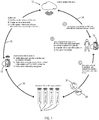
- Figure 1 indicates schematically a system 10 for reservation and use of a distributed workspace facility wherein electronic locks are provided on desks and other office furniture, for the use of temporary workspace users.
- the system of the invention applies to a situation wherein employee use non-dedicated desks on a rotating basis, although the discussion herein sometimes refers to a rental desk or workspace service available to renters, which is another application of the invention.
- the system has a server that resides in the cloud or elsewhere, indicated at 12, for a distributed workspace rental service with a facility providing desks, cubicles, etc. for temporary use.
- the cloud or local server 12 communicates by Internet with a user's mobile device (e.g. smartphone) 13. Communication goes both ways, as indicated by the arrows 14 and 16.
- the arrow 14 indicates the user, at the first instance, downloads an app from the cloud or other server, and the user is authenticated through the app. The user with the device 13 is now set up to use the system.
- the user connects to the system via Wi-Fi or 3G/4G and obtains a token or password for a) a specific lock at a specific location or b) any lock within a facility.
- the user can then go to a specific lock or any lock within the facility to open/relock the lock using the app and the token or password provided by the system, as indicated at "C”.
- At the facility visited by the user are a series of electronic locks 18.
- the user communicates with one of the locks via wireless communication (Bluetooth, etc.). In this one scenario the user can choose any workspace or lock(s) not currently in use at the facility, in the event no specific lock was assigned.
- step "B" above If a specific lock at a specific location was assigned (in step "B" above), the user's mobile device is brought to that particular workspace/lock. In the latter case a reservation has been made through the cloud or local server, for a specific period of time.
- the server can determine availability for such a reservation based on its own database with a schedule of all desks/locks and periods reserved.
- the arrow 16 on the left side of Figure 1 indicates the system communicating with a user's mobile device 13, and relevant data then being forwarded from the mobile device 13 to a lock 18 at a facility.
- Such communications assure that the server will not make conflicting reservations for particular desks/locks.
- the token can carry much more than a password, and can include user information, desk reserved, and time slot reserved.
- the system can limit the number of accesses to the lock by a user; charge user's per use or for the period of time used; control access to locks, e.g. limit the number of hours of use, date, and/or the time of day the user can operate the lock.
- Data for these controls are all communicated to the user's mobile device 13, which itself can impose these limitations on use, and the limitations can also be communicated to the lock. Again, all these data can be carried in the token.
- access history data i.e. audit trail
- the mobile device can transmit access data relating to the user in real time to the system via Wi-Fi or 3G/4G connection.
- the access data relating to a user can be stored at the lock, for retrieval by management from the lock. Note that the lock's ID is communicated to the smartphone or device 13 at the time of use.
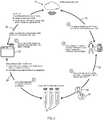
- Figure 2 shows a variation of the Figure 1 system, in this case including a local controller 25 at a facility with the temporary-use desks.
- the controller 25 communicates by Internet with the cloud or LAN or WiFi if local server 12, as noted by the arrow 26. Further, the controller 25 communicates with locks 18 on the premises of the facility, as indicated by the arrow 28. This can be by Bluetooth, BLE, NFC or WiFi.
- step "A” the user acquires the system app and is authenticated through the app, similar to the procedure described above.
- step “B” the user connects to the system, when a workspace is desired, and requests a token or password to operate any workspace (desk, cabinet, etc.) at a facility (workspace unassigned).
- the system 12 approves the request and sends the user's credentials to the on-site controller 25, as indicated at "C”.
- the local controller in communication with the locks 18, has data as to whether a lock will be available, or the system 12 can maintain this information.
- the user has requested a specific time slot; he will be denied access (and a token) only if all desks/locks are scheduled to be used by others at that desired time.
- the user goes to the facility at the desired time and selects any available lock, as indicated by the arrow 30.
- the user enters his credentials into the mobile device in order to operate the lock, using the app.
- the lock communicates with the local controller 25 (arrow 28) for authorization to allow this user access, indicated in the drawing at "E".
- communications between the mobile device and a lock are by local wireless communication, such as RFID, Bluetooth or BLE, or the lock can have a keypad for manual entry of a code which is supplied to the user's mobile device.
- the system of Figure 1 Note that in the Figure 2 system, with a local controller included, the user's smartphone may transmit only a simple ID number or code to the lock, rather than carrying all the data described with reference to Figure 1 .
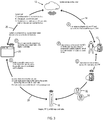
- the modified system indicated schematically in Figure 3 is a full reservation system.
- the system 12 with a server, resides in the cloud 12 or it is a local server at the facility.
- the user's downloading of the app and authentication, step “A” are similar to what is described above and indicated at the arrow 14.
- the routine is different - the user connects to the system residing in the cloud server or local server and requests a token or password to operate a specific lock at a specific location, for a specific period of time.
- the system approves the user request as to location, specific lock and time, and sends the information, including the user's credentials, to the local controller 25 at the facility selected by the user.
- the local controller 25 sends the user's credentials and reservation information to the specific lock 18 at that facility.
- the lock 18 then holds all information regarding the user's reservation. This communication is indicated by the arrow 28 in the drawing.
- the user goes to the selected facility and enters his credentials to operate the lock using the app in the mobile device.
- the access data relating to use of the lock by the user preferably is stored in the lock 18.
- the lock can then send access data history back to the system via the local controller 25, for audit trail.
- the lock could retain this access data history for retrieval for management of the facility or system.
- the system in Figure 3 can limit the number of hours or the date/time window a user can use or access the lock. It can also limit the number of accesses to the lock permitted to the user, and can charge the user's credit card per use or by the time of the use.
- Communications to the electronic locks 18 include schedules for use of locks by customers/users, identified by user name or member number, with the time and duration of the reservation.
- the particular lock 18 associated with a reserved workspace is addressed by the specific packet of data intended for that desk and lock or locks, and this data packet will be ignored by other locks.
- communication to locks can occur at preset intervals, such as every ten minutes, at which time the normally-quiescent electronic lock 18 sends out an inquiry signal to the controller 25 looking for any updated instructions, and any such updated instructions will then be sent back to the lock.
- each lock can simply "listen” for instructions once every ten minutes, the instructions for all locks being continuously broadcast by the controller 25.
- the screen icons presented to the user for operating a lock can be as indicated at 32, 34 in Figures 1 - 3 .
- the user's password is required each time the lock is operated. What occurs when the user touches the icon 32 or 34 is that a wireless message is sent from the smartphone 13 to the lock 18, via Bluetooth, BLE, NFC, etc. That signal is a token code as described above, unique for this lock at this particular period of time, or it can be simply a user ID code in the case of the system of Figures 2 and 3 where the locks have user data sent by the local controller. Even in the Figure 1 system, where lock instructions and schedule are carried to a lock by the user's device, only an ID or code will be needed after the user first "checks in" to the lock.
- the distributed workspace facilities of Figures 1 - 3 may or may not have a receptionist. In either event the user selects a desk or workspace (sometimes referred to herein broadly by either term “desk” or “workspace”, and can include several locks), or goes to a workspace he has reserved.
- the facility may have a sign-in and payment provision for users, or more preferably, payment can be via the smartphone app as described above (with a credit or debit card on file), communicated to the system 12.
- each lock 18 can have a permanent or rotating access code, if it is wirelessly transmitted (as opposed to entry on a keypad of the lock).
- the code is blind to the user, sent to the user's device by Internet from the cloud or local server, deleted from the device after use of the desk. This can be for a reserved desk, but it can also work for a randomly-picked desk, if all the locks' code are sent (blindly) to the user's device, then after a desk/lock is selected and used all other codes are deleted from the device.
- the user's smartphone in the unassigned workspace situation can carry a code (issued by the system 12) that is input to the lock when the lock is first used. That will be the lock's code for the time the user occupies the desk.
- a user's smartphone need not be involved at all, in one implementation of the invention.
- a user's computer can communicate with the server, providing all the user information and requested reservation details, including workspace, time slot, etc.
- the system/server can then simply provide the user with a key code for a keypad on a keypad-equipped lock or locks, or the system can simply transmit the user's preregistered (known) code to operate a keypad-equipped lock.
- the access code for the lock is set in the lock via the on-site lock controller, which receives this information from the server.
- the keypad code is required for use of the lock or locks.
- smartphone as used herein is intended to include any type of hand-held computer device, including cell phones, tablets and other portable computer devices with Internet capability.
Landscapes
- General Physics & Mathematics (AREA)
- Physics & Mathematics (AREA)
- Business, Economics & Management (AREA)
- Engineering & Computer Science (AREA)
- Tourism & Hospitality (AREA)
- Theoretical Computer Science (AREA)
- Strategic Management (AREA)
- Economics (AREA)
- General Business, Economics & Management (AREA)
- Human Resources & Organizations (AREA)
- Marketing (AREA)
- Computer Networks & Wireless Communication (AREA)
- Quality & Reliability (AREA)
- Operations Research (AREA)
- Entrepreneurship & Innovation (AREA)
- Development Economics (AREA)
- Health & Medical Sciences (AREA)
- General Health & Medical Sciences (AREA)
- Primary Health Care (AREA)
- Lock And Its Accessories (AREA)
Applications Claiming Priority (1)
| Application Number | Priority Date | Filing Date | Title |
|---|---|---|---|
| US15/183,713 US20180033227A1 (en) | 2016-06-15 | 2016-06-15 | Distributed Credential Lock System |
Publications (1)
| Publication Number | Publication Date |
|---|---|
| EP3258447A1 true EP3258447A1 (de) | 2017-12-20 |
Family
ID=59034598
Family Applications (1)
| Application Number | Title | Priority Date | Filing Date |
|---|---|---|---|
| EP17175307.2A Withdrawn EP3258447A1 (de) | 2016-06-15 | 2017-06-09 | Verteiltes berechtigungssperrsystem |
Country Status (2)
| Country | Link |
|---|---|
| US (1) | US20180033227A1 (de) |
| EP (1) | EP3258447A1 (de) |
Families Citing this family (16)
| Publication number | Priority date | Publication date | Assignee | Title |
|---|---|---|---|---|
| CN106303952A (zh) * | 2016-07-28 | 2017-01-04 | 百度在线网络技术(北京)有限公司 | 一种用于接入目标店铺的WiFi接入点的方法与设备 |
| CN108347589A (zh) * | 2018-03-06 | 2018-07-31 | 卢竹林 | 一种区域监控方法与装置 |
| US10851563B1 (en) | 2019-05-30 | 2020-12-01 | Digilock Asia Ltd. | Combination lock with electronic override key |
| US10914098B2 (en) | 2019-05-30 | 2021-02-09 | Digilock Asia Ltd. | Enclosure latch system |
| US10711489B1 (en) | 2019-05-30 | 2020-07-14 | Digilock Asia Ltd. | Electromechanical multi-directional lock |
| US10487541B1 (en) | 2019-05-30 | 2019-11-26 | Digilock Asia Ltd. | Combination lock with electronic override key |
| US10697203B1 (en) | 2019-05-30 | 2020-06-30 | Digilock Asia Ltd. | Electromechanical lock with adjustable backset |
| US11462062B1 (en) * | 2019-07-19 | 2022-10-04 | Alarm.Com Incorporated | Power connection for smart lock devices |
| WO2021084674A1 (ja) * | 2019-10-31 | 2021-05-06 | 株式会社大正スカイビル | 時間貸設備 |
| JP7245534B2 (ja) * | 2020-03-23 | 2023-03-24 | 株式会社ノグチHd | 情報処理装置 |
| WO2022043873A1 (en) * | 2020-08-28 | 2022-03-03 | Hesketh Rance | Systems and methods for providing and scheduling the use of dedicated spaces |
| US11954680B2 (en) * | 2020-10-23 | 2024-04-09 | Mastercard International Incorporated | Devices, methods and computer readable mediums for providing access control |
| US12536538B2 (en) | 2021-09-21 | 2026-01-27 | Mastercard Asia/Pacific Pte. Ltd. | Method and system for payment device-based access |
| US12395815B2 (en) * | 2022-06-30 | 2025-08-19 | Dell Products L.P. | Proximity-based network registration |
| WO2025063962A1 (en) * | 2023-09-19 | 2025-03-27 | Visa International Service Association | Automated credential distribution service for machines |
| EP4564246A1 (de) * | 2023-11-28 | 2025-06-04 | Ricoh Company, Ltd. | Servervorrichtung, verfahren und trägermedium |
Citations (3)
| Publication number | Priority date | Publication date | Assignee | Title |
|---|---|---|---|---|
| US6965294B1 (en) * | 2002-02-28 | 2005-11-15 | Kimball International, Inc. | Workspace security system |
| US20150199863A1 (en) * | 2014-01-15 | 2015-07-16 | HLT Domestic IP, LLC | Systems and methods for use in acquiring credentials from a portable user device in unlocking door lock systems |
| US20150356801A1 (en) * | 2014-06-02 | 2015-12-10 | Best Lockers, Llc | Mobile kiosk for intelligent securable devices system |
-
2016
- 2016-06-15 US US15/183,713 patent/US20180033227A1/en not_active Abandoned
-
2017
- 2017-06-09 EP EP17175307.2A patent/EP3258447A1/de not_active Withdrawn
Patent Citations (3)
| Publication number | Priority date | Publication date | Assignee | Title |
|---|---|---|---|---|
| US6965294B1 (en) * | 2002-02-28 | 2005-11-15 | Kimball International, Inc. | Workspace security system |
| US20150199863A1 (en) * | 2014-01-15 | 2015-07-16 | HLT Domestic IP, LLC | Systems and methods for use in acquiring credentials from a portable user device in unlocking door lock systems |
| US20150356801A1 (en) * | 2014-06-02 | 2015-12-10 | Best Lockers, Llc | Mobile kiosk for intelligent securable devices system |
Also Published As
| Publication number | Publication date |
|---|---|
| US20180033227A1 (en) | 2018-02-01 |
Similar Documents
| Publication | Publication Date | Title |
|---|---|---|
| US20180033227A1 (en) | Distributed Credential Lock System | |
| US9336635B2 (en) | System and method for permitting secure access to a structure | |
| US9437063B2 (en) | Methods and systems for multi-unit real estate management | |
| EP2396984B1 (de) | System und verfahren zum zugreifen auf eine struktur mithilfe eines mobilgerätes | |
| EP3571677B1 (de) | Zugangssteuerungssystem mit sicherer weitergabe | |
| US11657365B2 (en) | Secured parcel locker system with improved security | |
| EP3408837B1 (de) | Systeme und verfahren für remote-zugriffsrechte und verifizierung | |
| US9367975B2 (en) | System for permitting secure access to a restricted area | |
| KR102085975B1 (ko) | 도어락 정보 관리 시스템 및 그 구동방법 | |
| KR101920654B1 (ko) | Nfc 기반 출입 관리 시스템 및 그 방법 | |
| US20090299777A1 (en) | Hotel reservation system without check-in | |
| WO2016040886A1 (en) | Method and apparatus for network controlled access to physical spaces | |
| JP2003515688A (ja) | 電子キー・デバイス、システム、および電子キー情報を管理する方法 | |
| EP3358534A1 (de) | Delegieren von zugangsrechten | |
| US11004287B2 (en) | Seamless hands-free reader route to a destination | |
| CN107886602A (zh) | 一种开锁方法及系统 | |
| JP2019085761A (ja) | 開閉制御システム | |
| KR20220045714A (ko) | 숙소 또는 공간의 비대면 단기임대시스템 | |
| JP2023057894A (ja) | 電気式・電子式の錠及び錠の制御システム | |
| JP2016224577A (ja) | 入局管理システムおよび入局管理方法 | |
| JP2024121614A (ja) | 空間管理方法、空間管理システム、及び空間管理サーバ | |
| JP2022056679A (ja) | 情報処理システム、及び、情報処理方法 | |
| KR20220063406A (ko) | 숙박 관리 시스템 | |
| CN113971847A (zh) | 一种实现人证合一的蓝牙开锁系统 | |
| JP2019191884A (ja) | 共用システム及び機器共用方法 |
Legal Events
| Date | Code | Title | Description |
|---|---|---|---|
| PUAI | Public reference made under article 153(3) epc to a published international application that has entered the european phase |
Free format text: ORIGINAL CODE: 0009012 |
|
| STAA | Information on the status of an ep patent application or granted ep patent |
Free format text: STATUS: THE APPLICATION HAS BEEN PUBLISHED |
|
| AK | Designated contracting states |
Kind code of ref document: A1 Designated state(s): AL AT BE BG CH CY CZ DE DK EE ES FI FR GB GR HR HU IE IS IT LI LT LU LV MC MK MT NL NO PL PT RO RS SE SI SK SM TR |
|
| AX | Request for extension of the european patent |
Extension state: BA ME |
|
| STAA | Information on the status of an ep patent application or granted ep patent |
Free format text: STATUS: THE APPLICATION IS DEEMED TO BE WITHDRAWN |
|
| 18D | Application deemed to be withdrawn |
Effective date: 20180621 |