EP3257233B1 - System zur dynamischen zuweisung eines inhaltsbereitstellungsnetzwerks - Google Patents
System zur dynamischen zuweisung eines inhaltsbereitstellungsnetzwerks Download PDFInfo
- Publication number
- EP3257233B1 EP3257233B1 EP16749817.9A EP16749817A EP3257233B1 EP 3257233 B1 EP3257233 B1 EP 3257233B1 EP 16749817 A EP16749817 A EP 16749817A EP 3257233 B1 EP3257233 B1 EP 3257233B1
- Authority
- EP
- European Patent Office
- Prior art keywords
- cdn
- allocation
- cdns
- metrics
- percentage
- Prior art date
- Legal status (The legal status is an assumption and is not a legal conclusion. Google has not performed a legal analysis and makes no representation as to the accuracy of the status listed.)
- Active
Links
Images




Classifications
-
- H—ELECTRICITY
- H04—ELECTRIC COMMUNICATION TECHNIQUE
- H04N—PICTORIAL COMMUNICATION, e.g. TELEVISION
- H04N21/00—Selective content distribution, e.g. interactive television or video on demand [VOD]
- H04N21/60—Network structure or processes for video distribution between server and client or between remote clients; Control signalling between clients, server and network components; Transmission of management data between server and client, e.g. sending from server to client commands for recording incoming content stream; Communication details between server and client
- H04N21/63—Control signaling related to video distribution between client, server and network components; Network processes for video distribution between server and clients or between remote clients, e.g. transmitting basic layer and enhancement layers over different transmission paths, setting up a peer-to-peer communication via Internet between remote STB's; Communication protocols; Addressing
- H04N21/647—Control signaling between network components and server or clients; Network processes for video distribution between server and clients, e.g. controlling the quality of the video stream, by dropping packets, protecting content from unauthorised alteration within the network, monitoring of network load, bridging between two different networks, e.g. between IP and wireless
- H04N21/64723—Monitoring of network processes or resources, e.g. monitoring of network load
- H04N21/64738—Monitoring network characteristics, e.g. bandwidth, congestion level
-
- H—ELECTRICITY
- H04—ELECTRIC COMMUNICATION TECHNIQUE
- H04L—TRANSMISSION OF DIGITAL INFORMATION, e.g. TELEGRAPHIC COMMUNICATION
- H04L41/00—Arrangements for maintenance, administration or management of data switching networks, e.g. of packet switching networks
- H04L41/50—Network service management, e.g. ensuring proper service fulfilment according to agreements
- H04L41/5003—Managing SLA; Interaction between SLA and QoS
- H04L41/5019—Ensuring fulfilment of SLA
- H04L41/5025—Ensuring fulfilment of SLA by proactively reacting to service quality change, e.g. by reconfiguration after service quality degradation or upgrade
-
- H—ELECTRICITY
- H04—ELECTRIC COMMUNICATION TECHNIQUE
- H04L—TRANSMISSION OF DIGITAL INFORMATION, e.g. TELEGRAPHIC COMMUNICATION
- H04L65/00—Network arrangements, protocols or services for supporting real-time applications in data packet communication
- H04L65/60—Network streaming of media packets
- H04L65/61—Network streaming of media packets for supporting one-way streaming services, e.g. Internet radio
- H04L65/612—Network streaming of media packets for supporting one-way streaming services, e.g. Internet radio for unicast
-
- H—ELECTRICITY
- H04—ELECTRIC COMMUNICATION TECHNIQUE
- H04L—TRANSMISSION OF DIGITAL INFORMATION, e.g. TELEGRAPHIC COMMUNICATION
- H04L65/00—Network arrangements, protocols or services for supporting real-time applications in data packet communication
- H04L65/80—Responding to QoS
-
- H—ELECTRICITY
- H04—ELECTRIC COMMUNICATION TECHNIQUE
- H04L—TRANSMISSION OF DIGITAL INFORMATION, e.g. TELEGRAPHIC COMMUNICATION
- H04L67/00—Network arrangements or protocols for supporting network services or applications
- H04L67/01—Protocols
- H04L67/02—Protocols based on web technology, e.g. hypertext transfer protocol [HTTP]
-
- H—ELECTRICITY
- H04—ELECTRIC COMMUNICATION TECHNIQUE
- H04N—PICTORIAL COMMUNICATION, e.g. TELEVISION
- H04N21/00—Selective content distribution, e.g. interactive television or video on demand [VOD]
- H04N21/60—Network structure or processes for video distribution between server and client or between remote clients; Control signalling between clients, server and network components; Transmission of management data between server and client, e.g. sending from server to client commands for recording incoming content stream; Communication details between server and client
- H04N21/63—Control signaling related to video distribution between client, server and network components; Network processes for video distribution between server and clients or between remote clients, e.g. transmitting basic layer and enhancement layers over different transmission paths, setting up a peer-to-peer communication via Internet between remote STB's; Communication protocols; Addressing
- H04N21/647—Control signaling between network components and server or clients; Network processes for video distribution between server and clients, e.g. controlling the quality of the video stream, by dropping packets, protecting content from unauthorised alteration within the network, monitoring of network load, bridging between two different networks, e.g. between IP and wireless
- H04N21/64746—Control signals issued by the network directed to the server or the client
- H04N21/64753—Control signals issued by the network directed to the server or the client directed to the client
-
- H—ELECTRICITY
- H04—ELECTRIC COMMUNICATION TECHNIQUE
- H04L—TRANSMISSION OF DIGITAL INFORMATION, e.g. TELEGRAPHIC COMMUNICATION
- H04L41/00—Arrangements for maintenance, administration or management of data switching networks, e.g. of packet switching networks
- H04L41/50—Network service management, e.g. ensuring proper service fulfilment according to agreements
- H04L41/508—Network service management, e.g. ensuring proper service fulfilment according to agreements based on type of value added network service under agreement
- H04L41/509—Network service management, e.g. ensuring proper service fulfilment according to agreements based on type of value added network service under agreement wherein the managed service relates to media content delivery, e.g. audio, video or TV
Definitions
- a content delivery service may use an independent content delivery network (CDN) to deliver videos to clients.
- CDNs typically include large networks that can deliver a large amount of video traffic to clients.
- the content delivery service receives requests from users for videos.
- the content delivery service then uses a single CDN to service all the requests for videos from clients.
- CDNs specialize in sending videos to clients. For example, CDNs typically have a distributed system of servers that are deployed in multiple data centers that can deliver videos to clients. If some problems occur with delivering videos, the CDN can adjust the servers that are used to send the videos to different servers in the same data center, or from one data center to another data center. This provides some assurance that video delivery quality is adequate.
- the CDN is the entity that analyzes whether video delivery problems occur. In some cases, the CDN may be slow to realize that performance has degraded. Also, the CDNs may not be able to recognize when certain problems may have occurred. This may degrade the video delivery quality that users of the content delivery service are experiencing. Further, the content delivery service may not realize that problems are occurring until users complain to the service. At this time, many users may have already experienced poor quality. Also, after receiving notice, it may take the content delivery service a couple hours to reconfigure the service to use another CDN.
- US 8 117 306 B1 relates a system and method for monitoring the performance associated with fulfilling resource requests and determining optimizations for improving such performance.
- a processing device obtains and processes performance metric information associated with processing a request for an original resource and any embedded resource.
- the processing device uses the processed performance metric information to determine a CDN service provider for alternatively hosting at least a portion of the original resource and/or any embedded resources.
- the processing device assesses performance metric information collected and associated with subsequent resource requests for the original resource and any embedded resources using each of a variety of alternative CDN service providers.
- the processing device also considers CDN selection criteria obtained from the original content provider. Aspects of systems and methods for generating recommendations associated with monitoring the operation and performance of CDN service providers with respect to specific resource requests are also provided.
- US 2014/108671 A1 relates to techniques for generating preference rankings in response to requests for streaming media content received from client devices.
- the preference rankings are used to indirectly partition streaming media content across different content distribution networks (CDNs).
- CDNs content distribution networks
- Such partitions are referred to as a "soft" partition, as all of the streaming media content remains available from each CDN. That is, the partitioning of content across CDNs is not absolute, and any content item is requested from any CDN. Doing so ensures that content remains available even where the preferred CDN for a given content item fails, while at the same time increasing the probability of a cache hit at the CDNs, without increasing the cost or the actual cache sizes of the content caches of different CDNs.
- US 2008/215718 relates to a framework where resources of a content provider which is delivered to clients from different domains, and a method which distributes the requests based on content-provider policies.
- the domains include at least two distinct content delivery network (CDN) domains.
- the domains include a content provider domain. Responsive to a request, either the content provider domain or one of the two CDN domains is selected, the selection being based at least in part on one or more policies set by the content provider.
- US 2011/078327 A1 relates to content delivery which includes receiving a Domain Name Service (DNS) request, selecting from a plurality of Content Delivery Networks (CDNs) a CDN to provide content associated with the DNS request, processing the DNS request and generating a response, the response including a canonical name (CNAME) value that corresponds to the selected CDN, receiving an indication that the content is not presently available at the selected CDN, and returning an Internet Protocol (IP) address of a data source that is configured to provide the content to the selected CDN.
- DNS Domain Name Service
- CDN Content Delivery Networks
- IP Internet Protocol
- Particular embodiments allow a content delivery service to dynamically adjust how the service allocates content delivery traffic to multiple content delivery networks (CDNs).
- the content delivery service may service enough requests for media programs that multiple CDNs are used.
- the content delivery service may contract with multiple independent CDNs to have media programs delivered to users. This allows the content delivery service to allocate traffic to different CDNs.
- the content delivery service may configure client devices to send information to it that allows the content delivery service to analyze the media program playback quality of service. Then, the content delivery service can adjust the allocation for the CDNs if a problem is detected at a specific CDN. For example, the content delivery service may analyze the quality of service metrics for each CDN and also the cost of sending traffic through the CDN. Then, based on the analysis, the content delivery service may adjust the percentages of media traffic allocated to CDNs.
- the content delivery service may lower the percentage of media program traffic being allotted to a first CDN and increase the percentage of media program traffic being allotted to a second CDN if the first CDN is having problems with poor quality of service, and the second CDN has a lower cost than other CDNs.
- the content delivery service services a large number of media program requests and needs to use multiple CDNs to handle the traffic. This allows the content delivery service to choose how much traffic each CDN handles for the content delivery service.
- particular embodiments configure client devices to send information directly to the content delivery service, and not through the CDN, to allow the content delivery service to analyze the quality of service being experienced at the client devices. This allows the content delivery service to independently change the allocation of traffic allotted to CDNs.
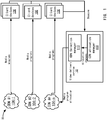
- FIG. 1 depicts a simplified system 100 of a method for dynamically adjusting allocation of traffic to CDNs according to one embodiment.
- System 100 includes a content delivery service 102, multiple content delivery networks (#1, #2, ..., #n) 104-1 - 104-n, and client devices 106.
- Content delivery service 102 may be a company that provides a service where users of client devices 106 can request media programs.
- service 102 may include a number of computing devices that respond to requests from client devices 102 and allocate the requests to CDNs 104.
- the media programs may be videos, audio, or other content that can be delivered by CDNs 104 to client devices 106.
- the delivery service involves videos only.
- Content delivery service 102 may include a library of media programs that users can select via a content delivery service application provided by the content delivery service. When a media program is selected, content delivery service 102 selects which one of CDNs 104 should provide the media program to the requesting client device 106.
- Clients 106 may be different types of devices.
- clients 106 may be provided on different platforms, which categorize use in similar categories.
- platforms may be by device type or location use type.
- Device type may be a phone type (e.g., cellular phone operating system), console system type, website, etc.
- the location use type may be a website platform, a living room device platform (e.g., gaming consoles, video streaming devices, etc.), and a mobile device platform (e.g., cellular telephones or smartphones, tablet devices).
- Each client 106 may include a content delivery service application, which may be a website or application downloaded to client 106.
- the content delivery service application may include a media player that can play media programs.
- CDNs 104 may be content delivery networks that contract out their networks to multiple companies. Each CDN 104 may include a network that includes multiple servers and data centers that are capable of delivering media programs to client devices 106. CDNs 104 may contract with content delivery service 102 separately because the CDN and content delivery service are independent entities. Also, each CDN is a separate entity and not related in one embodiment. In other embodiments, each CDN 104 may be an independent distribution network, but more than one may be related to the same entity.
- Each CDN 104 may have a cost that is charged to content delivery service 102.
- CDN 104-1 includes a cost #1
- CDN 104-2 includes a cost #2
- CDN 104-n includes a cost #n.
- CDNs 104 charge content delivery service 102 for the traffic sent to client devices 106, such as per the amount of byte sent for the media programs delivered to client devices 106.
- the content delivery service application in clients 106 receives and plays the media programs, such as in a media player. Because content delivery service 102 provides the content delivery service application, the content delivery service application can send information to content delivery service 102 regarding characteristics of the media program playback. For example, the information may be sent in a beacon, which is a message that includes the characteristics determined regarding the media program playback.
- the beacons sent to content delivery service 102 may not go through CDNs 104. Rather, a different service network may be used by clients 106 to send the beacons. Further, CDNs 104 may perform their own quality of service analysis, but content delivery service 102 performs a separate quality of service analysis using the beacons received from client devices 106.
- Content delivery service 102 includes a CDN allocation manager 108 and a CDN selection manager 110.
- CDN allocation manager 108 may determine the allocation among CDNs that deliver videos for the content delivery service 102.
- CDN allocation manager 108 may determine allocations per CDN.
- CDN 104-1 may be allocated 20% of the media program traffic; CDN 104-2 is allocated 30%; and CDN 104-n is allocated 50%.
- the allocations are a simple example, and as will be described below, the allocations may be divided on a more granular basis, such as per platform (e.g., living room platform, mobile device platform, website platform, etc.).
- the CDN allocation manager 108 analyzes the beacons received from client devices 106.
- the beacons may include characteristics for the media program playback sessions on client devices 106 for media programs received from CDNs 104. For example, a first client device 106 may send a beacon for a media program received from CDN 104-1, a second client device 106 may send a beacon for a media program received from CDN 104-2, and so on.
- the characteristics may include re-buffering time at the client, view through of a selected media program, whether beacons were sent, whether there were error messages, and the CDN used.
- CDN allocation manager 108 analyzes the information from the beacons and determines when a media program delivery problem may be occurring with a CDN 104. For example, CDN allocation manager 108 may determine that media programs being sent by CDN 104-1 are experiencing high re-buffer rates. In this case, CDN allocation manager 108 may determine that CDN 104-1 should be allocated less media program traffic. For example, when requests for media programs are received from client devices 106, CDN 104-1 should be allocated a lower number of those requests. This reduces the media program traffic being delivered by CDN 104-1 for content delivery service 102
- CDN allocation manager 108 may then adjust the allocation for CDN 104-1 from 20% to 10% of media program traffic. Also, CDN allocation manager 108 may increase the percentage for CDN 104-2 from 30% to 40%. In this case, the problems being experienced using CDN 104-1 may be minimized because CDN 104-1 will now service fewer requests for media programs and less traffic for the content delivery service. But, CDN 104-2, which has not experienced delivery problems, now services more media program traffic. Also, CDN allocation manager 108 may take into account cost when changing the allocation. For example, CDNs in which the cost is lower may be allotted more of a percentage of re-allocated traffic. The allocation determination will be described in more detail below.
- CDN selection manager 110 receives the allocation change from CDN allocation manager 108 and can then use the allocation change when servicing media program requests from client devices 106. In this case, CDN selection manager 110 may allocate less traffic to CDN 104-1 when requests from media programs are received from clients 106.
- FIG. 2 depicts a more detailed example of CDN allocation manager 108 according to one embodiment.
- Client device 106 includes a content delivery service application 202 that includes a media player 204.
- Content delivery service application 202 may be a website that allows a user to browse the library of media programs offered by content delivery service 102.
- content delivery service application 202 may be a downloaded application, such as a mobile application.
- Media player 204 may play videos received from CDNs 104.
- Content delivery service application 202 and/or media player 204 includes a beacon handler 206 that can send beacons to content delivery service 102.
- Beacon handler 206 may determine characteristics for media program playback on media player 204.
- the beacons may include information as described above, such as the CDN used for the media program playback session, the client device where the session is being played, characteristics of the re-buffering during playing of the media program, the bitrate at which the media program is being played, viewthrough statistics, etc.
- Beacon handler 206 may also collect other information regarding the playback.
- the information collected by beacon handler 206 may be specified by content delivery service 102. This allows content delivery service 102 to determine what information is relevant to the quality of service analysis. Thus, content delivery service 102 may perform a different quality of service analysis than that performed by each CDN 104.
- a beacon processor 208 in CDN allocation manager 108 receives the beacons from client devices 106. Beacon processor 208 may then retrieve the information that is relevant for the quality of service analysis from the beacons.
- An aggregation manager 210 may then aggregate the data for the video playback sessions in storage 212. For example, aggregation manager 210 may aggregate the data based on platform-CDN pairs. That is, for each CDN 104, per CDN data is aggregated for each platform. For example, the pairs may be CDN #1/website, CDN #1/living room device, CDN #1/mobile device, etc.
- FIG. 3 shows an example of aggregated data for playback metrics in a table 300 according to one embodiment.
- Table 300 is broken down into CDN-platform type pairs.
- the platform types are shown as Mobile phone type #1, Console type #1, and website.
- the platform types are based on different categorizations of devices on which the media delivery service may be offered. Different categories also do not need to be used. However, categories may be used to target quality of service to the categories.
- CDN #1, CDN #2, and CDN #n are shown.
- different metrics for the video delivery on the respective pair may be stored. For example, the metrics 1A, 1B, 1C, 2A, 2B, 2C, etc. include data that may be aggregated for each characteristic.
- the data may be broken into segments, such as hourly session counts and buffering metrics.
- the session counts may be the number of views for the platform type.
- the number of views for Mobile phone type #1 may average a certain number based on the allocated traffic.
- a CDN when allocated a percentage of traffic should have a certain number of sessions that are active.
- the buffering metrics may be how many times a client device has to re-buffer a media program being played. The re-buffer may cause jitter in the playback of the media program.
- Aggregation manager 210 may continuously or periodically update the metrics stored in table 300. For example, aggregation manager 210 may collect data for every platform-CDN, and at every hour update the data in table 300.
- allocation manager 108 can analyze the data to determine when to change the allocation.
- the first part describes the calculation of thresholds to apply in the quality of service analysis.
- the second part then allocates traffic to CDNs 104.
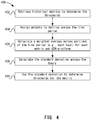
- FIG. 4 depicts a simplified flowchart 400 of a method for determining thresholds for changing allocation according to one embodiment.
- allocation manager 108 retrieves historical metrics to determine the thresholds. For example, allocation manager 108 retrieves metrics from table 300 for the platform-CDN pairs for a defined time period, such as the last six hours.
- allocation manager 108 assigns weights to metrics across the time period. For example, over six hours, the most recent hour is assigned the highest weight and the latest hour is assigned the lowest weight. The weighting puts more emphasis on recent metrics, which may be more indicative of current conditions at each CDN 104. However, although weighting is described, the metrics do not need to be weighted.
- allocation manager 108 calculates a weighted average across portions of the time period (e.g., each hour) for each metric and CDN-platform. For example, each metric will have an average weighted value for each hour that represents the quality of service for the hour.
- allocation manager 108 calculates the standard deviation across the hours. For example, the weighted hourly average is used to determine the standard deviation. Other ways of quantifying the variation or dispersion from the average may also be used.
- allocation manager 108 uses the standard deviation to determine thresholds for the metric. For example, allocation manager 108 determines high and low thresholds based on the standard deviation. This may allow the performance to vary a set amount from the average. Although the above method of determining thresholds may be used, other methods may also be used, such as pre-set or pre-determined thresholds that do not vary. Also, only a single threshold or more than two thresholds may be used.
- FIG. 5 depicts a simplified flowchart 500 of a method for analyzing quality of service and performing re-allocation of traffic according to one embodiment.
- allocation manager 108 determines cost information for CDNs 104. For example, allocation manager 108 may use a fixed cost for each CDN 104 that does not change irrespective of traffic served, time of date, or other factors. Also, the cost may change for CDNs and allocation manager 108 may need to determine what cost has been recently used by each CDN. In this case, allocation manager 108 may use a CDN application programming interface (API) to retrieve information on the amount of traffic (e.g., number of bytes) served per platform over the time period (e.g., the last six hours).
- API application programming interface
- allocation manager 108 determines the cost for each CDN 104. For example, if the fixed cost is being used, then allocation manager 108 does not need to perform this calculation because the cost is fixed.
- allocation manager 108 determines the cost by applying the amount of traffic for the last six hours (or another time period, if used) times the cost for delivering the traffic (e.g., bytes * cost per byte for each CDN).
- Each CDN may include a different cost per byte or the cost may be the same, and the cost per byte may vary. This provides a cost for each CDN over the last six hours.
- the cost may be represented by the total cost for six hours or a single averaged cost per byte.
- allocation manager 108 determines CDNs that have violated the thresholds calculated above. For example, the metrics for each CDN may be analyzed over the time period to determine if one of the thresholds was violated. Also, current data, such as for the next hour, may be analyzed to determine when one of the thresholds was violated. At 508, for any CDNs that have violated the thresholds, allocation manager 108 reduces the percentage of traffic allocated to that CDN. For example, if CDN #1 is showing high buffering problems on the website platform, allocation manager 108 may reduce the traffic allocated to CDN #1 by a percentage, such as by half.
- allocation manager 108 After reducing the traffic allotted to the platform, there is available allocation for traffic for that platform. Then, allocation manager 108 re-allocates the traffic using the cost information. At 510, allocation manager 108 sorts the CDNs by the calculated cost. For example, allocation manager 108 sorts the CDNs from the lowest cost to the highest cost. The sorting allows the analysis to proceed from the lowest cost CDNs to the highest cost CDNs. When only fixed costs are used for CDNs, allocation manager 108 uses a constant value to sort the CDNs that most likely will not change frequently. In this case, a CDN is a lowest cost will most likely be allocated more traffic in a reallocation. When costs vary, then the sorting may yield different orders of CDNs.
- allocation manager 108 determines a CDN, #C, in the order from lowest to highest.
- allocation manager 108 determines if the current CDN has performed well in the recent time period. For example, allocation manager 108 determines if any thresholds have been violated or allocation manager 108 may determine if the weighted average for the metrics have varied much.
- allocation manager 108 re-allocates a percentage of the traffic to the current CDN. In one embodiment, the re-allocated percentage may be limited to a certain maximum amount, such as 5%. Or, the performance of the current CDN is used to determine how much to re-allocate, such as a CDN that has not had any problems is re-allocated a higher percentage than a CDN that has had a low number of problems.
- allocation manager 108 determines if another CDN should be analyzed. For example, addition traffic may need to be allocated. If so, then the process reiterates to 510 where another CDN of a higher cost is analyzed. The process continues until all traffic is re-allocated. It should be noted that all traffic is re-allocated to other CDNs by the process.
- allocation manager 108 may generate an alert when the quality of service problem is detected. Once the alert is generated, content delivery service 102 may perform different actions. For example, content delivery service 102 may generate an e-mail notifying engineers there was a quality drop and automatic steps of changing the allocation of traffic for a specific CDN. In one example, if CDN #1 is showing high buffering problems on the website platform, allocation manager 108 may reduce the traffic allocated to CDN #1 by a percentage, such as by half. Then, this percentage is allocated to another CDN that may be considered a lowest cost alternative, such as CDN #2. In this case, CDN #1 will now get 10% of the future traffic and CDN #2 will get 40% of the future traffic.
- allocation manager 108 may also re-route the entire traffic from CDN #1 to CDN #2 if the problem persists. However, if after some time, such as a few hours, CDN #1 returns to normal, allocation manager 108 may restore the allocation for CDN #1 back to the original percentage--20%. In this case, allocation manager 108 may analyze the newly-aggregated data to determine if the buffering has gone below the threshold. Accordingly, allocation manager 108 may analyze the aggregated data to re-allocate traffic when problems result and then re-allocate traffic back to CDNs when allocation manager 108 detects that the problems have been resolved.
- particular embodiments provide an automated and dynamic method of providing quality of service.
- the method relies on information from clients 106, and not the CDNs. Further, the failover process changes allocation to CDNs efficiently when problems are encountered. This improves the functioning of the allocation algorithm. Further, problems can be detected sooner and faster.
- Video streaming system 600 in communication with multiple client devices via one or more communication networks as shown in FIG 6 .
- Aspects of the video streaming system 600 are described merely to provide an example of an application for enabling distribution and delivery of content prepared according to the present disclosure. It should be appreciated that the present technology is not limited to streaming video applications, and may be adapted for other applications and delivery mechanisms.
- a media program provider may include a library of media programs.
- the media programs may be aggregated and provided through a site (e.g., Website), application, or browser.
- a user can access the media program provider's site or application and request media programs. The user may be limited to requesting only media programs offered by the media program provider.
- video data may be obtained from one or more sources for example, from a video source 610, for use as input to a video content server 602.
- the input video data may comprise raw or edited frame-based video data in any suitable digital format, for example, Moving Pictures Experts Group (MPEG)-1, MPEG-2, MPEG-4, VC-1, H.264 / Advanced Video Coding (AVC), High Efficiency Video Coding (HEVC), or other format.
- MPEG Moving Pictures Experts Group
- AVC Advanced Video Coding
- HEVC High Efficiency Video Coding
- a video may be provided in a non-digital format and converted to digital format using a scanner and/or transcoder.
- the input video data may comprise video clips or programs of various types, for example, television episodes, motion pictures, and other content produced as primary content of interest to consumers.
- the video data may also include audio or only audio may be used.
- the video streaming system 600 may include one or more computer servers or modules 602, 604, and/or 607 distributed over one or more computers. Each server 602, 604, 607 may include, or may be operatively coupled to, one or more data stores 609, for example databases, indexes, files, or other data structures.
- a video content server 602 may access a data store (not shown) of various video segments. The video content server 602 may serve the video segments as directed by a user interface controller communicating with a client device.
- a video segment refers to a definite portion of frame-based video data, such as may be used in a streaming video session to view a television episode, motion picture, recorded live performance, or other video content.
- a video advertising server 604 may access a data store of relatively short videos (e.g., 10 second, 30 second, or 60 second video advertisements) configured as advertising for a particular advertiser or message.
- the advertising may be provided for an advertiser in exchange for payment of some kind, or may comprise a promotional message for the system 600, a public service message, or some other information.
- the video advertising server 604 may serve the video advertising segments as directed by a user interface controller (not shown).
- the video streaming system 600 also may include CDN allocation manager 108.
- the video streaming system 600 may further include an integration and streaming component 607 that integrates video content and video advertising into a streaming video segment.
- streaming component 607 may be a content server or streaming media server.
- a controller (not shown) may determine the selection or configuration of advertising in the streaming video based on any suitable algorithm or process.
- the video streaming system 600 may include other modules or units not depicted in Fig. 6 , for example administrative servers, commerce servers, network infrastructure, advertising selection engines, and so forth.
- the video streaming system 600 may connect to a data communication network 612.
- a data communication network 612 may comprise a local area network (LAN), a wide area network (WAN), for example, the Internet, a telephone network, a wireless cellular telecommunications network (WCS) 614, or some combination of these or similar networks.
- LAN local area network
- WAN wide area network
- WCS wireless cellular telecommunications network
- One or more client devices 620 may be in communication with the video streaming system 600, via the data communication network 612 and/or other network 614.
- client devices may include, for example, one or more laptop computers 620-1, desktop computers 620-2, "smart" mobile phones 620-3, tablet devices 620-4, network-enabled televisions 620-5, or combinations thereof, via a router 618 for a LAN, via a base station 617 for a wireless telephony network 614, or via some other connection.
- client devices 620 may send and receive data or instructions to the system 600, in response to user input received from user input devices or other input.
- the system 600 may serve video segments and metadata from the data store 609 responsive to selection of media programs to the client devices 620.
- Client devices 620 may output the video content from the streaming video segment in a media player using a display screen, projector, or other video output device, and receive user input for interacting with the video content.
- Distribution of audio-video data may be implemented from streaming component 607 to remote client devices over computer networks, telecommunications networks, and combinations of such networks, using various methods, for example streaming.
- a content server streams audio-video data continuously to a media player component operating at least partly on the client device, which may play the audio-video data concurrently with receiving the streaming data from the server.
- streaming is discussed, other methods of delivery may be used.
- the media player component may initiate play of the video data immediately after receiving an initial portion of the data from the content provider.
- Traditional streaming techniques use a single provider delivering a stream of data to a set of end users. High bandwidths and processing power may be required to deliver a single stream to a large audience, and the required bandwidth of the provider may increase as the number of end users increases.
- Streaming media can be delivered on-demand or live. Streaming enables immediate playback at any point within the file. End-users may skip through the media file to start playback or change playback to any point in the media file. Hence, the end-user does not need to wait for the file to progressively download.
- streaming media is delivered from a few dedicated servers having high bandwidth capabilities via a specialized device that accepts requests for video files, and with information about the format, bandwidth and structure of those files, delivers just the amount of data necessary to play the video, at the rate needed to play it.
- Streaming media servers may also account for the transmission bandwidth and capabilities of the media player on the destination client.
- Streaming component 607 may communicate with client device 620 using control messages and data messages to adjust to changing network conditions as the video is played.
- control messages can include commands for enabling control functions such as fast forward, fast reverse, pausing, or seeking to a particular part of the file at the client.
- streaming component 607 transmits video data only as needed and at the rate that is needed, precise control over the number of streams served can be maintained. The viewer will not be able to view high data rate videos over a lower data rate transmission medium.
- streaming media servers (1) provide users random access to the video file, (2) allow monitoring of who is viewing what video programs and how long they are watched (3) use transmission bandwidth more efficiently, since only the amount of data required to support the viewing experience is transmitted, and (4) the video file is not stored in the viewer's computer, but discarded by the media player, thus allowing more control over the content.
- Streaming component 607 may use TCP-based protocols, such as HTTP and Real Time Messaging Protocol (RTMP). Streaming component 607 can also deliver live webcasts and can multicast, which allows more than one client to tune into a single stream, thus saving bandwidth. Streaming media players may not rely on buffering the whole video to provide random access to any point in the media program. Instead, this is accomplished through the use of control messages transmitted from the media player to the streaming media server.
- Another protocol used for streaming is hypertext transfer protocol (HTTP) live streaming (HLS).
- HTTP hypertext transfer protocol
- HLS delivers video over HTTP via a playlist of small segments that are made available in a variety of bitrates typically from one or more content delivery networks (CDNs). This allows a media player to switch both bitrates and content sources on a segment-by-segment basis. The switching helps compensate for network bandwidth variances and also infrastructure failures that may occur during playback of the video.
- the delivery of video content by streaming may be accomplished under a variety of models.
- the user pays for the viewing of video programs, for example, using a fee for access to the library of media programs or a portion of restricted media programs, or using a pay-per-view service.
- sponsors pay for the presentation of the media program in exchange for the right to present advertisements during or adjacent to the presentation of the program.
- advertisements are inserted at predetermined times in a video program, which times may be referred to as "ad slots" or "ad breaks.”
- the media player may be configured so that the client device cannot play the video without also playing predetermined advertisements during the designated ad slots.
- the apparatus 700 may include a processor (CPU) 702 operatively coupled to a processor memory 704, which holds binary-coded functional modules for execution by the processor 702.
- Such functional modules may include an operating system 706 for handling system functions such as input/output and memory access, a browser 708 to display web pages, and media player 710 for playing video.
- the modules may further include content delivery service application 202.
- the memory 704 may hold additional modules not shown in Fig. 7 , for example modules for performing other operations described elsewhere herein.
- a bus 714 or other communication component may support communication of information within the apparatus 700.
- the processor 702 may be a specialized or dedicated microprocessor configured to perform particular tasks in accordance with the features and aspects disclosed herein by executing machine-readable software code defining the particular tasks.
- Processor memory 704 e.g., random access memory (RAM) or other dynamic storage device
- RAM random access memory
- the memory 704 may also store temporary variables or other intermediate information during execution of such instructions.
- a computer-readable medium in a storage device 724 may be connected to the bus 714 and store static information and instructions for the processor 702; for example, the storage device (CRM) 724 may store the modules 706, 708, and 710 when the apparatus 700 is powered off, from which the modules may be loaded into the processor memory 704 when the apparatus 700 is powered up.
- the storage device 724 may include a non-transitory computer-readable storage medium holding information, instructions, or some combination thereof, for example instructions that when executed by the processor 702, cause the apparatus 700 to be configured to perform one or more operations of a method as described herein.
- a communication interface 716 may also be connected to the bus 714.
- the communication interface 716 may provide or support two-way data communication between the apparatus 700 and one or more external devices, e.g., the streaming system 600, optionally via a router/modem 726 and a wired or wireless connection.
- the apparatus 700 may include a transceiver 718 connected to an antenna 729, through which the apparatus 700 may communicate wirelessly with a base station for a wireless communication system or with the router/modem 726.
- the apparatus 700 may communicate with a video streaming system 600 via a local area network, virtual private network, or other network.
- the apparatus 700 may be incorporated as a module or component of the system 600 and communicate with other components via the bus 714 or by some other modality.
- the apparatus 700 may be connected (e.g., via the bus 714 and graphics processing unit 720) to a display unit 728.
- a display 728 may include any suitable configuration for displaying information to an operator of the apparatus 700.
- a display 728 may include or utilize a liquid crystal display (LCD), touchscreen LCD (e.g., capacitive display), light emitting diode (LED) display, projector, or other display device to present information to a user of the apparatus 700 in a visual display.
- LCD liquid crystal display
- touchscreen LCD e.g., capacitive display
- LED light emitting diode
- One or more input devices 730 may be connected to the bus 714 via a user input port 722 to communicate information and commands to the apparatus 700.
- an input device 730 may provide or support control over the positioning of a cursor.
- a cursor control device also called a pointing device, may be configured as a mouse, a trackball, a track pad, touch screen, cursor direction keys or other device for receiving or tracking physical movement and translating the movement into electrical signals indicating cursor movement.
- the cursor control device may be incorporated into the display unit 728, for example using a touch sensitive screen.
- a cursor control device may communicate direction information and command selections to the processor 702 and control cursor movement on the display 728.
- a cursor control device may have two or more degrees of freedom, for example allowing the device to specify cursor positions in a plane or three-dimensional space.
- Particular embodiments may be implemented in a non-transitory computer-readable storage medium for use by or in connection with the instruction execution system, apparatus, system, or machine.
- the computer-readable storage medium contains instructions for controlling a computer system to perform a method described by particular embodiments.
- the computer system may include one or more computing devices.
- the instructions, when executed by one or more computer processors, may be configured to perform that which is described in particular embodiments.
Landscapes
- Engineering & Computer Science (AREA)
- Computer Networks & Wireless Communication (AREA)
- Signal Processing (AREA)
- Multimedia (AREA)
- Computer Security & Cryptography (AREA)
- Quality & Reliability (AREA)
- Information Transfer Between Computers (AREA)
Claims (13)
- Ein Verfahren, das Folgendes umfasst:Bestimmen, durch einen Dienst zur Bereitstellung von Inhalten bzw. Content-Delivery-Dienst (102), eines Zuweisungsprozentsatzes in einem Gesamtprozentsatz für jedes Netzwerk aus einer Vielzahl von Netzwerken zur Bereitstellung von Inhalten (Content Delivery Networks - CDNs), wobei jedes CDN (104) konfiguriert ist, um Medienprogramme für den Content-Delivery-Dienst (102) an Client-Vorrichtungen (106) zu liefern;Empfangen von Nachrichten ausgehend von einer Vielzahl von Client-Vorrichtungen (106), in denen die Vielzahl von CDNs (104) Medienprogramme geliefert hat, wobei die Nachrichten Informationen bezüglich der Wiedergabe der Medienprogramme auf den Client-Vorrichtungen (106) enthalten;Bestimmen von Metriken für jedes CDN (104) basierend auf den Informationen bezüglich der Wiedergabe der Medienprogramme,Aggregieren von Informationen aus den Nachrichten in Pro-CDN-Metriken, wobei die Pro-CDN-Metriken auf dem Plattformtyp, den CDN-Paaren, basieren;Analysieren der Metriken, um zu bestimmen, wann ein oder mehrere Zuweisungsprozentsätze zu ändern sind, wobei das Analysieren die Pro-CDN-Metriken über den Zeitraum verwendet, wobei jeder Zuweisungsprozentsatz verwendet wird, um Anforderungen bzw. Aufforderungen (requests) zur Wiedergabe von Medienprogrammen einem CDN (104) zuzuweisen, und wobei die Zuweisung pro Plattformtyp, CDN-Paar, geändert wird; undReduzieren eines ersten Zuweisungsprozentsatzes im Gesamtprozentsatz für ein erstes CDN (104-1) in der Vielzahl der CDNs (104) auf der Grundlage der Analyse der Metriken, um zukünftige Zuweisungen von Aufforderungen zur Wiedergabe von Medienprogrammen an das erste CDN (104-1) zu reduzieren;Erhöhen eines zweiten Zuweisungsprozentsatzes im Gesamtprozentsatz für ein zweites CDN (104-2) in der Vielzahl von CDNs (104) auf der Grundlage der Analyse der Metriken, um zukünftige Zuweisungen von Aufforderungen zur Wiedergabe von Medienprogrammen an das zweite CDN (104-2) zu erhöhen; undZuweisen von Aufforderungen zur Wiedergabe von Medienprogrammen an die Vielzahl von CDNs (104) auf der Grundlage der Zuweisungsprozentsätze im Gesamtprozentsatz, wobei der reduzierte erste Zuweisungsprozentsatz und der erhöhte zweite Zuweisungsprozentsatz bei der Zuweisung der Aufforderungen verwendet werden.
- Das Verfahren nach Anspruch 1, wobei die Nachrichten ermitteln, welches CDN (104) in der Vielzahl von CDNs (104) das Medienprogramm an die jeweilige Client-Vorrichtung (106) geliefert hat.
- Das Verfahren von Anspruch 1, wobei das Analysieren Folgendes umfasst:Bestimmen von Kosteninformationen für die Vielzahl von CDNs (106); undVerwenden der Kosteninformationen, um die Änderung in der Zuweisung zu bestimmen.
- Das Verfahren nach Anspruch 3, wobei das Bestimmen der Kosteninformationen Folgendes umfasst:Bestimmen einer Menge an Verkehr, die von jedem CDN (104) über den Zeitraum bereitgestellt wird; undBestimmen der Kosten für jedes CDN (104) auf der Grundlage der Verkehrsmenge und der für das CDN (104) über den Zeitraum verwendeten Verkehrskosten.
- Das Verfahren nach Anspruch 3, wobei die Bestimmung der Kosteninformationen Folgendes umfasst:
Verwenden von festen Kosten, die jedem CDN (104) zugewiesen werden. - Das Verfahren nach Anspruch 1, wobei das Analysieren Folgendes umfasst:Bestimmen der Metriken für die Vielzahl der CDNs (104) über den Zeitraum;Bestimmen eines Satzes von Schwellenwerten auf der Grundlage der Metriken; undVergleichen der Metriken für das erste CDN und das zweite CDN mit den Schwellenwerten, um zu bestimmen, ob die Zuweisung zu ändern ist.
- Das Verfahren nach Anspruch 6, wobei:der Zeitraum in eine Vielzahl von Segmenten unterteilt wird, unddie Metriken für jedes Segment auf der Grundlage einer dem Segment zugeordneten Zeit gewichtet werden.
- Das Verfahren nach Anspruch 7, wobei der Satz von Schwellenwerten auf der Grundlage eines gewichteten Durchschnitts für die Metriken für jedes Segment bestimmt wird.
- Das Verfahren nach Anspruch 8, das ferner Folgendes umfasst:Bestimmen der ersten CDN, die einen aus dem Satz der Schwellenwerte verletzt; undSenken der Zuweisung für das erste CDN auf der Grundlage des ersten CDN, das einen aus dem Satz der Schwellenwerte verletzt.
- Das Verfahren nach Anspruch 9, das ferner Folgendes umfasst:Bestimmen der Kosten für andere CDNs als das erste CDN; undAusgehend von einem CDN mit den niedrigsten Kosten, Bestimmen, wann die Zuweisung anderer CDNs auf der Grundlage der Kosten des jeweiligen CDNs und der damit verbundenen Metriken für das jeweilige CDN erhöht werden soll.
- Das Verfahren nach Anspruch 10, wobei die Zuweisung für CDNs mit niedrigeren Kosten in den anderen CDNs vor der Zuweisung für CDNs mit höheren Kosten in den anderen CDNs erhöht wird, falls zugeordnete Metriken für die CDNs mit niedrigeren Kosten keinen aus dem Satz der Schwellenwerte verletzt haben.
- Ein nicht flüchtiges computerlesbares Speichermedium mit Anweisungen, die bei ihrer Ausführung ein Computersystem so steuern, dass es dazu konfiguriert wird, Folgendes zu bewerkstelligen:Bestimmen, durch einen Dienst zur Bereitstellung von Inhalten bzw. Content-Delivery-Dienst (102), eines Zuweisungsprozentsatzes in einem Gesamtprozentsatz für jedes Netzwerk aus einer Vielzahl von Netzwerken zur Bereitstellung von Inhalten (Content Delivery Networks - CDNs) (104), wobei jedes CDN (104) konfiguriert ist, um Medienprogramme für den Content-Delivery-Dienst (102) an Client-Vorrichtungen (106) zu liefern;Empfangen von Nachrichten ausgehend von einer Vielzahl von Client-Vorrichtungen (106), in denen die Vielzahl von CDNs (104) Medienprogramme geliefert hat, wobei die Nachrichten Informationen bezüglich der Wiedergabe der Medienprogramme auf den Client-Vorrichtungen (106) enthalten;Bestimmen von Metriken für jedes CDN (104) basierend auf den Informationen bezüglich der Wiedergabe der Medienprogramme,Aggregieren von Informationen aus den Nachrichten in Pro-CDN-Metriken, wobei die Pro-CDN-Metriken auf dem Plattformtyp, den CDN-Paaren, basieren;Analysieren der Metriken, um zu bestimmen, wann ein oder mehrere Zuweisungsprozentsätze zu ändern sind, wobei das Analysieren die Pro-CDN-Metriken über den Zeitraum verwendet, wobei jeder Zuweisungsprozentsatz verwendet wird, um Anforderungen bzw. Aufforderungen (requests) zur Wiedergabe von Medienprogrammen einem CDN (104) zuzuweisen, und wobei die Zuweisung pro Plattformtyp, CDN-Paar, geändert wird; undReduzieren eines ersten Zuweisungsprozentsatzes im Gesamtprozentsatz für ein erstes CDN in der Vielzahl der CDNs (104) auf der Grundlage der Analyse der Metriken, um zukünftige Zuweisungen von Aufforderungen zur Wiedergabe von Medienprogrammen an das erste CDN zu reduzieren;Erhöhen eines zweiten Zuweisungsprozentsatzes im Gesamtprozentsatz für ein zweites CDN in der Vielzahl von CDNs (104) auf der Grundlage der Analyse der Metriken, um zukünftige Zuweisungen von Aufforderungen zur Wiedergabe von Medienprogrammen an das zweite CDN zu erhöhen; undZuweisen von Aufforderungen zur Wiedergabe von Medienprogrammen an die Vielzahl von CDNs (104) auf der Grundlage der Zuweisungsprozentsätze im Gesamtprozentsatz, wobei der reduzierte erste Zuweisungsprozentsatz und der erhöhte zweite Zuweisungsprozentsatz bei der Zuweisung der Aufforderungen verwendet werden.
- Ein Gerät, das Folgendes umfasst:einen oder mehrere Computerprozessoren; undein nicht flüchtiges computerlesbares Speichermedium mit Anweisungen, die bei ihrer Ausführung den einen oder die mehrere Computerprozessoren so steuern, dass diese dazu konfiguriert werden, Folgendes zu bewerkstelligen:Bestimmen, durch einen Dienst zur Bereitstellung von Inhalten bzw. Content-Delivery-Dienst (102), eines Zuweisungsprozentsatzes in einem Gesamtprozentsatz für jedes Netzwerk aus einer Vielzahl von Netzwerken zur Bereitstellung von Inhalten (Content Delivery Networks - CDNs), wobei jedes CDN (104) konfiguriert ist, um Medienprogramme für den Content-Delivery-Dienst (102) an Client-Vorrichtungen (106) zu liefern;Empfangen von Nachrichten ausgehend von einer Vielzahl von Client-Vorrichtungen (106), in denen die Vielzahl von CDNs (104) Medienprogramme geliefert hat, wobei die Nachrichten Informationen bezüglich der Wiedergabe der Medienprogramme auf den Client-Vorrichtungen (106) enthalten;Bestimmen von Metriken für jedes CDN (104) basierend auf den Informationen bezüglich der Wiedergabe der Medienprogramme,Aggregieren von Informationen aus den Nachrichten in Pro-CDN-Metriken, wobei die Pro-CDN-Metriken auf dem Plattformtyp, den CDN-Paaren, basieren;Analysieren der Metriken, um zu bestimmen, wann ein oder mehrere Zuweisungsprozentsätze zu ändern sind, wobei das Analysieren die Pro-CDN-Metriken über den Zeitraum verwendet, wobei jeder Zuweisungsprozentsatz verwendet wird, um Anforderungen bzw. Aufforderungen (requests) zur Wiedergabe von Medienprogrammen einem CDN (104) zuzuweisen, und wobei die Zuweisung pro Plattformtyp, CDN-Paar, geändert wird; undReduzieren eines ersten Zuweisungsprozentsatzes im Gesamtprozentsatz für ein erstes CDN in der Vielzahl der CDNs (104) auf der Grundlage der Analyse der Metriken, um zukünftige Zuweisungen von Aufforderungen zur Wiedergabe von Medienprogrammen an das erste CDN zu reduzieren;Erhöhen eines zweiten Zuweisungsprozentsatzes im Gesamtprozentsatz für ein zweites CDN in der Vielzahl von CDNs (104) auf der Grundlage der Analyse der Metriken, um zukünftige Zuweisungen von Aufforderungen zur Wiedergabe von Medienprogrammen an das zweite CDN zu erhöhen; undZuweisen von Aufforderungen zur Wiedergabe von Medienprogrammen an die Vielzahl von CDNs (104) auf der Grundlage der Zuweisungsprozentsätze im Gesamtprozentsatz, wobei der reduzierte erste Zuweisungsprozentsatz und der erhöhte zweite Zuweisungsprozentsatz bei der Zuweisung der Aufforderungen verwendet werden.
Applications Claiming Priority (2)
| Application Number | Priority Date | Filing Date | Title |
|---|---|---|---|
| US14/618,582 US10194210B2 (en) | 2015-02-10 | 2015-02-10 | Dynamic content delivery network allocation system |
| PCT/US2016/017380 WO2016130699A1 (en) | 2015-02-10 | 2016-02-10 | Dynamic content delivery network allocation system |
Publications (3)
| Publication Number | Publication Date |
|---|---|
| EP3257233A1 EP3257233A1 (de) | 2017-12-20 |
| EP3257233A4 EP3257233A4 (de) | 2018-08-22 |
| EP3257233B1 true EP3257233B1 (de) | 2020-06-17 |
Family
ID=56567166
Family Applications (1)
| Application Number | Title | Priority Date | Filing Date |
|---|---|---|---|
| EP16749817.9A Active EP3257233B1 (de) | 2015-02-10 | 2016-02-10 | System zur dynamischen zuweisung eines inhaltsbereitstellungsnetzwerks |
Country Status (4)
| Country | Link |
|---|---|
| US (1) | US10194210B2 (de) |
| EP (1) | EP3257233B1 (de) |
| CN (1) | CN107251569B (de) |
| WO (1) | WO2016130699A1 (de) |
Cited By (1)
| Publication number | Priority date | Publication date | Assignee | Title |
|---|---|---|---|---|
| EP4550754A1 (de) * | 2023-10-30 | 2025-05-07 | Synamedia Vividtec Holdings, Inc. | Lastenausgleich für ein mehrfachinhaltsbereitstellungsnetzwerk über einen inhaltssteuerungsserver |
Families Citing this family (15)
| Publication number | Priority date | Publication date | Assignee | Title |
|---|---|---|---|---|
| US10397292B2 (en) | 2013-03-15 | 2019-08-27 | Divx, Llc | Systems, methods, and media for delivery of content |
| US10735489B1 (en) * | 2016-03-21 | 2020-08-04 | Amazon Technologies, Inc. | Mid-stream content delivery network switching |
| CN109565501B (zh) * | 2016-08-18 | 2022-01-28 | 瑞典爱立信有限公司 | 用于选择内容分发网络实体的方法和装置 |
| US10498795B2 (en) * | 2017-02-17 | 2019-12-03 | Divx, Llc | Systems and methods for adaptive switching between multiple content delivery networks during adaptive bitrate streaming |
| US11082741B2 (en) | 2019-11-19 | 2021-08-03 | Hulu, LLC | Dynamic multi-content delivery network selection during video playback |
| KR102720111B1 (ko) * | 2019-12-16 | 2024-10-22 | 현대자동차주식회사 | 차량용 멀티미디어 시스템 및 그를 위한 메모리 관리 방법 |
| WO2021149182A1 (ja) * | 2020-01-22 | 2021-07-29 | 日本電信電話株式会社 | トラヒック印加量算出装置、トラヒック印加量算出方法、および、トラヒック印加量算出プログラム |
| CN111526221B (zh) * | 2020-04-09 | 2023-07-18 | 广州酷狗计算机科技有限公司 | 域名质量确定方法、装置及存储介质 |
| US12120404B2 (en) | 2020-08-14 | 2024-10-15 | Novi Digital Entertainment Private Limited | System and method for delivering media content to users |
| CN112615791B (zh) * | 2020-12-30 | 2023-05-09 | 北京达佳互联信息技术有限公司 | 调度内容分发网络的流量的方法和装置 |
| US11496786B2 (en) | 2021-01-06 | 2022-11-08 | Hulu, LLC | Global constraint-based content delivery network (CDN) selection in a video streaming system |
| DE112022004642T5 (de) * | 2021-09-30 | 2024-08-22 | Denso Corporation | Datenkommunikationssystem, zentrumsvorrichtung, mastervorrichtung, aktualisierungsdatenplatzierungsprogramm und aktualisierungsdatenbeschaffungsprogramm |
| US12177284B2 (en) | 2022-07-25 | 2024-12-24 | Hulu, LLC | Content delivery network (CDN) selection using performance metric |
| CN118233662A (zh) | 2022-12-19 | 2024-06-21 | 北京葫芦软件技术开发有限公司 | 使用代理选择内容分发网络 |
| CN116828237B (zh) * | 2023-06-08 | 2024-05-10 | 天翼爱音乐文化科技有限公司 | 视频播放方法和视频播放系统、电子设备及存储介质 |
Family Cites Families (17)
| Publication number | Priority date | Publication date | Assignee | Title |
|---|---|---|---|---|
| US6205477B1 (en) * | 1998-10-20 | 2001-03-20 | Cisco Technology, Inc. | Apparatus and method for performing traffic redirection in a distributed system using a portion metric |
| US7155723B2 (en) | 2000-07-19 | 2006-12-26 | Akamai Technologies, Inc. | Load balancing service |
| US7860964B2 (en) | 2001-09-28 | 2010-12-28 | Level 3 Communications, Llc | Policy-based content delivery network selection |
| US8180896B2 (en) * | 2008-08-06 | 2012-05-15 | Edgecast Networks, Inc. | Global load balancing on a content delivery network |
| US8117306B1 (en) | 2008-09-29 | 2012-02-14 | Amazon Technologies, Inc. | Optimizing content management |
| KR20100054661A (ko) | 2008-11-14 | 2010-05-25 | 에스케이텔레콤 주식회사 | 복수의 cdn 사업자를 통한 컨텐츠 분배시스템 및 방법 |
| US20100228819A1 (en) * | 2009-03-05 | 2010-09-09 | Yottaa Inc | System and method for performance acceleration, data protection, disaster recovery and on-demand scaling of computer applications |
| US9179367B2 (en) * | 2009-05-26 | 2015-11-03 | Qualcomm Incorporated | Maximizing service provider utility in a heterogeneous wireless ad-hoc network |
| US20110078327A1 (en) * | 2009-09-30 | 2011-03-31 | Prime Networks (Hong Kong) Limited | Content delivery utilizing multiple content delivery networks |
| WO2013006180A1 (en) * | 2011-07-07 | 2013-01-10 | Empire Technology Development Llc | Vendor optimization in aggregated environments |
| US20130013688A1 (en) | 2011-07-07 | 2013-01-10 | Cisco Technology, Inc. | System and method for providing a message and an event based video services control plane |
| US9253051B2 (en) * | 2012-02-23 | 2016-02-02 | Ericsson Ab | System and method for delivering content in a content delivery network |
| US9438883B2 (en) | 2012-04-09 | 2016-09-06 | Intel Corporation | Quality of experience reporting for combined unicast-multicast/broadcast streaming of media content |
| US9699519B2 (en) | 2012-10-17 | 2017-07-04 | Netflix, Inc. | Partitioning streaming media files on multiple content distribution networks |
| US9736271B2 (en) * | 2012-12-21 | 2017-08-15 | Akamai Technologies, Inc. | Scalable content delivery network request handling mechanism with usage-based billing |
| CN103825837B (zh) * | 2014-02-19 | 2017-06-06 | 上海视云网络科技有限公司 | 一种节点负载的分布式cdn全局调度的方法 |
| US20150382057A1 (en) * | 2014-06-27 | 2015-12-31 | Bce Inc. | Content consumption monitoring |
-
2015
- 2015-02-10 US US14/618,582 patent/US10194210B2/en active Active
-
2016
- 2016-02-10 CN CN201680009559.8A patent/CN107251569B/zh active Active
- 2016-02-10 EP EP16749817.9A patent/EP3257233B1/de active Active
- 2016-02-10 WO PCT/US2016/017380 patent/WO2016130699A1/en not_active Ceased
Non-Patent Citations (1)
| Title |
|---|
| None * |
Cited By (2)
| Publication number | Priority date | Publication date | Assignee | Title |
|---|---|---|---|---|
| EP4550754A1 (de) * | 2023-10-30 | 2025-05-07 | Synamedia Vividtec Holdings, Inc. | Lastenausgleich für ein mehrfachinhaltsbereitstellungsnetzwerk über einen inhaltssteuerungsserver |
| US12477189B2 (en) | 2023-10-30 | 2025-11-18 | Synamedia Viviedtec Holdings, Inc. | Multi-content delivery network load balancing over content steering server |
Also Published As
| Publication number | Publication date |
|---|---|
| CN107251569A (zh) | 2017-10-13 |
| WO2016130699A1 (en) | 2016-08-18 |
| US10194210B2 (en) | 2019-01-29 |
| EP3257233A1 (de) | 2017-12-20 |
| US20160234069A1 (en) | 2016-08-11 |
| EP3257233A4 (de) | 2018-08-22 |
| CN107251569B (zh) | 2020-03-17 |
Similar Documents
| Publication | Publication Date | Title |
|---|---|---|
| EP3257233B1 (de) | System zur dynamischen zuweisung eines inhaltsbereitstellungsnetzwerks | |
| US11812081B2 (en) | Session based adaptive playback profile decision for video streaming | |
| US12200277B2 (en) | Multiple protocol prediction and in-session adaptation in video streaming | |
| US11082741B2 (en) | Dynamic multi-content delivery network selection during video playback | |
| US11025987B2 (en) | Prediction-based representation selection in video playback | |
| US12114027B2 (en) | Selection of content delivery networks using agents | |
| US20230418675A1 (en) | Intelligent content delivery network (cdn) entity routing | |
| US20260101078A1 (en) | Bitrate selection using stored information | |
| US12177284B2 (en) | Content delivery network (CDN) selection using performance metric | |
| EP3721638B1 (de) | Zuschauerdefinition für medienprogramme in der linearen live-programmierung | |
| EP4535795A2 (de) | Adaptives bitratenstreaming mit videoqualitätsinformationen | |
| US11496803B2 (en) | Video stream switching service | |
| EP4312417A1 (de) | Inhaltsbereitstellungsnetzwerkauswahl unter verwendung einer leistungsmetrik | |
| US12501087B2 (en) | Adaptive bitrate streaming using video quality information | |
| EP4391494A1 (de) | Auswahl von inhaltsbereitstellungsnetzwerken unter verwendung von agenten |
Legal Events
| Date | Code | Title | Description |
|---|---|---|---|
| STAA | Information on the status of an ep patent application or granted ep patent |
Free format text: STATUS: THE INTERNATIONAL PUBLICATION HAS BEEN MADE |
|
| PUAI | Public reference made under article 153(3) epc to a published international application that has entered the european phase |
Free format text: ORIGINAL CODE: 0009012 |
|
| STAA | Information on the status of an ep patent application or granted ep patent |
Free format text: STATUS: REQUEST FOR EXAMINATION WAS MADE |
|
| 17P | Request for examination filed |
Effective date: 20170803 |
|
| AK | Designated contracting states |
Kind code of ref document: A1 Designated state(s): AL AT BE BG CH CY CZ DE DK EE ES FI FR GB GR HR HU IE IS IT LI LT LU LV MC MK MT NL NO PL PT RO RS SE SI SK SM TR |
|
| AX | Request for extension of the european patent |
Extension state: BA ME |
|
| DAV | Request for validation of the european patent (deleted) | ||
| DAX | Request for extension of the european patent (deleted) | ||
| A4 | Supplementary search report drawn up and despatched |
Effective date: 20180720 |
|
| RIC1 | Information provided on ipc code assigned before grant |
Ipc: H04L 29/06 20060101ALI20180716BHEP Ipc: H04N 21/647 20110101ALI20180716BHEP Ipc: H04L 12/24 20060101AFI20180716BHEP |
|
| RAP1 | Party data changed (applicant data changed or rights of an application transferred) |
Owner name: HULU, LLC |
|
| STAA | Information on the status of an ep patent application or granted ep patent |
Free format text: STATUS: EXAMINATION IS IN PROGRESS |
|
| 17Q | First examination report despatched |
Effective date: 20190506 |
|
| REG | Reference to a national code |
Ref country code: DE Ref legal event code: R079 Ref document number: 602016038266 Country of ref document: DE Free format text: PREVIOUS MAIN CLASS: H04L0029080000 Ipc: H04L0012240000 |
|
| GRAP | Despatch of communication of intention to grant a patent |
Free format text: ORIGINAL CODE: EPIDOSNIGR1 |
|
| STAA | Information on the status of an ep patent application or granted ep patent |
Free format text: STATUS: GRANT OF PATENT IS INTENDED |
|
| RIC1 | Information provided on ipc code assigned before grant |
Ipc: H04L 12/24 20060101AFI20200109BHEP Ipc: H04L 29/08 20060101ALI20200109BHEP Ipc: H04L 29/06 20060101ALI20200109BHEP Ipc: H04N 21/647 20110101ALI20200109BHEP |
|
| INTG | Intention to grant announced |
Effective date: 20200127 |
|
| GRAJ | Information related to disapproval of communication of intention to grant by the applicant or resumption of examination proceedings by the epo deleted |
Free format text: ORIGINAL CODE: EPIDOSDIGR1 |
|
| STAA | Information on the status of an ep patent application or granted ep patent |
Free format text: STATUS: EXAMINATION IS IN PROGRESS |
|
| GRAR | Information related to intention to grant a patent recorded |
Free format text: ORIGINAL CODE: EPIDOSNIGR71 |
|
| GRAS | Grant fee paid |
Free format text: ORIGINAL CODE: EPIDOSNIGR3 |
|
| STAA | Information on the status of an ep patent application or granted ep patent |
Free format text: STATUS: GRANT OF PATENT IS INTENDED |
|
| GRAA | (expected) grant |
Free format text: ORIGINAL CODE: 0009210 |
|
| STAA | Information on the status of an ep patent application or granted ep patent |
Free format text: STATUS: THE PATENT HAS BEEN GRANTED |
|
| INTC | Intention to grant announced (deleted) | ||
| AK | Designated contracting states |
Kind code of ref document: B1 Designated state(s): AL AT BE BG CH CY CZ DE DK EE ES FI FR GB GR HR HU IE IS IT LI LT LU LV MC MK MT NL NO PL PT RO RS SE SI SK SM TR |
|
| INTG | Intention to grant announced |
Effective date: 20200508 |
|
| REG | Reference to a national code |
Ref country code: GB Ref legal event code: FG4D |
|
| REG | Reference to a national code |
Ref country code: CH Ref legal event code: EP |
|
| REG | Reference to a national code |
Ref country code: IE Ref legal event code: FG4D |
|
| REG | Reference to a national code |
Ref country code: DE Ref legal event code: R096 Ref document number: 602016038266 Country of ref document: DE |
|
| REG | Reference to a national code |
Ref country code: AT Ref legal event code: REF Ref document number: 1282678 Country of ref document: AT Kind code of ref document: T Effective date: 20200715 |
|
| PG25 | Lapsed in a contracting state [announced via postgrant information from national office to epo] |
Ref country code: FI Free format text: LAPSE BECAUSE OF FAILURE TO SUBMIT A TRANSLATION OF THE DESCRIPTION OR TO PAY THE FEE WITHIN THE PRESCRIBED TIME-LIMIT Effective date: 20200617 Ref country code: LT Free format text: LAPSE BECAUSE OF FAILURE TO SUBMIT A TRANSLATION OF THE DESCRIPTION OR TO PAY THE FEE WITHIN THE PRESCRIBED TIME-LIMIT Effective date: 20200617 Ref country code: NO Free format text: LAPSE BECAUSE OF FAILURE TO SUBMIT A TRANSLATION OF THE DESCRIPTION OR TO PAY THE FEE WITHIN THE PRESCRIBED TIME-LIMIT Effective date: 20200917 Ref country code: GR Free format text: LAPSE BECAUSE OF FAILURE TO SUBMIT A TRANSLATION OF THE DESCRIPTION OR TO PAY THE FEE WITHIN THE PRESCRIBED TIME-LIMIT Effective date: 20200918 Ref country code: SE Free format text: LAPSE BECAUSE OF FAILURE TO SUBMIT A TRANSLATION OF THE DESCRIPTION OR TO PAY THE FEE WITHIN THE PRESCRIBED TIME-LIMIT Effective date: 20200617 |
|
| REG | Reference to a national code |
Ref country code: LT Ref legal event code: MG4D |
|
| REG | Reference to a national code |
Ref country code: NL Ref legal event code: MP Effective date: 20200617 |
|
| PG25 | Lapsed in a contracting state [announced via postgrant information from national office to epo] |
Ref country code: BG Free format text: LAPSE BECAUSE OF FAILURE TO SUBMIT A TRANSLATION OF THE DESCRIPTION OR TO PAY THE FEE WITHIN THE PRESCRIBED TIME-LIMIT Effective date: 20200917 Ref country code: RS Free format text: LAPSE BECAUSE OF FAILURE TO SUBMIT A TRANSLATION OF THE DESCRIPTION OR TO PAY THE FEE WITHIN THE PRESCRIBED TIME-LIMIT Effective date: 20200617 Ref country code: HR Free format text: LAPSE BECAUSE OF FAILURE TO SUBMIT A TRANSLATION OF THE DESCRIPTION OR TO PAY THE FEE WITHIN THE PRESCRIBED TIME-LIMIT Effective date: 20200617 Ref country code: LV Free format text: LAPSE BECAUSE OF FAILURE TO SUBMIT A TRANSLATION OF THE DESCRIPTION OR TO PAY THE FEE WITHIN THE PRESCRIBED TIME-LIMIT Effective date: 20200617 |
|
| REG | Reference to a national code |
Ref country code: AT Ref legal event code: MK05 Ref document number: 1282678 Country of ref document: AT Kind code of ref document: T Effective date: 20200617 |
|
| PG25 | Lapsed in a contracting state [announced via postgrant information from national office to epo] |
Ref country code: NL Free format text: LAPSE BECAUSE OF FAILURE TO SUBMIT A TRANSLATION OF THE DESCRIPTION OR TO PAY THE FEE WITHIN THE PRESCRIBED TIME-LIMIT Effective date: 20200617 Ref country code: AL Free format text: LAPSE BECAUSE OF FAILURE TO SUBMIT A TRANSLATION OF THE DESCRIPTION OR TO PAY THE FEE WITHIN THE PRESCRIBED TIME-LIMIT Effective date: 20200617 |
|
| PG25 | Lapsed in a contracting state [announced via postgrant information from national office to epo] |
Ref country code: AT Free format text: LAPSE BECAUSE OF FAILURE TO SUBMIT A TRANSLATION OF THE DESCRIPTION OR TO PAY THE FEE WITHIN THE PRESCRIBED TIME-LIMIT Effective date: 20200617 Ref country code: RO Free format text: LAPSE BECAUSE OF FAILURE TO SUBMIT A TRANSLATION OF THE DESCRIPTION OR TO PAY THE FEE WITHIN THE PRESCRIBED TIME-LIMIT Effective date: 20200617 Ref country code: IT Free format text: LAPSE BECAUSE OF FAILURE TO SUBMIT A TRANSLATION OF THE DESCRIPTION OR TO PAY THE FEE WITHIN THE PRESCRIBED TIME-LIMIT Effective date: 20200617 Ref country code: ES Free format text: LAPSE BECAUSE OF FAILURE TO SUBMIT A TRANSLATION OF THE DESCRIPTION OR TO PAY THE FEE WITHIN THE PRESCRIBED TIME-LIMIT Effective date: 20200617 Ref country code: CZ Free format text: LAPSE BECAUSE OF FAILURE TO SUBMIT A TRANSLATION OF THE DESCRIPTION OR TO PAY THE FEE WITHIN THE PRESCRIBED TIME-LIMIT Effective date: 20200617 Ref country code: PT Free format text: LAPSE BECAUSE OF FAILURE TO SUBMIT A TRANSLATION OF THE DESCRIPTION OR TO PAY THE FEE WITHIN THE PRESCRIBED TIME-LIMIT Effective date: 20201019 Ref country code: SM Free format text: LAPSE BECAUSE OF FAILURE TO SUBMIT A TRANSLATION OF THE DESCRIPTION OR TO PAY THE FEE WITHIN THE PRESCRIBED TIME-LIMIT Effective date: 20200617 Ref country code: EE Free format text: LAPSE BECAUSE OF FAILURE TO SUBMIT A TRANSLATION OF THE DESCRIPTION OR TO PAY THE FEE WITHIN THE PRESCRIBED TIME-LIMIT Effective date: 20200617 |
|
| PG25 | Lapsed in a contracting state [announced via postgrant information from national office to epo] |
Ref country code: IS Free format text: LAPSE BECAUSE OF FAILURE TO SUBMIT A TRANSLATION OF THE DESCRIPTION OR TO PAY THE FEE WITHIN THE PRESCRIBED TIME-LIMIT Effective date: 20201017 Ref country code: SK Free format text: LAPSE BECAUSE OF FAILURE TO SUBMIT A TRANSLATION OF THE DESCRIPTION OR TO PAY THE FEE WITHIN THE PRESCRIBED TIME-LIMIT Effective date: 20200617 Ref country code: PL Free format text: LAPSE BECAUSE OF FAILURE TO SUBMIT A TRANSLATION OF THE DESCRIPTION OR TO PAY THE FEE WITHIN THE PRESCRIBED TIME-LIMIT Effective date: 20200617 |
|
| REG | Reference to a national code |
Ref country code: DE Ref legal event code: R097 Ref document number: 602016038266 Country of ref document: DE |
|
| PLBE | No opposition filed within time limit |
Free format text: ORIGINAL CODE: 0009261 |
|
| STAA | Information on the status of an ep patent application or granted ep patent |
Free format text: STATUS: NO OPPOSITION FILED WITHIN TIME LIMIT |
|
| PG25 | Lapsed in a contracting state [announced via postgrant information from national office to epo] |
Ref country code: DK Free format text: LAPSE BECAUSE OF FAILURE TO SUBMIT A TRANSLATION OF THE DESCRIPTION OR TO PAY THE FEE WITHIN THE PRESCRIBED TIME-LIMIT Effective date: 20200617 |
|
| 26N | No opposition filed |
Effective date: 20210318 |
|
| PG25 | Lapsed in a contracting state [announced via postgrant information from national office to epo] |
Ref country code: SI Free format text: LAPSE BECAUSE OF FAILURE TO SUBMIT A TRANSLATION OF THE DESCRIPTION OR TO PAY THE FEE WITHIN THE PRESCRIBED TIME-LIMIT Effective date: 20200617 |
|
| PG25 | Lapsed in a contracting state [announced via postgrant information from national office to epo] |
Ref country code: MC Free format text: LAPSE BECAUSE OF FAILURE TO SUBMIT A TRANSLATION OF THE DESCRIPTION OR TO PAY THE FEE WITHIN THE PRESCRIBED TIME-LIMIT Effective date: 20200617 |
|
| REG | Reference to a national code |
Ref country code: BE Ref legal event code: MM Effective date: 20210228 |
|
| PG25 | Lapsed in a contracting state [announced via postgrant information from national office to epo] |
Ref country code: CH Free format text: LAPSE BECAUSE OF NON-PAYMENT OF DUE FEES Effective date: 20210228 Ref country code: LI Free format text: LAPSE BECAUSE OF NON-PAYMENT OF DUE FEES Effective date: 20210228 Ref country code: LU Free format text: LAPSE BECAUSE OF NON-PAYMENT OF DUE FEES Effective date: 20210210 |
|
| REG | Reference to a national code |
Ref country code: DE Ref legal event code: R079 Ref document number: 602016038266 Country of ref document: DE Free format text: PREVIOUS MAIN CLASS: H04L0012240000 Ipc: H04L0041000000 |
|
| PG25 | Lapsed in a contracting state [announced via postgrant information from national office to epo] |
Ref country code: BE Free format text: LAPSE BECAUSE OF NON-PAYMENT OF DUE FEES Effective date: 20210228 |
|
| P01 | Opt-out of the competence of the unified patent court (upc) registered |
Effective date: 20230426 |
|
| PG25 | Lapsed in a contracting state [announced via postgrant information from national office to epo] |
Ref country code: CY Free format text: LAPSE BECAUSE OF FAILURE TO SUBMIT A TRANSLATION OF THE DESCRIPTION OR TO PAY THE FEE WITHIN THE PRESCRIBED TIME-LIMIT Effective date: 20200617 |
|
| PG25 | Lapsed in a contracting state [announced via postgrant information from national office to epo] |
Ref country code: HU Free format text: LAPSE BECAUSE OF FAILURE TO SUBMIT A TRANSLATION OF THE DESCRIPTION OR TO PAY THE FEE WITHIN THE PRESCRIBED TIME-LIMIT; INVALID AB INITIO Effective date: 20160210 |
|
| PG25 | Lapsed in a contracting state [announced via postgrant information from national office to epo] |
Ref country code: MK Free format text: LAPSE BECAUSE OF FAILURE TO SUBMIT A TRANSLATION OF THE DESCRIPTION OR TO PAY THE FEE WITHIN THE PRESCRIBED TIME-LIMIT Effective date: 20200617 |
|
| PG25 | Lapsed in a contracting state [announced via postgrant information from national office to epo] |
Ref country code: MT Free format text: LAPSE BECAUSE OF FAILURE TO SUBMIT A TRANSLATION OF THE DESCRIPTION OR TO PAY THE FEE WITHIN THE PRESCRIBED TIME-LIMIT Effective date: 20200617 |
|
| PG25 | Lapsed in a contracting state [announced via postgrant information from national office to epo] |
Ref country code: TR Free format text: LAPSE BECAUSE OF FAILURE TO SUBMIT A TRANSLATION OF THE DESCRIPTION OR TO PAY THE FEE WITHIN THE PRESCRIBED TIME-LIMIT Effective date: 20200617 |
|
| PGFP | Annual fee paid to national office [announced via postgrant information from national office to epo] |
Ref country code: GB Payment date: 20260223 Year of fee payment: 11 |
|
| PGFP | Annual fee paid to national office [announced via postgrant information from national office to epo] |
Ref country code: DE Payment date: 20260220 Year of fee payment: 11 Ref country code: IE Payment date: 20260219 Year of fee payment: 11 |
|
| PGFP | Annual fee paid to national office [announced via postgrant information from national office to epo] |
Ref country code: FR Payment date: 20260224 Year of fee payment: 11 |