EP3243322B1 - Luminance changing image processing with color constancy - Google Patents
Luminance changing image processing with color constancy Download PDFInfo
- Publication number
- EP3243322B1 EP3243322B1 EP15784665.0A EP15784665A EP3243322B1 EP 3243322 B1 EP3243322 B1 EP 3243322B1 EP 15784665 A EP15784665 A EP 15784665A EP 3243322 B1 EP3243322 B1 EP 3243322B1
- Authority
- EP
- European Patent Office
- Prior art keywords
- color
- input
- image
- components
- green
- Prior art date
- Legal status (The legal status is an assumption and is not a legal conclusion. Google has not performed a legal analysis and makes no representation as to the accuracy of the status listed.)
- Active
Links
Images

Classifications
-
- G—PHYSICS
- G06—COMPUTING OR CALCULATING; COUNTING
- G06T—IMAGE DATA PROCESSING OR GENERATION, IN GENERAL
- G06T5/00—Image enhancement or restoration
- G06T5/90—Dynamic range modification of images or parts thereof
- G06T5/92—Dynamic range modification of images or parts thereof based on global image properties
-
- G—PHYSICS
- G06—COMPUTING OR CALCULATING; COUNTING
- G06T—IMAGE DATA PROCESSING OR GENERATION, IN GENERAL
- G06T7/00—Image analysis
- G06T7/90—Determination of colour characteristics
-
- H—ELECTRICITY
- H04—ELECTRIC COMMUNICATION TECHNIQUE
- H04N—PICTORIAL COMMUNICATION, e.g. TELEVISION
- H04N1/00—Scanning, transmission or reproduction of documents or the like, e.g. facsimile transmission; Details thereof
- H04N1/40—Picture signal circuits
- H04N1/407—Control or modification of tonal gradation or of extreme levels, e.g. background level
- H04N1/4072—Control or modification of tonal gradation or of extreme levels, e.g. background level dependent on the contents of the original
-
- H—ELECTRICITY
- H04—ELECTRIC COMMUNICATION TECHNIQUE
- H04N—PICTORIAL COMMUNICATION, e.g. TELEVISION
- H04N5/00—Details of television systems
- H04N5/14—Picture signal circuitry for video frequency region
- H04N5/20—Circuitry for controlling amplitude response
-
- H—ELECTRICITY
- H04—ELECTRIC COMMUNICATION TECHNIQUE
- H04N—PICTORIAL COMMUNICATION, e.g. TELEVISION
- H04N5/00—Details of television systems
- H04N5/44—Receiver circuitry for the reception of television signals according to analogue transmission standards
- H04N5/57—Control of contrast or brightness
-
- G—PHYSICS
- G06—COMPUTING OR CALCULATING; COUNTING
- G06T—IMAGE DATA PROCESSING OR GENERATION, IN GENERAL
- G06T2207/00—Indexing scheme for image analysis or image enhancement
- G06T2207/10—Image acquisition modality
- G06T2207/10024—Color image
-
- G—PHYSICS
- G06—COMPUTING OR CALCULATING; COUNTING
- G06T—IMAGE DATA PROCESSING OR GENERATION, IN GENERAL
- G06T2207/00—Indexing scheme for image analysis or image enhancement
- G06T2207/20—Special algorithmic details
- G06T2207/20172—Image enhancement details
- G06T2207/20208—High dynamic range [HDR] image processing
-
- H—ELECTRICITY
- H04—ELECTRIC COMMUNICATION TECHNIQUE
- H04N—PICTORIAL COMMUNICATION, e.g. TELEVISION
- H04N1/00—Scanning, transmission or reproduction of documents or the like, e.g. facsimile transmission; Details thereof
- H04N1/46—Colour picture communication systems
- H04N1/56—Processing of colour picture signals
- H04N1/60—Colour correction or control
- H04N1/6027—Correction or control of colour gradation or colour contrast
-
- H—ELECTRICITY
- H04—ELECTRIC COMMUNICATION TECHNIQUE
- H04N—PICTORIAL COMMUNICATION, e.g. TELEVISION
- H04N23/00—Cameras or camera modules comprising electronic image sensors; Control thereof
- H04N23/80—Camera processing pipelines; Components thereof
- H04N23/84—Camera processing pipelines; Components thereof for processing colour signals
- H04N23/86—Camera processing pipelines; Components thereof for processing colour signals for controlling the colour saturation of colour signals, e.g. automatic chroma control circuits
Definitions
- the invention relates to apparatuses and methods and resulting products like data storage or transmission products or signals, for converting an image with pixel colors with first luminances into an image with pixel colors with second, lower or higher luminances.
- a useful category of color mappings is one in which the luminance of a pixel color changes, yet the intrinsic color itself, which can be characterized e.g. with a chromaticity like CIE 1976 (u',v'), is the same for the resultant output color and the to be processed input color.
- This is in fact the color mapping corresponding to lighting changes in nature: illuminating an object spectrum with more light having a light spectrum, produces colors with an increasing luminance (or another luminance correlate like e.g. a luma after conversion to this correlate) yet with the same chromaticity.
- This kind of processing for a technology which has recently become important namely dynamic range mapping for image(s) and video.
- PB peak brightness
- LDR low dynamic range
- a HDR image which is an image which may typically have object pixel luminances which have a luminance ratio of at least 1000:1, and typically a luminance distribution with both a significant amount of bright pixels, and a significant amount of dark pixels, i.e. approximately a thousand times darker than the bright ones
- an LDR image may have objects which look undesirably bright when directly rendered on a display of say 3000 nit PB.
- HDR grading image of a captured (or computer generated) scene which corresponds to a HDR reference monitor, and is suitable for being rendered on displays of higher PB (than e.g. 1000 nit, or an associated minimum usable PB), to an LDR image, associated with an LDR reference monitor (and the dynamic ranges of the images, or more precisely their associated reference monitors, are different by a factor of at least 1.5, in other words approximately at least one stop or factor 2, but it may also be e.g. a factor 4 or 10 or larger).
- LDR may use e.g. the legacy Rec. 709 gamma-type EOTF
- HDR image(s)/video may typically be encoded according to an EOTF which has at least partially an exponential (inverse logarithmic) character in its functional shape definition, e.g. following human vision characteristics like a Barten contrast sensitivity function.
- HDR image not necessarily has a larger amount of bits per color component than an LDR image. They may both be defined in e.g. a 3x10 bits RGB format (which can be interpreted as a [0-1.0]-scaled component definition, which we assume will be the codification of images before color mapping whatever the original and final format for the result to be transmitted are), the difference only residing in how the encoded colors have to be interpreted, i.e. according to the luminance or luma distribution defined with the given respective EOTF (and optimally color graded to yield the good corresponding look, i.e. with different object luminances for the same objects in both gradings).
- RGB format which can be interpreted as a [0-1.0]-scaled component definition, which we assume will be the codification of images before color mapping whatever the original and final format for the result to be transmitted are
- Applicant has created a coding system, which allows one to encode at least two (or more) gradings of a scene, one typically being an LDR grading, and a second one being of higher dynamic range which is typically an HDR grading.
- the encoding works by encoding one of the two gradings as an actual image, which typically can be done by using classical video encoding containers, from a video coding standard like e.g. MPEG-HEVC.
- the data is reformatted in a non-compliant manner, e.g.
- the YCrCb color planes are filled with Yu'v' data, but as long as the data fits the amount of available memory space, and the original images can be decoded, such principles can be used, and are compatible with legacy technology at least for those technical components which don't need to do the final decoding, like e.g. a satellite transmission system, etc.
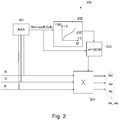
- Fig. 1 shows an example of such an encoding apparatus 100.
- An image source 120 say a hard disk delivers an input image Im_R1 of a first luminance dynamic range, say a HDR grading (a grading being a determination of the object luminances in the image so that to the creating artists they look correct when rendered on the associated reference display, the PB of which is typically co-encoded with the image as image-kind describing metadata).
- the grader can chose via user data UI from e.g. a color grading keyboard and in a grading software one or more functions and their parameters to derive a second graded image for each HDR image (i.e. Im_R1), say an LDR image.
- the encoder 101 represents this data as numbers according to a prescribed format, e.g. it makes DCT-based image components of Im_R2, and stores the functional metadata in SEI messages, or similar, and via a data output 130 sends it to a data communication technology 131 (which in the Figure is a BD disk e.g., but this can also be an internet server for VOD, etc.).
- a data communication technology 131 which in the Figure is a BD disk e.g., but this can also be an internet server for VOD, etc.
- the color mapper 200 may be a component of a decoder which calculates the original image(s) based on the received basic image and functional color mapping metadata of at least a luminance mapping function (F), but it may similarly be incorporated in an encoder, when the grader is still trying various possible functions F for the best look, and ultimately outputting the data for that best look over the data output 130.
- Maximum calculation unit 201 calculates which of the three components is for this pixel the highest, which may e.g. be the blue component if the object wherein the pixel resides is blue. This yields the maximum M.
- a predetermined function F (which realizes the dynamic range changing required color mapping, as far as the brightness part is concerned) is applied to M, yielding F(M).
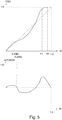
- this function boosts the darkest colors, then keeps the middle colors approximately equal to their original values, and somewhat boosts the bright values again.
- brightness mapper 202 applies this function (which may be composed of partial functions, or realized as a LUT) to M.
- the scaling parameter calculator 203 calculates a scaling parameter a by dividing F(M) by M.
- a multiplier 204 uses this scaling parameter a to multiply it with each color component (R,G and B), yielding appropriately scaled color components (Rs, Gs, Bs).
- the correct output luminance is obtained for the resultant pixel color, but with preservation of the original chromaticity.
- the brightness mapper kind of de-skews the tent shape of the RGB gamut by using this principle. As long as one ensures that the mapping function 205 is so determined that for the maximum input (M 1.0) the output F(M) is not higher than 1, then for all chromaticities the processing is correctly scaled to the upper gamut boundary, so that no colorimetric errors due to clipping can occur.
- the problem occurs because the scaling parameter a picks up the noise in the dominant color component, and so becomes noisy itself.
- a relatively uniform area which is always a bad region for conspicuousness of noise
- the maximum component for all or most of those pixel will hence be the blue component, which may typically be noisy for several types of image.
- the M value will then jitter around a value of say 0.7.
- the functional mapping may correspond to a multiplication of say 3. But not only that, if there is a sharp discontinuity in the function F around 0.7, the higher M values may be boosted by 3 and the lower than 0.7 values may e.g. be multiplied by 1.
- the object of having a largely chromaticity-preserving luminance mapping with reduced noise sensitivity is realized by an image color processing apparatus (200) arranged to transform an input color (R,G,B) defined by a red, green and blue color component of a pixel of an input image (Im_R2) having a first luminance dynamic range into an output color (Rs, Gs, Bs) of a pixel of an output image (Im_res) having a second luminance dynamic range, which first and second dynamic ranges differ in extent by at least a multiplicative factor 1.5, comprising:
- the 3 or 4 inputs, or additional inputs may also be non-linear functions and/or combinations of the R,G,B color components. So one or more input component to the maximum calculator may be 1.0 and other components may have weights of other values, typically lower than 1.0. Where we say weighted functions, the reader should understand that the unity function also applies, and that a non-weighted unity function means the original e.g. red color component itself, but that at least one of the inputs should be weighted by a non-unity value before going through maximization.
- the scaling can then do a brightness processing which is similar to the linear re-lighting in nature.
- the grader can design whatever brightness mapping function 205 he desires, e.g. to darken a corner of the room for a mood effect, and to increase the contrast of the grey values of e.g. a table and the objects on it.
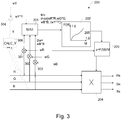
- At least one of the input components can be weighted, before the brightness position of a color is judged with it.
- the coefficient of blue can be set low, e.g. 0.25 of even 0.1. This assures that the (weighted) blue component will seldomly be selected in the maximum operation, and e.g. the green one will be selected, which usually doesn't give problems.
- the color components are approximately equal, so it doesn't matter which one is selected. Also for e.g.
- reds would normally have the red component being the maximum, whatever the blue scaling factor. Only for some colors, like a pure blue (e.g. (0,0 128)*4) would the blue still be selected as the maximum component even for small wB, but those colors don't occur frequently, and then the noise problem may not be visually problematic.
- the weight factors may typically be preset by the grader for e.g. a scene in the movie, i.e. a shot of images with the same colorimetry, or even an entire movie, based on its capturing technology noise characteristics (the former per-scene approach has the advantage that the grader can handle the severity of the noise based on the type of color processing he wants to do on the scene, which may boost some noise severely, or not).
- the grader may look at the noise behavior and test a couple of weight settings with sliders, or he may be helped with an automatic weight setting algorithm based on the noise characteristics, and then finetune.
- the automatic analysis may spot specific color regions which have a severe noise problem, and then flash them to point the grader's attention to them.
- Fig. 5 schematically shows an example of what could be a mapping to derive a LDR grading from a received HDR grading basic image (where the grader mainly decided to boost midrange contrast, and allow some clippings in the brights which may have been lamps).
- the grader mainly decided to boost midrange contrast, and allow some clippings in the brights which may have been lamps.
- the factor a can vary quite somewhat for the colors with B1 versus B2, and so even a region which should look reasonably uniform can pick up quite some noise pattern (which becomes visible because the noise in a relatively dark blue component gets leaked into the luminous green component, because the red and green components are multiplied by that same noisy factor).
- scaled blue components they will probably not be selected. If we have a slightly bluish bright whitish sky e.g., the green components of those pixels will have approximately the same values as B1 and B2, but the green component will be less noisy so there will be a smaller spread between possible selected maximum values G1, G2, G3, ...
- the image color processing apparatus (200) comprises a multiplier for each of the three components of the input color, and the components being red, green and blue.
- a color representation which is linear RGB.
- the image color processing apparatus (200) obtains three weights (wR, wG, wB) from a data source associated with the input image (Im R2).
- a grader may set the weights in software when looking at the characteristics of at least some images of a video, or the image if only a single still image is to be processed.
- a decoding side e.g. in a settopbox (STB)
- STB settopbox
- computer, television, digital cinema receiver in a movie theatre, etc. typically the weights have been determined, and the decoder reads them from a source.
- they may be stored as metadata on a BD disk or other memory product, may be received as data fields in a transmitted television signal, etc.
- the data may include a mathematical scheme to calculate some of the weights at a receiver, but normally one wants the results obtained at encoder and decoder to be the same.
- Advantageously embodiments of the image color processing apparatus (200) comprise a luminance calculation unit (306) arranged to calculate from the red, green and blue components a luminance as a fourth component of the input color, and comprising a luminance multiplier (304) arranged to multiply the luminance (Y) with a luminance weight (wY), yielding an output result which is input as a fourth input to the maximum calculation unit (201).
- a luminance calculation unit (306) arranged to calculate from the red, green and blue components a luminance as a fourth component of the input color, and comprising a luminance multiplier (304) arranged to multiply the luminance (Y) with a luminance weight (wY), yielding an output result which is input as a fourth input to the maximum calculation unit (201).
- the skilled person knows how to calculate the luminance as a linear combination of RGB color components with fixed factors, which depend on the colorimetry of the chosen representation, i.e. the chromaticities of the primaries, and the chosen white point. Doing a scaling based on the lumina
- weights of the color components can be set depending on where one wants them to take over in the maximum determination, e.g. at 0.5 or lower.
- Advantageously embodiments of the image color processing apparatus (200) comprise at least one non-linear function application unit (401) arranged to apply a non-linear function to at least one of the red, green and blue color components, and wherein the maximum calculation unit (201) has as input besides the result (NR) of applying the non-linear function to the color component, at least two other color components which contain color information of the two of the red, green and blue components which were not selected for being processed by the at least one non-linear function application unit (401).
- This has several possible applications. On the one hand, it allows the grader to design a mapping function 205 not in a linear domain, but e.g. in a gamma domain. In that case, the three functions may apply e.g.
- Advantageous embodiments of the image color processing apparatus (200) contain a color analysis unit (410) arranged to analyze the input color, and determine therefrom the weights (wR, wG, wB) of at least the red, green and blue color components.
- a color analysis unit (410) arranged to analyze the input color, and determine therefrom the weights (wR, wG, wB) of at least the red, green and blue color components.
- the weights wR, wG, wB may for pixels fulfilling that condition be set to low values, so that the luminance comes out of the maximum.
- the weight of the blue component into the maximum calculator may be set considerably lower than 1.0, to a value predetermined in the laboratory, etc. Whether this is realized in an IC as one component with continuously updated weights, or a parallel passing to two components, one of which has e.g. fixed weights for processing the low saturation colors, is a mere matter of design.
- Advantageously embodiments of the image color processing apparatus (200) contain a color analysis unit (410) arranged to analyze the input color, and determine therefrom the functional shape of at least one of the at least one non-linear functions of the at least one non-linear function application unit (401).
- different functions can be chosen on colorimetric conditions of the color of the currently processed color.
- a linear scheme may be used in which the luminance always or usually wins in the maximum determination, in a color sector of strong blues, some non-linear function may be selected, which yields e.g. at least a blue non-linear input NB, etc.
- One can design the non-linear shapes so that e.g. the blue input to the maximization calculator typically comes in low, at least for particular regions of the color gamut, leading to the luminance coming out of the maximum selection.
- Advantageous variants are also e.g. a method of image color processing to transform an input color (R,G,B) of a pixel of an input image (Im_R2) having a first luminance dynamic range into an output color (Rs, Gs, Bs) of a pixel of an output image (Im_res) having a second luminance dynamic range, which first and second dynamic ranges differ in extent by at least a multiplicative factor 1.5, comprising:
- a method of image color processing in which the maximum is calculated from in addition to three red, green and blue color components also a luminance (Y) scaled with a luminance weight (wY).
- a method of image color processing as claimed in one of the above method claims in which at least one of the weights (wR, wG, wB, wY) is determined based on an analysis of the pixel color.
- a computer program product comprising code codifying the steps of at least one of the above method claims, thereby upon running enabling a processor to implement that method.
- An image signal (S_im) comprising an encoding of colors of a matrix of pixels, and in addition thereto as encoded metadata at least one of the weights (wR, wG, wB, wY) usable in one of the above apparatus or method, which will typically be realized in that the signal is so defined that the receivers uniquely know what the weights mean, namely that they are intended to be used as weights for the respective color components prior to maximum calculation.
- the present invention embodiments can be realized in many technical variants, e.g. the image color processing apparatus (200) may be realized as, or comprised in an image or video encoder or decoder, as comprised in e.g. a settopbox, or display, or camera, etc.
- the image color processing apparatus (200) may be realized as, or comprised in an image or video encoder or decoder, as comprised in e.g. a settopbox, or display, or camera, etc.
- Fig. 3 shows an example of how our present invention can be embodied.
- wR,wG,wB available weights
- wR,wG,wB available weights
- Bw weighted blue
- a maximum calculation unit (201) then calculates which one of the inputs is the highest, which we call M (e.g. the green component, having a value of 180*4, if the word length of the components is e.g. 10 bit). Then a brightness mapper (202) applies a function to M, which function has been previously designed by a grader to make sure that the resultant image has a good look.
- This image may be e.g. an LDR grading to be rendered on displays of PB around 100 nit, calculated from a master HDR grading.
- the master HDR images, and the data of the function may e.g.
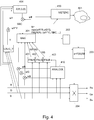
- Fig. 4 shows what is possible in more complex embodiments.
- a color analysis unit (410) can calculate weights, whether they were already present and have to be overwritten at least for some situations, or have to be calculated on the fly (in the case that no weights are communicated, but one or more algorithms to derive them).
- any analysis of the color situation can be done, typically simply looking at the color of the pixel itself, but also other colors of the image may be evaluated, e.g. of surrounding pixels to estimate if noise would be conspicuous, and also depending on what is required, such as PB of the required grading, viewing surround conditions, acceptable quality in view of price of the content, etc.
- Non-linear function application units (401, 402, 403) may be present to provide non-linear color components (NR, NG, NB) as input to the maximum calculation unit. This is advantageous e.g. if one wants to design a mapping function 205 which is differently sampled, e.g. on a logarithmic axes system, etc.
- a non-linear transformation unit may also be present at the output of the maximum calculation unit (i.e. between units 201 and 202), i.e. non-linearly transforming the maximum M, whether it was selected from linear and or non-linear color components as input.
- a color component combination unit (404) may also be present. With this e.g. some other brightness estimate SBC can be calculated than the luminance, e.g. as b1*R+b2*G+b3*B. It may also combine linearly or non-linearly the non-linear components NR,NG,NB, or in fact calculating whatever non-linear function yielding a single real-valued parameter over the cube of possible input colors (which function may typically be embodied as one or more LUTs, which may have been optimized e.g. for particular classes of content, like which camera captured the content and potentially under which conditions, e.g. night versus day, what type the content is, e.g. nature movie versus cartoon, or graphics or content containing some graphics, like maybe a tutorial or the news, etc.).
- an metadata encoder 450 will collect all the parameters, such as all the weights, parameters defining the shapes of the non-linear functions, or the calculations of parameters, or the data of LUTs, or the algorithms classifying particular colorimetric properties of the to be processed image(s), etc., and after formatting this in a pre-agreed format, send this to a communication technology 451, e.g. a server connected to the internet for later supply to end customers, or a direct link to a customer, etc.
- a communication technology 451 e.g. a server connected to the internet for later supply to end customers, or a direct link to a customer, etc.
- image-related technologies like e.g. video supply systems, image or video processing software, image analysis or re-processing systems, etc.
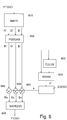
- Fig. 6 shows how the same principle can be applied in non-linear RGB representation, typically classical gamma R'G'B' versions, being approximately a square root of the linear light RGB colors, as e.g. prescribed by the opto-electronic transfer function (which defines the mapping between the linear color components, e.g. R, and the luma codes R', and vice versa via the EOTF), e.g. according to Rec. 709 (note that apart from color nonlinearities the color gamut shape stays the same for the chose red, green and blue primaries).
- the opto-electronic transfer function which defines the mapping between the linear color components, e.g. R, and the luma codes R', and vice versa via the EOTF
- Rec. 709 note that apart from color nonlinearities the color gamut shape stays the same for the chose red, green and blue primaries).
- Matrix calculator 601 converts this Y"CbCr representation of the pixel color(s) to a highly non-linear (almost logarithmic) R", G", B" representation.
- Maximum calculation unit 604 is again any of the weighted component maximum calculation embodiments our invention allows, and scale factor calculation unit 202203 comprises the transformation of the input brightness correlate V' from the maximum to a scale factor for the multiplicative processing, i.e. comprises what units 202 and 203 do.
- multipliers 605, 606, and 607 realize via scale factor a the color transformation to the output color (Rs,GS,Bs), which is in this embodiment matrixed again to Y'CbCr by color matrixer 608, but this is now in the gamma domain, i.e. Y' code defined according to e.g. typically the Rec. 709 EOTF.
- the algorithmic components disclosed in this text may (entirely or in part) be realized in practice as hardware (e.g. parts of an application specific IC) or as software running on a special digital signal processor, or a generic processor, etc. They may be semi-automatic in a sense that at least some user input may be/have been (e.g. in factory, or consumer input, or other human input) present.
- all variants of a creation side like an encoder may be similar as or correspond to corresponding apparatuses at a consumption side of a decomposed system, e.g. a decoder and vice versa.
- Several components of the embodiments may be encoded as specific signal data in a signal for transmission, or further use such as coordination, in any transmission technology between encoder and decoder, etc.
- the word "apparatus” in this application is used in its broadest sense, namely a group of means allowing the realization of a particular objective, and can hence e.g. be (a small part of) an IC, or a dedicated appliance (such as an appliance with a display), or part of a networked system, etc.
- "Arrangement” or “system” is also intended to be used in the broadest sense, so it may comprise inter alia a single physical, purchasable apparatus, a part of an apparatus, a collection of (parts of) cooperating apparatuses, etc.
- the computer program product denotation should be understood to encompass any physical realization of a collection of commands enabling a generic or special purpose processor, after a series of loading steps (which may include intermediate conversion steps, such as translation to an intermediate language, and a final processor language) to enter the commands into the processor, to execute any of the characteristic functions of an invention.
- the computer program product may be realized as data on a carrier such as e.g. a disk or tape, data present in a memory, data traveling via a network connection -wired or wireless- , or program code on paper.
- characteristic data required for the program may also be embodied as a computer program product. Such data may be (partially) supplied in any way.
- the invention or any data usable according to any philosophy of the present embodiments like video data may also be embodied as signals on data carriers, which may be removable memories like optical disks, flash memories, removable hard disks, portable devices writeable via wireless means, etc.
Landscapes
- Engineering & Computer Science (AREA)
- Multimedia (AREA)
- Signal Processing (AREA)
- Physics & Mathematics (AREA)
- General Physics & Mathematics (AREA)
- Theoretical Computer Science (AREA)
- Computer Vision & Pattern Recognition (AREA)
- Image Processing (AREA)
- Facsimile Image Signal Circuits (AREA)
- Picture Signal Circuits (AREA)
- Studio Circuits (AREA)
- Compression Or Coding Systems Of Tv Signals (AREA)
Applications Claiming Priority (2)
| Application Number | Priority Date | Filing Date | Title |
|---|---|---|---|
| EP15150555 | 2015-01-09 | ||
| PCT/EP2015/074501 WO2016110341A1 (en) | 2015-01-09 | 2015-10-22 | Luminance changing image processing with color constancy |
Publications (2)
| Publication Number | Publication Date |
|---|---|
| EP3243322A1 EP3243322A1 (en) | 2017-11-15 |
| EP3243322B1 true EP3243322B1 (en) | 2018-07-18 |
Family
ID=52282646
Family Applications (1)
| Application Number | Title | Priority Date | Filing Date |
|---|---|---|---|
| EP15784665.0A Active EP3243322B1 (en) | 2015-01-09 | 2015-10-22 | Luminance changing image processing with color constancy |
Country Status (6)
| Country | Link |
|---|---|
| US (1) | US10504216B2 (enExample) |
| EP (1) | EP3243322B1 (enExample) |
| JP (1) | JP6396596B2 (enExample) |
| CN (1) | CN107113367B (enExample) |
| RU (1) | RU2707728C2 (enExample) |
| WO (1) | WO2016110341A1 (enExample) |
Cited By (1)
| Publication number | Priority date | Publication date | Assignee | Title |
|---|---|---|---|---|
| US11138701B2 (en) | 2018-08-20 | 2021-10-05 | Guangdong Oppo Mobile Telecommunications Corp., Ltd. | Image processing method, storage medium, and electronic apparatus |
Families Citing this family (18)
| Publication number | Priority date | Publication date | Assignee | Title |
|---|---|---|---|---|
| WO2018035696A1 (zh) * | 2016-08-22 | 2018-03-01 | 华为技术有限公司 | 一种图像处理方法以及装置 |
| US10885676B2 (en) * | 2016-12-27 | 2021-01-05 | Samsung Electronics Co., Ltd. | Method and apparatus for modifying display settings in virtual/augmented reality |
| GB2566050B (en) | 2017-08-31 | 2021-08-25 | Imagination Tech Ltd | Luminance-normalised colour spaces |
| KR102492150B1 (ko) * | 2017-09-15 | 2023-01-27 | 삼성전자주식회사 | 디스플레이 시스템 및 디스플레이 보정 방법 |
| CN108537852B (zh) * | 2018-04-17 | 2020-07-07 | 四川大学 | 一种基于图像局部对比度的自适应颜色恒常性方法 |
| US10917583B2 (en) * | 2018-04-27 | 2021-02-09 | Apple Inc. | Standard and high dynamic range display systems and methods for high dynamic range displays |
| CN109144641B (zh) * | 2018-08-14 | 2021-11-02 | 四川虹美智能科技有限公司 | 一种通过冰箱显示屏展示图像的方法及装置 |
| JP7046270B2 (ja) * | 2018-10-03 | 2022-04-01 | ドルビー ラボラトリーズ ライセンシング コーポレイション | 後方互換性を有するhdr画像化における、バンディングアーチファクトの低減 |
| GB2575135B (en) | 2018-12-20 | 2021-03-24 | Imagination Tech Ltd | ASTC interpolation |
| GB2575134B (en) | 2018-12-20 | 2021-03-31 | Imagination Tech Ltd | ASTC interpolation |
| US12033358B2 (en) | 2019-04-30 | 2024-07-09 | Signify Holding B.V. | Luminance distribution determination |
| KR102911785B1 (ko) | 2019-05-24 | 2026-01-14 | 삼성전자주식회사 | 영상 처리 방법 및 장치 |
| EP3839876B1 (en) * | 2019-12-20 | 2026-06-10 | Fondation B-COM | Method for converting an image and corresponding device |
| KR102995291B1 (ko) | 2020-12-02 | 2026-07-24 | 삼성전자주식회사 | 이미지 처리 방법 및 장치 |
| JP2022099651A (ja) * | 2020-12-23 | 2022-07-05 | ソニーセミコンダクタソリューションズ株式会社 | 画像生成装置、画像生成方法、およびプログラム |
| CN114299178A (zh) * | 2021-12-28 | 2022-04-08 | 北京光启元数字科技有限公司 | 一种颜色拾取方法、装置、设备及存储介质 |
| CN116703737A (zh) * | 2022-02-28 | 2023-09-05 | Tcl科技集团股份有限公司 | 一种图像修饰方法、装置、设备和存储介质 |
| CN114820843B (zh) * | 2022-04-08 | 2024-08-13 | 吉林大学 | 一种保持农田图像颜色恒常性的方法 |
Family Cites Families (15)
| Publication number | Priority date | Publication date | Assignee | Title |
|---|---|---|---|---|
| CN100484252C (zh) * | 2001-12-29 | 2009-04-29 | 三星电子株式会社 | 控制图像亮度的装置和方法 |
| US7369699B1 (en) * | 2003-08-29 | 2008-05-06 | Apple Inc. | Methods and apparatuses for restoring color and enhancing electronic images |
| CN1910901B (zh) * | 2003-11-04 | 2013-11-20 | 皇家飞利浦电子股份有限公司 | 用于移动显示器的智能限幅器 |
| KR100755676B1 (ko) * | 2005-08-26 | 2007-09-05 | 삼성전자주식회사 | 밝기 향상 및 전력 제어를 지원하는 영상 표시 장치 및방법 |
| ES2716167T3 (es) * | 2006-10-12 | 2019-06-10 | Tp Vision Holding Bv | Procedimiento de correlación de colores |
| KR101431185B1 (ko) * | 2007-06-22 | 2014-08-27 | 삼성전자 주식회사 | 영상 향상 방법 및 장치, 이를 이용한 영상 처리 시스템 |
| US20090091660A1 (en) * | 2007-10-08 | 2009-04-09 | Yu-Wei Wang | Method and apparatus for processing color components of pixel through adding white light adaptively |
| WO2009072537A1 (ja) * | 2007-12-04 | 2009-06-11 | Sony Corporation | 画像処理装置および方法、プログラム、並びに記録媒体 |
| US20100080459A1 (en) * | 2008-09-26 | 2010-04-01 | Qualcomm Incorporated | Content adaptive histogram enhancement |
| CN104486605B (zh) * | 2009-03-10 | 2017-04-12 | 杜比实验室特许公司 | 扩展动态范围和扩展维数图像信号转换 |
| JP5683882B2 (ja) * | 2009-10-15 | 2015-03-11 | オリンパス株式会社 | 画像処理装置、画像処理方法および画像処理プログラム |
| TWI538474B (zh) * | 2011-03-15 | 2016-06-11 | 杜比實驗室特許公司 | 影像資料轉換的方法與設備 |
| MX338258B (es) * | 2012-10-08 | 2016-04-11 | Koninkl Philips Nv | Procesamiento de imagenes por cambio de luminancia con restricciones de color. |
| US9412155B2 (en) * | 2012-12-31 | 2016-08-09 | Karl Storz Imaging, Inc. | Video system with dynamic contrast and detail enhancement |
| CN107111980B (zh) * | 2014-12-11 | 2021-03-09 | 皇家飞利浦有限公司 | 针对特定显示器优化高动态范围图像 |
-
2015
- 2015-10-22 EP EP15784665.0A patent/EP3243322B1/en active Active
- 2015-10-22 CN CN201580072775.2A patent/CN107113367B/zh active Active
- 2015-10-22 US US15/537,890 patent/US10504216B2/en active Active
- 2015-10-22 RU RU2017128208A patent/RU2707728C2/ru active
- 2015-10-22 JP JP2017535893A patent/JP6396596B2/ja active Active
- 2015-10-22 WO PCT/EP2015/074501 patent/WO2016110341A1/en not_active Ceased
Non-Patent Citations (1)
| Title |
|---|
| None * |
Cited By (1)
| Publication number | Priority date | Publication date | Assignee | Title |
|---|---|---|---|---|
| US11138701B2 (en) | 2018-08-20 | 2021-10-05 | Guangdong Oppo Mobile Telecommunications Corp., Ltd. | Image processing method, storage medium, and electronic apparatus |
Also Published As
| Publication number | Publication date |
|---|---|
| RU2017128208A3 (enExample) | 2019-05-30 |
| CN107113367B (zh) | 2019-08-06 |
| JP6396596B2 (ja) | 2018-09-26 |
| JP2018508862A (ja) | 2018-03-29 |
| US20170352137A1 (en) | 2017-12-07 |
| WO2016110341A1 (en) | 2016-07-14 |
| RU2017128208A (ru) | 2019-02-11 |
| EP3243322A1 (en) | 2017-11-15 |
| RU2707728C2 (ru) | 2019-11-28 |
| CN107113367A (zh) | 2017-08-29 |
| US10504216B2 (en) | 2019-12-10 |
Similar Documents
| Publication | Publication Date | Title |
|---|---|---|
| US10504216B2 (en) | Luminance changing image processing with color constancy | |
| US12125183B2 (en) | High dynamic range video color remapping | |
| EP3430806B1 (en) | Encoding and decoding hdr videos | |
| KR102337438B1 (ko) | Hdr 비디오의 인코딩 및 디코딩 | |
| EP3022895B1 (en) | Methods and apparatuses for creating code mapping functions for encoding an hdr image, and methods and apparatuses for use of such encoded images | |
| CN104364820B (zh) | 具有颜色约束的亮度改变图像处理 | |
| CN108781290A (zh) | 对hdr视频进行编码和解码 | |
| JP2022541884A (ja) | Hdr画像のための表示最適化挙動の調節 | |
| CN116167950A (zh) | 图像处理方法、装置、电子设备及存储介质 | |
| KR20220143932A (ko) | 포화된 색들에 대한 개선된 hdr 색 처리 | |
| EP4086843A1 (en) | Display-optimized hdr video contrast adaptation | |
| JP7695482B2 (ja) | Hdr画像の表示の最適化 | |
| EP4636683A1 (en) | Improved luma and chroma mapping for images | |
| EP4567783A1 (en) | Image display improvement in brightened viewing environments | |
| EP4607918A1 (en) | Improved encoding and decoding for images | |
| RU2782432C2 (ru) | Улучшенное повторное отображение цвета видео с высоким динамическим диапазоном | |
| EP4277281A1 (en) | Hdr video reconstruction by converted tone mapping | |
| CN120660341A (zh) | Hdr色域外调整的色调映射 | |
| WO2025176560A1 (en) | Encoding and decoding for images |
Legal Events
| Date | Code | Title | Description |
|---|---|---|---|
| PUAI | Public reference made under article 153(3) epc to a published international application that has entered the european phase |
Free format text: ORIGINAL CODE: 0009012 |
|
| 17P | Request for examination filed |
Effective date: 20170809 |
|
| AK | Designated contracting states |
Kind code of ref document: A1 Designated state(s): AL AT BE BG CH CY CZ DE DK EE ES FI FR GB GR HR HU IE IS IT LI LT LU LV MC MK MT NL NO PL PT RO RS SE SI SK SM TR |
|
| AX | Request for extension of the european patent |
Extension state: BA ME |
|
| GRAP | Despatch of communication of intention to grant a patent |
Free format text: ORIGINAL CODE: EPIDOSNIGR1 |
|
| DAV | Request for validation of the european patent (deleted) | ||
| DAX | Request for extension of the european patent (deleted) | ||
| INTG | Intention to grant announced |
Effective date: 20180214 |
|
| GRAS | Grant fee paid |
Free format text: ORIGINAL CODE: EPIDOSNIGR3 |
|
| GRAA | (expected) grant |
Free format text: ORIGINAL CODE: 0009210 |
|
| AK | Designated contracting states |
Kind code of ref document: B1 Designated state(s): AL AT BE BG CH CY CZ DE DK EE ES FI FR GB GR HR HU IE IS IT LI LT LU LV MC MK MT NL NO PL PT RO RS SE SI SK SM TR |
|
| REG | Reference to a national code |
Ref country code: GB Ref legal event code: FG4D |
|
| REG | Reference to a national code |
Ref country code: CH Ref legal event code: EP |
|
| REG | Reference to a national code |
Ref country code: IE Ref legal event code: FG4D |
|
| REG | Reference to a national code |
Ref country code: AT Ref legal event code: REF Ref document number: 1020602 Country of ref document: AT Kind code of ref document: T Effective date: 20180815 |
|
| REG | Reference to a national code |
Ref country code: DE Ref legal event code: R096 Ref document number: 602015013819 Country of ref document: DE |
|
| REG | Reference to a national code |
Ref country code: FR Ref legal event code: PLFP Year of fee payment: 4 |
|
| REG | Reference to a national code |
Ref country code: NL Ref legal event code: MP Effective date: 20180718 |
|
| REG | Reference to a national code |
Ref country code: LT Ref legal event code: MG4D |
|
| REG | Reference to a national code |
Ref country code: AT Ref legal event code: MK05 Ref document number: 1020602 Country of ref document: AT Kind code of ref document: T Effective date: 20180718 |
|
| PG25 | Lapsed in a contracting state [announced via postgrant information from national office to epo] |
Ref country code: NL Free format text: LAPSE BECAUSE OF FAILURE TO SUBMIT A TRANSLATION OF THE DESCRIPTION OR TO PAY THE FEE WITHIN THE PRESCRIBED TIME-LIMIT Effective date: 20180718 |
|
| PG25 | Lapsed in a contracting state [announced via postgrant information from national office to epo] |
Ref country code: AT Free format text: LAPSE BECAUSE OF FAILURE TO SUBMIT A TRANSLATION OF THE DESCRIPTION OR TO PAY THE FEE WITHIN THE PRESCRIBED TIME-LIMIT Effective date: 20180718 Ref country code: RS Free format text: LAPSE BECAUSE OF FAILURE TO SUBMIT A TRANSLATION OF THE DESCRIPTION OR TO PAY THE FEE WITHIN THE PRESCRIBED TIME-LIMIT Effective date: 20180718 Ref country code: NO Free format text: LAPSE BECAUSE OF FAILURE TO SUBMIT A TRANSLATION OF THE DESCRIPTION OR TO PAY THE FEE WITHIN THE PRESCRIBED TIME-LIMIT Effective date: 20181018 Ref country code: PL Free format text: LAPSE BECAUSE OF FAILURE TO SUBMIT A TRANSLATION OF THE DESCRIPTION OR TO PAY THE FEE WITHIN THE PRESCRIBED TIME-LIMIT Effective date: 20180718 Ref country code: IS Free format text: LAPSE BECAUSE OF FAILURE TO SUBMIT A TRANSLATION OF THE DESCRIPTION OR TO PAY THE FEE WITHIN THE PRESCRIBED TIME-LIMIT Effective date: 20181118 Ref country code: LT Free format text: LAPSE BECAUSE OF FAILURE TO SUBMIT A TRANSLATION OF THE DESCRIPTION OR TO PAY THE FEE WITHIN THE PRESCRIBED TIME-LIMIT Effective date: 20180718 Ref country code: BG Free format text: LAPSE BECAUSE OF FAILURE TO SUBMIT A TRANSLATION OF THE DESCRIPTION OR TO PAY THE FEE WITHIN THE PRESCRIBED TIME-LIMIT Effective date: 20181018 Ref country code: FI Free format text: LAPSE BECAUSE OF FAILURE TO SUBMIT A TRANSLATION OF THE DESCRIPTION OR TO PAY THE FEE WITHIN THE PRESCRIBED TIME-LIMIT Effective date: 20180718 Ref country code: GR Free format text: LAPSE BECAUSE OF FAILURE TO SUBMIT A TRANSLATION OF THE DESCRIPTION OR TO PAY THE FEE WITHIN THE PRESCRIBED TIME-LIMIT Effective date: 20181019 Ref country code: SE Free format text: LAPSE BECAUSE OF FAILURE TO SUBMIT A TRANSLATION OF THE DESCRIPTION OR TO PAY THE FEE WITHIN THE PRESCRIBED TIME-LIMIT Effective date: 20180718 |
|
| PG25 | Lapsed in a contracting state [announced via postgrant information from national office to epo] |
Ref country code: LV Free format text: LAPSE BECAUSE OF FAILURE TO SUBMIT A TRANSLATION OF THE DESCRIPTION OR TO PAY THE FEE WITHIN THE PRESCRIBED TIME-LIMIT Effective date: 20180718 Ref country code: AL Free format text: LAPSE BECAUSE OF FAILURE TO SUBMIT A TRANSLATION OF THE DESCRIPTION OR TO PAY THE FEE WITHIN THE PRESCRIBED TIME-LIMIT Effective date: 20180718 Ref country code: HR Free format text: LAPSE BECAUSE OF FAILURE TO SUBMIT A TRANSLATION OF THE DESCRIPTION OR TO PAY THE FEE WITHIN THE PRESCRIBED TIME-LIMIT Effective date: 20180718 |
|
| REG | Reference to a national code |
Ref country code: DE Ref legal event code: R097 Ref document number: 602015013819 Country of ref document: DE |
|
| PG25 | Lapsed in a contracting state [announced via postgrant information from national office to epo] |
Ref country code: RO Free format text: LAPSE BECAUSE OF FAILURE TO SUBMIT A TRANSLATION OF THE DESCRIPTION OR TO PAY THE FEE WITHIN THE PRESCRIBED TIME-LIMIT Effective date: 20180718 Ref country code: IT Free format text: LAPSE BECAUSE OF FAILURE TO SUBMIT A TRANSLATION OF THE DESCRIPTION OR TO PAY THE FEE WITHIN THE PRESCRIBED TIME-LIMIT Effective date: 20180718 Ref country code: EE Free format text: LAPSE BECAUSE OF FAILURE TO SUBMIT A TRANSLATION OF THE DESCRIPTION OR TO PAY THE FEE WITHIN THE PRESCRIBED TIME-LIMIT Effective date: 20180718 Ref country code: CZ Free format text: LAPSE BECAUSE OF FAILURE TO SUBMIT A TRANSLATION OF THE DESCRIPTION OR TO PAY THE FEE WITHIN THE PRESCRIBED TIME-LIMIT Effective date: 20180718 Ref country code: ES Free format text: LAPSE BECAUSE OF FAILURE TO SUBMIT A TRANSLATION OF THE DESCRIPTION OR TO PAY THE FEE WITHIN THE PRESCRIBED TIME-LIMIT Effective date: 20180718 |
|
| PLBE | No opposition filed within time limit |
Free format text: ORIGINAL CODE: 0009261 |
|
| STAA | Information on the status of an ep patent application or granted ep patent |
Free format text: STATUS: NO OPPOSITION FILED WITHIN TIME LIMIT |
|
| PG25 | Lapsed in a contracting state [announced via postgrant information from national office to epo] |
Ref country code: SM Free format text: LAPSE BECAUSE OF FAILURE TO SUBMIT A TRANSLATION OF THE DESCRIPTION OR TO PAY THE FEE WITHIN THE PRESCRIBED TIME-LIMIT Effective date: 20180718 Ref country code: SK Free format text: LAPSE BECAUSE OF FAILURE TO SUBMIT A TRANSLATION OF THE DESCRIPTION OR TO PAY THE FEE WITHIN THE PRESCRIBED TIME-LIMIT Effective date: 20180718 Ref country code: DK Free format text: LAPSE BECAUSE OF FAILURE TO SUBMIT A TRANSLATION OF THE DESCRIPTION OR TO PAY THE FEE WITHIN THE PRESCRIBED TIME-LIMIT Effective date: 20180718 |
|
| REG | Reference to a national code |
Ref country code: CH Ref legal event code: PL |
|
| 26N | No opposition filed |
Effective date: 20190423 |
|
| REG | Reference to a national code |
Ref country code: BE Ref legal event code: MM Effective date: 20181031 |
|
| PG25 | Lapsed in a contracting state [announced via postgrant information from national office to epo] |
Ref country code: LU Free format text: LAPSE BECAUSE OF NON-PAYMENT OF DUE FEES Effective date: 20181022 Ref country code: MC Free format text: LAPSE BECAUSE OF FAILURE TO SUBMIT A TRANSLATION OF THE DESCRIPTION OR TO PAY THE FEE WITHIN THE PRESCRIBED TIME-LIMIT Effective date: 20180718 |
|
| REG | Reference to a national code |
Ref country code: IE Ref legal event code: MM4A |
|
| PG25 | Lapsed in a contracting state [announced via postgrant information from national office to epo] |
Ref country code: BE Free format text: LAPSE BECAUSE OF NON-PAYMENT OF DUE FEES Effective date: 20181031 Ref country code: LI Free format text: LAPSE BECAUSE OF NON-PAYMENT OF DUE FEES Effective date: 20181031 Ref country code: CH Free format text: LAPSE BECAUSE OF NON-PAYMENT OF DUE FEES Effective date: 20181031 Ref country code: SI Free format text: LAPSE BECAUSE OF FAILURE TO SUBMIT A TRANSLATION OF THE DESCRIPTION OR TO PAY THE FEE WITHIN THE PRESCRIBED TIME-LIMIT Effective date: 20180718 |
|
| PG25 | Lapsed in a contracting state [announced via postgrant information from national office to epo] |
Ref country code: IE Free format text: LAPSE BECAUSE OF NON-PAYMENT OF DUE FEES Effective date: 20181022 |
|
| PG25 | Lapsed in a contracting state [announced via postgrant information from national office to epo] |
Ref country code: MT Free format text: LAPSE BECAUSE OF NON-PAYMENT OF DUE FEES Effective date: 20181022 |
|
| PG25 | Lapsed in a contracting state [announced via postgrant information from national office to epo] |
Ref country code: TR Free format text: LAPSE BECAUSE OF FAILURE TO SUBMIT A TRANSLATION OF THE DESCRIPTION OR TO PAY THE FEE WITHIN THE PRESCRIBED TIME-LIMIT Effective date: 20180718 |
|
| PG25 | Lapsed in a contracting state [announced via postgrant information from national office to epo] |
Ref country code: PT Free format text: LAPSE BECAUSE OF FAILURE TO SUBMIT A TRANSLATION OF THE DESCRIPTION OR TO PAY THE FEE WITHIN THE PRESCRIBED TIME-LIMIT Effective date: 20180718 |
|
| PG25 | Lapsed in a contracting state [announced via postgrant information from national office to epo] |
Ref country code: MK Free format text: LAPSE BECAUSE OF NON-PAYMENT OF DUE FEES Effective date: 20180718 Ref country code: HU Free format text: LAPSE BECAUSE OF FAILURE TO SUBMIT A TRANSLATION OF THE DESCRIPTION OR TO PAY THE FEE WITHIN THE PRESCRIBED TIME-LIMIT; INVALID AB INITIO Effective date: 20151022 Ref country code: CY Free format text: LAPSE BECAUSE OF FAILURE TO SUBMIT A TRANSLATION OF THE DESCRIPTION OR TO PAY THE FEE WITHIN THE PRESCRIBED TIME-LIMIT Effective date: 20180718 |
|
| PGFP | Annual fee paid to national office [announced via postgrant information from national office to epo] |
Ref country code: GB Payment date: 20231024 Year of fee payment: 9 |
|
| PGFP | Annual fee paid to national office [announced via postgrant information from national office to epo] |
Ref country code: FR Payment date: 20231026 Year of fee payment: 9 |
|
| GBPC | Gb: european patent ceased through non-payment of renewal fee |
Effective date: 20241022 |
|
| PG25 | Lapsed in a contracting state [announced via postgrant information from national office to epo] |
Ref country code: GB Free format text: LAPSE BECAUSE OF NON-PAYMENT OF DUE FEES Effective date: 20241022 |
|
| PG25 | Lapsed in a contracting state [announced via postgrant information from national office to epo] |
Ref country code: FR Free format text: LAPSE BECAUSE OF NON-PAYMENT OF DUE FEES Effective date: 20241031 |
|
| PGFP | Annual fee paid to national office [announced via postgrant information from national office to epo] |
Ref country code: DE Payment date: 20251028 Year of fee payment: 11 |