EP3226693B1 - Vorrichtung und verfahren zur hygieneverbesserung von geflügelbehandlung - Google Patents
Vorrichtung und verfahren zur hygieneverbesserung von geflügelbehandlung Download PDFInfo
- Publication number
- EP3226693B1 EP3226693B1 EP15807997.0A EP15807997A EP3226693B1 EP 3226693 B1 EP3226693 B1 EP 3226693B1 EP 15807997 A EP15807997 A EP 15807997A EP 3226693 B1 EP3226693 B1 EP 3226693B1
- Authority
- EP
- European Patent Office
- Prior art keywords
- carcass
- bath
- decontamination
- seconds
- poultry
- Prior art date
- Legal status (The legal status is an assumption and is not a legal conclusion. Google has not performed a legal analysis and makes no representation as to the accuracy of the status listed.)
- Active
Links
Images


Classifications
-
- A—HUMAN NECESSITIES
- A22—BUTCHERING; MEAT TREATMENT; PROCESSING POULTRY OR FISH
- A22C—PROCESSING MEAT, POULTRY, OR FISH
- A22C21/00—Processing poultry
- A22C21/0061—Cleaning or disinfecting poultry
-
- A—HUMAN NECESSITIES
- A22—BUTCHERING; MEAT TREATMENT; PROCESSING POULTRY OR FISH
- A22C—PROCESSING MEAT, POULTRY, OR FISH
- A22C17/00—Other devices for processing meat or bones
- A22C17/08—Cleaning, e.g. washing, meat or sausages
-
- A—HUMAN NECESSITIES
- A22—BUTCHERING; MEAT TREATMENT; PROCESSING POULTRY OR FISH
- A22C—PROCESSING MEAT, POULTRY, OR FISH
- A22C21/00—Processing poultry
- A22C21/04—Scalding, singeing, waxing, or dewaxing poultry
-
- A—HUMAN NECESSITIES
- A23—FOODS OR FOODSTUFFS; TREATMENT THEREOF, NOT COVERED BY OTHER CLASSES
- A23B—PRESERVATION OF FOODS, FOODSTUFFS OR NON-ALCOHOLIC BEVERAGES; CHEMICAL RIPENING OF FRUIT OR VEGETABLES
- A23B4/00—Preservation of meat, sausages, fish or fish products
- A23B4/005—Preserving by heating
-
- A—HUMAN NECESSITIES
- A22—BUTCHERING; MEAT TREATMENT; PROCESSING POULTRY OR FISH
- A22C—PROCESSING MEAT, POULTRY, OR FISH
- A22C18/00—Plants, factories, or the like for processing meat
Definitions
- An industrial poultry processing line typically uses an overhead conveyor to transport stunned and killed birds, which are hung by their feet in shackles, through each of the processing steps required to produce a whole bird carcass suitable for chilling or freezing for sale to the consumer or for further processing to produce a prepared or partially prepared food product.
- Such industrial systems and methods of poultry processing are disclosed for example in US 5178890 or US 5939115 .
- the stunned and killed birds are subjected to a scalding process wherein they are briefly immersed in a bath of hot water, in order to loosen the feathers from the skin, before being removed from the scald bath to be plucked of feathers, typically by an automated or mechanical process.
- the birds are then carried to further stations to be eviscerated, whereby the vent is opened and the internal organs are removed.
- Carcasses can become contaminated at this stage in the procedure through spillages of the content of the intestines and thus release of enteric organisms, or by improper implementation of hygiene procedures by poultry workers, where evisceration is carried out by hand, or they may be contaminated prior to evisceration.
- Carcasses are then rinsed, typically using a shower or spray with cold water of drinking quality in order to reduce the quantity of microorganisms on the surfaces of the carcass. Rinsing should be carried out thoroughly both inside and outside of the carcass to wash away dirt and microbial contamination.
- the scald bath is situated on the processing line before the evisceration step so that, even if it does succeed in decontaminating the carcass, there is a risk that the carcass will become re-contaminated during the evisceration stage, when gut contents may be spilled.
- the scald bath may become contaminated rapidly with feathers, dirt and microbes from the incoming birds and this may actually serve to spread contamination over more carcasses.
- the present invention is based, in part, on the recognition that, despite hygiene precautions being taken during the scalding, de-feathering, evisceration and rinsing steps, there is a need to reduce microbial contamination of the carcass surfaces further in a way which is acceptable to consumers and regulators and which fits with the technical and financial requirements of an automated poultry processing plant.
- apparatus for reducing surface microbial contamination of poultry carcasses comprising a scald bath station, a defeathering station, an evisceration station, a rinse station and an overhead conveyor for conveying successively poultry carcasses through each station, characterised in that the apparatus further comprises a decontamination bath adapted to contain hot water of between 50°C and 75°C and wherein the overhead conveyor is arranged to convey the defeathered poultry carcasses into, through and out of the decontamination bath such that the carcasses are each immersed for a time period of between 20 seconds and 120 seconds.
- a method of reducing surface microbial contamination of a poultry carcass comprising subjecting the poultry carcass, which has been previously scalded and de-feathered to hot water of between 50°C and 95°C for between 1 second and 120 seconds.
- the carcass is subjected to hot water by being immersed into hot water.
- the immersion is into hot water of between 50°C and 75°C for between 20 seconds and 120 seconds, more preferably, the immersion is into hot water for between 60°C and 66°C for between 25 seconds and 50 seconds.
- the carcass is immersed into hot water by being immersed in hot water held in a decontamination bath according to the second aspect of the invention and described herein.
- the carcass may not be immersed in the hot water, but may instead by subjected to the hot water by passing through a hot water spray, for example a hot water spray of between 80°C and 95°C for 1 to 5 seconds (for example for less than 2 seconds).
- apparatus for reducing surface microbial contamination of poultry carcasses comprising a scald bath station, a defeathering station, an evisceration station, a rinse station and an overhead conveyor for conveying successively poultry carcasses through each station, characterised in that the apparatus further comprises a decontamination bath adapted to contain hot water of between 50°C and 75°C and wherein the overhead conveyor is arranged to convey the defeathered poultry carcasses into, through and out of the decontamination bath such that the carcasses are each immersed for a time period of between 20 seconds and 120 seconds.
- the decontamination bath is adapted to contain hot water of between 60°C and 66°C
- the overhead conveyor is arranged such that the carcasses are each immersed for a time period of between 25 seconds and 50 seconds.
- a key feature of all aspects of the invention is that the carcass is decontaminated by being subjected to hot water, for example by immersion into a decontamination bath, after it has been de-feathered (ie after it was been subjected to a defeathering primary scald and mechanical defeathering).
- the decontamination takes place after the evisceration step and the post-evisceration rinse step also, but this is not essential. Accordingly, in preferred embodiments of the invention there is provided a method of reducing surface microbial contamination of a poultry carcass comprising subjecting the poultry carcass, which has been previously scalded de-feathered, eviscerated and rinsed to hot water of between 50°C and 95°C for between 1 second and 120 seconds.
- a method of reducing surface microbial contamination of a poultry carcass comprising immersing the poultry carcass, which has been previously scalded de-feathered, eviscerated and rinsed into hot water of between 50°C and 75°C for between 1 second and 120 seconds
- a method of reducing surface microbial contamination of a poultry carcass comprising immersing the poultry carcass, which has been previously scalded defeathered, eviscerated and rinsed into hot water of between 60°C and 66°C for between 25 second and 50 seconds
- apparatus for reducing surface microbial contamination of poultry carcasses comprising a scald bath station, a defeathering station, an evisceration station, a rinse station and an overhead conveyor for conveying successively poultry carcasses through each station, characterised in that the apparatus further comprises a decontamination bath adapted to contain hot water of between 50°C and 75°C and wherein the overhead conveyor is arranged to convey the rinsed poultry carcasses into, through and out of the decontamination bath such that the carcasses are each immersed for a time period of between 20 seconds and 120 seconds.
- apparatus for reducing surface microbial contamination of poultry carcasses comprising a scald bath station, a de-feathering station, an evisceration station, a rinse station and an overhead conveyor for conveying successively poultry carcasses through each station, characterised in that the apparatus further comprises a decontamination bath adapted to contain hot water of between 60°C and 66°C and wherein the overhead conveyor is arranged to convey the rinsed poultry carcasses into, through and out of the decontamination bath such that the carcasses are each immersed for a time period of between 25 seconds and 50 seconds.
- the carcass is immersed in hot water, rather than being sprayed with hot water to achieve decontamination, it is preferred to avoid a water temperature which is so high so as to cause damage to the carcass surface (either melting and loss of subcutaneous fat and/or visible damage to the surface).
- the water temperature should be high enough to cause meaningful decontamination of the surface. Damage to the carcass may be avoided by either using a lower temperature and/or by reducing the immersion time.
- the temperatures used are typically higher and the contact time shorter.
- a water temperature of between 80°C and 95°C may be used with a contact time of between 1 second and 5 seconds.
- the present invention in all aspects is applicable to all poultry including chickens, quails, turkeys, ducks and geese and also certain other birds which are sometimes regarded as poultry including guinea fowl, squabs and pheasants.
- the invention is especially applicable to poultry which is conventionally processed on an industrial scale using an overhead conveyor to convey carcasses between successive process stations and is also especially applicable to poultry which is prone to surface contamination with microbes which may be of potential concern from a food hygiene perspective.
- the invention in all aspects is especially applicable to ducks, turkeys and chickens, most especially chickens.
- a typical scald bath used for de-feathering poultry has a temperature of between 50°C and 58°C and an immersion time of about 4 minutes.
- the present invention relates to an additional step, subsequent at least the scalding and defeathering steps and preferably subsequent to all of the steps listed above, in poultry processing of subjecting the poultry carcass to hot decontamination water, optionally by spraying (see above for details of water temperature and contact times), but preferably by submerging the poultry carcass in a decontamination bath containing hot water of between 50°C and 75°C for between 20 seconds and 120 seconds (according to certain preferred embodiments of between 60°C and 66°C for between 25 seconds and 50 seconds).
- the temperature of the hot water may be between 60°C and 64°C, 62°C and 66°C, or 62°C and 64°C and the immersion time may be between 25 seconds and 45 seconds, 30 seconds and 50 seconds or 30 seconds and 45 seconds.
- the water temperature is 60°C to 64°C and the immersion time is between 30 seconds and 45 seconds.
- the carcass may be sprayed with water (preferably meeting the standards for potable water) after immersion in the decontamination bath to rapidly cool its surface and also wash off any debris which may have accumulated on the carcass.
- This water may be chilled or at ambient temperature (for example at room temperature or supply temperature) but in all cases will be at a lower temperature than the temperature of the decontamination bath or decontaminating spray water.
- the carcass may be passed through an air blast chiller after immersion in the decontamination bath in order to rapidly cool its surface. Further chilling may of course also be employed subsequently to cool the whole product beyond its surface or to freeze the product.
- the invention is especially applicable to poultry processing facilities wherein the carcass is conveyed on an overhead conveyor in which it is held by leg shackles.
- the overhead conveyor is used to immerse the carcass in the decontamination bath (or alternatively, the decontamination hot water spray) after it has conveyed the carcass through preceding process steps.
- the invention also relates to use of a decontamination bath (or alternatively, the decontamination hot water spray) wherein the decontamination bath (or alternatively, the decontamination hot water spray) is not part of the same process line as that used for earlier procedures.
- decontamination is to take place within a short time period of earlier processes, for example within 4 hours, 2 hours, 1 hour, 30 minutes or 10 minutes of defeathering and preferably also within those times of evisceration and rinsing.
- This short time interval ensures that microbial growth prior to decontamination (or alternatively, the decontamination hot water spray) is minimised.
- the carcass enters the decontamination bath within 100 seconds, for example within 80 or 60 or 40 seconds of the earlier processes (which typically end with a post evisceration rinse).
- Poultry carcasses immersed in a decontamination bath in accordance with the invention may subsequently be fully chilled for packaging and cold-chain distribution or frozen for packaging and frozen distribution as "whole bird" products.
- the carcasses may be further prepared into a partially or fully prepared food product.
- the carcass may optionally be jointed into separate pieces, for example, wings, breasts, drumsticks etc.
- those pieces may be further processed, for example, they may be minced, moulded, marinated, breaded or coated to become products such as patties, kievs, kebabs, coated wings etc. It has been found that chicken carcasses subjected to decontamination in accordance with the present invention retain an acceptable cosmetic appearance in addition to showing reduced levels of microbial surface contamination.
- the decontamination step is none-the-less thought to have a small denaturation effect on the top most epidermal layer of the poultry skin especially when the decontamination step involves use of hot water of at least 60°C as is preferred in accordance with the invention. Because this denaturation is slight and because the poultry is not subjected to significant rough handling, such as would be necessary for defeathering, after the decontamination step, it does not result in significant cosmetic degradation of the product.
- the method with subsequent optional steps of jointing the carcass to produce poultry pieces (for example chicken wings).
- the method also provides optional further steps of breading, marinating or coating the poultry pieces.
- the breading, marinating and coating process steps will typically comprise gently agitating the poultry pieces in a container of marinade, coating or bread crumbs.
- the invention preferably relates to decontamination of carcasses of viable organisms such as enteric microflora bacteria.
- Organisms of relevance include, but are not limited to, coliform bacteria, Enterobacteriaceae, E.coli, Pseudomonas spp., Campylobacter spp., Shigella spp., Listeria spp., Salmonella spp. and/or Clostridium perfringens.
- the invention provides an overall reduction in viable bacterial count on the surface of the poultry.
- the invention provides a reduction in viable count of a specific class of organism on the surface of the poultry.
- the invention may provide a reduction in viable Salmonella spp. or in viable Campylobacter spp. count on the surface of the poultry.
- the invention may provide a reduction in viable avian influenza contamination on the surface of the poultry.
- the extent of microbial contamination of a carcass may be assessed by a conventional sampling and quantitative or semiquantitative microbe detection process. Microbial counts are typically expressed on a log scale.
- the methods and apparatus of the invention result in average surface contamination reductions of carcasses. For example, according to certain embodiments, surface contamination with a specific class of organism is reduced on the average carcass at least 1 log (10-fold), 2 log (100-fold) or 3 log (1000-fold) compared with carcasses processed on the same line but with the omission of the decontamination bath (or alternatively, the decontamination hot water spray).
- the proportion of carcasses which are regarded as heavily contaminated with a specific class of organism is at least halved, more preferably reduced by 80, 90, 99 or 100% compared with carcasses processed on the same line but with the omission of the decontamination bath (or alternatively, the decontamination hot water spray).
- "Heavily contaminated” may be defined as above 1,000 cfu/g of skin sample or alternatively as above 500 cfu/g or 200 cfu/g or 100 cfu/g of skin sample.
- the overhead conveyor is arranged to convey the carcass through the decontamination bath from one end to the other end.
- the speed of the conveyor and the length of the conveyor above the bath determining the total immersion time.
- the overhead conveyor may convey the carcass through the decontamination bath from one end to the other around a bend and back again to the first end.
- the layout of the bath and the conveyor may be conveniently adapted to the space available in the plant.
- the hot water used in the decontamination bath may be recycled for use in the scald bath.
- This is preferred to the alternative of reusing water from the scald bath in the decontamination bath (or alternatively, the decontamination hot water spray).
- the water Before being re-used the water may be filtered, clarified and/or cleaned and may be supplemented with additional input water to adjust temperature and/or volume as required. Additionally or alternatively, energy and water consumption may be minimised by recycling the decontamination bath water through water cleaning means before reintroducing it back into the decontamination bath.
- the water in the decontamination bath may be continually renewed in order to keep it clean.
- One suitable arrangement may be for the decontamination bath to have an inflow at one end and an outflow at the other end. Such an arrangement results in a flow of water along the length of the bath. The direction of flow may be counter-current to the direction in which a carcass is conveyed through the bath. This results in the carcass emerging from the end of the bath with the cleaner water and having its final contact with this cleaner water. It has also been found, however, that alternative arrangements are suitable, for example where the carcass is conveyed through the bath from one end to the other, round a bend and back again to the first end.
- the apparatus arrangement of the conveyors will, in part, depend on the space available within the premises.
- the water in the decontamination bath is not continually renewed, but instead is used for a period of several hours, for example up to 2, 4, 6, 8, 10, 12, 14, 16, 18, 20, 22 or 24 hours or at least 2, 4, 6, 8, 10, 12, 14, 16, 18. 20, 22 or 24 hours.
- the preferred cleaning means disclosed herein are a screen for surface water and a means for removing debris from the bottom of the decontamination tank. It is especially preferred to use, in combination, a screen for surface water and a means for removing debris from the bottom of the decontamination bath.
- the decontamination bath should be temperature controlled in order to maintain its temperature within acceptable parameters.
- the decontamination bath is temperature controlled by use of a proportional integral derivative (PID) controller.
- PID proportional integral derivative
- Various methods of maintaining an appropriate and even temperature are well known in the field of scald baths and include the provision of mixing means. Such technology may be applied to the decontamination bath of the present invention as required.
- the decontamination bath is agitated with bubbles to assist with efficient heat transfer to the carcass surface.
- specific mixing means may not be required. This is especially true when top-up water is supplied to the bath via a means, such as a steam injector, which ensures agitation and mixing of the water in the tank without further mixing means being required.
- the temperature of the water may be maintained by an automatic thermostatic system, such as heaters in the bath or the injection of hot water or steam into the bath may be used to raise the temperature of the bath as required in order to achieve the target temperature.
- top-up water will need to be added, either continually or periodically in order to maintain the correct level of water in the bath and so as to make up for water lost during use, for example to compensate for water carried out of the bath on the carcasses.
- the water of the decontamination bath may be supplemented with a decontamination agent such as chlorine.
- a decontamination agent such as chlorine.
- use of chlorinated water is outlawed in many jurisdictions, including the EU due to health concerns, and in many embodiments the water is not supplemented with additional decontamination agents and is derived from water of drinking water quality, for example from a municipal water supply and therefore has no more chlorination than the minimal levels permitted by potable water standards.
- the water is not drawn from a municipal supply and instead comes from a private supply, such as a private bore hole. However, such water will preferably have been tested and found to be, or treated to bring it up to, potable water standards.
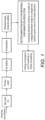
- Figure 1 shows a simplified process line relating to an embodiment of the invention. It can be seen that the carcasses progress from each operation to the next. As illustrated, the process takes live chickens as its input, stuns and kills them, scalds them, de-feathers them and eviscerates them. Whole carcasses are then washed (rinsed) in fresh cold water, inside and out, before being decontaminated in the decontamination bath, optionally sprayed with water, for example chilled water (not shown) and then chilled, frozen and packed or taken for further processing. Methods according to the invention may optionally further include any of the steps shown in the figure.
- the method may optionally include one or more of stunning, killing, primary (defeathering) scalding, eviscerating and washing steps before the decontamination bath, and/or may optionally include steps downstream of the decontamination bath including chilling, freezing and/or packaging steps.
- Apparatus according to the invention may similarly include optional means for carrying out one or more of these upstream or downstream steps.
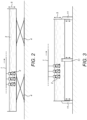
- Figure 2 shows a possible arrangement of a decontamination bath 3.
- Carcasses 2 are conveyed on an overhead conveyor (shown in part only) through the decontamination bath 3 from one end to the other.
- the apparatus is arranged so that the carcasses pass through the decontamination bath at a speed which ensures immersion of between 20 and 120 seconds, for example between 25 seconds and 50 seconds.
- immersion time results in significant reductions in microbial contamination of carcass surfaces.
- immersion for longer time periods will result in damage to the carcass as it begins to cook.
- the decontamination bath may be moveable up and down (5), such that when it is in the up position the carcasses are fully immersed and when it is in the down position the carcasses are not immersed. Movement between the two positions may be achieved by any convenient means, but one preferred option is to support the decontamination bath on one or more scissor lifts, which are able to raise or lower the decontamination bath.
- the apparatus is arranged such that, in response to the stoppage or slowing of the line, the decontamination bath is automatically lowered to prevent carcass damage.
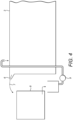
- Figure 3 shows an alternative arrangement of a decontamination bath 3.
- movement between the two positions is achieved using hydraulic rams 11.
- Further alternatives, not illustrated, include pneumatically activated movement of the bath between the two positions.
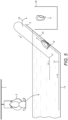
- FIG 4 shows diagrammatically one arrangement for screening of surface water.
- the decontamination bath 3 bath is allowed to overflow via an overflow means 6 (channel, pipe or the like), and the water overflowing (illustrated diagrammatically by arrow 7) carries floating debris out of the bath. This water is then returned to the bath 3 after being screened to remove at least some of the floating debris.
- the screen may be carried out by any suitable means, for example by use of perforated or mesh screens.
- the apparatus may accordingly be provided with water screening means 8, a circulating pump 9, and water return means 10.
- Figure 5 shows diagrammatically one arrangement for removing sunk debris from the bottom of the bath.
- Such an arrangement is preferably sufficient to remove whole birds 2 which may accidentally fall from the shackles of the conveyor 1. It may also be suitable for handling smaller sunk debris.
- One arrangement involves providing a scraper blade which is pulled across the bottom surface 13 of the bath collecting fallen debris as it goes. The blade then travels up an inclined slope 14 to the top of the bath, thereby removing the debris from the bath. The removed debris may conveniently drop 15 into a container, for example a tote bin 16 for disposal.
- the scraper blade may be transferred across the surface of the tank by any convenient means.
- One option is to arrange for it to be pulled by a continuous motor driven chain 17.
- the invention encompasses arrangements with multiple scraper blades on the chain, but usually a single blade making at least one pass along the bottom surface of the tank every 10, 5 or 3 minutes is sufficient.
- Apparatus and methods according to the invention were used to process chicken carcasses from the Applicant's existing processing line in order to examine the effect of apparatus and methods according to the invention on microorganisms comprising the enteric microflora of poultry.
- Carcasses processed with the use of a decontamination bath and subsequent air chiller were compared with carcasses processed without the use of a decontamination bath nor an air chiller.
- Samples of neck skin were taken from the carcasses and subjected to industry standard microbial assays for Campylobacter spp., total Enterobacteriaceae, and E. coli.
- Figures 6 , 7 and 8 show, respectively, the data for Campylobacter spp., total Enterobacteriaceae, and E. coli.
- the bar graph of the figures shows pairs of bars, each representing a group of 25 carcasses tested. The 25 carcasses were grouped into 5 groups of 5 and neck skin samples pooled within each group.
- the first bar shows the microbial level for control carcasses not subjected to the decontamination bath and the second bar shows the level for carcasses subjected to decontamination bath treatment. As can be seen, the second bar is always lower than the first, indicating that the decontamination bath reduces surface contamination for all three organisms examined.
Landscapes
- Life Sciences & Earth Sciences (AREA)
- Engineering & Computer Science (AREA)
- Wood Science & Technology (AREA)
- Zoology (AREA)
- Food Science & Technology (AREA)
- Chemical & Material Sciences (AREA)
- Polymers & Plastics (AREA)
- Apparatus For Disinfection Or Sterilisation (AREA)
Claims (14)
- Ein Verfahren zur Geflügelverarbeitung, das die Verringerung der mikrobiellen Oberflächenkontamination eines Geflügelkörpers (2), wobei das Verfahren Folgendes aufweist:- Eintauchen des Geflügelkörpers (2), der zuvor gebrüht und entfedert wurde, in heißes Wasser mit einer Temperatur zwischen 50°C und 75°C für 20 Sekunden bis 120 Sekunden, wobei das Wasser aus einem Vorrat entnommen wird, der dem Trinkwasserstandard entspricht und nicht durch zusätzliche Dekontaminationsmittel ergänzt wird.
- Verfahren zur Verringerung der mikrobiellen Oberflächenkontamination eines Geflügelkörpers (2) nach Anspruch 1, wobei das Verfahren Folgendes aufweist:- Eintauchen des Geflügelkörpers (2), der zuvor gebrüht, entfedert, ausgenommen und abgespült wurde, in heißes Wasser mit einer Temperatur zwischen 50°C und 75°C für 20 Sekunden bis 120 Sekunden.
- Verfahren zur Verringerung der mikrobiellen Oberflächenkontamination eines Geflügelkörpers (2) nach Anspruch 2, aufweisend:- Eintauchen des Geflügelkörpers (2), der zuvor gebrüht, entfedert, ausgenommen und abgespült wurde, in heißes Wasser von 60°C bis 66°C für 25 Sekunden bis 50 Sekunden.
- Verfahren nach Anspruch 1, 2 oder 3, wobei dem Verfahren nachfolgend die Karkasse (2) mit Wasser (wahlweise mit gekühltem Wasser) besprüht wird, um ihre Oberflächen zu kühlen; oder wobei dem Verfahren nachfolgend die Karkasse (2) durch einen Luftkühler geleitet wird, um ihre Oberflächen zu kühlen.
- Verfahren nach einem der Ansprüche 1 bis 4, wobei der Geflügelkörper (2) auf einem Hängeförderer (1) befördert wird, in dem der Körper (2) in Beinschlaufen gehalten wird, und der Körper (2) zwischen 20 und 120 Sekunden (beispielsweise zwischen 25 Sekunden und 50 Sekunden) in das heiße Wasser getaucht wird, und zwar indem er in ein Dekontaminationsbad (3) an einem ersten Ende des Dekontaminationsbades (3) befördert wird, indem er entlang der Länge des Dekontaminationsbades (3) befördert wird und indem er an einem zweiten Ende des Dekontaminationsbades (3) aus dem Dekontaminationsbad (3) herausbefördert wird, wobei das Dekontaminationsbad (3) das heiße Wasser enthält; und optional, wobei das heiße Wasser in das Dekontaminationsbad (3) am zweiten Ende eintritt und das Dekontaminationsbad (3) an einem ersten Ende verlässt, so dass ein Strom von heißem Wasser entlang der Länge des Dekontaminationsbades (3), optional in der entgegengesetzten Richtung zur Bewegung des Schlachtkörpers (2) durch das Dekontaminationsbad (3), erzeugt wird.
- Verfahren nach einem der Ansprüche 2, 3, 4 oder 5, wobei der Geflügelkörper (2) weniger als 10 Minuten zuvor gespült wurde oder wobei der Hängeförderer (1) den Geflügelkörper (2) zuvor durch die Prozesse des Entfederns, Ausweidens und Spülens des Schlachtkörpers befördert hat.
- Verfahren nach einem der Ansprüche 1 bis 6, wobei das zum Eintauchen des Geflügelkörpers (2) verwendete heiße Wasser anschließend in einem Brühbad zum Brühen weiterer Geflügelkörper (2) vor dem Entfedern (und gegebenenfalls auch vor dem Ausnehmen und Spülen) verwendet wird; oder wobei das zum Eintauchen des Geflügelkörpers verwendete heiße Wasser gesiebt wird, um Schwebeteile zu entfernen, und in das Dekontaminationsbad zurückgeführt wird.
- Verfahren nach einem der Ansprüche 1 bis 7, wobei das Dekontaminationsbad (3), das heißes Wasser enthält, so angeordnet ist, dass es als Reaktion auf einen Stopp oder eine Verlangsamung des Hängeförderers (1) abgesenkt wird, so dass der Schlachtkörper (2), der gegebenenfalls durch Beinschlaufen an einem Hängeförderer (1) gehalten wird, nicht mehr in das heiße Wasser eingetaucht wird.
- Verfahren nach einem der Ansprüche 1 bis 8, wobei der Geflügelkörper (2) ein Hühnerschlachtkörper ist.
- Eine Vorrichtung zur Verringerung der mikrobiellen Oberflächenkontamination von Geflügelkörpern (2) mit einer Brühbadstation, einer Entfederungsstation, einer Ausweidestation, einer Spülstation und einem Hängeförderer (1) zum aufeinanderfolgenden Fördern von Geflügelkörpern (2) durch jede Station, dadurch gekennzeichnet, dass die Vorrichtung ferner ein Dekontaminationsbad (3) aufweist, das geeignet ist, heißes Wasser zu enthalten, wobei das Wasser aus einem Vorrat entnommen wird, der Trinkwasserstandard hat und nicht mit Dekontaminationsmitteln ergänzt wird, mit einer Temperatur zwischen 50°C und 75°C, und wobei der Hängeförderer (1) so angeordnet ist, dass er die entfederten (und optional entfederten, ausgenommenen und gespülten) Geflügelkörper (2) in das Dekontaminationsbad (3) hinein, durch dieses hindurch und aus diesem heraus befördert, so dass die Körper (2) jeweils für eine Zeitdauer zwischen 20 Sekunden und 120 Sekunden (vorzugsweise zwischen 25 Sekunden und 50 Sekunden) eingetaucht werden.
- Vorrichtung nach Anspruch 10, die ferner eine Sprühstation zum Besprühen der Schlachtkörper (2) mit Wasser, beispielsweise mit gekühltem Wasser, nach dem Austritt aus dem Dekontaminationsbad (3) aufweist, wobei der Hängeförderer (1) so angeordnet ist, dass er die Schlachtkörper (2) zu der Kühlstation befördert; oder ferner mit einer Luftkühlstation zum Kühlen der Oberfläche des Schlachtkörpers (2) nach dem Austritt aus dem Dekontaminationsbad (3), wobei der Hängeförderer (1) so angeordnet ist, dass er die Schlachtkörper (2) zu der Luftkühlstation befördert.
- Vorrichtung nach Anspruch 10 oder 11, wobei zumindest ein Teil des heißen Wassers aus dem Dekontaminationsbad (3) im Brühbad wiederverwendet wird.
- Vorrichtung nach Anspruch 10, 11 oder 12, wobei die Vorrichtung ferner Mittel aufweist zum Entfernen von Schwebeteilen aus dem Dekontaminationsbad (3) und/oder Mittel aufweist zum Entfernen von abgesunkenen Teilen aus dem Dekontaminationsbad (3)
- Vorrichtung nach Anspruch 10, 11, 12 oder 13, wobei das Dekontaminationsbad (3) so angeordnet ist, dass es als Reaktion auf einen Stopp oder eine Verlangsamung des Hängeförderers (1) automatisch abgesenkt wird, um zu vermeiden, dass der Schlachtkörper (2) in dem Dekontaminationsbad (3) ausreichend lange eingetaucht verbleibt so dass die Körperfleischqualität Schaden nimmt.
Applications Claiming Priority (2)
| Application Number | Priority Date | Filing Date | Title |
|---|---|---|---|
| GBGB1421501.6A GB201421501D0 (en) | 2014-12-03 | 2014-12-03 | Apparatus and method for improving the hygiene of poultry processing |
| PCT/GB2015/053705 WO2016087866A1 (en) | 2014-12-03 | 2015-12-03 | Apparatus and method for improving the hygiene of poultry processing |
Publications (3)
| Publication Number | Publication Date |
|---|---|
| EP3226693A1 EP3226693A1 (de) | 2017-10-11 |
| EP3226693B1 true EP3226693B1 (de) | 2024-10-23 |
| EP3226693B8 EP3226693B8 (de) | 2024-11-27 |
Family
ID=52349891
Family Applications (1)
| Application Number | Title | Priority Date | Filing Date |
|---|---|---|---|
| EP15807997.0A Active EP3226693B8 (de) | 2014-12-03 | 2015-12-03 | Vorrichtung und verfahren zur hygieneverbesserung von geflügelbehandlung |
Country Status (6)
| Country | Link |
|---|---|
| US (1) | US10925290B2 (de) |
| EP (1) | EP3226693B8 (de) |
| GB (2) | GB201421501D0 (de) |
| IE (1) | IE86839B1 (de) |
| PL (1) | PL3226693T3 (de) |
| WO (1) | WO2016087866A1 (de) |
Families Citing this family (4)
| Publication number | Priority date | Publication date | Assignee | Title |
|---|---|---|---|---|
| WO2019204099A1 (en) | 2018-04-17 | 2019-10-24 | Smartwash Solutions, Llc | Methods and systems for sensor fouling mitigation |
| EP3799719B1 (de) * | 2019-10-04 | 2023-06-07 | L'Air Liquide, Société Anonyme pour l'Etude et l'Exploitation des Procédés Georges Claude | Behandlung eines tierkadavers nach der schlachtung |
| US20210289799A1 (en) * | 2020-03-18 | 2021-09-23 | Cal Poly Corporation | Meat processing methods |
| WO2022218859A1 (de) | 2021-04-16 | 2022-10-20 | Interroll Holding Ag | Fördervorrichtung |
Citations (1)
| Publication number | Priority date | Publication date | Assignee | Title |
|---|---|---|---|---|
| US5939115A (en) * | 1997-02-03 | 1999-08-17 | Zheko V. Kounev | Method and apparatus for decontaminating poultry carcasses |
Family Cites Families (22)
| Publication number | Priority date | Publication date | Assignee | Title |
|---|---|---|---|---|
| US3703021A (en) * | 1970-12-28 | 1972-11-21 | Allen W Sharp | Poultry processing method and apparatus |
| NL8901731A (nl) * | 1989-07-06 | 1991-02-01 | Stork Pmt | Werkwijze voor het doden van bacterien bij geslacht gevogelte. |
| GB2240912A (en) * | 1990-01-31 | 1991-08-21 | G W Padley | Preserving a carcase of meat |
| US5899802A (en) * | 1994-03-14 | 1999-05-04 | Burnett; Bertram B. | Tenderizing poultry meat through constant electrical stimulation |
| US5439694A (en) * | 1994-07-11 | 1995-08-08 | Morris & Associates, Inc. | Poultry preparation process and apparatus |
| AUPO489397A0 (en) * | 1997-01-31 | 1997-02-27 | Commonwealth Scientific And Industrial Research Organisation | Meat decontamination |
| US5938519A (en) * | 1998-03-05 | 1999-08-17 | Sec, Inc. | Post poultry washer |
| US5980375A (en) * | 1998-04-13 | 1999-11-09 | Chad Company Of Missouri, Inc. | Method and apparatus for antimicrobial treatment of animal carcasses |
| US6010729A (en) | 1998-08-20 | 2000-01-04 | Ecolab Inc. | Treatment of animal carcasses |
| US6569482B2 (en) * | 1998-10-30 | 2003-05-27 | Excel Corporation | Method for surface treating animal tissue |
| US7316824B2 (en) * | 2000-12-15 | 2008-01-08 | Ecolab Inc. | Method and composition for washing poultry during processing |
| BR0206507A (pt) * | 2001-01-16 | 2005-02-01 | Tomco2 Equipment Company | Sistema para controle de patógenos |
| AU2003226950A1 (en) * | 2002-04-19 | 2003-11-03 | Linco Food Systems A/S | A method and an apparatus for scalding slaughtered poultry |
| US20040147211A1 (en) * | 2003-01-24 | 2004-07-29 | Mostoller Charles R. | Poultry defeathering process and apparatus |
| DE10318657A1 (de) * | 2003-04-24 | 2004-11-18 | Banss Schlacht- und Fördertechnik GmbH | Kondensations-Brühtunnel für Schlachttiere |
| ATE456305T1 (de) * | 2004-09-03 | 2010-02-15 | Linco Food Systems As | Verfahren und system zum abbrühen von geschlachtetem geflügel |
| WO2006107760A1 (en) * | 2005-04-01 | 2006-10-12 | Electric Aquagenics Unlimited | Electrolyzed water treatment for poultry products |
| NL2000158C2 (nl) * | 2006-07-24 | 2008-01-25 | Stork Pmt | Inrichting en werkwijze voor het broeien van pluimvee. |
| DE102007038815A1 (de) * | 2007-08-16 | 2009-02-19 | Richard Wieck | Hygienisches Entfeuchten von schlachtwarmen Tierkörpern |
| US7854651B2 (en) * | 2008-07-02 | 2010-12-21 | Ballinger Kenneth E | Highly bacteriocidal chlorine dioxide, formulation, preparation and use thereof |
| US7963828B2 (en) * | 2009-06-10 | 2011-06-21 | Freezing Machines, Inc. | Method and apparatus for preparing poultry carcasses for defeathering operations |
| GB2526663B (en) * | 2015-03-26 | 2016-05-04 | 2 Sisters Food Group Ltd | Processing of poultry |
-
2014
- 2014-12-03 GB GBGB1421501.6A patent/GB201421501D0/en not_active Ceased
-
2015
- 2015-11-27 IE IE20150420A patent/IE86839B1/en unknown
- 2015-12-03 PL PL15807997.0T patent/PL3226693T3/pl unknown
- 2015-12-03 GB GB1521381.2A patent/GB2533039B/en active Active
- 2015-12-03 WO PCT/GB2015/053705 patent/WO2016087866A1/en not_active Ceased
- 2015-12-03 EP EP15807997.0A patent/EP3226693B8/de active Active
- 2015-12-03 US US16/075,471 patent/US10925290B2/en active Active
Patent Citations (1)
| Publication number | Priority date | Publication date | Assignee | Title |
|---|---|---|---|---|
| US5939115A (en) * | 1997-02-03 | 1999-08-17 | Zheko V. Kounev | Method and apparatus for decontaminating poultry carcasses |
Non-Patent Citations (1)
| Title |
|---|
| J K NORTHCUTT ET AL: "PROCESSING, PRODUCTS, AND FOOD SAFETY Microbiological Impact of Spray Washing Broiler Carcasses Using Different Chlorine Concentrations and Water Temperatures INTRODUCTION", POULTRY SCIENCE, vol. 84, 1 January 2005 (2005-01-01), pages 1648 - 1652, XP055595890 * |
Also Published As
| Publication number | Publication date |
|---|---|
| PL3226693T3 (pl) | 2025-03-24 |
| EP3226693B8 (de) | 2024-11-27 |
| GB201421501D0 (en) | 2015-01-14 |
| US20190037864A1 (en) | 2019-02-07 |
| GB2533039B (en) | 2017-02-15 |
| GB2533039A (en) | 2016-06-08 |
| IE20150420A1 (en) | 2016-07-27 |
| IE86839B1 (en) | 2017-11-01 |
| WO2016087866A1 (en) | 2016-06-09 |
| EP3226693A1 (de) | 2017-10-11 |
| GB201521381D0 (en) | 2016-01-20 |
| US10925290B2 (en) | 2021-02-23 |
Similar Documents
| Publication | Publication Date | Title |
|---|---|---|
| Boysen et al. | Reduction of thermotolerant Campylobacter species on broiler carcasses following physical decontamination at slaughter | |
| Yashoda et al. | Microbiological quality of broiler chicken carcasses processed hygienically in a small scale poultry processing unit | |
| AU2011200712A1 (en) | Antimicrobial solution and process | |
| Sakhare et al. | Efficacy of intermittent decontamination treatments during processing in reducing the microbial load on broiler chicken carcass | |
| EP3226693B1 (de) | Vorrichtung und verfahren zur hygieneverbesserung von geflügelbehandlung | |
| US5514403A (en) | Method of substantially reducing hazardous pathogens on the surface of food products | |
| KR20120107154A (ko) | 냉장용 육계의 가공방법 | |
| EP0516878B1 (de) | Verfahren zur Behandlung von Tierkörpern zum Regeln des bakteriellen Wachstums | |
| da Silva | Poultry and poultry products—Risks for human health | |
| US20190008174A1 (en) | Meat processing methods | |
| Irshad et al. | Scalding and its significance in livestock slaughter and wholesome meat production | |
| World Health Organization | Code of Practice for fish and fishery products | |
| Løvdal et al. | Hygienic standards and practices in Norwegian salmon processing plants. | |
| US20210289799A1 (en) | Meat processing methods | |
| KR20120107149A (ko) | 냉장용 육계의 탕적장치 | |
| US11185083B2 (en) | Methods of reducing or eliminating pathogenic bacteria | |
| Mead | Microbiology of the poultry carcass and processing plant | |
| KR20120107155A (ko) | 냉장용 육계의 탕적방법 | |
| Kaudia | The effect of chemical treatment on life broilers before slaughter and slaughter conditions on microbial quality and shelf life of broiler meat | |
| WO2016151335A1 (en) | Processing of poultry | |
| Bailone et al. | Main technical differences in the processing of broilers: a comparison between slaughterhouses in Brazil and UK | |
| Bourassa et al. | Carcass orientation and drip time affect potential surface water carryover for broiler carcasses subjected to a post-chill water dip or spray | |
| Mead | HACCP in primary processing: poultry | |
| Buncic et al. | Microbial ecology of poultry and poultry products | |
| GB2526663A (en) | Processing of poultry |
Legal Events
| Date | Code | Title | Description |
|---|---|---|---|
| STAA | Information on the status of an ep patent application or granted ep patent |
Free format text: STATUS: THE INTERNATIONAL PUBLICATION HAS BEEN MADE |
|
| PUAI | Public reference made under article 153(3) epc to a published international application that has entered the european phase |
Free format text: ORIGINAL CODE: 0009012 |
|
| STAA | Information on the status of an ep patent application or granted ep patent |
Free format text: STATUS: REQUEST FOR EXAMINATION WAS MADE |
|
| 17P | Request for examination filed |
Effective date: 20170609 |
|
| AK | Designated contracting states |
Kind code of ref document: A1 Designated state(s): AL AT BE BG CH CY CZ DE DK EE ES FI FR GB GR HR HU IE IS IT LI LT LU LV MC MK MT NL NO PL PT RO RS SE SI SK SM TR |
|
| AX | Request for extension of the european patent |
Extension state: BA ME |
|
| DAV | Request for validation of the european patent (deleted) | ||
| DAX | Request for extension of the european patent (deleted) | ||
| STAA | Information on the status of an ep patent application or granted ep patent |
Free format text: STATUS: EXAMINATION IS IN PROGRESS |
|
| 17Q | First examination report despatched |
Effective date: 20181004 |
|
| GRAP | Despatch of communication of intention to grant a patent |
Free format text: ORIGINAL CODE: EPIDOSNIGR1 |
|
| STAA | Information on the status of an ep patent application or granted ep patent |
Free format text: STATUS: GRANT OF PATENT IS INTENDED |
|
| INTG | Intention to grant announced |
Effective date: 20240516 |
|
| GRAS | Grant fee paid |
Free format text: ORIGINAL CODE: EPIDOSNIGR3 |
|
| GRAA | (expected) grant |
Free format text: ORIGINAL CODE: 0009210 |
|
| STAA | Information on the status of an ep patent application or granted ep patent |
Free format text: STATUS: THE PATENT HAS BEEN GRANTED |
|
| AK | Designated contracting states |
Kind code of ref document: B1 Designated state(s): AL AT BE BG CH CY CZ DE DK EE ES FI FR GR HR HU IS IT LI LT LU LV MC MK MT NL NO PL PT RO RS SE SI SK SM TR |
|
| RBV | Designated contracting states (corrected) |
Designated state(s): AL AT BE BG CH CY CZ DE DK EE ES FI FR GR HR HU IS IT LI LT LU LV MC MK MT NL NO PL PT RO RS SE SI SK SM TR |
|
| REG | Reference to a national code |
Ref country code: CH Ref legal event code: PK Free format text: BERICHTIGUNG B8 Ref country code: CH Ref legal event code: EP |
|
| REG | Reference to a national code |
Ref country code: DE Ref legal event code: R096 Ref document number: 602015090212 Country of ref document: DE |
|
| REG | Reference to a national code |
Ref country code: NL Ref legal event code: FP |
|
| REG | Reference to a national code |
Ref country code: LT Ref legal event code: MG9D |
|
| REG | Reference to a national code |
Ref country code: AT Ref legal event code: MK05 Ref document number: 1734037 Country of ref document: AT Kind code of ref document: T Effective date: 20241023 |
|
| PG25 | Lapsed in a contracting state [announced via postgrant information from national office to epo] |
Ref country code: IS Free format text: LAPSE BECAUSE OF FAILURE TO SUBMIT A TRANSLATION OF THE DESCRIPTION OR TO PAY THE FEE WITHIN THE PRESCRIBED TIME-LIMIT Effective date: 20250223 Ref country code: HR Free format text: LAPSE BECAUSE OF FAILURE TO SUBMIT A TRANSLATION OF THE DESCRIPTION OR TO PAY THE FEE WITHIN THE PRESCRIBED TIME-LIMIT Effective date: 20241023 Ref country code: PT Free format text: LAPSE BECAUSE OF FAILURE TO SUBMIT A TRANSLATION OF THE DESCRIPTION OR TO PAY THE FEE WITHIN THE PRESCRIBED TIME-LIMIT Effective date: 20250224 |
|
| PG25 | Lapsed in a contracting state [announced via postgrant information from national office to epo] |
Ref country code: FI Free format text: LAPSE BECAUSE OF FAILURE TO SUBMIT A TRANSLATION OF THE DESCRIPTION OR TO PAY THE FEE WITHIN THE PRESCRIBED TIME-LIMIT Effective date: 20241023 |
|
| PG25 | Lapsed in a contracting state [announced via postgrant information from national office to epo] |
Ref country code: BG Free format text: LAPSE BECAUSE OF FAILURE TO SUBMIT A TRANSLATION OF THE DESCRIPTION OR TO PAY THE FEE WITHIN THE PRESCRIBED TIME-LIMIT Effective date: 20241023 |
|
| PG25 | Lapsed in a contracting state [announced via postgrant information from national office to epo] |
Ref country code: ES Free format text: LAPSE BECAUSE OF FAILURE TO SUBMIT A TRANSLATION OF THE DESCRIPTION OR TO PAY THE FEE WITHIN THE PRESCRIBED TIME-LIMIT Effective date: 20241023 |
|
| PG25 | Lapsed in a contracting state [announced via postgrant information from national office to epo] |
Ref country code: NO Free format text: LAPSE BECAUSE OF FAILURE TO SUBMIT A TRANSLATION OF THE DESCRIPTION OR TO PAY THE FEE WITHIN THE PRESCRIBED TIME-LIMIT Effective date: 20250123 |
|
| PG25 | Lapsed in a contracting state [announced via postgrant information from national office to epo] |
Ref country code: AT Free format text: LAPSE BECAUSE OF FAILURE TO SUBMIT A TRANSLATION OF THE DESCRIPTION OR TO PAY THE FEE WITHIN THE PRESCRIBED TIME-LIMIT Effective date: 20241023 Ref country code: GR Free format text: LAPSE BECAUSE OF FAILURE TO SUBMIT A TRANSLATION OF THE DESCRIPTION OR TO PAY THE FEE WITHIN THE PRESCRIBED TIME-LIMIT Effective date: 20250124 Ref country code: LV Free format text: LAPSE BECAUSE OF FAILURE TO SUBMIT A TRANSLATION OF THE DESCRIPTION OR TO PAY THE FEE WITHIN THE PRESCRIBED TIME-LIMIT Effective date: 20241023 |
|
| PG25 | Lapsed in a contracting state [announced via postgrant information from national office to epo] |
Ref country code: RS Free format text: LAPSE BECAUSE OF FAILURE TO SUBMIT A TRANSLATION OF THE DESCRIPTION OR TO PAY THE FEE WITHIN THE PRESCRIBED TIME-LIMIT Effective date: 20250123 |
|
| PG25 | Lapsed in a contracting state [announced via postgrant information from national office to epo] |
Ref country code: SM Free format text: LAPSE BECAUSE OF FAILURE TO SUBMIT A TRANSLATION OF THE DESCRIPTION OR TO PAY THE FEE WITHIN THE PRESCRIBED TIME-LIMIT Effective date: 20241023 |
|
| PG25 | Lapsed in a contracting state [announced via postgrant information from national office to epo] |
Ref country code: MC Free format text: LAPSE BECAUSE OF FAILURE TO SUBMIT A TRANSLATION OF THE DESCRIPTION OR TO PAY THE FEE WITHIN THE PRESCRIBED TIME-LIMIT Effective date: 20241023 |
|
| PG25 | Lapsed in a contracting state [announced via postgrant information from national office to epo] |
Ref country code: DK Free format text: LAPSE BECAUSE OF FAILURE TO SUBMIT A TRANSLATION OF THE DESCRIPTION OR TO PAY THE FEE WITHIN THE PRESCRIBED TIME-LIMIT Effective date: 20241023 |
|
| PG25 | Lapsed in a contracting state [announced via postgrant information from national office to epo] |
Ref country code: RO Free format text: LAPSE BECAUSE OF FAILURE TO SUBMIT A TRANSLATION OF THE DESCRIPTION OR TO PAY THE FEE WITHIN THE PRESCRIBED TIME-LIMIT Effective date: 20241023 |
|
| REG | Reference to a national code |
Ref country code: DE Ref legal event code: R097 Ref document number: 602015090212 Country of ref document: DE |
|
| PG25 | Lapsed in a contracting state [announced via postgrant information from national office to epo] |
Ref country code: SK Free format text: LAPSE BECAUSE OF FAILURE TO SUBMIT A TRANSLATION OF THE DESCRIPTION OR TO PAY THE FEE WITHIN THE PRESCRIBED TIME-LIMIT Effective date: 20241023 |
|
| PG25 | Lapsed in a contracting state [announced via postgrant information from national office to epo] |
Ref country code: CZ Free format text: LAPSE BECAUSE OF FAILURE TO SUBMIT A TRANSLATION OF THE DESCRIPTION OR TO PAY THE FEE WITHIN THE PRESCRIBED TIME-LIMIT Effective date: 20241023 |
|
| PG25 | Lapsed in a contracting state [announced via postgrant information from national office to epo] |
Ref country code: IT Free format text: LAPSE BECAUSE OF FAILURE TO SUBMIT A TRANSLATION OF THE DESCRIPTION OR TO PAY THE FEE WITHIN THE PRESCRIBED TIME-LIMIT Effective date: 20241023 |
|
| REG | Reference to a national code |
Ref country code: CH Ref legal event code: PL |
|
| PG25 | Lapsed in a contracting state [announced via postgrant information from national office to epo] |
Ref country code: LU Free format text: LAPSE BECAUSE OF NON-PAYMENT OF DUE FEES Effective date: 20241203 |
|
| PLBE | No opposition filed within time limit |
Free format text: ORIGINAL CODE: 0009261 |
|
| STAA | Information on the status of an ep patent application or granted ep patent |
Free format text: STATUS: NO OPPOSITION FILED WITHIN TIME LIMIT |
|
| PG25 | Lapsed in a contracting state [announced via postgrant information from national office to epo] |
Ref country code: SE Free format text: LAPSE BECAUSE OF FAILURE TO SUBMIT A TRANSLATION OF THE DESCRIPTION OR TO PAY THE FEE WITHIN THE PRESCRIBED TIME-LIMIT Effective date: 20241023 |
|
| 26N | No opposition filed |
Effective date: 20250724 |
|
| REG | Reference to a national code |
Ref country code: BE Ref legal event code: MM Effective date: 20241231 |
|
| PG25 | Lapsed in a contracting state [announced via postgrant information from national office to epo] |
Ref country code: BE Free format text: LAPSE BECAUSE OF NON-PAYMENT OF DUE FEES Effective date: 20241231 |
|
| PG25 | Lapsed in a contracting state [announced via postgrant information from national office to epo] |
Ref country code: FR Free format text: LAPSE BECAUSE OF NON-PAYMENT OF DUE FEES Effective date: 20241223 |
|
| PG25 | Lapsed in a contracting state [announced via postgrant information from national office to epo] |
Ref country code: CH Free format text: LAPSE BECAUSE OF NON-PAYMENT OF DUE FEES Effective date: 20241231 |
|
| PGFP | Annual fee paid to national office [announced via postgrant information from national office to epo] |
Ref country code: NL Payment date: 20251216 Year of fee payment: 11 |
|
| PGFP | Annual fee paid to national office [announced via postgrant information from national office to epo] |
Ref country code: PL Payment date: 20251203 Year of fee payment: 11 |
|
| PG25 | Lapsed in a contracting state [announced via postgrant information from national office to epo] |
Ref country code: CY Free format text: LAPSE BECAUSE OF FAILURE TO SUBMIT A TRANSLATION OF THE DESCRIPTION OR TO PAY THE FEE WITHIN THE PRESCRIBED TIME-LIMIT; INVALID AB INITIO Effective date: 20151203 |
|
| PGFP | Annual fee paid to national office [announced via postgrant information from national office to epo] |
Ref country code: DE Payment date: 20251222 Year of fee payment: 11 |