EP3219477A1 - Teilweise flexibler schlauch - Google Patents
Teilweise flexibler schlauch Download PDFInfo
- Publication number
- EP3219477A1 EP3219477A1 EP16206035.4A EP16206035A EP3219477A1 EP 3219477 A1 EP3219477 A1 EP 3219477A1 EP 16206035 A EP16206035 A EP 16206035A EP 3219477 A1 EP3219477 A1 EP 3219477A1
- Authority
- EP
- European Patent Office
- Prior art keywords
- partially flexible
- flexible hose
- thermoplastic
- partially
- polymer chains
- Prior art date
- Legal status (The legal status is an assumption and is not a legal conclusion. Google has not performed a legal analysis and makes no representation as to the accuracy of the status listed.)
- Withdrawn
Links
Images
Classifications
-
- B—PERFORMING OPERATIONS; TRANSPORTING
- B29—WORKING OF PLASTICS; WORKING OF SUBSTANCES IN A PLASTIC STATE IN GENERAL
- B29C—SHAPING OR JOINING OF PLASTICS; SHAPING OF MATERIAL IN A PLASTIC STATE, NOT OTHERWISE PROVIDED FOR; AFTER-TREATMENT OF THE SHAPED PRODUCTS, e.g. REPAIRING
- B29C49/00—Blow-moulding, i.e. blowing a preform or parison to a desired shape within a mould; Apparatus therefor
- B29C49/42—Component parts, details or accessories; Auxiliary operations
- B29C49/4273—Auxiliary operations after the blow-moulding operation not otherwise provided for
-
- B—PERFORMING OPERATIONS; TRANSPORTING
- B29—WORKING OF PLASTICS; WORKING OF SUBSTANCES IN A PLASTIC STATE IN GENERAL
- B29C—SHAPING OR JOINING OF PLASTICS; SHAPING OF MATERIAL IN A PLASTIC STATE, NOT OTHERWISE PROVIDED FOR; AFTER-TREATMENT OF THE SHAPED PRODUCTS, e.g. REPAIRING
- B29C49/00—Blow-moulding, i.e. blowing a preform or parison to a desired shape within a mould; Apparatus therefor
- B29C49/02—Combined blow-moulding and manufacture of the preform or the parison
- B29C49/04—Extrusion blow-moulding
-
- F—MECHANICAL ENGINEERING; LIGHTING; HEATING; WEAPONS; BLASTING
- F02—COMBUSTION ENGINES; HOT-GAS OR COMBUSTION-PRODUCT ENGINE PLANTS
- F02M—SUPPLYING COMBUSTION ENGINES IN GENERAL WITH COMBUSTIBLE MIXTURES OR CONSTITUENTS THEREOF
- F02M35/00—Combustion-air cleaners, air intakes, intake silencers, or induction systems specially adapted for, or arranged on, internal-combustion engines
-
- F—MECHANICAL ENGINEERING; LIGHTING; HEATING; WEAPONS; BLASTING
- F02—COMBUSTION ENGINES; HOT-GAS OR COMBUSTION-PRODUCT ENGINE PLANTS
- F02M—SUPPLYING COMBUSTION ENGINES IN GENERAL WITH COMBUSTIBLE MIXTURES OR CONSTITUENTS THEREOF
- F02M35/00—Combustion-air cleaners, air intakes, intake silencers, or induction systems specially adapted for, or arranged on, internal-combustion engines
- F02M35/10—Air intakes; Induction systems
- F02M35/10091—Air intakes; Induction systems characterised by details of intake ducts: shapes; connections; arrangements
- F02M35/10137—Flexible ducts, e.g. bellows or hoses
-
- F—MECHANICAL ENGINEERING; LIGHTING; HEATING; WEAPONS; BLASTING
- F02—COMBUSTION ENGINES; HOT-GAS OR COMBUSTION-PRODUCT ENGINE PLANTS
- F02M—SUPPLYING COMBUSTION ENGINES IN GENERAL WITH COMBUSTIBLE MIXTURES OR CONSTITUENTS THEREOF
- F02M35/00—Combustion-air cleaners, air intakes, intake silencers, or induction systems specially adapted for, or arranged on, internal-combustion engines
- F02M35/10—Air intakes; Induction systems
- F02M35/10314—Materials for intake systems
- F02M35/10321—Plastics; Composites; Rubbers
-
- F—MECHANICAL ENGINEERING; LIGHTING; HEATING; WEAPONS; BLASTING
- F02—COMBUSTION ENGINES; HOT-GAS OR COMBUSTION-PRODUCT ENGINE PLANTS
- F02M—SUPPLYING COMBUSTION ENGINES IN GENERAL WITH COMBUSTIBLE MIXTURES OR CONSTITUENTS THEREOF
- F02M35/00—Combustion-air cleaners, air intakes, intake silencers, or induction systems specially adapted for, or arranged on, internal-combustion engines
- F02M35/10—Air intakes; Induction systems
- F02M35/1034—Manufacturing and assembling intake systems
- F02M35/10347—Moulding, casting or the like
-
- B—PERFORMING OPERATIONS; TRANSPORTING
- B29—WORKING OF PLASTICS; WORKING OF SUBSTANCES IN A PLASTIC STATE IN GENERAL
- B29C—SHAPING OR JOINING OF PLASTICS; SHAPING OF MATERIAL IN A PLASTIC STATE, NOT OTHERWISE PROVIDED FOR; AFTER-TREATMENT OF THE SHAPED PRODUCTS, e.g. REPAIRING
- B29C35/00—Heating, cooling or curing, e.g. crosslinking or vulcanising; Apparatus therefor
- B29C35/02—Heating or curing, e.g. crosslinking or vulcanizing during moulding, e.g. in a mould
- B29C35/08—Heating or curing, e.g. crosslinking or vulcanizing during moulding, e.g. in a mould by wave energy or particle radiation
- B29C35/0805—Heating or curing, e.g. crosslinking or vulcanizing during moulding, e.g. in a mould by wave energy or particle radiation using electromagnetic radiation
- B29C2035/0822—Heating or curing, e.g. crosslinking or vulcanizing during moulding, e.g. in a mould by wave energy or particle radiation using electromagnetic radiation using IR radiation
-
- B—PERFORMING OPERATIONS; TRANSPORTING
- B29—WORKING OF PLASTICS; WORKING OF SUBSTANCES IN A PLASTIC STATE IN GENERAL
- B29C—SHAPING OR JOINING OF PLASTICS; SHAPING OF MATERIAL IN A PLASTIC STATE, NOT OTHERWISE PROVIDED FOR; AFTER-TREATMENT OF THE SHAPED PRODUCTS, e.g. REPAIRING
- B29C35/00—Heating, cooling or curing, e.g. crosslinking or vulcanising; Apparatus therefor
- B29C35/02—Heating or curing, e.g. crosslinking or vulcanizing during moulding, e.g. in a mould
-
- B—PERFORMING OPERATIONS; TRANSPORTING
- B29—WORKING OF PLASTICS; WORKING OF SUBSTANCES IN A PLASTIC STATE IN GENERAL
- B29C—SHAPING OR JOINING OF PLASTICS; SHAPING OF MATERIAL IN A PLASTIC STATE, NOT OTHERWISE PROVIDED FOR; AFTER-TREATMENT OF THE SHAPED PRODUCTS, e.g. REPAIRING
- B29C35/00—Heating, cooling or curing, e.g. crosslinking or vulcanising; Apparatus therefor
- B29C35/02—Heating or curing, e.g. crosslinking or vulcanizing during moulding, e.g. in a mould
- B29C35/0266—Local curing
-
- B—PERFORMING OPERATIONS; TRANSPORTING
- B29—WORKING OF PLASTICS; WORKING OF SUBSTANCES IN A PLASTIC STATE IN GENERAL
- B29D—PRODUCING PARTICULAR ARTICLES FROM PLASTICS OR FROM SUBSTANCES IN A PLASTIC STATE
- B29D23/00—Producing tubular articles
-
- B—PERFORMING OPERATIONS; TRANSPORTING
- B29—WORKING OF PLASTICS; WORKING OF SUBSTANCES IN A PLASTIC STATE IN GENERAL
- B29K—INDEXING SCHEME ASSOCIATED WITH SUBCLASSES B29B, B29C OR B29D, RELATING TO MOULDING MATERIALS OR TO MATERIALS FOR MOULDS, REINFORCEMENTS, FILLERS OR PREFORMED PARTS, e.g. INSERTS
- B29K2023/00—Use of polyalkenes or derivatives thereof as moulding material
- B29K2023/10—Polymers of propylene
- B29K2023/12—PP, i.e. polypropylene
-
- B—PERFORMING OPERATIONS; TRANSPORTING
- B29—WORKING OF PLASTICS; WORKING OF SUBSTANCES IN A PLASTIC STATE IN GENERAL
- B29K—INDEXING SCHEME ASSOCIATED WITH SUBCLASSES B29B, B29C OR B29D, RELATING TO MOULDING MATERIALS OR TO MATERIALS FOR MOULDS, REINFORCEMENTS, FILLERS OR PREFORMED PARTS, e.g. INSERTS
- B29K2077/00—Use of PA, i.e. polyamides, e.g. polyesteramides or derivatives thereof, as moulding material
-
- B—PERFORMING OPERATIONS; TRANSPORTING
- B29—WORKING OF PLASTICS; WORKING OF SUBSTANCES IN A PLASTIC STATE IN GENERAL
- B29K—INDEXING SCHEME ASSOCIATED WITH SUBCLASSES B29B, B29C OR B29D, RELATING TO MOULDING MATERIALS OR TO MATERIALS FOR MOULDS, REINFORCEMENTS, FILLERS OR PREFORMED PARTS, e.g. INSERTS
- B29K2081/00—Use of polymers having sulfur, with or without nitrogen, oxygen or carbon only, in the main chain, as moulding material
- B29K2081/04—Polysulfides, e.g. PPS, i.e. polyphenylene sulfide or derivatives thereof
-
- B—PERFORMING OPERATIONS; TRANSPORTING
- B29—WORKING OF PLASTICS; WORKING OF SUBSTANCES IN A PLASTIC STATE IN GENERAL
- B29K—INDEXING SCHEME ASSOCIATED WITH SUBCLASSES B29B, B29C OR B29D, RELATING TO MOULDING MATERIALS OR TO MATERIALS FOR MOULDS, REINFORCEMENTS, FILLERS OR PREFORMED PARTS, e.g. INSERTS
- B29K2995/00—Properties of moulding materials, reinforcements, fillers, preformed parts or moulds
- B29K2995/0037—Other properties
- B29K2995/0039—Amorphous
-
- B—PERFORMING OPERATIONS; TRANSPORTING
- B29—WORKING OF PLASTICS; WORKING OF SUBSTANCES IN A PLASTIC STATE IN GENERAL
- B29L—INDEXING SCHEME ASSOCIATED WITH SUBCLASS B29C, RELATING TO PARTICULAR ARTICLES
- B29L2023/00—Tubular articles
- B29L2023/004—Bent tubes
-
- B—PERFORMING OPERATIONS; TRANSPORTING
- B29—WORKING OF PLASTICS; WORKING OF SUBSTANCES IN A PLASTIC STATE IN GENERAL
- B29L—INDEXING SCHEME ASSOCIATED WITH SUBCLASS B29C, RELATING TO PARTICULAR ARTICLES
- B29L2023/00—Tubular articles
- B29L2023/005—Hoses, i.e. flexible
-
- F—MECHANICAL ENGINEERING; LIGHTING; HEATING; WEAPONS; BLASTING
- F16—ENGINEERING ELEMENTS AND UNITS; GENERAL MEASURES FOR PRODUCING AND MAINTAINING EFFECTIVE FUNCTIONING OF MACHINES OR INSTALLATIONS; THERMAL INSULATION IN GENERAL
- F16L—PIPES; JOINTS OR FITTINGS FOR PIPES; SUPPORTS FOR PIPES, CABLES OR PROTECTIVE TUBING; MEANS FOR THERMAL INSULATION IN GENERAL
- F16L11/00—Hoses, i.e. flexible pipes
- F16L11/04—Hoses, i.e. flexible pipes made of rubber or flexible plastics
- F16L11/12—Hoses, i.e. flexible pipes made of rubber or flexible plastics with arrangements for particular purposes, e.g. specially profiled, with protecting layer, heated, electrically conducting
- F16L11/121—Hoses, i.e. flexible pipes made of rubber or flexible plastics with arrangements for particular purposes, e.g. specially profiled, with protecting layer, heated, electrically conducting specially profiled cross sections
-
- F—MECHANICAL ENGINEERING; LIGHTING; HEATING; WEAPONS; BLASTING
- F16—ENGINEERING ELEMENTS AND UNITS; GENERAL MEASURES FOR PRODUCING AND MAINTAINING EFFECTIVE FUNCTIONING OF MACHINES OR INSTALLATIONS; THERMAL INSULATION IN GENERAL
- F16L—PIPES; JOINTS OR FITTINGS FOR PIPES; SUPPORTS FOR PIPES, CABLES OR PROTECTIVE TUBING; MEANS FOR THERMAL INSULATION IN GENERAL
- F16L27/00—Adjustable joints; Joints allowing movement
- F16L27/08—Adjustable joints; Joints allowing movement allowing adjustment or movement only about the axis of one pipe
- F16L27/0861—Arrangements of joints with one another and with pipes or hoses
-
- F—MECHANICAL ENGINEERING; LIGHTING; HEATING; WEAPONS; BLASTING
- F16—ENGINEERING ELEMENTS AND UNITS; GENERAL MEASURES FOR PRODUCING AND MAINTAINING EFFECTIVE FUNCTIONING OF MACHINES OR INSTALLATIONS; THERMAL INSULATION IN GENERAL
- F16L—PIPES; JOINTS OR FITTINGS FOR PIPES; SUPPORTS FOR PIPES, CABLES OR PROTECTIVE TUBING; MEANS FOR THERMAL INSULATION IN GENERAL
- F16L27/00—Adjustable joints; Joints allowing movement
- F16L27/10—Adjustable joints; Joints allowing movement comprising a flexible connection only
- F16L27/107—Adjustable joints; Joints allowing movement comprising a flexible connection only the ends of the pipe being interconnected by a flexible sleeve
-
- F—MECHANICAL ENGINEERING; LIGHTING; HEATING; WEAPONS; BLASTING
- F16—ENGINEERING ELEMENTS AND UNITS; GENERAL MEASURES FOR PRODUCING AND MAINTAINING EFFECTIVE FUNCTIONING OF MACHINES OR INSTALLATIONS; THERMAL INSULATION IN GENERAL
- F16L—PIPES; JOINTS OR FITTINGS FOR PIPES; SUPPORTS FOR PIPES, CABLES OR PROTECTIVE TUBING; MEANS FOR THERMAL INSULATION IN GENERAL
- F16L55/00—Devices or appurtenances for use in, or in connection with, pipes or pipe systems
- F16L55/04—Devices damping pulsations or vibrations in fluids
Definitions
- the invention relates to a partially flexible hose, in particular a partially flexible charge air hose.
- Charge air hoses usually contain different components made of different materials.
- additional components for connection to the terminals in the vehicle such.
- filters, air cooling, sensors, etc. added.
- the elastic and thus flexible portion is necessary to withstand the various vibrations coming from the engine compartment of the vehicle.
- the various components must each be produced and assembled in different manufacturing processes. In order to reduce this effort, it is desirable to be able to produce the entire hose, in particular the entire charge air hose, in only one process.
- a charge air hose is described, which can be produced with a single process step.
- a tube of at least one crosslinkable material containing crosslinking enhancers or coactivators is prepared and partially masked or masked before crosslinking, so that only defined locations in the circumferential direction are crosslinked by means of high-energy beta or gamma radiation.
- the masking or covering takes place with a radiation shielding agent, preferably a metal foil.
- the networking by means of high-energy radiation is on the one hand very expensive and requires appropriate safety precautions, on the other hand, the masking in turn means an additional step. In sum, both also additionally represents an increased cost factor.
- Object of the present invention is therefore to provide a partially flexible hose, which can be easily produced and the cheaper, but technically equivalent, alternative to the in EP 1 878 961 B1 disclosed hose represents.
- the partially flexible hose is made entirely of an uncrosslinked thermoplastic composition containing at least one thermoplastic polymer, and wherein the partially flexible hose in the circumferential direction contains sections in which the polymer chains of the thermoplastic elastomer are shortened and / or in where the bonds of the polymer chains of the thermoplastic elastomer are completely or partially destroyed.
- the tube is thereby circumferentially sections with different physical properties that can be set selectively and easily at the desired locations.
- Hoses whose main components are thermoplastics or made entirely of thermoplastics are often referred to as pipes.
- the partially flexible hose can therefore also be referred to as a partially flexible tube. In the context of the present invention, these two terms are thus interchangeable.
- Thermoplastics or thermoplastic polymers are linear or branched macromolecules which are not crosslinked.
- Thermoplastics therefore consist of polymer chains which have no chemical crosslinking between the chains. Due to the lack of direct linkage of the long polymer chains, there is thus no cross-linking. Between the polymer chains themselves, there are only physical forces of attraction, so-called secondary valences, mostly in the form of hydrogen bonds, electrostatic bonds and possibly other physical forms of bonding.
- Thermoplastics can be any of the thermoplastics known to those skilled in the art. It is preferably high-density polyethylene (HDPE), ultra-high molecular weight polyethylene (UHMWPE), or polypropylene (PP) or thermoplastic ethylene-propylene copolymer resin or thermoplastic polyamide resins such as PA 6, PA66, PA46, PA11, PA12, PA610, PA612, PA 6/66 copolymer, PA6 / 66/610 copolymer, PA-MXD6, PA 6T, PA6 / 6T copolymer, PA 66 / PP copolymer, PA 66 / PPS copolymer, or vinyl acetate (EVA) or polyvinyl alcohol (PVA) or vinyl alcohol / ethylene copolymer (EVOH) or polyvinylidene chloride (PVDC) or polyvinyl chloride (PVC) or polyarylene sulfides such as polyphenylene sulfide (PPS) or
- the thermoplastic composition may additionally contain at least one reinforcing material.
- These may be, for example, short fibers in various lengths, preferably between 1 mm and 5 mm. These short fibers can be made of glass, polyamide, polyester, carbon, for example.
- the thermoplastic composition contains at least one additional additive which decomposes at temperatures above 250 ° C or which is on or in a carrier material and is released at temperatures above 250 ° C.
- the additive is preferably used in a total amount of 0.2 to 10 wt .-%.
- the decomposition of the additive produces decomposition products which are chemically active and lead to shortening of the polymer chains and / or to the destruction of the bonds.
- the additives which are located on a carrier material and are released only at high temperatures, are either directly chemically active and shorten the polymer chains and / or destroy the bonds between the polymer chains or even lead to the formation of high temperatures again Decomposition products that are chemically active and lead to shortening of the polymer chains and / or to the destruction of the bonds.
- thermoplastic composition depending on the melting temperature of the thermoplastic, the mixing temperature of the thermoplastic composition and the manufacturing process, another additive or combination of additives must be used.
- the partially flexible hose can be single-layered or multi-layered.
- the tube is single-layered.
- additional layers of at least one strength carrier and / or at least one barrier layer, which reliably seals against chemically aggressive substances, such as, for example, oil, fuel, etc., may be present.
- the partially flexible hose may first be made by any method known to those skilled in the art. Preference is given to the production by means of a blow molding process.
- thermoplastic composition first all components of the thermoplastic composition are mixed, for.
- an extruder preferably a screw extruder
- the tube formed preferably by blow molding.
- the sections of the flexible hose in which an adaptation or change in the physical properties is desired, locally heated to specific temperatures.
- heating plates or heating rings or heating jackets or IR radiators or other heat sources which are simple, inexpensive and can be used without expensive safety precautions can be used.
- Table 1 shows particularly advantageous combinations of thermoplastic and additive, wherein the specified additives can be used alone or in combination.
- Table 1 ⁇ b> Table 1 ⁇ / b> polymer additive decomposition temperatures Type of heating process parameters (Temperatures and heating times with heating elements, jet times with IR) Flexular modulus - change after heating PP Pb (ClO 4 ) 2 , Mg (ClO 4 ) 2 , Mg (BrO 3 ) 2 , and / or others.
Landscapes
- Engineering & Computer Science (AREA)
- Mechanical Engineering (AREA)
- Manufacturing & Machinery (AREA)
- Chemical & Material Sciences (AREA)
- Combustion & Propulsion (AREA)
- General Engineering & Computer Science (AREA)
- Compositions Of Macromolecular Compounds (AREA)
Abstract
Description
- Die Erfindung betrifft einen teilweise flexiblen Schlauch, insbesondere einen teilweise flexiblen Ladeluftschlauch.
- Ladeluftschläuche enthalten in der Regel verschiedene Bauteile aus unterschiedlichen Materialien. Zum einen starre Rohre aus Plastik, ebenso wie elastische Kautschukschläuche, die mittels metallischen Ringen und Schellen verbunden werden. Des Weiteren kommen noch zusätzliche Bauteile für die Verbindung mit den Anschlüssen im Fahrzeug, wie z. Bsp. Filter, Luftkühlung, Sensoren, etc. hinzu.
Der elastische und somit flexible Anteil ist notwendig, um den verschiedenen Vibrationen, die aus dem Motorraum des Fahrzeugs kommen, stand zu halten.
Die verschiedenen Bauteile müssen jeweils in unterschiedlichen Herstellverfahren produziert und zusammengesetzt werden.
Um diesen Aufwand zu verringern ist es wünschenswert, den gesamten Schlauch, insbesondere den gesamten Ladeluftschlauch, in nur einem Prozess herstellen zu können. - In
EP 1 878 961 B1 wird ein Ladeluftschlauch beschrieben, der mit einem einzigen Prozessschritt hergestellt werden kann. Hierbei wird ein Schlauch aus wenigstens einem vernetzbaren Material enthaltend Vernetzungsverstärker bzw. Koaktivatoren hergestellt und vor der Vernetzung teilweise abgedeckt bzw. maskiert, so dass nur definierte Stellen in Umfangsrichtung mittels hochenergetischer Beta- oder Gammastrahlung vernetzt werden. Die Maskierung bzw. Abdeckung erfolgt mit einem Strahlen abschirmenden Mittel, bevorzugt einer Metallfolie. Die Vernetzung mittels hochenergetischer Strahlung ist zum Einen sehr aufwendig und erfordert entsprechende Sicherheitsvorkehrungen, zum Anderen bedeutet die Maskierung wiederum einen zusätzlichen Arbeitsschritt. In der Summe stellt beides auch noch zusätzlich einen erhöhten Kostenfaktor dar. - Aufgabe der vorliegenden Erfindung ist es daher, einen teilweise flexiblen Schlauch bereitzustellen, der sich einfach herstellen lässt und der eine kostengünstigere, aber technisch gleichwertige, Alternative zu dem in
EP 1 878 961 B1 offenbarten Schlauch darstellt. - Die Aufgabe wird dadurch gelöst, dass der teilweise flexible Schlauch vollständig aus einer unvernetzten thermoplastischen Zusammensetzung besteht, welche wenigstens ein thermoplastisches Polymer enthält, und wobei der teilweise flexible Schlauch in Umfangsrichtung Abschnitte enthält, in denen die Polymerketten des thermoplastischen Elastomers verkürzt sind und / oder in denen die Bindungen der Polymerketten des thermoplastischen Elastomers vollständig oder teilweise zerstört sind.
Somit erhält der Schlauch hierdurch in Umfangsrichtung Abschnitte mit unterschiedlichen physikalischen Eigenschaften, die sich gezielt und einfach an den gewünschten Stellen einstellen lassen. - Schläuche, deren Hauptbestandteile aus Thermoplasten bestehen oder die vollständig aus Thermoplasten aufgebaut sind, werden häufig auch als Rohre bezeichnet. Im Sinne der vorliegenden Erfindung kann der teilweise flexible Schlauch daher auch als teilweise flexibles Rohr bezeichnet werden. Im Rahmen der vorliegenden Erfindung sind diese beiden Begriffe somit austauschbar.
- Thermoplaste bzw. thermoplastische Polymere sind lineare oder verzweigte Makromoleküle, die nicht vernetzt sind. Thermoplasten bestehen daher aus Polymerketten, die keine chemische Vernetzung zwischen den Ketten aufweisen. Durch die fehlende direkte Verknüpfung der langen Polymerketten gibt es somit keine Quervernetzungen. Zwischen den Polymerketten selbst bestehen nur physikalische Anziehungskräfte, sogenannte Nebenvalenzen, zumeist in Form von Wasserstoffbrückenbindungen, elektrostatischen Bindungen und ggf. anderen physikalischen Bindungsformen.
- Als Thermoplasten können alle der fachkundigen Person bekannten Thermoplasten verwendet werden. Bevorzugt handelt es sich hierbei um hoch-dichtes Polyethylen (HDPE), Polyethylen mit ultrahoher Molmasse (UHMWPE), oder Polypropylen (PP) oder thermoplastisches Ethylen-Propylen-Copolymerharz oder thermoplastische Polyamidharze, wie etwa PA 6, PA66, PA46, PA11, PA12, PA610, PA612, PA 6/66-Copolymer, PA6/66/610- Copolymer, PA-MXD6, PA 6T, PA6/6T-Copolymer, PA 66/PP- Copolymer, PA 66/PPS-Copolymer, oder Vinylacetat (EVA) oder Polyvinylalkohol (PVA) oder Vinylalkohol- /Ethylen-Copolymer (EVOH) oder Polyvinylidenchlorid (PVDC) oder Polyvinylchlorid (PVC) oder Polyarylensulfide, wie bspw. Polyphenylensulfid (PPS) oder Vinylchlorid-/Vinylidenchlorid-Copolymer oder Vinylidenchlorid-/Methacrylat-Copolymer.
Die Thermoplasten können alleine oder in Kombination mit wenigstens einem weiteren Thermoplast verwendet werden.
Besonders gut geeignet hat sich PA66 gezeigt. PA66 ist ein teilkristallines Polymer mit einem besonders hohen Anteil der kristallinen Phase, was zu besonders guten mechanischen Eigenschaften führt. - Die thermoplastische Zusammensetzung kann des Weiteren noch zusätzlich wenigstens ein Verstärkungsmaterial enthalten. Hierbei kann es sich beispielsweise um Kurzfasern in verschiedenen Längen, bevorzugt zwischen 1mm und 5mm, handeln. Diese Kurzfasern können zum Beispiel aus Glas, Polyamid, Polyester, Carbon bestehen.
- Die thermoplastische Zusammensetzung enthält wenigstens noch ein Additiv, welches sich bei Temperaturen oberhalb von 250°C zersetzt oder welches sich auf oder in einem Trägermaterial befindet und bei Temperaturen oberhalb von 250°C freigesetzt wird.
Das Additiv wird bevorzugt in einer Gesamtmenge von 0,2 bis 10 Gew.-% eingesetzt. - Durch die Zersetzung des Additivs entstehen Zersetzungsprodukte, die chemisch aktiv sind und zu Verkürzung der Polymerketten und / oder zu der Zerstörung der Bindungen führen.
- Die Additive, welche sich auf einem Trägermaterial befinden und erst bei hohen Temperaturen freigesetzt werden, sind entweder direkt chemisch aktiv und verkürzen die Polymerketten und / oder zerstören die Bindungen zwischen den Polymerketten oder führen auch wieder bei den genannten höheren Temperaturen zur Entstehung von Zersetzungsprodukten, die chemisch aktiv sind und zu Verkürzung der Polymerketten und / oder zu der Zerstörung der Bindungen führen.
- Als Additive können bevorzugt folgende Substanzen alleine oder in Kombination eingesetzt werden:
- Ba(ClO3)2, Ba(ClO4)2, Ca(ClO4)2, Pb(ClO4), LiClO3, LiClO4, Mg(ClO4)2, KClO3, KClO4, RbClO3, NaClO3, Mg(BrO3)2, Cu(IO3)2, Pb(IO3)2, Li2IO4, Ni(IO3)2, AgIO3.
- Auch weitere nicht genannte Additive sind möglich, die bei den genannten Temperaturen Zersetzungsprodukte bilden, welche chemisch aktiv sind und zu Verkürzung der Polymerketten und / oder zu der Zerstörung der Bindungen führen.
- Ebenso sind weitere nicht genannte Additive möglich, die sich auf einem Trägermaterial befinden und erst bei hohen Temperaturen freigesetzt werden, sind entweder direkt chemisch aktiv und verkürzen die Polymerketten und / oder zerstören die Bindungen zwischen den Polymerketten oder führen auch wieder bei den genannten höheren Temperaturen zur Entstehung von Zersetzungsprodukten, die chemisch aktiv sind und zu Verkürzung der Polymerketten und / oder zu der Zerstörung der Bindungen führen.
- Für jede thermoplastische Zusammensetzung muss in Abhängigkeit der Schmelztemperatur des Thermoplast, der Mischtemperatur der thermoplastischen Zusammensetzung und des Herstellverfahrens ein anderes Additiv oder eine andere Kombination von Additiven verwendet werden.
- Der teilweise flexible Schlauch kann einlagig oder mehrlagig ausgebildet sein. Bevorzugt ist der Schlauch einlagig.
- Handelt es sich um einen mehrlagigen Schlauch, so können zusätzlich noch weitere Schichten aus wenigstens einem Festigkeitsträger und / oder wenigstens eine Sperrschicht, die gegen chemisch aggressive Substanzen, wie Bsp. Öl, Kraftstoff, etc. zuverlässig abdichtet, vorhanden sein.
- Der teilweise flexible Schlauch kann zunächst mittels aller der fachkundigen Person bekannten Verfahren hergestellt werden. Bevorzugt ist die Herstellung mittels eines Blasformverfahrens.
- Hierzu werden zunächst alle Bestandteile der thermoplastischen Zusammensetzung vermischt, z. Bsp in einem Extruder, bevorzugt einem Schneckenextruder, und danach der Schlauch ausgeformt, bevorzugt mittels Blasformverfahren.
- Anschließend werden die Abschnitte des flexiblen Schlauches, bei denen eine Anpassung bzw. Veränderung der physikalischen Eigenschaften gewünscht ist, lokal auf gezielte Temperaturen beheizt. Hierzu können Heizplatten oder Heizringe bzw. Heizmanschetten oder IR-Strahler oder andere Heizquellen, die einfach, kostengünstig und ohne aufwendige Sicherheitsvorkehrungen einsetzbar sind, verwendet werden.
- Die Erfindung wird nun unter Bezugnahme auf Versuchs- und Vergleichsbeispiele und drei schematische Zeichnungen, ohne auf diese beschränkt zu sein, näher erläutert.
-
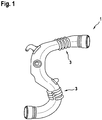
Fig.1 zeigt einen Schlauch 1 aufgebaut aus einem thermoplastischen Material mit Heizelementen 3, durch die der Schlauch an den gewünschten Stellen geheizt werden kann. -
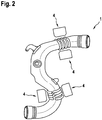
Fig.2 zeigt einen Schlauch 1 aufgebaut aus einem thermoplastischen Material mit Heizelementen 3, an denen der Schlauch an den gewünschten Stellen mittels Infrarotstrahlung und / oder Heizplatten 4 geheizt wird. -
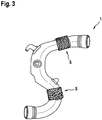
Fig.3 zeigt einen Schlauch 1 aufgebaut aus einem thermoplastischen Material, der an den beheizten Abschnitten 5 Eigenschaften aufweist, die sich von den Eigenschaften des restlichen Schlauchs unterscheiden. Dies sind die Abschnitte, in denen gemäß Anspruch 1 die Polymerketten des thermoplastischen Elastomers verkürzt sind und / oder in denen die Bindungen der Polymerketten des thermoplastischen Elastomers vollständig oder teilweise zerstört sind. - Tabelle 1 zeigt besonders vorteilhafte Kombinationen von Thermoplast und Additiv, wobei die angegebenen Additive jeweils alleine oder in Kombination eingesetzt werden können.
Tabelle 1 Polymer Additiv Zersetzungstemperaturen Art der Beheizung Prozessparameter
(Temperaturen und Heizzeiten bei Heizelementen, Strahlzeiten bei IR)Flexular Modulus - Änderung nach Beheizung PP Pb(ClO4)2, Mg(ClO4)2, Mg(BrO3)2, und / oder weitere. 280 °C bis 330 °C Heizelemente 280 °C bis 330 °C, 0 bis 30 s -1% bis - 10% IR-Strahlung 0 bis 50 s, Wellenlängen: kurze 800 nm bis 1400 oder mittlere 1400 nm bis 3 µm -1% bis -10% PA66 Ba(ClO3)2, Ba(ClO4)2, LiClO3, LiClO4, NaClO3, Cu(IO3)2, Pb(IO3)2, und/ oder weitere. 380 °C bis 430 °C Heizelemente 380°C bis 430 °C, 0 bis 30 s -1% bis -10% IR-Strahlung 0 bis 50 s, Wellenlängen: kurze 800 nm bis 1400 oder mittlere 1400 nm bis 3 µm -1% bis -10% PPS Ba(ClO3)2, LiClO3, Mg(ClO4)2, NaClO3, und / oder weitere. 340 °C bis 400 °C Heizelemente 340 °C bis 400 °C 0 bis 30 s -1% bis -10% IR-Strahlung 0 bis 50 s, Wellenlängen: kurze 800 nm bis 1400 oder mittlere 1400 nm bis 3 µm -1% bis -10%
Claims (7)
- Teilweise flexibler Schlauch, dadurch gekennzeichnet, dass der teilweise flexible Schlauch vollständig aus einer unvernetzten thermoplastischen Zusammensetzung besteht, welche wenigstens ein thermoplastisches Polymer enthält, und wobei der teilweise flexible Schlauch in Umfangsrichtung Abschnitte enthält, in denen die Polymerketten des thermoplastischen Elastomers verkürzt sind und / oder in denen die Bindungen der Polymerketten des thermoplastischen Elastomers vollständig oder teilweise zerstört sind.
- Teilweise flexibler Schlauch nach Anspruch 1, dadurch gekennzeichnet, dass das thermoplastische Polymer PPS oder PP oder PA6.6 ist.
- Teilweise flexibler Schlauch nach einem der Ansprüche 1 oder 2, dadurch gekennzeichnet, dass das die thermoplastische Zusammensetzung Glasfasern enthält.
- Verfahren zur Herstellung eines teilweise flexiblen Schlauches nach einem der Ansprüche 1 bis 3, gekennzeichnet durch wenigstens folgende Verfahrensschritte:- Vermischen aller Bestandteile der thermoplastischen Zusammensetzung in einem ersten Verfahrensschritt und- Ausformen des Schlauches in wenigstens einem weiteren Verfahrensschritt und- Beheizen von Abschnitten des Schlauches in einem abschließenden Verfahrensschritt.
- Verfahren zur Herstellung eines teilweise flexiblen Schlauches nach Anspruch 4, dadurch gekennzeichnet, dass das Vermischen der Bestandteile der thermoplastischen Zusammensetzung in einem Extruder erfolgt.
- Verfahren zur Herstellung eines teilweise flexiblen Schlauches nach einem der Ansprüche 4 oder 5, dadurch gekennzeichnet, dass das Ausformen des Schlauches mittels eines Blasformverfahrens erfolgt.
- Verfahren zur Herstellung eines teilweise flexiblen Schlauches, dadurch gekennzeichnet, dass das Beheizen der Abschnitte des Schlauches mit Hilfe von Infrarotstrahlern und / oder Heizplatten erfolgt.
Applications Claiming Priority (1)
| Application Number | Priority Date | Filing Date | Title |
|---|---|---|---|
| DE102016204424.9A DE102016204424A1 (de) | 2016-03-17 | 2016-03-17 | Teilweise flexibler Schlauch |
Publications (1)
| Publication Number | Publication Date |
|---|---|
| EP3219477A1 true EP3219477A1 (de) | 2017-09-20 |
Family
ID=57629371
Family Applications (1)
| Application Number | Title | Priority Date | Filing Date |
|---|---|---|---|
| EP16206035.4A Withdrawn EP3219477A1 (de) | 2016-03-17 | 2016-12-22 | Teilweise flexibler schlauch |
Country Status (2)
| Country | Link |
|---|---|
| EP (1) | EP3219477A1 (de) |
| DE (1) | DE102016204424A1 (de) |
Citations (7)
| Publication number | Priority date | Publication date | Assignee | Title |
|---|---|---|---|---|
| EP0114212A2 (de) * | 1982-12-28 | 1984-08-01 | FORMEX Gesellschaft für Kunststofformung mbH | Verfahren und Vorrichtung zur Herstellung von flexiblen Kunststoffschläuchen |
| US4942070A (en) * | 1986-04-04 | 1990-07-17 | Atochem | Extruded conduits and method of making the same |
| JPH09141759A (ja) * | 1995-11-17 | 1997-06-03 | Sekisui Chem Co Ltd | 管状体 |
| EP1878961B1 (de) | 2006-07-14 | 2009-08-05 | Veritas Ag | Flexibler Schlauch |
| DE102010005140A1 (de) * | 2010-01-19 | 2011-07-21 | foxiflex GmbH & Co. KG, 14797 | Flexibler Schlauch und Verfahren zum Herstellen |
| DE102012003967A1 (de) * | 2012-02-29 | 2013-08-29 | Veritas Ag | Gekrümmter Formschlauch sowie Verfahren und Vorrichtung zur Herstellung von gekrümmten Formschläuchen |
| US20140326395A1 (en) * | 2009-01-15 | 2014-11-06 | Schauenburg Hose Technology Gmbh | Method of hose manufacture |
-
2016
- 2016-03-17 DE DE102016204424.9A patent/DE102016204424A1/de not_active Withdrawn
- 2016-12-22 EP EP16206035.4A patent/EP3219477A1/de not_active Withdrawn
Patent Citations (7)
| Publication number | Priority date | Publication date | Assignee | Title |
|---|---|---|---|---|
| EP0114212A2 (de) * | 1982-12-28 | 1984-08-01 | FORMEX Gesellschaft für Kunststofformung mbH | Verfahren und Vorrichtung zur Herstellung von flexiblen Kunststoffschläuchen |
| US4942070A (en) * | 1986-04-04 | 1990-07-17 | Atochem | Extruded conduits and method of making the same |
| JPH09141759A (ja) * | 1995-11-17 | 1997-06-03 | Sekisui Chem Co Ltd | 管状体 |
| EP1878961B1 (de) | 2006-07-14 | 2009-08-05 | Veritas Ag | Flexibler Schlauch |
| US20140326395A1 (en) * | 2009-01-15 | 2014-11-06 | Schauenburg Hose Technology Gmbh | Method of hose manufacture |
| DE102010005140A1 (de) * | 2010-01-19 | 2011-07-21 | foxiflex GmbH & Co. KG, 14797 | Flexibler Schlauch und Verfahren zum Herstellen |
| DE102012003967A1 (de) * | 2012-02-29 | 2013-08-29 | Veritas Ag | Gekrümmter Formschlauch sowie Verfahren und Vorrichtung zur Herstellung von gekrümmten Formschläuchen |
Also Published As
| Publication number | Publication date |
|---|---|
| DE102016204424A1 (de) | 2017-09-21 |
Similar Documents
| Publication | Publication Date | Title |
|---|---|---|
| DE60121779T2 (de) | Hochdruck verbundrohr und verfahren zur herstellung des rohres | |
| DE60124216T2 (de) | Dünnwandiger gummischlauch und verfahren zu seiner herstellung | |
| DE102010027096A1 (de) | Kraftstoffbehälter aus Kunststoff und Verfahren zu dessen Herstellung | |
| DE2711237A1 (de) | Flexibler schlauch | |
| WO1986005440A1 (fr) | Procede de façonnage de produits semi-finis en matieres plastiques reticulees | |
| DE2261207A1 (de) | Verfahren zur herstellung von mit einem vernetzten stoff ummantelten, elektrischen kabeln | |
| DE69400866T2 (de) | Extrudieren von thermisch vernetzbaren Materialien | |
| DE202017007709U1 (de) | Klebstoff-Übertragungsschlauch mit einer Sperrschicht | |
| EP3345749A1 (de) | Thermoplastisches compositrohr mit mehrschichtiger zwischenlage | |
| DE102020111879A1 (de) | Verfahren zur Herstellung einer mehrschichtigen Verbundfolie, mehrschichtige Verbundfolie und deren Verwendung | |
| EP3345750A1 (de) | Thermoplastisches compositrohr mit mehrschichtiger zwischenlage | |
| DE2550664C3 (de) | Verfahren zum Herstellen eines druckmittelfiihrenden Schlauches | |
| DE102007061735A1 (de) | Zahnriemen und Verfahren zu seiner Herstellung | |
| DE3217039A1 (de) | Verfahren zum herstellen einer zweiachsig orientierten folie und vorrichtung zur durchfuehrung des verfahrens | |
| EP2979853B1 (de) | Mehrschichtiges blasformrohr mit säurebeständiger innenschicht | |
| DE102018001412A1 (de) | Entgasen beim Extrudieren von Stoffen, vorzugsweise von Kunststoffen | |
| EP3219477A1 (de) | Teilweise flexibler schlauch | |
| DE2262908C3 (de) | Vorrichtung zum Herstellen eines für das Blasformen eines Verbundhohlkörpers verwendbaren Vorformlings | |
| DE102012112280B4 (de) | Verfahren zum Herstellen eines Isolierverbundrohrs | |
| DE102005014474A1 (de) | Verfahren zum Herstellen einer gereckten Kunststoff-Folie | |
| DE2719308A1 (de) | Verfahren zur herstellung vernetzter schrumpfschlaeuche | |
| DE60004555T2 (de) | Vorrichtung und verfahren zur herstellung einer atmungsfähigen polyolefinfolie | |
| DE102012211651A1 (de) | Verfahren zur Herstellung eines Wickelrohrs | |
| DE102020113695A1 (de) | Verfahren und Vorrichtung zur Herstellung eines Kunststoffschlauches und Kunststoffschlauch | |
| DE20108412U1 (de) | Vorrichtung zur Herstellung eines rohrartigen Elements aus Silikongummi mit Textilverstärkung und damit hergestelltes rohrartiges Element |
Legal Events
| Date | Code | Title | Description |
|---|---|---|---|
| PUAI | Public reference made under article 153(3) epc to a published international application that has entered the european phase |
Free format text: ORIGINAL CODE: 0009012 |
|
| STAA | Information on the status of an ep patent application or granted ep patent |
Free format text: STATUS: THE APPLICATION HAS BEEN PUBLISHED |
|
| AK | Designated contracting states |
Kind code of ref document: A1 Designated state(s): AL AT BE BG CH CY CZ DE DK EE ES FI FR GB GR HR HU IE IS IT LI LT LU LV MC MK MT NL NO PL PT RO RS SE SI SK SM TR |
|
| AX | Request for extension of the european patent |
Extension state: BA ME |
|
| STAA | Information on the status of an ep patent application or granted ep patent |
Free format text: STATUS: REQUEST FOR EXAMINATION WAS MADE |
|
| 17P | Request for examination filed |
Effective date: 20180320 |
|
| RBV | Designated contracting states (corrected) |
Designated state(s): AL AT BE BG CH CY CZ DE DK EE ES FI FR GB GR HR HU IE IS IT LI LT LU LV MC MK MT NL NO PL PT RO RS SE SI SK SM TR |
|
| STAA | Information on the status of an ep patent application or granted ep patent |
Free format text: STATUS: THE APPLICATION IS DEEMED TO BE WITHDRAWN |
|
| 18D | Application deemed to be withdrawn |
Effective date: 20180321 |