EP3216737A1 - Preferred elevator selection with dispatching information using mobile phone app - Google Patents
Preferred elevator selection with dispatching information using mobile phone app Download PDFInfo
- Publication number
- EP3216737A1 EP3216737A1 EP17159976.4A EP17159976A EP3216737A1 EP 3216737 A1 EP3216737 A1 EP 3216737A1 EP 17159976 A EP17159976 A EP 17159976A EP 3216737 A1 EP3216737 A1 EP 3216737A1
- Authority
- EP
- European Patent Office
- Prior art keywords
- elevator
- calling
- information
- control
- passenger
- Prior art date
- Legal status (The legal status is an assumption and is not a legal conclusion. Google has not performed a legal analysis and makes no representation as to the accuracy of the status listed.)
- Withdrawn
Links
Images

Classifications
-
- B—PERFORMING OPERATIONS; TRANSPORTING
- B66—HOISTING; LIFTING; HAULING
- B66B—ELEVATORS; ESCALATORS OR MOVING WALKWAYS
- B66B1/00—Control systems of elevators in general
- B66B1/24—Control systems with regulation, i.e. with retroactive action, for influencing travelling speed, acceleration, or deceleration
- B66B1/28—Control systems with regulation, i.e. with retroactive action, for influencing travelling speed, acceleration, or deceleration electrical
-
- B—PERFORMING OPERATIONS; TRANSPORTING
- B66—HOISTING; LIFTING; HAULING
- B66B—ELEVATORS; ESCALATORS OR MOVING WALKWAYS
- B66B1/00—Control systems of elevators in general
- B66B1/34—Details, e.g. call counting devices, data transmission from car to control system, devices giving information to the control system
- B66B1/46—Adaptations of switches or switchgear
- B66B1/468—Call registering systems
-
- B—PERFORMING OPERATIONS; TRANSPORTING
- B66—HOISTING; LIFTING; HAULING
- B66B—ELEVATORS; ESCALATORS OR MOVING WALKWAYS
- B66B1/00—Control systems of elevators in general
- B66B1/24—Control systems with regulation, i.e. with retroactive action, for influencing travelling speed, acceleration, or deceleration
- B66B1/2408—Control systems with regulation, i.e. with retroactive action, for influencing travelling speed, acceleration, or deceleration where the allocation of a call to an elevator car is of importance, i.e. by means of a supervisory or group controller
-
- B—PERFORMING OPERATIONS; TRANSPORTING
- B66—HOISTING; LIFTING; HAULING
- B66B—ELEVATORS; ESCALATORS OR MOVING WALKWAYS
- B66B3/00—Applications of devices for indicating or signalling operating conditions of elevators
- B66B3/002—Indicators
-
- B—PERFORMING OPERATIONS; TRANSPORTING
- B66—HOISTING; LIFTING; HAULING
- B66B—ELEVATORS; ESCALATORS OR MOVING WALKWAYS
- B66B3/00—Applications of devices for indicating or signalling operating conditions of elevators
- B66B3/002—Indicators
- B66B3/006—Indicators for guiding passengers to their assigned elevator car
-
- B—PERFORMING OPERATIONS; TRANSPORTING
- B66—HOISTING; LIFTING; HAULING
- B66B—ELEVATORS; ESCALATORS OR MOVING WALKWAYS
- B66B2201/00—Aspects of control systems of elevators
- B66B2201/20—Details of the evaluation method for the allocation of a call to an elevator car
- B66B2201/222—Taking into account the number of passengers present in the elevator car to be allocated
-
- B—PERFORMING OPERATIONS; TRANSPORTING
- B66—HOISTING; LIFTING; HAULING
- B66B—ELEVATORS; ESCALATORS OR MOVING WALKWAYS
- B66B2201/00—Aspects of control systems of elevators
- B66B2201/40—Details of the change of control mode
- B66B2201/46—Switches or switchgear
- B66B2201/4607—Call registering systems
- B66B2201/4615—Wherein the destination is registered before boarding
-
- B—PERFORMING OPERATIONS; TRANSPORTING
- B66—HOISTING; LIFTING; HAULING
- B66B—ELEVATORS; ESCALATORS OR MOVING WALKWAYS
- B66B2201/00—Aspects of control systems of elevators
- B66B2201/40—Details of the change of control mode
- B66B2201/46—Switches or switchgear
- B66B2201/4607—Call registering systems
- B66B2201/4653—Call registering systems wherein the call is registered using portable devices
Definitions
- the present invention belongs to the field of elevator control technologies, relates to an elevator-calling operation of an elevator, and in particular, to an elevator-calling control method, apparatus and system of an elevator that a passenger can actively select to take.
- an elevator dispatching system When a passenger needs to take an elevator, he/she needs to perform an elevator-calling operation at first, and an elevator dispatching system would, based on an instruction inputted in the elevator-calling operation, conduct dispatching control on a controlled elevator group, thus fixedly assigning a corresponding elevator to run to a starting floor of the elevator-calling operation of the passenger for the passenger to take.
- the current elevator-calling way and elevator dispatching method can only assign a single and fixed elevator to the passenger, and the passenger is totally unable to actively select an elevator according to his/her own preference and other factors.
- the following situations may exist: when the elevator fixedly assigned arrives at the starting floor where the passenger is, it is relatively crowded in the elevator car, and the passenger is unwilling to take the crowded elevator, and selects to continue the elevator-calling and waits, in this way, the passenger's time is wasted and the running efficiency of the elevator is also influenced; or the passenger finds that the waiting time is very long, which not only wastes the passenger's waiting time but also may cause delay to the business of the passenger; or because the passenger carries a larger object, when the fixedly assigned elevator arrives at the starting floor where the passenger is, the object cannot be accommodated due to the crowding degree in the elevator car, so the passenger has to continue elevator-calling and wait for the next elevator. Therefore, the passenger has relatively poor experience in terms of the existing elevator-calling way.
- An objective of the present invention is to realize that a passenger can actively select a corresponding elevator in an elevator-calling process.
- a further objective of the present invention is to improve elevator calling and elevator taking experience of a passenger.
- the present invention provides the following technical solutions.
- an elevator-calling control method including the steps of:
- the elevator-calling command includes a starting floor and a target floor.
- the information that reflects a current crowding degree of the elevator includes current load information of an elevator car.
- attribute information of each elevator is further displayed.
- the several elevators are elevators in the elevator group which are determined to be available for the passenger to select and take.
- the elevator-calling control method is completed in an area outside an elevator waiting hall of the starting floor.
- an elevator-calling control apparatus including:
- the elevator-calling command includes a starting floor and a target floor.
- the information that reflects the current crowding degree of the elevator includes current load information of an elevator car.
- the elevator information display module is further configured to display estimated information of the crowding degree of the elevator when the elevator runs to the starting floor.
- the elevator information display module is further configured to display estimated travel time information of the elevator when the elevator runs from the starting floor to the target floor.
- the elevator information display module is further configured to display attribute information of each elevator.
- the several elevators are elevators in the elevator group which are determined to be available for the passenger to select and take.
- the elevator-calling control apparatus is configured to be a mobile intelligent terminal capable of completing elevator-calling control in an area outside an elevator waiting hall of the starting floor.
- the mobile intelligent terminal is a smart phone or a palm computer, which is loaded with an application (APP) at least having the elevator calling module, the elevator information display module and the elevator selecting module.
- APP application
- an elevator-calling control system including an elevator-calling control terminal and an elevator control apparatus, wherein the elevator control apparatus includes an elevator group-control dispatching control component and multiple single elevator running control components coupled to the elevator group-control dispatching control component;
- the elevator-calling command includes a starting floor and a target floor.
- information reflecting a current crowding degree of the elevator includes current load information of an elevator car.
- the elevator information display component is further configured to display estimated information of the crowding degree of the elevator when the elevator runs to the starting floor.
- the elevator information display component is further configured to display estimated travel time information of the elevator when the elevator runs from the starting floor to the target floor.
- the elevator information display component is further configured to display attribute information of each elevator.
- the elevator group-control dispatching control component of the elevator control apparatus is further configured to determine, at least based on the elevator-calling command, elevators in the elevator group which are available for the passenger to select and take as the several elevators.
- the elevator-calling control terminal is configured to be a mobile intelligent terminal capable of completing elevator-calling control in an area outside an elevator waiting hall of the starting floor.
- the mobile intelligent terminal is a smart phone or a palm computer, which is loaded with an application (APP) for implementing at least the elevator-calling component, the elevator information display component and the elevator selecting component.
- APP application
- an elevator-calling control method of the elevator-calling system described above including the steps of:
- the elevator-calling command includes a starting floor and a target floor.
- information that reflects a current crowding degree of the elevator includes current load information of an elevator car.
- attribute information of each elevator is further displayed.
- the elevator-calling control terminal is a mobile intelligent terminal.
- the step of inputting an elevator-calling command, the displaying step and the elevator selecting step are completed in an area outside an elevator waiting hall of the starting floor.
- the elevator-calling control of the present invention can realize at least displaying current crowding degree information and estimated time of arrival information on an elevator-calling control terminal, and facilitate a passenger to actively select an elevator that the passenger determines to take. Therefore, user elevator calling experience and taking experience are good; moreover, a large quantity of elevator dispatching unreasonable or not accepted by the passenger is reduced, and the running efficiency of the elevator is improved greatly.
- these computer program instructions may be provided for a general-purpose computer, a special-purpose computer, an embedded processor, or a processor of another programmable data processing device to generate a machine, so that the instructions executed by a computer or a processor of another programmable data processing device create a member for implementing a specified function/operation in the flowcharts and/or blocks and/or one or more flowcharts.
- these computer program instructions may also be stored in a computer readable memory that can instruct the computer or other programmable data processing devices to function in a particular manner, such that the instructions stored in the computer readable memory generate a member that includes an instruction of implementing a specified function/operation in the flowcharts and/or blocks and/or one or more flowcharts.
- these computer program instructions may also be loaded onto a computer or another programmable data processor, such that a series of operating steps are performed on the computer or another computer programmable processor, thereby generating computer-implemented processing. Therefore, the instructions executed on the computer or another programmable data processor provide steps for implementing a specified function or operation in the flowchart and/or one or more blocks in the block diagrams. It should be further nodded that, in some alternative implementations, the functions/operations shown in the blocks may not take place according to the order shown in the flowcharts. For example, two blocks shown sequentially may be basically performed at the same time or the blocks may sometimes be performed according to a reverse order, which specifically depends on the functions/operations involved.
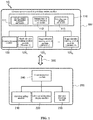
- FIG. 1 illustrates a schematic block diagram of a module structure of an elevator-calling control system according to an embodiment of the present invention.
- the elevator-calling control system 10 includes an elevator control apparatus 100 and an elevator-calling control apparatus 200, wherein the elevator control apparatus 100 is correspondingly disposed at an elevator end, and the elevator-calling control apparatus 200 is correspondingly disposed at a passenger end, to facilitate the passenger to operate; therefore, the elevator-calling control apparatus 200 may also be provided in the form of a mobile terminal, which is easy to carry and facilitates performing an elevator-calling control operation remotely.
- the elevator-calling control apparatus 200 may also be referred to as an elevator-calling control terminal, which may be implemented through a mobile intelligent terminal (e.g., a smart phone).
- FIG. 1 also illustrates a block diagram of a module structure of the elevator-calling control apparatus 200 according to an embodiment, which mainly includes: an elevator calling module 210, an elevator information display module 220 and an elevator selecting module 230.
- a communication module 240 is further disposed in the elevator-calling control apparatus 200.
- the elevator calling module 210 is configured to input an elevator-calling command, for example, a starting floor (i.e., the floor at which a passenger takes and enters an elevator car) and a target floor (i.e., the floor at which the passenger arrives) are input, and in other embodiments, the input elevator-calling command may also only include a starting floor and information about "up” or "down".
- a communication module 130 is also disposed in the elevator control apparatus 100, the communication module 130 and the communication module 340 may specifically be, for example, but not limited to, 3G/4G transceivers, and mutual sending and receiving of information can be implemented between them.
- wireless communication 300 can be implemented between the elevator control apparatus 100 and the elevator-calling control apparatus 200.
- each passenger may carry one elevator-calling control apparatus 200, and multiple elevator-calling control apparatuses 200 may conduct wireless communication interaction with the elevator control apparatus 100 respectively.
- the elevator control apparatus 100 may be used to perform group control management on an elevator group consisting of multiple elevators (e.g., 1 to N elevators, N being greater than or equal to 2).
- the N elevators are disposed in the same building and can be dispatched to transfer passengers. Therefore, corresponding to each elevator, a corresponding single elevator running control module 120 is provided, for example, single elevator running control modules 120 1 , 120 2 ... to 120 N .
- the single elevator running control modules 120 1 , 120 2 ... to 120 N may be connected through an elevator bus, and may be connected to an elevator group-control dispatching control module 110 of the elevator control apparatus 100 at the same time.
- the single elevator running control modules 120 1 , 120 2 ... to 120 N may run according to a dispatching instruction issued by the elevator group-control dispatching control module 110.
- the elevator group-control dispatching control module 110 is provided with an elevator running state information acquisition sub-module 111, which may be configured to acquire elevator running state information at least including information that reflects a current crowding degree of the elevator, for example, current load information of an elevator car; through the load information (e.g., a load percentage, which may be calculated according to current load weight and full load weight), the crowding degree of the elevator may be reflected basically accurately. Therefore, in normal circumstances, a greater load percentage reflects that there are more passengers in the elevator car.
- the load information may be acquired through a weight sensor on the elevator car and sent up to the elevator group-control dispatching control module 110.
- the elevator running state information of the information that reflects the current crowding degree of the elevator is not limited to the load information, which, for example, may also be image information (acquired through an image sensor and sent up to the elevator control apparatus 100) in the elevator car.
- the elevator group-control dispatching control module 110 is provided with an estimated time of arrival calculation sub-module 112, which may calculate Estimated Time of Arrival (ETA) information.
- ETA Estimated Time of Arrival
- the ETA may be calculated according to the current floor position of the elevator car, the position of the starting floor, an elevator running average speed and other information; in other embodiments, the ETA may also be calculated in consideration of an elevator-calling request situation of another floor and/or historical statistics data and the like; the specific calculation manner or calculation principle of the ETA is not limitative.
- the information may be sent to the communication module 240 of the elevator-calling control apparatus 200 through the communication module 130, so that the information can be displayed on the elevator information display module 220 in real time, and the passenger carrying the elevator-calling control apparatus 200 can conveniently select and determine, based on the information, an elevator to be taken on the elevator selecting module 230.
- the passenger may actively select an elevator according to his/her own condition (e.g., whether he/she carries a large luggage), time margin, elevator taking preference and the like, instead of passively accepting a fixed elevator assigned by an elevator group control dispatching system, which greatly improves the passenger's elevator-calling experience, is conducive to improving the passenger's elevator-taking experience, also reduces a large quantity of elevator dispatching unreasonable or not accepted by the passenger, and greatly improves the running efficiency of the elevator.
- his/her own condition e.g., whether he/she carries a large luggage
- time margin e.g., whether he/she carries a large luggage
- elevator taking preference e.g., whether he/she carries a large luggage
- elevator group control dispatching system which greatly improves the passenger's elevator-calling experience, is conducive to improving the passenger's elevator-taking experience, also reduces a large quantity of elevator dispatching unreasonable or not accepted by the passenger, and greatly improves the running efficiency of the
- the elevator group-control dispatching control module 110 is provided with a crowding degree estimating sub-module 113, which is configured to calculate corresponding crowding degree estimated information when each elevator runs to the starting floor, the crowding degree estimated information may be calculated based on an elevator-calling command input in the elevator car and the like, which may also be sent to the elevator-calling control apparatus 200 and displayed through the elevator information display module 220, and the passenger can further select to take an elevator based on the crowding degree estimated information.
- the elevator group-control dispatching control module 110 may also acquire other information which is sent to the elevator-calling control apparatus 200 and displayed through the elevator information display module 220, for the passenger to make reference, and any elevator information helping the passenger to select and decide an elevator to be taken can be applied thereto.
- the elevator group-control dispatching control module 110 may also be provided with an estimated travel time calculation module (not shown), which is configured to calculate estimated travel time information of the elevator when the elevator runs from the starting floor to the target floor, and send the estimated travel time information to the elevator-calling control apparatus 200 and display the estimated travel time information through the elevator information display module 220 for the passenger to make reference.
- an estimated travel time calculation module (not shown), which is configured to calculate estimated travel time information of the elevator when the elevator runs from the starting floor to the target floor, and send the estimated travel time information to the elevator-calling control apparatus 200 and display the estimated travel time information through the elevator information display module 220 for the passenger to make reference.
- the elevator control apparatus 100 may also acquire attribute information of each elevator in the elevator group, for example, whether the elevator is a sightseeing elevator, and send the attribute information to the elevator-calling control apparatus 200 and display the attribute information through the elevator information display module 220 for the passenger to make reference. For example, if the passenger learns that an elevator is a sightseeing elevator, he/she may select to take the elevator.
- an instruction of selecting an elevator in the elevator selecting module 230 may be sent to the corresponding single elevator running control module 120 of the elevator control apparatus 100 to control the running of the elevator, for example, if the elevator selecting module 230 selects Elevator 2, the instruction of selecting an elevator is sent to the single elevator running control module 120 2 , and the single elevator running control module 120 2 may control the running of Elevator 2 based on the instruction, which also facilitates simplifying dispatching operation of the elevator group-control dispatching control module 110.
- the passenger when the passenger inputs an elevator-calling command or an instruction of selecting an elevator in the elevator-calling control apparatus 200, the passenger may be located at the starting floor to perform the input operation; however, the passenger may also be located at another floor to perform the input operation, and may also be located at a position away from an elevator waiting hall to perform the input operation. Therefore, based on the elevator-calling control apparatus 200 in the embodiment of the present invention, the passenger may also perform a remote elevator-calling operation conveniently, and the passenger may further make full use of a time period of the ETA to complete other matters.
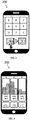
- FIG. 2 illustrates a schematic diagram of an operation interface when an elevator-calling control apparatus in the elevator-calling control system of the embodiment shown in FIG. 1 inputs an elevator-calling command
- FIG. 3 is a schematic diagram of an operation interface when the elevator-calling control apparatus in the elevator-calling control system of the embodiment shown in FIG. 1 selects an elevator
- FIG. 4 is a schematic diagram of an elevator-calling control flow of the elevator-calling control apparatus in the elevator-calling control system of the embodiment shown in FIG. 1 .
- the elevator-calling control apparatus 200 is implemented based on a computer program instruction, and is specifically implemented through an APP of a mobile intelligent terminal, by downloading a corresponding program package by a user and installing the program package in the mobile intelligent terminal; wherein the elevator calling module 210, the elevator information display module 220 and the elevator selecting module 230 of the elevator-calling control apparatus 200 are all disposed in the APP.
- the mobile intelligent terminal is a moveable terminal that has the capability of being connected to the Internet, according to or carrying an operating system, and can customize a variety of functions according to user requirements, which, for example, may be a smart phone, a palm computer, and the like.
- the elevator-calling control method according to the embodiment of the present invention is illustrated below with reference to FIG. 1 to FIG. 4 .
- step S210 an elevator-calling command is input.
- the step is completed in the elevator calling module 210 of the elevator-calling control apparatus 200.
- the passenger inputs a starting floor of "8" and a target floor of "3".
- step S220 elevator running state information, estimated time of arrival information and crowding degree estimated information of several elevators in a corresponding elevator group are displayed.
- the step is completed in the elevator information display module 220 of the elevator-calling control apparatus 200.
- content displayed in the elevator information display module 220 is illustrated.
- Elevator load information, ETA information and crowding degree estimated information of Elevators 1, 2 and 3 are displayed respectively, for example, in the display sub-module corresponding to Elevator 1, a histogram and data 40% are used to indicate current load information of the elevator, a histogram and data 70% are used to indicate load information when the elevator arrives at the starting floor, and ETA is 10S. In this way, the information is conveniently and intuitively presented before the passenger.
- step S230 an elevator is selected as an elevator that the passenger determines to take.
- the step is completed in the elevator selecting module 230 of the elevator-calling control apparatus 200.
- a select button is disposed on an operation interface of the elevator-calling control apparatus 200, each elevator is correspondingly provided with one select button, and pressing down or touching the corresponding button indicates that the corresponding elevator is selected to be taken.
- the passenger not only can implement elevator-calling control remotely (i.e., elevator-calling control is performed outside an elevator waiting hall of the starting floor), and better experience brought about is: the passenger can select the most suitable elevator according to information displayed by the elevator information display module 220 and the current condition, for example, the passenger can select an elevator according to the time from the current position to the elevator waiting hall of the starting floor and the ETA information displayed by the elevator information display module 220, or the passenger can continuously arrange to process other things in an area (e.g., in an office) outside the elevator waiting hall of the starting floor according to the ETA information displayed by the elevator information display module 220, and so on. Therefore, while remote elevator calling is implemented, the passenger can effectively use the elevator-calling waiting time and the like, thus greatly improving the passenger's experience.
- the passenger can select the most suitable elevator according to information displayed by the elevator information display module 220 and the current condition, for example, the passenger can select an elevator according to the time from the current position to the elevator waiting hall of the starting floor and the ETA information displayed by
- FIG. 5 illustrates a schematic flowchart of an elevator-calling control method in the elevator-calling control system of the embodiment shown in FIG. 1 . Illustration is provided in the following with reference to FIG. 1 , FIG. 2 , FIG. 3 and FIG. 5 .
- step S410 the elevator-calling control terminal 200 inputs an elevator-calling command, which may specifically input a starting floor and a target floor (as shown in FIG. 2 ) from the elevator calling module 210.
- step S420 elevator running state information, ETA information and crowding degree estimated information of several elevators are at least acquired.
- the elevator running state information, the ETA information and the crowding degree estimated information may be obtained respectively through the elevator running state information acquisition sub-module 111, the estimated time of arrival calculation sub-module 112 and the crowding degree estimating sub-module 113 disposed in the elevator group-control dispatching control module 110.
- Both the elevator running state information and the crowding degree estimated information may be represented through load information.
- the ETA may also be calculated through the estimated time of arrival calculation sub-module 112 disposed in the elevator-calling control apparatus.
- step S430 the elevator-calling control terminal 200 displays the elevator running state information, the ETA information and the crowding degree estimated information of several elevators in the corresponding elevator group, and specifically, the elevator running state information, the ETA information and the crowding degree estimated information (as shown in FIG. 3 ) may be displayed by the elevator information display module 210 for the passenger to make reference.
- the elevator running state information, the ETA information and the crowding degree estimated information may be displayed by the elevator information display module 210 for the passenger to make reference.
- FIG. 3 The example shown in FIG.
- the Elevators 1, 2 and 3 are elevators available for the passenger to select to take (for example, Elevator 4 has been full and is unavailable for the passenger to select) calculated by dispatching control by the elevator group-control dispatching control module 110 based on the elevator-calling command, that is, several elevators in the step S420 are determined, and in this way, it is conducive to ensuring implementation of an upper dispatching algorithm of elevator group-control dispatching control, dispatching control over the elevator group may not be disordered, and the running efficiency of the elevator is ensured.
- elevator running state information, ETA information and the like corresponding to all the elevators in the elevator group respectively may also be displayed, for the passenger to make reference.
- step S440 an elevator is selected from the elevator-calling control terminal 200, specifically the elevator is selected from the elevator selecting module 230, as shown in FIG. 3 , a select button is disposed on an operation interface of the elevator-calling control apparatus 200, each elevator is correspondingly provided with one select button, and pressing down or touching the corresponding button indicates that the corresponding elevator is selected to be taken, and an elevator selection instruction or selected elevator information is input.
- step S450 the selected elevator information is sent to the corresponding single elevator running control module.
- the selection instruction may be sent to the single elevator running control module based on an elevator number in the selected elevator information, to control dispatching and running of the elevator.
- the elevator control apparatus 100 in the elevator-calling control system 10 may also receive an elevator-calling command or instruction sent in a traditional way, and the elevator group-control dispatching control module 110 directly performs dispatching control over the elevator based on the elevator-calling command or instruction, to assign a fixed elevator for the passenger to take.
Landscapes
- Engineering & Computer Science (AREA)
- Automation & Control Theory (AREA)
- Computer Networks & Wireless Communication (AREA)
- Indicating And Signalling Devices For Elevators (AREA)
- Elevator Control (AREA)
Abstract
Description
- The present invention belongs to the field of elevator control technologies, relates to an elevator-calling operation of an elevator, and in particular, to an elevator-calling control method, apparatus and system of an elevator that a passenger can actively select to take.
- When a passenger needs to take an elevator, he/she needs to perform an elevator-calling operation at first, and an elevator dispatching system would, based on an instruction inputted in the elevator-calling operation, conduct dispatching control on a controlled elevator group, thus fixedly assigning a corresponding elevator to run to a starting floor of the elevator-calling operation of the passenger for the passenger to take.
- The current elevator-calling way and elevator dispatching method can only assign a single and fixed elevator to the passenger, and the passenger is totally unable to actively select an elevator according to his/her own preference and other factors.
- Afterwards, in an actual elevator taking process, the following situations may exist: when the elevator fixedly assigned arrives at the starting floor where the passenger is, it is relatively crowded in the elevator car, and the passenger is unwilling to take the crowded elevator, and selects to continue the elevator-calling and waits, in this way, the passenger's time is wasted and the running efficiency of the elevator is also influenced; or the passenger finds that the waiting time is very long, which not only wastes the passenger's waiting time but also may cause delay to the business of the passenger; or because the passenger carries a larger object, when the fixedly assigned elevator arrives at the starting floor where the passenger is, the object cannot be accommodated due to the crowding degree in the elevator car, so the passenger has to continue elevator-calling and wait for the next elevator. Therefore, the passenger has relatively poor experience in terms of the existing elevator-calling way.
- An objective of the present invention is to realize that a passenger can actively select a corresponding elevator in an elevator-calling process.
- A further objective of the present invention is to improve elevator calling and elevator taking experience of a passenger.
- In order to achieve the foregoing objectives or other objectives, the present invention provides the following technical solutions.
- According to one aspect of the present invention, an elevator-calling control method is provided, including the steps of:
- inputting an elevator-calling command;
- displaying elevator running state information and estimated time of arrival information of several elevators in a corresponding elevator group for a passenger to make reference, wherein the elevator running state information at least includes information that reflects a current crowding degree of the elevator; and
- selecting an elevator from the several elevators as the elevator that the passenger determines to take.
- According to the elevator-calling control method in an embodiment of the present invention, wherein the elevator-calling command includes a starting floor and a target floor.
- Specifically, the information that reflects a current crowding degree of the elevator includes current load information of an elevator car.
- According to the elevator-calling control method in another embodiment of the present invention, wherein, in the displaying step, estimated information of the crowding degree of the elevator when the elevator runs to the starting floor is further displayed.
- According to the elevator-calling control method in a yet another embodiment of the present invention, wherein, in the displaying step, estimated travel time information of the elevator when the elevator runs from the starting floor to the target floor is further displayed.
- According to the elevator-calling control method in a further embodiment of the present invention, wherein, in the displaying step, attribute information of each elevator is further displayed.
- In the elevator-calling control method according to any of the preceding embodiments, the several elevators are elevators in the elevator group which are determined to be available for the passenger to select and take.
- In the elevator-calling control method according to any of the preceding embodiments, the elevator-calling control method is completed in an area outside an elevator waiting hall of the starting floor.
- According to another aspect of the present invention, an elevator-calling control apparatus, including:
- an elevator calling module configured to input an elevator-calling command;
- an elevator information display module configured to display elevator running state information and estimated time of arrival information of several elevators in a corresponding elevator group for a passenger to make reference, wherein the elevator running state information at least includes information that reflects a current crowding degree of the elevator; and
- an elevator selecting module configured to select an elevator from the several elevators as the elevator that the passenger determines to take.
- According to the elevator-calling control apparatus in an embodiment of the present invention, wherein the elevator-calling command includes a starting floor and a target floor.
- Specifically, the information that reflects the current crowding degree of the elevator includes current load information of an elevator car.
- According to the elevator-calling control apparatus in another embodiment of the present invention, wherein the elevator information display module is further configured to display estimated information of the crowding degree of the elevator when the elevator runs to the starting floor.
- According to the elevator-calling control apparatus in a yet another embodiment of the present invention, wherein the elevator information display module is further configured to display estimated travel time information of the elevator when the elevator runs from the starting floor to the target floor.
- According to the elevator-calling control apparatus in a further embodiment of the present invention, wherein the elevator information display module is further configured to display attribute information of each elevator.
- In the elevator-calling control apparatus according to any of the preceding embodiments, the several elevators are elevators in the elevator group which are determined to be available for the passenger to select and take.
- In the elevator-calling control apparatus according to any of the preceding embodiments, the elevator-calling control apparatus is configured to be a mobile intelligent terminal capable of completing elevator-calling control in an area outside an elevator waiting hall of the starting floor.
- Specifically, the mobile intelligent terminal is a smart phone or a palm computer, which is loaded with an application (APP) at least having the elevator calling module, the elevator information display module and the elevator selecting module.
- According to a further aspect of the present invention, an elevator-calling control system, including an elevator-calling control terminal and an elevator control apparatus, wherein the elevator control apparatus includes an elevator group-control dispatching control component and multiple single elevator running control components coupled to the elevator group-control dispatching control component; wherein:
- the elevator-calling control terminal is at least provided with:
- an elevator-calling component configured to input an elevator-calling command by a passenger,
- an elevator information display component configured to display elevator running state information and estimated time of arrival information of several elevators in a corresponding elevator group, and
- an elevator selecting component configured to select an elevator from the several elevators as the elevator that the passenger determines to take;
- the elevator group-control dispatching control component of the elevator control apparatus is configured to receive the elevator-calling command and, based on the elevator-calling command, feedback the elevator running state information and the estimated time of arrival information of the several elevators in the corresponding elevator group to the elevator-calling control terminal; and
- the elevator control apparatus is further configured to receive an instruction of selecting an elevator in the elevator selecting component, and send the instruction to the corresponding single elevator running control component.
- According to the elevator-calling control system in an embodiment of the present invention, wherein the elevator-calling command includes a starting floor and a target floor.
- Specifically, information reflecting a current crowding degree of the elevator includes current load information of an elevator car.
- According to the elevator-calling control system in another embodiment of the present invention, wherein the elevator information display component is further configured to display estimated information of the crowding degree of the elevator when the elevator runs to the starting floor.
- According to the elevator-calling control system in a yet another embodiment of the present invention, wherein the elevator information display component is further configured to display estimated travel time information of the elevator when the elevator runs from the starting floor to the target floor.
- According to the elevator-calling control system in a further embodiment of the present invention, wherein the elevator information display component is further configured to display attribute information of each elevator.
- In the elevator-calling control system according to any of the preceding embodiments, the elevator group-control dispatching control component of the elevator control apparatus is further configured to determine, at least based on the elevator-calling command, elevators in the elevator group which are available for the passenger to select and take as the several elevators.
- In the elevator-calling control system according to any of the preceding embodiments, the elevator-calling control terminal is configured to be a mobile intelligent terminal capable of completing elevator-calling control in an area outside an elevator waiting hall of the starting floor.
- Specifically, the mobile intelligent terminal is a smart phone or a palm computer, which is loaded with an application (APP) for implementing at least the elevator-calling component, the elevator information display component and the elevator selecting component.
- According to an aspect of the present invention, an elevator-calling control method of the elevator-calling system described above, including the steps of:
- inputting an elevator-calling command from the elevator calling module of the elevator-calling control terminal;
- collecting or calculating, based on the elevator-calling command, the elevator running state information and the estimated time of arrival information of the several elevators in the corresponding elevator group;
- displaying, by the elevator-calling control terminal, the elevator running state information and the estimated time of arrival information of the several elevators in the corresponding elevator group for the passenger to make reference;
- selecting an elevator from the elevator-calling control terminal as the elevator that the passenger determines to take; and
- sending an instruction of selecting an elevator to the corresponding single elevator running control component to control the running of the elevator.
- According to the elevator-calling control method in an embodiment of the present invention, wherein the elevator-calling command includes a starting floor and a target floor.
- Specifically, information that reflects a current crowding degree of the elevator includes current load information of an elevator car.
- According to the elevator-calling control method in another embodiment of the present invention, wherein, in the displaying step, estimated information of a crowding degree of the elevator when the elevator runs to the starting floor is further displayed.
- According to the elevator-calling control method in a yet another embodiment of the present invention, wherein, in the displaying step, estimated travel time information of the elevator when the elevator runs from the starting floor to the target floor is further displayed.
- According to the elevator-calling control method in a further embodiment of the present invention, wherein, in the displaying step, attribute information of each elevator is further displayed.
- In the elevator-calling control method according to any of the preceding embodiments, the following step is further included:
- determining, at least based on the elevator-calling command, elevators in the elevator group which are available for the passenger to select and take as the several elevators.
- In the elevator-calling control method according to any of the preceding embodiments, the elevator-calling control terminal is a mobile intelligent terminal.
- Specifically, the step of inputting an elevator-calling command, the displaying step and the elevator selecting step are completed in an area outside an elevator waiting hall of the starting floor.
- The present invention has the following technical effects: the elevator-calling control of the present invention can realize at least displaying current crowding degree information and estimated time of arrival information on an elevator-calling control terminal, and facilitate a passenger to actively select an elevator that the passenger determines to take. Therefore, user elevator calling experience and taking experience are good; moreover, a large quantity of elevator dispatching unreasonable or not accepted by the passenger is reduced, and the running efficiency of the elevator is improved greatly.
- In the following detailed description with reference to the accompanying drawings, the foregoing and other objectives and advantages of the present invention would be more complete and clearer, wherein identical or similar elements are indicated with identical reference signs.
-
FIG. 1 is a schematic block diagram of a module structure of an elevator-calling control system according to an embodiment of the present invention. -
FIG. 2 is a schematic diagram of an operation interface when an elevator-calling control apparatus in the elevator-calling control system of the embodiment shown inFIG. 1 inputs an elevator-calling command. -
FIG. 3 is a schematic diagram of an operation interface when the elevator-calling control apparatus in the elevator-calling control system of the embodiment shown inFIG. 1 selects an elevator. -
FIG. 4 is a schematic diagram of an elevator-calling control flow of the elevator-calling control apparatus in the elevator-calling control system of the embodiment shown inFIG. 1 . -
FIG. 5 is a schematic flowchart of an elevator-calling control method in the elevator-calling control system of the embodiment shown inFIG. 1 . - The present invention is described below with reference to the flowchart descriptions of the method, system, and apparatus according to embodiments of the present invention and/or block diagrams and/or flowcharts. It should be understood that each block in the flowchart descriptions and/or block diagrams and a combination of the flowchart descriptions and/or block diagrams may be implemented by, but not limited to, computer program instructions, for example, they may also be implemented by corresponding hardware (e.g., a FPGA or DSP or the like). In the case of implementation based on the computer program instructions, these computer program instructions may be provided for a general-purpose computer, a special-purpose computer, an embedded processor, or a processor of another programmable data processing device to generate a machine, so that the instructions executed by a computer or a processor of another programmable data processing device create a member for implementing a specified function/operation in the flowcharts and/or blocks and/or one or more flowcharts.
- It should be noted that these computer program instructions may also be stored in a computer readable memory that can instruct the computer or other programmable data processing devices to function in a particular manner, such that the instructions stored in the computer readable memory generate a member that includes an instruction of implementing a specified function/operation in the flowcharts and/or blocks and/or one or more flowcharts.
- It should also be noted that these computer program instructions may also be loaded onto a computer or another programmable data processor, such that a series of operating steps are performed on the computer or another computer programmable processor, thereby generating computer-implemented processing. Therefore, the instructions executed on the computer or another programmable data processor provide steps for implementing a specified function or operation in the flowchart and/or one or more blocks in the block diagrams. It should be further nodded that, in some alternative implementations, the functions/operations shown in the blocks may not take place according to the order shown in the flowcharts. For example, two blocks shown sequentially may be basically performed at the same time or the blocks may sometimes be performed according to a reverse order, which specifically depends on the functions/operations involved.
-
FIG. 1 illustrates a schematic block diagram of a module structure of an elevator-calling control system according to an embodiment of the present invention. In this embodiment, the elevator-callingcontrol system 10 includes anelevator control apparatus 100 and an elevator-callingcontrol apparatus 200, wherein theelevator control apparatus 100 is correspondingly disposed at an elevator end, and the elevator-callingcontrol apparatus 200 is correspondingly disposed at a passenger end, to facilitate the passenger to operate; therefore, the elevator-callingcontrol apparatus 200 may also be provided in the form of a mobile terminal, which is easy to carry and facilitates performing an elevator-calling control operation remotely. In this way, the elevator-callingcontrol apparatus 200 may also be referred to as an elevator-calling control terminal, which may be implemented through a mobile intelligent terminal (e.g., a smart phone). -
FIG. 1 also illustrates a block diagram of a module structure of the elevator-callingcontrol apparatus 200 according to an embodiment, which mainly includes: anelevator calling module 210, an elevatorinformation display module 220 and anelevator selecting module 230. To implement communication with theelevator control apparatus 100 at the remote end, acommunication module 240 is further disposed in the elevator-callingcontrol apparatus 200. Theelevator calling module 210 is configured to input an elevator-calling command, for example, a starting floor (i.e., the floor at which a passenger takes and enters an elevator car) and a target floor (i.e., the floor at which the passenger arrives) are input, and in other embodiments, the input elevator-calling command may also only include a starting floor and information about "up" or "down". - Correspondingly, a
communication module 130 is also disposed in theelevator control apparatus 100, thecommunication module 130 and the communication module 340 may specifically be, for example, but not limited to, 3G/4G transceivers, and mutual sending and receiving of information can be implemented between them. In this way,wireless communication 300 can be implemented between theelevator control apparatus 100 and the elevator-callingcontrol apparatus 200. - It should be understood that the above example only gives a schematic diagram of interaction between the elevator-calling
control apparatus 200 and theelevator control apparatus 100. In an application example, each passenger may carry one elevator-callingcontrol apparatus 200, and multiple elevator-callingcontrol apparatuses 200 may conduct wireless communication interaction with theelevator control apparatus 100 respectively. - The
elevator control apparatus 100 may be used to perform group control management on an elevator group consisting of multiple elevators (e.g., 1 to N elevators, N being greater than or equal to 2). The N elevators are disposed in the same building and can be dispatched to transfer passengers. Therefore, corresponding to each elevator, a corresponding single elevator running control module 120 is provided, for example, single elevator running control modules 1201, 1202 ... to 120N. The single elevator running control modules 1201, 1202 ... to 120N may be connected through an elevator bus, and may be connected to an elevator group-controldispatching control module 110 of theelevator control apparatus 100 at the same time. The single elevator running control modules 1201, 1202 ... to 120N may run according to a dispatching instruction issued by the elevator group-controldispatching control module 110. - In this embodiment, the elevator group-control
dispatching control module 110 is provided with an elevator running stateinformation acquisition sub-module 111, which may be configured to acquire elevator running state information at least including information that reflects a current crowding degree of the elevator, for example, current load information of an elevator car; through the load information (e.g., a load percentage, which may be calculated according to current load weight and full load weight), the crowding degree of the elevator may be reflected basically accurately. Therefore, in normal circumstances, a greater load percentage reflects that there are more passengers in the elevator car. The load information may be acquired through a weight sensor on the elevator car and sent up to the elevator group-controldispatching control module 110. However, it should be understood that the elevator running state information of the information that reflects the current crowding degree of the elevator is not limited to the load information, which, for example, may also be image information (acquired through an image sensor and sent up to the elevator control apparatus 100) in the elevator car. - The elevator group-control
dispatching control module 110 is provided with an estimated time ofarrival calculation sub-module 112, which may calculate Estimated Time of Arrival (ETA) information. Specifically, the ETA may be calculated according to the current floor position of the elevator car, the position of the starting floor, an elevator running average speed and other information; in other embodiments, the ETA may also be calculated in consideration of an elevator-calling request situation of another floor and/or historical statistics data and the like; the specific calculation manner or calculation principle of the ETA is not limitative. - Based on the elevator running state
information acquisition sub-module 111 and the estimated time ofarrival calculation sub-module 112, crowding degree information and ETA of each elevator in the elevator group can be obtained respectively, the information may be sent to thecommunication module 240 of the elevator-callingcontrol apparatus 200 through thecommunication module 130, so that the information can be displayed on the elevatorinformation display module 220 in real time, and the passenger carrying the elevator-callingcontrol apparatus 200 can conveniently select and determine, based on the information, an elevator to be taken on theelevator selecting module 230. In this way, the passenger may actively select an elevator according to his/her own condition (e.g., whether he/she carries a large luggage), time margin, elevator taking preference and the like, instead of passively accepting a fixed elevator assigned by an elevator group control dispatching system, which greatly improves the passenger's elevator-calling experience, is conducive to improving the passenger's elevator-taking experience, also reduces a large quantity of elevator dispatching unreasonable or not accepted by the passenger, and greatly improves the running efficiency of the elevator. - As shown in
FIG. 1 , in this embodiment, the elevator group-controldispatching control module 110 is provided with a crowding degree estimating sub-module 113, which is configured to calculate corresponding crowding degree estimated information when each elevator runs to the starting floor, the crowding degree estimated information may be calculated based on an elevator-calling command input in the elevator car and the like, which may also be sent to the elevator-callingcontrol apparatus 200 and displayed through the elevatorinformation display module 220, and the passenger can further select to take an elevator based on the crowding degree estimated information. - It should be understood that, in other embodiments, the elevator group-control
dispatching control module 110 may also acquire other information which is sent to the elevator-callingcontrol apparatus 200 and displayed through the elevatorinformation display module 220, for the passenger to make reference, and any elevator information helping the passenger to select and decide an elevator to be taken can be applied thereto. - In another embodiment, the elevator group-control
dispatching control module 110 may also be provided with an estimated travel time calculation module (not shown), which is configured to calculate estimated travel time information of the elevator when the elevator runs from the starting floor to the target floor, and send the estimated travel time information to the elevator-callingcontrol apparatus 200 and display the estimated travel time information through the elevatorinformation display module 220 for the passenger to make reference. - In a yet another embodiment, the
elevator control apparatus 100 may also acquire attribute information of each elevator in the elevator group, for example, whether the elevator is a sightseeing elevator, and send the attribute information to the elevator-callingcontrol apparatus 200 and display the attribute information through the elevatorinformation display module 220 for the passenger to make reference. For example, if the passenger learns that an elevator is a sightseeing elevator, he/she may select to take the elevator. - As shown in
FIG. 1 , an instruction of selecting an elevator in theelevator selecting module 230 may be sent to the corresponding single elevator running control module 120 of theelevator control apparatus 100 to control the running of the elevator, for example, if theelevator selecting module 230 selectsElevator 2, the instruction of selecting an elevator is sent to the single elevator running control module 1202, and the single elevator running control module 1202 may control the running ofElevator 2 based on the instruction, which also facilitates simplifying dispatching operation of the elevator group-controldispatching control module 110. - It should be noted that, in the above embodiment, when the passenger inputs an elevator-calling command or an instruction of selecting an elevator in the elevator-calling
control apparatus 200, the passenger may be located at the starting floor to perform the input operation; however, the passenger may also be located at another floor to perform the input operation, and may also be located at a position away from an elevator waiting hall to perform the input operation. Therefore, based on the elevator-callingcontrol apparatus 200 in the embodiment of the present invention, the passenger may also perform a remote elevator-calling operation conveniently, and the passenger may further make full use of a time period of the ETA to complete other matters. -
FIG. 2 illustrates a schematic diagram of an operation interface when an elevator-calling control apparatus in the elevator-calling control system of the embodiment shown inFIG. 1 inputs an elevator-calling command;FIG. 3 is a schematic diagram of an operation interface when the elevator-calling control apparatus in the elevator-calling control system of the embodiment shown inFIG. 1 selects an elevator; andFIG. 4 is a schematic diagram of an elevator-calling control flow of the elevator-calling control apparatus in the elevator-calling control system of the embodiment shown inFIG. 1 . In this embodiment, the elevator-callingcontrol apparatus 200 is implemented based on a computer program instruction, and is specifically implemented through an APP of a mobile intelligent terminal, by downloading a corresponding program package by a user and installing the program package in the mobile intelligent terminal; wherein theelevator calling module 210, the elevatorinformation display module 220 and theelevator selecting module 230 of the elevator-callingcontrol apparatus 200 are all disposed in the APP. The mobile intelligent terminal is a moveable terminal that has the capability of being connected to the Internet, according to or carrying an operating system, and can customize a variety of functions according to user requirements, which, for example, may be a smart phone, a palm computer, and the like. - The elevator-calling control method according to the embodiment of the present invention is illustrated below with reference to
FIG. 1 to FIG. 4 . - Firstly, in step S210, an elevator-calling command is input. The step is completed in the
elevator calling module 210 of the elevator-callingcontrol apparatus 200. As shown inFIG. 2 , the passenger inputs a starting floor of "8" and a target floor of "3". - Further, in step S220, elevator running state information, estimated time of arrival information and crowding degree estimated information of several elevators in a corresponding elevator group are displayed. The step is completed in the elevator
information display module 220 of the elevator-callingcontrol apparatus 200. As shown inFIG. 3 , content displayed in the elevatorinformation display module 220 is illustrated. Elevator load information, ETA information and crowding degree estimated information ofElevators Elevator 1, a histogram anddata 40% are used to indicate current load information of the elevator, a histogram anddata 70% are used to indicate load information when the elevator arrives at the starting floor, and ETA is 10S. In this way, the information is conveniently and intuitively presented before the passenger. - Further, in step S230, an elevator is selected as an elevator that the passenger determines to take. The step is completed in the
elevator selecting module 230 of the elevator-callingcontrol apparatus 200. As shown inFIG. 3 , a select button is disposed on an operation interface of the elevator-callingcontrol apparatus 200, each elevator is correspondingly provided with one select button, and pressing down or touching the corresponding button indicates that the corresponding elevator is selected to be taken. - So far, one elevator-calling control process of the passenger has been basically completed. The elevator-calling control method and the elevator-calling control apparatus in the above embodiments are implemented on the APP of the mobile intelligent terminal, in this way, the passenger not only can implement elevator-calling control remotely (i.e., elevator-calling control is performed outside an elevator waiting hall of the starting floor), and better experience brought about is: the passenger can select the most suitable elevator according to information displayed by the elevator
information display module 220 and the current condition, for example, the passenger can select an elevator according to the time from the current position to the elevator waiting hall of the starting floor and the ETA information displayed by the elevatorinformation display module 220, or the passenger can continuously arrange to process other things in an area (e.g., in an office) outside the elevator waiting hall of the starting floor according to the ETA information displayed by the elevatorinformation display module 220, and so on. Therefore, while remote elevator calling is implemented, the passenger can effectively use the elevator-calling waiting time and the like, thus greatly improving the passenger's experience. -
FIG. 5 illustrates a schematic flowchart of an elevator-calling control method in the elevator-calling control system of the embodiment shown inFIG. 1 . Illustration is provided in the following with reference toFIG. 1 ,FIG. 2 ,FIG. 3 andFIG. 5 . - At first, in step S410, the elevator-calling
control terminal 200 inputs an elevator-calling command, which may specifically input a starting floor and a target floor (as shown inFIG. 2 ) from theelevator calling module 210. - Further, in step S420, elevator running state information, ETA information and crowding degree estimated information of several elevators are at least acquired. As shown in
FIG. 1 , the elevator running state information, the ETA information and the crowding degree estimated information may be obtained respectively through the elevator running stateinformation acquisition sub-module 111, the estimated time ofarrival calculation sub-module 112 and the crowding degree estimating sub-module 113 disposed in the elevator group-controldispatching control module 110. Both the elevator running state information and the crowding degree estimated information may be represented through load information. It should be noted that, in other embodiments, the ETA may also be calculated through the estimated time ofarrival calculation sub-module 112 disposed in the elevator-calling control apparatus. - Further, in step S430, the elevator-calling
control terminal 200 displays the elevator running state information, the ETA information and the crowding degree estimated information of several elevators in the corresponding elevator group, and specifically, the elevator running state information, the ETA information and the crowding degree estimated information (as shown inFIG. 3 ) may be displayed by the elevatorinformation display module 210 for the passenger to make reference. The example shown inFIG. 3 shows elevator running state information, ETA information and crowding degree estimated information ofElevators Elevators Elevator 4 has been full and is unavailable for the passenger to select) calculated by dispatching control by the elevator group-controldispatching control module 110 based on the elevator-calling command, that is, several elevators in the step S420 are determined, and in this way, it is conducive to ensuring implementation of an upper dispatching algorithm of elevator group-control dispatching control, dispatching control over the elevator group may not be disordered, and the running efficiency of the elevator is ensured. In other embodiments, elevator running state information, ETA information and the like corresponding to all the elevators in the elevator group respectively may also be displayed, for the passenger to make reference. - Further, in step S440, an elevator is selected from the elevator-calling
control terminal 200, specifically the elevator is selected from theelevator selecting module 230, as shown inFIG. 3 , a select button is disposed on an operation interface of the elevator-callingcontrol apparatus 200, each elevator is correspondingly provided with one select button, and pressing down or touching the corresponding button indicates that the corresponding elevator is selected to be taken, and an elevator selection instruction or selected elevator information is input. - Further, in step S450, the selected elevator information is sent to the corresponding single elevator running control module. In this step, the selection instruction may be sent to the single elevator running control module based on an elevator number in the selected elevator information, to control dispatching and running of the elevator.
- So far, one elevator-calling control process of the elevator-calling control system has been basically completed.
- It should be noted that the
elevator control apparatus 100 in the elevator-callingcontrol system 10 according to the embodiment of the present invention may also receive an elevator-calling command or instruction sent in a traditional way, and the elevator group-controldispatching control module 110 directly performs dispatching control over the elevator based on the elevator-calling command or instruction, to assign a fixed elevator for the passenger to take. - It should be understood that, when one member is "connected" or "coupled" to another member, it may be directly connected or coupled to another member or there may be an intermediate member.
- The above examples mainly describe the elevator-calling control apparatus, the elevator-calling control system and the elevator-calling control method of the present invention. Although only some implementations of the present invention are described, those of ordinary skill in the art should understand that the present invention may be implemented in many other forms without departing from the purport and scope thereof, for example, the estimated time of
arrival calculation sub-module 112 and/or the estimated travel time calculation module in the elevator group-controldispatching control module 110 are/is disposed in the elevator-callingcontrol apparatus 200. Therefore, the examples and implementations illustrated are regarded as schematic instead of being limitative, and the present invention may cover various modifications and replacements without departing from the spirit and scope of the present invention defined by the appended claims.
Claims (15)
- An elevator-calling control method, comprising the steps of:inputting an elevator-calling command;displaying elevator running state information and estimated time of arrival information of several elevators in a corresponding elevator group for a passenger to make reference, wherein the elevator running state information at least comprises information that reflects a current crowding degree of the elevator; andselecting an elevator from the several elevators as the elevator that the passenger determines to take.
- The elevator-calling control method of claim 1, wherein the elevator-calling control method is completed in an area outside an elevator waiting hall of the starting floor.
- An elevator-calling control apparatus, comprising:an elevator calling module configured to input an elevator-calling command;an elevator information display module configured to display elevator running state information and estimated time of arrival information of several elevators in a corresponding elevator group for a passenger to make reference, wherein the elevator running state information at least comprises information that reflects a current crowding degree of the elevator; andan elevator selecting module configured to select an elevator from the several elevators as the elevator that the passenger determines to take.
- The elevator-calling control apparatus of claim 3, wherein the elevator information display module is further configured to display:estimated information of the crowding degree of the elevator when the elevator runs to the starting floor; and/orestimated travel time information of the elevator when the elevator runs from the starting floor to the target floor; and/orattribute information of each elevator.
- The elevator-calling control method or apparatus of any preceding claim, wherein the several elevators are elevators in the elevator group which are determined to be available for the passenger to select and take.
- The elevator-calling control apparatus of claim 3, 4 or 5, wherein the elevator-calling control apparatus is configured to be a mobile intelligent terminal capable of completing elevator-calling control in an area outside an elevator waiting hall of the starting floor, and optionally
wherein the mobile intelligent terminal is a smart phone or a palm computer, which is loaded with an application at least having the elevator calling module, the elevator information display module and the elevator selecting module. - An elevator-calling control system, comprising an elevator-calling control terminal and an elevator control apparatus, wherein the elevator control apparatus comprises an elevator group-control dispatching control component and multiple single elevator running control components coupled to the elevator group-control dispatching control component; wherein:the elevator-calling control terminal is at least provided with:an elevator-calling component configured to input an elevator-calling command by a passenger,an elevator information display component configured to display elevator running state information and estimated time of arrival information of several elevators in a corresponding elevator group, andan elevator selecting component configured to select an elevator from the several elevators as the elevator that the passenger determines to take;the elevator group-control dispatching control component of the elevator control apparatus is configured to receive the elevator-calling command and, based on the elevator-calling command, feedback the elevator running state information and the estimated time of arrival information of the several elevators in the corresponding elevator group to the elevator-calling control terminal; andthe elevator control apparatus is further configured to receive an instruction of selecting an elevator in the elevator selecting component, and send the instruction to the corresponding single elevator running control component.
- The elevator-calling control system of claim 7, wherein the elevator group-control dispatching control component of the elevator control apparatus is further configured to determine, at least based on the elevator-calling command, elevators in the elevator group which are available for the passenger to select and take as the several elevators.
- The elevator-calling control system of claim 7 or 8, wherein the elevator-calling control terminal is configured to be a mobile intelligent terminal capable of completing elevator-calling control in an area outside an elevator waiting hall of the starting floor, and
optionally wherein the mobile intelligent terminal is a smart phone or a palm computer, which is loaded with an application for implementing at least the elevator-calling component, the elevator information display component and the elevator selecting component. - An elevator-calling control method of the elevator-calling system of any of claims 7-9, comprising the steps of:inputting an elevator-calling command from the elevator calling module of the elevator-calling control terminal;collecting or calculating, based on the elevator-calling command, the elevator running state information and the estimated time of arrival information of the several elevators in the corresponding elevator group;displaying, by the elevator-calling control terminal, the elevator running state information and the estimated time of arrival information of the several elevators in the elevator group for the passenger to make reference;selecting an elevator from the elevator-calling control terminal as the elevator that the passenger determines to take; andsending an instruction of selecting an elevator to the corresponding single elevator running control component to control the running of the elevator.
- The elevator-calling control method, apparatus or system of any preceding claim, wherein the elevator-calling command comprises a starting floor and a target floor.
- The elevator-calling control method, apparatus or system of any preceding claim, wherein the information that reflects a current crowding degree of the elevator comprises current load information of an elevator car.
- The elevator-calling control method of claim 1 or 10, wherein, in the displaying step:estimated information of a crowding degree of the elevator when the elevator runs to the starting floor is further displayed; and/orestimated travel time information of the elevator when the elevator runs from the starting floor to the target floor is further displayed; and/orattribute information of each elevator is further displayed.
- The elevator-calling control method of any of claims 10-13, further comprising the step of:determining, at least based on the elevator-calling command, elevators in the elevator group which are available for the passenger to select and take as the several elevators.
- The elevator-calling control method of any of claims 10-14, wherein the elevator-calling control terminal is a mobile intelligent terminal, and optionally
wherein the step of inputting an elevator-calling command, the displaying step and the elevator selecting step are completed in an area outside an elevator waiting hall of the starting floor.
Applications Claiming Priority (1)
| Application Number | Priority Date | Filing Date | Title |
|---|---|---|---|
| CN201610131625.0A CN107176511B (en) | 2016-03-09 | 2016-03-09 | Call control device, call control system and call control method thereof |
Publications (1)
| Publication Number | Publication Date |
|---|---|
| EP3216737A1 true EP3216737A1 (en) | 2017-09-13 |
Family
ID=58265849
Family Applications (1)
| Application Number | Title | Priority Date | Filing Date |
|---|---|---|---|
| EP17159976.4A Withdrawn EP3216737A1 (en) | 2016-03-09 | 2017-03-09 | Preferred elevator selection with dispatching information using mobile phone app |
Country Status (3)
| Country | Link |
|---|---|
| US (1) | US10435272B2 (en) |
| EP (1) | EP3216737A1 (en) |
| CN (1) | CN107176511B (en) |
Cited By (6)
| Publication number | Priority date | Publication date | Assignee | Title |
|---|---|---|---|---|
| CN107500066A (en) * | 2017-09-30 | 2017-12-22 | 江苏密斯欧智能科技有限公司 | Residential building lift management system |
| EP3643664A1 (en) * | 2018-10-26 | 2020-04-29 | Otis Elevator Company | Elevator service request using user device |
| EP3647247A1 (en) * | 2018-10-24 | 2020-05-06 | Otis Elevator Company | Reassignment based on piggybacking |
| CN114194963A (en) * | 2021-11-24 | 2022-03-18 | 青岛海尔智能技术研发有限公司 | Control method and device for building elevator, building elevator and storage medium |
| CN114955763A (en) * | 2022-05-31 | 2022-08-30 | 苏州优立电梯科技有限公司 | Elevator remote control calling system |
| EP4067281A1 (en) * | 2021-04-02 | 2022-10-05 | Kleemann Hellas SA | Elevator information system for safe cabin environment |
Families Citing this family (30)
| Publication number | Priority date | Publication date | Assignee | Title |
|---|---|---|---|---|
| CN107176511B (en) * | 2016-03-09 | 2021-03-16 | 奥的斯电梯公司 | Call control device, call control system and call control method thereof |
| US10875742B2 (en) | 2017-11-09 | 2020-12-29 | Otis Elevator Company | Elevator service request using user device with filtered destination floor selection |
| ES2915498T3 (en) * | 2017-12-21 | 2022-06-22 | Inventio Ag | Route planning based on expected number of passengers |
| CN109969878A (en) * | 2017-12-27 | 2019-07-05 | 奥的斯电梯公司 | The determination of improper call request in automatic call Request System |
| CN110407043B (en) | 2018-04-26 | 2023-01-13 | 奥的斯电梯公司 | Communication for elevator service requests |
| JP6673611B2 (en) * | 2018-07-04 | 2020-03-25 | 東芝エレベータ株式会社 | Elevator system |
| US11345566B2 (en) | 2018-07-30 | 2022-05-31 | Otis Elevator Company | Elevator car route selector |
| AU2019204807A1 (en) * | 2018-07-31 | 2020-02-20 | Otis Elevator Company | Super group architecture with advanced building wide dispatching logic - distributed group architecture |
| US12172865B2 (en) | 2018-09-14 | 2024-12-24 | Otis Elevator Company | System and method for assigning elevator service based on passenger priority |
| JP6888639B2 (en) * | 2018-10-11 | 2021-06-16 | フジテック株式会社 | Information processing terminal |
| US20200130992A1 (en) * | 2018-10-24 | 2020-04-30 | Otis Elevator Company | Passenger selection for interrupted elevator service |
| CN109205407B (en) * | 2018-11-09 | 2022-05-13 | 京东方科技集团股份有限公司 | Elevator riding realization method, terminal and storage medium |
| CN111285212A (en) * | 2018-12-10 | 2020-06-16 | 奥的斯电梯公司 | Elevator operation panel, elevator system and elevator panel display method |
| CN110371806A (en) * | 2019-06-28 | 2019-10-25 | 平安科技(深圳)有限公司 | Information prompting method, device and terminal device |
| CN110436295A (en) * | 2019-08-26 | 2019-11-12 | 刘向勇 | An elevator control system based on Internet of Things technology |
| US12540051B2 (en) * | 2019-11-26 | 2026-02-03 | Otis Elevator Company | Passenger interface for shuttle elevator system |
| CN111598211B (en) * | 2020-04-13 | 2023-07-04 | 北京百度网讯科技有限公司 | Elevator dispatching model training method and device, electronic equipment and storage medium |
| JP7767311B2 (en) | 2020-04-30 | 2025-11-11 | インベンテイオ・アクテイエンゲゼルシヤフト | Elevator operating device with waiting time and occupancy symbolization - Patent Application 20070122997 |
| JP7360995B2 (en) * | 2020-06-04 | 2023-10-13 | 株式会社日立ビルシステム | Elevator congestion status display system and method |
| JP7435773B2 (en) * | 2020-06-23 | 2024-02-21 | 日本電気株式会社 | System, system control method and program |
| CN114057057A (en) * | 2020-07-31 | 2022-02-18 | 奥的斯电梯公司 | Crowd reduction in elevators |
| CN111994747B (en) * | 2020-08-31 | 2023-10-17 | 通力电梯有限公司 | Method and system for elevator traffic guidance |
| CN112141836A (en) * | 2020-09-07 | 2020-12-29 | 广州广日电气设备有限公司 | System and method for calling elevator |
| JP7514170B2 (en) | 2020-11-18 | 2024-07-10 | 株式会社日立ビルシステム | Elevator operation management server, car congestion status output system, and car congestion status output method |
| CN112551288A (en) * | 2020-12-04 | 2021-03-26 | 深圳市普渡科技有限公司 | Ladder riding control method and device for robot, robot and medium |
| US12162722B2 (en) * | 2022-04-25 | 2024-12-10 | Otis Elevator Company | Wireless early car arrival for mobile interfaces to elevator |
| CN115072509A (en) * | 2022-07-28 | 2022-09-20 | 深圳市商汤科技有限公司 | Method, device, equipment, storage medium and program product for displaying elevator information |
| CN116354199B (en) * | 2023-03-07 | 2025-06-27 | 深圳市麦驰安防技术有限公司 | Elevator calling device and elevator calling control method based on voice interaction |
| CN117326417A (en) * | 2023-11-10 | 2024-01-02 | 中国联合网络通信集团有限公司 | Elevator dispatching method, device, equipment and storage medium |
| CN117735351B (en) * | 2023-12-20 | 2026-05-05 | 广州广日电梯工业有限公司 | A method and system for elevator group control and scheduling |
Citations (3)
| Publication number | Priority date | Publication date | Assignee | Title |
|---|---|---|---|---|
| JP2012056697A (en) * | 2010-09-08 | 2012-03-22 | Toshiba Elevator Co Ltd | Elevator system |
| JP2013001498A (en) * | 2011-06-15 | 2013-01-07 | Hitachi Ltd | Group-controlled elevator system |
| JP2015030613A (en) * | 2013-08-06 | 2015-02-16 | 株式会社日立製作所 | Elevator control system |
Family Cites Families (33)
| Publication number | Priority date | Publication date | Assignee | Title |
|---|---|---|---|---|
| JP2502077B2 (en) * | 1987-02-28 | 1996-05-29 | 株式会社日立製作所 | Elevator guide device |
| JPS6491083A (en) * | 1987-10-02 | 1989-04-10 | Mitsubishi Electric Corp | Congestion level detector for elevator hall |
| US5307903A (en) * | 1988-01-29 | 1994-05-03 | Hitachi, Ltd. | Method and system of controlling elevators and method and apparatus of inputting requests to the control system |
| US5022497A (en) * | 1988-06-21 | 1991-06-11 | Otis Elevator Company | "Artificial intelligence" based crowd sensing system for elevator car assignment |
| US5298695A (en) * | 1990-04-12 | 1994-03-29 | Otis Elevator Company | Elevator system with varying motion profiles and parameters based on crowd related predictions |
| JP3486424B2 (en) * | 1991-11-27 | 2004-01-13 | オーチス エレベータ カンパニー | Method and apparatus for improving congestion service by empty car assignment |
| US5329076A (en) * | 1992-07-24 | 1994-07-12 | Otis Elevator Company | Elevator car dispatcher having artificially intelligent supervisor for crowds |
| US5625176A (en) * | 1995-06-26 | 1997-04-29 | Otis Elevator Company | Crowd service enhancements with multi-deck elevators |
| FI115521B (en) | 2004-06-28 | 2005-05-31 | Kone Corp | Method for wireless input of call in lift, involves transmitting destination floor detail selected among received floor details, by calling person mobile phone, to control system of lift |
| US7552802B2 (en) * | 2004-07-08 | 2009-06-30 | Mitsubishi Electric Corporation | Controller for elevator |
| US7849974B2 (en) | 2005-03-18 | 2010-12-14 | Otis Elevator Company | Method of dispatching an elevator car |
| CN101238057B (en) | 2005-08-04 | 2012-08-08 | 因温特奥股份公司 | Method for assigning a user to an elevator system |
| JP4980642B2 (en) * | 2006-04-12 | 2012-07-18 | 株式会社日立製作所 | Elevator group management control method and system |
| JP2008265897A (en) * | 2007-04-17 | 2008-11-06 | Nippon Otis Elevator Co | Operation control device in congestion of elevator car |
| FI119686B (en) | 2007-10-11 | 2009-02-13 | Kone Corp | Lift system |
| WO2010031426A1 (en) | 2008-09-16 | 2010-03-25 | Inventio Ag | Method for modernizing an elevator system |
| FI20080640L (en) | 2008-11-28 | 2010-05-29 | Kone Corp | Elevator system |
| US8839914B2 (en) * | 2009-01-19 | 2014-09-23 | Mitsubishi Electric Corporation | Elevator system including fire evacuation priority |
| CN102753464B (en) * | 2010-02-19 | 2016-06-22 | 奥的斯电梯公司 | Select in conjunction with mass selection best in the elevator dispatching system of redirector information |
| KR20110096269A (en) | 2010-02-22 | 2011-08-30 | 성기수 | Remote control system and method for locating and calling elevator |
| TWI545076B (en) | 2010-08-27 | 2016-08-11 | 陳康明 | Automatic elevator chassis call prompt |
| US20120048655A1 (en) * | 2010-08-30 | 2012-03-01 | Inventec Corporation | Method for controlling elevators of multi-storey building by utilizing mobile phone |
| US8937534B2 (en) | 2010-12-08 | 2015-01-20 | At&T Intellectual Property I, L.P. | Remote control of electronic devices via mobile device |
| WO2012093985A1 (en) | 2011-01-07 | 2012-07-12 | The Board Of Trustees Of The University Of Illinois | Elevator control for disabled persons |
| WO2012153386A1 (en) | 2011-05-10 | 2012-11-15 | 三菱電機株式会社 | Elevator system |
| KR20140042896A (en) | 2011-07-15 | 2014-04-07 | 오티스 엘리베이터 컴파니 | Elevator system fixtures and server for controlling the fixtures |
| ES2672518T3 (en) | 2013-02-05 | 2018-06-14 | Otis Elevator Company | Peripheral equipment near-field communication (NFC) card reader |
| US9481548B2 (en) * | 2013-10-09 | 2016-11-01 | King Fahd University Of Petroleum And Minerals | Sensor-based elevator system and method using the same |
| WO2016165782A1 (en) * | 2015-04-17 | 2016-10-20 | Kone Corporation | Arrangement and method for allocating destination calls |
| CN105035887B (en) * | 2015-07-03 | 2017-06-20 | 穆国栋 | An Intelligent Elevator Main Control System Based on Computer Vision Detection |
| CN107176511B (en) * | 2016-03-09 | 2021-03-16 | 奥的斯电梯公司 | Call control device, call control system and call control method thereof |
| EP3299323B1 (en) * | 2016-09-23 | 2020-04-01 | Otis Elevator Company | Secondary car operating panel for elevator cars |
| US9978020B1 (en) * | 2017-03-29 | 2018-05-22 | International Business Machines Corporation | Optimizing physical parameters in fault-tolerant quantum computing to reduce frequency crowding |
-
2016
- 2016-03-09 CN CN201610131625.0A patent/CN107176511B/en active Active
-
2017
- 2017-03-07 US US15/451,859 patent/US10435272B2/en active Active
- 2017-03-09 EP EP17159976.4A patent/EP3216737A1/en not_active Withdrawn
Patent Citations (3)
| Publication number | Priority date | Publication date | Assignee | Title |
|---|---|---|---|---|
| JP2012056697A (en) * | 2010-09-08 | 2012-03-22 | Toshiba Elevator Co Ltd | Elevator system |
| JP2013001498A (en) * | 2011-06-15 | 2013-01-07 | Hitachi Ltd | Group-controlled elevator system |
| JP2015030613A (en) * | 2013-08-06 | 2015-02-16 | 株式会社日立製作所 | Elevator control system |
Cited By (9)
| Publication number | Priority date | Publication date | Assignee | Title |
|---|---|---|---|---|
| CN107500066A (en) * | 2017-09-30 | 2017-12-22 | 江苏密斯欧智能科技有限公司 | Residential building lift management system |
| EP3647247A1 (en) * | 2018-10-24 | 2020-05-06 | Otis Elevator Company | Reassignment based on piggybacking |
| EP3643664A1 (en) * | 2018-10-26 | 2020-04-29 | Otis Elevator Company | Elevator service request using user device |
| CN111099464A (en) * | 2018-10-26 | 2020-05-05 | 奥的斯电梯公司 | Elevator service request using user device with filtered destination floor selection |
| EP4410726A1 (en) * | 2018-10-26 | 2024-08-07 | Otis Elevator Company | Elevator service request using user device |
| EP4067281A1 (en) * | 2021-04-02 | 2022-10-05 | Kleemann Hellas SA | Elevator information system for safe cabin environment |
| CN114194963A (en) * | 2021-11-24 | 2022-03-18 | 青岛海尔智能技术研发有限公司 | Control method and device for building elevator, building elevator and storage medium |
| CN114194963B (en) * | 2021-11-24 | 2024-05-14 | 青岛海尔智能技术研发有限公司 | Control method and device for building elevator, building elevator and storage medium |
| CN114955763A (en) * | 2022-05-31 | 2022-08-30 | 苏州优立电梯科技有限公司 | Elevator remote control calling system |
Also Published As
| Publication number | Publication date |
|---|---|
| CN107176511B (en) | 2021-03-16 |
| US20170260023A1 (en) | 2017-09-14 |
| US10435272B2 (en) | 2019-10-08 |
| CN107176511A (en) | 2017-09-19 |
Similar Documents
| Publication | Publication Date | Title |
|---|---|---|
| US10435272B2 (en) | Preferred elevator selection with dispatching information using mobile phone app | |
| US10302440B2 (en) | Navigation terminal, system and method for taking elevator | |
| EP3812865B1 (en) | Robot scheduling and robot path control method, server and storage medium | |
| US20190057480A1 (en) | Method and apparatus for providing transportation service information | |
| US8162109B2 (en) | Elevator system which limits the number of destination call registrations to be allocated to the single car | |
| KR102449601B1 (en) | System and method of initiating elevator service by entering an elevator call | |
| US11386440B2 (en) | Device and method for management of shared vehicles | |
| CN110963378B (en) | Multi-elevator scheduling method | |
| WO2019033729A1 (en) | Systems and methods for dispatching vehicles | |
| CN108689258A (en) | The floor retained using APP using user apparatus asks the elevator service of progress | |
| US10843896B2 (en) | System and method of initiating elevator service by entering an elevator call | |
| CN105376333B (en) | A kind of subway monitoring system and its monitoring method | |
| CN110163707B (en) | Network car booking service processing method, terminal equipment and server | |
| AU2015343710A1 (en) | System and method of initiating elevator service by entering an elevator call | |
| CN105502112A (en) | Call method and system for elevator group | |
| CN111847152A (en) | A method, device, electronic device and medium for determining a robot taking a ladder | |
| US20170129739A1 (en) | System and method of initiating elevator service by entering an elevator call | |
| EP4115363A1 (en) | Coordinating trips by vehicles in an on-demand environment | |
| CN111478934B (en) | Agent content pushing method, agent cooperation control system and device | |
| CN114348821B (en) | Guiding method, system and device for elevator passengers and storage medium | |
| CN115118821B (en) | Method, device, storage medium and computer equipment for allocating outbound call list | |
| CN114684680B (en) | Elevator control method and terminal | |
| CN105374100A (en) | Car-pooling method and system | |
| CN118096314A (en) | Interface display method and device, electronic equipment, readable storage medium and chip | |
| CN116050551A (en) | Station carpooling method and device, electronic equipment, readable storage medium and chip |
Legal Events
| Date | Code | Title | Description |
|---|---|---|---|
| PUAI | Public reference made under article 153(3) epc to a published international application that has entered the european phase |
Free format text: ORIGINAL CODE: 0009012 |
|
| STAA | Information on the status of an ep patent application or granted ep patent |
Free format text: STATUS: THE APPLICATION HAS BEEN PUBLISHED |
|
| AK | Designated contracting states |
Kind code of ref document: A1 Designated state(s): AL AT BE BG CH CY CZ DE DK EE ES FI FR GB GR HR HU IE IS IT LI LT LU LV MC MK MT NL NO PL PT RO RS SE SI SK SM TR |
|
| AX | Request for extension of the european patent |
Extension state: BA ME |
|
| STAA | Information on the status of an ep patent application or granted ep patent |
Free format text: STATUS: REQUEST FOR EXAMINATION WAS MADE |
|
| 17P | Request for examination filed |
Effective date: 20180313 |
|
| RBV | Designated contracting states (corrected) |
Designated state(s): AL AT BE BG CH CY CZ DE DK EE ES FI FR GB GR HR HU IE IS IT LI LT LU LV MC MK MT NL NO PL PT RO RS SE SI SK SM TR |
|
| STAA | Information on the status of an ep patent application or granted ep patent |
Free format text: STATUS: EXAMINATION IS IN PROGRESS |
|
| 17Q | First examination report despatched |
Effective date: 20190606 |
|
| STAA | Information on the status of an ep patent application or granted ep patent |
Free format text: STATUS: THE APPLICATION IS DEEMED TO BE WITHDRAWN |
|
| 18D | Application deemed to be withdrawn |
Effective date: 20191217 |