EP3214076A1 - Heterocyclic derivative having ampk activating effect - Google Patents
Heterocyclic derivative having ampk activating effect Download PDFInfo
- Publication number
- EP3214076A1 EP3214076A1 EP15855481.6A EP15855481A EP3214076A1 EP 3214076 A1 EP3214076 A1 EP 3214076A1 EP 15855481 A EP15855481 A EP 15855481A EP 3214076 A1 EP3214076 A1 EP 3214076A1
- Authority
- EP
- European Patent Office
- Prior art keywords
- substituted
- unsubstituted
- alkyl
- heterocyclyl
- compound
- Prior art date
- Legal status (The legal status is an assumption and is not a legal conclusion. Google has not performed a legal analysis and makes no representation as to the accuracy of the status listed.)
- Withdrawn
Links
- 125000000623 heterocyclic group Chemical group 0.000 title claims description 199
- 230000003213 activating effect Effects 0.000 title claims description 23
- 101100321932 Rattus norvegicus Prkaa2 gene Proteins 0.000 title 1
- 150000001875 compounds Chemical class 0.000 claims abstract description 397
- -1 nitro, carboxy Chemical group 0.000 claims abstract description 366
- 125000000217 alkyl group Chemical group 0.000 claims abstract description 238
- 125000003118 aryl group Chemical group 0.000 claims abstract description 171
- 125000003342 alkenyl group Chemical group 0.000 claims abstract description 169
- 125000000304 alkynyl group Chemical group 0.000 claims abstract description 155
- 229910052736 halogen Inorganic materials 0.000 claims abstract description 133
- 150000002367 halogens Chemical group 0.000 claims abstract description 133
- 229910052739 hydrogen Inorganic materials 0.000 claims abstract description 127
- 239000001257 hydrogen Substances 0.000 claims abstract description 127
- 150000003839 salts Chemical class 0.000 claims abstract description 116
- 125000004093 cyano group Chemical group *C#N 0.000 claims abstract description 111
- 125000002887 hydroxy group Chemical group [H]O* 0.000 claims abstract description 37
- 125000002496 methyl group Chemical group [H]C([H])([H])* 0.000 claims abstract description 24
- 125000001495 ethyl group Chemical group [H]C([H])([H])C([H])([H])* 0.000 claims abstract description 23
- 125000000392 cycloalkenyl group Chemical group 0.000 claims description 172
- 125000000753 cycloalkyl group Chemical group 0.000 claims description 165
- 125000001072 heteroaryl group Chemical group 0.000 claims description 162
- 125000003917 carbamoyl group Chemical group [H]N([H])C(*)=O 0.000 claims description 135
- 125000004435 hydrogen atom Chemical group [H]* 0.000 claims description 119
- 125000004397 aminosulfonyl group Chemical group NS(=O)(=O)* 0.000 claims description 113
- 125000002924 primary amino group Chemical group [H]N([H])* 0.000 claims description 107
- 125000001424 substituent group Chemical group 0.000 claims description 107
- 125000002252 acyl group Chemical group 0.000 claims description 67
- 125000004390 alkyl sulfonyl group Chemical group 0.000 claims description 61
- 239000008194 pharmaceutical composition Substances 0.000 claims description 50
- 102000014156 AMP-Activated Protein Kinases Human genes 0.000 claims description 38
- 108010011376 AMP-Activated Protein Kinases Proteins 0.000 claims description 38
- 125000003545 alkoxy group Chemical group 0.000 claims description 38
- 238000000034 method Methods 0.000 claims description 38
- 125000004391 aryl sulfonyl group Chemical group 0.000 claims description 35
- 125000005144 cycloalkylsulfonyl group Chemical group 0.000 claims description 35
- 125000005143 heteroarylsulfonyl group Chemical group 0.000 claims description 35
- 125000004414 alkyl thio group Chemical group 0.000 claims description 27
- 125000005137 alkenylsulfonyl group Chemical group 0.000 claims description 20
- 125000005139 alkynylsulfonyl group Chemical group 0.000 claims description 20
- 125000004104 aryloxy group Chemical group 0.000 claims description 19
- 125000005844 heterocyclyloxy group Chemical group 0.000 claims description 19
- 125000004465 cycloalkenyloxy group Chemical group 0.000 claims description 17
- 125000000000 cycloalkoxy group Chemical group 0.000 claims description 17
- 125000005553 heteroaryloxy group Chemical group 0.000 claims description 17
- 125000005110 aryl thio group Chemical group 0.000 claims description 16
- 125000005366 cycloalkylthio group Chemical group 0.000 claims description 16
- 125000005368 heteroarylthio group Chemical group 0.000 claims description 16
- 125000004468 heterocyclylthio group Chemical group 0.000 claims description 16
- 125000006239 protecting group Chemical group 0.000 claims description 16
- 206010012601 diabetes mellitus Diseases 0.000 claims description 14
- 238000011282 treatment Methods 0.000 claims description 13
- 125000000547 substituted alkyl group Chemical group 0.000 claims description 9
- 230000002265 prevention Effects 0.000 claims description 8
- 125000002023 trifluoromethyl group Chemical group FC(F)(F)* 0.000 abstract description 4
- 150000002431 hydrogen Chemical group 0.000 abstract 6
- XEKOWRVHYACXOJ-UHFFFAOYSA-N Ethyl acetate Chemical compound CCOC(C)=O XEKOWRVHYACXOJ-UHFFFAOYSA-N 0.000 description 96
- 238000006243 chemical reaction Methods 0.000 description 87
- 125000000449 nitro group Chemical group [O-][N+](*)=O 0.000 description 75
- OKKJLVBELUTLKV-UHFFFAOYSA-N Methanol Chemical compound OC OKKJLVBELUTLKV-UHFFFAOYSA-N 0.000 description 69
- 239000000243 solution Substances 0.000 description 69
- 239000011541 reaction mixture Substances 0.000 description 60
- WYURNTSHIVDZCO-UHFFFAOYSA-N Tetrahydrofuran Chemical compound C1CCOC1 WYURNTSHIVDZCO-UHFFFAOYSA-N 0.000 description 58
- ZMXDDKWLCZADIW-UHFFFAOYSA-N N,N-Dimethylformamide Chemical compound CN(C)C=O ZMXDDKWLCZADIW-UHFFFAOYSA-N 0.000 description 55
- 239000000203 mixture Substances 0.000 description 53
- WEVYAHXRMPXWCK-UHFFFAOYSA-N Acetonitrile Chemical compound CC#N WEVYAHXRMPXWCK-UHFFFAOYSA-N 0.000 description 51
- IAZDPXIOMUYVGZ-UHFFFAOYSA-N Dimethylsulphoxide Chemical compound CS(C)=O IAZDPXIOMUYVGZ-UHFFFAOYSA-N 0.000 description 48
- XLYOFNOQVPJJNP-UHFFFAOYSA-N water Substances O XLYOFNOQVPJJNP-UHFFFAOYSA-N 0.000 description 47
- RTZKZFJDLAIYFH-UHFFFAOYSA-N Diethyl ether Chemical compound CCOCC RTZKZFJDLAIYFH-UHFFFAOYSA-N 0.000 description 42
- 238000012360 testing method Methods 0.000 description 41
- YMWUJEATGCHHMB-UHFFFAOYSA-N Dichloromethane Chemical compound ClCCl YMWUJEATGCHHMB-UHFFFAOYSA-N 0.000 description 39
- 239000003814 drug Substances 0.000 description 37
- 229910052751 metal Inorganic materials 0.000 description 35
- 239000002184 metal Substances 0.000 description 35
- LFQSCWFLJHTTHZ-UHFFFAOYSA-N Ethanol Chemical compound CCO LFQSCWFLJHTTHZ-UHFFFAOYSA-N 0.000 description 34
- HEMHJVSKTPXQMS-UHFFFAOYSA-M Sodium hydroxide Chemical compound [OH-].[Na+] HEMHJVSKTPXQMS-UHFFFAOYSA-M 0.000 description 33
- 239000002904 solvent Substances 0.000 description 33
- YXFVVABEGXRONW-UHFFFAOYSA-N Toluene Chemical compound CC1=CC=CC=C1 YXFVVABEGXRONW-UHFFFAOYSA-N 0.000 description 30
- 229940079593 drug Drugs 0.000 description 29
- XTHFKEDIFFGKHM-UHFFFAOYSA-N Dimethoxyethane Chemical compound COCCOC XTHFKEDIFFGKHM-UHFFFAOYSA-N 0.000 description 28
- 239000002585 base Substances 0.000 description 27
- VTYYLEPIZMXCLO-UHFFFAOYSA-L Calcium carbonate Chemical compound [Ca+2].[O-]C([O-])=O VTYYLEPIZMXCLO-UHFFFAOYSA-L 0.000 description 26
- CDBYLPFSWZWCQE-UHFFFAOYSA-L Sodium Carbonate Chemical compound [Na+].[Na+].[O-]C([O-])=O CDBYLPFSWZWCQE-UHFFFAOYSA-L 0.000 description 26
- 238000005160 1H NMR spectroscopy Methods 0.000 description 25
- 238000009472 formulation Methods 0.000 description 24
- VLKZOEOYAKHREP-UHFFFAOYSA-N n-Hexane Chemical compound CCCCCC VLKZOEOYAKHREP-UHFFFAOYSA-N 0.000 description 24
- 239000000843 powder Substances 0.000 description 23
- ZMANZCXQSJIPKH-UHFFFAOYSA-N Triethylamine Chemical class CCN(CC)CC ZMANZCXQSJIPKH-UHFFFAOYSA-N 0.000 description 22
- 239000003112 inhibitor Substances 0.000 description 22
- OISVCGZHLKNMSJ-UHFFFAOYSA-N 2,6-dimethylpyridine Chemical compound CC1=CC=CC(C)=N1 OISVCGZHLKNMSJ-UHFFFAOYSA-N 0.000 description 21
- WMFOQBRAJBCJND-UHFFFAOYSA-M Lithium hydroxide Chemical compound [Li+].[OH-] WMFOQBRAJBCJND-UHFFFAOYSA-M 0.000 description 21
- KWYUFKZDYYNOTN-UHFFFAOYSA-M Potassium hydroxide Chemical compound [OH-].[K+] KWYUFKZDYYNOTN-UHFFFAOYSA-M 0.000 description 21
- 238000010898 silica gel chromatography Methods 0.000 description 21
- IAZDPXIOMUYVGZ-WFGJKAKNSA-N Dimethyl sulfoxide Chemical compound [2H]C([2H])([2H])S(=O)C([2H])([2H])[2H] IAZDPXIOMUYVGZ-WFGJKAKNSA-N 0.000 description 19
- HEDRZPFGACZZDS-UHFFFAOYSA-N Chloroform Chemical compound ClC(Cl)Cl HEDRZPFGACZZDS-UHFFFAOYSA-N 0.000 description 18
- DHXVGJBLRPWPCS-UHFFFAOYSA-N Tetrahydropyran Chemical compound C1CCOCC1 DHXVGJBLRPWPCS-UHFFFAOYSA-N 0.000 description 18
- 230000000694 effects Effects 0.000 description 18
- KDLHZDBZIXYQEI-UHFFFAOYSA-N Palladium Chemical compound [Pd] KDLHZDBZIXYQEI-UHFFFAOYSA-N 0.000 description 17
- HEDRZPFGACZZDS-MICDWDOJSA-N Trichloro(2H)methane Chemical class [2H]C(Cl)(Cl)Cl HEDRZPFGACZZDS-MICDWDOJSA-N 0.000 description 17
- 230000014759 maintenance of location Effects 0.000 description 17
- JUJWROOIHBZHMG-UHFFFAOYSA-N Pyridine Chemical compound C1=CC=NC=C1 JUJWROOIHBZHMG-UHFFFAOYSA-N 0.000 description 16
- UIIMBOGNXHQVGW-UHFFFAOYSA-M Sodium bicarbonate Chemical compound [Na+].OC([O-])=O UIIMBOGNXHQVGW-UHFFFAOYSA-M 0.000 description 16
- WQDUMFSSJAZKTM-UHFFFAOYSA-N Sodium methoxide Chemical compound [Na+].[O-]C WQDUMFSSJAZKTM-UHFFFAOYSA-N 0.000 description 16
- DTQVDTLACAAQTR-UHFFFAOYSA-N Trifluoroacetic acid Chemical compound OC(=O)C(F)(F)F DTQVDTLACAAQTR-UHFFFAOYSA-N 0.000 description 16
- NOESYZHRGYRDHS-UHFFFAOYSA-N insulin Chemical compound N1C(=O)C(NC(=O)C(CCC(N)=O)NC(=O)C(CCC(O)=O)NC(=O)C(C(C)C)NC(=O)C(NC(=O)CN)C(C)CC)CSSCC(C(NC(CO)C(=O)NC(CC(C)C)C(=O)NC(CC=2C=CC(O)=CC=2)C(=O)NC(CCC(N)=O)C(=O)NC(CC(C)C)C(=O)NC(CCC(O)=O)C(=O)NC(CC(N)=O)C(=O)NC(CC=2C=CC(O)=CC=2)C(=O)NC(CSSCC(NC(=O)C(C(C)C)NC(=O)C(CC(C)C)NC(=O)C(CC=2C=CC(O)=CC=2)NC(=O)C(CC(C)C)NC(=O)C(C)NC(=O)C(CCC(O)=O)NC(=O)C(C(C)C)NC(=O)C(CC(C)C)NC(=O)C(CC=2NC=NC=2)NC(=O)C(CO)NC(=O)CNC2=O)C(=O)NCC(=O)NC(CCC(O)=O)C(=O)NC(CCCNC(N)=N)C(=O)NCC(=O)NC(CC=3C=CC=CC=3)C(=O)NC(CC=3C=CC=CC=3)C(=O)NC(CC=3C=CC(O)=CC=3)C(=O)NC(C(C)O)C(=O)N3C(CCC3)C(=O)NC(CCCCN)C(=O)NC(C)C(O)=O)C(=O)NC(CC(N)=O)C(O)=O)=O)NC(=O)C(C(C)CC)NC(=O)C(CO)NC(=O)C(C(C)O)NC(=O)C1CSSCC2NC(=O)C(CC(C)C)NC(=O)C(NC(=O)C(CCC(N)=O)NC(=O)C(CC(N)=O)NC(=O)C(NC(=O)C(N)CC=1C=CC=CC=1)C(C)C)CC1=CN=CN1 NOESYZHRGYRDHS-UHFFFAOYSA-N 0.000 description 16
- 125000000037 tert-butyldiphenylsilyl group Chemical group [H]C1=C([H])C([H])=C([H])C([H])=C1[Si]([H])([*]C(C([H])([H])[H])(C([H])([H])[H])C([H])([H])[H])C1=C([H])C([H])=C([H])C([H])=C1[H] 0.000 description 16
- RYHBNJHYFVUHQT-UHFFFAOYSA-N 1,4-Dioxane Chemical compound C1COCCO1 RYHBNJHYFVUHQT-UHFFFAOYSA-N 0.000 description 15
- YLQBMQCUIZJEEH-UHFFFAOYSA-N tetrahydrofuran Natural products C=1C=COC=1 YLQBMQCUIZJEEH-UHFFFAOYSA-N 0.000 description 15
- GQHTUMJGOHRCHB-UHFFFAOYSA-N 2,3,4,6,7,8,9,10-octahydropyrimido[1,2-a]azepine Chemical compound C1CCCCN2CCCN=C21 GQHTUMJGOHRCHB-UHFFFAOYSA-N 0.000 description 14
- 229940122199 Insulin secretagogue Drugs 0.000 description 14
- JGFZNNIVVJXRND-UHFFFAOYSA-N N,N-Diisopropylethylamine (DIPEA) Chemical compound CCN(C(C)C)C(C)C JGFZNNIVVJXRND-UHFFFAOYSA-N 0.000 description 14
- DKGAVHZHDRPRBM-UHFFFAOYSA-N Tert-Butanol Chemical compound CC(C)(C)O DKGAVHZHDRPRBM-UHFFFAOYSA-N 0.000 description 14
- FJDQFPXHSGXQBY-UHFFFAOYSA-L caesium carbonate Chemical compound [Cs+].[Cs+].[O-]C([O-])=O FJDQFPXHSGXQBY-UHFFFAOYSA-L 0.000 description 14
- 229910000024 caesium carbonate Inorganic materials 0.000 description 14
- 239000007810 chemical reaction solvent Substances 0.000 description 14
- 150000002170 ethers Chemical class 0.000 description 14
- 229910000104 sodium hydride Inorganic materials 0.000 description 14
- KEAYESYHFKHZAL-UHFFFAOYSA-N Sodium Chemical compound [Na] KEAYESYHFKHZAL-UHFFFAOYSA-N 0.000 description 13
- 229910000019 calcium carbonate Inorganic materials 0.000 description 13
- 150000004649 carbonic acid derivatives Chemical class 0.000 description 13
- 229910000029 sodium carbonate Inorganic materials 0.000 description 13
- 239000012312 sodium hydride Substances 0.000 description 13
- 208000001072 type 2 diabetes mellitus Diseases 0.000 description 13
- UHOVQNZJYSORNB-UHFFFAOYSA-N Benzene Chemical compound C1=CC=CC=C1 UHOVQNZJYSORNB-UHFFFAOYSA-N 0.000 description 12
- DGAQECJNVWCQMB-PUAWFVPOSA-M Ilexoside XXIX Chemical compound C[C@@H]1CC[C@@]2(CC[C@@]3(C(=CC[C@H]4[C@]3(CC[C@@H]5[C@@]4(CC[C@@H](C5(C)C)OS(=O)(=O)[O-])C)C)[C@@H]2[C@]1(C)O)C)C(=O)O[C@H]6[C@@H]([C@H]([C@@H]([C@H](O6)CO)O)O)O.[Na+] DGAQECJNVWCQMB-PUAWFVPOSA-M 0.000 description 12
- TWRXJAOTZQYOKJ-UHFFFAOYSA-L Magnesium chloride Chemical compound [Mg+2].[Cl-].[Cl-] TWRXJAOTZQYOKJ-UHFFFAOYSA-L 0.000 description 12
- FAPWRFPIFSIZLT-UHFFFAOYSA-M Sodium chloride Chemical compound [Na+].[Cl-] FAPWRFPIFSIZLT-UHFFFAOYSA-M 0.000 description 12
- 239000007864 aqueous solution Substances 0.000 description 12
- 239000002775 capsule Substances 0.000 description 12
- BDAGIHXWWSANSR-UHFFFAOYSA-N methanoic acid Natural products OC=O BDAGIHXWWSANSR-UHFFFAOYSA-N 0.000 description 12
- 229910052708 sodium Inorganic materials 0.000 description 12
- 239000011734 sodium Substances 0.000 description 12
- 239000000758 substrate Substances 0.000 description 12
- 239000003826 tablet Substances 0.000 description 12
- 0 CCCc1c(*)c(*)c(*C)c(C)n1 Chemical compound CCCc1c(*)c(*)c(*C)c(C)n1 0.000 description 11
- 229910052987 metal hydride Inorganic materials 0.000 description 11
- 150000004681 metal hydrides Chemical class 0.000 description 11
- LPNYRYFBWFDTMA-UHFFFAOYSA-N potassium tert-butoxide Chemical compound [K+].CC(C)(C)[O-] LPNYRYFBWFDTMA-UHFFFAOYSA-N 0.000 description 11
- ZDYVRSLAEXCVBX-UHFFFAOYSA-N pyridinium p-toluenesulfonate Chemical compound C1=CC=[NH+]C=C1.CC1=CC=C(S([O-])(=O)=O)C=C1 ZDYVRSLAEXCVBX-UHFFFAOYSA-N 0.000 description 11
- 230000002829 reductive effect Effects 0.000 description 11
- IJGRMHOSHXDMSA-UHFFFAOYSA-N Atomic nitrogen Chemical compound N#N IJGRMHOSHXDMSA-UHFFFAOYSA-N 0.000 description 10
- QGJOPFRUJISHPQ-UHFFFAOYSA-N Carbon disulfide Chemical compound S=C=S QGJOPFRUJISHPQ-UHFFFAOYSA-N 0.000 description 10
- 125000004453 alkoxycarbonyl group Chemical group 0.000 description 10
- 125000001797 benzyl group Chemical group [H]C1=C([H])C([H])=C(C([H])=C1[H])C([H])([H])* 0.000 description 10
- 239000012043 crude product Substances 0.000 description 10
- 239000008187 granular material Substances 0.000 description 10
- 239000007788 liquid Substances 0.000 description 10
- 150000002825 nitriles Chemical class 0.000 description 10
- 239000007787 solid Substances 0.000 description 10
- 239000006188 syrup Substances 0.000 description 10
- 235000020357 syrup Nutrition 0.000 description 10
- WSLDOOZREJYCGB-UHFFFAOYSA-N 1,2-Dichloroethane Chemical compound ClCCCl WSLDOOZREJYCGB-UHFFFAOYSA-N 0.000 description 9
- 108010081668 Cytochrome P-450 CYP3A Proteins 0.000 description 9
- 102000004190 Enzymes Human genes 0.000 description 9
- 108090000790 Enzymes Proteins 0.000 description 9
- 206010022489 Insulin Resistance Diseases 0.000 description 9
- 125000002777 acetyl group Chemical group [H]C([H])([H])C(*)=O 0.000 description 9
- 125000004448 alkyl carbonyl group Chemical group 0.000 description 9
- 230000001419 dependent effect Effects 0.000 description 9
- 150000008282 halocarbons Chemical class 0.000 description 9
- 229910052760 oxygen Inorganic materials 0.000 description 9
- 229910052717 sulfur Inorganic materials 0.000 description 9
- ILMRJRBKQSSXGY-UHFFFAOYSA-N tert-butyl(dimethyl)silicon Chemical compound C[Si](C)C(C)(C)C ILMRJRBKQSSXGY-UHFFFAOYSA-N 0.000 description 9
- 125000001981 tert-butyldimethylsilyl group Chemical group [H]C([H])([H])[Si]([H])(C([H])([H])[H])[*]C(C([H])([H])[H])(C([H])([H])[H])C([H])([H])[H] 0.000 description 9
- 102000004877 Insulin Human genes 0.000 description 8
- 108090001061 Insulin Proteins 0.000 description 8
- 102100029795 Sodium-dependent glucose transporter 1 Human genes 0.000 description 8
- 101710181093 Sodium-dependent glucose transporter 1 Proteins 0.000 description 8
- 150000004703 alkoxides Chemical class 0.000 description 8
- 150000001408 amides Chemical class 0.000 description 8
- 125000003236 benzoyl group Chemical group [H]C1=C([H])C([H])=C(C([H])=C1[H])C(*)=O 0.000 description 8
- DEFVIWRASFVYLL-UHFFFAOYSA-N ethylene glycol bis(2-aminoethyl)tetraacetic acid Chemical compound OC(=O)CN(CC(O)=O)CCOCCOCCN(CC(O)=O)CC(O)=O DEFVIWRASFVYLL-UHFFFAOYSA-N 0.000 description 8
- 238000002347 injection Methods 0.000 description 8
- 239000007924 injection Substances 0.000 description 8
- 229940125396 insulin Drugs 0.000 description 8
- 238000001990 intravenous administration Methods 0.000 description 8
- 230000002503 metabolic effect Effects 0.000 description 8
- 239000002207 metabolite Substances 0.000 description 8
- 229940002612 prodrug Drugs 0.000 description 8
- 239000000651 prodrug Substances 0.000 description 8
- UMJSCPRVCHMLSP-UHFFFAOYSA-N pyridine Natural products COC1=CC=CN=C1 UMJSCPRVCHMLSP-UHFFFAOYSA-N 0.000 description 8
- 229920006395 saturated elastomer Polymers 0.000 description 8
- 229910000030 sodium bicarbonate Inorganic materials 0.000 description 8
- 235000017557 sodium bicarbonate Nutrition 0.000 description 8
- QDRKDTQENPPHOJ-UHFFFAOYSA-N sodium ethoxide Chemical compound [Na+].CC[O-] QDRKDTQENPPHOJ-UHFFFAOYSA-N 0.000 description 8
- 239000000126 substance Substances 0.000 description 8
- 125000004434 sulfur atom Chemical group 0.000 description 8
- 239000000725 suspension Substances 0.000 description 8
- FPGGTKZVZWFYPV-UHFFFAOYSA-M tetrabutylammonium fluoride Chemical compound [F-].CCCC[N+](CCCC)(CCCC)CCCC FPGGTKZVZWFYPV-UHFFFAOYSA-M 0.000 description 8
- RIOQSEWOXXDEQQ-UHFFFAOYSA-N triphenylphosphine Chemical compound C1=CC=CC=C1P(C=1C=CC=CC=1)C1=CC=CC=C1 RIOQSEWOXXDEQQ-UHFFFAOYSA-N 0.000 description 8
- XWKFPIODWVPXLX-UHFFFAOYSA-N 2-methyl-5-methylpyridine Natural products CC1=CC=C(C)N=C1 XWKFPIODWVPXLX-UHFFFAOYSA-N 0.000 description 7
- 102100039205 Cytochrome P450 3A4 Human genes 0.000 description 7
- 229940089838 Glucagon-like peptide 1 receptor agonist Drugs 0.000 description 7
- VEXZGXHMUGYJMC-UHFFFAOYSA-N Hydrochloric acid Chemical compound Cl VEXZGXHMUGYJMC-UHFFFAOYSA-N 0.000 description 7
- 102000035195 Peptidases Human genes 0.000 description 7
- 108091005804 Peptidases Proteins 0.000 description 7
- 108091006299 SLC2A2 Proteins 0.000 description 7
- 230000004913 activation Effects 0.000 description 7
- 150000001298 alcohols Chemical class 0.000 description 7
- 150000001412 amines Chemical class 0.000 description 7
- 125000006615 aromatic heterocyclic group Chemical group 0.000 description 7
- RQPZNWPYLFFXCP-UHFFFAOYSA-L barium dihydroxide Chemical compound [OH-].[OH-].[Ba+2] RQPZNWPYLFFXCP-UHFFFAOYSA-L 0.000 description 7
- 229910001863 barium hydroxide Inorganic materials 0.000 description 7
- 239000000872 buffer Substances 0.000 description 7
- MXFYYFVVIIWKFE-UHFFFAOYSA-N dicyclohexyl-[2-[2,6-di(propan-2-yloxy)phenyl]phenyl]phosphane Chemical compound CC(C)OC1=CC=CC(OC(C)C)=C1C1=CC=CC=C1P(C1CCCCC1)C1CCCCC1 MXFYYFVVIIWKFE-UHFFFAOYSA-N 0.000 description 7
- 239000003877 glucagon like peptide 1 receptor agonist Substances 0.000 description 7
- 230000004190 glucose uptake Effects 0.000 description 7
- 230000005764 inhibitory process Effects 0.000 description 7
- DLEDOFVPSDKWEF-UHFFFAOYSA-N lithium butane Chemical compound [Li+].CCC[CH2-] DLEDOFVPSDKWEF-UHFFFAOYSA-N 0.000 description 7
- UBJFKNSINUCEAL-UHFFFAOYSA-N lithium;2-methylpropane Chemical compound [Li+].C[C-](C)C UBJFKNSINUCEAL-UHFFFAOYSA-N 0.000 description 7
- WGOPGODQLGJZGL-UHFFFAOYSA-N lithium;butane Chemical compound [Li+].CC[CH-]C WGOPGODQLGJZGL-UHFFFAOYSA-N 0.000 description 7
- 239000002609 medium Substances 0.000 description 7
- 229910000000 metal hydroxide Inorganic materials 0.000 description 7
- 150000004692 metal hydroxides Chemical class 0.000 description 7
- MZRVEZGGRBJDDB-UHFFFAOYSA-N n-Butyllithium Substances [Li]CCCC MZRVEZGGRBJDDB-UHFFFAOYSA-N 0.000 description 7
- 125000001151 peptidyl group Chemical group 0.000 description 7
- 125000001997 phenyl group Chemical group [H]C1=C([H])C([H])=C(*)C([H])=C1[H] 0.000 description 7
- 235000019833 protease Nutrition 0.000 description 7
- MFRIHAYPQRLWNB-UHFFFAOYSA-N sodium tert-butoxide Chemical compound [Na+].CC(C)(C)[O-] MFRIHAYPQRLWNB-UHFFFAOYSA-N 0.000 description 7
- 150000003548 thiazolidines Chemical class 0.000 description 7
- OSWFIVFLDKOXQC-UHFFFAOYSA-N 4-(3-methoxyphenyl)aniline Chemical compound COC1=CC=CC(C=2C=CC(N)=CC=2)=C1 OSWFIVFLDKOXQC-UHFFFAOYSA-N 0.000 description 6
- QTBSBXVTEAMEQO-UHFFFAOYSA-N Acetic acid Chemical compound CC(O)=O QTBSBXVTEAMEQO-UHFFFAOYSA-N 0.000 description 6
- NLXLAEXVIDQMFP-UHFFFAOYSA-N Ammonia chloride Chemical compound [NH4+].[Cl-] NLXLAEXVIDQMFP-UHFFFAOYSA-N 0.000 description 6
- 229940123454 Glucose transporter 1 inhibitor Drugs 0.000 description 6
- 208000008589 Obesity Diseases 0.000 description 6
- XYFCBTPGUUZFHI-UHFFFAOYSA-N Phosphine Chemical compound P XYFCBTPGUUZFHI-UHFFFAOYSA-N 0.000 description 6
- XBDQKXXYIPTUBI-UHFFFAOYSA-M Propionate Chemical compound CCC([O-])=O XBDQKXXYIPTUBI-UHFFFAOYSA-M 0.000 description 6
- XJLXINKUBYWONI-DQQFMEOOSA-N [[(2r,3r,4r,5r)-5-(6-aminopurin-9-yl)-3-hydroxy-4-phosphonooxyoxolan-2-yl]methoxy-hydroxyphosphoryl] [(2s,3r,4s,5s)-5-(3-carbamoylpyridin-1-ium-1-yl)-3,4-dihydroxyoxolan-2-yl]methyl phosphate Chemical compound NC(=O)C1=CC=C[N+]([C@@H]2[C@H]([C@@H](O)[C@H](COP([O-])(=O)OP(O)(=O)OC[C@@H]3[C@H]([C@@H](OP(O)(O)=O)[C@@H](O3)N3C4=NC=NC(N)=C4N=C3)O)O2)O)=C1 XJLXINKUBYWONI-DQQFMEOOSA-N 0.000 description 6
- QVGXLLKOCUKJST-UHFFFAOYSA-N atomic oxygen Chemical compound [O] QVGXLLKOCUKJST-UHFFFAOYSA-N 0.000 description 6
- 230000001580 bacterial effect Effects 0.000 description 6
- MUALRAIOVNYAIW-UHFFFAOYSA-N binap Chemical compound C1=CC=CC=C1P(C=1C(=C2C=CC=CC2=CC=1)C=1C2=CC=CC=C2C=CC=1P(C=1C=CC=CC=1)C=1C=CC=CC=1)C1=CC=CC=C1 MUALRAIOVNYAIW-UHFFFAOYSA-N 0.000 description 6
- 239000007853 buffer solution Substances 0.000 description 6
- 239000013078 crystal Substances 0.000 description 6
- 125000006254 cycloalkyl carbonyl group Chemical group 0.000 description 6
- 235000019253 formic acid Nutrition 0.000 description 6
- 125000006517 heterocyclyl carbonyl group Chemical group 0.000 description 6
- 229910001629 magnesium chloride Inorganic materials 0.000 description 6
- 229930027945 nicotinamide-adenine dinucleotide Natural products 0.000 description 6
- 229910052757 nitrogen Inorganic materials 0.000 description 6
- 235000020824 obesity Nutrition 0.000 description 6
- 239000002674 ointment Substances 0.000 description 6
- 239000006191 orally-disintegrating tablet Substances 0.000 description 6
- 239000001301 oxygen Substances 0.000 description 6
- YJVFFLUZDVXJQI-UHFFFAOYSA-L palladium(ii) acetate Chemical compound [Pd+2].CC([O-])=O.CC([O-])=O YJVFFLUZDVXJQI-UHFFFAOYSA-L 0.000 description 6
- 238000007911 parenteral administration Methods 0.000 description 6
- 238000010992 reflux Methods 0.000 description 6
- 239000011780 sodium chloride Substances 0.000 description 6
- GUBGYTABKSRVRQ-QKKXKWKRSA-N Lactose Natural products OC[C@H]1O[C@@H](O[C@H]2[C@H](O)[C@@H](O)C(O)O[C@@H]2CO)[C@H](O)[C@@H](O)[C@H]1O GUBGYTABKSRVRQ-QKKXKWKRSA-N 0.000 description 5
- KXKVLQRXCPHEJC-UHFFFAOYSA-N acetic acid trimethyl ester Natural products COC(C)=O KXKVLQRXCPHEJC-UHFFFAOYSA-N 0.000 description 5
- 125000004656 alkyl sulfonylamino group Chemical group 0.000 description 5
- 125000005129 aryl carbonyl group Chemical group 0.000 description 5
- XRWSZZJLZRKHHD-WVWIJVSJSA-N asunaprevir Chemical compound O=C([C@@H]1C[C@H](CN1C(=O)[C@@H](NC(=O)OC(C)(C)C)C(C)(C)C)OC1=NC=C(C2=CC=C(Cl)C=C21)OC)N[C@]1(C(=O)NS(=O)(=O)C2CC2)C[C@H]1C=C XRWSZZJLZRKHHD-WVWIJVSJSA-N 0.000 description 5
- 229910052799 carbon Inorganic materials 0.000 description 5
- 125000003178 carboxy group Chemical group [H]OC(*)=O 0.000 description 5
- 239000003054 catalyst Substances 0.000 description 5
- 229940125961 compound 24 Drugs 0.000 description 5
- 238000007796 conventional method Methods 0.000 description 5
- 239000000839 emulsion Substances 0.000 description 5
- 150000002148 esters Chemical class 0.000 description 5
- 125000005223 heteroarylcarbonyl group Chemical group 0.000 description 5
- 238000001802 infusion Methods 0.000 description 5
- 239000008101 lactose Substances 0.000 description 5
- 230000004060 metabolic process Effects 0.000 description 5
- 125000004043 oxo group Chemical group O=* 0.000 description 5
- 239000011505 plaster Substances 0.000 description 5
- YBJHBAHKTGYVGT-ZKWXMUAHSA-N (+)-Biotin Chemical compound N1C(=O)N[C@@H]2[C@H](CCCCC(=O)O)SC[C@@H]21 YBJHBAHKTGYVGT-ZKWXMUAHSA-N 0.000 description 4
- AOSZTAHDEDLTLQ-AZKQZHLXSA-N (1S,2S,4R,8S,9S,11S,12R,13S,19S)-6-[(3-chlorophenyl)methyl]-12,19-difluoro-11-hydroxy-8-(2-hydroxyacetyl)-9,13-dimethyl-6-azapentacyclo[10.8.0.02,9.04,8.013,18]icosa-14,17-dien-16-one Chemical compound C([C@@H]1C[C@H]2[C@H]3[C@]([C@]4(C=CC(=O)C=C4[C@@H](F)C3)C)(F)[C@@H](O)C[C@@]2([C@@]1(C1)C(=O)CO)C)N1CC1=CC=CC(Cl)=C1 AOSZTAHDEDLTLQ-AZKQZHLXSA-N 0.000 description 4
- HCMJWOGOISXSDL-UHFFFAOYSA-N (2-isothiocyanato-1-phenylethyl)benzene Chemical compound C=1C=CC=CC=1C(CN=C=S)C1=CC=CC=C1 HCMJWOGOISXSDL-UHFFFAOYSA-N 0.000 description 4
- PAYRUJLWNCNPSJ-UHFFFAOYSA-N Aniline Chemical compound NC1=CC=CC=C1 PAYRUJLWNCNPSJ-UHFFFAOYSA-N 0.000 description 4
- 108091003079 Bovine Serum Albumin Proteins 0.000 description 4
- KCBAMQOKOLXLOX-BSZYMOERSA-N CC1=C(SC=N1)C2=CC=C(C=C2)[C@H](C)NC(=O)[C@@H]3C[C@H](CN3C(=O)[C@H](C(C)(C)C)NC(=O)CCCCCCCCCCNCCCONC(=O)C4=C(C(=C(C=C4)F)F)NC5=C(C=C(C=C5)I)F)O Chemical compound CC1=C(SC=N1)C2=CC=C(C=C2)[C@H](C)NC(=O)[C@@H]3C[C@H](CN3C(=O)[C@H](C(C)(C)C)NC(=O)CCCCCCCCCCNCCCONC(=O)C4=C(C(=C(C=C4)F)F)NC5=C(C=C(C=C5)I)F)O KCBAMQOKOLXLOX-BSZYMOERSA-N 0.000 description 4
- OKTJSMMVPCPJKN-UHFFFAOYSA-N Carbon Chemical compound [C] OKTJSMMVPCPJKN-UHFFFAOYSA-N 0.000 description 4
- 229940126657 Compound 17 Drugs 0.000 description 4
- 108010074922 Cytochrome P-450 CYP1A2 Proteins 0.000 description 4
- 102100026533 Cytochrome P450 1A2 Human genes 0.000 description 4
- 241000792859 Enema Species 0.000 description 4
- 208000001145 Metabolic Syndrome Diseases 0.000 description 4
- PCLIMKBDDGJMGD-UHFFFAOYSA-N N-bromosuccinimide Chemical compound BrN1C(=O)CCC1=O PCLIMKBDDGJMGD-UHFFFAOYSA-N 0.000 description 4
- JRNVZBWKYDBUCA-UHFFFAOYSA-N N-chlorosuccinimide Chemical compound ClN1C(=O)CCC1=O JRNVZBWKYDBUCA-UHFFFAOYSA-N 0.000 description 4
- LQZMLBORDGWNPD-UHFFFAOYSA-N N-iodosuccinimide Chemical compound IN1C(=O)CCC1=O LQZMLBORDGWNPD-UHFFFAOYSA-N 0.000 description 4
- OPFJDXRVMFKJJO-ZHHKINOHSA-N N-{[3-(2-benzamido-4-methyl-1,3-thiazol-5-yl)-pyrazol-5-yl]carbonyl}-G-dR-G-dD-dD-dD-NH2 Chemical compound S1C(C=2NN=C(C=2)C(=O)NCC(=O)N[C@H](CCCN=C(N)N)C(=O)NCC(=O)N[C@H](CC(O)=O)C(=O)N[C@H](CC(O)=O)C(=O)N[C@H](CC(O)=O)C(N)=O)=C(C)N=C1NC(=O)C1=CC=CC=C1 OPFJDXRVMFKJJO-ZHHKINOHSA-N 0.000 description 4
- CTQNGGLPUBDAKN-UHFFFAOYSA-N O-Xylene Chemical compound CC1=CC=CC=C1C CTQNGGLPUBDAKN-UHFFFAOYSA-N 0.000 description 4
- ISWSIDIOOBJBQZ-UHFFFAOYSA-N Phenol Chemical compound OC1=CC=CC=C1 ISWSIDIOOBJBQZ-UHFFFAOYSA-N 0.000 description 4
- WCUXLLCKKVVCTQ-UHFFFAOYSA-M Potassium chloride Chemical compound [Cl-].[K+] WCUXLLCKKVVCTQ-UHFFFAOYSA-M 0.000 description 4
- 241000700159 Rattus Species 0.000 description 4
- YZCKVEUIGOORGS-NJFSPNSNSA-N Tritium Chemical compound [3H] YZCKVEUIGOORGS-NJFSPNSNSA-N 0.000 description 4
- 201000000690 abdominal obesity-metabolic syndrome Diseases 0.000 description 4
- 239000000443 aerosol Substances 0.000 description 4
- 125000003282 alkyl amino group Chemical group 0.000 description 4
- 150000004945 aromatic hydrocarbons Chemical class 0.000 description 4
- 125000003710 aryl alkyl group Chemical group 0.000 description 4
- 229940098773 bovine serum albumin Drugs 0.000 description 4
- 239000006189 buccal tablet Substances 0.000 description 4
- CJZGTCYPCWQAJB-UHFFFAOYSA-L calcium stearate Chemical compound [Ca+2].CCCCCCCCCCCCCCCCCC([O-])=O.CCCCCCCCCCCCCCCCCC([O-])=O CJZGTCYPCWQAJB-UHFFFAOYSA-L 0.000 description 4
- 239000008116 calcium stearate Substances 0.000 description 4
- 235000013539 calcium stearate Nutrition 0.000 description 4
- 210000004027 cell Anatomy 0.000 description 4
- 239000007910 chewable tablet Substances 0.000 description 4
- 238000004440 column chromatography Methods 0.000 description 4
- 229940126086 compound 21 Drugs 0.000 description 4
- 229940125833 compound 23 Drugs 0.000 description 4
- 239000006071 cream Substances 0.000 description 4
- 125000001995 cyclobutyl group Chemical group [H]C1([H])C([H])([H])C([H])(*)C1([H])[H] 0.000 description 4
- 125000000298 cyclopropenyl group Chemical group [H]C1=C([H])C1([H])* 0.000 description 4
- 125000001559 cyclopropyl group Chemical group [H]C1([H])C([H])([H])C1([H])* 0.000 description 4
- VHJLVAABSRFDPM-QWWZWVQMSA-N dithiothreitol Chemical compound SC[C@@H](O)[C@H](O)CS VHJLVAABSRFDPM-QWWZWVQMSA-N 0.000 description 4
- 239000008298 dragée Substances 0.000 description 4
- 239000003221 ear drop Substances 0.000 description 4
- 210000003027 ear inner Anatomy 0.000 description 4
- 230000002500 effect on skin Effects 0.000 description 4
- 229940095399 enema Drugs 0.000 description 4
- 239000007920 enema Substances 0.000 description 4
- 239000010408 film Substances 0.000 description 4
- 239000007941 film coated tablet Substances 0.000 description 4
- 239000012530 fluid Substances 0.000 description 4
- 230000002440 hepatic effect Effects 0.000 description 4
- 150000002430 hydrocarbons Chemical group 0.000 description 4
- 201000001421 hyperglycemia Diseases 0.000 description 4
- 238000001361 intraarterial administration Methods 0.000 description 4
- 238000007918 intramuscular administration Methods 0.000 description 4
- 238000007912 intraperitoneal administration Methods 0.000 description 4
- 125000001449 isopropyl group Chemical group [H]C([H])([H])C([H])(*)C([H])([H])[H] 0.000 description 4
- 235000015110 jellies Nutrition 0.000 description 4
- 239000008274 jelly Substances 0.000 description 4
- 235000015122 lemonade Nutrition 0.000 description 4
- 229940040145 liniment Drugs 0.000 description 4
- 239000000865 liniment Substances 0.000 description 4
- 238000004895 liquid chromatography mass spectrometry Methods 0.000 description 4
- 238000001294 liquid chromatography-tandem mass spectrometry Methods 0.000 description 4
- 239000006210 lotion Substances 0.000 description 4
- 239000000463 material Substances 0.000 description 4
- 239000003094 microcapsule Substances 0.000 description 4
- 210000001589 microsome Anatomy 0.000 description 4
- 239000012046 mixed solvent Substances 0.000 description 4
- 239000002324 mouth wash Substances 0.000 description 4
- 229940051866 mouthwash Drugs 0.000 description 4
- 125000004433 nitrogen atom Chemical group N* 0.000 description 4
- 239000006187 pill Substances 0.000 description 4
- 239000013641 positive control Substances 0.000 description 4
- BWHMMNNQKKPAPP-UHFFFAOYSA-L potassium carbonate Chemical compound [K+].[K+].[O-]C([O-])=O BWHMMNNQKKPAPP-UHFFFAOYSA-L 0.000 description 4
- 238000002360 preparation method Methods 0.000 description 4
- 239000000047 product Substances 0.000 description 4
- 108090000623 proteins and genes Proteins 0.000 description 4
- 230000035484 reaction time Effects 0.000 description 4
- ZNJHFNUEQDVFCJ-UHFFFAOYSA-M sodium;2-[4-(2-hydroxyethyl)piperazin-1-yl]ethanesulfonic acid;hydroxide Chemical compound [OH-].[Na+].OCCN1CCN(CCS(O)(=O)=O)CC1 ZNJHFNUEQDVFCJ-UHFFFAOYSA-M 0.000 description 4
- 239000007901 soft capsule Substances 0.000 description 4
- 239000006190 sub-lingual tablet Substances 0.000 description 4
- 238000007920 subcutaneous administration Methods 0.000 description 4
- 239000007940 sugar coated tablet Substances 0.000 description 4
- 239000006228 supernatant Substances 0.000 description 4
- 239000000829 suppository Substances 0.000 description 4
- 238000013268 sustained release Methods 0.000 description 4
- 239000007939 sustained release tablet Substances 0.000 description 4
- 239000012730 sustained-release form Substances 0.000 description 4
- 125000000999 tert-butyl group Chemical group [H]C([H])([H])C(*)(C([H])([H])[H])C([H])([H])[H] 0.000 description 4
- 229940098465 tincture Drugs 0.000 description 4
- IHIXIJGXTJIKRB-UHFFFAOYSA-N trisodium vanadate Chemical compound [Na+].[Na+].[Na+].[O-][V]([O-])([O-])=O IHIXIJGXTJIKRB-UHFFFAOYSA-N 0.000 description 4
- 229910052722 tritium Inorganic materials 0.000 description 4
- 239000008096 xylene Substances 0.000 description 4
- UAOUIVVJBYDFKD-XKCDOFEDSA-N (1R,9R,10S,11R,12R,15S,18S,21R)-10,11,21-trihydroxy-8,8-dimethyl-14-methylidene-4-(prop-2-enylamino)-20-oxa-5-thia-3-azahexacyclo[9.7.2.112,15.01,9.02,6.012,18]henicosa-2(6),3-dien-13-one Chemical compound C([C@@H]1[C@@H](O)[C@@]23C(C1=C)=O)C[C@H]2[C@]12C(N=C(NCC=C)S4)=C4CC(C)(C)[C@H]1[C@H](O)[C@]3(O)OC2 UAOUIVVJBYDFKD-XKCDOFEDSA-N 0.000 description 3
- SZUVGFMDDVSKSI-WIFOCOSTSA-N (1s,2s,3s,5r)-1-(carboxymethyl)-3,5-bis[(4-phenoxyphenyl)methyl-propylcarbamoyl]cyclopentane-1,2-dicarboxylic acid Chemical compound O=C([C@@H]1[C@@H]([C@](CC(O)=O)([C@H](C(=O)N(CCC)CC=2C=CC(OC=3C=CC=CC=3)=CC=2)C1)C(O)=O)C(O)=O)N(CCC)CC(C=C1)=CC=C1OC1=CC=CC=C1 SZUVGFMDDVSKSI-WIFOCOSTSA-N 0.000 description 3
- GHYOCDFICYLMRF-UTIIJYGPSA-N (2S,3R)-N-[(2S)-3-(cyclopenten-1-yl)-1-[(2R)-2-methyloxiran-2-yl]-1-oxopropan-2-yl]-3-hydroxy-3-(4-methoxyphenyl)-2-[[(2S)-2-[(2-morpholin-4-ylacetyl)amino]propanoyl]amino]propanamide Chemical compound C1(=CCCC1)C[C@@H](C(=O)[C@@]1(OC1)C)NC([C@H]([C@@H](C1=CC=C(C=C1)OC)O)NC([C@H](C)NC(CN1CCOCC1)=O)=O)=O GHYOCDFICYLMRF-UTIIJYGPSA-N 0.000 description 3
- ZWEHNKRNPOVVGH-UHFFFAOYSA-N 2-Butanone Chemical compound CCC(C)=O ZWEHNKRNPOVVGH-UHFFFAOYSA-N 0.000 description 3
- NPRYCHLHHVWLQZ-TURQNECASA-N 2-amino-9-[(2R,3S,4S,5R)-4-fluoro-3-hydroxy-5-(hydroxymethyl)oxolan-2-yl]-7-prop-2-ynylpurin-8-one Chemical compound NC1=NC=C2N(C(N(C2=N1)[C@@H]1O[C@@H]([C@H]([C@H]1O)F)CO)=O)CC#C NPRYCHLHHVWLQZ-TURQNECASA-N 0.000 description 3
- QBWKPGNFQQJGFY-QLFBSQMISA-N 3-[(1r)-1-[(2r,6s)-2,6-dimethylmorpholin-4-yl]ethyl]-n-[6-methyl-3-(1h-pyrazol-4-yl)imidazo[1,2-a]pyrazin-8-yl]-1,2-thiazol-5-amine Chemical compound N1([C@H](C)C2=NSC(NC=3C4=NC=C(N4C=C(C)N=3)C3=CNN=C3)=C2)C[C@H](C)O[C@H](C)C1 QBWKPGNFQQJGFY-QLFBSQMISA-N 0.000 description 3
- NHQDETIJWKXCTC-UHFFFAOYSA-N 3-chloroperbenzoic acid Chemical compound OOC(=O)C1=CC=CC(Cl)=C1 NHQDETIJWKXCTC-UHFFFAOYSA-N 0.000 description 3
- CSCPPACGZOOCGX-UHFFFAOYSA-N Acetone Chemical compound CC(C)=O CSCPPACGZOOCGX-UHFFFAOYSA-N 0.000 description 3
- GUBGYTABKSRVRQ-XLOQQCSPSA-N Alpha-Lactose Chemical compound O[C@@H]1[C@@H](O)[C@@H](O)[C@@H](CO)O[C@H]1O[C@@H]1[C@@H](CO)O[C@H](O)[C@H](O)[C@H]1O GUBGYTABKSRVRQ-XLOQQCSPSA-N 0.000 description 3
- ISMDILRWKSYCOD-GNKBHMEESA-N C(C1=CC=CC=C1)[C@@H]1NC(OCCCCCCCCCCCNC([C@@H](NC(C[C@@H]1O)=O)C(C)C)=O)=O Chemical compound C(C1=CC=CC=C1)[C@@H]1NC(OCCCCCCCCCCCNC([C@@H](NC(C[C@@H]1O)=O)C(C)C)=O)=O ISMDILRWKSYCOD-GNKBHMEESA-N 0.000 description 3
- OJRUSAPKCPIVBY-KQYNXXCUSA-N C1=NC2=C(N=C(N=C2N1[C@H]3[C@@H]([C@@H]([C@H](O3)COP(=O)(CP(=O)(O)O)O)O)O)I)N Chemical compound C1=NC2=C(N=C(N=C2N1[C@H]3[C@@H]([C@@H]([C@H](O3)COP(=O)(CP(=O)(O)O)O)O)O)I)N OJRUSAPKCPIVBY-KQYNXXCUSA-N 0.000 description 3
- 229940126639 Compound 33 Drugs 0.000 description 3
- 108010026925 Cytochrome P-450 CYP2C19 Proteins 0.000 description 3
- 108010000543 Cytochrome P-450 CYP2C9 Proteins 0.000 description 3
- 108010001237 Cytochrome P-450 CYP2D6 Proteins 0.000 description 3
- 102100029363 Cytochrome P450 2C19 Human genes 0.000 description 3
- 102100029358 Cytochrome P450 2C9 Human genes 0.000 description 3
- 102100021704 Cytochrome P450 2D6 Human genes 0.000 description 3
- 241000588724 Escherichia coli Species 0.000 description 3
- WQZGKKKJIJFFOK-GASJEMHNSA-N Glucose Natural products OC[C@H]1OC(O)[C@H](O)[C@@H](O)[C@@H]1O WQZGKKKJIJFFOK-GASJEMHNSA-N 0.000 description 3
- 101001047090 Homo sapiens Potassium voltage-gated channel subfamily H member 2 Proteins 0.000 description 3
- 208000035150 Hypercholesterolemia Diseases 0.000 description 3
- 206010020772 Hypertension Diseases 0.000 description 3
- MKXZASYAUGDDCJ-SZMVWBNQSA-N LSM-2525 Chemical compound C1CCC[C@H]2[C@@]3([H])N(C)CC[C@]21C1=CC(OC)=CC=C1C3 MKXZASYAUGDDCJ-SZMVWBNQSA-N 0.000 description 3
- 238000005481 NMR spectroscopy Methods 0.000 description 3
- NFHFRUOZVGFOOS-UHFFFAOYSA-N Pd(PPh3)4 Substances [Pd].C1=CC=CC=C1P(C=1C=CC=CC=1)C1=CC=CC=C1.C1=CC=CC=C1P(C=1C=CC=CC=1)C1=CC=CC=C1.C1=CC=CC=C1P(C=1C=CC=CC=1)C1=CC=CC=C1.C1=CC=CC=C1P(C=1C=CC=CC=1)C1=CC=CC=C1 NFHFRUOZVGFOOS-UHFFFAOYSA-N 0.000 description 3
- 229910002666 PdCl2 Inorganic materials 0.000 description 3
- 102100022807 Potassium voltage-gated channel subfamily H member 2 Human genes 0.000 description 3
- VYPSYNLAJGMNEJ-UHFFFAOYSA-N Silicium dioxide Chemical compound O=[Si]=O VYPSYNLAJGMNEJ-UHFFFAOYSA-N 0.000 description 3
- NINIDFKCEFEMDL-UHFFFAOYSA-N Sulfur Chemical compound [S] NINIDFKCEFEMDL-UHFFFAOYSA-N 0.000 description 3
- GUGOEEXESWIERI-UHFFFAOYSA-N Terfenadine Chemical compound C1=CC(C(C)(C)C)=CC=C1C(O)CCCN1CCC(C(O)(C=2C=CC=CC=2)C=2C=CC=CC=2)CC1 GUGOEEXESWIERI-UHFFFAOYSA-N 0.000 description 3
- JLRGJRBPOGGCBT-UHFFFAOYSA-N Tolbutamide Chemical compound CCCCNC(=O)NS(=O)(=O)C1=CC=C(C)C=C1 JLRGJRBPOGGCBT-UHFFFAOYSA-N 0.000 description 3
- LJOOWESTVASNOG-UFJKPHDISA-N [(1s,3r,4ar,7s,8s,8as)-3-hydroxy-8-[2-[(4r)-4-hydroxy-6-oxooxan-2-yl]ethyl]-7-methyl-1,2,3,4,4a,7,8,8a-octahydronaphthalen-1-yl] (2s)-2-methylbutanoate Chemical compound C([C@H]1[C@@H](C)C=C[C@H]2C[C@@H](O)C[C@@H]([C@H]12)OC(=O)[C@@H](C)CC)CC1C[C@@H](O)CC(=O)O1 LJOOWESTVASNOG-UFJKPHDISA-N 0.000 description 3
- LNUFLCYMSVYYNW-ZPJMAFJPSA-N [(2r,3r,4s,5r,6r)-2-[(2r,3r,4s,5r,6r)-6-[(2r,3r,4s,5r,6r)-6-[(2r,3r,4s,5r,6r)-6-[[(3s,5s,8r,9s,10s,13r,14s,17r)-10,13-dimethyl-17-[(2r)-6-methylheptan-2-yl]-2,3,4,5,6,7,8,9,11,12,14,15,16,17-tetradecahydro-1h-cyclopenta[a]phenanthren-3-yl]oxy]-4,5-disulfo Chemical compound O([C@@H]1[C@@H](COS(O)(=O)=O)O[C@@H]([C@@H]([C@H]1OS(O)(=O)=O)OS(O)(=O)=O)O[C@@H]1[C@@H](COS(O)(=O)=O)O[C@@H]([C@@H]([C@H]1OS(O)(=O)=O)OS(O)(=O)=O)O[C@@H]1[C@@H](COS(O)(=O)=O)O[C@H]([C@@H]([C@H]1OS(O)(=O)=O)OS(O)(=O)=O)O[C@@H]1C[C@@H]2CC[C@H]3[C@@H]4CC[C@@H]([C@]4(CC[C@@H]3[C@@]2(C)CC1)C)[C@H](C)CCCC(C)C)[C@H]1O[C@H](COS(O)(=O)=O)[C@@H](OS(O)(=O)=O)[C@H](OS(O)(=O)=O)[C@H]1OS(O)(=O)=O LNUFLCYMSVYYNW-ZPJMAFJPSA-N 0.000 description 3
- 229940024606 amino acid Drugs 0.000 description 3
- 235000019270 ammonium chloride Nutrition 0.000 description 3
- 125000001691 aryl alkyl amino group Chemical group 0.000 description 3
- 125000005161 aryl oxy carbonyl group Chemical group 0.000 description 3
- 125000005135 aryl sulfinyl group Chemical group 0.000 description 3
- 125000004429 atom Chemical group 0.000 description 3
- GDTBXPJZTBHREO-UHFFFAOYSA-N bromine Substances BrBr GDTBXPJZTBHREO-UHFFFAOYSA-N 0.000 description 3
- 229940046011 buccal tablet Drugs 0.000 description 3
- 229940068682 chewable tablet Drugs 0.000 description 3
- 239000000460 chlorine Substances 0.000 description 3
- 239000012230 colorless oil Substances 0.000 description 3
- 238000002648 combination therapy Methods 0.000 description 3
- 229940125904 compound 1 Drugs 0.000 description 3
- 229940125797 compound 12 Drugs 0.000 description 3
- 229940126543 compound 14 Drugs 0.000 description 3
- 229940125758 compound 15 Drugs 0.000 description 3
- 229940125810 compound 20 Drugs 0.000 description 3
- 229940125846 compound 25 Drugs 0.000 description 3
- 229940127204 compound 29 Drugs 0.000 description 3
- 229940126214 compound 3 Drugs 0.000 description 3
- 229940125898 compound 5 Drugs 0.000 description 3
- 125000004122 cyclic group Chemical group 0.000 description 3
- 125000005170 cycloalkyloxycarbonyl group Chemical group 0.000 description 3
- 125000005149 cycloalkylsulfinyl group Chemical group 0.000 description 3
- 229960001985 dextromethorphan Drugs 0.000 description 3
- ZBCBWPMODOFKDW-UHFFFAOYSA-N diethanolamine Chemical class OCCNCCO ZBCBWPMODOFKDW-UHFFFAOYSA-N 0.000 description 3
- 201000010099 disease Diseases 0.000 description 3
- 208000037265 diseases, disorders, signs and symptoms Diseases 0.000 description 3
- 239000006196 drop Substances 0.000 description 3
- 239000002662 enteric coated tablet Substances 0.000 description 3
- 238000011156 evaluation Methods 0.000 description 3
- 238000000605 extraction Methods 0.000 description 3
- 239000003889 eye drop Substances 0.000 description 3
- 239000000706 filtrate Substances 0.000 description 3
- 239000008103 glucose Substances 0.000 description 3
- JAXFJECJQZDFJS-XHEPKHHKSA-N gtpl8555 Chemical compound OC(=O)C[C@H](N)C(=O)N[C@@H](CCC(O)=O)C(=O)N[C@@H](C(C)C)C(=O)N[C@@H](C(C)C)C(=O)N1CCC[C@@H]1C(=O)N[C@H](B1O[C@@]2(C)[C@H]3C[C@H](C3(C)C)C[C@H]2O1)CCC1=CC=C(F)C=C1 JAXFJECJQZDFJS-XHEPKHHKSA-N 0.000 description 3
- 125000005226 heteroaryloxycarbonyl group Chemical group 0.000 description 3
- 125000005150 heteroarylsulfinyl group Chemical group 0.000 description 3
- 125000005842 heteroatom Chemical group 0.000 description 3
- VHHHONWQHHHLTI-UHFFFAOYSA-N hexachloroethane Chemical compound ClC(Cl)(Cl)C(Cl)(Cl)Cl VHHHONWQHHHLTI-UHFFFAOYSA-N 0.000 description 3
- HNDVDQJCIGZPNO-UHFFFAOYSA-N histidine Natural products OC(=O)C(N)CC1=CN=CN1 HNDVDQJCIGZPNO-UHFFFAOYSA-N 0.000 description 3
- 238000006460 hydrolysis reaction Methods 0.000 description 3
- 125000002768 hydroxyalkyl group Chemical group 0.000 description 3
- 238000005805 hydroxylation reaction Methods 0.000 description 3
- 238000005470 impregnation Methods 0.000 description 3
- 230000006698 induction Effects 0.000 description 3
- 239000003446 ligand Substances 0.000 description 3
- 238000005259 measurement Methods 0.000 description 3
- 239000011259 mixed solution Substances 0.000 description 3
- 125000002950 monocyclic group Chemical group 0.000 description 3
- 125000001624 naphthyl group Chemical group 0.000 description 3
- 229910052763 palladium Inorganic materials 0.000 description 3
- PIBWKRNGBLPSSY-UHFFFAOYSA-L palladium(II) chloride Chemical compound Cl[Pd]Cl PIBWKRNGBLPSSY-UHFFFAOYSA-L 0.000 description 3
- 239000000546 pharmaceutical excipient Substances 0.000 description 3
- 239000008363 phosphate buffer Substances 0.000 description 3
- 229910000073 phosphorus hydride Inorganic materials 0.000 description 3
- 229940023488 pill Drugs 0.000 description 3
- 102000004169 proteins and genes Human genes 0.000 description 3
- AVPCPPOOQICIRJ-UHFFFAOYSA-L sodium glycerol 2-phosphate Chemical compound [Na+].[Na+].OCC(CO)OP([O-])([O-])=O AVPCPPOOQICIRJ-UHFFFAOYSA-L 0.000 description 3
- 239000012453 solvate Substances 0.000 description 3
- 125000003003 spiro group Chemical group 0.000 description 3
- 229940098466 sublingual tablet Drugs 0.000 description 3
- 239000011593 sulfur Substances 0.000 description 3
- 229960000351 terfenadine Drugs 0.000 description 3
- 229960005371 tolbutamide Drugs 0.000 description 3
- 229910052721 tungsten Inorganic materials 0.000 description 3
- 238000000825 ultraviolet detection Methods 0.000 description 3
- 125000000391 vinyl group Chemical group [H]C([*])=C([H])[H] 0.000 description 3
- 229920002554 vinyl polymer Polymers 0.000 description 3
- CYPYTURSJDMMMP-WVCUSYJESA-N (1e,4e)-1,5-diphenylpenta-1,4-dien-3-one;palladium Chemical compound [Pd].[Pd].C=1C=CC=CC=1\C=C\C(=O)\C=C\C1=CC=CC=C1.C=1C=CC=CC=1\C=C\C(=O)\C=C\C1=CC=CC=C1.C=1C=CC=CC=1\C=C\C(=O)\C=C\C1=CC=CC=C1 CYPYTURSJDMMMP-WVCUSYJESA-N 0.000 description 2
- WWTBZEKOSBFBEM-SPWPXUSOSA-N (2s)-2-[[2-benzyl-3-[hydroxy-[(1r)-2-phenyl-1-(phenylmethoxycarbonylamino)ethyl]phosphoryl]propanoyl]amino]-3-(1h-indol-3-yl)propanoic acid Chemical compound N([C@@H](CC=1C2=CC=CC=C2NC=1)C(=O)O)C(=O)C(CP(O)(=O)[C@H](CC=1C=CC=CC=1)NC(=O)OCC=1C=CC=CC=1)CC1=CC=CC=C1 WWTBZEKOSBFBEM-SPWPXUSOSA-N 0.000 description 2
- IDPURXSQCKYKIJ-UHFFFAOYSA-N 1-(4-methoxyphenyl)methanamine Chemical compound COC1=CC=C(CN)C=C1 IDPURXSQCKYKIJ-UHFFFAOYSA-N 0.000 description 2
- WZZBNLYBHUDSHF-DHLKQENFSA-N 1-[(3s,4s)-4-[8-(2-chloro-4-pyrimidin-2-yloxyphenyl)-7-fluoro-2-methylimidazo[4,5-c]quinolin-1-yl]-3-fluoropiperidin-1-yl]-2-hydroxyethanone Chemical compound CC1=NC2=CN=C3C=C(F)C(C=4C(=CC(OC=5N=CC=CN=5)=CC=4)Cl)=CC3=C2N1[C@H]1CCN(C(=O)CO)C[C@@H]1F WZZBNLYBHUDSHF-DHLKQENFSA-N 0.000 description 2
- UNILWMWFPHPYOR-KXEYIPSPSA-M 1-[6-[2-[3-[3-[3-[2-[2-[3-[[2-[2-[[(2r)-1-[[2-[[(2r)-1-[3-[2-[2-[3-[[2-(2-amino-2-oxoethoxy)acetyl]amino]propoxy]ethoxy]ethoxy]propylamino]-3-hydroxy-1-oxopropan-2-yl]amino]-2-oxoethyl]amino]-3-[(2r)-2,3-di(hexadecanoyloxy)propyl]sulfanyl-1-oxopropan-2-yl Chemical compound O=C1C(SCCC(=O)NCCCOCCOCCOCCCNC(=O)COCC(=O)N[C@@H](CSC[C@@H](COC(=O)CCCCCCCCCCCCCCC)OC(=O)CCCCCCCCCCCCCCC)C(=O)NCC(=O)N[C@H](CO)C(=O)NCCCOCCOCCOCCCNC(=O)COCC(N)=O)CC(=O)N1CCNC(=O)CCCCCN\1C2=CC=C(S([O-])(=O)=O)C=C2CC/1=C/C=C/C=C/C1=[N+](CC)C2=CC=C(S([O-])(=O)=O)C=C2C1 UNILWMWFPHPYOR-KXEYIPSPSA-M 0.000 description 2
- 125000001637 1-naphthyl group Chemical group [H]C1=C([H])C([H])=C2C(*)=C([H])C([H])=C([H])C2=C1[H] 0.000 description 2
- JKMHFZQWWAIEOD-UHFFFAOYSA-N 2-[4-(2-hydroxyethyl)piperazin-1-yl]ethanesulfonic acid Chemical compound OCC[NH+]1CCN(CCS([O-])(=O)=O)CC1 JKMHFZQWWAIEOD-UHFFFAOYSA-N 0.000 description 2
- YSUIQYOGTINQIN-UZFYAQMZSA-N 2-amino-9-[(1S,6R,8R,9S,10R,15R,17R,18R)-8-(6-aminopurin-9-yl)-9,18-difluoro-3,12-dihydroxy-3,12-bis(sulfanylidene)-2,4,7,11,13,16-hexaoxa-3lambda5,12lambda5-diphosphatricyclo[13.2.1.06,10]octadecan-17-yl]-1H-purin-6-one Chemical compound NC1=NC2=C(N=CN2[C@@H]2O[C@@H]3COP(S)(=O)O[C@@H]4[C@@H](COP(S)(=O)O[C@@H]2[C@@H]3F)O[C@H]([C@H]4F)N2C=NC3=C2N=CN=C3N)C(=O)N1 YSUIQYOGTINQIN-UZFYAQMZSA-N 0.000 description 2
- 125000001622 2-naphthyl group Chemical group [H]C1=C([H])C([H])=C2C([H])=C(*)C([H])=C([H])C2=C1[H] 0.000 description 2
- MPLLLQUZNJSVTK-UHFFFAOYSA-N 5-[3-[4-[2-(4-fluorophenyl)ethoxy]phenyl]propyl]furan-2-carboxylic acid Chemical compound O1C(C(=O)O)=CC=C1CCCC(C=C1)=CC=C1OCCC1=CC=C(F)C=C1 MPLLLQUZNJSVTK-UHFFFAOYSA-N 0.000 description 2
- CRCWUBLTFGOMDD-UHFFFAOYSA-N 7-ethoxyresorufin Chemical compound C1=CC(=O)C=C2OC3=CC(OCC)=CC=C3N=C21 CRCWUBLTFGOMDD-UHFFFAOYSA-N 0.000 description 2
- ZCYVEMRRCGMTRW-UHFFFAOYSA-N 7553-56-2 Chemical compound [I] ZCYVEMRRCGMTRW-UHFFFAOYSA-N 0.000 description 2
- CIWBSHSKHKDKBQ-JLAZNSOCSA-N Ascorbic acid Chemical compound OC[C@H](O)[C@H]1OC(=O)C(O)=C1O CIWBSHSKHKDKBQ-JLAZNSOCSA-N 0.000 description 2
- 241000894006 Bacteria Species 0.000 description 2
- WKBOTKDWSSQWDR-UHFFFAOYSA-N Bromine atom Chemical compound [Br] WKBOTKDWSSQWDR-UHFFFAOYSA-N 0.000 description 2
- XUHJFVCZYMUHOG-UHFFFAOYSA-N Cc(ccc(Oc([nH]c1c2)nc1nc(C)c2-c(cc1)ccc1N1CCOCC1)c1)c1C(O)=O Chemical compound Cc(ccc(Oc([nH]c1c2)nc1nc(C)c2-c(cc1)ccc1N1CCOCC1)c1)c1C(O)=O XUHJFVCZYMUHOG-UHFFFAOYSA-N 0.000 description 2
- ZAMOUSCENKQFHK-UHFFFAOYSA-N Chlorine atom Chemical compound [Cl] ZAMOUSCENKQFHK-UHFFFAOYSA-N 0.000 description 2
- KCXVZYZYPLLWCC-UHFFFAOYSA-N EDTA Chemical compound OC(=O)CN(CC(O)=O)CCN(CC(O)=O)CC(O)=O KCXVZYZYPLLWCC-UHFFFAOYSA-N 0.000 description 2
- QUSNBJAOOMFDIB-UHFFFAOYSA-N Ethylamine Chemical compound CCN QUSNBJAOOMFDIB-UHFFFAOYSA-N 0.000 description 2
- PXGOKWXKJXAPGV-UHFFFAOYSA-N Fluorine Chemical compound FF PXGOKWXKJXAPGV-UHFFFAOYSA-N 0.000 description 2
- 101000783681 Homo sapiens 5'-AMP-activated protein kinase catalytic subunit alpha-2 Proteins 0.000 description 2
- 101000742799 Homo sapiens 5'-AMP-activated protein kinase subunit beta-2 Proteins 0.000 description 2
- 101000971617 Homo sapiens Calcium/calmodulin-dependent protein kinase kinase 2 Proteins 0.000 description 2
- UFHFLCQGNIYNRP-UHFFFAOYSA-N Hydrogen Chemical compound [H][H] UFHFLCQGNIYNRP-UHFFFAOYSA-N 0.000 description 2
- MHAJPDPJQMAIIY-UHFFFAOYSA-N Hydrogen peroxide Chemical compound OO MHAJPDPJQMAIIY-UHFFFAOYSA-N 0.000 description 2
- AVXURJPOCDRRFD-UHFFFAOYSA-N Hydroxylamine Chemical compound ON AVXURJPOCDRRFD-UHFFFAOYSA-N 0.000 description 2
- 241001465754 Metazoa Species 0.000 description 2
- LSDPWZHWYPCBBB-UHFFFAOYSA-N Methanethiol Chemical compound SC LSDPWZHWYPCBBB-UHFFFAOYSA-N 0.000 description 2
- BAVYZALUXZFZLV-UHFFFAOYSA-N Methylamine Chemical compound NC BAVYZALUXZFZLV-UHFFFAOYSA-N 0.000 description 2
- 241000699670 Mus sp. Species 0.000 description 2
- OAICVXFJPJFONN-UHFFFAOYSA-N Phosphorus Chemical compound [P] OAICVXFJPJFONN-UHFFFAOYSA-N 0.000 description 2
- 229940100389 Sulfonylurea Drugs 0.000 description 2
- 239000007983 Tris buffer Substances 0.000 description 2
- 206010067584 Type 1 diabetes mellitus Diseases 0.000 description 2
- 238000010521 absorption reaction Methods 0.000 description 2
- 239000012190 activator Substances 0.000 description 2
- 239000004480 active ingredient Substances 0.000 description 2
- 125000004442 acylamino group Chemical group 0.000 description 2
- 125000001931 aliphatic group Chemical group 0.000 description 2
- 125000005090 alkenylcarbonyl group Chemical group 0.000 description 2
- 125000003302 alkenyloxy group Chemical group 0.000 description 2
- 125000004466 alkoxycarbonylamino group Chemical group 0.000 description 2
- 125000005115 alkyl carbamoyl group Chemical group 0.000 description 2
- 125000003806 alkyl carbonyl amino group Chemical group 0.000 description 2
- 125000004644 alkyl sulfinyl group Chemical group 0.000 description 2
- HSFWRNGVRCDJHI-UHFFFAOYSA-N alpha-acetylene Natural products C#C HSFWRNGVRCDJHI-UHFFFAOYSA-N 0.000 description 2
- PAGNOIFWRGQSNM-UHFFFAOYSA-N anthracen-2-amine;methylsulfinylmethane Chemical compound CS(C)=O.C1=CC=CC2=CC3=CC(N)=CC=C3C=C21 PAGNOIFWRGQSNM-UHFFFAOYSA-N 0.000 description 2
- 125000001769 aryl amino group Chemical group 0.000 description 2
- 125000004657 aryl sulfonyl amino group Chemical group 0.000 description 2
- 125000003785 benzimidazolyl group Chemical group N1=C(NC2=C1C=CC=C2)* 0.000 description 2
- WGQKYBSKWIADBV-UHFFFAOYSA-N benzylamine Chemical compound NCC1=CC=CC=C1 WGQKYBSKWIADBV-UHFFFAOYSA-N 0.000 description 2
- 229960002685 biotin Drugs 0.000 description 2
- 235000020958 biotin Nutrition 0.000 description 2
- 239000011616 biotin Substances 0.000 description 2
- XGIUDIMNNMKGDE-UHFFFAOYSA-N bis(trimethylsilyl)azanide Chemical compound C[Si](C)(C)[N-][Si](C)(C)C XGIUDIMNNMKGDE-UHFFFAOYSA-N 0.000 description 2
- 229910052794 bromium Inorganic materials 0.000 description 2
- 125000001951 carbamoylamino group Chemical group C(N)(=O)N* 0.000 description 2
- 239000012295 chemical reaction liquid Substances 0.000 description 2
- 239000003153 chemical reaction reagent Substances 0.000 description 2
- 239000003795 chemical substances by application Substances 0.000 description 2
- 229910052801 chlorine Inorganic materials 0.000 description 2
- 239000005515 coenzyme Substances 0.000 description 2
- 239000002299 complementary DNA Substances 0.000 description 2
- 229940125773 compound 10 Drugs 0.000 description 2
- 229940126208 compound 22 Drugs 0.000 description 2
- 150000001924 cycloalkanes Chemical class 0.000 description 2
- 125000006310 cycloalkyl amino group Chemical group 0.000 description 2
- 125000001047 cyclobutenyl group Chemical group C1(=CCC1)* 0.000 description 2
- 125000000596 cyclohexenyl group Chemical group C1(=CCCCC1)* 0.000 description 2
- 125000000113 cyclohexyl group Chemical group [H]C1([H])C([H])([H])C([H])([H])C([H])(*)C([H])([H])C1([H])[H] 0.000 description 2
- 125000002433 cyclopentenyl group Chemical group C1(=CCCC1)* 0.000 description 2
- 125000001511 cyclopentyl group Chemical group [H]C1([H])C([H])([H])C([H])([H])C([H])(*)C1([H])[H] 0.000 description 2
- 238000010790 dilution Methods 0.000 description 2
- 239000012895 dilution Substances 0.000 description 2
- DNJIEGIFACGWOD-UHFFFAOYSA-N ethanethiol Chemical compound CCS DNJIEGIFACGWOD-UHFFFAOYSA-N 0.000 description 2
- 125000001301 ethoxy group Chemical group [H]C([H])([H])C([H])([H])O* 0.000 description 2
- 125000003754 ethoxycarbonyl group Chemical group C(=O)(OCC)* 0.000 description 2
- 125000002534 ethynyl group Chemical group [H]C#C* 0.000 description 2
- 229910052731 fluorine Inorganic materials 0.000 description 2
- 239000011737 fluorine Substances 0.000 description 2
- 125000002485 formyl group Chemical group [H]C(*)=O 0.000 description 2
- 125000005241 heteroarylamino group Chemical group 0.000 description 2
- 125000005419 heteroarylsulfonylamino group Chemical group 0.000 description 2
- 125000004415 heterocyclylalkyl group Chemical group 0.000 description 2
- 238000004128 high performance liquid chromatography Methods 0.000 description 2
- 102000047245 human PRKAA2 Human genes 0.000 description 2
- 102000047246 human PRKAB2 Human genes 0.000 description 2
- 230000007062 hydrolysis Effects 0.000 description 2
- XLYOFNOQVPJJNP-UHFFFAOYSA-M hydroxide Chemical compound [OH-] XLYOFNOQVPJJNP-UHFFFAOYSA-M 0.000 description 2
- 239000011630 iodine Substances 0.000 description 2
- 229910052740 iodine Inorganic materials 0.000 description 2
- 125000000959 isobutyl group Chemical group [H]C([H])([H])C([H])(C([H])([H])[H])C([H])([H])* 0.000 description 2
- 125000004491 isohexyl group Chemical group C(CCC(C)C)* 0.000 description 2
- 125000001972 isopentyl group Chemical group [H]C([H])([H])C([H])(C([H])([H])[H])C([H])([H])C([H])([H])* 0.000 description 2
- BPHPUYQFMNQIOC-NXRLNHOXSA-N isopropyl beta-D-thiogalactopyranoside Chemical compound CC(C)S[C@@H]1O[C@H](CO)[C@H](O)[C@H](O)[C@H]1O BPHPUYQFMNQIOC-NXRLNHOXSA-N 0.000 description 2
- ZLVXBBHTMQJRSX-VMGNSXQWSA-N jdtic Chemical compound C1([C@]2(C)CCN(C[C@@H]2C)C[C@H](C(C)C)NC(=O)[C@@H]2NCC3=CC(O)=CC=C3C2)=CC=CC(O)=C1 ZLVXBBHTMQJRSX-VMGNSXQWSA-N 0.000 description 2
- 210000004185 liver Anatomy 0.000 description 2
- NUJOXMJBOLGQSY-UHFFFAOYSA-N manganese dioxide Chemical compound O=[Mn]=O NUJOXMJBOLGQSY-UHFFFAOYSA-N 0.000 description 2
- 238000004519 manufacturing process Methods 0.000 description 2
- GMHKMTDVRCWUDX-UHFFFAOYSA-N mephenytoin Chemical compound C=1C=CC=CC=1C1(CC)NC(=O)N(C)C1=O GMHKMTDVRCWUDX-UHFFFAOYSA-N 0.000 description 2
- 229960000906 mephenytoin Drugs 0.000 description 2
- 125000000956 methoxy group Chemical group [H]C([H])([H])O* 0.000 description 2
- 125000001160 methoxycarbonyl group Chemical group [H]C([H])([H])OC(*)=O 0.000 description 2
- 125000004170 methylsulfonyl group Chemical group [H]C([H])([H])S(*)(=O)=O 0.000 description 2
- 238000002156 mixing Methods 0.000 description 2
- 229910000402 monopotassium phosphate Inorganic materials 0.000 description 2
- HFWWEMPLBCKNNM-UHFFFAOYSA-N n-[bis(hydroxyamino)methyl]hydroxylamine Chemical compound ONC(NO)NO HFWWEMPLBCKNNM-UHFFFAOYSA-N 0.000 description 2
- 125000004108 n-butyl group Chemical group [H]C([H])([H])C([H])([H])C([H])([H])C([H])([H])* 0.000 description 2
- 125000001280 n-hexyl group Chemical group C(CCCCC)* 0.000 description 2
- 125000000740 n-pentyl group Chemical group [H]C([H])([H])C([H])([H])C([H])([H])C([H])([H])C([H])([H])* 0.000 description 2
- 125000004123 n-propyl group Chemical group [H]C([H])([H])C([H])([H])C([H])([H])* 0.000 description 2
- 239000013642 negative control Substances 0.000 description 2
- 125000001971 neopentyl group Chemical group [H]C([*])([H])C(C([H])([H])[H])(C([H])([H])[H])C([H])([H])[H] 0.000 description 2
- 125000006574 non-aromatic ring group Chemical group 0.000 description 2
- 230000003647 oxidation Effects 0.000 description 2
- 238000007254 oxidation reaction Methods 0.000 description 2
- 230000026731 phosphorylation Effects 0.000 description 2
- 238000006366 phosphorylation reaction Methods 0.000 description 2
- 230000004962 physiological condition Effects 0.000 description 2
- QHXLIQMGIGEHJP-UHFFFAOYSA-N picoline - borane complex Substances [B].CC1=CC=CC=N1 QHXLIQMGIGEHJP-UHFFFAOYSA-N 0.000 description 2
- 230000036470 plasma concentration Effects 0.000 description 2
- 239000013612 plasmid Substances 0.000 description 2
- 229910000027 potassium carbonate Inorganic materials 0.000 description 2
- 239000001103 potassium chloride Substances 0.000 description 2
- 235000011164 potassium chloride Nutrition 0.000 description 2
- 238000011160 research Methods 0.000 description 2
- 230000002441 reversible effect Effects 0.000 description 2
- 239000000523 sample Substances 0.000 description 2
- 239000012723 sample buffer Substances 0.000 description 2
- 229930195734 saturated hydrocarbon Natural products 0.000 description 2
- 125000002914 sec-butyl group Chemical group [H]C([H])([H])C([H])([H])C([H])(*)C([H])([H])[H] 0.000 description 2
- 230000000638 stimulation Effects 0.000 description 2
- YROXIXLRRCOBKF-UHFFFAOYSA-N sulfonylurea Chemical class OC(=N)N=S(=O)=O YROXIXLRRCOBKF-UHFFFAOYSA-N 0.000 description 2
- 125000005931 tert-butyloxycarbonyl group Chemical group [H]C([H])([H])C(OC(*)=O)(C([H])([H])[H])C([H])([H])[H] 0.000 description 2
- HJUGFYREWKUQJT-UHFFFAOYSA-N tetrabromomethane Chemical compound BrC(Br)(Br)Br HJUGFYREWKUQJT-UHFFFAOYSA-N 0.000 description 2
- 229940124597 therapeutic agent Drugs 0.000 description 2
- UMGDCJDMYOKAJW-UHFFFAOYSA-N thiourea Chemical compound NC(N)=S UMGDCJDMYOKAJW-UHFFFAOYSA-N 0.000 description 2
- VZCYOOQTPOCHFL-UHFFFAOYSA-N trans-butenedioic acid Natural products OC(=O)C=CC(O)=O VZCYOOQTPOCHFL-UHFFFAOYSA-N 0.000 description 2
- 239000013638 trimer Substances 0.000 description 2
- LENZDBCJOHFCAS-UHFFFAOYSA-N tris Chemical compound OCC(N)(CO)CO LENZDBCJOHFCAS-UHFFFAOYSA-N 0.000 description 2
- 238000004704 ultra performance liquid chromatography Methods 0.000 description 2
- 238000002525 ultrasonication Methods 0.000 description 2
- 238000011144 upstream manufacturing Methods 0.000 description 2
- 239000003643 water by type Substances 0.000 description 2
- ABJSOROVZZKJGI-OCYUSGCXSA-N (1r,2r,4r)-2-(4-bromophenyl)-n-[(4-chlorophenyl)-(2-fluoropyridin-4-yl)methyl]-4-morpholin-4-ylcyclohexane-1-carboxamide Chemical compound C1=NC(F)=CC(C(NC(=O)[C@H]2[C@@H](C[C@@H](CC2)N2CCOCC2)C=2C=CC(Br)=CC=2)C=2C=CC(Cl)=CC=2)=C1 ABJSOROVZZKJGI-OCYUSGCXSA-N 0.000 description 1
- IWZSHWBGHQBIML-ZGGLMWTQSA-N (3S,8S,10R,13S,14S,17S)-17-isoquinolin-7-yl-N,N,10,13-tetramethyl-2,3,4,7,8,9,11,12,14,15,16,17-dodecahydro-1H-cyclopenta[a]phenanthren-3-amine Chemical compound CN(C)[C@H]1CC[C@]2(C)C3CC[C@@]4(C)[C@@H](CC[C@@H]4c4ccc5ccncc5c4)[C@@H]3CC=C2C1 IWZSHWBGHQBIML-ZGGLMWTQSA-N 0.000 description 1
- GMHKMTDVRCWUDX-LBPRGKRZSA-N (S)-Mephenytoin Chemical compound C=1C=CC=CC=1[C@]1(CC)NC(=O)N(C)C1=O GMHKMTDVRCWUDX-LBPRGKRZSA-N 0.000 description 1
- LYAHJFZLDZDIOH-VURMDHGXSA-N (Z)-2-(2-furyl)-3-(5-nitro-2-furyl)acrylamide Chemical compound C=1C=COC=1/C(C(=O)N)=C/C1=CC=C([N+]([O-])=O)O1 LYAHJFZLDZDIOH-VURMDHGXSA-N 0.000 description 1
- KZPYGQFFRCFCPP-UHFFFAOYSA-N 1,1'-bis(diphenylphosphino)ferrocene Chemical compound [Fe+2].C1=CC=C[C-]1P(C=1C=CC=CC=1)C1=CC=CC=C1.C1=CC=C[C-]1P(C=1C=CC=CC=1)C1=CC=CC=C1 KZPYGQFFRCFCPP-UHFFFAOYSA-N 0.000 description 1
- 125000004605 1,2,3,4-tetrahydroisoquinolinyl group Chemical group C1(NCCC2=CC=CC=C12)* 0.000 description 1
- 125000004607 1,2,3,4-tetrahydroquinolinyl group Chemical group N1(CCCC2=CC=CC=C12)* 0.000 description 1
- 125000003626 1,2,4-triazol-1-yl group Chemical group [*]N1N=C([H])N=C1[H] 0.000 description 1
- 125000001305 1,2,4-triazol-3-yl group Chemical group [H]N1N=C([*])N=C1[H] 0.000 description 1
- 125000001401 1,2,4-triazol-4-yl group Chemical group N=1N=C([H])N([*])C=1[H] 0.000 description 1
- 125000004509 1,3,4-oxadiazol-2-yl group Chemical group O1C(=NN=C1)* 0.000 description 1
- KQZLRWGGWXJPOS-NLFPWZOASA-N 1-[(1R)-1-(2,4-dichlorophenyl)ethyl]-6-[(4S,5R)-4-[(2S)-2-(hydroxymethyl)pyrrolidin-1-yl]-5-methylcyclohexen-1-yl]pyrazolo[3,4-b]pyrazine-3-carbonitrile Chemical compound ClC1=C(C=CC(=C1)Cl)[C@@H](C)N1N=C(C=2C1=NC(=CN=2)C1=CC[C@@H]([C@@H](C1)C)N1[C@@H](CCC1)CO)C#N KQZLRWGGWXJPOS-NLFPWZOASA-N 0.000 description 1
- ONBQEOIKXPHGMB-VBSBHUPXSA-N 1-[2-[(2s,3r,4s,5r)-3,4-dihydroxy-5-(hydroxymethyl)oxolan-2-yl]oxy-4,6-dihydroxyphenyl]-3-(4-hydroxyphenyl)propan-1-one Chemical compound O[C@@H]1[C@H](O)[C@@H](CO)O[C@H]1OC1=CC(O)=CC(O)=C1C(=O)CCC1=CC=C(O)C=C1 ONBQEOIKXPHGMB-VBSBHUPXSA-N 0.000 description 1
- MNCMBBIFTVWHIP-UHFFFAOYSA-N 1-anthracen-9-yl-2,2,2-trifluoroethanone Chemical group C1=CC=C2C(C(=O)C(F)(F)F)=C(C=CC=C3)C3=CC2=C1 MNCMBBIFTVWHIP-UHFFFAOYSA-N 0.000 description 1
- 125000004173 1-benzimidazolyl group Chemical group [H]C1=NC2=C([H])C([H])=C([H])C([H])=C2N1* 0.000 description 1
- YZUPZGFPHUVJKC-UHFFFAOYSA-N 1-bromo-2-methoxyethane Chemical compound COCCBr YZUPZGFPHUVJKC-UHFFFAOYSA-N 0.000 description 1
- 125000004973 1-butenyl group Chemical group C(=CCC)* 0.000 description 1
- UUFQTNFCRMXOAE-UHFFFAOYSA-N 1-methylmethylene Chemical compound C[CH] UUFQTNFCRMXOAE-UHFFFAOYSA-N 0.000 description 1
- 125000006017 1-propenyl group Chemical group 0.000 description 1
- 125000004214 1-pyrrolidinyl group Chemical group [H]C1([H])N(*)C([H])([H])C([H])([H])C1([H])[H] 0.000 description 1
- 125000001462 1-pyrrolyl group Chemical group [*]N1C([H])=C([H])C([H])=C1[H] 0.000 description 1
- LSAOKFGJYQSNFU-UHFFFAOYSA-N 2-(bromomethyl)-1-fluoro-3-methylbenzene Chemical compound CC1=CC=CC(F)=C1CBr LSAOKFGJYQSNFU-UHFFFAOYSA-N 0.000 description 1
- QKNYBSVHEMOAJP-UHFFFAOYSA-N 2-amino-2-(hydroxymethyl)propane-1,3-diol;hydron;chloride Chemical compound Cl.OCC(N)(CO)CO QKNYBSVHEMOAJP-UHFFFAOYSA-N 0.000 description 1
- TVTJUIAKQFIXCE-HUKYDQBMSA-N 2-amino-9-[(2R,3S,4S,5R)-4-fluoro-3-hydroxy-5-(hydroxymethyl)oxolan-2-yl]-7-prop-2-ynyl-1H-purine-6,8-dione Chemical compound NC=1NC(C=2N(C(N(C=2N=1)[C@@H]1O[C@@H]([C@H]([C@H]1O)F)CO)=O)CC#C)=O TVTJUIAKQFIXCE-HUKYDQBMSA-N 0.000 description 1
- 125000004174 2-benzimidazolyl group Chemical group [H]N1C(*)=NC2=C([H])C([H])=C([H])C([H])=C12 0.000 description 1
- 125000004974 2-butenyl group Chemical group C(C=CC)* 0.000 description 1
- ULQQGOGMQRGFFR-UHFFFAOYSA-N 2-chlorobenzenecarboperoxoic acid Chemical compound OOC(=O)C1=CC=CC=C1Cl ULQQGOGMQRGFFR-UHFFFAOYSA-N 0.000 description 1
- FZIBGCDUHZBOLA-UHFFFAOYSA-N 2-fluoro-6-hydroxybenzaldehyde Chemical compound OC1=CC=CC(F)=C1C=O FZIBGCDUHZBOLA-UHFFFAOYSA-N 0.000 description 1
- 125000002941 2-furyl group Chemical group O1C([*])=C([H])C([H])=C1[H] 0.000 description 1
- BSKHPKMHTQYZBB-UHFFFAOYSA-N 2-methylpyridine Chemical class CC1=CC=CC=N1 BSKHPKMHTQYZBB-UHFFFAOYSA-N 0.000 description 1
- 125000003903 2-propenyl group Chemical group [H]C([*])([H])C([H])=C([H])[H] 0.000 description 1
- 125000004105 2-pyridyl group Chemical group N1=C([*])C([H])=C([H])C([H])=C1[H] 0.000 description 1
- 125000004485 2-pyrrolidinyl group Chemical group [H]N1C([H])([H])C([H])([H])C([H])([H])C1([H])* 0.000 description 1
- 125000000389 2-pyrrolyl group Chemical group [H]N1C([*])=C([H])C([H])=C1[H] 0.000 description 1
- 125000000175 2-thienyl group Chemical group S1C([*])=C([H])C([H])=C1[H] 0.000 description 1
- 125000004975 3-butenyl group Chemical group C(CC=C)* 0.000 description 1
- 125000003682 3-furyl group Chemical group O1C([H])=C([*])C([H])=C1[H] 0.000 description 1
- 125000003349 3-pyridyl group Chemical group N1=C([H])C([*])=C([H])C([H])=C1[H] 0.000 description 1
- 125000004575 3-pyrrolidinyl group Chemical group [H]N1C([H])([H])C([H])([H])C([H])(*)C1([H])[H] 0.000 description 1
- 125000004364 3-pyrrolinyl group Chemical group [H]C1=C([H])C([H])([H])N(*)C1([H])[H] 0.000 description 1
- 125000001397 3-pyrrolyl group Chemical group [H]N1C([H])=C([*])C([H])=C1[H] 0.000 description 1
- 125000001541 3-thienyl group Chemical group S1C([H])=C([*])C([H])=C1[H] 0.000 description 1
- YHQDZJICGQWFHK-UHFFFAOYSA-N 4-nitroquinoline N-oxide Chemical compound C1=CC=C2C([N+](=O)[O-])=CC=[N+]([O-])C2=C1 YHQDZJICGQWFHK-UHFFFAOYSA-N 0.000 description 1
- 125000000339 4-pyridyl group Chemical group N1=C([H])C([H])=C([*])C([H])=C1[H] 0.000 description 1
- KDDQRKBRJSGMQE-UHFFFAOYSA-N 4-thiazolyl Chemical group [C]1=CSC=N1 KDDQRKBRJSGMQE-UHFFFAOYSA-N 0.000 description 1
- 125000004539 5-benzimidazolyl group Chemical group N1=CNC2=C1C=CC(=C2)* 0.000 description 1
- CWDWFSXUQODZGW-UHFFFAOYSA-N 5-thiazolyl Chemical group [C]1=CN=CS1 CWDWFSXUQODZGW-UHFFFAOYSA-N 0.000 description 1
- VMXQIFXZMOANFG-UHFFFAOYSA-N 7-hydroxy-3-(trifluoromethyl)chromen-2-one Chemical compound C1=C(C(F)(F)F)C(=O)OC2=CC(O)=CC=C21 VMXQIFXZMOANFG-UHFFFAOYSA-N 0.000 description 1
- LJNCNXXYHHZALN-UHFFFAOYSA-N 7-phenylmethoxy-3-(trifluoromethyl)chromen-2-one Chemical compound C1=C2OC(=O)C(C(F)(F)F)=CC2=CC=C1OCC1=CC=CC=C1 LJNCNXXYHHZALN-UHFFFAOYSA-N 0.000 description 1
- QTBSBXVTEAMEQO-UHFFFAOYSA-M Acetate Chemical compound CC([O-])=O QTBSBXVTEAMEQO-UHFFFAOYSA-M 0.000 description 1
- 229940077274 Alpha glucosidase inhibitor Drugs 0.000 description 1
- BVKZGUZCCUSVTD-UHFFFAOYSA-M Bicarbonate Chemical compound OC([O-])=O BVKZGUZCCUSVTD-UHFFFAOYSA-M 0.000 description 1
- 229940123208 Biguanide Drugs 0.000 description 1
- XNCOSPRUTUOJCJ-UHFFFAOYSA-N Biguanide Chemical compound NC(N)=NC(N)=N XNCOSPRUTUOJCJ-UHFFFAOYSA-N 0.000 description 1
- OLOLEYDTDTXSBN-BIVCXWENSA-N CC(COc1cc(F)c(CNc(nc(c([nH]2)c3)nc2OC(CO[C@@H]24)[C@H]2OC[C@H]4O)c3Cl)c(F)c1)O Chemical compound CC(COc1cc(F)c(CNc(nc(c([nH]2)c3)nc2OC(CO[C@@H]24)[C@H]2OC[C@H]4O)c3Cl)c(F)c1)O OLOLEYDTDTXSBN-BIVCXWENSA-N 0.000 description 1
- NFFGBOOIFDNABK-IZHILITQSA-N CC(C[n]1nc(CNc(nc(c([nH]2)c3)nc2O[C@H](CO[C@@H]24)[C@H]2OC[C@H]4O)c3Cl)c2c1cccc2)OC Chemical compound CC(C[n]1nc(CNc(nc(c([nH]2)c3)nc2O[C@H](CO[C@@H]24)[C@H]2OC[C@H]4O)c3Cl)c2c1cccc2)OC NFFGBOOIFDNABK-IZHILITQSA-N 0.000 description 1
- AOWUXHHLNCAJNO-XRXFAXGQSA-N CN(C)CCCOc1cc(F)c(CNc(nc(c([nH]2)c3)nc2O[C@H](CO[C@@H]24)[C@H]2OC[C@H]4O)c3Cl)c(F)c1 Chemical compound CN(C)CCCOc1cc(F)c(CNc(nc(c([nH]2)c3)nc2O[C@H](CO[C@@H]24)[C@H]2OC[C@H]4O)c3Cl)c(F)c1 AOWUXHHLNCAJNO-XRXFAXGQSA-N 0.000 description 1
- LBAOTZWXQDFRCN-GXRSIYKFSA-N CN(CC1)CC=C1c1cc(F)c(CNc(nc(c([nH]2)c3)nc2O[C@H](CO[C@@H]24)[C@H]2OC[C@H]4O)c3Cl)c(F)c1 Chemical compound CN(CC1)CC=C1c1cc(F)c(CNc(nc(c([nH]2)c3)nc2O[C@H](CO[C@@H]24)[C@H]2OC[C@H]4O)c3Cl)c(F)c1 LBAOTZWXQDFRCN-GXRSIYKFSA-N 0.000 description 1
- JZQIDAMIUNHUOE-BRSBDYLESA-N COCCCC[n]1nc(CNc(nc(c([nH]2)c3)nc2O[C@H](CO[C@@H]24)[C@H]2OC[C@H]4O)c3Cl)cc1 Chemical compound COCCCC[n]1nc(CNc(nc(c([nH]2)c3)nc2O[C@H](CO[C@@H]24)[C@H]2OC[C@H]4O)c3Cl)cc1 JZQIDAMIUNHUOE-BRSBDYLESA-N 0.000 description 1
- CTRBHZAZAJRPTB-BRSBDYLESA-N COc1ccc2[nH]nc(CNc(nc(c([nH]3)c4)nc3O[C@H](CO[C@@H]35)[C@H]3OC[C@H]5O)c4Cl)c2c1 Chemical compound COc1ccc2[nH]nc(CNc(nc(c([nH]3)c4)nc3O[C@H](CO[C@@H]35)[C@H]3OC[C@H]5O)c4Cl)c2c1 CTRBHZAZAJRPTB-BRSBDYLESA-N 0.000 description 1
- QTZDUSLKCGLQPR-VGFLEJJESA-N CS(N(CC1)CC=C1C(C1)=CC(F)=C(CNc(nc(c([nH]2)c3)nc2O[C@H](CO[C@@H]24)[C@H]2OC[C@H]4O)c3Cl)C1F)(=O)=O Chemical compound CS(N(CC1)CC=C1C(C1)=CC(F)=C(CNc(nc(c([nH]2)c3)nc2O[C@H](CO[C@@H]24)[C@H]2OC[C@H]4O)c3Cl)C1F)(=O)=O QTZDUSLKCGLQPR-VGFLEJJESA-N 0.000 description 1
- PZJSTDGXMZLJCD-UAFMIMERSA-N C[n](c(CNc(nc(c([nH]1)c2)nc1O[C@H](CO[C@@H]13)[C@H]1OC[C@H]3O)c2Cl)c1)nc1-c1ccccc1 Chemical compound C[n](c(CNc(nc(c([nH]1)c2)nc1O[C@H](CO[C@@H]13)[C@H]1OC[C@H]3O)c2Cl)c1)nc1-c1ccccc1 PZJSTDGXMZLJCD-UAFMIMERSA-N 0.000 description 1
- TVMGAPGSZAEGMS-UAFMIMERSA-N C[n]1nc(CNc(nc(c([nH]2)c3)nc2O[C@H](CO[C@@H]24)[C@H]2OC[C@H]4O)c3Cl)cc1-c1ccccc1 Chemical compound C[n]1nc(CNc(nc(c([nH]2)c3)nc2O[C@H](CO[C@@H]24)[C@H]2OC[C@H]4O)c3Cl)cc1-c1ccccc1 TVMGAPGSZAEGMS-UAFMIMERSA-N 0.000 description 1
- UXVMQQNJUSDDNG-UHFFFAOYSA-L Calcium chloride Chemical compound [Cl-].[Cl-].[Ca+2] UXVMQQNJUSDDNG-UHFFFAOYSA-L 0.000 description 1
- 102100021534 Calcium/calmodulin-dependent protein kinase kinase 2 Human genes 0.000 description 1
- 239000004215 Carbon black (E152) Substances 0.000 description 1
- BVKZGUZCCUSVTD-UHFFFAOYSA-L Carbonate Chemical compound [O-]C([O-])=O BVKZGUZCCUSVTD-UHFFFAOYSA-L 0.000 description 1
- JYNKGZAGTJHIKP-UHFFFAOYSA-N Cc(c(C(O)=O)c1)ccc1Oc([nH]c1c2)nc1cc(S(c1ccccc1)(=O)=O)c2Cl Chemical compound Cc(c(C(O)=O)c1)ccc1Oc([nH]c1c2)nc1cc(S(c1ccccc1)(=O)=O)c2Cl JYNKGZAGTJHIKP-UHFFFAOYSA-N 0.000 description 1
- FFMBPRDRCZWLEW-WEVVVXLNSA-N Cc(ccc(Oc([nH]c1c2)nc1nc(/C=C/c(cc1)ccc1Cl)c2Cl)c1)c1C(O)=O Chemical compound Cc(ccc(Oc([nH]c1c2)nc1nc(/C=C/c(cc1)ccc1Cl)c2Cl)c1)c1C(O)=O FFMBPRDRCZWLEW-WEVVVXLNSA-N 0.000 description 1
- JPXSQUKSYCZIHQ-UHFFFAOYSA-N Cc(ccc(Oc([nH]c1c2)nc1nc(NCc1ccccc1)c2Cl)c1)c1C(O)=O Chemical compound Cc(ccc(Oc([nH]c1c2)nc1nc(NCc1ccccc1)c2Cl)c1)c1C(O)=O JPXSQUKSYCZIHQ-UHFFFAOYSA-N 0.000 description 1
- HPPQBAOBNFYEBV-UHFFFAOYSA-N Cc(ccc(Oc([nH]c1c2)nc1nc(Nc1ccccc1)c2Cl)c1)c1C(O)=O Chemical compound Cc(ccc(Oc([nH]c1c2)nc1nc(Nc1ccccc1)c2Cl)c1)c1C(O)=O HPPQBAOBNFYEBV-UHFFFAOYSA-N 0.000 description 1
- CJOGWGQCPJLXSS-UHFFFAOYSA-N Cc1cc(C)nc2c1[nH]c(OCC(Oc(cc1)ccc1OC)=O)n2 Chemical compound Cc1cc(C)nc2c1[nH]c(OCC(Oc(cc1)ccc1OC)=O)n2 CJOGWGQCPJLXSS-UHFFFAOYSA-N 0.000 description 1
- 108091006146 Channels Proteins 0.000 description 1
- KRKNYBCHXYNGOX-UHFFFAOYSA-K Citrate Chemical compound [O-]C(=O)CC(O)(CC([O-])=O)C([O-])=O KRKNYBCHXYNGOX-UHFFFAOYSA-K 0.000 description 1
- 108020004635 Complementary DNA Proteins 0.000 description 1
- XDTMQSROBMDMFD-UHFFFAOYSA-N Cyclohexane Chemical compound C1CCCCC1 XDTMQSROBMDMFD-UHFFFAOYSA-N 0.000 description 1
- XBPCUCUWBYBCDP-UHFFFAOYSA-N Dicyclohexylamine Chemical class C1CCCCC1NC1CCCCC1 XBPCUCUWBYBCDP-UHFFFAOYSA-N 0.000 description 1
- QXNVGIXVLWOKEQ-UHFFFAOYSA-N Disodium Chemical compound [Na][Na] QXNVGIXVLWOKEQ-UHFFFAOYSA-N 0.000 description 1
- PIICEJLVQHRZGT-UHFFFAOYSA-N Ethylenediamine Chemical class NCCN PIICEJLVQHRZGT-UHFFFAOYSA-N 0.000 description 1
- 208000004930 Fatty Liver Diseases 0.000 description 1
- VWBBBWLFABDXLF-TUOGLVOQSA-N Fc1cccc(F)c1CNc(nc(c([nH]1)c2)nc1OC1[C@H]3OCC[C@H]3OC1)c2F Chemical compound Fc1cccc(F)c1CNc(nc(c([nH]1)c2)nc1OC1[C@H]3OCC[C@H]3OC1)c2F VWBBBWLFABDXLF-TUOGLVOQSA-N 0.000 description 1
- 102000001554 Hemoglobins Human genes 0.000 description 1
- 108010054147 Hemoglobins Proteins 0.000 description 1
- 206010019708 Hepatic steatosis Diseases 0.000 description 1
- 101000760992 Homo sapiens 5'-AMP-activated protein kinase subunit gamma-1 Proteins 0.000 description 1
- 239000007836 KH2PO4 Substances 0.000 description 1
- CKLJMWTZIZZHCS-REOHCLBHSA-N L-aspartic acid Chemical compound OC(=O)[C@@H](N)CC(O)=O CKLJMWTZIZZHCS-REOHCLBHSA-N 0.000 description 1
- WHUUTDBJXJRKMK-VKHMYHEASA-N L-glutamic acid Chemical compound OC(=O)[C@@H](N)CCC(O)=O WHUUTDBJXJRKMK-VKHMYHEASA-N 0.000 description 1
- KDXKERNSBIXSRK-YFKPBYRVSA-N L-lysine Chemical class NCCCC[C@H](N)C(O)=O KDXKERNSBIXSRK-YFKPBYRVSA-N 0.000 description 1
- FEWJPZIEWOKRBE-JCYAYHJZSA-L L-tartrate(2-) Chemical compound [O-]C(=O)[C@H](O)[C@@H](O)C([O-])=O FEWJPZIEWOKRBE-JCYAYHJZSA-L 0.000 description 1
- JVTAAEKCZFNVCJ-UHFFFAOYSA-M Lactate Chemical compound CC(O)C([O-])=O JVTAAEKCZFNVCJ-UHFFFAOYSA-M 0.000 description 1
- 102000003960 Ligases Human genes 0.000 description 1
- 108090000364 Ligases Proteins 0.000 description 1
- AFVFQIVMOAPDHO-UHFFFAOYSA-N Methanesulfonic acid Chemical compound CS(O)(=O)=O AFVFQIVMOAPDHO-UHFFFAOYSA-N 0.000 description 1
- 229910017621 MgSO4-7H2O Inorganic materials 0.000 description 1
- 101100127339 Mus musculus Camkk1 gene Proteins 0.000 description 1
- MBBZMMPHUWSWHV-BDVNFPICSA-N N-methylglucamine Chemical class CNC[C@H](O)[C@@H](O)[C@H](O)[C@H](O)CO MBBZMMPHUWSWHV-BDVNFPICSA-N 0.000 description 1
- 229910002651 NO3 Inorganic materials 0.000 description 1
- 206010028980 Neoplasm Diseases 0.000 description 1
- NHNBFGGVMKEFGY-UHFFFAOYSA-N Nitrate Chemical compound [O-][N+]([O-])=O NHNBFGGVMKEFGY-UHFFFAOYSA-N 0.000 description 1
- SNDGCZDXCVETOZ-ZRDIBKRKSA-N O=C(/C=C/C(CCCCN1CCOCC1)(F)F)Nc1cc2c(Nc3ccc4[nH]c(OCc5ccccc5)nc4c3)ncnc2cn1 Chemical compound O=C(/C=C/C(CCCCN1CCOCC1)(F)F)Nc1cc2c(Nc3ccc4[nH]c(OCc5ccccc5)nc4c3)ncnc2cn1 SNDGCZDXCVETOZ-ZRDIBKRKSA-N 0.000 description 1
- MPPXIIUXIIZQDR-UHFFFAOYSA-N OC(CCCc([nH]c1c2)nc1nc(NCc(c(F)ccc1)c1F)c2Cl)=O Chemical compound OC(CCCc([nH]c1c2)nc1nc(NCc(c(F)ccc1)c1F)c2Cl)=O MPPXIIUXIIZQDR-UHFFFAOYSA-N 0.000 description 1
- BPHRMZDMIGBFHS-UAFMIMERSA-N OCCC[n]1nc(CNc(nc(c([nH]2)c3)nc2O[C@H](CO[C@@H]24)[C@H]2OC[C@H]4O)c3Cl)c2c1cccc2 Chemical compound OCCC[n]1nc(CNc(nc(c([nH]2)c3)nc2O[C@H](CO[C@@H]24)[C@H]2OC[C@H]4O)c3Cl)c2c1cccc2 BPHRMZDMIGBFHS-UAFMIMERSA-N 0.000 description 1
- YVDCLBVJSAOJLA-UAFMIMERSA-N O[C@H](CO[C@@H]12)[C@H]1OC[C@H]2Oc([nH]c1c2)nc1nc(NC(CC1)CCN1c1ccccc1)c2Cl Chemical compound O[C@H](CO[C@@H]12)[C@H]1OC[C@H]2Oc([nH]c1c2)nc1nc(NC(CC1)CCN1c1ccccc1)c2Cl YVDCLBVJSAOJLA-UAFMIMERSA-N 0.000 description 1
- MRGFKGQVWKBCGD-RWYJYAJVSA-N O[C@H](CO[C@@H]12)[C@H]1OC[C@H]2Oc([nH]c1c2)nc1nc(NCC1OCC1)c2Cl Chemical compound O[C@H](CO[C@@H]12)[C@H]1OC[C@H]2Oc([nH]c1c2)nc1nc(NCC1OCC1)c2Cl MRGFKGQVWKBCGD-RWYJYAJVSA-N 0.000 description 1
- WUHBJISGBNJPIX-NCXUSEDFSA-N O[C@H](CO[C@@H]12)[C@H]1OC[C@H]2Oc([nH]c1c2)nc1nc(NCc(c(F)cc(C1CC1)c1)c1F)c2Cl Chemical compound O[C@H](CO[C@@H]12)[C@H]1OC[C@H]2Oc([nH]c1c2)nc1nc(NCc(c(F)cc(C1CC1)c1)c1F)c2Cl WUHBJISGBNJPIX-NCXUSEDFSA-N 0.000 description 1
- OKRZGDMXTXKGIJ-KLHDSHLOSA-N O[C@H](CO[C@@H]12)[C@H]1OC[C@H]2Oc([nH]c1c2)nc1nc(NCc(c(F)cc(O)c1)c1F)c2Cl Chemical compound O[C@H](CO[C@@H]12)[C@H]1OC[C@H]2Oc([nH]c1c2)nc1nc(NCc(c(F)cc(O)c1)c1F)c2Cl OKRZGDMXTXKGIJ-KLHDSHLOSA-N 0.000 description 1
- SVJDKPLAZJNYMI-NCXUSEDFSA-N O[C@H](CO[C@@H]12)[C@H]1OC[C@H]2Oc([nH]c1c2)nc1nc(NCc(c(F)cc(OC1CNC1)c1)c1F)c2Cl Chemical compound O[C@H](CO[C@@H]12)[C@H]1OC[C@H]2Oc([nH]c1c2)nc1nc(NCc(c(F)cc(OC1CNC1)c1)c1F)c2Cl SVJDKPLAZJNYMI-NCXUSEDFSA-N 0.000 description 1
- ZWOVFHMUVDRWTA-GXRSIYKFSA-N O[C@H](CO[C@@H]12)[C@H]1OC[C@H]2Oc([nH]c1c2)nc1nc(NCc(c(F)cc(OCCN1CCCC1)c1)c1F)c2Cl Chemical compound O[C@H](CO[C@@H]12)[C@H]1OC[C@H]2Oc([nH]c1c2)nc1nc(NCc(c(F)cc(OCCN1CCCC1)c1)c1F)c2Cl ZWOVFHMUVDRWTA-GXRSIYKFSA-N 0.000 description 1
- WWRPPIYBBFSNPN-GXRSIYKFSA-N O[C@H](CO[C@@H]12)[C@H]1OC[C@H]2Oc([nH]c1c2)nc1nc(NCc(c(F)cc(OCCN1CCOCC1)c1)c1F)c2Cl Chemical compound O[C@H](CO[C@@H]12)[C@H]1OC[C@H]2Oc([nH]c1c2)nc1nc(NCc(c(F)cc(OCCN1CCOCC1)c1)c1F)c2Cl WWRPPIYBBFSNPN-GXRSIYKFSA-N 0.000 description 1
- UGCFASPMLRTLCV-UAFMIMERSA-N O[C@H](CO[C@@H]12)[C@H]1OC[C@H]2Oc([nH]c1c2)nc1nc(NCc1n[n](CC3CCCCC3)cc1)c2Cl Chemical compound O[C@H](CO[C@@H]12)[C@H]1OC[C@H]2Oc([nH]c1c2)nc1nc(NCc1n[n](CC3CCCCC3)cc1)c2Cl UGCFASPMLRTLCV-UAFMIMERSA-N 0.000 description 1
- KGPVRYRSGPZXLT-FEJXCRPKSA-N O[C@H](CO[C@@H]12)[C@H]1OC[C@H]2Oc([nH]c1c2)nc1nc(N[C@H](COc1ccc3)c1c3F)c2F Chemical compound O[C@H](CO[C@@H]12)[C@H]1OC[C@H]2Oc([nH]c1c2)nc1nc(N[C@H](COc1ccc3)c1c3F)c2F KGPVRYRSGPZXLT-FEJXCRPKSA-N 0.000 description 1
- 229910019142 PO4 Inorganic materials 0.000 description 1
- 239000004264 Petrolatum Substances 0.000 description 1
- 108010029485 Protein Isoforms Proteins 0.000 description 1
- 102000001708 Protein Isoforms Human genes 0.000 description 1
- 102000009516 Protein Serine-Threonine Kinases Human genes 0.000 description 1
- 108010009341 Protein Serine-Threonine Kinases Proteins 0.000 description 1
- 101100545229 Saccharomyces cerevisiae (strain ATCC 204508 / S288c) ZDS2 gene Proteins 0.000 description 1
- 241000293869 Salmonella enterica subsp. enterica serovar Typhimurium Species 0.000 description 1
- 101100113084 Schizosaccharomyces pombe (strain 972 / ATCC 24843) mcs2 gene Proteins 0.000 description 1
- VMHLLURERBWHNL-UHFFFAOYSA-M Sodium acetate Chemical compound [Na+].CC([O-])=O VMHLLURERBWHNL-UHFFFAOYSA-M 0.000 description 1
- 102000000070 Sodium-Glucose Transport Proteins Human genes 0.000 description 1
- 108010080361 Sodium-Glucose Transport Proteins Proteins 0.000 description 1
- QAOWNCQODCNURD-UHFFFAOYSA-L Sulfate Chemical compound [O-]S([O-])(=O)=O QAOWNCQODCNURD-UHFFFAOYSA-L 0.000 description 1
- GSEJCLTVZPLZKY-UHFFFAOYSA-N Triethanolamine Chemical class OCCN(CCO)CCO GSEJCLTVZPLZKY-UHFFFAOYSA-N 0.000 description 1
- 238000006887 Ullmann reaction Methods 0.000 description 1
- XSQUKJJJFZCRTK-UHFFFAOYSA-N Urea Natural products NC(N)=O XSQUKJJJFZCRTK-UHFFFAOYSA-N 0.000 description 1
- HSCJRCZFDFQWRP-UHFFFAOYSA-N Uridindiphosphoglukose Natural products OC1C(O)C(O)C(CO)OC1OP(O)(=O)OP(O)(=O)OCC1C(O)C(O)C(N2C(NC(=O)C=C2)=O)O1 HSCJRCZFDFQWRP-UHFFFAOYSA-N 0.000 description 1
- HDYANYHVCAPMJV-UHFFFAOYSA-N Uridine diphospho-D-glucuronic acid Natural products O1C(N2C(NC(=O)C=C2)=O)C(O)C(O)C1COP(O)(=O)OP(O)(=O)OC1OC(C(O)=O)C(O)C(O)C1O HDYANYHVCAPMJV-UHFFFAOYSA-N 0.000 description 1
- 101100167209 Ustilago maydis (strain 521 / FGSC 9021) CHS8 gene Proteins 0.000 description 1
- SMNRFWMNPDABKZ-WVALLCKVSA-N [[(2R,3S,4R,5S)-5-(2,6-dioxo-3H-pyridin-3-yl)-3,4-dihydroxyoxolan-2-yl]methoxy-hydroxyphosphoryl] [[[(2R,3S,4S,5R,6R)-4-fluoro-3,5-dihydroxy-6-(hydroxymethyl)oxan-2-yl]oxy-hydroxyphosphoryl]oxy-hydroxyphosphoryl] hydrogen phosphate Chemical compound OC[C@H]1O[C@H](OP(O)(=O)OP(O)(=O)OP(O)(=O)OP(O)(=O)OC[C@H]2O[C@H]([C@H](O)[C@@H]2O)C2C=CC(=O)NC2=O)[C@H](O)[C@@H](F)[C@@H]1O SMNRFWMNPDABKZ-WVALLCKVSA-N 0.000 description 1
- 125000000738 acetamido group Chemical group [H]C([H])([H])C(=O)N([H])[*] 0.000 description 1
- 150000008065 acid anhydrides Chemical class 0.000 description 1
- 150000008043 acidic salts Chemical class 0.000 description 1
- 230000002378 acidificating effect Effects 0.000 description 1
- 125000000641 acridinyl group Chemical group C1(=CC=CC2=NC3=CC=CC=C3C=C12)* 0.000 description 1
- 150000001266 acyl halides Chemical class 0.000 description 1
- 125000004423 acyloxy group Chemical class 0.000 description 1
- UDMBCSSLTHHNCD-KQYNXXCUSA-N adenosine 5'-monophosphate Chemical compound C1=NC=2C(N)=NC=NC=2N1[C@@H]1O[C@H](COP(O)(O)=O)[C@@H](O)[C@H]1O UDMBCSSLTHHNCD-KQYNXXCUSA-N 0.000 description 1
- 239000000853 adhesive Substances 0.000 description 1
- 230000001070 adhesive effect Effects 0.000 description 1
- 229910052783 alkali metal Inorganic materials 0.000 description 1
- 150000001447 alkali salts Chemical class 0.000 description 1
- 229910052784 alkaline earth metal Inorganic materials 0.000 description 1
- 150000001350 alkyl halides Chemical class 0.000 description 1
- 238000005804 alkylation reaction Methods 0.000 description 1
- 125000002947 alkylene group Chemical group 0.000 description 1
- 239000003888 alpha glucosidase inhibitor Substances 0.000 description 1
- 150000001413 amino acids Chemical class 0.000 description 1
- 150000003863 ammonium salts Chemical class 0.000 description 1
- BFNBIHQBYMNNAN-UHFFFAOYSA-N ammonium sulfate Chemical compound N.N.OS(O)(=O)=O BFNBIHQBYMNNAN-UHFFFAOYSA-N 0.000 description 1
- 229910052921 ammonium sulfate Inorganic materials 0.000 description 1
- 150000008064 anhydrides Chemical class 0.000 description 1
- 125000002078 anthracen-1-yl group Chemical group [H]C1=C([H])C([H])=C2C([H])=C3C([*])=C([H])C([H])=C([H])C3=C([H])C2=C1[H] 0.000 description 1
- 125000000748 anthracen-2-yl group Chemical group [H]C1=C([H])C([H])=C2C([H])=C3C([H])=C([*])C([H])=C([H])C3=C([H])C2=C1[H] 0.000 description 1
- 150000001483 arginine derivatives Chemical class 0.000 description 1
- 125000002029 aromatic hydrocarbon group Chemical group 0.000 description 1
- 229940072107 ascorbate Drugs 0.000 description 1
- 235000010323 ascorbic acid Nutrition 0.000 description 1
- 239000011668 ascorbic acid Substances 0.000 description 1
- 229940009098 aspartate Drugs 0.000 description 1
- 239000012298 atmosphere Substances 0.000 description 1
- 210000003050 axon Anatomy 0.000 description 1
- 125000000852 azido group Chemical group *N=[N+]=[N-] 0.000 description 1
- UPABQMWFWCMOFV-UHFFFAOYSA-N benethamine Chemical class C=1C=CC=CC=1CNCCC1=CC=CC=C1 UPABQMWFWCMOFV-UHFFFAOYSA-N 0.000 description 1
- 125000000043 benzamido group Chemical group [H]N([*])C(=O)C1=C([H])C([H])=C([H])C([H])=C1[H] 0.000 description 1
- 229940077388 benzenesulfonate Drugs 0.000 description 1
- SRSXLGNVWSONIS-UHFFFAOYSA-M benzenesulfonate Chemical compound [O-]S(=O)(=O)C1=CC=CC=C1 SRSXLGNVWSONIS-UHFFFAOYSA-M 0.000 description 1
- 125000004618 benzofuryl group Chemical group O1C(=CC2=C1C=CC=C2)* 0.000 description 1
- 125000001164 benzothiazolyl group Chemical group S1C(=NC2=C1C=CC=C2)* 0.000 description 1
- 125000004196 benzothienyl group Chemical group S1C(=CC2=C1C=CC=C2)* 0.000 description 1
- 125000004541 benzoxazolyl group Chemical group O1C(=NC2=C1C=CC=C2)* 0.000 description 1
- PASDCCFISLVPSO-UHFFFAOYSA-N benzoyl chloride Chemical compound ClC(=O)C1=CC=CC=C1 PASDCCFISLVPSO-UHFFFAOYSA-N 0.000 description 1
- AGEZXYOZHKGVCM-UHFFFAOYSA-N benzyl bromide Chemical compound BrCC1=CC=CC=C1 AGEZXYOZHKGVCM-UHFFFAOYSA-N 0.000 description 1
- UENWRTRMUIOCKN-UHFFFAOYSA-N benzyl thiol Chemical compound SCC1=CC=CC=C1 UENWRTRMUIOCKN-UHFFFAOYSA-N 0.000 description 1
- QSRFYFHZPSGRQX-UHFFFAOYSA-N benzyl(tributyl)azanium Chemical class CCCC[N+](CCCC)(CCCC)CC1=CC=CC=C1 QSRFYFHZPSGRQX-UHFFFAOYSA-N 0.000 description 1
- VBQDSLGFSUGBBE-UHFFFAOYSA-N benzyl(triethyl)azanium Chemical class CC[N+](CC)(CC)CC1=CC=CC=C1 VBQDSLGFSUGBBE-UHFFFAOYSA-N 0.000 description 1
- YOUGRGFIHBUKRS-UHFFFAOYSA-N benzyl(trimethyl)azanium Chemical class C[N+](C)(C)CC1=CC=CC=C1 YOUGRGFIHBUKRS-UHFFFAOYSA-N 0.000 description 1
- 125000000440 benzylamino group Chemical group [H]N(*)C([H])([H])C1=C([H])C([H])=C([H])C([H])=C1[H] 0.000 description 1
- 159000000004 beryllium salts Chemical class 0.000 description 1
- 239000011230 binding agent Substances 0.000 description 1
- 210000004369 blood Anatomy 0.000 description 1
- 239000008280 blood Substances 0.000 description 1
- 230000037396 body weight Effects 0.000 description 1
- 229910000085 borane Inorganic materials 0.000 description 1
- 125000000480 butynyl group Chemical group [*]C#CC([H])([H])C([H])([H])[H] 0.000 description 1
- 239000001110 calcium chloride Substances 0.000 description 1
- 229910001628 calcium chloride Inorganic materials 0.000 description 1
- 159000000007 calcium salts Chemical class 0.000 description 1
- 125000003739 carbamimidoyl group Chemical group C(N)(=N)* 0.000 description 1
- 125000000609 carbazolyl group Chemical group C1(=CC=CC=2C3=CC=CC=C3NC12)* 0.000 description 1
- 150000001721 carbon Chemical group 0.000 description 1
- 150000001722 carbon compounds Chemical class 0.000 description 1
- 230000003197 catalytic effect Effects 0.000 description 1
- 230000019522 cellular metabolic process Effects 0.000 description 1
- 239000001913 cellulose Substances 0.000 description 1
- 229920002678 cellulose Polymers 0.000 description 1
- 238000005119 centrifugation Methods 0.000 description 1
- 230000008859 change Effects 0.000 description 1
- 125000000259 cinnolinyl group Chemical group N1=NC(=CC2=CC=CC=C12)* 0.000 description 1
- 229940001468 citrate Drugs 0.000 description 1
- 229940126142 compound 16 Drugs 0.000 description 1
- 229940125782 compound 2 Drugs 0.000 description 1
- 229940125851 compound 27 Drugs 0.000 description 1
- 229940125877 compound 31 Drugs 0.000 description 1
- 238000012790 confirmation Methods 0.000 description 1
- 238000001816 cooling Methods 0.000 description 1
- GBRBMTNGQBKBQE-UHFFFAOYSA-L copper;diiodide Chemical compound I[Cu]I GBRBMTNGQBKBQE-UHFFFAOYSA-L 0.000 description 1
- 150000001925 cycloalkenes Chemical class 0.000 description 1
- 125000001316 cycloalkyl alkyl group Chemical group 0.000 description 1
- 125000001162 cycloheptenyl group Chemical group C1(=CCCCCC1)* 0.000 description 1
- 125000000582 cycloheptyl group Chemical group [H]C1([H])C([H])([H])C([H])([H])C([H])([H])C([H])(*)C([H])([H])C1([H])[H] 0.000 description 1
- 125000000522 cyclooctenyl group Chemical group C1(=CCCCCCC1)* 0.000 description 1
- 125000000640 cyclooctyl group Chemical group [H]C1([H])C([H])([H])C([H])([H])C([H])([H])C([H])(*)C([H])([H])C([H])([H])C1([H])[H] 0.000 description 1
- KFGVRWGDTLZAAO-UHFFFAOYSA-N cyclopenta-1,3-diene dicyclohexyl(cyclopenta-1,3-dien-1-yl)phosphane iron(2+) Chemical compound [Fe++].c1cc[cH-]c1.C1CCC(CC1)P(C1CCCCC1)c1ccc[cH-]1 KFGVRWGDTLZAAO-UHFFFAOYSA-N 0.000 description 1
- 238000007405 data analysis Methods 0.000 description 1
- 230000003247 decreasing effect Effects 0.000 description 1
- 238000005695 dehalogenation reaction Methods 0.000 description 1
- 230000003111 delayed effect Effects 0.000 description 1
- 238000010520 demethylation reaction Methods 0.000 description 1
- 238000013461 design Methods 0.000 description 1
- RAFNCPHFRHZCPS-UHFFFAOYSA-N di(imidazol-1-yl)methanethione Chemical compound C1=CN=CN1C(=S)N1C=CN=C1 RAFNCPHFRHZCPS-UHFFFAOYSA-N 0.000 description 1
- 125000004987 dibenzofuryl group Chemical group C1(=CC=CC=2OC3=C(C21)C=CC=C3)* 0.000 description 1
- 235000014113 dietary fatty acids Nutrition 0.000 description 1
- 125000002147 dimethylamino group Chemical group [H]C([H])([H])N(*)C([H])([H])[H] 0.000 description 1
- ZPWVASYFFYYZEW-UHFFFAOYSA-L dipotassium hydrogen phosphate Chemical compound [K+].[K+].OP([O-])([O-])=O ZPWVASYFFYYZEW-UHFFFAOYSA-L 0.000 description 1
- 229910000396 dipotassium phosphate Inorganic materials 0.000 description 1
- 230000006806 disease prevention Effects 0.000 description 1
- 239000007884 disintegrant Substances 0.000 description 1
- 229940047652 ear drops Drugs 0.000 description 1
- 238000005265 energy consumption Methods 0.000 description 1
- 239000002702 enteric coating Substances 0.000 description 1
- 238000009505 enteric coating Methods 0.000 description 1
- 230000002255 enzymatic effect Effects 0.000 description 1
- 150000002169 ethanolamines Chemical class 0.000 description 1
- XJRPTMORGOIMMI-UHFFFAOYSA-N ethyl 2-amino-4-(trifluoromethyl)-1,3-thiazole-5-carboxylate Chemical compound CCOC(=O)C=1SC(N)=NC=1C(F)(F)F XJRPTMORGOIMMI-UHFFFAOYSA-N 0.000 description 1
- 125000006125 ethylsulfonyl group Chemical group 0.000 description 1
- 238000002474 experimental method Methods 0.000 description 1
- 239000013613 expression plasmid Substances 0.000 description 1
- 239000013604 expression vector Substances 0.000 description 1
- 229940012356 eye drops Drugs 0.000 description 1
- 239000000194 fatty acid Substances 0.000 description 1
- 229930195729 fatty acid Natural products 0.000 description 1
- 230000004136 fatty acid synthesis Effects 0.000 description 1
- 150000004665 fatty acids Chemical class 0.000 description 1
- 208000010706 fatty liver disease Diseases 0.000 description 1
- 238000001914 filtration Methods 0.000 description 1
- 125000004005 formimidoyl group Chemical group [H]\N=C(/[H])* 0.000 description 1
- 235000011389 fruit/vegetable juice Nutrition 0.000 description 1
- 229940050411 fumarate Drugs 0.000 description 1
- VZCYOOQTPOCHFL-OWOJBTEDSA-L fumarate(2-) Chemical compound [O-]C(=O)\C=C\C([O-])=O VZCYOOQTPOCHFL-OWOJBTEDSA-L 0.000 description 1
- 125000003838 furazanyl group Chemical group 0.000 description 1
- 125000002541 furyl group Chemical group 0.000 description 1
- 239000007789 gas Substances 0.000 description 1
- 210000004211 gastric acid Anatomy 0.000 description 1
- 229940127227 gastrointestinal drug Drugs 0.000 description 1
- 238000003304 gavage Methods 0.000 description 1
- 238000007429 general method Methods 0.000 description 1
- 230000004110 gluconeogenesis Effects 0.000 description 1
- 230000023611 glucuronidation Effects 0.000 description 1
- 229930195712 glutamate Natural products 0.000 description 1
- 125000002795 guanidino group Chemical group C(N)(=N)N* 0.000 description 1
- 125000005067 haloformyl group Chemical group 0.000 description 1
- 230000002140 halogenating effect Effects 0.000 description 1
- 238000010438 heat treatment Methods 0.000 description 1
- XLYOFNOQVPJJNP-ZSJDYOACSA-N heavy water Substances [2H]O[2H] XLYOFNOQVPJJNP-ZSJDYOACSA-N 0.000 description 1
- 125000003187 heptyl group Chemical group [H]C([*])([H])C([H])([H])C([H])([H])C([H])([H])C([H])([H])C([H])([H])C([H])([H])[H] 0.000 description 1
- 239000004009 herbicide Substances 0.000 description 1
- 125000004446 heteroarylalkyl group Chemical group 0.000 description 1
- 150000002391 heterocyclic compounds Chemical class 0.000 description 1
- 102000047732 human PRKAG1 Human genes 0.000 description 1
- 125000000717 hydrazino group Chemical group [H]N([*])N([H])[H] 0.000 description 1
- 229930195733 hydrocarbon Natural products 0.000 description 1
- 125000002349 hydroxyamino group Chemical group [H]ON([H])[*] 0.000 description 1
- 230000033444 hydroxylation Effects 0.000 description 1
- 230000002218 hypoglycaemic effect Effects 0.000 description 1
- 125000002883 imidazolyl group Chemical group 0.000 description 1
- 238000001727 in vivo Methods 0.000 description 1
- 238000010348 incorporation Methods 0.000 description 1
- 238000011534 incubation Methods 0.000 description 1
- 125000003453 indazolyl group Chemical group N1N=C(C2=C1C=CC=C2)* 0.000 description 1
- 125000001041 indolyl group Chemical group 0.000 description 1
- 230000002401 inhibitory effect Effects 0.000 description 1
- 239000000543 intermediate Substances 0.000 description 1
- 230000000968 intestinal effect Effects 0.000 description 1
- INQOMBQAUSQDDS-UHFFFAOYSA-N iodomethane Chemical compound IC INQOMBQAUSQDDS-UHFFFAOYSA-N 0.000 description 1
- SUMDYPCJJOFFON-UHFFFAOYSA-N isethionic acid Chemical compound OCCS(O)(=O)=O SUMDYPCJJOFFON-UHFFFAOYSA-N 0.000 description 1
- 125000001261 isocyanato group Chemical group *N=C=O 0.000 description 1
- 125000002462 isocyano group Chemical group *[N+]#[C-] 0.000 description 1
- 125000000904 isoindolyl group Chemical group C=1(NC=C2C=CC=CC12)* 0.000 description 1
- 150000002537 isoquinolines Chemical class 0.000 description 1
- 125000005956 isoquinolyl group Chemical group 0.000 description 1
- 125000001786 isothiazolyl group Chemical group 0.000 description 1
- 125000001810 isothiocyanato group Chemical group *N=C=S 0.000 description 1
- 125000000842 isoxazolyl group Chemical group 0.000 description 1
- 150000002576 ketones Chemical class 0.000 description 1
- 150000002632 lipids Chemical class 0.000 description 1
- 239000012669 liquid formulation Substances 0.000 description 1
- 239000012280 lithium aluminium hydride Substances 0.000 description 1
- YNESATAKKCNGOF-UHFFFAOYSA-N lithium bis(trimethylsilyl)amide Chemical compound [Li+].C[Si](C)(C)[N-][Si](C)(C)C YNESATAKKCNGOF-UHFFFAOYSA-N 0.000 description 1
- 210000001853 liver microsome Anatomy 0.000 description 1
- 239000000314 lubricant Substances 0.000 description 1
- 159000000003 magnesium salts Chemical class 0.000 description 1
- 229940049920 malate Drugs 0.000 description 1
- BJEPYKJPYRNKOW-UHFFFAOYSA-L malate(2-) Chemical compound [O-]C(=O)C(O)CC([O-])=O BJEPYKJPYRNKOW-UHFFFAOYSA-L 0.000 description 1
- VZCYOOQTPOCHFL-UPHRSURJSA-N maleic acid Chemical compound OC(=O)\C=C/C(O)=O VZCYOOQTPOCHFL-UPHRSURJSA-N 0.000 description 1
- 229940126601 medicinal product Drugs 0.000 description 1
- 239000012528 membrane Substances 0.000 description 1
- 230000028161 membrane depolarization Effects 0.000 description 1
- RIFHJAODNHLCBH-UHFFFAOYSA-N methanethione Chemical group S=[CH] RIFHJAODNHLCBH-UHFFFAOYSA-N 0.000 description 1
- ZUZLIXGTXQBUDC-UHFFFAOYSA-N methyltrioctylammonium Chemical class CCCCCCCC[N+](C)(CCCCCCCC)CCCCCCCC ZUZLIXGTXQBUDC-UHFFFAOYSA-N 0.000 description 1
- 235000019796 monopotassium phosphate Nutrition 0.000 description 1
- 125000004312 morpholin-2-yl group Chemical group [H]N1C([H])([H])C([H])([H])OC([H])(*)C1([H])[H] 0.000 description 1
- 125000004572 morpholin-3-yl group Chemical group N1C(COCC1)* 0.000 description 1
- 125000002757 morpholinyl group Chemical group 0.000 description 1
- 230000007886 mutagenicity Effects 0.000 description 1
- 231100000299 mutagenicity Toxicity 0.000 description 1
- 230000035772 mutation Effects 0.000 description 1
- ACTNHJDHMQSOGL-UHFFFAOYSA-N n',n'-dibenzylethane-1,2-diamine Chemical class C=1C=CC=CC=1CN(CCN)CC1=CC=CC=C1 ACTNHJDHMQSOGL-UHFFFAOYSA-N 0.000 description 1
- 125000003136 n-heptyl group Chemical group [H]C([H])([H])C([H])([H])C([H])([H])C([H])([H])C([H])([H])C([H])([H])C([H])([H])* 0.000 description 1
- 239000007923 nasal drop Substances 0.000 description 1
- 229940100662 nasal drops Drugs 0.000 description 1
- 125000000018 nitroso group Chemical group N(=O)* 0.000 description 1
- 238000000655 nuclear magnetic resonance spectrum Methods 0.000 description 1
- 235000015097 nutrients Nutrition 0.000 description 1
- ABKZNTYVEPMNJE-UHFFFAOYSA-N o-methoxyhydroxylamine;hydrochloride Chemical compound Cl.COON ABKZNTYVEPMNJE-UHFFFAOYSA-N 0.000 description 1
- 239000003921 oil Substances 0.000 description 1
- 125000001181 organosilyl group Chemical group [SiH3]* 0.000 description 1
- 125000001715 oxadiazolyl group Chemical group 0.000 description 1
- 125000003431 oxalo group Chemical group 0.000 description 1
- 125000002971 oxazolyl group Chemical group 0.000 description 1
- 239000007800 oxidant agent Substances 0.000 description 1
- 230000001590 oxidative effect Effects 0.000 description 1
- 239000006833 oxoid nutrient broth Substances 0.000 description 1
- LXNAVEXFUKBNMK-UHFFFAOYSA-N palladium(II) acetate Substances [Pd].CC(O)=O.CC(O)=O LXNAVEXFUKBNMK-UHFFFAOYSA-N 0.000 description 1
- 230000035515 penetration Effects 0.000 description 1
- VLTRZXGMWDSKGL-UHFFFAOYSA-M perchlorate Inorganic materials [O-]Cl(=O)(=O)=O VLTRZXGMWDSKGL-UHFFFAOYSA-M 0.000 description 1
- VLTRZXGMWDSKGL-UHFFFAOYSA-N perchloric acid Chemical compound OCl(=O)(=O)=O VLTRZXGMWDSKGL-UHFFFAOYSA-N 0.000 description 1
- 229940066842 petrolatum Drugs 0.000 description 1
- 235000019271 petrolatum Nutrition 0.000 description 1
- 125000004934 phenanthridinyl group Chemical group C1(=CC=CC2=NC=C3C=CC=CC3=C12)* 0.000 description 1
- 125000001791 phenazinyl group Chemical group C1(=CC=CC2=NC3=CC=CC=C3N=C12)* 0.000 description 1
- 125000001484 phenothiazinyl group Chemical group C1(=CC=CC=2SC3=CC=CC=C3NC12)* 0.000 description 1
- 150000002993 phenylalanine derivatives Chemical class 0.000 description 1
- NBIIXXVUZAFLBC-UHFFFAOYSA-K phosphate Chemical compound [O-]P([O-])([O-])=O NBIIXXVUZAFLBC-UHFFFAOYSA-K 0.000 description 1
- 239000010452 phosphate Substances 0.000 description 1
- PJNZPQUBCPKICU-UHFFFAOYSA-N phosphoric acid;potassium Chemical compound [K].OP(O)(O)=O PJNZPQUBCPKICU-UHFFFAOYSA-N 0.000 description 1
- 229910052698 phosphorus Inorganic materials 0.000 description 1
- 239000011574 phosphorus Substances 0.000 description 1
- 125000004592 phthalazinyl group Chemical group C1(=NN=CC2=CC=CC=C12)* 0.000 description 1
- 125000005544 phthalimido group Chemical group 0.000 description 1
- 230000035790 physiological processes and functions Effects 0.000 description 1
- 125000004483 piperidin-3-yl group Chemical group N1CC(CCC1)* 0.000 description 1
- 125000004482 piperidin-4-yl group Chemical group N1CCC(CC1)* 0.000 description 1
- 125000005936 piperidyl group Chemical group 0.000 description 1
- 125000005575 polycyclic aromatic hydrocarbon group Chemical group 0.000 description 1
- CHKVPAROMQMJNQ-UHFFFAOYSA-M potassium bisulfate Chemical compound [K+].OS([O-])(=O)=O CHKVPAROMQMJNQ-UHFFFAOYSA-M 0.000 description 1
- 229910000343 potassium bisulfate Inorganic materials 0.000 description 1
- GNSKLFRGEWLPPA-UHFFFAOYSA-M potassium dihydrogen phosphate Chemical compound [K+].OP(O)([O-])=O GNSKLFRGEWLPPA-UHFFFAOYSA-M 0.000 description 1
- 159000000001 potassium salts Chemical class 0.000 description 1
- 239000002244 precipitate Substances 0.000 description 1
- 239000002243 precursor Substances 0.000 description 1
- 125000001844 prenyl group Chemical group [H]C([*])([H])C([H])=C(C([H])([H])[H])C([H])([H])[H] 0.000 description 1
- MFDFERRIHVXMIY-UHFFFAOYSA-N procaine Chemical class CCN(CC)CCOC(=O)C1=CC=C(N)C=C1 MFDFERRIHVXMIY-UHFFFAOYSA-N 0.000 description 1
- 230000008569 process Effects 0.000 description 1
- 230000035755 proliferation Effects 0.000 description 1
- 125000002568 propynyl group Chemical group [*]C#CC([H])([H])[H] 0.000 description 1
- 238000000159 protein binding assay Methods 0.000 description 1
- 125000001042 pteridinyl group Chemical group N1=C(N=CC2=NC=CN=C12)* 0.000 description 1
- 238000000746 purification Methods 0.000 description 1
- 239000012521 purified sample Substances 0.000 description 1
- 125000004307 pyrazin-2-yl group Chemical group [H]C1=C([H])N=C(*)C([H])=N1 0.000 description 1
- 125000003373 pyrazinyl group Chemical group 0.000 description 1
- 125000003226 pyrazolyl group Chemical group 0.000 description 1
- 125000002098 pyridazinyl group Chemical group 0.000 description 1
- 150000003222 pyridines Chemical class 0.000 description 1
- 125000004076 pyridyl group Chemical group 0.000 description 1
- 125000000246 pyrimidin-2-yl group Chemical group [H]C1=NC(*)=NC([H])=C1[H] 0.000 description 1
- 125000004527 pyrimidin-4-yl group Chemical group N1=CN=C(C=C1)* 0.000 description 1
- 125000004528 pyrimidin-5-yl group Chemical group N1=CN=CC(=C1)* 0.000 description 1
- 125000000714 pyrimidinyl group Chemical group 0.000 description 1
- 125000000719 pyrrolidinyl group Chemical group 0.000 description 1
- 125000000168 pyrrolyl group Chemical group 0.000 description 1
- 238000011002 quantification Methods 0.000 description 1
- 150000003242 quaternary ammonium salts Chemical class 0.000 description 1
- 125000002294 quinazolinyl group Chemical group N1=C(N=CC2=CC=CC=C12)* 0.000 description 1
- 150000003248 quinolines Chemical class 0.000 description 1
- 125000005493 quinolyl group Chemical group 0.000 description 1
- 125000001567 quinoxalinyl group Chemical group N1=C(C=NC2=CC=CC=C12)* 0.000 description 1
- 238000000163 radioactive labelling Methods 0.000 description 1
- 239000002994 raw material Substances 0.000 description 1
- 238000001953 recrystallisation Methods 0.000 description 1
- 230000009467 reduction Effects 0.000 description 1
- 238000006722 reduction reaction Methods 0.000 description 1
- 230000013577 regulation of ventricular cardiomyocyte membrane repolarization Effects 0.000 description 1
- 230000002336 repolarization Effects 0.000 description 1
- HSSLDCABUXLXKM-UHFFFAOYSA-N resorufin Chemical compound C1=CC(=O)C=C2OC3=CC(O)=CC=C3N=C21 HSSLDCABUXLXKM-UHFFFAOYSA-N 0.000 description 1
- 230000036390 resting membrane potential Effects 0.000 description 1
- 230000000717 retained effect Effects 0.000 description 1
- 210000002027 skeletal muscle Anatomy 0.000 description 1
- 239000001632 sodium acetate Substances 0.000 description 1
- 235000017281 sodium acetate Nutrition 0.000 description 1
- NLJMYIDDQXHKNR-UHFFFAOYSA-K sodium citrate Chemical compound O.O.[Na+].[Na+].[Na+].[O-]C(=O)CC(O)(CC([O-])=O)C([O-])=O NLJMYIDDQXHKNR-UHFFFAOYSA-K 0.000 description 1
- AJPJDKMHJJGVTQ-UHFFFAOYSA-M sodium dihydrogen phosphate Chemical compound [Na+].OP(O)([O-])=O AJPJDKMHJJGVTQ-UHFFFAOYSA-M 0.000 description 1
- 229910000162 sodium phosphate Inorganic materials 0.000 description 1
- 159000000000 sodium salts Chemical class 0.000 description 1
- JAJWGJBVLPIOOH-IZYKLYLVSA-M sodium taurocholate Chemical compound [Na+].C([C@H]1C[C@H]2O)[C@H](O)CC[C@]1(C)[C@@H]1[C@@H]2[C@@H]2CC[C@H]([C@@H](CCC(=O)NCCS([O-])(=O)=O)C)[C@@]2(C)[C@@H](O)C1 JAJWGJBVLPIOOH-IZYKLYLVSA-M 0.000 description 1
- AKHNMLFCWUSKQB-UHFFFAOYSA-L sodium thiosulfate Chemical compound [Na+].[Na+].[O-]S([O-])(=O)=S AKHNMLFCWUSKQB-UHFFFAOYSA-L 0.000 description 1
- 235000019345 sodium thiosulphate Nutrition 0.000 description 1
- 235000021055 solid food Nutrition 0.000 description 1
- 238000003797 solvolysis reaction Methods 0.000 description 1
- 238000013112 stability test Methods 0.000 description 1
- 239000007858 starting material Substances 0.000 description 1
- 231100000240 steatosis hepatitis Toxicity 0.000 description 1
- 210000002784 stomach Anatomy 0.000 description 1
- 159000000008 strontium salts Chemical class 0.000 description 1
- 125000005017 substituted alkenyl group Chemical group 0.000 description 1
- 125000005415 substituted alkoxy group Chemical group 0.000 description 1
- 125000004426 substituted alkynyl group Chemical group 0.000 description 1
- 125000003107 substituted aryl group Chemical group 0.000 description 1
- 125000005338 substituted cycloalkoxy group Chemical group 0.000 description 1
- 125000005346 substituted cycloalkyl group Chemical group 0.000 description 1
- 235000000346 sugar Nutrition 0.000 description 1
- 150000008163 sugars Chemical class 0.000 description 1
- 125000000213 sulfino group Chemical group [H]OS(*)=O 0.000 description 1
- 125000000020 sulfo group Chemical group O=S(=O)([*])O[H] 0.000 description 1
- 150000008054 sulfonate salts Chemical class 0.000 description 1
- YBBRCQOCSYXUOC-UHFFFAOYSA-N sulfuryl dichloride Chemical compound ClS(Cl)(=O)=O YBBRCQOCSYXUOC-UHFFFAOYSA-N 0.000 description 1
- 230000001629 suppression Effects 0.000 description 1
- 208000024891 symptom Diseases 0.000 description 1
- 230000002194 synthesizing effect Effects 0.000 description 1
- 239000008399 tap water Substances 0.000 description 1
- 235000020679 tap water Nutrition 0.000 description 1
- 229940095064 tartrate Drugs 0.000 description 1
- DZLFLBLQUQXARW-UHFFFAOYSA-N tetrabutylammonium Chemical class CCCC[N+](CCCC)(CCCC)CCCC DZLFLBLQUQXARW-UHFFFAOYSA-N 0.000 description 1
- CBXCPBUEXACCNR-UHFFFAOYSA-N tetraethylammonium Chemical class CC[N+](CC)(CC)CC CBXCPBUEXACCNR-UHFFFAOYSA-N 0.000 description 1
- 125000003718 tetrahydrofuranyl group Chemical group 0.000 description 1
- QEMXHQIAXOOASZ-UHFFFAOYSA-N tetramethylammonium Chemical class C[N+](C)(C)C QEMXHQIAXOOASZ-UHFFFAOYSA-N 0.000 description 1
- 125000003831 tetrazolyl group Chemical group 0.000 description 1
- 125000001113 thiadiazolyl group Chemical group 0.000 description 1
- 125000000335 thiazolyl group Chemical group 0.000 description 1
- 125000001544 thienyl group Chemical group 0.000 description 1
- 125000005300 thiocarboxy group Chemical group C(=S)(O)* 0.000 description 1
- 125000000858 thiocyanato group Chemical group *SC#N 0.000 description 1
- 125000003396 thiol group Chemical class [H]S* 0.000 description 1
- 210000001519 tissue Anatomy 0.000 description 1
- JOXIMZWYDAKGHI-UHFFFAOYSA-N toluene-4-sulfonic acid Chemical compound CC1=CC=C(S(O)(=O)=O)C=C1 JOXIMZWYDAKGHI-UHFFFAOYSA-N 0.000 description 1
- 230000007704 transition Effects 0.000 description 1
- 229910052723 transition metal Inorganic materials 0.000 description 1
- 125000001425 triazolyl group Chemical group 0.000 description 1
- GETQZCLCWQTVFV-UHFFFAOYSA-N trimethylamine Chemical class CN(C)C GETQZCLCWQTVFV-UHFFFAOYSA-N 0.000 description 1
- HDYANYHVCAPMJV-USQUEEHTSA-N udp-glucuronic acid Chemical compound O([P@](O)(=O)O[P@](O)(=O)OC[C@H]1[C@@H]([C@H]([C@@H](O1)N1C(NC(=O)C=C1)=O)O)O)[C@H]1O[C@@H](C(O)=O)[C@H](O)[C@@H](O)[C@@H]1O HDYANYHVCAPMJV-USQUEEHTSA-N 0.000 description 1
- 239000013598 vector Substances 0.000 description 1
- 210000003462 vein Anatomy 0.000 description 1
- 150000003751 zinc Chemical class 0.000 description 1
Classifications
-
- A—HUMAN NECESSITIES
- A61—MEDICAL OR VETERINARY SCIENCE; HYGIENE
- A61K—PREPARATIONS FOR MEDICAL, DENTAL OR TOILETRY PURPOSES
- A61K31/00—Medicinal preparations containing organic active ingredients
- A61K31/33—Heterocyclic compounds
- A61K31/395—Heterocyclic compounds having nitrogen as a ring hetero atom, e.g. guanethidine or rifamycins
- A61K31/41—Heterocyclic compounds having nitrogen as a ring hetero atom, e.g. guanethidine or rifamycins having five-membered rings with two or more ring hetero atoms, at least one of which being nitrogen, e.g. tetrazole
- A61K31/4164—1,3-Diazoles
- A61K31/4184—1,3-Diazoles condensed with carbocyclic rings, e.g. benzimidazoles
-
- A—HUMAN NECESSITIES
- A61—MEDICAL OR VETERINARY SCIENCE; HYGIENE
- A61K—PREPARATIONS FOR MEDICAL, DENTAL OR TOILETRY PURPOSES
- A61K31/00—Medicinal preparations containing organic active ingredients
- A61K31/33—Heterocyclic compounds
- A61K31/395—Heterocyclic compounds having nitrogen as a ring hetero atom, e.g. guanethidine or rifamycins
- A61K31/41—Heterocyclic compounds having nitrogen as a ring hetero atom, e.g. guanethidine or rifamycins having five-membered rings with two or more ring hetero atoms, at least one of which being nitrogen, e.g. tetrazole
- A61K31/4164—1,3-Diazoles
- A61K31/4188—1,3-Diazoles condensed with other heterocyclic ring systems, e.g. biotin, sorbinil
-
- A—HUMAN NECESSITIES
- A61—MEDICAL OR VETERINARY SCIENCE; HYGIENE
- A61K—PREPARATIONS FOR MEDICAL, DENTAL OR TOILETRY PURPOSES
- A61K31/00—Medicinal preparations containing organic active ingredients
- A61K31/33—Heterocyclic compounds
- A61K31/395—Heterocyclic compounds having nitrogen as a ring hetero atom, e.g. guanethidine or rifamycins
- A61K31/435—Heterocyclic compounds having nitrogen as a ring hetero atom, e.g. guanethidine or rifamycins having six-membered rings with one nitrogen as the only ring hetero atom
- A61K31/4353—Heterocyclic compounds having nitrogen as a ring hetero atom, e.g. guanethidine or rifamycins having six-membered rings with one nitrogen as the only ring hetero atom ortho- or peri-condensed with heterocyclic ring systems
- A61K31/437—Heterocyclic compounds having nitrogen as a ring hetero atom, e.g. guanethidine or rifamycins having six-membered rings with one nitrogen as the only ring hetero atom ortho- or peri-condensed with heterocyclic ring systems the heterocyclic ring system containing a five-membered ring having nitrogen as a ring hetero atom, e.g. indolizine, beta-carboline
-
- A—HUMAN NECESSITIES
- A61—MEDICAL OR VETERINARY SCIENCE; HYGIENE
- A61P—SPECIFIC THERAPEUTIC ACTIVITY OF CHEMICAL COMPOUNDS OR MEDICINAL PREPARATIONS
- A61P3/00—Drugs for disorders of the metabolism
-
- A—HUMAN NECESSITIES
- A61—MEDICAL OR VETERINARY SCIENCE; HYGIENE
- A61P—SPECIFIC THERAPEUTIC ACTIVITY OF CHEMICAL COMPOUNDS OR MEDICINAL PREPARATIONS
- A61P3/00—Drugs for disorders of the metabolism
- A61P3/08—Drugs for disorders of the metabolism for glucose homeostasis
- A61P3/10—Drugs for disorders of the metabolism for glucose homeostasis for hyperglycaemia, e.g. antidiabetics
-
- A—HUMAN NECESSITIES
- A61—MEDICAL OR VETERINARY SCIENCE; HYGIENE
- A61P—SPECIFIC THERAPEUTIC ACTIVITY OF CHEMICAL COMPOUNDS OR MEDICINAL PREPARATIONS
- A61P9/00—Drugs for disorders of the cardiovascular system
- A61P9/12—Antihypertensives
-
- C—CHEMISTRY; METALLURGY
- C07—ORGANIC CHEMISTRY
- C07D—HETEROCYCLIC COMPOUNDS
- C07D235/00—Heterocyclic compounds containing 1,3-diazole or hydrogenated 1,3-diazole rings, condensed with other rings
- C07D235/02—Heterocyclic compounds containing 1,3-diazole or hydrogenated 1,3-diazole rings, condensed with other rings condensed with carbocyclic rings or ring systems
- C07D235/04—Benzimidazoles; Hydrogenated benzimidazoles
- C07D235/24—Benzimidazoles; Hydrogenated benzimidazoles with hetero atoms or with carbon atoms having three bonds to hetero atoms with at the most one bond to halogen, e.g. ester or nitrile radicals, directly attached in position 2
- C07D235/26—Oxygen atoms
-
- C—CHEMISTRY; METALLURGY
- C07—ORGANIC CHEMISTRY
- C07D—HETEROCYCLIC COMPOUNDS
- C07D401/00—Heterocyclic compounds containing two or more hetero rings, having nitrogen atoms as the only ring hetero atoms, at least one ring being a six-membered ring with only one nitrogen atom
- C07D401/02—Heterocyclic compounds containing two or more hetero rings, having nitrogen atoms as the only ring hetero atoms, at least one ring being a six-membered ring with only one nitrogen atom containing two hetero rings
- C07D401/12—Heterocyclic compounds containing two or more hetero rings, having nitrogen atoms as the only ring hetero atoms, at least one ring being a six-membered ring with only one nitrogen atom containing two hetero rings linked by a chain containing hetero atoms as chain links
-
- C—CHEMISTRY; METALLURGY
- C07—ORGANIC CHEMISTRY
- C07D—HETEROCYCLIC COMPOUNDS
- C07D403/00—Heterocyclic compounds containing two or more hetero rings, having nitrogen atoms as the only ring hetero atoms, not provided for by group C07D401/00
- C07D403/14—Heterocyclic compounds containing two or more hetero rings, having nitrogen atoms as the only ring hetero atoms, not provided for by group C07D401/00 containing three or more hetero rings
-
- C—CHEMISTRY; METALLURGY
- C07—ORGANIC CHEMISTRY
- C07D—HETEROCYCLIC COMPOUNDS
- C07D405/00—Heterocyclic compounds containing both one or more hetero rings having oxygen atoms as the only ring hetero atoms, and one or more rings having nitrogen as the only ring hetero atom
- C07D405/14—Heterocyclic compounds containing both one or more hetero rings having oxygen atoms as the only ring hetero atoms, and one or more rings having nitrogen as the only ring hetero atom containing three or more hetero rings
-
- C—CHEMISTRY; METALLURGY
- C07—ORGANIC CHEMISTRY
- C07D—HETEROCYCLIC COMPOUNDS
- C07D419/00—Heterocyclic compounds containing two or more hetero rings, at least one ring having nitrogen, oxygen, and sulfur atoms as the only ring hetero atoms
- C07D419/14—Heterocyclic compounds containing two or more hetero rings, at least one ring having nitrogen, oxygen, and sulfur atoms as the only ring hetero atoms containing three or more hetero rings
-
- C—CHEMISTRY; METALLURGY
- C07—ORGANIC CHEMISTRY
- C07D—HETEROCYCLIC COMPOUNDS
- C07D471/00—Heterocyclic compounds containing nitrogen atoms as the only ring hetero atoms in the condensed system, at least one ring being a six-membered ring with one nitrogen atom, not provided for by groups C07D451/00 - C07D463/00
- C07D471/02—Heterocyclic compounds containing nitrogen atoms as the only ring hetero atoms in the condensed system, at least one ring being a six-membered ring with one nitrogen atom, not provided for by groups C07D451/00 - C07D463/00 in which the condensed system contains two hetero rings
- C07D471/04—Ortho-condensed systems
-
- C—CHEMISTRY; METALLURGY
- C07—ORGANIC CHEMISTRY
- C07D—HETEROCYCLIC COMPOUNDS
- C07D493/00—Heterocyclic compounds containing oxygen atoms as the only ring hetero atoms in the condensed system
- C07D493/02—Heterocyclic compounds containing oxygen atoms as the only ring hetero atoms in the condensed system in which the condensed system contains two hetero rings
- C07D493/04—Ortho-condensed systems
-
- C—CHEMISTRY; METALLURGY
- C07—ORGANIC CHEMISTRY
- C07D—HETEROCYCLIC COMPOUNDS
- C07D519/00—Heterocyclic compounds containing more than one system of two or more relevant hetero rings condensed among themselves or condensed with a common carbocyclic ring system not provided for in groups C07D453/00 or C07D455/00
-
- A—HUMAN NECESSITIES
- A61—MEDICAL OR VETERINARY SCIENCE; HYGIENE
- A61K—PREPARATIONS FOR MEDICAL, DENTAL OR TOILETRY PURPOSES
- A61K31/00—Medicinal preparations containing organic active ingredients
- A61K31/33—Heterocyclic compounds
- A61K31/335—Heterocyclic compounds having oxygen as the only ring hetero atom, e.g. fungichromin
- A61K31/34—Heterocyclic compounds having oxygen as the only ring hetero atom, e.g. fungichromin having five-membered rings with one oxygen as the only ring hetero atom, e.g. isosorbide
-
- A—HUMAN NECESSITIES
- A61—MEDICAL OR VETERINARY SCIENCE; HYGIENE
- A61K—PREPARATIONS FOR MEDICAL, DENTAL OR TOILETRY PURPOSES
- A61K31/00—Medicinal preparations containing organic active ingredients
- A61K31/33—Heterocyclic compounds
- A61K31/38—Heterocyclic compounds having sulfur as a ring hetero atom
- A61K31/382—Heterocyclic compounds having sulfur as a ring hetero atom having six-membered rings, e.g. thioxanthenes
-
- A—HUMAN NECESSITIES
- A61—MEDICAL OR VETERINARY SCIENCE; HYGIENE
- A61K—PREPARATIONS FOR MEDICAL, DENTAL OR TOILETRY PURPOSES
- A61K31/00—Medicinal preparations containing organic active ingredients
- A61K31/33—Heterocyclic compounds
- A61K31/395—Heterocyclic compounds having nitrogen as a ring hetero atom, e.g. guanethidine or rifamycins
- A61K31/41—Heterocyclic compounds having nitrogen as a ring hetero atom, e.g. guanethidine or rifamycins having five-membered rings with two or more ring hetero atoms, at least one of which being nitrogen, e.g. tetrazole
- A61K31/415—1,2-Diazoles
-
- A—HUMAN NECESSITIES
- A61—MEDICAL OR VETERINARY SCIENCE; HYGIENE
- A61K—PREPARATIONS FOR MEDICAL, DENTAL OR TOILETRY PURPOSES
- A61K31/00—Medicinal preparations containing organic active ingredients
- A61K31/33—Heterocyclic compounds
- A61K31/395—Heterocyclic compounds having nitrogen as a ring hetero atom, e.g. guanethidine or rifamycins
- A61K31/535—Heterocyclic compounds having nitrogen as a ring hetero atom, e.g. guanethidine or rifamycins having six-membered rings with at least one nitrogen and one oxygen as the ring hetero atoms, e.g. 1,2-oxazines
- A61K31/5375—1,4-Oxazines, e.g. morpholine
Definitions
- the present invention relates to a compound which has an activating effect on adenosine monophosphate-activated protein kinase (hereinafter referred to as AMPK) and is useful as a medicine.
- AMPK adenosine monophosphate-activated protein kinase
- AMPK is a serine-threonine kinase, which is activated by AMP, and has three subunits, ⁇ , ⁇ and ⁇ . In each subunit, there exist multiple isoforms ( ⁇ 1, ⁇ 2, ⁇ 1, ⁇ 2, ⁇ 1, ⁇ 2 and ⁇ 3).
- AMPK is involved in various physiological functions, such as suppression of gluconeogenesis and inhibition of fatty acid synthesis in liver and incorporation of sugars and an increase in fatty acid oxidation in skeletal muscles, as an energy sensor in living organisms, and has attracted attention as a target molecule of a therapeutic agent for diabetes. Therefore, an AMPK activator is expected to be effective in the treatment of diabetes as an insulin resistance improving drug, which has an insulin independent hypoglycemic effect and a lipid improving effect (Non-Patent Document 1).
- Patent Documents 1 to 15, and 26 disclose a variety of compounds having an AMPK activating effect. However, heterocyclic derivatives like the compounds of the present invention are not disclosed in any of the documents.
- Patent Document 7 discloses the compounds shown below.
- Patent Documents 16 and 17 describe the compounds shown below, as compounds useful for diabetes, but do not provide a description of AMPK activating effects.
- Patent Document 18 describes the compounds shown below, as compounds useful for obesity, but does not provide a description of AMPK activating effects.
- Patent Documents 18 and 19 describe, as compounds useful for obesity, compounds in which unsubstituted ethylsulfonyl is present at position 5 of the benzimidazole ring, such as the compounds shown below, but do not provide a description of AMPK activating effects.
- Patent Document 20 describes the compounds shown below, as compounds useful for cancers, but does not provide a description of AMPK activating effects.
- Patent Document 21 describes the compound shown below, as compounds useful for herbicides, but does not provide a description of AMPK activating effects.
- Non-Patent Document 1 Cell Metabolism Vol.9, Issue 5, 407-416, 2009
- An object of the present invention is to provide an excellent AMPK activator.
- the present invention relates to the following.
- the compound of the present invention has an AMPK activating effect, and thus a pharmaceutical composition comprising a compound of the present invention is very useful as a medicinal product, particularly, a medicine for treating and/or preventing type II diabetes, hyperglycemia, metabolic syndrome, obesity, hypercholesterolemia and/or hypertension. Further, the compound of the present invention is a compound which has usefulness as a medicine.
- the usefulness as a medicine herein comprises good metabolic stability, slight induction of a drug-metabolizing enzyme, slight inhibition of drug-metabolizing enzymes which metabolize other drugs, high oral absorption, low clearance, a sufficiently long half-life period to express the efficacy of a medicine, a high enzyme activity, a high maximal activation rate, a low protein binding rate, high penetration into target tissue, high solubility, high safety, an insulin resistance improving effect based on an energy consumption increase, the effect of decreasing hemoglobin A 1C (HbA1c), the effect of improving fatty liver or the like.
- HbA1c hemoglobin A 1C
- Halogen includes fluorine, chlorine, bromine, and iodine.
- Alkyl means a C1 to C10 straight or branched alkyl group, and examples thereof include methyl, ethyl, n-propyl, isopropyl, n-butyl, isobutyl, sec-butyl, tert-butyl, n-pentyl, isopentyl, neopentyl, n-hexyl, isohexyl, n-heptyl, n-octyl, n-nonyl, n-decyl, and the like.
- Preferable is a C1 to C6 or C1 to C4 alkyl, and examples thereof include methyl, ethyl, n-propyl, isopropyl, n-butyl, isobutyl, sec-butyl, tert-butyl, n-pentyl, isopentyl, neopentyl, n-hexyl, and isohexyl.
- Alkenyl means a C2 to C8 straight or branched alkenyl having one or more double bond(s) in the above “alkyl”, and examples thereof include vinyl, 1-propenyl, 2-propenyl, 1-butenyl, 2-butenyl, 3-butenyl, 1,3-butadienyl, 3-methyl-2-butenyl, and the like.
- Alkynyl means a C2 to C8 straight or branched alkynyl having one or more triple bond(s) in the above “alkyl”, and examples thereof include ethynyl, propynyl, butynyl, and the like. Furthermore, an “alkynyl” may have a double bond.
- Cycloalkyl means a C3 to C15 cyclic saturated hydrocarbon group, and examples thereof include cyclopropyl, cyclobutyl, cyclopentyl, cyclohexyl, cycloheptyl, cyclooctyl, a bridged cyclic hydrocarbon group, a spiro hydrocarbon group, and the like. Preferable is cyclopropyl, cyclobutyl, cyclopentyl, cyclohexyl, or a bridged cyclic hydrocarbon group.
- a "bridged cyclic hydrocarbon group” includes a group which is derived by removing one hydrogen from a C5 to C8 aliphatic cycle which consists of two or more rings that share two or more atoms. Specific examples include bicyclo[2.1.0]pentyl, bicyclo[2.2.1]heptyl, bicyclo[2.2.2]octyl, bicyclo[3.2.1]octyl, tricyclo[2.2.1.0]heptyl, or the like.
- a "spiro hydrocarbon group” includes a group which is derived by removing one hydrogen from a cycle which consists of two hydrocarbon rings that share one carbon atom. Specific examples include spiro[3.4]octyl, or the like.
- Cycloalkenyl means a C3 to C10 cyclic unsaturated aliphatic hydrocarbon group, and examples thereof include cyclopropenyl (e.g.: 1-cyclopropenyl), cyclobutenyl (e.g.: 1-cyclobutenyl), cyclopentenyl (e.g.: 1-cyclopenten-1-yl, 2-cyclopenten-1-yl, 3-cyclopenten-1-yl), cyclohexenyl (e.g.: 1-cyclohexen-1-yl, 2-cyclohexen-1-yl, 3-cyclohexen-1-yl), cycloheptenyl (e.g.: 1-cycloheptenyl), cyclooctenyl (e.g.: 1-cyclooctenyl), and the like.
- cyclopropenyl e.g.: 1-cyclopropenyl
- cyclobutenyl e.g.: 1-cyclobutenyl
- Cycloalkenyls also include a bridged cyclic hydrocarbon group and a spiro hydrocarbon group which both have an unsaturated bond in the ring. Cycloalkenyls also include a cyclic group in which a cycloalkene or benzene ring is condensed to an above-described cycloalkyl.
- cycloalkenyls include the groups shown below:
- Aryl means a monocyclic aromatic hydrocarbon group (e.g.: phenyl) and a polycyclic aromatic hydrocarbon group (e.g.: 1-naphthyl, 2-naphthyl, 1-anthryl, 2-anthryl, 9-anthryl, 1-phenanthryl, 2-phenanthryl, 3-phenanthryl, 4-phenanthryl, 9-phenanthryl, etc.).
- phenyl or naphthyl (1-naphthyl, 2-naphthyl).
- Heteroaryl means a monocyclic aromatic heterocyclic group and a fused aromatic heterocyclic group.
- a "monocyclic aromatic heterocyclic group” means a group which is derived from a 5 to 8-membered aromatic ring which has one or more same or different heteroatoms optionally selected from oxygen, sulfur, and nitrogen atoms in the ring, which group may have a bond at any substitutable position.
- a “fused aromatic heterocyclic group” means a group in which a 5 to 8-membered aromatic ring which has one or more same or different heteroatoms optionally selected from oxygen, sulfur, and nitrogen atoms in the ring is fused with one to four 5 to 8-membered aromatic carbocyclic rings or another 5 to 8-membered aromatic hetero ring, which group may have a bond at any substitutable position.
- heteroaryl examples include furyl (e.g.: 2-furyl, 3-furyl), thienyl (e.g.: 2-thienyl, 3-thienyl), pyrrolyl (e.g.: 1-pyrrolyl, 2-pyrrolyl, 3-pyrrolyl), imidazolyl (e.g.: 1-imidazolyl, 2-imidazolyl, 4-imidazolyl), pyrazolyl (e.g.: 1-pyrazolyl, 3-pyrazolyl, 4-pyrazolyl), triazolyl (e.g.: 1,2,4-triazol-1-yl, 1,2,4-triazol-3-yl, 1,2,4-triazol-4-yl), tetrazolyl (e.g.: 1-tetrazolyl, 2-tetrazolyl, 5-tetrazolyl), oxazolyl (e.g.: 2-oxazolyl, 4-oxazolyl, 5-oxazolyl), e
- Heterocyclyl means a non-aromatic heterocyclic group, which may have a bond at any substitutable position of a ring which has at least one or more nitrogen, oxygen, or sulfur atoms in the ring, or a ring in which such ring is fused with a cycloalkane (preferably 5 to 6-membered), a benzene ring and/or a ring which has at least one or more nitrogen, oxygen, or sulfur atoms in the ring.
- a “non-aromatic heterocyclic group” can be saturated or unsaturated as long as it is non-aromatic. Preferable is a 5- to 10-membered ring.
- Examples include 1-pyrrolinyl, 2-pyrrolinyl, 3-pyrrolinyl, 1-pyrrolidinyl, 2-pyrrolidinyl, 3-pyrrolidinyl, 1-imidazolinyl, 2-imidazolinyl, 4-imidazolinyl, 1-imidazolidinyl, 2-imidazolidinyl, 4-imidazolidinyl, 1-pyrazolinyl, 3-pyrazolinyl, 4-pyrazolinyl, 1-pyrazolidinyl, 3-pyrazolidinyl, 4-pyrazolidinyl, piperidino, 2-piperidinyl, 3-piperidinyl, 4-piperidinyl, 1-piperazinyl, 2-piperazinyl, 2-morpholinyl, 3-morpholinyl, morpholino, tetrahydropyranyl, tetrahydrofuranyl, 1,2,3,4-tetrahydroisoquinolinyl, 1,2,3,4-tetrahydro
- heterocyclyl examples also include a bridged group or a spiro ring forming group shown below.
- Acyl means formyl, substituted or unsubstituted alkylcarbonyl, substituted or unsubstituted alkenylcarbonyl, substituted or unsubstituted cycloalkylcarbonyl, substituted or unsubstituted cycloalkenylcarbonyl, substituted or unsubstituted arylcarbonyl, substituted or unsubstituted heteroarylcarbonyl or substituted or unsubstituted heterocyclylcarbonyl.
- alkyl part of "alkylcarbonyl”, the alkenyl part of “alkenylcarbonyl”, the cycloalkyl part of “cycloalkylcarbonyl”, the cycloalkenyl part of "cycloalkenylcarbonyl", the aryl part of “arylcarbonyl”, the heteroaryl part of "heteroarylcarbonyl”, and the heterocyclyl part of "heterocyclylcarbonyl” mean the above “alkyl", the above “alkenyl”, the above “cycloalkyl”, the above “cycloalkenyl”, the above “aryl”, the above “heteroaryl” and the above “heterocyclyl", respectively.
- alkyl parts of "alkyloxy”, “alkylthio”, and “alkylsulfonyl” mean the above “alkyl”.
- alkenyl part of "alkenylsulfonyl" means the above “alkenyl”.
- alkynyl part of "alkynylsulfonyl" means the above “alkynyl”.
- aryl parts of "aryloxy”, “arylthio”, and “arylsulfonyl” mean the above "aryl”.
- heteroaryl parts of "heteroaryloxy”, “heteroarylthio”, and “heteroarylsulfonyl” mean the above “heteroaryl”.
- cycloalkyl parts of "cycloalkyloxy”, “cycloalkylthio”, and “cycloalkylsulfonyl” mean the above "cycloalkyl”.
- cycloalkenyl parts of "cycloalkenyloxy”, “cycloalkenylthio”, and “cycloalkenylsulfonyl” mean the above “cycloalkenyl”.
- heterocyclyl parts of "heterocyclyloxy”, “heterocyclylthio”, and “heterocyclylsulfonyl” mean the above “heterocyclyl”.
- substituents of a "substituted carbamoyl", a “substituted sulfamoyl", or a “substituted amino” include substituted or unsubstituted alkyl (when substituted, substituents include halogen, hydroxy, carboxy, nitro, cyano, alkyl, alkenyl, alkynyl, aryl, cycloalkyl, cycloalkenyl, heteroaryl, heterocyclyl, carbamoyl, sulfamoyl, or amino; e.g., methyl, ethyl, isopropyl, tert-butyl, or CF 3 ); substituted or unsubstituted alkenyl (when substituted, substituents include halogen, hydroxy, carboxy, nitro, cyano, alkyl, alkenyl, alkynyl, aryl, cycloalkyl, cycloalken
- alkyl parts of "alkylamino", “arylalkylamino”, “alkyloxycarbonylamino”, “alkylsulfonylamino”, “alkylcarbamoyl”, “alkylsulfonylcarbamoyl”, “heteroarylalkylcarbamoyl”, “alkyloxycarbamoyl", “alkyloxycarbonyl” and “arylalkyl” mean the above-described "alkyl”.
- alkenyl part of "alkenyloxy" means the above-described "alkenyl”.
- arylalkyl means the above-described "aryl”.
- heteroaryl parts of "heteroarylamino”, “heteroarylsulfonylamino”, “heteroarylalkylcarbamoyl”, “heteroaryloxycarbonyl”, and “heteroarylsulfinyl” mean the above-described "heteroaryl”.
- cycloalkyl parts of "cycloalkylamino”, “cycloalkylsulfonylamino”, “cycloalkyloxycarbonyl”, and “cycloalkylsulfinyl” mean the above-described "cycloalkyl”.
- cycloalkenyl parts of "cycloalkenylamino”, “cycloalkenylsulfonylamino”, “cycloalkenyloxycarbonyl”, and “cycloalkenylsulfinyl” mean the above-described "cycloalkenyl”.
- heterocyclyl parts of "heterocyclylamino”, “heterocyclylsulfonylamino”, “heterocyclyloxycarbonyl”, and “heterocyclylsulfinyl” mean the above-described "heterocyclyl”.
- L is NR 2 R 3 , SR 7 , SO 2 R 8 , or substituted or unsubstituted alkyl.
- L is NR 2 R 3 , SR 7 , or SO 2 R 8 .
- L is NR 2 R 3 .
- R 2 is hydrogen, substituted or unsubstituted alkyl, substituted or unsubstituted alkenyl, substituted or unsubstituted alkynyl, substituted or unsubstituted aryl, substituted or unsubstituted heteroaryl, substituted or unsubstituted cycloalkyl, substituted or unsubstituted cycloalkenyl, substituted or unsubstituted heterocyclyl, substituted or unsubstituted acyl, substituted or unsubstituted carbamoyl, substituted or unsubstituted alkylsulfonyl, substituted or unsubstituted alkenylsulfonyl, substituted or unsubstituted alkynylsulfonyl , substituted or unsubstituted arylsulfonyl, substituted or unsubstituted heteroarylsulfonyl, substituted or unsubstit
- R 2 is hydrogen, substituted or unsubstituted alkyl, substituted or unsubstituted cycloalkenyl, or substituted or unsubstituted heterocyclyl.
- R 2 is hydrogen
- R 3 is substituted or unsubstituted alkyl, substituted or unsubstituted alkenyl, substituted or unsubstituted alkynyl, substituted or unsubstituted aryl, substituted or unsubstituted heteroaryl, substituted or unsubstituted cycloalkyl, substituted or unsubstituted cycloalkenyl, substituted or unsubstituted heterocyclyl, substituted or unsubstituted acyl, substituted or unsubstituted carbamoyl, substituted or unsubstituted alkylsulfonyl, substituted or unsubstituted alkenylsulfonyl, substituted or unsubstituted alkynylsulfonyl, substituted or unsubstituted arylsulfonyl, substituted or unsubstituted heteroarylsulfonyl, substituted or unsubstituted
- R 3 is substituted or unsubstituted alkyl, substituted or unsubstituted cycloalkenyl, or substituted or unsubstituted heterocyclyl.
- R 7 is hydrogen, substituted or unsubstituted alkyl, substituted or unsubstituted alkenyl, substituted or unsubstituted alkynyl, substituted or unsubstituted aryl, substituted or unsubstituted heteroaryl, substituted or unsubstituted cycloalkyl, substituted or unsubstituted cycloalkenyl, substituted or unsubstituted heterocyclyl, substituted or unsubstituted acyl, or substituted or unsubstituted carbamoyl.
- R 7 is substituted or unsubstituted alkyl, substituted or unsubstituted cycloalkenyl, or substituted or unsubstituted heterocyclyl.
- R 8 is hydrogen, substituted or unsubstituted alkyl, substituted or unsubstituted alkenyl, substituted or unsubstituted alkynyl, substituted or unsubstituted aryl, substituted or unsubstituted heteroaryl, substituted or unsubstituted cycloalkyl, substituted or unsubstituted cycloalkenyl, substituted or unsubstituted heterocyclyl, substituted or unsubstituted acyl, substituted or unsubstituted carbamoyl, or substituted or unsubstituted amino, provided that R 8 is not unsubstituted methyl or unsubstituted ethyl.
- R 8 is substituted or unsubstituted alkyl, substituted or unsubstituted cycloalkenyl, or substituted or unsubstituted heterocyclyl.
- Y is substituted or unsubstituted alkyl, substituted or unsubstituted alkenyl, substituted or unsubstituted alkynyl, substituted or unsubstituted aryl, substituted or unsubstituted heteroaryl, substituted or unsubstituted cycloalkyl, substituted or unsubstituted cycloalkenyl, or substituted or unsubstituted heterocyclyl, provided that Y is not unsubstituted methyl or unsubstituted ethyl.
- Y is substituted or unsubstituted aryl, substituted or unsubstituted heteroaryl, substituted or unsubstituted cycloalkyl, substituted or unsubstituted cycloalkenyl, or substituted or unsubstituted heterocyclyl.
- Y is substituted or unsubstituted heteroaryl, substituted or unsubstituted cycloalkyl, substituted or unsubstituted cycloalkenyl, or substituted or unsubstituted heterocyclyl.
- Y is substituted or unsubstituted heterocyclyl.
- Y is
- R 9 and R 10 are each independently hydrogen, halogen, hydroxy, cyano, nitro, carboxy, substituted or unsubstituted alkyl, substituted or unsubstituted alkenyl, substituted or unsubstituted alkynyl, substituted or unsubstituted alkyloxy, substituted or unsubstituted alkylthio, substituted or unsubstituted alkylsulfonyl, substituted or unsubstituted acyl, substituted or unsubstituted carbamoyl, substituted or unsubstituted sulfamoyl, or substituted or unsubstituted amino.
- one of R 9 and R 10 is hydroxy, and the other is hydrogen, halogen, hydroxy, cyano, nitro, carboxy, substituted or unsubstituted alkyl, substituted or unsubstituted alkenyl, substituted or unsubstituted alkynyl, substituted or unsubstituted alkyloxy, substituted or unsubstituted alkylthio, substituted or unsubstituted alkylsulfonyl, substituted or unsubstituted acyl, substituted or unsubstituted carbamoyl, substituted or unsubstituted sulfamoyl, or substituted or unsubstituted amino.
- one of R 9 and R 10 is hydroxy, and the other is hydrogen, or substituted or unsubstituted alkyl.
- one of R 9 and R 10 is hydroxy, and the other is hydrogen.
- R 11 is each independently halogen, hydroxy, cyano, nitro, carboxy, substituted or unsubstituted alkyl, substituted or unsubstituted alkenyl, substituted or unsubstituted alkynyl, substituted or unsubstituted alkyloxy, substituted or unsubstituted alkylthio, substituted or unsubstituted alkylsulfonyl, substituted or unsubstituted acyl, substituted or unsubstituted carbamoyl, substituted or unsubstituted sulfamoyl, or substituted or unsubstituted amino.
- n is an integer from 0 to 6.
- m is 0 or 1.
- m is 0.
- R 1 is hydrogen, or substituted or unsubstituted alkyl.
- R 1 is hydrogen
- R 4 , R 5 and R 6 are each independently hydrogen, halogen, hydroxy, cyano, nitro, carboxy, substituted or unsubstituted alkyl, substituted or unsubstituted alkenyl, substituted or unsubstituted alkynyl, substituted or unsubstituted aryl, substituted or unsubstituted heteroaryl, substituted or unsubstituted cycloalkyl, substituted or unsubstituted cycloalkenyl, substituted or unsubstituted heterocyclyl, substituted or unsubstituted alkyloxy, substituted or unsubstituted aryloxy, substituted or unsubstituted heteroaryloxy, substituted or unsubstituted cycloalkyloxy, substituted or unsubstituted cycloalkenyloxy, substituted or unsubstituted heterocyclyloxy, substituted or unsubstituted alkylthio, substitute
- R 4 is hydrogen, halogen, cyano, or substituted or unsubstituted alkyl.
- R 4 is halogen
- R 5 is hydrogen, halogen, cyano, or substituted or unsubstituted alkyl.
- R 5 is hydrogen
- R 6 is hydrogen, halogen, cyano, or substituted or unsubstituted alkyl.
- R 6 is hydrogen or halogen.
- R 6 is hydrogen
- X is single bond, -O-, -S-, -NR 12 -, or -SO 2 -.
- X is -O-.
- R 12 is hydrogen, or substituted or unsubstituted alkyl.
- R 13 is hydrogen, or substituted or unsubstituted alkyl.
- R 14 is hydrogen, or substituted or unsubstituted alkyl.
- R 15 is hydrogen, or substituted or unsubstituted alkyl.
- R 16 is hydrogen, or substituted or unsubstituted alkyl.
- P 1 and P 2 are each independently a protecting group.
- P 1 and P 2 are each independently a benzyl-derived protecting group (a benzyl group, a para-methoxybenzyl group, etc.), an acyl-derived protecting group (an acetyl group, a benzoyl group, etc.), an alkyl-derived protecting group (SEM (trimethylsilylethoxymethyl), THP (tetrahydropyran), etc.), a silyl-derived protecting group (TBS (tert-butyldimethylsilyl), TBDPS (tert-butyldiphenylsilyl), etc.), or the like.
- a benzyl-derived protecting group a benzyl group, a para-methoxybenzyl group, etc.
- an acyl-derived protecting group an acetyl group, a benzoyl group, etc.
- an alkyl-derived protecting group SEM (trimethylsilylethoxymethyl),
- R S and R S' are each independently substituted or unsubstituted alkyl, substituted or unsubstituted cycloalkyl, substituted or unsubstituted heterocyclyl, substituted or unsubstituted aryl, or substituted or unsubstituted heteroaryl.
- R S and R S' bound to the same sulfur atom may form a substituted or unsubstituted ring together with the sulfur atom.
- R S and R S' are each independently substituted or unsubstituted alkyl.
- the ring which is formed by R S and R S' which are bound to the same sulfur atom, together with the sulfur atom, means a 3- to 15-membered saturated or unsaturated hetero ring that may contain one to four oxygen, nitrogen, and/or sulfur atom(s) in the ring, other than the sulfur atom.
- a non aromatic ring and such non aromatic ring may be further cross-linked by a C1 to C4 alkyl chain, and may be fused with cycloalkane (preferably 5 to 6-membered) and a benzene ring. Examples of such a ring include
- R 2f is substituted or unsubstituted alkylene.
- R N is each independently hydrogen, cyano, substituted or unsubstituted alkyl, substituted or unsubstituted alkylcarbonyl, substituted or unsubstituted alkyloxycarbonyl, substituted or unsubstituted cycloalkyl, substituted or unsubstituted cycloalkylcarbonyl, substituted or unsubstituted heterocyclyl, substituted or unsubstituted heterocyclylcarbonyl, substituted or unsubstituted aryl, substituted or unsubstituted arylcarbonyl, substituted or unsubstituted heteroaryl, substituted or unsubstituted heteroarylcarbonyl, or substituted or unsubstituted carbamoyl.
- R N together with the adjacent nitrogen atom may form a substituted or unsubstituted ring.
- R N is hydrogen, substituted or unsubstituted alkyl, or substituted or unsubstituted carbamoyl.
- R N' is hydrogen, cyano, substituted or unsubstituted alkyl, substituted or unsubstituted alkylcarbonyl, substituted or unsubstituted alkyloxycarbonyl, substituted or unsubstituted cycloalkyl, substituted or unsubstituted cycloalkylcarbonyl, substituted or unsubstituted heterocyclyl, substituted or unsubstituted heterocyclylcarbonyl, substituted or unsubstituted aryl, substituted or unsubstituted arylcarbonyl, substituted or unsubstituted heteroaryl, substituted or unsubstituted heteroarylcarbonyl or substituted or unsubstituted carbamoyl.
- R N' is hydrogen, cyano, substituted or unsubstituted alkyl, substituted or unsubstituted cycloalkyl, substituted or unsubstituted aryl, or substituted or unsubstituted heteroaryl.
- R O is hydrogen, substituted or unsubstituted alkyl, substituted or unsubstituted alkenyl, substituted or unsubstituted alkynyl, substituted or unsubstituted aryl, substituted or unsubstituted heteroaryl, substituted or unsubstituted cycloalkyl, substituted or unsubstituted cycloalkenyl, or substituted or unsubstituted heterocyclyl.
- Preferred combinations of substituents of a compound represented by formula (I) include the following 1) to 6):
- One or more hydrogen, carbon or other atoms of the compounds of formula (I), formula (II), formula (IIIa), and formula (IIIb) of the present invention can be replaced by an isotope of the hydrogen, carbon or other atoms.
- compounds of formula (I) include all radiolabeled forms of compounds of formula (I). Such "radioactive labeling,” “radiolabeled forms”, and the like of compounds of formula (I) are encompassed by the present invention and useful as a research and/or diagnostic tool in metabolism pharmacokinetic studies and in binding assays.
- isotopes that can be incorporated into a compound of formula (I) of the present invention include isotopes of hydrogen, carbon, nitrogen, oxygen, phosphorus, sulfur, fluorine, and chlorine, such as 2 H, 3 H, 13 C, 14 C, 15 N, 18 O, 17 O, 31 P, 32 P, 35 S, 18 F, and 36 Cl, respectively.
- Radiolabeled compounds of the present invention can be prepared by methods well-known in the art.
- tritium-labeled compounds of formula (I) can be prepared by introducing tritium into the particular compound of formula (I), for example, by catalytic dehalogenation with tritium.
- This method may include reacting a suitably halogen-substituted precursor of a compound of formula (I) with tritium gas in the presence of a suitable catalyst such as Pd/C, in the presence or absence of a base.
- a suitable catalyst such as Pd/C
- Other suitable methods for preparing tritiated compounds can be found in Isotopes in the Physical and Biomedical Sciences, Vol. 1, Labeled Compounds (Part A), Chapter 6 (1987 ).
- 14 C-labeled compounds can be prepared by employing starting materials having a 14 C carbon.
- salts As a pharmaceutically acceptable salt of the present compound, the following salts can be included.
- examples include alkali metal salts such as sodium salts or potassium salts; alkaline earth metal salts such as calcium salts or strontium salts; metal salts such as beryllium salts, or magnesium salts; transition metal salts such as zinc salts; ammonium salts; aliphatic amine salts such as trimethylamine salts, triethylamine salts, dicyclohexylamine salts, ethanolamine salts, diethanolamine salts, triethanolamine salts, procaine salts, meglumine salts, diethanolamine salts or ethylenediamine salts; aralkylamine salts such as N,N-dibenzylethylenediamine salts or benethamine salts; heterocyclic aromatic amine salts such as pyridine salts, picoline salts, quinoline salts, or isoquinoline salts; quaternary ammonium salts such as tetramethylammonium salts, tetraethyl
- examples include inorganic acid salts such as hydrochloride, sulfate, nitrate, phosphate, carbonate, hydrogencarbonate, or perchlorate; organic acid salts such as acetate, propionate, lactate, maleate, fumarate, tartrate, malate, citrate or ascorbate; sulfonate salts such as methanesulfonate, isethionate, benzenesulfonate or p-toluenesulfonate; acidic amino acid salts such as aspartate or glutamate, or the like.
- inorganic acid salts such as hydrochloride, sulfate, nitrate, phosphate, carbonate, hydrogencarbonate, or perchlorate
- organic acid salts such as acetate, propionate, lactate, maleate, fumarate, tartrate, malate, citrate or ascorbate
- sulfonate salts such as methanesulfonate, ise
- solvate e.g., hydrate, etc.
- cocrystal e.g., a cocrystal
- crystal polymorph e.g., a crystal polymorph
- any number of solvent molecules e.g., water molecule, etc.
- a compound represented by formula (I) or its pharmaceutically acceptable salt may absorb water, and a case where adsorbed water is attached thereto or a case where hydrate is formed may arise.
- crystal polymorph thereof can be formed.
- a "cocrystal” means that a compound represented by formula (I) or a salt thereof and a counter molecule are present in the same crystal lattice, and can be formed with any number of counter molecules.
- prodrugs can form prodrugs, and the present invention also contains such various types of prodrug.
- the prodrugs are a derivative of the compound of the present invention, which has a chemically or metabolically decomposable group, and a compound which is changed into the compound of the present invention, which is pharmaceutically active, by solvolysis or in vivo under physiological conditions.
- the prodrugs contain a compound which is converted into a compound represented by formula (I) or formula (II) by enzymatic oxidation, reduction, hydrolysis and the like in living organisms under physiological conditions; a compound which is converted into a compound represented by formula (I) or formula (II) by hydrolysis by e.g., gastric acid; and the like.
- a method for selecting and a method for producing a proper prodrug derivative are described in e.g., Design of Prodrugs, Elsevier, Amsterdam 1985 . Prodrugs can have activity in themselves.
- prodrugs such as an acyloxy derivative and a sulfonyloxy derivative are exemplified, which derivatives are produced, for example, by a reaction of a compound having a hydroxyl group and a proper acyl halide, a proper acid anhydride, a proper sulfonyl chloride, a proper sulfonyl anhydride and a mixed anhydride, or a reaction using a condensing agent.
- Examples thereof include CH 3 COO-, C 2 H 5 COO-, tert-BuCOO-, C 15 H 31 COO-, PhCOO-, (m-NaOOCPh)COO-, NaOOCCH 2 CH 2 COO-, CH 3 CH(NH 2 )COO-, CH 2 N(CH 3 ) 2 COO-, CH 3 SO 3 -, CH 3 CH 2 SO 3 -, CF 3 SO 3 -, CH 2 FSO 3 -, CF 3 CH 2 SO 3 -, p-CH 3 O-PhSO 3 -, PhSO 3 - and p-CH 3 PhSO 3 -.
- activating means that the compound of the present invention activates the function of AMPK.
- pharmaceutically acceptable means preventively or therapeutically harmless.
- a compound represented by formula (I-1) can be synthesized as follows. wherein, each symbol has the same meaning as above, and as a compound represented by formula (A-1), a known compound can be used, or a compound which is derived from a known compound by a conventional method can be used.
- "Hal” means a halogen
- Pro means a protecting group. Pro is a benzyl group, a para-methoxybenzyl group, an acetyl group, a benzoyl group, SEM (trimethylsilylethoxymethyl), THP (tetrahydropyran), TBS (tert-butyldimethylsilyl), TBDPS (tert-butyldiphenylsilyl), or the like.
- the first step is a step in which a compound represented by formula (A-2) is produced from a compound represented by formula (A-1).
- examples include N,N-dimethylformamide, dimethyl sulfoxide, aromatic hydrocarbons (e.g., toluene, benzene, xylene, etc.), saturated hydrocarbons (e.g., cyclohexane, hexane, etc.), halogenated hydrocarbons (e.g., dichloromethane, chloroform, 1,2-dichloroethane, etc.), ethers (e.g., tetrahydrofuran, diethyl ether, dioxane, 1,2-dimethoxyethane, etc.), esters (e.g., methyl acetate, ethyl acetate, etc.), ketones (e.g., acetone, methyl ethyl ketone, etc.), nitriles (e.g., acetonitrile, etc.), alcohols (e.g., methanol, ethanol, t-butan
- aromatic hydrocarbons e.g., toluene, benzene, xylene, etc.
- N,N-dimethylformamide e.g., ethers (e.g., tetrahydrofuran, diethyl ether, dioxane, 1,2-dimethoxyethane, etc.), or the like can be used.
- examples include metal hydrides (e.g., sodium hydride, etc.), metal hydroxides (e.g., sodium hydroxide, potassium hydroxide, lithium hydroxide, barium hydroxide, etc.), metal carbonates (e.g., sodium carbonate, calcium carbonate, cesium carbonate, etc.), metal alkoxides (e.g., sodium methoxide, sodium ethoxide, potassium t-butoxide, etc.), sodium hydrogencarbonate, metal sodium, metal amides, organic amines (e.g., triethylamine, diisopropylethylamine, DBU, 2,6-lutidine, etc.), pyridine, alkyllithiums (n-BuLi, sec-BuLi, tert-BuLi), or the like.
- metal hydrides e.g., sodium hydride, etc.
- metal hydroxides e.g., sodium hydroxide, potassium hydroxide, lithium hydroxide, barium hydrox
- preferable examples include metal carbonates (e.g., sodium carbonate, calcium carbonate, cesium carbonate, etc.), metal alkoxides (e.g., sodium methoxide, sodium ethoxide, potassium t-butoxide, etc.), or the like.
- metal carbonates e.g., sodium carbonate, calcium carbonate, cesium carbonate, etc.
- metal alkoxides e.g., sodium methoxide, sodium ethoxide, potassium t-butoxide, etc.
- the reaction may be carried out in the presence of a palladium catalyst (e.g., Pd(PPh 3 ) 4 , PdCl 2 , Pd(OAc) 2 , Pd(dba) 2 , Pd 2 (dba) 3 , etc.) and a phosphine ligand (e.g., PPh 3 , BINAP, Ruphos, etc.).
- a palladium catalyst e.g., Pd(PPh 3 ) 4 , PdCl 2 , Pd(OAc) 2 , Pd(dba) 2 , Pd 2 (dba) 3 , etc.
- a phosphine ligand e.g., PPh 3 , BINAP, Ruphos, etc.
- the reaction can be carried out at 50 to 120°C for 0.5 to 24 hours.
- the reaction can be carried out at 80 to 200°C for 5 minutes to 3 hours.
- Examples of a compound represented by formula: R 2 R 3 NH include benzylamine, aniline, and others.
- the second step is a step in which the compound represented by formula (A-2) is deprotected to produce a compound represented by formula (I-1).
- solvents described for the first step can be used.
- halogenated hydrocarbons e.g., dichloromethane, chloroform, 1,2-dichloroethane, etc.
- ethers e.g., tetrahydrofuran, diethyl ether, dioxane, 1,2-dimethoxyethane, etc.
- alcohols e.g., methanol, ethanol, t-butanol, etc.
- water and a mixed solvent thereof, and the like
- the reaction can be carried out in the presence of hydrochloric acid, PPTS (pyridinium p-toluenesulfonate), TFA (trifluoroacetic acid), TBAF (tetrabutylammonium fluoride), or the like, at 0 to 100°C for 0.5 to 24 hours.
- hydrochloric acid PPTS (pyridinium p-toluenesulfonate), TFA (trifluoroacetic acid), TBAF (tetrabutylammonium fluoride), or the like
- a compound wherein R 1 is substituted or unsubstituted alkyl can be synthesized, for example, from a compound represented by formula (I-1) by an alkylation reaction using sodium hydride and an alkyl halide.
- a compound represented by formula (I-2) can be synthesized as follows. wherein, each symbol has the same meaning as above, and as a compound represented by formula (A-1), a known compound can be used, or a compound which is derived from a known compound by a conventional method can be used.
- "Hal” means a halogen
- Pro means a protecting group
- LG means a leaving group.
- Pro is a benzyl group, a para-methoxybenzyl group, an acetyl group, a benzoyl group, SEM (trimethylsilylethoxymethyl), THP (tetrahydropyran), TBS (tert-butyldimethylsilyl), TBDPS (tert-butyldiphenylsilyl), or the like.
- LG is para-methoxybenzylamine, or the like.
- the third step is a step in which a compound represented by formula (A-3) is produced from a compound represented by formula (A-1).
- solvents described for the first step can be used.
- aromatic hydrocarbons e.g., toluene, benzene, xylene, etc.
- N,N-dimethylformamide e.g., tetrahydrofuran, diethyl ether, dioxane, 1,2-dimethoxyethane, etc.
- ethers e.g., tetrahydrofuran, diethyl ether, dioxane, 1,2-dimethoxyethane, etc.
- examples include metal hydrides (e.g., sodium hydride, etc.), metal hydroxides (e.g., sodium hydroxide, potassium hydroxide, lithium hydroxide, barium hydroxide, etc.), metal carbonates (e.g., sodium carbonate, calcium carbonate, cesium carbonate, etc.), metal alkoxides (e.g., sodium methoxide, sodium ethoxide, potassium t-butoxide, etc.), sodium hydrogencarbonate, metal sodium, metal amides, organic amines (e.g., triethylamine, diisopropylethylamine, DBU, 2,6-lutidine, etc.), pyridine, alkyllithiums (n-BuLi, sec-BuLi, tert-BuLi), or the like.
- metal hydrides e.g., sodium hydride, etc.
- metal hydroxides e.g., sodium hydroxide, potassium hydroxide, lithium hydroxide, barium hydrox
- preferable examples include metal carbonates (e.g., sodium carbonate, calcium carbonate, cesium carbonate, etc.), metal alkoxides (e.g., sodium methoxide, sodium ethoxide, potassium t-butoxide, etc.), or the like.
- metal carbonates e.g., sodium carbonate, calcium carbonate, cesium carbonate, etc.
- metal alkoxides e.g., sodium methoxide, sodium ethoxide, potassium t-butoxide, etc.
- the reaction may be carried out in the presence of a palladium catalyst (e.g., Pd(PPh 3 ) 4 , PdCl 2 , Pd(OAc) 2 , Pd(dba) 2 , Pd 2 (dba) 3 , etc.) and a phosphine ligand (e.g., PPh 3 , BINAP, Ruphos, etc.).
- a palladium catalyst e.g., Pd(PPh 3 ) 4 , PdCl 2 , Pd(OAc) 2 , Pd(dba) 2 , Pd 2 (dba) 3 , etc.
- a phosphine ligand e.g., PPh 3 , BINAP, Ruphos, etc.
- the reaction can be carried out at 50 to 120°C for 0.5 to 24 hours.
- the reaction can be carried out at 80 to 200°C for 5 minutes to 3 hours.
- LG-NH 2 examples include para-methoxybenzylamine and others.
- the fourth step is a step in which the compound represented by formula (A-3) is deprotected to produce a compound represented by formula (A-4).
- solvents described for the first step can be used.
- halogenated hydrocarbons e.g., dichloromethane, chloroform, 1,2-dichloroethane, etc.
- ethers e.g., tetrahydrofuran, diethyl ether, dioxane, 1,2-dimethoxyethane, etc.
- alcohols e.g., methanol, ethanol, t-butanol, etc.
- the reaction can be carried out in the presence of hydrochloric acid, PPTS (pyridinium p-toluenesulfonate), TFA (trifluoroacetic acid), or the like, at 0 to 100°C for 0.5 to 24 hours.
- hydrochloric acid PPTS (pyridinium p-toluenesulfonate), TFA (trifluoroacetic acid), or the like.
- the fifth step is a step in which a compound represented by formula (A-5) is produced from the compound represented by formula (A-4).
- solvents described for the first step can be used.
- halogenated hydrocarbons e.g., dichloromethane, chloroform, 1,2-dichloroethane, etc.
- ethers e.g., tetrahydrofuran, diethyl ether, dioxane, 1,2-dimethoxyethane, etc.
- esters e.g., methyl a
- bases described for the first step can be used.
- metal hydrides e.g., sodium hydride, etc.
- metal hydroxides e.g., sodium hydroxide, potassium hydroxide, lithium hydroxide, barium hydroxide, etc.
- metal carbonates e.g., sodium carbonate, calcium carbonate, cesium carbonate, etc.
- metal alkoxides e.g., sodium methoxide, sodium ethoxide, potassium t-butoxide, etc.
- sodium hydrogencarbonate metal sodium, metal amides, organic amines (e.g., triethylamine, diisopropylethylamine, DBU, 2,6-lutidine, etc.), pyridine, alkyllithiums (n-BuLi, sec-BuLi, tert-BuLi), or the like can be used.
- the reaction can be carried out at 0 to 200°C for 0.5 to 24 hours.
- Examples of a compound represented by formula: R 3 -Hal include benzyl bromide, and others.
- the sixth step is a step in which the compound represented by formula (A-5) is deprotected to produce a compound represented by formula (I-2).
- the reaction can be carried out in a similar way as in the second step.
- a compound represented by formula (I-3) can be synthesized as follows. wherein, each symbol has the same meaning as above, and as a compound represented by formula (A-6), a known compound can be used and a compound which is derived from a known compound by a conventional method can be used.
- "Hal” means a halogen
- Pro means a protecting group. Pro is a benzyl group, a para-methoxybenzyl group, an acetyl group, a benzoyl group, SEM (trimethylsilylethoxymethyl), THP (tetrahydropyran), TBS (tert-butyldimethylsilyl), TBDPS (tert-butyldiphenylsilyl), or the like.
- the seventh step is a step in which a compound represented by formula (A-7) is produced from a compound represented by formula (A-6).
- solvents described for the first step can be used.
- aromatic hydrocarbons e.g., toluene, benzene, xylene, etc.
- N,N-dimethylformamide e.g., tetrahydrofuran, diethyl ether, dioxane, 1,2-dimethoxyethane, etc.
- ethers e.g., tetrahydrofuran, diethyl ether, dioxane, 1,2-dimethoxyethane, etc.
- bases described for the first step can be used.
- bases include metal carbonates (e.g., sodium carbonate, calcium carbonate, cesium carbonate, etc.), metal alkoxides (e.g., sodium methoxide, sodium ethoxide, potassium t-butoxide, etc.), or the like.
- the reaction may be carried out in the presence of a palladium catalyst (e.g., Pd(PPh 3 ) 4 , PdCl 2 , Pd(OAc) 2 , Pd(dba) 2 , Pd 2 (dba) 3 , etc.) and a phosphine ligand (e.g., PPh 3 , BINAP, Ruphos, dppf, etc.).
- a palladium catalyst e.g., Pd(PPh 3 ) 4 , PdCl 2 , Pd(OAc) 2 , Pd(dba) 2 , Pd 2 (dba) 3 , etc.
- a phosphine ligand e.g., PPh 3 , BINAP, Ruphos, dppf, etc.
- the reaction can be carried out at 50 to 120°C for 0.5 to 24 hours.
- the reaction can be carried out at 80 to 200°C for 5 minutes to 3 hours.
- the eighth step is a step in which the compound represented by formula (A-7) is halogenated to produce a compound represented by formula (A-8).
- solvents described for the first step can be used.
- N,N-dimethylformamide, halogenated hydrocarbons (e.g., dichloromethane, chloroform, 1,2-dichloroethane, etc.), ethers (e.g., tetrahydrofuran, diethyl ether, dioxane, 1,2-dimethoxyethane, etc.) or nitriles (e.g., acetonitrile, etc.) can be used.
- alcohols e.g., methanol, ethanol, t-butanol, etc.
- bases described for the first step can be used.
- metal hydrides e.g., sodium hydride, etc.
- metal amides e.g., lithium hexamethyldisilazide, etc.
- alkyllithiums n-BuLi, sec-BuLi, tert-BuLi, or the like.
- the reaction can be carried out at -78 to 50°C for 0.5 to 24 hours.
- I 2 , Br 2 , NIS (N-iodosuccinimide), NBS (N-bromosuccinimide), NCS (N-chlorosuccinimide), CCl 3 -CCl 3 (hexachloroethane), or the like can be used.
- the ninth step is a step in which the compound represented by formula (A-8) and a compound represented by formula: H-O-Y are reacted to produce a compound represented by formula (A-9).
- examples include phenol, methanol, ethanol, or the like.
- solvents described for the first step can be used.
- N,N-dimethylformamide, dimethyl sulfoxide, ethers (e.g., tetrahydrofuran, diethyl ether, dioxane, 1,2-dimethoxyethane, etc.), nitriles (e.g., acetonitrile, etc.), or the like can be used.
- bases described for the first step can be used.
- metal hydrides e.g., sodium hydride, etc.
- metal carbonates e.g., sodium carbonate, calcium carbonate, cesium carbonate, etc.
- metal amides e.g., organic amines (e.g., triethylamine, diisopropylethylamine, DBU, 2,6-lutidine, etc.), pyridine, alkyllithiums (n-BuLi, sec-BuLi, tert-BuLi), or the like can be used.
- metal hydrides e.g., sodium hydride, etc.
- metal carbonates e.g., sodium carbonate, calcium carbonate, cesium carbonate, etc.
- the reaction can be carried out at 0 to 100°C for 0.5 to 12 hours.
- the reaction can be carried out using conditions for a reaction which is known as the Ullmann reaction.
- solvents described for the first step can be used.
- N,N-dimethylformamide, dimethyl sulfoxide, ethers (e.g., tetrahydrofuran, diethyl ether, dioxane, 1,2-dimethoxyethane, etc.), nitriles (e.g., acetonitrile, etc.), or the like can be used.
- bases described for the first step can be used.
- metal hydrides e.g., sodium hydride, etc.
- metal carbonates e.g., sodium carbonate, calcium carbonate, cesium carbonate, etc.
- metal amides e.g., organic amines (e.g., triethylamine, diisopropylethylamine, DBU, 2,6-lutidine, etc.), pyridine, alkyllithiums (n-BuLi, sec-BuLi, tert-BuLi), or the like can be used.
- metal carbonates e.g., sodium carbonate, calcium carbonate, cesium carbonate, etc.
- metal carbonates e.g., sodium carbonate, calcium carbonate, cesium carbonate, etc.
- copper iodide As a catalyst, copper iodide can be used.
- the reaction can be carried out at from room temperature to 100°C for 0.5 to 12 hours.
- the tenth step is a step in which the compound represented by formula (A-9) is deprotected to produce a compound represented by formula (A-10).
- solvents described for the first step can be used.
- halogenated hydrocarbons e.g., dichloromethane, chloroform, 1,2-dichloroethane, etc.
- ethers e.g., tetrahydrofuran, diethyl
- bases described for the first step can be used.
- examples include metal hydrides (e.g., sodium hydride, etc.), metal hydroxides (e.g., sodium hydroxide, potassium hydroxide, lithium hydroxide, barium hydroxide, etc.), metal carbonates (e.g., sodium carbonate, calcium carbonate, cesium carbonate, etc.), metal alkoxides (e.g., sodium methoxide, sodium ethoxide, potassium t-butoxide, etc.), sodium hydrogencarbonate, metal sodium, metal amides, organic amines (e.g., triethylamine, diisopropylethylamine, DBU, 2,6-lutidine, etc.), pyridine, alkyllithiums (n-BuLi, sec-BuLi, tert-BuLi), hydroxylamine, or the like.
- the reaction can be carried out at 0 to 200°C for 0.5 to 24 hours.
- the eleventh step is a step in which a compound represented by formula (A-11) is produced from the compound represented by formula (A-10).
- the reaction can be carried out in a similar way as in the fifth step.
- the twelfth step is a step in which the compound represented by formula (A-11) is deprotected to produce a compound represented by formula (I-3).
- the reaction can be carried out in a similar way as in the second step.
- a compound represented by formula (I-4) can be synthesized as follows. wherein, each symbol has the same meaning as above, and as a compound represented by formula (A-6), a known compound can be used and a compound which is derived from a known compound by a conventional method can be used.
- "Hal” means a halogen
- Pro means a protecting group. Pro is a benzyl group, a para-methoxybenzyl group, an acetyl group, a benzoyl group, SEM (trimethylsilylethoxymethyl), THP (tetrahydropyran), TBS (tert-butyldimethylsilyl), TBDPS (tert-butyldiphenylsilyl), etc.), or the like.
- the thirteenth step is a step in which a compound represented by formula (A-12) is produced from a compound represented by formula (A-6).
- solvents described for the first step can be used.
- halogenated hydrocarbons e.g., dichloromethane, chloroform, 1,2-dichloroethane, etc.
- ethers e.g., tetrahydrofuran, diethyl ether, dioxane, 1,2-dimethoxyethane, etc.
- esters e.g., methyl acetate
- bases described for the first step can be used.
- metal hydrides e.g., sodium hydride, etc.
- metal hydroxides e.g., sodium hydroxide, potassium hydroxide, lithium hydroxide, barium hydroxide, etc.
- metal carbonates e.g., sodium carbonate, calcium carbonate, cesium carbonate, etc.
- metal alkoxides e.g., sodium methoxide, sodium ethoxide, potassium t-butoxide, etc.
- sodium hydrogencarbonate metal sodium, metal amides, organic amines (e.g., triethylamine, diisopropylethylamine, DBU, 2,6-lutidine, etc.), pyridine, or the like
- organic amines e.g., triethylamine, diisopropylethylamine, DBU, 2,6-lutidine, etc.
- pyridine or the like
- the reaction can be carried out at 0 to 200°C for 0.5 to 24 hours.
- Examples of a compound represented by formula: R 7 -SH include benzyl mercaptan, and others.
- the fourteenth step is a step in which the compound represented by formula (A-12) is halogenated to produce a compound represented by formula (A-13).
- the reaction can be carried out in a similar way as in the eighth step.
- the fifteenth step is a step in which the compound represented by formula (A-13) and a compound represented by formula: H-O-Y are reacted to produce a compound represented by formula (A-14).
- the reaction can be carried out in a similar way as in the ninth step.
- the sixteenth step is a step in which the compound represented by formula (A-14) is deprotected to produce a compound represented by formula (I-4).
- the reaction can be carried out in a similar way as in the second step.
- a compound represented by formula (I-5) can be synthesized as follows. wherein each symbol has the same meaning as above, "Hal” means a halogen, and Pro means a protecting group.
- Pro is a benzyl group, a para-methoxybenzyl group, an acetyl group, a benzoyl group, SEM (trimethylsilylethoxymethyl), THP (tetrahydropyran), TBS (tert-butyldimethylsilyl), TBDPS (tert-butyldiphenylsilyl), or the like.
- the seventeenth step is a step in which a compound represented by formula (A-14) is oxidized to produce a compound represented by formula (A-15).
- solvents described for the first step can be used.
- halogenated hydrocarbons e.g., dichloromethane, chloroform, 1,2-dichloroethane, etc.
- ethers e.g., tetrahydrofuran, diethyl ether, dioxane, 1,2-
- an oxidizing agent examples include hydrogen peroxide, mCPBA (m-chloroperoxybenzoic acid), and the like.
- the reaction can be carried out at 0 to 200°C for 0.5 to 24 hours.
- the eighteenth step is a step in which the compound represented by formula (A-15) is deprotected to produce a compound represented by formula (I-5).
- the reaction can be carried out in a similar way as in the second step.
- a compound wherein X is -O-, - S-, or -NR 12 - can be synthesized as follows. wherein each symbol has the same meaning as above. "Hal” means a halogen, and Pro means a protecting group. Pro is a benzyl group, a para-methoxybenzyl group, an acetyl group, a benzoyl group, SEM (trimethylsilylethoxymethyl), THP (tetrahydropyran), TBS (tert-butyldimethylsilyl), TBDPS (tert-butyldiphenylsilyl), or the like.
- the nineteenth step is a step in which a compound represented by formula (A-16) and a compound represented by formula: H-X-Y are reacted to produce a compound represented by formula (A-17).
- H-O-Y examples of a compound represented by formula: H-O-Y include phenol, methanol, ethanol, or the like.
- H-S-Y examples of a compound represented by formula: H-S-Y include methanethiol, ethanethiol, or the like.
- H-NR 12 -Y examples of a compound represented by formula: H-NR 12 -Y include methylamine, ethylamine, or the like.
- the reaction can be carried out in a similar way as in the ninth step.
- the twentieth step is a step in which the compound represented by formula (A-17) is deprotected to produce a compound represented by formula (II-1).
- the reaction can be carried out in a similar way as in the second step.
- the substituents R 4 , R 5 , and R 6 can be introduced in any step of the above-described first to twentieth steps.
- a compound represented by formula (II-2) can be synthesized as follows. wherein, each symbol has the same meaning as above, and as a compound represented by formula (A-18), a known compound can be used, or a compound which is derived from a known compound by a conventional method can be used. "Hal” means a halogen.
- the twenty-first step is a step in which a compound represented by formula (A-18) and thiocarbonyldiimidazole or carbon disulfide (CS 2 ) are reacted to produce a compound represented by formula (A-19).
- solvents described for the first step can be used.
- N,N-dimethylformamide, halogenated hydrocarbons (e.g., dichloromethane, chloroform, 1,2-dichloroethane, etc.), nitriles (e.g., acetonitrile, etc.), water, or the like can be used.
- CS 2 carbon disulfide
- bases described for the first step can be used.
- bases described for the first step can be used.
- examples include metal hydrides (e.g., sodium hydride, etc.), metal hydroxides (e.g., sodium hydroxide, potassium hydroxide, lithium hydroxide, barium hydroxide, etc.), or the like.
- the reaction can be carried out at from room temperature to 150°C for 0.5 to 12 hours.
- the reaction can be carried out at 80 to 200°C for 5 minutes to 1 hour.
- the twenty-second step is a step in which the compound represented by formula (A-19) and a compound represented by formula: Hal-Y are reacted to produce a compound represented by formula (II-2).
- solvents described for the first step can be used.
- N,N-dimethylformamide, dimethyl sulfoxide, ethers (e.g., tetrahydrofuran, diethyl ether, dioxane, 1,2-dimethoxyethane, etc.), nitriles (e.g., acetonitrile, etc.), alcohols (e.g., methanol, ethanol, t-butanol, etc.), or the like can be used.
- bases described for the first step can be used.
- bases described for the first step can be used.
- examples include metal hydrides (e.g., sodium hydride, etc.), metal hydroxides (e.g., sodium hydroxide, potassium hydroxide, lithium hydroxide, barium hydroxide, etc.), metal carbonates (e.g., sodium carbonate, calcium carbonate, cesium carbonate, etc.), or the like.
- the reaction can be carried out at 0 to 150°C for 0.5 to 12 hours.
- the reaction can be carried out at 80 to 200°C for 5 minutes to 1 hour.
- a compound represented by formula (IIIa-1) can be synthesized as follows. wherein each symbol has the same meaning as above. "Hal” means a halogen, and Pro means a protecting group. Pro is a benzyl group, a para-methoxybenzyl group, an acetyl group, a benzoyl group, SEM (trimethylsilylethoxymethyl), THP (tetrahydropyran), TBS (tert-butyldimethylsilyl), TBDPS (tert-butyldiphenylsilyl), or the like.
- the twenty-third step is a step in which a compound represented by formula (A-20) and a compound represented by formula (A-21) are reacted to produce a compound represented by formula (A-22).
- the reaction can be carried out in a similar way as in the ninth step.
- the twenty-fourth step is a step in which the compound represented by formula (A-22) is deprotected to produce a compound represented by formula (IIIa-1).
- the reaction can be carried out in a similar way as in the tenth step.
- a compound of the present invention has an excellent AMPK activating effect. Therefore, the compound can be used for the treatment or prevention of diseases associated with AMPK, particularly diseases such as type I diabetes, type II diabetes, hyperglycemia, metabolic syndrome, obesity, hypercholesterolemia, and/or hypertension. Particularly, the compound is useful in the treatment or prevention of type II diabetes, hyperglycemia, metabolic syndrome, or obesity.
- a pharmaceutical composition of the present invention can be administered orally or parenterally.
- Methods for parenteral administration include dermal, subcutaneous, intravenous, intraarterial, intramuscular, intraperitoneal, transmucosal, inhalation, transnasal, ophthalmic, inner ear or vaginal administration, and the like.
- any forms which are usually used, such as oral solid formulations (e.g., tablets, powders, granules, capsules, pills, films or the like), oral liquid formulations (e.g., suspension, emulsion, elixir, syrup, lemonade, spirit, aromatic water, extract, decoction, tincture or the like) and the like may be prepared according to the usual method and administered.
- the tablets can be sugar-coated tablets, film-coated tablets, enteric-coating tablets, sustained-release tablets, troche tablets, sublingual tablets, buccal tablets, chewable tablets or orally disintegrating tablets. Powders and granules can be dry syrups.
- Capsules can be soft capsules, micro capsules or sustained-release capsules.
- any forms which are usually used, such as injections, drips, external preparations (e.g., ophthalmic drops, nasal drops, ear drops, aerosols, inhalations, lotion, infusion, liniment, mouthwash, enema, ointment, plaster, jelly, cream, patch, cataplasm, external powder, suppository or the like) and the like can be preferably administered.
- Injections can be emulsions whose type is O/W, W/O, O/W/O, W/O/W or the like.
- the pharmaceutical composition may be manufactured by mixing an effective amount of the compound of the present invention with various pharmaceutical additives suitable for formulation, such as excipients, binders, disintegrants, lubricants and the like.
- the pharmaceutical composition can be for pediatric patients, geriatric patients, serious cases or operations by appropriately changing the effective amount of the compound of the present invention, formulation and/or various pharmaceutical additives.
- the pediatric pharmaceutical compositions are preferably administered to patients under 12 or 15 years old.
- the pediatric pharmaceutical compositions can be administered to patients who are under 27 days old after the birth, 28 days to 23 months old after the birth, 2 to 11 years old, 12 to 16 years old, or 18 years old.
- the geriatric pharmaceutical compositions are preferably administered to patients who are 65 years old or over.
- a usual oral dosage is 0.05 to 100 and preferably 0.1 to 10 mg/kg/day.
- a usual dosage is 0.005 to 10 and preferably 0.01 to 1 mg/kg/day. The dosage may be administered in one to several divisions per day.
- a compound of the present invention can be used in combination with an insulin secretagogue (e.g., a sulfonylurea (SU) drug), a fast-acting insulin secretagogue (e.g., a phenylalanine derivative), a glucose uptake inhibitor (e.g., an ⁇ -glucosidase inhibitor ( ⁇ -GI drug)), an insulin resistance improving drug (e.g., a biguanide drug (BG drug), a thiazolidine derivative (TZD drug)), an insulin formulation, a peptidyl peptidase IV (DPP-IV) inhibitor, a GLP-1 receptor agonist, a sodium-dependent glucose transporter 1 (SGLT1) inhibitor, a sodium-dependent glucose transporter 2 (SGLT 2) inhibitor and the like (hereinafter, abbreviated as concomitant drugs) for the purpose of an increase in the effect of the compound, a decrease in a dose of the compound or the like.
- an insulin secretagogue e.g.
- a compound of the present invention and a concomitant drug are administered is not restricted, and they can be administered to a subject of administration simultaneously or at intervals. Further, a compound of the present invention and a concomitant drug can be administered as two kinds of formulation comprising each active ingredient and as a single formulation comprising both active ingredients.
- the dose of a concomitant drug can be suitably selected on the basis of a dosage which is clinically used.
- the mixing ratio of a compound of the present invention and a concomitant drug can be suitably selected depending on a subject of administration, an administration route, a target disease, symptoms, combination and the like.
- a subject of administration is a human, for example, 0.01 to 100 parts by weight of a concomitant drug can be used per part by weight of a compound of the present invention.
- NMR spectrum data of the compounds and intermediates thereof of the present invention are shown. NMR analysis in each example was performed at 400 MHz using deuterated chloroform (CDCl 3 ) or dimethyl sulfoxide (d6-DMSO).
- a buffer solution consisting of a 50 mM HEPES-NaOH buffer solution (pH 7.0), 100 mM NaCl, 10 mM magnesium chloride, 0.1% bovine serum albumin, 0.2 mM sodium orthovanadate(V), 1 mM ethylene glycol-bis(2-aminoethyl ether)-N,N,N',N'-tetraacetic acid (EGTA), 5 mM disodium ß-glycerophosphate and 2 mM dithiothreitol, a human AMPK ⁇ 1ß1 ⁇ 1 enzyme (manufactured by Carna Biosciences, Inc.) was added in an amount to give a conversion rate of approximately 10% by reaction for 2 hours, and a compound dissolved in DMSO was added thereto so as to have a 1% DMSO concentration. The obtained liquid was left to stand for 10 minutes.
- a human AMPK ⁇ 1ß1 ⁇ 1 enzyme manufactured by Carna Biosciences, Inc.
- a substrate solution consisting of a 50 mM HEPES-NaOH buffer solution (pH 7.0), 100 mM NaCl, 10 mM magnesium chloride, 0.1% bovine serum albumin, 0.2 mM sodium orthovanadate(V), 1 mM ethylene glycol-bis(2-aminoethyl ether)-N,N,N',N'-tetraacetic acid (EGTA), 5 mM disodium 6-glycerophosphate, 2 mM dithiothreitol, 0.4 mM ATP and 3 ⁇ M FL-Peptide 7 (manufactured by Caliper Life Sciences, Inc.) was added in equal amount (10 ⁇ l in total). The obtained liquid was allowed to react at 25°C for 2 hours, and 10 ⁇ l of 20 mM EDTA was then added thereto to stop the reaction.
- HEPES-NaOH buffer solution pH 7.0
- 100 mM NaCl 100 mM NaCl
- the reaction liquid was applied to a measuring device, LabChip EZ Reader II manufactured by Caliper Life Science, Inc., for detecting fluorescence by using differences in mobility due to differences in charge.
- the setting conditions for the device were pressure, -1.5 PSI; upstream voltage, -2250 V; downstream voltage, -400 V; post sample buffer sip time, 40 seconds; final delay, 120 seconds; and peak order, Product First.
- a conversion rate was calculated from the peak heights of the resulting substrate and product.
- the conversion rate when not containing a compound was used as a control, and a concentration dependent curve was made by plotting the rate of increase in activity to the control at each concentration of a compound.
- the compound concentration showing 150% relative to the control (100%) was used as the EC 150 value, and the maximum rate of increase in activity within the measurement range was used as Emax.
- the full length cDNAs of human AMPK ß2 (NM_005399.3) and human AMPK ⁇ 2 (NM_006252.3) were inserted into the MCS1 and MCS2 of the pETDuet-1 vector to prepare a human AMPK ß2 and human AMPK ⁇ 2 (6x His tag at the 5' terminus) expressing plasmid.
- the plasmid was cotransfected with an expression plasmid, in which the full length cDNA of human AMPK ⁇ 1 (NM_002733.3) had been inserted into pET28b(+), into BL21 CodonPlus (DE3)-RIL to obtain an expression strain.
- the expression strain was cultured in TB medium, followed by induction with 0.5 mM IPTG, and cultured at 25°C for 3 hours and then harvested. After ultrasonication, supernatant was collected and applied to Histrap FF column (GE) and RESOUECE Q column (GE) to prepare 12.5 mg of purified sample containing three types of subunit from 1.8 L of broth.
- Human AMPK ⁇ 2ß2 ⁇ 1 prepared in Escherichia coli was not phosphorylated and did not exhibit activity. Thus, phosphorylation treatment was carried out as pretreatment.
- Human AMPK ⁇ 2ß2 ⁇ 1 in an amount to give a conversion rate of approximately 10% by reaction for 2 hours, and CaMKK2 in an amount capable of sufficiently imparting activity to AMPK for one hour were mixed in a buffer solution consisting of a 50 mM HEPES-NaOH buffer solution (pH 7.0), 100 mM NaCl, 5 mM magnesium chloride, 0.1% bovine serum albumin, 0.2 mM sodium orthovanadate(V), 1 mM ethylene glycol-bis(2-aminoethyl ether)-N,N,N',N'-tetraacetic acid (EGTA), 5 mM disodium ß-glycerophosphate, 1 mM dithiothreitol and 0.2 mM ATP, and the obtained liquid was left to stand at 25°C for 1 to 1.5 hours to sufficiently phosphorylate AMPK.
- a buffer solution consisting of a 50 mM HEPES-NaOH buffer solution (pH
- a substrate solution consisting of a 50 mM HEPES-NaOH buffer solution (pH 7.0), 100 mM NaCl, 10 mM magnesium chloride, 0.1% bovine serum albumin, 0.2 mM sodium orthovanadate(V), 1 mM ethylene glycol-bis(2-aminoethyl ether)-N,N,N',N'-tetraacetic acid (EGTA), 5 mM disodium ß-glycerophosphate, 2 mM dithiothreitol, 0.4 mM ATP and 3 ⁇ M FL-Peptide 7 (manufactured by Caliper Life Sciences, Inc.) was added in equal amount (10 ⁇ l in total). The obtained liquid was allowed to react at 25°C for 2 hours, and 10 ⁇ l of 20 mM EDTA was then added thereto to stop the reaction.
- HEPES-NaOH buffer solution pH 7.0
- 100 mM NaCl 100 mM NaCl
- the reaction liquid was applied to a measuring device, LabChip EZ Reader II manufactured by Caliper Life Science, Inc., for detecting fluorescence by using differences in mobility due to differences in charge.
- the setting conditions for the device were pressure, -1.5 PSI; upstream voltage, -2250 V; downstream voltage, -400 V; post sample buffer sip time, 40 seconds; final delay, 120 seconds; and peak order, Product First.
- a conversion rate was calculated from the peak heights of the resulting substrate and product.
- the conversion rate when not containing a compound was used as a control, and a concentration dependent curve was made by plotting the rate of increase in activity to the control at each concentration of a compound.
- the compound concentration showing 150% relative to the control (100%) was used as the EC 150 value, and the maximum rate of increase in activity within the measurement range was used as Emax.
- Test Example 2 The results of Test Example 2 are shown below.
- the compounds of the present invention have an excellent activating effect on an AMPK ⁇ 1 trimer and/or an AMPK ⁇ 2 trimer.
- the CYP3A4 fluorescent MBI test is a test of investigating enhancement of CYP3A4 inhibition of a compound by a metabolism reaction, and the test was performed using, as CYP3A4 enzyme expressed in Escherichia coli and employing, as an index, a reaction in which 7-benzyloxytrifluoromethylcoumarin (7-BFC) is debenzylated by the CYP3A4 enzyme to produce a metabolite, 7-hydroxytrifluoromethylcoumarin (HFC) emitting fluorescent light.
- 7-BFC 7-benzyloxytrifluoromethylcoumarin
- reaction conditions were as follows: substrate, 5.6 ⁇ mol/L 7-BFC; pre-reaction time, 0 or 30 minutes; reaction time, 15 minutes; reaction temperature, 25°C (room temperature); CYP3A4 content (enzyme expressed in Escherichia coli), at pre-reaction 62.5 pmol/mL, at reaction 6.25 pmol/mL (at 10-fold dilution); test drug concentration, 0.625, 1.25, 2.5, 5, 10, 20 ⁇ mol/L (six points).
- NADPH was added to a remaining pre-reaction solution to initiate a pre-reaction (with pre-reaction) and, after a predetermined time of a pre-reaction, a part was transferred to another plate so that it was 1/10 diluted with a substrate and a K-Pi buffer to initiate a reaction as an index.
- acetonitrile/0.5 mol/L Tris (trishydroxyaminomethane) 4/1 was added to stop the reaction.
- CYP1A2 7-ethoxyresorufin O-deethylation
- CYP2C9 mephenytoin 4'-hydroxylation
- CYP2D6 dextromethorphan O-demethylation
- CYP3A4 terfenadine hydroxylation
- reaction conditions were as follows: substrate, 0.5 ⁇ mol/L ethoxyresorufin (CYP1A2), 100 ⁇ mol/L tolbutamide (CYP2C9), 50 ⁇ mol/L S-mephenytoin (CYP2C19), 5 ⁇ mol/L dextromethorphan (CYP2D6), 1 ⁇ mol/L terfenadine (CYP3A4); reaction time, 15 minutes; reaction temperature, 37°C; enzyme, pooled human hepatic microsome 0.2 mg protein/mL; test drug concentration, 1, 5, 10, 20 ⁇ mol/L (four points).
- resorufin CYP1A2 metabolite
- CYP1A2 metabolite resorufin (CYP1A2 metabolite) in the centrifuge supernatant was quantified by a fluorescent multilabel counter and tolbutamide hydroxide (CYP2C9 metabolite), mephenytoin 4' hydroxide (CYP2C19 metabolite), dextromethorphan (CYP2D6 metabolite), and terfenadine alcohol (CYP3A4 metabolite) were quantified by LC/MS/MS.
- DMSO solution of the test substance (eight dose levels from maximum dose 50 mg/mL at 2-fold ratio); DMSO as negative control; 50 ⁇ g/mL of 4-nitroquinoline-1-oxide DMSO solution as positive control for strain TA98 without metabolic activation conditions; 0.25 ⁇ g/mL of 2-(2-furyl)-3-(5-nitro-2-furyl)acrylamide DMSO solution as positive control for strain TA100 without metabolic activation conditions; 40 ⁇ g/mL of 2-aminoanthracene DMSO solution as positive control for strain TA98 with metabolic activation conditions; or 20 ⁇ g/mL of 2-aminoanthracen
- a well containing the bacteria which has obtained the ability of proliferation by mutation in the gene coding amino acid (histidine) synthetase, turns the color from purple to yellow due to pH change.
- the number of the yellow wells among the 48 total wells per dose was counted to evaluate the mutagenicity by comparing with the negative control group.
- the solubility of a compound was determined under a condition in which 1% DMSO was added. 10 mM compound solution was prepared using DMSO, and then 6 ⁇ L of the compound solution was added to 594 ⁇ L of artificial intestinal juice in pH 6.8 (to 250 mL of a 0.2 mol/L potassium dihydrogen phosphate reagent solution were added 118 mL of a 0.2 mol/L NaOH reagent solution and water to provide a final volume of 1000 mL). After standing at 25°C for 16 hours, the mixed solution was filtrated with suction. The filtrate was diluted twice with methanol/water (1/1), and then a concentration in the filtration was measured with HPLC or LC/MS/MS by the absolute calibration method.
- a reaction was performed (oxidative reaction) at 37°C for 0 minute or 30 minutes in the presence of 1 mmol/L NADPH in 0.2 mL of a buffer (50 mmol/L Tris-HCl pH 7.4, 150 mmol/L potassium chloride, 10 mmol/L magnesium chloride) containing 0.5 mg protein/mL of human liver microsomes.
- test compound in the centrifuge supernatant was quantified by LC/MS/MS, and a remaining amount of the test compound after the reaction was calculated, letting a compound amount at 0 minute reaction time to be 100%.
- Hydrolysis reaction was performed in the absence of NADPH and glucuronidation reaction was performed in the presence of 5 mM UDP-glucuronic acid in place of NADPH, followed by similar operations.
- test substances were put into appropriate containers.
- 200 ⁇ L of JP-1 fluid sodium chloride 2.0 g, hydrochloric acid 7.0 mL and water to reach 1000 mL
- 200 ⁇ L of JP-2 fluid phosphate buffer (pH 6.8) 500 mL and water 500 mL
- 200 ⁇ L of 20 mmol/L TCA (sodium taurocholate)/JP-2 fluid TCA 1.08 g and water to reach 100 mL.
- TCA sodium taurocholate
- the compound of the present invention lactose and calcium stearate are mixed.
- the mixture is crushed, granulated and dried to give a suitable size of granules.
- calcium stearate is added to the granules, and the mixture is compressed and molded to give tablets.
- the compound of the present invention lactose and calcium stearate are mixed uniformly to obtain powder medicines in the form of powders or fine granules.
- the powder medicines are filled into capsule containers to give capsules.
- lactose and calcium stearate are mixed uniformly and the mixture is compressed and molded. Then, it is crushed, granulated and sieved to give suitable sizes of granules.
- the compound of the present invention and crystalline cellulose are mixed and granulated, then tableted to give orally disintegrating tablets.
- the compound of the present invention and lactose are mixed, crushed, granulated and sieved to give suitable sizes of dry syrups.
- the compound of the present invention and phosphate buffer are mixed to give injection.
- the compound of the present invention and phosphate buffer are mixed to give injection.
- the compound of the present invention and lactose are mixed and crushed finely to give inhalations.
- the compound of the present invention and petrolatum are mixed to give ointments.
- the compound of the present invention and base such as adhesive plaster or the like are mixed to give patches.
- the compounds of the present invention show an AMPK activating effect. Therefore, the compounds of the present invention are very useful as a therapeutic agent for type I diabetes, type II diabetes, hyperglycemia, metabolic syndrome, obesity, hypercholesterolemia and hypertension.
Landscapes
- Chemical & Material Sciences (AREA)
- Health & Medical Sciences (AREA)
- Organic Chemistry (AREA)
- Veterinary Medicine (AREA)
- General Health & Medical Sciences (AREA)
- Animal Behavior & Ethology (AREA)
- Public Health (AREA)
- Life Sciences & Earth Sciences (AREA)
- Pharmacology & Pharmacy (AREA)
- Medicinal Chemistry (AREA)
- Diabetes (AREA)
- Epidemiology (AREA)
- Engineering & Computer Science (AREA)
- Nuclear Medicine, Radiotherapy & Molecular Imaging (AREA)
- General Chemical & Material Sciences (AREA)
- Chemical Kinetics & Catalysis (AREA)
- Bioinformatics & Cheminformatics (AREA)
- Obesity (AREA)
- Hematology (AREA)
- Endocrinology (AREA)
- Emergency Medicine (AREA)
- Cardiology (AREA)
- Heart & Thoracic Surgery (AREA)
- Pharmaceuticals Containing Other Organic And Inorganic Compounds (AREA)
- Plural Heterocyclic Compounds (AREA)
- Nitrogen Condensed Heterocyclic Rings (AREA)
- Heterocyclic Carbon Compounds Containing A Hetero Ring Having Oxygen Or Sulfur (AREA)
- Nitrogen And Oxygen Or Sulfur-Condensed Heterocyclic Ring Systems (AREA)
Abstract
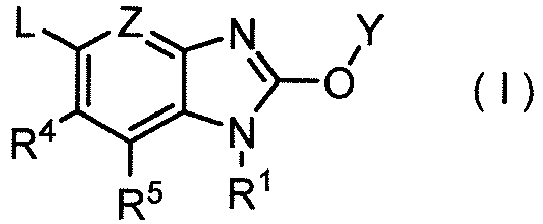
wherein
L is NR2R3, SR7, SO2R8, substituted or unsubstituted alkyl, or substituted or unsubstituted alkenyl;
R2 is hydrogen, substituted or unsubstituted alkyl, substituted or unsubstituted alkenyl, substituted or unsubstituted alkynyl, or the like;
R3 is hydrogen, substituted or unsubstituted alkyl, substituted or unsubstituted alkenyl, substituted or unsubstituted alkynyl, or the like;
R7 is hydrogen, substituted or unsubstituted alkyl, substituted or unsubstituted alkenyl, substituted or unsubstituted alkynyl, or the like;
R8 is hydrogen, substituted or unsubstituted alkyl, substituted or unsubstituted alkenyl, substituted or unsubstituted alkynyl, or the like, provided that R8 is not unsubstituted methyl or trifluoromethyl;
Y is substituted or unsubstituted alkyl, substituted or unsubstituted alkenyl, substituted or unsubstituted alkynyl, substituted or unsubstituted aryl, or the like, provided that Y is not unsubstituted methyl or unsubstituted ethyl;
Z is -CR6=, or -N=;
R1 is hydrogen, or substituted or unsubstituted alkyl;
R4, R5 and R6 are each independently hydrogen, halogen, hydroxy, cyano, nitro, carboxy, substituted or unsubstituted alkyl, substituted or unsubstituted alkenyl, substituted or unsubstituted alkynyl, or the like.
Description
- The present invention relates to a compound which has an activating effect on adenosine monophosphate-activated protein kinase (hereinafter referred to as AMPK) and is useful as a medicine.
- AMPK is a serine-threonine kinase, which is activated by AMP, and has three subunits, α, β and γ. In each subunit, there exist multiple isoforms (α1, α2, β1, β2, γ1, γ2 and γ3).
- AMPK is involved in various physiological functions, such as suppression of gluconeogenesis and inhibition of fatty acid synthesis in liver and incorporation of sugars and an increase in fatty acid oxidation in skeletal muscles, as an energy sensor in living organisms, and has attracted attention as a target molecule of a therapeutic agent for diabetes. Therefore, an AMPK activator is expected to be effective in the treatment of diabetes as an insulin resistance improving drug, which has an insulin independent hypoglycemic effect and a lipid improving effect (Non-Patent Document 1).
- Patent Documents 1 to 15, and 26 disclose a variety of compounds having an AMPK activating effect. However, heterocyclic derivatives like the compounds of the present invention are not disclosed in any of the documents.
- Patent Document 7 discloses the compounds shown below.

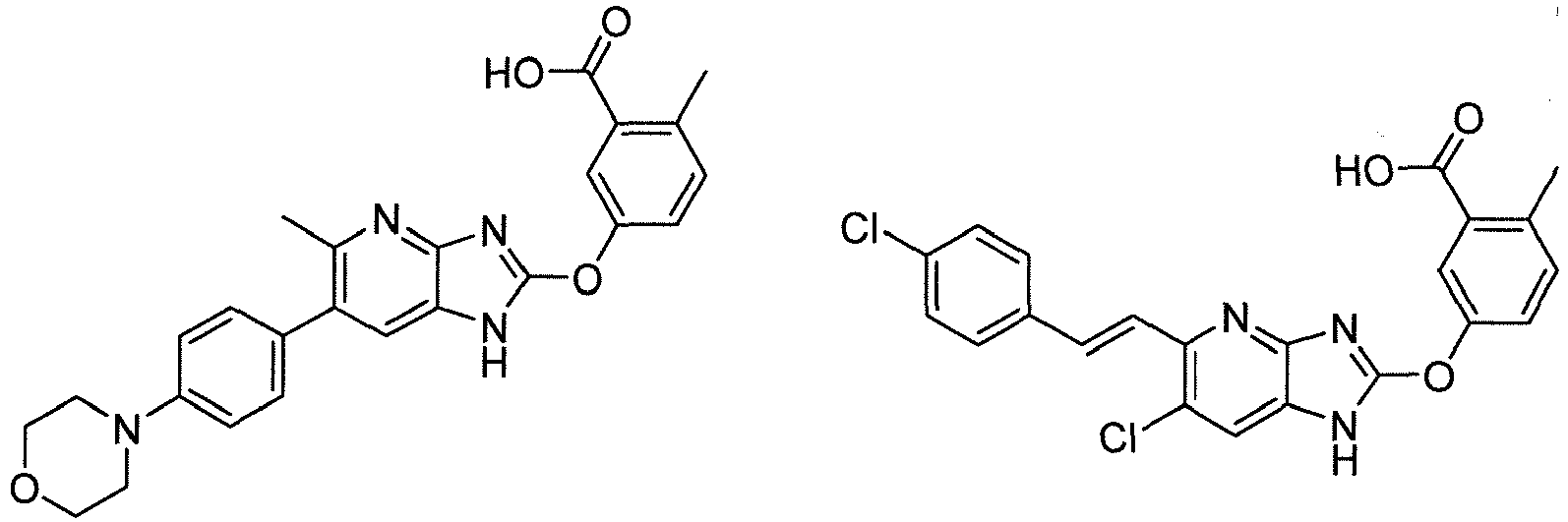
- Patent Documents 16 and 17 describe the compounds shown below, as compounds useful for diabetes, but do not provide a description of AMPK activating effects.

- Patent Document 18 describes the compounds shown below, as compounds useful for obesity, but does not provide a description of AMPK activating effects.


- Patent Documents 18 and 19 describe, as compounds useful for obesity, compounds in which unsubstituted ethylsulfonyl is present at position 5 of the benzimidazole ring, such as the compounds shown below, but do not provide a description of AMPK activating effects.

- Patent Document 20 describes the compounds shown below, as compounds useful for cancers, but does not provide a description of AMPK activating effects.

- Patent Document 21 describes the compound shown below, as compounds useful for herbicides, but does not provide a description of AMPK activating effects.

- The compound shown below is hit by searching structures on SciFinder (online database), but there is no literature information and the AMPK activating effect of the compound is not described.


-
- Patent Document 1:
WO2010/036613 - Patent Document 2:
WO2010/047982 - Patent Document 3:
WO2010/051176 - Patent Document 4:
WO2010/051206 - Patent Document 5:
WO2011/106273 - Patent Document 6:
WO2012/116145 - Patent Document 7:
WO2012/033149 - Patent Document 8:
WO2013/011932 - Patent Document 9:
WO2014/031441 - Patent Document 10:
WO2014/031445 - Patent Document 11:
WO2014/031468 - Patent Document 12:
WO2014/031517 - Patent Document 13:
WO2014/031465 - Patent Document 14:
WO2014/031515 - Patent Document 15:
WO2014/069426 - Patent Document 16:
WO2008/096829 - Patent Document 17:
WO2005/082905 - Patent Document 18:
JP2012-167027 A - Patent Document 19:
WO2012/147765 - Patent Document 20:
WO2006/017214 - Patent Document 21:
JP05-339224 A - Patent Document 22:
WO2015/007669 - Patent Document 23:
WO2015/063011 - Patent Document 24:
WO2014/139388 - Patent Document 25:
WO2014/175330 - Patent Document 26:
WO2014/133008 - Non-Patent Document 1: Cell Metabolism Vol.9, Issue 5, 407-416, 2009
- An object of the present invention is to provide an excellent AMPK activator.
- As a result of intensive research, the present inventors succeeded in synthesizing an excellent compound having an AMPK activating effect.
- The present invention relates to the following.
- (1) A compound represented by the formula (I):

wherein- L is NR2R3, SR7, SO2R8, substituted or unsubstituted alkyl, or substituted or unsubstituted alkenyl;
- R2 is hydrogen, substituted or unsubstituted alkyl, substituted or unsubstituted alkenyl, substituted or unsubstituted alkynyl, substituted or unsubstituted aryl, substituted or unsubstituted heteroaryl, substituted or unsubstituted cycloalkyl, substituted or unsubstituted cycloalkenyl, substituted or unsubstituted heterocyclyl, substituted or unsubstituted acyl, substituted or unsubstituted carbamoyl, substituted or unsubstituted alkylsulfonyl, substituted or unsubstituted alkenylsulfonyl, substituted or unsubstituted alkynylsulfonyl , substituted or unsubstituted arylsulfonyl, substituted or unsubstituted heteroarylsulfonyl, substituted or unsubstituted cycloalkylsulfonyl, substituted or unsubstituted cycloalkenylsulfonyl, substituted or unsubstituted heterocyclylsulfonyl, or substituted or unsubstituted sulfamoyl;
- R3 is substituted or unsubstituted alkyl, substituted or unsubstituted alkenyl, substituted or unsubstituted alkynyl, substituted or unsubstituted aryl, substituted or unsubstituted heteroaryl, substituted or unsubstituted cycloalkyl, substituted or unsubstituted cycloalkenyl, substituted or unsubstituted heterocyclyl, substituted or unsubstituted acyl, substituted or unsubstituted carbamoyl, substituted or unsubstituted alkylsulfonyl, substituted or unsubstituted alkenylsulfonyl, substituted or unsubstituted alkynylsulfonyl, substituted or unsubstituted arylsulfonyl, substituted or unsubstituted heteroarylsulfonyl, substituted or unsubstituted cycloalkylsulfonyl, substituted or unsubstituted cycloalkenylsulfonyl, substituted or unsubstituted heterocyclylsulfonyl, or substituted or unsubstituted sulfamoyl;
- R7 is hydrogen, substituted or unsubstituted alkyl, substituted or unsubstituted alkenyl, substituted or unsubstituted alkynyl, substituted or unsubstituted aryl, substituted or unsubstituted heteroaryl, substituted or unsubstituted cycloalkyl, substituted or unsubstituted cycloalkenyl, substituted or unsubstituted heterocyclyl, substituted or unsubstituted acyl, or substituted or unsubstituted carbamoyl;
- R8 is hydrogen, substituted or unsubstituted alkyl, substituted or unsubstituted alkenyl, substituted or unsubstituted alkynyl, substituted or unsubstituted aryl, substituted or unsubstituted heteroaryl, substituted or unsubstituted cycloalkyl, substituted or unsubstituted cycloalkenyl, substituted or unsubstituted heterocyclyl, substituted or unsubstituted acyl, substituted or unsubstituted carbamoyl, or substituted or unsubstituted amino, provided that R8 is not unsubstituted methyl or unsubstituted ethyl;
- Y is substituted or unsubstituted alkyl, substituted or unsubstituted alkenyl, substituted or unsubstituted alkynyl, substituted or unsubstituted aryl, substituted or unsubstituted heteroaryl, substituted or unsubstituted cycloalkyl, substituted or unsubstituted cycloalkenyl, or substituted or unsubstituted heterocyclyl, provided that Y is not unsubstituted methyl or unsubstituted ethyl;
- Z is -CR6=, or -N=;
- R1 is hydrogen, or substituted or unsubstituted alkyl;
- R4, R5 and R6 are each independently hydrogen, halogen, hydroxy, cyano, nitro, carboxy, substituted or unsubstituted alkyl, substituted or unsubstituted alkenyl, substituted or unsubstituted alkynyl, substituted or unsubstituted aryl, substituted or unsubstituted heteroaryl, substituted or unsubstituted cycloalkyl, substituted or unsubstituted cycloalkenyl, substituted or unsubstituted heterocyclyl, substituted or unsubstituted alkyloxy, substituted or unsubstituted aryloxy, substituted or unsubstituted heteroaryloxy, substituted or unsubstituted cycloalkyloxy, substituted or unsubstituted cycloalkenyloxy, substituted or unsubstituted heterocyclyloxy, substituted or unsubstituted alkylthio, substituted or unsubstituted arylthio, substituted or unsubstituted heteroarylthio, substituted or unsubstituted cycloalkylthio, substituted or unsubstituted cycloalkenylthio, substituted or unsubstituted heterocyclylthio, substituted or unsubstituted alkylsulfonyl, substituted or unsubstituted arylsulfonyl, substituted or unsubstituted heteroarylsulfonyl, substituted or unsubstituted cycloalkylsulfonyl, substituted or unsubstituted cycloalkenylsulfonyl, substituted or unsubstituted heterocyclylsulfonyl, substituted or unsubstituted acyl, substituted or unsubstituted carbamoyl, substituted or unsubstituted sulfamoyl, or substituted or unsubstituted amino;
- wherein R1 is hydrogen when Z is -CR6= and L is SO2R8;
- with the proviso that
- compounds wherein Y is substituted or unsubstituted aryl, Z is -CR6=, L is NR2R3 and one of R2 and R3 is substituted or unsubstituted alkylsulfonyl;
- compounds wherein Z is -CR6= and L is substituted or unsubstituted alkyl, or substituted or unsubstituted alkenyl; and
- compounds shown below are excluded:


- (2) The compound according to the above (1), or its pharmaceutically acceptable salt, wherein Y is substituted or unsubstituted aryl, substituted or unsubstituted heteroaryl, substituted or unsubstituted cycloalkyl, substituted or unsubstituted cycloalkenyl, or substituted or unsubstituted heterocyclyl.
- (3) The compound according to the above (1), or its pharmaceutically acceptable salt, wherein Y is substituted or unsubstituted heteroaryl, substituted or unsubstituted cycloalkyl, substituted or unsubstituted cycloalkenyl, or substituted or unsubstituted heterocyclyl.
- (4) The compound according to the above (1), or its pharmaceutically acceptable salt, wherein Y is substituted or unsubstituted heterocyclyl.
- (5) The compound according to the above (4), or its pharmaceutically acceptable salt, wherein Y is substituted or unsubstituted heterocyclyl and the substituted or unsubstituted heterocyclyl is

- wherein R9 and R10 are each independently hydrogen, halogen, hydroxy, cyano, nitro, carboxy, substituted or unsubstituted alkyl, substituted or unsubstituted alkenyl, substituted or unsubstituted alkynyl, substituted or unsubstituted alkyloxy, substituted or unsubstituted alkylthio, substituted or unsubstituted alkylsulfonyl, substituted or unsubstituted acyl, substituted or unsubstituted carbamoyl, substituted or unsubstituted sulfamoyl, or substituted or unsubstituted amino;
- R11 is each independently halogen, hydroxy, cyano, nitro, carboxy, substituted or unsubstituted alkyl, substituted or unsubstituted alkenyl, substituted or unsubstituted alkynyl, substituted or unsubstituted alkyloxy, substituted or unsubstituted alkylthio, substituted or unsubstituted alkylsulfonyl, substituted or unsubstituted acyl, substituted or unsubstituted carbamoyl, substituted or unsubstituted sulfamoyl, or substituted or unsubstituted amino;
- m is an integer from 0 to 6.
- (6) The compound according to any one of the above (1) to (5), or its pharmaceutically acceptable salt, wherein Z is -N=.
- (7) The compound according to any one of the above (1) to (5), or its pharmaceutically acceptable salt, wherein Z is -CR6=.
- (8) The compound according to any one of the above (1) to (7), or its pharmaceutically acceptable salt, wherein L is NR2R3, SR7, or SO2R8.
- (9) The compound according to any one of the above (1) to (8), or its pharmaceutically acceptable salt, wherein L is NR2R3.
- (10) The compound according to the above (1), or its pharmaceutically acceptable salt, wherein R2 is hydrogen or substituted or unsubstituted alkyl.
- (11) The compound according to the above (9), or its pharmaceutically acceptable salt, wherein R3 is substituted or unsubstituted alkyl, substituted or unsubstituted cycloalkenyl, or substituted or unsubstituted heterocyclyl.
- (12) The compound according to the above (11), or its pharmaceutically acceptable salt, wherein R3 is substituted alkyl, wherein the substituent of substituted alkyl is one or more substituent(s) selected from substituted or unsubstituted aryl, substituted or unsubstituted heteroaryl, substituted or unsubstituted cycloalkyl, substituted or unsubstituted cycloalkenyl, and/or substituted or unsubstituted heterocyclyl.
- (13) The compound according to the above (11), or its pharmaceutically acceptable salt, wherein R3 is substituted or unsubstituted cycloalkenyl, or substituted or unsubstituted heterocyclyl.
- (14) The compound according to any one of the above (1) to (13), or its pharmaceutically acceptable salt, wherein R1 is hydrogen.
- (15) The compound according to any one of the above (1) to (14), or its pharmaceutically acceptable salt, wherein R5 is hydrogen.
- (16) The compound according to any one of the above (1) to (15), or its pharmaceutically acceptable salt, wherein R4 is hydrogen, halogen, cyano, or substituted or unsubstituted alkyl.
- (17) The compound according to the above (16), or its pharmaceutically acceptable salt, wherein R4 is halogen.
- (18) A pharmaceutical composition having an activating effect on adenosine monophosphate-activated protein kinase, which comprises a compound represented by formula (II):

wherein- L is NR2R3, SR7, SO2R8, substituted or unsubstituted alkyl, or substituted or unsubstituted alkenyl;
- X is single bond, -O-, -S-, -NR12-, -C(=O)-, -C(=O)-NR13-, - NR14C(=O)-, -NR15-SO2-, -SO2-NR16-, or -C(=O)-O-;
- R12, R13, R14, R15 and R16 are each independently hydrogen or substituted or unsubstituted alkyl;
- Y is substituted or unsubstituted alkyl, substituted or unsubstituted alkenyl, substituted or unsubstituted alkynyl, substituted or unsubstituted aryl, substituted or unsubstituted heteroaryl, substituted or unsubstituted cycloalkyl, substituted or unsubstituted cycloalkenyl, or substituted or unsubstituted heterocyclyl, provided that Y is not unsubstituted methyl or unsubstituted ethyl;
- Z is -CR6=, or -N=;
- R1 is hydrogen, or substituted or unsubstituted alkyl;
- R2 is hydrogen, substituted or unsubstituted alkyl, substituted or unsubstituted alkenyl, substituted or unsubstituted alkynyl, substituted or unsubstituted aryl, substituted or unsubstituted heteroaryl, substituted or unsubstituted cycloalkyl, substituted or unsubstituted cycloalkenyl, substituted or unsubstituted heterocyclyl, substituted or unsubstituted acyl, substituted or unsubstituted carbamoyl, substituted or unsubstituted alkylsulfonyl, substituted or unsubstituted alkenylsulfonyl, substituted or unsubstituted alkynylsulfonyl , substituted or unsubstituted arylsulfonyl, substituted or unsubstituted heteroarylsulfonyl, substituted or unsubstituted cycloalkylsulfonyl, substituted or unsubstituted cycloalkenylsulfonyl, substituted or unsubstituted heterocyclylsulfonyl, or substituted or unsubstituted sulfamoyl;
- R3 is substituted or unsubstituted alkyl, substituted or unsubstituted alkenyl, substituted or unsubstituted alkynyl, substituted or unsubstituted aryl, substituted or unsubstituted heteroaryl, substituted or unsubstituted cycloalkyl, substituted or unsubstituted cycloalkenyl, substituted or unsubstituted heterocyclyl, substituted or unsubstituted acyl, substituted or unsubstituted carbamoyl, substituted or unsubstituted alkylsulfonyl, substituted or unsubstituted alkenylsulfonyl, substituted or unsubstituted alkynylsulfonyl, substituted or unsubstituted arylsulfonyl, substituted or unsubstituted heteroarylsulfonyl, substituted or unsubstituted cycloalkylsulfonyl, substituted or unsubstituted cycloalkenylsulfonyl, substituted or unsubstituted heterocyclylsulfonyl, or substituted or unsubstituted sulfamoyl;
- R4, R5 and R6 are each independently hydrogen, halogen, hydroxy, cyano, nitro, carboxy, substituted or unsubstituted alkyl, substituted or unsubstituted alkenyl, substituted or unsubstituted alkynyl, substituted or unsubstituted aryl, substituted or unsubstituted heteroaryl, substituted or unsubstituted cycloalkyl, substituted or unsubstituted cycloalkenyl, substituted or unsubstituted heterocyclyl, substituted or unsubstituted alkyloxy, substituted or unsubstituted aryloxy, substituted or unsubstituted heteroaryloxy, substituted or unsubstituted cycloalkyloxy, substituted or unsubstituted cycloalkenyloxy, substituted or unsubstituted heterocyclyloxy, substituted or unsubstituted alkylthio, substituted or unsubstituted arylthio, substituted or unsubstituted heteroarylthio, substituted or unsubstituted cycloalkylthio, substituted or unsubstituted cycloalkenylthio, substituted or unsubstituted heterocyclylthio, substituted or unsubstituted alkylsulfonyl, substituted or unsubstituted arylsulfonyl, substituted or unsubstituted heteroarylsulfonyl, substituted or unsubstituted cycloalkylsulfonyl, substituted or unsubstituted cycloalkenylsulfonyl, substituted or unsubstituted heterocyclylsulfonyl, substituted or unsubstituted acyl, substituted or unsubstituted carbamoyl, substituted or unsubstituted sulfamoyl, or substituted or unsubstituted amino;
- R7 is hydrogen, substituted or unsubstituted alkyl, substituted or unsubstituted alkenyl, substituted or unsubstituted alkynyl, substituted or unsubstituted aryl, substituted or unsubstituted heteroaryl, substituted or unsubstituted cycloalkyl, substituted or unsubstituted cycloalkenyl, substituted or unsubstituted heterocyclyl, substituted or unsubstituted acyl, or substituted or unsubstituted carbamoyl;
- R8 is hydrogen, substituted or unsubstituted alkyl, substituted or unsubstituted alkenyl, substituted or unsubstituted alkynyl, substituted or unsubstituted aryl, substituted or unsubstituted heteroaryl, substituted or unsubstituted cycloalkyl, substituted or unsubstituted cycloalkenyl, substituted or unsubstituted heterocyclyl, substituted or unsubstituted acyl, substituted or unsubstituted carbamoyl, or substituted or unsubstituted amino, provided that R8 is not unsubstituted methyl or unsubstituted ethyl;
- with the proviso that
- compounds wherein X is -O-, Y is substituted or unsubstituted aryl, Z is -CR6=, L is NR2R3 and one of R2 and R3 is substituted or unsubstituted alkylsulfonyl; and
- compounds shown below are excluded


- (19) A pharmaceutical composition comprising the compound according to any one of the above (1) to (17), or its pharmaceutically acceptable salt.
- (20) The pharmaceutical composition according to the above (19), which has an activating effect on adenosine monophosphate-activated protein kinase.
- (21) A method for preventing or treating diabetes, comprising administering the compound according to any one of the above (1) to (18), or its pharmaceutically acceptable salt.
- (22) The compound according to any one of the above (1) to (18), or its pharmaceutically acceptable salt, for the treatment and/or prevention of diabetes.
- (23) A compound selected from compound (I-1-1), (I-1-4), (I-1-6), (I-1-8), (I-1-10), (I-1-11), (I-1-13), (I-1-14), (I-1-15), (I-1-36), (I-1-38), (I-1-39), (I-1-52), (I-1-80), (I-1-109), (I-1-116), (I-1-119), (I-1-126), (I-2-1), (I-2-19), (I-2-22), (I-2-62), (I-2-75), (I-2-91), (I-2-93), (I-2-119), (I-2-147), (I-2-153), (I-2-185), (I-2-188), (I-2-192), (I-2-209), (I-2-217), (I-2-220), (I-2-222), (I-2-223), (I-2-228), (I-2-233), (I-2-238), (I-2-239) or (I-2-244), or its pharmaceutically acceptable salt.
- (24) A compound represented by the formula (IIIa) or (IIIb):

wherein- Z is -CR6=, or -N=;
- P1 and P2 are each independently protecting group;
- R4, R5 and R6 are each independently hydrogen, halogen, hydroxy, cyano, nitro, carboxy, substituted or unsubstituted alkyl, substituted or unsubstituted alkenyl, substituted or unsubstituted alkynyl, substituted or unsubstituted aryl, substituted or unsubstituted heteroaryl, substituted or unsubstituted cycloalkyl, substituted or unsubstituted cycloalkenyl, substituted or unsubstituted heterocyclyl, substituted or unsubstituted alkyloxy, substituted or unsubstituted aryloxy, substituted or unsubstituted heteroaryloxy, substituted or unsubstituted cycloalkyloxy, substituted or unsubstituted cycloalkenyloxy, substituted or unsubstituted heterocyclyloxy, substituted or unsubstituted alkylthio, substituted or unsubstituted arylthio, substituted or unsubstituted heteroarylthio, substituted or unsubstituted cycloalkylthio, substituted or unsubstituted cycloalkenylthio, substituted or unsubstituted heterocyclylthio, substituted or unsubstituted alkylsulfonyl, substituted or unsubstituted arylsulfonyl, substituted or unsubstituted heteroarylsulfonyl, substituted or unsubstituted cycloalkylsulfonyl, substituted or unsubstituted cycloalkenylsulfonyl, substituted or unsubstituted heterocyclylsulfonyl, substituted or unsubstituted acyl, substituted or unsubstituted carbamoyl, substituted or unsubstituted sulfamoyl, or substituted or unsubstituted amino.
- (25) The pharmaceutical composition according to any one of the above (18) to (20), for the treatment and/or prevention of diabetes.
- (26) A pharmaceutical composition for oral administration, comprising a compound represented by the above formula (I) or its pharmaceutically acceptable salt.
- (27) The pharmaceutical composition according to the above (26), which is a tablet, powder, granule, capsule, pill, film, suspension, emulsion, elixir, syrup, lemonade, spirit, aromatic water, extract, decoction or tincture.
- (28) The pharmaceutical composition according to the above (27), which is a sugar-coated tablet, film-coated tablet, enteric-coated tablet, sustained-release tablet, troche tablet, sublingual tablet, buccal tablet, chewable tablet, orally disintegrating tablet, dry syrup, soft capsule, micro capsule or sustained-release capsule.
- (29) A pharmaceutical composition for parenteral administration, comprising a compound represented by the above formula (I) or its pharmaceutically acceptable salt.
- (30) The pharmaceutical composition according to the above (29), for dermal, subcutaneous, intravenous, intraarterial, intramuscular, intraperitoneal, transmucosal, inhalation, transnasal, ophthalmic, inner ear or vaginal administration.
- (31) The pharmaceutical composition according to the above (29) or (30), which is injection, infusion, eye drop, nose drop, ear drop, aerosol, inhalation, lotion, impregnation, liniment, mouthwash, enema, ointment, plaster, jelly, cream, patch, cataplasm, external powder or suppository.
- (32) A pharmaceutical composition for a pediatric or geriatric patient, comprising a compound represented by the above formula (I) or its pharmaceutically acceptable salt.
- (33) A pharmaceutical composition consisting of a combination of a compound represented by the above formula (I) or its pharmaceutically acceptable salt, and an insulin secretagogue, a fast-acting insulin secretagogue, a glucose uptake inhibitor, an insulin resistance improving drug, a thiazolidine derivative, an insulin formulation, a peptidyl peptidase IV inhibitor, a GLP-1 receptor agonist, a sodium-dependent glucose transporter 1 inhibitor, or a sodium-dependent glucose transporter 2 inhibitor.
- (34) A pharmaceutical composition comprising a compound represented by the above formula (I) or its pharmaceutically acceptable salt, for a combination therapy with an insulin secretagogue, a fast-acting insulin secretagogue, a glucose uptake inhibitor, an insulin resistance improving drug, a thiazolidine derivative, an insulin formulation, a peptidyl peptidase IV inhibitor, a GLP-1 receptor agonist, a sodium-dependent glucose transporter 1 inhibitor, or a sodium-dependent glucose transporter 2 inhibitor,
- (1A) A compound represented by formula (I):

wherein- L is NR2R3, SR7, SO2R8, or substituted or unsubstituted alkyl;
- R2 is hydrogen, substituted or unsubstituted alkyl, substituted or unsubstituted alkenyl, substituted or unsubstituted alkynyl, substituted or unsubstituted aryl, substituted or unsubstituted heteroaryl, substituted or unsubstituted cycloalkyl, substituted or unsubstituted cycloalkenyl, substituted or unsubstituted heterocyclyl, substituted or unsubstituted acyl, substituted or unsubstituted carbamoyl, substituted or unsubstituted alkylsulfonyl, substituted or unsubstituted alkenylsulfonyl, substituted or unsubstituted alkynylsulfonyl , substituted or unsubstituted arylsulfonyl, substituted or unsubstituted heteroarylsulfonyl, substituted or unsubstituted cycloalkylsulfonyl, substituted or unsubstituted cycloalkenylsulfonyl, substituted or unsubstituted heterocyclylsulfonyl, or substituted or unsubstituted sulfamoyl;
- R3 is substituted or unsubstituted alkyl, substituted or unsubstituted alkenyl, substituted or unsubstituted alkynyl, substituted or unsubstituted aryl, substituted or unsubstituted heteroaryl, substituted or unsubstituted cycloalkyl, substituted or unsubstituted cycloalkenyl, substituted or unsubstituted heterocyclyl, substituted or unsubstituted acyl, substituted or unsubstituted carbamoyl, substituted or unsubstituted alkylsulfonyl, substituted or unsubstituted alkenylsulfonyl, substituted or unsubstituted alkynylsulfonyl, substituted or unsubstituted arylsulfonyl, substituted or unsubstituted heteroarylsulfonyl, substituted or unsubstituted cycloalkylsulfonyl, substituted or unsubstituted cycloalkenylsulfonyl, substituted or unsubstituted heterocyclylsulfonyl, or substituted or unsubstituted sulfamoyl;
- R7 is hydrogen, substituted or unsubstituted alkyl, substituted or unsubstituted alkenyl, substituted or unsubstituted alkynyl, substituted or unsubstituted aryl, substituted or unsubstituted heteroaryl, substituted or unsubstituted cycloalkyl, substituted or unsubstituted cycloalkenyl, substituted or unsubstituted heterocyclyl, substituted or unsubstituted acyl, or substituted or unsubstituted carbamoyl;
- R8 is hydrogen, substituted or unsubstituted alkyl, substituted or unsubstituted alkenyl, substituted or unsubstituted alkynyl, substituted or unsubstituted aryl, substituted or unsubstituted heteroaryl, substituted or unsubstituted cycloalkyl, substituted or unsubstituted cycloalkenyl, substituted or unsubstituted heterocyclyl, substituted or unsubstituted acyl, substituted or unsubstituted carbamoyl, or substituted or unsubstituted amino, provided that R8 is not unsubstituted methyl or unsubstituted ethyl;
- Y is substituted or unsubstituted alkyl, substituted or unsubstituted alkenyl, substituted or unsubstituted alkynyl, substituted or unsubstituted aryl, substituted or unsubstituted heteroaryl, substituted or unsubstituted cycloalkyl, substituted or unsubstituted cycloalkenyl, or substituted or unsubstituted heterocyclyl, provided that Y is not unsubstituted methyl or unsubstituted ethyl;
- Z is -CR6=, or -N=;
- R1 is hydrogen, or substituted or unsubstituted alkyl;
- R4, R5 and R6 are each independently hydrogen, halogen, hydroxy, cyano, nitro, carboxy, substituted or unsubstituted alkyl, substituted or unsubstituted alkenyl, substituted or unsubstituted alkynyl, substituted or unsubstituted aryl, substituted or unsubstituted heteroaryl, substituted or unsubstituted cycloalkyl, substituted or unsubstituted cycloalkenyl, substituted or unsubstituted heterocyclyl, substituted or unsubstituted alkyloxy, substituted or unsubstituted aryloxy, substituted or unsubstituted heteroaryloxy, substituted or unsubstituted cycloalkyloxy, substituted or unsubstituted cycloalkenyloxy, substituted or unsubstituted heterocyclyloxy, substituted or unsubstituted alkylthio, substituted or unsubstituted arylthio, substituted or unsubstituted heteroarylthio, substituted or unsubstituted cycloalkylthio, substituted or unsubstituted cycloalkenylthio, substituted or unsubstituted heterocyclylthio, substituted or unsubstituted alkylsulfonyl, substituted or unsubstituted arylsulfonyl, substituted or unsubstituted heteroarylsulfonyl, substituted or unsubstituted cycloalkylsulfonyl, substituted or unsubstituted cycloalkenylsulfonyl, substituted or unsubstituted heterocyclylsulfonyl, substituted or unsubstituted acyl, substituted or unsubstituted carbamoyl, substituted or unsubstituted sulfamoyl, or substituted or unsubstituted amino; wherein R1 is hydrogen when Z is -CR6= and L is SO2R8;
- with the proviso that a compound wherein Y is substituted or unsubstituted aryl, Z is -CR6=, L is NR2R3, and one of R2 and R3 is substituted or unsubstituted alkylsulfonyl; a compound wherein Z is -CR6=, and L is substituted or unsubstituted alkyl;
- and the compounds shown below are excluded:

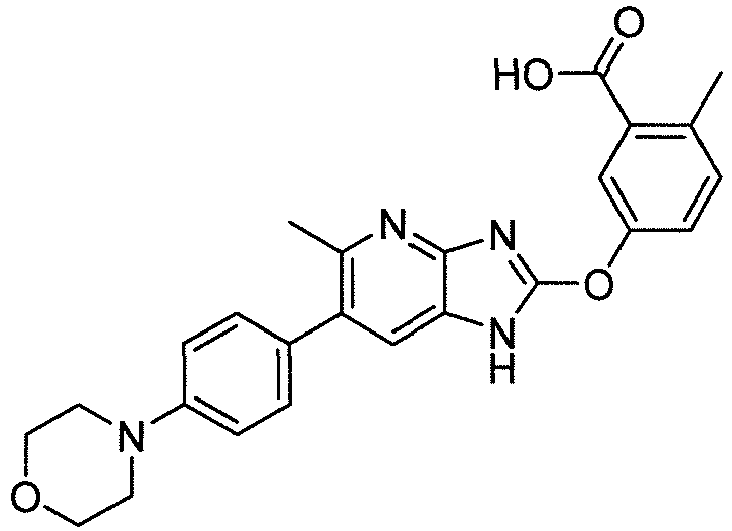
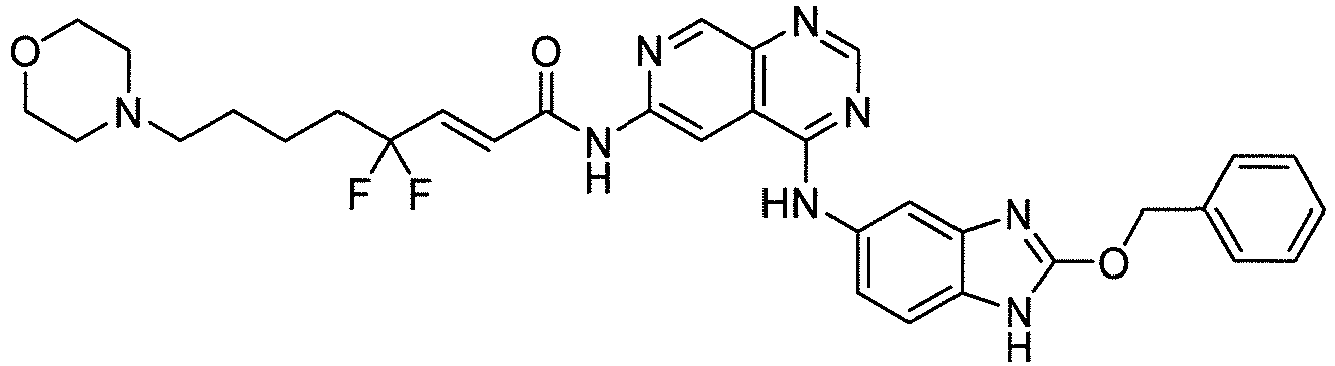

- (2A) The compound according to the above (1A), or its pharmaceutically acceptable salt, wherein Y is substituted or unsubstituted aryl, substituted or unsubstituted heteroaryl, substituted or unsubstituted cycloalkyl, substituted or unsubstituted cycloalkenyl, or substituted or unsubstituted heterocyclyl.
- (3A) The compound according to the above (1A), or its pharmaceutically acceptable salt, wherein Y is substituted or unsubstituted heteroaryl, substituted or unsubstituted cycloalkyl, substituted or unsubstituted cycloalkenyl, or substituted or unsubstituted heterocyclyl.
- (4A) The compound according to the above (1A), or its pharmaceutically acceptable salt, wherein Y is substituted or unsubstituted heterocyclyl.
- (5A) The compound according to the above (4A), or its pharmaceutically acceptable salt, wherein Y is substituted or unsubstituted heterocyclyl, wherein the substituted or unsubstituted heterocyclyl is

- (6A) The compound according to any one of the above (1A) to (5A), or its pharmaceutically acceptable salt, wherein Z is -N=.
- (7A) The compound according to any one of the above (1A) to (5A), or its pharmaceutically acceptable salt, wherein Z is -CR6=.
- (8A) The compound according to any one of the above (1A) to (7A), or its pharmaceutically acceptable salt, wherein L is NR2R3, SR7, or SO2R8.
- (9A) The compound according to any one of the above (1A) to (8A), or its pharmaceutically acceptable salt, wherein L is NR2R3.
- (10A) The compound according to any one of the above (1A) to (9A), or its pharmaceutically acceptable salt, wherein R2 is hydrogen, or substituted or unsubstituted alkyl.
- (11A) The compound according to any one of the above (1A) to (10A), or its pharmaceutically acceptable salt, wherein R3 is substituted or unsubstituted alkyl, substituted or unsubstituted cycloalkenyl, or substituted or unsubstituted heterocyclyl.
- (12A) The compound according to the above (11A), or its pharmaceutically acceptable salt, wherein R3 is substituted alkyl, wherein the substituent of the substituted alkyl is one or more substituent(s) selected from substituted or unsubstituted aryl, substituted or unsubstituted heteroaryl, substituted or unsubstituted cycloalkyl, substituted or unsubstituted cycloalkenyl, and substituted or unsubstituted heterocyclyl.
- (13A) The compound according to any one of the above (1A) to (11A), or its pharmaceutically acceptable salt, wherein R3 is substituted or unsubstituted cycloalkenyl, or substituted or unsubstituted heterocyclyl.
- (14A) The compound according to any one of the above (1A) to (13A), or its pharmaceutically acceptable salt, wherein R1 is hydrogen.
- (15A) The compound according to any one of the above (1A) to (14A), or its pharmaceutically acceptable salt, wherein R5 is hydrogen.
- (16A) The compound according to any one of the above (1A) to (15A), or its pharmaceutically acceptable salt, wherein R4 is hydrogen, halogen, cyano, substituted or unsubstituted alkyl.
- (17A) The compound according to the above (16A), or its pharmaceutically acceptable salt, wherein R4 is halogen.
- (18A) A pharmaceutical composition having an activating effect on adenosine monophosphate-activated protein kinase, which comprises a compound represented by formula (II):

wherein- L is NR2R3, SR7, SO2R8, or substituted or unsubstituted alkyl;
- X is single bond, -O-, -S-, -NR12-, -C(=O)-, -C(=O)NR13-, -NR19C(=O)-, -NR15-SO2-, -SO2-NR16-, or -C(=O)-O-;
- R12, R13, R14, R15 and R16 are each independently hydrogen or substituted or unsubstituted alkyl;
- Y is substituted or unsubstituted alkyl, substituted or unsubstituted alkenyl, substituted or unsubstituted alkynyl, substituted or unsubstituted aryl, substituted or unsubstituted heteroaryl, substituted or unsubstituted cycloalkyl, substituted or unsubstituted cycloalkenyl, or substituted or unsubstituted heterocyclyl, provided that Y is not unsubstituted methyl or unsubstituted ethyl; Z is -CR6= or -N=;
- R1 is hydrogen, or substituted or unsubstituted alkyl;
- R2 is hydrogen, substituted or unsubstituted alkyl, substituted or unsubstituted alkenyl, substituted or unsubstituted alkynyl, substituted or unsubstituted aryl, substituted or unsubstituted heteroaryl, substituted or unsubstituted cycloalkyl, substituted or unsubstituted cycloalkenyl, substituted or unsubstituted heterocyclyl, substituted or unsubstituted acyl, substituted or unsubstituted carbamoyl, substituted or unsubstituted alkylsulfonyl, substituted or unsubstituted alkenylsulfonyl, substituted or unsubstituted alkynylsulfonyl , substituted or unsubstituted arylsulfonyl, substituted or unsubstituted heteroarylsulfonyl, substituted or unsubstituted cycloalkylsulfonyl, substituted or unsubstituted cycloalkenylsulfonyl, substituted or unsubstituted heterocyclylsulfonyl, or substituted or unsubstituted sulfamoyl;
- R3 is substituted or unsubstituted alkyl, substituted or unsubstituted alkenyl, substituted or unsubstituted alkynyl, substituted or unsubstituted aryl, substituted or unsubstituted heteroaryl, substituted or unsubstituted cycloalkyl, substituted or unsubstituted cycloalkenyl, substituted or unsubstituted heterocyclyl, substituted or unsubstituted acyl, substituted or unsubstituted carbamoyl, substituted or unsubstituted alkylsulfonyl, substituted or unsubstituted alkenylsulfonyl, substituted or unsubstituted alkynylsulfonyl, substituted or unsubstituted arylsulfonyl, substituted or unsubstituted heteroarylsulfonyl, substituted or unsubstituted cycloalkylsulfonyl, substituted or unsubstituted cycloalkenylsulfonyl, substituted or unsubstituted heterocyclylsulfonyl, or substituted or unsubstituted sulfamoyl;
- R4, R5 and R6 are each independently hydrogen, halogen, hydroxy, cyano, nitro, carboxy, substituted or unsubstituted alkyl, substituted or unsubstituted alkenyl, substituted or unsubstituted alkynyl, substituted or unsubstituted aryl, substituted or unsubstituted heteroaryl, substituted or unsubstituted cycloalkyl, substituted or unsubstituted cycloalkenyl, substituted or unsubstituted heterocyclyl, substituted or unsubstituted alkyloxy, substituted or unsubstituted aryloxy, substituted or unsubstituted heteroaryloxy, substituted or unsubstituted cycloalkyloxy, substituted or unsubstituted cycloalkenyloxy, substituted or unsubstituted heterocyclyloxy, substituted or unsubstituted alkylthio, substituted or unsubstituted arylthio, substituted or unsubstituted heteroarylthio, substituted or unsubstituted cycloalkylthio, substituted or unsubstituted cycloalkenylthio, substituted or unsubstituted heterocyclylthio, substituted or unsubstituted alkylsulfonyl, substituted or unsubstituted arylsulfonyl, substituted or unsubstituted heteroarylsulfonyl, substituted or unsubstituted cycloalkylsulfonyl, substituted or unsubstituted cycloalkenylsulfonyl, substituted or unsubstituted heterocyclylsulfonyl, substituted or unsubstituted acyl, substituted or unsubstituted carbamoyl, substituted or unsubstituted sulfamoyl, or substituted or unsubstituted amino;
- R7 is hydrogen, substituted or unsubstituted alkyl, substituted or unsubstituted alkenyl, substituted or unsubstituted alkynyl, substituted or unsubstituted aryl, substituted or unsubstituted heteroaryl, substituted or unsubstituted cycloalkyl, substituted or unsubstituted cycloalkenyl, substituted or unsubstituted heterocyclyl, substituted or unsubstituted acyl, or substituted or unsubstituted carbamoyl;
- R8 is hydrogen, substituted or unsubstituted alkyl, substituted or unsubstituted alkenyl, substituted or unsubstituted alkynyl, substituted or unsubstituted aryl, substituted or unsubstituted heteroaryl, substituted or unsubstituted cycloalkyl, substituted or unsubstituted cycloalkenyl, substituted or unsubstituted heterocyclyl, substituted or unsubstituted acyl, substituted or unsubstituted carbamoyl, or substituted or unsubstituted amino, provided that R8 is not unsubstituted methyl or unsubstituted ethyl;
- with the proviso that a compound wherein X is -O-, Y is substituted or unsubstituted aryl, Z is -CR6=, L is NR2R3, and one of R2 and R3 is substituted or unsubstituted alkylsulfonyl;
- and the compounds shown below are excluded:


- (19A) A pharmaceutical composition comprising the compound according to any one of the above (1A) to (17A), or its pharmaceutically acceptable salt.
- (20A) The pharmaceutical composition according to the above (19A), which has an activating effect on adenosine monophosphate-activated protein kinase.
- (21A) A compound represented by formula (IIIa) or (IIIb):

wherein- Z is -CR6=, or -N=;
- P1 and P2 are each independently a protecting group;
- R4, R5 and R6 are each independently hydrogen, halogen, hydroxy, cyano, nitro, carboxy, substituted or unsubstituted alkyl, substituted or unsubstituted alkenyl, substituted or unsubstituted alkynyl, substituted or unsubstituted aryl, substituted or unsubstituted heteroaryl, substituted or unsubstituted cycloalkyl, substituted or unsubstituted cycloalkenyl, substituted or unsubstituted heterocyclyl, substituted or unsubstituted alkyloxy, substituted or unsubstituted aryloxy, substituted or unsubstituted heteroaryloxy, substituted or unsubstituted cycloalkyloxy, substituted or unsubstituted cycloalkenyloxy, substituted or unsubstituted heterocyclyloxy, substituted or unsubstituted alkylthio, substituted or unsubstituted arylthio, substituted or unsubstituted heteroarylthio, substituted or unsubstituted cycloalkylthio, substituted or unsubstituted cycloalkenylthio, substituted or unsubstituted heterocyclylthio, substituted or unsubstituted alkylsulfonyl, substituted or unsubstituted arylsulfonyl, substituted or unsubstituted heteroarylsulfonyl, substituted or unsubstituted cycloalkylsulfonyl, substituted or unsubstituted cycloalkenylsulfonyl, substituted or unsubstituted heterocyclylsulfonyl, substituted or unsubstituted acyl, substituted or unsubstituted carbamoyl, substituted or unsubstituted sulfamoyl, or substituted or unsubstituted amino.
- (22A) The pharmaceutical composition according to any one of the above (18A) to (20A), for the treatment and/or prevention of diabetes.
- (23A) A method for preventing or treating diabetes, comprising administering the compound according to any one of the above (1A) to (18A), or its pharmaceutically acceptable salt.
- (24A) The compound according to any one of the above (1A) to (18A), or its pharmaceutically acceptable salt, for the treatment and/or prevention of diabetes.
- (25A) A pharmaceutical composition for oral administration, comprising a compound represented by the above formula (I) or its pharmaceutically acceptable salt.
- (26A) The pharmaceutical composition according to the above (25A), which is a tablet, powder, granule, capsule, pill, film, suspension, emulsion, elixir, syrup, lemonade, spirit, aromatic water, extract, decoction or tincture.
- (27A) The pharmaceutical composition according to the above (26A), which is a sugar-coated tablet, film-coated tablet, enteric-coated tablet, sustained-release tablet, troche tablet, sublingual tablet, buccal tablet, chewable tablet, orally disintegrating tablet, dry syrup, soft capsule, micro capsule or sustained-release capsule.
- (28A) A pharmaceutical composition for parenteral administration, comprising a compound represented by the above formula (I) or its pharmaceutically acceptable salt.
- (29A) The pharmaceutical composition according to the above (28A), for dermal, subcutaneous, intravenous, intraarterial, intramuscular, intraperitoneal, transmucosal, inhalation, transnasal, ophthalmic, inner ear or vaginal administration.
- (30A) The pharmaceutical composition according to the above (28A) or (29A), which is injection, infusion, eye drop, nose drop, ear drop, aerosol, inhalation, lotion, impregnation, liniment, mouthwash, enema, ointment, plaster, jelly, cream, patch, cataplasm, external powder or suppository.
- (31A) A pharmaceutical composition for a pediatric or geriatric patient, comprising a compound represented by the above formula (I) or its pharmaceutically acceptable salt.
- (32A) A pharmaceutical composition consisting of a combination of a compound represented by the above formula (I) or its pharmaceutically acceptable salt, and an insulin secretagogue, a fast-acting insulin secretagogue, a glucose uptake inhibitor, an insulin resistance improving drug, a thiazolidine derivative, an insulin formulation, a peptidyl peptidase IV inhibitor, a GLP-1 receptor agonist, a sodium-dependent glucose transporter 1 inhibitor, or a sodium-dependent glucose transporter 2 inhibitor.
- (33A) A pharmaceutical composition comprising a compound represented by the above formula (I) or its pharmaceutically acceptable salt, for a combination therapy with an insulin secretagogue, a fast-acting insulin secretagogue, a glucose uptake inhibitor, an insulin resistance improving drug, a thiazolidine derivative, an insulin formulation, a peptidyl peptidase IV inhibitor, a GLP-1 receptor agonist, a sodium-dependent glucose transporter 1 inhibitor, or a sodium-dependent glucose transporter 2 inhibitor,
- (1B) A compound represented by formula (I):
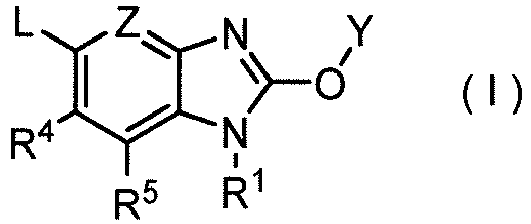
wherein- L is NR2R3, SR7, SO2R8, substituted or unsubstituted alkyl, or substituted or unsubstituted alkenyl;
- R2 is hydrogen, substituted or unsubstituted alkyl, substituted or unsubstituted alkenyl, substituted or unsubstituted alkynyl, substituted or unsubstituted aryl, substituted or unsubstituted heteroaryl, substituted or unsubstituted cycloalkyl, substituted or unsubstituted cycloalkenyl, substituted or unsubstituted heterocyclyl, substituted or unsubstituted acyl, substituted or unsubstituted carbamoyl, substituted or unsubstituted alkylsulfonyl, substituted or unsubstituted alkenylsulfonyl, substituted or unsubstituted alkynylsulfonyl , substituted or unsubstituted arylsulfonyl, substituted or unsubstituted heteroarylsulfonyl, substituted or unsubstituted cycloalkylsulfonyl, substituted or unsubstituted cycloalkenylsulfonyl, substituted or unsubstituted heterocyclylsulfonyl, or substituted or unsubstituted sulfamoyl;
- R3 is substituted or unsubstituted alkyl, substituted or unsubstituted alkenyl, substituted or unsubstituted alkynyl, substituted or unsubstituted aryl, substituted or unsubstituted heteroaryl, substituted or unsubstituted cycloalkyl, substituted or unsubstituted cycloalkenyl, substituted or unsubstituted heterocyclyl, substituted or unsubstituted acyl, substituted or unsubstituted carbamoyl, substituted or unsubstituted alkylsulfonyl, substituted or unsubstituted alkenylsulfonyl, substituted or unsubstituted alkynylsulfonyl, substituted or unsubstituted arylsulfonyl, substituted or unsubstituted heteroarylsulfonyl, substituted or unsubstituted cycloalkylsulfonyl, substituted or unsubstituted cycloalkenylsulfonyl, substituted or unsubstituted heterocyclylsulfonyl, or substituted or unsubstituted sulfamoyl;
- R7 is hydrogen, substituted or unsubstituted alkyl, substituted or unsubstituted alkenyl, substituted or unsubstituted alkynyl, substituted or unsubstituted aryl, substituted or unsubstituted heteroaryl, substituted or unsubstituted cycloalkyl, substituted or unsubstituted cycloalkenyl, substituted or unsubstituted heterocyclyl, substituted or unsubstituted acyl, or substituted or unsubstituted carbamoyl;
- R8 is hydrogen, substituted or unsubstituted alkyl, substituted or unsubstituted alkenyl, substituted or unsubstituted alkynyl, substituted or unsubstituted aryl, substituted or unsubstituted heteroaryl, substituted or unsubstituted cycloalkyl, substituted or unsubstituted cycloalkenyl, substituted or unsubstituted heterocyclyl, substituted or unsubstituted acyl, substituted or unsubstituted carbamoyl, or substituted or unsubstituted amino, provided that R8 is not unsubstituted methyl or unsubstituted ethyl;
- Y is substituted or unsubstituted alkyl, substituted or unsubstituted alkenyl, substituted or unsubstituted alkynyl, substituted or unsubstituted aryl, substituted or unsubstituted heteroaryl, substituted or unsubstituted cycloalkyl, substituted or unsubstituted cycloalkenyl, or substituted or unsubstituted heterocyclyl, provided that Y is not unsubstituted methyl or unsubstituted ethyl;
- Z is -CR6=, or -N=;
- R1 is hydrogen, or substituted or unsubstituted alkyl;
- R4, R5 and R6 are each independently hydrogen, halogen, hydroxy, cyano, nitro, carboxy, substituted or unsubstituted alkyl, substituted or unsubstituted alkenyl, substituted or unsubstituted alkynyl, substituted or unsubstituted aryl, substituted or unsubstituted heteroaryl, substituted or unsubstituted cycloalkyl, substituted or unsubstituted cycloalkenyl, substituted or unsubstituted heterocyclyl, substituted or unsubstituted alkyloxy, substituted or unsubstituted aryloxy, substituted or unsubstituted heteroaryloxy, substituted or unsubstituted cycloalkyloxy, substituted or unsubstituted cycloalkenyloxy, substituted or unsubstituted heterocyclyloxy, substituted or unsubstituted alkylthio, substituted or unsubstituted arylthio, substituted or unsubstituted heteroarylthio, substituted or unsubstituted cycloalkylthio, substituted or unsubstituted cycloalkenylthio, substituted or unsubstituted heterocyclylthio, substituted or unsubstituted alkylsulfonyl, substituted or unsubstituted arylsulfonyl, substituted or unsubstituted heteroarylsulfonyl, substituted or unsubstituted cycloalkylsulfonyl, substituted or unsubstituted cycloalkenylsulfonyl, substituted or unsubstituted heterocyclylsulfonyl, substituted or unsubstituted acyl, substituted or unsubstituted carbamoyl, substituted or unsubstituted sulfamoyl, or substituted or unsubstituted amino; wherein R1 is hydrogen when Z is -CR6= and L is SO2R8;
- with the proviso that a compound wherein Y is substituted or unsubstituted aryl, Z is -CR6=, L is NR2R3, and one of R2 and R3 is substituted or unsubstituted alkylsulfonyl;
- a compound wherein Z is -CR6=, and L is substituted or unsubstituted alkyl, or substituted or unsubstituted alkenyl;
- and the compounds shown below are excluded:


- (2B) The compound according to the above (1B), or its pharmaceutically acceptable salt, wherein Y is substituted or unsubstituted aryl, substituted or unsubstituted heteroaryl, substituted or unsubstituted cycloalkyl, substituted or unsubstituted cycloalkenyl, or substituted or unsubstituted heterocyclyl.
- (3B) The compound according to the above (1B), or its pharmaceutically acceptable salt, wherein Y is substituted or unsubstituted heteroaryl, substituted or unsubstituted cycloalkyl, substituted or unsubstituted cycloalkenyl, or substituted or unsubstituted heterocyclyl.
- (4B) The compound according to the above (1B), or its pharmaceutically acceptable salt, wherein Y is substituted or unsubstituted heterocyclyl.
- (5B) The compound according to the above (4B), or its pharmaceutically acceptable salt, wherein Y is substituted or unsubstituted heterocyclyl, wherein the substituted or unsubstituted heterocyclyl is

- (6B) The compound according to any one of the above (1B) to (5B), or its pharmaceutically acceptable salt, wherein Z is -N=.
- (7B) The compound according to any one of the above (1B) to (5B), or its pharmaceutically acceptable salt, wherein Z is -CR6=.
- (8B) The compound according to any one of the above (1B) to (7B), or its pharmaceutically acceptable salt, wherein L is NR2R3, SR7, or SO2R8.
- (9B) The compound according to any one of the above (1B) to (8B), or its pharmaceutically acceptable salt, wherein L is NR2R3.
- (10B) The compound according to any one of the above (1B) to (9B), or its pharmaceutically acceptable salt, wherein R2 is hydrogen, or substituted or unsubstituted alkyl.
- (11B) The compound according to any one of the above (1B) to (10B), or its pharmaceutically acceptable salt, wherein R3 is substituted or unsubstituted alkyl, substituted or unsubstituted cycloalkenyl, or substituted or unsubstituted heterocyclyl.
- (12B) The compound according to the above (11B), or its pharmaceutically acceptable salt, wherein R3 is substituted alkyl, wherein the substituent of the substituted alkyl is one or more substituent(s) selected from substituted or unsubstituted aryl, substituted or unsubstituted heteroaryl, substituted or unsubstituted cycloalkyl, substituted or unsubstituted cycloalkenyl, and substituted or unsubstituted heterocyclyl.
- (13B) The compound according to any one of the above (1B) to (11B), or its pharmaceutically acceptable salt, wherein R3 is substituted or unsubstituted cycloalkenyl, or substituted or unsubstituted heterocyclyl.
- (14B) The compound according to any one of the above (1B) to (13B), or its pharmaceutically acceptable salt, wherein R1 is hydrogen.
- (15B) The compound according to any one of the above (1B) to (14B), or its pharmaceutically acceptable salt, wherein R5 is hydrogen.
- (16B) The compound according to any one of the above (1B) to (15B), or its pharmaceutically acceptable salt, wherein R4 is hydrogen, halogen, cyano, substituted or unsubstituted alkyl.
- (17B) The compound according to the above (16B), or its pharmaceutically acceptable salt, wherein R4 is halogen.
- (18B) A pharmaceutical composition having an activating effect on adenosine monophosphate-activated protein kinase, which comprises a compound represented by formula (II):

wherein- L is NR2R3, SR7, SO2R8, substituted or unsubstituted alkyl, or substituted or unsubstituted alkenyl;
- X is single bond, -O-, -S-, -NR12-, -C(=O)-, -C(=O)-NR13-, -NR14C(=O)-, -NR15-SO2-, - SO2-NR16-, or -C(=O)-O-;
- R12, R13, R14, R15 and R16 are each independently hydrogen or substituted or unsubstituted alkyl;
- Y is substituted or unsubstituted alkyl, substituted or unsubstituted alkenyl, substituted or unsubstituted alkynyl, substituted or unsubstituted aryl, substituted or unsubstituted heteroaryl, substituted or unsubstituted cycloalkyl, substituted or unsubstituted cycloalkenyl, or substituted or unsubstituted heterocyclyl, provided that Y is not unsubstituted methyl or unsubstituted ethyl; Z is -CR6= or -N=;
- R1 is hydrogen, or substituted or unsubstituted alkyl;
- R2 is hydrogen, substituted or unsubstituted alkyl, substituted or unsubstituted alkenyl, substituted or unsubstituted alkynyl, substituted or unsubstituted aryl, substituted or unsubstituted heteroaryl, substituted or unsubstituted cycloalkyl, substituted or unsubstituted cycloalkenyl, substituted or unsubstituted heterocyclyl, substituted or unsubstituted acyl, substituted or unsubstituted carbamoyl, substituted or unsubstituted alkylsulfonyl, substituted or unsubstituted alkenylsulfonyl, substituted or unsubstituted alkynylsulfonyl , substituted or unsubstituted arylsulfonyl, substituted or unsubstituted heteroarylsulfonyl, substituted or unsubstituted cycloalkylsulfonyl, substituted or unsubstituted cycloalkenylsulfonyl, substituted or unsubstituted heterocyclylsulfonyl, or substituted or unsubstituted sulfamoyl;
- R3 is substituted or unsubstituted alkyl, substituted or unsubstituted alkenyl, substituted or unsubstituted alkynyl, substituted or unsubstituted aryl, substituted or unsubstituted heteroaryl, substituted or unsubstituted cycloalkyl, substituted or unsubstituted cycloalkenyl, substituted or unsubstituted heterocyclyl, substituted or unsubstituted acyl, substituted or unsubstituted carbamoyl, substituted or unsubstituted alkylsulfonyl, substituted or unsubstituted alkenylsulfonyl, substituted or unsubstituted alkynylsulfonyl, substituted or unsubstituted arylsulfonyl, substituted or unsubstituted heteroarylsulfonyl, substituted or unsubstituted cycloalkylsulfonyl, substituted or unsubstituted cycloalkenylsulfonyl, substituted or unsubstituted heterocyclylsulfonyl, or substituted or unsubstituted sulfamoyl;
- R4, R5 and R6 are each independently hydrogen, halogen, hydroxy, cyano, nitro, carboxy, substituted or unsubstituted alkyl, substituted or unsubstituted alkenyl, substituted or unsubstituted alkynyl, substituted or unsubstituted aryl, substituted or unsubstituted heteroaryl, substituted or unsubstituted cycloalkyl, substituted or unsubstituted cycloalkenyl, substituted or unsubstituted heterocyclyl, substituted or unsubstituted alkyloxy, substituted or unsubstituted aryloxy, substituted or unsubstituted heteroaryloxy, substituted or unsubstituted cycloalkyloxy, substituted or unsubstituted cycloalkenyloxy, substituted or unsubstituted heterocyclyloxy, substituted or unsubstituted alkylthio, substituted or unsubstituted arylthio, substituted or unsubstituted heteroarylthio, substituted or unsubstituted cycloalkylthio, substituted or unsubstituted cycloalkenylthio, substituted or unsubstituted heterocyclylthio, substituted or unsubstituted alkylsulfonyl, substituted or unsubstituted arylsulfonyl, substituted or unsubstituted heteroarylsulfonyl, substituted or unsubstituted cycloalkylsulfonyl, substituted or unsubstituted cycloalkenylsulfonyl, substituted or unsubstituted heterocyclylsulfonyl, substituted or unsubstituted acyl, substituted or unsubstituted carbamoyl, substituted or unsubstituted sulfamoyl, or substituted or unsubstituted amino;
- R7 is hydrogen, substituted or unsubstituted alkyl, substituted or unsubstituted alkenyl, substituted or unsubstituted alkynyl, substituted or unsubstituted aryl, substituted or unsubstituted heteroaryl, substituted or unsubstituted cycloalkyl, substituted or unsubstituted cycloalkenyl, substituted or unsubstituted heterocyclyl, substituted or unsubstituted acyl, or substituted or unsubstituted carbamoyl;
- R8 is hydrogen, substituted or unsubstituted alkyl, substituted or unsubstituted alkenyl, substituted or unsubstituted alkynyl, substituted or unsubstituted aryl, substituted or unsubstituted heteroaryl, substituted or unsubstituted cycloalkyl, substituted or unsubstituted cycloalkenyl, substituted or unsubstituted heterocyclyl, substituted or unsubstituted acyl, substituted or unsubstituted carbamoyl, or substituted or unsubstituted amino, provided that R8 is not unsubstituted methyl or unsubstituted ethyl;
- with the proviso that a compound wherein X is -O-, Y is substituted or unsubstituted aryl, Z is -CR6=, L is NR2R3, and one of R2 and R3 is substituted or unsubstituted alkylsulfonyl;
- and the compounds shown below are excluded:


- (19B) A pharmaceutical composition comprising the compound according to any one of the above (1B) to (17B), or its pharmaceutically acceptable salt.
- (20B) The pharmaceutical composition according to the above (19B), which has an activating effect on adenosine monophosphate-activated protein kinase.
- (21B) A compound represented by formula (IIIa) or (IIIb):

wherein- Z is -CR6=, or -N=;
- P1 and P2 are each independently a protecting group;
- R4, R5 and R6 are each independently hydrogen, halogen, hydroxy, cyano, nitro, carboxy, substituted or unsubstituted alkyl, substituted or unsubstituted alkenyl, substituted or unsubstituted alkynyl, substituted or unsubstituted aryl, substituted or unsubstituted heteroaryl, substituted or unsubstituted cycloalkyl, substituted or unsubstituted cycloalkenyl, substituted or unsubstituted heterocyclyl, substituted or unsubstituted alkyloxy, substituted or unsubstituted aryloxy, substituted or unsubstituted heteroaryloxy, substituted or unsubstituted cycloalkyloxy, substituted or unsubstituted cycloalkenyloxy, substituted or unsubstituted heterocyclyloxy, substituted or unsubstituted alkylthio, substituted or unsubstituted arylthio, substituted or unsubstituted heteroarylthio, substituted or unsubstituted cycloalkylthio, substituted or unsubstituted cycloalkenylthio, substituted or unsubstituted heterocyclylthio, substituted or unsubstituted alkylsulfonyl, substituted or unsubstituted arylsulfonyl, substituted or unsubstituted heteroarylsulfonyl, substituted or unsubstituted cycloalkylsulfonyl, substituted or unsubstituted cycloalkenylsulfonyl, substituted or unsubstituted heterocyclylsulfonyl, substituted or unsubstituted acyl, substituted or unsubstituted carbamoyl, substituted or unsubstituted sulfamoyl, or substituted or unsubstituted amino.
- (22B) The pharmaceutical composition according to any one of the above (18B) to (20B), for the treatment and/or prevention of diabetes.
- (23B) A method for preventing or treating diabetes, comprising administering the compound according to any one of the above (1B) to (18B), or its pharmaceutically acceptable salt.
- (24B) The compound according to any one of the above (1B) to (18B), or its pharmaceutically acceptable salt, for the treatment and/or prevention of diabetes.
- (25B) A pharmaceutical composition for oral administration, comprising a compound represented by the above formula (I) or its pharmaceutically acceptable salt.
- (26B) The pharmaceutical composition according to the above (25B), which is a tablet, powder, granule, capsule, pill, film, suspension, emulsion, elixir, syrup, lemonade, spirit, aromatic water, extract, decoction or tincture.
- (27B) The pharmaceutical composition according to the above (26B), which is a sugar-coated tablet, film-coated tablet, enteric-coated tablet, sustained-release tablet, troche tablet, sublingual tablet, buccal tablet, chewable tablet, orally disintegrating tablet, dry syrup, soft capsule, micro capsule or sustained-release capsule.
- (28B) A pharmaceutical composition for parenteral administration, comprising a compound represented by the above formula (I) or its pharmaceutically acceptable salt.
- (29B) The pharmaceutical composition according to the above (28B), for dermal, subcutaneous, intravenous, intraarterial, intramuscular, intraperitoneal, transmucosal, inhalation, transnasal, ophthalmic, inner ear or vaginal administration.
- (30B) The pharmaceutical composition according to the above (28B) or (29B), which is injection, infusion, eye drop, nose drop, ear drop, aerosol, inhalation, lotion, impregnation, liniment, mouthwash, enema, ointment, plaster, jelly, cream, patch, cataplasm, external powder or suppository.
- (31B) A pharmaceutical composition for a pediatric or geriatric patient, comprising a compound represented by the above formula (I) or its pharmaceutically acceptable salt.
- (32B) A pharmaceutical composition consisting of a combination of a compound represented by the above formula (I) or its pharmaceutically acceptable salt, and an insulin secretagogue, a fast-acting insulin secretagogue, a glucose uptake inhibitor, an insulin resistance improving drug, a thiazolidine derivative, an insulin formulation, a peptidyl peptidase IV inhibitor, a GLP-1 receptor agonist, a sodium-dependent glucose transporter 1 inhibitor, or a sodium-dependent glucose transporter 2 inhibitor.
- (33B) A pharmaceutical composition comprising a compound represented by the above formula (I) or its pharmaceutically acceptable salt, for a combination therapy with an insulin secretagogue, a fast-acting insulin secretagogue, a glucose uptake inhibitor, an insulin resistance improving drug, a thiazolidine derivative, an insulin formulation, a peptidyl peptidase IV inhibitor, a GLP-1 receptor agonist, a sodium-dependent glucose transporter 1 inhibitor, or a sodium-dependent glucose transporter 2 inhibitor,
- The compound of the present invention has an AMPK activating effect, and thus a pharmaceutical composition comprising a compound of the present invention is very useful as a medicinal product, particularly, a medicine for treating and/or preventing type II diabetes, hyperglycemia, metabolic syndrome, obesity, hypercholesterolemia and/or hypertension. Further, the compound of the present invention is a compound which has usefulness as a medicine. The usefulness as a medicine herein comprises good metabolic stability, slight induction of a drug-metabolizing enzyme, slight inhibition of drug-metabolizing enzymes which metabolize other drugs, high oral absorption, low clearance, a sufficiently long half-life period to express the efficacy of a medicine, a high enzyme activity, a high maximal activation rate, a low protein binding rate, high penetration into target tissue, high solubility, high safety, an insulin resistance improving effect based on an energy consumption increase, the effect of decreasing hemoglobin A1C (HbA1c), the effect of improving fatty liver or the like.
- Each term used in this description will be described below. In this description, even when each term is used individually or used with other terms, the term has the same meaning.
- "Halogen" includes fluorine, chlorine, bromine, and iodine.
- "Alkyl" means a C1 to C10 straight or branched alkyl group, and examples thereof include methyl, ethyl, n-propyl, isopropyl, n-butyl, isobutyl, sec-butyl, tert-butyl, n-pentyl, isopentyl, neopentyl, n-hexyl, isohexyl, n-heptyl, n-octyl, n-nonyl, n-decyl, and the like. Preferable is a C1 to C6 or C1 to C4 alkyl, and examples thereof include methyl, ethyl, n-propyl, isopropyl, n-butyl, isobutyl, sec-butyl, tert-butyl, n-pentyl, isopentyl, neopentyl, n-hexyl, and isohexyl.
- "Alkenyl" means a C2 to C8 straight or branched alkenyl having one or more double bond(s) in the above "alkyl", and examples thereof include vinyl, 1-propenyl, 2-propenyl, 1-butenyl, 2-butenyl, 3-butenyl, 1,3-butadienyl, 3-methyl-2-butenyl, and the like.
- "Alkynyl" means a C2 to C8 straight or branched alkynyl having one or more triple bond(s) in the above "alkyl", and examples thereof include ethynyl, propynyl, butynyl, and the like. Furthermore, an "alkynyl" may have a double bond.
- "Cycloalkyl" means a C3 to C15 cyclic saturated hydrocarbon group, and examples thereof include cyclopropyl, cyclobutyl, cyclopentyl, cyclohexyl, cycloheptyl, cyclooctyl, a bridged cyclic hydrocarbon group, a spiro hydrocarbon group, and the like. Preferable is cyclopropyl, cyclobutyl, cyclopentyl, cyclohexyl, or a bridged cyclic hydrocarbon group.
- A "bridged cyclic hydrocarbon group" includes a group which is derived by removing one hydrogen from a C5 to C8 aliphatic cycle which consists of two or more rings that share two or more atoms. Specific examples include bicyclo[2.1.0]pentyl, bicyclo[2.2.1]heptyl, bicyclo[2.2.2]octyl, bicyclo[3.2.1]octyl, tricyclo[2.2.1.0]heptyl, or the like.
- A "spiro hydrocarbon group" includes a group which is derived by removing one hydrogen from a cycle which consists of two hydrocarbon rings that share one carbon atom. Specific examples include spiro[3.4]octyl, or the like.
- "Cycloalkenyl" means a C3 to C10 cyclic unsaturated aliphatic hydrocarbon group, and examples thereof include cyclopropenyl (e.g.: 1-cyclopropenyl), cyclobutenyl (e.g.: 1-cyclobutenyl), cyclopentenyl (e.g.: 1-cyclopenten-1-yl, 2-cyclopenten-1-yl, 3-cyclopenten-1-yl), cyclohexenyl (e.g.: 1-cyclohexen-1-yl, 2-cyclohexen-1-yl, 3-cyclohexen-1-yl), cycloheptenyl (e.g.: 1-cycloheptenyl), cyclooctenyl (e.g.: 1-cyclooctenyl), and the like. Preferable is cyclopropenyl, cyclobutenyl, cyclopentenyl, cyclohexenyl. Cycloalkenyls also include a bridged cyclic hydrocarbon group and a spiro hydrocarbon group which both have an unsaturated bond in the ring. Cycloalkenyls also include a cyclic group in which a cycloalkene or benzene ring is condensed to an above-described cycloalkyl. For example, cycloalkenyls include the groups shown below:

- "Aryl" means a monocyclic aromatic hydrocarbon group (e.g.: phenyl) and a polycyclic aromatic hydrocarbon group (e.g.: 1-naphthyl, 2-naphthyl, 1-anthryl, 2-anthryl, 9-anthryl, 1-phenanthryl, 2-phenanthryl, 3-phenanthryl, 4-phenanthryl, 9-phenanthryl, etc.). Preferable is phenyl or naphthyl (1-naphthyl, 2-naphthyl).
- "Heteroaryl" means a monocyclic aromatic heterocyclic group and a fused aromatic heterocyclic group.
- A "monocyclic aromatic heterocyclic group" means a group which is derived from a 5 to 8-membered aromatic ring which has one or more same or different heteroatoms optionally selected from oxygen, sulfur, and nitrogen atoms in the ring, which group may have a bond at any substitutable position.
- A "fused aromatic heterocyclic group" means a group in which a 5 to 8-membered aromatic ring which has one or more same or different heteroatoms optionally selected from oxygen, sulfur, and nitrogen atoms in the ring is fused with one to four 5 to 8-membered aromatic carbocyclic rings or another 5 to 8-membered aromatic hetero ring, which group may have a bond at any substitutable position.
- Examples of a "heteroaryl" include furyl (e.g.: 2-furyl, 3-furyl), thienyl (e.g.: 2-thienyl, 3-thienyl), pyrrolyl (e.g.: 1-pyrrolyl, 2-pyrrolyl, 3-pyrrolyl), imidazolyl (e.g.: 1-imidazolyl, 2-imidazolyl, 4-imidazolyl), pyrazolyl (e.g.: 1-pyrazolyl, 3-pyrazolyl, 4-pyrazolyl), triazolyl (e.g.: 1,2,4-triazol-1-yl, 1,2,4-triazol-3-yl, 1,2,4-triazol-4-yl), tetrazolyl (e.g.: 1-tetrazolyl, 2-tetrazolyl, 5-tetrazolyl), oxazolyl (e.g.: 2-oxazolyl, 4-oxazolyl, 5-oxazolyl), isoxazolyl (e.g.: 3-isoxazolyl, 4-isoxazolyl, 5-isoxazolyl), thiazolyl (e.g.: 2-thiazolyl, 4-thiazolyl, 5-thiazolyl), thiadiazolyl, isothiazolyl (e.g.: 3-isothiazolyl, 4-isothiazolyl, 5-isothiazolyl), pyridyl (e.g.: 2-pyridyl, 3-pyridyl, 4-pyridyl), pyridazinyl (e.g.: 3-pyridazinyl 4-pyridazinyl), pyrimidinyl (e.g.: 2-pyrimidinyl, 4-pyrimidinyl, 5-pyrimidinyl), furazanyl (e.g.: 3-furazanyl), pyrazinyl (e.g.: 2-pyrazinyl), oxadiazolyl (e.g.: 1,3,4-oxadiazol-2-yl), benzofuryl (e.g.: 2-benzo[b]furyl, 3-benzo[b]furyl, 4-benzo[b]furyl, 5-benzo[b]furyl, 6-benzo[b]furyl, 7-benzo[b]furyl), benzothienyl (e.g.: 2-benzo[b]thienyl, 3-benzo[b]thienyl, 4-benzo[b]thienyl, 5-benzo[b]thienyl, 6-benzo[b]thienyl, 7-benzo[b]thienyl), benzimidazolyl (e.g.: 1-benzimidazolyl, 2-benzimidazolyl, 4-benzimidazolyl, 5-benzimidazolyl), benzopyrazolyl, dibenzofuryl, benzoxazolyl, benzothiazolyl, quinoxalinyl (e.g.: 2-quinoxalinyl, 5-quinoxalinyl, 6-quinoxalinyl), cinnolinyl (e.g.: 3-cinnolinyl, 4-cinnolinyl, 5-cinnolinyl, 6-cinnolinyl, 7-cinnolinyl, 8-cinnolinyl), quinazolinyl (e.g.: 2-quinazolinyl, 4-quinazolinyl, 5-quinazolinyl, 6-quinazolinyl, 7-quinazolinyl, 8-quinazolinyl), quinolyl (e.g.: 2-quinolyl, 3-quinolyl, 4-quinolyl, 5-quinolyl, 6-quinolyl, 7-quinolyl, 8-quinolyl), phthalazinyl (e.g.: 1-phthalazinyl, 5-phthalazinyl, 6-phthalazinyl), isoquinolyl (e.g.: 1-isoquinolyl, 3-isoquinolyl, 4-isoquinolyl, 5-isoquinolyl, 6-isoquinolyl, 7-isoquinolyl, 8-isoquinolyl), puryl, pteridinyl (e.g.: 2-pteridinyl, 4-pteridinyl, 6-pteridinyl, 7-pteridinyl), carbazolyl, phenanthridinyl, acridinyl (e.g.: 1-acridinyl, 2-acridinyl, 3-acridinyl, 4-acridinyl, 9-acridinyl), indolyl (e.g.: 1-indolyl, 2-indolyl, 3-indolyl, 4-indolyl, 5-indolyl, 6-indolyl, 7-indolyl), isoindolyl, phenazinyl (e.g.: 1-phenazinyl, 2-phenazinyl), phenothiazinyl (e.g.: 1-phenothiazinyl, 2-phenothiazinyl, 3-phenothiazinyl, 4-phenothiazinyl), or the like.
- "Heterocyclyl" means a non-aromatic heterocyclic group, which may have a bond at any substitutable position of a ring which has at least one or more nitrogen, oxygen, or sulfur atoms in the ring, or a ring in which such ring is fused with a cycloalkane (preferably 5 to 6-membered), a benzene ring and/or a ring which has at least one or more nitrogen, oxygen, or sulfur atoms in the ring. A "non-aromatic heterocyclic group" can be saturated or unsaturated as long as it is non-aromatic. Preferable is a 5- to 10-membered ring. Examples include 1-pyrrolinyl, 2-pyrrolinyl, 3-pyrrolinyl, 1-pyrrolidinyl, 2-pyrrolidinyl, 3-pyrrolidinyl, 1-imidazolinyl, 2-imidazolinyl, 4-imidazolinyl, 1-imidazolidinyl, 2-imidazolidinyl, 4-imidazolidinyl, 1-pyrazolinyl, 3-pyrazolinyl, 4-pyrazolinyl, 1-pyrazolidinyl, 3-pyrazolidinyl, 4-pyrazolidinyl, piperidino, 2-piperidinyl, 3-piperidinyl, 4-piperidinyl, 1-piperazinyl, 2-piperazinyl, 2-morpholinyl, 3-morpholinyl, morpholino, tetrahydropyranyl, tetrahydrofuranyl, 1,2,3,4-tetrahydroisoquinolinyl, 1,2,3,4-tetrahydroquinolinyl, 1,3-dihydro-2H-isoindol-5-yl, the following group, or the like

- Further, examples of a "heterocyclyl" group also include a bridged group or a spiro ring forming group shown below.
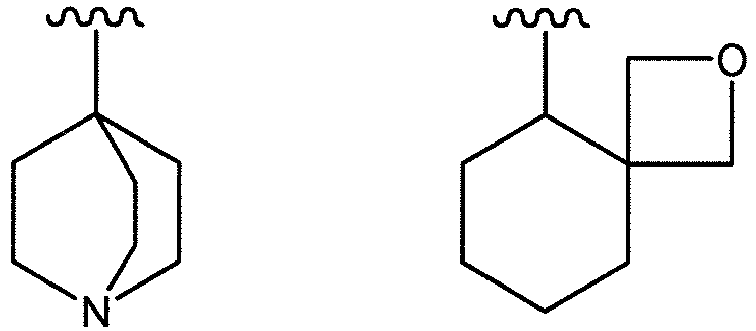
- "Acyl" means formyl, substituted or unsubstituted alkylcarbonyl, substituted or unsubstituted alkenylcarbonyl, substituted or unsubstituted cycloalkylcarbonyl, substituted or unsubstituted cycloalkenylcarbonyl, substituted or unsubstituted arylcarbonyl, substituted or unsubstituted heteroarylcarbonyl or substituted or unsubstituted heterocyclylcarbonyl. The alkyl part of "alkylcarbonyl", the alkenyl part of "alkenylcarbonyl", the cycloalkyl part of "cycloalkylcarbonyl", the cycloalkenyl part of "cycloalkenylcarbonyl", the aryl part of "arylcarbonyl", the heteroaryl part of "heteroarylcarbonyl", and the heterocyclyl part of "heterocyclylcarbonyl" mean the above "alkyl", the above "alkenyl", the above "cycloalkyl", the above "cycloalkenyl", the above "aryl", the above "heteroaryl" and the above "heterocyclyl", respectively.
- The alkyl parts of "alkyloxy", "alkylthio", and "alkylsulfonyl" mean the above "alkyl".
- The alkenyl part of "alkenylsulfonyl" means the above "alkenyl".
- The alkynyl part of "alkynylsulfonyl" means the above "alkynyl".
- The aryl parts of "aryloxy", "arylthio", and "arylsulfonyl" mean the above "aryl".
- The heteroaryl parts of "heteroaryloxy", "heteroarylthio", and "heteroarylsulfonyl" mean the above "heteroaryl".
- The cycloalkyl parts of "cycloalkyloxy", "cycloalkylthio", and "cycloalkylsulfonyl" mean the above "cycloalkyl".
- The cycloalkenyl parts of "cycloalkenyloxy", "cycloalkenylthio", and "cycloalkenylsulfonyl" mean the above "cycloalkenyl".
- The heterocyclyl parts of "heterocyclyloxy", "heterocyclylthio", and "heterocyclylsulfonyl" mean the above "heterocyclyl".
- Examples of substituents of a "substituted alkyl", a "substituted alkenyl", a
"substituted alkynyl", a "substituted aryl", a "substituted heteroaryl", a "substituted cycloalkyl", a "substituted cycloalkenyl", a "substituted heterocyclyl", a "substituted acyl", a "substituted alkylsulfonyl", a "substituted alkenylsulfonyl", a "substituted alkynylsulfonyl", a "substituted arylsulfonyl", a "substituted heteroarylsulfonyl", a
"substituted cycloalkylsulfonyl", a "substituted cycloalkenylsulfonyl", a "substituted heterocyclylsulfonyl", a "substituted alkyloxy", a "substituted aryloxy", a "substituted heteroaryloxy", a "substituted cycloalkyloxy", a "substituted cycloalkenyloxy", a
"substituted heterocyclyloxy", a "substituted alkylthio", a "substituted arylthio", a
"substituted heteroarylthio", a "substituted cycloalkylthio", a "substituted cycloalkenylthio", a "substituted heterocyclylthio" include groups selected from the group consisting of
halogen; hydroxy; carboxy; nitro; cyano;
substituted or unsubstituted alkyl (when substituted, substituents include halogen, hydroxy, carboxy, nitro, cyano, alkyl, alkenyl, alkynyl, aryl, cycloalkyl, cycloalkenyl, heteroaryl, heterocyclyl, carbamoyl, sulfamoyl, substituted or unsubstituted amino (when substituted, substituents include alkylsulfonyl, alkyl, or alkylcarbonyl), aryloxy, alkylsulfonyl, acylamino, or alkyloxycarbonyl; e.g., methyl, ethyl, isopropyl, tert-butyl, or CF3);
substituted or unsubstituted alkenyl (when substituted, substituents include halogen, hydroxy, carboxy, nitro, cyano, alkyl, alkenyl, alkynyl, aryl, cycloalkyl, cycloalkenyl, heteroaryl, heterocyclyl, carbamoyl, sulfamoyl, amino, or alkyloxy; e.g., vinyl);
substituted or unsubstituted alkynyl (when substituted, substituents include halogen, hydroxy, carboxy, nitro, cyano, alkyl, alkenyl, alkynyl, aryl, cycloalkyl, cycloalkenyl, heteroaryl, heterocyclyl, carbamoyl, sulfamoyl, amino, or alkyloxy; e.g., ethynyl);
substituted or unsubstituted aryl (when substituted, substituents include halogen, hydroxy, carboxy, nitro, cyano, substituted or unsubstituted alkyl (when substituted,
substituents include halogen, hydroxy, heterocyclyl, heterocyclylcarbonyl, substituted or unsubstituted amino (when substituted, substituents include alkyl)), substituted or unsubstituted alkenyl (when substituted, substituents include hydroxy, alkyloxy, amino, or carboxy), substituted or unsubstituted alkynyl (when substituted,
substituents include hydroxy, substituted or unsubstituted amino (when substituted,
substituents include alkyl), alkyloxy, or carboxy), aryl, cycloalkyl, substituted or
unsubstituted cycloalkyloxy (when substituted, substituents include halogen),
substituted or unsubstituted cycloalkenyl (when substituted, substituents include carboxy), substituted or unsubstituted heteroaryl (when substituted, substituents include alkyl, oxo, or heterocyclylalkyl), substituted or unsubstituted heterocyclyl (when substituted, substituents include alkyl, alkylsulfonyl, cycloalkylcarbonyl, or oxo), substituted or unsubstituted heterocyclyloxy (when substituted, substituents include oxo, alkyl, alkylcarbonyl, or alkyloxycarbonyl),
substituted or unsubstituted carbamoyl (when substituted, substituents include alkyl), sulfamoyl, amino, alkylcarbonylamino, substituted or unsubstituted alkyloxy (when substituted, substituents include halogen, hydroxy, cycloalkyl, substituted or
unsubstituted alkyloxy (when substituted, substituents include alkyloxy, halogen, or CF3), substituted or unsubstituted heterocyclyl (when substituted, substituents include halogen, alkyl, alkylsulfonyl, acyl, hydroxyalkyl, alkyloxycarbonyl, or oxo), substituted or unsubstituted heteroaryl (when substituted, substituents include alkyl), alkylamino, alkylsulfonyl, alkylsulfonylamino, oxo, alkylcarbonyl, alkylcarbonylamino, carbamoyl, carbamoylamino, carboxy, or cyano), alkylsulfonyl, alkyloxycarbonyl, SF5, -N=S(=O)RSRS', -R2f-N=S(=O)RSRS', -C(=O)-N=S(=O)RSRS', - S(=O)(RS)(=N-RN), -R2f-S(=O)(RS)(=N-RN), -N=S(=N-RN')RSRS', -S(RS)(=N-RN)2, -O-C(=O)-N(RN)RN, -N(RN)-C(=O)-O-RO, or -O-C(=O)-ORO; e.g., phenyl, or naphthyl); substituted or unsubstituted cycloalkyl (when substituted, substituents include halogen, hydroxy, carboxy, nitro, cyano, alkyl, alkenyl, alkynyl, aryl, cycloalkyl, cycloalkenyl, heteroaryl, heterocyclyl, carbamoyl, sulfamoyl, amino, SF5, - N=S(=O)RSRS', -R2f-N=S(=O)RSRS', -C(=O)-N=S(=O)RSRS', -S(=O)(RS)(=N-RN), -R2f-S(=O)(RS)(=N-RN), -N=S(=N-RN')RSRS', -S(RS)(=N-RN)2, -O-C(=O)-N(RN)RN', -N(RN)-C(=O)-O-RO, or -O-C(=O)-ORO; e.g., cyclopropyl, or cyclobutyl);
substituted or unsubstituted cycloalkenyl (when substituted, substituents include halogen, hydroxy, carboxy, nitro, cyano, alkyl, alkenyl, alkynyl, aryl, cycloalkyl, cycloalkenyl, heteroaryl, heterocyclyl, carbamoyl, sulfamoyl, amino, SF5,-N=S(=O)RSRS', -R2f-N=S(=O)RSRS', -C(=O)-N=S(=O)RSRS', -S(=O)(RS)(=N-RN), -R2f-S(=O)(RS)(=N-RN), -N=S(=N-RN')RSRS', -S(RS)(=N-RN)2, -O-C(=O)-N(RN)RN', -N(RN)-C(=O)-O-RO, or -O-C(=O)-ORO; e.g., cyclopropenyl);
substituted or unsubstituted heteroaryl (when substituted, substituents include halogen, hydroxy, carboxy, nitro, cyano, substituted or unsubstituted alkyl (when
substituted, substituents include hydroxy, alkyl, substituted or unsubstituted alkyloxy (when substituted, substituents include alkyloxy), aryl, carbamoyl, or alkylsulfonylamino), alkenyl, alkynyl, aryl, cycloalkyl, cycloalkylalkyl, cycloalkenyl, heteroaryl, heteroarylalkyl, heterocyclyl, heterocyclyloxy, heterocyclylalkyl, heterocyclylalkylcarbamoyl, sulfamoyl, amino, alkylamino, alkyloxy, alkyloxycarbonyl, or hydroxyalkyl),
substituted or unsubstituted heterocyclyl (when substituted, substituents include halogen, hydroxy, carboxy, nitro, cyano, alkyl, alkenyl, alkynyl, aryl, cycloalkyl, cycloalkenyl, heteroaryl, heterocyclyl, carbamoyl, sulfamoyl, amino; e.g., morpholinyl, piperidyl, pyrrolidinyl, SF5, N=S(=O)RSRS', -R2f-N=S(=O)RSRS', -C(=O)-N=S(=O)RSRS', -S(=O)(RS)(=N-RN), -R2f-S(=O)(RS)(=N-RN), -N=S(=N-RN')RSRS', -S(RS)(=N-RN)2, -O-C(=O)-N(RN)RN', -N(RN)-C(=O)-O-RO, or -O-C(=O)-ORO;
substituted or unsubstituted alkyloxy (when substituted, substituents include halogen, hydroxy, carboxy, nitro, cyano, alkyl, alkenyl, alkynyl, aryl, cycloalkyl, cycloalkenyl, heteroaryl, heterocyclyl, carbamoyl, sulfamoyl, substituted or unsubstituted amino (when substituted, substituents include alkyl), alkyloxy, alkylsulfonylamino, alkylsulfonyl, -N=S(=O)RSRS', -R2f-N=S(=O)RSRS', -C(=O)-N=S(=O)RSRS', -S(=O)(RS)(=N-RN), -R2f-S(=O)(RS)(=N-RN), -N=S(=N-RN')RSRS', - S(RS)(=N-RN)2, -O-C(=O)-N(RN)RN', -N(RN)-C(=O)-O-RO, or -O-C(=O)-ORO; e.g., methoxy, or ethoxy);
substituted or unsubstituted alkenyloxy (when substituted, substituents include halogen, hydroxy, carboxy, nitro, cyano, alkyl, alkenyl, alkynyl, aryl, cycloalkyl, cycloalkenyl, heteroaryl, heterocyclyl, carbamoyl, sulfamoyl, or amino; e.g., vinyloxy, or aryloxy);
substituted or unsubstituted aryloxy (when substituted, substituents include halogen, hydroxy, carboxy, nitro, cyano, alkyl, alkenyl, alkynyl, aryl, cycloalkyl, cycloalkenyl, heteroaryl, heterocyclyl, carbamoyl, sulfamoyl, or amino; e.g., phenyloxy); substituted or unsubstituted cycloalkyloxy (when substituted, substituents include halogen, hydroxy, carboxy, nitro, cyano, alkyl, alkenyl, alkynyl, aryl, cycloalkyl, cycloalkenyl, heteroaryl, heterocyclyl, carbamoyl, sulfamoyl, or amino);
substituted or unsubstituted cycloalkenyloxy (when substituted, substituents include halogen, hydroxy, carboxy, nitro, cyano, alkyl, alkenyl, alkynyl, aryl, cycloalkyl, cycloalkenyl, heteroaryl, heterocyclyl, carbamoyl, sulfamoyl, or amino);
substituted or unsubstituted heteroaryloxy (when substituted, substituents include halogen, hydroxy, carboxy, nitro, cyano, alkyl, alkenyl, alkynyl, aryl, cycloalkyl, cycloalkenyl, heteroaryl, heterocyclyl, carbamoyl, sulfamoyl, or amino);
substituted or unsubstituted heterocyclyloxy (when substituted, substituents include halogen, hydroxy, carboxy, nitro, cyano, alkyl, alkenyl, alkynyl, aryl, cycloalkyl, cycloalkenyl, heteroaryl, heterocyclyl, carbamoyl, sulfamoyl, amino, or alkylcarbonyl);
substituted or unsubstituted arylalkyl (when substituted, substituents include halogen, hydroxy, carboxy, nitro, cyano, alkyl, alkenyl, alkynyl, aryl, cycloalkyl, cycloalkenyl, heteroaryl, heterocyclyl, carbamoyl, sulfamoyl, or amino; e.g., benzyl);
substituted or unsubstituted amino (e.g., alkylamino (e.g., methylamino, ethylamino, or dimethylamino), arylamino, cycloalkylamino, cycloalkenylamino, heteroarylamino, heterocyclylamino, acylamino (e.g., acetylamino, or benzoylamino), arylalkylamino (e.g., benzylamino, or tritylamino), hydroxyamino, alkyloxycarbonylamino, carbamoylamino, alkylsulfonylamino, arylsulfonylamino, cycloalkylsulfonylamino, cycloalkenylsulfonylamino, heteroarylsulfonylamino, or heterocyclylsulfonylamino); substituted or unsubstituted carbamoyl (when substituted, substituents include halogen, hydroxy, carboxy, nitro, cyano, substituted or unsubstituted alkyl (when
substituted, substituents include heterocyclyl), alkenyl, alkynyl, aryl, cycloalkyl, cycloalkenyl, heteroaryl, or heterocyclyl; e.g., alkylcarbamoyl (e.g., methylcarbamoyl, ethylcarbamoyl, dimethylcarbamoyl, phenylethylcarbamoyl, dimethylaminoethylcarbamoyl, isopropylcarbamoyl, or hydroxyethylcarbamoyl), alkylsulfonylcarbamoyl, heteroarylalkylcarbamoyl, or alkyloxycarbamoyl);
substituted or unsubstituted carbamoyloxy (when substituted, substituents include halogen, hydroxy, carboxy, nitro, cyano, alkyl, alkenyl, alkynyl, aryl, cycloalkyl, cycloalkenyl, heteroaryl, or heterocyclyl);
substituted or unsubstituted acyl (when substituted, substituents include halogen, hydroxy, hydroxyalkyl, carboxy, nitro, cyano, alkyl, alkenyl, alkynyl, aryl, cycloalkyl, cycloalkenyl, heteroaryl, heterocyclyl, carbamoyl, sulfamoyl, or amino; e.g., alkylcarbonyl, arylcarbonyl, cycloalkylcarbonyl, cycloalkenylcarbonyl, heteroarylcarbonyl, heterocyclylcarbonyl, formyl, or acetyl);
substituted or unsubstituted alkylsulfonyl (when substituted, substituents include halogen, hydroxy, carboxy, nitro, cyano, alkyl, alkenyl, alkynyl, aryl, cycloalkyl, cycloalkenyl, heteroaryl, heterocyclyl, carbamoyl, sulfamoyl, or amino; e.g., methanesulfonyl, or ethanesulfonyl);
substituted or unsubstituted arylsulfonyl (when substituted, substituents include halogen, hydroxy, carboxy, nitro, cyano, alkyl, alkenyl, alkynyl, aryl, cycloalkyl, cycloalkenyl, heteroaryl, heterocyclyl, carbamoyl, sulfamoyl, or amino);
substituted or unsubstituted cycloalkylsulfonyl (when substituted, substituents include halogen, hydroxy, carboxy, nitro, cyano, alkyl, alkenyl, alkynyl, aryl, cycloalkyl, cycloalkenyl, heteroaryl, heterocyclyl, carbamoyl, sulfamoyl, or amino);
substituted or unsubstituted cycloalkenylsulfonyl (when substituted, substituents include halogen, hydroxy, carboxy, nitro, cyano, alkyl, alkenyl, alkynyl, aryl, cycloalkyl, cycloalkenyl, heteroaryl, heterocyclyl, carbamoyl, sulfamoyl, or amino);
substituted or unsubstituted heteroarylsulfonyl (when substituted, substituents include halogen, hydroxy, carboxy, nitro, cyano, alkyl, alkenyl, alkynyl, aryl, cycloalkyl, cycloalkenyl, heteroaryl, heterocyclyl, carbamoyl, sulfamoyl, or amino); substituted or unsubstituted heterocyclylsulfonyl (when substituted, substituents include halogen, hydroxy, carboxy, nitro, cyano, alkyl, alkenyl, alkynyl, aryl, cycloalkyl, cycloalkenyl, heteroaryl, heterocyclyl, carbamoyl, sulfamoyl, or amino);
substituted or unsubstituted alkylthio (when substituted, substituents include halogen, hydroxy, carboxy, nitro, cyano, alkyl, alkenyl, alkynyl, aryl, cycloalkyl, cycloalkenyl, heteroaryl, heterocyclyl, carbamoyl, sulfamoyl, or amino);
substituted or unsubstituted arylthio (when substituted, substituents include halogen, hydroxy, carboxy, nitro, cyano, alkyl, alkenyl, alkynyl, aryl, cycloalkyl, cycloalkenyl, heteroaryl, heterocyclyl, carbamoyl, sulfamoyl, or amino);
substituted or unsubstituted cycloalkylthio (when substituted, substituents include halogen, hydroxy, carboxy, nitro, cyano, alkyl, alkenyl, alkynyl, aryl, cycloalkyl, cycloalkenyl, heteroaryl, heterocyclyl, carbamoyl, sulfamoyl, or amino);
substituted or unsubstituted cycloalkenylthio (when substituted, substituents include halogen, hydroxy, carboxy, nitro, cyano, alkyl, alkenyl, alkynyl, aryl, cycloalkyl, cycloalkenyl, heteroaryl, heterocyclyl, carbamoyl, sulfamoyl, or amino);
substituted or unsubstituted heteroarylthio (when substituted, substituents include halogen, hydroxy, carboxy, nitro, cyano, alkyl, alkenyl, alkynyl, aryl, cycloalkyl, cycloalkenyl, heteroaryl, heterocyclyl, carbamoyl, sulfamoyl, or amino);
substituted or unsubstituted heterocyclylthio (when substituted, substituents include halogen, hydroxy, carboxy, nitro, cyano, alkyl, alkenyl, alkynyl, aryl, cycloalkyl, cycloalkenyl, heteroaryl, heterocyclyl, carbamoyl, sulfamoyl, or amino);
substituted or unsubstituted sulfamoyl (when substituted, substituents include halogen, hydroxy, carboxy, nitro, cyano, alkyl, alkenyl, alkynyl, aryl, cycloalkyl, cycloalkenyl, heteroaryl, or heterocyclyl);
substituted or unsubstituted alkyloxycarbonyl (when substituted, substituents include halogen, hydroxy, carboxy, nitro, cyano, alkyl, alkenyl, alkynyl, aryl, cycloalkyl, cycloalkenyl, heteroaryl, heterocyclyl, carbamoyl, sulfamoyl, or amino; e.g., methoxycarbonyl, ethoxycarbonyl, or tert-butoxycarbonyl);
substituted or unsubstituted aryloxycarbonyl (when substituted, substituents include halogen, hydroxy, carboxy, nitro, cyano, alkyl, alkenyl, alkynyl, aryl, cycloalkyl, cycloalkenyl, heteroaryl, heterocyclyl, carbamoyl, sulfamoyl, or amino);
substituted or unsubstituted cycloalkyloxycarbonyl (when substituted, substituents include halogen, hydroxy, carboxy, nitro, cyano, alkyl, alkenyl, alkynyl, aryl, cycloalkyl, cycloalkenyl, heteroaryl, heterocyclyl, carbamoyl, sulfamoyl, or amino); substituted or unsubstituted cycloalkenyloxycarbonyl (when substituted, substituents include halogen, hydroxy, carboxy, nitro, cyano, alkyl, alkenyl, alkynyl, aryl, cycloalkyl, cycloalkenyl, heteroaryl, heterocyclyl, carbamoyl, sulfamoyl, or amino);
substituted or unsubstituted heteroaryloxycarbonyl (when substituted, substituents include halogen, hydroxy, carboxy, nitro, cyano, alkyl, alkenyl, alkynyl, aryl, cycloalkyl, cycloalkenyl, heteroaryl, heterocyclyl, carbamoyl, sulfamoyl, or amino);
substituted or unsubstituted heterocyclyloxycarbonyl (when substituted, substituents include halogen, hydroxy, carboxy, nitro, cyano, alkyl, alkenyl, alkynyl, aryl, cycloalkyl, cycloalkenyl, heteroaryl, heterocyclyl, carbamoyl, sulfamoyl, or amino); substituted or unsubstituted alkylsulfinyl (when substituted, substituents include halogen, hydroxy, carboxy, nitro, cyano, alkyl, alkenyl, alkynyl, aryl, cycloalkyl, cycloalkenyl, heteroaryl, heterocyclyl, carbamoyl, sulfamoyl, or amino);
substituted or unsubstituted arylsulfinyl (when substituted, substituents include halogen, hydroxy, carboxy, nitro, cyano, alkyl, alkenyl, alkynyl, aryl, cycloalkyl, cycloalkenyl, heteroaryl, heterocyclyl, carbamoyl, sulfamoyl, or amino);
substituted or unsubstituted cycloalkylsulfinyl (when substituted, substituents include halogen, hydroxy, carboxy, nitro, cyano, alkyl, alkenyl, alkynyl, aryl, cycloalkyl, cycloalkenyl, heteroaryl, heterocyclyl, carbamoyl, sulfamoyl, or amino);
substituted or unsubstituted cycloalkenylsulfinyl (when substituted, substituents include halogen, hydroxy, carboxy, nitro, cyano, alkyl, alkenyl, alkynyl, aryl, cycloalkyl, cycloalkenyl, heteroaryl, heterocyclyl, carbamoyl, sulfamoyl, or amino);
substituted or unsubstituted heteroarylsulfinyl (when substituted, substituents include halogen, hydroxy, carboxy, nitro, cyano, alkyl, alkenyl, alkynyl, aryl, cycloalkyl, cycloalkenyl, heteroaryl, heterocyclyl, carbamoyl, sulfamoyl, or amino); substituted or unsubstituted heterocyclylsulfinyl (when substituted, substituents include halogen, hydroxy, carboxy, nitro, cyano, alkyl, alkenyl, alkynyl, aryl, cycloalkyl, cycloalkenyl, heteroaryl, heterocyclyl, carbamoyl, sulfamoyl, or amino); nitroso;
azido;
isocyano; isocyanato; thiocyanato; isothiocyanato; mercapto;
formyloxy; haloformyl; oxalo; thioformyl; thiocarboxy; dithiocarboxy; thiocarbamoyl; sulfino; sulfo; sulfoamino; hydrazino; ureido; amidino; guanidino; phthalimido; oxo; SF5, -N=S(=O)RSRS', -R2f-N=S(=O)RSRS', -C(=O)-N=S(=O)RSRS', -S(=O)(RS)(=N-RN), - R2f-S(=O)(RS)(=N-RN), -N=S(=N-RN')RSRS', -S(RS)(=N-RN)2, -O-C(=O)-N(RN)RN', -N(RN)-C(=O)-O-RO, or -O-C(=O)-ORO. - The above substituted groups can be substituted with one to four of these substituents.
- Preferred examples of substituents of a "substituted carbamoyl", a "substituted sulfamoyl", or a "substituted amino" include
substituted or unsubstituted alkyl (when substituted, substituents include halogen, hydroxy, carboxy, nitro, cyano, alkyl, alkenyl, alkynyl, aryl, cycloalkyl, cycloalkenyl, heteroaryl, heterocyclyl, carbamoyl, sulfamoyl, or amino; e.g., methyl, ethyl, isopropyl, tert-butyl, or CF3);
substituted or unsubstituted alkenyl (when substituted, substituents include halogen, hydroxy, carboxy, nitro, cyano, alkyl, alkenyl, alkynyl, aryl, cycloalkyl, cycloalkenyl, heteroaryl, heterocyclyl, carbamoyl, sulfamoyl, or amino; e.g., vinyl);
substituted or unsubstituted aryl (when substituted, substituents include halogen, hydroxy, carboxy, nitro, cyano, alkyl, alkenyl, alkynyl, aryl, cycloalkyl, cycloalkenyl, heteroaryl, heterocyclyl, carbamoyl, sulfamoyl, or amino; e.g., phenyl, or naphthyl);
substituted or unsubstituted cycloalkyl (when substituted, substituents include halogen, hydroxy, carboxy, nitro, cyano, alkyl, alkenyl, alkynyl, aryl, cycloalkyl, cycloalkenyl, heteroaryl, heterocyclyl, carbamoyl, sulfamoyl, or amino; e.g., cyclopropyl, or cyclobutyl);
substituted or unsubstituted cycloalkenyl (when substituted, substituents include halogen, hydroxy, carboxy, nitro, cyano, alkyl, alkenyl, alkynyl, aryl, cycloalkyl, cycloalkenyl, heteroaryl, heterocyclyl, carbamoyl, sulfamoyl, or amino; e.g., cyclopropenyl);
substituted or unsubstituted heteroaryl (when substituted, substituents include halogen, hydroxy, carboxy, nitro, cyano, alkyl, alkenyl, alkynyl, aryl, cycloalkyl, cycloalkenyl, heteroaryl, heterocyclyl, carbamoyl, sulfamoyl, or amino);
substituted or unsubstituted heterocyclyl (when substituted, substituents include halogen, hydroxy, carboxy, nitro, cyano, alkyl, alkenyl, alkynyl, aryl, cycloalkyl, cycloalkenyl, heteroaryl, heterocyclyl, carbamoyl, sulfamoyl, or amino);
substituted or unsubstituted arylalkyl (when substituted, substituents include halogen, hydroxy, carboxy, nitro, cyano, alkyl, alkenyl, alkynyl, aryl, cycloalkyl, cycloalkenyl, heteroaryl, heterocyclyl, carbamoyl, sulfamoyl, or amino);
substituted or unsubstituted alkyloxy (when substituted, substituents include halogen, hydroxy, carboxy, nitro, cyano, alkyl, alkenyl, alkynyl, aryl, cycloalkyl, cycloalkenyl, heteroaryl, heterocyclyl, carbamoyl, sulfamoyl, or amino; e.g., methoxy, or ethoxy);
substituted or unsubstituted aryloxy (when substituted, substituents include halogen, hydroxy, carboxy, nitro, cyano, alkyl, alkenyl, alkynyl, aryl, cycloalkyl, cycloalkenyl, heteroaryl, heterocyclyl, carbamoyl, sulfamoyl, or amino; e.g., phenyloxy); substituted or unsubstituted cycloalkyloxy (when substituted, substituents include halogen, hydroxy, carboxy, nitro, cyano, alkyl, alkenyl, alkynyl, aryl, cycloalkyl, cycloalkenyl, heteroaryl, heterocyclyl, carbamoyl, sulfamoyl, or amino);
substituted or unsubstituted cycloalkenyloxy (when substituted, substituents include halogen, hydroxy, carboxy, nitro, cyano, alkyl, alkenyl, alkynyl, aryl, cycloalkyl, cycloalkenyl, heteroaryl, heterocyclyl, carbamoyl, sulfamoyl, or amino);
substituted or unsubstituted heteroaryloxy (when substituted, substituents include halogen, hydroxy, carboxy, nitro, cyano, alkyl, alkenyl, alkynyl, aryl, cycloalkyl, cycloalkenyl, heteroaryl, heterocyclyl, carbamoyl, sulfamoyl, or amino);
substituted or unsubstituted heterocyclyloxy (when substituted, substituents include halogen, hydroxy, carboxy, nitro, cyano, alkyl, alkenyl, alkynyl, aryl, cycloalkyl, cycloalkenyl, heteroaryl, heterocyclyl, carbamoyl, sulfamoyl, or amino);
substituted or unsubstituted acyl (when substituted, substituents include halogen, hydroxy, carboxy, nitro, cyano, alkyl, alkenyl, alkynyl, aryl, cycloalkyl, cycloalkenyl, heteroaryl, heterocyclyl, carbamoyl, sulfamoyl, or amino);
substituted or unsubstituted alkyloxycarbonyl (when substituted, substituents include halogen, hydroxy, carboxy, nitro, cyano, alkyl, alkenyl, alkynyl, aryl, cycloalkyl, cycloalkenyl, heteroaryl, heterocyclyl, carbamoyl, sulfamoyl, or amino; e.g., methoxycarbonyl, ethoxycarbonyl, or tert-butoxycarbonyl);
substituted or unsubstituted aryloxycarbonyl (when substituted, substituents include halogen, hydroxy, carboxy, nitro, cyano, alkyl, alkenyl, alkynyl, aryl, cycloalkyl, cycloalkenyl, heteroaryl, heterocyclyl, carbamoyl, sulfamoyl, or amino);
substituted or unsubstituted cycloalkyloxycarbonyl (when substituted, substituents include halogen, hydroxy, carboxy, nitro, cyano, alkyl, alkenyl, alkynyl, aryl, cycloalkyl, cycloalkenyl, heteroaryl, heterocyclyl, carbamoyl, sulfamoyl, or amino);
substituted or unsubstituted cycloalkenyloxycarbonyl (when substituted, substituents include halogen, hydroxy, carboxy, nitro, cyano, alkyl, alkenyl, alkynyl, aryl, cycloalkyl, cycloalkenyl, heteroaryl, heterocyclyl, carbamoyl, sulfamoyl, or amino);
substituted or unsubstituted heteroaryloxycarbonyl (when substituted, substituents include halogen, hydroxy, carboxy, nitro, cyano, alkyl, alkenyl, alkynyl, aryl, cycloalkyl, cycloalkenyl, heteroaryl, heterocyclyl, carbamoyl, sulfamoyl, or amino);
substituted or unsubstituted heterocyclyloxycarbonyl (when substituted, substituents include halogen, hydroxy, carboxy, nitro, cyano, alkyl, alkenyl, alkynyl, aryl, cycloalkyl, cycloalkenyl, heteroaryl, heterocyclyl, carbamoyl, sulfamoyl, or amino);
substituted or unsubstituted sulfamoyl (when substituted, substituents include halogen, hydroxy, carboxy, nitro, cyano, alkyl, alkenyl, alkynyl, aryl, cycloalkyl, cycloalkenyl, heteroaryl, or heterocyclyl);
substituted or unsubstituted alkylsulfonyl (when substituted, substituents include halogen, hydroxy, carboxy, nitro, cyano, alkyl, alkenyl, alkynyl, aryl, cycloalkyl, cycloalkenyl, heteroaryl, heterocyclyl, carbamoyl, sulfamoyl, or amino; e.g., methanesulfonyl, or ethanesulfonyl);
substituted or unsubstituted arylsulfonyl (when substituted, substituents include halogen, hydroxy, carboxy, nitro, cyano, alkyl, alkenyl, alkynyl, aryl, cycloalkyl, cycloalkenyl, heteroaryl, heterocyclyl, carbamoyl, sulfamoyl, or amino);
substituted or unsubstituted heteroarylsulfonyl (when substituted, substituents include halogen, hydroxy, carboxy, nitro, cyano, alkyl, alkenyl, alkynyl, aryl, cycloalkyl, cycloalkenyl, heteroaryl, heterocyclyl, carbamoyl, sulfamoyl, or amino); substituted or unsubstituted cycloalkylsulfonyl (when substituted, substituents include halogen, hydroxy, carboxy, nitro, cyano, alkyl, alkenyl, alkynyl, aryl, cycloalkyl, cycloalkenyl, heteroaryl, heterocyclyl, carbamoyl, sulfamoyl, or amino);
substituted or unsubstituted cycloalkenylsulfonyl (when substituted, substituents include halogen, hydroxy, carboxy, nitro, cyano, alkyl, alkenyl, alkynyl, aryl, cycloalkyl, cycloalkenyl, heteroaryl, heterocyclyl, carbamoyl, sulfamoyl, or amino);
substituted or unsubstituted heterocyclylsulfonyl (when substituted, substituents include halogen, hydroxy, carboxy, nitro, cyano, alkyl, alkenyl, alkynyl, aryl, cycloalkyl, cycloalkenyl, heteroaryl, heterocyclyl, carbamoyl, sulfamoyl, or amino);
substituted or unsubstituted carbamoyl (when substituted, substituents include halogen, hydroxy, carboxy, nitro, cyano, alkyl, alkenyl, alkynyl, aryl, cycloalkyl, cycloalkenyl, heteroaryl, or heterocyclyl);
halogen, hydroxy, carboxy, nitro, cyano, alkylsulfinyl, cycloalkylsulfinyl, cycloalkenylsulfinyl, arylsulfinyl, heteroarylsulfinyl, heterocyclylsulfinyl, amino, SF5, -N=S(=O)RSRS', -R2f-N=S(=O)RSRS', -C(=O)-N=S(=O)RSRS', -S(=O)(RS)(=N-RN), -R2f-S(=O)(RS)(=N-RN), - -N=S(=N-RN')RSRS', -S(RS)(=N-RN)2, -O-C(=O)-N(RN)RN', -N(RN)-C(=O)-O-RO, or -O-C(=O)-ORO. - The alkyl parts of "alkylamino", "arylalkylamino", "alkyloxycarbonylamino", "alkylsulfonylamino", "alkylcarbamoyl", "alkylsulfonylcarbamoyl", "heteroarylalkylcarbamoyl", "alkyloxycarbamoyl", "alkyloxycarbonyl" and "arylalkyl" mean the above-described "alkyl".
- The alkenyl part of "alkenyloxy" means the above-described "alkenyl".
- The aryl parts of "arylalkyl", "arylamino", "arylalkylamino", "arylsulfonylamino", "aryloxycarbonyl", and "arylsulfinyl" mean the above-described "aryl".
- The heteroaryl parts of "heteroarylamino", "heteroarylsulfonylamino", "heteroarylalkylcarbamoyl", "heteroaryloxycarbonyl", and "heteroarylsulfinyl" mean the above-described "heteroaryl".
- The cycloalkyl parts of "cycloalkylamino", "cycloalkylsulfonylamino", "cycloalkyloxycarbonyl", and "cycloalkylsulfinyl" mean the above-described "cycloalkyl".
- The cycloalkenyl parts of "cycloalkenylamino", "cycloalkenylsulfonylamino", "cycloalkenyloxycarbonyl", and "cycloalkenylsulfinyl" mean the above-described "cycloalkenyl".
- The heterocyclyl parts of "heterocyclylamino", "heterocyclylsulfonylamino", "heterocyclyloxycarbonyl", and "heterocyclylsulfinyl" mean the above-described "heterocyclyl".
- Among the compounds of the present invention, compounds in the following embodiments are preferred.
- L is NR2R3, SR7, SO2R8, or substituted or unsubstituted alkyl.
- Preferably, L is NR2R3, SR7, or SO2R8.
- Further preferably, L is NR2R3.
- R2 is hydrogen, substituted or unsubstituted alkyl, substituted or unsubstituted alkenyl, substituted or unsubstituted alkynyl, substituted or unsubstituted aryl, substituted or unsubstituted heteroaryl, substituted or unsubstituted cycloalkyl, substituted or unsubstituted cycloalkenyl, substituted or unsubstituted heterocyclyl, substituted or unsubstituted acyl, substituted or unsubstituted carbamoyl, substituted or unsubstituted alkylsulfonyl, substituted or unsubstituted alkenylsulfonyl, substituted or unsubstituted alkynylsulfonyl , substituted or unsubstituted arylsulfonyl, substituted or unsubstituted heteroarylsulfonyl, substituted or unsubstituted cycloalkylsulfonyl, substituted or unsubstituted cycloalkenylsulfonyl, substituted or unsubstituted heterocyclylsulfonyl, or substituted or unsubstituted sulfamoyl.
- Preferably, R2 is hydrogen, substituted or unsubstituted alkyl, substituted or unsubstituted cycloalkenyl, or substituted or unsubstituted heterocyclyl.
- Further preferably, R2 is hydrogen.
- R3 is substituted or unsubstituted alkyl, substituted or unsubstituted alkenyl, substituted or unsubstituted alkynyl, substituted or unsubstituted aryl, substituted or unsubstituted heteroaryl, substituted or unsubstituted cycloalkyl, substituted or unsubstituted cycloalkenyl, substituted or unsubstituted heterocyclyl, substituted or unsubstituted acyl, substituted or unsubstituted carbamoyl, substituted or unsubstituted alkylsulfonyl, substituted or unsubstituted alkenylsulfonyl, substituted or unsubstituted alkynylsulfonyl, substituted or unsubstituted arylsulfonyl, substituted or unsubstituted heteroarylsulfonyl, substituted or unsubstituted cycloalkylsulfonyl, substituted or unsubstituted cycloalkenylsulfonyl, substituted or unsubstituted heterocyclylsulfonyl, or substituted or unsubstituted sulfamoyl.
- Preferably, R3 is substituted or unsubstituted alkyl, substituted or unsubstituted cycloalkenyl, or substituted or unsubstituted heterocyclyl.
- R7 is hydrogen, substituted or unsubstituted alkyl, substituted or unsubstituted alkenyl, substituted or unsubstituted alkynyl, substituted or unsubstituted aryl, substituted or unsubstituted heteroaryl, substituted or unsubstituted cycloalkyl, substituted or unsubstituted cycloalkenyl, substituted or unsubstituted heterocyclyl, substituted or unsubstituted acyl, or substituted or unsubstituted carbamoyl.
- Preferably, R7 is substituted or unsubstituted alkyl, substituted or unsubstituted cycloalkenyl, or substituted or unsubstituted heterocyclyl.
- R8 is hydrogen, substituted or unsubstituted alkyl, substituted or unsubstituted alkenyl, substituted or unsubstituted alkynyl, substituted or unsubstituted aryl, substituted or unsubstituted heteroaryl, substituted or unsubstituted cycloalkyl, substituted or unsubstituted cycloalkenyl, substituted or unsubstituted heterocyclyl, substituted or unsubstituted acyl, substituted or unsubstituted carbamoyl, or substituted or unsubstituted amino, provided that R8 is not unsubstituted methyl or unsubstituted ethyl.
- Preferably, R8 is substituted or unsubstituted alkyl, substituted or unsubstituted cycloalkenyl, or substituted or unsubstituted heterocyclyl.
- Y is substituted or unsubstituted alkyl, substituted or unsubstituted alkenyl, substituted or unsubstituted alkynyl, substituted or unsubstituted aryl, substituted or unsubstituted heteroaryl, substituted or unsubstituted cycloalkyl, substituted or unsubstituted cycloalkenyl, or substituted or unsubstituted heterocyclyl, provided that Y is not unsubstituted methyl or unsubstituted ethyl.
- Preferably, Y is substituted or unsubstituted aryl, substituted or unsubstituted heteroaryl, substituted or unsubstituted cycloalkyl, substituted or unsubstituted cycloalkenyl, or substituted or unsubstituted heterocyclyl.
- Further preferably, Y is substituted or unsubstituted heteroaryl, substituted or unsubstituted cycloalkyl, substituted or unsubstituted cycloalkenyl, or substituted or unsubstituted heterocyclyl.
- Further preferably, Y is substituted or unsubstituted heterocyclyl.
- Particularly preferably, Y is

- R9 and R10 are each independently hydrogen, halogen, hydroxy, cyano, nitro, carboxy, substituted or unsubstituted alkyl, substituted or unsubstituted alkenyl, substituted or unsubstituted alkynyl, substituted or unsubstituted alkyloxy, substituted or unsubstituted alkylthio, substituted or unsubstituted alkylsulfonyl, substituted or unsubstituted acyl, substituted or unsubstituted carbamoyl, substituted or unsubstituted sulfamoyl, or substituted or unsubstituted amino.
- Preferably, one of R9 and R10 is hydroxy, and the other is hydrogen, halogen, hydroxy, cyano, nitro, carboxy, substituted or unsubstituted alkyl, substituted or unsubstituted alkenyl, substituted or unsubstituted alkynyl, substituted or unsubstituted alkyloxy, substituted or unsubstituted alkylthio, substituted or unsubstituted alkylsulfonyl, substituted or unsubstituted acyl, substituted or unsubstituted carbamoyl, substituted or unsubstituted sulfamoyl, or substituted or unsubstituted amino.
- Further preferably, one of R9 and R10 is hydroxy, and the other is hydrogen, or substituted or unsubstituted alkyl.
- Particularly preferably, one of R9 and R10 is hydroxy, and the other is hydrogen.
- R11 is each independently halogen, hydroxy, cyano, nitro, carboxy, substituted or unsubstituted alkyl, substituted or unsubstituted alkenyl, substituted or unsubstituted alkynyl, substituted or unsubstituted alkyloxy, substituted or unsubstituted alkylthio, substituted or unsubstituted alkylsulfonyl, substituted or unsubstituted acyl, substituted or unsubstituted carbamoyl, substituted or unsubstituted sulfamoyl, or substituted or unsubstituted amino.
- m is an integer from 0 to 6. Preferably, m is 0 or 1. Further preferably, m is 0.
- Z is -CR6= or -N=.
- Preferably, Z is -N=.
- R1 is hydrogen, or substituted or unsubstituted alkyl.
- Preferably, R1 is hydrogen.
- R4, R5 and R6 are each independently hydrogen, halogen, hydroxy, cyano, nitro, carboxy, substituted or unsubstituted alkyl, substituted or unsubstituted alkenyl, substituted or unsubstituted alkynyl, substituted or unsubstituted aryl, substituted or unsubstituted heteroaryl, substituted or unsubstituted cycloalkyl, substituted or unsubstituted cycloalkenyl, substituted or unsubstituted heterocyclyl, substituted or unsubstituted alkyloxy, substituted or unsubstituted aryloxy, substituted or unsubstituted heteroaryloxy, substituted or unsubstituted cycloalkyloxy, substituted or unsubstituted cycloalkenyloxy, substituted or unsubstituted heterocyclyloxy, substituted or unsubstituted alkylthio, substituted or unsubstituted arylthio, substituted or unsubstituted heteroarylthio, substituted or unsubstituted cycloalkylthio, substituted or unsubstituted cycloalkenylthio, substituted or unsubstituted heterocyclylthio, substituted or unsubstituted alkylsulfonyl, substituted or unsubstituted arylsulfonyl, substituted or unsubstituted heteroarylsulfonyl, substituted or unsubstituted cycloalkylsulfonyl, substituted or unsubstituted cycloalkenylsulfonyl, substituted or unsubstituted heterocyclylsulfonyl, substituted or unsubstituted acyl, substituted or unsubstituted carbamoyl, substituted or unsubstituted sulfamoyl, or substituted or unsubstituted amino.
- Preferably, R4 is hydrogen, halogen, cyano, or substituted or unsubstituted alkyl.
- Further preferably, R4 is halogen.
- Preferably, R5 is hydrogen, halogen, cyano, or substituted or unsubstituted alkyl.
- Further preferably, R5 is hydrogen.
- Preferably, R6 is hydrogen, halogen, cyano, or substituted or unsubstituted alkyl.
- Further preferably, R6 is hydrogen or halogen.
- Particularly preferably, R6 is hydrogen.
- X is single bond, -O-, -S-, -NR12-, -C(=O)-, -C(=O)NR13-, -NR14C(=O)-, -SO2-, - NR15-SO2-, -SO2-NR16-, or -C(=O)-O-.
- Preferably, X is single bond, -O-, -S-, -NR12-, or -SO2-.
- Further preferably, X is -O-.
- R12 is hydrogen, or substituted or unsubstituted alkyl.
- R13 is hydrogen, or substituted or unsubstituted alkyl.
- R14 is hydrogen, or substituted or unsubstituted alkyl.
- R15 is hydrogen, or substituted or unsubstituted alkyl.
- R16 is hydrogen, or substituted or unsubstituted alkyl.
- P1 and P2 are each independently a protecting group. Preferably, P1 and P2 are each independently a benzyl-derived protecting group (a benzyl group, a para-methoxybenzyl group, etc.), an acyl-derived protecting group (an acetyl group, a benzoyl group, etc.), an alkyl-derived protecting group (SEM (trimethylsilylethoxymethyl), THP (tetrahydropyran), etc.), a silyl-derived protecting group (TBS (tert-butyldimethylsilyl), TBDPS (tert-butyldiphenylsilyl), etc.), or the like.
- RS and RS' are each independently substituted or unsubstituted alkyl, substituted or unsubstituted cycloalkyl, substituted or unsubstituted heterocyclyl, substituted or unsubstituted aryl, or substituted or unsubstituted heteroaryl. RS and RS' bound to the same sulfur atom may form a substituted or unsubstituted ring together with the sulfur atom.
- Preferably, RS and RS' are each independently substituted or unsubstituted alkyl.
- The ring, which is formed by RS and RS' which are bound to the same sulfur atom, together with the sulfur atom, means a 3- to 15-membered saturated or unsaturated hetero ring that may contain one to four oxygen, nitrogen, and/or sulfur atom(s) in the ring, other than the sulfur atom. Preferred is a non aromatic ring, and such non aromatic ring may be further cross-linked by a C1 to C4 alkyl chain, and may be fused with cycloalkane (preferably 5 to 6-membered) and a benzene ring. Examples of such a ring include

- R2f is substituted or unsubstituted alkylene.
- RN is each independently hydrogen, cyano, substituted or unsubstituted alkyl, substituted or unsubstituted alkylcarbonyl, substituted or unsubstituted alkyloxycarbonyl, substituted or unsubstituted cycloalkyl, substituted or unsubstituted cycloalkylcarbonyl, substituted or unsubstituted heterocyclyl, substituted or unsubstituted heterocyclylcarbonyl, substituted or unsubstituted aryl, substituted or unsubstituted arylcarbonyl, substituted or unsubstituted heteroaryl, substituted or unsubstituted heteroarylcarbonyl, or substituted or unsubstituted carbamoyl.
In the case of -S(RS)(=N-RN)2, RN together with the adjacent nitrogen atom may form a substituted or unsubstituted ring. - Preferably, RN is hydrogen, substituted or unsubstituted alkyl, or substituted or unsubstituted carbamoyl.
- In the case of -S(RS)(=N-RN)2, examples of a ring which RN together with the adjacent nitrogen atom forms include

- RN' is hydrogen, cyano, substituted or unsubstituted alkyl, substituted or unsubstituted alkylcarbonyl, substituted or unsubstituted alkyloxycarbonyl, substituted or unsubstituted cycloalkyl, substituted or unsubstituted cycloalkylcarbonyl, substituted or unsubstituted heterocyclyl, substituted or unsubstituted heterocyclylcarbonyl, substituted or unsubstituted aryl, substituted or unsubstituted arylcarbonyl, substituted or unsubstituted heteroaryl, substituted or unsubstituted heteroarylcarbonyl or substituted or unsubstituted carbamoyl. Preferably, RN' is hydrogen, cyano, substituted or unsubstituted alkyl, substituted or unsubstituted cycloalkyl, substituted or unsubstituted aryl, or substituted or unsubstituted heteroaryl.
- RO is hydrogen, substituted or unsubstituted alkyl, substituted or unsubstituted alkenyl, substituted or unsubstituted alkynyl, substituted or unsubstituted aryl, substituted or unsubstituted heteroaryl, substituted or unsubstituted cycloalkyl, substituted or unsubstituted cycloalkenyl, or substituted or unsubstituted heterocyclyl.
- Preferred combinations of substituents of a compound represented by formula (I) include the following 1) to 6):
- 1) a compound wherein L is NR2R3, R2 is hydrogen, R3 is substituted or unsubstituted alkyl, Y is substituted or unsubstituted heterocyclyl, Z is -N=, R1 is hydrogen, R4 is halogen, and R5 is hydrogen;
- 2) a compound wherein L is NR2R3, R2 is hydrogen, R3 is substituted or unsubstituted cycloalkenyl, Y is substituted or unsubstituted heterocyclyl, Z is -N=, R1 is hydrogen, R4 is halogen, and R5 is hydrogen;
- 3) a compound wherein L is NR2R3, R2 is hydrogen, R3 is substituted or unsubstituted heterocyclyl, Y is substituted or unsubstituted heterocyclyl, Z is -N=, R1 is hydrogen, R4 is halogen, and R5 is hydrogen;
- 4) a compound wherein L is NR2R3, R2 is hydrogen, R3 is substituted or unsubstituted acyl, Y is substituted or unsubstituted heterocyclyl, Z is -N=, R1 is hydrogen, R4 is halogen, and R5 is hydrogen;
- 5) a compound wherein L is SR7, R7 is substituted or unsubstituted alkyl, Y is substituted or unsubstituted heterocyclyl, Z is -N=, R1 is hydrogen, R4 is halogen, and R5 is hydrogen;
- 6) a compound wherein L is SO2R8, R8 is substituted or unsubstituted alkyl, Y is substituted or unsubstituted heterocyclyl, Z is -N=, R1 is hydrogen, R4 is halogen, and R5 is hydrogen.
- One or more hydrogen, carbon or other atoms of the compounds of formula (I), formula (II), formula (IIIa), and formula (IIIb) of the present invention can be replaced by an isotope of the hydrogen, carbon or other atoms.
- For example, compounds of formula (I) include all radiolabeled forms of compounds of formula (I). Such "radioactive labeling," "radiolabeled forms", and the like of compounds of formula (I) are encompassed by the present invention and useful as a research and/or diagnostic tool in metabolism pharmacokinetic studies and in binding assays. Examples of isotopes that can be incorporated into a compound of formula (I) of the present invention include isotopes of hydrogen, carbon, nitrogen, oxygen, phosphorus, sulfur, fluorine, and chlorine, such as 2H, 3H, 13C, 14C, 15N, 18O, 17O, 31P, 32P, 35S, 18F, and 36Cl, respectively. Radiolabeled compounds of the present invention can be prepared by methods well-known in the art. For example, tritium-labeled compounds of formula (I) can be prepared by introducing tritium into the particular compound of formula (I), for example, by catalytic dehalogenation with tritium. This method may include reacting a suitably halogen-substituted precursor of a compound of formula (I) with tritium gas in the presence of a suitable catalyst such as Pd/C, in the presence or absence of a base. Other suitable methods for preparing tritiated compounds can be found in Isotopes in the Physical and Biomedical Sciences, Vol. 1, Labeled Compounds (Part A), Chapter 6 (1987). 14C-labeled compounds can be prepared by employing starting materials having a 14C carbon.
- As a pharmaceutically acceptable salt of the present compound, the following salts can be included.
- As a basic salt, examples include alkali metal salts such as sodium salts or potassium salts; alkaline earth metal salts such as calcium salts or strontium salts; metal salts such as beryllium salts, or magnesium salts; transition metal salts such as zinc salts; ammonium salts; aliphatic amine salts such as trimethylamine salts, triethylamine salts, dicyclohexylamine salts, ethanolamine salts, diethanolamine salts, triethanolamine salts, procaine salts, meglumine salts, diethanolamine salts or ethylenediamine salts; aralkylamine salts such as N,N-dibenzylethylenediamine salts or benethamine salts; heterocyclic aromatic amine salts such as pyridine salts, picoline salts, quinoline salts, or isoquinoline salts; quaternary ammonium salts such as tetramethylammonium salts, tetraethylammonium salts, benzyltrimethylammonium salts, benzyltriethylammonium salts, benzyltributylammonium salts, methyltrioctylammonium salts, or tetrabutylammonium salts; basic amino acids salt such as arginine salts or lysine salts, or the like.
- As an acidic salt, examples include inorganic acid salts such as hydrochloride, sulfate, nitrate, phosphate, carbonate, hydrogencarbonate, or perchlorate; organic acid salts such as acetate, propionate, lactate, maleate, fumarate, tartrate, malate, citrate or ascorbate; sulfonate salts such as methanesulfonate, isethionate, benzenesulfonate or p-toluenesulfonate; acidic amino acid salts such as aspartate or glutamate, or the like.
- Compounds represented by formula (I) and formula (II) of the present invention or their pharmaceutically acceptable salts may form a solvate (e.g., hydrate, etc.), a cocrystal, and/or a crystal polymorph, and the present invention also contains such various types of solvate, cocrystal, and crystal polymorph. In a "solvate", any number of solvent molecules (e.g., water molecule, etc.) may be coordinated with a compound represented by formula (I). When left in the atmosphere, a compound represented by formula (I) or its pharmaceutically acceptable salt may absorb water, and a case where adsorbed water is attached thereto or a case where hydrate is formed may arise. In addition, by recrystallization of a compound represented by formula (I) or its pharmaceutically acceptable salt, a crystal polymorph thereof can be formed. A "cocrystal" means that a compound represented by formula (I) or a salt thereof and a counter molecule are present in the same crystal lattice, and can be formed with any number of counter molecules.
- Compounds represented by formula (I) and formula (II) of the present invention or their pharmaceutically acceptable salts can form prodrugs, and the present invention also contains such various types of prodrug. The prodrugs are a derivative of the compound of the present invention, which has a chemically or metabolically decomposable group, and a compound which is changed into the compound of the present invention, which is pharmaceutically active, by solvolysis or in vivo under physiological conditions. The prodrugs contain a compound which is converted into a compound represented by formula (I) or formula (II) by enzymatic oxidation, reduction, hydrolysis and the like in living organisms under physiological conditions; a compound which is converted into a compound represented by formula (I) or formula (II) by hydrolysis by e.g., gastric acid; and the like. A method for selecting and a method for producing a proper prodrug derivative are described in e.g., Design of Prodrugs, Elsevier, Amsterdam 1985. Prodrugs can have activity in themselves.
- When a compound represented by formula (I) or its pharmaceutically acceptable salt has a hydroxyl group, prodrugs such as an acyloxy derivative and a sulfonyloxy derivative are exemplified, which derivatives are produced, for example, by a reaction of a compound having a hydroxyl group and a proper acyl halide, a proper acid anhydride, a proper sulfonyl chloride, a proper sulfonyl anhydride and a mixed anhydride, or a reaction using a condensing agent. Examples thereof include CH3COO-, C2H5COO-, tert-BuCOO-, C15H31COO-, PhCOO-, (m-NaOOCPh)COO-, NaOOCCH2CH2COO-, CH3CH(NH2)COO-, CH2N(CH3)2COO-, CH3SO3-, CH3CH2SO3-, CF3SO3-, CH2FSO3-, CF3CH2SO3-, p-CH3O-PhSO3-, PhSO3- and p-CH3PhSO3-.
- The term "activating" means that the compound of the present invention activates the function of AMPK.
- The term "pharmaceutically acceptable" means preventively or therapeutically harmless.
- A general method for producing the compound of the present invention will be illustrated below. For extraction, purification and the like, treatments which are carried out in common experiments in organic chemistry may be carried out.
- A compound represented by formula (I-1) can be synthesized as follows.

- The first step is a step in which a compound represented by formula (A-2) is produced from a compound represented by formula (A-1).
- As a reaction solvent, examples include N,N-dimethylformamide, dimethyl sulfoxide, aromatic hydrocarbons (e.g., toluene, benzene, xylene, etc.), saturated hydrocarbons (e.g., cyclohexane, hexane, etc.), halogenated hydrocarbons (e.g., dichloromethane, chloroform, 1,2-dichloroethane, etc.), ethers (e.g., tetrahydrofuran, diethyl ether, dioxane, 1,2-dimethoxyethane, etc.), esters (e.g., methyl acetate, ethyl acetate, etc.), ketones (e.g., acetone, methyl ethyl ketone, etc.), nitriles (e.g., acetonitrile, etc.), alcohols (e.g., methanol, ethanol, t-butanol, etc.), water, a mixed solvent thereof, or the like.
- Preferably, aromatic hydrocarbons (e.g., toluene, benzene, xylene, etc.), N,N-dimethylformamide, ethers (e.g., tetrahydrofuran, diethyl ether, dioxane, 1,2-dimethoxyethane, etc.), or the like can be used.
- As a base, examples include metal hydrides (e.g., sodium hydride, etc.), metal hydroxides (e.g., sodium hydroxide, potassium hydroxide, lithium hydroxide, barium hydroxide, etc.), metal carbonates (e.g., sodium carbonate, calcium carbonate, cesium carbonate, etc.), metal alkoxides (e.g., sodium methoxide, sodium ethoxide, potassium t-butoxide, etc.), sodium hydrogencarbonate, metal sodium, metal amides, organic amines (e.g., triethylamine, diisopropylethylamine, DBU, 2,6-lutidine, etc.), pyridine, alkyllithiums (n-BuLi, sec-BuLi, tert-BuLi), or the like.
- As a base, preferable examples include metal carbonates (e.g., sodium carbonate, calcium carbonate, cesium carbonate, etc.), metal alkoxides (e.g., sodium methoxide, sodium ethoxide, potassium t-butoxide, etc.), or the like.
- The reaction may be carried out in the presence of a palladium catalyst (e.g., Pd(PPh3)4, PdCl2, Pd(OAc)2, Pd(dba)2, Pd2(dba)3, etc.) and a phosphine ligand (e.g., PPh3, BINAP, Ruphos, etc.).
- The reaction can be carried out at 50 to 120°C for 0.5 to 24 hours.
- When using microwave, the reaction can be carried out at 80 to 200°C for 5 minutes to 3 hours.
- Examples of a compound represented by formula: R2R3NH include benzylamine, aniline, and others.
- The second step is a step in which the compound represented by formula (A-2) is deprotected to produce a compound represented by formula (I-1).
- As a reaction solvent, solvents described for the first step can be used. Preferably, halogenated hydrocarbons (e.g., dichloromethane, chloroform, 1,2-dichloroethane, etc.), ethers (e.g., tetrahydrofuran, diethyl ether, dioxane, 1,2-dimethoxyethane, etc.), alcohols (e.g., methanol, ethanol, t-butanol, etc.), or water, and a mixed solvent thereof, and the like can be used.
- The reaction can be carried out in the presence of hydrochloric acid, PPTS (pyridinium p-toluenesulfonate), TFA (trifluoroacetic acid), TBAF (tetrabutylammonium fluoride), or the like, at 0 to 100°C for 0.5 to 24 hours.
- Among compounds represented by formula (I), a compound wherein R1 is substituted or unsubstituted alkyl can be synthesized, for example, from a compound represented by formula (I-1) by an alkylation reaction using sodium hydride and an alkyl halide.
- A compound represented by formula (I-2) can be synthesized as follows.

- The third step is a step in which a compound represented by formula (A-3) is produced from a compound represented by formula (A-1).
- As a reaction solvent, solvents described for the first step can be used. Preferably, aromatic hydrocarbons (e.g., toluene, benzene, xylene, etc.), N,N-dimethylformamide, ethers (e.g., tetrahydrofuran, diethyl ether, dioxane, 1,2-dimethoxyethane, etc.), or the like can be used.
- As a base, examples include metal hydrides (e.g., sodium hydride, etc.), metal hydroxides (e.g., sodium hydroxide, potassium hydroxide, lithium hydroxide, barium hydroxide, etc.), metal carbonates (e.g., sodium carbonate, calcium carbonate, cesium carbonate, etc.), metal alkoxides (e.g., sodium methoxide, sodium ethoxide, potassium t-butoxide, etc.), sodium hydrogencarbonate, metal sodium, metal amides, organic amines (e.g., triethylamine, diisopropylethylamine, DBU, 2,6-lutidine, etc.), pyridine, alkyllithiums (n-BuLi, sec-BuLi, tert-BuLi), or the like.
- As a base, preferable examples include metal carbonates (e.g., sodium carbonate, calcium carbonate, cesium carbonate, etc.), metal alkoxides (e.g., sodium methoxide, sodium ethoxide, potassium t-butoxide, etc.), or the like.
- The reaction may be carried out in the presence of a palladium catalyst (e.g., Pd(PPh3)4, PdCl2, Pd(OAc)2, Pd(dba)2, Pd2(dba)3, etc.) and a phosphine ligand (e.g., PPh3, BINAP, Ruphos, etc.).
- The reaction can be carried out at 50 to 120°C for 0.5 to 24 hours.
- When using microwave, the reaction can be carried out at 80 to 200°C for 5 minutes to 3 hours.
- Examples of a compound represented by formula: LG-NH2 include para-methoxybenzylamine and others.
- The fourth step is a step in which the compound represented by formula (A-3) is deprotected to produce a compound represented by formula (A-4).
- As a reaction solvent, solvents described for the first step can be used. Preferably, N,N-dimethylformamide, halogenated hydrocarbons (e.g., dichloromethane, chloroform, 1,2-dichloroethane, etc.), ethers (e.g., tetrahydrofuran, diethyl ether, dioxane, 1,2-dimethoxyethane, etc.), alcohols (e.g., methanol, ethanol, t-butanol, etc.), or water, and a mixed solvent thereof, and the like can be used.
- The reaction can be carried out in the presence of hydrochloric acid, PPTS (pyridinium p-toluenesulfonate), TFA (trifluoroacetic acid), or the like, at 0 to 100°C for 0.5 to 24 hours.
- The fifth step is a step in which a compound represented by formula (A-5) is produced from the compound represented by formula (A-4).
- As a reaction solvent, solvents described for the first step can be used. Preferably, N,N-dimethylformamide, halogenated hydrocarbons (e.g., dichloromethane, chloroform, 1,2-dichloroethane, etc.), ethers (e.g., tetrahydrofuran, diethyl ether, dioxane, 1,2-dimethoxyethane, etc.), esters (e.g., methyl acetate, ethyl acetate, etc.), nitriles (e.g., acetonitrile, etc.), water, or the like can be used.
- As a base, bases described for the first step can be used. Preferably, metal hydrides (e.g., sodium hydride, etc.), metal hydroxides (e.g., sodium hydroxide, potassium hydroxide, lithium hydroxide, barium hydroxide, etc.), metal carbonates (e.g., sodium carbonate, calcium carbonate, cesium carbonate, etc.), metal alkoxides (e.g., sodium methoxide, sodium ethoxide, potassium t-butoxide, etc.), sodium hydrogencarbonate, metal sodium, metal amides, organic amines (e.g., triethylamine, diisopropylethylamine, DBU, 2,6-lutidine, etc.), pyridine, alkyllithiums (n-BuLi, sec-BuLi, tert-BuLi), or the like can be used.
- The reaction can be carried out at 0 to 200°C for 0.5 to 24 hours.
- Examples of a compound represented by formula: R3-Hal include benzyl bromide, and others.
- The sixth step is a step in which the compound represented by formula (A-5) is deprotected to produce a compound represented by formula (I-2).
- The reaction can be carried out in a similar way as in the second step.
- A compound represented by formula (I-3) can be synthesized as follows.

- The seventh step is a step in which a compound represented by formula (A-7) is produced from a compound represented by formula (A-6).
- As a reaction solvent, solvents described for the first step can be used. Preferably, aromatic hydrocarbons (e.g., toluene, benzene, xylene, etc.), N,N-dimethylformamide, ethers (e.g., tetrahydrofuran, diethyl ether, dioxane, 1,2-dimethoxyethane, etc.), or the like can be used.
- As a base, bases described for the first step can be used. As a base, preferable examples include metal carbonates (e.g., sodium carbonate, calcium carbonate, cesium carbonate, etc.), metal alkoxides (e.g., sodium methoxide, sodium ethoxide, potassium t-butoxide, etc.), or the like.
- The reaction may be carried out in the presence of a palladium catalyst (e.g., Pd(PPh3)4, PdCl2, Pd(OAc)2, Pd(dba)2, Pd2(dba)3, etc.) and a phosphine ligand (e.g., PPh3, BINAP, Ruphos, dppf, etc.).
- The reaction can be carried out at 50 to 120°C for 0.5 to 24 hours.
When using microwave, the reaction can be carried out at 80 to 200°C for 5 minutes to 3 hours. - The eighth step is a step in which the compound represented by formula (A-7) is halogenated to produce a compound represented by formula (A-8).
- As a reaction solvent, solvents described for the first step can be used. Preferably, N,N-dimethylformamide, halogenated hydrocarbons (e.g., dichloromethane, chloroform, 1,2-dichloroethane, etc.), ethers (e.g., tetrahydrofuran, diethyl ether, dioxane, 1,2-dimethoxyethane, etc.) or nitriles (e.g., acetonitrile, etc.) can be used. Further preferably, alcohols (e.g., methanol, ethanol, t-butanol, etc.) can be used.
- As a base, bases described for the first step can be used. Preferably, metal hydrides (e.g., sodium hydride, etc.), metal amides (e.g., lithium hexamethyldisilazide, etc.), alkyllithiums (n-BuLi, sec-BuLi, tert-BuLi), or the like can be used.
- The reaction can be carried out at -78 to 50°C for 0.5 to 24 hours.
- As a halogenating agent, I2, Br2, NIS (N-iodosuccinimide), NBS (N-bromosuccinimide), NCS (N-chlorosuccinimide), CCl3-CCl3 (hexachloroethane), or the like can be used.
- The ninth step is a step in which the compound represented by formula (A-8) and a compound represented by formula: H-O-Y are reacted to produce a compound represented by formula (A-9).
- As the compound represented by formula: H-O-Y, examples include phenol, methanol, ethanol, or the like.
- As a reaction solvent, solvents described for the first step can be used. Preferably, N,N-dimethylformamide, dimethyl sulfoxide, ethers (e.g., tetrahydrofuran, diethyl ether, dioxane, 1,2-dimethoxyethane, etc.), nitriles (e.g., acetonitrile, etc.), or the like can be used.
- As a base, bases described for the first step can be used. Preferably, metal hydrides (e.g., sodium hydride, etc.), metal carbonates (e.g., sodium carbonate, calcium carbonate, cesium carbonate, etc.), metal amides, organic amines (e.g., triethylamine, diisopropylethylamine, DBU, 2,6-lutidine, etc.), pyridine, alkyllithiums (n-BuLi, sec-BuLi, tert-BuLi), or the like can be used.
- Further preferably, metal hydrides (e.g., sodium hydride, etc.) or metal carbonates (e.g., sodium carbonate, calcium carbonate, cesium carbonate, etc.) can be used.
- The reaction can be carried out at 0 to 100°C for 0.5 to 12 hours.
- The reaction can be carried out using conditions for a reaction which is known as the Ullmann reaction.
- As a reaction solvent, solvents described for the first step can be used. Preferably, N,N-dimethylformamide, dimethyl sulfoxide, ethers (e.g., tetrahydrofuran, diethyl ether, dioxane, 1,2-dimethoxyethane, etc.), nitriles (e.g., acetonitrile, etc.), or the like can be used.
- As a base, bases described for the first step can be used. Preferably, metal hydrides (e.g., sodium hydride, etc.), metal carbonates (e.g., sodium carbonate, calcium carbonate, cesium carbonate, etc.), metal amides, organic amines (e.g., triethylamine, diisopropylethylamine, DBU, 2,6-lutidine, etc.), pyridine, alkyllithiums (n-BuLi, sec-BuLi, tert-BuLi), or the like can be used.
- Further preferably, metal carbonates (e.g., sodium carbonate, calcium carbonate, cesium carbonate, etc.) can be used.
- As a catalyst, copper iodide can be used.
- The reaction can be carried out at from room temperature to 100°C for 0.5 to 12 hours.
- The tenth step is a step in which the compound represented by formula (A-9) is deprotected to produce a compound represented by formula (A-10).
- As a reaction solvent, solvents described for the first step can be used. Preferably, N,N-dimethylformamide, halogenated hydrocarbons (e.g., dichloromethane, chloroform, 1,2-dichloroethane, etc.), ethers (e.g., tetrahydrofuran, diethyl ether, dioxane, 1,2-dimethoxyethane, etc.), esters (e.g., methyl acetate, ethyl acetate, etc.), nitriles (e.g., acetonitrile, etc.), alcohols (e.g., methanol, ethanol, t-butanol, etc.), or water, and a mixed solvent thereof, or the like can be used.
- As a base, bases described for the first step can be used. As a base, examples include metal hydrides (e.g., sodium hydride, etc.), metal hydroxides (e.g., sodium hydroxide, potassium hydroxide, lithium hydroxide, barium hydroxide, etc.), metal carbonates (e.g., sodium carbonate, calcium carbonate, cesium carbonate, etc.), metal alkoxides (e.g., sodium methoxide, sodium ethoxide, potassium t-butoxide, etc.), sodium hydrogencarbonate, metal sodium, metal amides, organic amines (e.g., triethylamine, diisopropylethylamine, DBU, 2,6-lutidine, etc.), pyridine, alkyllithiums (n-BuLi, sec-BuLi, tert-BuLi), hydroxylamine, or the like.
The reaction can be carried out at 0 to 200°C for 0.5 to 24 hours. - The eleventh step is a step in which a compound represented by formula (A-11) is produced from the compound represented by formula (A-10).
The reaction can be carried out in a similar way as in the fifth step. - The twelfth step is a step in which the compound represented by formula (A-11) is deprotected to produce a compound represented by formula (I-3).
- The reaction can be carried out in a similar way as in the second step.
- A compound represented by formula (I-4) can be synthesized as follows.

- The thirteenth step is a step in which a compound represented by formula (A-12) is produced from a compound represented by formula (A-6).
- As a reaction solvent, solvents described for the first step can be used. Preferably, N,N-dimethylformamide, halogenated hydrocarbons (e.g., dichloromethane, chloroform, 1,2-dichloroethane, etc.), ethers (e.g., tetrahydrofuran, diethyl ether, dioxane, 1,2-dimethoxyethane, etc.) or esters (e.g., methyl acetate, ethyl acetate, etc.), nitriles (e.g., acetonitrile, etc.), or the like can be used.
- As a base, bases described for the first step can be used. Preferably, metal hydrides (e.g., sodium hydride, etc.), metal hydroxides (e.g., sodium hydroxide, potassium hydroxide, lithium hydroxide, barium hydroxide, etc.), metal carbonates (e.g., sodium carbonate, calcium carbonate, cesium carbonate, etc.), metal alkoxides (e.g., sodium methoxide, sodium ethoxide, potassium t-butoxide, etc.), sodium hydrogencarbonate, metal sodium, metal amides, organic amines (e.g., triethylamine, diisopropylethylamine, DBU, 2,6-lutidine, etc.), pyridine, or the like can be used.
- The reaction can be carried out at 0 to 200°C for 0.5 to 24 hours.
- Examples of a compound represented by formula: R7-SH include benzyl mercaptan, and others.
- The fourteenth step is a step in which the compound represented by formula (A-12) is halogenated to produce a compound represented by formula (A-13).
- The reaction can be carried out in a similar way as in the eighth step.
- The fifteenth step is a step in which the compound represented by formula (A-13) and a compound represented by formula: H-O-Y are reacted to produce a compound represented by formula (A-14).
- The reaction can be carried out in a similar way as in the ninth step.
- The sixteenth step is a step in which the compound represented by formula (A-14) is deprotected to produce a compound represented by formula (I-4).
- The reaction can be carried out in a similar way as in the second step.
- A compound represented by formula (I-5) can be synthesized as follows.

- The seventeenth step is a step in which a compound represented by formula (A-14) is oxidized to produce a compound represented by formula (A-15).
- As a reaction solvent, solvents described for the first step can be used. Preferably, N,N-dimethylformamide, halogenated hydrocarbons (e.g., dichloromethane, chloroform, 1,2-dichloroethane, etc.), ethers (e.g., tetrahydrofuran, diethyl ether, dioxane, 1,2-dimethoxyethane, etc.), esters (e.g., methyl acetate, ethyl acetate, etc.), nitriles (e.g., acetonitrile, etc.), alcohols (e.g., methanol, ethanol, t-butanol, etc.), or the like can be used.
- Examples of an oxidizing agent include hydrogen peroxide, mCPBA (m-chloroperoxybenzoic acid), and the like.
The reaction can be carried out at 0 to 200°C for 0.5 to 24 hours. - The eighteenth step is a step in which the compound represented by formula (A-15) is deprotected to produce a compound represented by formula (I-5).
- The reaction can be carried out in a similar way as in the second step.
- Among compounds represented by formula (II), a compound wherein X is -O-, - S-, or -NR12- can be synthesized as follows.

- The nineteenth step is a step in which a compound represented by formula (A-16) and a compound represented by formula: H-X-Y are reacted to produce a compound represented by formula (A-17).
- When X is -O-, examples of a compound represented by formula: H-O-Y include phenol, methanol, ethanol, or the like.
- When X is -S-, examples of a compound represented by formula: H-S-Y include methanethiol, ethanethiol, or the like.
- When X is -NR12-, examples of a compound represented by formula: H-NR12-Y include methylamine, ethylamine, or the like.
- The reaction can be carried out in a similar way as in the ninth step.
- The twentieth step is a step in which the compound represented by formula (A-17) is deprotected to produce a compound represented by formula (II-1).
- The reaction can be carried out in a similar way as in the second step.
- The substituents R4, R5, and R6 can be introduced in any step of the above-described first to twentieth steps.
- A compound represented by formula (II-2) can be synthesized as follows.

- The twenty-first step is a step in which a compound represented by formula (A-18) and thiocarbonyldiimidazole or carbon disulfide (CS2) are reacted to produce a compound represented by formula (A-19).
- As a reaction solvent, solvents described for the first step can be used. Preferably, N,N-dimethylformamide, halogenated hydrocarbons (e.g., dichloromethane, chloroform, 1,2-dichloroethane, etc.), nitriles (e.g., acetonitrile, etc.), water, or the like can be used.
- When carbon disulfide (CS2) is used, it is preferable to use a base.
- As a base, bases described for the first step can be used. Preferably, examples include metal hydrides (e.g., sodium hydride, etc.), metal hydroxides (e.g., sodium hydroxide, potassium hydroxide, lithium hydroxide, barium hydroxide, etc.), or the like.
- The reaction can be carried out at from room temperature to 150°C for 0.5 to 12 hours.
- When using microwave, the reaction can be carried out at 80 to 200°C for 5 minutes to 1 hour.
- The twenty-second step is a step in which the compound represented by formula (A-19) and a compound represented by formula: Hal-Y are reacted to produce a compound represented by formula (II-2).
- As a reaction solvent, solvents described for the first step can be used. Preferably, N,N-dimethylformamide, dimethyl sulfoxide, ethers (e.g., tetrahydrofuran, diethyl ether, dioxane, 1,2-dimethoxyethane, etc.), nitriles (e.g., acetonitrile, etc.), alcohols (e.g., methanol, ethanol, t-butanol, etc.), or the like can be used.
- As a base, bases described for the first step can be used. Preferably, examples include metal hydrides (e.g., sodium hydride, etc.), metal hydroxides (e.g., sodium hydroxide, potassium hydroxide, lithium hydroxide, barium hydroxide, etc.), metal carbonates (e.g., sodium carbonate, calcium carbonate, cesium carbonate, etc.), or the like.
- The reaction can be carried out at 0 to 150°C for 0.5 to 12 hours.
- When using microwave, the reaction can be carried out at 80 to 200°C for 5 minutes to 1 hour.
- A compound represented by formula (IIIa-1) can be synthesized as follows.

- The twenty-third step is a step in which a compound represented by formula (A-20) and a compound represented by formula (A-21) are reacted to produce a compound represented by formula (A-22).
- The reaction can be carried out in a similar way as in the ninth step.
- The twenty-fourth step is a step in which the compound represented by formula (A-22) is deprotected to produce a compound represented by formula (IIIa-1).
- The reaction can be carried out in a similar way as in the tenth step.
- Various types of substituent on compounds of the present invention can be introduced by reference to (1) Alan R. Katriszly et al., Comprehensive Heterocyclic Chemistry, (2) Alan R. Katriszly et al., Comprehensive Heterocyclic Chemistry II, (3) RODD'S CHEMISTRY OF CARBON COMPOUNDS VOLUME IV HETEROCYCLIC COMPOUNDS, and the like.
- A compound of the present invention has an excellent AMPK activating effect. Therefore, the compound can be used for the treatment or prevention of diseases associated with AMPK, particularly diseases such as type I diabetes, type II diabetes, hyperglycemia, metabolic syndrome, obesity, hypercholesterolemia, and/or hypertension. Particularly, the compound is useful in the treatment or prevention of type II diabetes, hyperglycemia, metabolic syndrome, or obesity.
- A pharmaceutical composition of the present invention can be administered orally or parenterally. Methods for parenteral administration include dermal, subcutaneous, intravenous, intraarterial, intramuscular, intraperitoneal, transmucosal, inhalation, transnasal, ophthalmic, inner ear or vaginal administration, and the like.
- In the case of oral administration, any forms, which are usually used, such as oral solid formulations (e.g., tablets, powders, granules, capsules, pills, films or the like), oral liquid formulations (e.g., suspension, emulsion, elixir, syrup, lemonade, spirit, aromatic water, extract, decoction, tincture or the like) and the like may be prepared according to the usual method and administered. The tablets can be sugar-coated tablets, film-coated tablets, enteric-coating tablets, sustained-release tablets, troche tablets, sublingual tablets, buccal tablets, chewable tablets or orally disintegrating tablets. Powders and granules can be dry syrups. Capsules can be soft capsules, micro capsules or sustained-release capsules.
- In the case of parenteral administration, any forms, which are usually used, such as injections, drips, external preparations (e.g., ophthalmic drops, nasal drops, ear drops, aerosols, inhalations, lotion, infusion, liniment, mouthwash, enema, ointment, plaster, jelly, cream, patch, cataplasm, external powder, suppository or the like) and the like can be preferably administered. Injections can be emulsions whose type is O/W, W/O, O/W/O, W/O/W or the like.
- The pharmaceutical composition may be manufactured by mixing an effective amount of the compound of the present invention with various pharmaceutical additives suitable for formulation, such as excipients, binders, disintegrants, lubricants and the like. Furthermore, the pharmaceutical composition can be for pediatric patients, geriatric patients, serious cases or operations by appropriately changing the effective amount of the compound of the present invention, formulation and/or various pharmaceutical additives. The pediatric pharmaceutical compositions are preferably administered to patients under 12 or 15 years old. In addition, the pediatric pharmaceutical compositions can be administered to patients who are under 27 days old after the birth, 28 days to 23 months old after the birth, 2 to 11 years old, 12 to 16 years old, or 18 years old. The geriatric pharmaceutical compositions are preferably administered to patients who are 65 years old or over.
- Although the dosage of a pharmaceutical composition of the present invention should be determined in consideration of the patient's age and body weight, the type and degree of diseases, the administration route and the like, a usual oral dosage is 0.05 to 100 and preferably 0.1 to 10 mg/kg/day. For parenteral administration, although the dosage highly varies with administration routes, a usual dosage is 0.005 to 10 and preferably 0.01 to 1 mg/kg/day. The dosage may be administered in one to several divisions per day.
- A compound of the present invention can be used in combination with an insulin secretagogue (e.g., a sulfonylurea (SU) drug), a fast-acting insulin secretagogue (e.g., a phenylalanine derivative), a glucose uptake inhibitor (e.g., an α-glucosidase inhibitor (α-GI drug)), an insulin resistance improving drug (e.g., a biguanide drug (BG drug), a thiazolidine derivative (TZD drug)), an insulin formulation, a peptidyl peptidase IV (DPP-IV) inhibitor, a GLP-1 receptor agonist, a sodium-dependent glucose transporter 1 (SGLT1) inhibitor, a sodium-dependent glucose transporter 2 (SGLT 2) inhibitor and the like (hereinafter, abbreviated as concomitant drugs) for the purpose of an increase in the effect of the compound, a decrease in a dose of the compound or the like. In this case, the time when a compound of the present invention and a concomitant drug are administered is not restricted, and they can be administered to a subject of administration simultaneously or at intervals. Further, a compound of the present invention and a concomitant drug can be administered as two kinds of formulation comprising each active ingredient and as a single formulation comprising both active ingredients.
- The dose of a concomitant drug can be suitably selected on the basis of a dosage which is clinically used. In addition, the mixing ratio of a compound of the present invention and a concomitant drug can be suitably selected depending on a subject of administration, an administration route, a target disease, symptoms, combination and the like. When a subject of administration is a human, for example, 0.01 to 100 parts by weight of a concomitant drug can be used per part by weight of a compound of the present invention.
- The present invention is described in more detail below with reference to Examples, which are not intended to limit the scope of the present invention.
- NMR spectrum data of the compounds and intermediates thereof of the present invention are shown. NMR analysis in each example was performed at 400 MHz using deuterated chloroform (CDCl3) or dimethyl sulfoxide (d6-DMSO).
- LC/MS was measured under the following conditions.
-
- Column: ACQUITY UPLC BEH C18 (1.7 µm, i.d. 2.1 x 50mm) (Waters)
- Flow rate: 0.8 mL/min
- UV detection wavelength: 254 nm
- Mobile phase: [A] 0.1% formic acid-containing aqueous solution, [B] 0.1% formic acid-containing acetonitrile solution
- Gradient: a linear gradient of the solvent [B] from 5 to 100% was carried out for 3.5 minutes and the solvent [B] at 100% was maintained for 0.5 minutes.
-
- Column: Shim-pack XR-ODS (2.2 µm, i.d. 50 x 3.0 mm) (Shimadzu)
- Flow rate: 1.6 mL/min
- UV detection wavelength: 254 nm
- Mobile phase: [A] 0.1% formic acid-containing aqueous solution, [B] 0.1% formic acid-containing acetonitrile solution
- Gradient: a linear gradient of the solvent [B] from 10 to 100% was carried out for 3 minutes and the solvent [B] at 100% was maintained for 0.5 minutes.
-
- Column: ACQUITY UPLC BEH C18 (1.7 µm, i.d. 2.1 x 50mm) (Waters)
- Flow rate: 0.55 mL/min
- UV detection wavelength: 254 nm
- Mobile phase: [A] 0.1% formic acid-containing aqueous solution, [B] 0.1% formic acid-containing acetonitrile solution
- Gradient: a linear gradient of the solvent [B] from 5 to 100% was carried out for 3 minutes and the solvent [B] at 100% was maintained for 0.5 minutes.
- The meaning of each term in Examples is as follows.
- Ruphos: 2-dicyclohexylphosphino-2',6'-diisopropoxybiphenyl
- Pd2(dba)3: tris(dibenzylideneacetone)dipalladium
- NaOt-Bu: sodium tert-butoxide
- TBAF: tetrabutylammonium fluoride
- THF: tetrahydrofuran
- Pd(OAc)2: palladium(II) acetate
- BINAP: 2,2'-bis(diphenylphosphino)-1,1'-binaphthyl
- TFA: trifluoroacetic acid
- DMF: N,N-dimethylformamide
- CPBA: chloroperoxybenzoic acid
- PPTS: pyridinium p-toluenesulfonate
- SEM: trimethylsilylethoxymethyl
- TBS: tert-butyldimethylsilyl
- THP: tetrahydropyran
- LAH: lithium aluminum hydride
-
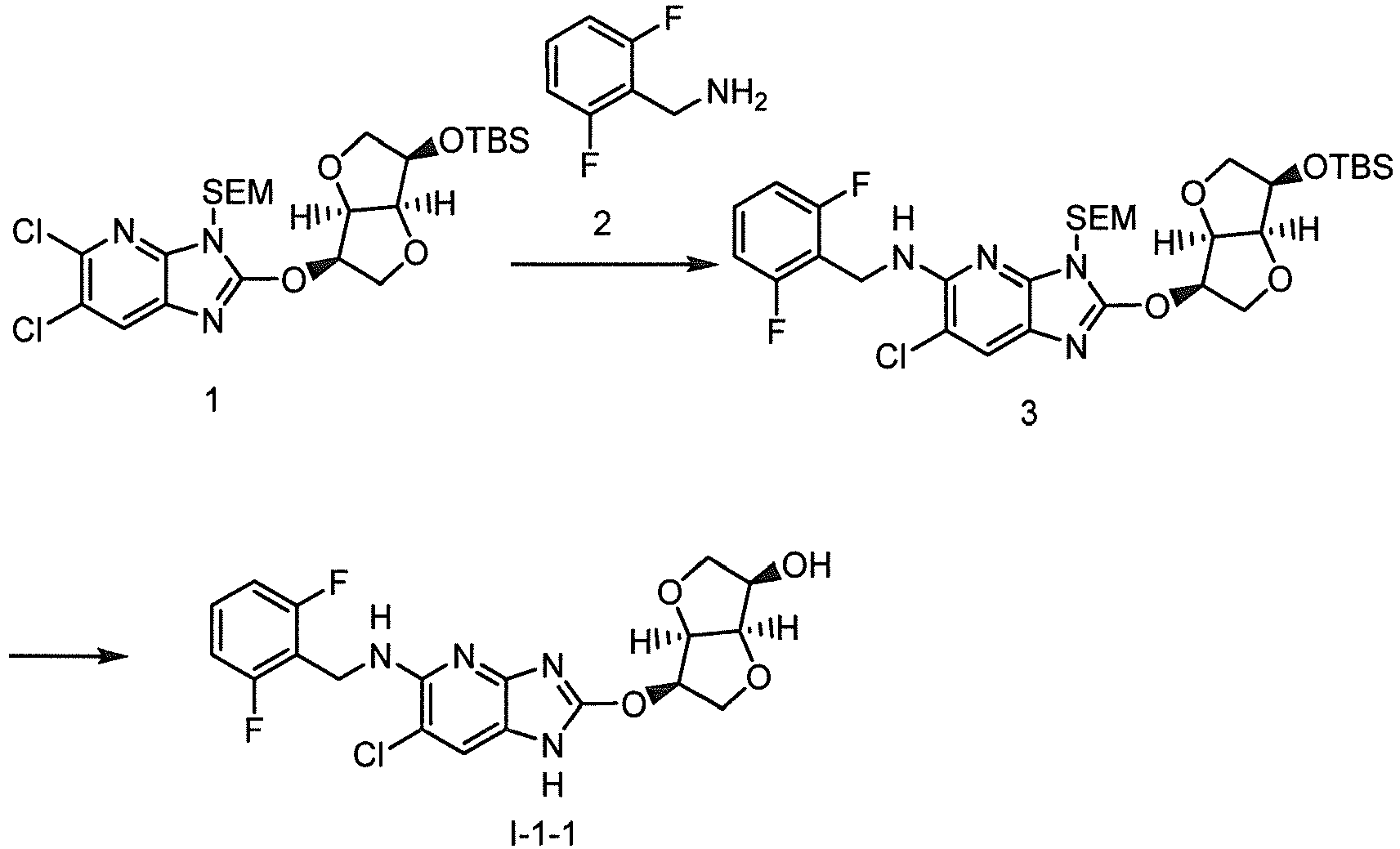
- To a solution of Compound 1 (500 mg, 0.867 mmol) and Compound 2 (161 mg, 1.13 mmol) in toluene (10 mL) were successively added Ruphos (40.5 mg, 0.087 mmol), Pd2(dba)3 (39.7 mg, 0.043 mmol), and NaOt-Bu (167 mg, 1.73 mmol) at room temperature, and the reaction mixture was stirred under microwave irradiation at 120°C for 10 minutes. The reaction mixture was purified by silica gel column chromatography to obtain Compound 3 (274 mg, 0.400 mmol, 46%) as a colorless oil. Compound 3; Retention time = 3.30 min, Mass(M+H) = 683.35, Method = C
- To Compound 3 (274 mg, 0.400 mmol) was added a solution of TBAF in THF (1 M solution, 6.00 mL, 6.00 mmol), and the reaction mixture was stirred at 80°C for 6 hours. The reaction mixture was purified by silica gel column chromatography and then solidified with hexane/ethyl acetate to obtain Compound I-1-1 (81.4 mg, 0.186 mmol, 46%) as a white solid.
- Compound I-1-1; 1H-NMR (DMSO-D6)δ: 3.39-3.42 (m, 1H), 3.76-3.81 (m, 2H), 4.09-4.12 (m, 2H), 4.34 (t, J = 4.9 Hz, 1H), 4.63 (d, J = 5.5 Hz, 2H), 4.77 (t, J = 4.9 Hz, 1H), 4.95 (d, J = 6.8 Hz, 1H), 5.32-5.34 (m, 1H), 6.10 (s, 1H), 7.02-7.08 (m, 2H), 7.31-7.39 (m, 1H), 7.62 (s, 1H).
-

- To a solution of Compound 1 (500 mg, 0.867 mmol) and Compound 4 (155 mg, 1.13 mmol) in toluene (10 mL) were successively added Ruphos (40.5 mg, 0.087 mmol), Pd2(dba)3 (39.7 mg, 0.043 mmol), and NaOt-Bu (167 mg, 1.73 mmol) at room temperature, and the reaction mixture was stirred under microwave irradiation at 120°C for 10 minutes. The reaction mixture was purified by silica gel column chromatography to obtain Compound 5 (274 mg, 0.404 mmol, 47%) as a yellow oil.
- Compound 5; Retention time = 3.26 min, Mass(M+H) = 677.45, Method = C
- To a solution of Compound 5 (245 mg, 0.362 mmol) in dichloromethane (1.2 mL) was added trifluoroacetic acid (1.2 mL, 15.8 mmol), and the reaction mixture was stirred at 0°C for 1 hour. Under ice cooling, the reaction mixture was quenched with a saturated aqueous solution of sodium hydrogencarbonate, and then extracted with ethyl acetate. The solvent was removed under reduced pressure, and the obtained crude product (196 mg), containing Compound 6, was used directly in the next reaction.
- To a solution of the crude product (196 mg) in THF (1.6 mL) were added pyridine (0.069 mL, 0.857 mmol) and benzoyl chloride (0.066 mL, 0.571 mmol), and the mixture was stirred at 50°C for 5 hours. A crude product (86.7 mg), containing Compound 7, was obtained and used directly in the next reaction.
- To the crude product (86.7 mg) was added a solution of TBAF in THF (1 M solution, 1.97 mL, 1.97 mmol), and the reaction mixture was stirred at 80°C for 4 hours. The reaction mixture was purified by silica gel column chromatography and then solidified with hexane/ethyl acetate to obtain Compound I-1-2 (20.7 mg, 0.050 mmol, 14% in 3 steps) as a white solid.
Compound I-1-2; 1H-NMR (DMSO-D6)δ: 3.77-3.78 (m, 1H), 3.90-3.91 (m, 1H), 4.10-4.12 (m, 2H), 4.35 (s, 1H), 4.82 (s, 1H), 5.01-5.02 (m, 1H), 5.44-5.46 (m, 1H), 7.52-7.54 (m, 2H), 7.59-7.60 (m, 1H), 7.94-7.97 (m, 3H), 10.51 (s, 1H). -

- Toluene (1 mL) was added to a mixture of Compound 1 (50 mg, 0.087 mmol), Pd(OAc)2 (1.947 mg, 0.00867 mmol), BINAP (5.40 mg, 0.00867 mmol), K2CO3 (41.9 mg, 0.303 mmol), and aniline (9.50 µL, 0.104 mmol), and the reaction mixture was stirred under microwave irradiation at 150°C for 30 minutes. Water was added to the reaction mixture, which was then extracted with ethyl acetate. The solvent was removed under reduced pressure. The obtained residue was purified by silica gel column chromatography to obtain Compound 8 (36 mg, 0.057 mmol, 66%) as a colorless oil.
- Compound 8 ; 1H-NMR (CDCl3)δ: -0.09 (9H, s), 0.13 (6H, d, J = 6.8 Hz), 0.89-0.96 (2H, m), 0.92 (9H, s), 3.61-3.72 (3H, m), 3.84 (1H, t, J = 7.7 Hz), 4.07-4.20 (2H, m), 4.30 (1H, dd, J = 12.7, 7.4 Hz), 4.41 (1H, t, J = 4.3 Hz), 4.92 (1H, t, J = 4.9 Hz), 5.45 (2H, s), 5.45-5.51 (1H, m), 6.96-7.05 (2H, m), 7.32 (2H, t, J = 7.2 Hz), 7.69 (2H, d, J = 7.8 Hz), 7.71 (1H, s).
Retention time = 3.40 min, Mass (M+H) = 633.15, Method = C. - To a solution of Compound 8 (36 mg, 0.057 mmol) in methylene chloride (360 µL) was added TFA (360 µL), and the reaction mixture was stirred at room temperature for 18 hours. After the raw material was observed to have disappeared, THF and a 2 mol/L solution of sodium hydroxide were added to the reaction mixture, which was then stirred at room temperature for 3 hours. After that, the reaction mixture was quenched with a saturated aqueous solution of sodium hydrogencarbonate and extracted with ethyl acetate, and the solvent was removed under reduced pressure. The obtained residue was purified by reverse-phase column chromatography to obtain Compound I-1-3 (2.2 mg, 0.00566 mmol, 10%).
Compound I-1-3 ; 1H-NMR (DMSO-D6)δ: 3.40-3.47 (1H, m), 3.78 (2H, t, J = 7.7 Hz), 4.12 (2H, dd, J= 15.6, 8.8 Hz), 4.36 (1H, t, J = 4.0 Hz), 4.78 (1H, t, J = 4.6 Hz), 4.88-4.96 (1H, m), 5.33 (1H, dd, J= 12.0, 6.8 Hz), 6.81-6.91 (1H, m), 7.22 (2H, t, J = 7.5 Hz), 7.57-7.68 (1H, m), 7.58 (2H, d, J = 8.5 Hz), 7.73-7.90 (1H, m).
Retention time = 1.70 min, Mass (M+H) = 389.10, Method = C. -

- Compound 9 (203 mg, 0.928 mmol) was dissolved in dichloromethane (4 mL), to which were then added carbon tetrabromide (462 mg, 1.39 mmol) and triphenylphosphine (365 mg, 1.39 mmol) at room temperature, and the resulting mixture was stirred at room temperature for 1.5 hours. The reaction mixture was concentrated, and the obtained residue was purified by silica gel column chromatography to obtain Compound 10 (248 mg, 95.2%) as a colorless oily material.
- Compound 10 (248 mg, 0.883 mmol) was dissolved in 1,4-dioxane (2.5 mL), to which was then added thiourea (74.0 mg, 0.972 mmol), and the resulting mixture was heated under reflux for 1 hour and 12 minutes. After that, a 2 mol/L aqueous solution of sodium hydroxide (0.530 mL, 1.06 mmol) was added to the reaction mixture, which was then heated under reflux for another 50 minutes. The reaction mixture was cooled to room temperature and diluted in water, followed by addition of potassium hydrogensulfate (241 mg, 1.77 mmol) and extraction with hexane. The extract was washed with water and concentrated, and the obtained residue was purified by silica gel column chromatography to obtain Compound 12 (193 mg, 93.0%) as a colorless oily material.
- Compound 12; 1H-NMR (CDCl3)δ: 1.95 (1H, t, J = 8.0 Hz), 3.69-3.74 (4H, m), 4.07 (2H, t, J = 4.0 Hz), 6.48 (2H, d, J = 8.8 Hz).
- Compound 12 (184 mg, 0.785 mmol) and Compound 13 (184 mg, 0.785 mmol) were dissolved in DMF (4 mL), to which was then added 60% sodium hydride (37.7 mg, 0.943 mmol), and the resulting mixture was stirred at room temperature for 2 hours. The reaction mixture was quenched with a saturated aqueous solution of ammonium chloride, and extracted with ethyl acetate. The extract was washed with water and concentrated, and the obtained residue was purified by silica gel column chromatography to obtain Compound 14 (247 mg, 78.7%) as a white powder.
- Compound 14; 1H-NMR (CDCl3)δ: 1.70-1.87 (3H, m), 2.05-2.18 (3H, m), 3.44 (3H, s), 3.73 (2H, t, J = 4.5 Hz), 3.78-3.87 (1H, m), 4.07 (2H, t, J = 4.5 Hz), 4.19-4.22 (1H, m), 4.46-4.57 (2H, m), 5.89 (1H, d, J = 10.2 Hz), 6.49 (2H, d, J = 9.3 Hz), 7.95 (1H, s), 8.17 (1H, s).
- To a solution of Compound 14 (249 mg, 0.530 mmol) in THF (2.5 mL) was added hexachloroethane (144 mg, 0.610 mmol), and the solution was cooled to -45°C. To the cooled solution was added dropwise a 1 mol/L solution of hexamethyldisilazide in toluene (0.530 mL, 0.530 mmol), and at that temperature, the resulting mixture was stirred for 1.5 hours. The reaction mixture was quenched with a saturated aqueous solution of ammonium chloride, and extracted with ethyl acetate. The extract was washed with water and concentrated, and the obtained residue was purified by silica gel column chromatography to obtain Compound 15 (188 mg, 70.4%) as a white powder.
- Compound 15; 1H-NMR (CDCl3)δ: 1.63-1.96 (4H, m), 2.13-2.16 (1H, m), 3.00-3.06 (1H, m), 3.44 (3H, s), 3.73-3.79 (3H, m), 4.08 (2H, t, J = 4.5 Hz), 4.17-4.25 (1H, m), 4.44-4.58 (2H, m), 5.83 (1H, t, J = 5.5 Hz), 6.51 (2H, d, J = 9.2 Hz), 7.83 (1H, s).
- To a solution of Compound 15 (105 mg, 0.208 mmol) and Compound 16 (65.1 mg, 0.250 mmol) in THF (4 mL) was added potassium tert-butoxide (26.9 mg, 0.239 mmol), and the resulting mixture was stirred at room temperature for 6 hours. The reaction mixture was quenched with a saturated aqueous solution of ammonium chloride, and extracted with ethyl acetate. The extract was washed with water and concentrated, and the obtained residue was purified by silica gel column chromatography to obtain Compound 17 (188 mg, 70.4%) as a white powder.
- Compound 17; 1H-NMR (CDCl3)δ: 0.07-0.15 (6H, m), 0.84-0.97 (11H, m), 1.43-1.92 (9H, m), 2.04-2.14 (1H, m), 2.80-3.13 (1H, m), 3.44 (3H, s), 3.61-4.54 (16H, m), 4.90-4.94 (1H, m), 5.30 (3H, s), 5.47-5.53 (1H, m), 5.62-5.76 (1H, m), 6.45-6.52 (2H, m), 7.63 (1H, s).
- To a solution of Compound 17 (67.0 mg, 0.092 mmol) in 80% aqueous methanol (2 mL) was added pyridinium p-toluenesulfonate (23.1 mg, 0.092 mmol), and the mixture was heated under reflux for 5 hours. The reaction mixture was concentrated, diluted in water, and extracted with ethyl acetate. The extract was washed with water and concentrated, and the obtained residue was purified by silica gel column chromatography to obtain Compound I-1-4 (29.5 mg, 60.5%) as a white powder.
- Compound I-1-4; 1H-NMR (CDCl3)δ: 3.30-3.46 (4H, m), 3.64 (2H, s), 3.72-3.85 (1H, m), 3.85-3.96 (1H, m), 4.06-4.22 (4H, m), 4.33-4.37 (1H, m), 4.41 (2H, t, J = 9.7 Hz), 4.80-4.88 (1H, m), 4.97-5.06 (1H, m), 5.46 (1H, tt, J = 10.4, 3.7 Hz), 6.79-6.87 (2H, m), 7.79-7.90 (1H, m), 12.59-13.06 (1H, m).
-

- To a solution of Compound 17 (88.1 mg, 0.121 mmol) in dichloromethane (2 mL) was added 70% mCPBA (60.5 mg, 0.242 mmol), and the reaction mixture was stirred at room temperature for 20 hours. The reaction mixture was quenched with a 10% aqueous solution of sodium thiosulfate, and extracted with ethyl acetate. The extract was washed with saturated aqueous sodium bicarbonate and water and concentrated, and the obtained residue was purified by silica gel column chromatography to obtain Compound 18 (80.4 mg, 87.4%) as a white powder.
- Compound 18; LC-MS:RT= 2.82, M+H= 760.20, Method C.
- To a solution of Compound 18 (80.4 mg, 0.106 mmol) in 80% aqueous methanol (2.4 mL) was added pyridinium p-toluenesulfonate (26.6 mg, 0.106 mmol), and the mixture was heated under reflux for 5 hours. The reaction mixture was concentrated, diluted in water, and extracted with ethyl acetate. The extract was washed with water and concentrated, and the obtained residue was purified by silica gel column chromatography to obtain Compound I-1-5 (45.6 mg, 76.7%) as a white powder.
- Compound I-1-5; 1H-NMR (DMSO-D6)δ: 3.27 (3H, s), 3.36-3.48 (1H, m), 3.59-3.66 (2H, m), 3.78 (1H, t, J = 7.4 Hz), 3.95 (1H, dd, J = 9.8, 5.4 Hz), 4.08-4.18 (4H, m), 4.36 (1H, t, J = 4.7 Hz), 4.78-4.89 (3H, m), 5.03 (1H, d, J = 6.7 Hz), 5.51 (1H, q, J = 5.6 Hz), 6.80 (2H, t, J = 10.5 Hz), 8.06-8.15 (1H, m), 13.41-13.56 (1H, m).
-
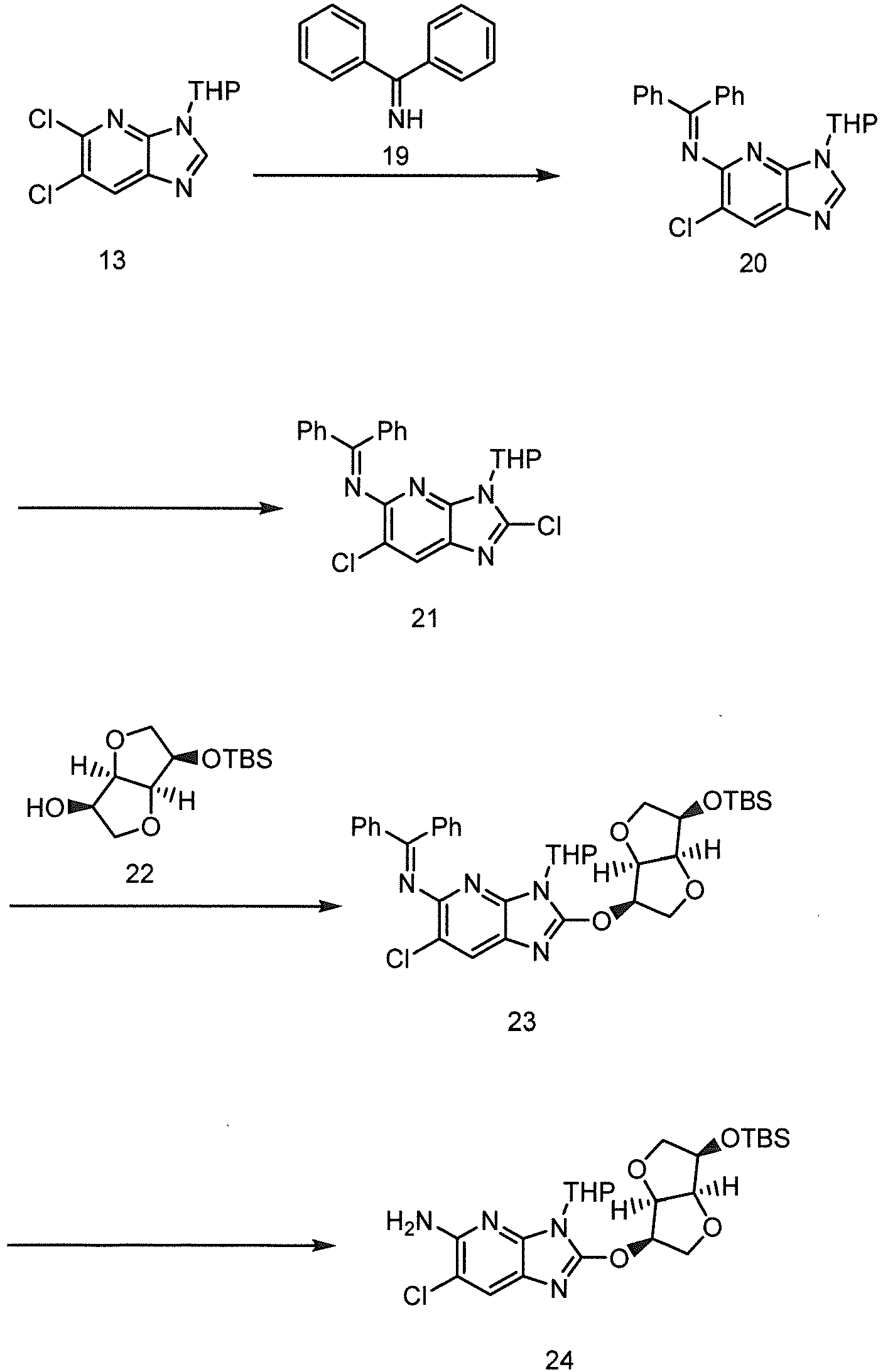
The obtained residue was purified by silica gel column chromatography, and then crystallized from ethyl acetate (2 mL) and hexane (10 mL) to obtain Compound 20 (29.5 mg, 60.5%) as yellow crystals. - Compound 20; 1H-NMR (DMSO-D6)δ: 1.61-1.66 (4H, m), 1.91 (1H, dd, J = 12.3, 0.8 Hz), 2.03-2.13 (1H, m), 3.59-3.66 (1H, m), 3.96-4.01 (1H, m), 5.50 (1H, d, J = 10.8 Hz), 7.19 (2H, d, J = 15.8 Hz), 7.29 (3H, s), 7.53 (2H, t, J = 6.7 Hz), 7.58-7.65 (1H, m), 7.71-7.80 (2H, m), 8.17 (1H, s), 8.45 (1H, s).
- To a solution of Compound 20 (1.00 mg, 2.40 mmol) in THF (10 mL) was added hexachloroethane (596 mg, 2.52 mmol), and the solution was cooled to -50°C. To the cooled solution was added dropwise a 1 mol/L solution of hexamethyldisilazide in toluene (2.64 mL, 2.64 mmol) over 10 minutes, and at that temperature, the resulting mixture was stirred for 10 minutes. The reaction mixture was quenched with water, and then extracted with ethyl acetate. The extract was washed with water, filtered, and concentrated, and the obtained residue was purified by suspension in ethyl acetate (15 mL) and hexane (30 mL) to obtain Compound 21 (937 mg, 82.5%) as a white powder.
- Compound 21; 1H-NMR (DMSO-D6)δ: 1.46-1.67 (4H, m), 1.86-1.88 (1H, m), 2.52-2.55 (6H, m), 3.57-3.63 (1H, m), 3.98 (1H, d, J = 11.3 Hz), 5.50 (1H, d, J = 10.8 Hz), 7.16 (2H, s), 7.31 (3H, s), 7.54 (2H, t, J = 7.0 Hz), 7.63 (1H, dt, J = 10.0, 2.2 Hz), 7.77 (2H, d, J = 7.0 Hz), 8.17 (1H, d, J = 5.3 Hz).
- To a solution of Compound 21 (200 mg, 0.443 mmol) and Compound 22 (150 mg, 0.576 mmol) in THF (4 mL) was added potassium tert-butoxide (64.6 mg, 0.576 mmol), and the resulting mixture was stirred at room temperature for 2 hours. Similarly, to a solution of Compound 21 (727 mg, 1.61 mmol) and Compound 22 (545 mg, 2.09 mmol) in THF (14.5 mL) was added potassium tert-butoxide (235 mg, 2.09 mmol), and the resulting mixture was stirred at room temperature for 40 minutes. These two reaction mixtures were combined, quenched with water, and extracted with ethyl acetate. The extract was washed with water, filtered, and concentrated, and the obtained residue was purified by suspension in ethyl acetate (2 mL) and hexane (4 mL) to obtain Compound 23 (714 mg, 51.5%) as white crystals. In addition, the mother liquid was concentrated, and the obtained residue was purified by silica gel column chromatography to obtain Compound 23 (650.8 mg, 46.9%) as a white powder. Compound 23; 1H-NMR (DMSO-D6)δ: 0.01 (3H, d, J = 5.8 Hz), 0.03 (3H, s), 0.81 (9H, d, J = 4.5 Hz), 0.99-1.85 (5H, m),2.26-2.49 (1H, m), 3.11 (2H, d, J = 5.0 Hz),3.68-3.73 (1H, m), 3.85-3.99 (3H, m), 4.17-4.31 (2H, m), 4.71 (1H, q, J = 5.5 Hz), 5.21-5.25 (1H, m), 5.31-5.34 (1H, m),7.08 (2H, dd, J = 2.5, 2.0 Hz), 7.25 (3H, d, J = 0.5 Hz), 7.46 (2H, t, J = 7.4 Hz), 7.55 (1H, dd, J = 9.2, 5.1 Hz), 7.69 (2H, d, J = 7.5 Hz), 7.80 (1H, s).
- To a solution of Compound 23 (214 mg, 0.317 mmol) in methanol (8 mL) was added a 50% aqueous solution of hydroxylamine (41.9 mg, 0.635 mmol), and the mixture was stirred at room temperature for 1 hour. The reaction mixture was diluted in THF (4 mL) and methanol (1 mL), followed by heating under reflux for 6 hours. In order to further increase the reaction temperature, the reaction mixture was concentrated, followed by addition of ethanol (4 mL). The resulting mixture was heated at reflux for 1.5 hours. The reaction mixture was cooled to room temperature, and extracted with ethyl acetate. The extract was washed with water and concentrated, and the obtained residue was purified by silica gel column chromatography to obtain Compound 24 (127.2 mg, 78.4%) as a yellow powder.
- Compound 24; LC-MS:RT= 2.63, M+H= 511.15 Method C.
-

- To a solution of Compound 24 (100 mg, 0.196 mmol) in DMF (1 mL) were added 2-(bromomethyl)-1-fluoro-3-methylbenzene (51.6 mg, 0.254 mmol) and cesium carbonate (96 mg, 0.293 mmol), and the reaction mixture was stirred at 80°C for 6 hours. The reaction mixture was quenched with water, and then extracted with ethyl acetate. The solvent was removed under reduced pressure. The obtained residue was purified by silica gel column chromatography to obtain Compound 25 (68.1 mg, 0.108 mmol, 55%) as a white solid.
Compound 25; Retention time = 3.18 min, Mass(M+H) = 633.1, Method = C - To a solution of Compound 25 (68.1 mg, 0.108 mmol) in a mixture of methanol (1 mL) and water (0.2 mL) was added PPTS (54.1 mg, 0.215 mmol), and the reaction mixture was stirred at 80°C for 5 hours. The reaction mixture was concentrated, and then purified by reverse-phase column chromatography to obtain Compound I-1-6 (36.7 mg, 0.084 mmol, 79%) as a white solid.
- Compound I-1-6; Retention time = 1.91 min, Mass(M+H) = 434.95, Method = C
-

- To a solution of Compound 24 (100 mg, 0.196 mmol) in methanol (2 mL) were added 2-fluoro-6-hydroxybenzaldehyde (32.9 mg, 0.254 mmol) and acetic acid (0.2 mL), and the reaction mixture was stirred at room temperature for 30 minutes. After that, 2-picoline-borane Complex (25.1 mg, 0.235 mmol) was added to the reaction mixture, which was then stirred for 2 hours. The reaction mixture was quenched with water, and extracted with ethyl acetate. The solvent was removed under reduced pressure. The obtained residue was purified by silica gel column chromatography to obtain a crude product (135.9 mg), containing Compound 26, which was used directly in the next reaction.
Compound 26; Retention time = 2.96 min, Mass(M+H) = 635.3, Method = C - To a solution of the crude product 26 (135.9 mg) in a mixture of methanol (1 mL) and water (0.2 mL) was added PPTS (108 mg, 0.428 mmol), and the reaction mixture was stirred at 80°C for 5 hours. The reaction mixture was concentrated, and then purified by reverse-phase column chromatography to obtain Compound I-2-1 (56.6 mg, 0.130 mmol, 61%) as a white solid.
Compound I-2-1; Retention time = 1.59 min, Mass(M+H) = 437.15, Method = C -

- To a solution of Compound 27 (500 mg, 2.97 mmol) in DMF (5 mL) were added 1-bromo-2-methoxyethane (0.307 mL, 3.27 mmol) and potassium carbonate (534 mg, 3.87 mmol), and the reaction mixture was stirred at 80°C for 3 hours. The reaction mixture was quenched with water, and extracted with ethyl acetate. The solvent was removed under reduced pressure. The obtained residue was purified by silica gel column chromatography to obtain Compound 28 (530 mg, 2.34 mmol, 79%) as a white solid.
Compound 28; Retention time = 1.48 min, Mass(M+H) = 226.9, Method = C - To a solution of Compound 28 (200 mg, 0.884 mmol) in ethanol (2 mL) were added O-methoxyhydroxylamine hydrochloride (148 mg, 1.77mmol) and sodium acetate (145 mg, 1.77 mmol), and the reaction mixture was stirred overnight at 85°C. The reaction mixture was quenched with water, and extracted with ethyl acetate. The solvent was removed under reduced pressure. The obtained residue was filtered, washed with hexane, and then dried to obtain Compound 29 (221 mg, 0.867 mmol, 98%) as a white solid.
Compound 29; Retention time = 1.87 min, Mass(M+H) = 256.25, Method = C - To Compound 29 (171 mg, 0.672 mmol) was added BH3 in THF (2.92 mL, 2.69 mmol, 0.92 M), and the reaction mixture was stirred at 50°C for 7 hours. MeOH was added to the reaction mixture, which was then stirred for a while. After that, the reaction mixture was quenched with a 2 N aqueous solution of NaOH, and extracted with ethyl acetate. The solvent was removed under reduced pressure. The obtained residue was purified by silica gel column chromatography to obtain Compound 30 (55.4 mg, 0.244 mmol, 36%) as a colorless oil.
Compound 30; Retention time = 0.85 min, Mass(M+H) = 210.95, Method = C
- To a solution of Compound 31 (100 mg, 0.632 mmol) in DMF (1 mL) was added 60% NaH (32.9 mg, 0.882 mmol) at 0°C, and the reaction mixture was stirred for 10 minutes. After that, methyl iodide (0.047 mL, 0.759 mmol) was added at 0°C to the reaction mixture, which was then stirred at room temperature for 1 hour. The reaction mixture was quenched with water, filtered through Celite, and then extracted with ethyl acetate. The solvent was removed under reduced pressure. The obtained residue was purified by silica gel column chromatography to obtain Compound 32 (27 mg, 0.157 mmol, 25%) as a white solid.
Compound 32; Retention time = 1.32 min, Mass(M+H) = 173.0, Method = C - To a solution of Compound 32 (27 mg, 0.157 mmol) in THF (1 mL) was added LAH (11.9 mg, 0.314 mmol) at 0°C, and the reaction mixture was stirred for 1 hour. The reaction mixture was quenched with water, filtered through Celite, and then extracted with ethyl acetate. The solvent was removed under reduced pressure to obtain Compound 33 (12.7 mg, 0.098 mmol, 62%) as a white solid.
Compound 33; Retention time = 0.63min, Mass(M+H) = 131.0, Method = C - To a solution of Compound 33 (12.7 mg, 0.098 mmol) in THF (1 mL) was added manganese dioxide (85 mg, 0.976 mmol), and the reaction mixture was stirred at room temperature for 2 hours. The reaction mixture was filtered through Celite, and washed with ethyl acetate to obtain a crude product (8.4 mg), containing Compound 34, which was then used directly in the next reaction.
- To a solution of Compound 24 (27.9 mg, 0.055 mmol) in methanol (1 mL) were added the crude product (8.4 mg) and acetic acid (0.1 mL), and the reaction mixture was stirred at room temperature for 30 minutes. After that, 2-picoline-borane complex (7.0mg, 0.066 mmol) was added to the reaction mixture, which was then stirred overnight. The reaction mixture was quenched with water and extracted with ethyl acetate. The solvent was removed under reduced pressure to obtain a crude product (34 mg), containing Compound 35, which was then used directly in the next reaction.
- To a solution of the crude product (34 mg) in a mixture of MeOH (1 mL) and water (0.1 mL) was added PPTS (27.5 mg, 0.109 mmol), and the reaction mixture was stirred at 80°C for 4 hours. The reaction mixture was concentrated, and then purified by reverse-phase column chromatography to obtain Compound I-2-2 (1.7 mg, 0.004 mmol, 7%) as a colorless amorphous material.
Compound I-2-2; Retention time = 1.36 min, Mass(M+H) = 425.0, Method = C - The compounds shown below were synthesized in a similar way. The measurement results of NMR or LC/MS of the respective compounds are shown.
[Table 1] No. Structure NMR(δ) retention time Mass (M+H) Method I-1-7 
1H-NMR (DMSO-D6) δ: 3.73-3.81 (m, 2H), 4.07-4.13 (m, 2H), 4.33 (t, J = 4.6 Hz, 1H), 4.58 (d, J = 6.0 Hz, 2H), 4.75 (t, J = 4.6 Hz, 1H), 4.95 (d, J = 6.8 Hz, 1H), 5.28-5.31 (m, 1H), 7.18-7.19 (m, 1H), 7.27-7.28 (m, 4H), 7.62 (s, 1H). 1.7 403.1 C I-1-8 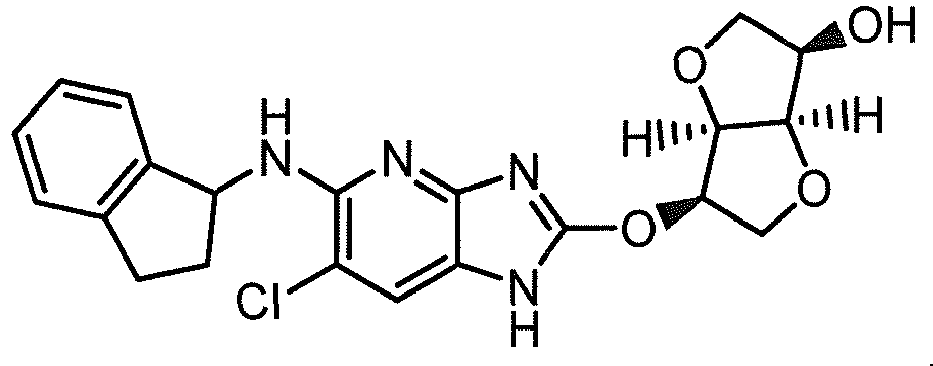
1H-NMR (DMSO-D6) δ: 1.99-2.01 (m, 1H), 2.79-2.87 (m, 1H), 2.96-2.99 (m, 1H), 3.76-3.84 (m, 2H), 4.09-4.11 (m, 2H), 4.35 (s, 1H), 4.79 (s, 1H), 5.02 (d, J = 6.1 Hz, 1H), 5.34 (d, J = 5.3 Hz, 1H), 5.60-5.62 (m, 1H), 5.99 (s, 1H), 7.16-7.25 (m, 5H), 7.66 (s, 1H). 1.93 429.2 C I-1-9 
0.98 405.6 B I-1-10 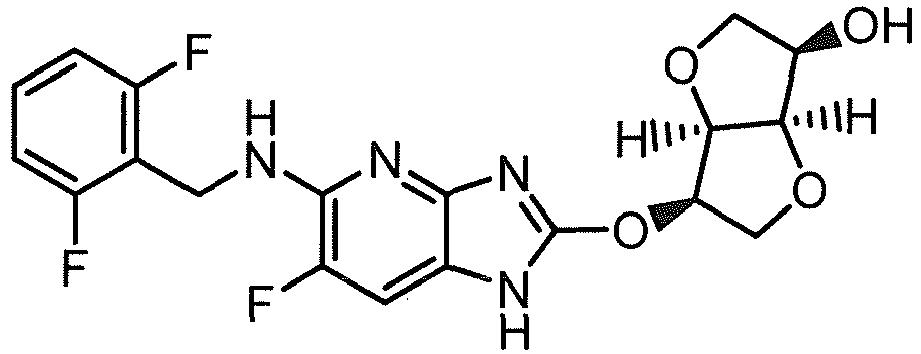
1.58 423.2 C I-1-11 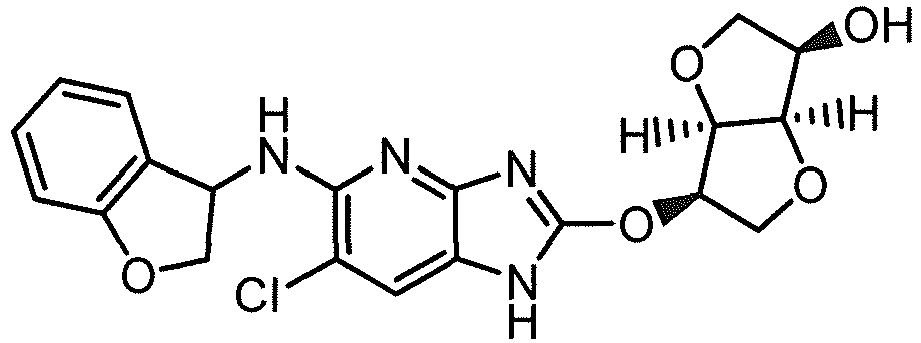
1 H-NMR (DMSO-D6) δ: 3.42 (t, J = 8.5 Hz, 1H), 3.76-3.85 (m, 2H), 4.08-4.17 (m, 2H), 4.34-4.42 (m, 2H), 4.78-4.79 (m, 2H), 4.95 (d, J = 6.5 Hz, 1H), 5.35-5.36 (m, 1H), 5.77-5.78 (m, 1H), 6.10 (s, 1H), 6.83-6.88 (m, 2H), 7.20 (t, J = 7.8 Hz, 1H), 7.38 (d, J = 7.0 Hz, 1H), 7.66 (s, 1H). 1.75 431.15 C [Table 2] I-1-12 
1H-NMR (DMSO-D6) δ: 3.76-3.78 (m, 1H), 3.84-3.87 (m, 1H), 4.08-4.17 (m, 2H), 4.34-4.36 (m, 3H), 4.80 (t, J = 5.0 Hz, 1H), 4.98 (d, J = 6.7 Hz, 1H), 5.39 (q, J = 5.9 Hz, 1H), 7.23-7.25 (m, 1H), 7.30-7.37 (m, 4H), 7.80 (s, 1H). 1.86 417.2 C I-1-13 
1H-NMR (CDCl3) δ: 2.74 (1H, s), 3.44 (3H, s), 3.71 (3H, s), 3.92-4.16 (4H, m), 4.27-4.41 (2H, m), 4.54-4.75 (3H, m), 4.85-5.14 (2H, m), 5.47-5.67 (1H, m), 6.38-6.79 (2H, m), 7.33-7.67 (1H, m), 8.67-9.16 (1H, m). 1.80 513.1 C I-1-14 
1.98 472.9 C I-1-15 
1.57 499 C I-1-16 
1.95 407 C [Table 3] I-1-17 
1.25 413 C I-1-18 
1.59 431 A I-1-19 
1.93 464.95 C I-1-20 
1.96 464.95 C I-1-21 
1.31 452.95 C [Table 4] I-1-22 
1.95 431 C I-1-23 
1.47 397.05 C I-1-24 
1.91 447 C I-1-25 
1.91 447 C I-1-26 
1.54 454.9 C [Table 5] I-1-27 
1.58 430 C I-1-28 
1.95 452.95 C I-1-29 
1.87 466.95 C I-1-30 
1.87 466.95 C I-1-31 
1.72 437.95 C [Table 6] I-1-32 
1.79 456.9 C I-1-33 
1.65 381.1 B I-1-34 
1.95 452.95 C I-1-35 
1.95 452.95 C I-1-36 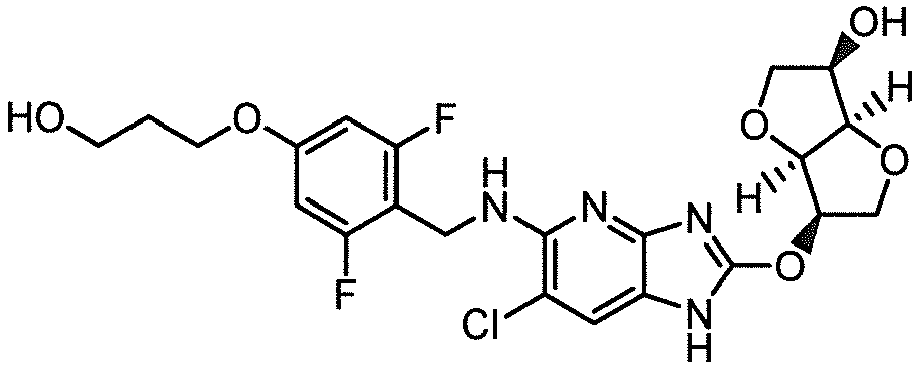
1.62 513.05 C [Table 7] I-1-37 
1.55 431.1 B I-1-38 
1.85 521 C I-1-39 
1.69 519 C I-1-40 
1.32 487.05 C I-1-41 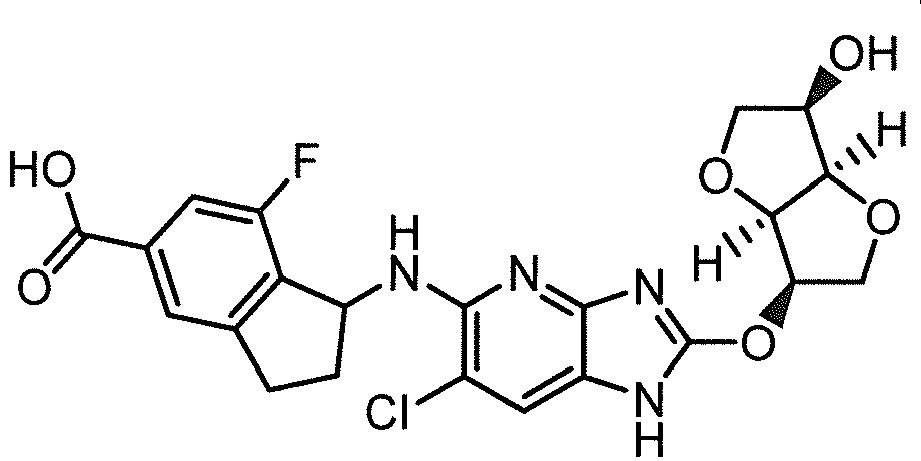
1.41 491.15 C [Table 8] I-1-42 
1.91 497 C I-1-43 
2.03 481.15 C I-1-44 
1.45 481 A I-1-45 
1.90 493 A I-1-46 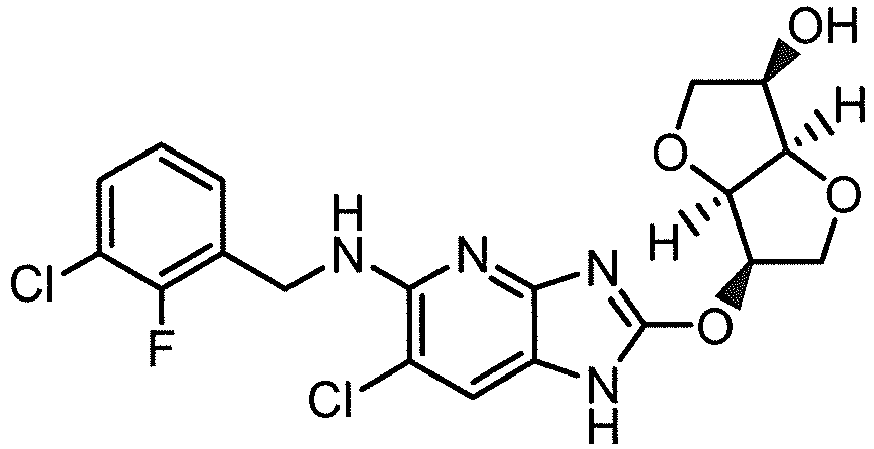
1.91 455 A [Table 9] I-1-47 
1.78 439 A I-1-48 
1.98 471 A I-1-49 
1.75 439 A I-1-50 
0.78 422 A I-1-51 
2.04 443 A [Table 10] I-1-52 
1.59 409 A I-1-53 
0.75 404 A I-1-54 
0.74 404 A I-1-55 
0.74 404 A I-1-56 
1.49 367 A [Table 11] I-1-57 
2.09 427 A I-1-58 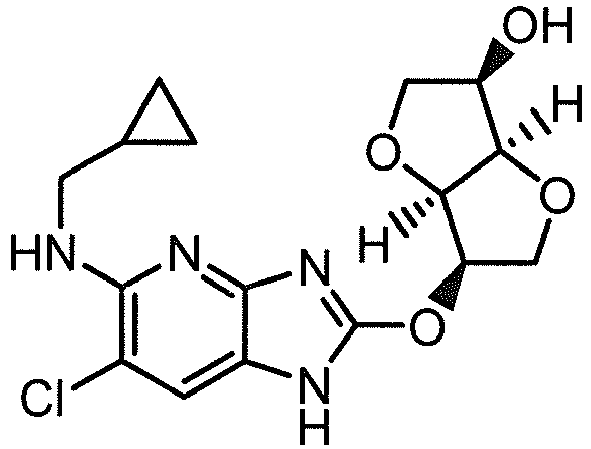
1.46 367 A I-1-59 
2.03 409 A I-1-60 
1.13 407 A I-1-61 
1.16 472 A [Table 12] I-1-62 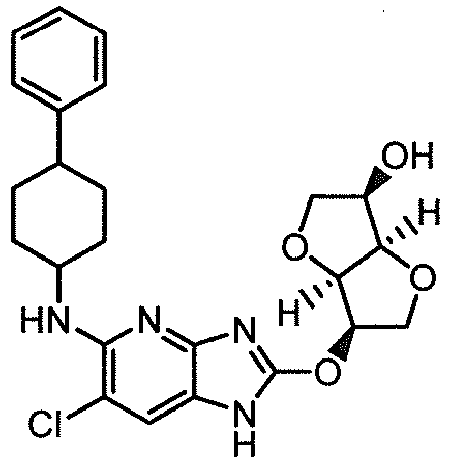
2.29 471 A I-1-63 
1.94 458 A I-1-64 
1.49 440 A I-1-65 
1.87 433 A I-1-66 
2.00 431 A [Table 13] I-1-67 
1.87 433 A I-1-68 
2.15 445 A I-1-69 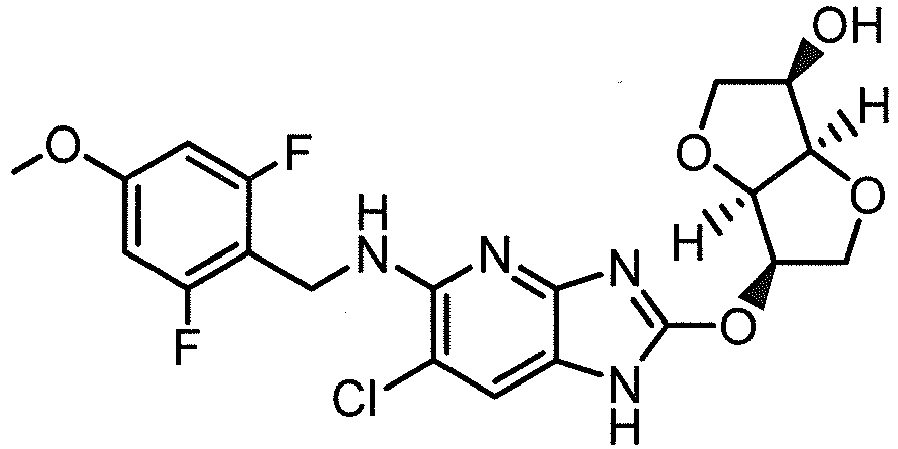
1.89 469 A I-1-70 
2.07 519 A I-1-71 
1.86 451 A [Table 14] I-1-72 
1.45 433 A I-1-73 
1.99 471 A I-1-74 
1.88 439 A I-1-75 
0.79 430 A I-1-76 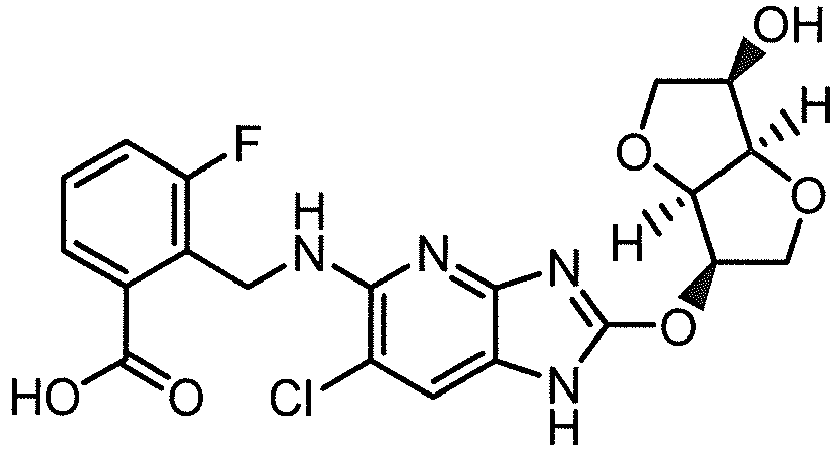
1.33 465 A [Table 15] I-1-77 
1.37 447 A I-1-78 
1.27 435 A I-1-79 
1.48 467 A I-1-80 
1.57 467 A I-1-81 
1.25 451 A [Table 16] I-1-82 
1.91 473 A I-1-83 
1.33 485 A I-1-84 
1.46 469 A I-1-85 
1.31 460 A I-1-86 
1.47 469 A [Table 17] I-1-87 
1.55 510 A I-1-88 
1.27 447 A I-1-89 
1.25 435 A I-1-90 
2.09 487 A I-1-91 
1.60 485 A [Table 18] I-1-92 
1.36 465 A I-1-93 
1.79 448.95 C I-1-94 
1.79 448.95 C I-1-95 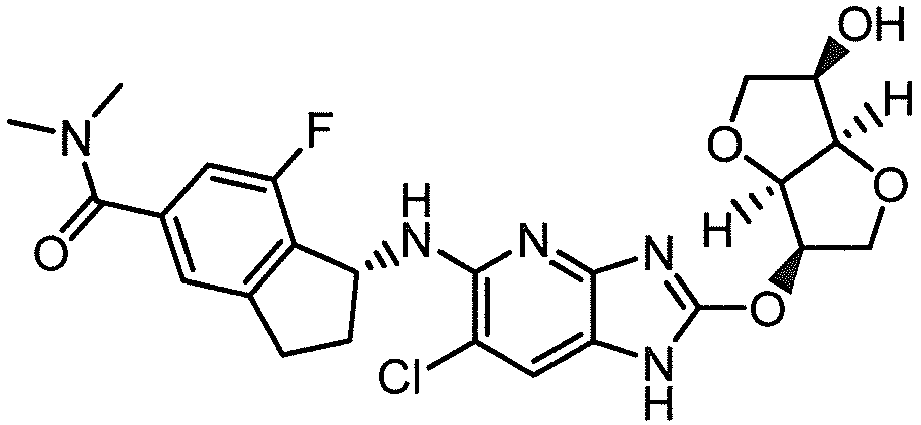
1.56 518 C I-1-96 
1.56 518 C [Table 19] I-1-97 
1.82 560 A I-1-98 
1.67 510 A I-1-99 
1.95 478 A I-1-100 
1.85 453 A [Table 20] I-1-101 
1.96 467 A I-1-102 
1.90 525 A I-1-103 
1.69 496 A I-1-104 
1.59 409 A I-1-105 
1.70 407 A [Table 21] I-1-106 
1.72 469 A I-1-107 
1.63 446 A I-1-108 
2.02 487 A I-1-109 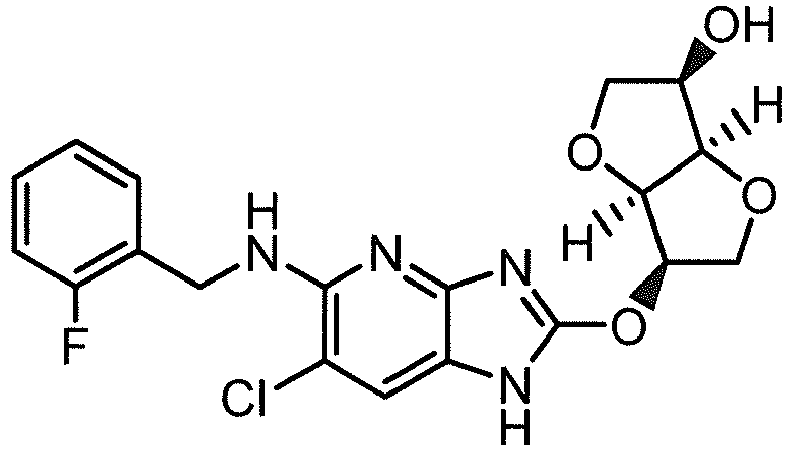
1.72 421 A I-1-110 
1.60 456 A [Table 22] I-1-111 
1.92 501 A I-1-112 
1.87 455 A I-1-113 
1.58 446 A I-1-114 
(CDCl3) δ: 3.69-3.77 (1H, m), 3.79 (3H, s), 3.99-4.05 (2H, m), 4.26-4.50 (4H, m), 4.59-4.62 (1H, m), 4.94 (1H, dt, J = 16.1, 5.0 Hz), 5.54-5.71 (1H, m), 6.79-6.87 (2H, m), 7.31-7.39 (2H, m), 7.47-7.65 (1H, m), 8.71-8.88 (1H, m). 1.94 450.05 C I-1-115 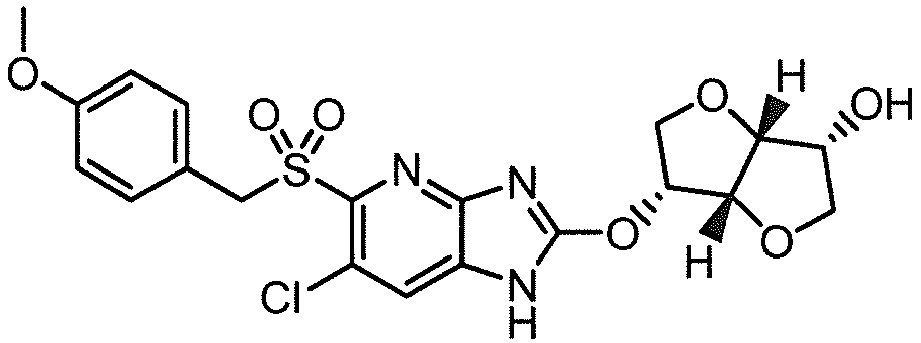
(DMSO-D6) δ: 3.47-3.64 (1H, m), 3.85-3.91 (4H, m), 4.04-4.29 (3H, m), 4.47 (1H, t, J = 4.6 Hz), 4.96 (3H, t, J = 5.1 Hz), 5.14 (1H, d, J = 6.5 Hz), 5.63 (1H, dt, J = 12.4, 2.9 Hz), 7.00 (2H, d, J = 8.4 Hz), 7.37 (2H, d, J = 8.4 Hz), 8.17 (1H, s). 1.50 482.05 C [Table 23] I-1-116 
1.09 430 C I-1-117 
1.35 485 A I-1-118 
1.52 510 A I-1-119 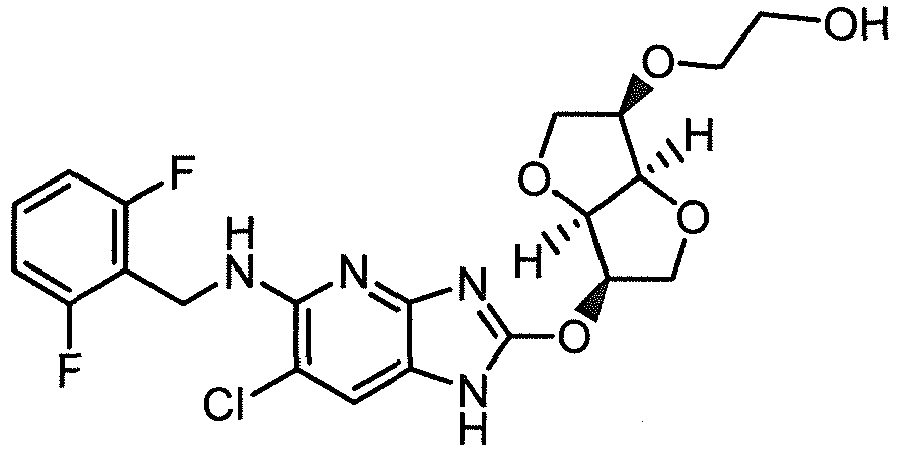
1.70 483 A [Table 24] I-1-120 
1.82 511 A I-1-121 
1.74 497 A I-1-122 
1.96 511 A I-1-123 
2.02 503 A I-1-124 
1.76 495 A [Table 25] I-1-125 
1.83 559 A I-1-126 
1H-NMR (DMSO-D6) δ: 1.56(s, 6H), 1.85(s, 3H), 4.65(d, J=5.4Hz, 2H), 6.23(bs, 1H), 7.06(t, J=7.8Hz, 2H), 7.32-7.40 (m, 1H), 7.42(d, J=8.8Hz, 1H), 7.69(s, 1H), 7.74-7.77 (m, 1H), 8.17 (s, 1H), 8.50 (s, 1H), 12.7 (bs, 1H) 1.95 487 C I-1-127 
1.52 431.95 C I-1-128 
1H-NMR (DMSO-D6) δ:1.17 (s, 6H), 1.60-1.67 (m, 2H), 2.05-2.08 (m, 2H), 3.29-3.34 (m, 2H), 3.43 (s, 2H), 3.87-3.97 (m, 2H), 4.63 (d, J=5.4Hz, 2H), 5.15 (bs, 1H), 6.10 (bs, 1H), 7.02-7.12 (m, 2H), 7.32-7.39 (m, 1H), 7.63(bs, 1H), 12.19 (bs, 1H) 2.00 494.05 C I-1-129 
2.23 479.05 C [Table 26] I-1-130 
1 H-NMR (DMSO-D6) δ: 3.73 (t, J=4.9Hz, 2H), 4.39 (t, J=4.8Hz, 2H), 4.63 (d, J=5.5Hz, 2H), 6.05 (bs, 1H), 7.03-7.09 (m, 2H), 7.32-7.40 (m, 1H), 7.60 (s, 1H) 1.73 354.95 C I-1-131 
1.74 527.05 C I-2-239 1.63 527.25 B I-1-132 
1H-NMR(DMSO-D6) δ: 2.36 (s, 3H), 2.54 (s, 3H), 7.12 (d, J = 31.9 Hz, 1H), 7.33 (d, J = 8.1 Hz, 2H), 7.36-7.43 (m, 2H), 7.48 (dd, J = 8.4, 2.8 Hz, 1H), 7.54 (d, J = 8.1 Hz, 2H), 7.75 (d, J = 2.8 Hz, 1H), 9.71 (br s, 1H), 12.58 (br s, 1H), 13.08 (br s, 1H). I-1-133 
1H-NMR (DMSO-D6) δ: 2.55 (s, 3H), 7.41 (d, J = 8.6 Hz, 1H), 7.48-7.65 (m, 6H), 7.79 (d, J = 2.5 Hz, 1H), 8.01 (d, J = 7.6 Hz, 2H), 9.99 (d, J = 10.1 Hz, 1H), 12.63 (s, 1H), 13.08 (s, 1H). I-1-134 
1 H-NMR (DMSO-D6) δ: 2.54 (s, 3H), 7.13-7.44 (m, 7H), 7.49 (dd, J = 8.4, 2.8 Hz, 1H), 7.61 (s, 1H), 7.77 (d, J = 2.8 Hz, 1H), 12.68 (s, 1H), 13.09 (s, 1H). I-1-135 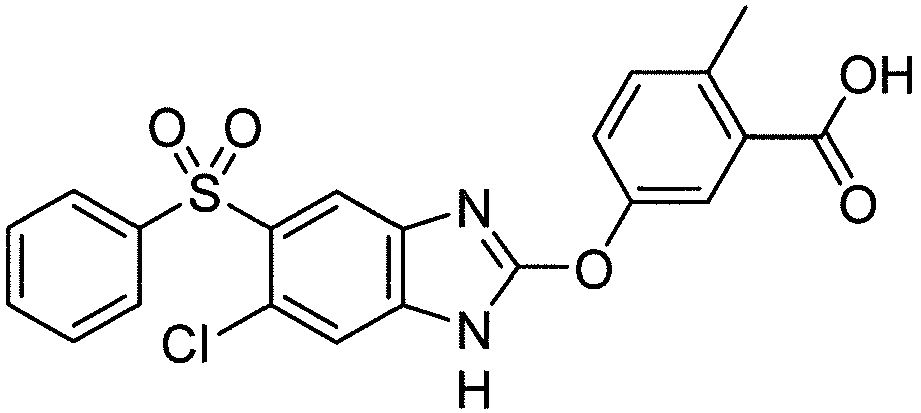
1H-NMR (DMSO-D6) δ: 2.55 (s, 3H), 7.43 (d, J = 8.6 Hz, 1H), 7.53 (dd, J = 8.4, 2.8 Hz, 1H), 7.60 (t, J = 7.6 Hz, 3H), 7.69 (dd, J = 7.4, 7.4 Hz, 1H), 7.81 (d, J = 2.8 Hz, 1H), 7.86-7.92 (m, 2H), 8.26 (s, 1H), 13.18 (s, 2H). [Table 27] No. Structure retention time Mass (M+H) Method I-2-3 
1.59 411 C I-2-4 
2.14 445 A I-2-5 
1.59 187 A I-2-6 
1.77 488 A [Table 28] I-2-7 
2.11 464 A I-2-8 
2.02 465 A I-2-9 
1.45 437 A I-2-10 
1.37 409 A I-2-11 
1.91 429 A [Table 29] I-2-12 
1.92 511 A I-2-13 
1.92 429 A I-2-14 
2.08 486 A I-2-15 
1.78 496.9 C I-2-16 
1.23 382.95 C [Table 30] I-2-17 
1.41 396.95 C I-2-18 
1.40 408.9 C I-2-19 
1.79 410.95 C I-2-20 
1.08 429.95 C I-2-21 
1.08 429.95 C [Table 31] I-2-22 
1.89 472.95 C I-2-23 
1.91 422.9 C I-2-24 
2.33 529 C I-2-25 
1.05 394 A I-2-26 
1.46 393 A [Table 32] I-2-27 
1.25 411 A I-2-28 
1.95 459 A I-2-29 
1.08 410 A I-2-30 
1.31 397 A I-2-31 
2.00 443 A [Table 33] I-2-32 
1.62 433 C I-2-33 
1.89 434.95 C I-2-34 
2.31 497 A I-2-35 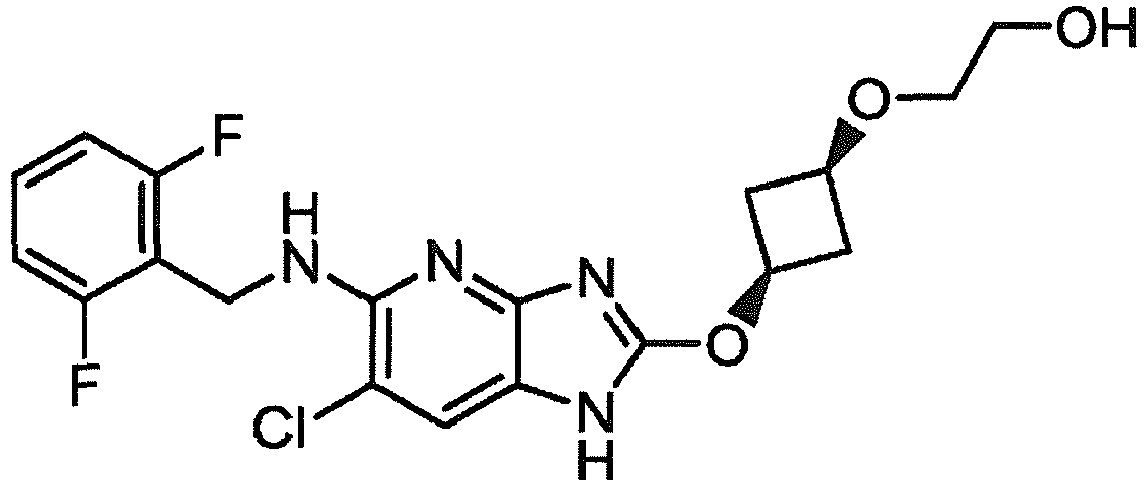
1.84 425 A I-2-36 
1.42 435 A [Table 34] I-2-37 
1.91 435 A I-2-38 
2.11 443 A I-2-39 
1.13 371 A I-2-40 
1.76 423 A I-2-41 
1.46 393 A [Table 35] I-2-42 
1.18 410 A I-2-43 
1.21 421 A I-2-44 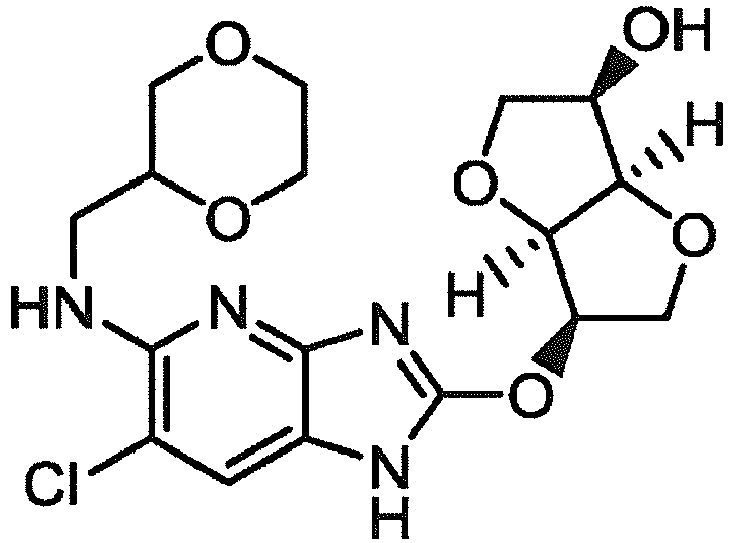
1.13 413 A I-2-45 
1.51 445 A I-2-46 
1.07 394 A [Table 36] I-2-47 
0.98 398 A I-2-48 
0.74 407 A I-2-49 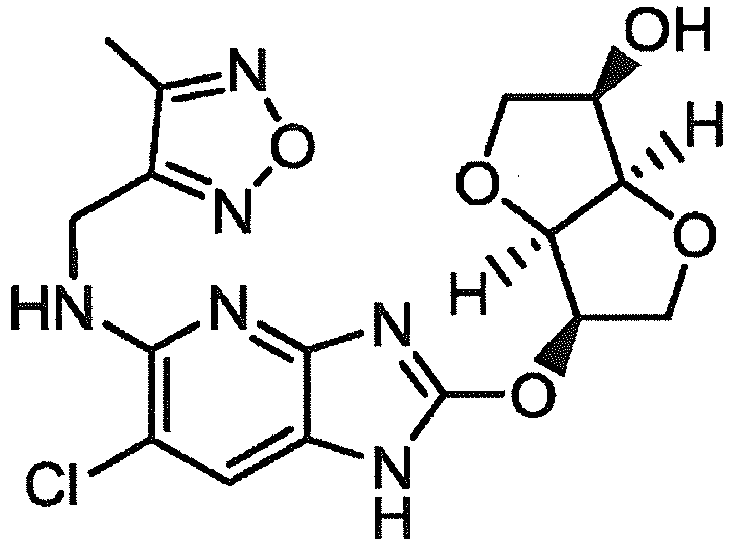
1.35 409 A I-2-50 
1.11 409 A I-2-51 
0.75 408 A [Table 37] I-2-52 
1.33 411 A I-2-53 
1.12 421 A I-2-54 
1.85 449 A I-2-55 
1.61 433 C I-2-56 
1.61 433 C [Table 38] I-2-57 
1.81 439 C I-2-58 
1.27 405.05 C I-2-59 
1.84 464.95 C I-2-60 
1.50 441 C I-2-61 
1.39 421.05 C [Table 39] I-2-62 
0.98 437 A I-2-63 
1.01 437 A I-2-64 
1.92 483.05 C I-2-65 
1.92 483.05 C I-2-66 
1.93 447 C [Table 40] I-2-67 
1.14 451 A I-2-68 
1.17 451 A I-2-69 
1.42 465.05 C I-2-70 
1.42 465.05 C I-2-71 
1.86 459 A [Table 41] I-2-72 
1.40 418 A I-2-73 
1.45 469 A I-2-74 
1.75 421 A I-2-75 
1.85 437 A I-2-76 
0.95 393 A [Table 42] I-2-77 
1.34 443 A I-2-78 
0.86 405 A I-2-79 
0.96 486 A I-2-80 
1.56 477 A I-2-81 
1.53 477 A [Table 43] I-2-82 
1.27 481 A I-2-83 
1.70 423 A I-2-84 
1.84 437 A I-2-85 
1.96 469 A I-2-86 
1.29 427 A [Table 44] I-2-87 
1.51 467 A I-2-88 
1.63 483 A I-2-89 
1.82 527 A I-2-90 
1.61 525 A I-2-91 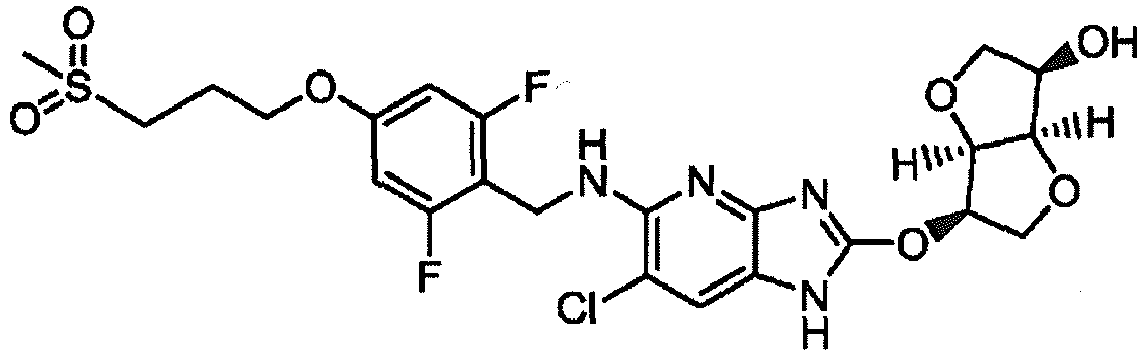
1.53 575 A [Table 45] I-2-92 
1.68 525 A I-2-93 
1.48 576 A I-2-94 
1.31 526 A I-2-95 
1.38 540 A I-2-96 
1.62 494 A [Table 46] I-2-97 
1.89 553 A I-2-98 
1.99 553 A I-2-99 
1.57 546 A I-2-100 
1.81 539 A I-2-101 
1.86 527 A [Table 47] I-2-102 
1.23 566 A I-2-103 
1.73 536 A I-2-104 
1.60 511 A I-2-105 
1.15 552 A I-2-106 
1.42 555 A [Table 48] I-2-107 
1.78 539 A I-2-108 
1.96 541 A I-2-109 
1.64 527 A I-2-110 
1.28 512 A I-2-111 
1.63 525 A [Table 49] I-2-112 
1.71 552 A I-2-113 
1.37 538 A I-2-114 
1.61 536 A I-2-115 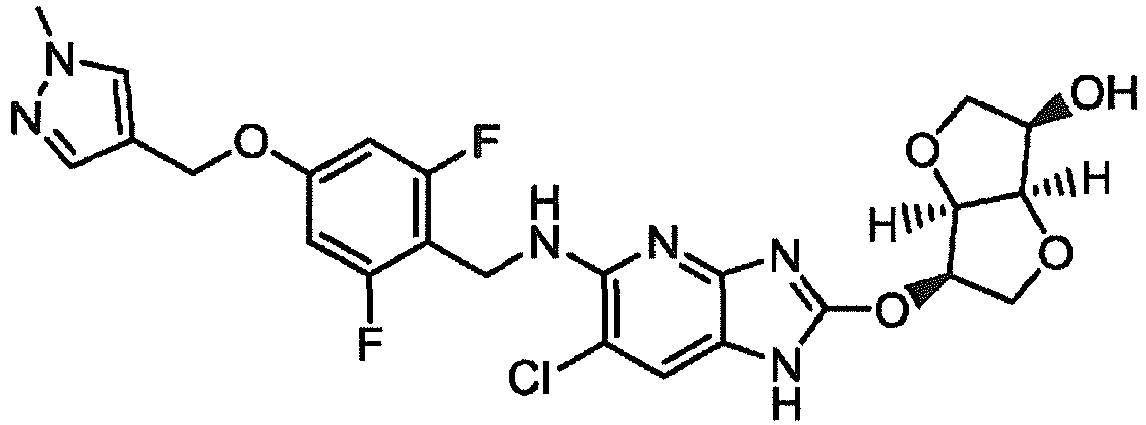
1.62 549 A I-2-116 
0.90 437 A [Table 50] I-2-117 
1.14 451 A I-2-118 
1.18 465 A I-2-119 
1.16 554 A I-2-120 
1.69 483.05 C I-2-121 
1.19 460 A [Table 51] I-2-122 
1.88 459 A I-2-123 
1.07 516 A I-2-124 
1.26 474 A I-2-125 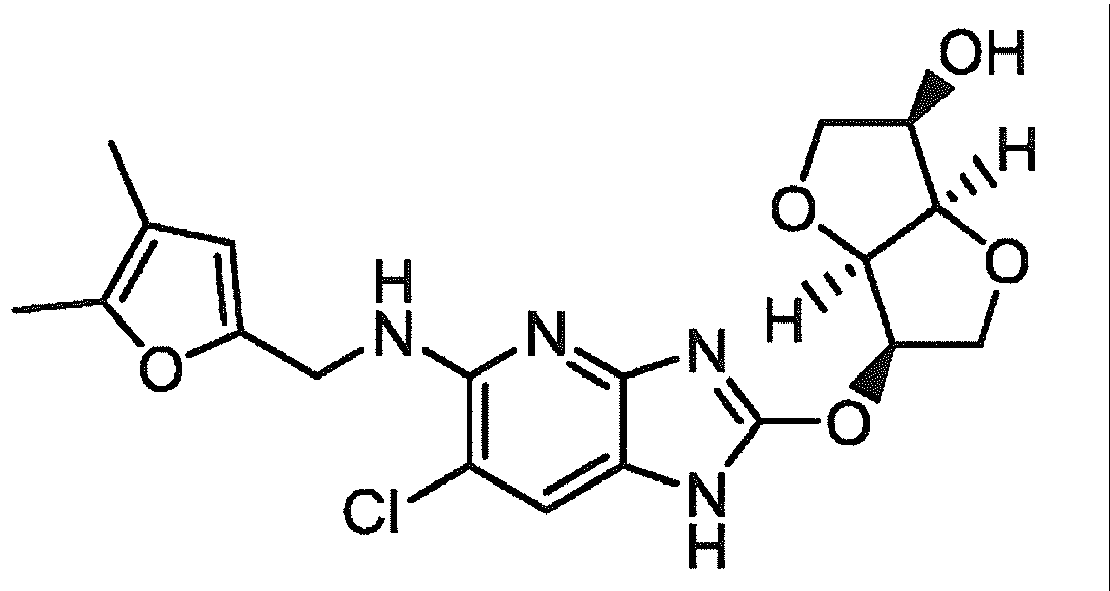
0.80 421 A I-2-126 
1.57 407 A [Table 52] I-2-127 
1.09 423 A I-2-128 
0.87 434 A I-2-129 
1.59 483 A I-2-130 
1.33 465 A I-2-131 
1.39 485 A [Table 53] I-2-132 
1.81 539 A I-2-133 
1.84 539 A I-2-134 
1.82 541 A I-2-135 
1.50 513 A I-2-136 
1.84 527 A [Table 54] I-2-137 
1.56 527 A I-2-138 
1.96 489.1 C I-2-139 
1.87 489.1 C I-2-140 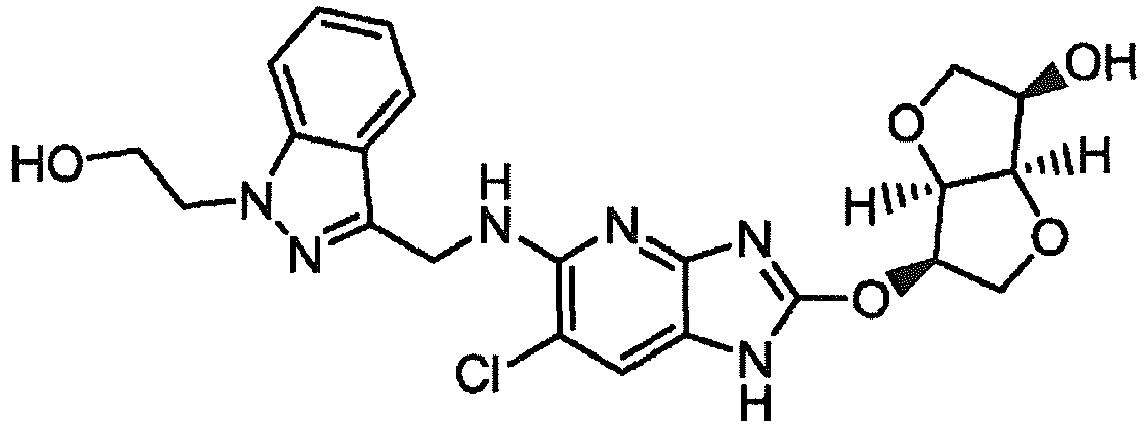
1.44 487 C I-2-141 
1.67 501.1 C [Table 55] I-2-142 
1.31 432 C I-2-143 
1.98 453 C I-2-144 
1.45 473 C I-2-145 
1.52 454.95 C I-2-146 
2.04 528.95 C [Table 56] I-2-147 
1.71 558 A I-2-148 
1.32 588 A I-2-149 
1.55 544 A I-2-150 
1.03 573 A I-2-151 
1.40 560 A [Table 57] I-2-152 
1.44 530 A I-2-153 
1.49 562 A I-2-154 
1.54 532 A I-2-155 
1.64 566 A I-2-156 
1.12 601 A [Table 58] I-2-157 
1.42 600 A I-2-158 
1.16 495 A I-2-159 
1.40 447 A I-2-160 
1.41 491 A I-2-161 
1.59 461 A [Table 59] I-2-162 
1.25 477 A I-2-163 
1.19 495 C I-2-164 
1.43 491 C I-2-165 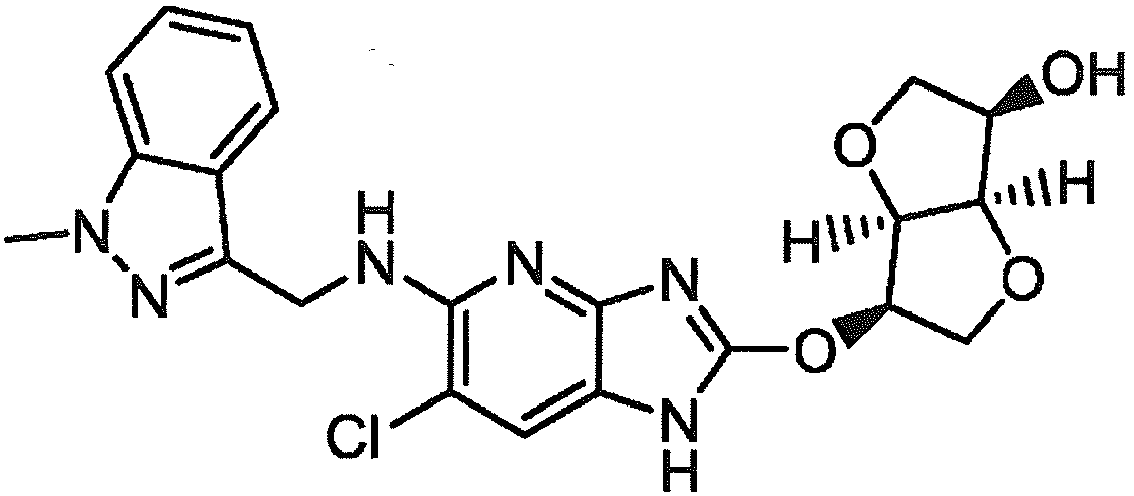
1.64 457 C I-2-166 
1.19 474 A [Table 60] I-2-167 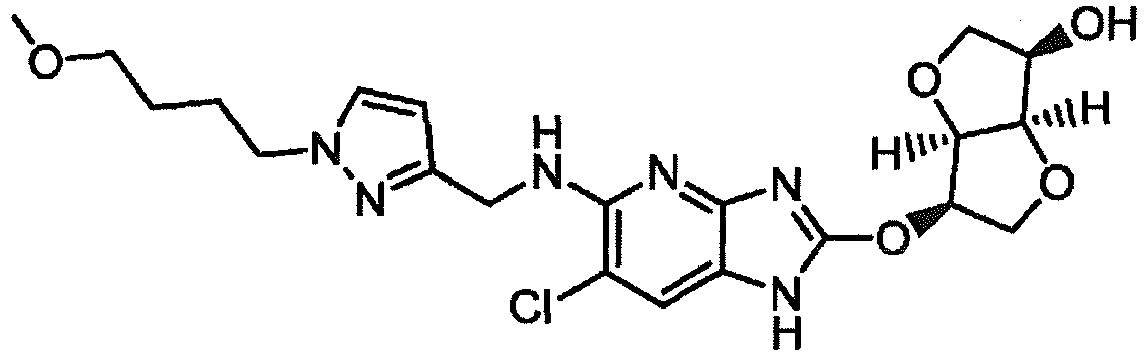
1.31 479 A I-2-168 
1.71 405 C I-2-169 
1.38 421 C I-2-170 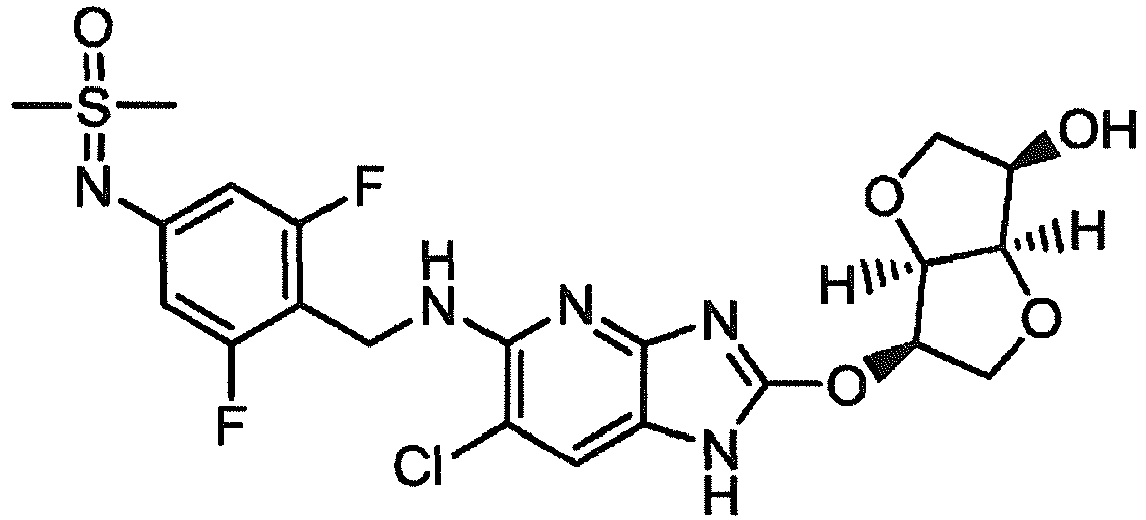
1.47 530 C I-2-171 
1.61 515 A [Table 61] I-2-172 
1.36 564 A I-2-173 
1.51 545 A I-2-174 
1.19 500 A I-2-175 
1.35 501 A I-2-176 
1.62 527 A [Table 62] I-2-177 
1.62 515 A I-2-178 
1.55 524 A I-2-179 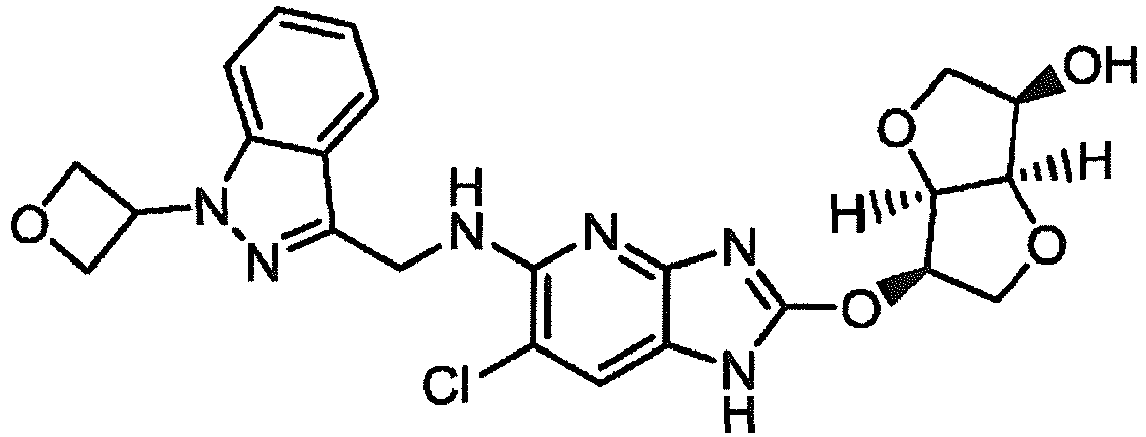
1.45 499 A I-2-180 
1.31 432 C I-2-181 
1.31 432 C [Table 63] I-2-182 
1.16 520 C I-2-183 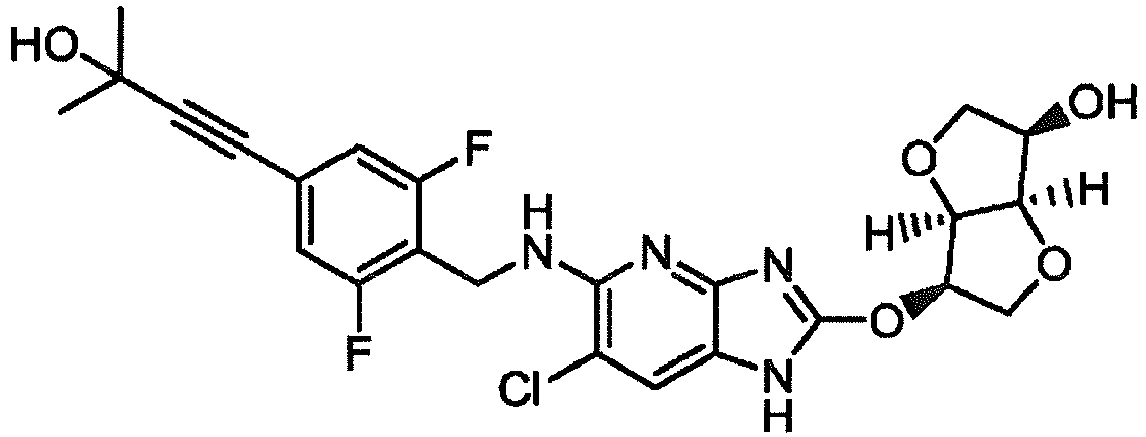
1.70 521 C I-2-184 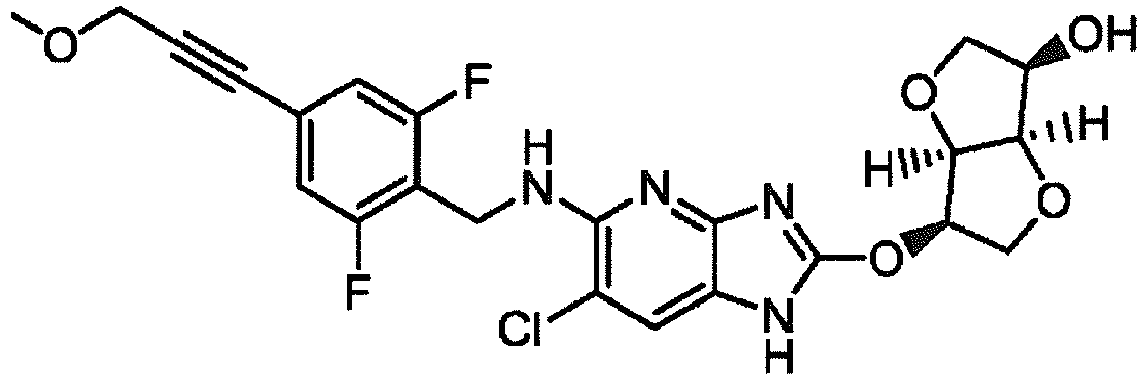
1.84 507 C I-2-185 
1.77 523 C I-2-186 
1.22 566 A [Table 64] I-2-187 
1.25 582 A I-2-188 
1.52 566 A I-2-189 
2.06 509 A I-2-190 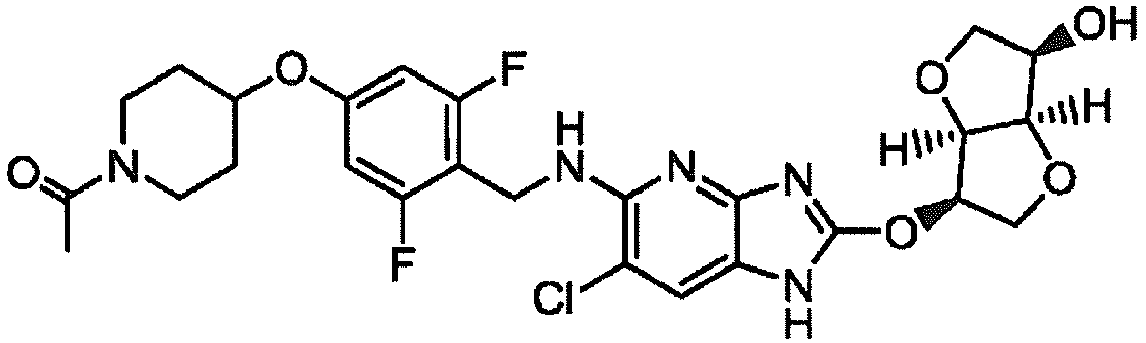
1.58 580 A I-2-191 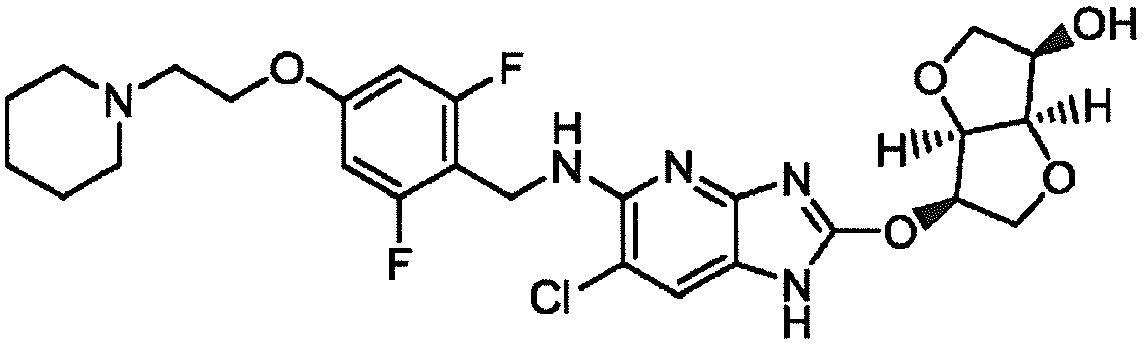
1.19 566 A [Table 65] I-2-192 
1.17 552 A I-2-193 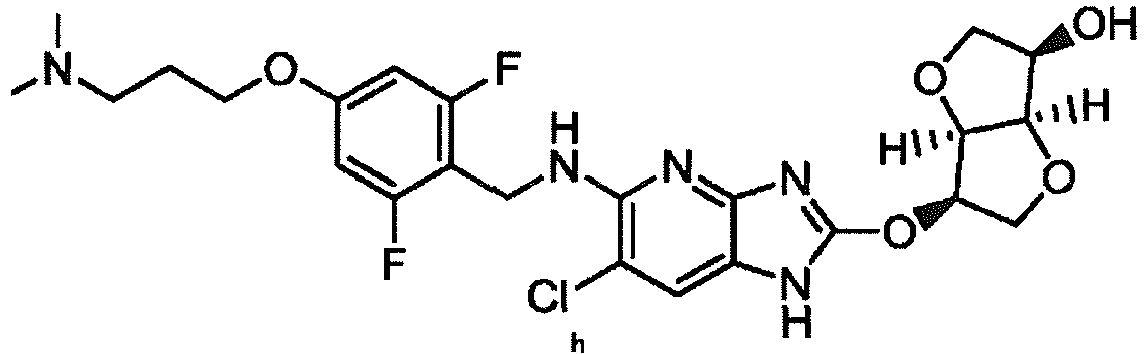
1.17 540 A I-2-194 
2.34 523 A I-2-195 
1.67 557 A I-2-196 
1.76 557 A [Table 66] I-2-197 
1.70 543 A I-2-198 
1.75 551 A I-2-199 
1.26 580 A I-2-200 
1.16 582 A I-2-201 
1.77 539 A [Table 67] I-2-202 
2.38 652 A I-2-203 
2.07 567 A I-2-204 
1.76 539 A I-2-205 
2.11 610 A I-2-206 
1.71 533 A [Table 68] I-2-207 
1.13 534 A I-2-208 
1.79 521 A I-2-209 
1.12 520 A I-2-210 
1.71 598 A I-2-211 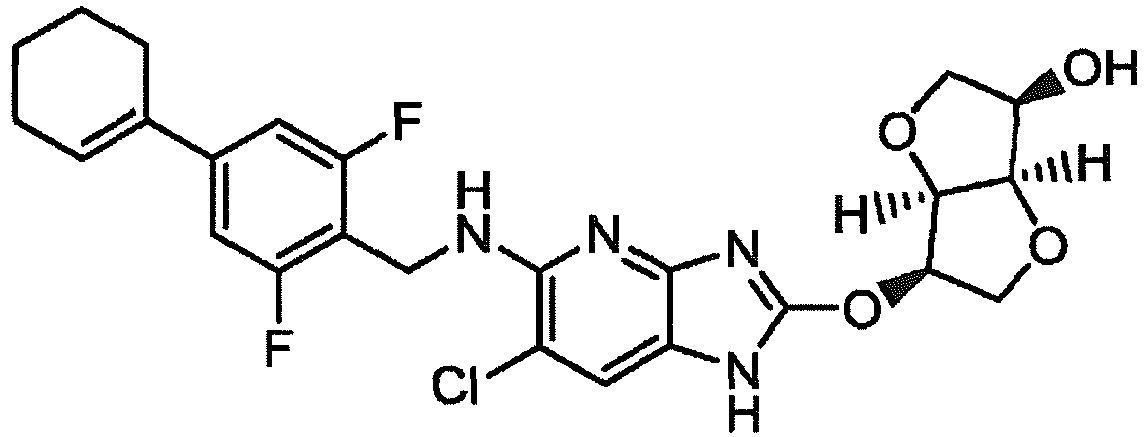
2.45 519 A [Table 69] I-2-212 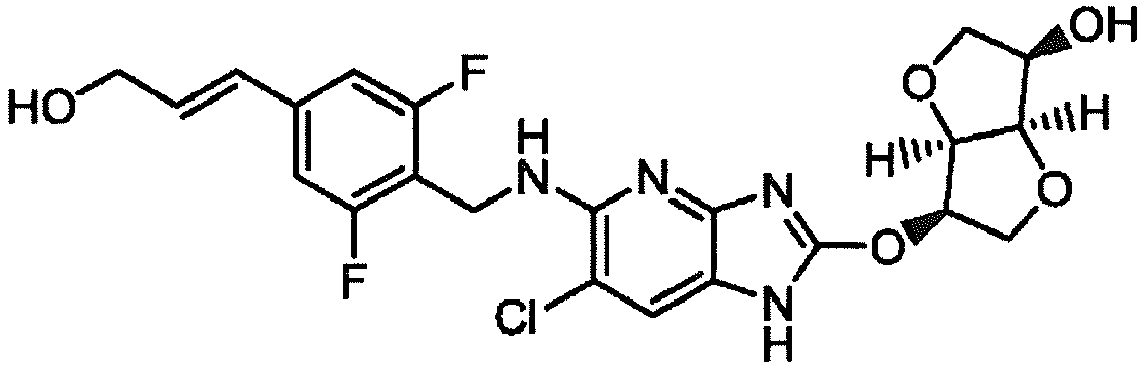
1.48 495 A I-2-213 
1.83 509 A I-2-214 
1.41 546 A I-2-215 
1.76 588 A I-2-216 
1.13 534 A [Table 70] I-2-217 
1.44 546 A I-2-218 
1.50 513 C I-2-219 
1.85 521 C I-2-220 
1.85 521 C I-2-221 
2.46 509.1 C [Table 71] I-2-222 
1.25 524 C I-2-223 
2.00 535.05 C I-2-224 
1.06 568 A I-2-225 
1.17 552 A I-2-226 
2.04 545 A [Table 72] I-2-227 
1.75 522 A I-2-228 
1.22 618 A I-2-229 
2.32 505 A I-2-230 
1.57 509 A I-2-231 
1.59 509 C [Table 73] I-2-232 
1.80 563.05 C I-2-233 
1.80 525.05 C I-2-234 
1.30 552.05 C I-2-235 
1.25 538 C I-2-236 
1.18 510 C [Table 74] I-2-237 
1.21 494 C I-2-238 
2.00 517 C I-2-240 
2.00 479 C I-2-241 
1.00 538 C [Table 75] I-2-242 
1.46 580 C I-2-243 
0.97 496 C I-2-244 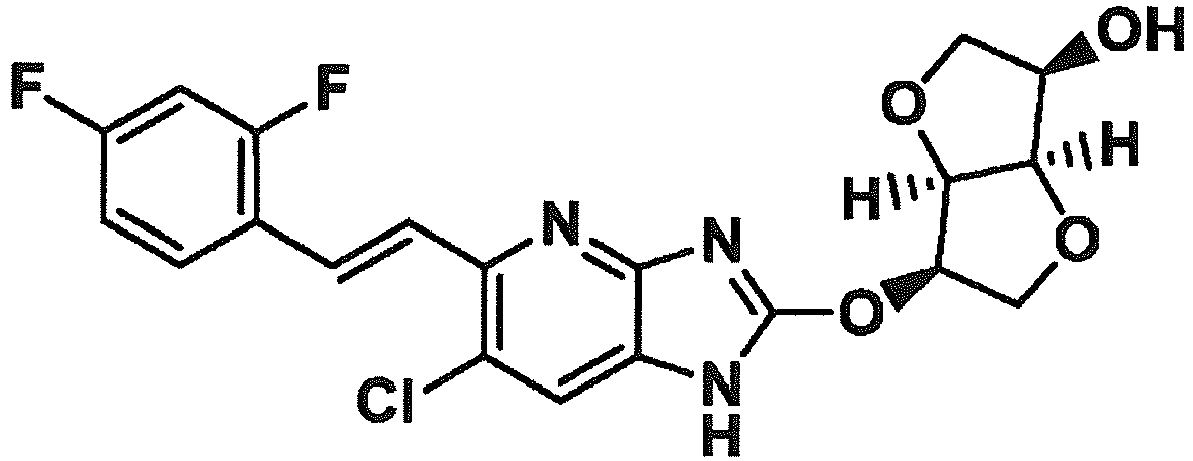
2.05 435.9 A [Table 76] No. Structure retention time Mass (M+H) Method I-3-1 
1.79 519 B I-3-2 
1.79 519 B I-3-3 
1.79 519 B - As compounds of the present invention, the compounds shown below can be also synthesized in accordance with the above Examples.


- To a buffer solution consisting of a 50 mM HEPES-NaOH buffer solution (pH 7.0), 100 mM NaCl, 10 mM magnesium chloride, 0.1% bovine serum albumin, 0.2 mM sodium orthovanadate(V), 1 mM ethylene glycol-bis(2-aminoethyl ether)-N,N,N',N'-tetraacetic acid (EGTA), 5 mM disodium ß-glycerophosphate and 2 mM dithiothreitol, a human AMPK α1ß1γ1 enzyme (manufactured by Carna Biosciences, Inc.) was added in an amount to give a conversion rate of approximately 10% by reaction for 2 hours, and a compound dissolved in DMSO was added thereto so as to have a 1% DMSO concentration. The obtained liquid was left to stand for 10 minutes.
- To the liquid, a substrate solution consisting of a 50 mM HEPES-NaOH buffer solution (pH 7.0), 100 mM NaCl, 10 mM magnesium chloride, 0.1% bovine serum albumin, 0.2 mM sodium orthovanadate(V), 1 mM ethylene glycol-bis(2-aminoethyl ether)-N,N,N',N'-tetraacetic acid (EGTA), 5 mM disodium 6-glycerophosphate, 2 mM dithiothreitol, 0.4 mM ATP and 3 µM FL-Peptide 7 (manufactured by Caliper Life Sciences, Inc.) was added in equal amount (10 µl in total). The obtained liquid was allowed to react at 25°C for 2 hours, and 10 µl of 20 mM EDTA was then added thereto to stop the reaction.
- To detect phosphorylated fluorescent substrates, the reaction liquid was applied to a measuring device, LabChip EZ Reader II manufactured by Caliper Life Science, Inc., for detecting fluorescence by using differences in mobility due to differences in charge. The setting conditions for the device were pressure, -1.5 PSI; upstream voltage, -2250 V; downstream voltage, -400 V; post sample buffer sip time, 40 seconds; final delay, 120 seconds; and peak order, Product First.
- A conversion rate was calculated from the peak heights of the resulting substrate and product. The conversion rate when not containing a compound was used as a control, and a concentration dependent curve was made by plotting the rate of increase in activity to the control at each concentration of a compound. The compound concentration showing 150% relative to the control (100%) was used as the EC 150 value, and the maximum rate of increase in activity within the measurement range was used as Emax.
- The full length cDNAs of human AMPK ß2 (NM_005399.3) and human AMPK α2 (NM_006252.3) were inserted into the MCS1 and MCS2 of the pETDuet-1 vector to prepare a human AMPK ß2 and human AMPK α2 (6x His tag at the 5' terminus) expressing plasmid. The plasmid was cotransfected with an expression plasmid, in which the full length cDNA of human AMPK γ1 (NM_002733.3) had been inserted into pET28b(+), into BL21 CodonPlus (DE3)-RIL to obtain an expression strain. The expression strain was cultured in TB medium, followed by induction with 0.5 mM IPTG, and cultured at 25°C for 3 hours and then harvested. After ultrasonication, supernatant was collected and applied to Histrap FF column (GE) and RESOUECE Q column (GE) to prepare 12.5 mg of purified sample containing three types of subunit from 1.8 L of broth.
- An expression vector, in which the full length cDNA of human CAMKK ß (NM_172226.1) had been inserted into pGEX-6P-3, was transfected into BL21 Star (DE3). The expression strain was cultured in TB medium, followed by induction with 0.5 mM IPTG, and cultured at 25°C for 3 hours and then harvested. After ultrasonication, supernatant was collected and applied to GSTrap FF column (GE) to prepare 14 mg of GST-fused CAMKK ß from 720 ml of broth.
- Human AMPK α2ß2γ1 prepared in Escherichia coli was not phosphorylated and did not exhibit activity. Thus, phosphorylation treatment was carried out as pretreatment.
- Human AMPK α2ß2γ1 in an amount to give a conversion rate of approximately 10% by reaction for 2 hours, and CaMKK2 in an amount capable of sufficiently imparting activity to AMPK for one hour were mixed in a buffer solution consisting of a 50 mM HEPES-NaOH buffer solution (pH 7.0), 100 mM NaCl, 5 mM magnesium chloride, 0.1% bovine serum albumin, 0.2 mM sodium orthovanadate(V), 1 mM ethylene glycol-bis(2-aminoethyl ether)-N,N,N',N'-tetraacetic acid (EGTA), 5 mM disodium ß-glycerophosphate, 1 mM dithiothreitol and 0.2 mM ATP, and the obtained liquid was left to stand at 25°C for 1 to 1.5 hours to sufficiently phosphorylate AMPK.
- After that, to the enzyme liquid, which had been subjected to phosphorylation treatment, a compound dissolved in DMSO was added so as to have a 1% DMSO concentration. The obtained liquid was left to stand for 10 minutes.
- To the liquid, a substrate solution consisting of a 50 mM HEPES-NaOH buffer solution (pH 7.0), 100 mM NaCl, 10 mM magnesium chloride, 0.1% bovine serum albumin, 0.2 mM sodium orthovanadate(V), 1 mM ethylene glycol-bis(2-aminoethyl ether)-N,N,N',N'-tetraacetic acid (EGTA), 5 mM disodium ß-glycerophosphate, 2 mM dithiothreitol, 0.4 mM ATP and 3 µM FL-Peptide 7 (manufactured by Caliper Life Sciences, Inc.) was added in equal amount (10 µl in total). The obtained liquid was allowed to react at 25°C for 2 hours, and 10 µl of 20 mM EDTA was then added thereto to stop the reaction.
- To detect phosphorylated fluorescent substrates, the reaction liquid was applied to a measuring device, LabChip EZ Reader II manufactured by Caliper Life Science, Inc., for detecting fluorescence by using differences in mobility due to differences in charge. The setting conditions for the device were pressure, -1.5 PSI; upstream voltage, -2250 V; downstream voltage, -400 V; post sample buffer sip time, 40 seconds; final delay, 120 seconds; and peak order, Product First.
- A conversion rate was calculated from the peak heights of the resulting substrate and product. The conversion rate when not containing a compound was used as a control, and a concentration dependent curve was made by plotting the rate of increase in activity to the control at each concentration of a compound. The compound concentration showing 150% relative to the control (100%) was used as the EC 150 value, and the maximum rate of increase in activity within the measurement range was used as Emax.
- The results of Test Example 2 are shown below.
- Compound (I-1-1): EC150 = 29 nM, Emax = 484%
- Compound (I-1-4): EC150 = 40 nM, Emax = 766%
- Compound (I-1-6): EC150 = 21 nM, Emax = 496%
- Compound (I-1-8): EC150 = 67 nM, Emax = 617%
- Compound (I-1-10): EC150 = 740 nM, Emax = 406%
- Compound (I-1-11): EC150 = 170 nM, Emax = 512%
- Compound (I-1-13): EC150 = 17 nM, Emax = 838%
- Compound (I-1-14): EC150 = 42 nM, Emax = 750%
- Compound (I-1-15): EC150 = 5.8 nM, Emax = 894%
- Compound (I-1-36): EC150 = 16 nM, Emax = 475%
- Compound (I-1-38): EC150 = 1.2 nM, Emax = 568%
- Compound (I-1-39): EC150 = 26 nM, Emax = 506%
- Compound (I-1-52): EC150 = 100 nM, Emax = 407%
- Compound (I-1-80): EC150 = 880 nM, Emax = 397%
- Compound (I-1-109): EC150 = 48 nM, Emax = 499%
- Compound (I-1-116): EC150 = 94 nM, Emax = 450%
- Compound (I-1-119): EC150 = 84 nM, Emax = 432%
- Compound (I-1-126): EC150 = 170 nM, Emax = 332%
- Compound (I-2-1): EC150 = 30 nM, Emax = 588%
- Compound (I-2-19): EC150 = 74 nM, Emax = 506%
- Compound (I-2-22): EC150 = 130 nM, Emax = 480%
- Compound (I-2-62): EC150 = 94 nM, Emax = 388%
- Compound (I-2-75): EC150 = 26 nM, Emax = 542%
- Compound (I-2-91): EC150 = 5.4 nM, Emax = 532%
- Compound (I-2-93): EC150 = 9.9 nM, Emax = 602%
- Compound (I-2-119): EC150 = 13 nM, Emax = 581%
- Compound (I-2-147): EC150 = 4.5 nM, Emax = 532%
- Compound (I-2-153): EC150 = 5.2 nM, Emax = 546%
- Compound (I-2-185): EC150 = 6 nM, Emax = 569%
- Compound (I-2-188): EC150 = 15 nM, Emax = 603%
- Compound (I-2-192): EC150 = 7.6 nM, Emax = 568%
- Compound (I-2-209): EC150 = 22 nM, Emax = 558%
- Compound (I-2-217): EC150 = 47 nM, Emax = 637%
- Compound (I-2-220): EC150 = 1.1 nM, Emax = 669%
- Compound (I-2-222): EC150 = 16 nM, Emax = 532%
- Compound (I-2-223): EC150 = 2.8 nM, Emax = 649%
- Compound (I-2-228): EC150 = 8.5 nM, Emax = 528%
- Compound (I-2-233): EC150 = 9.3 nM, Emax = 507%
- Compound (I-2-238): EC150 = 4.1 nM, Emax = 553%
- Compound (I-2-239): EC150 = 5.6 nM, Emax = 535%
- Compound (I-2-244): EC150 = 92 nM, Emax = 517%
- The compounds of the present invention have an excellent activating effect on an AMPK α1 trimer and/or an AMPK α2 trimer.
- Usefulness as a medicament can be examined by the following tests, etc.
- The CYP3A4 fluorescent MBI test is a test of investigating enhancement of CYP3A4 inhibition of a compound by a metabolism reaction, and the test was performed using, as CYP3A4 enzyme expressed in Escherichia coli and employing, as an index, a reaction in which 7-benzyloxytrifluoromethylcoumarin (7-BFC) is debenzylated by the CYP3A4 enzyme to produce a metabolite, 7-hydroxytrifluoromethylcoumarin (HFC) emitting fluorescent light.
- The reaction conditions were as follows: substrate, 5.6 µmol/L 7-BFC; pre-reaction time, 0 or 30 minutes; reaction time, 15 minutes; reaction temperature, 25°C (room temperature); CYP3A4 content (enzyme expressed in Escherichia coli), at pre-reaction 62.5 pmol/mL, at reaction 6.25 pmol/mL (at 10-fold dilution); test drug concentration, 0.625, 1.25, 2.5, 5, 10, 20 µmol/L (six points).
- An enzyme in a K-Pi buffer (pH 7.4) and a test drug solution as a pre-reaction solution were added to a 96-well plate at the composition of the pre-reaction, a part of it was transferred to another 96-well plate so that it was 1/10 diluted with a substrate and a K-Pi buffer, NADPH as a coenzyme was added to initiate a reaction as an index (without pre-reaction) and, after a predetermined time of a reaction, acetonitrile/0.5 mol/L Tris (trishydroxyaminomethane) = 4/1 was added to stop the reaction. In addition, NADPH was added to a remaining pre-reaction solution to initiate a pre-reaction (with pre-reaction) and, after a predetermined time of a pre-reaction, a part was transferred to another plate so that it was 1/10 diluted with a substrate and a K-Pi buffer to initiate a reaction as an index. After a predetermined time of a reaction, acetonitrile/0.5 mol/L Tris (trishydroxyaminomethane) = 4/1 was added to stop the reaction. For the plate on which each index reaction had been performed, a fluorescent value of 7-HFC which is a metabolite was measured with a fluorescent plate reader. (Ex = 420 nm, Em = 535 nm).
- Addition of only DMSO being a solvent dissolving a drug to a reaction system was adopted as a control (100%), remaining activity (%) was calculated at each concentration of a test drug added as the solution and IC50 was calculated by reverse presumption by a logistic model using a concentration and an inhibition rate. When a difference between IC50 values is 5 µM or more, this was defined as (+) and, when the difference is 3 µM or less, this was defined as (-).
- Using commercially available pooled human hepatic microsome, and employing, as markers, 7-ethoxyresorufin O-deethylation (CYP1A2), tolbutamide methyl-hydroxylation (CYP2C9), mephenytoin 4'-hydroxylation (CYP2C19), dextromethorphan O-demethylation (CYP2D6), and terfenadine hydroxylation (CYP3A4) as typical substrate metabolism reactions of human main five CYP enzyme forms (CYP1A2, 2C9, 2C19, 2D6, 3A4), an inhibitory degree of each metabolite production amount by a test compound was assessed.
- The reaction conditions were as follows: substrate, 0.5 µmol/L ethoxyresorufin (CYP1A2), 100 µmol/L tolbutamide (CYP2C9), 50 µmol/L S-mephenytoin (CYP2C19), 5 µmol/L dextromethorphan (CYP2D6), 1 µmol/L terfenadine (CYP3A4); reaction time, 15 minutes; reaction temperature, 37°C; enzyme, pooled human hepatic microsome 0.2 mg protein/mL; test drug concentration, 1, 5, 10, 20 µmol/L (four points).
- Each five kinds of substrates, human hepatic microsome, or a test drug in 50 mM Hepes buffer as a reaction solution was added to a 96-well plate at the composition as described above, NADPH, as a coenzyme was added to initiate metabolism reactions as markers and, after the incubation at 37°C for 15 minutes, a methanol/acetonitrile = 1/1 (v/v) solution was added to stop the reaction. After the centrifugation at 3000 rpm for 15 minutes, resorufin (CYP1A2 metabolite) in the centrifuge supernatant was quantified by a fluorescent multilabel counter and tolbutamide hydroxide (CYP2C9 metabolite), mephenytoin 4' hydroxide (CYP2C19 metabolite), dextromethorphan (CYP2D6 metabolite), and terfenadine alcohol (CYP3A4 metabolite) were quantified by LC/MS/MS.
- Addition of only DMSO being a solvent dissolving a drug to a reaction system was adopted as a control (100%), remaining activity (%) was calculated at each concentration of a test drug added as the solution and IC50 was calculated by reverse presumption by a logistic model using a concentration and an inhibition rate.
- Each 20 µL of freeze-stored Salmonella typhimurium (strains TA98 and TA100) was inoculated in 10 mL of liquid nutrient medium (2.5% Oxoid nutrient broth No.2), and the cultures were preincubated at 37°C under shaking for 10 hours. 9 mL of TA98 culture was centrifuged (2000 x g, 10 minutes) to remove medium, and the bacteria was suspended in 9 mL of Micro F buffer (K2HPO4: 3.5 g/L, KH2PO4: 1 g/L, (NH4)2SO4: 1 g/L, trisodium citrate dihydrate: 0.25 g/L, MgSO4-7H2O: 0.1 g/L), and the suspension was added to 110 mL of Exposure medium (Micro F buffer containing Biotin: 8 µg/mL, histidine: 0.2 µg/mL, glucose: 8 mg/mL). 3.16 mL of TA100 culture was added to 120 mL of Exposure medium to prepare the test bacterial solution. 588 µL of the test bacterial solution (or mixed solution of 498 µL of the test bacterial solution and 90 µL of the S9 mix in the case with metabolic activation conditions) was mixed with each 12 µL of the following solution: DMSO solution of the test substance (eight dose levels from maximum dose 50 mg/mL at 2-fold ratio); DMSO as negative control; 50 µg/mL of 4-nitroquinoline-1-oxide DMSO solution as positive control for strain TA98 without metabolic activation conditions; 0.25 µg/mL of 2-(2-furyl)-3-(5-nitro-2-furyl)acrylamide DMSO solution as positive control for strain TA100 without metabolic activation conditions; 40 µg/mL of 2-aminoanthracene DMSO solution as positive control for strain TA98 with metabolic activation conditions; or 20 µg/mL of 2-aminoanthracene DMSO solution as positive control for strain TA100 with metabolic activation conditions. 12 µL of the solution and 588 µL of the test bacterial solution (a mixed solution of 498 µL of the test bacterial solution and 90 µL of S9 mix with metabolic activation conditions) were mixed and incubated at 37°C under shaking for 90 minutes. 460 µL of the bacterial solution exposed to the test substance was mixed with 2300 µL of Indicator medium (Micro F buffer containing biotin: 8 µg/mL, histidine: 0.2 µg/mL, glucose: 8 mg/mL, Bromo Cresol Purple: 37.5 gg/mL), each 50 µL was dispensed into 48 wells per dose in the microwell plates, and was subjected to stationary cultivation at 37°C for 3 days. A well containing the bacteria, which has obtained the ability of proliferation by mutation in the gene coding amino acid (histidine) synthetase, turns the color from purple to yellow due to pH change. Thus, the number of the yellow wells among the 48 total wells per dose was counted to evaluate the mutagenicity by comparing with the negative control group.
- The solubility of a compound was determined under a condition in which 1% DMSO was added. 10 mM compound solution was prepared using DMSO, and then 6 µL of the compound solution was added to 594 µL of artificial intestinal juice in pH 6.8 (to 250 mL of a 0.2 mol/L potassium dihydrogen phosphate reagent solution were added 118 mL of a 0.2 mol/L NaOH reagent solution and water to provide a final volume of 1000 mL). After standing at 25°C for 16 hours, the mixed solution was filtrated with suction. The filtrate was diluted twice with methanol/water (1/1), and then a concentration in the filtration was measured with HPLC or LC/MS/MS by the absolute calibration method.
- Using commercially available pooled human hepatic microsomes, an test compound was reacted for a constant time, a remaining rate was calculated by comparing a reacted sample and an unreacted sample, thereby, a degree of metabolism in liver was assessed.
- A reaction was performed (oxidative reaction) at 37°C for 0 minute or 30 minutes in the presence of 1 mmol/L NADPH in 0.2 mL of a buffer (50 mmol/L Tris-HCl pH 7.4, 150 mmol/L potassium chloride, 10 mmol/L magnesium chloride) containing 0.5 mg protein/mL of human liver microsomes. After the reaction, 50 µL of the reaction solution was added to 100 µL of a methanol/acetonitrile = 1/1 (v/v), and the mixture was mixed and centrifuged at 3000 rpm for 15 minutes. The test compound in the centrifuge supernatant was quantified by LC/MS/MS, and a remaining amount of the test compound after the reaction was calculated, letting a compound amount at 0 minute reaction time to be 100%. Hydrolysis reaction was performed in the absence of NADPH and glucuronidation reaction was performed in the presence of 5 mM UDP-glucuronic acid in place of NADPH, followed by similar operations.
- For the purpose of assessing risk of an electrocardiogram QT interval prolongation, effects on delayed rectifier K+ current (IKr), which plays an important role in the ventricular repolarization process, was studied using HEK293 cells expressing human ether-a-go-go related gene (hERG) channel.
- After a cell was retained at a membrane potential of -80 mV by whole cell patch clamp method using an automated patch clamp system (PatchXpress 7000A, Axon Instruments Inc.), IKr induced by depolarization pulse stimulation at +40 mV for 2 seconds and, further, repolarization pulse stimulation at -50 mV for 2 seconds was recorded. After the generated current was stabilized, extracellular solution (NaCl: 135 mmol/L, KCl: 5.4 mmol/L, NaH2PO4: 0.3 mmol/L, CaCl2·2H2O: 1.8 mmol/L, MgCl2·6H2O: 1 mmol/L, glucose: 10 mmol/L, HEPES (4-(2-hydroxyethyl)-1-piperazine ethanesulfonic acid): 10 mmol/L, pH= 7.4) in which the test compound had been dissolved at an objective concentration was applied to the cell under the room temperature condition for 10 minutes. From the recording IKr, an absolute value of the tail peak current was measured based on the current value at the resting membrane potential using an analysis software (DataXpress ver.1, Molecular Devices Corporation). Further, the % inhibition relative to the tail peak current before application of the test substance was calculated, and compared with the vehicle-applied group (0.1% dimethyl sulfoxide solution) to assess influence of the test substance on IKr.
- Appropriate amounts of the test substances were put into appropriate containers. To the respective containers were added 200 µL of JP-1 fluid (sodium chloride 2.0 g, hydrochloric acid 7.0 mL and water to reach 1000 mL), 200 µL of JP-2 fluid (phosphate buffer (pH 6.8) 500 mL and water 500 mL), and 200 µL of 20 mmol/L TCA (sodium taurocholate)/JP-2 fluid (TCA 1.08 g and water to reach 100 mL). In the case that the test compound was dissolved after the addition of the test fluid, the bulk powder was added as appropriate. The containers were sealed, and shaken for 1 hour at 37°C. The mixtures were filtered, and 100 µL of methanol was added to each of the filtrate (100 µL) so that the filtrates were two-fold diluted. The dilution ratio was changed if necessary. After confirmation of no bubbles and precipitates, the containers were sealed and shaken. Quantification was performed by HPLC with an absolute calibration method.
-
- (1) Animals: mice or rats
- (2) Animal husbandry: Mice and rats had free access to solid food and sterilized bottled tap water.
- (3) Setting of Dose and group compositions: orally or intravenously administered at a predetermined dose; Group compositions were as shown below (Dose depends on the compound)
- Oral: 1 to 30 mg/kg (n= 2 to 3)
- Intravenous: 0.5 to 10 mg/kg (n= 2 to 3)
- (4) Preparation for dosing formulation: for oral administration, in a solution or a suspension state; for intravenous administration, in a solubilized state
- (5) Dosing procedure: In oral administration study, the test substance was forcibly administered to the stomach of rats by using a gavage tube. In intravenous administration study, the test substance was administered to rats via tail vein using a syringe with a needle.
- (6) Evaluation items: Blood was collected at each time point, and plasma concentration of the test substance was determined by LC/MS/MS.
- (7) Data analysis: Regarding the transition of the plasma concentration, area under the plasma concentration-time curve (AUC) was calculated by means of WinNonlin® program, respectively. Bioavailability (BA) was calculated by using AUC values of the oral administration group and intravenous administration group.
- Formulation Examples are shown below.
- The compound of the present invention, lactose and calcium stearate are mixed. The mixture is crushed, granulated and dried to give a suitable size of granules. Next, calcium stearate is added to the granules, and the mixture is compressed and molded to give tablets.
- The compound of the present invention, lactose and calcium stearate are mixed uniformly to obtain powder medicines in the form of powders or fine granules. The powder medicines are filled into capsule containers to give capsules.
- The compound of the present invention, lactose and calcium stearate are mixed uniformly and the mixture is compressed and molded. Then, it is crushed, granulated and sieved to give suitable sizes of granules.
- The compound of the present invention and crystalline cellulose are mixed and granulated, then tableted to give orally disintegrating tablets.
- The compound of the present invention and lactose are mixed, crushed, granulated and sieved to give suitable sizes of dry syrups.
- The compound of the present invention and phosphate buffer are mixed to give injection.
- The compound of the present invention and phosphate buffer are mixed to give injection.
- The compound of the present invention and lactose are mixed and crushed finely to give inhalations.
- The compound of the present invention and petrolatum are mixed to give ointments.
- The compound of the present invention and base such as adhesive plaster or the like are mixed to give patches.
- As is apparent from the above test examples, the compounds of the present invention show an AMPK activating effect. Therefore, the compounds of the present invention are very useful as a therapeutic agent for type I diabetes, type II diabetes, hyperglycemia, metabolic syndrome, obesity, hypercholesterolemia and hypertension.
Claims (24)
- A compound represented by the formula (I):

whereinL is NR2R3, SR7, SO2R8, substituted or unsubstituted alkyl, or substituted or unsubstituted alkenyl;R2 is hydrogen, substituted or unsubstituted alkyl, substituted or unsubstituted alkenyl, substituted or unsubstituted alkynyl, substituted or unsubstituted aryl, substituted or unsubstituted heteroaryl, substituted or unsubstituted cycloalkyl, substituted or unsubstituted cycloalkenyl, substituted or unsubstituted heterocyclyl, substituted or unsubstituted acyl, substituted or unsubstituted carbamoyl, substituted or unsubstituted alkylsulfonyl, substituted or unsubstituted alkenylsulfonyl, substituted or unsubstituted alkynylsulfonyl , substituted or unsubstituted arylsulfonyl, substituted or unsubstituted heteroarylsulfonyl, substituted or unsubstituted cycloalkylsulfonyl, substituted or unsubstituted cycloalkenylsulfonyl, substituted or unsubstituted heterocyclylsulfonyl, or substituted or unsubstituted sulfamoyl;R3 is substituted or unsubstituted alkyl, substituted or unsubstituted alkenyl, substituted or unsubstituted alkynyl, substituted or unsubstituted aryl, substituted or unsubstituted heteroaryl, substituted or unsubstituted cycloalkyl, substituted or unsubstituted cycloalkenyl, substituted or unsubstituted heterocyclyl, substituted or unsubstituted acyl, substituted or unsubstituted carbamoyl, substituted or unsubstituted alkylsulfonyl, substituted or unsubstituted alkenylsulfonyl, substituted or unsubstituted alkynylsulfonyl, substituted or unsubstituted arylsulfonyl, substituted or unsubstituted heteroarylsulfonyl, substituted or unsubstituted cycloalkylsulfonyl, substituted or unsubstituted cycloalkenylsulfonyl, substituted or unsubstituted heterocyclylsulfonyl, or substituted or unsubstituted sulfamoyl;R7 is hydrogen, substituted or unsubstituted alkyl, substituted or unsubstituted alkenyl, substituted or unsubstituted alkynyl, substituted or unsubstituted aryl, substituted or unsubstituted heteroaryl, substituted or unsubstituted cycloalkyl, substituted or unsubstituted cycloalkenyl, substituted or unsubstituted heterocyclyl, substituted or unsubstituted acyl, or substituted or unsubstituted carbamoyl;R8 is hydrogen, substituted or unsubstituted alkyl, substituted or unsubstituted alkenyl, substituted or unsubstituted alkynyl, substituted or unsubstituted aryl, substituted or unsubstituted heteroaryl, substituted or unsubstituted cycloalkyl, substituted or unsubstituted cycloalkenyl, substituted or unsubstituted heterocyclyl, substituted or unsubstituted acyl, substituted or unsubstituted carbamoyl, or substituted or unsubstituted amino, provided that R8 is not unsubstituted methyl or unsubstituted ethyl;Y is substituted or unsubstituted alkyl, substituted or unsubstituted alkenyl, substituted or unsubstituted alkynyl, substituted or unsubstituted aryl, substituted or unsubstituted heteroaryl, substituted or unsubstituted cycloalkyl, substituted or unsubstituted cycloalkenyl, or substituted or unsubstituted heterocyclyl, provided that Y is not unsubstituted methyl or unsubstituted ethyl;Z is -CR6=, or -N=;R1 is hydrogen, or substituted or unsubstituted alkyl;R4, R5 and R6 are each independently hydrogen, halogen, hydroxy, cyano, nitro, carboxy, substituted or unsubstituted alkyl, substituted or unsubstituted alkenyl, substituted or unsubstituted alkynyl, substituted or unsubstituted aryl, substituted or unsubstituted heteroaryl, substituted or unsubstituted cycloalkyl, substituted or unsubstituted cycloalkenyl, substituted or unsubstituted heterocyclyl, substituted or unsubstituted alkyloxy, substituted or unsubstituted aryloxy, substituted or unsubstituted heteroaryloxy, substituted or unsubstituted cycloalkyloxy, substituted or unsubstituted cycloalkenyloxy, substituted or unsubstituted heterocyclyloxy, substituted or unsubstituted alkylthio, substituted or unsubstituted arylthio, substituted or unsubstituted heteroarylthio, substituted or unsubstituted cycloalkylthio, substituted or unsubstituted cycloalkenylthio, substituted or unsubstituted heterocyclylthio, substituted or unsubstituted alkylsulfonyl, substituted or unsubstituted arylsulfonyl, substituted or unsubstituted heteroarylsulfonyl, substituted or unsubstituted cycloalkylsulfonyl, substituted or unsubstituted cycloalkenylsulfonyl, substituted or unsubstituted heterocyclylsulfonyl, substituted or unsubstituted acyl, substituted or unsubstituted carbamoyl, substituted or unsubstituted sulfamoyl, or substituted or unsubstituted amino;wherein R1 is hydrogen when Z is -CR6= and L is SO2R8;with the proviso thatcompounds wherein Y is substituted or unsubstituted aryl, Z is -CR6=, L is NR2R3 and one of R2 and R3 is substituted or unsubstituted alkylsulfonyl;compounds wherein Z is -CR6= and L is substituted or unsubstituted alkyl, or substituted or unsubstituted alkenyl andcompounds shown below are excluded


- The compound according to claim 1 or its pharmaceutically acceptable salt, wherein Y is substituted or unsubstituted aryl, substituted or unsubstituted heteroaryl, substituted or unsubstituted cycloalkyl, substituted or unsubstituted cycloalkenyl, or substituted or unsubstituted heterocyclyl.
- The compound according to claim 1 or its pharmaceutically acceptable salt, wherein Y is substituted or unsubstituted heteroaryl, substituted or unsubstituted cycloalkyl, substituted or unsubstituted cycloalkenyl, or substituted or unsubstituted heterocyclyl.
- The compound according to claim 1 or its pharmaceutically acceptable salt, wherein Y is substituted or unsubstituted heterocyclyl.
- The compound according to claim 4 or its pharmaceutically acceptable salt, wherein Y is substituted or unsubstituted heterocyclyl and the substituted or unsubstituted heterocyclyl is
 wherein R9 and R10 are each independently hydrogen, halogen, hydroxy, cyano, nitro, carboxy, substituted or unsubstituted alkyl, substituted or unsubstituted alkenyl, substituted or unsubstituted alkynyl, substituted or unsubstituted alkyloxy, substituted or unsubstituted alkylthio, substituted or unsubstituted alkylsulfonyl, substituted or unsubstituted acyl, substituted or unsubstituted carbamoyl, substituted or unsubstituted sulfamoyl, or substituted or unsubstituted amino;R11 is each independently halogen, hydroxy, cyano, nitro, carboxy, substituted or unsubstituted alkyl, substituted or unsubstituted alkenyl, substituted or unsubstituted alkynyl, substituted or unsubstituted alkyloxy, substituted or unsubstituted alkylthio, substituted or unsubstituted alkylsulfonyl, substituted or unsubstituted acyl, substituted or unsubstituted carbamoyl, substituted or unsubstituted sulfamoyl, or substituted or unsubstituted amino;m is an integer from 0 to 6.
 - The compound according to any one of claims 1 to 5 or its pharmaceutically acceptable salt, wherein Z is -N=.
- The compound according to any one of claims 1 to 5 or its pharmaceutically acceptable salt, wherein Z is -CR6=.
- The compound according to any one of claims 1 to 7 or its pharmaceutically acceptable salt, wherein L is NR2R3, SR7, or SO2R8.
- The compound according to any one of claims 1 to 8 or its pharmaceutically acceptable salt, wherein L is NR2R3.
- The compound according to claim 9 or its pharmaceutically acceptable salt, wherein R2 is hydrogen or substituted or unsubstituted alkyl.
- The compound according to claim 9 or its pharmaceutically acceptable salt, wherein R3 is substituted or unsubstituted alkyl, substituted or unsubstituted cycloalkenyl, or substituted or unsubstituted heterocyclyl.
- The compound according to claim 11 or its pharmaceutically acceptable salt, wherein R3 is substituted alkyl, wherein the substituent of substituted alkyl is one or more substituent(s) selected from substituted or unsubstituted aryl, substituted or unsubstituted heteroaryl, substituted or unsubstituted cycloalkyl, substituted or unsubstituted cycloalkenyl, and/or substituted or unsubstituted heterocyclyl.
- The compound according to claim 11 or its pharmaceutically acceptable salt, wherein R3 is substituted or unsubstituted cycloalkenyl, or substituted or unsubstituted heterocyclyl.
- The compound according to any one of claims 1 to 13 or its pharmaceutically acceptable salt, wherein R1 is hydrogen.
- The compound according to any one of claims 1 to 14 or its pharmaceutically acceptable salt, wherein R5 is hydrogen.
- The compound according to any one of claims 1 to 15, or its pharmaceutically acceptable salt, wherein R4 is hydrogen, halogen, cyano, or substituted or unsubstituted alkyl.
- The compound according to claim 16 or its pharmaceutically acceptable salt, wherein R4 is halogen.
- A pharmaceutical composition having an activating effect on adenosine monophosphate-activated protein kinase, which comprises a compound represented by formula (II):

whereinL is NR2R3, SR7, SO2R8, substituted or unsubstituted alkyl, or substituted or unsubstituted alkenyl;X is single bond, -O-, -S-, -NR12-, -C(=O)-, -C(=O) - NR13-, - NR14C(=O)-, -NR15-SO2-, -SO2-NR16-, or -C(=O)-O-;R12, R13, R14, R15 and R16 are each independently hydrogen or substituted or unsubstituted alkyl;Y is substituted or unsubstituted alkyl, substituted or unsubstituted alkenyl, substituted or unsubstituted alkynyl, substituted or unsubstituted aryl, substituted or unsubstituted heteroaryl, substituted or unsubstituted cycloalkyl, substituted or unsubstituted cycloalkenyl, or substituted or unsubstituted heterocyclyl, provided that Y is not unsubstituted methyl or unsubstituted ethyl;Z is -CR6=, or -N=;R1 is hydrogen, or substituted or unsubstituted alkyl;R2 is hydrogen, substituted or unsubstituted alkyl, substituted or unsubstituted alkenyl, substituted or unsubstituted alkynyl, substituted or unsubstituted aryl, substituted or unsubstituted heteroaryl, substituted or unsubstituted cycloalkyl, substituted or unsubstituted cycloalkenyl, substituted or unsubstituted heterocyclyl, substituted or unsubstituted acyl, substituted or unsubstituted carbamoyl, substituted or unsubstituted alkylsulfonyl, substituted or unsubstituted alkenylsulfonyl, substituted or unsubstituted alkynylsulfonyl , substituted or unsubstituted arylsulfonyl, substituted or unsubstituted heteroarylsulfonyl, substituted or unsubstituted cycloalkylsulfonyl, substituted or unsubstituted cycloalkenylsulfonyl, substituted or unsubstituted heterocyclylsulfonyl, or substituted or unsubstituted sulfamoyl;R3 is substituted or unsubstituted alkyl, substituted or unsubstituted alkenyl, substituted or unsubstituted alkynyl, substituted or unsubstituted aryl, substituted or unsubstituted heteroaryl, substituted or unsubstituted cycloalkyl, substituted or unsubstituted cycloalkenyl, substituted or unsubstituted heterocyclyl, substituted or unsubstituted acyl, substituted or unsubstituted carbamoyl, substituted or unsubstituted alkylsulfonyl, substituted or unsubstituted alkenylsulfonyl, substituted or unsubstituted alkynylsulfonyl, substituted or unsubstituted arylsulfonyl, substituted or unsubstituted heteroarylsulfonyl, substituted or unsubstituted cycloalkylsulfonyl, substituted or unsubstituted cycloalkenylsulfonyl, substituted or unsubstituted heterocyclylsulfonyl, or substituted or unsubstituted sulfamoyl;R4, R5 and R6 are each independently hydrogen, halogen, hydroxy, cyano, nitro, carboxy, substituted or unsubstituted alkyl, substituted or unsubstituted alkenyl, substituted or unsubstituted alkynyl, substituted or unsubstituted aryl, substituted or unsubstituted heteroaryl, substituted or unsubstituted cycloalkyl, substituted or unsubstituted cycloalkenyl, substituted or unsubstituted heterocyclyl, substituted or unsubstituted alkyloxy, substituted or unsubstituted aryloxy, substituted or unsubstituted heteroaryloxy, substituted or unsubstituted cycloalkyloxy, substituted or unsubstituted cycloalkenyloxy, substituted or unsubstituted heterocyclyloxy, substituted or unsubstituted alkylthio, substituted or unsubstituted arylthio, substituted or unsubstituted heteroarylthio, substituted or unsubstituted cycloalkylthio, substituted or unsubstituted cycloalkenylthio, substituted or unsubstituted heterocyclylthio, substituted or unsubstituted alkylsulfonyl, substituted or unsubstituted arylsulfonyl, substituted or unsubstituted heteroarylsulfonyl, substituted or unsubstituted cycloalkylsulfonyl, substituted or unsubstituted cycloalkenylsulfonyl, substituted or unsubstituted heterocyclylsulfonyl, substituted or unsubstituted acyl, substituted or unsubstituted carbamoyl, substituted or unsubstituted sulfamoyl, or substituted or unsubstituted amino;R7 is hydrogen, substituted or unsubstituted alkyl, substituted or unsubstituted alkenyl, substituted or unsubstituted alkynyl, substituted or unsubstituted aryl, substituted or unsubstituted heteroaryl, substituted or unsubstituted cycloalkyl, substituted or unsubstituted cycloalkenyl, substituted or unsubstituted heterocyclyl, substituted or unsubstituted acyl, or substituted or unsubstituted carbamoyl; R8 is hydrogen, substituted or unsubstituted alkyl, substituted or unsubstituted alkenyl, substituted or unsubstituted alkynyl, substituted or unsubstituted aryl, substituted or unsubstituted heteroaryl, substituted or unsubstituted cycloalkyl, substituted or unsubstituted cycloalkenyl, substituted or unsubstituted heterocyclyl, substituted or unsubstituted acyl, substituted or unsubstituted carbamoyl, or substituted or unsubstituted amino, provided that R8 is not unsubstituted methyl or unsubstituted ethyl;with the proviso thatcompounds wherein X is -O-, Y is substituted or unsubstituted aryl, Z is -CR6=, L is NR2R3 and one of R2 and R3 is substituted or unsubstituted alkylsulfonyl andcompounds shown below are excluded

- A pharmaceutical composition comprising the compound according to any one of claims 1 to 17, or its pharmaceutically acceptable salt.
- The pharmaceutical composition according to claim 19, which has an activating effect on adenosine monophosphate-activated protein kinase.
- A method for preventing or treating diabetes, comprising administering the compound according to any one of claims 1 to 18, or its pharmaceutically acceptable salt.
- The compound according to any one of claims 1 to 18, or its pharmaceutically acceptable salt, for the treatment and/or prevention of diabetes.
- A compound selected from compound (I-1-1), (I-1-4), (I-1-6), (I-1-8), (I-1-10), (I-1-11), (I-1-13), (I-1-14), (I-1-15), (I-1-36), (I-1-38), (I-1-39), (I-1-52), (I-1-80), (I-1-109), (I-1-116), (I-1-119), (I-1-126), (I-2-1), (I-2-19), (I-2-22), (I-2-62), (I-2-75), (I-2-91), (I-2-93), (I-2-119), (I-2-147), (I-2-153), (I-2-185), (I-2-188), (I-2-192), (I-2-209), (I-2-217), (I-2-220), (I-2-222), (I-2-223), (I-2-228), (I-2-233), (I-2-238), (I-2-239) or (I-2-244), or its pharmaceutically acceptable salt.
- A compound represented by the formula (IIIa) or (IIIb):

whereinZ is -CR6=, or -N=;P1 and P2 are each independently protecting group;R4, R5 and R6 are each independently hydrogen, halogen, hydroxy, cyano, nitro, carboxy, substituted or unsubstituted alkyl, substituted or unsubstituted alkenyl, substituted or unsubstituted alkynyl, substituted or unsubstituted aryl, substituted or unsubstituted heteroaryl, substituted or unsubstituted cycloalkyl, substituted or unsubstituted cycloalkenyl, substituted or unsubstituted heterocyclyl, substituted or unsubstituted alkyloxy, substituted or unsubstituted aryloxy, substituted or unsubstituted heteroaryloxy, substituted or unsubstituted cycloalkyloxy, substituted or unsubstituted cycloalkenyloxy, substituted or unsubstituted heterocyclyloxy, substituted or unsubstituted alkylthio, substituted or unsubstituted arylthio, substituted or unsubstituted heteroarylthio, substituted or unsubstituted cycloalkylthio, substituted or unsubstituted cycloalkenylthio, substituted or unsubstituted heterocyclylthio, substituted or unsubstituted alkylsulfonyl, substituted or unsubstituted arylsulfonyl, substituted or unsubstituted heteroarylsulfonyl, substituted or unsubstituted cycloalkylsulfonyl, substituted or unsubstituted cycloalkenylsulfonyl, substituted or unsubstituted heterocyclylsulfonyl, substituted or unsubstituted acyl, substituted or unsubstituted carbamoyl, substituted or unsubstituted sulfamoyl, or substituted or unsubstituted amino.
Applications Claiming Priority (3)
| Application Number | Priority Date | Filing Date | Title |
|---|---|---|---|
| JP2014218860 | 2014-10-28 | ||
| JP2015085522 | 2015-04-20 | ||
| PCT/JP2015/080162 WO2016068099A1 (en) | 2014-10-28 | 2015-10-27 | Heterocyclic derivative having ampk activating effect |
Publications (2)
| Publication Number | Publication Date |
|---|---|
| EP3214076A1 true EP3214076A1 (en) | 2017-09-06 |
| EP3214076A4 EP3214076A4 (en) | 2018-07-25 |
Family
ID=55857436
Family Applications (1)
| Application Number | Title | Priority Date | Filing Date |
|---|---|---|---|
| EP15855481.6A Withdrawn EP3214076A4 (en) | 2014-10-28 | 2015-10-27 | Heterocyclic derivative having ampk activating effect |
Country Status (10)
| Country | Link |
|---|---|
| US (1) | US10123994B2 (en) |
| EP (1) | EP3214076A4 (en) |
| JP (1) | JPWO2016068099A1 (en) |
| KR (1) | KR20170077131A (en) |
| CN (1) | CN107108521A (en) |
| AU (1) | AU2015338042A1 (en) |
| CA (1) | CA2965781A1 (en) |
| MX (1) | MX2017005158A (en) |
| RU (1) | RU2700703C2 (en) |
| WO (1) | WO2016068099A1 (en) |
Families Citing this family (14)
| Publication number | Priority date | Publication date | Assignee | Title |
|---|---|---|---|---|
| JPWO2017146186A1 (en) | 2016-02-26 | 2018-12-20 | 塩野義製薬株式会社 | 5-Phenylazaindole derivatives having AMPK activating action |
| CN109311912A (en) * | 2016-04-26 | 2019-02-05 | 盐野义制药株式会社 | 5-Substituted Azabenzimidazole Derivatives with AMPK Activation |
| US10406140B2 (en) | 2016-05-20 | 2019-09-10 | Shionogi & Co., Ltd. | 5-substituted benzimidazole and 5-substituted azabenzimidazole derivative both having AMPK activation effect |
| CN106083707B (en) * | 2016-06-01 | 2018-10-26 | 温州大学 | A kind of synthetic method of asymmetric heteroaryl thioether |
| KR20210003831A (en) * | 2018-04-20 | 2021-01-12 | 버지니아 테크 인터렉추얼 프라퍼티스, 인크. | Aminopyrazine and related compounds useful as mitochondrial uncouplers |
| WO2020097400A1 (en) | 2018-11-07 | 2020-05-14 | Dana-Farber Cancer Institute, Inc. | Imidazopyridine derivatives and aza-imidazopyridine derivatives as janus kinase 2 inhibitors and uses thereof |
| EP3876939A4 (en) | 2018-11-07 | 2022-08-10 | Dana-Farber Cancer Institute, Inc. | BENZOTHIAZOLE DERIVATIVES AND 7-AZA-BENZOTHIAZOLE DERIVATIVES AS JANUS KINASE-2 INHIBITORS AND USES THEREOF |
| EP3876930A4 (en) | 2018-11-07 | 2022-07-20 | Dana-Farber Cancer Institute, Inc. | BENZIMIDAZOLE DERIVATIVES AND AZA-BENZIMIDAZOLE DERIVATIVES AS JANUS KINASE 2 INHIBITORS AND THEIR USES |
| BR112022022409A2 (en) | 2020-05-06 | 2023-02-07 | Ajax Therapeutics Inc | 6-HETEROARYLOXY BENZIMIDAZOLES AND AZABENZIMIDAZOLES AS JAK2 INHIBITORS |
| CN116323608A (en) | 2020-05-19 | 2023-06-23 | 卡尔优普公司 | AMPK activator |
| EP4172162A4 (en) | 2020-06-26 | 2024-08-07 | Kallyope, Inc. | AMPK ACTIVATORS |
| WO2022140527A1 (en) | 2020-12-23 | 2022-06-30 | Ajax Therapeutics, Inc. | 6-heteroaryloxy benzimidazoles and azabenzimidazoles as jak2 inhibitors |
| WO2023086320A1 (en) | 2021-11-09 | 2023-05-19 | Ajax Therapeutics, Inc. | Forms and compositions of inhibitors of jak2 |
| CA3234638A1 (en) | 2021-11-09 | 2023-05-19 | Ajax Therapeutics, Inc. | 6-heteroaryloxy benzimidazoles and azabenzimidazoles as jak2 inhibitors |
Family Cites Families (40)
| Publication number | Priority date | Publication date | Assignee | Title |
|---|---|---|---|---|
| GB8417194D0 (en) * | 1984-07-05 | 1984-08-08 | Boots Co Plc | Therapeutic agents |
| JPH05339224A (en) | 1992-06-10 | 1993-12-21 | Tokuyama Soda Co Ltd | Method for producing cyanoketone derivative |
| KR101127201B1 (en) * | 2003-09-22 | 2012-04-12 | 에스*바이오 피티이 리미티드 | Benzimidazole derivatives: preparation and pharmaceutical applications |
| WO2005082905A1 (en) | 2004-02-26 | 2005-09-09 | Kyowa Hakko Kogyo Co., Ltd. | Bicyclic heterocyclic compound |
| JP2008505969A (en) | 2004-07-12 | 2008-02-28 | メルク エンド カムパニー インコーポレーテッド | Inhibitors of histone deacetylase |
| WO2006078907A1 (en) * | 2005-01-20 | 2006-07-27 | Amgen Inc. | 2-substituted benzimidazole derivatives as vanilloid receptor ligands and their use in treatments |
| CN101479249B (en) * | 2006-06-29 | 2012-10-10 | 霍夫曼-拉罗奇有限公司 | Benzimidazole derivatives, processes for their preparation, their use as FXR agonists and pharmaceutical preparations containing them |
| US8242151B2 (en) | 2007-02-07 | 2012-08-14 | Kyowa Hakko Kirin Co., Ltd. | Tricyclic compounds |
| KR20100115789A (en) | 2008-02-04 | 2010-10-28 | 머큐리 테라퓨틱스, 인코포레이티드 | APM Controller |
| CN102361857B (en) | 2008-09-26 | 2015-09-16 | 默沙东公司 | Can be used as the ring-type benzimidizole derivatives of antidiabetic |
| EP2348857B1 (en) | 2008-10-22 | 2016-02-24 | Merck Sharp & Dohme Corp. | Novel cyclic benzimidazole derivatives useful anti-diabetic agents |
| CN102271511A (en) | 2008-10-29 | 2011-12-07 | 默沙东公司 | Novel cyclic benzimidazole derivatives useful anti-diabetic agents |
| JP5557845B2 (en) | 2008-10-31 | 2014-07-23 | メルク・シャープ・アンド・ドーム・コーポレーション | Novel cyclic benzimidazole derivatives useful as antidiabetic agents |
| DK2389375T3 (en) * | 2009-01-23 | 2015-08-24 | Euro Celtique Sa | Hydroxamsyrederivater |
| TWI410418B (en) | 2009-04-29 | 2013-10-01 | Ind Tech Res Inst | Azaazulene compound, pharmaceutical composition, and method of inhibiting the activity of protein kinsae in a cell |
| US8545681B2 (en) * | 2009-12-23 | 2013-10-01 | General Electric Company | Waste heat driven desalination process |
| AU2011218830B2 (en) | 2010-02-25 | 2014-07-24 | Merck Sharp & Dohme Corp. | Novel cyclic benzimidazole derivatives useful anti-diabetic agents |
| CA2811025C (en) | 2010-09-10 | 2018-07-17 | Shionogi & Co., Ltd. | Hetero ring-fused imidazole derivative having ampk activating effect |
| WO2012040499A2 (en) | 2010-09-22 | 2012-03-29 | Surface Logix, Inc. | Metabolic inhibitors |
| JP2012167027A (en) | 2011-02-10 | 2012-09-06 | Shionogi & Co Ltd | Condensed heterocyclic derivative having npy y5 receptor antagonism |
| MX348131B (en) | 2011-02-25 | 2017-05-26 | Merck Sharp & Dohme | Novel cyclic azabenzimidazole derivatives useful as anti-diabetic agents. |
| WO2012147765A1 (en) | 2011-04-27 | 2012-11-01 | 塩野義製薬株式会社 | Benzimidazole derivative having npy y5 receptor antagonist action |
| WO2013011932A1 (en) | 2011-07-15 | 2013-01-24 | 塩野義製薬株式会社 | Azabenzimidazole derivative having ampk-activating activity |
| US9382243B2 (en) | 2012-08-22 | 2016-07-05 | Merck Sharp & Dohme Corp. | Azabenzimidazole tetrahydropyran derivatives |
| WO2014031441A1 (en) | 2012-08-22 | 2014-02-27 | Merck Sharp & Dohme Corp. | Novel benzimidazole tetrahydrofuran derivatives |
| ES2755087T3 (en) | 2012-08-22 | 2020-04-21 | Merck Sharp & Dohme | Benzimidazole hexahydrofide [3,2-b] furan derivatives useful as activators of AMP-activated protein kinase |
| EP2888008B1 (en) | 2012-08-22 | 2018-12-26 | Merck Sharp & Dohme Corp. | Novel azabenzimidazole tetrahydrofuran derivatives |
| WO2014031445A1 (en) | 2012-08-22 | 2014-02-27 | Merck Sharp & Dohme Corp. | Novel benzimidazole tetrahydropyran derivatives |
| JP2015526468A (en) | 2012-08-22 | 2015-09-10 | メルク・シャープ・アンド・ドーム・コーポレーションMerck Sharp & Dohme Corp. | Novel azabenzimidazole hexahydrofuro [3,2-b] furan derivative |
| WO2014069426A1 (en) * | 2012-10-31 | 2014-05-08 | 塩野義製薬株式会社 | Benzimidazole having ampk activating effect and azabenzimidazole derivative |
| US9890119B2 (en) | 2013-02-27 | 2018-02-13 | Shionogi & Co., Ltd. | Indole and azaindole derivative having AMPK-activating activity |
| WO2014139388A1 (en) | 2013-03-14 | 2014-09-18 | Merck Sharp & Dohme Corp. | Novel indole derivatives useful as anti-diabetic agents |
| WO2014175330A1 (en) | 2013-04-24 | 2014-10-30 | 塩野義製薬株式会社 | 5-oxybenzimidazole and 5-oxyaza benzimidazole derivative having ampk activation effect |
| AU2014279240A1 (en) | 2013-06-10 | 2016-01-07 | Astellas Pharma Inc. | Bicyclic nitrogen-containing aromatic heterocyclic amide compound |
| AU2014292236B2 (en) | 2013-07-17 | 2018-11-08 | Boehringer Ingelheim International Gmbh | New azabenzimidazole derivatives |
| WO2015063011A1 (en) | 2013-10-31 | 2015-05-07 | Boehringer Ingelheim International Gmbh | Azabenzimidazole derivatives |
| EP3180338B1 (en) | 2014-08-11 | 2018-05-09 | Boehringer Ingelheim International GmbH | Azabenzimidazole derivatives as amp protein kinase agonistes |
| JP6579550B2 (en) | 2014-08-27 | 2019-09-25 | 塩野義製薬株式会社 | Azaindole derivatives having AMPK activating action |
| JP6612880B2 (en) | 2015-01-16 | 2019-11-27 | ベーリンガー インゲルハイム インターナショナル ゲゼルシャフト ミット ベシュレンクテル ハフツング | Novel azabenzimidazole derivatives as agonists of AMP-activated protein kinase |
| JP6612881B2 (en) | 2015-01-16 | 2019-11-27 | ベーリンガー インゲルハイム インターナショナル ゲゼルシャフト ミット ベシュレンクテル ハフツング | Novel azabenzimidazole derivatives |
-
2015
- 2015-10-27 RU RU2017118335A patent/RU2700703C2/en not_active IP Right Cessation
- 2015-10-27 CA CA2965781A patent/CA2965781A1/en not_active Abandoned
- 2015-10-27 MX MX2017005158A patent/MX2017005158A/en unknown
- 2015-10-27 EP EP15855481.6A patent/EP3214076A4/en not_active Withdrawn
- 2015-10-27 KR KR1020177011169A patent/KR20170077131A/en not_active Withdrawn
- 2015-10-27 WO PCT/JP2015/080162 patent/WO2016068099A1/en not_active Ceased
- 2015-10-27 US US15/522,504 patent/US10123994B2/en not_active Expired - Fee Related
- 2015-10-27 CN CN201580058988.XA patent/CN107108521A/en active Pending
- 2015-10-27 JP JP2016556567A patent/JPWO2016068099A1/en active Pending
- 2015-10-27 AU AU2015338042A patent/AU2015338042A1/en not_active Abandoned
Also Published As
| Publication number | Publication date |
|---|---|
| MX2017005158A (en) | 2017-07-27 |
| AU2015338042A1 (en) | 2017-04-27 |
| JPWO2016068099A1 (en) | 2017-08-10 |
| RU2700703C2 (en) | 2019-09-19 |
| KR20170077131A (en) | 2017-07-05 |
| CA2965781A1 (en) | 2016-05-06 |
| RU2017118335A (en) | 2018-11-29 |
| US10123994B2 (en) | 2018-11-13 |
| CN107108521A (en) | 2017-08-29 |
| EP3214076A4 (en) | 2018-07-25 |
| RU2017118335A3 (en) | 2018-11-29 |
| US20170333398A1 (en) | 2017-11-23 |
| WO2016068099A1 (en) | 2016-05-06 |
Similar Documents
| Publication | Publication Date | Title |
|---|---|---|
| US10123994B2 (en) | Heterocyclic derivative having AMPK-activating activity | |
| US10093670B2 (en) | Azabenzimidazole derivative having AMPK-activating activity | |
| US10406140B2 (en) | 5-substituted benzimidazole and 5-substituted azabenzimidazole derivative both having AMPK activation effect | |
| US10478425B2 (en) | 5-phenylazaindole derivative having AMPK-activating activity | |
| JP6372891B2 (en) | 5-oxybenzimidazole and 5-oxyazabenzimidazole derivatives having AMPK activating action | |
| EP3450435A1 (en) | 5-substituted azabenzimidazole derivative having ampk activation action | |
| US9890119B2 (en) | Indole and azaindole derivative having AMPK-activating activity | |
| US9980948B2 (en) | Azaindole derivative having AMPK-activating activity | |
| WO2014069426A1 (en) | Benzimidazole having ampk activating effect and azabenzimidazole derivative |
Legal Events
| Date | Code | Title | Description |
|---|---|---|---|
| PUAI | Public reference made under article 153(3) epc to a published international application that has entered the european phase |
Free format text: ORIGINAL CODE: 0009012 |
|
| 17P | Request for examination filed |
Effective date: 20170524 |
|
| AK | Designated contracting states |
Kind code of ref document: A1 Designated state(s): AL AT BE BG CH CY CZ DE DK EE ES FI FR GB GR HR HU IE IS IT LI LT LU LV MC MK MT NL NO PL PT RO RS SE SI SK SM TR |
|
| AX | Request for extension of the european patent |
Extension state: BA ME |
|
| DAV | Request for validation of the european patent (deleted) | ||
| RIC1 | Information provided on ipc code assigned before grant |
Ipc: A61K 31/437 20060101ALI20180614BHEP Ipc: A61K 31/5377 20060101ALI20180614BHEP Ipc: C07D 519/00 20060101ALI20180614BHEP Ipc: A61K 31/4184 20060101ALI20180614BHEP Ipc: A61P 43/00 20060101ALI20180614BHEP Ipc: A61P 9/12 20060101ALI20180614BHEP Ipc: C07D 235/26 20060101AFI20180614BHEP Ipc: A61P 3/00 20060101ALI20180614BHEP Ipc: A61P 3/10 20060101ALI20180614BHEP Ipc: C07D 493/04 20060101ALI20180614BHEP Ipc: C07D 471/04 20060101ALI20180614BHEP |
|
| A4 | Supplementary search report drawn up and despatched |
Effective date: 20180622 |
|
| 17Q | First examination report despatched |
Effective date: 20200211 |
|
| STAA | Information on the status of an ep patent application or granted ep patent |
Free format text: STATUS: THE APPLICATION IS DEEMED TO BE WITHDRAWN |
|
| 18D | Application deemed to be withdrawn |
Effective date: 20200623 |