EP3213051B1 - Procede de determination de l'origine d'un melange de constituants par analyse spectrale - Google Patents
Procede de determination de l'origine d'un melange de constituants par analyse spectrale Download PDFInfo
- Publication number
- EP3213051B1 EP3213051B1 EP15787552.7A EP15787552A EP3213051B1 EP 3213051 B1 EP3213051 B1 EP 3213051B1 EP 15787552 A EP15787552 A EP 15787552A EP 3213051 B1 EP3213051 B1 EP 3213051B1
- Authority
- EP
- European Patent Office
- Prior art keywords
- spectral
- gases
- oils
- origin
- concentration
- Prior art date
- Legal status (The legal status is an assumption and is not a legal conclusion. Google has not performed a legal analysis and makes no representation as to the accuracy of the status listed.)
- Active
Links
Images



Classifications
-
- G—PHYSICS
- G01—MEASURING; TESTING
- G01N—INVESTIGATING OR ANALYSING MATERIALS BY DETERMINING THEIR CHEMICAL OR PHYSICAL PROPERTIES
- G01N21/00—Investigating or analysing materials by the use of optical means, i.e. using sub-millimetre waves, infrared, visible or ultraviolet light
- G01N21/17—Systems in which incident light is modified in accordance with the properties of the material investigated
- G01N21/25—Colour; Spectral properties, i.e. comparison of effect of material on the light at two or more different wavelengths or wavelength bands
- G01N21/31—Investigating relative effect of material at wavelengths characteristic of specific elements or molecules, e.g. atomic absorption spectrometry
- G01N21/35—Investigating relative effect of material at wavelengths characteristic of specific elements or molecules, e.g. atomic absorption spectrometry using infrared light
- G01N21/359—Investigating relative effect of material at wavelengths characteristic of specific elements or molecules, e.g. atomic absorption spectrometry using infrared light using near infrared light
-
- G—PHYSICS
- G01—MEASURING; TESTING
- G01N—INVESTIGATING OR ANALYSING MATERIALS BY DETERMINING THEIR CHEMICAL OR PHYSICAL PROPERTIES
- G01N21/00—Investigating or analysing materials by the use of optical means, i.e. using sub-millimetre waves, infrared, visible or ultraviolet light
- G01N21/17—Systems in which incident light is modified in accordance with the properties of the material investigated
- G01N21/25—Colour; Spectral properties, i.e. comparison of effect of material on the light at two or more different wavelengths or wavelength bands
- G01N21/31—Investigating relative effect of material at wavelengths characteristic of specific elements or molecules, e.g. atomic absorption spectrometry
- G01N21/35—Investigating relative effect of material at wavelengths characteristic of specific elements or molecules, e.g. atomic absorption spectrometry using infrared light
- G01N21/3504—Investigating relative effect of material at wavelengths characteristic of specific elements or molecules, e.g. atomic absorption spectrometry using infrared light for analysing gases, e.g. multi-gas analysis
-
- G—PHYSICS
- G01—MEASURING; TESTING
- G01N—INVESTIGATING OR ANALYSING MATERIALS BY DETERMINING THEIR CHEMICAL OR PHYSICAL PROPERTIES
- G01N21/00—Investigating or analysing materials by the use of optical means, i.e. using sub-millimetre waves, infrared, visible or ultraviolet light
- G01N21/17—Systems in which incident light is modified in accordance with the properties of the material investigated
- G01N21/25—Colour; Spectral properties, i.e. comparison of effect of material on the light at two or more different wavelengths or wavelength bands
- G01N21/31—Investigating relative effect of material at wavelengths characteristic of specific elements or molecules, e.g. atomic absorption spectrometry
- G01N21/35—Investigating relative effect of material at wavelengths characteristic of specific elements or molecules, e.g. atomic absorption spectrometry using infrared light
- G01N21/3577—Investigating relative effect of material at wavelengths characteristic of specific elements or molecules, e.g. atomic absorption spectrometry using infrared light for analysing liquids, e.g. polluted water
-
- G—PHYSICS
- G01—MEASURING; TESTING
- G01N—INVESTIGATING OR ANALYSING MATERIALS BY DETERMINING THEIR CHEMICAL OR PHYSICAL PROPERTIES
- G01N33/00—Investigating or analysing materials by specific methods not covered by groups G01N1/00 - G01N31/00
- G01N33/26—Oils; Viscous liquids; Paints; Inks
- G01N33/28—Oils, i.e. hydrocarbon liquids
- G01N33/2829—Mixtures of fuels
-
- G—PHYSICS
- G01—MEASURING; TESTING
- G01N—INVESTIGATING OR ANALYSING MATERIALS BY DETERMINING THEIR CHEMICAL OR PHYSICAL PROPERTIES
- G01N33/00—Investigating or analysing materials by specific methods not covered by groups G01N1/00 - G01N31/00
- G01N33/26—Oils; Viscous liquids; Paints; Inks
- G01N33/28—Oils, i.e. hydrocarbon liquids
- G01N33/2835—Specific substances contained in the oils or fuels
-
- G—PHYSICS
- G01—MEASURING; TESTING
- G01V—GEOPHYSICS; GRAVITATIONAL MEASUREMENTS; DETECTING MASSES OR OBJECTS; TAGS
- G01V8/00—Prospecting or detecting by optical means
- G01V8/10—Detecting, e.g. by using light barriers
-
- G—PHYSICS
- G01—MEASURING; TESTING
- G01N—INVESTIGATING OR ANALYSING MATERIALS BY DETERMINING THEIR CHEMICAL OR PHYSICAL PROPERTIES
- G01N21/00—Investigating or analysing materials by the use of optical means, i.e. using sub-millimetre waves, infrared, visible or ultraviolet light
- G01N21/17—Systems in which incident light is modified in accordance with the properties of the material investigated
- G01N2021/1748—Comparative step being essential in the method
-
- G—PHYSICS
- G01—MEASURING; TESTING
- G01N—INVESTIGATING OR ANALYSING MATERIALS BY DETERMINING THEIR CHEMICAL OR PHYSICAL PROPERTIES
- G01N2201/00—Features of devices classified in G01N21/00
- G01N2201/12—Circuits of general importance; Signal processing
Definitions
- the present invention relates to a method for determining the origin of a mixture of constituents by spectral analysis.
- the present invention relates to a method for determining the concentration and origin of gas and / or crude oils in a mixing zone after mixing by transporting said gas and / or crude oils originating from at least two origins of 'different extraction, said method comprising a particular spectral analysis.
- oil tankers are used to sharing their installations and equipment, in particular in the field of gas and / or oil transport.
- it is well known to transport mixtures of gas and / or oil originating from different extraction sources, for example from different wells and / or from different oil fields.
- US2010116991 relates to a method for measuring the concentration of biodiesel in a homogeneous biodiesel-diesel mixture using a measurement of an absorption peak in the infrared range which corresponds to the absorption peak of the carbonyl group (CO) which is only present in biodiesel.
- This method requires a calibration step consisting in carrying out in a whole range of concentrations of diesel / biodiesel mixtures and to analyze them so as to be able then to associate with an absorption peak of the carbonyl group (CO) the concentration of biodiesel in the diesel. .
- US6087662 describes a method for measuring the asphaltene concentration of a hydrocarbon feed by infrared spectroscopy. This method involves a method of chemically analyzing the asphaltene content of numerous known samples in order to be able to establish databases which then allow the determination of the asphaltene concentration of new samples.
- WO2011073855 describes this importance and claims a method of real-time analysis of the location allocation of the production well; the method consists in making spectroscopic measurements in situ near the site of the well of a fluid produced from one or more boreholes, said fluid originating from a mixture of at least a first component from a first production zone and a second component from a second production zone, and thus estimate the actual distribution of at least the first component as a function of the in-situ spectroscopic measurements.
- In situ measurement can be of several types, for example: (1) absorption of electromagnetic wavelength radiation in the ultraviolet, visible and / or infrared range, (2) fluorescence spectroscopy measurements by X-rays, (3) spectroscopic measurements by electromagnetic scattering such as Raman spectroscopy, (4) measurements by magnetic resonance spectroscopy, and (5) spectroscopy measurements in the terahertz domain.
- US2010116991 relates to a method for measuring the concentration of biodiesel in a homogeneous biodiesel-diesel mixture using a measurement of an absorption peak in the infrared range which corresponds to the absorption peak of the carbonyl group (CO) which is only present in biodiesel.
- This method requires a calibration step consisting in carrying out in a whole range of concentrations of dicsel / biodicscl mixtures and to analyze them so as to be able then to associate with an absorption peak of the carbonyl group (CO) the concentration of biodiesel in diesel. .
- US6087662 describes a method for measuring the asphaltene concentration of a hydrocarbon feed by infrared spectroscopy. This method involves a method of chemically analyzing the asphaltene content of numerous known samples in order to be able to establish databases which then allow the determination of the asphaltene concentration of new samples.
- US 6,070,128 D1 relates to a method for determining the properties of hydrocarbon products by near infrared spectroscopy.
- US 2004/0033617 A1 concerns the analysis of petroleum products by performing a topological analysis in the near infrared domain.
- the present invention includes in certain embodiments a similar objective of accurately and efficiently determining the exact origin of gases and / or oils after mixing them.
- the present invention relates to a method for determining the concentration and origin of gas and / or oils in a mixing zone after mixing by transporting said gases and / or oils originating from at least two different origins, according to the method. claim 1.
- the origin of the gases and / or oils in the context of the present invention can mean any kind of origin preceding the step of mixing said gases and / or oils.
- said origin constitutes an origin of extraction of said gas and / or oil.
- the spectral analyzes according to the present invention are carried out in the near infrared (“NIR”) domain.
- NIR near infrared
- the spectral analyzes according to the present invention are of the topological spectral analysis type as explained in detail in the present description.
- Spectral analysis of each gas and / or oil from different origins can be performed at any location upstream of the mixing zone.
- the pipe for conveying said gas and / or oil, the extraction platform, the wellhead, or even inside the extraction well will be mentioned; for the spectral analysis carried out in situ (such as for example the wellhead or the interior of the extraction well), an optical fiber can advantageously be used.
- This spectral analysis can be carried out continuously (for example at the frequency of the measurement of the spectra) and / or preferably discontinuously (for example at least once a day).
- the spectral analysis of the mixture can be carried out at any location downstream of the mixture itself.
- any pipe for conveying said mixture of gases and / or oils will be cited.
- This spectral analysis can be done discontinuously (for example at least once a day) and / or preferably continuously (for example at the frequency of the measurement of the spectra).
- the characterizing spectral domain comprises at least one characterizing spectral datum (characterizing spectral quantity) and / or at least one characterizing analysis spectrum and / or at least one characterizing spectral data bank, which discriminates between them the different origins of gases and / or oils.
- the characterizing spectral range can be determined by any analysis method appropriate spectral.
- NMR near infrared
- the spectral data are data measured by means of the same type of spectral analysis, preferably by means of the same type of spectrometer; these spectral data can for example be “spectra”.
- the characterizing spectral range can be determined by any suitable method.
- this domain will be determined by means of the aggregates as described below in the description.
- the fundamental characteristic of the characterizing spectral domain is that it discriminates between them the different origins of gases and / or oils.
- the spectral data are preferably data measured by means of the same type of spectral analysis, preferably by means of the same type of spectrometer; these spectral data can for example be any appropriate type of spectral quantities constituting a corresponding spectral data bank.
- These spectral quantities can be all types of signals characterizing the spectra, for example absorbances, transmittances, reflectances, etc ...; the absorbances or optical densities being the most commonly used signals.
- signals the derivatives of the absorbances or even any other measurement resulting from another type of mathematical processing of said absorbances.
- NIR near infrared
- PLS partial least squares
- the patent EP0742900 of the Applicant constitutes the reference in the field matter of topological spectral analysis. It describes a method for determining or predicting a value Px, a property of a material X or a property of a product resulting from a process originating from said material or from the yield of said process, method which consists in measuring the absorption D i x of said material at more than one wavelength in the region of 600 to 2600 nm, in comparing the signals indicative of these absorptions or their mathematical functions with signals indicative of the Dim absorptions at the same wavelengths or their mathematical functions for a certain number of S standards in a library for which said property or yield P is known, and to choose from the library at least one and preferably at least 2 Sm standards having the property Pm, said standard Sm having the smallest average values of the absolute values of the difference at each wavelength i between the signal for the material and the signal for the standard Sm in order to obtain the value Px and to do the average of said properties or yields Pm, when more than
- Topological spectral analysis has many advantages over classical regressive mathematical methods.
- the numerical methods described for the modeling of the physicochemical properties of substances based on spectral analysis are of a correlative nature and involve relationships of a regressive nature between the property (s) studied.
- These multivariate analyzes include multilinear regression (MLR), principal component regression (PLR), canonical regression, and partial least squares (PLS) regression.
- MLR multilinear regression
- PLR principal component regression
- PLS partial least squares
- topological spectral analysis as such has not really evolved since the patent EP0742900 of the Applicant.
- present invention also provides numerous improvements to said method of topological spectral analysis.
- the characteristics of this topological spectral analysis method as well as its improvements and advantages will be described in detail in the description which follows as well as in the examples, figures and claims. Other objects and advantages of the present invention will become apparent during the description which follows relating to embodiments which are given only by way of indicative and non-limiting examples.
- the method according to the present invention consists in the preparation of a bank of spectra and / or spectral data of gases and / or oils and of their constituents, preferably an enlarged spectra and / or spectral data bank E for a limited number of available standard materials (and therefore representing gases and / or oils and / or their constituents according to their origins of extraction).
- NIR near infrared
- the present invention therefore applies more particularly to near infrared (NIR) spectroscopy.
- NIR spectroscopy has many advantages over other analytical methods, for example, in refineries, petrochemical or chemical sites as well as all areas where the characterization of chemicals, for example hydrocarbons, especially fuels, and it can cover a large number of repetitive applications with precision, speed and in-line.
- the NIR region between 800 and 2500 nm contains all of the molecular information in the form of combinations and harmonics of polyatomic vibrations.
- a selected type of spectral analysis is carried out on each of the standards (representative of each of the gases and / or oils and / or of their constituents) and the population of the spectra and / or data bank is carried out.
- spectral A by recording the NIR spectra (for example in digitized or digitized form), at several wavelengths (or wavenumbers), for example for a limited number of available standard materials.
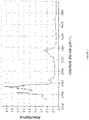
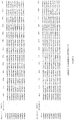
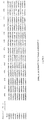
- the figure 1 represents the NIR spectrum of a standard on which the absorbance measured as a function of the wave number can be visualized as a spectral quantity. Similar spectra are therefore also established identically for each standard. In the present example representation, nine standards were analyzed. From these spectra, we establish a table (the spectral database A) of which an example of representation is given in the figure 2 for a limited number of wave numbers.
- the references allowing to identify the nine standards and in the first row the value wave numbers or ranges of wave numbers; the contents of the table therefore indicate the values of the spectral quantities (in the present case, the absorbances) which correspond to the “standard reference / wave number” pair.
- These spectral quantities can be all types of signals characterizing the spectra, for example absorbances, transmittances, reflectances, etc ...; the absorbances or optical densities being the most commonly used signals.
- the limited number of standards available is usually dictated by the customer and / or end user, desirous of using responsive and reliable control methods while limiting the need for a large amount of standards to be available in advance. and having to analyze it using conventional methods.
- a characteristic of this optional method according to the present invention is that it therefore makes it possible to overcome the need dictated by the prior art to have a very large number of standards available.
- the present invention makes it possible to characterize a gas and / or oil (and its origin) sample from a number of available standards less than 100, or even less than 60 or even less than 50. Very convincing results have been obtained. could even be obtained by means of the present invention from less than 40 available standards, or even less than 30 or even less than 20.
- a minimum of 10 available standards is however preferred even if the present invention has already been used successfully with a minimum of 5 stallions available.
- the spectra can be produced as a function of wavelengths (and / or ranges of wavelengths ) and / or according to the wavenumbers (and / or ranges of wavenumbers), because the wavenumber is represented by the inverse of the wavelength.
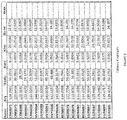
- the use of the second step above makes it possible to obtain an improved spectral database A ′; an example of an improved spectral database A 'is shown in the figure 4 .
- the last row of the table makes it possible to identify in the database B the wavelengths and / or ranges of wavelengths for which the ratio ( ⁇ / (VGSm / 100)) is greater than a predetermined value .
- the columns (the wavelengths and / or ranges of wavelengths) for which the value of the ratios ( ⁇ / (VGSm / 100)) is greater than 2% (preferably greater than 1.5% or even 1%); then, said columns, namely the values of spectral quantities corresponding to the “polluting” wavelengths, are eliminated from the database A.
- the corresponding columns i.e. those whose wavelength and / or wavelength range are identical) will then be eliminated from the spectral database A.
- tables A and B constitute representations which have no real relationship between them; it should also be noted that tables A and B have been truncated in order to give a visual representation; in reality, said tables include a multitude of columns representing the wavelengths and / or ranges of wavelengths extracted from the corresponding spectrum as detailed later in the description.
- An essential characteristic of this optional method according to the present invention consists in that the establishment of the improved spectral database A 'did not require at this stage to make reference and / or the slightest correlation with the chemical properties and / or physico-chemical standards. Indeed, this second step is completely independent of it.
- a third preferred consecutive step of this optional method according to the present invention consists of the actual enlargement of the spectral data bank A (or of the improved spectral data bank A ').
- This step consists in generating synthetic standards (also called “intergerms” [“IG”]) from the available standards and their values of spectral quantities. For example, to generate these GIs, it is possible to perform combinations of several standards available from the first step above and populate the spectral database A (or the improved spectral database A ') by means of said combinations. These combinations can be done randomly or in an oriented manner as described later in the text. Said combinations can consist of any kind of mathematical treatment applied to the values of spectral quantities of the standards G.
- said combination consists of a barycenter of the values of spectral quantities ("VGS") d 'at least two stallions.
- VGS spectral quantities
- a corresponding formula for the generation of a synthetic standard (IG) from the G standards is ⁇ Ri ⁇ VGSi / ⁇ Ri for i being an integer ranging from 1 to the number of standards G chosen for this combination and R being a real number such that ⁇ Ri > 0 , and ⁇ R ⁇ i / ⁇ Ri ⁇ 0.3 , of preference ⁇ 0.15 ,
- At least one of the Ri is a negative real (R *).
- the number of inter-bodies IG is at least greater than 1.5 N , preferably greater than 2 N, more preferably greater than 5 N, or even greater than 10 N.
- An essential characteristic of this optional method according to the present invention consists in the fact that the establishment of the enlarged spectral database E did not require at this stage to make reference and / or the slightest correlation with the chemical properties and / or physico-chemical standards. Indeed, this enlargement stage is completely independent of it.
- a fourth optional and preferred additional step according to the present invention then consists of an additional enlargement of the spectral data bank A or of the enlarged spectral data bank E by means of another type of synthetic standards which we will call “extragerms”. ("EG").
- This step can prove to be particularly relevant when the product to be analyzed contains a plurality of chemical compounds, for example petroleum.
- This second sequence consists in generating synthetic standards (also called “extragerms” [“EG”]) from the Pole (s) and the available standards and their values of spectral quantities.
- synthetic standards also called “extragerms” [“EG”]
- EG extracts
- the pole (s) and of several standards available from the first step above populate the spectral database A and / or E by means of said combinations.
- These combinations can be done randomly or in an oriented manner as described later in the text.
- Said combinations can consist of any kind of mathematical treatment applied to the values of spectral quantities of the standards G and of the Pole (s).
- the said combination consists of a barycenter of the values of spectral quantities (“VGS”) of the selected G standards and of the Pole (s).
- VGS barycenter of the values of spectral quantities
- Formula (I) above can also be stated as being the absolute value of the sum of the negative reals "i" divided by the sum of all the reals.
- at least one of the Ri is a negative real (R *).
- the number of extragerms "EG” is at least greater than NxM, from preferably greater than 1.5 NxM, preferably greater than 2 NxM.
- the number of poles is less than 15, for example less than 10.
- the number of poles is less than 0.2 times the number of standards, for example less than 0.1 times the number of standards.
- An essential characteristic of this optional method according to the present invention consists in that the establishment of the enlarged spectral database EE did not require at this stage to make reference and / or the slightest correlation with the chemical properties and / or physico-chemical standards. Indeed, this enlargement stage is completely independent of it.
- a fifth optional and preferred additional step according to the present invention also consists of an additional enlargement of the enlarged spectral database E and / or EE by means of another type of synthetic standards which we will call “extragerms” (“EG '').
- This step is again particularly relevant when the product to be analyzed contains a plurality of chemical compounds, for example oils.
- It consists in a first sequence in recording the spectral data of at least one spectrum corresponding to one (or more) of the chemical compounds of the product (also called “Pole (s)”).
- This second sequence consists in generating synthetic standards (also called “extragerms '” [“EG'”]) from the Pole (s) and “IG” “intergermal” standards (and optionally “G” germs). and their values of spectral quantities.
- synthetic standards also called “extragerms '” [“EG'”]
- IG intergermal
- G germs
- said combination consists of a barycenter of the values of spectral quantities (“VGS”) of the intergerms IG and of the pole (s)) (and optionally of the seeds “G”).
- VGS spectral quantities
- These combinations could for example be carried out between at least one Pole and one, two, three or a greater number of the “IG” of the third step, preferably with all the “IG”; and optionally with at least one of the “G” seeds, preferably with all of the “G” seeds.
- These combinations will preferably be carried out with all the poles available, preferably with all the poles corresponding to all the chemical compounds constituting the product analyzed.
- the number of extragerms "" EG '” is at least greater than ZxM, preferably greater than 1.5 ZxM, preferably greater than 2 ZxM.
- the number of synthetic standards IG of the spectral data bank E is "Z”
- the number of seeds G is N and the number of "Poles” is "M "
- the number of" EG "extragerms is at least greater than ZxMxN, preferably greater than 1.5 ZxMxN, preferably greater than 2 ZxMxN.
- the number of poles is less than 15, for example less than 10.
- the number of poles is less than 0.2 times the number of standards, for example less than 0.1 times the number of standards.
- An essential characteristic of this optional method according to the present invention consists in that the establishment of the enlarged spectral database EEI did not require at this stage to make reference and / or the slightest correlation with the chemical properties and / or physico-chemical standards. Indeed, this enlargement stage is completely independent of it.
- the spectral database (preferably enlarged in accordance with the methodology developed above) for each of the gases and / or oils and their mixture transported, it is possible to highlight by comparison between the said databases ( using for example any kind of conventional mathematical analysis) a characterizing spectral domain which distinguishes between them the origins of said gases and / or oils and thus determine the origins and the respective ratios of gases and / or oils in the final mixture transported to from enlarged spectral databases.
- topological spectral analysis and / or partial least squares (PLS) regression analysis will be cited; to allow the characterization and the discrimination of the origins (of extraction) of the gases and / or oils in the transported mixture.
- an additional intermediate step consists in defining an efficient method of discrimination making it possible to highlight homogeneous subgroups of products which preferentially obey the same types of property bonds. spectra as a result of a strong analogy of molecular structure.
- the methods of discrimination can be based exclusively on mathematical analysis techniques (eg, factor analyzes and / or principal component analyzes). Although some of these mathematical methods may prove useful, the present invention still preferably uses at least one empirical step to perform this type of discrimination, an empirical step based on a visual analysis of the spectra (e.g. standards and / or poles mentioned above); although this does not constitute a preferred embodiment according to the present invention, this visual analysis could also be done on the reconstituted spectra (from their calculated VGS) of the intergerms and / or extragerms.
- mathematical analysis techniques eg, factor analyzes and / or principal component analyzes.
- an essential characteristic of the optional method of establishing the enlarged spectral data bank according to a preferred embodiment of the aforementioned invention is that it was not necessary to refer to and / or the slightest correlation. with the chemical and / or physico-chemical properties of the standards. According to a preferred embodiment of the present invention, it is exactly the same for the discrimination step described here.
- the characterization and discrimination step consists in defining, from the spectral database (preferably enlarged), aggregates (preferably at least two aggregates) , n-dimensional spaces representing the combinations of said aggregates (preferably planes - or two-dimensional spaces - representing pairs of aggregates), and the corresponding spectral boxes.
- these aggregates and / or these n-dimensional spaces representing combinations of said aggregates and / or these spectral boxes define the spectral domain characterizing and discriminating the origins of said gases and / or oils. which thus makes it possible to determine the origins and the respective ratios of the gases and / or oils in the final mixture transported.
- the aggregates are therefore defined as mathematical functions of the values of spectral quantities of the enlarged spectral database making it possible to group and / or discriminate and / or separate families of products (in this case different origins of said gases and / or oils) within the extended spectral database.
- the present invention therefore also relates to a method of characterizing a product (in this case the different origins of said gases and / or oils) by topological spectral analysis.
- the characterization of a product according to the present invention can consist of a determination and / or a prediction of any chemical, physical or physicochemical characteristic of said product.
- the first step has therefore been characterized by the establishment of a spectral data bank, preferably an enlarged spectral data bank as described in the present description.
- the graphic representations of the databases (tables) in the appended figures constitute truncated views because in reality the said databases include a multitude of columns representing the wavelengths and / or ranges of lengths. wave numbers (or equivalent, the wave numbers or range of wave numbers) extracted from the corresponding spectra.
- the number of wavelengths chosen may be from 2 to 1000, for example from 5 to 200 or from 40 to 80.
- the wavelengths chosen can be at regular intervals such as 1 to 50 nm or every 10 to 50 nm or every 15 to 35 nm or every 1 to 5 nm or every nanometers; or they may be at irregular intervals, for example at intervals of 1 to 200 nm, for example from 1 to 100 or from 1 to 50 in particular from 2 to 50 or from 4 to 50 or from 10 to 60 nm, which can be chosen or random due to a variation in the shape of the spectral curve at this wavelength for example, a peak, a valley or a shoulder or else chosen with chemical or statistical criteria such as factor analysis .
- the wavelengths can be in the region of 625 to 2600 nm, for example 800 to 2600 nm, in particular 1500 to 2600 or 2000 to 2550 nm.
- the wavenumbers can be in the region of 16000 to 3840 cm-1, for example from 12500 to 3840 cm-1, in particular from 6660 to 3840 or from 5000 to 3900 cm-1; the corresponding frequencies in Hertz can be obtained by multiplying these wavelengths by 3x10 (exp) 10 cm / s.
- the chemical, physical and / or physico-chemical properties of the standards are determined by means of conventional analysis techniques.
- conventional analysis techniques mention will be made of gas chromatography for chemical compositions.
- the values of the desired properties measured for said standards (and optionally of the poles) are added to the spectral data bank; when the spectral database is enlarged, the values of said properties are then calculated for the synthetic intergermal standards (and optionally for the extragerms) from the formulas which were used to generate these synthetic standards; this calculation is done simply by replacing the values of spectral quantities VGS by the measured values of the said properties of the standards (and optionally of the poles) used in the formulas (and optionally, for the extragerms, by the values already calculated for the intergerms).
- this is an enlarged spectral data bank E made up of standards (A) and inter-bacteria (IG).
- the table has been completed by means of the characteristics of the gases and / or oils sought, namely the RON and MON values (the research octane number (RON) and the engine octane number (MON)). These characteristics were therefore measured for the standards and calculated for the intergerms.
- this comparison of signals is therefore not carried out on the entire spectral data bank but only on the part of the spectral data bank representative of the homogeneous subgroup to which l 'sample belongs. It is preferably by using the above-mentioned discrimination method (discriminating aggregates) that this part of the spectral database is defined.
- the signals are compared, for example the absorptions (or their derivatives or any other value of spectral quantity) for the unknown sample (sample preferably taken on-line in the pipeline for transporting mixed gases and / or oils) , with the same signals and at the same wavelength of standards and / or intergerms and / or extragerms and / or poles belonging to the same homogeneous subgroup, and the standards and / or intergerms are chosen from the spectral database and / or extragerms and / or poles having the smallest differences.
- the close neighbors chosen are those having the smallest average values of the absolute difference at each wavelength i between the spectral magnitude value (represented by way of example by l absorbance or a derivative thereof) Wix for the target product (sample / unknown product) and the corresponding signal Wim for the near neighbor.
- Averages can refer, for example, to the mean value of Wix-Wim (whatever its sign, i.e. an absolute difference), or of (Wix-Wim) exp2.
- the number of close neighbors may be equal to 1, preferably greater than or equal to 2, more preferably greater than or equal to 3.
- the number of close neighbors is less than or equal to 50, for example less than or equal to 20, or even 10.
- the calculation of the characteristic Z of the target product is done by virtue of the corresponding characteristics Zi of the close neighboring points, while giving the characteristics of said close neighboring points a weight which is all the more important in said calculation as they are closer to the target product.
- the method of the invention can be used to determine more than one property P at a time, for example at least 2, in particular from 1 to 30, for example 2 to 10 properties at a time. It is obviously possible to use different numbers of standards chosen for each property.
- the Applicant has discovered a particularly effective alternative method.
- This method consists in combining one of the above-mentioned topological methods for characterizing the target product with any mathematical model different from the topological methods (preferably a regression model) and allowing to characterize the target product from the values of spectral quantities VGS (for the same property).
- This method therefore involves the prior constitution of a mathematical model which makes it possible to calculate the properties of the products as a function of the spectral magnitude values (VGS) of the database, preferably a regression model (of product characterization from the pre-established spectral database);
- this spectral data bank can be either the aforementioned data bank A or preferably the data bank A ', E, EE or EEI, or a selection of said banks.
- this database will be the same as that which was used for the topological method.
- the characterization of a product according to the present invention can therefore consist of a determination and / or a prediction of any chemical, physical or physico-chemical characteristic of said product and / or the identification of a type and / or family of products. .
Landscapes
- Physics & Mathematics (AREA)
- Chemical & Material Sciences (AREA)
- Life Sciences & Earth Sciences (AREA)
- Health & Medical Sciences (AREA)
- Spectroscopy & Molecular Physics (AREA)
- General Physics & Mathematics (AREA)
- Analytical Chemistry (AREA)
- General Health & Medical Sciences (AREA)
- Pathology (AREA)
- Immunology (AREA)
- Biochemistry (AREA)
- Engineering & Computer Science (AREA)
- General Chemical & Material Sciences (AREA)
- Chemical Kinetics & Catalysis (AREA)
- Food Science & Technology (AREA)
- Oil, Petroleum & Natural Gas (AREA)
- Medicinal Chemistry (AREA)
- General Life Sciences & Earth Sciences (AREA)
- Geophysics (AREA)
- Investigating Or Analysing Materials By Optical Means (AREA)
Priority Applications (1)
| Application Number | Priority Date | Filing Date | Title |
|---|---|---|---|
| PL15787552T PL3213051T3 (pl) | 2014-10-30 | 2015-10-27 | Sposób określania pochodzenia mieszaniny składników przez analizę widmową |
Applications Claiming Priority (2)
| Application Number | Priority Date | Filing Date | Title |
|---|---|---|---|
| EP14290326 | 2014-10-30 | ||
| PCT/EP2015/074876 WO2016066646A1 (fr) | 2014-10-30 | 2015-10-27 | Procede de determination de l'origine d'un melange de constituants par analyse spectrale |
Publications (2)
| Publication Number | Publication Date |
|---|---|
| EP3213051A1 EP3213051A1 (fr) | 2017-09-06 |
| EP3213051B1 true EP3213051B1 (fr) | 2021-02-17 |
Family
ID=51870948
Family Applications (1)
| Application Number | Title | Priority Date | Filing Date |
|---|---|---|---|
| EP15787552.7A Active EP3213051B1 (fr) | 2014-10-30 | 2015-10-27 | Procede de determination de l'origine d'un melange de constituants par analyse spectrale |
Country Status (5)
| Country | Link |
|---|---|
| US (1) | US10551305B2 (pl) |
| EP (1) | EP3213051B1 (pl) |
| CA (1) | CA2965728C (pl) |
| PL (1) | PL3213051T3 (pl) |
| WO (1) | WO2016066646A1 (pl) |
Families Citing this family (1)
| Publication number | Priority date | Publication date | Assignee | Title |
|---|---|---|---|---|
| GB2592081A (en) * | 2020-02-17 | 2021-08-18 | Univ Southampton | Method and apparatus for obtaining chemical and/or material specific information of a sample using light scattered by Rayleigh scattering and/or Raman |
Citations (1)
| Publication number | Priority date | Publication date | Assignee | Title |
|---|---|---|---|---|
| WO2006126978A1 (en) * | 2003-08-14 | 2006-11-30 | Saudi Arabian Oil Company | Topological near infrared analysis modeling of petroleum refinery products |
Family Cites Families (11)
| Publication number | Priority date | Publication date | Assignee | Title |
|---|---|---|---|---|
| US4642778A (en) * | 1984-03-02 | 1987-02-10 | Indiana University Foundation | Method and device for spectral reconstruction |
| FR2619624B1 (fr) * | 1987-08-18 | 1993-03-05 | Bp France | Procede de determination des indices d'octane d'un melange complexe de carburants ou de constitution d'un tel melange ayant un indice d'octane determine par analyse spectrophotometrique proche infrarouge des constituants du melange |
| US5301125A (en) * | 1990-09-26 | 1994-04-05 | Exxon Research & Engineering Company | Spectroscopic determination of amount of one constituent of a fluid mixture in another constituent or in the fluid mixture itself, following separation of the mixture into its constituents |
| US6070128A (en) * | 1995-06-06 | 2000-05-30 | Eutech Engineering Solutions Limited | Method for determining properties using near infra-red (NIR) spectroscopy |
| US5717209A (en) * | 1996-04-29 | 1998-02-10 | Petrometrix Ltd. | System for remote transmission of spectral information through communication optical fibers for real-time on-line hydrocarbons process analysis by near infra red spectroscopy |
| US6087662A (en) * | 1998-05-22 | 2000-07-11 | Marathon Ashland Petroleum Llc | Process for analysis of asphaltene content in hydrocarbon mixtures by middle infrared spectroscopy |
| US6897071B2 (en) | 2002-08-13 | 2005-05-24 | Saudi Arabian Oil Company | Topological near infrared analysis modeling of petroleum refinery products |
| GB2426579B (en) * | 2005-05-28 | 2008-01-16 | Schlumberger Holdings | Devices and methods for quantification of liquids in gas-condensate wells |
| US8101916B2 (en) * | 2007-07-13 | 2012-01-24 | Instituto De Tecnologia Do Parana—Tecpar | Method for measuring biodiesel concentration in a biodiesel diesel oil mixture |
| US9074465B2 (en) * | 2009-06-03 | 2015-07-07 | Schlumberger Technology Corporation | Methods for allocating commingled oil production |
| US9678002B2 (en) * | 2014-10-29 | 2017-06-13 | Chevron U.S.A. Inc. | Method and system for NIR spectroscopy of mixtures to evaluate composition of components of the mixtures |
-
2015
- 2015-10-27 PL PL15787552T patent/PL3213051T3/pl unknown
- 2015-10-27 EP EP15787552.7A patent/EP3213051B1/fr active Active
- 2015-10-27 WO PCT/EP2015/074876 patent/WO2016066646A1/fr not_active Ceased
- 2015-10-27 US US15/523,318 patent/US10551305B2/en active Active
- 2015-10-27 CA CA2965728A patent/CA2965728C/en active Active
Patent Citations (1)
| Publication number | Priority date | Publication date | Assignee | Title |
|---|---|---|---|---|
| WO2006126978A1 (en) * | 2003-08-14 | 2006-11-30 | Saudi Arabian Oil Company | Topological near infrared analysis modeling of petroleum refinery products |
Also Published As
| Publication number | Publication date |
|---|---|
| WO2016066646A1 (fr) | 2016-05-06 |
| US20170336321A1 (en) | 2017-11-23 |
| US10551305B2 (en) | 2020-02-04 |
| PL3213051T3 (pl) | 2021-06-28 |
| CA2965728A1 (en) | 2016-05-06 |
| CA2965728C (en) | 2023-02-14 |
| EP3213051A1 (fr) | 2017-09-06 |
Similar Documents
| Publication | Publication Date | Title |
|---|---|---|
| EP3155403B1 (fr) | Procede d'optimisation d'un melange de constituants par analyse spectrale | |
| Fernandes et al. | Simultaneous determination of methanol and ethanol in gasoline using NIR spectroscopy: Effect of gasoline composition | |
| Chen et al. | Determination of rice syrup adulterant concentration in honey using three-dimensional fluorescence spectra and multivariate calibrations | |
| EP2992313B1 (fr) | Procédé de caractérisation d'un produit par analyse spectrale topologique | |
| Abbas et al. | PLS regression on spectroscopic data for the prediction of crude oil quality: API gravity and aliphatic/aromatic ratio | |
| Guimet et al. | Cluster analysis applied to the exploratory analysis of commercial Spanish olive oils by means of excitation− emission fluorescence spectroscopy | |
| EP2992314B1 (fr) | Procede de caracterisation d'un produit par analyse spectrale topologique | |
| FR2774768A1 (fr) | Methode de determination d'au moins une propriete physicochimique d'une coupe petroliere | |
| Dantas et al. | MCR-ALS with correlation constraint and Raman spectroscopy for identification and quantification of biofuels and adulterants in petroleum diesel | |
| EP2120047A1 (fr) | Procédé pour déterminer des propriétés physico-chimiques d'un échantillon pétrolier à partir de chromatographie en phase gazeuse bidimensionnelle | |
| Chen et al. | A novel variable selection method based on stability and variable permutation for multivariate calibration | |
| Orzel et al. | Simultaneous determination of Solvent Yellow 124 and Solvent Red 19 in diesel oil using fluorescence spectroscopy and chemometrics | |
| Chen et al. | Quantitative analysis of β-carotene and unsaturated fatty acids in blended olive oil via Raman spectroscopy combined with model prediction | |
| Legner et al. | Using compact proton nuclear magnetic resonance at 80 MHz and vibrational spectroscopies and data fusion for research octane number and gasoline additive determination | |
| WO2016066646A1 (fr) | Procede de determination de l'origine d'un melange de constituants par analyse spectrale | |
| EP3019851B1 (fr) | Procédé de transfert entre spectromètres | |
| EP1124127A1 (fr) | Dispositif de détermination de l'origine d'un produit naturel ou élaboré | |
| EP2812677B1 (fr) | Procede de detection de la transition de produits dans une conduite | |
| US20240418698A1 (en) | Method of determining saturates, aromatics, resins, and asphaltene (sara) fractions of reservoir fluid during downhole fluid analysis | |
| Conceição et al. | Influence of Biodiesel Content on Fluorescence Anisotropy of Undiluted Diesel-Biodiesel Blends Using Anisotropy-Resolved Multidimensional Emission Spectroscopy (ARMES) | |
| FR2632408A1 (fr) | Procede de determination des proprietes d'un gazole obtenu a partir d'un melange complexe de bases petrolieres ou de constitution d'un produit fini du type gazole ayant des proprietes determinees par analyse spectrophotometrique proche infrarouge des constituants du melange | |
| FR2632409A1 (fr) | Procede de determination des proprietes d'un fioul obtenu a partir d'un melange complexe de bases petrolieres ou de constitution d'un tel produit ayant des proprietes determinees par analyse spectrophotometrique proche infrarouge des constituants du melange |
Legal Events
| Date | Code | Title | Description |
|---|---|---|---|
| STAA | Information on the status of an ep patent application or granted ep patent |
Free format text: STATUS: THE INTERNATIONAL PUBLICATION HAS BEEN MADE |
|
| PUAI | Public reference made under article 153(3) epc to a published international application that has entered the european phase |
Free format text: ORIGINAL CODE: 0009012 |
|
| STAA | Information on the status of an ep patent application or granted ep patent |
Free format text: STATUS: REQUEST FOR EXAMINATION WAS MADE |
|
| 17P | Request for examination filed |
Effective date: 20170419 |
|
| AK | Designated contracting states |
Kind code of ref document: A1 Designated state(s): AL AT BE BG CH CY CZ DE DK EE ES FI FR GB GR HR HU IE IS IT LI LT LU LV MC MK MT NL NO PL PT RO RS SE SI SK SM TR |
|
| AX | Request for extension of the european patent |
Extension state: BA ME |
|
| DAV | Request for validation of the european patent (deleted) | ||
| DAX | Request for extension of the european patent (deleted) | ||
| STAA | Information on the status of an ep patent application or granted ep patent |
Free format text: STATUS: EXAMINATION IS IN PROGRESS |
|
| 17Q | First examination report despatched |
Effective date: 20181126 |
|
| GRAP | Despatch of communication of intention to grant a patent |
Free format text: ORIGINAL CODE: EPIDOSNIGR1 |
|
| STAA | Information on the status of an ep patent application or granted ep patent |
Free format text: STATUS: GRANT OF PATENT IS INTENDED |
|
| INTG | Intention to grant announced |
Effective date: 20200918 |
|
| GRAJ | Information related to disapproval of communication of intention to grant by the applicant or resumption of examination proceedings by the epo deleted |
Free format text: ORIGINAL CODE: EPIDOSDIGR1 |
|
| GRAS | Grant fee paid |
Free format text: ORIGINAL CODE: EPIDOSNIGR3 |
|
| GRAA | (expected) grant |
Free format text: ORIGINAL CODE: 0009210 |
|
| STAA | Information on the status of an ep patent application or granted ep patent |
Free format text: STATUS: THE PATENT HAS BEEN GRANTED |
|
| AK | Designated contracting states |
Kind code of ref document: B1 Designated state(s): AL AT BE BG CH CY CZ DE DK EE ES FI FR GB GR HR HU IE IS IT LI LT LU LV MC MK MT NL NO PL PT RO RS SE SI SK SM TR |
|
| INTG | Intention to grant announced |
Effective date: 20200918 |
|
| REG | Reference to a national code |
Ref country code: GB Ref legal event code: FG4D Free format text: NOT ENGLISH |
|
| REG | Reference to a national code |
Ref country code: CH Ref legal event code: EP |
|
| REG | Reference to a national code |
Ref country code: DE Ref legal event code: R096 Ref document number: 602015065653 Country of ref document: DE |
|
| REG | Reference to a national code |
Ref country code: AT Ref legal event code: REF Ref document number: 1362083 Country of ref document: AT Kind code of ref document: T Effective date: 20210315 |
|
| REG | Reference to a national code |
Ref country code: IE Ref legal event code: FG4D Free format text: LANGUAGE OF EP DOCUMENT: FRENCH |
|
| REG | Reference to a national code |
Ref country code: NO Ref legal event code: T2 Effective date: 20210217 |
|
| REG | Reference to a national code |
Ref country code: LT Ref legal event code: MG9D |
|
| REG | Reference to a national code |
Ref country code: NL Ref legal event code: MP Effective date: 20210217 |
|
| PG25 | Lapsed in a contracting state [announced via postgrant information from national office to epo] |
Ref country code: LT Free format text: LAPSE BECAUSE OF FAILURE TO SUBMIT A TRANSLATION OF THE DESCRIPTION OR TO PAY THE FEE WITHIN THE PRESCRIBED TIME-LIMIT Effective date: 20210217 Ref country code: PT Free format text: LAPSE BECAUSE OF FAILURE TO SUBMIT A TRANSLATION OF THE DESCRIPTION OR TO PAY THE FEE WITHIN THE PRESCRIBED TIME-LIMIT Effective date: 20210617 Ref country code: GR Free format text: LAPSE BECAUSE OF FAILURE TO SUBMIT A TRANSLATION OF THE DESCRIPTION OR TO PAY THE FEE WITHIN THE PRESCRIBED TIME-LIMIT Effective date: 20210518 Ref country code: HR Free format text: LAPSE BECAUSE OF FAILURE TO SUBMIT A TRANSLATION OF THE DESCRIPTION OR TO PAY THE FEE WITHIN THE PRESCRIBED TIME-LIMIT Effective date: 20210217 Ref country code: FI Free format text: LAPSE BECAUSE OF FAILURE TO SUBMIT A TRANSLATION OF THE DESCRIPTION OR TO PAY THE FEE WITHIN THE PRESCRIBED TIME-LIMIT Effective date: 20210217 Ref country code: BG Free format text: LAPSE BECAUSE OF FAILURE TO SUBMIT A TRANSLATION OF THE DESCRIPTION OR TO PAY THE FEE WITHIN THE PRESCRIBED TIME-LIMIT Effective date: 20210517 |
|
| REG | Reference to a national code |
Ref country code: AT Ref legal event code: MK05 Ref document number: 1362083 Country of ref document: AT Kind code of ref document: T Effective date: 20210217 |
|
| PG25 | Lapsed in a contracting state [announced via postgrant information from national office to epo] |
Ref country code: LV Free format text: LAPSE BECAUSE OF FAILURE TO SUBMIT A TRANSLATION OF THE DESCRIPTION OR TO PAY THE FEE WITHIN THE PRESCRIBED TIME-LIMIT Effective date: 20210217 Ref country code: NL Free format text: LAPSE BECAUSE OF FAILURE TO SUBMIT A TRANSLATION OF THE DESCRIPTION OR TO PAY THE FEE WITHIN THE PRESCRIBED TIME-LIMIT Effective date: 20210217 Ref country code: RS Free format text: LAPSE BECAUSE OF FAILURE TO SUBMIT A TRANSLATION OF THE DESCRIPTION OR TO PAY THE FEE WITHIN THE PRESCRIBED TIME-LIMIT Effective date: 20210217 Ref country code: SE Free format text: LAPSE BECAUSE OF FAILURE TO SUBMIT A TRANSLATION OF THE DESCRIPTION OR TO PAY THE FEE WITHIN THE PRESCRIBED TIME-LIMIT Effective date: 20210217 |
|
| PG25 | Lapsed in a contracting state [announced via postgrant information from national office to epo] |
Ref country code: IS Free format text: LAPSE BECAUSE OF FAILURE TO SUBMIT A TRANSLATION OF THE DESCRIPTION OR TO PAY THE FEE WITHIN THE PRESCRIBED TIME-LIMIT Effective date: 20210617 |
|
| PG25 | Lapsed in a contracting state [announced via postgrant information from national office to epo] |
Ref country code: SM Free format text: LAPSE BECAUSE OF FAILURE TO SUBMIT A TRANSLATION OF THE DESCRIPTION OR TO PAY THE FEE WITHIN THE PRESCRIBED TIME-LIMIT Effective date: 20210217 Ref country code: AT Free format text: LAPSE BECAUSE OF FAILURE TO SUBMIT A TRANSLATION OF THE DESCRIPTION OR TO PAY THE FEE WITHIN THE PRESCRIBED TIME-LIMIT Effective date: 20210217 Ref country code: CZ Free format text: LAPSE BECAUSE OF FAILURE TO SUBMIT A TRANSLATION OF THE DESCRIPTION OR TO PAY THE FEE WITHIN THE PRESCRIBED TIME-LIMIT Effective date: 20210217 Ref country code: EE Free format text: LAPSE BECAUSE OF FAILURE TO SUBMIT A TRANSLATION OF THE DESCRIPTION OR TO PAY THE FEE WITHIN THE PRESCRIBED TIME-LIMIT Effective date: 20210217 |
|
| REG | Reference to a national code |
Ref country code: DE Ref legal event code: R097 Ref document number: 602015065653 Country of ref document: DE |
|
| PG25 | Lapsed in a contracting state [announced via postgrant information from national office to epo] |
Ref country code: DK Free format text: LAPSE BECAUSE OF FAILURE TO SUBMIT A TRANSLATION OF THE DESCRIPTION OR TO PAY THE FEE WITHIN THE PRESCRIBED TIME-LIMIT Effective date: 20210217 Ref country code: SK Free format text: LAPSE BECAUSE OF FAILURE TO SUBMIT A TRANSLATION OF THE DESCRIPTION OR TO PAY THE FEE WITHIN THE PRESCRIBED TIME-LIMIT Effective date: 20210217 Ref country code: RO Free format text: LAPSE BECAUSE OF FAILURE TO SUBMIT A TRANSLATION OF THE DESCRIPTION OR TO PAY THE FEE WITHIN THE PRESCRIBED TIME-LIMIT Effective date: 20210217 |
|
| PLBE | No opposition filed within time limit |
Free format text: ORIGINAL CODE: 0009261 |
|
| STAA | Information on the status of an ep patent application or granted ep patent |
Free format text: STATUS: NO OPPOSITION FILED WITHIN TIME LIMIT |
|
| 26N | No opposition filed |
Effective date: 20211118 |
|
| PG25 | Lapsed in a contracting state [announced via postgrant information from national office to epo] |
Ref country code: AL Free format text: LAPSE BECAUSE OF FAILURE TO SUBMIT A TRANSLATION OF THE DESCRIPTION OR TO PAY THE FEE WITHIN THE PRESCRIBED TIME-LIMIT Effective date: 20210217 Ref country code: ES Free format text: LAPSE BECAUSE OF FAILURE TO SUBMIT A TRANSLATION OF THE DESCRIPTION OR TO PAY THE FEE WITHIN THE PRESCRIBED TIME-LIMIT Effective date: 20210217 |
|
| PG25 | Lapsed in a contracting state [announced via postgrant information from national office to epo] |
Ref country code: SI Free format text: LAPSE BECAUSE OF FAILURE TO SUBMIT A TRANSLATION OF THE DESCRIPTION OR TO PAY THE FEE WITHIN THE PRESCRIBED TIME-LIMIT Effective date: 20210217 |
|
| PG25 | Lapsed in a contracting state [announced via postgrant information from national office to epo] |
Ref country code: IT Free format text: LAPSE BECAUSE OF FAILURE TO SUBMIT A TRANSLATION OF THE DESCRIPTION OR TO PAY THE FEE WITHIN THE PRESCRIBED TIME-LIMIT Effective date: 20210217 |
|
| REG | Reference to a national code |
Ref country code: CH Ref legal event code: PL |
|
| PG25 | Lapsed in a contracting state [announced via postgrant information from national office to epo] |
Ref country code: IS Free format text: LAPSE BECAUSE OF FAILURE TO SUBMIT A TRANSLATION OF THE DESCRIPTION OR TO PAY THE FEE WITHIN THE PRESCRIBED TIME-LIMIT Effective date: 20210617 |
|
| REG | Reference to a national code |
Ref country code: BE Ref legal event code: MM Effective date: 20211031 |
|
| PG25 | Lapsed in a contracting state [announced via postgrant information from national office to epo] |
Ref country code: MC Free format text: LAPSE BECAUSE OF FAILURE TO SUBMIT A TRANSLATION OF THE DESCRIPTION OR TO PAY THE FEE WITHIN THE PRESCRIBED TIME-LIMIT Effective date: 20210217 |
|
| PG25 | Lapsed in a contracting state [announced via postgrant information from national office to epo] |
Ref country code: LU Free format text: LAPSE BECAUSE OF NON-PAYMENT OF DUE FEES Effective date: 20211027 Ref country code: BE Free format text: LAPSE BECAUSE OF NON-PAYMENT OF DUE FEES Effective date: 20211031 |
|
| PG25 | Lapsed in a contracting state [announced via postgrant information from national office to epo] |
Ref country code: LI Free format text: LAPSE BECAUSE OF NON-PAYMENT OF DUE FEES Effective date: 20211031 Ref country code: CH Free format text: LAPSE BECAUSE OF NON-PAYMENT OF DUE FEES Effective date: 20211031 |
|
| PG25 | Lapsed in a contracting state [announced via postgrant information from national office to epo] |
Ref country code: IE Free format text: LAPSE BECAUSE OF NON-PAYMENT OF DUE FEES Effective date: 20211027 |
|
| PG25 | Lapsed in a contracting state [announced via postgrant information from national office to epo] |
Ref country code: HU Free format text: LAPSE BECAUSE OF FAILURE TO SUBMIT A TRANSLATION OF THE DESCRIPTION OR TO PAY THE FEE WITHIN THE PRESCRIBED TIME-LIMIT; INVALID AB INITIO Effective date: 20151027 |
|
| PG25 | Lapsed in a contracting state [announced via postgrant information from national office to epo] |
Ref country code: CY Free format text: LAPSE BECAUSE OF FAILURE TO SUBMIT A TRANSLATION OF THE DESCRIPTION OR TO PAY THE FEE WITHIN THE PRESCRIBED TIME-LIMIT Effective date: 20210217 |
|
| PG25 | Lapsed in a contracting state [announced via postgrant information from national office to epo] |
Ref country code: MK Free format text: LAPSE BECAUSE OF FAILURE TO SUBMIT A TRANSLATION OF THE DESCRIPTION OR TO PAY THE FEE WITHIN THE PRESCRIBED TIME-LIMIT Effective date: 20210217 |
|
| PG25 | Lapsed in a contracting state [announced via postgrant information from national office to epo] |
Ref country code: MT Free format text: LAPSE BECAUSE OF FAILURE TO SUBMIT A TRANSLATION OF THE DESCRIPTION OR TO PAY THE FEE WITHIN THE PRESCRIBED TIME-LIMIT Effective date: 20210217 |
|
| PGFP | Annual fee paid to national office [announced via postgrant information from national office to epo] |
Ref country code: GB Payment date: 20250904 Year of fee payment: 11 |
|
| PG25 | Lapsed in a contracting state [announced via postgrant information from national office to epo] |
Ref country code: TR Free format text: LAPSE BECAUSE OF FAILURE TO SUBMIT A TRANSLATION OF THE DESCRIPTION OR TO PAY THE FEE WITHIN THE PRESCRIBED TIME-LIMIT Effective date: 20210217 |
|
| PGFP | Annual fee paid to national office [announced via postgrant information from national office to epo] |
Ref country code: DE Payment date: 20251029 Year of fee payment: 11 |
|
| PGFP | Annual fee paid to national office [announced via postgrant information from national office to epo] |
Ref country code: NO Payment date: 20251029 Year of fee payment: 11 |
|
| PGFP | Annual fee paid to national office [announced via postgrant information from national office to epo] |
Ref country code: FR Payment date: 20251027 Year of fee payment: 11 |
|
| PGFP | Annual fee paid to national office [announced via postgrant information from national office to epo] |
Ref country code: PL Payment date: 20251001 Year of fee payment: 11 |