EP3211920B1 - Verfahren und vorrichtung zur konfiguration eines nutzerspezifischen hörsystems - Google Patents
Verfahren und vorrichtung zur konfiguration eines nutzerspezifischen hörsystems Download PDFInfo
- Publication number
- EP3211920B1 EP3211920B1 EP17157227.4A EP17157227A EP3211920B1 EP 3211920 B1 EP3211920 B1 EP 3211920B1 EP 17157227 A EP17157227 A EP 17157227A EP 3211920 B1 EP3211920 B1 EP 3211920B1
- Authority
- EP
- European Patent Office
- Prior art keywords
- sound
- user
- hearing
- loudness
- hearing system
- Prior art date
- Legal status (The legal status is an assumption and is not a legal conclusion. Google has not performed a legal analysis and makes no representation as to the accuracy of the status listed.)
- Active
Links
Images


Classifications
-
- B—PERFORMING OPERATIONS; TRANSPORTING
- B29—WORKING OF PLASTICS; WORKING OF SUBSTANCES IN A PLASTIC STATE IN GENERAL
- B29C—SHAPING OR JOINING OF PLASTICS; SHAPING OF MATERIAL IN A PLASTIC STATE, NOT OTHERWISE PROVIDED FOR; AFTER-TREATMENT OF THE SHAPED PRODUCTS, e.g. REPAIRING
- B29C53/00—Shaping by bending, folding, twisting, straightening or flattening; Apparatus therefor
- B29C53/80—Component parts, details or accessories; Auxiliary operations
- B29C53/84—Heating or cooling
-
- B—PERFORMING OPERATIONS; TRANSPORTING
- B29—WORKING OF PLASTICS; WORKING OF SUBSTANCES IN A PLASTIC STATE IN GENERAL
- B29C—SHAPING OR JOINING OF PLASTICS; SHAPING OF MATERIAL IN A PLASTIC STATE, NOT OTHERWISE PROVIDED FOR; AFTER-TREATMENT OF THE SHAPED PRODUCTS, e.g. REPAIRING
- B29C53/00—Shaping by bending, folding, twisting, straightening or flattening; Apparatus therefor
- B29C53/02—Bending or folding
-
- H—ELECTRICITY
- H04—ELECTRIC COMMUNICATION TECHNIQUE
- H04R—LOUDSPEAKERS, MICROPHONES, GRAMOPHONE PICK-UPS OR LIKE ACOUSTIC ELECTROMECHANICAL TRANSDUCERS; ELECTRIC HEARING AIDS; PUBLIC ADDRESS SYSTEMS
- H04R25/00—Electric hearing aids
- H04R25/50—Customised settings for obtaining desired overall acoustical characteristics
- H04R25/505—Customised settings for obtaining desired overall acoustical characteristics using digital signal processing
-
- A—HUMAN NECESSITIES
- A61—MEDICAL OR VETERINARY SCIENCE; HYGIENE
- A61B—DIAGNOSIS; SURGERY; IDENTIFICATION
- A61B5/00—Measuring for diagnostic purposes; Identification of persons
- A61B5/12—Audiometering
- A61B5/121—Audiometering evaluating hearing capacity
- A61B5/123—Audiometering evaluating hearing capacity subjective methods
-
- B—PERFORMING OPERATIONS; TRANSPORTING
- B29—WORKING OF PLASTICS; WORKING OF SUBSTANCES IN A PLASTIC STATE IN GENERAL
- B29B—PREPARATION OR PRETREATMENT OF THE MATERIAL TO BE SHAPED; MAKING GRANULES OR PREFORMS; RECOVERY OF PLASTICS OR OTHER CONSTITUENTS OF WASTE MATERIAL CONTAINING PLASTICS
- B29B13/00—Conditioning or physical treatment of the material to be shaped
- B29B13/02—Conditioning or physical treatment of the material to be shaped by heating
- B29B13/023—Half-products, e.g. films, plates
- B29B13/024—Hollow bodies, e.g. tubes or profiles
-
- B—PERFORMING OPERATIONS; TRANSPORTING
- B29—WORKING OF PLASTICS; WORKING OF SUBSTANCES IN A PLASTIC STATE IN GENERAL
- B29C—SHAPING OR JOINING OF PLASTICS; SHAPING OF MATERIAL IN A PLASTIC STATE, NOT OTHERWISE PROVIDED FOR; AFTER-TREATMENT OF THE SHAPED PRODUCTS, e.g. REPAIRING
- B29C53/00—Shaping by bending, folding, twisting, straightening or flattening; Apparatus therefor
- B29C53/02—Bending or folding
- B29C53/08—Bending or folding of tubes or other profiled members
-
- H—ELECTRICITY
- H04—ELECTRIC COMMUNICATION TECHNIQUE
- H04R—LOUDSPEAKERS, MICROPHONES, GRAMOPHONE PICK-UPS OR LIKE ACOUSTIC ELECTROMECHANICAL TRANSDUCERS; ELECTRIC HEARING AIDS; PUBLIC ADDRESS SYSTEMS
- H04R25/00—Electric hearing aids
- H04R25/43—Electronic input selection or mixing based on input signal analysis, e.g. mixing or selection between microphone and telecoil or between microphones with different directivity characteristics
-
- H—ELECTRICITY
- H04—ELECTRIC COMMUNICATION TECHNIQUE
- H04R—LOUDSPEAKERS, MICROPHONES, GRAMOPHONE PICK-UPS OR LIKE ACOUSTIC ELECTROMECHANICAL TRANSDUCERS; ELECTRIC HEARING AIDS; PUBLIC ADDRESS SYSTEMS
- H04R25/00—Electric hearing aids
- H04R25/70—Adaptation of deaf aid to hearing loss, e.g. initial electronic fitting
-
- B—PERFORMING OPERATIONS; TRANSPORTING
- B29—WORKING OF PLASTICS; WORKING OF SUBSTANCES IN A PLASTIC STATE IN GENERAL
- B29C—SHAPING OR JOINING OF PLASTICS; SHAPING OF MATERIAL IN A PLASTIC STATE, NOT OTHERWISE PROVIDED FOR; AFTER-TREATMENT OF THE SHAPED PRODUCTS, e.g. REPAIRING
- B29C35/00—Heating, cooling or curing, e.g. crosslinking or vulcanising; Apparatus therefor
- B29C35/02—Heating or curing, e.g. crosslinking or vulcanizing during moulding, e.g. in a mould
- B29C35/08—Heating or curing, e.g. crosslinking or vulcanizing during moulding, e.g. in a mould by wave energy or particle radiation
- B29C35/0805—Heating or curing, e.g. crosslinking or vulcanizing during moulding, e.g. in a mould by wave energy or particle radiation using electromagnetic radiation
- B29C2035/0822—Heating or curing, e.g. crosslinking or vulcanizing during moulding, e.g. in a mould by wave energy or particle radiation using electromagnetic radiation using IR radiation
-
- B—PERFORMING OPERATIONS; TRANSPORTING
- B29—WORKING OF PLASTICS; WORKING OF SUBSTANCES IN A PLASTIC STATE IN GENERAL
- B29C—SHAPING OR JOINING OF PLASTICS; SHAPING OF MATERIAL IN A PLASTIC STATE, NOT OTHERWISE PROVIDED FOR; AFTER-TREATMENT OF THE SHAPED PRODUCTS, e.g. REPAIRING
- B29C35/00—Heating, cooling or curing, e.g. crosslinking or vulcanising; Apparatus therefor
- B29C35/02—Heating or curing, e.g. crosslinking or vulcanizing during moulding, e.g. in a mould
- B29C35/08—Heating or curing, e.g. crosslinking or vulcanizing during moulding, e.g. in a mould by wave energy or particle radiation
-
- B—PERFORMING OPERATIONS; TRANSPORTING
- B29—WORKING OF PLASTICS; WORKING OF SUBSTANCES IN A PLASTIC STATE IN GENERAL
- B29C—SHAPING OR JOINING OF PLASTICS; SHAPING OF MATERIAL IN A PLASTIC STATE, NOT OTHERWISE PROVIDED FOR; AFTER-TREATMENT OF THE SHAPED PRODUCTS, e.g. REPAIRING
- B29C35/00—Heating, cooling or curing, e.g. crosslinking or vulcanising; Apparatus therefor
- B29C35/02—Heating or curing, e.g. crosslinking or vulcanizing during moulding, e.g. in a mould
- B29C35/08—Heating or curing, e.g. crosslinking or vulcanizing during moulding, e.g. in a mould by wave energy or particle radiation
- B29C35/0805—Heating or curing, e.g. crosslinking or vulcanizing during moulding, e.g. in a mould by wave energy or particle radiation using electromagnetic radiation
-
- B—PERFORMING OPERATIONS; TRANSPORTING
- B29—WORKING OF PLASTICS; WORKING OF SUBSTANCES IN A PLASTIC STATE IN GENERAL
- B29L—INDEXING SCHEME ASSOCIATED WITH SUBCLASS B29C, RELATING TO PARTICULAR ARTICLES
- B29L2031/00—Other particular articles
- B29L2031/001—Profiled members, e.g. beams, sections
- B29L2031/003—Profiled members, e.g. beams, sections having a profiled transverse cross-section
- B29L2031/005—Profiled members, e.g. beams, sections having a profiled transverse cross-section for making window frames
-
- H—ELECTRICITY
- H04—ELECTRIC COMMUNICATION TECHNIQUE
- H04R—LOUDSPEAKERS, MICROPHONES, GRAMOPHONE PICK-UPS OR LIKE ACOUSTIC ELECTROMECHANICAL TRANSDUCERS; ELECTRIC HEARING AIDS; PUBLIC ADDRESS SYSTEMS
- H04R2225/00—Details of deaf aids covered by H04R25/00, not provided for in any of its subgroups
- H04R2225/43—Signal processing in hearing aids to enhance the speech intelligibility
Definitions
- the present invention relates to a method for configuring a user-specific hearing system.
- a hearing system conventionally comprises a receiving unit for receiving sound events, an amplification unit for frequency-dependent variable amplification of the received sound events and a reproduction unit for reproducing the amplified sound events on the hearing organ of a user.
- EP 1 746 859 B1 describes a method for configuring a hearing aid for a person.
- an audiometer generating test tones and an open headphone connected to the audiometer and worn by the patient used to transmit the test tones.
- the user wears his hearing aid and the open headphones.
- the hearing aid is configured to frequency-amplify the signal emitted by the audiometer via the headphones until the patient's hearing threshold is reached.
- it has been shown that the configuration of a hearing system by frequency-specific amplification does not lead to satisfactory results until the hearing threshold of the user is reached.
- test tones are reproduced by the loudspeaker array which represent virtual sound sources spatially by means of wave field synthesis.
- the test person should then express himself about the perceived volume of the test tones heard in order to determine a hearing picture of the test person.
- the subjective perception of the test subjects with regard to the test tones is compared with the hearing perception of a normal hearing person and an auditory image of the test patient is determined.
- the DE 10 2011 104 536 A1 describes a method and an apparatus for selecting and configuring a hearing aid for a patient.
- the patient is first subjected to a general screening to determine his hearing threshold.
- the patient is then equipped with a hearing aid and in a free sound field with fixed signals the volume increases until it indicates that it has perceived signals.
- the hearing aid is preset on the basis of these findings. Threshold values for the hearing threshold, the pleasant listening area and the discomfort area are then set on the hearing aid.
- a stimulus set of pulses is provided, which comprises a large number of volume levels for a large number of the frequencies.
- each volume level for each frequency is compared with respect to the perceived equality.
- the sounds to be compared are provided by the hearing aid and not by a loudspeaker arrangement that simulates environmental conditions.
- the WO 2004/054318 A1 shows a method for adapting a transportable communication device for hearing impaired users.
- the user is presented with two stimulus levels of different frequency bands of a perception frequency band, the loudness of which is to be assessed and compared.
- EP 1 538 868 A2 shows an audio amplification device and a method for setting this device by adapting a frequency-dependent amplification.
- One method step provides that several frequencies are made available to an output converter.
- the stimulus levels or levels of each frequency are adapted in such a way that they correspond to a predefined loudness level or a detection threshold of a user.
- a stimulus set with a narrow bandwidth is presented to the user.
- the user judges the loudness of the stimuli.
- the loudness of each stimulus is associated with the loudness compared to a reference stimulus, the reference stimulus having a selected specific frequency.
- Various stimuli are played to the user, which are compared with the constant reference stimulus and are adjusted in level according to the user's estimates until the loudness is equal to the loudness of the reference stimulus.
- the US 2006/0140418 A1 describes a method for compensating audio frequency response characteristics of a portable sound system.
- a reference tone 1000 Hz
- an associated sound pressure level (0 to 120 dB) are defined.
- the reference tone and a pure tone of a different frequency are reproduced alternately by both hearing aids, whereby a sound pressure level of the same loudness is obtained for the reference tone and the pure tone.
- the US 2002/0040254 A1 shows a device and a method that use an interactive process to improve the listening experience.
- the sound of the left and right headphones are adjusted by the user, with a frequency being reproduced first by one and then by the other headphone and then centered.
- the WO 2011/014906 A1 relates to a method for adapting a sound processing device or hearing system for a user using improved sounds, wherein one or more sounds or notes are presented to the user by the sound processing device.
- Each note comprises a collection of two or more harmonically related tones, which are spectrally positioned around the frequency of interest. It is also described that the user hears a sequence of musical tones of different frequencies and is instructed to adjust the loudness of the individual notes until they are equally loud and pleasant.
- the object of the present invention is to provide an improved method which allows a configuration of a user-specific hearing system, so that the hearing experience of the user is optimized after the configuration.
- the method should be designed to be as simple as possible in order to enable use in conventional companies of hearing aid acousticians and in order not to overwhelm the user during the configuration.
- the invention is initially based on the approach that two adjacent sound events are compared, which are reproduced in succession for the user.
- the first and the second Sound events are evaluated by the user and the hearing system is adapted by the converter unit using at least one conversion factor, so that the loudness of the first sound event is perceived by the user of the hearing system as the loudness of the second sound event. Only when adjacent frequencies are used, for example at intervals of 1 kHz (+/- 100 Hz), is the user's hearing system improved in configuration.
- a device for configuring a user-specific hearing system comprises a sound generator for generating sound events (hereinafter also referred to as sound signals) and a control unit. At least one loudspeaker spaced from the user of the hearing system is preferably provided for reproducing the sound events. Alternatively, the sound events can also be generated and reproduced by the hearing system.
- the control unit causes the sound generator, which can be formed by the hearing system in certain applications, to generate a plurality of sound events with different frequencies in a predetermined sequence. These can be narrow-band sine signals or sound signals with a wider bandwidth.
- the generated sound events are controlled by the control unit in a predetermined manner, in particular amplified, and are sent to the loudspeaker unit for reproduction as sound events with the same loudness or are reproduced directly by the hearing system.
- the control unit receives evaluation data via an operator interface, which represent a loudness difference perceived by the user between sound events that are adjacent in the frequency range. Via the user interface, the control unit is thus signaled whether the user has the sound events reproduced with the same loudness at different frequencies perceives equally loud or differently loud.
- the control unit then generates correction values which are output and can be used on the hearing system in order to configure its converter unit in such a way that the perceived loudness difference is reduced or preferably eliminated.
- the loudspeaker or loudspeakers are placed at a distance of preferably 2 m from the user of the hearing system.
- a speaker array is not required for the implementation of the invention, although possible. It is also not necessary to record a sound audiogram for the implementation of the invention. While conventional systems mostly only aim to fine-tune the hearing systems, the invention directly permits the complete configuration of the hearing system. In contrast to the prior art, a previous basic setting of the hearing system is not necessary. A previous measurement of the audiological characteristics can also be dispensed with.
- the sound events are generated by the sound generator as sine tones, thirds or narrow-band noise.
- the operator interface preferably comprises an input unit and a display unit, which can be combined, for example, in a single device such as a tablet PC.
- the device comprises a temporary data connection between the control unit and the hearing system, so that the correction values can be transmitted directly to the hearing system.
- the data connection can be wired or can be formed by wireless transmission systems.
- the correction values can of course also be programmed into the hearing system via a further operator interface.
- the method according to the invention for configuring a user-specific hearing system starts with the step of playing back a first sound event with a first frequency and a predetermined loudness on a loudspeaker, preferably on an at least two-channel loudspeaker unit which has at least two loudspeakers spaced apart from one another and from the user of the hearing system.
- a second sound event is reproduced with a second neighboring frequency that deviates from the first frequency and has the same loudness as in the first sound event via the loudspeaker unit or the individual loudspeaker.
- At least one implementation factor is subsequently the Converter unit of the hearing system changes so that the loudness of the first sound event is perceived by the user of the hearing system as the loudness of the second sound event.
- the aim of the method is achieved when all frequencies still audible by the user have been adjusted to the curves of the same volume.
- the aforementioned steps are preferably repeated several times using different, respectively adjacent frequencies of the sound events to be compared in each case, so that the hearing system can be configured over a predetermined frequency range, so that all sound events are subsequently perceived by the user with the same loudness.
- the respectively compared, adjacent sound events are each spaced from one another by approximately 500 to 1200 Hz, that is to say they preferably differ in each case by approximately 1 kHz ⁇ 200 Hz, particularly preferably in each case by 1 kHz ⁇ 100 Hz, with other differences in the above-mentioned of course Range are possible.
- the differences are preferably selected in accordance with the parameter ranges of the hearing system to be set.
- the distances between adjacent sound events should preferably be chosen to be smaller, so that several sound events with different, adjacent frequencies can also be included in the configuration loop in this range.
- the distances between adjacent sound events should preferably be chosen larger in order to be able to configure in this area with a manageable number of sound events with different, adjacent frequencies.
- the device is fully automated.
- the procedure is adapted so that the acoustician no longer has to make any special entries on the hearing system. Instead, only the results are read in according to the loudness perception of the user and implemented directly in the hearing system.
- the space in which the loudspeakers are installed and the sound events are reproduced can be measured with a white noise using a level meter and a frequency analyzer.
- the aim is to match the loudspeakers to the environment so that each loudspeaker outputs exactly the same levels up to the usual tolerances at the end of the calibration. If a reduced setup with only one speaker is used, this must be calibrated in the same way. If all speakers are leveled accordingly, the individual sound or frequency bands are leveled using a level meter, preferably according to the ISO 226: 2003 standard.
- the aim of the calibration is a high reproducibility in all room sizes.
- the sound events can also be generated and reproduced by the hearing system itself.
- the hearing system made available to the user can thus itself be the sound generator.
- the free sound field is dispensed with, since the reproduction of the sound events via the loudspeaker system is omitted, but this leads to a particularly simple construction of the device.
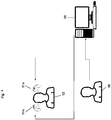
- the basic illustration shown illustrates essential components of the device for configuring a user-specific hearing system and their interaction.
- the user-specific hearing system 01 which as such does not belong to the device, comprises one or two hearing devices as subsystems, each of which has a receiving unit for receiving sound events, a converter unit for frequency-dependent variable adaptation of the received sound events and a playback unit Play the amplified sound events to the hearing organ of a user 02 include.
- the hearing system 01 is so-called deep-fit earmolds or deep-fit CIC hearing aids.
- the ear canal of the user is closed as far as possible by an inserted otoplastic, so that only the sound events amplified by the hearing system 01 are fed to the inner hearing organ of the user 02.
- the converter unit is formed by an amplification unit, which amplifies the received sound events in a frequency-dependent manner.
- modified embodiments of hearing systems can also be configured.
- the received sound events are not necessarily amplified by such modified hearing systems but processed / adapted in the broader sense and, for example, delivered to the hearing organ as electrical signals.
- the device further comprises a sound generator 03, which in the exemplary embodiment shown consists of a system computer and an amplifier.
- the sound generator 03 generates sound events (sound signals) and forwards them to a loudspeaker unit 04, through which sound events are emitted.
- the loudspeaker unit 04 is constructed in two or more channels in the embodiment shown and here has at least two loudspeakers which are positioned at a distance from one another and at a distance from the user 02.
- the distance ratios preferably lead to a position of the user in the free sound field suitable for a realistic stereo listening experience.
- the user 02 is located thus in the free sound field so that the sound events reach it as in a natural noise environment.
- the sound events can also be reproduced by only a single loudspeaker.
- the device comprises a control unit 05.
- the control unit 05 causes the sound generator 03 to generate a plurality of sound signals with different frequencies in a predetermined sequence.
- the generated sound signals are amplified in a predetermined manner and sent to the loudspeaker unit for reproduction as sound events with the same loudness.
- Standardized measurement methods for loudness measurement are given, for example, in DIN 45631 and ISO 532 B.
- the user is thus given a first sound event with a frequency of, for example, 2 kHz and a loudness of 65 dB via the loudspeaker unit and immediately afterwards a second sound event with an adjacent frequency of 3 kHz and the same loudness.
- a user with normal hearing would perceive the two sound events to be the same, while a user with hearing impairment in the frequency range concerned registers a difference in loudness.
- the sound events are reproduced specifically above the hearing threshold of the user, in a range of normal ambient volume, for example with 45 to 80 dB.
- a loudness difference perceived by the user is entered either by user 02 or by a hearing care professional 06 carrying out the configuration via a user interface on control unit 05.
- the control unit 05 determines correction values from the received evaluation data for the loudness difference and outputs them this in order to adapt the converter unit of the hearing system 01 in such a way that the difference in loudness is reduced or preferably completely eliminated.
- the correction values can either be fed directly into a programming unit 07, which sets the frequency-dependent amplification of the hearing system 01.
- the correction values can be displayed to the hearing aid acoustician, so that he or she can manually enter the corresponding corrections into the programming unit 07 via an additional interface. The correction can be carried out successively in several steps.
- a further modified embodiment uses the hearing system itself as a sound generator and for the reproduction of the sound events. There is no need for the speaker system.
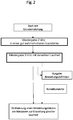
- Fig. 2 the essential steps for executing a method according to the invention for configuring a user-specific hearing system are shown in the form of a program flow chart.
- the hearing system can be adjusted with the basic settings of the manufacturer (First Fit), without additional exposure to frequency-dependent amplification parameters. If the user is provided with hearing systems on both ears, these are coupled and with the two-channel loudspeaker unit, only the side that is closest to the user's better hearing ear is initially exposed to a sound event.
- First Fit the basic settings of the manufacturer
- the two-channel loudspeaker unit only the side that is closest to the user's better hearing ear is initially exposed to a sound event.
- the actual configuration then begins with the reproduction of a first sound event with a first frequency, for example 2 kHz, at a clearly perceivable volume, for example with a loudness of 65 dB, initially only on one channel of the two-channel Loudspeaker unit, on the side of better hearing of the user.
- a second sound event with a second, adjacent frequency for example 3 kHz and the same loudness is reproduced, also on the side of better hearing.
- the user registers either the same loudness or a loudness difference despite the objectively existing identical loudness between the two reproduced sound events.
- a perceived loudness difference in the form of evaluation data of the control unit of a corresponding device can be entered via an operator interface, in the simplest case only by selecting the sound event which the user perceives as louder.
- an amplification factor of the amplification unit (or a corresponding adaptation parameter of a modified converter unit) of the hearing system is changed, so that the loudness of the first sound event is perceived by the user of the hearing system like the loudness of the second sound event.
- the hearing system is thus configured for the frequency range between the frequencies of the two reproduced, adjacent sound events.
- the hearing system is preferably configured not only for two sound events that are spaced apart from one another, that is to say adjacent to one another, but for a plurality of sound events that each differ in frequency from one another by a predetermined amount, that is to say are each adjacent to one another, for example with a frequency spacing in each case in the range between 500 and 1200 Hz.
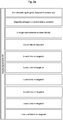
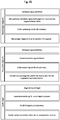
- 3a-3c show a correspondingly modified embodiment of the method for configuring a user-specific hearing system, in which the configuration is carried out using more than two sound events.
- Fig. 3a The section "Adaptation of a better ear" corresponds to the steps already explained Fig. 2 , whereby several sound events with different frequencies are used.
- the user's hearing aids are initially operated in the basic setting, adaptive parameters are switched off. If the user uses two hearing aids, these are coupled and one side (a subsystem) is switched off.
- a first sound event with, for example, 2 kHz, 65 dB is reproduced, so that the user perceives this first sound event with a clear loudness.
- the user is given a second sound event with an adjacent frequency of, for example, 3 kHz and the same loudness as the first sound event.
- the user can directly compare the two sound events with neighboring frequencies and the same loudness and specify whether the second sound event is perceived to be louder or quieter.
- a correction value / amplification factor is applied so that the user then perceives approximately the same loudness.
- the correct gain factor can be selected successively in several sub-steps. This is followed by a further comparison between adjacent frequencies, for example 3 and 4 kHz, 4 and 5 kHz, 5 and 6 kHz and 6 and 8 kHz, whereby correction values are determined for the hearing aid in order to perceive the two sound events of adjacent frequencies with the same Lead loudness. Further steps in Lower frequency range by comparing sound events at 2 and 1 kHz as well as 1 kHz and 500 Hz can follow.
- Fig. 3b how out Fig. 3b can be seen, the coupling of the two hearing aids is first switched off in the section "bilateral adjustment". In this section, all other gain settings are only made on the connected side (hearing aid). A sound event with 2 kHz, 65 dB is first offered to the connected second hearing aid. This is followed by the adjustment in all other frequencies, as previously described.
- Fig. 4 shows a modified embodiment of the device for configuring a user-specific hearing system 01a.
- the hearing system itself is used here as a sound generator and for the reproduction of the sound events.
- the customized user-specific hearing system 01a also includes in In this case, one or two hearing aids as subsystems, each comprising a receiving unit for receiving sound events, a converter unit for frequency-dependent variable adaptation of the received sound events and a playback unit for reproducing the amplified sound events to the hearing organ of a user 02.
- the hearing system 01a or each subsystem comprises an integrated unit that works as a sound generator and is activated by the control unit 05.
- the integrated sound generator generates sound events and reproduces them directly using the playback unit of the hearing system 01a.
- the control unit 05 causes the hearing system to generate a plurality of sound signals with different frequencies in a predetermined sequence and to reproduce them with the same loudness.
- a loudness difference perceived by the user 02 is input either by the user or by a hearing care professional 06 performing the configuration via an operator interface on the control unit 05.
- the control unit 05 determines correction values from the received evaluation data for the loudness difference and outputs them in order to adapt the converter unit of the hearing system 01 in such a way that the loudness difference is reduced or preferably completely eliminated.
- the correction values are supplied directly from the control unit 05, which also takes over the function of the programming unit, to the hearing system 01.
Landscapes
- Engineering & Computer Science (AREA)
- Health & Medical Sciences (AREA)
- Physics & Mathematics (AREA)
- General Health & Medical Sciences (AREA)
- Otolaryngology (AREA)
- Acoustics & Sound (AREA)
- Signal Processing (AREA)
- Neurosurgery (AREA)
- Mechanical Engineering (AREA)
- Life Sciences & Earth Sciences (AREA)
- Audiology, Speech & Language Pathology (AREA)
- Medical Informatics (AREA)
- Biomedical Technology (AREA)
- Heart & Thoracic Surgery (AREA)
- Thermal Sciences (AREA)
- Molecular Biology (AREA)
- Surgery (AREA)
- Animal Behavior & Ethology (AREA)
- Pathology (AREA)
- Public Health (AREA)
- Veterinary Medicine (AREA)
- Biophysics (AREA)
- Multimedia (AREA)
- Circuit For Audible Band Transducer (AREA)
Applications Claiming Priority (1)
| Application Number | Priority Date | Filing Date | Title |
|---|---|---|---|
| DE102016103297.2A DE102016103297B4 (de) | 2016-02-25 | 2016-02-25 | Vorrichtung und Verfahren zur Konfiguration eines nutzerspezifischen Hörsystems |
Publications (2)
| Publication Number | Publication Date |
|---|---|
| EP3211920A1 EP3211920A1 (de) | 2017-08-30 |
| EP3211920B1 true EP3211920B1 (de) | 2020-06-03 |
Family
ID=58108484
Family Applications (1)
| Application Number | Title | Priority Date | Filing Date |
|---|---|---|---|
| EP17157227.4A Active EP3211920B1 (de) | 2016-02-25 | 2017-02-21 | Verfahren und vorrichtung zur konfiguration eines nutzerspezifischen hörsystems |
Country Status (5)
| Country | Link |
|---|---|
| US (1) | US20170251310A1 (da) |
| EP (1) | EP3211920B1 (da) |
| DE (2) | DE102016103297B4 (da) |
| DK (1) | DK3211920T3 (da) |
| ES (1) | ES2812799T3 (da) |
Families Citing this family (2)
| Publication number | Priority date | Publication date | Assignee | Title |
|---|---|---|---|---|
| DE102017103808B3 (de) | 2017-02-23 | 2018-05-30 | Hörwelt Duisburg GmbH | Verfahren zur patientenspezifischen Konfiguration eines Hörgerätes und Verfahren zum Erzeugen von Testsignalen dafür |
| DK202070493A1 (en) * | 2020-07-17 | 2022-01-20 | Gn Hearing As | Method at an electronic device involving a hearing device |
Family Cites Families (14)
| Publication number | Priority date | Publication date | Assignee | Title |
|---|---|---|---|---|
| US6201875B1 (en) | 1998-03-17 | 2001-03-13 | Sonic Innovations, Inc. | Hearing aid fitting system |
| SG115411A1 (en) * | 2000-10-03 | 2005-10-28 | Freesystems Pte Ltd | A personal on-demand audio entertainment device that is untethered and allows wireless download of content |
| WO2004054318A1 (en) * | 2002-12-09 | 2004-06-24 | Microsound A/S | Method of fitting portable communication device to a hearing impaired user |
| AU2004201374B2 (en) * | 2004-04-01 | 2010-12-23 | Phonak Ag | Audio amplification apparatus |
| KR100636213B1 (ko) * | 2004-12-28 | 2006-10-19 | 삼성전자주식회사 | 실시간 주파수 특성 보정 방법 및 그를 적용한 사운드재생 장치 |
| US7564979B2 (en) * | 2005-01-08 | 2009-07-21 | Robert Swartz | Listener specific audio reproduction system |
| DE102005061150A1 (de) | 2005-07-23 | 2007-02-01 | Kurz, Hans-Rainer | Vorrichtung und Verfahren zum Konfigurieren eines Hörgerätes |
| EP2177054B1 (en) * | 2007-07-31 | 2014-04-09 | Phonak AG | Method for adjusting a hearing device with frequency transposition and corresponding arrangement |
| DE102007054152A1 (de) | 2007-11-12 | 2009-05-28 | Tisantis Tinnitus-Zentrum Nemitz Gmbh | Verfahren zur Programmierung von Hörgeräten |
| DE102009030551B4 (de) * | 2009-04-02 | 2020-03-26 | Sivantos Pte. Ltd. | Verfahren zum lautheitsbasierten Einstellen der Verstärkung eines Hörgeräts und zugehöriges Hörgerät |
| US8553897B2 (en) * | 2009-06-09 | 2013-10-08 | Dean Robert Gary Anderson | Method and apparatus for directional acoustic fitting of hearing aids |
| US20120224733A1 (en) * | 2009-08-02 | 2012-09-06 | Peter John Blamey | Fitting of sound processors using improved sounds |
| DE102011104536A1 (de) | 2011-06-18 | 2012-12-20 | Martin Immenkemper | Verfahren zum Auswählen und Konfigurieren eines Hörgerätes für einen Patienten und Vorrichtung zum Durchführen des Verfahrens |
| CH709862A1 (de) * | 2014-07-09 | 2016-01-15 | Koj Inst Für Gehörtherapie Ag | Hörsystem mit anwenderspezifischer Programmierung. |
-
2016
- 2016-02-25 DE DE102016103297.2A patent/DE102016103297B4/de active Active
- 2016-02-25 DE DE202016101050.0U patent/DE202016101050U1/de not_active Expired - Lifetime
-
2017
- 2017-02-21 DK DK17157227.4T patent/DK3211920T3/da active
- 2017-02-21 EP EP17157227.4A patent/EP3211920B1/de active Active
- 2017-02-21 ES ES17157227T patent/ES2812799T3/es active Active
- 2017-02-27 US US15/443,027 patent/US20170251310A1/en not_active Abandoned
Non-Patent Citations (1)
| Title |
|---|
| None * |
Also Published As
| Publication number | Publication date |
|---|---|
| DE102016103297B4 (de) | 2019-02-21 |
| DE102016103297A1 (de) | 2017-08-31 |
| DK3211920T3 (da) | 2020-08-31 |
| EP3211920A1 (de) | 2017-08-30 |
| US20170251310A1 (en) | 2017-08-31 |
| ES2812799T3 (es) | 2021-03-18 |
| DE202016101050U1 (de) | 2016-04-21 |
Similar Documents
| Publication | Publication Date | Title |
|---|---|---|
| EP0689755B1 (de) | Fernsteuerbares, insbesondere programmierbares hörgerätesystem | |
| DE69933141T2 (de) | Tonprozessor zur adaptiven dynamikbereichsverbesserung | |
| EP2114089A1 (de) | Verfahren und Vorrichtung zur Bestimmung eines Verschlussgrads bei Hörgeräten | |
| EP2229010A2 (de) | Verfahren zum Kompensieren eines Störschalls bei einer Hörvorrichtung, Hörvorrichtung und Verfahren zum Anpassen derselben | |
| DE102020114026A1 (de) | Mediensystem und verfahren zur berücksichtigung eines hörverlustes | |
| EP1933590B1 (de) | Verfahren zur Hörgeräteanpassung | |
| DE102007035171A1 (de) | Verfahren zum Anpassen eines Hörgeräts mit Hilfe eines perzeptiven Modells | |
| EP2239963B1 (de) | Verfahren und Hörvorrichtung zum Einstellen eines Hörgeräts mit in einer externen Einheit aufgezeichneten Daten | |
| DE102012203349B4 (de) | Verfahren zum Anpassen einer Hörvorrichtung anhand des Sensory Memory und Anpassvorrichtung | |
| EP3211920B1 (de) | Verfahren und vorrichtung zur konfiguration eines nutzerspezifischen hörsystems | |
| DE102009030551B4 (de) | Verfahren zum lautheitsbasierten Einstellen der Verstärkung eines Hörgeräts und zugehöriges Hörgerät | |
| EP1416764B1 (de) | Verfahren zur Einstellung eines Hörgerätes sowie Vorrichtung zur Durchführung des Verfahrens | |
| EP4529225A1 (de) | Hörsystem sowie verfahren zur erzeugung von monauralen oder binauralen beats | |
| EP1746859B1 (de) | Vorrichtung und Verfahren zum Konfigurieren eines Hörgerätes | |
| EP2320679A2 (de) | Hörgerät mit Simulation eines Hörverlusts und Verfahren zur Simulation eines Hörverlusts | |
| DE10064210B4 (de) | Verfahren sowie System zur Funktionsüberprüfung und/oder Anpassung eines von einer Person getragenen Hörhilfegerätes | |
| DE102006015497B4 (de) | Audiosystem und Verfahren sowie Computerprogramm und Datenträger der das Computerprogramm enthält zur Anpassung der Übertragungsfunktion eines Audiosystems mittels Sprachsteuerung | |
| DE102013111295A1 (de) | Vorrichtung zum Vergleichstest von Hörgeräten | |
| CH705543B1 (de) | Verfahren zur Anpassung von Hörgeräten. | |
| DE102011089865B4 (de) | Verfahren zum Anpassen einer Frequenzkompressionseinrichtung einer Hörvorrichtung und entsprechende Anpassungsvorrichtung | |
| DE102020114770A1 (de) | Verfahren zur Auswahl eines geeigneten Hörgeräts und/oder einer geeigneten Hörgeräteeinstellung | |
| AT525364B1 (de) | Audiosystem | |
| DE102009048071A1 (de) | Verfahren und Vorrichtung zum Einstellen eines Hörgeräts unter Berücksichtigung einer Raumakustik | |
| EP3586526B1 (de) | Verfahren zur patientenspezifischen konfiguration eines hörgerätes und verfahren zum erzeugen von testsignalen dafür | |
| CH719643A2 (de) | Verfahren und System zum Verifizieren von Hörgeräten mit frequenzverändernder Funktion |
Legal Events
| Date | Code | Title | Description |
|---|---|---|---|
| PUAI | Public reference made under article 153(3) epc to a published international application that has entered the european phase |
Free format text: ORIGINAL CODE: 0009012 |
|
| STAA | Information on the status of an ep patent application or granted ep patent |
Free format text: STATUS: THE APPLICATION HAS BEEN PUBLISHED |
|
| AK | Designated contracting states |
Kind code of ref document: A1 Designated state(s): AL AT BE BG CH CY CZ DE DK EE ES FI FR GB GR HR HU IE IS IT LI LT LU LV MC MK MT NL NO PL PT RO RS SE SI SK SM TR |
|
| AX | Request for extension of the european patent |
Extension state: BA ME |
|
| STAA | Information on the status of an ep patent application or granted ep patent |
Free format text: STATUS: REQUEST FOR EXAMINATION WAS MADE |
|
| 17P | Request for examination filed |
Effective date: 20180227 |
|
| RBV | Designated contracting states (corrected) |
Designated state(s): AL AT BE BG CH CY CZ DE DK EE ES FI FR GB GR HR HU IE IS IT LI LT LU LV MC MK MT NL NO PL PT RO RS SE SI SK SM TR |
|
| STAA | Information on the status of an ep patent application or granted ep patent |
Free format text: STATUS: EXAMINATION IS IN PROGRESS |
|
| 17Q | First examination report despatched |
Effective date: 20190327 |
|
| GRAP | Despatch of communication of intention to grant a patent |
Free format text: ORIGINAL CODE: EPIDOSNIGR1 |
|
| STAA | Information on the status of an ep patent application or granted ep patent |
Free format text: STATUS: GRANT OF PATENT IS INTENDED |
|
| INTG | Intention to grant announced |
Effective date: 20200129 |
|
| GRAS | Grant fee paid |
Free format text: ORIGINAL CODE: EPIDOSNIGR3 |
|
| GRAA | (expected) grant |
Free format text: ORIGINAL CODE: 0009210 |
|
| STAA | Information on the status of an ep patent application or granted ep patent |
Free format text: STATUS: THE PATENT HAS BEEN GRANTED |
|
| AK | Designated contracting states |
Kind code of ref document: B1 Designated state(s): AL AT BE BG CH CY CZ DE DK EE ES FI FR GB GR HR HU IE IS IT LI LT LU LV MC MK MT NL NO PL PT RO RS SE SI SK SM TR |
|
| REG | Reference to a national code |
Ref country code: GB Ref legal event code: FG4D Free format text: NOT ENGLISH |
|
| REG | Reference to a national code |
Ref country code: AT Ref legal event code: REF Ref document number: 1278327 Country of ref document: AT Kind code of ref document: T Effective date: 20200615 Ref country code: CH Ref legal event code: EP |
|
| REG | Reference to a national code |
Ref country code: DE Ref legal event code: R096 Ref document number: 502017005506 Country of ref document: DE |
|
| REG | Reference to a national code |
Ref country code: NL Ref legal event code: FP Ref country code: FI Ref legal event code: FGE |
|
| REG | Reference to a national code |
Ref country code: DK Ref legal event code: T3 Effective date: 20200828 |
|
| REG | Reference to a national code |
Ref country code: SE Ref legal event code: TRGR Ref country code: CH Ref legal event code: NV Representative=s name: FREI PATENTANWALTSBUERO AG, CH |
|
| REG | Reference to a national code |
Ref country code: LT Ref legal event code: MG4D |
|
| PG25 | Lapsed in a contracting state [announced via postgrant information from national office to epo] |
Ref country code: GR Free format text: LAPSE BECAUSE OF FAILURE TO SUBMIT A TRANSLATION OF THE DESCRIPTION OR TO PAY THE FEE WITHIN THE PRESCRIBED TIME-LIMIT Effective date: 20200904 Ref country code: LT Free format text: LAPSE BECAUSE OF FAILURE TO SUBMIT A TRANSLATION OF THE DESCRIPTION OR TO PAY THE FEE WITHIN THE PRESCRIBED TIME-LIMIT Effective date: 20200603 Ref country code: NO Free format text: LAPSE BECAUSE OF FAILURE TO SUBMIT A TRANSLATION OF THE DESCRIPTION OR TO PAY THE FEE WITHIN THE PRESCRIBED TIME-LIMIT Effective date: 20200903 |
|
| PG25 | Lapsed in a contracting state [announced via postgrant information from national office to epo] |
Ref country code: HR Free format text: LAPSE BECAUSE OF FAILURE TO SUBMIT A TRANSLATION OF THE DESCRIPTION OR TO PAY THE FEE WITHIN THE PRESCRIBED TIME-LIMIT Effective date: 20200603 Ref country code: BG Free format text: LAPSE BECAUSE OF FAILURE TO SUBMIT A TRANSLATION OF THE DESCRIPTION OR TO PAY THE FEE WITHIN THE PRESCRIBED TIME-LIMIT Effective date: 20200903 Ref country code: RS Free format text: LAPSE BECAUSE OF FAILURE TO SUBMIT A TRANSLATION OF THE DESCRIPTION OR TO PAY THE FEE WITHIN THE PRESCRIBED TIME-LIMIT Effective date: 20200603 Ref country code: LV Free format text: LAPSE BECAUSE OF FAILURE TO SUBMIT A TRANSLATION OF THE DESCRIPTION OR TO PAY THE FEE WITHIN THE PRESCRIBED TIME-LIMIT Effective date: 20200603 |
|
| PG25 | Lapsed in a contracting state [announced via postgrant information from national office to epo] |
Ref country code: AL Free format text: LAPSE BECAUSE OF FAILURE TO SUBMIT A TRANSLATION OF THE DESCRIPTION OR TO PAY THE FEE WITHIN THE PRESCRIBED TIME-LIMIT Effective date: 20200603 |
|
| REG | Reference to a national code |
Ref country code: DE Ref legal event code: R084 Ref document number: 502017005506 Country of ref document: DE |
|
| PG25 | Lapsed in a contracting state [announced via postgrant information from national office to epo] |
Ref country code: EE Free format text: LAPSE BECAUSE OF FAILURE TO SUBMIT A TRANSLATION OF THE DESCRIPTION OR TO PAY THE FEE WITHIN THE PRESCRIBED TIME-LIMIT Effective date: 20200603 Ref country code: SM Free format text: LAPSE BECAUSE OF FAILURE TO SUBMIT A TRANSLATION OF THE DESCRIPTION OR TO PAY THE FEE WITHIN THE PRESCRIBED TIME-LIMIT Effective date: 20200603 Ref country code: CZ Free format text: LAPSE BECAUSE OF FAILURE TO SUBMIT A TRANSLATION OF THE DESCRIPTION OR TO PAY THE FEE WITHIN THE PRESCRIBED TIME-LIMIT Effective date: 20200603 Ref country code: RO Free format text: LAPSE BECAUSE OF FAILURE TO SUBMIT A TRANSLATION OF THE DESCRIPTION OR TO PAY THE FEE WITHIN THE PRESCRIBED TIME-LIMIT Effective date: 20200603 Ref country code: PT Free format text: LAPSE BECAUSE OF FAILURE TO SUBMIT A TRANSLATION OF THE DESCRIPTION OR TO PAY THE FEE WITHIN THE PRESCRIBED TIME-LIMIT Effective date: 20201006 |
|
| PG25 | Lapsed in a contracting state [announced via postgrant information from national office to epo] |
Ref country code: IS Free format text: LAPSE BECAUSE OF FAILURE TO SUBMIT A TRANSLATION OF THE DESCRIPTION OR TO PAY THE FEE WITHIN THE PRESCRIBED TIME-LIMIT Effective date: 20201003 Ref country code: SK Free format text: LAPSE BECAUSE OF FAILURE TO SUBMIT A TRANSLATION OF THE DESCRIPTION OR TO PAY THE FEE WITHIN THE PRESCRIBED TIME-LIMIT Effective date: 20200603 Ref country code: PL Free format text: LAPSE BECAUSE OF FAILURE TO SUBMIT A TRANSLATION OF THE DESCRIPTION OR TO PAY THE FEE WITHIN THE PRESCRIBED TIME-LIMIT Effective date: 20200603 |
|
| REG | Reference to a national code |
Ref country code: DE Ref legal event code: R097 Ref document number: 502017005506 Country of ref document: DE |
|
| REG | Reference to a national code |
Ref country code: ES Ref legal event code: FG2A Ref document number: 2812799 Country of ref document: ES Kind code of ref document: T3 Effective date: 20210318 |
|
| PLBE | No opposition filed within time limit |
Free format text: ORIGINAL CODE: 0009261 |
|
| STAA | Information on the status of an ep patent application or granted ep patent |
Free format text: STATUS: NO OPPOSITION FILED WITHIN TIME LIMIT |
|
| PGFP | Annual fee paid to national office [announced via postgrant information from national office to epo] |
Ref country code: IE Payment date: 20210216 Year of fee payment: 5 |
|
| 26N | No opposition filed |
Effective date: 20210304 |
|
| PG25 | Lapsed in a contracting state [announced via postgrant information from national office to epo] |
Ref country code: SI Free format text: LAPSE BECAUSE OF FAILURE TO SUBMIT A TRANSLATION OF THE DESCRIPTION OR TO PAY THE FEE WITHIN THE PRESCRIBED TIME-LIMIT Effective date: 20200603 |
|
| PGFP | Annual fee paid to national office [announced via postgrant information from national office to epo] |
Ref country code: SE Payment date: 20210222 Year of fee payment: 5 |
|
| PG25 | Lapsed in a contracting state [announced via postgrant information from national office to epo] |
Ref country code: MC Free format text: LAPSE BECAUSE OF FAILURE TO SUBMIT A TRANSLATION OF THE DESCRIPTION OR TO PAY THE FEE WITHIN THE PRESCRIBED TIME-LIMIT Effective date: 20200603 |
|
| PG25 | Lapsed in a contracting state [announced via postgrant information from national office to epo] |
Ref country code: LU Free format text: LAPSE BECAUSE OF NON-PAYMENT OF DUE FEES Effective date: 20210221 |
|
| REG | Reference to a national code |
Ref country code: SE Ref legal event code: EUG |
|
| PG25 | Lapsed in a contracting state [announced via postgrant information from national office to epo] |
Ref country code: SE Free format text: LAPSE BECAUSE OF NON-PAYMENT OF DUE FEES Effective date: 20220222 |
|
| PG25 | Lapsed in a contracting state [announced via postgrant information from national office to epo] |
Ref country code: IE Free format text: LAPSE BECAUSE OF NON-PAYMENT OF DUE FEES Effective date: 20220221 |
|
| PG25 | Lapsed in a contracting state [announced via postgrant information from national office to epo] |
Ref country code: HU Free format text: LAPSE BECAUSE OF FAILURE TO SUBMIT A TRANSLATION OF THE DESCRIPTION OR TO PAY THE FEE WITHIN THE PRESCRIBED TIME-LIMIT; INVALID AB INITIO Effective date: 20170221 |
|
| PG25 | Lapsed in a contracting state [announced via postgrant information from national office to epo] |
Ref country code: CY Free format text: LAPSE BECAUSE OF FAILURE TO SUBMIT A TRANSLATION OF THE DESCRIPTION OR TO PAY THE FEE WITHIN THE PRESCRIBED TIME-LIMIT Effective date: 20200603 |
|
| PG25 | Lapsed in a contracting state [announced via postgrant information from national office to epo] |
Ref country code: MK Free format text: LAPSE BECAUSE OF FAILURE TO SUBMIT A TRANSLATION OF THE DESCRIPTION OR TO PAY THE FEE WITHIN THE PRESCRIBED TIME-LIMIT Effective date: 20200603 |
|
| PG25 | Lapsed in a contracting state [announced via postgrant information from national office to epo] |
Ref country code: TR Free format text: LAPSE BECAUSE OF FAILURE TO SUBMIT A TRANSLATION OF THE DESCRIPTION OR TO PAY THE FEE WITHIN THE PRESCRIBED TIME-LIMIT Effective date: 20200603 |
|
| PG25 | Lapsed in a contracting state [announced via postgrant information from national office to epo] |
Ref country code: MT Free format text: LAPSE BECAUSE OF FAILURE TO SUBMIT A TRANSLATION OF THE DESCRIPTION OR TO PAY THE FEE WITHIN THE PRESCRIBED TIME-LIMIT Effective date: 20200603 |
|
| PGFP | Annual fee paid to national office [announced via postgrant information from national office to epo] |
Ref country code: DK Payment date: 20250219 Year of fee payment: 9 Ref country code: FI Payment date: 20250218 Year of fee payment: 9 |
|
| PGFP | Annual fee paid to national office [announced via postgrant information from national office to epo] |
Ref country code: ES Payment date: 20250318 Year of fee payment: 9 |
|
| PGFP | Annual fee paid to national office [announced via postgrant information from national office to epo] |
Ref country code: CH Payment date: 20250301 Year of fee payment: 9 Ref country code: BE Payment date: 20250218 Year of fee payment: 9 |
|
| PGFP | Annual fee paid to national office [announced via postgrant information from national office to epo] |
Ref country code: GB Payment date: 20250220 Year of fee payment: 9 |
|
| REG | Reference to a national code |
Ref country code: CH Ref legal event code: U11 Free format text: ST27 STATUS EVENT CODE: U-0-0-U10-U11 (AS PROVIDED BY THE NATIONAL OFFICE) Effective date: 20260301 |
|
| PGFP | Annual fee paid to national office [announced via postgrant information from national office to epo] |
Ref country code: NL Payment date: 20260218 Year of fee payment: 10 |
|
| PGFP | Annual fee paid to national office [announced via postgrant information from national office to epo] |
Ref country code: DE Payment date: 20260224 Year of fee payment: 10 |
|
| PGFP | Annual fee paid to national office [announced via postgrant information from national office to epo] |
Ref country code: AT Payment date: 20260216 Year of fee payment: 10 |
|
| PGFP | Annual fee paid to national office [announced via postgrant information from national office to epo] |
Ref country code: IT Payment date: 20260227 Year of fee payment: 10 |
|
| PGFP | Annual fee paid to national office [announced via postgrant information from national office to epo] |
Ref country code: FR Payment date: 20260223 Year of fee payment: 10 |