EP3206445B1 - User device, mobile communication system and maximum transmission power determination method - Google Patents
User device, mobile communication system and maximum transmission power determination method Download PDFInfo
- Publication number
- EP3206445B1 EP3206445B1 EP15849592.9A EP15849592A EP3206445B1 EP 3206445 B1 EP3206445 B1 EP 3206445B1 EP 15849592 A EP15849592 A EP 15849592A EP 3206445 B1 EP3206445 B1 EP 3206445B1
- Authority
- EP
- European Patent Office
- Prior art keywords
- value
- user apparatus
- transmission power
- maximum transmission
- signaling
- Prior art date
- Legal status (The legal status is an assumption and is not a legal conclusion. Google has not performed a legal analysis and makes no representation as to the accuracy of the status listed.)
- Active
Links
Images












Classifications
-
- H—ELECTRICITY
- H04—ELECTRIC COMMUNICATION TECHNIQUE
- H04W—WIRELESS COMMUNICATION NETWORKS
- H04W52/00—Power management, e.g. Transmission Power Control [TPC] or power classes
- H04W52/04—Transmission power control [TPC]
- H04W52/54—Signalisation aspects of the TPC commands, e.g. frame structure
-
- H—ELECTRICITY
- H04—ELECTRIC COMMUNICATION TECHNIQUE
- H04W—WIRELESS COMMUNICATION NETWORKS
- H04W48/00—Access restriction; Network selection; Access point selection
- H04W48/08—Access restriction or access information delivery, e.g. discovery data delivery
- H04W48/12—Access restriction or access information delivery, e.g. discovery data delivery using downlink control channel
-
- H—ELECTRICITY
- H04—ELECTRIC COMMUNICATION TECHNIQUE
- H04W—WIRELESS COMMUNICATION NETWORKS
- H04W52/00—Power management, e.g. Transmission Power Control [TPC] or power classes
- H04W52/04—Transmission power control [TPC]
- H04W52/30—Transmission power control [TPC] using constraints in the total amount of available transmission power
- H04W52/34—TPC management, i.e. sharing limited amount of power among users or channels or data types, e.g. cell loading
- H04W52/346—TPC management, i.e. sharing limited amount of power among users or channels or data types, e.g. cell loading distributing total power among users or channels
-
- H—ELECTRICITY
- H04—ELECTRIC COMMUNICATION TECHNIQUE
- H04W—WIRELESS COMMUNICATION NETWORKS
- H04W52/00—Power management, e.g. Transmission Power Control [TPC] or power classes
- H04W52/04—Transmission power control [TPC]
- H04W52/30—Transmission power control [TPC] using constraints in the total amount of available transmission power
- H04W52/36—Transmission power control [TPC] using constraints in the total amount of available transmission power with a discrete range or set of values, e.g. step size, ramping or offsets
-
- H—ELECTRICITY
- H04—ELECTRIC COMMUNICATION TECHNIQUE
- H04W—WIRELESS COMMUNICATION NETWORKS
- H04W52/00—Power management, e.g. Transmission Power Control [TPC] or power classes
- H04W52/04—Transmission power control [TPC]
- H04W52/30—Transmission power control [TPC] using constraints in the total amount of available transmission power
- H04W52/36—Transmission power control [TPC] using constraints in the total amount of available transmission power with a discrete range or set of values, e.g. step size, ramping or offsets
- H04W52/367—Power values between minimum and maximum limits, e.g. dynamic range
-
- H—ELECTRICITY
- H04—ELECTRIC COMMUNICATION TECHNIQUE
- H04W—WIRELESS COMMUNICATION NETWORKS
- H04W52/00—Power management, e.g. Transmission Power Control [TPC] or power classes
- H04W52/04—Transmission power control [TPC]
- H04W52/38—TPC being performed in particular situations
- H04W52/40—TPC being performed in particular situations during macro-diversity or soft handoff
-
- H—ELECTRICITY
- H04—ELECTRIC COMMUNICATION TECHNIQUE
- H04W—WIRELESS COMMUNICATION NETWORKS
- H04W48/00—Access restriction; Network selection; Access point selection
- H04W48/20—Selecting an access point
-
- H—ELECTRICITY
- H04—ELECTRIC COMMUNICATION TECHNIQUE
- H04W—WIRELESS COMMUNICATION NETWORKS
- H04W52/00—Power management, e.g. Transmission Power Control [TPC] or power classes
- H04W52/04—Transmission power control [TPC]
- H04W52/18—TPC being performed according to specific parameters
- H04W52/28—TPC being performed according to specific parameters using user profile, e.g. mobile speed, priority or network state, e.g. standby, idle or non-transmission
- H04W52/281—TPC being performed according to specific parameters using user profile, e.g. mobile speed, priority or network state, e.g. standby, idle or non-transmission taking into account user or data type priority
-
- H—ELECTRICITY
- H04—ELECTRIC COMMUNICATION TECHNIQUE
- H04W—WIRELESS COMMUNICATION NETWORKS
- H04W84/00—Network topologies
- H04W84/02—Hierarchically pre-organised networks, e.g. paging networks, cellular networks, WLAN [Wireless Local Area Network] or WLL [Wireless Local Loop]
- H04W84/04—Large scale networks; Deep hierarchical networks
- H04W84/042—Public Land Mobile systems, e.g. cellular systems
Definitions
- the present invention relates to a technique for determining a maximum transmission power in a user apparatus of a mobile communication system.
- out-of-band emission rules and the like are defined such that interference is not exerted to radio systems used in the same area.
- the rules are defined by domestic regulations, so that communication carriers are required to operate radio systems based on the rules.
- a rule is specified such that the transmission power of the user apparatus UE may be reduced according to transmission position and the number of RBs (resource blocks).
- An allowable maximum reduction amount of transmission power is defined as "A-MPR(Additional-Maximum Power Reduction)" (refer to non-patent document 1).
- NS Network Signaling
- the NS value is a value broadcasted by additionalSpectrumEmission of SIB2 (SystemInformationBlockType2) (non-patent document 2).
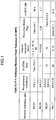
- Fig. 1 shows an example of NS values and corresponding transmission conditions (Requirements, band, bandwidth, the number of RBs, allowable A-MPR value) (excerpt from Table 6.2.4-1 of non-patent document 1). More specifically, the "transmission condition" is referred to as "additional spectrum emission mask and Additional spurious emissions requirements" (additional spectrum emission and Additional spurious emissions requirements).
- A-MPR equal to or less than 1dB is permitted for a transmission power defined in "6.6.3.3.1 Minimum requirement (network signaled value "NS_05")" of the non-patent document 2.
- the NS value is defined as necessary for each band (operating band) and channel bandwidth (channel bandwidth). Although the NS value is broadcasted from the network, the value of A-MPR is implemented in the user apparatus UE. Thus, the network side only determines whether to apply it or not, and broadcasts the NS value.
- a user apparatus UE receiving an NS value that is not defined for all channel bandwidths of a band that the user apparatus uses or for a specific channel bandwidth of the band is not specified.
- the user apparatus UE can understand NS_01 (no A-MPR) by default in any band and any channel bandwidth.
- the present invention is contrived in view of the above-mentioned points, and an object of the present invention is to provide a technique, in a cell where system information on a new transmission condition is broadcasted, for enabling not only a user apparatus that can understand the new transmission condition but also a user apparatus that cannot understand the new transmission condition to perform transmission by using a proper maximum transmission power.
- a user apparatus as defined by claim 1.
- a user apparatus as defined by claim 4.
- a mobile communication system as defined by claim 5.
- a maximum transmission power determination method executed by a user apparatus in a mobile communication system as defined by claim 6.
- a maximum transmission power determination method executed by a mobile communication system including a base station and the user apparatus as defined by claim 7.
- a technique in a cell where system information on a new transmission condition is broadcasted, for enabling not only a user apparatus that can understand the new transmission condition but also a user apparatus that cannot understand the new transmission condition to perform transmission by using a proper maximum transmission power.
- LTE Long Term Evolution
- 3GPP 3rd Generation Partnership Project
- Fig. 2 shows a block diagram of a communication system in an embodiment of the present invention.
- the communication system of the present embodiment includes a base station eNB and a user apparatus UE.
- Fig. 2 shows one base station eNB and one user apparatus UE, this is merely an example, and there may be a plurality of base stations eNB and user apparatuses UE.
- Fig. 3 shows, as an example, an example of operation when performing cell selection/cell reselection in an RRC idle state.
- the user apparatus UE receives a synchronization signal (PSS/SSS) from the base station eNB by cell search (step 101) so as to establish synchronization and obtain a cell ID (PCI).
- PSS/SSS synchronization signal
- PCI cell ID
- the user apparatus UE receives a reference signal (CRS) from the base station eNB to perform measurement of RSRP (step 102).
- CRS reference signal
- a cell of the base station eNB is selected as a cell in which RSRP of the reference signal is the highest (best cell).
- the user apparatus UE receives system information such as SIB1, SIB2 and the like broadcasted from the base station eNB.
- the user apparatus UE determines a maximum transmission power applied to the user apparatus UE based on information of an NS value included in SIB2 and information of a maximum transmission power (also to be referred to as maximum output power) included in SIB1.
- the user apparatus UE determines a DL channel bandwidth that the user apparatus UE applies in the cell by DL bandwidth information included in MIB. Also, the user apparatus UE determines a band (operating band) that the user apparatus applies in the cell based on band information included in SIB1. Unless UL bandwidth information is included in SIB2, the UL channel bandwidth is regarded to be the same as that of DL. When SIB2 includes UL bandwidth information, the user apparatus UE determines a value broadcasted by SIB2 as the UL channel bandwidth.
- the base station eNB in the present embodiment broadcasts an NS value of the own cell by additionalSpectrumEmission in SIB2, and broadcasts a maximum transmission power by p-Max which is an IE in the SIB1. More specifically, the maximum transmission power broadcasted by p-Max is used as P EMAX as indicated in 6.2.5 in the non-patent documents 1 (the same applies to after-mentioned p-Max2).
- NS_01 is broadcasted as additionalSpectrumEmission, and 18dBm is broadcasted as p-Max for the NS_01.
- NS_50 is broadcasted as additionalSpectrumEmission, and 23dBm is broadcasted as p-Max for the NS_50.
- a large value can be reported as p-Max. Accordingly, in a condition where transmission can be performed with a large transmission power (example: small number of RBs), a large transmission power can be used.
- a transmission method (example: RB positon, the number of RBs) that does not actuary exert influence to the surrounding is used, the transmission power is restricted small by the p-Max.
- NS_50 is a newly specified NS value for a new regulation, and only a part of new UEs (to be referred to as new UE hereinafter) can understand NS_50, but other UEs (to be referred to as old UEs) cannot understand NS_50.
- the cell B In order to avoid such a situation, it can be considered that, although the cell B, under normal circumstances, wants UEs to perform transmission according to the transmission condition of NS_50, the cell B unavoidably broadcasts NS_01 that all UEs can understand, and the cell B broadcasts a small p-Max such that the transmission condition of NS_50 is satisfied in any cases (the number of RBs, RE position, and the like)(that is, for making influence to adjacent systems assumed in NS_50 to be equal to or less than a predetermined value).
- NS values are broadcasted as NS values in the cell, and p-Max is broadcasted for each NS value.
- an NS value that is considered to be understood by all UEs is broadcasted by additionalSpectrumEmission, and a maximum transmission power corresponding to this is broadcasted by p-Max
- a second NS value that is considered to be understood only by a new UE is broadcasted by "additionalSpectrumEmission2"
- p-Max2 a maximum transmission power corresponding to this is broadcasted by "p-Max2”.
- NS_01 is broadcasted by additionalSpectrumEmission and 18dBm is broadcasted by p-Max
- NS_50 is broadcasted by additionalSpectrumEmission2 and 23dBm is broadcasted by p-Max2.
- the user apparatus UE that receives the above-mentioned broadcast information in cell B can determine the value of additionalSpectrumEmission2 (NS_50 in this example) to be a valid value (a value specified for the band and the channel bandwidth for the current cell), the user apparatus UE operates according to the condition corresponding to NS_50, and uses p-Max2 (23dBm) as a maximum transmission power. Also, when the user apparatus UE that receives the broadcast information in cell B cannot determine the value of additionalSpectrumEmission2 (NS_50 in this example) to be a valid value, the user apparatus UE operates according to additionalSpectrumEmission (NS_01), and uses p-Max(18dBm) as a maximum transmission power. When p-Max is not broadcasted, the user apparatus UE uses a value of a maximum transmission power that the user apparatus UE has as a UE capability instead of the p-Max.
- the user apparatus UE receives SIB1 and SIB2 from the base station eNB of a cell (step 201).
- system information such as SIB1 and SIB 2 are broadcasted periodically, so that the user apparatus UE receives it periodically.
- the user apparatus UE may read SIB1 and SIB2 as necessary and check the information.
- the user apparatus UE here corresponds to the before-mentioned "new UE", so that the user apparatus UE can read additionalSpectrumEmission2 from SIB2.
- the user apparatus UE can read additionalSpectrumEmission2, and determines that an NS value specified by the additionalSpectrumEmission2 is a valid value (Yes in step 202), the user apparatus UE reads p-Max2 from SIB1, and uses the value of p-Max2 as a maximum transmission value (Pemax).
- NS value to be a valid value means that the user apparatus UE determines that the NS value corresponds to the transmission condition specified in the 3GPP standard for the band and the channel bandwidth used in the current cell and that the user apparatus UE can perform transmission operation under the transmission condition of the NS value.
- step 202 when the user apparatus UE does not support additionalSpectrumEmission2 (that is, the user apparatus UE cannot understand additionalSpectrumEmission2), the process goes to step 204.
- the case where the user apparatus UE does not support additionalSpectrumEmission2 is a case in which the user apparatus UE cannot recognize the field, or a case where, although the user apparatus UE can read the value of the field, the user apparatus UE cannot recognize the value as a value corresponding to the band and the channel bandwidth used in the current cell.
- step 204 the user apparatus checks whether p-Max is broadcasted by SIB1. If it is broadcasted (Yes in step 204), the user apparatus UE uses the p-Max as a maximum transmission power in the cell (step 205). When p-Max is not broadcasted (No in step 204), the user apparatus UE uses a maximum transmission power according to the UE capability of the user apparatus UE (step 206).
- Fig. 5A shows an excerpt of a SIB1 message (SystemInformationBlockType1 message).
- p-Max2 is added.
- the value of the p-Max2 is a value determined to be the maximum transmission power in step 203 of Fig. 4 .
- the value of p-Max described in the upper part of Fig. 5A is a value to be regarded as the maximum transmission power in strep 205 in Fig. 4 .
- p-Max2 is a value applied to a user apparatus UE that supports additionalSpectrumEmission2 in the cell (the cell in which the SIB1 is broadcasted). In a case where p-Max2 does not exist, if p-Max is broadcasted, the user apparatus UE applies the p-Max, and if p-Max is not broadcasted, the user apparatus UE applies a maximum transmission power according to UE-capability.
- Fig. 6A shows an excerpt of a SIB2 IE (SystemInformationBlockType2 information element).
- SIB2 IE SystemInformationBlockType2 information element
- additionalSpectrumEmission2 is added.
- step 202 of Fig. 4 when the UE can understand additionalSpectrumEmission2 (when the UE determines that it is a valid value), the UE uses p-Max2 as a maximum transmission power.
- the user apparatus UE that receives additionalSpectrumEmission2 of a value that is defined in table6.2.4-1 of TS36.101 as a valid value in the band and the bandwidth in the current cell applies the value of additionalSpectrumEmission2 instead of additionalSpectrumEmission. If the user apparatus UE that receives additionalSpectrumEmission2 of a value that is not defined in table6.2.4-1 of TS36.101 as a valid value in the band and the bandwidth in the current cell, the user apparatus UE disregards the field, and operates according to additionalSpectrumEmission.
- the user apparatus UE can report, to the base station eNB, as a UE capability, whether the user apparatus UE has a capability for performing operation according to additionalSpectrumEmission2.
- Fig. 7A shows an excerpt of a UE capability IE (UE-EUTRA-Capability information element) corresponding to this operation. As shown in Fig. 7A , modifiedMPR-Behavior is added.
- bit N is set to "1" if the user apparatus UE supports modified MPR/A-MPR behavior "N" specified in TS36.101. Absence of this field means that the user apparatus UE does not support any modified MPR/A-MPR behavior.
- A-MPR for 5MHz is defined for NS_07 of band 13
- additional NS value/A-MPR is defined, or a case where protection level is desired to be changed while diverting existing NS values, or the like.
- the base station eNB may transmit a number, equal to or greater than three, of NS values and the number of p-MAXes to the user apparatus UE.
- the base station eNB notifies the user apparatus UE of a list in which NS values are arranged in a decreasing order of priority by SIB2 (as described later, also SIB1 may be used), and also, the base station eNB may notify the user apparatus UE of a list of values of p-Maxes corresponding to each NS value in the list by SIB1.
- SIB2 as described later, also SIB1 may be used
- the user apparatus UE that receives these lists applies an NS value of the highest priority from among NS values that the user apparatus can apply in the notified NS values, so as to apply p-Max corresponding to the NS value.
- the base station eNB transmits NS_50, NS_03, and NS_01 (in a descending order of priority) for a band that the user apparatus UE applies
- the base station eNB transmits p-Max1, p-Max2 and p-Max3, by SIB1, as p-Maxes corresponding to NS_50, NS_03 and NS_01 respectively.
- the user apparatus UE applies NS_50
- the user apparatus UE applies p-Max1 corresponding to NS_50.
- the existing p-Max may be used without defining a new signaling.
- the user apparatus UE receives SIB1, SIB2 and the like in a cell where the user apparatus UE camped on by a procedure of cell selection/cell reselection to determine a maximum transmission power and the like of the cell based on information included in these.
- the cell reselection there are same frequency cell reselection (intra-frequency cell reselection) and different frequency cell reselection (inter-frequency cell reselection).
- the user apparatus UE when received power/reception quality of a reference signal in a cell (serving cell) where the user apparatus UE resides becomes equal to or less than a predetermined value, the user apparatus UE starts measurement of received power/reception quality in a neighboring cell of a frequency the same as the frequency (that may be referred to as carrier frequency) of the cell, so as to determine whether to transit to the neighboring cell based on the measurement result.
- the user apparatus UE performs measurement of a neighboring cell of a frequency different from the frequency of the cell where the user apparatus UE resides based on priority and the like so as to determine whether to transit to the neighboring cell based on the measurement result.
- SIB5 System information Block Type 5
- non-patent document 2 information included in SIB5 (System information Block Type 5) that is one of a plurality of types of system information transmitted from the base station eNB to the user apparatus UE.
- the "InterFreqCarrierFreqInfo” includes a frequency (a value of a field of dl-CarrierFreq), a maximum transmission power (a vale of a field of p-Max), a priority (a value of a field of cellReselectionPriority), various thresholds (values of fields of threshX-High, threshX-Low and the like).
- the above-mentioned value of p-Max is one of parameters used in a determination condition for determining a transition destination cell (target cell).
- SIB5 does not include an NS value of the target cell.
- p-Max is not an optimum value for selecting a target cell.
- SIB5 includes, for each frequency of neighboring cells, a plurality of NS values and a value of P-Max corresponding to each of the plurality of NS values such that the user apparatus can properly determine a transition destination cell in different frequency cell reselection.
- the plurality of NS values for each frequency are transmitted from the base station eNB to the user apparatus UE as a list in which the NS values are arranged in a decreasing order of priority, for example.
- the plurality of p-Maxes corresponding to the plurality of NS values are notified as a list in which p-Maxes are arranged in the same order as the arranged order of NS values in the list of NS values.
- an NS value and a value of p-Max corresponding to the NS value is set as a pair, so that a list in which the pairs are arranged in a descending order of priority may be included in SIB5, and transmitted from the base station eNB to the user apparatus UE.
- descending order of priority is an example, and ascending order of priority may be used.
- SIB5 in a case where different frequencies notified by SIB5 are frequency 1 and frequency 2, "(NS value 1, P-Max1), (NS value 2,P-Max2),(NS value 3,P-Max3)” is included in SIB5 for the frequency 1 and "(NS value 1, P-Max1), (NS value 4,P-Max4),(NS value 5,P-Max5)” is included in SIB5 for the frequency 2.
- “(NS value 1, P-Max1)” indicates that NS value 1 is associated with p-Max 1.
- the user apparatus UE determines whether to transit to a cell of "frequency 1"
- the user apparatus UE refers to a list of NS values (or a list of pairs of NS values and p-Maxes) corresponding to "frequency 1”, so as to select an NS value of the highest priority from among NS values that the user apparatus UE can apply in "frequency 1", and further, selects a p-Max corresponding to the NS value, then, performs determination by applying the selected p-Max.
- the user apparatus UE selects the NS value 2, and determines whether to transit to the cell of frequency 1 using P-Max2 corresponding to this.
- the user apparatus UE can apply p-Max in "InterFreqCarrierFreqInfo".
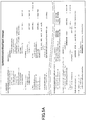
- Fig. 8 and Fig. 9 show description examples (excerpts) of a 3GPP specification (3GPP TS 36.331) corresponding to the modified example of SIB5.
- 3GPP TS 36.331 3GPP specification
- Fig. 8 and Fig. 9 portions changed from the non-patent document 2 are underlined.
- Fig. 8 shows an excerpt of SIB5 (SystemInformationBlockType5 information element).
- multiMPR-InfoList is added as a list of MPR-Info.
- the multiMPR-InfoList is included for each frequency of neighboring cells.
- multiMPR-InfoList is a list in which pairs of additionalSpectrumEmission (NS value) and a value of p-Max corresponding to it are arranged in the order of priority. If p-Max is absent in MPR-Info, the user apparatus UE applies p-Max in InterFreqCarrierFreqInfo. Also, when the user apparatus UE does not support any additionalSpectrumEmission (NS value) in the list, the user apparatus UE applies p-Max in InterFreqCarrierFreqInfo.
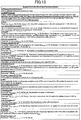
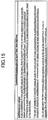
- Fig. 10 shows an excerpt of SIB5 (SystemInformationBlockType5 information element).
- SIB5 SystemInformationBlockType5 information element
- additional-ns-values that is a list of P-maxNS-valueList is added.
- the first P-maxNS-valueList includes a list of pairs of P-max and NS-value corresponding to freqBandIndicator in SIB1.
- the following P-maxNS-valueList corresponds to each additionalSpectrumEmission included in multiBandInfoList in SIB2.
- Each P-maxNS-valueList is a list arranging pairs of additionalSpectrumEmission (NS value) and a value of p-Max corresponding to it in a descending order of priority.
- the user apparatus UE applies the first additionalSpectrumEmission (NS value) that the user apparatus UE supports in the list.
- SIB5 that is used for different frequency cell reselection has been described.
- the value of p-Max used for determining whether to transit to a target cell is included in SIB3.
- the existing SIB3 does not include an NS value of a target cell.
- the above-mentioned p-Max is not an optimum value for selecting a target cell.
- SIB3 includes a plurality of NS values for transition destination cells (neighboring cells) and a value of P-Max corresponding to each of the plurality of NS values such that the user apparatus can properly determine a transition destination cell.
- the plurality of NS values included in SIB3 are transmitted from the base station eNB to the user apparatus UE as a list in which the NS values are arranged in a decreasing order of priority, for example. Also, the plurality of p-Maxes corresponding to the plurality of NS values are notified as a list in which p-Maxes are arranged in the same order as the arranged order of NS values in the list of NS values. Also, an NS value and a value of p-Max corresponding to the NS value is set as a pair, so that a list in which the pairs are arranged in a descending order of priority may be included in SIB3, and transmitted from the base station eNB to the user apparatus UE.
- descending order of priority is an example, and ascending order of priority may be used.
- (NS value 1, P-Max1), (NS value 2,P-Max2),(NS value 3,P-Max3) is included in SIB3 as a list of pairs of NS value and p-Max that can be applied in a transition destination cell.
- the user apparatus UE In same frequency cell reselection, in a case where the user apparatus UE that receives the above-mentioned list included in SIB3 determines whether to transit to another cell of the same frequency, the user apparatus UE refers to a list of NS values (or a list of pairs of NS values and p-Maxes) in SIB3, so as to select an NS value of the highest priority from among NS values that the user apparatus UE can apply, and further, selects a p-Max corresponding to the NS value, then, performs determination by applying the selected p-Max.
- NS values or a list of pairs of NS values and p-Maxes
- the user apparatus UE can apply p-Max in "intraFreqCellReselectionInfo".
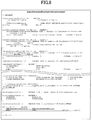
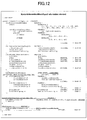
- Fig. 12 and Fig. 13 show description examples (excerpts) of a 3GPP specification (3GPP TS 36.331) corresponding to the modified example on SIB3.
- 3GPP TS 36.331 3GPP specification
- Fig. 12 and Fig. 13 portions changed from the non-patent document 2 are underlined.
- Fig. 12 shows an excerpt of SIB3 (SystemInformationBlockType3 information element).
- multiMPR-InfoList is added as a list of MPR-Info.
- multiMPR-InfoList is a list in which pairs of additionalSpectrumEmission (NS value) and a value of p-Max corresponding to it are arranged in the order of priority. If p-Max is absent in MPR-Info, the user apparatus UE applies p-Max in intraFreqCellReselectionInfo. Also, when the user apparatus UE does not support any additionalSpectrumEmission (NS value) in the list, the user apparatus UE applies p-Max in intraFreqCellReselectionInfo.
- NS value additionalSpectrumEmission
- Fig. 14 shows an excerpt of SIB3 (SystemInformationBlockType3 information element).
- SIB3 SystemInformationBlockType3 information element
- additional-ns-values that is a list of P-maxNS-valueList is added.
- the first P-maxNS-valueList includes a list of pairs of P-max and NS-value corresponding to freqBandIndicator in SIB1.
- the following P-maxNS-valueList corresponds to each additionalSpectrumEmission included in multiBandInfoList in SIB2.
- Each P-maxNS-valueList is a list arranging pairs of additionalSpectrumEmission (NS value) and a value of p-Max corresponding to it in a descending order of priority.
- the user apparatus UE applies the first additionalSpectrumEmission (NS value) that the user apparatus UE supports in the list.
- the base station eNB transmits a plurality of NS value and a plurality of p-Max values together by using SIB1 (or SIB2). That is, in the before-mentioned embodiment, an example has been described in which a plurality of NS values are transmitted by SIB2, and a plurality of p-Max values are transmitted by SIB1. On the other hand, in the modified example, a plurality of NS values are transmitted together with a plurality of p-Max values using SIB1 or SIB2.
- the plurality of NS values are included in SIB1 or SIB2 as a list in which the NS values are arranged in a decreasing order of priority, for example.
- the plurality of p-Maxes corresponding to the plurality of NS values are included in SIB1 or SIB2 as a list in which p-Maxes are arranged in the same order as the arranged order of NS values in the list of NS values.
- an NS value and a value of p-Max corresponding to the NS value is set as a pair, so that a list in which the pairs are arranged in a descending order of priority may be included in SIB1 or SIB2, and transmitted from the base station eNB to the user apparatus UE.
- descending order of priority is an example, and ascending order of priority may be used.
- (NS value 1, P-Max1), (NS value 2,P-Max2),(NS value 3,P-Max3) is included for a band in SIB1 or SIB2.
- (NS value 1, P-Max1) indicates that NS value 1 is associated with p-Max 1.
- the user apparatus UE In a case where the user apparatus UE that receives the above-mentioned list included in SIB1 or SIB2 applies the band in the cell, the user apparatus UE refers to a list of NS values (or a list of pairs of NS values and p-Maxes) corresponding to the band, so as to select an NS value of the highest priority from among NS values that the user apparatus UE can apply in the band, and further, selects a p-Max corresponding to the NS value, then, performs transmission control by applying the selected p-Max.
- NS values or a list of pairs of NS values and p-Maxes
- the user apparatus UE selects the NS value 2, and performs control of a maximum transmission power using the NS value 2 and P-Max2 corresponding to this.
- the user apparatus UE can apply an existing p-Max included in SIB1.
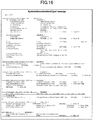
- Fig. 16 shows a description example (excerpts) of a 3GPP specification (3GPP TS 36.331) corresponding to the modified example on SIB1.
- 3GPP TS 36.331 3GPP specification
- portions changed from the non-patent document 2 are underlined.
- Fig. 16 shows an excerpt of SIB1 (SystemInformationBlockType1 information element).
- multiMPR-InfoList is added as a list of MPR-Info.
- multiMPR-InfoList is a list in which pairs of additionalSpectrumEmission (NS value) and a value of p-Max corresponding to it are arranged in the order of priority. If p-Max is absent in MPR-Info, the user apparatus UE applies the existing p-Max. Also, when the user apparatus UE does not support any additionalSpectrumEmission (NS value) in the list, the user apparatus UE applies the existing p-Max.
- NS value additionalSpectrumEmission
- the user apparatus UE can also perform cell selection using p-Max corresponding to the NS value selected from the plurality of NS values transmitted by SIB1.
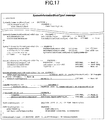
- Fig. 17 shows an excerpt of SIB1 (SystemInformationBlockType1 information element).
- SIB1 SystemInformationBlockType1 information element
- additional-ns-values that is a list of P-maxNS-valueList is added.
- the first P-maxNS-valueList includes a list of pairs of P-max and NS-value corresponding to freqBandIndicator in SIB1.
- the following P-maxNS-valueList corresponds to each additionalSpectrumEmission included in multiBandInfoList in SIB2.
- Each P-maxNS-valueList is a list arranging pairs of additionalSpectrumEmission (NS value) and a value of p-Max corresponding to it in a descending order of priority.
- the user apparatus UE applies the first additionalSpectrumEmission (NS value) that the user apparatus UE supports in the list.
- Fig. 19 shows an excerpt of SIB2 (SystemInformationBlockType2 information element).
- SIB2 SystemInformationBlockType2 information element
- additional-ns-values that is a list of P-maxNS-valueList is added.
- the first P-maxNS-valueList includes a list of pairs of P-max and NS-value corresponding to freqBandIndicator in SIB1.
- the following P-maxNS-valueList corresponds to each additionalSpectrumEmission included in multiBandInfoList in SIB2.
- Each P-maxNS-valueList is a list arranging pairs of additionalSpectrumEmission (NS value) and a value of p-Max corresponding to it in a descending order of priority.
- the user apparatus UE applies the first additionalSpectrumEmission (NS value) that the user apparatus UE supports in the list.
- Fig. 21 shows a functional block diagram of the user apparatus UE.
- the user apparatus UE includes a DL signal reception unit 101, an UL signal transmission unit 102, an RRC processing unit 103, a transmission power control unit 104.
- Fig. 21 shows only functional units especially related to the embodiment of the present invention in the user apparatus UE, and the user apparatus UE includes functions not shown in the figure for at least performing operation complying with LTE.
- the DL signal reception unit 101 includes functions configured to receive various downlink signals from the base station eNB, and obtain information of an upper layer from the received physical layer signals.
- the UL signal transmission unit 102 includes functions configured to generate various signals of physical layer from information of an upper layer that should be transmitted from the user apparatus UE so as to transmit the signals to the base station eNB.
- the DL signal reception unit 101 includes a function configured to execute cell selection and cell reselection. That is, the DL signal reception unit 101 includes a control unit configured to select a signaling value from among a plurality of signaling values included in system information, and to perform cell selection or cell reselection using a maximum transmission power corresponding to the signaling value.
- the control unit may be provided outside the DL signal reception unit 101.
- the RRC processing unit 103 performs reception and reading of SIB1, SIB2, SIB3, SIB5 and the like described in the present embodiment, and performs processing described with reference to Fig. 4 , and processing for determining an NS value and a p-Max in the modified example, or the like.
- the transmission power control unit 104 performs control of transmission power, and the like, based on received additionalSpectrumEmission/additionalSpectrumEmissio n2 and the like and determined maximum transmission power (p-Max/p-Max2 and the like).
- the configuration of the user apparatus UE shown in Fig. 21 may be realized by hardware circuits (example: one or a plurality of IC chips) as a whole, or may be realized by hardware circuits for a part and by a CPU and a program for other parts.
- Fig. 22 is a diagram showing an example of a hardware (HW) configuration of the user apparatus UE.
- Fig. 22 shows a configuration closer to an implementation example than Fig. 21 .
- the UE includes an RE (Radio Equipment) module 151 for performing processing on radio signals, a BB (Base Band) processing module 152 for performing baseband signal processing, an apparatus control module 153 for performing processes of upper layer and the like, and a USIM slot 154 that is an interface for accessing a USIM card.
- RE Radio Equipment
- BB Base Band
- USIM slot 154 that is an interface for accessing a USIM card.
- the RE module 151 generates a radio signal that should be transmitted from an antenna by performing D/A (Digital-to-Analog) conversion, modulation, frequency conversion, and power amplifying and the like on a digital baseband signal received from the BB processing module 152. Also, the RE module 151 generates a digital baseband signal by performing frequency conversion, A/D (Analog to Digital) conversion, demodulation and the like on a received radio signal, so as to pass the signal to the BB processing module 152.
- the RE module 151 includes, for example, functions of physical layer and the like of the DL signal reception unit 101 and the UL signal transmission unit 102 of Fig. 21 .
- the BB processing module 152 performs processing for converting between IP packets and digital baseband signals.
- the DSP (Digital Signal Processor) 162 is a processor for performing signal processing in the BB processing module 152.
- the memory 172 is used as a work area of the DSP 162.
- the BB processing module 152 may include, for example, functions of layer 2 and the like of the DL signal reception unit 101 and the UL signal transmission unit 102, the RRC processing unit 103 and the transmission power control unit 104. All of or a part of functions of the RRC processing unit 103 and the transmission power control unit 104 may be included in the apparatus control module 153.
- the apparatus control module 153 performs protocol processing of IP layer, processing of various applications, and the like.
- the processor 163 is a processor for performing processes performed by the apparatus control module 153.
- the memory 173 is used as a work area of the processor 163.
- the processor 163 performs read and write of data with a USIM via the USIM slot 154.
- Fig. 23 shows a functional block diagram of a base station eNB.
- the base station eNB includes a DL signal transmission unit 201, an UL signal reception unit 202, an RRC processing unit 203 and a transmission power control unit 204.
- Fig. 23 shows only functional units especially related to the embodiment of the present invention in the base station eNB, and the base station eNB includes functions not shown in the figure for at least performing operation complying with LTE.
- the DL signal transmission unit 201 includes functions configured to generate various signals of physical layer from information of an upper layer that should be transmitted from the base station eNB so as to transmit the signals.
- the UL signal reception unit 202 includes functions configured to receive various uplink signals from the user apparatus UE, and obtain information of an upper layer from the received physical layer signals.
- the RRC processing unit 203 performs generation and transmission of SIB1, SIB2, SIB3, SIB5 and the like described in the present embodiment. Also, the RRC processing unit 203 includes functions for receiving UE capability information from the user apparatus UE to hold it.
- the transmission power control unit 204 performs, for example, scheduling, UL power control and the like for the user apparatus UE in consideration of the maximum transmission power of the user apparatus UE.
- the configuration of the base station eNB shown in Fig. 23 may be realized by hardware circuits (example: one or a plurality of IC chips) as a whole, or may be realized by hardware circuits for a part and by a CPU and a program for other parts.
- Fig. 24 is a diagram showing an example of a hardware (HW) configuration of the base station eNB.
- Fig. 24 shows a configuration closer to an implementation example than Fig. 23 .
- the base station eNB includes an RE module 251 for performing processing on radio signals, a BB processing module 252 for performing baseband signal processing, an apparatus control module 253 for performing processes of upper layer and the like, and a communication IF 254 that is an interface for connecting to a network.
- the RE module 251 generates a radio signal that should be transmitted from an antenna by performing D/A conversion, modulation, frequency conversion, and power amplifying and the like on a digital baseband signal received form the BB processing module 252. Also, the RE module 251 generates a digital baseband signal by performing frequency conversion, A/D conversion, demodulation and the like on a received radio signal, so as to pass the signal to the BB processing module 252.
- the RE module 251 includes, for example, functions of physical layer and the like of the DL signal transmission unit 201 and the UL signal reception unit 202.
- the BB processing module 252 performs processing for converting between IP packets and digital baseband signals.
- the DSP 262 is a processor for performing signal processing in the BB processing module 252.
- the memory 272 is used as a work area of the DSP 262.
- the BB processing module 252 may include, for example, functions of layer 2 and the like of the DL signal transmission unit 201 and the UL signal reception unit 202, the RRC processing unit 203 and the transmission power control unit 204. All of or a part of functions of the RRC processing unit 203 and the transmission power control unit 204 may be included in the apparatus control module 253.
- the apparatus control module 253 performs protocol processing of IP layer, OAM processing, and the like.
- the processor 263 is a processor for performing processes performed by the apparatus control module 253.
- the memory 273 is used as a work area of the processor 263.
- the auxiliary storage device 283 is, for example, an HDD and the like, and stores various setting information and the like for operation of the base station eNB.
- the configuration (functional divisions) of the apparatuses shown in Figs. 21-24 is mere an example.
- the implementation method (concrete arrangement of functional units and the like) is not limited to a specific implementation method as long as processes described in the present embodiment can be realized.
- a user apparatus in a mobile communication system including a base station and a user apparatus, including:
- a technique in a cell where system information on a new transmission condition is broadcasted, for enabling not only a user apparatus that can understand the new transmission condition but also a user apparatus that cannot understand the new transmission condition to perform transmission by using a proper maximum transmission power.
- the control means determines the first maximum transmission power value as a maximum transmission power value for use in the cell.
- the control means can properly determine a maximum transmission power value so as to be able to camp on the cell and to perform communication.
- the user apparatus may determine a maximum transmission power value according to the capability of the user apparatus as a maximum transmission power value for use in the cell. According to this configuration, even when the user apparatus cannot interpret the second signaling value on a new transmission condition and does not receive the first maximum transmission power value, the user apparatus can properly determine a maximum transmission power value so as to be able to camp on the cell and to perform communication.
- the transmission condition is a condition including availability of application of A-MPR, for example. According to this configuration, for example, it becomes possible to cause the user apparatus to operate by complying with a transmission condition (example: a table where a new NS is added to Table 6.2.4-1 of non-patent document 1) that is considered to be defined in 3GPP TS36.101.
- a transmission condition (example: a table where a new NS is added to Table 6.2.4-1 of non-patent document 1) that is considered to be defined in 3GPP TS36.101.
- the first system information is SIB1
- the second system information is SIB1 or SIB2. According to this configuration, the user apparatus can properly receive a signaling value.
- the control means may select a signaling value of a highest priority, from among signaling values that the user apparatus can apply in the plurality of signaling values included in the second system information, as the second signaling value, and determine the second maximum transmission power value corresponding to the second signaling value as a maximum transmission power value for use in the cell. According to this configuration, a proper signaling value can be selected from among a plurality of signaling values.
- a user apparatus in a mobile communication system including a base station and the user apparatus, including:
- a user apparatus in a mobile communication system including a base station and the user apparatus, including:
- a technique in a cell where system information on a new transmission condition is broadcasted, for enabling not only a user apparatus that can understand the new transmission condition but also a user apparatus that cannot understand the new transmission condition to perform transmission by using a proper maximum transmission power.
- a mobile communication system including a base station and a user apparatus, the base station including:
- a technique in a cell where system information on a new transmission condition is broadcasted, for enabling not only a user apparatus that can understand the new transmission condition but also a user apparatus that cannot understand the new transmission condition to perform transmission by using a proper maximum transmission power.
- the user apparatus UE described in the present embodiment may include a CPU and a memory and may be realized by executing a program by the CPU (processor), or may be realized by hardware such as hardware circuits including logics of processing described in the present embodiment, or may be configured by coexistence of a program and hardware.
- the base station eNB described in the present embodiment may include a CPU and a memory and may be realized by executing a program by the CPU (processor), or may be realized by hardware such as hardware circuits including logics of processing described in the present embodiment, or may be configured by coexistence of a program and hardware.
- the boundaries of the functional units or the processing units in the functional block diagram correspond to boundaries of physical components.
- the operations by the plural functional units may be physically performed by a single component.
- the operations by the single functional unit may be physically performed by plural components.
- the user apparatus UE and the base station eNB have been explained by using functional block diagrams.
- such an apparatus may be implemented in hardware, software, or a combination thereof.
- Each of the software executed by a processor provided in the user apparatus UE according to an embodiment of the present invention and the software executed by a processor provided in the base station may be stored in any proper storage medium such as a Random Access Memory (RAM), a flash memory, a Read Only Memory (ROM), an EPROM, an EEPROM, a register, a hard disk (HDD), a removable disk, a CD-ROM, a database, a server and the like.
- RAM Random Access Memory
- ROM Read Only Memory
- EPROM an EPROM
- EEPROM Electrically erasable programmable read-only Memory
- register a register
- HDD hard disk
- CD-ROM Compact Disk Read Only Memory
- database a server and the like.
Landscapes
- Engineering & Computer Science (AREA)
- Computer Networks & Wireless Communication (AREA)
- Signal Processing (AREA)
- Computer Security & Cryptography (AREA)
- Mobile Radio Communication Systems (AREA)
Priority Applications (1)
| Application Number | Priority Date | Filing Date | Title |
|---|---|---|---|
| PL15849592T PL3206445T3 (pl) | 2014-10-07 | 2015-10-06 | Urządzenie użytkownika, system łączności mobilnej i sposób określania maksymalnej mocy transmisji |
Applications Claiming Priority (3)
| Application Number | Priority Date | Filing Date | Title |
|---|---|---|---|
| JP2014206231 | 2014-10-07 | ||
| JP2015109145 | 2015-05-28 | ||
| PCT/JP2015/078360 WO2016056556A1 (ja) | 2014-10-07 | 2015-10-06 | ユーザ装置、移動通信システム、及び最大送信電力決定方法 |
Publications (3)
| Publication Number | Publication Date |
|---|---|
| EP3206445A1 EP3206445A1 (en) | 2017-08-16 |
| EP3206445A4 EP3206445A4 (en) | 2017-09-06 |
| EP3206445B1 true EP3206445B1 (en) | 2019-07-03 |
Family
ID=55653167
Family Applications (1)
| Application Number | Title | Priority Date | Filing Date |
|---|---|---|---|
| EP15849592.9A Active EP3206445B1 (en) | 2014-10-07 | 2015-10-06 | User device, mobile communication system and maximum transmission power determination method |
Country Status (8)
| Country | Link |
|---|---|
| US (1) | US10251138B2 (pl) |
| EP (1) | EP3206445B1 (pl) |
| JP (1) | JP6337134B2 (pl) |
| CN (1) | CN106465306B (pl) |
| ES (1) | ES2758774T3 (pl) |
| HU (1) | HUE044631T2 (pl) |
| PL (1) | PL3206445T3 (pl) |
| WO (1) | WO2016056556A1 (pl) |
Families Citing this family (8)
| Publication number | Priority date | Publication date | Assignee | Title |
|---|---|---|---|---|
| WO2017188453A1 (ja) * | 2016-04-28 | 2017-11-02 | 株式会社Nttドコモ | ユーザ装置、基地局、及び通信方法 |
| EP3456099A1 (en) * | 2016-05-13 | 2019-03-20 | Telefonaktiebolaget LM Ericsson (PUBL) | Apparatus and methods for providing and receiving system information in a wireless communications network |
| US11716696B2 (en) * | 2016-09-29 | 2023-08-01 | Ntt Docomo, Inc. | User equipment and base station |
| WO2018201368A1 (en) * | 2017-05-04 | 2018-11-08 | Zte Corporation | System and method for using broadcast signals |
| CN112703780A (zh) * | 2018-09-20 | 2021-04-23 | 株式会社Ntt都科摩 | 用户装置以及发送功率控制方法 |
| EP4096262A4 (en) * | 2020-01-24 | 2023-10-18 | Ntt Docomo, Inc. | TERMINAL, BASE STATION, AND COMMUNICATION METHOD |
| ES3016793T3 (en) * | 2020-03-31 | 2025-05-09 | Guangdong Oppo Mobile Telecommunications Corp Ltd | Information indication method and apparatus, and device and storage medium |
| CN115428543A (zh) * | 2020-05-15 | 2022-12-02 | Oppo广东移动通信有限公司 | 资源配置方法、装置、设备及存储介质 |
Family Cites Families (23)
| Publication number | Priority date | Publication date | Assignee | Title |
|---|---|---|---|---|
| US8086258B2 (en) * | 2007-09-28 | 2011-12-27 | Ntt Docomo, Inc. | Base station, receiving device, mobile terminal, and frequency sharing method |
| CN101686527B (zh) * | 2008-09-22 | 2012-01-11 | 中兴通讯股份有限公司 | 广播控制信道的发送及接收方法 |
| JP5538802B2 (ja) * | 2008-11-04 | 2014-07-02 | 三菱電機株式会社 | 通信方法、移動体通信システム、移動端末および基地局制御装置 |
| KR101485807B1 (ko) * | 2009-04-01 | 2015-01-28 | 삼성전자주식회사 | 무선 통신 시스템의 랜덤 액세스 방법 및 장치 |
| CN106533513B (zh) | 2009-04-28 | 2020-06-26 | 三菱电机株式会社 | 移动通信系统、基站以及移动终端 |
| KR101622224B1 (ko) * | 2009-11-06 | 2016-05-18 | 엘지전자 주식회사 | 무선 통신 시스템에서 단말 송신 전력 제어 방법 및 이를 위한 장치 |
| US9049669B2 (en) * | 2010-03-23 | 2015-06-02 | Sumitomo Electric Industries, Ltd. | Base station device and terminal device |
| KR101697597B1 (ko) * | 2010-04-01 | 2017-01-18 | 엘지전자 주식회사 | 송신 파워를 제어하는 방법 및 이를 위한 장치 |
| CA2795640C (en) * | 2010-10-10 | 2017-04-18 | Lg Electronics Inc. | Method for controlling downlink transmission power and apparatus for the same |
| CN102026392B (zh) * | 2010-12-10 | 2013-10-16 | 大唐移动通信设备有限公司 | 一种在tdd小区上工作的方法、系统和设备 |
| JP6125437B2 (ja) * | 2011-02-21 | 2017-05-10 | サムスン エレクトロニクス カンパニー リミテッド | 端末送信電力量を效率的に報告する方法及び装置 |
| KR20120111834A (ko) * | 2011-04-02 | 2012-10-11 | 주식회사 팬택 | 무선통신시스템에서 이종셀간 간섭조정을 위한 제어정보의 전송장치 및 방법 |
| JP2013005182A (ja) * | 2011-06-15 | 2013-01-07 | Ntt Docomo Inc | 移動通信方法、移動局及び無線基地局 |
| US9491708B2 (en) * | 2011-06-15 | 2016-11-08 | Lg Electronics Inc. | Method for transmitting signal in wireless access system and apparatus for same |
| US9241302B2 (en) * | 2011-06-17 | 2016-01-19 | Qualcomm Incorporated | Methods and apparatus for radio access technology search |
| WO2013027969A2 (en) * | 2011-08-22 | 2013-02-28 | Samsung Electronics Co., Ltd. | Method and apparatus for supporting multiple frequency bands in mobile communication system |
| GB2532399B (en) * | 2011-09-30 | 2016-08-03 | Samsung Electronics Co Ltd | Management of spectrum emission requirements |
| GB2498932B (en) * | 2012-01-30 | 2013-12-18 | Renesas Mobile Corp | Method, apparatus and computer program for distributed carrier aggregation |
| US9749108B2 (en) * | 2012-02-16 | 2017-08-29 | Panasonic Intellectual Property Corporation Of America | Terminal, base station, transmission method, and reception method |
| EP2892287B1 (en) * | 2012-08-28 | 2017-10-04 | KYOCERA Corporation | Base station, user terminal, and processor |
| EP2901640A2 (en) * | 2012-09-26 | 2015-08-05 | Interdigital Patent Holdings, Inc. | Methods, systems and apparatuses for operation in long-term evolution (lte) systems |
| EP3028521B1 (en) * | 2013-07-29 | 2018-09-05 | Telefonaktiebolaget LM Ericsson (publ) | Method, computer program and device for contention based random access |
| JP5715723B2 (ja) * | 2014-04-16 | 2015-05-13 | 京セラ株式会社 | 移動通信方法及び基地局 |
-
2015
- 2015-10-06 PL PL15849592T patent/PL3206445T3/pl unknown
- 2015-10-06 HU HUE15849592 patent/HUE044631T2/hu unknown
- 2015-10-06 CN CN201580029716.7A patent/CN106465306B/zh active Active
- 2015-10-06 WO PCT/JP2015/078360 patent/WO2016056556A1/ja not_active Ceased
- 2015-10-06 JP JP2016553120A patent/JP6337134B2/ja active Active
- 2015-10-06 EP EP15849592.9A patent/EP3206445B1/en active Active
- 2015-10-06 ES ES15849592T patent/ES2758774T3/es active Active
- 2015-10-06 US US15/306,294 patent/US10251138B2/en active Active
Non-Patent Citations (1)
| Title |
|---|
| SAMSUNG: "Enhancement of additional emission requirement handling", 3GPP DRAFT; R4-115256_NSHANDLING, 3RD GENERATION PARTNERSHIP PROJECT (3GPP), MOBILE COMPETENCE CENTRE ; 650, ROUTE DES LUCIOLES ; F-06921 SOPHIA-ANTIPOLIS CEDEX ; FRANCE, vol. RAN WG4, no. Zhuhai; 20111010, 3 October 2011 (2011-10-03), XP050544310 * |
Also Published As
| Publication number | Publication date |
|---|---|
| US10251138B2 (en) | 2019-04-02 |
| ES2758774T3 (es) | 2020-05-06 |
| HUE044631T2 (hu) | 2019-11-28 |
| CN106465306A (zh) | 2017-02-22 |
| PL3206445T3 (pl) | 2019-11-29 |
| JPWO2016056556A1 (ja) | 2017-04-27 |
| US20170048809A1 (en) | 2017-02-16 |
| EP3206445A1 (en) | 2017-08-16 |
| JP6337134B2 (ja) | 2018-06-06 |
| CN106465306B (zh) | 2020-05-22 |
| EP3206445A4 (en) | 2017-09-06 |
| WO2016056556A1 (ja) | 2016-04-14 |
Similar Documents
| Publication | Publication Date | Title |
|---|---|---|
| EP3206445B1 (en) | User device, mobile communication system and maximum transmission power determination method | |
| EP3337239B1 (en) | User device, mobile communication system, and cell selection method | |
| US8891467B2 (en) | Dynamic bandwidth adjustment in flexible bandwidth systems | |
| US10271290B2 (en) | Terminal device, base station device, and communication method | |
| KR101487690B1 (ko) | 원거리 통신 시스템의 방법 및 장치 | |
| EP2749057B1 (en) | Method in a radio network node for controlling usage of rat and frequency bandwidth in a radio communication system | |
| EP2749058B1 (en) | Method and radio network node for smooth change of bandwidth usage for a rat in a radio communication system. | |
| WO2012173057A1 (ja) | 移動通信方法、移動局及び無線基地局 | |
| EP3217729B1 (en) | User device, mobile communication system, and signaling value application method | |
| US12557152B2 (en) | Establishing a wireless connection with a mobile device |
Legal Events
| Date | Code | Title | Description |
|---|---|---|---|
| STAA | Information on the status of an ep patent application or granted ep patent |
Free format text: STATUS: THE INTERNATIONAL PUBLICATION HAS BEEN MADE |
|
| PUAI | Public reference made under article 153(3) epc to a published international application that has entered the european phase |
Free format text: ORIGINAL CODE: 0009012 |
|
| STAA | Information on the status of an ep patent application or granted ep patent |
Free format text: STATUS: REQUEST FOR EXAMINATION WAS MADE |
|
| 17P | Request for examination filed |
Effective date: 20170407 |
|
| AK | Designated contracting states |
Kind code of ref document: A1 Designated state(s): AL AT BE BG CH CY CZ DE DK EE ES FI FR GB GR HR HU IE IS IT LI LT LU LV MC MK MT NL NO PL PT RO RS SE SI SK SM TR |
|
| AX | Request for extension of the european patent |
Extension state: BA ME |
|
| A4 | Supplementary search report drawn up and despatched |
Effective date: 20170807 |
|
| RIC1 | Information provided on ipc code assigned before grant |
Ipc: H04W 48/10 20090101ALI20170801BHEP Ipc: H04W 52/54 20090101AFI20170801BHEP Ipc: H04W 52/36 20090101ALI20170801BHEP Ipc: H04W 48/20 20090101ALI20170801BHEP Ipc: H04W 52/34 20090101ALI20170801BHEP Ipc: H04W 52/40 20090101ALI20170801BHEP Ipc: H04W 48/12 20090101ALI20170801BHEP Ipc: H04W 52/28 20090101ALI20170801BHEP |
|
| DAV | Request for validation of the european patent (deleted) | ||
| DAX | Request for extension of the european patent (deleted) | ||
| STAA | Information on the status of an ep patent application or granted ep patent |
Free format text: STATUS: EXAMINATION IS IN PROGRESS |
|
| 17Q | First examination report despatched |
Effective date: 20180809 |
|
| GRAP | Despatch of communication of intention to grant a patent |
Free format text: ORIGINAL CODE: EPIDOSNIGR1 |
|
| STAA | Information on the status of an ep patent application or granted ep patent |
Free format text: STATUS: GRANT OF PATENT IS INTENDED |
|
| INTG | Intention to grant announced |
Effective date: 20190125 |
|
| GRAS | Grant fee paid |
Free format text: ORIGINAL CODE: EPIDOSNIGR3 |
|
| GRAA | (expected) grant |
Free format text: ORIGINAL CODE: 0009210 |
|
| STAA | Information on the status of an ep patent application or granted ep patent |
Free format text: STATUS: THE PATENT HAS BEEN GRANTED |
|
| AK | Designated contracting states |
Kind code of ref document: B1 Designated state(s): AL AT BE BG CH CY CZ DE DK EE ES FI FR GB GR HR HU IE IS IT LI LT LU LV MC MK MT NL NO PL PT RO RS SE SI SK SM TR |
|
| REG | Reference to a national code |
Ref country code: GB Ref legal event code: FG4D |
|
| REG | Reference to a national code |
Ref country code: CH Ref legal event code: EP Ref country code: AT Ref legal event code: REF Ref document number: 1152510 Country of ref document: AT Kind code of ref document: T Effective date: 20190715 |
|
| REG | Reference to a national code |
Ref country code: IE Ref legal event code: FG4D |
|
| REG | Reference to a national code |
Ref country code: DE Ref legal event code: R096 Ref document number: 602015033313 Country of ref document: DE |
|
| REG | Reference to a national code |
Ref country code: NL Ref legal event code: FP |
|
| REG | Reference to a national code |
Ref country code: LT Ref legal event code: MG4D |
|
| REG | Reference to a national code |
Ref country code: HU Ref legal event code: AG4A Ref document number: E044631 Country of ref document: HU |
|
| REG | Reference to a national code |
Ref country code: AT Ref legal event code: MK05 Ref document number: 1152510 Country of ref document: AT Kind code of ref document: T Effective date: 20190703 |
|
| PG25 | Lapsed in a contracting state [announced via postgrant information from national office to epo] |
Ref country code: SE Free format text: LAPSE BECAUSE OF FAILURE TO SUBMIT A TRANSLATION OF THE DESCRIPTION OR TO PAY THE FEE WITHIN THE PRESCRIBED TIME-LIMIT Effective date: 20190703 Ref country code: PT Free format text: LAPSE BECAUSE OF FAILURE TO SUBMIT A TRANSLATION OF THE DESCRIPTION OR TO PAY THE FEE WITHIN THE PRESCRIBED TIME-LIMIT Effective date: 20191104 Ref country code: BG Free format text: LAPSE BECAUSE OF FAILURE TO SUBMIT A TRANSLATION OF THE DESCRIPTION OR TO PAY THE FEE WITHIN THE PRESCRIBED TIME-LIMIT Effective date: 20191003 Ref country code: AT Free format text: LAPSE BECAUSE OF FAILURE TO SUBMIT A TRANSLATION OF THE DESCRIPTION OR TO PAY THE FEE WITHIN THE PRESCRIBED TIME-LIMIT Effective date: 20190703 Ref country code: NO Free format text: LAPSE BECAUSE OF FAILURE TO SUBMIT A TRANSLATION OF THE DESCRIPTION OR TO PAY THE FEE WITHIN THE PRESCRIBED TIME-LIMIT Effective date: 20191003 Ref country code: FI Free format text: LAPSE BECAUSE OF FAILURE TO SUBMIT A TRANSLATION OF THE DESCRIPTION OR TO PAY THE FEE WITHIN THE PRESCRIBED TIME-LIMIT Effective date: 20190703 Ref country code: CZ Free format text: LAPSE BECAUSE OF FAILURE TO SUBMIT A TRANSLATION OF THE DESCRIPTION OR TO PAY THE FEE WITHIN THE PRESCRIBED TIME-LIMIT Effective date: 20190703 Ref country code: HR Free format text: LAPSE BECAUSE OF FAILURE TO SUBMIT A TRANSLATION OF THE DESCRIPTION OR TO PAY THE FEE WITHIN THE PRESCRIBED TIME-LIMIT Effective date: 20190703 Ref country code: LT Free format text: LAPSE BECAUSE OF FAILURE TO SUBMIT A TRANSLATION OF THE DESCRIPTION OR TO PAY THE FEE WITHIN THE PRESCRIBED TIME-LIMIT Effective date: 20190703 |
|
| PG25 | Lapsed in a contracting state [announced via postgrant information from national office to epo] |
Ref country code: AL Free format text: LAPSE BECAUSE OF FAILURE TO SUBMIT A TRANSLATION OF THE DESCRIPTION OR TO PAY THE FEE WITHIN THE PRESCRIBED TIME-LIMIT Effective date: 20190703 Ref country code: GR Free format text: LAPSE BECAUSE OF FAILURE TO SUBMIT A TRANSLATION OF THE DESCRIPTION OR TO PAY THE FEE WITHIN THE PRESCRIBED TIME-LIMIT Effective date: 20191004 Ref country code: RS Free format text: LAPSE BECAUSE OF FAILURE TO SUBMIT A TRANSLATION OF THE DESCRIPTION OR TO PAY THE FEE WITHIN THE PRESCRIBED TIME-LIMIT Effective date: 20190703 Ref country code: IS Free format text: LAPSE BECAUSE OF FAILURE TO SUBMIT A TRANSLATION OF THE DESCRIPTION OR TO PAY THE FEE WITHIN THE PRESCRIBED TIME-LIMIT Effective date: 20191103 Ref country code: LV Free format text: LAPSE BECAUSE OF FAILURE TO SUBMIT A TRANSLATION OF THE DESCRIPTION OR TO PAY THE FEE WITHIN THE PRESCRIBED TIME-LIMIT Effective date: 20190703 |
|
| PG25 | Lapsed in a contracting state [announced via postgrant information from national office to epo] |
Ref country code: TR Free format text: LAPSE BECAUSE OF FAILURE TO SUBMIT A TRANSLATION OF THE DESCRIPTION OR TO PAY THE FEE WITHIN THE PRESCRIBED TIME-LIMIT Effective date: 20190703 |
|
| PG25 | Lapsed in a contracting state [announced via postgrant information from national office to epo] |
Ref country code: EE Free format text: LAPSE BECAUSE OF FAILURE TO SUBMIT A TRANSLATION OF THE DESCRIPTION OR TO PAY THE FEE WITHIN THE PRESCRIBED TIME-LIMIT Effective date: 20190703 Ref country code: DK Free format text: LAPSE BECAUSE OF FAILURE TO SUBMIT A TRANSLATION OF THE DESCRIPTION OR TO PAY THE FEE WITHIN THE PRESCRIBED TIME-LIMIT Effective date: 20190703 Ref country code: RO Free format text: LAPSE BECAUSE OF FAILURE TO SUBMIT A TRANSLATION OF THE DESCRIPTION OR TO PAY THE FEE WITHIN THE PRESCRIBED TIME-LIMIT Effective date: 20190703 |
|
| REG | Reference to a national code |
Ref country code: ES Ref legal event code: FG2A Ref document number: 2758774 Country of ref document: ES Kind code of ref document: T3 Effective date: 20200506 |
|
| PG25 | Lapsed in a contracting state [announced via postgrant information from national office to epo] |
Ref country code: MC Free format text: LAPSE BECAUSE OF FAILURE TO SUBMIT A TRANSLATION OF THE DESCRIPTION OR TO PAY THE FEE WITHIN THE PRESCRIBED TIME-LIMIT Effective date: 20190703 Ref country code: IS Free format text: LAPSE BECAUSE OF FAILURE TO SUBMIT A TRANSLATION OF THE DESCRIPTION OR TO PAY THE FEE WITHIN THE PRESCRIBED TIME-LIMIT Effective date: 20200224 Ref country code: SK Free format text: LAPSE BECAUSE OF FAILURE TO SUBMIT A TRANSLATION OF THE DESCRIPTION OR TO PAY THE FEE WITHIN THE PRESCRIBED TIME-LIMIT Effective date: 20190703 Ref country code: SM Free format text: LAPSE BECAUSE OF FAILURE TO SUBMIT A TRANSLATION OF THE DESCRIPTION OR TO PAY THE FEE WITHIN THE PRESCRIBED TIME-LIMIT Effective date: 20190703 |
|
| REG | Reference to a national code |
Ref country code: CH Ref legal event code: PL |
|
| REG | Reference to a national code |
Ref country code: DE Ref legal event code: R097 Ref document number: 602015033313 Country of ref document: DE |
|
| PLBE | No opposition filed within time limit |
Free format text: ORIGINAL CODE: 0009261 |
|
| STAA | Information on the status of an ep patent application or granted ep patent |
Free format text: STATUS: NO OPPOSITION FILED WITHIN TIME LIMIT |
|
| PG2D | Information on lapse in contracting state deleted |
Ref country code: IS |
|
| PG25 | Lapsed in a contracting state [announced via postgrant information from national office to epo] |
Ref country code: CH Free format text: LAPSE BECAUSE OF NON-PAYMENT OF DUE FEES Effective date: 20191031 Ref country code: LI Free format text: LAPSE BECAUSE OF NON-PAYMENT OF DUE FEES Effective date: 20191031 Ref country code: LU Free format text: LAPSE BECAUSE OF NON-PAYMENT OF DUE FEES Effective date: 20191006 |
|
| 26N | No opposition filed |
Effective date: 20200603 |
|
| PG25 | Lapsed in a contracting state [announced via postgrant information from national office to epo] |
Ref country code: SI Free format text: LAPSE BECAUSE OF FAILURE TO SUBMIT A TRANSLATION OF THE DESCRIPTION OR TO PAY THE FEE WITHIN THE PRESCRIBED TIME-LIMIT Effective date: 20190703 |
|
| PG25 | Lapsed in a contracting state [announced via postgrant information from national office to epo] |
Ref country code: FR Free format text: LAPSE BECAUSE OF NON-PAYMENT OF DUE FEES Effective date: 20191031 Ref country code: IE Free format text: LAPSE BECAUSE OF NON-PAYMENT OF DUE FEES Effective date: 20191006 |
|
| PG25 | Lapsed in a contracting state [announced via postgrant information from national office to epo] |
Ref country code: CY Free format text: LAPSE BECAUSE OF FAILURE TO SUBMIT A TRANSLATION OF THE DESCRIPTION OR TO PAY THE FEE WITHIN THE PRESCRIBED TIME-LIMIT Effective date: 20190703 |
|
| PG25 | Lapsed in a contracting state [announced via postgrant information from national office to epo] |
Ref country code: MT Free format text: LAPSE BECAUSE OF FAILURE TO SUBMIT A TRANSLATION OF THE DESCRIPTION OR TO PAY THE FEE WITHIN THE PRESCRIBED TIME-LIMIT Effective date: 20190703 |
|
| PG25 | Lapsed in a contracting state [announced via postgrant information from national office to epo] |
Ref country code: MK Free format text: LAPSE BECAUSE OF FAILURE TO SUBMIT A TRANSLATION OF THE DESCRIPTION OR TO PAY THE FEE WITHIN THE PRESCRIBED TIME-LIMIT Effective date: 20190703 |
|
| P01 | Opt-out of the competence of the unified patent court (upc) registered |
Effective date: 20230509 |
|
| PGFP | Annual fee paid to national office [announced via postgrant information from national office to epo] |
Ref country code: PL Payment date: 20250926 Year of fee payment: 11 |
|
| PGFP | Annual fee paid to national office [announced via postgrant information from national office to epo] |
Ref country code: HU Payment date: 20251027 Year of fee payment: 11 |
|
| PGFP | Annual fee paid to national office [announced via postgrant information from national office to epo] |
Ref country code: NL Payment date: 20251021 Year of fee payment: 11 |
|
| PGFP | Annual fee paid to national office [announced via postgrant information from national office to epo] |
Ref country code: DE Payment date: 20251021 Year of fee payment: 11 |
|
| PGFP | Annual fee paid to national office [announced via postgrant information from national office to epo] |
Ref country code: GB Payment date: 20251024 Year of fee payment: 11 |
|
| PGFP | Annual fee paid to national office [announced via postgrant information from national office to epo] |
Ref country code: IT Payment date: 20251024 Year of fee payment: 11 |
|
| PGFP | Annual fee paid to national office [announced via postgrant information from national office to epo] |
Ref country code: BE Payment date: 20251021 Year of fee payment: 11 |
|
| PGFP | Annual fee paid to national office [announced via postgrant information from national office to epo] |
Ref country code: ES Payment date: 20251210 Year of fee payment: 11 |