EP3205059B1 - Tone-phase-shift keying: a new modulation scheme for sc-fdma - Google Patents
Tone-phase-shift keying: a new modulation scheme for sc-fdma Download PDFInfo
- Publication number
- EP3205059B1 EP3205059B1 EP15781803.0A EP15781803A EP3205059B1 EP 3205059 B1 EP3205059 B1 EP 3205059B1 EP 15781803 A EP15781803 A EP 15781803A EP 3205059 B1 EP3205059 B1 EP 3205059B1
- Authority
- EP
- European Patent Office
- Prior art keywords
- tones
- data
- subset
- tone
- constellation points
- Prior art date
- Legal status (The legal status is an assumption and is not a legal conclusion. Google has not performed a legal analysis and makes no representation as to the accuracy of the status listed.)
- Active
Links
- 238000013507 mapping Methods 0.000 claims description 60
- 238000000034 method Methods 0.000 claims description 36
- 230000005540 biological transmission Effects 0.000 claims description 23
- 238000004891 communication Methods 0.000 claims description 17
- 230000010363 phase shift Effects 0.000 claims description 17
- 102100026758 Serine/threonine-protein kinase 16 Human genes 0.000 claims 8
- 101710184778 Serine/threonine-protein kinase 16 Proteins 0.000 claims 8
- 238000012545 processing Methods 0.000 description 31
- 238000010586 diagram Methods 0.000 description 15
- 230000006870 function Effects 0.000 description 9
- 230000008569 process Effects 0.000 description 7
- 239000013598 vector Substances 0.000 description 5
- 238000013461 design Methods 0.000 description 4
- 230000008901 benefit Effects 0.000 description 2
- 238000001514 detection method Methods 0.000 description 2
- 239000000284 extract Substances 0.000 description 2
- 230000002093 peripheral effect Effects 0.000 description 2
- 238000013459 approach Methods 0.000 description 1
- 238000003491 array Methods 0.000 description 1
- 230000001413 cellular effect Effects 0.000 description 1
- 230000007274 generation of a signal involved in cell-cell signaling Effects 0.000 description 1
- 230000007774 longterm Effects 0.000 description 1
- 238000012986 modification Methods 0.000 description 1
- 230000004048 modification Effects 0.000 description 1
- 230000006855 networking Effects 0.000 description 1
- 230000003287 optical effect Effects 0.000 description 1
- 230000003595 spectral effect Effects 0.000 description 1
Images





Classifications
-
- H—ELECTRICITY
- H04—ELECTRIC COMMUNICATION TECHNIQUE
- H04L—TRANSMISSION OF DIGITAL INFORMATION, e.g. TELEGRAPHIC COMMUNICATION
- H04L27/00—Modulated-carrier systems
- H04L27/18—Phase-modulated carrier systems, i.e. using phase-shift keying
- H04L27/20—Modulator circuits; Transmitter circuits
- H04L27/2003—Modulator circuits; Transmitter circuits for continuous phase modulation
- H04L27/2007—Modulator circuits; Transmitter circuits for continuous phase modulation in which the phase change within each symbol period is constrained
-
- H—ELECTRICITY
- H04—ELECTRIC COMMUNICATION TECHNIQUE
- H04L—TRANSMISSION OF DIGITAL INFORMATION, e.g. TELEGRAPHIC COMMUNICATION
- H04L27/00—Modulated-carrier systems
- H04L27/18—Phase-modulated carrier systems, i.e. using phase-shift keying
- H04L27/20—Modulator circuits; Transmitter circuits
- H04L27/2003—Modulator circuits; Transmitter circuits for continuous phase modulation
-
- H—ELECTRICITY
- H04—ELECTRIC COMMUNICATION TECHNIQUE
- H04L—TRANSMISSION OF DIGITAL INFORMATION, e.g. TELEGRAPHIC COMMUNICATION
- H04L27/00—Modulated-carrier systems
- H04L27/18—Phase-modulated carrier systems, i.e. using phase-shift keying
- H04L27/20—Modulator circuits; Transmitter circuits
- H04L27/2032—Modulator circuits; Transmitter circuits for discrete phase modulation, e.g. in which the phase of the carrier is modulated in a nominally instantaneous manner
- H04L27/2053—Modulator circuits; Transmitter circuits for discrete phase modulation, e.g. in which the phase of the carrier is modulated in a nominally instantaneous manner using more than one carrier, e.g. carriers with different phases
- H04L27/2057—Modulator circuits; Transmitter circuits for discrete phase modulation, e.g. in which the phase of the carrier is modulated in a nominally instantaneous manner using more than one carrier, e.g. carriers with different phases with a separate carrier for each phase state
-
- H—ELECTRICITY
- H04—ELECTRIC COMMUNICATION TECHNIQUE
- H04L—TRANSMISSION OF DIGITAL INFORMATION, e.g. TELEGRAPHIC COMMUNICATION
- H04L5/00—Arrangements affording multiple use of the transmission path
- H04L5/0001—Arrangements for dividing the transmission path
- H04L5/0003—Two-dimensional division
- H04L5/0005—Time-frequency
-
- H—ELECTRICITY
- H04—ELECTRIC COMMUNICATION TECHNIQUE
- H04L—TRANSMISSION OF DIGITAL INFORMATION, e.g. TELEGRAPHIC COMMUNICATION
- H04L1/00—Arrangements for detecting or preventing errors in the information received
- H04L1/20—Arrangements for detecting or preventing errors in the information received using signal quality detector
- H04L1/206—Arrangements for detecting or preventing errors in the information received using signal quality detector for modulated signals
-
- H—ELECTRICITY
- H04—ELECTRIC COMMUNICATION TECHNIQUE
- H04L—TRANSMISSION OF DIGITAL INFORMATION, e.g. TELEGRAPHIC COMMUNICATION
- H04L25/00—Baseband systems
- H04L25/02—Details ; arrangements for supplying electrical power along data transmission lines
- H04L25/03—Shaping networks in transmitter or receiver, e.g. adaptive shaping networks
- H04L25/03006—Arrangements for removing intersymbol interference
- H04L2025/0335—Arrangements for removing intersymbol interference characterised by the type of transmission
- H04L2025/03375—Passband transmission
- H04L2025/03414—Multicarrier
-
- H—ELECTRICITY
- H04—ELECTRIC COMMUNICATION TECHNIQUE
- H04L—TRANSMISSION OF DIGITAL INFORMATION, e.g. TELEGRAPHIC COMMUNICATION
- H04L27/00—Modulated-carrier systems
- H04L27/26—Systems using multi-frequency codes
- H04L27/2601—Multicarrier modulation systems
Definitions
- the present disclosure relates generally to wireless communication, and more particularly, to signal modulation.
- Orthogonal frequency-division multiplexing is a popular signal modulation scheme having various advantages.
- One such advantage is that OFDM readily supports flexible multiple-user access.
- OFDM and orthogonal frequency-division multiple access are widely used in modern wireless communication systems such as Wireless Local Area Networking (WLAN), Long-Term Evolution (LTE), etc.
- OFDM signals may have a relatively high peak-to-average power ratio (PAPR).
- PAPR peak-to-average power ratio
- ADCs analog-to-digital converters
- DACs digital-to-analog converters
- power amplifiers having high linearity.
- high-linearity power amplifiers have lower power efficiency, due to the amount of power needed to produce an effective signal, as well as higher cost.
- OFDM may be commonly used in downlink transmissions from a base station, such as an evolved Node B (eNB), the disadvantages of power and cost associated with OFDM can make OFDM poorly suited for mobile devices requiring reduced power consumption to maintain long battery life.
- eNB evolved Node B
- SC-FDMA single-carrier frequency-division multiple access
- SC-FDMA single-carrier frequency-division multiple access
- the reduced PAPR associated with SC-FDMA enables increased power efficiency when compared to OFDMA, making SC-FDMA suitable for transmissions from a mobile device/user equipment (UE), such as an uplink transmission of a UE operating according to the LTE standard of telecommunication.
- UE mobile device/user equipment
- SC-FDMA reduces PAPR when compared to conventional OFDMA
- SC-FDMA still has a relatively large PAPR when a relatively large number of tones are allocated for the uplink transmission of the signal.
- a method of wireless communication by a UE determines an allocation of a set of tones in a symbol for conveying data.
- the UE determines to use m-ary phase shift keying (MPSK) to modulate the data onto a subset of tones of the set of tones.
- MPSK m-ary phase shift keying
- the UE modulates the data onto the subset of tones based on a mapping that maps pairs of data values with a largest Hamming distance from each other to pairs of constellation points with a maximum Euclidean distance from each other.
- a method of wireless communication may be performed by a base station.
- the base station receives a data transmission from a user equipment (UE).
- the base station detects a subset of tones having maximal energy of an allocated set of tones in a symbol.
- the base station demodulates each tone of the subset of tones to determine data based on a mapping that maps pairs of data values with a largest Hamming distance from each other to pairs of constellation points with a maximum Euclidean distance from each other.
- processors include microprocessors, microcontrollers, digital signal processors (DSPs), field programmable gate arrays (FPGAs), programmable logic devices (PLDs), state machines, gated logic, discrete hardware circuits, and other suitable hardware configured to perform the various functionality described throughout this disclosure.
- DSPs digital signal processors
- FPGAs field programmable gate arrays
- PLDs programmable logic devices
- state machines gated logic, discrete hardware circuits, and other suitable hardware configured to perform the various functionality described throughout this disclosure.
- One or more processors in the processing system may execute software.
- Software shall be construed broadly to mean instructions, instruction sets, code, code segments, program code, programs, subprograms, software modules, applications, software applications, software packages, routines, subroutines, objects, executables, threads of execution, procedures, functions, etc., whether referred to as software, firmware, middleware, microcode, hardware description language, or otherwise.
- the functions described may be implemented in hardware, software, firmware, or any combination thereof. If implemented in software, the functions may be stored on or encoded as one or more instructions or code on a computer-readable medium.
- Computer-readable media includes computer storage media. Storage media may be any available media that can be accessed by a computer.
- such computer-readable media can comprise a random-access memory (RAM), a read-only memory (ROM), an electrically erasable programmable ROM (EEPROM), compact disk ROM (CD-ROM) or other optical disk storage, magnetic disk storage or other magnetic storage devices, or any other medium that can be used to carry or store desired program code in the form of instructions or data structures and that can be accessed by a computer. Combinations of the above should also be included within the scope of computer-readable media.
- RAM random-access memory
- ROM read-only memory
- EEPROM electrically erasable programmable ROM
- CD-ROM compact disk ROM
- CD-ROM compact disk ROM
- FIG. 1 is a diagram 100 illustrating an example of a base station 102 and a UE 104, and illustrating an exemplary method in relation to data modulation and transmission.
- a UE 104 may be allocated one or more resource elements that may be used to transmit data and/or control information, each resource element comprising a tone (in the frequency domain) in a symbol (in the time domain).
- the resource elements may be allocated to the UE 104 using a transmission 107 from a base station 102, such as an evolved Node B (eNB).
- eNB evolved Node B
- the UE 104 may select 112 one or more of the allocated resource elements, and may determine to modulate 113 data into the selected resource element(s).
- the manner in which the UE 104 selects 112 the resource elements and modulates 113 the data may correspond to an agreed upon modulation scheme, which in turn corresponds to an agreed upon mapping of allowed data values to allowed modulated values.
- the UE 104 may transmit a signal 106 including information (e.g., one or more modulated values) contained in one or more of the allocated resource elements.
- the base station 102 may receive the signal 106, detect 108 which of the resource elements includes modulated values for indicating data from the UE 104, and may demodulate 109 the resource elements to determine the information of the signal 106 sent by the UE 104 (e.g., by comparing a received modulated value of a demodulated resource element to a closest matching allowed modulated value indicated in a constellation point set of the mapping known to the base station 102, and by then determining which data value corresponds to the closest matching allowed modulated value based on the mapping).
- Configurations described below provide constant-envelope modulation schemes (e.g., 0 dB PAPR) that can be used in SC-FDMA signal generation.
- configurations of the modulation schemes described below use a mapping to match modulated signals with data values (e.g., a constellation point index linking respective data values to various constellation points, or to one or more modulated values in one or more of a plurality of tones).
- a device seeking to transmit a signal containing a data value using the described modulation schemes e.g., UE 104 seeking to transmit signal 106) might choose only a relatively small subset of allocated tones to transmit m-ary phase-shift keying (MPSK) signals according to values of bits of the data value to be transmitted.
- MPSK phase-shift keying
- the modulation schemes use both tone and signal phases to represent the data value
- the modulation schemes may be referred to as tone-phase-shift keying (TPSK).
- TPSK tone-phase-shift keying
- D,M TPSK modulation with D allocated tones and M allowed signal phases
- FIG. 2 is a diagram 200 illustrating a first modulation scheme for modulating data as a modulated value 210 into a selected tone 207 of a selected subset 206 from an allocated set 202 of tones 201 in a symbol 204.
- the UE 104 determines 111 which tones 208 are part of the allocated set 202, which phase-shift keying is used (e.g., Binary Phase-Shift Keying (BPSK) modulation, Quadrature Phase-Shift Keying (QPSK) modulation, 8PSK, etc.), and what bit-to-symbol mapping, or data-value-to-constellation-point mapping, is used to map a data value to a particular constellation point.
- phase-shift keying e.g., Binary Phase-Shift Keying (BPSK) modulation, Quadrature Phase-Shift Keying (QPSK) modulation, 8PSK, etc.
- BPSK Binary Phase-Shift Keying
- QPSK Quadrature
- the UE 104 selects 112 a subset 206 including only one tone 207 from an allocated set 202 of 4 tones of the 12 tones 201 in the symbol 204 for each data value intended.
- the UE 104 may then modulate 113 the tone 207 according to the determined mapping and corresponding to the data to be transmitted. That is, the data values to be transmitted by the UE 104 will determine which subset 206 of tones the UE 104 will select 112, and which modulated value 210 the UE will modulate onto the selected tone 207 of the subset 206 using the determined MPSK modulation. Thereafter, the UE 104 may transmit a signal 106 containing the modulated value 210 to the base station 102 to convey the data.
- the symbol 204 transmitted by the UE 104 may be the Inverse fast Fourier transform (IFFT) of a vector of data corresponding to a modulated value 210 with the entry of the tone 207 being the only nonzero entry of all tones 201 of the symbol 204.
- IFFT Inverse fast Fourier transform
- the base station 102 may determine 110 the data by demodulating 109 the received signal 106 to determine a corresponding modulated value 210 (e.g., to determine which signal phase is modulated, and on which tone 207), and by determining 114 which constellation point of the mapping corresponds to the determined modulated value 210.
- a corresponding modulated value 210 e.g., to determine which signal phase is modulated, and on which tone 207
- a constellation point corresponds to a signal phase of a modulated value 210 on the selected tone 207, while all other, unselected tones 212 of the allocated set 202 have zeroes thereon.
- mapping schemes may be determined with the intention of reducing or minimizing a bit error rate (BER), wherein pairs of bit sequences having a larger Hamming distance (i.e., a larger number of differing bits) are mapped to constellation points with a larger Euclidean distance.
- BER bit error rate
- the present configuration uses BPSK across one of 4 tones such that there are 8 possible constellation points in a constellation set (i.e., M*D), thereby enabling 3 bits of data to be transmitted in each symbol (i.e., 0.75 bits per tone per symbol).
- M*D a constellation set
- a constellation point may be denoted by [sl, s2, s3, s4] with s1 representing a modulated value of the signal on tone 1, s2 representing a modulated value of the signal on tone 2, etc.
- a modulated value of 1 corresponds to a vector of length d pointing to the right
- a modulated value of -1 corresponds to a vector of length d pointing to the left (e.g., modulated value 210).
- data values 000 and 111 are respectively mapped to [1, 0, 0, 0] and [-1, 0, 0, 0]
- 001 and 110 are respectively mapped to [0, 1, 0, 0] and [0, -1, 0, 0]
- 010 and 101 are respectively mapped to [0, 0, 1, 0] and [0, 0, -1, 0]
- 100 and 011 are respectively mapped to [0, 0, 0, 1] and [0, 0, 0, -1].
- the mapping of the present configuration maps each of the pairs of data to two constellation points having a maximum Euclidean distance from each other.
- D and M may be chosen such that they are not very large. It is also noteworthy that at high signal-to-noise ratio (SNR), a bit error rate of the (D,M)-TPSK can be approximated as ⁇ ⁇ erfc[d/(2sqrt( N o))] with ⁇ being a constant depending on values corresponding to D and M, and depending on the mapping, wherein No is the noise variance, and d is the minimal Euclidean distance of the constellation.
- SNR signal-to-noise ratio
- TPSK modulation schemes described above can also be extended to more than one tone per symbol in other configurations, enabling better bandwidth efficiency, but also resulting in increased PAPR.
- two tones instead of having a single tone containing a non-zero entry, two tones may be allowed to carry MPSK signals.
- the PAPR is bounded by 3 dB, which is still substantially lower than conventional OFDMA and SC-OFDMA signals.
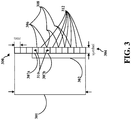
- FIG. 3 is a diagram 300 illustrating a second modulation scheme for modulating data into two tones 307a, 307b of a selected two-tone subset 306 from an allocated set 302 of tones 301 in a symbol 304.
- tones of an allocated set 302 of tones 301 of a symbol 304 are allocated, a subset 306 of tones 307a, 307b is selected, and data is modulated into the selected subset 306.
- the selected subset 306 includes two tones 307a, 307b instead of only one tone (i.e., tone 207).
- the selected subset 306 (which may be selected 112 by the UE 104 according to information bits of an input data value, and according to a mapping) is one of a plurality of possible two-tone subsets (including subsets 308).
- D ⁇ (D-1)/2 possible two-tone sets e.g., each subset 308 comprising two tones.
- M ⁇ M distinct signal phase pairs e.g., 16 distinct pairs of signal phases in QPSK.
- the number of bits that may be carried is equal to a largest integer that is not greater than log2[D ⁇ (D-1) ⁇ M ⁇ M/2].
- log2[D ⁇ (D-1) ⁇ M ⁇ M/2] is not an integer, it's possible to choose a particular subset of constellation points for reduced PAPR.
- a mapping including 128 allowed constellation points can be constructed to enable a data sequence of 7 bits to be carried per symbol time.
- the resulting scheme provides 40% more bandwidth efficiency when compared to standard BPSK.
- a constellation set of 1024 constellation points can be constructed to carry 10 bits per OFDM symbol.
- the resulting modulation scheme provides 25% higher bandwidth efficiency as compared to BPSK.
- a number of allowed two-tone subsets may be limited such that a number of defined two-tone subsets may be equal to an integer power of 2.
- the number of allowed two-tone subsets may be chosen as D c , where D c is the largest integer of power 2 that is smaller than the number of possible different two-tone combinations of the tones of the allocated set 302.
- D c is the largest integer of power 2 that is smaller than the number of possible different two-tone combinations of the tones of the allocated set 302.
- the number of tones in the allocated set is 8 (i.e., D is equal to 8)
- 16 out of the 28 possible two-tone subsets may be set aside for the mapping scheme (i.e., D c is equal to 16).
- the maximal PAPR is approximately 3dB.
- an energy comparator may be applied to detect 108 tone(s) with the maximal energy (e.g., tones 307a and 307b) among the allocated set 302 of tones. Thereafter, the base station 102 may perform conventional MPSK demodulation 109 over the chosen tone(s) 307a, 307b of the selected subset 306 to determine modulated values on the tones.
- the error probability of tone selection at the receiver of the base station 102 may be represented by erfc(sqrt(E s /(2 ⁇ N o ))), where E s is the energy per MPSK signal, and where N o is the noise power spectral density.
- the number of tones in the allocated set 302 is 9 (i.e., D is equal to 9).
- the number of possible two-tone combinations of the 9 different tones i.e., D ⁇ (D-1)/2) is equal to 9 ⁇ (9-1)/2, which is equal to 36.
- D ⁇ (D-1)/2) is equal to 9 ⁇ (9-1)/2, which is equal to 36.
- MPSK e.g., QPSK
- QPSK may be used to modulate the data corresponding to the modulated values 310 into the selected subset 306 according to a mapping.
- one of the two-tone subsets is chosen to transmit two chosen QPSK modulated values (e.g., signal phase j in tone 307a, and signal phase -j in tone 307b) in the transmitted signal 106.
- two chosen QPSK modulated values e.g., signal phase j in tone 307a, and signal phase -j in tone 307b
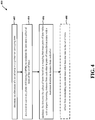
- FIG. 4 is a flow chart 400 of a method of wireless communication by a UE.
- the method may be performed by a UE, such as the UE 104 shown in FIG. 1 .
- a UE such as the UE 104 shown in FIG. 1 .
- an allocation of a set of tones in a symbol for conveying data is determined.
- the symbol may be a SC-FDMA symbol.
- the UE 104 may determine 111 an allocation of a set 202, 302 of tones 201, 301 in a SC-FDMA symbol 204, 304 for conveying data 210, 310.
- a determination to use m-ary phase shift keying (MPSK) to modulate the data onto a subset of tones of the set of tones is made.
- the subset of tones may include one tone
- the set of tones includes D tones
- the MPSK may have M possible signal phases
- k bits of data may be modulated onto the subset of tones
- M may be greater than or equal to 2.
- possible subsets may include D ⁇ (D-1)/2 two-tone subsets, D may be greater than 2
- a number of bits of the data may be equal to k
- k may be a largest integer such that k is not greater than log 2 (D ⁇ (D-1) ⁇ M ⁇ M/2).
- the UE 104 determines to use BPSK to modulate 113 the data 210 onto a subset 206 of a tone 207 of the allocated set 202 of tones 208, the subset 206 of tones including one tone 207, the allocated set 202 of tones 208 includes 4 tones, the MPSK has 2 possible signal phases, and 3 bits of data are modulated onto the subset 206 of a tone 207.
- BPSK BPSK
- the UE 104 determines to use QPSK to modulate 113 the data 310 onto a subset 306 of tones 307a, 307b of the set 302 of tones, possible subsets 308 include D ⁇ (D-1)/2 two-tone subsets, D is equal to 9, a number of bits of the data is equal to 9, which is the greatest integer not greater than log 2 (D ⁇ (D-1) ⁇ M ⁇ M/2).
- the data may be modulated onto the subset of tones based on a mapping that maps pairs of data values with a largest Hamming distance from each other to pairs of constellation points with a maximum Euclidean distance from each other.
- the mapping may map pairs of data values with a largest Hamming distance to constellation points that have data modulated to a same tone.
- the mapping may be between 2 k possible data values and 2 k constellation points of D ⁇ M constellation points, and k may be a largest integer such that D*M is greater than or equal to 2k. For example, referring to FIGS.
- the UE 104 may modulate 113 the data 210, 310 onto the subset 206, 306 of tones 201, 301 based on a mapping that maps pairs of 8 possible data values (in FIG. 2 ) with a largest Hamming distance from each other to pairs of 8 constellation points of 4 ⁇ 2 constellation points with a maximum Euclidean distance from each other on a same tone.
- the data is refrained from being modulated onto tones other than one tone in the set of tones.
- the UE 104 may refrain from modulating data onto tones (e.g., unselected tones 212) other than said one tone 207 in the allocated set 202 of tones.
- FIG. 5 is a flow chart 500 of a method of wireless communication.
- the method may be performed by a base station, such as the base station 102 shown in FIG. 1 .
- a data transmission may be received from a UE.
- the base station 102 may receive a signal 106 from a UE 104.
- a subset of tones having maximal energy of an allocated set of tones in a symbol may be detected.
- the set of tones may include D tones
- the MPSK may have M possible signal phases
- k bits of data may be modulated onto the subset of tones.
- Possible subsets may include D ⁇ (D-1)/2 two-tone subsets, D may be greater than 2, a number of bits of the data may be equal to k, and k may be a largest integer such that k is not greater than log 2 (D ⁇ (D-1) ⁇ M ⁇ M/2). For example, referring to FIGS.
- the base station 102 may detect 108 a subset 206, 306 of tones 207, 307a, 307b having maximal energy of an allocated set 202, 302 of tones in a symbol 204, 304, the set 202, 302 of tones including 4 tones in FIG. 2 , or 9 tones in FIG. 3 , the MPSK having 2 possible signal phases in FIG. 2 , and 4 possible signal phases in FIG. 3, and 3 bits of data ( FIG. 2 ) or 9 bits of data ( FIG. 3 ) being modulated onto the subset 206, 306 of tones 207, 307a, 307b, the configuration shown in FIG. 3 including 36 two-tone subsets.
- each tone of the subset of tones may be demodulated to determine data based on a mapping that maps pairs of data values with a largest Hamming distance from each other to pairs of constellation points with a maximum Euclidean distance from each other.
- the mapping may map pairs of data values with a largest Hamming distance to constellation points that have data modulated to a same tone.
- the mapping may be between 2 k possible data values and 2 k constellation points of D*M constellation points.
- Demodulating each tone may include determining a modulated value on the tone, determining a Euclidean distance between the received modulated value and each of allowed modulated values corresponding to allowable constellation points, determining a constellation point based on a minimum determined Euclidean distance, and determining data based on the determined constellation point and the mapping. For example, referring to FIGS.
- the base station 102 may demodulate 109 each tone 207, 307a, 307b of the subset 206, 306 of tones to determine data 210, 310 based on a mapping that maps pairs of data values with a largest Hamming distance from each other to pairs of constellation points with a maximum Euclidean distance from each other and having data modulated to a same tone, and the demodulating 109 may be achieved by determining a modulated value 210, 310 on the tone 207, 307a, 307b, determining a Euclidean distance between the received modulated value and each of allowed modulated values corresponding to allowable constellation points, determining a constellation point based on a minimum determined Euclidean distance, and determining data based on the determined constellation point and the mapping.
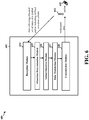
- FIG. 6 is a conceptual data flow diagram 600 illustrating the data flow between different modules/means/components in an exemplary apparatus 602.
- the apparatus 602 may be a UE.
- the UE 602 includes a reception module 604 that is configured to receive data indicating an allocation of a set of tones in a symbol (e.g., a SC-FDMA symbol).
- the reception module 604 may also be configured to receive data indicating defined two-tone subsets, and/or to receive data indicating a data-value-to-constellation point mapping.
- the UE may receive the data from an eNB 603, from another UE 609, and/or from memory.
- the UE 609 may be operating as a relay.
- the UE 602 further includes an allocation determination module 605 that is configured to communicate with the reception module 604 and to determine which set of tones in a symbol have been allocated.
- the UE 602 further includes a subset selection module 606 that is configured to communicate with the allocation determination module 605 and to select a subset of tones of the allocated set of tones.
- the subset of tones may include one or more tones, and may be selected by the subset selection module 606 based on a mapping that maps pairs of data values with a largest Hamming distance from each other to pairs of constellation points with a maximum Euclidean distance from each other, such that the data can be conveyed via transmission.
- the subset selection module 606 may further have an input such that the subset selection module 606 may receive input bits of a data.
- the UE 602 further includes a data modulation module 607 that is configured to communicate with the subset selection module 606, to determine to use m-ary phase shift keying (MPSK) to modulate the data onto a selected subset of tones, and to modulate a modulated value(s) onto the tone(s) of the selected subset.
- MPSK m-ary phase shift keying
- the data modulation module 607 may be configured to modulate a modulated value(s) into the selected subset of the set of tones using MPSK (e.g., BPSK, QPSK, etc.).
- MPSK e.g., BPSK, QPSK, etc.
- the data modulation module 607 may choose the signal phase of the modulated value(s) based on a mapping that maps pairs of data values with a largest Hamming distance from each other to pairs of constellation points with a maximum Euclidean distance from each other, such that the data can be conveyed via transmission.
- the UE further includes a transmission module 608 that communicates with the data modulation module 607.
- the transmission module 608 is configured to transmit the modulated data.
- the modulated data may be received by a node (the eNB 603).
- the data modulation module 607 may be configured to refrain from modulating data onto unselected tones of the allocated set of tones.
- the apparatus may include additional modules that perform each of the blocks of the algorithm in the aforementioned flow chart of FIG. 4 .
- each block in the aforementioned flow chart of FIG. 4 may be performed by a module and the apparatus may include one or more of those modules.
- the modules may be one or more hardware components specifically configured to carry out the stated processes/algorithm, implemented by a processor configured to perform the stated processes/algorithm, stored within a computer-readable medium for implementation by a processor, or some combination thereof.
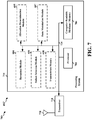
- FIG. 7 is a diagram 700 illustrating an example of a hardware implementation for a UE 602' employing a processing system 714.
- the processing system 714 may be implemented with a bus architecture, represented generally by the bus 724.
- the bus 724 may include any number of interconnecting buses and bridges depending on the specific application of the processing system 714 and the overall design constraints.
- the bus 724 links together various circuits including one or more processors and/or hardware modules, represented by the processor 704, the modules 604, 605, 606, 607, 608, and the computer-readable medium/memory 706.
- the bus 724 may also link various other circuits such as timing sources, peripherals, voltage regulators, and power management circuits, which are well known in the art, and therefore, will not be described any further.
- the processing system 714 may be coupled to a transceiver 710.
- the transceiver 710 is coupled to one or more antennas 720.
- the transceiver 710 provides a means for communicating with various other apparatus over a transmission medium.
- the transceiver 710 receives a signal from the one or more antennas 720, extracts information from the received signal, and provides the extracted information to the processing system 714, specifically the reception module 604.
- the transceiver 710 receives information from the processing system 714, specifically the transmission module 608, and based on the received information, generates a signal to be applied to the one or more antennas 720.
- the processing system 714 includes a processor 704 coupled to a computer-readable medium/memory 706.
- the processor 704 is responsible for general processing, including the execution of software stored on the computer-readable medium/memory 706.
- the software when executed by the processor 704, causes the processing system 714 to perform the various functions described supra for any particular apparatus.
- the computer-readable medium/memory 706 may also be used for storing data that is manipulated by the processor 704 when executing software.
- the processing system further includes at least one of the modules 605, 606, 607.
- the modules may be software modules running in the processor 704, resident/stored in the computer readable medium/memory 706, one or more hardware modules coupled to the processor 704, or some combination thereof.
- the processing system 714 may be a component of the UE 602 and may include a memory and/or at least one TX processor, RX processor, and controller/processor.
- the UE 602/602' for wireless communication is a UE that includes means for determining an allocation of a set of tones in a symbol for conveying data.
- the UE further includes means for determining to use m-ary phase shift keying (MPSK) to modulate the data onto a subset of tones of the set of tones.
- MPSK m-ary phase shift keying
- the UE further includes means for modulating the data onto the subset of tones based on a mapping that maps pairs of data values with a largest Hamming distance from each other to pairs of constellation points with a maximum Euclidean distance from each other.
- the UE may include means for refraining from modulating data onto tones other than said one tone in the set of tones.
- the aforementioned means may be one or more of the aforementioned modules of the UE 602 and/or the processing system 714 of the UE 602' configured to perform the functions recited by the aforementioned means.
- the processing system 714 may include a TX Processor, a RX Processor, and a controller/processor.
- the aforementioned means may be a TX Processor, a RX Processor, and a controller/processor configured to perform the functions recited by the aforementioned means.
- FIG. 8 is a conceptual data flow diagram 800 illustrating the data flow between different modules/means/components in an exemplary apparatus 802.
- the apparatus may be an eNB.
- the eNB 802 includes a reception module 804 that is configured to receive a data transmission, such as modulated data on a set of tones in a symbol (e.g., signal 106 including modulated data 210, 310 on a set 206, 306 of tones 207, 307a, 307b in a symbol 204, 304 from a UE 104, 602, 602', 809).
- a data transmission such as modulated data on a set of tones in a symbol (e.g., signal 106 including modulated data 210, 310 on a set 206, 306 of tones 207, 307a, 307b in a symbol 204, 304 from a UE 104, 602, 602', 809).
- a data transmission such as modulated data on a set
- the eNB 802 further includes a tone detection module 805 that is configured to communicate with the reception module 804, and that is configured to detect a subset of tones (e.g., tone 207, or tones 307a, 307b, having a nonzero entries) having maximal energy of an allocated set of tones in a symbol.
- the eNB 802 further includes a tone demodulation module 806 that is configured to communicate with the tone detection module 805 and that is configured to demodulate each tone of the subset of tones (e.g., tones 207, 307a, 307b).
- the eNB 802 further includes a data determination module 807 that is configured to communicate with the tone demodulation module 806 and that is configured to determine data based on a mapping that maps pairs of data values with a largest Hamming distance from each other (e.g., data values 111 and 000 in FIG. 2 ) to pairs of constellation points with a maximum Euclidean distance from each other.
- the determination module 807 may determine data by determining a modulated value on the tone, determining a Euclidean distance between the received modulated value and each of allowed modulated values corresponding to allowable constellation points, determining a constellation point based on a minimum determined Euclidean distance, and determining data based on the determined constellation point and the mapping.
- the eNB 802 further includes a transmission module 808 that is configured to communicate with the determination module 807.
- the transmission module 808 may be configured to communicate data to the UE 809 indicating an allocation of a set of tones in a symbol, data indicating defined two-tone subsets, and/or data indicating a data-value-to-constellation point mapping.
- the apparatus may include additional modules that perform each of the blocks of the algorithm in the aforementioned flow chart of FIG. 5 .
- each block in the aforementioned flow charts of FIG. 5 may be performed by a module and the apparatus may include one or more of those modules.
- the modules may be one or more hardware components specifically configured to carry out the stated processes/algorithm, implemented by a processor configured to perform the stated processes/algorithm, stored within a computer-readable medium for implementation by a processor, or some combination thereof.
- FIG. 9 is a diagram 900 illustrating an example of a hardware implementation for an eNB 802' employing a processing system 914.
- the processing system 914 may be implemented with a bus architecture, represented generally by the bus 924.
- the bus 924 may include any number of interconnecting buses and bridges depending on the specific application of the processing system 914 and the overall design constraints.
- the bus 924 links together various circuits including one or more processors and/or hardware modules, represented by the processor 904, the modules 804, 805, 806, 807, 808, and the computer-readable medium/memory 906.
- the bus 924 may also link various other circuits such as timing sources, peripherals, voltage regulators, and power management circuits, which are well known in the art, and therefore, will not be described any further.
- the processing system 914 may be coupled to a transceiver 910.
- the transceiver 910 is coupled to one or more antennas 920.
- the transceiver 910 provides a means for communicating with various other apparatus over a transmission medium.
- the transceiver 910 receives a signal from the one or more antennas 920, extracts information from the received signal, and provides the extracted information to the processing system 914, specifically the reception module 804.
- the transceiver 910 receives information from the processing system 914, specifically the transmission module 808, and based on the received information, generates a signal to be applied to the one or more antennas 920.
- the processing system 914 includes a processor 904 coupled to a computer-readable medium/memory 906.
- the processor 904 is responsible for general processing, including the execution of software stored on the computer-readable medium/memory 906.
- the software when executed by the processor 904, causes the processing system 914 to perform the various functions described supra for any particular apparatus.
- the computer-readable medium/memory 906 may also be used for storing data that is manipulated by the processor 904 when executing software.
- the processing system further includes at least one of the modules 805, 806, and 807.
- the modules may be software modules running in the processor 904, resident/stored in the computer readable medium/memory 906, one or more hardware modules coupled to the processor 904, or some combination thereof.
- the processing system 914 may be a component of the eNB 610 and may include the memory and/or at least one of the TX processor, the RX processor, and the controller/processor.
- the eNB 802/802' includes means for means for receiving a data transmission from a user equipment (UE).
- the eNB further includes means for detecting a subset of tones having maximal energy of an allocated set of tones in a symbol.
- the eNB further includes means for demodulating each tone of the subset of tones to determine data based on a mapping that maps pairs of data values with a largest Hamming distance from each other to pairs of constellation points with a maximum Euclidean distance from each other.
- the aforementioned means may be one or more of the aforementioned modules of the eNB 802 and/or the processing system 914 of the eNB 802' configured to perform the functions recited by the aforementioned means.
- the processing system 914 may include a TX Processor, an RX Processor, and a controller/processor.
- the aforementioned means may be the TX Processor, the RX Processor, and the controller/processor configured to perform the functions recited by the aforementioned means.
Landscapes
- Engineering & Computer Science (AREA)
- Signal Processing (AREA)
- Computer Networks & Wireless Communication (AREA)
- Mobile Radio Communication Systems (AREA)
- Digital Transmission Methods That Use Modulated Carrier Waves (AREA)
Applications Claiming Priority (3)
| Application Number | Priority Date | Filing Date | Title |
|---|---|---|---|
| US201462062132P | 2014-10-09 | 2014-10-09 | |
| US14/572,730 US9762422B2 (en) | 2014-10-09 | 2014-12-16 | Tone-phase-shift keying: a new modulation scheme for SC-FDMA |
| PCT/US2015/052423 WO2016057246A1 (en) | 2014-10-09 | 2015-09-25 | Tone-phase-shift keying: a new modulation scheme for sc-fdma |
Publications (2)
| Publication Number | Publication Date |
|---|---|
| EP3205059A1 EP3205059A1 (en) | 2017-08-16 |
| EP3205059B1 true EP3205059B1 (en) | 2019-08-07 |
Family
ID=54330866
Family Applications (1)
| Application Number | Title | Priority Date | Filing Date |
|---|---|---|---|
| EP15781803.0A Active EP3205059B1 (en) | 2014-10-09 | 2015-09-25 | Tone-phase-shift keying: a new modulation scheme for sc-fdma |
Country Status (6)
| Country | Link |
|---|---|
| US (2) | US9762422B2 (enExample) |
| EP (1) | EP3205059B1 (enExample) |
| JP (1) | JP6633064B2 (enExample) |
| KR (1) | KR20170068468A (enExample) |
| CN (1) | CN106797359B (enExample) |
| WO (1) | WO2016057246A1 (enExample) |
Families Citing this family (6)
| Publication number | Priority date | Publication date | Assignee | Title |
|---|---|---|---|---|
| US9762422B2 (en) | 2014-10-09 | 2017-09-12 | Qualcomm Incorporated | Tone-phase-shift keying: a new modulation scheme for SC-FDMA |
| US11310091B2 (en) | 2018-03-22 | 2022-04-19 | Sony Corporation | Transmission device, method, and recording medium |
| US11677499B2 (en) * | 2018-10-25 | 2023-06-13 | Mediatek Singapore Pte. Ltd. | Tone interleaving methods for multi-bands and wide bandwidth transmissions in WLAN |
| CN114424503B (zh) | 2019-09-27 | 2024-09-20 | 索尼集团公司 | 通信设备、通信方法和通信程序 |
| WO2022061622A1 (zh) * | 2020-09-23 | 2022-03-31 | 北京小米移动软件有限公司 | 通信方法、通信设备、电子设备及计算机可读存储介质 |
| CN116208303B (zh) * | 2022-12-22 | 2025-09-26 | 西安宇飞电子技术有限公司 | 一种码间距离的误码率估计方法、装置及设备 |
Family Cites Families (22)
| Publication number | Priority date | Publication date | Assignee | Title |
|---|---|---|---|---|
| US4882733A (en) | 1987-03-13 | 1989-11-21 | Ford Aerospace Corporation | Method and apparatus for combining encoding and modulation |
| US5659578A (en) * | 1994-11-23 | 1997-08-19 | At&T Wireless Services, Inc. | High rate Reed-Solomon concatenated trellis coded 16 star QAM system for transmission of data over cellular mobile radio |
| JPH10271092A (ja) * | 1997-03-21 | 1998-10-09 | Sanyo Electric Co Ltd | データ通信方法及びシステム |
| US6785258B1 (en) * | 1999-06-23 | 2004-08-31 | At&T Wireless Services, Inc. | System and method for data scrambling to reduce the crest factor in an OFDM waveform |
| JP2001148678A (ja) * | 1999-11-19 | 2001-05-29 | Yrp Mobile Telecommunications Key Tech Res Lab Co Ltd | マルチキャリア通信装置 |
| US7746758B2 (en) * | 2004-08-17 | 2010-06-29 | Nokia Corporation | Orthogonal-Frequency-Division-Multiplex-Packet-Aggregation (OFDM-PA) for wireless network systems using error-correcting codes |
| US8014468B2 (en) * | 2004-12-15 | 2011-09-06 | Microsoft Corporation | Energy detection receiver for UWB |
| TW200637313A (en) * | 2005-01-11 | 2006-10-16 | Qualcomm Inc | Bit log likelihood ratio evaluation |
| US7660368B2 (en) | 2005-01-11 | 2010-02-09 | Qualcomm Incorporated | Bit log likelihood ratio evaluation |
| JP2009505474A (ja) | 2005-08-10 | 2009-02-05 | エヌエックスピー ビー ヴィ | サブキャリア内シンボル受信装置 |
| US8582548B2 (en) | 2005-11-18 | 2013-11-12 | Qualcomm Incorporated | Frequency division multiple access schemes for wireless communication |
| US7724849B2 (en) * | 2006-01-03 | 2010-05-25 | Qualcomm Incorporated | Methods and apparatus for noise estimation in a communication system |
| US8477593B2 (en) | 2006-07-28 | 2013-07-02 | Qualcomm Incorporated | Method and apparatus for sending signaling for data transmission in a wireless communication system |
| TWI458302B (zh) * | 2008-03-11 | 2014-10-21 | Koninkl Philips Electronics Nv | 在正交分頻多工(ofdm)系統中加速符號的預編碼及預解碼之方法 |
| GB0807338D0 (en) | 2008-04-22 | 2008-05-28 | Nokia Siemens Networks Oy | An apparatus |
| US8665803B2 (en) | 2008-07-31 | 2014-03-04 | Qualcomm Incorporated | Tone selection in communication networks |
| KR101281427B1 (ko) * | 2008-11-14 | 2013-07-02 | 엘지전자 주식회사 | 다중 안테나 시스템에서 복수의 자원을 이용한 데이터 전송 방법 및 장치 |
| JP4288378B1 (ja) * | 2008-12-04 | 2009-07-01 | 学校法人高知工科大学 | データ通信システム、データ復号装置およびその方法 |
| US8824272B2 (en) * | 2012-10-09 | 2014-09-02 | The Aerospace Corporation | Resolving co-channel interference between overlapping users using rank selection |
| US8982724B2 (en) | 2012-12-17 | 2015-03-17 | Intel Corporation | Systems and methods for implementing peak-to-average power ratio reduction for OFDMA modulation |
| KR102032167B1 (ko) * | 2012-12-21 | 2019-11-08 | 삼성전자주식회사 | 무선통신 시스템에서 적응적 복합자동재전송을 고려한 변조 방법 및 장치 |
| US9762422B2 (en) | 2014-10-09 | 2017-09-12 | Qualcomm Incorporated | Tone-phase-shift keying: a new modulation scheme for SC-FDMA |
-
2014
- 2014-12-16 US US14/572,730 patent/US9762422B2/en not_active Expired - Fee Related
-
2015
- 2015-09-25 JP JP2017518934A patent/JP6633064B2/ja not_active Expired - Fee Related
- 2015-09-25 EP EP15781803.0A patent/EP3205059B1/en active Active
- 2015-09-25 WO PCT/US2015/052423 patent/WO2016057246A1/en not_active Ceased
- 2015-09-25 KR KR1020177009391A patent/KR20170068468A/ko not_active Ceased
- 2015-09-25 CN CN201580054226.2A patent/CN106797359B/zh active Active
-
2017
- 2017-08-10 US US15/674,329 patent/US10484219B2/en active Active
Non-Patent Citations (1)
| Title |
|---|
| None * |
Also Published As
| Publication number | Publication date |
|---|---|
| KR20170068468A (ko) | 2017-06-19 |
| US10484219B2 (en) | 2019-11-19 |
| CN106797359A (zh) | 2017-05-31 |
| US20160105300A1 (en) | 2016-04-14 |
| WO2016057246A8 (en) | 2017-05-04 |
| JP2017531397A (ja) | 2017-10-19 |
| EP3205059A1 (en) | 2017-08-16 |
| CN106797359B (zh) | 2020-06-05 |
| JP6633064B2 (ja) | 2020-01-22 |
| US9762422B2 (en) | 2017-09-12 |
| US20170346667A1 (en) | 2017-11-30 |
| WO2016057246A1 (en) | 2016-04-14 |
Similar Documents
| Publication | Publication Date | Title |
|---|---|---|
| US10177956B2 (en) | Method for signaling information by modifying modulation constellations | |
| US10484219B2 (en) | Tone-phase-shift keying: a new modulation scheme for SC-FDMA | |
| US20180152333A1 (en) | Multicarrier on-off keying waveform coding | |
| US10764006B2 (en) | Method and apparatus for generating pilot tone in orthogonal frequency division multiplexing access system, and method and apparatus for estimating channel using it | |
| US11528178B1 (en) | Zero-power modulation for resource-efficient 5G/6G messaging | |
| EP3763054A1 (en) | Wakeup radio transmit diversity | |
| US11824696B2 (en) | Measuring and mitigating inter-subcarrier interference in 5G and 6G | |
| KR20230008853A (ko) | 데이터 변조 방법 및 장치, 데이터 복조 방법 및 장치, 서비스 노드, 단말, 매체 |
Legal Events
| Date | Code | Title | Description |
|---|---|---|---|
| STAA | Information on the status of an ep patent application or granted ep patent |
Free format text: STATUS: THE INTERNATIONAL PUBLICATION HAS BEEN MADE |
|
| PUAI | Public reference made under article 153(3) epc to a published international application that has entered the european phase |
Free format text: ORIGINAL CODE: 0009012 |
|
| STAA | Information on the status of an ep patent application or granted ep patent |
Free format text: STATUS: REQUEST FOR EXAMINATION WAS MADE |
|
| 17P | Request for examination filed |
Effective date: 20170314 |
|
| AK | Designated contracting states |
Kind code of ref document: A1 Designated state(s): AL AT BE BG CH CY CZ DE DK EE ES FI FR GB GR HR HU IE IS IT LI LT LU LV MC MK MT NL NO PL PT RO RS SE SI SK SM TR |
|
| AX | Request for extension of the european patent |
Extension state: BA ME |
|
| DAV | Request for validation of the european patent (deleted) | ||
| DAX | Request for extension of the european patent (deleted) | ||
| STAA | Information on the status of an ep patent application or granted ep patent |
Free format text: STATUS: EXAMINATION IS IN PROGRESS |
|
| 17Q | First examination report despatched |
Effective date: 20180125 |
|
| GRAP | Despatch of communication of intention to grant a patent |
Free format text: ORIGINAL CODE: EPIDOSNIGR1 |
|
| STAA | Information on the status of an ep patent application or granted ep patent |
Free format text: STATUS: GRANT OF PATENT IS INTENDED |
|
| INTG | Intention to grant announced |
Effective date: 20190219 |
|
| GRAS | Grant fee paid |
Free format text: ORIGINAL CODE: EPIDOSNIGR3 |
|
| GRAA | (expected) grant |
Free format text: ORIGINAL CODE: 0009210 |
|
| STAA | Information on the status of an ep patent application or granted ep patent |
Free format text: STATUS: THE PATENT HAS BEEN GRANTED |
|
| AK | Designated contracting states |
Kind code of ref document: B1 Designated state(s): AL AT BE BG CH CY CZ DE DK EE ES FI FR GB GR HR HU IE IS IT LI LT LU LV MC MK MT NL NO PL PT RO RS SE SI SK SM TR |
|
| REG | Reference to a national code |
Ref country code: GB Ref legal event code: FG4D |
|
| REG | Reference to a national code |
Ref country code: CH Ref legal event code: EP Ref country code: AT Ref legal event code: REF Ref document number: 1165568 Country of ref document: AT Kind code of ref document: T Effective date: 20190815 |
|
| REG | Reference to a national code |
Ref country code: DE Ref legal event code: R096 Ref document number: 602015035384 Country of ref document: DE |
|
| REG | Reference to a national code |
Ref country code: IE Ref legal event code: FG4D |
|
| REG | Reference to a national code |
Ref country code: NL Ref legal event code: MP Effective date: 20190807 |
|
| REG | Reference to a national code |
Ref country code: LT Ref legal event code: MG4D |
|
| PG25 | Lapsed in a contracting state [announced via postgrant information from national office to epo] |
Ref country code: PT Free format text: LAPSE BECAUSE OF FAILURE TO SUBMIT A TRANSLATION OF THE DESCRIPTION OR TO PAY THE FEE WITHIN THE PRESCRIBED TIME-LIMIT Effective date: 20191209 Ref country code: NL Free format text: LAPSE BECAUSE OF FAILURE TO SUBMIT A TRANSLATION OF THE DESCRIPTION OR TO PAY THE FEE WITHIN THE PRESCRIBED TIME-LIMIT Effective date: 20190807 Ref country code: BG Free format text: LAPSE BECAUSE OF FAILURE TO SUBMIT A TRANSLATION OF THE DESCRIPTION OR TO PAY THE FEE WITHIN THE PRESCRIBED TIME-LIMIT Effective date: 20191107 Ref country code: HR Free format text: LAPSE BECAUSE OF FAILURE TO SUBMIT A TRANSLATION OF THE DESCRIPTION OR TO PAY THE FEE WITHIN THE PRESCRIBED TIME-LIMIT Effective date: 20190807 Ref country code: LT Free format text: LAPSE BECAUSE OF FAILURE TO SUBMIT A TRANSLATION OF THE DESCRIPTION OR TO PAY THE FEE WITHIN THE PRESCRIBED TIME-LIMIT Effective date: 20190807 Ref country code: NO Free format text: LAPSE BECAUSE OF FAILURE TO SUBMIT A TRANSLATION OF THE DESCRIPTION OR TO PAY THE FEE WITHIN THE PRESCRIBED TIME-LIMIT Effective date: 20191107 Ref country code: FI Free format text: LAPSE BECAUSE OF FAILURE TO SUBMIT A TRANSLATION OF THE DESCRIPTION OR TO PAY THE FEE WITHIN THE PRESCRIBED TIME-LIMIT Effective date: 20190807 Ref country code: SE Free format text: LAPSE BECAUSE OF FAILURE TO SUBMIT A TRANSLATION OF THE DESCRIPTION OR TO PAY THE FEE WITHIN THE PRESCRIBED TIME-LIMIT Effective date: 20190807 |
|
| REG | Reference to a national code |
Ref country code: AT Ref legal event code: MK05 Ref document number: 1165568 Country of ref document: AT Kind code of ref document: T Effective date: 20190807 |
|
| PG25 | Lapsed in a contracting state [announced via postgrant information from national office to epo] |
Ref country code: AL Free format text: LAPSE BECAUSE OF FAILURE TO SUBMIT A TRANSLATION OF THE DESCRIPTION OR TO PAY THE FEE WITHIN THE PRESCRIBED TIME-LIMIT Effective date: 20190807 Ref country code: GR Free format text: LAPSE BECAUSE OF FAILURE TO SUBMIT A TRANSLATION OF THE DESCRIPTION OR TO PAY THE FEE WITHIN THE PRESCRIBED TIME-LIMIT Effective date: 20191108 Ref country code: RS Free format text: LAPSE BECAUSE OF FAILURE TO SUBMIT A TRANSLATION OF THE DESCRIPTION OR TO PAY THE FEE WITHIN THE PRESCRIBED TIME-LIMIT Effective date: 20190807 Ref country code: IS Free format text: LAPSE BECAUSE OF FAILURE TO SUBMIT A TRANSLATION OF THE DESCRIPTION OR TO PAY THE FEE WITHIN THE PRESCRIBED TIME-LIMIT Effective date: 20191207 Ref country code: ES Free format text: LAPSE BECAUSE OF FAILURE TO SUBMIT A TRANSLATION OF THE DESCRIPTION OR TO PAY THE FEE WITHIN THE PRESCRIBED TIME-LIMIT Effective date: 20190807 Ref country code: LV Free format text: LAPSE BECAUSE OF FAILURE TO SUBMIT A TRANSLATION OF THE DESCRIPTION OR TO PAY THE FEE WITHIN THE PRESCRIBED TIME-LIMIT Effective date: 20190807 |
|
| PG25 | Lapsed in a contracting state [announced via postgrant information from national office to epo] |
Ref country code: TR Free format text: LAPSE BECAUSE OF FAILURE TO SUBMIT A TRANSLATION OF THE DESCRIPTION OR TO PAY THE FEE WITHIN THE PRESCRIBED TIME-LIMIT Effective date: 20190807 |
|
| PG25 | Lapsed in a contracting state [announced via postgrant information from national office to epo] |
Ref country code: DK Free format text: LAPSE BECAUSE OF FAILURE TO SUBMIT A TRANSLATION OF THE DESCRIPTION OR TO PAY THE FEE WITHIN THE PRESCRIBED TIME-LIMIT Effective date: 20190807 Ref country code: AT Free format text: LAPSE BECAUSE OF FAILURE TO SUBMIT A TRANSLATION OF THE DESCRIPTION OR TO PAY THE FEE WITHIN THE PRESCRIBED TIME-LIMIT Effective date: 20190807 Ref country code: PL Free format text: LAPSE BECAUSE OF FAILURE TO SUBMIT A TRANSLATION OF THE DESCRIPTION OR TO PAY THE FEE WITHIN THE PRESCRIBED TIME-LIMIT Effective date: 20190807 Ref country code: RO Free format text: LAPSE BECAUSE OF FAILURE TO SUBMIT A TRANSLATION OF THE DESCRIPTION OR TO PAY THE FEE WITHIN THE PRESCRIBED TIME-LIMIT Effective date: 20190807 Ref country code: IT Free format text: LAPSE BECAUSE OF FAILURE TO SUBMIT A TRANSLATION OF THE DESCRIPTION OR TO PAY THE FEE WITHIN THE PRESCRIBED TIME-LIMIT Effective date: 20190807 Ref country code: EE Free format text: LAPSE BECAUSE OF FAILURE TO SUBMIT A TRANSLATION OF THE DESCRIPTION OR TO PAY THE FEE WITHIN THE PRESCRIBED TIME-LIMIT Effective date: 20190807 |
|
| PG25 | Lapsed in a contracting state [announced via postgrant information from national office to epo] |
Ref country code: CZ Free format text: LAPSE BECAUSE OF FAILURE TO SUBMIT A TRANSLATION OF THE DESCRIPTION OR TO PAY THE FEE WITHIN THE PRESCRIBED TIME-LIMIT Effective date: 20190807 Ref country code: SK Free format text: LAPSE BECAUSE OF FAILURE TO SUBMIT A TRANSLATION OF THE DESCRIPTION OR TO PAY THE FEE WITHIN THE PRESCRIBED TIME-LIMIT Effective date: 20190807 Ref country code: MC Free format text: LAPSE BECAUSE OF FAILURE TO SUBMIT A TRANSLATION OF THE DESCRIPTION OR TO PAY THE FEE WITHIN THE PRESCRIBED TIME-LIMIT Effective date: 20190807 Ref country code: IS Free format text: LAPSE BECAUSE OF FAILURE TO SUBMIT A TRANSLATION OF THE DESCRIPTION OR TO PAY THE FEE WITHIN THE PRESCRIBED TIME-LIMIT Effective date: 20200224 Ref country code: SM Free format text: LAPSE BECAUSE OF FAILURE TO SUBMIT A TRANSLATION OF THE DESCRIPTION OR TO PAY THE FEE WITHIN THE PRESCRIBED TIME-LIMIT Effective date: 20190807 |
|
| REG | Reference to a national code |
Ref country code: CH Ref legal event code: PL |
|
| REG | Reference to a national code |
Ref country code: DE Ref legal event code: R097 Ref document number: 602015035384 Country of ref document: DE |
|
| PLBE | No opposition filed within time limit |
Free format text: ORIGINAL CODE: 0009261 |
|
| STAA | Information on the status of an ep patent application or granted ep patent |
Free format text: STATUS: NO OPPOSITION FILED WITHIN TIME LIMIT |
|
| PG2D | Information on lapse in contracting state deleted |
Ref country code: IS |
|
| PG25 | Lapsed in a contracting state [announced via postgrant information from national office to epo] |
Ref country code: IE Free format text: LAPSE BECAUSE OF NON-PAYMENT OF DUE FEES Effective date: 20190925 Ref country code: LU Free format text: LAPSE BECAUSE OF NON-PAYMENT OF DUE FEES Effective date: 20190925 Ref country code: CH Free format text: LAPSE BECAUSE OF NON-PAYMENT OF DUE FEES Effective date: 20190930 Ref country code: LI Free format text: LAPSE BECAUSE OF NON-PAYMENT OF DUE FEES Effective date: 20190930 |
|
| 26N | No opposition filed |
Effective date: 20200603 |
|
| REG | Reference to a national code |
Ref country code: BE Ref legal event code: MM Effective date: 20190930 |
|
| PG25 | Lapsed in a contracting state [announced via postgrant information from national office to epo] |
Ref country code: BE Free format text: LAPSE BECAUSE OF NON-PAYMENT OF DUE FEES Effective date: 20190930 Ref country code: SI Free format text: LAPSE BECAUSE OF FAILURE TO SUBMIT A TRANSLATION OF THE DESCRIPTION OR TO PAY THE FEE WITHIN THE PRESCRIBED TIME-LIMIT Effective date: 20190807 |
|
| PG25 | Lapsed in a contracting state [announced via postgrant information from national office to epo] |
Ref country code: CY Free format text: LAPSE BECAUSE OF FAILURE TO SUBMIT A TRANSLATION OF THE DESCRIPTION OR TO PAY THE FEE WITHIN THE PRESCRIBED TIME-LIMIT Effective date: 20190807 |
|
| PG25 | Lapsed in a contracting state [announced via postgrant information from national office to epo] |
Ref country code: HU Free format text: LAPSE BECAUSE OF FAILURE TO SUBMIT A TRANSLATION OF THE DESCRIPTION OR TO PAY THE FEE WITHIN THE PRESCRIBED TIME-LIMIT; INVALID AB INITIO Effective date: 20150925 Ref country code: MT Free format text: LAPSE BECAUSE OF FAILURE TO SUBMIT A TRANSLATION OF THE DESCRIPTION OR TO PAY THE FEE WITHIN THE PRESCRIBED TIME-LIMIT Effective date: 20190807 |
|
| PG25 | Lapsed in a contracting state [announced via postgrant information from national office to epo] |
Ref country code: MK Free format text: LAPSE BECAUSE OF FAILURE TO SUBMIT A TRANSLATION OF THE DESCRIPTION OR TO PAY THE FEE WITHIN THE PRESCRIBED TIME-LIMIT Effective date: 20190807 |
|
| PGFP | Annual fee paid to national office [announced via postgrant information from national office to epo] |
Ref country code: DE Payment date: 20240808 Year of fee payment: 10 |
|
| PGFP | Annual fee paid to national office [announced via postgrant information from national office to epo] |
Ref country code: GB Payment date: 20240808 Year of fee payment: 10 |
|
| PGFP | Annual fee paid to national office [announced via postgrant information from national office to epo] |
Ref country code: FR Payment date: 20240808 Year of fee payment: 10 |