EP3198495B1 - Vorrichtung zur bereitstellung von rehabilitationsübungen - Google Patents
Vorrichtung zur bereitstellung von rehabilitationsübungen Download PDFInfo
- Publication number
- EP3198495B1 EP3198495B1 EP14777037.4A EP14777037A EP3198495B1 EP 3198495 B1 EP3198495 B1 EP 3198495B1 EP 14777037 A EP14777037 A EP 14777037A EP 3198495 B1 EP3198495 B1 EP 3198495B1
- Authority
- EP
- European Patent Office
- Prior art keywords
- trajectory
- target
- exercise
- patient
- user equipment
- Prior art date
- Legal status (The legal status is an assumption and is not a legal conclusion. Google has not performed a legal analysis and makes no representation as to the accuracy of the status listed.)
- Active
Links
Images

Classifications
-
- G—PHYSICS
- G16—INFORMATION AND COMMUNICATION TECHNOLOGY [ICT] SPECIALLY ADAPTED FOR SPECIFIC APPLICATION FIELDS
- G16H—HEALTHCARE INFORMATICS, i.e. INFORMATION AND COMMUNICATION TECHNOLOGY [ICT] SPECIALLY ADAPTED FOR THE HANDLING OR PROCESSING OF MEDICAL OR HEALTHCARE DATA
- G16H20/00—ICT specially adapted for therapies or health-improving plans, e.g. for handling prescriptions, for steering therapy or for monitoring patient compliance
- G16H20/30—ICT specially adapted for therapies or health-improving plans, e.g. for handling prescriptions, for steering therapy or for monitoring patient compliance relating to physical therapies or activities, e.g. physiotherapy, acupressure or exercising
-
- A—HUMAN NECESSITIES
- A63—SPORTS; GAMES; AMUSEMENTS
- A63F—CARD, BOARD, OR ROULETTE GAMES; INDOOR GAMES USING SMALL MOVING PLAYING BODIES; VIDEO GAMES; GAMES NOT OTHERWISE PROVIDED FOR
- A63F13/00—Video games, i.e. games using an electronically generated display having two or more dimensions
- A63F13/20—Input arrangements for video game devices
- A63F13/21—Input arrangements for video game devices characterised by their sensors, purposes or types
- A63F13/211—Input arrangements for video game devices characterised by their sensors, purposes or types using inertial sensors, e.g. accelerometers or gyroscopes
-
- A—HUMAN NECESSITIES
- A63—SPORTS; GAMES; AMUSEMENTS
- A63F—CARD, BOARD, OR ROULETTE GAMES; INDOOR GAMES USING SMALL MOVING PLAYING BODIES; VIDEO GAMES; GAMES NOT OTHERWISE PROVIDED FOR
- A63F13/00—Video games, i.e. games using an electronically generated display having two or more dimensions
- A63F13/60—Generating or modifying game content before or while executing the game program, e.g. authoring tools specially adapted for game development or game-integrated level editor
- A63F13/67—Generating or modifying game content before or while executing the game program, e.g. authoring tools specially adapted for game development or game-integrated level editor adaptively or by learning from player actions, e.g. skill level adjustment or by storing successful combat sequences for re-use
-
- G—PHYSICS
- G16—INFORMATION AND COMMUNICATION TECHNOLOGY [ICT] SPECIALLY ADAPTED FOR SPECIFIC APPLICATION FIELDS
- G16H—HEALTHCARE INFORMATICS, i.e. INFORMATION AND COMMUNICATION TECHNOLOGY [ICT] SPECIALLY ADAPTED FOR THE HANDLING OR PROCESSING OF MEDICAL OR HEALTHCARE DATA
- G16H40/00—ICT specially adapted for the management or administration of healthcare resources or facilities; ICT specially adapted for the management or operation of medical equipment or devices
- G16H40/60—ICT specially adapted for the management or administration of healthcare resources or facilities; ICT specially adapted for the management or operation of medical equipment or devices for the operation of medical equipment or devices
- G16H40/63—ICT specially adapted for the management or administration of healthcare resources or facilities; ICT specially adapted for the management or operation of medical equipment or devices for the operation of medical equipment or devices for local operation
-
- G—PHYSICS
- G16—INFORMATION AND COMMUNICATION TECHNOLOGY [ICT] SPECIALLY ADAPTED FOR SPECIFIC APPLICATION FIELDS
- G16H—HEALTHCARE INFORMATICS, i.e. INFORMATION AND COMMUNICATION TECHNOLOGY [ICT] SPECIALLY ADAPTED FOR THE HANDLING OR PROCESSING OF MEDICAL OR HEALTHCARE DATA
- G16H40/00—ICT specially adapted for the management or administration of healthcare resources or facilities; ICT specially adapted for the management or operation of medical equipment or devices
- G16H40/60—ICT specially adapted for the management or administration of healthcare resources or facilities; ICT specially adapted for the management or operation of medical equipment or devices for the operation of medical equipment or devices
- G16H40/67—ICT specially adapted for the management or administration of healthcare resources or facilities; ICT specially adapted for the management or operation of medical equipment or devices for the operation of medical equipment or devices for remote operation
-
- G—PHYSICS
- G16—INFORMATION AND COMMUNICATION TECHNOLOGY [ICT] SPECIALLY ADAPTED FOR SPECIFIC APPLICATION FIELDS
- G16H—HEALTHCARE INFORMATICS, i.e. INFORMATION AND COMMUNICATION TECHNOLOGY [ICT] SPECIALLY ADAPTED FOR THE HANDLING OR PROCESSING OF MEDICAL OR HEALTHCARE DATA
- G16H80/00—ICT specially adapted for facilitating communication between medical practitioners or patients, e.g. for collaborative diagnosis, therapy or health monitoring
Definitions
- the present invention relates to the field of systems for rehabilitation of patients with motor and cognitive disorders.
- the present invention relates to a user equipment, a system and a method for providing motor and cognitive exercises for rehabilitation.
- Parkinson's disease As known, patients that are affected by a neurodegenerative disease, such as, for instance, the Parkinson's disease, or, generally, patients experiencing motor and cognitive deficiencies spend typically long periods of time (weeks, months, years) for rehabilitation, in order to improve/recover their motor and cognitive functionalities. Often, rehabilitation may require multiple training sessions during the day.
- Methods for the rehabilitation of patients affected by neurodegenerative diseases are known.
- methods for rehabilitation which allow patients to perform training exercises at their home under the control of a therapist who interacts with the patient remotely.
- the therapist may remotely choose the exercises and/or the level of difficulty of the training session to be performed by the patient according to an evaluation of the patient's conditions.
- These methods allow reducing the workload of the therapist and the stress level of the patients, who are not forced to continually move from their house to a rehabilitation center.
- the patients can be trained with exercises that are adapted to their conditions and this allows avoiding that the patients get frustrated by excessively difficult exercises or get bored by excessively easy exercises.
- rehabilitation methods are known that make use of games and videogames which typically are ad-hoc designed. These methods advantageously allow not to lose the interest and participation of the patient for rehabilitation over long periods of time.
- US 2002/0146672 A1 discloses a method and system for individually exercising one or more parameters of hand movement such as range, speed, fractionation and strength in a virtual reality environment and for providing performance-based interaction with the user to increase user motivation while exercising.
- This method and system can be used for rehabilitation of neuromotor disorders, such as a stroke.
- a first input device senses position of digits of the hand of the user while the user is performing an exercise by interacting with a virtual image.
- a second input device provides force feedback to the user and measures position of the digits of the hand while the user is performing an exercise by interacting with a virtual image.
- the virtual images are updated based on targets determined for the user's performance in order to provide harder or easier exercises.
- WO 2012/139868 discloses a system and methods to perform rehabilitation or physical therapy exercise while doing specifically designed video-games with the support of a therapist.
- Patient plays said video-games with external controllers with motion sensors connected to a PC or a laptop.
- the therapist can influence a gaming session of the patient by setting on a shared web-service thresholds for the patient. Said settings are gathered before starting a gaming session and patient movements are filtered by said settings to control the video-game.
- the patient is then limited in the movements by the feedbacks provided by the audio-visual interface of the video-game: movements on the screen are a result of the real movement done by the patient with said motion sensors filtered by the settings imposed by the therapist on the shared web space.
- a patient with problems in doing some movements can effectively play a video-game thanks to filtering imposed by the therapist.
- Information about the game played, and consequently about movements performed, are finally uploaded on the web-service for further analysis by the therapist.
- US 2013/034837 A1 discloses a method for training which may include providing, by a computer system, and interactive graphical simulation that can elicit a response, from a user, specific to a responsive skill for which training is desired. Based upon the response collected by the computer system, a threshold performance level of the user in at least one subcomponent skill of the responsive skill may be determined. A difficulty level of the simulation may be set to a level above the threshold performance level of the subcomponent skill, so that subsequent use of the simulation targets training in the subcomponent skill in order to enhance performance of the user in the desired responsive skill. Systems and programs for training are also disclosed.
- WO 2014/136112 A1 discloses a method for generating a patient-specific, rehabilitative video game level, the method comprising: receiving a rehabilitative therapy plan for a patient, the rehabilitative therapy plan comprising one or more physical exercises; and automatically translating the therapy plan to a video game level configured for execution by a motion recognition gaming system.
- patients affected by a neurodegenerative disease such as the Parkinson's disease may present a short-term fluctuation of their status, in particular of their movement capabilities. Indeed, within a single day, they may have conditions very similar to those of a healthy person ("on" condition or state), or, alternatively, they may show critical symptoms of the disease ("off” condition or state). These two conditions may alternate during a day at intervals of minutes or seconds. Moreover, a patient affected by the Parkinson's disease may also experience a so called “freezing" condition that is a temporary and involuntary inability to move, which may last only a few seconds.
- the therapist should constantly adjust the level of difficulty of the training exercises, in order to adapt it to the current conditions of the patient, which may be strongly variable within short periods of time.
- the patient may lose interest towards the rehabilitation or she/he may get frustrated, and she/he may quit.
- the patient experiences a freezing episode during an exercise she/he will probably not be able to complete the exercise if the level of difficulty is not adjusted in real time during the exercise by the therapist. Therefore, to avoid patient's loss of interest or frustration, the workload of the therapist should be disadvantageously high, even if she/he is working remotely. Further, the therapist may realize that a number of exercises are not terminated by the patient, but disadvantageously she/he cannot be able to understand the reason that prevented the patient from carrying out the exercises.
- the inventors have addressed the problem of providing a user equipment, and a system for providing motor and cognitive rehabilitation exercises to a patient (in particular, but not exclusively, to a patient with a neurodegenerative disease such as the Parkinson's disease), which allows avoiding that the patient loses interest in the rehabilitation or gets frustrated by it, without increasing the workload of the therapist.
- a neurodegenerative disease such as the Parkinson's disease
- this problem is solved by a user equipment, and a system for providing motor and cognitive rehabilitation exercises to patients with motor and cognitive deficiencies which is automatically adaptive.
- adaptation provided by the present invention can be on an exercise-by-exercise basis and/or in real time (i.e. during each single exercise).
- the automatic adaptation provided by the present invention allows reducing the workload of the remote therapist who is not required to constantly adjust the degree and type of difficulty of the exercises performed by the patients. In this way, interactions with the patient are reduced to few control examinations and the therapist may follow more patients simultaneously.
- the present invention provides a user equipment, and a system for providing a rehabilitation exercise based on a videogame whose level of difficulty may be automatically adjusted according to different mechanisms including; a mechanism according to which the level of difficulty is adjusted before any videogame match, and a mechanism according to which the level of difficulty is adjusted during the videogame match, on the basis of the current conditions and capabilities of the patient.
- the present invention provides a user equipment for providing a rehabilitation exercise to a patient affected by a neurodegenerative disease
- the user equipment comprising a processor, a display and a motion sensing input device
- the exercise comprising playing a videogame during which a target moving along a trajectory is presented to the patient on the display of the user equipment, playing the videogame comprising tracking the target from a starting point of the trajectory to an end point of the trajectory
- the processor is configured to run the videogame
- the display is configured to show the target moving on the display along the trajectory according to the videogame
- the motion input sensing device is configured to transduce a motion of the patient into a corresponding motion of a marker on the display for tracking the target along the trajectory according to the videogame
- the processor being further configured to:
- the processor is further configured to:
- the set of trajectories are predetermined by a therapist during an initial calibration phase.
- the therapist may also associate each trajectory with the respective level of the trajectory parameter indicative of a complexity of the trajectory.
- the processor is further configured to:
- the set maximum speed values are predetermined by the therapist during the initial calibration phase. During this phase, the therapist may also associate each maximum speed value with a respective level of the speed parameter.
- the level of the trajectory parameter and the level of the speed parameter range within a discrete set of integer values.
- the processor is further configured to adjust the current speed value of the target at a frame i of the videogame by computing a target speed value v(i) as a difference between the maximum speed value and the maximum speed value weighted by the distance d(i) between the target and the marker at frame i and by a pre-defined maximum distance between a position of the target at frame i and a position of the marker at frame i.
- the processor is further configured to compute, at the end of each exercise, a first score on the basis of a mean distance between the target and the marker along the selected trajectory.
- the processor is further configured to evaluate, at the end of each exercise, a new level of the speed parameter as follows:
- the processor is further configured to select, at the start of a new exercise, the maximum speed value by selecting a maximum speed value associated with the new level of the speed parameter.
- the processor is further configured to compute, at the end of each exercise, a second score on the basis of a distance d_t between the trajectory of the target and a trajectory of the marker.
- the distance d_t is computed by using a trajectory descriptor, wherein the trajectory descriptor is based on a histogram of oriented displacements.
- the processor is further configured to evaluate, at the end of each exercise, a new level of the trajectory parameter as follows:
- the processor is further configured to select, at the start of a new exercise, the trajectory by selecting a trajectory associated with the new level of the trajectory parameter.
- the processor is further configured to associate a trajectory with a level of the trajectory parameter on the basis of the value of a highest bin within a histogram of oriented displacements for the trajectory of the target.
- the processor is further configured to upload, at the end of each exercise, the first score, the new level of the speed parameter, the second score and the new level of the trajectory parameter on a server accessible by a therapist.
- the motion sensing input device comprises one or more of: a mouse, a touchscreen display, an inertial sensor, a motion controller.
- the present invention provides a system for providing a rehabilitation exercise to a patient affected by a neurodegenerative disease, the system comprising first and second user equipment and a server, the first and second user equipment being configured to connect to the server,
- the present invention provides a method for providing a rehabilitation exercise to a patient affected by a neurodegenerative disease, the exercise comprising playing a videogame during which a target moving along a trajectory is presented to the patient (15) on the display of a user equipment (12) of said patient, playing the videogame comprising tracking the target on the display by the patient from a starting point of the trajectory to an end point of the trajectory, the method comprising:
- Figure 1 schematically shows a system 10 suitable for performing the method for providing a rehabilitation exercise according to the present invention.
- the system 10 comprises a first user equipment 11, a second user equipment 12 and a server 13.
- the first user equipment 11 and the second user equipment 12 are preferably configured to connect to the server 13 through a wired or wireless communication network.
- the first user equipment 11 and the second user equipment 12 are preferably configured to download and upload data from/to the server 13 through the communication network.
- the first user equipment 11 and the second user equipment 12 are configured to connect to the server 13 through the Internet.
- the first user equipment 11 is used by a therapist 14 for remotely supporting a patient 15 in the execution of motor and cognitive exercises for rehabilitation (in the following referred to simply as "exercises") according to the method of the present invention, as it will be described herein after.
- the first user equipment 11 is configured to provide access to the server 13 to the therapist 14.
- the first user equipment 11 preferably comprises a display, a processor and an input device, such as a keyboard.
- the first user equipment 11 may be, for instance, a personal computer, a tablet or a smartphone.
- the second user equipment 12 is used by the patient 15 to execute the exercises.
- the second user equipment 12 may be, for instance, a personal computer (such as, for instance, an all-in-one personal computer), a tablet or a videogame console equipped with a processor, a memory (e.g. a hard-disk), a display and a motion sensing input device, i.e. a device capable of transducing a motion of the patient (in particular, a motion of a patient's hand or a patient's arm) into a corresponding motion of a marker or cursor on the display.
- the motion sensing input device may comprise a mouse. Alternatively or in addition, the motion sensing input device may comprise a touchscreen display. Further, the motion sensing input device may comprise, for instance, inertial sensors, that may be arranged on the hand of the patient, or a motion controller comprising an RBG camera and depth sensors, such as the Microsoft Kinect TM , or the like.
- the server 13 comprises a database 16.
- the database 16 is configured to store data indicative of the exercises to be performed by the patient 15 and data indicative of performance results or scores achieved by the patient 15 in performing the exercises.
- performing an exercise comprises playing a videogame.
- videogame will indicate a task that involves human interaction with a user interface to generate visual (and, optionally, audio) feedback on a display of a user's electronic device. More in particular, the interaction may be performed though the same display on which the feedback is visualized, by using the motion sensing input device mentioned above.
- performing an exercise corresponds to playing a videogame during which a target, moving along a pre-determined trajectory, is presented to the patient 15 on the display of the second user equipment 12.
- playing the videogame comprises tracking the target from the starting point of its trajectory to the end point of the same trajectory.
- the patient 15 may use the mouse of the second user equipment 12, or she/he may use the touchscreen display (in particular, the patient may track the target position with one of her/his fingers on the touchscreen display), or she/he may use another motion sensing input device among the devices mentioned above, such as the Microsoft Kinect TM (in particular, the patient may move one of her/his hands or arms in front of the Microsoft Kinect TM to track the target on the display).
- the touchscreen display in particular, the patient may track the target position with one of her/his fingers on the touchscreen display
- she/he may use another motion sensing input device among the devices mentioned above, such as the Microsoft Kinect TM (in particular, the patient may move one of her/his hands or arms in front of the Microsoft Kinect TM to track the target on the display).
- three mechanisms for automatically (i.e. without the intervention of the therapist) adjusting the level of difficulty of an exercise according to patient's conditions and capabilities are provided.
- a first mechanism comprises adjusting the maximum speed of the target between an exercise and the successive one.
- the maximum speed of the target is selected among a set of pre-determined values on the basis of one or more performance indicators describing the performance of the patient during a preceding exercise.
- a second mechanism comprises adjusting the trajectory of the exercise between an exercise and the successive one.
- the trajectory is selected among a set of pre-determined trajectories, with different levels of difficulty, on the basis of the one or more performance indicators describing the performance of the patient during a preceding exercise.
- the therapist may remotely manage the trajectories by adding new trajectories to the set of trajectories available, or removing one or more trajectories, at any time between two successive training sessions comprising a number of exercises, as it will be explained herein after.
- a third mechanism comprises adjusting the speed of the target in real-time during the exercise, on the basis of a current performance of the patient.
- the server 13 preferably comprises a server application, while the second user equipment 12 preferably comprises a client application.
- Each application is preferably a software application.
- the server application is preferably a web application associated with a web site hosted at the server 13 or at another device connected to the server 13.
- the client application is preferably associated with a dedicated graphical user interface (GUI).
- GUI graphical user interface
- the server application and the client application are preferably configured to implement a rehabilitation remote service supporting the execution of the method according to the present invention.
- the therapist 14 accesses the data contained in the database 16 and interacts with the client application through the web site.
- each exercise comprises playing a videogame according to which the patient should track a target moving on the display of the second user equipment 12.
- the therapist 14 determines a number of trajectories to be followed by the target during the exercises, and one or more difficulty parameters, each difficulty parameter being indicative of a respective degree of difficulty of an exercise.
- the parameters indicative of the degree of difficulty of an exercise may comprise:
- Each difficulty parameter is preferably associated with a set of discrete integer values, or levels, ranging between a minimum value (for instance, 1) and a maximum value (for instance, 5).
- the speed parameter is associated with a set of speed levels sL and the trajectory parameter is associated with a set of trajectory levels tL.
- Each speed level sL is associated with a given value of the maximum speed v_max, which is expressed in pixel/frame.
- the values of the maximum speeds associated with the speed levels are preferably determined by the therapist 14 during the initial calibration phase.
- the speed parameter may range between 1 and 5, level 1 being indicative of a minimum level of difficulty of the exercise in term of maximum speed of the target (lowest maximum speed) and level 5 being indicative of a maximum level of difficulty of the exercise in terms of maximum speed of the target (highest maximum speed).
- the trajectory parameter may range between 1 and 5, level 1 being indicative of a minimum level of difficulty of the exercise in terms of trajectory and level 5 being indicative of a maximum level of difficulty of the exercise in terms of trajectory.
- a level 1 trajectory may be, for instance, a simple straight trajectory.
- a level 5 trajectory may be for instance a complex (i.e. comprising curves) and long trajectory. These examples are not limiting. Indeed, the level of the trajectory parameter associated with a given trajectory may be based also on the conditions of the patient. For instance, a given trajectory may be associated with level 1 for a patient with a certain motor and/or cognitive disease, while the same trajectory may be associated with another level for another patient having a different motor and/or cognitive disease.
- the therapist 14 may also associate with each trajectory a respective trajectory level tL, on the basis of the complexity of the trajectory and conditions of the patient. Therefore, in the database 16 the trajectories determined by the therapist 14 are preferably grouped in sub-sets, each sub-set corresponding to a different trajectory level tL.
- the therapist 14 preferably uploads the trajectories and the associated trajectory levels tL into the database 16 of the server 13. During the calibration phase, the therapist 14 may also upload into the database 16 the speed levels sL with the corresponding maximum speeds.
- the therapist 14 may use the first user equipment 11 and connect to the web site of the remote rehabilitation service.
- each trajectory determined by the therapist during the initial calibration phase is uploaded into the database 16 by the therapist 14 and is automatically associated with a respective trajectory level tL, as it will be described in more detail herein after.
- each trajectory is preferably stored in the database 16 as a sequence of spatial positions referred to as points or pixels. More preferably, only a sub-set of points for each trajectory is stored in the database 16. This allows saving memory resources and also allows reducing the time for loading the videogame by the processor of the second user equipment 12, as it will be clearer herein after.
- the therapist 14 may upload into the database 16 messages addressed to the patient 15.
- the messages may relate to instructions and advices from the therapist 14 to the patient 15 for performing the exercises.
- the therapist 14 may also update the data contained in the database 16.
- the therapist 14 may add new trajectories to the set of available trajectories or modify old ones, as already mentioned in the foregoing, and she/he may upload new messages for the patient 15.
- the patient 15 wishes to start a training session she/he preferably operates the second user equipment 12 to launch the client application of the remote rehabilitation service (step not shown in the drawings).
- the second user equipment 12, in particular the processor of the second user equipment 12, preferably connects to the server 13 (step 201). It is assumed that a connection (e.g. an Internet connection) is available for connecting the second user equipment 12 to the server 13.
- the processor of the server 13 Upon establishment of the connection, the processor of the server 13 preferably accesses the database 16 and recovers the data indicative of the exercises to be performed by the patient 15 during the training session.
- the processor of the server 13 preferably recovers from the database 16 the trajectories and the corresponding trajectory levels, the speed levels with the corresponding maximum speeds and possible messages from the therapist 14. Then, the processor of the server 13 preferably sends all these data to the second user equipment 12. Once downloaded from the server 13, the trajectories and the corresponding trajectory levels, the speed levels and the corresponding maximum speeds are preferably stored in the memory of the second user equipment 12.
- the second user equipment 12 preferably connects to the server 13 and downloads possible new trajectories and/or new maximum speeds and/or new messages from the therapist.
- the method not according to the claimed invention, provides for selecting initial values of the speed level sL and the trajectory level tL at the second user equipment 12.
- these initial values are preferably both set to 1.
- the values of the speed level sL and the trajectory level tL are set equal to the values used at the end of the preceding training session. These values are stored in the memory of the second user equipment 12, as it will be described herein after.
- the method not according to the claimed invention, provides for selecting a trajectory for a first exercise of the current training session on the basis of the initial value of the trajectory level tL.
- the trajectory for this first exercise is selected among the trajectories associated with the initial trajectory level tL and stored in the memory of the second user equipment 12.
- the selection of the trajectory is preferably performed in an automatic random manner by the processor of the second user equipment 12.
- the display of the second user equipment 12 preferably shows a set of instructions for the patient 15 describing to her/him how to execute the first exercise.
- the set of instructions may be in the form of a pop-up window of the dedicated GUI.
- she/he may send a corresponding command to the second user equipment 12 by, e.g., pressing a virtual button of the dedicated GUI or touching the screen of the second user equipment 12.
- the second user equipment 12 Upon reception of the command from the patient 15, the second user equipment 12 preferably operates its display to show a starting point of the selected trajectory and the target at a position coinciding with the starting point of the trajectory.
- the patient 15 may start playing the videogame by, for instance, touching the screen in correspondence of the target or at a position nearby.
- the patient may start playing by positioning the mouse's cursor on the target.
- a motion controller such as the Microsoft Kinect TM is used, the patient may start playing by placing her/himself in front of the display and moving her/his hand towards the position of the target and/or performing a predefined movement such as, for instance, opening and closing the hand.
- the movement of the patient 15 is converted into the movement of a corresponding marker or cursor on the display.
- the marker may represent the position of the patient's finger, or the position of the mouse, or the position of the patient's hand/arm on the display, depending on the device the patient is using (i.e. a touchscreen, a mouse, a motion controller, respectively).
- the marker When the marker reaches the target, the latter starts moving along the selected trajectory. At this point, the player should track the target along the trajectory by, for instance, moving her/his finger on the touchscreen display, or moving the mouse, or moving her/his hand/arm.
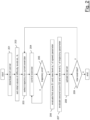
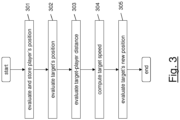
- the method not according to the claimed invention, provides for iteratively performing step 204 in order to control the exercise to be executed by iteratively implementing sub-steps 301-305 of the flowchart of Figure 3 .
- each iteration of sub-steps 301-305 corresponds to a frame of the videogame.
- Sub-steps 301-305 are preferably performed by the processor of the second user equipment 12.
- the current position of the marker is evaluated and it is stored into the memory of the second user equipment 12. Then, at step 302, the current position of the target is evaluated.
- the expression "current position” is referred to the position, either of the marker or of the target, on the current frame of the videogame.
- the videogame comprises a number N of frames, so that this number also corresponds to the number of iterations of the control step 204, i.e. of the sub-steps 301-305.
- the moving distance d(i) may be evaluated by computing a Euclidean distance between the current position of the target and the current position of the marker.
- a cumulative distance D between the target and the marker is computed.
- the cumulative distance D is preferably set equal to the moving distance d(1) evaluated at the first frame of the videogame.
- a target speed is preferably computed as the difference between the maximum target speed associated with the value of the speed level sL set at step 202 and a weighted value thereof, namely the maximum speed value weighted by the moving distance d(i) computed at iteration i and by a pre-defined maximum distance between the target's position and the marker's position.
- the targets stops and "waits" for the marker (this situation may happen when the patient is experiencing a freezing episode and she/he has difficulty in moving her/his hand or arm).
- the maximum distance d_max is preferably pre-determined by the therapist during the calibration phase on the basis of the patient's conditions: in particular, it is preferably uploaded by the therapist 14 into the database 16 of the server 13 and downloaded into the memory of the second user equipment 12 upon launching the client application, and may be updated by the therapist between any two training sessions.
- the target speed v(i) and the maximum speed v_max are both expressed in pixel/frame, i.e. they are indicative of, respectively, the number of pixels that the target travels in one frame and the maximum number of pixels that the target may travel in one frame.
- the processor of the second user equipment 12 After having computed the target speed v(i), the processor of the second user equipment 12 preferably sets the target speed equal to the computed value v(i).
- the method not according to the claimed invention advantageously allows adjusting in real time the target speed according to the current conditions and capabilities of the patient. Indeed, if the patient is not able to track the target (because, for instance, she/he is experiencing a freezing episode), the moving distance d(i) increases while the target speed decreases (see equation [2]). Adjusting the target speed in real-time allows the patient to complete the exercise in any condition without getting frustrated.
- performance indicators are computed so as to allow the therapist to monitor the patient's performances, gather information about the patient's conditions and her/his progress in rehabilitation, and also modify the level of difficulty of the exercises, by, for instance, designing new trajectories or adjusting the speed levels sL.
- the moving distance d(i) may decrease or remain constant and the target speed may, respectively, increase or remain constant according to equation [2]. In this way, the patient does not lose interest in performing the exercise.
- a new position of the target (corresponding to the position that the target will take at frame i+1) is preferably evaluated on the basis of the target speed v(i) computed at step 304 and of the trajectory that the target is following.
- the new position of the target corresponds to the point of the trajectory which is v(i) pixels forward along the trajectory with respect to the point of the trajectory corresponding to the current position of the target.
- the new position of the target is preferably evaluated by performing a linear interpolation between the position of the target used at step 303 to evaluate the moving distance d(i) and the point of the trajectory towards which the target shall move, this point belonging to the sub-set of points stored in the database 16 for that specific trajectory.
- the processor preferably checks (step 205) whether the target has reached the end point of the trajectory and whether the player's marker has reached the end point of the trajectory.
- steps 301-305 and step 205 are repeated. Iterations of steps 301-305 and 205 stop and the exercise terminates when the target and the player's marker reach the end point of the trajectory (branch "yes" of step 205).
- the method not according to the claimed invention, provides (step 206) for evaluating a first score S1 and, on the basis of the first score S1, for evaluating a new speed level sL* to be used in a next exercise that can be a successive exercise of the same training session or the first exercise of a new training session.
- the method provides for evaluating a second score S2 and, on the basis of the second score S2, for evaluating a new trajectory level tL* to be used in a next exercise that can be a successive exercise of the same training session or the first exercise of a new training session.
- Steps 206 and step 207 will be described in greater detail herein after with reference to the flowcharts of Figure 4 and 5 , respectively. Steps 206 and 207 may be performed sequentially as represented in the flowchart of Figure 2 , or they may be performed in parallel. They are preferably performed by the processor of the second user equipment 12.
- the first score S1, the second score S2, the new speed level sL* and the new trajectory level tL* are preferably uploaded from the second user equipment 12 to the server 13, and they are stored in the database 16 for being used in a successive exercise.
- the first score S1, the second score S2, the new speed level sL* and the new trajectory level tL* may be remotely accessed by the therapist 14 for monitoring the performances of the patient 15.
- the remote access by the therapist 14 may be performed through the dedicated GUI at the first user equipment 11.
- the scores and the levels may be downloaded or simply displayed at the first user equipment 11.
- the patient 15 may choose to perform another exercise (i.e. play another videogame) or to terminate the current training session. If the patient chooses to perform another exercise, steps 203-208 are repeated. In this case, the speed level and the trajectory level for the new exercise are set equal to the values computed at step 206 and step 207, respectively, of the preceding exercise. Then, a new trajectory is selected (step 203) and a new exercise is started.
- the operations at steps 204-208 are exactly the same as described above.
- the method not according to the claimed invention may provide for operating the second user equipment 12 to show, on its display, encouragement messages for the patient 15.
- These messages may be in the form of pop-up windows, whose content depends on the obtained scores. For instance, if the patient 15 in performing a new exercise obtains a first score or a second score or both that is(are) lower than the scores obtained in a preceding exercise, a message may be shown to the patient encouraging her/him to complete the exercise. Otherwise, if the patient 15 in performing a new exercise improves her/his performances, a message may be shown with encouragement words such as "well done!, "good job!, or the like. Preferably, at the start of any new exercise a message may be shown to the patient 15 reporting to her/him the scores obtained in the exercise just terminated so that the patient can be encouraged to perform better the next exercise.
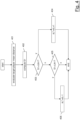
- step 206 will be described in greater detail with reference to the flowchart of Figure 4 .
- step 401 is preferably performed at the end of any exercise (branch "yes" of step 205), to compute the first score S1 representative of the capacity of the patient/player to track the target closely.
- S1 is the first score
- S1_max is the maximum value of the first score (which is preferably a predefined integer value equal to or greater than 1)
- d_max is the maximum distance between the target's position and the position of the player's marker
- D_m is the mean distance computed at step 401.
- the first score S1 is preferably used to evaluate the new speed level sL* to be used for the next exercise.
- the first score S1 is compared to an upper threshold Uth1.
- the upper threshold Uth1 for the first score S1 may be, for example, equal to 70.
- the first score S1 is preferably compared to a lower threshold Lth1 (step 405).
- the lower threshold Lth1 may be for example equal to 40.
- the speed level is preferably not modified.
- the speed level corresponding to the maximum speed of the target during an exercise, may be automatically adjusted exercise after exercise according to the performances of the patient that reflect her/his conditions and her/his progress in rehabilitation.
- the speed of the target for the next exercise will be increased. If the patient performances improve exercise after exercise, the speed of the target may reach the highest level (for instance 5).
- a low value of the first score may be obtained by a patient that, during an exercise, experiences a freezing episode. If the patient performances get worse exercise after exercise, the speed of the target may reach the lowest level (for instance 1).
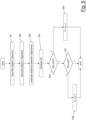
- step 207 will be described in greater detail with reference to the flowchart of Figure 5 . As shown in Figure 5 , step 207 comprises sub-steps 501-508.
- the second score S2 is preferably computed.
- the second score S2 is representative of the accuracy with which the patient/player follows the trajectory of the target.
- the target's trajectory and the player's marker trajectory are respectively described (steps 501 and 502, respectively) by means of a trajectory descriptor that is used for describing a trajectory in terms of a set of features, such as directions, lengths, etc., and/or statistics related to such features.
- the descriptor used is the descriptor based on the histogram of oriented displacements (HOD) disclosed in M. A. Gowayyed et al. "Histogram of oriented displacements (HOD): describing trajectories of human joints for action recognition", Proceedings of the Twenty-Third International Joint Conference on Artificial Intelligence, Bejing (China), August 2013 .
- HID histogram of oriented displacements
- the target's trajectory and the player marker's trajectory are described using a histogram of the directions between each two consecutive points, i.e. two points of the trajectory belonging to two consecutive frames.
- the directions are represented as angles comprised within the range 0° and 360°.
- the respective direction is computed as the angle comprised between the segment joining the two points and an horizontal axis of the display of the patient's user equipment 12. Then a histogram of the quantized values of the angle is created. If, for instance, the histogram comprises 8 bins, each bin represents angles spanning a 45° sector. For each angle, a specific histogram bin is determined by multiplying the angle with the length of the histogram and by dividing the obtained value by 360. The length of the segment between the two consecutive points is then added to the specific histogram bin. The sum of all the histogram bins of an histogram of oriented displacements is equal to the length of the considered trajectory.
- each bin may have a value ranging from 0 to 1.
- the highest bin represents the direction of displacement which is the most probable.
- a first histogram of oriented displacements is determined for the trajectory of the target.
- a second histogram of oriented displacements is determined for the trajectory of the player's marker.
- the first histogram of oriented displacements and the second histogram of oriented displacements have preferably the same number of bins.
- S2 is the second score
- S2_max is the maximum value of the second score (which is preferably an integer value equal to or greater than 1)
- d_max is the maximum distance between the target's position and the position of the player's marker
- d_t is the trajectory distance computed at step 503.
- the second score S2 may take values within the range [0 ⁇ S2_max]. For instance, S2_max may be set equal to 100, so that the second score S2 may range, for instance, between 0 and 100.
- computing the trajectory distance d_t as described above advantageously allows to highlight movements of the player in directions that are not correlated with the directions of the target trajectory (random directions). These movements may be caused by tremor of the patient's hand, which is a symptom of several neurodegenerative diseases. If the patient has a tremor, the direction of displacement between a point and the successive one is probably different with respect to the direction of the target's trajectory. If, for instance, the target's trajectory is a straight horizontal line, the patient experiencing a tremor probably has involuntary movements of the hand in a vertical direction.
- the histogram of oriented displacements for the trajectory of the player's marker probably comprises not only one bin whose value is equal to one, but a number of bins having values different from zero related to different directions. Therefore, the distance d_t between the target's trajectory and the player marker's trajectory is different from zero.
- using the histogram of oriented displacements for describing the trajectory advantageously allows to automatically classify the trajectory on the basis of its complexity. This classification may be used for automatically setting the trajectory level tL of a trajectory every time a new trajectory is uploaded into the server.
- the complexity of a trajectory may be represented by a parameter 1-b_max where b_max is the value of the highest bin within the histogram of oriented displacements describing the trajectory.
- a b_max having a value close to 1 indicates that the trajectory has a preferred direction, for instance it is straight.
- the trajectory may be classified as "simple” and may be associated to a low trajectory level tL, for instance 1 or 2. Otherwise, if b_max has a value not close to 1, this indicates that a preferred direction cannot be identified for the trajectory.
- the trajectory may have a high degree of complexity, may be classified as "difficult" and it may be associated to a high trajectory level tL, for instance 4 or 5.
- the second score S2 is preferably used to evaluate the new trajectory level tL* to be used for the next exercise.
- the second score S2 is preferably compared to an upper threshold Uth2.
- the upper threshold Uth2 for the second score S2 may be equal to, for instance, 70.
- the second score S2 is preferably compared to a lower threshold Lth2 (step 507).
- the lower threshold Lth2 may be equal to, for instance, 40.
- the trajectory level that indicates the level of difficulty of a current trajectory may be automatically adjusted exercise after exercise according to the performances of the patient, which reflect her/his conditions and her/his progress in rehabilitation.
- the level of difficulty of the trajectory may reach the highest value, for instance 5.
- a low value of the second score S2 may be obtained by a patient that, during an exercise, experienced some tremors of her/his hand, causing the player's marker to go in different directions with respect to the target. Exercise after exercise, if the patient performances get worse, the level of difficulty of the trajectory may reach the lowest value, for instance 1.
- the therapist may advantageously identify critical conditions of him/her. Indeed, at the end of an exercise, if a patient has obtained a high first score and a very low second score (e.g. S2 ⁇ 30 within the exemplary range 0-100 mentioned above), the therapist may infer that the patient has experienced a motor disease, such as a critical tremor of his/her hand during the exercise. Indeed, she/he was able to track closely the target (high value of the first score) but she/he was not able to follow the target's trajectory because the hand moved in different directions as a result of the tremor. If the patient has obtained a high first score and a "relatively" low second score (e.g. S2 ⁇ 60), the cause may be that the trajectory had too many direction changes and it was too complex for the patient.
- a motor disease such as a critical tremor of his/her hand during the exercise. Indeed, she/he was able to track closely the target (high value of the first score) but she/he was not able to
- a patient has obtained a very low first score (e.g. S1 ⁇ 30) and a high second score
- the therapist may infer that the patient has experienced a freezing episode during the execution of the exercise. Indeed, she/he was able to precisely follow the target, but at a great mean distance. This means that, during the execution of the exercise, the speed of the players' marker is decreased or that the players' marker has stopped moving. If, the patient has obtained a "relatively" low first score (S1 ⁇ 60) and a high second score, the target speed might be too high with respect to the ability of the patient to follow the target.
- the method is able to avoid that the patient loses interest in the rehabilitation process or gets frustrated by it because, according to the present invention, the patient can perform his/her rehabilitation by playing videogames that may be remotely controlled by the therapist and whose level of difficulty may be automatically adjusted on the basis of the current condition of the patient.
- the automatic adjustment of the maximum speed of the target and the automatic adjustment of the trajectory between two successive exercises allow providing the patient with exercises that are adapted to her/his current conditions.
- the real-time adjustment of the speed of the target allows the patient to track the target and carry out the exercise in any condition. In this way, the patient will not get frustrated and will maintain a high level of participation in performing the rehabilitation exercises.
- the therapist has a reduced workload because the level of difficulty of the exercises can be adjusted automatically without any intervention by her/him.
- the therapist is always able to gather information about the current conditions of the patients.
- the therapist may understand when a patient is experiencing critical conditions such as a freezing episode or tremors and whether the patient conditions are improved or not at the end of a rehabilitation period.
Landscapes
- Engineering & Computer Science (AREA)
- Health & Medical Sciences (AREA)
- Multimedia (AREA)
- Medical Informatics (AREA)
- Primary Health Care (AREA)
- Epidemiology (AREA)
- General Health & Medical Sciences (AREA)
- Public Health (AREA)
- Biomedical Technology (AREA)
- Human Computer Interaction (AREA)
- Physical Education & Sports Medicine (AREA)
- Biophysics (AREA)
- Life Sciences & Earth Sciences (AREA)
- Business, Economics & Management (AREA)
- General Business, Economics & Management (AREA)
- Pathology (AREA)
- Rehabilitation Tools (AREA)
Claims (13)
- Teilnehmereinrichtung zum Bereitstellen einer Rehabilitationsübung für einen Patienten (15), der von einer neurodegenerativen Krankheit betroffen ist, wobei die Teilnehmereinrichtung (12) einen Prozessor, eine Anzeige und eine Bewegungserfassungseingabevorrichtung umfasst, wobei die Übung das Spielen eines Videospiels umfasst, während dem dem Patienten (15) auf der Anzeige der Teilnehmereinrichtung ein Ziel präsentiert wird, das sich entlang einer Trajektorie bewegt, wobei das Spielen des Videospiels das Verfolgen des Ziels von einem Startpunkt der Trajektorie zu einem Endpunkt der Trajektorie umfasst, wobei der Prozessor dazu ausgelegt ist, das Videospiel auszuführen, wobei die Anzeige dazu ausgelegt ist, das Ziel zu zeigen, das sich gemäß dem Videospiel entlang der Trajektorie auf der Anzeige bewegt, und die Bewegungseingangserfassungsvorrichtung dazu ausgelegt ist, zum Verfolgen des Ziels entlang der Trajektorie gemäß dem Videospiel eine Bewegung des Patienten (15) in eine entsprechende Bewegung eines Markers auf der Anzeige umzuwandeln, wobei der Prozessor ferner zu Folgendem ausgelegt ist:- bevor der Patient (15) mit der Übung beginnt, Auswählen der Trajektorie für das Ziel und einer maximalen Geschwindigkeit des Ziels und- während der Übung Anpassen einer aktuellen Geschwindigkeit des Ziels auf Basis der maximalen Geschwindigkeit und eines Abstands zwischen dem Ziel und dem Marker auf der Anzeige,wobei das Videospiel eine Anzahl von Frames umfasst und der Prozessor ferner dazu ausgelegt ist, den Abstand zwischen dem Ziel und dem Marker zu berechnen und den aktuellen Geschwindigkeitswert des Ziels auf Basis einzelner Frames anzupassen.
- Teilnehmereinrichtung nach Anspruch 1, wobei der Prozessor ferner zu Folgendem ausgelegt ist:- Vorbestimmen eines Satzes von Trajektorien;- Verknüpfen jeder Trajektorie mit einem jeweiligen Maß eines Trajektorienparameters, das eine Komplexität der Trajektorie anzeigt;- Auswählen eines aktuellen Maßes des Trajektorienparameters und- Auswählen der Trajektorie in einem Untersatz des vorbestimmten Satzes von Trajektorien, wobei der Untersatz mit dem aktuellen Maß des Trajektorienparameters verknüpft ist.
- Teilnehmereinrichtung nach Anspruch 1 oder 2, wobei der Prozessor ferner zu Folgendem ausgelegt ist:- Vorbestimmen eines Satzes von maximalen Geschwindigkeitswerten;- Verknüpfen von jedem maximalen Geschwindigkeitswert mit einem jeweiligen Maß eines Geschwindigkeitsparameters und- Auswählen eines aktuellen Maßes des Geschwindigkeitsparameters.
- Teilnehmereinrichtung nach einem der vorhergehenden Ansprüche, wobei der Prozessor ferner dazu ausgelegt ist, durch Berechnen eines Zielgeschwindigkeitswerts v(i) als einer Differenz zwischen dem maximalen Geschwindigkeitswert und dem maximalen Geschwindigkeitswert, der durch den Abstand d(i) zwischen dem Ziel und dem Marker und durch einen vordefinierten maximalen Abstand zwischen einer Position des Ziels bei Frame i und einer Position des Markers bei Frame i gewichtet ist, den aktuellen Geschwindigkeitswert des Ziels bei einem Frame i des Videospiels anzupassen.
- Teilnehmereinrichtung nach einem der vorhergehenden Ansprüche, wobei der Prozessor ferner dazu ausgelegt ist, am Ende jeder Übung auf Basis eines mittleren Abstands zwischen dem Ziel und dem Marker entlang der ausgewählten Trajektorie eine erste Bewertung (S1) zu berechnen.
- Teilnehmereinrichtung nach Anspruch 3 und 5, wobei der Prozessor ferner dazu ausgelegt ist, am Ende jeder Übung ein neues Maß des Geschwindigkeitsparameters (sL*) wie folgt zu beurteilen:- wenn die erste Bewertung (S1), die vom Patienten (15) erhalten wird, größer ist als ein oberer Schwellwert (Uth1), ist das neue Maß des Geschwindigkeitsparameters (sL*) gleich dem um 1 erhöhten aktuellen Maß des Geschwindigkeitsparameters; und- wenn die erste Bewertung (S1), die vom Patienten (15) erhalten wird, niedriger ist als der obere Schwellwert (Uth1) und niedriger als ein unterer Schwellwert (Lth1), ist das neue Maß des Geschwindigkeitsparameters (sL*) gleich dem um 1 verringerten aktuellen Maß des Geschwindigkeitsparameters.
- Teilnehmereinrichtung nach Anspruch 6, wobei der Prozessor ferner dazu ausgelegt ist, zu Beginn einer neuen Übung durch Auswählen eines maximalen Geschwindigkeitswerts, der mit dem neuen Maß des Geschwindigkeitsparameters (sL*) verknüpft ist, den maximalen Geschwindigkeitswert auszuwählen.
- Teilnehmereinrichtung nach einem der vorhergehenden Ansprüche, wobei der Prozessor ferner dazu ausgelegt ist, am Ende jeder Übung auf Basis eines Abstands d_t zwischen der Trajektorie des Ziels und einer Trajektorie des Markers eine zweite Bewertung (S2) zu berechnen.
- Teilnehmereinrichtung nach Anspruch 8, wobei der Abstand d_t unter Verwendung eines Trajektoriendeskriptors berechnet wird, wobei der Trajektoriendeskriptor auf einem Histogramm von ausgerichteten Versätzen basiert.
- Teilnehmereinrichtung nach Anspruch 2 und einem der Ansprüche 8 bis 9, wobei der Prozessor ferner dazu ausgelegt ist, am Ende jeder Übung ein neues Maß des Trajektorienparameters (tL*) wie folgt zu beurteilen:- wenn die zweite Bewertung (S2), die vom Patienten (15) erhalten wird, größer ist als ein weiterer oberer Schwellwert (Uth2), ist das neue Maß des Trajektorienparameters (tL*) gleich dem um 1 erhöhten aktuellen Maß des Trajektorienparameters; und- wenn die zweite Bewertung (S2), die vom Patienten (15) erhalten wird, niedriger ist als der weitere obere Schwellwert (Uth2) und niedriger als ein weiterer unterer Schwellwert (Lth2), ist das neue Maß des Trajektorienparameters (tL*) gleich dem um 1 verringerten aktuellen Maß des Trajektorienparameters.
- Teilnehmereinrichtung nach Anspruch 10, wobei der Prozessor ferner dazu ausgelegt ist, zu Beginn einer neuen Übung durch Auswählen einer Trajektorie, die mit dem neuen Maß des Trajektorienparameters (tL*) verknüpft ist, die Trajektorie auszuwählen.
- Teilnehmereinrichtung nach Anspruch 2 und Anspruch 9, wobei der Prozessor ferner dazu ausgelegt ist, auf Basis des Wertes eines höchsten Bins in einem Histogramm von ausgerichteten Versätzen für die Trajektorie eine Trajektorie mit einem Maß des Trajektorienparameters zu verknüpfen.
- System (10) zum Bereitstellen einer Rehabilitationsübung für einen Patienten (15), der von einer neurodegenerativen Krankheit betroffen ist, wobei das System (10) eine erste und eine zweite Teilnehmereinrichtung (11, 12) und einen Server (13) umfasst, wobei die erste und die zweite Teilnehmereinrichtung (11, 12) dazu ausgelegt sind, sich mit dem Server (13) zu verbinden,wobei die Übung das Spielen eines Videospiels umfasst, während dem dem Patienten (15) auf der Anzeige der Teilnehmereinrichtung ein Ziel präsentiert wird, das sich entlang einer Trajektorie bewegt, wobei das Spielen des Videospiels das Verfolgen des Ziels von einem Startpunkt der Trajektorie zu einem Endpunkt der Trajektorie umfasst,wobei der Server (13) eine Datenbank (16) umfasst, die dazu ausgelegt ist, Daten, die die Übung anzeigen, und Daten, die die vom Patienten (15) beim Ausführen der Übungen erreichten Bewertungen anzeigen, zu speichern,wobei die erste Teilnehmereinrichtung (11) dazu ausgelegt ist, einem Therapeuten (14) zum Verwalten der Daten, die die Übung anzeigen, einen Zugang zum Server (13) bereitzustellen, undwobei die zweite Teilnehmereinrichtung (12) einen Prozessor, eine Anzeige und eine Bewegungserfassungseingabevorrichtung umfasst, wobei der Prozessor dazu ausgelegt ist, das Videospiel auszuführen, wobei die Anzeige dazu ausgelegt ist, ein Ziel zu zeigen, das sich gemäß dem Videospiel entlang der Trajektorie auf der Anzeige bewegt, und die Bewegungseingangserfassungsvorrichtung dazu ausgelegt ist, zum Verfolgen des Ziels entlang der Trajektorie gemäß dem Videospiel eine Bewegung des Patienten (15) in eine entsprechende Bewegung eines Markers auf der Anzeige umzuwandeln, wobei der Prozessor ferner zu Folgendem ausgelegt ist:- bevor der Patient (15) mit der Übung beginnt, Auswählen einer Trajektorie für das Ziel und einer maximalen Geschwindigkeit des Ziels und- während der Übung Anpassen einer aktuellen Geschwindigkeit des Ziels auf Basis der maximalen Geschwindigkeit und eines Abstands zwischen dem Ziel und dem Marker auf der Anzeige,wobei das Videospiel eine Anzahl von Frames umfasst und der Prozessor ferner dazu ausgelegt ist, den Abstand zwischen dem Ziel und dem Marker zu berechnen und den aktuellen Geschwindigkeitswert des Ziels auf Basis einzelner Frames anzupassen.
Applications Claiming Priority (1)
| Application Number | Priority Date | Filing Date | Title |
|---|---|---|---|
| PCT/EP2014/070329 WO2016045717A1 (en) | 2014-09-24 | 2014-09-24 | Equipment for providing a rehabilitation exercise |
Publications (2)
| Publication Number | Publication Date |
|---|---|
| EP3198495A1 EP3198495A1 (de) | 2017-08-02 |
| EP3198495B1 true EP3198495B1 (de) | 2024-05-01 |
Family
ID=51627277
Family Applications (1)
| Application Number | Title | Priority Date | Filing Date |
|---|---|---|---|
| EP14777037.4A Active EP3198495B1 (de) | 2014-09-24 | 2014-09-24 | Vorrichtung zur bereitstellung von rehabilitationsübungen |
Country Status (3)
| Country | Link |
|---|---|
| US (1) | US10685092B2 (de) |
| EP (1) | EP3198495B1 (de) |
| WO (1) | WO2016045717A1 (de) |
Families Citing this family (82)
| Publication number | Priority date | Publication date | Assignee | Title |
|---|---|---|---|---|
| EP3288446A4 (de) * | 2015-04-27 | 2018-10-10 | The Regents of The University of California | Neurotherapeutisches videospiel zur verbesserung der räumlich-zeitlichen kognition |
| US20170354846A1 (en) * | 2016-06-13 | 2017-12-14 | Action Faction, Ltd. | Training and Rehabilitation Involving Physical Activity and Cognitive Exercises |
| US11471729B2 (en) | 2019-03-11 | 2022-10-18 | Rom Technologies, Inc. | System, method and apparatus for a rehabilitation machine with a simulated flywheel |
| US12029940B2 (en) | 2019-03-11 | 2024-07-09 | Rom Technologies, Inc. | Single sensor wearable device for monitoring joint extension and flexion |
| US11801423B2 (en) | 2019-05-10 | 2023-10-31 | Rehab2Fit Technologies, Inc. | Method and system for using artificial intelligence to interact with a user of an exercise device during an exercise session |
| US11957960B2 (en) | 2019-05-10 | 2024-04-16 | Rehab2Fit Technologies Inc. | Method and system for using artificial intelligence to adjust pedal resistance |
| US11904207B2 (en) | 2019-05-10 | 2024-02-20 | Rehab2Fit Technologies, Inc. | Method and system for using artificial intelligence to present a user interface representing a user's progress in various domains |
| US12102878B2 (en) | 2019-05-10 | 2024-10-01 | Rehab2Fit Technologies, Inc. | Method and system for using artificial intelligence to determine a user's progress during interval training |
| US11433276B2 (en) | 2019-05-10 | 2022-09-06 | Rehab2Fit Technologies, Inc. | Method and system for using artificial intelligence to independently adjust resistance of pedals based on leg strength |
| US11833393B2 (en) | 2019-05-15 | 2023-12-05 | Rehab2Fit Technologies, Inc. | System and method for using an exercise machine to improve completion of an exercise |
| US11071597B2 (en) | 2019-10-03 | 2021-07-27 | Rom Technologies, Inc. | Telemedicine for orthopedic treatment |
| US11701548B2 (en) | 2019-10-07 | 2023-07-18 | Rom Technologies, Inc. | Computer-implemented questionnaire for orthopedic treatment |
| US12402804B2 (en) | 2019-09-17 | 2025-09-02 | Rom Technologies, Inc. | Wearable device for coupling to a user, and measuring and monitoring user activity |
| US11830601B2 (en) | 2019-10-03 | 2023-11-28 | Rom Technologies, Inc. | System and method for facilitating cardiac rehabilitation among eligible users |
| US11265234B2 (en) | 2019-10-03 | 2022-03-01 | Rom Technologies, Inc. | System and method for transmitting data and ordering asynchronous data |
| US12246222B2 (en) | 2019-10-03 | 2025-03-11 | Rom Technologies, Inc. | Method and system for using artificial intelligence to assign patients to cohorts and dynamically controlling a treatment apparatus based on the assignment during an adaptive telemedical session |
| US11282599B2 (en) | 2019-10-03 | 2022-03-22 | Rom Technologies, Inc. | System and method for use of telemedicine-enabled rehabilitative hardware and for encouragement of rehabilitative compliance through patient-based virtual shared sessions |
| US11961603B2 (en) | 2019-10-03 | 2024-04-16 | Rom Technologies, Inc. | System and method for using AI ML and telemedicine to perform bariatric rehabilitation via an electromechanical machine |
| US12087426B2 (en) | 2019-10-03 | 2024-09-10 | Rom Technologies, Inc. | Systems and methods for using AI ML to predict, based on data analytics or big data, an optimal number or range of rehabilitation sessions for a user |
| US11955220B2 (en) | 2019-10-03 | 2024-04-09 | Rom Technologies, Inc. | System and method for using AI/ML and telemedicine for invasive surgical treatment to determine a cardiac treatment plan that uses an electromechanical machine |
| US11282608B2 (en) | 2019-10-03 | 2022-03-22 | Rom Technologies, Inc. | Method and system for using artificial intelligence and machine learning to provide recommendations to a healthcare provider in or near real-time during a telemedicine session |
| US12347543B2 (en) | 2019-10-03 | 2025-07-01 | Rom Technologies, Inc. | Systems and methods for using artificial intelligence to implement a cardio protocol via a relay-based system |
| US12605613B2 (en) | 2022-05-04 | 2026-04-21 | Rom Technologies, Inc. | Systems and methods for using smart exercise devices to perform cardiovascular rehabilitation |
| US11978559B2 (en) | 2019-10-03 | 2024-05-07 | Rom Technologies, Inc. | Systems and methods for remotely-enabled identification of a user infection |
| US12562243B2 (en) | 2019-10-03 | 2026-02-24 | Rom Technologies, Inc. | System and method for processing medical claims using biometric signatures |
| US11756666B2 (en) | 2019-10-03 | 2023-09-12 | Rom Technologies, Inc. | Systems and methods to enable communication detection between devices and performance of a preventative action |
| US11515021B2 (en) | 2019-10-03 | 2022-11-29 | Rom Technologies, Inc. | Method and system to analytically optimize telehealth practice-based billing processes and revenue while enabling regulatory compliance |
| US11923065B2 (en) | 2019-10-03 | 2024-03-05 | Rom Technologies, Inc. | Systems and methods for using artificial intelligence and machine learning to detect abnormal heart rhythms of a user performing a treatment plan with an electromechanical machine |
| US11325005B2 (en) | 2019-10-03 | 2022-05-10 | Rom Technologies, Inc. | Systems and methods for using machine learning to control an electromechanical device used for prehabilitation, rehabilitation, and/or exercise |
| US11270795B2 (en) | 2019-10-03 | 2022-03-08 | Rom Technologies, Inc. | Method and system for enabling physician-smart virtual conference rooms for use in a telehealth context |
| US12427376B2 (en) | 2019-10-03 | 2025-09-30 | Rom Technologies, Inc. | Systems and methods for an artificial intelligence engine to optimize a peak performance |
| US12539446B2 (en) | 2019-10-03 | 2026-02-03 | Rom Technologies, Inc. | Method and system for using sensors to optimize a user treatment plan in a telemedicine environment |
| US12555667B2 (en) | 2019-10-03 | 2026-02-17 | Rom Technologies, Inc. | Systems and methods for using AI/ML and for cardiac and pulmonary treatment via an electromechanical machine related to urologic disorders and antecedents and sequelae of certain urologic surgeries |
| US11075000B2 (en) | 2019-10-03 | 2021-07-27 | Rom Technologies, Inc. | Method and system for using virtual avatars associated with medical professionals during exercise sessions |
| US12154672B2 (en) | 2019-10-03 | 2024-11-26 | Rom Technologies, Inc. | Method and system for implementing dynamic treatment environments based on patient information |
| US11955223B2 (en) | 2019-10-03 | 2024-04-09 | Rom Technologies, Inc. | System and method for using artificial intelligence and machine learning to provide an enhanced user interface presenting data pertaining to cardiac health, bariatric health, pulmonary health, and/or cardio-oncologic health for the purpose of performing preventative actions |
| US12220201B2 (en) | 2019-10-03 | 2025-02-11 | Rom Technologies, Inc. | Remote examination through augmented reality |
| US11955222B2 (en) | 2019-10-03 | 2024-04-09 | Rom Technologies, Inc. | System and method for determining, based on advanced metrics of actual performance of an electromechanical machine, medical procedure eligibility in order to ascertain survivability rates and measures of quality-of-life criteria |
| US11515028B2 (en) | 2019-10-03 | 2022-11-29 | Rom Technologies, Inc. | Method and system for using artificial intelligence and machine learning to create optimal treatment plans based on monetary value amount generated and/or patient outcome |
| US12150792B2 (en) | 2019-10-03 | 2024-11-26 | Rom Technologies, Inc. | Augmented reality placement of goniometer or other sensors |
| US11282604B2 (en) | 2019-10-03 | 2022-03-22 | Rom Technologies, Inc. | Method and system for use of telemedicine-enabled rehabilitative equipment for prediction of secondary disease |
| US11317975B2 (en) | 2019-10-03 | 2022-05-03 | Rom Technologies, Inc. | Method and system for treating patients via telemedicine using sensor data from rehabilitation or exercise equipment |
| US11101028B2 (en) | 2019-10-03 | 2021-08-24 | Rom Technologies, Inc. | Method and system using artificial intelligence to monitor user characteristics during a telemedicine session |
| US12224052B2 (en) | 2019-10-03 | 2025-02-11 | Rom Technologies, Inc. | System and method for using AI, machine learning and telemedicine for long-term care via an electromechanical machine |
| US12020800B2 (en) | 2019-10-03 | 2024-06-25 | Rom Technologies, Inc. | System and method for using AI/ML and telemedicine to integrate rehabilitation for a plurality of comorbid conditions |
| US12469587B2 (en) | 2019-10-03 | 2025-11-11 | Rom Technologies, Inc. | Systems and methods for assigning healthcare professionals to remotely monitor users performing treatment plans on electromechanical machines |
| US12020799B2 (en) | 2019-10-03 | 2024-06-25 | Rom Technologies, Inc. | Rowing machines, systems including rowing machines, and methods for using rowing machines to perform treatment plans for rehabilitation |
| US12176089B2 (en) | 2019-10-03 | 2024-12-24 | Rom Technologies, Inc. | System and method for using AI ML and telemedicine for cardio-oncologic rehabilitation via an electromechanical machine |
| US12100499B2 (en) | 2020-08-06 | 2024-09-24 | Rom Technologies, Inc. | Method and system for using artificial intelligence and machine learning to create optimal treatment plans based on monetary value amount generated and/or patient outcome |
| US12230381B2 (en) | 2019-10-03 | 2025-02-18 | Rom Technologies, Inc. | System and method for an enhanced healthcare professional user interface displaying measurement information for a plurality of users |
| US12478837B2 (en) | 2019-10-03 | 2025-11-25 | Rom Technologies, Inc. | Method and system for monitoring actual patient treatment progress using sensor data |
| US12230382B2 (en) | 2019-10-03 | 2025-02-18 | Rom Technologies, Inc. | Systems and methods for using artificial intelligence and machine learning to predict a probability of an undesired medical event occurring during a treatment plan |
| US12420143B1 (en) | 2019-10-03 | 2025-09-23 | Rom Technologies, Inc. | System and method for enabling residentially-based cardiac rehabilitation by using an electromechanical machine and educational content to mitigate risk factors and optimize user behavior |
| US11955221B2 (en) | 2019-10-03 | 2024-04-09 | Rom Technologies, Inc. | System and method for using AI/ML to generate treatment plans to stimulate preferred angiogenesis |
| US12380984B2 (en) | 2019-10-03 | 2025-08-05 | Rom Technologies, Inc. | Systems and methods for using artificial intelligence and machine learning to generate treatment plans having dynamically tailored cardiac protocols for users to manage a state of an electromechanical machine |
| US11887717B2 (en) | 2019-10-03 | 2024-01-30 | Rom Technologies, Inc. | System and method for using AI, machine learning and telemedicine to perform pulmonary rehabilitation via an electromechanical machine |
| US11915815B2 (en) | 2019-10-03 | 2024-02-27 | Rom Technologies, Inc. | System and method for using artificial intelligence and machine learning and generic risk factors to improve cardiovascular health such that the need for additional cardiac interventions is mitigated |
| US12191018B2 (en) | 2019-10-03 | 2025-01-07 | Rom Technologies, Inc. | System and method for using artificial intelligence in telemedicine-enabled hardware to optimize rehabilitative routines capable of enabling remote rehabilitative compliance |
| US12062425B2 (en) | 2019-10-03 | 2024-08-13 | Rom Technologies, Inc. | System and method for implementing a cardiac rehabilitation protocol by using artificial intelligence and standardized measurements |
| US11337648B2 (en) | 2020-05-18 | 2022-05-24 | Rom Technologies, Inc. | Method and system for using artificial intelligence to assign patients to cohorts and dynamically controlling a treatment apparatus based on the assignment during an adaptive telemedical session |
| US12420145B2 (en) | 2019-10-03 | 2025-09-23 | Rom Technologies, Inc. | Systems and methods of using artificial intelligence and machine learning for generating alignment plans to align a user with an imaging sensor during a treatment session |
| US12327623B2 (en) | 2019-10-03 | 2025-06-10 | Rom Technologies, Inc. | System and method for processing medical claims |
| US11139060B2 (en) | 2019-10-03 | 2021-10-05 | Rom Technologies, Inc. | Method and system for creating an immersive enhanced reality-driven exercise experience for a user |
| US11087865B2 (en) | 2019-10-03 | 2021-08-10 | Rom Technologies, Inc. | System and method for use of treatment device to reduce pain medication dependency |
| US20210134458A1 (en) | 2019-10-03 | 2021-05-06 | Rom Technologies, Inc. | System and method to enable remote adjustment of a device during a telemedicine session |
| US11915816B2 (en) | 2019-10-03 | 2024-02-27 | Rom Technologies, Inc. | Systems and methods of using artificial intelligence and machine learning in a telemedical environment to predict user disease states |
| US12589279B2 (en) | 2019-10-03 | 2026-03-31 | Rom Technologies, Inc. | Systems and methods of using artificial intelligence and machine learning for generating an alignment plan capable of enabling the aligning of a user's body during a treatment session |
| US20230245750A1 (en) | 2019-10-03 | 2023-08-03 | Rom Technologies, Inc. | Systems and methods for using elliptical machine to perform cardiovascular rehabilitation |
| US11069436B2 (en) | 2019-10-03 | 2021-07-20 | Rom Technologies, Inc. | System and method for use of telemedicine-enabled rehabilitative hardware and for encouraging rehabilitative compliance through patient-based virtual shared sessions with patient-enabled mutual encouragement across simulated social networks |
| US12548656B2 (en) | 2019-10-03 | 2026-02-10 | Rom Technologies, Inc. | System and method for an enhanced patient user interface displaying real-time measurement information during a telemedicine session |
| US12562271B2 (en) | 2019-11-06 | 2026-02-24 | Rom Technologies, Inc. | System for remote treatment utilizing privacy controls |
| US11826613B2 (en) | 2019-10-21 | 2023-11-28 | Rom Technologies, Inc. | Persuasive motivation for orthopedic treatment |
| US12424319B2 (en) | 2019-11-06 | 2025-09-23 | Rom Technologies, Inc. | System for remote treatment utilizing privacy controls |
| US11107591B1 (en) | 2020-04-23 | 2021-08-31 | Rom Technologies, Inc. | Method and system for describing and recommending optimal treatment plans in adaptive telemedical or other contexts |
| WO2021262809A1 (en) | 2020-06-26 | 2021-12-30 | Rom Technologies, Inc. | System, method and apparatus for anchoring an electronic device and measuring a joint angle |
| US12367960B2 (en) | 2020-09-15 | 2025-07-22 | Rom Technologies, Inc. | System and method for using AI ML and telemedicine to perform bariatric rehabilitation via an electromechanical machine |
| US12515104B2 (en) | 2020-10-28 | 2026-01-06 | Rom Technologies, Inc. | Systems and methods for using machine learning to control a rehabilitation and exercise electromechanical device |
| JP7499690B2 (ja) * | 2020-12-10 | 2024-06-14 | 株式会社エクサウィザーズ | 情報処理装置、情報処理方法、及びプログラム |
| CN116648292A (zh) * | 2020-12-22 | 2023-08-25 | 三星电子株式会社 | 提供健身反馈的电子装置、其控制方法和服务器 |
| US20220221930A1 (en) * | 2021-01-12 | 2022-07-14 | Samsung Electronics Co., Ltd. | Electronic device and operation method of electronic device |
| CN113457139B (zh) * | 2021-06-30 | 2024-09-03 | 网易(杭州)网络有限公司 | 游戏的信息处理方法、装置、电子设备及存储介质 |
| CN116920354A (zh) * | 2022-04-06 | 2023-10-24 | 成都拟合未来科技有限公司 | 配速设备及方法 |
Family Cites Families (8)
| Publication number | Priority date | Publication date | Assignee | Title |
|---|---|---|---|---|
| US5785630A (en) * | 1993-02-02 | 1998-07-28 | Tectrix Fitness Equipment, Inc. | Interactive exercise apparatus |
| US6827579B2 (en) | 2000-11-16 | 2004-12-07 | Rutgers, The State University Of Nj | Method and apparatus for rehabilitation of neuromotor disorders |
| US20070066403A1 (en) * | 2005-09-20 | 2007-03-22 | Conkwright George C | Method for dynamically adjusting an interactive application such as a videogame based on continuing assessments of user capability |
| US20110131005A1 (en) * | 2007-12-18 | 2011-06-02 | Hiromu Ueshima | Mobile recording apparatus, body movement measuring apparatus, information processing apparatus, movement pattern determining apparatus, activity amount calculating apparatus, recording method, body movement measuring method, information processing method, movement pattern determining method, activity amount calculating met |
| EP2510985A1 (de) | 2011-04-11 | 2012-10-17 | CoRehab s.r.l. | System und Verfahren zur fernen und asynchronen Interaktion mit Rehabilitationsvideospielen |
| US20130034837A1 (en) | 2011-08-05 | 2013-02-07 | NeuroScouting, LLC | Systems and methods for training and analysis of responsive skills |
| GB2511736A (en) | 2013-03-06 | 2014-09-17 | Biogaming Ltd | Patient-specific rehabilitative video games |
| US10475352B2 (en) * | 2015-09-09 | 2019-11-12 | The Regents Of The University Of California | Systems and methods for facilitating rehabilitation therapy |
-
2014
- 2014-09-24 EP EP14777037.4A patent/EP3198495B1/de active Active
- 2014-09-24 WO PCT/EP2014/070329 patent/WO2016045717A1/en not_active Ceased
- 2014-09-24 US US15/512,958 patent/US10685092B2/en active Active
Non-Patent Citations (1)
| Title |
|---|
| RODRIGUEZ GUERRERO C ET AL: "Using psychophysiological feedback to enhance physical human robot interaction in a cooperative scenario", BIOMEDICAL ROBOTICS AND BIOMECHATRONICS (BIOROB), 2012 4TH IEEE RAS&EMBS INTERNATIONAL CONFERENCE ON, IEEE, 24 June 2012 (2012-06-24), pages 1176 - 1181, XP032234108, ISBN: 978-1-4577-1199-2, DOI: 10.1109/BIOROB.2012.6290845 * |
Also Published As
| Publication number | Publication date |
|---|---|
| US10685092B2 (en) | 2020-06-16 |
| WO2016045717A1 (en) | 2016-03-31 |
| EP3198495A1 (de) | 2017-08-02 |
| US20170300663A1 (en) | 2017-10-19 |
Similar Documents
| Publication | Publication Date | Title |
|---|---|---|
| US10685092B2 (en) | Equipment for providing a rehabilitation exercise | |
| KR101643020B1 (ko) | 애니메이션을 체이닝하는 방법 및 애니메이션 블렌딩 장치 | |
| US8418085B2 (en) | Gesture coach | |
| CN109791440B (zh) | 头戴式显示器中的虚拟现实内容的视场限制方法 | |
| Pirovano et al. | Self-adaptive games for rehabilitation at home | |
| US9377857B2 (en) | Show body position | |
| US8475274B2 (en) | Method and apparatus for dynamically adjusting game or other simulation difficulty | |
| TWI377055B (en) | Interactive rehabilitation method and system for upper and lower extremities | |
| US20220351824A1 (en) | Systems for dynamic assessment of upper extremity impairments in virtual/augmented reality | |
| WO2021163334A1 (en) | Adaptive virtual rehabilitation | |
| KR101946341B1 (ko) | 훈련 컨텐츠의 난이도를 설정하는 방법 및 이를 운용하는 전자 장치 | |
| KR102073376B1 (ko) | 훈련 컨텐츠의 난이도를 설정하는 방법 및 이를 운용하는 전자 장치 | |
| US20210307652A1 (en) | Systems and devices for measuring, capturing, and modifying partial and full body kinematics | |
| US20160331304A1 (en) | System and methods for automated administration and evaluation of physical therapy exercises | |
| Shang et al. | General purpose haptic/biometric-based dynamic difficulty adjustment for post-stroke upper-limb rehabilitation games | |
| US20250249367A1 (en) | System and method of motor task skill assessment | |
| Scherer et al. | Non-invasive brain-computer interfaces: Enhanced gaming and robotic control | |
| CN116020104A (zh) | 一种辅助健身的方法及相关装置 | |
| Vyas et al. | Games for stroke rehabilitation: An overview | |
| Jantscher | Using real-time smoothness metrics to deliver haptic performance cues for a dexterous task | |
| Vogiatzaki et al. | Rehabilitation system for stroke patients using mixed-reality and immersive user interfaces | |
| US20250135329A1 (en) | Apparatus, systems and methods for controller devices | |
| KR102048546B1 (ko) | 가상현실을 이용한 재활 훈련 시스템 및 방법 | |
| Vogiatzaki et al. | Rehabilitation after Stroke using Immersive User Interfaces in 3D Virtual and Augmented Gaming Environments. | |
| WO2025017564A1 (en) | Game-based system and methods for rehabilitation |
Legal Events
| Date | Code | Title | Description |
|---|---|---|---|
| STAA | Information on the status of an ep patent application or granted ep patent |
Free format text: STATUS: THE INTERNATIONAL PUBLICATION HAS BEEN MADE |
|
| PUAI | Public reference made under article 153(3) epc to a published international application that has entered the european phase |
Free format text: ORIGINAL CODE: 0009012 |
|
| STAA | Information on the status of an ep patent application or granted ep patent |
Free format text: STATUS: REQUEST FOR EXAMINATION WAS MADE |
|
| 17P | Request for examination filed |
Effective date: 20170412 |
|
| AK | Designated contracting states |
Kind code of ref document: A1 Designated state(s): AL AT BE BG CH CY CZ DE DK EE ES FI FR GB GR HR HU IE IS IT LI LT LU LV MC MK MT NL NO PL PT RO RS SE SI SK SM TR |
|
| AX | Request for extension of the european patent |
Extension state: BA ME |
|
| DAX | Request for extension of the european patent (deleted) | ||
| STAA | Information on the status of an ep patent application or granted ep patent |
Free format text: STATUS: EXAMINATION IS IN PROGRESS |
|
| 17Q | First examination report despatched |
Effective date: 20210317 |
|
| REG | Reference to a national code |
Ref country code: DE Ref legal event code: R079 Ref document number: 602014090087 Country of ref document: DE Free format text: PREVIOUS MAIN CLASS: G06F0019000000 Ipc: G16H0040630000 |
|
| GRAP | Despatch of communication of intention to grant a patent |
Free format text: ORIGINAL CODE: EPIDOSNIGR1 |
|
| STAA | Information on the status of an ep patent application or granted ep patent |
Free format text: STATUS: GRANT OF PATENT IS INTENDED |
|
| RIC1 | Information provided on ipc code assigned before grant |
Ipc: G16H 20/30 20180101ALI20231204BHEP Ipc: G16H 80/00 20180101ALI20231204BHEP Ipc: G16H 40/67 20180101ALI20231204BHEP Ipc: G16H 40/63 20180101AFI20231204BHEP |
|
| INTG | Intention to grant announced |
Effective date: 20231221 |
|
| GRAS | Grant fee paid |
Free format text: ORIGINAL CODE: EPIDOSNIGR3 |
|
| GRAA | (expected) grant |
Free format text: ORIGINAL CODE: 0009210 |
|
| STAA | Information on the status of an ep patent application or granted ep patent |
Free format text: STATUS: THE PATENT HAS BEEN GRANTED |
|
| AK | Designated contracting states |
Kind code of ref document: B1 Designated state(s): AL AT BE BG CH CY CZ DE DK EE ES FI FR GB GR HR HU IE IS IT LI LT LU LV MC MK MT NL NO PL PT RO RS SE SI SK SM TR |
|
| REG | Reference to a national code |
Ref country code: GB Ref legal event code: FG4D |
|
| REG | Reference to a national code |
Ref country code: CH Ref legal event code: EP |
|
| REG | Reference to a national code |
Ref country code: DE Ref legal event code: R096 Ref document number: 602014090087 Country of ref document: DE |
|
| REG | Reference to a national code |
Ref country code: IE Ref legal event code: FG4D |
|
| P01 | Opt-out of the competence of the unified patent court (upc) registered |
Free format text: CASE NUMBER: APP_36040/2024 Effective date: 20240617 |
|
| REG | Reference to a national code |
Ref country code: LT Ref legal event code: MG9D |
|
| REG | Reference to a national code |
Ref country code: NL Ref legal event code: MP Effective date: 20240501 |
|
| PG25 | Lapsed in a contracting state [announced via postgrant information from national office to epo] |
Ref country code: IS Free format text: LAPSE BECAUSE OF FAILURE TO SUBMIT A TRANSLATION OF THE DESCRIPTION OR TO PAY THE FEE WITHIN THE PRESCRIBED TIME-LIMIT Effective date: 20240901 |
|
| PG25 | Lapsed in a contracting state [announced via postgrant information from national office to epo] |
Ref country code: BG Free format text: LAPSE BECAUSE OF FAILURE TO SUBMIT A TRANSLATION OF THE DESCRIPTION OR TO PAY THE FEE WITHIN THE PRESCRIBED TIME-LIMIT Effective date: 20240501 |
|
| PG25 | Lapsed in a contracting state [announced via postgrant information from national office to epo] |
Ref country code: FI Free format text: LAPSE BECAUSE OF FAILURE TO SUBMIT A TRANSLATION OF THE DESCRIPTION OR TO PAY THE FEE WITHIN THE PRESCRIBED TIME-LIMIT Effective date: 20240501 Ref country code: HR Free format text: LAPSE BECAUSE OF FAILURE TO SUBMIT A TRANSLATION OF THE DESCRIPTION OR TO PAY THE FEE WITHIN THE PRESCRIBED TIME-LIMIT Effective date: 20240501 |
|
| PG25 | Lapsed in a contracting state [announced via postgrant information from national office to epo] |
Ref country code: GR Free format text: LAPSE BECAUSE OF FAILURE TO SUBMIT A TRANSLATION OF THE DESCRIPTION OR TO PAY THE FEE WITHIN THE PRESCRIBED TIME-LIMIT Effective date: 20240802 |
|
| PG25 | Lapsed in a contracting state [announced via postgrant information from national office to epo] |
Ref country code: PT Free format text: LAPSE BECAUSE OF FAILURE TO SUBMIT A TRANSLATION OF THE DESCRIPTION OR TO PAY THE FEE WITHIN THE PRESCRIBED TIME-LIMIT Effective date: 20240902 |
|
| REG | Reference to a national code |
Ref country code: AT Ref legal event code: MK05 Ref document number: 1683553 Country of ref document: AT Kind code of ref document: T Effective date: 20240501 |
|
| PG25 | Lapsed in a contracting state [announced via postgrant information from national office to epo] |
Ref country code: NL Free format text: LAPSE BECAUSE OF FAILURE TO SUBMIT A TRANSLATION OF THE DESCRIPTION OR TO PAY THE FEE WITHIN THE PRESCRIBED TIME-LIMIT Effective date: 20240501 |
|
| PG25 | Lapsed in a contracting state [announced via postgrant information from national office to epo] |
Ref country code: ES Free format text: LAPSE BECAUSE OF FAILURE TO SUBMIT A TRANSLATION OF THE DESCRIPTION OR TO PAY THE FEE WITHIN THE PRESCRIBED TIME-LIMIT Effective date: 20240501 |
|
| PG25 | Lapsed in a contracting state [announced via postgrant information from national office to epo] |
Ref country code: AT Free format text: LAPSE BECAUSE OF FAILURE TO SUBMIT A TRANSLATION OF THE DESCRIPTION OR TO PAY THE FEE WITHIN THE PRESCRIBED TIME-LIMIT Effective date: 20240501 |
|
| PG25 | Lapsed in a contracting state [announced via postgrant information from national office to epo] |
Ref country code: PL Free format text: LAPSE BECAUSE OF FAILURE TO SUBMIT A TRANSLATION OF THE DESCRIPTION OR TO PAY THE FEE WITHIN THE PRESCRIBED TIME-LIMIT Effective date: 20240501 |
|
| PG25 | Lapsed in a contracting state [announced via postgrant information from national office to epo] |
Ref country code: LV Free format text: LAPSE BECAUSE OF FAILURE TO SUBMIT A TRANSLATION OF THE DESCRIPTION OR TO PAY THE FEE WITHIN THE PRESCRIBED TIME-LIMIT Effective date: 20240501 |
|
| PG25 | Lapsed in a contracting state [announced via postgrant information from national office to epo] |
Ref country code: PT Free format text: LAPSE BECAUSE OF FAILURE TO SUBMIT A TRANSLATION OF THE DESCRIPTION OR TO PAY THE FEE WITHIN THE PRESCRIBED TIME-LIMIT Effective date: 20240902 Ref country code: PL Free format text: LAPSE BECAUSE OF FAILURE TO SUBMIT A TRANSLATION OF THE DESCRIPTION OR TO PAY THE FEE WITHIN THE PRESCRIBED TIME-LIMIT Effective date: 20240501 Ref country code: NO Free format text: LAPSE BECAUSE OF FAILURE TO SUBMIT A TRANSLATION OF THE DESCRIPTION OR TO PAY THE FEE WITHIN THE PRESCRIBED TIME-LIMIT Effective date: 20240801 Ref country code: NL Free format text: LAPSE BECAUSE OF FAILURE TO SUBMIT A TRANSLATION OF THE DESCRIPTION OR TO PAY THE FEE WITHIN THE PRESCRIBED TIME-LIMIT Effective date: 20240501 Ref country code: LV Free format text: LAPSE BECAUSE OF FAILURE TO SUBMIT A TRANSLATION OF THE DESCRIPTION OR TO PAY THE FEE WITHIN THE PRESCRIBED TIME-LIMIT Effective date: 20240501 Ref country code: IS Free format text: LAPSE BECAUSE OF FAILURE TO SUBMIT A TRANSLATION OF THE DESCRIPTION OR TO PAY THE FEE WITHIN THE PRESCRIBED TIME-LIMIT Effective date: 20240901 Ref country code: HR Free format text: LAPSE BECAUSE OF FAILURE TO SUBMIT A TRANSLATION OF THE DESCRIPTION OR TO PAY THE FEE WITHIN THE PRESCRIBED TIME-LIMIT Effective date: 20240501 Ref country code: GR Free format text: LAPSE BECAUSE OF FAILURE TO SUBMIT A TRANSLATION OF THE DESCRIPTION OR TO PAY THE FEE WITHIN THE PRESCRIBED TIME-LIMIT Effective date: 20240802 Ref country code: FI Free format text: LAPSE BECAUSE OF FAILURE TO SUBMIT A TRANSLATION OF THE DESCRIPTION OR TO PAY THE FEE WITHIN THE PRESCRIBED TIME-LIMIT Effective date: 20240501 Ref country code: ES Free format text: LAPSE BECAUSE OF FAILURE TO SUBMIT A TRANSLATION OF THE DESCRIPTION OR TO PAY THE FEE WITHIN THE PRESCRIBED TIME-LIMIT Effective date: 20240501 Ref country code: BG Free format text: LAPSE BECAUSE OF FAILURE TO SUBMIT A TRANSLATION OF THE DESCRIPTION OR TO PAY THE FEE WITHIN THE PRESCRIBED TIME-LIMIT Effective date: 20240501 Ref country code: AT Free format text: LAPSE BECAUSE OF FAILURE TO SUBMIT A TRANSLATION OF THE DESCRIPTION OR TO PAY THE FEE WITHIN THE PRESCRIBED TIME-LIMIT Effective date: 20240501 Ref country code: RS Free format text: LAPSE BECAUSE OF FAILURE TO SUBMIT A TRANSLATION OF THE DESCRIPTION OR TO PAY THE FEE WITHIN THE PRESCRIBED TIME-LIMIT Effective date: 20240801 |
|
| PG25 | Lapsed in a contracting state [announced via postgrant information from national office to epo] |
Ref country code: DK Free format text: LAPSE BECAUSE OF FAILURE TO SUBMIT A TRANSLATION OF THE DESCRIPTION OR TO PAY THE FEE WITHIN THE PRESCRIBED TIME-LIMIT Effective date: 20240501 |
|
| PG25 | Lapsed in a contracting state [announced via postgrant information from national office to epo] |
Ref country code: EE Free format text: LAPSE BECAUSE OF FAILURE TO SUBMIT A TRANSLATION OF THE DESCRIPTION OR TO PAY THE FEE WITHIN THE PRESCRIBED TIME-LIMIT Effective date: 20240501 |
|
| PG25 | Lapsed in a contracting state [announced via postgrant information from national office to epo] |
Ref country code: CZ Free format text: LAPSE BECAUSE OF FAILURE TO SUBMIT A TRANSLATION OF THE DESCRIPTION OR TO PAY THE FEE WITHIN THE PRESCRIBED TIME-LIMIT Effective date: 20240501 |
|
| PG25 | Lapsed in a contracting state [announced via postgrant information from national office to epo] |
Ref country code: SK Free format text: LAPSE BECAUSE OF FAILURE TO SUBMIT A TRANSLATION OF THE DESCRIPTION OR TO PAY THE FEE WITHIN THE PRESCRIBED TIME-LIMIT Effective date: 20240501 Ref country code: RO Free format text: LAPSE BECAUSE OF FAILURE TO SUBMIT A TRANSLATION OF THE DESCRIPTION OR TO PAY THE FEE WITHIN THE PRESCRIBED TIME-LIMIT Effective date: 20240501 |
|
| PG25 | Lapsed in a contracting state [announced via postgrant information from national office to epo] |
Ref country code: SM Free format text: LAPSE BECAUSE OF FAILURE TO SUBMIT A TRANSLATION OF THE DESCRIPTION OR TO PAY THE FEE WITHIN THE PRESCRIBED TIME-LIMIT Effective date: 20240501 |
|
| PG25 | Lapsed in a contracting state [announced via postgrant information from national office to epo] |
Ref country code: SM Free format text: LAPSE BECAUSE OF FAILURE TO SUBMIT A TRANSLATION OF THE DESCRIPTION OR TO PAY THE FEE WITHIN THE PRESCRIBED TIME-LIMIT Effective date: 20240501 Ref country code: SK Free format text: LAPSE BECAUSE OF FAILURE TO SUBMIT A TRANSLATION OF THE DESCRIPTION OR TO PAY THE FEE WITHIN THE PRESCRIBED TIME-LIMIT Effective date: 20240501 Ref country code: RO Free format text: LAPSE BECAUSE OF FAILURE TO SUBMIT A TRANSLATION OF THE DESCRIPTION OR TO PAY THE FEE WITHIN THE PRESCRIBED TIME-LIMIT Effective date: 20240501 Ref country code: EE Free format text: LAPSE BECAUSE OF FAILURE TO SUBMIT A TRANSLATION OF THE DESCRIPTION OR TO PAY THE FEE WITHIN THE PRESCRIBED TIME-LIMIT Effective date: 20240501 Ref country code: DK Free format text: LAPSE BECAUSE OF FAILURE TO SUBMIT A TRANSLATION OF THE DESCRIPTION OR TO PAY THE FEE WITHIN THE PRESCRIBED TIME-LIMIT Effective date: 20240501 Ref country code: CZ Free format text: LAPSE BECAUSE OF FAILURE TO SUBMIT A TRANSLATION OF THE DESCRIPTION OR TO PAY THE FEE WITHIN THE PRESCRIBED TIME-LIMIT Effective date: 20240501 |
|
| REG | Reference to a national code |
Ref country code: DE Ref legal event code: R097 Ref document number: 602014090087 Country of ref document: DE |
|
| PLBE | No opposition filed within time limit |
Free format text: ORIGINAL CODE: 0009261 |
|
| STAA | Information on the status of an ep patent application or granted ep patent |
Free format text: STATUS: NO OPPOSITION FILED WITHIN TIME LIMIT |
|
| 26N | No opposition filed |
Effective date: 20250204 |
|
| PG25 | Lapsed in a contracting state [announced via postgrant information from national office to epo] |
Ref country code: SI Free format text: LAPSE BECAUSE OF FAILURE TO SUBMIT A TRANSLATION OF THE DESCRIPTION OR TO PAY THE FEE WITHIN THE PRESCRIBED TIME-LIMIT Effective date: 20240501 Ref country code: MC Free format text: LAPSE BECAUSE OF FAILURE TO SUBMIT A TRANSLATION OF THE DESCRIPTION OR TO PAY THE FEE WITHIN THE PRESCRIBED TIME-LIMIT Effective date: 20240501 |
|
| REG | Reference to a national code |
Ref country code: CH Ref legal event code: PL |
|
| PG25 | Lapsed in a contracting state [announced via postgrant information from national office to epo] |
Ref country code: LU Free format text: LAPSE BECAUSE OF NON-PAYMENT OF DUE FEES Effective date: 20240924 |
|
| REG | Reference to a national code |
Ref country code: BE Ref legal event code: MM Effective date: 20240930 |
|
| PG25 | Lapsed in a contracting state [announced via postgrant information from national office to epo] |
Ref country code: BE Free format text: LAPSE BECAUSE OF NON-PAYMENT OF DUE FEES Effective date: 20240930 |
|
| PG25 | Lapsed in a contracting state [announced via postgrant information from national office to epo] |
Ref country code: CH Free format text: LAPSE BECAUSE OF NON-PAYMENT OF DUE FEES Effective date: 20240930 |
|
| PG25 | Lapsed in a contracting state [announced via postgrant information from national office to epo] |
Ref country code: IE Free format text: LAPSE BECAUSE OF NON-PAYMENT OF DUE FEES Effective date: 20240924 |
|
| PG25 | Lapsed in a contracting state [announced via postgrant information from national office to epo] |
Ref country code: SE Free format text: LAPSE BECAUSE OF FAILURE TO SUBMIT A TRANSLATION OF THE DESCRIPTION OR TO PAY THE FEE WITHIN THE PRESCRIBED TIME-LIMIT Effective date: 20240501 |
|
| PGFP | Annual fee paid to national office [announced via postgrant information from national office to epo] |
Ref country code: DE Payment date: 20250919 Year of fee payment: 12 |
|
| PGFP | Annual fee paid to national office [announced via postgrant information from national office to epo] |
Ref country code: GB Payment date: 20250923 Year of fee payment: 12 |
|
| PGFP | Annual fee paid to national office [announced via postgrant information from national office to epo] |
Ref country code: FR Payment date: 20250917 Year of fee payment: 12 |
|
| PGFP | Annual fee paid to national office [announced via postgrant information from national office to epo] |
Ref country code: IT Payment date: 20250930 Year of fee payment: 12 |
|
| PG25 | Lapsed in a contracting state [announced via postgrant information from national office to epo] |
Ref country code: CY Free format text: LAPSE BECAUSE OF FAILURE TO SUBMIT A TRANSLATION OF THE DESCRIPTION OR TO PAY THE FEE WITHIN THE PRESCRIBED TIME-LIMIT; INVALID AB INITIO Effective date: 20140924 |
|
| PG25 | Lapsed in a contracting state [announced via postgrant information from national office to epo] |
Ref country code: HU Free format text: LAPSE BECAUSE OF FAILURE TO SUBMIT A TRANSLATION OF THE DESCRIPTION OR TO PAY THE FEE WITHIN THE PRESCRIBED TIME-LIMIT; INVALID AB INITIO Effective date: 20140924 |