EP3192877B1 - Vesicular adaptor and uses thereof in nucleic acid library construction and sequencing - Google Patents
Vesicular adaptor and uses thereof in nucleic acid library construction and sequencing Download PDFInfo
- Publication number
- EP3192877B1 EP3192877B1 EP14901593.5A EP14901593A EP3192877B1 EP 3192877 B1 EP3192877 B1 EP 3192877B1 EP 14901593 A EP14901593 A EP 14901593A EP 3192877 B1 EP3192877 B1 EP 3192877B1
- Authority
- EP
- European Patent Office
- Prior art keywords
- stranded
- double
- adaptor
- strand
- vesicular
- Prior art date
- Legal status (The legal status is an assumption and is not a legal conclusion. Google has not performed a legal analysis and makes no representation as to the accuracy of the status listed.)
- Active
Links
Images

Classifications
-
- C—CHEMISTRY; METALLURGY
- C12—BIOCHEMISTRY; BEER; SPIRITS; WINE; VINEGAR; MICROBIOLOGY; ENZYMOLOGY; MUTATION OR GENETIC ENGINEERING
- C12Q—MEASURING OR TESTING PROCESSES INVOLVING ENZYMES, NUCLEIC ACIDS OR MICROORGANISMS; COMPOSITIONS OR TEST PAPERS THEREFOR; PROCESSES OF PREPARING SUCH COMPOSITIONS; CONDITION-RESPONSIVE CONTROL IN MICROBIOLOGICAL OR ENZYMOLOGICAL PROCESSES
- C12Q1/00—Measuring or testing processes involving enzymes, nucleic acids or microorganisms; Compositions therefor; Processes of preparing such compositions
- C12Q1/68—Measuring or testing processes involving enzymes, nucleic acids or microorganisms; Compositions therefor; Processes of preparing such compositions involving nucleic acids
- C12Q1/6844—Nucleic acid amplification reactions
- C12Q1/6853—Nucleic acid amplification reactions using modified primers or templates
-
- B—PERFORMING OPERATIONS; TRANSPORTING
- B01—PHYSICAL OR CHEMICAL PROCESSES OR APPARATUS IN GENERAL
- B01J—CHEMICAL OR PHYSICAL PROCESSES, e.g. CATALYSIS OR COLLOID CHEMISTRY; THEIR RELEVANT APPARATUS
- B01J19/00—Chemical, physical or physico-chemical processes in general; Their relevant apparatus
- B01J19/0046—Sequential or parallel reactions, e.g. for the synthesis of polypeptides or polynucleotides; Apparatus and devices for combinatorial chemistry or for making molecular arrays
-
- C—CHEMISTRY; METALLURGY
- C12—BIOCHEMISTRY; BEER; SPIRITS; WINE; VINEGAR; MICROBIOLOGY; ENZYMOLOGY; MUTATION OR GENETIC ENGINEERING
- C12N—MICROORGANISMS OR ENZYMES; COMPOSITIONS THEREOF; PROPAGATING, PRESERVING, OR MAINTAINING MICROORGANISMS; MUTATION OR GENETIC ENGINEERING; CULTURE MEDIA
- C12N11/00—Carrier-bound or immobilised enzymes; Carrier-bound or immobilised microbial cells; Preparation thereof
- C12N11/02—Enzymes or microbial cells immobilised on or in an organic carrier
- C12N11/06—Enzymes or microbial cells immobilised on or in an organic carrier attached to the carrier via a bridging agent
-
- C—CHEMISTRY; METALLURGY
- C12—BIOCHEMISTRY; BEER; SPIRITS; WINE; VINEGAR; MICROBIOLOGY; ENZYMOLOGY; MUTATION OR GENETIC ENGINEERING
- C12N—MICROORGANISMS OR ENZYMES; COMPOSITIONS THEREOF; PROPAGATING, PRESERVING, OR MAINTAINING MICROORGANISMS; MUTATION OR GENETIC ENGINEERING; CULTURE MEDIA
- C12N15/00—Mutation or genetic engineering; DNA or RNA concerning genetic engineering, vectors, e.g. plasmids, or their isolation, preparation or purification; Use of hosts therefor
- C12N15/09—Recombinant DNA-technology
- C12N15/10—Processes for the isolation, preparation or purification of DNA or RNA
-
- C—CHEMISTRY; METALLURGY
- C12—BIOCHEMISTRY; BEER; SPIRITS; WINE; VINEGAR; MICROBIOLOGY; ENZYMOLOGY; MUTATION OR GENETIC ENGINEERING
- C12N—MICROORGANISMS OR ENZYMES; COMPOSITIONS THEREOF; PROPAGATING, PRESERVING, OR MAINTAINING MICROORGANISMS; MUTATION OR GENETIC ENGINEERING; CULTURE MEDIA
- C12N15/00—Mutation or genetic engineering; DNA or RNA concerning genetic engineering, vectors, e.g. plasmids, or their isolation, preparation or purification; Use of hosts therefor
- C12N15/09—Recombinant DNA-technology
- C12N15/10—Processes for the isolation, preparation or purification of DNA or RNA
- C12N15/1034—Isolating an individual clone by screening libraries
- C12N15/1065—Preparation or screening of tagged libraries, e.g. tagged microorganisms by STM-mutagenesis, tagged polynucleotides, gene tags
-
- C—CHEMISTRY; METALLURGY
- C12—BIOCHEMISTRY; BEER; SPIRITS; WINE; VINEGAR; MICROBIOLOGY; ENZYMOLOGY; MUTATION OR GENETIC ENGINEERING
- C12N—MICROORGANISMS OR ENZYMES; COMPOSITIONS THEREOF; PROPAGATING, PRESERVING, OR MAINTAINING MICROORGANISMS; MUTATION OR GENETIC ENGINEERING; CULTURE MEDIA
- C12N15/00—Mutation or genetic engineering; DNA or RNA concerning genetic engineering, vectors, e.g. plasmids, or their isolation, preparation or purification; Use of hosts therefor
- C12N15/09—Recombinant DNA-technology
- C12N15/10—Processes for the isolation, preparation or purification of DNA or RNA
- C12N15/1034—Isolating an individual clone by screening libraries
- C12N15/1082—Preparation or screening gene libraries by chromosomal integration of polynucleotide sequences, HR-, site-specific-recombination, transposons, viral vectors
-
- C—CHEMISTRY; METALLURGY
- C12—BIOCHEMISTRY; BEER; SPIRITS; WINE; VINEGAR; MICROBIOLOGY; ENZYMOLOGY; MUTATION OR GENETIC ENGINEERING
- C12N—MICROORGANISMS OR ENZYMES; COMPOSITIONS THEREOF; PROPAGATING, PRESERVING, OR MAINTAINING MICROORGANISMS; MUTATION OR GENETIC ENGINEERING; CULTURE MEDIA
- C12N15/00—Mutation or genetic engineering; DNA or RNA concerning genetic engineering, vectors, e.g. plasmids, or their isolation, preparation or purification; Use of hosts therefor
- C12N15/09—Recombinant DNA-technology
- C12N15/10—Processes for the isolation, preparation or purification of DNA or RNA
- C12N15/1034—Isolating an individual clone by screening libraries
- C12N15/1093—General methods of preparing gene libraries, not provided for in other subgroups
-
- C—CHEMISTRY; METALLURGY
- C12—BIOCHEMISTRY; BEER; SPIRITS; WINE; VINEGAR; MICROBIOLOGY; ENZYMOLOGY; MUTATION OR GENETIC ENGINEERING
- C12N—MICROORGANISMS OR ENZYMES; COMPOSITIONS THEREOF; PROPAGATING, PRESERVING, OR MAINTAINING MICROORGANISMS; MUTATION OR GENETIC ENGINEERING; CULTURE MEDIA
- C12N15/00—Mutation or genetic engineering; DNA or RNA concerning genetic engineering, vectors, e.g. plasmids, or their isolation, preparation or purification; Use of hosts therefor
- C12N15/09—Recombinant DNA-technology
- C12N15/63—Introduction of foreign genetic material using vectors; Vectors; Use of hosts therefor; Regulation of expression
- C12N15/66—General methods for inserting a gene into a vector to form a recombinant vector using cleavage and ligation; Use of non-functional linkers or adaptors, e.g. linkers containing the sequence for a restriction endonuclease
-
- C—CHEMISTRY; METALLURGY
- C12—BIOCHEMISTRY; BEER; SPIRITS; WINE; VINEGAR; MICROBIOLOGY; ENZYMOLOGY; MUTATION OR GENETIC ENGINEERING
- C12N—MICROORGANISMS OR ENZYMES; COMPOSITIONS THEREOF; PROPAGATING, PRESERVING, OR MAINTAINING MICROORGANISMS; MUTATION OR GENETIC ENGINEERING; CULTURE MEDIA
- C12N9/00—Enzymes; Proenzymes; Compositions thereof; Processes for preparing, activating, inhibiting, separating or purifying enzymes
- C12N9/14—Hydrolases (3)
- C12N9/16—Hydrolases (3) acting on ester bonds (3.1)
- C12N9/22—Ribonucleases [RNase]; Deoxyribonucleases [DNase]
-
- C—CHEMISTRY; METALLURGY
- C12—BIOCHEMISTRY; BEER; SPIRITS; WINE; VINEGAR; MICROBIOLOGY; ENZYMOLOGY; MUTATION OR GENETIC ENGINEERING
- C12N—MICROORGANISMS OR ENZYMES; COMPOSITIONS THEREOF; PROPAGATING, PRESERVING, OR MAINTAINING MICROORGANISMS; MUTATION OR GENETIC ENGINEERING; CULTURE MEDIA
- C12N9/00—Enzymes; Proenzymes; Compositions thereof; Processes for preparing, activating, inhibiting, separating or purifying enzymes
- C12N9/93—Ligases (6)
-
- C—CHEMISTRY; METALLURGY
- C12—BIOCHEMISTRY; BEER; SPIRITS; WINE; VINEGAR; MICROBIOLOGY; ENZYMOLOGY; MUTATION OR GENETIC ENGINEERING
- C12Q—MEASURING OR TESTING PROCESSES INVOLVING ENZYMES, NUCLEIC ACIDS OR MICROORGANISMS; COMPOSITIONS OR TEST PAPERS THEREFOR; PROCESSES OF PREPARING SUCH COMPOSITIONS; CONDITION-RESPONSIVE CONTROL IN MICROBIOLOGICAL OR ENZYMOLOGICAL PROCESSES
- C12Q1/00—Measuring or testing processes involving enzymes, nucleic acids or microorganisms; Compositions therefor; Processes of preparing such compositions
- C12Q1/68—Measuring or testing processes involving enzymes, nucleic acids or microorganisms; Compositions therefor; Processes of preparing such compositions involving nucleic acids
- C12Q1/6806—Preparing nucleic acids for analysis, e.g. for polymerase chain reaction [PCR] assay
-
- C—CHEMISTRY; METALLURGY
- C12—BIOCHEMISTRY; BEER; SPIRITS; WINE; VINEGAR; MICROBIOLOGY; ENZYMOLOGY; MUTATION OR GENETIC ENGINEERING
- C12Q—MEASURING OR TESTING PROCESSES INVOLVING ENZYMES, NUCLEIC ACIDS OR MICROORGANISMS; COMPOSITIONS OR TEST PAPERS THEREFOR; PROCESSES OF PREPARING SUCH COMPOSITIONS; CONDITION-RESPONSIVE CONTROL IN MICROBIOLOGICAL OR ENZYMOLOGICAL PROCESSES
- C12Q1/00—Measuring or testing processes involving enzymes, nucleic acids or microorganisms; Compositions therefor; Processes of preparing such compositions
- C12Q1/68—Measuring or testing processes involving enzymes, nucleic acids or microorganisms; Compositions therefor; Processes of preparing such compositions involving nucleic acids
- C12Q1/6811—Selection methods for production or design of target specific oligonucleotides or binding molecules
-
- C—CHEMISTRY; METALLURGY
- C12—BIOCHEMISTRY; BEER; SPIRITS; WINE; VINEGAR; MICROBIOLOGY; ENZYMOLOGY; MUTATION OR GENETIC ENGINEERING
- C12Q—MEASURING OR TESTING PROCESSES INVOLVING ENZYMES, NUCLEIC ACIDS OR MICROORGANISMS; COMPOSITIONS OR TEST PAPERS THEREFOR; PROCESSES OF PREPARING SUCH COMPOSITIONS; CONDITION-RESPONSIVE CONTROL IN MICROBIOLOGICAL OR ENZYMOLOGICAL PROCESSES
- C12Q1/00—Measuring or testing processes involving enzymes, nucleic acids or microorganisms; Compositions therefor; Processes of preparing such compositions
- C12Q1/68—Measuring or testing processes involving enzymes, nucleic acids or microorganisms; Compositions therefor; Processes of preparing such compositions involving nucleic acids
- C12Q1/6813—Hybridisation assays
- C12Q1/6834—Enzymatic or biochemical coupling of nucleic acids to a solid phase
- C12Q1/6837—Enzymatic or biochemical coupling of nucleic acids to a solid phase using probe arrays or probe chips
-
- C—CHEMISTRY; METALLURGY
- C12—BIOCHEMISTRY; BEER; SPIRITS; WINE; VINEGAR; MICROBIOLOGY; ENZYMOLOGY; MUTATION OR GENETIC ENGINEERING
- C12Q—MEASURING OR TESTING PROCESSES INVOLVING ENZYMES, NUCLEIC ACIDS OR MICROORGANISMS; COMPOSITIONS OR TEST PAPERS THEREFOR; PROCESSES OF PREPARING SUCH COMPOSITIONS; CONDITION-RESPONSIVE CONTROL IN MICROBIOLOGICAL OR ENZYMOLOGICAL PROCESSES
- C12Q1/00—Measuring or testing processes involving enzymes, nucleic acids or microorganisms; Compositions therefor; Processes of preparing such compositions
- C12Q1/68—Measuring or testing processes involving enzymes, nucleic acids or microorganisms; Compositions therefor; Processes of preparing such compositions involving nucleic acids
- C12Q1/6844—Nucleic acid amplification reactions
- C12Q1/6853—Nucleic acid amplification reactions using modified primers or templates
- C12Q1/6855—Ligating adaptors
-
- C—CHEMISTRY; METALLURGY
- C12—BIOCHEMISTRY; BEER; SPIRITS; WINE; VINEGAR; MICROBIOLOGY; ENZYMOLOGY; MUTATION OR GENETIC ENGINEERING
- C12Q—MEASURING OR TESTING PROCESSES INVOLVING ENZYMES, NUCLEIC ACIDS OR MICROORGANISMS; COMPOSITIONS OR TEST PAPERS THEREFOR; PROCESSES OF PREPARING SUCH COMPOSITIONS; CONDITION-RESPONSIVE CONTROL IN MICROBIOLOGICAL OR ENZYMOLOGICAL PROCESSES
- C12Q1/00—Measuring or testing processes involving enzymes, nucleic acids or microorganisms; Compositions therefor; Processes of preparing such compositions
- C12Q1/68—Measuring or testing processes involving enzymes, nucleic acids or microorganisms; Compositions therefor; Processes of preparing such compositions involving nucleic acids
- C12Q1/6844—Nucleic acid amplification reactions
- C12Q1/686—Polymerase chain reaction [PCR]
-
- C—CHEMISTRY; METALLURGY
- C12—BIOCHEMISTRY; BEER; SPIRITS; WINE; VINEGAR; MICROBIOLOGY; ENZYMOLOGY; MUTATION OR GENETIC ENGINEERING
- C12Q—MEASURING OR TESTING PROCESSES INVOLVING ENZYMES, NUCLEIC ACIDS OR MICROORGANISMS; COMPOSITIONS OR TEST PAPERS THEREFOR; PROCESSES OF PREPARING SUCH COMPOSITIONS; CONDITION-RESPONSIVE CONTROL IN MICROBIOLOGICAL OR ENZYMOLOGICAL PROCESSES
- C12Q1/00—Measuring or testing processes involving enzymes, nucleic acids or microorganisms; Compositions therefor; Processes of preparing such compositions
- C12Q1/68—Measuring or testing processes involving enzymes, nucleic acids or microorganisms; Compositions therefor; Processes of preparing such compositions involving nucleic acids
- C12Q1/6869—Methods for sequencing
- C12Q1/6874—Methods for sequencing involving nucleic acid arrays, e.g. sequencing by hybridisation
-
- C—CHEMISTRY; METALLURGY
- C40—COMBINATORIAL TECHNOLOGY
- C40B—COMBINATORIAL CHEMISTRY; LIBRARIES, e.g. CHEMICAL LIBRARIES
- C40B40/00—Libraries per se, e.g. arrays, mixtures
- C40B40/04—Libraries containing only organic compounds
- C40B40/06—Libraries containing nucleotides or polynucleotides, or derivatives thereof
- C40B40/08—Libraries containing RNA or DNA which encodes proteins, e.g. gene libraries
-
- C—CHEMISTRY; METALLURGY
- C40—COMBINATORIAL TECHNOLOGY
- C40B—COMBINATORIAL CHEMISTRY; LIBRARIES, e.g. CHEMICAL LIBRARIES
- C40B50/00—Methods of creating libraries, e.g. combinatorial synthesis
- C40B50/06—Biochemical methods, e.g. using enzymes or whole viable microorganisms
-
- C—CHEMISTRY; METALLURGY
- C40—COMBINATORIAL TECHNOLOGY
- C40B—COMBINATORIAL CHEMISTRY; LIBRARIES, e.g. CHEMICAL LIBRARIES
- C40B50/00—Methods of creating libraries, e.g. combinatorial synthesis
- C40B50/14—Solid phase synthesis, i.e. wherein one or more library building blocks are bound to a solid support during library creation; Particular methods of cleavage from the solid support
-
- C—CHEMISTRY; METALLURGY
- C40—COMBINATORIAL TECHNOLOGY
- C40B—COMBINATORIAL CHEMISTRY; LIBRARIES, e.g. CHEMICAL LIBRARIES
- C40B60/00—Apparatus specially adapted for use in combinatorial chemistry or with libraries
- C40B60/14—Apparatus specially adapted for use in combinatorial chemistry or with libraries for creating libraries
-
- B—PERFORMING OPERATIONS; TRANSPORTING
- B01—PHYSICAL OR CHEMICAL PROCESSES OR APPARATUS IN GENERAL
- B01J—CHEMICAL OR PHYSICAL PROCESSES, e.g. CATALYSIS OR COLLOID CHEMISTRY; THEIR RELEVANT APPARATUS
- B01J2219/00—Chemical, physical or physico-chemical processes in general; Their relevant apparatus
- B01J2219/00274—Sequential or parallel reactions; Apparatus and devices for combinatorial chemistry or for making arrays; Chemical library technology
- B01J2219/00277—Apparatus
- B01J2219/00497—Features relating to the solid phase supports
- B01J2219/00527—Sheets
- B01J2219/00529—DNA chips
-
- C—CHEMISTRY; METALLURGY
- C12—BIOCHEMISTRY; BEER; SPIRITS; WINE; VINEGAR; MICROBIOLOGY; ENZYMOLOGY; MUTATION OR GENETIC ENGINEERING
- C12Q—MEASURING OR TESTING PROCESSES INVOLVING ENZYMES, NUCLEIC ACIDS OR MICROORGANISMS; COMPOSITIONS OR TEST PAPERS THEREFOR; PROCESSES OF PREPARING SUCH COMPOSITIONS; CONDITION-RESPONSIVE CONTROL IN MICROBIOLOGICAL OR ENZYMOLOGICAL PROCESSES
- C12Q2525/00—Reactions involving modified oligonucleotides, nucleic acids, or nucleotides
- C12Q2525/10—Modifications characterised by
- C12Q2525/191—Modifications characterised by incorporating an adaptor
-
- C—CHEMISTRY; METALLURGY
- C12—BIOCHEMISTRY; BEER; SPIRITS; WINE; VINEGAR; MICROBIOLOGY; ENZYMOLOGY; MUTATION OR GENETIC ENGINEERING
- C12Q—MEASURING OR TESTING PROCESSES INVOLVING ENZYMES, NUCLEIC ACIDS OR MICROORGANISMS; COMPOSITIONS OR TEST PAPERS THEREFOR; PROCESSES OF PREPARING SUCH COMPOSITIONS; CONDITION-RESPONSIVE CONTROL IN MICROBIOLOGICAL OR ENZYMOLOGICAL PROCESSES
- C12Q2565/00—Nucleic acid analysis characterised by mode or means of detection
- C12Q2565/50—Detection characterised by immobilisation to a surface
- C12Q2565/537—Detection characterised by immobilisation to a surface characterised by the capture oligonucleotide acting as a primer
Definitions
- the present disclosure relates to the field of biotechnology, in particular, to a vesicular adaptor and a method for constructing a nucleic acid library and a method for sequencing the same.
- the second-generation sequencing technology also known as Next-generation sequencing technology, is named with respect to the first-generation sequencing technology which is represented by the Sanger sequencing method.
- the second-generation sequencing technology is represented by Roche/454 Pyrosequencing, Illumina/Solexa polymerase synthesis sequencing and ABI/SOLiD ligase sequencing, and their common characteristic is high sequencing throughput.
- the Complete Genomics (CG) sequencing platform with the highest throughput may produce 9.9TB of data in each run, and its output may reach 50 Gb per hour, which is 10-25 times that of the mainstream sequencing platforms.
- the Illumina sequencer may achieve a read length of 8-10 kb for haploidy, while the CG sequencer may reach a read length greater than 99kb.
- the CG sequencer may achieve accuracy up to 99.999%, better than other commercial sequencers.
- the CG sequencing platform has unique advantages.
- WO 2009/1333466 provides methods and compositions for asymmetrically tagging a nucleic acid fragment using asymmetric adaptors.
- An object of the present disclosure is to provide in embodiments a vesicular adaptor for constructing a cyclic single-stranded library for nucleic acid sequencing with high efficiency.
- Another object of the present disclosure is to provide in embodiments a method for constructing the cyclic single-stranded library and a method for sequencing the same.
- an oligonucleotide vesicular adaptor for constructing a nucleic acid library comprising:
- the sticky terminal of the 3' paired double-stranded region has a single base tail.
- the single base tail is thymine (T).
- the first strand of the vesicular non-paired region is longer than the second strand of the vesicular non-paired region by at least 5 to 30 nt.
- the 5' paired double-stranded region also has a sticky terminal.
- a sticky terminal of the 5' paired double-stranded region has 1 to 3 non-complementary bases.
- the vesicular adaptor comprises a sense strand and an antisense strand, and is of a structure of formula I from the 5' terminal to the 3' terminal: Y0-Y1-Y2 (I) in which
- the vesicular adaptor has the following sequences:
- a kit in embodiments of a second aspect of the present disclosure, includes:
- the first primer is used as a sequencing primer.
- the adaptor is contained in a container.
- a method for constructing a cyclic single-stranded library includes:
- the double-stranded DNA fragment ligated with the oligonucleotide vesicular adaptor at each terminal thereof obtained in (c) has a structure of formula III: K1-K2-K3 (III) in which,
- K2 is of a length of about 150 bp to about 250 bp.
- the method further includes:
- the double-stranded DNA fragment in (a) is prepared by:
- the double-stranded DNA fragment in (a) is obtained by fragmenting a DNA sample.
- the avidin in (e) is streptavidin.
- the pair of primers in (d) includes: a forward primer:
- the cycling single-stranded molecule in (f) is of a sequence: TCGAGCTTGTCTTCCTAAGACCGC (SEQ ID NO.: 5).
- the nucleases used in (g) are exonucleases.
- the nucleases used in (g) include a first exonuclease specifically digesting linear single-stranded DNAs and a second exonuclease specifically digesting linear double-stranded DNAs.
- the nucleases include an enzyme mixture of Exo I and Exo III.
- the invention enables provision of a sequencing library for a high throughput sequencing platform that requires a cyclic single-stranded library, such as the Complete Genomics' sequencing platform.
- the present inventors have for the first time developed a vesicular adaptor for efficiently constructing a nucleic acid sequencing library with high quality through extensive and in-depth studies and extensive screening.
- the experimental results show that, compared with sequencing data obtained from other nucleic acid sequencing library construction techniques, the nucleic acid sequencing library constructed with the vesicular adapter of the present disclosure has a higher quality and correlation, which can be used in the CG sequencing platform, thereby obtaining high authentic and reliable data without adverse influence on information analysis. Based on this, the present invention has been completed.
- DNA nanoballs are embedded in a chip using high-density DNA nanochip technology, and bases in the sequence are read with combinatorial probe anchor ligation (cPAL) technology.
- cPAL combinatorial probe anchor ligation
- Cyclic single-stranded DNAs were obtained after library construction.
- a DNA nanoball (DNB) including more than 200 copies of cyclic single-stranded DNAs, was formed by rolling circle amplification, and then embedded into a hole in a chip using high-density DNA nanochip technology, with each hole only able to accommodate one DNA nanoball (as one DNA nanoball, once combined with the hole in the chip, will exclude the combination of other DNA nanoballs with the same hole).
- the occupancy rate of the DNA nanochip was over 90%, and each prepared DNA nanochip may accommodate 180 billion bases for imaging.
- the cPAL technique uses probes marked with four different colors to read bases adjacent to the adaptor by at most 10 consecutive bases for each time. As each sequencing is independent from one another, i.e. the sequencing result is not affected by a previous sequencing result, error accumulation is thus avoided, which results in a high accuracy sequencing result with a base error rate as low as 1/100000.
- an anchor molecule is added to complementary pair with the adaptor, then the probes marked with four different colors are paired with corresponding bases of the template with the DNA ligases.
- the types of bases are determined by imaging fluorescent groups.
- cPAL technology Another advantage of cPAL technology is that, concentrations of probes and enzymes may be greatly reduced as the bases are read using a non-continuous and non-linkage combinatorial probe anchor ligation (cPAL) technology. Different from Sequencing by Synthesis, several bases may be read once in each cycle of cPAL, such that consumptions of sequencing reagents and imaging time may be both greatly reduced. Compared with the current popular next-generation sequencing technology, methods for constructing a library and sequencing the same according to embodiments of the present disclosure may obtain much more data while consuming fewer reagents.
- RNA sample was digested with DNase I.
- the digested RNAs were purified with RNA clean magnetic beads.
- mRNAs from the total RNAs were isolated and purified with Oligo (dT) 25 magnetic beads, followed by fragmentation to obtain fragmented mRNAs.
- cDNAs were synthesized by reverse transcription of the fragmented mRNAs, and then end-repaired to form DNA fragments with blunt terminals to which were added A bases to obtain DNA fragments each with one A base at the 3 '-terminal thereof.
- the obtained DNA fragments each with one Abase at the 3 '-terminal thereof were ligated with vesicular adaptors to obtain DNA fragments each ligated with the vesicular adaptor at each terminal thereof, which were purified with magnetic beads and then amplified through polymerase chain reaction (PCR) where one primer used is marked with biotin.
- PCR product thus obtained was isolated by magnetic beads coated with streptavidin to obtain PCR single-stranded product, which was cyclized by bridge oligonucleotides and T4 ligases. Uncyclized PCR single-stranded product was enzymatically digested to obtain the cyclic single-stranded library.
- the present disclosure also provides in embodiments a cyclic single-stranded library, which is suitable for sequencing and constructed by the above-described method for constructing a library.
- the present inventors have fully verified the stability, repeatability, and true reliability of the method of the present disclosure by exploring the optimum condition for constructing the library and comparing the results obtained under the optimum condition with that obtained by the other techniques.
- the reagent was prepared as follows: 5 ⁇ first strand buffer containing: 80-400 mM sodium chloride, 10-80 mM magnesium chloride, 200 mM to 300 mM Tris-HCl, phosphate, and water as solvent, with pH of 8.0-8.5.
- the standard substance, universal human reference RNA was purchased from Agilent. Such RNA is a mixture from 10 kinds of human cell lines (breast cells, hepatoma carcinoma cells, cervical cells, embryonic cells, malignant glioma cells, melanoma cells, liposarcoma cells, lymphoma cells, leukemia T cells, and bone marrow B lymphocyte).
- DNA fragments were purified by Ampure XP magnetic beads.
- RNA library with the use of the vesicular nucleotide adaptor
- the eluent obtained in the previous step was firstly incubated at 94 °C for 10 min followed by immediately placing on ice, then combined with 1 ⁇ l of random primers, and further incubated at 65 °C for 5min to degrade the second structure followed by placing on ice.
- a reaction mixture formulated with 100 mM DTT (2 ⁇ l), 25 mM dNTP mixture (0.4 ⁇ l) and RNase inhibiter (0.5 ⁇ l), was added into the tube containing RNA, followed by mixed to be uniform and then stood still for 2 min at room temperature, then combined with 1 ⁇ l Superscript II (200U/ ⁇ l) and water up to 25 ⁇ l.
- PCR reaction was performed in accordance with the following procedures: Step 1 25°C 10min Step 2 42°C 50min Step 3 70°C 15min Step 4 4 °C hold
- the resulting reaction system was added to water up to 82.8 ⁇ l, then mixed with 10 ⁇ l 5 ⁇ second strand buffer and 1.2 ⁇ l 25 mM dNTP mixture in sequence to be uniform, followed by placing on ice for 5 min, and then mixed with 1 ⁇ l RNaseH and 5 ⁇ l DNA Pol I to be uniform.
- Such obtained reaction system for synthesizing a second strand was incubated at 16 °C for 2.5 h.
- the resulting double-stranded product was purified with Ampure XP magnetic beads, and the purified double-stranded product (DNAs) was dissolved in 50 ⁇ l EB buffer.
- the end-repaired product was purified with Ampure XP magnetic beads and then dissolved in 32 ⁇ l EB buffer.
- 32 ⁇ l solution containing end-repaired DNAs obtained in the previous step was successively added with 5 ⁇ l A-tailing buffer, 10 ⁇ l 1 mM dATP and 3 ⁇ l Klenow exo (inhibiting activities of exonucleases for digesting from 3'-end to 5'-end) to form a reaction system of 50 ⁇ l, which was incubated at 37°C for 30 min.
- the base A-added product was purified with Ampure XP magnetic beads and then dissolved in 23 ⁇ l EB buffer.
- the adaptor sequence was as follows:
- the ligation product was purified with Ampure XP magnetic beads, and then dissolved in 10 ⁇ l EB buffer.
- the amplified PCR product was purified with Ampure XP magnetic beads and then dissolved in 32 ⁇ l EB buffer. The concentration of the purified PCR product was detected with Agilent 2100, and the results are shown in Fig. 3 .
- a primer reaction solution was formulated as follows about 5 min in advance: ON1587 (TCGAGCTTGTCTTCCTAAGACCGC) (SEQ ID No.:5) water 43 ⁇ l 20 ⁇ M ON1587 20 ⁇ l Total volume 63 ⁇ l 8.2 63 ⁇ l primer reaction solution obtained in the step 8.1 was mixed by shaking thoroughly, centrifuged, and then added into the sample of 112 ⁇ l obtained in step 7 (the starting amount n of the sample was critical and generally controlled within 100ng ⁇ n ⁇ 800ng).
- a ligase reaction solution was formulated as follows about 5 min in advance: water 135.3 ⁇ l 10x TA Buffer (LK1) 35 ⁇ l 100mM ATP 3.5 ⁇ l 600U/ ⁇ l Ligase 1.2 ⁇ l total 175 ⁇ l 8.4 175 ⁇ l ligase reaction solution obtained in step 8.3 was mixed by shaking thoroughly, centrifuged, and then added into the EP tube after step 8.2 which contained the primer reaction solution. A mixture thus obtained in this step was mixed by shaking for 10 s to be uniform, and then centrifuged. 8.5 The mixture obtained in step 8.4 was incubated in an incubator for 1.5 h at 37 °C. 8.6 After the reaction was completed, 10 ⁇ l resulting sample was detected by electrophoresis detection a 6% denatured gel, and the remaining sample in about 350 ⁇ l was allowed to the next enzymatic reaction.
- An enzyme-digesting reaction solution was formulated as follows about 5 min in advance: water 1.5 ⁇ l 10x TA Buffer (LK1) 3.7 ⁇ l 20U/ ⁇ l Exo I 11.1 ⁇ l 200U/ ⁇ l Exo III 3.7 ⁇ l total 20 ⁇ l 9.2 20 ⁇ l enzyme-digesting reaction solution obtained in step 9.1 was mixed by shaking thoroughly, centrifuged, and then added into 350 ⁇ l sample obtained in the step 8.5 to obtain a mixture. 9.3 The mixture obtained in step 9.2 was mixed by shaking for 10 s to be uniform, and centrifuged, and then incubated in the incubator for 30 min at 37 °C.
- step 9.4 After 30 min, the enzymatic reaction was stopped by adding 15.4 ⁇ l 500mM EDTA. 9.5 A sample obtained in step 9.4 was purified with 1.3X PEG32 magnetic beads/Tween 20 (or Ampure XP magnetic beads) as follows: The sample obtained in step 9.4 was transferred into a 1.5 ml non-stick tube, and then combined with 500 ⁇ l PEG32 magnetic beads. The mixture thus obtained was left for binding at room temperature for 15 min, during which the mixture was mixed once by blowing up and down to be uniform.
- the initial amount of the sample prepared with DNA nanoball (DNB) was uniformly adjusted to 7.5 fmol/ ⁇ l in accordance with the concentration at which the single-stranded molecules were quantitatively detected.
- Steps same as those described in Embodiment 1 were carried out, where one adaptor was the vesicular adaptor, and the comparison adaptor was a matching adaptor.
- the PCR amplification and purification as described in step 6 were completed, after which the amount of purified PCR product was detected.
Landscapes
- Chemical & Material Sciences (AREA)
- Life Sciences & Earth Sciences (AREA)
- Organic Chemistry (AREA)
- Health & Medical Sciences (AREA)
- Engineering & Computer Science (AREA)
- Genetics & Genomics (AREA)
- Wood Science & Technology (AREA)
- Zoology (AREA)
- Bioinformatics & Cheminformatics (AREA)
- Molecular Biology (AREA)
- General Engineering & Computer Science (AREA)
- Biotechnology (AREA)
- Biochemistry (AREA)
- Proteomics, Peptides & Aminoacids (AREA)
- Microbiology (AREA)
- General Health & Medical Sciences (AREA)
- Biomedical Technology (AREA)
- Physics & Mathematics (AREA)
- Biophysics (AREA)
- Chemical Kinetics & Catalysis (AREA)
- Analytical Chemistry (AREA)
- Immunology (AREA)
- Medicinal Chemistry (AREA)
- Plant Pathology (AREA)
- General Chemical & Material Sciences (AREA)
- Crystallography & Structural Chemistry (AREA)
- Bioinformatics & Computational Biology (AREA)
- Virology (AREA)
- Structural Engineering (AREA)
- Measuring Or Testing Involving Enzymes Or Micro-Organisms (AREA)
- Apparatus Associated With Microorganisms And Enzymes (AREA)
Description
- The present disclosure relates to the field of biotechnology, in particular, to a vesicular adaptor and a method for constructing a nucleic acid library and a method for sequencing the same.
- The second-generation sequencing technology, also known as Next-generation sequencing technology, is named with respect to the first-generation sequencing technology which is represented by the Sanger sequencing method. The second-generation sequencing technology is represented by Roche/454 Pyrosequencing, Illumina/Solexa polymerase synthesis sequencing and ABI/SOLiD ligase sequencing, and their common characteristic is high sequencing throughput. Compared with these mainstream sequencing platforms, the Complete Genomics (CG) sequencing platform with the highest throughput may produce 9.9TB of data in each run, and its output may reach 50 Gb per hour, which is 10-25 times that of the mainstream sequencing platforms. With respect to read length for haploidy, among the mainstream sequencing platforms, only the Illumina sequencer may achieve a read length of 8-10 kb for haploidy, while the CG sequencer may reach a read length greater than 99kb. In addition, the CG sequencer may achieve accuracy up to 99.999%, better than other commercial sequencers. Thus, compared with the mainstream sequencing platforms, the CG sequencing platform has unique advantages.
- In the process of constructing a nucleic acid sequencing library, it is generally necessary to introduce an adaptor with a known sequence for sequencing. However, it has been reported that when an adaptor is ligated for library construction in known way that not only ligating efficiency is not high enough, but also many by-products at low level arise. In addition, as the CG sequencing platform adopts a cyclic single-stranded library for sequencing, linear double-stranded libraries constructed for the mainstream sequencing platforms are thus not suitable for the CG sequencers. However, as to the method for constructing the cyclic single-stranded library for nucleic acid sequencing, there has been no literature reported so far.
- Based on above situation, an adaptor with high ligating efficiency and accuracy is urgently required to be developed in the related art.
-
WO 2009/1333466 - Bennet et al. (2014) Biotechniques 56 (6) 289-300: "Library construction for ancient genomics; single strand or double- strand?" discloses a ligation-mediated PCR of restriction fragments from large DNA molecules.
- An object of the present disclosure is to provide in embodiments a vesicular adaptor for constructing a cyclic single-stranded library for nucleic acid sequencing with high efficiency.
- Another object of the present disclosure is to provide in embodiments a method for constructing the cyclic single-stranded library and a method for sequencing the same.
- In embodiments of a first aspect of the present disclosure, an oligonucleotide vesicular adaptor for constructing a nucleic acid library is provided, the oligonucleotide vesicular adaptor comprising:
- a 5' paired double-stranded region at a first terminal of the adaptor;
- a 3' paired double-stranded region at a second terminal of the adaptor, comprising a first strand and a second strand complementary with each other, wherein the first strand comprises an overhang at the 3' end thereof and the second strand comprises a phosphorylated base at the 5'end thereof so as to provide a sticky terminal; and
- a vesicular non-paired region between the 5' paired double-stranded region and the 3' paired double-stranded region,
- wherein the vesicular non-paired region comprises a first strand and a second strand non-complementary with each other and the first strand is of a length longer than that of the second strand,
- wherein the vesicular adaptor is of a length of at least 20 nt, preferably 25 to 50 nt, and more preferably 30 to 45 nt.
- In an embodiment of the present disclosure, the sticky terminal of the 3' paired double-stranded region has a single base tail.
- In an embodiment of the present disclosure, the single base tail is thymine (T).
- In an embodiment of the present disclosure, the first strand of the vesicular non-paired region is longer than the second strand of the vesicular non-paired region by at least 5 to 30 nt.
- In an embodiment of the present disclosure, the 5' paired double-stranded region also has a sticky terminal.
- In an embodiment of the present disclosure, a sticky terminal of the 5' paired double-stranded region has 1 to 3 non-complementary bases.
- In an embodiment of the present disclosure, the vesicular adaptor comprises a sense strand and an antisense strand, and is of a structure of formula I from the 5' terminal to the 3' terminal:
Y0-Y1-Y2 (I)
in which - Y0 represents the 5' paired double-stranded region, and is of a length of 10 to 15 nt, preferably 11 nt;
- Y1 represents a non-paired double-stranded region, whose sense strand is of a length 5 to 30 nt longer than that of the antisense strand;
- Y2 represents the 3' paired double-stranded region.
- In an embodiment of the present disclosure, the vesicular adaptor has the following sequences:
- 5'-GTCCTAAGACCNGATCGGGCTTCGACTGGAGACTCCGACTT-3' (SEQ ID NO.:1)
- 5'-/phos/AGTCGGAGGCCAAGCGGTCTTAGGACAT-3' (SEQ ID NO.:2)
- In embodiments of a second aspect of the present disclosure, a kit is provided. The kit includes:
- a container;
- an oligonucleotide vesicular adaptor of the invention as disclosed herein for constructing a library, wherein the oligonucleotide vesicular adaptor is contained in the container;
- a first primer having the same sequence as at least a portion of the first strand of the vesicular non-paired region;
- a second primer, specifically pairing with the second strand of the vesicular non-paired region; and
- an instruction.
- In an embodiment of the present disclosure, the first primer is used as a sequencing primer.
- In an embodiment of the present disclosure, the adaptor is contained in a container.
- In embodiments of a third aspect of the present disclosure, a method for constructing a cyclic single-stranded library is provided. The method includes:
- (a) end-repairing a double-stranded DNA fragment to obtain a double-stranded DNA fragment with blunt terminals;
- (b) adding an adenine (A) base to each 3'-end of the double-stranded DNA fragment with the blunt terminals obtained in (a), to obtain a double-stranded DNA fragment with the A base at each 3'-end thereof;
- (c) ligating an oligonucleotide vesicular adaptor of the invention to each terminal of the double-stranded DNA fragment with the A base at each 3'-end thereof obtained in (b) to obtain a double-stranded DNA fragment ligated with the oligonucleotide vesicular adaptor at each terminal thereof;
- (d) employing the double-stranded DNA fragment ligated with the oligonucleotide vesicular adaptor at each terminal thereof obtained in (c), as a template for PCR amplification with a pair of primers as disclosed above so as to obtain a DNA amplified product, wherein one of the pair of primers is labelled with biotin;
- (e) isolating the single-stranded DNA labelled with biotin from the amplified double-stranded DNA product obtained in (d) using beads coated with avidin through "avidin-biotin" combination thus obtaining the single-strand minus biotin for cyclization;
- (f) subjecting the single-stranded DNA minus biotin obtained in (e) to cyclization in the presence of a cycling single-stranded molecule.
- In an embodiment of the present disclosure, the double-stranded DNA fragment ligated with the oligonucleotide vesicular adaptor at each terminal thereof obtained in (c) has a structure of formula III:
K1-K2-K3 (III)
in which, - K1 represents one vesicular adaptor as described above;
- K2 represents an arbitrary DNA sequence (sequence of a fragment to be sequenced);
- K3 represents another vesicular adaptor as described above,
- In an embodiment of the present disclosure, K2 is of a length of about 150 bp to about 250 bp.
- In an embodiment of the present disclosure, the method further includes:
- (g) digesting uncyclized DNAs obtained in (f) with nucleases specifically digesting linear DNAs to obtain a pre-product; and
- (h) purifying the pre-product obtained in (g) to obtain the cyclic single-stranded library.
- In an embodiment of the present disclosure, the double-stranded DNA fragment in (a) is prepared by:
- (a0) fragmenting a mRNA sample to obtain fragmented mRNAs; and
- (a1) reverse transcribing the fragmented mRNAs to obtain cDNA amplified product as the double-stranded DNA fragments.
- In an embodiment of the present disclosure, the double-stranded DNA fragment in (a) is obtained by fragmenting a DNA sample.
- In an embodiment of the present disclosure, the avidin in (e) is streptavidin.
- In an embodiment of the present disclosure, the pair of primers in (d) includes:
a forward primer: - 5-/phos/AGACAAGCTCNNNNNNNNNNGATCGGGCTTCGACTGGAGAC (SEQ ID NO.:3); and
- a reverse primer: 5-/bio/TCCTAAGACCGCTTGGCCTCCGACT (SEQ ID NO.:4),
- 5-/phos/ indicates that the 5' terminal nucleotide is modified by phosphorylation;
- NNNNNNNNNN represents a tag sequence, where N represents adenine (A), thymine (T), cytosine (C) or guanine (G); and
- 5-/bio/ indicates that the 5' terminal nucleotide is marked with biotin.
- In an embodiment of the present disclosure, the cycling single-stranded molecule in (f) is of a sequence: TCGAGCTTGTCTTCCTAAGACCGC (SEQ ID NO.: 5).
- In an embodiment of the present disclosure, the nucleases used in (g) are exonucleases.
- In an embodiment of the present disclosure, the nucleases used in (g) include a first exonuclease specifically digesting linear single-stranded DNAs and a second exonuclease specifically digesting linear double-stranded DNAs.
- In an embodiment of the present disclosure, the nucleases include an enzyme mixture of Exo I and Exo III.
- The invention enables provision of a sequencing library for a high throughput sequencing platform that requires a cyclic single-stranded library, such as the Complete Genomics' sequencing platform.
-
-
Fig. 1 is a flow chart showing the method for constructing a nucleic acid library according to an embodiment of the present disclosure; -
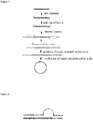
Fig. 2 is a diagram showing the structure of a vesicular adaptor according to an embodiment of the present disclosure; -
Fig. 3 is a diagram showing a result of a concentration of the purified PCR product detected by Agilent 2100 in nucleic acid library construction; and -
Fig. 4 is an electrophoretogram of libraries detected by a 6% TBE denatured gel, wherelanes lane 3 represents low range ssRNA ladder. - The present inventors have for the first time developed a vesicular adaptor for efficiently constructing a nucleic acid sequencing library with high quality through extensive and in-depth studies and extensive screening. The experimental results show that, compared with sequencing data obtained from other nucleic acid sequencing library construction techniques, the nucleic acid sequencing library constructed with the vesicular adapter of the present disclosure has a higher quality and correlation, which can be used in the CG sequencing platform, thereby obtaining high authentic and reliable data without adverse influence on information analysis. Based on this, the present invention has been completed.
- For the CG sequencing platform, DNA nanoballs are embedded in a chip using high-density DNA nanochip technology, and bases in the sequence are read with combinatorial probe anchor ligation (cPAL) technology.
- Cyclic single-stranded DNAs were obtained after library construction. A DNA nanoball (DNB), including more than 200 copies of cyclic single-stranded DNAs, was formed by rolling circle amplification, and then embedded into a hole in a chip using high-density DNA nanochip technology, with each hole only able to accommodate one DNA nanoball (as one DNA nanoball, once combined with the hole in the chip, will exclude the combination of other DNA nanoballs with the same hole). The occupancy rate of the DNA nanochip was over 90%, and each prepared DNA nanochip may accommodate 180 billion bases for imaging.
- The cPAL technique uses probes marked with four different colors to read bases adjacent to the adaptor by at most 10 consecutive bases for each time. As each sequencing is independent from one another, i.e. the sequencing result is not affected by a previous sequencing result, error accumulation is thus avoided, which results in a high accuracy sequencing result with a base error rate as low as 1/100000. During sequencing, an anchor molecule is added to complementary pair with the adaptor, then the probes marked with four different colors are paired with corresponding bases of the template with the DNA ligases. The types of bases are determined by imaging fluorescent groups. Another advantage of cPAL technology is that, concentrations of probes and enzymes may be greatly reduced as the bases are read using a non-continuous and non-linkage combinatorial probe anchor ligation (cPAL) technology. Different from Sequencing by Synthesis, several bases may be read once in each cycle of cPAL, such that consumptions of sequencing reagents and imaging time may be both greatly reduced. Compared with the current popular next-generation sequencing technology, methods for constructing a library and sequencing the same according to embodiments of the present disclosure may obtain much more data while consuming fewer reagents.
- A RNA sample was digested with DNase I. The digested RNAs were purified with RNA clean magnetic beads. mRNAs from the total RNAs were isolated and purified with Oligo (dT) 25 magnetic beads, followed by fragmentation to obtain fragmented mRNAs. cDNAs were synthesized by reverse transcription of the fragmented mRNAs, and then end-repaired to form DNA fragments with blunt terminals to which were added A bases to obtain DNA fragments each with one A base at the 3 '-terminal thereof. The obtained DNA fragments each with one Abase at the 3 '-terminal thereof were ligated with vesicular adaptors to obtain DNA fragments each ligated with the vesicular adaptor at each terminal thereof, which were purified with magnetic beads and then amplified through polymerase chain reaction (PCR) where one primer used is marked with biotin. PCR product thus obtained was isolated by magnetic beads coated with streptavidin to obtain PCR single-stranded product, which was cyclized by bridge oligonucleotides and T4 ligases. Uncyclized PCR single-stranded product was enzymatically digested to obtain the cyclic single-stranded library.
- The present disclosure also provides in embodiments a cyclic single-stranded library, which is suitable for sequencing and constructed by the above-described method for constructing a library.
- In a preferred embodiment of the present disclosure, the present inventors have fully verified the stability, repeatability, and true reliability of the method of the present disclosure by exploring the optimum condition for constructing the library and comparing the results obtained under the optimum condition with that obtained by the other techniques. In addition, it is proved through several experiments with different samples that, the sequencing data obtained by the cyclic single-stranded library of the present disclosure is truly credible.
- The advantages of the present disclosure lie in that:
- (1) The vesicular adaptor for constructing the nucleic acid library is invented for the first time.
- (2) With the use of a vesicular adaptor in embodiments of the present disclosure in the construction of the nucleic acid library, both the ligating efficiency and the efficiency of subsequent PCR are high and follow-up steps are few.
- (3) The nucleic acid library in embodiments of the present disclosure may also be used in a sequencing platform which needs a cyclic single-stranded library.
- (4) The method provided in embodiments the present disclosure is of high sequencing throughput, high accuracy and simple operation.
- (5) The method provided in embodiments of the present disclosure is of high stability, repeatability and reliability.
- The present disclosure will be further described in the following with reference to specific embodiments. It should be appreciated that these embodiments are merely used to illustrate the present disclosure and should not be construed to limit the scope of the present disclosure. Experimental methods in the following embodiments, not specifying the detailed conditions, will be carried out according to conventional conditions, such as described in Sambrook et al., Molecular Cloning: Laboratory Manual (New York: Cold Spring Harbor Laboratory Press, 1989), or in accordance with conditions proposed by the manufacturer. Percentages and parts are by weight, unless otherwise stated.
- In the following embodiments, the reagent was prepared as follows: 5 × first strand buffer containing: 80-400 mM sodium chloride, 10-80 mM magnesium chloride, 200 mM to 300 mM Tris-HCl, phosphate, and water as solvent, with pH of 8.0-8.5. The standard substance, universal human reference RNA, was purchased from Agilent. Such RNA is a mixture from 10 kinds of human cell lines (breast cells, hepatoma carcinoma cells, cervical cells, embryonic cells, malignant glioma cells, melanoma cells, liposarcoma cells, lymphoma cells, leukemia T cells, and bone marrow B lymphocyte).
- DNA fragments were purified by Ampure XP magnetic beads.
- The materials used in embodiments of the present disclosure are all commercially available, unless specified otherwise.
- The specific procedures were carried out as follows (see the procedures shown in
Fig. 1 ): -
- 1) Standard, universal human reference RNA (3 µg, Agilent), was added into an RNase-free tube and diluted into 50 µl with DEPC. The obtained mixture was denatured at 65 °C for 5 min subsequent to even mixing to degrade the secondary structure of RNA, then immediately placed on ice to obtain a RNA sample.
- 2) 15 µl Dynalbeads Oligo (dT)25 magnetic beads were added into a non-stick-EP tube, washed twice with 100 µl binding buffer, then re-suspended in 50 µl binding buffer, followed by combining with the RNA sample obtained in 1), and finally stood still for 5 min at room temperature.
- 3) The non-stick-EP tube was placed on MPC (magnetic separator) for 2 min to remove the supernatant. The remaining magnetic beads were washed twice with 200 µl washing buffer. 50 µl binding buffer was added to a new non-stick-EP tube.
- 4) The EP tube (i.e. non-stick-EP tube in 3) containing magnetic beads was added with 50 µl 10mM Tris-HCl and heated at 80 °C for 2 min to elute the mRNAs from the magnetic beads. Then the non-stick-EP tube was quickly transferred onto the MPC. The mRNAs were transferred into the new non-stick-EP tube containing the binding buffer in 3), the obtained mixture was denatured at 65 °C for 5 min to degrade the secondary structure of mRNAs, then immediately placed on ice. In addition, 200 µl washing buffer was immediately added into the tube containing the remaining magnetic beads to wash the magnetic beads twice.
- 5) 100 µl mRNA sample was added with magnetic beads washed twice and then stood still for 5 min at room temperature. The EP tube was placed on MPC for 2min, the supernatant was carefully sucked out, and the remaining magnetic beads were washed twice with 200 µl washing buffer.
- 6) The EP tube containing magnetic beads was added with 17 µl 10mM Tris-HCl, then heated at 80 °C for 2 min to elute mRNAs from the magnetic beads. The EP tube was quickly placed on MPC. The eluent containing mRNAs was transferred into a new 200 µl PCR tube. About 16 µl mRNAs was recycled.
- After combining with 3 µL 5× first strand buffer, the eluent obtained in the previous step was firstly incubated at 94 °C for 10 min followed by immediately placing on ice, then combined with 1 µl of random primers, and further incubated at 65 °C for 5min to degrade the second structure followed by placing on ice. A reaction mixture, formulated with 100 mM DTT (2 µl), 25 mM dNTP mixture (0.4 µl) and RNase inhibiter (0.5 µl), was added into the tube containing RNA, followed by mixed to be uniform and then stood still for 2 min at room temperature, then combined with 1 µl Superscript II (200U/µl) and water up to 25 µl. PCR reaction was performed in accordance with the following procedures:
Step 1 25° C 10min Step 2 42° C 50min Step 3 70°C 15min Step 4 4 °C hold - After the above PCR reaction, the resulting reaction system was added to water up to 82.8 µl, then mixed with 10 µl 5 × second strand buffer and 1.2 µl 25 mM dNTP mixture in sequence to be uniform, followed by placing on ice for 5 min, and then mixed with 1 µl RNaseH and 5 µl DNA Pol I to be uniform. Such obtained reaction system for synthesizing a second strand was incubated at 16 °C for 2.5 h.
- After the reaction was completed, the resulting double-stranded product was purified with Ampure XP magnetic beads, and the purified double-stranded product (DNAs) was dissolved in 50 µl EB buffer.
- 50 µl solution containing double-stranded DNAs obtained in the previous step was successively added with 27.4 µl water, 10 µl 10X end repair buffer, 1.6 µl 25 mM dNTP mixture, 5 µl T4 DNA polymases, 1 µl Klenow DNA polymerase and 5 µl T4 PNK to form 100 µl reaction system which was incubated at 20°C for 30 min.
- After the reaction was completed, the end-repaired product was purified with Ampure XP magnetic beads and then dissolved in 32 µl EB buffer.
- 32 µl solution containing end-repaired DNAs obtained in the previous step was successively added with 5 µl A-tailing buffer, 10
µl 1 mM dATP and 3 µl Klenow exo (inhibiting activities of exonucleases for digesting from 3'-end to 5'-end) to form a reaction system of 50 µl, which was incubated at 37°C for 30 min. - After the reaction was completed, the base A-added product was purified with Ampure XP magnetic beads and then dissolved in 23 µl EB buffer.
- 23 µl solution containing base A-added product obtained in the previous step was successively added with 25 µl 2X Rapid T4 DNA Ligase Buffer, 1 µl vesicular adaptor (with a structure as shown in
Fig. 2 ) mixture (containing the vesicular adaptor in an amount of 50 µmol) and 1 µl T4 DNA Ligase to form 50 µl reaction system, which was incubated at room temperature for 15 min. - The adaptor sequence was as follows:
- 5'-GTCCTAAGACCNGATCGGGCTTCGACTGGAGACTCCGACTT-3' (SEQ ID NO.:1)
- 5'-/phos/AGTCGGAGGCCAAGCGGTCTTAGGACAT-3' (SEQ ID NO.:2).
- After the reaction was completed, the ligation product was purified with Ampure XP magnetic beads, and then dissolved in 10 µl EB buffer.
- 30 µl solution containing adaptor-ligated product obtained in previous step was successively added with 10 µl 5 x Phusion buffer, 1 µl PCR Primer F (5-/phos/AGACAAGCTCNNNNNNNNNNGATCGGGCTTCGACTGGAGAC) (SEQ.ID. NO.:3), 1 µl PCR Primer R (5-/bio/TCCTAAGACCGCTTGGCCTCCGACT) (SEQ ID No.:4), 0.5 µl 25 mM dNTP mixture, 0.5 µl Phusion DNA polymerase and 7 µl water to form 50 µl reaction system, which was incubated in the PCR instrument according to the following procedures:
- a. 30 sec, 98°C
- b. 15 cycles:
- 10 sec, 98°C
- 30 sec, 65°C
- 30 sec, 72°C
- c. 5 min, 72°C
- d. hold 4°C
- After the reaction was completed, the amplified PCR product was purified with Ampure XP magnetic beads and then dissolved in 32 µl EB buffer. The concentration of the purified PCR product was detected with Agilent 2100, and the results are shown in
Fig. 3 . -
- 7.1 Washing magnetic beads coated with streptavidin
30 µl magnetic beads coated with streptavidin (for each sample) was mixed with 90 µl to 150 µl 1X magnetic beads binding buffer to be uniform in a non-stick tube, which was then placed on a magnetic separator for still standing and adsorption. The non-stick tube was adjusted to be in such a direction that enables the magnetic beads to move forward and backward in the 1X magnetic beads binding buffer, followed by discarding the supernatant. After the direction adjustment step was repeated once, the non-stick tube was taken out from the magnetic separator, an 30 µl 1X magnetic beads binding buffer added, followed by standing still at room temperature. - 7.2 After combining with water up to 60 µl, the purified PCR product obtained in the step 6 was firstly mixed with 20 µl 4X magnetic beads binding buffer to be uniform, and then transferred into the non-stick tube obtained in 7.1 which contained magnetic beads dissolved in 30 µl 1X magnetic beads binding buffer, followed by mixing to be uniform. Such a resulting 110 µl mixture was incubated at room temperature for 15 to 20 min, during which the mixture was flicked gently once to make it distribute evenly.
- 7.3 The non-stick tube after the step 7.2 was placed on the magnetic separator for 3 to 5 min, followed by discarding the supernatant. The remaining magnetic beads were washed twice with 1 ml 1X magnetic beads washing buffer as described in step 7.1.
- 7.4 The magnetic beads after the step 7.3 were evenly mixed with 78 µl 0.1M NaOH by blowing up and down to obtain a mixture, followed by standing still for 10 min and then placed on the magnetic separator for 3 to 5 min. 74.5 µl supernatant thus obtained was transferred into a new 1.5 ml EP tube.
- 7.5 37.5 µl 0.3M MOPS was added into the 1.5ml EP tube after the step 7.4, followed by mixed to be uniform, thereby obtaining 112 µl sample for use.
- 7.6 The 112 µl sample can be stored at -20 °C.
-
8.1 A primer reaction solution was formulated as follows about 5 min in advance:
ON1587 (TCGAGCTTGTCTTCCTAAGACCGC) (SEQ ID No.:5)water 43 µl 20µM ON1587 20 µl Total volume 63 µl
8.2 63 µl primer reaction solution obtained in the step 8.1 was mixed by shaking thoroughly, centrifuged, and then added into the sample of 112 µl obtained in step 7 (the starting amount n of the sample was critical and generally controlled within 100ng≤n≤800ng).
8.3 A ligase reaction solution was formulated as follows about 5 min in advance:water 135.3 µl 10x TA Buffer (LK1) 35 µl 100mM ATP 3.5 µl 600U/µl Ligase 1.2 µl total 175 µl
8.4 175 µl ligase reaction solution obtained in step 8.3 was mixed by shaking thoroughly, centrifuged, and then added into the EP tube after step 8.2 which contained the primer reaction solution. A mixture thus obtained in this step was mixed by shaking for 10 s to be uniform, and then centrifuged.
8.5 The mixture obtained in step 8.4 was incubated in an incubator for 1.5 h at 37 °C.
8.6 After the reaction was completed, 10 µl resulting sample was detected by electrophoresis detection a 6% denatured gel, and the remaining sample in about 350 µl was allowed to the next enzymatic reaction. -
9.1 An enzyme-digesting reaction solution was formulated as follows about 5 min in advance:water 1.5 µl 10x TA Buffer (LK1) 3.7 µl 20U/µl Exo I 11.1 µl 200U/µl Exo III 3.7 µl total 20 µl
9.2 20 µl enzyme-digesting reaction solution obtained in step 9.1 was mixed by shaking thoroughly, centrifuged, and then added into 350 µl sample obtained in the step 8.5 to obtain a mixture.
9.3 The mixture obtained in step 9.2 was mixed by shaking for 10 s to be uniform, and centrifuged, and then incubated in the incubator for 30 min at 37 °C.
9.4 After 30 min, the enzymatic reaction was stopped by adding 15.4 µl 500mM EDTA.
9.5 A sample obtained in step 9.4 was purified with 1.3X PEG32 magnetic beads/Tween 20 (or Ampure XP magnetic beads) as follows:
The sample obtained in step 9.4 was transferred into a 1.5 ml non-stick tube, and then combined with 500 µl PEG32 magnetic beads. The mixture thus obtained was left for binding at room temperature for 15 min, during which the mixture was mixed once by blowing up and down to be uniform.
9.6 The non-stick tube after step 9.5 was placed on the magnetic separator for 3 to 5 min, after which the supernatant was discarded, the remaining magnetic beads were washed twice with 700µl 75% ethanol, during each of which the non-stick tube was reversed forward and backward to enable the magnetic beads to move 2 to 3 times in the ethanol.
9.7 The magnetic beads after washing were air dried, and then re-dissolved in 40 µl 1X TE for 15 min, during which the mixture thus obtained was mixed once to be uniform.
9.8 Supernatant from the mixture obtained in the step 9.8 was transferred into a new 1.5 ml EP tube, the final product was quantified with Qubit™ ssDNA Assay Kit.
9.9 5 µl sample and 2µl low Range RNA ladder were respectively mixed with 5 µl 2x RNA loading buffer to be uniform in different PCR tubes, both of which were incubated at 95 °C for 2 min for denaturation in a PCR instrument, and quickly cooled on ice for 5 min. The resulting samples were detected with a 6% TBE denatured gel. The results are shown inFig. 4 .
9.10 Concentration standardization - The initial amount of the sample prepared with DNA nanoball (DNB) was uniformly adjusted to 7.5 fmol/µl in accordance with the concentration at which the single-stranded molecules were quantitatively detected.
- The specific steps were as follows:
Steps same as those described inEmbodiment 1 were carried out, where one adaptor was the vesicular adaptor, and the comparison adaptor was a matching adaptor. The PCR amplification and purification as described in step 6 were completed, after which the amount of purified PCR product was detected. - Concentration of PCR template and recycling concentration were measured with Qubit dsDNA Assay Kit.
- The experimental result is shown in Table
Adaptor Matching adaptor Vesicular adaptor Amount of PCR template (ng) 10 10 Concentration of recycled product (ng/ul) 5.66 53 Total amount of recycled product (ng) 226.4 2120 PCR efficiency 1.366 1.709 Note : PCR efficiency=(total PCR yield/Initial amount of template) ×(1/cycles) - It can be seen from above result that PCR efficiency of the vesicular adaptor is apparently higher than that of the matching adaptor.
-
- <110> BGI SHENZHEN CO., LIMITED
- <120> VESICULAR ADAPTOR AND USES THEREOF IN NUCLEIC ACID LIBRARY
CONSTRUCTION AND SEQUENCING - <130> P241685EP /CI
- <140>
EP14901593.5 PCT/CN2014/091852
<141> 2014-11-21 - <150>
PCT/CN2014/086418
<151> 2014-09-12 - <160> 5
- <170> PatentIn version 3.5
- <210> 1
<211> 41
<212> DNA
<213> Oligonucleotide - <220>
<221> misc_feature
<223> n is a¡t¡ c or g
 - <220>
<221> misc_feature
<222> (12)..(12)
<223> n is a, c, g, or t - <400> 1
gtcctaagac cngatcgggc ttcgactgga gactccgact t 41 - <210> 2
<211> 28
<212> DNA
<213> Oligonucleotide - <400> 2
agtcggaggc caagcggtct taggacat 28 - <210> 3
<211> 41
<212> DNA
<213> Oligonucleotide - <220>
<221> misc_feature
<222> (11)..(20)
<223> Tag sequence - <220>
<221> misc_feature
<222> (11)..(20)
<223> n is a¡t¡c or g - <400> 3
agacaagctc nnnnnnnnnn gatcgggctt cgactggaga c 41 - <210> 4
<211> 25
<212> DNA
<213> Oligonucleotide - <400> 4
tcctaagacc gcttggcctc cgact 25 - <210> 5
<211> 24
<212> DNA
<213> Oligonucleotide - <400> 5
tcgagcttgt cttcctaaga ccgc 24
Claims (14)
- An oligonucleotide vesicular adaptor for constructing a nucleic acid library, comprising:a 5' paired double-stranded region at a first terminal of the adaptor;a 3' paired double-stranded region at a second terminal of the adaptor, comprising a first strand and a second strand complementary with each other, wherein the first strand comprises an overhang at the 3' end thereof and the second strand comprises a phosphorylated base at the 5' end thereof so as to provide a sticky terminal; anda vesicular non-paired region between the 5' paired double-stranded region and the 3' paired double-stranded region,wherein the vesicular non-paired region comprises a first strand and a second strand non-complementary with each other and the first strand is of a length longer than that of the second strand,wherein the vesicular adaptor is of a length of at least 20 nt, preferably 25 to 50 nt, and more preferably 30 to 45 nt.
- The oligonucleotide vesicular adaptor according to claim 1, wherein the sticky terminal of the 3' paired double-stranded region has a single base tail.
- The oligonucleotide vesicular adaptor according to claim 2, wherein the single base tail is thymine (T).
- The oligonucleotide vesicular adaptor according to any one of claims 1 to 3, wherein the first strand of the vesicular non-paired region is longer than the second strand of the vesicular non-paired region by at least 5 to 30 nt.
- The oligonucleotide vesicular adaptor according to any one of claims 1 to 4, wherein the 5' paired double-stranded region also has a sticky terminal.
- The oligonucleotide vesicular adaptor according to any one of claims 1 to 5, wherein the 5' paired double-stranded region has a sticky terminal of 1 to 3 non-complementary bases.
- The oligonucleotide vesicular adaptor according to any one of claims 1 to 6, comprising a sense strand and an antisense strand and being of a structure of formula I from the 5' terminal to the 3' terminal:
Y0-Y1-Y2 (I)
whereinY0 represents the 5' paired double-stranded region and is of a length of 10-15nt, preferably 11nt;Y1 represents a non-paired double-stranded region whose sense strand is of a length 5-30nt longer than that of the antisense strand;Y2 represents the 3' paired double-stranded region. - A kit for constructing a nucleic acid library, comprising:a container;an oligonucleotide vesicular adaptor of any one of claims 1 to 7 for constructing a library wherein the oligonucleotide vesicular adaptor is contained in the container;a first primer having the same sequence as at least a portion of the first strand of the vesicular non-paired region;a second primer, specifically pairing with the second strand of the vesicular non-paired region; andan instruction.
- The kit according to claim 8, wherein the first primer is also provided as a sequencing primer.
- Use of an oligonucleotide vesicular adaptor according to claim 1 for constructing a nucleic acid library wherein a double-stranded DNA fragment is ligated with the oligonucleotide vesicular adaptor at each terminal thereof so as to provide a structure K1-K2-K3 in which K1 and K3 each represent a vesicular adaptor ligated via the sticky terminal of said 3' paired double-stranded region, wherein K2 represents an arbitrary DNA sequence (sequence of a fragment to be sequenced); in which K1 and K2 are connected to K2 respectively at two terminals of K2.
- The use of an oligonucleotide adaptor as claimed in claim 10 wherein a kit as claimed in claim 8 is employed and said first and second primers of said kit are employed for PCR amplification using said structure K1-K2-K3.
- A method for constructing a cyclic single-stranded library, comprising:(a) end-repairing a double-stranded DNA fragment to obtain a double-stranded DNA fragment with blunt terminals;(b) adding an adenine (A) base to each 3'-end of the double-stranded DNA fragment with the blunt terminals obtained in (a), to obtain a double-stranded DNA fragment with an A base at each 3'end thereof;(c) ligating an oligonucleotide vesicular adaptor as claimed in claim 3 to each terminal of the double-stranded DNA fragment with the A base at each 3'-end thereof obtained in (b) to obtain a double-stranded DNA fragment ligated with the oligonucleotide vesicular adaptor at each terminal thereof;(d) employing the double-stranded DNA fragment ligated with the oligonucleotide vesicular adaptor at each terminal thereof obtained in (c), as a template for PCR amplification with a pair of primers as defined in claim 8 so as to obtain a DNA amplified product, wherein one-of the pair of primers is labelled with biotin;(e) isolating the single-stranded DNA labelled with biotin from the amplified double-stranded DNA product obtained in (d) using beads coated with avidin through "avidin-biotin" combination, thus obtaining the single-stranded DNA minus biotin for cyclization;(f) subjecting the single-stranded DNA minus biotin obtained in (e) to cyclization in the presence of a cycling single-stranded molecule.
- The method according to claim 12, further comprising:(g) digesting uncyclized DNAs obtained in (f) with nucleases specifically digesting DNAs to obtain a pre-product; and(h) purifying the pre-product obtained in (g) to obtain the cyclic single-stranded library.
- The method according to claim 13, wherein the nucleases used in (g) comprise a first exonuclease specifically digesting linear single-stranded DNAs and a second exonuclease specifically digesting linear double-stranded DNAs.
Priority Applications (2)
| Application Number | Priority Date | Filing Date | Title |
|---|---|---|---|
| DK18174793.2T DK3388519T3 (en) | 2014-09-12 | 2014-11-21 | VESICULAR ADAPTERS AND APPLICATIONS THEREOF IN THE CONSTRUCTION OF NUCLEIC ACID LIBRARY AND SEQUENCE |
| EP18174793.2A EP3388519B1 (en) | 2014-09-12 | 2014-11-21 | Vesicular adaptor and uses thereof in nucleic acid library construction and sequencing |
Applications Claiming Priority (2)
| Application Number | Priority Date | Filing Date | Title |
|---|---|---|---|
| PCT/CN2014/086418 WO2016037358A1 (en) | 2014-09-12 | 2014-09-12 | Isolated oligonucleotide and use thereof in nucleic acid sequencing |
| PCT/CN2014/091852 WO2016037416A1 (en) | 2014-09-12 | 2014-11-21 | Vesicular linker and uses thereof in nucleic acid library construction and sequencing |
Related Child Applications (2)
| Application Number | Title | Priority Date | Filing Date |
|---|---|---|---|
| EP18174793.2A Division EP3388519B1 (en) | 2014-09-12 | 2014-11-21 | Vesicular adaptor and uses thereof in nucleic acid library construction and sequencing |
| EP18174793.2A Division-Into EP3388519B1 (en) | 2014-09-12 | 2014-11-21 | Vesicular adaptor and uses thereof in nucleic acid library construction and sequencing |
Publications (3)
| Publication Number | Publication Date |
|---|---|
| EP3192877A4 EP3192877A4 (en) | 2017-07-19 |
| EP3192877A1 EP3192877A1 (en) | 2017-07-19 |
| EP3192877B1 true EP3192877B1 (en) | 2019-01-09 |
Family
ID=55458278
Family Applications (5)
| Application Number | Title | Priority Date | Filing Date |
|---|---|---|---|
| EP14901591.9A Active EP3192869B1 (en) | 2014-09-12 | 2014-09-12 | Isolated oligonucleotide and use thereof in nucleic acid sequencing |
| EP14901739.4A Active EP3191630B1 (en) | 2014-09-12 | 2014-09-26 | Method for constructing sequencing library based on blood sample and usage thereof in determining fetal genetic abnormality |
| EP14901597.6A Active EP3192900B1 (en) | 2014-09-12 | 2014-10-14 | Method for constructing nucleic acid single-stranded cyclic library and reagents thereof |
| EP14901593.5A Active EP3192877B1 (en) | 2014-09-12 | 2014-11-21 | Vesicular adaptor and uses thereof in nucleic acid library construction and sequencing |
| EP18174793.2A Active EP3388519B1 (en) | 2014-09-12 | 2014-11-21 | Vesicular adaptor and uses thereof in nucleic acid library construction and sequencing |
Family Applications Before (3)
| Application Number | Title | Priority Date | Filing Date |
|---|---|---|---|
| EP14901591.9A Active EP3192869B1 (en) | 2014-09-12 | 2014-09-12 | Isolated oligonucleotide and use thereof in nucleic acid sequencing |
| EP14901739.4A Active EP3191630B1 (en) | 2014-09-12 | 2014-09-26 | Method for constructing sequencing library based on blood sample and usage thereof in determining fetal genetic abnormality |
| EP14901597.6A Active EP3192900B1 (en) | 2014-09-12 | 2014-10-14 | Method for constructing nucleic acid single-stranded cyclic library and reagents thereof |
Family Applications After (1)
| Application Number | Title | Priority Date | Filing Date |
|---|---|---|---|
| EP18174793.2A Active EP3388519B1 (en) | 2014-09-12 | 2014-11-21 | Vesicular adaptor and uses thereof in nucleic acid library construction and sequencing |
Country Status (8)
| Country | Link |
|---|---|
| US (4) | US9890375B2 (en) |
| EP (5) | EP3192869B1 (en) |
| JP (3) | JP6483249B2 (en) |
| CN (3) | CN107075513B (en) |
| AU (3) | AU2014406026B2 (en) |
| DK (4) | DK3192869T3 (en) |
| ES (5) | ES2726149T3 (en) |
| WO (4) | WO2016037358A1 (en) |
Families Citing this family (37)
| Publication number | Priority date | Publication date | Assignee | Title |
|---|---|---|---|---|
| EP3561072A1 (en) | 2012-12-10 | 2019-10-30 | Resolution Bioscience, Inc. | Methods for targeted genomic analysis |
| US9328382B2 (en) | 2013-03-15 | 2016-05-03 | Complete Genomics, Inc. | Multiple tagging of individual long DNA fragments |
| DK3604544T3 (en) * | 2014-01-31 | 2022-02-14 | Swift Biosciences Inc | Improved methods for processing dna substrates |
| WO2015134552A1 (en) | 2014-03-03 | 2015-09-11 | Swift Biosciences, Inc. | Enhanced adaptor ligation |
| US20160053301A1 (en) | 2014-08-22 | 2016-02-25 | Clearfork Bioscience, Inc. | Methods for quantitative genetic analysis of cell free dna |
| CN106715713B (en) * | 2014-09-12 | 2020-11-03 | 深圳华大智造科技有限公司 | Kit and its use in nucleic acid sequencing |
| US20180080092A1 (en) * | 2014-10-14 | 2018-03-22 | Bgi Shenzhen Co., Limited | One-stop treatment method for breaking nucleic acid by means of transposase, and reagent |
| US10221448B2 (en) | 2015-03-06 | 2019-03-05 | Pillar Biosciences Inc. | Selective amplification of overlapping amplicons |
| CA3004435A1 (en) * | 2015-11-11 | 2017-05-18 | Resolution Bioscience, Inc. | High efficiency construction of dna libraries |
| EP3383994A4 (en) | 2015-12-03 | 2019-08-28 | Accuragen Holdings Limited | METHODS AND COMPOSITIONS FOR FORMING LIGATURE PRODUCTS |
| CA3030430A1 (en) | 2016-07-15 | 2018-01-18 | The Regents Of The University Of California | Methods of producing nucleic acid libraries |
| WO2018015365A1 (en) * | 2016-07-18 | 2018-01-25 | Roche Sequencing Solutions, Inc. | Asymmetric templates and asymmetric method of nucleic acid sequencing |
| US11046995B2 (en) | 2016-08-16 | 2021-06-29 | The Regents Of The University Of California | Method for finding low abundance sequences by hybridization (FLASH) |
| JP7217224B2 (en) | 2016-08-25 | 2023-02-02 | レゾリューション バイオサイエンス, インコーポレイテッド | Methods for detecting genomic copy alterations in DNA samples |
| WO2018049049A1 (en) * | 2016-09-07 | 2018-03-15 | Baylor College Of Medicine | Clinical application of cell free dna technologies to non-invasive prenatal diagnosis and other liquid biopsies |
| WO2018090373A1 (en) * | 2016-11-21 | 2018-05-24 | 深圳华大智造科技有限公司 | Method for repairing dna terminal end and adding a |
| EP3559269B1 (en) * | 2016-12-20 | 2020-09-16 | F. Hoffmann-La Roche AG | Single stranded circular dna libraries for circular consensus sequencing |
| FI3452621T3 (en) * | 2017-02-21 | 2022-12-15 | TAGMENTATION WITH IMMOBILIZED TRANSPOSOME WITH LINKS | |
| CN111315895A (en) * | 2017-09-14 | 2020-06-19 | 豪夫迈·罗氏有限公司 | Novel method for generating circular single-stranded DNA libraries |
| CN109750086B (en) * | 2017-11-06 | 2022-08-02 | 深圳华大智造科技股份有限公司 | Construction method of single-chain circular library |
| EP3737774B1 (en) | 2018-01-12 | 2024-12-25 | Claret Bioscience, LLC | Method for analyzing nucleic acid |
| EP3749782B1 (en) * | 2018-02-05 | 2022-11-02 | F. Hoffmann-La Roche AG | Generation of single-stranded circular dna templates for single molecule sequencing |
| WO2019217452A1 (en) | 2018-05-08 | 2019-11-14 | Mgi Tech Co., Ltd. | Single tube bead-based dna co-barcoding for accurate and cost-effective sequencing, haplotyping, and assembly |
| AU2019280712B2 (en) | 2018-06-06 | 2025-11-20 | The Regents Of The University Of California | Methods of producing nucleic acid libraries and compositions and kits for practicing same |
| WO2019241290A1 (en) * | 2018-06-12 | 2019-12-19 | Accuragen Holdings Limited | Methods and compositions for forming ligation products |
| CN109023536A (en) * | 2018-06-28 | 2018-12-18 | 河南师范大学 | A kind of plant degradation group library constructing method |
| CN110734967B (en) * | 2018-07-19 | 2023-02-17 | 深圳华大智造科技股份有限公司 | A kind of joint composition and its application |
| CN113366115B (en) | 2019-01-29 | 2024-07-05 | 深圳华大智造科技股份有限公司 | High coverage STLFR |
| CN112342627B (en) * | 2019-08-09 | 2024-07-23 | 深圳市真迈生物科技有限公司 | A method for preparing a nucleic acid library and a sequencing method |
| CN111139533B (en) * | 2019-09-27 | 2021-11-09 | 上海英基生物科技有限公司 | Sequencing library adaptors with increased stability |
| RU2746960C1 (en) * | 2020-09-23 | 2021-04-22 | Федеральное государственное автономное образовательное учреждение высшего образования "Российский национальный исследовательский медицинский университет имени Н.И. Пирогова" Министерства здравоохранения Российской Федерации (ФГАОУ ВО РНИМУ им. Н.И. Пирогова Минздрава России) | Method for creating a circular form of an ngs library for high-throughput sequencing on the basis of dnbseq technology platforms |
| MX2023014612A (en) | 2021-07-22 | 2024-01-25 | Mgi Tech Co Ltd | Nick-ligate stlfr. |
| CN116042767B (en) * | 2021-10-28 | 2025-09-30 | 深圳华大生命科学研究院 | Sequencing library construction method and kit |
| CN113943764B (en) * | 2021-12-20 | 2022-03-04 | 中国海洋大学 | A kind of method for preparing double-stranded RNA |
| CN114752654A (en) * | 2022-04-27 | 2022-07-15 | 江西烈冰生物科技有限公司 | In-situ gene mutation targeted detection method based on high-density space lattice |
| CN119213142A (en) * | 2022-06-17 | 2024-12-27 | 深圳华大智造科技股份有限公司 | Construction and sequencing methods of single-stranded nucleic acid circular libraries |
| CN116287116A (en) * | 2023-02-16 | 2023-06-23 | 安序源生物科技(深圳)有限公司 | Single-strand circularization library and its construction method and application |
Family Cites Families (47)
| Publication number | Priority date | Publication date | Assignee | Title |
|---|---|---|---|---|
| HUP0003944A3 (en) | 1996-06-06 | 2003-08-28 | Lynx Therapeutics Inc Hayward | Sequencing by ligation of encoded adaptors |
| CA2360342A1 (en) | 1999-12-02 | 2001-06-07 | Molecular Staging Inc. | Generation of single-strand circular dna from linear self-annealing segments |
| CA2513889A1 (en) * | 2003-01-29 | 2004-08-19 | 454 Corporation | Double ended sequencing |
| WO2007076420A2 (en) | 2005-12-20 | 2007-07-05 | Ming-Sheng Lee | Apparatus, methods and products for detecting genetic mutation |
| US20070172839A1 (en) * | 2006-01-24 | 2007-07-26 | Smith Douglas R | Asymmetrical adapters and methods of use thereof |
| EP3260556B1 (en) | 2006-05-31 | 2019-07-31 | Sequenom, Inc. | Methods for the extraction of nucleic acid from a sample |
| EP2049682A2 (en) * | 2006-07-31 | 2009-04-22 | Illumina Cambridge Limited | Method of library preparation avoiding the formation of adaptor dimers |
| WO2008070352A2 (en) * | 2006-10-27 | 2008-06-12 | Complete Genomics, Inc. | Efficient arrays of amplified polynucleotides |
| US20090111706A1 (en) | 2006-11-09 | 2009-04-30 | Complete Genomics, Inc. | Selection of dna adaptor orientation by amplification |
| US7901890B2 (en) | 2007-11-05 | 2011-03-08 | Complete Genomics, Inc. | Methods and oligonucleotide designs for insertion of multiple adaptors employing selective methylation |
| US8518640B2 (en) * | 2007-10-29 | 2013-08-27 | Complete Genomics, Inc. | Nucleic acid sequencing and process |
| WO2009076238A2 (en) | 2007-12-05 | 2009-06-18 | Complete Genomics, Inc. | Efficient base determination in sequencing reactions |
| CA2718905A1 (en) * | 2008-03-17 | 2009-09-24 | Expressive Research B.V. | Expression-linked gene discovery |
| EP3269824A1 (en) * | 2008-03-28 | 2018-01-17 | Pacific Biosciences Of California, Inc. | Compositions and methods for nucleic acid sequencing |
| US8029993B2 (en) * | 2008-04-30 | 2011-10-04 | Population Genetics Technologies Ltd. | Asymmetric adapter library construction |
| CN102203273A (en) * | 2008-09-09 | 2011-09-28 | 生命技术公司 | Methods of generating gene specific libraries |
| US8383345B2 (en) * | 2008-09-12 | 2013-02-26 | University Of Washington | Sequence tag directed subassembly of short sequencing reads into long sequencing reads |
| ES2743029T3 (en) * | 2008-10-24 | 2020-02-18 | Epicentre Tech Corporation | Transposon end compositions and methods for modifying nucleic acids |
| US9080211B2 (en) * | 2008-10-24 | 2015-07-14 | Epicentre Technologies Corporation | Transposon end compositions and methods for modifying nucleic acids |
| EP2432899A1 (en) * | 2009-05-22 | 2012-03-28 | Population Genetics Technologies LTD. | Sorting asymmetrically tagged nucleic acids by selective primer extension |
| US9023769B2 (en) * | 2009-11-30 | 2015-05-05 | Complete Genomics, Inc. | cDNA library for nucleic acid sequencing |
| US8932812B2 (en) * | 2009-12-17 | 2015-01-13 | Keygene N.V. | Restriction enzyme based whole genome sequencing |
| US20110224106A1 (en) * | 2010-03-10 | 2011-09-15 | Ibis Biosciences, Inc. | Production Of Single-Stranded Circular Nucleic Acid |
| EP2585593B1 (en) * | 2010-06-24 | 2017-03-01 | Population Genetics Technologies Ltd. | Methods for polynucleotide library production, immortalization and region of interest extraction |
| WO2012000445A1 (en) * | 2010-06-30 | 2012-01-05 | 深圳华大基因科技有限公司 | New pcr sequencing method and use thereof in hla genotyping |
| CN102409049B (en) | 2010-09-21 | 2013-10-23 | 深圳华大基因科技服务有限公司 | A method for constructing DNA tag library based on PCR |
| CN102409045B (en) | 2010-09-21 | 2013-09-18 | 深圳华大基因科技服务有限公司 | Tag library constructing method based on DNA (deoxyribonucleic acid) adapter connection as well as used tag and tag adapter |
| CN102534811B (en) | 2010-12-16 | 2013-11-20 | 深圳华大基因科技服务有限公司 | DNA (deoxyribonucleic acid) library and preparation method thereof, as well as DNA sequencing method and device |
| CN102181943B (en) | 2011-03-02 | 2013-06-05 | 中山大学 | Paired-end library construction method and method for sequencing genome by using library |
| US9074204B2 (en) * | 2011-05-20 | 2015-07-07 | Fluidigm Corporation | Nucleic acid encoding reactions |
| CN102296065B (en) * | 2011-08-04 | 2013-05-15 | 盛司潼 | System and method for constructing sequencing library |
| CN103014137B (en) | 2011-09-22 | 2015-01-07 | 深圳华大基因科技服务有限公司 | Gene expression quantification analysis method |
| SG10201510189WA (en) * | 2011-10-19 | 2016-01-28 | Nugen Technologies Inc | Compositions And Methods For Directional Nucleic Acid Amplification And Sequencing |
| CN103103624B (en) | 2011-11-15 | 2014-12-31 | 深圳华大基因科技服务有限公司 | Method for establishing high-throughput sequencing library and application thereof |
| SG11201404243WA (en) * | 2012-01-26 | 2014-08-28 | Nugen Technologies Inc | Compositions and methods for targeted nucleic acid sequence enrichment and high efficiency library generation |
| NO2694769T3 (en) * | 2012-03-06 | 2018-03-03 | ||
| EP2847353B1 (en) * | 2012-05-10 | 2022-01-19 | The General Hospital Corporation | Methods for determining a nucleotide sequence |
| CN102703426A (en) | 2012-05-21 | 2012-10-03 | 吴江汇杰生物科技有限公司 | Method for constructing a nucleic acid library, reagent and kit |
| JP6181751B2 (en) * | 2012-06-18 | 2017-08-16 | ニューゲン テクノロジーズ, インコーポレイテッド | Compositions and methods for negative selection of unwanted nucleic acid sequences |
| CN102703432A (en) * | 2012-07-11 | 2012-10-03 | 烟台博诺生物科技有限公司 | Method, reagent and kit for constructing nucleic acid library |
| US9644199B2 (en) * | 2012-10-01 | 2017-05-09 | Agilent Technologies, Inc. | Immobilized transposase complexes for DNA fragmentation and tagging |
| WO2014086037A1 (en) * | 2012-12-07 | 2014-06-12 | 深圳华大基因科技服务有限公司 | Method for constructing nucleic acid sequencing library and applications thereof |
| US9683230B2 (en) * | 2013-01-09 | 2017-06-20 | Illumina Cambridge Limited | Sample preparation on a solid support |
| CN103667273B (en) * | 2013-12-05 | 2016-01-20 | 北京诺禾致源生物信息科技有限公司 | Double-stranded adapters, its application and build end pairing DNA library method |
| DK3604544T3 (en) | 2014-01-31 | 2022-02-14 | Swift Biosciences Inc | Improved methods for processing dna substrates |
| CN107124888B (en) | 2014-11-21 | 2021-08-06 | 深圳华大智造科技股份有限公司 | Bubble linker elements and methods of using the same to construct sequencing libraries |
| WO2016078096A1 (en) * | 2014-11-21 | 2016-05-26 | 深圳华大基因科技有限公司 | Method using bubble-shaped connector elements to construct sequencing library |
-
2014
- 2014-09-12 CN CN201480081861.5A patent/CN107075513B/en active Active
- 2014-09-12 JP JP2017514336A patent/JP6483249B2/en active Active
- 2014-09-12 AU AU2014406026A patent/AU2014406026B2/en active Active
- 2014-09-12 EP EP14901591.9A patent/EP3192869B1/en active Active
- 2014-09-12 DK DK14901591.9T patent/DK3192869T3/en active
- 2014-09-12 ES ES14901591T patent/ES2726149T3/en active Active
- 2014-09-12 WO PCT/CN2014/086418 patent/WO2016037358A1/en not_active Ceased
- 2014-09-12 US US15/510,877 patent/US9890375B2/en active Active
- 2014-09-26 EP EP14901739.4A patent/EP3191630B1/en active Active
- 2014-09-26 ES ES14901739.4T patent/ES2682068T3/en active Active
- 2014-09-26 WO PCT/CN2014/087589 patent/WO2016037389A1/en not_active Ceased
- 2014-10-14 ES ES14901597.6T patent/ES2689353T3/en active Active
- 2014-10-14 WO PCT/CN2014/088543 patent/WO2016037394A1/en not_active Ceased
- 2014-10-14 US US15/510,904 patent/US10023906B2/en active Active
- 2014-10-14 AU AU2014405969A patent/AU2014405969B2/en active Active
- 2014-10-14 EP EP14901597.6A patent/EP3192900B1/en active Active
- 2014-10-14 CN CN201480081852.6A patent/CN107075731B/en active Active
- 2014-10-14 DK DK14901597.6T patent/DK3192900T3/en active
- 2014-10-14 JP JP2017514335A patent/JP6438126B2/en active Active
- 2014-11-21 EP EP14901593.5A patent/EP3192877B1/en active Active
- 2014-11-21 JP JP2017513705A patent/JP6679576B2/en active Active
- 2014-11-21 AU AU2014405991A patent/AU2014405991B2/en active Active
- 2014-11-21 DK DK14901593.5T patent/DK3192877T3/en active
- 2014-11-21 CN CN201480081687.4A patent/CN106795514B/en active Active
- 2014-11-21 ES ES18174793T patent/ES2738480T3/en active Active
- 2014-11-21 EP EP18174793.2A patent/EP3388519B1/en active Active
- 2014-11-21 DK DK18174793.2T patent/DK3388519T3/en active
- 2014-11-21 WO PCT/CN2014/091852 patent/WO2016037416A1/en not_active Ceased
- 2014-11-21 US US15/510,890 patent/US10544451B2/en active Active
- 2014-11-21 ES ES14901593T patent/ES2708804T3/en active Active
-
2019
- 2019-09-19 US US16/576,582 patent/US10995367B2/en active Active
Non-Patent Citations (1)
| Title |
|---|
| None * |
Also Published As
Similar Documents
| Publication | Publication Date | Title |
|---|---|---|
| US10995367B2 (en) | Vesicular adaptor and uses thereof in nucleic acid library construction and sequencing | |
| EP3377625B1 (en) | Method for controlled dna fragmentation | |
| JP6698708B2 (en) | Methods, systems, compositions, kits, devices, and computer-readable media for molecular tagging | |
| EP3626834B1 (en) | Semi-random barcodes for nucleic acid analysis | |
| US11827933B2 (en) | Bubble-shaped adaptor element and method of constructing sequencing library with bubble-shaped adaptor element | |
| EP3068883B1 (en) | Compositions and methods for identification of a duplicate sequencing read | |
| US10017761B2 (en) | Methods for preparing cDNA from low quantities of cells | |
| CN105400776B (en) | Oligonucleotide adapters and their application in the construction of single-strand circular libraries for nucleic acid sequencing | |
| KR102310441B1 (en) | Compositions for rna-chromatin interaction analysis and uses thereof | |
| EP4180539A1 (en) | Single end duplex dna sequencing | |
| JP2016511007A (en) | Methods, compositions and kits for generating stranded RNA or DNA libraries | |
| JP2015500012A (en) | Methods and kits for characterizing RNA in compositions | |
| US11739317B2 (en) | Systems and methods to assess RNA stability | |
| US11136576B2 (en) | Method for controlled DNA fragmentation | |
| HK1260620B (en) | Vesicular adaptor and uses thereof in nucleic acid library construction and sequencing | |
| HK1260620A1 (en) | Vesicular adaptor and uses thereof in nucleic acid library construction and sequencing | |
| WO2018073323A1 (en) | Method for complete, uniform and specific amplification of ultra-low amounts of input dna | |
| HK1217726B (en) | Oligonucleotide adaptor and use thereof in construction of sequencing library of single-stranded circular nucleic acid |
Legal Events
| Date | Code | Title | Description |
|---|---|---|---|
| STAA | Information on the status of an ep patent application or granted ep patent |
Free format text: STATUS: THE INTERNATIONAL PUBLICATION HAS BEEN MADE |
|
| PUAI | Public reference made under article 153(3) epc to a published international application that has entered the european phase |
Free format text: ORIGINAL CODE: 0009012 |
|
| STAA | Information on the status of an ep patent application or granted ep patent |
Free format text: STATUS: REQUEST FOR EXAMINATION WAS MADE |
|
| 17P | Request for examination filed |
Effective date: 20170322 |
|
| A4 | Supplementary search report drawn up and despatched |
Effective date: 20170613 |
|
| AK | Designated contracting states |
Kind code of ref document: A1 Designated state(s): AL AT BE BG CH CY CZ DE DK EE ES FI FR GB GR HR HU IE IS IT LI LT LU LV MC MK MT NL NO PL PT RO RS SE SI SK SM TR |
|
| AX | Request for extension of the european patent |
Extension state: BA ME |
|
| DAX | Request for extension of the european patent (deleted) | ||
| RAP1 | Party data changed (applicant data changed or rights of an application transferred) |
Owner name: MGI TECH CO., LTD. |
|
| STAA | Information on the status of an ep patent application or granted ep patent |
Free format text: STATUS: EXAMINATION IS IN PROGRESS |
|
| 17Q | First examination report despatched |
Effective date: 20180328 |
|
| GRAP | Despatch of communication of intention to grant a patent |
Free format text: ORIGINAL CODE: EPIDOSNIGR1 |
|
| STAA | Information on the status of an ep patent application or granted ep patent |
Free format text: STATUS: GRANT OF PATENT IS INTENDED |
|
| INTG | Intention to grant announced |
Effective date: 20180703 |
|
| GRAS | Grant fee paid |
Free format text: ORIGINAL CODE: EPIDOSNIGR3 |
|
| GRAJ | Information related to disapproval of communication of intention to grant by the applicant or resumption of examination proceedings by the epo deleted |
Free format text: ORIGINAL CODE: EPIDOSDIGR1 |
|
| GRAL | Information related to payment of fee for publishing/printing deleted |
Free format text: ORIGINAL CODE: EPIDOSDIGR3 |
|
| STAA | Information on the status of an ep patent application or granted ep patent |
Free format text: STATUS: EXAMINATION IS IN PROGRESS |
|
| GRAR | Information related to intention to grant a patent recorded |
Free format text: ORIGINAL CODE: EPIDOSNIGR71 |
|
| STAA | Information on the status of an ep patent application or granted ep patent |
Free format text: STATUS: GRANT OF PATENT IS INTENDED |
|
| INTC | Intention to grant announced (deleted) | ||
| GRAA | (expected) grant |
Free format text: ORIGINAL CODE: 0009210 |
|
| STAA | Information on the status of an ep patent application or granted ep patent |
Free format text: STATUS: THE PATENT HAS BEEN GRANTED |
|
| INTG | Intention to grant announced |
Effective date: 20181126 |
|
| AK | Designated contracting states |
Kind code of ref document: B1 Designated state(s): AL AT BE BG CH CY CZ DE DK EE ES FI FR GB GR HR HU IE IS IT LI LT LU LV MC MK MT NL NO PL PT RO RS SE SI SK SM TR |
|
| REG | Reference to a national code |
Ref country code: GB Ref legal event code: FG4D |
|
| REG | Reference to a national code |
Ref country code: CH Ref legal event code: EP Ref country code: AT Ref legal event code: REF Ref document number: 1087329 Country of ref document: AT Kind code of ref document: T Effective date: 20190115 |
|
| REG | Reference to a national code |
Ref country code: DE Ref legal event code: R096 Ref document number: 602014039855 Country of ref document: DE |
|
| REG | Reference to a national code |
Ref country code: IE Ref legal event code: FG4D |
|
| REG | Reference to a national code |
Ref country code: DK Ref legal event code: T3 Effective date: 20190225 |
|
| REG | Reference to a national code |
Ref country code: NL Ref legal event code: FP |
|
| REG | Reference to a national code |
Ref country code: ES Ref legal event code: FG2A Ref document number: 2708804 Country of ref document: ES Kind code of ref document: T3 Effective date: 20190411 |
|
| REG | Reference to a national code |
Ref country code: LT Ref legal event code: MG4D |
|
| REG | Reference to a national code |
Ref country code: AT Ref legal event code: MK05 Ref document number: 1087329 Country of ref document: AT Kind code of ref document: T Effective date: 20190109 |
|
| PG25 | Lapsed in a contracting state [announced via postgrant information from national office to epo] |
Ref country code: FI Free format text: LAPSE BECAUSE OF FAILURE TO SUBMIT A TRANSLATION OF THE DESCRIPTION OR TO PAY THE FEE WITHIN THE PRESCRIBED TIME-LIMIT Effective date: 20190109 Ref country code: NO Free format text: LAPSE BECAUSE OF FAILURE TO SUBMIT A TRANSLATION OF THE DESCRIPTION OR TO PAY THE FEE WITHIN THE PRESCRIBED TIME-LIMIT Effective date: 20190409 Ref country code: LT Free format text: LAPSE BECAUSE OF FAILURE TO SUBMIT A TRANSLATION OF THE DESCRIPTION OR TO PAY THE FEE WITHIN THE PRESCRIBED TIME-LIMIT Effective date: 20190109 Ref country code: PT Free format text: LAPSE BECAUSE OF FAILURE TO SUBMIT A TRANSLATION OF THE DESCRIPTION OR TO PAY THE FEE WITHIN THE PRESCRIBED TIME-LIMIT Effective date: 20190509 Ref country code: PL Free format text: LAPSE BECAUSE OF FAILURE TO SUBMIT A TRANSLATION OF THE DESCRIPTION OR TO PAY THE FEE WITHIN THE PRESCRIBED TIME-LIMIT Effective date: 20190109 Ref country code: SE Free format text: LAPSE BECAUSE OF FAILURE TO SUBMIT A TRANSLATION OF THE DESCRIPTION OR TO PAY THE FEE WITHIN THE PRESCRIBED TIME-LIMIT Effective date: 20190109 |
|
| PG25 | Lapsed in a contracting state [announced via postgrant information from national office to epo] |
Ref country code: RS Free format text: LAPSE BECAUSE OF FAILURE TO SUBMIT A TRANSLATION OF THE DESCRIPTION OR TO PAY THE FEE WITHIN THE PRESCRIBED TIME-LIMIT Effective date: 20190109 Ref country code: HR Free format text: LAPSE BECAUSE OF FAILURE TO SUBMIT A TRANSLATION OF THE DESCRIPTION OR TO PAY THE FEE WITHIN THE PRESCRIBED TIME-LIMIT Effective date: 20190109 Ref country code: IS Free format text: LAPSE BECAUSE OF FAILURE TO SUBMIT A TRANSLATION OF THE DESCRIPTION OR TO PAY THE FEE WITHIN THE PRESCRIBED TIME-LIMIT Effective date: 20190509 Ref country code: LV Free format text: LAPSE BECAUSE OF FAILURE TO SUBMIT A TRANSLATION OF THE DESCRIPTION OR TO PAY THE FEE WITHIN THE PRESCRIBED TIME-LIMIT Effective date: 20190109 Ref country code: BG Free format text: LAPSE BECAUSE OF FAILURE TO SUBMIT A TRANSLATION OF THE DESCRIPTION OR TO PAY THE FEE WITHIN THE PRESCRIBED TIME-LIMIT Effective date: 20190409 Ref country code: GR Free format text: LAPSE BECAUSE OF FAILURE TO SUBMIT A TRANSLATION OF THE DESCRIPTION OR TO PAY THE FEE WITHIN THE PRESCRIBED TIME-LIMIT Effective date: 20190410 |
|
| REG | Reference to a national code |
Ref country code: DE Ref legal event code: R097 Ref document number: 602014039855 Country of ref document: DE |
|
| PG25 | Lapsed in a contracting state [announced via postgrant information from national office to epo] |
Ref country code: AT Free format text: LAPSE BECAUSE OF FAILURE TO SUBMIT A TRANSLATION OF THE DESCRIPTION OR TO PAY THE FEE WITHIN THE PRESCRIBED TIME-LIMIT Effective date: 20190109 Ref country code: EE Free format text: LAPSE BECAUSE OF FAILURE TO SUBMIT A TRANSLATION OF THE DESCRIPTION OR TO PAY THE FEE WITHIN THE PRESCRIBED TIME-LIMIT Effective date: 20190109 Ref country code: RO Free format text: LAPSE BECAUSE OF FAILURE TO SUBMIT A TRANSLATION OF THE DESCRIPTION OR TO PAY THE FEE WITHIN THE PRESCRIBED TIME-LIMIT Effective date: 20190109 Ref country code: CZ Free format text: LAPSE BECAUSE OF FAILURE TO SUBMIT A TRANSLATION OF THE DESCRIPTION OR TO PAY THE FEE WITHIN THE PRESCRIBED TIME-LIMIT Effective date: 20190109 Ref country code: SK Free format text: LAPSE BECAUSE OF FAILURE TO SUBMIT A TRANSLATION OF THE DESCRIPTION OR TO PAY THE FEE WITHIN THE PRESCRIBED TIME-LIMIT Effective date: 20190109 Ref country code: AL Free format text: LAPSE BECAUSE OF FAILURE TO SUBMIT A TRANSLATION OF THE DESCRIPTION OR TO PAY THE FEE WITHIN THE PRESCRIBED TIME-LIMIT Effective date: 20190109 |
|
| PLBE | No opposition filed within time limit |
Free format text: ORIGINAL CODE: 0009261 |
|
| STAA | Information on the status of an ep patent application or granted ep patent |
Free format text: STATUS: NO OPPOSITION FILED WITHIN TIME LIMIT |
|
| PG25 | Lapsed in a contracting state [announced via postgrant information from national office to epo] |
Ref country code: SM Free format text: LAPSE BECAUSE OF FAILURE TO SUBMIT A TRANSLATION OF THE DESCRIPTION OR TO PAY THE FEE WITHIN THE PRESCRIBED TIME-LIMIT Effective date: 20190109 |
|
| 26N | No opposition filed |
Effective date: 20191010 |
|
| PG25 | Lapsed in a contracting state [announced via postgrant information from national office to epo] |
Ref country code: SI Free format text: LAPSE BECAUSE OF FAILURE TO SUBMIT A TRANSLATION OF THE DESCRIPTION OR TO PAY THE FEE WITHIN THE PRESCRIBED TIME-LIMIT Effective date: 20190109 |
|
| PG25 | Lapsed in a contracting state [announced via postgrant information from national office to epo] |
Ref country code: TR Free format text: LAPSE BECAUSE OF FAILURE TO SUBMIT A TRANSLATION OF THE DESCRIPTION OR TO PAY THE FEE WITHIN THE PRESCRIBED TIME-LIMIT Effective date: 20190109 |
|
| REG | Reference to a national code |
Ref country code: CH Ref legal event code: PL |
|
| PG25 | Lapsed in a contracting state [announced via postgrant information from national office to epo] |
Ref country code: LU Free format text: LAPSE BECAUSE OF NON-PAYMENT OF DUE FEES Effective date: 20191121 Ref country code: CH Free format text: LAPSE BECAUSE OF NON-PAYMENT OF DUE FEES Effective date: 20191130 Ref country code: MC Free format text: LAPSE BECAUSE OF FAILURE TO SUBMIT A TRANSLATION OF THE DESCRIPTION OR TO PAY THE FEE WITHIN THE PRESCRIBED TIME-LIMIT Effective date: 20190109 Ref country code: LI Free format text: LAPSE BECAUSE OF NON-PAYMENT OF DUE FEES Effective date: 20191130 |
|
| REG | Reference to a national code |
Ref country code: BE Ref legal event code: MM Effective date: 20191130 |
|
| PG25 | Lapsed in a contracting state [announced via postgrant information from national office to epo] |
Ref country code: IE Free format text: LAPSE BECAUSE OF NON-PAYMENT OF DUE FEES Effective date: 20191121 |
|
| PG25 | Lapsed in a contracting state [announced via postgrant information from national office to epo] |
Ref country code: BE Free format text: LAPSE BECAUSE OF NON-PAYMENT OF DUE FEES Effective date: 20191130 |
|
| PG25 | Lapsed in a contracting state [announced via postgrant information from national office to epo] |
Ref country code: CY Free format text: LAPSE BECAUSE OF FAILURE TO SUBMIT A TRANSLATION OF THE DESCRIPTION OR TO PAY THE FEE WITHIN THE PRESCRIBED TIME-LIMIT Effective date: 20190109 |
|
| PG25 | Lapsed in a contracting state [announced via postgrant information from national office to epo] |
Ref country code: HU Free format text: LAPSE BECAUSE OF FAILURE TO SUBMIT A TRANSLATION OF THE DESCRIPTION OR TO PAY THE FEE WITHIN THE PRESCRIBED TIME-LIMIT; INVALID AB INITIO Effective date: 20141121 Ref country code: MT Free format text: LAPSE BECAUSE OF FAILURE TO SUBMIT A TRANSLATION OF THE DESCRIPTION OR TO PAY THE FEE WITHIN THE PRESCRIBED TIME-LIMIT Effective date: 20190109 |
|
| PG25 | Lapsed in a contracting state [announced via postgrant information from national office to epo] |
Ref country code: MK Free format text: LAPSE BECAUSE OF FAILURE TO SUBMIT A TRANSLATION OF THE DESCRIPTION OR TO PAY THE FEE WITHIN THE PRESCRIBED TIME-LIMIT Effective date: 20190109 |
|
| P01 | Opt-out of the competence of the unified patent court (upc) registered |
Effective date: 20230722 |
|
| PGFP | Annual fee paid to national office [announced via postgrant information from national office to epo] |
Ref country code: NL Payment date: 20251028 Year of fee payment: 12 |
|
| PGFP | Annual fee paid to national office [announced via postgrant information from national office to epo] |
Ref country code: DE Payment date: 20251117 Year of fee payment: 12 |
|
| PGFP | Annual fee paid to national office [announced via postgrant information from national office to epo] |
Ref country code: GB Payment date: 20251126 Year of fee payment: 12 |
|
| PGFP | Annual fee paid to national office [announced via postgrant information from national office to epo] |
Ref country code: DK Payment date: 20251029 Year of fee payment: 12 Ref country code: IT Payment date: 20251111 Year of fee payment: 12 |
|
| PGFP | Annual fee paid to national office [announced via postgrant information from national office to epo] |
Ref country code: FR Payment date: 20251127 Year of fee payment: 12 |
|
| PGFP | Annual fee paid to national office [announced via postgrant information from national office to epo] |
Ref country code: ES Payment date: 20251210 Year of fee payment: 12 |