EP3192115B1 - Elektrodenmaterial, verfahren zu seiner herstellung und lithium ionen batterie - Google Patents
Elektrodenmaterial, verfahren zu seiner herstellung und lithium ionen batterie Download PDFInfo
- Publication number
- EP3192115B1 EP3192115B1 EP15750255.0A EP15750255A EP3192115B1 EP 3192115 B1 EP3192115 B1 EP 3192115B1 EP 15750255 A EP15750255 A EP 15750255A EP 3192115 B1 EP3192115 B1 EP 3192115B1
- Authority
- EP
- European Patent Office
- Prior art keywords
- lithium
- electrode material
- fluoride
- lithium metal
- metal fluoride
- Prior art date
- Legal status (The legal status is an assumption and is not a legal conclusion. Google has not performed a legal analysis and makes no representation as to the accuracy of the status listed.)
- Active
Links
Images



Classifications
-
- H—ELECTRICITY
- H01—ELECTRIC ELEMENTS
- H01M—PROCESSES OR MEANS, e.g. BATTERIES, FOR THE DIRECT CONVERSION OF CHEMICAL ENERGY INTO ELECTRICAL ENERGY
- H01M4/00—Electrodes
- H01M4/02—Electrodes composed of, or comprising, active material
- H01M4/13—Electrodes for accumulators with non-aqueous electrolyte, e.g. for lithium-accumulators; Processes of manufacture thereof
- H01M4/136—Electrodes based on inorganic compounds other than oxides or hydroxides, e.g. sulfides, selenides, tellurides, halogenides or LiCoFy
-
- C—CHEMISTRY; METALLURGY
- C01—INORGANIC CHEMISTRY
- C01G—COMPOUNDS CONTAINING METALS NOT COVERED BY SUBCLASSES C01D OR C01F
- C01G1/00—Methods of preparing compounds of metals not covered by subclasses C01B, C01C, C01D, or C01F, in general
- C01G1/06—Halides
-
- C—CHEMISTRY; METALLURGY
- C01—INORGANIC CHEMISTRY
- C01G—COMPOUNDS CONTAINING METALS NOT COVERED BY SUBCLASSES C01D OR C01F
- C01G49/00—Compounds of iron
- C01G49/009—Compounds containing iron, with or without oxygen or hydrogen, and containing two or more other elements
-
- H—ELECTRICITY
- H01—ELECTRIC ELEMENTS
- H01B—CABLES; CONDUCTORS; INSULATORS; SELECTION OF MATERIALS FOR THEIR CONDUCTIVE, INSULATING OR DIELECTRIC PROPERTIES
- H01B1/00—Conductors or conductive bodies characterised by the conductive materials; Selection of materials as conductors
- H01B1/06—Conductors or conductive bodies characterised by the conductive materials; Selection of materials as conductors mainly consisting of other non-metallic substances
-
- H—ELECTRICITY
- H01—ELECTRIC ELEMENTS
- H01M—PROCESSES OR MEANS, e.g. BATTERIES, FOR THE DIRECT CONVERSION OF CHEMICAL ENERGY INTO ELECTRICAL ENERGY
- H01M4/00—Electrodes
- H01M4/02—Electrodes composed of, or comprising, active material
- H01M4/13—Electrodes for accumulators with non-aqueous electrolyte, e.g. for lithium-accumulators; Processes of manufacture thereof
- H01M4/139—Processes of manufacture
- H01M4/1397—Processes of manufacture of electrodes based on inorganic compounds other than oxides or hydroxides, e.g. sulfides, selenides, tellurides, halogenides or LiCoFy
-
- H—ELECTRICITY
- H01—ELECTRIC ELEMENTS
- H01M—PROCESSES OR MEANS, e.g. BATTERIES, FOR THE DIRECT CONVERSION OF CHEMICAL ENERGY INTO ELECTRICAL ENERGY
- H01M4/00—Electrodes
- H01M4/02—Electrodes composed of, or comprising, active material
- H01M4/36—Selection of substances as active materials, active masses, active liquids
- H01M4/58—Selection of substances as active materials, active masses, active liquids of inorganic compounds other than oxides or hydroxides, e.g. sulfides, selenides, tellurides, halogenides or LiCoFy; of polyanionic structures, e.g. phosphates, silicates or borates
- H01M4/582—Halogenides
-
- C—CHEMISTRY; METALLURGY
- C01—INORGANIC CHEMISTRY
- C01P—INDEXING SCHEME RELATING TO STRUCTURAL AND PHYSICAL ASPECTS OF SOLID INORGANIC COMPOUNDS
- C01P2002/00—Crystal-structural characteristics
- C01P2002/70—Crystal-structural characteristics defined by measured X-ray, neutron or electron diffraction data
- C01P2002/72—Crystal-structural characteristics defined by measured X-ray, neutron or electron diffraction data by d-values or two theta-values, e.g. as X-ray diagram
-
- C—CHEMISTRY; METALLURGY
- C01—INORGANIC CHEMISTRY
- C01P—INDEXING SCHEME RELATING TO STRUCTURAL AND PHYSICAL ASPECTS OF SOLID INORGANIC COMPOUNDS
- C01P2002/00—Crystal-structural characteristics
- C01P2002/70—Crystal-structural characteristics defined by measured X-ray, neutron or electron diffraction data
- C01P2002/77—Crystal-structural characteristics defined by measured X-ray, neutron or electron diffraction data by unit-cell parameters, atom positions or structure diagrams
-
- C—CHEMISTRY; METALLURGY
- C01—INORGANIC CHEMISTRY
- C01P—INDEXING SCHEME RELATING TO STRUCTURAL AND PHYSICAL ASPECTS OF SOLID INORGANIC COMPOUNDS
- C01P2006/00—Physical properties of inorganic compounds
- C01P2006/40—Electric properties
-
- H—ELECTRICITY
- H01—ELECTRIC ELEMENTS
- H01M—PROCESSES OR MEANS, e.g. BATTERIES, FOR THE DIRECT CONVERSION OF CHEMICAL ENERGY INTO ELECTRICAL ENERGY
- H01M10/00—Secondary cells; Manufacture thereof
- H01M10/05—Accumulators with non-aqueous electrolyte
- H01M10/052—Li-accumulators
-
- H—ELECTRICITY
- H01—ELECTRIC ELEMENTS
- H01M—PROCESSES OR MEANS, e.g. BATTERIES, FOR THE DIRECT CONVERSION OF CHEMICAL ENERGY INTO ELECTRICAL ENERGY
- H01M4/00—Electrodes
- H01M4/02—Electrodes composed of, or comprising, active material
- H01M4/36—Selection of substances as active materials, active masses, active liquids
- H01M4/362—Composites
- H01M4/364—Composites as mixtures
-
- H—ELECTRICITY
- H01—ELECTRIC ELEMENTS
- H01M—PROCESSES OR MEANS, e.g. BATTERIES, FOR THE DIRECT CONVERSION OF CHEMICAL ENERGY INTO ELECTRICAL ENERGY
- H01M4/00—Electrodes
- H01M4/02—Electrodes composed of, or comprising, active material
- H01M4/36—Selection of substances as active materials, active masses, active liquids
- H01M4/48—Selection of substances as active materials, active masses, active liquids of inorganic oxides or hydroxides
- H01M4/485—Selection of substances as active materials, active masses, active liquids of inorganic oxides or hydroxides of mixed oxides or hydroxides for inserting or intercalating light metals, e.g. LiTi2O4 or LiTi2OxFy
-
- Y—GENERAL TAGGING OF NEW TECHNOLOGICAL DEVELOPMENTS; GENERAL TAGGING OF CROSS-SECTIONAL TECHNOLOGIES SPANNING OVER SEVERAL SECTIONS OF THE IPC; TECHNICAL SUBJECTS COVERED BY FORMER USPC CROSS-REFERENCE ART COLLECTIONS [XRACs] AND DIGESTS
- Y02—TECHNOLOGIES OR APPLICATIONS FOR MITIGATION OR ADAPTATION AGAINST CLIMATE CHANGE
- Y02E—REDUCTION OF GREENHOUSE GAS [GHG] EMISSIONS, RELATED TO ENERGY GENERATION, TRANSMISSION OR DISTRIBUTION
- Y02E60/00—Enabling technologies; Technologies with a potential or indirect contribution to GHG emissions mitigation
- Y02E60/10—Energy storage using batteries
Definitions
- the present invention relates to a quaternary lithium metal fluoride, a method for its production and its use as an electrode material in a lithium-ion cell and a lithium-ion battery.
- the invention is located in the field of electrochemical energy storage. Due to the high energy density, safety and long-term stability, lithium-ion batteries, which work on the basis of lithium-ion exchange, are used as energy storage devices in a large number of applications.
- the typical requirements for an energy storage device at the battery level in particular with regard to its energy density, power density, safety, longevity, environmental compatibility and costs, apply to the cell level and ultimately to the individual components, i.e. H. also for the electrode material, i.e. for the anode or cathode material. With regard to the cathode material, developments have been carried out with intercalation materials that can reversibly store lithium.
- the host lattice In the case of active materials for electrodes, the host lattice is heavily stressed by the installation and removal of lithium. This leads to a mechanical degradation of the electrode materials or electrodes, whereby z. B. the contact between the active material and the conductivity additive or the arrester is no longer guaranteed. This degradation occurs preferentially in host lattices which exhibit a high change in volume when cycled. Materials with little or no change in volume, so-called zero strain electrode materials, are therefore characterized by a very good service life.
- Li-ion batteries Ohzuku et al. in Zero-strain insertion material for Li [Li1 / 3Ti5 / 3] O4 for rechargeable lithium cells, J. Electrochem. Soc. 142 (5) p. 1431 (1995 ) that lithium titanate Li 4 Ti 5 O 12 (LTO) exhibits zero strain behavior. Its volume change during lithium insertion is a maximum of 0.2%. Due to its service life, this has reached maturity for use, despite the low energy density.
- Lithium metal oxides and polyanionic active materials in combination with an organic electrolyte, lead to a strong exothermic reaction, the so-called thermal runaway, in the event of a malfunction. Under these conditions, the host lattice of the electrode is thermally broken down, creating e.g. oxygen, which supports the thermal runaway.
- lithium metal oxides are only electrochemically stable up to 5.1 V vs. lithium, since otherwise the oxygen anions from the host lattice are electrochemically oxidized.
- Lithium transition metal fluorides provide a remedy here due to their thermodynamic stability and incombustibility, so that they contribute to increased safety in battery cells. In addition, lithium metal fluorides have the potential to deliver high cell voltages and thus higher energy densities.
- DE 11 2012 001463 T5 describes a method for producing an electrode material comprising at least one lithium metal fluoride with a Colquiriite structure.
- Viebahn et al. disclose in Notes: Fluorine Trirutile LiMeIIMeIIIF6 and Two New Oxygen Trirutile LiMeVMeVIO6, Journal of Natural Research - Section B Journal of Chemical Sciences (1967) Vol. 22, XP055490706 Fluorides of the formula LiM II M III F, which crystallize in the tirutil structure.
- Peng Liao et al. disclose in Lithium intercalation in LiFe2F6 and LiMgFeF6 disordered trirutile-type phases, J. Electrochem. Soc. (2010), Vol. 157, p. A355 also two cathode materials with the formula LiF 2 F 6 and LiMgFeF 6 , which crystallize in the trirutile structure.
- the object of the present invention is to propose an electrode material that does not have the aforementioned limitations and disadvantages of the prior art.
- an electrode material with an increased service life is to be provided without the cycle stability and the electrochemical activity being restricted.
- Me 1 is preferably at least one metal from the list of the elements ⁇ Ca, Cd, Sr, Ba, Pb ⁇ and Me 2 is at least one metal from the list of the elements ⁇ Ti, V, Cr, Fe, Co, Ni ⁇ .
- the electrode material comprises a quaternary lithium metal fluoride, which has the formula LiMe 1 2+ Me 2 3+ F 6 .
- the crystal structure of the lithium metal fluoride quaternary is a Colquiriite structure.
- the ratio of the metal ion radii r of the metals is Me 1 to Me 2 r Me 1 r Me 2 greater than 1.2 preferably than 1.4.
- Me 1 is preferably calcium Ca.
- Me 2 is iron Fe.
- the electrode material is a cathode material or an anode material that is used at low voltages.
- An electrode material according to the invention can be obtained by a multistage production process. First of all, at least one lithium fluoride, at least one Me 1 fluoride and at least one Me 2 fluoride are provided as binary fluorides as starting materials. The binary fluorides are then pre-dried. The starting materials are then mixed and then calcined under protective gas. This creates a lithium metal fluoride as a powdery material. After adding a conductivity additive and then a binder to the calcined mixture, an electrode material comprising at least one quaternary lithium metal fluoride is produced. Finally, the electrode material is attached to an arrester. The mixture was preferably ground with a conductivity additive in a planetary ball mill.
- the invention relates to a lithium-ion cell which comprises at least one electrode material according to the invention.
- the lithium-ion cell comprises a non-aqueous electrolyte and a separator or a solid electrolyte.
- the invention also relates to a lithium-ion battery which has at least one lithium-ion cell, which in turn has at least one electrode material according to the invention.
- the change in volume is less than 2%, preferably less than 1%, particularly preferably less than 0.5%.
- the slight or nonexistent change in the lattice parameters of the host lattice during cycling increases the cycle stability.
- the electrode material according to the invention is preferably used in combination with lithium titanate as anode material, where aspects such as safety and service life are in the foreground, ie preferably for stationary energy storage systems.
- a particular advantage of the present invention is the long service life of the electrode material according to the invention and thereby the lithium-ion cell and battery according to the invention, which is associated with the surprisingly zero strain behavior.
- Another advantage of the electrode material according to the invention is the combination of the long service life with a high electrochemical activity and cycle stability.
- the lithium metal fluorides according to the invention are thermodynamically stable and incombustible and thus offer intrinsic safety.
- the host lattice does not release any oxygen during a "thermal runaway".
- lithium metal fluorides have the potential to deliver high cell voltages and thus high energy densities.
- mechanical degradation is prevented, since the change in volume of the host lattice is only slight or non-existent.
- fluoride anions of the host lattice were electrochemically oxidized with the formation of gases, since fluorine has an increased electronegativity compared to oxygen.
- Fig. 3a , 3b and 3c show the development of the diffraction reflexes during the first discharge and charge cycle at different points in time of the redox process. During the installation and removal of Li-ions, the reflex positions and intensities change only imperceptibly. A refinement of the diffractograms results in a minimal change in the lattice parameters and an associated change in volume of ⁇ 0.3% with an insertion amount of 0.8 mol Li + per formula unit LiCaFeF 6 .
- LiCaFeF6 is represented by intimate mixing of the pre-dried binary metal fluorides (LiF, CaF2, FeF3; Sigma Aldrich). These are then calcined at 650 ° C. for 10 hours in a copper ampoule under protective gas.
- the powder obtained is ground with a conductivity additive (Super C65, Timcal) and a binder (PvdF, KYNAR Powerflex LBG-1, Arkema) (2.7 g; 72/25/3 percent by weight) in a planetary ball mill for 24 hours.
- the 3 mm grinding media (100 g) consisted of yttrium-stabilized ZrO2.
- the LiCaFeF6 / carbon / binder composite was taken up with N-methylpyrolidone and processed into a slip. This was applied to an aluminum conductor, dried at 80 ° C. for 24 hours and cycled against lithium metal in a 2-electrode Swagelok cell. A GF / C Whatman filter was used as the separator. An EC: DMC mixture 1: 1 with 1M LiPF6 as the conductive salt was used as the electrolyte.
Landscapes
- Chemical & Material Sciences (AREA)
- Inorganic Chemistry (AREA)
- Organic Chemistry (AREA)
- Engineering & Computer Science (AREA)
- Chemical Kinetics & Catalysis (AREA)
- Electrochemistry (AREA)
- General Chemical & Material Sciences (AREA)
- Materials Engineering (AREA)
- Manufacturing & Machinery (AREA)
- Battery Electrode And Active Subsutance (AREA)
Description
- Die vorliegende Erfindung betrifft einen quaternären-Lithium-Metall-Fluorid, ein Verfahren zu seiner Herstellung und dessen Verwendung als Elektrodenmaterial in einer Lithium-Ionen-Zelle sowie eine Lithium-Ionen-Batterie.
- Die Erfindung ist auf dem Gebiet der elektrochemischen Energiespeicherung angesiedelt. Auf Grund der hohen Energiedichte, Sicherheit und Langzeitstabilität werden Lithium-Ionen-Batterien, die auf der Basis des Lithium-Ionenaustauschs arbeiten, in einer Vielzahl von Anwendungen als Energiespeicher verwendet. Die typischen Anforderungen an einen Energiespeicher auf Batterieebene, insbesondere bezüglich dessen Energiedichte, Leistungsdichte, Sicherheit, Langlebigkeit, Umweltverträglichkeit und Kosten, gelten auf Zellebene und schließlich für die einzelnen Komponenten, d. h. auch für das Elektrodenmaterial, sprich für das Anoden- bzw. Kathodenmaterial. Bezüglich des Kathodenmaterials wurden Entwicklungen mit Interkalationsmaterialien durchgeführt, die Lithium reversibel einlagern können.
- Im Falle von Aktivmaterialien von Elektroden wird durch den Ein- und Ausbau von Lithium das Wirtsgitter stark beansprucht. Dies führt zu einer mechanischen Degradation der Elektrodenmaterialien bzw. Elektroden, wodurch z. B. die Kontaktierung zwischen dem Aktivmaterial und dem Leitfähigkeitsadditiv bzw. dem Ableiter nicht mehr gewährleistet ist. Diese Degradation tritt bevorzugt bei Wirtsgittern auf, welche beim Zyklieren eine hohe Volumenänderung aufweisen. Materialien ohne oder mit geringer Volumenänderung, sogenannte zero strain Elektrodenmaterialien zeichnen sich deshalb durch eine sehr gute Lebensdauer aus.
- Im Bereich der Anodenmaterialien von Li-Ionen-Batterien beschreiben Ohzuku et al. in Zero-strain insertion material for Li[Li1/3Ti5/3]O4 for rechargeable lithium cells, J. Electrochem. Soc. 142 (5) p. 1431 (1995), dass Lithium Titanat Li4Ti5O12 (LTO) ein zero strain Verhalten aufweist. Dessen Volumenänderung während der Lithium-Insertion beträgt maximal 0,2%. Dieser hat aufgrund der Lebensdauer Anwendungsreife erreicht und dies trotz geringer Energiedichte.
- Lithiummetalloxide und polyanionische Aktivmaterialien führen aber in Kombination mit einem organischen Elektrolyten bei einer Betriebsstörung zu einer starken exothermen Reaktion, dem sogenannten Thermal Runaway. Unter diesen Bedingungen wird das Wirtsgitter der Elektrode thermisch zerlegt, wodurch z.B. Sauerstoff entsteht, welcher den Thermal Runaway unterstützt. Zudem sind Lithiummetallöxide nur bis 5,1 V vs. Lithium elektrochemisch stabil, da sonst die Sauerstoffanionen aus dem Wirtsgitter elektrochemisch oxidiert werden. Abhilfe schaffen hier Lithiumübergangsmetallfluoride aufgrund ihrer thermodynamischen Stabilität und Unbrennbarkeit, sodass sie zu einer erhöhten Sicherheit in Batteriezellen beitragen. Hinzu kommt, dass Lithiummetallfluoride das Potential haben, hohe Zellspannungen und dadurch höhere Energiedichten zu liefern.
- Elektrochemisch gut bekannt und von Liao et al. in Lithium Intercalation in LiFe2F6 and LiMgFeF6 Disordered Trirutile-Type Phases, J. Electrochem. Soc. 157 (3) p. A355 (2010) und Lieser et al. in Sol-Gel Based Synthesis of LiNiFeF6 and Its Electrochemical Characterization, J. Electrochem. Soc. 161 (6) p. A1071 (2014) beschrieben, sind quaternäre Lithiumübergangsmetallfluoride mit Trirutilstruktur (z.B. LiFeFeF6 bzw. LiNiFeF6), die während dem Zyklieren eine Volumenänderung von größer als 3% aufweisen.
- Auf Kathodenseite konnte für Lithium-Ionen-Batterien bisher kein Material mit vergleichbaren intrinsischen Eigenschaften wie das zero-strain Verhalten von LTO gefunden werden. Cho et al. Zero-strain intercalation cathode for rechargeable Li-ion cell, Anw. Chem. Int. Ed. 40 (18) p. 3367 (2001) haben gezeigt, dass Volumenänderungen bei dem weitverbreiteten Kathodenmaterial LiCoO2 durch das Auftragen einer Beschichtung extrinsisch unterdrückt wird. LiCoO2 durchläuft nämlich während des Li-Ausbaus beim Laden mehrere Phasenumwandlungen und die Umwandlung von einer kubischen zu einer hexagonal dichten Struktur der Sauerstoffatome führt zu einer Verzerrung des Wirtsgitters. Dies verursacht eine Volumenzunahme von mehr als 2,0%.
- Koyama et al. offenbaren in New fluoride cathodes for rechargeable lithium batteries, Journal of the electrochemical Society (2000), Vol. 147, S. 3633 eine theoretische Volumenänderung von 0,4 für LiCaCoF6, wobei diese bei der Delithiierung berechnet wird d.h. zwischen LiCaCoF6 und CaCoF6. Ähnlich offenbart
JP 2001 176510 A - Yin et al. beschreiben in Crystal chemistry of Colquiriitetype fuorides, Chem. Mat. (1992), Vol. 4, S. 645 die Kristallchemie von Colquiriite-Fluoriden, die als Monokristalle hergestellt wurden.
-
DE 11 2012 001463 T5 beschreibt ein Verfahren zur Herstellung eines Elektrodenmaterials umfassend mindestens ein Lithium-Metall-Fluorid mit einer Colquiriite Struktur. - Viebahn et al. offenbaren in Notizen: Fluor-Trirutile LiMeIIMeIIIF6 und zwei neue Sauerstoff-Trirutile LiMeVMeVIO6, Zeitschrift für Naturforschung - Section B Journal of Chemical Sciences (1967) Vol. 22, XP055490706 Fluoride der Formel LiMIIMIIIF, die in der Tirutilstruktur kristallisieren. Peng Liao et al. offenbaren in Lithium intercalation in LiFe2F6 and LiMgFeF6 disordered trirutile-type phases, J. Electrochem. Soc. (2010), Vol. 157, S.A355 ebenfalls zwei Kathodenmaterialien mit der Formel LiF2F6 und LiMgFeF6, die in der Trirutilstruktur kristallisieren.
- Ausgehend hiervon besteht die Aufgabe der vorliegenden Erfindung darin, ein Elektrodenmaterial vorzuschlagen, das die vorher genannten Einschränkungen und Nachteile des Standes der Technik nicht aufweist.
- Insbesondere soll ein Elektrodenmaterial mit einer erhöhten Lebensdauer bereitgestellt werden, ohne dass die Zyklenstabilität und die elektrochemische Aktivität eingeschränkt werden.
- Weiterhin sollen ein Verfahren zur Herstellung eines Elektrodenmaterials sowie eine Lithium-Ionen Zelle und eine Lithium-Ionen Batterie, umfassend das Elektrodenmaterial vorschlagen werden.
- Diese Aufgabe wird im Hinblick auf das Elektrodenmaterial durch die Merkmale des Anspruchs 1, im Hinblick auf das Verfahren zur Herstellung des Elektrodenmaterials durch die Merkmale des Anspruchs 4, im Hinblick auf die Lithium-Ionen Zelle durch den Anspruch 5 und im Hinblick auf die Lithium-Ionen Batterie durch den Anspruch 6 gelöst. Die Unteransprüche beschreiben jeweils vorteilhafte Ausgestaltungen der Erfindung.
- Die vorliegende Erfindung befasst sich mit einem Elektrodenmaterial umfassend mindestens ein quaternäres Lithium-Metall-Fluorid, wobei das quaternäre Lithium-Metall-Fluorid folgende Formel aufweist:

- wobei Me1 mindestens ein Metall aus der Liste der Elemente {Ca, Sr, Ba, Pb, V, Cr, Cu, Ge, Cd, Sn} ist und Me2 mindestens ein Metall aus der Liste der Elemente {Ti, V, Cr, Mn, Fe, Co, Ni, Cu, Zn, Y, Zr, Nb, Mo, B, Al, Ga, In, Tl} ist,
- wobei Me1 ungleich Me2 ist und
- wobei Me1 ein Metallion der Oxidationsstufe +II und Me2 ein Metallion einer Oxidationsstufe zwischen +II und +III ist.
- Vorzugsweise ist Me1 mindestens ein Metall aus der Liste der Elemente {Ca, Cd, Sr, Ba, Pb} und Me2 mindestens ein Metall aus der Liste der Elemente {Ti, V, Cr, Fe, Co, Ni}.
- In einer besonderen Ausgestaltung umfasst das Elektrodenmaterial ein quaternäres Lithium-Metall-Fluorid, welches die Formel LiMe1 2+Me2 3+F6 aufweist.
- Vorzugsweise ist die Kristallstruktur des quaternären Lithium-Metall-Fluorids eine Colquiriite-Struktur ist.
- In einer weiteren Ausgestaltung ist das Verhältnis der Metallionenradien r der Metalle Me1 zu Me2

- Weiterhin ist vorzugsweise Me1 Kalzium Ca. Insbesondere ist Me2 Eisen Fe.
- In einer besonderen Ausgestaltung ist das Elektrodenmaterial ein Kathodenmaterial oder ein Anodenmaterial, das bei geringen Spannungen eingesetzt wird.
- Ein erfindungsgemäßes Elektrodenmaterial ist erhältlich durch ein mehrstufiges Herstellungsverfahren. Zunächst werden mindestens ein Lithium-Fluorid, mindestens ein Me1-Fluorid und mindestens ein Me2-Fluorid als binäre Fluoride als Edukte bereitgestellt. Daraufhin erfolgt das Vortrocknen der binären Fluoride. Anschließend werden die Edukte gemischt und anschließend unter Schutzgas kalziniert. Daraus entsteht ein Lithium-Metall Fluorid als pulverförmiges Material. Nach Hinzufügen eines Leitfähigkeitsadditivs und anschließend eines Binders zu dem kalzinierten Gemisch, entsteht ein Elektrodenmaterial umfassend mindestens ein quaternäres Lithium-Metall-Fluorid. Schließlich wird das Elektrodenmaterial an einen Ableiter angebracht. Vorzugsweise wurde das Gemisch mit einem Leitfähigskeitsadditiv in einer Planetenkugelmühle vermahlen.
- Die Erfindung betrifft schließlich eine Lithium-Ionen-Zelle, die mindestens ein erfindungsgemäßes Elektrodenmaterial umfasst. In einer besonderen Ausgestaltung umfasst die Lithium-Ionen-Zelle einen nicht wässrigen Elektrolyten und einen Separator oder einen Festkörperelektrolyten.
- Weiterhin betrifft die Erfindung eine Lithium-Ionen Batterie, die mindestens eine Lithium-Ionen-Zelle aufweist, die wiederum mindestens ein erfindungsgemäßes Elektrodenmaterial aufweist.
- Überraschenderweise zeigt das erfindungsgemäße Elektrodenmaterial ein zero strain Verhalten, d.h. dass beim Ein und Ausbau von Lithium in das Elektrodenmaterial während der Zyklierung keine oder eine geringe Volumenänderung stattfindet. Erwartet wäre eine Volumenausdehnung während einer Lithium Insertion in ein Wirtsgitter, die auf 2 Effekte zurückzuführen sind:
- zum einen benötigt das zu insertierende Lithium-Kation Platz im Wirtsgitter.
- zum anderen wird der Ionenradius des Kations durch die Reduktion eines immobilisierten Redoxzentrums (z.B. an einem Metallkation) Fe3+/Fe2+ vergrößert, wodurch der Metallkation-Anion Bindungsabstand maßgeblich beeinflusst wird. Dies hat einen unmittelbaren Einfluss auf das Volumen der Wirtsstruktur.
- Eine Erklärung zu dieser überraschend geringen Volumenänderung liegt vermutlich an der strukturellen Besonderheit. So weist beispielsweise der Colquiriite Strukturtyp zahlreiche Gitterplätze auf, welche für das zu insertierende Lithium prädestiniert sind. Die zu erwartende Volumenänderung in dem Wirtsgitter aufgrund der Redox-Reaktion des Übergangmetalls tritt deshalb nicht auf, da aufgrund des Ionenradienverhältnisses r(Me1)/r(Me2) der [FeF6]3- Oktaeder auch in der reduzierten [FeF6] 4- Variante immer noch kleiner ist als die restlichen Metallfluoridpolyeder dieser Wirtsstruktur.
- In einer besonderen Ausgestaltung beträgt die Volumenänderung weniger als 2%, bevorzugt weniger als 1%, besonders bevorzugt weniger als 0,5%.
Die geringfügige bzw. nicht vorhandene Änderung der Gitterparameter des Wirtsgitters während dem Zyklieren erhöht die Zyklenstabilität. Vorzugsweise wird das erfindungsgemäße Elektrodenmaterial in Kombination mit Lithiumtitanate als Anodenmaterial verwendet, wo Aspekte wie Sicherheit und Lebensdauer im Vordergrund stehen, d.h. bevorzugt für stationäre Energiespeichersysteme. - Ein besonderer Vorteil der vorliegenden Erfindung ist, die hohe Lebensdauer des erfindungsgemäßen Elektrodenmaterials und dadurch der erfindungsgemäßen Lithium-Ionen Zelle und Batterie, die mit dem überraschend zero strain Verhalten einhergeht.
- Ein weiterer Vorteil des erfindungsgemäßen Elektrodenmaterials ist die Kombination der hohen Lebensdauer mit einer hohen elektrochemischen Aktivität und Zyklenstabilität.
- Weiterhin sind die erfindungsgemäßen Lithiummetallfluoride thermodynamisch stabil und unbrennbar und bieten somit eine intrinsische Sicherheit. Das Wirtsgitter setzt bei einem "Thermal Runaway" keinen Sauerstoff frei. Zusätzlich haben Lithiummetallfluoride das Potential hohe Zellspannungen und dadurch hohe Energiedichten zu liefern. Zudem wird eine mechanische Degradation verhindert, da die Volumenänderung des Wirtsgitters nur geringfügig bzw. nicht vorhanden ist. Zudem wurde bisher noch nicht beobachtet, dass unter Bildung von Gasen die Fluoridanionen des Wirtsgitters elektrochemisch oxidiert wurden, da Fluor eine erhöhte Elektronegativität gegenüber Sauerstoff hat.
- Die Erfindung wird im Folgenden anhand von einem Ausführungsbeispiel und den Figuren näher erläutert. Hierbei zeigen:
-
Fig. 1a einen Zyklenstabilitätstest einer LiCaFeF6/Kohlenstoff/Binder-Kathode vs. Li+/Li, -
Fig.1b einen Verlauf des Potenzials der LiCaFeF6/Kohlenstoff/Binder Kathode vs. Li+/Li bei einer C-Rate von C/20, -
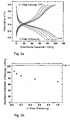
Fig. 2a eine spezifische Kapazität einer LiCaFeF6/Kohlenstoff/Binder Kathode vs. Li+/Li bei unterschiedlichen C-raten, -
Fig. 2b eine spezifische Kapazität einer LiCaFeF6/Kohlenstoff/Binder Kathode vs. die C-Rate. -
Fig. 3a . eine Entwicklung der in situ XRD-Diffraktogramme während des Entladens (Li-Einbau) und Ladens (Li-Ausbau) einer Li1+xCaFeF6/Li - Zelle, -
Fig. 3b die entsprechenden verfeinerten Ergebnisse der Gitterparameter und Volumenänderung der LiCaFeF6-Kristallstruktur während des Entladens (Li-Einbau), -
Fig. 3c die entsprechenden verfeinerten Ergebnisse der Gitterparameter und Volumenänderung der LiCaFeF6-Kristallstruktur während des Ladens (Li-Ausbau). -
Fig. 1a, 1b, 1a und2b zeigen einen Zyklenstabilitätstest und einen Leistungstest von einer LiCaFeF6/Kohlenstoff/Binder-Kathode vs. Li+/Li zzgl. den Lade bzw. Entladekurven. Der Anteil von LiCaFeF6 im LiCaFeF6/Kohlenstoff/Binder-Komposite beträgt 72 %. Als Elektrolyte wurde eine EC:DMC 1:1 Mischung mit LiPF6 als Leitsalz verwendet. Als Separator wurde ein Glasfaser Separator verwendet. Die theoretische Kapazität bezogen auf 1 eq. Lithium beträgt 123 mAh/g. Die entsprechende Gleichung der Reaktion bei der Lithiierung und Delithiierung ist folgende:
- Mittels in situ Röntgenbeugung konnten die strukturelle Stabilität und der "zero-strain"-Effekt des LiCaFeF6-Wirtsgitters während des Zyklierens gegen eine Li-Anode nachgewiesen werden.
Fig. 3a ,3b und 3c zeigen die Entwicklung der Beugungsreflexe während des ersten Entlade- und Ladezyklus zu verschiedenen Zeitpunkten des Redox-Prozesses. Während des Ein- und Ausbaus von Li-Ionen ändern sich die Reflexpositionen- und Intensitäten nur unmerklich. Eine Verfeinerung der Diffraktogramme ergibt eine minimale Veränderung der Gitterparameter und eine damit verbundene Volumenänderung von < 0.3 % bei einer Insertionsmenge von 0.8 Mol Li+ pro Formeleinheit LiCaFeF6. - Die Darstellung von LiCaFeF6 erfolgt über inniges Vermischen der vorgetrockneten binären Metallfluoride (LiF, CaF2, FeF3; Sigma Aldrich). Anschließend werden diese bei 650°C 10h in einer Kupferampulle unter Schutzgas kalziniert. Das erhaltene Pulver wird mit einem Leitfähigkeitsadditiv (Super C65, Timcal) und einem Binder (PvdF, KYNAR Powerflex LBG-1, Arkema) (2.7g; 72/25/3 Gewichtsprozent) in einer Planetenkugelmühle für 24 Stunden vermahlen. Die 3 mm Mahlkörper (100 g) bestanden aus Yttrium stabilisierten ZrO2. Nach dem Abtrennen der Mahlkörper wurde der LiCaFeF6/Kohlenstoff/Binder-Komposit mit N-Methylpyrolidon aufgenommen und zu einem Schlicker verarbeitet. Dieser wurde auf einem Aluminium Ableiter aufgetragen, bei 80°C für 24h getrocknet und in einer 2-Elektroden Swagelok Zelle gegen Lithium Metall zykliert. Als Separator wurde ein GF/C Whatman Filter verwendet. Als Elektrolyt wurde ein EC:DMC Gemisch 1:1 mit 1M LiPF6 als Leitsalz eingesetzt.
Claims (6)
- Elektrodenmaterial umfassend mindestens ein Lithium-Metall-Fluorid, wobei das Lithium-Metall-Fluorid folgende Formel aufweist: Li1+xMe1 2+Me2 (3-x)+F6 mit 0<x≤1,- wobei Me1 mindestens ein Metall aus der Liste der Elemente Ca, Cd, Sr, Ba oder Pb ist und Me2 mindestens ein Metall aus der Liste der Elemente Ti, V, Cr, Fe, Co oder Ni ist,- wobei Me1 ungleich Me2 ist und- wobei Me1 ein Metallion der Oxidationsstufe +II und Me2 ein Metallion der Oxidationsstufe +III-x ist, und- wobei die Kristallstruktur des Lithium-Metall-Fluorids eine Colquiriite-Struktur ist,- und wobei beim Ein- und Ausbau von einem zu insertierenden Lithium-Kation in das Elektrodenmaterial während der Zyklierung eine Volumenänderung der Kristallstruktur von kleiner als 2% stattfindet.
- Elektrodenmaterial umfassend mindestens ein Lithium-Metall-Fluorid nach Anspruch 1, wobei das Verhältnis der Metallionenradien r der Metalle Me1 zu Me2

- Elektrodenmaterial umfassend mindestens ein Lithium-Metall-Fluorid nach einem der Ansprüche 1 oder 2, wobei Mei Kalzium (Ca) und Me2 Eisen (Fe) ist.
- Verfahren zur Herstellung eines Elektrodenmaterials umfassend mindestens ein Lithium-Metall-Fluorid nach einem der Ansprüche 1 bis 3 mit den Verfahrensschritten:a) Bereitstellen mindestens eines Li-Fluorids, mindestens eines Me1-Fluorids und mindestens eines Me2-Fluorids als binäre Fluoride als Edukte,b) Vortrocknen der binären Fluoride,c) Mischen der Edukte zu einem Gemisch,d) Kalzinieren des Gemischs unter Schutzgas, wodurch das Lithium-Metall-Fluorid in Form eines pulverförmiges Materials erhalten wird,e) Hinzufügen eines Leitfähigkeitsadditivs und anschließend eines Binders zu dem Gemisch, sodass ein Elektrodenmaterial umfassend mindestens ein Lithium-Metall-Fluorid entsteht sowief) Anbringen des Elektrodenmaterials an einen Ableiter.
- Lithium-Ionen-Zelle umfassend mindestens ein Elektrodenmaterial nach Anspruch 1 bis 3, umfassend ein Lithiumtitanat als Anodenmaterial in Kombination mit dem mindestens einen Lithium-Metall-Fluorid als Kathodenmaterial.
- Lithium-Ionen-Batterie mit mindestens einer Lithium-Ionen-Zelle, die mindestens ein Elektrodenmaterial umfassend mindestens ein Lithium-Metall-Fluorid nach einem der Ansprüche 1 bis 3 oder 5 umfasst.
Applications Claiming Priority (2)
| Application Number | Priority Date | Filing Date | Title |
|---|---|---|---|
| DE102014112928.8A DE102014112928A1 (de) | 2014-09-09 | 2014-09-09 | Elektrodenmaterial, Verfahren zu seiner Herstellung und Lithium Ionen Batterie |
| PCT/EP2015/001667 WO2016037681A1 (de) | 2014-09-09 | 2015-08-13 | Elektrodenmaterial, verfahren zu seiner herstellung und lithium ionen batterie |
Publications (2)
| Publication Number | Publication Date |
|---|---|
| EP3192115A1 EP3192115A1 (de) | 2017-07-19 |
| EP3192115B1 true EP3192115B1 (de) | 2021-03-31 |
Family
ID=53836538
Family Applications (1)
| Application Number | Title | Priority Date | Filing Date |
|---|---|---|---|
| EP15750255.0A Active EP3192115B1 (de) | 2014-09-09 | 2015-08-13 | Elektrodenmaterial, verfahren zu seiner herstellung und lithium ionen batterie |
Country Status (3)
| Country | Link |
|---|---|
| EP (1) | EP3192115B1 (de) |
| DE (1) | DE102014112928A1 (de) |
| WO (1) | WO2016037681A1 (de) |
Families Citing this family (1)
| Publication number | Priority date | Publication date | Assignee | Title |
|---|---|---|---|---|
| JP7228775B2 (ja) | 2018-05-22 | 2023-02-27 | パナソニックIpマネジメント株式会社 | フッ化物イオン二次電池用活物質、及びそれを用いたフッ化物イオン二次電池 |
Citations (1)
| Publication number | Priority date | Publication date | Assignee | Title |
|---|---|---|---|---|
| JP2001176510A (ja) * | 1999-12-14 | 2001-06-29 | Kansai Tlo Kk | リチウムイオン二次電池 |
Family Cites Families (1)
| Publication number | Priority date | Publication date | Assignee | Title |
|---|---|---|---|---|
| JP5919962B2 (ja) * | 2011-04-22 | 2016-05-18 | セントラル硝子株式会社 | 弗素含有複合塩の製造方法 |
-
2014
- 2014-09-09 DE DE102014112928.8A patent/DE102014112928A1/de not_active Ceased
-
2015
- 2015-08-13 EP EP15750255.0A patent/EP3192115B1/de active Active
- 2015-08-13 WO PCT/EP2015/001667 patent/WO2016037681A1/de not_active Ceased
Patent Citations (1)
| Publication number | Priority date | Publication date | Assignee | Title |
|---|---|---|---|---|
| JP2001176510A (ja) * | 1999-12-14 | 2001-06-29 | Kansai Tlo Kk | リチウムイオン二次電池 |
Non-Patent Citations (2)
| Title |
|---|
| PENG LIAO ET AL: "Lithium Intercalation in LiFe[sub 2]F[sub 6] and LiMgFeF[sub 6] Disordered Trirutile-Type Phases", JOURNAL OF THE ELECTROCHEMICAL SOCIETY, vol. 157, no. 3, 1 January 2010 (2010-01-01), pages A355, XP055490709, ISSN: 0013-4651, DOI: 10.1149/1.3294788 * |
| WERNER VIEBAHN ET AL: "Notizen: Fluor-Trirutile LiMeIIMeIIIF6 und zwei neue Sauerstoff-Trirutile LiMeVMeVIO6", ZEITSCHRIFT FUR NATURFORSCHUNG - SECTION B JOURNAL OF CHEMICAL SCIENCES, vol. 22, no. 11, 1 January 1967 (1967-01-01), DE, XP055490706, ISSN: 0932-0776, DOI: 10.1515/znb-1967-1125 * |
Also Published As
| Publication number | Publication date |
|---|---|
| EP3192115A1 (de) | 2017-07-19 |
| WO2016037681A1 (de) | 2016-03-17 |
| DE102014112928A1 (de) | 2016-03-10 |
Similar Documents
| Publication | Publication Date | Title |
|---|---|---|
| EP3794666B9 (de) | Wiederaufladbare batteriezelle | |
| DE69205542T3 (de) | Sekundärbatterie mit nichtwässrigem elektrolyt. | |
| EP2486620B1 (de) | Lithium-ionen-zelle mit verbessertem alterungsverhalten | |
| DE69919168T2 (de) | Lithium enthaltendes silicium/phosphat, verfahren zu seiner herstellung und seine verwendung | |
| EP3611788B1 (de) | Wiederaufladbare elektrochemische zelle | |
| DE69617159T2 (de) | Wiederaufladbares Lithiumionen enthaltendes elektrochemisches Element | |
| DE69318897T2 (de) | Sekundärbatterie mit nichtwässerigen Elektrolyten und Verfahren zu ihrer Herstellung | |
| DE69103384T2 (de) | Sekundärbatterie mit nichtwässrigen Elektrolyten. | |
| DE202019006201U1 (de) | Positives aktives Material, positive Elektrodenplatte, elektrochemische Energiespeichervorrichtung, und Vorrichtung | |
| EP3255714B1 (de) | Elektrochemische zellen mit lithium-depot, verfahren zur bereitstellung solcher zellen und batterie mit solchen zellen | |
| EP2583331A1 (de) | Lithium-ionen-zelle | |
| DE102023113326A1 (de) | Kathodenmaterialien auf ölbasis mit verbesserter leitfähigkeit | |
| EP3734724B1 (de) | Wiederaufladbare batteriezelle | |
| US10205168B2 (en) | Sodium transition metal silicates | |
| DE69209869T2 (de) | Sekundärzelle mit nichtwässrigem Elektrolyten | |
| WO2022122232A1 (de) | Auf so2-basierender elektrolyt für eine wiederaufladbare batteriezelle und wiederaufladbare batteriezelle | |
| DE102013207427A1 (de) | 1,5-3 V-Lithiumbatterien mit Überladeschutz | |
| WO2021121773A1 (de) | Lithiumionen-batterie und verfahren zur herstellung einer lithiumionen-batterie | |
| WO2021121772A1 (de) | Lithiumionen-batterie und verfahren zur herstellung einer lithiumionen-batterie | |
| DE112023004819T5 (de) | Festelektrolyt und wiederaufladbare Lithiumbatterie, die diesen enthält | |
| DE102023004011A1 (de) | Festkörperelektrolyt auf Sulfidbasis mit glaskeramischer Struktur, dessen Herstellung und Verwendung sowie Festkörperbatteriezelle, enthaltend diesen | |
| DE102014112928A1 (de) | Elektrodenmaterial, Verfahren zu seiner Herstellung und Lithium Ionen Batterie | |
| DE102012106100B4 (de) | Elektrodenmaterial, umfassend binäre oder ternäre Alkalimetallchalkogenidometallate mit Diamant-Topologie, ihre Verwendung und Lithiumchalkogenidometallate | |
| WO2022008235A1 (de) | Lithiumionen-batterie und verfahren zur herstellung einer solchen lithiumionen-batterie | |
| DE102011106326B3 (de) | Verfahren zur Herstellung von nanopartikulären Lithiumübergangsmetallphosphaten; nanopartikuläres Lithiumübergangsmetallphosphat und Kathode damit |
Legal Events
| Date | Code | Title | Description |
|---|---|---|---|
| STAA | Information on the status of an ep patent application or granted ep patent |
Free format text: STATUS: THE INTERNATIONAL PUBLICATION HAS BEEN MADE |
|
| PUAI | Public reference made under article 153(3) epc to a published international application that has entered the european phase |
Free format text: ORIGINAL CODE: 0009012 |
|
| STAA | Information on the status of an ep patent application or granted ep patent |
Free format text: STATUS: REQUEST FOR EXAMINATION WAS MADE |
|
| 17P | Request for examination filed |
Effective date: 20170207 |
|
| AK | Designated contracting states |
Kind code of ref document: A1 Designated state(s): AL AT BE BG CH CY CZ DE DK EE ES FI FR GB GR HR HU IE IS IT LI LT LU LV MC MK MT NL NO PL PT RO RS SE SI SK SM TR |
|
| AX | Request for extension of the european patent |
Extension state: BA ME |
|
| DAV | Request for validation of the european patent (deleted) | ||
| DAX | Request for extension of the european patent (deleted) | ||
| STAA | Information on the status of an ep patent application or granted ep patent |
Free format text: STATUS: EXAMINATION IS IN PROGRESS |
|
| 17Q | First examination report despatched |
Effective date: 20180719 |
|
| REG | Reference to a national code |
Ref country code: DE Ref legal event code: R079 Ref document number: 502015014477 Country of ref document: DE Free format text: PREVIOUS MAIN CLASS: H01M0004136000 Ipc: C01G0049000000 |
|
| RIC1 | Information provided on ipc code assigned before grant |
Ipc: H01M 4/58 20100101ALI20200803BHEP Ipc: C01G 49/00 20060101AFI20200803BHEP Ipc: C01G 1/06 20060101ALI20200803BHEP Ipc: C09K 11/77 20060101ALI20200803BHEP Ipc: H01M 4/1397 20100101ALI20200803BHEP Ipc: H01B 1/06 20060101ALI20200803BHEP Ipc: H01M 4/136 20100101ALI20200803BHEP Ipc: H01M 10/052 20100101ALI20200803BHEP Ipc: H01M 4/131 20100101ALI20200803BHEP Ipc: H01M 4/485 20100101ALI20200803BHEP Ipc: G21K 4/00 20060101ALI20200803BHEP Ipc: H01M 4/36 20060101ALI20200803BHEP |
|
| GRAP | Despatch of communication of intention to grant a patent |
Free format text: ORIGINAL CODE: EPIDOSNIGR1 |
|
| STAA | Information on the status of an ep patent application or granted ep patent |
Free format text: STATUS: GRANT OF PATENT IS INTENDED |
|
| INTG | Intention to grant announced |
Effective date: 20200923 |
|
| GRAJ | Information related to disapproval of communication of intention to grant by the applicant or resumption of examination proceedings by the epo deleted |
Free format text: ORIGINAL CODE: EPIDOSDIGR1 |
|
| STAA | Information on the status of an ep patent application or granted ep patent |
Free format text: STATUS: EXAMINATION IS IN PROGRESS |
|
| INTC | Intention to grant announced (deleted) | ||
| GRAP | Despatch of communication of intention to grant a patent |
Free format text: ORIGINAL CODE: EPIDOSNIGR1 |
|
| STAA | Information on the status of an ep patent application or granted ep patent |
Free format text: STATUS: GRANT OF PATENT IS INTENDED |
|
| INTG | Intention to grant announced |
Effective date: 20210112 |
|
| GRAS | Grant fee paid |
Free format text: ORIGINAL CODE: EPIDOSNIGR3 |
|
| GRAA | (expected) grant |
Free format text: ORIGINAL CODE: 0009210 |
|
| STAA | Information on the status of an ep patent application or granted ep patent |
Free format text: STATUS: THE PATENT HAS BEEN GRANTED |
|
| AK | Designated contracting states |
Kind code of ref document: B1 Designated state(s): AL AT BE BG CH CY CZ DE DK EE ES FI FR GB GR HR HU IE IS IT LI LT LU LV MC MK MT NL NO PL PT RO RS SE SI SK SM TR |
|
| REG | Reference to a national code |
Ref country code: GB Ref legal event code: FG4D Free format text: NOT ENGLISH Ref country code: CH Ref legal event code: EP |
|
| REG | Reference to a national code |
Ref country code: DE Ref legal event code: R096 Ref document number: 502015014477 Country of ref document: DE Ref country code: AT Ref legal event code: REF Ref document number: 1376758 Country of ref document: AT Kind code of ref document: T Effective date: 20210415 |
|
| REG | Reference to a national code |
Ref country code: IE Ref legal event code: FG4D Free format text: LANGUAGE OF EP DOCUMENT: GERMAN |
|
| REG | Reference to a national code |
Ref country code: LT Ref legal event code: MG9D |
|
| PG25 | Lapsed in a contracting state [announced via postgrant information from national office to epo] |
Ref country code: NO Free format text: LAPSE BECAUSE OF FAILURE TO SUBMIT A TRANSLATION OF THE DESCRIPTION OR TO PAY THE FEE WITHIN THE PRESCRIBED TIME-LIMIT Effective date: 20210630 Ref country code: BG Free format text: LAPSE BECAUSE OF FAILURE TO SUBMIT A TRANSLATION OF THE DESCRIPTION OR TO PAY THE FEE WITHIN THE PRESCRIBED TIME-LIMIT Effective date: 20210630 Ref country code: FI Free format text: LAPSE BECAUSE OF FAILURE TO SUBMIT A TRANSLATION OF THE DESCRIPTION OR TO PAY THE FEE WITHIN THE PRESCRIBED TIME-LIMIT Effective date: 20210331 Ref country code: HR Free format text: LAPSE BECAUSE OF FAILURE TO SUBMIT A TRANSLATION OF THE DESCRIPTION OR TO PAY THE FEE WITHIN THE PRESCRIBED TIME-LIMIT Effective date: 20210331 |
|
| PG25 | Lapsed in a contracting state [announced via postgrant information from national office to epo] |
Ref country code: RS Free format text: LAPSE BECAUSE OF FAILURE TO SUBMIT A TRANSLATION OF THE DESCRIPTION OR TO PAY THE FEE WITHIN THE PRESCRIBED TIME-LIMIT Effective date: 20210331 Ref country code: LV Free format text: LAPSE BECAUSE OF FAILURE TO SUBMIT A TRANSLATION OF THE DESCRIPTION OR TO PAY THE FEE WITHIN THE PRESCRIBED TIME-LIMIT Effective date: 20210331 Ref country code: SE Free format text: LAPSE BECAUSE OF FAILURE TO SUBMIT A TRANSLATION OF THE DESCRIPTION OR TO PAY THE FEE WITHIN THE PRESCRIBED TIME-LIMIT Effective date: 20210331 |
|
| REG | Reference to a national code |
Ref country code: NL Ref legal event code: MP Effective date: 20210331 |
|
| PG25 | Lapsed in a contracting state [announced via postgrant information from national office to epo] |
Ref country code: LT Free format text: LAPSE BECAUSE OF FAILURE TO SUBMIT A TRANSLATION OF THE DESCRIPTION OR TO PAY THE FEE WITHIN THE PRESCRIBED TIME-LIMIT Effective date: 20210331 Ref country code: NL Free format text: LAPSE BECAUSE OF FAILURE TO SUBMIT A TRANSLATION OF THE DESCRIPTION OR TO PAY THE FEE WITHIN THE PRESCRIBED TIME-LIMIT Effective date: 20210331 Ref country code: EE Free format text: LAPSE BECAUSE OF FAILURE TO SUBMIT A TRANSLATION OF THE DESCRIPTION OR TO PAY THE FEE WITHIN THE PRESCRIBED TIME-LIMIT Effective date: 20210331 Ref country code: CZ Free format text: LAPSE BECAUSE OF FAILURE TO SUBMIT A TRANSLATION OF THE DESCRIPTION OR TO PAY THE FEE WITHIN THE PRESCRIBED TIME-LIMIT Effective date: 20210331 Ref country code: SM Free format text: LAPSE BECAUSE OF FAILURE TO SUBMIT A TRANSLATION OF THE DESCRIPTION OR TO PAY THE FEE WITHIN THE PRESCRIBED TIME-LIMIT Effective date: 20210331 |
|
| PGFP | Annual fee paid to national office [announced via postgrant information from national office to epo] |
Ref country code: FR Payment date: 20210823 Year of fee payment: 7 |
|
| PG25 | Lapsed in a contracting state [announced via postgrant information from national office to epo] |
Ref country code: PL Free format text: LAPSE BECAUSE OF FAILURE TO SUBMIT A TRANSLATION OF THE DESCRIPTION OR TO PAY THE FEE WITHIN THE PRESCRIBED TIME-LIMIT Effective date: 20210331 Ref country code: PT Free format text: LAPSE BECAUSE OF FAILURE TO SUBMIT A TRANSLATION OF THE DESCRIPTION OR TO PAY THE FEE WITHIN THE PRESCRIBED TIME-LIMIT Effective date: 20210802 Ref country code: RO Free format text: LAPSE BECAUSE OF FAILURE TO SUBMIT A TRANSLATION OF THE DESCRIPTION OR TO PAY THE FEE WITHIN THE PRESCRIBED TIME-LIMIT Effective date: 20210331 Ref country code: SK Free format text: LAPSE BECAUSE OF FAILURE TO SUBMIT A TRANSLATION OF THE DESCRIPTION OR TO PAY THE FEE WITHIN THE PRESCRIBED TIME-LIMIT Effective date: 20210331 Ref country code: IS Free format text: LAPSE BECAUSE OF FAILURE TO SUBMIT A TRANSLATION OF THE DESCRIPTION OR TO PAY THE FEE WITHIN THE PRESCRIBED TIME-LIMIT Effective date: 20210731 |
|
| PGFP | Annual fee paid to national office [announced via postgrant information from national office to epo] |
Ref country code: GB Payment date: 20210824 Year of fee payment: 7 |
|
| REG | Reference to a national code |
Ref country code: DE Ref legal event code: R097 Ref document number: 502015014477 Country of ref document: DE |
|
| PG25 | Lapsed in a contracting state [announced via postgrant information from national office to epo] |
Ref country code: DK Free format text: LAPSE BECAUSE OF FAILURE TO SUBMIT A TRANSLATION OF THE DESCRIPTION OR TO PAY THE FEE WITHIN THE PRESCRIBED TIME-LIMIT Effective date: 20210331 Ref country code: ES Free format text: LAPSE BECAUSE OF FAILURE TO SUBMIT A TRANSLATION OF THE DESCRIPTION OR TO PAY THE FEE WITHIN THE PRESCRIBED TIME-LIMIT Effective date: 20210331 Ref country code: AL Free format text: LAPSE BECAUSE OF FAILURE TO SUBMIT A TRANSLATION OF THE DESCRIPTION OR TO PAY THE FEE WITHIN THE PRESCRIBED TIME-LIMIT Effective date: 20210331 |
|
| PLBE | No opposition filed within time limit |
Free format text: ORIGINAL CODE: 0009261 |
|
| STAA | Information on the status of an ep patent application or granted ep patent |
Free format text: STATUS: NO OPPOSITION FILED WITHIN TIME LIMIT |
|
| 26N | No opposition filed |
Effective date: 20220104 |
|
| REG | Reference to a national code |
Ref country code: CH Ref legal event code: PL |
|
| PG25 | Lapsed in a contracting state [announced via postgrant information from national office to epo] |
Ref country code: MC Free format text: LAPSE BECAUSE OF FAILURE TO SUBMIT A TRANSLATION OF THE DESCRIPTION OR TO PAY THE FEE WITHIN THE PRESCRIBED TIME-LIMIT Effective date: 20210331 |
|
| REG | Reference to a national code |
Ref country code: BE Ref legal event code: MM Effective date: 20210831 |
|
| PG25 | Lapsed in a contracting state [announced via postgrant information from national office to epo] |
Ref country code: LI Free format text: LAPSE BECAUSE OF NON-PAYMENT OF DUE FEES Effective date: 20210831 Ref country code: CH Free format text: LAPSE BECAUSE OF NON-PAYMENT OF DUE FEES Effective date: 20210831 |
|
| PG25 | Lapsed in a contracting state [announced via postgrant information from national office to epo] |
Ref country code: IS Free format text: LAPSE BECAUSE OF FAILURE TO SUBMIT A TRANSLATION OF THE DESCRIPTION OR TO PAY THE FEE WITHIN THE PRESCRIBED TIME-LIMIT Effective date: 20210731 Ref country code: LU Free format text: LAPSE BECAUSE OF NON-PAYMENT OF DUE FEES Effective date: 20210813 |
|
| PG25 | Lapsed in a contracting state [announced via postgrant information from national office to epo] |
Ref country code: IT Free format text: LAPSE BECAUSE OF FAILURE TO SUBMIT A TRANSLATION OF THE DESCRIPTION OR TO PAY THE FEE WITHIN THE PRESCRIBED TIME-LIMIT Effective date: 20210331 Ref country code: IE Free format text: LAPSE BECAUSE OF NON-PAYMENT OF DUE FEES Effective date: 20210813 Ref country code: BE Free format text: LAPSE BECAUSE OF NON-PAYMENT OF DUE FEES Effective date: 20210831 |
|
| REG | Reference to a national code |
Ref country code: AT Ref legal event code: MM01 Ref document number: 1376758 Country of ref document: AT Kind code of ref document: T Effective date: 20210813 |
|
| PG25 | Lapsed in a contracting state [announced via postgrant information from national office to epo] |
Ref country code: AT Free format text: LAPSE BECAUSE OF NON-PAYMENT OF DUE FEES Effective date: 20210813 |
|
| GBPC | Gb: european patent ceased through non-payment of renewal fee |
Effective date: 20220813 |
|
| PG25 | Lapsed in a contracting state [announced via postgrant information from national office to epo] |
Ref country code: HU Free format text: LAPSE BECAUSE OF FAILURE TO SUBMIT A TRANSLATION OF THE DESCRIPTION OR TO PAY THE FEE WITHIN THE PRESCRIBED TIME-LIMIT; INVALID AB INITIO Effective date: 20150813 |
|
| PG25 | Lapsed in a contracting state [announced via postgrant information from national office to epo] |
Ref country code: CY Free format text: LAPSE BECAUSE OF FAILURE TO SUBMIT A TRANSLATION OF THE DESCRIPTION OR TO PAY THE FEE WITHIN THE PRESCRIBED TIME-LIMIT Effective date: 20210331 |
|
| PG25 | Lapsed in a contracting state [announced via postgrant information from national office to epo] |
Ref country code: GR Free format text: LAPSE BECAUSE OF FAILURE TO SUBMIT A TRANSLATION OF THE DESCRIPTION OR TO PAY THE FEE WITHIN THE PRESCRIBED TIME-LIMIT Effective date: 20210331 Ref country code: FR Free format text: LAPSE BECAUSE OF NON-PAYMENT OF DUE FEES Effective date: 20220831 |
|
| PG25 | Lapsed in a contracting state [announced via postgrant information from national office to epo] |
Ref country code: GB Free format text: LAPSE BECAUSE OF NON-PAYMENT OF DUE FEES Effective date: 20220813 |
|
| PGFP | Annual fee paid to national office [announced via postgrant information from national office to epo] |
Ref country code: DE Payment date: 20230822 Year of fee payment: 9 |
|
| PG25 | Lapsed in a contracting state [announced via postgrant information from national office to epo] |
Ref country code: MK Free format text: LAPSE BECAUSE OF FAILURE TO SUBMIT A TRANSLATION OF THE DESCRIPTION OR TO PAY THE FEE WITHIN THE PRESCRIBED TIME-LIMIT Effective date: 20210331 |
|
| PG25 | Lapsed in a contracting state [announced via postgrant information from national office to epo] |
Ref country code: MT Free format text: LAPSE BECAUSE OF FAILURE TO SUBMIT A TRANSLATION OF THE DESCRIPTION OR TO PAY THE FEE WITHIN THE PRESCRIBED TIME-LIMIT Effective date: 20210331 |
|
| REG | Reference to a national code |
Ref country code: DE Ref legal event code: R119 Ref document number: 502015014477 Country of ref document: DE |
|
| PG25 | Lapsed in a contracting state [announced via postgrant information from national office to epo] |
Ref country code: DE Free format text: LAPSE BECAUSE OF NON-PAYMENT OF DUE FEES Effective date: 20250301 |
|
| PG25 | Lapsed in a contracting state [announced via postgrant information from national office to epo] |
Ref country code: TR Free format text: LAPSE BECAUSE OF FAILURE TO SUBMIT A TRANSLATION OF THE DESCRIPTION OR TO PAY THE FEE WITHIN THE PRESCRIBED TIME-LIMIT Effective date: 20210331 |