EP3189334B1 - Verfahren zur quantifizierung von mindestens einer mikroorganismusgruppe über massenspektrometrie - Google Patents
Verfahren zur quantifizierung von mindestens einer mikroorganismusgruppe über massenspektrometrie Download PDFInfo
- Publication number
- EP3189334B1 EP3189334B1 EP15756684.5A EP15756684A EP3189334B1 EP 3189334 B1 EP3189334 B1 EP 3189334B1 EP 15756684 A EP15756684 A EP 15756684A EP 3189334 B1 EP3189334 B1 EP 3189334B1
- Authority
- EP
- European Patent Office
- Prior art keywords
- peptide
- microorganism group
- protein
- representative
- amount
- Prior art date
- Legal status (The legal status is an assumption and is not a legal conclusion. Google has not performed a legal analysis and makes no representation as to the accuracy of the status listed.)
- Active
Links
Images


Classifications
-
- C—CHEMISTRY; METALLURGY
- C12—BIOCHEMISTRY; BEER; SPIRITS; WINE; VINEGAR; MICROBIOLOGY; ENZYMOLOGY; MUTATION OR GENETIC ENGINEERING
- C12Q—MEASURING OR TESTING PROCESSES INVOLVING ENZYMES, NUCLEIC ACIDS OR MICROORGANISMS; COMPOSITIONS OR TEST PAPERS THEREFOR; PROCESSES OF PREPARING SUCH COMPOSITIONS; CONDITION-RESPONSIVE CONTROL IN MICROBIOLOGICAL OR ENZYMOLOGICAL PROCESSES
- C12Q1/00—Measuring or testing processes involving enzymes, nucleic acids or microorganisms; Compositions therefor; Processes of preparing such compositions
- C12Q1/02—Measuring or testing processes involving enzymes, nucleic acids or microorganisms; Compositions therefor; Processes of preparing such compositions involving viable microorganisms
- C12Q1/04—Determining presence or kind of microorganism; Use of selective media for testing antibiotics or bacteriocides; Compositions containing a chemical indicator therefor
- C12Q1/06—Quantitative determination
-
- G—PHYSICS
- G01—MEASURING; TESTING
- G01N—INVESTIGATING OR ANALYSING MATERIALS BY DETERMINING THEIR CHEMICAL OR PHYSICAL PROPERTIES
- G01N33/00—Investigating or analysing materials by specific methods not covered by groups G01N1/00 - G01N31/00
- G01N33/48—Biological material, e.g. blood, urine; Haemocytometers
- G01N33/50—Chemical analysis of biological material, e.g. blood, urine; Testing involving biospecific ligand binding methods; Immunological testing
- G01N33/53—Immunoassay; Biospecific binding assay; Materials therefor
- G01N33/569—Immunoassay; Biospecific binding assay; Materials therefor for microorganisms, e.g. protozoa, bacteria, viruses
-
- G—PHYSICS
- G01—MEASURING; TESTING
- G01N—INVESTIGATING OR ANALYSING MATERIALS BY DETERMINING THEIR CHEMICAL OR PHYSICAL PROPERTIES
- G01N33/00—Investigating or analysing materials by specific methods not covered by groups G01N1/00 - G01N31/00
- G01N33/48—Biological material, e.g. blood, urine; Haemocytometers
- G01N33/50—Chemical analysis of biological material, e.g. blood, urine; Testing involving biospecific ligand binding methods; Immunological testing
- G01N33/68—Chemical analysis of biological material, e.g. blood, urine; Testing involving biospecific ligand binding methods; Immunological testing involving proteins, peptides or amino acids
- G01N33/6803—General methods of protein analysis not limited to specific proteins or families of proteins
- G01N33/6848—Methods of protein analysis involving mass spectrometry
Definitions
- the document US2004/0259226 describes methods for quantifying microorganisms involved in bioterrorism by measuring a microbial marker, which is chaperone protein 60 (cpn60).
- a microbial marker which is chaperone protein 60 (cpn60).
- This document describes different quantification methods and cites among these methods, mass spectrometry and in particular MALDI-TOF mass spectrometry as a possible technique for quantifying proteins or peptides. This document simply cites this technique, without proving its relevance and effectiveness through concrete examples.
- chaperone protein 60 has a high mass (around 60 kDa) which makes its detection very difficult by MALDI-TOF in a complex sample, such as a microorganism.
- the different molecules that make up the sample compete and only the most abundant molecules with lower masses are easily ionized and detected.
- the identification of microorganisms by MALDI-TOF classically uses a detection between 2 and 20 kDa, which is much lower than the mass of the chaperone protein 60.
- the reproducibility of MALDI ionization is poor. Ionization depends greatly on the matrix used, the reproducibility of the deposition, i.e. the quality of the mixture of the sample and the matrix, but also on the location and number of laser shots. Therefore, the quantification of proteins or peptides is unsuitable for the dosage of the chaperone protein 60.
- the plate counting method consists of serial dilutions of a sample in physiological serum inoculated onto Petri dishes, until a dish is obtained on which the colonies can be counted accurately.
- Spectrophotometric analysis involves analyzing the optical density of a sample, which serves as an indicator of bacterial growth, but does not allow absolute quantification of all bacterial groups present [7].
- the request US 2004/259226 A1 describes a method for detecting the presence, absence or quantity of microorganisms used in bioterrorism, by detecting the presence or absence of the cpn60 protein in the sample, used as a biomarker.
- the cpn60 protein which is a chaperone protein or also called heat shock protein (hsp)
- hsp heat shock protein
- the gene encoding this protein has a good number of conserved regions but also regions that vary from one species to another and which thus make it possible to detect, in particular through molecular biology techniques, specifically certain species involved in bioterrorism.
- PCR or FISH techniques make it possible to detect but also quantify microorganisms by quantitative measurement of cpn60. This is particularly the case for real-time PCR, as presented in example 2.
- the objective of the present Application is to propose a method for the specific quantification of microorganisms, namely identification and determination of the quantification of at least one group of microorganisms which makes it possible to overcome the disadvantages of the methods of the prior art, namely to provide an inexpensive method, without reagents specific to each species, in particular compared to molecular biology methods, allowing a selective analysis of proteins or peptides, giving a result in a short time, less than one hour, and usable in routine clinical practice, without requiring highly qualified personnel.
- the entire method for the specific quantification of the bacterial group as well as the proteins of interest in the characterization of said bacterial group can advantageously be carried out with the same mass spectrometer, which simplifies the instrumentation of the microbiological analysis laboratory.
- the groups of microorganisms that can be quantified by the method of the invention are all groups of microorganisms representing a family, a genus or a species of microorganisms, pathogenic or not.
- the sample on which the method can be implemented is any sample likely to contain a target microorganism.
- the sample can be of biological origin, animal (veterinary), plant or human (clinical). It can then correspond to a sample of biological fluid (bronchial sample, whole blood, serum, plasma, urine, cerebrospinal fluid, organic secretion, for example), a tissue sample or isolated cells.
- biological fluid bronchial sample, whole blood, serum, plasma, urine, cerebrospinal fluid, organic secretion, for example
- This sample can be used as is insofar as the markers for characterizing the microorganisms are available in the sample tested, or it can undergo, prior to analysis, a preparation such as extraction, concentration, purification, culture, according to methods known to those skilled in the art.
- the sample may be of industrial origin in the case of a microbiological control. According to a non-exhaustive list, it may be an air sample, a water sample, a sample taken from a surface, a part or a manufactured product, a product of food origin.
- samples of food origin we can cite, but not limited to, a sample of dairy product (yogurts, cheeses, etc.), meat, fish, egg, fruit, vegetable, water, beverage (milk, fruit juice, soda, etc.). These samples of food origin may also come from sauces or prepared dishes. A food sample may finally come from feed intended for animals, such as animal meal.
- Microorganisms include, in particular, bacteria, yeasts, molds or viruses.
- markers of the identity and quantity of at least one group of microorganisms we mean molecules, of protein origin, which are characteristic of the said properties.
- the method may comprise a step of carrying out the identification of at least one group of microorganisms simultaneously with the quantification of said at least one group of microorganisms.
- identification of a group of microorganisms is meant the differentiation of several species within the same genus or other genera of microorganisms, the differentiation of several genera within the same family or different families of microorganisms, the differentiation of several families within the same class or different classes of microorganisms.
- Quantification of at least one group of microorganisms in a sample means the quantification of a protein, peptide or representative marker of the quantity of the group(s) of microorganisms in a sample.
- a marker molecule for quantifying at least one group of microorganisms is a molecule whose quantity produced or expressed does not vary depending on the growth phase in which said group of microorganisms is found, nor on the type of culture (agar or broth) having undergone said group of microorganisms, nor on the strains used which are part of a single group of microorganisms.
- step c) of the method according to a second subject of the invention consists in comparing the measured quantity of the at least one peptide of interest and/or of the at least one protein of interest with the quantity of the at least one representative peptide or of the at least one representative protein of said group of microorganisms playing the role of quantification marker(s), so that it is thus possible to deduce a relative expression level with respect to the quantity of said quantification marker(s).
- the method according to the invention comprises an additional step b 1 ) consisting of determining the quantity of at least one group of microorganisms from the quantity of said quantification marker(s), obtained in step b).
- This additional step is carried out in a similar manner to the method according to the first subject of the invention.
- quantification markers specific to a group of microorganisms can also be used as an identification marker for said group of microorganisms.
- the method of the invention can be implemented to quantify bacterial species.
- the bacterial species that can be quantified according to the method of the invention include Escherichia coli using the alcohol dehydrogenase ADHE as a quantification marker or a peptide belonging to this protein.
- the sequence of the ADHE protein is the sequence SEQ ID No. 1:
- a peptide derived from the ADHE protein is preferably the peptide of sequence SEQ ID No. 2, as defined below: Peptide SEQ ID No. Amino acid sequence Position of the peptide in the protein SEQ ID No. 2 DYVEGETAAK 866-875
- GUAA-STAAN GMP synthase glucose-hydrolyzing protein
- SEQ ID No. 3 The sequence of the GUAA-STAN protein is the sequence SEQ ID No. 3:
- a peptide derived from the A3LLD0_PSEAI protein is preferably the peptide of sequence SEQ ID No. 6, as defined below: Peptide SEQ ID No. Amino acid sequence Position of the peptide in the protein SEQ ID No. 6 ADAAANDTLK 363-372
- EFG protein As other bacterial groups that can be quantified according to the method of the invention, we can cite as an example of a family of bacteria, the Enterobacteriaceae, using the EFG protein as a quantification marker. (Elongation Factor G) or a peptide belonging to this protein.
- the sequence of the EFG protein is the sequence SEQ ID No. 7:
- microorganisms can be quantified with the method according to the invention.
- certain proteins known to be relatively ubiquitous can be used to quantify microorganisms obtained from pure cultures.
- proteins RL29, RL 22 and RS 19 which are constitutively expressed ribosomal proteins. These proteins or peptides derived from these proteins can be used to quantify, for example, bacteria of the genus Enterococcus , and in particular Enterococcus faecalis.
- the ribosomal protein RL29 is part of the 50S subunit. It is involved in the translation step.
- the sequence of the RL29 protein is SEQ ID NO: 9:
- Ribosomal protein RL22 is also part of the 50S subunit. This protein binds specifically to 23S ribosomal RNA. It plays an important role in the early steps of assembly of the two ribosomal subunits.
- the sequence of the RL22 protein is the sequence SEQ ID No. 11:
- a peptide derived from the RL22 protein is preferably the peptide of sequence SEQ ID No. 12, as defined below: Peptide SEQ ID No. Amino acid sequence Position of the peptide in the protein SEQ ID NO: 12 LVIDLIR 24-30
- the ribosomal protein RS19 is part of the 30S subunit. This protein forms a complex with the protein RS13, which binds strongly to 16S ribosomal RNA.
- the sequence of the protein RS19 is SEQ ID NO: 13:
- a peptide derived from the RS19 protein is preferably the peptide of sequence SEQ ID No. 14, as defined below: Peptide SEQ ID No. Amino acid sequence Position of the peptide in the protein SEQ ID No. 14 LGEFAPTR 71-78
- Klebsiella pneumoniae other proteins can be used as quantification markers. These include, for example, aconitate hydratase protein (Uniprot reference W9BG99), alanine-tRNA ligase protein (Uniprot reference W9BNB5), and phosphoenolpyruvate phosphotransferase protein of the PTS system (Uniprot reference W1H324).
- sequence of the aconitate hydratase protein is SEQ ID No. 15:
- a peptide derived from the aconitate hydratase protein is preferably the peptide of sequence SEQ ID No. 16, as defined below: Peptide SEQ ID No. Amino acid sequence Position of the peptide in the protein SEQ ID NO: 16 AFAASGELEVNHLQR 392-407
- sequence of the alanine-tRNA ligase protein is SEQ ID No. 17:
- a peptide derived from the alanine-tRNA ligase protein is preferably the peptide of sequence SEQ ID No. 18, as defined below: Peptide SEQ ID No. Amino acid sequence Position of the peptide in the protein SEQ ID NO: 18 LLVSELTGVEPK 773-785
- the concentration of hydroxyl radicals conditions the number of cleavages carried out and therefore the length of the peptide fragments obtained.
- Other chemical treatments can also be used, such as, for example, treatment with cyanogen bromide (CNBr) which specifically cleaves the peptide bonds at the carboxylic group of methionyl residues.
- CNBr cyanogen bromide
- Partial acid cleavage at aspartyl residues can also be achieved by heating a protein solution in trifluoroacetic acid to 1000°C.
- the generation of peptides using a chemical reagent or a protease can be obtained by simple reaction in solution. It can also be implemented with a microwave oven [11], or under pressure [12], or even with an ultrasound device [13]. In these last three cases, the protocol will be much faster.
- the specific peptides of the protein are called proteotypic peptides. These are the ones which will be measured by mass spectrometry.
- the quantification markers are peptides corresponding to a protein of the bacterial group to be quantified.
- said proteins are digested into peptides, preferably by an enzyme, more preferably by trypsin.
- sample containing quantification markers of protein origin can also be pre-treated for purification purposes.
- this pre-purification treatment can be carried out before or after the peptide generation step as described above.
- multidimensional chromatography can be used by combining a separation by ion exchange chromatography with a reversed-phase chromatography, as described by T. Fortin et al. [14], or H. Keshishian et al. [15].
- the chromatographic medium can be in a column or in a cartridge (solid-phase extraction).
- proteotypic peptides The electrophoretic or chromatographic fraction (or retention time in mono- or multidimensional chromatography) of proteotypic peptides is characteristic of each peptide and the implementation of these techniques therefore makes it possible to select the proteotypic peptide(s) to be assayed. Such fractionation of the generated peptides makes it possible to increase the specificity of the subsequent assay by mass spectrometry.
- N-glycopeptides [16] and patent application WO-A-2008/066629 ).
- purification only allows the quantification of peptides that have undergone post-translational modification of the N-glycosylation type.
- not all proteins are glycosylated, which therefore limits its use.
- the mass spectrometry to be implemented in the method of the invention is widely known to those skilled in the art as a powerful tool for the analysis, detection and quantification of different types of molecules.
- any type of molecule that can be ionized can be detected and quantified according to its molecular mass using a mass spectrometer.
- certain mass spectrometry technologies may be more suitable.
- the latter includes a step of ionization of the target molecule into so-called molecular ions, in this case a step of ionization of the quantification markers, and a step of separation of the molecular ions obtained according to their mass.
- the mass analyzer in which the step of separating the ionized markers according to their mass/charge ratio (m/z) is implemented is any mass analyzer known to those skilled in the art. Mention may be made of low-resolution analyzers, of the quadrupole or quadrupole (Q), 3D ion trap (IT) or linear (LIT) type, also called ion trap, and high-resolution analyzers, allowing the exact mass of the analytes to be measured and which use in particular the magnetic sector coupled to an electrical sector, the time of flight (TOF), the orbitrap, the cyclotron resonance at Fournier transform (FT-ICR).
- TOF time of flight
- TOF time of flight
- orbitrap the orbitrap
- FT-ICR cyclotron resonance at Fournier transform
- MS/MS When separating molecular ions based on their m/z ratio, several successive MS separation steps can be carried out. When two successive MS separation steps are carried out, the analysis is called MS/MS or MS 2 . When three successive MS separation steps are carried out, the analysis is called MS/MS/MS or MS 3 and more generally, when n successive MS separation steps are carried out, the analysis is called MS n .
- the SRM (Selected Reaction Monitoring) modes in the case of detection or dosage of a single target molecule, or MRM (Multiple Reaction Monitoring) in the case of detection or dosage of several target molecules are particular uses of MS 2 separation.
- the MRM 3 mode is a particular use of MS/MS/MS separation. We then speak of targeted mass spectrometry.
- the pairs (m/z) 1 and (m/z) 2 are called transitions and are representative of the ions characteristics to detect.
- Peptides with Proline can be considered favorable because they generally produce intense fragments in MS/MS with a single, very predominant peak. However, a single, very predominant fragment does not allow validation of the identity of the transition in a complex mixture. Indeed, only the simultaneous presence of several characteristic fragments allows verification that the desired precursor ion is indeed detected.
- Peptides with a Proline adjacent to the C-terminus (position n-1) or in a second position relative to the C-terminus (position n-2) should be avoided because, in this case, the size of the first generation peptide fragment is generally considered too small to be sufficiently specific.
- Selecting fragments with a mass greater than the precursor is preferred to promote specificity.
- a dicharged precursor ion must be selected and the most intense first-generation fragment ion with a mass greater than the precursor, i.e., a monocharged first-generation fragment ion.
- Fragmentation of selected precursor ions is implemented in a fragmentation cell such as triple quadrupole type models [21], or trap type models ionic [22], or time-of-flight (TOF) [23], which also allow the separation of ions.
- the fragmentation(s) will be classically carried out by collision with an inert gas such as argon or nitrogen, within an electric field, by photo-excitation or photodissociation using an intense light source, collision with electrons or radical species, by application of a potential difference, for example in a time-of-flight tube, or by any other activation mode.
- the characteristics of the electric field condition the intensity and nature of the fragmentation.
- the electric field applied in the presence of an inert gas conditions the collision energy supplied to the ions.
- This collision energy will be optimized, by those skilled in the art, to increase the sensitivity of the transition to be measured. For example, it is possible to vary the collision energy between 5 and 180 eV in q2 in a QTRAP ® 5500 mass spectrometer from AB Sciex (Framingham, Massachusetts, United States of America).
- the duration of the collision step and the excitation energy within, for example, an ion trap will be optimized by a person skilled in the art to lead to the most sensitive assay. For example, it is possible to vary this duration, called excitation time, between 0.010 and 50 ms and the excitation energy between 0 and 1 (arbitrary unit) in Q3 in a QTRAP ® 5500 mass spectrometer.
- the detection of the selected characteristic ions is done in a conventional way, notably using a detector and a processing system.
- the detector collects the ions and produces an electrical signal whose intensity depends on the quantity of ions collected.
- the signal obtained is then amplified so that it can be processed electronically.
- a computer data processing system transforms the information received by the detector into a mass spectrum.
- SRM mode or MRM mode
- MRM mode The principle of SRM mode, or MRM mode, is to specifically select a precursor ion, fragment it, and then specifically select one of its fragment ions.
- triple quadrupole devices or triple quadrupole hybrids with ion traps are generally used.
- the first quadrupole (Q1) allows the molecular ions corresponding to the proteotypic peptides characteristic of the protein to be assayed and obtained during a previous digestion step to be filtered according to their mass to charge ratio (m/z). Only peptides having the mass/charge ratio of the desired proteotypic peptide, called a ratio (m/z) 1 , are transmitted to the second quadrupole (q2) and act as precursor ions for subsequent fragmentation.
- the q2 analyzer allows peptides with a mass/charge ratio (m/z) 1 to be fragmented into first-generation fragment ions. Fragmentation is generally achieved by collision of the precursor peptides with an inert gas, such as nitrogen or argon in q2.
- the first generation fragment ions are transmitted into a third quadrupole (Q3) which filters the first generation fragment ions according to a specific mass to charge ratio, called (m/z) 2 .
- Q3 third quadrupole
- Only the first generation fragment ions having the mass/charge ratio of a fragment characteristic of the desired proteotypic peptide (m/z) 2 are transmitted into the detector to be detected or even quantified.
- This mode of operation presents a double selectivity, in relation to the selection of the precursor ion on the one hand and the selection of the first generation fragment ion on the other hand.
- Mass spectrometry in SRM or MRM mode is therefore advantageous for quantification
- mass analyzers can be coupled together.
- a first analyzer separates the ions
- a collision cell makes it possible to fragment the ions
- a second analyzer separates the fragment ions.
- MRM which has the advantage of using an analysis cycle time in the mass spectrometer of a few tens of milliseconds, which makes it possible to detect or quantify with great sensitivity, and in a multiplexed manner, a large number of different molecules;
- the DIA has the advantage of allowing the identification of molecules and quantification with good sensitivity and specificity, and with an even greater multiplexing capacity.
- the detected current intensity is used, which is proportional to the quantity of target molecule.
- the current intensity thus measured can be used as a quantitative measurement to determine the quantity of target molecule present, which is characterized by its expression in International System (SI) units of the mol/m3 or kg/m3 type, or by multiples or submultiples of these units, or by the usual derivatives of SI units, including their multiples or submultiples.
- SI International System
- units such as ng/ml or fmol/l are units characterizing a quantitative measurement.
- Calibration is nevertheless necessary to be able to correlate the measured peak area, corresponding to the current intensity induced by the detected ions, with the quantity of target molecule to be measured.
- the calibrations classically used in spectrometry mass may be implemented within the framework of the invention.
- MRM assays are conventionally calibrated using external standards or, preferably, using internal standards as described by T. Fortin et al. [14].
- the target molecule is a proteotypic peptide, making it possible to measure a protein of interest
- the correlation between the quantitative measurement and the quantity of target proteotypic peptide, and subsequently of the protein of interest is obtained by calibrating the measured signal relative to a standard signal for which the quantity to be measured is known.
- the calibration can be carried out using a calibration curve, for example obtained by successive injections of standard proteotypic peptide at different concentrations (external calibration), or preferably, by internal calibration using a heavy peptide, as an internal standard, for example in accordance with the AQUA, QconCAT or PSAQ methods detailed below.
- a calibration curve for example obtained by successive injections of standard proteotypic peptide at different concentrations (external calibration), or preferably, by internal calibration using a heavy peptide, as an internal standard, for example in accordance with the AQUA, QconCAT or PSAQ methods detailed below.
- heavy peptide is meant a peptide corresponding to the proteotypic peptide, but in which one or more carbon 12 atoms ( 12 C) is (are) replaced by carbon 13 ( 13 C), and/or one or more nitrogen 14 atoms ( 14 N) is (are) replaced by nitrogen 15 ( 15 N) .
- the artificial peptide also called heavy peptide or AQUA peptide
- AQUA peptide thus synthesized has rigorously the same physicochemical properties as the natural peptide, also called light peptide; the only difference between these two peptides lies in their mass, higher for the heavy peptide and lower for the light peptide.
- It is generally added, at a given concentration, to the sample, upstream of the mass spectroscopy assay, for example between the treatment leading to the cleavage of the proteins of the sample of interest and the fractionation of the peptides obtained after the treatment step.
- the AQUA peptide is co-purified with the natural peptide to be assayed, during the fractionation of the peptides.
- the two peptides are therefore injected simultaneously into the mass spectrometer, for the assay. They then undergo the same ionization yields in the source. Comparing the peak areas of natural and AQUA peptides, whose concentration is known, makes it possible to calculate the concentration of the natural peptide and thus to go back to the concentration of the protein to be measured.
- a variant of the AQUA technique was proposed by J.-M. Pratt et al. [35] under the name QconCat. This variant is also described in the patent application WO 2006/128492 . It consists of concatenating different AQUA peptides and producing the artificial polypeptide in the form of a heavy recombinant protein.
- the recombinant protein is synthesized with amino acids containing heavy isotopes. In this way, it is possible to obtain a standard to calibrate the simultaneous dosage of several proteins at a lower cost.
- the QconCAT standard is added from the beginning, upstream of the treatment leading to protein cleavage and before the steps of protein fractionation, denaturation, reduction and then blocking of the thiol functions of the proteins, if these are present.
- the QconCAT standard therefore undergoes the same treatment cycle leading to protein cleavage as the natural protein, which makes it possible to take into account the yield of the treatment step leading to protein cleavage. Indeed, the treatment, in particular by digestion, of the natural protein may not be complete.
- the internal standard is a recombinant protein, having the same sequence as the natural protein but synthesized with heavy amino acids. The synthesis is carried out ex-vivo with heavy amino acids.
- This standard has rigorously the same physicochemical properties as the natural protein (except for a higher mass). It is added from the beginning, before the protein fractionation step, when the latter is present. It is therefore co-purified with the native protein, during the step of protein fractionation. It has the same processing yield, particularly through digestion, as the native protein.
- the heavy peptide obtained after cleavage is also co-purified with the natural peptide, if a peptide fractionation step is performed. Both peptides are therefore injected simultaneously into the mass spectrometer, to be quantitatively measured. They then undergo the same ionization yields in the source. Comparing the peak areas of the natural peptides and the reference peptides in the PSAQ method makes it possible to calculate the concentration of the protein to be measured, taking into account all the steps of the measurement process.
- the quantity of bacteria contained in a calibration range is characterized by its expression in number of bacteria per liter or in g/l or by a multiple or a submultiple of these units, or by the usual derivatives of these units, including their multiples or their submultiples.
- CFU is the English acronym for “Colony-Forming Units”. This usual unit corresponds to the number of bacteria having formed a colony after culture on a Petri dish (provided that the isolation of the colonies is sufficient so that each colony is clearly separated from adjacent colonies).
- McFarland unit corresponds to the measurement of the turbidity of a bacterial suspension measured at 600 nm by nephelometry, calibrated by McFarland standards made with a mixture of barium chloride and sulfuric acid made as follows (TABLE 1): ⁇ b>TABLE 1 ⁇ /b> McFarland switchboard number 0.5 1 2 3 4 Volume of 1.0% Barium Chloride in ml 0.05 0.1 0.2 0.3 0.4 Volume of 1.0% sulfuric acid in ml 9.95 9.9 9.8 9.7 9.6 Approximate cell density (108 CFU/mL) 1.5 3.0 6.0 9.0 12.0 Percentage transmittance at 600nm 74.3 55.6 35.6 26.4 21.5 Absorbance at 600nm 0.08 to 0.1 0.257 0.451 0.582 0.669
- the McFarland unit is thus proportional to a quantity of bacteria, but it should be noted that this correspondence depends on the bacterial species, due to a turbidity specific to each species. To use a bacterial assay carried out in McF quantitatively, it is therefore advisable to first calibrate the quantity observed in McF with solutions whose quantity of bacteria is characterized, for example, by a dose in CFU/ml.
- the ratio between the signal of the peptides or proteins of interest and the peptides, or proteins characteristic of the quantity of microorganisms makes it possible to obtain a relative quantification of the expression level of the peptides and/or proteins of interest without having to use a straight line calibration as mentioned above.
- Example 1 Quantification of bacteria from pure cultures, by identification of representative peptides by MRM
- Optimal culture media and culture conditions vary depending on the microorganism species.
- the culture medium used is Columbia sheep blood agar (COS agar - bioMérieux reference 43041). Isolation is carried out on this culture medium and then the latter is incubated for 18 to 24 hours at 37°C, in an aerobic or anaerobic atmosphere depending on the species.
- the eluate at the outlet of the chromatographic column is directly injected into the ionization source of the QTRAP ® 5500 mass spectrometer from AB Sciex (Framingham, Massachusetts, United States of America).
- - Peptides resulting from the digestion of the bacteria's proteins, are analyzed by the mass spectrometer in MRM mode.
- the monitored and detected peptides allow the identification of a group of microorganisms thanks to their specific character of a group of microorganisms. For this, the fragment(s) indicated in TABLE 3 are detected.
- the ratio of the area under the representative peak of the peptide studied compared to the area under the peak of the corresponding synthetic heavy peptide is considered as the observed response, and will be correlated with the quantity of bacteria measured.
- the amount measured depends only on the amount of bacteria present, not on the growth phase the bacteria are in.
- the concentration of bacteria in the solution is carried out by McFarland measurement with a calibrated Densimat.
- the protocol described above, used to obtain the digested proteins, is reproduced with 1 mL of the starting broth as well as the first five dilution tubes.
- each of the strains used were monitored by the characterization method specific to each bacterial group.
- each species is monitored in MRM by detection of peptides specific to the species or family.
- Peptide correlation curves are produced for different strains of the same species, in order to determine the peptides that maintain the same behavior regardless of the strain used. These curves are obtained with the peptides presented in TABLE 2 above.
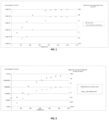
- THE figures 5, 6 And 7 illustrate for each species, the correlation between the concentration of bacteria present in the sample and the quantity of peptide measured by MRM mass spectrometry. This correlation is measured between at least five different strains per species.
- the correlation coefficients and the equations of the corresponding calibration lines are shown in TABLE 5 below.
- x is the quantity of peptides measured by MRM by calculating the ratio of the area under the chromatographic peak of the natural peptide divided by the area under the chromatographic peak of the heavy peptide
- Y is the quantity of bacteria calculated in CFU/mL
- ln(x) represents the natural logarithm of x.
- the method thus developed makes it possible to quantify at least three bacterial species in an unknown sample.
- the VanA enzyme confers vancomycin resistance in enterococci.
- the expression level of this enzyme can be induced by the presence of vancomycin. Without induction, the expression level is also highly variable depending on the bacterial strain.
- To measure the expression level of VanA the amount of VanA and the amount of bacteria present in the sample must be measured. The ratio between these two quantities will measure the expression level of the VanA protein.
- the amount of VanA present in the samples is measured using peptides described in the patent application.
- WO-A-2014/020276 The quantity of bacteria present in the samples is measured using peptides from the 3 proteins RL29, RS19 and RL22.
- This relative expression rate can also be expressed as a percentage of the expression rate of the sample with the highest relative expression rate of VanA, here the Ech10 sample.
- Sample Quantity of VanA (arbitrary unit) Quantity of bacteria (arbitrary unit) Relative expression rate of VanA VanA expression level expressed as a percentage of the expression level of the Ech10 sample Ech1 0 18695400 0 0 Ech2 0 33285900 0 0 Ech3 75231 28339300 0.002654653 1.43
- the amounts of VanA and bacteria were measured simultaneously using the same MRM method and we were thus able to measure in a single analysis the relative expression level of VanA. It is thus possible to see very easily that sample Ech10 has a very high expression level of VanA compared to the other samples, that samples Ech3 and Ech11 have a low expression level and all other samples have a zero expression level.
- the porins sought are: LamB, OmpA, OmpF.
- the role of OmpF in the development of antibiotic resistance is established.
- the other porins are, a priori, not involved in resistance [37].
- transition areas are summed per porin and per sample to estimate their quantity.
- all transition areas of the quantification proteins is summed to estimate the quantity of bacteria.
- the ratio of the sum of the areas of the porins to the sum of the areas of the quantification peptides makes it possible to measure the relative expression rate of the porin in the strain tested. This relative expression rate per porin can also be expressed as a percentage of the average signal per porin across all strains.
Landscapes
- Life Sciences & Earth Sciences (AREA)
- Health & Medical Sciences (AREA)
- Engineering & Computer Science (AREA)
- Chemical & Material Sciences (AREA)
- Molecular Biology (AREA)
- Immunology (AREA)
- Physics & Mathematics (AREA)
- Biomedical Technology (AREA)
- Hematology (AREA)
- Urology & Nephrology (AREA)
- Proteomics, Peptides & Aminoacids (AREA)
- Bioinformatics & Cheminformatics (AREA)
- Organic Chemistry (AREA)
- Biochemistry (AREA)
- Microbiology (AREA)
- Biotechnology (AREA)
- General Health & Medical Sciences (AREA)
- Analytical Chemistry (AREA)
- Biophysics (AREA)
- Zoology (AREA)
- Bioinformatics & Computational Biology (AREA)
- Wood Science & Technology (AREA)
- Cell Biology (AREA)
- Food Science & Technology (AREA)
- Medicinal Chemistry (AREA)
- General Physics & Mathematics (AREA)
- Pathology (AREA)
- Genetics & Genomics (AREA)
- Toxicology (AREA)
- General Engineering & Computer Science (AREA)
- Spectroscopy & Molecular Physics (AREA)
- Virology (AREA)
- Tropical Medicine & Parasitology (AREA)
- Other Investigation Or Analysis Of Materials By Electrical Means (AREA)
- Measuring Or Testing Involving Enzymes Or Micro-Organisms (AREA)
Claims (7)
- Verfahren zur Quantifizierung von mindestens einer Mikroorganismusgruppe durch mindestens eine Massenspektrometrie-Analyse, umfassend mindestens einen Schritt der Trennung und Fragmentierung, wobei das Verfahren unter anderem einen Schritt bestehend aus dem Messen der Menge mindestens eines repräsentativen Peptids der Mikroorganismusgruppe umfasst, dessen produzierte oder exprimierte Menge weder abhängig von der Wachstumsphase, in der sich die Mikroorganismusgruppe befindet, noch abhängig vom Kulturtyp, dem die Mikroorganismusgruppe unterzogen wird, noch abhängig von den verwendeten Stämmen, die Teil ein und derselben Mikroorganismusgruppe sind, variiert, wobei das mindestens eine repräsentative Peptid nach dem Schritt der Trennung und Fragmentierung erhalten wird und die Rolle von Quantifizierungsmarker(n) erfüllt, wobei die Menge des bzw. der Quantifizierungsmarker(s) direkt mit der Menge der Mikroorganismusgruppe korrelierbar ist, wobei das Verfahren dadurch gekennzeichnet ist, dass:- die Mikroorganismusgruppe aus der Spezies Pseudomonas aeruginosa besteht und das Peptid die Sequenz SEQ ID NO:6 aufweist, und/oder- die Mikroorganismusgruppe aus der Spezies Escherichia coli besteht und das Peptid die Sequenz SEQ ID NO:2 aufweist, und/oder- die Mikroorganismusgruppe aus der Spezies Staphylococcus aureus besteht und das Peptid die Sequenz SEQ ID NO:4 aufweist, und/oder- die Mikroorganismusgruppe aus der Familie der Enterobakterien besteht und das Peptid die Sequenz SEQ ID NO:8 aufweist.
- Verfahren gemäß Anspruch 1, umfassend einen Schritt bestehend aus dem Durchführen der Identifizierung der mindestens einen Mikroorganismusgruppe gleichzeitig mit der Quantifizierung der mindestens einen Mikroorganismusgruppe.
- Verfahren gemäß Anspruch 1 oder 2, wobei es sich beim Typ der Massenspektrometrie um PRM, SRM, MRM, MS2, MRM3, DDA (data-dependent acquisition) oder DIA (data-independent acquisition) handelt.
- Verfahren zur Messung des Expressionsniveaus mindestens eines Peptids und/oder mindestens eines Proteins von Interesse einer Mikroorganismusgruppe durch mindestens eine Massenspektrometrie-Analyse, umfassend mindestens einen Schritt der Trennung und Fragmentierung, wobei das Verfahren die folgenden Schritte umfasst:a) Messen der Menge mindestens eines Peptids von Interesse und/oder mindestens eines Proteins von Interesse,b) Messen der Menge mindestens eines repräsentativen Peptids der Mikroorganismusgruppe, dessen produzierte oder exprimierte Menge weder abhängig von der Wachstumsphase, in der sich die Mikroorganismusgruppe befindet, noch abhängig vom Kulturtyp, dem die Mikroorganismusgruppe unterzogen wird, noch abhängig von den verwendeten Stämmen, die Teil ein und derselben Mikroorganismusgruppe sind, variiert, und das die Rolle von Quantifizierungsmarker(n) erfüllt, wobei die Menge des bzw. der Quantifizierungsmarker(s) direkt mit der Menge der mindestens einen Mikroorganismusgruppe korrelierbar ist,c) Ableiten des Expressionsniveaus des mindestens einen Peptids und/oder des mindestens einen Proteins von Interesse der Mikroorganismusgruppe,wobei das mindestens eine Peptid von Interesse und/oder das mindestens eine Protein von Interesse sowie das mindestens eine repräsentative Peptid oder das mindestens eine repräsentative Protein der Mikroorganismusgruppe nach dem mindestens einen Schritt der Trennung und Fragmentierung erhalten werden,wobei das Verfahren dadurch gekennzeichnet ist, dass:- die Mikroorganismusgruppe aus der Gattung Enterococcus besteht und das repräsentative Peptid ausgewählt ist aus den Peptiden mit den Sequenzen SEQ ID NOs: 10, 12 und 14, und/oder- die Mikroorganismusgruppe aus der Spezies Klebsiella pneumoniae besteht und das repräsentative Peptid ausgewählt ist aus den Peptiden mit den Sequenzen SEQ ID NOs: 16, 18 und 20.
- Verfahren gemäß Anspruch 4, wobei der Schritt c) aus dem Vergleichen der gemessenen Menge des mindestens einen Peptids von Interesse und/oder des mindestens einen Proteins von Interesse mit der Menge des mindestens einen repräsentativen Peptids oder des mindestens einen repräsentativen Proteins der Mikroorganismusgruppe, das die Rolle von Quantifizierungsmarker(n) erfüllt, besteht, wodurch es ermöglicht wird, ein relatives Expressionsniveau in Bezug auf die Menge des bzw. der Quantifizierungsmarker(s) abzuleiten.
- Verfahren gemäß Anspruch 4 oder 5, das einen zusätzlichen Schritt b1) umfasst, bestehend aus dem Bestimmen der Menge der mindestens einen Mikroorganismusgruppe basierend auf der Menge des bzw. der Quantifizierungsmarker(s), die im Schritt b) erhalten wurde.
- Verfahren gemäß einem der Ansprüche 4 bis 6, wobei es sich beim Typ der Massenspektrometrie um PRM, SRM, MRM, MRM3, DDA (data-dependent acquisition) oder DIA (data-independent acquisition) handelt.
Applications Claiming Priority (2)
| Application Number | Priority Date | Filing Date | Title |
|---|---|---|---|
| FR1457828A FR3024903A1 (fr) | 2014-08-14 | 2014-08-14 | Procede de quantification d'au moins un groupe de microorganismes par spectrometrie de masse |
| PCT/FR2015/052196 WO2016024068A1 (fr) | 2014-08-14 | 2015-08-11 | Procédé de quantification d'au moins un groupe de microorganismes par spectrométrie de masse |
Publications (2)
| Publication Number | Publication Date |
|---|---|
| EP3189334A1 EP3189334A1 (de) | 2017-07-12 |
| EP3189334B1 true EP3189334B1 (de) | 2025-04-16 |
Family
ID=52339223
Family Applications (1)
| Application Number | Title | Priority Date | Filing Date |
|---|---|---|---|
| EP15756684.5A Active EP3189334B1 (de) | 2014-08-14 | 2015-08-11 | Verfahren zur quantifizierung von mindestens einer mikroorganismusgruppe über massenspektrometrie |
Country Status (4)
| Country | Link |
|---|---|
| US (3) | US11898192B2 (de) |
| EP (1) | EP3189334B1 (de) |
| FR (1) | FR3024903A1 (de) |
| WO (1) | WO2016024068A1 (de) |
Family Cites Families (17)
| Publication number | Priority date | Publication date | Assignee | Title |
|---|---|---|---|---|
| US6551795B1 (en) * | 1998-02-18 | 2003-04-22 | Genome Therapeutics Corporation | Nucleic acid and amino acid sequences relating to pseudomonas aeruginosa for diagnostics and therapeutics |
| KR20020097200A (ko) * | 2000-03-21 | 2002-12-31 | 엘리트라 파마슈티컬즈, 인코포레이티드 | 원핵세포에서의 필수유전자의 동정 |
| AU2002306849A1 (en) | 2001-03-21 | 2002-10-08 | Elitra Pharmaceuticals, Inc. | Identification of essential genes in microorganisms |
| US20070269895A1 (en) | 2002-06-03 | 2007-11-22 | The Institute For Systems Biology | Methods for quantitative proteome analysis of glycoproteins |
| US7501286B2 (en) | 2002-08-14 | 2009-03-10 | President And Fellows Of Harvard College | Absolute quantification of proteins and modified forms thereof by multistage mass spectrometry |
| US20040259226A1 (en) * | 2003-05-30 | 2004-12-23 | Robey W. Wade | Monitoring for and detecting microbes used in bioterrorism |
| FR2867782B1 (fr) | 2004-03-22 | 2006-07-07 | Centre Nat Rech Scient | Procede de production de banques de peptides |
| US20090258339A1 (en) * | 2005-01-14 | 2009-10-15 | The Regents Of The University Of Michigan | Systems, methods and compositions for detection of human papilloma virus in biological samples |
| NZ556651A (en) | 2005-01-21 | 2010-05-28 | Epitopix Llc | Yersinia spp. polypeptides and methods of use |
| DE602005004902T2 (de) | 2005-06-02 | 2008-10-16 | Entelechon Gmbh | Künstliches Protein, Verfahren für absolute Quantifizierung der Proteine und seine Benutzung |
| US20070178450A1 (en) * | 2006-01-27 | 2007-08-02 | Microphage (Tm) Incorporation | Method and apparatus for determining level of microorganisms using bacteriophage |
| WO2008146100A1 (en) | 2007-06-01 | 2008-12-04 | INSERM (Institut National de la Santé et de la Recherche Médicale) | Method for absolute quantification of polypeptides |
| US8530182B2 (en) * | 2007-12-05 | 2013-09-10 | Centers For Disease Control And Prevention | Viral protein quantification process and vaccine quality control therewith |
| EP2124060A1 (de) * | 2008-05-23 | 2009-11-25 | ETH Zurich | Verfahren zur Assayerzeugung von Peptiden/Proteinen mit hohem Durchsatz und so erzeugte Assays |
| WO2012092302A1 (en) * | 2010-12-27 | 2012-07-05 | Expression Pathology, Inc. | Cmet protein srm/mrm assay |
| US9074236B2 (en) * | 2012-05-01 | 2015-07-07 | Oxoid Limited | Apparatus and methods for microbial identification by mass spectrometry |
| FR2994270B1 (fr) | 2012-08-01 | 2020-01-03 | Biomerieux | Procede de detection d'au moins un mecanisme de resistance aux glycopeptides par spectrometrie de masse |
-
2014
- 2014-08-14 FR FR1457828A patent/FR3024903A1/fr not_active Withdrawn
-
2015
- 2015-08-11 US US15/503,802 patent/US11898192B2/en active Active
- 2015-08-11 EP EP15756684.5A patent/EP3189334B1/de active Active
- 2015-08-11 WO PCT/FR2015/052196 patent/WO2016024068A1/fr not_active Ceased
-
2024
- 2024-01-10 US US18/409,148 patent/US12448641B2/en active Active
-
2025
- 2025-09-23 US US19/336,848 patent/US20260015648A1/en active Pending
Also Published As
| Publication number | Publication date |
|---|---|
| FR3024903A1 (fr) | 2016-02-19 |
| EP3189334A1 (de) | 2017-07-12 |
| US20240141406A1 (en) | 2024-05-02 |
| US11898192B2 (en) | 2024-02-13 |
| US20260015648A1 (en) | 2026-01-15 |
| WO2016024068A1 (fr) | 2016-02-18 |
| US20170275667A1 (en) | 2017-09-28 |
| US12448641B2 (en) | 2025-10-21 |
Similar Documents
| Publication | Publication Date | Title |
|---|---|---|
| EP2488660B1 (de) | Verfahren zur charakterisierung von mindestens einem mikroorganismus mithilfe von massenspektrometrie | |
| EP2702407B1 (de) | Verfahren zur erfassung von mindestens einem carbapenem-resistenzmechanismus mittels massenspektrometrie | |
| EP2844753B1 (de) | Verfahren zur gewinnung von peptiden | |
| EP2699692B1 (de) | Verfahren zur erfassung von mindestens einem cephalosporin-resistenzmechanismus mittels massenspektrometrie | |
| Herschend et al. | A meta-proteomics approach to study the interspecies interactions affecting microbial biofilm development in a model community | |
| EP2880174B1 (de) | Verfahren zur erkennung mindestens eines mechanismus für resistenz gegen glycopeptide durch massenspektrometrie | |
| US12448641B2 (en) | Method for quantifying at least one microorganism group via mass spectrometry | |
| FR2980213A1 (fr) | Procede de caracterisation de bacteries, par detection de proteines non-structurales de bacteriophages |
Legal Events
| Date | Code | Title | Description |
|---|---|---|---|
| STAA | Information on the status of an ep patent application or granted ep patent |
Free format text: STATUS: THE INTERNATIONAL PUBLICATION HAS BEEN MADE |
|
| PUAI | Public reference made under article 153(3) epc to a published international application that has entered the european phase |
Free format text: ORIGINAL CODE: 0009012 |
|
| STAA | Information on the status of an ep patent application or granted ep patent |
Free format text: STATUS: REQUEST FOR EXAMINATION WAS MADE |
|
| 17P | Request for examination filed |
Effective date: 20170216 |
|
| AK | Designated contracting states |
Kind code of ref document: A1 Designated state(s): AL AT BE BG CH CY CZ DE DK EE ES FI FR GB GR HR HU IE IS IT LI LT LU LV MC MK MT NL NO PL PT RO RS SE SI SK SM TR |
|
| AX | Request for extension of the european patent |
Extension state: BA ME |
|
| RIN1 | Information on inventor provided before grant (corrected) |
Inventor name: FORTIN, TANGUY Inventor name: CECCHINI, TIPHAINE Inventor name: BARDET, CHLOE Inventor name: CHARRETIER, YANNICK Inventor name: CHARRIER, JEAN-PHILIPPE Inventor name: COMPAGNON, CHRISTELLE |
|
| DAV | Request for validation of the european patent (deleted) | ||
| DAX | Request for extension of the european patent (deleted) | ||
| STAA | Information on the status of an ep patent application or granted ep patent |
Free format text: STATUS: EXAMINATION IS IN PROGRESS |
|
| 17Q | First examination report despatched |
Effective date: 20180529 |
|
| GRAP | Despatch of communication of intention to grant a patent |
Free format text: ORIGINAL CODE: EPIDOSNIGR1 |
|
| STAA | Information on the status of an ep patent application or granted ep patent |
Free format text: STATUS: GRANT OF PATENT IS INTENDED |
|
| INTG | Intention to grant announced |
Effective date: 20241111 |
|
| GRAS | Grant fee paid |
Free format text: ORIGINAL CODE: EPIDOSNIGR3 |
|
| GRAA | (expected) grant |
Free format text: ORIGINAL CODE: 0009210 |
|
| STAA | Information on the status of an ep patent application or granted ep patent |
Free format text: STATUS: THE PATENT HAS BEEN GRANTED |
|
| AK | Designated contracting states |
Kind code of ref document: B1 Designated state(s): AL AT BE BG CH CY CZ DE DK EE ES FI FR GB GR HR HU IE IS IT LI LT LU LV MC MK MT NL NO PL PT RO RS SE SI SK SM TR |
|
| REG | Reference to a national code |
Ref country code: GB Ref legal event code: FG4D Free format text: NOT ENGLISH |
|
| REG | Reference to a national code |
Ref country code: CH Ref legal event code: EP |
|
| REG | Reference to a national code |
Ref country code: IE Ref legal event code: FG4D Free format text: LANGUAGE OF EP DOCUMENT: FRENCH |
|
| REG | Reference to a national code |
Ref country code: DE Ref legal event code: R096 Ref document number: 602015091445 Country of ref document: DE |
|
| REG | Reference to a national code |
Ref country code: NL Ref legal event code: MP Effective date: 20250416 |
|
| PG25 | Lapsed in a contracting state [announced via postgrant information from national office to epo] |
Ref country code: NL Free format text: LAPSE BECAUSE OF FAILURE TO SUBMIT A TRANSLATION OF THE DESCRIPTION OR TO PAY THE FEE WITHIN THE PRESCRIBED TIME-LIMIT Effective date: 20250416 |
|
| REG | Reference to a national code |
Ref country code: AT Ref legal event code: MK05 Ref document number: 1786034 Country of ref document: AT Kind code of ref document: T Effective date: 20250416 |
|
| PG25 | Lapsed in a contracting state [announced via postgrant information from national office to epo] |
Ref country code: FI Free format text: LAPSE BECAUSE OF FAILURE TO SUBMIT A TRANSLATION OF THE DESCRIPTION OR TO PAY THE FEE WITHIN THE PRESCRIBED TIME-LIMIT Effective date: 20250416 Ref country code: ES Free format text: LAPSE BECAUSE OF FAILURE TO SUBMIT A TRANSLATION OF THE DESCRIPTION OR TO PAY THE FEE WITHIN THE PRESCRIBED TIME-LIMIT Effective date: 20250416 Ref country code: PT Free format text: LAPSE BECAUSE OF FAILURE TO SUBMIT A TRANSLATION OF THE DESCRIPTION OR TO PAY THE FEE WITHIN THE PRESCRIBED TIME-LIMIT Effective date: 20250818 |
|
| PGFP | Annual fee paid to national office [announced via postgrant information from national office to epo] |
Ref country code: DE Payment date: 20250827 Year of fee payment: 11 |
|
| REG | Reference to a national code |
Ref country code: LT Ref legal event code: MG9D |
|
| PG25 | Lapsed in a contracting state [announced via postgrant information from national office to epo] |
Ref country code: NO Free format text: LAPSE BECAUSE OF FAILURE TO SUBMIT A TRANSLATION OF THE DESCRIPTION OR TO PAY THE FEE WITHIN THE PRESCRIBED TIME-LIMIT Effective date: 20250716 Ref country code: GR Free format text: LAPSE BECAUSE OF FAILURE TO SUBMIT A TRANSLATION OF THE DESCRIPTION OR TO PAY THE FEE WITHIN THE PRESCRIBED TIME-LIMIT Effective date: 20250717 |
|
| PG25 | Lapsed in a contracting state [announced via postgrant information from national office to epo] |
Ref country code: PL Free format text: LAPSE BECAUSE OF FAILURE TO SUBMIT A TRANSLATION OF THE DESCRIPTION OR TO PAY THE FEE WITHIN THE PRESCRIBED TIME-LIMIT Effective date: 20250416 |
|
| PG25 | Lapsed in a contracting state [announced via postgrant information from national office to epo] |
Ref country code: BG Free format text: LAPSE BECAUSE OF FAILURE TO SUBMIT A TRANSLATION OF THE DESCRIPTION OR TO PAY THE FEE WITHIN THE PRESCRIBED TIME-LIMIT Effective date: 20250416 |
|
| PGFP | Annual fee paid to national office [announced via postgrant information from national office to epo] |
Ref country code: GB Payment date: 20250827 Year of fee payment: 11 |
|
| PG25 | Lapsed in a contracting state [announced via postgrant information from national office to epo] |
Ref country code: HR Free format text: LAPSE BECAUSE OF FAILURE TO SUBMIT A TRANSLATION OF THE DESCRIPTION OR TO PAY THE FEE WITHIN THE PRESCRIBED TIME-LIMIT Effective date: 20250416 |
|
| PG25 | Lapsed in a contracting state [announced via postgrant information from national office to epo] |
Ref country code: AT Free format text: LAPSE BECAUSE OF FAILURE TO SUBMIT A TRANSLATION OF THE DESCRIPTION OR TO PAY THE FEE WITHIN THE PRESCRIBED TIME-LIMIT Effective date: 20250416 |
|
| PGFP | Annual fee paid to national office [announced via postgrant information from national office to epo] |
Ref country code: FR Payment date: 20250825 Year of fee payment: 11 |
|
| PG25 | Lapsed in a contracting state [announced via postgrant information from national office to epo] |
Ref country code: RS Free format text: LAPSE BECAUSE OF FAILURE TO SUBMIT A TRANSLATION OF THE DESCRIPTION OR TO PAY THE FEE WITHIN THE PRESCRIBED TIME-LIMIT Effective date: 20250716 |
|
| PG25 | Lapsed in a contracting state [announced via postgrant information from national office to epo] |
Ref country code: IS Free format text: LAPSE BECAUSE OF FAILURE TO SUBMIT A TRANSLATION OF THE DESCRIPTION OR TO PAY THE FEE WITHIN THE PRESCRIBED TIME-LIMIT Effective date: 20250816 |
|
| PG25 | Lapsed in a contracting state [announced via postgrant information from national office to epo] |
Ref country code: LV Free format text: LAPSE BECAUSE OF FAILURE TO SUBMIT A TRANSLATION OF THE DESCRIPTION OR TO PAY THE FEE WITHIN THE PRESCRIBED TIME-LIMIT Effective date: 20250416 |
|
| PG25 | Lapsed in a contracting state [announced via postgrant information from national office to epo] |
Ref country code: SM Free format text: LAPSE BECAUSE OF FAILURE TO SUBMIT A TRANSLATION OF THE DESCRIPTION OR TO PAY THE FEE WITHIN THE PRESCRIBED TIME-LIMIT Effective date: 20250416 Ref country code: DK Free format text: LAPSE BECAUSE OF FAILURE TO SUBMIT A TRANSLATION OF THE DESCRIPTION OR TO PAY THE FEE WITHIN THE PRESCRIBED TIME-LIMIT Effective date: 20250416 |
|
| REG | Reference to a national code |
Ref country code: DE Ref legal event code: R097 Ref document number: 602015091445 Country of ref document: DE |
|
| PG25 | Lapsed in a contracting state [announced via postgrant information from national office to epo] |
Ref country code: CZ Free format text: LAPSE BECAUSE OF FAILURE TO SUBMIT A TRANSLATION OF THE DESCRIPTION OR TO PAY THE FEE WITHIN THE PRESCRIBED TIME-LIMIT Effective date: 20250416 |
|
| PG25 | Lapsed in a contracting state [announced via postgrant information from national office to epo] |
Ref country code: EE Free format text: LAPSE BECAUSE OF FAILURE TO SUBMIT A TRANSLATION OF THE DESCRIPTION OR TO PAY THE FEE WITHIN THE PRESCRIBED TIME-LIMIT Effective date: 20250416 |
|
| PG25 | Lapsed in a contracting state [announced via postgrant information from national office to epo] |
Ref country code: SK Free format text: LAPSE BECAUSE OF FAILURE TO SUBMIT A TRANSLATION OF THE DESCRIPTION OR TO PAY THE FEE WITHIN THE PRESCRIBED TIME-LIMIT Effective date: 20250416 Ref country code: RO Free format text: LAPSE BECAUSE OF FAILURE TO SUBMIT A TRANSLATION OF THE DESCRIPTION OR TO PAY THE FEE WITHIN THE PRESCRIBED TIME-LIMIT Effective date: 20250416 |
|
| PG25 | Lapsed in a contracting state [announced via postgrant information from national office to epo] |
Ref country code: IT Free format text: LAPSE BECAUSE OF FAILURE TO SUBMIT A TRANSLATION OF THE DESCRIPTION OR TO PAY THE FEE WITHIN THE PRESCRIBED TIME-LIMIT Effective date: 20250416 |
|
| PLBE | No opposition filed within time limit |
Free format text: ORIGINAL CODE: 0009261 |
|
| STAA | Information on the status of an ep patent application or granted ep patent |
Free format text: STATUS: NO OPPOSITION FILED WITHIN TIME LIMIT |
|
| REG | Reference to a national code |
Ref country code: CH Ref legal event code: L10 Free format text: ST27 STATUS EVENT CODE: U-0-0-L10-L00 (AS PROVIDED BY THE NATIONAL OFFICE) Effective date: 20260225 |
|
| REG | Reference to a national code |
Ref country code: CH Ref legal event code: H13 Free format text: ST27 STATUS EVENT CODE: U-0-0-H10-H13 (AS PROVIDED BY THE NATIONAL OFFICE) Effective date: 20260324 |
|
| 26N | No opposition filed |
Effective date: 20260119 |
|
| PG25 | Lapsed in a contracting state [announced via postgrant information from national office to epo] |
Ref country code: MC Free format text: LAPSE BECAUSE OF FAILURE TO SUBMIT A TRANSLATION OF THE DESCRIPTION OR TO PAY THE FEE WITHIN THE PRESCRIBED TIME-LIMIT Effective date: 20250416 |
|
| PG25 | Lapsed in a contracting state [announced via postgrant information from national office to epo] |
Ref country code: LU Free format text: LAPSE BECAUSE OF NON-PAYMENT OF DUE FEES Effective date: 20250811 |
|
| PG25 | Lapsed in a contracting state [announced via postgrant information from national office to epo] |
Ref country code: CH Free format text: LAPSE BECAUSE OF NON-PAYMENT OF DUE FEES Effective date: 20250831 |