EP3186362B1 - Staphylococcus aureus stämme zur herstellung monoklonaler antikörper ohne verunreinigung mit plasmid dna - Google Patents
Staphylococcus aureus stämme zur herstellung monoklonaler antikörper ohne verunreinigung mit plasmid dna Download PDFInfo
- Publication number
- EP3186362B1 EP3186362B1 EP15797403.1A EP15797403A EP3186362B1 EP 3186362 B1 EP3186362 B1 EP 3186362B1 EP 15797403 A EP15797403 A EP 15797403A EP 3186362 B1 EP3186362 B1 EP 3186362B1
- Authority
- EP
- European Patent Office
- Prior art keywords
- strains
- dna
- bacteriophages
- staphylococcus aureus
- strain
- Prior art date
- Legal status (The legal status is an assumption and is not a legal conclusion. Google has not performed a legal analysis and makes no representation as to the accuracy of the status listed.)
- Active
Links
Images


Classifications
-
- C—CHEMISTRY; METALLURGY
- C12—BIOCHEMISTRY; BEER; SPIRITS; WINE; VINEGAR; MICROBIOLOGY; ENZYMOLOGY; MUTATION OR GENETIC ENGINEERING
- C12N—MICROORGANISMS OR ENZYMES; COMPOSITIONS THEREOF; PROPAGATING, PRESERVING, OR MAINTAINING MICROORGANISMS; MUTATION OR GENETIC ENGINEERING; CULTURE MEDIA
- C12N7/00—Viruses; Bacteriophages; Compositions thereof; Preparation or purification thereof
-
- C—CHEMISTRY; METALLURGY
- C12—BIOCHEMISTRY; BEER; SPIRITS; WINE; VINEGAR; MICROBIOLOGY; ENZYMOLOGY; MUTATION OR GENETIC ENGINEERING
- C12N—MICROORGANISMS OR ENZYMES; COMPOSITIONS THEREOF; PROPAGATING, PRESERVING, OR MAINTAINING MICROORGANISMS; MUTATION OR GENETIC ENGINEERING; CULTURE MEDIA
- C12N1/00—Microorganisms; Compositions thereof; Processes of propagating, maintaining or preserving microorganisms or compositions thereof; Processes of preparing or isolating a composition containing a microorganism; Culture media therefor
- C12N1/20—Bacteria; Culture media therefor
-
- C—CHEMISTRY; METALLURGY
- C12—BIOCHEMISTRY; BEER; SPIRITS; WINE; VINEGAR; MICROBIOLOGY; ENZYMOLOGY; MUTATION OR GENETIC ENGINEERING
- C12N—MICROORGANISMS OR ENZYMES; COMPOSITIONS THEREOF; PROPAGATING, PRESERVING, OR MAINTAINING MICROORGANISMS; MUTATION OR GENETIC ENGINEERING; CULTURE MEDIA
- C12N1/00—Microorganisms; Compositions thereof; Processes of propagating, maintaining or preserving microorganisms or compositions thereof; Processes of preparing or isolating a composition containing a microorganism; Culture media therefor
- C12N1/20—Bacteria; Culture media therefor
- C12N1/205—Bacterial isolates
-
- C—CHEMISTRY; METALLURGY
- C12—BIOCHEMISTRY; BEER; SPIRITS; WINE; VINEGAR; MICROBIOLOGY; ENZYMOLOGY; MUTATION OR GENETIC ENGINEERING
- C12N—MICROORGANISMS OR ENZYMES; COMPOSITIONS THEREOF; PROPAGATING, PRESERVING, OR MAINTAINING MICROORGANISMS; MUTATION OR GENETIC ENGINEERING; CULTURE MEDIA
- C12N2795/00—Bacteriophages
- C12N2795/00011—Details
- C12N2795/00051—Methods of production or purification of viral material
-
- C—CHEMISTRY; METALLURGY
- C12—BIOCHEMISTRY; BEER; SPIRITS; WINE; VINEGAR; MICROBIOLOGY; ENZYMOLOGY; MUTATION OR GENETIC ENGINEERING
- C12R—INDEXING SCHEME ASSOCIATED WITH SUBCLASSES C12C - C12Q, RELATING TO MICROORGANISMS
- C12R2001/00—Microorganisms ; Processes using microorganisms
- C12R2001/01—Bacteria or Actinomycetales ; using bacteria or Actinomycetales
- C12R2001/44—Staphylococcus
- C12R2001/445—Staphylococcus aureus
Definitions
- the object of the invention is Staphylococcus aureus strain for obtaining monoclonal preparations of lytic bacteriophages with high titer, devoid of contamination with undesired bacteriophages and plasmid DNA.
- the strain being the result of the invention guarantees the production of safe to use bacteriophage preparations, not being a source of dissemination of genes associated with bacterial virulence.
- phage therapy is bacteriophages - viruses that selectively infect bacteria and are harmless to eukaryotic organisms.
- Bacteriophages as obligate bacterial parasites, can to obtained only by multiplication in bacterial cells.
- the release from infected cells of the bacteriophages multiplied therein is correlated with cell lysis and spilling out their contents to the environment.
- the thus obtained lysates contain bacteriophages suspended in a mixture of cell contents and the medium wherein the bacteria were cultured.
- phage therapy requires them to be free from factors harmful to organisms treated with the bacteriophages, as well as of factors capable of increasing pathogenicity of bacteria.
- the hitherto methods of producing therapeutic phage preparations inter alia with phages against Staphylococcus aureus, do not fully ensure such safety due to the lack of suitable bacterial strains for phage multiplication.
- Bacteriophages that are effective in fighting infections caused by bacterial pathogens typically do not multiply in cells of non-pathogenic bacteria. Moreover, preparations with high titer, lytically effective against the particular pathogen, can be most often obtained only by multiplication of the given phage in bacteria of the same species, representing strains having genetic features similar to the fought pathogen (D'Herelle, 1938; Balogh et al., 2010). They therefore contain contaminations that are derived from the cells of bacterial pathogens. These bacteria encode numerous virulence factors, such as e.g. bacterial toxins. Moreover, the genes encoding these factors are usually a part of mobile genetic elements present in the cells, capable of transferring by various methods from one bacterial cell to another.
- temperate bacteriophages The most difficult to eliminate from phage preparations are the contaminations with bacteriophages different than the ones multiplied. These bacteriophages belong to the so-called temperate bacteriophages, being a specific type of mobile genetic elements (Guttman et al., 2005). As opposed to obligate lytic bacteriophages recommended for therapeutic applications and multiplying only through the lytic development pathway, temperate bacteriophages can multiply through the lytic development pathway or remain in the cell in the form of a so-called prophage - a DNA molecule generally integrated into the bacterial chromosome. They can remain in this form for years, replicating as an integral part of the chromosome.
- temperate bacteriophages of bacterial pathogens encode virulence factors, such as inter alia bacterial toxins, adhesins or factors protecting the bacteria from the host immune response (Cheetham et al., 1995).
- virulence factors such as inter alia bacterial toxins, adhesins or factors protecting the bacteria from the host immune response (Cheetham et al., 1995).
- Spontaneous excision of prophages from chromosomes in some cells of the population in the process of the so-called induction, leads to initiation of their lytic development. Temperate phages multiplied during lytic development may, when infecting further bacterial cells, integrate into their DNA as prophages, in this way becoming carriers for genes associated with bacterial virulence.
- plasmids Another type of mobile genetic elements that may contaminate phage preparations are plasmids - extrachromosomal DNA molecules capable of autonomous replication.
- Pathogenic bacteria plasmids like temperate phages, have, in the course of evolution, acquired genes associated with virulence of their bacterial hosts.
- plasmids may integrate into phage DNA and as a part of this DNA be packed into virions (Masters, 1996). Replacing in this way fragments of phage DNA they give rise to defective phages, incapable of multiplication.
- These phages however introduce the plasmid-containing DNA into the infected cells and in this way may disseminate bacterial virulence genes.
- the bacteria for multiplication of therapeutic phages should not contain plasmids. Few Staphylococcus aureus strains that do not contain prophages and plasmids are known ( WO 2014/048407 and Vaudaux et al., 2002).
- the aim of the invention is to provide Staphylococcus aureus strains for production of therapeutic bacteriophages preparations having high titer, devoid of contamination with temperate phages and plasmid DNA. Unexpectedly, the thus defined aim has been achieved due to the solution proposed by the present invention.
- the object of the invention is a Staphylococcus aureus strain devoid of prophages and plasmids.
- the strain according to the invention is a Staphylococcus aureus 80wphwpl strain deposited in the PCM (Polish Collection of Microorganisms) as B/00072.
- the preferred object of the invention is a Staphylococcus aureus 80wphwpl strain having a bacterial chromosome comprising DNA with a sequence SEQ ID NO: 1.
- the object of the invention is also a method of producing a bacteriophage preparation, particularly a therapeutic one, characterized by the fact that a bacteriophage strain specific against Staphylococcus aureus is multiplied in culture of the Staphylococcus aureus strain devoid of prophages and plasmids according to the invention as defined above, and then the multiplied phages are isolated from the obtained lysate, wherein the obtained bacteriophage preparations are devoid of contamination with temperate phages and plasmid DNA.
- the effect of the invention is to provide S. aureus 80wphwpl strain having genomic DNA sequences designated as SEQ ID NO: 1, characterized by the lack of sequences corresponding to genomic sequences of active prophages.
- a further effect of the invention is the lack of plasmids in the 80wphwpl strain cells.
- An advantageous effect of the invention is the 80wphwpl strains maintaining these parental strains features that allow for effective multiplication of Staphylococcus aureus bacteriophages in their cells, including in particular the P4W, Staph1N, A5W or Fi200W bacteriophages, belonging to the Twort-like type.
- An additional advantageous effect of the invention is the possibility to obtain, as a result of multiplication of P4W, Staph1N, A5W or Fi200W bacteriophages in the 80wphwpl strain cells, lysates containing the aforementioned bacteriophages with a titer of at least 10 9 pfu/ml.
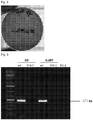
- the present inventors have unexpectedly found that all of the studied preparations of obligate lytic Staphylococcus aureus bacteriophages of the Twort-like type, multiplied in the cells of S. aureus isolates enabling the production of high titer lysates of these bacteriophages, are contaminated with undesired bacteriophages, and that the source of these bacteriophages are prophages integrated into chromosomes of the strains employed to multiply phages ( Fig. 1 ).
- Fig. 1 Despite recent study results indicating the presence of prophages in genomes of almost all clinical and environmental S. aureus isolates, there has been no studies conducted that would allow to estimate the frequency of spontaneous induction of various S.
- the inventors With the aim of eliminating prophages from the two Staphylococcus aureus strains for efficient multiplication of therapeutic phages, the inventors have determined their genomic DNA sequence. In this way they have identified the sites of prophage integration in the genomes of these strains and the genes having their continuity interrupted by integration of prophages. Having associated the phenotype with the loss of function for these genes, the inventors have identified colonies of cells that lost the prophages ( Fig. 2 ). The loss of prophages was confirmed by sequence analysis of the cured strain genomic DNA (specified for the purposes of the present specification as SEQ ID NO: 1 and SEQ ID NO: 2).
- the inventors have unexpectedly found that the cells of these strains contain plasmids that may encode inter alia resistance to cadmium salts. Searching for the cells of the studied strains that acquired sensitivity to cadmium in conditions that may stimulate plasmid loss, that have isolated plasmid-less derivatives of both strains and have confirmed the lack of plasmids in their cells by analyzing total DNA isolated from these cells.
- S. aureus 80wphwpl and 6409wphwpl strains are the strains of choice for multiplication of bacteriophages used for prophylactic, therapeutic or disinfection purposes in fighting S. aureus, by guaranteeing that phage preparations, obtained by multiplying obligate lytic bacteriophages in the cells of these strains, are free from contamination with undesired biological material that would pose a risk of dissemination of bacterial virulence associated genes. This excludes the possibility of deterioration of the condition of patients or animals treated with such preparations due to an unplanned acquisition by the infecting S. aureus strains of additional genes associated with virulence, which cannot be excluded in the case of preparations used to date.
- Example 1 The presence of undesired contamination with bacteriophages in obligate lytic bacteriophage preparations multiplied in Staphylococcus aureus cells.
- Lysates obtained after infecting cells of the following strains: 6409, 80, R19930, Z11788 and PS80 with the following phages: A3R (strain R19930), Fi200W or P4W (strain 6409), Staph1N (strain 80), 676Z (strain Z11788) and A5W (strain PS80) were purified from bacterial DNA and RNA by digesting with DNase and RNase, and subsequently the virions and their DNA were isolated therefrom according to the previously described procedure ( obocka et al., 2004). Concurrently, chromosomal DNA was isolated from non-infected cells of the strains used for phage multiplication.
- phage preparations before virion DNA isolation, were purified from free DNA from bacterial chromosome debris in the lysates, so that in control PCRs with primers for the S. aureus chromosomal coagulase gene no PCR product was obtained ( Fig. 1B ), the only source of the temperate bacteriophage DNA detected in these preparations could have been the virions of these bacteriophages, generated as a result of spontaneous induction of prophages integrated into chromosomes of the strains for multiplication of lytic phages.
- Example 2 Identification of prophage integration regions in the S. aureus 80 and 6409 strains.
- Selected for prophage curing were the 80 and 6409 strains. Obligate lytic phage lysates multiplied in these strain cells were contaminated with phages representing the Fa serological type ( Fig. 1 ).
- chromosomal DNA was isolated from cells of these strains and it was used to prepare libraries of fragments that were subsequently sequenced (using Roche 454 Genome Sequencer GS FLX), and sequences thereof were assembled into larger fragments. Bioinformatic analysis of the obtained fragments regarding the regions homologous to the prophage DNA regions has shown the presence of prophages representing the Fa serological group in the hlb gene, both in the 80 and the 6409 strain.
- the identified prophages were interrupting the continuity of the hlb gene wherein they had integrated.
- the prophage integration regions were verified by phenotypic analysis of the studied strains.
- the 80 and 6409 strains were found to be incapable of hemolyzing sheep blood erythrocytes on the Columbia agar medium, which confirmed the loss of function of the hlb gene in these strains' genomes.
- Example 3. Deprivation of the S. aureus 80 and 6409 strains of active prophages contained in their chromosomes.
- the prophages contained in the chromosomes of the 80 and 6409 strains were induced with mitomycin C according to the standard procedure. Following the induction, the cells were plated on a solid Columbia agar medium with sheep blood ( Fig. 2 ).
- the obtained derivatives of strains 80 and 6409 (designated as 80wph and 6409wph), having a marked hemolytic zone around them, were purified several times by streaking on the same medium. Unexpectedly, only a few of them did retain the phenotype indicating a permanent recovery of the hlb gene function.
- One colony for each strain was used to isolate genomic DNA.
- the obtained genomic sequences for the strains 80wph and 6409wph (designated for the purposes of this invention as SEQ ID NO: 1 and SEQ ID NO: 2 respectively) were analyzed for the presence of DNA fragments therein representing the active prophages. The analysis confirmed the lack of such regions.
- Example 4 Removal of plasmids from cells of the 80wph and 6409wph strains.
- PFGE pulsed field electrophoresis
- Staphylococcus aureus strains devoid of prophages and plasmids, were deposited in the Polish Collection of Microorganisms (PCM), Wroc aw, Tru, according to the Budapest Treaty.
- Staphylococcus aureus strain designation Polish Collection of Microorganisms (PCM) deposit accession number 80wphwpl B/00072 6409wphwpl B/00073
- Example 5 Verification of usefulness of the 80wphwpl and 6409wphwpl strains for efficient multiplication of obligate lytic phages.
- the 80wphwpl and 6409wphwpl strains may serve as host strains for multiplication of obligate lytic staphylococcal bacteriophages, and whether the bacteriophages multiply in the cells of these strains with efficiency sufficient to use them for the purposes of prevention, therapy and disinfection, the cells of the obtained strains were infected with the same bacteriophages that efficiently multiplied in the parental strain cells, carrying plasmids and prophages.
- the lysate was centrifuged (20 min., 4°C, 9000 g) and the obtained supernatant was filtered through 0.22 PVDF filters (from MILLEX® GS).
- 0.1 ml of 25 mM CaCl 2 and MgSO 4 solution and 0.1 ml of diluted phage lysate (10 -2 , 10 -4 , 10 -6 , 10 -8 ) were added to 0.1 ml of an overnight bacterial culture grown on LB medium.
- Bakteriophage Strain for multiplication Phage titer in lysate A5W 80wphwpl 5.5 x 10 9 80 3.4 x 10 9 Staph1N 80wphwpl 3.0 x 10 9 80 1.5 x 10 10 Fi200W 6409wphwpl 1.8 x 10 9 6409 1.1-5.0 x 10 9 P4W 6409wphwpl 3.3 X 10 9 6409 1.5 x 10 10
Landscapes
- Life Sciences & Earth Sciences (AREA)
- Chemical & Material Sciences (AREA)
- Health & Medical Sciences (AREA)
- Engineering & Computer Science (AREA)
- Genetics & Genomics (AREA)
- Organic Chemistry (AREA)
- Zoology (AREA)
- Bioinformatics & Cheminformatics (AREA)
- Wood Science & Technology (AREA)
- Biotechnology (AREA)
- Medicinal Chemistry (AREA)
- Microbiology (AREA)
- Biomedical Technology (AREA)
- Virology (AREA)
- Biochemistry (AREA)
- General Engineering & Computer Science (AREA)
- General Health & Medical Sciences (AREA)
- Tropical Medicine & Parasitology (AREA)
- Immunology (AREA)
- Micro-Organisms Or Cultivation Processes Thereof (AREA)
- Medicines Containing Material From Animals Or Micro-Organisms (AREA)
Claims (3)
- Staphylococcus aureus Stamm frei von Prophagen und Plasmiden, dadurch gekennzeichnet, dass er der Stamm Staphylococcus aureus 80wphwpl wie in der PCM als B/00072 hinterlegt ist.
- Staphylococcus aureus Stamm nach Anspruch 1, dadurch gekennzeichnet, dass er ein bakterielles Chromosom umfassend eine DNA mit einer Sequenz SEQ ID NO: 1 aufweist.
- Verfahren zur Herstellung einer Bakteriophagenpräparation, insbesondere einer therapeutischen Bakteriophagenpräparation, dadurch gekennzeichnet, dass ein gegen Staphylococcus aureus spezifischer Bakteriophagenstamm in einer Kultur des Enterococcus faecalis Stammes frei von Prophagen und Plasmiden nach den Ansprüchen 1 - 2 vervielfältigt wird, und dann die vervielfältigten Phagen von dem erhaltenen Lysat isoliert werden, wobei die erhaltenen Bakteriophagenpräparationen frei von einer Kontamination mit temperenten Phagen und Plasmid-DNA sind.
Priority Applications (2)
| Application Number | Priority Date | Filing Date | Title |
|---|---|---|---|
| PL18195142T PL3460048T3 (pl) | 2014-08-31 | 2015-08-31 | Szczep Staphylococcus aureus do produkcji monoklonalnych preparatów fagowych pozbawionych zanieczyszczeń plazmidowym DNA |
| EP18195142.7A EP3460048B1 (de) | 2014-08-31 | 2015-08-31 | Staphylococcus-aureus-stämme zur herstellung monoklonaler phagenpräparate ohne kontamination mit plasmid-dna |
Applications Claiming Priority (2)
| Application Number | Priority Date | Filing Date | Title |
|---|---|---|---|
| PL409330A PL236568B1 (pl) | 2014-08-31 | 2014-08-31 | Szczepy Staphylococcus aureus do produkcji monoklonalnych preparatów fagowych pozbawionych zanieczyszczeń plazmidowym DNA |
| PCT/IB2015/056606 WO2016030871A1 (en) | 2014-08-31 | 2015-08-31 | Staphylococcus aureus strains for production of monoclonal phage preparations deprived of contamination with plasmid dna |
Related Child Applications (2)
| Application Number | Title | Priority Date | Filing Date |
|---|---|---|---|
| EP18195142.7A Division EP3460048B1 (de) | 2014-08-31 | 2015-08-31 | Staphylococcus-aureus-stämme zur herstellung monoklonaler phagenpräparate ohne kontamination mit plasmid-dna |
| EP18195142.7A Division-Into EP3460048B1 (de) | 2014-08-31 | 2015-08-31 | Staphylococcus-aureus-stämme zur herstellung monoklonaler phagenpräparate ohne kontamination mit plasmid-dna |
Publications (2)
| Publication Number | Publication Date |
|---|---|
| EP3186362A1 EP3186362A1 (de) | 2017-07-05 |
| EP3186362B1 true EP3186362B1 (de) | 2019-05-15 |
Family
ID=54601839
Family Applications (2)
| Application Number | Title | Priority Date | Filing Date |
|---|---|---|---|
| EP18195142.7A Active EP3460048B1 (de) | 2014-08-31 | 2015-08-31 | Staphylococcus-aureus-stämme zur herstellung monoklonaler phagenpräparate ohne kontamination mit plasmid-dna |
| EP15797403.1A Active EP3186362B1 (de) | 2014-08-31 | 2015-08-31 | Staphylococcus aureus stämme zur herstellung monoklonaler antikörper ohne verunreinigung mit plasmid dna |
Family Applications Before (1)
| Application Number | Title | Priority Date | Filing Date |
|---|---|---|---|
| EP18195142.7A Active EP3460048B1 (de) | 2014-08-31 | 2015-08-31 | Staphylococcus-aureus-stämme zur herstellung monoklonaler phagenpräparate ohne kontamination mit plasmid-dna |
Country Status (3)
| Country | Link |
|---|---|
| EP (2) | EP3460048B1 (de) |
| PL (2) | PL236568B1 (de) |
| WO (1) | WO2016030871A1 (de) |
Families Citing this family (3)
| Publication number | Priority date | Publication date | Assignee | Title |
|---|---|---|---|---|
| HRP20201127T1 (hr) * | 2012-04-26 | 2020-11-27 | University Of Chicago | Antigeni stafilokokne koagulaze i metode primjene istih |
| WO2019152657A1 (en) | 2018-02-03 | 2019-08-08 | Simple Healthkit, Inc. | Reliable, comprehensive, and rapid sexual health assessment |
| WO2025217176A1 (en) * | 2024-04-08 | 2025-10-16 | Board Of Trustees Of Michigan State University | Genetically engineered bacteria as a chassis host for high yield terpenoid production |
Family Cites Families (1)
| Publication number | Priority date | Publication date | Assignee | Title |
|---|---|---|---|---|
| CZ2012668A3 (cs) * | 2012-09-27 | 2013-08-07 | Imuna S.R.O. | Lécivo ve forme antistafylokokového fágového lyzátu, zpusob jeho výroby a pouzití |
-
2014
- 2014-08-31 PL PL409330A patent/PL236568B1/pl unknown
-
2015
- 2015-08-31 PL PL18195142T patent/PL3460048T3/pl unknown
- 2015-08-31 EP EP18195142.7A patent/EP3460048B1/de active Active
- 2015-08-31 EP EP15797403.1A patent/EP3186362B1/de active Active
- 2015-08-31 WO PCT/IB2015/056606 patent/WO2016030871A1/en not_active Ceased
Non-Patent Citations (1)
| Title |
|---|
| None * |
Also Published As
| Publication number | Publication date |
|---|---|
| EP3186362A1 (de) | 2017-07-05 |
| PL236568B1 (pl) | 2021-01-25 |
| WO2016030871A1 (en) | 2016-03-03 |
| PL3460048T3 (pl) | 2021-10-25 |
| PL409330A1 (pl) | 2016-03-14 |
| EP3460048B1 (de) | 2021-04-28 |
| EP3460048A1 (de) | 2019-03-27 |
Similar Documents
| Publication | Publication Date | Title |
|---|---|---|
| O’Hara et al. | A highly specific phage defense system is a conserved feature of the Vibrio cholerae mobilome | |
| Cornuault et al. | The enemy from within: a prophage of Roseburia intestinalis systematically turns lytic in the mouse gut, driving bacterial adaptation by CRISPR spacer acquisition | |
| Van Charante et al. | Isolation of bacteriophages | |
| Ahern et al. | Characterization of novel virulent broad-host-range phages of Xylella fastidiosa and Xanthomonas | |
| Chlebowicz et al. | The Staphylococcal Cassette Chromosome mec type V from Staphylococcus aureus ST398 is packaged into bacteriophage capsids | |
| Nale et al. | Diverse temperate bacteriophage carriage in Clostridium difficile 027 strains | |
| Gaudin et al. | Extracellular membrane vesicles harbouring viral genomes | |
| Fišarová et al. | Variability of resistance plasmids in coagulase-negative staphylococci and their importance as a reservoir of antimicrobial resistance | |
| Day et al. | Jumbo bacteriophages are represented within an increasing diversity of environmental viruses infecting the emerging phytopathogen, Dickeya solani | |
| Ahmad et al. | Molecular and biological characterization of ϕRs551, a filamentous bacteriophage isolated from a race 3 biovar 2 strain of Ralstonia solanacearum | |
| Withatanung et al. | Analyses of the distribution patterns of Burkholderia pseudomallei and associated phages in soil samples in Thailand suggest that phage presence reduces the frequency of bacterial isolation | |
| EP3460048B1 (de) | Staphylococcus-aureus-stämme zur herstellung monoklonaler phagenpräparate ohne kontamination mit plasmid-dna | |
| Latifah et al. | Isolation by culture and PCR identification of LipL32 gene of pathogenic Leptospira spp. in wild rats of Kuala Lumpur | |
| EP3186361B1 (de) | Enterococcus faecalis stämme für die herstellung von bakteriophagen | |
| Guan et al. | RNA targeting with CRISPR-Cas13a facilitates bacteriophage genome engineering | |
| Mercier et al. | Characterization of an archaeal virus-host system reveals massive genomic rearrangements in a laboratory strain | |
| Rasmussen et al. | RAPD analysis of Yersinia enterocolitica | |
| Basta et al. | Novel archaeal plasmid pAH1 and its interactions with the lipothrixvirus AFV1 | |
| Rasmussen et al. | CRISPR-Cas provides limited phage immunity to a prevalent gut bacterium in gnotobiotic mice | |
| Hoai et al. | Comparative genomic analysis of three lytic Lactococcus garvieae phages, novel phages with genome architecture linking the 936 phage species of Lactococcus lactis | |
| WO2014048407A2 (en) | Medicinal preparation in the form of antistaphylococcal phage lysate, process of its preparation and use | |
| Nayak et al. | Characterization of a novel virulent mycobacteriophage Kashi-SSH1 (KSSH1) depicting genus-specific broad-spectrum anti-mycobacterial activity | |
| Lange et al. | The neglected part of the microbiome: Prophage TJ1 regulates the bacterial community of the metaorganism Hydra | |
| Ouancharee et al. | Characterization and Genome Comparison of Bacteriophage KKU62-1 Infecting Hypervirulent Streptococcus agalactiae ST283: W. Ouancharee et al. | |
| PL236569B1 (pl) | Szczep Staphylococcus aureus do produkcji monoklonalnych preparatów fagowych pozbawionych zanieczyszczeń plazmidowym DNA |
Legal Events
| Date | Code | Title | Description |
|---|---|---|---|
| STAA | Information on the status of an ep patent application or granted ep patent |
Free format text: STATUS: THE INTERNATIONAL PUBLICATION HAS BEEN MADE |
|
| PUAI | Public reference made under article 153(3) epc to a published international application that has entered the european phase |
Free format text: ORIGINAL CODE: 0009012 |
|
| STAA | Information on the status of an ep patent application or granted ep patent |
Free format text: STATUS: REQUEST FOR EXAMINATION WAS MADE |
|
| 17P | Request for examination filed |
Effective date: 20170331 |
|
| AK | Designated contracting states |
Kind code of ref document: A1 Designated state(s): AL AT BE BG CH CY CZ DE DK EE ES FI FR GB GR HR HU IE IS IT LI LT LU LV MC MK MT NL NO PL PT RO RS SE SI SK SM TR |
|
| AX | Request for extension of the european patent |
Extension state: BA ME |
|
| DAV | Request for validation of the european patent (deleted) | ||
| DAX | Request for extension of the european patent (deleted) | ||
| STAA | Information on the status of an ep patent application or granted ep patent |
Free format text: STATUS: EXAMINATION IS IN PROGRESS |
|
| 17Q | First examination report despatched |
Effective date: 20180309 |
|
| GRAP | Despatch of communication of intention to grant a patent |
Free format text: ORIGINAL CODE: EPIDOSNIGR1 |
|
| STAA | Information on the status of an ep patent application or granted ep patent |
Free format text: STATUS: GRANT OF PATENT IS INTENDED |
|
| RAP1 | Party data changed (applicant data changed or rights of an application transferred) |
Owner name: INSTYTUT IMMUNOLOGII I TERAPII DOSWIADCZALNEJ POLS Owner name: INSTYTUT BIOCHEMII I BIOFIZYKI POLSKIEJ AKADEMII N |
|
| RIC1 | Information provided on ipc code assigned before grant |
Ipc: C12R 1/445 20060101ALN20181106BHEP Ipc: C12N 7/00 20060101ALI20181106BHEP Ipc: C12N 1/20 20060101AFI20181106BHEP |
|
| RIC1 | Information provided on ipc code assigned before grant |
Ipc: C12N 1/20 20060101AFI20181112BHEP Ipc: C12N 7/00 20060101ALI20181112BHEP Ipc: C12R 1/445 20060101ALN20181112BHEP |
|
| RIN1 | Information on inventor provided before grant (corrected) |
Inventor name: GAWOR, JAN Inventor name: LOBOCKA, MALGORZATA Inventor name: GOZDEK, AGNIESZKA Inventor name: KOSAKOWSKI, JAROSLAW Inventor name: HEJNOWICZ, MONIKA Inventor name: GLOWACKA, ALEKSANDRA Inventor name: GORSKI, ANDRZEJ Inventor name: IZAK, DARIUSZ Inventor name: DABROWSKI, KAMIL Inventor name: WEBER-DABROWSKA, BEATA Inventor name: GROMADKA, ROBERT |
|
| INTG | Intention to grant announced |
Effective date: 20181203 |
|
| GRAS | Grant fee paid |
Free format text: ORIGINAL CODE: EPIDOSNIGR3 |
|
| GRAA | (expected) grant |
Free format text: ORIGINAL CODE: 0009210 |
|
| STAA | Information on the status of an ep patent application or granted ep patent |
Free format text: STATUS: THE PATENT HAS BEEN GRANTED |
|
| AK | Designated contracting states |
Kind code of ref document: B1 Designated state(s): AL AT BE BG CH CY CZ DE DK EE ES FI FR GB GR HR HU IE IS IT LI LT LU LV MC MK MT NL NO PL PT RO RS SE SI SK SM TR |
|
| REG | Reference to a national code |
Ref country code: CH Ref legal event code: EP |
|
| REG | Reference to a national code |
Ref country code: DE Ref legal event code: R096 Ref document number: 602015030441 Country of ref document: DE |
|
| REG | Reference to a national code |
Ref country code: IE Ref legal event code: FG4D |
|
| REG | Reference to a national code |
Ref country code: NL Ref legal event code: MP Effective date: 20190515 |
|
| REG | Reference to a national code |
Ref country code: LT Ref legal event code: MG4D |
|
| REG | Reference to a national code |
Ref country code: CH Ref legal event code: NV Representative=s name: ISLER AND PEDRAZZINI AG, CH |
|
| PG25 | Lapsed in a contracting state [announced via postgrant information from national office to epo] |
Ref country code: PT Free format text: LAPSE BECAUSE OF FAILURE TO SUBMIT A TRANSLATION OF THE DESCRIPTION OR TO PAY THE FEE WITHIN THE PRESCRIBED TIME-LIMIT Effective date: 20190915 Ref country code: NO Free format text: LAPSE BECAUSE OF FAILURE TO SUBMIT A TRANSLATION OF THE DESCRIPTION OR TO PAY THE FEE WITHIN THE PRESCRIBED TIME-LIMIT Effective date: 20190815 Ref country code: AL Free format text: LAPSE BECAUSE OF FAILURE TO SUBMIT A TRANSLATION OF THE DESCRIPTION OR TO PAY THE FEE WITHIN THE PRESCRIBED TIME-LIMIT Effective date: 20190515 Ref country code: FI Free format text: LAPSE BECAUSE OF FAILURE TO SUBMIT A TRANSLATION OF THE DESCRIPTION OR TO PAY THE FEE WITHIN THE PRESCRIBED TIME-LIMIT Effective date: 20190515 Ref country code: NL Free format text: LAPSE BECAUSE OF FAILURE TO SUBMIT A TRANSLATION OF THE DESCRIPTION OR TO PAY THE FEE WITHIN THE PRESCRIBED TIME-LIMIT Effective date: 20190515 Ref country code: SE Free format text: LAPSE BECAUSE OF FAILURE TO SUBMIT A TRANSLATION OF THE DESCRIPTION OR TO PAY THE FEE WITHIN THE PRESCRIBED TIME-LIMIT Effective date: 20190515 Ref country code: HR Free format text: LAPSE BECAUSE OF FAILURE TO SUBMIT A TRANSLATION OF THE DESCRIPTION OR TO PAY THE FEE WITHIN THE PRESCRIBED TIME-LIMIT Effective date: 20190515 Ref country code: ES Free format text: LAPSE BECAUSE OF FAILURE TO SUBMIT A TRANSLATION OF THE DESCRIPTION OR TO PAY THE FEE WITHIN THE PRESCRIBED TIME-LIMIT Effective date: 20190515 Ref country code: LT Free format text: LAPSE BECAUSE OF FAILURE TO SUBMIT A TRANSLATION OF THE DESCRIPTION OR TO PAY THE FEE WITHIN THE PRESCRIBED TIME-LIMIT Effective date: 20190515 |
|
| PG25 | Lapsed in a contracting state [announced via postgrant information from national office to epo] |
Ref country code: RS Free format text: LAPSE BECAUSE OF FAILURE TO SUBMIT A TRANSLATION OF THE DESCRIPTION OR TO PAY THE FEE WITHIN THE PRESCRIBED TIME-LIMIT Effective date: 20190515 Ref country code: BG Free format text: LAPSE BECAUSE OF FAILURE TO SUBMIT A TRANSLATION OF THE DESCRIPTION OR TO PAY THE FEE WITHIN THE PRESCRIBED TIME-LIMIT Effective date: 20190815 Ref country code: LV Free format text: LAPSE BECAUSE OF FAILURE TO SUBMIT A TRANSLATION OF THE DESCRIPTION OR TO PAY THE FEE WITHIN THE PRESCRIBED TIME-LIMIT Effective date: 20190515 Ref country code: GR Free format text: LAPSE BECAUSE OF FAILURE TO SUBMIT A TRANSLATION OF THE DESCRIPTION OR TO PAY THE FEE WITHIN THE PRESCRIBED TIME-LIMIT Effective date: 20190816 |
|
| REG | Reference to a national code |
Ref country code: AT Ref legal event code: MK05 Ref document number: 1133445 Country of ref document: AT Kind code of ref document: T Effective date: 20190515 |
|
| PG25 | Lapsed in a contracting state [announced via postgrant information from national office to epo] |
Ref country code: CZ Free format text: LAPSE BECAUSE OF FAILURE TO SUBMIT A TRANSLATION OF THE DESCRIPTION OR TO PAY THE FEE WITHIN THE PRESCRIBED TIME-LIMIT Effective date: 20190515 Ref country code: DK Free format text: LAPSE BECAUSE OF FAILURE TO SUBMIT A TRANSLATION OF THE DESCRIPTION OR TO PAY THE FEE WITHIN THE PRESCRIBED TIME-LIMIT Effective date: 20190515 Ref country code: AT Free format text: LAPSE BECAUSE OF FAILURE TO SUBMIT A TRANSLATION OF THE DESCRIPTION OR TO PAY THE FEE WITHIN THE PRESCRIBED TIME-LIMIT Effective date: 20190515 Ref country code: EE Free format text: LAPSE BECAUSE OF FAILURE TO SUBMIT A TRANSLATION OF THE DESCRIPTION OR TO PAY THE FEE WITHIN THE PRESCRIBED TIME-LIMIT Effective date: 20190515 Ref country code: SK Free format text: LAPSE BECAUSE OF FAILURE TO SUBMIT A TRANSLATION OF THE DESCRIPTION OR TO PAY THE FEE WITHIN THE PRESCRIBED TIME-LIMIT Effective date: 20190515 |
|
| REG | Reference to a national code |
Ref country code: DE Ref legal event code: R097 Ref document number: 602015030441 Country of ref document: DE |
|
| PG25 | Lapsed in a contracting state [announced via postgrant information from national office to epo] |
Ref country code: IT Free format text: LAPSE BECAUSE OF FAILURE TO SUBMIT A TRANSLATION OF THE DESCRIPTION OR TO PAY THE FEE WITHIN THE PRESCRIBED TIME-LIMIT Effective date: 20190515 Ref country code: SM Free format text: LAPSE BECAUSE OF FAILURE TO SUBMIT A TRANSLATION OF THE DESCRIPTION OR TO PAY THE FEE WITHIN THE PRESCRIBED TIME-LIMIT Effective date: 20190515 |
|
| PLBE | No opposition filed within time limit |
Free format text: ORIGINAL CODE: 0009261 |
|
| STAA | Information on the status of an ep patent application or granted ep patent |
Free format text: STATUS: NO OPPOSITION FILED WITHIN TIME LIMIT |
|
| PG25 | Lapsed in a contracting state [announced via postgrant information from national office to epo] |
Ref country code: TR Free format text: LAPSE BECAUSE OF FAILURE TO SUBMIT A TRANSLATION OF THE DESCRIPTION OR TO PAY THE FEE WITHIN THE PRESCRIBED TIME-LIMIT Effective date: 20190515 |
|
| 26N | No opposition filed |
Effective date: 20200218 |
|
| PG25 | Lapsed in a contracting state [announced via postgrant information from national office to epo] |
Ref country code: PL Free format text: LAPSE BECAUSE OF FAILURE TO SUBMIT A TRANSLATION OF THE DESCRIPTION OR TO PAY THE FEE WITHIN THE PRESCRIBED TIME-LIMIT Effective date: 20190515 |
|
| PG25 | Lapsed in a contracting state [announced via postgrant information from national office to epo] |
Ref country code: MC Free format text: LAPSE BECAUSE OF FAILURE TO SUBMIT A TRANSLATION OF THE DESCRIPTION OR TO PAY THE FEE WITHIN THE PRESCRIBED TIME-LIMIT Effective date: 20190515 Ref country code: SI Free format text: LAPSE BECAUSE OF FAILURE TO SUBMIT A TRANSLATION OF THE DESCRIPTION OR TO PAY THE FEE WITHIN THE PRESCRIBED TIME-LIMIT Effective date: 20190515 Ref country code: LU Free format text: LAPSE BECAUSE OF NON-PAYMENT OF DUE FEES Effective date: 20190831 |
|
| REG | Reference to a national code |
Ref country code: BE Ref legal event code: MM Effective date: 20190831 |
|
| PG25 | Lapsed in a contracting state [announced via postgrant information from national office to epo] |
Ref country code: IE Free format text: LAPSE BECAUSE OF NON-PAYMENT OF DUE FEES Effective date: 20190831 |
|
| PG25 | Lapsed in a contracting state [announced via postgrant information from national office to epo] |
Ref country code: BE Free format text: LAPSE BECAUSE OF NON-PAYMENT OF DUE FEES Effective date: 20190831 |
|
| PG25 | Lapsed in a contracting state [announced via postgrant information from national office to epo] |
Ref country code: RO Free format text: LAPSE BECAUSE OF FAILURE TO SUBMIT A TRANSLATION OF THE DESCRIPTION OR TO PAY THE FEE WITHIN THE PRESCRIBED TIME-LIMIT Effective date: 20190515 |
|
| PG25 | Lapsed in a contracting state [announced via postgrant information from national office to epo] |
Ref country code: CY Free format text: LAPSE BECAUSE OF FAILURE TO SUBMIT A TRANSLATION OF THE DESCRIPTION OR TO PAY THE FEE WITHIN THE PRESCRIBED TIME-LIMIT Effective date: 20190515 |
|
| PG25 | Lapsed in a contracting state [announced via postgrant information from national office to epo] |
Ref country code: IS Free format text: LAPSE BECAUSE OF FAILURE TO SUBMIT A TRANSLATION OF THE DESCRIPTION OR TO PAY THE FEE WITHIN THE PRESCRIBED TIME-LIMIT Effective date: 20190915 |
|
| PG25 | Lapsed in a contracting state [announced via postgrant information from national office to epo] |
Ref country code: MT Free format text: LAPSE BECAUSE OF FAILURE TO SUBMIT A TRANSLATION OF THE DESCRIPTION OR TO PAY THE FEE WITHIN THE PRESCRIBED TIME-LIMIT Effective date: 20190515 Ref country code: HU Free format text: LAPSE BECAUSE OF FAILURE TO SUBMIT A TRANSLATION OF THE DESCRIPTION OR TO PAY THE FEE WITHIN THE PRESCRIBED TIME-LIMIT; INVALID AB INITIO Effective date: 20150831 |
|
| PG25 | Lapsed in a contracting state [announced via postgrant information from national office to epo] |
Ref country code: MK Free format text: LAPSE BECAUSE OF FAILURE TO SUBMIT A TRANSLATION OF THE DESCRIPTION OR TO PAY THE FEE WITHIN THE PRESCRIBED TIME-LIMIT Effective date: 20190515 |
|
| REG | Reference to a national code |
Ref country code: DE Ref legal event code: R082 Ref document number: 602015030441 Country of ref document: DE Representative=s name: KRAUSS, JAN, DR., DE |
|
| P01 | Opt-out of the competence of the unified patent court (upc) registered |
Effective date: 20230720 |
|
| PGFP | Annual fee paid to national office [announced via postgrant information from national office to epo] |
Ref country code: DE Payment date: 20250801 Year of fee payment: 11 |
|
| PGFP | Annual fee paid to national office [announced via postgrant information from national office to epo] |
Ref country code: GB Payment date: 20250829 Year of fee payment: 11 |
|
| PGFP | Annual fee paid to national office [announced via postgrant information from national office to epo] |
Ref country code: FR Payment date: 20250829 Year of fee payment: 11 |
|
| PGFP | Annual fee paid to national office [announced via postgrant information from national office to epo] |
Ref country code: CH Payment date: 20250901 Year of fee payment: 11 |