EP3184502A1 - Verfahren zur herstellung von alkalimetallethanolat - Google Patents
Verfahren zur herstellung von alkalimetallethanolat Download PDFInfo
- Publication number
- EP3184502A1 EP3184502A1 EP15202369.3A EP15202369A EP3184502A1 EP 3184502 A1 EP3184502 A1 EP 3184502A1 EP 15202369 A EP15202369 A EP 15202369A EP 3184502 A1 EP3184502 A1 EP 3184502A1
- Authority
- EP
- European Patent Office
- Prior art keywords
- alkali metal
- group
- iii
- ethanolate
- cas
- Prior art date
- Legal status (The legal status is an assumption and is not a legal conclusion. Google has not performed a legal analysis and makes no representation as to the accuracy of the status listed.)
- Withdrawn
Links
- -1 alkali metal ethanolate Chemical class 0.000 title claims abstract description 74
- 229910052783 alkali metal Inorganic materials 0.000 title claims abstract description 73
- 238000000034 method Methods 0.000 title claims abstract description 39
- 238000002360 preparation method Methods 0.000 title claims description 5
- 150000003839 salts Chemical class 0.000 claims description 40
- LFQSCWFLJHTTHZ-UHFFFAOYSA-N Ethanol Chemical compound CCO LFQSCWFLJHTTHZ-UHFFFAOYSA-N 0.000 claims description 32
- 150000001340 alkali metals Chemical class 0.000 claims description 30
- 150000001875 compounds Chemical class 0.000 claims description 28
- 239000003381 stabilizer Substances 0.000 claims description 27
- 150000007942 carboxylates Chemical class 0.000 claims description 22
- 125000004435 hydrogen atom Chemical group [H]* 0.000 claims description 22
- 150000002905 orthoesters Chemical class 0.000 claims description 20
- 229910000497 Amalgam Inorganic materials 0.000 claims description 14
- UFHFLCQGNIYNRP-UHFFFAOYSA-N Hydrogen Chemical compound [H][H] UFHFLCQGNIYNRP-UHFFFAOYSA-N 0.000 claims description 14
- 150000001768 cations Chemical class 0.000 claims description 13
- 229910052799 carbon Inorganic materials 0.000 claims description 12
- 229910052739 hydrogen Inorganic materials 0.000 claims description 12
- 239000001257 hydrogen Substances 0.000 claims description 12
- 150000001450 anions Chemical class 0.000 claims description 11
- 239000000203 mixture Substances 0.000 claims description 10
- OKTJSMMVPCPJKN-UHFFFAOYSA-N Carbon Chemical compound [C] OKTJSMMVPCPJKN-UHFFFAOYSA-N 0.000 claims description 9
- 150000001721 carbon Chemical group 0.000 claims description 9
- DGAQECJNVWCQMB-PUAWFVPOSA-M Ilexoside XXIX Chemical compound C[C@@H]1CC[C@@]2(CC[C@@]3(C(=CC[C@H]4[C@]3(CC[C@@H]5[C@@]4(CC[C@@H](C5(C)C)OS(=O)(=O)[O-])C)C)[C@@H]2[C@]1(C)O)C)C(=O)O[C@H]6[C@@H]([C@H]([C@@H]([C@H](O6)CO)O)O)O.[Na+] DGAQECJNVWCQMB-PUAWFVPOSA-M 0.000 claims description 8
- 125000000217 alkyl group Chemical group 0.000 claims description 8
- 229910052708 sodium Inorganic materials 0.000 claims description 8
- 239000011734 sodium Substances 0.000 claims description 8
- 229910052723 transition metal Inorganic materials 0.000 claims description 7
- 150000003624 transition metals Chemical class 0.000 claims description 7
- 229910002804 graphite Inorganic materials 0.000 claims description 6
- 239000010439 graphite Substances 0.000 claims description 6
- 238000003860 storage Methods 0.000 claims description 6
- 150000001356 alkyl thiols Chemical class 0.000 claims description 5
- 239000002638 heterogeneous catalyst Substances 0.000 claims description 5
- 229910052751 metal Inorganic materials 0.000 claims description 5
- 239000002184 metal Substances 0.000 claims description 5
- 125000003277 amino group Chemical group 0.000 claims description 4
- 235000000346 sugar Nutrition 0.000 claims description 4
- ZLMJMSJWJFRBEC-UHFFFAOYSA-N Potassium Chemical compound [K] ZLMJMSJWJFRBEC-UHFFFAOYSA-N 0.000 claims description 3
- 229910052782 aluminium Inorganic materials 0.000 claims description 3
- XAGFODPZIPBFFR-UHFFFAOYSA-N aluminium Chemical compound [Al] XAGFODPZIPBFFR-UHFFFAOYSA-N 0.000 claims description 3
- WSFSSNUMVMOOMR-NJFSPNSNSA-N methanone Chemical compound O=[14CH2] WSFSSNUMVMOOMR-NJFSPNSNSA-N 0.000 claims description 3
- 229910052700 potassium Inorganic materials 0.000 claims description 3
- 239000011591 potassium Substances 0.000 claims description 3
- 125000004432 carbon atom Chemical group C* 0.000 description 27
- DHMQDGOQFOQNFH-UHFFFAOYSA-N Glycine Chemical compound NCC(O)=O DHMQDGOQFOQNFH-UHFFFAOYSA-N 0.000 description 13
- CWERGRDVMFNCDR-UHFFFAOYSA-N thioglycolic acid Chemical compound OC(=O)CS CWERGRDVMFNCDR-UHFFFAOYSA-N 0.000 description 12
- GEHJYWRUCIMESM-UHFFFAOYSA-L sodium sulfite Chemical compound [Na+].[Na+].[O-]S([O-])=O GEHJYWRUCIMESM-UHFFFAOYSA-L 0.000 description 11
- XSQUKJJJFZCRTK-UHFFFAOYSA-N Urea Chemical compound NC(N)=O XSQUKJJJFZCRTK-UHFFFAOYSA-N 0.000 description 9
- HZAXFHJVJLSVMW-UHFFFAOYSA-N 2-Aminoethan-1-ol Chemical compound NCCO HZAXFHJVJLSVMW-UHFFFAOYSA-N 0.000 description 8
- PAYRUJLWNCNPSJ-UHFFFAOYSA-N Aniline Chemical compound NC1=CC=CC=C1 PAYRUJLWNCNPSJ-UHFFFAOYSA-N 0.000 description 8
- WSFSSNUMVMOOMR-UHFFFAOYSA-N Formaldehyde Chemical compound O=C WSFSSNUMVMOOMR-UHFFFAOYSA-N 0.000 description 8
- 238000006243 chemical reaction Methods 0.000 description 8
- QOHMWDJIBGVPIF-UHFFFAOYSA-N n',n'-diethylpropane-1,3-diamine Chemical compound CCN(CC)CCCN QOHMWDJIBGVPIF-UHFFFAOYSA-N 0.000 description 8
- AKHNMLFCWUSKQB-UHFFFAOYSA-L sodium thiosulfate Chemical compound [Na+].[Na+].[O-]S([O-])(=O)=S AKHNMLFCWUSKQB-UHFFFAOYSA-L 0.000 description 8
- BEPAFCGSDWSTEL-UHFFFAOYSA-N dimethyl malonate Chemical compound COC(=O)CC(=O)OC BEPAFCGSDWSTEL-UHFFFAOYSA-N 0.000 description 7
- PYOKUURKVVELLB-UHFFFAOYSA-N trimethyl orthoformate Chemical compound COC(OC)OC PYOKUURKVVELLB-UHFFFAOYSA-N 0.000 description 7
- DWAQJAXMDSEUJJ-UHFFFAOYSA-M Sodium bisulfite Chemical compound [Na+].OS([O-])=O DWAQJAXMDSEUJJ-UHFFFAOYSA-M 0.000 description 6
- FVCOIAYSJZGECG-UHFFFAOYSA-N diethylhydroxylamine Chemical compound CCN(O)CC FVCOIAYSJZGECG-UHFFFAOYSA-N 0.000 description 6
- 150000002431 hydrogen Chemical class 0.000 description 6
- HKOOXMFOFWEVGF-UHFFFAOYSA-N phenylhydrazine Chemical compound NNC1=CC=CC=C1 HKOOXMFOFWEVGF-UHFFFAOYSA-N 0.000 description 6
- 150000003254 radicals Chemical class 0.000 description 6
- HRZFUMHJMZEROT-UHFFFAOYSA-L sodium disulfite Chemical compound [Na+].[Na+].[O-]S(=O)S([O-])(=O)=O HRZFUMHJMZEROT-UHFFFAOYSA-L 0.000 description 6
- NJRXVEJTAYWCQJ-UHFFFAOYSA-N thiomalic acid Chemical compound OC(=O)CC(S)C(O)=O NJRXVEJTAYWCQJ-UHFFFAOYSA-N 0.000 description 6
- PIICEJLVQHRZGT-UHFFFAOYSA-N Ethylenediamine Chemical compound NCCN PIICEJLVQHRZGT-UHFFFAOYSA-N 0.000 description 5
- 239000003054 catalyst Substances 0.000 description 5
- WNAHIZMDSQCWRP-UHFFFAOYSA-N dodecane-1-thiol Chemical compound CCCCCCCCCCCCS WNAHIZMDSQCWRP-UHFFFAOYSA-N 0.000 description 5
- VGYYSIDKAKXZEE-UHFFFAOYSA-L hydroxylammonium sulfate Chemical compound O[NH3+].O[NH3+].[O-]S([O-])(=O)=O VGYYSIDKAKXZEE-UHFFFAOYSA-L 0.000 description 5
- VZCYOOQTPOCHFL-UPHRSURJSA-N maleic acid Chemical compound OC(=O)\C=C/C(O)=O VZCYOOQTPOCHFL-UPHRSURJSA-N 0.000 description 5
- QDRKDTQENPPHOJ-UHFFFAOYSA-N sodium ethoxide Chemical compound [Na+].CC[O-] QDRKDTQENPPHOJ-UHFFFAOYSA-N 0.000 description 5
- CHQMHPLRPQMAMX-UHFFFAOYSA-L sodium persulfate Chemical compound [Na+].[Na+].[O-]S(=O)(=O)OOS([O-])(=O)=O CHQMHPLRPQMAMX-UHFFFAOYSA-L 0.000 description 5
- 235000019345 sodium thiosulphate Nutrition 0.000 description 5
- 239000000126 substance Substances 0.000 description 5
- OKKJLVBELUTLKV-UHFFFAOYSA-N Methanol Chemical compound OC OKKJLVBELUTLKV-UHFFFAOYSA-N 0.000 description 4
- ZZTCCAPMZLDHFM-UHFFFAOYSA-N ammonium thioglycolate Chemical compound [NH4+].[O-]C(=O)CS ZZTCCAPMZLDHFM-UHFFFAOYSA-N 0.000 description 4
- 150000004985 diamines Chemical class 0.000 description 4
- 238000004519 manufacturing process Methods 0.000 description 4
- JVBXVOWTABLYPX-UHFFFAOYSA-L sodium dithionite Chemical compound [Na+].[Na+].[O-]S(=O)S([O-])=O JVBXVOWTABLYPX-UHFFFAOYSA-L 0.000 description 4
- 238000004383 yellowing Methods 0.000 description 4
- OGMADIBCHLQMIP-UHFFFAOYSA-N 2-aminoethanethiol;hydron;chloride Chemical compound Cl.NCCS OGMADIBCHLQMIP-UHFFFAOYSA-N 0.000 description 3
- LSNNMFCWUKXFEE-UHFFFAOYSA-M Bisulfite Chemical compound OS([O-])=O LSNNMFCWUKXFEE-UHFFFAOYSA-M 0.000 description 3
- VYZAMTAEIAYCRO-UHFFFAOYSA-N Chromium Chemical compound [Cr] VYZAMTAEIAYCRO-UHFFFAOYSA-N 0.000 description 3
- WQZGKKKJIJFFOK-GASJEMHNSA-N Glucose Natural products OC[C@H]1OC(O)[C@H](O)[C@@H](O)[C@@H]1O WQZGKKKJIJFFOK-GASJEMHNSA-N 0.000 description 3
- 239000004471 Glycine Substances 0.000 description 3
- 229930040373 Paraformaldehyde Natural products 0.000 description 3
- 238000002474 experimental method Methods 0.000 description 3
- 229910000378 hydroxylammonium sulfate Inorganic materials 0.000 description 3
- XEEYBQQBJWHFJM-UHFFFAOYSA-N iron Substances [Fe] XEEYBQQBJWHFJM-UHFFFAOYSA-N 0.000 description 3
- WCYWZMWISLQXQU-UHFFFAOYSA-N methyl Chemical compound [CH3] WCYWZMWISLQXQU-UHFFFAOYSA-N 0.000 description 3
- 229920002866 paraformaldehyde Polymers 0.000 description 3
- XAEFZNCEHLXOMS-UHFFFAOYSA-M potassium benzoate Chemical compound [K+].[O-]C(=O)C1=CC=CC=C1 XAEFZNCEHLXOMS-UHFFFAOYSA-M 0.000 description 3
- 235000010265 sodium sulphite Nutrition 0.000 description 3
- LLAPDLPYIYKTGQ-UHFFFAOYSA-N 1-aminoethyl Chemical group C[CH]N LLAPDLPYIYKTGQ-UHFFFAOYSA-N 0.000 description 2
- 125000004066 1-hydroxyethyl group Chemical group [H]OC([H])([*])C([H])([H])[H] 0.000 description 2
- 125000000022 2-aminoethyl group Chemical group [H]C([*])([H])C([H])([H])N([H])[H] 0.000 description 2
- 125000000954 2-hydroxyethyl group Chemical group [H]C([*])([H])C([H])([H])O[H] 0.000 description 2
- PBVZQAXFSQKDKK-UHFFFAOYSA-N 3-Methoxy-3-oxopropanoic acid Chemical compound COC(=O)CC(O)=O PBVZQAXFSQKDKK-UHFFFAOYSA-N 0.000 description 2
- QOXOZONBQWIKDA-UHFFFAOYSA-N 3-hydroxypropyl Chemical group [CH2]CCO QOXOZONBQWIKDA-UHFFFAOYSA-N 0.000 description 2
- 229920001174 Diethylhydroxylamine Polymers 0.000 description 2
- AVXURJPOCDRRFD-UHFFFAOYSA-N Hydroxylamine Chemical class ON AVXURJPOCDRRFD-UHFFFAOYSA-N 0.000 description 2
- ZOKXTWBITQBERF-UHFFFAOYSA-N Molybdenum Chemical compound [Mo] ZOKXTWBITQBERF-UHFFFAOYSA-N 0.000 description 2
- OFOBLEOULBTSOW-UHFFFAOYSA-N Propanedioic acid Natural products OC(=O)CC(O)=O OFOBLEOULBTSOW-UHFFFAOYSA-N 0.000 description 2
- FAPWRFPIFSIZLT-UHFFFAOYSA-M Sodium chloride Chemical compound [Na+].[Cl-] FAPWRFPIFSIZLT-UHFFFAOYSA-M 0.000 description 2
- 239000004133 Sodium thiosulphate Substances 0.000 description 2
- CZMRCDWAGMRECN-UGDNZRGBSA-N Sucrose Chemical compound O[C@H]1[C@H](O)[C@@H](CO)O[C@@]1(CO)O[C@@H]1[C@H](O)[C@@H](O)[C@H](O)[C@@H](CO)O1 CZMRCDWAGMRECN-UGDNZRGBSA-N 0.000 description 2
- 239000000654 additive Substances 0.000 description 2
- 230000000996 additive effect Effects 0.000 description 2
- 150000001298 alcohols Chemical class 0.000 description 2
- GZCGUPFRVQAUEE-SLPGGIOYSA-N aldehydo-D-glucose Chemical compound OC[C@@H](O)[C@@H](O)[C@H](O)[C@@H](O)C=O GZCGUPFRVQAUEE-SLPGGIOYSA-N 0.000 description 2
- 150000003863 ammonium salts Chemical class 0.000 description 2
- 239000003225 biodiesel Substances 0.000 description 2
- 239000004202 carbamide Substances 0.000 description 2
- 229910052804 chromium Inorganic materials 0.000 description 2
- 239000011651 chromium Substances 0.000 description 2
- UFULAYFCSOUIOV-UHFFFAOYSA-N cysteamine Chemical compound NCCS UFULAYFCSOUIOV-UHFFFAOYSA-N 0.000 description 2
- 238000002845 discoloration Methods 0.000 description 2
- 125000001495 ethyl group Chemical group [H]C([H])([H])C([H])([H])* 0.000 description 2
- 239000011976 maleic acid Substances 0.000 description 2
- 238000005259 measurement Methods 0.000 description 2
- MJGFBOZCAJSGQW-UHFFFAOYSA-N mercury sodium Chemical compound [Na].[Hg] MJGFBOZCAJSGQW-UHFFFAOYSA-N 0.000 description 2
- 150000001247 metal acetylides Chemical class 0.000 description 2
- 125000002816 methylsulfanyl group Chemical group [H]C([H])([H])S[*] 0.000 description 2
- 229910052750 molybdenum Inorganic materials 0.000 description 2
- 239000011733 molybdenum Substances 0.000 description 2
- 150000004767 nitrides Chemical class 0.000 description 2
- 229940067157 phenylhydrazine Drugs 0.000 description 2
- 125000001436 propyl group Chemical group [H]C([*])([H])C([H])([H])C([H])([H])[H] 0.000 description 2
- WGYKZJWCGVVSQN-UHFFFAOYSA-N propylamine Chemical group CCCN WGYKZJWCGVVSQN-UHFFFAOYSA-N 0.000 description 2
- 229910001023 sodium amalgam Inorganic materials 0.000 description 2
- 235000010267 sodium hydrogen sulphite Nutrition 0.000 description 2
- 229910001415 sodium ion Inorganic materials 0.000 description 2
- 229940001584 sodium metabisulfite Drugs 0.000 description 2
- 235000010262 sodium metabisulphite Nutrition 0.000 description 2
- GNBVPFITFYNRCN-UHFFFAOYSA-M sodium thioglycolate Chemical compound [Na+].[O-]C(=O)CS GNBVPFITFYNRCN-UHFFFAOYSA-M 0.000 description 2
- PODWXQQNRWNDGD-UHFFFAOYSA-L sodium thiosulfate pentahydrate Chemical compound O.O.O.O.O.[Na+].[Na+].[O-]S([S-])(=O)=O PODWXQQNRWNDGD-UHFFFAOYSA-L 0.000 description 2
- 230000000087 stabilizing effect Effects 0.000 description 2
- 238000003786 synthesis reaction Methods 0.000 description 2
- 229910052719 titanium Inorganic materials 0.000 description 2
- 239000010936 titanium Substances 0.000 description 2
- VZCYOOQTPOCHFL-UHFFFAOYSA-N trans-butenedioic acid Natural products OC(=O)C=CC(O)=O VZCYOOQTPOCHFL-UHFFFAOYSA-N 0.000 description 2
- LEONUFNNVUYDNQ-UHFFFAOYSA-N vanadium atom Chemical group [V] LEONUFNNVUYDNQ-UHFFFAOYSA-N 0.000 description 2
- CZMRCDWAGMRECN-UHFFFAOYSA-N 2-{[3,4-dihydroxy-2,5-bis(hydroxymethyl)oxolan-2-yl]oxy}-6-(hydroxymethyl)oxane-3,4,5-triol Chemical compound OCC1OC(CO)(OC2OC(CO)C(O)C(O)C2O)C(O)C1O CZMRCDWAGMRECN-UHFFFAOYSA-N 0.000 description 1
- KZBUYRJDOAKODT-UHFFFAOYSA-N Chlorine Chemical compound ClCl KZBUYRJDOAKODT-UHFFFAOYSA-N 0.000 description 1
- RFSUNEUAIZKAJO-VRPWFDPXSA-N D-Fructose Natural products OC[C@H]1OC(O)(CO)[C@@H](O)[C@@H]1O RFSUNEUAIZKAJO-VRPWFDPXSA-N 0.000 description 1
- RFSUNEUAIZKAJO-ARQDHWQXSA-N Fructose Chemical compound OC[C@H]1O[C@](O)(CO)[C@@H](O)[C@@H]1O RFSUNEUAIZKAJO-ARQDHWQXSA-N 0.000 description 1
- VEXZGXHMUGYJMC-UHFFFAOYSA-N Hydrochloric acid Chemical compound Cl VEXZGXHMUGYJMC-UHFFFAOYSA-N 0.000 description 1
- LKDRXBCSQODPBY-NSHGFSBMSA-N L-fructose Chemical compound OCC1(O)OC[C@H](O)[C@H](O)[C@H]1O LKDRXBCSQODPBY-NSHGFSBMSA-N 0.000 description 1
- WQZGKKKJIJFFOK-ZZWDRFIYSA-N L-glucose Chemical compound OC[C@@H]1OC(O)[C@@H](O)[C@H](O)[C@H]1O WQZGKKKJIJFFOK-ZZWDRFIYSA-N 0.000 description 1
- 229930006000 Sucrose Natural products 0.000 description 1
- RTAQQCXQSZGOHL-UHFFFAOYSA-N Titanium Chemical compound [Ti] RTAQQCXQSZGOHL-UHFFFAOYSA-N 0.000 description 1
- GZCGUPFRVQAUEE-VANKVMQKSA-N aldehydo-L-glucose Chemical compound OC[C@H](O)[C@H](O)[C@@H](O)[C@H](O)C=O GZCGUPFRVQAUEE-VANKVMQKSA-N 0.000 description 1
- 150000001312 aldohexoses Chemical class 0.000 description 1
- 150000004703 alkoxides Chemical class 0.000 description 1
- 229940075861 ammonium thioglycolate Drugs 0.000 description 1
- RHZUVFJBSILHOK-UHFFFAOYSA-N anthracen-1-ylmethanolate Chemical compound C1=CC=C2C=C3C(C[O-])=CC=CC3=CC2=C1 RHZUVFJBSILHOK-UHFFFAOYSA-N 0.000 description 1
- 239000003830 anthracite Substances 0.000 description 1
- 238000013459 approach Methods 0.000 description 1
- 230000015572 biosynthetic process Effects 0.000 description 1
- 230000000052 comparative effect Effects 0.000 description 1
- 229940097265 cysteamine hydrochloride Drugs 0.000 description 1
- 238000000354 decomposition reaction Methods 0.000 description 1
- 150000002016 disaccharides Chemical class 0.000 description 1
- 230000000694 effects Effects 0.000 description 1
- 238000005868 electrolysis reaction Methods 0.000 description 1
- QUPDWYMUPZLYJZ-UHFFFAOYSA-N ethyl Chemical compound C[CH2] QUPDWYMUPZLYJZ-UHFFFAOYSA-N 0.000 description 1
- 125000003916 ethylene diamine group Chemical group 0.000 description 1
- 239000008098 formaldehyde solution Substances 0.000 description 1
- 229910003439 heavy metal oxide Inorganic materials 0.000 description 1
- 239000012535 impurity Substances 0.000 description 1
- 229910052742 iron Inorganic materials 0.000 description 1
- BJHIKXHVCXFQLS-UYFOZJQFSA-N keto-D-fructose Chemical compound OC[C@@H](O)[C@@H](O)[C@H](O)C(=O)CO BJHIKXHVCXFQLS-UYFOZJQFSA-N 0.000 description 1
- 150000002574 ketohexoses Chemical class 0.000 description 1
- 239000007788 liquid Substances 0.000 description 1
- 229960003151 mercaptamine Drugs 0.000 description 1
- QSHDDOUJBYECFT-UHFFFAOYSA-N mercury Chemical group [Hg] QSHDDOUJBYECFT-UHFFFAOYSA-N 0.000 description 1
- 238000002156 mixing Methods 0.000 description 1
- 239000003921 oil Substances 0.000 description 1
- 150000002894 organic compounds Chemical class 0.000 description 1
- 150000004686 pentahydrates Chemical class 0.000 description 1
- RPDAUEIUDPHABB-UHFFFAOYSA-N potassium ethoxide Chemical compound [K+].CC[O-] RPDAUEIUDPHABB-UHFFFAOYSA-N 0.000 description 1
- 229910001414 potassium ion Inorganic materials 0.000 description 1
- HYTYHTSMCRDHIM-UHFFFAOYSA-M potassium;2-sulfanylacetate Chemical compound [K+].[O-]C(=O)CS HYTYHTSMCRDHIM-UHFFFAOYSA-M 0.000 description 1
- 239000011780 sodium chloride Substances 0.000 description 1
- 159000000000 sodium salts Chemical class 0.000 description 1
- 230000003595 spectral effect Effects 0.000 description 1
- 238000010561 standard procedure Methods 0.000 description 1
- 239000005720 sucrose Substances 0.000 description 1
- 229960004793 sucrose Drugs 0.000 description 1
- 150000008163 sugars Chemical class 0.000 description 1
- CWERGRDVMFNCDR-UHFFFAOYSA-M thioglycolate(1-) Chemical compound [O-]C(=O)CS CWERGRDVMFNCDR-UHFFFAOYSA-M 0.000 description 1
- WFKWXMTUELFFGS-UHFFFAOYSA-N tungsten Chemical compound [W] WFKWXMTUELFFGS-UHFFFAOYSA-N 0.000 description 1
- 229910052721 tungsten Inorganic materials 0.000 description 1
- 239000010937 tungsten Substances 0.000 description 1
- 229910052720 vanadium Inorganic materials 0.000 description 1
- 235000015112 vegetable and seed oil Nutrition 0.000 description 1
- 235000019871 vegetable fat Nutrition 0.000 description 1
Classifications
-
- C—CHEMISTRY; METALLURGY
- C07—ORGANIC CHEMISTRY
- C07C—ACYCLIC OR CARBOCYCLIC COMPOUNDS
- C07C29/00—Preparation of compounds having hydroxy or O-metal groups bound to a carbon atom not belonging to a six-membered aromatic ring
- C07C29/68—Preparation of metal alcoholates
- C07C29/70—Preparation of metal alcoholates by converting hydroxy groups to O-metal groups
-
- C—CHEMISTRY; METALLURGY
- C07—ORGANIC CHEMISTRY
- C07C—ACYCLIC OR CARBOCYCLIC COMPOUNDS
- C07C29/00—Preparation of compounds having hydroxy or O-metal groups bound to a carbon atom not belonging to a six-membered aromatic ring
- C07C29/74—Separation; Purification; Use of additives, e.g. for stabilisation
- C07C29/94—Use of additives, e.g. for stabilisation
Definitions
- the present invention relates to a process for producing alkali metal ethanolate.
- the process is characterized in that the alkali metal ethanolate obtained therewith is particularly color-stable.
- the present invention also relates to a method for storing alkali metal ethanolate.
- Alkali metal alcoholates are industrially used chemicals. They are used, for example, as catalysts in the synthesis of many organic compounds, but also in the production of biodiesel from vegetable fats and oils.
- alkali metal alcoholates can be obtained by reacting the corresponding alcohol with the alkali metal.
- the alkali metal can be used in the elemental state or as an amalgam, the latter being a cost-effective variant of this reaction route ( US 2,069,403 ; DE 198 02 013 A1 ). While the reaction of the elemental alkali metal with alcohols, especially in the case of the methanol and the ethanol, is accompanied by rapid evolution of hydrogen, the reaction of the alkali metal amalgam with the alcohol is slower. Therefore, in cases where rapid reaction of the alkali metal amalgam is desired, catalysts are often added to accelerate the reaction and increase its economy.
- the prior art proposes a large number of catalysts for this purpose, for example graphite or Fe / graphite (US Pat. US 2,069,403 ; DE 973 323 ; US 2,761,880 A1 ; EP 1 195 369 A1 ), Carbides, nitrides or carbonitrides of transition metals ( DE 198 02 013 A1 ), Carbides and nitrides of chromium, molybdenum and tungsten, and titanium carbides ( EP 0 810 193 A2 . US 5,262,133 A ), Heavy metal oxide / anthracite ( EP 0 177 768 A1 ), porous iron ( EP 1 533 291 A1 ).
- graphite or Fe / graphite for example graphite or Fe / graphite (US Pat. US 2,069,403 ; DE 973 323 ; US 2,761,880 A1 ; EP 1 195 369 A1 ), Carbides, nitri
- the object of the present invention was therefore to provide a process for the preparation of alkali metal ethanolates, which are distinguished by a higher color stability in comparison to the alkali metal ethanolates prepared by the processes of the prior art.
- alkali metal ethanolate with high color stability is understood according to the invention to mean the mixture of the alkali metal ethanolate obtained in step a) and the stabilizer S obtained according to step b) of the process according to the invention.
- alkali metal is reacted with ethanol, whereby alkali metal ethanolate is obtained.
- the alkali metal is in particular selected from sodium, potassium, the alkali metal is preferably sodium.
- the reaction of alkali metal with ethanol is not particularly limited and is possible by methods known to those skilled in the art, such as in US Pat DE 973 323 . DE 198 02 013 A1 described.
- the alkali metal in step a) can be used as elemental alkali metal or as alkali metal amalgam. Since the use of elemental alkali metal is expensive, the alkali metal, especially in the case of sodium or potassium, more preferably sodium, is preferably used as the alkali metal amalgam in step a).
- This alkali metal amalgam is obtained, for example, in carrying out a chloralkali electrolysis in the context of the amalgam process, which is why its use is less expensive compared to the elemental alkali metal.
- the implementation of the amalgam process and thus also the production of alkali metal amalgam is known to the person skilled in the art and described, for example, in US Pat AF Holleman, E. Wiberg, N. Wiberg: Textbook of Inorganic Chemistry. 102nd edition. de Gruyter, Berlin 2007 ,
- the alkali metal is sodium
- chlorine gas is electrolytically produced from a sodium chloride solution at a titanium anode and sodium at an amalgam cathode.
- the sodium shown at the cathode then goes directly into the amalgam.
- the sodium amalgam thus prepared can then be fed directly to step a) of the process according to the invention.
- step a) of the process according to the invention in this preferred embodiment, the alkali metal amalgam, preferably the sodium amalgam, is then reacted with ethanol.
- This reaction is also described in the prior art ( DE 973 323 ).
- this step is preferably carried out in the presence of a heterogeneous catalyst.
- heterogeneous catalyst are all in the prior art, for example, in the US 2,069,403 . DE 973 323 ; US 2,761,880 A1 . EP 1 195 369 A1 . DE 198 02 013 A1 . EP 0 810 193 A2 . US 5,262,133 A . EP 0 177 768 A1 . EP 1 533 291 A1 described in question.
- this heterogeneous catalyst comprises at least carbon, for example graphite, and / or a metal selected from aluminum, transition metal, more preferably carbon, for example graphite, and a metal selected from aluminum, transition metal.
- the transition metal is particularly preferably molybdenum.
- it is a supported catalyst in which one of the aforementioned transition metals, in particular a metal selected from the vanadium group, the chromium group, wherein the metal is preferably Mo, on a support such as in particular carbon (graphite, for example ) is supported.
- the alkali metal ethanolate is then obtained.
- This is preferably in the form of an ethanolic solution, and may in particular have a concentration of sodium ethoxide in ethanol of 5 to 31% by weight, preferably 10 to 21% by weight, more preferably 14 to 15% by weight.
- the concentration can be varied by distillative removal or by addition of ethanol, for example from 14% by weight to 21% by weight.
- mercury residues in the alkali metal ethanolate solution may be removed by standard methods known to those skilled in the art, for example, those described in U.S. Pat EP 2 656 905 A1 described method.
- the alkali metal ethanolate obtained in step a) has an undesirable tendency to turn yellow to dark brown over time. This behavior is particularly disadvantageous when it has to be stored before it is fed to another use, for example as a catalyst in a chemical synthesis reaction or in the production of biodiesel.
- step b) of the process according to the invention the alkali metal ethanolate obtained in step a) is mixed with a stabilizer S.
- the alkali metal ethanolate obtained in step a) means in particular that the stabilizer S is mixed with the alkali metal ethanolate as quickly as possible after it has been obtained in step a) of the process according to the invention.
- the alkali metal ethoxide obtained in step a) of the process according to the invention is mixed directly after completion of step a) with the stabilizer S or placed in a container (such as a storage tank) in which the stabilizer S is already where the alkali metal ethanolate then mixed with S.
- the stabilizing effect of the stabilizer S is of course also relevant if the alkali metal ethanolate obtained in step a) is allowed to stand (ie stored) without stabilizer and only after a period of time with the stabilizer S is mixed. Then, although an unimpeded yellowing has already begun, but at least from the addition of the stabilizer S , the further yellowing is then slowed down or even reversed.
- the stabilizer S is particularly preferably selected from groups I, II and III, more preferably from groups I and II, more preferably from group I.
- the stabilizer S is added in step b) of the process according to the invention in particular in such an amount that the total weight of all stabilizers S based on the total weight of the alkali metal in the range 1 ppm to 10,000 ppm, preferably 10 ppm to 1000 ppm, more preferably 100 ppm 1000 ppm, most preferably 500 ppm to 800 ppm.
- the present invention also encompasses a process for the storage of alkali metal ethanolate, which comprises mixing alkali metal ethanolate with a stabilizer S, as defined in groups I to VII, to obtain a mixture M comprising alkali metal ethanolate and the Stabilizer S receives, and the resulting mixture M stores.
- the alkali metal ethanolate in the process of storing alkali metal ethanolate is preferably selected from sodium ethanolate, potassium ethanolate, but more preferably sodium ethanolate.
- “Storage” means, in particular, that the resulting mixture M is stored at a temperature and pressure (for example 25 ° C and 1 bar) at which the mixture M is liquid, for example in a storage tank. Again, the stabilizing effect of the stabilizer S comes into play, that the yellowing of the mixture M slows down or even reversed.
- the total weight of all stabilizers S relative to the total weight of the alkali metal ethanolate is in the range of 1 ppm to 10,000 ppm, more preferably 100 ppm to 1000 ppm, most preferably 500 ppm to 800 ppm. The following examples are intended to further illustrate the invention without limiting it thereto.
- the sodium ethanolate used in the stabilizer experiments was obtained freshly by the amalgam method and had a concentration of 21% by weight in ethanol (hereinafter abbreviated to "NE 21"). It had a Gardner number of 1.1, determined by DIN 4630.
Landscapes
- Chemical & Material Sciences (AREA)
- Organic Chemistry (AREA)
- Organic Low-Molecular-Weight Compounds And Preparation Thereof (AREA)
Abstract
Die vorliegende Erfindung betrifft ein Verfahren zur Herstellung von Alkalimetallethanolat. Das Verfahren zeichnet sich dadurch aus, dass das damit erhaltene Alkalimetallethanolat besonders farbstabil ist. Es wird außerdem auch ein Verfahren zur Lagerung von Alkalimetallethanolat beschrieben.
Description
- Die vorliegende Erfindung betrifft ein Verfahren zur Herstellung von Alkalimetallethanolat. Das Verfahren zeichnet sich dadurch aus, dass das damit erhaltene Alkalimetallethanolat besonders farbstabil ist. Außerdem betrifft die vorliegende Erfindung auch ein Verfahren zur Lagerung von Alkalimetallethanolat.
- Alkalimetallalkoholate sind industriell vielfach genutzte Chemikalien. Sie werden zum Beispiel als Katalysatoren bei der Synthese vieler organischer Verbindungen verwendet, aber auch bei der Herstellung von Biodiesel aus pflanzlichen Fetten und Ölen.
- Gemäß Stand der Technik können Alkalimetallalkoholate durch Umsetzung des entsprechenden Alkohols mit dem Alkalimetall gewonnen werden. Das Alkalimetall kann dabei im elementaren Zustand oder als Amalgam eingesetzt werden, wobei die letztere eine kostengünstige Variante dieses Reaktionsweges darstellt (
US 2,069,403 ;DE 198 02 013 A1 ). Während die Reaktion des elementaren Alkalimetalls mit Alkoholen gerade im Falle des Methanols und des Ethanols unter stürmischer Wasserstoffentwicklung vonstatten geht, ist die Reaktion des Alkalimetallamalgams mit dem Alkohol langsamer. Deshalb werden in den Fällen, in denen eine schnelle Umsetzung des Alkalimetallamalgams gewünscht ist, oft Katalysatoren zugefügt, um die Reaktion zu beschleunigen und deren Wirtschaftlichkeit zu erhöhen. Im Stand der Technik werden eine Vielzahl an Katalysatoren dafür vorgeschlagen, zum Beispiel Graphit oder Fe/Graphit (US 2,069,403 ;DE 973 323 ;US 2,761,880 A1 ;EP 1 195 369 A1 ), Carbide, Nitride oder Carbonitride von Übergangsmetallen (DE 198 02 013 A1 ), Carbide und Nitride von Chrom, Molybdän und Wolfram sowie Titancarbiden (EP 0 810 193 A2 ,US 5,262,133 A ), Schwermetalloxid/ Anthrazit (EP 0 177 768 A1 ), poröses Eisen (EP 1 533 291 A1 ). - Obwohl die vorbeschriebenen Verfahren grundsätzlich auch im Falle längerkettiger Alkohole eingesetzt werden können, sind sie besonders bei der Herstellung von Alkoholaten mit nicht mehr als vier Kohlenstoffatomen, ganz besonders bei Methanolaten und Ethanolaten, relevant. Dabei wurde folgendes Problem beobachtet: Im Falle der Herstellung von Alkalimetallethanolaten durch die vorbeschriebenen Prozesse des Standes der Technik ist das erhaltene Alkalimetallethanolat nicht farbstabil und vergilbt bei der Lagerung. Dieser Vergilbungseffekt weist auf Zersetzungsprodukte und/oder Verunreinigungen hin und ist gerade bei kommerziell vertriebenen Chemikalien unerwünscht.
- Die Aufgabe der vorliegenden Erfindung bestand deshalb darin, ein Verfahren zur Herstellung von Alkalimetallethanolaten zur Verfügung zu stellen, welche sich im Vergleich zu den mittels der Verfahren des Standes der Technik hergestellten Alkalimetallethanolaten durch eine höhere Farbstabilität auszeichnen.
- Es wurde nun überraschend ein Verfahren gefunden, welches die vorstehend definierte Aufgabe löst.
- Die vorliegende Erfindung betrifft demnach ein Verfahren zur Herstellung von Alkalimetallethanolat mit hoher Farbstabilität, wobei man
- a) Alkalimetall mit Ethanol umsetzt, wodurch Alkalimetallethanolat erhalten wird;
- b) das in Schritt a) erhaltene Alkalimetallethanolat mit einem Stabilisator S vermischt, wobei S ausgewählt aus der Gruppe bestehend aus
- Verbindungen (I-A) der Struktur NH2R1 und Salze (I-B) umfassend das Kation [H3NR1]m+,
wobei m eine ganze Zahl ≥ 1 ist,
und wobei R1 ausgewählt aus der Gruppe bestehend aus -NH-Phenyl, -Phenyl, -(C=O)-NH2, -OH, verzweigter oder unverzweigter Alkylrest, in welchem mindestens ein Wasserstoffatom durch eine Gruppe ausgewählt aus -NH2, -OH und im Falle der Salze (I-B) auch durch -NH3 + substituiert sein kann, ist, - Verbindungen (II-A) der Struktur NR2R3R9 und Salze (II-B) umfassend das Kation [HNR2R3R9]n+,
wobei n eine ganze Zahl ≥ 1 ist,
und wobei R2, R3 unabhängig voneinander jeweils ein Alkylrest sind,
und wobei R9 ausgewählt aus der Gruppe bestehend aus -OH, verzweigter oder unverzweigter Alkylrest, in welchem mindestens ein Wasserstoffatom durch eine Gruppe ausgewählt aus -NH2, -OH und im Falle der Salze (II-B) auch durch -NH3 + substituiert sein kann, ist, - Verbindungen (III-A) der Struktur R4-COOR5, Carboxylate (III-B) der Struktur R4-COO-, sowie Orthoester (III-C) der Struktur R4-C(OR6)3,
wobei R4 ausgewählt aus der Gruppe bestehend aus Wasserstoff, verzweigter oder unverzweigter Alkyl- oder Alkenylrest, in welchem mindestens ein an ein Kohlenstoffatom gebundenes Wasserstoffatom durch einen Rest ausgewählt aus der Gruppe bestehend aus -SH, -SCH3, -COOR*, -NH2 und im Falle der Carboxylate (III-B) auch durch -NH3 +, -COO- substituiert sein kann, ist,
und wobei R5, R* unabhängig voneinander jeweils Wasserstoff oder ein Alkylrest sind,
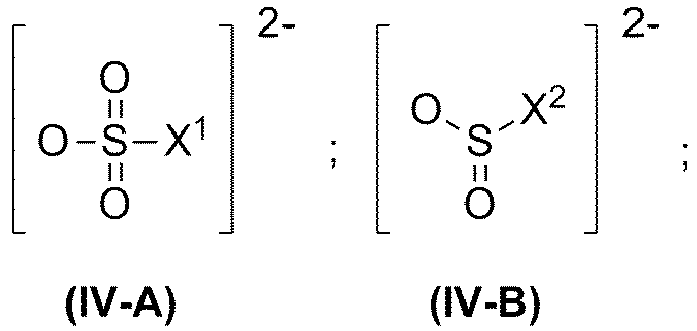
und wobei R6 ein Alkylrest ist, - Salze von Alkalimetallkationen mit dem Anion [HSO3]- oder mit Anionen der allgemeinen Formeln (IV-A) und (IV-B) mit


- Alkylthiolen, in denen ein an ein Kohlenstoffatom gebundenes Wasserstoffatom durch eine gegebenenfalls alkylierte und gegebenenfalls protonierte Aminogruppe ersetzt sein kann,
- Formaldehyd,
- Zucker,
ist.
- Verbindungen (I-A) der Struktur NH2R1 und Salze (I-B) umfassend das Kation [H3NR1]m+,
- Unter "Alkalimetallethanolat mit hoher Farbstabilität" ist erfindungsgemäß die nach Schritt b) des erfindungsgemäßen Verfahrens erhaltene Mischung aus dem in Schritt a) erhaltenen Alkalimetallethanolat und dem Stabilisator S zu verstehen.
- In einem ersten Schritt a) des erfindungsgemäßen Verfahrens wird Alkalimetall mit Ethanol umgesetzt, wodurch Alkalimetallethanolat erhalten wird. Das Alkalimetall ist dabei insbesondere ausgewählt aus Natrium, Kalium, bevorzugt ist das Alkalimetall Natrium.
Die Umsetzung von Alkalimetall mit Ethanol ist nicht besonders beschränkt und nach dem Fachmann bekannten Verfahren möglich, wie zum Beispiel in derDE 973 323 ,DE 198 02 013 A1 beschrieben. - Insbesondere kann das Alkalimetall in Schritt a) dabei als elementares Alkalimetall oder als Alkalimetallamalgam eingesetzt werden.
Da die Verwendung von elementarem Alkalimetall teuer ist, wird das Alkalimetall, insbesondere im Falle dass es sich dabei um Natrium oder Kalium, noch bevorzugter Natrium handelt, im Schritt a) bevorzugt als Alkalimetallamalgam eingesetzt. - Dieses Alkalimetallamalgam wird beispielsweise bei der Durchführung einer Chloralkalielektrolyse im Rahmen des Amalgamverfahrens erhalten, weshalb seine Verwendung kostengünstiger im Vergleich zum elementaren Alkalimetall ist. Die Durchführung des Amalgamverfahrens und damit auch die Herstellung von Alkalimetallamalgam ist dem Fachmann bekannt und zum Beispiel beschrieben in A. F. Holleman, E. Wiberg, N. Wiberg: Lehrbuch der Anorganischen Chemie. 102. Auflage. de Gruyter, Berlin 2007. Im Falle dass es sich bei dem Alkalimetall um Natrium handelt, wird zum Beispiel aus einer Natriumchloridlösung elektrolytisch an einer Titananode Chlorgas und an einer Amalgamkathode Natrium dargestellt. Das an der Kathode dargestellte Natrium geht dann direkt in das Amalgam über. Das so dargestellte Natriumamalgam kann dann direkt dem Schritt a) des erfindungsgemäßen Verfahrens zugeführt werden.
- Im Schritt a) des erfindungsgemäßen Verfahrens wird in dieser bevorzugten Ausführungsform das Alkalimetallamalgam, bevorzugt das Natriumamalgam, dann mit Ethanol umgesetzt. Auch diese Umsetzung ist im Stand der Technik beschrieben (
DE 973 323 ). Erfindungsgemäß wird dieser Schritt bevorzugt in Gegenwart eines heterogenen Katalysators durchgeführt. Als heterogener Katalysator kommen alle im Stand der Technik, zum Beispiel die in derUS 2,069,403 ,DE 973 323 ;US 2,761,880 A1 ,EP 1 195 369 A1 ,DE 198 02 013 A1 ,EP 0 810 193 A2 ,US 5,262,133 A ,EP 0 177 768 A1 ,EP 1 533 291 A1 beschriebenen, in Frage. Insbesondere umfasst dieser heterogene Katalysator mindestens Kohlenstoff, zum Beispiel Graphit, und/oder ein Metall ausgewählt aus Aluminium, Übergangsmetall, noch bevorzugter Kohlenstoff, zum Beispiel Graphit, und ein Metall ausgewählt aus Aluminium, Übergangsmetall. Das Übergangsmetall ist dabei bevorzugt ausgewählt aus denen der Nebengruppen Vb (= Vanadium-Gruppe) und Vlb (= Chrom-Gruppe). Besonders bevorzugt ist das Übergangsmetall Molybdän. In einer bevorzugten Ausführungsform handelt es sich um einen Trägerkatalysator, bei welchem eines der vorgenannten Übergangsmetalle, insbesondere ein Metall ausgewählt aus der Vanadium-Gruppe, der Chrom-Gruppe, wobei das Metall bevorzugt Mo ist, auf einem Träger wie insbesondere Kohlenstoff (Graphit zum Beispiel) geträgert ist. - Nach Durchführung des Schrittes a) des erfindungsgemäßen Verfahrens wird dann das Alkalimetallethanolat erhalten. Dieses liegt bevorzugt als ethanolische Lösung vor, und kann insbesondere eine Konzentration von Natriumethanolat in Ethanol von 5 bis 31 Gew.-%, bevorzugt 10 bis 21 Gew.-%, bevorzugter 14 bis 15 Gew-% aufweisen. Die Konzentration kann durch destillative Entfernung oder durch Zugabe von Ethanol variiert werden, zum Beispiel von 14 Gew.-% auf 21 Gew.-%.
- In einer bevorzugten Ausführungsform können Quecksilberreste in der Alkalimetallethanolatlösung nach dem Fachmann geläufigen Standardmethoden entfernt werden, zum Beispiel mit dem in
EP 2 656 905 A1 beschriebenen Verfahren. - Im Rahmen der vorliegenden Erfindung wurde nun beobachtet, dass das im Schritt a) erhaltene Alkalimetallethanolat eine unerwünschte Tendenz aufweist, sich über die Zeit gelb bis dunkelbraun zu verfärben. Dieses Verhalten ist insbesondere dann nachteilig, wenn es gelagert werden muss, bevor es einem weiteren Einsatz, beispielsweise als Katalysator in einer chemischen Synthesereaktion oder bei der Herstellung von Biodiesel zugeführt wird.
- Im Schritt b) des erfindungsgemäßen Verfahrens wird das im Schritt a) erhaltene Alkalimetallethanolat mit einem Stabilisator S vermischt.
- Dabei bedeutet "das im Schritt a) erhaltene Alkalimetallethanolat" insbesondere, dass der Stabilisator S so schnell wie möglich mit dem Alkalimetallethanolat vermischt wird, nachdem dieses im Schritt a) des erfindungsgemäßen Verfahrens erhalten wurde. Insbesondere wird demnach das in Schritt a) des erfindungsgemäßen Verfahrens erhaltene Alkalimetallethanolat direkt nach Beendigung des Schrittes a) mit dem Stabilisator S vermischt oder in ein Behältnis (wie zum Beispiel einen Lagertank) gegeben, in dem sich schon der Stabilisator S befindet, wo das Alkalimetallethanolat dann mit S vermischt wird.
- Dies ist eine bevorzugte Ausführungsform der vorliegenden Erfindung, dennoch ist die Erfindung nicht darauf beschränkt, denn der stabilisierende Effekt des Stabilisators S kommt natürlich auch dann zum Tragen, wenn das in Schritt a) erhaltene Alkalimetallethanolat erst ohne Stabilisator stehen gelassen (also gelagert) wird und erst nach Verstreichen eines Zeitraums mit dem Stabilisator S vermischt wird. Dann hat zwar schon eine ungehinderte Vergilbung eingesetzt, aber zumindest ab Zugabe des Stabilisators S wird die weitere Vergilbung dann verlangsamt oder gar rückgängig gemacht.
- Dabei ist der Stabilisator S ausgewählt aus einer der folgenden Gruppen I bis VII:
- 1) Gruppe I: Verbindungen (I-A) der Struktur NH2R1 und Salze (I-B) umfassend das Kation [H3NR1]m+,
wobei m eine ganze Zahl ≥ 1 ist,
und wobei R1 ausgewählt aus der Gruppe bestehend aus -NH-Phenyl, -Phenyl, -(C=O)-NH2, -OH, verzweigter oder unverzweigter Alkylrest, der insbesondere 1 bis 10 Kohlenstoffatome aufweisen kann, in welchem mindestens ein Wasserstoffatom durch eine Gruppe ausgewählt aus -NH2, -OH und im Falle der Salze (I-B) auch durch -NH3 + substituiert sein kann, ist.
m gibt die Anzahl der positiven Ladungen des Kations [H3NR1]m+ in den Salzen (I-B) an. Sie ist m = 1, wenn der Rest R1 keine NH3 +-Gruppe aufweist, und ändert sich, wenn R1 ein Alkylrest ist, in dem ein Wasserstoffatom durch eine -NH3 +-Gruppe substituiert ist. Dementsprechend erhöht sich dann m für jede solche vorhandene -NH3 +-Gruppe um den Wert 1.
In einer bevorzugten Ausführungsform der vorliegenden Erfindung umfasst die Gruppe I Verbindungen (I-A) der Struktur NH2R1 und Salze (I-B) umfassend das Kation [H3NR1]m+ mit m = 1, wobei R1 ausgewählt aus der Gruppe bestehend aus -NH-Phenyl, -Phenyl, -(C=O)-NH2, -OH, verzweigter oder unverzweigter Alkylrest mit 1 bis 10 Kohlenstoffatomen, in welchem mindestens ein Wasserstoffatom durch eine Gruppe ausgewählt aus -NH2, -OH substituiert sein kann, ist.
In einer bevorzugteren Ausführungsform der vorliegenden Erfindung umfasst die Gruppe I Verbindungen (I-A) der Struktur NH2R1 und Salze (I-B) umfassend das Kation [H3NR1]m+ mit m = 1, wobei R1 ausgewählt aus der Gruppe bestehend aus -NH-Phenyl, -Phenyl, -(C=O)-NH2, -OH, verzweigter oder unverzweigter, noch bevorzugter unverzweigter, Alkylrest mit 1 bis 6 Kohlenstoffatomen, in welchem mindestens ein Wasserstoffatom durch eine Gruppe ausgewählt aus -NH2, -OH substituiert sein kann, ist.
In einer besonders bevorzugten Ausführungsform der vorliegenden Erfindung umfasst die Gruppe I Verbindungen (I-A) ausgewählt aus der Gruppe bestehend aus Phenylhydrazin (CAS-Nr.: 100-63-0), Anilin (CAS-Nr.: 62-53-3), Harnstoff (CAS-Nr.: 57-13-6), Alkanolamine mit 1 bis 6 Kohlenstoffatomen, Diaminen mit 1 bis 6 Kohlenstoffatomen und das Salz (I-B), welches ein Hydroxylammoniumsalz, besonders bevorzugt Hydroxylammoniumsulfat (CAS-Nr.: 10039-54-0), ist.
In einer ganz besonders bevorzugten Ausführungsform der vorliegenden Erfindung umfasst die Gruppe I Verbindungen (I-A) ausgewählt aus der Gruppe bestehend aus Alkanolamine mit 1 bis 6 Kohlenstoffatomen, Diaminen mit 1 bis 6 Kohlenstoffatomen und das Salz (I-B), welches ein Hydroxylammoniumsalz, besonders bevorzugt Hydroxylammoniumsulfat (CAS-Nr.: 10039-54-0), ist.
Alkanolamine mit 1 bis 6 Kohlenstoffatomen haben bevorzugt 1 bis 4, noch bevorzugter 1 bis 3 Kohlenstoffatome, und noch bevorzugter handelt es sich dabei um Ethanolamin (CAS-Nr.: 141-43-5).
Diamine mit 1 bis 6 Kohlenstoffatomen haben bevorzugt 1 bis 4, noch bevorzugter 1 bis 3 Kohlenstoffatome, und noch bevorzugter handelt es sich dabei um Ethylendiamin (CAS-Nr.: 107-15-3). - 2) Gruppe II: Verbindungen (II-A) der Struktur NR2R3R9 und Salze (II-B) umfassend das Kation [HNR2R3R9]n+,
wobei n eine ganze Zahl ≥ 1 ist,
und wobei R2, R3 unabhängig voneinander jeweils ein Alkylrest, bevorzugt mit 1 bis 10 Kohlenstoffatomen, sind,
und wobei R9 ausgewählt aus der Gruppe bestehend aus -OH, verzweigter oder unverzweigter Alkylrest, bevorzugt mit 1 bis 10 Kohlenstoffatomen, in welchem mindestens ein Wasserstoffatom durch eine Gruppe ausgewählt aus -NH2, -OH und im Falle der Salze (II-B) auch durch -NH3 + substituiert sein kann, ist.
n gibt die Anzahl der positiven Ladungen des Kations [HNR2R3R9]n+, in den Salzen (II-B) an. Sie ist n = 1, wenn der Rest R9 keine NH3 +-Gruppe aufweist, und ändert sich, wenn R9 ein verzweigter oder unverzweigter Alkylrest ist, in dem ein Wasserstoffatom durch eine -NH3 +-Gruppe substituiert ist. Dementsprechend erhöht sich dann n für jede solche vorhandene -NH3 +-Gruppe um den Wert 1.
In einer bevorzugten Ausführungsform der vorliegenden Erfindung umfasst die Gruppe II Verbindungen (II-A) der Struktur NR2R3R9 und Salze (II-B) umfassend das Kation [HNR2R3R9]n+ mit n = 1, wobei R2, R3 unabhängig voneinander jeweils ein Alkylrest mit 1 bis 6, bevorzugter mit 1 bis 4, noch bevorzugter mit 1 bis 3 Kohlenstoffatomen ist, und wobei R9 ausgewählt aus der Gruppe bestehend aus -OH, verzweigter oder unverzweigter Alkylrest, bevorzugt mit 1 bis 6 Kohlenstoffatomen, in welchem genau ein Wasserstoffatom durch eine Gruppe ausgewählt aus -NH2, -OH substituiert sein kann, ist.
In einer bevorzugteren Ausführungsform der vorliegenden Erfindung umfasst die Gruppe II Verbindungen (II-A) der Struktur NR2R3R9 und Salze (II-B) umfassend das Kation [HNR2R3R9]n+ mit n = 1, wobei R2, R3 unabhängig voneinander jeweils ein Alkylrest mit 1 bis 4, bevorzugter mit 1 bis 3, noch bevorzugter mit 2 Kohlenstoffatomen ist, und wobei R9 ausgewählt aus der Gruppe bestehend aus -OH, verzweigter oder unverzweigter Alkylrest, bevorzugt mit 2 bis 3 Kohlenstoffatomen, in welchem genau ein Wasserstoffatom durch eine Gruppe ausgewählt aus -NH2, -OH, bevorzugt mit -NH2, substituiert sein kann, ist.
In einer noch bevorzugteren Ausführungsform der vorliegenden Erfindung umfasst die Gruppe II Verbindungen (II-A) der Struktur NR2R3R9 und Salze (II-B) umfassend das Kation [HNR2R3R9]n+ mit n = 1, wobei R2, R3 unabhängig voneinander jeweils ein Alkylrest mit 1 bis 4, bevorzugter mit 1 bis 3, noch bevorzugter mit 2 Kohlenstoffatomen ist, und R9 ausgewählt aus der Gruppe bestehend aus -OH, Ethyl, 1- Hydroxyethyl, 2-Hydroxyethyl, Propyl, 1-Hyroxypropyl, 2-Hydroxypropyl, 3-Hydroxypropyl, 1-Aminoethyl, 2-Aminoethyl, 1-Aminopropyl, 2-Aminopropyl, 3-Aminopropyl ist.
In einer noch bevorzugteren Ausführungsform der vorliegenden Erfindung sind Verbindungen der Gruppe II die Verbindungen (II-A) der Struktur NR2R3R9 ausgewählt aus N,N-Diethylhydroxylamin (CAS-Nr.: 3710-84-7), Diethylaminopropylamin (CAS-Nr.: 104-78-9), noch bevorzugter Diethylaminopropylamin. - 3) Gruppe III: Verbindungen (III-A) der Struktur R4-COOR5, Carboxylate (III-B) der Struktur R4-COO-, sowie Orthoester (III-C) der Struktur R4-C(OR6)3,
wobei R4 ausgewählt aus der Gruppe bestehend aus Wasserstoff, verzweigter oder unverzweigter Alkyl- oder Alkenylrest, insbesondere mit 1 bis 10 Kohlenstoffatomen, in welchem mindestens ein an ein Kohlenstoffatom gebundenes Wasserstoffatom durch einen Rest ausgewählt aus der Gruppe bestehend aus -SH, -SCH3, -COOR*, -NH2 und im Falle der Carboxylate (III-B) auch durch -NH3 +, -COO- substituiert sein kann, ist,
und wobei R5, R* unabhängig voneinander jeweils Wasserstoff oder ein Alkylrest, insbesondere mit 1 bis 10 Kohlenstoffatomen, sind,
und wobei R6 ein Alkylrest, insbesondere mit 1 bis 10 Kohlenstoffatomen, ist.
In einer bevorzugten Ausführungsform der vorliegenden Erfindung umfasst die Gruppe III Verbindungen (III-A) der Struktur R4-COOR5, Carboxylate (III-B) der Struktur R4-COO-, sowie Orthoester (III-C) der Struktur R4-C(OR6)3, wobei R4 ausgewählt aus der Gruppe bestehend aus Wasserstoff, verzweigter oder unverzweigter Alkyl- oder Alkenylrest, mit 1 bis 6, noch bevorzugter 1 bis 5, noch bevorzugter 1 bis 4 Kohlenstoffatomen, in welchem mindestens ein an ein Kohlenstoffatom gebundenes Wasserstoffatom durch einen Rest ausgewählt aus der Gruppe bestehend aus -SH, -COOR*, -NH2 und im Falle der Carboxylate (III-B) auch durch -NH3 +, -COO- substituiert sein kann, ist,
und wobei R5, R* unabhängig voneinander jeweils Wasserstoff oder ein Alkylrest mit 1 bis 6, bevorzugt 1 bis 4, Kohlenstoffatomen, ist,
und wobei R6 ein Alkylrest mit 1 bis 6, insbesondere 1 bis 4 Kohlenstoffatomen, ist.
In einer noch bevorzugteren Ausführungsform der vorliegenden Erfindung umfasst die Gruppe III Verbindungen (III-A) der Struktur R4-COOR5, Carboxylate (III-B) der Struktur R4-COO-, sowie Orthoester (III-C) der Struktur R4-C(OR6)3, wobei R4 ausgewählt aus der Gruppe bestehend aus Wasserstoff, verzweigter oder unverzweigter Alkyl- oder Alkenylrest, mit 1 bis 3, bevorzugter 1 bis 2 Kohlenstoffatomen, in welchem mindestens ein an ein Kohlenstoffatom gebundenes Wasserstoffatom durch einen Rest ausgewählt aus der Gruppe bestehend aus -SH, -COOR*, -NH2 und im Falle der Carboxylate (III-B) auch durch -NH3 +, -COO- substituiert sein kann, ist,
und wobei R5, R* unabhängig voneinander jeweils Wasserstoff, Methylrest oder Ethylrest, bevorzugt Wasserstoff oder Methylrest, sind,
und wobei R6 ein Methylrest ist.
In einer noch bevorzugteren Ausführungsform der vorliegenden Erfindung sind Verbindungen der Gruppe III ausgewählt aus Trimethylorthoformiat (CAS-Nr.:149-73-5), Glycin (CAS-Nr.: 56-40-6), Mercaptoessigsäure (CAS-Nr.: 68-11-1), Malonsäuredimethylester (CAS-Nummer: 108-59-8), Maleinsäure (CAS-Nr.: 110-16-7), Malonsäuremonomethylester sowie das entsprechende Monocarboxylat, z.B. dessen Kaliumsalz (CAS-Nr.: 38330-80-2), Mercaptoacetat, zum Beispiel dessen Ammoniumsalz (CAS-Nr.: 5421-46-5) sowie dessen Natriumsalz (CAS-Nr.: 367-51-1) oder Kaliumsalz (CAS-Nr.: 34452-51-2), wobei das Ammoniumsalz bevorzugt ist, Mercaptobernsteinsäure (CAS-Nr.: 70-49-5). Noch bevorzugter sind Verbindungen der Gruppe III ausgewählt aus Glycin, Mercaptoessigsäure, Malonsäuredimethylester. Ganz besonders bevorzugt ist die Verbindung der Gruppe III Malonsäuredimethylester. - 4) Gruppe IV: Salze von Alkalimetallkationen mit dem Anion [HSO3]- oder mit Anionen der allgemeinen Formeln (IV-A) und (IV-B) mit


In einer bevorzugten Ausführungsform der vorliegenden Erfindung umfasst die Gruppe IV Salze von Alkalimetallkationen ausgewählt aus Kaliumionen oder Natriumionen, bevorzugt Natriumionen, mit dem Anion [HSO3]- oder mit Anionen der allgemeinen Formeln (IV-A) und (IV-B) mit


In einer noch bevorzugteren Ausführungsform sind die Verbindungen der Gruppe IV ausgewählt aus Natriumsulfit (CAS-Nr: 7757-83-7), Natriummetabisulfit (CAS-Nr.: 7681-57-4), Natriumdithionit (CAS-Nr.: 7775-14-6), Natriumthiosulfat (bevorzugt jenes Natriumthiosulfat mit CAS-Nr.: 7772-98-7; aber auch das entsprechende Pentahydrat mit CAS-Nr.: 10102-17-7 ist möglich), Natriumperoxodisulfat (CAS-Nr.: 7775-27-1), Natriumbisulfit (CAS-Nr.: 7631-90-5). Noch bevorzugter sind die Verbindungen der Gruppe IV ausgewählt aus Natriumsulfit und Natriumthiosulfat. Ganz besonders bevorzugt ist die Verbindung der Gruppe IV Natriumthiosulfat. - 5) Gruppe V: Alkylthiole, in denen ein an ein Kohlenstoffatom gebundenes Wasserstoffatom durch eine gegebenenfalls alkylierte und gegebenenfalls protonierte Aminogruppe ersetzt sein kann. Bevorzugt handelt es sich dabei um Alkylthiole mit 1 bis 18, noch bevorzugter 2 bis 12 Kohlenstoffatomen in denen ein an ein Kohlenstoffatom gebundenes Wasserstoffatom durch eine gegebenenfalls alkylierte und gegebenenfalls protonierte Aminogruppe ersetzt sein kann. Noch bevorzugter handelt es sich dabei um Alkylthiole mit 1 bis 18, noch bevorzugter 2 bis 12 Kohlenstoffatomen in denen ein an ein Kohlenstoffatom gebundenes Wasserstoffatom durch -NH2 oder -NH3 + ersetzt sein kann.
Besonders bevorzugt handelt es sich dabei um Dodecanthiol (CAS-Nr.: 112-55-0) oder Cysteamin (CAS-Nr.: 60-23-1; es kann auch dessen Hydrochlorid mit CAS-Nr. 156-57-0 eingesetzt werden), besonders bevorzugt um Dodecanthiol. - 6) Gruppe VI: Formaldehyd, insbesondere eingesetzt als wässrige Formaldehydlösung, Formalin (CAS-Nr.: 82115-62-6) oder Paraformaldehyd (CAS-Nr.: 30525-89-4), ganz besonders bevorzugt Paraformaldehyd (CAS-Nr.: 30525-89-4).
- 7) Gruppe VII : Zucker, welche bevorzugt aus Aldohexosen, Ketohexosen und Disacchariden ausgewählt sind, wobei der Zucker bevorzugt ausgewählt aus der Gruppe bestehend aus Saccharose (CAS-Nr.: 57-50-1), D-Glucose (CAS-Nr.: 50-99-7), D-Fructose (CAS-Nr.: 57-48-7), L-Glucose (CAS-Nr.: 921-60-8), L-Fructose (CAS-Nr.: 7776-48-9) ist, besonders bevorzugt aber D-Glucose ist.
- Besonders bevorzugt ist der Stabilisator S ausgewählt aus den Gruppen I, II und III, bevorzugter aus den Gruppen I und II, noch bevorzugter aus der Gruppe I.
- Der Stabilisator S wird in Schritt b) des erfindungsgemäßen Verfahrens insbesondere in einer solchen Menge zugegeben, dass das Gesamtgewicht aller Stabilisatoren S bezogen auf das Gesamtgewicht des Alkalimetallethanolats im Bereich 1 ppm bis 10000 ppm, bevorzugt 10 ppm bis 1000 ppm, noch bevorzugter 100 ppm bis 1000 ppm, am bevorzugtesten 500 ppm bis 800 ppm, liegt.
- In einem weiteren Aspekt umfasst die vorliegende Erfindung auch ein Verfahren zur Lagerung von Alkalimetallethanolat, dadurch gekennzeichnet, dass man Alkalimetallethanolat mit einem Stabilisator S, wie er in den Gruppen I bis VII definiert ist, mischt, so dass man eine Mischung M umfassend Alkalimetallethanolat und den Stabilisator S erhält, und die resultierende Mischung M lagert.
- Das Alkalimetallethanolat im Verfahren zur Lagerung von Alkalimetallethanolat ist bevorzugt ausgewählt aus Natriumethanolat, Kaliumethanolat besonders bevorzugt aber Natriumethanolat.
- "Lagerung" bedeutet insbesondere, dass die resultierende Mischung M bei einer Temperatur und einem Druck (zum Beispiel 25 °C und 1 bar), bei dem die Mischung M flüssig ist, aufbewahrt wird, zum Beispiel in einem Lagertank. Auch hier kommt der stabilisierende Effekt des Stabilisators S dadurch zum Tragen, dass die Vergilbung der Mischung M verlangsamt oder sogar rückgängig gemacht wird. Insbesondere liegt in der Mischung M das Gesamtgewicht aller Stabilisatoren S bezogen auf das Gesamtgewicht des Alkalimetallethanolats im Bereich 1 ppm bis 10000 ppm, noch bevorzugter 100 ppm bis 1000 ppm, am bevorzugtesten 500 ppm bis 800 ppm. Die folgenden Beispiele sollen die Erfindung weiter erläutern, ohne diese darauf zu beschränken.
- Das in den Stabilisatorversuchen verwendete Natriumethanolat wurde frisch per Amalgamverfahren gewonnen und wies eine Konzentration von 21 Gew.-% in Ethanol (im Folgenden mit "NE 21" abgekürzt) auf. Es wies eine Gardnerzahl von 1,1 auf, bestimmt mit DIN 4630.
- Zur Durchführung der Stabilisatorversuche wurden gleiche Volumina der NE 21 Lösung in GC-Vials gefüllt und jeweils 0.1 Gew.-% des jeweiligen Additivs (bezogen auf die theoretische Masse des NE 21 in der Probe) zugegeben. Daneben wurde auch eine Blindprobe vorbereitet. Die Proben wurden unter N2 bei Raumtemperatur für 7 Tage bzw. 14 Tagen gelagert.
Nach diesem Zeitraum wurde die Gardnerzahl der jeweiligen Probe gemäß DIN 4630 vermessen, welche ein Maß für die Verfärbung der jeweiligen Probe gibt. - Es wurden 2 Ansatzreihen (Analyse Gardnerzahl nach 7 und 14 Tagen) angesetzt. Zur Messung der Gardnerzahl wurde die zur Messung notwendige Menge NE 21 in eine 1 cm Messküvette gefüllt. Die Messung selbst erfolgte mit einem Photometer der Fa. Lange; Typ: "Lico 400 spektrales Farbmessgerät".
Die folgende Tabelle stellt die für die verschiedenen Stoffklassen gemessenen Werte dar, geordnet gemäß den oben angegebenen Gruppen I bis VII. In den Klammern hinter Substanz ist die CAS-Nummer der jeweiligen Substanz angegeben. V1 ist das Vergleichsbeispiel, E1 bis E26 sind die erfindungsgemäßen Beispiele.Beispiel Additiv Gardnerzahl nach 7 Tagen Gardnerzahl nach 14 Tagen V1 keines (Blindprobe) 4,6 4,9 Gruppe I E1 Anilin (62-53-3) 1,8 1,8 E2 Phenylhydrazin (100-63-0) 2,7 1,8 E3 Harnstoff (57-13-6) 4,0 4,1 E4 Ethanolamin (141-43-5) 0,7 0,7 E5 Ethylendiamin (107-15-3) 0,6 0,6 E6 Hydroxylammoniumsulfat (10039-54-0) 0,6 0,5 Gruppe II E7 N,N-Diethylhydroxylamin (3710-84-7) 2,9 3,3 E8 Diethylaminopropylamin (104-78-9) 0,9 1,0 Gruppe III E9 Trimethylorthoformiat (149-73-5) 4,1 3,8 E10 Mercaptoessigsäure (68-11-1) 2,6 2,7 E11 Malonsäuredimethylester (108-59-8) 1,0 1,0 E12 Glycin (56-40-6) 3,6 2,4 E13 Maleinsäure (110-16-7) 4,2 3,9 E14 Malonsäuremonomethylester, Kaliumsalz (38330-80-2) 4,5 4,8 E15 Ammoniumthioglycolat (5421-46-5) 2,5 3,6 E16 Mercaptobernsteinsäure (70-49-5) 4,0 4,2 Gruppe IV E17 Natriumsulfit (7757-83-7) 4,3 3,9 E18 Natriummetabisulfit (7681-57-4) 4,3 4,3 E19 Natriumdithionit (7775-14-6) 3,8 4,3 E20 Natriumthiosulfat (7772-98-7) 4,2 3,7 E21 Natriumperoxodisulfat (7775-27-1) 4,3 4,5 E22 Natriumbisulfit (7631-90-5) 4,5 4,5 Gruppe V E23 Cysteaminhydrochlorid (156-57-0) 3,2 3,1 E24 Dodecanthiol (112-55-0) 2,7 2,7 Gruppe VI E25 Paraformaldehyd (30525-89-4) 2,8 2,3 Gruppe VII E26 D-Glucose (50-99-7) 3,7 4,2 - Wie aus der Tabelle ersichtlich, zeichnen sich alle Stabilisatoren dadurch aus, dass diese bei Zugabe zu Natriumethanolat die Verfärbung desselben stark verlangsamen und in einigen Fällen (Verminderung der Gardnerzahl von 1,1 auf < 1,1 in den Versuchen E4 - E6, E8, E11) sogar rückgängig machen. Dieses Ergebnis war völlig überraschend.
Claims (10)
- Verfahren zur Herstellung von Alkalimetallethanolat mit hoher Farbstabilität, wobei mana) Alkalimetall mit Ethanol umsetzt, wodurch Alkalimetallethanolat erhalten wird;b) das in Schritt a) erhaltene Alkalimetallethanolat mit einem Stabilisator S vermischt, wobei S ausgewählt aus der Gruppe bestehend aus
Verbindungen (I-A) der Struktur NH2R1 und Salze (I-B) umfassend das Kation [H3NR1]m+,
wobei m eine ganze Zahl ≥ 1 ist,
und wobei R1 ausgewählt aus der Gruppe bestehend aus -NH-Phenyl, -Phenyl, -(C=O)-NH2, -OH, verzweigter oder unverzweigter Alkylrest, in welchem mindestens ein Wasserstoffatom durch eine Gruppe ausgewählt aus -NH2, -OH und im Falle der Salze (I-B) auch durch -NH3 + substituiert sein kann, ist,
Verbindungen (II-A) der Struktur NR2R3R9 und Salze (II-B) umfassend das Kation [HNR2R3R9]n+,
wobei n eine ganze Zahl ≥ 1 ist,
und wobei R2, R3 unabhängig voneinander jeweils ein Alkylrest sind,
und wobei R9 ausgewählt aus der Gruppe bestehend aus -OH, verzweigter oder unverzweigter Alkylrest, in welchem mindestens ein Wasserstoffatom durch eine Gruppe ausgewählt aus -NH2, -OH und im Falle der Salze (II-B) auch durch -NH3 + substituiert sein kann, ist,
Verbindungen (III-A) der Struktur R4-COOR5, Carboxylate (III-B) der Struktur R4-COO-, sowie Orthoester (III-C) der Struktur R4-C(OR6)3,
wobei R4 ausgewählt aus der Gruppe bestehend aus Wasserstoff, verzweigter oder unverzweigter Alkyl- oder Alkenylrest, in welchem mindestens ein an ein Kohlenstoffatom gebundenes Wasserstoffatom durch einen Rest ausgewählt aus der Gruppe bestehend aus -SH, -SCH3, -COOR*, -NH2 und im Falle der Carboxylate (III-B) auch durch -NH3 +, -COO- substituiert sein kann, ist,
und wobei R5, R* unabhängig voneinander jeweils Wasserstoff oder ein Alkylrest sind, und wobei R6 ein Alkylrest ist,
Salze von Alkalimetallkationen mit dem Anion [HSO3]- oder mit Anionen der allgemeinen Formeln (IV-A) und (IV-B) mit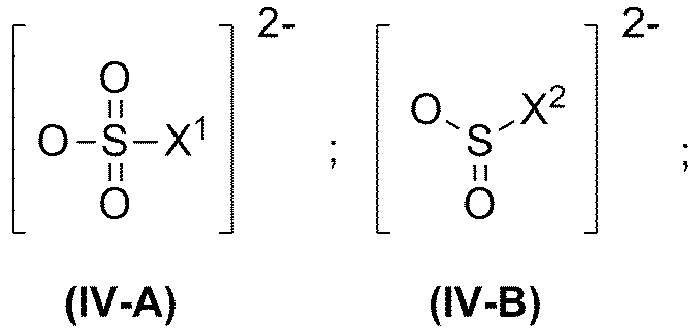


Alkylthiolen, in denen ein an ein Kohlenstoffatom gebundenes Wasserstoffatom durch eine gegebenenfalls alkylierte und gegebenenfalls protonierte Aminogruppe ersetzt sein kann,
Formaldehyd,
Zucker,
ist. - Verfahren nach Anspruch 1, wobei der Stabilisator S ausgewählt ist aus Verbindungen (I-A) der Struktur NH2R1 und Salze (I-B) umfassend das Kation [H3NR1]m+, Verbindungen (II-A) der Struktur NR2R3R9 und Salze (II-B) umfassend das Kation [HNR2R3R9]n+, Verbindungen (III-A) der Struktur R4-COOR5, Carboxylate (III-B) der Struktur R4-COO-, sowie Orthoester (III-C) der Struktur R4-C(OR6)3.
- Verfahren nach Anspruch 1 oder 2, wobei das Alkalimetallethanolat als ethanolische Lösung vorliegt.
- Verfahren nach einem der Ansprüche 1 bis 3, wobei das Alkalimetall ausgewählt aus der Gruppe bestehend aus Natrium, Kalium ist.
- Verfahren nach einem der Ansprüche 1 bis 4, wobei das Alkalimetall im Schritt a) als Alkalimetallamalgam eingesetzt wird.
- Verfahren nach Anspruch 5, wobei der Schritt a) in Gegenwart eines heterogenen Katalysators durchgeführt wird.
- Verfahren nach Anspruch 6, wobei der heterogene Katalysator mindestens Graphit und/oder ein Metall ausgewählt aus der Gruppe Aluminium, Übergangsmetall umfasst.
- Verfahren nach einem der Ansprüche 1 bis 7, wobei in Schritt b) der Stabilisator S in einer solchen Menge zugegeben wird, dass das Gesamtgewicht aller Stabilisatoren S, bezogen auf das Gesamtgewicht des Alkalimetallethanolats, im Bereich 1 ppm bis 10000 ppm liegt.
- Verfahren zur Lagerung von Alkalimetallethanolat, dadurch gekennzeichnet, dass man Alkalimetallethanolat mit einem Stabilisator S, wie er in Anspruch 1 oder 2 definiert ist, mischt, so dass man eine Mischung M umfassend Alkalimetallethanolat und den Stabilisator S erhält, und die resultierende Mischung M lagert.
- Verfahren nach Anspruch 9, wobei in der Mischung M das Gesamtgewicht aller Stabilisatoren S bezogen auf das Gesamtgewicht des Alkalimetallethanolats im Bereich 1 ppm bis 10000 ppm liegt.
Priority Applications (1)
| Application Number | Priority Date | Filing Date | Title |
|---|---|---|---|
| EP15202369.3A EP3184502A1 (de) | 2015-12-23 | 2015-12-23 | Verfahren zur herstellung von alkalimetallethanolat |
Applications Claiming Priority (1)
| Application Number | Priority Date | Filing Date | Title |
|---|---|---|---|
| EP15202369.3A EP3184502A1 (de) | 2015-12-23 | 2015-12-23 | Verfahren zur herstellung von alkalimetallethanolat |
Publications (1)
| Publication Number | Publication Date |
|---|---|
| EP3184502A1 true EP3184502A1 (de) | 2017-06-28 |
Family
ID=55173745
Family Applications (1)
| Application Number | Title | Priority Date | Filing Date |
|---|---|---|---|
| EP15202369.3A Withdrawn EP3184502A1 (de) | 2015-12-23 | 2015-12-23 | Verfahren zur herstellung von alkalimetallethanolat |
Country Status (1)
| Country | Link |
|---|---|
| EP (1) | EP3184502A1 (de) |
Cited By (2)
| Publication number | Priority date | Publication date | Assignee | Title |
|---|---|---|---|---|
| US11634372B2 (en) | 2020-01-23 | 2023-04-25 | Evonik Functional Solutions Gmbh | Method for the energy-efficient production of sodium and potassium alcoholates |
| US11746075B2 (en) | 2020-01-23 | 2023-09-05 | Evonik Functional Solutions Gmbh | Method for the simultaneous production of sodium and potassium alcoholates |
Citations (12)
| Publication number | Priority date | Publication date | Assignee | Title |
|---|---|---|---|---|
| US2069403A (en) | 1936-02-24 | 1937-02-02 | Mathieson Alkali Works Inc | Process for making alkali metal alcoholates |
| US2185247A (en) * | 1938-03-26 | 1940-01-02 | Mathieson Alkali Works Inc | Stabilized alkali metal alcoholates |
| US2278550A (en) * | 1939-06-21 | 1942-04-07 | Du Pont | Preparation of alkali metal alkoxides |
| US2761880A (en) | 1953-05-05 | 1956-09-04 | Wacker Chemie Gmbh | Improved process for making alcoholic solutions of alkali-metal alkoxides |
| DE973323C (de) | 1952-08-05 | 1960-01-21 | Huels Chemische Werke Ag | Verfahren zur Herstellung von Alkalialkoholaten |
| EP0177768A1 (de) | 1984-10-10 | 1986-04-16 | Hüls Troisdorf Aktiengesellschaft | Verfahren zur katalytischen Herstellung von Alkalialkoholaten |
| US5262133A (en) | 1991-02-11 | 1993-11-16 | Occidental Chemical Corporation | Method of denuding sodium mercury amalgam and producing sodium alcoholates |
| EP0810193A2 (de) | 1996-05-29 | 1997-12-03 | Hüls Aktiengesellschaft | Verfahren zur katalytischen Herstellung von Alkalialkoholaten |
| DE19802013A1 (de) | 1998-01-21 | 1999-07-22 | Huels Chemische Werke Ag | Verfahren zur Herstellung niederer und höherer Alkalialkoholate, insbesondere Kaliumtertiärbutylat, durch mikroheterogene Katalyse |
| EP1195369A1 (de) | 2000-10-06 | 2002-04-10 | Basf Aktiengesellschaft | Verfahren zur katalytischen Herstellung von Alkalialkoholaten |
| EP1533291A1 (de) | 2003-11-10 | 2005-05-25 | Basf Aktiengesellschaft | Verfahren zur katalytischen Herstellung von Alkalialkoholaten |
| EP2656905A1 (de) | 2012-04-27 | 2013-10-30 | Evonik Degussa GmbH | Entquickung von Lösungen durch Ultrafiltration |
-
2015
- 2015-12-23 EP EP15202369.3A patent/EP3184502A1/de not_active Withdrawn
Patent Citations (12)
| Publication number | Priority date | Publication date | Assignee | Title |
|---|---|---|---|---|
| US2069403A (en) | 1936-02-24 | 1937-02-02 | Mathieson Alkali Works Inc | Process for making alkali metal alcoholates |
| US2185247A (en) * | 1938-03-26 | 1940-01-02 | Mathieson Alkali Works Inc | Stabilized alkali metal alcoholates |
| US2278550A (en) * | 1939-06-21 | 1942-04-07 | Du Pont | Preparation of alkali metal alkoxides |
| DE973323C (de) | 1952-08-05 | 1960-01-21 | Huels Chemische Werke Ag | Verfahren zur Herstellung von Alkalialkoholaten |
| US2761880A (en) | 1953-05-05 | 1956-09-04 | Wacker Chemie Gmbh | Improved process for making alcoholic solutions of alkali-metal alkoxides |
| EP0177768A1 (de) | 1984-10-10 | 1986-04-16 | Hüls Troisdorf Aktiengesellschaft | Verfahren zur katalytischen Herstellung von Alkalialkoholaten |
| US5262133A (en) | 1991-02-11 | 1993-11-16 | Occidental Chemical Corporation | Method of denuding sodium mercury amalgam and producing sodium alcoholates |
| EP0810193A2 (de) | 1996-05-29 | 1997-12-03 | Hüls Aktiengesellschaft | Verfahren zur katalytischen Herstellung von Alkalialkoholaten |
| DE19802013A1 (de) | 1998-01-21 | 1999-07-22 | Huels Chemische Werke Ag | Verfahren zur Herstellung niederer und höherer Alkalialkoholate, insbesondere Kaliumtertiärbutylat, durch mikroheterogene Katalyse |
| EP1195369A1 (de) | 2000-10-06 | 2002-04-10 | Basf Aktiengesellschaft | Verfahren zur katalytischen Herstellung von Alkalialkoholaten |
| EP1533291A1 (de) | 2003-11-10 | 2005-05-25 | Basf Aktiengesellschaft | Verfahren zur katalytischen Herstellung von Alkalialkoholaten |
| EP2656905A1 (de) | 2012-04-27 | 2013-10-30 | Evonik Degussa GmbH | Entquickung von Lösungen durch Ultrafiltration |
Non-Patent Citations (1)
| Title |
|---|
| A. F. HOLLEMAN; E. WIBERG; N. WIBERG: "Lehrbuch der Anorganischen Chemie", 2007, DE GRUYTER |
Cited By (2)
| Publication number | Priority date | Publication date | Assignee | Title |
|---|---|---|---|---|
| US11634372B2 (en) | 2020-01-23 | 2023-04-25 | Evonik Functional Solutions Gmbh | Method for the energy-efficient production of sodium and potassium alcoholates |
| US11746075B2 (en) | 2020-01-23 | 2023-09-05 | Evonik Functional Solutions Gmbh | Method for the simultaneous production of sodium and potassium alcoholates |
Similar Documents
| Publication | Publication Date | Title |
|---|---|---|
| WO2006021302A1 (de) | Verfahren zur herstellung quartärer ammoniumverbindungen hoher reinheit | |
| EP2706056B1 (de) | Verfahren zur Herstellung und Aufarbeitung eines Triacetonamin-haltigen Reaktionsgemisches | |
| EP3184502A1 (de) | Verfahren zur herstellung von alkalimetallethanolat | |
| EP2804835A1 (de) | Chloridarmes lipf6 | |
| DE2155495A1 (de) | Verfahren zur herstellung von benzylidenverbindungen | |
| EP2794553B1 (de) | Verfahren zur herstellung von n-alkyl(meth)acrylamiden | |
| DE2335906C3 (de) | Verfahren zur kontinuierlichen Herstellung von N-Alkylarylaminen | |
| WO2016207365A1 (de) | Verfahren zur kontinuierlichen herstellung von 5-hydroxymethyl-furfural (hmf) in einer reaktoranordnung | |
| EP3205643A1 (de) | Verfahren zur herstellung von 3-methylthiopropionaldehyd | |
| EP1541540A1 (de) | Verfahren zur Herstellung alkoxyreiner Erdalkalialkoxide | |
| DE2319647C3 (de) | ThiocarbamylsuHenamide und deren Verwendung | |
| EP1996543B1 (de) | Verfahren zur herstellung von benzophenoniminen | |
| DE2348738C3 (de) | N-Alkylierung aromatischer Amine | |
| DE3332687A1 (de) | Verfahren zur herstellung von 2-amino-alkylpyridinen | |
| EP0364708A1 (de) | Verfahren zur Herstellung von alpha-Aminoalkanolen | |
| EP0003052B1 (de) | Verfahren zur Herstellung von 4-Methyl-5-chlormethylimidazol | |
| DE102014226608A1 (de) | Verfahren zur Herstellung von Zinkbromid und Lithiumbromid enthaltenden aprotischen Lösungen | |
| EP3392237B1 (de) | Verfahren zur herstellung von acroleincyanhydrinen | |
| DE715541C (de) | Verfahren zur Herstellung von halogenwasserstoffsauren Salzen substituierter Isothioharnstoffe | |
| EP2066710A1 (de) | Ionische flüssigkeiten bei der pom-herstellung | |
| DE2934925A1 (de) | Verbessertes verfahren zur herstellung von 4(5)-hydroxymethyl-5(4)-niederalkyl-imidazolen und deren saeureadditionssalzen | |
| EP0906280B1 (de) | Sterisch gehindertes 4-amino-piperidin mit geringem dimergehalt, seine herstellung und verwendung | |
| EP3621944B1 (de) | Verfahren zur stabilisierung von zumindest monoalkylsubstituierten diaminocyclohexanen | |
| DE102006015704B4 (de) | Neue 1,2-Bis-(azol-1-yl)-ethan-1,2-diole als Zwischenprodukte zur Synthese von Agrochemikalien und Verfahren zu ihrer Herstellung | |
| DE1645472A1 (de) | Verfahren zur Herstellung von Polymethylensulfid |
Legal Events
| Date | Code | Title | Description |
|---|---|---|---|
| PUAI | Public reference made under article 153(3) epc to a published international application that has entered the european phase |
Free format text: ORIGINAL CODE: 0009012 |
|
| AK | Designated contracting states |
Kind code of ref document: A1 Designated state(s): AL AT BE BG CH CY CZ DE DK EE ES FI FR GB GR HR HU IE IS IT LI LT LU LV MC MK MT NL NO PL PT RO RS SE SI SK SM TR |
|
| AX | Request for extension of the european patent |
Extension state: BA ME |
|
| STAA | Information on the status of an ep patent application or granted ep patent |
Free format text: STATUS: THE APPLICATION HAS BEEN WITHDRAWN |
|
| 18W | Application withdrawn |
Effective date: 20170804 |