EP3175642B1 - Method for transmitting lte waveforms in shared spectrum by carrier sensing - Google Patents
Method for transmitting lte waveforms in shared spectrum by carrier sensing Download PDFInfo
- Publication number
- EP3175642B1 EP3175642B1 EP15802454.7A EP15802454A EP3175642B1 EP 3175642 B1 EP3175642 B1 EP 3175642B1 EP 15802454 A EP15802454 A EP 15802454A EP 3175642 B1 EP3175642 B1 EP 3175642B1
- Authority
- EP
- European Patent Office
- Prior art keywords
- enodeb
- csma
- busy
- scell
- serving cell
- Prior art date
- Legal status (The legal status is an assumption and is not a legal conclusion. Google has not performed a legal analysis and makes no representation as to the accuracy of the status listed.)
- Active
Links
Images

Classifications
-
- H—ELECTRICITY
- H04—ELECTRIC COMMUNICATION TECHNIQUE
- H04W—WIRELESS COMMUNICATION NETWORKS
- H04W16/00—Network planning, e.g. coverage or traffic planning tools; Network deployment, e.g. resource partitioning or cells structures
- H04W16/14—Spectrum sharing arrangements between different networks
-
- H—ELECTRICITY
- H04—ELECTRIC COMMUNICATION TECHNIQUE
- H04W—WIRELESS COMMUNICATION NETWORKS
- H04W36/00—Hand-off or reselection arrangements
- H04W36/0005—Control or signalling for completing the hand-off
- H04W36/0055—Transmission or use of information for re-establishing the radio link
- H04W36/0069—Transmission or use of information for re-establishing the radio link in case of dual connectivity, e.g. decoupled uplink/downlink
- H04W36/00692—Transmission or use of information for re-establishing the radio link in case of dual connectivity, e.g. decoupled uplink/downlink using simultaneous multiple data streams, e.g. cooperative multipoint [CoMP], carrier aggregation [CA] or multiple input multiple output [MIMO]
-
- H—ELECTRICITY
- H04—ELECTRIC COMMUNICATION TECHNIQUE
- H04W—WIRELESS COMMUNICATION NETWORKS
- H04W72/00—Local resource management
- H04W72/20—Control channels or signalling for resource management
- H04W72/21—Control channels or signalling for resource management in the uplink direction of a wireless link, i.e. towards the network
-
- H—ELECTRICITY
- H04—ELECTRIC COMMUNICATION TECHNIQUE
- H04W—WIRELESS COMMUNICATION NETWORKS
- H04W72/00—Local resource management
- H04W72/50—Allocation or scheduling criteria for wireless resources
- H04W72/54—Allocation or scheduling criteria for wireless resources based on quality criteria
- H04W72/541—Allocation or scheduling criteria for wireless resources based on quality criteria using the level of interference
-
- H—ELECTRICITY
- H04—ELECTRIC COMMUNICATION TECHNIQUE
- H04W—WIRELESS COMMUNICATION NETWORKS
- H04W74/00—Wireless channel access
- H04W74/08—Non-scheduled access, e.g. ALOHA
- H04W74/0808—Non-scheduled access, e.g. ALOHA using carrier sensing, e.g. carrier sense multiple access [CSMA]
- H04W74/0816—Non-scheduled access, e.g. ALOHA using carrier sensing, e.g. carrier sense multiple access [CSMA] with collision avoidance
-
- H—ELECTRICITY
- H04—ELECTRIC COMMUNICATION TECHNIQUE
- H04W—WIRELESS COMMUNICATION NETWORKS
- H04W36/00—Hand-off or reselection arrangements
- H04W36/0005—Control or signalling for completing the hand-off
- H04W36/0055—Transmission or use of information for re-establishing the radio link
- H04W36/0069—Transmission or use of information for re-establishing the radio link in case of dual connectivity, e.g. decoupled uplink/downlink
-
- H—ELECTRICITY
- H04—ELECTRIC COMMUNICATION TECHNIQUE
- H04W—WIRELESS COMMUNICATION NETWORKS
- H04W36/00—Hand-off or reselection arrangements
- H04W36/0005—Control or signalling for completing the hand-off
- H04W36/0055—Transmission or use of information for re-establishing the radio link
- H04W36/0069—Transmission or use of information for re-establishing the radio link in case of dual connectivity, e.g. decoupled uplink/downlink
- H04W36/00698—Transmission or use of information for re-establishing the radio link in case of dual connectivity, e.g. decoupled uplink/downlink using different RATs
Definitions
- radio frequency spectrum In most countries, access to radio frequency spectrum is tightly regulated through government agencies, such as the Federal Communications Commission (FCC) in the United States or the European Commission in the European Union. Like any other natural resource, the frequencies of the radio spectrum need to be shared among its users. Thus, parts of the radio spectrum (e.g., bands) are either licensed to individual users (e.g., mobile operators) or shared among many users, such as is WiFi or Bluetooth (which operate in unlicensed bands). Also, in certain hybrid models, licensed spectrum is granted to a primary user (e.g., for naval radar applications), who has the highest priority. Moreover, secondary users are allowed to use the licensed band during periods of inactivity during which the primary user does not transmit waveforms in the band under consideration. These secondary users may have a different priority.
- FCC Federal Communications Commission
- a given frequency band licensed to a primary user could be used by the public safety community for mission critical communications.
- commercial users could be allowed to use such a band and only if both the primary and the secondary user of higher priority (e.g., a public safety user) do not occupy the band.
- Such policy based spectrum usage is sometimes referred to as Authorized Shared Access (ASA). From this perspective, there is no need to distinguish between unlicensed and authorized shared access, because the same techniques can be used to ensure fairness and policy compliance whenever a band is used by many users.
- ASA Authorized Shared Access
- LBT listen-before-talk
- GLDB geolocation databases
- LBT schemes are more dynamic and do not rely on semi-statically configured databases. Instead, a secondary user has to ensure that the primary user or other user of equal priority is not interfered with by its transmission.
- Two well-known examples are radar avoidance and Carrier Sense Multiple Access with Collision Avoidance (CSMA/CA) in IEEE 802.11 Wireless Local Area Networks (WLANs).
- CSMA/CA Carrier Sense Multiple Access with Collision Avoidance
- the former applies to the case when a secondary user must grant priority to a primary user. Because the secondary must cease transmission when it detects a military, meteorological or automotive radar waveform, it is often referred to as Dynamic Frequency Selection (DFS). Accordingly, the secondary user vacates a given band or channel (channels are further subdivisions of bands) upon detection of a primary user and tries to transmit on a different band or channel giving rise to the name dynamic frequency selection.
- DFS Dynamic Frequency Selection
- CSMA/CA carrier sense multiple access with collision avoidance. Therefore, two main differences between DFS and CSMA/CA are the time scale at which the sensing occurs and the action the transmitter takes when an on-going transmission is detected. For example, a DFS transmitter will always have to switch channels/bands to vacate the current one for the primary user, but a CSMA/CA transmitter may or may not switch the channel. This is because in CSMA/CA the radio resources are shared among users of equal priority, and it is considered a multiple access scheme. However, with DFS, the primary user has higher priority. Consequently, to guarantee competitive latencies of CSMA/CA schemes, the carrier sensing (CS) and collision avoidance (CA) occurs in the order of tens of microseconds ( ⁇ s), but DFS may take seconds.
- CS carrier sensing
- CA collision avoidance
- CS/CA multiple access schemes operate in stark contrast to other common multiple access techniques, such as Time Division Multiple Access (TDMA), Frequency Division Multiple Access (FDMA), Code Division Multiple Access (CDMA), or Orthogonal Frequency Division Multiple Access (OFDMA), because of the opportunistic random access nature by which the medium is shared.
- TDMA and FDMA in the Global System for Mobile Communications (GSM), CDMA in the Universal Mobile Telecommunications System (UMTS), and Orthogonal Frequency-Division Multiple Access (OFDMA) in the 3rd Generation Partnership Project (3GPP) Long Term Evolution (LTE)) try to orthogonalize the available resources to share them among multiple users.
- GSM Global System for Mobile Communications
- UMTS Universal Mobile Telecommunications System
- OFDMA Orthogonal Frequency-Division Multiple Access
- LTE Long Term Evolution
- orthogonal operation requires precise coordination through predefined rules or a dynamic scheduler, which assigns resources to particular users for a given period of time in a given part of the radio frequency spectrum, so collisions are inherently prevented.
- This makes it especially challenging to operate them in radio resources that are shared by means of CS/CA multiple access schemes, because users following those kinds of protocols and procedures would lose to users following predefined schedules or radio resource assignments according to their protocols and procedures when competing for the available radio resources.
- a base station In LTE, a base station is known as an evolved NodeB (eNodeB/eNB) and is in full control of the Radio Resource Management (RRM) of a cell under its control.
- An Evolved Universal Terrestrial Radio Access Network (E-UTRAN) generally includes many eNodeBs, each with its own RRM function. A subset of these eNodeBs can coordinate their RRM through the X2 Application Protocol (X2AP), which is defined on the X2 interface connecting two eNodeBs.
- X2AP X2 Application Protocol
- each eNodeB is connected to one or more of the Mobility Management Entities (MMEs) in the Core Network (CN) via the S1 interface on which the S1 Application Protocol (S1AP) is defined.
- MMEs Mobility Management Entities
- S1AP S1 Application Protocol
- the S1AP can be used for RRM coordination.
- RRM interfaces are an integral part of cellular communications because they allow important functions, such as interference coordination
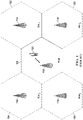
- FIG. 1 is an example wireless telecommunications network of the prior art.
- the illustrative telecommunications network includes primary eNodeB 110 operating in primary cell (PCell) 100 and eNodeBs 112, 114, 116, and 118 operating in secondary cells (SCell 1 through SCell 4 ) 102, 104, 106, and 108, respectively.
- a handset or other user equipment (UE) 120 is shown in communication with eNodeB 110 of PCell 100.
- UE 120 may also be in communication with one or more eNodeBs of the secondary cells.
- SCell is a logical concept, so eNodeB 110 could operate a plurality of SCells 102 through 108.
- eNodeB 110 is in control of the radio resources in its cell 100 by means of the Radio Resource Control (RRC) protocol, as well as the multiple access of the users connected to its cell by means of the Medium Access Control (MAC) protocol.
- RRC Radio Resource Control
- MAC Medium Access Control
- the RRC protocol configures the carriers of which a User Equipment (UE) can transmit and receive data, and up to five so-called Component Carriers (CCs) can be configured per UE in LTE Advanced (LTE-A).
- LTE-A LTE Advanced
- the MAC protocol in conjunction with the RRC protocol controls how and when the UE can use the available radio resources to transmit or receive data on a configured carrier.
- LTE Release 10 introduces a feature called Carrier Aggregation, in which a UE can be configured with one primary cell (PCell) and up to four secondary cells (SCells).
- PCell primary cell
- SCells secondary cells
- a PCell can only be changed through a handover, but SCells are configured through RRC signaling.
- a UE is not expected to receive system information by decoding the Physical Broadcast Channel (PBCH) on a Secondary Component Carrier (SCC) or to monitor the common search space of an SCell to receive Physical Downlink Control Channels (PDCCHs) whose CRC is scrambled by the SI-RNTI to receive System Information (SI) on the Downlink Shared Channel (DL-SCH).
- PBCH Physical Broadcast Channel
- SCC Secondary Component Carrier
- PDCCHs Physical Downlink Control Channels
- SI-RNTI System Information
- DL-SCH Downlink Shared Channel
- the UE may assume that the System Frame Number (SFN) on all SCCs is aligne
- CA does not define Radio Link Monitoring (RLM) of an SCell. Accordingly, there is no specified means for the UE Physical layer (PHY) to indicate a Radio Link Failure (RLF) to the UE higher layers through the MAC layer. This is because, in the Evolved Universal Terrestrial Radio Access (E-UTRA), one can always rely on the connectivity provided by the PCell, which provides robustness through RLM and other fallback procedures.
- E-UTRA Evolved Universal Terrestrial Radio Access
- SCells operate as supplementary serving cells, which can be activated in case additional capacity is needed for data communication with the UE.
- the MAC layer can activate configured SCells through a MAC Control Element (CE).
- CE MAC Control Element
- an SCell activation can require between 8 ⁇ 30 ms, depending on the synchronization status of the UE with respect to that SCC.
- An RRC reconfiguration of an SCell would require significantly more time, especially when the UE needs to perform an inter-frequency measurement.
- the eNodeB may configure a UE to periodically measure the Reference Signal Received Power (RSRP) of certain cells on certain carriers and to report the measurements, either periodically or triggered through configurable offsets and thresholds. In the 3GPP Long Term Evolution, this is achieved through RRC signaling of measurement objects and configurations. If measurements are readily available at the eNodeB, an RRC reconfiguration of an SCell or PCell can be dramatically reduced in latency from seconds to tens or hundreds of milliseconds.
- RSRP Reference Signal Received Power
- the eNodeB can only activate cells that are already configured as SCells, it can configure a UE to measure the RSRP on any cell. By comparison, the eNodeB can use the measurement report of any cell to either activate a cell, as in the case of SCell activations, or to RRC reconfigure the UE to add/remove SCells or even to change the PCell.
- the eNodeB MAC scheduler assigns downlink (DL) and uplink (UL) grants to a UE for downlink and uplink transmissions on the Physical Downlink Shared Channel (PDSCH) and Physical Uplink Shared Channel (PUSCH), respectively.
- DL downlink
- UL uplink
- a grant received in the Downlink Control Information (DCI) in subframe n schedules a corresponding PDSCH transmission in the same subframe.
- DCI Downlink Control Information
- the E-UTRAN (in particular, the eNodeB) is in full control of all radio resources, at least for UEs in RRC_CONNECTED mode. With the exception of the Physical Random Access Channel (PRACH), the E-UTRAN controls all transmissions in both the uplink and downlink direction, including resource assignment in time, frequency or any other means, such as CDMA, as well as timing or power control of a transmission.
- PRACH Physical Random Access Channel
- the RRM function resides in the eNodeB, which in turn controls all radio resources through RRC, it relies on the UE to discover cells and report associated measurements.
- the eNodeB transmits a Primary Synchronization Signal (PSS), a Secondary Synchronization Signal (SSS), and a Cell-specific Reference Signal (CRS) in each radio frame.
- PSS Primary Synchronization Signal
- SSS Secondary Synchronization Signal
- CRS Cell-specific Reference Signal
- the PSS and SSS each occupy one OFDM symbol per half-frame, but the CRS is transmitted in each subframe of a radio frame, which allows a UE to discover and measure cells within a measurement window of 6 ms without a-priori knowing the timing of a given cell.
- LTE Release 12 introduces "discovery bursts" (including PSS, SSS and CRS transmissions) and, if configured, Channel State Information Reference Signals (CSI-RS) for transmission point (TP) identification in shared cell ID scenarios.
- CSI-RS Channel State Information Reference Signals
- DRS Discovery Reference Signals
- PRS LTE Release 9 Positioning Reference Signal
- the length of a DRS occasion does not exceed the UE measurement window of 6 ms and could be as short as one subframe.
- Reasonable periodicities for DRS occasions are hundreds of milliseconds, and DRS bursts can operate as beacons in other wireless communication systems (such as CSMA/CA).
- the UE monitors the shared frequency spectrum to determine if it is BUSY.
- the UE transmits to the eNB on the shared frequency spectrum if it is not BUSY.
- the UE waits for a first time if it is BUSY.
- the UE reports the BUSY condition to the eNB after the first time and will report the identity of an idle other secondary serving cell to the base station of the primary cell.
- Example embodiments are directed to an apparatus and method of operation of an Orthogonal Frequency-Division Multiple Access (OFDMA) cellular communications system, such as the 3GPP Long Term Evolution (LTE) in radio frequencies shared with a primary transceiver.
- OFDMA Orthogonal Frequency-Division Multiple Access
- LTE Long Term Evolution
- the primary transceiver may be a naval, automotive radio, or other transceiver of higher priority.
- the 3GPP Long Term Evolution (LTE) communications standard cannot be readily deployed in shared access spectrum. This is because the radio resource management function resides in, and the radio resources are solely controlled by, the eNodeBs in the network. Dynamic Frequency Selection (DFS) schemes typically allow sufficient time (e.g. several seconds) to change a frequency band or carrier upon detection of a primary user. Thus, handover based RRC signaling and SCell activation or deactivation under MAC control are sufficient to vacate a band for a primary user.
- the 3GPP LTE communications standard currently lacks protocols, procedures and measurements that would let a UE take any action in case a primary user is detected on a carrier on which the UE is configured to transmit data.
- LTE Long Term Evolution
- eNodeB Mobility Control in LTE is fully controlled by the eNodeB, although other wireless cellular communications standards do allow UEs to initiate handovers.
- mobility incorporates the case of load balancing, where the eNodeB may add or remove SCells or change the PCell for stationary UEs.
- load balancing where the eNodeB may add or remove SCells or change the PCell for stationary UEs.
- hidden stations are transmitters, such as primary users, whose transmissions can only be detected at the receiving end of a communications link that shares the wireless medium. For example, in LTE, only the UE may detect waveforms transmitted from a "hidden station," but the eNodeB is completely oblivious to the existence of the hidden station.
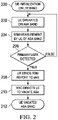
- FIG. 2 is a flow diagram showing operation of a first embodiment.
- a UE is initialized at step 200 to operate in conjunction with a PCell on an LTE band.
- An ASA band is configured and operated as a regular LTE band by the eNodeB, and the UE operates on the ASA band 202.
- UEs are barred from camping on cells operating in the ASA band through existing means, such as barring through broadcast of system information. Consequently, all UEs connected on the ASA band are in RRC CONNECTED mode and thereby under full control of an eNodeB.
- the eNodeB configures all UEs connected on the ASA band to perform RRM measurements 204 according to existing LTE specifications (e.g. Releases 8 through 12).
- DFS is supported by each UE through non-standardized (proprietary) implementations. If a UE detects a hidden station (from the UE perspective, all primary users are hidden stations) 206, the UE Physical Layer (PHY) indicates to the higher layers of its protocol stack to trigger an RRM measurement report according to existing LTE Rel. 8/9/10/11/12 procedures. Through specification (e.g., a "DFS event"), an RRM measurement report triggered through the non-standardized (proprietary) DFS function at the UE would be tied to a specific value of the RRC Information Element (IE) RSRP-Range.
- IE RRC Information Element
- a DFS event could be indicated by the lowest value in the RRC IE RSRP-Range and could operate as an Out-of-Range (OOR) indication.
- the UE would use existing RRM measurement reporting procedures to report the DFS event (e.g., the RSRP measurement report with the OOR indicator signifying the DFS event) to the eNodeB 208.
- the eNodeB RRM function would re-interpret the RSRP measurement report as a DFS/OOR event according to the standardized linkage and subsequently, to vacate the ASA band 210 for the primary user, and would reconfigure the UE via existing RRC signaling 212.
- Such RRC signaling encompasses handovers in the case of PCells or SCell reconfigurations in the case of SCells.
- the RRM function at the eNodeB believes the ASA band needs to be only temporarily vacated for the primary user, it could simply let the sCellDeactivationTimer at the UE expire, or it can send a deactivation command in a MAC control element to deactivate an SCell configured on the ASA band.
- 3GPP LTE specifications would introduce performance requirements that are useful to test UEs if they report DFS/OOR events according to requirements of regulatory bodies worldwide for each ASA band, but no new measurements would be defined in the specifications to support DFS in 3GPP LTE.
- a new measurement report and associated procedures are defined specifically for the purpose of indicating (to the E-UTRAN) the existence of a hidden station or primary user. All UEs connected to cells on an ASA band would be configured to measure and report this new DFS measurement.
- the eNodeB RRC layer can configure UEs to report the DFS measurement either periodically or triggered, or periodically triggered.
- the eNodeB would configure measurement events and associated thresholds and offsets to control the DFS measurement reporting of UEs connected on ASA bands. Thus, the exact measurement procedure would be determined by specification.
- the actions taken by the network could be similar to those in the above-described embodiment to include UE handover, SCell reconfiguration, and SCell deactivation.
- Reporting a measurement would let the eNodeB RRM function learn from historical data and let it apply its own threshold for improved protection of the primary user.
- the eNodeB can analyze and combine DFS measurements from various UEs connected to it, the decision to select a different carrier for a given UE ultimately resides at the eNodeB. However, if the decision is made at each UE, the network would have to follow whatever a UE indicates to guarantee protection of a potential primary user.
- CSMA/CA Carrier Sense Multiple Access with Collision Avoidance
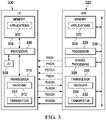
- FIG. 3 is a diagram showing communication between UE 300 and eNodeB 320 according to example embodiments.
- UE 300 may be a cell phone, computer, or other wireless network device.
- UE 300 includes a processor 306 coupled to a memory 304 and a transceiver 310.
- Processor 306 may include several processors adapted to various operational tasks of the UE including signal processing and channel measurement and computation.
- the memory stores application software 302 that the processor may execute as directed by the user, and stores operating instructions for the UE.
- Processor 306 is also coupled to input/output (I/O) circuitry 308, which may include a microphone, speaker, display and related software.
- Transceiver 310 includes receiver 312 and transmitter 314, suitable for wireless communication with eNodeB 320.
- Transceiver 310 typically communicates with eNB 320 over various communication channels. For example, transceiver 310 sends uplink information to eNodeB 320 over physical uplink control channel PUCCH and physical uplink shared channel PUSCH. Correspondingly, transceiver 310 receives downlink information from eNodeB 320 over physical downlink control channel PDCCH and physical downlink shared channel PDSCH.
- Base station 320 includes a processor 326 coupled to a memory 324, a symbol processing circuit 328, and a transceiver 330 via bus 336.
- Processor 326 and symbol processing circuit 328 may include several processors adapted to various operational tasks including signal processing and channel measurement and computation.
- the memory stores application software 322 that the processor may execute for specific users, and stores operating instructions for eNodeB 320.
- Transceiver 330 includes receiver 332 and transmitter 334, suitable for wireless communication with UE 300.
- Transceiver 330 typically communicates with UE 300 over various communication channels. For example, transceiver 330 sends downlink information to UE 300 over physical downlink control channel PDCCH and physical downlink shared channel PDSCH.
- Transceiver 330 also sends special downlink information to UE 300 over physical broadcast channel PBCH, physical hybrid ARQ indicator channel PHICH, physical control format indicator channel PCFICH, and physical multicast channel PMCH.
- transceiver 330 receives uplink information from UE 300 over physical uplink control channel PUCCH and physical uplink shared channel PUSCH.
- E-UTRAN cells such as eNodeB 320 may be deployed in unlicensed or ASA bands where LTE user equipment shares the radio resources with other users of equal priority, but which follow strict Carrier Sense Multiple Access with Collision Avoidance (CSMA/CA) procedures/protocols.
- CSMA/CA Carrier Sense Multiple Access with Collision Avoidance
- CSMA/CA is implemented as a non-standardized proprietary function according to example embodiments.
- the UE is initialized on an LTE band 400.
- the eNodeB monitors the CSMA/CA band 402. If the eNodeB senses an ongoing transmission 404, it does not transmit any downlink channels.
- the eNodeB monitors a timeout reference 408 and continues to monitor the CSMA/CA band 402. If the ongoing transmission ends before the timeout reference 408, the eNodeB transmits to the UE on the CSMA/CA band 406. Otherwise, if the timeout reference expires, RRC signaling directs the UE to vacate the CSMA/CA band 410 and initiates a handover 412.
- the eNodeB may have to transmit some signals without regard to whether an ongoing transmission is detected.
- the eNodeB transmits Discovery Reference Signal (DRS) bursts with a periodicity in the order of hundreds of milliseconds.
- DRS Discovery Reference Signal
- the DRS burst may just be one subframe and includes at least PSS, SSS and CRS to allow UEs to discover the cell and perform measurements.
- CSI-RS may also be transmitted during a DRS occasion.
- the periodic PSS/SSS transmissions also let UEs obtain coarse time and frequency synchronization with that cell.
- the DRS based RRM measurement reports let the eNodeB decide whether to configure a cell on a certain unlicensed or ASA band for a given UE.
- the eNodeB needs to periodically transmit some kind of Tracking Reference Signal (TRS) with a much smaller periodicity than that of DRS, such as 5 ms or 10 ms.
- TRS Tracking Reference Signal
- the TRS waveforms let UEs perform Automatic Gain Control (AGC) and fine time and frequency synchronization ("tracking").
- AGC Automatic Gain Control
- Tracking fine time and frequency synchronization
- Such TRS waveforms may be based on existing CRS waveforms. This would have the additional benefit of being useful for channel state information acquisition in case of CRS-based transmission modes.
- the eNodeB may periodically transmit Channel State Information Reference Signals (CSI-RS) to allow channel state information acquisition at the UE for CSI-RS based transmission modes.
- CSI-RS Channel State Information Reference Signals
- UEs would be configured for CSI measurement and reporting in accordance with the CSI transmissions at the eNodeB.
- PBCH Physical Broadcast Channel
- UEs would not be able to camp on such a cell.
- system information would also not be transmitted.
- SCells SCells
- PCells PCells would always be configured on licensed spectrum.
- PHICH Physical Hybrid ARQ Indicator CHannel
- UL grants transmitted in DCI could serve as implicit ACK/NACK indication by scheduling retransmissions of previous UL grants.
- the Physical Control Format Indicator Channel may or may not be transmitted in unlicensed or ASA spectrum. If extended PHICH duration is configured, the Control Format Indicator (CFI) is known through specification. Similarly, the PCFICH is not needed for PDSCH transmissions in transmission mode 10 (TM10) scheduled by an Enhanced Physical Downlink Control Channel (EPDCCH). And for cross-carrier scheduled PDSCH transmissions, the CFI is known through configuration. By comparison, because the PCFICH is transmitted in the same subframe as a PDCCH, it could be transmitted whenever a PDCCH is transmitted.
- CFI Control Format Indicator
- the Physical Multicast Channel (PMCH) is scheduled semi-statically by the MBMS Coordination Entity (MCE) on reserved resources, it may be beneficial not to transmit the PMCH in unlicensed or ASA spectrum.
- PMCH Physical Multicast Channel
- MCE MBMS Coordination Entity
- the eNodeB transmits according to LTE Release 12.
- the CSMA/CA function at the eNodeB returns a binary indication. If the CSMA/CA function for a given cell on a given carrier indicates BUSY, the eNodeB does not transmit (E)PDCCH or PDSCH to any UE.
- the eNodeB may still transmit other signals or channels according to the above recommendations.
- the eNodeB may transmit (E)PDCCH and/or PDSCH transmissions, the eNodeB transmits according to LTE Release 12.
- uplink operation on CSMA/CA bands is similar to downlink operation.
- the UE is initialized on an LTE band 400.
- the UE monitors the CSMA/CA band 420. If the UE senses an ongoing transmission 422, it does not transmit any uplink channels.
- the UE monitors a timeout reference 426 and continues to monitor the CSMA/CA band 420. If the ongoing transmission ends before the timeout reference 426, the UE transmits to the eNodeB on the CSMA/CA band 424. Otherwise, if the timeout reference expires, the UE sends a BUSY report to the eNodeB 428.
- RRC signaling directs the UE to vacate the CSMA/CA band 430 and initiates a handover 432.
- the CSMA/CA function at the UE When the CSMA/CA function at the UE indicates that a given subframe cannot be used for uplink transmissions, it may be beneficial to drop any configured Sounding Reference Signal (SRS) transmission in order to not interfere with the ongoing transmission. It may also be beneficial not to transmit the Physical Uplink Control Channel (PUCCH) in unlicensed or ASA spectrum. In this case, the PUCCH is transmitted on the PCell in licensed spectrum only. If PUCCH transmissions are allowed in unlicensed or ASA spectrum, several UE behaviors are envisioned.
- SRS Sounding Reference Signal
- the UE follows existing UE procedures for PUCCH transmissions, independent of the indication of the CSMA/CA function at the UE for the subframe for which the PUCCH transmission is scheduled. Collisions with on-going transmissions cannot be avoided in general, and the PUCCH may not be properly received at the eNodeB.
- the UE could base any PUCCH transmissions on the indication of the CSMA/CA function at the UE for the subframe for which the PUCCH transmission is scheduled. If the CSMA/CA function at the UE indicates BUSY, the UE does not transmit on the PUCCH in the subframe under consideration. Otherwise, if the CSMA/CA function at the UE indicates IDLE, the UE transmits the PUCCH as scheduled.
- the UE follows existing UE procedures for PUSCH transmissions, independent of the indication of the CSMA/CA function at the UE for the sub frame for which the PUSCH transmission is scheduled. Collisions with on-going transmissions cannot be avoided in general, and the PUSCH may not be properly received at the eNodeB.
- PUSCH Physical Uplink Shared Channel
- the UE could base any PUSCH transmissions on the indication of the CSMA/CA function at the UE for the subframe for which the PUSCH transmission is scheduled. If the CSMA/CA function at the UE indicates BUSY, the UE does not transmit on the PUSCH in the subframe under consideration. Otherwise, if the CSMA/CA function at the UE indicates IDLE, the UE transmits the PUSCH as scheduled.
- the aforementioned DFS schemes could be reused to allow the UE to inform an eNodeB about the BUSY state of a cell or carrier, such that the eNodeB MAC (or RRC) layer could take actions to schedule the UE on a different CC to prevent further collisions.
- the CSMA/CA function instead of the "DFS event" triggered by the DFS function, the CSMA/CA function would indicate BUSY, but otherwise the procedures could be reused.
- the time scales for DFS are generally much larger than for LBT as in the case of CSMA/CA.
- example embodiments provide separate procedures to address hidden stations in the case of CSMA/CA.
- An objective of example embodiments is to let the UE higher layers inform the eNodeB higher layers about the indication of the UE CSMA/CA function in subframes in which the UE is scheduled for uplink transmissions. Because the UE can always follow existing LTE Rel. 12 specifications in case the UE CSMA/CA function indicates IDLE, this state is not signaled to the eNodeB higher layers. Thus, several embodiments provide actions the eNodeB higher layers (e.g., the eNodeB MAC scheduler) may take in a subframe for which a PUSCH or PUCCH transmission is scheduled and the UE CSMA/CA function indicates BUSY.
- the eNodeB higher layers e.g., the eNodeB MAC scheduler
- the eNodeB can take action by avoiding scheduling the UE on a carrier occupied by a hidden station, it is preferable to either use PHY or MAC layer mechanisms, where the former have lower latency than the latter.
- PHY or MAC layer mechanisms where the former have lower latency than the latter.
- the four serving cells are assigned the symbols ⁇ 00,01,10,11 ⁇ , such that the serving cell (SCell) with the lowest ServCellIndex corresponds to 00, the serving cell (SCell) with the second lowest ServCellIndex corresponds to 01, and so forth. If less than four SCells are configured, then the unused symbols (e.g., ⁇ 01,10,11 ⁇ in case a single SCell is configured) are reserved. Other mappings are not precluded. To guarantee lowest latencies, L1 (PHY) signaling is introduced to inform the eNodeB higher layers about the BUSY indication from the UE CSMA/CA function in a subframe for which a PUSCH or PUCCH transmission is scheduled.
- PHY PHY
- a new PUCCH format is introduced, which is always transmitted on the PCell.
- the new PUCCH format is identical to the existing PUCCH format 1b.
- the QPSK symbols encode the four serving cell indices ⁇ 00,01,10,11 ⁇ .
- this new PUCCH format is referred to as format 1c.
- the eNodeB receiver may distinguish between PUCCH formats 1b and 1c through Code Division Multiplexing, such that the two PUCCH formats can share the same time and frequency resources.
- the new PUCCH format can have its own time and frequency resources of the PUCCH region.
- the UE does not transmit the PUSCH or PUCCH as scheduled, but instead indicates (to the eNodeB) the BUSY indication via a PUCCH format 1c transmission on the PCell.
- the eNodeB schedules only one SCell at a time to prevent any ambiguities at the eNodeB when PUCCH format 1c is received.
- the PUCCH format 1c indicates on which serving cell the BUSY indication occurred.
- the eNodeB may schedule an uplink transmission in subframe n+k, k>0 via an UL grant in DCI received in subframe n.
- the CSMA/CA function at the UE begins to sense the medium and indicates to the UE higher layers if it is IDLE or BUSY. If IDLE is indicated, the UE proceeds with the scheduled transmissions according to the received DCI. If BUSY is indicated, the UE ignores the DCI scheduling the uplink transmission under consideration and instead sends a PUCCH format 1c on the PCell encoding (in the QPSK symbol) the serving cell on which the collision occurred.
- the PUCCH format 1c transmission does not really convey additional information to the eNodeB higher layers.
- the CSMA/CA function at the UE senses all configured serving cells before a scheduled uplink transmission. If IDLE is indicated for the serving cell on which the transmission is scheduled, the UE proceeds with the scheduled transmissions according to the received DCI. If BUSY is indicated, the UE ignores the DCI scheduling the uplink transmission under consideration and instead sends a PUCCH format 1c on the PCell encoding (in the QPSK symbol) a serving cell on which the CSMA/CA function at the UE indicated IDLE. This does not guarantee that the corresponding serving cell is IDLE at a future subframe n + k 2 , k 2 > k, but at least the eNodeB does not continue scheduling uplink transmissions on the same serving cell.
- Introducing the new PUCCH format 1c requires the eNodeB receiver to monitor for the new PUCCH format. Accordingly, MAC layer procedures may be preferable over the aforementioned PHY procedures.
- sending MAC control elements requires the UE to have available uplink resources, in addition to the ones it has to leave unused by not transmitting PUCCH or PUSCH because the medium is BUSY.
- the time to prepare the PUSCH transmission carrying the MAC CE may take longer, such that the carrier sensing has to occur much earlier than in the case of a new PUCCH format, increasing the probability that the CSMA/CA function at the UE indicates IDLE, but the medium is BUSY during subframe n+k.
- Latencies would be further increased if the UE has to send a Scheduling Request (SR) to transmit the MAC CE. Nevertheless, MAC layer procedures may still have their merits. For example, it would cease being necessary to impose the restriction that only a single SCell is scheduled at a time. Instead, one octet (8 bits) in a MAC CE may be used for encoding all four SCells simultaneously.
- SR Scheduling Request
- Up to four serving (SCells) are again ordered in ascending order, based on the ServCellIndex and represented by ⁇ 00,01,10,11 ⁇ , so the serving cell (SCell) with the lowest ServCellIndex corresponds to 00, the serving cell (SCell) with the second lowest ServCellIndex corresponds to 01, and so forth.
- the 8 bits in an octet of a MAC CE correspond to the four SCells through the following mapping.
- the first two bits correspond to the serving cell represented by ⁇ 00 ⁇
- the third and fourth bit correspond to the serving cell represented by ⁇ 01 ⁇
- the fifth and sixth bit correspond to the serving cell represented by ⁇ 10 ⁇
- the last two bits correspond to the serving cell represented by ⁇ 11 ⁇ , although other mappings and orderings are not precluded. If the bits at a position correspond to the position itself, this indicates that the corresponding serving cell was indicated as IDLE. Otherwise, the indication was BUSY, and the two bits indicate to which serving cell the eNodeB should switch. Accordingly, the bit position in the octet encodes for which serving cell the bits at that position belong, and the bits themselves encode the same information transmitted on the PUCCH format 1c above for a single cell. For example, the octet ⁇ 00010011 ⁇ means that the first, second, and forth serving cell were IDLE, while transmissions on the third serving cell should be transmitted on the first serving cell.
Landscapes
- Engineering & Computer Science (AREA)
- Computer Networks & Wireless Communication (AREA)
- Signal Processing (AREA)
- Quality & Reliability (AREA)
- Mobile Radio Communication Systems (AREA)
Applications Claiming Priority (3)
| Application Number | Priority Date | Filing Date | Title |
|---|---|---|---|
| US201462008032P | 2014-06-05 | 2014-06-05 | |
| US14/718,593 US9532230B2 (en) | 2014-06-05 | 2015-05-21 | Method and apparatus for transmitting LTE waveforms in shared spectrum by carrier sensing |
| PCT/US2015/034582 WO2015188164A1 (en) | 2014-06-05 | 2015-06-05 | Method and apparatus for transmitting lte waveforms in shared spectrum by carrier sensing |
Publications (3)
| Publication Number | Publication Date |
|---|---|
| EP3175642A1 EP3175642A1 (en) | 2017-06-07 |
| EP3175642A4 EP3175642A4 (en) | 2018-05-02 |
| EP3175642B1 true EP3175642B1 (en) | 2022-05-18 |
Family
ID=54767490
Family Applications (1)
| Application Number | Title | Priority Date | Filing Date |
|---|---|---|---|
| EP15802454.7A Active EP3175642B1 (en) | 2014-06-05 | 2015-06-05 | Method for transmitting lte waveforms in shared spectrum by carrier sensing |
Country Status (5)
| Country | Link |
|---|---|
| US (5) | US9532230B2 (enExample) |
| EP (1) | EP3175642B1 (enExample) |
| JP (5) | JP2017523655A (enExample) |
| CN (3) | CN112135301B (enExample) |
| WO (1) | WO2015188164A1 (enExample) |
Families Citing this family (55)
| Publication number | Priority date | Publication date | Assignee | Title |
|---|---|---|---|---|
| US9532230B2 (en) * | 2014-06-05 | 2016-12-27 | Texas Instruments Incorporated | Method and apparatus for transmitting LTE waveforms in shared spectrum by carrier sensing |
| RU2667386C2 (ru) * | 2014-07-31 | 2018-09-19 | ЭлДжи ЭЛЕКТРОНИКС ИНК. | Способ и устройство конфигурирования периода возможности передачи в системе беспроводного доступа, поддерживающей нелицензируемую полосу частот |
| CN104301273B (zh) * | 2014-08-25 | 2020-03-10 | 中兴通讯股份有限公司 | 使用非授权载波发送及接收信号的方法、基站及用户设备 |
| US9538431B2 (en) * | 2014-09-24 | 2017-01-03 | Intel Corporation | Handover at spectrum release for licensed shared access |
| CN105792243B (zh) | 2014-12-22 | 2020-11-06 | 索尼公司 | 管理装置、测量装置、管理方法、测量方法和电子设备 |
| US11297510B2 (en) * | 2015-01-19 | 2022-04-05 | Qualcomm Incorporated | Medium access for shared or unlicensed spectrum |
| WO2016119174A1 (zh) * | 2015-01-29 | 2016-08-04 | 华为技术有限公司 | 多载波聚合通信方法和设备 |
| CN114125872B (zh) * | 2015-05-14 | 2024-07-02 | 瑞典爱立信有限公司 | 用于采用波束成形的drs的测量规程 |
| US10285117B2 (en) * | 2015-05-21 | 2019-05-07 | Qualcomm Incorporated | Techniques for coexistence between enhanced component carrier communications and non-enhanced component carrier communications |
| US10735166B2 (en) | 2015-05-29 | 2020-08-04 | Huawei Technologies Co., Ltd. | System and method of UE-centric radio access procedure |
| WO2017018762A1 (ko) | 2015-07-24 | 2017-02-02 | 삼성전자 주식회사 | 비 면허 대역을 사용하는 이동 통신 시스템에서의 제어 신호 및 채널 전송 방법 |
| US10630440B2 (en) | 2015-08-12 | 2020-04-21 | Electronics And Telecommunications Research Institute | Method and apparatus for transmitting and receiving signal in communication network |
| WO2017028036A1 (zh) * | 2015-08-14 | 2017-02-23 | 华为技术有限公司 | 测量方法、用户设备、网络侧设备及测量装置 |
| CN108353420B (zh) * | 2015-11-05 | 2022-04-15 | 富士通株式会社 | 通信装置以及无线通信方法 |
| JP6309985B2 (ja) * | 2016-01-20 | 2018-04-11 | 株式会社Nttドコモ | ユーザ端末、無線基地局及び無線通信方法 |
| CN108476458B (zh) * | 2016-02-19 | 2021-03-09 | 苹果公司 | 发现参考信号传输窗口内、外的到在免授权频段中操作的ue的pbch传输 |
| CN107182092B (zh) * | 2016-03-11 | 2023-10-17 | 中兴通讯股份有限公司 | 信道探测信号srs的发送方法及装置 |
| KR102287383B1 (ko) | 2016-03-25 | 2021-08-06 | 주식회사 윌러스표준기술연구소 | 무선 통신 시스템에서 비인가 대역으로의 상향링크 채널 액세스 방법 및 이를 위한 장치 |
| JP6239672B2 (ja) * | 2016-03-31 | 2017-11-29 | 株式会社Nttドコモ | ユーザ端末、無線基地局及び無線通信方法 |
| JPWO2017170809A1 (ja) * | 2016-03-31 | 2019-02-14 | 株式会社Nttドコモ | ユーザ端末、無線基地局及び無線通信方法 |
| KR102536090B1 (ko) | 2016-07-23 | 2023-05-26 | 주식회사 윌러스표준기술연구소 | 비인가 대역에서 채널 엑세스 방법, 장치 및 시스템 |
| JP2018026662A (ja) * | 2016-08-09 | 2018-02-15 | ソニー株式会社 | 通信装置、通信方法、及びプログラム |
| CN109716844A (zh) * | 2016-09-09 | 2019-05-03 | 株式会社Ntt都科摩 | 用户终端以及无线通信方法 |
| US10616769B2 (en) * | 2016-10-26 | 2020-04-07 | Qualcomm Incorporated | Radio (NR) procedures for accessing shared spectrum |
| CN108024348B (zh) * | 2016-11-04 | 2024-05-07 | 华为技术有限公司 | 一种载波传输的方法、基站、用户设备和系统 |
| US10743332B2 (en) * | 2016-11-18 | 2020-08-11 | Qualcomm Incorporated | Techniques and apparatuses for complementary transmission relating to an interrupted traffic flow in new radio |
| US10368301B2 (en) * | 2017-02-21 | 2019-07-30 | Qualcomm Incorporated | Multi-beam and single-beam discovery reference signals for shared spectrum |
| EP3603260B1 (en) * | 2017-03-24 | 2021-09-22 | Apple Inc. | Tracking reference signals for new radio |
| EP3685538A1 (en) * | 2017-09-20 | 2020-07-29 | Telefonaktiebolaget LM Ericsson (publ) | Standalone unlicensed spectrum carrier aggregation combinations using dynamic frequency selection (dfs) spectrum |
| US11689338B2 (en) | 2017-10-02 | 2023-06-27 | Telefonaktiebolaget Lm Ericsson (Publ) | PUCCH resource indication for CSI and HARQ feedback |
| CN109803429B (zh) * | 2017-11-15 | 2021-01-08 | 维沃移动通信有限公司 | 邻小区的rrm测量控制方法、移动通信终端及网络侧设备 |
| US10764024B2 (en) | 2018-01-11 | 2020-09-01 | At&T Intellectual Property I, L.P. | Multi-beam listen before talk |
| CN110034893A (zh) * | 2018-01-12 | 2019-07-19 | 维沃移动通信有限公司 | 一种uci发送方法和移动终端 |
| US11025484B2 (en) * | 2018-01-18 | 2021-06-01 | Cable Television Laboratories, Inc. | Ad-hoc wireless mesh network system and methodology for failure reporting and emergency communications |
| EP3744142A4 (en) | 2018-02-12 | 2021-01-20 | Samsung Electronics Co., Ltd. | METHOD AND DEVICE FOR TRANSMISSION OF UPLINK INFORMATION |
| WO2019156527A1 (en) * | 2018-02-12 | 2019-08-15 | Samsung Electronics Co., Ltd. | Method and apparatus for transmitting uplink information |
| CN110278062B (zh) * | 2018-03-14 | 2021-03-09 | 电信科学技术研究院有限公司 | 资源指示、确定方法及装置 |
| MX2020010134A (es) * | 2018-04-02 | 2020-10-19 | Nec Corp | Métodos y aparatos para la configuración de la señal de referencia. |
| JP7092872B2 (ja) * | 2018-04-16 | 2022-06-28 | 株式会社Nttドコモ | ユーザ装置 |
| US10945254B2 (en) * | 2018-05-11 | 2021-03-09 | Qualcomm Incorporated | Paging design with short message indicator |
| CN108834217B (zh) * | 2018-06-06 | 2023-05-16 | 京信网络系统股份有限公司 | 确定跨载波调度载波的方法、装置、计算机设备与介质 |
| CN110636538B (zh) * | 2018-06-22 | 2021-07-20 | 维沃移动通信有限公司 | 波束测量方法、网络侧设备、终端设备及存储介质 |
| CN111869306B (zh) * | 2018-08-01 | 2021-11-16 | Oppo广东移动通信有限公司 | 随机接入的方法、终端设备和网络设备 |
| CN109286984B (zh) * | 2018-09-21 | 2023-04-18 | 希诺麦田技术(深圳)有限公司 | 多波形的自组网收发方法、装置及计算机可读存储介质 |
| WO2020062183A1 (zh) * | 2018-09-29 | 2020-04-02 | 北京小米移动软件有限公司 | 传输信息的方法、装置及基站 |
| WO2020167879A1 (en) | 2019-02-12 | 2020-08-20 | Google Llc | System and method for reducing delays of timer-based transmissions on a shared carrier |
| US10887890B2 (en) | 2019-02-15 | 2021-01-05 | At&T Intellectual Property I, L.P. | Fast multi-beam listen before talk |
| US11134389B2 (en) | 2019-08-27 | 2021-09-28 | Google Llc | Assigning frequencies without coordination in a shared spectrum regime |
| CN112770400B (zh) * | 2019-11-01 | 2023-08-15 | 中国移动通信有限公司研究院 | 非授权频段的调度方法、装置、基站及网络侧设备 |
| CN115004805B (zh) * | 2020-01-25 | 2025-03-07 | 高通股份有限公司 | 用于时隙格式确定的复杂度降低 |
| EP3913845B1 (en) | 2020-05-18 | 2025-07-02 | Comcast Cable Communications LLC | Method, system and device for transmission using a plurality of wireless resources |
| CN116325684A (zh) | 2020-10-19 | 2023-06-23 | 艾斯康实验室公司 | 用于无线通信系统的参考信号 |
| WO2022093988A1 (en) | 2020-10-30 | 2022-05-05 | XCOM Labs, Inc. | Clustering and/or rate selection in multiple-input multiple-output communication systems |
| US12120617B2 (en) | 2021-04-06 | 2024-10-15 | Apple Inc. | Method for clear channel access power signaling in channel occupancy time |
| US11979892B2 (en) * | 2021-04-30 | 2024-05-07 | T-Mobile Usa, Inc. | Systems and methods for optimizing cellular spectrum utilization |
Family Cites Families (26)
| Publication number | Priority date | Publication date | Assignee | Title |
|---|---|---|---|---|
| JP4266192B2 (ja) | 2004-03-05 | 2009-05-20 | 株式会社東芝 | 無線通信装置及び無線通信方法 |
| TWI259693B (en) * | 2005-04-27 | 2006-08-01 | Inst Information Industry | Contention window adjustment methods capable of load-adaptive backoff in a local area network and machine-readable storage medium therefor |
| KR101559320B1 (ko) * | 2008-02-18 | 2015-10-13 | 삼성전자주식회사 | 라이센스 대역 및 공유 대역의 효과적 사용을 위한 모바일시스템 및 기지국 시스템 |
| US8395997B2 (en) * | 2009-11-13 | 2013-03-12 | Marvell World Trade Ltd. | Multi-channel wireless communications |
| JP5783579B2 (ja) * | 2010-06-11 | 2015-09-24 | マーベル ワールド トレード リミテッド | 通信デバイスに実装される方法および通信デバイス |
| US8804536B2 (en) * | 2010-08-16 | 2014-08-12 | Qualcomm Incorporated | Method and apparatus for facilitating sensing in cognitive radio communications |
| US8861452B2 (en) * | 2010-08-16 | 2014-10-14 | Qualcomm Incorporated | Method and apparatus for use of licensed spectrum for control channels in cognitive radio communications |
| CN105743631B (zh) * | 2010-12-06 | 2019-05-28 | 交互数字专利控股公司 | 用于在免许可频谱中使能无线操作的方法 |
| JP5890434B2 (ja) | 2011-02-07 | 2016-03-22 | インターデイジタル パテント ホールディングス インコーポレイテッド | ライセンス免除スペクトルにおいて補助的セルを機能させるための方法および装置 |
| US9578515B2 (en) | 2011-05-13 | 2017-02-21 | Qualcomm Incorporated | Methods and apparatuses for frequency spectrum sharing |
| US8885616B2 (en) * | 2011-07-13 | 2014-11-11 | Qualcomm Incorporated | Enhancing sounding reference signals (SRS) |
| US20130208587A1 (en) * | 2012-01-26 | 2013-08-15 | Interdigital Patent Holdings, Inc. | Dynamic parameter adjustment for lte coexistence |
| US9485683B2 (en) * | 2012-05-31 | 2016-11-01 | Interdigital Patent Holdings, Inc. | Sensing measurement configuration and reporting in a long term evolution system operating over license exempt bands |
| US10182421B2 (en) | 2012-06-01 | 2019-01-15 | Qualcomm Incorporated | Authorized shared access carrier aggregation with sensing |
| WO2013185835A1 (en) * | 2012-06-15 | 2013-12-19 | Nokia Siemens Networks Oy | Scanning secondary cells in cellular communication system |
| US9184886B2 (en) | 2012-08-10 | 2015-11-10 | Blackberry Limited | TD LTE secondary component carrier in unlicensed bands |
| KR20140022711A (ko) * | 2012-08-14 | 2014-02-25 | 삼성전자주식회사 | 이동통신 시스템에서 핸드 오버를 수행하는 방법 및 장치 |
| WO2014100993A1 (zh) * | 2012-12-26 | 2014-07-03 | 华为技术有限公司 | 共享小区的处理方法、装置及服务器 |
| CN104184682B (zh) * | 2013-05-21 | 2018-02-23 | 华为技术有限公司 | 带宽的调整方法以及带宽调整控制器 |
| US20160269978A1 (en) * | 2013-11-27 | 2016-09-15 | Intel Corporation | Mechanisms for co-existence of lte-u network with itself and with other technologies |
| US10687218B2 (en) * | 2013-12-03 | 2020-06-16 | Qualcomm Incorporated | Power metric optimization and uplink DM-RS design for LTE/LTE-A uplink transmissions in unlicensed spectrum |
| US9461790B2 (en) * | 2014-01-31 | 2016-10-04 | Alcatel Lucent | Methods and systems for controlling cells in a network |
| US9549080B2 (en) * | 2014-02-05 | 2017-01-17 | Apple Inc. | Wi-Fi signaling by cellular devices for coexistence in unlicensed frequency bands |
| BR112016021417B1 (pt) * | 2014-03-19 | 2023-11-14 | Telefonaktiebolaget Lm Ericsson (Publ) | Método para suportar comunicação por rádio entre dispositivos sem fio e uma estação base, estação base de uma rede sem fio, método realizado por um dispositivo sem fio, dispositivo sem fio, e, mídia de armazenamento legível por computador |
| WO2015167232A1 (en) * | 2014-04-28 | 2015-11-05 | Lg Electronics Inc. | Method and apparatus for performing cell on/off operation in wireless communication system |
| US9532230B2 (en) * | 2014-06-05 | 2016-12-27 | Texas Instruments Incorporated | Method and apparatus for transmitting LTE waveforms in shared spectrum by carrier sensing |
-
2015
- 2015-05-21 US US14/718,593 patent/US9532230B2/en active Active
- 2015-06-05 CN CN202010985330.6A patent/CN112135301B/zh active Active
- 2015-06-05 EP EP15802454.7A patent/EP3175642B1/en active Active
- 2015-06-05 CN CN202510083021.2A patent/CN120128931A/zh active Pending
- 2015-06-05 CN CN201580029753.8A patent/CN106465138B/zh active Active
- 2015-06-05 JP JP2016571350A patent/JP2017523655A/ja active Pending
- 2015-06-05 WO PCT/US2015/034582 patent/WO2015188164A1/en not_active Ceased
-
2016
- 2016-08-03 US US15/227,406 patent/US9888389B2/en active Active
-
2018
- 2018-02-05 US US15/888,928 patent/US10334450B2/en active Active
-
2019
- 2019-06-24 US US16/449,939 patent/US11943629B2/en active Active
- 2019-12-06 JP JP2019220965A patent/JP7094936B2/ja active Active
-
2022
- 2022-06-22 JP JP2022100005A patent/JP7318069B2/ja active Active
-
2023
- 2023-07-19 JP JP2023117211A patent/JP7674791B2/ja active Active
-
2024
- 2024-03-25 US US18/615,436 patent/US20240236694A1/en active Pending
-
2025
- 2025-04-21 JP JP2025069711A patent/JP7863233B2/ja active Active
Also Published As
| Publication number | Publication date |
|---|---|
| CN106465138A (zh) | 2017-02-22 |
| US20240236694A1 (en) | 2024-07-11 |
| US9532230B2 (en) | 2016-12-27 |
| US9888389B2 (en) | 2018-02-06 |
| CN106465138B (zh) | 2020-10-16 |
| JP7094936B2 (ja) | 2022-07-04 |
| US20160345181A1 (en) | 2016-11-24 |
| JP2025111595A (ja) | 2025-07-30 |
| CN112135301B (zh) | 2025-02-18 |
| US11943629B2 (en) | 2024-03-26 |
| CN112135301A (zh) | 2020-12-25 |
| WO2015188164A1 (en) | 2015-12-10 |
| JP2017523655A (ja) | 2017-08-17 |
| US10334450B2 (en) | 2019-06-25 |
| JP2020053989A (ja) | 2020-04-02 |
| US20180176790A1 (en) | 2018-06-21 |
| CN120128931A (zh) | 2025-06-10 |
| EP3175642A4 (en) | 2018-05-02 |
| EP3175642A1 (en) | 2017-06-07 |
| US20190313259A1 (en) | 2019-10-10 |
| US20150358827A1 (en) | 2015-12-10 |
| JP2023139103A (ja) | 2023-10-03 |
| JP7318069B2 (ja) | 2023-07-31 |
| JP7863233B2 (ja) | 2026-05-20 |
| JP7674791B2 (ja) | 2025-05-12 |
| JP2022123101A (ja) | 2022-08-23 |
Similar Documents
| Publication | Publication Date | Title |
|---|---|---|
| US20240236694A1 (en) | Method and apparatus for transmitting lte waveforms in shared spectrum by carrier sensing | |
| US11418302B2 (en) | Collision handling mechanisms for dynamic TDD systems | |
| US10448421B2 (en) | Cross-carrier scheduling for wireless devices | |
| CN106538013B (zh) | 无线基站、用户终端以及无线通信方法 | |
| US10257856B2 (en) | Method for transmitting signal on basis of clear channel assessment in unlicensed band channel, and mobile communication system | |
| CN111698792B (zh) | 用于在未授权射频频谱频带上发送前导的方法和装置 | |
| EP3058676B1 (en) | Downlink control format indicator | |
| KR102746755B1 (ko) | 비면허 대역에서의 채널 액세스 방법, 장치 및 시스템 | |
| KR20180081549A (ko) | 네트워크 노드, 무선 디바이스, 방법들 및 컴퓨터 프로그램들 | |
| US20170223739A1 (en) | Synchronization across transmitting nodes using shared radio frequency spectrum | |
| KR20170127634A (ko) | 비면허대역에서 상향링크 채널 및 신호 전송 방법, 장치 및 시스템 | |
| KR20180108351A (ko) | 비면허대역 통신을 위한 다양한 dl전송 구조하에서의 데이터/제어채널의 할당 및 수신 방법, 장치 및 시스템 |
Legal Events
| Date | Code | Title | Description |
|---|---|---|---|
| STAA | Information on the status of an ep patent application or granted ep patent |
Free format text: STATUS: THE INTERNATIONAL PUBLICATION HAS BEEN MADE |
|
| 17P | Request for examination filed |
Effective date: 20170420 |
|
| AK | Designated contracting states |
Kind code of ref document: A1 Designated state(s): AL AT BE BG CH CY CZ DE DK EE ES FI FR GB GR HR HU IE IS IT LI LT LU LV MC MK MT NL NO PL PT RO RS SE SI SK SM TR |
|
| AX | Request for extension of the european patent |
Extension state: BA ME |
|
| PUAI | Public reference made under article 153(3) epc to a published international application that has entered the european phase |
Free format text: ORIGINAL CODE: 0009012 |
|
| STAA | Information on the status of an ep patent application or granted ep patent |
Free format text: STATUS: REQUEST FOR EXAMINATION WAS MADE |
|
| RIN1 | Information on inventor provided before grant (corrected) |
Inventor name: JOHNSON, BRIAN, F. Inventor name: EKPENYONG, ANTHONY, EDET Inventor name: BERTRAND, PIERRE Inventor name: BENDLIN, RALF, MATTHIAS |
|
| DAV | Request for validation of the european patent (deleted) | ||
| DAX | Request for extension of the european patent (deleted) | ||
| A4 | Supplementary search report drawn up and despatched |
Effective date: 20180406 |
|
| RIC1 | Information provided on ipc code assigned before grant |
Ipc: H04L 5/00 20060101ALI20180329BHEP Ipc: H04W 72/04 20090101ALI20180329BHEP Ipc: H04W 16/14 20090101AFI20180329BHEP |
|
| STAA | Information on the status of an ep patent application or granted ep patent |
Free format text: STATUS: EXAMINATION IS IN PROGRESS |
|
| 17Q | First examination report despatched |
Effective date: 20191203 |
|
| GRAP | Despatch of communication of intention to grant a patent |
Free format text: ORIGINAL CODE: EPIDOSNIGR1 |
|
| STAA | Information on the status of an ep patent application or granted ep patent |
Free format text: STATUS: GRANT OF PATENT IS INTENDED |
|
| RIC1 | Information provided on ipc code assigned before grant |
Ipc: H04W 36/00 20090101ALN20211109BHEP Ipc: H04W 16/14 20090101AFI20211109BHEP |
|
| INTG | Intention to grant announced |
Effective date: 20211202 |
|
| GRAS | Grant fee paid |
Free format text: ORIGINAL CODE: EPIDOSNIGR3 |
|
| GRAA | (expected) grant |
Free format text: ORIGINAL CODE: 0009210 |
|
| STAA | Information on the status of an ep patent application or granted ep patent |
Free format text: STATUS: THE PATENT HAS BEEN GRANTED |
|
| AK | Designated contracting states |
Kind code of ref document: B1 Designated state(s): AL AT BE BG CH CY CZ DE DK EE ES FI FR GB GR HR HU IE IS IT LI LT LU LV MC MK MT NL NO PL PT RO RS SE SI SK SM TR |
|
| REG | Reference to a national code |
Ref country code: GB Ref legal event code: FG4D |
|
| REG | Reference to a national code |
Ref country code: CH Ref legal event code: EP |
|
| REG | Reference to a national code |
Ref country code: IE Ref legal event code: FG4D |
|
| REG | Reference to a national code |
Ref country code: DE Ref legal event code: R096 Ref document number: 602015079084 Country of ref document: DE |
|
| REG | Reference to a national code |
Ref country code: AT Ref legal event code: REF Ref document number: 1493836 Country of ref document: AT Kind code of ref document: T Effective date: 20220615 |
|
| REG | Reference to a national code |
Ref country code: LT Ref legal event code: MG9D |
|
| REG | Reference to a national code |
Ref country code: NL Ref legal event code: MP Effective date: 20220518 |
|
| REG | Reference to a national code |
Ref country code: AT Ref legal event code: MK05 Ref document number: 1493836 Country of ref document: AT Kind code of ref document: T Effective date: 20220518 |
|
| PG25 | Lapsed in a contracting state [announced via postgrant information from national office to epo] |
Ref country code: SE Free format text: LAPSE BECAUSE OF FAILURE TO SUBMIT A TRANSLATION OF THE DESCRIPTION OR TO PAY THE FEE WITHIN THE PRESCRIBED TIME-LIMIT Effective date: 20220518 Ref country code: PT Free format text: LAPSE BECAUSE OF FAILURE TO SUBMIT A TRANSLATION OF THE DESCRIPTION OR TO PAY THE FEE WITHIN THE PRESCRIBED TIME-LIMIT Effective date: 20220919 Ref country code: NO Free format text: LAPSE BECAUSE OF FAILURE TO SUBMIT A TRANSLATION OF THE DESCRIPTION OR TO PAY THE FEE WITHIN THE PRESCRIBED TIME-LIMIT Effective date: 20220818 Ref country code: NL Free format text: LAPSE BECAUSE OF FAILURE TO SUBMIT A TRANSLATION OF THE DESCRIPTION OR TO PAY THE FEE WITHIN THE PRESCRIBED TIME-LIMIT Effective date: 20220518 Ref country code: LT Free format text: LAPSE BECAUSE OF FAILURE TO SUBMIT A TRANSLATION OF THE DESCRIPTION OR TO PAY THE FEE WITHIN THE PRESCRIBED TIME-LIMIT Effective date: 20220518 Ref country code: HR Free format text: LAPSE BECAUSE OF FAILURE TO SUBMIT A TRANSLATION OF THE DESCRIPTION OR TO PAY THE FEE WITHIN THE PRESCRIBED TIME-LIMIT Effective date: 20220518 Ref country code: GR Free format text: LAPSE BECAUSE OF FAILURE TO SUBMIT A TRANSLATION OF THE DESCRIPTION OR TO PAY THE FEE WITHIN THE PRESCRIBED TIME-LIMIT Effective date: 20220819 Ref country code: FI Free format text: LAPSE BECAUSE OF FAILURE TO SUBMIT A TRANSLATION OF THE DESCRIPTION OR TO PAY THE FEE WITHIN THE PRESCRIBED TIME-LIMIT Effective date: 20220518 Ref country code: ES Free format text: LAPSE BECAUSE OF FAILURE TO SUBMIT A TRANSLATION OF THE DESCRIPTION OR TO PAY THE FEE WITHIN THE PRESCRIBED TIME-LIMIT Effective date: 20220518 Ref country code: BG Free format text: LAPSE BECAUSE OF FAILURE TO SUBMIT A TRANSLATION OF THE DESCRIPTION OR TO PAY THE FEE WITHIN THE PRESCRIBED TIME-LIMIT Effective date: 20220818 Ref country code: AT Free format text: LAPSE BECAUSE OF FAILURE TO SUBMIT A TRANSLATION OF THE DESCRIPTION OR TO PAY THE FEE WITHIN THE PRESCRIBED TIME-LIMIT Effective date: 20220518 |
|
| PG25 | Lapsed in a contracting state [announced via postgrant information from national office to epo] |
Ref country code: RS Free format text: LAPSE BECAUSE OF FAILURE TO SUBMIT A TRANSLATION OF THE DESCRIPTION OR TO PAY THE FEE WITHIN THE PRESCRIBED TIME-LIMIT Effective date: 20220518 Ref country code: PL Free format text: LAPSE BECAUSE OF FAILURE TO SUBMIT A TRANSLATION OF THE DESCRIPTION OR TO PAY THE FEE WITHIN THE PRESCRIBED TIME-LIMIT Effective date: 20220518 Ref country code: LV Free format text: LAPSE BECAUSE OF FAILURE TO SUBMIT A TRANSLATION OF THE DESCRIPTION OR TO PAY THE FEE WITHIN THE PRESCRIBED TIME-LIMIT Effective date: 20220518 Ref country code: IS Free format text: LAPSE BECAUSE OF FAILURE TO SUBMIT A TRANSLATION OF THE DESCRIPTION OR TO PAY THE FEE WITHIN THE PRESCRIBED TIME-LIMIT Effective date: 20220918 |
|
| PG25 | Lapsed in a contracting state [announced via postgrant information from national office to epo] |
Ref country code: SM Free format text: LAPSE BECAUSE OF FAILURE TO SUBMIT A TRANSLATION OF THE DESCRIPTION OR TO PAY THE FEE WITHIN THE PRESCRIBED TIME-LIMIT Effective date: 20220518 Ref country code: SK Free format text: LAPSE BECAUSE OF FAILURE TO SUBMIT A TRANSLATION OF THE DESCRIPTION OR TO PAY THE FEE WITHIN THE PRESCRIBED TIME-LIMIT Effective date: 20220518 Ref country code: RO Free format text: LAPSE BECAUSE OF FAILURE TO SUBMIT A TRANSLATION OF THE DESCRIPTION OR TO PAY THE FEE WITHIN THE PRESCRIBED TIME-LIMIT Effective date: 20220518 Ref country code: EE Free format text: LAPSE BECAUSE OF FAILURE TO SUBMIT A TRANSLATION OF THE DESCRIPTION OR TO PAY THE FEE WITHIN THE PRESCRIBED TIME-LIMIT Effective date: 20220518 Ref country code: DK Free format text: LAPSE BECAUSE OF FAILURE TO SUBMIT A TRANSLATION OF THE DESCRIPTION OR TO PAY THE FEE WITHIN THE PRESCRIBED TIME-LIMIT Effective date: 20220518 Ref country code: CZ Free format text: LAPSE BECAUSE OF FAILURE TO SUBMIT A TRANSLATION OF THE DESCRIPTION OR TO PAY THE FEE WITHIN THE PRESCRIBED TIME-LIMIT Effective date: 20220518 |
|
| REG | Reference to a national code |
Ref country code: CH Ref legal event code: PL |
|
| REG | Reference to a national code |
Ref country code: BE Ref legal event code: MM Effective date: 20220630 |
|
| REG | Reference to a national code |
Ref country code: DE Ref legal event code: R097 Ref document number: 602015079084 Country of ref document: DE |
|
| PG25 | Lapsed in a contracting state [announced via postgrant information from national office to epo] |
Ref country code: MC Free format text: LAPSE BECAUSE OF FAILURE TO SUBMIT A TRANSLATION OF THE DESCRIPTION OR TO PAY THE FEE WITHIN THE PRESCRIBED TIME-LIMIT Effective date: 20220518 |
|
| PLBE | No opposition filed within time limit |
Free format text: ORIGINAL CODE: 0009261 |
|
| STAA | Information on the status of an ep patent application or granted ep patent |
Free format text: STATUS: NO OPPOSITION FILED WITHIN TIME LIMIT |
|
| PG25 | Lapsed in a contracting state [announced via postgrant information from national office to epo] |
Ref country code: AL Free format text: LAPSE BECAUSE OF FAILURE TO SUBMIT A TRANSLATION OF THE DESCRIPTION OR TO PAY THE FEE WITHIN THE PRESCRIBED TIME-LIMIT Effective date: 20220518 |
|
| 26N | No opposition filed |
Effective date: 20230221 |
|
| PG25 | Lapsed in a contracting state [announced via postgrant information from national office to epo] |
Ref country code: LU Free format text: LAPSE BECAUSE OF NON-PAYMENT OF DUE FEES Effective date: 20220605 Ref country code: LI Free format text: LAPSE BECAUSE OF NON-PAYMENT OF DUE FEES Effective date: 20220630 Ref country code: IE Free format text: LAPSE BECAUSE OF NON-PAYMENT OF DUE FEES Effective date: 20220605 Ref country code: CH Free format text: LAPSE BECAUSE OF NON-PAYMENT OF DUE FEES Effective date: 20220630 |
|
| PG25 | Lapsed in a contracting state [announced via postgrant information from national office to epo] |
Ref country code: SI Free format text: LAPSE BECAUSE OF FAILURE TO SUBMIT A TRANSLATION OF THE DESCRIPTION OR TO PAY THE FEE WITHIN THE PRESCRIBED TIME-LIMIT Effective date: 20220518 Ref country code: BE Free format text: LAPSE BECAUSE OF NON-PAYMENT OF DUE FEES Effective date: 20220630 |
|
| P01 | Opt-out of the competence of the unified patent court (upc) registered |
Effective date: 20230523 |
|
| PG25 | Lapsed in a contracting state [announced via postgrant information from national office to epo] |
Ref country code: IT Free format text: LAPSE BECAUSE OF FAILURE TO SUBMIT A TRANSLATION OF THE DESCRIPTION OR TO PAY THE FEE WITHIN THE PRESCRIBED TIME-LIMIT Effective date: 20220518 |
|
| PG25 | Lapsed in a contracting state [announced via postgrant information from national office to epo] |
Ref country code: HU Free format text: LAPSE BECAUSE OF FAILURE TO SUBMIT A TRANSLATION OF THE DESCRIPTION OR TO PAY THE FEE WITHIN THE PRESCRIBED TIME-LIMIT; INVALID AB INITIO Effective date: 20150605 |
|
| PG25 | Lapsed in a contracting state [announced via postgrant information from national office to epo] |
Ref country code: MK Free format text: LAPSE BECAUSE OF FAILURE TO SUBMIT A TRANSLATION OF THE DESCRIPTION OR TO PAY THE FEE WITHIN THE PRESCRIBED TIME-LIMIT Effective date: 20220511 Ref country code: CY Free format text: LAPSE BECAUSE OF FAILURE TO SUBMIT A TRANSLATION OF THE DESCRIPTION OR TO PAY THE FEE WITHIN THE PRESCRIBED TIME-LIMIT Effective date: 20220511 |
|
| PG25 | Lapsed in a contracting state [announced via postgrant information from national office to epo] |
Ref country code: MT Free format text: LAPSE BECAUSE OF FAILURE TO SUBMIT A TRANSLATION OF THE DESCRIPTION OR TO PAY THE FEE WITHIN THE PRESCRIBED TIME-LIMIT Effective date: 20220511 |
|
| PG25 | Lapsed in a contracting state [announced via postgrant information from national office to epo] |
Ref country code: BG Free format text: LAPSE BECAUSE OF FAILURE TO SUBMIT A TRANSLATION OF THE DESCRIPTION OR TO PAY THE FEE WITHIN THE PRESCRIBED TIME-LIMIT Effective date: 20220518 |
|
| PG25 | Lapsed in a contracting state [announced via postgrant information from national office to epo] |
Ref country code: BG Free format text: LAPSE BECAUSE OF FAILURE TO SUBMIT A TRANSLATION OF THE DESCRIPTION OR TO PAY THE FEE WITHIN THE PRESCRIBED TIME-LIMIT Effective date: 20220518 |
|
| PG25 | Lapsed in a contracting state [announced via postgrant information from national office to epo] |
Ref country code: TR Free format text: LAPSE BECAUSE OF FAILURE TO SUBMIT A TRANSLATION OF THE DESCRIPTION OR TO PAY THE FEE WITHIN THE PRESCRIBED TIME-LIMIT Effective date: 20220518 |
|
| PGFP | Annual fee paid to national office [announced via postgrant information from national office to epo] |
Ref country code: GB Payment date: 20260520 Year of fee payment: 12 |
|
| PGFP | Annual fee paid to national office [announced via postgrant information from national office to epo] |
Ref country code: DE Payment date: 20260520 Year of fee payment: 12 |
|
| PGFP | Annual fee paid to national office [announced via postgrant information from national office to epo] |
Ref country code: FR Payment date: 20260521 Year of fee payment: 12 |