EP3174549B1 - Oligopeptides particuliers comme medicaments anti-angiogeniques - Google Patents
Oligopeptides particuliers comme medicaments anti-angiogeniques Download PDFInfo
- Publication number
- EP3174549B1 EP3174549B1 EP15767202.3A EP15767202A EP3174549B1 EP 3174549 B1 EP3174549 B1 EP 3174549B1 EP 15767202 A EP15767202 A EP 15767202A EP 3174549 B1 EP3174549 B1 EP 3174549B1
- Authority
- EP
- European Patent Office
- Prior art keywords
- oligopeptide
- use according
- tsp
- treatment
- tumor
- Prior art date
- Legal status (The legal status is an assumption and is not a legal conclusion. Google has not performed a legal analysis and makes no representation as to the accuracy of the status listed.)
- Not-in-force
Links
- 102000015636 Oligopeptides Human genes 0.000 title claims description 104
- 108010038807 Oligopeptides Proteins 0.000 title claims description 104
- 239000004037 angiogenesis inhibitor Substances 0.000 title claims description 9
- 206010028980 Neoplasm Diseases 0.000 claims description 95
- 238000011282 treatment Methods 0.000 claims description 50
- 150000001413 amino acids Chemical class 0.000 claims description 46
- 230000033115 angiogenesis Effects 0.000 claims description 26
- 230000002401 inhibitory effect Effects 0.000 claims description 10
- 206010029113 Neovascularisation Diseases 0.000 claims description 9
- 208000002780 macular degeneration Diseases 0.000 claims description 7
- 241001465754 Metazoa Species 0.000 claims description 6
- 206010003246 arthritis Diseases 0.000 claims description 6
- 239000003814 drug Substances 0.000 claims description 6
- 208000005017 glioblastoma Diseases 0.000 claims description 6
- 208000037260 Atherosclerotic Plaque Diseases 0.000 claims description 5
- 206010012689 Diabetic retinopathy Diseases 0.000 claims description 5
- 208000010412 Glaucoma Diseases 0.000 claims description 5
- 206010038934 Retinopathy proliferative Diseases 0.000 claims description 5
- 206010046851 Uveitis Diseases 0.000 claims description 5
- 238000005469 granulation Methods 0.000 claims description 5
- 230000003179 granulation Effects 0.000 claims description 5
- 230000001969 hypertrophic effect Effects 0.000 claims description 5
- 201000003142 neovascular glaucoma Diseases 0.000 claims description 5
- 239000008194 pharmaceutical composition Substances 0.000 claims description 5
- 229940079593 drug Drugs 0.000 claims description 4
- 230000001093 anti-cancer Effects 0.000 claims description 3
- 230000000259 anti-tumor effect Effects 0.000 claims description 3
- 208000003174 Brain Neoplasms Diseases 0.000 claims description 2
- 230000010933 acylation Effects 0.000 claims description 2
- 238000005917 acylation reaction Methods 0.000 claims description 2
- 230000009435 amidation Effects 0.000 claims description 2
- 238000007112 amidation reaction Methods 0.000 claims description 2
- 230000006320 pegylation Effects 0.000 claims description 2
- 208000032544 Cicatrix Diseases 0.000 claims 1
- 208000002260 Keloid Diseases 0.000 claims 1
- 206010036030 Polyarthritis Diseases 0.000 claims 1
- 210000000481 breast Anatomy 0.000 claims 1
- 238000002512 chemotherapy Methods 0.000 claims 1
- 210000001072 colon Anatomy 0.000 claims 1
- 210000000936 intestine Anatomy 0.000 claims 1
- 210000001117 keloid Anatomy 0.000 claims 1
- 210000003734 kidney Anatomy 0.000 claims 1
- 210000004072 lung Anatomy 0.000 claims 1
- 210000001672 ovary Anatomy 0.000 claims 1
- 208000030428 polyarticular arthritis Diseases 0.000 claims 1
- 210000002307 prostate Anatomy 0.000 claims 1
- 238000001959 radiotherapy Methods 0.000 claims 1
- 231100000241 scar Toxicity 0.000 claims 1
- 230000037387 scars Effects 0.000 claims 1
- 102100036034 Thrombospondin-1 Human genes 0.000 description 83
- 108010046722 Thrombospondin 1 Proteins 0.000 description 80
- 102000005789 Vascular Endothelial Growth Factors Human genes 0.000 description 34
- 108010019530 Vascular Endothelial Growth Factors Proteins 0.000 description 34
- 239000007640 basal medium Substances 0.000 description 33
- 108090000765 processed proteins & peptides Proteins 0.000 description 33
- 235000001014 amino acid Nutrition 0.000 description 30
- 229940024606 amino acid Drugs 0.000 description 30
- 210000004027 cell Anatomy 0.000 description 27
- 238000004458 analytical method Methods 0.000 description 25
- 230000000694 effects Effects 0.000 description 25
- XLYOFNOQVPJJNP-UHFFFAOYSA-N water Chemical compound O XLYOFNOQVPJJNP-UHFFFAOYSA-N 0.000 description 18
- 230000001772 anti-angiogenic effect Effects 0.000 description 17
- 108090000623 proteins and genes Proteins 0.000 description 15
- 108010045374 CD36 Antigens Proteins 0.000 description 14
- 230000014509 gene expression Effects 0.000 description 14
- 102000049320 CD36 Human genes 0.000 description 13
- 210000002889 endothelial cell Anatomy 0.000 description 13
- 238000002372 labelling Methods 0.000 description 13
- 238000000540 analysis of variance Methods 0.000 description 12
- 239000010931 gold Substances 0.000 description 11
- 229910052737 gold Inorganic materials 0.000 description 11
- 239000000017 hydrogel Substances 0.000 description 11
- 230000035755 proliferation Effects 0.000 description 11
- 102000004169 proteins and genes Human genes 0.000 description 11
- 210000004881 tumor cell Anatomy 0.000 description 11
- 230000006907 apoptotic process Effects 0.000 description 10
- 238000012360 testing method Methods 0.000 description 10
- 235000018102 proteins Nutrition 0.000 description 9
- 102000005962 receptors Human genes 0.000 description 9
- 108020003175 receptors Proteins 0.000 description 9
- WZUVPPKBWHMQCE-UHFFFAOYSA-N Haematoxylin Chemical compound C12=CC(O)=C(O)C=C2CC2(O)C1C1=CC=C(O)C(O)=C1OC2 WZUVPPKBWHMQCE-UHFFFAOYSA-N 0.000 description 8
- 108010053099 Vascular Endothelial Growth Factor Receptor-2 Proteins 0.000 description 8
- 102100033177 Vascular endothelial growth factor receptor 2 Human genes 0.000 description 8
- PCHJSUWPFVWCPO-UHFFFAOYSA-N gold Chemical compound [Au] PCHJSUWPFVWCPO-UHFFFAOYSA-N 0.000 description 8
- 238000002347 injection Methods 0.000 description 8
- 239000007924 injection Substances 0.000 description 8
- 230000007246 mechanism Effects 0.000 description 8
- 239000002609 medium Substances 0.000 description 8
- 238000000034 method Methods 0.000 description 8
- 230000005012 migration Effects 0.000 description 8
- 238000013508 migration Methods 0.000 description 8
- 102000004196 processed proteins & peptides Human genes 0.000 description 8
- 239000000243 solution Substances 0.000 description 8
- 239000006228 supernatant Substances 0.000 description 8
- 102100027296 SCO-spondin Human genes 0.000 description 7
- 108010010180 SCO-spondin Proteins 0.000 description 7
- 230000004913 activation Effects 0.000 description 7
- 229960000397 bevacizumab Drugs 0.000 description 7
- 201000010099 disease Diseases 0.000 description 7
- 208000037265 diseases, disorders, signs and symptoms Diseases 0.000 description 7
- 238000000338 in vitro Methods 0.000 description 7
- 210000001161 mammalian embryo Anatomy 0.000 description 7
- 230000004614 tumor growth Effects 0.000 description 7
- 238000002965 ELISA Methods 0.000 description 6
- 108090000379 Fibroblast growth factor 2 Proteins 0.000 description 6
- 102100024616 Platelet endothelial cell adhesion molecule Human genes 0.000 description 6
- 102000013127 Vimentin Human genes 0.000 description 6
- 108010065472 Vimentin Proteins 0.000 description 6
- 210000003169 central nervous system Anatomy 0.000 description 6
- 238000011161 development Methods 0.000 description 6
- 230000018109 developmental process Effects 0.000 description 6
- 238000001727 in vivo Methods 0.000 description 6
- 238000011534 incubation Methods 0.000 description 6
- 230000005764 inhibitory process Effects 0.000 description 6
- 210000005048 vimentin Anatomy 0.000 description 6
- RIWLPSIAFBLILR-WVNGMBSFSA-N (2s)-1-[(2s)-2-[[(2s,3s)-2-[[(2s)-2-[[(2s,3r)-2-[[(2r,3s)-2-[[(2s)-2-[[2-[[2-[acetyl(methyl)amino]acetyl]amino]acetyl]amino]-3-methylbutanoyl]amino]-3-methylpentanoyl]amino]-3-hydroxybutanoyl]amino]pentanoyl]amino]-3-methylpentanoyl]amino]-5-(diaminomethy Chemical compound CC(=O)N(C)CC(=O)NCC(=O)N[C@@H](C(C)C)C(=O)N[C@H]([C@@H](C)CC)C(=O)N[C@@H]([C@@H](C)O)C(=O)N[C@@H](CCC)C(=O)N[C@@H]([C@@H](C)CC)C(=O)N[C@@H](CCCN=C(N)N)C(=O)N1CCC[C@H]1C(=O)NCC RIWLPSIAFBLILR-WVNGMBSFSA-N 0.000 description 5
- 108010001336 Horseradish Peroxidase Proteins 0.000 description 5
- 230000009471 action Effects 0.000 description 5
- 230000004087 circulation Effects 0.000 description 5
- 206010039073 rheumatoid arthritis Diseases 0.000 description 5
- BJHCYTJNPVGSBZ-YXSASFKJSA-N 1-[4-[6-amino-5-[(Z)-methoxyiminomethyl]pyrimidin-4-yl]oxy-2-chlorophenyl]-3-ethylurea Chemical compound CCNC(=O)Nc1ccc(Oc2ncnc(N)c2\C=N/OC)cc1Cl BJHCYTJNPVGSBZ-YXSASFKJSA-N 0.000 description 4
- LFQSCWFLJHTTHZ-UHFFFAOYSA-N Ethanol Chemical compound CCO LFQSCWFLJHTTHZ-UHFFFAOYSA-N 0.000 description 4
- 241000287828 Gallus gallus Species 0.000 description 4
- DHMQDGOQFOQNFH-UHFFFAOYSA-N Glycine Chemical compound NCC(O)=O DHMQDGOQFOQNFH-UHFFFAOYSA-N 0.000 description 4
- 101000808011 Homo sapiens Vascular endothelial growth factor A Proteins 0.000 description 4
- 206010023330 Keloid scar Diseases 0.000 description 4
- 241000699729 Muridae Species 0.000 description 4
- 241000699666 Mus <mouse, genus> Species 0.000 description 4
- 108010072915 NAc-Sar-Gly-Val-(d-allo-Ile)-Thr-Nva-Ile-Arg-ProNEt Proteins 0.000 description 4
- 102000007056 Recombinant Fusion Proteins Human genes 0.000 description 4
- 108010008281 Recombinant Fusion Proteins Proteins 0.000 description 4
- 239000002870 angiogenesis inducing agent Substances 0.000 description 4
- OHDRQQURAXLVGJ-HLVWOLMTSA-N azane;(2e)-3-ethyl-2-[(e)-(3-ethyl-6-sulfo-1,3-benzothiazol-2-ylidene)hydrazinylidene]-1,3-benzothiazole-6-sulfonic acid Chemical compound [NH4+].[NH4+].S/1C2=CC(S([O-])(=O)=O)=CC=C2N(CC)C\1=N/N=C1/SC2=CC(S([O-])(=O)=O)=CC=C2N1CC OHDRQQURAXLVGJ-HLVWOLMTSA-N 0.000 description 4
- 238000005119 centrifugation Methods 0.000 description 4
- 239000012153 distilled water Substances 0.000 description 4
- MHMNJMPURVTYEJ-UHFFFAOYSA-N fluorescein-5-isothiocyanate Chemical compound O1C(=O)C2=CC(N=C=S)=CC=C2C21C1=CC=C(O)C=C1OC1=CC(O)=CC=C21 MHMNJMPURVTYEJ-UHFFFAOYSA-N 0.000 description 4
- 239000000499 gel Substances 0.000 description 4
- 230000006698 induction Effects 0.000 description 4
- 230000001023 pro-angiogenic effect Effects 0.000 description 4
- 230000008569 process Effects 0.000 description 4
- 239000000047 product Substances 0.000 description 4
- 230000001173 tumoral effect Effects 0.000 description 4
- 230000002792 vascular Effects 0.000 description 4
- MTCFGRXMJLQNBG-REOHCLBHSA-N (2S)-2-Amino-3-hydroxypropansäure Chemical compound OC[C@H](N)C(O)=O MTCFGRXMJLQNBG-REOHCLBHSA-N 0.000 description 3
- 102100022014 Angiopoietin-1 receptor Human genes 0.000 description 3
- 239000004475 Arginine Substances 0.000 description 3
- 102100021943 C-C motif chemokine 2 Human genes 0.000 description 3
- 108020004414 DNA Proteins 0.000 description 3
- 102000003974 Fibroblast growth factor 2 Human genes 0.000 description 3
- 102100024785 Fibroblast growth factor 2 Human genes 0.000 description 3
- HTTJABKRGRZYRN-UHFFFAOYSA-N Heparin Chemical compound OC1C(NC(=O)C)C(O)OC(COS(O)(=O)=O)C1OC1C(OS(O)(=O)=O)C(O)C(OC2C(C(OS(O)(=O)=O)C(OC3C(C(O)C(O)C(O3)C(O)=O)OS(O)(=O)=O)C(CO)O2)NS(O)(=O)=O)C(C(O)=O)O1 HTTJABKRGRZYRN-UHFFFAOYSA-N 0.000 description 3
- 241000282412 Homo Species 0.000 description 3
- 101000753291 Homo sapiens Angiopoietin-1 receptor Proteins 0.000 description 3
- 101000935043 Homo sapiens Integrin beta-1 Proteins 0.000 description 3
- 101000659879 Homo sapiens Thrombospondin-1 Proteins 0.000 description 3
- 102100025304 Integrin beta-1 Human genes 0.000 description 3
- 108090001090 Lectins Proteins 0.000 description 3
- 102000004856 Lectins Human genes 0.000 description 3
- 102100027351 Pentraxin-related protein PTX3 Human genes 0.000 description 3
- 108010033276 Peptide Fragments Proteins 0.000 description 3
- 102000007079 Peptide Fragments Human genes 0.000 description 3
- ONIBWKKTOPOVIA-UHFFFAOYSA-N Proline Natural products OC(=O)C1CCCN1 ONIBWKKTOPOVIA-UHFFFAOYSA-N 0.000 description 3
- 102000016611 Proteoglycans Human genes 0.000 description 3
- 108010067787 Proteoglycans Proteins 0.000 description 3
- YXFVVABEGXRONW-UHFFFAOYSA-N Toluene Chemical compound CC1=CC=CC=C1 YXFVVABEGXRONW-UHFFFAOYSA-N 0.000 description 3
- KZSNJWFQEVHDMF-UHFFFAOYSA-N Valine Natural products CC(C)C(N)C(O)=O KZSNJWFQEVHDMF-UHFFFAOYSA-N 0.000 description 3
- 108010073929 Vascular Endothelial Growth Factor A Proteins 0.000 description 3
- 239000004480 active ingredient Substances 0.000 description 3
- ODKSFYDXXFIFQN-UHFFFAOYSA-N arginine Natural products OC(=O)C(N)CCCNC(N)=N ODKSFYDXXFIFQN-UHFFFAOYSA-N 0.000 description 3
- 230000008901 benefit Effects 0.000 description 3
- 230000015572 biosynthetic process Effects 0.000 description 3
- 230000000903 blocking effect Effects 0.000 description 3
- 230000030833 cell death Effects 0.000 description 3
- 230000004663 cell proliferation Effects 0.000 description 3
- 239000003795 chemical substances by application Substances 0.000 description 3
- 210000003711 chorioallantoic membrane Anatomy 0.000 description 3
- KRKNYBCHXYNGOX-UHFFFAOYSA-N citric acid Chemical compound OC(=O)CC(O)(C(O)=O)CC(O)=O KRKNYBCHXYNGOX-UHFFFAOYSA-N 0.000 description 3
- 230000001419 dependent effect Effects 0.000 description 3
- 230000004528 endothelial cell apoptotic process Effects 0.000 description 3
- GNBHRKFJIUUOQI-UHFFFAOYSA-N fluorescein Chemical compound O1C(=O)C2=CC=CC=C2C21C1=CC=C(O)C=C1OC1=CC(O)=CC=C21 GNBHRKFJIUUOQI-UHFFFAOYSA-N 0.000 description 3
- 229960002897 heparin Drugs 0.000 description 3
- 229920000669 heparin Polymers 0.000 description 3
- 230000003993 interaction Effects 0.000 description 3
- 239000002523 lectin Substances 0.000 description 3
- 238000011580 nude mouse model Methods 0.000 description 3
- 230000037361 pathway Effects 0.000 description 3
- 229920001296 polysiloxane Polymers 0.000 description 3
- 238000002360 preparation method Methods 0.000 description 3
- 230000001681 protective effect Effects 0.000 description 3
- 238000011002 quantification Methods 0.000 description 3
- 238000010186 staining Methods 0.000 description 3
- 238000003786 synthesis reaction Methods 0.000 description 3
- 230000001225 therapeutic effect Effects 0.000 description 3
- 238000002054 transplantation Methods 0.000 description 3
- 230000005747 tumor angiogenesis Effects 0.000 description 3
- YBJHBAHKTGYVGT-ZKWXMUAHSA-N (+)-Biotin Chemical compound N1C(=O)N[C@@H]2[C@H](CCCCC(=O)O)SC[C@@H]21 YBJHBAHKTGYVGT-ZKWXMUAHSA-N 0.000 description 2
- QWCKQJZIFLGMSD-UHFFFAOYSA-N 2-Aminobutanoic acid Natural products CCC(N)C(O)=O QWCKQJZIFLGMSD-UHFFFAOYSA-N 0.000 description 2
- QYPPJABKJHAVHS-UHFFFAOYSA-N Agmatine Natural products NCCCCNC(N)=N QYPPJABKJHAVHS-UHFFFAOYSA-N 0.000 description 2
- 108010088751 Albumins Proteins 0.000 description 2
- 102000009027 Albumins Human genes 0.000 description 2
- 101100481403 Bos taurus TIE1 gene Proteins 0.000 description 2
- 101710155857 C-C motif chemokine 2 Proteins 0.000 description 2
- 244000124209 Crocus sativus Species 0.000 description 2
- 102000004127 Cytokines Human genes 0.000 description 2
- 108090000695 Cytokines Proteins 0.000 description 2
- 102100025012 Dipeptidyl peptidase 4 Human genes 0.000 description 2
- 102100037241 Endoglin Human genes 0.000 description 2
- 102400000686 Endothelin-1 Human genes 0.000 description 2
- 101800004490 Endothelin-1 Proteins 0.000 description 2
- 108010037362 Extracellular Matrix Proteins Proteins 0.000 description 2
- 102000010834 Extracellular Matrix Proteins Human genes 0.000 description 2
- 102000003886 Glycoproteins Human genes 0.000 description 2
- 108090000288 Glycoproteins Proteins 0.000 description 2
- 229940121710 HMGCoA reductase inhibitor Drugs 0.000 description 2
- 241000282414 Homo sapiens Species 0.000 description 2
- 101001082142 Homo sapiens Pentraxin-related protein PTX3 Proteins 0.000 description 2
- 206010061218 Inflammation Diseases 0.000 description 2
- 108090001007 Interleukin-8 Proteins 0.000 description 2
- 102000004890 Interleukin-8 Human genes 0.000 description 2
- ONIBWKKTOPOVIA-BYPYZUCNSA-N L-Proline Chemical compound OC(=O)[C@@H]1CCCN1 ONIBWKKTOPOVIA-BYPYZUCNSA-N 0.000 description 2
- ODKSFYDXXFIFQN-BYPYZUCNSA-P L-argininium(2+) Chemical compound NC(=[NH2+])NCCC[C@H]([NH3+])C(O)=O ODKSFYDXXFIFQN-BYPYZUCNSA-P 0.000 description 2
- ROHFNLRQFUQHCH-YFKPBYRVSA-N L-leucine Chemical compound CC(C)C[C@H](N)C(O)=O ROHFNLRQFUQHCH-YFKPBYRVSA-N 0.000 description 2
- COLNVLDHVKWLRT-QMMMGPOBSA-N L-phenylalanine Chemical compound OC(=O)[C@@H](N)CC1=CC=CC=C1 COLNVLDHVKWLRT-QMMMGPOBSA-N 0.000 description 2
- QIVBCDIJIAJPQS-VIFPVBQESA-N L-tryptophane Chemical compound C1=CC=C2C(C[C@H](N)C(O)=O)=CNC2=C1 QIVBCDIJIAJPQS-VIFPVBQESA-N 0.000 description 2
- KZSNJWFQEVHDMF-BYPYZUCNSA-N L-valine Chemical compound CC(C)[C@H](N)C(O)=O KZSNJWFQEVHDMF-BYPYZUCNSA-N 0.000 description 2
- ROHFNLRQFUQHCH-UHFFFAOYSA-N Leucine Natural products CC(C)CC(N)C(O)=O ROHFNLRQFUQHCH-UHFFFAOYSA-N 0.000 description 2
- KDXKERNSBIXSRK-UHFFFAOYSA-N Lysine Natural products NCCCCC(N)C(O)=O KDXKERNSBIXSRK-UHFFFAOYSA-N 0.000 description 2
- 239000004472 Lysine Substances 0.000 description 2
- 102100039364 Metalloproteinase inhibitor 1 Human genes 0.000 description 2
- 102100024289 Metalloproteinase inhibitor 4 Human genes 0.000 description 2
- 108050006579 Metalloproteinase inhibitor 4 Proteins 0.000 description 2
- 241000699660 Mus musculus Species 0.000 description 2
- 108010022233 Plasminogen Activator Inhibitor 1 Proteins 0.000 description 2
- 102100039418 Plasminogen activator inhibitor 1 Human genes 0.000 description 2
- 108010051742 Platelet-Derived Growth Factor beta Receptor Proteins 0.000 description 2
- 102100026547 Platelet-derived growth factor receptor beta Human genes 0.000 description 2
- 108010026552 Proteome Proteins 0.000 description 2
- MTCFGRXMJLQNBG-UHFFFAOYSA-N Serine Natural products OCC(N)C(O)=O MTCFGRXMJLQNBG-UHFFFAOYSA-N 0.000 description 2
- 108010090804 Streptavidin Proteins 0.000 description 2
- 102000002938 Thrombospondin Human genes 0.000 description 2
- 108060008245 Thrombospondin Proteins 0.000 description 2
- 108010031374 Tissue Inhibitor of Metalloproteinase-1 Proteins 0.000 description 2
- 102000004887 Transforming Growth Factor beta Human genes 0.000 description 2
- 108090001012 Transforming Growth Factor beta Proteins 0.000 description 2
- SUEGAFMNTXXNLR-WFBYXXMGSA-N Trp-Ser-Ala Chemical compound [H]N[C@@H](CC1=CNC2=C1C=CC=C2)C(=O)N[C@@H](CO)C(=O)N[C@@H](C)C(O)=O SUEGAFMNTXXNLR-WFBYXXMGSA-N 0.000 description 2
- ADMHZNPMMVKGJW-BPUTZDHNSA-N Trp-Ser-Arg Chemical compound C1=CC=C2C(=C1)C(=CN2)C[C@@H](C(=O)N[C@@H](CO)C(=O)N[C@@H](CCCN=C(N)N)C(=O)O)N ADMHZNPMMVKGJW-BPUTZDHNSA-N 0.000 description 2
- UJGDFQRPYGJBEH-AAEUAGOBSA-N Trp-Ser-Gly Chemical compound C1=CC=C2C(=C1)C(=CN2)C[C@@H](C(=O)N[C@@H](CO)C(=O)NCC(=O)O)N UJGDFQRPYGJBEH-AAEUAGOBSA-N 0.000 description 2
- GEGYPBOPIGNZIF-CWRNSKLLSA-N Trp-Ser-Pro Chemical compound C1C[C@@H](N(C1)C(=O)[C@H](CO)NC(=O)[C@H](CC2=CNC3=CC=CC=C32)N)C(=O)O GEGYPBOPIGNZIF-CWRNSKLLSA-N 0.000 description 2
- ARKBYVBCEOWRNR-UBHSHLNASA-N Trp-Ser-Ser Chemical compound [H]N[C@@H](CC1=CNC2=C1C=CC=C2)C(=O)N[C@@H](CO)C(=O)N[C@@H](CO)C(O)=O ARKBYVBCEOWRNR-UBHSHLNASA-N 0.000 description 2
- QIVBCDIJIAJPQS-UHFFFAOYSA-N Tryptophan Natural products C1=CC=C2C(CC(N)C(O)=O)=CNC2=C1 QIVBCDIJIAJPQS-UHFFFAOYSA-N 0.000 description 2
- 102000009524 Vascular Endothelial Growth Factor A Human genes 0.000 description 2
- 102100039037 Vascular endothelial growth factor A Human genes 0.000 description 2
- 239000002253 acid Substances 0.000 description 2
- QYPPJABKJHAVHS-UHFFFAOYSA-P agmatinium(2+) Chemical compound NC(=[NH2+])NCCCC[NH3+] QYPPJABKJHAVHS-UHFFFAOYSA-P 0.000 description 2
- 208000034615 apoptosis-related disease Diseases 0.000 description 2
- 238000013459 approach Methods 0.000 description 2
- 239000007864 aqueous solution Substances 0.000 description 2
- 229940120638 avastin Drugs 0.000 description 2
- 230000004071 biological effect Effects 0.000 description 2
- 230000008499 blood brain barrier function Effects 0.000 description 2
- 210000001218 blood-brain barrier Anatomy 0.000 description 2
- 239000000872 buffer Substances 0.000 description 2
- 230000001413 cellular effect Effects 0.000 description 2
- 238000006243 chemical reaction Methods 0.000 description 2
- 150000001875 compounds Chemical class 0.000 description 2
- 238000011109 contamination Methods 0.000 description 2
- 238000013270 controlled release Methods 0.000 description 2
- XUJNEKJLAYXESH-UHFFFAOYSA-N cysteine Natural products SCC(N)C(O)=O XUJNEKJLAYXESH-UHFFFAOYSA-N 0.000 description 2
- 235000018417 cysteine Nutrition 0.000 description 2
- 235000013601 eggs Nutrition 0.000 description 2
- 230000013020 embryo development Effects 0.000 description 2
- 238000002474 experimental method Methods 0.000 description 2
- 210000002744 extracellular matrix Anatomy 0.000 description 2
- 230000006870 function Effects 0.000 description 2
- 239000003102 growth factor Substances 0.000 description 2
- 102000058223 human VEGFA Human genes 0.000 description 2
- 230000002055 immunohistochemical effect Effects 0.000 description 2
- 239000007943 implant Substances 0.000 description 2
- 230000004054 inflammatory process Effects 0.000 description 2
- 239000007788 liquid Substances 0.000 description 2
- 239000003550 marker Substances 0.000 description 2
- 238000005259 measurement Methods 0.000 description 2
- 230000010534 mechanism of action Effects 0.000 description 2
- 210000004379 membrane Anatomy 0.000 description 2
- 239000012528 membrane Substances 0.000 description 2
- 210000004088 microvessel Anatomy 0.000 description 2
- 230000001338 necrotic effect Effects 0.000 description 2
- 239000013642 negative control Substances 0.000 description 2
- 210000002569 neuron Anatomy 0.000 description 2
- 230000003287 optical effect Effects 0.000 description 2
- 230000001575 pathological effect Effects 0.000 description 2
- 230000007170 pathology Effects 0.000 description 2
- COLNVLDHVKWLRT-UHFFFAOYSA-N phenylalanine Natural products OC(=O)C(N)CC1=CC=CC=C1 COLNVLDHVKWLRT-UHFFFAOYSA-N 0.000 description 2
- 229920000136 polysorbate Polymers 0.000 description 2
- 239000013641 positive control Substances 0.000 description 2
- 230000009467 reduction Effects 0.000 description 2
- 230000002829 reductive effect Effects 0.000 description 2
- 238000011160 research Methods 0.000 description 2
- FSYKKLYZXJSNPZ-UHFFFAOYSA-N sarcosine Chemical compound C[NH2+]CC([O-])=O FSYKKLYZXJSNPZ-UHFFFAOYSA-N 0.000 description 2
- 230000028327 secretion Effects 0.000 description 2
- 239000007787 solid Substances 0.000 description 2
- 239000008223 sterile water Substances 0.000 description 2
- 230000004083 survival effect Effects 0.000 description 2
- 239000000725 suspension Substances 0.000 description 2
- 230000008685 targeting Effects 0.000 description 2
- 239000004474 valine Substances 0.000 description 2
- 238000001262 western blot Methods 0.000 description 2
- 125000003088 (fluoren-9-ylmethoxy)carbonyl group Chemical group 0.000 description 1
- HSTOKWSFWGCZMH-UHFFFAOYSA-N 3,3'-diaminobenzidine Chemical compound C1=C(N)C(N)=CC=C1C1=CC=C(N)C(N)=C1 HSTOKWSFWGCZMH-UHFFFAOYSA-N 0.000 description 1
- FWMNVWWHGCHHJJ-SKKKGAJSSA-N 4-amino-1-[(2r)-6-amino-2-[[(2r)-2-[[(2r)-2-[[(2r)-2-amino-3-phenylpropanoyl]amino]-3-phenylpropanoyl]amino]-4-methylpentanoyl]amino]hexanoyl]piperidine-4-carboxylic acid Chemical compound C([C@H](C(=O)N[C@H](CC(C)C)C(=O)N[C@H](CCCCN)C(=O)N1CCC(N)(CC1)C(O)=O)NC(=O)[C@H](N)CC=1C=CC=CC=1)C1=CC=CC=C1 FWMNVWWHGCHHJJ-SKKKGAJSSA-N 0.000 description 1
- 102000051389 ADAMTS5 Human genes 0.000 description 1
- 108091005663 ADAMTS5 Proteins 0.000 description 1
- 101710105077 Agglutinin-1 Proteins 0.000 description 1
- 102100034594 Angiopoietin-1 Human genes 0.000 description 1
- 102100034608 Angiopoietin-2 Human genes 0.000 description 1
- DCXYFEDJOCDNAF-UHFFFAOYSA-N Asparagine Natural products OC(=O)C(N)CC(N)=O DCXYFEDJOCDNAF-UHFFFAOYSA-N 0.000 description 1
- 241000271566 Aves Species 0.000 description 1
- 241000283690 Bos taurus Species 0.000 description 1
- 108091035707 Consensus sequence Proteins 0.000 description 1
- 235000015655 Crocus sativus Nutrition 0.000 description 1
- QWCKQJZIFLGMSD-GSVOUGTGSA-N D-alpha-aminobutyric acid Chemical compound CC[C@@H](N)C(O)=O QWCKQJZIFLGMSD-GSVOUGTGSA-N 0.000 description 1
- 241000196324 Embryophyta Species 0.000 description 1
- 108010036395 Endoglin Proteins 0.000 description 1
- 206010053172 Fatal outcomes Diseases 0.000 description 1
- 108010010803 Gelatin Proteins 0.000 description 1
- 208000032612 Glial tumor Diseases 0.000 description 1
- 206010018338 Glioma Diseases 0.000 description 1
- WHUUTDBJXJRKMK-UHFFFAOYSA-N Glutamic acid Natural products OC(=O)C(N)CCC(O)=O WHUUTDBJXJRKMK-UHFFFAOYSA-N 0.000 description 1
- 239000004471 Glycine Substances 0.000 description 1
- 102000006947 Histones Human genes 0.000 description 1
- 108010033040 Histones Proteins 0.000 description 1
- 101000924552 Homo sapiens Angiopoietin-1 Proteins 0.000 description 1
- 101000924533 Homo sapiens Angiopoietin-2 Proteins 0.000 description 1
- 101000908391 Homo sapiens Dipeptidyl peptidase 4 Proteins 0.000 description 1
- 101001055222 Homo sapiens Interleukin-8 Proteins 0.000 description 1
- 101000868279 Homo sapiens Leukocyte surface antigen CD47 Proteins 0.000 description 1
- 101000684208 Homo sapiens Prolyl endopeptidase FAP Proteins 0.000 description 1
- 101000753253 Homo sapiens Tyrosine-protein kinase receptor Tie-1 Proteins 0.000 description 1
- 206010020772 Hypertension Diseases 0.000 description 1
- 102000004374 Insulin-like growth factor binding protein 3 Human genes 0.000 description 1
- 108090000965 Insulin-like growth factor binding protein 3 Proteins 0.000 description 1
- 102000004375 Insulin-like growth factor-binding protein 1 Human genes 0.000 description 1
- 108090000957 Insulin-like growth factor-binding protein 1 Proteins 0.000 description 1
- 102100026236 Interleukin-8 Human genes 0.000 description 1
- XUJNEKJLAYXESH-REOHCLBHSA-N L-Cysteine Chemical compound SC[C@H](N)C(O)=O XUJNEKJLAYXESH-REOHCLBHSA-N 0.000 description 1
- AHLPHDHHMVZTML-BYPYZUCNSA-N L-Ornithine Chemical compound NCCC[C@H](N)C(O)=O AHLPHDHHMVZTML-BYPYZUCNSA-N 0.000 description 1
- QNAYBMKLOCPYGJ-REOHCLBHSA-N L-alanine Chemical compound C[C@H](N)C(O)=O QNAYBMKLOCPYGJ-REOHCLBHSA-N 0.000 description 1
- DCXYFEDJOCDNAF-REOHCLBHSA-N L-asparagine Chemical compound OC(=O)[C@@H](N)CC(N)=O DCXYFEDJOCDNAF-REOHCLBHSA-N 0.000 description 1
- AGPKZVBTJJNPAG-WHFBIAKZSA-N L-isoleucine Chemical compound CC[C@H](C)[C@H](N)C(O)=O AGPKZVBTJJNPAG-WHFBIAKZSA-N 0.000 description 1
- KDXKERNSBIXSRK-YFKPBYRVSA-N L-lysine Chemical compound NCCCC[C@H](N)C(O)=O KDXKERNSBIXSRK-YFKPBYRVSA-N 0.000 description 1
- FFEARJCKVFRZRR-BYPYZUCNSA-N L-methionine Chemical compound CSCC[C@H](N)C(O)=O FFEARJCKVFRZRR-BYPYZUCNSA-N 0.000 description 1
- OUYCCCASQSFEME-QMMMGPOBSA-N L-tyrosine Chemical compound OC(=O)[C@@H](N)CC1=CC=C(O)C=C1 OUYCCCASQSFEME-QMMMGPOBSA-N 0.000 description 1
- 102100032913 Leukocyte surface antigen CD47 Human genes 0.000 description 1
- 206010027476 Metastases Diseases 0.000 description 1
- 108010047956 Nucleosomes Proteins 0.000 description 1
- AHLPHDHHMVZTML-UHFFFAOYSA-N Orn-delta-NH2 Natural products NCCCC(N)C(O)=O AHLPHDHHMVZTML-UHFFFAOYSA-N 0.000 description 1
- UTJLXEIPEHZYQJ-UHFFFAOYSA-N Ornithine Natural products OC(=O)C(C)CCCN UTJLXEIPEHZYQJ-UHFFFAOYSA-N 0.000 description 1
- -1 PDGFRβ Proteins 0.000 description 1
- 102000038030 PI3Ks Human genes 0.000 description 1
- 108091007960 PI3Ks Proteins 0.000 description 1
- 101710192097 Pentraxin-related protein PTX3 Proteins 0.000 description 1
- 108091005804 Peptidases Proteins 0.000 description 1
- 108700020962 Peroxidase Proteins 0.000 description 1
- 102000003992 Peroxidases Human genes 0.000 description 1
- 102100040990 Platelet-derived growth factor subunit B Human genes 0.000 description 1
- 241000135309 Processus Species 0.000 description 1
- 239000004365 Protease Substances 0.000 description 1
- 102000004022 Protein-Tyrosine Kinases Human genes 0.000 description 1
- 108090000412 Protein-Tyrosine Kinases Proteins 0.000 description 1
- 108010019674 Proto-Oncogene Proteins c-sis Proteins 0.000 description 1
- 208000006265 Renal cell carcinoma Diseases 0.000 description 1
- 102100037486 Reverse transcriptase/ribonuclease H Human genes 0.000 description 1
- 206010039491 Sarcoma Diseases 0.000 description 1
- 108010077895 Sarcosine Proteins 0.000 description 1
- AYFVYJQAPQTCCC-UHFFFAOYSA-N Threonine Natural products CC(O)C(N)C(O)=O AYFVYJQAPQTCCC-UHFFFAOYSA-N 0.000 description 1
- 239000004473 Threonine Substances 0.000 description 1
- 102000046299 Transforming Growth Factor beta1 Human genes 0.000 description 1
- 101800002279 Transforming growth factor beta-1 Proteins 0.000 description 1
- 102100022007 Tyrosine-protein kinase receptor Tie-1 Human genes 0.000 description 1
- 241000251539 Vertebrata <Metazoa> Species 0.000 description 1
- 230000002159 abnormal effect Effects 0.000 description 1
- 108010001825 acetyl-sarcosyl-glycyl-valyl-isoleucyl-threonyl-norvalyl-isoleucyl-arginyl-proline ethylamide Proteins 0.000 description 1
- 239000012190 activator Substances 0.000 description 1
- 230000002411 adverse Effects 0.000 description 1
- 230000002776 aggregation Effects 0.000 description 1
- 238000004220 aggregation Methods 0.000 description 1
- 235000004279 alanine Nutrition 0.000 description 1
- 229940121369 angiogenesis inhibitor Drugs 0.000 description 1
- 230000002491 angiogenic effect Effects 0.000 description 1
- 238000002583 angiography Methods 0.000 description 1
- 230000003527 anti-angiogenesis Effects 0.000 description 1
- 238000011122 anti-angiogenic therapy Methods 0.000 description 1
- 230000003172 anti-dna Effects 0.000 description 1
- 230000002583 anti-histone Effects 0.000 description 1
- 230000000890 antigenic effect Effects 0.000 description 1
- 239000002246 antineoplastic agent Substances 0.000 description 1
- 210000001367 artery Anatomy 0.000 description 1
- 235000009582 asparagine Nutrition 0.000 description 1
- 229960001230 asparagine Drugs 0.000 description 1
- 238000003287 bathing Methods 0.000 description 1
- 230000008827 biological function Effects 0.000 description 1
- 239000012620 biological material Substances 0.000 description 1
- 230000031018 biological processes and functions Effects 0.000 description 1
- 229920001222 biopolymer Polymers 0.000 description 1
- 229960002685 biotin Drugs 0.000 description 1
- 235000020958 biotin Nutrition 0.000 description 1
- 239000011616 biotin Substances 0.000 description 1
- 210000004204 blood vessel Anatomy 0.000 description 1
- 201000011510 cancer Diseases 0.000 description 1
- 210000000748 cardiovascular system Anatomy 0.000 description 1
- 230000021164 cell adhesion Effects 0.000 description 1
- 230000000973 chemotherapeutic effect Effects 0.000 description 1
- 239000007979 citrate buffer Substances 0.000 description 1
- 230000015271 coagulation Effects 0.000 description 1
- 238000005345 coagulation Methods 0.000 description 1
- 230000021615 conjugation Effects 0.000 description 1
- 238000011254 conventional chemotherapy Methods 0.000 description 1
- 230000001086 cytosolic effect Effects 0.000 description 1
- 230000003247 decreasing effect Effects 0.000 description 1
- 238000009792 diffusion process Methods 0.000 description 1
- 238000010790 dilution Methods 0.000 description 1
- 239000012895 dilution Substances 0.000 description 1
- 230000008034 disappearance Effects 0.000 description 1
- 238000009826 distribution Methods 0.000 description 1
- 239000000839 emulsion Substances 0.000 description 1
- 230000010595 endothelial cell migration Effects 0.000 description 1
- 210000003989 endothelium vascular Anatomy 0.000 description 1
- YQGOJNYOYNNSMM-UHFFFAOYSA-N eosin Chemical compound [Na+].OC(=O)C1=CC=CC=C1C1=C2C=C(Br)C(=O)C(Br)=C2OC2=C(Br)C(O)=C(Br)C=C21 YQGOJNYOYNNSMM-UHFFFAOYSA-N 0.000 description 1
- 239000012634 fragment Substances 0.000 description 1
- 238000013467 fragmentation Methods 0.000 description 1
- 238000006062 fragmentation reaction Methods 0.000 description 1
- 239000008273 gelatin Substances 0.000 description 1
- 229920000159 gelatin Polymers 0.000 description 1
- 235000019322 gelatine Nutrition 0.000 description 1
- 235000011852 gelatine desserts Nutrition 0.000 description 1
- 230000002068 genetic effect Effects 0.000 description 1
- 235000013922 glutamic acid Nutrition 0.000 description 1
- 239000004220 glutamic acid Substances 0.000 description 1
- ZDXPYRJPNDTMRX-UHFFFAOYSA-N glutamine Natural products OC(=O)C(N)CCC(N)=O ZDXPYRJPNDTMRX-UHFFFAOYSA-N 0.000 description 1
- 230000012010 growth Effects 0.000 description 1
- 235000015220 hamburgers Nutrition 0.000 description 1
- 238000010438 heat treatment Methods 0.000 description 1
- 230000002008 hemorrhagic effect Effects 0.000 description 1
- HNDVDQJCIGZPNO-UHFFFAOYSA-N histidine Natural products OC(=O)C(N)CC1=CN=CN1 HNDVDQJCIGZPNO-UHFFFAOYSA-N 0.000 description 1
- 210000005260 human cell Anatomy 0.000 description 1
- 230000002163 immunogen Effects 0.000 description 1
- 238000011532 immunohistochemical staining Methods 0.000 description 1
- 238000003364 immunohistochemistry Methods 0.000 description 1
- 238000002513 implantation Methods 0.000 description 1
- 238000005470 impregnation Methods 0.000 description 1
- 238000011065 in-situ storage Methods 0.000 description 1
- 208000015181 infectious disease Diseases 0.000 description 1
- 238000001802 infusion Methods 0.000 description 1
- 239000003112 inhibitor Substances 0.000 description 1
- 102000006495 integrins Human genes 0.000 description 1
- 108010044426 integrins Proteins 0.000 description 1
- AGPKZVBTJJNPAG-UHFFFAOYSA-N isoleucine Natural products CCC(C)C(N)C(O)=O AGPKZVBTJJNPAG-UHFFFAOYSA-N 0.000 description 1
- 229960000310 isoleucine Drugs 0.000 description 1
- 150000002605 large molecules Chemical class 0.000 description 1
- 201000002364 leukopenia Diseases 0.000 description 1
- 239000003446 ligand Substances 0.000 description 1
- 230000000670 limiting effect Effects 0.000 description 1
- 239000007791 liquid phase Substances 0.000 description 1
- 239000012139 lysis buffer Substances 0.000 description 1
- 229920002521 macromolecule Polymers 0.000 description 1
- 238000012423 maintenance Methods 0.000 description 1
- 238000004519 manufacturing process Methods 0.000 description 1
- 108020004999 messenger RNA Proteins 0.000 description 1
- 230000001394 metastastic effect Effects 0.000 description 1
- 206010061289 metastatic neoplasm Diseases 0.000 description 1
- 229930182817 methionine Natural products 0.000 description 1
- 239000000203 mixture Substances 0.000 description 1
- 230000004048 modification Effects 0.000 description 1
- 238000012986 modification Methods 0.000 description 1
- 238000012544 monitoring process Methods 0.000 description 1
- 230000002107 myocardial effect Effects 0.000 description 1
- 230000014399 negative regulation of angiogenesis Effects 0.000 description 1
- 230000009707 neogenesis Effects 0.000 description 1
- 231100000252 nontoxic Toxicity 0.000 description 1
- 230000003000 nontoxic effect Effects 0.000 description 1
- 231100000956 nontoxicity Toxicity 0.000 description 1
- 210000001623 nucleosome Anatomy 0.000 description 1
- 238000011275 oncology therapy Methods 0.000 description 1
- 210000000056 organ Anatomy 0.000 description 1
- 230000008520 organization Effects 0.000 description 1
- 229960003104 ornithine Drugs 0.000 description 1
- 230000002018 overexpression Effects 0.000 description 1
- 239000012188 paraffin wax Substances 0.000 description 1
- 239000008188 pellet Substances 0.000 description 1
- 230000010412 perfusion Effects 0.000 description 1
- 230000002093 peripheral effect Effects 0.000 description 1
- 239000012071 phase Substances 0.000 description 1
- 230000035790 physiological processes and functions Effects 0.000 description 1
- 210000002826 placenta Anatomy 0.000 description 1
- 229920000642 polymer Polymers 0.000 description 1
- 230000003334 potential effect Effects 0.000 description 1
- 244000144977 poultry Species 0.000 description 1
- 230000009465 prokaryotic expression Effects 0.000 description 1
- 125000001500 prolyl group Chemical group [H]N1C([H])(C(=O)[*])C([H])([H])C([H])([H])C1([H])[H] 0.000 description 1
- 108020001580 protein domains Proteins 0.000 description 1
- 238000004445 quantitative analysis Methods 0.000 description 1
- 238000010188 recombinant method Methods 0.000 description 1
- 230000001105 regulatory effect Effects 0.000 description 1
- 235000013974 saffron Nutrition 0.000 description 1
- 239000004248 saffron Substances 0.000 description 1
- 229940043230 sarcosine Drugs 0.000 description 1
- 230000003248 secreting effect Effects 0.000 description 1
- 238000012764 semi-quantitative analysis Methods 0.000 description 1
- 230000009919 sequestration Effects 0.000 description 1
- UQDJGEHQDNVPGU-UHFFFAOYSA-N serine phosphoethanolamine Chemical compound [NH3+]CCOP([O-])(=O)OCC([NH3+])C([O-])=O UQDJGEHQDNVPGU-UHFFFAOYSA-N 0.000 description 1
- 230000011664 signaling Effects 0.000 description 1
- 238000009097 single-agent therapy Methods 0.000 description 1
- 239000001509 sodium citrate Substances 0.000 description 1
- NLJMYIDDQXHKNR-UHFFFAOYSA-K sodium citrate Chemical compound O.O.[Na+].[Na+].[Na+].[O-]C(=O)CC(O)(CC([O-])=O)C([O-])=O NLJMYIDDQXHKNR-UHFFFAOYSA-K 0.000 description 1
- 230000007480 spreading Effects 0.000 description 1
- 238000003892 spreading Methods 0.000 description 1
- 238000000528 statistical test Methods 0.000 description 1
- 230000000638 stimulation Effects 0.000 description 1
- 238000003756 stirring Methods 0.000 description 1
- 239000012089 stop solution Substances 0.000 description 1
- 210000000714 subcommissural organ Anatomy 0.000 description 1
- 238000007920 subcutaneous administration Methods 0.000 description 1
- 239000000126 substance Substances 0.000 description 1
- 239000000758 substrate Substances 0.000 description 1
- 230000001839 systemic circulation Effects 0.000 description 1
- 210000001519 tissue Anatomy 0.000 description 1
- 231100000419 toxicity Toxicity 0.000 description 1
- 230000001988 toxicity Effects 0.000 description 1
- 239000012588 trypsin Substances 0.000 description 1
- 230000005748 tumor development Effects 0.000 description 1
- 230000005740 tumor formation Effects 0.000 description 1
- OUYCCCASQSFEME-UHFFFAOYSA-N tyrosine Natural products OC(=O)C(N)CC1=CC=C(O)C=C1 OUYCCCASQSFEME-UHFFFAOYSA-N 0.000 description 1
- 210000000689 upper leg Anatomy 0.000 description 1
- 238000011144 upstream manufacturing Methods 0.000 description 1
- 210000005166 vasculature Anatomy 0.000 description 1
- 238000012800 visualization Methods 0.000 description 1
- 238000005406 washing Methods 0.000 description 1
- 238000005303 weighing Methods 0.000 description 1
Images



Classifications
-
- A—HUMAN NECESSITIES
- A61—MEDICAL OR VETERINARY SCIENCE; HYGIENE
- A61K—PREPARATIONS FOR MEDICAL, DENTAL OR TOILETRY PURPOSES
- A61K38/00—Medicinal preparations containing peptides
- A61K38/16—Peptides having more than 20 amino acids; Gastrins; Somatostatins; Melanotropins; Derivatives thereof
- A61K38/17—Peptides having more than 20 amino acids; Gastrins; Somatostatins; Melanotropins; Derivatives thereof from animals; from humans
- A61K38/1703—Peptides having more than 20 amino acids; Gastrins; Somatostatins; Melanotropins; Derivatives thereof from animals; from humans from vertebrates
- A61K38/1709—Peptides having more than 20 amino acids; Gastrins; Somatostatins; Melanotropins; Derivatives thereof from animals; from humans from vertebrates from mammals
-
- A—HUMAN NECESSITIES
- A61—MEDICAL OR VETERINARY SCIENCE; HYGIENE
- A61K—PREPARATIONS FOR MEDICAL, DENTAL OR TOILETRY PURPOSES
- A61K38/00—Medicinal preparations containing peptides
- A61K38/04—Peptides having up to 20 amino acids in a fully defined sequence; Derivatives thereof
- A61K38/10—Peptides having 12 to 20 amino acids
-
- A—HUMAN NECESSITIES
- A61—MEDICAL OR VETERINARY SCIENCE; HYGIENE
- A61K—PREPARATIONS FOR MEDICAL, DENTAL OR TOILETRY PURPOSES
- A61K45/00—Medicinal preparations containing active ingredients not provided for in groups A61K31/00 - A61K41/00
- A61K45/06—Mixtures of active ingredients without chemical characterisation, e.g. antiphlogistics and cardiaca
-
- A—HUMAN NECESSITIES
- A61—MEDICAL OR VETERINARY SCIENCE; HYGIENE
- A61P—SPECIFIC THERAPEUTIC ACTIVITY OF CHEMICAL COMPOUNDS OR MEDICINAL PREPARATIONS
- A61P17/00—Drugs for dermatological disorders
- A61P17/02—Drugs for dermatological disorders for treating wounds, ulcers, burns, scars, keloids, or the like
-
- A—HUMAN NECESSITIES
- A61—MEDICAL OR VETERINARY SCIENCE; HYGIENE
- A61P—SPECIFIC THERAPEUTIC ACTIVITY OF CHEMICAL COMPOUNDS OR MEDICINAL PREPARATIONS
- A61P19/00—Drugs for skeletal disorders
- A61P19/02—Drugs for skeletal disorders for joint disorders, e.g. arthritis, arthrosis
-
- A—HUMAN NECESSITIES
- A61—MEDICAL OR VETERINARY SCIENCE; HYGIENE
- A61P—SPECIFIC THERAPEUTIC ACTIVITY OF CHEMICAL COMPOUNDS OR MEDICINAL PREPARATIONS
- A61P27/00—Drugs for disorders of the senses
-
- A—HUMAN NECESSITIES
- A61—MEDICAL OR VETERINARY SCIENCE; HYGIENE
- A61P—SPECIFIC THERAPEUTIC ACTIVITY OF CHEMICAL COMPOUNDS OR MEDICINAL PREPARATIONS
- A61P27/00—Drugs for disorders of the senses
- A61P27/02—Ophthalmic agents
-
- A—HUMAN NECESSITIES
- A61—MEDICAL OR VETERINARY SCIENCE; HYGIENE
- A61P—SPECIFIC THERAPEUTIC ACTIVITY OF CHEMICAL COMPOUNDS OR MEDICINAL PREPARATIONS
- A61P27/00—Drugs for disorders of the senses
- A61P27/02—Ophthalmic agents
- A61P27/06—Antiglaucoma agents or miotics
-
- A—HUMAN NECESSITIES
- A61—MEDICAL OR VETERINARY SCIENCE; HYGIENE
- A61P—SPECIFIC THERAPEUTIC ACTIVITY OF CHEMICAL COMPOUNDS OR MEDICINAL PREPARATIONS
- A61P29/00—Non-central analgesic, antipyretic or antiinflammatory agents, e.g. antirheumatic agents; Non-steroidal antiinflammatory drugs [NSAID]
-
- A—HUMAN NECESSITIES
- A61—MEDICAL OR VETERINARY SCIENCE; HYGIENE
- A61P—SPECIFIC THERAPEUTIC ACTIVITY OF CHEMICAL COMPOUNDS OR MEDICINAL PREPARATIONS
- A61P35/00—Antineoplastic agents
-
- A—HUMAN NECESSITIES
- A61—MEDICAL OR VETERINARY SCIENCE; HYGIENE
- A61P—SPECIFIC THERAPEUTIC ACTIVITY OF CHEMICAL COMPOUNDS OR MEDICINAL PREPARATIONS
- A61P9/00—Drugs for disorders of the cardiovascular system
- A61P9/10—Drugs for disorders of the cardiovascular system for treating ischaemic or atherosclerotic diseases, e.g. antianginal drugs, coronary vasodilators, drugs for myocardial infarction, retinopathy, cerebrovascula insufficiency, renal arteriosclerosis
Definitions
- the present invention relates to a particular oligopeptide and its use as a medicament in the treatment of diseases associated with angiogenesis in humans or animals, particularly as an antitumor agent.
- Angiogenesis is the mechanism responsible for the formation of new vessels from preexisting vessels. It is essential during certain physiological processes, in particular for the establishment of the vascular system in the embryo and for the implantation of the placenta, but it can also be responsible for pathological developments, such as rheumatoid arthritis, macular degeneration in adults, and especially the growth of tumors and the development of metastases. It is indeed well established that the development of an intra- or peri-tumor vascularization is a key event for the growth of a tumor and for metastatic dissemination through the bloodstream.
- VEGF Vascular Endothelial Growth Factor
- VEGF vascular endothelial growth factor
- angiogenesis inhibitory agents are recognized as an important regulatory factor in tumor growth and is a preferred target for cancer therapies.
- the development of novel angiogenesis inhibitory agents is an important issue for increasing the number of therapeutic options.
- the identification of such agents acting on neo or anti-angiogenesis pathways would represent an important advance that could help develop an arsenal therapeutic in order to address many pathologies in which these phenomena of angiogenesis occur (macular degeneration for example).
- angiogenesis inhibitors show effects on tumor growth control in combination with conventional chemotherapy, they are not sufficiently effective, particularly for the treatment of solid tumors in general and tumors of the central nervous system more specifically. Indeed, some of these molecules, such as antibodies, may be molecules with a high molecular weight that prevents them from spreading over large distances, especially in a tumor mass or easily pass the blood-brain barrier.
- anti-angiogenic molecules are synthetic proteins that are complex and expensive to manufacture. In addition, most of them must be used in high concentrations and have important side effects, such as Avastin® (bevacizumab). These side effects, sometimes of fatal outcome, encountered with bevacizumab are in particular a leucopenia at the origin of infections as well as a haemorrhagic risk.
- Other approaches for blocking the VEGF pathway anti-VEGF antibodies, anti-VEGF-R, small PI3K blocking molecules, among others have been developed, but in the vast majority of cases they have limits in terms of their efficacy, specificity and adverse effects, the latter may relate to the cardiovascular system.
- the invention proposes a particular oligopeptide whose sequence is deduced from a part of the Thrombospondin type 1 repeat (TSR) motifs present in SCO-spondin, a glycoprotein specific to the central nervous system and present in all vertebrates, prochordés to the man.
- TSR Thrombospondin type 1 repeat
- This is a molecule of the extracellular matrix secreted by a particular organ located in the roof of the 3rd ventricle, the sub-commissural organ.
- SCO-spondine is a large molecule composed of over 4500 amino acids and has a multi-modular organization that comprises various conserved protein motifs, in particular 26 TSR motifs.
- TSR motifs are protein domains of about 55 residues, based on the alignment of conserved amino acids cysteine, tryptophan and arginine. These motifs were first isolated in TSP-1 (thrombospondin 1) which is a molecule involved in coagulation. They have been described in many other molecules with diverse biological functions such as cell attachment, mobility, proliferation, cell aggregation, protease modulation, or inhibition of angiogenesis.
- TSP-1 is an extracellular matrix glycoprotein with a molecular weight of about 120 kDa in its monomeric form, having a heparin binding domain and repeat motifs of three types that can bind to a number of angiogenic factors, including FGF-2, VEGF, PDGF and TGF- ⁇ 1 (Lamszus et al ., 1996, Margosio et al., 2003). This interaction allows the sequestration of these factors and limits their interactions with their respective receptors.
- the second mechanism of action of TSP-1 includes its binding to endothelial cells via proteoglycans, integrins, CD47 and CD36 (Asch et al ., 1987, Gao et al ., 1996, Primo et al . 2005 , Zhang et al., 2009b).
- the interaction of TSP-1 with CD36 could inhibit pro-angiogenic signaling by forming a complex with NRP-1 and VEGFR-2 that would prevent VEGF-induced VEGFR-2 activation.
- TSP-1 can further act on NOS, inhibit FGF-2-induced endothelial cell migration, and also induce apoptosis of endothelial cells.
- TSP1 TSP1
- patents US 6,239,110 , US 5,840,692 , US 5,849,701 , US 5,491,130 and US 6,051,549 , US 5,190,918 and US 5,200,397 and US 6,384,189 describe the structure and the effects of several of these peptide fragments deduced from TSP-1 and its synthetic analogues.
- ABT-510 in particular has been shown to induce in vitro capsase-8-dependent apoptosis via CD36 and has reduced tumor vascularization in a preclinical model of heterotopic glioma transplantation in nude mice ( Anderson et al. 2007 ) .
- TSR motifs of TSP-1 such as 3TSR ( Ren et al ., 2009 ), or have been studied from other proteins having TSR motifs, for example ADAMTS5 from which a recombinant protein carrying TSR motifs was obtained ( Sharghi-Namini et al , 2008 ) .
- the mechanism of action of this recombinant protein remains however VEGF-dependent. Indeed, the recombinant protein has shown that it inhibits the stimulation of endothelial cells by VEGF and induces their apoptosis in the presence of VEGF.
- obtaining this recombinant protein in sufficient quantity requires the use of expression systems that can be complex for pharmaceutical quality because they can introduce contaminations or modify the conformation (tertiary structure) of the protein to be produced.
- the invention provides an effective and well-tolerated specific oligopeptide, which overcomes certain disadvantages of existing anti-angiogenic therapies.
- the invention provides an oligopeptide having the following sequence: -WSX 1- WS- -CS- X 2 X 3 -X 4 -CG- (SEQ ID NO: 1) wherein X 1 , X 2 , X 3 and X 4 represent amino acid sequences consisting of 1 to 5 amino acids, as an angiogenesis inhibiting drug.
- angiogenesis selected from cancers, arthritis, rheumatoid arthritis, atherosclerotic plaques, neovascularization of a corneal transplant, hypertrophic or keloid scars, proliferative retinopathy , diabetic retinopathy, adult macular degeneration, granulation, neovascular glaucoma, and uveitis.
- the oligopeptide according to the invention plays a protective role of the apoptosis of HUVECs or HBMECs, and this in a manner comparable to a high dose of VEGF (50 ng / mL), and does not modulate their proliferation.
- VEGF 50 ng / mL
- the effects of the oligopeptide according to the invention on the endothelial cells thus seem to oppose those of TSP-1.
- the oligopeptide according to the invention promotes migration in the presence of an angiogenic factor such as VEGF or bFGF. However, it inhibits the glioblastoma tumor cell-induced HBMECs migration when put in contact with U87-MG or HBMECs.
- the action of the oligopeptide object of the present invention does not involve the CD36 receptor.
- the oligopetide according to the invention for its use as anti-angiogenic is unique in its effects and original mechanisms of action. Indeed, ABT-510, which is the closest anti-angiogenic molecule by its origin, derives from the central part of the second type 1 thrombospondin repeat located at the N-terminus of TSP-1, expressed protein. by many cell types and involved in different biological processes including angiogenesis, whereas the oligopeptide according to the invention represents the consensus sequence of the N-terminal part of the 27 TSR repeats of SCO-spondin which is a protein having TSR motifs but specifically expressed at the CNS level and intervening notably during development.
- the oligopeptide furthermore has an improved safety, the oligopeptide according to the invention showing no toxicity even at injections of 20 mg / kg.
- the invention therefore relates to an oligopeptide having the following sequence: -WSX 1 -WS-X 2 -CS-X 3 -X 4 -CG- (SEQ ID NO: 1) wherein X 1 , X 2 , X 3 and X 4 represent amino acid sequences consisting of from 1 to 5 amino acids, as an angiogenesis inhibiting drug.
- angiogenesis a disease characterized by excessive or abnormal angiogenesis or proliferation of endothelial cells, selected from: cancers, arthritis, rheumatoid arthritis, atherosclerotic plaques, neovascularization of a corneal transplant, hypertrophic or keloid scars, proliferative retinopathy, diabetic retinopathy, adult macular degeneration, granulation, neovascular glaucoma, and uveitis.
- endothelial cells selected from: cancers, arthritis, rheumatoid arthritis, atherosclerotic plaques, neovascularization of a corneal transplant, hypertrophic or keloid scars, proliferative retinopathy, diabetic retinopathy, adult macular degeneration, granulation, neovascular glaucoma, and uveitis.
- amino acids means natural amino acids and non-natural amino acids.
- natural amino acids is meant the L-form of amino acids that can be found in naturally occurring proteins, ie: alanine (A), arginine (R), asparagine (N), acid aspartic (D), cysteine (C), glutamine (Q), glutamic acid (E), glycine (G), histidine (H), isoleucine (I), leucine (L), lysine (K), methionine (M) , phenylalanine (F), proline (P), serine (S), threonine (T), tryptophan (W), tyrosine (Y) and valine (V).
- non-natural amino acids is meant the D-form of natural amino acids, the homo forms of certain naturally occurring amino acids (such as: arginine, lysine, phenylalanine and serine), and the nor forms of leucine and valine. They also include synthetic amino acids such as alpha-aminobutyric acid (Abu), agmatine (Agm), alpha-arinoisobutyric acid (Aib), N-formyl-trp (F-trp), sarcosine, the statin, ornithine, the distressaminotyrosine. Deaminotyrosine is incorporated at the N-terminus while agmatine and statin are incorporated at the C-terminus of these peptides.
- At least one amino acid may be replaced by one of its derivatives or analogues.
- X 1 , X 2 , X 3 and X 4 each represent an amino acid.
- X 1 is selected from G, V, S, P and A
- X 2 is selected from G, V, S, P and A
- X 3 is selected from R
- a and V and X 4 is selected from S and P
- the corresponding sequence is the sequence SEQ ID No. 6: WSX 1 -WS-X 2 -CS-X 3 -X 4 -CG- in which is selected from G, V, S, P and A
- X 2 is chosen among G, V, S, P and A
- X 3 is selected from R
- a and V and X 4 is selected from S and P.
- X1 and X2 may be WSS-, WSG-, WSP-, WSA-, WSR-.
- the corresponding sequence is the sequence SEQ ID No. 7: -WSX 1 -WS-X 2 -CS-X 3 -X 4 -CG- in which X 1 and X 2 are chosen from WSS-, WSG-, WSP-, WSA- , WSR- and X 3 and X 4 represent amino acid sequences consisting of from 1 to 5 amino acids.
- the oligopeptide can be modified by amidation, acylation, pegylation, by addition of amino acids, but also by staple peptide modification or by any conjugation method, in particular with albumin or polymers such as PEG, or a combination with a gel , hydrogel.
- the oligopeptide can also be cyclized.
- the oligopeptide according to the invention can be obtained in various ways: by chemical synthesis in the liquid phase or on a solid support (Fmoc for example), by other methods using recombinant techniques and genetic constructs comprising a sequence or a fragment of DNA capable of coding for peptide compounds comprising the sequence of the oligopeptide according to the invention and making it possible to collect the expression product by eukaryotic or prokaryotic expression systems or to express the product in situ .
- the oligopeptide according to the invention may be in deglycosylated or glycosylated form if necessary. In some cases, and depending on the method of preparation, it may be necessary to renature some tertiary structures of the oligopeptide.
- the oligopeptide according to the invention can therefore be used as therapeutic active ingredient or anti-angiogenic drug in the treatment of various pathologies including cancers, arthritis, rheumatoid arthritis, atherosclerotic plaques, neovascularization of a graft corneal, hypertrophic or keloid scars, proliferative retinopathy, diabetic retinopathy, adult macular degeneration, granulation, neovascular glaucoma, and uveitis.
- pathologies including cancers, arthritis, rheumatoid arthritis, atherosclerotic plaques, neovascularization of a graft corneal, hypertrophic or keloid scars, proliferative retinopathy, diabetic retinopathy, adult macular degeneration, granulation, neovascular glaucoma, and uveitis.
- it is capable of inhibiting neo-angiogenesis of tumors in humans or animals.
- the small size of the oligopeptide of sequence SEQ ID No. 1 facilitates the passage of the blood-brain barrier and the rapid bio-distribution in the central nervous system as well as the targeting of the tumor zone. Its solubility in aqueous solutions makes it compatible with clinical practice. It can therefore be used as a medicine for the treatment of brain tumors in humans or animals, in particular for the treatment of glioblastomas.
- the mode of action of the oligopeptide according to the invention is independent of CD36, unlike that of TSP-1. Indeed, when CD36 is activated by TSP-1 in endothelial cells, it interferes with the activation of VEGF-R2 (KDR) and induces apoptosis of endothelial cells.
- the oligopeptide according to the invention promotes the approximation between the two receptors (CD36 and VEGFR-2), but increases the expression of CD36. Rather than playing an inhibitory role directly on the endothelial cells, the oligopeptide according to the invention promotes the activation of VEGFR-2 in the presence of its ligand, the VEGF pathway being known to promote the survival of endothelial cells and their migration. .
- the oligopeptide according to the invention is capable of modulating two molecules: CD36 and VEGF-R2 participating in the phenomenon of angiogenesis.
- the oligopeptide according to the invention can be administered by any suitable mode of administration.
- it is preferentially administered intrathecally, intraventricularly, intraparenchymatously, epidurally.
- it is preferably administered intravenously, intraluminal, intravitreally, transphenoidally or topically, these modes of administration are not limiting.
- compositions can be incorporated into pharmaceutical compositions in any form, in particular liquid or gel or any other medium, in particular allowing controlled release.
- the oligopeptide according to the invention may optionally be used alone or in combination with one or more other anti-tumor active ingredients. It can be used with at least one anti-cancer chemotherapeutic active ingredient for example.
- compositions comprising an oligopeptide having the following sequence: -WSX 1 -WS-X 2 -CS-X 3 -X 4 -CG- (SEQ ID NO: 1) wherein X 1 , X 2 , X 3 and X 4 represent amino acid sequences consisting of 1 to 5 amino acids, as previously described for its use as an angiogenesis inhibiting drug, these compositions being useful in the treatment of diseases associated with angiogenesis selected from cancers, arthritis, rheumatoid arthritis, atherosclerotic plaques, neovascularization of a corneal transplant, hypertrophic or keloid scars, proliferative retinopathy, diabetic retinopathy, Macular degeneration in adults, granulation, neovascular glaucoma and uveitis.
- angiogenesis selected from cancers, arthritis, rheumatoid arthritis, atherosclerotic plaques, neovascularization of a corneal transplant, hypertrophic or keloid
- the invention is now illustrated by an example of an oligopeptide according to the invention and by test results demonstrating the anti-angiogenic effect of the oligopeptide according to the invention, in particular the oligopeptide of the example 1.
- This oligopeptide object of the present invention corresponds to the 12 most conserved amino acids from the fourth TSR domain of SCO-spondin.
- the process of apoptosis is accompanied by the fragmentation of DNA and thus generates soluble nucleosomes (cytoplasmic histones associated with fragmented DNA) that can be assayed by an immunoenzymatic method, ELISA Cell Death Plus (Enzyme-Linked ImmunoSorbent Assay ) Kit (Roche Molecular Diagnostics, France) according to the supplier's recommendations.
- the HBMECs cells were seeded in a 24-well plate at a density of 5.10 3 cells / well and left for 24 hours at rest. The cells are cultured in a basal medium that is to say in the absence of growth factors which is changed before they are exposed to different treatments for 24 hours. They are then recovered and then centrifuged at 200 g for 5 min.
- the cells are then counted and then adjusted to 3.10 4 cells / ml in PBS.
- a new centrifugation at 200 g is carried out for 10 min.
- the supernatant is removed and the cell pellet is taken up in 200 .mu.l of lysis buffer before incubation for 30 min at room temperature.
- 20 ⁇ l of supernatant are distributed in the wells coated with streptavidin and each condition is carried out in duplicate.
- 80 ⁇ l of the immunoreactive solution are added to each well. This solution contains incubation buffer and 2 antibodies: an anti-histone antibody coupled to biotin and an anti-DNA antibody coupled to the HRP (Horse Radish Peroxidase).
- Both antibodies will bind to the plaque via streptavidin.
- the plate is incubated for 2 hours at room temperature, with stirring and in the dark. After this step, 3 washes with 200 .mu.l of incubation buffer are carried out in order to eliminate the excess of unfixed antibodies.
- 100 ⁇ L of ABTS, which is the substrate of the HRP are then added to each well.
- the incubation with the ABTS solution is carried out in the dark for a period of 15 to 20 minutes.
- the reduction of ABTS by HRP allows the visualization of apoptosis by colorimetric reaction.
- the reaction is then stopped by adding 100 ⁇ L of ABTS stop solution and the results are analyzed using a plate reader at 405 nm.
- the amount of oligonucleosomes formed is proportional to the intensity of the staining and cell apoptosis.
- the oligopeptide according to the invention protects human endothelial cells HBMECs from apoptosis at a level similar to VEGF, and this effect is not observed in the presence of TSP-1.
- TSP-1 is known to induce apoptosis of endothelial cells.
- the combined oligopeptide treatment according to the invention + VEGF improves this protective effect.
- Angiogenesis is one of the key mechanisms of embryonic development. It is also a determining process under certain physiological and pathological conditions (cancers in particular). This mechanism is dependent on many factors possessing either an inhibitory potential or an activator. In order to evaluate the main properties of these factors in vivo , the most widespread model is the CAM (chorio-allantois membrane) model from the chicken embryo (Ribatti et al ., 2000). It has the advantage of enabling the pro or anti-angiogenic factors to be tested during an active angiogenesis phase between the embryonic stage 4j and 10j. The major effects of the different molecules can therefore be evaluated in vivo. The CAM model can also be used for experimental tumor development.
- the transplantation of cancerous human cells to the surface of the CAM is performed at the embryonic stage 9 days. Three days after the ED12 graft, tumor formation is visible on the surface of the CAM. The latter can be treated topically during the 48 hours following this stage and the tumors are taken at ED14j.
- Fertilized eggs (Haas Poultry Farm, France, France) are kept 24 h at 18 ° C before starting the incubation. They are then incubated in an incubator (Maino, Italy), at 38 ° C with a humidity of 45%.
- the embryonic stages are determined from the Hamburger and Hamilton tables (H and H, 1951).
- ED 2.5 embryonic stage 2.5 d
- 4 ml of albumin are removed using a 10 ml syringe and the contents of each egg are extracted from its shell and is placed in hexagonal weighing boats (VWR, France).
- stage H and H a silicone ring about 1 cm in diameter and 1 mm thick is placed to frame several blood vessels. Two experimental approaches are realized.
- oligopeptide according to the invention sterile distilled water, VEGF165, Bevacizumab
- resorbable sponges based on bovine gelatin which are then deposited on the CAM (Bloxang, Laboratoire Chauvin, France).
- the sponges are sterilely cut into cubes of 1 mm of edges and are impregnated with the oligopeptide according to the invention at a concentration of 250 ⁇ g / ml.
- the impregnation volume achieved is 50 ⁇ L per sponge.
- a check is made by impregnating the sponges with the same volume of sterile distilled water.
- Two additional angiogenesis controls are deposited on the CAM, a sponge impregnated with VEGF165 at 10 ng / mL (positive control) and another impregnated with Bevacizumab at 250 ⁇ g / mL (negative control).
- the U87-MG cells are inoculated at a rate of 200,000 cells into flasks of 75 cm 2 in the presence of basal medium. A volume containing 4.10 6 cells is then removed and after centrifugation for 5 min at 311 g, the supernatant is removed and the cells are resuspended in 20 ⁇ l of differentiating medium which are deposited in the center of a silicone ring previously applied to the CAM of an embryo at ED9. Once the transplant is done, the embryo is incubated again. At ED11, tumors can be observed under a MZFL3 binocular (Leica, Paris, France).
- the tumors are either treated topically (apical portion of the tumor) with 30 ⁇ l of olgopeptide according to the invention at 250 ⁇ g / ml, or with 30 ⁇ l of sterile distilled water up to the ED13 stage.
- the tumors are then removed and cryo-sections are made to allow immunohistochemical analyzes.
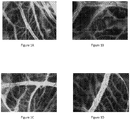
- the angiogenic network is visualized by injecting a solution of 1% aqueous Fluorescein (CHU, Limoges) into the vitelline artery using a micropipette. Macroscopic observations of the tumors as well as the diffusion of fluorescein in the vessels are carried out with a fluorescence binocular (MZFL3, Leica, France).
- results obtained presented on the figure 1D show an inhibition of the vascularization, after 9 hours of treatment with the oligopeptide according to the invention at 250 ⁇ g / ml.
- the experiment is performed with injection of fluorescein isothiocyanate (FITC) which facilitated the observation of the vasculature of CAM on angiography, including deeper microvessels.
- FITC fluorescein isothiocyanate
- VEGF vascular endothelial growth factor
- the U87-MG cells are seeded at a rate of 200,000 cells in flasks of 75 cm 2 in the presence of basal medium.
- a volume containing 4.10 6 cells is then removed and after centrifugation for 5 min at 300 g, the supernatant is removed and the cells are resuspended in 20 ⁇ l of differentiating medium which are deposited in the center of a silicone ring previously applied to the CAM of an embryo at ED9. Once the transplant is done, the embryo is incubated again.
- tumors can be observed under a MZFL3 binocular (Leica, Paris, France) and monitoring of the evolution of tumor growth is possible up to ED14.
- the tumors developed on the CAM are observed on the chorio-allyloid membrane using a binocular type MZFL3 (Leica, France) before being taken.
- the tumor begins to develop and vascularization begins.
- the pinkish color due to the presence of capillaries on the surface of the tumor disappears within 24 hours after the start of treatment with the peptide according to the invention on tumors of reduced size (1 to 2 mm in diameter) and between 24 and 48 hours for tumors larger than 2mm in diameter.
- a pearly white color appears at the surface of the tumor suggesting the establishment of necrotic process likely to lead to tumor regression ( figure 3A c ).
- the removal of the tumor and the CAM present in the ring makes it possible to visualize the vessels that enter the tumor.
- Table 2 This table presents the Ki-67 labeling quantification values obtained for each treatment condition (TSP-1, oligopeptide according to the invention NX and control without treatment Ctrl) as a function of the tumor region studied. (Edge and center). ⁇ / I> Bord1 Edge 2 Center1 Center2 CAM 1TSP1 227 314 300 292 CAM 2TSP1 286 228 233 350 CAM NX 165 172 355.5 383.5 CAM NX 184 153 369 370 CAM Ctrl 310 342 331 346 CAM Ctrl 319 333 330 347
- the vascular endothelium of chicken vessels is labeled with a lectin, SNA-1 (Sambuccus Nigra Agglutinin-1, Vector Laboratories), coupled FITC (Fluorescein Isothiocyanate).
- the sections are incubated with a solution of TBS 1X-Tween 0.05% -Trypsin 0.1% pH 7.6 for 10 min. They are then washed 3 times in 1X PBS and 100 ⁇ l of a 1 / 200th dilution of the SNA-1 lectin in a 1X-Tween 0.05% TBS solution at pH 7.6 is applied for 1 hour. After washing (the last in distilled water), the slides are then mounted as described in the previous paragraph and observed under a fluorescence microscope. Vessel counts were made from x100 magnification photographs and a marginal area extending 600 ⁇ m from the tumor border.
- the SNA-1 lectin specifically labels chicken endothelial cells constituting the vascular wall.
- SNA-1 staining on untreated tumor sections shows a richly vascularized structure with large vessels located at the base of the tumor. After treatment with the peptide according to the invention, the SNA-1 labeling disappears more specifically in the zone near the surface of the tumor suggesting a disappearance of the microvasculature in this region.
- the vimentin / SNA-1 co-labeling made it possible to complete the preceding observations by proving that the inhibition of tumor angiogenesis induced by the peptide according to the invention contributes not only to the regression of tumor microvasculature but also to the decrease in the number of differentiated tumor cells expressing vimentin.
- the number of cells expressing vimentin is greater in control tumors than in tumors ( figure 5 ).
- the tumors are fixed in 4% PX 1X-PFA (24 h) and then dehydrated in absolute ethanol then in pure toluene and then included and preserved in a paraffin block. 4 ⁇ m sections are made from a microtome and deposited on Superfrost plus slides, then dried in an oven at 50 ° C overnight.
- the sections are deparaffinized and then rehydrated by baths of decreasing concentrations of ethanol and then rinsed in 1X PBS.
- the slides are incubated in a citrate buffer at pH 7 (200 ⁇ M citric acid, 9.8 mM sodium citrate) and undergo a heating cycle (4x5 min at 750 W in the microwave). Endogenous peroxidases are inhibited by bathing for 10 min in 5% methanol-H2O2. After 3 washes, the saturation in PBS-BSA 3% and then the incubation with the anti-Ki67 antibody are carried out. After rinsing with 1X PBS, an HRP conjugated secondary antibody is applied for 1 hour at room temperature. The revelation is performed with DAB (3,3-Diaminobenzidine). Counterstaining is carried out in hematoxylin and the sections are mounted in an aqueous solution before being observed under a Leica DMRX microscope.
- Ki-67 is homogeneously distributed over the entire control tumor ( Figure 7A D ) while in the tumor treated with the peptide according to the invention ( Figure 7A F ) the peripheral zone does not express the Ki67 marker.
- This region with a weak Ki67 labeling corresponds to the band characterized above in which there is a very low expression of the vimentin and a significant reduction in the number of vessels. This result therefore suggests a potential effect of the peptide according to the invention on tumor cell proliferation which could be due to the significant decrease in vascularization in the corresponding region.
- the action of the peptide according to the invention on the inhibition of tumor angiogenesis is therefore accompanied by a decrease in the expression of a marker of tumor cells (Vimentin) demonstrated using experimental tumors. obtained on the CAM as well as a significant decrease in the proliferation of tumor cells.
- a marker of tumor cells Vimentin
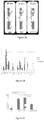
- the secretory profiles of the cells show a significant increase of IL-8 in the medium of the cells treated with TSP-1, whereas the oligopeptide according to the invention induces a strong increase of MCP-1 ( Figures 2A and 2B ) and a decrease in VEGF-A in the supernatant of U87-MG ( Figure 2C ).
- the peptide therefore has an anti-angiogenic effect in a context associating endothelial cells and tumor cells.
- Table 3 Values relating to the results of proteome array analysis of supernatants of U87-MG after treatment with H ⁇ / u> ⁇ sub> ⁇ u> 2 ⁇ / u> ⁇ /sub> ⁇ u> O (H 2 O), TSP-1 (TSP) or oligopeptide according to the invention (NX) shown in FIG.
- TSP-1 produces the same effects but to a lesser extent on this model of experimental tumors originating from CAM ( FIGS. 2A, 2B and 2C ).
- the oligopeptide according to the invention is therefore more effective than TSP-1 in the inhibition of tumor vascularization.
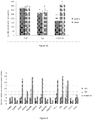
- Table 5 The values corresponding to the results expressed in figure 4 are shown in Table 5 below: ⁇ i> Table 5: The table represents the average RQ obtained for each gene according to the different treatment conditions. The average RQ is obtained from a triplicate.
- the experiment on the mouse confirms the results obtained with the CAM model.
- the tumors originated from subcutaneous heterotopic grafts at the nude mouse thigh ( Figures 7B, 7C and 7E ).
- Tables 6, 7 and 8 These tables correspond to the raw values obtained during the various analyzes carried out on the tumors treated in vivo.
- Proliferation analysis quantitative labeling Ki67 (F)
- vascularization analysis quantitative CD31 labeling
- H analysis of tumor growth as a function of time (measurement of tumor volume)
- CTRL "and” Hydrogel are the control conditions
- TSP “and” TSP1 are the treatments with thrombospondin 1 (TSP-1) and NX treatment with the peptide according to the invention
- the tumors treated with the oligopeptide according to the invention decrease in volume 48 hours after treatment and seem less vascularized than the control tumors and those treated with TSP-1 ( Figure 7D R ).
- Histological and immunohistochemical studies showed a decrease in CD31 labeling on the periphery compared with control ( Figure 7A L, and Figure 7C ). This decrease in the quantity of vessels is accompanied by a decrease in cell proliferation, visualized by a decrease in Ki-67 labeling ( Figure 7B ).
- the inhibition induced on the vascularization mechanisms by the oligopeptide according to the invention leads to the formation of a necrotic zone and to the decrease in the expression of undifferentiated tumor cell markers in the treated tumors compared to the control tumors. .
- the oligopeptide according to the invention can therefore be used in particular for the treatment of diseases associated with angiogenesis, especially glioblastoma, in particular in the context of multiple targeting.
Landscapes
- Health & Medical Sciences (AREA)
- Life Sciences & Earth Sciences (AREA)
- Public Health (AREA)
- Chemical & Material Sciences (AREA)
- Medicinal Chemistry (AREA)
- Veterinary Medicine (AREA)
- Pharmacology & Pharmacy (AREA)
- Animal Behavior & Ethology (AREA)
- General Health & Medical Sciences (AREA)
- Bioinformatics & Cheminformatics (AREA)
- Engineering & Computer Science (AREA)
- Nuclear Medicine, Radiotherapy & Molecular Imaging (AREA)
- Organic Chemistry (AREA)
- General Chemical & Material Sciences (AREA)
- Chemical Kinetics & Catalysis (AREA)
- Epidemiology (AREA)
- Immunology (AREA)
- Proteomics, Peptides & Aminoacids (AREA)
- Gastroenterology & Hepatology (AREA)
- Ophthalmology & Optometry (AREA)
- Zoology (AREA)
- Marine Sciences & Fisheries (AREA)
- Rheumatology (AREA)
- Vascular Medicine (AREA)
- Physical Education & Sports Medicine (AREA)
- Dermatology (AREA)
- Orthopedic Medicine & Surgery (AREA)
- Pain & Pain Management (AREA)
- Heart & Thoracic Surgery (AREA)
- Cardiology (AREA)
- Urology & Nephrology (AREA)
- Medicines That Contain Protein Lipid Enzymes And Other Medicines (AREA)
- Peptides Or Proteins (AREA)
Description
- La présente invention concerne un oligopeptide particulier et son utilisation comme médicament dans le traitement de maladies associées à l'angiogenèse chez l'homme ou l'animal, en particulier comme agent anti- tumoral.
- L'angiogenèse est le mécanisme responsable de la formation de nouveaux vaisseaux à partir de vaisseaux préexistants. Elle est indispensable au cours de certains processus physiologiques, en particulier pour la mise en place du système vasculaire chez l'embryon et pour l'implantation du placenta, mais elle peut également être responsable de développements pathologiques, comme la polyarthrite rhumatoïde, la dégénérescence maculaire chez l'adulte, et surtout la croissance des tumeurs et le développement des métastases. Il est en effet bien établi que le développement d'une vascularisation intra- ou péri-tumorale est un événement clé pour la croissance d'une tumeur et pour la dissémination métastatique par la voie sanguine.
- C'est pourquoi, depuis plusieurs années, des recherches ont été menées sur des molécules présentant des effets anti-angiogéniques susceptibles d'être utilisées dans le traitement des cancers.
- La plupart des agents anti-angiogéniques actuels ciblent principalement la cascade du VEGF (« Vascular Endothelial Growth Factor », facteurs de croissance endothélial vasculaire) produits par les cellules tumorales et sa liaison aux récepteurs notamment en utilisant des anticorps bloquant, ou des inhibiteurs des récepteurs à tyrosine kinases impliqués dans l'angiogenèse et la prolifération tumorale.
- Toutefois, bien que le VEGF soit reconnu comme un facteur régulateur important dans la croissance tumorale et qu'il constitue une cible privilégiée pour les thérapies anticancéreuses, la mise au point de nouveaux agents inhibiteurs de l'angiogenèse représente un enjeu important pour accroître le nombre d'options thérapeutiques. De plus, l'identification de tels agents agissant sur des voies de la néo- ou l'anti-angiogenèse représenterait un progrès important pouvant permettre de développer un arsenal thérapeutique afin d'adresser de nombreuses pathologies dans lesquelles ces phénomènes d'angiogenèse interviennent (dégénérescence maculaire par exemple).
- Si certains des inhibiteurs de l'angiogenèse développés actuellement montrent des effets sur le contrôle de la croissance des tumeurs en association avec une chimiothérapie conventionnelle, ils ne sont toutefois pas suffisamment efficaces, en particulier pour le traitement des tumeurs solides d'une façon générale et des tumeurs du système nerveux central plus spécifiquement. En effet, certaines de ces molécules, comme les anticorps, peuvent être des molécules présentant un poids moléculaire élevé qui les empêche de diffuser sur des distances importantes en particulier dans une masse tumorale ou de passer facilement la barrière hémato-encéphalique.
- De plus, les molécules anti-angiogéniques existantes sont des protéines de synthèse qui sont complexes et couteuses à fabriquer. Elles doivent en outre pour la plupart être utilisées en forte concentration et présentent des effets secondaires importants comme par exemple l'Avastin® (bevacizumab). Ces effets secondaires, parfois d'issue fatale, rencontrés avec le bevacizumab sont notamment une leucopénie à l'origine d'infections ainsi qu'un risque hémorragique. D'autres approches de blocage de la voie du VEGF (anticorps anti-VEGF, anti-VEGF-R, petites molécules bloqueurs de PI3K entre autres) sont par ailleurs développées mais elles présentent dans la grande majorité des cas des limites en terme d'efficacité, de spécificité et d'effets indésirables, ces derniers pouvant porter sur le système cardiovasculaire. Des survenues d'hypertension artérielle sont ainsi généralement observées avec les différents anti-angiogéniques et des toxicités myocardiques pour certains d'entre eux ( Wu S et al. Lancet Oncol 2008; 9: 407-11 ; Nalluri SR, et al. JAMA 2008; 300(19): 2277-85 ; Chu TF, et al. Lancet 2007; 370: 2011-19 .).
- Il subsiste donc un besoin pour un agent anti-angiogénique palliant ces nombreux inconvénients.
- Pour y répondre l'invention propose un oligopeptide particulier dont la séquence est déduite d'une partie des motifs TSR (« Thrombospondin type 1 repeat ») présents dans la SCO-spondine, glycoprotéine spécifique du système nerveux central et présente chez tous les vertébrés, des prochordés à l'homme. Il s'agit d'une molécule des matrices extracellulaires sécrétée par un organe particulier situé dans le toit du 3ème ventricule, l'organe sous-commissural. La SCO-spondine est une molécule de grande taille, composée de plus de 4500 acides aminés et présentant une organisation multi-modulaire qui comprend différents motifs protéiques conservés dont en particulier 26 motifs TSR. On sait que certains peptides déduits de la SCO-spondine à partir des motifs TSR présentent une activité biologique sur les cellules nerveuses (notamment décrit dans la demande
WO-99/03890 - Les motifs TSR sont des domaines protéiques d'environ 55 résidus, basés sur l'alignement d'acides aminés conservés cystéine, tryptophane et arginine. Ces motifs ont tout d'abord été isolés dans la TSP-1 (thrombospondine 1) qui est une molécule intervenant dans la coagulation. Ils ont ensuite été décrits dans de nombreuses autres molécules aux fonctions biologiques diverses telles que l'attachement cellulaire, la mobilité, la prolifération, l'agrégation cellulaire, la modulation de protéases ou l'inhibition de l'angiogenèse.
- La TSP-1 est une glycoprotéine de la matrice extracellulaire d'un poids moléculaire d'environ 120 kDa dans sa forme monomérique, possédant un domaine de liaison à l'héparine et des motifs répétés de trois types qui peuvent se lier à un certain nombre de facteurs angiogènes, dont le FGF-2, le VEGF, le PDGF et le TGF-β1 (Lamszus et al., 1996; Margosio et al., 2003). Cette interaction permet la séquestration de ces facteurs et limite leurs interactions avec leurs récepteurs respectifs. Le second mécanisme d'action de la TSP-1 passe notamment par sa liaison aux cellules endothéliales via les protéoglycanes, les intégrines, le CD47 et le CD36 (Asch et al., 1987; Gao et al., 1996; Primo et al., 2005; Zhang et al., 2009b). L'interaction de TSP-1 avec CD36 pourrait inhiber la signalisation pro-angiogénique en formant un complexe avec NRP-1 et VEGFR-2 qui empêcherait l'activation du VEGFR-2 induite par le VEGF. La TSP-1 peut de plus agir sur la NOS, inhiber la migration des cellules endothéliales induites par le FGF-2 et également induire l'apoptose des cellules endothéliales. Par ailleurs, il a été décrit que les propriétés anti-angiogéniques de TSP1 impliquaient une inhibition de la survie, de la prolifération et de la migration des cellules endothéliales (Jiménez B, Volpert OV, Crawford SE, Febbraio M, Silverstein RL, Bouck N. Nat Med. 2000 Jan;6(1):41-8).
- On sait d'une manière générale que certains fragments peptidiques de la TSP-1 ainsi que certains peptides synthétiques dont la structure est analogue à celle de ces fragments peptidiques montrent une activité similaire à la thrombospondine-1 native.
- A titre d'exemple, les brevets
US 6,239,110 ,US 5,840,692 ,US 5,849,701 ,US 5,491,130 etUS 6,051,549 ,US 5,190,918 etUS 5,200,397 etUS 6,384,189 décrivent la structure et les effets biologiques de plusieurs de ces fragments peptidiques déduits de la TSP-1 et de ses analogues synthétiques. - En outre, un certain nombre de molécules à visée anti-angiogénique inspirées des motifs TSR de la TSP-1 ont été développées. On connaît plusieurs dérivés peptidiques ou peptides de ce type, présentés comme capables de mimer les effets de TSP-1, notamment l'ABT-510 et l'ABT-526. Toutefois, malgré des séquences en acides aminés et une affinité pour leur récepteur proches, la solubilité et l'effet de ces peptides de synthèse sur les cellules endothéliales peut varier (Haviv et al., 2005). L'ABT-510 en particulier s'est révélé inducteur in vitro de l'apoptose dépendant de la Capsase-8 via CD36 et a réduit la vascularisation tumorale dans un modèle préclinique de greffe hétérotopique de gliome chez la souris nude (Anderson et al. 2007). Il a par ailleurs fait l'objet d'études cliniques dans différents cancers, notamment le sarcome et le carcinome rénal. Toutefois, bien que son innocuité ait été démontrée, l'efficacité en monothérapie du composé ABT-510 a été jugée insuffisante (Baker et al., 2008; Ebbinghaus et al., 2007).
- D'autres composés peptidiques ont été élaborés à partir de motifs TSR de la TSP-1 comme par exemple le 3TSR (Ren et al., 2009), ou ont été étudiés en provenance d'autres protéines ayant des motifs TSR, comme par exemple ADAMTS5 à partir de laquelle une protéine recombinante portant des motifs TSR a été obtenue (Sharghi-Namini et al, 2008). Le mécanisme d'action de cette protéine recombinante reste toutefois VEGF-dépendant. En effet, la protéine recombinante a montré qu'elle inhibait la stimulation des cellules endothéliales par VEGF et induisait leur apoptose en présence de VEGF. Par ailleurs, l'obtention de cette protéine recombinante en quantité suffisante nécessite de faire appel à des systèmes d'expression qui peuvent être complexes pour une qualité pharmaceutique car pouvant introduire des contaminations ou modifier la conformation (structure tertiaire) de la protéine à produire.
- Actuellement, les séquences des motifs TSR connus pour leur efficacité sont :
- la séquence V-T-C-G (SEQ ID n°2) qui peut se lier au récepteur CD36 ou gpIV des plaquettes ;
- la séquence C-S-V-T-C-G (SEQ ID n°3) : S.S. Tolsma et al. (The Journal of Cell Biology, vol. 122 p.497-511 (1993 )) ont montré que l'activité anti-angiogénique de la TSP-1 pouvait être reproduite in vitro et in vivo avec différents peptides synthétiques, dont en particulier deux séquences déduites du domaine TSR et qui présentent en position centrale la séquence C-S-V-T-C-G (SEQ ID n°3). De plus des études ultérieures ont précisé que l'activité de néovascularisation par la TSP-1 pouvait se dérouler selon deux mécanismes différents qui faisaient intervenir deux régions différentes du TSR dont une région renfermant la séquence C-S-V-T-C-G (SEQ ID n°3) (M.L. Iruela-Arispe, Circulation, vol. 100 p1423-31 (1999 )) ;
- la séquence W-S-X-W (SEQ ID n°4) qui est capable de lier l'héparine et des protéoglycanes permettant ainsi un effet biologique variable et intervenant dans le processus d'activation du TGFβ par la TSP-1. La présence de ce motif W-S-X-W (SEQ ID n°4) bien que non suffisante à elle seule, est nécessaire pour cette activation de la cytokine qui peut alors intervenir dans différents évènements biologiques tels que l'inflammation, l'angiogenèse ou le développement embryonnaire (G. D. Young et J. E. Murphy-Ullrich, The Journal of Biological Chemistry, vol. 279, p. 47633-47642 (2004 )). De plus, ce motif semble agir comme compétiteur de certains facteurs de croissance pro-angiogéniques lors de leur liaison aux protéoglycanes présents à la surface de cellules endothéliales (T. Vogel et al., the Journal of Cellular Biochemistry, vol. 53 p.74-84 (1993 )). Il s'agit également de la seconde région du TSR citée dans M.L. Iruela-Arispe (Circulation, vol. 100 p1423-31 (1999 )) intervenant dans les mécanismes responsables de l'activité de néovascularisation par la TSP-1. Toutefois la constitution exacte de l'acide aminé variant (X) ou des acides aminés additionnels situés en amont ou en aval de ce motif est importante pour l'activité du peptide. C'est le cas en particulier de l'efficacité de la liaison à l'héparine et de l'induction de l'adhésion cellulaire qui se sont trouvées augmentées pour un pentapeptide où X étant la Proline ou des acides aminés basiques (( N.H. Guo, The Journal of Biological Chemistry, vol. 267 p.19349-55 (1992 )).
- A ce jour, aucun produit anti-angiogénique suffisamment efficace et bien toléré n'a été développé et aucun produit construit sur la base de tous les éléments précédemment décrits n'a été testé pour des activités anti-angiogéniques.
- C'est pourquoi l'invention propose un oligopeptide spécifique efficace et bien toléré, qui supprime certains inconvénients des thérapies anti-angiogéniques existantes.
- En particulier, l'invention vise un oligopeptide présentant la séquence suivante :
-W-S-X1-W-S- X2-C-S- X3-X4-C-G- (SEQ ID N°1)
dans lequel X1, X2, X3 et X4 représentent des séquences d'acides aminés consistant en 1 à 5 acides aminés, comme médicament inhibiteur de l'angiogenèse. Il est utile dans le traitement de maladies associées à l'angiogenèse choisie parmi les cancers, l'arthrite, la polyarthrite rhumatoïde, des plaques d'athérosclérose, la néovascularisation d'une greffe de cornée, des cicatrices hypertrophiques ou chéloïdes, la rétinopathie proliférante, la rétinopathie diabétique, la dégénérescence maculaire chez l'adulte, la granulation, le glaucome néovasculaire et l'uvéite. - Cette séquence d'acides aminés a été décrite sous sa forme -W-S-G-W-S-S-C-S-R-S-C-G-(SEQ ID N°5) dans le brevet
WO9903890 WO2009027350 mais aucunement pour des activités anti-angiogéniques. - De façon surprenante et inattendue, l'oligopeptide selon l'invention joue un rôle protecteur de l'apoptose des HUVECs ou des HBMECs, et ceci de façon comparable à une dose élevée de VEGF (50 ng/mL), et ne module pas leur prolifération. ln vitro, les effets de l'oligopeptide selon l'invention sur les cellules endothéliales semblent donc opposés à ceux de la TSP-1. Par ailleurs, l'oligopeptide selon l'invention favorise la migration en présence d'un facteur angiogènique tel que le VEGF ou le bFGF. Il inhibe cependant la migration des HBMECs induite par des cellules tumorales de glioblastome lorsqu'on le met au contact des U87-MG ou des HBMECs.
- De plus, il a été démontré que contrairement à TSP-1, l'action de l'oligopeptide objet de la présente invention n'implique pas le récepteur CD36.
- Il présente ainsi un rôle inhibiteur sur les mécanismes de vascularisation et un effet anti-angiogénique important qui corrèle l'effet anti-tumoral également observé. Du fait de sa petite taille, il est aussi particulièrement adapté au traitement des tumeurs du système nerveux central, notamment des glioblastomes.
- L'oligopetide selon l'invention pour son utilisation comme anti-angiogénique est unique par ses effets et ses mécanismes d'action originaux. En effet, ABT-510 qui est la molécule anti-angiogénique la plus proche de par son origine, dérive de la partie centrale de la seconde répétition thrombospondine de type 1 située à l'extrémité N-terminale de la TSP-1, protéine exprimée par de nombreux types cellulaires et impliquée dans différents processus biologiques y compris l'angiogenèse, alors que l'oligopeptide selon l'invention représente la séquence consensus de la partie N-terminale des 27 répétitions TSR de la SCO-spondine qui est une protéine présentant des motifs TSR mais spécifiquement exprimée au niveau du SNC et intervenant notamment pendant le développement.
- L'oligopeptide présente en outre une innocuité améliorée, l'oligopeptide selon l'invention ne montrant aucune toxicité même à des injections de 20mg/kg.
- D'autres caractéristiques et avantages ressortiront de la description qui va suivre de l'invention, en regard des dessins annexés sur lesquels :
- les
figures 1A à 1D représentent des observations macroscopiques (grossissement x20) réalisées après injection de fluorescéine aqueuse dans la circulation systémique d'un embryon à ED9 :- ∘
figure 1A : eau (contrôle) - ∘
figure 1B : bevacizumab (témoin négatif) - ∘
figure 1C : VEGF à 10ng/mL (témoin positif) - ∘
figure 1D : oligopeptide selon l'invention 250µg/mL
- ∘
- les
figures 2A à 2C représentent des résultats d'analyse de facteurs solubles intervenant dans l'angiogenèse :- ∘ des surnageants de cellules U87-MG ont été étudiés par protéome array (
figures 2A et 2B ) pour la recherche de protéines impliquées dans l'angiogenèse, en présence d'eau stérile, de TSP-1 et de l'oligopeptide selon l'invention - ∘ les sécrétions de VEGFA par les U87-MG dans le milieu après traitements avec l'eau stérile, TSP-1 et l'oligopeptide selon l'invention, ont été dosés par ELISA à partir des surnageants (
figure 2C ).
- ∘ des surnageants de cellules U87-MG ont été étudiés par protéome array (
- les
figures 3A à 3C représentent des résultats de l'analyse de l'effet de l'oligopeptide selon l'invention sur l'angiogenèse et la prolifération tumorale dans le modèle de la CAM :- ∘ à partir de tumeurs issues de greffes de U87-MG sur la CAM, la vascularisation des tumeurs expérimentales a été étudiées aux niveaux macroscopiques (
figure 3A - a à f ) et microscopique (figure 3A g à l) après traitement pendant 48 heures avec :- ▪ H2O: a, d, g et j
- ▪ la TSP-1 : b, e, h et k
- ▪ l'oligopeptide selon l'invention : c, f, i et l
- ∘ à partir de tumeurs issues de greffes de U87-MG sur la CAM, la vascularisation des tumeurs expérimentales a été étudiées aux niveaux macroscopiques (
- L'observation microscopique des vaisseaux est réalisée après marquage de ceux-ci par la SNA-1. Les barres d'échelle pour les images h et i de la
figure 3A représentent 1 mm et les images j, k et l de lafigure 3A sont des grossissements (x2) des images g, h et i de lafigure 3A , respectivement ; les têtes de flèches montrent les vaisseaux visibles, les flèches montrent les surfaces traitées et les étoiles les zones sans vaisseaux. - ∘ la structure des tumeurs a été visualisée après un marquage par hématoxyline, éosine et safran de coupes de tumeurs expérimentales (
figure 3B a à c) et la prolifération des cellules tumorales a été étudiée par marquage immunohistochimique du Ki-67 avec contre-coloration par hématoxyline (figure 3B d à i ). Les tumeurs ont été traitées 48 heures avec- ▪ eau : a, d et g
- ▪ la TSP-1 : b, e et h
- ▪ l'oligopeptide selon l'invention : c, f et i
figure 3B sont des grossissements (x4) des bordures des images d, e et f de lafigure 3B , respectivement. Les flèches montrent les surfaces traitées et les étoiles les zones sans marquage du Ki-67. - ∘ Le marquage du Ki-67 a été quantifié (
Figure 3C ) dans les différentes conditions à l'aide du logiciel ImageJ et des comparaisons entre le centre et la bordure des tumeurs et entre les conditions ont été effectuées par analyse de variances (ANOVA). Une valeur de p<0,05 est considérée significative. * p<0,05; ** p<0.01 ; *** p<0.001 en comparaison au centre de la même tumeur. $ p<0,05 ; $$ p<0,01 ; $$$ p<0,001 en comparaison à la tumeur contrôle.- la
figure 4 représente les résultats de l'analyse quantitative des ARNm dans des tumeurs expérimentales issues de la CAM, les différents gènes étant représentés par leur expression relative comparée aux tumeurs contrôles - la
figure 5 représente les résultats de l'analyse semi-quantitative de l'expression protéique de la vimentine par western blot avec ou sans l'oligopeptide selon l'invention sur les cellules U87-MG - la
figure 6 représente les résultats de l'analyse de l'effet fonctionnel de l'oligopeptide selon l'invention sur l'apoptose des HBMECs in vitro. Il s'agit d'une synthèse d'une analyse par ELISA Cell Death : les traitements par VEGF, TSP-1 et l'oligopeptide selon l'invention (NX) ont été effectués séparément ou on combinaison dans du milieu basal (BM).
- la
- Du milieu complet (CM) et du milieu basal (BM) ont été utilisés comme contrôles. Une valeur de p<0,05 est considérée significative. Les comparaisons entre différents traitements ont été effectuées par analyse de variances (test ANOVA). * p<0.05; ** p<0.01 comparé à BM; $ p<0,05 comparé à BM+NX; # p<0,05 comparé à CM,
- les
figures 7A à 7E représentent les résultats de l'analyse de l'activité de l'oligopeptide selon l'invention sur la prolifération, la vascularisation et la croissance tumorale chez la souris Nude :- ∘ les images A, B et C de la
figure 7A représentent l'immunomarquage du Ki-67 sur coupes de tumeurs traitées par H2O, TSP-1 ou l'oligopeptide selon l'invention respectivement - ∘ les images D, E et F de la
figure 7A sont des grossissements (x2) des figures A, B et C - ∘ les images G, H et I de la
figure 7A représentent l'immunomarquage du CD31 sur coupes de tumeurs traitées par H2O, TSP-1 ou l'oligopeptide selon l'invention respectivement (les barres d'échelle correspondent à 500µm) - ∘ les images J, K et L de la
figure 7A sont des grossissements (x2) des images G, H et I - ∘ le marquage du Ki-67 a été quantifié dans les différentes conditions à l'aide du logiciel imageJ et des comparaisons entre le centre et la bordure des tumeurs et entre les conditions ont été effectuées (
figure 7B ) par analyse de variances (test ANOVA). Une valeur de p<0,05 est considérée significative. * p<0,05 comparé au centre des mêmes tumeurs ; $ p<0,05 et $$ p<0,01 comparé au contrôle - ∘ le marquage du CD31 a été quantifié dans les différentes conditions à l'aide du logiciel imageJ et des comparaisons entre le centre et la bordure des tumeurs et entre les conditions ont été effectuées (
figure 7C ) par analyse de variances (test ANOVA). Une valeur de p<0,05 est considérée significative. * p<0,05 comparé au centre des mêmes tumeurs ; $ p<0,05 et $$ p<0,01 comparé au contrôle - ∘ les images M et P de la
figure 7D représentent des tumeurs de souris après traitement par hydrogel seul - ∘ les images N et Q de la
figure 7D représentent des tumeurs de souris après traitement par TSP-1 dans de l'hydrogel - ∘ les images O et R de la
figure 7D représentent des tumeurs de souris après traitement par l'oligopeptide selon l'invention (NX) dans de l'hydrogel - ∘ la
figure 7E représente les mesures des croissances tumorales traitées avec H2O, TSP-1 et l'oligopeptide selon l'invention à 5, 12, 17, 19 21 et 23 jours après l'injection de cellules cancéreuses. Les injections des traitements (hydrogel seul, TSP-1 et l'oligopeptide selon l'invention (NX) ont été réalisées au 21e jour (flèche noire). La comparaison des tailles tumorales en comparaison aux contrôles a été effectuée par analyse de variances (test ANOVA). ** p<0.01; *** p<0.001.
- ∘ les images A, B et C de la
- L'invention vise donc un oligopeptide présentant la séquence suivante :
-W-S-X1-W-S- X2-C-S- X3-X4-C-G- (SEQ ID N°1)
dans lequel X1, X2, X3 et X4 représentent des séquences d'acides aminés consistant en de 1 à 5 acides aminés, comme médicament inhibiteur de l'angiogenèse. Il est utile dans le traitement d'au moins une maladie associée à l'angiogenèse, c'est-à-dire une maladie caractérisée par une angiogenèse excessive ou anormale ou par une prolifération des cellules endothéliales, choisie parmi : les cancers, l'arthrite, la polyarthrite rhumatoïde, des plaques d'athérosclérose, la néovascularisation d'une greffe de cornée, des cicatrices hypertrophiques ou chéloïdes, la rétinopathie proliférante, la rétinopathie diabétique, la dégénérescence maculaire chez l'adulte, la granulation, le glaucome néovasculaire et l'uvéite. - Au sens de la présente invention, on entend par acides aminés les acides aminés naturels et les acides aminés non naturels.
- Par « acides aminés naturels » on entend la forme L des acides aminés qui peuvent être trouvés dans des protéines d'origine naturelle, c'est-à-dire : alanine (A), arginine (R), asparagine (N), acide aspartique (D), cystéine (C), glutamine (Q), acide glutamique (E), glycine (G), histidine (H), isoleucine (I), leucine (L), lysine (K), méthionine (M), phénylalanine (F), proline (P), sérine (S), thréonine (T), tryptophane (W), tyrosine (Y) et valine (V).
- Par « acides aminés non naturels » on entend la forme D des acides aminés naturels, les formes homo de certains acides aminés naturels (tels que : arginine, lysine, phénylalanine et sérine), et les formes nor de la leucine et de la valine. Ils comprennent aussi des acides aminés synthétiques comme l'acide alpha-aminobutyrique (Abu), l'agmatine (Agm), l'acide alpha-arinoisobutyrique (Aib), la N-formyle-trp (F-trp), la sarcosine , la statine, l'ornithine, la désaminotyrosine. La désaminotyrosine est incorporée à l'extrémité N-terminale alors que l'agmatine et la statine sont incorporées à l'extrémité C-terminale de ces peptides.
- Dans la séquence SEQ ID n°1, au moins un acide aminé peut être remplacé par un de ses dérivés ou analogues.
- Selon un mode de réalisation préféré, X1, X2, X3 et X4 représentent chacun un acide aminé.
- Préférentiellement X1 est choisi parmi G, V, S, P et A, X2 est choisi parmi G, V, S, P et A, X3 est choisi parmi R, A et V et X4 est choisi parmi S et P. La séquence correspondante est la séquence SEQ ID n°6 : W-S-X1-W-S- X2-C-S- X3-X4-C-G- dans laquelle est choisi parmi G, V, S, P et A, X2 est choisi parmi G, V, S, P et A, X3 est choisi parmi R, A et V et X4 est choisi parmi S et P.
- Selon une variante X1 et X2 peuvent être W-S-S-, W-S-G-, W-S-P-, W-S-A-, W-S-R-. La séquence correspondante est la séquence SEQ ID n°7 : -W-S-X1-W-S- X2-C-S- X3-X4-C-G- dans laquelle X1 et X2 sont choisis parmi W-S-S-, W-S-G-, W-S-P-, W-S-A-, W-S-R- et X3 et X4 représentent des séquences d'acides aminés consistant en de 1 à 5 acides aminés. L'oligopeptide peut être modifié par amidation, acylation, pegylation, par addition d'acides aminés, mais également par modification en staple peptides ou par tout procédé de conjugaison notamment avec l'albumine ou des polymères comme le PEG, ou combinaison avec un gel, hydrogel. L'oligopeptide peut également être cyclisé.
- L'oligopeptide selon l'invention peut être obtenu de différentes façons : par synthèse chimique en phase liquide ou sur support solide (Fmoc par exemple), par d'autres méthodes faisant appel aux techniques recombinantes et de constructions génétiques comportant une séquence ou un fragment d'ADN pouvant coder pour des composés peptidiques comportant la séquence de l'oligopeptide selon l'invention et permettant de recueillir par des systèmes d'expression eucaryotes ou procaryotes le produit d'expression ou d'exprimer in situ le produit. L'oligopeptide selon l'invention peut se présenter sous forme déglycosylée ou bien glycosylée si cela est nécessaire. Dans certains cas, et suivant la méthode de préparation, il pourra être nécessaire de renaturer certaines structures tertiaires de l'oligopeptide.
- L'oligopeptide selon l'invention :
- joue un rôle protecteur de l'apoptose des HUVECs ou des HBMECs et ne module pas leur prolifération
- favorise la migration en présence d'un facteur angiogènique tel que le VEGF ou le bFGF
- inhibe la migration des HBMECs induite par des cellules tumorales de glioblastome lorsqu'on le met au contact des U87-MG.
- L'oligopeptide selon l'invention peut donc être utilisé comme principe actif thérapeutique ou médicament anti-angiogénique dans le traitement de différentes pathologies notamment les cancers, l'arthrite, la polyarthrite rhumatoïde, des plaques d'athérosclérose, la néovascularisation d'une greffe de cornée, des cicatrices hypertrophiques ou chéloïdes, la rétinopathie proliférante, la rétinopathie diabétique, la dégénérescence maculaire chez l'adulte, la granulation, le glaucome néovasculaire et l'uvéite.
- Avantageusement, il est capable d'inhiber la néo-angiogenèse de tumeurs chez l'homme ou l'animal.
- Selon un autre avantage, la petite taille de l'oligopeptide de séquence SEQ ID N°1 facilite le passage de la barrière hémato-encéphalique et la bio-distribution rapide dans le système nerveux central ainsi que le ciblage de la zone tumorale. Sa solubilité en solutions aqueuses le rend compatible avec la pratique clinique. Il peut donc être utilisé comme médicament pour le traitement des tumeurs cérébrales chez l'homme ou l'animal, en particulier pour le traitement de glioblastomes.
- Par ailleurs, comme il s'agit d'un oligopeptide issu d'une protéine présente dans l'organisme, il présente une tolérance accrue et des propriétés d'induction d'effets secondaires indésirables restreintes par rapport à des molécules résultats de synthèse chimique ou issues de plantes comme c'est le cas de nombreux anti-angiogéniques actuels. De plus, il est soluble, non toxique, et lorsqu'il est constitué d'acides aminés naturels, il est non immunogène et est facilement éliminé par l'organisme.
- Le mode d'action de l'oligopeptide selon l'invention est indépendant du CD36, contrairement à celui de la TSP-1. En effet, lorsque le CD36 est activé par la TSP-1 dans les cellules endothéliales, il interfère avec l'activation du VEGF-R2 (KDR) et induit l'apoptose des cellules endothéliales. L'oligopeptide selon l'invention favorise le rapprochement entre les deux récepteurs (CD36 et VEGFR-2), mais augmente l'expression de CD36. Plutôt que de jouer un rôle inhibiteur directement sur les cellules endothéliales, l'oligopeptide selon l'invention favorise l'activation du VEGFR-2 en présence de son ligand, la voie du VEGF étant connue comme favorisant la survie des cellules endothéliales et leur migration.
- Par ailleurs l'oligopeptide selon l'invention est capable de moduler deux molécules : CD36 et VEGF-R2 participant au phénomène d'angiogenèse.
- L'oligopeptide selon l'invention peut être administré par tout mode d'administration adapté. Pour le traitement de maladies touchant le système nerveux central, il est préférentiellement administré par voie intrathécale, intraventriculaire, intraparenchymateuse, épidurale. Pour les autres applications, il est préférentiellement administré par voie intraveineuse, par voie intraluminale, par voie intravitréale, par voie transphénoïdale ou par voie topique, ces modes d'administration n'étant pas limitatifs.
- Il peut être intégré dans des compositions pharmaceutiques sous une forme quelconque, notamment liquide ou gel ou tout autre support, en particulier permettant libération contrôlée.
- L'oligopeptide est préférentiellement formulé dans une composition pharmaceutique, en particulier une composition pharmaceutique se présentant sous forme
- liquide : il peut notamment être formulé dans des préparations injectables sous forme de solutions, suspensions ou émulsions (préparations pour perfusion),
- ou solide, et comporter tout type de support, en particulier gels, biopolymères ou biomatériaux ou tout dispositif médical comme les implants ou les pompes implantables par exemple, permettant une libération contrôlée ou bien un système de vectorisation.
- Dans le cadre du traitement de tumeurs, l'oligopeptide selon l'invention peut éventuellement être utilisé seul ou en association avec un ou plusieurs autres principes actifs anti-tumoraux. Il peut être utilisé avec au moins un principe actif chimiothérapeutique anti-cancéreux par exemple.
- L'invention vise donc également les compositions pharmaceutiques comprenant un oligopeptide présentant la séquence suivante :
-W-S-X1-W-S- X2-C-S- X3-X4-C-G- (SEQ ID N°1)
dans lequel X1, X2, X3 et X4 représentent des séquences d'acides aminés consistant en 1 à 5 acides aminés, tel que décrit précédemment pour son utilisation comme médicament inhibiteur de l'angiogenèse, ces compositions étant utiles dans le traitement de maladies associées à l'angiogenèse choisie parmi les cancers, l'arthrite, la polyarthrite rhumatoïde, des plaques d'athérosclérose, la néovascularisation d'une greffe de cornée, des cicatrices hypertrophiques ou chéloïdes, la rétinopathie proliférante, la rétinopathie diabétique, la dégénérescence maculaire chez l'adulte, la granulation, le glaucome néovasculaire et l'uvéite. - L'invention est à présent illustrée par un exemple d'oligopeptide selon l'invention et par des résultats d'essais démontrant l'effet anti-angiogénique de l'oligopeptide selon l'invention, en particulier de l'oligopeptide de l'exemple 1.
- -W-S-G-W-S-S-C-S-R-S-C-G- (SEQ ID N°5)
Cet oligopeptide objet de la présente invention correspond aux 12 acides aminés les plus conservés issus du quatrième domaine TSR de la SCO-spondine. - Le processus d'apoptose s'accompagne de la fragmentation de l'ADN et génère ainsi des nucléosomes solubles (histones cytoplasmique associées à l'ADN fragmenté) qui peuvent être dosés par une méthode immunoenzymatique, ELISA Cell Death Plus (Enzyme-Linked ImmunoSorbent Assay) Kit (Roche Molecular Diagnostics, France) selon les recommandations du fournisseur. Les cellules HBMECs ont été ensemencées en plaque 24 puits à la densité de 5.103 cellules / puits et laissées 24 heures au repos. Les cellules sont cultivées dans un milieu basal c'est-à-dire en absence de facteurs de croissance qui est changé avant qu'elles soient exposées aux différents traitements pendant 24 heures. Elles sont ensuite récupérées puis centrifugées à 200g pendant 5 min. Les cellules sont alors comptées, puis ajustées à 3.104 cellules/mL dans du PBS. Une nouvelle centrifugation à 200 g est réalisée pendant 10 min. Le surnageant est retiré et le culot cellulaire est repris dans 200 µL de tampon de lyse avant une incubation de 30 min à température ambiante. Après une nouvelle centrifugation de 10 min à 1400 rpm, 20 µL de surnageant sont distribués dans les puits coatés à la streptavidine et chaque condition est réalisée en duplicat. 80 µL de la solution d'immunoréactif sont ajoutés dans chaque puits. Cette solution contient du tampon d'incubation ainsi que 2 anticorps : un anticorps anti-histone couplé à la biotine et un anticorps anti-ADN couplé à la HRP (Horse Radish Peroxydase). Les 2 anticorps vont se lier à la plaque via la streptavidine. La plaque est incubée pendant 2h à température ambiante, sous agitation et à l'obscurité. Après cette étape, 3 lavages avec 200 µL de tampon d'incubation sont réalisés afin d'éliminer l'excès d'anticorps non fixés. 100 µL d'ABTS, qui est le substrat de la HRP, sont ensuite rajoutés dans chaque puits. L'incubation avec la solution d'ABTS est effectuée à l'obscurité pour une durée de 15 à 20 min. La réduction de l'ABTS par l'HRP permet la visualisation de l'apoptose par réaction colorimétrique. La réaction est alors stoppée par ajout de 100 µL de solution stop ABTS puis les résultats sont analysés grâce à un lecteur de plaque à 405 nm. La quantité d'oligonucléosomes formée est proportionnelle à l'intensité de la coloration et à l'apoptose cellulaire.
- Les résultats obtenus, présentés sur la
figure 6 et dans le tableau 1 ci-après :Tableau 1 : Valeurs moyennes relatives aux densités optiques mesurées pour chaque condition de traitement lors du test d'induction de l'apoptose sur les cellules HBMEC Conditions Valeurs Densité Optique Ecart moyen BM 0,259 BM 0,414 BM 0,279 0,06444444 BM+VEGF 0,234 BM+VEGF 0,133 BM+VEGF 0,195 0,03622222 BM+TSP 0,215 BM+TSP 0,419 BM+TSP 0,372 0,08022222 BM+NX 0,199 BM+NX 0,138 BM+NX 0,21 0,02955556 BM+VEGF+TSP 0,214 BM+VEGF+TSP 0,235 BM+VEGF+TSP 0,304 0,03533333 BM+VEGF+NX 0,217 BM+VEGF+NX 0,118 BM+VEGF+NX 0,097 0,04866667 BM+VEGF+TSP+NX 0,212 BM+VEGF+TSP+NX 0,206 BM+VEGF+TSP+NX 0,154 0,02444444 CM 0,14 CM 0,135 CM 0,15 0,00555556 BM = milieu basal
CM = milieu complet
NX = oligopeptide selon l'invention - Ces résultats montrent que l'oligopeptide selon l'invention protège le cellules endothéliales humaines HBMECs de l'apoptose à un niveau similaire au VEGF, et cet effet n'est pas observé en présence de TSP-1. En fait, TSP-1 est connu pour induire l'apoptose des cellules endothéliales. Par ailleurs, le traitement combiné oligopeptide selon l'invention + VEGF améliore cet effet protecteur.
- L'angiogenèse est l'un des mécanismes clé du développement embryonnaire. C'est également un processus déterminant sous certaines conditions physiologiques et pathologiques (cancers en particulier). Ce mécanisme est sous la dépendance de nombreux facteurs possédant soit un potentiel inhibiteur, soit activateur. Afin d'évaluer les principales propriétés de ces facteurs in vivo, le modèle le plus répandu est le modèle de la CAM (membrane chorio-allantoïdienne) à partir de l'embryon de poulet (Ribatti et al., 2000). Il présente l'avantage de permettre de tester les facteurs pro ou anti-angiogéniques lors d'une phase d'angiogenèse active entre le stade embryonnaire 4j et 10j. Les effets majeurs des différentes molécules peuvent donc être évalués in vivo. Le modèle de la CAM peut également servir au développement de tumeur expérimentale. La greffe de cellules humaines cancéreuses à la surface de la CAM est réalisée au stade embryonnaire 9 jours. Trois jours après la greffe à ED12, la formation d'une tumeur est visible à la surface de la CAM. Cette dernière peut être traitée en topique pendant les 48h qui suivent ce stade et les tumeurs sont prélevées à ED14j.
- Les oeufs fécondés (Ferme avicole Haas, Strasbourg, France) sont maintenus 24 h à 18°C avant de démarrer l'incubation. Ils sont ensuite incubés dans une couveuse (Maino, Italie), à 38°C avec un taux d'humidité de 45%. Les stades embryonnaires sont déterminés à partir des tables de Hamburger et Hamilton (H et H, 1951). Au stade embryonnaire 2,5 j (ED 2,5) correspondant au stade 17 de H et H, 4 mL d'albumine sont retirés à l'aide d'une seringue de 10 mL puis le contenu de chaque oeuf est extrait de sa coquille et est placé dans des nacelles de pesée hexagonales (VWR, Strasbourg, France). Ces dernières sont alors placées dans des boîtes de Pétri (VWR, Strasbourg, France) contenant de l'eau afin d'assurer le maintien d'une hygrométrie convenable et de limiter les risques de contaminations, puis les boîtes sont remises à incuber. A ce stade de développement, la membrane chorio-allantoïde commence à être vascularisée. Au stade ED9 (stade 35 de H et H), un anneau de silicone d'environ 1 cm de diamètre et d'1 mm d'épaisseur, est placé de façon à encadrer plusieurs vaisseaux sanguins. Deux approches expérimentales sont réalisées.
- Différents traitements (oligopeptide selon l'invention, eau distillé stérile, VEGF165, Bevacizumab) sont alors appliqués sur la membrane à l'aide d'éponges résorbables à base de gélatine bovine qui sont ensuite déposées sur la CAM (Bloxang, Laboratoire Chauvin, France). Les éponges sont découpées stérilement en cubes de 1mm d'arêtes et sont imprégnées avec le oligopeptide selon l'invention à une concentration de 250 µg/mL. Le volume d'imprégnation réalisé est de 50 µL par éponge. Un contrôle est effectué en imprégnant les éponges avec le même volume d'eau distillée stérile. Deux témoins supplémentaires de l'angiogenèse sont déposés sur la CAM, une éponge imprégnée avec le VEGF165 à 10 ng/mL (témoin positif) et une autre imprégnée avec le Bevacizumab à 250 µg/mL (témoin négatif).
- Les résultats sont présentés sur les
figures 1A à 1D . - Pour obtenir une tumeur, les cellules U87-MG sont ensemencées à raison de 200 000 cellules dans des flasques de 75 cm2 en présence de milieu basal. Un volume contenant 4.106 cellules est alors prélevé et après centrifugation 5min à 311g, le surnageant est éliminé et les cellules sont resuspendues dans 20µL de milieu différenciant qui sont déposés au centre d'un anneau en silicone préalablement appliqué sur la CAM d'un embryon à ED9. Une fois la greffe effectuée, l'embryon est remis à incuber. A ED11, les tumeurs peuvent être observées sous une binoculaire MZFL3 (Leica, Paris, France). A ce stade, les tumeurs sont soit traitées en topique (partie apicale de la tumeur) par 30µL d'olgopeptide selon l'invention à 250µg/mL, ou bien par 30µL d'eau distillée stérile jusqu'au stade ED13. Les tumeurs sont alors prélevées et des cryo-sections sont réalisées pour permettre des analyses immunohistochimiques. Le réseau angiogénique est visualisé en injectant une solution de Fluoresceine aqueuse à 1% (CHU, Limoges) dans l'artère vitelline à l'aide d'une micropipette. Les observations macroscopiques des tumeurs ainsi que la diffusion de la fluorescéine dans les vaisseaux sont effectuées avec une binoculaire à fluorescence (MZFL3, Leica, France).
- Les résultats obtenus présentés sur la
figure 1D montrent une inhibition de la vascularisation, après 9 heures de traitement avec l'oligopeptide selon l'invention à 250µg/mL. - L'expérience est réalisée avec injection de fluorescéine isothiocyanate (FITC) ce qui a permis de faciliter l'observation de la vascularisation de la CAM sur l'angiographie, et notamment des microvaisseaux plus profonds.
- On constate que lors du traitement par le VEGF (
figure 1C ), un agent pro-angiogénique, la microvascularisation est dense et comprend de nombreuses ramifications vasculaires. Par opposition, l'effet anti-angiogénique de l'oligopeptide selon l'invention (figure 1D ) (est comparable à celle du Bevacizumab de l'Avastin® (figure 1B ) sur la microvsacularisation. Son action semble particulièrement marquée sur les microvaisseaux constituant l'arborisation vasculaire tandis que les vaisseaux les plus importants ne semblent pas altérés. - Pour obtenir une tumeur, les cellules U87-MG sont ensemencées à raison de 200 000 cellules dans des flasques de 75 cm2 en présence de milieu basal.
- Un volume contenant 4.106 cellules est alors prélevé et après centrifugation 5min à 300g, le surnageant est éliminé et les cellules sont resuspendues dans 20µL de milieu différenciant qui sont déposés au centre d'un anneau en silicone préalablement appliqué sur la CAM d'un embryon à ED9. Une fois la greffe effectuée, l'embryon est remis à incuber.
- A ED11, les tumeurs peuvent être observées sous une binoculaire MZFL3 (Leica, Paris, France) et un suivi de l'évolution de la croissance tumorale est possible jusqu'à ED14.
- Les résultats sont présentés en suivant :
- Les tumeurs développées sur la CAM sont observées sur la membrane chorio-aIlantoïdienne à l'aide d'une binoculaire de type MZFL3 (Leica, France) avant d'être prélevée.
- Trois jours après la greffe des cellules tumorales, la tumeur commence à se développer et la vascularisation débute. La couleur rosée due à la présence de capillaires à la surface de la tumeur disparaît dans les 24 heures suivant le début du traitement par le peptide selon l'invention sur des tumeurs de taille réduite (1 à 2mm de diamètre) et entre 24 et 48 heures pour les tumeurs de diamètre supérieur à 2mm. Une couleur blanche nacrée apparaît à la surface de la tumeur suggérant la mise en place de processus nécrotique susceptibles de conduire à la régression tumorale (
figure 3A c ). Le prélèvement de la tumeur et de la CAM présente dans l'anneau (zone de traitement par le peptide selon l'invention ou le contrôle) permet de visualiser les vaisseaux qui pénètrent dans la tumeur. - Une diminution importante de la densité des vaisseaux irriguant la tumeur est constatée suite au traitement avec l'oligopeptide selon l'invention, confirmant ainsi son activité anti-angiogénique suggérée par les résultats précédents (
figure 3A l ). - Les valeurs correspondants aux résultats exprimés à la
figure 3C sont présentées dans le tableau 2 ci-après :Tableau 2 : ce tableau présente les valeurs de la quantification du marquage du Ki-67 obtenues pour chaque condition de traitement (TSP-1, oligopeptide selon l'invention NX et contrôle sans traitement Ctrl) en fonction de la région tumorale étudiée (Bord et centre). Bord1 Bord 2 Centre1 Centre2 CAM 1TSP1 227 314 300 292 CAM 2TSP1 286 228 233 350 CAM NX 165 172 355,5 383,5 CAM NX 184 153 369 370 CAM Ctrl 310 342 331 346 CAM Ctrl 319 333 330 347 - L'endothélium vasculaire des vaisseaux de poulet est marqué à l'aide d'une lectine, la SNA-1 (Sambuccus Nigra Agglutinin-1, Vector Laboratories), couplée FITC (Fluorescein Isothiocyanate).
- Après 10 min de fixation avec 200µL de PBS 1X-PFA 4% à température ambiante, les coupes sont incubées avec une solution de TBS 1X-Tween 0,05%-Trypsine 0,1% pH 7,6 pendant 10 min. Elles sont ensuite lavées 3 fois dans du PBS 1X et 100µL d'une dilution au 1/200éme de la lectine SNA-1 dans une solution de TBS 1X-Tween 0,05% à pH 7,6 est appliquée pendant 1 h. Après lavages (dont le dernier en eau distillée), les lames sont ensuite montées comme décrit dans le paragraphe précédent et observées au microscope à fluorescence. Des comptages des vaisseaux ont été effectués à partir de photos d'un grossissement x100 et dans une zone marginale s'étalant de 600 µm depuis la bordure de la tumeur. Un test statistique de type ANOVA a ensuite été réalisé pour valider la pertinence de l'effet observé. La lectine SNA-1 marque spécifiquement les cellules endothéliales de poulet constituant la paroi vasculaire. Le marquage SNA-1 sur des coupes de tumeurs non traitées montre une structure richement vascularisée avec de gros vaisseaux situés à la base de la tumeur. Après traitement par le peptide selon l'invention, le marquage SNA-1 disparaît plus spécifiquement dans la zone proche de la surface de la tumeur suggérant une disparition de la microvascularisation dans cette région.
- Le co-marquage vimentine/SNA-1 a permis de compléter les observations précédentes en apportant la preuve que l'inhibition de l'angiogenèse tumorale induite par le peptide selon l'invention contribue non seulement à la régression de la microvascularisation tumorale mais également à la diminution du nombre de cellules tumorales différenciées exprimant la vimentine. Le nombre de cellules exprimant la vimentine est plus important dans les tumeurs contrôles que dans les tumeurs (
figure 5 ). - Les tumeurs sont fixées dans du PBS 1X-PFA 4% (24 h) puis déshydratées dans l'éthanol absolu puis dans du toluène pur et ensuite inclues et conservées dans un bloc de paraffine. Des coupes de 4 µm sont réalisées à partir d'un microtome et déposées sur des lames Superfrost plus, puis séchées dans une étuve à 50°C une nuit.
- Pour réaliser l'immunomarquage, les coupes sont déparaffinées puis réhydratées par des bains de concentrations décroissantes d'éthanol puis rincer dans le PBS 1X.
- Afin de démasquer les sites antigéniques, les lames sont incubées dans un tampon citrate à pH 7 (200 µM acide citrique ; 9,8 mM citrate de sodium) et subissent un cycle de chauffage (4x5 min à 750 W au micro-onde). Les peroxydases endogènes sont inhibées, en effectuant un bain de 10 min dans du méthanol-5 % H2O2. Après 3 lavages, la saturation en PBS-BSA 3 % puis l'incubation avec l'anticorps anti-Ki67 sont réalisées. Après rinçage au PBS 1X, un anticorps secondaire conjugué HRP est appliqué 1h à température ambiante. La révélation est effectuée avec la DAB (3,3-Diaminobenzidine). Une contre-coloration est réalisée en hématoxyline et les coupes sont montées dans une solution aqueuse avant d'être observées au microscope Leica DMRX.
- Le marquage du Ki-67 est réparti de façon homogène sur l'ensemble de la tumeur contrôle (
figure 7A D ) tandis que dans la tumeur traitée par le peptide selon l'invention (figure 7A F ) la zone périphérique n'exprime pas le marqueur Ki67. Cette région présentant un faible marquage Ki67 correspond à la bande caractérisée précédemment dans laquelle on constate une très faible expression de la vimentine et une réduction significative du nombre de vaisseaux. Ce résultat suggère donc un effet potentiel du peptide selon l'invention sur la prolifération cellulaire tumorale qui pourrait être dû à la diminution significative de la vascularisation dans la région correspondante. - L'action du peptide selon l'invention sur l'inhibition de l'angiogenèse tumorale s'accompagne donc d'une diminution de l'expression d'un marqueur des cellules tumorales (Vimentine) mis en évidence à l'aide de tumeurs expérimentales obtenues sur la CAM ainsi que d'une diminution significative de la prolifération des cellules tumorales.
- Les profils de sécrétion des cellules montrent une augmentation importante d'IL-8 dans le milieu des cellules traitées par la TSP-1, alors que l'oligopeptide selon l'invention induit une forte augmentation de MCP-1 (
figures 2A et 2B ) et une diminution de VEGF-A dans le surnageant des U87-MG (figure 2C ). Le peptide a donc bien un effet anti-angiogénique dans un contexte associant cellules endothéliales et cellules tumorales. - Les valeurs correspondants aux résultats exprimés dans les
figures 2B et 2C sont présentés dans les tableaux 3 et 4 ci-après :Tableau 3 : Valeurs relatives aux résultats de l'analyse proteome array des surnageants des U87-MG après traitement par H 2 O (H20), TSP-1 (TSP) ou oligopeptide selon l'invention (NX) présentée dans la figure B H2O TSP NX Serpin E1/PAI-1 0,92493716 0,85495271 0,86316564 TIMP-1 3,34398164 4,59322792 3,88752813 TIMP-4 1,24938431 2,0409603 2.15020158 TSP-1 0,12252001 0,08481339 0,07983378 uPA 1,52097324 1,48877709 1,20853125 VEGF 0,77683673 1,39678618 1,02082894 NRG1-p1 / HRG1-β1 0 0 0.14646286 Pentraxin 3 (PTX3) / TSG-14 1,09932408 0,71177425 0,61790135 IGFBP-1 2,17561046 1,7235348 1,1652976 IGFBP-3 0,56194267 0,57127158 0,18556444 IL-8 / CXCL8 1,38054145 2,90071833 1,69798791 MCP-1 / CCL2 0 0,15337442 1,86082798 DPPIV / CD26 0,1392225 0 0,08221834 Endoglin / CD105 0 0,09235922 0 Endothelin-1 (ET-1) 0,12820021 0,09940002 0,09417925 Tableau 4 : Valeurs relatif à l'histogramme montrant le dosage du VEGF dans le surnageant des U87-MG après traitement par H 2 O (H20), TSP-1 (TSP) ou oligopeptide selon l'invention (NX) par ELISA présenté dans la figure C. May Val1 Val2 pg/mL1 pg/mL écart type pg/ml err std pg/ml moyen CM 0,181 0,22 0,142 154,5 24,5 91,92388155 65,1942422 89,5 SN U87 0,4745 0,521 0,428 656,1666667 501,1666667 109,6015511 77,7315965 578,666667 SN U87 + TSP 0,509 0,5 0,518 621,1666667 651,1666667 21,21320344 15,0448251 636,166667 SN U87 + NX 0,2995 0,333 0,266 342,8333333 231,1666667 78, 96025723 56,0001824 287 - Concernant l'action inhibitrice directe sur les vaisseaux de l'oligopeptide selon l'invention il a été montré que la TSP-1 engendre les mêmes effets mais à un degré moindre sur ce modèle de tumeurs expérimentales issues de la CAM (
figures 2A, 2B et 2C ). L'oligopeptide selon l'invention est donc plus efficace que la TSP-1 dans l'inhibition de la vascularisation tumorale. - L'étude de l'expression des gènes dans des tumeurs expérimentales issues de la CAM a révélé globalement une augmentation d'un facteur 4 par rapport au contrôle de tous les gènes codant pour les récepteurs (ITGB1, PDGFRβ, KDR, TIE-1, TIE-2, CD36) étudiés dans les tumeurs traitées par l'oligopeptide selon l'invention. Ces récepteurs appartiennent à l'espèce du poulet et sont donc retrouvés sur les vaisseaux hôtes. Cette augmentation d'expression des gènes se retrouve également sur les tumeurs ayant reçu de la TSP-1 mais à moindre échelle (
figure 4 ). Par ailleurs, la surexpression d'ITGB1 en même temps que celle de CD36 différencie le peptide selon l'invention (NX) de la TSP-1 (TSP). De plus, les niveaux d'expression observés de PDGFRB, TIE1, TEK et KDR dans les vaisseaux des tumeurs expérimentales montrent néanmoins que l'oligopeptide selon l'invention a un impact important au niveau du micro-environnement tumoral (figure 4 ). - Les valeurs correspondants aux résultats exprimés à la
figure 4 sont présentés dans le tableau 5 ci-après :Tableau 5 : Le tableau représente le RQ moyen obtenu pour chaque gène selon les différentes conditions de traitement. Le RQ moyen est obtenu à partir d'un triplicat. Traitemens « con », pour contrôle, « TSP » le traitement TSP-1 avec la thrombospondine 1 et NX traitement avec le peptide selon l'invention Con RQ TSP moy RQ NX moy TIMP1 1 0,44922254 1,23669395 TIMP4 1 0,6642234 0,65521259 ITGB1 1 1,31677272 4,06957648 PDGFB 1 0,63265723 2,10425551 PDGFRB 1 2,5435188 4,36553671 VEGFA 1 0,53918053 1,29771382 KDR 1 1,55729461 4,20663176 ANGPT1 1 0,51056649 0,82414821 ANGPT2 1 0,2678366 0,67868709 TIE-1 1 1,79031205 3,96121105 TEK 1 1,38530537 4,53929902 CD36 1 2,96481544 3,83116437 FGF2 1 0,3429306 0,68597025 PLAU 1 1,49099798 1,15119235 - L'expérimentation sur la souris confirme les résultats obtenus avec le modèle CAM. Dans ce cas, les tumeurs étaient issues de greffes hétérotopiques sous-cutanées au niveau de la cuisse de souris nude (
figures 7B, 7C et7E ). - Les valeurs correspondants aux résultats exprimés aux
figures 7B , C et E sont présentés dans les tableaux 6, 7 et 8 ci-après :Tableau 6 Bord1 Bord2 Centre1 Centre2 con 451 187 440 322 con 288 368 396 397 con 218 402 322 364 con 37 31 46 51 NX 49 50 227 240 NX 52 44 280 290 NX 27 4 123 238 NX 75 153 264 89 NX 21 22 26 40 TSP 302 246 297 282 TSP 362 370 322 182 TSP 53 42 66 53 Bord Moy Centre Moy Ctrl 247,75 292,25 TSP 229,166667 200,333333 NX 49,75 181,7 Tableau 7 bord bord bord bord centre centre centre centre CTRL 37 31 33 46 46 51 42 55 TSP1 53 42 39 45 66 53 63 56 NX 21 22 26 23 26 40 28 38 Tableau 8 Volume (mm3) HydroGel TSP NX J0 0 0 0 J5 43,5866889 33,5535167 46,4597889 J12 43,5633133 29,9250722 39,0419645 J17 73,3539325 49,8769811 70,5983644 J19 101,617334 81,0688689 78,82028 J21 118,098889 112,518586 135,630556 J23 197,82 101,875556 68,0333333 - Les tableaux 6, 7 et 8: Ces tableaux correspondent aux valeurs brutes obtenues lors des différentes analyses menées sur les tumeurs traitées in vivo. Analyse de la prolifération (quantification marquage Ki67 (F), Analyse de la vascularisation (quantification marquage CD31) (G) et analyse de la croissance tumorale en fonction du temps (mesure du volume tumoral) (H). Traitements « con », « CTRL » et « Hydrogel » sont les conditions contrôles, « TSP » et « TSP1 » sont les traitements avec la thrombospondine 1 (TSP-1) et NX le traitement avec le peptide selon l'invention
- Les tumeurs traitées par l'oligopeptide selon l'invention diminuent de volume 48 heures après le traitement et semblent moins vascularisées que les tumeurs contrôles et celles traitées par la TSP-1 (
figure 7D R ). Les études histologiques et immuno-histochimiques ont montré une diminution du marquage CD31 sur la périphérie, par comparaison avec le contrôle (figure 7A L, et Figure 7C ). Cette diminution de la quantité de vaisseaux s'accompagne d'une diminution de la prolifération cellulaire, visualisée par une baisse du marquage Ki-67 (figure 7B ). - L'inhibition induite sur les mécanismes de vascularisation par l'oligopeptide selon l'invention, conduit à la formation d'une zone nécrotique et à la diminution de l'expression de marqueurs des cellules tumorales indifférenciées dans les tumeurs traitées par rapport aux tumeurs contrôles.
- L'oligopeptide selon l'invention peut donc être utilisé en particulier pour le traitement de maladies associées à l'angiogenèse notamment du glioblastome, en particulier dans le cadre d'un ciblage multiple.
-
- <110> UNIVERSITE DE LIMOGES
NEURONAX - <120> OLIGOPEPTIDES PARTICULIERS COMME MEDICAMENTS ANTI-ANGIOGENIQUES
- <130> UNIV.LIM.07
- <160> 7
- <170> BiSSAP 1.3
- <210> 1
<211> 12
<212> PRT
<213> Artificial Sequence - <220>
<223> Peptide derived from SCO-spondine - <220>
<221> MOD_RES
<222> 3
<223> Amino acid sequence comprising 1 to 5 amino acids - <220>
<221> MOD_RES
<222> 6
<223> Amino acid sequence comprising 1 to 5 amino acids - <220>
<221> MOD_RES
<222> 9
<223> Amino acid sequence comprising 1 to 5 amino acids - <220>
<221> MOD_RES
<222> 10
<223> Amino acid sequence comprising 1 to 5 amino acids - <400> 1

- <210> 2
<211> 4
<212> PRT
<213> Artificial Sequence - <220>
<223> peptide derived from TSR - <400> 2

- <210> 3
<211> 6
<212> PRT
<213> Artificial Sequence - <220>
<223> peptide derived from TSR - <400> 3

- <210> 4
<211> 4
<212> PRT
<213> Artificial Sequence - <220>
<223> peptide derived from TSR - <220>
<221> MOD_RES
<222> 3
<223> Xaa means one amino acid - <400> 4

- <210> 5
<211> 12
<212> PRT
<213> Artificial Sequence - <220>
<223> oligopeptide derived from SCO-Spondin - <400> 5

- <210> 6
<211> 12
<212> PRT
<213> Artificial Sequence - <220>
<223> oligopeptide derived from SCO-Spondin - <220>
<221> MOD_RES
<222> 3
<223> Gly or Val or Ser or Pro or Ala - <220>
<221> MOD_RES
<222> 6
<223> Gly or Val or Ser or Pro or Ala - <220>
<221> MOD_RES
<222> 9
<223> Arg or Ala or Val - <220>
<221> MOD_RES
<222> 10
<223> Ser or Pro - <400> 6

- <210> 7
<211> 12
<212> PRT
<213> Artificial Sequence - <220>
<223> oligopeptide derived from SCO-Spondin - <220>
<221> MOD_RES
<222> 3
<223> Trp Ser Ser or Trp Ser Gly or Trp Ser Pro or Trp Ser Ala or Trp Ser Arg - <220>
<221> MOD_RES
<222> 6
<223> Trp Ser Ser or Trp Ser Gly or Trp Ser Pro or Trp Ser Ala or Trp Ser Arg - <220>
<221> MOD_RES
<222> 9
<223> Amino acid sequence comprising 1 to 5 amino acids - <220>
<221> MOD_RES
<222> 10
<223> Amino acid sequence comprising 1 to 5 amino acids - <400> 7

Claims (13)
- Oligopeptide caractérisé par la séquence suivante :
W-S-X1-W-S-X2-C-S-X3-X4-C-G (SEQ ID N°1)
dans lequel X1, X2, X3 et X4 représentent des séquences d'acides aminés consistant en de 1 à 5 acides aminés,
pour une utilisation chez l'homme ou l'animal comme médicament inhibiteur de l'angiogenèse dans le traitement d'au moins une maladie associée à l'angiogenèse choisie parmi les cancers, l'arthrite, la polyarthrite rhumatoïde, des plaques d'athérosclérose, la néovascularisation d'une greffe de cornée, des cicatrices hypertrophiques ou chéloïdes, la rétinopathie proliférante, la rétinopathie diabétique, la dégénérescence maculaire chez l'adulte, la granulation, le glaucome néovasculaire et l'uvéite. - Oligopeptide pour son utilisation selon l'une des précédentes revendications, caractérisé en ce que X1, X2, X3 et X4 représentent chacun un acide aminé, ledit acide aminé étant naturel ou non naturel.
- Oligopeptide pour son utilisation selon l'une des précédentes revendications, caractérisé en ce que :- X1 est choisi parmi G, V, S, P et A, et/ou- X2 est choisi parmi G, V, S, P et A, et/ou- X3 est choisi parmi R, A et V, et/ou- X4 est choisi parmi S et P.
- Oligopeptide pour son utilisation selon l'une des précédentes revendications, modifié par amidation, acylation, pegylation.
- Oligopeptide pour son utilisation selon l'une des précédentes revendications, caractérisé en ce qu'il présente la séquence suivante :
W-S-G-W-S-S-C-S-R-S-C-G (SEQ ID N°5) - Oligopeptide pour son utilisation selon l'une des précédentes revendications, comme médicament inhibiteur de la néo-angiogenèse de tumeurs chez l'homme ou l'animal.
- Oligopeptide pour son utilisation selon l'une des précédentes revendications, dans le traitement des tumeurs solides choisies parmi les tumeurs du sein, du poumon, des reins, de l'intestin, du colon, des ovaires, de la prostate
- Oligopeptide pour son utilisation selon l'une des revendications 1 à 6, dans le traitement des tumeurs cérébrales chez l'homme ou l'animal.
- Oligopeptide pour son utilisation selon l'une des revendications 1 à 6, dans le traitement de glioblastomes.
- Oligopeptide pour son utilisation selon l'une des précédentes revendications, en association avec au moins un autre principe actif anti-tumoral.
- Oligopeptide pour son utilisation selon l'une des précédentes revendications, en association avec un principe actif chimiothérapeutique anti-cancéreux.
- Oligopeptide pour son utilisation selon l'une des précédentes revendications, en association avec un traitement de radiothérapie anti-cancéreuse.
- Oligopeptide pour son utilisation selon l'une des précédentes revendications, caractérisé en ce qu'il est formulé au sein d'une composition pharmaceutique.
Applications Claiming Priority (2)
| Application Number | Priority Date | Filing Date | Title |
|---|---|---|---|
| FR1457407A FR3024364B1 (fr) | 2014-07-31 | 2014-07-31 | Oligopeptides particuliers comme medicaments anti-angiogeniques |
| PCT/FR2015/052133 WO2016016593A1 (fr) | 2014-07-31 | 2015-07-31 | Oligopeptides particuliers comme medicaments anti-angiogeniques |
Publications (2)
| Publication Number | Publication Date |
|---|---|
| EP3174549A1 EP3174549A1 (fr) | 2017-06-07 |
| EP3174549B1 true EP3174549B1 (fr) | 2019-03-13 |
Family
ID=51830509
Family Applications (1)
| Application Number | Title | Priority Date | Filing Date |
|---|---|---|---|
| EP15767202.3A Not-in-force EP3174549B1 (fr) | 2014-07-31 | 2015-07-31 | Oligopeptides particuliers comme medicaments anti-angiogeniques |
Country Status (6)
| Country | Link |
|---|---|
| US (1) | US20190255144A1 (fr) |
| EP (1) | EP3174549B1 (fr) |
| JP (1) | JP2017538683A (fr) |
| ES (1) | ES2730751T3 (fr) |
| FR (1) | FR3024364B1 (fr) |
| WO (1) | WO2016016593A1 (fr) |
Families Citing this family (3)
| Publication number | Priority date | Publication date | Assignee | Title |
|---|---|---|---|---|
| EP3330284A1 (fr) * | 2016-12-05 | 2018-06-06 | Neuronax Sa | Utilisation de composés de peptidiques pour favoriser la survie, la croissance et la différenciation cellulaire |
| ES2739647B2 (es) * | 2018-08-01 | 2023-03-10 | Greenkeeper Iberia S L | Sobre absorbente de etileno y procedimiento de obtencion del granulado contenido en su interior |
| MX2019013819A (es) * | 2019-11-20 | 2021-05-21 | Univ Mexico Nac Autonoma | Oligopeptidos inhibitorios de la angiogenesis y de la funcion vascular. |
Family Cites Families (9)
| Publication number | Priority date | Publication date | Assignee | Title |
|---|---|---|---|---|
| US5200397A (en) | 1990-02-22 | 1993-04-06 | W. R. Grace & Co.-Conn. | Use of peptide analogs of thrombospondin for the inhibition of angiogenic activity |
| US5840692A (en) | 1990-02-22 | 1998-11-24 | Allegheny University Of The Health Sciences | Peptide fragments and analogs of thrombospondin |
| US5190918A (en) | 1990-02-22 | 1993-03-02 | W. R. Grace & Co.-Conn. | Peptide fragments and analogs of thrombospondin and methods of use |
| US6239110B1 (en) | 1990-02-22 | 2001-05-29 | W.R. Grace & Co. -Conn. | Synthetic analogs of thrombospondin and therapeutic use thereof |
| US5770563A (en) | 1991-12-06 | 1998-06-23 | The United States Of America As Represented By The Department Of Health And Human Services | Heparin- and sulfatide binding peptides from the type I repeats of human thrombospondin and conjugates thereof |
| US5491130A (en) | 1992-11-10 | 1996-02-13 | The United States Of America As Represented By The Department Of Health And Human Services | Peptide inhibitors of fibronectin and related collagen-binding proteins |
| AU697624B2 (en) | 1993-08-13 | 1998-10-15 | Government Of The United States Of America, As Represented By The Secretary Of The Department Of Health And Human Services, The | Methods and compositions for stimulating and inhibiting TGF-beta activity |
| FR2766190B1 (fr) * | 1997-07-16 | 2001-11-02 | Univ Clermont Auvergne | Nouveaux peptides et polypeptides utiles dans la regeneration du systeme nerveux |
| EP2027868A1 (fr) * | 2007-08-24 | 2009-02-25 | Institut National De La Sante Et De La Recherche Medicale (Inserm) | Utilisation de la SCO-Spondine pour inhiber ou empêcher l'apoptose neuronale induite par les ligands de récepteur de mort cellulaire |
-
2014
- 2014-07-31 FR FR1457407A patent/FR3024364B1/fr not_active Expired - Fee Related
-
2015
- 2015-07-31 WO PCT/FR2015/052133 patent/WO2016016593A1/fr not_active Ceased
- 2015-07-31 US US15/749,020 patent/US20190255144A1/en not_active Abandoned
- 2015-07-31 EP EP15767202.3A patent/EP3174549B1/fr not_active Not-in-force
- 2015-07-31 ES ES15767202T patent/ES2730751T3/es active Active
- 2015-07-31 JP JP2017526022A patent/JP2017538683A/ja active Pending
Non-Patent Citations (1)
| Title |
|---|
| None * |
Also Published As
| Publication number | Publication date |
|---|---|
| FR3024364A1 (fr) | 2016-02-05 |
| WO2016016593A1 (fr) | 2016-02-04 |
| FR3024364B1 (fr) | 2016-09-02 |
| JP2017538683A (ja) | 2017-12-28 |
| ES2730751T3 (es) | 2019-11-12 |
| EP3174549A1 (fr) | 2017-06-07 |
| US20190255144A1 (en) | 2019-08-22 |
Similar Documents
| Publication | Publication Date | Title |
|---|---|---|
| Park et al. | Adipocyte-derived endotrophin promotes malignant tumor progression | |
| Tufan et al. | The chick embryo chorioallantoic membrane as a model system for the study of tumor angiogenesis, invasion and development of anti-angiogenic agents | |
| Smid et al. | Periostin induces pancreatic regeneration | |
| Kim et al. | Synergistic effects of hyaluronate–epidermal growth factor conjugate patch on chronic wound healing | |
| Loo et al. | Discovery of hyperstable noncanonical plant-derived epidermal growth factor receptor agonist and analogs | |
| CN111971067B (zh) | 含有单宁酸的心脏靶向剂 | |
| JP2009198507A (ja) | 組織形態形成および活性を評価するための方法 | |
| ES2753381T3 (es) | Miméticos de apolipoproteína y usos de los mismos | |
| EP3174549A1 (fr) | Oligopeptides particuliers comme medicaments anti-angiogeniques | |
| CA2840719C (fr) | Peptide antagoniste de la liaison entre le cd47 et une proteine appartenant a la famille des thrombospondines | |
| US9605057B1 (en) | Endotrophin neutralization and use thereof | |
| AU2026201537A1 (en) | Alginate-based microcapsulation for the delivery of alpha-CGRP in cardiovascular diseases | |
| WO2015089228A2 (fr) | Compositions et procédés pour produire et gérer des adipocytes bruns | |
| JP2026001029A (ja) | がん治療のための化学療法剤とα-ラクトアルブミン-オレイン酸複合体の組合せ | |
| US11529391B2 (en) | Reversing deficient hedgehog signaling restores deficient skeletal regeneration | |
| JP7805589B2 (ja) | 自己組織化ペプチド | |
| Vaccarezza et al. | Increased OPG expression and impaired OPG/TRAIL ratio in the aorta of diabetic rats | |
| Trofimova | Molecular mechanisms of retina pathology and ways of its correction | |
| ES2763442T3 (es) | Inhibidor del eje IGFBP3/TMEM219 y diabetes | |
| CA3145703A1 (fr) | Hybride peptoide-peptide, nmeg-?cgrp, et son utilisation dans des maladies cardiovasculaires | |
| JP7693211B2 (ja) | Dna損傷の抑制又は修復剤 | |
| US20170281574A1 (en) | Method and Kit for Treating a Solid Tumor and Associated Desmoplasia | |
| US20250325695A1 (en) | Nanoparticle for use in a prophylaxis or in a treatment of a calcification of bruchs membrane and drusen | |
| JP6857854B2 (ja) | サリューシン−β阻害剤のスクリーニング方法及びサリューシン−β阻害剤 | |
| Gilda et al. | Signaling Pathways That Promote Muscle Catabolism in Cachexia |
Legal Events
| Date | Code | Title | Description |
|---|---|---|---|
| STAA | Information on the status of an ep patent application or granted ep patent |
Free format text: STATUS: THE INTERNATIONAL PUBLICATION HAS BEEN MADE |
|
| 17P | Request for examination filed |
Effective date: 20170228 |
|
| AK | Designated contracting states |
Kind code of ref document: A1 Designated state(s): AL AT BE BG CH CY CZ DE DK EE ES FI FR GB GR HR HU IE IS IT LI LT LU LV MC MK MT NL NO PL PT RO RS SE SI SK SM TR |
|
| AX | Request for extension of the european patent |
Extension state: BA ME |
|
| PUAI | Public reference made under article 153(3) epc to a published international application that has entered the european phase |
Free format text: ORIGINAL CODE: 0009012 |
|
| STAA | Information on the status of an ep patent application or granted ep patent |
Free format text: STATUS: REQUEST FOR EXAMINATION WAS MADE |
|
| RIN1 | Information on inventor provided before grant (corrected) |
Inventor name: GOBRON, STEPHANE Inventor name: VINCENT, FRANCOIS Inventor name: BIBES, ROMAIN Inventor name: LALLOUE, FABRICE |
|
| DAV | Request for validation of the european patent (deleted) | ||
| DAX | Request for extension of the european patent (deleted) | ||
| STAA | Information on the status of an ep patent application or granted ep patent |
Free format text: STATUS: EXAMINATION IS IN PROGRESS |
|
| 17Q | First examination report despatched |
Effective date: 20180226 |
|
| GRAP | Despatch of communication of intention to grant a patent |
Free format text: ORIGINAL CODE: EPIDOSNIGR1 |
|
| STAA | Information on the status of an ep patent application or granted ep patent |
Free format text: STATUS: GRANT OF PATENT IS INTENDED |
|
| INTG | Intention to grant announced |
Effective date: 20181005 |
|
| RAP1 | Party data changed (applicant data changed or rights of an application transferred) |
Owner name: NEURONAX Owner name: UNIVERSITE DE LIMOGES |
|
| RIN1 | Information on inventor provided before grant (corrected) |
Inventor name: VINCENT, FRANCOIS Inventor name: LALLOUE, FABRICE Inventor name: BIBES, ROMAIN Inventor name: GOBRON, STEPHANE |
|
| GRAS | Grant fee paid |
Free format text: ORIGINAL CODE: EPIDOSNIGR3 |
|
| GRAA | (expected) grant |
Free format text: ORIGINAL CODE: 0009210 |
|
| STAA | Information on the status of an ep patent application or granted ep patent |
Free format text: STATUS: THE PATENT HAS BEEN GRANTED |
|
| AK | Designated contracting states |
Kind code of ref document: B1 Designated state(s): AL AT BE BG CH CY CZ DE DK EE ES FI FR GB GR HR HU IE IS IT LI LT LU LV MC MK MT NL NO PL PT RO RS SE SI SK SM TR |
|
| REG | Reference to a national code |
Ref country code: GB Ref legal event code: FG4D Free format text: NOT ENGLISH |
|
| REG | Reference to a national code |
Ref country code: CH Ref legal event code: EP Ref country code: AT Ref legal event code: REF Ref document number: 1106768 Country of ref document: AT Kind code of ref document: T Effective date: 20190315 |
|
| REG | Reference to a national code |
Ref country code: IE Ref legal event code: FG4D Free format text: LANGUAGE OF EP DOCUMENT: FRENCH |
|
| REG | Reference to a national code |
Ref country code: DE Ref legal event code: R096 Ref document number: 602015026419 Country of ref document: DE |
|
| REG | Reference to a national code |
Ref country code: NL Ref legal event code: FP |
|
| REG | Reference to a national code |
Ref country code: LT Ref legal event code: MG4D |
|
| PG25 | Lapsed in a contracting state [announced via postgrant information from national office to epo] |
Ref country code: SE Free format text: LAPSE BECAUSE OF FAILURE TO SUBMIT A TRANSLATION OF THE DESCRIPTION OR TO PAY THE FEE WITHIN THE PRESCRIBED TIME-LIMIT Effective date: 20190313 Ref country code: LT Free format text: LAPSE BECAUSE OF FAILURE TO SUBMIT A TRANSLATION OF THE DESCRIPTION OR TO PAY THE FEE WITHIN THE PRESCRIBED TIME-LIMIT Effective date: 20190313 Ref country code: NO Free format text: LAPSE BECAUSE OF FAILURE TO SUBMIT A TRANSLATION OF THE DESCRIPTION OR TO PAY THE FEE WITHIN THE PRESCRIBED TIME-LIMIT Effective date: 20190613 Ref country code: FI Free format text: LAPSE BECAUSE OF FAILURE TO SUBMIT A TRANSLATION OF THE DESCRIPTION OR TO PAY THE FEE WITHIN THE PRESCRIBED TIME-LIMIT Effective date: 20190313 |
|
| REG | Reference to a national code |
Ref country code: CH Ref legal event code: NV Representative=s name: BUGNION S.A., CH |
|
| PG25 | Lapsed in a contracting state [announced via postgrant information from national office to epo] |
Ref country code: BG Free format text: LAPSE BECAUSE OF FAILURE TO SUBMIT A TRANSLATION OF THE DESCRIPTION OR TO PAY THE FEE WITHIN THE PRESCRIBED TIME-LIMIT Effective date: 20190613 Ref country code: RS Free format text: LAPSE BECAUSE OF FAILURE TO SUBMIT A TRANSLATION OF THE DESCRIPTION OR TO PAY THE FEE WITHIN THE PRESCRIBED TIME-LIMIT Effective date: 20190313 Ref country code: HR Free format text: LAPSE BECAUSE OF FAILURE TO SUBMIT A TRANSLATION OF THE DESCRIPTION OR TO PAY THE FEE WITHIN THE PRESCRIBED TIME-LIMIT Effective date: 20190313 Ref country code: LV Free format text: LAPSE BECAUSE OF FAILURE TO SUBMIT A TRANSLATION OF THE DESCRIPTION OR TO PAY THE FEE WITHIN THE PRESCRIBED TIME-LIMIT Effective date: 20190313 Ref country code: GR Free format text: LAPSE BECAUSE OF FAILURE TO SUBMIT A TRANSLATION OF THE DESCRIPTION OR TO PAY THE FEE WITHIN THE PRESCRIBED TIME-LIMIT Effective date: 20190614 |
|
| PGFP | Annual fee paid to national office [announced via postgrant information from national office to epo] |
Ref country code: NL Payment date: 20190719 Year of fee payment: 5 |
|
| REG | Reference to a national code |
Ref country code: AT Ref legal event code: MK05 Ref document number: 1106768 Country of ref document: AT Kind code of ref document: T Effective date: 20190313 |
|
| PG25 | Lapsed in a contracting state [announced via postgrant information from national office to epo] |
Ref country code: AL Free format text: LAPSE BECAUSE OF FAILURE TO SUBMIT A TRANSLATION OF THE DESCRIPTION OR TO PAY THE FEE WITHIN THE PRESCRIBED TIME-LIMIT Effective date: 20190313 Ref country code: CZ Free format text: LAPSE BECAUSE OF FAILURE TO SUBMIT A TRANSLATION OF THE DESCRIPTION OR TO PAY THE FEE WITHIN THE PRESCRIBED TIME-LIMIT Effective date: 20190313 Ref country code: SK Free format text: LAPSE BECAUSE OF FAILURE TO SUBMIT A TRANSLATION OF THE DESCRIPTION OR TO PAY THE FEE WITHIN THE PRESCRIBED TIME-LIMIT Effective date: 20190313 Ref country code: PT Free format text: LAPSE BECAUSE OF FAILURE TO SUBMIT A TRANSLATION OF THE DESCRIPTION OR TO PAY THE FEE WITHIN THE PRESCRIBED TIME-LIMIT Effective date: 20190713 Ref country code: EE Free format text: LAPSE BECAUSE OF FAILURE TO SUBMIT A TRANSLATION OF THE DESCRIPTION OR TO PAY THE FEE WITHIN THE PRESCRIBED TIME-LIMIT Effective date: 20190313 Ref country code: RO Free format text: LAPSE BECAUSE OF FAILURE TO SUBMIT A TRANSLATION OF THE DESCRIPTION OR TO PAY THE FEE WITHIN THE PRESCRIBED TIME-LIMIT Effective date: 20190313 |
|
| PGFP | Annual fee paid to national office [announced via postgrant information from national office to epo] |
Ref country code: FR Payment date: 20190723 Year of fee payment: 5 Ref country code: IT Payment date: 20190701 Year of fee payment: 5 Ref country code: DE Payment date: 20190716 Year of fee payment: 5 Ref country code: ES Payment date: 20190801 Year of fee payment: 5 |
|
| REG | Reference to a national code |
Ref country code: ES Ref legal event code: FG2A Ref document number: 2730751 Country of ref document: ES Kind code of ref document: T3 Effective date: 20191112 |
|
| PG25 | Lapsed in a contracting state [announced via postgrant information from national office to epo] |
Ref country code: SM Free format text: LAPSE BECAUSE OF FAILURE TO SUBMIT A TRANSLATION OF THE DESCRIPTION OR TO PAY THE FEE WITHIN THE PRESCRIBED TIME-LIMIT Effective date: 20190313 Ref country code: PL Free format text: LAPSE BECAUSE OF FAILURE TO SUBMIT A TRANSLATION OF THE DESCRIPTION OR TO PAY THE FEE WITHIN THE PRESCRIBED TIME-LIMIT Effective date: 20190313 |
|
| PGFP | Annual fee paid to national office [announced via postgrant information from national office to epo] |
Ref country code: BE Payment date: 20190729 Year of fee payment: 5 |
|
| REG | Reference to a national code |
Ref country code: DE Ref legal event code: R097 Ref document number: 602015026419 Country of ref document: DE |
|
| PG25 | Lapsed in a contracting state [announced via postgrant information from national office to epo] |
Ref country code: IS Free format text: LAPSE BECAUSE OF FAILURE TO SUBMIT A TRANSLATION OF THE DESCRIPTION OR TO PAY THE FEE WITHIN THE PRESCRIBED TIME-LIMIT Effective date: 20190713 Ref country code: AT Free format text: LAPSE BECAUSE OF FAILURE TO SUBMIT A TRANSLATION OF THE DESCRIPTION OR TO PAY THE FEE WITHIN THE PRESCRIBED TIME-LIMIT Effective date: 20190313 |
|
| PGFP | Annual fee paid to national office [announced via postgrant information from national office to epo] |
Ref country code: GB Payment date: 20190702 Year of fee payment: 5 |
|
| PLBE | No opposition filed within time limit |
Free format text: ORIGINAL CODE: 0009261 |
|
| STAA | Information on the status of an ep patent application or granted ep patent |
Free format text: STATUS: NO OPPOSITION FILED WITHIN TIME LIMIT |
|
| PG25 | Lapsed in a contracting state [announced via postgrant information from national office to epo] |
Ref country code: DK Free format text: LAPSE BECAUSE OF FAILURE TO SUBMIT A TRANSLATION OF THE DESCRIPTION OR TO PAY THE FEE WITHIN THE PRESCRIBED TIME-LIMIT Effective date: 20190313 |
|
| PGFP | Annual fee paid to national office [announced via postgrant information from national office to epo] |
Ref country code: CH Payment date: 20190717 Year of fee payment: 5 |
|
| 26N | No opposition filed |
Effective date: 20191216 |
|
| PG25 | Lapsed in a contracting state [announced via postgrant information from national office to epo] |
Ref country code: SI Free format text: LAPSE BECAUSE OF FAILURE TO SUBMIT A TRANSLATION OF THE DESCRIPTION OR TO PAY THE FEE WITHIN THE PRESCRIBED TIME-LIMIT Effective date: 20190313 Ref country code: MC Free format text: LAPSE BECAUSE OF FAILURE TO SUBMIT A TRANSLATION OF THE DESCRIPTION OR TO PAY THE FEE WITHIN THE PRESCRIBED TIME-LIMIT Effective date: 20190313 |
|
| PG25 | Lapsed in a contracting state [announced via postgrant information from national office to epo] |
Ref country code: TR Free format text: LAPSE BECAUSE OF FAILURE TO SUBMIT A TRANSLATION OF THE DESCRIPTION OR TO PAY THE FEE WITHIN THE PRESCRIBED TIME-LIMIT Effective date: 20190313 |
|
| PG25 | Lapsed in a contracting state [announced via postgrant information from national office to epo] |
Ref country code: LU Free format text: LAPSE BECAUSE OF NON-PAYMENT OF DUE FEES Effective date: 20190731 |
|
| PG25 | Lapsed in a contracting state [announced via postgrant information from national office to epo] |
Ref country code: IE Free format text: LAPSE BECAUSE OF NON-PAYMENT OF DUE FEES Effective date: 20190731 |
|
| REG | Reference to a national code |
Ref country code: DE Ref legal event code: R119 Ref document number: 602015026419 Country of ref document: DE |
|
| REG | Reference to a national code |
Ref country code: CH Ref legal event code: PL |
|
| REG | Reference to a national code |
Ref country code: NL Ref legal event code: MM Effective date: 20200801 |
|
| GBPC | Gb: european patent ceased through non-payment of renewal fee |
Effective date: 20200731 |
|
| REG | Reference to a national code |
Ref country code: BE Ref legal event code: MM Effective date: 20200731 |
|
| PG25 | Lapsed in a contracting state [announced via postgrant information from national office to epo] |
Ref country code: FR Free format text: LAPSE BECAUSE OF NON-PAYMENT OF DUE FEES Effective date: 20200731 Ref country code: NL Free format text: LAPSE BECAUSE OF NON-PAYMENT OF DUE FEES Effective date: 20200801 Ref country code: GB Free format text: LAPSE BECAUSE OF NON-PAYMENT OF DUE FEES Effective date: 20200731 Ref country code: CH Free format text: LAPSE BECAUSE OF NON-PAYMENT OF DUE FEES Effective date: 20200731 Ref country code: LI Free format text: LAPSE BECAUSE OF NON-PAYMENT OF DUE FEES Effective date: 20200731 |
|
| PG25 | Lapsed in a contracting state [announced via postgrant information from national office to epo] |
Ref country code: BE Free format text: LAPSE BECAUSE OF NON-PAYMENT OF DUE FEES Effective date: 20200731 Ref country code: DE Free format text: LAPSE BECAUSE OF NON-PAYMENT OF DUE FEES Effective date: 20210202 Ref country code: CY Free format text: LAPSE BECAUSE OF FAILURE TO SUBMIT A TRANSLATION OF THE DESCRIPTION OR TO PAY THE FEE WITHIN THE PRESCRIBED TIME-LIMIT Effective date: 20190313 |
|
| PG25 | Lapsed in a contracting state [announced via postgrant information from national office to epo] |
Ref country code: MT Free format text: LAPSE BECAUSE OF FAILURE TO SUBMIT A TRANSLATION OF THE DESCRIPTION OR TO PAY THE FEE WITHIN THE PRESCRIBED TIME-LIMIT Effective date: 20190313 Ref country code: HU Free format text: LAPSE BECAUSE OF FAILURE TO SUBMIT A TRANSLATION OF THE DESCRIPTION OR TO PAY THE FEE WITHIN THE PRESCRIBED TIME-LIMIT; INVALID AB INITIO Effective date: 20150731 |
|
| PG25 | Lapsed in a contracting state [announced via postgrant information from national office to epo] |
Ref country code: IT Free format text: LAPSE BECAUSE OF NON-PAYMENT OF DUE FEES Effective date: 20200731 |
|
| REG | Reference to a national code |
Ref country code: ES Ref legal event code: FD2A Effective date: 20211230 |
|
| PG25 | Lapsed in a contracting state [announced via postgrant information from national office to epo] |
Ref country code: ES Free format text: LAPSE BECAUSE OF NON-PAYMENT OF DUE FEES Effective date: 20200801 |
|
| PG25 | Lapsed in a contracting state [announced via postgrant information from national office to epo] |
Ref country code: MK Free format text: LAPSE BECAUSE OF FAILURE TO SUBMIT A TRANSLATION OF THE DESCRIPTION OR TO PAY THE FEE WITHIN THE PRESCRIBED TIME-LIMIT Effective date: 20190313 |