EP3171890B1 - Novel allergen - Google Patents
Novel allergen Download PDFInfo
- Publication number
- EP3171890B1 EP3171890B1 EP15750835.9A EP15750835A EP3171890B1 EP 3171890 B1 EP3171890 B1 EP 3171890B1 EP 15750835 A EP15750835 A EP 15750835A EP 3171890 B1 EP3171890 B1 EP 3171890B1
- Authority
- EP
- European Patent Office
- Prior art keywords
- protein
- equ
- horse
- allergy
- ige
- Prior art date
- Legal status (The legal status is an assumption and is not a legal conclusion. Google has not performed a legal analysis and makes no representation as to the accuracy of the status listed.)
- Active
Links
Images






Classifications
-
- G—PHYSICS
- G01—MEASURING; TESTING
- G01N—INVESTIGATING OR ANALYSING MATERIALS BY DETERMINING THEIR CHEMICAL OR PHYSICAL PROPERTIES
- G01N33/00—Investigating or analysing materials by specific methods not covered by groups G01N1/00 - G01N31/00
- G01N33/48—Biological material, e.g. blood, urine; Haemocytometers
- G01N33/50—Chemical analysis of biological material, e.g. blood, urine; Testing involving biospecific ligand binding methods; Immunological testing
- G01N33/68—Chemical analysis of biological material, e.g. blood, urine; Testing involving biospecific ligand binding methods; Immunological testing involving proteins, peptides or amino acids
- G01N33/6854—Immunoglobulins
-
- C—CHEMISTRY; METALLURGY
- C07—ORGANIC CHEMISTRY
- C07K—PEPTIDES
- C07K14/00—Peptides having more than 20 amino acids; Gastrins; Somatostatins; Melanotropins; Derivatives thereof
-
- A—HUMAN NECESSITIES
- A61—MEDICAL OR VETERINARY SCIENCE; HYGIENE
- A61K—PREPARATIONS FOR MEDICAL, DENTAL OR TOILETRY PURPOSES
- A61K39/00—Medicinal preparations containing antigens or antibodies
- A61K39/35—Allergens
-
- A—HUMAN NECESSITIES
- A61—MEDICAL OR VETERINARY SCIENCE; HYGIENE
- A61P—SPECIFIC THERAPEUTIC ACTIVITY OF CHEMICAL COMPOUNDS OR MEDICINAL PREPARATIONS
- A61P37/00—Drugs for immunological or allergic disorders
- A61P37/08—Antiallergic agents
-
- C—CHEMISTRY; METALLURGY
- C07—ORGANIC CHEMISTRY
- C07K—PEPTIDES
- C07K14/00—Peptides having more than 20 amino acids; Gastrins; Somatostatins; Melanotropins; Derivatives thereof
- C07K14/435—Peptides having more than 20 amino acids; Gastrins; Somatostatins; Melanotropins; Derivatives thereof from animals; from humans
- C07K14/46—Peptides having more than 20 amino acids; Gastrins; Somatostatins; Melanotropins; Derivatives thereof from animals; from humans from vertebrates
- C07K14/47—Peptides having more than 20 amino acids; Gastrins; Somatostatins; Melanotropins; Derivatives thereof from animals; from humans from vertebrates from mammals
Definitions
- the present invention relates to the field of allergy. More specifically, the invention relates to the identification of novel allergens from mammals and to diagnosis and treatment of allergy towards mammals.
- allergens that induce immediate and/or delayed types of hypersensitivity are known as allergens (Breiteneder, Hoffmann-Sommergruber et al. 1997). These include products of grasses, trees, weeds, animal dander, insects, food, drugs and chemicals.
- allergens include products of grasses, trees, weeds, animal dander, insects, food, drugs and chemicals.
- the antibodies involved in atopic allergy belong primarily to the immunoglobulin E isotype (IgE). IgE binds to basophils mast cells and dendritic cells via a specific high affinity receptor Fc ⁇ RI. Upon exposure to an allergen, allergen-specific IgE antibodies on the cell surface become cross linked leading to the release of inflammatory mediators such as histamine and leukotrienes resulting in physiological manifestations of allergy (Akdis 2006).
- Diagnostic tests for allergy involve the detection of IgE antibodies from patients with a specificity to proteins from an allergen source.
- a positive IgE test i.e. IgE sensitisation
- IgE sensitisation do not always lead to clinical manifestations of allergy and this discrepancy is one of the main reasons for trying to develop new and better diagnostic procedures.
- an aqueous extract from the allergen source containing a mixture of proteins, is used in these tests.
- the allergenic proteins present in crude extract have only partly been identified and characterised.
- Diagnostic test procedures for detection of specific IgE antibodies in patients can either utilize an in vitro immunoassay using serum from the patient, or be a skin prick test (SPT), performed by topical application of the specific extract on the skin of the patient (Wainstein, Yee et al. 2007).
- SPT skin prick test
- a doctor's diagnosis of allergy is usually based on both a positive test of IgE sensitisation for the relevant allergen source and a convincing clinical history of allergic reactions to this allergen.
- many important allergenic proteins in the allergenic extracts have been identified and characterized. This has enabled the quantitation of specific IgE antibodies to each of these individual allergenic components, often referred to as component resolved diagnostics (CRD) (Hiller, Laffer et al.
- CCD component resolved diagnostics
- MA Masthoff, Mattsson et al. 2013.
- a necessary requirement if MA can be applied is that the majority of the individual allergen components from an allergen source has been identified and characterised.
- One of the most important implications of MA diagnostics is to distinguish a genuine IgE sensitisation from sensitisation due to cross reactivity which may help the clinician to determine whether a single, a few closely related or several widely different allergen sources are responsible for the allergic symptoms. This can lead to an improved diagnosis of hypersensitivity of pollen (Stumvoll, Westritschnig et al. 2003), venoms (Müller, Schmid-Grendelmeier et al. 2012) and food allergy (Matsuo, Dahlstrom et al.
- allergen component IgE tests are better at predicting a clinical outcome of allergy than the use of a classical extract IgE test (Nicolaou, Poorafshar et al. 2010; Codreanu, Collumble et al. 2011; Masthoff, Mattsson et al. 2013).
- Nicolaou, Poorafshar et al. 2010; Codreanu, Collumble et al. 2011; Masthoff, Mattsson et al. 2013 One reason for this is that some components may be low abundant and therefore only demonstrate IgE reactivity due to cross reactivity with homologous components from other species. Individuals having only IgE reactivity to such cross reactive components may therefore be less likely to have clinical symptoms to this allergen (Asarnoj, Moverare et al.
- allergen components Another use of allergen components is to use these to enhance the diagnostic sensitivity of an extract by spiking the extract with a component. This may be particularly important in miniaturized or non-laboratory immunoassay, such as an allergen microarray or a doctor's office test where the combination of less favourable assay conditions, lower capacity for antibody-binding allergen reagent and natural allergen extract of limited potency, may cause insufficient diagnostic sensitivity. In conclusion, it is thus of great importance to identify and characterise all important allergenic proteins in each allergen source.
- the treatment of allergy is most often reducing symptoms of allergy by e. g. anti-histamines but more long-term and curative treatment of allergy can be performed with specific immunotherapy.
- Application of the disease causing allergenic extract most commonly either subcutaneously or sublingually, that causes a specific activation of a protective immune response to the allergenic proteins.
- a specific activation of the immune system alleviates the symptoms of allergy upon subsequent environmental exposure of the same allergen (Akdis and Akdis 2007).
- a further development of regular immunotherapy has been to use one or several purified allergenic proteins instead of a crude natural extract. Such immunotherapy has been successfully performed for grass pollen allergic patients (Jutel, Jaeger et al.
- allergen-specific IgG antibodies may modulate the effect of IgE antibodies, either directly by acting as blocking antibodies on the allergen or indirectly by acting via Fc receptors (Akdis and Akdis 2007; Uermosi, Beerli et al. 2010; Uermosi, Zabel et al. 2014).
- Fc receptors Fc receptors
- by assessing both the specific IgE and the specific IgG response to an allergen may be more clinically relevant than measuring the IgE response alone (Custovic, Soderstrom et al. 2011; Caubet, Bencharitiwong et al. 2012; Du Toit, Roberts et al. 2015).
- immunotherapy induces a specific IgG response which mainly consists of the IgG4 subclass. Since this antibody response is part of the mechanism for successful immunotherapy
- the analysis-of allergen specific IgG antibodies may be a way to monitor the efficacy of the treatment.
- the measurement of allergen-specific IgG levels may reflect natural or induced tolerance to the allergen through environmental exposure or immunotherapy treatment and may in combination with IgE levels increase the clinical relevance of a diagnostic test.
- Horse dander is an increasingly common cause of respiratory allergy (Liccardi, D'Amato et al. 2011), with symptoms including rhinitis, conjunctivitis, bronchial inflammation and asthma.
- Occupational exposure to horse allergens is a significant risk factor for allergic sensitisation (Tutluoglu, Atis et al. 2002) but considerable concentrations of allergens can be detected also in other places such as schools (Kim, Elfman et al. 2005).
- IgE sensitisation to horse dander was in one study shown to be associated with a high risk of developing asthma (Ronmark, Perzanowski et al. 2003).
- Equ c 1 Extracts of horse hair and dander contain a complexity of allergenic proteins and four horse allergens have so far been identified: Equ c 1, Equ c 2, Equ c 3 and Equ c 4.
- the first two are both members of the lipocalin protein family and have been purified from their natural source (Dandeu, Rabillon et al. 1993; Goubran Botros, Rabillon et al. 1998) while only Equ c 1 has been expressed as a recombinant protein (Gregoire, Rosinski-Chupin et al. 1996).
- the amino acid sequence of Equ c 1 is 67% similar to that of the cat allergen Fel d 4 (Smith, Butler et al. 2004).
- Equ c 3 horse serum albumin, is a relatively conserved protein showing extensive cross-reactivity to other mammalian albumins (Goubran Botros, Gregoire et al. 1996). Equ c 4, was first purified (Goubran Botros, Rabillon et al. 1998; Goubran Botros, Poncet et al. 2001) and only later identified as horse sweat latherin (McDonald, Fleming et al. 2009). Recently, a novel horse allergen from the C-D subfamily of the secretoglobin protein family has been characterised (Equ c 15k, WO2011/133105 ). Equ c 1 is claimed to be the most important one of the known horse allergens (Dandeu, Rabillon et al.
- the invention relates to an isolated heterodimeric protein having a first peptide chain and a second peptide chain together having an overall sequence identity of at least 70 %, such as 75%, 80%, 85%, 90%, 95%, or 98%, with the combined sequences of SEQ ID NO: 3 and SEQ ID NO: 4.
- the invention relates to a single chain protein having an overall sequence identity of at least 70%, such as 75%, 80%, 85%, 90%, 95%, or 98%, with the combined amino acid sequences according to SEQ ID NO: 3 and SEQ ID NO: 4.
- the invention relates to a fragment of a protein according to any one of the above aspects comprising at least one IgE antibody epitope of a heterodimeric protein having a first peptide chain having the sequence according to SEQ ID NO: 3 and a second peptide chain having the sequence according to SEQ ID NO: 4.
- the invention relates to a protein or protein fragment according to the above aspects, which has been immobilized to a solid or soluble support.
- Supports suitable for the immobilization of proteins and peptides are well known in the art, and the present invention encompasses in this aspect any support which does not negatively impact the immunogenic properties of the protein or protein fragment to any substantial extent.
- the term "immobilized” may be any kind of attachment suitable for a specific support.
- the protein or protein fragment according to the invention has been immobilized to a solid support suitable for use in a diagnostic method, such as ImmunoCAP, EliA or VarelisA.
- the protein or protein fragment according to the invention has been immobilized to a natural or synthetic polymeric structure in solution, such as one or more dendromeric structures in solution.
- the invention relates to a protein or protein fragment according to the above aspects, which has been provided with a label or a labelling element.
- the invention is a protein or protein fragment according to the invention which has been provided with a luminescent label, such as a photoluminiscent such as a fluorescent or phosphorescent label, a chemiluminescent label or a radioluminescent label.
- the protein or protein fragment according to the invention has been derivatized with an element which may be identified, such as an affinity function. Affinity functions for the labelling of proteins and peptides are well known in the art, and the skilled person will be able to choose any suitable function, such as biotin.
- the invention relates to a nucleic acid molecule coding for a protein or protein fragment according to the above aspects, as well as a vector comprising the nucleic acid molecule, a host cell comprising the vector, and a method for recombinant production of a protein or protein fragment according to the above aspects, comprising cultivating the host cell under conditions suitable for expression of the protein.
- the invention relates to a method for in vitro assessment of type 1 allergy comprising the steps of
- the method according to the invention comprises detecting the presence, of IgE and/or IgG antibodies specifically binding to said protein, peptide chain or protein fragment.
- the present invention uses other or additional isotypes of antibodies such as IgA; IgD; and/or IgM.
- the presence of specific IgE antibodies is indicative of a Type 1 allergy to horse in said patient and the level of specific IgG antibodies is informative in regard to natural or induced tolerance to horse through environmental exposure or immunotherapy treatment.
- this method according to this aspect further comprises the steps of
- the further purified allergen component from horse is preferably selected from the group consisting of native and recombinant Equ c 1, Equ c 2, Equ c 3, Equ c 4/5, and Equ c 15k.
- the present invention relates to an assay using labelled and/or immobilized proteins and/or protein fragments as described in the present application.
- the invention is an assay comprising the steps of (i) capturing of an antibody isotype of interest on a solid or soluble support as discussed above; (ii) adding a protein or protein fragment according to the invention; and (iii) direct or indirect detection of the binding of protein or protein fragment to the antibody.
- the protein or protein fragment has been labelled with a fluorophore, in which case the detection is a direct detection.
- the protein or protein fragment has been derivatized as discussed above, e.g. by an enzyme-conjugated element such as avidin or streptavidin.
- the present invention is useful in a number of different types of IgE and IgG assays, such as in a reverse assay where for example IgE antibodies obtained from an IgE sensitised subject are captured on a support and detected by binding to a labelled allergen, as discussed above.
- the invention relates to a kit for performing the methods according to the above aspects, said kit comprising a protein, peptide chain, or protein fragment according to the invention immobilised on a solid support.
- the solid support is selected from the group of nitrocellulose, glass, silicon, and plastic and/or is a microarray chip.
- the kit further comprises a detecting agent capable of binding to antibodies, such as IgE antibodies and/or IgG antibodies bound to the immobilised protein, peptide chain, or protein fragment.
- detecting agents may e.g. be anti-IgE antibodies labelled with detectable labels, such as dyes, fluorophores or enzymes, as is known in the art of immunoassays.
- aspects of the invention further include proteins or protein fragments according to the aspects above for use in methods for therapy or diagnosis practised on the human or animal body, such as therapy or diagnosis of Type 1 allergy practised on the human or animal body, and methods for treatment of Type 1 allergy, comprising administering, to an individual susceptible to such treatment, a protein, peptide chain, or protein fragment according to the above aspects.
- protein and “peptide” should be construed to have their usual meaning in the art. The terms are used interchangeably herein, if not otherwise stated.
- the "length" of a protein is the number of amino acid residues in the protein.
- a "fragment" of a protein should be construed as meaning a protein fragment consisting of at least 10 amino acids, or having a length of at least 10% of the length of original protein. Fragments include protein fragments with a length of at least 20%, 30%, 40%, 50%, 60%, 70%, 80%, and 90% of the full length of the original protein.
- a "variant" of a protein relates to a variant of an original protein having a sequence identity to said original protein of at least 70 %, preferably over 75 %, 80 %, 85%, 90 %, 95%, or 98 %, calculated over the entire length of the variant protein.
- a number of software tools for aligning an original and a variant protein and calculating sequence identity are commercially available, such as Clustal Omega provided by the European Bioinformatics Institute (Cambridge, United Kingdom). Protein variants may have a length of 10%, 20%, 30%, 40%, 50%, 60%, 70%, 80%, 90%, 95%, 98%, 100%, 105%, or 110% of the original protein.
- Protein variants may thus comprise additional amino acids as a result of their production, such as a hexahistidine tag, linker sequences, or vector derived amino acids.
- the variant protein should preferably also comprise at least one IgE antibody epitope of the original allergenic protein, i.e. bind IgE antibodies from a serum sample from a representative patient sensitized to the original allergenic protein. Whether a variant of an original allergenic protein comprises an IgE antibody epitope of the original allergenic protein can be assayed by using the inhibition assay described in Example 10.
- Variants comprising an IgE binding epitope of the original IgE binding epitope are those molecules that causes a "significant inhibition" of the binding to the original protein which should be construed as those molecules that can inhibit the binding by at least 10%, 20%, 30% 40% or 50% compared to inhibition by buffer alone (IgE diluent, Thermo Fisher Scientific).
- the variant binds IgE antibodies at substantially the same level as the original allergenic protein. Binding levels can be measured by immobilising the variant or fragment on a solid phase and measuring the IgE reactivity of individual sera as is described in Example 8.
- substantially the same level should be construed as meaning that the binding level of the variant differs from the binding level of the original protein by at most 25%, 20%, 15%, 10%, or 5%.
- a "heterodimeric protein” relates to a protein that in its native form comprise two protein chains with different amino acid sequences, bound together by covalent or non-covalent bonds.
- the monomer units, i.e. the protein chains, may be encoded by one gene or separate genes in the organism of origin.
- Sequence identity relates to the extent to which two (nucleotide or amino acid) sequences have the same residues at the same positions in an alignment, expressed as a percentage.
- “Alignment” in this regard relates to the process or result of matching up the nucleotide or amino acid residues of two or more biological sequences to achieve maximal levels of identity and, in the case of amino acid sequences, conservation, for the purpose of assessing the degree of similarity and the possibility of homology.
- the amino acid sequences of the respective chains, or the nucleic acid sequences encoding them may be concatenated and used in the alignment in order to determine an "overall" sequence identity.
- vector relates to a DNA molecule used as a vehicle to artificially carry foreign genetic material into another cell, where it can be replicated and/or expressed.
- the present invention relates to an isolated horse allergen, herein denoted Equ c s, belonging to the secretoglobin family, showing an electrophoretic mobility (apparent molecular weight) corresponding to approximately 18 kDa under non-reducing conditions, and comprising a first peptide chain having a molecular weight in the order of 5 kDa and a second peptide chain having a molecular weight in the order of 10 kDa, linked together by one or more disulphide bonds.
- This aspect of the invention also comprises variants and fragments of Equ c s with certain sequence identity to native Equ c s, as defined above, and preferably comprising at least one IgE antibody epitope of native Equ c s.
- Such variants and fragments preferably have IgE reactivity to Equ c s reactive sera and at least 10% of the IgE binding to the original rEqu c s molecule can be inhibited by such a variant or fragment, as determined by the assay described in Example 10.
- Equ c s is, for simplicity, used to also include such variants and fragments thereof.
- the invention relates to an isolated nucleic acid molecule encoding the allergen according to the first-mentioned aspect, as well as to a vector containing the nucleic acid molecule, and to a host cell containing the vector.
- Recombinant proteins or peptides produced by such a vector-containing host cell may be glycosylated or not depending on the host cell used.
- the invention relates to an in vitro method for assessment of a Type I allergy in a patient, wherein a body fluid sample, such as a blood or serum sample from the patient, is brought into contact with Equ c s or a composition according to the previous aspect, whereby it can be determined whether or not the patient sample contains IgE antibodies that bind specifically to the Equ c s.
- a body fluid sample such as a blood or serum sample from the patient
- the Equ c s may e.g. be immobilized on a solid support, such as in a conventional laboratory immunoassay, in a microarray or in a lateral flow assay, or used as a fluid-phase reagent.
- the invention relates to an in vitro method for assessment of a Type I allergy in a patient, wherein a body fluid sample, such as a blood or serum sample from the patient, is brought into contact with Equ c s, whereby it can be determined whether or not the patient sample contains IgE antibodies that bind specifically to the Equ c s but not to other horse allergen components, such as Equ c 1, Equ c 2, Equ c 3, Equ c 4/5 or Equ c 15k.
- a patient showing IgE reactivity against Equ c s, but not against other horse allergen components is likely to be primarily sensitised to cats and not to horses.
- the wildtype Equ c s molecule may, as mentioned above, be replaced with fragments or variants of Equ c s, natural or man-made, comprising IgE antibody epitopes from the wildtype protein.
- the invention further relates to a method of treatment of Type I allergy comprising administering to a patient in need of such treatment Equ c s or a modified Equ c s, as explained below.
- This aspect of the invention also relates to the use of the Equ c s in such immunotherapy, including e.g. component-resolved immunotherapy (Valenta and Niederberger 2007).
- the Equ c s may be used in its natural form or in a recombinant form displaying biochemical and immunological properties similar to those of the natural molecule.
- the Equ c s may be used in a modified form, generated chemically or genetically, in order to abrogate or attenuate its IgE antibody binding capacity, while preferably being capable of eliciting an IgG response in a treated individual.
- modifications include, but are not limited to, fragmentation, truncation, tandemerization or aggregation of the molecule, deletion of internal segment(s), substitution of amino acid residue(s), domain rearrangement, or disruption at least in part of the tertiary structure by disruption of disulfide bridges or its binding to another macromolecular structure, or other low molecular weight compounds.
- the individual 10 kDa and/or 5 kDa subunits of Equ c s are used as modified Equ c s.
- the Equ c s protein may be purified from its natural source, such as from urine, saliva or other body fluids, or from tissue, such as hair or dander, from horse. It may also, as mentioned above, be produced by recombinant DNA technology or chemically synthesized by methods known to a person skilled in the art or described in the present application.
- the allergenic horse protein described here belongs to the secretoglobin protein family, specifically one subfamily which comprises tetrameric proteins formed by two heterodimeric subunits.
- the heterodimer consists of two chains derived from different genes linked together by disulfide bridges (Klug et al. 2000).
- the horse secretoglobin described here is a 18 ⁇ 2 kDa heterodimer, herein referred to as Equ c s, consisting of a 5 ⁇ 2 kDa and a 10 ⁇ 2 kDa subunit, respectively, which for the purposes of this invention are referred to as the 5 and 10 kDa subunits, respectively.
- the molecular weight assignments are according to their apparent molecular weight as observed in SDS-PAGE, as described in Example 3 below. It is understood that the apparent molecular weights will vary depending on the separation conditions, including electrophoretic separation medium and concentration thereof, linear or gradient buffer used, etc. Also, the 10 kDa subunit contains an N-glycosylation site, the occupation of which by a glycan structure may affect the apparent molecular weight.
- the amino acid sequence of the 5 kDa chain has the predicted amino acid sequence (SEQ ID NO: 3) and a theoretical molecular weight of 7.9 kDa.
- the amino acid sequence of the 10 kDa chain has the predicted amino acid sequence (SEQ ID NO: 4) and a theoretical molecular weight of 9.6 kDa.
- Equ c s The novel horse protein, herein referred to as Equ c s, consists of one 5 kDa amino acid chain and one 10/11 kDa amino acid chain joined together by disulfide bridges. Considering the fact that the two polypeptide chains are encoded by separate genes, this study demonstrates the presence of a heterodimeric protein that has not previously been anticipated by bioinformatic studies of the horse genome. It is distinct from previously known horse allergens. This allergen represents an important addition to the panel of known horse allergens and will be useful in the diagnosis of horse allergy. Since this is an allergen that is cross reactive to the main cat allergen Fel d 1, IgE reactivity to this molecule may reflect cross reactive sensitisation to horse dander that may or may not be associated to clinical symptoms.
- EXAMPLE 1 Identification of sera detecting an unknown allergen component in horse dander extract that is similar to Fel d 1
- Horse dander extract, cat dander extract and Fel d 1 regular ImmunoCAP tests were used. Experimental immunoCAP tests using recombinant Equ c 1 and Equ c 15k as well as Equ c 2 and Equ c 4 purified from horse dander and Equ c 3 purified from horse serum were produced essentially as described in Patent WO2011/133105 ).
- a collection of sera having high level of sensitisation to cat dander extract were tested for IgE reactivity to cat and horse dander components.
- the five sera identified here were characterised by high IgE reactivity to cat dander extract, Fel d 1 and horse dander extract without concomitant reactivity to any of the five known horse allergen components (table 1).
- EXAMPLE 2 Purification of a horse dander allergen component, homologous to the cat allergen Fel d 1
- an unknown allergen component similar to Fel d 1
- horse dander extract and by fractioning horse dander extract by chromatographic procedures and immobilising these fractions on an ImmunoCAP solid phase, the unknown component could be followed during several chromatographic steps.
- MBS MOPS-buffered saline
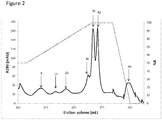
- the chromatogram is shown in Figure 1 in which six fractions, indicated by arrows, were immobilised on solid phase as described previously (Marknell DeWitt, Niederberger et al. 2002).
- the IgE binding using the sera described above to the immobilised fractions are shown in table 3 which indicates that the tested fractions 18, 22 and 26 contain the highest amounts of the unknown allergen component.
- Fractions 16-27 (indicated with vertical bars in Figure 1 ) were pooled and subjected to hydrophobic interaction chromatography.
- the HIC pool was conditioned by adding half the volume of the pool of Tris pH 8.5 to the HIC pool.
- EXAMPLE 4 Bioinformatic analysis of horse genomic sequences identifying amino acid sequences homologous to chain 1 and chain 2 of Fel d 1
- the cat allergen protein Fel d 1 which was immunologically similar to the unknown horse dander protein as demonstrated in example 1, consists of two amino acid chains, chain 1 and chain 2 (acc no: NP_001041618 and NP_001041619 respectively) joined together by disulfide bridges.
- a TBLASTN search of a horse genome database (wsg) with the sequence of Fel d 1, chain 1 (NP_001041618) resulted in a match of aa 17-79 to the translation of nucleotide positions 77633-77453 (of the reverse strand) of Acc No. AAWR02030062, a 105199 bp segment of the horse genome sequence.
- AAWR02030062 was fed into the gene finding program FGENESH+ together with the precursor sequence of Fel d 1 chain 1.
- the program searches for homologous genes within a genomic sequence.
- the result was a postulated sequence consisting of three exons Acc No. AAWR02030062:
- Equ c s, chain 1 The complete DNA sequence of this postulated sequence, denoted Equ c s, chain 1, is shown in Figure 6a (SEQ ID NO: 45) encoding 92 amino acid residues (SEQ ID NO: 1, Figure 6b ), of which the first 22 residues were predicted by SignalP to form a signal peptide.
- the mature protein deduced from the cloned cDNA consisted of 70 amino acid residues, including three cysteins, and had a predicted molecular mass of 7.9 kDa and an isoelectric point of 4.96.
- a protein BLAST homology search using this predicted sequence reveals an amino acid sequence with homology to secretoglobins.
- the predicted sequence has 67% amino acid identity to Fel d 1 chain 1 (SEQ ID NO: 47) ( Figure 6c ).
- EXAMPLE 5 PCR amplification and sequencing of Equ c s chain 1 and chain 2 mRNA from horse skin
- RNA was prepared from horse skin using the RNAqueous kit (Ambion, Austin, TX, USA). Polyadenylated RNA was isolated from total RNA using the mRNA Purification kit and first strand cDNA was prepared using the First-Strand cDNA Synthesis kit (both from Thermo Fisher Scientific).3' RACE was performed according to Frohman (Frohman 1993), using a gene-specific forward oligonucleotide primer from the untranslated sequence before the starting codon,
- EXAMPLE 6 N-terminal sequencing and MALDI TOF analysis using the postulated sequences of Equ c s chain 1 and chain 2
- the SDS-PAGE analysis ( Fig. 5 ) and the mass spectrometric analysis above provides evidence that the 5 and 10 kDa amino acid chains can be identified as Equ c s, chain 1 and 2, respectively. In native non-reduced state, these amino acid chains are joined together by one or more disulfide bridges, thereby forming a heterodimeric protein.
- the analysis links together the sequence SEQ ID No 3, encoded by one gene, with SEQ ID No 4, encoded by a different gene, that together make up a previously unknown heterodimeric secretoglobin protein.
- a synthetic Equ c s single chain gene was designed by combining nucleotide sequences encoding the amino acid sequences of the 5 kDa and the 10 kDa subunits with a sequence encoding a linker peptide comprising 3x (Gly-Gly-Gly-Gly-Ser, residues 72-86 of SEQ ID NO: 5).
- the full-length synthetic gene was cloned into the NdeI and XhoI sites of vector pET23a(+) (Novagen, Madison, WI, USA), adding a C-terminal hexahistidine tag to enable protein purification by immobilised metal ion affinity chromatography (IMAC).
- the amino acid sequence for the whole recombinant protein (denominated rEqu c s ab) is
- the nucleotide sequence was designed for optimal codon usage in E. coli (DNA2.0, Menlo Park, CA, USA).
- the nucleic acid sequence encoding the whole recombinant protein is
- the nucleic acid sequence encoding chain 1 is
- the nucleic acid encoding chain 2 is
- the plasmid DNA constructs was transformed into E.coli strain BL21-AI (Invitrogen) and recombinant Equ c s single chain protein was produced using a 3-litre bioreactor (Belach Bioteknik, Skog ⁇ s, Sweden).
- EXAMPLE 8 Assessment of IgE binding activity of nEqu c 1, nEqu c 2, nEqu c 3, nEqu c 4, Equ c 15k and Equ c s in a cohort of horse allergic patients
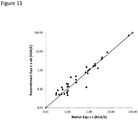
- the corresponding relative concentration of IgE antibody to nEqu c 1 was 52%, whereas for nEqu c 2, nEqu c 3, nEqu c 4/5 and Equ c 15k the relative concentrations were 35%, 69%, 9% and 37%, respectively, among sera specifically reactive to those allergens. Twenty-four of the 25 sera showed IgE antibody binding to horse dander extract. All of those sera showed binding to at least one of the five individual horse allergens tested. The sum of the IgE binding levels to the individual component matched or exceeded that to horse dander extract.
- Equ c s and Fel d 1 the five sera used in example 1 were tested for cross-inhibition, using both horse dander extract, rFel d 1 and rEqu c s on solid phase as well as rEqu c 15k, rEqu c s and rFel d 1 as inhibitors at a final concentration of 100 ⁇ g/mL.
- As an inhibition control buffer 0.1 M sodium phosphate buffer, pH 7.4, containing 0.3% human serum albumin, was used. Means of duplicate determinations of each inhibition were calculated and the fraction of inhibition was calculated as the fraction of the binding using inhibition control buffer that could be quenched with each inhibitor.
- EXAMPLE 10 Assessment of IgE-binding properties of a variant or fragment (analyte) of an allergenic protein
- the original allergenic protein in this case Equ c s, is immobilized to a solid support.
- Serum samples from at least three representative human patients sensitized to the relevant species and showing IgE reactivity to the original allergenic protein from that species are incubated for 2 h at room temperature with the analyte at a final concentration of 100 ⁇ g/mL and, in parallel as negative controls, with buffer alone and the non-allergenic maltose binding protein (MBP) of E. coli.
- MBP non-allergenic maltose binding protein
- the samples are then analysed for IgE binding to solid supports carrying immobilized Equ c s to study whether preincubation with the variant or fragment of Equ c s specifically inhibits or significantly lowers IgE binding.
Landscapes
- Health & Medical Sciences (AREA)
- Life Sciences & Earth Sciences (AREA)
- Chemical & Material Sciences (AREA)
- Immunology (AREA)
- Engineering & Computer Science (AREA)
- General Health & Medical Sciences (AREA)
- Medicinal Chemistry (AREA)
- Molecular Biology (AREA)
- Organic Chemistry (AREA)
- Urology & Nephrology (AREA)
- Hematology (AREA)
- Proteomics, Peptides & Aminoacids (AREA)
- Biomedical Technology (AREA)
- Biochemistry (AREA)
- Microbiology (AREA)
- Pharmacology & Pharmacy (AREA)
- Veterinary Medicine (AREA)
- Public Health (AREA)
- Animal Behavior & Ethology (AREA)
- Genetics & Genomics (AREA)
- Cell Biology (AREA)
- Biotechnology (AREA)
- General Physics & Mathematics (AREA)
- Biophysics (AREA)
- Gastroenterology & Hepatology (AREA)
- Food Science & Technology (AREA)
- Physics & Mathematics (AREA)
- Analytical Chemistry (AREA)
- Pathology (AREA)
- Zoology (AREA)
- Toxicology (AREA)
- Bioinformatics & Cheminformatics (AREA)
- Epidemiology (AREA)
- Pulmonology (AREA)
- Chemical Kinetics & Catalysis (AREA)
- General Chemical & Material Sciences (AREA)
- Mycology (AREA)
- Nuclear Medicine, Radiotherapy & Molecular Imaging (AREA)
- Peptides Or Proteins (AREA)
- Medicines Containing Antibodies Or Antigens For Use As Internal Diagnostic Agents (AREA)
Applications Claiming Priority (2)
| Application Number | Priority Date | Filing Date | Title |
|---|---|---|---|
| SE1450907 | 2014-07-21 | ||
| PCT/SE2015/050828 WO2016013971A1 (en) | 2014-07-21 | 2015-07-20 | Novel allergen |
Publications (2)
| Publication Number | Publication Date |
|---|---|
| EP3171890A1 EP3171890A1 (en) | 2017-05-31 |
| EP3171890B1 true EP3171890B1 (en) | 2020-12-02 |
Family
ID=53872123
Family Applications (1)
| Application Number | Title | Priority Date | Filing Date |
|---|---|---|---|
| EP15750835.9A Active EP3171890B1 (en) | 2014-07-21 | 2015-07-20 | Novel allergen |
Country Status (10)
| Country | Link |
|---|---|
| US (1) | US10753946B2 (enExample) |
| EP (1) | EP3171890B1 (enExample) |
| JP (1) | JP6785216B2 (enExample) |
| CN (1) | CN106604929B (enExample) |
| AU (1) | AU2015294723B2 (enExample) |
| CA (1) | CA2955348A1 (enExample) |
| DK (1) | DK3171890T3 (enExample) |
| ES (1) | ES2856128T3 (enExample) |
| RU (1) | RU2017104910A (enExample) |
| WO (1) | WO2016013971A1 (enExample) |
Family Cites Families (3)
| Publication number | Priority date | Publication date | Assignee | Title |
|---|---|---|---|---|
| US6019972A (en) * | 1989-11-03 | 2000-02-01 | Immulogic Pharmaceutical Corporation | Peptides of human T cell reactive feline protein (TRFP) |
| EP1195606A1 (en) | 2000-10-03 | 2002-04-10 | VBC-Genomics Forschungsges.m.b.H. | Allergen-microarray assay |
| CA2794556C (en) * | 2010-04-23 | 2018-12-04 | Phadia Ab | 15 kda secretoglobin horse allergen |
-
2015
- 2015-07-20 ES ES15750835T patent/ES2856128T3/es active Active
- 2015-07-20 JP JP2017503551A patent/JP6785216B2/ja active Active
- 2015-07-20 US US15/327,253 patent/US10753946B2/en active Active
- 2015-07-20 WO PCT/SE2015/050828 patent/WO2016013971A1/en not_active Ceased
- 2015-07-20 AU AU2015294723A patent/AU2015294723B2/en active Active
- 2015-07-20 CA CA2955348A patent/CA2955348A1/en active Pending
- 2015-07-20 EP EP15750835.9A patent/EP3171890B1/en active Active
- 2015-07-20 DK DK15750835.9T patent/DK3171890T3/da active
- 2015-07-20 CN CN201580038584.4A patent/CN106604929B/zh active Active
- 2015-07-20 RU RU2017104910A patent/RU2017104910A/ru not_active Application Discontinuation
Non-Patent Citations (2)
| Title |
|---|
| DATABASE UniPARC [online] UniProt; 1 February 2011 (2011-02-01), retrieved from https://www.uniprot.org/uniparc/UPI0001FB0512 Database accession no. UPI0001FB0512 * |
| DATABASE UniParc [online] UniProt; retrieved from https://www.uniprot.org/uniparc/UPI000155EE49 Database accession no. UPI000155EE49 * |
Also Published As
| Publication number | Publication date |
|---|---|
| JP2017524358A (ja) | 2017-08-31 |
| CN106604929A (zh) | 2017-04-26 |
| CN106604929B (zh) | 2021-11-05 |
| RU2017104910A (ru) | 2018-08-21 |
| EP3171890A1 (en) | 2017-05-31 |
| WO2016013971A1 (en) | 2016-01-28 |
| US10753946B2 (en) | 2020-08-25 |
| ES2856128T3 (es) | 2021-09-27 |
| AU2015294723A1 (en) | 2017-02-16 |
| JP6785216B2 (ja) | 2020-11-18 |
| CA2955348A1 (en) | 2016-01-28 |
| AU2015294723B2 (en) | 2021-05-06 |
| US20170219602A1 (en) | 2017-08-03 |
| DK3171890T3 (da) | 2021-02-22 |
Similar Documents
| Publication | Publication Date | Title |
|---|---|---|
| US9274114B2 (en) | Prostate kallikrein allergen | |
| EP3171890B1 (en) | Novel allergen | |
| US9724407B2 (en) | Horse allergen and methods | |
| RU2592674C2 (ru) | Аллергены, полученные рекомбинантными способами | |
| Rea et al. | Refolding of the Cupressus arizonica major pollen allergen Cup a1. 02 overexpressed in Escherichia coli | |
| Mas García et al. | A recombinant Sal k 1 isoform as an alternative to the polymorphic allergen from Salsola kali pollen for allergy diagnosis |
Legal Events
| Date | Code | Title | Description |
|---|---|---|---|
| STAA | Information on the status of an ep patent application or granted ep patent |
Free format text: STATUS: THE INTERNATIONAL PUBLICATION HAS BEEN MADE |
|
| PUAI | Public reference made under article 153(3) epc to a published international application that has entered the european phase |
Free format text: ORIGINAL CODE: 0009012 |
|
| STAA | Information on the status of an ep patent application or granted ep patent |
Free format text: STATUS: REQUEST FOR EXAMINATION WAS MADE |
|
| 17P | Request for examination filed |
Effective date: 20170214 |
|
| AK | Designated contracting states |
Kind code of ref document: A1 Designated state(s): AL AT BE BG CH CY CZ DE DK EE ES FI FR GB GR HR HU IE IS IT LI LT LU LV MC MK MT NL NO PL PT RO RS SE SI SK SM TR |
|
| AX | Request for extension of the european patent |
Extension state: BA ME |
|
| DAV | Request for validation of the european patent (deleted) | ||
| DAX | Request for extension of the european patent (deleted) | ||
| STAA | Information on the status of an ep patent application or granted ep patent |
Free format text: STATUS: EXAMINATION IS IN PROGRESS |
|
| 17Q | First examination report despatched |
Effective date: 20180731 |
|
| GRAP | Despatch of communication of intention to grant a patent |
Free format text: ORIGINAL CODE: EPIDOSNIGR1 |
|
| STAA | Information on the status of an ep patent application or granted ep patent |
Free format text: STATUS: GRANT OF PATENT IS INTENDED |
|
| INTG | Intention to grant announced |
Effective date: 20200903 |
|
| GRAS | Grant fee paid |
Free format text: ORIGINAL CODE: EPIDOSNIGR3 |
|
| GRAA | (expected) grant |
Free format text: ORIGINAL CODE: 0009210 |
|
| STAA | Information on the status of an ep patent application or granted ep patent |
Free format text: STATUS: THE PATENT HAS BEEN GRANTED |
|
| AK | Designated contracting states |
Kind code of ref document: B1 Designated state(s): AL AT BE BG CH CY CZ DE DK EE ES FI FR GB GR HR HU IE IS IT LI LT LU LV MC MK MT NL NO PL PT RO RS SE SI SK SM TR |
|
| REG | Reference to a national code |
Ref country code: GB Ref legal event code: FG4D |
|
| REG | Reference to a national code |
Ref country code: AT Ref legal event code: REF Ref document number: 1340163 Country of ref document: AT Kind code of ref document: T Effective date: 20201215 Ref country code: CH Ref legal event code: EP |
|
| REG | Reference to a national code |
Ref country code: DE Ref legal event code: R096 Ref document number: 602015062889 Country of ref document: DE |
|
| REG | Reference to a national code |
Ref country code: IE Ref legal event code: FG4D |
|
| REG | Reference to a national code |
Ref country code: DK Ref legal event code: T3 Effective date: 20210216 |
|
| REG | Reference to a national code |
Ref country code: CH Ref legal event code: NV Representative=s name: NOVAGRAAF INTERNATIONAL SA, CH |
|
| REG | Reference to a national code |
Ref country code: SE Ref legal event code: TRGR |
|
| REG | Reference to a national code |
Ref country code: NL Ref legal event code: FP |
|
| PG25 | Lapsed in a contracting state [announced via postgrant information from national office to epo] |
Ref country code: RS Free format text: LAPSE BECAUSE OF FAILURE TO SUBMIT A TRANSLATION OF THE DESCRIPTION OR TO PAY THE FEE WITHIN THE PRESCRIBED TIME-LIMIT Effective date: 20201202 Ref country code: FI Free format text: LAPSE BECAUSE OF FAILURE TO SUBMIT A TRANSLATION OF THE DESCRIPTION OR TO PAY THE FEE WITHIN THE PRESCRIBED TIME-LIMIT Effective date: 20201202 Ref country code: NO Free format text: LAPSE BECAUSE OF FAILURE TO SUBMIT A TRANSLATION OF THE DESCRIPTION OR TO PAY THE FEE WITHIN THE PRESCRIBED TIME-LIMIT Effective date: 20210302 Ref country code: GR Free format text: LAPSE BECAUSE OF FAILURE TO SUBMIT A TRANSLATION OF THE DESCRIPTION OR TO PAY THE FEE WITHIN THE PRESCRIBED TIME-LIMIT Effective date: 20210303 |
|
| PG25 | Lapsed in a contracting state [announced via postgrant information from national office to epo] |
Ref country code: BG Free format text: LAPSE BECAUSE OF FAILURE TO SUBMIT A TRANSLATION OF THE DESCRIPTION OR TO PAY THE FEE WITHIN THE PRESCRIBED TIME-LIMIT Effective date: 20210302 Ref country code: LV Free format text: LAPSE BECAUSE OF FAILURE TO SUBMIT A TRANSLATION OF THE DESCRIPTION OR TO PAY THE FEE WITHIN THE PRESCRIBED TIME-LIMIT Effective date: 20201202 Ref country code: PL Free format text: LAPSE BECAUSE OF FAILURE TO SUBMIT A TRANSLATION OF THE DESCRIPTION OR TO PAY THE FEE WITHIN THE PRESCRIBED TIME-LIMIT Effective date: 20201202 |
|
| PG25 | Lapsed in a contracting state [announced via postgrant information from national office to epo] |
Ref country code: HR Free format text: LAPSE BECAUSE OF FAILURE TO SUBMIT A TRANSLATION OF THE DESCRIPTION OR TO PAY THE FEE WITHIN THE PRESCRIBED TIME-LIMIT Effective date: 20201202 |
|
| REG | Reference to a national code |
Ref country code: LT Ref legal event code: MG9D |
|
| PG25 | Lapsed in a contracting state [announced via postgrant information from national office to epo] |
Ref country code: RO Free format text: LAPSE BECAUSE OF FAILURE TO SUBMIT A TRANSLATION OF THE DESCRIPTION OR TO PAY THE FEE WITHIN THE PRESCRIBED TIME-LIMIT Effective date: 20201202 Ref country code: PT Free format text: LAPSE BECAUSE OF FAILURE TO SUBMIT A TRANSLATION OF THE DESCRIPTION OR TO PAY THE FEE WITHIN THE PRESCRIBED TIME-LIMIT Effective date: 20210405 Ref country code: SK Free format text: LAPSE BECAUSE OF FAILURE TO SUBMIT A TRANSLATION OF THE DESCRIPTION OR TO PAY THE FEE WITHIN THE PRESCRIBED TIME-LIMIT Effective date: 20201202 Ref country code: LT Free format text: LAPSE BECAUSE OF FAILURE TO SUBMIT A TRANSLATION OF THE DESCRIPTION OR TO PAY THE FEE WITHIN THE PRESCRIBED TIME-LIMIT Effective date: 20201202 Ref country code: SM Free format text: LAPSE BECAUSE OF FAILURE TO SUBMIT A TRANSLATION OF THE DESCRIPTION OR TO PAY THE FEE WITHIN THE PRESCRIBED TIME-LIMIT Effective date: 20201202 Ref country code: CZ Free format text: LAPSE BECAUSE OF FAILURE TO SUBMIT A TRANSLATION OF THE DESCRIPTION OR TO PAY THE FEE WITHIN THE PRESCRIBED TIME-LIMIT Effective date: 20201202 Ref country code: EE Free format text: LAPSE BECAUSE OF FAILURE TO SUBMIT A TRANSLATION OF THE DESCRIPTION OR TO PAY THE FEE WITHIN THE PRESCRIBED TIME-LIMIT Effective date: 20201202 |
|
| REG | Reference to a national code |
Ref country code: DE Ref legal event code: R097 Ref document number: 602015062889 Country of ref document: DE |
|
| REG | Reference to a national code |
Ref country code: ES Ref legal event code: FG2A Ref document number: 2856128 Country of ref document: ES Kind code of ref document: T3 Effective date: 20210927 |
|
| PG25 | Lapsed in a contracting state [announced via postgrant information from national office to epo] |
Ref country code: IS Free format text: LAPSE BECAUSE OF FAILURE TO SUBMIT A TRANSLATION OF THE DESCRIPTION OR TO PAY THE FEE WITHIN THE PRESCRIBED TIME-LIMIT Effective date: 20210402 |
|
| PLBE | No opposition filed within time limit |
Free format text: ORIGINAL CODE: 0009261 |
|
| STAA | Information on the status of an ep patent application or granted ep patent |
Free format text: STATUS: NO OPPOSITION FILED WITHIN TIME LIMIT |
|
| PG25 | Lapsed in a contracting state [announced via postgrant information from national office to epo] |
Ref country code: AL Free format text: LAPSE BECAUSE OF FAILURE TO SUBMIT A TRANSLATION OF THE DESCRIPTION OR TO PAY THE FEE WITHIN THE PRESCRIBED TIME-LIMIT Effective date: 20201202 |
|
| 26N | No opposition filed |
Effective date: 20210903 |
|
| PG25 | Lapsed in a contracting state [announced via postgrant information from national office to epo] |
Ref country code: SI Free format text: LAPSE BECAUSE OF FAILURE TO SUBMIT A TRANSLATION OF THE DESCRIPTION OR TO PAY THE FEE WITHIN THE PRESCRIBED TIME-LIMIT Effective date: 20201202 |
|
| PG25 | Lapsed in a contracting state [announced via postgrant information from national office to epo] |
Ref country code: MC Free format text: LAPSE BECAUSE OF FAILURE TO SUBMIT A TRANSLATION OF THE DESCRIPTION OR TO PAY THE FEE WITHIN THE PRESCRIBED TIME-LIMIT Effective date: 20201202 |
|
| REG | Reference to a national code |
Ref country code: BE Ref legal event code: MM Effective date: 20210731 |
|
| PG25 | Lapsed in a contracting state [announced via postgrant information from national office to epo] |
Ref country code: IS Free format text: LAPSE BECAUSE OF FAILURE TO SUBMIT A TRANSLATION OF THE DESCRIPTION OR TO PAY THE FEE WITHIN THE PRESCRIBED TIME-LIMIT Effective date: 20210402 Ref country code: LU Free format text: LAPSE BECAUSE OF NON-PAYMENT OF DUE FEES Effective date: 20210720 |
|
| PG25 | Lapsed in a contracting state [announced via postgrant information from national office to epo] |
Ref country code: IE Free format text: LAPSE BECAUSE OF NON-PAYMENT OF DUE FEES Effective date: 20210720 Ref country code: BE Free format text: LAPSE BECAUSE OF NON-PAYMENT OF DUE FEES Effective date: 20210731 |
|
| REG | Reference to a national code |
Ref country code: AT Ref legal event code: UEP Ref document number: 1340163 Country of ref document: AT Kind code of ref document: T Effective date: 20201202 |
|
| PG25 | Lapsed in a contracting state [announced via postgrant information from national office to epo] |
Ref country code: HU Free format text: LAPSE BECAUSE OF FAILURE TO SUBMIT A TRANSLATION OF THE DESCRIPTION OR TO PAY THE FEE WITHIN THE PRESCRIBED TIME-LIMIT; INVALID AB INITIO Effective date: 20150720 |
|
| PG25 | Lapsed in a contracting state [announced via postgrant information from national office to epo] |
Ref country code: CY Free format text: LAPSE BECAUSE OF FAILURE TO SUBMIT A TRANSLATION OF THE DESCRIPTION OR TO PAY THE FEE WITHIN THE PRESCRIBED TIME-LIMIT Effective date: 20201202 |
|
| PG25 | Lapsed in a contracting state [announced via postgrant information from national office to epo] |
Ref country code: MK Free format text: LAPSE BECAUSE OF FAILURE TO SUBMIT A TRANSLATION OF THE DESCRIPTION OR TO PAY THE FEE WITHIN THE PRESCRIBED TIME-LIMIT Effective date: 20201202 |
|
| PG25 | Lapsed in a contracting state [announced via postgrant information from national office to epo] |
Ref country code: MT Free format text: LAPSE BECAUSE OF FAILURE TO SUBMIT A TRANSLATION OF THE DESCRIPTION OR TO PAY THE FEE WITHIN THE PRESCRIBED TIME-LIMIT Effective date: 20201202 |
|
| PGFP | Annual fee paid to national office [announced via postgrant information from national office to epo] |
Ref country code: NL Payment date: 20250617 Year of fee payment: 11 |
|
| PGFP | Annual fee paid to national office [announced via postgrant information from national office to epo] |
Ref country code: ES Payment date: 20250822 Year of fee payment: 11 |
|
| PGFP | Annual fee paid to national office [announced via postgrant information from national office to epo] |
Ref country code: DK Payment date: 20250721 Year of fee payment: 11 Ref country code: DE Payment date: 20250616 Year of fee payment: 11 |
|
| PGFP | Annual fee paid to national office [announced via postgrant information from national office to epo] |
Ref country code: IT Payment date: 20250618 Year of fee payment: 11 |
|
| PGFP | Annual fee paid to national office [announced via postgrant information from national office to epo] |
Ref country code: GB Payment date: 20250715 Year of fee payment: 11 |
|
| PGFP | Annual fee paid to national office [announced via postgrant information from national office to epo] |
Ref country code: AT Payment date: 20250618 Year of fee payment: 11 Ref country code: FR Payment date: 20250718 Year of fee payment: 11 |
|
| PGFP | Annual fee paid to national office [announced via postgrant information from national office to epo] |
Ref country code: CH Payment date: 20250801 Year of fee payment: 11 Ref country code: SE Payment date: 20250718 Year of fee payment: 11 |
|
| PG25 | Lapsed in a contracting state [announced via postgrant information from national office to epo] |
Ref country code: TR Free format text: LAPSE BECAUSE OF FAILURE TO SUBMIT A TRANSLATION OF THE DESCRIPTION OR TO PAY THE FEE WITHIN THE PRESCRIBED TIME-LIMIT Effective date: 20201202 |