EP3167053B1 - Novel ketoacyl acp synthase genes and uses thereof - Google Patents
Novel ketoacyl acp synthase genes and uses thereof Download PDFInfo
- Publication number
- EP3167053B1 EP3167053B1 EP15747630.0A EP15747630A EP3167053B1 EP 3167053 B1 EP3167053 B1 EP 3167053B1 EP 15747630 A EP15747630 A EP 15747630A EP 3167053 B1 EP3167053 B1 EP 3167053B1
- Authority
- EP
- European Patent Office
- Prior art keywords
- oil
- seq
- host cell
- cell
- polynucleotide
- Prior art date
- Legal status (The legal status is an assumption and is not a legal conclusion. Google has not performed a legal analysis and makes no representation as to the accuracy of the status listed.)
- Active
Links
Images

Classifications
-
- C—CHEMISTRY; METALLURGY
- C12—BIOCHEMISTRY; BEER; SPIRITS; WINE; VINEGAR; MICROBIOLOGY; ENZYMOLOGY; MUTATION OR GENETIC ENGINEERING
- C12N—MICROORGANISMS OR ENZYMES; COMPOSITIONS THEREOF; PROPAGATING, PRESERVING, OR MAINTAINING MICROORGANISMS; MUTATION OR GENETIC ENGINEERING; CULTURE MEDIA
- C12N15/00—Mutation or genetic engineering; DNA or RNA concerning genetic engineering, vectors, e.g. plasmids, or their isolation, preparation or purification; Use of hosts therefor
- C12N15/09—Recombinant DNA-technology
- C12N15/63—Introduction of foreign genetic material using vectors; Vectors; Use of hosts therefor; Regulation of expression
- C12N15/79—Vectors or expression systems specially adapted for eukaryotic hosts
- C12N15/82—Vectors or expression systems specially adapted for eukaryotic hosts for plant cells, e.g. plant artificial chromosomes (PACs)
-
- C—CHEMISTRY; METALLURGY
- C12—BIOCHEMISTRY; BEER; SPIRITS; WINE; VINEGAR; MICROBIOLOGY; ENZYMOLOGY; MUTATION OR GENETIC ENGINEERING
- C12N—MICROORGANISMS OR ENZYMES; COMPOSITIONS THEREOF; PROPAGATING, PRESERVING, OR MAINTAINING MICROORGANISMS; MUTATION OR GENETIC ENGINEERING; CULTURE MEDIA
- C12N9/00—Enzymes; Proenzymes; Compositions thereof; Processes for preparing, activating, inhibiting, separating or purifying enzymes
- C12N9/10—Transferases (2.)
- C12N9/1025—Acyltransferases (2.3)
- C12N9/1029—Acyltransferases (2.3) transferring groups other than amino-acyl groups (2.3.1)
-
- C—CHEMISTRY; METALLURGY
- C12—BIOCHEMISTRY; BEER; SPIRITS; WINE; VINEGAR; MICROBIOLOGY; ENZYMOLOGY; MUTATION OR GENETIC ENGINEERING
- C12P—FERMENTATION OR ENZYME-USING PROCESSES TO SYNTHESISE A DESIRED CHEMICAL COMPOUND OR COMPOSITION OR TO SEPARATE OPTICAL ISOMERS FROM A RACEMIC MIXTURE
- C12P33/00—Preparation of steroids
-
- C—CHEMISTRY; METALLURGY
- C12—BIOCHEMISTRY; BEER; SPIRITS; WINE; VINEGAR; MICROBIOLOGY; ENZYMOLOGY; MUTATION OR GENETIC ENGINEERING
- C12P—FERMENTATION OR ENZYME-USING PROCESSES TO SYNTHESISE A DESIRED CHEMICAL COMPOUND OR COMPOSITION OR TO SEPARATE OPTICAL ISOMERS FROM A RACEMIC MIXTURE
- C12P7/00—Preparation of oxygen-containing organic compounds
- C12P7/64—Fats; Fatty oils; Ester-type waxes; Higher fatty acids, i.e. having at least seven carbon atoms in an unbroken chain bound to a carboxyl group; Oxidised oils or fats
-
- C—CHEMISTRY; METALLURGY
- C12—BIOCHEMISTRY; BEER; SPIRITS; WINE; VINEGAR; MICROBIOLOGY; ENZYMOLOGY; MUTATION OR GENETIC ENGINEERING
- C12P—FERMENTATION OR ENZYME-USING PROCESSES TO SYNTHESISE A DESIRED CHEMICAL COMPOUND OR COMPOSITION OR TO SEPARATE OPTICAL ISOMERS FROM A RACEMIC MIXTURE
- C12P7/00—Preparation of oxygen-containing organic compounds
- C12P7/64—Fats; Fatty oils; Ester-type waxes; Higher fatty acids, i.e. having at least seven carbon atoms in an unbroken chain bound to a carboxyl group; Oxidised oils or fats
- C12P7/6436—Fatty acid esters
- C12P7/6445—Glycerides
- C12P7/6463—Glycerides obtained from glyceride producing microorganisms, e.g. single cell oil
-
- C—CHEMISTRY; METALLURGY
- C12—BIOCHEMISTRY; BEER; SPIRITS; WINE; VINEGAR; MICROBIOLOGY; ENZYMOLOGY; MUTATION OR GENETIC ENGINEERING
- C12Y—ENZYMES
- C12Y203/00—Acyltransferases (2.3)
- C12Y203/01—Acyltransferases (2.3) transferring groups other than amino-acyl groups (2.3.1)
- C12Y203/01041—Beta-ketoacyl-acyl-carrier-protein synthase I (2.3.1.41)
Definitions
- the present invention relates to novel ⁇ -ketoacyl ACP synthase genes and methods for using the genes including expressing the genes in oleaginous host cells to produce triglycerides with altered fatty acid profiles.
- Certain organisms including plants and some microalgae use a type II fatty acid biosynthetic pathway, characterized by the use of discrete enzymes in a multimeric complex for fatty acid synthesis.
- mammals and fungi use a single, large, multifunctional protein.
- KAS I ⁇ -ketoacyl-ACP synthase I
- KAS I EC 2.3.1.41
- KAS I uses C2-C14 acyl-ACPs as substrates for condensation with a C2 unit derived from malonyl-ACP.
- KASIV is a related enzyme that serves a similar elongation function. Thus, KASI and KASIV can both be considered KASI-like enzymes.
- KAS I-like enzymes are located in the chloroplasts or other plastids together with other enzyme of the fatty acid synthesis (FAS) pathway.
- PCT publications WO2010/063032 , WO2011/150411 , WO2012/106560 and WO2013/158938 disclose genetic engineering of oleaginous microalgae including targeting of exogenous FAS gene products to the microalgal plastid.
- US 2013/004646 and WO 2010/063031 disclose microalgal cells containing exogenous genes encoding, for example, a lipase, a sucrose transporter, a sucrose invertase, a fructokinase, a polysaccharide-degrading enzyme, a keto acyl-ACP synthase enzyme, a fatty acyl-ACP thioesterase, a fatty acyl-CoA/aldehyde reductase, a fatty acyl-CoA reductase, a fatty aldehyde reductase, a fatty aldehyde decarbonylase and/or an acyl carrier protein.
- exogenous genes encoding, for example, a lipase, a sucrose transporter, a sucrose invertase, a fructokinase, a polysaccharide-degrading enzyme, a keto acyl-ACP synth
- the invention provides a polynucleotide having at least 95% sequence identity to SEQ ID NO: 21 or SEQ ID NO:39, or a polynucleotide encoding a KASI-like protein having at least 95% amino acid sequence identity to SEQ ID NO: 2, or a mature protein produced therefrom, wherein said polynucleotide, when co-expressed with an exogenous FATA or FATB acyl ACP thioesterase gene in an oleaginous microalgal host cell, is capable of enriching the C14:0 content of the cell oil produced by the host cell, relative to an oil produced by a cell of the same type that does not express said polynucleotide.
- embodiments of the invention include a transformation vector comprising a polynucleotide as discussed above.
- the vector comprises promoter and 3'UTR sequences in operable linkage to the polynucleotide and, optionally, a flanking sequence for homologous recombination.
- the promoter or the 3'UTR sequences are heterologous nucleotide sequences.
- the heterologous promoter or the heterologous 3'UTR sequences can be from a different organism than the organism from which the nucleotide sequences encoding KAS was first obtained.
- the transformation vector comprises a heterologous promoter or a heterologous 3'UTR sequence obtained from the same organism from which the KAS gene was first isolated.
- the heterologous promoter does not naturally drive the expression of KAS and the 3'UTR does not naturally occur downstream from the KAS nucleotide sequences in the source organism.
- the transformation vector is used to express the KAS gene in the organism from which the KAS gene was first isolated.
- the KAS gene is recombinantly expressed in the organism from which the KAS gene was first isolated, the gene is expressed in a different chromosomal locus than the natural chromosomal locus of the KAS gene.
- the KAS gene is expressed in the cytoplasm.
- embodiments of the invention include a host cell which is a plastidic oleaginous cell having a type II fatty acid biosynthesis pathway comprising the polynucleotide and/or the vector discussed above, and expressing a functional KAS protein encoded by the polynucleotide.
- the host cell further comprises an exogenous gene encoding a functional FATA acyl-ACP thioesterase or FATB acyl-ACP thioesterase.
- the FATB acyl-ACP thioesterase has at least 80, 85, 90, 91, 92, 93, 94, 95, 96, 97, 98 or 99% amino acid sequence identity to any one of SEQ ID NOs: 1 or SEQ ID NO: 57.
- the host cell produces a cell oil characterized by a fatty acid profile with (i) at least 30, 40, 50, or 55% C14:0, (ii) at least 7, 8, 9, 10, 11, 12, 13, or 14% C8:0, (iii) at least 10, 15, 20, 25, 30, or 35 area% for the sum of C8:0 and C10:0, or (iv) a C8/C10 ratio in the range of 2.2-2.5, 2.5-3.0, or 3.0-3.4.
- the host cell is a microalga.
- the host cell is of Trebouxiophyceae, and optionally of the genus Chlorella or Prototheca.
- the microalga is of the species Prototheca moriformis.
- embodiments of the invention include a method for making a cell-oil, the method comprising cultivating a host cell as discussed above so as produce the cell-oil, wherein the oil comprises triglcyerides and microalgal sterols.
- the cell oil comprises sterols characterized by a sterol profile and the sterol profile has an excess of ergosterol over ⁇ -sitosterol and/or the presence of 22, 23-dihydrobrassicasterol, poriferasterol or clionasterol.
- Fig. 1 shows a phylogenetic tree for KASI-like genes in connection with Example 3.
- isolated refers to a nucleic acid that is free of at least one other component that is typically present with the naturally occurring nucleic acid. Thus, a naturally occurring nucleic acid is isolated if it has been purified away from at least one other component that occurs naturally with the nucleic acid.
- a “cell oil” or “cell fat” shall mean a predominantly triglyceride oil obtained from an organism, where the oil has not undergone blending with another natural or synthetic oil, or fractionation so as to substantially alter the fatty acid profile of the triglyceride.
- the cell oil or cell fat has not been subjected to interesterification or other synthetic process to obtain that regiospecific triglyceride profile, rather the regiospecificity is produced naturally, by a cell or population of cells.
- the sterol profile of oil is generally determined by the sterols produced by the cell, not by artificial reconstitution of the oil by adding sterols in order to mimic the cell oil.
- oil and fat are used interchangeably, except where otherwise noted.
- an "oil” or a “fat” can be liquid, solid or partially solid at room temperature, depending on the makeup of the substance and other conditions.
- fractionation means removing material from the oil in a way that changes its fatty acid profile relative to the profile produced by the organism, however accomplished.
- cell oil and “cell fat” encompass such oils obtained from an organism, where the oil has undergone minimal processing, including refining, bleaching and/or degumming, which does not substantially change its triglyceride profile.
- a cell oil can also be a "non-interesterified cell oil", which means that the cell oil has not undergone a process in which fatty acids have been redistributed in their acyl linkages to glycerol and remain essentially in the same configuration as when recovered from the organism.
- Exogenous gene shall mean a nucleic acid that codes for the expression of an RNA and/or protein that has been introduced into a cell (e.g. by transformation/transfection) and is also referred to as a "transgene".
- a cell comprising an exogenous gene may be referred to as a recombinant cell, into which additional exogenous gene(s) may be introduced.
- the exogenous gene may be from a different species (and so heterologous), or from the same species (and so homologous), relative to the cell being transformed.
- an exogenous gene can include a homologous gene that occupies a different location in the genome of the cell or is under different control, relative to the endogenous copy of the gene.
- An exogenous gene may be present in more than one copy in the cell.
- An exogenous gene may be maintained in a cell, for example, as an insertion into the genome (nuclear or plastid) or as an episomal molecule.
- Fatty acids shall mean free fatty acids, fatty acid salts or fatty acyl moieties in a glycerolipid. It will be understood that fatty acyl groups of glycerolipids can be described in terms of the carboxylic acid or anion of a carboxylic acid that is produced when the triglyceride is hydrolyzed or saponified.
- Microalgae are microbial organisms that contain a chloroplast or other plastid, and optionally that are capable of performing photosynthesis, or a prokaryotic microbial organism capable of performing photosynthesis.
- Microalgae include obligate photoautotrophs, which cannot metabolize a fixed carbon source as energy, as well as heterotrophs, which can live solely off of a fixed carbon source.
- Microalgae include unicellular organisms that separate from sister cells shortly after cell division, such as Chlamydomonas, as well as microbes such as, for example, Volvox, which is a simple multicellular photosynthetic microbe of two distinct cell types.
- Microalgae include cells such as Chlorella, Dunaliella, and Prototheca.
- Microalgae also include other microbial photosynthetic organisms that exhibit cell-cell adhesion, such as Agmenellum, Anabaena and Pyrobotrys. Microalgae also include obligate heterotrophic microorganisms that have lost the ability to perform photosynthesis, such as certain dino flagellate algae species and species of the genus Prototheca.
- An “oleaginous” cell is a cell capable of producing at least 20% lipid by dry cell weight, naturally or through recombinant or classical strain improvement.
- An "oleaginous microbe” or “oleaginous microorganism” is a microbe, including a microalga, that is oleaginous.
- percent sequence identity in the context of two or more amino acid or nucleic acid sequences, refers to two or more sequences or subsequences that are the same or have a specified percentage of amino acid residues or nucleotides that are the same, when compared and aligned for maximum correspondence, as measured using a sequence comparison algorithm or by visual inspection.
- sequence comparison typically one sequence acts as a reference sequence, to which test sequences are compared.
- test and reference sequences are input into a computer, sub-sequence coordinates are designated, if necessary, and sequence algorithm program parameters are designated.
- sequence comparison algorithm calculates the percent sequence identity for the test sequence(s) relative to the reference sequence, based on the designated program parameters.
- Optimal alignment of sequences for comparison can be conducted using the NCBI BLAST software (ncbi.nlm.nih.gov/BLAST/) set to default parameters.
- NCBI BLAST software ncbi.nlm.nih.gov/BLAST/
- default parameters For example, to compare two nucleic acid sequences, one may use blastn with the "BLAST 2 Sequences" tool Version 2.0.12 (Apr. 21, 2000) set at the following default parameters: Matrix: BLOSUM62; Reward for match: 1; Penalty for mismatch: -2; Open Gap: 5 and Extension Gap: 2 penalties; Gap x drop-off: 50; Expect: 10; Word Size: 11; Filter: on.
- BLAST 2 Sequences Version 2.0.12 (Apr. 21, 2000) with blastp set, for example, at the following default parameters: Matrix: BLOSUM62; Open Gap: 11 and Extension Gap: 1 penalties; Gap x drop-off 50; Expect: 10; Word Size: 3; Filter: on.
- sequence identities are given for a strain having a pair of exogenous genes, this encompasses all combinations of sequence identities.
- co-expression of a first gene encoding a first protein having at least 85, 90, 91, 92, 93, 94, 95, 96, 97, 98 or 99% with gene A and a second gene encoding a second protein having at least 85, 90, 91, 92, 93, 94, 95, 96, 97, 98 or 99% with gene A shall be understood to encompass (i) at least 85% identity with gene A and least 85% identity with gene B, (ii)) at least 85% identity with gene A and least 99% identity with gene B, (iii) at least 92% identity with gene A and least 95% identity with gene B and all other combinations.
- a “profile” is the distribution of particular species of triglycerides or fatty acyl groups within the oil.
- a “fatty acid profile” is the distribution of fatty acyl groups in the triglycerides of the oil without reference to attachment to a glycerol backbone.
- Fatty acid profiles are typically determined by conversion to a fatty acid methyl ester (FAME), followed by gas chromatography (GC) analysis with flame ionization detection (FID).
- FAME fatty acid methyl ester
- FAME gas chromatography
- FAME-GC-FID measurement approximate weight percentages of the fatty acids.
- an oil is said to be "enriched" in one or more particular fatty acids if there is at least a 10% increase in the mass of that fatty acid in the oil relative to the non-enriched oil.
- the oil produced by the cell is said to be enriched in, e.g., C8 and C16 fatty acids if the mass of these fatty acids in the oil is at least 10% greater than in oil produced by a cell of the same type that does not express the heterologous FatB gene (e.g. wild type oil).
- Recombinant is a cell, nucleic acid, protein or vector that has been modified due to the introduction of an exogenous nucleic acid or the alteration of a native nucleic acid.
- recombinant (host) cells can express genes that are not found within the native (non-recombinant) form of the cell or express native genes differently than those genes are expressed by a non-recombinant cell.
- Recombinant cells can, without limitation, include recombinant nucleic acids that encode a gene product or suppression elements such as mutations, knockouts, antisense, interfering RNA (RNAi) or dsRNA that reduce the levels of active gene product in a cell.
- RNAi interfering RNA
- a "recombinant nucleic acid” is a nucleic acid originally formed in vitro, in general, by the manipulation of nucleic acid, e.g. using polymerases, ligases, exonucleases and endonucleases, using chemical synthesis or otherwise is in a form not normally found in nature.
- Recombinant nucleic acids may be produced, for example, to place two or more nucleic acids in operable linkage.
- an isolated nucleic acid or an expression vector formed in vitro by nucleic by ligating DNA molecules that are not normally joined in nature are both considered recombinant for the purposes of this invention.
- Recombinant nucleic acids can also be produced in other ways; e.g. using chemical DNA synthesis.
- a recombinant nucleic acid Once a recombinant nucleic acid is made and introduced into a host cell or organism, it may replicate using the in vivo cellular machinery of the host cell; however, such nucleic acids, once produced recombinantly, although subsequently replicated intracellularly, are still considered recombinant for purposes of this invention.
- a "recombinant protein” is a protein made using recombinant techniques, i.e. through the expression of a recombinant nucleic acid.
- KAS I-like gene or enzyme shall mean either a KAS I or KAS IV gene or enzyme.
- Embodiments of the present invention relate to the use of KASI-like genes as recited in the claims, isolated from plants, which can be expressed in a transgenic host cell in order to alter the fatty acid profile of a cell oil produced by the host cell.
- the microalga Prototheca moriformis was used to screen the genes for ability to the alter fatty acid profile, the genes discovered are useful in a wide variety of host cells for which genetic transformation techniques are known.
- the genes can be expressed in bacteria, cyanobacteria, other eukaryotic microalgae or higher plants.
- the genes can be expressed in higher plants according to the methods disclosed in US Patent Nos: US7301070 , US6348642 , US6660849 and US6770465 .
- KASI-like transgenes can be used alone or in combination with a FatB transgene (encoding an active acyl-ACP thioesterase) to boost the levels of mid-chain fatty acids (e.g. capric, caprylic, lauric, myristic or palmitic acids) in the fatty acid profile of the cell oil.
- a FatB transgene encoding an active acyl-ACP thioesterase
- mid-chain fatty acids e.g. capric, caprylic, lauric, myristic or palmitic acids
- FATA or FATB gene in a host cell can give levels of mid-chain fatty acids and/or long-chain fatty acids (e.g. stearic or oleic) greater than either exogenous gene alone.
- the fatty acids of the cell oil can be further converted to triglycerides, fatty aldehydes, fatty alcohols and other oleochemicals either synthetically or biosynthetically.
- triglycerides are produced by a host cell expressing a novel KASI-like gene as recited in the claims (from a novel cDNA and/or under control of a heterologous promoter).
- a cell oil can be recovered from the host cell.
- the cell oil comprises mainly triglycerides and sterols.
- the cell oil can be refined, degummed, bleached and/or deodorized.
- the oil in its unprocesssed or processed form, can be used for foods, chemicals, fuels, cosmetics, plastics and other uses.
- the KAS genes can be used in a variety of genetic constructs including plasmids or other vectors for expression or recombination in a host cell.
- the genes can be codon optimized for expression in a target host cell.
- the genes can be included in an expression cassette that includes a promoter (e.g. a heterologous promoter) and downstream regulatory element.
- the vector can include flanking sequences for homologous recombination.
- the vector can cause insertion into a chromosome of the host cell, where it can be stably expressed.
- the proteins produced by the genes can be used in vivo or in purified form.
- an expression cassette comprises a homologous promoter, a CDS operable to express a KASI-like enzyme of Table 1 and a 3'UTR.
- the 3'UTR can comprise a polyadenylation site.
- novel KAS genes are were discovered from cDNA produced from plant seed mRNA transcripts. Accordingly, the gene sequences are non-natural because they lack introns that are present in the plant genes and mRNA transcripts of the genes prior to mRNA splicing. Accordingly, the invention comprises an isolated non-natural KASI-like gene of Table 1. Further departure from the natural gene is in the use of heterologous regulatory elements and expression in host cells for which such genes do not occur in nature.
- the gene can be prepared in an expression vector comprising an operably linked promoter and 5'UTR.
- a suitably active plastid targeting peptide also referred to below as a "transit peptide”
- the disclosed genes comprise a hydrophobic N-terminal plastid targeting sequence, which can be replaced with alternative targeting sequence and varied in length. Varying the plastid targeting peptide can improve cellular localization and enzyme activity for a given host-cell type.
- the invention contemplates deletions and fusion proteins in order to optimize enzyme activity in a given host cell.
- a transit peptide from the host or related species may be used instead of that of the newly discovered plant genes described here. Additional terminal or internal deletions may be made so long as the enzymatic activity is retained.
- the targeting peptide can be cleaved by the host cell to produce a mature KASI-like protein that lacks the targeting peptide.
- a selectable marker gene may be included in the vector to assist in isolating a transformed cell.
- selectable markers useful in microalgae include sucrose invertase, alpha galactosidase (for selection on melibiose) and antibiotic resistance genes.
- RNAi or hairpin RNA antisense or inhibitory RNA
- RNAi or hairpin RNA antisense or inhibitory RNA
- the plant can produce an oil with an altered fatty acid profile in which the mean chain length is decreased or increased, depending on the presence of other fatty acid synthesis genes.
- KASI-like genes/proteins found to be useful in producing desired fatty acid profiles in a cell are summarized below in Table 1 and related proteins discovered from transcript sequencing (as in Examples 1 and 2) are shown in Table 1a.
- Nucleic acids or proteins having the sequence of SEQ ID NOS: 2 and 39 can be used to alter the fatty acid profile of a recombinant cell.
- Variant nucleic acids can also be used; e.g. variants having at least 95% sequence identity to SEQ ID NOS: 21 or 39. Codon optimization of the genes for a variety of host organisms is contemplated, as is the use of gene fragments.
- Preferred codons for Prototheca strains and for Chlorella protothecoides are shown below in Tables 2 and 3, respectively.
- Codon usage for Cuphea wrightii is shown in Table 4.
- Codon usage for Arabidopsis is shown in Table 5; for example, the most preferred codon for each amino acid can be selected. Codon tables for other organisms including microalgae and higher plants are known in the art.
- the first and/or second most preferred Prototheca codons are employed for codon optimization.
- the novel amino acid sequences contained in the sequence listings below are converted into nucleic acid sequences according to the most preferred codon usage in Prototheca, Chlorella, Cuphea wrightii or Arabidopsis as set forth in Tables 2 through 3b or nucleic acid sequences having at least 95% sequence identity to these derived nucleic acid sequences.
- the KASI-like gene can be codon optimized for Prototheca moriformis by substituting most preferred codons according to Table 2 for at least 10, 20, 30, 40, 50, 60, 70, 80, or 90% of all codons.
- the KASI-like gene can be codon optimized for Chlorella protothecoides by substituting most-preferred codons according to Table 3 for at least 10, 20, 30, 40, 50, 60, 70, 80, or 90% of all codons.
- the KASI-like gene can be codon optimized for Chlorella protothecoides or Prototheca moriformis by substituting first or second most-preferred codons according to Table 2 or 3 for at least 10, 20, 30, 40, 50, 60, 70, 80, or 90% of all codons. Codon-optimized genes are non-naturally occurring because they are optimized for expression in a host organism.
- percent sequence identity for variants of the nucleic acids or proteins discussed above can be calculated by using the full-length nucleic acid sequence (e.g. one of SEQ ID NOS: 21 and 39 or full-length amino acid sequence (e.g. SEQ ID NO: 2) as the reference sequence and comparing the full-length test sequence to this reference sequence.
- percent sequence identity for variants of nucleic acid or protein fragments can be calculated over the entire length of the fragment.
- there is a nucleic acid or protein fragment have at least 96, 97, 98, or 99% sequence identity to one of SEQ ID NOS: 21, 39 or 2.
- a transgene or transgenic host cell comprises a nucleotide or corresponding peptidic fusion of a plastic targeting sequence and an enzyme-domain sequence (the sequence remaining after deletion of the transit peptide), where the mature protein has at least 70, 80, 85, 90, 95, 96, 97, 98, or 99% sequence identity to an mature protein sequence listed in Table 1 or Table 1a. Plastid transit/targeting peptides are underlined in the accompanying informal sequence listing.
- Examples of targeting peptides include those of Table 1 and others known in the art, especially in connection with the targeting of KAS I, KAS II, KAS III, FATA, FATB and SAD (stearoyl-ACP desaturase) gene products to chloroplasts or other plastids of plants and microalgae. See examples of Chorophyta given in PCT publications WO2010/063032 , WO2011/150411 , WO2012/106560 and WO2013/158938 .
- the KASI-like genes encode 450, 475 or 500 amino acids or more (with or without the transit peptide), or about 555 residues (with the transit peptide), in contrast to known truncated sequences. Table 1.
- KASI-like genes The expression cassette used to test the genes in combination with a FATB transgene is given in SEQ ID NO:38 (i.e. substituting the Cpal KASIV coding sequence of SEQ ID NO: 38 with various other coding sequences of Table 1), except that the Cuphea hookeriana KASIV was tested using the expression cassette of SEQ ID NO: 61. See Examples 1-4.
- nucleotide coding sequence (from cDNA produced from seed mRNA, not codon-optimized) Prototheca moriformis codon-optimized nucleotide sequence Cuphea palustris KASIV 2 21 39 Cinnamonum camphora KASIV 3 22 40 Cinnamonum camphora KASI 4 23 41 Umbellularia californica KASI 5 24 42 U. californica KASIV 6 25 43 Cuphea. wrightii KASAI 7 26 44 Cuphea avigera KASIVb 8 27 45 Cuphea paucipetala KASIVb 9 28 46 C .
- KASIV consensus sequence 69 Species Gene Name Amino Acid Sequence Various (Clade 1) KASIV consensus sequence 69, 71 Various ( Clade 2 ) KASIV consensus sequence 70, 72 Cuphea aequipetala KASIV 62 Cuphea glassostoma KASIV 63 Cuphea hookeriana KASIV 64 Cuphea glassostoma KASIV 65 Cuphea carthagenesis KASIV 66, 67 C . pulcherrima KASIV 68 Table 2. Codon usage in Prototheca strains.
- a gene/gene-product as recited in the claims is co-expressed in a host cell with an exogenous FATA or FATB acyl-ACP thioesterase gene.
- the FATB gene product has at least 85, 90, 91, 92, 93, 94, 95, 95.5, 96, 96.5 97, 97.5, 98, 98.5 or 99% amino acid sequence identity to the Cuphea palustris FATB2 (" Cpal FATB2", accession AAC49180, SEQ ID NO: 1) or C. hookeriana FATB2 ( "Ch FATB2", accession U39834, SEQ ID NO: 57) or fragment thereof.
- the FATB gene product has at least 85, 90, 91, 92, 93, 94, 95, 95.5, 96, 96.5 97, 97.5, 98, 98.5 or 99% amino acid sequence identity to the non-transit-peptide domain of Cuphea palustris FATB2 (" Cpal FATB2", accession AAC49180, SEQ ID NO: 1) or C . hookeriana FATB2 (" Ch FATB2", accession U39834 SEQ ID NO: 57)).
- FATA genes encode enzymes that preferentially, but not exclusively, hydrolyze long-chain fatty acids with highest activity towards C18:1.
- FATB genes encode a group of enzymes with more heterogeneous substrate specificities but generally show higher activity toward saturated fatty acids. The substrate specificities of FATB enzymes are quite heterogenous; there are a number of FATB enzymes that show high activity towards C18:0 and C18:1.
- FATA and FATB enzymes terminate the synthesis of fatty acids by hydrolyzing the thioester bond between the acyl moiety and the acyl carrier protein (ACP).
- ACP acyl carrier protein
- a host cell is transformed to express both a FATA or FATB and KASI-like transgene.
- the host-cell produces a cell oil.
- the FATA or FATB and KASI-like genes are expressed to produce their respective gene products and thereby alter the fatty acid profile of the cell oil.
- the two genes function either additively or synergistically with respect to control strains lacking one of the two genes.
- the host cell is oleaginous and can be an oleaginous eukaryotic microalgae such as those described above or below.
- the fatty acid profile of the cell oil can be enriched (relative to an appropriate control) in C14:0 (myristic), C8:0, C10:0 or a combination of C8/C10.
- the fatty acid profile of the cell is enriched in C14:0 fatty acids.
- the FATB gene expresses an acyl-ACP thioesterase enzyme having at least 85, 90, 91, 92, 93, 94, 95, 95.5, 96, 96.5 97, 97.5, 98, 98.5 or 99% amino acid sequence identity percent amino acid identity to the enzyme of SEQ ID NO: 1.
- the co-expressed KASI-like gene encodes a beta-ketoacyl ACP synthase having at least 95, 95.5, 96, 96.5 97, 97.5, 98, 98.5 or 99% amino acid sequence identity percent amino acid identity to the enzyme of SEQ ID NO: 2.
- the co-expressed KASI-like gene encodes a beta-ketoacyl ACP synthase having at least 85, 90, 91, 92, 93, 94, 95, 95.5, 96, 96.5 97, 97.5, 98, 98.5 or 99% amino acid sequence identity percent amino acid identity to the enzyme of SEQ ID NO: 7.
- the cell oil has a fatty acid profile characterized by at least 10%, 20%, 30%, 40%, 50% or at least 55% C14:0 (area% by FAME-GC-FID).
- the fatty acid profile of the cell is enriched in C8:0 and/or C10:0 fatty acids.
- the FATB gene expresses an acyl-ACP thioesterase enzyme having at least 85, 90, 91, 92, 93, 94, 95, 95.5, 96, 96.5 97, 97.5, 98, 98.5 or 99% amino acid sequence identity percent amino acid identity to the enzyme of SEQ ID NO: 57.
- the co-expressed KASI-like gene encodes a beta-ketoacyl ACP synthase having at least 95, 95.5, 96, 96.5 97, 97.5, 98, 98.5 or 99% amino acid sequence identity percent amino acid identity to an enzyme of SEQ ID NOs: 2.
- the cell oil has a fatty acid profile characterized by at least 7, 8, 9, 10, 11, 12, 13, or 14 area% C8:0 (by FAME-GC-FID).
- the cell oil has a fatty acid profile characterized by at least 10, 15, 20, 25, 30, or 35 area% for the sum of C8:0 and C10:0 fatty acids (by FAME-GC-FID).
- the C8/C10 ratio of the cell oil is in the range of 2.2-2.5, 2.5-3.0, or 3.0-3.4.
- oils produced by these methods can have a sterol profile in accord with those described below.
- the host cell can be a single cell (e.g. microalga, bacteria or yeast) or part of a multicellular organism such as a plant or fungus.
- Methods for expressing KASI-like genes in a plant are given in US7301070 , US6348642 , US6660849 and US6770465 or can be accomplished using other techniques generally known in plant biotechnology.
- Engineering of eukaryotic oleaginous microbes including eukaryotic microalgae (e.g. of Chlorophyta ) is disclosed in WO2010/063032 , WO2011/150411 , and WO2012/106560 and in the examples below.
- Plastidic oleaginous host cells having a type II fatty acid biosynthetic pathway include plastidic oleaginous cells such as those of oleaginous algae.
- Specific examples of microalgal cells include heterotrophic or obligate heterotrophic eukaryotic microalgae of the phylum Chlorophtya, the class Trebouxiophytae, the order Chlorellales or the family Chlorellacae.
- eukaryotic oleaginous microalgae host cells examples include species of Chlorella and Prototheca, a genus comprising obligate heterotrophs.
- the oleaginous cells can be, for example, capable of producing 25, 30, 40, 50, 60, 70, 80, 85 or about 90% oil by cell weight, ⁇ 5%.
- the oils produced can be low in DHA or EPA fatty acids.
- the oils can comprise less than 5%, 2 % or 1% DHA and/or EPA.
- microalgal cells When microalgal cells are used, they can be cultivated autotrophically (unless an obligate heterotroph) or in the dark using a sugar (e.g. glucose, fructose and/or sucrose). When cultivated heterotrophically, the cells and cell oil can comprise less than 200 ppm, 20 ppm or 2 ppm of color-generating impurities or of chlorophyll.
- the cells can be heterotrophic cells comprising an exogenous invertase gene so as to allow the cells to produce oil from a sucrose feedstock.
- the cells can metabolize xylose from cellulosic feedstocks.
- the cells can be genetically engineered to express one or more xylose metabolism genes such as those encoding an active xylose transporter, a xylulose-5-phosphate transporter, a xylose isomerase, a xylulokinase, a xylitol dehydrogenase and a xylose reductase - see WO2012/154626 .
- the cells can be cultivated on a depolymerized cellulosic feedstock such as acid or enzyme hydrolyzed bagasse, sugar beet pulp, corn stover, wood chips, sawdust or switchgrass.
- a depolymerized cellulosic feedstock such as acid or enzyme hydrolyzed bagasse, sugar beet pulp, corn stover, wood chips, sawdust or switchgrass.
- the cells can be cultivated on a depolymerized cellulosic feedstock comprising glucose and at least 5, 10, 20, 30 or 40% xylose, while producing at least 20% lipid by dry weight.
- the lipid comprises triglycerides having a fatty acid profile characterized by at least 10, 15 or 20% C12:0
- the host cell comprises 23S rRNA having at least 65, 70, 75, 80, 85, 90 or 95% nucleotide sequence identity to SEQ ID NO: 58.
- the oleaginous cells express one or more exogenous genes encoding fatty acid biosynthesis enzymes.
- some embodiments feature cell oils that were not obtainable from a non-plant or non-seed oil, or not obtainable at all.
- the oleaginous cells produce a storage oil, which is primarily triacylglyceride and may be stored in storage bodies of the cell.
- a raw oil may be obtained from the cells by disrupting the cells and isolating the oil.
- WO2008/151149 , WO2010/06032 , WO2011/150410 and WO2011/1504 disclose heterotrophic cultivation and oil isolation techniques. For example, oil may be obtained by cultivating, drying and pressing the cells.
- the cell oils produced may be refined, bleached and deodorized (RBD) as known in the seed-oil art or as described in WO2010/120939 .
- the refining step may comprise degumming.
- the raw, refined, or RBD, oils may be used in a variety of food, chemical and industrial products or processes. After recovery of the oil, a valuable residual biomass remains. Uses for the residual biomass include the production of paper, plastics, absorbents, adsorbents, as animal feed, for human nutrition, or for fertilizer.
- a fatty acid profile of a triglyceride also referred to as a "triacylglyceride” or “TAG”
- TAG triacylglyceride
- the oil may be subjected to an RBD process to remove phospholipids, free fatty acids and odors yet have only minor or negligible changes to the fatty acid profile of the triglycerides in the oil. Because the cells are oleaginous, in some cases the storage oil will constitute the bulk of all the TAGs in the cell.
- the stable carbon isotope value ⁇ 13C is an expression of the ratio of 13C/12C relative to a standard (e.g. PDB, carbonite of fossil skeleton of Belemnite americana from Peedee formation of South Carolina).
- the stable carbon isotope value ⁇ 13C (0/00) of the oils can be related to the ⁇ 13C value of the feedstock used.
- the oils are derived from oleaginous organisms heterotrophically grown on sugar derived from a C4 plant such as corn or sugarcane.
- the ⁇ 13C (0/00) of the oil is from -10 to -17 0/00 or from -13 to -16 0/00.
- the oils produced according to the above methods in some cases are made using a microalgal host cell.
- the microalga can be, without limitation, a eukaryotic microalga falling in the classification of Chlorophyta, Trebouxiophyceae, Chlorellales, Chlorellaceae or Chlorophyceae. It has been found that microalgae of Trebouxiophyceae can be distinguished from vegetable oils based on their sterol profiles.
- Oil produced by Chlorella protothecoides (a close relative of Prototheca moriformis ) was found to produce sterols that appeared to be brassicasterol, ergosterol, campesterol, stigmasterol and beta-sitosterol, when detected by GC-MS. However, it is believed that all sterols produced by Chlorella have C24 ⁇ stereochemistry. Thus, it is believed that the molecules detected as campesterol, stigmasterol and beta-sitosterol are actually 22,23-dihydrobrassicasterol, proferasterol and clionasterol, respectively.
- the oils produced by the microalgae described above can be distinguished from plant oils by the presence of sterols with C24 ⁇ stereochemistry and the absence of C24 ⁇ stereochemistry in the sterols present.
- the oils produced may contain 22, 23-dihydrobrassicasterol while lacking campesterol; contain clionasterol, while lacking in beta-sitosterol, and/or contain poriferasterol while lacking stigmasterol.
- the oils may contain significant amounts of ⁇ 7 -poriferasterol.
- the oils provided herein are not vegetable oils.
- Vegetable oils are oils extracted from plants and plant seeds. Vegetable oils can be distinguished from the non-plant oils provided herein on the basis of their oil content.
- a variety of methods for analyzing the oil content can be employed to determine the source of the oil or whether adulteration of an oil provided herein with an oil of a different (e.g. plant) origin has occurred. The determination can be made on the basis of one or a combination of the analytical methods. These tests include but are not limited to analysis of one or more of free fatty acids, fatty acid profile, total triacylglycerol content, diacylglycerol content, peroxide values, spectroscopic properties (e.g.
- Sterol profile analysis is a particularly well-known method for determining the biological source of organic matter.
- Campesterol, ⁇ -sitosterol and stigmasterol are common plant sterols, with ⁇ -sitosterol being a principle plant sterol.
- ⁇ -sitosterol was found to be in greatest abundance in an analysis of certain seed oils, approximately 64% in corn, 29% in rapeseed, 64% in sunflower, 74% in cottonseed, 26% in soybean and 79% in olive oil ( Gul et al. J. Cell and Molecular Biology 5:71-79, 2006 ).
- ergosterol was found to be the most abundant of all the sterols, accounting for about 50% or more of the total sterols. The amount of ergosterol is greater than that of campesterol, beta-sitosterol and stigmasterol combined. Ergosterol is steroid commonly found in fungus and not commonly found in plants and its presence particularly in significant amounts serves as a useful marker for non-plant oils. Secondly, the oil was found to contain brassicasterol. With the exception of rapeseed oil, brassicasterol is not commonly found in plant based oils. Thirdly, less than 2% beta-sitosterol was found to be present.
- Beta-sitosterol is a prominent plant sterol not commonly found in microalgae and its presence particularly in significant amounts serves as a useful marker for oils of plant origin.
- Prototheca moriformis strain UTEX1435 has been found to contain both significant amounts of ergosterol and only trace amounts of beta-sitosterol as a percentage of total sterol content. Accordingly, the ratio of ergosterol : beta-sitosterol or in combination with the presence of brassicasterol can be used to distinguish this oil from plant oils.
- the oil content of an oil provided herein contains, as a percentage of total sterols, less than 20%, 15%, 10%, 5%, 4%, 3%, 2% or 1% beta-sitosterol. In other embodiments the oil is free from beta-sitosterol.
- the oil is free from one or more of beta-sitosterol, campesterol or stigmasterol. In some parts of the disclosure, the oil is free from beta-sitosterol, campesterol and stigmasterol. In some parts of the disclosure, the oil is free from campesterol. In some parts of the disclosure, the oil is free from stigmasterol.
- the oil content of an oil provided herein comprises, as a percentage of total sterols, less than 20%, 15%, 10%, 5%, 4%, 3%, 2% or 1% 24-ethylcholest-5-en-3-ol.
- the 24-ethylcholest-5-en-3-ol is clionasterol.
- the oil content of an oil provided herein comprises, as a percentage of total sterols, at least 1%, 2%, 3%, 4%, 5%, 6%, 7%, 8%, 9% or 10% clionasterol.
- the oil content of an oil provided herein contains, as a percentage of total sterols, less than 20%, 15%, 10%, 5%, 4%, 3%, 2% or 1% 24-methylcholest-5-en-3-ol.
- the 24-methylcholest-5-en-3-ol is 22, 23-dihydrobrassicasterol.
- the oil content of an oil provided herein comprises, as a percentage of total sterols, at least 1%, 2%, 3%, 4%, 5%, 6%, 7%, 8%, 9% or 10% 22,23-dihydrobrassicasterol.
- the oil content of an oil provided herein contains, as a percentage of total sterols, less than 20%, 15%, 10%, 5%, 4%, 3%, 2% or 1% 5,22-cholestadien-24-ethyl-3-ol.
- the 5, 22-cholestadien-24-ethyl-3-ol is poriferasterol.
- the oil content of an oil provided herein comprises, as a percentage of total sterols, at least 1%, 2%, 3%, 4%, 5%, 6%, 7%, 8%, 9% or 10% poriferasterol.
- the oil content of an oil provided herein contains ergosterol or brassicasterol or a combination of the two. In some parts of the disclosure, the oil content contains, as a percentage of total sterols, at least 5%, 10%, 20%, 25%, 35%, 40%, 45%, 50%, 55%, 60% or 65% ergosterol. In some parts of the disclosure, the oil content contains, as a percentage of total sterols, at least 25% ergosterol. In some parts of the disclosure, the oil content contains, as a percentage of total sterols, at least 40% ergosterol.
- the oil content contains, as a percentage of total sterols, at least 5%, 10%, 20%, 25%, 35%, 40%, 45%, 50%, 55%, 60% or 65% of a combination of ergosterol and brassicasterol.
- the oil content contains, as a percentage of total sterols, at least 1%, 2%, 3%, 4% or 5% brassicasterol. In some parts of the disclosure, the oil content contains, as a percentage of total sterols less than 10%, 9%, 8%, 7%, 6% or 5% brassicasterol.
- the ratio of ergosterol to brassicasterol is at least 5:1, 10:1, 15:1 or 20:1.
- the oil content contains, as a percentage of total sterols, at least 5%, 10%, 20%, 25%, 35%, 40%, 45%, 50%, 55%, 60% or 65% ergosterol and less than 20%, 15%, 10%, 5%, 4%, 3%, 2% or 1% beta-sitosterol. In some parts of the disclosure, the oil content contains, as a percentage of total sterols, at least 25% ergosterol and less than 5% beta-sitosterol. In some parts of the disclosure, the oil content further comprises brassicasterol. For any of the oils or cell-oils disclosed in this application, the oil can have the sterol profile of any column of Table 6, above, with a sterol-by-sterol variation of 30%, 20%, 10% or less.
- Sterols contain from 27 to 29 carbon atoms (C27 to C29) and are found in all eukaryotes. Animals exclusively make C27 sterols as they lack the ability to further modify the C27 sterols to produce C28 and C29 sterols. Plants, however, are able to synthesize C28 and C29 sterols, and C28/C29 plant sterols are often referred to as phytosterols.
- the sterol profile of a given plant is high in C29 sterols and the primary sterols in plants are typically the C29 sterols beta-sitosterol and stigmasterol. In contrast, the sterol profile of non-plant organisms contain greater percentages of C27 and C28 sterols.
- the sterols in fungi and in many microalgae are principally C28 sterols.
- the sterol profile and particularly the striking predominance of C29 sterols over C28 sterols in plants has been exploited for determining the proportion of plant and marine matter in soil samples ( Huang, Wen-Yen, Meinschein W. G., "Sterols as ecological indicators”; Geochimica et Cosmochimia Acta. Vol 43. pp 739-745 ).
- the primary sterols in the microalgal oils provided herein are sterols other than beta-sitosterol and stigmasterol.
- C29 sterols make up less than 50%, 40%, 30%, 20%, 10% or 5% by weight of the total sterol content.
- the microalgal oils provided herein contain C28 sterols in excess of C29 sterols. In some parts of the disclosure of the microalgal oils, C28 sterols make up greater than 50%, 60%, 70%, 80%, 90% or 95% by weight of the total sterol content. In some parts of the disclosure, the C28 sterol is ergosterol. In some parts of the disclosure the C28 sterol is brassicasterol.
- oleaginous cells expressing one or more of the genes of Table 1 can produce an oil with at least 20, 40, 60 or 70% of C8, C10, C12, C14 or C16 fatty acids.
- the level of myristate (C14:0) in the oil is greater than 30%.
- an oil, triglyceride, fatty acid or derivative of any of these comprising transforming a cell with any of the nucleic acids discussed herein.
- the transformed cell is cultivated to produce an oil and, optionally, the oil is extracted. Oil extracted in this way can be used to produce food, oleochemicals or other products.
- oils discussed above alone or in combination are useful in the production of foods, fuels and chemicals (including plastics, foams, films, detergents, soaps etc).
- the oils, triglycerides and fatty acids from the oils may be subjected to C-H activation, hydroamino methylation, methoxy-carbonation, ozonolysis, enzymatic transformations, epoxidation, methylation, dimerization, thiolation, metathesis, hydro-alkylation, lactonization or other chemical processes.
- a residual biomass may be left, which may have use as a fuel, as an animal feed or as an ingredient in paper, plastic or other product.
- residual biomass from heterotrophic algae can be used in such products.
- Example 1 Screening KAS genes in combination with Cuphea palustris FATB2 acyl-ACP thioesterase.
- a Prototheca moriformis strain expressing codon optimized Cuphea palustris (Cpal) FATB2 was constructed as described in WO2013/158938 , example 53 (p. 231).
- the amino acid sequence of the Cpal FATB2 gene is given in SEQ ID NO: 1.
- This strain (S6336) produced a cell oil characterized by a fatty acid profile having about 38% myristic acid (C14:0).
- the novel KAS genes were identified from the assembled transcriptome using BLAST with known KAS genes as bait. The identified KAS gene sequences were codon optimized for expression in Prototheca and synthesized for incorporation into an expression cassette.
- S6336 was transformed with a linearized plasmid designed for homologous recombination at the pLOOP locus and to express the KASI-like genes with co-expression of a selection marker (see WO2013/1589380 ).
- the vector is described in SEQ ID NO 38, the remaining codon optimized KAS genes were substituted into the KAS CDS segment of this vector prior to transformation.
- increases in C14:0 levels in extracted cell oil were observed with the expression of the C . camphora KASIV (D3147), C. camphora KASI (D3148), U. californica KASI (D3150) or U. californica KASVI (D3152) genes in S6336.
- Example 2 Screening KAS genes in combination with Cuphea hookeriana FATB acyl-ACP thioesterase.
- P. moriformis strains were constructed that express ChFATB2 acyl-ACP thioesterase together with a KAS gene selected from ten KASI, one KASIII and one mitochondrial KAS were cloned from seed oil genomes, codon optimized and introduced into Prototheca as described in Example 1.
- the KAS genes were fused to an HA epitope TAG at the C-terminus of each KAS to allow confirmation of protein expression.
- Table 8. Mean C8:0-C10:0 fatty acid profiles derived from transformation of FATB2-expressing microalgal strain with KASI -like genes isolated from seed oil genomes.
- the parental strain is a stable microalgal strain expressing the C . hookeriana FATB2 under the control of the pH5-compatible PmUAPA1 promoter.
- C. avigera KASIVb D3287)
- C. procumbens KASIV D3290
- C . paucipetala KASIVa D3291
- C. avigera KASIVa D3293
- C . ignea KASIVa D3294
- expression of the C . avigera KASIVb augmented the accumulation of both C8:0 and C10:0 fatty acids, while only C10:0 levels were increased upon expression of D3290, D3291, D3293 and D3294.
- the sum of C8:0 and C10:0 fatty acids in the fatty acid profile was at least 30%, or at least 35% (area% by FAME-GC-FID).
- the mean C8/C10 ratios of Table 8 ranged from 2.2 to 3.4.
- the sum of mean C8 and C10 ranged from 25.4 to 39.4.
- the highest C8:0 producing strain found was D3287, which combined C. avigera KASIV with C . hookeriana FATB2.
- the mean was 11.0% C8:0 with a range of 12.4 to 14.8.
- a cell oil with a fatty acid profile of greater than 14% C8 was produced.
- the C10/C8 ratio was less than 2.5.
- the newly identified sequences of KASI-like genes were compared to those in the ThYme database of thioester-active enzymes maintained by Iowa State University (enzyme.cbirc.iastate.edu) using the blast algorithm and the top hits were extracted.
- the top 50 BLAST hits were downloaded and a multiple alignment was created using ClustalW alignment algorithm and a phylogenetic tree ( Fig. 1 ) was created using that alignment with the Jukes-Cantor Neighbor-Joining method.
- the new KASIV genes grouped together with only 4 ThYme KAS genes internal to that group out of the 50 possible.
- the total ThYme KAS sequences were reduced to 12 because nearly all ThYme KAS grouped away from the new KAS sequences.
- the ThYme sequences are only 222 residues while the new KASIV are approximately 555 residues in length including the targeting peptide.
- Clade 1 and Clade 2 Two new clades were identified Clade 1 and Clade 2, characterized by consensus SEQ ID NO: 69 and SEQ ID NO:70, which include transit peptides.
- the clades can also be characterized by the sequences of the mature consensus proteins SEQ ID NO: 71 and SEQ ID NO: 72, respectively.
- the KAS genes of Clade 1 are associated with production of elevated C8 and C10 fatty acids based on based on transformations in P. moriformis in combination with a FATB acyl-ACP thioesterase as in Example 2.
- the KAS genes of Clade 2 are associated with production of elevated C10 fatty acids based on transformations in P. moriformis in combination with a FATB acyl-ACP thioesterase as in Example 2.
Landscapes
- Chemical & Material Sciences (AREA)
- Organic Chemistry (AREA)
- Life Sciences & Earth Sciences (AREA)
- Engineering & Computer Science (AREA)
- Zoology (AREA)
- Wood Science & Technology (AREA)
- Health & Medical Sciences (AREA)
- Genetics & Genomics (AREA)
- Bioinformatics & Cheminformatics (AREA)
- General Engineering & Computer Science (AREA)
- Biotechnology (AREA)
- General Health & Medical Sciences (AREA)
- Biochemistry (AREA)
- Microbiology (AREA)
- General Chemical & Material Sciences (AREA)
- Chemical Kinetics & Catalysis (AREA)
- Biomedical Technology (AREA)
- Oil, Petroleum & Natural Gas (AREA)
- Molecular Biology (AREA)
- Cell Biology (AREA)
- Medicinal Chemistry (AREA)
- Physics & Mathematics (AREA)
- Biophysics (AREA)
- Plant Pathology (AREA)
- Micro-Organisms Or Cultivation Processes Thereof (AREA)
- Preparation Of Compounds By Using Micro-Organisms (AREA)
Description
- The present invention relates to novel β-ketoacyl ACP synthase genes and methods for using the genes including expressing the genes in oleaginous host cells to produce triglycerides with altered fatty acid profiles.
- Certain organisms including plants and some microalgae use a type II fatty acid biosynthetic pathway, characterized by the use of discrete enzymes in a multimeric complex for fatty acid synthesis. In contrast, mammals and fungi use a single, large, multifunctional protein.
- In organisms that use a type II fatty acid biosynthetic pathway, β-ketoacyl-ACP synthase I (KAS I, EC 2.3.1.41) is one of the enzymes responsible for elongation of growing medium-chain fatty acyl-ACP from 4 to 16 carbon atoms in length. KAS I uses C2-C14 acyl-ACPs as substrates for condensation with a C2 unit derived from malonyl-ACP. KASIV is a related enzyme that serves a similar elongation function. Thus, KASI and KASIV can both be considered KASI-like enzymes.
- Such genes have been introduced to plants using recombinant DNA technology. See for example
US7301070 ,US6348642 ,US6660849 ,US6770465 andUS2006/0094088 . In plastidic cells, such as those from plants, macroalgae and microalgae, KAS I-like enzymes are located in the chloroplasts or other plastids together with other enzyme of the fatty acid synthesis (FAS) pathway. -
PCT publications WO2010/063032 ,WO2011/150411 WO2012/106560 WO2013/158938 -
US 2013/004646 andWO 2010/063031 disclose microalgal cells containing exogenous genes encoding, for example, a lipase, a sucrose transporter, a sucrose invertase, a fructokinase, a polysaccharide-degrading enzyme, a keto acyl-ACP synthase enzyme, a fatty acyl-ACP thioesterase, a fatty acyl-CoA/aldehyde reductase, a fatty acyl-CoA reductase, a fatty aldehyde reductase, a fatty aldehyde decarbonylase and/or an acyl carrier protein. - DATABASE Geneseq [Online] 14 October 2010 (2010-10-04), "Palmitic acid production-related gene, SEQ:20024.", retrieved from EBI accession no. GSN:AXE01814 Database accession no AXE01814 discloses a polynucleotide sequence having 93.6% identity with SEQ ID NO. 21. DATABASE Geneseq [Online] 15 June 2007 (2007-06-15), "Oil-associated gene related protein #865.", retrieved from EBI accession no. GSP:ADJ49365 Database accession no ADJ49365 discloses a polypeptide sequence having 90.2% identity with SEQ ID NO. 2. DATABASE Geneseq [Online] 29 October 2009 (2009-10-29), "Nucleotide sequence SEQ ID 134280, retrieved from EBI accession no. GSN:AWK61076 Database accession no AWK61076 discloses a polynucleotide sequence having 93.55% identity with SEQ ID NO. 21. DATABASE Geneseq [Online] 20 June 2013 (2013-06-20), "Plasmid pSZ1491 DNA construct, SEQ ID 232.", retrieved from EBI accession no. GSN:BAN54762 Database accession no BAN54762 discloses a polynucleotide sequence having 92.44% identity with SEQ ID NO. 39.
- In one aspect, the invention provides a polynucleotide having at least 95% sequence identity to SEQ ID NO: 21 or SEQ ID NO:39, or a polynucleotide encoding a KASI-like protein having at least 95% amino acid sequence identity to SEQ ID NO: 2, or a mature protein produced therefrom, wherein said polynucleotide, when co-expressed with an exogenous FATA or FATB acyl ACP thioesterase gene in an oleaginous microalgal host cell, is capable of enriching the C14:0 content of the cell oil produced by the host cell, relative to an oil produced by a cell of the same type that does not express said polynucleotide.
- In another aspect, embodiments of the invention include a transformation vector comprising a polynucleotide as discussed above. In some cases, the vector comprises promoter and 3'UTR sequences in operable linkage to the polynucleotide and, optionally, a flanking sequence for homologous recombination. The promoter or the 3'UTR sequences are heterologous nucleotide sequences. The heterologous promoter or the heterologous 3'UTR sequences can be from a different organism than the organism from which the nucleotide sequences encoding KAS was first obtained.
- In one aspect, the transformation vector comprises a heterologous promoter or a heterologous 3'UTR sequence obtained from the same organism from which the KAS gene was first isolated. When the promoter sequence, the 3'UTR sequence and the KAS nucleotide sequences are from the same organism, the heterologous promoter does not naturally drive the expression of KAS and the 3'UTR does not naturally occur downstream from the KAS nucleotide sequences in the source organism.
- In yet another aspect, the transformation vector is used to express the KAS gene in the organism from which the KAS gene was first isolated. When the KAS gene is recombinantly expressed in the organism from which the KAS gene was first isolated, the gene is expressed in a different chromosomal locus than the natural chromosomal locus of the KAS gene. Alternatively, the KAS gene is expressed in the cytoplasm.
- In another aspect, embodiments of the invention include a host cell which is a plastidic oleaginous cell having a type II fatty acid biosynthesis pathway comprising the polynucleotide and/or the vector discussed above, and expressing a functional KAS protein encoded by the polynucleotide. In some cases, the host cell further comprises an exogenous gene encoding a functional FATA acyl-ACP thioesterase or FATB acyl-ACP thioesterase. In one aspect, the FATB acyl-ACP thioesterase has at least 80, 85, 90, 91, 92, 93, 94, 95, 96, 97, 98 or 99% amino acid sequence identity to any one of SEQ ID NOs: 1 or SEQ ID NO: 57. In some cases, the host cell produces a cell oil characterized by a fatty acid profile with (i) at least 30, 40, 50, or 55% C14:0, (ii) at least 7, 8, 9, 10, 11, 12, 13, or 14% C8:0, (iii) at least 10, 15, 20, 25, 30, or 35 area% for the sum of C8:0 and C10:0, or (iv) a C8/C10 ratio in the range of 2.2-2.5, 2.5-3.0, or 3.0-3.4. In some cases, the host cell is a microalga. In some cases, the host cell is of Trebouxiophyceae, and optionally of the genus Chlorella or Prototheca. In some cases, the microalga is of the species Prototheca moriformis.
- In another aspect, embodiments of the invention include a method for making a cell-oil, the method comprising cultivating a host cell as discussed above so as produce the cell-oil, wherein the oil comprises triglcyerides and microalgal sterols. In some cases, the cell oil comprises sterols characterized by a sterol profile and the sterol profile has an excess of ergosterol over β-sitosterol and/or the presence of 22, 23-dihydrobrassicasterol, poriferasterol or clionasterol.
-
Fig. 1 shows a phylogenetic tree for KASI-like genes in connection with Example 3. - As used with respect to nucleic acids, the term "isolated" refers to a nucleic acid that is free of at least one other component that is typically present with the naturally occurring nucleic acid. Thus, a naturally occurring nucleic acid is isolated if it has been purified away from at least one other component that occurs naturally with the nucleic acid.
- A "cell oil" or "cell fat" shall mean a predominantly triglyceride oil obtained from an organism, where the oil has not undergone blending with another natural or synthetic oil, or fractionation so as to substantially alter the fatty acid profile of the triglyceride. In connection with an oil comprising triglycerides of a particular regiospecificity, the cell oil or cell fat has not been subjected to interesterification or other synthetic process to obtain that regiospecific triglyceride profile, rather the regiospecificity is produced naturally, by a cell or population of cells. For a cell oil or cell fat produced by a cell, the sterol profile of oil is generally determined by the sterols produced by the cell, not by artificial reconstitution of the oil by adding sterols in order to mimic the cell oil. In connection with a cell oil or cell fat, and as used generally throughout the present disclosure, the terms oil and fat are used interchangeably, except where otherwise noted. Thus, an "oil" or a "fat" can be liquid, solid or partially solid at room temperature, depending on the makeup of the substance and other conditions. Here, the term "fractionation" means removing material from the oil in a way that changes its fatty acid profile relative to the profile produced by the organism, however accomplished. The terms "cell oil" and "cell fat" encompass such oils obtained from an organism, where the oil has undergone minimal processing, including refining, bleaching and/or degumming, which does not substantially change its triglyceride profile. A cell oil can also be a "non-interesterified cell oil", which means that the cell oil has not undergone a process in which fatty acids have been redistributed in their acyl linkages to glycerol and remain essentially in the same configuration as when recovered from the organism.
- "Exogenous gene" shall mean a nucleic acid that codes for the expression of an RNA and/or protein that has been introduced into a cell (e.g. by transformation/transfection) and is also referred to as a "transgene". A cell comprising an exogenous gene may be referred to as a recombinant cell, into which additional exogenous gene(s) may be introduced. The exogenous gene may be from a different species (and so heterologous), or from the same species (and so homologous), relative to the cell being transformed. Thus, an exogenous gene can include a homologous gene that occupies a different location in the genome of the cell or is under different control, relative to the endogenous copy of the gene. An exogenous gene may be present in more than one copy in the cell. An exogenous gene may be maintained in a cell, for example, as an insertion into the genome (nuclear or plastid) or as an episomal molecule.
- "Fatty acids" shall mean free fatty acids, fatty acid salts or fatty acyl moieties in a glycerolipid. It will be understood that fatty acyl groups of glycerolipids can be described in terms of the carboxylic acid or anion of a carboxylic acid that is produced when the triglyceride is hydrolyzed or saponified.
- "Microalgae" are microbial organisms that contain a chloroplast or other plastid, and optionally that are capable of performing photosynthesis, or a prokaryotic microbial organism capable of performing photosynthesis. Microalgae include obligate photoautotrophs, which cannot metabolize a fixed carbon source as energy, as well as heterotrophs, which can live solely off of a fixed carbon source. Microalgae include unicellular organisms that separate from sister cells shortly after cell division, such as Chlamydomonas, as well as microbes such as, for example, Volvox, which is a simple multicellular photosynthetic microbe of two distinct cell types. Microalgae include cells such as Chlorella, Dunaliella, and Prototheca. Microalgae also include other microbial photosynthetic organisms that exhibit cell-cell adhesion, such as Agmenellum, Anabaena and Pyrobotrys. Microalgae also include obligate heterotrophic microorganisms that have lost the ability to perform photosynthesis, such as certain dino flagellate algae species and species of the genus Prototheca.
- An "oleaginous" cell is a cell capable of producing at least 20% lipid by dry cell weight, naturally or through recombinant or classical strain improvement. An "oleaginous microbe" or "oleaginous microorganism" is a microbe, including a microalga, that is oleaginous.
- The term "percent sequence identity", in the context of two or more amino acid or nucleic acid sequences, refers to two or more sequences or subsequences that are the same or have a specified percentage of amino acid residues or nucleotides that are the same, when compared and aligned for maximum correspondence, as measured using a sequence comparison algorithm or by visual inspection. For sequence comparison to determine percent nucleotide or amino acid identity, typically one sequence acts as a reference sequence, to which test sequences are compared. When using a sequence comparison algorithm, test and reference sequences are input into a computer, sub-sequence coordinates are designated, if necessary, and sequence algorithm program parameters are designated. The sequence comparison algorithm then calculates the percent sequence identity for the test sequence(s) relative to the reference sequence, based on the designated program parameters. Optimal alignment of sequences for comparison can be conducted using the NCBI BLAST software (ncbi.nlm.nih.gov/BLAST/) set to default parameters. For example, to compare two nucleic acid sequences, one may use blastn with the "BLAST 2 Sequences" tool Version 2.0.12 (Apr. 21, 2000) set at the following default parameters: Matrix: BLOSUM62; Reward for match: 1; Penalty for mismatch: -2; Open Gap: 5 and Extension Gap: 2 penalties; Gap x drop-off: 50; Expect: 10; Word Size: 11; Filter: on. For a pairwise comparison of two amino acid sequences, one may use the "BLAST 2 Sequences" tool Version 2.0.12 (Apr. 21, 2000) with blastp set, for example, at the following default parameters: Matrix: BLOSUM62; Open Gap: 11 and Extension Gap: 1 penalties; Gap x drop-off 50; Expect: 10; Word Size: 3; Filter: on.
- Where multiple sequence identities are given for a strain having a pair of exogenous genes, this encompasses all combinations of sequence identities. For example, co-expression of a first gene encoding a first protein having at least 85, 90, 91, 92, 93, 94, 95, 96, 97, 98 or 99% with gene A and a second gene encoding a second protein having at least 85, 90, 91, 92, 93, 94, 95, 96, 97, 98 or 99% with gene A shall be understood to encompass (i) at least 85% identity with gene A and least 85% identity with gene B, (ii)) at least 85% identity with gene A and least 99% identity with gene B, (iii) at least 92% identity with gene A and least 95% identity with gene B and all other combinations.
- In connection with a cell oil, a "profile" is the distribution of particular species of triglycerides or fatty acyl groups within the oil. A "fatty acid profile" is the distribution of fatty acyl groups in the triglycerides of the oil without reference to attachment to a glycerol backbone. Fatty acid profiles are typically determined by conversion to a fatty acid methyl ester (FAME), followed by gas chromatography (GC) analysis with flame ionization detection (FID). The fatty acid profile can be expressed as one or more percent of a fatty acid in the total fatty acid signal determined from the area under the curve for that fatty acid. FAME-GC-FID measurement approximate weight percentages of the fatty acids.
- As used herein, an oil is said to be "enriched" in one or more particular fatty acids if there is at least a 10% increase in the mass of that fatty acid in the oil relative to the non-enriched oil. For example, in the case of a cell expressing a heterologous FatB gene described herein, the oil produced by the cell is said to be enriched in, e.g., C8 and C16 fatty acids if the mass of these fatty acids in the oil is at least 10% greater than in oil produced by a cell of the same type that does not express the heterologous FatB gene (e.g. wild type oil).
- "Recombinant" is a cell, nucleic acid, protein or vector that has been modified due to the introduction of an exogenous nucleic acid or the alteration of a native nucleic acid. Thus, e.g., recombinant (host) cells can express genes that are not found within the native (non-recombinant) form of the cell or express native genes differently than those genes are expressed by a non-recombinant cell. Recombinant cells can, without limitation, include recombinant nucleic acids that encode a gene product or suppression elements such as mutations, knockouts, antisense, interfering RNA (RNAi) or dsRNA that reduce the levels of active gene product in a cell. A "recombinant nucleic acid" is a nucleic acid originally formed in vitro, in general, by the manipulation of nucleic acid, e.g. using polymerases, ligases, exonucleases and endonucleases, using chemical synthesis or otherwise is in a form not normally found in nature. Recombinant nucleic acids may be produced, for example, to place two or more nucleic acids in operable linkage. Thus, an isolated nucleic acid or an expression vector formed in vitro by nucleic by ligating DNA molecules that are not normally joined in nature, are both considered recombinant for the purposes of this invention. Recombinant nucleic acids can also be produced in other ways; e.g. using chemical DNA synthesis. Once a recombinant nucleic acid is made and introduced into a host cell or organism, it may replicate using the in vivo cellular machinery of the host cell; however, such nucleic acids, once produced recombinantly, although subsequently replicated intracellularly, are still considered recombinant for purposes of this invention. Similarly, a "recombinant protein" is a protein made using recombinant techniques, i.e. through the expression of a recombinant nucleic acid.
- A "KAS I-like" gene or enzyme shall mean either a KAS I or KAS IV gene or enzyme.
- Embodiments of the present invention relate to the use of KASI-like genes as recited in the claims, isolated from plants, which can be expressed in a transgenic host cell in order to alter the fatty acid profile of a cell oil produced by the host cell. Although the microalga Prototheca moriformis was used to screen the genes for ability to the alter fatty acid profile, the genes discovered are useful in a wide variety of host cells for which genetic transformation techniques are known. For example, the genes can be expressed in bacteria, cyanobacteria, other eukaryotic microalgae or higher plants. The genes can be expressed in higher plants according to the methods disclosed in US Patent Nos:
US7301070 ,US6348642 ,US6660849 andUS6770465 . We have found that KASI-like transgenes can be used alone or in combination with a FatB transgene (encoding an active acyl-ACP thioesterase) to boost the levels of mid-chain fatty acids (e.g. capric, caprylic, lauric, myristic or palmitic acids) in the fatty acid profile of the cell oil. Combining an exogenous KASI-like gene with an exogenous FATA or FATB gene in a host cell can give levels of mid-chain fatty acids and/or long-chain fatty acids (e.g. stearic or oleic) greater than either exogenous gene alone. The fatty acids of the cell oil can be further converted to triglycerides, fatty aldehydes, fatty alcohols and other oleochemicals either synthetically or biosynthetically. - In specific embodiments, triglycerides are produced by a host cell expressing a novel KASI-like gene as recited in the claims (from a novel cDNA and/or under control of a heterologous promoter). A cell oil can be recovered from the host cell. Typically, the cell oil comprises mainly triglycerides and sterols. The cell oil can be refined, degummed, bleached and/or deodorized. The oil, in its unprocesssed or processed form, can be used for foods, chemicals, fuels, cosmetics, plastics and other uses.
- The KAS genes can be used in a variety of genetic constructs including plasmids or other vectors for expression or recombination in a host cell. The genes can be codon optimized for expression in a target host cell. The genes can be included in an expression cassette that includes a promoter (e.g. a heterologous promoter) and downstream regulatory element. The vector can include flanking sequences for homologous recombination. For example, the vector can cause insertion into a chromosome of the host cell, where it can be stably expressed. The proteins produced by the genes can be used in vivo or in purified form. In an embodiment, an expression cassette comprises a homologous promoter, a CDS operable to express a KASI-like enzyme of Table 1 and a 3'UTR. The 3'UTR can comprise a polyadenylation site.
- As described in the examples below, novel KAS genes are were discovered from cDNA produced from plant seed mRNA transcripts. Accordingly, the gene sequences are non-natural because they lack introns that are present in the plant genes and mRNA transcripts of the genes prior to mRNA splicing. Accordingly, the invention comprises an isolated non-natural KASI-like gene of Table 1. Further departure from the natural gene is in the use of heterologous regulatory elements and expression in host cells for which such genes do not occur in nature.
- For example, the gene can be prepared in an expression vector comprising an operably linked promoter and 5'UTR. Where a plastidic cell is used as the host, a suitably active plastid targeting peptide (also referred to below as a "transit peptide") can be fused to the KASI-like gene, as in the examples below. The disclosed genes comprise a hydrophobic N-terminal plastid targeting sequence, which can be replaced with alternative targeting sequence and varied in length. Varying the plastid targeting peptide can improve cellular localization and enzyme activity for a given host-cell type. Thus, the invention contemplates deletions and fusion proteins in order to optimize enzyme activity in a given host cell. For example, a transit peptide from the host or related species may be used instead of that of the newly discovered plant genes described here. Additional terminal or internal deletions may be made so long as the enzymatic activity is retained. The targeting peptide can be cleaved by the host cell to produce a mature KASI-like protein that lacks the targeting peptide.
- A selectable marker gene may be included in the vector to assist in isolating a transformed cell. Examples of selectable markers useful in microalgae include sucrose invertase, alpha galactosidase (for selection on melibiose) and antibiotic resistance genes.
- The gene sequences disclosed can also be used to prepare antisense or inhibitory RNA (e.g., RNAi or hairpin RNA) to inhibit complementary genes in a plant or other organism. For example, armed with the knowledge of a gene sequence of Table 1, one can engineer a plant with the same or similar KASI-like gene to express an RNAi construct, gene knockout, point mutation or the like and thereby reduce the KASI or KASIV activity of the plant's seed. As a result, the plant can produce an oil with an altered fatty acid profile in which the mean chain length is decreased or increased, depending on the presence of other fatty acid synthesis genes.
- KASI-like genes/proteins found to be useful in producing desired fatty acid profiles in a cell are summarized below in Table 1 and related proteins discovered from transcript sequencing (as in Examples 1 and 2) are shown in Table 1a. Nucleic acids or proteins having the sequence of SEQ ID NOS: 2 and 39 can be used to alter the fatty acid profile of a recombinant cell. Variant nucleic acids can also be used; e.g. variants having at least 95% sequence identity to SEQ ID NOS: 21 or 39. Codon optimization of the genes for a variety of host organisms is contemplated, as is the use of gene fragments. Preferred codons for Prototheca strains and for Chlorella protothecoides are shown below in Tables 2 and 3, respectively. Codon usage for Cuphea wrightii is shown in Table 4. Codon usage for Arabidopsis is shown in Table 5; for example, the most preferred codon for each amino acid can be selected. Codon tables for other organisms including microalgae and higher plants are known in the art. In some embodiments, the first and/or second most preferred Prototheca codons are employed for codon optimization. In specific embodiments, the novel amino acid sequences contained in the sequence listings below are converted into nucleic acid sequences according to the most preferred codon usage in Prototheca, Chlorella, Cuphea wrightii or Arabidopsis as set forth in Tables 2 through 3b or nucleic acid sequences having at least 95% sequence identity to these derived nucleic acid sequences. For example, the KASI-like gene can be codon optimized for Prototheca moriformis by substituting most preferred codons according to Table 2 for at least 10, 20, 30, 40, 50, 60, 70, 80, or 90% of all codons. Likewise, the KASI-like gene can be codon optimized for Chlorella protothecoides by substituting most-preferred codons according to Table 3 for at least 10, 20, 30, 40, 50, 60, 70, 80, or 90% of all codons. Alternately, the KASI-like gene can be codon optimized for Chlorella protothecoides or Prototheca moriformis by substituting first or second most-preferred codons according to Table 2 or 3 for at least 10, 20, 30, 40, 50, 60, 70, 80, or 90% of all codons. Codon-optimized genes are non-naturally occurring because they are optimized for expression in a host organism.
- In certain embodiments, percent sequence identity for variants of the nucleic acids or proteins discussed above can be calculated by using the full-length nucleic acid sequence (e.g. one of SEQ ID NOS: 21 and 39 or full-length amino acid sequence (e.g. SEQ ID NO: 2) as the reference sequence and comparing the full-length test sequence to this reference sequence. For fragments, percent sequence identity for variants of nucleic acid or protein fragments can be calculated over the entire length of the fragment. In certain embodiments, there is a nucleic acid or protein fragment have at least 96, 97, 98, or 99% sequence identity to one of SEQ ID NOS: 21, 39 or 2.
- Optionally, the plastidic targeting peptide can be swapped with another peptide that functions to traffic the KASI-like enzyme to a fatty acid synthesizing plastid of a plastidic host cell. Accordingly, in various examples of the disclosure, a transgene or transgenic host cell comprises a nucleotide or corresponding peptidic fusion of a plastic targeting sequence and an enzyme-domain sequence (the sequence remaining after deletion of the transit peptide), where the mature protein has at least 70, 80, 85, 90, 95, 96, 97, 98, or 99% sequence identity to an mature protein sequence listed in Table 1 or Table 1a. Plastid transit/targeting peptides are underlined in the accompanying informal sequence listing. Examples of targeting peptides include those of Table 1 and others known in the art, especially in connection with the targeting of KAS I, KAS II, KAS III, FATA, FATB and SAD (stearoyl-ACP desaturase) gene products to chloroplasts or other plastids of plants and microalgae. See examples of Chorophyta given in
PCT publications WO2010/063032 ,WO2011/150411 WO2012/106560 WO2013/158938 Table 1. KASI-like genes: The expression cassette used to test the genes in combination with a FATB transgene is given in SEQ ID NO:38 (i.e. substituting the Cpal KASIV coding sequence of SEQ ID NO: 38 with various other coding sequences of Table 1), except that the Cuphea hookeriana KASIV was tested using the expression cassette of SEQ ID NO: 61. See Examples 1-4. Species Gene Name Amino Acid Sequence nucleotide coding sequence (from cDNA produced from seed mRNA, not codon-optimized) Prototheca moriformis codon-optimized nucleotide sequence Cuphea palustris KASIV 2 21 39 Cinnamonum camphora KASIV 3 22 40 Cinnamonum camphora KASI 4 23 41 Umbellularia californica KASI 5 24 42 U. californica KASIV 6 25 43 Cuphea. wrightii KASAI 7 26 44 Cuphea avigera KASIVb 8 27 45 Cuphea paucipetala KASIVb 9 28 46 C. ignea KASIVb 10 29 47 Cuphea procumbens KASIV 11 30 48 C. paucipetala KASIVa 12 31 49 Cuphea painteri KASIV 13 32 50 C. avigera KASIVa 14 33 51 C. ignea KASIVa 15 34 52 C. avigera KASIa 16 35 53 C. pulcherrima KASI 17 36 54 C. avigera mitochondrial KAS 18 37 55 Cuphea hookeriana KASIV 59 60, 61 Table 1a. Additional proteins encoded by cDNA discovered from transcript profiling of seeds. Coding sequences can be derived from codon tables for various host cells. Species Gene Name Amino Acid Sequence Various (Clade 1) KASIV consensus sequence 69, 71 Various (Clade 2) KASIV consensus sequence 70, 72 Cuphea aequipetala KASIV 62 Cuphea glassostoma KASIV 63 Cuphea hookeriana KASIV 64 Cuphea glassostoma KASIV 65 Cuphea carthagenesis KASIV 66, 67 C. pulcherrima KASIV 68 Table 2. Codon usage in Prototheca strains. Ala GCG 345 (0.36) Asn AAT 8 (0.04) GCA 66 (0.07) AAC 201 (0.96) GCT 101 (0.11) GCC 442 (0.46) Pro CCG 161 (0.29) CCA 49 (0.09) Cys TGT 12 (0.10) CCT 71 (0.13) TGC 105 (0.90) CCC 267 (0.49) Asp GAT 43 (0.12) Gln CAG 226 (0.82) GAC 316 (0.88) CAA 48 (0.18) Glu GAG 377 (0.96) Arg AGG 33 (0.06) GAA 14 (0.04) AGA 14 (0.02) CGG 102 (0.18) Phe TTT 89 (0.29) CGA 49 (0.08) TTC 216 (0.71) CGT 51 (0.09) CGC 331 (0.57) Gly GGG 92 (0.12) GGA 56 (0.07) Ser AGT 16 (0.03) GGT 76 (0.10) AGC 123 (0.22) GGC 559 (0.71) TCG 152 (0.28) TCA 31 (0.06) His CAT 42 (0.21) TCT 55 (0.10) CAC 154 (0.79) TCC 173 (0.31) Ile ATA 4(0.01) Thr ACG 184 (0.38) ATT 30 (0.08) ACA 24 (0.05) ATC 338 (0.91) ACT 21 (0.05) ACC 249 (0.52) Lys AAG 284 (0.98) AAA 7 (0.02) Val GTG 308 (0.50) GTA 9 (0.01) Leu TTG 26 (0.04) GTT 35 (0.06) TTA 3 (0.00) GTC 262 (0.43) CTG 447 (0.61) CTA 20 (0.03) Trp TGG 107 (1.00) CTT 45 (0.06) CTC 190 (0.26) Tyr TAT 10 (0.05) TAC 180 (0.95) Met ATG 191 (1.00) Stop TGA/TAG/TAA Table 3. Preferred codon usage in Chlorella protothecoides. TTC (Phe) TAC (Tyr) TGC (Cys) TGA (Stop) TGG (Trp) CCC (Pro) CAC (His) CGC (Arg) CTG (Leu) CAG (Gln) ATC (Ile) ACC (Thr) GAC (Asp) TCC (Ser) ATG (Met) AAG (Lys) GCC (Ala) AAC (Asn) GGC (Gly) GTG (Val) GAG (Glu) Table 4: Codon usage for Cuphea wrightii (codon, amino acid, frequency, per thousand, number) UUU F 0.48 19.5 (52) UCU S 0.21 19.5 (52) UAU Y 0.45 6.4 (17) UGU C 0.41 10.5 (28) UUC F 0.52 21.3 (57) UCC S 0.26 23.6 (63) UAC Y 0.55 7.9 (21) UGC C 0.59 15.0 (40) UUA L 0.07 5.2 (14) UCA S 0.18 16.8 (45) UAA ∗ 0.33 0.7 (2) UGA ∗ 0.33 0.7 (2) UUG L 0.19 14.6(39) UCG S 0.11 9.7 (26) UAG ∗ 0.33 0.7 (2) UGG W 1.00 15.4 (41) CUU L 0.27 21.0 (56) CCU P 0.48 21.7 (58) CAU H 0.60 11.2 (30) CGU R 0.09 5.6 (15) CUC L 0.22 17.2 (46) CCC P 0.16 7.1 (19) CAC H 0.40 7.5 (20) CGC R 0.13 7.9 (21) CUA L 0.13 10.1 (27) CCA P 0.21 9.7(26) CAA Q 0.31 8.6 (23) CGA R 0.11 6.7 (18) CUG L 0.12 9.7 (26) CCG P 0.16 7.1 (19) CAG Q 0.69 19.5 (52) CGG R 0.16 9.4 (25) AUU 10.44 22.8 (61) ACU T 0.33 16.8 (45) AAU N 0.66 31.4 (84) AGU S 0.18 16.1 (43) AUC I 0.29 15.4 (41) ACC T 0.27 13.9 (37) AAC N 0.34 16.5 (44) AGC S 0.07 6.0 (16) AUA I 0.27 13.9 (37) ACA T 0.26 13.5 (36) AAA K 0.42 21.0 (56) AGA R 0.24 14.2 (38) AUG M 1.00 28.1 (75) ACG T 0.14 7.1 (19) AAG K 0.58 29.2 (78) AGG R 0.27 16.1 (43) GUU V 0.28 19.8 (53) GCU A 0.35 31.4 (84) GAU D 0.63 35.9 (96) GGU G 0.29 26.6 (71) GUC V 0.21 15.0 (40) GCC A 0.20 18.0 (48) GAC D 0.37 21.0 (56) GGC G 0.20 18.0 (48) GUA V 0.14 10.1 (27) GCA A 0.33 29.6 (79) GAA E 0.41 18.3 (49) GGA G 0.35 31.4 (84) GUG V 0.36 25.1 (67) GCG A 0.11 9.7 (26) GAG E 0.59 26.2 (70) GGG G 0.16 14.2 (38) Table 5: Codon usage for Arabidopsis (codon, amino acid, frequency, per thousand) UUU F 0.51 21.8 UCU S 0.28 25.2 UAU Y 0.52 14.6 UGU C 0.60 10.5 UUC F 0.49 20.7 UCC S 0.13 11.2 UAC Y 0.48 13.7 UGC C 0.40 7.2 UUA L 0.14 12.7 UCA S 0.20 18.3 UAA ∗ 0.36 0.9 UGA ∗ 0.44 1.2 UUG L 0.22 20.9 UCG S 0.10 9.3 UAG ∗ 0.20 0.5 UGG W 1.00 12.5 CUU L 0.26 24.1 CCU P 0.38 18.7 CAU H 0.61 13.8 CGU R 0.17 9.0 CUC L 0.17 16.1 CCC P 0.11 5.3 CAC H 0.39 8.7 CGC R 0.07 3.8 CUA L 0.11 9.9 CCA P 0.33 16.1 CAA Q 0.56 19.4 CGA R 0.12 6.3 CUG L 0.11 9.8 CCG P 0.18 8.6 CAG Q 0.44 15.2 CGG R 0.09 4.9 AUU I 0.41 21.5 ACU T 0.34 17.5 AAU N 0.52 22.3 AGU S 0.16 14.0 AUC I 0.35 18.5 ACC T 0.20 10.3 AAC N 0.48 20.9 AGC S 0.13 11.3 AUA I 0.24 12.6 ACA T 0.31 15.7 AAA K 0.49 30.8 AGA R 0.3519.0 AUG M 1.00 24.5 ACG T 0.15 7.7 AAG K 0.51 32.7 AGG R 0.20 11.0 GUU V 0.40 27.2 GCU A 0.43 28.3 GAU D 0.68 36.6 GGU G 0.34 22.2 GUC V 0.19 12.8 GCC A 0.16 10.3 GAC D 0.32 17.2 GGC G 0.14 9.2 GUA V 0.15 9.9 GCA A 0.27 17.5 GAA E 0.52 34.3 GGA G 0.37 24.2 GUG V 0.26 17.4 GCG A 0.14 9.0 GAG E 0.48 32.2 GGG G 0.16 10.2 - In an embodiment, a gene/gene-product as recited in the claims is co-expressed in a host cell with an exogenous FATA or FATB acyl-ACP thioesterase gene. In a specific embodiment, the FATB gene product has at least 85, 90, 91, 92, 93, 94, 95, 95.5, 96, 96.5 97, 97.5, 98, 98.5 or 99% amino acid sequence identity to the Cuphea palustris FATB2 ("Cpal FATB2", accession AAC49180, SEQ ID NO: 1) or C. hookeriana FATB2 ("Ch FATB2", accession U39834, SEQ ID NO: 57) or fragment thereof. Optionally, the FATB gene product has at least 85, 90, 91, 92, 93, 94, 95, 95.5, 96, 96.5 97, 97.5, 98, 98.5 or 99% amino acid sequence identity to the non-transit-peptide domain of Cuphea palustris FATB2 ("Cpal FATB2", accession AAC49180, SEQ ID NO: 1) or C. hookeriana FATB2 ("Ch FATB2", accession U39834 SEQ ID NO: 57)).
- FATA genes encode enzymes that preferentially, but not exclusively, hydrolyze long-chain fatty acids with highest activity towards C18:1. FATB genes encode a group of enzymes with more heterogeneous substrate specificities but generally show higher activity toward saturated fatty acids. The substrate specificities of FATB enzymes are quite heterogenous; there are a number of FATB enzymes that show high activity towards C18:0 and C18:1. FATA and FATB enzymes terminate the synthesis of fatty acids by hydrolyzing the thioester bond between the acyl moiety and the acyl carrier protein (ACP).
- In an embodiment, a host cell is transformed to express both a FATA or FATB and KASI-like transgene. The host-cell produces a cell oil. Together, the FATA or FATB and KASI-like genes are expressed to produce their respective gene products and thereby alter the fatty acid profile of the cell oil. The two genes function either additively or synergistically with respect to control strains lacking one of the two genes. Optionally, the host cell is oleaginous and can be an oleaginous eukaryotic microalgae such as those described above or below. The fatty acid profile of the cell oil can be enriched (relative to an appropriate control) in C14:0 (myristic), C8:0, C10:0 or a combination of C8/C10.
- In an embodiment, the fatty acid profile of the cell is enriched in C14:0 fatty acids. In this embodiment, the FATB gene expresses an acyl-ACP thioesterase enzyme having at least 85, 90, 91, 92, 93, 94, 95, 95.5, 96, 96.5 97, 97.5, 98, 98.5 or 99% amino acid sequence identity percent amino acid identity to the enzyme of SEQ ID NO: 1. The co-expressed KASI-like gene encodes a beta-ketoacyl ACP synthase having at least 95, 95.5, 96, 96.5 97, 97.5, 98, 98.5 or 99% amino acid sequence identity percent amino acid identity to the enzyme of SEQ ID NO: 2. Also disclosed is that the co-expressed KASI-like gene encodes a beta-ketoacyl ACP synthase having at least 85, 90, 91, 92, 93, 94, 95, 95.5, 96, 96.5 97, 97.5, 98, 98.5 or 99% amino acid sequence identity percent amino acid identity to the enzyme of SEQ ID NO: 7. Optionally, the cell oil has a fatty acid profile characterized by at least 10%, 20%, 30%, 40%, 50% or at least 55% C14:0 (area% by FAME-GC-FID).
- In another embodiment, the fatty acid profile of the cell is enriched in C8:0 and/or C10:0 fatty acids. In this embodiment, the FATB gene expresses an acyl-ACP thioesterase enzyme having at least 85, 90, 91, 92, 93, 94, 95, 95.5, 96, 96.5 97, 97.5, 98, 98.5 or 99% amino acid sequence identity percent amino acid identity to the enzyme of SEQ ID NO: 57. The co-expressed KASI-like gene encodes a beta-ketoacyl ACP synthase having at least 95, 95.5, 96, 96.5 97, 97.5, 98, 98.5 or 99% amino acid sequence identity percent amino acid identity to an enzyme of SEQ ID NOs: 2. Optionally, the cell oil has a fatty acid profile characterized by at least 7, 8, 9, 10, 11, 12, 13, or 14 area% C8:0 (by FAME-GC-FID). Optionally, the cell oil has a fatty acid profile characterized by at least 10, 15, 20, 25, 30, or 35 area% for the sum of C8:0 and C10:0 fatty acids (by FAME-GC-FID). Optionally, the C8/C10 ratio of the cell oil is in the range of 2.2-2.5, 2.5-3.0, or 3.0-3.4.
- Optionally, the oils produced by these methods can have a sterol profile in accord with those described below.
- The host cell can be a single cell (e.g. microalga, bacteria or yeast) or part of a multicellular organism such as a plant or fungus. Methods for expressing KASI-like genes in a plant are given in
US7301070 ,US6348642 ,US6660849 andUS6770465 or can be accomplished using other techniques generally known in plant biotechnology. Engineering of eukaryotic oleaginous microbes including eukaryotic microalgae (e.g. of Chlorophyta) is disclosed inWO2010/063032 ,WO2011/150411 , andWO2012/106560 and in the examples below. - Plastidic oleaginous host cells having a type II fatty acid biosynthetic pathway include plastidic oleaginous cells such as those of oleaginous algae. Specific examples of microalgal cells include heterotrophic or obligate heterotrophic eukaryotic microalgae of the phylum Chlorophtya, the class Trebouxiophytae, the order Chlorellales or the family Chlorellacae. Examples of eukaryotic oleaginous microalgae host cells are provided in Published
PCT Patent Applications WO2008/151149 ,WO2010/06032 WO2011/150410 WO2011/150411 WO2012/154626 . The cells can be cultivated on a depolymerized cellulosic feedstock such as acid or enzyme hydrolyzed bagasse, sugar beet pulp, corn stover, wood chips, sawdust or switchgrass. Optionally, the cells can be cultivated on a depolymerized cellulosic feedstock comprising glucose and at least 5, 10, 20, 30 or 40% xylose, while producing at least 20% lipid by dry weight. Optionally, the lipid comprises triglycerides having a fatty acid profile characterized by at least 10, 15 or 20% C12:0 - Optionally, the host cell comprises 23S rRNA having at least 65, 70, 75, 80, 85, 90 or 95% nucleotide sequence identity to SEQ ID NO: 58.
- The oleaginous cells express one or more exogenous genes encoding fatty acid biosynthesis enzymes. As a result, some embodiments feature cell oils that were not obtainable from a non-plant or non-seed oil, or not obtainable at all.
- The oleaginous cells produce a storage oil, which is primarily triacylglyceride and may be stored in storage bodies of the cell. A raw oil may be obtained from the cells by disrupting the cells and isolating the oil.
WO2008/151149 ,WO2010/06032 WO2011/150410 andWO2011/1504 WO2010/120939 . The refining step may comprise degumming. The raw, refined, or RBD, oils may be used in a variety of food, chemical and industrial products or processes. After recovery of the oil, a valuable residual biomass remains. Uses for the residual biomass include the production of paper, plastics, absorbents, adsorbents, as animal feed, for human nutrition, or for fertilizer. - Where a fatty acid profile of a triglyceride (also referred to as a "triacylglyceride" or "TAG") cell oil is given here, it will be understood that this refers to a non-fractionated sample of the storage oil extracted from the cell analyzed under conditions in which phospholipids have been removed or with an analysis method that is substantially insensitive to the fatty acids of the phospholipids (e.g. using chromatography and mass spectrometry). The oil may be subjected to an RBD process to remove phospholipids, free fatty acids and odors yet have only minor or negligible changes to the fatty acid profile of the triglycerides in the oil. Because the cells are oleaginous, in some cases the storage oil will constitute the bulk of all the TAGs in the cell.
- The stable carbon isotope value δ13C is an expression of the ratio of 13C/12C relative to a standard (e.g. PDB, carbonite of fossil skeleton of Belemnite americana from Peedee formation of South Carolina). The stable carbon isotope value δ13C (0/00) of the oils can be related to the δ13C value of the feedstock used. In some embodiments, the oils are derived from oleaginous organisms heterotrophically grown on sugar derived from a C4 plant such as corn or sugarcane. In some embodiments the δ13C (0/00) of the oil is from -10 to -17 0/00 or from -13 to -16 0/00.
- The oils produced according to the above methods in some cases are made using a microalgal host cell. As described above, the microalga can be, without limitation, a eukaryotic microalga falling in the classification of Chlorophyta, Trebouxiophyceae, Chlorellales, Chlorellaceae or Chlorophyceae. It has been found that microalgae of Trebouxiophyceae can be distinguished from vegetable oils based on their sterol profiles. Oil produced by Chlorella protothecoides (a close relative of Prototheca moriformis) was found to produce sterols that appeared to be brassicasterol, ergosterol, campesterol, stigmasterol and beta-sitosterol, when detected by GC-MS. However, it is believed that all sterols produced by Chlorella have C24β stereochemistry. Thus, it is believed that the molecules detected as campesterol, stigmasterol and beta-sitosterol are actually 22,23-dihydrobrassicasterol, proferasterol and clionasterol, respectively. Thus, the oils produced by the microalgae described above can be distinguished from plant oils by the presence of sterols with C24α stereochemistry and the absence of C24α stereochemistry in the sterols present. For example, the oils produced may contain 22, 23-dihydrobrassicasterol while lacking campesterol; contain clionasterol, while lacking in beta-sitosterol, and/or contain poriferasterol while lacking stigmasterol. Alternately, or in addition, the oils may contain significant amounts of Δ7-poriferasterol.
- In one embodiment, the oils provided herein are not vegetable oils. Vegetable oils are oils extracted from plants and plant seeds. Vegetable oils can be distinguished from the non-plant oils provided herein on the basis of their oil content. A variety of methods for analyzing the oil content can be employed to determine the source of the oil or whether adulteration of an oil provided herein with an oil of a different (e.g. plant) origin has occurred. The determination can be made on the basis of one or a combination of the analytical methods. These tests include but are not limited to analysis of one or more of free fatty acids, fatty acid profile, total triacylglycerol content, diacylglycerol content, peroxide values, spectroscopic properties (e.g. UV absorption), sterol profile, sterol degradation products, antioxidants (e.g. tocopherols), pigments (e.g. chlorophyll), d13C values and sensory analysis (e.g. taste, odor, and mouth feel). Many such tests have been standardized for commercial oils such as the Codex Alimentarius standards for edible fats and oils.
- Sterol profile analysis is a particularly well-known method for determining the biological source of organic matter. Campesterol, β-sitosterol and stigmasterol are common plant sterols, with β-sitosterol being a principle plant sterol. For example, β-sitosterol was found to be in greatest abundance in an analysis of certain seed oils, approximately 64% in corn, 29% in rapeseed, 64% in sunflower, 74% in cottonseed, 26% in soybean and 79% in olive oil (Gul et al. J. Cell and Molecular Biology 5:71-79, 2006).
- Oil isolated from Prototheca moriformis strain UTEX1435 were separately clarified (CL), refined and bleached (RB), or refined, bleached and deodorized (RBD) and were tested for sterol content according to the procedure described in JAOCS vol. 60, no.8, August 1983. Results of the analysis are shown below (units in mg/100g) in Table 6.
Table 6. Sterols in microalgal oil. Sterol Crude Clarified Refined & bleached Refined, bleached, & deodorized 1 Ergosterol 384 (56%) 398 (55%) 293 (50%) 302 (50%) 2 5,22-cholestadien-24-methyl-3-ol (Brassicasterol) 14.6 (2.1%) 18.8 (2.6%) 14 (2.4%) 15.2 (2.5%) 3 24-methylcholest-5-en-3-ol (Campesterol or 22,23-dihydrobrassicasterol) 10.7 (1.6%) 11.9 (1.6%) 10.9 (1.8%) 10.8 (1.8%) 4 5,22-cholestadien-24-ethyl-3-ol (Stigmasterol or poriferasterol) 57.7 (8.4%) 59.2 (8.2%) 46.8 (7.9%) 49.9 (8.3%) 5 24-ethylcholest-5-en-3-ol (β-Sitosterol or clionasterol) 9.64 (1.4%) 9.92 (1.4%) 9.26 (1.6%) 10.2 (1.7%) 6 Other sterols 209 221 216 213 Total sterols 685.64 718.82 589.96 601.1 - These results show three striking features. First, ergosterol was found to be the most abundant of all the sterols, accounting for about 50% or more of the total sterols. The amount of ergosterol is greater than that of campesterol, beta-sitosterol and stigmasterol combined. Ergosterol is steroid commonly found in fungus and not commonly found in plants and its presence particularly in significant amounts serves as a useful marker for non-plant oils. Secondly, the oil was found to contain brassicasterol. With the exception of rapeseed oil, brassicasterol is not commonly found in plant based oils. Thirdly, less than 2% beta-sitosterol was found to be present. Beta-sitosterol is a prominent plant sterol not commonly found in microalgae and its presence particularly in significant amounts serves as a useful marker for oils of plant origin. In summary, Prototheca moriformis strain UTEX1435 has been found to contain both significant amounts of ergosterol and only trace amounts of beta-sitosterol as a percentage of total sterol content. Accordingly, the ratio of ergosterol : beta-sitosterol or in combination with the presence of brassicasterol can be used to distinguish this oil from plant oils.
- In some parts of the disclosure, the oil content of an oil provided herein contains, as a percentage of total sterols, less than 20%, 15%, 10%, 5%, 4%, 3%, 2% or 1% beta-sitosterol. In other embodiments the oil is free from beta-sitosterol.
- In some parts of the disclosure, the oil is free from one or more of beta-sitosterol, campesterol or stigmasterol. In some parts of the disclosure, the oil is free from beta-sitosterol, campesterol and stigmasterol. In some parts of the disclosure, the oil is free from campesterol. In some parts of the disclosure, the oil is free from stigmasterol.
- In some parts of the disclosure, the oil content of an oil provided herein comprises, as a percentage of total sterols, less than 20%, 15%, 10%, 5%, 4%, 3%, 2% or 1% 24-ethylcholest-5-en-3-ol. In some parts of the disclosure, the 24-ethylcholest-5-en-3-ol is clionasterol. In some parts of the disclosure, the oil content of an oil provided herein comprises, as a percentage of total sterols, at least 1%, 2%, 3%, 4%, 5%, 6%, 7%, 8%, 9% or 10% clionasterol.
- In some parts of the disclosure, the oil content of an oil provided herein contains, as a percentage of total sterols, less than 20%, 15%, 10%, 5%, 4%, 3%, 2% or 1% 24-methylcholest-5-en-3-ol. In some parts of the disclosure, the 24-methylcholest-5-en-3-ol is 22, 23-dihydrobrassicasterol. In some parts of the disclosure, the oil content of an oil provided herein comprises, as a percentage of total sterols, at least 1%, 2%, 3%, 4%, 5%, 6%, 7%, 8%, 9% or 10% 22,23-dihydrobrassicasterol.
- In some parts of the disclosure, the oil content of an oil provided herein contains, as a percentage of total sterols, less than 20%, 15%, 10%, 5%, 4%, 3%, 2% or 1% 5,22-cholestadien-24-ethyl-3-ol. In some parts of the disclosure, the 5, 22-cholestadien-24-ethyl-3-ol is poriferasterol. In some parts of the disclosure, the oil content of an oil provided herein comprises, as a percentage of total sterols, at least 1%, 2%, 3%, 4%, 5%, 6%, 7%, 8%, 9% or 10% poriferasterol.
- In some parts of the disclosure, the oil content of an oil provided herein contains ergosterol or brassicasterol or a combination of the two. In some parts of the disclosure, the oil content contains, as a percentage of total sterols, at least 5%, 10%, 20%, 25%, 35%, 40%, 45%, 50%, 55%, 60% or 65% ergosterol. In some parts of the disclosure, the oil content contains, as a percentage of total sterols, at least 25% ergosterol. In some parts of the disclosure, the oil content contains, as a percentage of total sterols, at least 40% ergosterol. In some parts of the disclosure, the oil content contains, as a percentage of total sterols, at least 5%, 10%, 20%, 25%, 35%, 40%, 45%, 50%, 55%, 60% or 65% of a combination of ergosterol and brassicasterol.
- In some parts of the disclosure, the oil content contains, as a percentage of total sterols, at least 1%, 2%, 3%, 4% or 5% brassicasterol. In some parts of the disclosure, the oil content contains, as a percentage of total sterols less than 10%, 9%, 8%, 7%, 6% or 5% brassicasterol.
- In some parts of the disclosure the ratio of ergosterol to brassicasterol is at least 5:1, 10:1, 15:1 or 20:1.
- In some parts of the disclosure, the oil content contains, as a percentage of total sterols, at least 5%, 10%, 20%, 25%, 35%, 40%, 45%, 50%, 55%, 60% or 65% ergosterol and less than 20%, 15%, 10%, 5%, 4%, 3%, 2% or 1% beta-sitosterol. In some parts of the disclosure, the oil content contains, as a percentage of total sterols, at least 25% ergosterol and less than 5% beta-sitosterol. In some parts of the disclosure, the oil content further comprises brassicasterol. For any of the oils or cell-oils disclosed in this application, the oil can have the sterol profile of any column of Table 6, above, with a sterol-by-sterol variation of 30%, 20%, 10% or less.
- Sterols contain from 27 to 29 carbon atoms (C27 to C29) and are found in all eukaryotes. Animals exclusively make C27 sterols as they lack the ability to further modify the C27 sterols to produce C28 and C29 sterols. Plants, however, are able to synthesize C28 and C29 sterols, and C28/C29 plant sterols are often referred to as phytosterols. The sterol profile of a given plant is high in C29 sterols and the primary sterols in plants are typically the C29 sterols beta-sitosterol and stigmasterol. In contrast, the sterol profile of non-plant organisms contain greater percentages of C27 and C28 sterols. For example, the sterols in fungi and in many microalgae are principally C28 sterols. The sterol profile and particularly the striking predominance of C29 sterols over C28 sterols in plants has been exploited for determining the proportion of plant and marine matter in soil samples (Huang, Wen-Yen, Meinschein W. G., "Sterols as ecological indicators"; Geochimica et Cosmochimia Acta. Vol 43. pp 739-745).
- In some parts of the disclosure, the primary sterols in the microalgal oils provided herein are sterols other than beta-sitosterol and stigmasterol. In some parts of the disclosure of the microalgal oils, C29 sterols make up less than 50%, 40%, 30%, 20%, 10% or 5% by weight of the total sterol content.
- In some parts of the disclosure, the microalgal oils provided herein contain C28 sterols in excess of C29 sterols. In some parts of the disclosure of the microalgal oils, C28 sterols make up greater than 50%, 60%, 70%, 80%, 90% or 95% by weight of the total sterol content. In some parts of the disclosure, the C28 sterol is ergosterol. In some parts of the disclosure the C28 sterol is brassicasterol.
- In examples of the present disclosure, oleaginous cells expressing one or more of the genes of Table 1 can produce an oil with at least 20, 40, 60 or 70% of C8, C10, C12, C14 or C16 fatty acids. In a specific embodiment, the level of myristate (C14:0) in the oil is greater than 30%.
- Thus, in examples of the disclosure, there is a process for producing an oil, triglyceride, fatty acid or derivative of any of these, comprising transforming a cell with any of the nucleic acids discussed herein. In another embodiment, the transformed cell is cultivated to produce an oil and, optionally, the oil is extracted. Oil extracted in this way can be used to produce food, oleochemicals or other products.
- The oils discussed above alone or in combination are useful in the production of foods, fuels and chemicals (including plastics, foams, films, detergents, soaps etc). The oils, triglycerides and fatty acids from the oils may be subjected to C-H activation, hydroamino methylation, methoxy-carbonation, ozonolysis, enzymatic transformations, epoxidation, methylation, dimerization, thiolation, metathesis, hydro-alkylation, lactonization or other chemical processes.
- After extracting the oil, a residual biomass may be left, which may have use as a fuel, as an animal feed or as an ingredient in paper, plastic or other product. For example, residual biomass from heterotrophic algae can be used in such products.
- A Prototheca moriformis strain expressing codon optimized Cuphea palustris (Cpal) FATB2 was constructed as described in
WO2013/158938 , example 53 (p. 231). The amino acid sequence of the Cpal FATB2 gene is given in SEQ ID NO: 1. This strain (S6336) produced a cell oil characterized by a fatty acid profile having about 38% myristic acid (C14:0). - Six KASI-like genes were cloned from seed oil genomes. Total RNA was extracted from dried mature seeds using a liquid-nitrogen-chilled mortar and pestle to break open the seed walls. RNA was then precipitated with an 8M urea, 3M LiCl solution followed by a phenol-chloroform extraction. A cDNA library was generated with oligo dT primers using the purified RNA and subjected to Next Generation sequencing. The novel KAS genes were identified from the assembled transcriptome using BLAST with known KAS genes as bait. The identified KAS gene sequences were codon optimized for expression in Prototheca and synthesized for incorporation into an expression cassette.
- To test the impact on myristate accumulation, S6336 was transformed with a linearized plasmid designed for homologous recombination at the pLOOP locus and to express the KASI-like genes with co-expression of a selection marker (see
WO2013/1589380 Table 7. KAS genes that effect an increase in C14 fatty acids in eukaryotic microalgal oil. Gene (transformant ID) SEQ ID NOs: C14:0 (area %. mean of 4 transformants) Highest C14:0 observed C. camphora KASIV 3, 22, 40 38.0 40.3 C. camphora KASI 4, 23, 41 33.8 39.3 U. californica KASI 5, 24, 42 37.4 42.3 U. californica KASVI 6, 25, 43 38.4 41.6 C. palustris KASIV 2, 21, 39 45.4 58.4 C. wrightii KASAI 7, 26, 44 43.2 53.6 Table 7a. Fatty acid profile of wild-type Prototheca moriformis oil (area %). C8:0 C10:0 C12:0 C14:0 C16:0 C18:0 C18:1 C18:2 C18:3 0 0 0 2 38 4 48 5 1 - P. moriformis strains were constructed that express ChFATB2 acyl-ACP thioesterase together with a KAS gene selected from ten KASI, one KASIII and one mitochondrial KAS were cloned from seed oil genomes, codon optimized and introduced into Prototheca as described in Example 1. The KAS genes were fused to an HA epitope TAG at the C-terminus of each KAS to allow confirmation of protein expression.
Table 8. Mean C8:0-C10:0 fatty acid profiles derived from transformation of FATB2-expressing microalgal strain with KASI-like genes isolated from seed oil genomes. KAS Gene SEQ ID NOS: (amino acid, CDS, codon optimized CDS) C8:0 (mean area%) C10:0 (mean area%) Sum C8:0 + C10:0 C10/C8 ratio C. avigera KASIa 16, 35, 53 8.0 21.4 29.3 2.7 C. pulcherrima KASI 17, 36, 54 7.7 20.3 28.0 2.6 C. avigera Mitochondrial KAS NL, 37, 55 7.8 20.4 28.2 2.6 C. avigera KAS III 19, NL, 56 9.5 22.8 32.3 2.4 C. paucipetala KASIVb 9, 28, 46 7.9 22.5 30.3 2.9 C. ignea KASIVb 10, 29, 47 6.6 18.7 25.4 2.8 C. painteri KASIV 13, 32, 50 9.0 22.4 31.4 2.5 C. palustris KASIVa 2, 21, 38 8.6 21.6 30.4 2.5 C. avigera KASIVb 8, 27, 45 11.0 23.8 34.8 2.2 C.procumbens KASIV 11, 30, 48 8.2 25.8 34.0 3.2 C. paucipetala KASIVa 12, 31, 49 8.8 29.9 39.4 3.4 C. ignea KASIVa 15, 34, 52 8.6 25.8 34.4 3.0 C avigera KASIVa 14, 33, 51 10.0 23.0 32.9 2.3 C. hookeriana KASIV 59, NL, 61 14.5 27.81 42.6 3.0 - The parental strain is a stable microalgal strain expressing the C. hookeriana FATB2 under the control of the pH5-compatible PmUAPA1 promoter. The parental strain accumulates 27.8% C8:0-C10:0 with a C10/C8 ratio of 2.6. All transformants are derived from integrations of the KASI transgenes at the pLOOP locus of the parental strain. Means are calculated from at least 19 individual transformants for each KAS transgene (NL=not listed).
- As can be seen from Table 8, expression of the following KAS genes significantly increased C8:0-C10:0 levels: C. avigera KASIVb (D3287), C. procumbens KASIV(D3290), C. paucipetala KASIVa (D3291), C. avigera KASIVa (D3293) and C. ignea KASIVa (D3294). Importantly, expression of the C. avigera KASIVb (D3287) augmented the accumulation of both C8:0 and C10:0 fatty acids, while only C10:0 levels were increased upon expression of D3290, D3291, D3293 and D3294. In some cases, the sum of C8:0 and C10:0 fatty acids in the fatty acid profile was at least 30%, or at least 35% (area% by FAME-GC-FID). The midchain production far exceeded the negligible amount found in the wild-type oil (see Table 7a).
- The mean C8/C10 ratios of Table 8 ranged from 2.2 to 3.4. The sum of mean C8 and C10 ranged from 25.4 to 39.4.
- The highest C8:0 producing strain found was D3287, which combined C. avigera KASIV with C. hookeriana FATB2. The mean was 11.0% C8:0 with a range of 12.4 to 14.8. Thus, a cell oil with a fatty acid profile of greater than 14% C8 was produced. Furthermore, the C10/C8 ratio was less than 2.5.
- The newly identified sequences of KASI-like genes were compared to those in the ThYme database of thioester-active enzymes maintained by Iowa State University (enzyme.cbirc.iastate.edu) using the blast algorithm and the top hits were extracted. The top 50 BLAST hits were downloaded and a multiple alignment was created using ClustalW alignment algorithm and a phylogenetic tree (
Fig. 1 ) was created using that alignment with the Jukes-Cantor Neighbor-Joining method. The new KASIV genes grouped together with only 4 ThYme KAS genes internal to that group out of the 50 possible. The total ThYme KAS sequences were reduced to 12 because nearly all ThYme KAS grouped away from the new KAS sequences. The ThYme sequences are only 222 residues while the new KASIV are approximately 555 residues in length including the targeting peptide. - Two new clades were identified Clade 1 and Clade 2, characterized by consensus SEQ ID NO: 69 and SEQ ID NO:70, which include transit peptides. The clades can also be characterized by the sequences of the mature consensus proteins SEQ ID NO: 71 and SEQ ID NO: 72, respectively. The KAS genes of Clade 1 are associated with production of elevated C8 and C10 fatty acids based on based on transformations in P. moriformis in combination with a FATB acyl-ACP thioesterase as in Example 2. The KAS genes of Clade 2 are associated with production of elevated C10 fatty acids based on transformations in P. moriformis in combination with a FATB acyl-ACP thioesterase as in Example 2.
- Although the above discussion discloses various exemplary embodiments of the invention, it should be apparent that those skilled in the art can make various modifications that will achieve some of the advantages of the invention without departing from the scope of the claims.
-
- SEQ ID NO: 1
Cuphea palustris FATB2 amino acid sequence (Genbank Accession No. AAC49180.1)
- SEQ ID NO: 2
Amino acid sequence of the C. palustris KASIV (D3145 and D3295, pSZ4312). The algal transit peptide is underlined.
- SEQ ID NO: 3
Amino acid sequence of the C. camphora KASIV (D3147, pSZ4338).
- SEQ ID NO: 4 Amino acid sequence of the C. camphora KASI (D3148, pSZ4339).


- SEQ ID NO: 5
Amino acid sequence of the U. californica KASI (D3150, pSZ4341).
- SEQ ID NO: 6
Amino acid sequence of the U. californica KASIV (D3152, pSZ4343).
- SEQ ID NO: 7
Amino acid sequence of the C. wrightii KASAI (D3153, pSZ4379). The algal transit peptide is underlined.
- SEQ ID NO: 8
Amino acid sequence of the C. avigera KASIVb (D3287, pSZ4453).

- SEQ ID NO: 9
Amino acid sequence of the C. paucipetala KASIVb (D3288, pSZ4454).
- SEQ ID NO: 10
Amino acid sequence of the C. ignea KASIVb (D3289, pSZ4455). The algal transit peptide is underlined.
- SEQ ID NO: 11
Amino acid sequence of the C. procumbens KASIV (D3290, pSZ4456). The algal transit peptide is underlined.
- SEQ ID NO: 12
Amino acid sequence of the C. paucipetala KASIVa (D3291, pSZ4457). The algal transit peptide is underlined.
- SEQ ID NO: 13
Amino acid sequence of the C. painteri KASIV (D3292, pSZ4458). The algal transit peptide is underlined.
- SEQ ID NO: 14
Amino acid sequence of the C. avigera KASIVa (D3293, pSZ4459). The algal transit peptide is underlined.
- SEQ ID NO: 15
Amino acid sequence of the C. ignea KASIVa (D3294, pSZ4460). The algal transit peptide is underlined.

- SEQ ID NO: 16
Amino acid sequence of the C. avigera KASIa (D3342, pSZ4511).
- SEQ ID NO: 17
Amino acid sequence of the C. pulcherima KASI (D3343, pSZ4512).
- SEQ ID NO: 18
Amino acid sequence of the C. avigera mitochondrial KAS (D3344, pSZ4513).
- SEQ ID NO: 19
Amino acid sequence of the C. avigera KASIII (D3345, pSZ4514).
- SEQ ID NO: 20
HA Epitope TAG amino acid sequence
TMYPYDVPDYA - SEQ ID NO: 21
C. palustris KASIV CDS
- SEQ ID NO: 22
C. camphora KASIV CDS
- SEQ ID NO: 23
C. camphora KASI CDS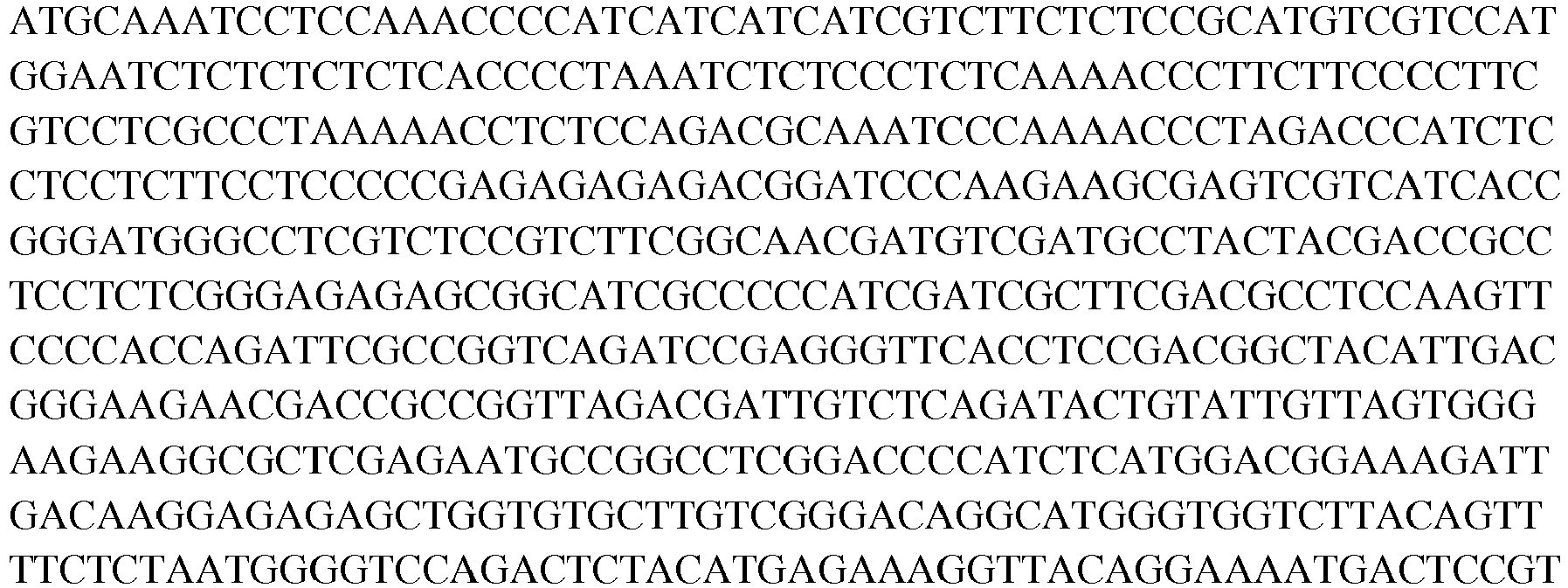

- SEQ ID NO: 24
Umbellularia californica KASI CDS

- SEQ ID NO: 25
Umbellularia californica KASIV CDS
- SEQ ID NO: 26
C. wrightii KASAI CDS (D3153, pSZ4379)

- SEQ ID NO: 27
C. avigera KASIVb CDS
- SEQ ID NO: 28
C. paucipetala KASIVb CDS
- SEQ ID NO: 29
C. ignea KASIVb CDS

- SEQ ID NO: 30
C. procumbens KASIV CDS

- SEQ ID NO: 31
C. paucipetala KASIVa CDS
- SEQ ID NO: 32
C. painteri KASIV CDS
- SEQ ID NO: 33
C. avigera KASIVa CDS

- SEQ ID NO: 34
C. ignea KASIVa CDS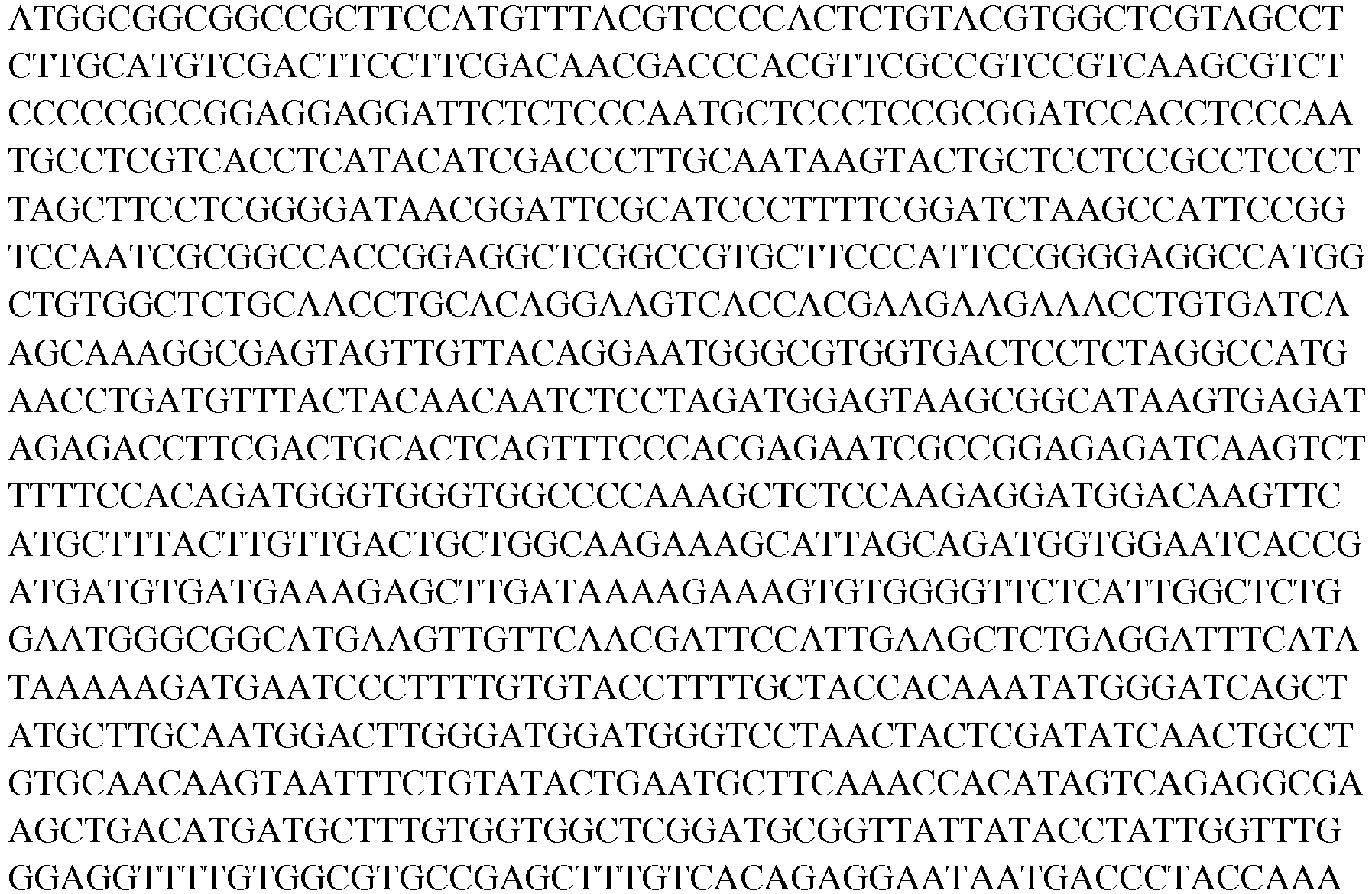

- SEQ ID NO: 35
C. avigera KASIa CDS
- SEQ ID NO: 36
C. pulcherrima KASI CDS
- SEQ ID NO: 37
C. aviga mitochondrial KAS CDS

- SEQ ID NO: 38
Cuphea palustris KAS IV codon optimized for Prototheca with cloning sequence and tags. Nucleotide sequence of the C. palustris KASIV expression vector (D3145 and D3295, pSZ4312). The 5' and 3' homology arms enabling targeted integration into the pLOOP locus are noted with lowercase; the PmHXT1-2 promoter is noted in uppercase italic which drives expression of the ScMelibiase selection marker noted with lowercase italic followed by the PmPGK 3'UTR terminator highlighted in uppercase. The PmACP promoter (noted in bold text) drives the expression of the codon optimized Cpal KASIV (noted with lowercase bold text) and is terminated with the CvNR 3'UTR noted in underlined, lower case bold. Restriction cloning sites and spacer DNA fragments are noted as underlined, uppercase plain lettering.


- SEQ ID NO: 39
Cuphea palustris KAS IV codon optimized for Prototheca

- SEQ ID NO: 40
C. camphora KASIV codon optimized for Prototheca. Nucleotide sequence from the C. camphora KASIV (D3147, pSZ4338) expression vector. Only the codon optimized C. camphora KASIV sequence is shown, the promoter, 3'UTR, selection marker and targeting arms are the same as in SEQ ID NO: 38.
- SEQ ID NO: 41
C. camphora KASI (D3148, pSZ4339) codon optimized for Prototheca

- SEQ ID NO: 42
U. californica KASI
U. californica KASI (D3150, pSZ4341) codon optimized for Prototheca
- SEQ ID NO: 43
U. californica KASIV (D3152, pSZ4343) codon optimized for Prototheca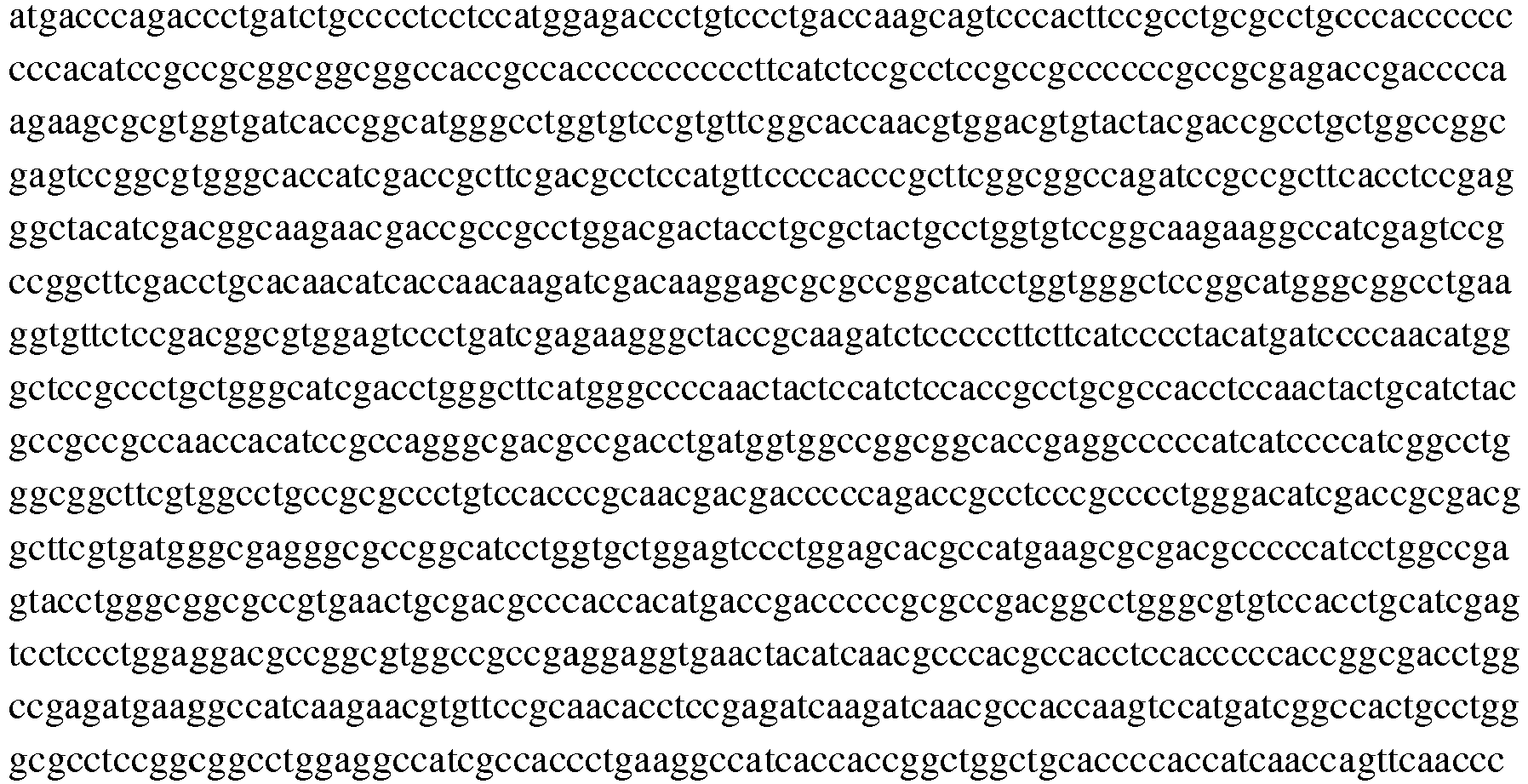

- SEQ ID NO: 44
C. wrightii KASAI (D3153, pSZ4379) codon optimized for Prototheca
- SEQ ID NO: 45
C. avigera KASIVb (D3287, pSZ4453) codon optimized for Prototheca

- SEQ ID NO: 46
C. paucipetala KASIVb codon optimized for Prototheca
- SEQ ID NO: 47
C. ignea KASIVb (D3289, pSZ4455) codon optimized for Prototheca

- SEQ ID NO: 48
Cuphea procumbens KASIV (D3290, pSZ4456) codon optimized for Prototheca
- SEQ ID NO: 49
C paucipetala KASIVa (D3291, pSZ4457) codon optimized for Prototheca

- SEQ ID NO: 50
Cuphea painteri KASIV (D3292, pSZ4458) codon optimized for Prototheca
- SEQ ID NO: 51
C. avigera KASIVa (D3293, pSZ4459) codon optimized for Prototheca

- SEQ ID NO: 52
C ignea KASIVa (D3294, pSZ4460) codon optimized for Prototheca
- SEQ ID NO: 53
C. avigera KASIa (D3342, pSZ4511) codon optimized for Prototheca

- SEQ ID NO: 54
C. pulcherrima KASI (D3343, pSZ4512) codon optimized for Prototheca
- SEQ ID NO: 55
C. avigera mitochondrial KAS (D3344, pSZ4513) codon optimized for Prototheca

- SEQ ID NO: 56
C. avigera KASIII (D3345, pSZ4514) Codon optimized for Prototheca.
- SEQ ID NO: 57
C. hookeriana FATB2 ("Ch FATB2")
- SEQ ID NO: 58
23S rRNA for UTEX 1439, UTEX 1441, UTEX 1435, UTEX 1437 Prototheca moriformis

- SEQ ID NO: 59
Amino acid sequence of the C. hookeriana KASIV (D3668, pSZ4756). The algal transit peptide is underlined.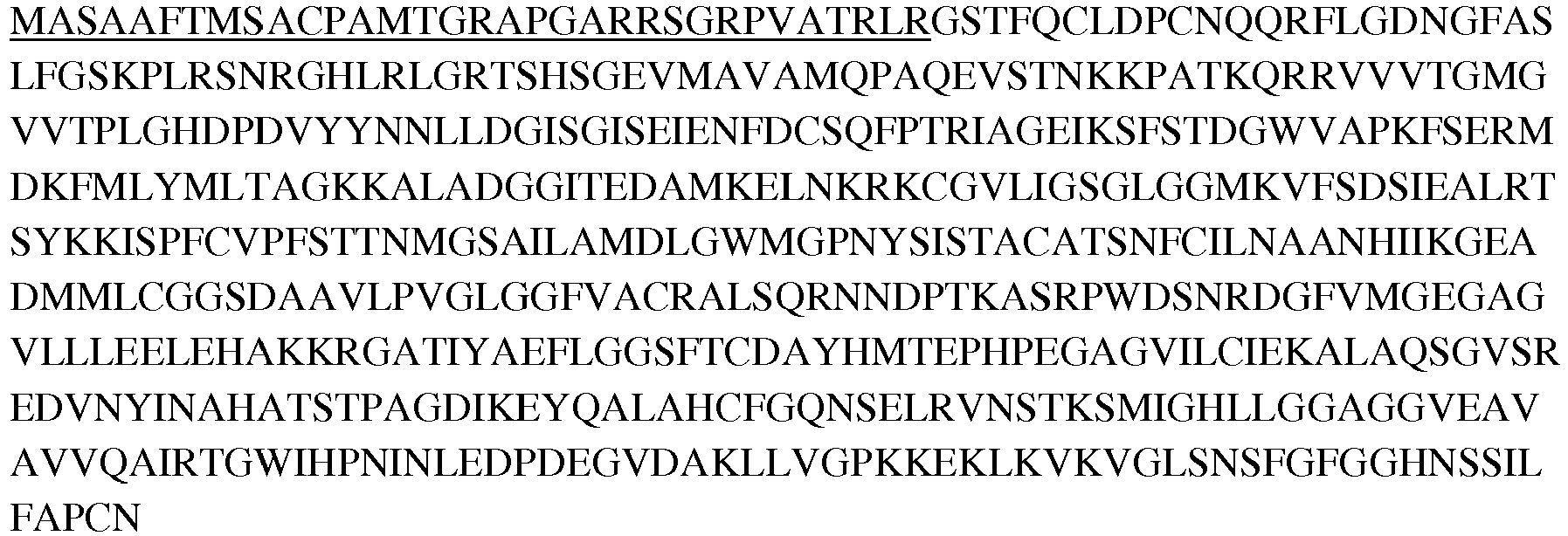
- SEQ ID NO: 60
Nucleotide sequence of the C. hookeriana KASIV (D3668, pSZ4756) expression vector. The 5' and 3' homology arms enabling targeted integration into the SAD2-1 locus are noted with lowercase. The endogenous SAD2-1 promoter (present within the 5' homology targeting arm) drives the expression of the codon optimized Ch KASIV (noted with lowercase bold text) and is terminated with the PmHSP90 3'UTR noted in underlined, lower case bold. The PmHXT1-2 promoter is noted in uppercase italic which drives expression of the ScMelibiase selection marker noted with lowercase italic followed by the PmPGK 3'UTR terminator highlighted in uppercase. Restriction cloning sites and spacer DNA fragments are noted as underlined, uppercase plain lettering.
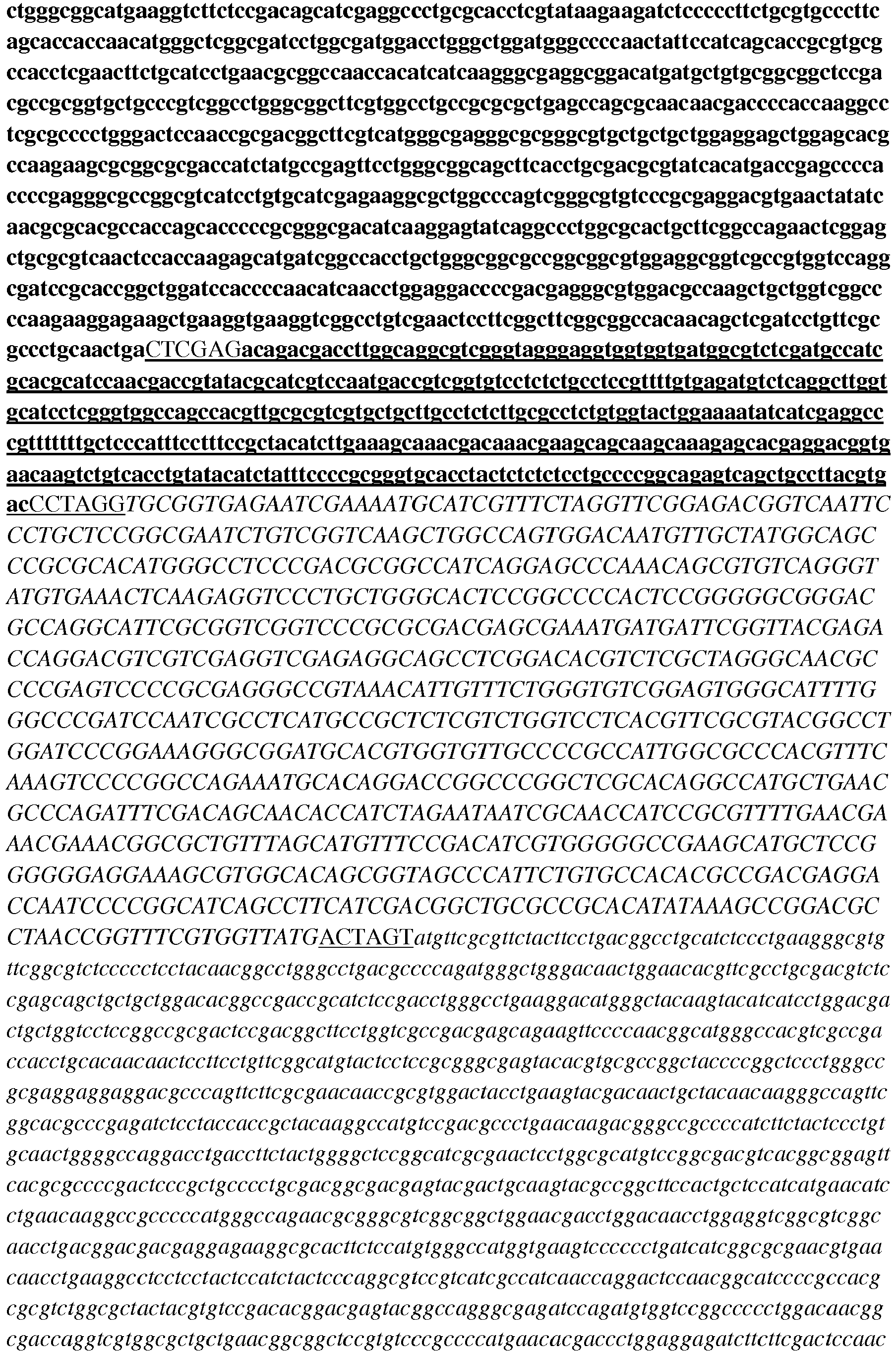

- SEQ ID NO: 61
Nucleotide sequence of the C. hookeriana KASIV CDS codon optimized for P. moriformis.
- SEQ ID NO: 62
Amino acid sequence of the C. aequipetala KASIV. The algal transit peptide is underlined.
C aeque KASIV
- SEQ ID NO: 63
Amino acid sequence of the C. glassostoma KASIV. The algal transit peptide is underlined.
S07_Cg_Locus_4548_Transcript_4/9_translation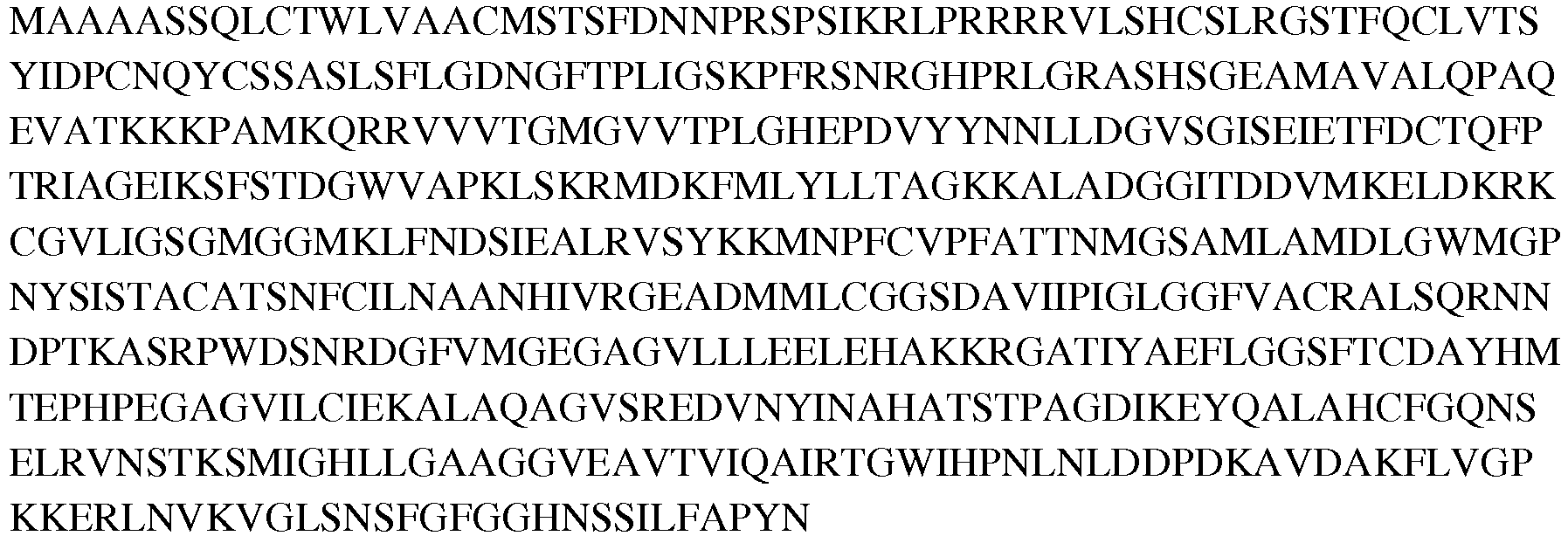
- SEQ ID NO: 64
Amino acid sequence of the C. hookeriana KASIV. The algal transit peptide is underlined.
S26_ChookKASIV_trinity_43853 - translation
- SEQ ID NO: 65
Amino acid sequence of the C. glassostoma KASIV. The algal transit peptide is underlined
S07_Cg_Locus_3059_Transcript_2/2_translation
- SEQ ID NO: 66
Amino acid sequence of the C. carthagenesis KASIV. The algal transit peptide is underlined
S05_CcrKASIV_17190_Seq_7/7_translation
- SEQ ID NO: 67
Amino acid sequence of the C. carthagenesis KASIV. The algal transit peptide is underlined
S05_CcrKASIV_17190_Seq_6/7_translation

- SEQ ID NO: 68
Amino acid sequence of the C. pulcherrima KASIV. The algal transit peptide is underlined
pSZ2181 - CpulcKASIV
- SEQ ID NO: 69
Clade 1 KASIV consensus C8 and C10
- SEQ ID NO: 70
Clade 2 KASIV consensus C10 only
- SEQ ID NO: 71
Clade 1 KASIV consensus mature protein
- SEQ ID NO: 72
Clade 2 KASIV consensus mature protein
Claims (10)
- A polynucleotide having at least 95% sequence identity to SEQ ID NO: 21 or SEQ ID NO:39, or a polynucleotide encoding a KASI-like protein having at least 95% amino acid sequence identity to SEQ ID NO: 2, or a mature protein produced therefrom,
wherein said polynucleotide, when co-expressed with an exogenous FATA or FATB acyl-ACP thioesterase gene in an oleaginous microalgal host cell, is capable of enriching the C14:0 content of the cell oil produced by the host cell, relative to an oil produced by a cell of the same type that does not express said polynucleotide. - A transformation vector comprising the polynucleotide of claim 1, optionally comprising promoter and 3'UTR sequences in operable linkage to the polynucleotide and, optionally, a flanking sequence for homologous recombination.
- A plastidic oleaginous host cell comprising the polynucleotide of claim 1 or the vector of claim 2, wherein the host cell has a type II fatty acid biosynthesis pathway.
- A plastidic oleaginous host cell comprising:a) a polynucleotide according to claim 1; andb) a polynucleotide encoding a FATA acyl-ACP thioesterase or FATB acyl- ACP thioesterase,
wherein the host cell has a type II fatty acid biosynthesis pathway. - The host cell of claim 4, wherein the FATA acyl-ACP thioesterase or the FATB acyl-ACP thioesterase is a FATB acyl-ACP thioesterase having at least 80, 85, 90, 91, 92, 93, 94, 95, 96, 97, 98, or 99% amino acid sequence identity to SEQ ID NO: 1 or SEQ ID NO: 57.
- The host cell of claim 5, wherein the host cell produces a cell oil characterized by a fatty acid profile with (i) at least 30, 40, 50, or 55% C14:0, (ii) at least 7, 8, 9, 10, 11, 12, 13, or 14% C8:0, (iii) at least 10, 15, 20, 25, 30, or 35 area% for the sum of C8:0 and C10:0, or (iv) a C8/C10 ratio in the range of 2.2-2.5, 2.5-3.0, or 3.0-3.4.
- The host cell of any one of claims 4 to 6, wherein one or more of the polynucleotides is codon-optimized for expression in the host cell such that the polynucleotide's coding sequence contains the most or second most preferred codon for at least 60% of the codons of the coding sequence such that the codon-optimized sequence is more efficiently translated in the host cell relative to a non-optimized sequence, optionally wherein the coding sequence contains the most preferred codon for at least 80% of the codons of the coding sequence.
- The host cell of any one of claims 3 to 7, wherein the host cell is a microalga.
- The host cell of claim 8, wherein the host cell is of Trebouxiophyceae, and optionally of the genus Chlorella or Prototheca, optionally further wherein the microalga is of the species Prototheca moriformis.
- A method for making a cell oil, the method comprising cultivating a host cell of any one of claims 3 to 9, so as produce the cell oil, wherein the oil comprises triglcyerides and microalgal sterols, optionally wherein the cell oil comprises sterols, characterized by a sterol profile and the sterol profile has an excess of ergosterol over β-sitosterol and/or the presence of 22, 23-dihydrobrassicasterol, poriferasterol or clionasterol.
Priority Applications (1)
| Application Number | Priority Date | Filing Date | Title |
|---|---|---|---|
| EP19201640.0A EP3620517A3 (en) | 2014-07-10 | 2015-07-10 | Ketoacyl acp synthase genes and uses thereof |
Applications Claiming Priority (3)
| Application Number | Priority Date | Filing Date | Title |
|---|---|---|---|
| US201462023112P | 2014-07-10 | 2014-07-10 | |
| US201462081143P | 2014-11-18 | 2014-11-18 | |
| PCT/US2015/039951 WO2016007862A2 (en) | 2014-07-10 | 2015-07-10 | Novel ketoacyl acp synthase genes and uses thereof |
Related Child Applications (1)
| Application Number | Title | Priority Date | Filing Date |
|---|---|---|---|
| EP19201640.0A Division EP3620517A3 (en) | 2014-07-10 | 2015-07-10 | Ketoacyl acp synthase genes and uses thereof |
Publications (2)
| Publication Number | Publication Date |
|---|---|
| EP3167053A2 EP3167053A2 (en) | 2017-05-17 |
| EP3167053B1 true EP3167053B1 (en) | 2019-10-09 |
Family
ID=53783933
Family Applications (2)
| Application Number | Title | Priority Date | Filing Date |
|---|---|---|---|
| EP15747630.0A Active EP3167053B1 (en) | 2014-07-10 | 2015-07-10 | Novel ketoacyl acp synthase genes and uses thereof |
| EP19201640.0A Withdrawn EP3620517A3 (en) | 2014-07-10 | 2015-07-10 | Ketoacyl acp synthase genes and uses thereof |
Family Applications After (1)
| Application Number | Title | Priority Date | Filing Date |
|---|---|---|---|
| EP19201640.0A Withdrawn EP3620517A3 (en) | 2014-07-10 | 2015-07-10 | Ketoacyl acp synthase genes and uses thereof |
Country Status (6)
| Country | Link |
|---|---|
| US (3) | US9969990B2 (en) |
| EP (2) | EP3167053B1 (en) |
| CN (1) | CN106574255A (en) |
| BR (1) | BR112017000414A2 (en) |
| ES (1) | ES2764273T3 (en) |
| WO (1) | WO2016007862A2 (en) |
Families Citing this family (18)
| Publication number | Priority date | Publication date | Assignee | Title |
|---|---|---|---|---|
| CN104212844A (en) | 2007-06-01 | 2014-12-17 | 索拉兹米公司 | Production of Oil in Microorganisms |
| EP2576800B1 (en) | 2010-05-28 | 2019-01-30 | Corbion Biotech, Inc. | Method for producing oils from Prototheca |
| AU2011323288B2 (en) | 2010-11-03 | 2016-05-26 | Corbion Biotech, Inc. | Microbial oils with lowered pour points, dielectric fluids produced therefrom, and related methods |
| AU2012212079B2 (en) | 2011-02-02 | 2016-07-28 | Corbion Biotech, Inc. | Tailored oils produced from recombinant oleaginous microorganisms |
| EP2839018B1 (en) | 2012-04-18 | 2019-06-05 | Corbion Biotech, Inc. | Tailored oils |
| CN105829521A (en) | 2013-10-04 | 2016-08-03 | 索拉兹米公司 | Tailored oils |
| EP3167053B1 (en) | 2014-07-10 | 2019-10-09 | Corbion Biotech, Inc. | Novel ketoacyl acp synthase genes and uses thereof |
| EP3660149A1 (en) | 2014-07-24 | 2020-06-03 | Corbion Biotech, Inc. | Variant thioesterases and methods of use |
| US20180142218A1 (en) | 2016-10-05 | 2018-05-24 | Terravia Holdings, Inc. | Novel acyltransferases, variant thioesterases, and uses thereof |
| US10704066B2 (en) | 2017-05-05 | 2020-07-07 | Purissima, Inc. | Neurotransmitters and methods of making the same |
| US12338468B2 (en) | 2019-11-20 | 2025-06-24 | Corbion Biotech, Inc. | Sucrose invertase variants |
| CN118124217A (en) | 2019-12-18 | 2024-06-04 | 格纹蛱蝶公司 | Use of Microbial Derived Materials in Polymer Applications |
| EP4090735A1 (en) * | 2020-01-16 | 2022-11-23 | Corbion Biotech, Inc. | Beta-ketoacyl-acp synthase iv variants |
| CN111235170A (en) * | 2020-01-17 | 2020-06-05 | 华中农业大学 | Application of qMYR2 gene in adjusting or screening content of oil and fat components in rice |
| WO2023043945A2 (en) | 2021-09-17 | 2023-03-23 | Checkerspot, Inc. | High oleic oil compositions and uses thereof |
| WO2023091669A1 (en) | 2021-11-19 | 2023-05-25 | Checkerspot, Inc. | Recycled polyurethane formulations |
| WO2023102069A1 (en) | 2021-12-01 | 2023-06-08 | Checkerspot, Inc. | Polyols, polyurethane dispersions, and uses thereof |
| CN118909997B (en) * | 2024-09-18 | 2025-07-15 | 湖北大学 | Application of beta-ketoacyl-ACP synthase III in bacillus to promotion of secretion efficiency of bacillus metabolites |
Family Cites Families (293)
| Publication number | Priority date | Publication date | Assignee | Title |
|---|---|---|---|---|
| US2235056A (en) | 1938-03-04 | 1941-03-18 | Ici Ltd | Process for the recovery of glycerol from still residues from fermentation processes |
| US2383602A (en) | 1943-03-04 | 1945-08-28 | Colgate Palmolive Peet Co | Process for treatment of fatty glycerides |
| US2967700A (en) | 1955-03-01 | 1961-01-10 | Morris B Kallison | Whipping and aerating apparatus |
| US2874171A (en) | 1957-02-20 | 1959-02-17 | Upjohn Co | Recovery of ergosterol |
| US3142135A (en) | 1962-02-13 | 1964-07-28 | Grain Processing Corp | Production of carotenoids by the cultivation of algae |
| US3280502A (en) | 1962-11-07 | 1966-10-25 | Hoffmann La Roche | Process for the preparation of lutein |
| US3320693A (en) | 1964-09-11 | 1967-05-23 | Kk | Method of industral cultivation of unicellular green algae such as chlorella |
| US3475274A (en) | 1967-08-07 | 1969-10-28 | Commercial Solvents Corp | Production of riboflavin |
| US3962466A (en) | 1972-11-10 | 1976-06-08 | Dai-Nippon Sugar Manufacturing Co., Ltd. | Method for treatment of microorganisms |
| JPS5328989B2 (en) | 1974-05-27 | 1978-08-17 | ||
| US4005062A (en) | 1974-08-16 | 1977-01-25 | Standard Oil Company (Indiana) | Process of preparing water-soluble whippable extract from microorganism protein material |
| US3957578A (en) | 1975-01-03 | 1976-05-18 | Hokkaido Sugar Co., Ltd. | Method for manufacture of α-galactosidase by microorganism |
| US4103039A (en) | 1976-08-18 | 1978-07-25 | Fuji Oil Company, Limited | Method for producing improved shea fat |
| FR2375319A1 (en) | 1976-12-23 | 1978-07-21 | British Petroleum Co | Processing microbial lipid extracts for fatty acid recovery - by saponification; distilling out non:saponifiable(s), then acidifying the soap |
| US4182777A (en) | 1977-03-01 | 1980-01-08 | Standard Oil Company (Indiana) | Co-dried yeast whey food product and process |
| IL57712A (en) | 1979-07-03 | 1984-02-29 | Yissum Res Dev Co | Cultivation of halophilic algae of the dunaliella species for the production of fuel-like product |
| US4273790A (en) | 1979-11-19 | 1981-06-16 | Standard Brands Incorporated | Low-fat liquid spread and process |
| US4373434A (en) | 1980-11-24 | 1983-02-15 | Simon-Rosedowns Limited | Apparatus for the expansion of oil bearing seeds |
| JPS57150379A (en) | 1981-03-14 | 1982-09-17 | Kikujiro Ishiwatari | Crushing of cell membrane of chlorella |
| US4390561A (en) | 1981-11-04 | 1983-06-28 | The Procter & Gamble Company | Margarine oil product |
| US4519845A (en) | 1984-02-09 | 1985-05-28 | Uop Inc. | Separation of sucrose from molasses |
| US4627192B1 (en) | 1984-11-16 | 1995-10-17 | Sigco Res Inc | Sunflower products and methods for their production |
| US4755467A (en) | 1985-06-03 | 1988-07-05 | Unisearch Limited | Method for the production of sorbitol and gluconate |
| US5001059A (en) | 1985-07-01 | 1991-03-19 | Bio-Technical Resources, Inc. | L-ascorbic acid production in microorganisms |
| US5900370A (en) | 1985-07-01 | 1999-05-04 | Bio-Technical Resources | Process for the production of ascorbic acid with prototheca |
| US4673490A (en) | 1985-08-23 | 1987-06-16 | Fluor Corporation | Process for separating crude oil components |
| US5091116A (en) | 1986-11-26 | 1992-02-25 | Kraft General Foods, Inc. | Methods for treatment of edible oils |
| US5360730A (en) | 1987-06-05 | 1994-11-01 | Universal Foods Corporation | Zeaxanthin producing strains of Neospongiococcum Excentricum |
| FR2626584B1 (en) | 1988-01-28 | 1990-07-13 | Agronomique Inst Nat Rech | EFFECTIVE ARS SEQUENCE IN YARROWIA LIPOLYTICA AND PROCESS FOR ITS PREPARATION |
| US4992605A (en) | 1988-02-16 | 1991-02-12 | Craig Wayne K | Production of hydrocarbons with a relatively high cetane rating |
| US4901635A (en) | 1988-04-08 | 1990-02-20 | Anderson International Corp. | Apparatus and method for the continuous extrusion and partial deliquefaction of oleaginous materials |
| US20060094089A1 (en) | 1988-09-07 | 2006-05-04 | Martek Biosciences Corporation | Process for the heterotrophic production of microbial products with high concentrations of omega-3 highly unsaturated fatty acids |
| US5130242A (en) | 1988-09-07 | 1992-07-14 | Phycotech, Inc. | Process for the heterotrophic production of microbial products with high concentrations of omega-3 highly unsaturated fatty acids |
| US5340742A (en) | 1988-09-07 | 1994-08-23 | Omegatech Inc. | Process for growing thraustochytrium and schizochytrium using non-chloride salts to produce a microfloral biomass having omega-3-highly unsaturated fatty acids |
| US6680426B2 (en) | 1991-01-07 | 2004-01-20 | Auburn University | Genetic engineering of plant chloroplasts |
| US5693507A (en) | 1988-09-26 | 1997-12-02 | Auburn University | Genetic engineering of plant chloroplasts |
| ES2053190T3 (en) | 1989-05-10 | 1994-07-16 | Davy Mckee London | HYDRODESULFURATION PROCESS IN SEVERAL STAGES. |
| US5407957A (en) | 1990-02-13 | 1995-04-18 | Martek Corporation | Production of docosahexaenoic acid by dinoflagellates |
| DE4004800C2 (en) | 1990-02-13 | 2000-12-21 | Aventis Cropscience Gmbh | Transgenic plants changed in habit and yield |
| US7053267B2 (en) | 1990-03-16 | 2006-05-30 | Calgene Llc | Plant seed oils |
| US5298421A (en) | 1990-04-26 | 1994-03-29 | Calgene, Inc. | Plant medium-chain-preferring acyl-ACP thioesterases and related methods |
| US5164308A (en) | 1990-05-21 | 1992-11-17 | Martek Corporation | Preparation of labelled triglyceride oils by cultivation of microorganisms |
| US6348642B1 (en) | 1990-08-15 | 2002-02-19 | Calgene, Llc | Ricinus communis β-ketoacyl-ACP synthase nucleic acids |
| US6483008B1 (en) | 1990-08-15 | 2002-11-19 | Calgene Llc | Methods for producing plants with elevated oleic acid content |
| US5530186A (en) | 1990-12-20 | 1996-06-25 | E. I. Du Pont De Nemours And Company | Nucleotide sequences of soybean acyl-ACP thioesterase genes |
| US5945585A (en) | 1990-12-20 | 1999-08-31 | E. I. Du Pont De Nemours And Company | Specific for palmitoyl, stearoyl and oleoyl-alp thioesters nucleic acid fragments encoding acyl-acp thiosesterase enzymes and the use of these fragments in altering plant oil composition |
| CU22292A1 (en) | 1991-05-07 | 1995-01-31 | Cigb | Procedure for obtaining fructose-glucose liquors on an industrial scale from saccharose, and the installations for carrying out the process. |
| US5455167A (en) | 1991-05-21 | 1995-10-03 | Calgene Inc. | Medium-chain thioesterases in plants |
| US5270175A (en) | 1991-07-12 | 1993-12-14 | Dna Plant Technology Corporation | Methods and compositions for producing metabolic products for algae |
| JP3143636B2 (en) | 1991-09-11 | 2001-03-07 | 株式会社サン・クロレラ | Method for disrupting chlorella cell wall by cell rupture |
| DE4130986A1 (en) | 1991-09-18 | 1993-03-25 | Bayer Ag | PINOSYLVIN SYNTHASE GENES |
| PH31293A (en) | 1991-10-10 | 1998-07-06 | Rhone Poulenc Agrochimie | Production of y-linolenic acid by a delta6-desaturage. |
| US6355861B1 (en) | 1991-10-10 | 2002-03-12 | Rhone-Poulenc Agrochimie | Production of gamma linolenic acid by a Δ6-desaturase |
| FR2686619B1 (en) | 1992-01-28 | 1995-07-13 | Commissariat Energie Atomique | PROCESS FOR THE SELECTIVE PRODUCTION OF POLYUNSATURATED LIPIDS FROM A CULTURE OF PORPHYRIDIUM MICROALGAE AND TANK USED IN THIS PROCESS. |
| US5395455A (en) | 1992-03-10 | 1995-03-07 | Energy, Mines And Resources - Canada | Process for the production of anhydrosugars from lignin and cellulose containing biomass by pyrolysis |
| DE4209779C1 (en) | 1992-03-26 | 1993-07-15 | Oelmuehle Leer Connemann Gmbh & Co., 2950 Leer, De | |
| UA41324C2 (en) | 1992-06-19 | 2001-09-17 | Артур М. Нономура | method for the improvement of plants growth (variants), composition improving plants growth (variants) |
| US6410281B1 (en) | 1992-07-10 | 2002-06-25 | Omegatech, Inc. | Reducing corrosion in a fermentor by providing sodium with a non-chloride sodium salt |
| JP3090810B2 (en) | 1993-03-09 | 2000-09-25 | 日本碍子株式会社 | Method for producing palmito oleic acid |
| GB2277052A (en) | 1993-04-14 | 1994-10-19 | Du Pont Canada | Polyurethane foam laminates |
| JPH078215A (en) | 1993-04-30 | 1995-01-13 | Kawasaki Steel Corp | Docosahexaenoic acid-containing marine microalgae food material and method for producing the same |
| JPH078217A (en) | 1993-06-29 | 1995-01-13 | Kawasaki Steel Corp | Health food containing docosahexaenoic acid and method for producing the same |
| JP3506740B2 (en) | 1993-09-09 | 2004-03-15 | 日清オイリオ株式会社 | Method for culturing algae containing docosahexaenoic acid |
| EP0728212A1 (en) | 1993-11-10 | 1996-08-28 | Calgene, Inc. | Plant acyl acp thioesterase sequences |
| US5910630A (en) | 1994-04-06 | 1999-06-08 | Davies; Huw Maelor | Plant lysophosphatidic acid acyltransferases |
| US5563058A (en) | 1994-04-06 | 1996-10-08 | Calgene, Inc. | Plant lysophosphatidic acid acyltransferases |
| CA2190149C (en) | 1994-05-18 | 2011-01-04 | Jens Kossmann | Dna sequences coding for enzymes capable of facilitating the synthesis of linear .alpha.-1,4 glucans in plants, fungi and microorganisms |
| US5756135A (en) | 1994-09-15 | 1998-05-26 | Robert D. Seeley Trust | Water insoluble yeast solids product and process of making same |
| US5680812A (en) | 1995-01-23 | 1997-10-28 | Linsgeseder; Helmut | Apparatus and method for the extraction of vegetable oils |
| EP0858496B1 (en) | 1995-06-06 | 2005-03-09 | Agro Management Group, Inc. | Vegetable based biodegradable liquid lubricants |
| US5685218A (en) | 1995-07-14 | 1997-11-11 | The French Oil Mill Machinery Co. | Method for treating oil-bearing material |
| US6255505B1 (en) | 1996-03-28 | 2001-07-03 | Gist-Brocades, B.V. | Microbial polyunsaturated fatty acid containing oil from pasteurised biomass |
| ZA973565B (en) | 1996-04-26 | 1998-10-26 | Du Pont | Soybean oil having high oxidative stability |
| US5595965A (en) | 1996-05-08 | 1997-01-21 | The Lubrizol Corporation | Biodegradable vegetable oil grease |
| US6312623B1 (en) | 1996-06-18 | 2001-11-06 | Abb Power T&D Company Inc. | High oleic acid oil compositions and methods of making and electrical insulation fluids and devices comprising the same |
| US7109392B1 (en) | 1996-10-09 | 2006-09-19 | Cargill, Incorporated | Methods for increasing oleic acid content in seeds from transgenic plants containing a mutant delta 12 desaturase |
| EP0969014B1 (en) | 1997-01-24 | 2008-10-08 | Kirin Holdings Kabushiki Kaisha | Beta-ketoacyl-acp-synthetase ii enzyme and gene encoding the same |
| AR013633A1 (en) | 1997-04-11 | 2001-01-10 | Calgene Llc | METHOD FOR THE ALTERATION OF THE COMPOSITION OF AVERAGE CHAIN FAT ACIDS IN VEGETABLE SEEDS THAT EXPRESS A THIOESTERASE THAT PREFERS HETEROLOGICAL VEGETABLE AVERAGE CHAIN. |
| US6243725B1 (en) | 1997-05-21 | 2001-06-05 | Premier International, Ltd. | List building system |
| PT996740E (en) | 1997-08-01 | 2005-11-30 | Martek Biosciences Corp | NUTRIENT COMPOSITIONS CONTAINING DHA AND METHODS FOR ITS PRODUCTION |
| WO1999016860A1 (en) | 1997-09-29 | 1999-04-08 | Nihon Tobacco Inc. | Yeast extract composition, yeast for obtaining the same, and process for producing yeast extract composition |
| JP2002500868A (en) | 1998-01-21 | 2002-01-15 | ユニバーシティ・オブ・メリーランド・バイオテクノロジー・インスティテュート | How to fortify raw feed with nutrients essential for fry |
| US6139897A (en) | 1998-03-24 | 2000-10-31 | Kao Corporation | Oil or fat composition containing phytosterol |
| US20020012979A1 (en) | 1998-06-08 | 2002-01-31 | Alan Berry | Vitamin c production in microorganisms and plants |
| EP2305825B1 (en) | 1998-07-06 | 2015-01-14 | DCV Inc. doing business as Bio-Technical Resourses | Method of vitamin production |
| WO2000001650A1 (en) | 1998-07-06 | 2000-01-13 | Dcv, Inc. Doing Business As Bio-Technical Resources | Method of vitamin production |
| US7511190B2 (en) | 1999-11-17 | 2009-03-31 | Mendel Biotechnology, Inc. | Polynucleotides and polypeptides in plants |
| JP2000136199A (en) | 1998-10-29 | 2000-05-16 | Asahi Glass Co Ltd | Signal peptide, secretory expression vector usable in Schizosaccharomyces pombe, and method for producing protein using the same |
| US6762345B1 (en) | 1998-12-03 | 2004-07-13 | E. I. Du Pont De Nemours And Company | Plant stearoyl desaturases |
| JP2000175696A (en) | 1998-12-14 | 2000-06-27 | Yoshio Tanaka | Extraction of dunaliella alga body |
| US6166231A (en) | 1998-12-15 | 2000-12-26 | Martek Biosciences Corporation | Two phase extraction of oil from biomass |
| US6534261B1 (en) | 1999-01-12 | 2003-03-18 | Sangamo Biosciences, Inc. | Regulation of endogenous gene expression in cells using zinc finger proteins |
| US7211418B2 (en) | 1999-01-14 | 2007-05-01 | Martek Biosciences Corporation | PUFA polyketide synthase systems and uses thereof |
| AU4211600A (en) | 1999-04-10 | 2000-11-14 | Maxygen, Inc. | Modified lipid production |
| BR0010597A (en) | 1999-04-12 | 2002-02-13 | Monsanto Technology Llc | Transgenic plants containing altered levels of sterol compounds and tocopherols |
| ES2265945T3 (en) | 1999-06-04 | 2007-03-01 | Consejo Superior De Investigaciones Cientificas | PLANTS, SEEDS AND SUNFLOWER OILS WITH A HIGH CONTENT OF OLEICO AND HIGH OF ESTEARICO. |
| US6770465B1 (en) | 1999-06-09 | 2004-08-03 | Calgene Llc | Engineering B-ketoacyl ACP synthase for novel substrate specificity |
| DE19926456A1 (en) | 1999-06-10 | 2000-12-14 | Norddeutsche Pflanzenzucht Han | Process for increasing the fatty acid content in plant seeds |
| DE10000978A1 (en) | 2000-01-12 | 2001-07-26 | Gvs Ges Fuer Erwerb Und Verwer | Process for increasing the level of fatty acids in plants and microorganisms |
| ES2352001T3 (en) | 2000-01-19 | 2011-02-14 | Martek Biosciences Corporation | NON-SOLVENT EXTRACTION PROCEDURE. |
| WO2010120939A2 (en) | 2009-04-14 | 2010-10-21 | Solazyme, Inc. | Methods of microbial oil extraction and separation |
| US6338866B1 (en) | 2000-02-15 | 2002-01-15 | Applied Food Biotechnology, Inc. | Pet foods using algal or fungal waste containing fatty acids |
| GB0007651D0 (en) | 2000-03-29 | 2000-05-17 | Ascorbex Ltd | Gene sequence |
| AU2001253699B2 (en) | 2000-04-21 | 2006-04-27 | Martek Biosciences Corporation | Trophic conversion of obligate phototrophic algae through metabolic engineering |
| US20020178467A1 (en) | 2000-05-12 | 2002-11-28 | Katayoon Dehesh | Plastid transit peptide sequences for efficient plastid targeting |
| EP1303616A2 (en) | 2000-07-25 | 2003-04-23 | Calgene LLC | Nucleic acid sequences encoding beta-ketoacyl-acp synthase and uses thereof |
| EP1178118A1 (en) | 2000-08-02 | 2002-02-06 | Dsm N.V. | Isolation of microbial oils |
| JP2002125601A (en) | 2000-10-25 | 2002-05-08 | Kurorera Kogyo Kk | Feed for animal plankton, method for producing the same, and method for culturing animal plankton |
| AU2002224445A1 (en) | 2000-10-26 | 2002-05-06 | Joe E. Guyer | Method of generating and recovering gas from subsurface formations of coal, carbonaceous shale and organic-rich shales |
| AU2065502A (en) | 2000-11-21 | 2002-06-03 | Unilever Plc | Edible spread containing a natural fat phase |
| US7081567B2 (en) | 2000-12-03 | 2006-07-25 | Lexun Xue | Transgenic dunaliella salina as a bioreactor |
| US20020144455A1 (en) | 2001-01-06 | 2002-10-10 | Bertrand Jerome C. | Non sooting candle composition |
| WO2002085293A2 (en) | 2001-04-20 | 2002-10-31 | Cargill, Incorporated | Production of alpha-lipoic acid |
| US6620427B2 (en) | 2001-04-24 | 2003-09-16 | Abbott Laboratories | Method for improving bone mineralization |
| WO2003002719A2 (en) | 2001-06-29 | 2003-01-09 | Brookhaven Science Associates, Llc | Isoform of castor oleate hydroxylase |
| AU2002319764A1 (en) | 2001-08-03 | 2003-02-17 | Elitra Pharmaceuticals, Inc. | Nucleic acids of aspergillus fumigatus encoding industrial enzymes and methods of use |
| US6867308B2 (en) | 2001-09-19 | 2005-03-15 | Archer-Daniels-Midland Company | Process for separation of tocopherols |
| JP3816774B2 (en) | 2001-10-01 | 2006-08-30 | 独立行政法人科学技術振興機構 | Hydrocarbon-utilized microalgae and bioremediation method using the same |
| ATE418616T2 (en) | 2002-01-23 | 2009-01-15 | Royal Nedalco B V | FERMENTATION OF PENTOSE SUGAR |
| US7314974B2 (en) | 2002-02-21 | 2008-01-01 | Monsanto Technology, Llc | Expression of microbial proteins in plants for production of plants with improved properties |
| US20030229237A1 (en) | 2002-04-02 | 2003-12-11 | Haas Michael J. | In situ production of fatty acid alkyl esters |
| EP2266525B1 (en) | 2002-05-03 | 2012-07-11 | Martek Biosciences Corporation | High quality lipids and methods for producing by enzymatic liberation from biomass |
| US20030211594A1 (en) | 2002-05-07 | 2003-11-13 | Rosebrook Donald Ian | Microalgae for remediation of waste and method of culturing the same |
| WO2004000871A2 (en) | 2002-06-21 | 2003-12-31 | Monsanto Technology Llc | Thioesterase-related nucleic acid sequences and methods |
| DE60336902D1 (en) | 2002-07-19 | 2011-06-09 | Cytos Biotechnology Ag | VACCINE COMPOSITIONS CONTAINING AMYLOID BETA 1-6 ANTIGENARRAYS |
| US7232935B2 (en) | 2002-09-06 | 2007-06-19 | Fortum Oyj | Process for producing a hydrocarbon component of biological origin |
| US20040074760A1 (en) | 2002-10-17 | 2004-04-22 | Carnegie Mellon University | Production of biofuels |
| AU2003295624A1 (en) | 2002-11-18 | 2004-06-15 | Monsanto Technology, Llc | Production of increased oil and protein in plants by the disruption of the phenylpropanoid pathway |
| WO2004065537A2 (en) | 2003-01-20 | 2004-08-05 | Sungene Gmbh & Co. Kgaa | Expression cassette with promotors of starch synthesis 3 for the expression of nucleic acids in plant tissue containing starch |
| AU2004208031B2 (en) | 2003-01-28 | 2009-10-08 | Cellectis | Use of meganucleases for inducing homologous recombination ex vivo and in toto in vertebrate somatic tissues and application thereof. |
| WO2004078966A1 (en) | 2003-03-03 | 2004-09-16 | Meiji Seika Kaisha, Ltd. | Transgenic plant having fructooligosaccharide accumulated therein and process for constructing the same |
| US7238482B2 (en) | 2003-05-07 | 2007-07-03 | E. I. Du Pont De Nemours And Company | Production of polyunsaturated fatty acids in oleaginous yeasts |
| US7125672B2 (en) | 2003-05-07 | 2006-10-24 | E. I. Du Pont De Nemours And Company | Codon-optimized genes for the production of polyunsaturated fatty acids in oleaginous yeasts |
| US7032664B2 (en) | 2004-06-02 | 2006-04-25 | Halliburton Energy Services, Inc. | Nanocomposite particulates and methods of using nanocomposite particulates |
| US7259255B2 (en) | 2003-06-25 | 2007-08-21 | E. I. Du Pont De Nemours And Company | Glyceraldehyde-3-phosphate dehydrogenase and phosphoglycerate mutase promoters for gene expression in oleaginous yeast |
| WO2005005586A1 (en) | 2003-07-09 | 2005-01-20 | The Nisshin Oillio, Ltd | Process for producing symmetrical triglyceride |
| CA2536635C (en) | 2003-08-25 | 2015-05-12 | Funzyme Biotechnologies Sa | Novel fungal proteins and nucleic acids encoding same |
| PE20050398A1 (en) | 2003-09-22 | 2005-06-03 | Rosales Jose Antonio Socla | PROCESS AND PURIFICATION OF MARIGOLD XANTOFILES |
| US20060048240A1 (en) | 2004-04-01 | 2006-03-02 | Nickolai Alexandrov | Sequence-determined DNA fragments and corresponding polypeptides encoded thereby |
| JP2007508922A (en) | 2003-10-02 | 2007-04-12 | ミシシッピ・ステイト・ユニバーシティ | Production of biodiesel fuel and other useful chemicals from wastewater treatment plant sludge |
| US7504259B2 (en) | 2003-11-12 | 2009-03-17 | E. I. Du Pont De Nemours And Company | Δ12 desaturases suitable for altering levels of polyunsaturated fatty acids in oleaginous yeast |
| KR100877445B1 (en) | 2003-11-20 | 2009-01-09 | 솔베이(소시에떼아노님) | Process for producing epoxy resins |
| EP1699930A2 (en) | 2003-12-23 | 2006-09-13 | BASF Plant Science GmbH | Sugar and lipid metabolism regulators in plants vi |
| CN1238469C (en) | 2004-01-16 | 2006-01-25 | 清华大学 | Novel process for preparing biological diesel oil from grease catalyzed by lipase in the reaction system with organic substrate as medium |
| US7063957B2 (en) | 2004-03-26 | 2006-06-20 | The University Of Hong Kong | Methods for production of astaxanthin from the green microalgae Chlorella in dark-heterotrophic cultures |
| WO2005108586A1 (en) | 2004-05-07 | 2005-11-17 | Universität Regensburg | A method for increasing the ratio of homologous to non-homologous recombination |
| US7364883B2 (en) | 2004-05-07 | 2008-04-29 | Yeastern Biotech Co., Ltd. | Process for producing poly-unsaturated fatty acids by oleaginous yeasts |
| CA2565980A1 (en) | 2004-05-12 | 2005-12-01 | Luca Technologies, Llc | Generation of hydrogen from hydrocarbon-bearing materials |
| US7214297B2 (en) | 2004-06-28 | 2007-05-08 | Applied Materials, Inc. | Substrate support element for an electrochemical plating cell |
| US20060075522A1 (en) | 2004-07-31 | 2006-04-06 | Jaclyn Cleveland | Genes and uses for plant improvement |
| CA2581468A1 (en) | 2004-09-22 | 2006-04-06 | Ceres, Inc. | Promoter, promoter control elements, and combinations, and uses thereof |
| GB0421937D0 (en) | 2004-10-02 | 2004-11-03 | Univ York | Acyl CoA synthetases |
| WO2006047445A2 (en) | 2004-10-22 | 2006-05-04 | Martek Biosciences Corporation | Process for preparing materials for extraction |
| US8685679B2 (en) | 2004-11-04 | 2014-04-01 | E I Du Pont De Nemours And Company | Acyltransferase regulation to increase the percent of polyunsaturated fatty acids in total lipids and oils of oleaginous organisms |
| US7879591B2 (en) | 2004-11-04 | 2011-02-01 | E.I. Du Pont De Nemours And Company | High eicosapentaenoic acid producing strains of Yarrowia lipolytica |
| US7588931B2 (en) | 2004-11-04 | 2009-09-15 | E. I. Du Pont De Nemours And Company | High arachidonic acid producing strains of Yarrowia lipolytica |
| US7189559B2 (en) | 2004-11-04 | 2007-03-13 | E. I. Du Pont De Nemours And Company | Mortierella alpina lysophosphatidic acid acyltransferase homolog for alteration of polyunsaturated fatty acids and oil content in oleaginous organisms |
| US20060225341A1 (en) | 2004-12-20 | 2006-10-12 | Rodolfo Rohr | Production of biodiesel |
| EP1838522A4 (en) | 2004-12-30 | 2011-03-09 | Sun Drilling Products Corp | Thermoset nanocomposite particles, processing for their production, and their use in oil and natural gas drilling applications |
| PL1681337T3 (en) | 2005-01-14 | 2011-05-31 | Neste Oil Oyj | Method for the manufacture of hydrocarbons |
| DE102005003624A1 (en) | 2005-01-26 | 2006-07-27 | Nutrinova Nutrition Specialties & Food Ingredients Gmbh | Antioxidative active extract, useful to prepare fatty acid composition, which is useful as e.g. an active agent in pharmaceutical composition, a food supplement and/or food ingredient or an animal feed, comprises Crypthecodinium species |
| US7692049B2 (en) | 2005-01-31 | 2010-04-06 | Exxonmobil Chemical Patents Inc. | Hydrocarbon compositions useful for producing fuels and methods of producing the same |
| WO2006092449A2 (en) | 2005-03-02 | 2006-09-08 | Metanomics Gmbh | Process for the production of fine chemicals |
| EP2371967B1 (en) | 2005-03-18 | 2015-06-03 | DSM IP Assets B.V. | Production of carotenoids in oleaginous yeast and fungi |
| US20060223153A1 (en) | 2005-04-05 | 2006-10-05 | Luca Technologies, Llc | Generation of materials with enhanced hydrogen content from anaerobic microbial consortia |
| US7426960B2 (en) | 2005-05-03 | 2008-09-23 | Luca Technologies, Inc. | Biogenic fuel gas generation in geologic hydrocarbon deposits |
| EP1888055A4 (en) | 2005-05-11 | 2009-10-21 | Advanced Bionutrition Corp | FISH OIL UNDER STABILIZED FORM |
| CA2624616A1 (en) | 2005-05-12 | 2006-11-23 | Martek Biosciences Corporation | Biomass hydrolysate and uses and production thereof |
| PT1741767E (en) | 2005-07-04 | 2015-11-03 | Neste Oil Oyj | Process for the manufacture of diesel range hydrocarbons |
| US20070048859A1 (en) | 2005-08-25 | 2007-03-01 | Sunsource Industries | Closed system bioreactor apparatus |
| WO2007027669A1 (en) | 2005-08-29 | 2007-03-08 | Cps Biofuels, Inc. | Improved biodiesel fuel, additives, and lubbricants |
| FR2890961B1 (en) | 2005-09-21 | 2007-11-23 | Inst Francais Du Petrole | IMPROVED METHOD OF MANUFACTURING ETHYL ESTERS FROM NATURALLY FAT BODIES |
| AU2006294680A1 (en) | 2005-09-27 | 2007-04-05 | Cornell University | Invertase and inhibitors from coffee |
| US8163675B2 (en) | 2005-10-20 | 2012-04-24 | Akzo Nobel N.V. | Emulsifier based on polyamines and fatty acid/maleic anhydride |
| US20070167396A1 (en) | 2006-01-19 | 2007-07-19 | Solazyme, Inc. | Methods and compositions for cholesterol reduction in mammals |
| US20090274736A1 (en) | 2006-01-19 | 2009-11-05 | Solazyme Inc. | Nutraceutical Compositions From Microalgae And Related Methods of Production And Administration |
| CN101421406B (en) * | 2006-02-13 | 2016-08-31 | 孟山都技术有限公司 | For producing nucleic acid construct and the method that the seed oil of change forms |
| US20070218183A1 (en) | 2006-03-14 | 2007-09-20 | Bunge Oils, Inc. | Oil composition of conjugated linoleic acid |
| KR101524398B1 (en) | 2006-03-15 | 2015-06-04 | 디에스엠 아이피 어셋츠 비.브이. | Polyunsaturated Fatty Acid Production in Heterologous Organisms Using PUFA Polyketide Synthase Systems |
| CN100590186C (en) | 2006-03-17 | 2010-02-17 | 中国科学院大连化学物理研究所 | A method for producing bio-oil and bio-diesel |
| CA2648266A1 (en) | 2006-04-03 | 2007-10-18 | Advanced Bionutrition Corporation | Feed formulations containing docosahexaenoic acid |
| US20100248322A1 (en) | 2006-04-05 | 2010-09-30 | Luca Technologies, Inc. | Chemical amendments for the stimulation of biogenic gas generation in deposits of carbonaceous material |
| US7309602B2 (en) | 2006-04-13 | 2007-12-18 | Ambrozea, Inc. | Compositions and methods for producing fermentation products and residuals |
| EP2018174A4 (en) | 2006-04-13 | 2010-03-31 | Ambrozea Inc | Compositions and methods for producing fermentation products and residuals |
| US20100021968A1 (en) | 2006-05-12 | 2010-01-28 | Arizona Board of Regents, a body corporate of the state of Arizona acting for and on behalf of | Novel chlorella species and uses therefor |
| EP2035553A1 (en) | 2006-06-06 | 2009-03-18 | Total Raffinage Marketing | Lysophosphatidic acid acyltransferase genes and uses thereof |
| US8029579B2 (en) | 2006-06-28 | 2011-10-04 | COH Inc. | Fatty acid blends and uses therefor |
| CN101108997B (en) | 2006-07-19 | 2010-07-21 | 中国科学院大连化学物理研究所 | A kind of preparation method of microbial grease |
| US20080188676A1 (en) | 2006-09-14 | 2008-08-07 | Anderson Gregory A | Methods of robust and efficient conversion of cellular lipids to biofuels |
| KR20090092758A (en) | 2006-09-18 | 2009-09-01 | 더 아리조나 보드 오브 리전트스, 어 바디 코포레이트 액팅 포 앤드 온 비핼프 오브 아리조나 스테이트 유니버시티 | Algal medium chain length fatty acids and hydrocarbons |
| JP2008081559A (en) | 2006-09-26 | 2008-04-10 | Nippon Shokubai Co Ltd | Biodiesel fuel composition and method for producing the same |
| US8367395B2 (en) | 2006-09-28 | 2013-02-05 | Dsm Ip Assets B.V. | Production of sterols in oleaginous yeast and fungi |
| US9101161B2 (en) | 2006-11-02 | 2015-08-11 | The Coca-Cola Company | High-potency sweetener composition with phytoestrogen and compositions sweetened therewith |
| US8088614B2 (en) | 2006-11-13 | 2012-01-03 | Aurora Algae, Inc. | Methods and compositions for production and purification of biofuel from plants and microalgae |
| ITMI20062193A1 (en) | 2006-11-15 | 2008-05-16 | Eni Spa | PROCESS FOR PRODUCING HYDROCARBURAL FRACTIONS FROM MIXTURES OF BIOLOGICAL ORIGIN |
| JP4820277B2 (en) | 2006-12-20 | 2011-11-24 | 花王株式会社 | Method for producing ketone body and / or secondary alcohol |
| WO2008081898A1 (en) | 2006-12-28 | 2008-07-10 | Tohoku Techno Arch Co., Ltd. | Method for regeneration of strongly basic anion exchange resin |
| US8404004B2 (en) | 2006-12-29 | 2013-03-26 | Genifuel Corporation | Process of producing oil from algae using biological rupturing |
| US9003695B2 (en) | 2006-12-29 | 2015-04-14 | Genifuel Corporation | Controlled growth environments for algae cultivation |
| BRPI0807237A2 (en) | 2007-02-02 | 2014-04-29 | Kirin Holdings Kk | DNA CODING XYLITOL DEHYDROGENASE, NUCLEIC ACID CONSTRUCTION, VECTORS, MICROORGANISMS AND METHODS FOR PRODUCING XYLITOL DESIGROGENASE AND ETHANOL |
| US8129512B2 (en) | 2007-04-12 | 2012-03-06 | Pioneer Hi-Bred International, Inc. | Methods of identifying and creating rubisco large subunit variants with improved rubisco activity, compositions and methods of use thereof |
| MX2009007356A (en) | 2007-05-02 | 2009-10-08 | Ouro Fino Participacoes E Empr | Process to produce biodiesel and/or fuel oil. |
| CN101743263A (en) | 2007-05-15 | 2010-06-16 | 陶氏环球技术公司 | High resilience foams |
| US8801975B2 (en) | 2007-05-17 | 2014-08-12 | Cooper Industries, Llc | Vegetable oil dielectric fluid composition |
| CA2786816C (en) | 2007-05-17 | 2014-12-23 | Cooper Industries, Inc. | Vegetable oil dielectric fluid composition |
| CN104212844A (en) | 2007-06-01 | 2014-12-17 | 索拉兹米公司 | Production of Oil in Microorganisms |
| US7914832B2 (en) | 2007-06-01 | 2011-03-29 | Kyoto Eiyo Co., Ltd. | Method for producing chlorella fermented food |
| WO2008156651A1 (en) | 2007-06-12 | 2008-12-24 | Cps Biofuels, Inc. | Production of gasoline from fermentable feedstocks |
| US20090018300A1 (en) | 2007-07-11 | 2009-01-15 | Archer-Daniels-Midland Company | Monomers and polymers from bioderived carbon |
| CN101092353B (en) | 2007-07-12 | 2010-12-01 | 上海交通大学 | Method for preparing fatty acid monoester converted from animal and vegetable oil |
| US7982035B2 (en) | 2007-08-27 | 2011-07-19 | Duquesne University Of The Holy Spirit | Tricyclic compounds having antimitotic and/or antitumor activity and methods of use thereof |
| AU2008293423B2 (en) | 2007-08-31 | 2014-10-30 | Dsm Ip Assets B.V. | Polyunsaturated fatty acid-containing solid fat compositions and uses and production thereof |
| US20090176272A1 (en) | 2007-09-12 | 2009-07-09 | Kuehnle Agrosystems, Inc. | Expression of nucleic acid sequences for production of biofuels and other products in algae and cyanobacteria |
| JP2010538642A (en) | 2007-09-12 | 2010-12-16 | マーテック バイオサイエンシーズ コーポレーション | Biological oil and its production and use |
| JP5711968B2 (en) | 2007-10-03 | 2015-05-07 | イー・アイ・デュポン・ドウ・ヌムール・アンド・カンパニーE.I.Du Pont De Nemours And Company | An optimized strain of Yarrowia Lipolytica to produce high eicosapentaenoic acid |
| WO2009058799A1 (en) | 2007-11-01 | 2009-05-07 | Wake Forest University School Of Medicine | Compositions and methods for prevention and treatment of mammalian diseases |
| FR2924126B1 (en) | 2007-11-28 | 2011-04-15 | Roquette Freres | NOVEL PROCESS FOR CULTURING A HETEROTROPIC MICROALGUE |
| US8815567B2 (en) | 2007-11-30 | 2014-08-26 | E I Du Pont De Nemours And Company | Coenzyme Q10 production in a recombinant oleaginous yeast |
| WO2009068540A1 (en) | 2007-11-30 | 2009-06-04 | Shell Internationale Research Maatschappij B.V. | Fuel formulations |
| MX2010006539A (en) | 2007-12-11 | 2011-02-23 | Synthetic Genomics Inc | Secretion of fatty aicds by photosynthetic microorganisms. |
| GB0724720D0 (en) | 2007-12-19 | 2008-01-30 | Ici Plc | Triglyceride macromonomers |
| WO2009105620A1 (en) | 2008-02-20 | 2009-08-27 | Cco Technology, Ltd. | Selective short chain monounsaturated oils |
| CN101230364A (en) | 2008-02-25 | 2008-07-30 | 清华大学 | A method for producing biodiesel by high-density fermentation of heterotrophic chlorella |
| US8048654B2 (en) | 2010-06-09 | 2011-11-01 | Joule Unlimited Technologies, Inc. | Methods and compositions for the recombinant biosynthesis of fatty acids and esters |
| US8598378B2 (en) | 2008-03-14 | 2013-12-03 | University Of Hawaii | Methods and compositions for extraction and transesterification of biomass components |
| US8043496B1 (en) | 2008-03-18 | 2011-10-25 | Peter Allen Schuh | System for extracting oil from algae |
| EP2271742A4 (en) | 2008-03-31 | 2011-05-25 | Kuehnle Agrosystems Inc | Nuclear based expression of genes for production of biofuels and process co-products in algae |
| US20100170144A1 (en) | 2008-04-09 | 2010-07-08 | Solazyme, Inc. | Hydroprocessing Microalgal Oils |
| MX338039B (en) | 2008-04-09 | 2016-03-30 | Solazyme Inc | Direct chemical modification of microbial biomass and microbial oils. |
| WO2009140354A1 (en) | 2008-05-13 | 2009-11-19 | Cargill, Incorporated | Polyol made from partially hydrogenated, fully epoxidized natural oils |
| CN101280328B (en) | 2008-05-27 | 2011-06-29 | 清华大学 | Method for producing biodiesel by autotrophic culture and heterotrophic culture of chlorella |
| US8435790B2 (en) | 2008-07-25 | 2013-05-07 | The Regents Of The University Of California | Methods of modulating lipid concentrations in eukaryotic cells |
| NZ590750A (en) | 2008-07-28 | 2012-12-21 | Univ Massachusetts | Methods and compositions for improving the production of products in microorganisms, especially clostridium phytofermentans |
| US8273694B2 (en) | 2008-07-28 | 2012-09-25 | Jeffrey A Brown | Synthetic compositions obtained from algae |
| US20100035309A1 (en) | 2008-08-06 | 2010-02-11 | Luca Technologies, Inc. | Analysis and enhancement of metabolic pathways for methanogenesis |
| US8927475B2 (en) | 2008-08-08 | 2015-01-06 | The Dial Corporation | Consumer products comprising algae derived ingredients |
| WO2010019813A2 (en) | 2008-08-13 | 2010-02-18 | Sapphire Energy, Inc. | Production of fatty actds by genetically modified photosynthetic organisms |
| NZ591972A (en) | 2008-10-03 | 2013-04-26 | Agrisoma Biosciences Inc | Production of modified fatty acids in plants |
| US8097439B2 (en) | 2008-10-07 | 2012-01-17 | Ls9, Inc. | Methods and compositions for producing fatty aldehydes |
| US20100297323A1 (en) | 2008-10-14 | 2010-11-25 | Solazyme, Inc. | Gluten-free Foods Containing Microalgae |
| US20100297292A1 (en) | 2008-10-14 | 2010-11-25 | Solazyme, Inc. | Reduced Pigmentation Microalgae Strains and Products Therefrom |
| US20100297296A1 (en) | 2008-10-14 | 2010-11-25 | Solazyme, Inc. | Healthier Baked Goods Containing Microalgae |
| US20120128851A1 (en) | 2008-10-14 | 2012-05-24 | Solazyme, Inc | Novel microalgal food compositions |
| US20100297325A1 (en) | 2008-10-14 | 2010-11-25 | Solazyme, Inc. | Egg Products Containing Microalgae |
| BRPI0920280B8 (en) | 2008-10-14 | 2022-11-16 | Corbion Biotech Inc | FOOD COMPOSITION AND METHOD FOR MANUFACTURING A FOOD COMPOSITION |
| US20100297331A1 (en) | 2008-10-14 | 2010-11-25 | Solazyme, Inc. | Reduced Fat Foods Containing High-Lipid Microalgae with Improved Sensory Properties |
| US20100303989A1 (en) | 2008-10-14 | 2010-12-02 | Solazyme, Inc. | Microalgal Flour |
| US20100303961A1 (en) | 2008-10-14 | 2010-12-02 | Solazyme, Inc. | Methods of Inducing Satiety |
| US20130122180A1 (en) | 2008-10-14 | 2013-05-16 | Solazyme, Inc. | Microalgal Food Compositions |
| US20100297295A1 (en) | 2008-10-14 | 2010-11-25 | Solazyme, Inc. | Microalgae-Based Beverages |
| US20100303957A1 (en) | 2008-10-14 | 2010-12-02 | Solazyme, Inc. | Edible Oil and Processes for Its Production from Microalgae |
| US20100303990A1 (en) | 2008-10-14 | 2010-12-02 | Solazyme, Inc. | High Protein and High Fiber Algal Food Materials |
| EP2370554B1 (en) | 2008-11-28 | 2019-05-15 | Corbion Biotech, Inc. | Manufacturing of tailored oils in recombinant heterotrophic microorganisms |
| US8003365B2 (en) * | 2008-12-11 | 2011-08-23 | Bio Architecture Lab, Inc. | Biosynthesis of commodity chemicals |
| CA2747516C (en) | 2008-12-23 | 2019-11-05 | Ls9, Inc. | Methods and compositions related to thioesterase enzymes |
| US8075797B2 (en) | 2009-01-29 | 2011-12-13 | Honeywell International Inc. | Azeotrope-like compositions of pentafluoropropane, chlorotrifluoropropene, and hydrogen fluoride |
| US20100196575A1 (en) | 2009-01-30 | 2010-08-05 | Solae, Llc | Melting Vegetable Protein Based Substitute Cheese |
| JP5477011B2 (en) | 2009-02-03 | 2014-04-23 | セントラル硝子株式会社 | (Z) Purification method of 1-chloro-3,3,3-trifluoropropene |
| CN101824440A (en) | 2009-03-04 | 2010-09-08 | 中国科学院大连化学物理研究所 | Method for separating microorganisms from grease |
| WO2010111698A2 (en) | 2009-03-27 | 2010-09-30 | E. I. Du Pont De Nemours And Company | Dielectric heat-transfer fluid |
| KR101769121B1 (en) | 2009-04-14 | 2017-08-17 | 테라비아 홀딩스 인코포레이티드 | Novel microalgal food compositions |
| US9212371B2 (en) | 2009-05-13 | 2015-12-15 | Basf Plant Science Company Gmbh | Acyltransferases and uses thereof in fatty acid production |
| JP5338908B2 (en) | 2009-06-30 | 2013-11-13 | 富士通株式会社 | Drawing apparatus and drawing method |
| US20120156717A1 (en) | 2009-08-28 | 2012-06-21 | Phycal, Inc. | Biofuel from recombinant oleaginous algae using sugar carbon sources |
| MX2012003472A (en) | 2009-09-25 | 2012-05-22 | Ls9 Inc | PRODUCTION OF FATTY ACID DERIVATIVES. |
| EP2327776A1 (en) | 2009-11-30 | 2011-06-01 | Institut National De La Recherche Agronomique | Method for the production of Very Long Chain Fatty Acids (VLCFA) by fermentation with a recombinant Yarrowia sp |
| CA2782423C (en) | 2009-12-18 | 2019-06-18 | Cargill Incorporated | Brassica plants yielding oils with a low total saturated fatty acid content |
| ES2651313T3 (en) | 2009-12-28 | 2018-01-25 | Dsm Ip Assets B.V. | Recombinant traustoquids growing in xylose, and compositions, methods of preparation and uses thereof |
| WO2011082253A2 (en) | 2009-12-30 | 2011-07-07 | Board Of Trustees Of Michigan State University | A method to produce acetyldiacylglycerols (ac-tags) by expression ofan acetyltransferase gene isolated from euonymus alatus (burning bush) |
| WO2011130576A1 (en) | 2010-04-14 | 2011-10-20 | Solazyme, Inc. | Oleaginous yeast food compositions |
| JP5865894B2 (en) | 2010-04-14 | 2016-02-17 | ソラザイム ロケット ニュートリショナルズ, エルエルシー | High lipid microalgae powder food composition |
| US20110252696A1 (en) | 2010-04-14 | 2011-10-20 | Solazyme, Inc. | Fuel And Chemical Production From Oleaginous Yeast |
| EP2576800B1 (en) | 2010-05-28 | 2019-01-30 | Corbion Biotech, Inc. | Method for producing oils from Prototheca |
| AU2011323288B2 (en) | 2010-11-03 | 2016-05-26 | Corbion Biotech, Inc. | Microbial oils with lowered pour points, dielectric fluids produced therefrom, and related methods |
| EP2655615A4 (en) | 2010-12-23 | 2014-04-23 | Exxonmobil Res & Eng Co | ACYL-ACP PROKARYOTIC THIOESTERASES FOR THE PRODUCTION OF FATTY ACIDS IN GENETICALLY MODIFIED MICROORGANISMS |
| AU2012212079B2 (en) | 2011-02-02 | 2016-07-28 | Corbion Biotech, Inc. | Tailored oils produced from recombinant oleaginous microorganisms |
| MX339607B (en) | 2011-05-06 | 2016-05-31 | Solazyme Inc | Genetically engineered microorganisms that metabolize xylose. |
| CA2857017A1 (en) | 2011-11-28 | 2013-06-06 | Solazyme, Inc. | Genetically engineered microbial strains including prototheca lipid pathway genes |
| US20130157917A1 (en) | 2011-12-20 | 2013-06-20 | Rhodia Operations | Industrial cleaning compositions and methods for using same |
| SG11201403419SA (en) | 2011-12-23 | 2014-07-30 | Solazyme Inc | Algal thermoplastics, thermosets, paper, adsorbants and absorbants |
| CN102559735A (en) * | 2011-12-28 | 2012-07-11 | 广东海洋大学 | Method for producing nervonic acid by utilizing transgenic microalgae |
| US9719114B2 (en) | 2012-04-18 | 2017-08-01 | Terravia Holdings, Inc. | Tailored oils |
| EP2839018B1 (en) | 2012-04-18 | 2019-06-05 | Corbion Biotech, Inc. | Tailored oils |
| BR112015013193A2 (en) * | 2012-12-07 | 2017-07-11 | Solazyme Inc | recombinant nucleic acid, expression cassette, cell, method for obtaining microbial oil, microbial oil, and method for obtaining microbial oil. |
| CA2903494A1 (en) | 2013-03-08 | 2014-09-12 | Solazyme, Inc. | Oleaginous microbial lubricants |
| US9249252B2 (en) | 2013-04-26 | 2016-02-02 | Solazyme, Inc. | Low polyunsaturated fatty acid oils and uses thereof |
| CN105829521A (en) | 2013-10-04 | 2016-08-03 | 索拉兹米公司 | Tailored oils |
| WO2015149026A1 (en) | 2014-03-28 | 2015-10-01 | Solazyme, Inc. | Lauric ester compositions |
| EP3167053B1 (en) | 2014-07-10 | 2019-10-09 | Corbion Biotech, Inc. | Novel ketoacyl acp synthase genes and uses thereof |
| EP3660149A1 (en) | 2014-07-24 | 2020-06-03 | Corbion Biotech, Inc. | Variant thioesterases and methods of use |
| BR112017021421A2 (en) | 2015-04-06 | 2018-07-24 | Terravia Holdings Inc | oilseed microalgae having a lpaat ablation |
| WO2017058802A1 (en) | 2015-09-28 | 2017-04-06 | Terravia Holdings, Inc. | Triglyceride oils having asymmetric triglyceride molecules |
| US20180142218A1 (en) | 2016-10-05 | 2018-05-24 | Terravia Holdings, Inc. | Novel acyltransferases, variant thioesterases, and uses thereof |
-
2015
- 2015-07-10 EP EP15747630.0A patent/EP3167053B1/en active Active
- 2015-07-10 WO PCT/US2015/039951 patent/WO2016007862A2/en not_active Ceased
- 2015-07-10 EP EP19201640.0A patent/EP3620517A3/en not_active Withdrawn
- 2015-07-10 CN CN201580037812.6A patent/CN106574255A/en active Pending
- 2015-07-10 ES ES15747630T patent/ES2764273T3/en active Active
- 2015-07-10 US US14/796,406 patent/US9969990B2/en active Active
- 2015-07-10 BR BR112017000414A patent/BR112017000414A2/en not_active Application Discontinuation
-
2018
- 2018-04-10 US US15/950,048 patent/US10316299B2/en active Active
-
2019
- 2019-04-18 US US16/388,817 patent/US20190345463A1/en not_active Abandoned
Non-Patent Citations (2)
| Title |
|---|
| DATABASE Geneseq [online] 20 June 2013 (2013-06-20), "Plasmid pSZ1491 DNA construct, SEQ ID 232.", retrieved from EBI accession no. GSN:BAN54762 Database accession no. BAN54762 * |
| DATABASE Geneseq [online] 29 October 2009 (2009-10-29), "Nucleotide sequence SEQ ID 134280.", retrieved from EBI accession no. GSN:AWK61076 Database accession no. AWK61076 * |
Also Published As
| Publication number | Publication date |
|---|---|
| US9969990B2 (en) | 2018-05-15 |
| US20160010066A1 (en) | 2016-01-14 |
| EP3167053A2 (en) | 2017-05-17 |
| CN106574255A (en) | 2017-04-19 |
| US20180230442A1 (en) | 2018-08-16 |
| EP3620517A3 (en) | 2020-07-29 |
| WO2016007862A3 (en) | 2016-03-24 |
| BR112017000414A2 (en) | 2017-11-07 |
| EP3620517A2 (en) | 2020-03-11 |
| US10316299B2 (en) | 2019-06-11 |
| WO2016007862A2 (en) | 2016-01-14 |
| ES2764273T3 (en) | 2020-06-02 |
| US20190345463A1 (en) | 2019-11-14 |
Similar Documents
| Publication | Publication Date | Title |
|---|---|---|
| US10316299B2 (en) | Ketoacyl ACP synthase genes and uses thereof | |
| US10125382B2 (en) | Acyl-ACP thioesterases and mutants thereof | |
| US10557114B2 (en) | Thioesterases and cells for production of tailored oils | |
| US20200392470A1 (en) | Novel acyltransferases, variant thioesterases, and uses thereof | |
| US20210130858A1 (en) | Structuring fats and methods of producing structuring fats | |
| US10053715B2 (en) | Tailored oils | |
| AU2018267601A1 (en) | Thioesterases and cells for production of tailored oils | |
| CN104968788A (en) | Genetically Engineered Microbial Strains Including Chlorella Prototheca Lipid Pathway Genes | |
| CN107087416A (en) | Variant thioesterase and application method | |
| US20160251685A1 (en) | Thioesterases and cells for production of tailored oils | |
| CN114615881B (en) | Triglyceride-producing non-human organisms | |
| KR20100085921A (en) | Novel atp:citrate lyase genes | |
| WO2025096830A1 (en) | Regiospecific triglyceride oils and blends and related food and nutrition applications |
Legal Events
| Date | Code | Title | Description |
|---|---|---|---|
| STAA | Information on the status of an ep patent application or granted ep patent |
Free format text: STATUS: THE INTERNATIONAL PUBLICATION HAS BEEN MADE |
|
| PUAI | Public reference made under article 153(3) epc to a published international application that has entered the european phase |
Free format text: ORIGINAL CODE: 0009012 |
|
| STAA | Information on the status of an ep patent application or granted ep patent |
Free format text: STATUS: REQUEST FOR EXAMINATION WAS MADE |
|
| 17P | Request for examination filed |
Effective date: 20170210 |
|
| AK | Designated contracting states |
Kind code of ref document: A2 Designated state(s): AL AT BE BG CH CY CZ DE DK EE ES FI FR GB GR HR HU IE IS IT LI LT LU LV MC MK MT NL NO PL PT RO RS SE SI SK SM TR |
|
| AX | Request for extension of the european patent |
Extension state: BA ME |
|
| DAV | Request for validation of the european patent (deleted) | ||
| DAX | Request for extension of the european patent (deleted) | ||
| STAA | Information on the status of an ep patent application or granted ep patent |
Free format text: STATUS: EXAMINATION IS IN PROGRESS |
|
| 17Q | First examination report despatched |
Effective date: 20171207 |
|
| RAP1 | Party data changed (applicant data changed or rights of an application transferred) |
Owner name: CORBION BIOTECH, INC. |
|
| RIN1 | Information on inventor provided before grant (corrected) |
Inventor name: DAVIS, DAVID Inventor name: CASOLARI, JASON Inventor name: SOMANCHI, ARAVIND Inventor name: RUDENKO, GEORGE Inventor name: EWING, AREN Inventor name: FRANKLIN, SCOTT |
|
| RIC1 | Information provided on ipc code assigned before grant |
Ipc: C12P 33/00 20060101ALI20190326BHEP Ipc: C12N 9/10 20060101AFI20190326BHEP Ipc: C12R 1/89 20060101ALI20190326BHEP Ipc: C12P 7/64 20060101ALI20190326BHEP |
|
| GRAP | Despatch of communication of intention to grant a patent |
Free format text: ORIGINAL CODE: EPIDOSNIGR1 |
|
| STAA | Information on the status of an ep patent application or granted ep patent |
Free format text: STATUS: GRANT OF PATENT IS INTENDED |
|
| INTG | Intention to grant announced |
Effective date: 20190503 |
|
| GRAS | Grant fee paid |
Free format text: ORIGINAL CODE: EPIDOSNIGR3 |
|
| GRAA | (expected) grant |
Free format text: ORIGINAL CODE: 0009210 |
|
| STAA | Information on the status of an ep patent application or granted ep patent |
Free format text: STATUS: THE PATENT HAS BEEN GRANTED |
|
| AK | Designated contracting states |
Kind code of ref document: B1 Designated state(s): AL AT BE BG CH CY CZ DE DK EE ES FI FR GB GR HR HU IE IS IT LI LT LU LV MC MK MT NL NO PL PT RO RS SE SI SK SM TR |
|
| REG | Reference to a national code |
Ref country code: GB Ref legal event code: FG4D |
|
| REG | Reference to a national code |
Ref country code: CH Ref legal event code: EP |
|
| REG | Reference to a national code |
Ref country code: IE Ref legal event code: FG4D |
|
| REG | Reference to a national code |
Ref country code: DE Ref legal event code: R096 Ref document number: 602015039483 Country of ref document: DE |
|
| REG | Reference to a national code |
Ref country code: AT Ref legal event code: REF Ref document number: 1188831 Country of ref document: AT Kind code of ref document: T Effective date: 20191115 |
|
| REG | Reference to a national code |
Ref country code: NL Ref legal event code: FP |
|
| REG | Reference to a national code |
Ref country code: LT Ref legal event code: MG4D |
|
| REG | Reference to a national code |
Ref country code: AT Ref legal event code: MK05 Ref document number: 1188831 Country of ref document: AT Kind code of ref document: T Effective date: 20191009 |
|
| PG25 | Lapsed in a contracting state [announced via postgrant information from national office to epo] |
Ref country code: LT Free format text: LAPSE BECAUSE OF FAILURE TO SUBMIT A TRANSLATION OF THE DESCRIPTION OR TO PAY THE FEE WITHIN THE PRESCRIBED TIME-LIMIT Effective date: 20191009 Ref country code: BG Free format text: LAPSE BECAUSE OF FAILURE TO SUBMIT A TRANSLATION OF THE DESCRIPTION OR TO PAY THE FEE WITHIN THE PRESCRIBED TIME-LIMIT Effective date: 20200109 Ref country code: NO Free format text: LAPSE BECAUSE OF FAILURE TO SUBMIT A TRANSLATION OF THE DESCRIPTION OR TO PAY THE FEE WITHIN THE PRESCRIBED TIME-LIMIT Effective date: 20200109 Ref country code: FI Free format text: LAPSE BECAUSE OF FAILURE TO SUBMIT A TRANSLATION OF THE DESCRIPTION OR TO PAY THE FEE WITHIN THE PRESCRIBED TIME-LIMIT Effective date: 20191009 Ref country code: PL Free format text: LAPSE BECAUSE OF FAILURE TO SUBMIT A TRANSLATION OF THE DESCRIPTION OR TO PAY THE FEE WITHIN THE PRESCRIBED TIME-LIMIT Effective date: 20191009 Ref country code: SE Free format text: LAPSE BECAUSE OF FAILURE TO SUBMIT A TRANSLATION OF THE DESCRIPTION OR TO PAY THE FEE WITHIN THE PRESCRIBED TIME-LIMIT Effective date: 20191009 Ref country code: LV Free format text: LAPSE BECAUSE OF FAILURE TO SUBMIT A TRANSLATION OF THE DESCRIPTION OR TO PAY THE FEE WITHIN THE PRESCRIBED TIME-LIMIT Effective date: 20191009 Ref country code: GR Free format text: LAPSE BECAUSE OF FAILURE TO SUBMIT A TRANSLATION OF THE DESCRIPTION OR TO PAY THE FEE WITHIN THE PRESCRIBED TIME-LIMIT Effective date: 20200110 Ref country code: AT Free format text: LAPSE BECAUSE OF FAILURE TO SUBMIT A TRANSLATION OF THE DESCRIPTION OR TO PAY THE FEE WITHIN THE PRESCRIBED TIME-LIMIT Effective date: 20191009 Ref country code: PT Free format text: LAPSE BECAUSE OF FAILURE TO SUBMIT A TRANSLATION OF THE DESCRIPTION OR TO PAY THE FEE WITHIN THE PRESCRIBED TIME-LIMIT Effective date: 20200210 |
|
| PG25 | Lapsed in a contracting state [announced via postgrant information from national office to epo] |
Ref country code: IS Free format text: LAPSE BECAUSE OF FAILURE TO SUBMIT A TRANSLATION OF THE DESCRIPTION OR TO PAY THE FEE WITHIN THE PRESCRIBED TIME-LIMIT Effective date: 20200224 Ref country code: HR Free format text: LAPSE BECAUSE OF FAILURE TO SUBMIT A TRANSLATION OF THE DESCRIPTION OR TO PAY THE FEE WITHIN THE PRESCRIBED TIME-LIMIT Effective date: 20191009 Ref country code: RS Free format text: LAPSE BECAUSE OF FAILURE TO SUBMIT A TRANSLATION OF THE DESCRIPTION OR TO PAY THE FEE WITHIN THE PRESCRIBED TIME-LIMIT Effective date: 20191009 |
|
| REG | Reference to a national code |
Ref country code: ES Ref legal event code: FG2A Ref document number: 2764273 Country of ref document: ES Kind code of ref document: T3 Effective date: 20200602 |
|
| PG25 | Lapsed in a contracting state [announced via postgrant information from national office to epo] |
Ref country code: AL Free format text: LAPSE BECAUSE OF FAILURE TO SUBMIT A TRANSLATION OF THE DESCRIPTION OR TO PAY THE FEE WITHIN THE PRESCRIBED TIME-LIMIT Effective date: 20191009 |
|
| REG | Reference to a national code |
Ref country code: DE Ref legal event code: R097 Ref document number: 602015039483 Country of ref document: DE |
|
| PG2D | Information on lapse in contracting state deleted |
Ref country code: IS |
|
| PG25 | Lapsed in a contracting state [announced via postgrant information from national office to epo] |
Ref country code: DK Free format text: LAPSE BECAUSE OF FAILURE TO SUBMIT A TRANSLATION OF THE DESCRIPTION OR TO PAY THE FEE WITHIN THE PRESCRIBED TIME-LIMIT Effective date: 20191009 Ref country code: CZ Free format text: LAPSE BECAUSE OF FAILURE TO SUBMIT A TRANSLATION OF THE DESCRIPTION OR TO PAY THE FEE WITHIN THE PRESCRIBED TIME-LIMIT Effective date: 20191009 Ref country code: RO Free format text: LAPSE BECAUSE OF FAILURE TO SUBMIT A TRANSLATION OF THE DESCRIPTION OR TO PAY THE FEE WITHIN THE PRESCRIBED TIME-LIMIT Effective date: 20191009 Ref country code: EE Free format text: LAPSE BECAUSE OF FAILURE TO SUBMIT A TRANSLATION OF THE DESCRIPTION OR TO PAY THE FEE WITHIN THE PRESCRIBED TIME-LIMIT Effective date: 20191009 Ref country code: IS Free format text: LAPSE BECAUSE OF FAILURE TO SUBMIT A TRANSLATION OF THE DESCRIPTION OR TO PAY THE FEE WITHIN THE PRESCRIBED TIME-LIMIT Effective date: 20200209 |
|
| PLBE | No opposition filed within time limit |
Free format text: ORIGINAL CODE: 0009261 |
|
| STAA | Information on the status of an ep patent application or granted ep patent |
Free format text: STATUS: NO OPPOSITION FILED WITHIN TIME LIMIT |
|
| PG25 | Lapsed in a contracting state [announced via postgrant information from national office to epo] |
Ref country code: SM Free format text: LAPSE BECAUSE OF FAILURE TO SUBMIT A TRANSLATION OF THE DESCRIPTION OR TO PAY THE FEE WITHIN THE PRESCRIBED TIME-LIMIT Effective date: 20191009 Ref country code: SK Free format text: LAPSE BECAUSE OF FAILURE TO SUBMIT A TRANSLATION OF THE DESCRIPTION OR TO PAY THE FEE WITHIN THE PRESCRIBED TIME-LIMIT Effective date: 20191009 |
|
| 26N | No opposition filed |
Effective date: 20200710 |
|
| PG25 | Lapsed in a contracting state [announced via postgrant information from national office to epo] |
Ref country code: SI Free format text: LAPSE BECAUSE OF FAILURE TO SUBMIT A TRANSLATION OF THE DESCRIPTION OR TO PAY THE FEE WITHIN THE PRESCRIBED TIME-LIMIT Effective date: 20191009 |
|
| PG25 | Lapsed in a contracting state [announced via postgrant information from national office to epo] |
Ref country code: MC Free format text: LAPSE BECAUSE OF FAILURE TO SUBMIT A TRANSLATION OF THE DESCRIPTION OR TO PAY THE FEE WITHIN THE PRESCRIBED TIME-LIMIT Effective date: 20191009 |
|
| REG | Reference to a national code |
Ref country code: CH Ref legal event code: PL |
|
| REG | Reference to a national code |
Ref country code: BE Ref legal event code: MM Effective date: 20200731 |
|
| PG25 | Lapsed in a contracting state [announced via postgrant information from national office to epo] |
Ref country code: LI Free format text: LAPSE BECAUSE OF NON-PAYMENT OF DUE FEES Effective date: 20200731 Ref country code: LU Free format text: LAPSE BECAUSE OF NON-PAYMENT OF DUE FEES Effective date: 20200710 Ref country code: CH Free format text: LAPSE BECAUSE OF NON-PAYMENT OF DUE FEES Effective date: 20200731 |
|
| PG25 | Lapsed in a contracting state [announced via postgrant information from national office to epo] |
Ref country code: BE Free format text: LAPSE BECAUSE OF NON-PAYMENT OF DUE FEES Effective date: 20200731 |
|
| PG25 | Lapsed in a contracting state [announced via postgrant information from national office to epo] |
Ref country code: IE Free format text: LAPSE BECAUSE OF NON-PAYMENT OF DUE FEES Effective date: 20200710 |
|
| PG25 | Lapsed in a contracting state [announced via postgrant information from national office to epo] |
Ref country code: TR Free format text: LAPSE BECAUSE OF FAILURE TO SUBMIT A TRANSLATION OF THE DESCRIPTION OR TO PAY THE FEE WITHIN THE PRESCRIBED TIME-LIMIT Effective date: 20191009 Ref country code: MT Free format text: LAPSE BECAUSE OF FAILURE TO SUBMIT A TRANSLATION OF THE DESCRIPTION OR TO PAY THE FEE WITHIN THE PRESCRIBED TIME-LIMIT Effective date: 20191009 Ref country code: CY Free format text: LAPSE BECAUSE OF FAILURE TO SUBMIT A TRANSLATION OF THE DESCRIPTION OR TO PAY THE FEE WITHIN THE PRESCRIBED TIME-LIMIT Effective date: 20191009 |
|
| PG25 | Lapsed in a contracting state [announced via postgrant information from national office to epo] |
Ref country code: MK Free format text: LAPSE BECAUSE OF FAILURE TO SUBMIT A TRANSLATION OF THE DESCRIPTION OR TO PAY THE FEE WITHIN THE PRESCRIBED TIME-LIMIT Effective date: 20191009 |
|
| PGFP | Annual fee paid to national office [announced via postgrant information from national office to epo] |
Ref country code: IT Payment date: 20220725 Year of fee payment: 8 |
|
| PG25 | Lapsed in a contracting state [announced via postgrant information from national office to epo] |
Ref country code: IT Free format text: LAPSE BECAUSE OF NON-PAYMENT OF DUE FEES Effective date: 20230710 |
|
| PGFP | Annual fee paid to national office [announced via postgrant information from national office to epo] |
Ref country code: NL Payment date: 20250726 Year of fee payment: 11 |
|
| PGFP | Annual fee paid to national office [announced via postgrant information from national office to epo] |
Ref country code: ES Payment date: 20250801 Year of fee payment: 11 |
|
| PGFP | Annual fee paid to national office [announced via postgrant information from national office to epo] |
Ref country code: DE Payment date: 20250729 Year of fee payment: 11 |
|
| PGFP | Annual fee paid to national office [announced via postgrant information from national office to epo] |
Ref country code: GB Payment date: 20250728 Year of fee payment: 11 |
|
| PGFP | Annual fee paid to national office [announced via postgrant information from national office to epo] |
Ref country code: FR Payment date: 20250725 Year of fee payment: 11 |