EP3166642B1 - Transdermal formulations of pergolide and uses thereof - Google Patents
Transdermal formulations of pergolide and uses thereof Download PDFInfo
- Publication number
- EP3166642B1 EP3166642B1 EP15731204.2A EP15731204A EP3166642B1 EP 3166642 B1 EP3166642 B1 EP 3166642B1 EP 15731204 A EP15731204 A EP 15731204A EP 3166642 B1 EP3166642 B1 EP 3166642B1
- Authority
- EP
- European Patent Office
- Prior art keywords
- pergolide
- formulation
- salt
- dimethyl sulfoxide
- equine
- Prior art date
- Legal status (The legal status is an assumption and is not a legal conclusion. Google has not performed a legal analysis and makes no representation as to the accuracy of the status listed.)
- Active
Links
Images
Classifications
-
- A—HUMAN NECESSITIES
- A61—MEDICAL OR VETERINARY SCIENCE; HYGIENE
- A61K—PREPARATIONS FOR MEDICAL, DENTAL OR TOILETRY PURPOSES
- A61K31/00—Medicinal preparations containing organic active ingredients
- A61K31/33—Heterocyclic compounds
- A61K31/395—Heterocyclic compounds having nitrogen as a ring hetero atom, e.g. guanethidine or rifamycins
- A61K31/435—Heterocyclic compounds having nitrogen as a ring hetero atom, e.g. guanethidine or rifamycins having six-membered rings with one nitrogen as the only ring hetero atom
- A61K31/47—Quinolines; Isoquinolines
- A61K31/48—Ergoline derivatives, e.g. lysergic acid, ergotamine
-
- A—HUMAN NECESSITIES
- A61—MEDICAL OR VETERINARY SCIENCE; HYGIENE
- A61K—PREPARATIONS FOR MEDICAL, DENTAL OR TOILETRY PURPOSES
- A61K47/00—Medicinal preparations characterised by the non-active ingredients used, e.g. carriers or inert additives; Targeting or modifying agents chemically bound to the active ingredient
- A61K47/06—Organic compounds, e.g. natural or synthetic hydrocarbons, polyolefins, mineral oil, petrolatum or ozokerite
- A61K47/08—Organic compounds, e.g. natural or synthetic hydrocarbons, polyolefins, mineral oil, petrolatum or ozokerite containing oxygen, e.g. ethers, acetals, ketones, quinones, aldehydes, peroxides
- A61K47/10—Alcohols; Phenols; Salts thereof, e.g. glycerol; Polyethylene glycols [PEG]; Poloxamers; PEG/POE alkyl ethers
-
- A—HUMAN NECESSITIES
- A61—MEDICAL OR VETERINARY SCIENCE; HYGIENE
- A61K—PREPARATIONS FOR MEDICAL, DENTAL OR TOILETRY PURPOSES
- A61K47/00—Medicinal preparations characterised by the non-active ingredients used, e.g. carriers or inert additives; Targeting or modifying agents chemically bound to the active ingredient
- A61K47/06—Organic compounds, e.g. natural or synthetic hydrocarbons, polyolefins, mineral oil, petrolatum or ozokerite
- A61K47/08—Organic compounds, e.g. natural or synthetic hydrocarbons, polyolefins, mineral oil, petrolatum or ozokerite containing oxygen, e.g. ethers, acetals, ketones, quinones, aldehydes, peroxides
- A61K47/14—Esters of carboxylic acids, e.g. fatty acid monoglycerides, medium-chain triglycerides, parabens or PEG fatty acid esters
-
- A—HUMAN NECESSITIES
- A61—MEDICAL OR VETERINARY SCIENCE; HYGIENE
- A61K—PREPARATIONS FOR MEDICAL, DENTAL OR TOILETRY PURPOSES
- A61K47/00—Medicinal preparations characterised by the non-active ingredients used, e.g. carriers or inert additives; Targeting or modifying agents chemically bound to the active ingredient
- A61K47/06—Organic compounds, e.g. natural or synthetic hydrocarbons, polyolefins, mineral oil, petrolatum or ozokerite
- A61K47/16—Organic compounds, e.g. natural or synthetic hydrocarbons, polyolefins, mineral oil, petrolatum or ozokerite containing nitrogen, e.g. nitro-, nitroso-, azo-compounds, nitriles, cyanates
-
- A—HUMAN NECESSITIES
- A61—MEDICAL OR VETERINARY SCIENCE; HYGIENE
- A61K—PREPARATIONS FOR MEDICAL, DENTAL OR TOILETRY PURPOSES
- A61K47/00—Medicinal preparations characterised by the non-active ingredients used, e.g. carriers or inert additives; Targeting or modifying agents chemically bound to the active ingredient
- A61K47/06—Organic compounds, e.g. natural or synthetic hydrocarbons, polyolefins, mineral oil, petrolatum or ozokerite
- A61K47/20—Organic compounds, e.g. natural or synthetic hydrocarbons, polyolefins, mineral oil, petrolatum or ozokerite containing sulfur, e.g. dimethyl sulfoxide [DMSO], docusate, sodium lauryl sulfate or aminosulfonic acids
-
- A—HUMAN NECESSITIES
- A61—MEDICAL OR VETERINARY SCIENCE; HYGIENE
- A61K—PREPARATIONS FOR MEDICAL, DENTAL OR TOILETRY PURPOSES
- A61K47/00—Medicinal preparations characterised by the non-active ingredients used, e.g. carriers or inert additives; Targeting or modifying agents chemically bound to the active ingredient
- A61K47/06—Organic compounds, e.g. natural or synthetic hydrocarbons, polyolefins, mineral oil, petrolatum or ozokerite
- A61K47/22—Heterocyclic compounds, e.g. ascorbic acid, tocopherol or pyrrolidones
-
- A—HUMAN NECESSITIES
- A61—MEDICAL OR VETERINARY SCIENCE; HYGIENE
- A61K—PREPARATIONS FOR MEDICAL, DENTAL OR TOILETRY PURPOSES
- A61K47/00—Medicinal preparations characterised by the non-active ingredients used, e.g. carriers or inert additives; Targeting or modifying agents chemically bound to the active ingredient
- A61K47/30—Macromolecular organic or inorganic compounds, e.g. inorganic polyphosphates
- A61K47/36—Polysaccharides; Derivatives thereof, e.g. gums, starch, alginate, dextrin, hyaluronic acid, chitosan, inulin, agar or pectin
- A61K47/40—Cyclodextrins; Derivatives thereof
-
- A—HUMAN NECESSITIES
- A61—MEDICAL OR VETERINARY SCIENCE; HYGIENE
- A61K—PREPARATIONS FOR MEDICAL, DENTAL OR TOILETRY PURPOSES
- A61K9/00—Medicinal preparations characterised by special physical form
- A61K9/0012—Galenical forms characterised by the site of application
- A61K9/0014—Skin, i.e. galenical aspects of topical compositions
- A61K9/0017—Non-human animal skin, e.g. pour-on, spot-on
-
- A—HUMAN NECESSITIES
- A61—MEDICAL OR VETERINARY SCIENCE; HYGIENE
- A61K—PREPARATIONS FOR MEDICAL, DENTAL OR TOILETRY PURPOSES
- A61K9/00—Medicinal preparations characterised by special physical form
- A61K9/08—Solutions
-
- A—HUMAN NECESSITIES
- A61—MEDICAL OR VETERINARY SCIENCE; HYGIENE
- A61P—SPECIFIC THERAPEUTIC ACTIVITY OF CHEMICAL COMPOUNDS OR MEDICINAL PREPARATIONS
- A61P3/00—Drugs for disorders of the metabolism
-
- A—HUMAN NECESSITIES
- A61—MEDICAL OR VETERINARY SCIENCE; HYGIENE
- A61P—SPECIFIC THERAPEUTIC ACTIVITY OF CHEMICAL COMPOUNDS OR MEDICINAL PREPARATIONS
- A61P5/00—Drugs for disorders of the endocrine system
- A61P5/06—Drugs for disorders of the endocrine system of the anterior pituitary hormones, e.g. TSH, ACTH, FSH, LH, PRL, GH
- A61P5/08—Drugs for disorders of the endocrine system of the anterior pituitary hormones, e.g. TSH, ACTH, FSH, LH, PRL, GH for decreasing, blocking or antagonising the activity of the anterior pituitary hormones
-
- A—HUMAN NECESSITIES
- A61—MEDICAL OR VETERINARY SCIENCE; HYGIENE
- A61P—SPECIFIC THERAPEUTIC ACTIVITY OF CHEMICAL COMPOUNDS OR MEDICINAL PREPARATIONS
- A61P5/00—Drugs for disorders of the endocrine system
- A61P5/38—Drugs for disorders of the endocrine system of the suprarenal hormones
- A61P5/42—Drugs for disorders of the endocrine system of the suprarenal hormones for decreasing, blocking or antagonising the activity of mineralocorticosteroids
Definitions
- Equine Cushing's Disease also known as Pituitary Pars Intermedia Dysfunction or PPID
- PPID Pituitary Pars Intermedia Dysfunction
- ECD is one of the most common hormonal disorders that occurs in equines. Hypertrophy and hyperplasia of the pituitary pars intermedia are often observed in ECD. The resulting clinical signs in equines may include hirsutism, polydipsia, polyuria, hyperhydrosis, protein catabolism (decreased muscle mass), episodes of laminitis, glucose intolerance and insulin refractoriness, suppression of the immune system, and general lethargy.
- ECD is a progressive disease mainly affecting aged equines (>15 years), but has been recognized in individuals as young as 7 years.
- ECD ECD-derived neurotrophic factor
- Pergolide is an ergoline derivative which exhibits potent dopaminergic agonist activity at both D 1 and D 2 dopamine receptors and also decreases plasma prolactin concentrations. The compound is useful in treating physiological manifestations associated with hyperprolactinemia.
- Pergolide is considered to be a standard of care for the treatment of ECD and is typically administered orally to equines.
- An oral tablet for daily administration is available in some countries. However, the tablet can be difficult to administer orally due to the tablet's poor palatability in equines, the large size of equines, and the efforts required to force swallowing by the equines, which are compounded by the need to dose the oral tablet daily.
- transdermal application such as patches have potential advantages over oral administration, including non-invasive dosing, avoidance of the gastrointestinal tract, lack of first pass metabolism, steady, continuous drug delivery rather than a peak and trough phenomenon, potential reduction of side effects by elimination of peaks, possible reduction of lack of effectiveness due to elimination of troughs, and reduced dose frequency for convenience and increased compliance.
- Transdermal delivery of pergolide in a patch formulation has been evaluated in various animals, including humans and rats.
- transdermal patch to deliver pergolide to equines introduces additional shortcomings, including the potential absence or non-reproducibility of systemic pergolide exposure in equines, the possibility of damage to patches applied to equines, and the possibility of consumption of patches applied to equines and subsequent toxicity to the equines following consumption.
- the present invention provides formulations of pergolide, or a salt thereof, which exhibits desirable properties and provides related advantages for treatment of diseases in equines.
- the present invention demonstrates that the dermal barrier to drug permeation can be overcome in equines by using certain transdermal (non-patch) formulations having a sufficient amount of pergolide, or a salt thereof, solubilized therein.
- the present invention overcomes the limitations of pergolide administered in an oral formulation, a transdermal patch formulation, or other transdermal (non-patch) formulations.
- the invention also provides methods for the treatment of disease in an equine comprising transdermally administering a formulation of the invention to the equine.
- equine refers to any member of the horse family, including for example horses, ponies, miniature horses, miniature ponies, donkeys, mules, and zebras.
- the methods according to the present invention utilize a transdermal administration.
- transdermal has its ordinary meaning in the art and refers to passage of an agent across at least one skin layer of an equine.
- the term “disease” refers to any disorder, pathology, or condition in equines capable of being treated with pergolide or a salt thereof.
- the disease is Equine Cushing's Disease, also known as Pituitary Pars Intermedia Dysfunction (PPID).
- the formulations of the invention can be administered to equines at a lower dosing frequency compared to orally-administered pergolide.
- the dosing can be every other day, or once every three, four, five, six, or seven days.
- the present invention has an advantageous ease of administration in equines compared to administration of oral formulations of pergolide.
- the present invention can be formulated in a more uniform solution that is not subject to the widely fluctuating concentrations and formulations of pergolide oral solutions that result from non-uniform solution compounding by a variety of pharmacists.
- use of the present invention provides advantages compared to pergolide administered to equines in a patch formulation.
- the present invention provides for pergolide administration in a formulation that is not easily damaged or consumed by equines compared to pergolide administered to equines in a patch formulation.
- the present invention is a transdermal non-patch formulation and not a device, the invention does not require the maintenance of skin contact in equines to maintain appropriate pergolide absorption.
- the formulations of the invention also provide for a therapeutic concentration of pergolide in the equine's plasma.
- the formulations of the present invention comprise pergolide or a salt thereof.
- Pergolide is also known by chemical names such as D-6- n -propyl-8 ⁇ -methylmercaptomethylergoline, or (8 ⁇ )-8-[(Methylthio)methyl]-6-propylergoline.
- the chemical structure of pergolide is:
- the pergolide includes pergolide and the pharmaceutically acceptable salts of pergolide.
- Such salts include the pharmaceutically acceptable salts listed in HANDBOOK OF PHARMACEUTICAL SALTS: PROPERTIES, SELECTION AND USE, P. H. Stahl and C. G. Wermuth (Eds.), Wiley-VCH, New York, 2002 which are known to the skilled artisan.
- Pharmaceutically acceptable salts of an acid addition nature are formed when pergolide and any of its intermediates containing a basic functionality are reacted with a pharmaceutically acceptable acid.
- Pharmaceutically acceptable acids commonly employed to form such acid addition salts include inorganic and organic acids.
- a pharmaceutically acceptable salt of pergolide is the mesylate salt.
- the formulations employ a solvent system which includes one or more solvents.
- the solvents employed in the solvent system include at least one of dimethyl sulfoxide, N-methylpyrrolidone, dimethylformamide, tetrahydrofuran, benzyl alcohol, acidic water, polypropylene glycol, methanol, a polyoxyethylene sorbitan monoester, water with about 40% of a cyclodextrin, dimethyl isosorbide, a caprylic/capric acid glyceride, or a suitable C 8 -C 10 polyglycolized glyceride, and includes suitable mixtures of the above.
- the solvent system provides the desired solubility of pergolide or a salt thereof, which is 5 mg/ml and higher, and about 25 mg/ml and higher, in the solvent system.
- Acidic water is water having a pH of less than 7, which includes a pH of less than 6, less than 5, less than 4, less than 3, and less than 2, as well as having a pH in the range of 1-2, 1-3, 1-4, 1-5, 1-6, 2-3, 2-4, 2-5, 2-6, 3-4, 3-5, 3-6, 4-5, 4-6, and 5-6.
- Polyoxyethylene sorbitan monoesters include, for example, polysorbate 80 (polyoxyethylenesorbitol monooleate, Tween®80, BASF Aktiengesellschaft) and Solutol® HS-15 (polyoxyethyleneglycol 660 hydroxystearate, BASF Aktiengesellschaft, CAS Number 70142-34-6).
- Cyclodextrins include those described in U.S. Patent Numbers 6,046,177 ; 5,874,418 , 5,376,645 , and 5,134,127 .
- Particular cyclodextrins include those marketed under the Kleptose® (such as HPD and HP), and Captisol® (CAS Number 182410-00-0) brands.
- Caprylic/capric acid glycerides are those esterification products of caprylic and/or capric acid with glycerol, and are exemplified by those comprising or consisting mainly or essentially of caprylic/capric acid mono- and di-glycerides such as are commercially available under the trade name Imwitor®.
- a particular caprylic/capric acid glyceride product of this class is Imwitor® 742, which is the esterification product of a mixture of ca. 60 p.p.w. caprylic acid and ca. 40 p.p.w. capric acid with glycerol.
- a suitable polyglycolized glyceride is a C 8 -C 10 polyglycolized glyceride having a Hydrophilic-Lipophilic-Balance (HLB) of 5 to 16, and in another embodiment having an HLB of about 10 to about 16.
- HLB Hydrophilic-Lipophilic-Balance
- Suitable polyglycolized glycerides are exemplified by those marketed under the brand Labrasol®.
- the formulations may employ a volatile liquid in the solvent system.
- volatile liquid refers to an additional solvent in the solvent system which is more volatile (more readily vaporizable at low temperatures or tends to evaporate more rapidly) than the other solvent(s) in the solvent system.
- a volatile liquid may be readily vaporizable at low temperatures or tends to evaporate rapidly.
- the volatile liquid will act as a solubilizer for the pergolide or salt thereof, particularly before administration.
- the volatile liquid may also act as a penetration enhancer, helping to transition the pergolide or salt thereof and/or the other solvent(s) into the stratum corneum.
- the volatile liquid will evaporate relatively quickly, leaving a dry-feeling and avoiding dripping.
- volatile liquids according to the present invention include safe skin-tolerant solvents.
- the volatile liquid is a lower alkyl alcohol or a mixture of such alcohols.
- the volatile liquid is selected from the group consisting of ethanol, ethyl acetate, isopropanol, acetone, ethyl formate, methanol, methyl acetate, methyl ethyl ketone, pentanol, chloroform, and benzyl alcohol, or a mixture thereof.
- the volatile liquid is benzyl alcohol.
- the therapeutic amount of the formulations of the invention may vary from one equine to another and can depend upon a number of factors, including the overall physical condition of the equine and the underlying cause of the condition to be treated.
- the amount of pergolide, or salt therein, present in the formulation is about 0.05 to about 0.5 milligram per kilogram of equine body weight.
- the therapeutically effective amount of pergolide, or salt thereof, present in the formulation is about 0.05 to about 0.3 milligrams per kilogram of equine body weight.
- the single dose transdermal formulation of the formulation comprises between about 0.5 and about 10 mL of a solution of the formulation. In some embodiments, the single dose transdermal formulation of the formulation comprises between about 1 and about 8 mL of a solution of the formulation. In some embodiments, the single dose transdermal formulation of the formulation comprises between about 1 and about 5 mL of a solution of the formulation. In some embodiments, the single dose transdermal formulation of the formulation comprises between about 1 and about 3 mL of a solution of the formulation. In one embodiment, the formulations according to the present invention have a total volume of about 3 ml.
- the formulations according to the present invention have about 10 to about 150 mg of pergolide, or a salt thereof, therein. In one embodiment, the formulations according to the present invention have about 25 to about 150 mg of pergolide, or a salt thereof, therein. In one embodiment, the formulations according to the present invention have about 25 to about 120 mg of pergolide, or a salt thereof, therein. In one embodiment, the formulations according to the present invention have about 30 to about 120 mg of pergolide, or a salt thereof, therein. In one embodiment, the formulations according to the present invention have about 30 to about 100 mg of pergolide, or a salt thereof, therein.
- the formulations according to the present invention have about 30 to about 95 mg of pergolide, or a salt thereof, therein. In one embodiment, the formulations according to the present invention have about 35 to about 95 mg of pergolide, or a salt thereof, therein. In one embodiment, the formulations according to the present invention have about 35 to about 80 mg of pergolide, or a salt thereof, therein. In one embodiment, the formulations according to the present invention have about 60 to about 80 mg of pergolide, or a salt thereof, therein.
- the formulation is administered for the treatment of Equine Cushing's Disease.
- the formulation is administered for the treatment of Equine Cushing's Disease as an acute therapy.
- the formulation is administered for the treatment of Equine Cushing's Disease as a chronic therapy.
- chronic administration generally refers to regular administration for an extended period of time.
- chronic administration encompasses administration that provides sufficient therapeutic blood plasma concentrations on a regular basis.
- such administration may include administration every other day, once every three, four, five, six, or seven days, for one, two, three, four, five, six, seven, eight, nine, ten, eleven, or twelve months, or for over a year.
- the formulation is contained in a multiple-dose vial prior to administration.
- the multiple-dose vial containing the formulation of the present invention can be made of glass, plastic, or other material.
- the formulation is administered as a multiple dose regimen.
- the formulation is administered as a single dose.
- the formulation is administered as a single unit dose.
- unit dose is a discrete amount of the formulation comprising a predetermined amount of pergolide or a salt thereof.
- the formulation can be transdermally administered to the equine at a location from which the hair is clipped. In another embodiment, the formulation can be transdermally administered to the equine at a location from which the hair is not clipped. In one embodiment, the formulation can be transdermally administered to the equine at a location at which the skin is cleaned. For example, the skin of the equine can be cleaned with a disinfectant solution. In another embodiment, the formulation can be transdermally administered to the equine at a location at which the skin is not cleaned.
- the formulation is transdermally administered to an equine at a dorsal or dorsum location of the equine.
- the term “dorsal” has its ordinary meaning and as used herein refers to the location on the top of the animal, i.e., along the equine's back.
- the formulation can be administered to the clipped or non-clipped dock (tail root) of the horse.
- the formulation is transdermally administered to an equine at a ventral location of the equine.
- ventral has its ordinary meaning and as used herein refers to the direction towards the abdomen of an equine, i.e., along the underside of the equine's body.
- the formulation is transdermally administered to an equine at a location on the foreleg of the equine.
- foreleg has its ordinary meaning and as used herein refers to any proximal or distal location on either of an equine's forelegs.
- the formulation is transdermally administered to an equine at a location on the hind leg of the equine.
- hind leg has its ordinary meaning and as used herein refers to any proximal or distal location on either of an equine's hind legs.
- the formulation is transdermally administered to an equine at a location on the neck of the equine.
- neck has its ordinary meaning and as used herein refers to any location on either side of the neck.
- the formulation is transdermally administered to an equine at a location near the mane.
- the formulation is transdermally administered to an equine at a location underneath the mane.
- This embodiment may offer further advantages of the present invention because of the mane may protect the administrator (e.g., an owner or caretaker) from the site of administration. Thus, accidental absorption of the formulation by the administrator may be minimized.
- the formulation is transdermally administered to an equine at a dorsal location wherein the dorsal location is the upper, mid-cervical region under the mane of the equine.
- the formulation can be administered to the equine in a single line, or in multiple lines, on the dorsal location.
- the single line on the dorsal location is approximately four inches long.
- the administration may be in a spot.
- the administration may be in a line.
- the formulations and methods of the present invention include those that also optionally contain one or more other active ingredients, in addition to pergolide or a salt thereof.
- active ingredient or “therapeutic ingredient” refers to a therapeutically active compound, as well as any prodrugs thereof and pharmaceutically acceptable salts, hydrates, and solvates of the compound and the prodrugs.
- Other active ingredients may be combined with pergolide and may be either administered separately or in the same pharmaceutical formulation. The amount of other active ingredients to be given may be readily determined by one skilled in the art based upon therapy with pergolide.
- the single dose transdermal formulation effectively treats a disease in the equine for an effective period of time.
- an effective period of time comprises a period of at least 48 hours, a period of at least 72 hours, a period of at least 96 hours ( i.e., 4 days), a period of at least 5 days, a period of at least 7 days, a period of at least 10 days, a period of at least 14 days, a period of at least 21 days, a period of at least 28 days, or a period of at least 30 days.
- the single dose transdermal formulation is administered once every at least 48 hours.
- the single dose transdermal formulation is administered once every at least 72 hours.
- the single dose transdermal formulation is administered once every at least 96 hours.
- the single dose transdermal formulation is administered once every at least 5 days.
- the single dose transdermal formulation is administered once every at least 7 days.
- a formulation comprising pergolide or a salt thereof, and a solvent system comprising one or more solvents selected from dimethyl sulfoxide, N-methylpyrrolidone, dimethylformamide, tetrahydrofuran, benzyl alcohol, acidic water, polypropylene glycol, methanol, a polyoxyethylene sorbitan monoester, water with about 40% of a cyclodextrin, dimethyl isosorbide, a caprylic/capric acid glyceride, or a suitable C 8 -C 10 polyglycolized glyceride, wherein the solubility of said pergolide or salt thereof in said solvent system is 5 mg/ml or higher.
- the pergolide or salt thereof is the pergolide free base and said one or more solvents are selected from dimethyl sulfoxide, N-methylpyrrolidone, dimethylformamide, tetrahydrofuran, benzyl alcohol, acidic water, Solutol® HS15, water with about 40% Kleptose®, dimethylisosorbide, Imwitor® 742, or Labrasol®.
- the pergolide or salt thereof is the pergolide free base and said one or more solvents are selected from dimethyl sulfoxide, N-methylpyrrolidone, dimethylformamide, or tetrahydrofuran.
- the pergolide or salt thereof is the pergolide mesylate and said one or more solvents are selected from dimethyl sulfoxide, N-methylpyrrolidone, dimethylformamide, tetrahydrofuran, benzyl alcohol, acidic water, polypropylene glycol, methanol, Solutol® HS15, or water with about 40% Captisol®.
- the pergolide or salt thereof is the pergolide mesylate and said solvent is selected from dimethyl sulfoxide, N-methylpyrrolidone, dimethylformamide, tetrahydrofuran, benzyl alcohol, acidic water, or water with 40% Captisol®.
- the solvent system further comprises at least one volatile liquid which is different than said solvent.
- the formulation comprises pergolide mesylate, dimethyl sulfoxide, and polypropylene glycol.
- the formulation comprises pergolide mesylate, dimethyl sulfoxide, benzyl alcohol, and polypropylene glycol.
- the formulation comprises pergolide free base, dimethyl sulfoxide, benzyl alcohol, and 2-(2-ethoxyethoxy)ethanol.
- the formulation comprises pergolide free base, dimethyl sulfoxide, benzyl alcohol, and dimethyl isosorbide.
- a formulation comprising pergolide or salt thereof, and a solvent system comprising one or more solvents selected from dimethyl sulfoxide, N-methylpyrrolidone, dimethylformamide, tetrahydrofuran, benzyl alcohol, or water with about 40% Captisol®, wherein the solubility of said pergolide or salt thereof in said solvent system is about 25 mg/ml or higher.
- the solvent system further comprises at least one volatile liquid which is different than said solvent.
- the at least one volatile liquid is selected from the group consisting of ethanol, ethyl acetate, isopropanol, acetone, ethyl formate, methanol, methyl acetate, methyl ethyl ketone, pentanol, chloroform, and benzyl alcohol.
- the pergolide or salt thereof is pergolide free base, and said one or more solvents are selected from dimethyl sulfoxide, N-methylpyrrolidone, dimethylformamide, or tetrahydrofuran.
- the formulation comprises pergolide free base, dimethyl sulfoxide, benzyl alcohol, and 2-(2-ethoxyethoxy)ethanol.
- the formulation comprises pergolide free base, dimethyl sulfoxide, benzyl alcohol, and dimethyl isosorbide.
- the pergolide or salt thereof is pergolide mesylate, and said solvent is selected from dimethyl sulfoxide, N-methylpyrrolidone, dimethylformamide, tetrahydrofuran, benzyl alcohol, or water with about 40% Captisol®.
- the formulation comprises pergolide mesylate, dimethyl sulfoxide, benzyl alcohol, and polypropylene glycol.
- the formulation comprises pergolide mesylate, dimethyl sulfoxide, and polypropylene glycol.
- the formulation comprises pergolide mesylate in about 40-50% dimethyl sulfoxide, about 20-25% benzyl alcohol, and about 25-35% polypropylene glycol. In one embodiment, the formulation comprises pergolide mesylate in about 40-50% dimethyl sulfoxide and about 50-60% polypropylene glycol. In one embodiment, the formulation comprises pergolide free base in about 40-50% dimethyl sulfoxide, about 20-30% benzyl alcohol, and about 20-30% 2-(2-ethoxyethoxy)ethanol. In one embodiment, the formulation comprises pergolide free base in about 40-50% dimethyl sulfoxide, about 30-40 % benzyl alcohol, and about 10-20% dimethyl isosorbide.
- the formulation comprises about 120 mg of pergolide mesylate in about 40-50% dimethyl sulfoxide, about 20-25% benzyl alcohol, and about 25-35% polypropylene glycol. In one embodiment, the formulation comprises about 120 mg pergolide mesylate in about 40-50% dimethyl sulfoxide and about 50-60% polypropylene glycol. In one embodiment, the formulation comprises about 30 mg pergolide free base in about 40-50% dimethyl sulfoxide, about 20-30% benzyl alcohol, and about 20-30% 2-(2-ethoxyethoxy)ethanol.
- the formulation comprises about 30 mg pergolide free base in about 40-50% dimethyl sulfoxide, about 30-40% benzyl alcohol, and about 10-20% dimethyl isosorbide. In one embodiment, the formulation comprises about 120 mg of pergolide mesylate in about 46.7% dimethyl sulfoxide, about 22.6% benzyl alcohol, and about 30.7% polypropylene glycol. In one embodiment, the formulation comprises about 120 mg pergolide mesylate in about 46.7% dimethyl sulfoxide and about 53% polypropylene glycol.
- the formulation comprises about 30 mg pergolide free base in about 46.7% dimethyl sulfoxide, about 27.7% benzyl alcohol, and about 25.6% 2-(2-ethoxyethoxy)ethanol. In one embodiment, the formulation comprises about 30 mg pergolide free base in about 47.6% dimethyl sulfoxide, about 35.9 % benzyl alcohol, and about 15.4% dimethyl isosorbide.
- the formulation is in a single unit dosage transdermal form. In one embodiment, the formulation comprises about 10 to about 150 mg of the pergolide or salt thereof. In one embodiment, the formulation is characterized in that said pergolide or salt thereof is provided in an amount of about 0.05 to about 0.50 mg/kg of the weight of an equine. In one embodiment, the formulation is characterized in that said pergolide or salt thereof is provided in an amount of about 0.05 to about 0.30 mg/kg of the weight of an equine. In one embodiment, the formulation is adapted to be administered once every other day to an equine. In one embodiment, the formulation is adapted to be administered once every 3, 4, 5, 6, or 7 days to an equine. In one embodiment, the formulation is adapted to be administered once every 7 days to an equine. In one embodiment, the formulation volume is about 1 to about 5 ml. In one embodiment, the formulation volume is about 3 ml.
- a formulation is formulated to comprise about 1.25% (w/v) (12.5 mg/ml) of pergolide mesylate, about 5% (w/v) of octyl salicylate, and about 94% (w/v) of methanol.
- the formulation is transdermally administered to four horses weighing between 391 and 452 kg at a dose of about 10 mg.
- the formulation is transdermally administered to the skin of the equine in the upper, mid-cervical region under the mane.
- the plasma concentration of pergolide is assayed at intervals of approximately 1, 2, 4, 6, 8, 12, 24, 36, 48, 60, 72, 84, 96, 108, 120, 144 and 168 hours post-administration.
- the lower limit of quantification for the plasma concentration of pergolide in equines is about 50 pg/mL. Following administration, plasma concentrations of pergolide are detectable, but are not quantifiable in all horses.
- the formulations are administered to to three horses per treatment group. Doses are divided equally between the left and right upper lateral forelegs which have been clipped and clean approximately 10 minutes prior to administration. Blood samples are collected into a sodium heparin and a K 2 EDTA tube one hour prior to administration, at 1, 2, 4, 6, 8, 12, 24, 48, 72, 96, and 120 hours post-administration.
- the lower limit of quantification for the plasma concentration of pergolide is about 5 pg/ml.
- Pergolide is quantifiable in all horses through 120 hours post dose. Average C max ranges from 632 ng/ml for Treatment 3 to 2867 ng/ml for Treatment 4. Maximum concentrations are highly variable, with CV's greater than 40% for each treatment group. The average half-life ranges from 31.5 hours for Treatment 4 to 56.2 hours for Treatment 3. Despite a large difference in the amount of drug applied by the different treatments, AUC (0-last) remains relatively consistent, from 20,433 pg/ml*hr for Treatment 3 to 31,235 pg/ml*hr for Treatment 4.
- Treatment 1 is injected in the axillary area.
- Treatment 3 is divided equally between the left and right upper lateral forelegs which have been clipped prior to treatment and cleaned with alcohol approximately 10 minutes prior to treatment.
- Blood samples are collected prior to treatment and at 0.25, 0.5, 1, 2, 4, 6, 8, 12, 24, 36, 48, 60, 72, 84, 96 120, 144, and 168 (treatment 3 only) hours after dosing for determination of plasma pergolide and prolactin concentrations.
- the lower limit of quantification for the plasma concentration of pergolide is about 5 pg/ml.
- Pergolide is quantifiable in all horses through 48 hours after treatment 1, through 12 hours after treatment 2, and through 144 hours after treatment 3.
- the average C max is quite consistent among the treatment groups ranging from 673 to 892 pg/ml.
- the average AUC (0-last) is markedly higher for the treatment 3 group compared to treatments 1 and 2 (12,149 vs 5,162 and 1,065 pg/ml*hr, respectively).
- the average half-life of treatment 3 is longer than those observed for treatments 1 and 2 (29 vs 13 and 6 hours, respectively).
- the average T max is 1.1 hours for treatment 1, 0.35 hours for treatment 2, and 2.6 hours for treatment 3.
- the oral administration produces an average AUC 0-168 of 10,702 pg/mL ( ⁇ 4108 Standard Deviation (SD)) over the course of treatment.
- T max ranges from 0.25 hr - 1 hr, with the average value being 0.5 hrs post dose, and the half-life after the seventh dose ranges from 2.7 hrs to 13.29 hrs, with the average half-life being 8.35 hrs.
- the average C max for the first dose is 389.17 ( ⁇ 167.09) and for the seventh dose is 305.67 ( ⁇ 87.03), demonstrating little if any accumulation occurs over the dosing period.
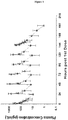
- Fig. 1 sets out results of the study.
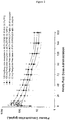
- Blood samples for determination of pergolide plasma concentrations are obtained within one hour prior to dosing and at 30 minutes, 1, 2, 4, 6, 8, 12, 24, 36, 48, 60, 72, 84, 96 120, 144, and 168 hours after dosing.
- Pergolide is quantifiable in all horses through 168 hours following administration of treatments 1 and 3.
- Treatment 2 has quantifiable pergolide levels in all horses through 144 hours.
- Treatment 4 has quantifiable pergolide levels in all horses through 96 hours.
- Treatment 1 has the following average ( ⁇ SD) pharmacokinetic parameters: a half-life of 57.15 hours ( ⁇ 28.54), a T max of 4 hours ( ⁇ 1.63), a C max of 352.25 ( ⁇ 123.94), an AUC (0-last) of 10,746.80 hour*pg/ml ( ⁇ 5368.81), and an AUC (0-inf) of 11,773.7 hour*pg/ml ( ⁇ 5876.04).
- ⁇ SD average
- Treatment 2 has the following average ( ⁇ SD) pharmacokinetic parameters: a half-life of 50.27 hours ( ⁇ 5.17), a T max of 5 hours ( ⁇ 2.58), a C max of 183.53 ( ⁇ 72.97), an AUC (0-last) of 6897.80 hour*pg/ml ( ⁇ 2754.93), and an AUC (0-inf ) of 7647.02 hour*pg/ml ( ⁇ 3006.84).
- Treatment 3 has the following average ( ⁇ SD) pharmacokinetic parameters: a half-life of 75.40 hours ( ⁇ 30.52), a T max of 1.5 hours ( ⁇ 0.58), a C max of 231.00 ( ⁇ 111.36), an AUC (0-last) of 5189.74 hour*pg/ml ( ⁇ 1220.16), and an AUC (0-inf ) of 6038.93 hour*pg/ml ( ⁇ 1423.58).
- Treatment 4 has the following average ( ⁇ SD) pharmacokinetic parameters: a half-life of 35.01 hours ( ⁇ 11.06), a T max of 2.5 hours ( ⁇ 1.73), a C max of 267.53 ( ⁇ 154.06), an AUC (0-last ) of 4303.77 hour*pg/ml ( ⁇ 2120.35), and an AUC (0-inf) of 4599.74 hour*pg/ml ( ⁇ 2089.17).
- Fig. 2 sets out results of the study.
Landscapes
- Health & Medical Sciences (AREA)
- Chemical & Material Sciences (AREA)
- Life Sciences & Earth Sciences (AREA)
- Public Health (AREA)
- Animal Behavior & Ethology (AREA)
- Veterinary Medicine (AREA)
- Medicinal Chemistry (AREA)
- Pharmacology & Pharmacy (AREA)
- General Health & Medical Sciences (AREA)
- Epidemiology (AREA)
- Engineering & Computer Science (AREA)
- Chemical Kinetics & Catalysis (AREA)
- General Chemical & Material Sciences (AREA)
- Oil, Petroleum & Natural Gas (AREA)
- Nuclear Medicine, Radiotherapy & Molecular Imaging (AREA)
- Bioinformatics & Cheminformatics (AREA)
- Diabetes (AREA)
- Organic Chemistry (AREA)
- Zoology (AREA)
- Dermatology (AREA)
- Inorganic Chemistry (AREA)
- Endocrinology (AREA)
- Hematology (AREA)
- Obesity (AREA)
- Medicinal Preparation (AREA)
- Pharmaceuticals Containing Other Organic And Inorganic Compounds (AREA)
Priority Applications (1)
| Application Number | Priority Date | Filing Date | Title |
|---|---|---|---|
| PL15731204T PL3166642T3 (pl) | 2014-06-18 | 2015-06-11 | Transdermalne preparaty pergolidu i ich zastosowanie |
Applications Claiming Priority (2)
| Application Number | Priority Date | Filing Date | Title |
|---|---|---|---|
| US201462013819P | 2014-06-18 | 2014-06-18 | |
| PCT/US2015/035237 WO2015195448A1 (en) | 2014-06-18 | 2015-06-11 | Transdermal formulations of pergolide and uses thereof |
Publications (2)
| Publication Number | Publication Date |
|---|---|
| EP3166642A1 EP3166642A1 (en) | 2017-05-17 |
| EP3166642B1 true EP3166642B1 (en) | 2020-06-03 |
Family
ID=53484178
Family Applications (1)
| Application Number | Title | Priority Date | Filing Date |
|---|---|---|---|
| EP15731204.2A Active EP3166642B1 (en) | 2014-06-18 | 2015-06-11 | Transdermal formulations of pergolide and uses thereof |
Country Status (9)
| Country | Link |
|---|---|
| US (1) | US9987267B2 (pl) |
| EP (1) | EP3166642B1 (pl) |
| JP (1) | JP6276429B2 (pl) |
| AU (1) | AU2015277554C1 (pl) |
| CA (1) | CA2946434C (pl) |
| ES (1) | ES2807211T3 (pl) |
| NZ (1) | NZ725354A (pl) |
| PL (1) | PL3166642T3 (pl) |
| WO (1) | WO2015195448A1 (pl) |
Families Citing this family (1)
| Publication number | Priority date | Publication date | Assignee | Title |
|---|---|---|---|---|
| CN110384656A (zh) * | 2018-04-19 | 2019-10-29 | 上海现代药物制剂工程研究中心有限公司 | 依达拉奉鼻腔给药组合物及其鼻给药制剂制备方法 |
Family Cites Families (10)
| Publication number | Priority date | Publication date | Assignee | Title |
|---|---|---|---|---|
| KR0166088B1 (ko) | 1990-01-23 | 1999-01-15 | . | 수용해도가 증가된 시클로덱스트린 유도체 및 이의 용도 |
| US5376645A (en) | 1990-01-23 | 1994-12-27 | University Of Kansas | Derivatives of cyclodextrins exhibiting enhanced aqueous solubility and the use thereof |
| US6046177A (en) | 1997-05-05 | 2000-04-04 | Cydex, Inc. | Sulfoalkyl ether cyclodextrin based controlled release solid pharmaceutical formulations |
| US5874418A (en) | 1997-05-05 | 1999-02-23 | Cydex, Inc. | Sulfoalkyl ether cyclodextrin based solid pharmaceutical formulations and their use |
| DE19821788C1 (de) | 1998-05-15 | 1999-12-02 | Sanol Arznei Schwarz Gmbh | Transdermales Therapeutisches System (TTS) Pergolid enthaltend |
| US20070225379A1 (en) * | 2001-08-03 | 2007-09-27 | Carrara Dario Norberto R | Transdermal delivery of systemically active central nervous system drugs |
| CA2443128A1 (en) * | 2001-03-30 | 2002-10-10 | Debra A. Martin | Transdermal delivery of pergolide |
| US20040120995A1 (en) * | 2002-04-01 | 2004-06-24 | Martin Debra A | Transdermal delivery of pergolide |
| US20070015763A1 (en) * | 2005-07-12 | 2007-01-18 | Pfizer Inc | Treatment of psychosis associated with parkinson's disease and subcortical dementias using a combination of an atypical antipsychotic with a dopamine agonist |
| ES2521494T3 (es) * | 2007-04-02 | 2014-11-12 | Parkinson's Institute | Métodos y composiciones para la reducción de los efectos secundarios de tratamientos terapéuticos |
-
2015
- 2015-06-11 ES ES15731204T patent/ES2807211T3/es active Active
- 2015-06-11 PL PL15731204T patent/PL3166642T3/pl unknown
- 2015-06-11 US US15/314,727 patent/US9987267B2/en active Active
- 2015-06-11 WO PCT/US2015/035237 patent/WO2015195448A1/en not_active Ceased
- 2015-06-11 CA CA2946434A patent/CA2946434C/en active Active
- 2015-06-11 AU AU2015277554A patent/AU2015277554C1/en active Active
- 2015-06-11 EP EP15731204.2A patent/EP3166642B1/en active Active
- 2015-06-11 JP JP2016572279A patent/JP6276429B2/ja active Active
- 2015-06-11 NZ NZ725354A patent/NZ725354A/en unknown
Non-Patent Citations (1)
| Title |
|---|
| None * |
Also Published As
| Publication number | Publication date |
|---|---|
| WO2015195448A1 (en) | 2015-12-23 |
| CA2946434A1 (en) | 2015-12-23 |
| EP3166642A1 (en) | 2017-05-17 |
| JP6276429B2 (ja) | 2018-02-07 |
| CA2946434C (en) | 2021-07-06 |
| PL3166642T3 (pl) | 2020-11-30 |
| NZ725354A (en) | 2018-05-25 |
| US9987267B2 (en) | 2018-06-05 |
| AU2015277554C1 (en) | 2018-05-31 |
| ES2807211T3 (es) | 2021-02-22 |
| JP2017517536A (ja) | 2017-06-29 |
| AU2015277554A1 (en) | 2016-11-03 |
| US20170095468A1 (en) | 2017-04-06 |
| AU2015277554B2 (en) | 2018-03-01 |
Similar Documents
| Publication | Publication Date | Title |
|---|---|---|
| EP1848270B1 (en) | Transmucosal administration of drug compositions for treating and preventing disorders in animals | |
| US8309591B2 (en) | Transmucosal veterinary composition comprising detomidine | |
| EP2906213B1 (en) | A veterinary method of alleviating noise aversion | |
| EP3043777A1 (en) | Sublingual buprenorphine spray | |
| JP6876003B2 (ja) | イヌ及びネコにおける、食欲の刺激、体重減少の管理、及び拒食症の処置 | |
| ES2714550T3 (es) | Composiciones farmacéuticas y método para tratar la inflamación en ganado bovino y otros animales | |
| US20220071988A1 (en) | Sustained release buprenorphine microspheres (srbm) and methods of use thereof | |
| US8748467B2 (en) | Topical formulation | |
| KR20240096833A (ko) | 개에서의 분리 불안의 치료에 사용하기 위한 덱스메데토미딘 또는 메데토미딘 | |
| US9987267B2 (en) | Transdermal formulations of pergolide and uses thereof | |
| HK40011761A (en) | Dexmedetomidine or medetomidine for use in treating separation anxiety in dogs | |
| WO2017025912A1 (en) | Aripiprazole compositions and methods for its transdermal delivery |
Legal Events
| Date | Code | Title | Description |
|---|---|---|---|
| STAA | Information on the status of an ep patent application or granted ep patent |
Free format text: STATUS: THE INTERNATIONAL PUBLICATION HAS BEEN MADE |
|
| PUAI | Public reference made under article 153(3) epc to a published international application that has entered the european phase |
Free format text: ORIGINAL CODE: 0009012 |
|
| STAA | Information on the status of an ep patent application or granted ep patent |
Free format text: STATUS: REQUEST FOR EXAMINATION WAS MADE |
|
| 17P | Request for examination filed |
Effective date: 20170203 |
|
| AK | Designated contracting states |
Kind code of ref document: A1 Designated state(s): AL AT BE BG CH CY CZ DE DK EE ES FI FR GB GR HR HU IE IS IT LI LT LU LV MC MK MT NL NO PL PT RO RS SE SI SK SM TR |
|
| AX | Request for extension of the european patent |
Extension state: BA ME |
|
| DAV | Request for validation of the european patent (deleted) | ||
| DAX | Request for extension of the european patent (deleted) | ||
| RAP1 | Party data changed (applicant data changed or rights of an application transferred) |
Owner name: ELANCO US INC. |
|
| RAP1 | Party data changed (applicant data changed or rights of an application transferred) |
Owner name: AUDEVARD |
|
| GRAP | Despatch of communication of intention to grant a patent |
Free format text: ORIGINAL CODE: EPIDOSNIGR1 |
|
| STAA | Information on the status of an ep patent application or granted ep patent |
Free format text: STATUS: GRANT OF PATENT IS INTENDED |
|
| INTG | Intention to grant announced |
Effective date: 20200114 |
|
| GRAS | Grant fee paid |
Free format text: ORIGINAL CODE: EPIDOSNIGR3 |
|
| GRAA | (expected) grant |
Free format text: ORIGINAL CODE: 0009210 |
|
| STAA | Information on the status of an ep patent application or granted ep patent |
Free format text: STATUS: THE PATENT HAS BEEN GRANTED |
|
| AK | Designated contracting states |
Kind code of ref document: B1 Designated state(s): AL AT BE BG CH CY CZ DE DK EE ES FI FR GB GR HR HU IE IS IT LI LT LU LV MC MK MT NL NO PL PT RO RS SE SI SK SM TR |
|
| REG | Reference to a national code |
Ref country code: GB Ref legal event code: FG4D |
|
| REG | Reference to a national code |
Ref country code: CH Ref legal event code: EP Ref country code: AT Ref legal event code: REF Ref document number: 1276310 Country of ref document: AT Kind code of ref document: T Effective date: 20200615 |
|
| REG | Reference to a national code |
Ref country code: DE Ref legal event code: R096 Ref document number: 602015053737 Country of ref document: DE |
|
| REG | Reference to a national code |
Ref country code: NL Ref legal event code: FP |
|
| REG | Reference to a national code |
Ref country code: CH Ref legal event code: NV Representative=s name: MICHELI AND CIE SA, CH |
|
| REG | Reference to a national code |
Ref country code: LT Ref legal event code: MG4D |
|
| PG25 | Lapsed in a contracting state [announced via postgrant information from national office to epo] |
Ref country code: SE Free format text: LAPSE BECAUSE OF FAILURE TO SUBMIT A TRANSLATION OF THE DESCRIPTION OR TO PAY THE FEE WITHIN THE PRESCRIBED TIME-LIMIT Effective date: 20200603 Ref country code: LT Free format text: LAPSE BECAUSE OF FAILURE TO SUBMIT A TRANSLATION OF THE DESCRIPTION OR TO PAY THE FEE WITHIN THE PRESCRIBED TIME-LIMIT Effective date: 20200603 Ref country code: GR Free format text: LAPSE BECAUSE OF FAILURE TO SUBMIT A TRANSLATION OF THE DESCRIPTION OR TO PAY THE FEE WITHIN THE PRESCRIBED TIME-LIMIT Effective date: 20200904 Ref country code: FI Free format text: LAPSE BECAUSE OF FAILURE TO SUBMIT A TRANSLATION OF THE DESCRIPTION OR TO PAY THE FEE WITHIN THE PRESCRIBED TIME-LIMIT Effective date: 20200603 Ref country code: NO Free format text: LAPSE BECAUSE OF FAILURE TO SUBMIT A TRANSLATION OF THE DESCRIPTION OR TO PAY THE FEE WITHIN THE PRESCRIBED TIME-LIMIT Effective date: 20200903 |
|
| PG25 | Lapsed in a contracting state [announced via postgrant information from national office to epo] |
Ref country code: BG Free format text: LAPSE BECAUSE OF FAILURE TO SUBMIT A TRANSLATION OF THE DESCRIPTION OR TO PAY THE FEE WITHIN THE PRESCRIBED TIME-LIMIT Effective date: 20200903 Ref country code: RS Free format text: LAPSE BECAUSE OF FAILURE TO SUBMIT A TRANSLATION OF THE DESCRIPTION OR TO PAY THE FEE WITHIN THE PRESCRIBED TIME-LIMIT Effective date: 20200603 Ref country code: HR Free format text: LAPSE BECAUSE OF FAILURE TO SUBMIT A TRANSLATION OF THE DESCRIPTION OR TO PAY THE FEE WITHIN THE PRESCRIBED TIME-LIMIT Effective date: 20200603 Ref country code: LV Free format text: LAPSE BECAUSE OF FAILURE TO SUBMIT A TRANSLATION OF THE DESCRIPTION OR TO PAY THE FEE WITHIN THE PRESCRIBED TIME-LIMIT Effective date: 20200603 |
|
| REG | Reference to a national code |
Ref country code: AT Ref legal event code: MK05 Ref document number: 1276310 Country of ref document: AT Kind code of ref document: T Effective date: 20200603 |
|
| PG25 | Lapsed in a contracting state [announced via postgrant information from national office to epo] |
Ref country code: AL Free format text: LAPSE BECAUSE OF FAILURE TO SUBMIT A TRANSLATION OF THE DESCRIPTION OR TO PAY THE FEE WITHIN THE PRESCRIBED TIME-LIMIT Effective date: 20200603 |
|
| PG25 | Lapsed in a contracting state [announced via postgrant information from national office to epo] |
Ref country code: PT Free format text: LAPSE BECAUSE OF FAILURE TO SUBMIT A TRANSLATION OF THE DESCRIPTION OR TO PAY THE FEE WITHIN THE PRESCRIBED TIME-LIMIT Effective date: 20201006 Ref country code: RO Free format text: LAPSE BECAUSE OF FAILURE TO SUBMIT A TRANSLATION OF THE DESCRIPTION OR TO PAY THE FEE WITHIN THE PRESCRIBED TIME-LIMIT Effective date: 20200603 Ref country code: CZ Free format text: LAPSE BECAUSE OF FAILURE TO SUBMIT A TRANSLATION OF THE DESCRIPTION OR TO PAY THE FEE WITHIN THE PRESCRIBED TIME-LIMIT Effective date: 20200603 Ref country code: AT Free format text: LAPSE BECAUSE OF FAILURE TO SUBMIT A TRANSLATION OF THE DESCRIPTION OR TO PAY THE FEE WITHIN THE PRESCRIBED TIME-LIMIT Effective date: 20200603 Ref country code: EE Free format text: LAPSE BECAUSE OF FAILURE TO SUBMIT A TRANSLATION OF THE DESCRIPTION OR TO PAY THE FEE WITHIN THE PRESCRIBED TIME-LIMIT Effective date: 20200603 Ref country code: SM Free format text: LAPSE BECAUSE OF FAILURE TO SUBMIT A TRANSLATION OF THE DESCRIPTION OR TO PAY THE FEE WITHIN THE PRESCRIBED TIME-LIMIT Effective date: 20200603 |
|
| REG | Reference to a national code |
Ref country code: ES Ref legal event code: FG2A Ref document number: 2807211 Country of ref document: ES Kind code of ref document: T3 Effective date: 20210222 |
|
| PG25 | Lapsed in a contracting state [announced via postgrant information from national office to epo] |
Ref country code: SK Free format text: LAPSE BECAUSE OF FAILURE TO SUBMIT A TRANSLATION OF THE DESCRIPTION OR TO PAY THE FEE WITHIN THE PRESCRIBED TIME-LIMIT Effective date: 20200603 Ref country code: IS Free format text: LAPSE BECAUSE OF FAILURE TO SUBMIT A TRANSLATION OF THE DESCRIPTION OR TO PAY THE FEE WITHIN THE PRESCRIBED TIME-LIMIT Effective date: 20201003 |
|
| REG | Reference to a national code |
Ref country code: DE Ref legal event code: R097 Ref document number: 602015053737 Country of ref document: DE |
|
| PG25 | Lapsed in a contracting state [announced via postgrant information from national office to epo] |
Ref country code: MC Free format text: LAPSE BECAUSE OF FAILURE TO SUBMIT A TRANSLATION OF THE DESCRIPTION OR TO PAY THE FEE WITHIN THE PRESCRIBED TIME-LIMIT Effective date: 20200603 Ref country code: LU Free format text: LAPSE BECAUSE OF NON-PAYMENT OF DUE FEES Effective date: 20200611 |
|
| PLBE | No opposition filed within time limit |
Free format text: ORIGINAL CODE: 0009261 |
|
| STAA | Information on the status of an ep patent application or granted ep patent |
Free format text: STATUS: NO OPPOSITION FILED WITHIN TIME LIMIT |
|
| PG25 | Lapsed in a contracting state [announced via postgrant information from national office to epo] |
Ref country code: IE Free format text: LAPSE BECAUSE OF NON-PAYMENT OF DUE FEES Effective date: 20200611 Ref country code: DK Free format text: LAPSE BECAUSE OF FAILURE TO SUBMIT A TRANSLATION OF THE DESCRIPTION OR TO PAY THE FEE WITHIN THE PRESCRIBED TIME-LIMIT Effective date: 20200603 |
|
| 26N | No opposition filed |
Effective date: 20210304 |
|
| PG25 | Lapsed in a contracting state [announced via postgrant information from national office to epo] |
Ref country code: SI Free format text: LAPSE BECAUSE OF FAILURE TO SUBMIT A TRANSLATION OF THE DESCRIPTION OR TO PAY THE FEE WITHIN THE PRESCRIBED TIME-LIMIT Effective date: 20200603 |
|
| PG25 | Lapsed in a contracting state [announced via postgrant information from national office to epo] |
Ref country code: TR Free format text: LAPSE BECAUSE OF FAILURE TO SUBMIT A TRANSLATION OF THE DESCRIPTION OR TO PAY THE FEE WITHIN THE PRESCRIBED TIME-LIMIT Effective date: 20200603 Ref country code: MT Free format text: LAPSE BECAUSE OF FAILURE TO SUBMIT A TRANSLATION OF THE DESCRIPTION OR TO PAY THE FEE WITHIN THE PRESCRIBED TIME-LIMIT Effective date: 20200603 Ref country code: CY Free format text: LAPSE BECAUSE OF FAILURE TO SUBMIT A TRANSLATION OF THE DESCRIPTION OR TO PAY THE FEE WITHIN THE PRESCRIBED TIME-LIMIT Effective date: 20200603 |
|
| PG25 | Lapsed in a contracting state [announced via postgrant information from national office to epo] |
Ref country code: MK Free format text: LAPSE BECAUSE OF FAILURE TO SUBMIT A TRANSLATION OF THE DESCRIPTION OR TO PAY THE FEE WITHIN THE PRESCRIBED TIME-LIMIT Effective date: 20200603 |
|
| PGFP | Annual fee paid to national office [announced via postgrant information from national office to epo] |
Ref country code: NL Payment date: 20250528 Year of fee payment: 11 |
|
| PGFP | Annual fee paid to national office [announced via postgrant information from national office to epo] |
Ref country code: PL Payment date: 20250523 Year of fee payment: 11 Ref country code: DE Payment date: 20250617 Year of fee payment: 11 |
|
| PGFP | Annual fee paid to national office [announced via postgrant information from national office to epo] |
Ref country code: GB Payment date: 20250625 Year of fee payment: 11 |
|
| PGFP | Annual fee paid to national office [announced via postgrant information from national office to epo] |
Ref country code: BE Payment date: 20250625 Year of fee payment: 11 |
|
| PGFP | Annual fee paid to national office [announced via postgrant information from national office to epo] |
Ref country code: FR Payment date: 20250513 Year of fee payment: 11 |
|
| PGFP | Annual fee paid to national office [announced via postgrant information from national office to epo] |
Ref country code: ES Payment date: 20250710 Year of fee payment: 11 |
|
| PGFP | Annual fee paid to national office [announced via postgrant information from national office to epo] |
Ref country code: IT Payment date: 20250609 Year of fee payment: 11 |
|
| PGFP | Annual fee paid to national office [announced via postgrant information from national office to epo] |
Ref country code: CH Payment date: 20250701 Year of fee payment: 11 |