EP3162452A2 - Applikatorvorrichtung, mundfüllvorrichtungen, zusammenklappbare behälter und verfahren - Google Patents
Applikatorvorrichtung, mundfüllvorrichtungen, zusammenklappbare behälter und verfahren Download PDFInfo
- Publication number
- EP3162452A2 EP3162452A2 EP16191515.2A EP16191515A EP3162452A2 EP 3162452 A2 EP3162452 A2 EP 3162452A2 EP 16191515 A EP16191515 A EP 16191515A EP 3162452 A2 EP3162452 A2 EP 3162452A2
- Authority
- EP
- European Patent Office
- Prior art keywords
- circumferential
- container
- mouth
- shell
- interior
- Prior art date
- Legal status (The legal status is an assumption and is not a legal conclusion. Google has not performed a legal analysis and makes no representation as to the accuracy of the status listed.)
- Granted
Links
Images







Classifications
-
- B—PERFORMING OPERATIONS; TRANSPORTING
- B65—CONVEYING; PACKING; STORING; HANDLING THIN OR FILAMENTARY MATERIAL
- B65D—CONTAINERS FOR STORAGE OR TRANSPORT OF ARTICLES OR MATERIALS, e.g. BAGS, BARRELS, BOTTLES, BOXES, CANS, CARTONS, CRATES, DRUMS, JARS, TANKS, HOPPERS, FORWARDING CONTAINERS; ACCESSORIES, CLOSURES, OR FITTINGS THEREFOR; PACKAGING ELEMENTS; PACKAGES
- B65D25/00—Details of other kinds or types of rigid or semi-rigid containers
- B65D25/38—Devices for discharging contents
- B65D25/40—Nozzles or spouts
-
- B—PERFORMING OPERATIONS; TRANSPORTING
- B05—SPRAYING OR ATOMISING IN GENERAL; APPLYING FLUENT MATERIALS TO SURFACES, IN GENERAL
- B05B—SPRAYING APPARATUS; ATOMISING APPARATUS; NOZZLES
- B05B11/00—Single-unit hand-held apparatus in which flow of contents is produced by the muscular force of the operator at the moment of use
- B05B11/0005—Components or details
- B05B11/0037—Containers
- B05B11/0038—Inner container disposed in an outer shell or outer casing
-
- B—PERFORMING OPERATIONS; TRANSPORTING
- B05—SPRAYING OR ATOMISING IN GENERAL; APPLYING FLUENT MATERIALS TO SURFACES, IN GENERAL
- B05B—SPRAYING APPARATUS; ATOMISING APPARATUS; NOZZLES
- B05B11/00—Single-unit hand-held apparatus in which flow of contents is produced by the muscular force of the operator at the moment of use
- B05B11/0005—Components or details
- B05B11/0037—Containers
- B05B11/0056—Containers with an additional opening for filling or refilling
-
- B—PERFORMING OPERATIONS; TRANSPORTING
- B05—SPRAYING OR ATOMISING IN GENERAL; APPLYING FLUENT MATERIALS TO SURFACES, IN GENERAL
- B05B—SPRAYING APPARATUS; ATOMISING APPARATUS; NOZZLES
- B05B11/00—Single-unit hand-held apparatus in which flow of contents is produced by the muscular force of the operator at the moment of use
- B05B11/0005—Components or details
- B05B11/0078—Arrangements for separately storing several components
- B05B11/0081—Arrangements for separately storing several components and for mixing the components in a common container as a mixture ready for use before discharging the latter
-
- B—PERFORMING OPERATIONS; TRANSPORTING
- B05—SPRAYING OR ATOMISING IN GENERAL; APPLYING FLUENT MATERIALS TO SURFACES, IN GENERAL
- B05B—SPRAYING APPARATUS; ATOMISING APPARATUS; NOZZLES
- B05B11/00—Single-unit hand-held apparatus in which flow of contents is produced by the muscular force of the operator at the moment of use
- B05B11/0005—Components or details
- B05B11/0097—Means for filling or refilling the sprayer
-
- B—PERFORMING OPERATIONS; TRANSPORTING
- B05—SPRAYING OR ATOMISING IN GENERAL; APPLYING FLUENT MATERIALS TO SURFACES, IN GENERAL
- B05B—SPRAYING APPARATUS; ATOMISING APPARATUS; NOZZLES
- B05B11/00—Single-unit hand-held apparatus in which flow of contents is produced by the muscular force of the operator at the moment of use
- B05B11/01—Single-unit hand-held apparatus in which flow of contents is produced by the muscular force of the operator at the moment of use characterised by the means producing the flow
- B05B11/02—Membranes or pistons acting on the contents inside the container, e.g. follower pistons
- B05B11/026—Membranes separating the content remaining in the container from the atmospheric air to compensate underpressure inside the container
-
- B—PERFORMING OPERATIONS; TRANSPORTING
- B65—CONVEYING; PACKING; STORING; HANDLING THIN OR FILAMENTARY MATERIAL
- B65D—CONTAINERS FOR STORAGE OR TRANSPORT OF ARTICLES OR MATERIALS, e.g. BAGS, BARRELS, BOTTLES, BOXES, CANS, CARTONS, CRATES, DRUMS, JARS, TANKS, HOPPERS, FORWARDING CONTAINERS; ACCESSORIES, CLOSURES, OR FITTINGS THEREFOR; PACKAGING ELEMENTS; PACKAGES
- B65D23/00—Details of bottles or jars not otherwise provided for
- B65D23/04—Means for mixing or for promoting flow of contents
-
- B—PERFORMING OPERATIONS; TRANSPORTING
- B65—CONVEYING; PACKING; STORING; HANDLING THIN OR FILAMENTARY MATERIAL
- B65D—CONTAINERS FOR STORAGE OR TRANSPORT OF ARTICLES OR MATERIALS, e.g. BAGS, BARRELS, BOTTLES, BOXES, CANS, CARTONS, CRATES, DRUMS, JARS, TANKS, HOPPERS, FORWARDING CONTAINERS; ACCESSORIES, CLOSURES, OR FITTINGS THEREFOR; PACKAGING ELEMENTS; PACKAGES
- B65D81/00—Containers, packaging elements, or packages, for contents presenting particular transport or storage problems, or adapted to be used for non-packaging purposes after removal of contents
- B65D81/32—Containers, packaging elements, or packages, for contents presenting particular transport or storage problems, or adapted to be used for non-packaging purposes after removal of contents for packaging two or more different materials which must be maintained separate prior to use in admixture
- B65D81/3205—Separate rigid or semi-rigid containers joined to each other at their external surfaces
-
- B—PERFORMING OPERATIONS; TRANSPORTING
- B65—CONVEYING; PACKING; STORING; HANDLING THIN OR FILAMENTARY MATERIAL
- B65D—CONTAINERS FOR STORAGE OR TRANSPORT OF ARTICLES OR MATERIALS, e.g. BAGS, BARRELS, BOTTLES, BOXES, CANS, CARTONS, CRATES, DRUMS, JARS, TANKS, HOPPERS, FORWARDING CONTAINERS; ACCESSORIES, CLOSURES, OR FITTINGS THEREFOR; PACKAGING ELEMENTS; PACKAGES
- B65D83/00—Containers or packages with special means for dispensing contents
-
- B—PERFORMING OPERATIONS; TRANSPORTING
- B05—SPRAYING OR ATOMISING IN GENERAL; APPLYING FLUENT MATERIALS TO SURFACES, IN GENERAL
- B05B—SPRAYING APPARATUS; ATOMISING APPARATUS; NOZZLES
- B05B15/00—Details of spraying plant or spraying apparatus not otherwise provided for; Accessories
- B05B15/30—Dip tubes
-
- B—PERFORMING OPERATIONS; TRANSPORTING
- B65—CONVEYING; PACKING; STORING; HANDLING THIN OR FILAMENTARY MATERIAL
- B65B—MACHINES, APPARATUS OR DEVICES FOR, OR METHODS OF, PACKAGING ARTICLES OR MATERIALS; UNPACKING
- B65B39/00—Nozzles, funnels or guides for introducing articles or materials into containers or wrappers
- B65B39/04—Nozzles, funnels or guides for introducing articles or materials into containers or wrappers having air-escape, or air-withdrawal, passages
Definitions
- the present disclosure relates generally to applicator apparatus, mouth fill devices and collapsible containers and methods and more particularly, applicator apparatus for introducing an additive, mouth fill devices for filling a liquid in a container, and collapsible containers to be placed in a collapsed orientation, for example, during storage and shipping.
- an applicator apparatus can include a circumferential wall including an interior surface defining an interior passage extending along an axis of the circumferential wall.
- the applicator apparatus can include a support arm movably mounted relative to the circumferential wall within the interior passage.
- the support arm can include a first end engaging the interior surface at a first location, a second end engaging the interior surface at a second location spaced from the first location, and a protrusion extending in an axial direction of the axis within the interior passage.
- a method of assembling can include providing an applicator apparatus with a circumferential wall including an interior surface defining an interior passage extending along an axis of the circumferential wall.
- An additive container can be mounted to a first end portion of the circumferential wall, wherein the additive container includes a container wall defining an interior containment area of the additive container.
- the container wall includes a target area facing the interior passage.
- the circumferential wall further defines a second end portion that is opposite the first end portion, and the second end portion defines an opening into the interior passage.
- the method can include inserting a support arm through the opening and then into the interior passage with a protrusion of the support arm extending in a direction of the axis toward the target area. A first end of the support arm movably engages the interior surface at a first location and a second end of the support arm movably engages the interior surface at a second location spaced from the first location.
- a method of introducing an additive can include positioning a mouth of a liquid container into an interior passage defined by a circumferential wall of an applicator apparatus.
- An additive container can be attached to the circumferential wall and placed at a dispensing position relative to an opening defined by a mouth of the liquid container.
- the method can include driving a protrusion relative to the additive container to pierce a target area of a wall of the additive container such that additive drains from an interior containment area of the additive container, through the opening of the mouth and then into an interior containment area of the liquid container.
- a mouth fill device to be mounted with respect to a mouth of a liquid container includes a circumferential shroud circumscribing an axis of the mouth fill device.
- the circumferential shroud includes an interior surface defining an interior passage extending along the axis.
- the mouth fill device further includes a circumferential lip circumscribing an end of the circumferential shroud and extending radially away from the axis.
- the circumferential lip includes a plurality of apertures disposed about the axis.
- a mouth fill device to be mounted with respect to a mouth of a liquid container includes a circumferential shroud circumscribing an axis of the mouth fill device.
- the circumferential shroud includes an interior surface defining an interior passage extending along the axis.
- the mouth fill device further includes a protrusion mounted relative to the circumferential shroud and extending within the interior passage.
- a collapsible container in further embodiments, includes a first shell including a mouth defining an opening and a first circumferential rim and a second shell including a closed end and a second circumferential rim.
- the collapsible container includes a circumferential bladder including a first edge sealed to the first circumferential rim and a second edge sealed to the second circumferential rim.
- the first shell, second shell and circumferential bladder define an interior containment area extending along an axis of the collapsible container.
- a material of the circumferential bladder includes a lower modulus of elasticity than a material of the first shell and a material of the second shell wherein the axial collapsibility of the circumferential bladder is higher than the axial collapsibility of both the first shell and the second shell.
- a collapsed container in further embodiments, includes a first shell including a mouth defining an opening and a first circumferential rim and a second shell including a closed end and a second circumferential rim.
- the collapsed container further includes an axially collapsed circumferential bladder including a first edge sealed to the first circumferential rim and a second edge sealed to the second circumferential rim.
- the first shell, second shell and circumferential bladder define an interior containment area extending along an axis of the collapsed container.
- a material of the circumferential bladder includes a lower modulus of elasticity than a material of the first shell and a material of the second shell wherein the axial collapsibility of the circumferential bladder is higher than the axial collapsibility of both the first shell and the second shell.
- an applicator apparatus 101 can include a circumferential wall 103 .
- the circumferential wall 103 can include an interior surface 201 defining an interior passage 202 extending along an axis 203 of the circumferential wall 103 .
- the axis 203 can comprise the central axis (e.g., symmetrical central axis) or an offset axis (e.g., symmetrical offset axis) that is offset from the central axis.
- the circumferential wall can include a wide range of shapes and sizes depending on the particular application. For instance, as shown in FIG.
- the circumferential wall 103 can include a circular cross-section taken along a section perpendicular to the axis 203 .
- the interior passage 202 may therefore include a segment including an interior diameter "D" .
- the interior diameter "D" can be substantially the same along the entire length "L" of the segment.
- other circumferential wall shapes may be provided such as rectangular, triangular or other polygonal shape.
- the circumferential wall shape may comprise an oblong shape, oval shape or other curvilinear shape and may optionally have a cross section that has the same cross-sectional shape along the entire length "L” .
- the interior passage 202 may include the same circular cross sectional shape taken along the section perpendicular to the axis 203 along the entire length "L” .
- the applicator apparatus 101 can include a support arm 205 movably mounted relative to the circumferential wall 103 within the interior passage 202.
- the support arm 205 can comprise a wide range of structures that can span a dimension of the interior passage 202 from a first location 204a of the interior surface 201 to a second location 204b of the interior surface 201 that is spaced from the first location 204a .
- the support arm 205 can be designed to support a protrusion 207 relative to the circumferential wall while still providing drainage areas 501a-d (see FIG. 5 ) to allow passage of additive.
- the circumferential wall 103 can define a second end portion 213 that is opposite a first end portion 209 , wherein the second end portion defines an opening 211 into the interior passage 202 .
- the drainage areas 501a-d allow passage of additive, such as liquid additive, from the first end portion 209 , through the interior passage 202 and then through the opening 211 .
- the protrusion 207 of the support arm 205 can extend in an axial direction 219 of the axis 203 within the interior passage 202 . For instance, as show, the protrusion can be aligned with the axis 203 of the circumferential wall 103 .
- the support arm 205 includes a first end 215a engaging the interior surface 201 at the first location 204a , a second end 215b engaging the interior surface 201 at the second location 204b spaced from the first location 204a .
- the support arm 205 may engage the interior surface 201 at only two locations, such as the diametrically opposed locations 204a , 204b.
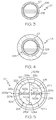
- the support arm may include engagement at any number of locations such as 3 or more locations. Indeed, referring to FIG . 5 , the support arm 205 may include a plurality of segments 503a-d that each include respective ends 215a-d configured to simultaneously engage the interior surface 201 at corresponding locations 204a-d.
- the support arm 205 can include a plurality of segments including a first segment 503a including the first end 215a , a second segment 503b including a second end 215b .
- the plurality of segments of the support arm 205 can include a third segment 503c including a third end 215c engaging the interior surface 201 at a third location 204c spaced from the first location 204a and the second location 204b .
- the plurality of segments can include a fourth segment 503d including a fourth end 215d , wherein the fourth end 215d engages the interior surface 201 at a fourth location 204d spaced from the first location 204a , the second location 204b and the third location 204c .
- segments of the plurality of segments of the support arm 205 may be aligned with respect to one another along a common linear axis.
- a first two segments 503a-b of the plurality of segments 503a-d may optionally be aligned along along a first linear segment axis 505a .
- a second two segments 503c-d of the plurality of segments 503a-d may optionally be aligned along a second linear segment axis 505b .
- the first linear segment axis 505a and second linear segment axis 505b can intersect one another at a wide range of angles.
- the first linear segment axis 505a and the second linear segment axis 505b can intersect one another along an angle "A" of 90° although other angles may be provided in further examples.
- the ends 215a-d may optionally comprise a ball or other rounded surface to provide a point contact at the respective location 204a-d to minimize friction during a sliding movement of the support arm 205 relative to the interior surface 201 of the circumferential wall 103 .
- the support arm may be press fit within the interior passage 202 . Indeed, an interference fit may exist between a length of the support arm 205 and the interior diameter " D " of the interior passage 202 . For instance, with reference to FIG.
- the length of the support arm 205 from the outermost point of the first end 215a of the first segment 503a and the outermost point of the second end 215b of the second segment 503b can be slightly larger than the interior diameter "D" such that the first segment 503a and the second segment 503b are placed in compression to press the first end 215a and the second end 215b against the interior surface 201 at respective opposed locations 204a , 204b.
- the length of the support arm 205 from the outermost point of the third end 215c of the third segment 503c and the outermost point of the fourth end 215d of the fourth segment 503d can be slightly larger than the interior diameter "D" such that the third segment 503c and the fourth segment 503d are placed in compression to press the third end 215c and the fourth end 215d against the interior surface 201 at respective opposed locations 204c , 204d .
- Providing the support arm 205 press fit within the interior passage 202 can allow selective placement of the support arm 205 relative to the circumferential wall 103 wherein the friction enhanced by the normal force applied by each of the ends 215a-d allow maintenance of the support arm 205 at the desired location of the interior passage 202 .
- the ends 215a-d of the support arm 205 may optionally be slidingly engaged with the interior surface 201 .
- axial adjustment of the position of the support arm along the axis 203 may be achieved by applying a force to the support arm 205 to overcome the friction forces applied to the ends 215a-d , thereby resulting in sliding movement of the ends 215a-d of the support arm relative to the interior surface 201 .
- the force can be removed from the support arm 205 wherein the friction forces being applied to the ends 215a-d of the support arm 205 again help maintain the desired location of the support arm 205 within the interior passage 202 .
- the opening 211 to the interior passage 202 may optionally be flared in an outward direction 217 extending from the first end portion 209 to the second end portion 213 .
- the flared nature of the interior passage can help insert the support arm 205 into the interior passage 202 and can optionally help guide a finger, mouth of a bottle, or other object into the interior passage 202 to press the support arm 205 along the axis 203 toward the first end portion 209 .
- the support arm 205 and/or the circumferential wall 103 can be fabricated from a wide range of materials such as plastic (e.g., hemp plastic), bagasse, molded fiber, bamboo fiber or other materials that can be used economically and may have biodegradable properties.
- the applicator apparatus 101 can also include an additive container 105 mounted to the first end portion 209 of the circumferential wall 103 .
- the additive container 105 may be mounted to the first end portion 209 in a wide variety of ways such as integrating (e.g., with a sonic weld) the additive container 105 to the first end portion 209 .
- an adhesive may be used to mount the first end portion 209 to the additive container 105 .
- mechanical clamps or fasteners may be employed. For instance, as shown in FIG.
- a first end portion 221 of the additive container 105 may include an optional circumferential flange 223 that may be clamped to a shoulder 224 of the first end portion 209 of the circumferential wall 103 with a clamp ring 225 .
- the clamp ring can include an open interior area to allow additive to flow therethrough during a dispensing operation. At the same time, the clamp ring can be press fit against the interior surface 201 within the interior passage 202 to trap and clamp the circumferential flange in place.
- the additive container 105 can include a container wall 107 defining an interior containment area 109 of the additive container 105 .
- the container wall 107 can include a wide range of materials such as polymeric, elastomeric, metal, resin or other materials.
- the container wall 107 can comprise a flexible material although a rigid material may be provided in further examples.
- the container wall 107 can comprise a metallic flexible foil, film, or thin flexible plastic that presents the container wall 107 with flexible and/or collapsible properties.
- the container wall 107 can include biodegradable cellophane and cellophane film or sheet material.
- the container wall 107 can comprise materials such as biodegradable, compostable plant based films. Eco-friendly films made from cellulose acetate, biodegradable polythene film, biopolymer plant sugar PLA. Furthermore, the container wall 107 may include TDPA "Totally Degradable Plastic Additives" in some embodiments.
- PLA, biodegradable packaging can comprise a set of polymers that are derived from renewable raw materials like starch (e.g., corn, potato, tapioca etc.), cellulose, soy protein, lactic acid, etc. Such materials are not hazardous in production and readily decompose back into carbon dioxide, water, biomass etc, when discarded properly.
- providing a flexible and/or collapsible container wall 107 can help reduce weight of the applicator apparatus 101 and, in some examples, can help dispense all of the additive from an interior containment area by applying force to collapse the container wall 107 during a dispensing operation of the additive within the additive container 105 .
- the container wall 107 includes a target area 229 facing the interior passage 202 to be pierced by the protrusion 207 upon a movement of the support arm 205 relative to the circumferential wall 103 .
- the protrusion 207 can optionally include a conical puncture head 231 tapering from a relatively wide base to a pointed tip. The pointed tip is configured to selectively pierce the target area 229 of the container wall 107 while the base is configured to increase the size of the opening in the container wall 107 to allow additive material to pass through the opening and around the shaft of the protrusion 207 that supports the conical puncture head 231 .
- the interior containment area 109 can contain an additive 111 that may be housed by the additive container 105 until it is desired to dispense the additive 111 .
- the additive 111 can comprise liquids such as homogeneous mixture such as a solution of liquid or a heterogeneous mixture of a liquid and solid.
- the additive can comprise a gel or liquid with relatively high viscosity or a liquid with relatively low viscosity.
- the additive 111 can comprise concentrates that may be later diluted by water or other liquid. In some examples, concentrates can comprise cleaning concentrates, perfumes, colorants, or other materials.
- An interior surface of the container wall 107 may include a coating 227 to facilitate dispensing of the additive 111 .
- the coating 227 may comprise a hydrophobic material designed to repel the additive to allow efficient, such as complete dispensing of the additive 111 from the additive container 105 .
- a second end portion 233 can include a second target area 235 that may be designed to be punctured during a dispensing operation.
- a circumferential shroud 237 may be provided to define a reception area 239 to help guide the piercing device to pierce the container wall 107 at the second target area 235 .
- the additive container 105 may optionally include further features such as the illustrated tear line 113 to allow opening of the second end portion 233 at a predetermined location.
- the additive container 105 may optionally include a tear tab 115 designed to be pulled to tear an area 117 of the container wall 107 for dispensing the additive material.
- tear tab 115 can be located at or close to the second target area 235 in some embodiments.
- the second target area configuration may be replaced with the tear tab 115 such that optional opening of the second end portion 233 can be achieved without a puncturing implement.
- the method can provide the applicator apparatus 101 with the circumferential wall 103 including the interior surface 201 defining the interior passage 202 extending along the axis 203 of the circumferential wall 103 .
- the additive container 105 can be mounted to the first end portion 209 of the circumferential wall 103 .
- the additive container 105 can include the container wall 107 defining the interior containment area 109 of the additive container 105 .
- the container wall can include the target area 229 facing the interior passage 202 .
- the circumferential wall 103 can further define the second end portion 213 that is opposite the first end portion 209 and defines the opening 211 into the interior passage 202 .
- portions of the applicator apparatus may be provided as a prefabricated applicator apparatus 101 with the additive container previously mounted to the first end portion 209 of the circumferential wall 103 .
- prefabricated applicator apparatus may be purchased or provided as an off-the-shelf component.
- step of providing the applicator apparatus 101 can include mounting the additive container to the first end portion of the circumferential wall 103 .
- the second end portion 233 of the additive container 105 may be inserted through the opening 211 , through the interior passage 202 and through an opening defined by the shoulder 224 at the first end portion 209 of the circumferential wall 103 .
- the additive container 105 may be continued to be pulled through until the circumferential flange 223 , acting as a stop, abuts the inner surface of the shoulder 224 .
- the example embodiment of assembling can include inserting the clamp ring 225 into the opening 211 .
- the clamp ring 225 can then be engaged with the circumferential flange 223 to clamp the circumferential flange 223 between the clamp ring 225 and the shoulder 224 while the clamp ring 225 is press fit within the interior passage 202 .
- adhesive or other mounting technique may be applied to enhance the structural integrity of the connection between the circumferential flange 223 and the circumferential wall 103 .
- the method of assembling can further include inserting the support arm 205 through the opening 211 after the step of mounting the additive container to the first end portion of the circumferential wall 103 or after providing the prefabricated circumferential wall 103 that is already mounted to the additive container 105 .
- the support arm 205 can be inserted through the opening 211 and then into the interior passage 202 with the protrusion 207 of the support arm 205 extending in the axial direction 219 of the axis 203 toward the target area 229 .
- a plurality of the ends 215a-d of the support arm 205 may be movably engaged with the interior surface 201 at a respective location.
- the first end 215a of the support arm 205 can be movably engaged with the interior surface 201 at the first location 204a and the second end 215b of the support arm 205 can be movably engaged with the interior surface 201 at the second location 204b spaced from the first location 204a .
- the third end 215c of the support arm 205 can be movably engaged with the interior surface 201 at the third location 204c spaced from the first location 204a and the second location 204b .
- the fourth end 215d of the support arm 205 can be movably engaged with the interior surface 201 at the fourth location 204d spaced from the first, second and third locations 204a-c .
- the step of inserting the support arm 205 includes press fitting the support arm 205 within the interior passage 202 as discussed previously. In further examples, the step of inserting the support arm 205 includes sliding each of the ends 215a-d of the support arm 205 against the interior surface 201 .
- a liquid container includes a wall defining an interior containment area designed to contain liquid.
- the liquid containers throughout the disclosure further include an opening defined by a mouth of the container.
- the mouth of any of the liquid containers may include threads (e.g., exterior threads) to facilitate mounting of a cap, dispenser (e.g., spray nozzle) or other device to the mouth.
- the opening is designed to provide access to the interior containment area, for example, to insert additive, diluting liquid or other solids or liquids into the interior containment area.
- a wide variety of liquid containers may be provided such as containers designed to contain cleaning liquids, perfumes, or edible liquids.
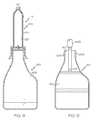
- the containers throughout the disclosure comprise a liquid container 601 comprising a spray bottle container designed to spray cleaning solution although any variety of containers may be provided in accordance with aspects of the disclosure.
- the method can include introducing the additive 111 into an interior containment area 603 defined by the liquid container 601 .
- the interior containment area 603 can be initially empty although liquid or other materials may be present in further examples.
- the method can include positioning a mouth 605 of the liquid container 601 into the interior passage 202 defined by the circumferential wall 103 of the applicator apparatus 101 .
- the additive container attached to the circumferential wall 103 is placed at a dispensing position relative to an opening 607 defined by the mouth 605 of the liquid container 601 .
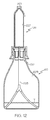
- the method can further include driving the protrusion 207 relative to the additive container 105 to pierce the target area 229 of the container wall 107 of the additive container 105 such that the additive 111 (e.g., liquid additive) drains from the interior containment area 109 of the additive container 105 , through the opening 607 of the mouth 605 and then into the interior containment area 603 of the liquid container 601 .
- the liquid container 601 may rest on a support surface (e.g., counter or table surface) while the additive container 105 is shifted downward in direction 609 (e.g., a direction of gravity) relative to the liquid container 601 .
- some embodiments may include including movably mounting a support arm 205 relative to the circumferential wall 103 .
- the upper edge of the mouth 605 engages the support arm 205 as the additive container 105 is shifted downward in the direction 609 .
- the mouth 605 of the liquid container 601 can drive the support arm 205 relative to the additive container 105 to pierce the target area 229 with the protrusion 207 .
- the additive container 105 may be shifted downward in direction 609 to drive the protrusion 207 to move relative to the additive container 105 toward the target area 229 to pierce the target area as shown in FIG. 7 .
- the support arm 205 may be driven until the support arm 205 hits a stop (e.g., the clamp ring 225 in the illustrated example), wherein the conical puncture head 231 can be positioned within the interior containment area 109 of the additive container 105 .
- the puncture head 231 can tear a relatively large opening 701 that is larger than the diameter of the shaft supporting the conical puncture head 231 and positioned within the opening 701 .
- an implement 703 e.g., knife, needle or other relatively sharp implement
- an implement 703 may be inserted in direction 705 to puncture the second target area 235 to provide an air hole 801 (see FIG. 8 ).
- the coating 227 e.g., hydrophobic coating
- the coating 227 can further facilitate efficient dispensing of the additive 111 into the interior containment area 603 of the liquid container 601 .
- liquid such as water 901
- a source liquid such as a nozzle 1603 (e.g., a water faucet nozzle) into the interior containment area 603 through the opening 607 of the mouth 605 of the liquid container 601 .
- the additional liquid can dilute the additive to provide a mixture 903 with the appropriate ratio of additive to water 901 (or other liquid). Adding the additional liquid after adding the additive can be beneficial to provide mixing of the additive 111 with the water 901 due to the currents produced during the filling process.
- the water 901 or other liquid may be added first and then the additive material may be added after an appropriate amount of water 901 is provided.
- Such examples may be desired to avoid foaming or other bubbles that may generate due to the nature of the additive 111 mixing with the water 901 or other liquid.
- the applicator apparatus 101 may be provided without the support arm 205 .
- the protrusion can be fixedly mounted with respect to the mouth 605 of the liquid container 601 .
- a mouth fill device 1001 may be fixedly mounted to the mouth 605 of the liquid container such that a protrusion 1103 is likewise fixedly mounted with respect to the mouth 605 of the liquid container 601 .
- driving the protrusion 1103 can include axially moving the additive container relative to the liquid container 601 (e.g., in direction 609 ) such that protrusion 1103 pierces the target area 229 to create an opening 1101 while the protrusion 1103 remains fixedly mounted with respect to the mouth 605 .
- the container wall 107 can be squeezed to collapse the additive container 105 to quickly dispense the additive 111 into the liquid container 601 .
- the implement 703 e.g., knife, needle or other relatively sharp implement
- the coating 227 e.g., hydrophobic coating
- the coating 227 can further facilitate efficient dispensing of the additive 111 into the interior containment area 603 of the liquid container 601 .
- FIGS. 13-14 illustrate a further example of dispensing the additive 111 into the interior containment area 603 of the liquid container 601 .
- an additive container 105 is inverted from the orientation shown in the embodiment of FIGS. 10-12 .
- the protrusion 1103 of the mouth fill device 1001 may be used to pierce the second target area 235 .
- driving the protrusion 1103 can include axially moving the additive container relative to the liquid container 601 such that protrusion 1103 pierces the second target area 235 to create an opening 1301 while the protrusion 1103 remains fixedly mounted with respect to the mouth 605 .
- the container wall 107 can be squeezed to collapse the additive container 105 to quickly dispense the additive 111 into the liquid container 601 .
- the opposed target area may be pieced with an implement (e.g., knife, needle or other relatively sharp implement) to provide an air hole 1401 .
- the support arm 205 may be pressed by an individual's finger 1403 or other pushing device to drive the protrusion 207 to pierce the target area 229 in a manner discussed previously with respect to FIGS. 6-8 .
- air may enter into the air hole 1401 as the additive drains from the opening 1301 to further facilitate dispensing of the additive 111 from the additive container 105 and into the interior containment area 603 as shown in FIG. 15 .
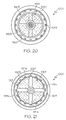
- FIGS. 18-21 illustrate features of the mouth fill device 1001 with the understanding that more or less features may be provided depending on the function to be performed by the mouth fill device 1001 and/or the particular application of the mouth fill device 1001 .
- the mouth fill device 1001 shown in FIGS. 18-21 can be identical to the mouth fill device 1001 previously described with respect to FIGS. 10-15 and further described with respect to FIGS. 16-17, 30, 31, 37 and 38 below although the mouth fill device may be provided with more or less features than illustrated in the mouth fill device shown in FIGS. 18-21 .
- alternative examples of mouth fill devices may be provided in further examples.
- FIGS. 22-25 illustrates another embodiment of a mouth fill device 2201
- FIGS. 26-29 illustrate still another embodiment of a mouth fill device 2601 that may be incorporated in accordance with features of the disclosure.
- each mouth fill device 1001, 2201, 2601 can be mounted with respect to the mouth 605 of the liquid container 601. As shown in FIGS. 18, 19 , 22, 23 , 26 and 27 , each mouth fill device 1001, 2201, 2601 can include a circumferential shroud 1801 circumscribing an axis 1803 of the mouth fill device 1001, 2201, 2601 .
- the axis 1803 can comprise a central axis (e.g., a symmetrical central axis) of the mouth fill device 1001, 2201, 2601 although further embodiments may provide the axis 1803 as an offset axis (e.g., a symmetrical offset axis) that is offset from the central axis of the mouth fill device 1001, 2201, 2601 .
- the shroud 1801 can include an inner surface 1901 defining an interior passage 1903 extending along the axis 1803 .
- the inner surface 1901 can include a circular profile along a section taken perpendicular to the axis 1803 although other shapes such as other curvilinear profiles (e.g., oblong, oval) or polygonal profiles (e.g., triangular, rectangular) may be provided in further embodiments.
- the cross sectional profile of the inner surface 1901 along the section taken perpendicular to the axis 1803 can be substantially the same along a length 1805 of the shroud 1801 .
- the inner surface 1901 may comprise a circular cylindrical inner surface with the same diameter throughout the length 1805 of the shroud 1801 .
- the inner surface 1901 may be slightly flared or tapered in a direction 1804 of the axis 1803 .
- each mouth fill device 1001, 2201, 2601 can also include a circumferential lip 1807 circumscribing an end 1906 of the circumferential shroud 1801 and extending radially away from the axis 1803 .
- the circumferential lip 1807 can include a plurality of apertures 2001 disposed about the axis 1803 that extend entirely through the circumferential lip 1807 between opposed surfaces of the circumferential lip 1807 .
- the each aperture of the plurality of apertures 2001 can be disposed in series relative to one another such that one of the plurality of apertures 2001 is disposed between another pair of apertures of the plurality of apertures 2001 .
- the apertures can comprise an oval shape although an oblong, circular or other curvilinear shape may be provided in further examples. Still further, the apertures may comprise a triangular, rectangular or other rectilinear shape in further examples.
- the apertures are configured to release gas from the interior containment area 603 of the liquid container 601 when adding liquid to the container. As shown, the circumferential lip 1807 extends at a 90° angle relative to the wall of the circumferential shroud 1801 although other angles may be provided in further examples.
- the mouth fill device can also include a protrusion mounted relative to the circumferential shroud and extending within the interior passage.
- the mouth fill device 1001 and 2201 can include the protrusion 1103 mounted relative to the circumferential shroud 1801 and extending within the interior passage 1903 .
- the protrusion 1103 can include a relatively sharp piercing tip 1809 configured to pierce a target area of an additive container as described with respect to FIGS. 10-12and 13-15 above.
- FIGS. 22-23 illustrate the protrusion 1103 including a relatively blunted tip 2203 that can still act as a piercing tip in some embodiments.
- the relatively share piercing tip 1809 can reduce the effort necessary to pierce the target area while still providing a satisfactory flow rate of additive 111 from the additive container 105 to the liquid container 601 .
- the protrusion 1103 can function to help deliver fluid from the liquid container 601 to a liquid dispensing device.
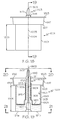
- Various liquid dispensing devices may be provided such as spray nozzle 1701 illustrated in FIG. 17 .
- the mouth 605 of the liquid container may optionally comprise threads, such as the illustrated exterior threads 606 that may engage interior threads 1714 of the threaded coupler 1713 to firmly attach the spray nozzle 1701 .
- the protrusion 1103 can include an interior passageway 1905 , wherein a liquid dispensing path of the liquid container is defined by the interior passageway of the protrusion and an interior channel of a dip tube 1703 extending into the interior containment area 603 of the liquid container 601 .
- the dip tube 1703 can comprise a branched dip tube including two or more lower ends 1705a, 1705b configured to dispense mixed liquid 903 from the liquid container 601 .
- the dip tubes may be designed in accordance with U.S. Patent Application No. 14/323,873 filed on July 3, 2014 , and published as U.S. Patent Application Publication No.
- any of the embodiments of the disclosure can have a single dip tube that is not split into two end tubes.
- the single tip tube may include a single end disposed near or at the bottom of the liquid container.
- the protrusion 1103 may include a configuration designed to mate with a socket within the liquid dispensing device.
- the protrusion 1103 can include an interface surface 1811 .
- the interface surface 1811 can include a frustoconical surface that flares outwardly in the direction 1804 of the axis 1803 from a first diameter of a first protrusion segment 1813 to a second diameter of a second protrusion segment 1815 .
- an interface connection 1707 may exist between the interface surface 1811 of the protrusion 1103 and a complementary interface surface 1709 of the spray nozzle 1701 .
- the interface surface 1811 of the protrusion 1103 can include the frustoconical surface that is designed to be received by a corresponding frustoconical surface 1709 of the spray nozzle 1701 .
- the first protrusion segment 1813 of the protrusion 1103 may be inserted in a channel 1711 of the spray nozzle.
- a threaded coupler 1713 of the spray nozzle 1701 may then be tightened such that interior threads 1714 of the threaded coupler 1713 engage exterior threads 606 of the mouth 605 . Tightening of the threaded coupler 1713 may continue wherein the interface surface 1811 of the protrusion 1103 mates with the interface surface 1709 of the spray nozzle 1701 .
- the interface surface 1811 of the protrusion 1103 can act as a stop against the interface surface 1709 of the spray nozzle 1701 . Furthermore in embodiments with the illustrated frustoconical interface surfaces, tightening of the threaded coupler 1713 can cause the frustoconical interface surface 1811 of the protrusion 1103 to wedge against the frustoconical interface surface 1709 of the spray nozzle to provide a fluid tight connection between the interior passageway 1905 of the protrusion 1103 and the spray nozzle 1701 .
- each mouth fill device 1001, 2201, 2601 can include a dip tube port 1907 mounted relative to the circumferential shroud 1801 .
- the dip tube port allows the mouth fill device support the dip tube 1703 relative to the mouth 605 .
- the above-referenced dip tube 1703 can include an end 1704 that may be mounted (e.g., by way of press fit) within the dip tube port 1907 .
- the dip tube port 1907 may be located within the interior passage 1903 to provide a compact mouth fill device 1001 .
- the dip tube port 1907 may optionally be located outside of the interior passage 1903 as illustrated in FIGS. 23 and 27 .
- the dip tube port if provided can allow removal of the spray nozzle 1701 without requiring removal of the dip tube. Consequently, refilling the liquid container 601 can be simplified and more consumer friendly since removal of the dip tube will not be required that may otherwise undesirably drip residual fluid from the dip tube to the surrounding environment. Indeed, as shown in FIG. 16 , the dip tube can remain within the bottle even when the spray nozzle 1701 is not associated with the liquid container 601 . Once the liquid container is refilled, the spray nozzle 1701 may be conveniently interfaced with the mouth fill device 1001 mounted to the mouth 605 of the liquid container 601 .
- the mouth fill device 1001, 2201, 2601 includes at least one support arm 1911a-d including one end connected relative to the dip tube port 1907 and/or the protrusion 1103 another end connected relative to the circumferential shroud 1801 .
- only one support arm may be necessary to support the dip tube port 1907 and/or the protrusion 1103 although two or more support arms may be provide in further examples.
- a plurality of support arms are provided to support the dip tube port 1907 relative to the circumferential shroud 1801 . Indeed, as shown FIG.
- a first support arm 1911a and a second support arm 1911b each include a first end connected indirectly to the dip tube port 1907 by way of another port 2701 designed to receive an interface tube from another example of a spray nozzle (not shown).
- the first support arm 1911a and the second support arm 1911b can each include a second end mounted to an end portion of the circumferential shroud 1801 .
- three or more support arms may be provided to support the dip tube port 1907 and/or the protrusion 1103 . For example, as shown in FIGS.
- the plurality of support arms can include four support arms 1911a-d that each include a first end portion connected to both the dip tube port 1907 and the protrusion 1103 and a second end portion connected to the circumferential shroud 1801 .
- the protrusion 1103 can be mounted relative to the circumferential shroud and extending within the interior passage 1903 . Extending within the interior passage can provide a compact mouth fill device. Furthermore, as shown, the axis 1803 (e.g., central symmetrical axis) of the mouth fill device 1001, 2201, 2601 can extend through the protrusion 1103 such as a central axis (e.g., central symmetrical axis) of the protrusion 1103 .
- a central axis e.g., central symmetrical axis
- Providing the axis 1803 as a central axis extending through the protrusion 1103 can help the mouth fill device cooperate with a conventional spray nozzle that typically includes a port for the dip tube at the center of the opening 607 of the mouth 605 of the liquid container 601 .
- the axis 1803 can comprise an offset axis that is offset from the central axis of the mouth fill device 1001, 2201, 2601 .
- Providing the axis 1803 as an offset axis extending through the protrusion 1103 can help the mouth fill device cooperate with another conventional spray nozzle that may include a port for the dip tube at an offset location of the opening 607 of the mouth 605 of the liquid container 601 .
- any one of the mouth fill devices 1001, 2201, 2601 may be mounted with respect to the mouth 605 of the liquid container 601 .
- a circumferential mounting flange 2301 may be provided that can comprise a circular cross-sectional profile along a section taken perpendicular to the axis 1803 .
- the outer diameter of the circumferential shroud 1801 can be slightly greater than the expected inner diameter of the opening 607 of the mouth 605 .
- the outer circumferential shroud 1801 may be press fit within the opening 607 of the mouth 605 to fixedly attach the mouth fill device 2201, 2601 to the mouth 605 of the liquid container 601 .
- the mouth fill device 1001 is also shown fixedly mounted relative to the mouth 605 of the liquid container 601 .
- the mouth fill device 1001 can include a frustoconical flange 1817 extending from an outer periphery 1819 of the circumferential lip 1807 in a direction 1821 along the axis 1803 extending away from the circumferential shroud 1801 .
- a peripheral flange 1823 can extend outwardly from a peripheral end 1818 of the frustoconical flange 1817 in a direction extending radially away from the axis 1803 of the shroud 1801 .
- the peripheral flange 1823 can extend outwardly from the peripheral end 1818 in a direction that is perpendicular to the axis 1803 while extending radially away from the axis 1803 .
- the axis of the opening 607 comprises a symmetrical central axis of the opening 607 .
- the axis of the opening 607 may comprise an offset axis (e.g., symmetrical offset axis) or a central axis that is not a symmetrical central axis.
- the frustoconical nature of the frustoconical flange 1817 accommodates for dimensional differences between openings and can therefore adapt to a wide range of opening diameters, such as openings having diameters within an acceptable tolerance range. Further insertion of the mouth fill device 1001 can result in the frustoconical flange 1817 being compressed against the interior surface of the opening 607 that can partially or entirely straighten a portion or the entire frustoconical flange 1817 into a substantially straight segment to provide a fluid tight seal between the outer surface of the frustoconical flange 1817 and the inner surface of the opening 607 . Further insertion can continue until the peripheral flange 1823 engaged the top edge of the mouth 605 , wherein the peripheral flange 1823 may act as a stop to limit the extent that the mouth fill device 1001 is inserted into the opening 607 .
- the mouth fill device 1001, 2201, 2601 can be conveniently fixed relative to the mouth 605 of the liquid container 601 , thereby assisting with a wide range of functions.
- the protrusion 1103 if provided, can assist with piercing the target area 229, 235 of the container wall 107 of the additive container 105 discussed above.
- the additive 111 can drain through the interior passage 1903 and through the areas between the one or more support arms 1911a-d and into the interior containment area 603 of the liquid container 601 .
- the protrusion 1103 can include the interior passageway 1905 that may communicate, by way of the dip tube port 1907 with an interior passage of the dip tube 1703 .
- dip tube 1703 can interface with the spray nozzle 1701 by way of the mouth fill device 1001, 2201, 2601 that may be mounted to the mouth 605 of the liquid container 601 .
- the spray nozzle 1701 may be easily and quickly removed and replaced without removing the dip tube 1703 from the interior containment area 603 of the liquid container 601 .
- the mouth fill device 1001, 2201, 2601 can also facilitate filling of the liquid container 601 with liquid.
- liquid 1601 from a nozzle 1603 e.g., a water faucet nozzle
- an area 1605 between the circumferential shroud 1801 and the interior surface of the wall of the liquid container 601 can allow displaced air within the interior containment area 603 due to filling with the liquid 1601 to pass through the apertures 2001 as gas streams 1607 .
- any of the mouth fill devices 1001, 2201, 2601 can include a filter 1921 .
- the filter 1921 may include a central opening optionally mounted to a sleeve 1925 and an outer periphery optionally mounted to a seal 1923 to seal against the inner surface 1901 of the circumferential shroud 1801 .
- the seal 1923 if provided, can include an O-ring seal, rubber seal or other seal such as latex rubber or silicone rubber.
- the filter 1921 can comprise a particulate filter (e.g., a coconut fiber filer disk) to filter particulate from the liquid.
- the filter 1921 can comprise a chemical filter (e.g., an activated charcoal filter disk).
- the sleeve 1925 can be designed for easy gripping to allow removal and insertion of the filter 1921 from the interior passage 1903 .
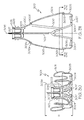
- FIGS. 30-37 further embodiments can include a collapsible container 3001 that can be positioned in a collapsed orientation (See FIG. 30 ) and an extended orientation (See FIG. 31 ).
- the collapsible container 3001 includes a first shell 3003 including the mouth 605 defining the opening 607 and a first circumferential rim 3008 .
- the collapsible container 3001 can further include a second shell 3005 including a closed end 3007 and a second circumferential rim 3009 .
- the collapsible container can further include a circumferential bladder 3011 including a first edge 3012a sealed to the first circumferential rim 3008 and a second edge 3012b sealed to the second circumferential rim 3009 .
- the first edge 3012a is double sealed to the first circumferential rim 3008 .
- the first circumferential rim 3008 may include a circumferential socket receiving a circumferential protrusion from the first edge 3012a of the circumferential bladder forming the first seal.
- the first edge 3012a of the circumferential bladder may include a flap 3018a engaging an outer surface of the first shell 3003 forming the second seal.
- the second edge 3012b is double sealed to the second circumferential rim 3009 .
- the second circumferential rim 3009 may include a circumferential socket receiving a circumferential protrusion from the second edge 3012b of the circumferential bladder forming the first seal.
- the second edge 3012b of the circumferential bladder may include a flap 3018b engaging an outer surface of the second shell 3005 forming the second seal.
- the first and/or second seal may be further attached with adhesive or sonic welding to further enhance the integrity of the seal.
- the first shell 3003 , second shell 3005 and circumferential bladder 3011 define an interior containment area 3013 extending along an axis 3015 of the collapsible container 3001 .
- the axis 3015 can comprise a central axis (e.g., a symmetrical central axis) although the axis 3015 may comprise an offset axis (e.g., a symmetrical offset axis) that is offset from the central axis in further embodiments.
- a material of the circumferential bladder 3011 includes a lower modulus of elasticity than a material of the first shell 3003 and a material of the second shell 3005 .
- the first shell 3003 can comprise a wall formed from a first material, such as entirely formed from a first material, having a first modulus of elasticity.
- the second shell 3005 can be formed from a second material, such as entirely formed from a second material, having a second modulus of elasticity.
- the first material and the second material are identical such that the first modulus of elasticity is identical to the second modulus of elasticity although different materials with different modulus of elasticity may be provided in further examples.
- the first material and/or the second material can comprise a plastic, metal, resin.
- the circumferential bladder 3011 may be formed from a third material, such as entirely formed from a third material, having a third modulus of elasticity that is less than both the first modulus of elasticity of the first shell 3003 and the second modulus of elasticity of the second shell 3005 .
- the axial collapsibility of the circumferential bladder 3011 is higher than an axial collapsibility of both the first shell 3003 and the second shell 3005 .
- the first shell 3003 and the second shell 3005 can be connected together with at least one strap 3017 .
- the strap 3017 if provided, can prevent over extension of the first shell 3003 and the second shell 3005 can thereby relieve stress that may otherwise be imposed on the seals between the circumferential bladder 3011 and the first and second shells 3003 , 3005 .
- the straps can be relatively thin so as not to interfere with the collapsibility of the collapsible container 3001 .
- a pair of straps 3017 may be provided on each side of the container to provide attachment of opposed sides of the first and second shells 3003, 3005 .
- the straps 3017 can be arranged so that they do not fold on top of one another to maximize the collapsibility of the collapsible container 3001 .
- the strap 3017 maybe integrally formed with the first shell 3003 and the second shell 3005 .
- the liquid container 601 illustrated in FIG. 6 may be formed and then machined to remove central portions of the liquid container, leaving behind the straps 3017 integrally formed with the first shell 3003 and the second shell 3005 .
- the first shell 3003 can be shaped to nest within the second shell 3005 .
- a portion of the first shell 3003 is shaped to nest within a portion of the second shell 3005 .
- a portion of the second shell 3005 may be nested within a portion of the first shell 3003 . Nesting the shells with respect to one another can further reduce an overall height " H " (See FIG. 30 ) of the collapsible container 3001 in the collapsed orientation.
- the circumferential bladder 3011 may comprise a wide variety of shapes.
- the shape of the circumferential bladder can comprise a smooth continuous wall that is not stepped but might be circular cylindrical or conically tapered as illustrated.
- Such a configuration can allow collapsing of the bladder 3011 outside of the first shell 3003 and within the height " H " such that the collapsed bladder 3011 does not significantly contribute to the height " H " of the collapsed container 3001 .
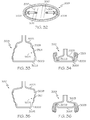
- the circumferential bladder 3301 can be radially stepped outwardly in a radial direction 3303 from the first circumferential rim 3008 to the second circumferential rim 3009 .
- the circumferential bladder 3501 can be radially stepped outwardly in a radial direction 3303 from the second circumferential rim 3009 to the first circumferential rim 3008 .
- Providing radially stepped circumferential bladders 3301 , 3501 as schematically shown in FIGS. 34 and 36 , can help axially collapse the circumferential bladders in a nested relationship.
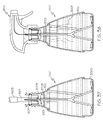
- the collapsible container 3001 can provide an additive 3701 coated on an inner surface 3703 of the first shell 3003.
- the second shell 3005 does not include the coating of additive on the inner surface of the second shell 3005 .
- Providing the additive 3701 only coated on the inner surface of the first shell 3003 can minimize mixing of the additive until the liquid 1601 fills the liquid container to avoid foaming that may otherwise occur if the additive mixes with the liquid 1601 during the filling process.
- Such coating of additive on the inner surface may be provided in an upper portion of the liquid container 601 discussed previously to provide foam reduction benefits to filling the liquid container 601 .
- a significant portion of the additive 3701 is designed to dissolve as indicated at 3801 to form the mixture 903 after the bottle is filled with the liquid 1601.
- the collapsible container 3001 discussed above may be provided as the collapsed container shown, for example, in FIGS. 30 , 34 or 36 .
- the collapsed container 3001 illustrated in FIG. 30 will be discussed.
- the collapsed container can comprise the collapsible container 3001 discussed above with the circumferential bladder 3011 comprising the collapsed circumferential bladder illustrated in FIG. 30 .
- the collapsed container 3001 can be provided during transport from a manufacturing facility to reduce the size of the package and therefore the cost of shipment of multiple collapsed containers.
- the collapsed container illustrated in FIG. 30 may include a cap 3006 .
- the cap 3006 may include interior threads 3010 that engage the exterior threads 606 of the mouth 605 . As such, the cap 3006 may be screwed on the mouth 605 . Once properly screwed in place, the cap 3006 can prevent air from entering into the interior containment area 3013 of the collapsible container 3001 , thereby assisting in maintaining the container in the collapsed state until the cap 3006 is removed. Indeed, a lower pressure may develop in the interior containment area 3013 that prevents significant extension of the collapsible container until the cap 3006 is removed. Once removed, the circumferential bladder 3011 and/or the straps 3017 may help bias the collapsible container into the extended orientation illustrated in FIG. 31 .
- the collapsible container may include a mouth fill device, such as the illustrated mouth fill device 1001, 2201, 2601 . If provided, the mouth fill device can provide the same benefits described with respect to the liquid container discussed previously.
- a dip tube 1703 is provided, one or more ends of the dip tube may be attached to the second shell 3005 . Attaching can help maintain the end(s) of the dip tube 1703 in a proper orientation so that collapsing the collapsible container does not relocate the end(s) of the dip tube 1703 in an orientation that is not desired.
- a dip tube 1703 that includes two or more ends, one or all of the ends may be attached to the second shell 3005 .
- the end of a dip tube having only a single end may also be attached to the second shell 3005 .
- an end cap attached to the end of the one or more dip tubes may be integrated with the second shell 3005 .
- each end of the dip tube may be fastened with a fastener 3004 such as the illustrated tie-down.
- an applicator apparatus 101 may be provided to facilitate introduction of additive 111 to the collapsible container 3001 .
- Such applicator apparatus 101 may be designed for initial introduction of additive to the container.
- the collapsed container shown in FIG. 30 is provided with the additive 3701 coated on the interior surface of the first shell 3003 as discussed above, the additive 3701 may be sufficient for the initial filling of the collapsible container while the applicator apparatus 101 may be used when refilling the collapsible container 3001 .
Landscapes
- Engineering & Computer Science (AREA)
- Mechanical Engineering (AREA)
- Containers And Packaging Bodies Having A Special Means To Remove Contents (AREA)
- Lining Or Joining Of Plastics Or The Like (AREA)
Applications Claiming Priority (3)
| Application Number | Priority Date | Filing Date | Title |
|---|---|---|---|
| US201562239215P | 2015-10-08 | 2015-10-08 | |
| US201662384710P | 2016-09-07 | 2016-09-07 | |
| US15/266,921 US10252836B2 (en) | 2015-10-08 | 2016-09-15 | Applicator apparatus, mouth fill devices, collapsible containers and methods |
Publications (4)
| Publication Number | Publication Date |
|---|---|
| EP3162452A2 true EP3162452A2 (de) | 2017-05-03 |
| EP3162452A3 EP3162452A3 (de) | 2017-11-22 |
| EP3162452C0 EP3162452C0 (de) | 2025-03-05 |
| EP3162452B1 EP3162452B1 (de) | 2025-03-05 |
Family
ID=57121046
Family Applications (1)
| Application Number | Title | Priority Date | Filing Date |
|---|---|---|---|
| EP16191515.2A Active EP3162452B1 (de) | 2015-10-08 | 2016-09-29 | Anordnung mit einem flüssigkeitsbehälter und einer mundfüllvorrichtung und einer sprühdüse |
Country Status (2)
| Country | Link |
|---|---|
| US (2) | US10252836B2 (de) |
| EP (1) | EP3162452B1 (de) |
Families Citing this family (5)
| Publication number | Priority date | Publication date | Assignee | Title |
|---|---|---|---|---|
| US10252836B2 (en) * | 2015-10-08 | 2019-04-09 | Stephen Frank Charles Geldard | Applicator apparatus, mouth fill devices, collapsible containers and methods |
| US20190111449A1 (en) * | 2017-10-13 | 2019-04-18 | Abel Mengisteab | Pump bottle straw attachment |
| JP7111578B2 (ja) * | 2018-10-21 | 2022-08-02 | 成人 鈴木 | 液体注出容器 |
| US12304720B2 (en) * | 2022-12-05 | 2025-05-20 | Motedo Co., Ltd. | Liquid product container and extending drawing unit of liquid product container |
| NO20240906A1 (en) * | 2024-09-05 | 2026-03-06 | Orkla Home & Personal Care As | Refillable domestic product dispenser system, method and kit |
Family Cites Families (32)
| Publication number | Priority date | Publication date | Assignee | Title |
|---|---|---|---|---|
| US2096397A (en) | 1935-03-07 | 1937-10-19 | Harris Frederick George | Method of and means for handling soap paste, grease, and other materials of like consistency |
| US3288178A (en) * | 1964-05-21 | 1966-11-29 | Dow Chemical Co | Spout |
| US4177529A (en) * | 1978-08-18 | 1979-12-11 | Deere & Company | Filter wrench |
| US4311173A (en) | 1980-03-03 | 1982-01-19 | Continental Carbon Company | Air flow bag packer spout and hood assembly |
| US4396045A (en) * | 1981-04-06 | 1983-08-02 | Hercules Incorporated | Feed chute for particulate materials |
| DE3305898A1 (de) | 1983-02-19 | 1984-08-23 | Günter 7535 Königsbach-Stein Hirsch | Fluessigkeitsspender |
| DE3535986A1 (de) | 1985-10-09 | 1987-04-09 | Otto Verpackung Gmbh | System zum zubereiten einer wirksubstanz-loesungsmittel-mischung |
| US4850403A (en) * | 1988-04-25 | 1989-07-25 | Wiese Patrick C | Funnel with indicator showing filled condition of serviced container |
| US4901890A (en) * | 1988-06-24 | 1990-02-20 | Mivelaz Michael B | Watering system automatic additive dispenser kit |
| GB8922478D0 (en) * | 1989-10-05 | 1989-11-22 | Procter & Gamble | Flowable product package incorporating a refill facilitating pouring spout |
| US5273083A (en) * | 1991-10-07 | 1993-12-28 | Ebtech, Inc. | Bottle cap and valve assembly for a bottled water station |
| US5409146A (en) * | 1993-06-03 | 1995-04-25 | Hazard; Robert E. | Dispensing pump with positive shut-off |
| US5346105A (en) * | 1993-12-30 | 1994-09-13 | Dart Industries Inc. | Dispenser for granular material |
| US5464127A (en) * | 1994-02-28 | 1995-11-07 | Ebtech, Inc. | Sealed actuator probe assembly for a bottled water station |
| FR2718372B1 (fr) * | 1994-04-08 | 1996-06-28 | Sofab | Dispensateur de produits fluides. |
| GB9525414D0 (en) | 1995-12-13 | 1996-02-14 | Rocep Lusol Holdings | A device for releasing a fluid into a liquid in a container |
| US5862948A (en) | 1996-01-19 | 1999-01-26 | Sc Johnson Commerical Markets, Inc. | Docking station and bottle system |
| US5819822A (en) * | 1996-03-29 | 1998-10-13 | Caterpillar Inc. | Fluid filler tool for a spin-on fluid filter |
| US6142193A (en) | 1999-03-17 | 2000-11-07 | Sanders; Thomas G. | Self venting multipurpose funnel |
| US7014759B2 (en) * | 2000-02-18 | 2006-03-21 | Radford Thomas K | Method and apparatus for water purification |
| US6345738B1 (en) * | 2000-03-16 | 2002-02-12 | Owen-Illinois Closure Inc. | Pump dispenser having body with fill-through conduit |
| US6527110B2 (en) | 2000-12-01 | 2003-03-04 | Brett Moscovitz | Device for storing and dispensing a substance by mating with a container and associated methods |
| US6571836B2 (en) * | 2001-06-13 | 2003-06-03 | Deere & Company | Filler cup for fluid filter |
| US6739363B2 (en) * | 2001-12-07 | 2004-05-25 | Wki Holding Company, Inc. | Funnel set |
| US6644511B2 (en) * | 2002-01-11 | 2003-11-11 | Unilever Home & Personal Care Usa, A Division Of Conopco, Inc. | Container for dispensing a dual phase fluid product |
| US8011534B2 (en) | 2003-02-10 | 2011-09-06 | Cool Gear International, Llc | Flavoring component holding dispenser for use with consumable beverages |
| US6874550B2 (en) * | 2003-04-24 | 2005-04-05 | Goodrich Corporation | Gravity fill line vent fitting and fill system |
| GB2471104B (en) * | 2009-06-17 | 2013-08-14 | Ian Singleton | Device for transfer of product from refill container to applicator container without exposure to atmosphere |
| DK2477908T3 (da) | 2009-09-14 | 2014-05-12 | Nestec Sa | Pakning med folieforsegling og gennemtrængningsorgan |
| CA2920392A1 (en) * | 2013-08-05 | 2015-02-12 | Bobrick Washroom Equipment, Inc. | Dispenser |
| US9731310B2 (en) | 2015-03-02 | 2017-08-15 | Stephen Geldard | Spray head with refill valve |
| US10252836B2 (en) * | 2015-10-08 | 2019-04-09 | Stephen Frank Charles Geldard | Applicator apparatus, mouth fill devices, collapsible containers and methods |
-
2016
- 2016-09-15 US US15/266,921 patent/US10252836B2/en active Active
- 2016-09-29 EP EP16191515.2A patent/EP3162452B1/de active Active
-
2019
- 2019-01-26 US US16/258,571 patent/US10899502B2/en active Active
Also Published As
| Publication number | Publication date |
|---|---|
| US10252836B2 (en) | 2019-04-09 |
| US20190152652A1 (en) | 2019-05-23 |
| US20170101222A1 (en) | 2017-04-13 |
| EP3162452C0 (de) | 2025-03-05 |
| US10899502B2 (en) | 2021-01-26 |
| EP3162452B1 (de) | 2025-03-05 |
| EP3162452A3 (de) | 2017-11-22 |
Similar Documents
| Publication | Publication Date | Title |
|---|---|---|
| US10899502B2 (en) | Applicator apparatus, mouth fill devices, collapsible containers and methods | |
| US4798605A (en) | Device for connecting and draining a pouch | |
| CN1325357A (zh) | 带有将预定剂量的添加剂混合到液体中的装置的瓶子罩盖 | |
| CN103492276B (zh) | 具有适配器的密封装置 | |
| JP5105553B2 (ja) | 添加剤を容器の内容物中へと導入するための手段を有する容器閉塞体 | |
| JP5981535B2 (ja) | 受容体及び容器間の接続のための装置、及び、こうした装置を組み立て且つ使用する方法 | |
| US10138033B2 (en) | Spout assembly for a flexible bag | |
| US10918236B2 (en) | Capsule for producing a liquid food item, method for manufacturing a capsule for producing a liquid food item, use of a capsule for producing a liquid food item, system made up of a capsule and a device, and device for the production of a liquid food item | |
| WO2007143503A2 (en) | Child resistant concentrate cartridge and associated diluting and dispensing container | |
| JP2009544546A (ja) | 突き刺し型取付アセンブリ | |
| CN103946126A (zh) | 用于密封可塌缩容器的制品和方法 | |
| KR20150081294A (ko) | 침지 튜브 어셈블리 및 그의 제조 방법 | |
| US20110297706A1 (en) | Universal fitment for attachment to spouts | |
| US11097295B2 (en) | Device for storing and dispensing a liquid or pasty mass | |
| US10981190B2 (en) | Dispensing probe for dispensing flowable material | |
| AU2021376240A9 (en) | Piercing cap and piercer | |
| US9546084B2 (en) | Apparatus for the emptying of containers | |
| TW201532904A (zh) | 配件、用於施配系統的配件接合器及其製造方法 | |
| KR101949752B1 (ko) | 내측 주머니 복합 용기 및 분배 장치 | |
| EP3057884B1 (de) | Tauchrohranordnungen und verfahren zur herstellung davon | |
| US10987689B1 (en) | Bottle and bottle cap device thereof | |
| US20140182698A1 (en) | Universal Bag Connector | |
| US11383212B2 (en) | Mixing cup with extrusion plunger | |
| EP3817993B1 (de) | Kapsel | |
| TW201406611A (zh) | 散裝倉和袋之分配裝置 |
Legal Events
| Date | Code | Title | Description |
|---|---|---|---|
| PUAI | Public reference made under article 153(3) epc to a published international application that has entered the european phase |
Free format text: ORIGINAL CODE: 0009012 |
|
| STAA | Information on the status of an ep patent application or granted ep patent |
Free format text: STATUS: THE APPLICATION HAS BEEN PUBLISHED |
|
| AK | Designated contracting states |
Kind code of ref document: A2 Designated state(s): AL AT BE BG CH CY CZ DE DK EE ES FI FR GB GR HR HU IE IS IT LI LT LU LV MC MK MT NL NO PL PT RO RS SE SI SK SM TR |
|
| AX | Request for extension of the european patent |
Extension state: BA ME |
|
| RIC1 | Information provided on ipc code assigned before grant |
Ipc: B65D 1/02 20060101ALI20170622BHEP Ipc: B05B 15/00 20060101ALI20170622BHEP Ipc: B65B 39/04 20060101ALI20170622BHEP Ipc: B65D 25/40 20060101ALI20170622BHEP Ipc: B65D 83/00 20060101ALI20170622BHEP Ipc: B65D 23/04 20060101ALI20170622BHEP Ipc: B65D 81/32 20060101ALI20170622BHEP Ipc: B05B 11/00 20060101AFI20170622BHEP |
|
| PUAL | Search report despatched |
Free format text: ORIGINAL CODE: 0009013 |
|
| AK | Designated contracting states |
Kind code of ref document: A3 Designated state(s): AL AT BE BG CH CY CZ DE DK EE ES FI FR GB GR HR HU IE IS IT LI LT LU LV MC MK MT NL NO PL PT RO RS SE SI SK SM TR |
|
| AX | Request for extension of the european patent |
Extension state: BA ME |
|
| RIC1 | Information provided on ipc code assigned before grant |
Ipc: B65D 1/02 20060101ALI20171019BHEP Ipc: B05B 15/00 20060101ALI20171019BHEP Ipc: B65D 81/32 20060101ALI20171019BHEP Ipc: B65D 83/00 20060101ALI20171019BHEP Ipc: B65D 23/04 20060101ALI20171019BHEP Ipc: B05B 11/00 20060101AFI20171019BHEP Ipc: B65D 25/40 20060101ALI20171019BHEP Ipc: B65B 39/04 20060101ALI20171019BHEP |
|
| STAA | Information on the status of an ep patent application or granted ep patent |
Free format text: STATUS: REQUEST FOR EXAMINATION WAS MADE |
|
| 17P | Request for examination filed |
Effective date: 20180326 |
|
| RAX | Requested extension states of the european patent have changed |
Extension state: ME Payment date: 20180326 Extension state: BA Payment date: 20180326 |
|
| RBV | Designated contracting states (corrected) |
Designated state(s): AL AT BE BG CH CY CZ DE DK EE ES FI FR GB GR HR HU IE IS IT LI LT LU LV MC MK MT NL NO PL PT RO RS SE SI SK SM TR |
|
| STAA | Information on the status of an ep patent application or granted ep patent |
Free format text: STATUS: EXAMINATION IS IN PROGRESS |
|
| 17Q | First examination report despatched |
Effective date: 20190222 |
|
| GRAP | Despatch of communication of intention to grant a patent |
Free format text: ORIGINAL CODE: EPIDOSNIGR1 |
|
| STAA | Information on the status of an ep patent application or granted ep patent |
Free format text: STATUS: GRANT OF PATENT IS INTENDED |
|
| INTG | Intention to grant announced |
Effective date: 20231109 |
|
| GRAJ | Information related to disapproval of communication of intention to grant by the applicant or resumption of examination proceedings by the epo deleted |
Free format text: ORIGINAL CODE: EPIDOSDIGR1 |
|
| STAA | Information on the status of an ep patent application or granted ep patent |
Free format text: STATUS: EXAMINATION IS IN PROGRESS |
|
| INTC | Intention to grant announced (deleted) | ||
| RAP3 | Party data changed (applicant data changed or rights of an application transferred) |
Owner name: GELDARD, STEPHEN FRANK CHARLES |
|
| RIN1 | Information on inventor provided before grant (corrected) |
Inventor name: GELDARD, STEPHEN FRANK CHARLES |
|
| REG | Reference to a national code |
Ref legal event code: R079 Ipc: B05B0011020000 Ref country code: DE Ref legal event code: R079 Ref document number: 602016091429 Country of ref document: DE Free format text: PREVIOUS MAIN CLASS: B05B0011000000 Ipc: B05B0011020000 |
|
| GRAP | Despatch of communication of intention to grant a patent |
Free format text: ORIGINAL CODE: EPIDOSNIGR1 |
|
| STAA | Information on the status of an ep patent application or granted ep patent |
Free format text: STATUS: GRANT OF PATENT IS INTENDED |
|
| RIC1 | Information provided on ipc code assigned before grant |
Ipc: B65D 81/32 20060101ALI20240625BHEP Ipc: B05B 15/00 20060101ALI20240625BHEP Ipc: B65D 1/02 20060101ALI20240625BHEP Ipc: B65B 39/04 20060101ALI20240625BHEP Ipc: B65D 23/04 20060101ALI20240625BHEP Ipc: B65D 25/40 20060101ALI20240625BHEP Ipc: B65D 83/00 20060101ALI20240625BHEP Ipc: B05B 11/00 20060101ALI20240625BHEP Ipc: B05B 11/02 20060101AFI20240625BHEP |
|
| INTG | Intention to grant announced |
Effective date: 20240709 |
|
| GRAS | Grant fee paid |
Free format text: ORIGINAL CODE: EPIDOSNIGR3 |
|
| GRAJ | Information related to disapproval of communication of intention to grant by the applicant or resumption of examination proceedings by the epo deleted |
Free format text: ORIGINAL CODE: EPIDOSDIGR1 |
|
| GRAL | Information related to payment of fee for publishing/printing deleted |
Free format text: ORIGINAL CODE: EPIDOSDIGR3 |
|
| STAA | Information on the status of an ep patent application or granted ep patent |
Free format text: STATUS: EXAMINATION IS IN PROGRESS |
|
| GRAP | Despatch of communication of intention to grant a patent |
Free format text: ORIGINAL CODE: EPIDOSNIGR1 |
|
| STAA | Information on the status of an ep patent application or granted ep patent |
Free format text: STATUS: GRANT OF PATENT IS INTENDED |
|
| INTC | Intention to grant announced (deleted) | ||
| INTG | Intention to grant announced |
Effective date: 20241204 |
|
| GRAJ | Information related to disapproval of communication of intention to grant by the applicant or resumption of examination proceedings by the epo deleted |
Free format text: ORIGINAL CODE: EPIDOSDIGR1 |
|
| GRAL | Information related to payment of fee for publishing/printing deleted |
Free format text: ORIGINAL CODE: EPIDOSDIGR3 |
|
| GRAA | (expected) grant |
Free format text: ORIGINAL CODE: 0009210 |
|
| STAA | Information on the status of an ep patent application or granted ep patent |
Free format text: STATUS: THE PATENT HAS BEEN GRANTED |
|
| AK | Designated contracting states |
Kind code of ref document: B1 Designated state(s): AL AT BE BG CH CY CZ DE DK EE ES FI FR GB GR HR HU IE IS IT LI LT LU LV MC MK MT NL NO PL PT RO RS SE SI SK SM TR |
|
| INTG | Intention to grant announced |
Effective date: 20241204 |
|
| REG | Reference to a national code |
Ref country code: GB Ref legal event code: FG4D |
|
| REG | Reference to a national code |
Ref country code: CH Ref legal event code: EP |
|
| REG | Reference to a national code |
Ref country code: IE Ref legal event code: FG4D |
|
| REG | Reference to a national code |
Ref country code: DE Ref legal event code: R096 Ref document number: 602016091429 Country of ref document: DE |
|
| U01 | Request for unitary effect filed |
Effective date: 20250402 |
|
| U07 | Unitary effect registered |
Designated state(s): AT BE BG DE DK EE FI FR IT LT LU LV MT NL PT RO SE SI Effective date: 20250408 |
|
| PG25 | Lapsed in a contracting state [announced via postgrant information from national office to epo] |
Ref country code: RS Free format text: LAPSE BECAUSE OF FAILURE TO SUBMIT A TRANSLATION OF THE DESCRIPTION OR TO PAY THE FEE WITHIN THE PRESCRIBED TIME-LIMIT Effective date: 20250605 |
|
| PG25 | Lapsed in a contracting state [announced via postgrant information from national office to epo] |
Ref country code: ES Free format text: LAPSE BECAUSE OF FAILURE TO SUBMIT A TRANSLATION OF THE DESCRIPTION OR TO PAY THE FEE WITHIN THE PRESCRIBED TIME-LIMIT Effective date: 20250305 |
|
| PG25 | Lapsed in a contracting state [announced via postgrant information from national office to epo] |
Ref country code: NO Free format text: LAPSE BECAUSE OF FAILURE TO SUBMIT A TRANSLATION OF THE DESCRIPTION OR TO PAY THE FEE WITHIN THE PRESCRIBED TIME-LIMIT Effective date: 20250605 |
|
| PG25 | Lapsed in a contracting state [announced via postgrant information from national office to epo] |
Ref country code: HR Free format text: LAPSE BECAUSE OF FAILURE TO SUBMIT A TRANSLATION OF THE DESCRIPTION OR TO PAY THE FEE WITHIN THE PRESCRIBED TIME-LIMIT Effective date: 20250305 |
|
| PG25 | Lapsed in a contracting state [announced via postgrant information from national office to epo] |
Ref country code: GR Free format text: LAPSE BECAUSE OF FAILURE TO SUBMIT A TRANSLATION OF THE DESCRIPTION OR TO PAY THE FEE WITHIN THE PRESCRIBED TIME-LIMIT Effective date: 20250606 |
|
| REG | Reference to a national code |
Ref country code: CH Ref legal event code: U11 Free format text: ST27 STATUS EVENT CODE: U-0-0-U10-U11 (AS PROVIDED BY THE NATIONAL OFFICE) Effective date: 20251001 |
|
| PG25 | Lapsed in a contracting state [announced via postgrant information from national office to epo] |
Ref country code: SM Free format text: LAPSE BECAUSE OF FAILURE TO SUBMIT A TRANSLATION OF THE DESCRIPTION OR TO PAY THE FEE WITHIN THE PRESCRIBED TIME-LIMIT Effective date: 20250305 |
|
| PG25 | Lapsed in a contracting state [announced via postgrant information from national office to epo] |
Ref country code: PL Free format text: LAPSE BECAUSE OF FAILURE TO SUBMIT A TRANSLATION OF THE DESCRIPTION OR TO PAY THE FEE WITHIN THE PRESCRIBED TIME-LIMIT Effective date: 20250305 |
|
| PGFP | Annual fee paid to national office [announced via postgrant information from national office to epo] |
Ref country code: GB Payment date: 20250926 Year of fee payment: 10 |
|
| PG25 | Lapsed in a contracting state [announced via postgrant information from national office to epo] |
Ref country code: CZ Free format text: LAPSE BECAUSE OF FAILURE TO SUBMIT A TRANSLATION OF THE DESCRIPTION OR TO PAY THE FEE WITHIN THE PRESCRIBED TIME-LIMIT Effective date: 20250305 |
|
| PG25 | Lapsed in a contracting state [announced via postgrant information from national office to epo] |
Ref country code: SK Free format text: LAPSE BECAUSE OF FAILURE TO SUBMIT A TRANSLATION OF THE DESCRIPTION OR TO PAY THE FEE WITHIN THE PRESCRIBED TIME-LIMIT Effective date: 20250305 |
|
| PG25 | Lapsed in a contracting state [announced via postgrant information from national office to epo] |
Ref country code: IS Free format text: LAPSE BECAUSE OF FAILURE TO SUBMIT A TRANSLATION OF THE DESCRIPTION OR TO PAY THE FEE WITHIN THE PRESCRIBED TIME-LIMIT Effective date: 20250705 |
|
| U20 | Renewal fee for the european patent with unitary effect paid |
Year of fee payment: 10 Effective date: 20250926 |
|
| PLBE | No opposition filed within time limit |
Free format text: ORIGINAL CODE: 0009261 |
|
| STAA | Information on the status of an ep patent application or granted ep patent |
Free format text: STATUS: NO OPPOSITION FILED WITHIN TIME LIMIT |
|
| REG | Reference to a national code |
Ref country code: CH Ref legal event code: L10 Free format text: ST27 STATUS EVENT CODE: U-0-0-L10-L00 (AS PROVIDED BY THE NATIONAL OFFICE) Effective date: 20260114 |
|
| PGFP | Annual fee paid to national office [announced via postgrant information from national office to epo] |
Ref country code: CH Payment date: 20251001 Year of fee payment: 10 |
|
| 26N | No opposition filed |
Effective date: 20251208 |