EP3159792A1 - Method of optimally compiling plc command - Google Patents
Method of optimally compiling plc command Download PDFInfo
- Publication number
- EP3159792A1 EP3159792A1 EP16192816.3A EP16192816A EP3159792A1 EP 3159792 A1 EP3159792 A1 EP 3159792A1 EP 16192816 A EP16192816 A EP 16192816A EP 3159792 A1 EP3159792 A1 EP 3159792A1
- Authority
- EP
- European Patent Office
- Prior art keywords
- command
- compile
- processing scheme
- chosen
- plc
- Prior art date
- Legal status (The legal status is an assumption and is not a legal conclusion. Google has not performed a legal analysis and makes no representation as to the accuracy of the status listed.)
- Granted
Links
Images





Classifications
-
- G—PHYSICS
- G05—CONTROLLING; REGULATING
- G05B—CONTROL OR REGULATING SYSTEMS IN GENERAL; FUNCTIONAL ELEMENTS OF SUCH SYSTEMS; MONITORING OR TESTING ARRANGEMENTS FOR SUCH SYSTEMS OR ELEMENTS
- G05B19/00—Program-control systems
- G05B19/02—Program-control systems electric
- G05B19/04—Program control other than numerical control, i.e. in sequence controllers or logic controllers
- G05B19/05—Programmable logic controllers, e.g. simulating logic interconnections of signals according to ladder diagrams or function charts
- G05B19/056—Programming the PLC
-
- G—PHYSICS
- G06—COMPUTING OR CALCULATING; COUNTING
- G06F—ELECTRIC DIGITAL DATA PROCESSING
- G06F8/00—Arrangements for software engineering
- G06F8/40—Transformation of program code
- G06F8/41—Compilation
- G06F8/44—Encoding
- G06F8/443—Optimisation
- G06F8/4434—Reducing the memory space required by the program code
-
- G—PHYSICS
- G06—COMPUTING OR CALCULATING; COUNTING
- G06F—ELECTRIC DIGITAL DATA PROCESSING
- G06F11/00—Error detection; Error correction; Monitoring
- G06F11/36—Prevention of errors by analysis, debugging or testing of software
- G06F11/362—Debugging of software
-
- G—PHYSICS
- G06—COMPUTING OR CALCULATING; COUNTING
- G06F—ELECTRIC DIGITAL DATA PROCESSING
- G06F8/00—Arrangements for software engineering
- G06F8/40—Transformation of program code
- G06F8/41—Compilation
- G06F8/42—Syntactic analysis
- G06F8/423—Preprocessors
-
- G—PHYSICS
- G06—COMPUTING OR CALCULATING; COUNTING
- G06F—ELECTRIC DIGITAL DATA PROCESSING
- G06F8/00—Arrangements for software engineering
- G06F8/40—Transformation of program code
- G06F8/41—Compilation
- G06F8/44—Encoding
- G06F8/443—Optimisation
-
- G—PHYSICS
- G06—COMPUTING OR CALCULATING; COUNTING
- G06F—ELECTRIC DIGITAL DATA PROCESSING
- G06F8/00—Arrangements for software engineering
- G06F8/40—Transformation of program code
- G06F8/41—Compilation
- G06F8/44—Encoding
- G06F8/443—Optimisation
- G06F8/4441—Reducing the execution time required by the program code
-
- G—PHYSICS
- G05—CONTROLLING; REGULATING
- G05B—CONTROL OR REGULATING SYSTEMS IN GENERAL; FUNCTIONAL ELEMENTS OF SUCH SYSTEMS; MONITORING OR TESTING ARRANGEMENTS FOR SUCH SYSTEMS OR ELEMENTS
- G05B2219/00—Program-control systems
- G05B2219/10—Plc systems
- G05B2219/13—Plc programming
- G05B2219/13004—Programming the plc
-
- G—PHYSICS
- G05—CONTROLLING; REGULATING
- G05B—CONTROL OR REGULATING SYSTEMS IN GENERAL; FUNCTIONAL ELEMENTS OF SUCH SYSTEMS; MONITORING OR TESTING ARRANGEMENTS FOR SUCH SYSTEMS OR ELEMENTS
- G05B2219/00—Program-control systems
- G05B2219/10—Plc systems
- G05B2219/13—Plc programming
- G05B2219/13119—Compiler
Definitions
- the present disclosure relates to a method of optimally compiling a PLC (Programmable Logic Controller) command, and in particular, a method of optimally compiling the PLC command, in which, in order to improve a compile processing scheme for a PLC command to be compiled by a PADT (Programming And Debugging Tool) compiler, the user's program may be optimized by choosing a rate option or a size option based on a user's environment to compile the command by a compile processing scheme optimized for a rate or for a size.
- PADT Programming And Debugging Tool
- a system such as a factory automation system at an industrial field employs an integrated control apparatus such as a Programmable Logic Controller (PLC).
- PLC Programmable Logic Controller
- the PLC is equipped with a universal Main Processing Unit (MPU) as a fundamental unit.
- MPU performs a compiling process of converting a program, which a user has written using a Programming And Debugging Tool (PADT), into codes which the PLC can recognize.
- PADT Programming And Debugging Tool
- the program written by the user using the PADT should be converted such that the MPU can recognize it.
- the PADT is software which executes programming, editing, and debugging functions.
- the PADT executes functions of compiling a command in a project created by a user such the PLC can recognize it and then downloading to the PLC.
- the command may be compiled by the PDAT in a variety of methods and may be varied in, e.g., an execution rate or modifiability, depending on the employed methods.
- a processing rate of command and a size of program are the key factors with respect to the performance of the PLC. Specifically, the higher the processing rate is, the productivity can increase, and the larger the size of the program is, the more input/output can be controlled.
- the PLC supports only a fixed processing rate of command and a fixed size of program and thus cannot flexibly modify the processing rate of command and the size of program suitably to characteristics of a system.
- a PADT Programming And Debugging Tool
- a method of compiling a PLC (Programmable Logic Controller) command including: determining one compile processing scheme chosen from a plurality of compile processing schemes for a command contained in a program to be executed in a PLC; and executing a command compile optimized for a rate or a size based on the chosen compile processing scheme.
- the executing a command compile may include: determining whether the chosen compile processing scheme is a simple command processing based on any established criterion when the chosen compile processing scheme is determined to be for the size; when the chosen compile processing scheme is determined to be a simple compile processing scheme, executing the command compile in an assembly language by a direct compile processing scheme; and when the chosen compile processing scheme is determined to be not a simple compile processing scheme, executing the command compile in an indirect compile processing scheme by identifying an address of a command processing function stored in a binary file with reference to a command map table optimized for the rate, followed by invoking the command processing function, followed by copying the command processing function needed to execute the command into a compile area to identify the address of the command processing function upon driving the PLC, and followed by invoking the stored function to execute the command.
- the executing a command compile may include: when the chosen compile processing scheme is determined to be for the size, executing the command compile in an indirect compile processing scheme by identifying an address of a command processing function stored in a binary file with reference to a command map table optimized for the size, followed by invoking the command processing function, followed by copying the command processing function needed to execute the command into a compile area to identify the address of the command processing function upon driving the PLC, and followed by invoking the stored function to execute the command.
- the executing a command compile may include: when the chosen compile processing scheme is determined to be default, determining whether the chosen compile processing scheme is a simple command processing based on any established criterion; when the chosen compile processing scheme is determined to be a simple compile processing scheme, executing the command compile by a direct compile processing scheme; and when the chosen compile processing scheme is determined to be not a simple compile processing scheme, executing the command compile in an indirect compile processing scheme by identifying an address of a command processing function stored in a binary file with reference to a command map table set by default, followed by invoking the command processing function, followed by copying the command processing function needed to execute the command into a compile area to identify the address of the command processing function upon driving the PLC, and followed by invoking the stored function to execute the command.
- the determining one compile processing scheme may include: providing a first option box corresponding to a rate and a second option box corresponding to a size; and determining that the rate option is chosen if the first option box has been checked, the size option is chosen if the second option box has been checked, and the default is chosen if no option box has been checked.
- the method of optimally compiling the PLC command may set to automatically choose one compile processing scheme of a plurality of compile processing schemes for the command based on a program size or a remaining data storage capacity in the PLC.
- the setting to automatically choose one compile processing scheme may set to choose the compile processing scheme for the rate under a normal condition or for the size when the program size is over any reference size.
- the setting to automatically choose one compile processing scheme may set to choose the compile processing scheme for the rate under a normal condition or for the size when the remaining data storage capacity in the PLC is below any reference capacity.
- the present disclosure may improve a compile processing scheme in a PADT (Programming And Debugging Tool) compiler in a way of choosing a rate option or a size option based on a user's circumstance to compile a command based on a compile processing scheme optimized for a rate or for a size, thereby optimizing a user's program.
- PADT Programming And Debugging Tool
- a method of optimally compiling a PLC program causes a user to choose any compile processing scheme so that the PLC program can be flexibly applied to various systems.
- a rate option upon choosing a rate option, it may increase its rate in various ways by providing a compile processing scheme optimized for the rate.
- a size option upon choosing a size option, its size is optimized in order to increase an efficiency of a program storage capacity, and upon choosing no option, compile may be executed using elementary object codes.
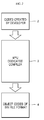
- FIG. 1 is a block diagram illustrating user's codes in a method of optimally compiling a PLC command according to an embodiment of the present disclosure.
- a user writes a program 1 by using a Programming and Debugging Tool (PADT).
- PADT Programming and Debugging Tool
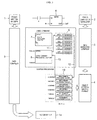
- FIG. 2 is a block diagram illustrating developer's codes in a method of optimally compiling a PLC command according to an embodiment of the present disclosure.
- a developer creates command processing function codes 2 by using a source editing tool.
- the command processing function codes 2 may be, for example, void move(void).
- the command processing function codes 2 created by the developer are compiled into object codes 4 of a binary format by a MPU dedicated complier 3.
- the MPU dedicated compiler 3 may be a C language or a C++ compiler.
- the compiled object codes 4 of a binary format store thereon command processing functions. These object codes 4 are used to extract a start address and a size on a basis of command, so that a command map table is created.
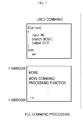
- FIG. 3 is a block diagram illustrating a command processing in a method of optimally compiling a PLC command according to an embodiment of the present disclosure.
- a PADT compiler 5 may essentially convert the program written by the user into a format which enables a PLC to operate. In order to execute the command, processing functions should be invoked based on the command.
- the MOVE command processing function may be invoked during processing the program 7 (8).
- FIG. 4 is a flowchart illustrating a method of optimally compiling a PLC command according to an embodiment of the present disclosure.
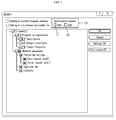
- FIG. 5 is a view illustrating a process of setting the compile processing scheme to optimally compile a PLC command according to an embodiment of the present disclosure.
- program codes to be executed in the PLC are created by using a ladder program of the PADT (S100).
- the present disclosure may cause the user to check or release a rate option and a size option so that a scheme for optimizing the compile processing can be set. At this time, if no option is chosen, it may be set that a compile utilizing elementary object codes is executed. Meanwhile, if the size option is chosen, it may be set that the compile optimized for the size is executed.
- the choose box 10 may include a first choose box 11 corresponding to the rate option and a second choose box 12 corresponding to the size option.
- first box 11 has been checked, it is determined that the rate option is chosen.
- second choose box 12 has been checked, it is determined that the size option is chosen.
- a default option is chosen.
- a command compile is executed according to the chosen one of the plurality of compile processing schemes for the command contained in the program to be executed in the PLC and as a result the PLC drive file is generated (S300).
- the MPU dedicated compiler when the chosen compile processing scheme is determined to be for a rate, the MPU dedicated compiler generates object codes in a format of binary file optimized for the rate.
- the MPU dedicated compiler When the chosen compile processing scheme is determined to be for the size, the MPU dedicated compiler generates object codes in a format of binary file optimized for the size.
- the MPU dedicated compiler When the chosen compile processing scheme is determined to be default, the MPU dedicated compiler generates object codes in a format of binary set by default.
- the PADT compiler may convert the program written by the user into a format which enables a PLC to operate.
- the PADT compiler uses the object codes optimized for the rate to execute the command compile optimized for the rate, thereby generating the PLC drive file. Meanwhile, when the chosen compile processing scheme is for the size, the PADT compiler uses the object codes optimized for the size to execute the command compile optimized for the size, thereby generating the PLC drive file.
- the PADT compiler uses the object codes set by default to execute the command compile, thereby generating the PLC drive file.
- the PLC drive file generated as described above is downloaded to the PLC (S400).
- FIG. 7 is a view illustrating a method of optimally compiling a PLC command according to an embodiment of the present disclosure.
- the chosen compile processing scheme is determined to be for the rate in S301, it is determined whether the chosen compile processing scheme is a simple command processing based on any established criterion (S302).
- the criterion as to whether it is the simple command processing is whether the command can be directly compiled. If the command can be directly compiled, it conforms to the simple command.
- the PADT compiler examines the in-use command to determine whether the in-use command is one that can be compiled by a direct compile processing scheme.
- the PADT compiler directly executes the compile in an assembly language optimized for the rate.
- the PADT compiler follows a command execution routine, which is written into C codes, in relation to the rate option.
- the direct compile is any compile processing scheme by which the PADT compiler executes and stores the command as shown in FIG. 8 .
- the PADT compiler upon compiling allows all codes for processing the command to be stored on a PLC compile area. Then, if there is any command used in the program processing, the command can be executed without the need of invoking any separate function because execution codes for the command have been stored on the compile area.
- the PADT compiler examines the command while processing the compile.
- the PADT compiler identifies an address of the command processing function stored in the binary file with reference to the command map table stored on the PADT and then invokes the command processing function. Then, the command processing function needed to execute the command is copied to an ending portion into the compile area of the PLC. Accordingly, upon driving the PLC, the command processing can be made by identifying the address of the command processing function and invoking the stored function.
- the command compile is executed in an assembly language by the direct compile processing scheme (S303).
- the PADT compiler identifies an address of the command processing function stored in the binary file with reference to the command map table optimized for the rate (S304). Subsequently, the command processing function is invoked based on the address of the command processing function (S305), the command processing function needed to execute the command is copied into the compile area so that the command compile is executed by the indirect compile processing scheme (S306). Accordingly, upon driving the PLC, the command can be executed by identifying the address of the command processing function and invoking the stored function.
- the PADT compiler identifies an address of the command processing function stored in the binary file with reference to the command map table optimized for the size (S307). Subsequently, the command processing function is invoked based on the address of the command processing function (S308), the function needed to execute the command is copied into the compile area so that the command compile is executed by the indirect compile processing scheme (S309). Accordingly, upon driving the PLC, the command can be executed by identifying the address of the command processing function the PLC and invoking the stored function.
- the PADT compiler executes the indirect compile on the in-use command.
- the indirect compile processing scheme is useful to reduce the overall program size because it would copy the execution routine only once in relation to the identical command. Further, it may compile the command execution routine created in C codes in relation to the size option upon processing the indirect compile, thereby reducing the program size.
- the chosen compile processing scheme is determined to be default in S301, it is determined whether the chosen compile processing scheme is a simple command processing based on any established criterion (S310).
- the user may choose the compile processing scheme for the command suitably to system environment. If the rate option is chosen, the PLC program is compiled to optimize the processing rate and thus the control is enabled in an increased rate of 32% relative to the prior art. Also, if the size option is chosen, the program may be used with its size increasing up to 30% relative to the existing program size. Therefore, the PLC employing the present disclosure becomes flexible in its processing rate and program size where it can cover, so that it can be applied to various systems.
- a method of optimally compiling a PLC program causes a user to choose any compile processing scheme so that the PLC program can be flexibly applied to various systems.
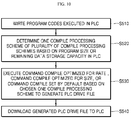
- FIG. 10 is a flowchart illustrating a method of optimally compiling a PLC command according to another embodiment of the present disclosure.
- program codes to be executed in the PLC are written by using a ladder program of the PADT (S510).
- the program is set to automatically choose one of a plurality of compile processing schemes for a command contained in a program to be executed in the PLC, based on a program size or a remaining data storage capacity in the PLC (S520).
- the program may be set so that the compile processing scheme for the rate is chosen under a normal condition while the compile processing scheme for the size is chosen when the program size is over any reference size.
- the program may be set so that the compile processing scheme for the rate is chosen under a normal condition while the compile processing scheme for the size is chosen when the remaining data storage capacity in the PLC is below any reference capacity.
- a command compile is executed according to one automatically chosen from the plurality of compile processing schemes for the command contained in the program to be executed in the PLC and as a result the PLC drive file is generated (S530).
- the command compile optimized for the rate is executed.
- the command compile optimized for the size is executed.
- the command compile set by default is executed to generate object codes, and as a result the PLC drive file is generated
- the generated PLC drive file is downloaded to the PLC (S540).
Landscapes
- Engineering & Computer Science (AREA)
- Theoretical Computer Science (AREA)
- General Engineering & Computer Science (AREA)
- Physics & Mathematics (AREA)
- General Physics & Mathematics (AREA)
- Software Systems (AREA)
- Automation & Control Theory (AREA)
- Computer Hardware Design (AREA)
- Quality & Reliability (AREA)
- Programmable Controllers (AREA)
- Devices For Executing Special Programs (AREA)
- Stored Programmes (AREA)
Abstract
Description
- The present disclosure relates to a method of optimally compiling a PLC (Programmable Logic Controller) command, and in particular, a method of optimally compiling the PLC command, in which, in order to improve a compile processing scheme for a PLC command to be compiled by a PADT (Programming And Debugging Tool) compiler, the user's program may be optimized by choosing a rate option or a size option based on a user's environment to compile the command by a compile processing scheme optimized for a rate or for a size.
- A system such as a factory automation system at an industrial field employs an integrated control apparatus such as a Programmable Logic Controller (PLC). The PLC is equipped with a universal Main Processing Unit (MPU) as a fundamental unit. The MPU performs a compiling process of converting a program, which a user has written using a Programming And Debugging Tool (PADT), into codes which the PLC can recognize.
- Therefore, in order to drive the PLC, the program written by the user using the PADT should be converted such that the MPU can recognize it.
- The PADT is software which executes programming, editing, and debugging functions. The PADT executes functions of compiling a command in a project created by a user such the PLC can recognize it and then downloading to the PLC.
- At this time, the command may be compiled by the PDAT in a variety of methods and may be varied in, e.g., an execution rate or modifiability, depending on the employed methods.
- Meanwhile, a processing rate of command and a size of program are the key factors with respect to the performance of the PLC. Specifically, the higher the processing rate is, the productivity can increase, and the larger the size of the program is, the more input/output can be controlled.
- In a prior art, the PLC supports only a fixed processing rate of command and a fixed size of program and thus cannot flexibly modify the processing rate of command and the size of program suitably to characteristics of a system.
- Therefore, there are problems that the PLC should be replaced with an upper version thereof or the system should be changed when the command processing rate is low or the program size is insufficient in actual practice.
- It is an aspect of the present disclosure to provide a method of optimally compiling a PLC (Programmable Logic Controller) command, and in particular, a method of optimally compiling the PLC command, in which, in order to improve a compile processing scheme for a PLC command to be compiled by a PADT (Programming And Debugging Tool) compiler, the user's program may be optimized by choosing a rate option or a size option based on a user's environment so that the command by a compile processing scheme optimized for a rate or a compile processing scheme optimized for a size can be compiled.
- Other objects of the present disclosure are not limited to the above-described object and other objects and advantages can be appreciated by the following description described with reference to the embodiments of the present disclosure.
- In accordance with an aspect of the present invention, a method of compiling a PLC (Programmable Logic Controller) command is provided, the method including: determining one compile processing scheme chosen from a plurality of compile processing schemes for a command contained in a program to be executed in a PLC; and executing a command compile optimized for a rate or a size based on the chosen compile processing scheme.
- The executing a command compile may include: determining whether the chosen compile processing scheme is a simple command processing based on any established criterion when the chosen compile processing scheme is determined to be for the size; when the chosen compile processing scheme is determined to be a simple compile processing scheme, executing the command compile in an assembly language by a direct compile processing scheme; and when the chosen compile processing scheme is determined to be not a simple compile processing scheme, executing the command compile in an indirect compile processing scheme by identifying an address of a command processing function stored in a binary file with reference to a command map table optimized for the rate, followed by invoking the command processing function, followed by copying the command processing function needed to execute the command into a compile area to identify the address of the command processing function upon driving the PLC, and followed by invoking the stored function to execute the command.
- The executing a command compile may include: when the chosen compile processing scheme is determined to be for the size, executing the command compile in an indirect compile processing scheme by identifying an address of a command processing function stored in a binary file with reference to a command map table optimized for the size, followed by invoking the command processing function, followed by copying the command processing function needed to execute the command into a compile area to identify the address of the command processing function upon driving the PLC, and followed by invoking the stored function to execute the command.
- The executing a command compile may include: when the chosen compile processing scheme is determined to be default, determining whether the chosen compile processing scheme is a simple command processing based on any established criterion; when the chosen compile processing scheme is determined to be a simple compile processing scheme, executing the command compile by a direct compile processing scheme; and when the chosen compile processing scheme is determined to be not a simple compile processing scheme, executing the command compile in an indirect compile processing scheme by identifying an address of a command processing function stored in a binary file with reference to a command map table set by default, followed by invoking the command processing function, followed by copying the command processing function needed to execute the command into a compile area to identify the address of the command processing function upon driving the PLC, and followed by invoking the stored function to execute the command.
- The determining one compile processing scheme may include: providing a first option box corresponding to a rate and a second option box corresponding to a size; and determining that the rate option is chosen if the first option box has been checked, the size option is chosen if the second option box has been checked, and the default is chosen if no option box has been checked.
- The method of optimally compiling the PLC command may set to automatically choose one compile processing scheme of a plurality of compile processing schemes for the command based on a program size or a remaining data storage capacity in the PLC.
- The setting to automatically choose one compile processing scheme: may set to choose the compile processing scheme for the rate under a normal condition or for the size when the program size is over any reference size.
- The setting to automatically choose one compile processing scheme may set to choose the compile processing scheme for the rate under a normal condition or for the size when the remaining data storage capacity in the PLC is below any reference capacity.
- In accordance with another aspect of the present invention, the present disclosure may improve a compile processing scheme in a PADT (Programming And Debugging Tool) compiler in a way of choosing a rate option or a size option based on a user's circumstance to compile a command based on a compile processing scheme optimized for a rate or for a size, thereby optimizing a user's program.
- In accordance with still another aspect of the present invention, a method of optimally compiling a PLC program causes a user to choose any compile processing scheme so that the PLC program can be flexibly applied to various systems.
- For example, upon choosing a rate option, it may increase its rate in various ways by providing a compile processing scheme optimized for the rate. On the contrary, upon choosing a size option, its size is optimized in order to increase an efficiency of a program storage capacity, and upon choosing no option, compile may be executed using elementary object codes.
-
-
FIG. 1 is a block diagram illustrating user's codes in a method of optimally compiling a PLC command according to an embodiment of the present disclosure. -
FIG. 2 is a block diagram illustrating developer's codes in a method of optimally compiling a PLC command according to an embodiment of the present disclosure. -
FIG. 3 is a block diagram illustrating a command processing in a method of optimally compiling a PLC command according to an embodiment of the present disclosure. -
FIG. 4 is a flowchart illustrating a method of optimally compiling a PLC command according to an embodiment of the present disclosure. -
FIG. 5 is a view illustrating a process of setting the compile processing scheme to optimally compile a PLC command according to an embodiment of the present disclosure. -
FIG. 6 is a block diagram illustrating a process of generating an object file in a method of optimally compiling a PLC command according to an embodiment of the present disclosure. -
FIG. 7 is a view illustrating a method of optimally compiling a PLC command according to an embodiment of the present disclosure. -
FIG. 8 is a view illustrating a direct compiling in a method of optimally compiling a PLC command according to an embodiment of the present disclosure. -
FIG. 9 is a flowchart illustrating an indirect compiling in a method of optimally compiling a PLC command according to an embodiment of the present disclosure. -
FIG. 10 is a flowchart illustrating a method of optimally compiling a PLC command according to another embodiment of the present disclosure. - The present disclosure may be variously modified and include various embodiments. Therefore, some specific embodiments will be exemplified in the drawings by way of illustrations and be described in the detailed description below. However, this is not intended to limit the present disclosure to the specific embodiments and it is to be understood that they cover all modifications, equivalents, or alterations falling into the spirit and the scope of the present disclosure.
- Hereinafter, preferred embodiments according to the present disclosure will be described in detail with reference to the accompanying drawings.
-
FIG. 1 is a block diagram illustrating user's codes in a method of optimally compiling a PLC command according to an embodiment of the present disclosure. - Referring to
FIG. 1 , a user writes aprogram 1 by using a Programming and Debugging Tool (PADT). -
FIG. 2 is a block diagram illustrating developer's codes in a method of optimally compiling a PLC command according to an embodiment of the present disclosure. - Referring to
FIG. 2 , a developer creates commandprocessing function codes 2 by using a source editing tool. The commandprocessing function codes 2 may be, for example, void move(void). The commandprocessing function codes 2 created by the developer are compiled intoobject codes 4 of a binary format by a MPUdedicated complier 3. The MPUdedicated compiler 3 may be a C language or a C++ compiler. - The compiled
object codes 4 of a binary format store thereon command processing functions. Theseobject codes 4 are used to extract a start address and a size on a basis of command, so that a command map table is created. -
FIG. 3 is a block diagram illustrating a command processing in a method of optimally compiling a PLC command according to an embodiment of the present disclosure. - Referring to
FIG. 3 , a process executed when the user has written a MOVE command in the PADT is shown. APADT compiler 5 may essentially convert the program written by the user into a format which enables a PLC to operate. In order to execute the command, processing functions should be invoked based on the command. - When the user has written a
MOVE command 6 through the PADT, the MOVE command processing function may be invoked during processing the program 7 (8). - If the MOVE command is invoked, an address of a MOVE command processing function stored in the
binary file 10 is identified with reference to the command map table 9 (11) and then the MOVE command processing function code stored in abinary file 10 is invoked (12). Subsequently, the MOVE command processing function code is inserted into a compile area (13). When the compile processing completes as described above, aPLC drive file 14 is generated. -
FIG. 4 is a flowchart illustrating a method of optimally compiling a PLC command according to an embodiment of the present disclosure.FIG. 5 is a view illustrating a process of setting the compile processing scheme to optimally compile a PLC command according to an embodiment of the present disclosure. - Referring to
FIG. 4 , program codes to be executed in the PLC are created by using a ladder program of the PADT (S100). - Thereafter, one of a plurality of compile processing schemes for a command contained in a program to be executed in the PLC is set (S200).
- For example, the present disclosure may cause the user to check or release a rate option and a size option so that a scheme for optimizing the compile processing can be set. At this time, if no option is chosen, it may be set that a compile utilizing elementary object codes is executed. Meanwhile, if the size option is chosen, it may be set that the compile optimized for the size is executed.
- Referring to
FIG. 5 , a choosebox 10 of choosing the rate option or the size option is shown. The choosebox 10 may include a first choosebox 11 corresponding to the rate option and a second choosebox 12 corresponding to the size option. - If the
first box 11 has been checked, it is determined that the rate option is chosen. On the contrary, if the second choosebox 12 has been checked, it is determined that the size option is chosen. However, if there are no any checks on the first choosebox 11 and the second choosebox 12, it is determined that a default option is chosen. - A command compile is executed according to the chosen one of the plurality of compile processing schemes for the command contained in the program to be executed in the PLC and as a result the PLC drive file is generated (S300).
- To do so, it is determined which compile processing scheme has been chosen from the plurality of compile processing schemes for the command contained in the program to be executed in the PLC (S200).
- Referring to
FIG. 6 , when the chosen compile processing scheme is determined to be for a rate, the MPU dedicated compiler generates object codes in a format of binary file optimized for the rate. - When the chosen compile processing scheme is determined to be for the size, the MPU dedicated compiler generates object codes in a format of binary file optimized for the size.
- When the chosen compile processing scheme is determined to be default, the MPU dedicated compiler generates object codes in a format of binary set by default.
- Thereafter, upon processing the command, the PADT compiler may convert the program written by the user into a format which enables a PLC to operate.
- That is, when the chosen compile processing scheme is for the rate, the PADT compiler uses the object codes optimized for the rate to execute the command compile optimized for the rate, thereby generating the PLC drive file. Meanwhile, when the chosen compile processing scheme is for the size, the PADT compiler uses the object codes optimized for the size to execute the command compile optimized for the size, thereby generating the PLC drive file.
- Further, when the chosen compile processing scheme is default, the PADT compiler uses the object codes set by default to execute the command compile, thereby generating the PLC drive file.
- The PLC drive file generated as described above is downloaded to the PLC (S400).
-
FIG. 7 is a view illustrating a method of optimally compiling a PLC command according to an embodiment of the present disclosure. - Referring to
FIG. 7 , it is determined which compile processing scheme has been chosen from the plurality of compile processing schemes for the command contained in the program to be executed in the PLC (S301). - When the chosen compile processing scheme is determined to be for the rate in S301, it is determined whether the chosen compile processing scheme is a simple command processing based on any established criterion (S302). The criterion as to whether it is the simple command processing is whether the command can be directly compiled. If the command can be directly compiled, it conforms to the simple command.
- As such, when the rate option is chosen, the PADT compiler examines the in-use command to determine whether the in-use command is one that can be compiled by a direct compile processing scheme.
- For example, if codes of one command are very long and complicate, the direct compile cannot be executed because it may be written into C codes in a CPU. Therefore, when it is determined that the command can be directly compiled, the PADT compiler directly executes the compile in an assembly language optimized for the rate. However, when it is determined that the command cannot be directly compiled, the PADT compiler follows a command execution routine, which is written into C codes, in relation to the rate option.
- Herein, the direct compile is any compile processing scheme by which the PADT compiler executes and stores the command as shown in
FIG. 8 . When the user writes any command, the PADT compiler upon compiling allows all codes for processing the command to be stored on a PLC compile area. Then, if there is any command used in the program processing, the command can be executed without the need of invoking any separate function because execution codes for the command have been stored on the compile area. - Meanwhile, for the indirect compile, when the user writes any command by the ladder program as shown in
FIG. 9 , the PADT compiler examines the command while processing the compile. The PADT compiler identifies an address of the command processing function stored in the binary file with reference to the command map table stored on the PADT and then invokes the command processing function. Then, the command processing function needed to execute the command is copied to an ending portion into the compile area of the PLC. Accordingly, upon driving the PLC, the command processing can be made by identifying the address of the command processing function and invoking the stored function. - When in S302 the chosen compile processing scheme is determined to be a simple command processing, the command compile is executed in an assembly language by the direct compile processing scheme (S303).
- Meanwhile, when in S302 the chosen compile processing scheme is determined to not be a simple command processing, the PADT compiler identifies an address of the command processing function stored in the binary file with reference to the command map table optimized for the rate (S304). Subsequently, the command processing function is invoked based on the address of the command processing function (S305), the command processing function needed to execute the command is copied into the compile area so that the command compile is executed by the indirect compile processing scheme (S306). Accordingly, upon driving the PLC, the command can be executed by identifying the address of the command processing function and invoking the stored function.
- Meanwhile, when in S301 the chosen compile processing scheme is determined to be for the size, the PADT compiler identifies an address of the command processing function stored in the binary file with reference to the command map table optimized for the size (S307). Subsequently, the command processing function is invoked based on the address of the command processing function (S308), the function needed to execute the command is copied into the compile area so that the command compile is executed by the indirect compile processing scheme (S309). Accordingly, upon driving the PLC, the command can be executed by identifying the address of the command processing function the PLC and invoking the stored function.
- As such, if the chosen compile processing scheme is for the size, the PADT compiler executes the indirect compile on the in-use command. The indirect compile processing scheme is useful to reduce the overall program size because it would copy the execution routine only once in relation to the identical command. Further, it may compile the command execution routine created in C codes in relation to the size option upon processing the indirect compile, thereby reducing the program size.
- Meanwhile, when the chosen compile processing scheme is determined to be default in S301, it is determined whether the chosen compile processing scheme is a simple command processing based on any established criterion (S310).
- When in S310the chosen compile processing scheme is determined to be a simple command processing, the command compile is executed by the direct compile processing scheme (S311).
- However, when in S310 the chosen compile processing scheme is determined to not be a simple command processing, an address of the command processing function stored in the binary file with reference to the command map table set by default is identified (S312). Subsequently, the command processing function is invoked based on the address of the command processing function (S313), the function needed to execute the command is copied into the compile area so that the command compile is executed by the indirect compile processing scheme (S314). Accordingly, upon driving the PLC, the command can be executed by identifying the address of the command processing function and invoking the stored function.
- As such, the user may choose the compile processing scheme for the command suitably to system environment. If the rate option is chosen, the PLC program is compiled to optimize the processing rate and thus the control is enabled in an increased rate of 32% relative to the prior art. Also, if the size option is chosen, the program may be used with its size increasing up to 30% relative to the existing program size. Therefore, the PLC employing the present disclosure becomes flexible in its processing rate and program size where it can cover, so that it can be applied to various systems.
- According to the present disclosure, a method of optimally compiling a PLC program causes a user to choose any compile processing scheme so that the PLC program can be flexibly applied to various systems.
-
FIG. 10 is a flowchart illustrating a method of optimally compiling a PLC command according to another embodiment of the present disclosure. - Referring to
FIG. 10 , program codes to be executed in the PLC are written by using a ladder program of the PADT (S510). - The program is set to automatically choose one of a plurality of compile processing schemes for a command contained in a program to be executed in the PLC, based on a program size or a remaining data storage capacity in the PLC (S520).
- For example, in order to automatically choose the one compile processing scheme, the program may be set so that the compile processing scheme for the rate is chosen under a normal condition while the compile processing scheme for the size is chosen when the program size is over any reference size.
- For another example, in order to automatically choose the one compile processing scheme, the program may be set so that the compile processing scheme for the rate is chosen under a normal condition while the compile processing scheme for the size is chosen when the remaining data storage capacity in the PLC is below any reference capacity.
- A command compile is executed according to one automatically chosen from the plurality of compile processing schemes for the command contained in the program to be executed in the PLC and as a result the PLC drive file is generated (S530).
- To do so, it is determined which compile processing scheme has been chosen from the plurality of compile processing schemes for the command contained in the program to be executed in the PLC.
- When the chosen compile processing scheme is determined to be for the rate, the command compile optimized for the rate is executed. When the chosen compile processing scheme is determined to be for the size, the command compile optimized for the size is executed.
- When the chosen compile processing scheme is determined to be default, the command compile set by default is executed to generate object codes, and as a result the PLC drive file is generated The generated PLC drive file is downloaded to the PLC (S540).
- While embodiments according to the present disclosure have been described above, they are exemplary only, and those skilled in the art will understand that various modifications and changes derived therefrom can be done within an equivalent range falling into the scope of the present disclosure. Therefore, the true technical scope of the present disclosure should be defined by the appended claims.
Claims (8)
- A method of compiling a PLC (Programmable Logic Controller) command, the method comprising:determining one compile processing scheme chosen from a plurality of compile processing schemes for a command contained in a program to be executed in a PLC; andexecuting a command compile optimized for a rate or a size based on the chosen compile processing scheme.
- The method according to claim 1, wherein executing a command compile includes:determining whether the chosen compile processing scheme is a simple command processing based on any established criterion when the chosen compile processing scheme is determined to be for the size;when the chosen compile processing scheme is determined to be a simple compile processing scheme, executing the command compile in an assembly language by a direct compile processing scheme; andwhen the chosen compile processing scheme is determined to be not a simple compile processing scheme, executing the command compile in an indirect compile processing scheme by identifying an address of a command processing function stored in a binary file with reference to a command map table optimized for the rate, followed by invoking the command processing function, followed by copying the command processing function needed to execute the command into a compile area to identify the address of the command processing function upon driving the PLC, and followed by invoking the stored function to execute the command.
- The method according to claim 1, wherein executing a command compile includes:when the chosen compile processing scheme is determined to be for the size, executing the command compile in an indirect compile processing scheme by identifying an address of a command processing function stored in a binary file with reference to a command map table optimized for the size, followed by invoking the command processing function, followed by copying the command processing function needed to execute the command into a compile area to identify the address of the command processing function upon driving the PLC, and followed by invoking the stored function to execute the command.
- The method according to claim 1, wherein executing a command compile includes:when the chosen compile processing scheme is determined to be default, determining whether the chosen compile processing scheme is a simple command processing based on any established criterion;when the chosen compile processing scheme is determined to be a simple compile processing scheme, executing the command compile by a direct compile processing scheme; andwhen the chosen compile processing scheme is determined to be not a simple compile processing scheme, executing the command compile in an indirect compile processing scheme by identifying an address of a command processing function stored in a binary file with reference to a command map table set by default, followed by invoking the command processing function, followed by copying the command processing function needed to execute the command into a compile area to identify the address of the command processing function upon driving the PLC, and followed by invoking the stored function to execute the command.
- The method according to claim 1, wherein determining one compile processing scheme includes:providing a first option box corresponding to a rate and a second option box corresponding to a size; anddetermining that the rate option is chosen if the first option box has been checked, the size option is chosen if the second option box has been checked, and the default is chosen if no option box has been checked.
- The method according to claim 1, further comprising:setting to automatically choose one compile processing scheme of a plurality of compile processing schemes for the command based on a program size or a remaining data storage capacity in the PLC.
- The method according to claim 6,
wherein setting to automatically choose one compile processing scheme includes:setting to choose the compile processing scheme for the rate under a normal condition or for the size when the program size is over any reference size. - The method according to claim 6, wherein setting to automatically choose one compile processing scheme includes:setting to choose the compile processing scheme for the rate under a normal condition or for the size when the remaining data storage capacity in the PLC is below any reference capacity.
Applications Claiming Priority (1)
| Application Number | Priority Date | Filing Date | Title |
|---|---|---|---|
| KR1020150146850A KR102063966B1 (en) | 2015-10-21 | 2015-10-21 | Optimization method for compiling programmable logic controller command |
Publications (2)
| Publication Number | Publication Date |
|---|---|
| EP3159792A1 true EP3159792A1 (en) | 2017-04-26 |
| EP3159792B1 EP3159792B1 (en) | 2019-11-27 |
Family
ID=57113187
Family Applications (1)
| Application Number | Title | Priority Date | Filing Date |
|---|---|---|---|
| EP16192816.3A Active EP3159792B1 (en) | 2015-10-21 | 2016-10-07 | Method of optimally compiling plc command |
Country Status (6)
| Country | Link |
|---|---|
| US (1) | US10445074B2 (en) |
| EP (1) | EP3159792B1 (en) |
| JP (1) | JP2017079069A (en) |
| KR (1) | KR102063966B1 (en) |
| CN (1) | CN107024900B (en) |
| ES (1) | ES2772675T3 (en) |
Cited By (1)
| Publication number | Priority date | Publication date | Assignee | Title |
|---|---|---|---|---|
| CN108874470A (en) * | 2017-05-11 | 2018-11-23 | 腾讯科技(深圳)有限公司 | A kind of information processing method and server, computer storage medium |
Families Citing this family (6)
| Publication number | Priority date | Publication date | Assignee | Title |
|---|---|---|---|---|
| CN108932125B (en) * | 2018-07-19 | 2021-06-22 | 闫伟 | Control method of programmable logic controller |
| CN111026402B (en) * | 2019-12-09 | 2023-05-12 | 贵阳永青仪电科技有限公司 | Coding-type PLC code execution efficiency optimization method |
| KR102480595B1 (en) * | 2020-01-20 | 2022-12-22 | 엘에스일렉트릭(주) | Method of configuration in plc system |
| KR102919745B1 (en) * | 2020-02-11 | 2026-01-28 | 엘에스일렉트릭(주) | Control method of plc for supporting multiple programming language |
| JP7858941B1 (en) | 2025-05-29 | 2026-05-14 | 三菱電機株式会社 | Engineering support programs, PLC systems, and engineering support methods |
| CN120386279B (en) * | 2025-06-30 | 2025-11-14 | 深圳市汇辰自动化技术有限公司 | PLC program execution system |
Citations (2)
| Publication number | Priority date | Publication date | Assignee | Title |
|---|---|---|---|---|
| EP0926595A2 (en) * | 1997-12-24 | 1999-06-30 | Fujitsu Limited | Apparatus and method for translating with decoding function |
| US20150277876A1 (en) * | 2014-03-31 | 2015-10-01 | Fujitsu Limited | Compiling device, compiling method, and storage medium storing compiler program |
Family Cites Families (43)
| Publication number | Priority date | Publication date | Assignee | Title |
|---|---|---|---|---|
| US5287548A (en) * | 1988-02-29 | 1994-02-15 | Allen-Bradley Company, Inc. | Programmable controller having a stored program with both machine language instructions and source code data |
| JPH02133825A (en) | 1988-11-15 | 1990-05-23 | Nec Corp | Compiling system |
| US5177420A (en) * | 1989-05-01 | 1993-01-05 | Honda Giken Kogyo Kabushiki Kaisha | Method of and apparatus for generating control program |
| US5285376A (en) * | 1991-10-24 | 1994-02-08 | Allen-Bradley Company, Inc. | Fuzzy logic ladder diagram program for a machine or process controller |
| JP3171363B2 (en) * | 1994-06-14 | 2001-05-28 | 富士電機株式会社 | Programming device |
| DE19712946A1 (en) * | 1996-05-30 | 1997-12-04 | Ibm | Computerised method of automatically expanding specifications of process model in workflow process environment |
| US5940622A (en) * | 1996-12-11 | 1999-08-17 | Ncr Corporation | Systems and methods for code replicating for optimized execution time |
| JPH1195813A (en) | 1997-09-19 | 1999-04-09 | Fuji Electric Co Ltd | Programmable controller |
| JP3284956B2 (en) * | 1998-01-26 | 2002-05-27 | 日本電気株式会社 | Program conversion method, program conversion device, and storage medium storing program conversion program |
| KR19990080902A (en) | 1998-04-23 | 1999-11-15 | 박준일 | Control code programming system for PI |
| US6922829B2 (en) * | 1999-10-12 | 2005-07-26 | Texas Instruments Incorporated | Method of generating profile-optimized code |
| DE10195965T1 (en) * | 2000-03-24 | 2003-04-03 | Siemens Energy & Automat | Storage and transfer of a graphical programming language for an industrial automation system |
| US7412369B1 (en) * | 2000-06-09 | 2008-08-12 | Stmicroelectronics, Inc. | System and method for designing and optimizing the memory of an embedded processing system |
| US6986130B1 (en) * | 2000-07-28 | 2006-01-10 | Sun Microsystems, Inc. | Methods and apparatus for compiling computer programs using partial function inlining |
| JP2003131889A (en) * | 2001-10-25 | 2003-05-09 | Hitachi Ltd | Object program generation method |
| JP3801545B2 (en) * | 2002-08-02 | 2006-07-26 | 松下電器産業株式会社 | COMPILER PROGRAM, COMPILER DEVICE, AND COMPILING METHOD |
| JP4934267B2 (en) * | 2003-10-17 | 2012-05-16 | パナソニック株式会社 | Compiler device |
| JP4366575B2 (en) | 2003-11-05 | 2009-11-18 | オムロン株式会社 | tool |
| US7710988B1 (en) * | 2005-03-11 | 2010-05-04 | Xambala Corporation | Method and system for non-deterministic finite automaton filtering |
| US20060236310A1 (en) * | 2005-04-19 | 2006-10-19 | Domeika Max J | Methods and apparatus to iteratively compile software to meet user-defined criteria |
| JP4528284B2 (en) | 2006-06-13 | 2010-08-18 | 株式会社日立産機システム | Programmable controller |
| US20080005473A1 (en) * | 2006-06-30 | 2008-01-03 | Tong Chen | Compiler assisted re-configurable software implemented cache |
| US8087012B2 (en) * | 2007-08-21 | 2011-12-27 | International Business Machines Corporation | Eliminating maximum/minimum operations in loop bounds |
| JP5051377B2 (en) * | 2008-03-15 | 2012-10-17 | オムロン株式会社 | Operation specification management method for program development support device |
| JP5025562B2 (en) | 2008-05-26 | 2012-09-12 | 三菱電機株式会社 | Programmable controller system |
| US20100125838A1 (en) * | 2008-11-19 | 2010-05-20 | Nokia Corporation | Method and Apparatus for Optimizing a Program |
| EP2553571B1 (en) * | 2010-03-31 | 2020-12-23 | Irdeto B.V. | A system and method for encapsulating and enabling protection through diverse variations in software libraries |
| US8762964B2 (en) * | 2010-12-17 | 2014-06-24 | Cisco Technology, Inc. | Optimizing symbol manipulation language-based executable applications for distributed execution |
| CN102566483A (en) * | 2010-12-21 | 2012-07-11 | 鸿富锦精密工业(深圳)有限公司 | Programmable logic control system |
| JP4752984B1 (en) * | 2011-03-15 | 2011-08-17 | オムロン株式会社 | PLC CPU unit, PLC system program, and recording medium storing PLC system program |
| EP2541348B1 (en) * | 2011-06-28 | 2017-03-22 | Siemens Aktiengesellschaft | Method and programming system for programming an automation component |
| CN102393670A (en) * | 2011-10-24 | 2012-03-28 | 杭州电子科技大学 | Method for realizing hybrid programming by embedding high-level language into ladder diagram |
| US9134980B1 (en) * | 2012-05-01 | 2015-09-15 | Amazon Technologies, Inc. | Compiler optimization in a computing environment |
| KR20130132340A (en) | 2012-05-25 | 2013-12-04 | 김민규 | Programing apparatus for micom |
| CN102750177B (en) * | 2012-06-19 | 2014-12-31 | 武汉凌控自动化技术有限公司 | Script realization method using compiler |
| KR101398718B1 (en) * | 2012-06-29 | 2014-05-27 | 엘에스산전 주식회사 | Apparatus and method for processing data |
| TWI489232B (en) * | 2012-11-14 | 2015-06-21 | Inst Information Industry | Remote monitoring system and method and recording medium thereof |
| CN103914018A (en) | 2012-12-31 | 2014-07-09 | 施耐德电器工业公司 | Programming support system and method for programmable logic controller |
| JP2015125713A (en) | 2013-12-27 | 2015-07-06 | 富士電機株式会社 | Programmable controller and system, support device thereof, programmable controller, and program |
| US9286089B2 (en) * | 2014-01-24 | 2016-03-15 | International Business Machines Corporation | Just-in time expensive compilation hints |
| US9626155B2 (en) * | 2015-04-28 | 2017-04-18 | Qualcomm Incorporated | Determining recommended optimization strategies for software development |
| JP6572610B2 (en) * | 2015-04-28 | 2019-09-11 | 富士通株式会社 | Information processing apparatus, compiling method, and compiling program |
| US10409570B2 (en) * | 2016-10-19 | 2019-09-10 | Nxp Usa, Inc. | Feedback directed program stack optimization |
-
2015
- 2015-10-21 KR KR1020150146850A patent/KR102063966B1/en not_active Expired - Fee Related
-
2016
- 2016-10-07 EP EP16192816.3A patent/EP3159792B1/en active Active
- 2016-10-07 ES ES16192816T patent/ES2772675T3/en active Active
- 2016-10-20 CN CN201610916790.7A patent/CN107024900B/en not_active Expired - Fee Related
- 2016-10-21 US US15/331,523 patent/US10445074B2/en not_active Expired - Fee Related
- 2016-10-21 JP JP2016206507A patent/JP2017079069A/en active Pending
Patent Citations (2)
| Publication number | Priority date | Publication date | Assignee | Title |
|---|---|---|---|---|
| EP0926595A2 (en) * | 1997-12-24 | 1999-06-30 | Fujitsu Limited | Apparatus and method for translating with decoding function |
| US20150277876A1 (en) * | 2014-03-31 | 2015-10-01 | Fujitsu Limited | Compiling device, compiling method, and storage medium storing compiler program |
Cited By (1)
| Publication number | Priority date | Publication date | Assignee | Title |
|---|---|---|---|---|
| CN108874470A (en) * | 2017-05-11 | 2018-11-23 | 腾讯科技(深圳)有限公司 | A kind of information processing method and server, computer storage medium |
Also Published As
| Publication number | Publication date |
|---|---|
| CN107024900B (en) | 2020-06-19 |
| KR102063966B1 (en) | 2020-01-09 |
| US20170115972A1 (en) | 2017-04-27 |
| EP3159792B1 (en) | 2019-11-27 |
| CN107024900A (en) | 2017-08-08 |
| US10445074B2 (en) | 2019-10-15 |
| ES2772675T3 (en) | 2020-07-08 |
| JP2017079069A (en) | 2017-04-27 |
| KR20170046864A (en) | 2017-05-04 |
Similar Documents
| Publication | Publication Date | Title |
|---|---|---|
| EP3159792B1 (en) | Method of optimally compiling plc command | |
| US20230004368A1 (en) | Multi-chip compatible compiling method and device | |
| US12619409B2 (en) | Systems and methods for eager software build | |
| CN104077118A (en) | Resource customization method and resource customization device of application program | |
| CN109799971B (en) | File generation device and method | |
| JP6292096B2 (en) | Programmable controller system and its support device | |
| US8789016B2 (en) | Systems and methods for providing user configurable software libraries | |
| JP2009146229A (en) | Programmable controller system | |
| CN103744684A (en) | Heterogeneous hardware and software collaborative developing method and system | |
| JP2009157533A (en) | Programmable controller system | |
| US5617564A (en) | Program source file preprocessing method and apparatus to detect modifications and generate a class of files | |
| US8464236B2 (en) | Data consistency in data processing systems | |
| US9417871B2 (en) | Automatic generation of certificate of origin (COO) for software systems | |
| JP4319082B2 (en) | Programming system | |
| KR101398718B1 (en) | Apparatus and method for processing data | |
| KR20190114510A (en) | Method for Processing Branch Command in PLC | |
| JP6541902B1 (en) | Program management system, programming support apparatus, program management method, and programming support program | |
| JP5619331B1 (en) | Programming device and execution code generation method | |
| CN113260976A (en) | Techniques for scheduling instructions in compiled source code | |
| CN113157329B (en) | The method, system, server, and storage media for launching the application | |
| JP6295914B2 (en) | Programmable controller system, its support device, programmable controller | |
| JP4141443B2 (en) | Program generator | |
| JP2009098963A (en) | Module automatic generation system | |
| CN115185536A (en) | Program code compiling method and device, computer equipment and readable storage medium | |
| KR100293932B1 (en) | A technology for post image processig of compiled s/w code |
Legal Events
| Date | Code | Title | Description |
|---|---|---|---|
| PUAI | Public reference made under article 153(3) epc to a published international application that has entered the european phase |
Free format text: ORIGINAL CODE: 0009012 |
|
| STAA | Information on the status of an ep patent application or granted ep patent |
Free format text: STATUS: THE APPLICATION HAS BEEN PUBLISHED |
|
| AK | Designated contracting states |
Kind code of ref document: A1 Designated state(s): AL AT BE BG CH CY CZ DE DK EE ES FI FR GB GR HR HU IE IS IT LI LT LU LV MC MK MT NL NO PL PT RO RS SE SI SK SM TR |
|
| AX | Request for extension of the european patent |
Extension state: BA ME |
|
| STAA | Information on the status of an ep patent application or granted ep patent |
Free format text: STATUS: REQUEST FOR EXAMINATION WAS MADE |
|
| STAA | Information on the status of an ep patent application or granted ep patent |
Free format text: STATUS: EXAMINATION IS IN PROGRESS |
|
| 17P | Request for examination filed |
Effective date: 20171024 |
|
| RBV | Designated contracting states (corrected) |
Designated state(s): AL AT BE BG CH CY CZ DE DK EE ES FI FR GB GR HR HU IE IS IT LI LT LU LV MC MK MT NL NO PL PT RO RS SE SI SK SM TR |
|
| 17Q | First examination report despatched |
Effective date: 20171124 |
|
| REG | Reference to a national code |
Ref country code: DE Ref legal event code: R079 Ref document number: 602016024985 Country of ref document: DE Free format text: PREVIOUS MAIN CLASS: G06F0009450000 Ipc: G05B0019050000 |
|
| RIC1 | Information provided on ipc code assigned before grant |
Ipc: G06F 8/41 20180101ALI20190611BHEP Ipc: G05B 19/05 20060101AFI20190611BHEP |
|
| GRAP | Despatch of communication of intention to grant a patent |
Free format text: ORIGINAL CODE: EPIDOSNIGR1 |
|
| STAA | Information on the status of an ep patent application or granted ep patent |
Free format text: STATUS: GRANT OF PATENT IS INTENDED |
|
| INTG | Intention to grant announced |
Effective date: 20190821 |
|
| RAP1 | Party data changed (applicant data changed or rights of an application transferred) |
Owner name: LSIS CO., LTD. |
|
| RIN1 | Information on inventor provided before grant (corrected) |
Inventor name: PARK, CHANG-WOO |
|
| GRAS | Grant fee paid |
Free format text: ORIGINAL CODE: EPIDOSNIGR3 |
|
| GRAA | (expected) grant |
Free format text: ORIGINAL CODE: 0009210 |
|
| STAA | Information on the status of an ep patent application or granted ep patent |
Free format text: STATUS: THE PATENT HAS BEEN GRANTED |
|
| AK | Designated contracting states |
Kind code of ref document: B1 Designated state(s): AL AT BE BG CH CY CZ DE DK EE ES FI FR GB GR HR HU IE IS IT LI LT LU LV MC MK MT NL NO PL PT RO RS SE SI SK SM TR |
|
| REG | Reference to a national code |
Ref country code: GB Ref legal event code: FG4D |
|
| REG | Reference to a national code |
Ref country code: CH Ref legal event code: EP |
|
| REG | Reference to a national code |
Ref country code: AT Ref legal event code: REF Ref document number: 1207400 Country of ref document: AT Kind code of ref document: T Effective date: 20191215 |
|
| REG | Reference to a national code |
Ref country code: DE Ref legal event code: R096 Ref document number: 602016024985 Country of ref document: DE |
|
| REG | Reference to a national code |
Ref country code: IE Ref legal event code: FG4D |
|
| REG | Reference to a national code |
Ref country code: NL Ref legal event code: MP Effective date: 20191127 |
|
| REG | Reference to a national code |
Ref country code: LT Ref legal event code: MG4D |
|
| PG25 | Lapsed in a contracting state [announced via postgrant information from national office to epo] |
Ref country code: BG Free format text: LAPSE BECAUSE OF FAILURE TO SUBMIT A TRANSLATION OF THE DESCRIPTION OR TO PAY THE FEE WITHIN THE PRESCRIBED TIME-LIMIT Effective date: 20200227 Ref country code: FI Free format text: LAPSE BECAUSE OF FAILURE TO SUBMIT A TRANSLATION OF THE DESCRIPTION OR TO PAY THE FEE WITHIN THE PRESCRIBED TIME-LIMIT Effective date: 20191127 Ref country code: NL Free format text: LAPSE BECAUSE OF FAILURE TO SUBMIT A TRANSLATION OF THE DESCRIPTION OR TO PAY THE FEE WITHIN THE PRESCRIBED TIME-LIMIT Effective date: 20191127 Ref country code: SE Free format text: LAPSE BECAUSE OF FAILURE TO SUBMIT A TRANSLATION OF THE DESCRIPTION OR TO PAY THE FEE WITHIN THE PRESCRIBED TIME-LIMIT Effective date: 20191127 Ref country code: LV Free format text: LAPSE BECAUSE OF FAILURE TO SUBMIT A TRANSLATION OF THE DESCRIPTION OR TO PAY THE FEE WITHIN THE PRESCRIBED TIME-LIMIT Effective date: 20191127 Ref country code: GR Free format text: LAPSE BECAUSE OF FAILURE TO SUBMIT A TRANSLATION OF THE DESCRIPTION OR TO PAY THE FEE WITHIN THE PRESCRIBED TIME-LIMIT Effective date: 20200228 Ref country code: NO Free format text: LAPSE BECAUSE OF FAILURE TO SUBMIT A TRANSLATION OF THE DESCRIPTION OR TO PAY THE FEE WITHIN THE PRESCRIBED TIME-LIMIT Effective date: 20200227 Ref country code: LT Free format text: LAPSE BECAUSE OF FAILURE TO SUBMIT A TRANSLATION OF THE DESCRIPTION OR TO PAY THE FEE WITHIN THE PRESCRIBED TIME-LIMIT Effective date: 20191127 |
|
| PG25 | Lapsed in a contracting state [announced via postgrant information from national office to epo] |
Ref country code: IS Free format text: LAPSE BECAUSE OF FAILURE TO SUBMIT A TRANSLATION OF THE DESCRIPTION OR TO PAY THE FEE WITHIN THE PRESCRIBED TIME-LIMIT Effective date: 20200327 Ref country code: HR Free format text: LAPSE BECAUSE OF FAILURE TO SUBMIT A TRANSLATION OF THE DESCRIPTION OR TO PAY THE FEE WITHIN THE PRESCRIBED TIME-LIMIT Effective date: 20191127 Ref country code: RS Free format text: LAPSE BECAUSE OF FAILURE TO SUBMIT A TRANSLATION OF THE DESCRIPTION OR TO PAY THE FEE WITHIN THE PRESCRIBED TIME-LIMIT Effective date: 20191127 |
|
| PG25 | Lapsed in a contracting state [announced via postgrant information from national office to epo] |
Ref country code: AL Free format text: LAPSE BECAUSE OF FAILURE TO SUBMIT A TRANSLATION OF THE DESCRIPTION OR TO PAY THE FEE WITHIN THE PRESCRIBED TIME-LIMIT Effective date: 20191127 |
|
| REG | Reference to a national code |
Ref country code: ES Ref legal event code: FG2A Ref document number: 2772675 Country of ref document: ES Kind code of ref document: T3 Effective date: 20200708 |
|
| PG25 | Lapsed in a contracting state [announced via postgrant information from national office to epo] |
Ref country code: DK Free format text: LAPSE BECAUSE OF FAILURE TO SUBMIT A TRANSLATION OF THE DESCRIPTION OR TO PAY THE FEE WITHIN THE PRESCRIBED TIME-LIMIT Effective date: 20191127 Ref country code: PT Free format text: LAPSE BECAUSE OF FAILURE TO SUBMIT A TRANSLATION OF THE DESCRIPTION OR TO PAY THE FEE WITHIN THE PRESCRIBED TIME-LIMIT Effective date: 20200419 Ref country code: EE Free format text: LAPSE BECAUSE OF FAILURE TO SUBMIT A TRANSLATION OF THE DESCRIPTION OR TO PAY THE FEE WITHIN THE PRESCRIBED TIME-LIMIT Effective date: 20191127 Ref country code: RO Free format text: LAPSE BECAUSE OF FAILURE TO SUBMIT A TRANSLATION OF THE DESCRIPTION OR TO PAY THE FEE WITHIN THE PRESCRIBED TIME-LIMIT Effective date: 20191127 Ref country code: CZ Free format text: LAPSE BECAUSE OF FAILURE TO SUBMIT A TRANSLATION OF THE DESCRIPTION OR TO PAY THE FEE WITHIN THE PRESCRIBED TIME-LIMIT Effective date: 20191127 |
|
| REG | Reference to a national code |
Ref country code: DE Ref legal event code: R097 Ref document number: 602016024985 Country of ref document: DE |
|
| PG25 | Lapsed in a contracting state [announced via postgrant information from national office to epo] |
Ref country code: SK Free format text: LAPSE BECAUSE OF FAILURE TO SUBMIT A TRANSLATION OF THE DESCRIPTION OR TO PAY THE FEE WITHIN THE PRESCRIBED TIME-LIMIT Effective date: 20191127 Ref country code: SM Free format text: LAPSE BECAUSE OF FAILURE TO SUBMIT A TRANSLATION OF THE DESCRIPTION OR TO PAY THE FEE WITHIN THE PRESCRIBED TIME-LIMIT Effective date: 20191127 |
|
| REG | Reference to a national code |
Ref country code: AT Ref legal event code: MK05 Ref document number: 1207400 Country of ref document: AT Kind code of ref document: T Effective date: 20191127 |
|
| PLBE | No opposition filed within time limit |
Free format text: ORIGINAL CODE: 0009261 |
|
| STAA | Information on the status of an ep patent application or granted ep patent |
Free format text: STATUS: NO OPPOSITION FILED WITHIN TIME LIMIT |
|
| 26N | No opposition filed |
Effective date: 20200828 |
|
| PG25 | Lapsed in a contracting state [announced via postgrant information from national office to epo] |
Ref country code: AT Free format text: LAPSE BECAUSE OF FAILURE TO SUBMIT A TRANSLATION OF THE DESCRIPTION OR TO PAY THE FEE WITHIN THE PRESCRIBED TIME-LIMIT Effective date: 20191127 Ref country code: SI Free format text: LAPSE BECAUSE OF FAILURE TO SUBMIT A TRANSLATION OF THE DESCRIPTION OR TO PAY THE FEE WITHIN THE PRESCRIBED TIME-LIMIT Effective date: 20191127 Ref country code: PL Free format text: LAPSE BECAUSE OF FAILURE TO SUBMIT A TRANSLATION OF THE DESCRIPTION OR TO PAY THE FEE WITHIN THE PRESCRIBED TIME-LIMIT Effective date: 20191127 |
|
| REG | Reference to a national code |
Ref country code: DE Ref legal event code: R119 Ref document number: 602016024985 Country of ref document: DE |
|
| REG | Reference to a national code |
Ref country code: CH Ref legal event code: PL |
|
| GBPC | Gb: european patent ceased through non-payment of renewal fee |
Effective date: 20201007 |
|
| PG25 | Lapsed in a contracting state [announced via postgrant information from national office to epo] |
Ref country code: LU Free format text: LAPSE BECAUSE OF NON-PAYMENT OF DUE FEES Effective date: 20201007 Ref country code: MC Free format text: LAPSE BECAUSE OF FAILURE TO SUBMIT A TRANSLATION OF THE DESCRIPTION OR TO PAY THE FEE WITHIN THE PRESCRIBED TIME-LIMIT Effective date: 20191127 |
|
| REG | Reference to a national code |
Ref country code: BE Ref legal event code: MM Effective date: 20201031 |
|
| PG25 | Lapsed in a contracting state [announced via postgrant information from national office to epo] |
Ref country code: DE Free format text: LAPSE BECAUSE OF NON-PAYMENT OF DUE FEES Effective date: 20210501 Ref country code: FR Free format text: LAPSE BECAUSE OF NON-PAYMENT OF DUE FEES Effective date: 20201031 |
|
| PG25 | Lapsed in a contracting state [announced via postgrant information from national office to epo] |
Ref country code: GB Free format text: LAPSE BECAUSE OF NON-PAYMENT OF DUE FEES Effective date: 20201007 Ref country code: LI Free format text: LAPSE BECAUSE OF NON-PAYMENT OF DUE FEES Effective date: 20201031 Ref country code: CH Free format text: LAPSE BECAUSE OF NON-PAYMENT OF DUE FEES Effective date: 20201031 Ref country code: BE Free format text: LAPSE BECAUSE OF NON-PAYMENT OF DUE FEES Effective date: 20201031 |
|
| PG25 | Lapsed in a contracting state [announced via postgrant information from national office to epo] |
Ref country code: IE Free format text: LAPSE BECAUSE OF NON-PAYMENT OF DUE FEES Effective date: 20201007 |
|
| REG | Reference to a national code |
Ref country code: ES Ref legal event code: FD2A Effective date: 20220119 |
|
| PG25 | Lapsed in a contracting state [announced via postgrant information from national office to epo] |
Ref country code: IT Free format text: LAPSE BECAUSE OF NON-PAYMENT OF DUE FEES Effective date: 20201007 |
|
| PG25 | Lapsed in a contracting state [announced via postgrant information from national office to epo] |
Ref country code: TR Free format text: LAPSE BECAUSE OF FAILURE TO SUBMIT A TRANSLATION OF THE DESCRIPTION OR TO PAY THE FEE WITHIN THE PRESCRIBED TIME-LIMIT Effective date: 20191127 Ref country code: MT Free format text: LAPSE BECAUSE OF FAILURE TO SUBMIT A TRANSLATION OF THE DESCRIPTION OR TO PAY THE FEE WITHIN THE PRESCRIBED TIME-LIMIT Effective date: 20191127 Ref country code: CY Free format text: LAPSE BECAUSE OF FAILURE TO SUBMIT A TRANSLATION OF THE DESCRIPTION OR TO PAY THE FEE WITHIN THE PRESCRIBED TIME-LIMIT Effective date: 20191127 |
|
| PG25 | Lapsed in a contracting state [announced via postgrant information from national office to epo] |
Ref country code: MK Free format text: LAPSE BECAUSE OF FAILURE TO SUBMIT A TRANSLATION OF THE DESCRIPTION OR TO PAY THE FEE WITHIN THE PRESCRIBED TIME-LIMIT Effective date: 20191127 |
|
| PG25 | Lapsed in a contracting state [announced via postgrant information from national office to epo] |
Ref country code: ES Free format text: LAPSE BECAUSE OF NON-PAYMENT OF DUE FEES Effective date: 20201008 |